New Groups, Wider Conversation AUGUST - SEPTEMBER 2026, NEWSLETTER
VOLUME 47, ISSUE 6
CONTENTS
Contents Editor’s Note
3
President’s Reflection
4
National Pain Week 2026: Make Pain count
6
IASP’s World Congress on Pain in Australia’s Backyard
8
National Launch of the Australian Standards for Health Practitioner Management Education
10
APS Advocacy: ePOCC
13
APS Special Interest Groups
14
APS ASM 2027 - Speakers Announced
22
APS ASM 2027 - Guest Speaker
24
Rising Star Applications Now Open
26
Introducing the APS Early and Mid-Career Network (EMCN)
27
Member Article
28
Member Research Published
30
Annual Scientific Meeting Travel Grant Recipient Reports
32
APS Pain Research & Clinical Webinars
34
Membership Renew and Save
37
Calendar of Events
44
Australian Pain Society Directors
46
Australian Pain Society Office Bearers
47
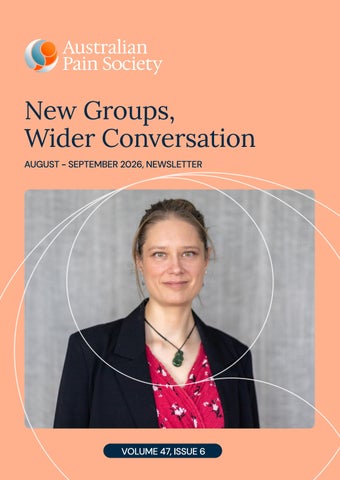
Front Cover: Meet the inaugural chair of APS’s new Accute Pain Special Interest Group. More details on page 18.
2
Australian Pain Society Newsletter | Volume 47, Issue 6, Aug-Sep 2026
EDITOR’S NOTE
Editor’s Note Kylie Bailey
Hi everyone, Hello to all my fellow Australian Pain Society (APS) members.
This edition of our newsletter truly delivers. We hear from our wonderful Travel Grant recipients, who share their reflections on the APS 2026 Annual Scientific Meeting (ASM) in Adelaide. You’ll also find exciting updates from the Pain in Childhood and the newly formed Pelvic Pain Special Interest Groups, along with news about the jointly hosted 2027 ASM between the APS and International Symposium of Paediatric Pain. We also invite you to learn more about our new Early and Mid Career Network (EMCN), explore Pain Week, and catch up on updates from the APS Board and other esteemed colleagues. My final note is a heartfelt thank you to Jo for her commitment and dedication to our newsletter. I have very much enjoyed working alongside you.
PLEASE CONSIDER JOINING US. Now that the lovely Dr Joanne (Jo) Harmon has completed her term as co‑editor, we have a vacant seat. This honorary role offers a wonderful opportunity to work closely with the fabulous APS Board and staff. If you’re interested or would like to talk with me further.
PLEASE REACH OUT HERE OFFICE@AUSTRALIANPAINSOCIETY.ORG
Best wishes, Kylie
Gold Coast Convention & Exhibition Centre 13 - 16 April 2027 REGISTER
Australian Pain Society Newsletter | Volume 47, Issue 6, Aug-Sep 2026
3
PRESIDENT’S REFLECTION
President’s Reflection Bernadette Smith
Better evidence. Better access. Better outcomes. There has been quite a bit of discussion in the media recently about pain treatments and medical devices. Some of the stories shared by people living with pain have been difficult to hear. This is particularly so when treatment has not provided the hoped for benefit, or has resulted in significant complications. That discussion prompted the Australian Pain Society (APS) to issue a media release calling for a review of the oversight and monitoring of medical devices used in pain management. We also advocated for better access to evidence informed multidisciplinary pain care. For me, it comes back to something quite simple. If we want people living with pain to have access to new and effective treatments, then we also need to make sure the evidence, safeguards and systems around those treatments keep pace. Procedures and devices have an important place in pain care for some people. For the right person at the right time, a procedure may be an important part of treatment, and may help create the opportunity to engage in rehabilitation and broader care. If we offer a treatment, people are to understand what the evidence tells us. This includes, what we still do not know, what the potential benefits and risks are, what other options are available and, importantly, what happens after treatment. Recent media discussion has brought renewed attention to how we ensure treatments are supported by appropriate evidence. This includes how risks and uncertainties are communicated, and importantly, how outcomes are monitored over time. It has also brought us back to something APS has been advocating for over several years: a national pain device implant registry. In 2024, APS joined the Faculty of Pain Medicine and Chronic Pain Australia in calling for a national registry. We also strongly recommended the introduction for a national model of care for implanted pain treatments. For me, the principle is pretty straightforward. If we want to know what happens after treatment, we need to collect the data.
4
A national registry would help us better understand longer term outcomes, complications, adverse events, revisions and removals. It will also continue building the evidence that guides future care. If we want innovation, we also need systems that allow us to learn from it. This reflects the rationale behind the original call for a registry, which included protecting patient safety and monitoring and recording outcomes to support evidence based practice. And that principle extends well beyond medical devices. Elsewhere in this edition, Laura talks about the ongoing work APS is doing with colleagues across the pain sector as services prepare for the transition from electronic Persistent Pain Outcomes Collaboration (ePPOC). An important part of our role has been bringing people together, connecting services and sharing what is already being developed. We are also aiming for reducing duplication where we can, and helping find practical ways to bridge ongoing outcomes data collection while we work towards what comes next. I think this work says something important about the role APS can play. We do not need to have all the answers ourselves.
Sometimes our greatest value is in connecting the people who hold different parts of the answer. This includes clinicians, researchers, services, consumers, professional organisations and other partners, and creating the conditions for something better to emerge.
Australian Pain Society Newsletter | Volume 47, Issue 6, Aug-Sep 2026
PRESIDENT’S REFLECTION
That feels particularly timely as our Board comes together shortly for our Strategic Planning Weekend. It will give us an opportunity to reflect on where APS has come from, but much more importantly, to look ahead to the future. What does our pain community need from its Society over the next few years? Where can APS make the greatest difference? Where should we focus our energy and resources? For me, there are some exciting possibilities. Most importantly, the APS can continue to be the home of knowledge exchange for Australia’s multidisciplinary pain community. A place where people come together to learn from each other, share ideas, connect research with practice and ultimately improve pain care. We can help knowledge and evidence move beyond journals and conferences into practice, while partnering for impact on the bigger challenges that no one organisation or profession can tackle alone. There is plenty ahead of us. I am looking forward to the opportunity with the Board to reflect, look forward and shape the next chapter for APS. We will then continue that work with our members, partners and the broader pain community. Warm regards
GROWING OPPORTUNITIES FOR MEMBERS Creating opportunities for members to connect, collaborate and build capability remains a priority for APS. I am pleased to share that work is underway to launch: • Acute Pain Special Interest Group • Pelvic Pain Special Interest Group • Early Career Research Network These initiatives have emerged directly from the conversations and connections fostered at the Adelaide Annual Scientific Meeting and reflect the diversity of interests, expertise and career stages amongst our membership. Thank you to the members who have championed these ideas and helped bring them to life. The APS Board and Secretariat are excited to support these initiatives and the opportunities they will create for networking, professional development and knowledge exchange. Keep reading to learn more about these SIGs!
Bernadette Smith
Australian Pain Society Newsletter | Volume 47, Issue 6, Aug-Sep 2026
5
NATIONAL PAIN WEEK 2026
National Pain Week 2026: Making Pain Count National Pain Week 2026 brought the experiences of people living with persistent pain into national focus. Pain Week highlights both the scale of its impact and the work still needed to improve recognition, access and care across Australia. Throughout the week, the Australian Pain Society (APS) joined people with lived experience, clinicians, researchers and sector organisations. Together, they called for chronic pain to be recognised as a major national health priority. BRINGING PAEDIATRIC PAIN INTO THE NATIONAL CONVERSATION To begin National Pain Week, Dr Karin Plummer, Chair of the APS Paediatric Pain Special Interest Group, joined an expert panel for The State of Pain, organised by Chronic Pain Australia. The panel discussion, which went live on Monday 27 July, brought together different perspectives on the realities of living with and managing persistent pain in Australia. Dr Karin Plummer brought an important focus to pain in children and young people. Her contribution highlighted the need for earlier recognition, appropriate assessment and timely, evidenceinformed management. She also reinforced why paediatric pain must be included in the wider national conversation about pain care. For example, chronic pain in children and adolescents can affect education, relationships, physical activity, emotional wellbeing and family life. Early identification and access to appropriate support can help prevent pain from becoming more entrenched and reduce its longer-term impact.
6
APS CALLS FOR EQUITABLE ACCESS TO PAIN CARE During National Pain Week, APS released the media statement Pain Lives Here. The Right Care Should Too, supporting Chronic Pain Australia’s Make Pain Count campaign. The statement called for every Australian living with chronic pain to have equitable access to evidence-informed, multidisciplinary pain care, regardless of where they live or what they can afford. Chronic Pain Australia’s 2026 National Pain Report, Pain Lives Here, draws on the experiences of more than 6,000 Australians. The report exposes what Chronic Pain Australia describes as the “National Pain Gap”—the stark disconnect between the widespread impact of chronic pain and its recognition and treatment within Australia’s health system. The findings are deeply concerning: • 72% of respondents said cost had prevented them from accessing healthcare. • 40% waited more than three years to receive a diagnosis.
Australian Pain Society Newsletter | Volume 47, Issue 6, Aug-Sep 2026
These figures reflect more than delayed appointments. They represent people living without answers, appropriate treatment or coordinated support. Meanwhile, pain affects their ability to work, study, care for their families and participate in everyday life. Making pain count requires more than recognising the number of Australians affected. It means ensuring that pain is visible within health policy, workforce planning, service design and national data—and that people can access the right care at the right time. APS President Bernadette Smith said the report reinforces what people living with pain, clinicians and researchers have long recognised: persistent pain is one of Australia’s most significant health challenges. However, too many people continue to experience barriers to timely, evidence-informed and multidisciplinary care.
“People living with persistent pain deserve equitable access to evidence-informed, multidisciplinary pain care, supported by clear information about the potential benefits, risks and alternatives,”
National Pain Week is over, but the campaign continues Chronic Pain Australia’s Make Pain Count campaign is calling for chronic pain to be formally recognised and counted within Australia’s national health data. Reliable national data is essential to understanding how many Australians are living with pain, identifying gaps in care and informing decisions about services, workforce development, research and funding. Without adequate data, the full impact of pain remains difficult to see, and people living with pain risk continuing to be overlooked in health planning and investment. Chronic Pain Australia has launched an online petition calling on the Australian Government to make pain count. APS members are encouraged to sign the petition and share it with colleagues, professional networks and communities. Every signature helps demonstrate that persistent pain must be recognised as a national health priority and that people living with pain deserve timely, equitable and evidence-informed care.
MS BERNADETTE SMITH
SIGN THE MAKE PAIN COUNT PETITION
READ THE FULL APS STATEMENT
Australian Pain Society Newsletter | Volume 47, Issue 6, Aug-Sep 2026
7
IASP’S WORLD CONGRESS ON PAIN IN AUSTRALIA’S BACKYARD
IASP’s World Congress on Pain in Australia’s Backyard Andrew S.C. Rice
Andrew S.C. Rice is a clinical academic who has been intrigued by the conundrum of neuropathic pain for more than 35 years. He is a Professor of Pain Research at Imperial College and President of the International Association for the Study of Pain. His research interests are in elucidating neuropathic pain in the context of infectious disease (HIV, Herpes Zoster, HTLV-1, and leprosy), diabetic neuropathy, and limb amputation in conflict scenarios. He is a vocal advocate for improving rigour and trustworthiness in pain research and enjoys collaborating with historians.
IASP will host the 21st World Congress on Pain, 26–30 October 2026, in Bangkok, Thailand. This will mark the first time in IASP’s history the meeting has been held in Southeast Asia. Australia will be strongly represented in the scientific program. We will have more than 20 Australian-based speakers contributing to Plenary Lectures, an Award Lecture, Topical Workshops, and Pre-Congress Workshops. Two of the featured Plenary Speakers are based at the University of Sydney, Dr Luke Henderson, PhD and Dr Saurab Sharma, PhD. Luke will examine the brain sites involved in endogenous analgesia., while Saurub will address the advancement of equitable pain research and care globally. APS leadership will also be represented in the program. Luke Henderson serves as co-chair of the APS Scholarship/Grant Selection Subcommittee. The topical workshop, “A Community for People with Chronic Pain: It Takes a Village.” will be chaired by Dr Fiona Blyth, PhD, the APS IASP Liaison. Australian clinical expertise will also be part of the pre-congress events.Dr Tony Ng, MBBS, of Concord Repatriation General Hospital and Sydney Pain Management Centre, will teach in two of the Ultrasound Pain Intervention Workshops. Further, Dr Tasha R. Stanton, PhD, from the University of South Australia, will deliver the Ulf Lindblom Young Investigator Award Lecture for Clinical Science. She is also one of three Australian members of the World Congress Scientific Program Committee. Tasha
8
will be joined by Dr Ben Colagiuri, PhD, from the University of Sydney and Dr Michele Sterling, PhD, from the University of Queensland. As you can see, we Australians will feature prominently throughout the Topical Workshops as part of the Scientific Program, with 18 Australianbased speakers contributing to 16 sessions. Their expertise spans pain mechanisms, psychological treatments, rehabilitation, musculoskeletal pain, clinical trials, placebo research, neuroimaging, paediatric pain, and the translation of evidence into practice. Australian researchers will also present their work in the poster hall, where more than 2,200 poster presentations will offer a broad view of current research from around the world. For trainees and early-career professionals in particular, Bangkok provides an opportunity to share their work on a global stage. For Australian delegates accustomed to travelling further to attend an IASP World Congress, Bangkok provides you a relatively easy journey to attend the largest global gathering of pain professionals. I hope this will encourage you to join colleagues from Southeast Asia and around the world. APS members planning to attend together can also organise a group and take advantage of a 10% registration discount for groups of five or more. I encourage colleagues, laboratories, and clinical teams to consider registering to attend as a group. Learn more about registration.
Australian Pain Society Newsletter | Volume 47, Issue 6, Aug-Sep 2026
The World Congress offers many opportunities to build relationships beyond individual presentations. These include poster discussions, workshops, precongress events and Painhack. The opportunity for informal conversations throughout the week will connect Australian delegates with potential collaborators, mentors, and colleagues from across the international pain community. These connections build on the longstanding relationship between IASP and APS, our Australian chapter. This partnership is important in advancing pain research, education, clinical care, and advocacy.
with the 16th International Symposium on Paediatric Pain by IASP’s Pain in Childhood Special Interest Group. The joint APS–ISPP meeting will take place on the Gold Coast, bringing national and international communities together and creating new opportunities for collaboration across research, clinical practice, education, and lived experience. Bangkok in October and the Gold Coast next April reflect the strength and continuity of the relationship between IASP and APS. I hope many APS members will take advantage of having the World Congress so close and join us in Bangkok.
That partnership will be especially visible in April 2027, when APS’s Annual Scientific Meeting joins
LUKE HENDERSON, PHD UNIVERSITY OF SYDNEY, AUSTRALIA
SAURAB SHARMA, PHD UNIVERSITY OF SYDNEY, AUSTRALIA/NEPAL
KNOW MORE ABOUT THE EVENT
TASHA R. STANTON, PHD SOUTH AUSTRALIAN HEALTH AND MEDICAL RESEARCH INSTITUTE, AUSTRALIA
KNOW THE PLENARY SPEAKERS
SCIENTIFIC PROGRAMS
Australian Pain Society Newsletter | Volume 47, Issue 6, Aug-Sep 2026
9
NATIONAL PAIN EDUCATION SUMMIT
National Standards Launch Marks A Major Milestone For Pain Education Genevieve Nolan
Ms Gen Nolan is a Project Manager at the Faculty of Pain Medicine (FPM) within the Australian and New Zealand College of Anaesthetists. She leads the Government funded project to develop and implement the “Australian Standards for Health Practitioner Pain Management Education”. Gen joined FPM in April 2024, bringing experience from previous roles at Musculoskeletal Australia, the Victorian Department of Health and BreastScreen Victoria.
The Faculty of Pain Medicine (FPM) of the Australian and New Zealand College of Anaesthetists (ANZCA) formally launched the “Australian Standards for Health Practitioner Pain Management Education” (“the standards”) at Parliament House in Canberra on Monday 29 June. Funded by the Australian Government and developed under the leadership of the Faculty of Pain Medicine (FPM), Australia’s specialist medical body for pain medicine, the standards are the first of their kind in Australia and internationally. They set a national benchmark for high-quality pain management education across all health professions and levels of training. The launch marked a major milestone for pain management education in Australia. It also brought together government representatives as well as specialist medical colleges, professional associations, consumer organisations, education providers and the broader pain sector. The event was facilitated by Adjunct Professor Sophie Scott OAM. We were thrilled that the Assistant Minister for Health and Aged Care, Hon. Rebecca White MP (pictured) officially launched the standards. We were also very grateful to Dr Mike Freelander MP and Senator Wendy Askew, who also spoke in what was a strong show of national support for implementing the standards across Australia’s health and education systems. A number of other parliamentarians attended and expressed their support for the initiative.
10
Dr Noam Winter, a specialist pain medicine physician and FPM Board member, outlined the rationale for the standards and the extensive consultation and development process that informed them. Sophie Scott facilitated a great discussion with a panel consisting of Associate Professor Michael Reynolds from Indigenous Allied Health Australia; Dr Phoebe Holdenson Kimura from the Australian Commission for Safety and Quality in Health Care; Ms Kate May, a person with lived experience of pain and a communications consultant; and Dr Noam Winter.
Australian Pain Society Newsletter | Volume 47, Issue 6, Aug-Sep 2026
(from left to right): Fiona Hodson CPA, Bernadette Smith APS, Joyce McSwan OPEN, Professor Michael Veltman FPM, Martina Otten FPM, Monika Boots PA.
The discussion ranged from the extent to which pain management has changed and developed over the last ten years, to the importance of health practitioners routinely updating their pain management knowledge and skills, regardless of their years of practice. FPM Dean Professor Michael Veltman said the launch represented a significant step towards improving the consistency and quality of pain care across Australia. He said:
“We are calling on education providers, specialist medical colleges, regulators, accreditation bodies, health services, consumer organisations and governments to work with us to embed them into education, training and practice.”
“People living with pain deserve highquality care, regardless of who they see or where they live. These standards establish, for the first time, a shared benchmark for pain management education across Australia’s health workforce.” “When health practitioners receive consistent, high-quality education in pain management, patients are more likely to receive timely, evidence-informed and person-centred care. That is critical to reducing the burden of pain on individuals, families, communities and the health system.” Professor Veltman said the focus must now turn to implementation.
(from left to right) are: Dr Phoebe Holdenson Kimura from the Australian Commission for Safety and Quality in Health Care; Ms Kate May, a person with lived experience of pain and a communications consultant; Associate Professor Michael Reynolds from Indigenous Allied Health Australia and Dr Noam Winter, a specialist pain medicine physician and FPM Board member.
Australian Pain Society Newsletter | Volume 47, Issue 6, Aug-Sep 2026
11
NATIONAL PAIN EDUCATION SUMMIT
Wait … there’s more!!! Forthcoming National Pain Education Summit Launching the standards was one major step, but the march towards implementation of the standards is already progressing.
• place cultural safety, equity and lived experience at the centre of implementation.
The FPM will convene a National Pain Education Summit, “From Standards to Practice: Building Australia’s Pain Education Capability” in Melbourne on Thursday 1 October 2026.
Educators, clinical supervisors, health professionals and education providers are strongly encouraged to attend. So too are those from professional bodies, health services and people involved in accreditation or curriculum development.
The in-person Summit will bring together people involved in the design, delivery, supervision and evaluation of health practitioner education and training. This Summit will: • build a shared understanding of why stronger and more consistent pain education for health practitioners is needed. • support practical implementation of the standards across education, training and clinical settings. • demonstrate how the standards and supporting guidance tools can be used in different organisational contexts. • strengthen the capability of educators and clinical supervisors to deliver contemporary pain education.
12
For more information about the Summit and to register, please click on the link below. Don’t leave it too late to register!
Australian Pain Society Newsletter | Volume 47, Issue 6, Aug-Sep 2026
REGISTER HERE
EPOCC PAGE – APS WEBSITE
ePPOC Update
Dear Members, As the whole pain community is now aware, the electronic Persistent Pain Outcomes Collaboration (ePPOC) is being disestablished at the end of October this year. The Australian Pain Society (APS) has responded to members’ concerns about the loss of this significant database, by connecting across the pain sector with members and other stakeholders. The feedback has been genuinely heartening. More than 45 people and services have already taken the time to share their experiences, ideas and resources through the survey we put out in July . What’s come through most strongly is the sector’s willingness to collaborate. People are not only telling us what they’re working on, but actively offering to help others who are navigating similar challenges. Across all the feedback, there’s a shared commitment to keeping meaningful outcomes data collection going while we work together on a longer-term, sustainable approach. In the short term, many services are already experimenting with or implementing REDCap builds. Thanks to the generous work of APS Board Directors Dr Alison Sim and Dr Amelia Searle, an ePPOCaligned REDCap template is now available for pilot testing, and several teams are already putting it through its paces. We’re also connecting people who can provide practical guidance to support the transition. At the time of writing, APS has planned a small Town Hall for those who are keen to develop solutions in this space. It will be a chance were we can compare notes, share what’s working and explore whether a common approach might save everyone time and effort. We also know REDCap won’t suit every service particularly private and non-government providers, so APS is connecting people who are trialling other platforms. The aim is to understand what’s practical, affordable and achievable across different service types. As these threads come together, we’re working towards a practical interim implementation pack that brings the shared learning into one place. It will include agreed questionnaires, the REDCap template, guidance for non-REDCap pathways, and some informal governance support.
One of the most encouraging parts of this process has been the generosity of those offering to share questionnaire builds, governance documents, technical expertise and other resources. APS will continue to help connect these contributions so we can build on what already exists rather than duplicate effort. While the immediate transition work continues, the sector is also starting to look ahead. We agree that the next generation of outcomes infrastructure needs to be contemporary, sustainable and genuinely fit for purpose. To support that conversation, APS is planning a dedicated forum at APS 2027. This will be a chance for the sector to come together and explore the next steps in shaping a future outcomes approach that reflects modern models of care and the needs of clinicians, researchers and people living with pain. If you haven’t already, we encourage you to take a look at the ePPOC transition page on the APS website. And to everyone who has reached out, shared resources or offered support - thank you. The collaboration across the pain community has been incredible, and we’ll continue to keep you updated as this work progresses. Kind regards, Laura Prendergast President-Elect, Australian Pain Society
VIEW EPPOC PAGE HERE
Australian Pain Society Newsletter | Volume 47, Issue 6, Aug-Sep 2026
13
SPECIAL INTEREST GROUP
Special Interest Group: Basic Pain Research Chair Wendy Imlach The Basic Pain Research Special Interest Group (BPR SIG) brings together Australian Pain Society members with an interest in advancing our understanding and treatment of pain. Our community includes basic and translational researchers, clinicians, students and early-career researchers, and others who are curious about the biological mechanisms that contribute to pain. The BPR SIG aims to promote and strengthen basic pain research within Australia and to create
connections between researchers working across different disciplines, institutions and areas of pain science. Our interests span the mechanisms that drive pain throughout life, by investigating molecular and cellular processes through to neural circuits, systems and emerging therapeutic targets. Just as importantly, we are interested in how discoveries in fundamental pain science can inform clinical research, improve our understanding of pain conditions and ultimately contribute to better outcomes for people living with pain. Through the SIG, we seek to increase the visibility of basic pain research within the broader APS community, encourage collaboration and exchange of ideas, and support the next generation of pain researchers. The group also provides opportunities to share research, learn about developments across the field and connect with colleagues who bring different perspectives to common questions about pain.
WHY JOIN?
If you want to stay connected with Australian pain research, meet others working on the mechanisms of pain, build collaborations, support early-career researchers, or strengthen the links between basic science and clinical practice, we would love to have you involved. You do not need to identify primarily as a basic scientist, your curiosity about how pain works, and how better science can lead to better pain care, is more than enough.
GET IN TOUCH TO JOIN OFFICE@AUSTRALIANPAINSOCIETY.ORG
14
Australian Pain Society Newsletter | Volume 47, Issue 6, Aug-Sep 2026
Introducing Luke Pattison: Basic Pain Research SIG Member Dr Luke Pattison is a Postdoctoral Research Fellow in the Integrated Neurogenic Mechanisms Laboratory at the Monash Institute of Pharmaceutical Sciences, Monash University. His research combines electrophysiology and behavioural approaches to investigate pain from cellular mechanisms through to behavioural outcomes.
Earlier this year, I moved from the UK to Australia to begin the next chapter of my research, returning to where my interest in pain research first began. In 2015, during my undergraduate degree at the University of Bath, I spent a year at the Monash Institute of Pharmaceutical Sciences studying GPCR signalling in inflammatory bowel diseaseassociated pain. This sparked my interest in pain research and led me to pursue a PhD with Prof. Ewan St. John Smith at the University of Cambridge, where I investigated how pH-sensitive GPCRs, including GPR65, contribute to inflammatory joint pain. A major focus of my research has been improving the translation of preclinical pain studies. After surveying people living with chronic pain about its impact on everyday activities, I validated digging behaviour in mice as a measure of wellbeing and painrelated disruption. Learn more: ovid.com/10.1097/j. pain.0000000000003190.
With A/Prof Victoria Abraira at Rutgers University, I used machine learning to identify subtle behavioural changes in mouse models of pain that traditional methods may miss. highlighting the potential of these techniques in pain assessment and therapeutic evaluation. Now back at the Monash Institute of Pharmaceutical Sciences, I am working with A/Prof Nik Veldhuis to investigate the molecular mechanisms underlying pain and itch in Dystrophic Epidermolysis Bullosa, a rare genetic disease characterised by skin fragility and blistering. I combine molecular, cellular and behavioural approaches to study interactions between skin cells and sensory neurons, with the aim of identifying new therapeutic opportunities. I am excited to be part of the Australian pain research community and look forward to the collaborations and discoveries ahead.
Australian Pain Society Newsletter | Volume 47, Issue 6, Aug-Sep 2026
15
SPECIAL INTEREST GROUP
Special Interest Group: Pain in Childhood Dr Karin Plummer Children’s pain is common, complex and still too often under-recognised and undertreated The Australian Pain Society (APS) Pain in Childhood Special Interest Group (PinC SIG) brings together clinicians, researchers, educators and advocates who want to change that. Our multidisciplinary community spans nursing, medicine, psychology, physiotherapy, allied health, research and education. Our focus is to share knowledge and strengthen paediatric pain care.
PinC SIG provides opportunities to hear about emerging research and clinical innovations, share practical resources, build collaborations and contribute to education and advocacy. If your work involves children experiencing pain, or you want to learn more, we welcome you to join. And there has never been a more exciting time to become involved! April 2027 is shaping up to be a big year for paediatric pain. The APS and International Symposium on Pediatric Pain (APS– ISPP) will come together for a joint conference on the Gold Coast. This collaboration offers a rare opportunity to connect with the international paediatric pain community right here in Australia. Abstract submissions are now open. Whether you’re submitting research, sharing a clinical innovation, or simply want to learn and connect with international colleagues, this is the paediatric pain conference not to miss. Dr Karin Plummer
JOIN US!
We also have leadership opportunities available, with Chair-Elect and Secretary-Elect positions open. If you are interested in developing your leadership experience, building your networks and helping shape the future of paediatric pain within APS, please get in touch. Come and join PinC SIG and help us improve pain care for children and young people.
GET IN TOUCH TO JOIN OFFICE@AUSTRALIANPAINSOCIETY.ORG
16
Australian Pain Society Newsletter | Volume 47, Issue 6, Aug-Sep 2026
Meet PinC Member Kate Kotzur Catherine (Kate) Kotzur is a Nurse Practitioner in Anaesthetics and Pain Management at Queensland Children’s Hospital, bringing 27 years of paediatric nursing experience to her role.
Kate Kotzur is an active member of the Australian Pain Society (APS) Pain in Childhood (PinC) Special Interest Group (SIG) and serves on the Local Organising Committee for the 2027 joint APS and International Symposium on Paediatric Pain (ISPP) Conference. Kate is deeply engaged in advancing paediatric pain care, both through her clinical practice and her contributions to the broader pain community. Kate’s clinical and research work is on improving children’s experiences of healthcare through evidence-based, child-centred approaches to procedural pain, anxiety and distress. She has particular expertise in nurse-led procedural support and clinical hypnosis. Kate also has a strong interest in preventing healthcare-related trauma, promoting children’s autonomy and building clinicians’ capacity to deliver better procedural care. Kate was recently awarded the APS/Cops for Kids Clinical Research Grant for the DOLPhIN study, investigating the feasibility and safety of needlefree J-Tip® lidocaine for reducing pain and distress during peripheral intravenous catheter insertion in children. The study will also explore a child-defined threshold for clinically meaningful improvement in pain, helping inform future paediatric pain trials. WE ASKED KATE TO SHARE HER THOUGHTS ON THESE THREE QUESTIONS –> WHAT DO YOU VALUE MOST ABOUT BEING A MEMBER OF THE APS AND THE PAEDIATRIC PAIN COMMUNITY? “What I value most about being a member of the APS and the paediatric pain community is regardless of clinical background or expertise; everyone shares the same goal which is to improve outcomes for children experiencing pain. There is a genuine acceptance of creativity, search for evidence and willingness among members to share their knowledge and learnings (the good and the
bad). That kind of community and generosity puts great outcomes within reach for all clinicians and for the patients and families we care for.” WHAT ARE YOU MOST LOOKING FORWARD TO ABOUT THE JOINT APS–ISPP CONFERENCE ON THE GOLD COAST IN 2027? “Honestly, how good is it going to be to have two like-minded pain organisations and people collide in one place? Aside from the sheer depth of knowledge and creativity, if you’ve been to either meeting before you know the “work hard, play hard” principle is alive and well. So, beyond the sessions and the learning, I can’t wait to celebrate, make new friends, catch up with old ones...and what better place to do it than the Gold Coast?” YOU WERE RECENTLY AWARDED THE COPS FOR KIDS CLINICAL RESEARCH GRANT — WHAT DOES THIS OPPORTUNITY MEAN FOR YOUR WORK AND FOR IMPROVING PAIN CARE FOR CHILDREN? “This is far from just my own work. There’s a team of expert clinicians and researchers on this project, and I feel really privileged to be able to work with and learn from their expertise. Together, this grant lets us explore an alternative for children requiring a peripheral intravenous cannula, one of the most common procedures children face, and consistently reported as one of the most distressing. Whether a child experiences this once or on a frequent basis, their experience can shape the way they engage in healthcare for years to come. Having the chance to explore an alternative in a measured way is a real privilege. We are so grateful to Cops for Kids and the APS for this opportunity, and we’re looking forward to sharing our findings but more importantly sharing the view of our patients, who should always be considered the expert when it comes to reporting their experience.”
Australian Pain Society Newsletter | Volume 47, Issue 6, Aug-Sep 2026
17
SPECIAL INTEREST GROUP
Special Interest Group: Acute Pain The Acute Pain SIG is a newly formed group of clinicians and academics with a shared passion for advancing knowledge of the mechanisms and treatment of acute pain, including the transition from acute to chronic pain. Born from momentum following the APS Meeting in Adelaide in April 2026, our founding members came together with a vision to create an interdisciplinary collaborative network dedicated to acute pain care and science in Australia. Although only becoming an official special interest group in August, the Acute Pain SIG already comprises members from all Australian states (and New Zealand!), representing medicine, nursing, allied health, and academia.
CHAIR: Ms. Margaret Phillips, Clinical Nurse Consultant Pain, Austin Health
SECRETARY: Ms. Sophie Young, PhD Candidate and Clinical Pharmacist, The University of Sydney
OUR OBJECTIVES & FOCUS: Translational Research: We primarily aim to foster interdisciplinary research with a focus on the mechanisms of acute pain and recovery, alongside the real-world impacts of management strategies on patient experience and outcomes. Connection & Collaboration: The SIG is a dynamic forum to connect and share resources across clinical and scientific backgrounds, providing opportunities to share experiences, present work, seek collaborators and feedback. Diversity & Inclusion: We are committed to cultivating an inclusive community that embraces diverse professional perspectives, career stages, and geographical voices from across Australia and beyond. Education & Advocacy: As the SIG evolves, we look forward to promoting inclusion of high-quality acute pain content at scientific meetings, hosting webinars, synthesizing evidence, developing clinical resources, and advocating for safe, effective acute pain management.
COMMUNICATIONS OFFICER: Ms. Katelyn Jauregui, PhD Candidate and Clinical Pharmacist, The University of Sydney
MEDICAL LEAD: Dr. Andrew Watson, Senior Staff Specialist Anaesthesia and Pain, Canberra Hospital
We warmly welcome APS members from any discipline with an interest in acute pain to join us on this exciting journey! APS BOARD REPRESENTATIVE: Ms. Heather Gray, Australian Pain Society South Australia Director; Nurse Unit Manager, Acute Pain Service, Royal Adelaide Hospital
18
IASP ACUTE PAIN SIG REPRESENTATIVE: A/Prof. Jonathan Penm, IASP Acute Pain SIG Board Member; NHMRC Emerging Leadership Fellow (EL2) and Pharmacist, The University of Sydney
GET IN TOUCH TO JOIN OFFICE@AUSTRALIANPAINSOCIETY.ORG
Australian Pain Society Newsletter | Volume 47, Issue 6, Aug-Sep 2026
Meet the Chair of the Acute Pain SIG Margaret Phillips is a Clinical Nurse Consultant and co-manager of Pain Nursing Services at Austin Health in Melbourne, with a clinical and research focus on acute, peri-operative and transitional pain management.
COULD YOU BRIEFLY INTRODUCE YOURSELF AND YOUR CURRENT ROLE, INCLUDING YOUR INVOLVEMENT IN ACUTE PAIN CARE, RESEARCH, OR EDUCATION? “I’m a Clinical Nurse Consultant and co-manager of Pain Nursing Services at Austin Health in Melbourne. I work across all our clinical services, including Acute Pain inpatient ward rounds, a Transitional Pain Service focused on complex peri-operative pain management, a multidisciplinary Persistent Pain Clinic, and Interventional Pain Procedure Lists. I manage the Acute Pain data for our service and lead the Peri-operative Pain Research program, using skills from my background in Intensive Care Clinical Trials Co-ordination and Epidemiology. I’m also commencing a clinical PhD through the Melbourne Academic Centre for Health (MACH-Track) in 2027, focusing on the efficacy, cost-effectiveness, and implementation potential of Transitional Pain Services in Australia.” WHAT INSPIRED YOUR INTEREST IN ACUTE PAIN, AND WHAT ASPECTS OF THIS AREA ARE YOU MOST PASSIONATE ABOUT? “I developed a particularly keen interest in acute pain around a decade ago, while working as an ICU nurse in Darwin. At that time, observational pain tools were not routinely used, impeding reliable pain assessment and analgesia for patients who couldn’t communicate. To address this problem, I negotiated the implementation of the Critical Care Pain Observation Tool (CPOT), integrating it into our clinical charts and education. I was delighted to find that a post-implementation audit showed increased frequency and appropriateness of pain assessments, and more analgesic medications administered. My zeal for acute pain management eventually led me to my current role, in which I enjoy supporting patients as they recover and adapt after acute pain and illness. I’m especially passionate about Transitional Pain Services, which treat complex or high-risk patients before, during, and after an acute pain episode. They aim to optimise patients’ acute and sub-acute pain management for functional recovery, and to mitigate risks of chronic pain and opioid use. WHY DO YOU THINK ESTABLISHING AN ACUTE PAIN SIG WITHIN THE AUSTRALIAN PAIN SOCIETY IS IMPORTANT? “Acute pain is encountered across nearly every healthcare setting and is often the precursor to chronic pain, so its management has both broad and deep
impacts on patient outcomes and quality of life. Despite this, we have not had a dedicated inter-disciplinary network in Australia... until now! I believe the Acute Pain SIG will become a vital platform to elevate and advance acute pain science in Australia. It allows us to co-ordinate responses to clinical challenges at a national level; such as optimising inpatient acute pain care and recovery trajectories, while connecting clinicians and researchers who might otherwise work in professional or geographical silos.” WHAT IS YOUR VISION FOR THE SIG, AND WHAT DO YOU HOPE IT WILL PROVIDE FOR APS MEMBERS? “My vision is for the Acute Pain SIG to become a dynamic, welcoming, and influential community that drives excellence in acute pain care across Australia and New Zealand. I hope it provides a trusted hub for APS members to access clinical resources, evidence-based discussions, and peer support. We want to demystify complex acute pain challenges and ensure that whether members work in regional hospitals or major metropolitan centres, they feel supported, connected, and well-equipped in their practice.” WHAT OPPORTUNITIES DO YOU HOPE THE SIG WILL CREATE FOR CLINICIANS, RESEARCHERS, AND OTHERS INTERESTED IN ACUTE PAIN? “I hope the SIG will foster tangible collaboration between disciplines, care settings, and research styles. This means creating avenues to share insights, present preliminary work, and find mentors or collaborators who share a passion for acute pain science; yet contribute complementary expertise that might be otherwise inaccessible. I hope this fuels innovative projects, multi-site initiatives, dissemination of impactful research, and translation into clinical practice.” WHAT WOULD YOU LIKE TO SAY TO MEMBERS WHO ARE CONSIDERING JOINING THE SIG? “Please do! Acute pain management is a huge team effort, and every voice—whether you are from nursing, medicine, allied health, or academia—brings something incredibly valuable to the table. Whether you are focused on mechanistic research, or looking to improve everyday bedside care, your experience and perspective matter. We are building this community together, and we would love you to be part of it.”
Australian Pain Society Newsletter | Volume 47, Issue 6, Aug-Sep 2026
19
SPECIAL INTEREST GROUP
Special Interest Group: Pelvic Pain Dr Jo Sheedy The Australian Pain Society (APS) is pleased to announce a new and muchneeded Special Interest Group (SIG) dedicated to chronic pelvic pain (CPP). This initiative has been made possible through the hard work of Dr Jane Chalmers and colleagues and represents an important step towards strengthening collaboration in this complex area of pain care. CPP is a common and challenging condition, affecting an estimated 26% of women worldwide. The recent Victorian Inquiry into Women’s Pain, Bridging the Gap (2025), highlighted the significant burden of menstrual and pelvic pain conditions. Of the more than 13,000 people who responded to the inquiry, 66% reported a menstrual or hormonal condition, or endometriosis. Importantly, CPP can occur with or without a diagnosis of endometriosis. Regardless of diagnosis, people living with CPP commonly experience moderate to severe dysmenorrhoea, painful sex (dyspareunia), painful urination (dysuria), and problems opening their bowels (dyschezia). The effects of CPP can extend well beyond physical symptoms, negatively affecting social, academic and romantic relationships. Diagnostic delays are also common, contributing to the associated mental health impacts, although there is some evidence that these may be decreasing.
advances in multidisciplinary pain care, has helped broaden this perspective. Comorbid mental health conditions and a history of trauma are frequently reported by people with CPP, emphasising the need for mental health treatment to be a pivotal part of the care pathway. People with CPP commonly experience other pain conditions that may share underlying mechanisms and risk factors. These include bladder pain and irritable bowel syndromes, as well as non-pelvic conditions such as fibromyalgia, temporomandibular disorders and migraine. CPP is now recognised as a complex problem with multifactorial contributors including musculoskeletal, visceral, psychological and social factors. This increases the need for multidisciplinary approaches. Women’s health physiotherapists, general practitioners, gynaecologists, pain psychologists and mental health clinicians, all have important roles to play in supporting people with CPP. The new APS Pelvic Pain SIG provides an exciting opportunity to bring together clinicians, researchers, and other professionals with expertise and interest in CPP. By fostering collaboration across disciplines, the SIG aims to support advances in research, clinical practice, and treatment. Most importantly, it provides an opportunity to work together to improve outcomes and experiences for people living with CPP. As a community, we will continue deepening our understanding of CPP and strengthening our commitment to collaborative, evidence‑informed care.
Our understanding of CPP has evolved considerably over the past decades. Historically, clinical approaches often focused on identifying a visceral source of pain, with less attention given to musculoskeletal contributors. The expertise of women’s health physiotherapists, alongside
Join our new Pelvic Pain Special Interest Group
20
GET IN TOUCH TO JOIN OFFICE@AUSTRALIANPAINSOCIETY.ORG
Australian Pain Society Newsletter | Volume 47, Issue 6, Aug-Sep 2026
REGISTER
Gold Coast Convention & Exhibition Centre
13 - 16 April 2027
MEET OUR APS–ISPP 2027 INTERNATIONAL SPEAKERS We’re excited to announce the first of our international speakers: PROFESSOR
Brennan Spiegel A leading expert in digital health and virtual medicine at Cedars-Sinai, Brennan explores how emerging technologies — including medical extended reality — can transform healthcare and improve patient outcomes.
ASSOCIATE PROFESSOR
Kaitlyn Sadtler An immunoengineering researcher at the National Institutes of Health, Kaitlyn investigates how the immune system responds to traumatic tissue injury and reconstruction, with a particular focus on immunity, healing and pain.
Mark Inglis Mountaineer, scientist, Paralympic medallist and international speaker, Mark became the first double amputee to summit Mount Everest. His extraordinary career spans science, sport, winemaking, innovation and philanthropy.
DISCOVER THE FULL PROGRAM HERE
MORE SPEAKERS JOINING US IN 2027 Already announced and joining our growing APS–ISPP 2027 speaker line-up:
PROFESSOR
Fiona Blythe
Dr Yann Quidé
PROFESSOR
David Spanswick
Dr Hemakumar Devan
PROFESSOR
Andrew Briggs
CALL FOR ABSTRACTS
SHARE YOUR WORK AT APS–ISPP 2027 SUBMISSIONS CLOSE 28 SEPTEMBER 2026 –>
APS ASM 2027 GUEST SPEAKER
Pain, Trauma, And The Brain: From Early Adversity To Chronic Pain Dr Yann Quidé
Dr Yann Quidé is a neuroimaging researcher and Senior Research Fellow at UNSW Sydney and the Centre for Pain IMPACT (Neuroscience Research Australia). His work examines the neurobiology of stress and trauma across chronic pain and related mental health conditions. He leads the Neuroimaging, Neurobiology and Mental Health Program within the UNSW NeuroRecovery Research Hub, chairs ENIGMA-Chronic Pain, and is Treasurer of the IASP Pain & Trauma Special Interest Group.
IASP will host the 21st World Congress on Pain, 26–30 October 2026, in Bangkok, Thailand. This will mark the first time in IASP’s history the meeting has been held in Southeast Asia. Australia will be strongly represented in the scientific program. We will have more than 20 Australian-based speakers contributing to Plenary Lectures, an Award Lecture, Topical Workshops, and Pre-Congress Workshops. Two of the featured Plenary Speakers are based at the University of Sydney, Dr Luke Henderson, PhD and Dr Saurab Sharma, PhD. Luke will examine the brain sites involved in endogenous analgesia., while Saurub will address the advancement of equitable pain research and care globally. APS leadership will also be represented in the program. Luke Henderson serves as co-chair of the APS Scholarship/Grant Selection Subcommittee. The topical workshop, “A Community for People with Chronic Pain: It Takes a Village.” will be chaired by Dr Fiona Blyth, PhD, the APS IASP Liaison. Australian clinical expertise will also be part of the pre-congress events.Dr Tony Ng, MBBS, of Concord Repatriation General Hospital and Sydney Pain Management Centre, will teach in two of the Ultrasound Pain Intervention Workshops.
will be joined by Dr Ben Colagiuri, PhD, from the University of Sydney and Dr Michele Sterling, PhD, from the University of Queensland. As you can see, we Australians will feature prominently throughout the Topical Workshops as part of the Scientific Program, with 18 Australianbased speakers contributing to 16 sessions. Their expertise spans pain mechanisms, psychological treatments, rehabilitation, musculoskeletal pain, clinical trials, placebo research, neuroimaging, paediatric pain, and the translation of evidence into practice.
APS members planning to attend together can also organise a group and take advantage of a 10% registration discount for groups of five or more. I encourage colleagues, laboratories, and clinical teams to consider registering to attend as a group.
Further, Dr Tasha R. Stanton, PhD, from the University of South Australia, will deliver the Ulf Lindblom Young Investigator Award Lecture for Clinical Science. She is also one of three Australian members of the World Congress Scientific Program Committee. Tasha
24
Australian Pain Society Newsletter | Volume 47, Issue 6, Aug-Sep 2026
LEARN MORE ABOUT REGISTRATION
Australian researchers will also present their work in the poster hall, where more than 2,200 poster presentations will offer a broad view of current research from around the world. For trainees and early-career professionals in particular, Bangkok provides an opportunity to share their work on a global stage. For Australian delegates accustomed to travelling further to attend an IASP World Congress, Bangkok provides you a relatively easy journey to attend the largest global gathering of pain professionals. I hope this will encourage you to join colleagues from Southeast Asia and around the world. The World Congress offers many opportunities to build relationships beyond individual presentations. These include poster discussions, workshops, precongress events and Painhack. The opportunity for informal conversations throughout the week will connect Australian delegates with potential collaborators, mentors, and colleagues from across the international pain community.
These connections build on the longstanding relationship between IASP and APS, our Australian chapter. This partnership is important in advancing pain research, education, clinical care, and advocacy. That partnership will be especially visible in April 2027, when APS’s Annual Scientific Meeting joins with the 16th International Symposium on Paediatric Pain by IASP’s Pain in Childhood Special Interest Group. The joint APS–ISPP meeting will take place on the Gold Coast, bringing national and international communities together and creating new opportunities for collaboration across research, clinical practice, education, and lived experience. Bangkok in October and the Gold Coast next April reflect the strength and continuity of the relationship between IASP and APS. I hope many APS members will take advantage of having the World Congress so close and join us in Bangkok.
13 - 16 April 2027
Bonica Lecture at the Australian Pain Society / International Symposium for Paediatric Pain (APS/ISPP)
REGISTER
Dr Yann Quidé
Gold Coast Convention & Exhibition Centre
Australian Pain Society Newsletter | Volume 47, Issue 6, Aug-Sep 2026
25
The Rising Star Award Supporting what’s next. Celebrate emerging pain researchers making a difference and help shape the future of pain science. KNOW A RISING STAR?
Nominate a colleauge
BE A RISING STAR Apply for yourself
APPLICATIONS CLOSE
7 OCT 2026
Winner announced by November 2026
The Rising Star Award provides the opportunity to attend the Australian Pain Society Annual Scientific Meeting in 2027 and connect with leaders in the field. 26
Australian Pain Society Newsletter | Volume 47, Issue 6, Aug-Sep 2026
NOMINATE OR APPLY NOW! Help recognise talent. Drive impact. LEARN MORE HERE
INTRODUCING THE APS EARLY AND MID-CAREER NETWORK (EMCN)
Introducing the APS Early and Mid-Career Network (EMCN) Harrison Hansford and Dr Scott Tagliaferri
The Australian Pain Society (APS) is pleased to announce the establishment of the Early- and Mid-Career Network (EMCN). This is a new initiative designed to support student, early- and mid-career APS members, as they build their careers in pain research and clinical practice. Early- and mid-career researchers and clinicians are central to the future of pain care and to the ongoing strength of the APS community. Many members at these career stages are seeking opportunities to connect with peers, develop collaborations, access mentoring, build skills, and contribute to leadership within APS. The EMCN has been established to provide a dedicated platform to create and deliver these opportunities to help these members feel supported, represented, and connected throughout their career in pain research and practice. From the next membership cycle, all members who nominate themselves as being a student (including PhD) or within 10 years of completion of their final degree will be automatically included in the EMCN. However, you can choose to opt out. We encourage members to consider career disruptions when nominating the length of their careers, ensuring the EMCN reflects the diverse pathways and experiences of APS members. Through the EMCN, members can look forward to a range of activities. These include tailored sessions at the APS conferences, mentoring opportunities throughout the year, in-person networking and collaboration events. There will also be webinars and
career development activities. The EMCN will also create pathways for members to contribute to APS through committee, representative, and working group roles. Importantly, all activities will be shaped by APS EMCN members, ensuring the network continues to reflect the needs, priorities, and interests of early- and mid-career members of APS. The EMCN will initially be led by interim co-chairs Dr Scott Tagliaferri (University of Melbourne) and Harrison Hansford (University of New South Wales). The inaugural committee and governance arrangements will be established through an expression of interest process. A call out for expressions of interests for committee role nominations will be advertised over the coming months. Please keep an eye out!
We encourage APS members to get involved, share their ideas, and help shape this exciting new initiative. Together, the EMCN offers an opportunity to build connections and support the next generation of pain leaders. EMCN members will continue to strengthen the future of the Australian Pain Society.
Australian Pain Society Newsletter | Volume 47, Issue 6, Aug-Sep 2026
27
MEMBER ARTICLE
Reimagining Pharmacy as the Front Door to Better Pain Care Karla Wright Pain often walks into a pharmacy long before it walks into a clinic. It arrives quietly - in the early morning hours when the streets are still empty, or under the fluorescent glow of a late-night dispensary. Someone stands at the counter, exhausted, uncertain, hoping for relief. In those moments, before referrals, before specialist appointments, before multidisciplinary plans, there is often only one health professional present: a Pharmacist. The first witness to distress. The first opportunity to intervene. The first door that opens. Community pharmacies are woven into the everyday fabric of Australian life. They are places people enter without appointments, without referrals, and often without hesitation. In a health system where pain is common, complex, and frequently fragmented, this accessibility is more than a convenience - it is a significant clinical asset.
Pharmacists hear the concerns that often remain unspoken elsewhere: “I’m scared of becoming dependent.”
“My pain is getting worse.”
“I don’t know what else to do.”
They observe patterns that may not be visible in episodic healthcare encounters - escalating analgesic use, functional decline, medication-related harm, and increasing distress. This frontline visibility is not simply a retail interaction; it represents clinical surveillance, risk identification, and early intervention. Community pharmacists already provide essential pain care services. They assess acute pain presentations, support self-management, identify red flags, provide education on analgesic use, and help patients navigate increasingly complex treatment options. They monitor medication use over time, detect emerging safety concerns, and intervene when treatments become ineffective or unsafe. This is clinical practice - continuous, relational, and embedded within the community. As we can see, the contribution of Pharmacists to pain management extends far beyond the dispensary counter. The recent Australian Pain Society Pharmacist White Paper highlights the breadth of pharmacists’ roles across community, hospital, Home Medication Review (HMR), and specialist pain services. It reinforces the need for better integration, stronger referral pathways, and recognition of pharmacists as essential members of the interdisciplinary pain workforce. One of the most under-recognised opportunities lies within HMR services. HMR Pharmacists enter people’s homes and encounter pain in its real-world context. These include the half-used medication packs, disrupted sleep routines, concerns about escalating treatment, the complexity of comorbidities, and the daily adaptations required to continue functioning. These pharmacists are uniquely positioned to identify medication-related risks, optimise therapy, support opioid stewardship and deprescribing, and work collaboratively with general practitioners to improve outcomes. Importantly, HMR pharmacists bring something that is often scarce in healthcare: time. They have the Time to listen. Time to understand the lived experience of pain. Time to build therapeutic relationships. For many people living with persistent pain, that time is itself a valuable intervention. The potential of pharmacy becomes truly transformative when the frontline perspective of
28
Australian Pain Society Newsletter | Volume 47, Issue 6, Aug-Sep 2026
Community Pharmacists intersects with the inhome insights of HMR Pharmacists. One encounters pain at the counter, the other encounters pain at the kitchen table. Together, these perspectives create a continuum of care that supports earlier identification of risk, deeper understanding of patient experience, and more coordinated, personcentred management. Reimagining pharmacy as a cornerstone of integrated pain care requires a shift in thinking. Rather than viewing pharmacies as dispensary and transactional spaces, we can recognise them as accessible healthcare hubs where assessment, education, medication optimisation, and collaborative care begin. Imagine community pharmacists routinely identifying people at risk of medication-related harm, referring to HMR services, and working alongside general practitioners, physiotherapists, psychologists, and pain specialists through structured pathways and shared care models. This vision is not theoretical. Across Australia, pharmacists are already leading Opioid Stewardship
initiatives, supporting deprescribing, delivering pain education, conducting medication reviews, and contributing to interdisciplinary care teams. The challenge now is not whether pharmacists can contribute more to pain care, but how we can better utilise, integrate, and support this existing workforce. Pain is not solely a biomedical experience. It is emotional, social, functional, and deeply personal. Pharmacists, through their accessibility, continuity, and expertise, are uniquely positioned to meet people where they are. By embracing and expanding this role, pharmacies can become places of reassurance, guidance, and connection; places where people living with pain feel heard, supported, and safe.
The future of pain care in Australia will be stronger if pharmacists are fully integrated into it. The workforce is ready. The evidence is growing. The need is undeniable. Importantly, the door, the pharmacy door, is already open.
Australian Pain Society Newsletter | Volume 47, Issue 6, Aug-Sep 2026
29
MEMBER RESEARCH PUBLISHED
Barriers and Facilitators to Implementing Early Intervention Programmes in Compensable Settings: A Multi-stakeholder Qualitative Study in Australia Alison Sim
Dr Alison Sim is a Postdoctoral Research Fellow at the University of Sydney and an osteopath with more than 20 years of clinical experience, working in pain management for the last 10 years.
People with compensable injuries following a workplace accident or road traffic crash tend to have poorer recovery outcomes than those without a claim, and early intervention has been shown to improve health and return-to-work outcomes while reducing costs.
DESIGN: Qualitative study using semi-structured interviews and reflexive thematic analysis.
Despite this, early intervention is not consistently implemented across Australian compensation systems. This study explored the perspectives of researchers, insurers, and regulators on the barriers and facilitators to implementing early intervention in compensable settings.
SUBJECTS: Nineteen participants, comprising researchers, insurance personnel, and regulators with expertise in early intervention.
30
SETTING: Workers' compensation and motor vehicle injury insurance schemes across Australian states and territories.
METHOD: Nineteen semi-structured interviews were conducted via Zoom with researchers, insurers, and regulators experienced in early intervention within Australian compensation systems. Interviews were transcribed verbatim, and data were analysed using Braun and Clarke's six-phase reflexive thematic analysis framework. The study adhered to COREQ reporting guidelines.
Australian Pain Society Newsletter | Volume 47, Issue 6, Aug-Sep 2026
RESULTS: FIVE THEMES WERE CONSTRUCTED 1
2
3
4
5
“ The knowing-doing gap” described a shared commitment to early intervention undermined by fragmented definitions and pilot programmes that rarely scaled into routine practice. “ Innovation versus inertia” highlighted how leadership and organisational culture shape uptake, with supportive leaders driving innovation and riskaverse cultures entrenching resistance to change.
“ Evidence lost in practice” captured how claimant choice of provider, combined with limited mechanisms to enforce clinical standards, allowed low-value care to undermine recovery. “ Bound by the system” described legislative and bureaucratic barriers, including assessment delays and burdensome paperwork, that slowed access to care.
CONCLUSIONS: Achieving timely, effective early intervention in compensable settings requires more than clinical strategies. It demands coordinated leadership, policy innovation, and streamlined processes to overcome the structural barriers identified. Public education, provider accreditation, and legislative reform were identified as key opportunities to enhance access to evidence-based care and improve recovery outcomes for claimants. IMPLICATIONS/DISCUSSION: These findings suggest a role for clinicians in advocating for provider accreditation pathways and specialised training in compensable injury management, so that people receive guidelinealigned, early support after injury. They also highlight the value of clear public and clinician-facing education about how compensation systems work, to reduce delays between injury and claim lodgement, and the importance of embedding evidence-based early intervention within routine, rather than pilotonly, practice.
“ Invisible obstacles” explored why claims often don’t start when injuries do, driven by limited public and clinician understanding of insurance entitlements and workplace reporting systems.
HAVE YOU RECENTLY HAD AN ARTICLE ACCEPTED OR PUBLISHED? We love celebrating the achievements of APS members and sharing new pain research across our community. Please contact us and we will send you the submission template. We look forward to showcasing your work in an upcoming issue. EMAIL US OFFICE@AUSTRALIANPAINSOCIETY.ORG
Australian Pain Society Newsletter | Volume 47, Issue 6, Aug-Sep 2026
31
2026TRAVEL TRAVEL ASM ASM GRANT TRAVEL GRANT ARTICLE GRANT RECIPIENT REPORT REPORT
Annual Scientific Meeting Travel Grant Recipient Report Hannah Scarborough
Hannah is a 1st year PhD student at the University of Sydney with the Dr John and Anne Chong laboratory for functional genomics. Her work centres around telomere dynamics and their role in long-term chronic pain.
Having completed my honours year researching pain, I had always been very excited about the possibility of attending an Australian Pain Society (APS) conference. Luckily, the opportunity presented itself towards the end of the first year of my PhD, with the travel grant to attend the APS conference in 2026 (APS 2026). At the conference, I presented my poster on the role of a telomere-length-modulating gene in the pathobiology of long-term chronic pain. This was a really great experience, because of the focus on pain. As a result, my research reached a highly relevant audience, yielding valuable, fieldspecific feedback that I could not have received elsewhere. Whilst the poster session was a major highlight for me, I found the Basic Pain Research (BPR) preconference workshop to be incredibly engaging and insightful. This session provided an in-depth but digestible snapshot of the current landscape of endometriosis research.It was really exciting to see what future therapeutics may look like. In addition to the content, the workshop was a great opportunity to meet other researchers in the field. The small, intimate setting of the workshop made it feel
32
especially meaningful, and I felt as if I was engaging directly with the community my research sits in. I thoroughly enjoyed this session and would highly recommend it to any pain researcher, especially those who may be new to the community. I also felt especially lucky to have met Professor Maree Smith, the PhD supervisor of my own PhD supervisor, Dr Arjun Muralidharan. Getting to talk one-on-one with Professor Maree Smith, a researcher who I had heard so much about, was really special and gave me a great deal of insight. Her work on the Ross River virus hit particularly close to home, given my upbringing on the Hunter River. Collectively, APS 2026 was a fantastic experience that balanced research, learning and community. I feel incredibly grateful for this opportunity, and I am eternally thankful to have been awarded the APS 2026 Travel Grant to fund my attendance. This grant marks the beginning of what I hope will be a long and rewarding engagement with the conference. I am eager to see where future presentations, conversations, and connections will lead.
Australian Pain Society Newsletter | Volume 47, Issue 6, Aug-Sep 2026
ASM TRAVEL GRANT RECIPIENT REPORT
Annual Scientific Meeting Travel Grant Recipient Report Isabelle Bogard
Isabelle is a physiotherapist and PhD candidate at the University of Sydney. Her PhD is part of the Pain Smart project, focusing on integrating pain education and individualised support for adolescents reporting problems with pain at Australian secondary schools.
I was very fortunate to be awarded a PhD travel grant to attend the Australian Pain Society (APS) Annual Scientific Meeting (ASM) in Adelaide this year. I attended the APS ASM for the first time last year and thoroughly enjoyed the collaborative environment, welcoming community and high-quality research. I was incredibly grateful to receive support to attend the conference again this year. APS is truly multidisciplinary, bringing together researchers and clinicians from various disciplines and settings across Australia and internationally. The conference provides an excellent opportunity to learn from leading researchers and clinicians working across a broad range of pain-related fields, from basic science to integrated healthcare systems. I acknowledge the outstanding work of the scientific committee in putting together such an engaging and diverse program. As a PhD student, I also greatly appreciated the encouraging and supportive environment. Presenting my work in such a collegial setting provided a valuable opportunity to receive feedback, engage in discussion and connect with researchers and clinicians with similar interests. I presented two posters related to my PhD. The first was a clinimetric evaluation of the Conceptualisation of Pain Questionnaire, an instrument measuring a child’s concept of pain. This poster led to many thoughtprovoking discussions about instrument validity and how to accurately measure a child’s concept of pain within a biopsychosocial framework. The second poster was on a pilot study evaluating the feasibility of a randomised clinical trial delivering pain education, and individualised support to school students. It was great to connect with other researchers conducting similar school-based pain education trials, and hear about their experiences, learnings, and future directions.
A highlight was attending The Great Debate: Screening for endometriosis a nocebo, led by Dr Jane Chalmers and colleagues. This was an incredibly interactive and thought-provoking session that challenged me to reflect on the role that diagnosis can play in validation, identity and healthcare experiences. This session also highlighted the importance of engaging in constructive and respectful dialogue when exploring complex (and sometimes controversial) topics in pain and healthcare more broadly. I enjoyed attending the Meeting the Minds, which was an opportunity to meet with and hear from senior researchers in the pain field. A common reflection shared by many speakers was the importance of human connection, mentorship, and being open to opportunity throughout a research career. As a clinician, I also appreciated hearing about the different career pathways people had taken and their perspectives on navigating both clinical and academic roles. Supporting PhD students to attend APS provides us with the opportunity to build these connections and engage with the broader pain community. I am sincerely grateful for the support provided through the PhD travel grant to attend the APS ASM in 2026. The experience was highly valuable, both academically and professionally. It was an excellent opportunity to connect with peers and future collaborators, hear from leading researchers and clinicians, and learn about current and emerging pain research. I look forward to attending APS ASM in 2027, particularly given the overlap with the International Symposium for Paediatric Pain which promises to further strengthen opportunities for collaboration and learning in the field of paediatric pain.
Australian Pain Society Newsletter | Volume 47, Issue 6, Aug-Sep 2026
33
APS CONNECT AND LEARN WEBINARS WEBINAR ON DEMAND
A Practical Gem On Bringing Partners Into Pain Care A Review by Bernadette Smith Professor Toby Newton-John’s recent Australian Pain Society (APS) August webinar offered a thoughtful and highly practical look at how we can better include partners and families in chronic pain care. What made this session stand out was its immediate clinical usefulness. Rather than presenting family involvement as something complex or specialistonly, Toby showed how small, well-judged changes in everyday practice can make a real difference. His message was clear: partners are already part of the pain experience, so the opportunity is to work with that reality in a simple, constructive way. A real highlight was his focus on implementation. Toby shared a concise set of questions that help clinicians can use in assessment to quickly understand how a partner responds to pain. He also emphasised the importance of how that response is experienced by the person living with pain, and where more helpful support might be developed.
The webinar also traced an important shift in the field, away from older ideas about reducing “solicitousness” and moving towards a more compassionate, nuanced emphasis on validation, communication and supporting autonomy. Importantly, this was not presented as theory for theory’s sake, but as something clinicians can translate into practice immediately. This was one of those sessions that leaves you thinking, I can use that tomorrow. If you missed it live, the recording is well worth your time. This is especially true if you value practical ideas, compassionate care, and clinical strategies that are both achievable and effective.
APS WEBINARS ON DEMAND
Partnering With The Partner: Why Family Matters in Chronic Pain Care WITH PROF. TOBY NEWTON-JOHN LOGIN TO WATCH ON DEMAND
34
Australian Pain Society Newsletter | Volume 47, Issue 6, Aug-Sep 2026
WEBINAR ON DEMAND
Placebo, Nocebo, And The Neuroscience Behind Expectation – Just Really Interesting! A Review by Bernadette Smith Our July APS webinar with Dr Damian Borman was a warm, engaging and thought-provoking exploration of the fascinating world of placebo and nocebo. As Damian said early on, one of the reasons to study these effects is simply that they are just really interesting phenomena. By the end of the webinar, it was easy to see exactly what he meant. This is an area of science that sits at the intersection of brain, body and experience. Damian brought that complexity to life in a way that felt both accessible and exciting. After a calm and good humoured recovery from an early technical hitch, Damian discussed his research on what mice and rats can teach us about placebo analgesia and nocebo hyperalgesia in humans. He guided us through the experimental models used to study these responses and the growing understanding of the neural circuits involved. His presentation highlighted just how much these animal models can reveal about pain modulation, expectation, and context. What came through clearly was not only the intellectual richness of the field, but also its translational promise. This work is helping to identify pathways and targets that may one day shape new approaches to pain treatment.
A particular highlight was the easy connection between Damian and host Dr Lewis Crawford. Their conversation during the Q and A had that lovely mix of intellectual curiosity, humour and genuine friendship. It was the kind of exchange that leaves you with the feeling that the next great collaborative idea may already be taking shape. It was also a lovely reminder that great webinars are not only about the science, but about the people behind it. Damian’s generosity, clarity and enthusiasm for the topic came through. While Lewis’s thoughtful questions drew out both the depth of the work and the excitement of where it may lead next. This was a webinar full of insight, warmth, and scientific excitement. If you missed it live, the recording is well worth your time.
APS WEBINARS ON DEMAND
Can Rodents Teach Us Anything About The Brain Mechanisms of Placebo Analgesia And Nocebo Hyperalgesia in Humans? WITH DR DAMIEN BORMAN LOGIN TO WATCH ON DEMAND
Australian Pain Society Newsletter | Volume 47, Issue 6, Aug-Sep 2026
35
APS CONNECT AND LEARN WEBINARS WEBINAR UPCOMING WEBINARS
Join Us For The Last Webinars of 2026!
7PM AEDT, 2 SEPTEMBER 2026
How Children Learn What Pain Means, And Why Clinicians Should Care WITH DR JOSHUA PATE How children learn what pain means, and why clinicians should care REGISTER YOUR SPOT
COMING UP NEXT OCTOBER 7TH, 2026 Prof Claire Ashton-James Addressing Social Aspects of Pain in Practice: Barriers and Opportunities NOVEMBER 4TH, 2026 ChildKind Webinar FEBRUARY 2027 Assoc Prof Gila Moalem-Taylor SEE ALL UPCOMING WEBINARS
APS MEMBERS RECEIVE • Exclusive access to webinar recordings • Ongoing learning aligned to CPD development • Priority access to future APS education initiatives
BE PART OF IT This series marks an important step in strengthening accessible, high-quality pain education across Australia. Explore the full series via the new APS website
36
Australian Pain Society Newsletter | Volume 47, Issue 6, Aug-Sep 2026
Renew your membership and save. JOIN OR RENEW NOW & GET 3 MONTHS FREE!
More than a membership. You’re a part of Australia’s multidisciplinary pain community.
LEARN
CONTRIBUTE
CONNECT
SAVE
Access member only webinars, resources, grants & professional development opportunities.
Influence national policy, standards, and advocacy priorities
Build a strong, multidisciplinary pain community
Receive member rates for the APS ASM, courses and selected events.
Get 3 Months Free Join or renew your membership from October 1st, 2026 and get 15 months of membership for the price of 12.
JOIN / RENEW HERE
Offer available for a limited time.
Bridge the gap between knowing and doing. Turn what you know into everyday practice with OPEN's online Clinical Pain Training Program.
20% OFF FOR APS
MEMBERS!
PRACTICAL SKILLS FOR EVERYDAY CARE FOR ALL HEALTHCARE PROFESSIONALS EVIDENCE-BASED LEARNING
“OPEN equips clinicians with the confidence and skills to apply their knowledge at the coal face, enabling pain care to be delivered directly at the point of care.”
JOYCE MCSWAN, CEO OPEN & PAINWISE FOUNDER
Strengthening interdisciplinary pain care from knowledge to practice. ENROL NOW & SAVE
ACCREDITED
38
OUR PARTNERS
Australian Pain Society Newsletter | Volume 47, Issue 6, Aug-Sep 2026 FOUNDING PARTNERS
25 - 27 NOVEMBER 2026 Pullman Melbourne Albert Park Connect with peers, share insights and explore groundbreaking advancements in spinal cord care, research and rehabilitation.
EARLY BIRD CLOSES 1 SEPTEMBER
REGISTER NOW View event details and register at
dccam.com.au/anzscos2026
2026 ANNUAL PROFESSIONAL DAY
PAIN ACROSS AUSTRALIA COAST TO COAST FRIDAY 23 OCTOBER 2026
5 CPD POINTS
Explore pain journeys across Australia - across locations, communities and demographics - with leading nurses and multidisciplinary pain professionals.
PROGRAM HIGHLIGHTS Pain management in custody
Regional outreach and transitional pain clinics
Complex burns and aeromedical retrievals
Chronic pain, addiction and mental health
Nerve blocks in community settings
Medicinal cannabis and harm reduction
IN PERSON
CAN'T ATTEND IN PERSON?
Rydges South Bank
A live stream is available for
8.15am - 4.00pm
to attend face to face.
9 Glenelg St, South Brisbane
healthcare professionals unable
EARLY BIRD - BOOK BY 4 SEPTEMBER
$150 MEMBERS / $210 NON-MEMBERS Standard registration: $180 members / $240 non-members.
Non-member tickets include complimentary PNA membership to the end of 2026.
REGISTER NOW
View the full program and register at
painnurses.au
Australian Pain Society Newsletter | Volume 47, Issue 6, Aug-Sep 2026
41
Pain is common in older people, yet it is often missed or undertreated in residential and community aged care settings.
WHY PAIN TRAINING MATTERS IF STAFF DON’T KNOW THE SIGNS OF PAIN, IT CAN EASILY GO UNNOTICED — IMPACTING QUALITY OF LIFE, MOBILITY, MOOD, AND CARE OUTCOMES.
WHAT IS PAINACT? • 7 short, pain-focused training modules • Practical and realistic videos and conversations with staff and residents in care settings • Designed to be delivered as simple in-service sessions by a Registered Nurse • Suitable for residential aged care, home care, community care and NDIS providers
THROUGH PAINACT, PERSONAL CARE WORKERS LEARN TO: • Listen to residents’ concerns • Validate and acknowledge pain experiences • Recognise when pain requires further action or escalation
Improve pain care across your facility with this accessible, evidence-based training program. LEARN MORE AND ACCESS THE MODULES HERE
FREE PAIN AGED-CARE TRAINING
Participants With and Without Chronic Pain Needed for an Online Survey
Scan to find out more! Participate and stand a chance to win a $50 gift card! Visit https://www.neurorecoveryresearch.com/the-peccs-study or scan the QR code for more information Research reviewed and approved by The UNSW Human Research Ethics Advisory Panel – C: Behavioural Sciences (HREAP-C) Reference Number: iRECS6008
CALENDAR OF EVENTS
Calendar of Events September 1–30 SEPTEMBER 2026 International Association for the Study of Pain (IASP) Pain Awareness Month Worldwide
7–11 SEPTEMBER 2026 Jean Hailes for Women’s Health Women’s Health Week Australia-wide
8 SEPTEMBER 2026 World Physiotherapy World Physiotherapy Day
Worldwide
14–16 SEPTEMBER 2026 National Rural Health Alliance 18th National Rural Health Conference Equity & Innovation: shaping rural health, disability & ageing
Adelaide Convention Centre, Adelaide, SA
19–25 SEPTEMBER 2026 International Pharmaceutical Federation (FIP) World Pharmacy Week Worldwide
28 SEPTEMBER 2026 Australian Pain Society & International Symposium on Paediatric Pain APS–ISPP 2027 Abstract Submissions Close Gold Coast, QLD
October 1 OCTOBER 2026 Faculty of Pain Medicine, ANZCA National Pain Summit Australia
16–17 OCTOBER 2026 Osteopathy Australia Biennale Conference Gold Coast, QLD
23 OCTOBER 2026 Pain Nurses Australia (PNA) Annual Professional Day Rydges Southbank, Brisbane
26–30 OCTOBER 2026 International Association for the Study of Pain (IASP) IASP 2026 World Congress on Pain
Bangkok International Trade & Exhibition Centre (BITEC), Bangkok, Thailand
November 15—19 NOVEMBER 2026 Australian Pain Society 2026 PainSTAR — Pain School for Translation and Research Novotel Barossa Valley Resort, Adelaide Hills
February 2027 9—12 FEBRUARY 2027 Society for Interdisciplinary Placebo Studies The 6th International Conference of the Society for Interdisciplinary Placebo Studies (SIPS 2027) State Library of NSW, Sydney
April 2027 13–16 APRIL 2027 Australian Pain Society & International Symposium on Paediatric Pain APS & ISPP 2027 Annual Scientific Meeting Gold Coast, QLD
3 OCTOBER 2026 Faculty of Pain Medicine (FPM) Spring Meeting RACV City Club, Melbourne
15–17 OCTOBER 2026 Australian Physiotherapy Association FOCUS26 Conference Pullman Cairns International, Cairns, QLD
44
Australian Pain Society Newsletter | Volume 47, Issue 6, Aug-Sep 2026
APS NEWS
Australian Pain Society (APS) members may already know Akanksha Jain, who works closely with the APS Board and committees to help keep the Society running smoothly. As the APS Secretariat, Akanksha supports the Society’s governance and day-to-day operations. Her role includes coordinating Board and committee meetings, preparing agendas and governance documents and maintaining records and minutes. Akanksha also supports compliance and reporting, and facilitates communication between the Board, committees and key stakeholders. Akanksha holds a Master of Business Administration, specialising in Finance and Marketing.
MEET THE APS SECRETARIAT
Akanksha Jain
Akanksha is also a key point of contact for APS members. If you have a membership enquiry, need assistance logging in or have another question, she will be happy to help.
You can reach Akanksha on 03 9586 6011. Her working days are Monday, Tuesday, Thursday and Friday.
PROMOTE YOUR EVENTS THROUGH APS COMMUNICATIONS The Australian Pain Society is pleased to support the promotion of conferences, workshops, educational activities and events relevant to the pain community. If your organisation has an upcoming event, initiative or opportunity you would like shared with APS members through the APS newsletter, website or social media channels, we would be happy to hear from you. APS also welcomes opportunities to promote APS initiatives and events through partner and stakeholder newsletters and communication channels as part of a reciprocal communications approach across the broader pain sector. To discuss opportunities for cross-promotion or to submit content for consideration, please contact: office@ australianpainsociety.org
GET IN TOUCH
Australian Pain Society Newsletter | Volume 47, Issue 6, Aug-Sep 2026
45
APS DIRECTORS
Australian Pain Society Directors President
NT Director
Psychology Plus South Burnie TAS 7320 03 6431 9959 03 6431 9950
Flinders Medical Centre Pain Management Unit Bedford Park SA 5042 08 8204 5499 08 8204 5440
Mrs Bernadette Smith
President
Dr Laura Prendergast
QLD Director
Persistent Pain Management Service Northern Health Broadmeadows VIC 3047 03 8345 5166 Workdays Mon & Thu
Fernvale Priceline Pharmacy Fernvale QLD 4306 07 5427 0695 07 5427 0698
Mrs Karla Wright
Secretary
SA Director
Lifeworks Occupational Therapy Mount Lawley WA 6050 0451 178 880 08 6323 3329
Royal Adelaide Hospital Adelaide SA 5000 heather.gray@sa.gov.au
Ms Jacintha Bell
Treasurer & SPC Co-Chair
Ms Heather Gray
Dr Duncan Sanders
TAS Director
Pain Management Unit, Sydney Medical School, University of Sydney/Managing Pain Clinic and E3 Physio Gold Coast QLD 07 5620 1234 07 3009 0420
Launceston General Hospital Launceston TAS 7250 0469 967 841
Mr Sinan Tejani
ACT Director
VIC Director
Beyond Pain Pty Ltd Belmont VIC 3216 0400 202 803
10 South Sports Medicine Geelong VIC 3220 0488 988 315
Mr Anjelo Ratnachandra
NSW Director
Dr Connor Gleadhill Department of Health and Aged Care Primary Care Division Newcastle NSW 2308 0405 203 661
46
Dr Amelia Searle
Australian Pain Society Newsletter | Volume 47, Issue 6, Aug-Sep 2026
Dr Alison Sim
WA Director
Dr Katrina Liddiard Senior Lecturer Edith Cowan University Joondalup WA 6027
APS OFFICE BEARERS
Australian Pain Society Office Bearers Grant Selection Subcommittee Co-Chairs
Immediate Past President
Mrs Joyce McSwan Gold Coast Primary Health Network Persistent Pain Program, QLD and PainWISE 0412 327 795 07 3539 9801
SPC Co-Chair
Dr Karin Plummer Research Fellow Queensland Children’s Hospital, Department of Anaesthesia and Pain Brisbane QLD
IASP Liaison
Professor Fiona Blyth AM
Emeritus Professor Maree Smith AC Centre for Integrated Preclinical Drug Development University of Queensland St Lucia QLD 4072
Professor Luke Henderson Anatomy & Histology, School of Medical Sciences Brain & Mind Centre University of Sydney Camperdown NSW 2006
Sydney School of Public Health Faculty of Medicine and Health University of Sydney Camperdown NSW 2006 Fiona.blyth@sydney.edu.au
Communications Coordinator
Mrs Bernadette Smith Psychology Plus South Burnie TAS 7320 03 6431 9959 03 6431 9950
Newsletter Editor
Clinical A/Prof Kylie Bailey Sagacity Services Mount Hutton NSW 2290 0447 905 085
Newsletter Assistant Editor
Dr Joanne Harmon
School of Clinical and Health Sciences University of South Australia Adelaide SA 5000 08 8302 1442
Australian Pain Society Newsletter | Volume 47, Issue 6, Aug-Sep 2026
47
The Australian Pain Society is a multidisciplinary association whose purpose is to advance pain management through education, research, and advocacy for transformational improvements in clinical care. VISIT APS WEBSITE EMAIL US YOUR FEEDBACK GET IN TOUCH
AUSTRALIANPAINSOCIETY.ORG