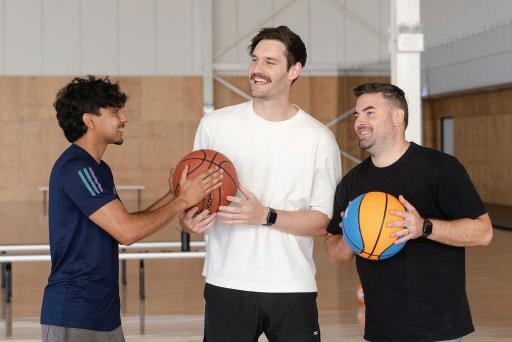
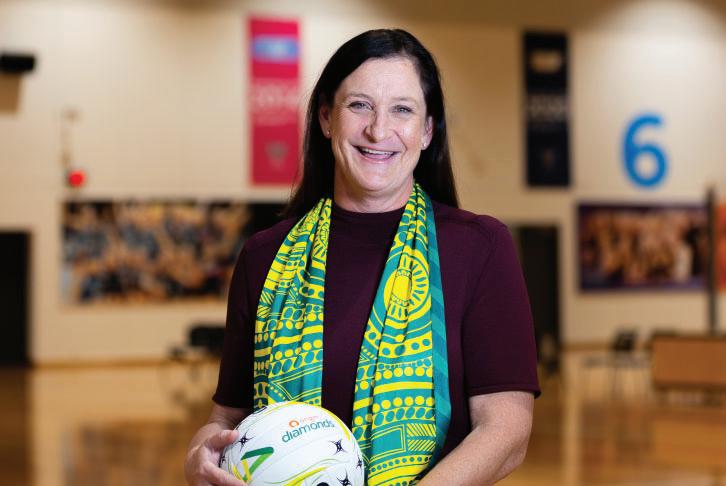
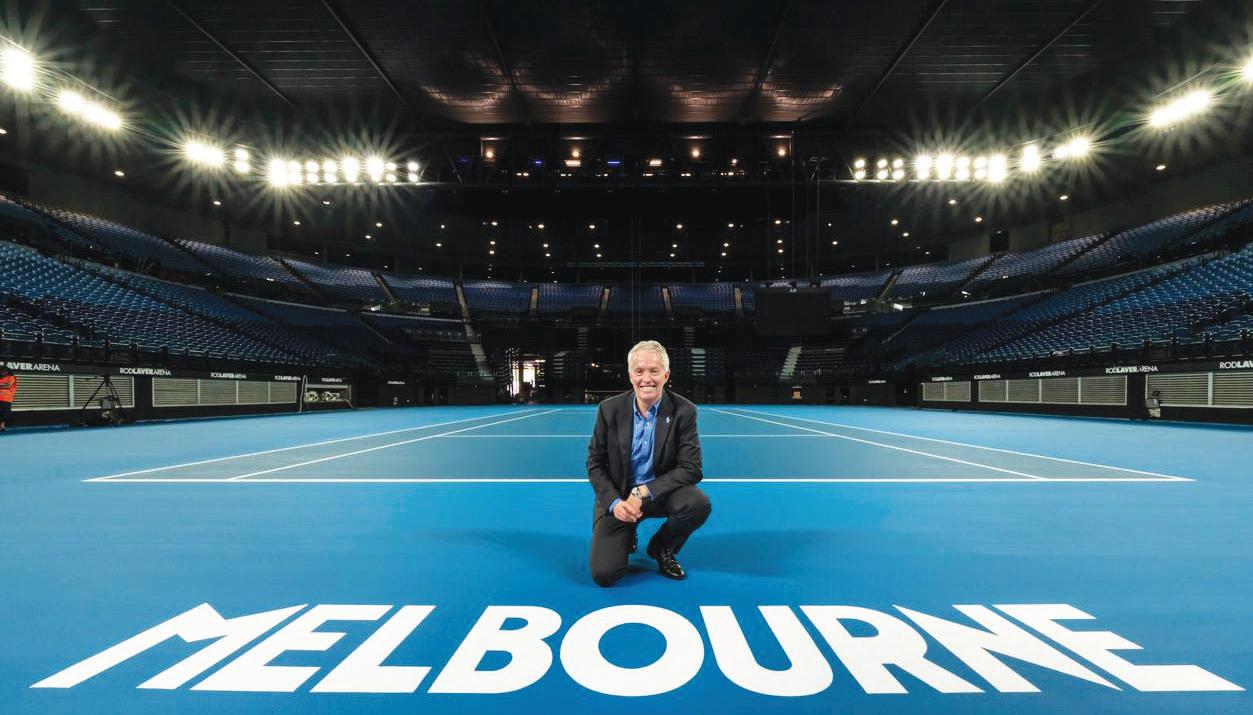
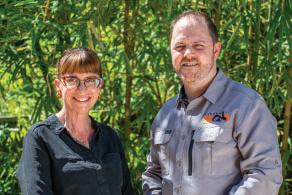
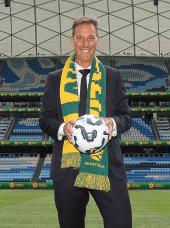
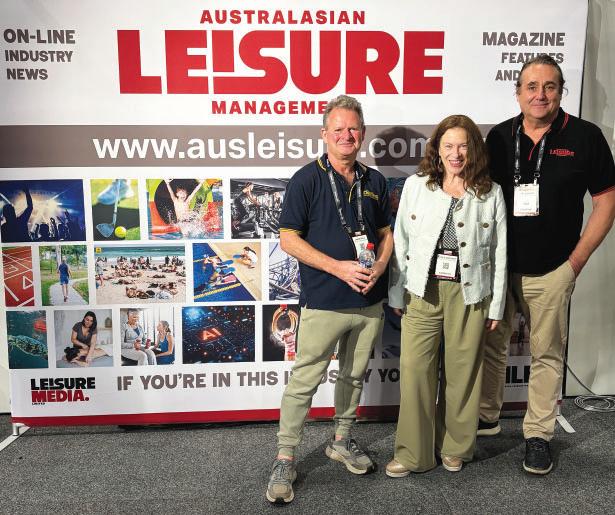
Arthur Stanley, Dr Neil Gibson, Wayne Goldsmith, Gwen Luscombe
Printed in Australia
Newstyle Printing Pty Ltd
41 Manchester Street, Mile End, SA 5031
T: 08 8154 3600, www.newstyleprint.com.au
Members of AALARA, APOLA, ARI NSW, ARQ, ASSA, AUSactive, ExerciseNZ, GCA, IAKS ANZ, LIWA Aquatics, the Sports and Play Industry Association, SWIM Coaches & Teachers Australia, the VMA and Royal Life Saving GSPO subscribers receive the magazine as a membership benefit.
The views contained in Australasian Leisure Management are not necessarily those of Leisure Media Limited or the Editor.
While every care is taken with advice given, Leisure Media Limited and the Editor can take no responsibility for effects arising therefrom. Views expressed by contributors may be personal and are not necessarily the views of their employers or professional bodies/associations.
Reflecting the changing ways that professionals and the wider industry are consuming media, this issue of Australasian Leisure Management magazine will be the last that we will print.
This choice will allow us to focus on our recent digital transformation, harnessing enhancement of the www.ausleisure.com.au website and our bi-weekly newsletters as our preferred channel.
Given our impressive readership across sectors including aquatics, attractions, entertainment, events, fitness, parks, recreation, sport, tourism and venues - and our reach through high levels of industry engagement, we will continue to deliver information essential to all who have a professional interest in this industry.
With Australasian Leisure Management B2B databases being one of the industry’s largest, along with an ever-expanding social media presence, our concentrated and focussed digital offering will benefit from revitalised resources to inform stakeholders who can continue to interact with our EDMs and daily updating of the website’s content.
In addition, the website (which has been completely free to access since October last year) will include feature content of the type previously published in the printed magazine and will offer enhanced opportunities for partners to amplify their message and build brand visibility.
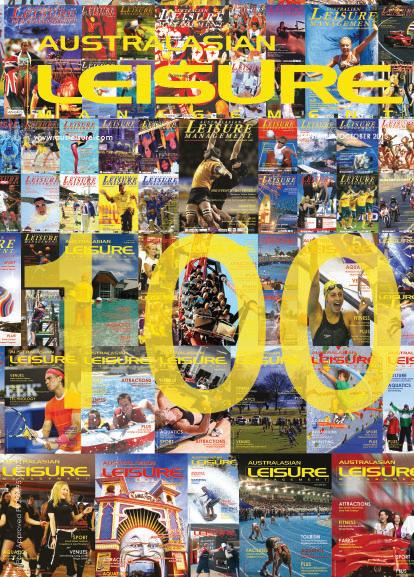
On page 74, we look back on the achievements of the printed Australasian Leisure Management since its launch in 1997.
Beyond that assessment, this issue has a focus on the future, with features charting challenges, opportunities and developments that will shape this industry moving forward.
Ownership Change
In addition to the move to a purely online offering, Australasian Leisure Management will, as of 1st April 2026, return to being owned by Publisher, Nigel Benton and myself under our Experience Beyond Media Pty Ltd (EBM) business.
The sale of the publication by SPASA (the Swimming Pool and Spa Association), which purchased the Australasian Leisure Management brand and its owning Australian Leisure Media Pty Ltd entity in late 2023, reflects SPASA entering the next phase of its growth as the peak member-based industry association for the swimming pool and spa sector in Australia and New Zealand. Focusing on their members and the many important services and events provided to support those members, will be SPASA's priority moving forward.
Bondi Beach attack
Occurring just after the last mailing of this magazine, the impact of the Bondi Beach attack of 14th December still reverberates.
The attack - which targeted members of the Jewish community as well as bystanders - cuts to the heart of Australia’s way of life: occurring during a community event on an area of public open space at a world famous location enjoyed by thousands of Sydneysiders and visitors every day.
As we did immediately after the attack, we extend our thoughts to the families, friends and community members experiencing profound grief and trauma following what was a senseless act of violence and acknowledge the pain being felt across the community.
We acknowledge the response of NSW Police, paramedics, hospital staff and emergency services, whose professionalism and courage were critical in protecting lives and managing the immediate aftermath.
We also join Royal Life Saving - Australia in paying tribute to the extraordinary bravery and lifesaving actions of those on the scene, including Waverley Council lifeguards and members of North Bondi Surf Life Saving Club, as well as community members who acted instinctively to provide assistance, first aid and support under extreme circumstances.
The willingness of individuals to step forward in moments of danger - to protect others and preserve life - speaks to the strength, leadership and humanitarian spirit that defines the Australian community.
Australasian Leisure Management is an Australian product, Australian owned and printed in Australia.
Since the attack, its implications have been felt at sporting and cultural events along with other mass gatherings, with heightened security to counter the ongoing threat challenge.
Karen Sweaney, Editor
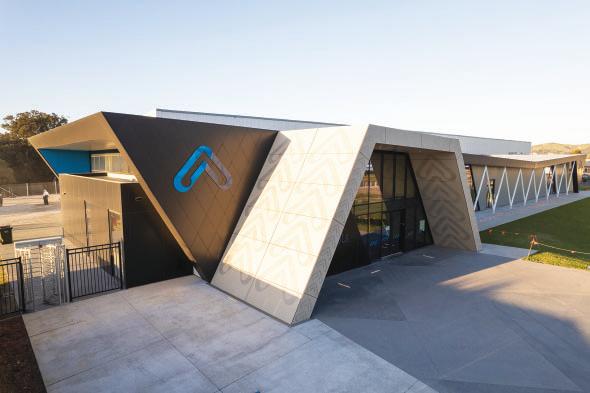
ParramattaAquaticCentre,Parramatta
Some of the industry headlines over recent
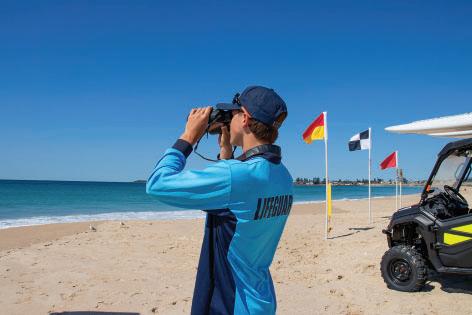
Local government lifeguards deliver majority of Australia’s beach safety efforts
A new report from the Coastal Safety Group (CSG) has revealed the scale of local government’s contribution to coastal safety, confirming that council-run professional lifeguard services provide the backbone of beach safety operations across NSW and Queensland.
Compiled from major coastal councils, the End of Year Report 2024/2025 shows that in-house council lifeguards collectively patrolled 28,905 days, supervised 52.2 million beach visits, performed 8,539 rescues, delivered 63,368 first aid treatments, and conducted 1.27 million preventative actions during the 2024/25 season.
New Derrimut 24:7 owners to invest over $80 million
Having acquired the Derrimut 24:7 gym chain, new owner Wes Maas has advised of a new era of investment and stability with a focus on quality for the group.
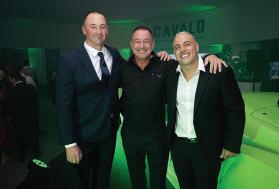
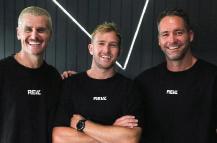
Maas (above left), along with partners Cameron Pascoe (centre) and Hass Fahd, took full ownership of the group in January, after creditors voted in favour of their proposal to acquire most of the business’ operations.
This followed the business having entered voluntary administration in November last year.
Retaining Derrimut 24:7’s brand identity and continuing its operations, Fahd, Maas and Pascoe will operate as an independent business alongside their Cavalo Prestige automotive group.
Speaking after the acquisition, Maas advised “we’re bringing stronger financial governance, improved systems and meaningful investment back to the gyms.”
Cavalo Prestige is Australia’s largest single-site, pre-owned prestige car dealership.
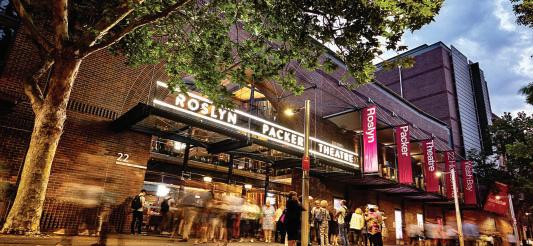
TTF spotlights impact of live entertainment
Research from the Tourism & Transport Forum (TTF) has revealed the importance of live performance as a driver of domestic and international tourism.
A survey undertaken with Pureprofile found that more than a third (36%) of Australians are crossing state borders each year to experience concerts, sporting matches, and other major events.
A further study on live theatre found that Australians are increasingly willing to travel significant distances to attend major productions, delivering measurable benefits to the visitor economy.
According to the TTF’s data, 42% of Australians say they are prepared to travel interstate to see a theatre production, while 14% would travel overseas for the experience.
Architects announced for Brisbane Olympic stadium
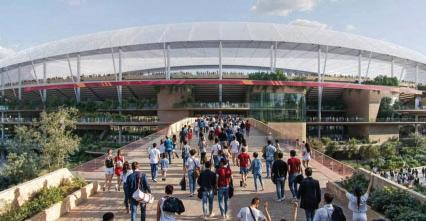
Brisbane’s 63,000-seat Olympic Stadium, set to be the centrepiece of the Brisbane 2032 Olympic and Paralympic Games, has taken a major step forward with the Federal and Queensland Governments announcing the appointment of an international architectural team led by COX Architecture, Hassell and Azusa Sekkei to deliver the long-awaited design of the landmark venue at Victoria Park.
IAAPA and MENALAC combine to launch IAAPA MENA
The International Association of Amusement Parks and Attractions (IAAPA) and the Middle East and North Africa Leisure and Attractions Council (MENALAC) have announced that they are to join forces to launch IAAPA MENA, strengthening support for visitor attractions in the region with the establishment of a new office in Saudi Arabia.
MENALAC has been an Australasian Leisure Management partner.
PARTNERSHIPS
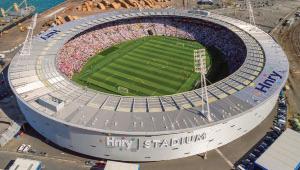
The Wellington Regional Stadium Trust has revealed accountancy service Hnry as the new naming rights sponsor of the Wellington Stadium - replacing New Zealand’s Sky Network Television Ltd.
Life Saving Victoria (LSV) and AUSTSWIM have announced the formalisation of a Memorandum of Understanding (MoU), marking a significant commitment to collaboration for the collective benefit of the Victorian aquatic industry.
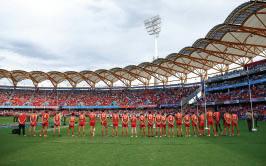
The Gold Coast SUNS have announced a new 10-year partnership with Stadiums Queensland, that will see the state government agency assume full management control of the People First Stadium in Carrara.
QSport has announced a two-year partnership with Griffith University that aims to deepen both organisations' commitment to advancing gender equity, leadership and participation in sport across Queensland.
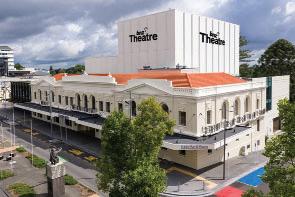
The newly-opened Waikato Regional Theatre has secured a new five-year naming rights partnership with Bank of New Zealand (BNZ), in collaboration with Live Nation New Zealand.
The Australian Olympic Committee (AOC) has partnered with the nation’s leading alpine destinations, with Mt Buller, Thredbo and Vail Resorts - including Perisher, Mt Hotham and Falls Creek - named as official ski resort suppliers for the Australian Olympic Team.
Planet Fitness Australia has commenced 2026 with a major new partnership that brings the AFL’s GWS Giants into its expanding community engagement program.
New Trade Union for Fitness Professionals
Concerned over fitness industry working conditions and the behaviour of employers and operators over contracts, superannuation and related issues, a new body has been created to represent the fitness workforce.
Registered under NSW’s Associations IncorporationAct2009,theAustralianUnion for Fitness Professionals Incorporated (AUFP) advises, via social media, that this is “the first time the fitness workforce has had a dedicated, legally recognised body representing its workplace interests and advocating for consistent professional standards.” Visit the AUFP website at www.aufp.org.au
Sea Otter Australia report highlights success of inaugural event
Sea Otter Australia has released its 2025 Festival Report, with the results confirming strong appetite for a world-class cycling and outdoor festival in regional NSW.
Held in Batemans Bay from 22nd to 24th October 2025, the event attracted thousands of riders, families, industry leaders and visitors to the Eurobodalla region.
Supported by Destination NSW, Sea Otter Australia 2025 received funding through the Incubator Stream of the NSW Regional Event Fund 2025/26.
Athletics bodies announce latest merger plans
Australian Athletics and Little Athletics Australia have announced that they have reached an agreement-inprinciple to unify athletics at a national level.
Following progress earlier this year to align the 2026 national championships in Brisbane, Australian Athletics and LAA have continued working closely on building a stronger future for the sport to ensure growth.
Despite several false starts on a merger over recent decades, Australian Athletics and Little Athletics have now agreed on key terms to form a single national organisation that will operate under the name ‘Australian Athletics’.
Naming for WAAPA’s new Centre for Performance Excellence
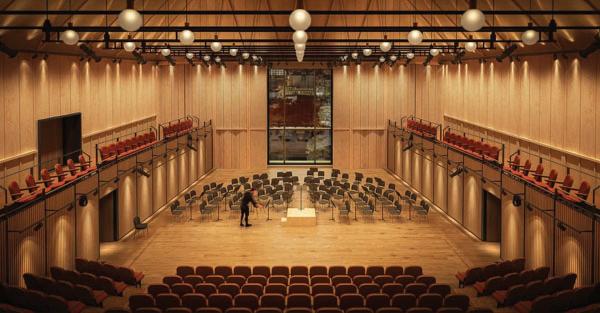
Edith Cowan University (ECU) has unveiled the name of its state-of-the-art performing arts facility for the Western Australian Academy of Performing Arts (WAAPA) at the new ECU City campus.
To be known as the Minderoo Centre for Performance Excellence, the name recognises the significance of the University’s $30 million philanthropic partnership with Minderoo Foundation.
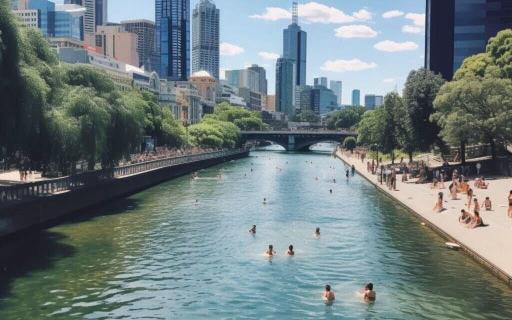
City of Melbourne joins Swimmable Cities alliance
The City of Melbourne has signed up to the Swimmable Cities alliance’s Swimmable Cities Charter, committing to restore the health of the Yarra River/Birrarung for swimming by 2050.
Making a clear statement of its ambition to restore the river’s health for public use, a Future Melbourne Committee meeting in December saw the council outline its long-term plan to adhere to the Charter, a public commitment to uphold communities’ right to swim.
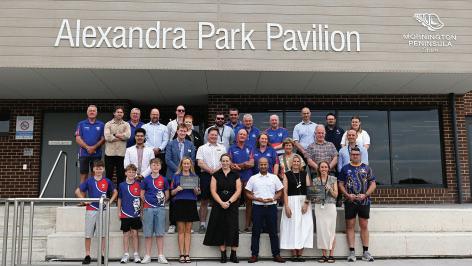
Alexandra Park Pavilion named Victoria’s Best Community AFL Facilities Project
The Mornington Peninsula Shire’s redevelopment of Alexandra Park Pavilion has been awarded the 2025 AFL Victoria Best Community Football Facilities Project.
Announced by AFL Victoria, the award recognised the redevelopment of Alexandra Park - a collaborative effort between Mornington Peninsula Shire Council, the Victorian and Federal Governments, community groups and AFL Victoria.
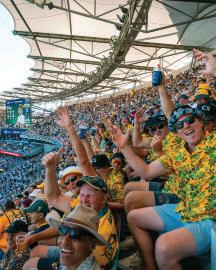
Stadiums Queensland welcomed nearly four million patrons during 2025
Stadiums Queensland’s venues have rounded out a remarkable year hosting everything from grassroots sport to global events - welcoming more than 3.8 million patrons through the doors and solidifying Queensland’s reputation as the leading destination for major events.
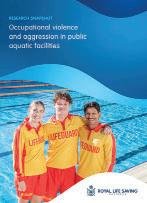
Royal Life Saving research shows need for stronger response to violence and aggression
New research from Royal Life Saving - Australia has highlighted the need for stronger protections, training, clearer policies and nationally consistent messaging to protect workers from occupational violence and aggression at public pools.
The research, which reveals the scale of occupational violence and aggression (OVA) directed at lifeguards, swim teachers and frontline staff in public aquatic facilities across the country, analyses incident data from 250 public aquatic facilities with representation across every Australian state and territory and extrapolates the findings.
Creative
New Zealand research shows
decline in consumer spending and arts engagement
Giving a comprehensive snapshot of New Zealanders’ engagement with arts and culture, Creative New Zealand’s latest Audience Atlas research shows declines in average spending and engagement while highlighting barriers to engagement and potential donors who are waiting to be activated.
BlueFit praises staff following multiple emergency responses
BlueFit has acknowledged the professionalism and decisive actions of its facility teams and first responders following two separate February incidents at aquatic centres in NSW and South Australia.
Emergency services attended Oran Park Leisure Centre in NSW and the Salisbury Aquatic Centre in South Australia, after patrons required urgent assistance while using the facilities. In both cases, lifeguards and facility staff responded immediately, working alongside emergency services to manage the situations safely.
Thanks to the swift and coordinated response, BlueFit has confirmed that the individuals involved in both incidents are receiving appropriate care and are recovering well.
COMMERCIAL AQUATIC SOLUTIONS.
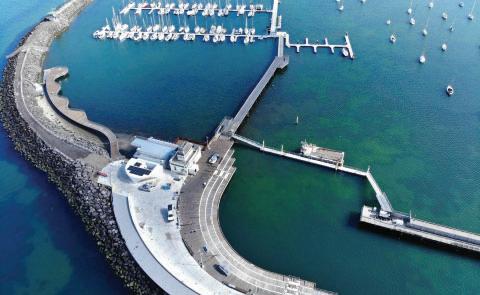
St Kilda Pier surpasses one million visitors
Just over a year after reopening, Melbourne’s redeveloped
St Kilda Pier has firmly established itself as one of Victoria’s most visited public leisure assets, attracting more than one million visitors and strengthening the city’s bayside tourism offering.
Since opening in December 2024, more than 1.2 million locals and visitors have accessed the pier, averaging around 95,000 visits per month, with March 2025 emerging as the busiest period.
REVL Training charts expansion roadmap
Leading Australian fitness franchise REVL Training has announced the successful conclusion of 2025 - highlighting strong network growth; the launch of its new global competition platform; and a roadmap for accelerated expansion and consolidation in 2026.
REVL now operates 46 high-performance functional fitness studios across five markets: Australia, Singapore, Malaysia, South Korea and Dubai. REVL is built on a programming model that has been refined over five years to prioritise both member results and sustainable studio profitability.
Facing consumer law change
AUSactive highlights that ‘gyms aren’t online businesses'
AUSactive has highlighted its objection to proposed consumer law reforms that would treat gym owners in the same way as global streaming services.
The debate comes as the Federal Government advances a new unfair trading practices framework aimed at banning ‘dark patterns’ that make it difficult for consumers to exit subscriptions. While the reforms have largely been framed around online platforms, Federal Assistant Competition Minister Andrew Leigh has indicated gyms would be within scope, placing the sector firmly in the regulatory spotlight.
Finely Tuned mark 20 years
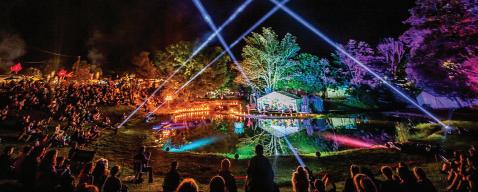
Sydney-based promoter and events company Finely Tuned are marking 20 years in business off the back of a recordbreaking summer, selling 70,000 tickets in a single month across the Lost Paradise festival, their new warehouse series
The Works and a packed run of national headline shows.
Founded in 2006, Finely Tuned has grown from grassroots parties into one of the country’s most influential culture-led live music operators, now spanning festivals, touring, largescale events and brand activations.
Hamilton Island sold to USA-based private equity firm Blackstone
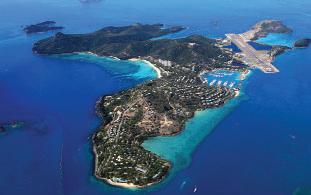
Hamilton Island in Queensland’s Whitsunday Islands, is set to enter a new chapter after USA-based private equity giant Blackstone Inc. agreed to acquire the integrated resort from the Oatley family in a transaction reportedly valued at about $1.2 billion.
The landmark deal, now subject to customary regulatory approvals, marks a significant moment for Australian tourism as global capital continues to flow into premium experiential assets.
TreeClimb expands with new Hobart venue
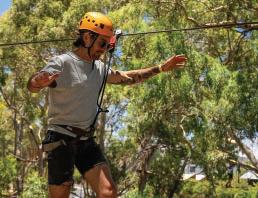
Adventure tourism operator, TreeClimb, is constructing a new venue in Hobart, marking a major milestone in the company’s rapid national expansion.
Until now, TreeClimb has operated exclusively in Adelaide, Salisbury and Kuitpo Forest, establishing a reputation as South Australia’s leading aerial adventure experience.
The highly anticipated Hobart venue will be TreeClimb’s first interstate site, with two more to follow in Queensland’s Logan Gardens and Hervey Bay.
This new wave of expansion follows a year of significant growth for the operator, after TreeClimb Founder and Managing Director Seb Packer’s recent acquisition of the Otway Fly and Illawarra Fly Treetop Adventure parks in Victoria and NSW.
Chris Stussy and THE WORKS. Supplied: Finely Tuned.
AQUATICS
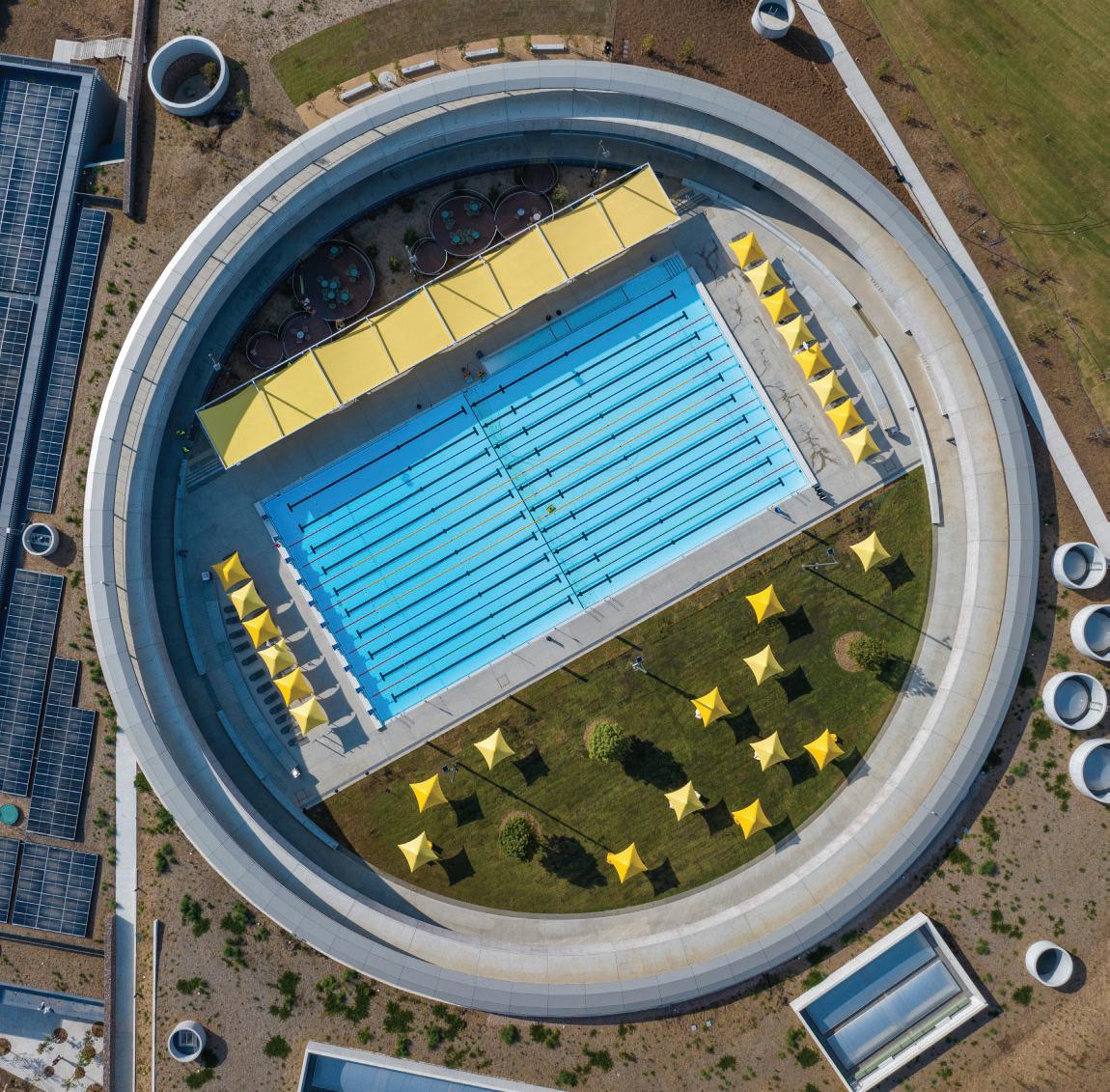
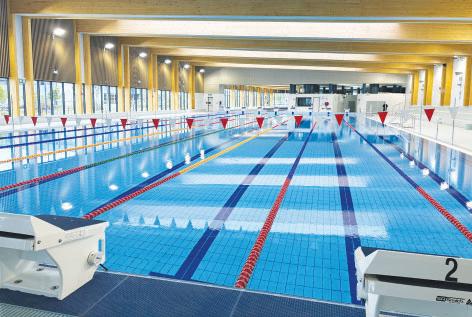
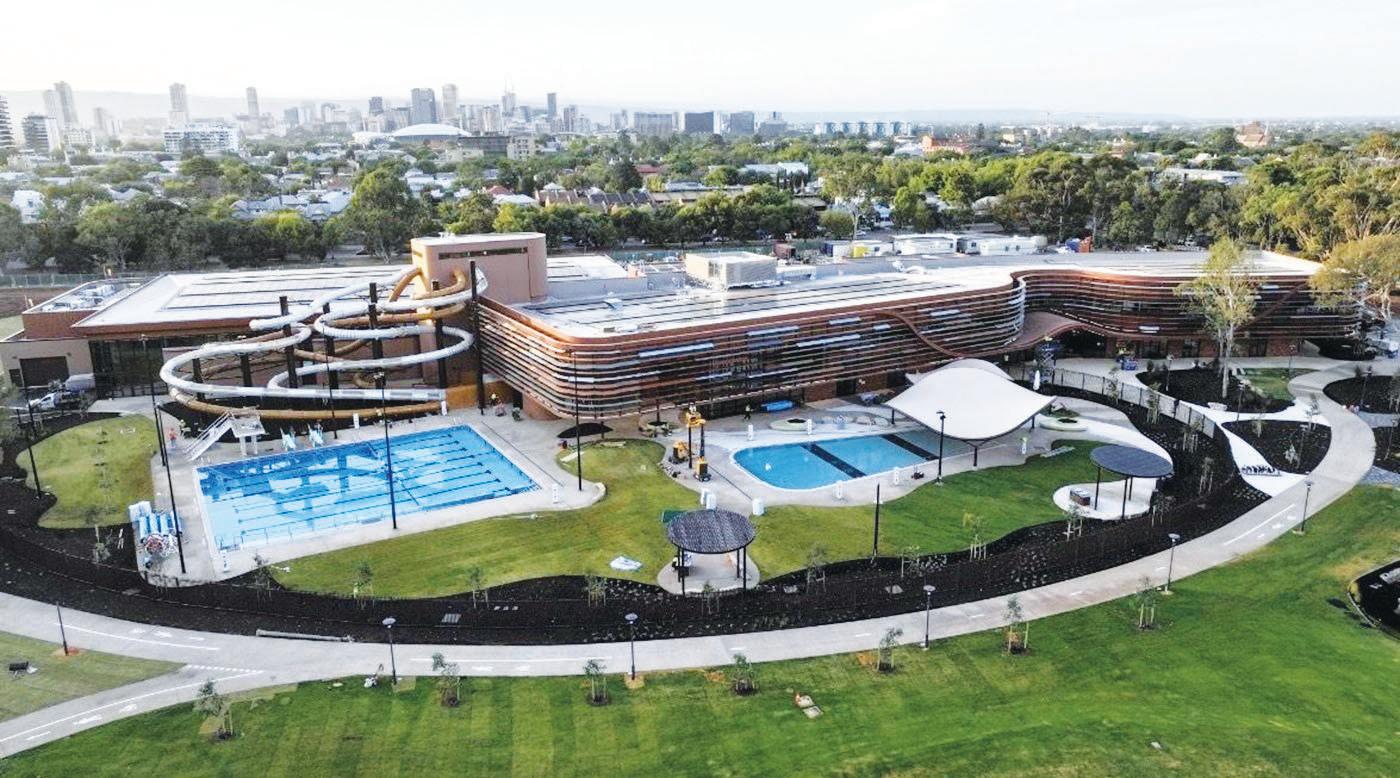
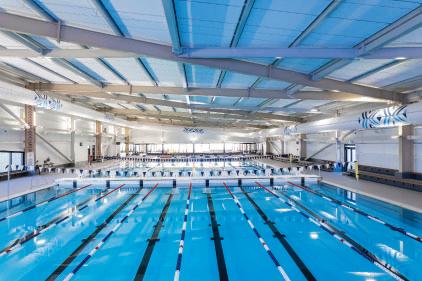
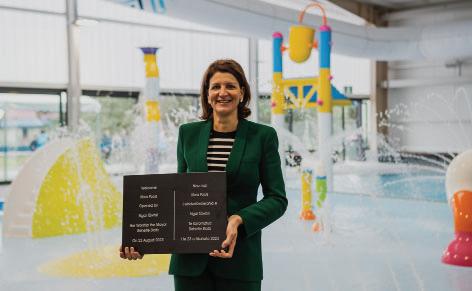
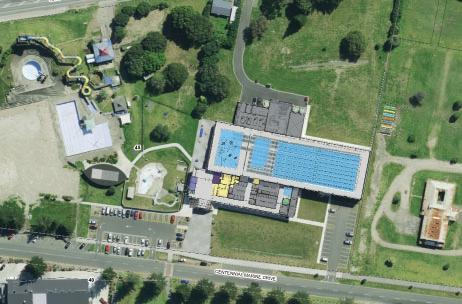
More than 10,000 people passed through the doors of the new Adelaide Aquatic Centre (pictured above) when the longawaited $135 million facility opened at the end of January. The new facility offers indoor and outdoor aquatic spaces designed to cater for users including elite athletes; learn-toswim students; families; casual swimmers and exercisers.
iore Recreation and S
Christchurch’s Parakiore Recreation and Sport Centre - the largest indoor aquatic, recreation and sport facility in the Southern Hemisphere - is now officially open to the public.
ARTS
The Adelaide Festival Centre has reopened after the completion of a $55 million renovation of its seating, staging and foyers.
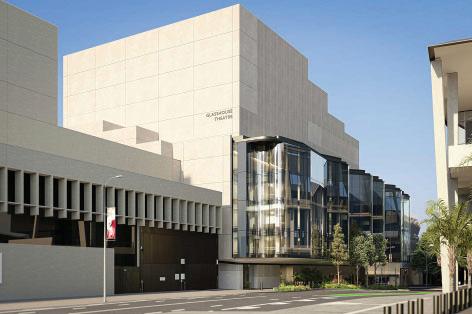
Making the venue the largest performing arts centre under one roof in Australia, the new Glasshouse Theatre at the Queensland Performing Art Centre is set to open on 27th March.
The $1.7 billion Melbourne Arts Precinct Transformation project will see the reopening of the Art Centre Melbourne’s renowned State Theatre six months ahead of schedule, making it the project’s first completed milestone.
FITNESS
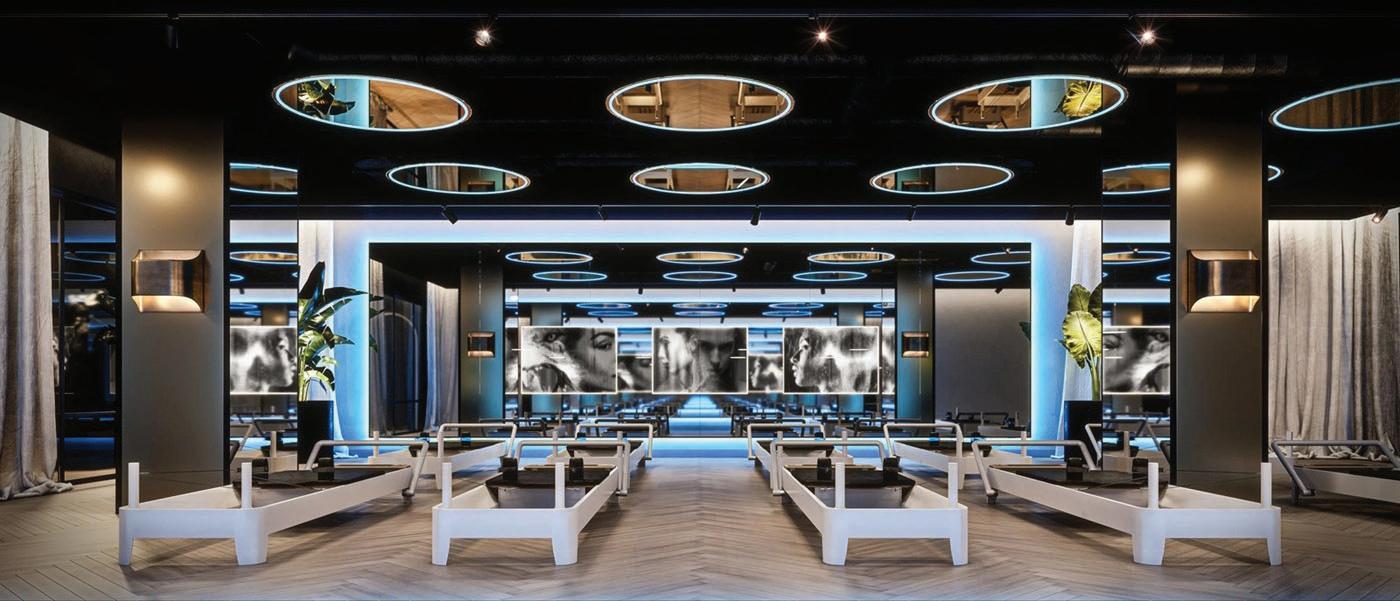
The Gurner Group is counting down to the opening of its exclusive private club concept, Saint Haven, in North Sydney (pictured above).
Anytime Fitness is set to open Australia’s first gym in an airport terminal, located in arrivals at T1 International at Sydney’s Kingsford Smith Airport.
TotalFusion, is preparing to make its Victorian debut, revealing the upcoming opening of an expansive multi-level health and wellness destination in the Melbourne Docklands.
ATTRACTIONS
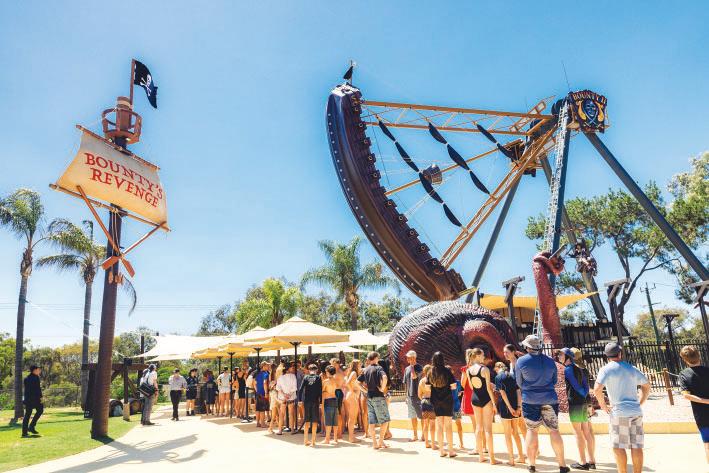
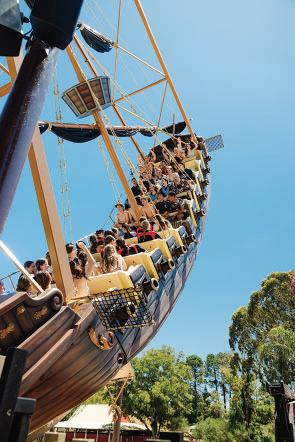
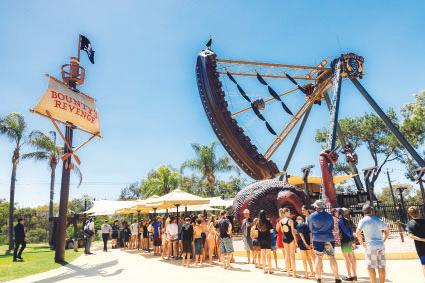
Perth’s Adventure World has launched its latest attraction - the new and improved Bounty’s Revenge. Manufactured by HUSS Park Attractions, Germany, Bounty’s Revenge accommodates up to 50 riders per cycle and is suitable for a broad range of ages and thrill levels.
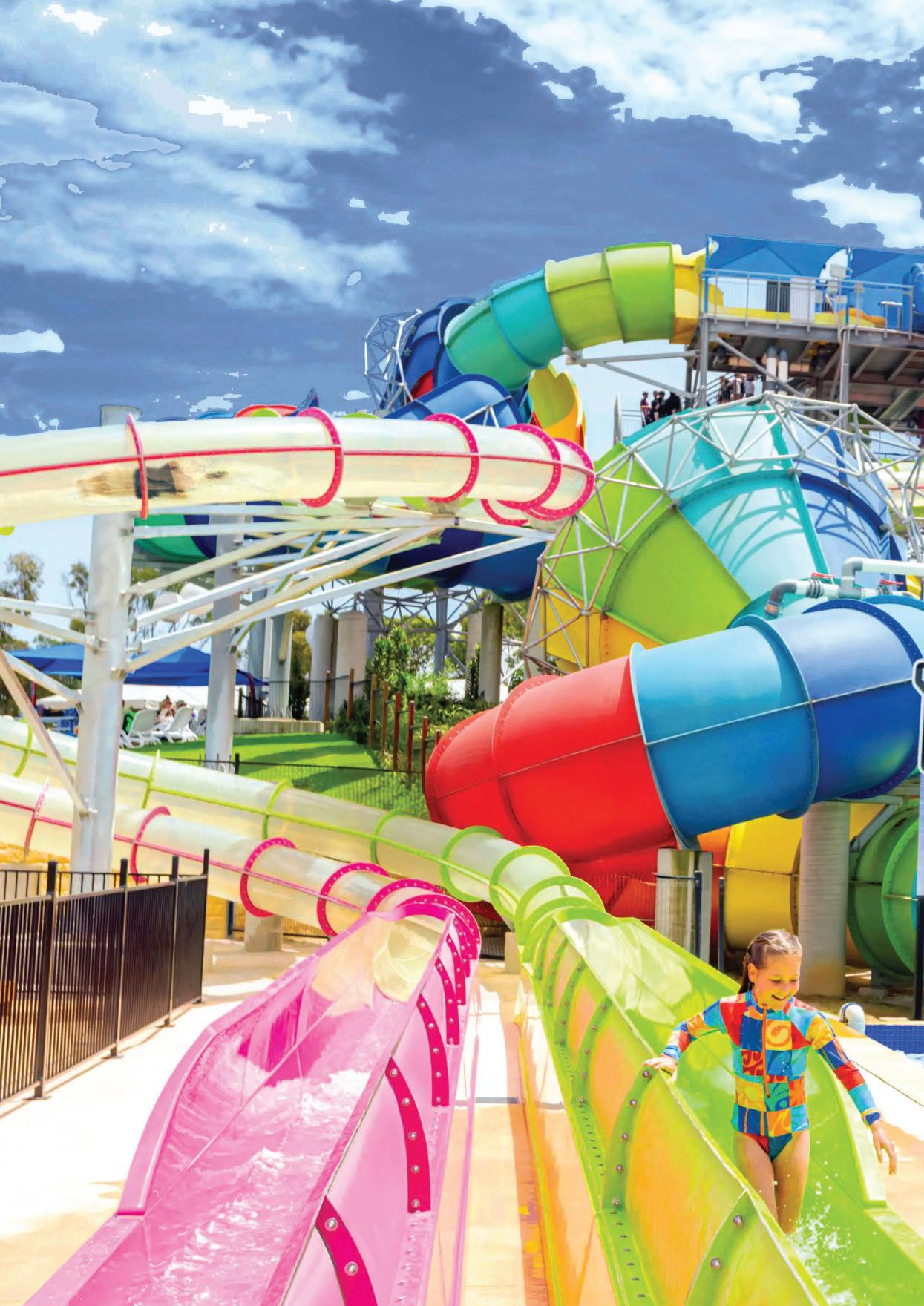
Gold Coast waterpark Wet’n’Wild has opened its new Zoom Zone slide tower - introduced four new body slides for guests.
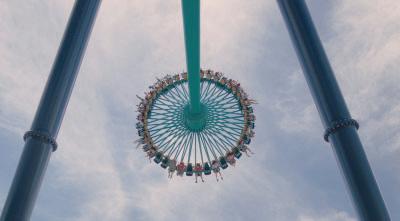
Dreamworld has opened its Intamin manufactured King Claw swing ride.
Coffs Harbour attraction The Big Banana Fun Park has opened its new $5.8 million Plantation Coaster - the attraction’s largest ride investment in decades.
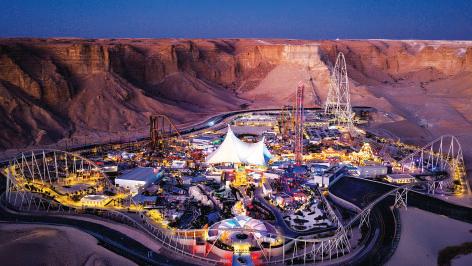
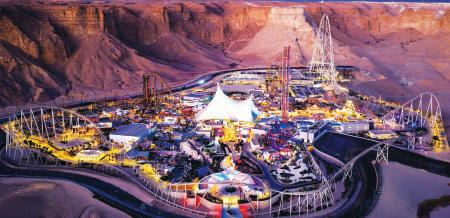
Saudi Arabia has marked a major milestone in its attractions and tourism strategy with the official opening of Six Flags Qiddiya City, the first Six Flags theme park designed and built outside North America and the inaugural attraction within the vast Qiddiya City development near the Kingdom’s capital of Riyadh.
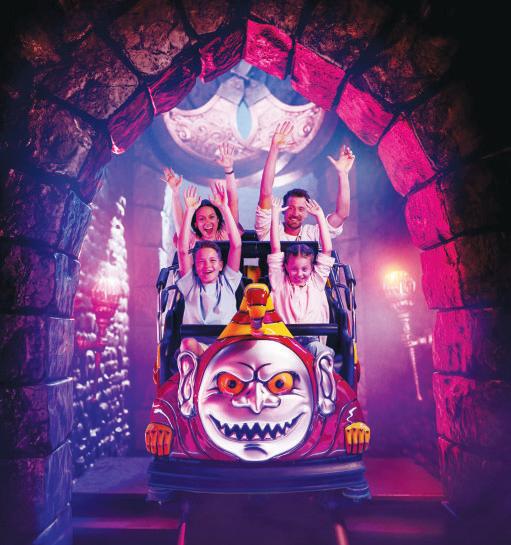
Warner Bros. Movie World has seen a busy summer of developments with the reopening of its Scooby Doo Spooky Coaster and the launch of its Spy Chase Stunt Show.
VENUES
Bundha Sports Centre, in North Fitzroy has opened - delivering Melbourne inner north’s newest destination for sport, fitness and community connection.
Marking one of the most significant private cultural infrastructure investments in Australia in recent years, Tasmania’s Museum of Old and New Art (MONA) has unveiled its new $100 million expansion wing.
Described as representing a ‘game-change’ for business events in Australasia, the New Zealand International Convention Centre (NZICC) has opened in Auckland.
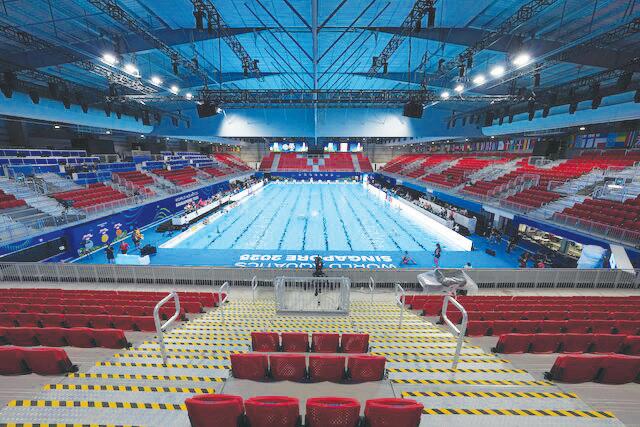
Singapore’s World Aquatics Championships (WCH) Arena, originally conceived as a temporary venue for the 2025 World Aquatics Championships, will now remain in place until 2030, extending its legacy as a premier aquatic facility within the Singapore Sports Hub precinct.
ldh
lbourne Arts Precinc
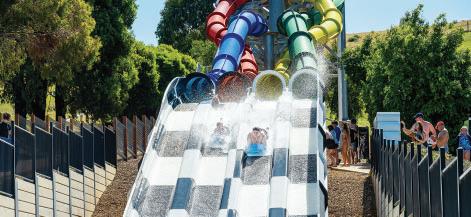
Funfields hosts Australia’s first National Waterslide Day
Victoria’s Funfields water theme park has marked Australia’s inaugural National Waterslide Day, a new celebration inviting thrill-seekers to race and set history-making records on one of Victoria’s most popular waterslide attractions.
The inaugural event challenged visitors to set the very first official waterslide record on the park’s high-speed Kraken Racers, a benchmark that can be broken in future years as National Waterslide Day becomes an annual summer tradition.
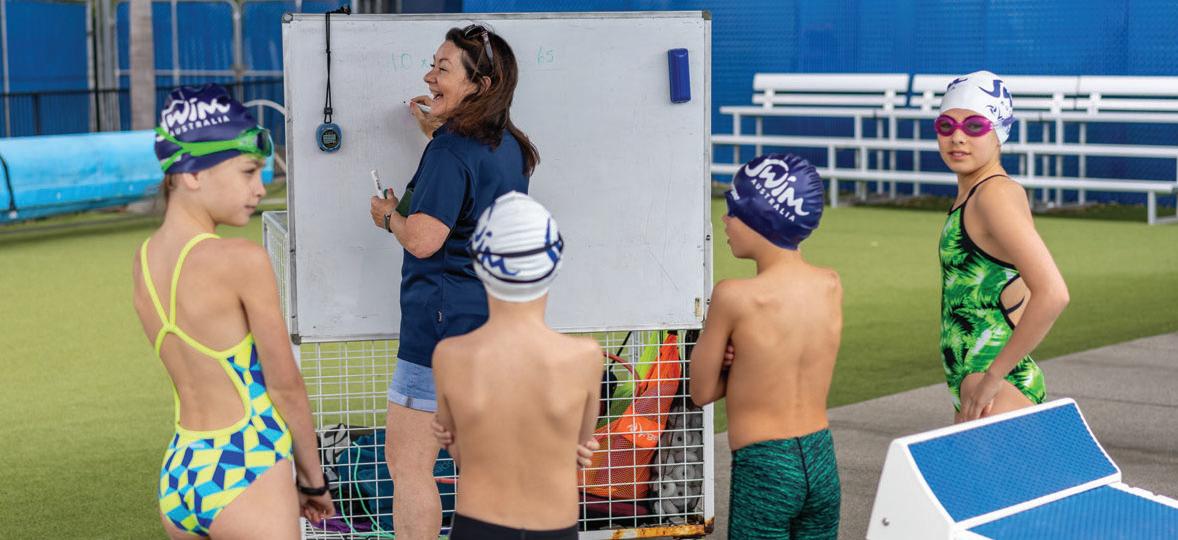
Royal Life Saving and Swim Coaches and Teachers Australia partner to support stronger swim schools
Royal Life Saving - Australia and Swim Coaches and Teachers Australia (SWIM/SCTA) have announced a new industry collaboration designed to strengthen community safety by supporting stronger, safer swim schools across Australia. Through to 30th June 2026, all SWIM members will be provided access to the Guidelines for Safe Pool Operations (GSPO), ensuring swim schools nationwide can align their facilities and operations with nationally agreed best practice for safe aquatic design and management.
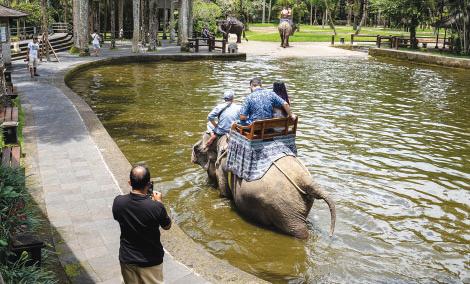
Indonesia bans elephant riding in landmark animal welfare move
Indonesia has introduced a nationwide ban on elephant riding and related attractions, marking a significant shift in wildlife tourism policy and animal welfare standards across the country.
In a move described as world-leading for the region, the Indonesian Government has formally ended elephant riding at all conservation and tourism facilities, requiring operators to transition to ethical, observation-based experiences.
Mason Elephant Park in Bali, one of the final venues in Indonesia to offer elephant rides, ceased the activity on 25th January 2026 after receiving formal warnings from authorities.
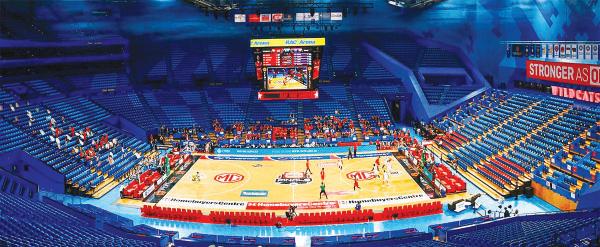
Perth’s redeveloped WACA Grounds opens
Blending aquatics, sport, wellness and lifestyle offerings, Perth’s redeveloped WACA Grounds is now open following the completion of the $189 million WACA Ground Improvement Project. The upgraded venue ushers in a new chapter for cricket in Western Australia while honouring more than 130 years of history.
A state-of-the-art High-Performance Centre is at the heart of the precinct, featuring a 10-lane indoor centre and elite training amenities while the project also introduces The Pavilion - a new aquatic and wellness zone, complete with a resort-style pool, waterslides, splash park and fully equipped gymnasium and group fitness studios
The Western Australian Government has confirmed that the new aquatic and fitness facilities at the precinct will require taxpayer support during their initial years of operation, with forecast operating losses of $840,000 over the first three years.
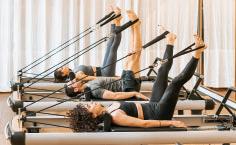
Reformer Pilates identified as Australia’s most expensive fitness activity
Reformer Pilates has been identified as Australia’s most expensive weekly fitness class, with an average cost of $72.67 nationwide while IRONMAN events top the list as the costliest fitness/mass participation event at $630 per participant.
The newly released research from health insurance comparison service, iSelect, shows that the cost of Reformer Pilates surpasses other popular group fitness classes with a weekly average cost of $59.88 and CrossFit at $60.37 per week. The survey found Canberra was the most expensive location for Reformer Pilates classes, with an average weekly cost of around $82 a week, followed by Sydney at $77 a week and Melbourne at $75.20 a week.
Australia Moves Towards First National Community Sport Infrastructure Plan
Australia is taking a significant step towards a more coordinated and sustainable approach to community sport facility provision, with the development of the nation’s first National Community Sport Infrastructure Plan now underway.
Led by the Australian Sports Commission (ASC), the Plan is designed to support more informed, consistent and collaborative decision-making about how community sport infrastructure is planned, funded, upgraded and used across the country. It forms a key pillar of Play Well, the ASC’s sector-designed national participation strategy, which aims to ensure everyone has a place in sport.
Credit: World Animal Protection ANZ/Andito Wasi.
SEG completes Wildcats sale
Sports Entertainment Group (SEG) has finalised the sale of the Perth Wildcats, completing a staged divestment that transfers full ownership of the National Basketball League (NBL) club to Perth-based technology entrepreneur Mark Arena.
The transaction, completed through Arena’s private investment vehicle MT Arena Capital Investment, realises a total value of $39.5 million for SEG across four tranches, bringing to a close a process that began in August 2024.
Viva Leisure posts strong half year results
ASX-listed fitness operator Viva Leisure Limited has delivered a robust set of half-year results for the period ending 31st December 2025, reporting healthy revenue growth, a marked increase in profitability and continued momentum across its fitness and technology business segments. The company - which operates one of Australia’s largest multibrand fitness networks spanning Club Lime, Plus Fitness, World Gym and several boutique formats - reported revenue of $116.5 million, up 17.6% on the prior corresponding period. Statutory net profit after tax (NPAT) surged 168% to $5.2 million, while underlying NPAT climbed 46.8%, reflecting improved operational efficiency and profitable growth.
FIBA launches new FIBA Sustainability Strategy
Basketball’s world governing body FIBA has announced that it will place innovation and sustainability at the heart of its activities for the period 2025-2029.
Its newly endorsed Sustainability Strategy for 2025 to 2029 sees FIBA reinforce its commitment to delivering responsible governance, environmental stewardship and positive social impact across the global basketball community.
Uncertainty over status of
Canberra’s Big Splash waterpark
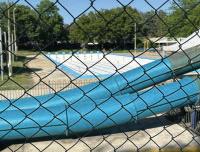
The future of Big Splash Waterpark Canberra remains unresolved as the ACT Government pursues compliance action against the facility’s leaseholders amid renewed political scrutiny and intensifying community calls for intervention.
Canberra’s only outdoor waterpark has remained closed since the 2023/24 summer season, with deteriorating infrastructure and vandalism increasingly evident across the idle site.
NSW music alliance launches MyGigPass
A new initiative aimed at rebuilding live music audiences and making gig-going more accessible for younger generations has been launched in NSW with the rollout of MyGigPass - a state-wide live music discovery and ticketing program targeting 18-25-year-olds.
Presented by the Live Music Venues Alliance (LMVA) with support from the NSW Government, MyGigPass is designed to connect music lovers with live performances, affordable ticket offers and curated gig information from venues across the state. The initiative aligns with broader efforts to support the local live music ecosystem, complementing programs such as Great Southern Nights 2026, which is expected to deliver more than 300 gigs across NSW later this year.
Extreme heat poses growing risk to tourism, sport and recreation in the Northern Territory
Escalating extreme heat driven by climate change is emerging as a significant threat to the Northern Territory’s liveability - with serious implications for tourism, sport, recreation and outdoor economies that underpin the region’s identity and livelihoods.
A newly released joint statement by Climate Justice Alliance NT (CJA NT) on National Extreme Heat Awareness Day warns that without urgent and coordinated government action, parts of the Territory - particularly the Top End - could become effectively uninhabitable by as early as 2070.
The statement responds to findings from the National Climate Risk Assessment (NCRA), which identifies extreme heat as one of the most severe risks facing the Territory.
Audit Office of NSW report identifies failings of council aquatic and recreation projects
A newly released report from the NSW Auditor-General has revealed that key aquatic and recreation projects figure among three in four major local government projects delivered late or over budget.
The report from the Audit
Office of NSW reveals that less than one-quarter of projects costing more than $30 million are delivered on time and within budget.
Examining NSW’s 128 councils the report shows just seven of the 29 major projects worth $30 million or more were on time and within budget.
SafeWork SA charges
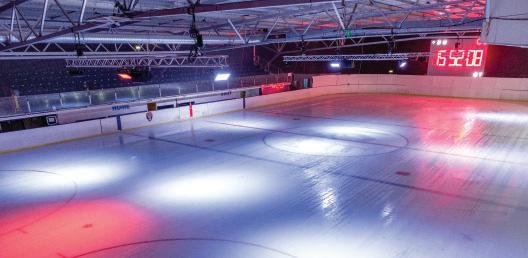
Adelaide Ice Arena over carbon monoxide incident that hospitalised over 40 patrons
Adelaide Ice Arena has been criminally charged following a serious carbon monoxide exposure incident during a 2024 Australian Women’s Ice Hockey League (AWIHL) match.
SafeWork SA has filed charges against Adelaide Ice Arena Pty Ltd under a Category 2 offence of the Work Health and Safety Act, alleging the venue failed to ensure that people were not placed at risk by work carried out on site. The charges stem from the 10th February 2024 match between the Adelaide Rush and Melbourne Ice, during which more than 40 players spectators, and staff were hospitalised after reportedly inhaling significant levels of carbon monoxide.
Sport NSW launches landmark report on value of community sport and recreation
Sport NSW has launched Beyond the Game: The Value of Community Sport and Active Recreation in NSW at the 2026 NSW Sports Industry Conference, revealing for the first time the full scale of community sport’s contribution to the state.
The comprehensive report finds that community sport and active recreation deliver $34.7 billion in annual social, economic and health benefits to NSW, equivalent to more than $4,039 for every resident.
In a first for NSW, independent research conducted by the University of Technology Sydney identified the key impacts of community sport and assigned credible dollar values to each, providing a robust evidence base for future investment and policy decisions.
S1 Training ordered to pay $175,000 for music copyright infringement
Sydney-based boutique fitness operator S1 Training has been ordered to pay more than $175,000 in damages after the Federal Circuit and Family Court of Australia found it had repeatedly played unlicensed music during group fitness classes across multiple sites in NSW and Victoria.
The action was brought by the Australasian Performing Right Association (APRA), which licenses and administers performance rights for the vast majority of commercially available music in Australia.
AFL and Telstra to trial tracking technology at Marvel Stadium
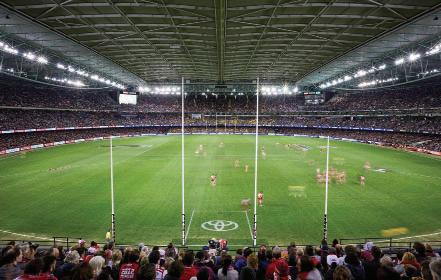
The Australian Football League (AFL) and Telstra have announced a major sports technology initiative that will see advanced optical tracking systems trialled at Marvel Stadium, positioning the Melbourne venue as a national test-bed for nextgeneration data, officiating and fan-experience innovation.
Delivered through a new two-year partnership with sports analytics specialist Champion Data, the program will involve the installation of more than 40 high-definition cameras throughout the stadium, dramatically expanding the league’s existing 14-camera ball-tracking capability.
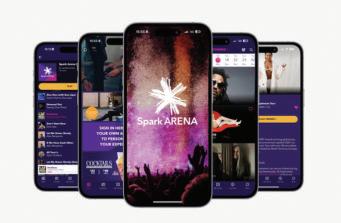
Spark Arena looks to enhance fan experience with new all-in-one mobile app
Auckland’s Spark Arena has launched a new mobile app providing a digital one-stop-shop to streamline fans’ live entertainment journey.
Aimed at reshaping the live event journey for concertgoers and strengthening digital engagement across the venue’s operations, the initiative reflects a broader shift among major venues toward integrated digital ecosystems designed to improve customer experience while supporting operational efficiency.
Test cricket heads to Northern Australia
Mackay will become the latest venue to host Test cricket in Australia when the city’s Great Barrier Reef Arena stages a match in the 2026 NRMA Insurance Men’s Test Series against Bangladesh in August.
Mackay’s elevation to Test status is set to bring national attention to the region, boost visitation during the northern winter and showcase the Arena’s facilities.
The first match in the series will be held at Marrara Stadium in Darwin, marking the first Test match in the Northern Territory in more than two decades.
VMA introduces new venue innovation prize for 2026 Industry Awards
Opening nominations for its annual Venue Industry Awards, the Venue Management Association (Asia and Pacific) has announced a new award category: the Venue Innovation Award.
The premier awards program for the venue management industry in the Asia-Pacific region, since 2010 the Awards have been showcasing the best of the industry’s talent across three categories: Venue Professional of the Year; Allied Professional of the Year and Young Achiever of the Year (for under 30s).
The VMA’s 2026 Asia-Pacific Venue Industry Congress is also to be staged from 14th to 16th June at the Adelaide Convention Centre.
Federal Government looks to drive $230 billion Visitor Economy target
The Federal Government has unveiled the next action plan under THRIVE 2030, Australia’s national long-term strategy to grow the visitor economy to $230 billion in annual visitor expenditure by 2030.
The updated action plan outlines the Federal Government’s ongoing commitment to strengthening Australia’s travel and tourism industry through coordinated investment, workforce development, destination marketing and infrastructure growth.
With the visitor economy comprising more than 360,000 businesses and employing around 700,000 Australians, the sector remains central to the nation’s economic resilience and regional prosperity.
Woodford Folk Festival spotlights its record recycling results
Woodford Folk Festival has spotlighted its record recycling efforts from its 2025/26 event having saved 120,000 containers from landfill, smashing the previous year’s collection of 90,000 containers.
As part of its commitment to keep its waste footprint to a minimum, Woodfordia Inc, the organisation behind the festival, has partnered with Containers for Change since 2022 to recycle more than 340,000 containers.
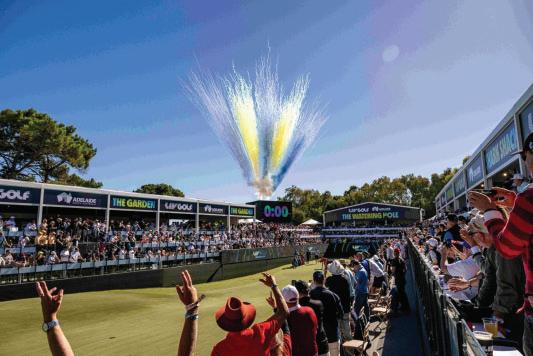
LIV Golf Adelaide breaks attendance records
LIV Golf Adelaide has carved its place in Australian sport history, setting a new attendance benchmark for professional golf in the country and underscoring the growing appetite for elite sporting experiences in regional markets.
The four-day tournament, staged at Adelaide’s The Grange Golf Club from 12th to 15th February, attracted an unprecedented 115,000 spectators, eclipsing the 112,000 attendance recorded at the 2025 Australian Open and establishing LIV Golf Adelaide as the best-attended professional golf event ever held in Australia.
The record turnout follows LIV Golf’s strategic partnership with global discovery and ticketing platform Fever, appointed in August 2025 as the official global ticketing and demand-generation partner for the series.
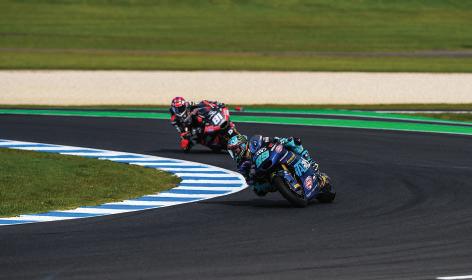
South Australia snatches Australian Motorcycle Grand Prix from Victoria
South Australia has secured a major events coup, confirming the Australian round of the MotoGP World Championship will relocate to Adelaide from 2027, ending nearly three decades at Victoria’s Phillip Island.
The South Australian Government announced that the Australian Motorcycle Grand Prix will move from the Phillip Island Grand Prix Circuit to a revived and modified Adelaide Street Circuit, returning top-tier international motorcycle racing to the city’s historic Grand Prix layout.
The event will be staged across three days in November 2027, scheduled ahead of the bp Adelaide Grand Final supercars event to maximise circuit utilisation and reduce disruption. The planned layout is expected to measure approximately 4.195 kilometres with 18 turns, with projected top speeds exceeding 340km/h.
Heading in the Right Direction
Shaun Krenz considers
the
implications of the 2026 Australian Fitness Trends report
Every year, the Australian Fitness Trends Report drops and the industry collectively does the same thing: we scan the rankings, nod at the ones we expected, raise an eyebrow at a couple of movers, and ask the bigger question: what does this actually mean for how we coach, program and run businesses over the next few years?
The 2026 Australian Fitness Trends Report reflects refinement rather than reinvention. There is no flashy new modality threatening to “change everything overnight.” Instead, what it shows is something far more telling: consolidation. The trends that matter most are tightening their grip, and the industry is maturing around them.
In short, fitness in Australia is growing up.
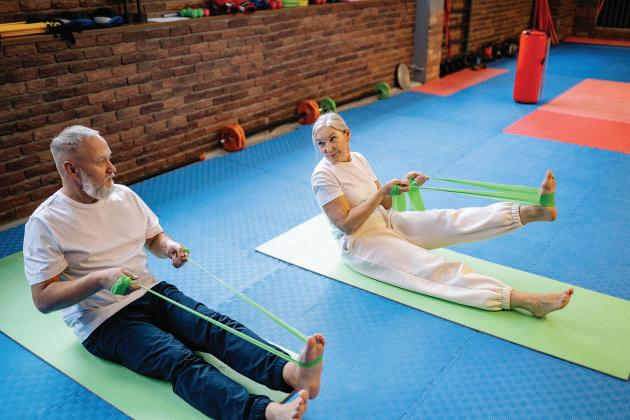
Longevity is still king. Pilates has officially gone mainstream. Strength training is reclaiming its role, not as a beach-body tool, but as a long-term health intervention. Exercise for mental health is no longer a side benefit; it is becoming a primary reason people train.
From my vantage point at AusFitness Expo, where you see every corner of the industry collide, including trainers, gym owners, physios, educators, and brands, these trends are not theoretical. They are already shaping how facilities are designed, how sessions are sold and how coaches are expected to think.
Let’s unpack what is really going on.
Longevity Isn’t a Trend Anymore, It’s the Main Game
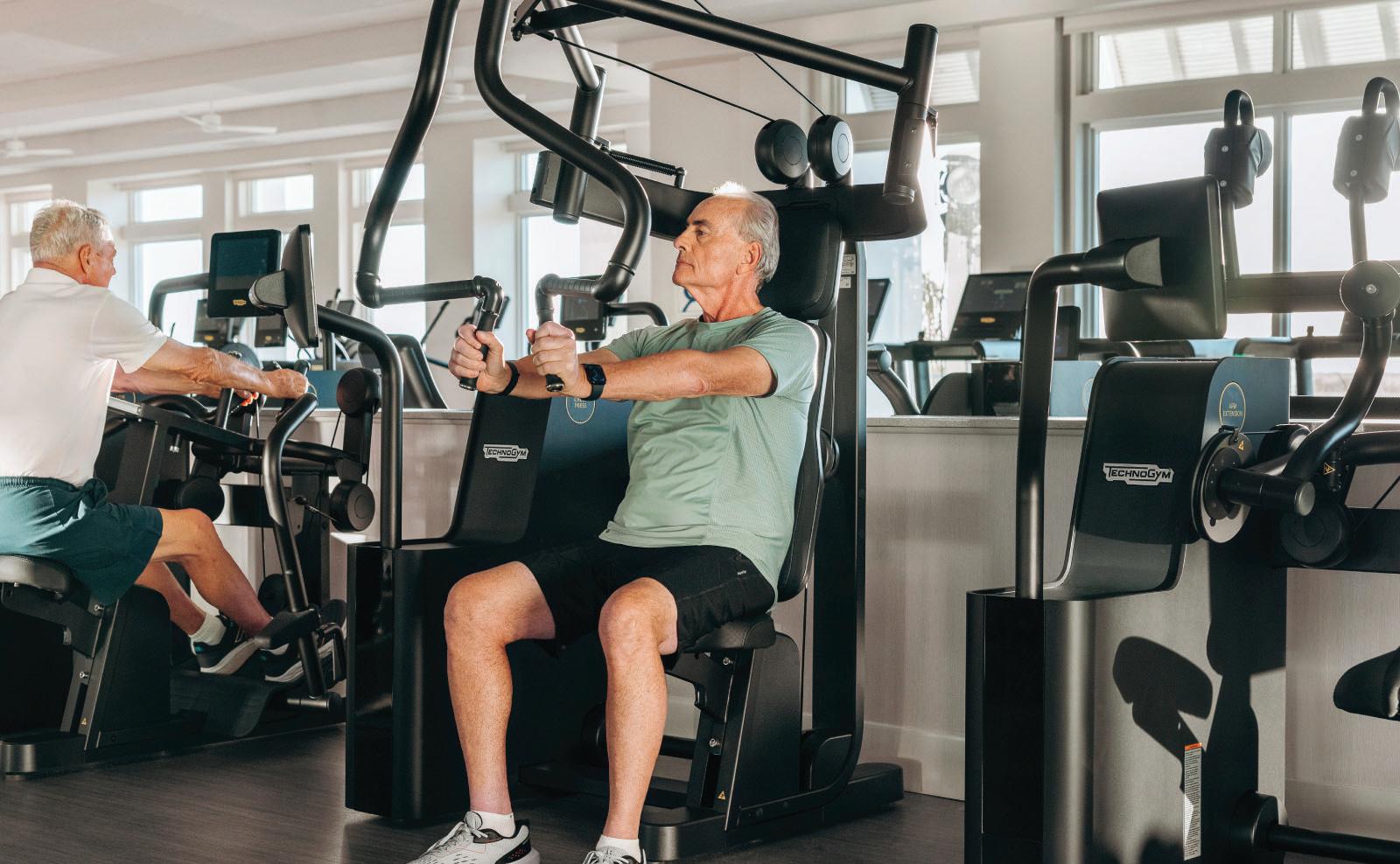
For the second year running, Fitness Programs for Older Adults sits at number one. That alone should tell us something important: this is not a passing interest driven by demographics or marketing buzz. It is a structural shift.
Australians are living longer. They are working longer. And perhaps most importantly, they are realising that how they move in their 40s, 50s, and 60s determines how independent they will be later on.
This is where the industry has quietly but profoundly changed. 10 or 15 years ago, longevity was something we talked about in theory, usually bundled in with rehab or ‘gentle exercise’. In 2026, longevity training is performance training. The performance just looks different.
The question clients are asking now is not “how fast can I lose weight?” It is “will I be able to lift my grandkids, travel, keep hiking, keep working, and stay pain-free?”
Muscle, balance, mobility, and coordination have become the real currency of quality of life. That is why gyms are evolving from aesthetic-focused spaces into environments built around life performance. Strength is not about how much you lift; it is about what your body can still do ten, twenty, or thirty years from now.
In 2026, fitness is increasingly concerned with quality of life alongside longevity. People are finally connecting the dots
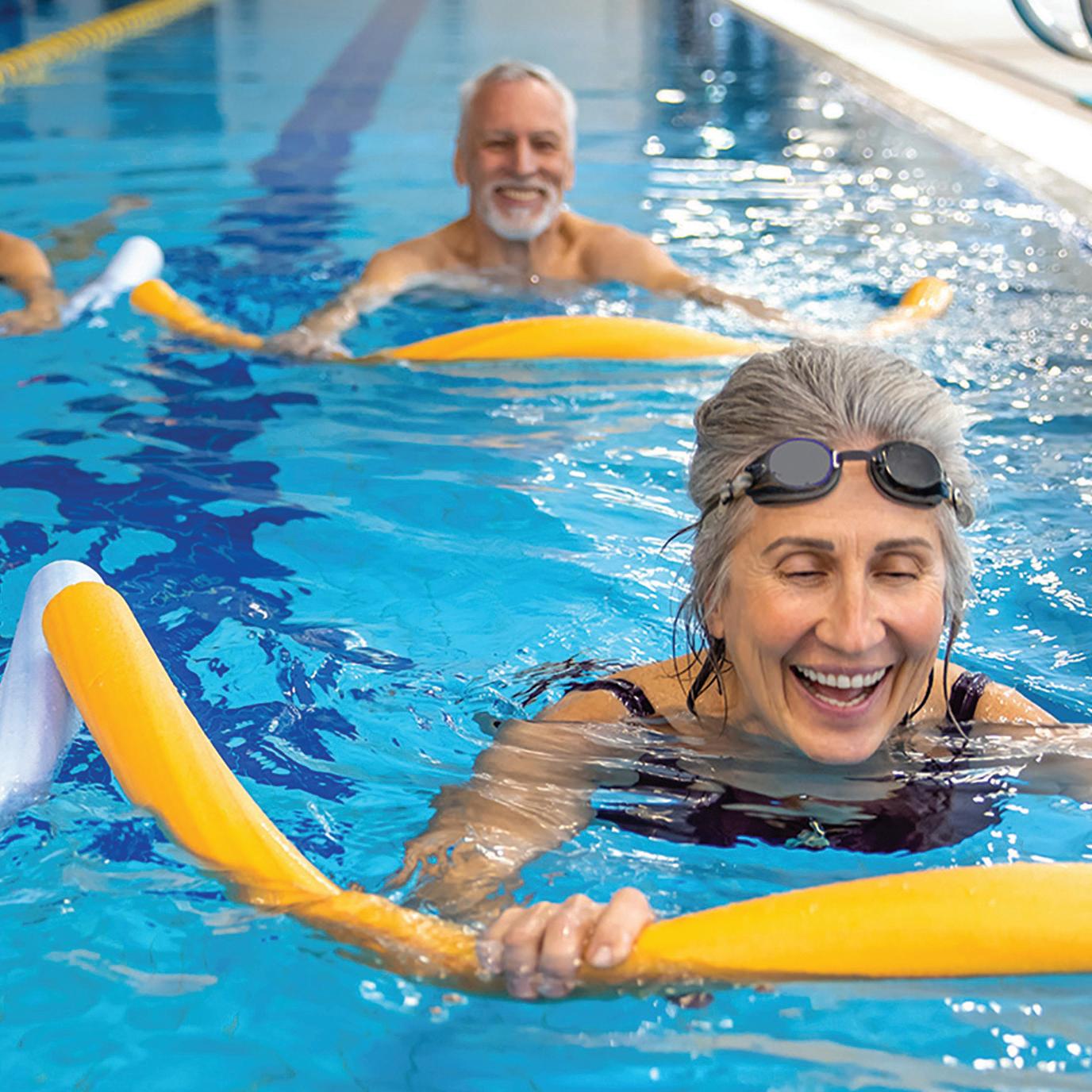
Fitness Programs for older adults again sits as the top fitness trend. Credit: Technogym.
between consistent training and being the best version of themselves for as long as possible.
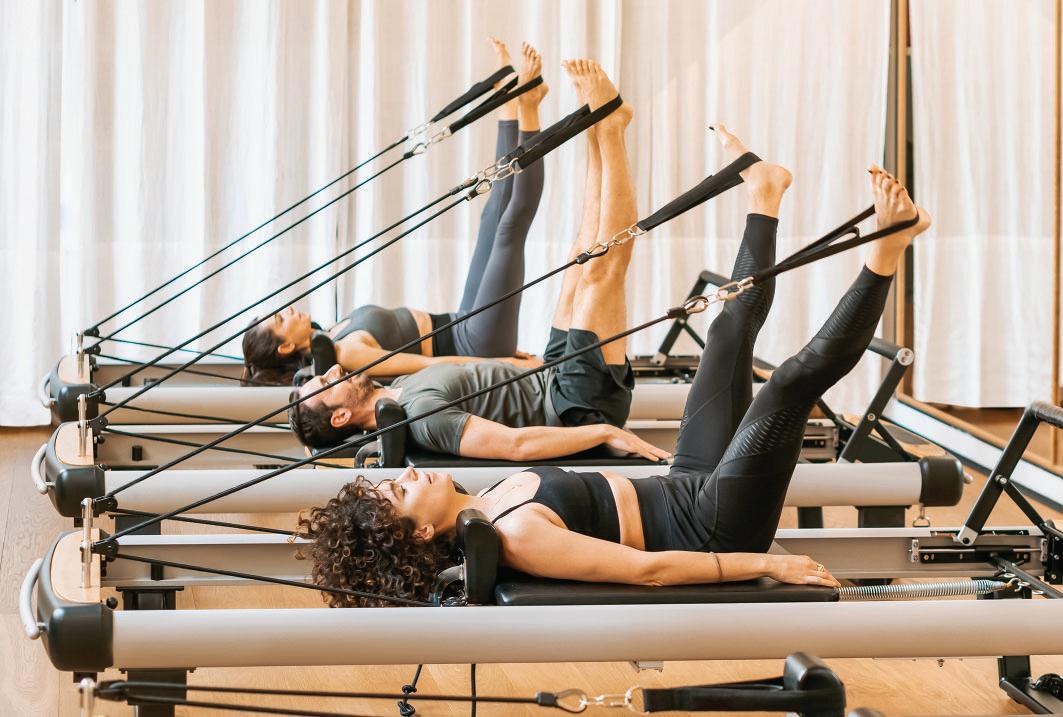
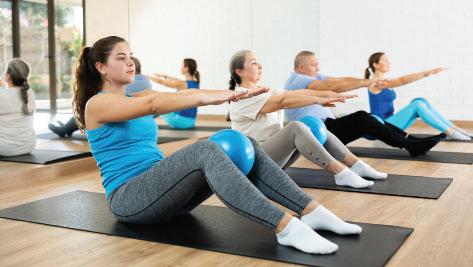
Pilates Has Crossed the Line into the Mainstream Pilates moving into the number two position is not surprising, but what is interesting is why it is there.
Pilates has gone fully mainstream in Australia. Reformer studios are everywhere. More importantly, Pilates is no longer being pigeonholed as “something women do between gym phases.”
It is attracting beginners, older adults, athletes, rehab clients, and people who are simply tired of beating their bodies up. That is a powerful mix.
From an industry perspective, Pilates hits a very specific sweet spot. It delivers measurable strength gains, improved posture, better controls, and lower injury risk, all without the burnout that comes with high-volume, high-intensity training.
People want results, but they do not want to feel wrecked. Pilates offers progression without punishment.
It also reflects a broader trend we are seeing across the industry: movement quality is becoming more valuable than movement intensity. Control, breathing, stability, and precision are no longer ‘extras’; they are central to how people define good training.
For gym owners and operators Pilates has also proven to be commercially resilient. Smaller spades, higher retention, strong community, and repeat attendance make it a compelling model in a market where flexibility and sustainability matter more than ever.
Strength Training Is Back, But the Why Has Changed Strength training never really went anywhere, but its role has evolved in the 2026 report, Traditional Strength Training climbs back up the rankings, and the reason is not aesthetics. Strength is being reframed as preventative medicine.
We are seeing resistance training prescribed for women, for older adults, for people navigating weight-loss medications, and for clients managing chronic conditions. Muscle is no longer about looking strong; it is about staying functional.
This is a major shift in how strength coaches need to think. Programming is less about maxing out and more about futureproofing. Temp, control, joint position, range of motion, and movement literacy matter just as much as load.
For the industry, this changes the skillset required of trainers. Clients expect more education, more individualisation, and a
Pilates is no longer “something women do between gym phases.” Credit: Shutterstock.
The Australian fitness industry is maturing.
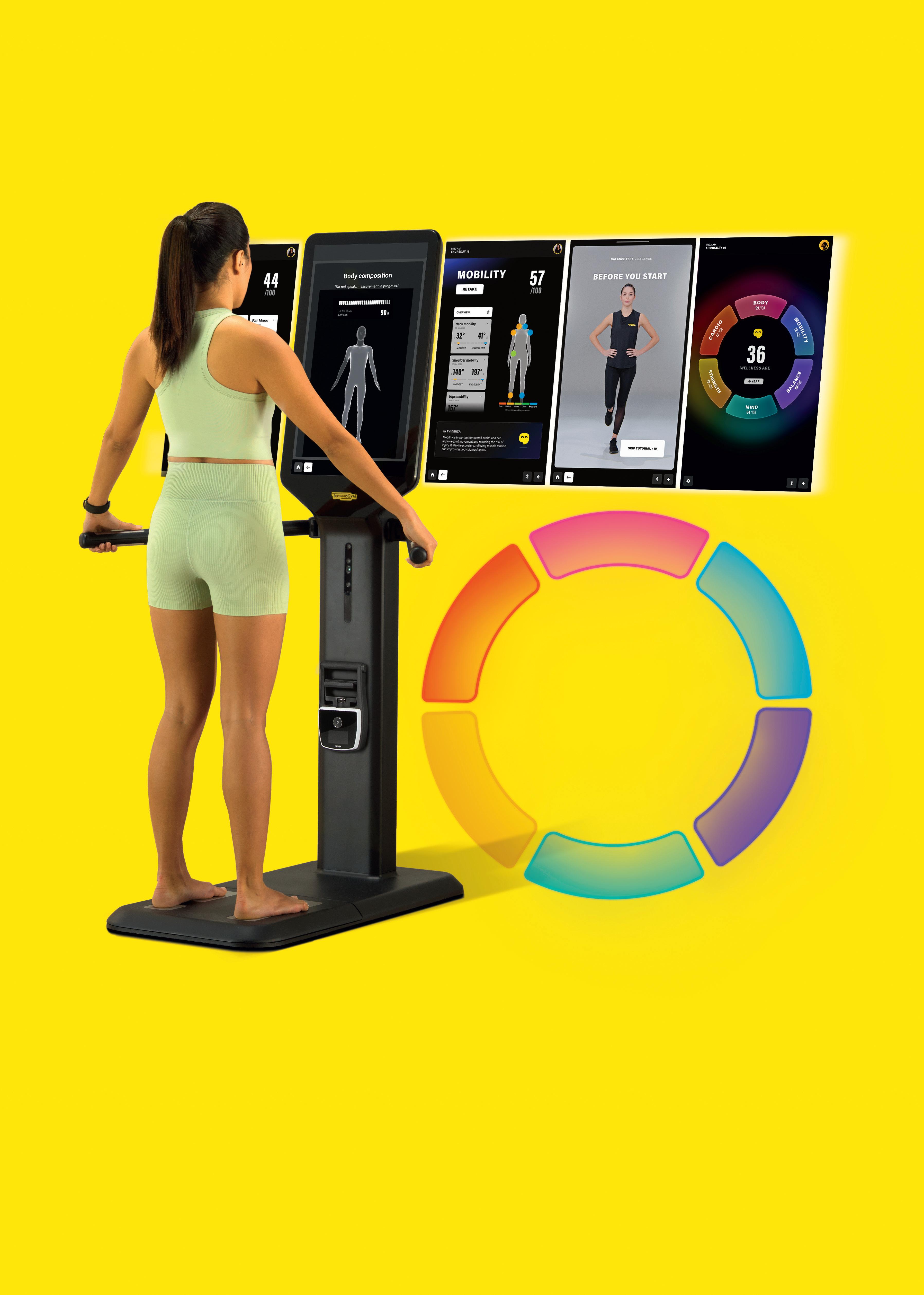
TECHNOGYM CHECKUP
Power up your journey with Technogym Checkup-the gateway to precision training. This smart, holistic assessment measures six key physical and cognitive markers to reveal your Wellness Age. Technogym AI Coach then turns your data into a personalized training program on the Technogym App, so you can train for measurable results anytime, anywhere.
clear link between what they are doing in-session and how they feel outside the gym.
Strength training has become foundational again, but now it is tied directly to longevity, independence, and resilience.
Exercise for Mental Health Is No Longer a Bonus Benefit
One of the most telling trends in the 2026 report is the continued rise of exercise for mental health.
This reflects a broader cultural shift. People are not just training to change how they look; they are training to change how they feel.
In a world that feels increasingly fast, uncertain, and overstimulated, exercise has become a stabilising force. Structured movement is being used intentionally to reduce anxiety, manage stress, improve mood and build psychological resilience.
Importantly, this does not mean every session needs to be calm or slow. Resistance training, aerobic work, and mindbody practices all play a role. What has changed is the intent behind the programming.
In 2026, fitness is becoming more wellness-skewed. Trainers are expected to understand nervous system load, recovery and the cumulative stress their clients are carrying, not just from training, but from life.
The days of “no pain, no gain” are fading. The new benchmark is “Does this make my clients feel better tomorrow?”
Recovery, Mobility, and Wearables: The Quiet Enablers
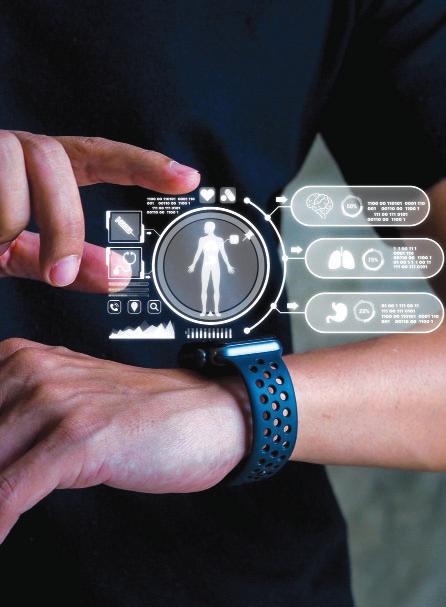
The rise of mobility and recovery training and wearable technology shows how data and self-awareness are shaping modern training.
Clients are more informed than ever. They track sleep, steps, heart rate, readiness, and recovery. They want programs that respond to their bodies, not override them.
For professionals, this presents both an opportunity and a responsibility. Data is only useful if it is interpreted well. Wearables do not replace coaching, they raise the standard for it.
Mobility and recovery are not add-ons anymore; they are essential components of sustainable training. The industry is recognising that progress is not linear, and longevity requires strategic restraint as much as effort.
What this Means for the Fitness Industry
The biggest takeaway from the 2026 trends is not about which modality sits where on the list. It is about direction.
The Australian fitness industry is maturing. It is becoming more inclusive, more health-integrated and more aligned with how people actually want to live.
We are moving away from extremes: extreme aesthetics, extreme intensity, extreme promises, and toward consistency capability and long-term wellbeing.
For trainers, gym owners, and educators, the message is clear: the future belongs to those who can coach for life, not just for results.
Longevity is not a niche. Pilates is not a phase. Strength training is not optional. Mental health is not secondary.
They are all part of the same story, a story where fitness finally lives up to its real purpose: helping people move well, feel strong, and stay independent for as long as possible.
In that sense, the 2026 trends do not just describe where the industry is going. They confirm that, for the first time in a long while, it is heading in the right direction.
Shaun Krenz is co-founder and Director of AusFitness Industry and the AusFitness Expo.
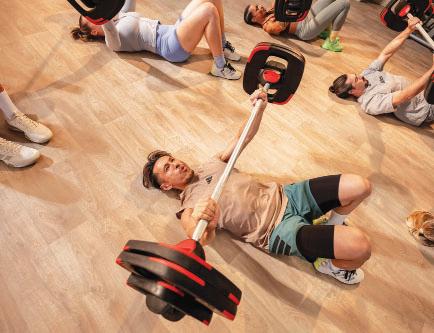
Wearable techology (above), communty (above right) and strength training (below right, credit: Les Mills) remain key in 2026.
Requirements
•Min 500 members
•Min 400m2 premises
•Profitable over the previous 24-36 months
•Opportunity to grow
•Multi-club operations (desirable but not essential)
•Will consider franchised locations if the franchise can be terminated
FIRST On court
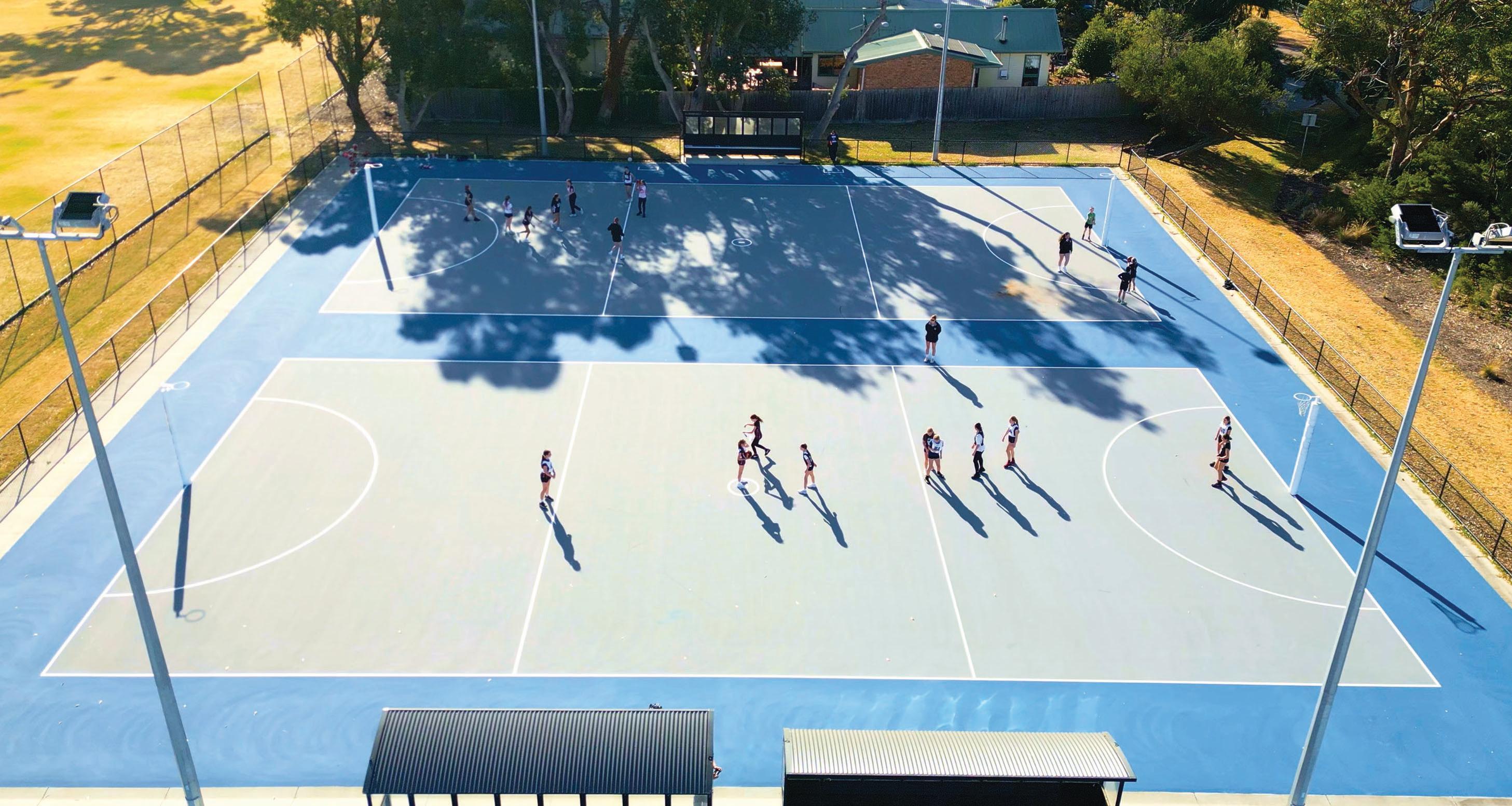
Introducing the Australian-first recycled-paint netball courts delivered at Capel Sound on the Mornington Peninsula
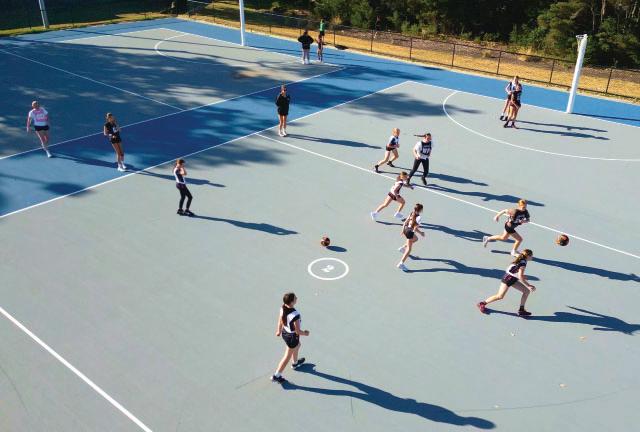
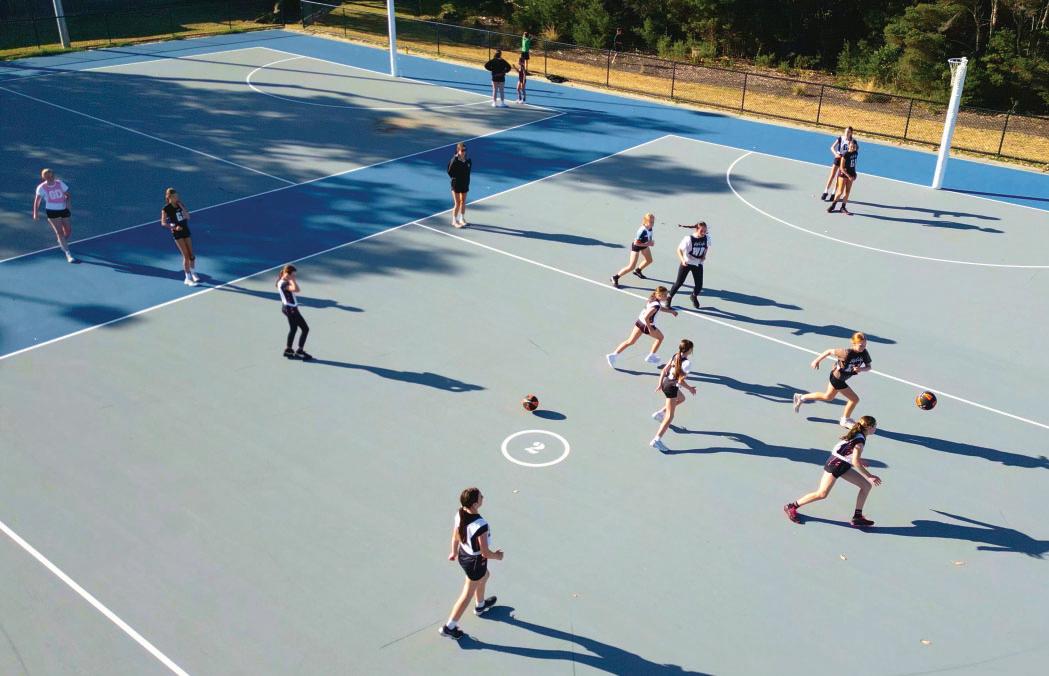
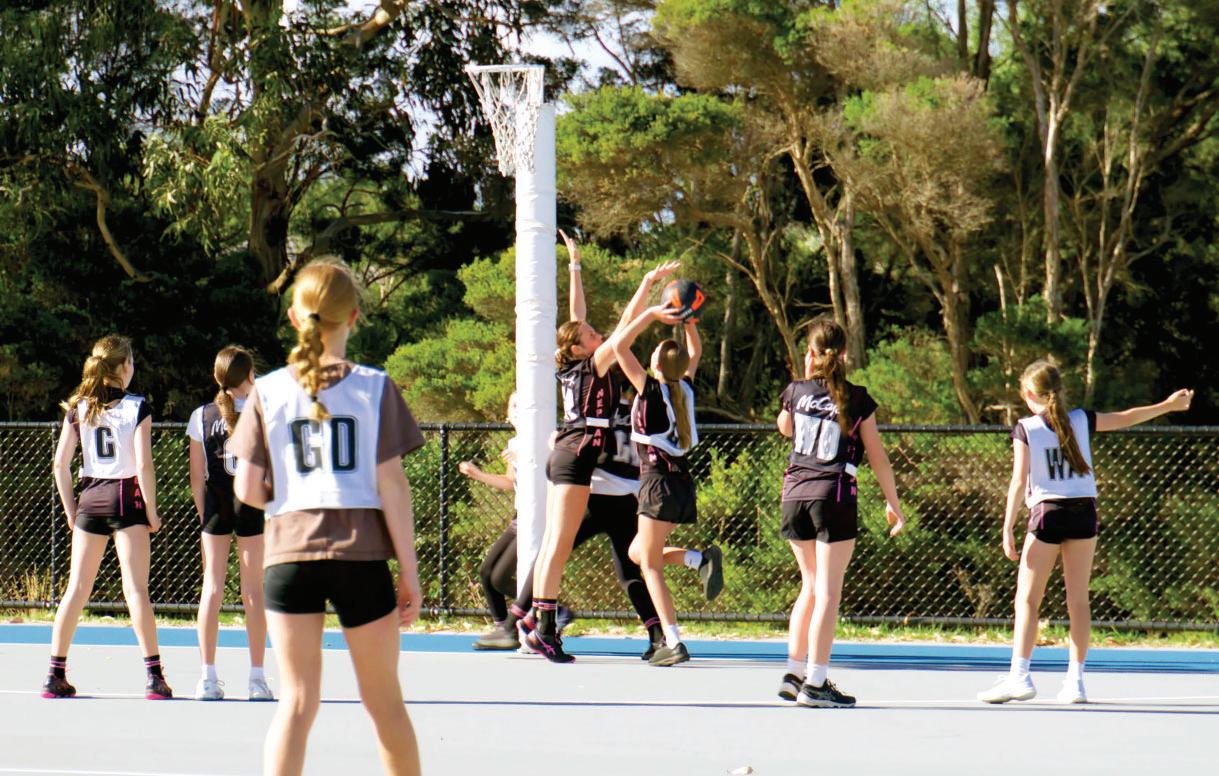
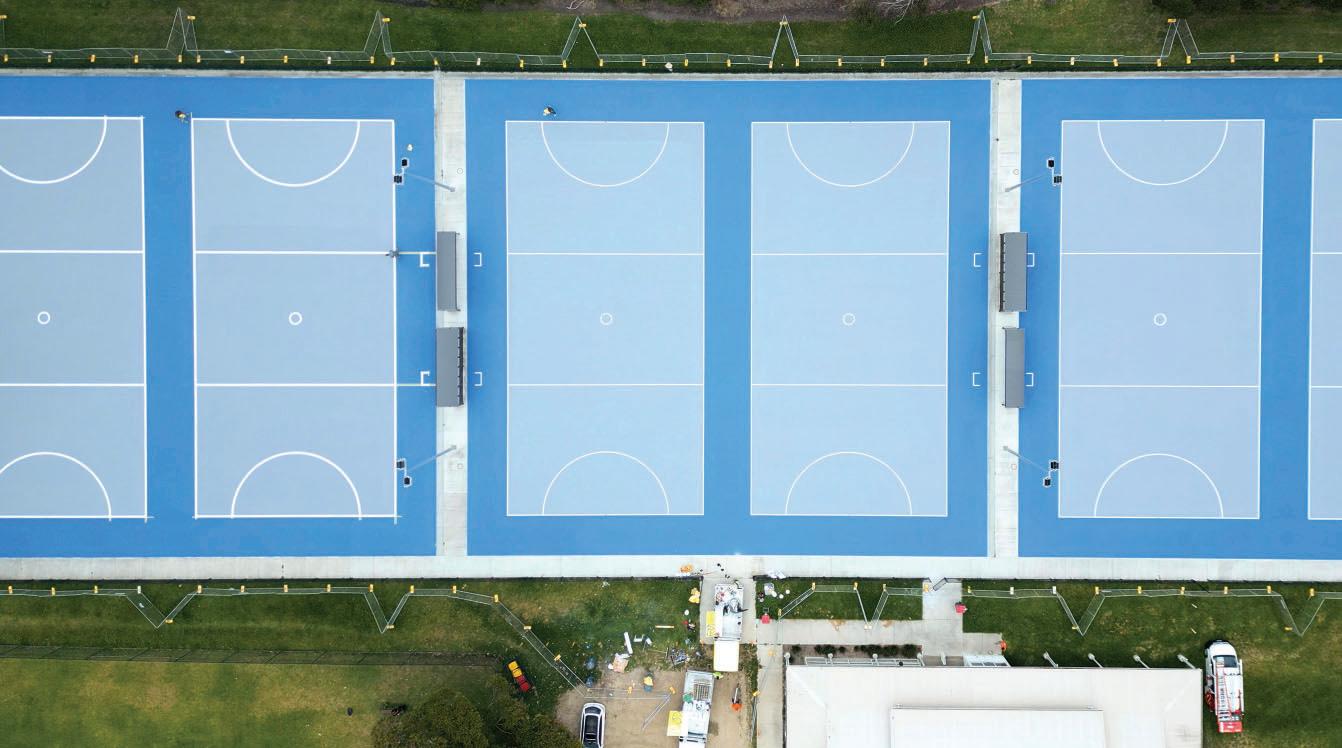
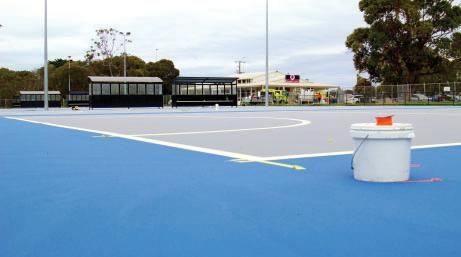
APT Asia Pacific, in partnership with Mornington Peninsula Shire, has delivered an Australian-first redevelopment at Capel Sound Netball Club, featuring Laykold® court surfaces manufactured using recycled household paint through APT’s exclusive partnership with Paintback.
Paintback is Australia’s national paint stewardship scheme, collecting unwanted paint and packaging to divert it from landfill. Through its collaboration with Paintback, APT has developed a proprietary process that allows recovered paint to be incorporated into its Australian-manufactured Laykold hard court systems and the latex backing of its artificial turf, supporting a circular-economy approach to sports surface construction.
The Capel Sound installation marks the first courts in
Australia to incorporate this recycled-paint technology, representing a significant milestone for sustainable community sports infrastructure.
Delivered for Mornington Peninsula Shire, the project involved the resurfacing of six outdoor netball courts designed by head contractor iDwala, with Laykold surfaces installed by Grand Slam Surfaces.
Explaining that the project represents the culmination of more than three years of collaborative research and development, Victoria Brockett, Regional Marketing Manager for APT Asia Pacific, stated “it’s incredibly exciting to see the Paintback technology performing in a real, high-traffic environment after so many years of research.
“For the local community, this innovation means world-class
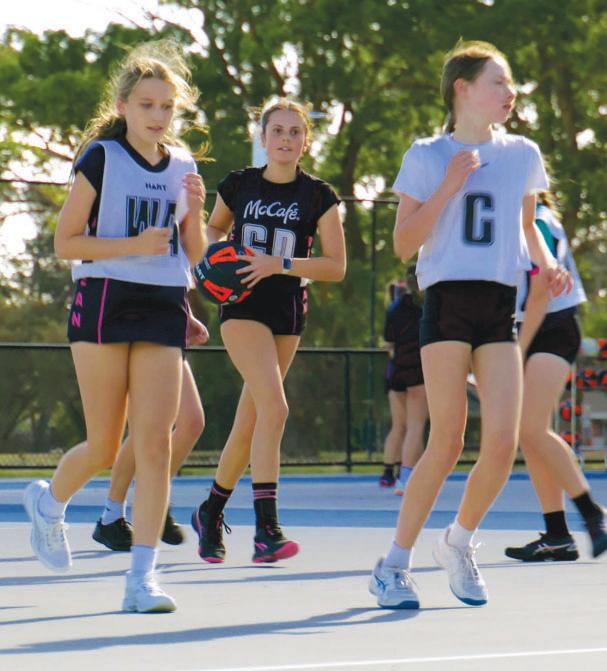
Images show Capel Sound Netball Club players putting the new surface to use.
EACH COURT SAVES 124 CANS OF OLD PAINT FROM LAND FILL
FROM YOUR SHED TO THE CENTRE COURT
Paintback helps Australians responsibly dispose of unwanted paint by diverting
Just one standard Laykold court will save 124 x 1 litre cans of paint from
Get in touch with us today to find out how you can achieve Grand Slam quality courts... now with recycled paint.
courts made with 22% recycled and renewable materials without any compromise on performance or safety.
“For the environment, it means approximately 288 onelitre tins of household paint saved from landfill, and for the industry, it proves recycled content can be successfully scaled across sports surfaces.”
For Mornington Peninsula Shire, the redevelopment upgrades an important local sporting hub while supporting long-term participation and facility reliability.
Explaining that performance outcomes were the key driver in selecting the system, Max Adams, Infrastructure Projects Engineer at Mornington Peninsula Shire, advised “performance and durability were our top priorities. We needed a consistent, slip-resistant, crack-resistant surface backed by a strong warranty.
Test results showed the recycled-paint system delivered around three-times greater tensile strength, giving us real confidence in the longevity of the courts and proving sustainability can work in real-world implementation.”
The project also reflects the growing importance of sustainability considerations in public sports infrastructure procurement.
Noting that councils are increasingly evaluating projects on broader community and environmental outcomes, George Devenish, Director of iDwala, stated “more and more, tenders aren’t just judged on performance and cost, they’re judged on the long-term community and environmental benefit. Laykold’s recycled-paint system performs exactly as expected, while also meeting the sustainability and value-formoney expectations for public projects.”
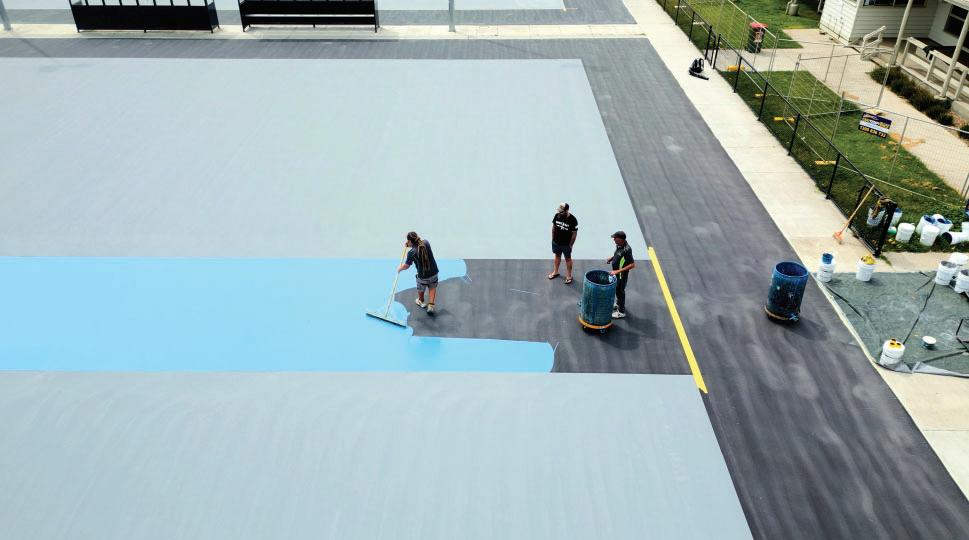
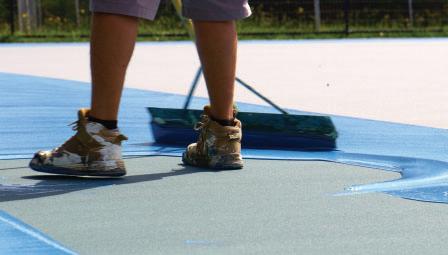
From an installation perspective, the introduction of recycled paint required no changes to standard installation methods.
Adam Williams from Grand Slam Surfaces explained “the texture, viscosity and application process are exactly the same. The equipment stays the same and the drying times are the same. The only difference is the recycled paint isn’t used in the topcoat so colour isn’t impacted, and the system
components with Paintback now have a green tint to show the sustainable technology behind it.”
Beyond its sustainability credentials, the redevelopment delivers clear benefits for the local netball community. The new courts provide a consistent, durable and safe playing environment designed to support heavy participation and long-term community use, ensuring the venue remains a key sporting hub for the region.
Reid, Club President
Jon
at Capel Sound Netball Club,
The new recycled-paint based surface being applied on the Capel Sound Netball Club's courts.
said the response from players has been overwhelmingly positive, commenting “we’re thrilled with the new courts and the feedback from players has been extremely positive. With 400 to 600 players using the facility most weekends, these courts are now delivering the safety and performance features we need. When courts look great and perform well, it gives players confidence and encourages participation.”
As sustainability targets continue to influence infrastructure planning across Australia, projects like Capel Sound demonstrate how collaboration between councils, designers, contractors and manufacturers can translate circular-economy thinking into practical, high-performance community facilities.
With recycled household paint now standard within APT Asia Pacific’s Laykold court systems and artificial turf backing, the Paintback initiative shows how waste materials can be repurposed into durable sporting surfaces, setting a new benchmark for sustainable sports infrastructure nationwide.
Contact APT Asia Pacific on 1800 652 548, E: info@aptasiapacific.com.au, www.aptasiapacific.com.au
Aerial view of the Capel Sound Netball Club's courts.
Breaking The Surface
James Croll explores how Para Mobility is reshaping aquatic facility access for Australians with a physical disability
For many, a visit to the local pool is part of daily fitness, family routine or social life. But for Australians living with disability or limited mobility, that same experience has often come with barriers - physical, logistical and quietly exclusionary. What should be a welcoming experience for all, becomes a nightmare for some.
That reality has been shifting in recent years, driven in part by tighter legislation and rising expectations around inclusive design. Under Australia’s Disability Discrimination Act and associated building standards, public aquatic facilities are now required to provide dignified, accessible pool entry - typically through ramps, zero-depth access points or mechanical lifting systems, supported by on-site aquatic wheelchairs. Larger pool complexes face additional requirements around perimeter access and entry distribution, while broader compliance also extends to changing rooms, pathways and parking. Although limited exemptions exist under ‘unjustifiable hardship’ provisions, the overall direction is clear: access is no longer optional. As a result, many operators are reassessing infrastructure and operational models to ensure both compliance and genuine usability for all.
Specialist Australian company Para Mobility has played a significant role in supporting that transition - helping reshape how people of all abilities engage with their local aquatic and leisure facilities. Founded in 1983, Para Mobility has spent more than four decades designing and manufacturing assistive equipment for community, healthcare and leisure environments. While the company operates nationally with
a growing push into overseas markets, it remains firmly Australian at heart. All design and manufacturing is done locally - a deliberate choice that allows closer collaboration with users and facility operators; faster turnaround times; and solutions tailored to Australian standards and conditions.
For aquatic centre managers grappling with ageing infrastructure and rising community expectations, that local, practical focus has become increasingly relevant. Many call on the vast experiences of Para Mobility to support them in their transition.
The Access Gap Beneath the Surface
Swimming is often promoted as one of Australia’s most inclusive activities. It is low impact, therapeutic and suitable for a wide range of ages and abilities. Yet the reality on pool decks has not always matched that ideal.
Nearly one in four Australians identifies as living with disability - a figure that climbs steadily with age. Despite this, people with disability continue to participate in organised sport and recreation at significantly lower rates than the broader population. In aquatic environments, the reasons are rarely about interest or motivation. More often, they come down to poor access and design.
Many public pools were built decades ago, long before universal access principles were widely adopted. Narrow steps, steep ladders and limited transfer options make entry difficult or impossible for wheelchair users and people with reduced mobility. Even where access exists, it is often
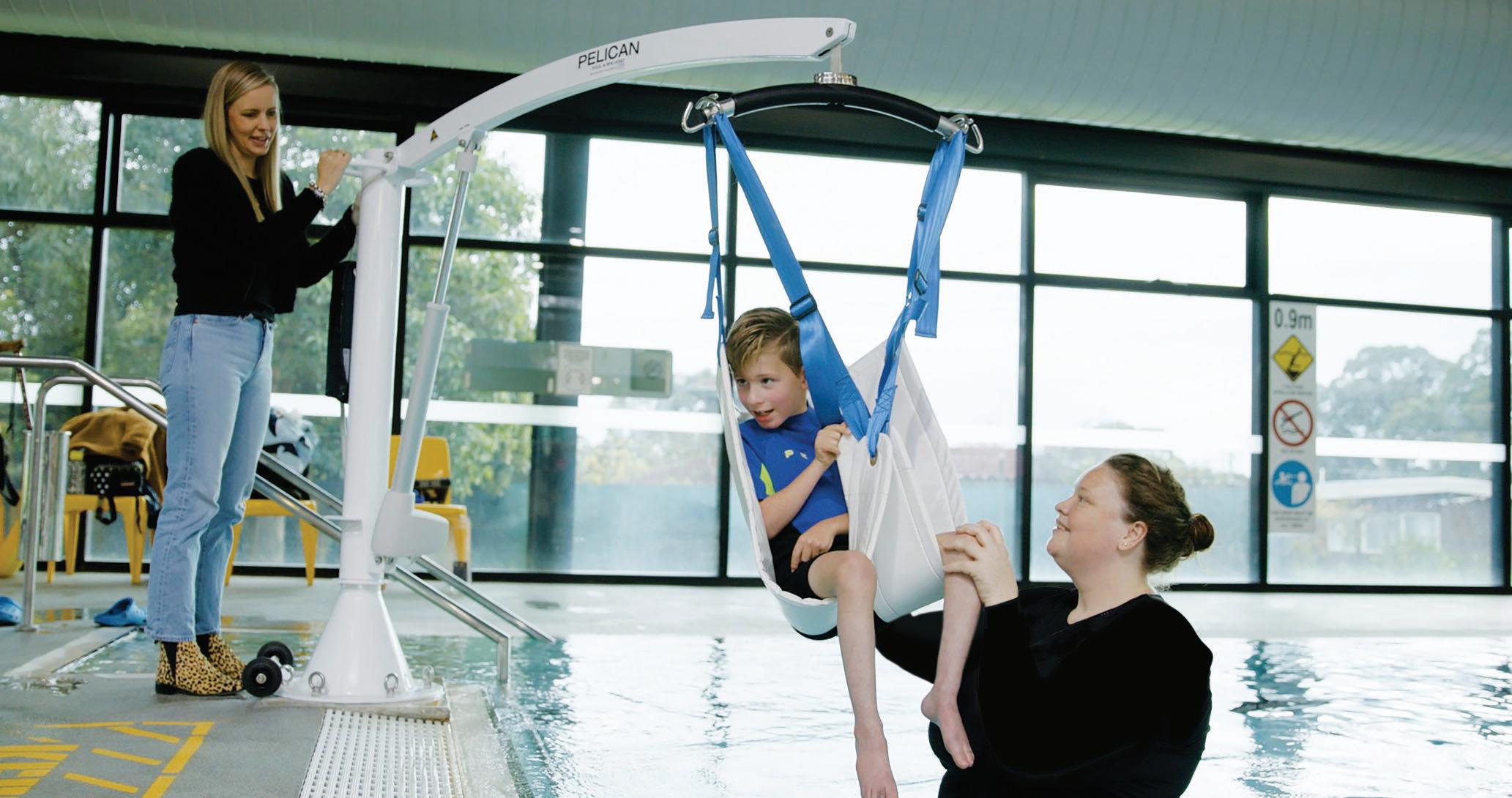
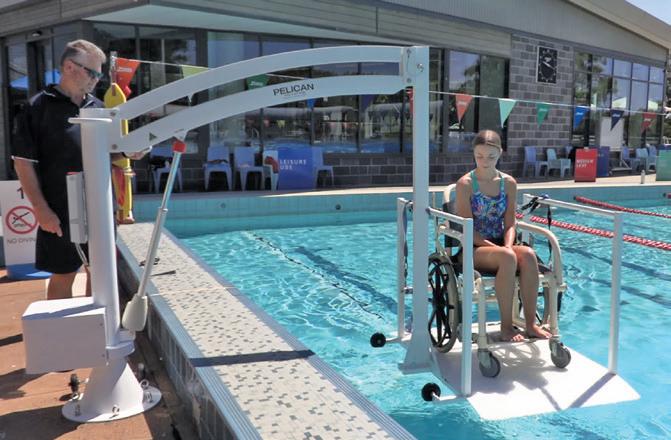
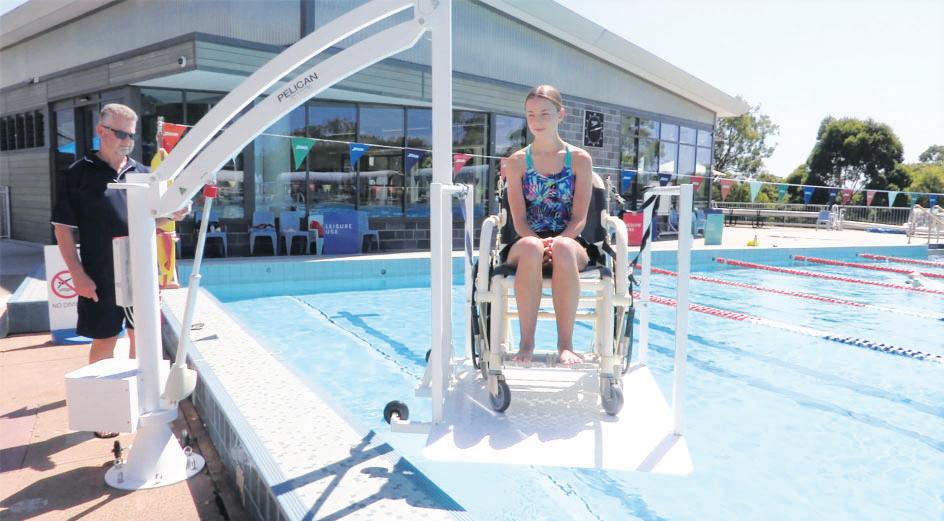
ParaMobility's Pelican hoist.
How aquatic centres must involve the community in discussions about accessibility solutions
Aquatic centres have a vital role to play in engaging residents and community groups, particularly those with lived experiences of disability, to ensure that accessibility initiatives meet the needs of everyone. Build a future where everyone feels welcome, valued, and empowered by learning how swim centres must involve the community in these important discussions.
Access without compromise: Get maximum bang for buck
Why limit access when you don’t have to?
Better access means better participation. The Pelican Pool & Spa Hoist is designed to support more people, adapt over time and get the most out of your investment, without compromise.
Implementation of aquatic wheelchairs in community programs
By actively involving the community in discussions about accessibility solutions, Australian aquatic centres can create more
the needs and aspirations of all residents. Together, they can build a future where everyone feels welcome, valued, and empowered.
5 minute accessible audit series
Quick wins for aquatic and community facilities looking to improve access. Help your team to spot small gaps and make big improvements in accessibility, one 5 minute check at a time.
With new articles dropping each month it’s a handy resource to continually refer to.
Delivery, installation + servicing Australia wide
Phone 1300 444 600
www.paramobility.com.au
awkward, undignified, unsafe or dependent on manual lifting.
For operators, this creates both an ethical challenge and an operational one. Facilities are under increasing pressure to deliver genuinely inclusive services - not simply meet minimum compliance standards.
From Compliance to Capability
In response, many aquatic centres are shifting their focus from basic accessibility compliance to practical, everyday usability.
Para Mobility’s aquatic range reflects this broader change. Alongside ceiling hoists and change-room equipment, the company produces a number of pool access systems uniquely designed to integrate into different facility layouts and usage environments.
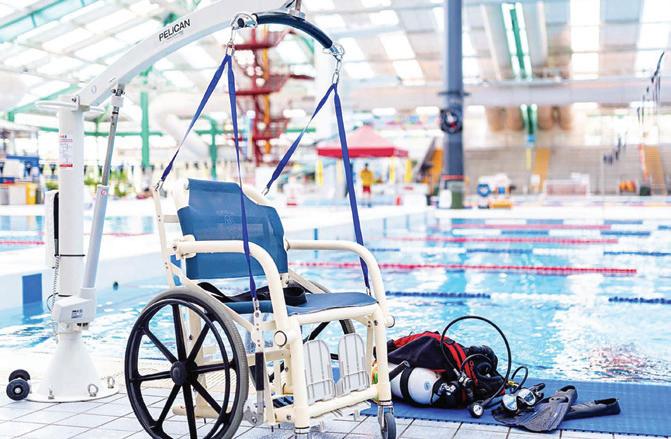
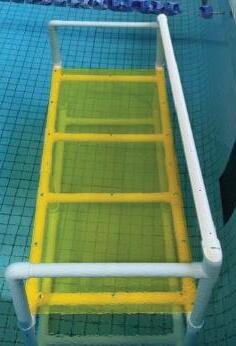
One of the most widely adopted products is the Pelican Pool and Spa Hoist. Designed and manufactured in Australia, the Pelican provides assisted water entry through controlled mechanical lifting rather than manual handling. It is specifically manufactured to the individual requirements of each pool to ensure that maximum usage is gained at the centre.
What makes systems like the Pelican appealing to operators is their flexibility. The hoist can be configured for fixed or mobile installation; used across pools and spas; and paired with different seating or sling options depending on user needs. This allows centres to support a wide range of patrons without investing in multiple specialised devices. It is the only pool hoist on the market that provides this level of flexibility.
For staff, the benefits are immediate. Manual handling risk is reduced, transfers become safer and more predictable, and duty-of-care obligations are easier to meet. For patrons, the experience is less clinical and far more dignified - entering the water independently, calmly and safely.
Leichhardt Park: Access In Practice
Sydney’s Leichhardt Park Aquatic Centre is a great example of how these improvements translate into real, everyday impact. As a long-standing community facility, it shows that
positive change is achievable at any stage.
Serving a diverse Inner West community, the centre features a 50-metre Olympic pool, hydrotherapy facilities and a wide range of structured aquatic programs. Accessibility upgrades at the site include step-free entry points, accessible change rooms, pool hoist access and water wheelchairs available for patron use.
For users who previously relied on significant assistance or avoided swimming altogether, these improvements have opened the door to rehabilitation programs, group exercise classes and recreational swimming.
From an operational perspective, the changes have also improved service delivery. Staff are able to support patrons more efficiently, carers face fewer physical demands, and inclusive access has become part of normal daily operations rather than a specialist service requiring ad hoc solutions.
Leichhardt Park reflects a broader trend across Australia’s aquatic sector: accessibility is no longer being treated as a niche offering. It is becoming embedded into how centres define quality service.
Beyond Council Pools
While much of the early momentum around accessible aquatic infrastructure has come from councils and community facilities, commercial operators are now following suit.
Hotels, resorts and wellness venues are increasingly recognising that inclusive access must extend beyond accommodation rooms to encompass pools, spas and recreational spaces. Travellers with disability, ageing guests and families now expect aquatic amenities to be accessible as standard.
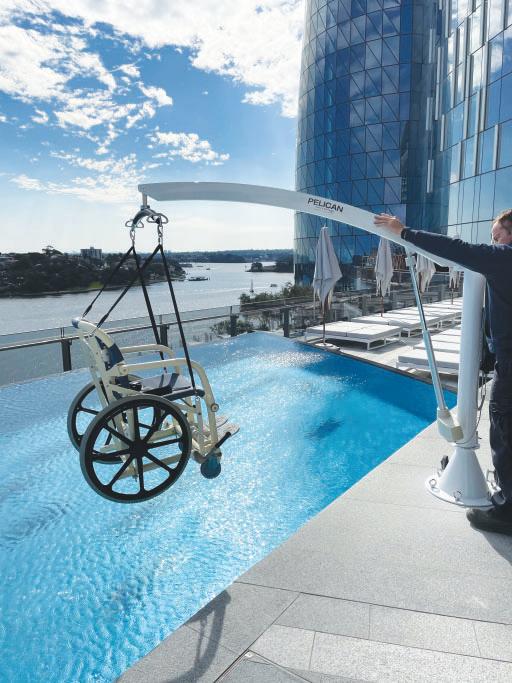
Installations at hospitality venues such as W Sydney, The Star Gold Coast and Victoria’s Alba Thermal Springs & Spa highlight this shift. For operators, these upgrades deliver multiple benefits - supporting compliance requirements, improving guest experience and strengthening brand positioning in an increasingly competitive leisure market.
ParaMobility's Pelican hoist.
The Value of Local Manufacturing
Para Mobility’s commitment to Australian manufacturing has also shaped its role within the sector. Designing and producing equipment locally allows fast customisation quick servicing, easy access to spare parts and closer collaboration with operators during installation and commissioning. In an industry where downtime is costly and capital works windows are often tight, this responsiveness matters.
It also supports knowledge transfer. Facility managers and technicians are able to engage directly with designers and engineers, rather than relying on imported systems built for overseas standards and conditions. Too often, centres have to modify their facilities to make off-the-shelf systems fit, whereas the Pelican Pool Hoist is manufactured to suit individual environments while also meeting Australian standards.
Infrastructure That Changes Behaviour
While equipment is the visible outcome, the deeper impact is cultural. When accessible pool entry becomes standard rather than exceptional, participation patterns change. More people feel welcome. Program enrolments increase. Rehabilitation services expand. Families are able to share experiences that were previously out of reach.
Looking Ahead
As Australia’s population continues to age and demand for inclusive recreation grows, the pressure on aquatic and recreation operators to modernise infrastructure will
only increase. The centres that adapt successfully will be those that view accessibility not as a one-off upgrade, but as a long-term investment in participation, safety and community relevance.
For Para Mobility, and for the many operators now integrating these solutions into their facilities, success is not measured in units sold. It is measured in the growing number of Australians who can enter the water safely, independently and with dignity. And in a country defined by its relationship with water, that is a transformation worth making visible.
Para Mobility National Sales Manager, Tania Modde notes “at Para Mobility, our passion is simple but powerful: to enrich the lives of people living with disability and mobility limitations, their families, and the wider community by creating access, dignity, and opportunity for everyone.”
James Croll was speaking with Para Mobility’s Tania Modde.
Further information on the Pelican Pool & Spa Hoist is available via Para Mobility on 1300 444 600 or at www.paramobility.com.au.
BEYOND Fun
Exploring how Aflex Technology is reshaping inflatables to support inclusion, education and community wellbeing
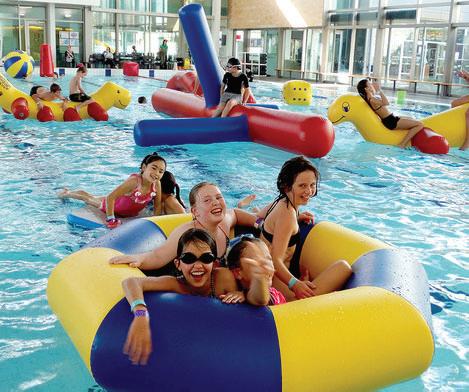
Inclusive play is becoming central to aquatic facilities across Australasia as venues increasingly support public health, education and social connection alongside recreation. Pools and multi-use centres play a key role in encouraging activity, confidence and community participation.
Accessibility is now measured less by compliance and more by whether people feel welcome and able to participate. Reflecting this shift, inflatables have evolved from novelty attractions into adaptable tools supporting movement, learning and inclusive programming.
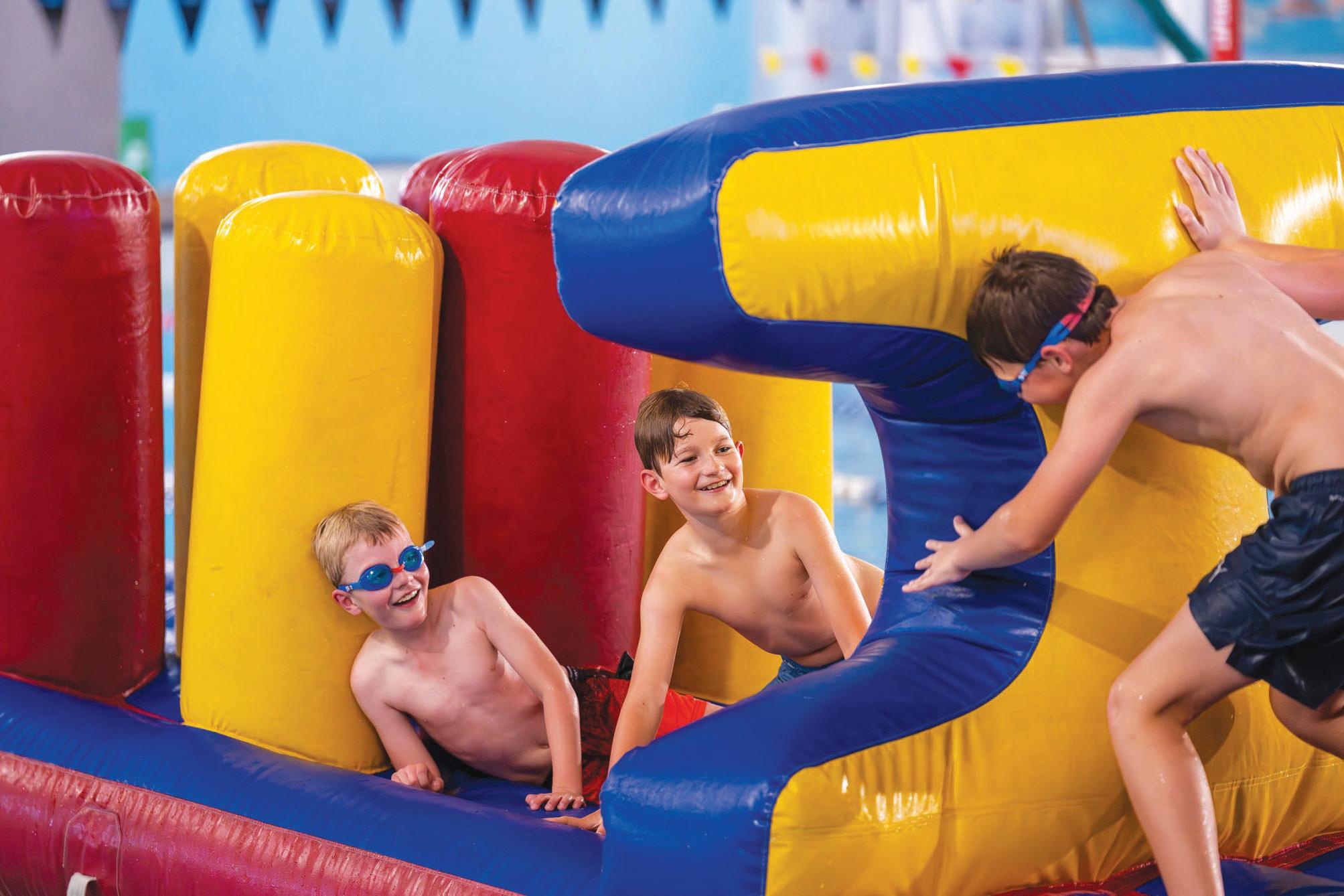
One company helping to drive this evolution is Aflex Technology. Over recent years, the familiy-owned business has quietly expanded its focus beyond entertainment, developing inflatable solutions designed to support inclusive play, education and health outcomes.
Designed, engineered and manufactured in New Zealand, Aflex Technology supplies products across Australia, North America, Europe, Asia and the Pacific. Its growth reflects a deliberate focus on purpose-driven design, demonstrating that commercial leisure products can deliver meaningful social value while remaining commercially viable.
Karen Stratford, Director at Aflex Technology, explains “we first decided to focus more intentionally on inclusion after extensive research and conversations with operators and communities.
“We realised inflatables could play a much bigger role than simply providing fun. They could support participation, confidence, and learning.”
Aflex has operated in the inflatable sector for decades,
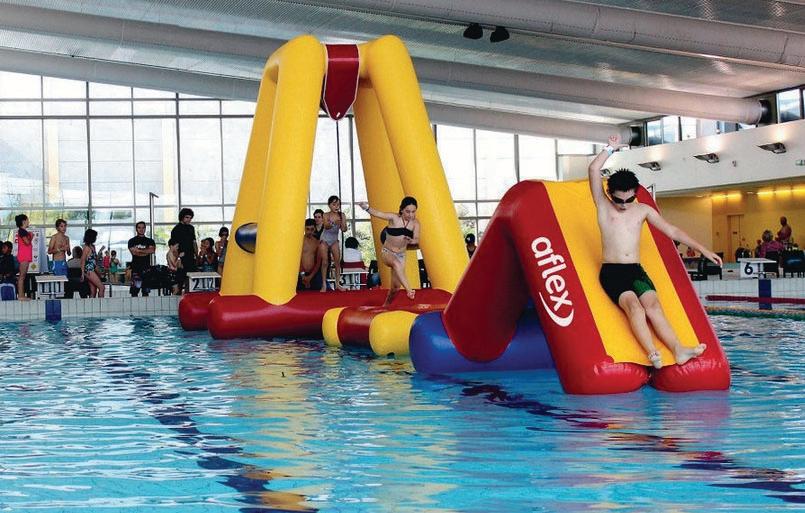
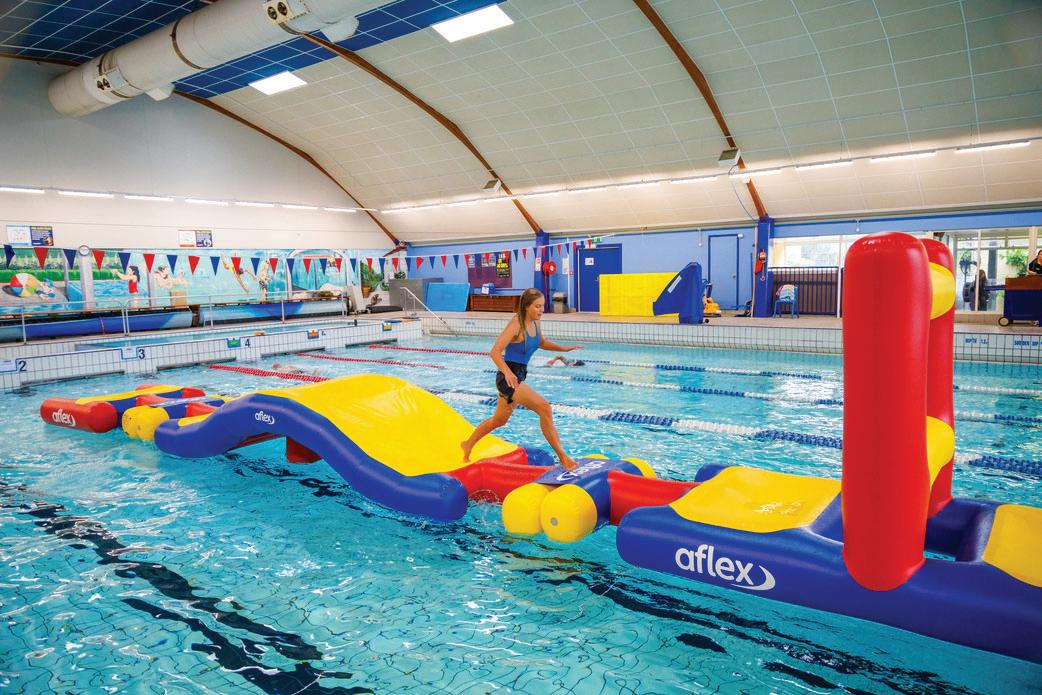
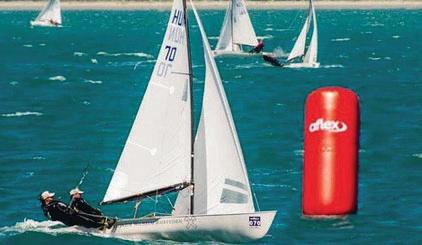
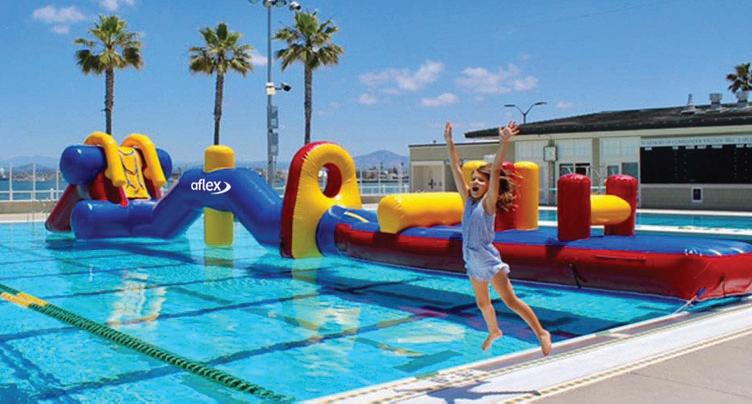
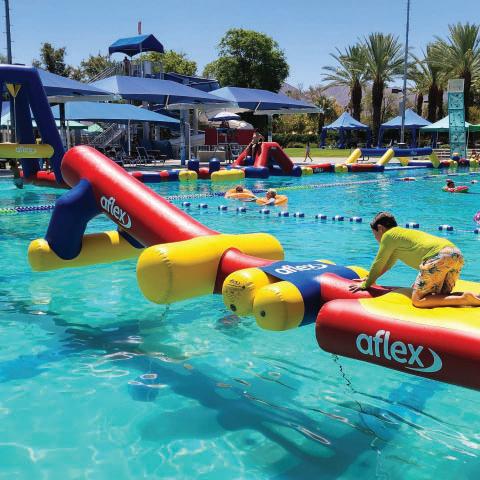
building expertise across a wide range of products from pool inflatables and aquatic obstacle courses to marker buoys, hydro slide rafts, and large-scale water attractions. Versatility has always been central to its design philosophy. Products include sealed and airflow inflatables, modular systems that can be configured to suit different pool layouts, and equipment supporting both structured activity and recreational play.
The company was also the first in the sector to introduce a wet-entry start for airflow inflatables, allowing users to access structures directly from the water. While technically simple, this innovation reflected a broader design principle: reducing barriers and making equipment more intuitive and accessible. However, moving toward genuinely inclusive design required a deeper shift.
Stratford notes “when we began exploring inclusion of our inflatables more seriously, we realised it wasn’t something you could retrofit.
“It had to be considered from the very beginning, from concept and engineering through to the user experience itself.”
To achieve this, Aflex partnered with paramobility organisations, disability advocates, neurodiverse communities, schools, and researchers. Rather than designing in isolation, the company sought to understand how different users interact physically and emotionally with inflatable environments.
One early example was the development of the Rocker, a pool based design inflatable adapted in collaboration with Shrub Oak International School in the USA, which specialises in education for students with autism. The structure allows children to engage in multiple ways, climbing, balancing, rocking, or interacting with it creatively according to their own comfort level.
Stratford highlights that “play doesn’t look the same for everyone! Providing freedom of interaction gives users choice, and that builds confidence.”
This collaborative approach has continued across multiple projects. In Australia, Aflex has worked with universities, health organisations, councils, and recreation centres to explore how inflatable environments can support wellbeing, movement, and learning.
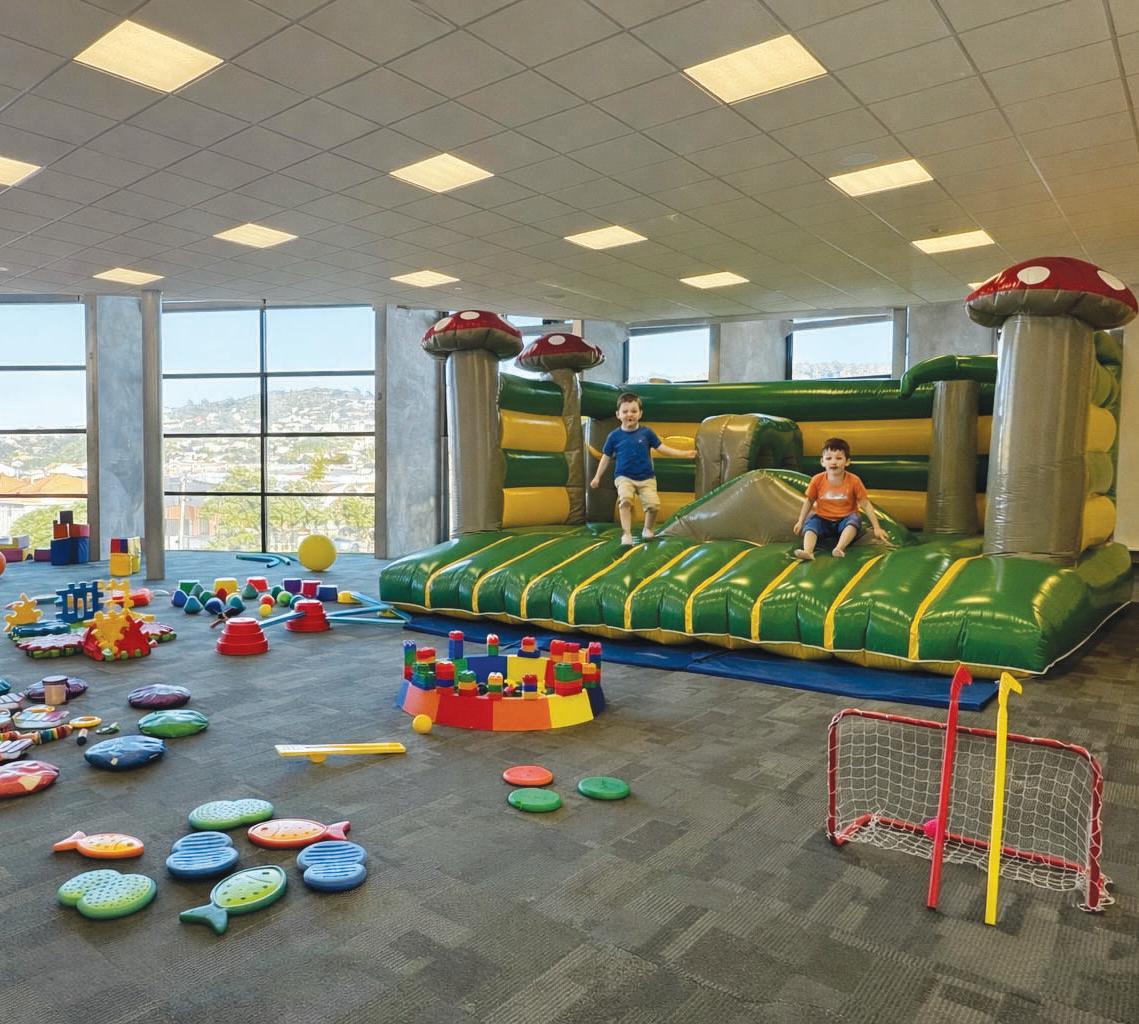
At Christchurch’s new Parakiore Recreation and Sport Centre, Aflex designed and manufactured in collaboration with the design of a land-based inflatable play area intended to accommodate children with a wide range of physical and cognitive abilities. Stability, accessibility, and sensory comfort were central considerations.
Stratford advises “we wanted to create a product that was engaging and allows shared play to develop naturally. Where children could just be children, having fun, where participation could happen at each individual’s own pace. Our products means real social connection away from looking at screens.”
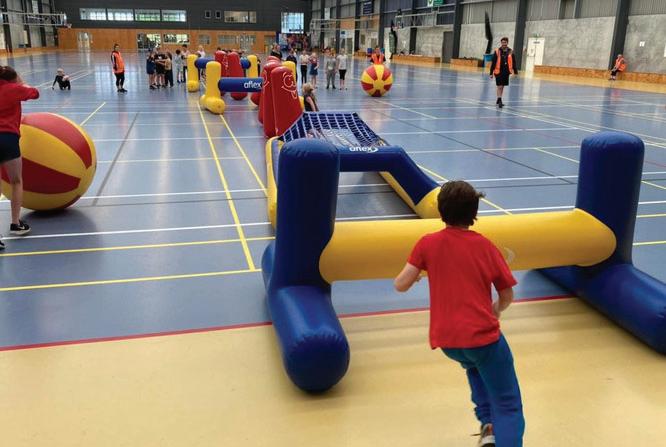
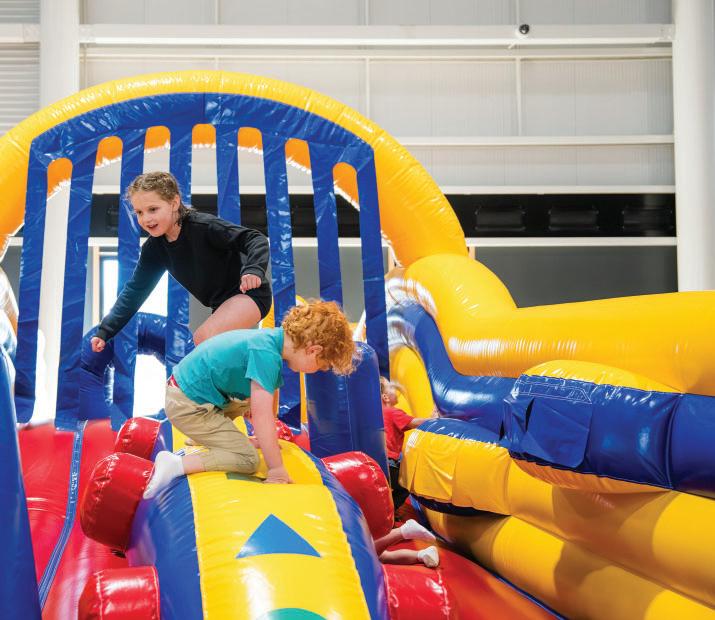
While aquatic obstacle courses remain a core part of Aflex’s offering, the company’s work increasingly extends into landbased environments. Its ‘Fun & Fitness’ range, for example, is designed to support balance, coordination, and physical activity, while larger inflatable slides and modular structures are used in recreation centres, schools, and community spaces.
These products are designed to operate across a wide range of settings, from seasonal events to permanent installations. Their modular nature allows operators to reconfigure layouts over time, extending product lifespan and adapting to changing user needs. This flexibility has become particularly valuable for recreation providers seeking to serve diverse communities without undertaking major infrastructure redevelopment.
Stratford adds “in many cases, inflatables provide a relatively simple way for operators to broaden participation.
“They allow facilities to introduce new experiences without needing structural changes.”
The company continues to refine its designs based on operator and user feedback. Increasingly, this includes exploring sensory elements - textures, colours, shapes, and interactive features that support engagement across different learning styles and abilities.
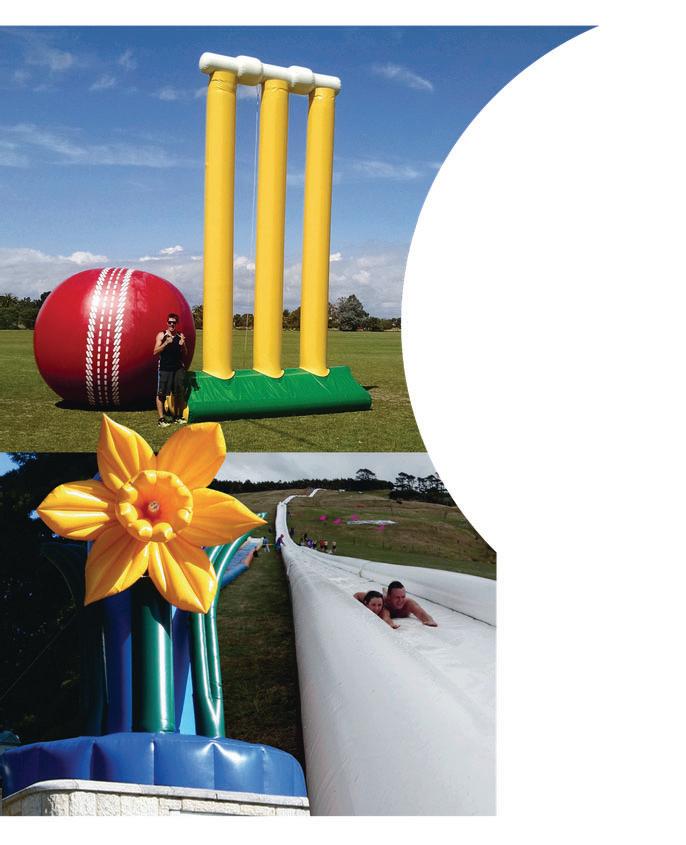
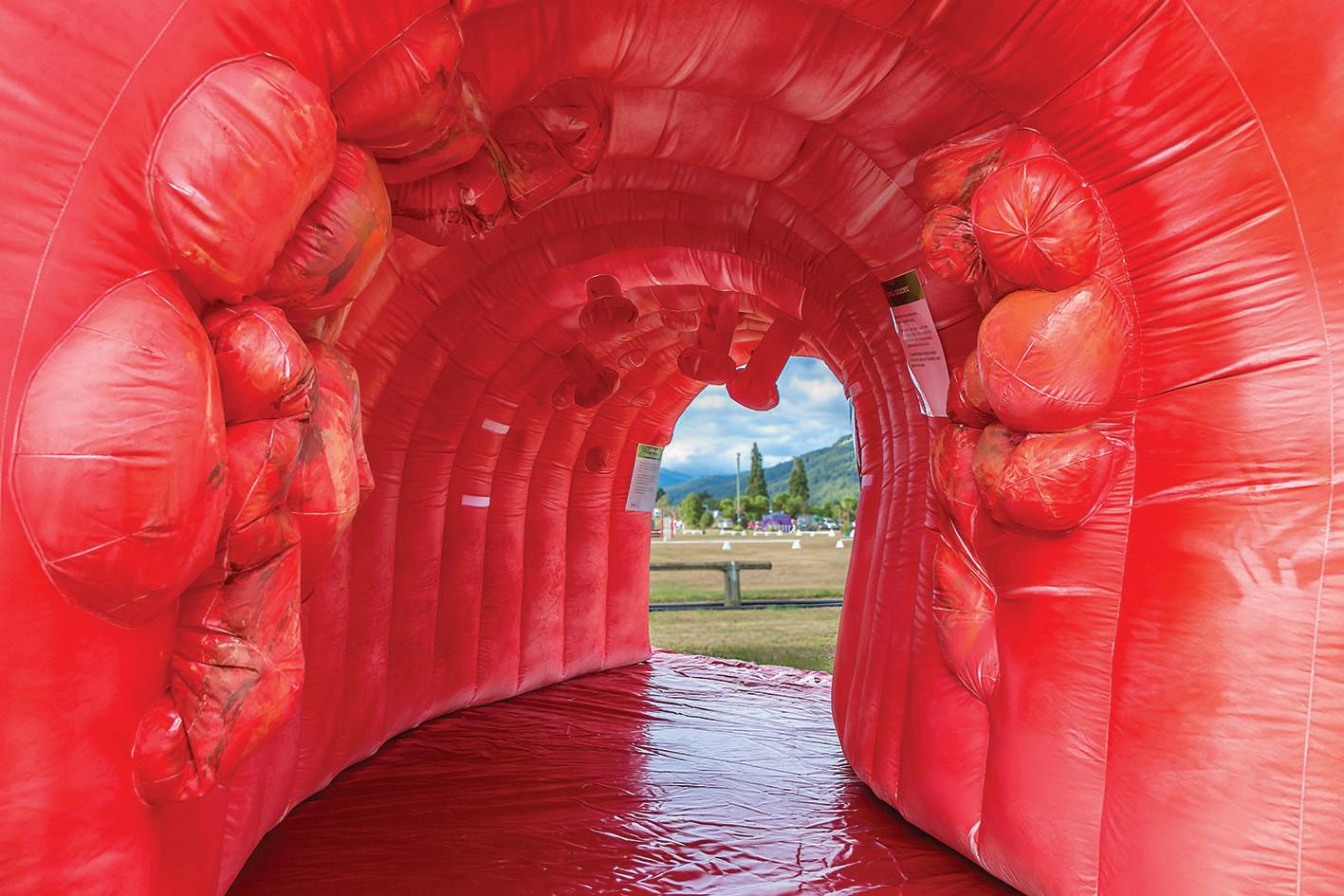
One of the more unexpected applications of inflatable technology has emerged in health education. Aflex has worked with healthcare organisations in New Zealand to develop large-scale, walk-through inflatable models designed to help explain complex medical concepts. One example is an inflatable colon created in partnership with health authorities and cancer awareness organisations, allowing visitors to physically walk through and understand the stages of bowel cancer. The immersive nature of the structure helps demystify the topic and encourages engagement with preventative screening programs.
Stratford notes “providing a physical, large scale interactive experience makes it easier for people to understand and talk about health issues that are confronting.”
Building on this concept, Aflex is also developing inflatable educational tools focused on oral health and other preventative care areas, particularly for younger audiences. Beyond healthcare, the company has worked with schools and recreation centres to integrate play-based environments that support both physical development and cognitive engagement.
Aflex remains a family-founded business, with its leadership continuing to play an active role in product development. This continuity has allowed the company to maintain a long-term perspective, balancing commercial growth with a broader
design philosophy centred on participation and inclusion. Rather than pursuing innovation purely for novelty, the company’s focus has increasingly been on solving practical challenges faced by operators and communities. For Aflex Technology, the goal is not simply to create new products, but to contribute to environments where more people feel able to participate.
Stratford concludes “there is always more to learn. Every project brings new insights into how people interact with these environments. It’s about creating opportunities where anyone should be able to feel comfortable participating.”
James Croll was talking to Karen Stratford, Director at Aflex Technology. Further information on Aflex Technology can be found at www.aflextechnology.com
Enhancing the Guest Experience
Raymond Malpas explains key trends shaping the future of electronic lockers
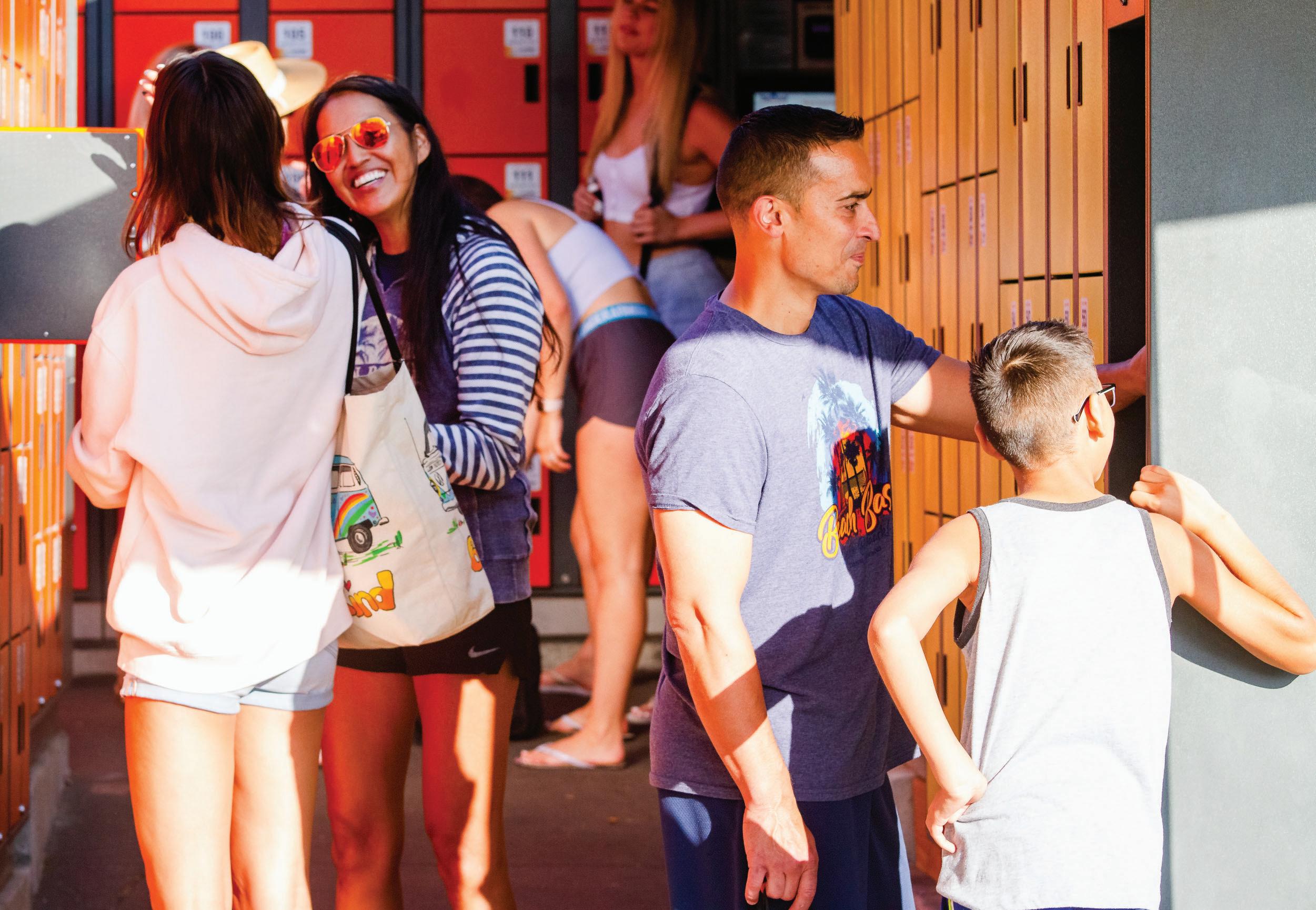
The locker industry is experiencing a period of rapid transformation - and the impact on guest experience has never been more positive. Across amusement parks, waterparks and major attractions globally, one of the biggest strategic priorities is building stronger guest loyalty.
Most parks cannot rely solely on one-time or infrequent visitors - instead, long-term success depends on cultivating return visits through well-designed loyalty and rewards programs that elevate the guest experience.
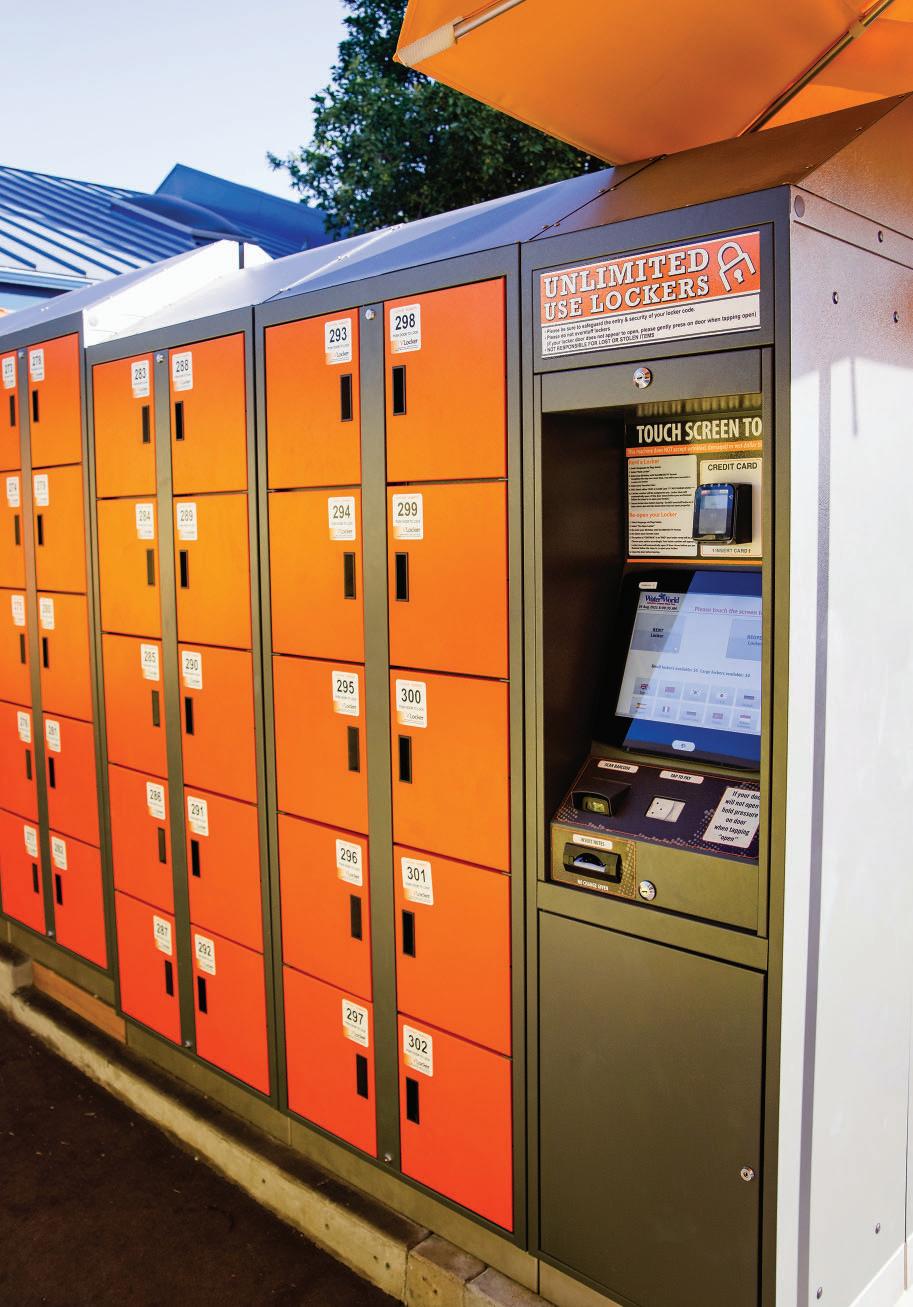
A premium, secure and frictionless storage solution has become an essential part of this strategy. An integrated electronic locker system not only improves convenience for guests but also strengthens the operational ecosystem of the park.
I have found that, in conversations with major attractions, a consistent theme emerges: parks are looking for ways to bring guests closer to the brand and encourage repeat visits.
Delivering a seamless, premium locker-hire experience plays a meaningful role in building a stronger and more predictable revenue base.
The Power of Integration
At Vlocker, a key pillar of our approach is deep integration between our locker systems and park management platforms.
Central to this is enabling locker hire directly through ticketing and booking systems - whether online, in-app, or at front-gate sales points. With more than a decade of software development investment, we’ve built robust integrations and currently support six of the industry’s major ticketing providers, with further expansions planned for 2026.
These integrations have become one of the strongest drivers of uplift for our customers. Many venues have reported revenue increases in excess of 20% after connecting locker hire with their ticketing and booking workflows. By allowing guests to secure lockers during the ticket-purchase process, parks are capturing demand earlier, improving predictability, and maximising utilisation throughout the day.
A standout example comes from a major South East Asian attraction, which advised of having achieved a 24% increase in locker-hire revenue after integrating locker rentals directly with their front-of-house ticketing system, including their online ticketing platform. This seamless end-to-end journey has fundamentally changed how guests plan and purchase their day, driving higher uptake and dramatically improving operational efficiency.
Operational Efficiency and Guest Experience
The operational benefits of integration are equally significant.
Attractions are looking for ways to bring guests closer to the brand and encourage repeat visits.
Connecting lockers with existing guest-access methodssuch as RFID wristbands, QR codes, or biometric identifiers - eliminates friction, reduces congestion at entry points, and enhances the overall guest journey.
Customers consistently report:
•Higher locker-utilisation rates driven by earlier pre-purchase
•Shorter queue lines, particularly at morning peak periods
•Reduced staffing pressure at hire points
•Higher guest satisfaction, thanks to a smooth, intuitive, digital-first experience
These gains translate into a more controlled and profitable operating environment. With better asset utilisation and seamless guest flow, parks can focus on delivering exceptional experiences that encourage guests to return.
Looking Ahead
The ability to integrate seamlessly with existing park management systems has shifted from a ‘nice to have’ to a mandatory requirement for modern attractions. Parks everywhere are seeking ways to streamline operations, elevate the guest journey and build a loyal base of returning visitors who contribute to sustainable, long-term revenue growth.
Vlocker is uniquely positioned at the forefront of this evolution. The development projects we are delivering today for some of the world’s most successful attractions will push the boundaries of what’s possible - and further solidify our role as an innovation leader in the electronic locker industry. Raymond Malpas is General Manager at Vlocker.
VLocker has built robust integrations.
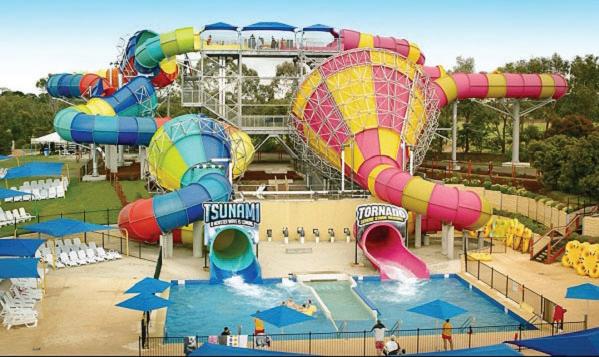
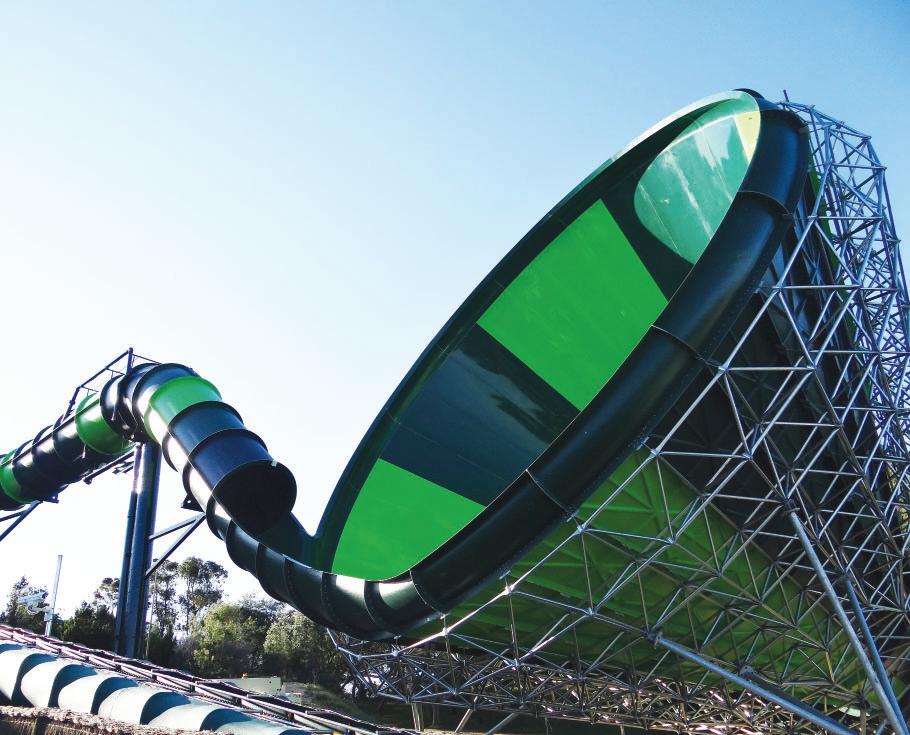
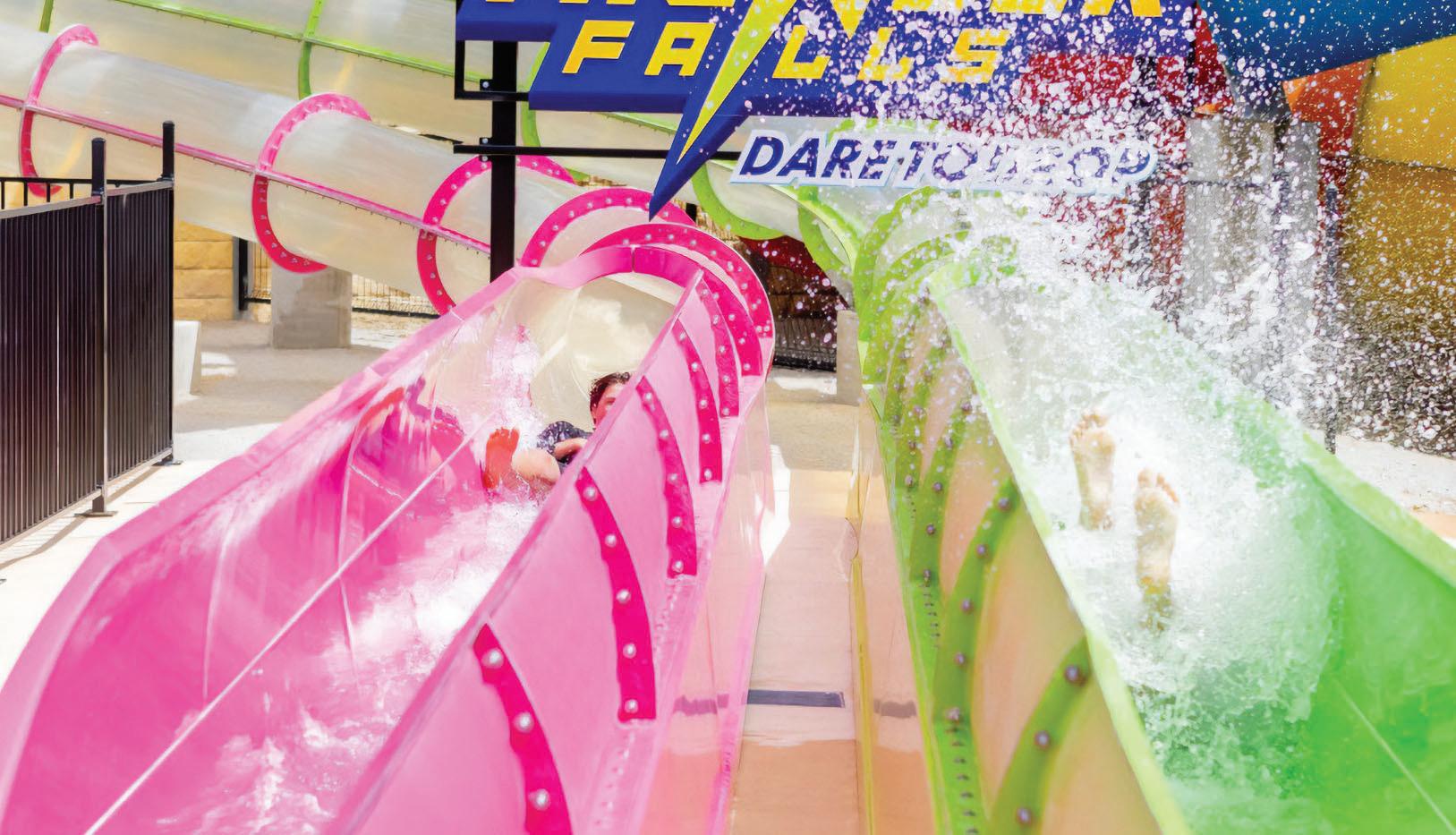
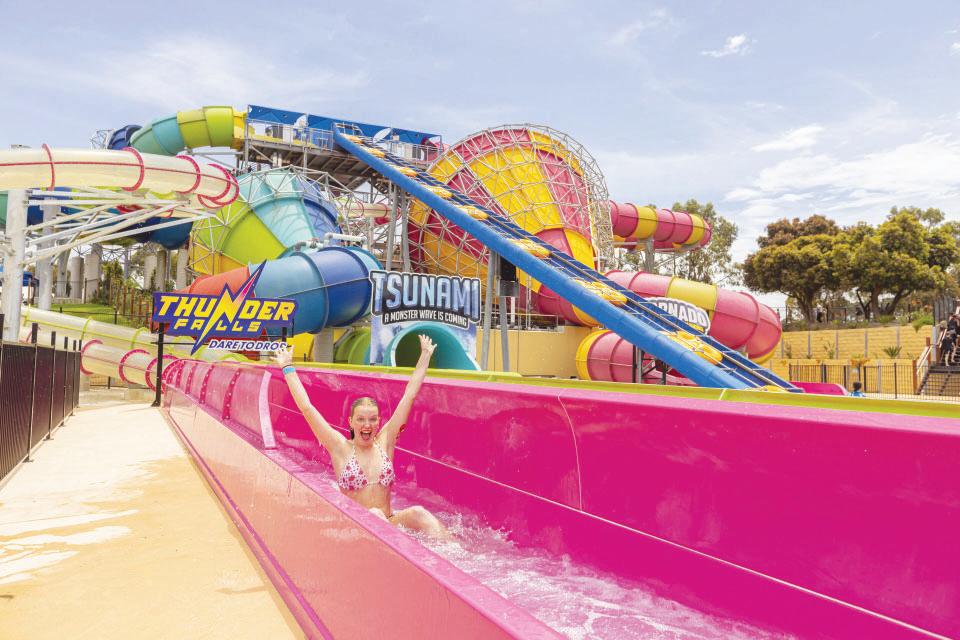
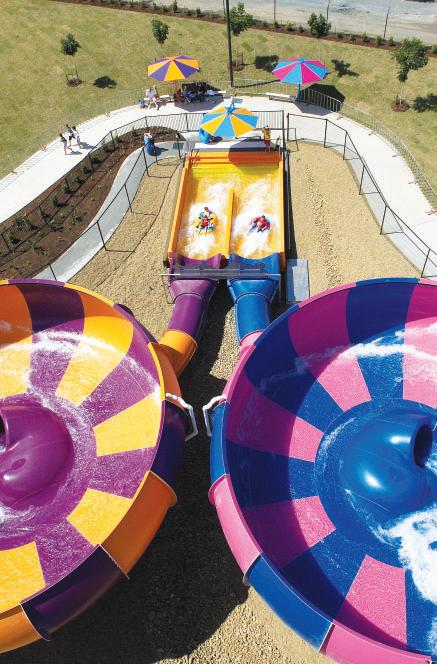
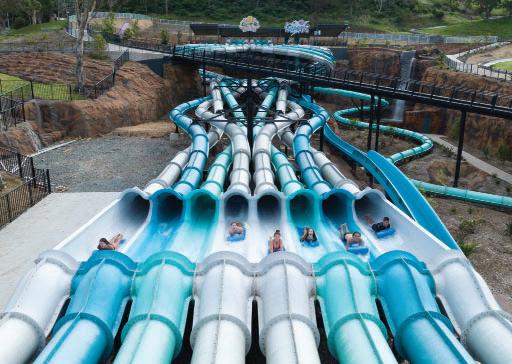
Dare to Drop
ProSlide’s Phil Hayles charts how four decades of innovation have helped define the modern waterslide and why Australia remains central to its evolution
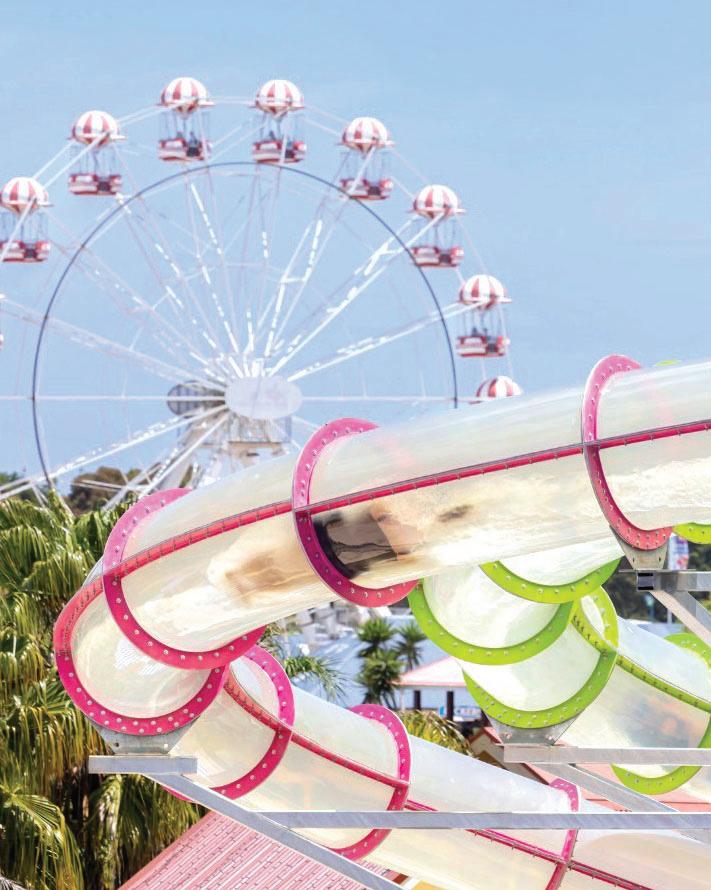
There is something unmistakable about a summer afternoon in an Australian water park.
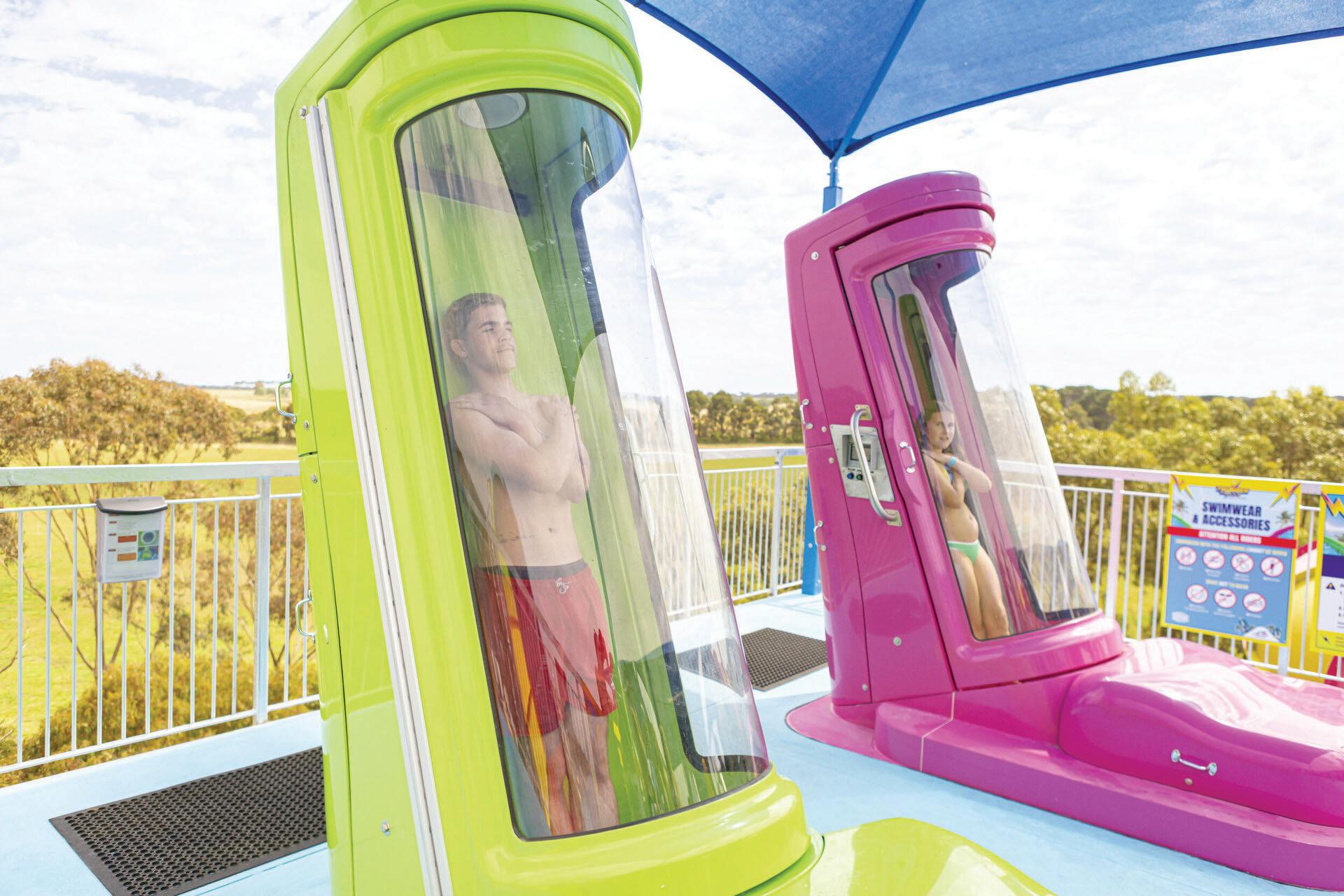
The rhythmic rush of water through flumes, the laughter echoing across wave pools, the rising anticipation in queues beneath towering steel structures - it is an environment that blends recreation with engineering in motion. For guests, these attractions feel effortless.
For operators, they represent significant capital investment, strategic planning and increasingly complex commercial decision-making. Over the past 40 years, aquatic leisure has transformed from a supplementary offering within theme parks into a sophisticated global sector in its own right - driven by technological advancement, demographic diversification and the growing expectation that experiences must justify repeat visitation.
That transformation has been shaped not only by park operators, but by the companies supplying the ideas, engineering and planning frameworks underpinning modern attractions.
Among them is ProSlide - a leading global manufacturer whose evolving ride portfolio and collaborative planning
approach have helped redefine how water parks are conceived and expanded.
ProSlide Senior Vice President, Business Development and Strategic Accounts, Phil Hayles explains “we’ve always believed innovation is the lifeblood of this industry.
“If you’re not continually creating new opportunities for your clients, you’re standing still - and in this business standing still means falling behind.”
Adventure Park Geelong's Tsunami and Tornado slides - prior to the recent expansion.
ProSlide supplied the new Thunder Falls waterslide attraction at Adventure Park Geelong.
From hardware to experience design
When ProSlide entered the market in the mid-1980s, aquatic attractions were relatively straightforward propositions. Slides were often chosen individually, with limited consideration for long-term integration or guest-flow strategy. The sector itself was fragmented, with numerous manufacturers offering comparable products.
Looking back on an environment where differentiation was far from guaranteed, Hayles recalls “at that early stage in the industry, a few companies produced something innovative and assumed that would sustain them.
“But unless you keep reinvesting - financially and creatively - relevance fades quickly.”
Continuous development helped broaden the experiential palette available to operators, from family-inclusive ride concepts to high-thrill installations engineered around psychological anticipation as much as physical sensation.
Equally significant was a shift in philosophy - from selling rides to shaping environments. Suppliers began working collaboratively with developers to map multi-year expansion strategies addressing circulation, infrastructure, amenities and demographic reach. Without such coordination, Hayles notes, expansion could undermine performance.
Hayles advises “you’d see attractions added without cohesive park master planning, resulting in what I call ‘Frankenstein parks’.
“All of which has created inefficiencies operationally and diluted the guest journey and intuitive wayfinding within the park.”
Today, master planning is widely recognised as fundamental industry practice - an evolution reflecting decades of accumulated insight.
Australia’s role in the dialogueTranslating innovation into outcomes
Within that progression, Australia occupies a distinctive position. Geographically dispersed yet commercially competitive, the market encourages operators to prioritise investment efficiency and guest loyalty.
TAKE THE PLUNGE
Take a deep breath. Hold for the countdown. And brace for the drop.
ProSlide’s patented drop-launch system suspends riders high above the park before the trap door gives way to a heart-pounding freefall.
The Kraken (a ProSlide TORNADO 60) at Adventure World Perth.
Considering this dynamic as being particularly valuable, Hayles notes “Australian clients are very engaged.
“They’re thinking strategically about their business and they’re open to global perspectives, but they also challenge assumptions to best optimise their own demographic and growth needs in their particular market.”
Such engagement fosters two-way exchange: international engineering knowledge informs local development, while Australian operational feedback contributes to broader innovation cycles.
Longstanding relationships across the region illustrate this continuity, positioning the country as both adopter and contributor within the global attraction’s ecosystem.
The recent addition of Thunder Falls at Adventure Park Geelong provides a contemporary example of how these principles manifest in practice. The dual drop-slide installation - incorporating SkyBOX launch technology - was introduced as part of the park’s broader investment strategy to enhance thrill offerings and sustain competitive positioning.
Riders enter launch capsules before descending through enclosed slide paths engineered to combine anticipation and velocity - delivering the emotional escalation that increasingly defines modern attraction design. Yet for Hayles, the commercial implications outweigh the spectacle.
Hayles sees that “headline attractions influence perception.
“They generate media attention, strengthen brand identity and encourage visitation patterns that ultimately support revenue growth.”
Industry experience suggests new ride launches frequently correlate with increased seasonal attendance and stronger pass-holder engagement reinforcing their role as strategic rather than purely experiential investments. Such outcomes
ProSlide supplied the new Thunder Falls waterslide attraction at Adventure Park Geelong (above) and the pair of CannonBOWL 40 features at Dreamworld's WhiteWater World (below).
Balancing creativity and economics
Modern ride design operates within an environment shaped by labour constraints, energy costs and throughput expectations.
These realities have elevated the importance of engineering efficiency ensuring attractions deliver guest impact while supporting sustainable operational models, with Hayles highlighting that “capacity optimisation is a major focus.
“How many guests can we move, and what does that mean for staffing and lifecycle cost? Those questions influence design decisions just as much as creative ambition.”
This pragmatic integration has become increasingly visible since the pandemic, as operators recalibrated financial planning and staffing structures. The resulting emphasis on efficiency does not diminish experiential value; rather, it ensures longevity and commercial viability.
Looking ahead, the aquatic attractions industry continues to navigate shifting expectations shaped by technology, climate awareness and multi-generational engagement patterns.
Digital planning tools, environmental efficiency measures and integrated guest-experience ecosystems are influencing development discussions worldwide. Hayles sees sustained collaboration as central to meeting these challenges. Hayles adds “our role isn’t just to deliver rides. It’s to understand where operators want to go and help them get there.”
That partnership model reflects broader sector maturity: innovation emerging not in isolation, but through dialogue between suppliers, developers and operators. Four decades after its formative expansion, aquatic leisure remains characterised by motion - technical, commercial and cultural. Visitors may experience only fleeting exhilaration. But behind it lies an industry shaped by continuous reinvestment, shared expertise and evolving ambition. And if history offers guidance, it suggests the current chapter is far from the last. Australasian Leisure Management’s James Croll was talking to Phil Hayles, Senior Vice President, Business Development and Strategic Accounts at ProSlide. Further details on ProSlide’s ride technologies, planning expertise and global project portfolio can be found at www.proslide.com
From Entry to Exit: Never Lose Track
Visitors
ProSlide supplied the RallyRACER at Jamberoo Action Park.
Belgravia Group is a family owned, family run, multigenerational business servicing Australia and New Zealand.
Divided into activity-based and business services, Belgravia Group is delivering sport, fitness and wellbeing opportunities to improve the lives of as many Aussies and Kiwis as possible and bestpractice business support solutions allowing existing and emerging businesses to reach their peak.
Established 1990.
www.belgraviagroup.com.au
Time to move beyond ‘another ride’
As global competition and social media reshape guest expectations, Jacob Hunt believes that the next phase
of investment for Australian theme parks needs a rethink
Australia’s theme park landscape is unlike anywhere else in the world thanks to its geographic isolation.
However, as theme park technology from overseas has advanced and the market has begun to modernise, Australia’s theme parks have fallen into a formulaic approach since the 2000s: import a proven ride model, wrap it lightly in a theme and trust that the novelty of a new ride alone will draw the crowds.
That approach was effective while Australia remained extremely isolated from other theme parks around the world - with information was more scarce for the average parkgoer. Competition and expectations were set locally, and something as simple as a shelf-model rollercoaster or flat ride could be a ‘first in the Southern Hemisphere’.
That marketing tagline has been used to death, and it no longer works.
Today, parks face a world that is driven by social media engagement. If something is eye-catching and headlinegrabbing somewhere around the world, you can bet that guests have seen it and will compare it to what they see at their local park.
And in the midst of a cost-of-living crisis where a holiday can be something to be saved for over the course of years, if people are not impressed by what is offered in Australia, they’ll save to go somewhere else. If guests can only afford one theme park holiday in the next five years, they are not going to waste time and money on something they are not excited about.
The next investment for an Australian park which wants a share of tourists’ attention cannot simply be ‘another ride’ or a clone of an overseas attraction.
So, what should a park be thinking about adding next, and what direction should they be heading in to remain competitive and popular?
Australian theme parks of today must draw inspiration not only from the parks setting the benchmarks overseas, but also from the kinds of attractions that have defined Australia’s identity in the theme park space in the past. The priority for parks should be not just new rides, but immersive experiences that leave a lasting emotional and visual impact, and have a distinct and recognisable identity not only in Australia, but around the world.
While it’s unrealistic to demand that Dreamworld, Sea World or Warner Bros. Movie World construct the technological masterpieces of Epic Universe at Universal Orlando Resort in the USA or the record-breaking coasters of Six Flags Qiddiya City in Saudi Arabia, what they can do is invest in experiences that have their own identity beyond the simple hardware that the ride manufacturer provides. And this is something that the larger parks have done successfully in the past, but seem to have shied away from in more recent times.
Theme park fans will remember such rides as Sea World’s Bermuda Triangle and Movie World’s Looney Tunes River Ride, or even more basic experiences like Dreamworld’s bushranger shows. While the hardware of these rides and shows was fundamentally nothing special, even by the
The Jungle Rush coaster, the centrepiece of Dreamworld’s Rivertown precinct, opened in December 2024.
standards of the time, it was the effort and attention to detail in crafting the rider’s experience that made these attractions cult classics and some of the best attractions in Australian history. To ride Bermuda Triangle was an adventure, not just a ride, and it had a visual and sensory fingerprint that was entirely unique to Sea World.
In recent years, it seems that the key players on the Gold Coast have noticed the demand for these adventure-style experiences again. Dreamworld’s Rivertown, on its surface, is a simple family coaster model and a relocation of their vintage cars ride, but it is the focus on craftsmanship, detail and immersion that makes it something much more special.
I have no doubt that it will remain a fan-favourite for years to come.
The same can be said for Movie World’s efforts to refurbish their Scooby-Doo Spooky Coaster - a simple wild mouse family coaster in terms of hardware, but undeniably a fanfavourite, and perhaps the most popular ride in the park’s history, simply due to its theming and immersive style.
However, when comparing the parks today against how they were around 20 years ago, you’ll notice that fewer and fewer of our rides have a story to tell, or even oftentimes a theme at all.
The distinct identity that rides like Sea World’s Bermuda Triangle once had has been put out of fashion, in favour of more off-the-shelf investments in flat rides and roller coasters that can be installed on a patch of empty land and vaguely stylised. These may be safer investments on the surface, but they have led to a vacuum of identity. What was once a magical place to visit is now a clustered collection of rides and roller coasters barely distinct from any other amusement park.
The good news is that ride manufacturers, including some that Australian theme parks already have strong working relationships with, are producing new ride models that lend themselves perfectly to a ride experience that can be themed and crafted to be totally unique to a theme park.
One example is German manufacturer Mack Rides’ new Rocking Boat model, which debuted at France’s Futuroscope
last year. This flume ride-roller coaster hybrid is extremely versatile and capable of tight turns, near-misses, splashdowns and dynamic movements that can be used for show scenes, effects and storytelling.
Water rides in general are excellent options for the Australian market. They’re popular among families, offer an opportunity to cool off slightly in the heat of the Australia summer, and lend themselves very nicely to storytelling and theming. While there are certainly obvious factors as to why they have been out-of-fashion on the Gold Coast in particular, the flume ride is sadly becoming an endangered species in Australia, and parks would be misguided not to consider how a family water ride could add to their lineup. Every regular theme park visitor has fond memories of a flume ride - they’re guaranteed classics.
Another ride type that is notably missing from many Australian parks is the slow-tracked dark ride. A popular and enduring ride type elsewhere in the world that is a staple of some of the world’s leading theme parks, a dark ride always lends itself perfectly to storytelling and show scenes, with the theming taking centre-stage over the ride itself. But Australia is limited to just a handful of dark rides, and none that are particularly inspiring.
A ride does not have to be an incredibly expensive or technologically-advanced investment to be able to tell a compelling story, have a unique visual and sensory fingerprint, and take riders on an adventure. Water rides and dark rides are perfect examples.
Australia’s collection of rollercoasters and thrill rides is perfectly adequate as it is. For a country of our sparse population and relatively few parks, we have some great thrill rides on a global scale. It’s time the parks returned their focus to the rides that take their guests on immersive adventures, whether it’s a thrilling expedition to discover an alien race in the Bermuda Triangle, or a family-friendly quest to track down Bugs Bunny in Australia.
Parks such as Dreamworld, Sea World, Movie World, and even smaller parks such as Victoria’s Gumbuya World and Perth’s Adventure World, are in need of such a ride. Their thrill
Six Flags Qiddiya City represents a massive US$1 billion investment in Saudi Arabia's attraction landscape (top left) while Sea World’s Bermuda Triangle had a visual and sensory fingerprint (above left) and Movie World’s Scooby-Doo Spooky Coaster - perhaps the most popular ride in the park’s history due to its theming and immersive style (above right).
ride collections are great, but there is little to offer in terms of immersion. If I were in a decision-making capacity at any of those parks, a detailed dark ride or flume ride would be an absolute no-brainer for the coming years.
For parks that lack the space or funds for such an investment, flat rides and rollercoasters can still meet that demand for distinctiveness and theme. Dreamworld’s new King Claw, for example, is a true spectacle that, in terms of its attention to detail, is leagues ahead of its predecessor.
While the previous Gyro Swing at the park was everpopular, King Claw has a more striking presence, a more cleverly crafted atmosphere, more ‘Instagrammable’ photo opportunities, and an identity that stands out, even from completely identical ride models elsewhere in the world. What makes this a good addition for Dreamworld is that
they’ve done more than simply invest in ride hardware. They’ve invested in guest experience.
To any park executive or owner considering their next investment, I ask “what is the journey you want your riders to go on? What atmosphere do you want to create? What is it about this attraction that will make guests say ‘wow’, snap a photo for social media, and bring their friends back for a return visit?”
My hope as an enthusiast is that in the coming years, we will start to see more attractions with a clearer answer to those questions.
Jacob Hunt is a Sydney-based YouTube content creator behind the Maloney’s Coasters channel on YouTube. The channel focuses on rollercoasters and theme parks in Australia and New Zealand.
The new Bounty's Revenge ride at Perth’s Adventure World (above left) and Victoria’s Gumbuya World's TNT ride opening (above right).
The Business of Play
Gwen Luscombe explores what’s next for play in Australia, and why it matters
Walk into any newly designed playspace across Australia and you’ll notice they are no longer just collections of swings and slides, but have evolved into vibrant community hubs where nature, activity, creativity, and inclusivity come together to create an engaging play experience.
Whether it’s a venue adding a play area to create a more family friendly atmosphere or local community playgrounds, play space project managers are embracing more thoughtful, sustainable, and inclusive approaches to their designs. From the chosen materials to the way they’re designed for every child’s needs, the playground industry is experiencing an exciting transformation.
Laura Rand of Queensland based Kidzspace, explains “we’re seeing a real shift towards more considered, experiencedriven play spaces rather than just standalone equipment.
“Natural colours and materials are becoming popular as clients look for designs that blend into the landscape. Inclusivity is also front of mind, with more accessible features and activities that encourage children of all abilities to play together.”
Safety First Innovations
While playgrounds have always prioritised safety, modern innovations are taking protection to new levels. Manufacturers are incorporating exclusive safety features like compression clamps that keep fingers and clothing safe and tunnel slide designs that eliminate pinched fingers.
Material selection plays a crucial role in safety as well. Instead of standard hooks, high-quality manufacturers use high quality clevis bolts or swivel point connectors for better durability. Vandal-resistant, steel-reinforced climbing cable wrapped with polyester yarn is favoured over nylon that can rub skin uncomfortably and the polyester is easy on little hands, UV-stable, and won’t fray.
Play Spectrum Kidzspace.
Playground surfacing has also evolved, with options like EPDM rubber wetpour and engineered wood fibre providing excellent impact absorption while supporting water infiltration and offering biodegradable, environmentally friendly solutions.
Kidzspace, with more than 20 years of experience, has built their reputation on using state-of-the-art materials and maintaining the highest safety and quality standards and complying with all Australian Safety Standards, ensuring playgrounds are not only fun but genuinely safe.
Rand notes “while safety remains essential, there’s a growing focus on managed risk, giving kids opportunities to challenge themselves and build confidence. Overall, playgrounds are being designed as welcoming community spaces where families want to spend time, not just places for children to play.”
Nature Forward
One of the most compelling trends is the move towards nature-inspired design. Landscape architects and playground designers are increasingly drawing inspiration from Australia’s iconic landscapes and helping children connect with the natural world in meaningful ways. This isn’t just about aesthetics, nature-based play offers profound developmental benefits, reduces stress and anxiety in children, improves focus and creativity, and fosters environmental stewardship from a young age.
Elements like balance logs, climbing ropes, and agility trails provide open-ended play experiences that promote physical confidence, coordination, and imagination.
This trend also includes design reflecting the shapes, tones, and textures of the Australian landscape, such as branch-like steel posts, muted, earthy colour palettes and organic forms. These playgrounds are ideal for parks and reserves where environmental harmony is essential.
Australian-Made Advantages
There’s a growing appreciation for locally manufactured playground equipment, and for good reason. Australianmade playgrounds offer numerous advantages that extend far beyond supporting local jobs and the economy. Using sustainable material such as Australian Ironbark, has benefits of being locally grown, pre-seasoned for the local climate and doesn’t require chemical treatment to improve durability.
Manufacturers are also increasingly committing to local production meaning shorter supply chains, reduced carbon footprints, and equipment specifically engineered for our climate.
Local manufacturing also provides practical benefits. When equipment is made in Australia, replacement parts are readily available without overseas shipping delays. This means faster repairs and maintenance, keeping playgrounds operational and safe for longer periods.
Sustainability Is Standard
Eco-friendly playground design has moved from being a nice-to-have feature to an essential consideration. Australian manufacturers are leading the charge in creating sustainable playspaces without compromising on quality, safety, or play value.
The shift towards sustainable materials is remarkable. Manufacturers are increasingly using recycled high-density polyethylene (HDPE), reclaimed timber, and sustainably sourced metals. Some playground decks are now made from up to 75% post-consumer recycled materials.
White cypress, managed in Australian forests under strict environmental rules, has emerged as an environmentally responsible choice. Unlike plantation-grown softwoods, white cypress is naturally termite-resistant and requires no chemical treatment. Even at the end of its playground life, it
East Warburton Playspace.
can be chipped or mulched as landscape material with no residual landfill impact.
Australian steel manufacturers deserve recognition too, as steel also remains the world’s most recyclable material, able to be recycled repeatedly without compromising quality.
Inclusive Play
Perhaps the most heartwarming trend in playground design is the unwavering commitment to creating truly inclusive play spaces where children of all abilities can play together.
At the forefront is recognising that accessibility isn’t just about providing equipment that children with disabilities can access; it’s about creating spaces where all children can play together, breaking down walls and teaching understanding, inclusivity and equality.
Sensory play has also become central to inclusive design, assisting children of all abilities to further their development as they play together. Built-in tactile elements encourage children to explore various rough and smooth textures and shapes, while some equipment provides sensory stimulation through deep-muscle pressure.
Interactive and Educational Play
The introduction of more interactive playground panels combining engaging technology, curriculum-aligned content, and physical activity are also creating immersive learning experiences that support cognitive development, STEM learning, and motor skills.
STEM (Science, technology, engineering and math) learning is naturally integrated through problem-solving challenges, pattern recognition activities, and cause-and-effect demonstrations built into these panels.
This educational approach extends to musical play as well. Outdoor musical instruments invite children and adults of all ages to engage with rhythm, sound, and creative expression, transforming playgrounds into spaces of artistic exploration.
Customisation and Bespoke Design
Cookie-cutter playgrounds are becoming relics of the past. Today’s playground designers offer extensive customisation
options, allowing communities to create unique playspaces reflecting local character, culture, and environmental context. From pirates to outer space themes, bees and more, the possibilities are varied and broad.
Rand goes on to say “often the biggest oversight is planning for how the space will perform in real Australian conditions, not just how it will look.
“Shade, heat, maintenance, and user flow all influence whether a playground becomes a well-loved community asset or an underused one. Thoughtful planning early on makes all the difference to long-term success.
“What continues to resonate with us is the role playspaces have beyond recreation. They help shape how communities interact. When children are engaged and families feel comfortable spending time in a space, it quickly becomes part of the social fabric of a neighbourhood.”
What’s Ahead
The playground industry’s evolution reflects broader societal values - our commitment to environmental responsibility, social inclusion, community wellbeing and supporting Australian manufacturing. As we move through 2026, these trends will continue strengthening, with technology integration, sustainable materials, and inclusive design becoming standard rather than exceptional.
What is particularly exciting is that these innovations are not mutually exclusive. The best playgrounds combine natural materials with smart design, incorporate local manufacturing with global best practices and blend challenging play with thoughtful safety measures.
For communities planning new playspaces or upgrading existing ones, the message is clear: today’s playgrounds can and should be beautiful, sustainable, inclusive and engaging. Whether you’re working with innovative modular systems, nature-inspired designs, or inclusive equipment, the possibilities for creating exceptional playspaces have never been greater. Gwen Luscombe is an award-winning journalist and a former recipient of the Write It Fellowship with Penguin Random House Australia. She is also a Publisher’s Australia Bell Award-winning editor.
Kidzspace playground at Lakeside.
Beyond ramps: rethinking inclusive design
Dr Neil Gibson highlights how Blacktown’s Disability Sports Centre is rethinking facility design to better cater for people with a disability
The growth in the number of people with a disability has shone a light on the accessibility of community facilities.
In 2018 there were 4.4 million Australians with a disability (17.7% of the population) which in 2022 had risen to 5.5 million (21.4%) of the population. This trend is replicated on a global level according to the World Health Organization.
It can be easy, when confronted with the term ‘disabled’, to think of people who use a wheelchair and the requirement for ramps, accessible bathrooms and, where pools are being contemplated, hoists. These are valid points however miss the requirements of those who are deaf, blind, or neurodiverse.
A heightened appreciation of the needs of people with a disability has resulted in new projects - be they schools, hospitals, shopping centres, or sporting facilities - considering how they can be designed and operated to be more inclusive. In many cases this means going above and beyond the relevant building code for accessibility and considering the inclusion of amenities such as quiet rooms, changing places, signage that incorporates braille, and subdued colour palettes.
The recently completed Blacktown Disability Sports Centre at the Blacktown International Sports Park in Western Sydney was a project I managed in partnership with a design team led by the architect Lahznimmo. It is testament to what can be achieved when the needs of those with a disability are the focus of a project.
Finding Your Purpose
Sports centres often fall foul to trying to be all things to all people, especially where training and match play is concerned. The Centre was clear from the outset that its aim was to be a training venue, rather than one that catered for competition.
The omission of bleacher style seating means that while
spectators are not accommodated, there is more runoff space between the court lines and walls. This allows more generous circulation, especially for those in wheelchairs or who are blind or partially sighted. The greater circulation makes moving around the centre without interfering with the sporting activity easier. None of us like to feel like we are in the way.
Venues designed for competition are taken out of action for all but the discipline being contested, often for extended periods of time while the event is set up, held, and then dismantled. This reduces the availability for other sports, forcing them to find alternative facilities. For sports requiring facilities that cater specifically for those with a disability, this is even more challenging given their relative paucity.
Without these competition requirements, the Blacktown Disability Sports Centre (DSC) can accommodate a much broader range of sports without the need to displace them to other venues. This provides the perfect environment for sports that are still growing their participation base and want to maximise the regularity with which they interact with their athletes and stakeholders.
Amenities
Sport centres often get bogged down in discussions surrounding the size and quantum of changing rooms. There is the perceived requirement for team changing rooms, public changing rooms, officials change, and doping control. The Western Sydney Centre has prioritised amenity that reflects the needs of those with a disability. The two-court facility features a changing places room complete with ceiling hoist, shower, toilet, and pneumatic plinth. Changing places, although expensive and large for the number of people who can use them at any one time, are critical pieces of infrastructure when catering for people with a disability.
The Blacktown Disability Sports Centre at the Blacktown International Sports Park in Western Sydney.
Further, the changing places room has been designed and accredited so that it can feature on the national database of changing places facilities. This allows users to plan their trip in advance, safe in the knowledge that upon arrival the centre has facilities that cater for their needs.
As well as the changing places there are two accessible bathrooms with toilet and shower in addition to private stalls, two of which are accessible. The amenities are gender neutral making it easier for athletes and their carers to use the same space.
At least some of the growth in the number of people who have a disability is due to medical conditions broadly encapsulated by the term neurodiverse. I should stand corrected here and state that it is likely these conditions have always been prevalent, it is just that in recent years the medical profession has become more adept at diagnosing them.
The DSC addresses the needs of these groups in three ways. The first is a smart approach to controlling acoustics. Many sport halls are vacuous spaces that echo, making it hard for sports like Goalball to hear the ball while creating a challenging environment for those who are neurodiverse. Pin board has been used to clad the fibre cement walls, dulling noise transmission and making the space much calmer, even when in full use. This is a clever design element that was expertly installed by the main construction contractor, Grindley.
The colour palette of the internal spaces was carefully selected to reduce any stark contrasts between block colours. The internal pin board cladding (see above), internal door schedule and sports floor represent similar tones. I recall listening to a lady who had autism speak at a conference organised by Architectus; she recalled how bold, block colours made some buildings inaccessible to her such was the sensory load they precipitated.
Finally, the inclusion of a quiet room, an amenity well utilised since opening, ensures that when the sensory load of the activity being undertaken rises above tolerable levels, there is a space where people can retreat to regain their composure. These rooms are fantastic additions to all facilities, however, can often be overlooked or omitted when budgets are stretched.
Outside In
No facility, irrespective of its location, ever has enough parking. Even for a facility like the one in Western Sydney, fewer accessible car parking spaces were required to be compliant from a planning perspective than were installed. The DSC has 10 accessible car parking spaces and a drop off bay for those who cannot or are not yet old enough to drive. These elements all contribute to the accessibility of the Centre and ease with which (I hope) people with a disability can use it.
The landscape also contributes to improved access with generous lawns located immediately outside and around the centre so that siblings, parents, and carers can themselves be active while visiting the centre. The centre is located adjacent to a shared path that connects it to the local train station which is itself accessible with lift access to the platforms and services direct to the Sydney CBD. Th route to the train station is marked by public art installation titled Time Flows designed by Shay Tobin, Chris Fox, and Michael Cohen.
Why is this important? People with a disability don’t want to be isolated from their peers - they want accessible facilities that are co-located and shared, to use the same facilities as everyone else but in a slightly different, nuanced way that accommodates their needs. The more activity and amenity that surrounds facilities like the disability sports centre the more this happens as it brings people together in a shared space, removing the arbitrary boundaries that can exist when we design buildings that operate as silos.
Lessons Learnt
What would we do differently if we had our time over?
Feedback from users has uncovered something we were not expecting: the hand dryers are too loud! As much as we tried to design with people who are neurodiverse in mind, the hand dryers slipped our attention and while being excellent at their function, create a rather loud noise when used. This is a call to the R&D departments of those who make contemporary hand dryers: can you make a silent or at least quieter model?
The solution for ventilation, although working perfectly well now, may cause issues in the future. Using a mechanical solution to heat and cool such a voluminous space is often price prohibitive from a capital as well as operational perspective, meaning projects opt for natural or assisted ventilation, something we chose to install in this project. While the building can be kept relatively cool in summer, it does get cold in winter, especially in the mornings. The challenge for many disability sports is that it is harder to ‘warm up’ given the seated nature and smaller court sizes that characterise many of the activities. This can make training in colder facilities more challenging, especially when you add in the additional medical conditions that many athletes manage.
In hindsight, we might have considered adding in more power sockets. When the centre has been used by Powerchair Australia they have noticed a lack of places where they can charge their competition chairs (which are battery powered) between training sessions. Note to self: centres catering for people with a disability need more power points than would ordinarily be required.
A key factor that makes the centre so popular with disability groups is that, despite its name (the Disability Sport Centre), sport was not top of the list of requirements when we were designing it. Of course, we were cognisant of the requirements for court dimensions however the colour palette, noise reducing qualities and accessible amenities are as relevant to community groups as they are to sporting teams. The open plan hall could as easily be used for toddlers, artists, or dance groups as it is for teams like Powerchair Hockey. Indeed, limiting its use to sport only would seem to be anathema to a centre that prioritised inclusivity and accessibility at the centre of its reason for being.
Dr Neil Gibson is the Project Director for Blacktown International Sportspark and Blacktown Exercise Sports and Technology Hub.
The main sports hall at the Blacktown Disability Sports Centre.
Building and Growing a Great Swimming Coach
Wayne Goldsmith explores training, educating and developing the next generation of coaching superstars
On a recent speaking tour of North America, the UK, Ireland and Europe, it became apparent that swimming in many parts of the world is facing three significant challenges:
1.The affordability of building and maintaining aquatic facilities;
2.The difficulty of finding, training and keeping (what I call Gain, Train and Retain) learn to swim teachers;
3.The scarcity of well trained, experienced and appropriately qualified swimming coaches. Swimming coaches are like the proverbial ‘hens’ teeth’ right now.
This is leading to a wide range of problems for swimming clubs and aquatic management groups particularly those based in rural and regional areas.
This article will look at some of the reasons why there’s a lack of swimming coaches in the aquatics employment marketplace and offer some solutions for gaining, training and retaining exceptional swimming coaches in your program.
The World Has Changed: So Has What We Need from Swimming Coaches and Coaching
There was a time when all we needed from a swimming coach was an understanding of swimming technique, a knowledge of training methods, a background in the sport and a commitment to help children learn all they needed to know about competitive swimming.
Times have changed.
The sport of swimming is facing a coaching crisis. Recruiting and retaining swimming coaches is a global problem in the aquatics industry. The job has become more challenging. The hours are tough - early mornings, late afternoons, weekends away from family. Parental expectations have intensified. And let’s be honest: the rewards often don’t match the demands.
But here’s what we’re missing in this conversation: the problem isn’t that people don’t want to coach. The problem is we’re not preparing them to thrive.
The reality is that many of the organisations providing
Image credit: Shutterstock.
education programs and training courses for swimming coaches are still delivering content focused almost entirely on sports science, stroke technique, skills development and programming. We’re still training coaches to be trainers. We’re producing part-time sports scientists who can write a workout but struggle to connect with a nervous 10-year-old or navigate a difficult conversation with an anxious parent.
We’re teaching them the science of swimming but not the art of coaching.
And that has to change.
The children need coaches.
The clubs need coaches.
The industry needs coaches. But more than that - the coaches we have need us to support them better.
They need education that prepares them for the real world of coaching: building relationships, leading teams, communicating with families and creating environments where young people feel safe and inspired.
When we give coaches the skills to connect, engage and inspire - not just the skills to design a training set - we don’t just solve the recruitment problem. We solve the retention problem too. Coaches who feel equipped and supported don’t burn out. They stay. They grow. They become the leaders our sport desperately needs.
This isn’t about lowering standards. It’s about raising them - by recognising that the “soft skills” of coaching are actually the hardest skills to master and the most valuable skills we can develop in our coaching workforce.
So what does this coach of the future actually look like?
The Coach of the Future: A Real-World Position Description for the Swimming Coach You Need
If you were writing a position description today for the coach you need tomorrow, what would it say?
For too long, our industry has recruited coaches based primarily on their technical qualifications and competitive swimming background. We’ve asked “what level accreditation do they have?” and “Did they swim at a high level?”
While these things matter, they’re not what separates good coaches from great ones.
Start looking for coaches who are brilliant communicators, natural relationship builders and who genuinely care about young people. Technical knowledge can be taught. The ability to connect, engage and inspire? That’s the foundation everything else is built on.
When you’re recruiting your next coach or developing your current coaching staff, use this position description as your guide.
The future of swimming depends on coaches who understand that their job is so much more than standing at the end of the pool yelling numbers at kids.
Wayne Goldsmith is a globally recognised expert in the aquatics industry with over 25 years of experience across teaching, coaching, facility management and business operations. Previously as Group Manager Aquatics at Belgravia Leisure, he led all elements of Australia’s largest aquatics program across Australia and New Zealand, overseeing delivery of over three million swimming lessons annually. His career includes leadership roles with Swimming Australia, Water Polo Australia, Diving Australia and Triathlon Australia, where he spearheaded high performance programs and developed innovative coach education systems.
Below is a position description that captures what our industry genuinely needs from swimming coaches moving forward:
BARRACUDAS SWIMMING CLUB
POSITION: SWIMMING COACH
About the Role: We’re seeking a coach who understands that their primary job is creating an environment where young people fall in love with swimming and the swimming experience. You’ll work with swimmers of all abilities to develop not just their technical skills, fitness, endurance and speed but their confidence, resilience and love of the sport.
Key Responsibilities:
•Build authentic, trusting relationships with every swimmer, family and stakeholder connected to your program
•Create a training environment where swimmers feel safe, valued and empowered to take ownership of their own development
•Design engaging practices that balance skill development with fun and enjoyment
•Communicate effectively with parents, committee members and fellow staff to build a cohesive club culture
•Lead by example in all aspects of professionalism, ethics and continuous improvement
Essential Qualities:
•Exceptional interpersonal skills and genuine care for young people
•Strong emotional intelligence and ability to connect with swimmers of all ages and abilities
•Patience, positivity and capacity to make every swimmer feel they matter
•Leadership capability and commitment to team development
•Growth mindset and willingness to learn and adapt
Required Knowledge:
•Sound understanding of swimming technique, skill acquisition and age-appropriate training principles
•Understanding of child development and how young people learn
•Commitment to swimmer wellbeing, safeguarding and creating psychologically safe environments
Desirable Experience:
•Demonstrated ability to engage families and build club community
•Track record of swimmer retention and program growth
•Evidence of ongoing professional development
What Success Looks Like in this Role: Success in this role is measured not just by race times and medals, but by swimmer retention rates, family satisfaction, club culture and the number of young people who stay in swimming because they love being part of your program.
Apply here…..
Embracing the Future
Campbell Macgregor outlines the cultural and community transformation at Gisborne’s Kiwa Pools
Gisborne’s Kiwa Pools is more than just an aquatic facility, evolving from the whenua (the land, environment and ecologies) that shape the identity, language and culture of the people of Tairāwhiti/the Gisborne region.
Co-designed by Ngāi Tāwhiri hapū, Gisborne District Council (GDC) and Apollo Projects, Kiwa Pools was intentionally created as a safe, welcoming and inclusive space for all.
The name Kiwa Pools was gifted to the complex by Ngāi Tāwhiri, honouring Kiwa - the navigator of the Horouta waka (the ancestral canoe of the East Coast of the North Island) and the region’s ancestral ties to Tūranganui-a-Kiwa/Poverty Bay. The facility’s setting - overlooking Te Moana Nui a Kiwa/ Pacific Ocean – is intended as a reminder of the navigational journeys and resilience of those who settled these shores.
In recognition of its bi-cultural heritage, Kiwa Pools integrates te reo Māori (the language of the Māori) along with tikanga/customs into its daily operations and works closely with mana whenua (Māori tribes) to uphold local cultural aspirations. Even the architectural elevation of the pool deck which was raised metres above ground reinforces the facility’s deep connection to place.
Background
The original Olympic Pool Complex, was built in 1974 and included a 50-metre pool under a temporary tent structure, a 33-metre pool, a dive pool, and a toddlers’ pool with a small hydroslide (waterslide) along with the 100-metre Gisborne hydroslide. However, by the 2010s, maintenance challenges and
seasonal limitations meant it no longer met community needs.
In response, the Gisborne District Council began planning a redevelopment in 2017, with public consultation included in the 2018-2028 Long Term Plan. The resulting project also involved Lardelli Arts and embedded Te Ao Māori principles and local cultural narratives throughout its design.
Featuring a 50-metre multi-use pool with a moveable floor and bulkhead, enabling multiple configurations; a learn-toswim/hydrotherapy pool with a hoist and accessible depth range and a leisure and toddler pool with interactive play features, the Complex officially opened to the public on 2nd September 2023.
Stage 1 of the project was funded with $40 million from the New Zealand Government’s Infrastructure Reference Group and $5.65 million from GDC, plus $810,000 in solar installations through Three Waters ‘Better Off ’ funding.
Community enjoying Kiwa Pools Complex diving pool.
Kiwa Pools Complex foyer (above) and exterior (below) - Te Ao Māori principles and local cultural narratives are embedded throughout Kiwa Pools' design.
The Weaving of Two Complexes Together
The redevelopment of Kiwa Pools embraced a ‘harakeke strand’ approach to integrating two distinct yet interconnected facilities with the original Olympic Pools and the new Kiwa Pools Complex. Drawing inspiration from the Māori art of weaving (raranga), this approach symbolises how multiple strands of experience, knowledge, and culture can be interlaced to create something stronger, more cohesive and culturally resonant.
The harakeke, or flax, represents unity and interdependence; each strand alone has limited strength, but when woven together, it forms a resilient structure that supports the collective.
Strand One: The legacy of the old Olympic Pool Complex
The first strand of the weave stems from the operational heritage of the old Olympic Pools complex, established in 1974. This facility served generations of the local community and housed valuable institutional knowledge about plantroom systems, water treatment and customer engagement. Although, much of the 50 metre pool’s infrastructure had reached the end of its functional life, its operational continuity provided essential training opportunities for staff during the Kiwa Pools redevelopment.
Retaining legacy systems during the transition to new infrastructure offers several strategic advantages.
Firstly, it enables gradual skills transfer, allowing experienced staff to train new team members using familiar processes while observing the commissioning of new plant systems. This approach supports risk mitigation, as legacy systems provide a fallback option in case of delays or technical issues with new installations, ensuring continuity of service delivery. Additionally, it helps preserve institutional knowledge, leveraging the expertise of long-standing staff
to maintain operational standards and cultural continuity. From a financial perspective, this method can also be costefficient, reducing reliance on external trainers by using inhouse expertise for real-time training.
However, these benefits are counterbalanced by notable challenges. The legacy systems involved used outdated technology, which did not align with current compliance standards and operational best practices. Furthermore, limited relevance to new design features such as the introduction of a 2-metre-deep main pool did create gaps in staff preparedness, as older systems did not adequately simulate the complexities of modern facilities.
Maintaining two systems concurrently have led to operational inefficiencies, including increased workload and potential duplication of tasks. Finally, there is a risk of training misalignment, where skills learned on legacy systems have not fully transferred to new technologies, necessitating additional training phases and increasing overall transition costs.
In summary, while retaining legacy systems during transition aligns with international best-practice models such as that of Royal Life Saving - Australia and offers clear benefits in knowledge transfer and risk management, organisations must proactively address the challenges of outdated technology and design incompatibility. A structured training plan that bridges old and new systems was essential to maximise benefits and minimise operational disruption, however this did add to timeframes and development of the Kiwa Pools Complex excellence framework.
Strand Two:
The new Indoor Complex rising from the Whenua
The second strand emerged as the new Kiwa Pools complex rose from the whenua, embodying modern standards of
Images clockwise from above left: Mayor Rhette Stoltz with the opening plaque in front of the indoor leisure pool; Indoor Kiwa Pools Complex; and community using the Kiwa Pools Complex and enjoying the hydroslide.
safety, accessibility, and inclusivity. Its co-design process ensured that cultural values and narratives were woven into the architecture, layout and service ethos.
The new complex created opportunities for workforce expansion, professionalisation, and the introduction of a customer service promise grounded in manaakitanga (care and respect) and kotahitanga (unity). Staff training was reconceptualised around structured pathways, beginning at New Zealand’s minimum wage and progressing through certifications such as the Pool Lifeguard Practising Certificate and Level 3 New Zealand Certificates in Aquatics or Sport, Exercise and Leisure Operations. Staff achieving full competence and performance standards were advanced to the living wage (approximately $29/hour).
This tiered pay and qualification framework aligns with the Royal Life Saving’s National Aquatic Workforce Framework (2024), which advocates for progressive professional development, competency-based pay and retention strategies in aquatics workforce planning. It also reflects the growing recognition in New Zealand that structured career pathways are critical to developing resilient, skilled, and motivated aquatic professionals.
Weaving the Strands: Integration and Challenge
Bringing together the old and new facilities - both physically and operationally - required a deliberate and iterative weaving process. This involved addressing differences in technology, safety systems, and management approaches between the 50-year-old plant and the newly commissioned infrastructure. A central challenge was aligning operational policies and procedures to create consistency across the complex.
To achieve this, the leadership team undertook a complete review and redevelopment of standard operating procedures (SOPs). Area-specific SOPs were created for both the legacy outdoor plant and the new indoor systems, supported by comprehension assessments to ensure staff understanding. This also aligns with international aquatic-facility standards, which emphasise staff competency verification and scenariobased training for plant safety, chemical management and emergency response.
The integration also extended to preventative maintenance planning. A combined maintenance framework now ensures both old and new systems are serviced consistently, with scheduled inspections, cross-trained technicians, and realtime tracking of equipment performance. Such integrated maintenance approaches are consistent with best practice which promote condition-based asset management and continuous staff training.
Continuous Learning, Gap Analysis and Future Development
The harakeke approach also encouraged ongoing learning and reflection. Staff participation in lifeguard training and technical workshops, plantroom training, and interdepartmental collaboration fostered stronger internal capability and cross-sector relationships within Gisborne District Council. This collective learning culture supports the long-term operational sustainability of Kiwa Pools.
A recent gap analysis identified key opportunities for enhancement of the Complex, including the development of an onsite fitness centre; re-purposing of the 33 metre pool into an indoor programmes pool; and the creation of
an outdoor play space supported by $3.5 million in external funding along with turning our outside toddlers pool into a splash pad to enable year round use. Additional priorities include the installation of river water play to encourage risk taking, improved BBQ and social spaces for all-season use, and advanced water-treatment integration to prevent crosscontamination and improve chlorine gas safety under the updated AS 2927:2019 standards.
Comparable multi-stage redevelopment approaches can be seen in the Wellington Regional Aquatic Centre, which successfully integrated older and newer facilities through staff retraining, improved SOPs and sustainable plantroom practice. Similarly, facilities such as the Baywave Tauranga Aquatic Centre and the Mandurah Aquatic Recreation Centre in Victoria demonstrate that blending legacy assets with modern infrastructure fosters cost efficiency, sustainability and staff empowerment.
Cultural and Operational Integration
The weaving metaphor extends beyond operations - it embodies the bi-cultural foundation of Kiwa Pools. The facility not only integrates systems and staff but has also started to intertwine cultural heritage with community service delivery.
By embedding Ngāi Tāwhiri’s values, narratives, and visual symbols into both the design and now daily operations, the facility demonstrates how Māori worldviews can inform contemporary infrastructure in meaningful and sustainable ways.
Community Impact and acknowledgements
In 2024, the project received both a Gold Award and a Special Award at the New Zealand Commercial Project Awards, recognising the excellence of its design and delivery.
And since its opening, Kiwa Pools has become a hub of community activity. Within the first year alone, over 205,000 admissions were recorded, reflecting strong public engagement.
Council satisfaction surveys show significant improvements across all metrics including warmth, family-friendliness, cleanliness, and staff professionalism between 2024 and 2025 compared to the metrics from the old Olympic Pool Complex.
Users consistently describe Kiwa Pools as a safe, familycentred, and welcoming space that embodies the spirit of ‘Kaukāuria ngā wai o Kiwa - The waters of Kiwa connect us all’. Campbell Macgregor is Aquatics Manager at Gisborne District Council.
The location of the new Kiwa Pools Complex with the existing outside pools and hydroslide.
Music technology powering industry success
Con Raso highlights the role of specialist music technology platforms across active recreation, fitness
and sport
Walk into a high-performing gym, connect to an online workout or tune into a global sports broadcast and you will notice music playing a deliberate, strategic role.
Across sport, fitness and active recreation, music has evolved from a motivational add-on into a core engagement tool. Increasingly, it is being treated as digital infrastructure rather than background ambience. It shapes emotional
connection, drives performance, builds brand identity, boosts user engagement and opens new commercial opportunities.
From boutique studios and training equipment providers to global sports leagues, innovators are using music to deepen loyalty, differentiate experiences and keep audiences coming back. The operators and platforms getting this right are worth paying attention to, because the way they approach music offers a blueprint for the wider industry.
Music and movement are neurologically intertwined. Tempo influences pace, rhythm supports endurance, and familiar tracks can reduce perceived exertion. Beyond physiology, music creates shared moments. It sets the atmosphere, builds anticipation and turns individual activity into collective experience.
For sports and fitness brands, this means music selection needs to align with brand values, customer experiences and emotional outcomes.
Well-chosen music increases workout intensity and duration, improves customer retention, strengthens brand recognition, creates community and cultural relevance, and opens new partnership models. When delivered through properly licensed, data-informed systems, these outcomes become measurable and scalable.
Con Raso
Music also gives brands a way to stay culturally connected to their audience. The question for operators is how to use music strategically and legally. This is especially important because the way brands approach music has changed significantly.
Early adoption in fitness clubs and aquatic and recreation centres often meant plugging in a Spotify playlist and hoping for the best. Today’s leading sports and fitness innovators are far more sophisticated, curating music experiences that are brand-led, data-informed, tailored to specific audiences and workouts and fully licensed for commercial use.
This shift is being powered by specialist music technology platforms like Tuned Global, which works behind the scenes with brands to manage licensing, catalogue access, analytics and distribution at scale.
Rather than forcing sports brands to become music experts, these platforms allow them to offer legally compliant music in commercial environments, control curation across locations or content formats, and adapt music to different activities and intensities.
Through advanced APIs and centralised cloud infrastructure, operators can manage licensing, catalogue access and music governance at scale, while maintaining full creative control.
They also provide the reporting required by rights holders and integrate music into apps, devices, wearables and connected platforms. The result is music that feels intentional, on-brand and deeply embedded in the experience.
Music in action
Lululemon Studio and Mirror
When Lululemon acquired Mirror, it marked a shift towards fully connected, at-home fitness where content, coaching and atmosphere converge.
Music plays a key role in making those workouts feel immersive and motivating, especially without a physical
studio or shared space. Instructors needed access to curated, commercially licensed music delivered consistently across live and on-demand workouts, while remaining compliant with music rights regulations.
Tuned Global provided Lululemon Studio with a branded playlisting app solution that enabled instructors to curate fully licensed music tailored to each workout. Drawing from a licensed commercial catalogue and supported by usage reporting to rights holders, the system ensured compliance while giving instructors the flexibility to design high-energy, brand-aligned sessions.
The result was a seamless blend of movement, coaching and sound that makes digital workouts feel immersive and premium.
Psycle London
Boutique fitness studio Psycle London has built a loyal following by transforming workouts into performance-led experiences where music is central to the brand. Each class is choreographed to sound, with instructors designing sessions that build emotional peaks and sustained intensity. As Psycle expanded its digital and on-demand offering, it needed a way to give more than 70 instructors access to fully licensed commercial music while protecting the business from legal and reputational risk.
Tuned Global delivered a branded playlisting app that enabled Psycle’s instructors to search a cleared commercial catalogue by artist, genre or BPM, preview full tracks and build tailored playlists for classes ranging from high-intensity rides to strength and conditioning. Behind the scenes, the music is delivered through secure API infrastructure integrated into Psycle’s own platform, with automated reporting to rights holders and support across label and publishing negotiations.
By combining creative flexibility with licensing governance, Psycle were able to scale its music-led experience across studio and digital environments without compromising on brand integrity, compliance or operational control.
Steezy
Steezy, one of the world’s leading online dance platforms, sits at the intersection of sport, movement and music.
For dancers, music is not background sound. It defines timing, style and expression. As Steezy scaled internationally, music became both its greatest asset and its biggest operational challenge. Delivering classes built around commercial tracks created both operational complexity and significant licensing risk.
Tuned Global provided the licensed music catalogue delivery infrastructure that enabled Steezy instructors to search a cleared catalogue, curate playlists tailored to specific classes, and prepare sessions using full commercial tracks. The system ensured that music used across Steezy’s app and desktop platform was properly licensed and reported to rights holders, supporting global expansion without exposing the business or its creators to legal liability.
By combining instructor-friendly tooling with robust
licensing governance, Steezy was able to continue growing its international dance community while keeping music at the centre of the experience.
UFC Ultimate Sound
UFC Ultimate Sound launched as a fan-centric music and media app that broadens the reach of MMA culture beyond the octagon. Fans could explore curated playlists, exclusive audio content and branded experiences tied to UFC events, athletes and community moments, all within a custom digital environment.
Tuned Global powered the licensed music and media infrastructure that enabled the app to deliver commercial music and audio content securely at scale.
By managing catalogue access, rights clearance and usage reporting, the platform helped support a fully compliant music experience that aligned with UFC’s brand values and global audience expectations. This allowed the app to combine dynamic music programming with engaging content, giving fans a deeper, immersive way to connect with the sport.
A wider sports-meets-music ecosystem
Music-driven engagement extends well beyond brands working with Tuned Global. Peloton turned instructors into tastemakers, using music-led classes to build community and drive subscription growth. Nike has explored music-fuelled storytelling and athlete content across digital channels. Major football clubs use tailored sound design and playlists to enhance stadium atmosphere and fan rituals.
In esports and gaming, music deepens immersion and extends session time, while in wellness and recovery, carefully curated soundscapes support mental health outcomes.
Even traditional sports broadcasters are rethinking how sound is used to shape the viewing experience, investing in bespoke audio identities that carry across platforms and formats. The common thread is intentionality. Music is being designed into the product from the start.
For sports, fitness and leisure operators considering deeper music integration, a few principles stand out.
First, treat music as a product feature. It should support the outcome you want, whether that is higher intensity, calm recovery, emotional connection or brand recognition.
Second, get licensing right from day one. Using consumer streaming services in commercial environments exposes brands to legal and reputational risk.
For example, In 2019, more than 20 music publishing groups filed a $150 million copyright lawsuit against Peloton, alleging the company used more than 1000 unlicensed songs in its workout videos.
In another example, just last year the Federal Circuit and Family Court of Australia ordered a Sydney gym chain owner and five of his companies to pay more than $235,000 in damages and interest after operating multiple locations without a valid OneMusic licence.
Third, give creators freedom while maintaining brand control. Instructors, coaches and athletes bring personality, so give them tools to curate music safely within brand guidelines.
Last but not least, use data to refine the experience.
Track how music impacts engagement, completion rates and retention, because music is measurable. Finally, think cross-platform. Your music strategy should work across physical venues, mobile apps, connected devices and ondemand content. Consistency builds trust.
What’s next
Music in sport will become even more adaptive. As AI, biofeedback and real-time analytics become more embedded in fitness technology, music will increasingly respond dynamically to heart rate, pace or emotional state. Early implementations in health and performance environments are already demonstrating how adaptive music can optimise outcomes.
As wearable technology and connected fitness continue to evolve, music will play an increasingly central role in shaping personalised experiences. The infrastructure choices operators make now will determine how easily they can adopt these capabilities later. Those who invest early in licensed, data-informed music systems will be best placed to innovate without risk.
Music is a performance tool, a brand asset and a powerful lever for engagement. The examples above show that this applies at every scale, from a single boutique studio to a global combat sports brand. The most successful innovators understand that when music and movement align, something special happens. With the right technology and licensing in place, that can scale.
Con Raso is Managing Director of cloud music platform Tuned Global.
Networks and the leadership gap
Karen Sweaney highlights why Australian sport struggles to appoint - and keep - women in chief executive roles
At a time when interest in women’s sport is experiencing massive growth, Australian sport has never paid more attention to diversity in participation, with organisations, governments and stakeholders advancing numerous initiatives to promote inclusion.
Yet, when it comes to leadership diversity at the top, sport is overwhelmingly dominated by male senior executives. And, surprisingly, this is a matter that generates little attention within the industry and mainstream (and even industry) media and limited research and study.
In 2021, Kate Palmer, the only woman to have served as Chief Executive of the Australian Sports Commition (ASC) in its 40-year history, described Australia’s sports system as a “boys’ club” that systemically excludes women.
In 2018, while in post at the ASC, she had told the Women’s Agenda website that boosting the number of women in leadership roles in sport was a priority for her, noting “I have a clear ambition around increasing the number of female CEOs in national sporting organisations because we need more women in positions of influence and power.”
Yet, as of May last year, Sarah Styles (pictured right), then Director of Victoria’s Office for Women in Sport and Recreation drew attention to the continuing underrepresentation of women in senior executive roles with a stark assessment.
Styles found that, among Australia’s largest professional and participation sporting organisations, only one - Netball Australia - had a permanent woman chief executive and that across 52 major sporting organisations and professional teams, just four were led by women chief executives. That equated to approximately 8% representation.
Even within organisations receiving the largest funding allocations from the ASC, women held only 22% of chief executive roles.
Sarah Styles.
Image Credit: Shutterstock.
Styles also charted slow progress in women’s advancement, looking back to 2005, when women held around 13% of chief executive positions - meaning less than a 10% increase across two decades.
Writing for Women’s Agenda, Styles argued “the sad truth of recent years is, as many women have left sport CEO roles than the total number in those roles today.
“Despite the ongoing transformation of opportunities for women in sport, Australia continues to struggle to appoint and, more importantly, keep women in the highest levels of its leadership.”
Focussing on the issue of retention, Styles wrote “incredible women are, far too often, being pushed out just for doing their job. Undermined relentlessly by a system still struggling with accepting women as leaders.
Arguing that this trend “cannot be allowed to continue”, Styles pointed to “the dynamics of federated governance structures used across Australian sport, and the reality of workplaces not designed with women in mind, through to unpaid care still disproportionally impacting women, and the lingering influence of our national stereotype of what a leader ‘looks like’,” that she suggested as being an area that needs a long term fix.
Leadership turnover
Data compiled late last year by sports historian Greg Blood indicated a significant number of chief executive vacancies and appointments made during 2025 - with leadership changes made at the Australian Olympic Committee, Cricket Australia, Australian Sailing, Special Olympics Australia and Sport Integrity Australia (SIA) as well as at a number of AFL and NRL clubs.
Of these, the only significant female appointment was Dr Sarah Benson at SIA - although Heather Garriock did fill the role of interim Chief Executive of Football Australia, becoming the first woman to lead the organisation.
The network factor
As well as women ‘not looking the part’, research currently being undertaken by Dr Lloyd Rothwell at the University of Technology Sydney and presented at the 2025 Australian and New Zealand Association for Leisure Studies Conference offers rare empirical insight into how leadership appointments may actually occur.
Examining chief executive networks across 11 national sporting organisations, the study mapped professional relationships and interviewed executives about career progression.
His findings challenge assumptions that gender imbalance is simply a pipeline issue, finding that male chief executives reported larger professional networks - averaging 50 contacts compared with 43 for female leaders.
While numerically modest, Dr Rothwell argues the difference becomes significant within a sector where executive recruitment often relies on informal referrals, reputation and visibility among decision-makers.
In practical terms, he found that men appeared more likely to occupy expansive influence networks, while women built deeper but narrower professional ecosystems.
With male chief executives frequently develop connections through internal sport governance structures and member associations, women were more likely to build careers through government agencies or external stakeholder engagement roles.
As a result, Dr Rothwell sees that women can be excluded from traditional power pathways, finding his interview participants describing informal “old boys’ networks” (again) as continuing to influence succession conversations despite formal recruitment processes becoming more transparent.
Perhaps most tellingly, male executives often perceived equity progress as occurring naturally, while women reported advancement remaining slow and frequently contested.
Dr Rothwell’s research also distinguishes between mentoring
Among Australia’s largest professional and participation sporting organisations, Netball Australia is the only one to have a permanent woman chief executive - Stacey West.
and sponsorship - a nuance increasingly recognised across corporate governance sectors.
He found that while most executives had mentors, women particularly benefited from senior sponsors actively advocating for them within decision-making circles.
As a result, he suggests that sport organisations heavily reliant on stakeholder consensus and board relationships, may see their sponsors ultimately determine executive advancement.
Structural Barriers
More recent academic research examining gender equity initiatives within Australian sport has found that many organisational strategies designed to improve female representation in leadership roles may unintentionally reinforce the inequalities they aim to address.
Published in Sage’s Journal of Sport and Social Issues earlier this year, the study - Addressing Gender Inequity in Australian Sports Leadership: A Postfeminist Policy Paradox - analyses gender equity approaches within the ASC and the AFL, focusing on executive leadership and high-performance coaching pathways.
Led by Australian National University (ANU) Research Officer Jude Blacklock along with ANU colleagues Professor Kathryn Henne, Kate Starre and Dr Tate Morgan, the study confirmed that decision-making roles remain overwhelmingly male dominated.
Through analysis of public strategies and interviews with sector participants, the research argued that many policies frame gender inequity primarily as an individual skills deficit rather than a systemic organisational issue.
According to the findings, initiatives frequently prioritise mentoring, professional development and leadership training programs aimed at helping women compete more effectively for senior roles. However, interview participants across both organisations questioned whether these approaches can deliver meaningful change while workplace cultures and structural expectations remain largely unchanged.
The research identifies what it describes as a ‘policy paradox’, whereby equity programs make women more visible within organisational agendas while leaving entrenched power structures intact. In particular, reliance on merit-based advancement frameworks was found to shift responsibility onto individuals without addressing unequal working conditions or recruitment practices.
Participants highlighted the impact of longstanding workplace norms within sport, including expectations of extensive travel, after-hours commitments and ‘alwayson’ executive roles. These conditions were identified as significant barriers for many candidates - particularly those with caring responsibilities - yet remain largely embedded within leadership and coaching pathways.
While the AFL has introduced gender participation targets within recruitment processes, the study argues limited enforcement risks rendering such measures largely symbolic, enabling organisations to signal commitment to equity without delivering structural change.
The research also raises concerns that many policies treat women as a homogenous group, overlooking intersectional experiences and the barriers faced by gender-diverse individuals and those experiencing multiple forms of marginalisation. In doing so, initiatives may ultimately benefit a relatively narrow cohort able to navigate existing systems.
Changing audiences, changing expectations
Leadership challenges are also emerging alongside broader structural changes reshaping sport participation and consumption with executives navigating rising operational costs, evolving fan behaviours and increasing regulatory oversight around integrity and safeguarding.
Commercialisation has also intensified expectations placed on chief executives, who must simultaneously manage broadcast rights negotiations, grassroots participation outcomes and government accountability requirements.
In this less forgiving environment, Styles’ consultation findings suggested many women executives faced disproportionate scrutiny or shortened tenure compared with male peers - reinforcing retention challenges.
Styles’ argument that retention may represent the central issue resonates strongly with Dr Rothwell’s findings.
If women leaders enter executive roles without equal access to influence networks or sustained board sponsorship, tenure may become more difficult.
Federated governance models - where chief executives must manage national boards, state bodies and commercial stakeholders simultaneously - can amplify pressure, and without structural support, turnover risks become selfreinforcing.
Dr Rothwell’s research ultimately reframes the conversation as the issue may not simply be recruitment - but who has access to the networks where leadership decisions are ultimately made.
If leadership inequity is fundamentally about network access rather than talent availability, solutions may lie in redesigning succession systems themselves.
Formalised recruitment processes, transparent executive search practices and structured sponsorship programs could help expand candidate pools.
Board education around unconscious bias and executive support expectations may also influence retention outcomes.
For a sector increasingly expected to reflect community values while delivering commercial performance, leadership diversity is no longer simply a social aspiration.
It is becoming a governance capability issue.
As Australia’s sport system prepares for its Olympic decade, ensuring the next generation of leaders emerges from the widest possible talent base may prove one of its most important strategic challenges.
Karen Sweaney is Editor of Australasian Leisure Management.
Australian National University (ANU) Research Officer Jude Blacklock (above) and Professor Kathryn Henne (left).
Two decades of transformation
Nigel Benton assesses the achievements of outgoing Tennis Australia Chief Executive Craig Tiley
The departure of long-serving Tennis Australia Chief Executive Craig Tiley marks the end of one of the most influential administrative tenures in Australian sport, with the architect of the modern Australian Open set to take up the top role with the United States Tennis Association.
After more than two decades with Tennis Australia, Tiley will step down as Chief Executive and relinquish his position as Tournament Director of the Australian Open later this year, bringing to a close a period in which both the tournament and the broader Australian tennis landscape has been reshaped.
Widely anticipated prior to its announcement, Tiley’s appointment to lead the USTA - one of the largest sporting organisations in the world - reflects the global reputation he has built through a career in Australian tennis administration.
Building a global sporting event
Tiley first joined Tennis Australia as Director of Player Development in 2005 before being appointed Tournament Director of the Australian Open in 2006. In 2013 he assumed the role of Chief Executive while continuing to oversee the Grand Slam event, giving him significant influence over both the sport’s grassroots development and its flagship international showcase.
During that period the Australian Open evolved from a successful tennis tournament into one of the world’s largest
sporting and entertainment events.
Tiley’s leadership saw the event experience extraordinary growth in attendance; commercial partnerships and international broadcast reach, securing Melbourne’s position as host of the tennis calendar's opening Grand Slam.
Crowd numbers illustrate the scale of that transformation. Attendance rose from around 550,000 spectators in the mid2000s to more than 1.4 million across the three-week festival format introduced in recent years.
Tiley has consistently framed the tournament as more than a tennis competition, positioning it as a broad entertainment experience combining sport, music, food and culture.
That approach has seen the precinct surrounding Melbourne Park evolve into a vibrant festival environment each January, attracting both hardcore tennis fans and younger audiences seeking a broader event experience.
Infrastructure and investment
A defining aspect of Tiley’s tenure has been his ability to secure major investment in infrastructure that has strengthened the long-term viability of the Australian Open.
Working closely with the Victorian Government, Tennis Australia delivered extensive upgrades to Melbourne Park including the addition of multiple roofed stadiums and improvements to player, spectator and broadcast facilities.
The redevelopment program resulted in three major show courts - including the Rod Laver Arena - all capable of hosting matches under retractable roofs, ensuring the event can continue uninterrupted in extreme weather conditions.
The improvements also increased seating capacity and enhanced the fan experience, allowing the tournament to accommodate growing demand while strengthening its commercial appeal.
Tiley has often emphasised that these investments were critical in securing the Australian Open’s future in Melbourne amid speculation in previous decades that rival cities or international markets could attempt to lure the tournament away.
Innovation and event expansion
Innovation has been another hallmark of Tiley’s leadership, with Tennis Australia consistently experimenting with new formats and fan engagement initiatives.
Craig Tiley at Melbourne Park (left) and with Dylan Alcott and Mark Whelan at the ANZ Arena.
Australian Open 2026 Mens Final. Credit: Megan OReilly.
Among the most recent additions is the ‘Opening Week’ concept, which expands the build-up to the tournament through exhibition matches, qualifying rounds and fan events before the main draw begins.
Tiley has also overseen the introduction of experimental formats such as the high-profile ‘One Point Slam’, a rapid-fire exhibition competition designed to appeal to new audiences and digital platforms.
These initiatives reflect a broader strategy aimed at maintaining the relevance of tennis in an increasingly competitive sports and entertainment landscape.
Speaking following the announcement of his departure, Tiley said leading Tennis Australia had been the “privilege of my life”, commenting “Tennis Australia is now recognised globally as the player’s partner and a benchmark for sport, events and entertainment.
“The sport in Australia is in excellent shape. Participation continues to grow strongly and we have an outstanding team developing the next generation of players and coaches.”
Navigating challenges
Despite its successes, Tiley’s tenure has also been marked by several high-profile controversies and operational challenges.
Perhaps the most significant occurred during the COVID-19 pandemic, when the Australian Open was staged under strict quarantine conditions that required players and officials to enter biosecure bubbles in order to compete.
The 2021 tournament was held despite major logistical hurdles and significant financial losses, with Tennis Australia reportedly absorbing costs approaching $100 million.
In 2022, the event faced global scrutiny during the visa saga involving Novak Djokovic, whose deportation from Australia after a protracted legal battle drew international attention and criticism of the tournament’s processes.
Tiley later described navigating the pandemic period as one of the most challenging moments of his career but also among the achievements he was most proud of.
Early last year it came to light that Tiley was the highest paid sporting executive in Australia, earning - according to filings with the Inland Revenue Service in the USA - $US2.35 million ($3.78 million) in the fiscal year ending September 2023.
Participation growth and grassroots development
Beyond the Australian Open, Tiley’s tenure has seen a focus on growing participation in tennis across Australia.
Programs such as the Hot Shots initiative have helped introduce large numbers of children to the sport, contributing to steady growth in participation rates.
However, player development remains an area where some observers believe Australian tennis could improve.
While Australia continues to produce internationally competitive players - including world No.6 Alex de Minaur - there remains a perceived gap in emerging elite talent compared with previous generations.
Strengthening this high-performance pathway is expected to remain a priority for Tennis Australia’s next leadership team.
A legacy across continents
As he prepares to relocate to the United States with his family, Tiley leaves behind a legacy that has reshaped the scale and global profile of Australian tennis. Nigel Benton is Publisher of Australasian Leisure Management.
Kieren Perkins reappointed as ASC Chief Executive
Kieren Perkins has been reappointed as the Australian Sports Commission (ASC) Chief Executive for a further five years.
The Olympic swimming champion commenced in the role four years ago and was tasked with strengthening all of sport, from grassroots participation and community sport to high performance through the Australian Institute of Sport.
Kai Tak Sports Park names new Chief Executive
Kai Tak Sports Park Limited (KTSPL) has appointed Andrew Kam Min-Ho as Chief Executive designate, succeeding John Sharkey as he concludes a successful tenure of nearly a decade, establishing Kai Tak Sports Park as a premier destination for world-class sports, entertainment and cultural experiences in Hong Kong.
Effective as of 1st April, Kam will assume full responsibility in the Chief Executive’s role, with Sharkey then serving KTSPL as Senior Advisor.
Brad Loxley PROMoTED AT Parques Reunidos
Australian Brad Loxley, a longtime manager at Luna Park Sydney, has been appointed Chief Operations Officer for global attractions operator Parques Reunidos.
Since joining Parques Reunidos in 2024, Loxley has held key leadership roles in operations across Europe and Australia, most recently serving as Group Operations Director with responsibility for the performance of more than 30 attractions.
Based in the Spanish capital of Madrid, Parques Reunidos (‘Reunited Parks’) is an international entertainment group operating over 60 parks in a dozen countries.
In Australia it operates Raging Waters Sydney.
New Appointments strengthen Tourism WA Board
The Western Australian Government has appointed three new Commissioners to the Tourism Western Australia Board and named a new Deputy Chair, strengthening leadership at a time of sustained growth and ambitious targets for the state’s visitor economy.
Seven West Media WA Chief Executive Maryna Fewster, former City of Fremantle Mayor Hannah Fitzhardinge, and tourism and sport executive John Lee have joined the Board for three-year terms, effective immediately.
Perth Airport Chief Executive Jason Waters has also been appointed as the Board’s new Deputy Chair.
The appointments bring the Tourism WA Board to a total of 10 Commissioners and reflect a deliberate effort to align governance capability with the Western Australian Government’s long-term tourism and economic diversification agenda.
People NEWS
New leadership team at Sydney Zoo
Sydney Zoo has appointed Michael Kelly as Chief Executive and Michelle Rowling as Head of Marketing, marking the beginning of a major growth phase for the major Sydney attraction.
The appointments follow the recent acquisition of Sydney Zoo by Hammons Holdings, bringing the popular attraction into its national portfolio that includes leading attractions BridgeClimb Sydney and Scenic World in the Blue Mountains.
Kelly joins Sydney Zoo with a proven record in conservationaligned tourism, having led Currumbin Wildlife Sanctuary through significant visitation and revenue growth, expanded environmental programs, and award-winning guest experiences.
Rowling, formerly Head of Sales and Marketing at Luna Park Sydney, brings more than 15 years’ experience delivering high-impact campaigns, major cultural events and brand growth across the tourism and entertainment sector.
Blaise Witnish promoted at Funlab
Blaise Witnish has been appointed as Funlab Chief Executive, replacing Michael Schreiber who moves to the role of Executive Chairman after two decades leading the business.
SchreiberfoundedFunlab-whose brands include Strike, Holey Moley, Archie Brothers, B.Lucky & Sons, Juke’s, Red Herring and Hijinx Hotel - 24 years ago, growing the business from a single bowling location on Melbourne’s Chapel Street to its more than 80 venues across three countries.
New Leaders for Football Australia and the A-League
Football Australia has appointed Martin Kugeler as its new Chief Executive.
Most recently holding a senior executive role at Stan, Kugeler’s appointment follows a “comprehensive, independent global search”, according to Football Australia, conducted by firm Egon Zehnder, after former Chief Executive James Johnson stepped down last May.
Interim Chief Executive Matilda Heather Garriock - previously a Football Australia board member - will remain with the organisation, as Deputy Chief Executive, as well as in the newly created role of Executive Director of Football.
Changes in football have also seen the Australian Professional Leagues name Steve Rosich as its new Chief Executive.
Jim Ferguson
Jim Ferguson, the Australian Sports Commission’s longest serving Chief Executive, has died.
Jim played a significant role in the development of the Australian sport system in the lead up to the 2000 Sydney Olympic and Paralympic Games. He was the Chief Executive of the Australian Sports Commission (ASC) from June 1990 to December 2000.
Prior to his appointment to the ASC, Ferguson had a 20 year career (1966-1986) in the Dept of Foreign Affairs and Trade including Ambassador to Peru between 1981 and 1983. His career in federal government sport administration commenced with his appointment as Head of the Tourism and Sport Division, Department of Arts, Sport, the Environment and Tourism in 1986.
On his departure from the Commission in December 2000, ASC Chair Peter Bartels noted “Jim’s contribution to the development of sport in Australia is immeasurable. The level of excellence now reached and the international standing of Australian sport is the best testament to Jim’s time at the ASC.”
After leaving the ASC, Ferguson was actively involved in a number of sporting and government organisations including as President of ACT Rugby Union and China Australia Sports Association; board member of the Australian Tourist Commission, Great Barrier Reef Marine Park Authority, the FIFA World Youth Championship, World Masters Games, Boxing Australia (2010-2022).
Bill Hauritz
The Australian cultural and events landscape has lost one of its most influential figures with the death of Bill Hauritz AM, the visionary founder of the Woodford Folk Festival and Woodfordia, at the age of 73.
Bill's death on 8th December 2025 came just weeks before the latest edition of the annual festival - one of Australia’s largest cultural gatherings - returned to the hinterland north of Brisbane.
Bill's journey began in 1987 when he launched what was then the Maleny Folk Festival, an event born out of grassroots passion that would, under his guidance, grow into the Woodford Folk Festival at Woodfordiaa sprawling 500-acre cultural parkland.
Over the decades, the festival has grown to draw upwards of 120,000 people each year between Boxing Day and New Year - showcasing music, ideas, arts, storytelling and cultural exchange across multiple stages and experiences.
Peter Hobson
Peter Hobson, the respected leader of Chadson Engineering and aquatic engineering pioneer has died at the age of 76.
A visionary from a young age, Peter played a pivotal role in shaping the future of domestic backyard pools in Western Australia.
Through his foresight and entrepreneurial spirit, he established a residential division within Chadson Engineering that, at its peak, captured up to 80% of the Western Australian market. This achievement helped define the modern residential pool landscape in Western Australia and set new benchmarks for the industry.
Susan Anehagen has been promoted to the role of Senior Manager - Business Development at Pico Play.
Jackie Antas has started a new position as Senior Vice President Communications at Live Nation APAC.
Motorsport Australia has announced Josh Blanksby as its new Chief Executive.
Digital fitness and health engagement solutions leader Wexer has appointed Coach Welly founder Owen Bowling as its Head of APAC.
Leading agentic AI solutions platform Keepme has appointed Steffie Bryant as President.
Karl Budge is the new Chief Executive of Super Rugby’s The Blues.
Hockey NSW has announced the appointment of Carolyn Campbell as its next Chief Executive, securing the respected sports administrator through a highly competitive recruitment process.
David Carpenter has launched Turf Intelligence Australiaa new consultancy for sports surfaces.
Leah Cassidy, Chief Executive of SportSA, has been appointed as the new Chair of Community Sport Australiathe key national body for grassroots sport.
Jim Cunningham is the new Head of Venue Infrastructure at the Queensland Performing Arts Centre.
Sports Advisory Partners Australia has appointed former AFL Chief Executive Andrew Demetriou as independent Chair of its Board.
Martin Doulton, UniSport Australia’s General Manager Advocacy, has been named Chair of International University Sports Federation’s Development Committee.
Mark Falvo has taken on the role of Chief Executive at Netball World Cup Sydney 2027.
Roger Field, the former President of Live Nation’s Asia Pacific operations, has been appointed as a member of the Board of Trustees of the Kardinia Park Stadium Trust.
Netball Australia has named Christine Finnegan as Executive General Manager - Commercial and Super Netball.
Sports merchandise and technology leader Fanatics has appointed Sarah Flynn as its first General Manager for Australia and New Zealand.
Michael Friedman has joined Johnson Health Tech Australia as National Marketing Manager for Australia and New Zealand, representing Matrix Fitness Australia. parkrun Australia Limited has named Darren Gocher, Rohan Greenland and Stevie Wring as its new independent directors.
Water Polo Australia (WPA) has appointed Nathan Godfrey as its new Chief Operating Officer.
Jai Haddock had started a new position as Senior Recreation and Open Space Project Officer at Maribyrnong City Council.
The National Basketball League has promoted Alex Hamilton to be Chief Product Officer for the NBL Group.
Surf Life Saving NSW has announced the election of its first female President in its 118-year history, Elissa Hancock
Former Cricket Australia Chief Executive Nick Hockley has been named Global Chief Executive of BatFast, the global sports simulation technology company.
The Board of Vicsport has appointed Elyse Jenkins as the body’s new Chief Executive, replacing the outgoing Lisa Hasker.
AEG subsidiary AEG International has appointed John Langford to the role of President - APAC.
Chantel Lewis is the new Chief Executive at Sport Inclusion Australia.
Dion Luxmore has started a new role as National Health and Fitness Project Manager at Belgravia Health and Fitness.
Robin Mack has been appointed as the new Managing Director of Tourism Australia.
Global golf-entertainment operator Topgolf has appointed experienced sports and entertainment leader David McKillips as its new Chief Executive.
Arron Minchin is the new Chief Executive at GolfWA.
Mike Morris has taken up the role of General Manager, APAC for fan engagement leader Tradable Bits.
Andrew Ng has joined Cockburn ARC in a fitness and wellness leadership role.
Andrea Pearman and Sarah Styles have been appointed to the Board of the Victorian Institute of Sport.
Hockey Queensland has appointed Rebecca Randazzo as its new Chief Executive.
The Australian Sports Foundation has appointed Jerril Rechter as its new Chief Executive.
The Essendon Football Club has announced that Tim Roberts has been appointed as its new Chief Executive, replacing Craig Vozzo.
Angharad Saynor has joined ABC Fitness as Marketing Director - APAC.
Ticketek Entertainment Group has appointed Greg Segal as Managing Director of Sponsorship & Premium Experiences.
Manny Spanoudakis has joined PMY Group as Senior Vice President - Commercial (International), leading sales and revenue growth across all markets outside of North America.
Dr Zara Stanhope is the new Director of the Auckland Art Gallery.
Rachel Telford is the new Executive Director - Industry Development at Tourism and Events NT.
Tamworth Regional Council has named Joel Ulbricht as the new Manager, Events.
Shane Vardy has taken on the role of Aquatics Business Development Specialist for EVOLV Design, a transition of PlayRope has transitioned its recreation and design operations. See page 78.
Volleyball NSW has appointed Rebecca Walter as its new Chief Executive - a role filled on an interim basis since February following Baz Wedmaier's departure.
Looking back on 29 years
Nigel Benton assesses how Australasian Leisure Management has driven industry unity and highlights achievement over 172 issues
Since its launch in 1997, Australasian Leisure Management has established itself as the authoritative print voice of the aquatics, attractions, entertainment, events, fitness, parks, recreation, sport, tourism and venues industry across Australia, New Zealand and the wider Asia-Pacific region. Since its first publication, the magazine has documented - and often anticipated - the evolution of the management of out of home free time activities, providing a consistent, credible platform for an industry that is diverse, complex and constantly changing.
From its earliest editions, Australasian Leisure Management filled a critical gap by treating leisure not as a lifestyle addon, but as a serious economic, social and civic sectorand as an industry in its own right. It has chronicled the professionalisation of sport and recreation management; the growth of commercial fitness and wellness; the transformation of public aquatic facilities;, and the rise of experiential tourism, attractions and events - long before many of these areas were widely recognised as being interconnected.
The publication has become a trusted record of industry history, capturing major infrastructure developments, policy shifts, governance reforms and landmark projectsfrom Olympic and Commonwealth Games legacies, to the reinvention of community aquatic facilities, stadiums, theme parks and cultural precincts. Its reporting has consistently balanced commercial realities with public-interest outcomes, reflecting the dual nature of the sector as both business and community service.
A defining achievement of the magazine has been its role as an industry connector. By profiling leaders, drawing
together industry associations and events, sharing case studies, publishing data-driven analysis and giving voice to operators, policymakers and practitioners, Australasian Leisure Management has helped break down silos between government, not-for-profit and private sectors. Its pages have facilitated knowledge-sharing across disciplines - aquatics, attractions, entertainment, events, fitness, parks, recreation, sport, tourism and venues - at a time when integrated thinking has become essential.
The magazine has also played a key role in raising professional standards, shining a light on issues such as safety, governance, inclusion, workforce development, sustainability and financial viability. Through in-depth features and informed commentary, it has encouraged evidencebased decision-making and long-term thinking in an industry often challenged by investment issues, funding cycles and changing political priorities.
Importantly, Australasian Leisure Management has given sustained attention to emerging trends across all sectors as well as in areas such as digital disruption, social inclusion, gender equity, accessibility and the shifting expectations of younger consumers. Our longevity has allowed it to track these trends not as fleeting headlines, but as structural changes shaping the future of leisure.
Challenges
However, challenges remain in areas such as security, communication and industry fragmentation.
While the likes of AUSactive, the Australian Amusement, Leisure and Recreation Association (AALARA) and the Venue
Management Association (Asia Pacific) [VMA] have successfully provided cohesion, services and representation for their members and sectors, other areas - especially in aquaticsremain fragmented. Such division hugely disadvantages the industry and the participants, users and consumers we serve.
I am also concerned about the lack of engagement between educators and the industry. While leisure studies' courses have largely disappeared from universities, there is much work in areas such the arts, events, human movement, sport and tourism. Yet this research seems largely separate from the practical needs of industry - which is an opportunity missed.
Another area that is bothersome is the patchy state of industry communications.
For an industry that entertains and engages, improves quality of life, helps with personal achievement and delivers fun, I find it remarkable that its offering is so often poorly communicated.
I have often pronounced on this, so, rather than go into too much detail I will merely remind people that a post on social media is not a communications strategy!
Most Recent Achievements
Looking back on 2025, the investment in this publication by SPASA (the Swimming Pool and Spa Association) led to the removal of the website’s paywall - enhancing reader accessibility - along with the introduction of new branding.
Reader survey
Undertaken during the early months of 2025, our reader survey revealed that the magazine and its online news serve a highly engaged, industry-leading audience that is deeply embedded across all areas of the leisure industry - spanning decision-makers, key industry leaders and stakeholders and forward-thinking professionals who rely on Australasian Leisure Management as their trusted source for industry intelligence and learnings.
An experienced and influential audience
Australasian Leisure Management’s audience is not just one of passive readers, they are industry leaders, innovators, and decision-makers.
Over 60% of respondents are business owners, C-suite executives or senior managers, with the majority having more than eight years of industry experience.
Their strategic roles and experience showcase their responsibility for shaping industry trends, making key purchasing decisions and driving the future of businesses across all sectors of the leisure industry in Australia and New Zealand.
The survey also revealed an engaged community that engages daily with Australasian Leisure Management’s online content.
A community of informed decision makers
The survey results reveal the true measure of Australasian Leisure Management’s influence on business decisions:
-82% of respondents said Australasian Leisure Management content directly influences their professional decisions.
-57% have attended an industry event because of Australasian Leisure Management’s coverage or promotion.
-48% have contacted an Australasian Leisure Management advertiser or supplier based on content they engaged with.
-39% have made a direct business purchase as a result of Australasian Leisure Management’s content.
New branding and revamped website and EDM September 2025 saw the unveiling of a new look for Australasian Leisure Management, with refreshed branding
and an updated style across the magazine, website and digital communications.
As part of the website redesign, the Australasian Leisure Management website and newsletter (EDM) were also revamped with new features that allow readers to contribute content more easily.
In addition, the introduction of a dedicated section for sponsored and partner posts provides new opportunities for collaboration and industry engagement that can support our standing industry partners to share their stories and promotions.
Acknowledgements
However, in an era of rapid media turnover, the printed edition has remained a durable, respected reference point - read by executives, facility managers, planners, councils, architects, governments, suppliers, manufacturers, investors, entrepreneurs, consultants, educators and emerging leaders. Its long-standing relevance reflects both editorial independence and a deep understanding of the professionals it serves.
In addition, we have benefited from vital partnerships with industry organisations, with current partners including AALARA, AUSactive, Australian Mass Participation Sporting Events Alliance (AMPSEA), Australian Professional Ocean Lifeguard Association (APOLA), Australian Swim Schools Association (ASSA), Aquatic Recreation Institute NSW (ARI NSW), Aquatic and Recreation Queensland (ARQ), Exercise New Zealand, Gymnastics Clubs Australia (GCA), IAKS Australia and New Zealand (IAKS ANZ), Leisure Institute of Western Australia (LIWA) Aquatics, Royal Life Saving - Australia, Sports and Play Industry Association (SAPIA), SWIM Coaches and Teachers Australia and the VMA.
We also thank our longstanding supporters: contributors, advertisers and, most of all, you the reader. We look forward to maintaining and developing these relationships.
Legacy
Throughout its near 30 year history, Australasian Leisure Management stands not only as a magazine, but as a chronicle of an industry’s maturation, a platform for informed debate and a contributor to better outcomes for communities and providers. We take pride in this legacy and look forward to the ongoing growth of our digital content.
Nigel Benton is Publisher of Australasian Leisure Management.
Australasian Leisure Management team from left: James Croll, Karen Sweaney and Nigel Benton.
SUPPLIER NEWS
Inswim launches one year anniversary sale for learn-to-swim platforms
Swim lesson equipment innovator Inswim is marking the first anniversary of its business operations with a special offer for purchasers of its clear acrylic learn-toswim platform.
Compliant with Royal Life Saving’s Guidelines for Safe Pool Operations (7.7 Teaching Equipment - Teaching Platforms) the platform weighs just 24 kilograms has integrated wheels for ease of manoeuvrability and a slip-resistant treatment applied to the surface of the acrylic.
Inswim’s ‘birthday sale’ - for all orders confirmed by 30th April 2026 - includes:
•Buy 5 swim platforms get one free or
•Buy 4 swim platforms and get 10% off The offer excludes Western Australia.
Inswim Pty Limited Director, Steven Bricknell, who has over 40 years aquatic industry experience, spent several years researching swim platforms to see what swim schools like and dislike about their swim platforms. As a result, he made the sturdy and easy to manoeuvre Inswim platform compliant with the GSPOs.
The Inswim platform measures 1.6 metres by 805mm and weighs just 20kg.
Custom designs are available on request to meet varying pool depth and specific needs. Contact Inswim on 0419 090 448, E: inswimplatforms@hotmail.com
Court Culture secures exclusive Acenta padel partnership
Australian sports infrastructure specialist Court Culture has entered into an exclusive partnership with Swedenbased Acenta Equity Partners AB to roll out padel courts, competitions and related products across Australia, New Zealand and the wider Oceania region.
Under the agreement, Court Culture will become Acenta’s exclusive delivery partner, responsible for the sale and resale of Acenta padel courts, the administration of rent-to-buy programs for operators, distribution of Sport of Padel and Peliga Ball products, and the operation of the Acenta Padel Tour. The partnership also includes joint responsibility for marketing and promoting padel participation across the region.
Contact Chris Heverin of Court Culture on 0411 640 252, E: chris@initiativesport.com or Andrew Blake on 0434 770 307, www.courtculture.com.au and www.acenta.group
VENU+ announces acquisitions of Tiburon lockers and VLocker
VENU+, the world’s leading provider of technology-enabled guest mobility, storage and entertainment solutions for attractions, has announced the acquisitions of Tiburon Lockers and VLocker, two electronic locker providers serving high-traffic entertainment venues worldwide.
Together, the acquisitions significantly expand VENU+’s smart locker platform, strengthening its presence across North America, Asia and Australia and further positioning the company as the industry’s most comprehensive, singlesource partner for secure, flexible and revenue-generating storage solutions.
VLocker, headquartered in Tasmania, adds more than 30 years of experience designing, manufacturing, installing and managing electronic locker systems. Serving more than 700 high-traffic venues globally, VLocker strengthens VENU+’s footprint across key international markets, including Australia, Singapore and Hong Kong, while expanding the company’s global service capabilities.
Melbourne-based sports technology company PlayHQ has entered a binding agreement to be acquired by Alpine Software Group (ASG), marking a significant cross-border transaction in the global sports and recreation technology sector.
The acquisition, which remains subject to customary regulatory approvals, will see PlayHQ become part of ASG’s growing portfolio of vertical SaaS businesses.
California, USA-based ASG, a portfolio company of Alpine Investors, has acquired more than 45 software companies since 2016, focusing on scalable platforms serving highly specific industry sectors, providing its portfolio companies with shared operational resources, financial reporting frameworks and access to leadership expertise while maintaining local market focus.
Operating across Australia, New Zealand, the United Kingdom and Canada, PlayHQ provides digital infrastructure for nine sports and works with four of Australia’s five major national governing bodies for team sport, including the AFL, Basketball Australia, Cricket Australia and Netball Australia. Contact www.playhq.com
NTT DOCOMO partners with 24/7 Software
Japan-based NTT DOCOMO Business, Inc. has entered into an exclusive distribution agreement with USA - based venue management SaaS leader 24/7 Software, Inc. for Japan, South Korea and Taiwan.
The link will see NTT DOCOMO begin offering 24/7 Software’s cloud-based platform that supports smarter operations for stadiums, arenas and large commercial facilities.
The platform unifies incident management, lost and found, visitor requests, and maintenance operations into one connected, mobile-enabled system, giving teams real-time visibility and insights to improve efficiency, safety, and the visitor experience.
Contact 24/7 Software in Australia on 1800 343 083, E: apac@247software.com, www.247software.com
Felton Industries launches new mobile grandstand range
Felton Industries, the leading designer, manufacturer and supplier of premium Australian-made aluminium outdoor furniture, has launched its new ‘Tow & Fold’ grandstand range - a high-capacity mobile seating solution engineered to deliver stadium-style spectator experiences in any location.
Designed for councils, schools, sporting clubs, stadiums, and event organisers, the Tow & Fold grandstand transforms from a compact towable trailer into a nine-tier grandstand seating up to 200 people. The innovative hydraulic lift system means a single operator can deploy the structure in approximately five minutes, with the lift mechanism converting the unit from trailer to grandstand in as little as 10 seconds.
The Tow & Fold range addresses growing demand for flexible, compliant, and cost-effective temporary seating solutions across Australia’s regional and metropolitan venues. From community sports carnivals and school assemblies to festivals, parades, and elite sporting tournaments, the mobile grandstand lets organisations host large-scale events without the constraints or expense of permanent infrastructure.
The Tow & Fold grandstand meets growing demand for flexible infrastructure that supports expanding community sport participation, large-scale regional events, and multi-use venue management.
Waterslide opening completes Clarence Regional Aquatic Centre
The pre-Christmas opening of new waterslides at the Clarence Regional Aquatic Centre marked the completion of the Clarence Valley Council’s $29.1 million upgrade of the former Grafton Olympic Pool.
Developed as an inclusive, contemporary aquatic facility with a variety of water spaces and support facilities to service the needs of the Grafton region, the facility replaced the former Olympic Pool which closed in 2023 having “reached the end of its useful life”.
The new facility features a 50-metre outdoor pool and grandstand, indoor aquatic centre including 25-metre FINA-standard heated pool, a splash pad, new waterslides and renovation of existing amenities and the facility’s front entrance.
As of November, it had achieved more than 70,000 visits, with Chiara Cenati, Country Manager for pool provider Myrtha Australia, stating that “the Centre delivers a modern, safe, and high-quality aquatic facility supporting everyone from recreational swimmers to competitive athletes and community programs.
“Since opening, feedback has been overwhelmingly positive, with locals describing the new 50m pool as ‘fantastic’ and welcoming the opportunity to train locally rather than travelling long distances.”
Contact Swimplex Aquatics on 1300 796 759, E: sales@swimplex.com.au, www.swimplex.com.au
Playrope offers aquatic market solutions with transition to Evolv Design
Outdoor playground equipment leader Playrope has transitioned its recreation and design operations to Evolv Design, a shift aimed at delivering enhanced recreation planning and tailored aquatic solutions.
Known for delivering both standard and fully custom aquatic solutions, Evolv Design has built a strong reputation for creating engaging, durable, and visually striking splashpads and waterparks.
The addition of Shane Vardy as Aquatics Business Development Specialist signals a continued investment in creative leadership as demand grows for aquatic environments that are not only fun, but also thoughtfully designed and future-ready.
Ace Seating completes installation of 42,000 seats at the MCG
Ace Seating has advised of its installation of 42,000 seats across the Melbourne Cricket Ground, including its Shane Warne Stand - all while keeping the ground fully operational with no disruption to matches or events.
The Macedon Ranges based company installed the seats, supplied by UK-based Bluecube, as a result of 30 years of wear and tear on the previous seats.
On social media, Ace Seating Sales and Business Development Manager, Damon Shute wrote “the scale of this project was remarkable, especially considering the venue stayed 100% operational throughout every event, match and concert.”
He added that the project, completed in four stages following the 2025 AFL Grand Final “(was) an absolute masterclass in operational excellence and project management.”
Contact Damon Shute on 0459 854 490, E: info@aceseating.com.au, www.aceseating.com.au
Axess expands access technology portfolio
Global ticketing and access management specialist Axess has expanded its access technology portfolio with the launch of two new systems designed to improve throughput, flexibility and the visitor entry experience across attractions, venues and major events.
The newly released Axess SMART GATE 600 builds on the success of the AX 500 SMART GATE NG, offering enhanced ticket validation, modular configuration options and future-ready functionality for high-traffic environments such as stadiums, arenas, theme parks, water parks, zoos and museums.
At the core of the SMART GATE 600 is the Axess SUITE READER 600, which supports multiple ticketing technologies including barcode, NFC and RFID. Optional camera integration enables facial recognition applications for venues requiring higher levels of security or identification, particularly in stadium and arena settings. The reader’s adjustable tilt and rotation are designed to deliver a more intuitive and comfortable experience for visitors.
Suitable for both indoor and outdoor environments, the SMART GATE 600 enables contactless entry through smart sensors and offers configurable opening and closing speeds. Its compact height and contemporary design allows it to integrate with a wide range of architectural styles, while its modular construction supports installation as either a fixed or mobile solution.
Contact David Brown, Managing Director at Team Axess Australia Pty Ltd on 0411 726 330, E: d.brown@teamaxess.com, www.teamaxess.com
Wexer links with MVMNT to expand premium digital training offering
Digital fitness solutions leader
Wexer has announced a new content partnership with digital fitness platform, MVMNT, bringing 50 new professionally produced workout titles to the Wexer library.
Designed with a virtual-first mindset, MVMNT workouts and wellness sessions deliver high-quality, expert-led training experiences designed for every level and every body. The partnership reinforces Wexer’s commitment to offering operators and members digital training that prioritises safety, proper technique, and long-term engagement. Contact +1 917 300 0673, E: content.partnership@wexer.com, www.wexer.com/
Technogym success as official supplier for Milano Cortina 2026 Winter Games
The recent Milano Cortina 2026 Games saw wellness and fitness technology leader Technogym mark its 10th Games as Olympics and Paralympics exclusive supplier.
Reaffirming a long-standing commitment to the values of sport, wellness and social responsibility, at Milano Cortina 2026, Technogym set up 22 training centres for athletes with a total of about 1,000 pieces of equipment being made available to more than 3,500 athletes from over 90 different countries competing in 16 Olympic and six Paralympic disciplines.
The main training facilities, equipped to meet the needs of all sports disciplines, were located within the six Olympic and Paralympic Villages in Milan, Cortina, Predazzo, Livigno, Bormio and Anterselva, while 15 training centres specifically designed for different disciplines were situated at the competition venues.
In addition, Technogym provided all related services such as configuration, installation, and assistance.
The company has also opened new headquarters the Saudi Arabian capital of Riyadh and a new flagship store in Long Island Brisbane.
Ticketing and live event technology leader AXS has announced a new partnership with Tickets for Good, the mission-driven ticket distribution platform that makes live events accessible to the people who give the most to society but often get the least in return.
The collaboration enables AXS clients - venues, promoters, and artist management teams - to allocate ticket inventory to deserving audiences, including healthcare professionals, teachers and charity workers, through a new API integration that connects directly to the Tickets for Good platform.
Contact Andrew Travis of AXS Australia & New Zealand on 0408 520 794, E: atravis@axs.com, www.axs.com/au
SUPPLIER
Les Mills launches Bodypump Heavy program
Designed to motivate and teach lifting skills in gym and studio environments, Les Mills has revealed Bodypump Heavy, a new program based on the iconic Bodypump workout that aims to make weight lifting accessible for all, with a coached workout that focuses on form and technique.
Combining the psychology of group training with slower weightlifting, Bodypump Heavy allows for increased focus on technique and the lifting of heavier weights. Delivered by trained Les Mills instructors, with specially curated music, the program has been designed to make weightlifting safe and accessible for everyone and to remove common ‘gymtimidation’ barriers.
Tempo-based and simple to do, Bodypump Heavy draws on traditional lifting techniques to build muscle and drive measurable performance gains. The slow tempo and longer recovery periods allow time for coaching, enabling participants to master form and technique.
Fluidra Commercial Australia has released a new Commercial Product Catalogue, showcasing an expanded and integrated portfolio of solutions for the commercial pool, aquatic and wellness sectors.
The catalogue brings together Fluidra’s extensive range of equipment, systems and technologies designed to support the delivery, operation and long-term sustainability of public aquatic facilities, hotels, resorts and wellness destinations across Australia and New Zealand.
As one of the world’s leading pool and wellness companies, Fluidra operates in more than 47 countries and employs over 7,000 people globally. Its commercial offering draws on a portfolio of internationally recognised brands, providing operators, consultants and contractors with access to a comprehensive, end-to-end product ecosystem spanning water treatment, circulation, heating, lighting, automation, wellness and safety systems.
As family entertainment centres (FECs) and locationbased entertainment (LBE) venues continue to evolve into complex, multi-attraction environments, Valo Motion has released an updated version of its Operations Hub, a centralised platform designed to simplify operations and support more predictable, profitable venue management.
The updated Operations Hub provides operators with a single, real-time control and insights system across all Valo Motion installations, addressing a growing operational challenge for venues that now commonly combine arcade games, active attractions, bowling, virtual reality, food and beverage and group booking spaces under one roof.
With multi-generational audiences driving demand for diverse attractions, operators are increasingly required to manage specialist staffing, maintenance schedules, peak-hour coordination and party bookings, often while facing labour shortages and rising costs.
Les Mills’ new Bodypump Heavy. Credit: Les Mills International.
Valo Motion upgrades Operations Hub
dormakaba expands
Australian hospitality footprint with Vintech acquisition
dormakaba has signed an agreement to acquire the operating business of hospitality industry technology solutions leader Vintech Systems Pty Ltd.
Announced on 3rd February, the acquisition of the Sydneybased business supports the dormakaba’s vertical market strategy to drive focused expansion of the business in its core countries.
Vintech, a leading provider of electronic access solutions for hospitality in Australia with over 30 years of experience, is the preferred partner of numerous hotel groups and other accommodation providers in the South Pacific.
e3 Products agrees recycled-plastic souvenir deal with SEA LIFE Centres
Social enterprise e3 Products has secured a significant global distribution agreement with SEA LIFE Centres, marking a major milestone for the Australian manufacturer and highlighting the growing role of sustainable merchandise within the visitor attractions sector.
Under the partnership, e3 Products will supply 28,000 recycled-plastic souvenir items to SEA LIFE aquariums and marine sanctuaries across Europe, Asia and other international markets. The products, including keyrings and bag tags, are made entirely from recycled milk bottle lids collected through school and community programs in Australia.
Founded on Victoria’s Surf Coast, e3 Products has spent more than two decades designing and manufacturing bespoke Australian souvenirs for tourism destinations, zoos and cultural institutions.
IAAPA Expo 2025 in Orlando saw ProSlide launch their newest family attraction, PowerRAPIDS.
Set to debut at the Aquatopia Water Park in Vietnam, PowerRAPIDS delivers the high-energy rush of a river-rafting adventure in a ride that every generation can share. Strong currents, sculpted boulders, and shifting channels surround riders in an experience that feels alive, not manufactured, capturing the spirit of a family rafting expedition.
Engineered for storytelling and high throughput, PowerRAPIDS flows through rising courses, sweeping runs and dynamic layouts that support immersive theming and narrative design.
With rapid dispatch (PowerRAPIDS can accommodate up to 1800 riders per hour), flexible raft configurations, and powerful hydraulics, it keeps families together longer on the water while providing parks with a versatile, high-capacity attraction that draws guests and anchors any water park.
Engaging with operators and partners from around the world at the IAAPA Expo, ProSlide found operators emphasised the growing importance of shared family experiences - a theme reflected in the strong response to PowerRAPIDS.
Contact Philip J. Hayles of ProSlide on +1 613 816 9452, E: phayles@proslide.com, www.proslide.com
Eventfinda launches Afterpay ticketing option across Australia and New Zealand
Eventfinda, the event discovery, ticketing and marketing platform, is now offering Afterpay, the leading buy-nowpay-later (BNPL) platform, as a payment option to ticket purchasers in New Zealand and Australia.
Event organisers listing and selling tickets through Eventfinda can now provide customers with the flexibility of paying via Afterpay, giving them another alternative to traditional credit card payments.
E: sales@eventfinda.co.nz, www.eventfinda.co.nz
AdvertiserS’
TenCate Grass acquires sports facility design and installation leader GrasSports Australia
Netherlands-based TenCate Grass Holding B.V., a leading, vertically integrated provider of artificial turf and other sports surfaces, has announced its acquisition of GrasSports Australia by purchasing all the shares of GrasSports currently owned by the founder, Bernard Evans.
Marking its expansion into the Australian sports facilities market, TenCate Grass brings direct access to global system development and long term research. As part of TenCate Grass, installation practice in Australia is now connected to over 300 years of textile expertise and ongoing research conducted through the Center for Turf Innovation.
Under TenCate’s ownership, projects will continue to be delivered by the same teams, for the same clients with day to day work on site remaining unchanged.
MyVenue and Humanitix among recipients of Australian Export Awards
POS tech company MyVenue and ticketing platform Humanitix were among the recipients of the 2025 Australian Export Awards.
The Australian Export Awards, presented by the Australian Trade and Investment Commission (Austrade), recognises outstanding, innovative and inspiring exporters. It’s one of Australia’s most prestigious and longest-running export awards programs.
The Australian-developed point-of-sale (POS) technology company powering transactions for the world’s biggest and busiest sports and entertainment venues, was named the national winner in the Technologies category at the 63rd Australian Export Awards.
Launched in 2020, MyVenue generates over 90% of its revenue from export markets, and its technology is deployed on 20,000 terminals in 250+ venues worldwide, including Dodger Stadium, Hard Rock Stadium, State Farm Stadium, Rogers Place and Lumen Field.
E: hello@myvenue.com, www.myvenue.com/
Hockey Australia and revolutioniseSPORT extend partnership
Hockey Australia and revolutioniseSPORT have announced the extension of their longstanding partnership.
Over the past decade, the partnership has helped streamline critical operational processes; strengthen governance and safeguard frameworks; unlock new commercial opportunities; and deliver a more engaging experience for players, officials and volunteers across the country.
This extension, which carries the partnership well into the next decade, reflects a shared commitment to innovation, engagement, and commercial success, positioning the sport strongly as it builds momentum towards the Brisbane 2032 Olympic Games.
Advertise online and be seen by tens of thousands of potential customers Position yourself at the heart of the industry’s conversation
In 2025, the www.ausleisure.com.au website attracted over 1.8 million impressions and 64,000 unique visitors each month, with the average visitor staying on the site for six minutes and viewing five pages.
This broad visibility for brands and products - reaching a targeted, engaged and influential audience across all areas of the leisure industry - delivers suppliers of products and services unmatched reach and engagement.
Advertisements on our website and in the e-newsletter, ensure that your message reaches key stakeholders who drive purchasing and investment decisions.
Advertising Benefits:
• 750,000+ monthly advertisement impressions
• Links to editorial on your brand
• Integrated exposure across the website and e-newsletter- maximising reach and reinforcing brand presence
• A higher ROI compared to generalist media, thanks to precise targeting and engaged readership
For inquiries about online and EDM advertising opportunities contact: Nigel Benton, E: nigel@ausleisure.com.au, M: 0411 551 731
James Croll, E: jcroll@ausleisure.com.au, M: 0488 090 904