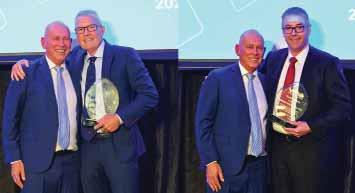
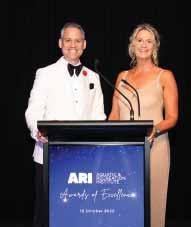
Arthur Stanley, Dr Neil Gibson, Wayne Goldsmith, Gwen Luscombe
Printed in Australia
Newstyle Printing Pty Ltd
41 Manchester Street, Mile End, SA 5031
T: 08 8154 3600, www.newstyleprint.com.au
subscriptions
Annual subscriptions cost $99 in Australia and New Zealand. T: 02 8227 6486 subscribe.ausleisure.com.au
Members of AALARA, APOLA, ARI NSW, ARQ, ASSA, AUSactive, ExerciseNZ, GCA, IAKS ANZ, LIWA Aquatics, the Sports and Play Industry Association, SWIM Coaches & Teachers Australia, the VMA and Royal Life Saving GSPO subscribers receive the magazine as a membership benefit.
The views contained in Australasian Leisure Management are not necessarily those of Leisure Media Limited or the Editor.
While every care is taken with advice given, Leisure Media Limited and the Editor can take no responsibility for effects arising therefrom. Views expressed by contributors may be personal and are not necessarily the views of their employers or professional bodies/associations.
Australasian Leisure Management is an Australian product, Australian owned and printed in Australia.
From the Publisher
The ‘TikTokification’ of the Leisure Industry
While the fast pace of technological change will be familiar to professionals in this industry, in completing this latest issue of Australasian Leisure Management and in our online news in recent months, we've witnessed what could be described as a 'TikTokification' of the industry.
Here I am referring to the growing influence of short-form, algorithm-driven, highly visual content-popularised by TikTok but which can also be seen across Instagram Reels, YouTube Shorts and similar platforms.
While originally a social media phenomenon, TikTokification is reshaping consumer expectations across entertainment, tourism, fitness, attractions and cultural venues. It is not just a marketing shift but a cultural and operational transformation.
The primary discovery engine, particularly for consumers under 35, TikTok’s algorithm rewards spectacle, novelty and emotional immediacy, pushing operators to design experiences that are easy to share, feature bold visuals or 'wow' moments and feel authentic rather than overly polished.
This is seen in everything from immersive art exhibits to neon-lit mini-golf, rooftop cinemas and wellness pop-ups built for social capture.
The speed of this trend is reshaping programming and activations demanding that industry operators shorten campaign timelines, frequently refresh messages and lean into seasonal 'micro-moments'.
It's also worth bearing in mind that members, patrons and guests are no longer just consumers - they are content creators whose posts act as influential endorsements.
This is borne out by user generator content (UGC) that often outperforms paid campaigns in reach and engagement.
This is transformative for the entire industry.
Underpinning has to be a realisation that attention spans are shorter and that the 'scroll culture' mindset has effectively migrated into physical spaces.
While TikTokification offers massive positives, it also introduces challenges as trends can collapse as quickly as they rise.
Here operators might look to invest in 'Instagrammable' installations but need to be sure to avoid prioritising visuals over substance, risking reputation damage.
Looking Back
A year that has passed all-too-rapidly, 2025 has seen Australasian Leisure Management rebrand with a new look to the magazine and website, along with the removal of our online paywall with all of our news now free to access.
Sharing information on the achievements of this industry to the widest possible audience has underpinned this publication’s approach since launch and the removal of the online paywall - a necessary move to generate income during, and in the aftermath of the pandemic - continues that tradition.
With a belief that information sharing is key to this industry moving forward, it was therefore unfortunate to note that the recent NSC Sports Investment Summit in Sydney closed the year by choosing to impose a ban on media attendance - a move that I believe is a major setback for the industry.
Seasons Greetings
We wish all of our readers a merry Christmas and happy New Year and hope that the summer season and 2026 prove to be successful for you all.
Nigel Benton, Publisher
Subscriptions
Subscribe to this magazine for just $99 (in Aus/NZ) for 12 months/six issues. subscribe.ausleisure.com.au
Some of the industry headlines over recent months.
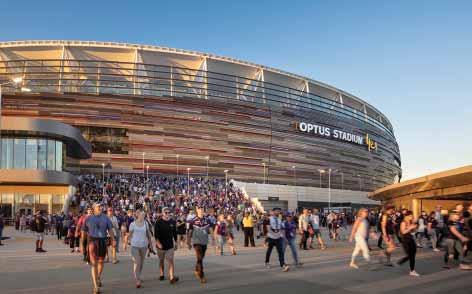
Cox Architecture research paper explains stadiums as drivers of change
Leading sporting venue design practice Cox Architecture have released a research paper outlining how city-based stadiums and integrated sporting precincts are redefining the role of major venues, becoming anchors for regeneration, tourism and urban life.
The paper, 'From Suburbs to Cities: Stadium Economics', explains how, for decades, stadiums in Australia and around the world were designed as isolated, single-purpose destinations - often with vast car parks, long drives and limited use outside match days.
Citing three examples of transformative projects delivered by Cox Architecture in recent years - Adelaide Oval, Perth’s Optus Stadium and Queensland Country Bank Stadium in Townsville - the paper explores how that previous model is rapidly shifting with contemporary urban stadiums offering far more than match-day spectacle.
Sydney Showground partnership with Clima sees launch of new carbon calculator for events
Sydney Showground and leading net zero consultancy Clima have announced an extension of the venue’s Climate Conscious Events (CCE) program through a new and free-touse Event Carbon Calculator (CCE calculator).
Accessible via the Sydney Showground website, the new CCE calculator will generate a high-level carbon footprint of clients’ events in under 10 minutes, using only essential client data and providing quick insights.
Global Wellness Institute ranks Australia as world’s top wellness destination
Australia has been ranked as the most desirable wellness tourism destination by the recently-released Global Wellness Institute (GWI) 2025 Wellness Survey.
Released in advance of the Global Wellness Summit in Abu Dhabi, the findings revealed rising international demand for wellness experiences and travel with more than half the adult population planning a wellness break in the next 12 months. It also coincides with the latest wellness trends such as wild swimming, bathhouses and ice plunges.
Australia’s status at the top of the rankings placed it ahead of New Zealand, Bali, Japan and the South Pacific, with the research showing that 56% of Australians intend to take a holiday that includes a wellness component in the next year, reflecting a growing appetite for travel that supports wellbeing.
Netball Australia releases 10 year game development strategy
Netball Australia has unveiled 'Made in Netball', a 10-year national strategy designed to expand the sport’s total playing and non-playing community to two million people by 2035, positioning the organisation for long-term sustainability ahead of major milestones including the 2027 Netball World Cup and a potential Brisbane 2032 Olympic debut.
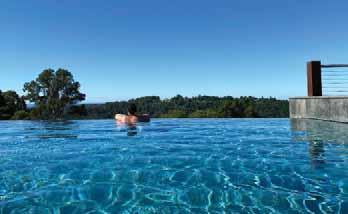
Gwingana Retreat and Spa Infinity Pool
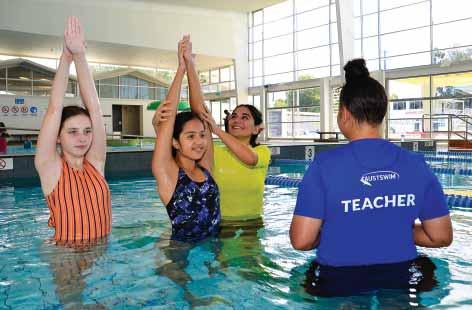
Industry combines to strengthen Queensland’s aquatic workforce
Aiming to build a stronger, more sustainable industry through the Queensland Aquatic Workforce Attraction and Retention Program, Queensland’s leading aquatic organisations have joined forces to address workforce shortages with the launch of Aqua Jobs.
Led by the Active Queenslanders Industry Alliance (AQIA) in collaboration with AUSTSWIM, Royal Life Saving Society Queensland (RLSSQ) and SWIM Coaches & Teachers Australia (SWIM), the Aqua Jobs initiative is supported by the Queensland Government’s Department of Employment, Small Business and Training under the Growing Workforce Participation Fund.
Prahran Aquatic Centre installs high security sensor entrance system
Upgrades to the foyer of the Prahran Aquatic Centre have included the redesign of the foyer including a new high security sensor barrier at the entrance and a matching perspex screen to the reception desk.
To improve safety and security for both staff and patrons, the City of Stonnington engaged Cohen Leigh Architects to redesign the foyer including the new entrance security.
Rather than having to wait at reception, members can now scan their unique barcode tag and gain access to the pool area while casual patrons are welcome to pay at the reception desk and be granted entrance.
Outdoor Adventure leaders recognised on the occupation shortage list
In a major step for the outdoor industry, Outdoor Adventure Leaders/Guides have been included in the latest release of the Jobs & Skills Australia (JSA) Occupation Shortage List. This inclusion marks a turning point - validating longstanding efforts by the sector to recognise the shortages and elevate the role of outdoor education, adventure tourism and recreation and legitimise it as a vital profession.
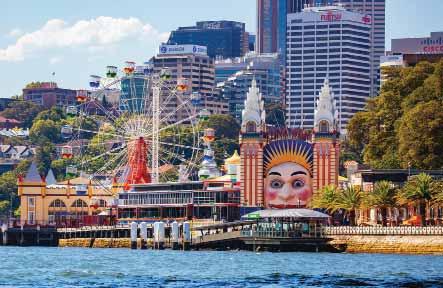
Luna Park Sydney marks 90 years of fun
Luna Park Sydney has celebrated a milestone birthday with the heritage amusement park turning 90-years-old.
Luna Park Sydney first opened the gates of its now instantly recognisable giant face on 4th October, 1935 - in the middle of the Great Depression - giving the people of Sydney an escape to experience pure joy at a time when they needed it most.
Since then, Luna Park Sydney has continued to be a place of wonderment that holds a special significance on the foreshore of Sydney Harbour.
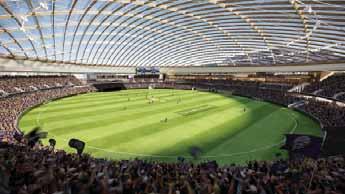
Tasmanian Parliament gives final approval for new Hobart Stadium
The Upper House of the Tasmanian Parliament has approved legislation that will allow construction of a 23,000-seat roofed stadium on the edge of the Hobart CBD.
Following two days of debate in Tasmania’s Legislative Council, the final vote that the Tasmanian Government needed to move forward with the venue at Hobart’s Macquarie Point passed nine votes to five.
Now that it has been approved by the Upper House, the state-owned Macquarie Point Development Corporation will seek a head construction contractor for the project - the cost of which has risen from an initial $715 million estimate to $1.3 billion - by the end of 2026.
The stadium is scheduled to be completed in time for the 2029 men’s AFL season, after the Tasmania Devils enter the competition in 2028.
Prior to completion of the venue, the Devils will play at least their first season at Hobart’s Ninja Stadium (Bellerive Oval) and Launceston’s UTAS Stadium (York Park).
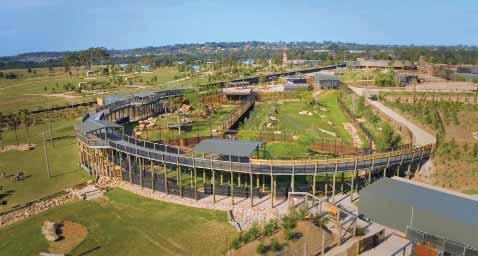
Hammons Holdings confirms acquisition of Sydney Zoo
Family-owned tourism and attractions group Hammons Holdings assumed operations of Sydney Zoo as of 3rd November.
This marks the final step in Hammons Holdings completing its purchase of the Zoo, adding the landmark Western Sydney destination to its expanding portfolio of attractions across Greater Sydney.
Once finalised, Hammons Holdings will be the sole shareholder and operator of Sydney Zoo, home to more than 4,000 animals over a 16.5 hectare site in Eastern Creek.
Since opening in late 2019 the zoo has hosted more than 4.5 million visitors and won multiple tourism industry awards.
Hammons Holdings also announced plans by BridgeClimb Sydney, which it has operated since 2018, for a major $10 million upgrade of the Pylon Lookout and Museum at the southern end of the Sydney Harbour Bridge.
PCYC NSW program creates pathways for youth employment
PCYC NSW’s impactful youth program, 'Fit for Work', is supporting young people by creating pathways to employment.
In collaboration with NSW Police and industry leaders like TAFE, headspace and local employers, PCYC provides a 10week intensive training course that equips participants aged 16 to 18 with essential employability and life skills, including career planning, resumé building, and certifications such as First Aid and White Card.
In the year to date, Fit for Work has been held in 10 PCYC Clubs across New South Wales, with more than 120 participants, and 850 attendances.
Federation University survey finds one in five girls consider dropping athletics and swimming due to periods
A Federation University study has revealed that not having time to change their period protection was a concern shared by over 61% of girls - with findings showing that one in five girls between the ages of 10 and 16 years considered dropping out of sport due to period-related challenges.
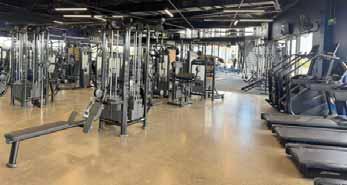
Plus Fitness opens 200th club in Australia
The opening of its Mambourin club in Victoria marks Plus Fitness’ 200th Australian club.
This landmark achievement for the brand highlights its continued growth trajectory fuelled by franchisee partnerships that deliver exceptional customer experiences for its 200,000 members.
The Mambourin club underscores Plus Fitness’ momentum under Australian-owned, ASX-listed Viva Leisure following its acquisition in 2020, with six more clubs in the pipeline to open soon - including Footscray and Clyde in VIC as well as Bowral, Oran Park, Nowra and Belrose in NSW - as well as 50 more territories sold.
New Zealand’s ‘Great Rides’ deliver over $1 billion into economy
New Zealand’s renowned cycle trails are delivering $1.28 billion per year into local economies according to new research.
The 2025 evaluation of the Ngā Haerenga Great Rides of New Zealand shows visitor spending attributed to the 23 Great Rides jumped a massive 35% for the year ending June 2025, compared to the same period in 2021.
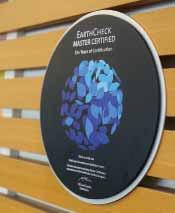
Gold Coast Convention and Exhibition Centre secures EarthCheck Master recertification
The Gold Coast Convention and Exhibition Centre (GCCEC) has attained EarthCheck Master recertification, reaffirming its leadership in sustainable operations and responsible event delivery.
Recognised as the highest level of achievement under the EarthCheck program, Master Certification celebrates more than 15 years of continuous benchmarking, improvement and demonstrated commitment to environmental and social performance.
Global sport calls on leaders at COP30 to join forces on climate action
Global leaders recently gathered in the Brazilian city of Belem for COP30 - the United Nations Climate Change Conference - during which the international sports community made a united appeal for governments to recognise sport as a strategic partner in tackling the climate crisis and building community resilience.
In a communiqué released by the United Nations Framework Convention on Climate Change (UNFCCC) Sports for Climate Action (S4CA) Framework, signatories - including major leagues, clubs and federations - urge “public and private institutions, national governments, city leaders and international bodies to formally recognise and invest in the role of sport as a climate action partner.”
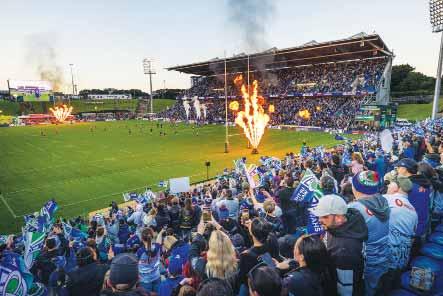
Historic numbers attend Auckland’s Go Media Stadium during Warriors NRL season
Over 260,000 rugby league fans flocked to Go Media Stadium during the 2025 NRL season as the One New Zealand Warriors charged towards a second home Finals appearance in three years.
The Auckland venue hosted 10 home matches throughout the 2025 NRL regular season, plus the home elimination final against Penrith Panthers.
The average attendance over the 11 games was 23,863 per match - the highest ever for a home Warriors season.
New National Parks announced for Victoria
New national parks have been announced for central west Victoria following legislation passed in Victorian Parliament upper house.
The creation of WombatLerderderg, Mount Buangor and Pyrenees national parks and other conservation reserves will protect tens of thousands of hectares of habitat. They will also safeguard hundreds of rare and threatened plants, animals and fungi, including Greater Gliders, Mt Cole Grevilleas, Brush-tailed Phascogales, Mountain Skinks and Powerful Owls. They will be Victoria’s first substantial new national parks in 14 years.
www.ausleisure.com.au
30 years of the Venue Management School
The Venue Management Association (VMA) has marked two major milestones for its flagship professional-development programs: 30 years of the Venue Management School (VMS) and 10 years of the Leadership Institute (LI).
These anniversaries coincided with record enrolments and a fully sold-out intake for this year’s School, reinforcing the enduring value of the programs for the Asia-Pacific venue industry.
The Venue Management School, now in its third decade, is the industry’s most respected immersive career development experience for venue professionals. Delivered as a two-year residential program, VMS covers a broad and deep curriculum designed to build operational, commercial and strategic capabilities.
Ice Hockey Australia cuts funding to women’s league
Australia’s elite women ice hockey players are facing a major funding setback ahead of their 2025/26 season, with Ice Hockey Australia (IHA) slashing financial support for the Australian Women’s Ice Hockey League (AWIHL) by 60%.
The cut reduces the AWIHL’s funding from $120,000 to just $48,000. By contrast, IHA’s funding for its men’s competition is understood to be unchanged.
The revelation comes as the sport grapples with internal governance issues and financial strain, following the recent resignation of IHA President Tim Kitching after questions were raised by board members over financial under-reporting - a situation that has drawn criticism from stakeholders at all levels of the sport.
Accident Compensation Corporation halts funding to Water Safety New Zealand
Water Safety New Zealand (WSNZ) is facing having to cut preventive programmes as a result of the Accident Compensation Corporation (ACC) having announced that it is to cease its $1.1 million per annum contribution to the organisation as of 2026.
The ACC’s decision to terminate its fundings is reported to be as a result of a shift in focus by the government-run entity with it wanting drowning-prevention programmes to demonstrably reduce claims in order to qualify for funding.
ACC’s funding to WSNZ, New Zealand’s leading drowningprevention body, which commenced in 2005, represents around 20% of its annual revenue.
Michael Cassel Group commits to education pathways in the performing arts
Michael Cassel Group has announced details of its work experience and placement program for 2026.
The program creates opportunities for secondary school, tertiary and vocational education students, recent graduates and early-career professionals to learn from Michael Cassel Group’s expertise as producers and presenters of world-class theatrical productions and live entertainment.
Transformation of derelict Ipswich mall attracts two million visits
Ipswich’s lauded transformation of a derelict mall into the bustling and lively Nicholas Street Precinct has attracted two million visits, dozens of community gatherings and a plethora of awards.
Its keystone venue building includes key tenants General Public, HOYTS Ipswich, miniBOUNCE, Anytime Fitness and more recently, Vapiano.
Ipswich Mayor Teresa Harding said Nicholas Street Precinct is a triumph of urban renewal, bringing life back to the city centre with a design that can be held up as an exemplar for people-first public spaces.
Deakin University research reveals women’s experiences of racism in sport
A new study by Deakin University on ethnically diverse women in Victorian sport found all had experienced or witnessed first-hand racism.
The study, supported by Monash University and the University of Melbourne, found racist behaviour experienced by women and girls most commonly took the form of appearance-based name-calling, bias, microaggressions and a lack of understanding of diverse cultures.
The findings have prompted calls by researchers for a zero-tolerance approach to racism in community sporting clubs and associations. A need for clearer guidelines on what constitutes racism, the consequences for such behaviour, and greater transparency in reporting are among the recommendations.
Pickleball Australia unveils new brand identity
As part of its continued evolution into a nationally unified and professionally governed sporting body, Pickleball Australia has unveiled a new brand identity.
Cementing its status as the peak national body for pickleball enthusiasts nationwide, Pickleball Australia advises that the new branding represents its position as “Australia’s fastest growing, fun and inclusive sport”, reflecting its rapid rise in participation and profile across the country.
Developed in partnership with brand strategy agency The Contenders - after extensive stakeholder and market research - the new visual identity aims to capture what the agency describes as the sport’s “joyful rebellion” and its dual character from casual backyard play to elite national competition.
International ethics body finds Gymnastics Australia breached human rights of young participant
Gymnastics Australia has been found to have breached the human rights of a young gymnast who sustained a serious spinal injury while training, with a damning report from the Gymnastics Ethics Foundation (GEF) raising fresh questions about the sport’s complaint-handling processes.
The GEF Disciplinary Commission - an independent body established by the Fédération Internationale Gymnastique (FIG) - determined that Gymnastics Australia failed to protect then 12-year-old Melbourne gymnast Trinity de Lance from non-accidental violence, ignored her reports of abuse, and neglected to ensure her complaint was handled with appropriate care.
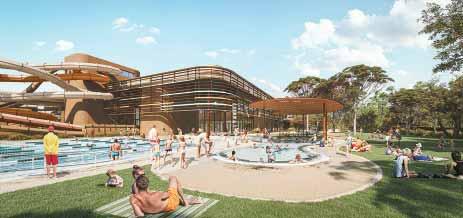
Recruitment underway for hundreds of jobs at new Adelaide Aquatic Centre
Recruitment is now underway for hundreds of positions at the new $135 million Adelaide Aquatic Centre, with YMCA Aquatic & Events Services Limited launching a major campaign to fill up to 180 of an eventual 300 roles ahead of the facility’s opening.
The recruitment drive marks a major milestone for the project, which replaces the former North Adelaide complex with a modern, energy-efficient venue designed to serve as a yearround hub for aquatic recreation, health and community activity.
Anytime Fitness marks 600th club milestone
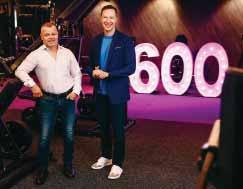
Anytime Fitness has reached a milestone with the opening of its 600th club in Bundall on the Gold Coast - marking another major step in the brand’s mission to make health and wellness accessible to more Australians.
Founded by Justin McDonell and Richard Peil and operated under the Collective Wellness Group, Anytime Fitness has grown to more than 720,000 members nationwide, with over half of its franchisees now multi-site owners. What began in 2008 as a regionalfirst strategy has evolved into a national success story, representing almost a quarter (24.1%1) of Australia’s fitness market.
Anytime Fitness has also been announced as an official Regional Partner of Asian Cup Australia 2026™.
Rising costs threaten affordability of community sport across New Zealand
The New Zealand Amateur Sport Association (NZASA) has highlighted findings from the 2025 National Sport Club Survey (NSCS) which reveal the rising cost of sport as one of the most significant challenges facing community clubs and families across country.
The NSCS shows that, compared to pre-COVID, the number of community sport clubs now reporting financial deficits has doubled, with rising costs for facilities, insurance and general operations putting pressure on budgets, with fewer clubs breaking even.
This year’s survey found that grant funding remains a vital part of the financial picture, accounting for about one-fifth of a club’s annual income on average, with more than half of clubs receiving grants relying on gaming machine trusts, far more than any other funding source.
GymbaROO experiences rapid national growth following Belgravia acquisition
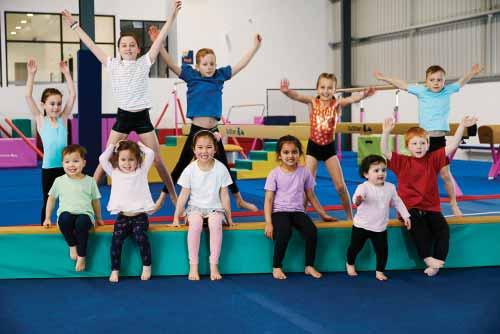
Following its acquisition by Belgravia Group in late 2023, GymbaROO - Australia’s leading early childhood development program - has advised it is experiencing a period of rapid expansion and commercial success.
Since commencing the 2025/26 financial year, 16 new company-owned centres and three franchise sites have opened across the country, taking the total number of venues to 75, marking a significant milestone in the brand’s growth trajectory.
OPPORTUNITIES
Tasmanian maze and miniature village attraction, Tasmazia (pictured above), has been listed for sale, offering a rare opportunity for a buyer to acquire one of the state’s most loved visitor destinations.
For only the second time in nearly 50 years, the Timbertown colonial-style heritage attraction on the NSW Mid North Coast is for sale.
Georges River Council has expanded access to Jubilee Stadium in Sydney’s south, making the venue offerings including Chairman’s Club, Legend’s Club and Deck, and the Captain’s Lounge more available to the local community.
The NSW Government has opened a tender process for the revitalisation of Moore Park’s Entertainment Quarter, supported by a new long-term lease.
Kardinia Park’s GMHBA Stadium in Geelong has delivered more than $190 million for the Victorian economy last financial year.
Administrator considers offers for Derrimut 24:7 Gym assets
Troubled fitness chain Derrimut 24:7 Gym has been placed in administration by its founder Nick Solomos.
Since the move, revealed by this publication in early November, Administrator Stephen Dixon of HM Advisory has invited Expressions of Interest for the business while administrators work to protect staff entitlements.
The chain’s operating entity was placed in voluntary administration amid mounting pressure from the Australian Taxation Office (ATO) over unpaid tax, superannuation and supplier debts.
Currently investigating the financial affairs of the companies and the impact for creditors and stakeholders generally, HM Advisory understands debts total in excess of $40 million.
Cliff park adventure attraction set to open in the Gold Coast hinterland
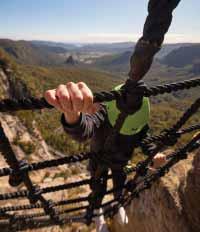
A new nature-based attraction is set to expand the Gold Coast’s adventure offerings, with the upcoming opening of Happitat, located near Binna Burra on the edge of Lamington National Park.
Described as the world’s first ‘cliff park’, Happitat blends adrenaline-charged activities with environmental sustainability, designed to immerse visitors in both nature and challenge.
Development plans for land around Venues NSW facilities
The NSW Government is to open up land adjacent to Venues NSW owned and operated facilities in Western Sydney, Newcastle and the Illawarra.
Introducing amendments to the Sporting Venues Authorities Act in order to “unlock” sporting and entertainment precincts, the move envisages the development of new hotels and entertainment facilities at WIN Stadium and WIN Entertainment Centre in the Illawarra as well as CommBank Stadium in Parramatta.
It also proposes the development of the 63 hectare Hunter Park in Newcastle as a mixed-use precinct, to include a hotel, retail and commercial spaces, along with an event space.
The amendment will allow for the development of visitor and residential accommodation on the Venues NSW land, which was previously prohibited.
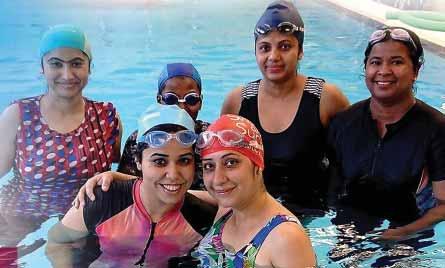
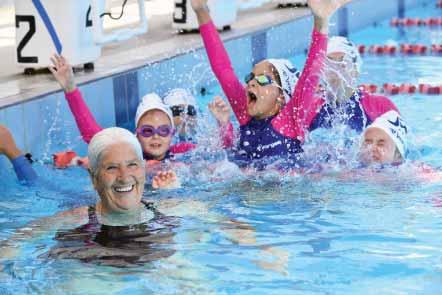
Bluewater Leisure Centre launches women’s-only swim nights
Colac Otway Shire Council has advised that the Bluewater Leisure Centre is launching the Bluewater swim program - a women’s-only swim night program - to help more local women get active in a safe, welcoming space.
The Council is supporting the program through its VicHealth partnership, which placed a strong emphasis on providing safe and inclusive environments for girls and women who faced barriers to getting active.
BlueFit Swimming hits
50,000 learn to swim enrolment target
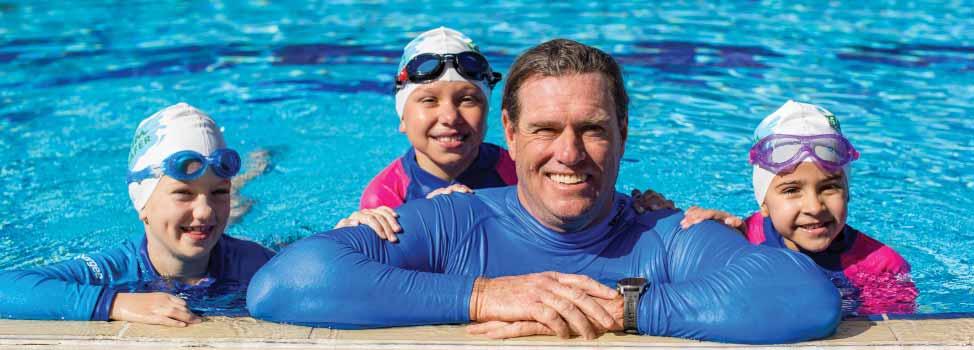
BlueFit’s continued expansion across Australia’s learn-toswim sector has seen it surpass 50,000 enrolments in its squads, schools and holiday programs.
Now operating more than 50 swim schools nationally, BlueFit Swimming delivers water-safety and learn-toswim programs to tens of thousands of children each week, aligning with its stated mission of providing “accessible aquatic education for every community”.
Basketball Australia releases 15-year plan for games to be the largest team sport in the country by 2040
Basketball Australia and every state and territory member association have released the Australian Basketball #2040 Vision - Everybody’s Game, setting an ambitious goal for the game to become Australia’s largest team sport by the end of the next decade.
Launched at the 2025 Australian Basketball Congress, the Vision marks the first time the sport has united behind a single, long-term plan to guide its future growth - from the grassroots to the world stage.
Mass participation events contribute to Cairns economy
Cairns Regional Council has advised that mass participation events including IRONMAN Cairns, Crankworx and the Cairns Marathon contributed to injecting almost $39 million into the region’s economy in the past financial year.
A report presented at Cairns Regional Council highlighted the success of the Major Events Sponsorship Program, which invested $1.51 million to help deliver 14 high-profile events across the region.
Revo Fitness named National Winner in Outstanding Growth category of 2025 Telstra Best of Business Awards
Revo Fitness has been announced as the National Winner in the Outstanding Growth category of the 2025 Telstra Best of Business Awards, recognising the brand’s impressive trajectory from a single-club operation to one of Australia’s fastest-growing fitness networks.
The Outstanding Growth category celebrates businesses driving economic resilience through expansion, job creation and community impact.
VICSWIM returns for its 50th year
Providing another summer of safe and fun water safety education across Victoria, VICSWIM is preparing to celebrate a major milestone in 2026 as it marks 50 years of teaching children vital swimming and water-safety skills.
Run across the early weeks of January each year, VICSWIM offers families a low-cost five-day swimming program, with 30-minute lessons over five consecutive days, designed to fast-track confidence, skill development and essential watersafety awareness. The program caters to children aged four to 12 years, with both pool-based and open-water lessons available to reflect real aquatic environments.
AJ Hackett Bungy New Zealand has launched the South Island’s first three-person adventure swing at the original home of bungy - the Kawarau Bridge - in Queenstown.
Following a $1.2 million contribution by the Western Australian Government, A-League club Perth Glory has relocated its training facilities and administrative headquarters to Stirling Leisure - Mirrabooka in Perth’s northern suburbs.
A huge week of events will mark the opening of Hamilton’s new Waikato Regional Theatre in early 2026.
Club Lime has announced the extension of its partnership with the Western Sydney Wanderers into the 2025 and 2026 A League Men's and Women's seasons.
A landmark report has recommended the construction of a $44 million gondola as the most sustainable long-term access option for the Jenolan Caves, one of NSW’s most treasured natural and heritage attractions.
Australia’s newest NRL club, The Perth Bears, are to be the first occupants of the WACA Ground and Waterbank site in East Perth.
Parks Victoria has opened an upgraded viewing platform for its penguin viewing experience at Melbourne’s St Kilda Pier.
The NRL’s Cronulla Sharks have announced a stadium naming rights deal with Ocean Protect - an organisation dedicated to stopping stormwater pollution from entering oceans and waterways.
Sports technology innovator Sportable is to strengthen its footprint in Australia, opening its Asia-Pacific headquarters and Global Centre of Excellence in Collingwood.
The AFL’s Hawthorn Football Club has officially opened its new home, the $113 million Kennedy Community Centre at Dingley in south east Melbourne.
Construction is complete and Stage 2 of Western Australia’s Dwellingup Mountain Bike Trail network is now officially open for riding.
Marking the venue’s 13th anniversary, insurer and motoring group RAC has renewed its naming rights partnership with the Legends Global-managed RAC Arena, securing its association until 2030.
The Western Australian Government has announced that it has halted plans for the $1.6 billion redevelopment of the Perth Convention and Exhibition Centre (PCEC).
Following a comprehensive tender process, Lane Cove Council has announced the appointment of Sydney Sports Management Group (SSMG) as the operator of its new Galuwa Recreation Centre.
Fun Times
Nigel Benton looks at new investment in Australia’s theme and amusement parks
If market researcher IBISWorld’s latest study into Australia’s theme parks is to be believed, Australia’s amusement parks and family entertainment centres generated $2.5 billion in revenue in 2024/25, with the sector stabilising after several years of reported volatility.
IBISWorld, whose studies tend to be rather pessimistic, also reports that the sector employs more than 10,290 people across 1,144 businesses - with revenue growing at an annualised 1.7% over the past five years.
The report, Amusement Parks and Centres Operation in Australia (ANZSIC R9131), notes that the sector has undergone “significant changes” since 2019, acknowledging how pandemic-related shutdowns caused major profitability declines in 2019/20 and 2021/22. These results were driven by restricted visitor capacities, falling tourist numbers and widespread operational interruptions.
However, IBISWorld notes a subsequent rebound, with pentup demand and elevated household savings contributing to a strong resurgence in late 2021/22 and throughout 2022/23. These conditions bolstered revenue and improved margins as families returned to major theme parks and local leisure centres.
The study notes that the momentum has waned over the past two financial years, pointing to the 2023/24 and 2024/25 financial years having delivered softer revenue outcomes despite continued improvement in domestic and international tourism. It suggests that tighter household budgets and rising cost-of-living pressures have reduced spending on leisure experiences, impacting smaller and mid-sized attractions in particular.
Global Performance
Australia’s performance echoes the international market, with the newly released TEA Global Experience Index™ revealing that the global attractions landscape saw a return to stable growth in 2024, as tourism patterns levelled out to roughly pre-pandemic numbers.
The yearly report shows the combined attendance of the top 25 theme parks globally grew 2.4% in 2024 to almost 246 million. In general, the leading parks in the mature markets of the USA, Japan and western Europe saw flat to modest changes in attendance, while the leading internationally branded parks in China saw notable continued growth and registered record years.
Peak Season
While media and commentators all-too-often seem to focus on ride reliability issues or a perceived lack of investment in the sector, the 2025/26 peak season is set to see a slew of new rides open to guests.
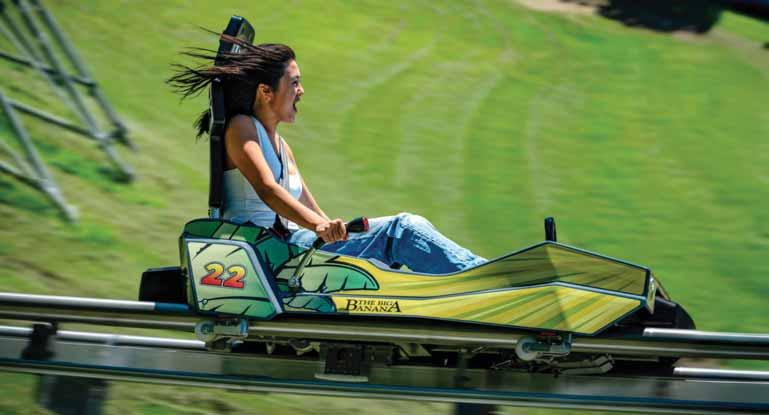
At the time of writing, the Big Banana Fun Park in Coffs Harbour will launch its $5.8 million Plantation Coaster - set to be only the second Wiegand Alpine Coaster in Australia - on Saturday 13th December.
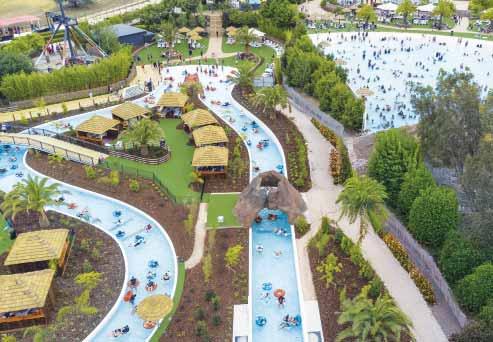
Funfields in Victoria has just opened two new rides - Lava Lagoon Lazy River and Cyber Drift Bumper Cars, following a major $10 million upgrade to the park while Perth’s Adventure World theme park is reviving one of its most popular attractions - the Bounty’s Revenge swinging pirate ship ride.
On the Gold Coast, Village Roadshow Theme Parks (VRTP) is due to reopen the Scooby Doo Spooky Coaster at Warner
The Big Banana Fun Park's new Plantation Coaster - only the second Wiegand Alpine Coaster in the country.
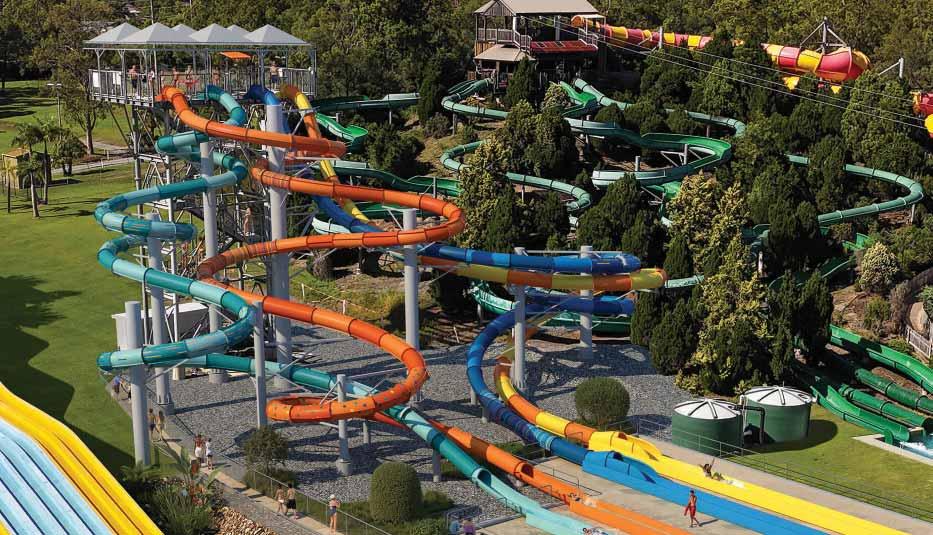
Bros. Movie World after a three-year renovation while Wet’n’Wild is counting down to the opening of its new Zoom Zone thrill waterslide precinct.
Looking forward to these attractions, VRTP Head of Operations Llewella McNabb advised that the Zoom Zone will offer a variety of thrill levels as well as a mix of minimum height requirements to ensure the maximum number of riders can enjoy the attraction.
McNabb explained “each slide is different but two have steeper drops for those who are braver and two will have lower height restrictions so everyone can experience the thrills.
“It’s a really immersive experience. These are colourchanging tubes that light up your ride with aqua-lucent effects and it’s a fully enclosed tube for body sliding.”
McNab explained that the Spooky Coaster renovation saw the ride receive a major mechanical overhaul, including an upgraded braking system, a new operating system, a complete refresh of the ride vehicles and an increase in the number of ride vehicles to 16.
The TEA Global Experience Index also ranked Wet’n’Wild fifth in its listing of Asia’s top 20 most attended waterparks in 2024, welcoming 1,050,000 guests during the year - a slight increase on 2023.
Dreamworld is set to open King Claw - its next-generation thrill ride - as of Friday 12th December, while owner Coast Entertainment Operations Limited’s plans to develop land adjacent to Dreamworld and WhiteWater world for housing, accommodation, retail, business and hospitality uses have been ‘called-in’ by the Queensland Government for fastapproval.
From Entry to Exit: Never Lose Track
Boost your performance with Axess! teamaxess.com
The Scooby Doo Spooky Coaster at Warner Bros. Movie World after a three-year renovation (above) and Funfields' new Lava Lagoon Lazy River. (below).
On the Sunshine Coast, Aussie World has received planning approval for a First Nations attraction that will see the conversion of four retail tenancies adjacent to its site and the Banana Bender Pub at Palmview.
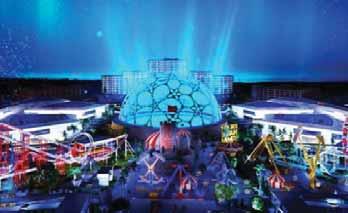
Infinity Planet integrated resort
Perhaps the most high-profile announcement in the sector has been that of an ambitious $2.6 billion entertainment, theme park and tourism precinct for a 68 hectare site at Elimbah, between Brisbane and the Sunshine Coast.
Developer RHC City has lodged plans for the precinctdubbed Infinity Planet - with the City of Moreton Bay Regional Council, suggesting its first stage could be completed in time for the Brisbane 2032 Olympics.
The proposal would see a strawberry and macadamia farm transformed into an integrated resort featuring an indooroutdoor theme park, a waterpark, extensive retail space, a 700-room hotel complex and a series of multi-national pavilions.
The farmland earmarked for the project is currently zoned rural and limited-development, meaning Infinity Planet would require a shift to a Major Tourism Zone. The proposal will face assessment around environmental impacts; bushfire risk; water and waste management; and the effect of a highdensity entertainment precinct on Elimbah’s rural character.
Whether Infinity Planet’s proponents manage to secure the essential trifecta of land, planning and finance - factors that have prevented past proposals such as Aquis in Cairns and several plans for waterparks on the Sunshine Coast - remains to be seen.
The Australian market
While politicians have been known to advocate for a Disney resort in Australia, the nation lacks the population base for mega-parks and instead focuses on optimising existing offerings.
IBISWorld identifies visitors under 40 - especially families with young children - as the industry’s core customer base. It also advises that, while domestic attendance remains
vital, international travellers have formed a growing share of visitors in the past five years, supporting the recovery of major attractions.
Although consumers now have access to a wide range of low-cost entertainment alternatives, the immersive experiences offered by theme parks cannot be easily replicated.
Nigel Benton is Publisher of Australasian Leisure Management.
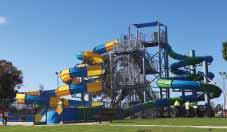
Wet’n’Wild's new Zoom Zone thrill waterslide precinct (above), Funfields' new rides Cyber Drift Bumper Cars (below) and concept for the Infinity Planet integrated resort (bottom).
When Liability Costs Bite
Kristy Ahrens shares AALARA’s consideration on the implications of Insurance Council of Australia report on rising insurance costs
Australia’s amusement, leisure and recreation sector is built on joy, connection and experience, but it also operates under a heavy weight of liability. Rides, venues and attractions all bring a complex mix of excitement and exposure.
Recent reports from the Australian Prudential Regulation Authority (APRA) and the Insurance Council of Australia (ICA) confirm what our members have long felt; the cost and accessibility of public liability insurance remain a major challenge. Premiums continue to climb, and for many operators, the rising cost of cover is squeezing already tight margins.
With the ICA’s recent report on civil liability, the conversation is set to sharpen once again, which we wholeheartedly welcome. The report highlights risk management, mitigation actions and potential policy reforms that could improve affordability and accessibility of cover. However, it also acknowledges a hard truth and one that we are all too familiar with: in some sectors, including high-risk recreational industries like ours, risk management alone is unlikely to substantially reduce exposure to the level that reignites insurer appetite.
For many amusement and recreation operators, the insurance issue has evolved from a budgeting frustration into a business continuity risk. Some can’t obtain the coverage they need at any price. Others are scaling back operations, delaying investment, or reducing offerings to manage exposure. Then, for new entrants or community-based ventures, barriers to entry are higher than ever.
This environment threatens not only individual businesses but also the broader ecosystem of tourism, employment and regional vitality that the attractions industry supports.
In other words, ICA’s report is absolutely worth a read, but there are no immediate ‘wins’ on the horizon to meaningfully improve the situation for our sector.
Here’s what we can continue to do as an industry:
Lead with safety:
Continue to strengthen internal systems, training, and safety audits. Demonstrating a culture of safety remains the strongest message to insurers.
Collaborate and share knowledge:
Through AALARA, operators can access best practice guidelines, workshops and peer learning to lift the overall standard of risk management.
Support policy reform:
AALARA continues to advocate for national consistency in civil liability law, and for practical regulatory frameworks that reflect the realities of our operating environments. Explore alternative risk models: Industry mutuals, discretionary funds and collective riskpooling remain promising avenues for sustainability in the long term.
AALARA is continuing to work closely with insurers, regulators and government agencies to ensure our members’ voices are heard. We will be reviewing the ICA’s civil liability report in depth and providing members with a summary of its implications and potential advocacy pathways.
We agree that, after nearly 25 years, civil liability laws must be addressed, to ensure public liability insurance remains sustainable, accessible, and continues to provide the security and confidence that businesses across our sector rely on.
The road ahead won’t be easy, but with a united front, datadriven advocacy and strong safety leadership, our industry can continue to evolve and thrive, despite the very real headwinds.
Kristy Ahrens is General Manager of the Australian Amusement Leisure & Recreation Association (AALARA).
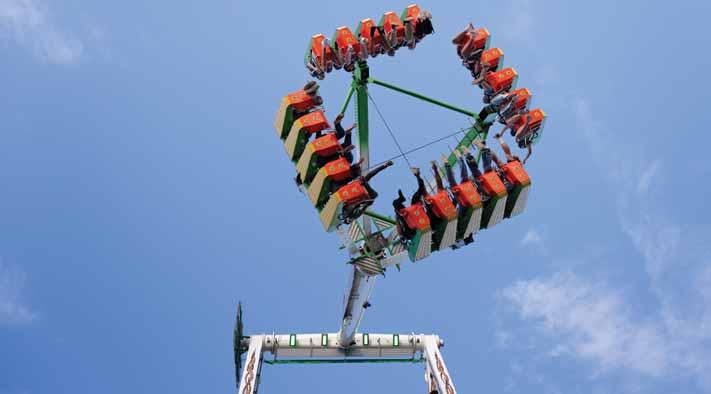
Carnival ride at the 2024 Bundaberg Agricultural Show. Credit: Shutterstock.
Is Australia’s Theme Park Future AI-Driven?
Gwen Luscombe considers how Australian theme parks and attractions are embracing AI to improve everyday management and transform visitor experiences
Australia’s theme parks and attractions are quietly undergoing a technological revolution. Behind the scenes, artificial intelligence is reshaping how venues manage some of their most persistent challenges: queue wait times, staff rostering and more.
While more commonplace on the global scale, Australian operators are looking to the success of overseas attractions already utilising AI to discover that it isn’t just about futuristic rides, it’s about reimagining the entire guest experience.
Beyond Queue Management
The potential of artificial intelligence to enhance customer experience and operational efficiency in theme parks, amusement parks, and attractions is set to be a vital part of the industry’s global growth, according to Rad Anandakumar, who is at the helm of AI Consulting Group.
The Sydney-based consultancy says Australia is a market that’s primed for transformation and it goes far beyond simple queue management.
Traditionally, line wait times were calculated using simple headcount estimations, queue cameras and historical patterns. Today’s AI-powered systems are leaps ahead in sophistication. Globally, attractions have incorporated AI through wristband passes that track customer movements, analyse purchases and habits, and provide real-time reports.
Image courtesy of Shutterstock. "In
From there, management can curate environments and experiences based on customer preferences, personalising their experience.
Explaining that Australian operators are also recognising the big benefits of using AI for staff optimisation, Anandakumar advises “staff optimisation is a really important one.
“It’s not something that would face the customer necessarily, but it would definitely improve customer service outcomes. And so if you imagine that I need to know how many people are needed to successfully run the park that day based on how many visitors will be there or are predicted to be there, there’s two ways of doing that. Firstly, there’s seasonality and historical trends.
“So I understand that at this time last year, or during Easter or the Christmas break, here’s what my volume looks like. And then secondly, what does my turnstile tell me about how many people are coming in and out of the venue? I can use that to dynamically determine how many people I should be rostering on and off.”
Anandakumar further explains that there’s even further financial benefit, noting “I think the outcomes that a lot of people don’t think about, and it’s true across lots of industries is, as soon as a person does over a certain number of hours, they suddenly click into overtime hours. So you’re better off having two people work for four hours each than you are having one person work for eight.”
Using AI for better overall operations is also particularly valuable for operators managing diverse seasonal patterns. Summer school holidays, international tourist seasons, and local event calendars create complex demand patterns that traditional planning methods can often struggle to accommodate.
Anandakumar sees that AI systems can process these variables in real-time to enable better staff allocation, maximising both operational efficiency and guest satisfaction. He also advises that the rise of using chatbots for ticketing, general enquiries has become far more sophisticated and ensures your admin or front of house team aren’t held up on the phone. He adds that tech can also be built to service customers who are already inside the venue.
Anandakumar states “maybe they’re already in the venue and they want to know, ‘Hey, is this ride busy?’ or ‘I lost my wallet. Where would I go to find it?’ You can remove a lot of human work, and give back time to those people.”
Infrastructure Investment
Successful AI implementation depends heavily on having a robust digital infrastructure. When parks can seamlessly
AI is set to make long queues a thing of the past.
integrate data from their turnstiles to point-of-sale systems, ride sensors, mobile applications and guest feedback platforms, AI algorithms can generate insights that are impossible with legacy systems.
And while the investment in implanting AI systems can seem daunting, Anandakumar believes that it is possible to start small and build up. However, he emphases that the bigger question is buying pre-existing technology versus building something customised.
He goes on to say “the reality is, if you go out and do some research, and let’s say you’ve defined the 10 things you want to do and there’s a tool or product out there that does those things, it’s almost going to be impossible for you to build it cheaper than just paying the subscription cost to use.”
It gets murky, he says, when you find a product that does the 10 things, but also does several things you don’t need, which can drive up the costs of paying for unneeded services.
“Or you’ll find a product that’ll do some of those things and find another product that’ll do three or more other things, but not one or two of what you wanted, so you go without those. So the cost of that is, you’re double paying for tools, and then you’re not getting the impact that you would out of the missing bits. And in those circumstances, it’s always worth reaching out, for instance, to a consultancy like ours and saying, "what if we did go and build just the 10 things that we wanted?
“When you build something, you get lots of flexibility. When you buy something, you tend to get it, well, cheap."
Anandakumar adds that operators are often genuinely surprised to know that an organisation like his has already solved the problem they might be having.
“It’s a great idea to think in a bit of a blue-sky way at the moment,” he says, explaining that operators should look at the problems they’re experiencing and speak to someone about whether there’s already a solution for that or whether they can build something for you.
“It might have cost $200,000 to build that thing two years ago. Today, it costs 20 times more, and if you don’t even know it’s possible, or if in your head, you know it’s possible, but think it’s too expensive, you’re already setting the wrong baseline for yourself.
“That’s the one piece of advice that I’d be giving almost every business right now is think blue sky.”
Privacy and Visitor Trust
The success of AI-driven tech does depend on guests’ willingness to share location data, purchase history, and behavioural preferences. Australian operators are finding that transparency and demonstrating immediate, tangible benefits have been the most successful.
When guests see that sharing their data results in shorter wait times and smoother park experiences, adoption rates increase significantly. This trust-building process is particularly crucial in Australia, where consumers are generally more privacy-conscious than in some international markets.
What’s Ahead?
As attractions and theme parks continue embracing AI, they’ll create a more convenient experience covering all touchpoints from booking to post-park visit, improve engagement through personalisation, remove pain points based on customer feedback analysis and delight visitors with interactive attractions.
The vision extends beyond just general efficiency to a genuine experience transformation. Future AI systems will anticipate individual guest preferences, suggest optimal park navigation routes to suit their preferred rides or even predict when a guest might want to take a break or purchase food, all while maintaining the spontaneity and magic that makes theme park visits memorable.
For operators, this represents more than technological advancement; it’s about staying relevant in an increasingly competitive entertainment landscape. As international theme park chains expand their presence in the Asia-Pacific region, local operators with sophisticated capabilities will be better positioned to compete on experience quality rather than just scale.
Gwen Luscombe is an award-winning journalist and a former recipient of the Write It Fellowship with Penguin Random House Australia. She is also a Publisher’s Australia Bell Award-winning editor.
Disney has been an early adopt of AI in its parks and resorts.
Every facility has a story to tell. Journeys from concept to grand celebrate.
Surfaces are the largest features present at any venue. They take up
2026: A Year of Joy
Looking at key trends set to shape fitness in 2026, Jak Phillips sees that category expansion, digital disruption and policy shifts are set to collide
Major opportunities are set to see clubs gain ground and win new members in the coming year
1. JOMO - The Joy of Missing Out
Forget FOMO (‘fear of missing out’), 2026 is going to be all about JOMO - the joy of missing out. A welcome antidote to FOMO, JOMO involves being present and finding joy in one’s current activities, prioritising self-care, and being intentional with one’s time, rather than feeling anxiety about what others are doing.
The mental health movement taught us that it’s ok not to be ok, while the rise of JOMO suggests it’s also fine to skip leg day every once in a while. And there’s a growing emphasis among fitness providers and patrons that rest and recovery are equally important for sustainable progress.
Multiple studies have shown that the ‘no pain, no gain’ ethos of gyms gone by can be a turn-off for younger generations and fuel feelings of ‘gymtimidation’, prompting operators to take a gentler stance to win long-term loyalty.
UAE-based operator GymNation won widespread plaudits for removing all of the weights from its gym floor on World Mental Health Day, replacing them with a note saying “the only weight we want people to lift on the 10th October is the weight off their mind.”
In this vein Zone Zero training is gaining traction with its emphasis on ultra-low-intensity movement - appealing both to gym newbies taking their first tentative steps and grizzled veterans seeking something gentler to offset their more strenuous workouts.
2. Crossing the wellness chasm
It may seem counterintuitive for gyms to encourage members not to work out from time to time, but a JOMO stance could
hold the key to unlocking even greater growth. Where once clubs were considered just a spoke in a consumer’s wellness wheel, they’re increasingly being seen as the main component.
In a world where consumers are drowning in data and feeling anxious from obsessively tracking their health metrics, clubs are helping members become smarter and savvier - with a clear idea of what they need and want. We know that gym members are nearly twice as likely to have a strong understanding of how to improve their wellness, while two-thirds of members say the gym is one of, if not the most important element of their wellness toolkit.
By expanding their Mind/Body offerings (with enhanced yoga timetables, breathwork and meditation sessions) and adding wellness-themed digital content and health service bolt-ons to memberships, gyms around the world are starting to position themselves as a one-stop shop for wellness needs, with premium operators like Equinox in North America
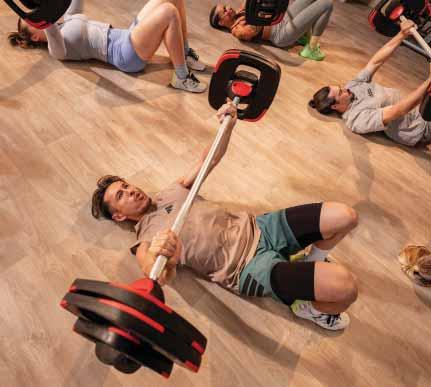
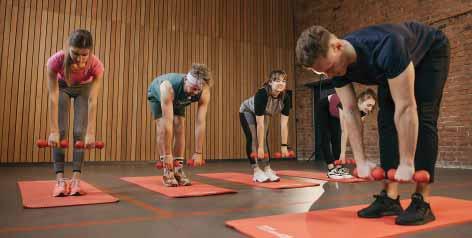
Les Mills BODYPUMP HEAVY (above) and Zone Zero yoga (below)..
and the UK and Sydney’s Third Space leading the charge.
Wellness expert Anna Bjurstam, Senior Strategic Advisor at Six Senses Hotels Resorts Spas, believes clubs have a golden opportunity for growth if they can clearly demonstrate their ability to meet broader needs.
At a recent London summit, she told operators “fitness is great, but the industry needs to broaden its scope and embrace wider wellness to keep moving forward.
“Today’s consumers demand integrated wellbeing solutions combining diagnostics, science, health and fitness to support longevity. I believe longevity will be the next frontier for health clubs. This could cover healthspan optimisation, mobility, mitochondrial health, rest and recovery, biomarker integration, digital twinning and more.
“It sounds complex, and you could spend a fortune on fancy tech and machinery to support this, but right now the most important thing is to invest in staff training and education so they’re equipped to help members make sense of their wellness requirements.”
3. Connection takes centre stage
Sometimes the most obvious truths are the ones we need reminding of. And right now in fitness, everyone’s reiterating the importance of connection. Connection to your gym, your Instructors and your fellow participants.
A recent ABC Fitness report found 73% of club members say community plays a crucial role in fitness motivation and consistency, noting that “members join for health, but stay for connection”, or as Les Mills International Executive Director Phillip Mills would put it “no one ever left a gym because they had too many friends there.”
Modern consumers - particularly Gen Z - are experiencing unprecedented levels of isolation and loneliness. As a society, we spend 70% less time with our friends than we did a decade ago, driving a desperate need for in-person connection and community.
With demand for live fitness experiences at an all-time high, clubs have a huge opportunity to turbocharge growth by leaning on the most engaging elements of the club.
The rise of gym-based run clubs and HYROX - alongside recent case studies from leading operators like EOS and West Wood Clubs - pay testament to the power of a
community-driven club strategy. Meanwhile, Sondre Gravir, Chief Executive of Norway-based SATS, has hailed the Nordic chain’s group exercise strategy for driving recent revenue uplift, revealing to Fitness News Europe that SATS members who do classes stay 1.8 times longer than others.
4. Strength in depth
Demand for strength shows no sign of slowing, but consumers are becoming more discerning about their strength trainingand clubs are expanding their offerings in response.
Beyond pumping iron on the gym floor, options to boost overall strength such as yoga, Pilates and circuits are all gaining in popularity. And with strength training a key modality for all ages - not just Gen Z, but those experiencing perimenopause/menopause, older adults and those taking weight-loss medication - expect to see many more shades of strength showing up in training programs throughout 2026.
Gyms across the world have been swapping out cardio equipment for extra weight stations on the gym floor, while a raft of new strength-based classes have quickly come to prominence - particularly as a means of alleviating lengthy queues at the squat racks.
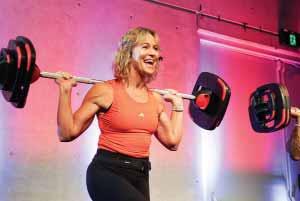
To this end, Les Mills recently launched BODYPUMP HEAVY™ - an addictive new program designed to make safe and effective weightlifting accessible for everyone by removing common ‘gymtimidation’ barriers and dialling up the workout experience with iconic music, group energy and an expert Les Mills-certified Instructor.
Backed by the science of BODYPUMP™ - the world’s mostloved strength class for over 30 years - BODYPUMP HEAVY has been crafted so operators can service growing strength demand through their studios, boosting overall club capacity and building community to drive retention and member referrals.
5. Digital twins
The concept of digital twinning isn’t entirely new: it was first deployed by NASA in the 1960s, using simulators to model the impact modifications would have on the performance of Apollo spacecraft. More recently, it’s become prominent in manufacturing, but now, advances in body tracking and AI mean digital twinning is gaining traction as a way of improving our health.
Third Space Bondi.
Les Mills BODYPUMP HEAVY .
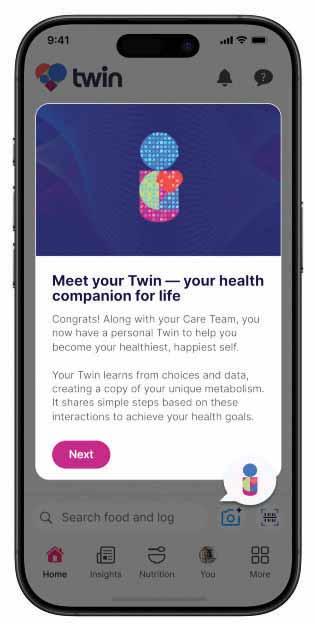
These digital twins are virtual replicas of an individual, created using body metrics from wearables, lab results and meal logs. They work by continuously monitoring physiological data like heart rate and glucose, analyzing it to simulate performance, and then providing real-time, datadriven recommendations for training, nutrition, and recovery.
Twin Health offers hyperpersonalised AI digital twin care plans to its users and the healthtech company recently announced a content partnership with Peloton to provide personalised workout recommendations based on its users’ training goals.
The concept is also being applied to gym management, with the Gym Twin platform from TwinLabs helping operators create a 3D digital version of their facility with real-time tracking, using the data to inform decisions around floorplan, timetabling, equipment, staffing and more.
As the concept gathers steam, expect to see operators (most-likely premium at first, working with third-party partners) offering members the ability to create their own digital twins.
6. The space race
The rise of digital twins is just one of many examples where the fitness industry is moving past the age of gut feels and embracing the abundance of data to settle debates and inform decisive action.
Squeezed margins and high operating costs are forcing operators to think outside the box to get more from their facilities and maximise capacity.
One example is Fitness & Lifestyle Group, which used footfall insights to remove creches from its clubs and unlock 30,000 sqm of gym space. The leading Australian operator is also breathing new life into its group training studios by creating ‘Performance Zones’ featuring black walls, industrial-style lighting, and open training spaces, designed to demystify the studio and encourage members to use the spaces for their own training when classes aren’t taking place. Meanwhile, many other operators are adding extra classes
on the gym floor to attract new participants, build a buzz and boost contribution margin by servicing more members per square metre.
Contribution Margin (the return a club gets from each area based on Capacity X Utility X Flow Rate) was one of the key themes from the recent report ‘MVPs: The New Power Players in Club Growth’. It found prioritising floor space for activities with the highest Contribution Margin and filling them with the most profitable types of members enables clubs to maximise capacity and revenue potential. The report pinpointed MVPs (Most Valuable Participants) as the members to target, because they attend their club more often, stay longer, and have a higher lifetime value (LTV) than any other member category.
7. Recognition at last Whisper it quietly, but 2026 could be the year fitness finally starts to receive the recognition it deserves from policymakers - and the chance to change the lives of those who need it most.
Having spent decades being largely overlooked by governments and healthcare providers, fitness is starting to see recognition for its vital role in creating healthy societies.
With health services creaking under the strain of unprecedented demand, governments around the world are announcing pro-fitness policies to shift emphasis onto prevention over cure.
As well as supporting healthcare, fitness is starting to gain recognition for its role in driving economic growth.
In the UK, the government’s new ‘Keep Britain Working Review’ aims to tackle ill-health in the workplace and boost economic productivity through a fundamental shift from a model where health at work is largely left to the individual and the NHS, to one where it becomes a shared responsibility between employers, employees and health services. Seven fitness companies have been hand-picked to help advance the proposals and define how they would work to create a fitter workforce.
The Australian Government views the fitness sector as a valuable contributor to economic growth through its direct and indirect impacts, which exceeds $4 billion of the nation’s GDP while AUSactive research shows that fitness centres can provide savings in direct health care costs of up to $108 million per annum.
Jak Phillips is Les Mills International’s London-based Content, PR and Growth Director.
Les Mills Shapes. Credit: Lakeside Centre.
Requirements
•Min 500 members
•Min 400m2 premises
•Profitable over the previous 24-36 months
•Opportunity to grow
•Multi-club operations (desirable but not essential)
•Will consider franchised locations if the franchise can be terminated
Growth Engine or Industry Threat?
Karen Sweaney looks into the recent backlash against fitness subscription services and aggregators
It began in New York in the middle of the year, when a number of gyms organised a boycott of ClassPass over concerns relating to pricing and the fitness subscription service’s cut of payments.
In September, this was followed by facilities in Los Angeles organising their own ‘Gym Loyalty Month’ - encouraging members to book direct instead of through third-party aggregators.
While a concern that the ClassPass model isn’t sustainable for boutique gyms, the reasons for the USA action have been highlighted by larger operators for a number of years.
A Global Model
Fitness subscription aggregators have reshaped the market since ClassPass was among the pioneers of the ‘multi-studio passport’ more than a decade ago - before expanding into Australia in 2015.
By bundling access to gyms, studios and wellness services into a single subscription, aggregators positioned themselves as technology-led disruptors offering flexibility and variety to consumers.
Their offering includes making sometimes superior technology available to smaller clubs - a digital storefront, simplified booking, discovery tools and personalised recommendations – with ClassPass pledging to help studios fill spots that would otherwise be unfulfilled.
Blowback
Yet as seen in New York and Los Angeles this year, the industry is increasingly questioning the long-term sustainability of these models. What began as a boutique-studio concern
has expanded into a broader industry backlash, with many operators arguing that aggregators distort pricing, undermine customer relationships and shift value away from those who invest in facilities, equipment and staff
The dynamics underpinning this tension are well documented in research by OC&C Strategy Consultants, commissioned in 2018 by PureGym and Basic-Fit, which warns that if left unchecked, aggregators “will cause profits to fall in the gyms and fitness industry” and extract an increasing share of industry revenue.
Undertaken in the UK market, but also referencing the USA, Brazil, France and Netherlands, the study’s summary advised that while “aggregators claim to drive incremental revenue and usage, in reality, they erode pricing power, shift member relationships away from operators and cause long-term economic damage.”
Citing evidence from international markets and independent research a subsequent executive summary (shown on page 30) noted that “their model is unsustainable and harmful for gyms” and concluded “fitness aggregators are not partners; they are parasites on our industry’s infrastructure.
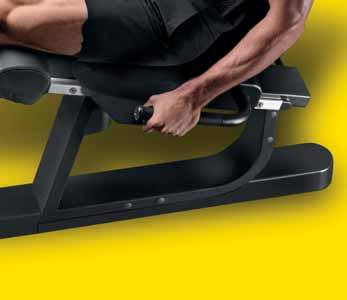
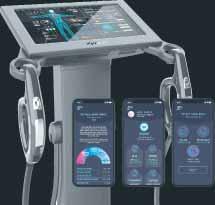
TECHNOGYM BIOSTRENGTH™
SUPERIOR RESULTS, FASTER.
Avoid the most common strength training mistakes and supercharge your workouts. Thanks to the patented Biodrive system, select your goal and automatically receive the optimal resistance and biofeedback for it, along with the correct workload, range of motion, tempo, and rest time. Biostrength adapts to you for +30% results in the same time.
“Fitness aggregators don’t grow the industrythey drain it”.
Summary
Revenue Dilution, Not Growth
•Aggregators promise ‘new members’ but most existing members convert to cheaper aggregator schemes.
•Operators face a 30-40% drop in average revenue per user (ARPU) due to discounting and aggregator commissions.
•The supposed incremental members are minimal - as low as 10% in consumer-driven models.
Loss of Member Relationship
•Aggregators shift the subscription relationship from gym to intermediary.
•Gyms lose direct loyalty, upsell opportunities and access to data.
•Gyms become commodity access points, not valued community hubs.
Industry-wide Consequences
•Churn increases as members hop between facilities based on discounts.
•Operators lose control of pricing, leading to a race to the bottom.
•Aggregators keep a flat commission (20-30%) while gyms bear all service costs.
•Weakened economics reduce reinvestment in facilities, staff and innovation.
Global Lessons
•USA operators boycotted ClassPass after seeing revenue cannibalisation and brand dilution.
•European operators (PureGym, Basic-Fit) have rejected aggregator models and warned of their dangers.
•Where operators collectively refused to trade, aggregators lost leverage and growth stalled.
The Australian Context: Fitness Passport
•Fitness Passport targets corporates, offering lowrate access to multiple gyms.
•Full-paying members migrate to these schemes, lowering yield per member.
•Operators are left servicing the same member base, but at discounted rates and without control over data or loyalty.
“They extract value without investing back, and they weaken our ability to control our destiny.”
It laid out that the “sector must”:
1.Reject unfair contracts and demanding minimum guarantees, data sharing and pricing protection.
2.Educate corporates on the true cost of aggregators and offering direct alternatives.
3.Unify as an industry to safeguard our member relationships and preserve sustainable economics.
Undermining of pricing stability
Overall, the aggregator model can transfer value away from gyms, as noted by the executive brief which states “aggregators promise ‘new members’ but most existing members convert to cheaper aggregator schemes.”
Relying heavily on ‘breakage’ - members paying monthly subscriptions for a bundle of credits or classes they may not use - the aggregator model sees this breakage revenue flow to the aggregator, not the gym.
Aggregators also hold the billing relationship, usage data and communication channels, effectively turning gyms into commodity access points without direct visibility of customer behaviour or loyalty indicators.
The executive brief warns this represents a long-term strategic threat, stating “gyms lose direct loyalty, upsell opportunities and access to data.”
In addition, once a location appears in an aggregator ecosystem at a discount, consumers quickly learn not to buy direct, eroding brand loyalty and pushing operators into what OC&C call a “race to the bottom” scenario.
Despite the risks, aggregators continue to attract participation for several reasons:
•Smaller clubs benefit from technology and marketing support
•Studios with time-sensitive class inventory
•Corporate schemes can attract non-traditional users
Incrementality
Aggregators commonly claim to drive large volumes of new users. However, the evidence in the OC&C dataset paints a more complex picture.:
In B2C subscription models, only 10-15% of usage is incremental; the vast majority comes from existing gymgoers switching channels.
In B2B2C corporate schemes (such as Gympass, Fitness Passport), incrementality can be higher (up to 33%), but the users tend to be very low-frequency, which significantly reduces per-visit revenue for operators.
This aligns with the executive brief’s warning that “the supposed incremental members are minimal - as low as 10% in consumer-driven models.”
OC&C’s modelling goes further, citing that in a scenario of just 10% market penetration, the typical mid-market gym’s profit can fall below the critical level required for capital reinvestment, triggering a downward spiral of deteriorating facilities and further margin pressure.
Australia’s most prominent aggregator, Fitness Passport, operates primarily through corporates and government agencies, providing heavily discounted access to multiple gyms.
Here, the executive brief notes that full-fee members often migrate to these lower-cost schemes and that operators see yield per member drop as they service the same users at discounted rates.
The Data
In an age where control of data is of vital importance across the industry, using external platforms sees customer data and member relationships controlled by the aggregator rather than the club.
This creates a challenging dynamic for independent clubs, larger chains and council-owned facilities that rely on consistent membership revenue to fund facility upkeep, staffing and community programs.
Commenting on the challenges this presents, Elaine Jobson, Chief Executive and Managing Director of BeWell Brands and Jetts Fitness Australia, states “for the fitness industry to thrive, it’s vital that gyms maintain a direct connection with their members. When that relationship stays with the operator, it supports stronger engagement, sustainable growth and the ability to continually innovate in the services we provide.”
OC&C also highlighted a longer-term evolution with aggregators progressively moving up the value chain.
This can see aggregators including ClassPass reserving inventory directly from studios, launching their own digital content (such as ClassPass Live) and curating their own fitness ‘ecosystems’ that reduce reliance on individual clubs.
This turns aggregators into quasi-competitors, not just booking platforms - a scenario already familiar in travel, food delivery and accommodation sectors.
The rise of aggregators reflects genuine consumer demand: flexibility, technology integration and non-traditional membership models. Yet their business models pose material risks to the sustainability of gyms and studios - especially in a sector where margins are already tight and reinvestment cycles are long.
The recent pushback in the USA signals a shift in sentiment. Operators who once viewed aggregators as helpful acquisition channels are now questioning whether the longterm economics are compatible with maintaining high-quality fitness environments.
In Australia and New Zealand - markets with strong independent sectors, community aquatic and fitness centres and emerging boutique ecosystems - the lessons from overseas are increasingly relevant.
The industry now faces a choice.
Embrace aggregators with strategic safeguards, or respond collectively to ensure the value created inside clubs remains with the operators who invest in them.
ClassPass APAC and Fitness Passport did not respond to requests to contribute to this feature.
Karen Sweaney is Editor of Australasian Leisure Management.
innovations Driving wellness and recovery
Kristy Brown explains Belgravia Leisure’s growing focus on innovative solutions for wellness and recovery
Innovation in the wellness and recovery space is accelerating, with a growing range of tech-driven solutions now available to help people recover smarter, faster and more comfortably than ever before. And the best news is that these technologies, once reserved for elite athletes or specialist clinics, are now increasingly accessible at community gyms and health clubs.
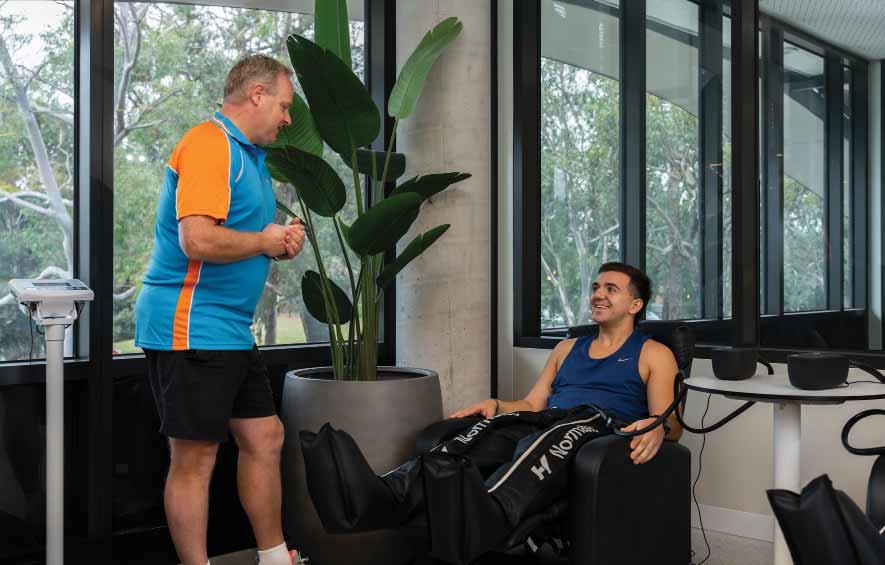
From offerings such as CryoLounge+ chairs, infrared saunas, ice baths, massage chairs and compression boots, local health clubs are responding to the growing demand for recovery and wellness solutions and making it easier and more affordable for members to embrace these new technologies.
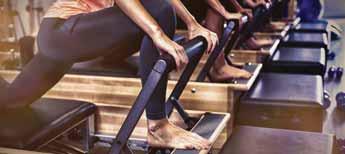
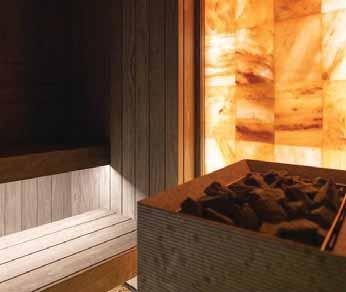
Massage chairs, guns and rollers also complement the tech on offer, while hydro pool spas, traditional saunas, steam rooms, massage therapy and Reformer Pilates studios are becoming standard features that members have come to expect are on offer.
Belgravia Leisure - an acclaimed health and wellbeing provider across 65+ community leisure centres in Australia and New Zealand - is investing significantly in the wellness and
recovery space to provide broader access to preventative health equipment and therapies while working to improve community health outcomes.
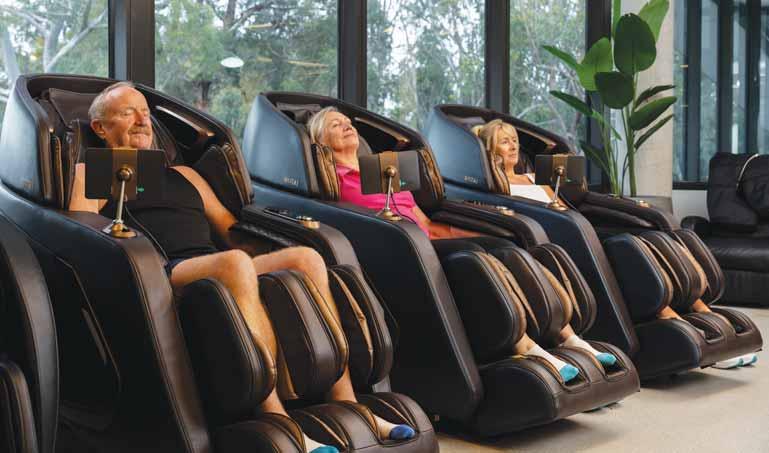
In Victoria, Belgravia recently invested in three CryoLounge+ chairs launched across Knox Leisureworks and WaterMarc, a significant investment which premium members are enjoying at no additional cost to their weekly fee.
Unlike traditional ice baths or cryotherapy chambers, CryoLounge+ chairs offer targeted cold and heat therapy in a clean, dry, fully clothed environment, making it ideal for a wide range of users including athletes and older adults. The innovative chairs help reduce muscle soreness and tension, improve circulation and lymphatic flow, enhance flexibility and range of motion and support stress relief and relaxation.
Many other Belgravia venues are also embracing recovery
Recovery massage chairs.
tech. Danny Frawley Centre in Moorabbin offers compression boots, massage guns and rollers, infrared saunas and ice baths, while Mill Park Leisure Centre features massage chairs, recovery boots and sauna and spa amenities. A guest at Higher State - a Belgravia Leisure managed health club at Melbourne Airport - can now enjoy an infrared sauna and compression boots as a part of their visit, with massage therapy an optional extra.
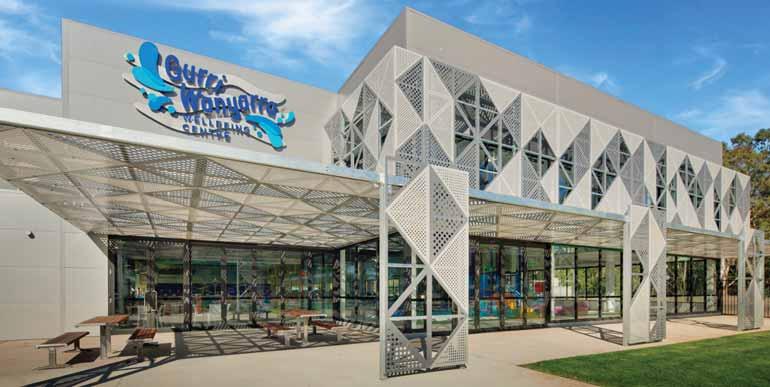
Gurri Wanyarra will also soon be the first Belgravia Leisure managed venue to introduce red light therapy into their offerings. Gaining popularity across wellness and sports recovery fields due to its wide range of potential benefits, members will soon enjoy reduced inflammation and pain, enhanced cellular energy, improved sleep and mood and improved skin health.
Extending over to their spa and wellness venues, Hepburn Bathhouse and Spa in Daylesford recently launched a dry sauna to complement the benefits of the incredibly popular mineral bathing on offer, with a hot/cold therapy feature to assist in both physical and mental health outcomes to be launched imminently.
And the Belgravia Leisure recovery revolution doesn’t stop there. Whole dedicated recovery spaces in their leisure centres are now popping up, with venues such as Pelican Park Recreation Centre and Gurri Wanyarra Wellbeing Centre leading the charge. Positioned alongside traditional gym spaces, these areas are designed to support holistic wellbeing and offer wellness and recovery benefits that members have never had access to before.
Jayden Cox, Belgravia Leisure’s Product Development Manager of Health and Wellbeing, explains “we know that by embracing these innovative solutions, we are setting up a healthier future for our members, and also a brighter future for community health outcomes overall.
“The significant investment that we’ve committed to new technologies and spaces demonstrates our commitment to making wellness and recovery more accessible, more
enjoyable and more effective - which is exactly what our members are telling us they need.
“In particular, we are choosing to install innovative tech such as CryoLounge+ chairs as we recognise the significant benefits this tech can bring to our members. The lowmaintenance design and customisable experience align perfectly with our inclusive wellness standards, and members are loving it.”
As Belgravia Leisure continues to invest in the future of wellness and recovery, the message is clear that these innovations are not just about enhancing individual health, they’re about transforming community wellbeing. By making advanced recovery technologies and therapies accessible to everyday Australians and New Zealanders, Belgravia is setting a new benchmark for the industry and redefining what it means to live well through leisure.
Kristy Brown is Head of Communications at Belgravia Leisure.
Recovery compression boots in use.
Sauna at the Hepburn Bathhouse and Spa.
Belgravia Group is a family owned, family run, multigenerational business servicing Australia and New Zealand.
Divided into activity-based and business services, Belgravia Group is delivering sport, fitness and wellbeing opportunities to improve the lives of as many Aussies and Kiwis as possible and bestpractice business support solutions allowing existing and emerging businesses to reach their peak.
Established 1990.
www.belgraviagroup.com.au
APT and Paintback sign world-first recycled paint partnership
In a global first for the sports surface industry, APT (Advanced Polymer Technology) has joined forces with Paintback to give unwanted domestic paint a powerful second life through their Australian-made Laykold® courts and the backing of all locally produced turf products.
Since October, every Australian-made Laykold court and APT turf system has included recycled paint supplied by Paintback, turning waste into world-class performance surfaces.
This exclusive partnership will increase the renewable and recycled content of APT Australian-made products by up to 83%, making them the greenest sport surfaces in the world and marking an important environmental advancement for the industry.
Diverting 240 litres of paint from landfill and waterways every year
For nearly a decade, Paintback has been helping Australians dispose of unwanted paint responsibly, preventing millions of litres from entering landfill and waterways. Since 2016, the not-for-profit has collected and treated more than 51 million kilograms of paint and packaging from 165+ collection points across the country.
The collaboration with APT marks the first time Paintback has been able to extend into the sport surface industry and will divert 240 tonnes of paint from Australian landfill and waterways annually.
Paintback R&D General Manager, Rachael Roberts explained “we have an ambitious mission to divert 90% of Australia’s unused paint from landfill and waterways and the partnership with APT has opened up a whole new avenue to help us achieve this goal.”
A sustainable solution underpinned by extensive R&D
The breakthrough is the result of over three years of research, development and joint testing between APT’s R&D scientists and Paintback’s technical team to ensure the recycled materials deliver the same trusted performance standards that define every APT surface.
Roberts noted “chemistry is at the heart of any good partnership but even more so here.
“We’ve worked tirelessly with APT’s R&D team to perfect the formula and can now deliver the quality and volume of recycled paint required to supply courts and turfs to clubs and communities across Australia.”
Paintback’s paint will be upcycled in the base layer of Laykold court systems and the backing of all APT turfs to
deliver proven surfaces that perform just like the originals but are significantly better for the planet.
Laykold Courts x Paintback
•Laykold® courts will include up to 22% recycled paint in the undercoats
•This will preserve the vibrant colour and premium finish of the topcoats that Laykold is known for
•Each court will save the equivalent of 124 x 1 litre paint cans from landfill APT Turf Systems x Paintback
•The backing of all APT turf systems will include 10% recycled paint
•The proprietary hybrid emulsion backing will be greener in colour and environmental performance
•Turfs have improved tuft bind than standard latex backed products
•Each standard football field will divert over 1,000 x 1 litre paint cans
Meeting the growing demand for environmentally responsible surface solutions
The collaboration with Paintback builds on APT’s global sustainability leadership. Together with initiatives like Laykold’s partnership with RecycleBalls and the use of renewable and bio-based raw materials, this partnership gives our court and turf systems an unprecedented environmental edge.
It also helps APT and our partners meet the growing demand for more environmentally responsible surface solutions across schools, clubs, and major sporting venues.
Commenting on the initiative, APT Asia Pacific R&D Lab Manager, Robert Corbo went on to say “our customers are increasingly prioritising sustainable solutions that don’t sacrifice playing performance.
“Who would have thought that the answer could be found in the old paint pots at the back of Australian sheds? It’s a pioneering solution that we are really proud to have brought to fruition with the dedicated team at Paintback and marks an important step in our continued commitment to environmental innovation that sustains the communities and sports we serve across Asia Pacific.”
For more information contact 1800 652 548, E: info@aptasiapacific.com.au, www.aptasiapacific.com.au
EACH COURT SAVES 124 CANS OF OLD PAINT FROM LAND FILL
FROM YOUR SHED TO THE CENTRE COURT
Paintback helps Australians responsibly dispose of unwanted paint by diverting
Just one standard Laykold court will save 124 x 1 litre cans of paint from
Get in touch with us today to find out how you can achieve Grand Slam quality courts... now with recycled paint.
One Child at a Time
Joanne Efendi explains how 500 swim schools united to create a safer Australia through 15 years of
SWIMSAFER week
For the past 15 years, SWIMSAFER Week has grown into one of Australia’s most influential community safety initiatives, from giving children across the country the skills they need to enjoy the water confidently and safely, to shaping habits, and inspiring families.
SWIMSAFER Week 2025 ran from 17th to 23rd November.
However, this year, the milestone felt bigger than ever. For the month of November, 500 swim schools from Australia took part from the coastlines of Queensland to the river towns of regional Victoria, all the way to outback communities where the local pool is the heart of the neighbourhood. Together, they helped celebrate a decade and a half of learning, leadership and life-saving education.
But if there’s one message that echoed across the nation in 2025, it was this: water safety isn’t a week. It’s a year-round commitment.
SWIMSAFER Week may take place in November, but the campaign’s evolution has embraced an everyday mindset, 365Days Safer, with high-profile ambassadors including Dawn Fraser AC MBE OLY, Liesel Jones OAM OLY, Brendon Hall OAM PLY, Alexander Graham OLY, Giaan Rooney OAM OLY, Jade Edmistone and Bruce ‘Hoppo’ Hopkins, among those getting behind the message in recent years.
SWIM Australia Chief Executive Brendon Ward has been part of the campaign’s long journey and says this year’s celebrations were a powerful reminder of what collective effort can achieve.
Ward explains “for 15 years, SWIMSAFER Week has empowered families with the knowledge and skills that save lives.
Bruce 'Hoppo' Hopkins, President of the Australian Professional Ocean Lifeguard Association, is SWIMSAFER ambassador.
“What makes this initiative powerful is the way our swim schools, teachers, parents and partners unite behind a shared purpose, ensuring every child has the opportunity to be safer in, on and around water. Together, we are building a culture of ‘365Days Safer’, not just one week of awareness.”
That focus on everyday awareness shaped everything about this year’s programming, from the core themes to the school-based events to the household conversations that followed children home from their lessons.
While water safety messaging has always been at the heart of SWIMSAFER Week, 2025 saw a renewed emphasis on floating as an essential survival skill, and that swimming lessons saves lives.
Thanks to a growing partnership with Float to Survive Australia, led by Bondi Rescue’s ‘Hoppo’, swim schools across the country hosted Float Clinics, community demonstrations, and parent-child learning sessions. These clinics broke survival floating into five simple, memorable steps - teaching children how to stay calm, conserve energy, and signal for help in an emergency.
For many families, it was the first time seeing floating not as a fun skill, but as a life-saving technique.
One of the standout elements of SWIMSAFER Week has always been the creativity of swim schools and this year was no exception.
Pools were transformed into beaches, riverbanks and night-sky adventures. Children practised navigating ‘weed beds'; learned how to float in clothes; and role-played realworld water scenarios. These immersive sessions helped demystify emergencies and gave kids practical tools they could rely on under stress.
Parents reported that children were asking questions
at home, checking for hazards at the beach, and proudly demonstrating their new floating abilities in backyard pools. It was proof that learning extended far beyond the pool deck.
Another highlight was the ongoing support for SWIM It Forward, a program that helps families in hardship access swimming lessons.
Throughout the year, swim schools encourage donations, turning community compassion into meaningful impact. For many children, these lessons are not just recreational, they are life-changing and potentially life-saving.
As Australia heads into another hot summer, the message from SWIMSAFER Week is clear: the responsibility for water safety belongs to all of us.
For the aquatic sector, the 15-year celebration is both a proud moment and a call to keep going. Drowning remains a real and persistent risk, particularly in open water, and the need for strong, confident swimmers has never been more urgent.
Summing up the success Ward notes “our collective effort is saving lives. The vision now is to continue our awareness that swimming lessons saves lives. Every child, in every community, should and must have the skills and confidence to be safer around water, every single day of the year.”
After 15 years, SWIMSAFER Week has proven that when schools, families, and communities move together, lasting change is possible. And with 500+ swim schools already leading the way, the future of Australia’s water safety culture looks stronger than ever.
Joanne Efendi is Projects and Events Officer at SWIM Coaches & Teachers Australia (SWIM) - the peak body for swimming coaches, teachers and swim schools in Australia.
SWIMSAFER Week is supported by Dawn Fraser AC MBE OLY.
Bruce Hopkins became a SWIMSAFER ambassador in 2024.
SWIMSAFER Week's message is that the responsibility for water safety belongs to all of us.
The Time is Right
Modular aquatic and recreation facilities are suddenly in the news.
Nigel Benton assesses the current interest
In recent years, few in the industry would have been unaware of the eye watering cost of building and refurbishing aquatic and recreation facilities.
With the refurbishment of the North Sydney Olympic Pool having generated the most attention - a two-year renovation budgeted at $57 million that will have taken five years at a cost of more than $120 million when completed - there is a long list of other projects that have exceeded, or are expected to exceed, $100 million.
These include the new Adelaide Aquatic Centre, the Melton City Council’s Plumpton Aquatic and Leisure Centre and the City of Sydney’s Gunyama Park Aquatic and Recreation Centre.
Beyond this, the estimated cost of delivering Brisbane’s National Aquatic Centre (NAC) for the 2032 Olympic and Paralympic Games has surged to $1.2 billion, almost double the price forecast of $650 million presented by Swimming Australia as it lobbied for the new facility earlier this year.
As reported by Brisbane’s The Courier-Mail, the revised figure was revealed by Games Independent Infrastructure Authority (GIIA) Chair Stephen Conry.
Driven by design expectations, escalating construction expenses and higher compliance standards, the implications of these rising costs go beyond placing significant pressure on councils and operators, deterring councils from undertaking future projects.
As explained late last year by Royal Life Saving Society Chief Executive, Justin Scarr “the true cost of the North Sydney Pool refurb is … drowning out hope of a pool rebuild or refurbishment for many communities across Australia.”
Referencing Royal Life Saving’s March 2024 advice which highlighted that as many as 500 public swimming pools will close within 10 years without up to $8 billion being spent in refurbishments and upgrades, Scarr went on to state “rapid
urban development means many more people in densely and diversely populated suburbs have to pack a picnic to get to a good place to swim or wait in line to get lessons for their kids.
“Yet, whenever the idea of a comprehensive targeted investment strategy for community pools is raised the most common response is ‘what about North Sydney’, usually with an eye roll.”
Royal Life Saving Australia have found that - with the average 25-metre pool with change facilities costing about $10 million - such prices are beyond the reach of a third of local governments, particularly those in less affluent areas where new facilities were needed most.
That projects may not proceed would result in significant impacts, as aquatic and recreation facilities represent an investment in public health, community development and social infrastructure.
This links to a more general notion that ‘Less Pools = More Drowning’, reflecting a concern that with fewer community pools, drowning rates are likely to continue their regrettable rise.
The Gurri Wanyarra Wellbeing Centre shows an outcome that Aquabox aims to replicate (above) while the North Sydney Olympic Pool renovation has hit more than $120 million (below).
The Move to Modular
Modular building solutions have long helped diverse industries - particularly in retail (think of Bunnings, Harvey Norman and Ikea), along with leisure industry specialist Ausco Modular, delivering speed and efficiency, cost-effectiveness and less site disruption.
Precise construction methods also allow for better energy efficiency through better insulation and easier integration of energy-saving technologies.
An approach advocated by this author, suddenly modular construction is front and centre in this industry with a series of recent initiatives that highlight efficient design, feasibility analysis and community growth - although cynics might suggest that architects and project managers are concerned at their fees drying up if projects cease.
Aquabox concept
Developed by architects Peddle Thorp International Pty Ltd (PTD Studio) and Directors Peter Brook and Johnathon Batchelor, along with respected facility consultant Mike King, the concept was launched at the recent Parks and Leisure Australia National Conference at Hobart.
The Aquabox model presents a modular aquatic and recreation facility solution intended to help regional, rural and growing communities develop contemporary, fit-forpurpose centres without the escalating cost burden typically associated with new builds. Drawing on more than 160 aquatic and recreation projects delivered across Australia, New Zealand and the South Pacific, the framework is built on stageability, operational efficiency and affordability.
Designed as a response to the increasing complexity and financial strain of major community infrastructure, the Aquabox concept applies lessons from decades of past projects to avoid reinventing the wheel. Its architects emphasise that professional fees, design time and construction costs can be significantly reduced by adopting a refined, repeatable model grounded in proven aquatic facility components and solaroriented, environmentally conscious planning.
At the centre of the initiative, PTD Studio’s Brook and Batchelor are supported by independent aquatic facility specialist King, whose nearly four decades of experience span planning, design and operational management. The concept also integrates a network of independent consultants specialising in feasibility assessment, site analysis, capital cost modelling and sustainability strategies.
A key step in the Aquabox pathway is the Pre-Feasibility Opportunity Review, a structured process that allows councils and operators to examine whether the modular approach is appropriate for their community. The review begins with an
electronic briefing meeting to capture project background and operational history, followed by onsite inspections and stakeholder meetings. The outcome is a Draft Opportunity Review Report detailing recommended facility components and indicative construction budgets.
For projects that proceed, the feasibility and design phase provides a systematic development framework. This includes preparing a detailed component brief to align the facility mix with community needs, reviewing and comparing potential sites to determine the most cost-effective option, and incorporating emerging technologies to support futureproofed, multi-use facilities.
The implementation stage focuses on translating the agreed concept into a build-ready project. A functional and technical design brief sets the requirements for a designand-construct tender process - an approach that supports fixed-budget outcomes and competitive pricing. Optional support services, including operational readiness planning and sustainability reviews, can be engaged depending on project needs.
To meet varying budgets and community priorities, Aquabox offers a suite of modular configurations with associated cost estimates. The Base Package, ranging from $15 million to $17.5 million, provides essential components such as a 25-metre lap pool and gym. The Core Package ($20 million to $22.5 million) adds a program pool and spa, while the Expanded Package ($25 million to $27.5 million) includes leisure water and toddlers’ pools. A Complete Package, at $47 million to $50 million, features a 50-metre competition pool and a children’s playground pool, aligning with needs of larger and fast-growing municipalities.
As a practical exemplar, the Gurri Wanyarra Wellbeing Centre in Kangaroo Flat (a suburb of Bendigo) demonstrates the type of outcomes Aquabox aims to replicate. Delivered at a construction budget of $32.4 million - approximately half the cost of comparable metropolitan projects - the Centre includes a 50-metre Olympic pool, gym, indoor aquatic play area and community wellness spaces. Its delivery model reflects the efficiencies Aquabox promotes: staged planning, disciplined cost management and design elements tailored to regional community expectations.
Royal Life Saving NSW/ Cox Architecture
Also looking to deliver practical solutions for public swimming pools, Royal Life Saving NSW, ACT and Tasmania, working with architects Cox Architecture, has released The Future of Pools which calls for modular, scalable and sustainable facilities.
Showcasing a new vision for aquatic infrastructure, the document has been partly inspired by the NSW Government’s pattern book of designs to fast-track low to medium density housing, echoing this for aquatic facilities.
It consists of a pattern book of modular designs which highlights modular, scalable, sustainable and inclusive facilities.
Emphasising how modular pools can be delivered at lower costs than current projects, Cox Architecture Director, Alastair Richardson pointed to a model for an outdoor 50 metre pool that could be completed in about eight months and at a cost about $5.5 million.
Councils would be able to choose the length of pool (50 or 25 metres), the number of lanes (five to eight), pool depth (suitable for learn to swim, competition or recreation), and the types of on-site amenities, such as cafes, gyms and offices.
The different elements of the Aquabox concept.
The modular approach would let councils add elements later to suit their needs and budgets.
Advising that the practice had successfully used modular construction for student housing and build-to-rent projects in Sydney of up to 40 storeys, Richardson noted “modularisation allowed us to do multiples, which brings the cost down.
“It allows us to create solutions that can be transported around the country. So we’re not necessarily dependent on local trades … so it really creates a whole bunch of opportunities.
“We’re finding that the unit cost of modular housing is achieving savings of between 10% to 30%, and it gets higher and higher as we go beyond the pilot process.”
Launching the document, Royal Life Saving NSW, ACT and Tasmania Chief Executive, Michael Ilinsky advised that, in the lead-up to the next NSW election, Royal Life Saving would seek NSW Government support for a trial of the modular plan for pool construction.
He noted “we are imagining a future where aquatic facilities can be delivered faster, smarter and more affordably ... without sacrificing quality, safety or community value.”
Parks and Leisure Australia guidance
Fearing that industry projects at risk of being delayed, scaled back or cancelled entirely as a result of construction costs being driven upwards, Parks and Leisure Australia (PLA) has released a guidance document that lays out a practical framework for managing or reducing costs throughout every stage of a project.
A Guideline to Managing Construction Costs in the Parks and Leisure Industry - references a growing “gap between cost estimates provided by quantity surveyors and actual market costs,” driven by unpredictability in both labour and materials markets.
PLA notes that for many local governments and community organisations already operating on tight budgets, this could spell serious disruption to planned aquatic and recreational infrastructure.
Urging a smarter approach to planning, PLA’s document calls on industry and civic planners to adopt a far more disciplined approach - recommending rigorous leisure-planning before design or construction begins; strong governance and costmonitoring during delivery; and transparent documentation of assumptions, trade-offs and contingencies.
The guide also advocates for value-management strategies, such as rethinking materials, phasing works, scaling down non-essential elements or staging delivery to align with funding availability and community demand.
For smaller councils and under-resourced communities, the PLA document suggests alternative delivery modelsmodular infrastructure, staged developments, public-private partnerships - to spread costs and maintain viability.
PLA note “doing nothing is no longer an option. Unless we rethink how we plan, fund and deliver community infrastructure, many communities risk losing out on vital recreational amenities.”
Nothing New
Of course, modular designs are nothing new.
Facilities operator BlueFit has been using modular designs for its stand-alone swim schools facilities in fast growth areas.
BlueFit Group Chief Executive, Todd McHardy explains "under the BlueFit Swimming brand, we're spending $2 million
to $2.5 million on high quality fitouts of existing 450 to 600 square metre buildings at retail centres, and have these down to a 13-week build - Craigieburn in Melbourne and Emerald Hills in Sydney being the latest examples, both opening in October this year.
"These dedicated learn to swim venues can cater for 2,000 to 3,000 enrolments per week.
"For public aquatic leisure, BlueFit is working on a $15 million to $20 million concept that is modular in construction, operationally flexible, energy efficient and a much better solution for many communities with ageing aquatic assets.
"The first project will be an open source design process, bringing anyone interested into the working team to explore a wide range of experience and provide learnings back to the industry."
BlueFit's learn-to-swim facilities make use of Myrtha Pools technology, a long time provider of modular pools.
As a multi year partner of World Aquatics, Myrtha itself has gone beyond purely providing pools to back the global federation’s Pools for All initiative.
First launched in 2017, the initiative aims to present standardised tools for the worldwide design, construction and operation of a complete range of sustainable aquatic facilities compliant with the regulations of its different aquatic disciplines - with minimal impact on the environment and energy consumption throughout the life of the venue.
Why do we build pools?
Against this backdrop, the International Association for Sports and Leisure Facilities (IAKS) has released the Why Do We Build Pools? discussion paper - explaining strong rationales and clear expectations for pool projects in their communities - with lasting social value for generations to come.
Written with significant Australian input in its author group and launched at the recent 29th IAKS Congress in Germany, the document emphasises the need for projects to have clear goals set early in the planning process - and reviewing progress against these goals as the project moves forward.
The document notes that “swimming pools are some of the most well-used and loved public facilities. They bring people together across age, background, and ability, offering shared spaces that promote health, fun, inclusion and social connection."
Nigel Benton is Publisher of Australasian Leisure Management.
A Myrtha modular pool within the Parramatta Aquatic Centre.
Remote Pools, Real Impact
Royal Life Saving Society Western Australia’s Greg Tate talks to Nigel Benton about the community impact of the Remote Pools Project over 25 years
For more than two decades, Royal Life Saving Society
Western Australia has quietly managed one of the nation’s most significant - but little known - community health initiatives: a network of swimming pools built in some of the most remote Aboriginal communities in the country.
What began as an ambitious health experiment 25 years ago has grown into an 11-pool network delivering measurable improvements in child wellbeing, social cohesion and community engagement across Western Australia’s vast north.
The Remote Pools Project is unlike any other aquatic program in Australia. The pools are free to use, closely integrated with local schools, health clinics and police services, and managed by Royal Life Saving WA on behalf
of the Western Australian Government. They operate not as commercial facilities but as community assets - designed to reduce preventable illness, support school attendance, and create safe gathering spaces in regions where social and recreational infrastructure is limited.
Greg Tate, Executive Manager Community Development at Royal Life Saving WA, explains that the organisation never set out to become a facility manager, offering “we’re not generally a pool management operator.
“But 25 years ago, no one else was willing to work in remote Aboriginal communities. The state government had built these pools, and they needed someone to run them.”
The program traces its origins to former Western Australian Housing and Works Minister Dr Kim Hames, who in the late 1990s was struck by emerging evidence that regular access to chlorinated swimming pools could significantly reduce common infections in remote communities - particularly ear disease, respiratory illness and skin infections. Believing swimming pools could be a public-health intervention rather than a luxury, he commissioned the construction of three pools in Burringurrah, Jigalong and Yandeyarra.
What followed was a rare convergence of political will, public-health research and community partnership.
World-renowned epidemiologist Professor Fiona Stanley led early longitudinal studies confirming the pools’ impact: reductions in antibiotic use, fewer clinic visits and noticeable improvements in children’s skin, ear and eye health. This evidence became the backbone of the Remote Pools Project and attracted further state and federal investment.
The Balgo Community Swimming Pool in the remote north of Western Australia (above) has been popular with local children (below left) since its opening in 2020 (below right).
Over time, the program expanded into the Kimberley and Western Desert regions, adding pools in Bidyadanga, Warmun and Fitzroy Crossing, as well as more recent additions in Balgo, Kalumburu, Warakurna, Blackstone and Warburton. Today, Royal Life Saving WA manages 11 pools, with onsite managers who live within - and become part of - the communities they serve.
Tate advises “it’s a collaborative approach that makes the model work.
“We have yarning circles, we listen to the local people, we listen to what their needs and wants are around the pool and we build that into the programming in the pool as well.
“And the other important component is working with all the local service providers. So we work with the police, the school, the health clinic. There's a lot of collaboration.
“Without us working together, you won’t get the results that the community desires.”
The outcomes extend well beyond health metrics. In many communities, the pool is the central gathering place - a rare shared space where children, elders and families can spend time safely. Pool managers often become community leaders in their own right, valued for their long-term presence in regions where service providers frequently operate on shortterm or fly-in fly-out models.
Royal Life Saving WA’s ‘theory of change’ for the program highlights broader social impacts: improved school attendance driven by ‘No School, No Pool’ partnerships; reduced anti-social behaviour during pool hours; and increased opportunities for structured activity in places with limited local recreation.
The Western Australian Government views the investment as cost-effective when weighed against spending on health, education, employment and justice. Feedback from the local health clinic in Balgo has shown that antibiotic use drops dramatically when pools are in operation, while nurses and clinic staff have reported fewer acute infections and improved general wellbeing among children during pool season.
Despite its success, the model remains difficult to replicate outside Western Australia.
As an example, Northern Territory remote pools, including those such as Wadeye and Papunya, have struggled under inconsistent funding and limited operational support.
Tate notes “unfortunately the funding model in the Northern Territory isn’t as strong (and) they don’t have the ongoing funding to manage and maintain the pools to a high standard.”
The Remote Pools Project has benefited from bipartisan support across multiple Western Australian Governments and from federal co-investment, enabling continuity where other jurisdictions have seen fragmentation. Its free-entry model means there is no commercial return - a key reason commercial facility managers do not operate in this market.
Tate states “these pools are totally government-funded, but when you look at the return on investment in terms of health, education and social outcomes, they pay back in spades.”
Royal Life Saving WA has documented many of these outcomes, and the organisation has been vocal about the importance of stable funding for remote community aquatic programs.
Industry observers, including Australasian Leisure Management, have covered pool openings in communities such as Fitzroy Crossing and Warmun over the years, reflecting a national interest in the innovative model.
Former program coordinator Tony Head - well-known across the aquatics industry - helped establish many of the operating practices that continue today.
Looking ahead, Royal Life Saving WA expects the network to remain a cornerstone of community wellbeing across Western Australia’s remote regions. The latest expansions bring new challenges, including the need to recruit and retain long-term pool managers willing to live in some of Australia’s most isolated communities.
But the evidence remains strong: swimming pools in these areas are not simply recreational facilities - they are public-health infrastructure, social anchors and catalysts for community connection.
Amid ongoing debate how best to support remote communities, the Remote Pools Project stands as a rare example of a long-running government program that has delivered measurable, locally valued outcomes over a quarter of a century.
In Tate’s words “the pools work because they belong to the community. Our role is to support them - and to make sure the doors stay open.”
Nigel Benton is Publisher of Australasian Leisure Management.
Children enjoy the Jigalong Pool in the Pilbara.Swim and Survive program at the Fitzroy Crossing Swimming Pool.
From Match Day to Every Day
Arthur Stanley explains how creative thinking and innovation are turning venues into 365-day operations
It started innocently enough: a group of teenagers practising their K-pop dance moves in front of a mirror in a laneway outside the new ICC Sydney Theatre.
Today, that laneway - officially called Moriarty Wayhas become better known as Dancers’ Alley, a Sydney streetscape phenomenon that attracts scores of dancers and supporters at all times of the day or night. It is a hugely popular community hub where movement and creativity come to life, inviting locals and visitors alike to watch, join, or just enjoy the artistry free of charge.
From impromptu street performances to choreographed showcases, Dancers’ Alley - located between ICC Sydney Theatre and ICC Sydney’s Exhibition Centre, and across from Tumbalong Park - is a place where energy flows freely
and creativity knows no bounds. It’s also a stunning example of the benefits of a venue tuning into its local community, adapting existing infrastructure to meet a demand, and then making the concept work for the good of both patrons and the business.
ICC Sydney was also the host venue for the 2025 AsiaPacific Venue Industry Congress so industry leaders - always on the lookout for inspirational ideas for their own venueswere given a priceless opportunity after sessions to wander down to Dancers’ Alley and to see by this organically grown public stage showcasing creativity and connection.
Referencing Dancers’ Alley in the Commercial and Business Roundtable session at the Congress, Peter Loxton the Chief Operating Officer - Commercial for ICC Sydney operator Legends ASM, said the ICC team had engaged directly with the community dancers to deliver a space that they revelled in.
In response to their feedback, in 2021 ICC Sydney installed new lighting, a water bubbler and a security presence in the area - then stepped back.
Loxton explained “the beautiful thing about this is that Dancers’ Alley has grown organically. If we had tried too hard to manicure this space, it may not have been as popular. This is a product developed by the community, for our community.”
As for how the venue benefits, Loxton pointed to the fact a large number of the dancers document their routines on Instagram and other digital media platforms. Some of these posts are gaining upwards of 1000 Instagram interactions in
Dancers Alley outside ICC Sydney (above and below).
a week - priceless exposure for the precinct and for the City of Sydney.
An ICC Sydney logo is also strategically located in Dancers’ Alley, and it’s popular with the dancers for identification purposes on their Instagram posts.
Other attendees noted the fact popular community-driven content meets government and local council expectations when it comes to corporate social responsibility (CSR). Leading venues are increasingly looking for ways to connect with their community and integrate social and environmental concerns into their operations and event hosting.
Sydney’s Qudos Bank Arena has also been a trailblazer in CSR initiatives, especially when it comes to engaging with multicultural Western Sydney and making their events culturally accessible.
Terrence Trujillo, Director of Commercial at Qudos Bank Arena (owned by TEG and operated by Legends ASM), told Congress attendees a collaboration with multicultural agency Cultural Pulse had transformed its approach to engaging diverse audiences by implementing multicultural marketing.
Trujillo offered “over the past 18 months, the Arena has hosted high-profile concerts across K-Pop, Mando Pop, Indian Hip-Hop/Pop, and Reggaeton genres, and the collaboration with Cultural Pulse has not only enhanced customer satisfaction but also fostered stronger relationships with multicultural media and corporate communities, positioning the Arena as a leader in inclusive event experiences.”
One of Qudos Bank Arena’s most eye-catching initiatives has been delivering brand activations that resonate with patrons and elevate the overall event experience - effectively adding content to the event.
Here Trujillo explained “leading the way has been our
partnership with American Express, who have been creating immersive fan engagement initiatives that seamlessly blend brand identity with the personality of featured artists.
“Recent standout activations include Billie’s Diner for Billie Eilish and Training Sessions for Dua Lipa. These experiences featured photo walls, exclusive merchandise, themed food offerings, and interactive dance elements-creating memorable, shareable moments for fans.”
The result has been a richer, more engaging fan experience and a powerful boost in brand connection.
Dua Lipa at Qudos Bank Arena.
Leading Venues as Community Hubs
While Australia’s leading venues are best known for major sport and entertainment events, they are also community hubs that offer spaces and opportunities for business, private, cultural and charitable events.
Those stadiums and venues that offer high-quality food and beverage operations along with spectacular vistas and a unique atmosphere have become highly successful as 365day businesses. Indeed, meetings and special event offerings have become a core part of the business model for many of our leading stadiums.
An example of this is Perth’s Optus Stadium, owned by Venues West on behalf of the West Australian Government and operated by VenuesLive.
Sitting on the banks of the Swan River with stunning views back to the City of Perth, VenuesLive has engaged highprofile celebrity chefs Matt Moran and Shane Delia to work
with the stadium F&B team and offer high-end menus for both event and non-event day functions. Almost every day of the year, the Optus Stadium team is engaged with events on and off the arena.
Greg Sleigh, General Manager Commercial at Optus Stadium, hosted the Congress’ Commercial and Business Development Roundtable alongside Peter Loxton, and pointed to the fact commercial senses had sharpened for “out of the square” events during the Covid era, when there was less engagement with sporting codes and clubs across State lines.
In front of a colourful image of go-kart racing in the shadows of Optus Stadium, Sleigh told attendees “we used a whiteboard to brainstorm ideas on how to bring our stadium precinct to life during Covid and one of the ideas that came to fruition was a go-kart track outside, and so Stadium Karts was born.
“This event proved so popular that we brought it back the following years, and I dare say it would still be going today if we had enough free weekends to make it work over a period of time.”
There were other spectacular, albeit unusual stadium events, born during Covid.
Jordan Kerry, Head of Business Development at VenuesLive, led the introduction of a Drive-In movie theatre in the carpark at CommBank Stadium in Western Sydney.
Again, it was an event that proved so popular with locals it came back in following years. Similarly, a PixarPutt minigolf course ran highly successful seasons at CommBank Stadium, which now continues to operate over summer at other stadiums around the country, including Central Coast Stadium.
Stadium Golf was introduced at Accor Stadium during Covid and has since gone to the next level at Marvel Stadium in Melbourne.
Go-karts at Perth's Optus Stadium (above). Townsville’s Queensland Country Bank Stadium has secured events that would have bypassed North Queensland since opening in 2020 (opposite).
Stadium Golf at Melbourne's Marvel Stadium.
Driving the Visitor Economy, Generating Business and Creating Jobs
With so many of our stadiums busy with activities on and off the pitch most days of the year, it is frustrating for industry leaders to hear critics of the proposed new Macquarie Point Stadium in Hobart, suggest that it could be limited to 11 AFL games and be the proverbial ‘white elephant’ the rest of the year.
Commercial and business development leaders prefer to point to the tangible benefits for cities and governments that deliver world-class stadium and venue infrastructureand the significant advantage gained by engaging experts in venue management to operate the spaces and introduce new content.
Optus Stadium, hosting State of Origin rugby league and the British & Irish Lions rugby games this year as well as its long list of AFL and Test and domestic cricket matches, has in recent years attracted global football brands and a host of major concerts, including an exclusive run of Coldplay events. Precious few people today would dispute the obvious value that the Perth Stadium project has brought to the people of Western Australia across social, business and tourism sectors since it opened amid controversy in 2018.
Townsville’s Queensland Country Bank Stadium, opened in 2020, has hosted men’s and women’s State of Origin matches, Wallabies and Wallaroos Test matches, a Matildas football international, Super Rugby, as well as concerts including by music legend Sir Elton John - none of which would have been scheduled in North Queensland without a world-class venue.
Major events drive the visitor economy, generating local business and employment opportunities like nothing else. Indeed, tourism and hotel groups now often refer to ‘the Tayor Swift effect’ to describe how effective major events can be in delivering positive tourism and visitor economy outcomes.
A Parramatta City Council report showed that major event days at CommBank Stadium in Western Sydney, opened in 2019, are worth upwards of $1 million in benefits to the local economy.
There is much to be achieved by improving connection with fans and community and introducing new events and offerings in and around venue precincts to ensure that communities reap the full benefit of their venues.
Arthur Stanley is a former General Manager of Media & Communications at Stadium Australia and Western Sydney Stadium. He is currently Head of Media & Communications at VenuesLive and Managing Director of Elevate Communications & Publishing.
The TikTokification of Networking
Chris Trembath outlines how short interactive formats are shaking up events
Reflecting a broader public appetite for speed, efficiency and memorable shareable moments, TikTok-style formats are transforming events into high-energy, interactive experiences that keep attendees engaged and connected.
With attention spans shrinking, the rise of short-form platforms - designed for today’s digital culture - has permanently changed how people share and consume information. That shift is increasingly visible at conferences, summits and professional gatherings with event organisers experimenting with formats that mirror TikTok and Reels culture, prioritising short, interactive experiences that keep people engaged and energised.
TikTok-Influenced Networking
Wanting networking that feels dynamic, examples include:
Snackable introductions:
Short, punchy self-introduction (30 to 60 seconds) let attendees quickly communicate who they are, what they do, and what they’re looking for, similar to a scrollable elevator pitch.
Live Micro Q&A:
Quick, time-limited questions during sessions encourage real-time interaction and keep conversations fast and engaging.
Challenges and Icebreakers:
Interactive games, prompts, or themed challenges get attendees talking, collaborating, and creating shareable moments.
Content sharing:
Attendees capture short clips or insights from networking sessions to post on social media, amplifying reach and building personal and professional brands.
Gamified connections:
Points, badges, or leaderboards reward engagement, encouraging more attendees to participate and make meaningful connections.
Post-event highlights:
Bite-sized recaps of conversations, key introductions, or memorable moments allow attendees to continue networking digitally after the event ends.
Why TikTok-Style Networking Works
For attendees:
Micro-networking opportunities let participants make more meaningful connections quickly. Engaging challenges, quick Q&A sessions, and gamified interactions create memorable experiences and help attendees showcase their personality or expertise.
For organisers:
Short-form, interactive formats drive higher participation and engagement. They provide opportunities to capture shareable content, measure attendee interaction, and understand which moments resonate most.
For sponsors and exhibitors:
Snackable, viral-ready content naturally highlights products or services. User-generated content amplifies brand visibility while creating authentic touchpoints with a highly engaged audience.
Networking is changing faster than ever, and a lot of that shift comes from the way platforms like TikTok have reshaped how people share, communicate, and capture attention.
Short, fast, interactive moments are now the norm, and attendees are bringing those expectations with them to
ICC Sydney Theatre and TikTok partnership sets stage for new era of fan and community engagement
Marking the first time TikTok, the global entertainment platform, has become the naming rights partner for a venue or stadium anywhere in the world, ICC Sydney Theatre has officially become TikTok Entertainment Centre.
Legends Global sourced and negotiated the partnership with TikTok on ICC Sydney’s behalf, resulting in the venue’s official naming as TikTok Entertainment Centre - a title Sydneysiders are bound to shorten to ‘TikTok EntCent’ to pay homage to the renowned venue that operated from 1983 to 2015.
events. They want quick introductions, instant engagement, and opportunities that feel authentic rather than forced. When networking feels more like a conversation and less like a chore, people participate more freely and walk away with better connections.
What we are seeing now is a move toward formats that mirror TikTok’s energy. That means one-minute Q&A sessions, rapid-fire conversations, live challenges, and micro-moments designed to be shared. These elements do more than entertain. They help attendees feel present, involved, and confident enough to interact with new people. The best part is that these short interactions often lead to more meaningful follow-up conversations throughout the event. It’s efficient networking that feels natural.
For organisers, this shift is a huge opportunity. When you design networking with short-form behaviour in mind, you create an environment that is more inclusive and more dynamic. People who might avoid traditional mixers or long sessions suddenly feel encouraged to participate. You also generate content that lives well beyond the event through attendee videos, social snippets, and recaps that show the event’s energy. It is a modern approach that blends community, connection, and creativity in a way that today’s audiences genuinely respond to.
Event and trade show expert Chris Trembath is with Event Display Australia.
Event Display Australia is a leading provider of custom event and trade show displays, offering a comprehensive range of products including marquees, banners, media walls, and more. With a commitment to quality and customer satisfaction, they provide free in-house design services and fast delivery across the country.
Ushering in a new era of entertainment in Sydney, the multiyear deal between ICC Sydney and TikTok will help boost tourism, drive the local economy, and connect fans with their favourite artists, from the biggest international acts to emerging creative talent.
The partnership will showcase ICC Sydney to TikTok’s more than one billion users as a world-leading destination for conventions, entertainment, and ticketed experiences. It will also create opportunities for content creators who have built online communities to connect with real-world audiences.
ICC Sydney Chief Executive Adam Mather-Brown enthused “this is far more than a naming rights deal, it’s a dynamic partnership with one of the world’s most innovative and future-focused entertainment platforms.
“TikTok is redefining how audiences discover and engage with live entertainment, and together we’re unlocking powerful new ways to connect with fans.”
Simon Bates, Head of Content for TikTok Australia and New Zealand added “Pollstar’s #1 ranked theatre in Australia and New Zealand and the fastest growing entertainment platform in the world are partnering to breathe new life into Sydney’s entertainment scene and night-time economy.
“Whether you love music, comedy, podcasts, or dance, there’s something for everyone at TikTok Entertainment Centre, just like on the TikTok platform itself.”
The first event at the rebranded venue has been this year’s TikTok Awards - the biggest creator celebration ever held in Australia.
The performance space has grown to host 120 events annually, welcoming 500,000 guests and fans who spent $112 million in the local economy in the past year, holding ICC Sydney’s innovative collaboration with TikTok in good stead.
Emerging Sydney talent is also on display outside TikTok Entertainment Centre at Dancers’ Alley Sydney - a Sydney streetscape phenomenon attracting scores of dancers and supporters at all times of the day or night.
Image credit: Shutterstock.
Why children quit sport
Analysing AusPlay survey data to discover why children aren’t participating in sport
Sport plays a crucial role in supporting a healthy and happy childhood. Whether it’s playing club football or taking swimming lessons, sport builds confidence, fosters social skills, and promotes both physical and mental well-being. In countless ways, it helps children thrive.
However, with the rising cost of living and reliance on technology, almost half (47.6%) of Australian children aren’t participating in sport-related activities regularly (at least once a fortnight), and almost one in three (28.6%) don’t participate yearly.
Online sports and leisure equipment retailer, Net World Sports, analysed data from the Australian Sports Commission’s AusPlay Survey results released in May 2025 (covering the 2024 calendar year) to better understand the current state of participation and the landscape of the sporting environment for children in Australia.
Alex Loven, Chief Executive of Net World Sports notes “sport is one of the best tools we’ve got for raising happy, resilient kids. It’s not just about keeping fit - it’s about building confidence, learning to work as a team, and picking yourself up when things don’t go your way. For so many children, sport lays the groundwork for healthy habits that last a lifetime and support both their body and mind.
“But we also have to be real about the challenges families face today. Rising costs, busy schedules, and the lure of modern technology are making it harder for some kids to get involved in organised sport. If we want every child to enjoy
the benefits of sport, we need to make sure it’s accessible, affordable, and inclusive, no matter their background, gender, or postcode.”
The research within this study is in reference to children under 14 years old, unless otherwise stated. Participation rates are related to organised participation in sport/activity outside of school hours with data collected via the child’s parent or guardian.
Popularity of Sport
Swimming is easily the most popular activity among children, with nearly a quarter of children participating (23.2%). This reflects the country’s strong cultural emphasis on water safety and swimming education. Football (soccer) comes in second with 13.9%, reflecting its growing popularity across communities and schools. Gymnastics at 6.8%, basketball at 6.5%, and Australian football at 5.8% round out the top five. Recreational activities like walking and running also feature in the top 10, suggesting that children are finding active outlets both in and outside of organised sport.
Overall, children’s participation in sport evolves with age - shifting from individual, skill-based activities to more structured, team-oriented ones. These changes are shaped by developmental readiness, social influences, and the accessibility of sporting opportunities. Understanding these patterns can help schools, clubs, and communities better support and promote lifelong engagement in physical activity.
Barriers to children participating in sport
To ensure a more accurate representation of the barriers to sport participation, Net World Sports excluded the zero to four age group from their analysis of the top 10 reasons across all age groups, as their inclusion would significantly skew the results.
Almost one in five Australian children (19.3%) say they don’t like physical activity, making it the biggest barrier to sport participation; something that may reflect the growing influence of screen time and digital entertainment. This lack of interest is slightly more common among girls (10.4%) than boys (8.7%), and may stem from a range of factors, including negative past experiences, low self-confidence, or a preference for other types of activities.
Other frequently cited reasons relate to lifestyle and competing priorities. Around one in ten (9.7%) of parents believe their child already engages in enough physical activity, while 9.6% indicate that sport is not a priority within the family schedule. Age-specific patterns also emerge in the data. As children grow older, motivation becomes increasingly challenging, with the proportion of children described as ‘too lazy’ rising from 4.5% in the five to eight age group to 13.9% among those aged 12-14 years.
Financial barriers also play a substantial role, with 14.8% of children reportedly unable to participate due to the cost of sport or associated transport.
The cost of children participating in sport
With cost being a large barrier to participation, Net World Sports also analysed how much it costs to put one child through each sport (from age five to 17).
The rising cost of living is making participation in some children’s sports an increasingly tough financial decision for families.
Recreational dance comes at the highest price, with a cost of nearly $31,000 over a child’s sporting journey, including equipment, costumes, and uniforms. Other high-cost options include tennis ($15,590), cricket ($14,784), athletics ($13,780), and swimming ($11,851), reflecting expenses for specialised venues, coaching, and equipment. Basketball sits in the midrange at $9,737, while rugby league costs $7,748 over a lifetime, largely due to protective equipment and competition fees.
More affordable options are largely community-based team sports. Football costs $12,790 across a child’s sporting years, netball $6,870, and Australian football is the cheapest, at just $6,992 for a lifetime of participation.
These figures highlight how the financial commitment of sport can vary widely, influenced by equipment needs, coaching, competition levels, and whether the activity is supported by clubs or community programs.
The frequency of children participating in sport
How often children participate in organised sport varies a lot by age. Unsurprisingly, the youngest group (up to four years) is the least involved, with just under half (48.4%) participating at least once a year. Rates jump as children grow: over 80% of five to eight year-olds and nearly 85% of nine to11 year-olds take part annually. Regular involvement also rises with age, from only 22% of toddlers playing weekly to more than half of children aged nine to 14. Participation peaks in the nine to 11 age group, when many are joining local clubs or school teams.
Boys and girls are almost equally involved in organised sport, with around 71% taking part annually. Interestingly, girls are slightly more likely to play weekly (42% compared
to 39% of boys), and at higher frequencies, the gap virtually disappears. This marks a welcome shift from the past, as more support for women’s and girls’ sport has helped level the field.
Location also makes a difference. Western Australia leads with nearly three in four children (74.4%) involved at least once a year, followed closely by the ACT and Victoria. The Northern Territory has the lowest rate, with just over 60% of kids participating. Regular and weekly involvement sits at around 40% nationally, though WA and the ACT are slightly ahead. High-frequency participation (three or more times a week) is most common in the ACT, WA and Victoria. Climate, facilities and access to community programs likely play a role in these differences.
Family income is another major factor. Children from higher-income households take part more often: in families earning over $200,000, more than half (53.4%) play weekly, compared to less than a third (29.3%) in households earning under $40,000. At three or more times a week, the gap is even clearer; children from the wealthiest families are twice as likely to be involved (20.7% vs 10.5%). It highlights how affordability and access shape the opportunities children have to stay active.
Top 10 sports for participation funding since 2018
Since 2018, the Australian Sports Commission (ASC) has invested over $150 million into National Sporting Organisations (NSOs) and National Sporting Organisations for people with Disability (NSODs) to boost sport participation across the country. Gymnastics received the highest level of funding, totalling $8.04 million and accounting for 5.2% of total participation investment. Basketball and netball followed closely, receiving $7.97 million and $6.82 million, respectively.
These three sports are also among the most popular for children aged 0-14, reflecting their strong grassroots presence and high levels of youth engagement. Surf life saving and swimming also featured among the top 10 funded sports, receiving $6.02 million and $5.8 million, respectively. Their inclusion highlights Australia’s ongoing commitment to water safety and education, further reinforced by swimming’s status as the most participated-in sport among children. Net World Sports Limited is a sports and leisure equipment e-commerce company. www.networldsports.com.au
Creating a Legacy
The Games Legacy Collective shares its thoughts on how the 2032 Brisbane Olympic and Paralympics can create a thriving community future
As the Queensland Government moves forward with the delivery of infrastructure for the 2032 Brisbane Olympic and Paralympic Games the implementation of essential infrastructure needed to host a world-class event while ensuring a lasting legacy is at a crucial phase.
It demands not only world-class venues, but places that will shape Queensland’s social, environmental and economic legacy for generations.
Designing for People, Not Just Events
Discussions around the legacy of the Games have sparked significant interest, highlighting the transformative potential they hold. As planning progresses into the critical phase of infrastructure delivery, it becomes essential to design spaces with a holistic approach that considers the broader community experience. This approach encompasses the journey, the venues, and the precincts that seamlessly transform shortterm events into enduring benefits for the community.
The experience of event attendees is undeniably important, yet it stands distinct from the perspective of community members who seek lasting benefits from the infrastructure before, during, and after the Games. Ensuring that the infrastructure for the Games is meticulously designed to meet the needs of all venue users is paramount. This requires thoughtful planning, inclusive representation and careful consideration at every stage, balancing both event-specific and long-term community usage.
We have the ability to promote the Brisbane identity and the quintessential Queensland experience on the global stage. Elements such as sub-tropical infrastructure with landscape integrated, breathable, connected to the outdoors and shaded to make the most of our climate and reduce energy consumption.
The Journey Matters
The spectator experience begins well before arriving at the event, with a focus on ensuring that journeys to public transport are green and safe. Public transport must also be seamless, sustainable, frequent and secure. Once at the venue, the experience should be enriched by a variety of hospitality and entertainment options, both within the precinct and through nearby commercial establishments. Essential elements like food and beverage offerings, interactive entertainment, live screens, participative technology applications and spacious gathering areas play a crucial role in creating a vibrant and memorable event atmosphere.
Community Ownership and Everyday Use
Community members are eager to feel a sense of connection and ownership over their sport and recreational facilities. This presents a unique opportunity to ensure that the infrastructure developed for the Games fosters optimal usage and delivers memorable experiences. Importantly, Games infrastructure
Legacy developments for Brisbane 2032 (clockwise from top left): The Olympic stadium, Ballymore, the RNA Showgrounds and the Olympic Aquatic Centre.
will have an unprecedented opportunity to support healthier communities and lifelong participation in sport and physical activity.
From Temporary Buzz to Long-Term Benefit
Future sports and leisure precincts should embrace inclusivity, offering diverse informal options free of charge and integrated into urban design to foster active recreation. These spaces must strengthen social connections through safe, green gathering areas while facilitating sightlines to formal sports for engagement.
They should inspire lifelong participation by providing positive experiences and motivational opportunities, formal pathways to clubs, and promoting healthy, vibrant communities through physical activity and social interaction. Additionally, precincts should feature commercial activations to enhance destinations, improve passive surveillance, and stimulate economic benefits, creating spaces for all ages and abilities to thrive.
Understanding how venues will be used and managed and incorporating this understanding into design and construction strategies can prevent unnecessary duplication of facilities and future staffing needs, while protecting the financial performance of the venue.
To make the most of this unprecedented investment in social infrastructure, Games precincts should become ecofriendly spaces that use renewable energy, manage water efficiently, allow communities to engage with nature and support wildlife. These features would not only provide firstrate facilities but also promote environmental health and sustainability, setting an example for future projects.
Event spaces and places should leave lasting infrastructure for use beyond the Games, and not just pop up, temporary structures that leave no lasting benefit for the community. This may include innovations such as temporary event structures that can be permanently relocated to the regions after the Games for broader regional benefits.
Embedding Legacy in Delivery
So how can Games organisers achieve these outcomes?
It is crucial to embed them throughout the entire infrastructure delivery process from the development of tender documentation, through design, construction, commissioning, and into ongoing management. Whether part of a team supporting the principal contractor responsible for delivering infrastructure, to government agencies or to future asset owners, it is imperative to involve specialists with the appropriate expertise.
The benefits of understanding communities, places, participation trends, management synergies and optimisation, activation and urban transformation, delivery efficiencies, cost optimisation, sustainability and culture extend beyond design and construction in isolation.
A Call for Inclusive and Adaptive Design
The 2032 Brisbane Olympic and Paralympic Games present an opportunity to create lasting infrastructure that goes beyond the event itself. Thoughtful design can transform venues into communal spaces that foster healthy lifestyles, inclusivity and environmental sustainability.
Through proactive engagement with diverse stakeholders, Games organisers can ensure these spaces meet both immediate needs and long-term goals.
Planning for each and every venue should involve consulting the community about their vision for the facilities and surrounding areas. This could evolve into a standalone program designed to foster positive relationships and create a constructive narrative within the neighbourhoods most impacted during the lead-up and the during the Games itself.
It is concerning how often the sentiment of “we don’t have time to engage” is expressed. While it is understood that critical decisions must be made promptly, communities deeply value preserving the cherished aspects of their neighbourhoods. Early engagement is vital, allowing collaboration with local residents and businesses to craft a vision that inspires and informs design outcomes.
To optimise the use and sustainability of the infrastructure, it is imperative to expand our focus beyond the primary activities within and around Games venues. By incorporating secondary and tertiary facilities, programs, products and services, we can attract a diverse range of users for various purposes from all segments of our community - more reasons for communities to visit, stay longer, connect and be healthy.
The design and construction of Games venues should consider the input, requirements, and expertise of various stakeholders. These stakeholders include subject matter experts, community members, schools and universities, First Nations people, government agencies, local businesses, and community groups.
The success of the 2032 Brisbane Olympic and Paralympic Games lies in its ability to redefine public spaces and leave a legacy that promotes health, connection, and sustainable development for future generations.
The Games Legacy Collective is a strategic collaboration by experts in community, sport, tourism, activation, place and delivery, including Vee Design, Otium Planning Group, Four Fold Studio, Liquid Blu, the Open Architecture Studio, Specialist Property Consulting and Bligh Tanner.
Concept for the exterior of Brisbane’s planned National Aquatic Centre.
Suncorp Stadium is to be redeveloped for the Games.
People NEWS
Mark Edmondson steps down as SAPIA President
The Sports and Play Industry Association has advised that Mark Edmondson (left), its founding President, has stepped down from the role after 21 years as the face of the Association, with Grant Humphreys assuming the role.
Humphreys, the Managing Director of Sydney-based Playtest and sports testing laboratory Acoustoscan since 1993, is a field test engineer, playground safety inspector and impact tester accredited by a number of national and international sporting organisations.
Dean
Hassall and Wayne Middleton receive Tim Worton
Award
Venue Management Association (Asia and Pacific) has announced the presentation of its annual Tim Worton Awards for extraordinary and long-standing contribution to its education programs to Wayne Middleton CVE and Dean Hassall CVE.
Announced at the Graduation Dinner of the VMA’s 30th Venue Management School (VMS), the pair were recognised for their role in shaping the VMS Leadership Institute.
The VMA has announced the recent appointment of Lorna Greenland as its new Membership and Commercial Manager.
Greenland brings extensive experience in the live events, hotels, convention centres and overall venue sector, having worked with some of Australia’s leading venues and event organisations.
Fernwood Fitness secures three major Stevie Awards for Women in Business
Fernwood Fitness has been recognised with three major awards at the Stevie® Awards for Women in Business at the 22nd Annual Stevie Awards Gala held in New York on 10th November.
The Stevie Awards for Women in Business, the world’s top honours for women entrepreneurs, executives, employees, and the organisations they run, saw Fernwood Fitness secure the following awards:
•Gold Winner: Most Innovative Woman of the Year Franchising - Diana Williams (pictured above).
•Gold Winner: Woman of the Year Franchising - Diana Williams.
•Bronze Winner: Management Team of the Year - WomenOwned or Led Organisation (more than 10 employees).
VenuesWest names new Chief Executive
VenuesWest has named Janis Carren - the current Chief Executive of the WA Arts and Culture Trust - as its new Chief Executive.
Carren previously played a pivotal role in shaping VenuesWest’s strategic direction for nearly 15 years as Director of Strategy and Partnerships, championing high performance sport and overseeing major contracts including those which manage Optus Stadium and RAC Arena.
Carren succeeds outgoing Chief Executive David Etherton, who has led the organisation for the past 18 years through a period of sustained growth and consistently high business performance.
Jonas Leisure reveals staff changes and retirement of Ian Wilcock
Jonas Leisure, the global industry software business responsible for brands including Envibe, Centaman, Gladstone, EZFacility and MyMemberSales, has announced a suite of staff changes in its Australasian operations.
Key among these is the retirement of Business Manager Ian Wilcock after 15 years with the business and a career in software, sales and marketing.
In the wake of Wilcock’s retirement, Jonas has announced the promotion of Mandy Caldwell to the role of Operations Manager overseeing development, professional services and support.
In addition, Jonas has appointed Dushayant Dhar to the role of Business Development Manager, leading new business growth across Jonas products, with Customer Success Manager Sheena Sadlier to now focus on supporting and growing relationships with Jonas customers.
Winarch Group announces Heads of Live and Music Divisions
Winarch Group has made two senior appointments. Blake Vanderwoude (above left) joins as Head of Winarch Live, bringing more than 15 years’ experience across Australia’s sport, events and entertainment industries.
Adam Slattery (above right) has been appointed Head of Winarch Music, bringing more than 20 years of commercial leadership across retail, e-commerce and customer experience.
Tim Worton (at left in each image) with Dean Hassall and Wayne Middleton.
Neil Dalrymple named CAS Life Member
The Confederation of Australia Sport has advised that its Board of Directors has bestowed Neil Dalrymple with Life Membership at its 2025 Annual General Meeting.
Dalrymple has worked or volunteered at every level of Australian sport having served as Chief Executive of Bowls Australia for 15 years, Chief Executive of Softball Australia, Chief Executive of NT Cricket and in roles with Cricket Australia over the past three decades.
AUSactive Board welcomes new appointment and returning Directors
AUSactive has welcomed Kimberley Anderson to its 2025 Board as a Professional Member Director after the recent Director Election. Anderson’s appointment as a NonExecutive Director will see her mentored by returning directors Elaine Jobson and Jen Dugard.
Anderson is the founder of the Intelligent Physiq Training System which is designed to improve adult, elder and athlete body knowledge and responsibility - by normalising the sensations of balance, alignment and core-initiated activity.
Surf Life Saving Australia elected Peter Agnew as its new President, following the death of long-serving Board member and former SLSA President, John Baker earlier this year.
Heath Chasemore is the new Manager - Parks and Gardens at Maribyrnong City Council.
Golf Australia has appointed Matt Cutler as its new HighPerformance Director.
Kelly Fairweather is the new Managing Director at SportAccord.
The State Theatre Company South Australia has appointed acclaimed arts leader Katherine Fyffe as their new Executive Director.
BlueFit has appointed Matt Frost to the role of General Manager - Health Clubs.
New Zealand Cricket has confirmed former Test player, coach and selector Mark Greatbatch as its new President.
Jon Haines is the new Chief Operating Officer at the Western Australian Institute of Sport.
Declan Hamilton has taken on the role of Operations Manager at the Melbourne Central Basketball Association.
The Canberra Theatre Centre has announced the appointment of Georgia Hendy as its new Executive Director.
Rohan Lawton has taken up the role of Digital Strategy and Delivery Manager at Little Athletics Australia.
Adam Mark has been promoted to the role of Head of Football for the A-Leagues.
Kim Marshall has been appointed Manager - Aquatics and Leisure at Kingston City Council.
Neil McIntosh has joined the team at Urban Turf Solutions.
QSport has confirmed Shantel Netzler as its permanent Chief Executive, a role she has performed on an acting basis since the departure of Tim Klar.
ARI NSW announces board changes with Suellen Goyne as new Chair
Marco Blanco is stepping down as Chair of the Aquatic and Recreation Institute (ARI) NSW - being succeeded by Suellen Goyne.
Blanco steps down after five years of service on the ARI NSW Board, during which he helped lead the Institute through a period of significant transformation.
Incoming Chairperson Goyne brings extensive leadership experience to the role through her work with the Maitland City Council, as well as her involvement in ARI’s Strategic Planning process, the National Aquatic Industry Committee (NAIC), local government networks and as founder of Aqua Women - an initiative supporting women across the sector.
Outgoing ARI NSW Young Leaders Advisory Group Chair
Brad Vella has been confirmed in casual appointment on the Association’s Board of Directors.
Nic Hoynes had been appointed as the new YLAG Chair.
People NEWS in Brief
Ashleigh Nicolson has taken on the role of Executive Officer at Regional Sport Victoria.
Gillian O’Mara is new Chief Executive at Volleyball Queensland.
Shouwn Oosting has been appointed as the new chair of Country Arts SA - becoming the first First Nations person to oversee a South Australian statutory arts organisation.
The NSW Government has confirmed new and continuing board appointments to its Venues NSW agency, with former NSW Labor leader John Robertson and media executive Edwina McCann joining the board next month for threeyear terms.
The Sydney Swans have announced the appointment of former Fremantle captain and AFL Hall of Fame inductee Matthew Pavlich as their next Chief Executive.
Tim Perry has taken on the role of Gym Manager for World Gym Australia.
The Sydney Opera House has appointed Harry Prouse to its artistic leadership team as Head of Contemporary Performance.
Basketball Australia has promoted Karren Saddleton to the role of Head of Client Partnerships.
The Tasmania Football Club has appointed Ella Scott as Head of Marketing.
The team at Rotorua’s Wai Ariki Hot Springs and Spa has welcomed Jesse Tamm as Sales Executive.
Fitness industry innovator Mel Tempest, has joined the all-in-one team management app, CoverMe Fitness, as strategic advisor.
The Water Polo Australia board has announced the contract extension for Chief Executive Tim Welsford through until March 2029.
SUPPLIER NEWS
WhiteWater and Swimplex Aquatics partner to deliver waterpark products and services to Australia
Waterpark industry supplier, WhiteWater has announced a new strategic partnership with Swimplex Aquatics to deliver leading waterpark products and services to Australia. Combining WhiteWater’s global expertise with Swimplex’s deep local knowledge, the collaboration will strengthen support for developers, accelerate project delivery, and elevate aquatic experiences across the Australian market.
WhiteWater, a global leader in waterpark and aquatic attraction design and manufacturing, has been creating renowned attractions since 1980.
Swimplex Aquatics, established in 1985, is Australia’s leading specialist in the design, supply and construction of commercial aquatic facilities. Together, the two companies will provide the most comprehensive portfolio in the industry and end-to-end solutions for councils, developers, and private operators across the country, creating safe and fun places where families unite to make joyful lasting memories.
Daniel Leaver, Swimplex Aquatics Director shared “partnering with WhiteWater marks an exciting new chapter for Swimplex Aquatics. Together, we’re uniting global innovation with local expertise, bringing world-class slides, surf and wave systems, aquatic play, and water ride experiences to Australia.”
The Fitness & Lifestyle Group (FLG) has announced a partnership with global body composition company Evolt to introduce advanced health technology across its network.
The initiative puts skeletal muscle mass at the heart of member progress, marking a step-change in how success in fitness is defined.
The rollout, which has already been completed across Fitness First Australia and Goodlife Health Clubs, as well as Jetts Fitness in Thailand, will reach its conclusion in New Zealand. In operation, hundreds of thousands of members will now have access to a deeper layer of health insights, shifting the conversation from weight loss and aesthetics to strength, performance and longterm vitality.
Each body composition scan provides members with a detailed breakdown of muscle and fat distribution, alongside personalised macronutrient recommendations and guidance on recovery and supplementation. Trainers are able to use these insights to power more effective onboarding, elevate personal training engagement, and track results through challenges and long-term retention strategies.
Contact Evolt on 07 5535 6227, E: info@evolt360.com, www.evolt360.com
Life Fitness launches universal cable to advance inclusive, high-performance training
Life Fitness and Hammer Strength have unveiled the Universal Cable, a dualadjustable pulley system engineered to meet the rising demand for functional and cable-based training while supporting users of all abilities.
Designed for health clubs, community recreation centres and highperformance environments, the new unit blends accessibility, compact design and training versatility.
Responding to the ongoing growth of functional training zones, the Universal Cable has been developed to help facilities attract and retain broad member demographics. Its small footprint and integrated attachment storage allow the unit to be easily incorporated into new or existing floor plans, offering operators a space-efficient solution that expands their programming potential.
The Universal Cable is now available through Life Fitness Australia, offering facilities a next-generation cable training solution built to perform.
Xplor Recreation and ActiveXchange launch Xplor Community
Xplor Recreation ANZ and ActiveXchange have launched the Xplor Community, giving facilities, clubs and councils access to powerful data-driven insights that support growth, efficiency and community impact.
By combining Xplor’s member management system with ActiveXchange’s data intelligence on local communities, Xplor Community empowers aquatic and recreation providers to make more informed decisions, reduce risk and unlock new avenues for revenue and growth.
ActiveXchange connects registration data to community data so organisations are not operating in isolation. Through Xplor Community, clients can access ActiveXchange’s data intelligence to help answer critical questions, such as:
Creating this fully integrated offering with Xplor will enable a large number of facilities across Australia and New Zealand to do more with data.
Contact ActiveXchange on E: info@ActiveXchange.org, www.ActiveXchange.org
Contact Xplor Recreation on 03 8652 1963, E: support@myxplor.com, www.xplorrecreation.com
Hockey Australia partners with Musco Sports Lighting
Hockey Australia has announced a three-year strategic partnership with Musco Sports Lighting that will see the sports lighting solutions company support upgrades and development across hockey facilities nationally.
The partnership will focus on delivering high-quality lighting solutions for fields and venues used by Australia’s elite and community programs, as well as providing broader project support for facility improvement initiatives.
A key element of the partnership is Musco’s ability to elevate the standard of hockey under lights nationwide. High-quality lighting plays a crucial role in ensuring safe, consistent and enjoyable playing environments for athletes of all skill levels - from grassroots participants and junior competitions to high-performance athletes preparing for international events.
Myrtha Pools has celebrated the International Olympic Committee (IOC) and the International Association for Sports and Leisure Facilities (IAKS) Architecture Prize awarded to the Parramatta Aquatic Centre - which features four of its pools.
Awarded during the IAKS Congress in conjunction with the FSB event (International Trade Fair for Amenity Areas, Sports and Pool Facilities) in Cologne, Germany, the recognition for the Parramatta Aquatic Centre was among nine major awards presented during the biennial ceremony.
All pools at the centre were designed and built using Myrtha’s pre-engineered modular stainless-steel panels, an innovative technology that ensures sustainability, precision, and long-term durability compared to traditional construction methods.
Grimshaw Architects with Andrew Burges Architects and McGregor Coxall were the designer/architect for the Parramatta Aquatic Centre.
Mel Tempest has become the first independent gym owner in Australia to implement the CoverMe platform, enhancing operational efficiency and workforce management.
CoverMe is a premier fitness team management solution designed to simplify operations for fitness businesses while giving fitness professionals greater opportunities to work and increase their earnings.
Tempest advised the CoverMe platform adds value to her business, addressing some of the biggest challenges facing fitness operators by streamlining team management, compliance and communication.
By automating time-consuming tasks, CoverMe helps operators reclaim between five and 15 hours every week saving thousands of dollars each year. At the same time, the app allows fitness professionals to easily connect with local studios, secure additional work and grow their income. Contact www.covermeapp.co
SUPPLIER NEWS
Snowtunnel Parks aim to deliver Alpine adventures to Australia
A new Australian venture is set to bring year-round snow sports to urban audiences, with plans for the world’s first Snowtunnel Park featuring a patented rotating snow tunnel that delivers an ‘endless mountain’ skiing and snowboarding experience.
Snowtunnel Parks - co-founded in 2022 by inventor Darren Visser and Chris Northwood, with Scott Kessler as Chief Executive and Dan Portelli as Chief Operating Officer - is targeting a 2027 opening for its first venue.
Drawing comparisons to the emergence of surf parks a decade ago, at the centre of each Snowtunnel Park is the namesake Snowtunnel attraction - a 12.5-metre-high, 16-metre-long, variable-speed rotating tunnel lined with real groomed powder snow produced from water and air. The rotating surface creates more than 600 square metres of continuously rideable terrain, enabling skiers and snowboarders to experience a controlled ‘infinite run’.
Complementing the Snowtunnel, each venue will incorporate more than 3000 square metres of indoor snow facilities, including graded downhill slopes, snow play areas, equipment hire, instruction programs and alpine-style food and beverage offerings. Snow production will be delivered through global snow-making specialist TechnoAlpin, with engineering services from WSP. E: melbourne@snowtunnel.com, www.snowtunnel.com
Core Health and Fitness acquires select assets from Aktiv Solutions and Gym Rax
Core Health and Fitness has acquired select assets from Aktiv Solutions and Gym Rax.
The acquisition advances its strategic growth and expands its ability to deliver complete, integrated training ecosystems across key vertical markets.
The addition of these assets enhances Core’s capabilities in functional design, small-space optimisation, and digital training integration for immersive, space-conscious solutions.
With success in outfitting high-end hotels, boutique studios, and corporate fitness centres, the acquired assets will support the fulfillment of hundreds of outstanding at-risk orders, helping new and existing facilities open worldwide. Visit www.corehealthandfitness.co
PMY Group launches Saudi Arabian joint venture
A partnership between PMY Group and leading Saudi Arabian technology and systems integration company Tahreez was announced at the Australian Embassy in Riyadh, as part of the Victorian Government’s Sport Economy Mission to the Arabian Gulf.
The joint venture will deliver world-class digital, technology, data and creative solutions to support the operation, enhancement and commercialisation of stadiums, arenas, mixed-use entertainment precincts and rights holders that are powering the market to global leadership in sport and entertainment.
By combining PMY’s global expertise with Tahreez’s deeprooted local knowledge and strategic execution, the joint venture empowers Saudi Arabia’s sport and entertainment landscape with cutting-edge technology, localised innovation and world-class delivery.
Merrithew STOTT PILATES courses get AUSactive recognition
AUSactive has announced a new partnership with Merrithew, with two of their flagship courses now recognised as approved education programs with AUSactive.
These courses are delivered in Australia through Merrithew’s network of approved training providers, including Inna Essence, Blue Sky Pilates, Sydney Pilates Training Studio and The Movement House.
Contact Leisure Concepts Australia on 1300 911 441, E: leisureconceptsaustralia@merrithew.com, www.leisureconcepts.com.au/collections/merrithew
Victorian Government delegation with PMY Group and Tahreez
accesso spotlights latest technology offerings
Access technology provider for the attractions, entertainment and venue industries, accesso Technology Group, has showcasing its AI-powered shopping preview at IAAPA Orlando 2025.
The company’s new conversational ordering and shopping capabilities join updates to Freedom, Passport, Horizon and LoQueue, highlighting the evolving connected accesso experience.
Having debuted in 2024 and already adopted at more than 50 venues, Freedom unifies restaurant and retail operations into a single, modern SaaS platform. Designed for fast-paced, high-traffic environments, accesso Freedom supports pointof-sale terminals, mobile food ordering, self-service kiosks and mobile point-of-sale. The connection between accesso Freedom and accesso Passport® provides consistent benefit and entitlement redemption across all guest touchpoints. E: sales@accesso.com, www.accesso.com
AI sports technology company 'Personar' becomes official Referee and VAR partner of Football Australia
Football Australia and the A-Leagues have partnered with Personar, in a link that sees the UK-based AI-driven sports technology company become an official Referee and VAR (Video Assistant Referee) partner.
The partnership will see Personar’s TrackSwift platform integrated across the A-Leagues while supporting the growth and development of football at all levels across Australia.
As part of the sponsorship, Personar will provide AI technology to enhance officiating standards, improve fan engagement and bring greater transparency to decisionmaking in A-Leagues matches.
Technogym and World Athletics unveil inaugural Treadmill World Championship
Technogym and World Athletics have partnered to launch ‘RUN X’ - the first-ever World Treadmill Championship offering an indoor virtual 5 km running competition aiming to transform the concept of running, breaking geographical barriers and making a global athletics championship accessible in sport and fitness centres worldwide.
RUN X stems from the shared vision of Technogym and World Athletics to leverage the universal popularity of running and make it accessible indoors with total safety, comfort and no time or weather constraints.
Starting from early 2026 fitness and wellness clubs globally will be able to affiliate and join the network hosting the first World Treadmill Championship, followed by runners being able to register for the competition at a later date, Contact 1800 615 440, E: info.au@technogym.com, www.technogym.com
Waterplay secures
Under the sponsorship agreement, fans will benefit from enhanced access to referee communications and decision explanations, creating a more transparent and engaging match-day experience. It will also deliver advanced VAR support for match officials, real-time communication of referee decisions to fans in stadiums and at home, and comprehensive post-match analysis tools. Contact +44 203 830 7930, www.personar.ai
Leading Edge Award from World Waterpark Association
Aquatic play innovator Waterplay Solutions Corp has been presented with the Leading Edge Award at the World Waterpark Association’s (WWA) annual symposium in the USA for its work on Sun World Hà Nam Waterpark in Vietnam.
WWA’s Leading Edge Award recognises innovation and leadership that push the boundaries of creativity, technology and experience in the water attractions industry.
Jeremy King, Director of Sales for Waterplay (second from right) accepting the Leading Edge award at WWA 2025.
SUPPLIER NEWS
Upgrades drive rising visitation at Hervey Bay Aquatic Centre
Families and visitors have been making the most of local aquatic facilities and the WetSide aquatic play area in recent months, with almost triple the number of people visiting at the upgraded Hervey Bay Aquatic Centre compared to the same period last year.
Fraser Coast Regional Council recently advised that from 20th September to 6th October, the Hervey Bay Aquatic Centre welcomed 8,160 attendees, up from 3,282 last year.
WetSide drew 19,529 visitors, in line with last year, while the Maryborough Aquatic Centre recorded 1,540 visits, up from 1,327.
The $9.6 million redevelopment of the Hervey Bay Aquatic Centre was delivered in two stages and was supported by the Queensland Government’s Local Government Grants and Subsidies Program.
A key feature of the Hervey Bay Aquatic Centre was the aquatic play area, with Waterplay by Urban Play and surfacing by Life Floor - installed by Grassports Australia (QLD).
Contact Life Floor’s Grant Burgess on 0459 169 769, E: info@lifefloor.com.au, www.lifefloor.com.au
Access Courts to boost grassroots squash participation across Australia
Squash Australia has been appointed to represent Access Courts sales in Australia, with the agreement aimed at delivering a major boost to the sport’s grassroots participation.
The agreement comes at an exciting time for the sport and Australia, with squash set to make its Olympic debut at the Olympic Games Los Angeles 2028 (LA28) and Brisbane, Australia to host the subsequent edition of the Games in 2032.
Access Courts has developed a new generation of modular squash courts designed to remove traditional barriers of cost and infrastructure. Engineered for flexibility, speed of installation, and affordability, these courts can be placed in most locations - from urban parks and public spaces to schools, universities, private homes, hotels, resorts, gyms and multi-sport facilities.
By opening up new markets for squash, Access Courts provides a scalable solution that can both expand grassroots participation and deliver exceptional playing experiences in non-traditional venues.
E: sales@accesscourts.com, www.accesscourts.com
Felton Industries secures triple ISO certification
Felton Industries, the leading designer, manufacturer and supplier of premium Australian-made aluminium outdoor furniture, has announced that - building on its existing ISO 9001 certificationit has achieved ISO 45001 and ISO 14001 certifications.
The three internationally recognised standards demonstrate Felton’s commitment to safety, environmental responsibility, and quality, and reflect the company’s ongoing investment in structured growth.
With a strong presence in community sport, local government and the education sector across Australia, Felton Industries has grown from its beginnings as a family business based in Condobolin, regional NSW.
The business undertook the rigorous accreditation process to strengthen its credentials and support long-term strategic growth, with a clear vision to extend its footprint into major infrastructure and public sector projects.
Felton Industries has been supplying premium aluminium seating solutions for all organisations across Australia for more than 20 years.
Ticketmaster named ticketing partner for Venues NSW
Fans attending concerts and major sporting events across NSW are set to experience a new era of ticketing, with Venues NSW choosing Ticketmaster Australia as its official major ticketing partner.
Uniting eight of NSW’s major venues under one ticketing provider for the very first time, the partnership aims to deliver a simple, safe and personalised ticketing experience for patrons and fans.
Through this partnership, Ticketmaster will officially ticket eight venues across Sydney and Regional NSW: the Sydney Cricket Ground, Allianz Stadium, Accor Stadium and CommBank Stadium along with Penrith Stadium when it reopens in 2027.
WIN Stadium, WIN Entertainment Centre and McDonald Jones Stadium in Newcastle have already been Ticketmaster partners over the past 13 years.
By centralising ticketing operations across these venues, fans can look forward to a consistent and reliable journey from discovering events to entering the venue.
Visit www.ticketmaster.com.au
AngelEye Drowning Detection now available for Australian and New Zealand aquatic facilities
An international benchmark in pool safety innovation, the AngelEye AI-driven drowning detection system is now available in Australia and New Zealand - distributed exclusively in the region by SET (Specialised Engineering Technologies).
Operating globally for more than 17 years, AngelEye has been installed in over 400 aquatic venues across 30 countries, providing operators with reliable, AI-driven support for lifeguards and facility teams.
At the heart of AngelEye’s system is advanced computer vision technology designed to identify signs of drowning and other high-risk behaviours in real time. The system analyses underwater activity using a network of cameras that detect unusual movement or motionless swimmers and alerts staff within seconds, pinpointing the exact location of the incident. AngelEye is proud to deliver ISO20380 drowning detection systems ensuring the industry led best practice and compliance. The AngelEye system goes beyond the ISO20830:2017 international standard for public pool drowning detection systems, capable of identifying not just confirmed drowning events, but a range of pre-drowning behaviours that traditional surveillance may miss.
SET has also become the Aquatic and Recreation Institute’s (ARI NSW) newest Platinum Sponsor.
International access and security business dormakaba has passed 10 years of operations in Australasia, along with a decade since the global merger of DORMA and Kaba, a union that brought together two pioneers of access solutions with a combined heritage stretching back over 160 years.
Kaba was founded in Switzerland in 1862, and DORMA in Germany in 1908. Both brands earned reputations as leaders in access control, security and architectural hardware long before they came together under one global brand in 2015.
The combined company, which acquired USA-based physical access solutions Alvarado in 2019, is one of the world’s top three providers of access solutions, now operating in over 130 countries, employing more than 15,000 people worldwide, and holding around 1,600 active patents.
In Australasia, its presence dates back nearly 50 years. Kaba was officially registered in Australia in 1972, followed by DORMA’s registration in Australia and New Zealand in 1981.
dormakaba passes decade of operations in Australia and New Zealand
AdvertiserS’
Les Mills Experience Sydney showcases evolution of Group Fitness
Highlighting how Les Mills is reshaping group fitness at a time when exercisers have more choice than ever before, more than 700 fitness enthusiasts, instructors and industry leaders converged on Sydney on 14th and 15th November for Les Mills Experience Sydney.
With boutique studios, digital platforms, livestream classes and on-demand programs all competing for attention, fitness operators are increasingly focused on how to motivate people to move consistently.
Les Mills used the Sydney showcase to underline its approach: science-backed programming, highcalibre instructors, immersive training environments and music-driven motivation designed to keep members engaged and returning.
The immersive two-day celebration of movement, innovation and community saw attendees become some of the first in exercisers Australia to trial a suite of new innovation programs, including BODYPUMP HEAVY™, LES MILLS YOGA™ and LES MILLS CEREMONY™, the latter accompanied by the debut of the CEREMONY Studio concept.
These additions sat alongside established favourites such as BODYPUMP®, BODYCOMBAT® and BODYATTACK®, demonstrating the brand’s intent to blend innovation with its most popular formats.
Johnson Health Tech celebrates 50 years of global operations
Johnson Health Tech (JHT), one of the world’s leading fitness and wellness equipment manufacturers, has marking its 50th anniversary of operations around the world, with each of its strategic business units hosting a local celebratory event.
JHT Australia (JHTA) marked the milestone with a dedicated day of sharing, recognition and cultural celebration in Melbourne.
Nigel
As part of the worldwide ‘50 Years of Johnson’ campaign, the Melbourne event brought together Australian and New Zealand staff for a special day honouring the company’s heritage, its people and its longstanding commitment to innovation and community.
The event formed part of a broader series of celebrations across JHT’s worldwide divisions, marking the company’s evolution from a small Taiwanese family business into one of the most recognised global fitness equipment manufacturers - home to brands including Matrix, Horizon and Vision Fitness. Contact 03 5136 3100, E: marketing@jhta.com.au, www.jhta.com.au
The 13,000+ leisure industry buyers, decision makers and professionals who read Australasian Leisure Management make purchasing decisions on over $3 billion worth of products and services each year.
In a survey of leisure industry decision makers and professionals, 80% of respondents said they consider purchasing products and services advertised in Australasian Leisure Management.
The upcoming January/February 2026 issue will include features on
• Future aquatic centres
• Fitness club management
• Changing Rooms and lockers
• AUSactive's Ken Griffin
• Live performance
Advertising Deadline: 23rd January 2026
To discuss advertising opportunities contact Nigel Benton, E: nigel@ausleisure.com.au; James Croll, E:jcroll@ausleisure.com.au; and Gillian Doreian, E: gillian@spasa.com.au