“Antea International Business” is a quarterly publication comprised of contributions from colleagues around the world. The newsletter includes country-focused articles, international tax cases, and technical updates on various topics that impact businesses. The experts at Antea possess the knowledge and experience to assist you on your journey, and this issue can serve as the starting point for your inquiries.
Some of the features of this edition include: Indonesia updates on foreign investment framework, Key elements of Paraguay’s tax advantages for investors and an overview of the Chile’s Fintech Law and the future of crossborder payments.
We hope you find the contents of this newsletter useful and informative. Happy reading!
Argentina
The Fiscal Innocence Law and its Main Tax Developments
Canada
Why Many Investors Pay More Tax Than They Need To - Without Realising It
Chile
Modernizing territorial planning Fintech in Chile: Cross-Border Innovation and Market Decentralization
China
China Implements First comprehensive VAT Law: Key Changes Effective 2026
Egypt
Taxation of Cross-Border Digital Services and the Evolving VAT Framework
Germany
Public Funding for SMEs in Germany
Hong Kong
Understanding Hong Kong’s Food & Beverage Market
Indonesia
New Indonesian Investment Rules
Italy
Responsibilities of the Board of Directors in an Italian S.r.l.
Kenya
Taxation of unexplained bank deposits
Malta
Simplified Liquidation process
Pakistan
Audit and Artificial Intelligence
Paraguay
Tunisia
Tunisia’s Labour Code Reform 2025: A Structural Shift Toward Employment
Stability
The ideal tax haven for investors in South America Perú
Tax Liability of the Board and Management in Peru: When Corporate Risk Becomes Personal
Poland
Tax on diverted profits
Qatar
Foreign Investment in Qatar
Thailand
Bank of Thailand Proposes Stricter Documentation Requirements for Inbound Foreign Exchange Transactions
The Netherlands
How to Harness AI in Audit Without Losing the Human Factor
United Arab Emirates
E-Invoicing in the UAE: A New Era in Digital Tax Compliance
United Kingdom
Pandora’s Box
United Kingdom
UK data (use and access) act: what you need to know
USA
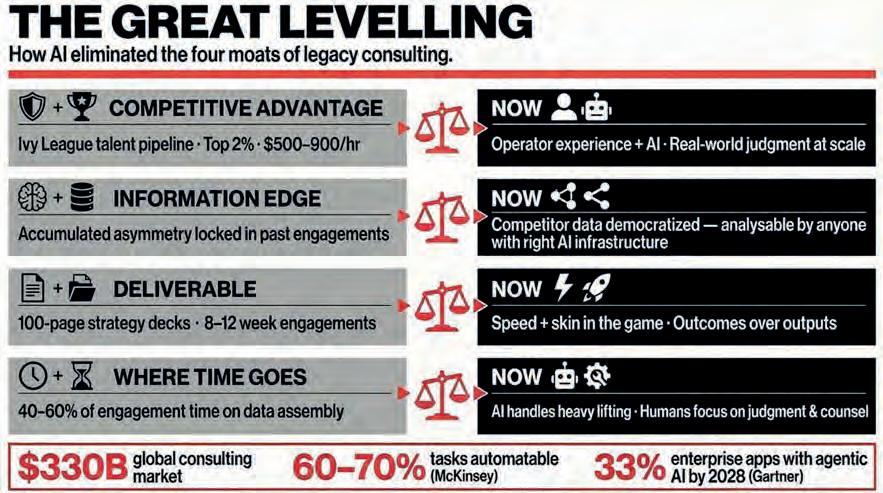
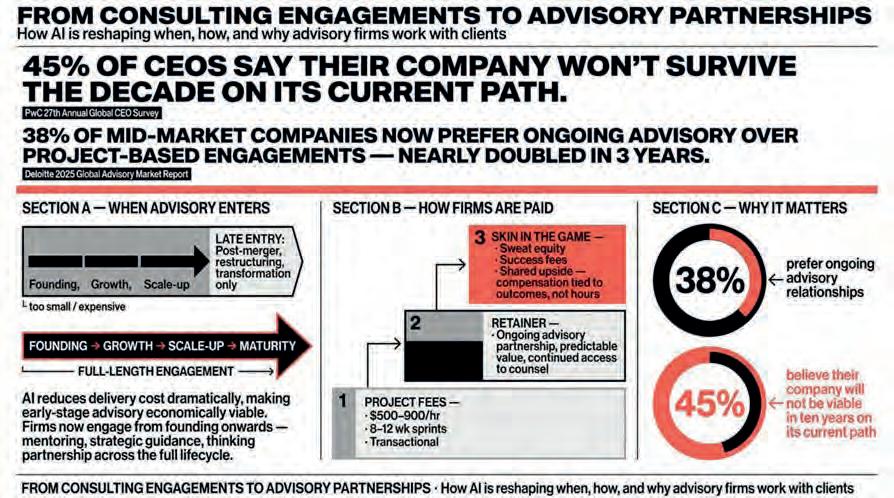
The Great Levelling
The Fiscal Innocence Law and its Main Tax Developments
Within the framework of the economic reform process promoted by the Argentine government, the so-called Fiscal Innocence Law was recently approved. This initiative aims to redefine the relationship between the tax administration and taxpayers by introducing a more favorable approach toward voluntary compliance and legal certainty.
The law establishes a significant conceptual shift: tax returns filed by taxpayers are considered valid and accurate unless the tax administration proves otherwise. This partially reverses the traditional logic of tax control. The objective is to reduce litigation and provide greater predictability in the relationship between the State and taxpayers.
Among the main developments are amendments to the Tax Criminal Regime, including a significant increase in the minimum thresholds that constitute tax evasion offenses. As a result, many cases involving smaller amounts are no longer treated as criminal matters and are instead handled exclusively within the administrative sphere. This change has even led to the closure of several court cases initiated under the previous regime.
The law also introduces adjustments to the statutes of limitation for tax claims, shortening the period during which the tax administration may pursue tax debts. In certain cases, the new limitation periods may be three or five years, depending on the taxpayer’s situation and the type of tax obligation involved.
Another relevant aspect is the implementation of administrative simplification mechanisms, including a simplified income tax filing regime for certain taxpayers, aimed at reducing bureaucratic burdens and facilitating compliance with tax obligations.
The Fiscal Innocence Law seeks to consolidate a model of tax administration based on trust and voluntary regularization, prioritizing transparency and spontaneous compliance over traditional schemes of intensive tax enforcement. Nevertheless, its implementation and practical effects continue to be the subject of debate within academic, judicial, and professional circles.
Argentina
Auren Impuestos
Why Many Investors Pay More Tax Than They Need To - Without Realising It
Submission Notes
All references and data points are cited at the end of the article.
A Practitioner’s Perspective
After more than twenty-five years in practice, one pattern I see repeatedly is this: investors who do everything right (filing on time, reporting accurately, working with reputable institutions) and still end up paying far more tax than they should. All because investment decisions are routinely made without a tax lens.
That gap has a name in our profession: tax drag. The slow, cumulative erosion of after-tax returns caused by inefficient income placement, poor account structure, and poorly timed realizations. It is one of the most preventable sources of wealth leakage I encounter, and it rarely appears on a brokerage statement.
The core issues, with the numbers that matter:
• Not all investment income is taxed equally. In Canada, interest income is fully taxable at marginal rates reaching as high as 53.53% in Ontario and 53.50% in British Columbia for top earners (BDO Canada, 2026). By contrast, eligible dividends benefit from a federal dividend tax credit equal to 15.0198% of the grossedup dividend amount (Canada Revenue Agency, 2024a), and capital gains are currently taxed on only 50% of the gain for individuals on the first $250,000 realized annually (Department of Finance Canada,
2024). In the United States, qualified dividends and long-term capital gains are taxed at preferential rates of 0%, 15%, or 20% — compared to ordinary income rates reaching 37% on short-term gains — depending on filing status and taxable income (Internal Revenue Service, 2024a; Bradford Tax Institute, 2024). Two portfolios with identical pre-tax returns can produce dramatically different after-tax outcomes based solely on income composition.
• Where you hold investments matters as much as what you hold. Registered and tax-advantaged accounts — RRSPs, TFSAs, IRAs, 401(k)s, and Roth accounts — exist specifically to shelter or defer tax (Canada Revenue Agency, 2024b; Internal Revenue Service, 2024b). Yet we routinely see interest-heavy, high-turnover assets held in taxable accounts while tax-efficient, low-yield holdings occupy registered plans. That arrangement is backwards, and it costs investors real dollars every single year.
• When you realize gains is a deliberate planning decision, not an afterthought. Both the CRA and IRS tax capital gains only upon realization. Under the Income Tax Act, s.111(1)(b), capital losses may be carried back up to 3 taxation years or carried forward indefinitely to offset capital gains (Shajani CPA, 2026; Canada Revenue Agency, 2024c). In the United States, capital losses can offset capital gains without limit; however, any excess applied against ordinary income is capped at $3,000 per year ($1,500 if married filing
separately), with remaining losses carried forward indefinitely (Internal Revenue Service, 2024c). Failing to coordinate these rules systematically often means paying more tax over a lifetime, even when each individual transaction appears reasonable.
• Reinvested income is still taxable income. Many investors assume that reinvesting dividends or distributions defers the tax obligation. It does not. The liability arises in the year of receipt — regardless of whether any cash is withdrawn — and without planning, it compounds annually (Canada Revenue Agency, 2024a; Internal Revenue Service, 2024d).
• Cross-border and foreign investments carry compounding risk. Missed foreign tax credits, incorrect withholding on foreign dividends, and incomplete foreign asset reporting can result in double taxation or avoidable penalties — entirely preventable with proper planning and timely disclosure (Canada Revenue Agency, 2024d; Internal Revenue Service, 2024e).
Why does this persist, even with professional advice?
In most cases, it comes down to segmented decisionmaking – where the investments are managed in one lane and tax compliance in another. These two rarely meet until it is too late in the year to change outcomes. Tax efficiency is not the product of any single tactic, it emerges when income type, account structure, and realization timing are coordinated deliberately and reviewed annually.
The solution is not aggressive tax planning. It is alignment, ensuring that your investment strategy and your tax strategy are working from the same page, every year.
If your investment performance is being measured primarily on a pre-tax basis, there is a reasonable chance you are leaving significant after-tax returns on the table. A proactive planning review by a CPA at SAV Associates , one that addresses income type, account structure, realization timing, and cross-border considerations, is often the highest-value conversation an investor can have with their advisor.
To read the full analysis with detailed examples, regulatory references, and jurisdiction-specific guidance, access the expanded article here .
References
1. BDO Canada. (2026). 2026 top personal marginal tax rates.
Fintech in Chile: Cross-Border Innovation and Market Decentralization
The global financial ecosystem is undergoing an unprecedented transformation, and Chile has established itself as one of the most dynamic hubs in Latin America. The recently enacted Fintech Law (No. 21,521), published on January 4, 2023, regulates services such as financial advisory services, crowdfunding, custody, order routing, and intermediation. This regulatory framework, overseen by the Financial Market Commission (CMF), opens the door for technological solutions to resolve historical frictions in international trade. We are witnessing how Fintech companies are reshaping the market through financial inclusion, efficiency in international payments, and decentralization.
In Chile
A clear example of this trend is our client SurPay, the first Fintech company founded in the Magallanes Region, in the far south of Chile. The company identified a critical opportunity in the tourism and trade flow between Chile and Argentina, where the disparity in payment systems was generating a significant loss of sales for local businesses.
The solution developed consists of a payment gateway that allows foreign tourists to pay in their local currency using QR codes and cards, while Chilean businesses receive the payment instantly in Chilean pesos.
Since its implementation in the Punta Arenas Free Trade Zone in 2025, SurPay has demonstrated exceptional scalability, achieving 40% market penetration in just five months. This success has been supported by significant international recognition milestones, such as its inclusion
among the 100 most promising startups in the region by El Mercurio Innovación and its validation by the Argentine Fintech Chamber.
With its sights set on 2026, the company is projecting its evolution toward Chile’s first multi-currency POS terminal, a strategic innovation that seeks to definitively integrate players from Argentina and Brazil into the national commercial ecosystem, thus consolidating its leadership in the transformation of cross-border payments.
A transformative phenomenon
The Fintech phenomenon is profoundly transforming the way financial transactions are carried out, revolutionizing traditional methods and accelerating the pace of digital consumption. While traditional banking has historically operated under closed systems, where information remains within its own channels, Fintech companies operate on an open model that uses data shared through standardized APIs to offer highly personalized products and services.
This digital approach requires Fintech companies to comply with enhanced security measures, such as biometric authentication, advanced encryption, and tamper prevention protocols. However, their rapid growth brings with it regulatory challenges: overly strict regulations can limit innovation, while overly flexible regulations could generate systemic risks, a recurring concern in industry discussions.
Among the main controversies is the control and use of financial data. The Open Finance model requires banks to share customer information with authorized third parties, generating significant tensions. Banks fear losing competitive advantages by opening their databases, while Fintech companies consider this access essential for developing more efficient and innovative solutions.
In conclusion, the Fintech phenomenon represents much more than a technological shift: it constitutes a cultural and structural transformation of the financial system. It fosters a more open, collaborative, and user-oriented industry, where speed, flexibility, and innovation become essential pillars. Even so, its consolidation will depend on the ability to harmonize these advances with a balanced regulatory framework that protects users without limiting the development of new opportunities. In this sense, Fintech companies are paving the way toward a more inclusive, efficient, and connected financial future.
Mario Cayupán mario.cayupan@auren.cl Chile
China Implements First comprehensive VAT Law: Key Changes Effective 2026
Effective 1 January 2026, China has enacted its first Value-Added Tax (VAT) Law, accompanied by a comprehensive set of Implementation Regulations. This landmark reform, issued under State Council Decree No. 826, replaces decades of fragmented circulars with a unified legal framework. The new system elevates VAT compliance expectations, enhances legal certainty, and brings China’s indirect tax regime closer to international VAT/GST practices.
While statutory VAT rates remain largely unchanged, the underlying compliance obligations have undergone significant restructuring. From clearer sourcing rules for cross-border transactions to stricter documentation standards and more disciplined refund procedures, businesses operating in or trading with China will encounter a more rules-based and evidence-driven environment.
Key Regulatory Changes Under the 2026 Framework
1. Cross‑Border Sourcing and Place‑of‑Consumption Rules
One of the most significant shifts is the codification of sourcing rules for cross-border services. Services provided by overseas suppliers are now considered taxable in China if:
• they are consumed within China, or
• they are directly connected to domestic goods, real estate, or natural resources.
Conversely, services delivered entirely offshore, requiring on-site performance outside China, fall outside the domestic VAT scope.
This framework places increased emphasis on proving where services are consumed. Businesses must provide contracts, supporting documents, and delivery evidence
to justify the application of zero-rating. Zero-rated services must now be “completely consumed overseas,” otherwise withholding and VAT liabilities may arise.
2. Mixed Transactions and Taxpayer Thresholds
The reform formally codifies the rules for mixed sales, where different tax or levy rates apply to components within a bundled transaction. Under the new approach, when a principal component can be clearly identified, its VAT rate will apply to the entire bundle.
This requires businesses to review and update such as:
• ERP and invoicing logic
• tax master data
• accounting policies
• contract structures and descriptions
Clear internal documentation will be essential to demonstrate the principal element of each mixed transaction.
The regulations also confirm the small-scale taxpayer threshold at CNY 100,000 monthly (or CNY 300,000 quarterly) for 2026-2027. This threshold is distinct from the CNY 5 million original-value threshold relevant to input VAT treatment of long-term assets. Businesses nearing the turnover limit must carefully monitor sales to ensure timely transition to general-taxpayer rules.
3. Deductions, Refunds, and Industry‑Specific Adjustments
The new regulations have also standardized the types of supporting documents acceptable for input VAT deductions and strengthened controls on special VAT invoices and customs import VAT certificates, particularly with long-term assets. Export-oriented businesses will face a narrower compliance window, which means refund claims must now
be filed within a strict 36-month period. Any late claims will now result in a permanent loss of refund eligibility.
Additionally, industry-specific adjustments are already underway. China will cancel photovoltaics (PV) export VAT rebates effective 1 April 2026, and battery-product rebates will be gradually reduced before being fully eliminated on 1 January 2027.
Strategic Implications for Businesses
The 2026 reforms reduce local interpretation differences but increase the evidence burden for cross-border, import, export, and mixed-transaction compliance. To adapt, companies must prioritise four key areas:
• Cross-border VAT classification: Rigorous application of the place-of-consumption rule, ensuring contracts explicitly specify service locations.
• Input VAT control: Verifying special VAT invoices and aligning finance, procurement, and customs data systems.
• Export documentation: Optimising workflows to support refund accuracy and strictly meet the 36-month filing requirement.
• Systems upgrades: Preparing ERP systems to manage mixed-sales classification and tag cross-border evidence automatically.
Christophe Marquis c.marquis@acclime.com
China
Taxation of Cross-Border Digital Services and the Evolving VAT Framework
Egypt has taken important steps in recent years to modernize its tax framework in response to the rapid growth of the digital economy. With increasing consumption of cross-border digital services such as streaming platforms, cloud computing, online advertising, and digital marketplaces, the Egyptian Tax Authority (ETA) has focused on ensuring that these services are appropriately taxed when consumed within the Egyptian market.
The main legislative framework governing indirect taxation in Egypt is the Value Added Tax Law No. 67 of 2016 and its Executive Regulations. While the law was originally designed for traditional transactions, it has gradually been interpreted and supplemented through administrative guidance to capture electronically supplied services provided by non-resident suppliers to Egyptian consumers.
A key development has been the introduction of a simplified VAT registration regime for non-resident providers of digital services. Under this system, foreign companies supplying electronic services to customers located in Egypt are required to register with the Egyptian Tax Authority through a simplified electronic registration process. Once registered, the supplier must charge Egyptian VAT at the standard rate of 14% on business-to-consumer (B2C) digital services consumed in Egypt.
The determination of whether a service is consumed in Egypt is generally based on internationally recognized
indicators of customer location. These may include the billing address of the customer, the IP address of the device used to access the service, the mobile country code of the user (for example +20 for Egypt), or the location of the payment instrument used to complete the transaction. These indicators are consistent with approaches adopted in many jurisdictions implementing taxation of cross-border digital services.
Foreign suppliers registered under the simplified regime are required to submit periodic VAT returns electronically and remit the VAT collected to the Egyptian Tax Authority. The simplified system is designed to reduce administrative complexity for non-resident providers while ensuring that consumption taxes are properly collected within Egypt.
In contrast to indirect taxation, Egypt does not currently impose a specific Digital Services Tax (DST). Instead, the taxation of profits derived from digital activities follows the general principles of Egyptian Corporate Income Tax Law No. 91 of 2005. Under this framework, foreign companies are subject to Egyptian corporate income tax only if their activities create a Permanent Establishment (PE) in Egypt.
The mere provision of digital services from abroad, without a fixed place of business or dependent agent in Egypt, generally does not create such a taxable presence.
These developments reflect Egypt’s broader efforts to align its tax administration with international practices
while maintaining an attractive environment for foreign investment and digital innovation. As digital commerce continues to expand across the Middle East and Africa, further regulatory guidance and administrative enhancements may be expected as part of the country’s ongoing tax modernization strategy.
Bassem A. Gaber bassem@tickmark.org
Egypt
Public Funding for SMEs in Germany
Importance of Subsidies for Investment Decisions
Subsidies can help to significantly reduce investment and capital costs and thus risks. The 12 largest programs in Germany alone provide annual funding of almost €20 billion. In addition, there are tax breaks of a similar amount. In extreme cases, the funding rate can even be as high as 100% through a combination of subsidies. Therefore, when making investment decisions and hiring new staff, it is important to check whether funding is available.
Fragmented Funding Landscape and Application Complexity
The German and European funding landscape is fragmented and not transparent. There are currently around 2,500 funding programs in Germany. To minimize the effort involved in applications and the risk of rejection for formal reasons, it is advisable to seek external expertise. Experience shows that intensive cooperation between accounting, tax, and application management significantly improves the chances of timely and successful funding.
For a successful application, it is also important to align the intentions of the funding provider with the ideas of the applicant. The central funding themes are innovation, ecological transformation, human rights, and regional development. These relatively vague terms must be translated into everyday and operational, i.e., business situations. The consolidation of locations can thus receive regional funding, or internal process improvements can constitute an eligible innovation.
Overview of Selected Funding Programs
Below are three popular funding programs for SMEs: the research allowance, regional economic development (GRW), and consulting funding.
Research Allowance
The research allowance is a de facto tax refund for expenses incurred in R&D activities. Up to approximately 30% of expenses, currently totalling EUR 3.5 million per year and company, can be subsidized in this way. A special feature is that the refund can be applied for both retrospectively and prospectively. Furthermore, the subsidy is not dependent on the success of the measure or on whether taxes were paid at all. Subsidies are also available for failed activities and startups without positive income. Since 2024, expenses for own personnel and material costs (35%) as well as for contract costs, i.e., external services, have been reimbursable. (24.5%). This means that expenses for pool research services and for foreign contract services can also be subsidized, provided that the expenses are incurred in the EU. As a result, potentially cross-border group allocations, e.g. R&D pools can also benefit from R&D funding.
Based on the principle that every company conducts research and development, the eligible activities must be identified and delineated in terms of costs. In some cases, companies are unaware that the relevant activities are eligible for funding. Internal activities such as the optimization of production processes (to the extent that they are best-in-class) are also eligible for funding. The development of prototypes, test procedures, and research
into the risks associated with innovations are also regularly eligible for funding.
In addition to the research allowance, SMEs should also consider the innovation program for small and mediumsized enterprises offered by the Ministry of the Environment. The program is also open to all industries and, with an annual budget of EUR 700 million, is a relevant address in the funding landscape.
Regional Economic Development (GRW)
Another popular form of funding is the so-called GRW funding or regional economic development funding from the federal government. This funding can also amount to approximately 35% of the investment or costs and is available as a low-interest loan, a grant, or a combination of these instruments. Depending on the total investment, funding in the millions is regularly possible with this program.
Special features of this funding program include, among others, that the amount of funding varies regionally depending on the typical level of development of the region in which the company is located and that the application must be submitted before the measure begins. However, the qualitative eligibility requirements are not limited to R&D measures. In general, measures for expansion, diversification, modernization of production, and, in particular, measures related to the hiring of new employees are eligible for funding. In addition to GRW funding from the federal government, funding from the European Regional Development Fund should also be considered when examining which funding program is suitable.
Consulting and Training Funding (BAFA)
To complete the list of examples, we will look at the funding of consulting and staff training. A popular funding instrument here is the BAFA (Federal Office of Economics and Export Control). Here, external consulting and training measures in the areas of business development, digitalization, IT security, sustainability, and personnel development are funded. The application process is relatively simple and can usually be largely outsourced to external qualified consultants.
Finally, it should be noted that experienced funding consultants can help identify activities within the company that are eligible for funding by asking specific questions. Once the funding requirements have been identified, the application process can also be outsourced to the consultants, reducing the amount of resources tied up within the company and increasing the likelihood of success.
Overview of Selected Programs
Type of Subsidy Cost reimbursementGrant or loan or both Consulting
Purpose / Target Innovation Regional development Consulting and Training
Amount of subsidy
Moment of application
Approximately 30% of the expenses up to $3.5 million per year and applicant
Up to 35% of the investment amount and wage subsidy
Up to EUR 2,800 per consulting project, more than one possible
Retroactively and before the start of the measure Before the start of the measure Before the start of the measure
Success-related No prerequisite No hard requirement No checking
Alternative subsidy programm
Alexander Schabowski
alexander.schabowski@auren.de Germany
ZIM – Central Innovation Program for Small and Medium-Sized Enterprises ERDF – European Regional Development Fund
Subsidy for qualification measures by local governments
Understanding Hong Kong’s Food & Beverage Market
Hong Kong remains one of Asia’s most attractive markets for food and beverage (F&B) operators, blending a mature dining culture with a highly international consumer base. With over 17,600 food and beverage establishments and strong visibility to both local diners and regional travellers, the city is a recognised culinary hub. In 2025, Hong Kong welcomed about 49.9 million visitors - up 12% year-onyear - driving meaningful demand for dining and hospitality concepts across segments and price points.
This insight provides a high-level overview of the market landscape, business setup considerations, and regulatory requirements for launching an F&B outlet in Hong Kong.
Hong Kong F&B Market Scope
Hong Kong’s F&B sector spans three major segments:
This summary focuses on the food services segment, where licensing, premises requirements, and compliance significantly influence timelines and operations.
Key Considerations and common challenges
• Business model: Operators should decide early whether they will run a restaurant, café, bar, takeaway outlet or catering business. Each model has different licensing routes, staffing needs and operational costs.
• Target market and pricing: Hong Kong’s dining industry is competitive and district-specific. A well-defined customer profile and pricing strategy strengthens concept positioning.
• Location: Premises must be approved for F&B use. Both mall and street-level locations require assessments of layout, ventilation, fire safety and potential renovation costs.
• Budgeting: Beyond rent and deposits, operators should plan for fit-out, professional fees, licensing charges and contingencies for design adjustments requested during inspections.
Operators typically face high rents and fit-out costs, labour shortages, unpredictable licensing timelines, and ongoing compliance requirements such as record-keeping and licence renewals.
Market Access and Investment Conditions
Hong Kong offers a highly liberal and business-friendly environment for F&B investment. There are generally no restrictions on foreign ownership, allowing for 100% foreign equity. The city’s simple, low tax regime and robust legal framework provide a secure and transparent setting. Capital moves freely, with no foreign exchange controls.
Establishing a business typically involves incorporating a private limited company, a straightforward process offering limited liability and tax clarity. Despite competition, high consumer spending power and international appeal present significant opportunities for well-conceived F&B concepts.
Business Setup and Banking
Most operators establish a Hong Kong private limited company for limited liability, tax clarity, and ease of compliance. Incorporation requires at least one director and shareholder, a registered office, statutory records, and a Business Registration Certificate (BRC). Opening a corporate bank account demands preparation, including ownership information, KYC documents, a brief business plan, and proof of intended activity.
Licensing and Regulatory Requirements
Launching an F&B outlet involves coordinating several regulatory regimes:
• Food business licensing: Common categories include the General Restaurant Licence, Light Refreshment Restaurant Licence and Food Factory Licence. Additional permits may apply depending on the menu.
• Liquor licensing:
Operators serving alcohol must obtain a liquor licence from the Liquor Licensing Board, which assesses business operations, layouts and public feedback.
• Premises and safety compliance:
The Fire Services Department and Buildings Department review installations, structural safety, and any required modifications. These inspections heavily influence approval timelines.
• Employment and MPF obligations:
Employers must comply with the Employment Ordinance, the Statutory Minimum Wage, and Mandatory Provident Fund (MPF) for enrolment and contributions.
Hong Kong offers significant opportunity for F&B brands, provided operators navigate the regulatory environment and premises-driven requirements with careful planning. Effective preparation, supported by on-the-ground expertise, helps ensure a smoother pathway from concept to opening
Florian Braunsteiner f.braunsteiner@acclime.com
Hong Kong
New Indonesian Investment Rules
Introduction
In 2025, the Indonesian government issued a series of new investment and licensing guidelines for direct investment replacing a set of similar regulations issued in 2021.
The new regulations are Government Regulation No. 28 of 2025 on the Processing of Risk-based Business Licences (GR 28/2025) and Indonesia Investment Coordinating Board (BKPM) Regulation No. 5 of 2025 on Guidelines and Procedures for Processing Risk-Based Business Licences and Investment Facilities through the Online Single Submission System (BKPM Reg 5/2025) (collectively the “New Regulations”).
Some of Key Changes
The New Regulations make significant changes to business licensing and foreign investment rules. As per BKPM, the New Regulations were issued to improve business licensing policy and designed to provide certainty to business licensing and simplification of procedures for business licensing, including to eliminate layered procedures and redundancy and to make a systematic licensing stage.
One of key changes under the New Regulations is the reduction of minimum paid up capital for foreign investment companies to IDR 2.5 billion (approximately USD 150,000) that is 75% lower than the previous IDR 10 billion requirement.
The New Regulations also introduce lock up requirement for foreign investment companies such that paid up capital of foreign investment companies must remain in place and cannot be transferred out of the companies for at least 12 months from the date of subscription and payment, unless it is used for assets purchase, construct building or business operations.
The New Regulations however retain the minimum investment requirement (equity and debt) for foreign investment companies at above IDR 10 billion (approximately USD 600,000) for each business line for each project location, excluding land and buildings.
Sanctions for Non‑Compliance
Foreign investment companies that fail to meet the minimum capital requirements or minimum investment value as regulated in the New Regulations may be subject to administrative sanctions in the form of warning; temporary suspension of business activities; imposition of administrative fines; enforcement by administrative coercion; revocation of licenses/certifications/approvals; and/or revocation of basic requirements, business licenses, and/or business licenses to support business activities.
The imposition of administrative sanctions is carried out by BKPM or authorized government agency based on the level of compliance with the results of the supervision and may be imposed either gradually or not gradually.
Fadriyadi Kudri f.kudri@kndlawyers.com
Indonesia
Responsibilities of the Board of Directors in an Italian S.r.l.
The management of an Italian Limited Liability Company (Società a responsabilità limitata – S.r.l.) may be entrusted to a sole director or a board of directors. Where multiple directors are appointed, their duties and liabilities are primarily governed by the Italian Civil Code (ICC), the Company’s Bylaws (Articles of Association), and established case law (jurisprudence).
1. Core Management Duty
The fundamental responsibility of directors is the exclusive management of the company’s enterprise (Art. 2380-bis ICC). They are empowered to perform all operations necessary to achieve the corporate purpose (oggetto sociale) as defined in the Bylaws. This mandate encompasses strategic, financial, and operational decision-making.
A key principle, widely supported by legal doctrine, is the distinction between the deliberative and executive facets of management. While the Bylaws of an S.r.l. may grant certain decision-making powers to shareholders, the power to execute those decisions remains an exclusive and nondelegable competence of the directors. Consequently, directors act as a “final filter,” duty-bound to assess the legality and business viability of any operation before implementation, always acting in the best interest of the company (Art. 2475 ICC).
2.
Duty of Diligence and the “Duty to Act Informed”
Directors must discharge their duties with the diligence required by the nature of their role and their specific professional competencies. This standard is interpreted as the diligence of a prudent and competent professional manager.
A crucial pillar of this responsibility is the duty to act informed. Although explicitly codified for joint-stock companies
(S.p.A.) under Art. 2381 ICC, the Italian Supreme Court (e.g., Judgment No. 5375/2024) has affirmed its applicability to all corporate forms. This implies that every director— including non-executive directors—has an affirmative duty to actively seek information regarding the company’s affairs. They cannot passively rely on disclosures from executive directors (Supreme Court No. 24081/2019).
Specifically, each director must:
a. Maintain an adequate understanding of the company’s business;
b. Actively monitor general management performance;
c. Request detailed information from executive bodies regarding specific corporate transactions.
3. Liability of Directors
Failure to comply with these fiduciary duties may expose directors to several forms of liability under Art. 2476 ICC:
A. Liability towards the Company: Directors are jointly and severally liable to the company for damages resulting from a breach of duties imposed by law or the Bylaws (Art. 2476, para. 1, ICC). A director may be exonerated only by proving they are free from fault and that, upon becoming aware of a detrimental act, they formally recorded their dissent. Non-executive directors are liable not for the acts of others, but for their own omission—specifically, for failing to prevent “prejudicial facts” of which they were, or should have been, aware through diligent inquiry (Supreme Court No. 3281/2026).
B. Liability towards Corporate Creditors: Directors are liable to creditors for failing to preserve the integrity of the corporate assets. This action may be brought when the company’s assets are insufficient to satisfy creditor claims due to a breach of the duty to protect the company’s solvency.
C. Liability towards Individual Shareholders or Third Parties: A director may be held directly liable for damages caused to an individual shareholder or a third party by a fraudulent or negligent act. This applies only when the loss is suffered directly by the individual, distinct from any general loss reflected in the company’s net worth.
4. Specific Duties and Functions
Beyond general management, directors are responsible for:
a. Defining and monitoring business strategies and industrial plans.
b. Assessing the adequacy of the organizational, administrative, and accounting structures, with a focus on internal control and risk management (Art. 2086 ICC).
c. Preparing the financial statements for shareholder approval.
d. Ensuring regulatory compliance across all operations.
e. Managing price-sensitive or privileged information.
f. Convening shareholder meetings as required by law or the Bylaws.
Conclusion
The role of a director in an Italian S.r.l. is one of proactive stewardship. It demands an informed approach and carries significant legal exposure, requiring constant diligence in overseeing and guiding the company’s operations toward its corporate objectives.
Davide Guardamagna dguardamagna@gealex.eu
Italy
Taxation of unexplained bank deposits
The court backs up KRA’s application of relying on banking analysis, a technique of treating gross deposits as taxable turnover unless proven otherwise as an anti-evasion tool especially when taxpayers file low or nil returns irrespective of their significant cashflows. KRA is justified to treat unsupported deposits as taxable income and thus burden of proof shifts to account holders to provide explanations why the funds should not be taxed. Additionally, when taxpayers lack proper records, Kra is permitted to make best judgement assessments using indirect methods such as bank analysis. The taxpayer should provide bank reconciliations, source documents, contracts or ledgers to offer evidence that funds were loans, agency collections, capital injections among others to avoid double taxation. Notably, bank statement records solely are not substantial evidence because they show financial movements and not their nature.
VIRGINIA WANGARI TAX APPEAL
This legal back up from the tax appeal tribunal was executed in a dispute between the Kenya revenue authority (KRA) and Virginia Wangari, a Naivasha hotel businesswoman (TAX APPEAL NO. E029 OF 2025). The tribunal supported the taxation of Ksh6.5 million from cash and M-pesa deposits that lacked supporting evidence. Bank records revealed credits amounting to Ksh52,682,227.00 between 2018 and 2022. KRA treated net deposits of Ksh50,875,345.00 as income subject to taxation after adjustments and applied an industry profit margin of 18.49% for the hospitality sector and thus cut the tax demand to Ksh6,548,075.00. KRA had initially raised a Ksh18,044,066.00 assessment covering Value added tax (VAT) and income tax. The taxpayer argued
that KRA had subjected her to double taxation since the authority had assumed all deposits were income, ignored explanations and applied an erratic margin. The tribunal rejected the arguments and ruled against the taxpayer.
KIRIN PIPES LIMITED TAX APPEAL
Similarly to the Kirin Pipes Limited dispute with KRA (TRIBUNAL APPEAL E1116 OF 2024), the court ruled in support with the taxman. On 6th September 2024, KRA demanded that Kirin Pipes Limited pay a tax liability of Ksh21,638, 991.00 The taxpayer appealed to the Tax appeal tribunal who upheld the decision on 22nd August 2025. In the dispute, the taxman charged all bank deposit entries in the taxpayer’s bank statements as sales and revenue thus charged corporation tax and VAT. The taxpayer argued that the tax liability charged on the basis that KRA used was erroneous since not all bank deposits were sales and revenue, they consisted of other sources too as; loan, advance customer payments, inter-account transfers and shareholder capital injection. The tribunal ruled against the taxpayer citing a lack of insufficient evidence on the accounts.
AVERY LOUNGE LIMITED TAX APPEAL
The court dismissed the appeal by Avery Lounge Limited against KRA (INCOME TAX APPEAL NO. E213 OF 2024) Avery Lounge, incorporated in June 2019 despite registering for VAT, Pay As You Earn (PAYE) and income tax filed nil returns or failed to file returns at all for years. In November 2021, KRA inspected the lounge and found it to be operational proving that the business was trading but declared no income. The authority conducted its
investigation from banks and suppliers revealing significant deposits into the taxpayer’s accounts which led to default assessments using bank deposit analysis since the Lounge lacked credible books of account. The taxpayer argued that the deposits consisted of income and other deposits from loans, director advances. On demand for supporting documents, Avery only provided partial bank statements and a summary. The tribunal ruled against the taxpayer citing that KRA is authorized to act on available evidence when taxpayers lack substantial records.
In conclusion, the rulings validated that the law places the burden of proof to the taxpayer; the court cannot aid a taxpayer who lacks supporting records. Therefore, keeping accurate and substantial records is mandatory to avoid double taxation and default assessments.
REFERENCES
[2026] KETAT 11 (KLR)
[2026] KEHC 769 (KLR)
[2025] KETAT 259 (KLR)
Juliet Mutisya client-service@jmassociates.co.ke
Kenya
Simplified Liquidation process
The simplified liquidation procedure (often referred to as a simplified voluntary dissolution or strike-off) is a streamlined process introduced by Act No. XVIII of 2025 and expressly codified in Article 214A of the Maltese Companies Act (Chapter 386 of the Laws of Malta). It came into force on 16 December 2025.
Instead of the traditional winding-up routes (Members’ or Creditors’ Voluntary Liquidation or Court Liquidation), eligible companies can be dissolved and struck off the Malta Business Registry without appointing a liquidator and with reduced formalities, time and cost.
Who Can Use It?
To qualify, a company must satisfy all of the following conditions:
1. Type of Company
• Must be a private limited liability company — not a public company and not a regulated entity subject to specific regulatory regimes.
2. Period of Registration
• Registered with the Malta Business Registry (MBR) for at least 6 months.
3. Inactivity Requirements (Last 6 Months)
• Has not carried on business or traded.
• Has not changed its name.
• Has not employed any persons other than officers (directors/secretary).
• Has not entered into contracts or deeds (except with service providers).
• Has no outstanding filings or penalties with the Registry
• Has no shares pledged.
4. Financial & Legal Conditions
• All liabilities have been paid or formally written off.
• No pending legal proceedings.
• Total assets do not exceed €5,000.
• No outstanding amounts due to government authorities (e.g., taxes).
Application & Documentation Required
The company must submit to the Registrar:
1. Form B1 declaring intent to dissolve under the simplified procedure.
2. Directors’ statutory declaration (Form B3) confirming eligibility and compliance with all criteria.
3. Form B4 (or equivalent) confirming that:
• Shareholders have passed a resolution approving the simplified dissolution;
• All bank accounts are closed; and
• VAT deregistration has been filed where applicable.
Directors must also confirm they will retain details of the company’s beneficial owners and financial records as legally required, or designate a person to do so.
Timeline & Strike‑Off
Once the application is accepted:
• The Registry will publish a notice in the Government Gazette or on its portal and in a daily newspaper.
• There is a three-month waiting period from publication before the company is struck off the register, giving potential creditors time to object or seek reinstatement.
During this three-month period, directors and the company secretary retain their powers and duties, unlike in a traditional liquidation where a liquidator takes control.
Creditor Protection & Liability
• Creditors, if adversely affected, can apply to the Maltese courts to stop or reverse the dissolution.
• Liability of directors and officers is not automatically extinguished upon strike-off; legal responsibilities may remain enforceable.
Clive Caruana clive@ccpsmalta.com
Malta
Audit and Artificial Intelligence
Executive Summary
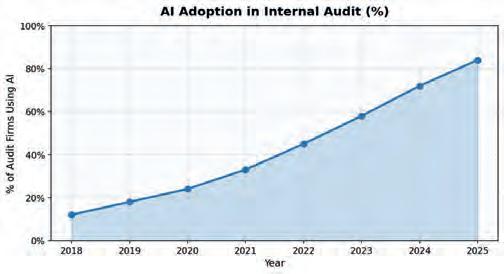
Artificial Intelligence (AI) is transforming the audit profession by enhancing data analysis, risk identification, and continuous monitoring capabilities. Traditional audit approaches that relied heavily on sampling and manual testing are evolving toward technology-driven, data-intensive methodologies. AI enables auditors to analyze entire datasets, identify anomalies in real time, and improve the overall quality and efficiency of assurance engagements. At the same time, the adoption of AI introduces new risks including algorithmic bias, model governance concerns, data integrity issues, cybersecurity threats, and ethical considerations. As organizations increasingly integrate AI into financial processes and decision-making systems, auditors must develop new competencies, adopt advanced analytics tools, and strengthen governance frameworks to ensure reliability, transparency, and accountability.
1. Introduction: Transformation of the Audit Profession
1. Introduction: A Paradigm Shift in Auditing
The audit profession has undergone significant transformation over the past decade, driven by advances in data analytics, cloud computing, and now Artificial Intelligence (AI). Traditional audit methodologies reliant on sampling, manual testing, and periodic reviews are giving way to a new era of continuous, intelligent, and data-driven assurance.
AI encompasses a broad spectrum of technologies including machine learning (ML), natural language processing (NLP), robotic process automation (RPA), computer vision, and large language models (LLMs). Each of these has direct
applications in the audit domain, offering capabilities that far exceed what human auditors could achieve through conventional means.
Globally, organisations from Big Four accounting firms to internal audit functions in multinational corporations are investing heavily in AI-enabled audit tools. The stakes are high: in an environment of increasing regulatory complexity, financial crime sophistication, and stakeholder expectations, the ability to audit smarter does not just harder, it is a competitive differentiator.
2.
2.1 Machine Learning and Predictive Analytics
Machine learning algorithms can be trained on historical financial data to identify anomalies, flag unusual transactions, and predict areas of elevated risk. Unlike rulebased systems, ML models improve over time as they are exposed to more data, making them particularly powerful in dynamic business environments.
Supervised learning models trained on prior fraud cases can score every transaction in a general ledger, allowing auditors to focus scarce attention on the highest-risk items. Unsupervised learning, meanwhile, can surface previously unknown fraud patterns that no rule ever anticipated.
2.2 Natural Language Processing (NLP)
NLP enables AI systems to read, interpret, and extract insights from unstructured text, contracts, emails, board minutes, regulatory filings, and audit reports. For auditors, this unlocks previously impractical analyses, such as reviewing thousands of contracts for non-standard clauses or scanning internal communications for signs of control override.
2.3 Robotic Process Automation (RPA)
RPA automates repetitive, rules-based tasks such as data extraction, reconciliation testing, confirmations dispatch, and workpaper population. By delegating these routine functions to software robots, audit teams can redirect human effort toward higher-value judgement-intensive work.
Figure 1: AI Adoption in Internal Audit (2018–2025)
Key AI Technologies Reshaping Audit
2.4 Large Language Models (LLMs)
The emergence of large language models, such as GPT4 and Claude has opened new frontiers in audit. These models can assist in drafting audit programs, summarizing complex regulatory guidance, generating audit findings narratives, and answering technical accounting questions. LLM-powered audit assistants are rapidly becoming part of the modern auditor’s toolkit.
3. Role of Artificial Intelligence in Auditing
AI technologies such as machine learning, natural language processing, robotic process automation, and advanced data analytics are reshaping how audits are conducted. These technologies enable automation of routine procedures, analysis of large volumes of structured and unstructured data, and continuous monitoring of financial transactions. AI systems can be embedded within financial and operational
systems to monitor 100% of transactions in real time, generating alerts when anomalies are detected. It saves time and enables an auditing executed more efficient and faster.
4.
Key Benefits of AI in Auditing
• Enhanced data analysis through the ability to review full populations of transactions.
• Improved fraud detection and anomaly identification.
• Increased audit efficiency by automating repetitive tasks.
• Continuous auditing and real-time assurance.
• Better risk assessment through predictive analytics.
5. Risks and Challenges Associated with AI
• Algorithmic bias affecting audit conclusions.
• Lack of transparency in complex AI models (black-box problem).
• Data quality and integrity issues.
• Cybersecurity and data privacy risks.
• Over-reliance on automated systems.
6. Governance, Regulation, and Professional Responsibilities
As AI becomes integrated into financial reporting and internal control systems, regulators and professional bodies are emphasizing the need for strong governance frameworks. Auditors must evaluate the design, development, implementation, and monitoring of AI systems. This includes assessing model governance, reviewing training data, evaluating algorithm performance, and ensuring compliance with relevant regulatory requirements and ethical standards.
7. Future of Auditing in an AI‑Driven Environment
The future of auditing will likely involve a hybrid model where human professional judgment is combined with advanced AI capabilities. Auditors will increasingly act as technology-enabled assurance professionals who interpret insights generated by intelligent systems. Continuous auditing, predictive risk assessment, and real-time reporting are expected to become standard features of modern audit engagements.
8. Conclusion
Artificial Intelligence represents both an opportunity and a challenge for the auditing profession. While it significantly improves efficiency, coverage, and analytical depth, it also requires auditors to expand their technical expertise and strengthen oversight of automated systems. The successful integration of AI into auditing will depend on effective governance, regulatory alignment, and the continued application of professional skepticism and ethical judgment. It can fasten the work of auditor with more accuracy and enables the auditors to identify the anomalies in larger and bigger entities of high-volume transactions within the less period of time.
Muhammed Sohail
sohailakhawala@gmail.com
Pakistan
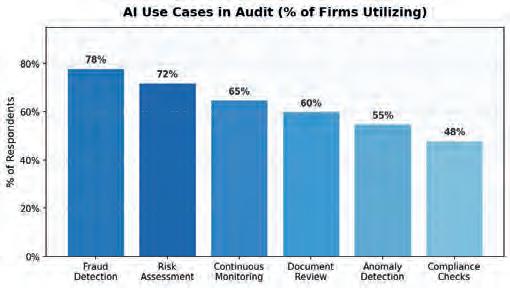
Figure 2: Prevalence of AI Use Cases Across Audit Functions (2025 Survey Data)
The ideal tax haven for investors in South America
Paraguay is currently positioned as one of the most competitive destinations for those seeking to invest in South America. Its simple, predictable, and growth-oriented tax structure makes it a superior alternative to countries like Argentina, Brazil, Chile, or Uruguay. For international investors, Paraguay’s tax advantages represent an opportunity that cannot be overlooked.
Why is Paraguay so attractive for investment?
The country maintains a stable economic environment, low taxes, and a legal framework designed to facilitate business development. Its tax system stands out for being clear and easy to comply with, without hidden taxes or distorting burdens that make doing business more expensive in other markets in the region.
The “10‑10‑10” Tax Formula That Wins Over Investors
Paraguay offers a tax system that has become a national brand:
• 10% VAT (5% for basic goods)
• 10% Corporate Income Tax (IRE) for business activities
• 10% Personal Income Tax (IRP) for individuals
This simplicity allows entrepreneurs to focus their energy on growth and job creation, instead of dealing with bureaucratic processes. Paraguay is not a tax haven: it is a land of tax efficiency and clarity.
Paraguay’s Tax Advantages Compared to the Region
Unlike neighboring countries, Paraguay does not apply taxes such as:
• Wealth tax
• Bank withholdings on debits and credits
• Complex provincial or municipal taxes
This reduces operating costs and improves the profitability of investments.
Who can benefit from the Paraguayan system?
• Domestic and foreign companies
• Startups and SMEs
• Digital nomads
• Exporters and technology developers
• Real estate and agricultural investments
If you are looking for a stable, competitive, and fiscally efficient country, Paraguay stands out as the best investment destination in South America. Its simple tax model and economic outlook make the country an ideal ecosystem for sustainable businesses.
Clarisa Saucedo clarisa@consultoria.com.py
Paraguay
Tax Liability of the Board and Management in Peru: When Corporate Risk Becomes Personal
Tax enforcement in Peru has evolved from an approach focused mainly on determining unpaid taxes to a more direct analysis of the conduct of those who lead companies. The Peruvian tax authority no longer limits its review to technical tax adjustments. It also examines decisions, omissions, and control systems to the extent that they affect tax compliance. In this context, liability may shift from the legal entity to members of the board and management. In practical terms, this means that, under certain legal conditions, the tax authority may pursue directors or senior executives personally in connection with corporate tax debts. The analysis focuses on effective participation, the level of supervision exercised, and the reasonableness of the controls in place. The question is no longer only whether a tax contingency exists, but whether, under certain legal conditions, it may be transferred to the personal assets of those responsible for oversight and decision-making.
Legal framework of joint liability
The starting point is Peru’s Tax Code. It regulates the joint liability of individuals formally authorized to represent the company when there is intentional misconduct, gross negligence, or abuse of authority in the failure to comply with tax obligations. Liability is not automatic simply because a person holds a given position. In practice, several elements must be established: the existence of an unpaid tax obligation, the person’s status during the audited period, effective participation in the determination or payment of the tax, the presence of intentional misconduct, gross negligence, or abuse of authority, and a causal link between the administrator’s conduct and the breach.
The Tax Code also extends this framework to de facto administrators, meaning individuals who exercise management functions without formally holding the registered position. Liability is therefore not limited to formally appointed representatives. It may also reach those who, in practice, exercise effective direction or control. The framework further includes other situations of joint liability, particularly in the context of business transfers or corporate succession.
Recent tax court decisions reinforce this structure. Peruvian tax jurisprudence has emphasized the need to verify representative status during the audited period, effective participation in the determination or payment of the obligation, and the existence of intentional misconduct, gross negligence, or abuse of authority. It has also clarified that joint liability cannot be extended on the basis of general anti-avoidance concepts designed to challenge structures or transactions considered artificial or abusive, unless there is a specific legal basis.
Duty of diligence and tax oversight under corporate law
Peru’s General Corporations Law completes the analytical framework. It requires directors to act with the diligence of a prudent businessperson and with loyalty toward the company. Although the law does not expressly refer to tax compliance, this standard clearly includes the reasonable supervision of relevant business risks.
The same corporate framework establishes that directors may be held liable to the company, shareholders, and third parties for damages arising from acts contrary to law or
carried out with intentional misconduct, abuse of authority, or gross negligence. It also provides for the individual liability of directors and the liability of managers for damages caused in the exercise of their functions.
The connection with tax risk is direct in terms of oversight responsibilities. If the board and management fail to fulfill their responsibilities regarding the implementation of adequate mechanisms or disregard significant tax contingencies, this may amount to a breach of the duty of diligence. In practice, this means integrating tax compliance into the internal control system. It also means ensuring that tax risks are identified, escalated, and documented through formal governance processes. The standard does not require directors or senior executives to perform the daily technical tax work themselves. It does require them to ensure formal processes, review relevant risks, and maintain sufficient documentation of significant tax decisions.
From tax contingency to personal exposure
Not every tax contingency creates personal risk. An isolated error, properly supported and corrected in a timely manner, is unlikely by itself to constitute gross negligence. A different picture emerges when non-compliance is repeated. A systematic pattern of omissions may reveal failures in supervision and may be interpreted as a tolerated practice.
Even more sensitive are structural control deficiencies, such as the absence of periodic reviews, the lack of documentation for significant tax decisions, or the failure to respond to identified contingencies. These elements may be used to assess corporate leadership’s diligence. The real
dividing line is not whether a tax issue exists, but whether management responded to it with appropriate oversight, escalation, and documentation.
Peruvian tax jurisprudence has repeatedly stressed the need for specific reasoning. Tax court decisions require an analysis of the individual’s effective role and the causal relationship between that conduct and the tax debt. They also make clear that attribution must be based on concrete facts rather than general presumptions.
In practice, the distinction between corporate risk and personal risk will often depend on the available evidence: board minutes, internal reports, and the control systems actually implemented. A lack of traceability can significantly weaken the defense.
Implications for the Board and Management
The Peruvian legal framework does not automatically make board members and managers personally liable for tax non-compliance. Joint liability under the Tax Code is exceptional and requires legally defined conditions that must be properly established. However, when this regime is considered alongside the duty of diligence under corporate law, tax compliance clearly falls within the supervisory scope of fiduciary responsibility. Personal exposure does not depend on job title alone, but on the existence of a demonstrable causal link between the individual’s conduct and the breach.
Periodically assessing personal exposure arising from tax contingencies and reviewing the effectiveness of existing supervisory mechanisms can make the difference between a corporate risk and a personal one. For international groups operating in Peru, this highlights the importance of aligning
local tax governance with broader corporate oversight and compliance frameworks.
César Morales cmorales@moralesco.net Perú
Tax on diverted profits
This tax applies to Polish companies, tax capital groups, and non-residents operating in Poland through a permanent establishment, including, among others, branches of foreign entrepreneurs that settle CIT in Poland.
In principle, diverted profits tax shall be imposed on passive expenses incurred for the benefit of:
• an affiliated entity with its registered office or management in a so-called tax haven, and
• an affiliated entity having its registered office or management in a country with which Poland or the EU has not ratified an international treaty that provides a basis for obtaining tax information from the tax authorities of that country, specifically, a double taxation treaty.
In contrast, in the case of passive expenses incurred for the benefit of other foreign affiliated entities, the obligation to pay tax may not arise when certain conditions are met, such as when:
• the sum of passive expenses incurred for the benefit of foreign affiliates is less than 3% of the total deductible expenses, or
• income (revenue) of a foreign affiliated entity derived from passive expenditure is taxed at an income tax rate higher than 14.25%.
Passive expenses include, but are not limited to: costs of intangible services, IP rights fees, expenses related to the transfer of debtor default risk, debt financing costs, exit fees.
Tax rate: 19% of total passive expenditure
Deadline: 31 March - for taxpayers whose tax year coincides with the calendar year.
TIAS Tax Department office@tias.pl Poland
Foreign Investment in Qatar
Qatar, long known as a global energy leader is now undergoing an exciting economic transformation under the Qatar National Vision 2030 (QNV 2030). The goal is to move away from reliance on hydrocarbons and build a diversified, knowledge-based economy. In this shift, foreign investment plays a key role not just as a source of capital, but as a way to bring new technologies, develop skills and connect Qatar to global markets.
This article provides an overview of Qatar’s investment landscape, highlighting reforms, priority sectors and why the country is becoming an attractive destination for international investors.
Opening the Door to Foreign Investment:
Qatar has made it easier than ever for foreign investors to enter its market. Law No. 1 of 2019, which governs the investment of non-Qatari capital allows for full foreign ownership in most sectors. Certain industries like banking, insurance and commercial agencies still have restrictions, but the overall environment has become much more open and investor-friendly.
Investors also benefit from protections and incentives, such as:
• Capital repatriation, allowing profits and investments to be freely transferred into any convertible currency.
• Protection against expropriation, meaning investments cannot be seized without due process and fair compensation under Qatari law.
• Tax and fiscal incentives, particularly for projects aligned with Qatar’s development priorities.
Invest Qatar, the country’s investment promotion agency, helps investors navigate these rules and provides support from setup to operations, making it easier to do business in Qatar.
Where Foreign Investment is Growing
While Qatar is still a global leader in Liquefied Natural Gas (LNG), the country is encouraging investment in many other areas:
1. Energy and Sustainability
LNG remains a cornerstone, with projects like the North Field Expansion attracting global attention. At the same time, Qatar is exploring renewable energy, energy efficiency and carbon capture projects, reflecting a commitment to sustainability.
2. Infrastructure and Logistics
Qatar’s world-class infrastructure including Hamad International Airport and Hamad Port offers opportunities in logistics, transportation and supply chain optimization. Investors can play a key role in modernizing these systems and supporting Qatar as a regional hub.
3. Financial Services and Fintech
The Qatar Financial Centre (QFC), which operates under English common law is driving innovation in banking, fintech, payments, asset management and insurance. Foreign investors are encouraged to bring new ideas and technology to the sector.
4. Information and Communication Technology (ICT)
Qatar is investing in becoming a knowledge-based economy, with opportunities in cloud computing, AI, cybersecurity and smart city technologies through initiatives like Smart Qatar.
5. Tourism and Hospitality
The tourism sector is expanding with projects ranging from resorts and cultural attractions to events and specialized services aimed at diversifying the economy and attracting more international visitors.
Why Invest in Qatar?
• Economic Stability: Qatar has one of the highest GDP per capita levels globally and is backed by the Qatar Investment Authority (QIA), one of the largest sovereign wealth funds in the world. The Qatari Riyal’s peg to the US Dollar provides additional financial predictability.
• Strategic Location: Qatar sits at a crossroads between Europe, Asia and Africa. Advanced infrastructure, like Hamad Port and Hamad International Airport, allows for efficient access to regional and global markets.
• High Quality of Life: With investments in healthcare, education and urban development. Qatar offers a comfortable living environment. International universities and a skilled expatriate workforce support industries requiring high-value expertise.
Challenges and Opportunities
Qatar faces challenges, including competition from neighboring GCC countries and the need to streamline bureaucracy further. Continued improvements in digitization and government efficiency will help ensure the business environment remains attractive.
Conclusion
Foreign investment is central to Qatar’s economic transformation. The combination of a stable political environment, clear legal protections, institutional support and strategic diversification makes Qatar an appealing destination for global investors.
As Qatar works toward the goals of QNV 2030, foreign investors are not simply entering a market, they are becoming partners in building a resilient, diversified and globally connected economy.
Sarath Kumara sarath@newoon.com
Qatar
Bank of Thailand Proposes Stricter Documentation Requirements for Inbound Foreign Exchange Transactions
In addition to the proposed increase in the foreign income repatriation threshold under the Bank of Thailand’s relaxations to foreign exchange regulations (as outlined in our previous article, Proposed Relaxations to Foreign Exchange Regulations), the Bank of Thailand (“BOT”) has proposed measures to strengthen regulatory oversight of inbound foreign exchange transactions. These measures aim to mitigate appreciation pressure on the Thai Baht, enhance transaction transparency, and prevent the inflow of funds inconsistent with their declared sources or otherwise undesirable.
The BOT has launched a public consultation on the Draft Notification on Rules and Procedures for Foreign Exchange Transactions (Draft Rules on Verification of Inbound Foreign Exchange Transactions). The consultation period runs from 30 December 2025 to 16 January 2026, with feedback informing the final regulatory framework.
Current Regulatory Framework
Under existing rules:
• Foreign currency may be brought into Thailand without amount limitation for conversion into Thai Baht or deposit into a foreign currency deposit (“FCD”) account.
• Transaction participants are required only to declare the source of funds.
• No supporting documentary evidence is currently required.
Rationale for the Draft Rules
The proposed amendments are intended to:
• Enhance scrutiny of inbound foreign exchange transactions and align inbound controls with outbound foreign exchange rules, under which purchases or transfers of foreign currency of USD 200,000 or more (or equivalent) are subject to documentary verification unless Know Your Business (“KYB”) procedures have been applied.
• Increase transparency in foreign exchange transactions.
• Prevent misrepresentation of fund sources and the use of inbound transactions for non-genuine or undesirable purposes.
• Mitigate appreciation pressure on the Thai Baht by moderating demand arising from inbound foreign exchange transactions through enhanced verification and documentation requirements.
Key Features of the Draft Rules
While inbound foreign exchange transactions remain unrestricted in terms of amount, the Draft Rules propose stricter documentary verification requirements, differentiated by the type of licensed service provider.
1. Transactions Conducted Through Commercial Banks
A. Transactions of USD 200,000 or More (or equivalent)
Commercial banks are required to verify supporting documents corresponding to the declared source of funds on a transaction-by-transaction basis.
Exception: Documentary verification may be waived for routine transactions of business customers that are well known to the bank and subject to ongoing KYB and Customer Due Diligence (“CDD”) processes.
B. Certain High-Risk Inbound Transactions
For inbound transactions that may be used for non-businessrelated purposes or where the source of funds is unclear, commercial banks would be required to obtain supporting documentation on a transaction-by-transaction basis, even if the customer has already undergone KYC/KYB procedures. Such transactions include, but are not limited to:
• Proceeds from the sale of real estate
• Proceeds from the sale of digital assets
• Capital inflows other than direct investment or securities investment
• Other income sources that cannot be clearly identified
C. Digital Asset-Related Proceeds
Where foreign currency is derived from the sale of digital assets, banks must additionally obtain documents evidencing either:
• The source of the digital assets, or
• The source of funds used to acquire such digital assets.
2. Transactions Conducted Through Non‑Bank Operators
A. Transactions of USD 200,000 or More (or equivalent)
Non-bank operators would be required to verify supporting documents corresponding to the declared source of funds for every transaction, without exception.
B. Digital Asset-Related Proceeds
Supporting documents evidencing the source of the digital assets or the funds used to acquire such assets must be obtained in all cases.
C. Inbound Cash Transactions Exceeding USD 15,000 (or equivalent)
Non-bank operators must obtain the customs declaration evidencing that the cash was declared to Thai Customs authorities upon entry into Thailand.
Potential Impacts
• High-value transaction participants and business operators not subject to ongoing KYB processes, or whose transactions fall within categories requiring enhanced scrutiny, may face increased compliance burdens, particularly in preparing and submitting supporting documentation.
• Commercial banks and non-bank operators will bear additional compliance and operational responsibilities in verifying documents and ensuring adherence to the enhanced regulatory standards.
Conclusion
The Draft Rules represent a clear move toward stricter verification of inbound foreign exchange transactions, particularly for high-value transfers and funds derived from digital assets or non-traditional sources. Although inbound transactions remain unrestricted in amount, documentation requirements will increase significantly. Market participants should review their transaction structures and supporting documentation in advance to ensure readiness once the rules are finalized.
How to Harness AI in Audit Without Losing the Human Factor
The adoption of advanced auditing tools is increasing across the profession. Developments in data analytics and the emergence of generative AI are reshaping how auditors conduct their work and how audit evidence is obtained. These tools promise gains in efficiency and analytical capability, and they support a more attractive and modern audit environment. At the same time, the rise of these technologies requires a clear framework for responsible use.
The recent publication by the Dutch Authority for the Financial Markets (Autoriteit Financiële Markten (AFM) outlines twelve building blocks that help firms maintain control when using advanced auditing tools, including those powered by generative AI. The guidance stresses that trust and security remain essential. Auditors must be able to understand and stand behind the outcomes of any tool they use. An AI application may provide new insights, but it cannot replace the judgement and responsibility of the auditor.
The twelve building blocks show that controlled use starts with a strong foundation. Firms need robust risk management, reliable information security, and clear policies for data handling and tool implementation. Input data must be relevant and reliable to support sufficient audit evidence, and the design of the audit approach must determine how and where tools are applied. Only when these lower layers of the structure are secure can more advanced technologies be introduced. Some firms already demonstrate good practices, yet the AFM notes that improvement is needed throughout the sector.
The expectations for generative AI go even further. AI outputs must be traceable or replicable. Data security must be ensured throughout the process. Most importantly, the human auditor remains fully responsible for evaluating results, interpreting signals and making the final assessment.
The AFM encourages audit firms to use the building blocks as a framework for strengthening their foundation. Responsible innovation can support both quality and trust, but only when technology and professional judgement evolve together.
Youssef Rahmouni youssefrahmouni@auren.nl
The Netherlands
Tunisia’s Labour Code Reform 2025: A Structural Shift Toward Employment Stability
On 23 May 2025, Law No. 2025-09 was promulgated and published in the Journal officiel de la République tunisienne (JORT No. 61), introducing one of the most significant reforms of Tunisia’s Labour Code in decades. The reform fundamentally reshapes employment relationships by establishing the indefinite-term employment clear: strengthen job stability, combat precarious employment, and enhance worker protection.
The Indefinite‑Term Contract as the Default Rule
Under the new framework, any employment relationship is presumed to be concluded for an indefinite term. This marks a reversal of prior practice, where fixed-term contracts (CDD) were widely used across sectors. The law now strictly limits the use of CDDs to three exceptional situations: (i) extraordinary temporary increases in workload, (ii) replacement of an absent permanent employee, and (iii) seasonal work or activities which, by their nature or customary practice, cannot be performed under an indefinite contract.
The formal requirements are stringent. Any fixed-term contract that is not concluded in writing, does not precisely state its duration, or fails to clearly justify the legal ground for its use, is automatically reclassified as an indefinite contract. Moreover, probationary periods are capped at six months, renewable only once, and are not permitted in fixed-term contracts. If a fixed-term contract expires and the employee continues working, the relationship automatically converts into an indefinite contract without probation, preserving full seniority rights.
Prohibition of Labour‑Only Subcontracting
The most disruptive aspect of the reform is the outright prohibition of labour-only subcontracting. Any arrangement
whereby a company supplies workers to another entity for use under the latter’s authority and control is now illegal. The law explicitly considers security and cleaning services as falling within the scope of prohibited labour subcontracting where the arrangement amounts to labour leasing.
Violations constitute a criminal offence. Individuals face fines of TND 10,000, doubled for legal entities. Legal representatives and company directors may also be personally liable. In cases of repeat offences, imprisonment ranging from three to six months may be imposed.
Permissible Service Provision and Joint Liability
The reform distinguishes prohibited labour leasing from legitimate service contracts. Companies may still outsource specialized services or technical works, provided that such services do not relate to the core and permanent activity of the beneficiary company and that the outsourced workers remain under the exclusive direction and control of the service provider.
However, the law significantly increases compliance obligations. Service providers must furnish proof of salary and social security payments within seven days of due dates and must subscribe to a financial guarantee to secure wage and contribution payments. If this guarantee proves insufficient, the beneficiary company becomes jointly liable. Employees and social security authorities are granted direct recourse against the beneficiary company within the limits of sums owed under the service contract.
Transitional Measures and Immediate Impact
The reform includes robust transitional provisions. Fixedterm contracts in force that do not meet the new legal exceptions are automatically converted into indefinite
contracts, including those concluded prior to the law’s entry into force. Seniority accrued under previous fixed-term contracts must be recognized, provided the employment relationship was regular and uninterrupted for more than one consecutive year.
Employees engaged under prohibited subcontracting arrangements are deemed employees of the beneficiary company as of the law’s effective date. Companies operating under service arrangements have a three-month period to regularize their situation.
A New Social and Compliance Landscape
Law No. 2025-09 signals a decisive policy shift toward employment stabilization and enhanced worker protection in Tunisia. While the reform strengthens job security and reduces precarious arrangements, it simultaneously increases legal, financial, and criminal exposure for noncompliant employers.
Abir Mnari
mnari.abir@exacomaudit.com
Tunisia
E-Invoicing in the UAE: A New Era in Digital Tax Compliance
The United Arab Emirates is advancing its tax ecosystem with the introduction of electronic invoicing, or e-invoicing, a structured, machine-readable system that replaces traditional paper and PDF invoices. As part of the UAE’s adoption of a five-corner e-invoicing model through the Peppol network, the government is ensuring that companies managing e-invoice exchanges are secure, reliable, and technically capable. Spearheaded by the Ministry of Finance and enforced by the Federal Tax Authority, e-invoicing is designed to enhance transparency, improve VAT compliance, reduce errors, and streamline financial operations across the country’s dynamic economy.
E-invoicing requires businesses to issue, exchange, and report invoices in a standardized digital format through an Accredited Service Provider (ASP). The digital invoices contain structured data defined by the UAE’s Electronic Invoicing System, enabling automatic exchange between trading partners and reporting to the authorities. Traditional PDFs, scanned documents, and paper invoices no longer satisfy compliance requirements, as machine-readable formats are mandatory for integration, validation, and reporting. This transformation strengthens VAT compliance through real-time reporting, prevents tax evasion, improves audit accuracy, and enhances operational efficiency by reducing manual input, errors, and reconciliation delays. Structured invoice data also facilitates faster payments, better cash flow management, and more accurate financial forecasting, aligning with the UAE’s broader digital transformation strategy and adoption of international best practices.
The rollout follows a phased approach to allow businesses sufficient time to prepare. Until mid-2026, organisations should assess systems, evaluate integration needs, and begin planning for implementation. The pilot and voluntary adoption phase begins on 1 July 2026, allowing selected companies to test the system while others may opt in voluntarily. Mandatory implementation begins in 2027. Large businesses and multinational enterprises with revenue of AED 50 million or more must appoint an ASP by 31 July 2026 and implement e-invoicing from 1 January 2027. Small and medium-sized enterprises have until 31 March 2027 to appoint an ASP, with mandatory adoption from 1 July 2027. Government entities must appoint ASPs by 31 March 2027 and implement e-invoicing from 1 October 2027. This phased approach ensures that larger organisations adapt early, while smaller enterprises are given additional time to prepare and integrate the system into their accounting and tax processes.
The UAE’s five-corner e-invoicing model involves several key participants. The issuer, or seller, generates the invoice in the required structured format, while the receiver, or buyer, receives it through the accredited network. The FTA e-billing system, integrated with the Peppol Invoice Standard, serves as a repository for tax-related information without validating invoices. The sender ASP verifies and transmits the invoice data to both the FTA and the receiver ASP, which then verifies, acknowledges, and delivers the invoice to the buyer.
In conclusion, e-invoicing represents a significant milestone in the UAE’s journey toward a fully digital tax environment. Businesses that proactively prepare by assessing systems, appointing accredited service providers, and ensuring readiness within the prescribed timelines will not only comply with regulations but also gain operational efficiencies, improve accuracy, and enhance financial transparency. Beyond regulatory compliance, e-invoicing is a strategic step toward a smarter, more efficient, and digitally integrated business ecosystem in the UAE.
Shaji Madathil shaji@scmmadria.com
United Arab Emirates
Pandora’s Box
In a recent interview with the BBC, Larry Fink who leads BlackRock, a financial colossus controlling assets worth $ 14 trillion, warned that the oil price will stay above $100 per barrel for years to come if Iran remains a threat. If his prediction comes true, it will have a profound impact on the world’s economy.
The UK will likely be hit hard. Here, the energy mix is still heavily tilted towards oil and gas with only about 20 % of energy produced through renewables. What’s more, about half of the oil and gas is imported, and a change in the near future is not in sight. In the June 2024 landmark decision in the case R (on the application of Finch on behalf of the Weald Action Group) v Surrey County Council and others (UKSC/2022/0064) the UK Supreme Court ruled that environmental impact assessments regarding consent by the UK Government to new oil wells must include the downstream effects on climate from combustion of the oil produced and not just emissions generated by the process of extracting oil and gas, as before. This throttled the production start of two large oil fields in the North Sea and other production endeavours regarding, admittedly, an already mature continental shelf.
At Budget 2025, the government announced that it will legislate to introduce the Carbon Border Adjustment Mechanism (CBAM) from 1 January 2027 in order to ensure that highly traded, carbon intensive products from overseas like aluminium, cement, fertiliser, hydrogen, iron and steel face a comparable carbon price to that paid by UK manufacturers. Crucially though, oil, gas and refined products based on them are currently not in scope of UK’s CBAM. Recently, refinery leaders have urged the
government to implement CBAM on imported petroleum products. Without it, the last remaining oil refineries in the UK will be forced to shut, they argue. This would make the UK even more dependent from imports and worsen the country’s energy situation overall. The UK government at least promised to continue to review the situation. Therefore, it might still be possible that CBAM will be extended to petroleum products.
The UK’s concerning oil and gas dependency overall and from abroad is also likely to turbo-charge the move towards cleaner energy. Brits will not stand by idly watching their Diesel and petrol cars becoming more and more unaffordable to run. This brings electric vehicles and their charging stronger into the limelight.
In the UK, the installation of solar panels in buildings used for residential accommodation or solely for charitable purposes benefits from temporary zero-rating until 31 March 2027. After much lobbying this was extended a couple of years ago to batteries, also as a retrofit. The latter is particularly important for daytime charging of EVs to avoid the otherwise high electricity rates during that time. However, if solar panels are installed as part of a house extension the favourable VAT rating is lost due to the rule that single composite supplies must follow the VAT rating of the predominant element in the supply (see decision of the UK’s Court of Appeal in the case HMRC v Gray & Farrar International LLP, [2023] EWCA Civ 121). Unlike the erection of new residential buildings, mere house extensions suffer the standard VAT rate of 20 %. There has been considerable discussion if the single composite supply-rule should be disapplied to allow the policy decision of supporting the installation of solar panels
and related systems to be more effective, possibly on the argumentation line of the CJEU in Talacre Beach Caravan Sales Ltd v Commissioners of Customs & Excise (decision of 2 September 2006, C-251/05). The recent developments might breathe new life into this discussion.
There has also been new movement on the VAT rating of electricity supplied through public charging points (CPs). In the First Tier Tribunal (FTT) case Charge my Street Limited v The Commissioners for His Majesty’s Revenue and Customs (TC09802), a Charge Point Operator (CPO), amongst others, challenged the UK tax authority’s (HMRC’s) view that EV charging at public CPs incurs the standard rate of VAT. It was highlighted to the FTT by a witness to the appellant that this created inequality between the wealthy who have own off-street parking and can therefore utilise the preferential residential rate for electricity of 5 %, and those less fortunate who are forced to use public CPs suffering the 20 % VAT rate. The tax consultancy industry had tried to drive this point home since 2021 when the first tentative guidance on EV charging was published by HMRC but the authority has since remained silent about it. It its decision on 26 February 2026 the FTT sided with the applicant and ruled that the reduced rate of 5 % should apply as CPs were ‘premises’ like residential properties too. It remains to be seen if HMRC will accept the decision (of the FTT or otherwise) and alleviate the VAT burden for EV charging of the less well-off public. Maybe the pressure is now high enough.
This hope applies also for HMRC to clarify the VAT implications of EV charging supply chains. Since the UK has cut itself off CJEU jurisdiction in the wake of Brexit, very useful CJEU jurisdiction in cases like Dyrektor Krajowej
Informacji Skarbowej v P. in W. (judgement of 20 April 2023, C-282/22) and Skatteverket v Digital Charging Solutions GmbH (judgement of 17 October 2024, C-60/23) are no longer binding on UK courts. This has left a void. It will take years until it can be filled with domestic jurisdiction. In the meantime, we believe HMRC should step in to help.
A situation which on the face of it is dismal, like the oil and gas crisis the Iran War has triggered, does not necessarily only yield dismal consequences. It could as well be a real chance to fast track a reform of the tax system which has too long closed its eyes to the environmental damage oil and gas have done to this planet. Pandora’s box also held hope.
Angela Lang-Horgan angela@langandhorgan.com
The United Kingdom
UK data (use and access) act: what you need to know
The Data (Use and Access) Act (DUAA) is here - and it brings the most significant shake-up to UK data protection law since Brexit. Designed to modernise the country’s data protection framework, the DUAA strikes a careful balance: streamlining compliance obligations while staying sufficiently aligned with EU standards to safeguard the continued free flow of personal data between the UK and the EU.
If your organisation processes the personal data of UK-resident individuals - regardless of where you are established - now is the time to review and update your internal compliance policies to ensure they align with the new requirements.
Here is a snapshot of the key changes you should be aware of.
Automated decision‑making: a new “permission by default” era (in force since 5th february 2026)
Previously, Article 22 of the UK GDPR imposed a blanket prohibition on solely automated decisions that produced legal or similarly significant effects on individuals, subject only to narrow exceptions (contractual necessity, explicit consent, or authorisation by law). The DUAA turns this on its head. New Articles 22A-22D UK GDPR replace the old framework with a “permission by default” model for decisions based on ordinary personal data - meaning automated decision-making is now generally permitted, rather than generally restricted. That said, the stricter regime remains firmly in place for special category data (e.g., biometric data, health data, or data relating to ethnic origin).
Crucially, existing safeguards are not going anywhere. Data controllers must still adopt adequate measures to
protect the rights, freedoms, and legitimate interests of data subjects - including the right to obtain human intervention, express their point of view, and contest the decision. The ICO has confirmed that it will publish detailed guidance in spring 2026 to help organisations navigate the practical implications of these reforms.
Data subject requests: new flexibility for organisations (in force since 5th february 2026)
Good news for organisations grappling with complex data subject requests (DSRs): the DUAA introduces a welcome “stop the clock” mechanism under Article 15 of the UK GDPR. While the standard 30-calendar-day response window still applies, organisations can now pause the clock when they need additional information to understand the scope of a request. Once the individual provides the clarification, the clock resumes from where it was suspended - not from the beginning.
The DUAA also puts on a statutory footing a principle that case law had already established: individuals are only entitled to information about the processing of their personal data to the extent that the controller can provide it following a “reasonable and proportionate” search. In practical terms, this means access requests need not extend beyond what is feasible - a sensible safeguard against disproportionate compliance burdens.
Complaints procedure: a mandatory first step (in force from 19th june 2026)
Before reaching for the ICO, individuals will now need to raise their complaint directly with the relevant data controller first. This new mandatory step means that organisations must
have an accessible and transparent complaints process in place - so if yours is buried in the small print, now is the time to bring it to the forefront.
Want to know more? If you would like further details on the other measures introduced by the DUAA, or wish to stay up to date on data protection and AI regulation affecting companies providing goods and/or services to UK-resident users, we would be delighted to hear from you - please get in touch with us.
Laura Gallego Herráez
laura.gallego@scornik.com
The United Kingdom
The Great Levelling
Why Agentic AI Is Dismantling the Talent Moat in Consulting
— And What Replaces It
For decades, the consulting and advisory industry has run on a single, remarkably durable competitive advantage: people. No frameworks have been copied, published, and taught in every business school on the planet. Not proprietary data — most of it was synthesized from the same public and semi-public sources. The real moat was talent: the ability to recruit from the top two percent of Harvard, Wharton, INSEAD, and Oxford, put them through rigorous training programs, and deploy them at $500 to $900 per hour. That was the engine. McKinsey, Bain, and BCG didn’t just sell strategy — they sold the credibility that comes with having the sharpest analytical minds in the room.
That moat is eroding. Fast.
The Bottleneck Was Never the Framework — It Was the Analyst
The global management consulting market reached approximately $330 billion in 2024 and is projected to exceed $520 billion by 2030, according to Statista and Grand View Research. Yet beneath this growth lies a structural inefficiency the industry has never fully resolved: the quality and speed of analytical work is fundamentally constrained by the humans doing it.
A typical MBB engagement deploys a team of three to five consultants over eight to twelve weeks. A significant portion of that time — often 40 to 60 percent in my experience — is spent on what I’d call “intelligence assembly”: gathering competitive data, mapping market landscapes, building
financial models, synthesizing regulatory environments, and structuring findings into a coherent narrative. This is precisely the work that Ivy League graduates have been trained and priced to do.
It is also precisely the work that Agentic AI now does better, faster, and at a fraction of the cost.
A brief clarification on terminology: when I say, “Agentic AI,” I am not referring to a chatbot that answers questions. I mean autonomous AI systems that can independently execute multi-step analytical workflows — pulling data from multiple sources, cross-referencing regulatory databases, building comparative financial models, identifying patterns across sectors and geographies, and delivering structured output that would have taken a team of analysts weeks to produce. Gartner estimates that by 2028, 33 percent of enterprise software applications will include agentic AI, up from less than one percent in 2024. In advisory, this shift will be seismic.
The Information Asymmetry Is Over
Here is what the industry doesn’t discuss openly: a significant part of what top consulting firms sold as “experience” was really accumulated information asymmetry. Having worked across hundreds of engagements in a sector meant having pattern-matched competitive dynamics, pricing strategies, margin structures, and go-to-market playbooks that no single client could independently access. That advantage was real, and it was valuable.
It is also rapidly disappearing. With Agentic AI, competitor data, market intelligence, regulatory landscapes, and sector benchmarks are not just accessible — they are analyzable at a speed and depth that no human team can match. A boutique advisory firm with the right AI infrastructure now has access to the same — and often superior — analytical firepower that a Fortune 500 client would previously have paid MBB-tier fees to obtain. According to McKinsey’s own research, generative AI could automate 60 to 70 percent of the tasks currently performed in professional services. The irony is not lost on me.
What Actually Matters Now: Operators Over Analysts
So if the analytical advantage collapses, what remains? What becomes the genuine differentiator?
Experience. Not academic experience. Not “I modelled this in a case competition” experience. Real, operational experience — having sat in the chair, made the decision, felt the consequences. Having built a business, navigated a restructuring, managed a cross-border expansion when regulators changed the rules mid-transaction. The kind of experience you cannot learn at business school and cannot replicate with a framework on a slide.
This is the shift playing out across our own practice at Finnalyze.ai. Clients are no longer impressed by beautifully constructed PowerPoint decks produced by teams of bright graduates who have never set foot in an operating business. They want advisors who have been operators — people who understand the texture of a problem because they’ve lived it, not merely modelled it. AI handles analytical heavy lifting. The human value now lies in judgment, in pattern recognition born from lived experience, and in the ability to sit across from a founder or a board and say: “I’ve been where you are. Here’s what I’d do.”
PwC’s 27th Annual Global CEO Survey found that 45 percent of CEOs believe their company will not be viable in ten years if it stays on its current path. These leaders aren’t looking for another strategy deck. They are looking for a trusted partner who understands the urgency — and who has the operating scars to match it.
From Engagements to Partnerships
This levelling of the analytical playing field is also fundamentally changing when and how advisory firms engage with clients.
Historically, consulting firms entered the picture relatively late in a company’s lifecycle — large-scale transformation projects, post-merger integrations, cost restructuring programmes. These were project-based engagements with substantial fees to match. The economics required it: deploying expensive human capital meant you needed large mandates to justify the cost.
AI changes that equation entirely. At Finnalyze.ai, we are increasingly working with founders and leadership teams far earlier in their journey — at stages where they need strategic guidance and a genuine thinking partner, not a twelve-week engagement with a hundred-page deliverable. This opens
up an entirely new ecosystem of companies — from growthstage ventures to mid-market enterprises — that historically could not afford, or did not need, traditional consulting.
The commercial model follows naturally from the relationship model. When AI removes the labour intensity from analytical work, the cost of maintaining a continuous advisory relationship drops dramatically. For clients, this means a strategic partner on call — not a firm engaged reactively when a crisis hits. For advisory firms, it means predictable revenue, deeper relationships, and the ability to compound institutional knowledge about a client’s business over time.
This direction is already visible across the broader industry. EY has discussed its shift toward managed services and recurring-revenue advisory models. Accenture’s SynOps platform operates as a continuous layer of business intelligence and operational advisory. Kearney has noted that subscription and outcome-based pricing models in consulting are growing at roughly twice the rate of traditional project-based engagements. Even McKinsey, through its Firm of the Future initiative, has acknowledged that clients increasingly want “always-on” advisory relationships rather than episodic interventions. Deloitte’s research indicates that 38 percent of mid-market companies now prefer ongoing advisory relationships over project-based engagements — a figure that has nearly doubled in three years.
The market is telling us something. AI is making it possible to listen.
The Future Belongs to Experienced Partners, Not Expensive Analysts
Let me be clear: elite talent still matters. But the nature of what constitutes “elite” in advisory is being redefined. The premium is shifting from the ability to analyse to the ability to advise — and those are fundamentally different skills.
Agentic AI has levelled the analytical playing field. What it cannot replicate is twenty years of operating experience, the intuition that comes from having built and scaled businesses across markets, or the trust that develops when your advisor has genuine skin in the game. That is where the future of advisory lives — not in the prestige of the institution on your consultant’s resumé, but in the depth of experience behind
their counsel and their willingness to walk the journey alongside you.
The firms that understand this will thrive. The ones still selling expensive hours from expensive graduates will find the moat they built over decades has been quietly drained.
Kishore Mirchandani kishorem@finnalyze.ai
The United States
Mallorca, 260 àtic
08008 – Barcelona
Tel.: + 34 93 215 59 89
Fax: + 34 93 487 28 76
Email: info@antea-int.com www.antea-int.com
Newslette r April
“The content of this newsletter has been written or gathered by Antea and its representatives, for informational purposes only. It is not intended to be and is not considered to be legal advice, nor as a proposal for any type of legal transaction. Legal advice of any nature should be sought from legal counsel. For further advice please contact local office.”