
AUERI News
Mission Statement
AUERI is dedicated to working with industry in developing and implementing new technologies for the packaging and manufacturing of electronics, with special emphasis on the cost, harsh environment, and reliability requirements of the automotive, aerospace, military, computing, portable and other industries.
Message from Director

Earlier in the fall semester of 2023, a number of AUERI researchers travelled to the SMTAI and the ASME INTERPACK conferences. The SMTAI was held in Minneapolis, MN, and the INTERPACK was held in San Diego, CA. I am glad to report that the following paper won the 1st Place Nasser Grayeli Best Poster Award: Evaluation of Thermoformability of Additively Printed Circuits Printed Using Gravure Offset Printing Technique and Investigation of In-Mold Electronic Circuits, P. Lall, V. Soni, J. Narangaparambil, S. Miller, ASME InterPACK, Paper IPACK2023-112060, pp. 1-11, San Diego, CA, Oct 24-26, 2023. In addition, the following paper placed top-10: Component Attach Process Recipe and Performance on Aerosol Printed Sustainable Silver Ink, Lall, P., Bimali, S., Narangaparambil, J., Miller, S., ASME InterPACK, Paper IPACK2023-112066, San Diego, CA, pp. 1-12, Oct 24-26, 2023. In October-2023, a number of AUERI students also presented their research at the Auburn Mechanical Engineering Graduate Poster Contest. In the Design and Manufacturing Track, Daniel Karakitie, Ved Soni and Vishal Mehta placed 1st , 2nd and 3rd respectively. In the Mechanics Track, Golam Rakib Mazumdar, Mahbub Alam Maruf, and Mrinmoy Saha placed 1st, 2nd and 3rd respectively. In the Electric Vehicle, Electronics Packaging and Electronic Thermal Management Track, Souvik Chakraborty placed 3rd. The student team continued their strong performance with a number of students winning IPC Scholarships including Sabina Bimali, Padmanava Choudhury, Ved Soni, Daniel Karakitie, Vishal Mehta, Madhu Kasturi, Aathi Pandurangan, Fatahi Musa, Md Golam Sarwar, and Shriram Kulkarni.

I am delighted to report that we have kicked off four new research programs since the last review. The first program, through a completely won SRC call, is on the topic of the study of Non-PFAS alternatives for use in electronics. Owing to impending regulation under the United States TSCA and the European Union REACH, there is renewed interest in the development and identification of alternatives for use in semiconductor packag-
ing. In the current generation of electronics, PFAS is pervasive for a number of functions related to the mechanical, electrical performance and reliability. The program which is spans 3-years is in partnership with a number of SRC member companies including, Intel, Texas Instruments, and IBM. The transition to Non-PFAS materials will impact all levels of packaging and processing from the chip-to-package-printed circuit boards-wiring-modules. We are excited to be at the forefront of this challenge with transition to more sustainable electronic materials.
In addition, AUERI team at Auburn University has kicked off three additional programs in the area of additively manufactured electronics under the latest selection of programs for award under Project Call 8. The first NextFlex program, PC8.2, is on the topic of additive packaging for hightemperature and quantum computing applications. In this program, the AU team is a major -subcontractor to Boeing and will work on the development of manufacturing processes and material sets for operation under wide temperature extremes of -269C to +500C. In a second program, PC8.3, the Auburnled team included partners John Deere, Toyota Motors of North America, BayFlex, and MacDermid Alpha. The project will focus on exploring the process-performance-reliability interactions for in-mold electronics in automotive applications. Two specific automotive platforms for which the technology demonstrators will be created including the farming tractor and the cross-over sport utility vehicle. In the third program, PC8.5, the Auburn-led team included partners Tapecon, and BayFlex focuses on the development of sustainable additively manufactured electronics A number of methods are being pursued to achieve sustainability, including the use of water-based inks, room-temperature processable interconnects, and biodegradable substrates. In addition to process development, the reliability of the assembled architectures is being studied in environments expected in wearable applications in wear-and-forget formats. In addition to kicking off new programs, we also concluded two programs including PC6.5 on the development of closed-loop control for inkjet additively manufactured electronics. AUERI team along with project partners delivered the closed loop control software developed under the program along with the hardware instrumentation to enable control of printed dimensions and electrical parameters in a manufacturing environment. In January 2024, we elected a new slate of officers for the AU-SMTA Student Chapter. The Director’s report at the Spring Review 2024 will have more details on the officers' names and designations. The officer team had a strong showing at the Auburn E-day, in which they staffed an SMTA booth to talk to the high-school students about electronics manufacturing .
Pradeep Lall, MacFarlane Endowed Distinguished Professor
Spring 2024
Auburn University Electronics Research Institute (334) 844-3424
INSIDE 1 Message from Director 2 AUERI Review 3-6 Research Highlights 7-8 Announcements 9-10 Selected Publications
SAMUEL GINN COLLEGE OF ENGINEERING
AUERI Review
AUERI Consortium Fall 2024 Semi-Annual Technical Review Meeting
Auburn University Electronics Research Institute (AUERI) will hold its Fall Technical Review and Project Planning Meeting on Sept. 2526, 2024 in Auburn University Wiggins Hall. All current members of the Consortium are invited to attend. The following projects will be presented at the meeting:
· Microstructural Evolution in Aging Lead Free Solders
· Effects of Thermal Cycling on the Material Behavior of Lead Free Solders
· Micromechanical Modeling of Lead Free Solders
· Damage Mechanics of Chip-UF Interface under Monotonic and Fatigue Loading
· Feature Vector Based Remaining Useful-Life Assessment in Mechanical Shock and Vibration for Leadfree Electronics
· Modeling Effect of Underfill Property Evolution on the FCBGA Reliability at Sustained Automotive Underhood Temperatures
· High Strain Rate Properties of M758 Solder at Extreme Operating Temperatures
· Sustained High Temperature Effect on the Critical Stress Intensity Factor of the Substrate-UF Interface subjected to Monotonic and Fatigue Loading
· Reliability under Dynamic Folding and Humidity for a Direct-Write Additively Printed Temperature Sensor on Flexible Substrate with Polyimide Encapsulation for AstroSENSE Wearable Applications
· Component Attachment on Inkjet Printed Metallization for Signal Filters and Multilayer Circuits
· Effect or High and Low Storage Temperature, Storage Duration and Varying Depth of Discharge on Coin-Cell SOH Degradation
· Development of Multi-layer Circuitry Using ECA and LTS Material For Surface-mount Component Attachment
· Effect of Lamination Parameters and Mechanical Folding on SOH Degradation of Li-Ion Battery Subjected to Accelerated Life Testing
· Extreme Low-Temperature High Strain-Rate Constitutive Behavior Evolution of Doped and Undoped SnAgCu Leadfree Solders under Sustained High Temperature Exposure
· Interfacial Fracture Toughness of PCB-Potting Compound Interfaces under Sustained High Temperature Exposure and NonPerpendicular High-G Shock
· Reliability Assessment of Cu-Al WB under Automotive Temperatures in Presence of Ionic Contamination and Voltage Bias
· Characterization of Linear Viscoelasticity Evolution of Epoxy Molding Compounds Subjected to High Temperature Long-Term Aging
· Evolution of High Strain Rate Mechanical Properties of SAC-R, QSAC10 and QSAC20 with High Temperature Storage at 50℃ with High and Low Operating-Temperatures
· Repeatability and Extended Time Stability Study of an Additively Printed Strain Gauge Under Different Load Conditions
· Performance Characteristics of Additively Printed Strain Gauges under Different Conditions of Temperature and High Stress Loads
· Reliability Characterization and Modeling of Flexible LCO battery Under Flexing and Calendar Aging for SOH degradation analysis
· Interaction of Photonic Curing Process Parameters on Additively Printed Copper Circuits
· Effect of U-Fold Radius on SOH Degradation of Li-ion Batteries subjected to U-Flex-to-Install and Dynamic U-Fold
· Thermal Cycling Reliability of Newly-Developed Solder Materials for Automotive and Harsh Applications
· Thermal Cycling of Different SAC Solder Alloys Compared to SnPb
· Drop Shock Performance of Different SAC Solder Alloys Compared to SnPb
· Fatigue Performance of Individual Lead-free Solder Joints
· Electronic Interconnections under Varying Amplitude Cycling
· Session-7: Second-Level Interconnects and Thermal Management
· Effects of Aging on the Cyclic Fatigue Life of Pb-Free Alloys
· Convective Cooling of High-Power Electronics
· Thermal Materials Testing
AUERI Spring 2024 Review Location
Mechanical Engineering
354 War Eagle Way 1409 Wiggins Hall Auburn University, Auburn, AL

Department of Mechanical Engineering
1418 Wiggins Hall, Auburn University, Auburn, AL Phone: (334) 844-3424
AUERI NEWS Spring 2024 2
AUERI Review
UPCOMING CONFERENCES WITH AUERI Presenters
IEEE ITHERM 2024
ITherm 2024 will be held along with the 74th Electronic Components and Technology Conference, a premier electronics packaging conference at he Gaylord Rockies Resort & Convention Center in Denver, Colorado, USA. Joint registrations will be available at a discounted rate. In addition to paper presentations and vendor exhibits, ITherm 2024 will include panel discussions, keynote lectures by prominent speakers, invited technology talks, ECTC/ITherm joint networking events and short courses, and a student design competition.
ASME INTERPACK 2024
InterPACK is the premier international conference for exchange of state-of-the-art knowledge in research, development, manufacturing, and applications of electronics packaging and heterogeneous integration.
InterPACK 2024 Tracks:
· Heterogeneous Integration
· Data Centers and Modular Edge Systems
· Electronics Packaging
· Power/RF Electronics and Photonics

IEEE ECTC 2024
The Electronic Components and Technology Conference (ECTC) is the premier international event that brings together the best in packaging, components and microelectronic systems science, technology and education in an environment of cooperation and technical exchange. ECTC is sponsored by the IEEE Electronics Packaging Society. The 2024 conference will be held in Denver Colorado on May 28-31.
Multiscale Thermal Transport and Energy Storage
Flexible, Wearable, and Printed Electronics
Transportation Systems, AI and Machine Learning
Interactive Presentations
Panels, Tutorials, and Workshops

IRPS 2024
For over 60 years, IRPS has been the premiere conference for engineers and scientists to present new and original work in the area of microelectronics reliability. Drawing participants from the United States, Europe, Asia, and all other parts of the world, IRPS seeks to understand the reliability of semiconductor devices, integrated circuits, and microelectronic systems through an improved understanding of both the physics of failure as well as the application environment.
IRPS provides numerous opportunities for attendees to increase their knowledge and understanding of all aspects of microelectronics reliability. It is also an outstanding chance to meet and network with reliability colleagues from around the world.

iMAPS
The 20th Annual Device Packaging Conference (DPC 2024) will be held at the WeKoPa Resort and Conference Center, from March 1821, 2024. It is an international event organized by the International Microelectronics Assembly and Packaging Society (IMAPS).


AUERI NEWS Spring 2024 3
Keynote 1: Pradeep Lall, Auburn University Criticality of Interface-Integrity in Automotive Underhood Electronic Systems
Research Highlights
EVOLUTION IN LEAD-FREE SOLDER ALLOYS SUBJECTED TO BOTH MECHANICAL CYCLING AND AGING
PREDICTIVE MODELING OF HIGH-G POTTED ASSEMBLIES WITH FINE PITCH ELECTRONICS AFTER SUSTAINED HIGH-TEMPERATURE EXPOSURE

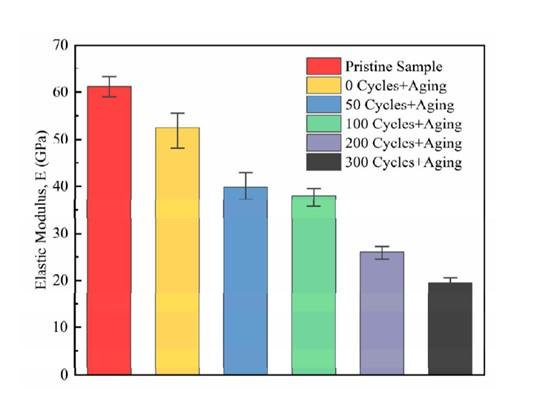
Solder joints in electronic packaging frequently encounter failure from cyclic thermo-mechanical loading, especially in demanding environments like automotive engine compartments or industrial power plants. These components undergo both thermal cycling and mechanical cycling due to vibrations, along with thermal stresses from frequent power switching. As a result, the solder materials attaching these electronic components endure cyclic stresses and strains from temperature fluctuations, assembly material mismatches, and dynamic loadings. Recent studies by our group have explored the mechanical behavior and property evolution of lead-free solder alloys due to either isothermal aging or isothermal mechanical cycling. Isothermal aging primarily induces microstructure changes, while mechanical cycling involves both microstructural evolution and damage accumulation, such as microcrack growth. However, no prior investigations have explored the combined effects of isothermal aging and mechanical cycling on the mechanical properties and microstructural evolution of lead-free solder alloys. In this study, uniaxial samples of SAC305 lead-free solder alloy underwent solidification in glass tubes following a controlled reflow profile. The samples experienced mechanical cycling under strain control for various durations, followed by aging for 20 days at 125°C. Nanoindentation testing was then conducted to evaluate mechanical properties, revealing significant deteriorations, especially in samples cycled 300 times followed by aging. Optical microscopy confirmed microstructural coarsening due to the combined effects of mechanical cycling and aging. This research sheds light on the intricate interactions influencing the degradation of elastic modulus, hardness, and creep properties in solder alloys subjected to both aging and mechanical cycling.
In the domains of defense and aerospace, electronic components endure intense G shock and thermo-mechanical loads, necessitating paramount reliability in these demanding environments. To enhance the dependability of printed circuit boards (PCBs) in such applications, potting is employed; however, interfacial delamination at the potting/ PCB junction remains a predominant failure mode. Over time, the interfacial characteristics of this junction evolve due to prolonged exposure to elevated temperatures, prompting an investigation into the ramifications of such exposure on interface properties. This study concentrates on scrutinizing the transformation of interfacial properties at the potting/PCB interface in response to high-temperature exposure and the implementation of restraint mechanisms.
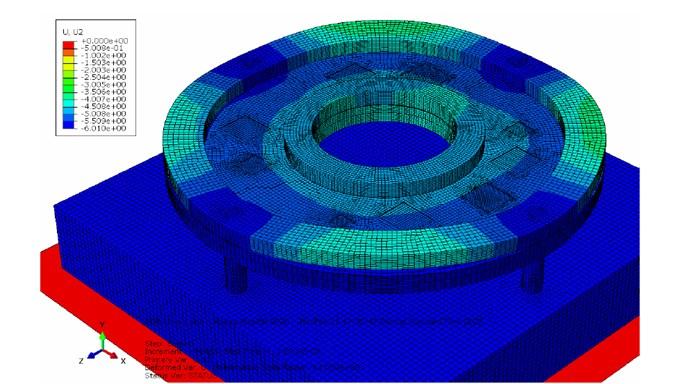
A circular PCB featuring fine-pitch electronic packages and multilayer ceramic chip capacitors is assembled for experimentation. Bimaterial specimens of potting/PCB are fabricated, subjected to fourpoint bend loading, and examined to determine interfacial fracture toughness properties and cohesive zone parameters. Additionally, potted circular PCBs with various potting materials undergo testing for both pristine conditions and 90-day aging at 150°C. Shock levels of 10,000g and 25,000g are applied to assess the efficacy of potting compounds on the reliability of solder joints in fine-pitch electronics and large discrete components. This investigation delves into a facet of potting electronics not previously explored, potentially influencing manufacturers. Validated cohesive zone parameters are utilized to devise a predictive finite element high G shock model for circular board assemblies. The experimental conditions are corroborated with the model's output, offering a comprehensive understanding of the potting/PCB interface's interfacial properties. The study also contemplates the prospective application of the predictive model in designing electronic components for harsh environments, providing valuable insights for manufacturers in this specialized field.
AUERI NEWS Spring 2024 4
Figure: Optical microscopy of pristine, and 0, 50, 100, 200, 300 mechanically cycled plus aging samples
Figure: Elastic modulus variations of different samples
Figure: Out-of-Displacement of the Drop Assembly at 25,000G Shock Level at Time Step 0.4ms
Research Highlights
EFFECTS OF GRAIN TO SAMPLE VOLUME RATIO ON THE DEFORMATION BEHAVIOR OF POLYCRYSTAL SAC SAMPLES SUBJECTED TO SHEAR LOADS
As electronic components continuously shrink in size, understanding the size effects on the behavior of solder materials in electronic structural components becomes crucial. While extensive studies describe the deformation behavior of bulk SAC (Sn-Ag-Cu) alloys, the impact of size effects on solder deformation in small-scale joints is often overlooked. The study emphasizes the significance of obtaining a constitutive model that accounts for material behavior at smaller scales, particularly considering the increasing miniaturization of solder joints in high-density packaging.
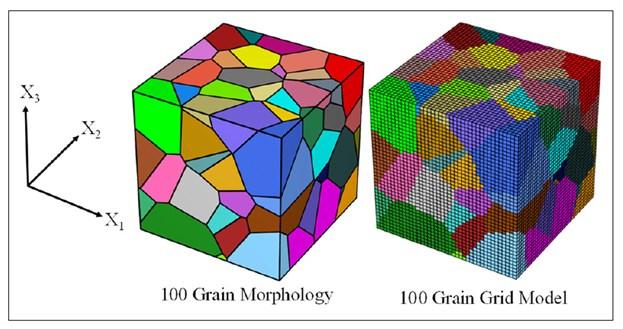
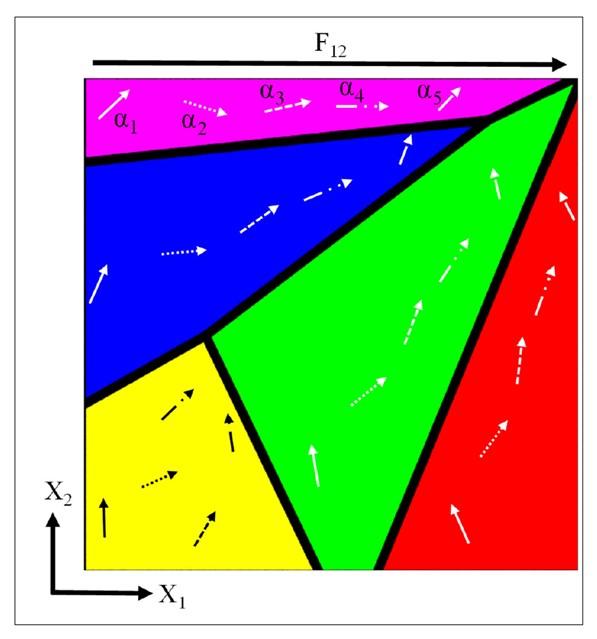
SAC alloys, comprising more than 95% weight percentage of β-Sn, are extensively used for solder interconnects in microelectronic packaging. The anisotropic nature of β-Sn in terms of elastic modulus and coefficient of thermal expansion, along with its crystalline structure, influences plastic deformation through various atomic planes and slip systems. Crystal plasticity theory, implemented through a DAMASK code, is employed to elucidate the mesoscale deformation behavior of polycrystalline beta-tin samples. The study utilizes Voronoi tessellation to generate polycrystalline models with random grain orientations and explores shear simulations for different grain sizes. The findings reveal that larger grain sizes exhibit isotropic deformation, while smaller grain sizes display anisotropic behavior under shear loads. This investigation sheds light on the critical grain size to sample size ratio where isotropic behavior transitions to anisotropic behavior during shear loading.
COMPARATIVE FINITE ELEMENT ANALYSES OF THE THERMAL CYCLING PERFORMANCES OF BGA PACKAGES WITH SAC, LTS,AND MIXED SAC-LTS SOLDER JOINTS
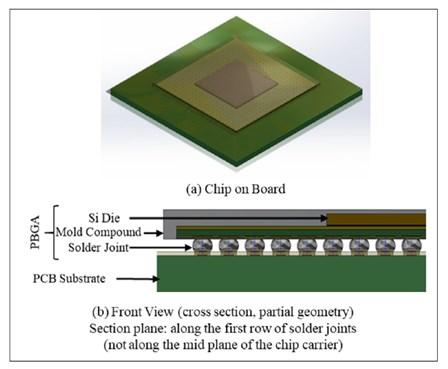
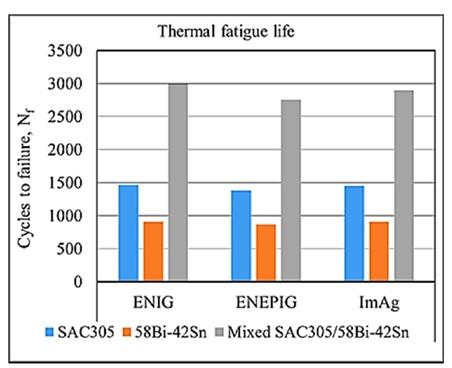
Understanding the mechanical behavior and reliability of lead-free microelectronic assemblies is crucial, especially for low-melting -point solders like Sn-Bi subjected to thermal cycling. While the industry often relies on the standard SAC (Sn-Ag-Cu) soldering alloy, the increasing use of Sn-Bi solder, with its lower reflow temperature and reduced warpage, emphasizes the need for mechanical characterization. The 42%Sn-58%Bi solder (LTS) is commonly employed in mounting ball grid array (BGA) packages, creating mixed solder joints with SAC solder balls during reflow. Mechanical characterization of these mixed joints under various thermal cycling conditions is vital for predicting electronic package reliability. The study employs quarter-symmetry 3D models representing a plastic BGA package with eutectic Sn-Bi, mixed Sn-Bi/SAC305, and homogeneous SAC305 solder joints. Utilizing Anand parameter coefficients, the models simulate the nonlinear mechanical behaviors of both solders. Thermal cycling between -40 to 125 ℃ is applied to predict thermal fatigue life (TFL) for each solder joint configuration under different PCB surface finishes. The results indicate that the mixed Sn-Bi/SAC joint exhibits the highest TFL, followed by SAC305, and eutectic Sn-Bi (58Bi-42Sn) joints. Despite failure occurring at the top SMD end, significant plastic work accumulation at the SAC/SnBi interface suggests a nuanced failure mechanism. This study not only estimates TFL but also provides insights into the failure mechanisms of mixed LTS and SAC solder joint configurations under diverse thermal cycling conditions and PCB surface finishes.
AUERI NEWS Spring 2024 5
Figure: (a)PBGA chip carrier on board and (b) cross section of the partial geometry
Figure: Polycrystal Calibration Model
Figure: Two Dimensional 5-Grain Polycrystal Domain with 5 Slip Systems
Figure: Thermal fatigue life (TFL) of the solder interconnects of 10mm PBGA assembly, with different PCB surface finishes
Research Highlights
SURFACE-MOUNT COMPONENT ATTACHMENT ON AEROSOL JET PRINTED SUSTAINABLE WATER-BASE SILVER NANOPARTICLE INK

Component attached and notations of each component.
Additive methods are preferred over processes that need hard tooling due to rampup speed and soft tooling. Increasing demand for the miniaturization of electronics has accelerated the development of flexible electronics technology. Flexible electronic architectures have gained traction in products for various end applications. The prior generation of additive processes used volatile organic solvent-based inks to fabricate printed circuits. Increased emphasis on environmental, social, and governmental factors has called attention to the development of sustainable products. Recent material development has seen the emergence of water-based inks with low-impact environmental waste. Sustainable inks use water as the carrier medium in place of volatile solvents. Owing to the recent introduction of these formulations, less is known about the ability to form functional circuits with sustainable inks or their performance relative to the incumbent non-sustainable volatile organic solvent-based inks. In this paper, Components were attached to additively printed water-based ink circuits fabricated using an aerosol jet. Interconnect methods have been studied, including – electrically conductive adhesives. The component performance of RLC has been studied as a function of operating frequency and compared with the rated values. Mechanical performance has been studied using the shear load to failure and electron dispersive x-ray spectroscopy. The electrical performance has been correlated with the mechanical performance and optical methods have also been used to characterize the results of the printed trace.
the carrier medium in place of volatile solvents. Owing to the recent introduction of these formulations, less is known about the ability to form functional circuits with sustainable inks or their performance relative to the incumbent non-sustainable volatile organic solventbased inks. In this study, the performance of sustainable water-based solvent inks has been studied and compared with that of volatile solvent inks. The Aerosol Jet printer was used in this work to print and develop process parameters for investigation, including ultrasonic atomizer mass flow rate, sheath flow control, and stage speed, with a water-based sustainable silver nanoparticle ink. Electrical and mechanical properties were tested at various sintering temperatures and times, including resistance and shear load to failure. The results show that the electrical properties are improved by varying these parameters, and optical methods have also been used to characterize the results of the printed trace and fitted regression models that have been developed for process optimization.
INVESTIGATION OF PERFORMANCE AND REPAIRABILITY OF ADDITIVELY PRINTED FUNCTIONAL CIRCUITS WITH WATER-BASED SILVER INK ON AN INKJET PLATFORM
PROCESS PERFORMANCE INTERACTIONS FOR ADDITIVELY PRINTED WATER-BASED NAOPARTICLE SUSTAINABLE SILVER-INK WITH ULTRASONIC ATOMIZATION ONAEROSOLJET PRINTER
Environmental, social, and governmental factors have received increased attention in the design and manufacture of electronics. Additive printed electronics processes reduce the waste streams from electronics manufacturing by eliminating plate and etch processes, which involve the selective removal of masks and conductive copper to fabricate circuits. In addition, the transition to additive print processes also allows for the elimination of hard tooling, with design changes limited to those that can be implemented quickly, reducing the time involved with design iterations. The earlier versions of additive inks involved using volatile solvents as carrier mediums for nanoparticle inks. Sustainable inks use water as
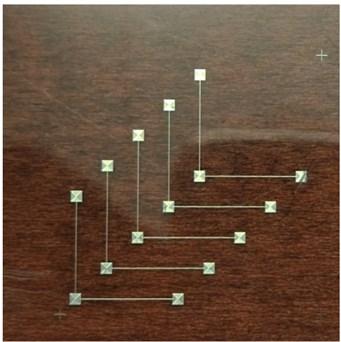
Additive printing techniques, particularly inkjet printing, have gained significant traction in the manufacturing of electronic circuits due to their cost-effective and time-efficient nature. Inkjet printing offers several advantages over traditional methods like screen printing, including printing fine lines and utilizing a broader range of conductive inks. Water-based silver ink is an environmentally friendly and highly conductive option. The water-based formulation eliminates the need for toxic solvents, ensuring a safer manufacturing and disposal process. This research focuses on evaluating the performance of functional circuits additively printed with water-based silver ink using an inkjet platform. The circuits were printed onto a flexible Polyimide substrate using an inkjet printer with a piezoelectric printhead. Functional circuits comprising High-Pass and Low-Pass Signal Filters were printed using water-based silver ink,with discrete commercialoff-the-shelf (COTS) components attached. The frequency response of these circuits was measured and compared to simulated responses to determine any deviations in electrical performance. The viability of repairing printed circuits was studied by intentionally detaching and reattaching the components. The repaired circuits were then compared to the pristine circuits in terms of their electrical performance.
AUERI NEWS Spring 2024 6
Figure:
Figure: Printed trace on substrate
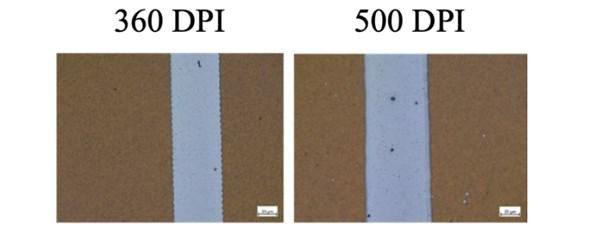
Figure: Optical microscope pictures of lines printed at 360 dpi (left) and 500 dpi (right)
Research Highlights
DEVELOPMENT AND RELIABILITY EVALUATION OF ADDITIVELY PRINTED BIOSENSING DEVICE FOR WEARABLEAPPLICATIONS IN HARSH ENVIRONMENT
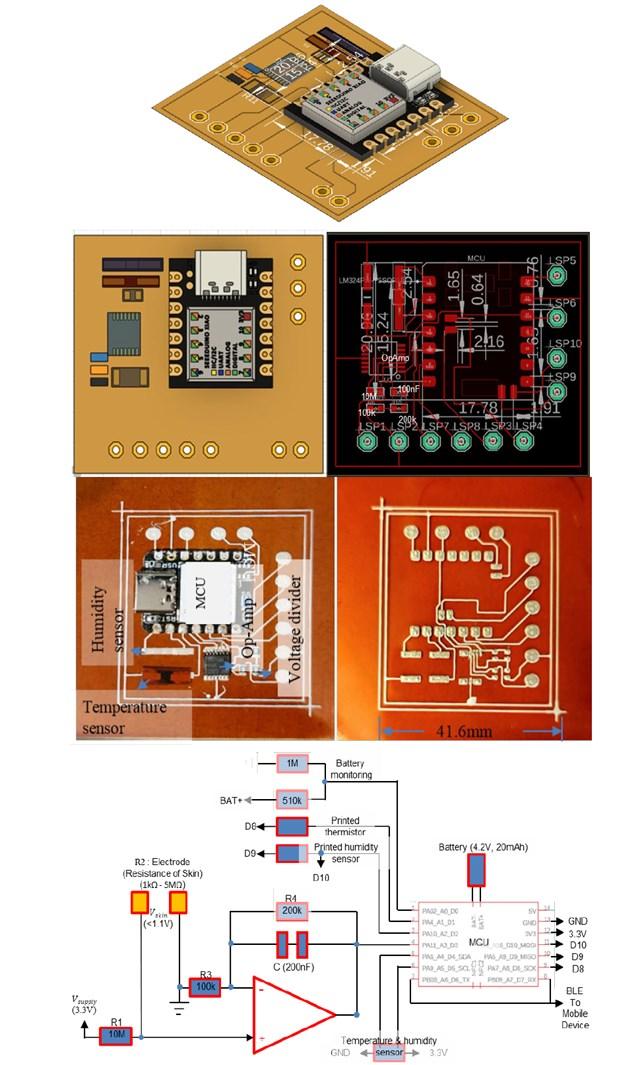
Additive technologies have become increasingly favored for producing printed circuit boards, eliminating the need for expensive tooling like photomasks or etching containers. The reliance on software-based design and manufacturing not only allows for greater production flexibility but also facilitates quicker tool adjustments and design developments. In contrast to traditional methods that involve subtracting unwanted material from a copper-clad board, additive printing methods can be applied to various fabrics, vehicles, and polymers with different surfaces and forms. This adaptability enables the creation of PCBs designed to fit diverse shapes and surfaces, fostering creativity and versatility in applications. This flexibility extends to applications like wearable biosensors, incorporating an electrocardiography (ECG) sensor, electrodermal activity (EDA) sensor, pulse-oximetric sensor, body temperature sensor, and humidity sensor. These biosensors can monitor various aspects of human health, providing valuable data for medical diagnosis, fitness tracking, and stress management. Despite the potential of additively printed wearable biosensors, challenges related to reliability and durability exist, particularly when subjected to flexing forces and environmental conditions. Addressing stability concerns requires advancements in printing techniques, process recipes, and encapsulation materials.
In this research study , the direct-write (D-write) printing approach was employed to create an integrated wearable biosensor patch. The biosensor features circuits, encapsulations, body temperature sensor, humidity sensor, pulse-oximetric sensor, and electrodermal activity sensor. Electrically conductive adhesive (ECA) pads were also printed to attach components like a flexible battery, microcontroller, and wireless module. The developed firmware and data acquisition software allow the biosensor to collect and transmit biosignals to mobile devices. The biosensor underwent rigorous testing under varying conditions, demonstrating accuracy, repeatability, stability, sensitivity, linearity, response time, and hysteresis effects for each sensor. The study contributes to the advancement of sustainable additive manufacturing for healthcare applications, showcasing a reliable and flexible integrated wearable biosensor.
ADDITIVE PRINTING OF WEARABLE EDA SENSORS ON IN -MOLD ELECTRONICS ONAUTOMOTIVE PLATFORM
Additive manufacturing techniques revolutionize the production of printed circuit boards by eliminating the need for expensive equipment like etching vessels and photomasks. Software-driven design not only ensures production flexibility but also facilitates rapid tool modifications and design enhancements. In contrast to traditional methods requiring complex processes, additive printing methods offer versatility by working on various substrates, vehicles, and polymers with diverse geometries and textures. This newfound flexibility sparks creativity among engineers, enabling the design of innovative applications such as wearable biosensors for monitoring diverse aspects of human health and stress, like the electrodermal activity (EDA) sensor. However, concerns arise regarding the stability of current wearable biosensor technology under flexural strain and harsh environmental conditions.
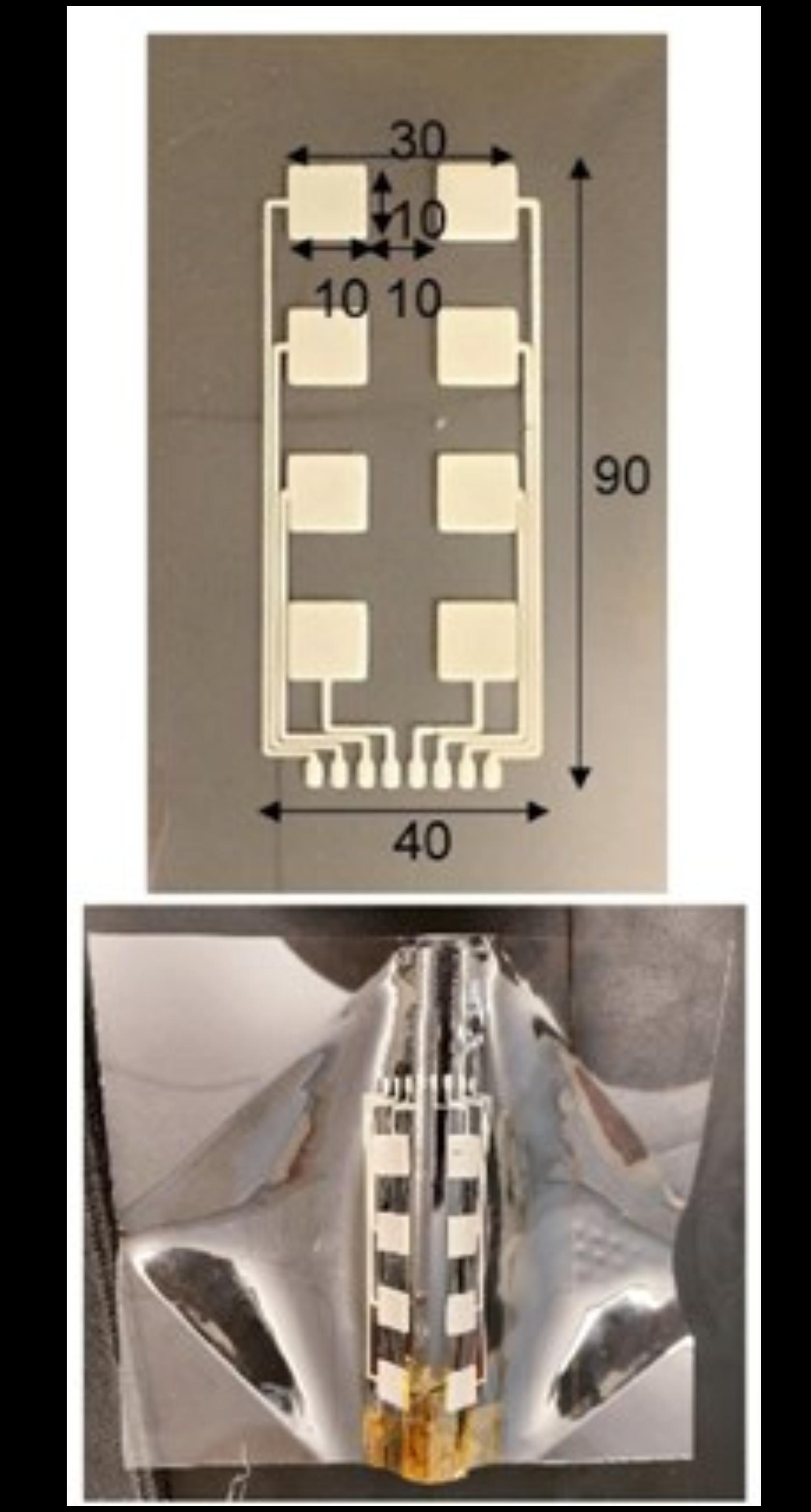
The pictures of additively fabricated thermoformed electrode and mold of part of steering wheel.
To address these challenges, this research study introduces additive fabrication methods for creating printed circuit boards (PCBs) for wearable biosensors without the need for costly equipment or intricate processes. Leveraging the benefits of software-driven design, the focus is on the EDAsensor, designed to measure skin conductance for driver monitoring. Using a direct-write printing technique with an nScrypt printer, the EDA sensor circuits are printed on thermoformable substrates. These substrates, moldable by heat and pressure, enable the PCBs to take various shapes for reliability testing. The biosensor's performance is rigorously evaluated under different harsh conditions, including thermoformed shapes, temperature, humidity, and human body status, mirroring real-world driving scenarios. The results demonstrate that the additive PCB-based EDA sensor successfully measures skin conductance with acceptable error margins, showcasing mechanical robustness and reliability in diverse conditions. In conclusion, the developed EDAsensor utilizing additive fabrication techniques represents a milestone in monitoring driver stress levels with high reliability and flexibility.
AUERI NEWS Spring 2024 7
Figure:
Figure: The pictures of additively fabricated integrated biosensor patch and its schematics
Research Highlights
COMPARATIVE STUDY OF SMD COMPONENTS ATTACHED USING ELECTRICALLY CONDUCTIVE ADHESIVE AND MAGNETICALLY ORIENTED ANISOTROPIC CONDUCTIVE ADHESIVE ON INKJET PRINTED STRUCTURES
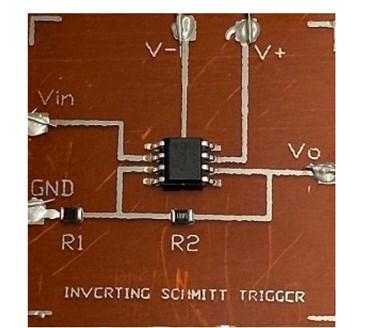
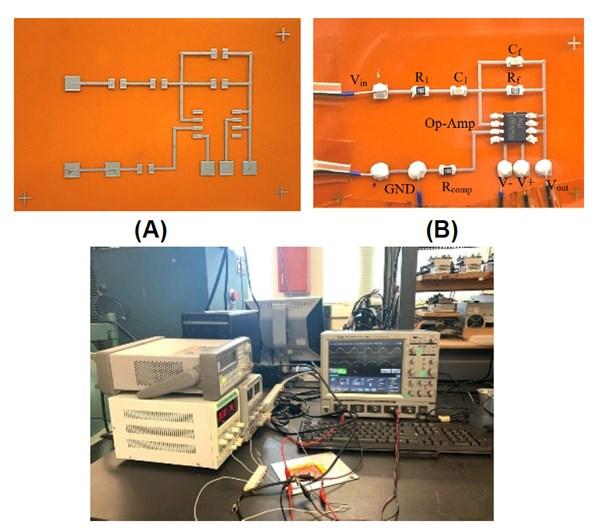
Due to its high resolution and ability to deposit a variety of functional materials, including conductive inks, insulators, and dielectrics, inkjet printing is a viable method for constructing such devices. In this study, the authors sought to examine the electrical and mechanical performance of surface-mounted device (SMD) components mounted on inkjet-printed circuits using two adhesives: Electrically Conductive Adhesive (ECA) and Magnetically Oriented Anisotropic Conductive Adhesive (MOACA). The study is carried out this investigation in two phases. In the initial phase, SMD components such as resistors, inductors, and capacitors were mounted using ECAand MOACAon conductive traces with pads, and their electrical performance was compared to their rated values. In the second phase, the behavior of inkjet cuits was studied, including Non-Inverting Amplifier Circuit and Schmitt Trigger Circuit. These functional circuits were constructed on polyimide substrates. The researchers utilized silver nanoparticle ink. Evaluation of the electrical and mechanical performance of the circuits was done. Overall, this study gives invaluable insight into inkjet printed circuits' electrical and mechanical behavior, particularly in the context of attached components.
LINE WIDTH AND ELECTRICAL PERFORMANCE PREDICTION FOR INKJET PRINTED CONDUCTORS-RESISTORS INDUCTORS-CAPACITORS
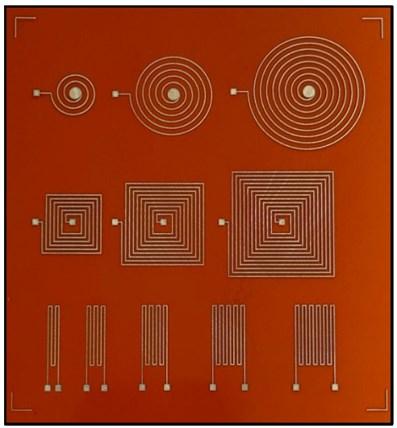
Inkjet printing enables the high production of devices on a variety of substrates while offering an increased level of precision and repeatability. There is a need for closed-loop control over the printing process to achieve geometrical accuracy and consistent electrical performance of printed circuits and components. A sophisticated closed trol process can be achieved by establishing a relationship between printer input parameters and printed objects rical and electrical output. In this study, the impact of various printer settings on the electrical performance and geometrical accuracy of printed circuits and components has been studied. Specifically, the effect of print resolution, droplet size, and the number of copies on the electrical performance of printed resistors, planar inductors, and capacitors have been investigated. The printing was done using Particle-free silver ink on a Polyimide substrate. The statistical model developed from experimental data provides a means of achieving closed loop control over the printing process.
REPARABILITY TEST OF AEROSOL-JET PRINTED SUSTAINABLE SILVER INK CIRCUIT
The earlier generation of additive printable inks was based on volatile organic solvent carrier fluids. Increased awareness of the environmental impact of electronic waste has resulted in the emergence of environmentally friendly water-based inks with low-impact waste. The repairability of additively printed circuits can be used to reduce electronic waste and enable life extensions of deployed electronics through repair and replacement. However, the repairability potential, processes, and impact on reliability are relatively unexplored for new sustainable materials. This study consists of a thorough study of component attachment and the reparability of the components on performance and reliability. Repair procedures have been pursued on circuits printed with sustainable conductive ink on an aerosol jet printer (AJP). Adhesives are printed on the pads at the location where the component is to be attached using a direct-write technique that can print highly viscous materials such as ECA. This procedure entails attaching a component to a flexible printed circuit, measuring the output response, removing the attached component from the circuit, replacing it with a new component of the same rated value, measuring
AUERI NEWS Spring 2024 8
Figure: Printed resistors and inductors
Figure: Printed inverting schmitt trigger with components attached
Figure: Picture of differentiator circuit (a) printed circuit, (b) printed circuit with attached components, (c) experimental setup
Research Highlights
SUSTAINABLE SILVER INK FLEXIBLE CIRCUITS FABRICATION USING DIRECT WRITE ADDITIVE MANUFACTURING TECHNIQUES
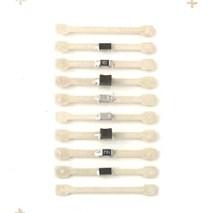
Conventional inorganic inks used to fabricate additive circuits pose a significant environmental challenge due to their toxic nature and non-biodegradable properties. There is a need for a more sustainable alternative for the realization of additively printed electronics. Water-based inks, made from renewable and biodegradable materials, have emerged as a promising solution. The study focuses on examining process performance interactions for direct write printed circuits and the attachment of surface-mount components. The authors investigate the ability of direct-write methods to create functional circuits while also exploring the effects of process parameters on the manufactured properties. Process recipes have been developed on a waterbased sustainable silver ink applied to two different substrates (PET and Polyimide), and the impact of varying print parameters was compared among the substrates. The findings reveal the influence of print parameters on the mechanical and electrical properties of the printed traces, as well as demonstrate the additive printing of circuits and the attachment of surface-mount components using the optimal process parameters. Furthermore, the performance of a printed Active Lowpass Filter was evaluated using LTspice software. This research aims to demonstrate the viability of direct-write technology as a sustainable and viable alternative for the manufacture of traditional electronic circuits by successfully attaching surfacemount components to printed pads.
IMPACT OF COMPONENT INTERCONNECTIVITY ON MECHANICALAND ELECTRICAL PROPERTIES OF FLEXIBLE HYBRID ELECTRONICS WITH PRINTED WATER-BASED SILVER INK CIRCUITS
the bonding materials. Electrically conducted adhesive (ECA) results were compared to those of Low Temperature Solder (LTS). The interconnectivity of the attached components was evaluated by measuring their rating values before and after attachment. The findings of this study provide insights into the performance of different bonding materials for component attachment in FHE. Such insights can aid in the development of reliable and efficient interconnectivity methods for FHE, which can contribute to the widespread adoption of FHE in various industries.
EFFECT OF SURFACE TREATMENT ON THE FATIGUE
CRACK
PROPAGATION
IN A TIM/COPPER INTERFACE SUBJECTED TO HIGH-TEMPERATURE LONG-TERM EXPOSURE
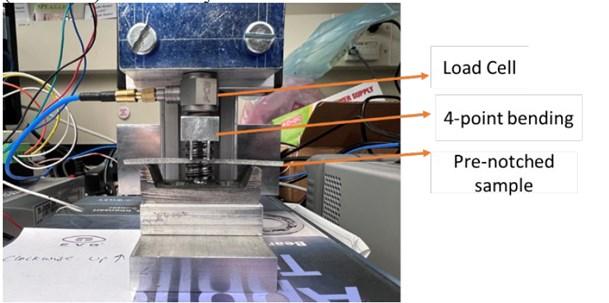
As electronic devices continue to shrink, effective heat dissipation becomes a critical concern, impacting device reliability. When solid surfaces come into contact, the limited contact area, often only 1% to 2%, results in elevated contact resistance, approximately 100mm2/ kW, between bare silicon-to-silicon contacts. To address this issue, thermal interface materials are employed to reduce contact resistance and enhance heat dissipation.Microelectronic packages incorporate multiple bi-material interfaces, influencing device design and reliability. Dynamic mechanical analysis, such as a 4-point bending test, enables the study of fatigue failure in bi-layer materials. Cyclic loading stress is applied to characterize material fatigue and failure, allowing control over both strain and stress.
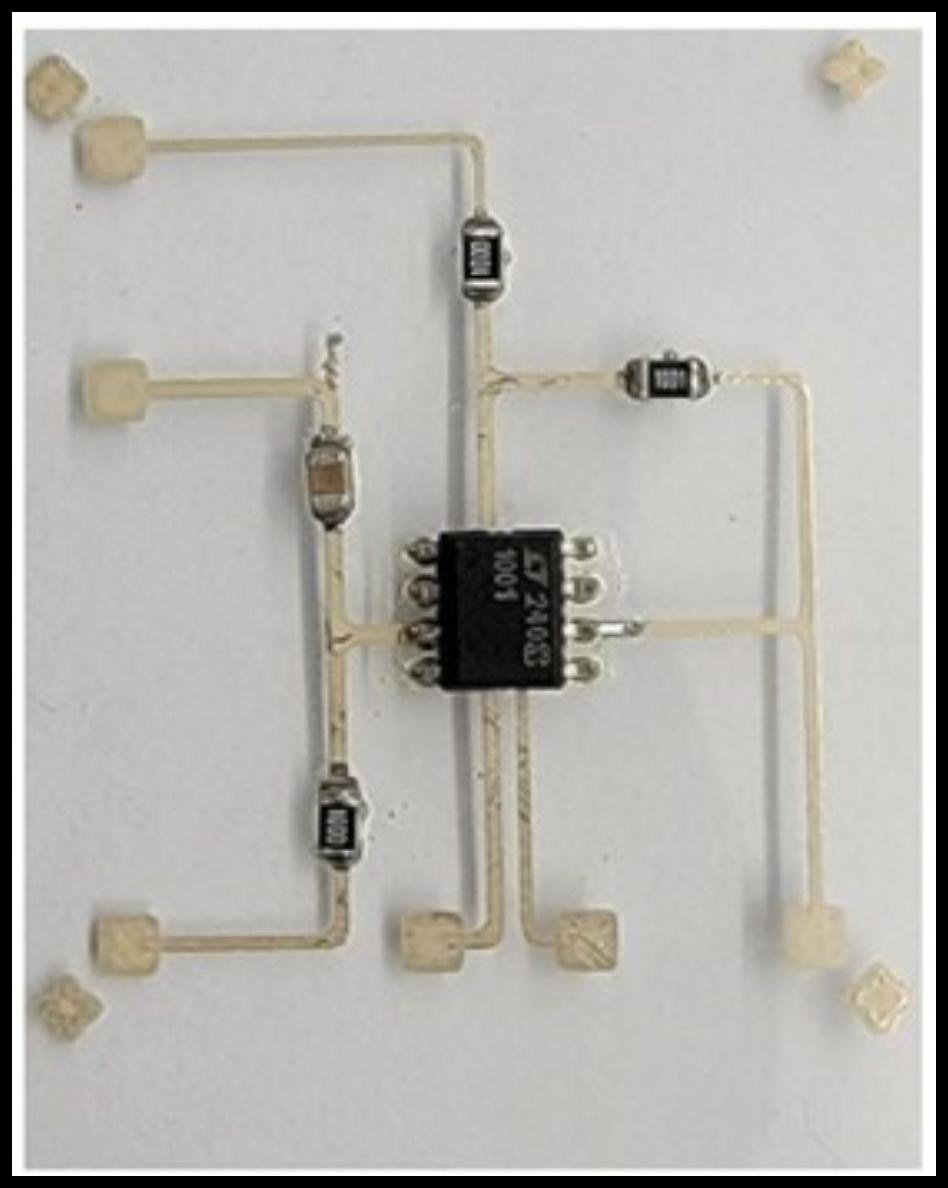
Flexible Hybrid Electronics (FHE) have the potential to revolutionize the electronics industry by providing sustainable and efficient devices. However, the reliable interconnectivity between printed traces and surface-mount devices (SMD) remains a critical challenge for FHE. There is a need for more research on the use of printed water-based silver ink traces and bonding materials for component attachment in FHE, as the literature on this subject is limited. This study was conducted to compare the effects of different bonding materials on component attachment. The bonding materials investigated were electrically conductive adhesive (ECA) and low-temperature solder (LTS). The study used the direct write method to print silver pads, which were then used to attach components such as resistors, inductors, and capacitors using
As semiconductor devices increasingly operate at higher temperatures, reaching 125 – 200°C in high-power density electronics, there is a need for understanding how electronic components endure prolonged exposure to such conditions. This study assesses the reliability and stability of grounded lid Flip-Chip Ball Grid Array (FCBGA) packages under high-temperature environments. It investigates the low cycle fatigue properties of Thermal Interface Material (TIM) and Copper bi-material interfaces, examining adhesion strength, fracture toughness, and stress intensity factors. The impact of aging time, plasma cleaning power, aging temperatures, and mode-mixity on fatigue crack propagation is explored through the application of Digital Image Correlation (DIC) technology. Paris’ law coefficients and exponents are found to be dependent on mode-mixity, indicating that certain fatigue properties can be derived from monotonic fracture behavior in bi-material interfaces.
AUERI NEWS Spring 2024 9
Figure: Printed Circuit with Attached Components
Figure: Image After Printing ECA with component attached.
Figure: Fatigue Setup
Research Highlights
COMPARISON OF MACHINE LEARNING APPROACHES FOR CORRELATING PRINT PROCESS PARAMETERS TO REALIZED PHYSICAL AND ELECTRICAL CHARACTERISTICS OF PRINTED ELECTRONICS USING INKJET PLATFORM
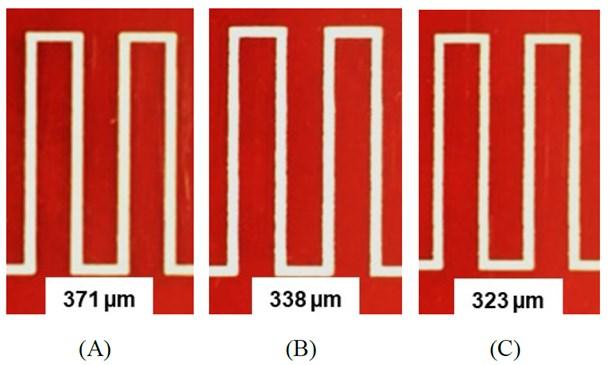
In the last decade, printed electronics has gained significant research attention, making inroads into consumer electronics. The key advantage of additive printed electronics lies in its ability to produce lightweight and flexible components at a lower cost than traditional methods. Various printing techniques, conductive inks, dielectrics, solder pastes, and electrically conductive adhesives have been explored to find optimal solutions. However, a common challenge is the disparity between designed and actualized geometrical and electrical characteristics of printed traces, affecting overall circuit performance. This study focuses on developing a closed-loop control process for adjusting process parameters to achieve desired electrical and physical trace characteristics. Using an inkjet printer and particle-free silver ink, the study establishes a relationship between process parameters and line geometry. Different machine learning methods, including nonlinear regression and Gaussian process regression, are employed and optimized to create a GUI for a closed-loop control algorithm, providing corrective print parameters based on desired, realized, and current parameters.
EVALUATION OF ADDITIVE CIRCUITS PRINTED WITH SUSTAINABLE AQUEOUS SILVER INKS USING AEROSOL JET PRINTING AND GRAVURE OFFSET PRINTING AND INVESTIGATION OF CIRCUIT REPAIRABILITY
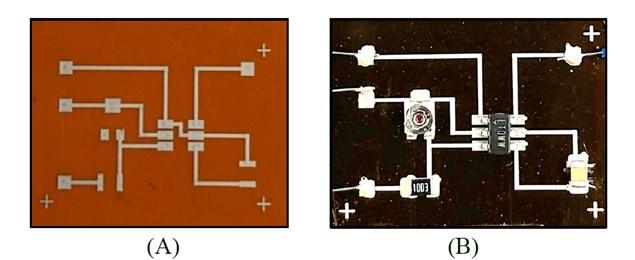
Additive printed electronics, in particular, has been a rapidly advancing field, with applications that span from smart packaging to energy harvesting systems to healthcare devices to intelligent textiles. The basic building block of any flexible circuit created by these technologies is conductive ink. This ink typically comprises metal nanoparticles and several solvents. However, many of the solvents used in these inks are toxic substances or include volatile organic compounds (VOCs) that have a variety of negative effects on the environment and human health, including air pollution, smog, respiratory problems, health risks, and reduced air quality. Consequently, there is a strong push toward developing sustainable materials for use in products, including ink formulations with fewer toxic solvents. In this study, researchers investigate the use of two printing techniques, aerosol jet printing and gravure offset printing, to print full-wave rectifiers (AC to DC conversion) and Voltage bridge oscillators (DC to AC conversion) using commercially available aqueous silver ink. The performance of the additively printed circuits is compared to both theoreti-
cal values and to the same circuits printed using non-aqueous inks. Additionally, a switch-mode battery charging circuit has also been printed with a sustainable ink and its performance has been investigated.
POLARIZATION CURVES, PACKAGE-LEVEL MULTIPHYS-
ICS SIMULATION OF CU85AL15 AND CU94AL6 WB CORROSION FOR AUTOMOTIVE AND RUGGED ENVIRONMENTAPPLICATIONS
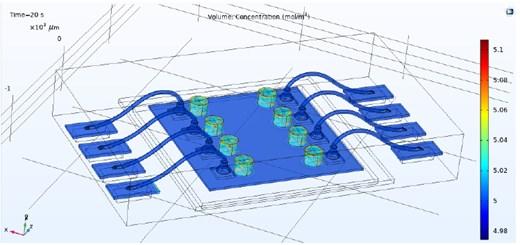
Copper wire bonding has increasingly being preferred in place of the more expensive gold wire for chip-to-substrate or chip-to lead frame interconnects. The copper wire has a higher propensity for corrosion, higher hardness, narrow process window, thinner intermetallics and a higher propensity for cratering owing to a highe splash. Electronics in automotive underhood applications may be routinely expected to function reliability for 10-years, 100K miles. There is lack of foundational data for the assessment of Cu-Al wirebond reliability under humidity and contaminants including Bromine and Chlorine. Exposure to high temperature has been shown to appearance of two new intermetallics Cu85Al15 and Cu94Al6 never studied before for their propensity for corrosion. In this study, the Cu85Al15 and Cu94Al6 intermetallics have been methodically fabricated using an arc-melter. Polarization curves of the intermetallics have been measured versus operating temperature, annealing duration at 250C, and changes in the pH. For each use-case, the effect of open circuit corrosion current density, open circuit corrosion potential, anodic and cathodic slopes have been quantified. Corrosion rate has been computed for both the intermetallics. The experimental data has been used to formulate a Multiphysics model for the prediction of propensity for corrosion using the Butler-Volmer and Nernst Planck Equations.
AUERI NEWS Spring 2024 10
Figure: Print Images of Nonlinear Regression Validation Samples for all Three Steps (300 μm Design Line Width)
Figure: Silver conductible layer of the voltage controlled oscillator circuit
Figure: Volume Concentration of Chlorine Released from Cylindrical Form of Functional Group at Time=20s
Research Highlights
EVALUATION OF THERMOFORMABILITY OF ADDITIVELY PRINTED CIRCUITS PRINTED USING GRAVURE OFFSET PRINTING TECHNIQUE AND INVESTIGATION OF IN-MOLD ELECTRONICCIRCUITS
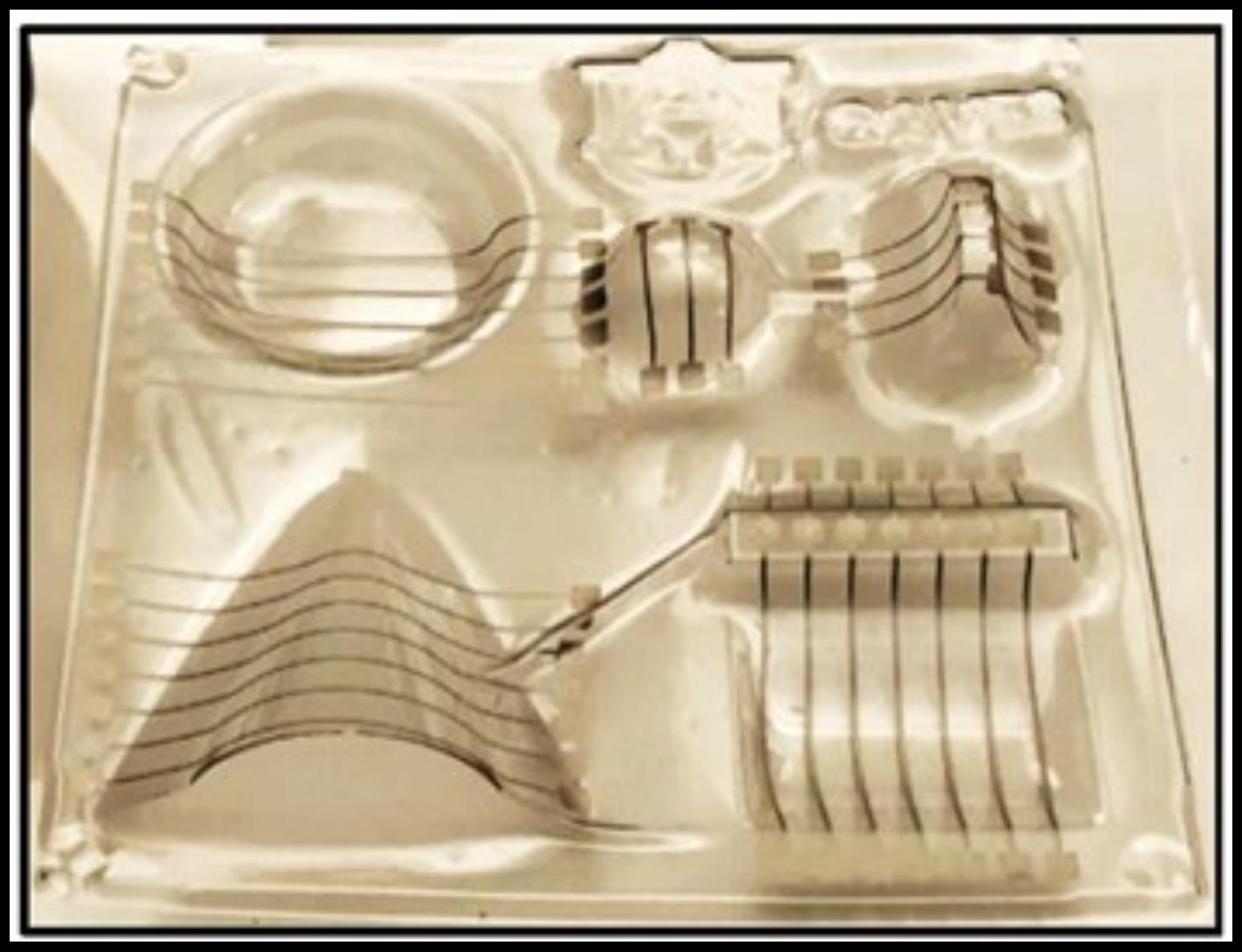
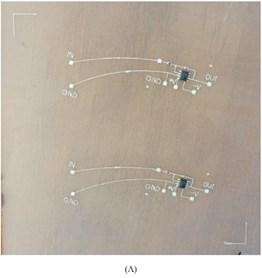
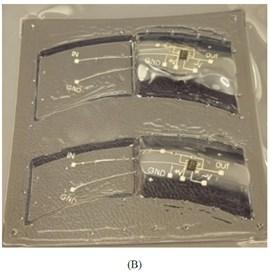
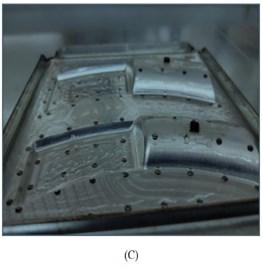
Throughout the past decade, the field of printed electronics has gained increased research impetus and has started to make entryways into the consumer electronics product market. The applications of additive printed electronics are numerous and range from healthcare devices and smart packaging to energy harvesting systems and intelligent textiles. Another novel application area for printed electronics is in-mold electronics (IME) which is a process that involves the integration of printed electronic circuits into injection-molded parts. In this process, electronic circuits are printed onto a thin, flexible substrate, such as polyethylene terephthalate glycol (PETG) or polycarbonate (PC), which is then thermoformed using a mold. The thermoformed sample is then overmolded with another thermoplastic which results is a single, integrated part that combines the functionality of the electronic circuit with the mechanical properties of the plastic part. Using IMEs offers several benefits such as weight and bulk minimization along with maintaining ergonomic design, which are important concerns in automotive design. In this study, additively printed lines have been printed using gravure offset printing technique on different substrates such as PETG and PC have been subjected to vacuum thermoforming wherein the substrates are heated to their heat deflection temperature and vacuum formed on an aluminum mold. The change in resistance of the lines pre- and postthermoforming, as well as the effect of degree of material stretching of the substrate with different thermoforming parameters such as thermoforming temperature and thermoforming time has been studied. Finally, a component attachment study has been conducted for thermoformed circuits with a functional thermoformed full wave rectifier circuit demonstrator.
REPAIRABILITY OF SMDS ON 3D PRINTED CIRCUITRY FOR
SUSTAINABLE ELECTRONICS UTILIZING DIRECT WRITE TECHNIQUE
Sustainable conductive ink for 3D-printed flexible electronics is needed to enable lower-impact waste print processes. The ability to undertake reparability is an additional method to achieve sustainable products through the extension of electronic components’ lifespan and reduced e-waste. However, repairability studies are scarce for sustainable, flexible electronics in the literature This study assessed the repairability potential of Surface Mount Devices (SMD) on 3D-printed full wave rectifier circuits for sustainable flexible electronics. Full wave rectifiers are commonly used in power supplies, battery chargers, and other applications requiring a steady DC voltage. The direct-write printing technique used stretchable silver ink and inter-
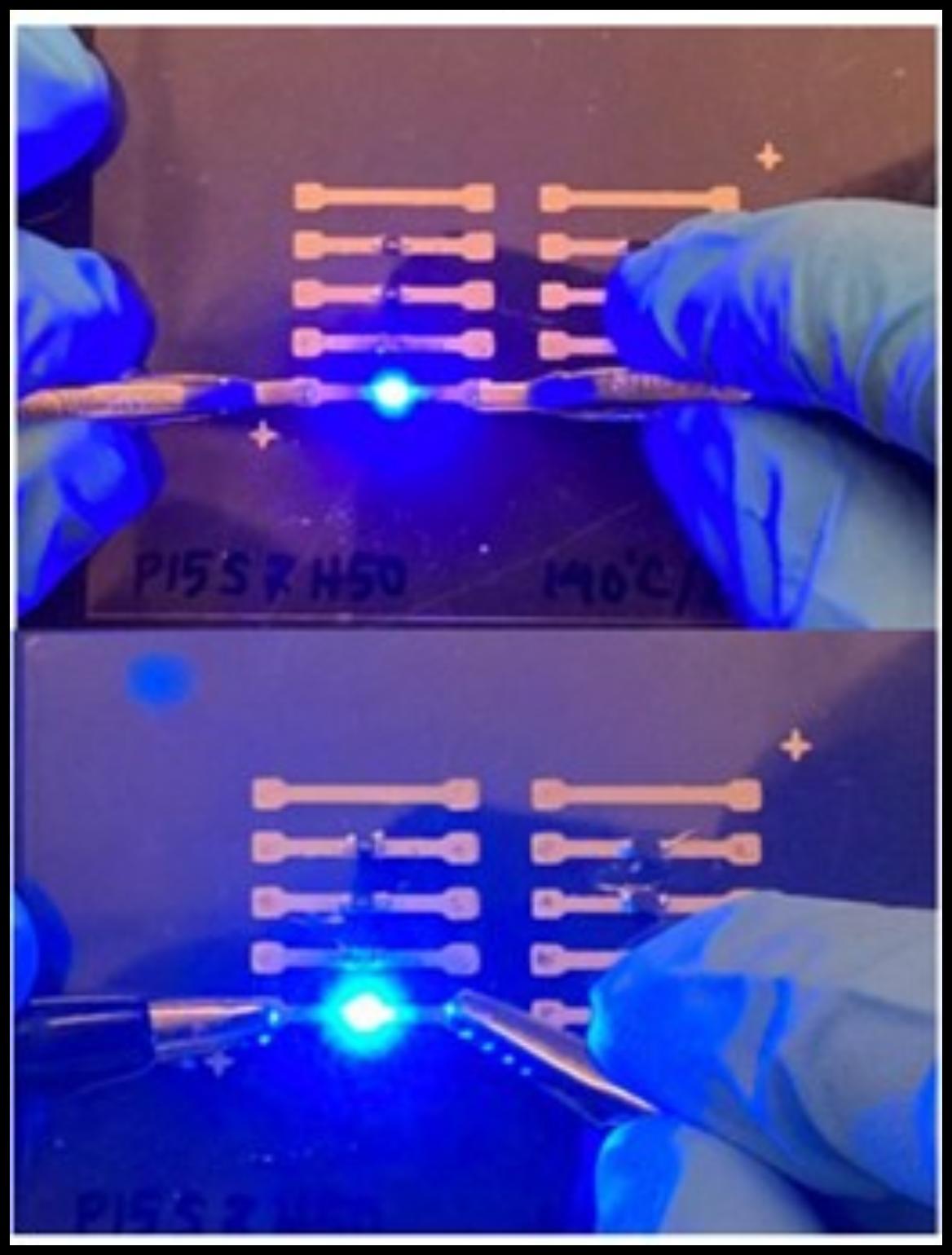
connects composed of electrically conductive adhesive (ECA) for component attachment to create conductive traces. The circuit’s electrical characteristics are assessed using a highfrequency impedance analyzer, which analyzes the circuit’s resistance, capacitance, and inductance at various frequencies. The circuit is deliberately damaged by removing SMDs, and the research looks into the efficiency of direct write repair procedures. Direct write repair entails printing a conductive pad onto the circuit surface selectively using the same direct-write technique that was used for manufacturing the circuit. The repaired circuits are evaluated using an impedance analyzer, and the results are compared to the original circuit to determine the influence of the repair procedure on the circuit’s electrical performance.
DIRECT WRITE THERMOFORMED ADDITIVE SILVER CIRCUITS WITH SMDS ATTACHMENT FOR IN-MOLD ELECTRONICS
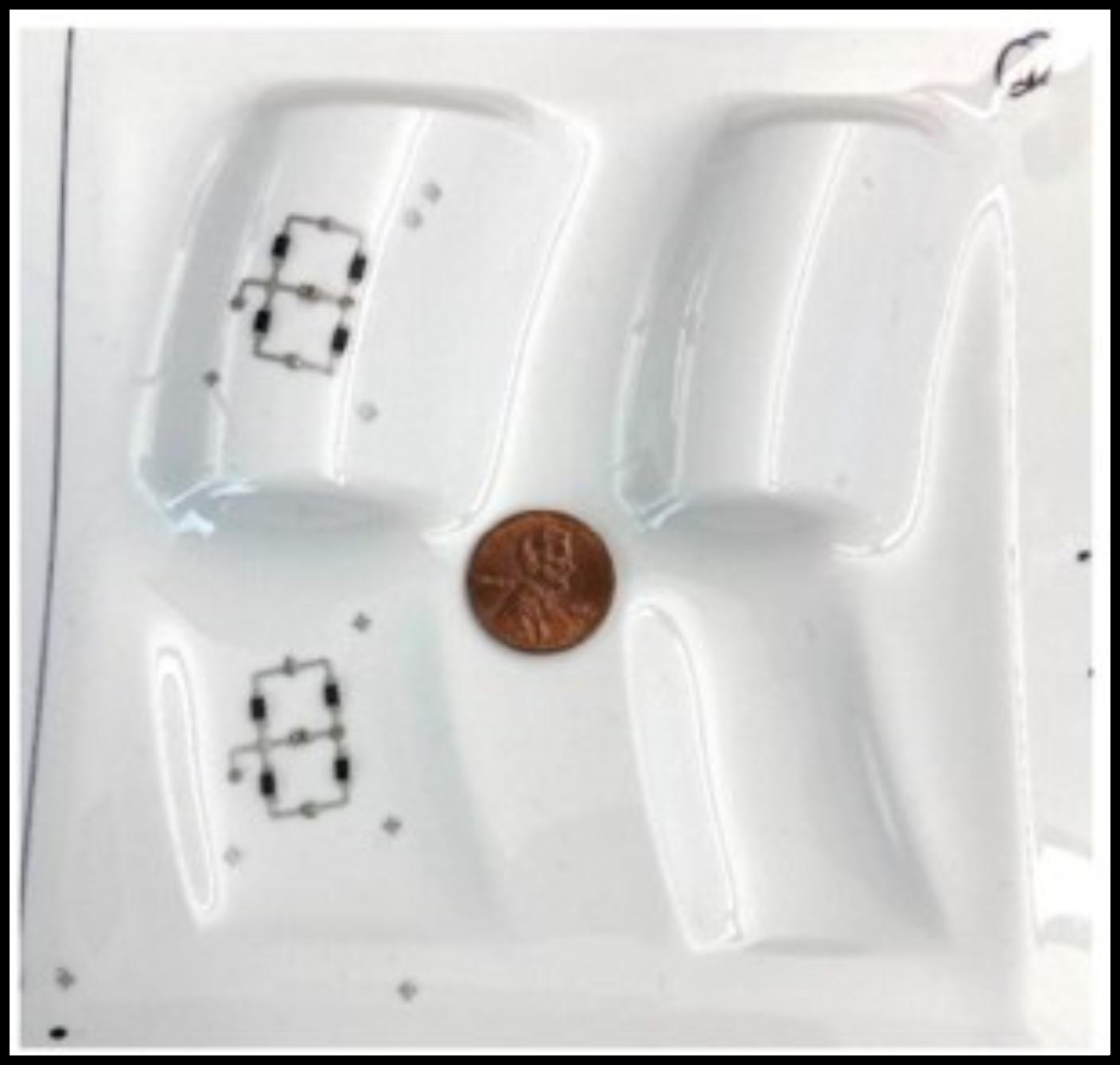
Additively printed thermoformable circuitry for In-Mold Electronics (IME) is getting tremendous research focus because of its numerous advantages: design flexibility, cost-effectiveness, weight reduction, and potential for seamless integration into structural components. This study uses a direct write printing technique to produce conductive FWR circuits using stretchable silver ink. A stretchable ink capable of thermoforming was used for circuit fabrication. Once the conductive traces were printed, SMDs were joined to the circuit using ECA. An impedance analyzer was used to examine the performance of the additively printed FWR circuit. Thermo-forming capable High Impact Polystyrene sheet and Polycarbonate substrates have been used for this study. The cross-section of the printed lines has been measured using white-light interferometry. The effect of the process parameters on the printed line resistivity has been studied. Optimized parameters from the printing process and sintering analysis are used to print FWR circuitry. The OrCAD software is used to simulate the FWR circuit. The simulated performance of the circuit is compared to the actual output of the printed thermoformed circuit. This work highlights the possibility of an additively printed FWR circuit in IME using a direct write process with thermoformable silver conductive ink and ECA.
AUERI NEWS Spring 2024 11
Figure: Thermoformed 3d printed real fwr circuit on HIPS substrate
Figure: Thermoformed sample image for 125c_34s condition
Figure: Functional led demonstration before (top) and after (bottom) repairment
Research Highlights
COMPONENT ATTACH PROCESS RECIPE AND PERFORMANCE ON AEROSOL PRINTED SUSTAINABLE SILVER INK
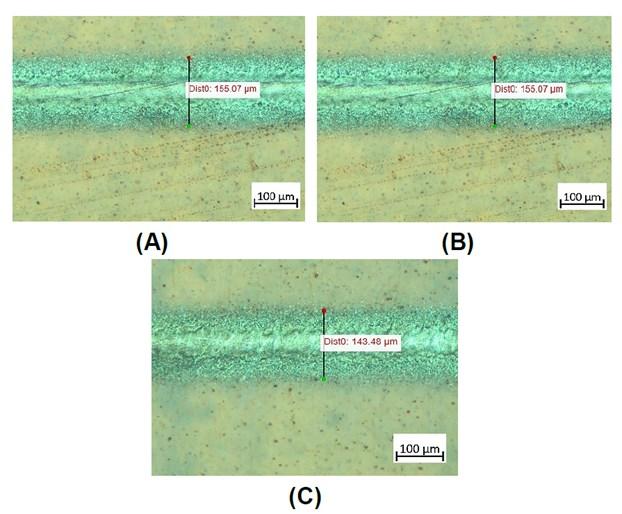
The advancement of flexible printing technology in electronics has raised the demand for compact, lightweight, and stretchable printed electric circuits. The viability of environmentally friendly waterbased inks with low-impact waste requires the development of process recipes for component attachment on flexible substrates. The processes required for component attachment on the newer generation of inks are not well understood. This paper aims to demonstrate process parameter study and component attachment in the aerosol jet printer (AJP) platform with water-based silver nanoparticle ink. The process parameter study includes printing parameters such as UAMFC, SMFC, stage speed, several passes, and sintering analysis, including sintering time and temperature. Print quality is evaluated using white light interferometry (WLI) and optical microscopy images. By integrating the bell-shaped cross-section area (CSA) acquired by the WLI test, the CSA of the printed lines is computed. The electrical and mechanical properties of the printed lines are quantified in terms of resistivity and shear load to failure, respectively. Optimized parameters from the printing and sintering process are used to print traces on which different components are attached with the help of ECA (Electrically Conductive Adhesive). The effect of using sustainable ink and ECAon passive components was analyzed by comparing their performance before and after being attached. Components that fall within the acceptable range of the rated value are deemed to be functioning properly.
FUNCTIONAL CIRCUIT PERFORMANCE OF PRINTABLE FORMABLE INKS FOR IN-MOLD ELECTRONICS APPLICATIONS
In-mold electronics (IME) is an advanced technology that seamlessly integrates printed electronics with film insert molding, producing plastic components embedded with electronic functionalities. This innovative process combines printing, thermoforming, and injection molding, enabling the creation of intricate and tailored electronic devices. Its applications span various industries, including automotive components, household appliances, and consumer electronics, where bespoke user interfaces are essential for system management and monitoring. Customized interfaces play a pivotal role in automotive, industrial electronics, and consumer technology, encompassing features like knobs, pressure and toggle switches, analog instruments,
and touch-sensitive flat-screen technology. IME's notable advantage lies in its capacity to fabricate flexible and stretchable electronic devices capable of functioning under strain, bending, stretching, and deformation.
Despite its potential, the IME process encounters challenges, notably the electrical resistance fluctuations in printed circuits during thermoforming. This study addresses these challenges by introducing novel design strategies, incorporating electrically conductive adhesives to affix components before thermoforming. This innovative approach preserves the integrity of the printed circuit, enhancing interconnect performance. To assess the IME process, the study employs OrCAD software for building and simulating a digital circuit, comparing its performance against the tolerance limits of Commercial Off-TheShelf (COTS) components.
EFFECT OF THERMAL CYCLING ON INTERFACIAL FRACTURE TOUGHNESS OF ELECTRONIC MOLD COMPOUNDTO-SUBSTRATE INTERFACE SUBJECTED TO MONOTONIC AND FATIGUE LOADING
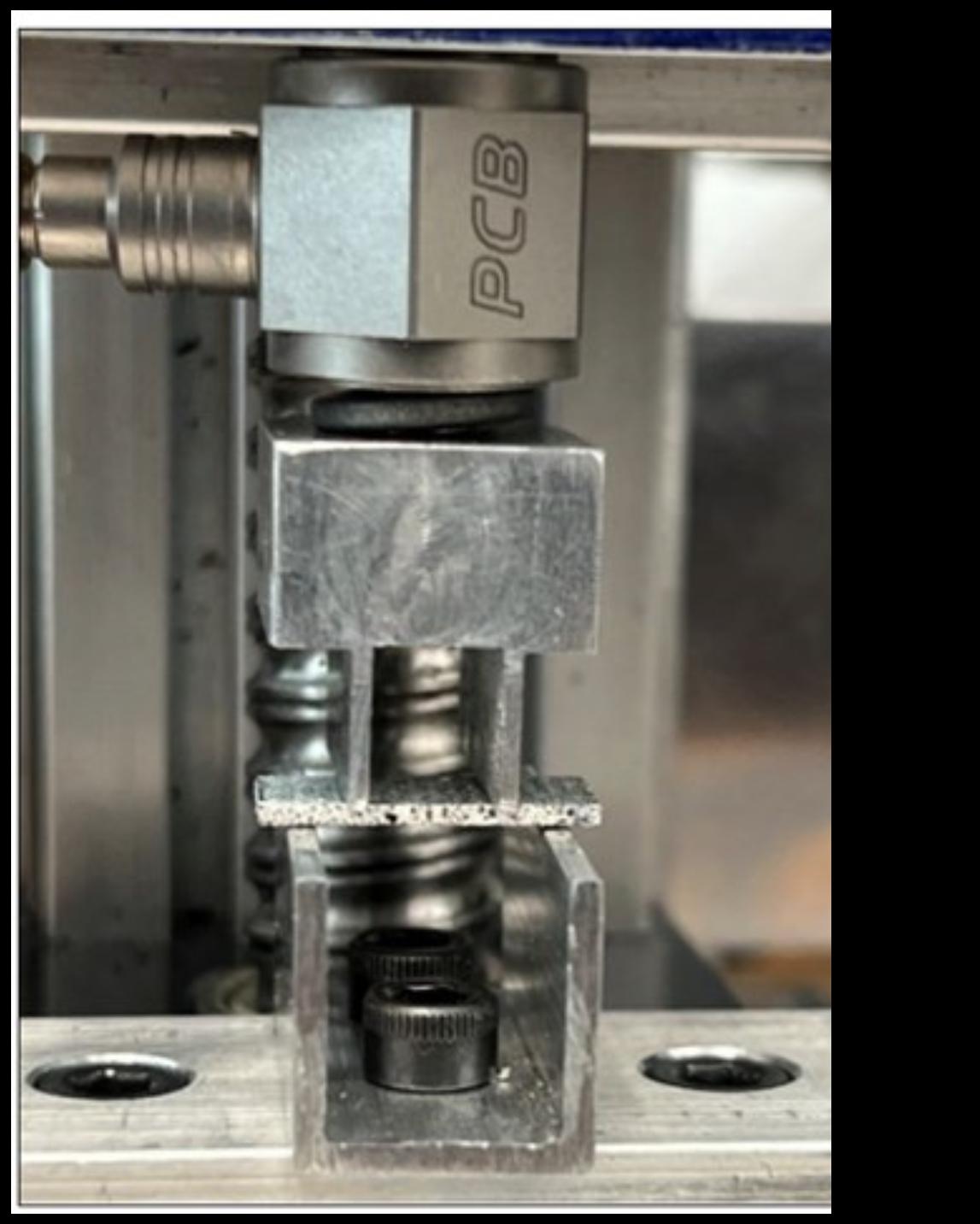
Electronics used in automotive underhood applications are subjected to extremely high operating temperatures ranging from 125 to 150°C for up to 10 years or longer over the vehicle’s uselife. Semiconductors in area-array packaging on laminate substrates are encapsulated in electronic mold compounds in microelectronic assemblies to meet unique functional needs. The robustness of the EMC-Substrate interface may also be influenced by the thermal mismatch stresses owing to the differences in the coefficients of thermal expansion between the glass-impregnated epoxy substrate and the silica-filled epoxy. This study investigates the interface fracture toughness in biomaterial precracked specimens made of PBGAs during thermal cycling exposure. Two EMC materials are subjected to 1000 automotive-grade thermal cycles. The samples are subjected to thermal cycling from -40°C to +125°C. Bi-material EMC Substrate beam samples are created by polishing the solder balls from PBGA packages. Fracture toughness is measured under exposure to automotive-grade thermal cycling. Interfacial crack initiation, propagation, and failure mechanisms are investigated.
AUERI NEWS Spring 2024 12
Figure: Test vehicle - 2 (a) before thermoforming (b)after thermoforming (c) on the mold
Figure: Optical images obtained from optical microscopy test for 30 sccm uamfc, 60 sccm sheath and speed of (a) 3mm/s, (b) 3.5 mm/s, and (c) 4mm/s
Figure: Fatigue testing fixture with speckle patterned sample
Research Highlights
PREDICTION OF PAD CRATERING PERFORMANCE AT COPPER-RESIN INTERFACES WITH MULTIPLE REFLOWS
Pad cratering is one of the major failure modes encountered during PCB assembly and operation. Fracture is generally mechanically induced between the outermost layer of board resin and copper foil, between the resin and the glass fibers, or in the bulk resin of the printed circuit board. Prior work on the reliability of printed circuit board assemblies focuses on solder joint fatigue. However, data on the reliability of pad cratering and predictive models on expected pad-crater propensity are scarce. Mechanical characteristics of the copper/resin interfaces and bulk resin material evolve with reflows. Pad cratering at copper-to-resin interfaces with respect to reflows has not been studied widely yet. Ten distinct bulk resin materials have been investigated to compute the evolution of bulk resin properties. Copper-to-resin interfacial samples have been tested under four-point bend loading with respect to reflow conditions. The evolution of bulk resin properties has been considered for computing the evolution of copper/resin interfacial properties. The steady-state energy release rate and Interfacial Fracture Toughness are determined for each testing condition. This research would be useful in proposing a copper/resin interface combination that is more reliable against pad cratering. Based on the data captured, a predictive regression model has been developed to predict the material combinations providing the best reliability against pad cratering.
PREDICTION OF FAILURE AT FCBGA INTERFACES UNDER THERMO-MECHANICAL LOADS USING A COMPETING RISK COHESIVE ZONE MODEL
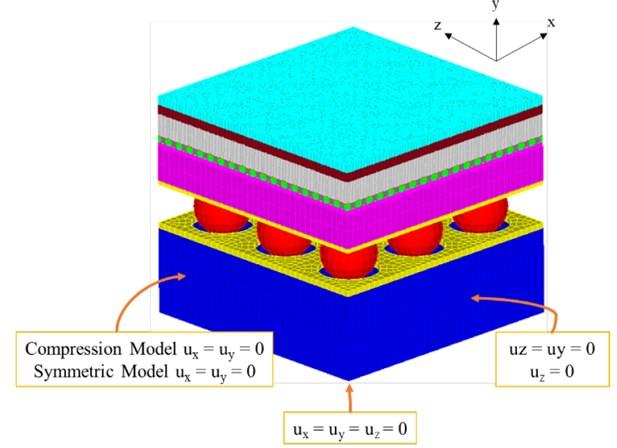
Automotive under-thehood electronics may reside onengine, ontransmission, or in-wheel -well. Several high I/O advanced packaging architectures, including the flip-chip ball grid arrays (FCBGAs), enable much of the functionality. Underhood electronics in automobiles are an integral part of the critical and safety operations of the vehicle. Underfills significantly reduce the amount of plastic work during temperature excursions and offer mechanical support to the solder connections. One of the most common failure modes at chip/UF interfaces has been delamination. A
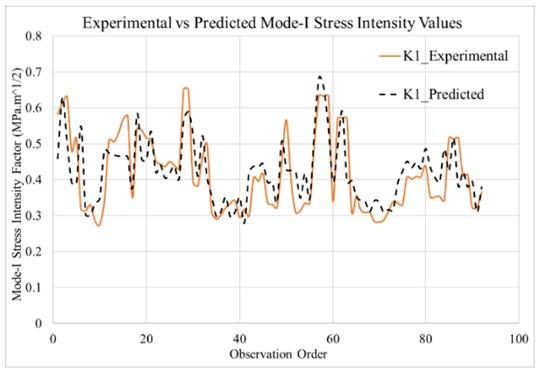
critical characteristic in evaluating the chip/UF interfacial reliability is the interfacial fracture toughness of the chip/UF interfaces. The interfacial crack could rapidly spread to the solder joints, leading to system failure. The chip/UF interface properties may change over time in response to high-temperature exposure. In this study, bi-material specimens of Chip/UF interfaces have been fabricated and exposed to high temperatures of 100°C and 150°C for 30 days, 60 days, 90 days, 120 days, 180 days, 240 days, 300 days, and 360 days. The aged samples are subjected to four-point bend fatigue and monotonic loading. The interfacial fracture toughness values have been determined for each loading condition. The Paris constants (A, n) are computed from fatigue loading interfaces, which directly represent the evolution of interfacial properties with respect to sustained high temperature exposure. A predictive finite element model of the FCBGA interfaces has been created.
STUDY OF SUSTAINED HIGH-TEMPERATURE ON THE RELIABILITY OF LEAD-FREE SOLDER JOINT ASSEMBLIES UNDER VIBRATION
Electronic components in automotive, downhole drilling of oil & gas, and aerospace applications often face intense high-strain loads due to shocks, vibrations, and drop impacts. These components are also exposed to extreme temperatures ranging from -65°C to 200°C and experience strain rates of 1 to 100 per second in critical environments. SAC solder alloys, composed of tin, silver, and copper, are commonly used in place of tin-lead solders in electronic assembly applications. These lead-free alloys, such as SAC-Q, SAC-R, Innolot, M758, are RoHS certified and safer than lead solder, which is neurotoxic. Understanding the mechanical characteristics of lead-free solder alloys is crucial for enhancing the durability of electronic packages under high temperatures and strain rates.
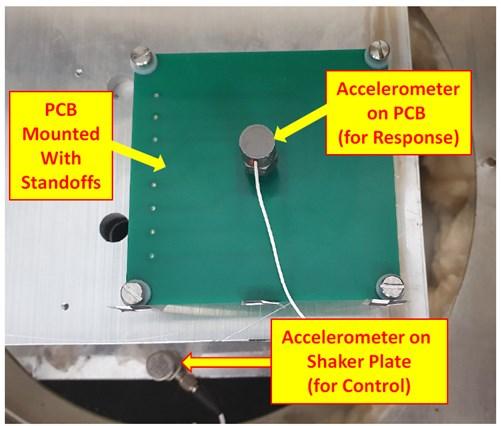
This study focuses on investigating SAC alloy failure mechanisms at elevated test temperatures up to 155°C and vibration loads of 5g and 10g levels. Harmonic vibrations at the first natural frequency were measured, and the assembly response and resistance were recorded using high-speed data acquisition and imaging. Finite Element Analysis simulation was employed to calculate stresses in solder interconnects. The impact of g-levels and operating temperatures on the hysteresis loop and plastic work density was explored, and failure mode analysis was conducted on the test board. The study utilized previously published Anand viscoplasticity material data for the solder alloys to capture high-strain rate behavior and temperature-dependent aging in FE analysis.
AUERI NEWS Spring 2024 13
Figure: Package assembly with accelerometers set-up for modal analysis
Figure: FCBGA Model with boundary conditions
Figure: Experimental versus predicted mode-i stress intensity values
Research Highlights
EVOLUTION OF THERMAL INTERFACE MATERIAL -TOCOPPER INTERFACIAL FRACTURE TOUGHNESS SUBJECTED TO MONOTONIC AND FATIGUE LOADING AFTER THERMALCYCLING
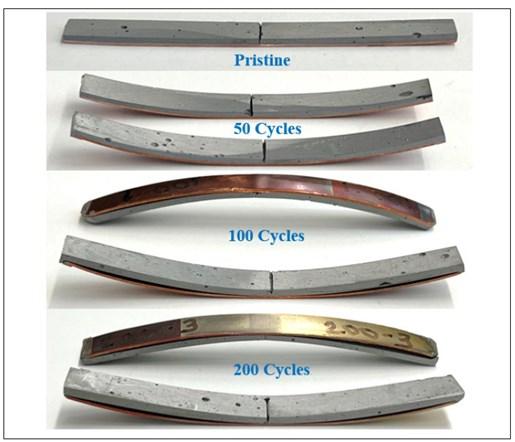
Automotive electronics increasingly use high-performance semiconductors to enable a number of advanced driver assistance systems. Thermal management in chip-based electronic systems is quickly becoming one of the most significant impediments to enhanced performance and integration density. The ongoing downsizing and integration of semiconductor devices have increased by heat generated per unit volume of the chip. Thermal interface material (TIM) facilitates heat dissipation from chip to package and from package to heat sink. Exposure to the wide temperature ranges typical in automotive conditions may result in the early propagation of fractures at the TIM-to-Copper contact, leading to high thermal resistance and device thermal runaway. In this study, bi-material samples have been created by dispensing TIM materials onto the copper surface and curing them based on the specified conditions. A total of three different TIM materials are used in this study. Two types of samples are prepared, namely with and without pre-crack. The samples are tested in four-point bend monotonic and fatigue loading conditions. The pre-cracked samples are used for fatigue four-point bend loading, and the no pre- crack samples are used for monotonic fourpoint bend loading. Before testing, to calculate the bi-material samples, KIC and KIIC fracture toughness values, they are subjected to automotive-grade thermal cycling from -40°C to +125°C for up to 1000 cycles. Interfacial crack initiation, propagation, and failure mechanisms are investigated. The interfaces strain energy release rate and fracture toughness are assessed.
ASSESSMENT OF PROPENSITY FOR
PAD CRATERING AT THE BOARD RESIN-GLASS INTERFACE UNDER ASSEMBLYAND REWORK
Reliability requirements for harsh environment electronic packages are increasing with the use of electronics in automotive underhood. The underhood includes various safety and critical functions such as automated locking systems, electronic fuel injection systems, engine control units, and anti-lock braking systems. Pad cratering manifests with initiation and propagation of micro-cracks beneath the BGA packages in the organic printed circuit boards. Major factors of these cracks formed with the combination of thermal cycling, shocks, vibrations, incorrect design or material selection, and manufacturing defects. In this investigation, the problem of pad cratering has been systematically approached by analyzing the bulk behavior of the resins using a tensile dogbone specimen and then moving forward with a bent specimen for the glass-resin interfaces. The first bulk study consists of 12 different resin formulations in which material property changes were studied under two and six reflow cycles. In the second
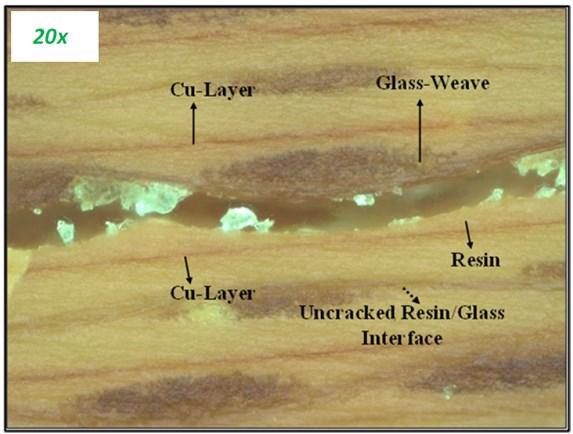
part, a four-point bend interface specimen was used. The effect of reflow cycles was investigated by reporting percchange in the Mode-I stress intensity factor and using this metric to rank the interfaces. In the end, an effort was made to create a predictive regression model with predictors being material properties of the samples such as elastic modulus, toughness, UTS, elongation of the resins, glass transition temperatures, and environmental conditions such as reflow cycles.
INCORPORATION OF DAMAGE IN CREEP MODELS FOR SAC305 LEAD FREE SOLDER
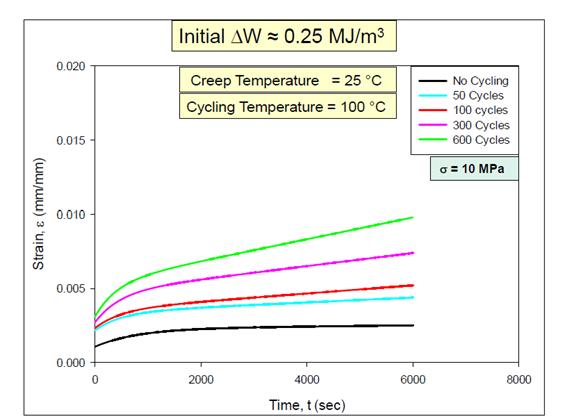
Solder joints in electronic packages are prone to fatigue failures resulting from cyclic mechanical stresses and strains amid fluctuating temperature environments. This occurs due to mismatches in coefficients of thermal expansion, leading to damage accumulation, crack initiation, propagation, and eventual failure. In a prior study at InterPACK 2022, the investigation focused on damage accumulation in various lead-free solder materials during mechanical cycling. Circular cross-sectioned solder specimens underwent reflow and subsequent mechanical cycling at room temperature using a Micro-Mechanical tester. Monotonic stress-strain and creep tests were conducted on these cycled samples to characterize the evolving mechanical behavior due to damage accumulation. The study quantified cyclinginduced damage by observing degradations in mechanical properties, including elastic modulus, yield strength, ultimate strength, and creep strain rate, correlated with the extent of prior cycling. The research extends these findings to examine the evolution of creep response due to prior damage accumulation at elevated temperatures. Small uniaxial cylindrical SAC305 solder samples underwent reflow and mechanical cycling under various conditions to induce damage, with subsequent creep tests at room and elevated temperatures. Empirical models, particularly focusing on total energy dissipation, were employed to fit material property degradations, demonstrating a universal degradation parameter independent of specific damage levels. The study further explores the incorporation of these damage parameters into widely used constitutive models for solder, such as the Norton and Garofalo creep models and the Anand viscoplastic model.
AUERI NEWS Spring 2024 14
Figure: Evolution of the creep response with mechanical cycling
Figure: Microscopy image of resin/glass delamination
Figure: Effect of thermal cycling on TIM1 structure
Announcements
AUERI Lab Tours
AUERI offers personal facility tours of our labs. Tours Showcase our collection of Addtive printed Flexible Hybrid Electronic Printers, Reliability testing machinery and our modelling and simulation tools.
Please reach out to Josh Pearson to schedule a lab tour today!
Contact Information:
Email: jpearson@auburn.edu
Phone: (334)-844-1896
Electronics sustainability focus of mechanical engineering professor's latest SRC program success
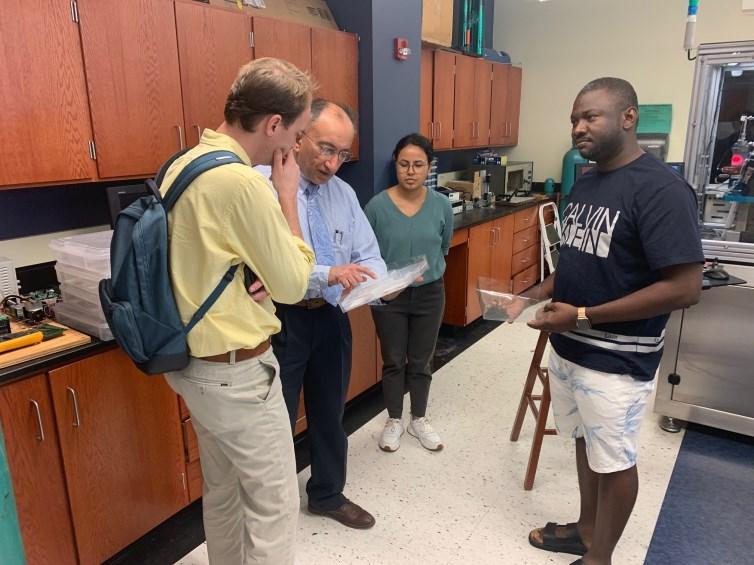
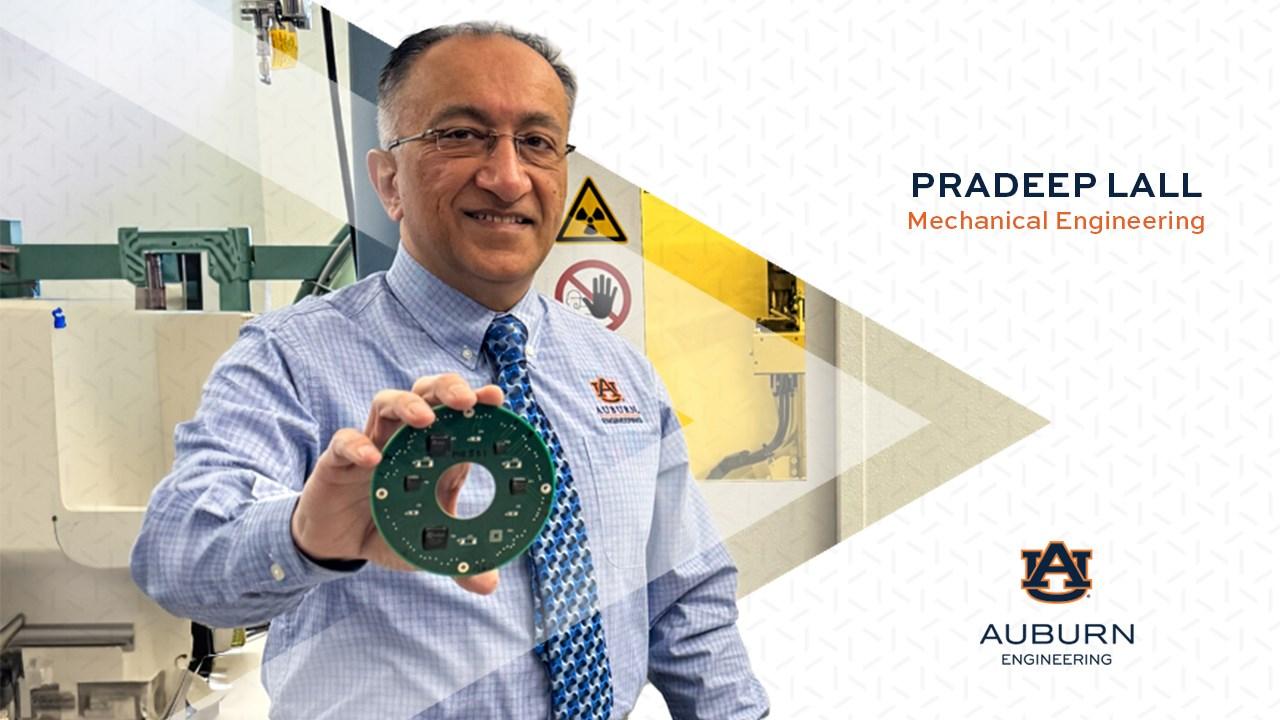
The decades-long legacy of competitively won Semiconductor Research Corporation (SRC) programs secured by Pradeep Lall continues to grow.
Lall, the MacFarlane Endowed Distinguished Professor and Alumni Professor in the Department of Mechanical Engineering, recently won a $315,000 SRC proposal focused on the development and characterization of non-per- and polyfluoroalkyl substance (non-PFA) materials for electronics packaging.
SRC, a globally renowned high-technology consortium consisting of more than 20 premier semiconductor companies, selected Lall’s proposal in a two-stage competition consisting of a white paper followed by a full proposal. Lall is the long-time director of the Auburn University Electronics Research Institute, which has achieved global prominence for advancements in extreme environment electronic systems under his tenure. He previously served the institute as associate director.
“PFAS are used for a number of functions in the design and fabrication of electronic packaging," Lall said, "but the robust carbonfluorine bond used in PFAS persists in nature long after the use life of the product."
Often called "the forever chemical," PFAS have been detected in water and food supplies, and studies have linked them to a number of detrimental health effects.
"The important functions fulfilled by current generation PFAS in electronics and the dearth of non-PFAS solutions have made combatting those effects a challenging problem,” Lall said.
Identifying environmentally friendly solutions to that problem has been a sustained focus of Lall’s research. His team is also working on developing sustainable additively manufactured electronics using water-based inks under a different competitively won program under the NextFlex Project Call 7.
“Our team has continued to look for ways to advance methods for manufacture and realize sustainable electronics,” Lall said. “The use of water in additive processes targets the elimination of toxic waste resulting from the volatile organic solvents used in the carriers of the prior generation of additive inks.”
In 2006, Lall developed modeling solutions for the use of lead-free electronics in harsh high-strain rate environments in accordance with the Environmental Protection Agency’s Removal of Hazardous Substances initiative; in 2022, Lall earned the ASME Avram Bar-Cohen
Medal for similar research in electronics packaging. Lall calls efforts toward eliminating PFAS electronics "one of the seismic shifts" in the electronics industry.
"The pervasive nature of electronics in everyday life, along with the volume of electronics and the pace of technology progression, has translated to a significant increase in electronics waste,” he said. “There are indications of impending regulations regarding the elimination of all PFAS from consumer products Owing to the connected nature of the electronics supply chain, any such regulations would impact electronics at all levels, from chips to systems.
"The development of non-PFAS solutions for electronics will yield lasting benefits for the current and future generations. We're proud to be leading that charge.”
Facility Augmentations
Keyance VR-6200
Keyence VHX-S750E
Streamlines image capturing and alaysis process by combining the capabilities of multiple analytical tools into one system. Functions as a stereoscopic, metallurgical, scanning electron, andmeasuring microscope.
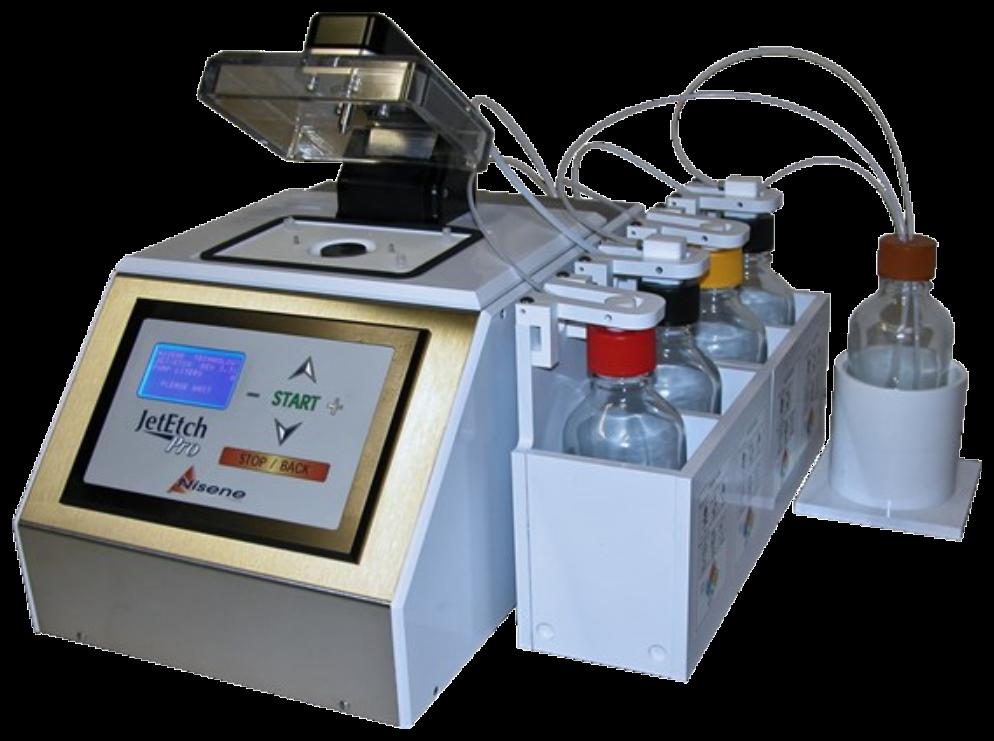


The JetEtch Pro delivers unsurpassed results by providing unique and precise software control of all aspects of the decapsulation process.
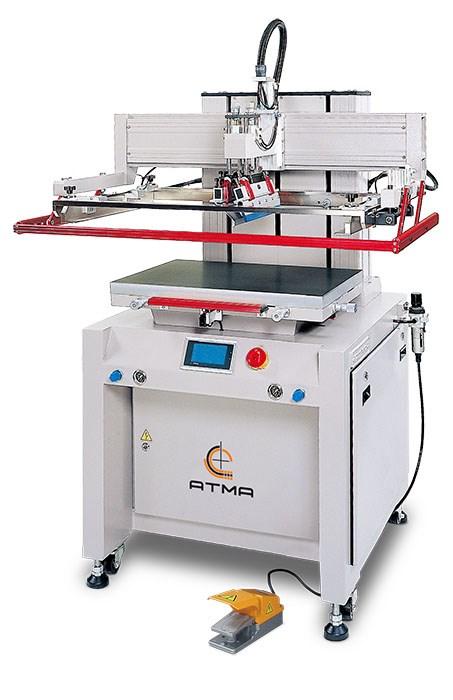
ATMA AT-60PD Digital Electric Flat Screen Printer
For screen-printing substrates in Flat Sheet/Board form made of non-deforming materials
AUERI NEWS Spring 2024 15
Auburn center’s FHE reputation underscored with multiple winning additively manufactured electronics proposals
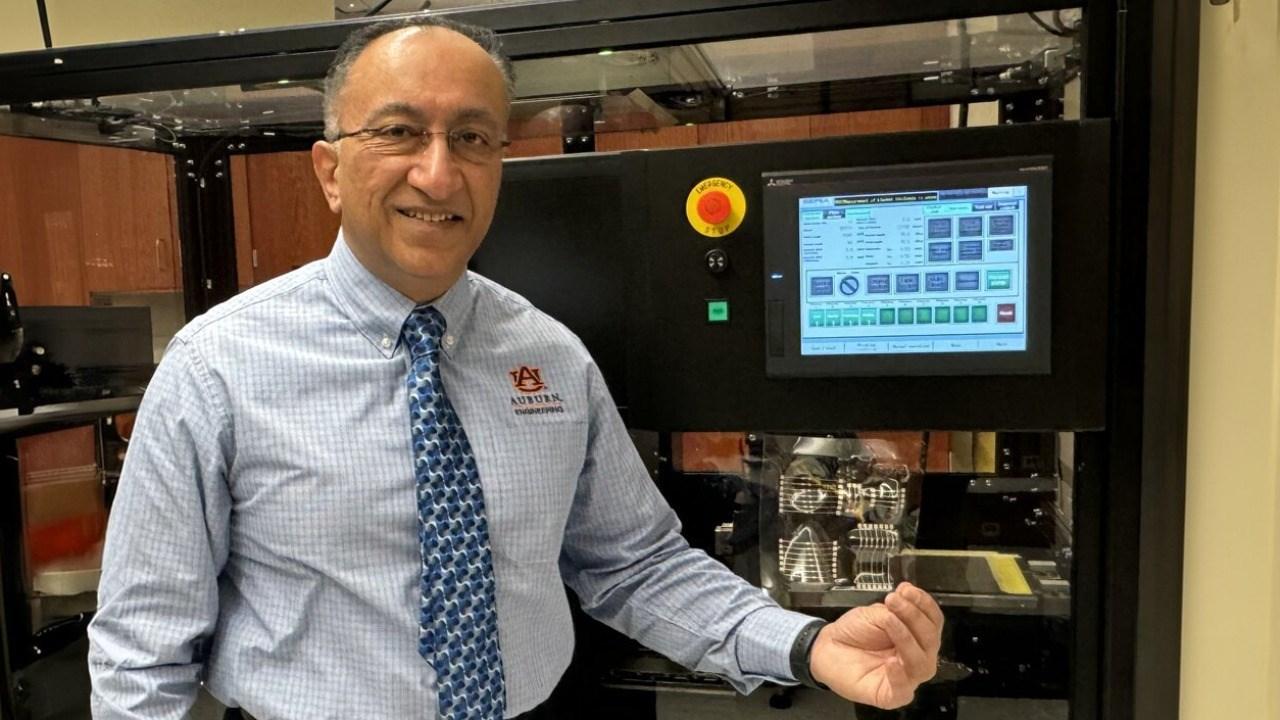
If you're trying to gauge Auburn's preeminence in harsh environment electronics resiliency development and flexible hybrid electronics (FHE) research, look no further than the latest project call of the NextFlex National Manufacturing Institute.
In last year’s Project Call 7 competition, there were two winning Auburn proposals. In the current Project Call 8? Three, collectively funded at $2.5 million with 1:1 cost-share all focused on additively manufactured (AM) FHE, all competitively won by teams led by Pradeep Lall, the MacFarlane Endowed Distinguished Professor and Alumni Professor of Mechanical Engineering and director of the Auburn University Electronics Research Institute (AUERI).
Under Lall's 15-year leadership, AUERI has grown exponentially. In 2015, Lall led the Auburn team contributing to the winning proposal that resulted in the foundation of the NextFlex National Manufacturing Institute. Auburn is a tier-1 founding member of NextFlex, whose mission is to advance U.S. manufacturing of FHE; Lall serves on the NextFlex technical council and has previously served on the governing council of the institute.
The design of electronics for operation in harsh environments has long been an area of research for both Lall and AUERI. While earning an international reputation for designing electronics for operation in harsh environments relative to automotive, military, defense, and downhole applications, AUERI also accelerated the growth of the flexible hybrid electronics industry itself.
The topic of Lall's first winning Project Call 8 proposal is a perfect example. The $1 million Auburn-led project with 1:1 cost-share aims to use additive manufacturing in developing in-mold flexible electronics reliability for harsh automotive applications with parts and solutions suppliers including John Deere, Toyota Motors, BayFlex, and MacDermid Alpha as partners.
“A large part of the weight of the automotive vehicle is in the form of wire harnesses," Lall said. "The harnesses carry signals from sensors, interfaces and modules to the control units located throughout the vehicles for the purpose of guidance, navigation and control. The wire harnesses alone may contribute almost 200 pounds to the weight of the passenger car. The transition to additive technologies for the replacement of wire harnesses with in-mold electronics will enable size reduction, weight reduction and, thus, reduction of the carbon footprint which has been a key metric for automotive design with increased emphasis on greater fuel efficiency."
Once again, enter AUERI.
"Our center has a strong, established infrastructure for the additive fabrication of electronics using a number of methods," Lall said. "The current generation of electronics is largely planar. However, greater integration of form and function can be achieved with additively manufactured flexible hybrid electronics through the manufacture of nonplanar architectures. In terms of future potential applications of inmold additive FHE, that's very exciting."
Also exciting? Meeting the growing challenges of sustainability,a long-standing focus of Lall’s research across several technologies, including lead-free solders, low-temperature interconnects, and currently additively printed sustainable electronics and the ultimate goal of Lall's second winning Project Call 8 project.
Funded at $1 million with 1:1 cost-share, "Biodegradable Substrates Low-Temperature Cure Water-Based Inks Room Temperature Interconnects and Rework for Sustainable Electronics" partners Lall's Auburn-led team with industry partners TapeCon, BayFlex and NovaCentrix.
"Conventional electronics uses plate-and-etch processes for manufacture," Lall said. "The waste streams may contain metals and dielectrics, in addition to other toxic chemicals. Additive manufacturing processes allow for the reduction in the amount of production waste, minimizing the impact on the environment. The earlier generation of additive methods still used volatile organic carrier fluids for the realization of manufactured circuits. The current generation of substrates is not biodegradable and thus contributes to the waste. In addition, the use of higher temperature processing requires high energy consumption for production processing."
In the third program, Lall's team of Auburn researchers will serve as a major subcontractor for Boeing. Titled "Additive Die Packaging for Cryogenic and High-Temperature Operations," the project is funded at a cost of $500,000, including 1:1 cost-share.
“Electronics packaging has been identified as a critical technology for the continued progression through heterogeneous integration," Lall said. "A number of harsh environment applications often need a high mix and low volume of modules for specific applications. Traditional electronic packaging manufacturing techniques require expensive hard tooling that needs a high volume to allocate the upfront cost of installed infrastructure. The use of additive manufacturing methods allows accommodation for high-mix, low-volume designs and opens up new possibilities for launching new products that may not exist in the current state-of-the-art manufacturing methods."
As for the application and broader impact of the program?
"Well, it aligns with the national emphasis of the packaging in the Chips Act with the establishment of the National Advanced Packaging Manufacturing Program (NAPMP)," Lall said. "There is a dearth of high-volume packaging manufacturing capabilities in the United States. Access to additive manufacturing processes for packaging solutions will allow the re-entrenchment of a critical portion of the electronics manufacturing supply chain onshore”.
Lall expects the three programs to also benefit AUERI's leading work toward developing FHE reliability standards.
“We are honored and excited," he said, "to have an opportunity to work on these forward-looking programs that will be impactful on the future of electronics manufacturing."
AUERI NEWS Spring 2024 16
Announcements
Announcements
AUERI Researchers Win Scholarships from IPC Education Foundation in 2023
Ten AUERI student Researchers have been awarded with prestigious scholarship from IPC education Foundation (IPCEF) in 2023. The IPCEF provides scholarships and awards that support skills pathways and prepare students to start a meaningful career in the electronics manufacturing and assembly industry. They have awarded $40000 scholarships and awards and $25000 towards IPC student members for their accomplishments in IPC student chapters throughout colleges United States. This Scholarship has been awarded to 36 student researchers helping to support them in enhancing their knowledge and skills of real-word industry-related experiences in the field of electronic packaging. The AUERI Researchers who won this award are as follows:










Engineering Day is one of the largest recruiting events on campus to help recruit 7th-12th grade students to the College of Engineering, the SMTA officers' involvement and contribution were about representing the chapter engaging with attendees and providing insights into the exciting projects
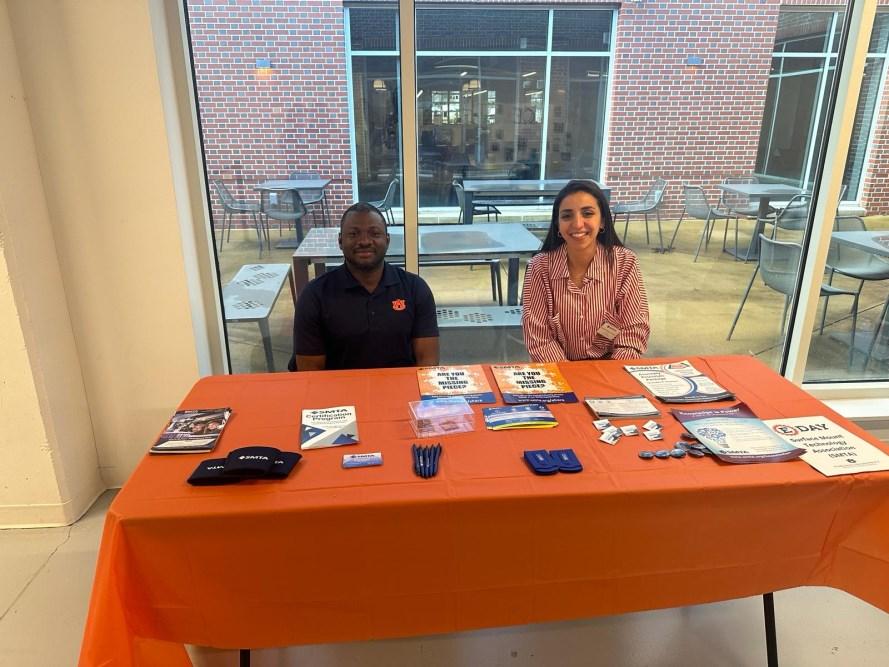
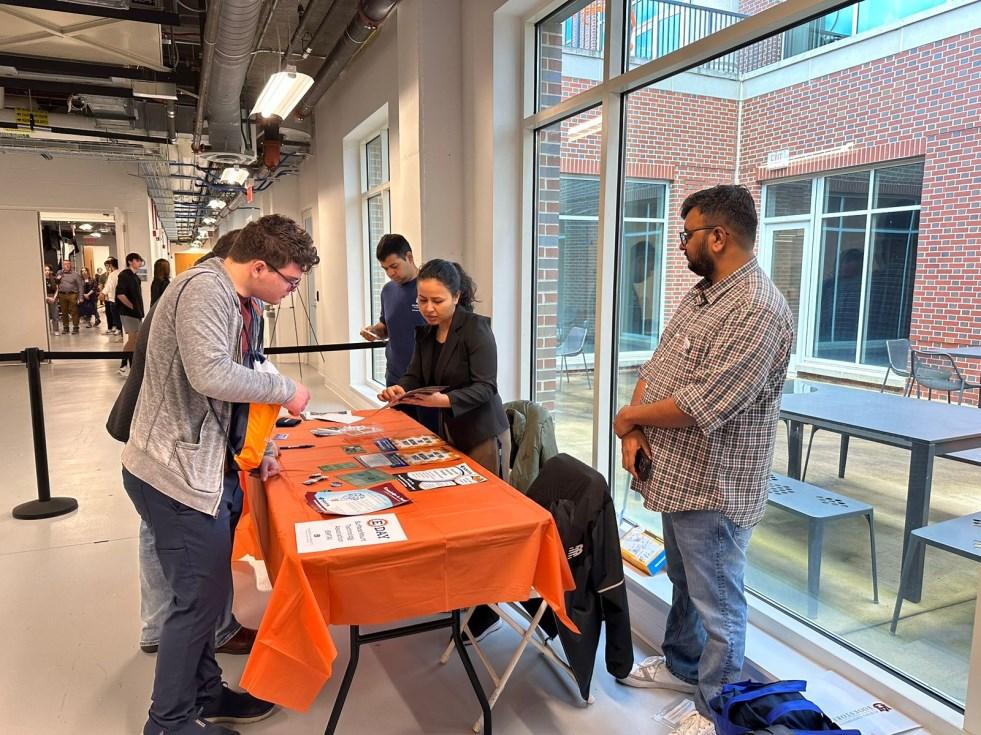
We received positive feedback from attendees, who expressed enthusiasm for the opportunities presented within the SMTA and the Auburn chapter.
AUERI NEWS Spring 2024 17
SMTA Student Chapter Booth at Auburns
Daniel Karakitie
Ved Soni
Vishal Mehta
Shriram Kulkarni
Md Golam Sarwar
Padmanava Choudhury
Sabina Bimali Fatahi Musa
Madhu Kasturi
Aathi Pandurangan
Recent Publications
2023 Published Papers
Maruf, MA, Mazumder, GR, Chakraborty, S, Suhling, JC, & Lall, P. "Evolution in Lead-Free Solder Alloys Subjected to Both Mechanical Cycling and Aging." Proceedings of the ASME 2023 International Technical Conference and Exhibition on Packaging and Integration of Electronic and Photonic Microsystems. San Diego, CA, USA. October 24–26, 2023. ASME.
Chakraborty, S, Mondal, D, Mazumder, GR, Maruf, MA, Suhling, JC, & Lall, P. "Comparative Finite Element Analyses of the Thermal Cycling Performances of BGA Packages With SAC, LTS, and Mixed SAC-LTS Solder Joints." Proceedings of the ASME 2023 International Technical Conference and Exhibition on Packaging and Integration of Electronic and Photonic Microsystems. San Diego, CA, USA. October 24–26, 2023. ASME.
Mazumder, GR, Chakraborty, S, Maruf, MA, Suhling, JC, & Lall, P. "Incorporation of Damage in Creep Models for SAC305 Lead Free Solder." Proceedings of the ASME 2023 International Technical Conference and Exhibition on Packaging and Integration of Electronic and Photonic Microsystems. San Diego, CA, USA. October 24–26, 2023. ASME.
Mondal, D, Suhling, JC, Mirkoohi, E, & Lall, P. "Effects of Grain to Sample Volume Ratio on the Deformation Behavior of Polycrystal SAC Samples Subjected to Shear Loads." Proceedings of the ASME 2023 International Technical Conference and Exhibition on Packaging and Integration of Electronic and Photonic Microsystems. San Diego, CA, USA. October 24–26, 2023. ASME.
Lall, P, Musa, F, Soni, V, & Miller, S. "Impact of Component Interconnectivity on Mechanical and Electrical Properties of Flexible Hybrid Electronics with Printed Water-based Silver Ink Circuits." Proceedings of the ASME 2023 International Technical Conference and Exhibition on Packaging and Integration of Electronic and Photonic Microsystems. San Diego, CA, USA. October 24–26, 2023. ASME.
Lall, P, Musa, F, Soni, V, & Miller, S. "Sustainable Silver Ink Flexible Circuits Fabrication Using Direct Write Additive Manufacturing Techniques." Proceedings of the ASME 2023 International Technical Conference and Exhibition on Packaging and Integration of Electronic and Photonic Microsystems. San Diego, CA, USA. October 24–26, 2023. ASME.
Lall, P, Bimali, S, & Miller, S. "Reparability Test of Aerosol-Jet Printed Sustainable Silver Ink Circuit." Proceedings of the ASME 2023 International Technical Conference and Exhibition on Packaging and Integration of Electronic and Photonic Microsystems. San Diego, CA, USA. October 24–26, 2023. ASME.
Lall, P, Bimali, S, Narangaparambil, J, & Miller, S. "Component Attach Process Recipe and Performance on Aerosol Printed Sustainable Silver Ink." Proceedings of the ASME 2023 International Technical Conference and Exhibition on Packaging and Integration of Electronic and Photonic Microsystems. San Diego, CA, USA. October 24–26, 2023. ASME.
Lall, P, Jang, H, & Miller, S. "Additive Printing of Wearable EDA Sensors on In-Mold Electronics on Automotive Platform." Proceedings of the ASME 2023 International Technical Conference and Exhibition on Packaging and Integration of Electronic and Photonic Microsystems. San Diego, CA, USA. October 24–26,
2023. ASME.
Lall, P, Jang, H, Narangaparambil, J, & Hill, C. "Development and Reliability Evaluation of Additively Printed Biosensing Device for Wearable Applications in Harsh Environment." Proceedings of the ASME 2023 International Technical Conference and Exhibition on Packaging and Integration of Electronic and Photonic Microsystems. San Diego, CA, USA. October 24–26, 2023. ASME.
Lall, P, Pandurangan, ARR, & Choudhury, P. "Prediction of Pad Cratering Performance at Copper-Resin Interfaces With Multiple Reflows." Proceedings of the ASME 2023 International Technical Conference and Exhibition on Packaging and Integration of Electronic and Photonic Microsystems. San Diego, CA, USA. October 24–26, 2023. ASME.
Lall, P, & Kasturi, M. "Evolution of Thermal Interface Material-toCopper Interfacial Fracture Toughness Subjected to Monotonic and Fatigue Loading After Thermal Cycling." Proceedings of the ASME 2023 International Technical Conference and Exhibition on Packaging and Integration of Electronic and Photonic Microsystems. San Diego, CA, USA. October 24–26, 2023. ASME.
Lall, P, & Kasturi, M. "Effect of Thermal Cycling on Interfacial Fracture Toughness of Electronic Mold Compound-to-Substrate Interface Subjected to Monotonic and Fatigue Loading." Proceedings of the ASME 2023 International Technical Conference and Exhibition on Packaging and Integration of Electronic and Photonic Microsystems. San Diego, CA, USA. October 24–26, 2023. ASME.
Lall, P, Karakitie, D, & Miller, S. "Process Performance Interactions for Additively Printed Water-Based Nanoparticle Sustainable Silver-Ink With Ultrasonic Atomization on Aerosol Jet Printer." Proceedings of the ASME 2023 International Technical Conference and Exhibition on Packaging and Integration of Electronic and Photonic Microsystems. San Diego, CA, USA. October 24–26, 2023. ASME.
Lall, P, Karakitie, D, & Miller, S. "Surface-Mount Component Attachment on Aerosol Jet Printed Sustainable Water-Base Silver Nanoparticle Ink." Proceedings of the ASME 2023 International Technical Conference and Exhibition on Packaging and Integration of Electronic and Photonic Microsystems. San Diego, CA, USA. October 24–26, 2023. ASME.
Lall, P, Sarwar, MG, Soni, V, & Miller, S. "Direct Write Thermoformed Additive Silver Circuits With SMDs Attachment for In-Mold Electronics." Proceedings of the ASME 2023 International Technical Conference and Exhibition on Packaging and Integration of Electronic and Photonic Microsystems. San Diego, CA, USA. October 24–26, 2023. ASME.
Lall, P, Kulkarni, S, Narangaparambil, J, & Miller, S. "Comparative Study of SMD Components Attached Using Electrically Conductive Adhesive and Magnetically Oriented Anisotropic Conductive Adhesive on Inkjet Printed Structures." Proceedings of the ASME 2023 International Technical Conference and Exhibition on Packaging and Integration of Electronic and Photonic Microsystems. San Diego, CA, USA. October 24–26, 2023. ASME.
Tahat, S, Hamasha , S, & Meilunas, M. " Drop/Shock Behavior of Low Temperature Solder BGA." Proceedings of the SMTA International 2023. Minneapolis, MN, USA. October 09–12, 2023.
AUERI NEWS Spring 2024 18
Recent Publications
2023 Published Papers
Lall, P, Kulkarni, S, Soni, V, & Miller, S. "Line Width and Electrical Performance Prediction for Inkjet Printed Conductors-ResistorsInductors-Capacitors." Proceedings of the ASME 2023 International Technical Conference and Exhibition on Packaging and Integration of Electronic and Photonic Microsystems. San Diego, CA, USA. October 24–26, 2023. ASME.
Lall, P, Mehta, V, Suhling, J, & Locker, D. "Study of Sustained High -Temperature on the Reliability of Lead-Free Solder Joint Assemblies Under Vibration." Proceedings of the ASME 2023 International Technical Conference and Exhibition on Packaging and Integration of Electronic and Photonic Microsystems. San Diego, CA, USA. October 24–26, 2023. ASME.
Lall, P, Mehta, V, Suhling, J, & Blecker, K. "High-G Level Shock Damage-Accrual in Doped/Undoped SnAgCu Solders Under 100°C Sustained Operation Up to 1-Year." Proceedings of the ASME 2023 International Technical Conference and Exhibition on Packaging and Integration of Electronic and Photonic Microsystems. San Diego, CA, USA. October 24–26, 2023. ASME.
Lall, P, & Zhang, Y. "Effect of Surface Treatment on the Fatigue Crack Propagation in a TIM/Copper Interface Subjected to High -Temperature Long-Term Exposure." Proceedings of the ASME 2023 International Technical Conference and Exhibition on Packaging and Integration of Electronic and Photonic Microsystems. San Diego, CA, USA. October 24–26, 2023. ASME.
Lall, P, & Jung, S. "Polarization Curves, Package-Level Multiphysics Simulation of Cu85Al15 and Cu94Al6 WB Corrosion for Automotive and Rugged Environment Applications." Proceedings of the ASME 2023 International Technical Conference and Exhibition on Packaging and Integration of Electronic and Photonic Microsystems. San Diego, CA, USA. October 24–26, 2023. ASME.
Lall, P, Sarwar, MG, Soni, V, & Miller, S. "Repairability of SMDs on 3D Printed Circuitry for Sustainable Electronics Utilizing Direct Write Technique." Proceedings of the ASME 2023 International Technical Conference and Exhibition on Packaging and Integration of Electronic and Photonic Microsystems. San Diego, CA, USA. October 24–26, 2023. ASME.
Lall, P, Soni, V, Narangaparambil, J, & Miller, S. "Evaluation of Thermoformability of Additively Printed Circuits Printed Using Gravure Offset Printing Technique and Investigation of In-Mold Electronic Circuits." Proceedings of the ASME 2023 International Technical Conference and Exhibition on Packaging and Integration of Electronic and Photonic Microsystems. San Diego, CA, USA. October 24–26, 2023. ASME.
Lall, P, Pandurangan, ARR, & Blecker, K. "Predictive Modeling of High-G Potted Assemblies With Fine Pitch Electronics After Sustained High-Temperature Exposure." Proceedings of the ASME 2023 International Technical Conference and Exhibition on Packaging and Integration of Electronic and Photonic Microsystems. San Diego, CA, USA. October 24–26, 2023. ASME.
Lall, P, Pandurangan, ARR, & Katsuri, M. "Prediction of Failure at FCBGA Interfaces Under Thermo-Mechanical Loads Using a Competing Risk Cohesive Zone Model." Proceedings of the ASME 2023 International Technical Conference and Exhibition on Packaging and Integration of Electronic and Photonic Microsystems. San Diego, CA, USA. October 24–26, 2023. ASME.
Lall, P, Kulkarni, S, & Miller, S. "Investigation of Performance and Repairability of Additively Printed Functional Circuits With Water-Based Silver Ink on an Inkjet Platform." Proceedings of the ASME 2023 International Technical Conference and Exhibition on Packaging and Integration of Electronic and Photonic Microsystems. San Diego, CA, USA. October 24–26, 2023. ASME.
Lall, P, Saha, M, Suhling, J, & Locker, D. "Assessment of Effect of Operating Temperature on SAC-R Solders at High Strain Rates After Prolonged Storage." Proceedings of the ASME 2023 International Technical Conference and Exhibition on Packaging and Integration of Electronic and Photonic Microsystems. San Diego, CA, USA. October 24–26, 2023. ASME.
Lall, P, Choudhury, P, & Pandurangan, ARR. "Assessment of Propensity for Pad Cratering at the Board Resin-Glass Interface Under Assembly and Rework." Proceedings of the ASME 2023 International Technical Conference and Exhibition on Packaging and Integration of Electronic and Photonic Microsystems. San Diego, CA, USA. October 24–26, 2023. ASME.
Lall, P, Narangaparambil, J, Soni, V, & Miller, S. "Functional Circuit Performance of Printable Formable Inks for In-Mold Electronics Applications." Proceedings of the ASME 2023 International Technical Conference and Exhibition on Packaging and Integration of Electronic and Photonic Microsystems. San Diego, CA, USA. October 24–26, 2023. ASME.
Lall, P, & Choudhury, P. "Propensity for Fatigue Failure of the FCBGA UF-Substrate Interface After Prolonged Storage." Proceedings of the ASME 2023 International Technical Conference and Exhibition on Packaging and Integration of Electronic and Photonic Microsystems. San Diego, CA, USA. October 24–26, 2023. ASME.
Lall, P, Soni, V, & Miller, S. "Evaluation of Additive Circuits Printed With Sustainable Aqueous Silver Inks Using Aerosol Jet Printing and Gravure Offset Printing and Investigation of Circuit Repairability." Proceedings of the ASME 2023 International Technical Conference and Exhibition on Packaging and Integration of Electronic and Photonic Microsystems. San Diego, CA, USA. October 24–26, 2023. ASME.
Lall, P, Soni, V, Kulkarni, S, & Miller, S. "Comparison of Machine Learning Approaches for Correlating Print Process Parameters to Realized Physical and Electrical Characteristics of Printed Electronics Using Inkjet Platform." Proceedings of the ASME 2023 International Technical Conference and Exhibition on Packaging and Integration of Electronic and Photonic Microsystems. San Diego, CA, USA. October 24–26, 2023. ASME.
Lall, P, Pandurangan, ARR, Choudhury, P, & Kasturi, M. " Study of the FCBGA Package Interfaces Reliability Under Monotonic and Fatigue Loads after Sustained High Temperature." Proceedings of the SMTA International 2023. Minneapolis, MN, USA. October 09–12, 2023.
Lall, P, Mehta, V, & Saha, M. " Effect of Bi-Addition on the High Strain Rate Properties of SnAgCu Solders under Wide Temperature Extremes and Prolonged Exposure to High Temperature." Proceedings of the SMTA International 2023. Minneapolis, MN, USA. October 09–12, 2023.
AUERI NEWS Spring 2024 19
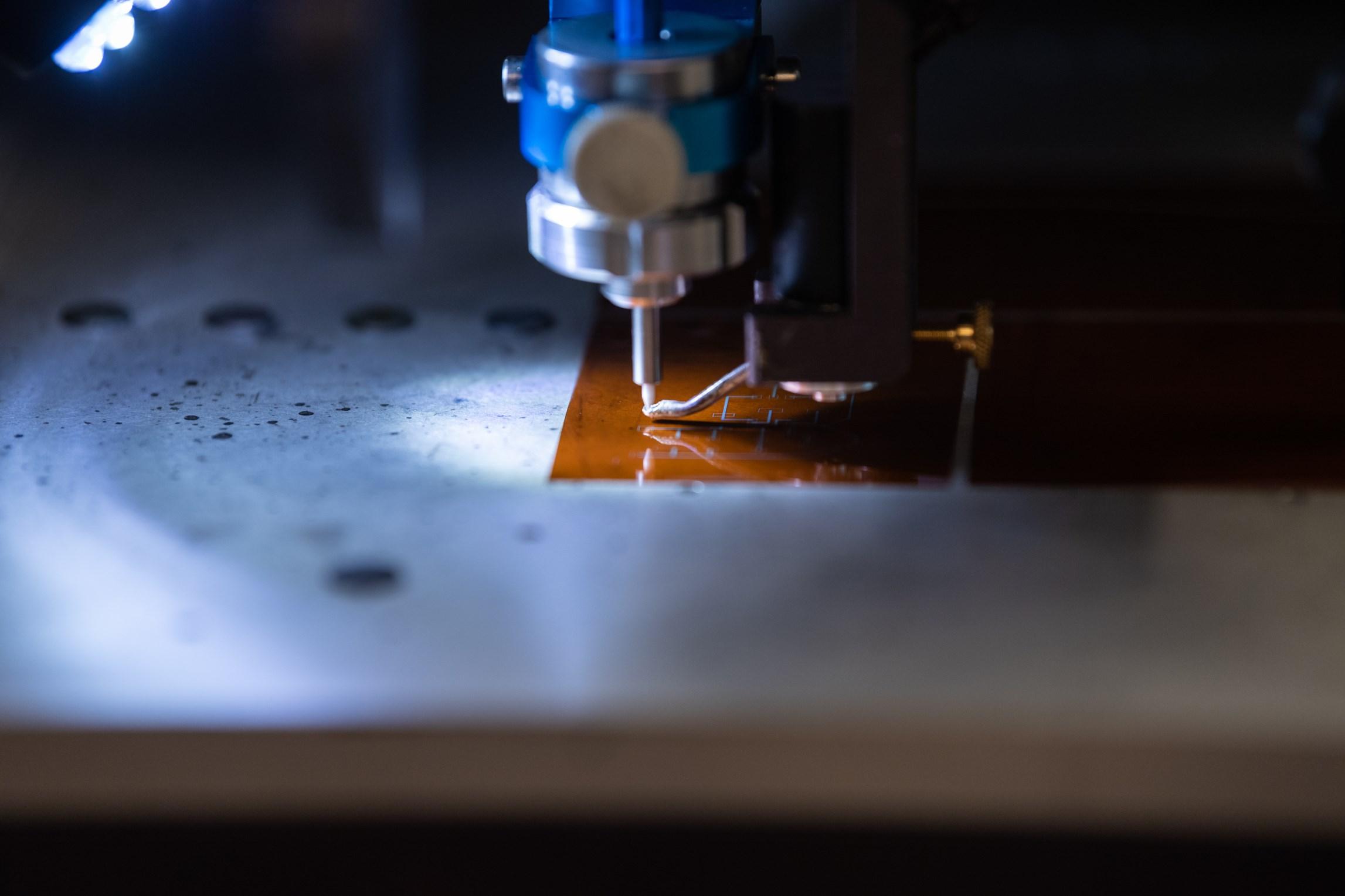
Auburn University Electronics Research Institute
If you have recently changed your address or have colleagues who would be interested in receiving the AUERI News, please fill out the following informa on and either return it to the above address, fax it to 334-844-1898, or email it to cave@auburn.edu.
☐ Please add me to the AUERI News mailing list. ☐ Please remove me from the AUERI News mailing list. ☐ My address has changed, please update it. ☐ Please add me to the AUERI email mailing list.
Name: Country:
Title: Phone #: Company: Fax #: Address: E-mail:
Address: Comments and sugges ons: City: State: Zip:
AUERI News Spring 2024 cave.auburn.edu www.auburn.edu