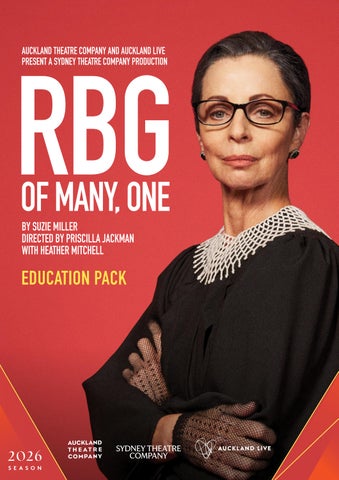
EDUCATION PACK
He pou atua, he pou whenua, he pou tangata.
Ko Waitematā te moana
Ko Waikōkota te whenua.
Ko Te Pou Whakamahara a Māui Tikitiki a Taranga te tohu o te kaha, o te kōrero, o te whakapapa o tēnei wāhi, o tēnei whare.
Nau mai e te tī, e te tā ki te whare kōrero, ki te whare whakaari o ASB ki te tahatika o te moana.
Mauri tau, mauri ora!
Pouwhakamahara a Māui-Tikitiki-a-Taranga
The Memorial Post of Māui the Topknot of Taranga
Robert Jahnke ONZM (Ngāi Taharora, Te Whānau a Iritekura, Te Whānau a Rākairoa o Ngāti Porou), 2016
Laminated tōtara and Corten steel
Proudly commissioned by Auckland Theatre Company for ASB Waterfront Theatre


The symbols of support, of strength and of guardianship stand fast and proud.
The waters of Waitematā ebb and flow against the shores here at Waikōkota, the land upon which we stand.
The pou of remembrance to Māui Tikitiki a Taranga stands tall as a beacon of courage, of stories passed down and of the history that connects us all to this place and to this space.
We welcome you all from near and far to this house of stories, to the ASB Waterfront Theatre.
Mauri tau, mauri ora!
20 MAY – 7 JUNE 2026
CAST
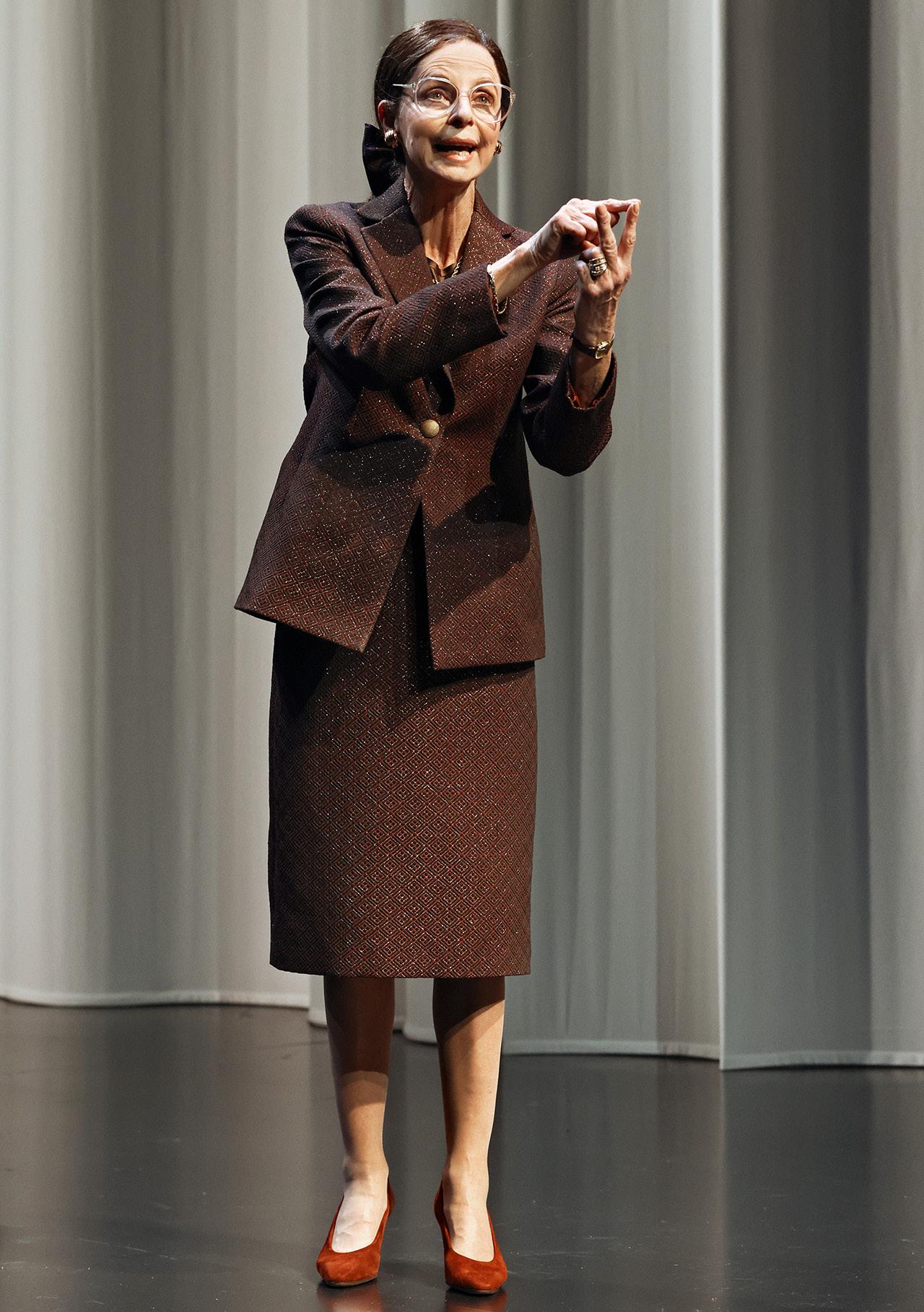
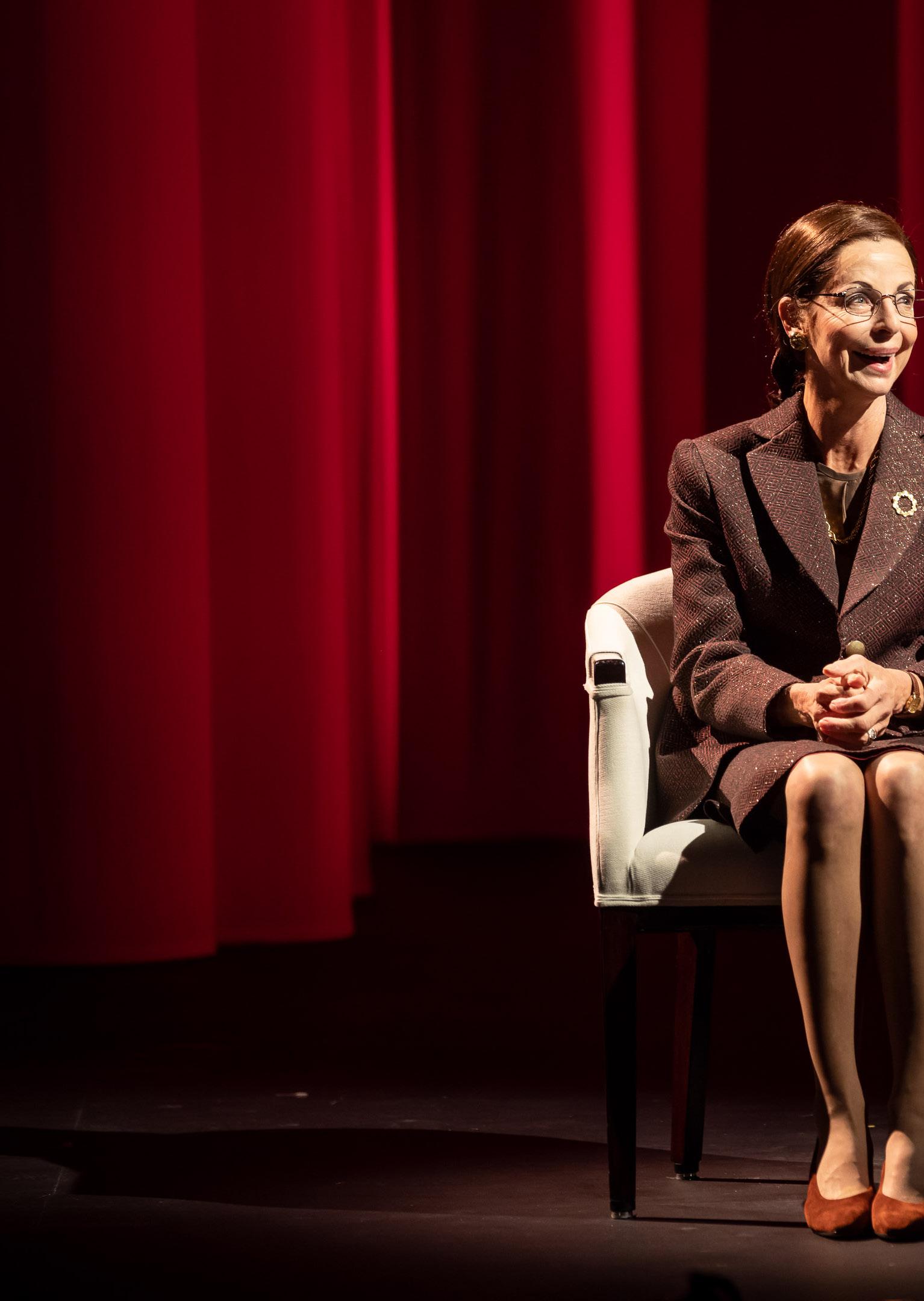
Ruth Bader Ginsburg –Heather Mitchell
PRODUCTION
Production Manager – Aiden Brennan
Company Stage Manager – Katie Hankin
Assistant Stage Manager –Chiara Niccolini
Staging Supervisor – Zachary White
NZ Head of Staging – James Kearney
Show Mechanist – Keira Howat
Lighting Supervisor & Realiser –Ethan Hamill
Lighting Programmer – McLane Catterall
NZ Head of Electrics – Spencer Earwaker
Technical Operator – Ella Madsen Brough
Sound Supervisor & Realiser –Hayley Forward
NZ Head of Sound – Sam Clavis

CREATIVE
Playwright – Suzie Miller
Director – Priscilla Jackman
Designer – David Fleischer
Lighting Designer – Alexander Berlage
Composer & Sound Designer –Paul Charlier
Sound Operators –Al Bremner & Hayley Forward
Microphone Technician – Joel Orme
Wardrobe, Wig, Hair & Make-Up
Supervisor – Lauren A. Proietti
Teaching Artists –Jessica Bennett & Isabella Temm
Education Pack Writers – Anna Turner, Kelly Young, Kaylee Hazell
Education Pack Graphic DesignerWanda Tambrin
Publicity – Siobhan Waterhouse
Photography – Daniel Boud, Prudence Upton & Rene Vaile
Videography – Cass Eipper & Daryl Wong
RBG: Of Many, One by Suzie Miller opened at Sydney Theatre Company’s Wharf 1 Theatre on 3 November 2022, before touring Australia across 2024 and 2025.
RBG: Of Many, One is the fourth production in Auckland Theatre Company’s 2026 Season. This production is a collaboration between Auckland Theatre Company, Sydney Theatre Company and Auckland Live. It began previews on Wednesday 20 May and opened on Saturday 23 May at ASB Waterfront Theatre.
Both the original 2022 World Premiere Season and this 2026 Auckland Season have been supported by Frances Allan and Ian Narev.
This production is 1 hour and 35 minutes long, with no interval. It includes mature themes, complete theatrical blackout and flashing light effects. Please remember to switch off all mobile phones and noise-emitting devices.






About This Pack
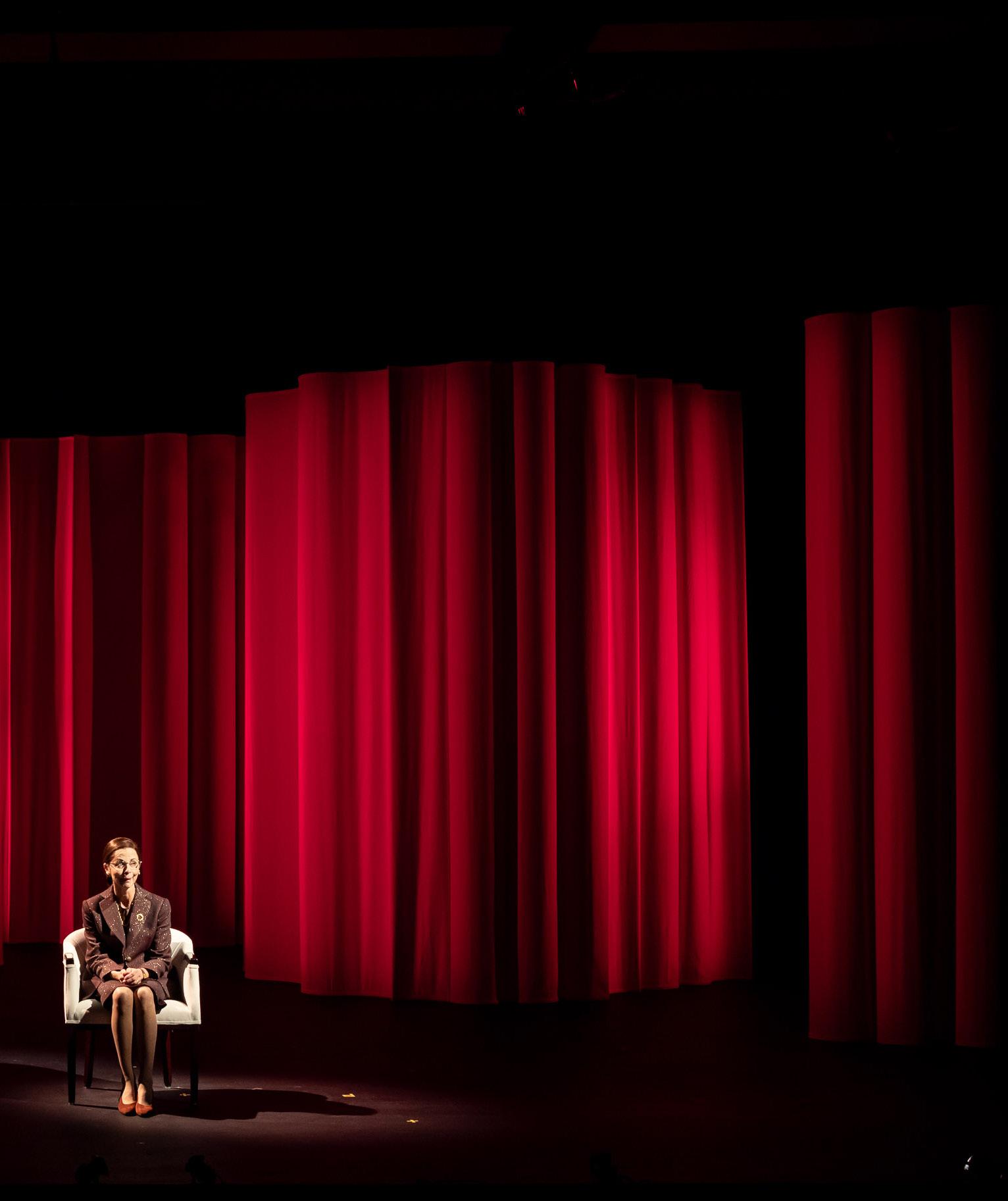
This education pack is designed to support your exploration of Auckland Theatre Company’s production of RBG: Of Many, One by Suzie Miller.
Whether you’re a kaiako preparing lessons, an ākonga studying the play, or simply curious about this play, this resource offers insights into both the text and this specific production.
This education pack is divided into two sections:
About the Play
Activities
After a welcome from Auckland Theatre Company, Auckland Live and Sydney Theatre Company, this section includes key information about the cast and creatives, essays providing essential context and background information, and a synopsis of the production.
NCEA-linked activities that you can try in your classroom or at home to help you unpack and explore this production of RBG: Of Many, One by Suzie Miller. These activities support achievement standards across Levels 1, 2, and 3.
Each section builds upon the previous one, but you can also use individual components as standalone resources. The activities are designed to complement the contextual information and production insights, making this pack suitable for both independent study and classroom use.
About The Play
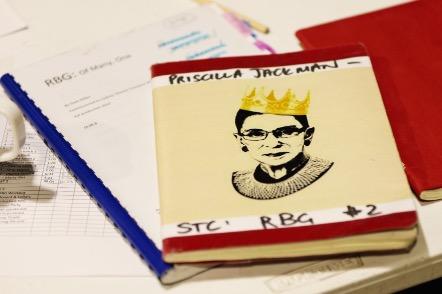
Key information about the cast and creatives, essays providing essential context and background information, and a synopsis of the production.
Nau mai, haere mai
Note from Auckland Live and Auckland Theatre Company
We’re delighted to welcome you to this acclaimed Sydney Theatre Company production, shared with audiences in Aotearoa New Zealand through a collaboration between Auckland Theatre Company and Auckland Live, and presented here in Tāmaki Makaurau.
Written by Suzie Miller and directed by Priscilla Jackman, RBG: Of Many, One offers an intimate portrait of Ruth Bader Ginsburg, a pioneering jurist and the second woman appointed to the United States Supreme Court. With wit, clarity and insight, the play traces a life shaped by determination and principle, from early ambition to lasting influence.
At the heart of this production is an extraordinary solo performance by Heather Mitchell AM. Moving across Ginsburg’s life and career, Heather Mitchell’s performance is one that will stay with us for years to come. Alone on stage, she reveals not only the public legacy we recognise, but the private
resolve behind it – the person as much as the icon.
While rooted in the American legal system, this story resonates strongly here in New Zealand. It invites us to reflect on ideas that matter in our own context: fairness, leadership and the courage to speak up in the pursuit of a more equitable society. RBG: Of Many, One speaks across borders, generations and legal traditions.
We’re proud to share this powerful and thought-provoking work with you and to welcome you into an experience that is as intimate as it is inspiring – a kōrero about courage, conviction and change, shared together in this place.
Daniel Clarke Director, Auckland Live
Jonathan Bielski
Artistic Director & CEO
Auckland Theatre Company
Note from Sydney Theatre Company
It is fitting and important that a play about advocacy for gender equality and women’s rights finds its way back to the stage in a time when equality and civil liberties are under increasing attack. Ruth Bader Ginsburg was a woman who devoted her life to progressive causes through her work as a litigator and then an Associate Justice of the Supreme Court of the United States (the first Jewish woman to be appointed).
It’s also wonderful that a play about a transformative female leader is the work of three other great female leaders of the Australian theatre scene: writer Suzie Miller (whose play Prima Facie took the West End and Broadway by storm), director Priscilla Jackman and actress and Sydney Theatre Company goddess, Heather Mitchell.
The original Sydney Theatre Company production of RBG: Of Many, One ignited audiences when it premiered in 2022 and continued to inspire sold-out crowds across the country during its 2025 as well as 2024 national tour. I’m thrilled to be on board at the company to support this humane, witty and wise gem of a show as it now crosses the pond to New Zealand for this season presented by Auckland Theatre Company and Auckland Live, and supported by Frances Allan and Ian Narev.
I’m thrilled to have the phenomenally talented Priscilla and Heather back to recreate it once more. Priscilla is surely one of the most exciting young theatre directors I know, acclaimed not only for RBG but for Cost of Living and White Pearl for Sydney Theatre Company. And Heather, well... I have been in awe of this woman ever since I saw her on the Sydney Opera House stage in Strindberg’s A Dream Play.
I have so many vivid memories of the way in which she has delighted and stunned me and so many audiences in works as diverse as All My Sons, Burn This, The Homecoming, A Delicate Balance, Cloud Nine and The Harp in the South, and also on our screens in works like Love Me, Fake and her award-winning turn in The Narrow Road to the Deep North. Each magnificent performance is burned in my brain. She is a treasure.
We hope you relish this treasure and this incredible play about an incredible woman, leader and spirit.
Mitchell Butel Artistic Director & Co-CEO Sydney Theatre Company
Synopsis
It is the summer of 1993 and Ruth Bader Ginsburg is waiting for a lifechanging phone call.
As the minutes tick by, Ruth recalls the incredible life that led to this moment: the loving support of her mother in her formative years, the moment she discovered opera, her ascent through the legal profession and the trials and triumphs she faced growing up as a working-class, Jewish woman in America.
Over the course of three historic conversations with three very different presidents, the story of this powerhouse of legal knowledge, political thought and moral conviction will unfold against the backdrop of a rapidly changing world.
This is the story of one incredible woman, her inspiring rise to the highest office in the American judiciary, the complex decisions she grappled with during that period and the numerous civil rights causes she defended. At the same time, this is a dioramic study of the power of the individual in society, and the changing attitudes toward representation and inclusion over the last 50 years.
THEMES & IDEAS
• Gender and Ambition
• Power and Justice
• American Identity
FORM & STYLE
• Non-linear narrative
• Dramatic Irony
• Realism
• Opera
• Monologue
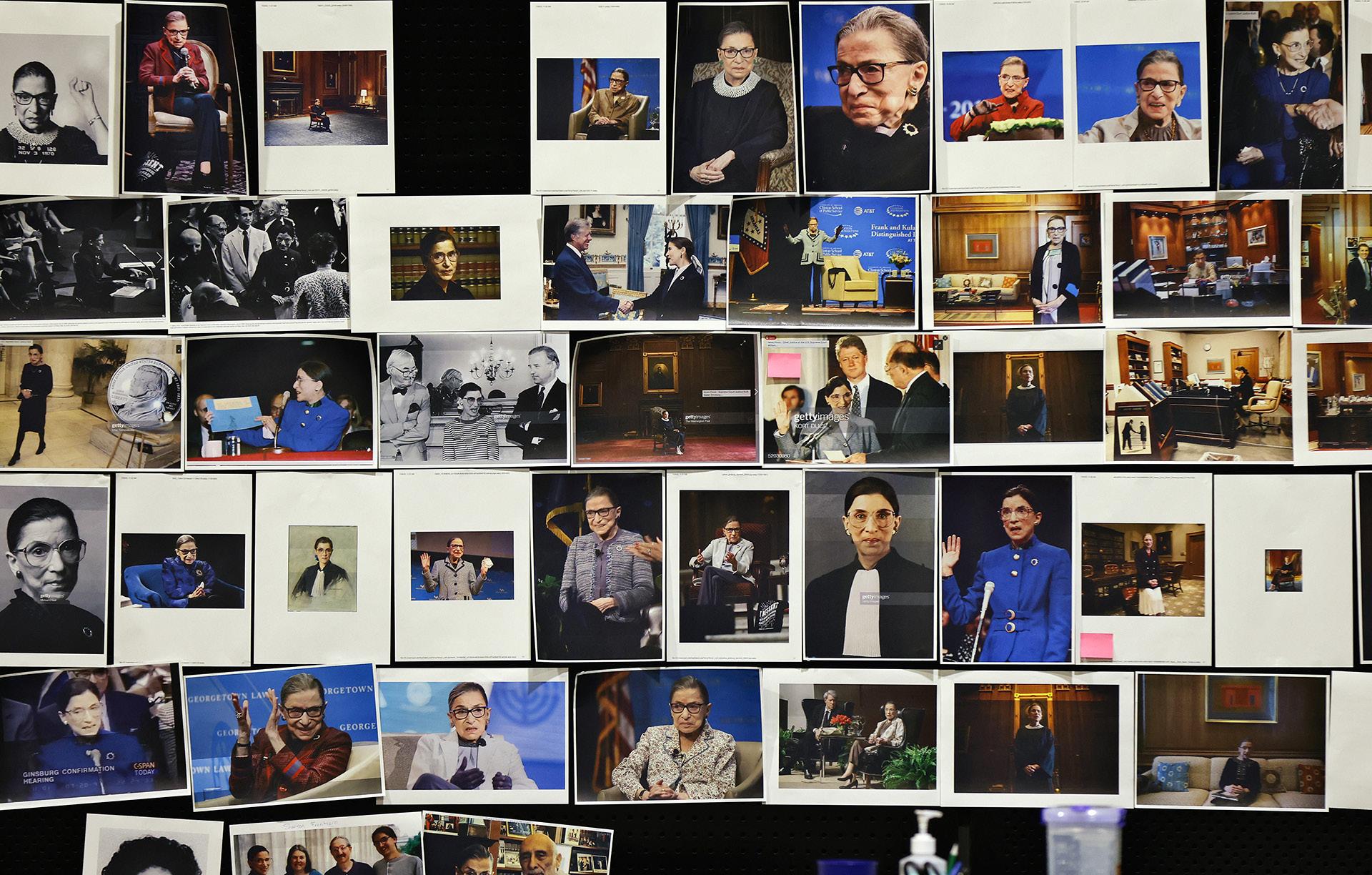
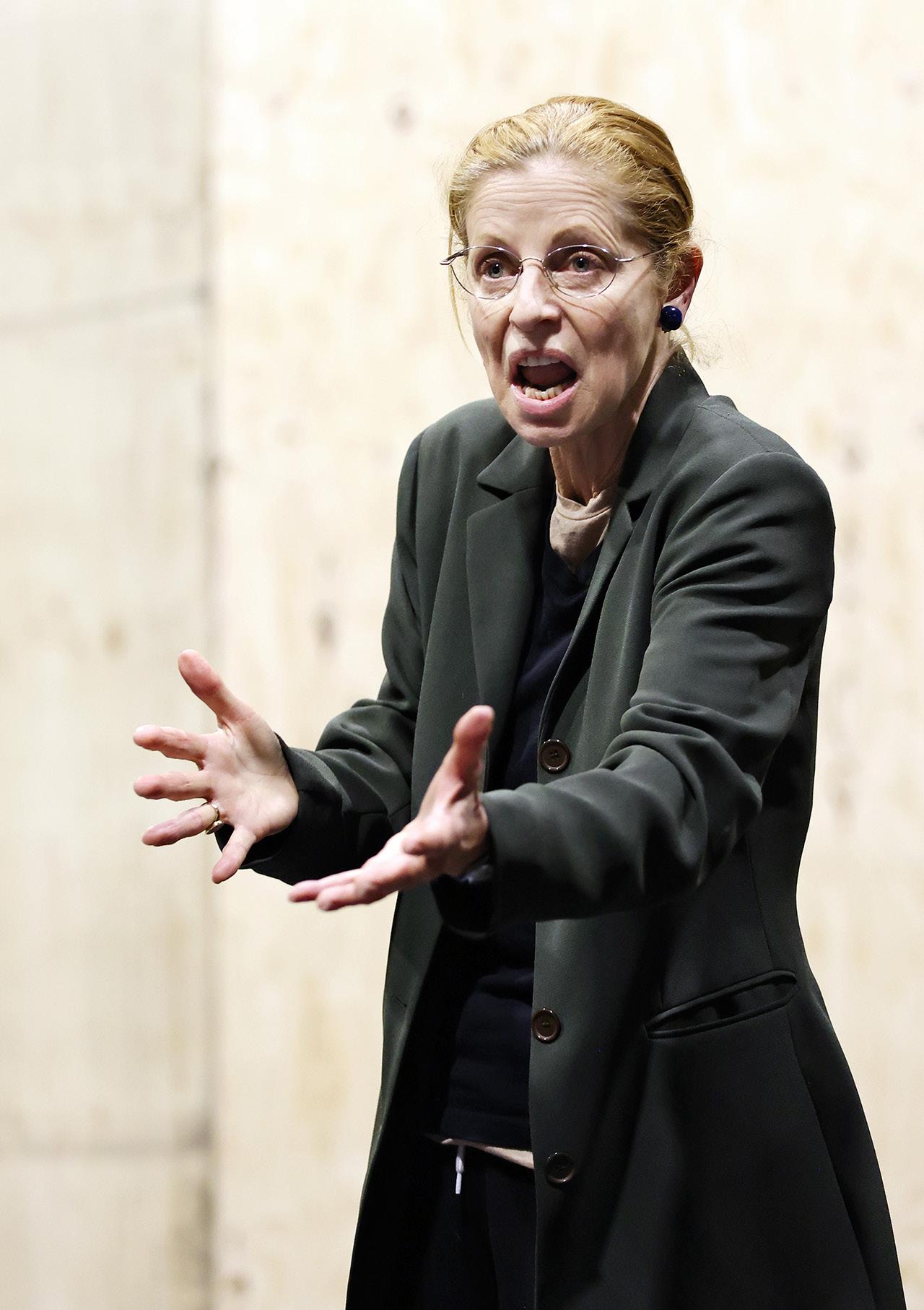
Note from the Playwright
Suzie Miller
As a young female law student, I looked up to women judges; they were ground-breakers for me and they remain so. The more women in powerful legal positions, the more opportunity for the law to be influenced by women’s lived experiences. Ruth Bader Ginsburg, herself, brought all her intelligence and thoughtfulness to her judicial profession. She brought her feminism, her roles as mother, daughter, lifepartner; she brought her Jewish background, her childhood of loss and socio-economic repression; and her incredibly flexible mind and her sharp senses. She brought herself as a woman completely and without apology. All of this has influenced not only the USA but women’s lives around the world – including women and lawyers in Australia and New Zealand.
Throughout her life, RBG felt strongly about democracy and the rule of law, and, to ensure both of these, she applauded the strict separation of executive and judicial powers. The rule of law, in short, means that no one is above the law – including leaders and politicians. This accountability and
transparency must never be taken for granted. The separation of powers that the government and the courts must never interfere with or seek to influence one another is a way of keeping the checks and balances on both the government and the judges of the day. This is democracy in action.
It is ironic that her words have come back to haunt us all – I wrote this play during the pandemic – because her warning against interference between courts and presidents is something that is paramount in today’s world. Democracy is only as strong as its institutions and, in many countries, we are seeing those institutions rattled and swaying under pressure. If they collapse, so, too, does democracy. RBG was often blamed for not resigning. This play attempts to show how she did not believe in judges playing party politics. However, even she, with her enormous intellect, might never have envisioned how the court would become so partisan, so politicised in her country.
That she died with some sense of how that was coming about is tragic,
especially when she had been on the verge of what she believed was a woman in the White House. Can we blame her for not seeing that dashed when no one else saw it either? Was vanity at play or was purity and vision?
Nevertheless, perhaps her seemingly unrelenting and critiqued belief in the institution of the court might well come back to serve us. The court could perhaps be the one thing that will act to keep in check the extravagances of executive power and the wildly undemocratic rulings by today’s politicians. Perhaps at the root of her not resigning was a sense that she must stand against presidents telling courts and judges what to do
– and, in that regard, her stance was about saving democracies. If we take a long view, perhaps it is this arm of democracy, the judiciary, that will ultimately rebalance the system in the longer term – or not. Of course, this play cannot say. Instead, it explores the deeply human, brilliant mind and service of RBG, the woman and the judge.
With RBG: Of Many, One, I was so warmly supported by the Sydney Theatre Company in expressing my unique vision for the play, and that has continued right up to this season of the show. I am so pleased to see this play travel to Auckland and I thank everyone involved for their brilliance.
Note from the Director Priscilla Jackman
When we first opened RBG: Of Many, One in October 2022, we could not have predicted that Suzie Miller’s deeply affecting text and Ruth’s own messages of tolerance, equality and the fundamental pillars of democracy would become even more paramount in the years that followed, given the rapid and seismic shifts in our ever-changing global context.
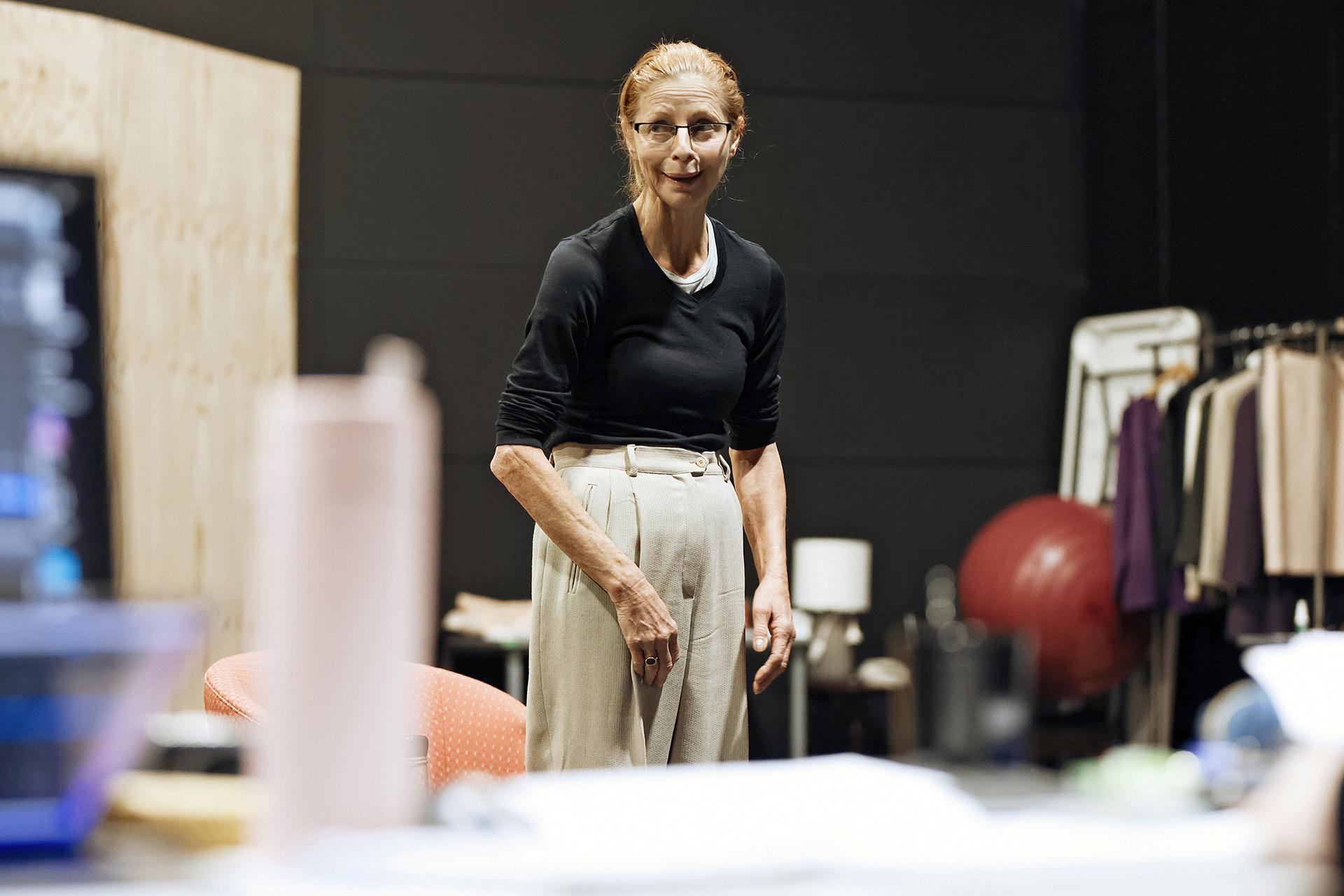
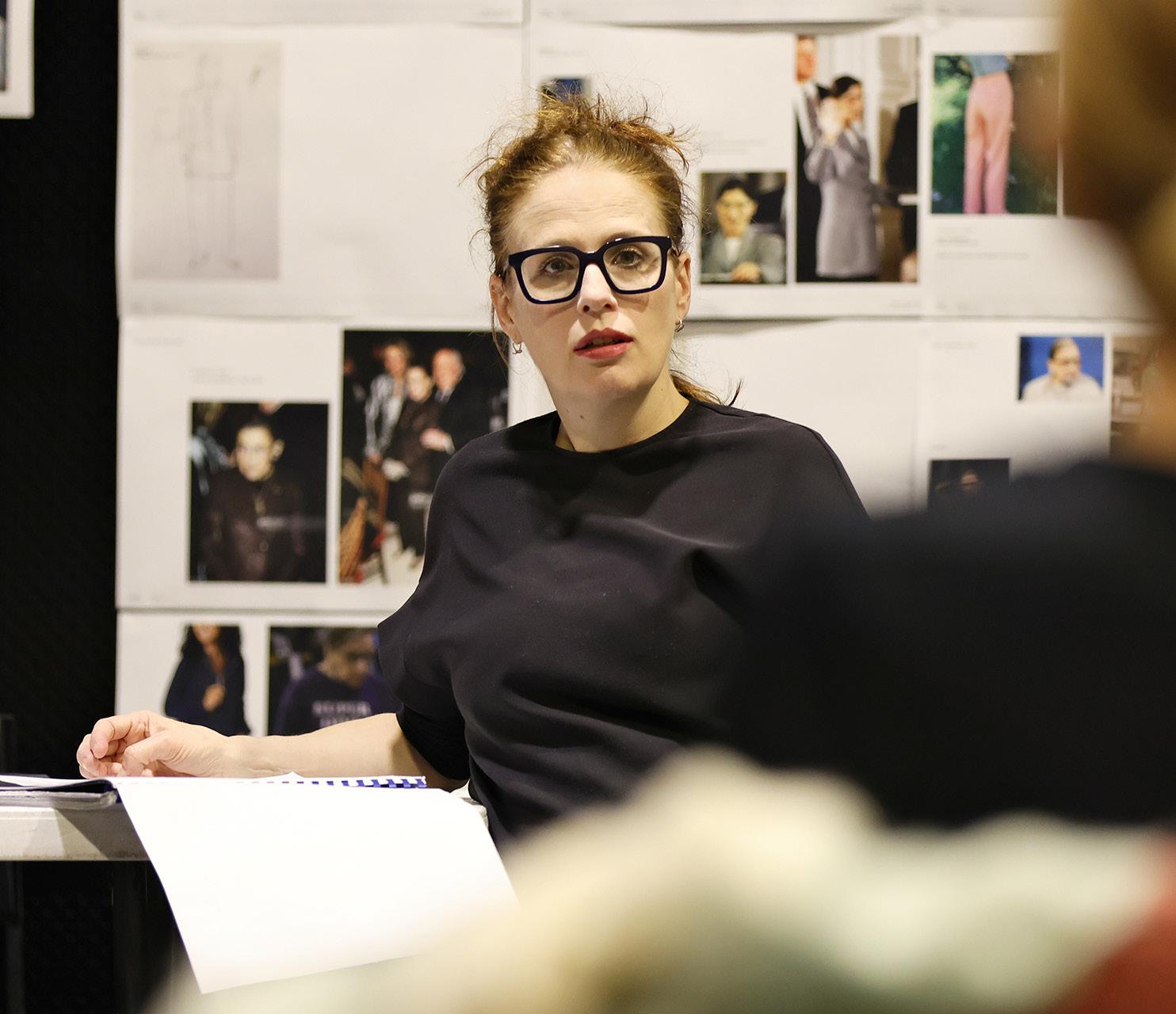
Directorially, what was clear from my initial reading of the first draft of Suzie’s exquisite script, was that our production must showcase, front and centre, the virtuosity of Heather Mitchell’s breathtaking craft. Not only is Heather required to convincingly become the iconic Ruth Bader Ginsburg, from 13 years of age to 87 inclusive, but also to inhabit every other role in the play. Suzie’s unique ’monodrama form’ also requires exceptional skill and a sophisticated dexterity from the creative team. The storytelling requires the rapid transformation of character, time, space, location and rhythm. Within very modest parameters and with very few external elements, we actively sought to create an aesthetic and a theatrical language that clearly, efficiently, and
with great innovation and theatricality, invites audiences to connect with Ruth, to deeply understand and ’experience’ her life’s trajectory and her contributions to our world.
The gift of working within this deep collaboration alongside Heather, Suzie, David Fleischer (set and costume designer), Alex Berlage (lighting designer), Paul Charlier (composer and sound designer), our creative associates and stage management team, has been an extraordinary and sacred journey – and one I believe Ruth herself would entirely approve of.
We are beyond thrilled to be bringing RBG: Of Many, One to audiences in New Zealand. In preparing for our first overseas tour, in my mind’s eye, I picture Heather and myself sitting down with Ruth to explain to her the unique kinship we share as countries – the beautiful nuances and deep relationship between Australians and our ’sister-and-brother audiences’ in New Zealand. And I imagine Ruth, nodding and smiling with great warmth, in response. I am sure she would find a natural resonance with New Zealand – not only the first country
in the world to award women the right to vote but, also, with your more recent lineage of strong female leadership –including three female Prime Ministers across the political spectrum in the last 27 years. For centuries now, Australians have looked across the Tasman to the fine leadership demonstrated by New Zealand, and not just in rugby!
When we come to the end of this 2026 season, we will have performed to around 200,000 audience members
across Australia and New Zealand. We hope this production offers personal insights into the continued relevance of RBG’s wisdom and provocation for our world. We are reminded of the deeply progressive catalyst for steadfast change that RBG represents, and the need for vigilance in continuing her fight for justice, democracy, equality, understanding, compassion and human connection. RBG’s message has never been as important as it is in our world today.
Character Analysis Ruth Bader Ginsburg
Born in 1933 in Brooklyn to parents Celia and Nathan Bader, Joan Ruth Bader was the youngest of two children. Ruth’s sister, Marilyn, died of meningitis when Ruth was a baby and her mother, Celia, died of cancer just before Ruth graduated from James Madison High School. Celia was a bright student and had hoped to further her education but was unable to do so because of her gender. As a result, she took a great interest in Ruth’s education, encouraging her to develop her obvious intellectual gifts. Celia’s early death was deeply felt by Ruth, and she carried her mother’s ambitions for her throughout her life.
After high school, Ruth attended Cornell University, followed by Harvard Law School and Columbia Law School. Marrying her husband Martin (Marty) in 1954 after graduating from Cornell, Ruth had two children, Jane, and James. During the late 1950s and early 1960s the legal profession was dominated by men, causing Ruth to struggle to find employment. During the 1970s, Bader Ginsburg became increasingly involved in the struggle for gender equality, choosing to work on high profile cases in which she focused on ending discrimination through the legal system.
In 1993, President Bill Clinton appointed Bader Ginsburg to the Supreme Court of the USA. She was the second woman to be appointed. During this period, Bader Ginsburg became well known for her liberal approach to interpreting the Constitution, redefining understandings of equality. Throughout her tenure as a Supreme Court Justice, Bader Ginsburg wrote detailed, thoughtful, and passionate analysis of the legal decisions, particularly when she dissented from the majority. These dissenting opinions became the basis of her emergence as ’Notorious RBG’, a cultural icon whose tiny stature and serious demeanour contrasted with her enormous intellect and passion for equity.
After Marty’s death and her own bouts of ill health, it was expected that Bader Ginsburg would retire in 2013, allowing then President Barack Obama to replace her with a candidate of his choosing before he left office. Bader Ginsburg declined to retire and died in office in 2020, with six weeks left before the Trump/Biden Presidential election. Her position was filled by Donald Trump before he left office.
Form & Style
FORM
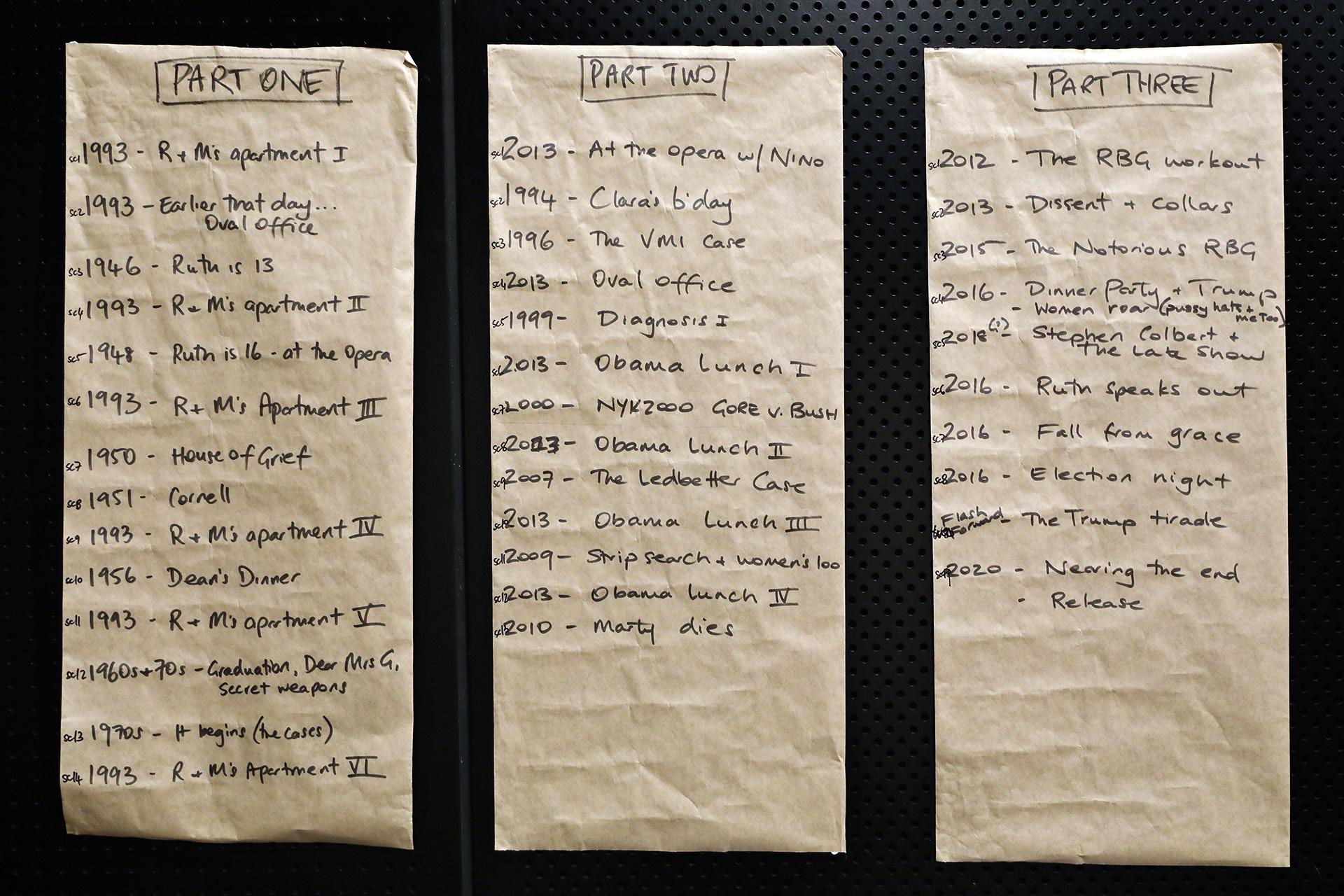
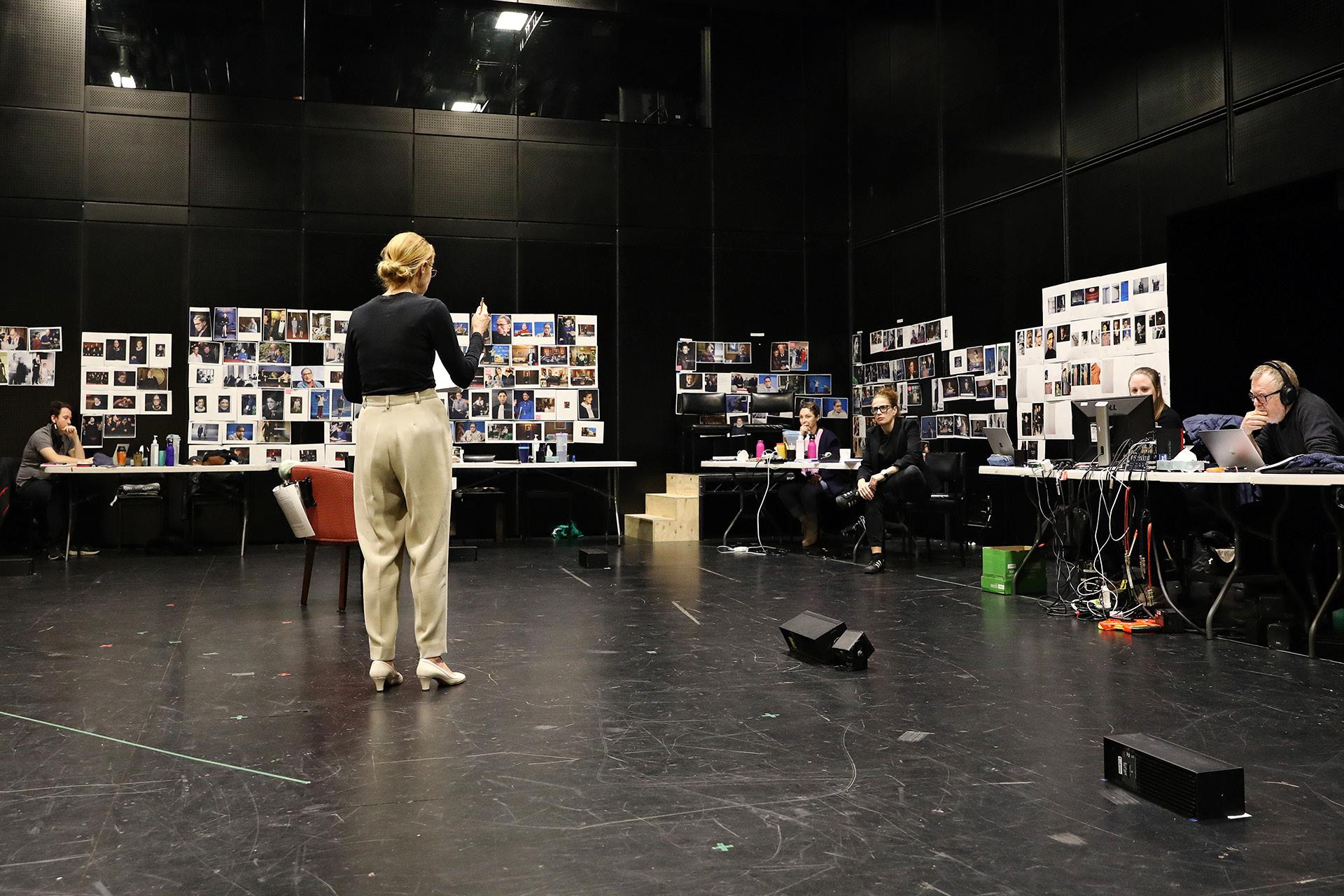
The narrative structure of RBG: Of Many, One follows a non-linear trajectory through RBG’s life. Circularity and fluidity of time is used to explore memory, inner thoughts, and human experience. A key device in Miller’s exploration of form is her use of dramatic irony, which allows the
audience to reflect on the shifts in American politics, society, and culture across historical periods, from a contemporary vantage point. Dramatic irony is the positioning of the narrative so that the audience is aware of a great deal more information than the characters.
STYLE
Realism
Realism aims to recreate the experience of real life on the stage using all available theatrical elements. The aim of Realism is to create an empathetic response in the audience as they follow the journey of the character through to a resolution.
Monologue
A monologue is a performance by one actor. It can be the performance of a long piece of dialogue within a play. Or it can be a production that contains only one actor.
Opera
Opera is a performance style that tells a story through orchestral music, with the characters played by classically trained singers. The singing is always continuous and does not break to include scenes with spoken dialogue. The conventions of Opera include highly stylised and theatrical Elements of Production, overtly theatrical performances including voice and gesture, to create a deeply emotional response in the audience. One of the key conventions of Opera is that the narrative is told through a recitative, which is sung in rhythms that are similar to natural speech. The expression of deep emotion occurs in an aria, which is written to be as moving as possible, whilst allowing the artist to demonstrate their skills.
THEMES AND IDEAS
Gender and Ambition
Suzie Miller’s script, RBG: Of Many, One, explores the relationship between gender and ambition in 20th Century America. With the focus on midcentury American legal, political, and social history, Miller’s text provides the audience with an historical understanding of the quest for women’s rights through Bader Ginsburg’s individual perspective on her life and achievements. Framed by Ruth Bader Ginsburg’s own liberal feminist perspective, Miller’s work offers the audience an opportunity to engage with the strategies and struggles for women’s rights through different points in history, using a liberal feminist approach.
Bader Ginsburg’s feminism can be characterised as belonging to a white middle-class tradition that focuses on changing laws to provide access to those areas of society from which women were (and are) excluded. Agitating to allow access to the same career choices as men, wage equality and equal treatment under the law are often the focus of liberal feminists. Intersectional feminists suggest that such an approach ignores the other barriers to women’s success including acknowledgment of race, sexual orientation, gender diversity, class, and ableism, which also work together to magnify inequality.
“This is it! The way to change things. To change the law!“ (RBG: Of Many, One, pg. 26)
Bader Ginsburg’s context, so different to contemporary understandings and experiences of societal narratives of gender equality with its stultifying constraints on intelligent, ambitious women, was a stifling place for women of that period. Bader Ginsburg’s successful career, her measured, middle-class approach to change, and the importance of male support in an individual woman’s quest for equality is reflective of a liberal feminist approach that yielded huge change for women in the 20th Century.
Miller’s script emphasises the contained, measured approach to change that was synonymous with Bader Ginsburg. Learnt from her mother Celia, and seemingly effective in disguising her fierce passion and intellect, the narrative appears to suggest that, in part, Bader Ginsburg’s success was a result of this approach. Later in Miller’s narrative, the audience experiences the vitriol of Trump’s response to Bader Ginsburg’s tweet about him, demonstrating societal disapproval and disciplining of a woman who dares express her thoughts in an open manner.
“She’s lost her mind! Justice Ginsburg’s mind is shot — resign!“
(RBG: Of Many, One, pg. 51)
With Bader Ginsburg saying:
“I have interfered where no one should. That fury of mine.“ (RBG: Of Many, One, pg. 53)

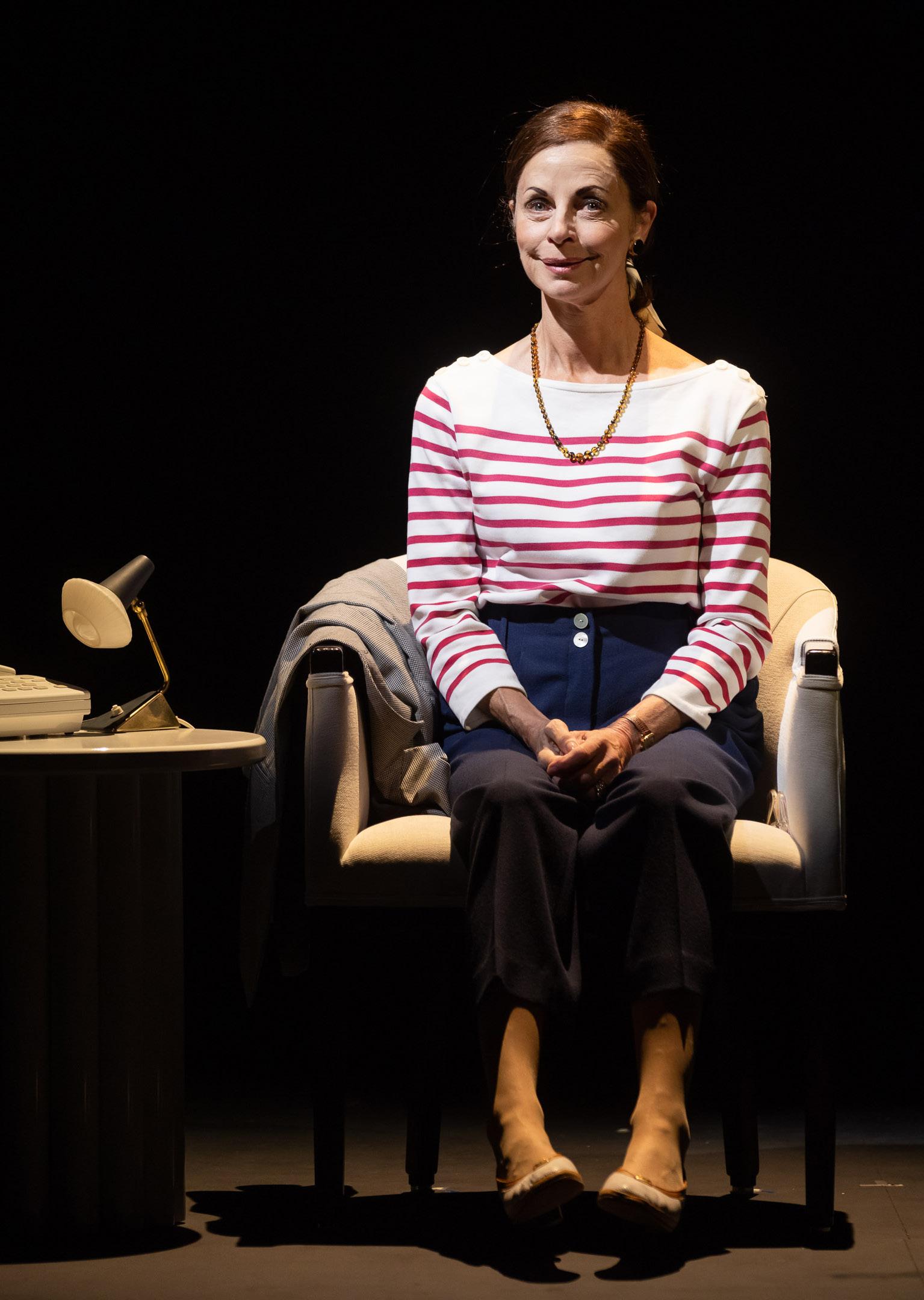
Director Priscilla Jackman on Gender and Ambition
RBG: Of Many, One traces the life journey of feminist icon Ruth Bader Ginsburg, from her childhood in Brooklyn to her rise as the second woman on the Supreme Court of USA, and finally to her status as a global icon and voice of equality. Bader Ginsburg is important for audiences because her fight for justice and equality was for all people. The implementation of sex discrimination laws here in Aotearoa took longer than those overseas and tended to be informed by practices in America and globally. In this way, Bader Ginsburg’s fight for equality in her society rippled around the world as she became a voice for freedom, democracy and equality everywhere. The play carries many themes around gender and ambition, as we come to understand the life’s work, discrimination faced, victories won and even some flaws of Bader Ginsburg over the course of her extraordinary life. The figure of her husband Marty Ginsburg also represents a supremely progressive voice as a ’1950s man’ and a terrific role model for men. Through the lens of RBG we understand more about the rise of feminism, the fight for equality, and hopefully the play inspires audiences to continue to be vigilant in our contemporary efforts to create a fair and just society for all people.

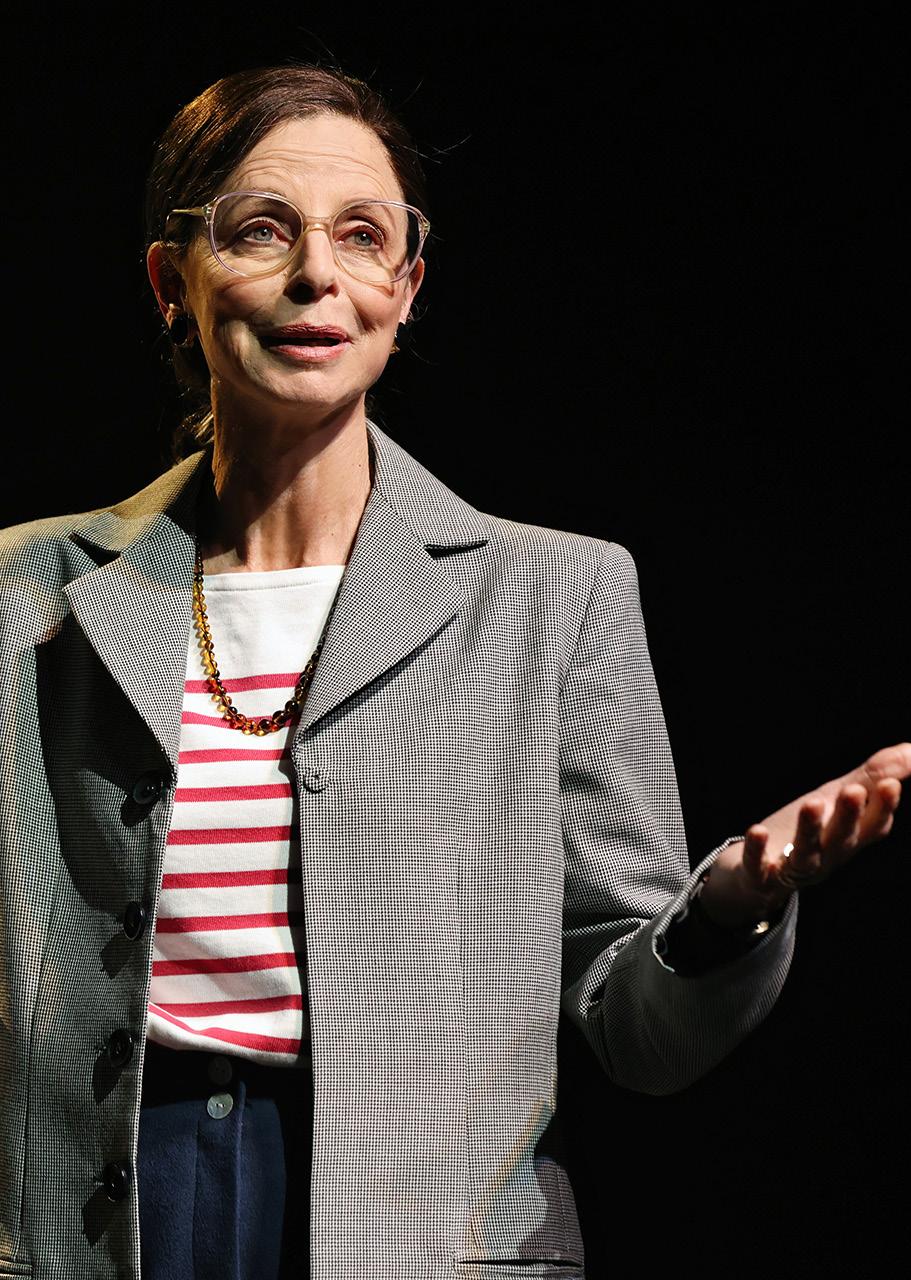
Power and Justice
“I strongly abide by the separation of the judiciary and the executive. The constitution can only work its magic, democracy can only be maintained, if we never meddle in the affairs of the other.“ (RBG: Of Many, One, pg. 7)
The US Supreme Court was established as part of the US Constitution. Its function is to hold the ultimate judicial power of the United States. The Supreme Court is the place where final legal decisions are made, government power is contained, and human rights are protected. As such, it is the final decision maker in legal disputes between the 50 states of America, government ministers and ambassadors, federal law, and the US Constitution.
The importance of the Supreme Court in managing and balancing the power of the government is of vital importance in a liberal democratic society. This is because it sets limits on the actions and activities of the government by making decisions that prioritise the values of the US Constitution over and above the political views of the day. These values, for example, include equality before the law and freedom of speech.
Made up of an odd number of judges and appointed by the President, the US Supreme Court evaluates legal arguments presented to it and decides whether a case violates the constitution or whether it does not. If most judges agree on a way forward, it
is called a majority opinion. If a judge disagrees with a decision made by the court and is in the minority, they are entitled to write a dissenting opinion. These opinions explain flaws in the thinking of the majority and why the decisions should have been different.
Dissents, far from being a waste of time, often lay out a pathway for future challenges to the majority decision taken by the Supreme Court.
Suzie Miller’s script acknowledges the historical shift to a more conservative outlook in America, reflected in both the politics of the day, the politicised appointments of Supreme Court Judges and the increasing conservatism of decisions made by the US Supreme Court. Miller’s script explores the power and importance of a judge’s dissenting opinion in the protection of democracy. Carefully written and different to the neutral language used in writing an assent, dissents are both of the law and outside it. It might be expected that a dissent weakens the institution of the Supreme Court by exposing differences in legal thinking, however, the opportunity to freely express different thinking can also be seen as exercising the right to free speech, thus strengthening the robust nature of institution by demonstrating its ability to withstand different points of view.
Miller’s script incorporates many of Bader Ginsburg’s cases, including her dissent on the Burwell vs Hobby Lobby Stores case in which the Court supported the idea that:

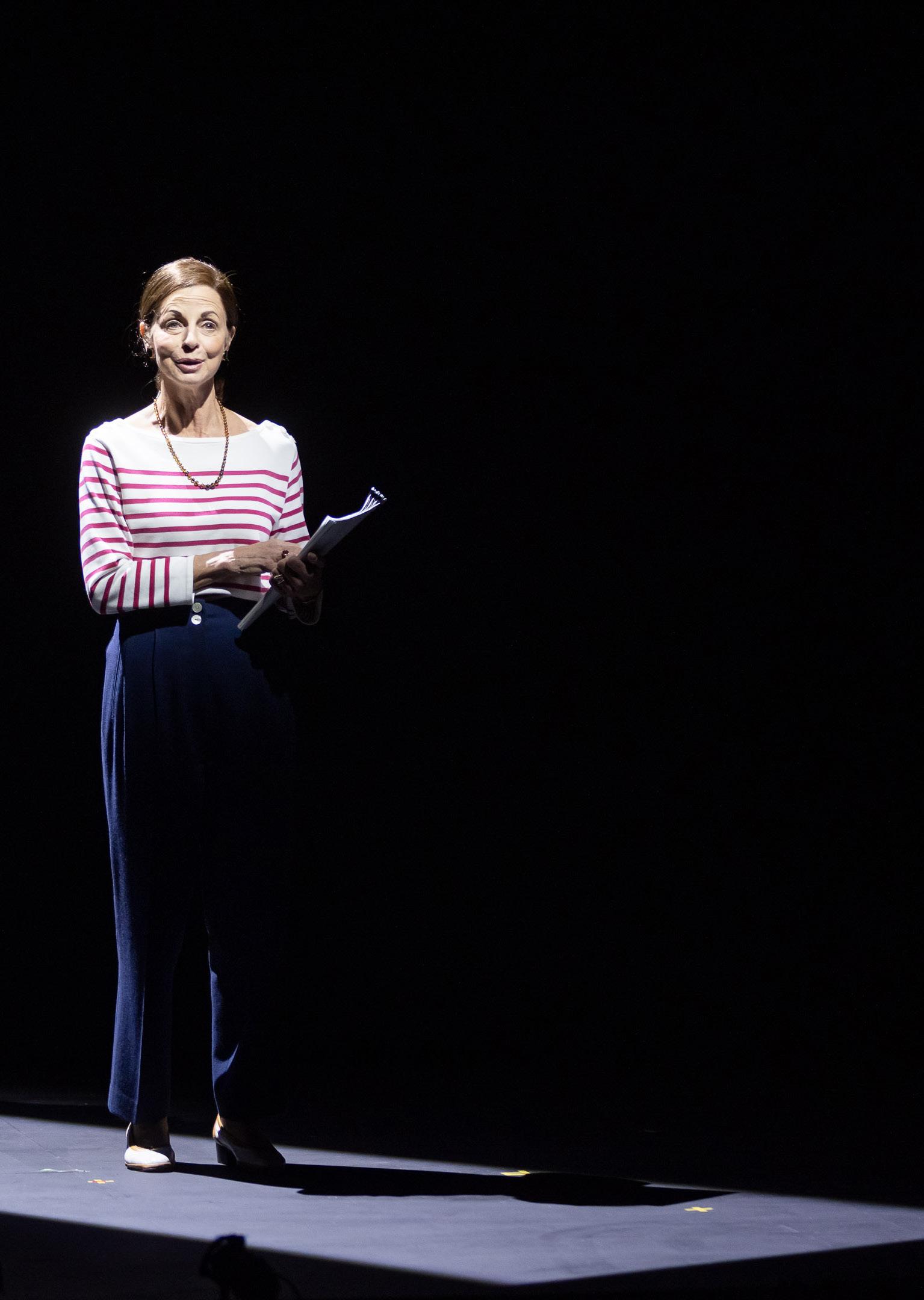
“... explicit Christian faith says that contraception is immoral and so they won’t allow employees’ health care to cover contraception.“ (RBG: Of Many, One, pg. 47)
Holding her liberal feminist understanding of equality, Bader Ginsburg challenged the logic of the assent by centring on the rights of individual female employees and their ability to participate in the workplace under such a decision.
“My dissent is strong. A profit company is not a religious organisation. The ability of women to participate equally in the economic and social life of the nation, has been facilitated by their ability to control their reproductive lives.“ (RBG: Of Many, One, pg. 47-48)
The politicised nature of appointing judges to the Supreme Court is also explored in Miller’s script, reinforcing the importance of Bader Ginsburg’s dissenting arguments in the face of the shift to the conservative right in American politics. Appointed by (Democrat) President Bill Clinton, and explored by Miller in Part 2 in a scene with then (Democrat) President Barack Obama in 2013, and continued into the Biden/Trump election campaign of 2020 and framed by Bader Ginsburg’s famous media comments on (Republican) Donald Trump, Miller explores the tension between the notion of impartiality of judges, the politicised nature of their appointment and the impact on the lives of ordinary women and minority groups in America.
Director Priscilla Jackman on Power
and Justice
Themes of power and justice are explored at length by Suzie Miller, particularly in her depiction of RBG in her interactions with each of the presidents of the United States: Clinton (Part 1), Obama (Part 2) and Trump (Part 3).
RBG refers numerous times throughout the play to the ’Rule of Law’ and the importance of the distinction between judicial and congress powers. What she means by this, is that for a just and democratic society to operate, the justice system (courts) must operate independently of the political system (government). If the government can determine the outcome of courts (or vice versa), corruption can breed. When the two systems of governance and power remain separate, all citizens — whether they are high up in politics or everyday people — are all entitled to a fair trial and that no one is above the law.
She first outlines her value system on the importance of this, in Part 1: The Oval Office, when she is being interviewed by President Clinton, to see if she will be appointed to the Supreme Court of America. She says:
“I strongly abide by the separation of the judiciary and the executive. The constitution can only work its magic, democracy can only be maintained, if we never meddle in each other’s affairs.“ (RBG: Of Many, One, pg. 7)
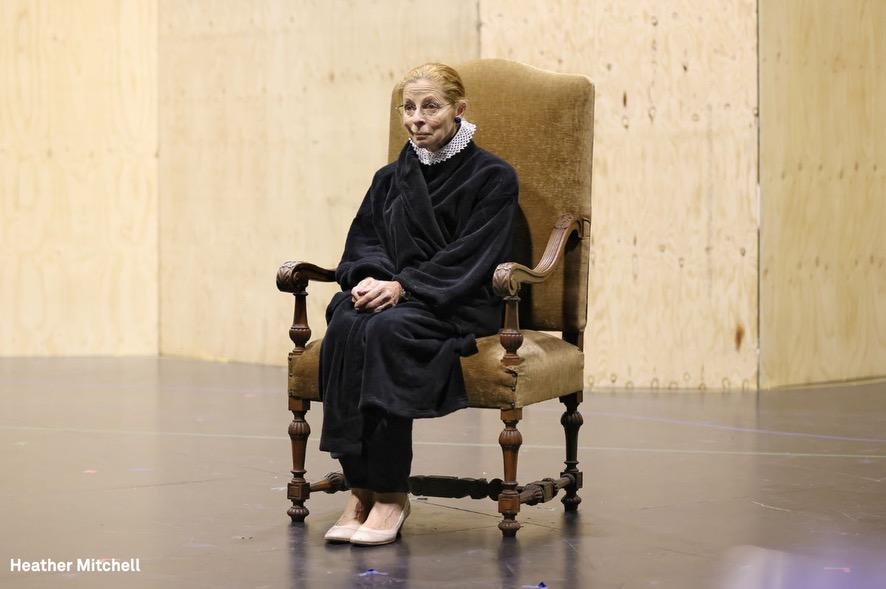
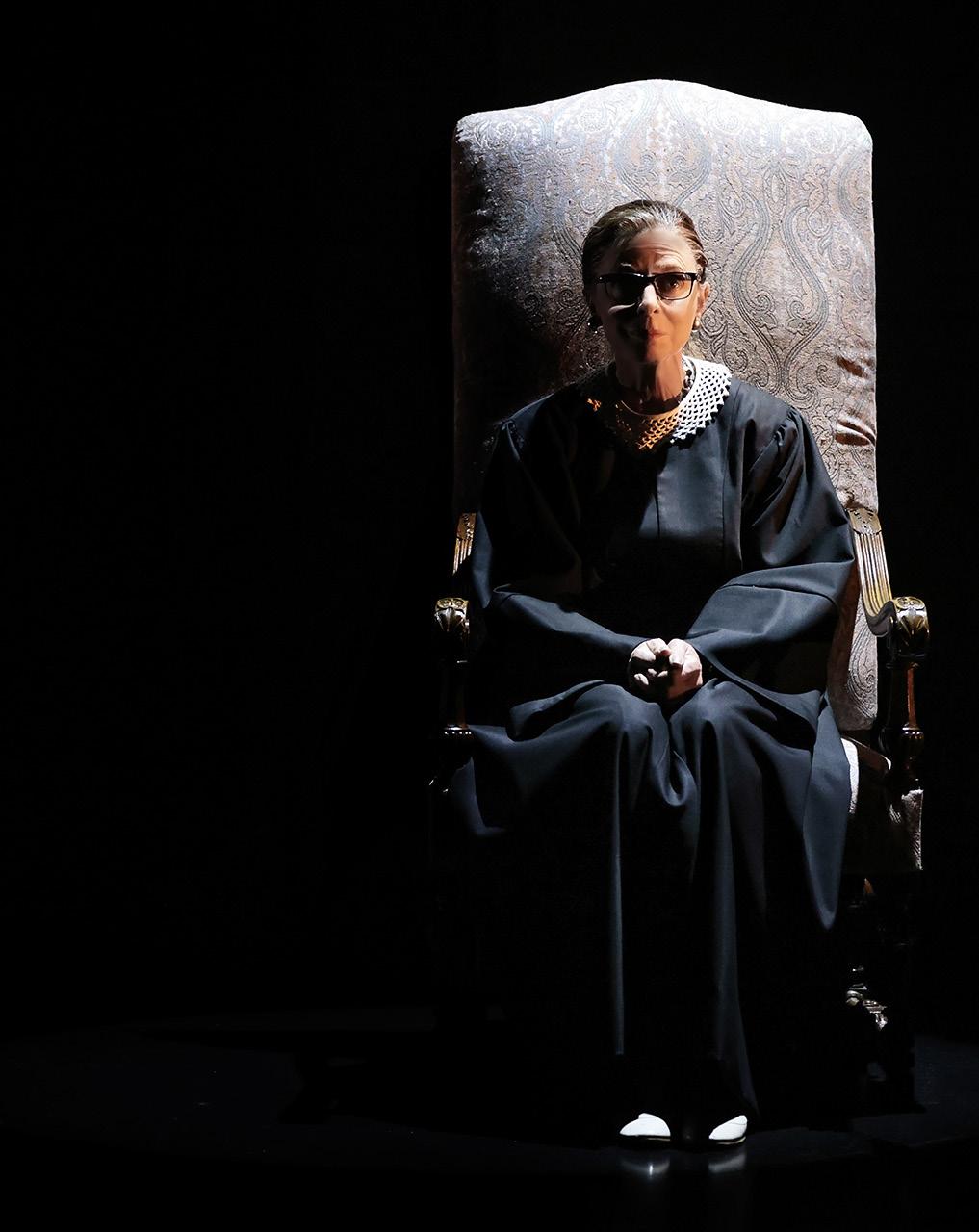
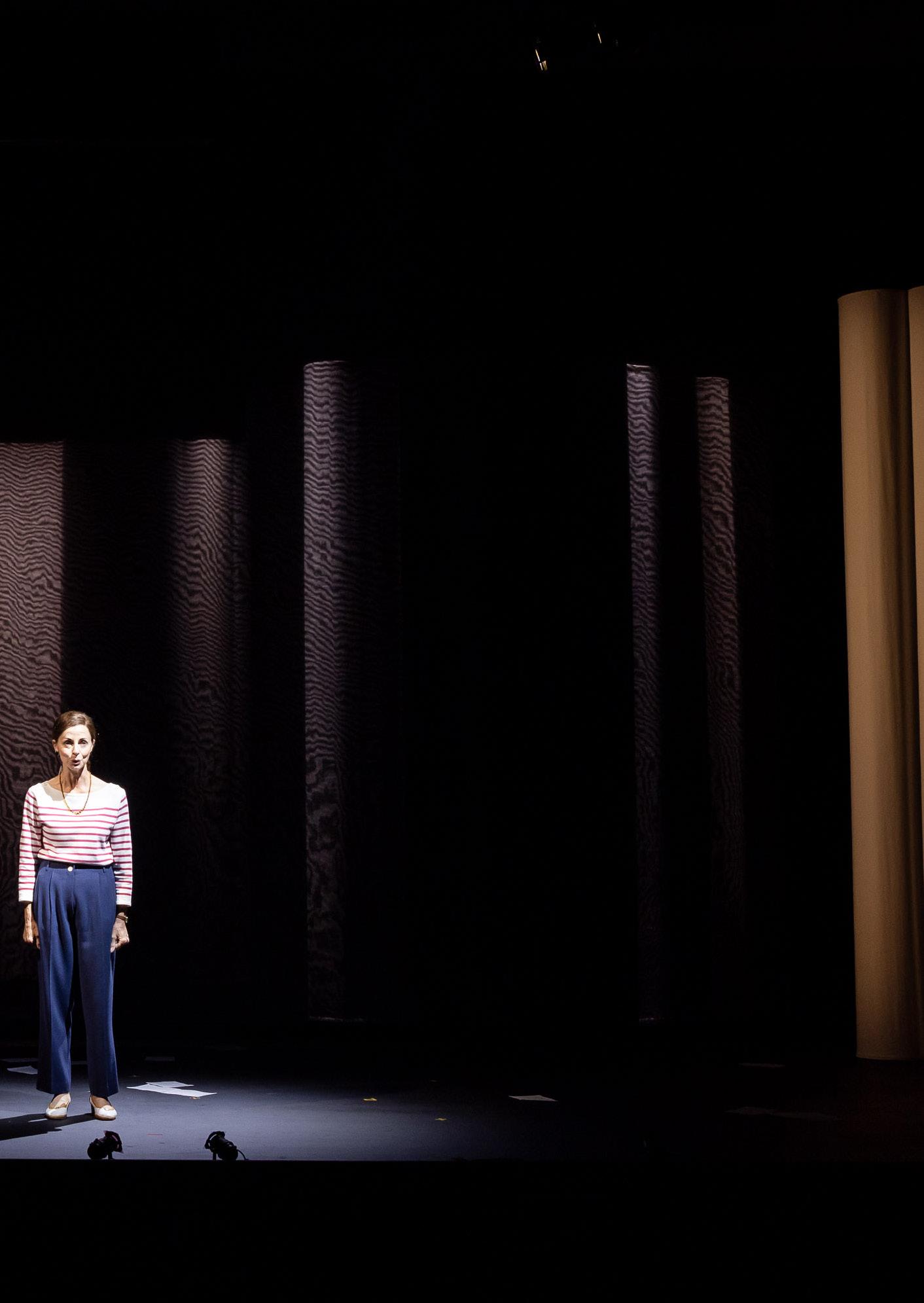
As a creative team, we chose to light RBG in an oval spotlight, reflecting the location of the Oval Office. Physically, she stands tall, and I directed Heather to hold two different points of focus, to differentiate for the audience her eye contact when she is playing RBG and when she is playing Clinton. She furthered this distinction between the two characters by taking on a southern drawl for Clinton, using slower tempo rhythms, and an outward arm gesture, to physically suggest his power and ease in the situation and ’taking up space’. In contrast as RBG, Heather adopted a more compact physical stance, to demonstrate RBG’s nervousness in the situation. She explored faster tempo rhythms for RBG and rapidly moved between ’talking to Clinton’ and turning to the audience delivering asides as narrator. When it came to the important lines about the reflection on democracy and power however, Heather, as RBG, delivered these with confidence and poise, as we wanted to clearly demonstrate to the audience not only how important this theme is in the play (as this is the first time it is heard), but also to communicate RBG’s personal love of law and democracy, and her confidence on all judicial matters.
During Part 2, the Obama lunch scenes, Bader Ginsburg expands on this theme of power and justice. She suggests to Obama that:
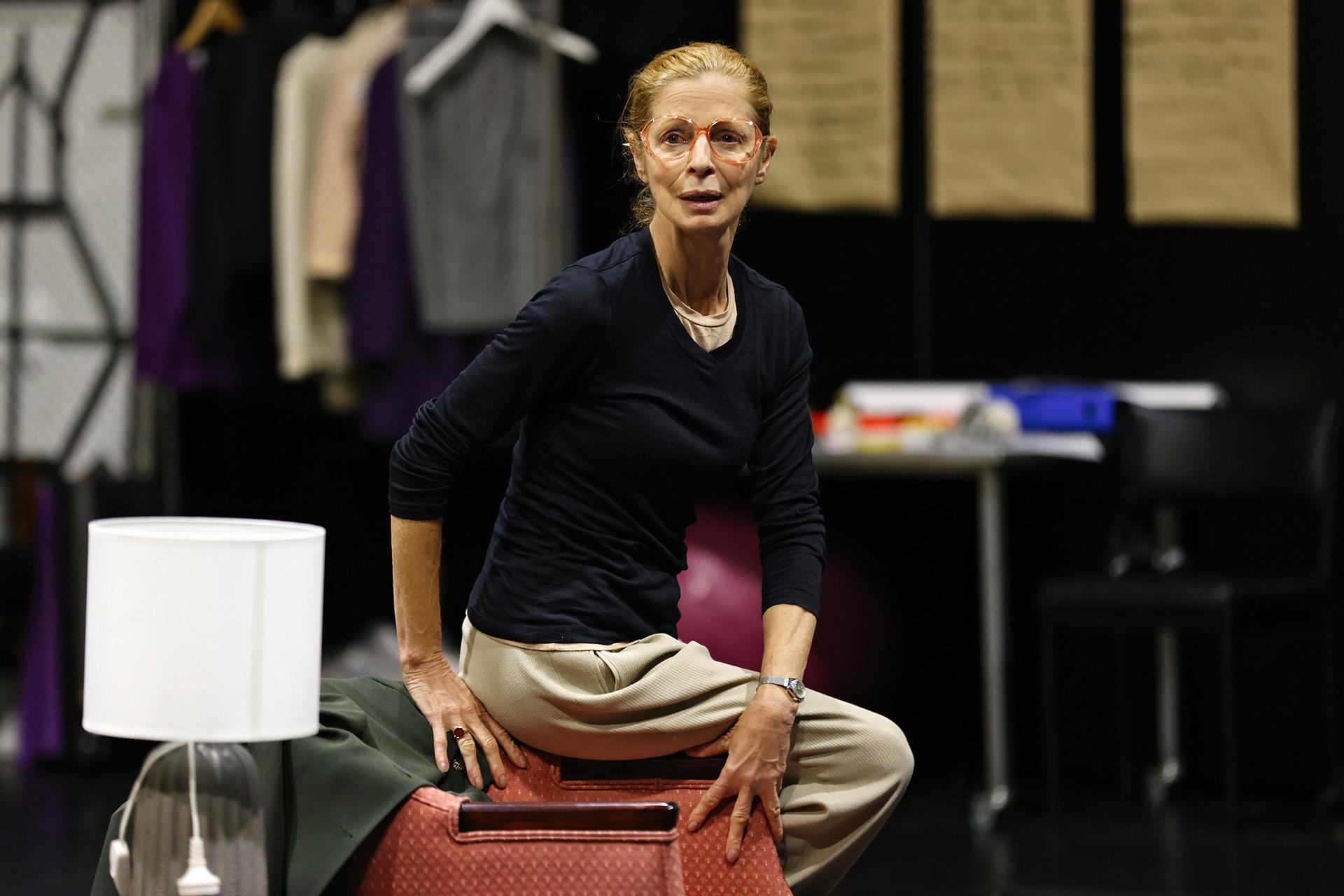
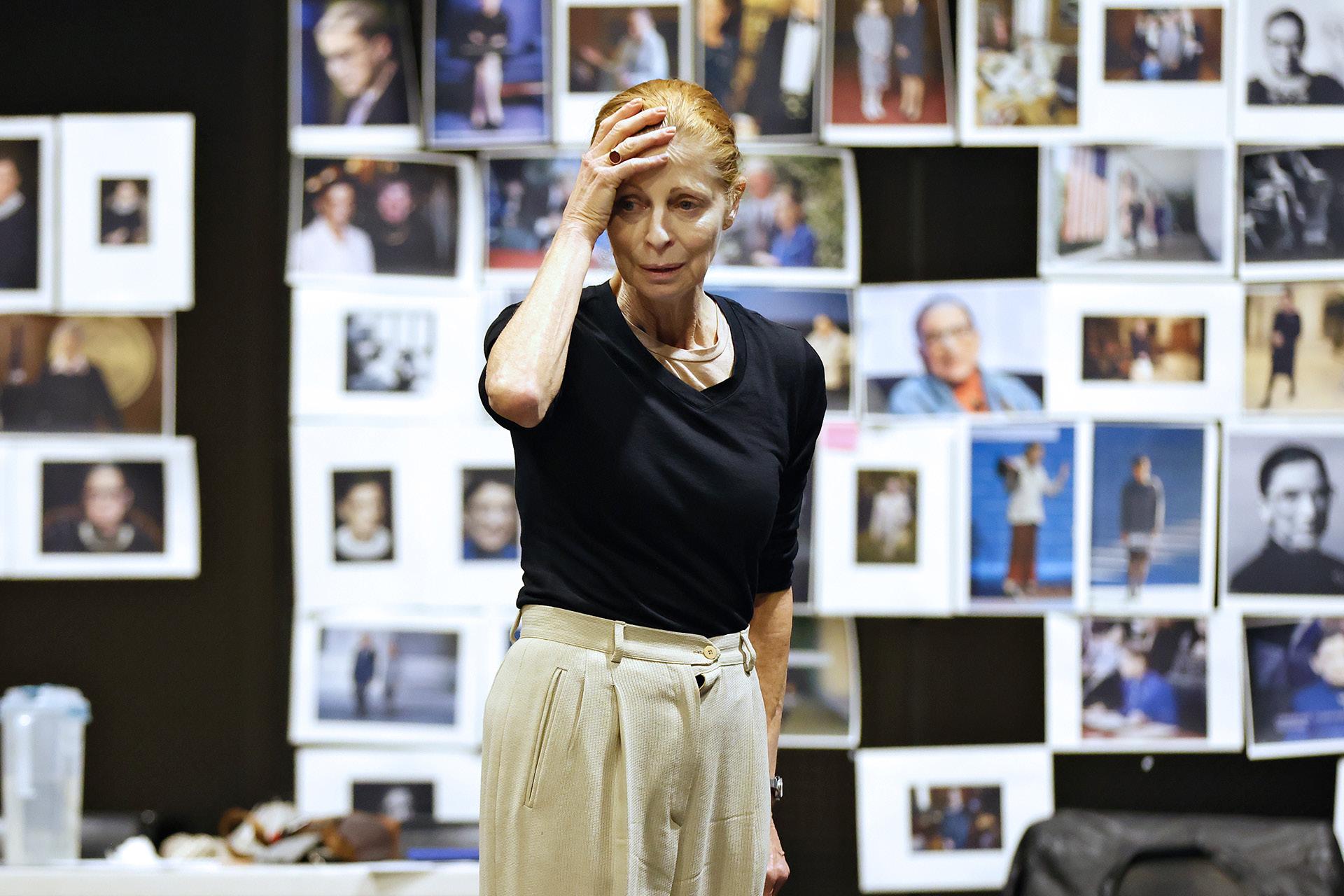
“The separation of President and Congress from the Judiciary is one of the pillars of the United States democratic system. We must never interfere or tell each other what to do. We are each other’s checks and balances to guard against a rogue court or a rogue president.“ (RBG: Of Many, One, pg. 40)
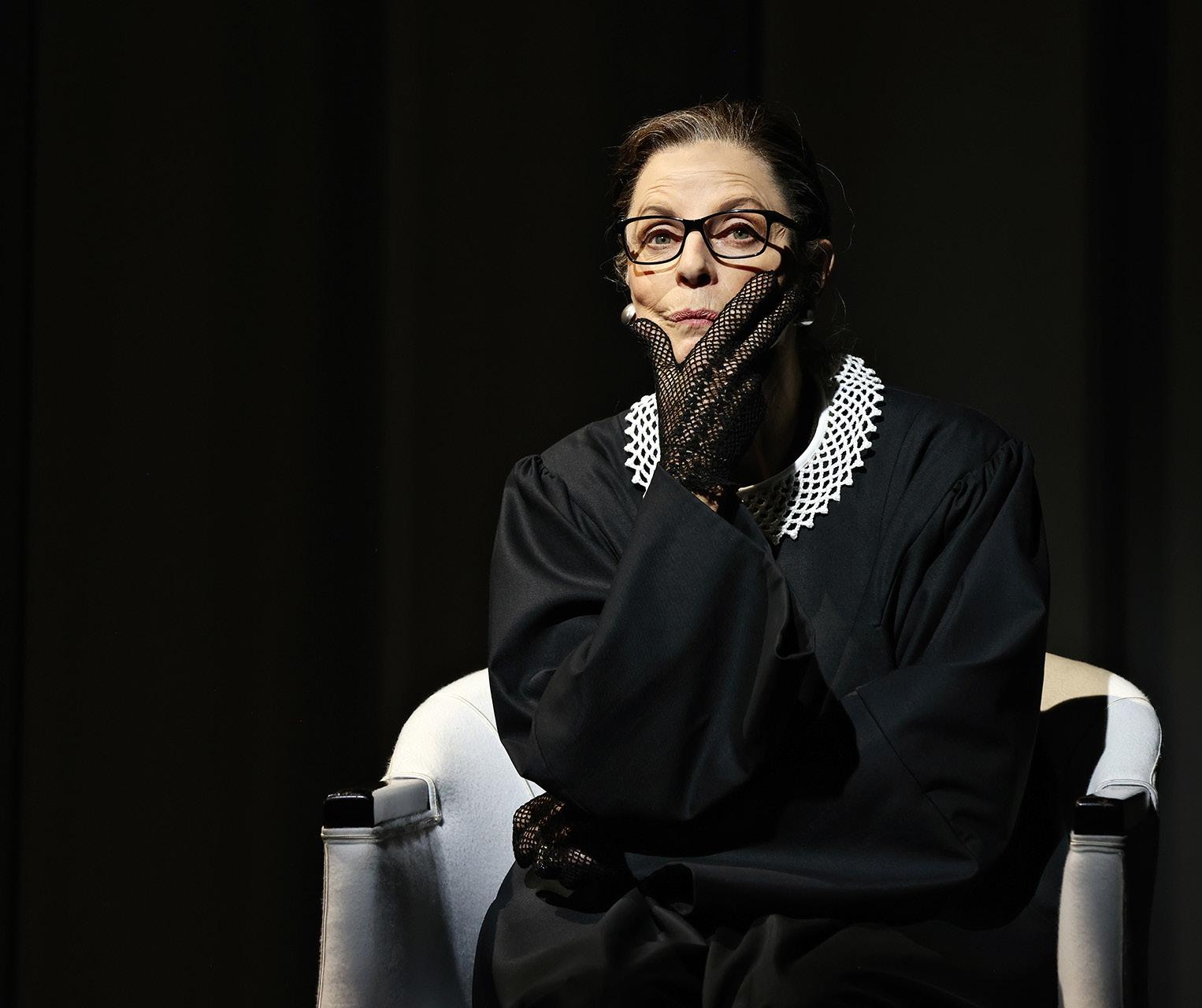
In this scene RBG takes up a seated position, as if she is addressing President Obama across a table at lunch. We used the singular prop of a white serviette to reinforce this suggested location, and the backdrop of the wall structure. Bader Ginsburg is 80 years old in this scene, and Heather adjusted the tone of her voice to depict this. She slightly curled her spine, extending her neck forward, to suggest the older physicality of RBG. Despite her age, RBG is still fiercely focused and intellectually dexterous in this scene as she delivers some of the most important lines of the play regarding the Rule of Law and her belief in the importance of democracy and the systems of law.
Part 3 is extremely interesting in terms of dramatic tension and irony because in her later years, Ruth failed to follow her own advice and spoke out in warning of Trump during the presidential race in 2016. This was extremely out of character, because as a judge she had no right to speak out politically — as it was her role to remain unbiased. Dramatically, this is one of the largest climatic moments in the play and reflects a grave misjudgement
which caused Ruth enormous personal and professional shame as she ’falls from grace’. She says:
“I told Obama not to meddle in the court, I said, ’just as a judge like me should never meddle in the workings of Congress’. And now, I have done that very thing. I have spoken up against a presidential candidate. I have interfered where no judge should. The only time in my career when I favoured emotion over process... And so publicly. I am so ashamed of myself and this fallibility, it hurts.“ (RBG: Of Many One, pg. 53)
Directorially, we made specific choices to mark the climax of Ruth speaking out by positioning Heather centre. We used mobile light boxes operated by our Stage Technician and Assistant Stage Manager, in a series of choreographed moves that punctuate the lines of Bader Ginsburg speaking out to the media including Times and CNN. She says:
“I don’t even want to contemplate four years of a Trump presidency and the effect it could have on the court... Trump is a faker with an ego.“ (RBG: Of Many One, pg. 51)
After each line, we used sharp, explosive sound to suggest the pop and frenzy of the paparazzi. Our Lighting Designer, Alexander Berlage, coordinated an aggressive series of sharp short lighting cues (like strobe) that added to the tension of this moment. Our Composer & Sound Designer, Paul

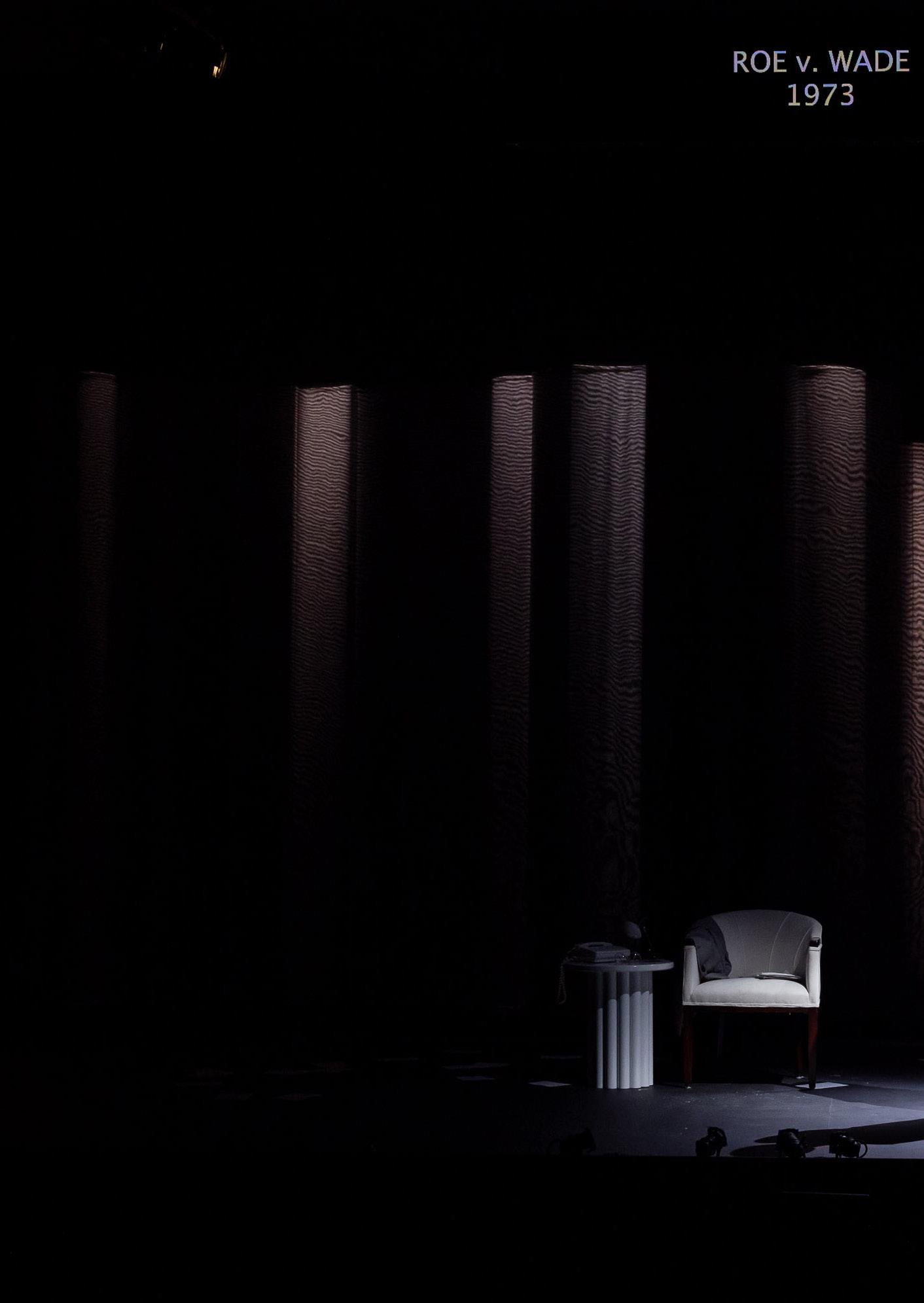
Charlier, also used a drone like backing to further underpin the dramatic tension. As the tidal wave of condemnation for Bader Ginsburg rose on social media, we used an overlay of tweet sounds and pulsing rhythms. I directed Heather to move upstage rapidly in a series of diagonal moves, positioning her far upstage, so that she became dwarfed by the set structure. In this way the very ’columns’ that represented her rise to power and the Supreme Court in Part 2, now looked to loom above her. This was a symbolic way of communicating the growing emotional distress of RBG as her ’fall from grace’ caused both personal and professional shame.
In this way, throughout the script there are many references to themes of justice and power. A range of directorial and creative choices were employed to communicate RBG’s views on justice and power at various junctions in her journey, often seen in relationship to the presidential figures that she encountered throughout her career.
American Identity
Suzie Miller’s exploration of Ruth Bader Ginsburg’s life functions as a device with which to interrogate America, offering a comment on the political, social, and cultural shifts through which she lived, enacted change, and became a revered cultural icon.
It is no coincidence that Bader Ginsburg was able to rise to her position during the 20th Century, an historical period in which America was an undisputed global superpower. Its economic and cultural hegemony, built on the success of its capitalist economy, with its focus on market forces, development of the military industrial complex, and accumulation of wealth and global cultural industries, strengthened the hegemonic narrative of liberal freedoms and benevolent capitalism. Miller’s narrative offers an individual’s experience of the impact of the decline of this narrative, as it curdled with the rise of the conservative religious right. Beginning with the Reagan Administration, and escalating over the early 21st Century, the conservative religious right has grown in influence as global challenges to American economic and military power emerged and its population struggle with the results of decades of neo-liberal economic policies.
The production of RBG: Of Many, One manipulates theatrical form, the theatrical device of dramatic irony and the theatrical style of Opera to explore audience understanding of an America in decline, with state institutions including the judiciary, under extreme pressure from an increasingly polarised political landscape.
Miller’s use of narrative shifts through time allows the audience to experience the optimism of the fight for gender equality and other social justice campaigns during the early 1970s, a period in which America was just beginning to exit the post-World War Two economic boom. The inexorable move to Parts 2 and 3, including the end of Bader Ginsburg’s life, is marked by the rise of Trump and the conservative right in American politics, including their attack on women’s rights. Watching in 2026, the audience engages from the vantage point of the end of first Trump and Biden Administrations, nostalgic for the certainties of a liberal democracy characterised by reason and objectivity and supported by a thriving, healthy economy.
Fusing Realism with Opera, Miller heightens the audience’s emotional connection to Bader Ginsburg’s individual character, and the collective tragedy unfolding throughout the narrative. The conventions of Opera, designed to convey profound depths of human experience and emotion, has been harnessed by Director Jackman and Composer & Sound Designer Paul Charlier in both narrative choices and Charlier’s sound design, enhancing the audience’s emotional connection to an individual woman who, by her own admission, was serious and contained.
Like its defender Bader Ginsburg, older versions of America become an object of nostalgia. As such, Miller’s play offers the audience to remember, celebrate and mourn, both the woman and the nation, and challenge the efficacy of the narrative of liberal change, liberal feminism, the success of capitalism and the place of America in the world. Bader Ginsburg embodies the ideal images of what America understands itself to be, that once might have existed but does no longer.
Classroom Activities
Suzie Miller, Priscilla Jackman and RBG: Of Many, One
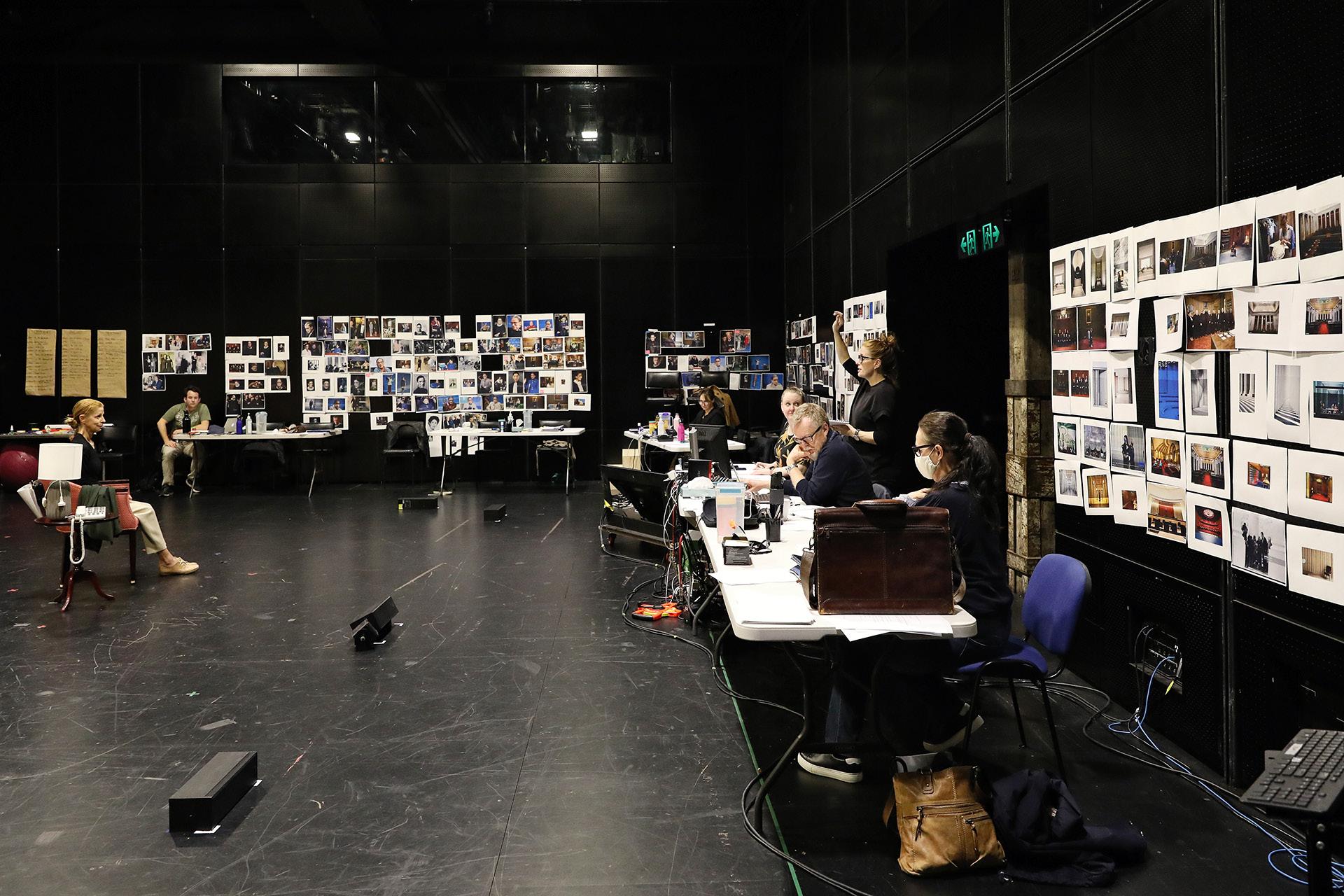
When revising for your live performance exam or building your portfolio, think beyond what happens on stage and consider the wider context of the play; historical, political, social, and geographical. A play draws from a rich context, including its whakapapa, influences, and the circumstances
that shaped its creation. While the exam is not focused on how the play is written, discussing key moments in performance becomes stronger when you connect them to the play’s structure, themes, and inspirations, especially with a playwright like Suzie Miller.
At the same time, analyse what the director aimed to communicate through their choices. For RBG: Of Many, One, a contemporary work, consider how it reflects cultural, social, and political contexts, both past and present. Using these approaches will help you generate ideas, organise your thinking, and gather evidence or quotes to support clear, insightful responses in your exam or portfolio.
PRE-READING AND LISTENING
• In small groups read the Playwright’s Note and Director’s Note
• Highlight ideas that interest you
• Circle quotes you think would enrich an answer in an exam
• Underline and annotate ideas that link to a specific moment in the performance.
• If you recorded the post show forum:
• Write down ideas that interest you
• Record quotes you think would enrich an answer in a your portfolio or exam
• Record moments in the forum that surprised you or provided more context for something you saw on stage.
IN THE CLASSROOM
A woman in the American judiciary: RBG: Of Many, One is written as a solo show, and traverses what it means to be a woman in the American judicial system, her life as a trailblazer and how she paved her way through the world. Through Suzie Miller’s writing and Priscilla Jackman’s directorial choices we explore the impact of a woman who was a fierce advocate for gender equality and reproductive rights and only the second woman appointed to the supreme court. In small groups or pairs use these prompts to brainstorm how this was realised on stage:
Consider:
• How Miller’s writing traverses Ruth Bader Ginsburg’s life and career
• Think about Miller’s purpose for writing the play and how this highlights or unpacks the way Ruth Bader Ginsburg was a trailblazer, breaking ceilings and norms
• What did you think about at the time and what have you thought about since.
Research: Research Ruth Bader Ginsburg’s career and discuss how the play has explored aspects of her life realistically or where artistic license was taken to make a specific point. Think of two to three examples to discuss and think about how these were
realised on stage through directorial and design choices. Bring your examples back to the class and make detailed notes on the whiteboard or a shared document to use in the next part of the activity.
Discuss and extend - in groups brainstorm around the prompts below. Discuss what you think Jackman intended to communicate through her directing choices. Prompts:
• In the rehearsal room: how do you think the idea of Ruth Bader Ginsburg being a trailblazer and political advocate was explored in the rehearsal room and how does this connect to what you saw on stage?
• The big themes and intentions: identify other themes or intentions that Jackman had for the piece or chose to highlight through design or directorial choices. How was Ruth Bader Ginsburg represented and why was this important?
• Style and flair: can you identify a specific style or aesthetic in the way the performance was pulled together. What do you think Jackman intended to communicate through these choices? How did the way play was written influence this style?
REVISE - (COMPLETE THESE AS YOU STUDY FOR YOUR EXAM)
Directors concept:
• Discuss the purpose of the performance and how the themes or ideas link to what is happening in the world; socially, politically or historically. Link your ideas to specific moments or examples from the performance:
• How did the way the performance was realised impact the style of delivery of the narrative/story?
• How does the content of the play challenge and serve the audience?
• Discuss how the director brought the story to life using Drama Components - Elements, Conventions, Techniques and Technologies
• What do you think Priscilla Jackman is asking you to think about in the way she has directed RBG: Of Many, One:
• How did the acting and staging choices affect you as an audience member?
Exploring the themes of RBG: Of Many, One
POWER AND JUSTICE
Working with text
You can purchase the text of RBG: Of Many, One online.
Working as a class, divide the class into halves. Within each half, divide the class into groups of four to five students.
• The first half of the class works with extracts from Suzie Miller’s script in which Bader Ginsburg speaks of the role of the Supreme Court to protect democratic values. Excerpts:
• “Ruth: I strongly abide by the separation of the judiciary and the executive. The constitution can only work its magic, democracy can only be maintained, if we never meddle in the affairs of the other. Clinton:
Except for right now where I must appoint a judge and therefore, I have my nose right in the business of the judiciary.“ (RBG: Of Many, One, pg. 7)
• “I never dreamed that this country would decide the presidency before it was certain that the voting was fair.“ (RBG: Of Many, One, pg. 38)
• “My dissent is strong. A profit company is not a religious organisation. The ability of women to participate equally in the economic and social life of the nation, has been facilitated by their ability to control their reproductive lives.“ (RBG: Of Many, One, pg. 47-48)
• “Sandra, the first woman on the bench, a Republican, she’s reaching out to me beyond the partisan divide. Beyond all our differences with welcoming arms.“ (RBG: Of Many, One, pg. 33)
• “It gave me exactly what I needed to draft into law equal pay despite gender.“ (RBG: Of Many, One, pg. 39)
• In the second half of the class, divide the class into groups of four to five students. These students work with the extracts below from Suzie Miller’s script in which dramatic irony is used to heighten the audience’s understanding of the importance of protecting the non-partisan role of the Supreme Court in American Society. Excerpts:
• “In 1973 there’s a landmark abortion case being heard before the Supreme Court. Roe vs Wade... It’s not my case but I follow it closely of course... But HANG ON. The court held that
the right to abortion rests on the right to privacy between a woman and her doctor. It isn’t strong enough. The win in Roe versus Wade isn’t really about the woman’s choice, it’s the doctor’s freedom to practice... I speak up... The court failed to make abortion a watertight right. I’m warning that one day abortion rights can be overturned.“ (RBG: Of Many, One, pp. 28-29)
• “I must be prepared for what is coming. A new president. A woman. Soon, I hope. She will read these dissents. Take them to Congress and will change the laws. And change this nation.“ (pg. 48)
• “This new generation wants to make life better not just for oneself, but for one’s community.“ (pg. 49)
• “I’m at a dinner party. I don’t know all the guests but it’s a pleasant group. All Democrat supporters. Still as a member of the judiciary I must be careful what I say in company. The talk is all about this joke of a presidential race. Hillary is doing a marvellous job, ahead in the polls. Against this awful Donald Trump man, this New York money maker.“ (RBG: Of Many, One, pp. 49-50)
• Create a montage of quotes, freeze frames and movement that represents the mood and atmosphere of each selection — one that reflects Bader Ginsburg’s view of the Supreme Court’s role in American society and one that reflects the mood and atmosphere of a contemporary audience as they experience Bader Ginsburg’s optimism about the future. Present each to the class and reflect on the following question:
• Playwright Suzie Miller uses the theatrical device of dramatic irony throughout RBG: Of Many, One. What is playwright Suzie Miller asking the audience to reflect on?
RBG’s nomination to the Supreme Court
Using the final scene below from Part One, consider the appointment of Bader Ginsburg by Bill Clinton.
“And I hear loud and clear. President Bill Clinton word for word: I’m going to ask you tomorrow, in the Rose Garden at the White House, to accept a position as one of the nine judges on the Supreme Court of the United States of America.“ (RBG: Of Many, One, pg. 30)
As a class, discuss the following questions:
• What political persuasion is Bill Clinton? What political persuasion is Donald Trump?
• What is the prevailing atmosphere of Bader Ginsburg’s response to being nominated to the Supreme Court? Does the audience question this appointment at this stage of the production? Why or why not?
• Why might Miller have placed this moment at the end of Part 1 after the plot developments (recitatives) demonstrating Bader Ginsburg’s achievements?
A request to resign
• Part Two of Miller’s script involves the exploration of Barack Obama’s request to Bader Ginsburg to resign her position due to her age and the looming election in which Trump and Hillary Clinton are in a race for the American Presidency. In groups of four to five, explore the following scenes in which President Obama and Bader Ginsburg grapple with the prospect of a Republican nominee to the Supreme Court, should Bader Ginsburg die if Trump is elected to office. Each group might explore the perspective of either Obama or Bader Ginsburg. Each group could, from the vantage point of 2013, think of five reasons why their chosen character is correct, justifying their thoughts with reasons from the historical period:
• 2013, Monday 1 July, Washington DC (pgs. 39-42)
• 2013, Monday 1 July, Washington DC (pgs. 43-45)
• Using the expertise of the group generated in the activity above, create a Conscience Alley exercise where an actor takes on the role of Ruth Bader Ginsburg. The rest of the group, based on their work in the previous exercise, forms two lines and becomes Bader Ginsburg’s conscience, advising her on the question: Should RBG resign before the 2016 election?
• Using the Conscience Alley exercise above, and the decision taken by the class, discuss the impact of the activity through the lens of a contemporary audience. How does Suzie Miller’s use of dramatic irony impact on our understanding of the tragedy that unfolded after Trump’s 2016 Presidential victory?
EXPLORING IMAGES OF AMERICA
Working in groups of two to three students.
• Use the following scenes from RBG: Of Many, One to create frozen images of America. Ask each group to create six images including three of the 1970s and three of contemporary America:
• Scene: 1970s It Begins... pg. 25
• Scene: 2016 pg. 50
• Move between the images, beginning with one from the 1970s, immediately contrasted with one from 2016. As each group presents their images to the class, ask the audience to offer adjectives that describe each. Place each adjective on the white board under the headings 1970s and 2016.
• Once this process has been completed, discuss the following questions as a class:
• What does RBG: Of Many, One appear to be suggesting about America’s trajectory over the previous fifty years?
• What reasons might be given by the class for this trajectory?
REVISE - (COMPLETE THESE AS YOU STUDY FOR YOUR EXAM)
Drama Conventions - strategies established to make meaning and connect to wider context: (NB - make sure you are familiar with what the established Drama Conventions are by discussing this with your teacher)
• Identify a moment in the performance where Drama Conventions were used to transform the space:
• Explain how the convention or combination of conventions were used in the performance
• Discuss the impact of the use of the convention or combination of conventions in this moment
• Discuss how meaning was created for you, as an audience member, in this moment
• Discuss how the use of a convention or combination of conventions in a specific moment helped you think about the big ideas and themes of the play:
• What was the wider context (socially, historically, politically or geographically) that this moment linked to?
Drama Elements and how they draw our attention to themes, motifs and symbols:
• What were the main themes, questions and ideas evident in the performance? Link these themes, questions and ideas to specific moments or examples from the performance
• Identify recurring symbols or motifs throughout the performance.
Explain why they were important in helping you understand ideas being communicated in RBG: Of Many, One
• How do these themes, symbols or ideas link to the wider world of the play and what impact does this have on the audience?
• Were there moments where the content was confronting or forced you to think about something in a new light? What impact does this have on the audience and you as a member of the audience?
• Reference the wider reading and historical context in this pack, as well as research material you have brainstormed and think about the impact these themes, symbols or ideas have on the lives and arcs of the characters in the play.
Creating the character of RBG: Of Many, One
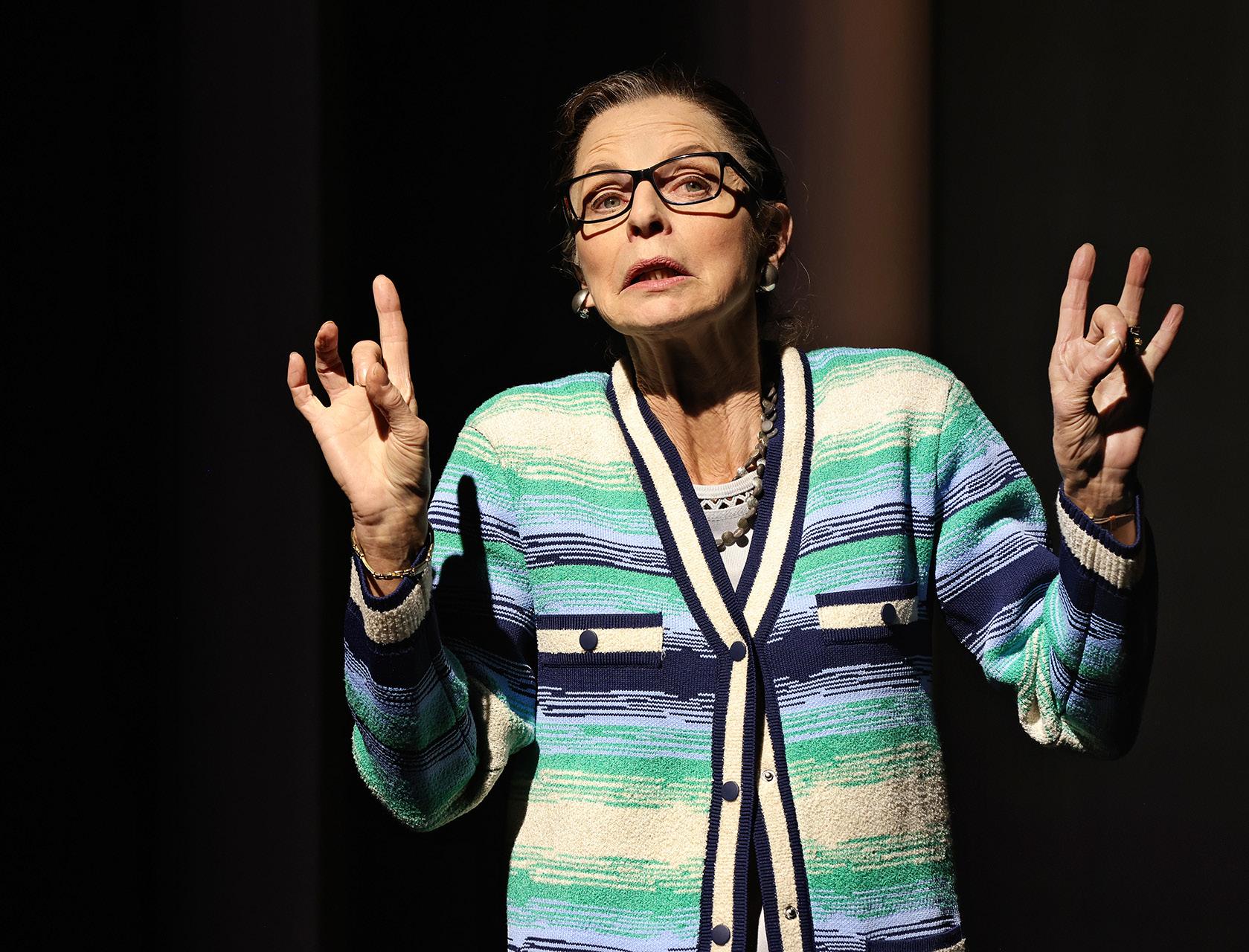
When you are thinking about an actor’s performance in an exam or portfolio, you will want to build a comprehensive profile of how they used their body, voice, movement and use of space. You will want to link these details to specific moments in the performance, describing what was happening on stage and linking to big ideas and wider context.
PRE-READING
• In small groups:
• Watch the clip below: RBG in Her Own Words — youtube.com/ watch?v=7lXhw0LKo-Q
• As the clip progresses, make a list of the ways that Ruth Bader Ginsburg defined herself. As a class, discuss the reasons why such information might be important to know when watching a piece of theatre about RBG’s life and achievements.
• Read the following excerpt AND “Ruth Bader Ginsburg - Character Analysis“ Born into a Jewish family in Brooklyn, New York in 1933, Ruth Bader Ginsburg was the youngest of two sisters. Her elder sister, Marilyn, died of meningitis when Ruth was 6 years old. Ruth’s mother Celia was diagnosed with cancer when Ruth began high school and died just before her graduation. After high school, Ruth attended Cornell University, followed by Harvard Law School and Columbia Law School. Marrying her husband Martin (Marty) in 1954 after graduating from Cornell, Ruth had two children, Jane, and James. During the late 1950s and early 1960s Ruth Bader Ginsburg struggled to find employment as a lawyer. During the 1970s, Bader Ginsburg became involved in the struggle for gender equality, working on high profile cases in which she focused on ending discrimination. In 1993, President Bill Clinton appointed her to the Supreme Court of the United States. Her adult and professional
life reached across the decades 1950s to 2020s, with her personal life and career reflecting the zeitgeist of each decade.Highlight ideas that interest you
• Circle quotes you think would enrich an answer in an exam
• Underline and annotate ideas that link to a specific moment in the performance.
• If you recorded the post show forum, find excerpts where the actor answered questions:
• Write down ideas that interest you
• Record quotes you think would enrich an answer in your exam or portfolio
• Record moments in the forum that surprised you or provided more context for something you saw on stage.
IN THE CLASSROOM
Explore Heather Mitchell’s portrayal of RBG
Using the information you gathered from the pre-reading activity, consider how Heather Mitchell uses drama techniques to bring this iconic woman to life on stage. Select one moment from each structural phase of the performance, focusing on how voice,
body, movement, and use of space work together to shape the character.
In pairs, choose one specific moment from the performance from the categories below and explore it in detail using a method of your choice, such as; role on the wall, hot seating, mind mapping, or a detailed brainstorm:
• Domestic sphere: childhood and adolescence
• Transition to elite environments: the Supreme Court, status, and influence
• Capturing the zeitgeist: the emergence of the Notorious RBG, a pop culture phenomenon
POLITICAL AND SOCIAL CONTEXT
The political and social context of the USA changed enormously over RBG’s lifetime.
• Break the class into groups and allocate a decade to each, from the 1930s to 2020. Research the following areas for the allocated decade and create a 60 second performance that summarises the key features of each decade. Areas to research include the American economy, the names and political persuasion of each President in each decade, women’s rights, and racial equality.
• Working in groups, allocate three to four of the following terms from the script to each group. Find the definition of each term and present it to the class in a freeze frame.
• Congress
• Supreme Court
• Oval Office
• Minyan
• Republican
• Democrat
• Right wing conservative
• Constitution
• Democracy
• Judge
• Chivalry
• Jabots
• Feminism
• McCarthyism
• Assent
• Dissent
• House of Un-American Activities
• Checks and balances
• Separation of judiciary and executive (separation of powers)
CULTURAL CONTEXT
The decades in which Ruth Bader Ginsburg was working in the field of law saw an enormous change in the cultural life of America.
• Break into six groups and allocate a decade to each, from the 1950s to 2020. In groups, research the cultural iconography of the decade,
using images from popular culture, including film and music. Create a 60 second museum of images and sound to present to the class.
• The clip below is the Saturday Night Live tribute to RBG, called The RBG Rap — youtube.com/watch?v=e6e_ rGWbFqs. As a class, watch the clip and discuss the following questions:
• How is RBG portrayed by Kate McKinnon?
• What is the connection between Brooklyn, RBG and Rap Music?
• Why does the image of Bader Ginsburg as Notorious RBG resonate so strongly with contemporary Americans?
LEADERSHIP AND GENDER
RBG broke barriers and when elected to the Supreme Court was widely respected by both sides of the aisle; republican and democrat (albeit this was a different political time in America). Priscilla Jackman has highlighted the fact that the scenes between RBG and Presidents Clinton and Obama really capture what it means to be a woman in leadership. Use this activity to think about leadership and gender:
• Brainstorm all the moments where gender was an issue or was highlighted as a point of difference in how she was treated
• Discuss how Heather Mitchell used her voice, body, movement and space to demonstrate her power as a female leader
• In pairs, directing each other, imagine that you are RBG in the moments where she is treated differently or challenged because she is a female. Recreate iconic moments in the play using body and movement. Take photos or short videos of your recreation, and put them into a power point / google slides / canva. Give each of your pictures or videos a title from the production; this could be a line of dialogue or something from this pack. Annotate comprehensively around how body and movement are used to capture this moment. You could also add quotes.
REVISE - (COMPLETE THESE AS YOU STUDY FOR YOUR EXAM)
Drama Techniques: Body, Voice, Movement and Space:
• Describe how Heather Mitchell used drama techniques in a specific moment in the performance
• Explain Mitchell’s use of drama techniques and how they transformed the space within the performance
• Choose specific moments where you felt Mitchell used their body, voice, movement, and space in combination, to create impact, focus, or to support an important idea/theme
• Thinking about Heather Mitchell and the way she created RBG’s arc:
• How did she use techniques to create a sense of time and place?
• How did she use techniques to communicate RBG’s history?
• What social or political ideas did RBG represent within the play? How did Mitchell use techniques to communicate this?
• How did Mitchell use drama techniques to communicate subtext in their performance? Use a specific moment and example to discuss this use of subtext.
Character:
• Discuss the purpose of the portraying Ruth Bader Ginsburg in a theatrical context:
• What impact do they have on the narrative, as well as the audience and actors’ relationship?
• How does the actor’s use of techniques communicate their purpose in the performance?
Design
IN THE CLASSROOM
How design choices help tell Ruth’s story:
When we are thinking about a solo show it is important to unpack how the narrative is structured and how design choices are instrumental to moving the story from one moment to another. Create a timeline of the narrative either on some large craft paper, the white board or in a way that suits your class. Plot the design choices and the story along a timeline. Make detailed notes using the following prompts:
• How the lighting helped transition from moment to moment
• How set was used by the actor during transitions
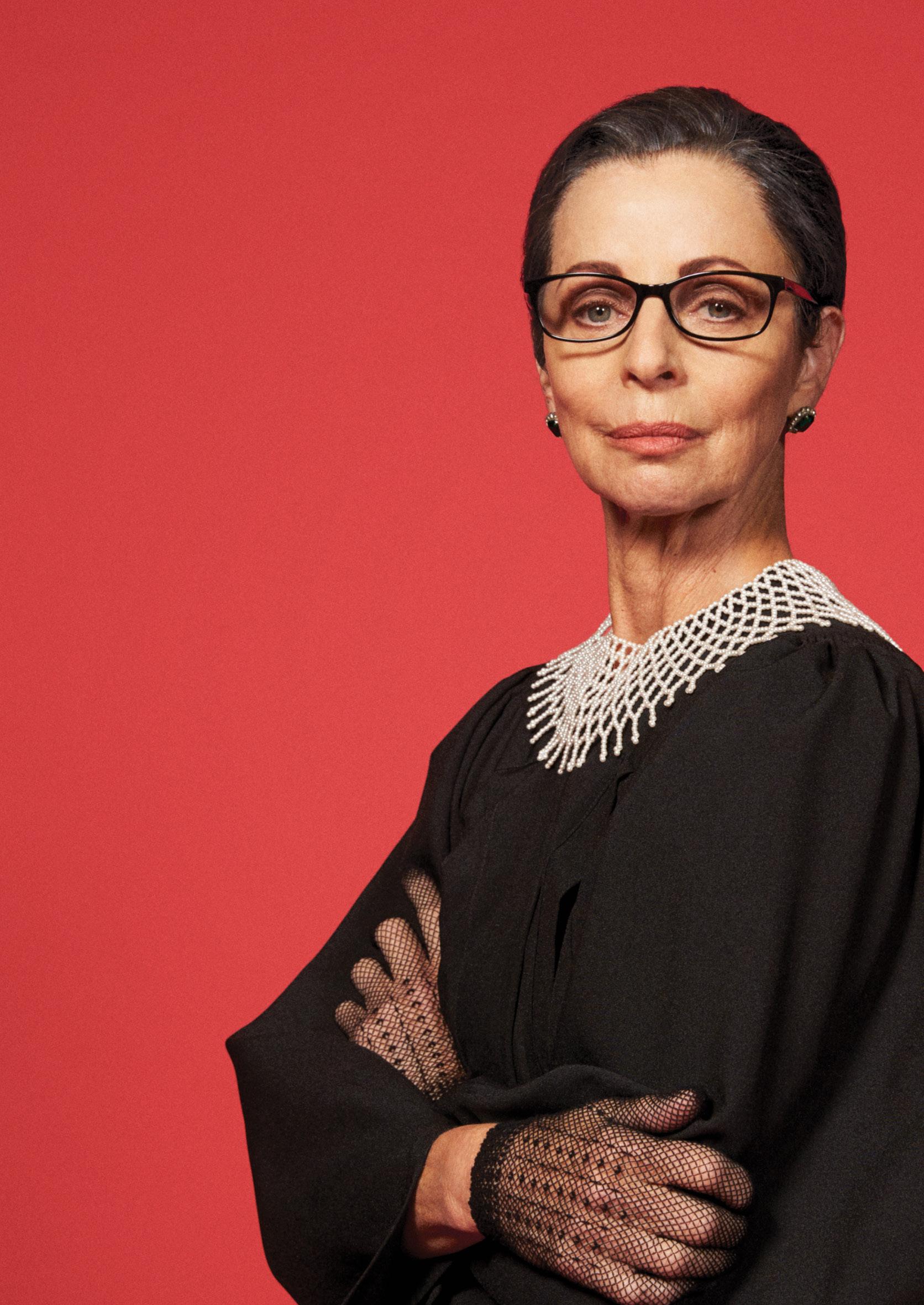
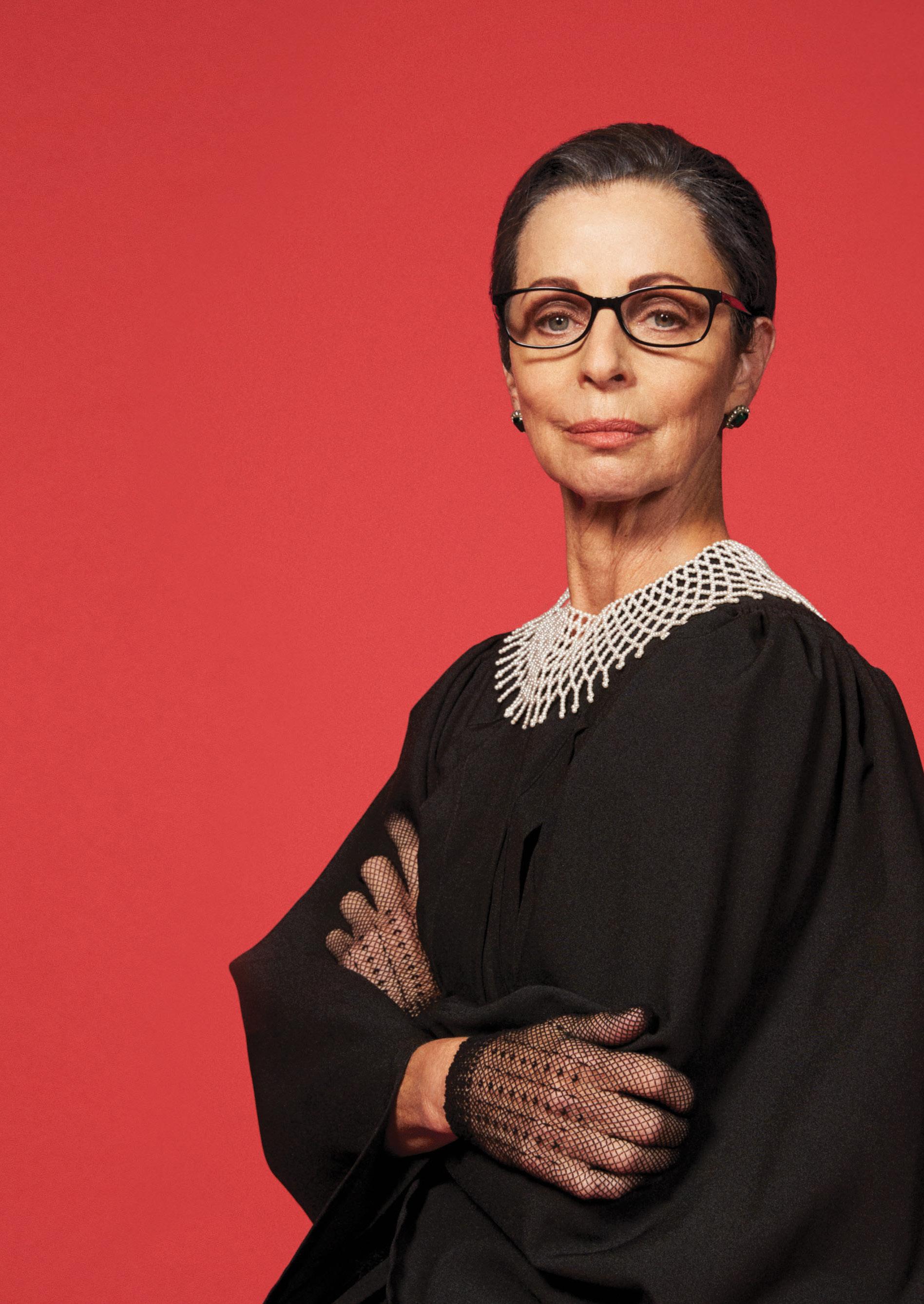
• How props and pieces of costumes helped you understand who Ruth Bader Ginsburg was and what was happening at that point in time in her story
• How sound increased tension, indicated mood or created atmosphere
• How the technology placed the audience in a distinctly American setting.
The big moments represented through design
Fill in the table below for the big moments of the performance, with an explicit focus on the way design and use of technology captured these moments of Ruth Bader Ginsburg’s life.
Your big moments may differ from what your peers/classmates choose to include. This table should reflect your individual understanding and experience of the performance as a member of the audience.
Moment Technologies used
Describe a big moment in detail.
Small Sketch
Explain in detail what technologies were used.
Draw a small sketch to remind you of the moment.
Elements that symbolise America
Notes about culturally significant elements of design. What did they represent or symbolise?
THE ICONIC CLOTHING OF RUTH BADER GINSBURG
Identify the different costumes used throughout the performance and divide into groups, so that each group focuses on each of the costumes:
Sketch the outfit in detail. You could also pull imagery from the media or the education pack. Around your sketch, annotate the following:
• The colours, fabric, cut and design of the costume
• The symbolism and motifs represented through the costume
• The specific age Ruth was and what stage of her life she was in. Ensure you make reference to both her personal and professional life.
Tack each of the sketches up onto the white board or the wall or across the floor. Discuss and brainstorm the following as a class:
• What did the costume design communicate to the audience?
• What thoughts, ideas and feelings did the design evoke in the audience?
• What was being communicated about the person Ruth Bader
Ginsburg through the choices made? Do these decisions reflect reality or do they diverge from reality for a specific reason
Discuss the sketches in detail, unpacking the meaning of the costume choices and their impact on the audience. Individual reflection (write a short essay, create a presentation or record a voice note): Why do you think clothing is such an important part of Ruth Bader Ginsburg’s story? How did the costume designer and director’s interpretation of the costuming communicate important ideas and themes about her life and story to the audience?
REVISE - (COMPLETE THESE AS YOU STUDY FOR YOUR EXAM)
• Discuss how technology or design was used during a climatic moment in the performance? What do you think was at stake within the scene?
• What was the impact of the way the design, directorial, and acting choices worked together? Choose a moment that surprised, shocked, or excited you to talk about
• Discuss why the use of sound and lighting design was integral to this performance? Focus on the mood created by sound choices, use of colour and the shapes created by the angles or composition of lighting
• How were design and directorial elements (props, setting, AV, costuming, audience positioning and interaction) and the Drama Elements used to build the performance? How did this make you feel as a member of the audience?
• Discuss the inspiration for a specific element of the design and link it to wider context; social, political, historical or geographical? How did this deepen your understanding of the themes and ideas the play was communicating?
Technology: link your ideas to specific moments or examples in the performance. Think about lighting, set, sound, props, costumes, make-up and how this helped bring you into the world of the play.
• How was technology used to create the atmosphere in the performance?
• How was technology used to highlight important ideas, themes and symbols in the performance?
• How was contrast and/or focus created or built through technology and why was this important?
• How did the use of technology help you gain a deeper understanding of the themes of RBG: Of Many, One?
• How were technologies used in combination to transform the space in a specific moment? (Level Two students must revise this question)
• How did technology highlight the different characters’ motivations expressed within the performance?
• Discuss why this was impactful, exciting or challenged your expectations
• How were costumes used to communicate RBG’s purpose in the performance?
IMPORTANT
NOTE: When you are writing about Set or Costume, you need to be specific about the following details and also sketch what you see. Imagine the person you are writing for has not seen the production and create a vivid image in their mind of what you saw:
• For example: Set/Props
• The size, shape and dimensions of any set pieces or props used
• The materials used, their textures and the colours.
RBG: Of Many, One and Level One NCEA
“Drama transforms the tangible into the intangible.“
This section of the education pack is designed to support Level One drama students navigate the new Level One external Achievement Standard 91943 - Respond to a drama performance. Unlike the Level Two and Three external standards, which are an exam, you will be constructing a portfolio over a period of time in class. It will be based around three key aspects:
• key message of the performance, the use of drama components and your own personal response about how you connected to the performance, capturing the wairua (spirit) of what you watched.
This portfolio will be presented as a slideshow or PowerPoint and can be a mixture of written and audio visual material - the main question you should ask yourself as a student is; how do I communicate my ideas, thoughts, and feelings about what I saw, the
best? With that in mind, you are encouraged to collect your thoughts, discussions and do your research in a range of formats. Such as; voice notes, sketches and annotations, brainstorms, moodboards, recorded physical responses and writing.
Kaiako and ākonga please ensure you read this year’s assessment specifications carefully as you prepare to submit this assessment. You can access the specifications via this link: NZQA Assessment Specifications - Level One
Below are three activities to support you to expand your ideas and support you during the teaching and learning phase of unpacking the performance.
KEY MESSAGE:
In pairs, small groups or as a whole class, discuss and brainstorm the following prompts:
• What do you think Suzie Miller was trying to say? Why this story? Why these characters? Why this period of time?
• What do you think Priscilla Jackman was trying to communicate through the directorial choices she made? How does this connect with what Suzie Miller has written?
• What do the characters in the performance represent and what do they communicate to the audience?
• What do you think the designers are trying to communicate through their choices? How does this bring Suzie Miller and the director Priscilla Jackman ideas to life?
Once you have brainstormed around these questions, you could journal, voice note or record thoughts around the following questions:
• How do you identify the key message of a performance?
• Can there be multiple key messages?
• Think about your interpretation of the performance - what was the key message to you?
• What physical evidence from the performance connects to the key message? This could be a scene, a moment between characters, dialogue, a moment where the use of technology highlighted an idea.
• Describe these examples and sketch them in specific detail.
USE OF DRAMA COMPONENTS:
Drama components are techniques, elements, conventions and technologies. Make sure you have explored this language and terminology with your kaiako.
Now that you have fleshed out what the key message might be, you need to connect it with the choices that the director, designer and actors have made and how they have used the drama components in combination.
Brainstorm in small groups, or in pairs:
• How an actor used drama techniques in a moment that communicated the key message
• How elements created a sense of mood, atmosphere or tension
• How conventions were used throughout the performance
• How technology enhanced the story being told
WAIRUA OF PERFORMANCE AND PERSONAL RESPONSE:
In the unpacking on the NCEA website for this standard, this aspect of the assessment is unpacked in detail. Your teacher will support you in understanding this and guide you to explore, research and develop your ideas.
“The wairua of the performance is experienced as the intangible energetic and emotive qualities that carry the spirit and intention of the play. How the wairua is expressed by the performers provokes a response from the audience and allows them to reflect on the ideas and themes of the play based on their own life experiences and perspectives.“
- 1.4 - Unpacking
• What thoughts, ideas and feelings did the performers provoke in you?
• What have you reflected upon since watching the performance?
• What have you been thinking about (head) and feeling (heart) since?
• What did your gut/sense of intuition communicate to you as you watched the performance?
• What life experiences or perspectives do you bring? What connections did you make? Were there specific cultural connections you made to the production?
REFERENCES
Drama | NCEA
Level One External Specifications
Bibliography
IMAGES
Rehearsal images are courtesy of Prudence Upton.
Production images are courtesy of Daniel Boud.
BOOKS
Halliwell, M. (2007) American Culture in the 1950s. Edinburgh University Press, UK.
JOURNALS
Bushnell, A. A. (2022) The Weight of RBG’s Crown: Jewish Feminism and its Appropriation. Studies in American Jewish Literature, Volume 41, No. 2, Pennsylvania State University, USA.
Rand, E.J. (2015) Fear the Frill: Ruth Bader Ginsburg and the Uncertain Futurity of Feminist Judicial Dissent. Quarterly Journal of Speech, Volume 101, No. 1, Routledge, USA.
Rubio-Marin, R. (2017) Notorious RBG: A Conversation with United States Supreme Court Justice Ruth Bader Ginsburg. New York University School of Law, Vol. 18, No. 4, Oxford University Press, USA.
DIGITAL RESOURCES
Masterclass (2021) Opera Music: A Brief History of Opera. https://www. masterclass.com/articles/operamusic-guide — Accessed 20 November 2023.
Opera: An Introduction. (2017) Victoria and Albert Museum. https://www.vam. ac.uk/articles/opera-anintroduction — Accessed 29 January 2024.
United States Courts: About the US Supreme Court. https://www.uscourts.gov/ about-federalcourts/educational-resources/about-educationaloutreach/activityresources/about — Accessed 17 January 2024.
US Supreme Court. https://supreme.justia.com/reading-supreme-courtdecision — Accessed 17 January 2024.
Davidson, P. Redd, C. (2018) RBG Rap, Saturday Night Live. https://www.youtube. com/watch?v=e6e_rGWbFqs — Accessed 8 November 2023.
Pelly, M. (2022) Old Friends Play with a Legal Icon. Australian Financial Review. https://www.afr.com/life-and-luxury/arts-and-culture/old-friends-play-aroundwith-legal-icon-rbgas-the-us-beckons-20221110-p5bxay — Accessed 8 November 2023.
Simmonds, D. (2022) RBG: Of Many, One. Stage Noise. https://www.stagenoise. com/review/2022/rbg-ofmany-one — Accessed 8 November 2023.
Smentkowski, B. P. and Houck, Aaron M. (2023, September 14). Ruth Bader Ginsburg. Encyclopedia Britannica. https://www.britannica.com/biography/RuthBader-Ginsburg — Accessed 8 November 2023.
Tongue, C. (2022) RBG: Of Many, One Review — Ruth Bader Ginsburg Play is Sincere, but Slips into Triteness. The Guardian. https://www.theguardian.com/ stage/2022/nov/05/rbg-of-many-one-reviewruth-bader-ginsburg-play-is-sincerebut-slips-into-triteness — Accessed 8 November 2023.
Ruth Bader Ginsburg’s Life, in Her Own Words. (2020, September 20). Washington Post. https://www.youtube.com/watch?v=7lXhw0LKo-Q — Accessed 8 November 2023.