SPECIAL FEATURE: CIRCUIT PROTECTION & SWITCHGEAR
SPECIAL FEATURE: CIRCUIT PROTECTION & SWITCHGEAR
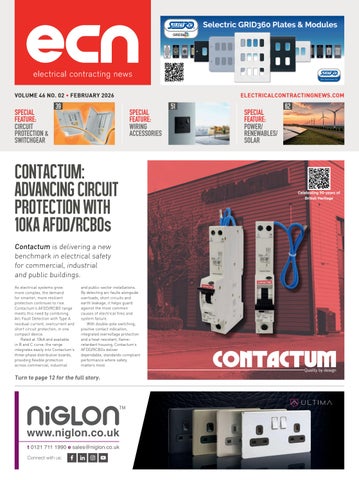
Contactum is delivering a new benchmark in electrical safety for commercial, industrial and public buildings.
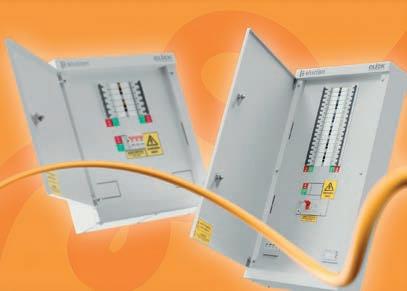
As electrical systems grow more complex, the demand for smarter, more resilient protection continues to rise. Contactum’s AFDD/RCBO range meets this need by combining Arc Fault Detection with Type A residual current, overcurrent and short circuit protection, in one compact device.
Rated at 10kA and available in B and C curve, the range integrates easily into Contactum’s three-phase distribution boards, providing flexible protection across commercial, industrial
SPECIAL FEATURE: WIRING ACCESSORIES

and public-sector installations. By detecting arc faults alongside overloads, short circuits and earth leakage, it helps guard against the most common causes of electrical fires and system failure.
With double-pole switching, positive contact indication, integrated overvoltage protection and a heat-resistant, flameretardant housing, Contactum’s AFDD/RCBOs deliver dependable, standards-compliant performance where safety matters most.
Turn to page 12 for the full story.















SPECIAL FEATURE: POWER/ RENEWABLES/ SOLAR





23-24 SEPTEMBER 2026
Covering everything from Lighting and Wiring Accessories to EV and Renewables.
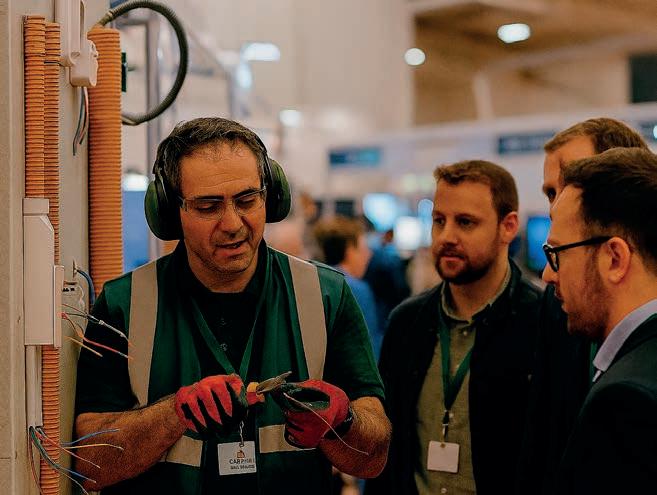
ECN Live! 2026 is an industry game changing trade show for electrical contractors, electricians, buyers, specifiers, and key stakeholders in the electrical contracting sector. Gain valuable insights into the most valuable aspects of electrical contracting, such as lighting, circuit protection, cable management, HVAC, fire safety, EV, renewables, solar and more! ECN Live! will be co-locating with EI Live!, the UK’s only dedicated smart home show, an already established show, now in its 15th year. Given the synergy between these two markets, electrical contractors and electricians will gain valuable knowledge about the world of smart home integration and add another string to their bow as an installer. Don’t miss this innovative co-located event that defines the standard for connection, knowledge sharing, and solutions tailored for today’s electrical professionals.

The
Over nine decades, Contactum has become one of the most trusted names in
provides a special look
The
A round-up of the latest training initiatives across the
Recolight looks at the value of understanding EPDs, and explains how metrics such as these require those using them to be ‘carbon literate’
A look at how UK Power Networks and Cory Group have partnered to connect one of the largest EfW facilities in the UK to the electricity network
Sonos reveals how its latest Era speakers are powering multi-zone audio systems inside a luxury Kensington development
ECN speaks with James Cornet, Director of Tradefox, about the company’s training platform, net zero, the skills shortage, and beyond
Your chance to win an Espire fire and CO alarm bundle, courtesy of Scolmore Group company, ESP
Sponsored content from across the sector
32
ECN takes a look at the ElecStore brand recently launched by City Plumbing, and details how it provides the power and expertise electrical contractors need
34 ROLEC, one of the UK’s most established manufacturers of EV charging solutions, is supporting installers while meeting the demands of today’s rapidly evolving market. ECN explains further
36 Aico outlines how its alarms, training and HomeLINK platform are helping contractors to deliver safer homes and navigate today’s fire safety landscape
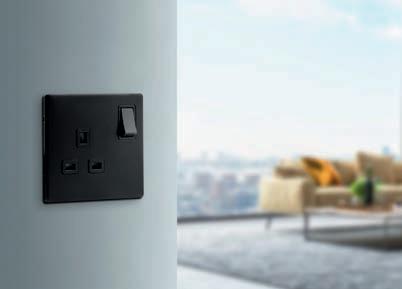

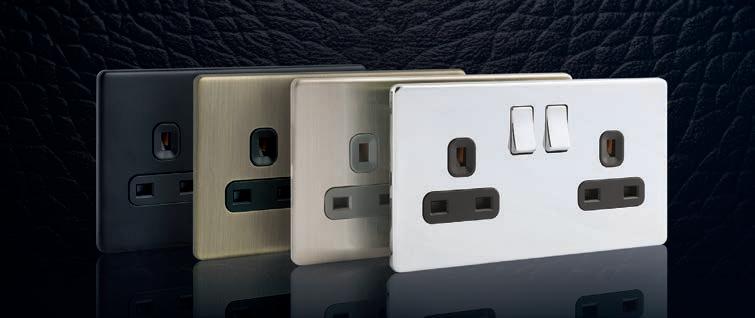
51 Katie Plumstead of Scolmore Group looks at the growing importance of aesthetics within the wiring accessories product category
54 A look at how and why Click Scolmore wiring accessories were recently specified for an affordable housing development in Peterborough
Dhanraj of Siemens Smart Infrastructure looks at the benefits of the Sentron ECPD (electronic circuit protection device)
48 Kirsty Johnson of Surge Protection Devices provides an overview of the application of SPDs, explaining when they are required and how to select the correct type


56 Ellie Merricks, a spokesperson for Retrotouch, explains why – from an electrician’s perspective –decorative wiring accessories are in growing demand
58 Hannah Liscomb of Knightsbridge looks at how electrical accessories in bathrooms can enhance buyer appeal
60 Details of the ways Selectric has grown from a modest electrical accessories business into a respected supplier with an expansive product offering
62 Kevin Bird of Shocking Energy explains why accreditation and digital operations are becoming an important growth strategy for renewable installers
64 David Humphriss of SolarEdge shares tips on how installers can guide their customers from first contact to long-term satisfaction
68 Fridtjof Falkgård Rieg of Easee looks at the rise of bidirectional charging and explains why EVs will soon act as mobile energy stores
70 ECN speaks with Emma Dutton of AlphaESS about her beginnings in the electrical sector and her perspectives on the importance of solar

Hello, and welcome to the February issue of ECN! I trust you’re all well and having an enjoyable start to the new year. Sadly, your Editor of ECN took a tumble on the ice at the beginning of January, leading to a fractured arm, hours in A&E and – worst of all – the inability to make it to all the press events I had down in the diary. But the recovery’s in full swing, and to say that there’s been a huge amount going on within the industry to keep me occupied would be somewhat of an understatement.
Where to start? The biggest news of the past month was definitely the announcement of Amendment 4 to the 18th Edition, which was revealed by the IET and BSI on 15 January and is set to go live exactly three months later on 15 April. As ever, the industry has been swift to react
with a variety of resources and training courses to help contractors prepare for the implications, and we have full coverage of everything you need to know within this month’s news pages.
The other significant development in recent weeks was the announcement of the Government’s Warm Homes Plan, a £15 billion initiative which is aiming to upgrade five million homes between 2026 and 2031 via insulation, solar panels, battery storage, and low-carbon heating. Primarily targeted towards low-income, energy-inefficient households, the move has been welcomed, by and large – but the ECA has expressed some concerns, particularly with the absence of electrotechnical representation, which seem perfectly valid. Again, turn to our news pages for more.
Despite the winter continuing, the ice is starting to melt and the evenings are already feeling lighter – so there’s definitely some light at the end of the tunnel! Stay safe out there, and we’ll see you all back here for our March issue!
GROUP EDITOR: SIMON ROWLEY
T: 01634 673163
E: simon@allthingsmedialtd.com
ASSISTANT EDITOR: JOE PECK
T: 01634 673163
E: joe@allthingsmedialtd.com
SALES DIRECTOR: KELLY BYNE
T: 01634 673163
E: kelly@allthingsmedialtd.com
STUDIO: MARK WELLER
T: 01634 673163
Fax: 01634 673173
E: mark@allthingsmedialtd.com


Simon Rowley, Group Editor

CEO: DAVID KITCHENER
T: 01634 673163
E: david@allthingsmedialtd.com
MANAGING DIRECTOR: IAN KITCHENER
T: 01634 673163
E: ian@allthingsmedialtd.com
ACCOUNTS
T: 01634 673163
E: susan@allthingsmedialtd.com




On 15 January, The Institution of Engineering and Technology (IET) together with BSI signed off the content for Amendment 4 (2026) to the standard Requirements for Electrical Installations (BS 7671:2018) (18th Edition of the IET Wiring Regulations).
Significant changes include:
• A new chapter on Stationary Secondary Batteries where the purpose is for electrical storage and supply of electrical installations
• A new section on Functional earthing and functional equipotential bonding for information and communication technology (ICT) equipment and systems
• A new section on Power over Ethernet (PoE)
• A major revision of Section 710 Medical Locations and the inclusion of a schedule of test results for recording the resistance of supplementary protective equipotential bonding conductors.
Amendment 4 can be implemented immediately when published on 15 April 2026 and the previous version, BS 7671:2018+A2:2022+A3:2024, will be withdrawn six months later.
This essential update to the IET Wiring Regulations will form the UK national standard for:
• All new low voltage electrical installations
• Additions and alterations to existing installations
• Periodic inspection and testing of existing installations.
The IET and BSI encourage all electrical professionals to ensure they become familiar with the changes when published.
Mechanical and electrical services
provider Salko UK is inviting skilled professionals to join its growing workforce as it prepares for a busy programme of contracts supporting the delivery of power generation throughout 2026.
Operating across multiple sites throughout the UK and Ireland, Salko UK will deliver a wide range of planned outages, inspections, upgrades, and repair works within the power generation sector.
To support this programme, the company is recruiting across a broad range of disciplines, including electrical, mechanical, welding, and operational roles.
Salko UK is seeking experienced and safety-focused individuals across a range of roles, including electrical supervisors.
Salko UK’s 2026 project portfolio includes work at major power stations such as Dublin Bay, South Humber Bank, Isle of Grain, Enfield, Staythorpe, and Great Yarmouth, with projects running from March through to November 2026.
Dean Murphy, CEO of Salko UK, says, “We are particularly looking for individuals who take pride in delivering high standards of workmanship and working safely within demanding environments. As our project portfolio continues to grow, we are looking to strengthen our teams with skilled, reliable
Members of the committee responsible for the technical content of BS 7671, JPEL/64, are not permitted to release any further information before the publication date.
Mark Coles, Head of Technical Regulations at the IET, says, “The IET is the authority for electrical installations in the UK and ensures that the National Wiring Regulations Committee carefully considers all necessary updates to the Regulations to ensure they best meet the needs of the industry.
“The Amendment continues the thread of embracing new technologies and the inclusion of a new section on Stationary Secondary Batteries is an exciting step into the future of renewable sources of energy and their integration into our lives.
“Amendment 4 is an essential update to provide safe electrical installations in the UK and it is imperative that the industry is ready to work to this new amendment before BS 7671:2018+A2:2022+A3:2024 is withdrawn.”
Sebastiaan van Dort, Director of Energy and Sustainability at BSI, adds, “BSI is proud to jointly publish this vital standard with the IET at a time when the UK is accelerating towards its 2030 clean energy goals. BS 7671 underpins safe, modern electrical infrastructure –essential for delivering the electrification needed to meet net zero ambitions.”
Further changes are included throughout all parts of BS 7671:2018+A4:2026, including the incorporation of Amendment 3:2024 to BS 7671:2018 as part of the main document.
This Amendment sees the further adoption of CENELEC Harmonized Documents and IEC standards as the UK continues the inclusion of standards for new and developing technologies.
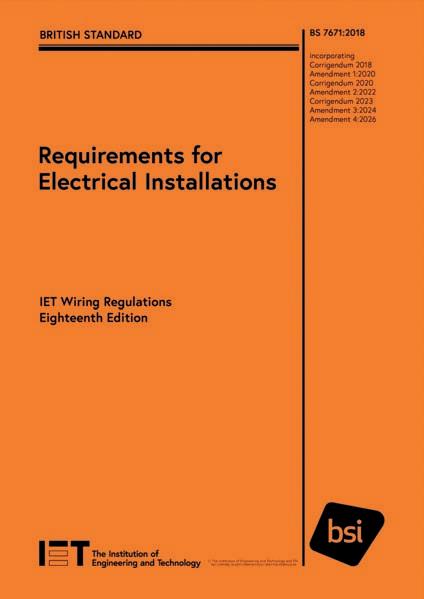
BS 7671:2018+A4:2026 is available for pre-order via theiet.org/GetTheRegs, where you can also learn more about the IET’s guidance and training packages.
The IET, theiet.org

professionals who share our commitment to quality, safety, and teamwork.
“We recognise that our people are our greatest asset and by recruiting the right
individuals and supporting them on-site, we can ensure that our projects are delivered on time, to client specifications, and to the highest quality standards.”
Following the announcement by IET and BSI confirming that Amendment 4:2026 to BS 7671:2018 will be published on 15 April, NICEIC responded by launching a comprehensive support programme, including webinars, in-person events and technical resources for its certified businesses.
NICEIC-certified businesses will have access to a range of free and exclusive support initiatives, including:
• A dedicated series of CPD-accredited The Wire webinars, timed to coincide with the release of Amendment 4 and beginning on 16 April. All sessions are free to join and are available live or on demand. Pre-register at niceic.com/ amendment-four.
• An exclusive digital workbook, authored by NICEIC technical experts, to help NICEIC-certified businesses interpret and apply the changes.
• A 10% discount on Amendment 4 publications pre-ordered from 15 January 2026 (discount code accessible via the NICEIC customer portal).
• New and updated NICEIC Pocket Guides aligned with the new requirements.
• Technical insights in Connections magazine.
• Two NICEIC TechLive events in 2026, exclusive to NICEIC-certified businesses, offering in-depth CPD sessions with NICEIC experts.
• Continued advice and guidance from the NICEIC Technical Helpline via telephone and email.
Paul Collins, NICEIC Technical Director, says, “Amendment 4 brings the UK’s electrical regulations up to date with advancing technology and arrives at a time of significant change for the electrotechnical sector.
“These updates will enhance safety and professionalism across the sector, and NICEIC will ensure its certified businesses have the clarity, tools, and support they need to remain at the forefront of the industry.”
NICEIC will also provide training opportunities and support accessible to the wider sector, including:
• Amendment 4 qualifications and CPD workshops
• Opportunities to engage with NICEIC technical experts at events
• Live Technical Q&A sessions accessible via NICEIC’s social media channels.
NICEIC, niceic.com
The Government’s long awaited Warm Homes Plan, published on 21 January by the Department for Energy Security and Net Zero, sets out welcome steps to help consumers access more affordable clean energy. However, ECA (Electrical Contractors’ Association) warns that the Plan overlooks a fundamental requirement for success: the skills, competence and on the ground experience of the electrotechnical industry.
Despite placing significant responsibility on businesses and training providers to deliver the UK’s electrification ambitions, ECA believes that the Government has not provided dedicated support to ensure the workforce remains aligned with rapidly advancing technologies and increasingly integrated digital systems. This gap, ECA argues, presents a real risk to the practical delivery of the Warm Homes Plan.
Keith Sanderson, Head of Skills Delivery at ECA, comments, “With a shrinking electrical workforce, it is disappointing the Warm Homes Plan does not provide any support or incentives to training providers or businesses offering apprenticeships.
“As technologies become more complex and digital systems require increasing integration,
upskilling will not solve all the needs of the energy transition. Apprenticeships remain industry’s preferred training route. Short upskilling courses can only deliver if they are developed with genuine input from the industry.”
ECA believes that in its current form, the Warm Homes Plan’s most significant omission is the absence of electrotechnical representation on the new Warm Homes Workforce Taskforce. Electrical installers –responsible for the “final mile” of cabling, systems, and technologies – play a pivotal role in ensuring installations are safe, competent, and futureproof. Their exclusion raises concerns across the sector, ECA notes.
ECA urges the Government to revise the composition of the Workforce Taskforce to ensure that electrotechnical experts play a central role in shaping training pathways, setting competency standards, and guiding the implementation of the Plan.
ECA also calls for targeted investment in apprenticeship programmes, support for training providers, and structured collaboration with the wider built environment sector to ensure that workforce capability is not an afterthought, but a foundation. ECA, eca.co.uk

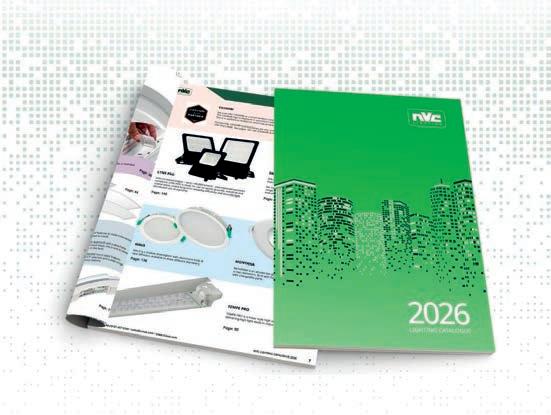
NVC Lighting, a supplier of commercial LED lighting systems, has launched its new 2026 catalogue, featuring new products alongside a wide array of LED commercial lighting for a range of applications and sectors.
The new catalogue includes a selection of products new for 2026, including the upgraded Sterling Pro.
Using the latest back-lit technology, NVC Lighting says the Sterling Pro “combines high performance with an elevated level of efficiency, making it the go-to luminaire for sustainability-driven projects.”
The Texas Pro – which NVC Lighting calls “the quickest batten to install on the market” – also features amongst the products new for 2026.
The catalogue showcases NVC Lighting’s experience and product portfolio across multiple sectors – including commercial, industrial, education, healthcare and residential – alongside its sustainability credentials.
Said credentials include Carbon Neutral certification and EcoVadis Silver accreditation, alongside a signal of commitment to growing its range of Environmental Product Declaration (EPD)-verified products.
Phil Brown, Product & Marketing Director at NVC Lighting, comments, “Our new catalogue for 2026 includes some exciting new additions, as well as consolidating all of our products into one comprehensive, clean resource, offering key information tailored to the needs of our diverse customer base.
“We’re looking forward to an exciting year ahead, and this catalogue showcases our current capabilities while paving the way for future innovations.”
NVC Lighting’s new 2026 catalogue is available to download now from the company’s website.
NVC Lighting, nvcuk.com








JTL, a training provider for electrical and plumbing apprenticeships across England and Wales, has officially opened its newly refurbished ‘London South’ training centre in Orpington, following a £1 million investment to expand high-quality electrical, plumbing, and heating training across London and Kent.
The significant investment has transformed the Orpington site into a modern, industry-led training facility, JTL says, with a strong focus on heating, plumbing, and low-carbon technologies.
The centre features fully equipped electrical and plumbing training bays, providing industry-standard equipment, including heat pumps, solar thermal systems, and energy-efficiency technologies.
Designed to meet the evolving needs of employers and support the transition to greener heating solutions, JTL London South will aim to play a key role in developing the next generation of skilled electricians, plumbers, and building services engineers.
The centre supports apprentices from across London and Kent and aligns closely with regional skills priorities in construction and retrofit.
The centre was formally opened at a launch event on 8 January, attended by employers, industry stakeholders, and

local representatives, with Helen Hayes MP, Chair of the House of Commons Education Select Committee, officiating alongside Sir John Low, Chair of the JTL Board, and Chris Claydon, JTL’s Chief Executive.
Guests at the opening event were invited to tour the facilities, meet JTL apprentices and expert teaching staff,
As the UK was experiencing another spell of freezing winter weather at the beginning of January, new data from Octopus Energy, one of the UK’s largest energy suppliers, suggests modern heat pumps are keeping homes just as warm as gas boilers – while reportedly keeping customers happier with their heating and their bills.
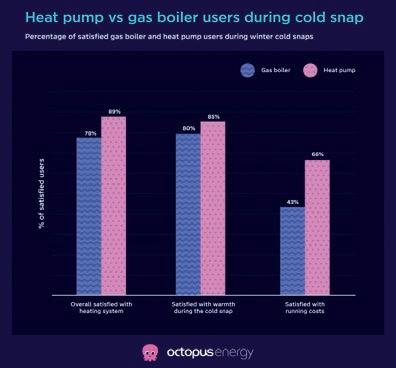
A new survey of more than 1,800 UK households, carried out during the latest cold snap, reveals that people who have heat pumps installed reported higher comfort, higher overall satisfaction, and better value for money than those relying on gas boilers.
When asked how well their heating kept their home warm during the cold weather, nine out of 10 (85%) heat pump owners said they were satisfied with performance, compared to eight out of 10 (80%) gas boiler users.
Overall approval for heat pumps during the cold snap also pipped out gas boilers, with almost every heat pump customer (89%) reporting satisfaction with their heating system compared to three quarters (78%) of gas boiler users.
Thanks to the £7,500 grant from the Boiler Upgrade Scheme (BUS), the cost of getting a heat pump is now often broadly in line with buying a new gas boiler.
On top of that, smart tariffs designed for heat pumps mean they can also be cheaper to run. Octopus’ ‘Cosy Octopus’ tariff can, according to the company, save heat pump customers up to £360 a year on heating costs compared to gas boiler customers on a standard tariff.
Octopus believes that the findings challenge the myth that heat pumps struggle – or become more expensive – in cold weather.
Octopus Energy, octopus.energy
and see first-hand how the new workshops are preparing learners for real-world work environments.
The event also provided opportunities for employers and local partners to network and explore how JTL supports businesses with apprenticeship recruitment and training.
JTL, jtltraining.com
Recolight, a UK not-for-profit compliance scheme for lighting waste recycling and sustainability, has unveiled its 2026 webinar series. The free-to-attend sessions are open to all, covering a range of topics to support the lighting industry’s move towards greater sustainability.
The webinars will bring together experts, thought leaders, and innovators to share insights, discuss challenges, and explore the latest trends shaping sustainability and circular economy action in the sector.
The first webinar, held on 29 January, aimed to demystify Environmental Product Declarations (EPDs), addressing what they do and don’t reveal about luminaires. Participants learned how to interpret EPD documentation and understand what constitutes robust, actionable data for comparing products.
On 19 March, the spotlight turns to “Solving Cat A Waste,” exploring sustainable alternatives to conventional Category A lighting installation.
With mounting pressure to reduce environmental impacts, the webinar will examine innovative approaches and real-world solutions to combat unnecessary waste in commercial fit-outs.
On 29 March, Recolight’s panel will offer strategic guidance on how to get ahead of EU sustainability and circularity regulations that will significantly reshape how luminaires are designed, manufactured, and specified, along with UK rules that may be expected in the coming years.
Then, on 17 September, Recolight will host a webinar exploring DC grids and networks.
Every webinar is free to attend, open to all, and includes a dedicated Q&A segment. Attendees who register will receive a link to the recording and the complete slide pack, providing a valuable resource for ongoing reference.
Registration for all sessions is open now.
Recolight, recolight.co.uk
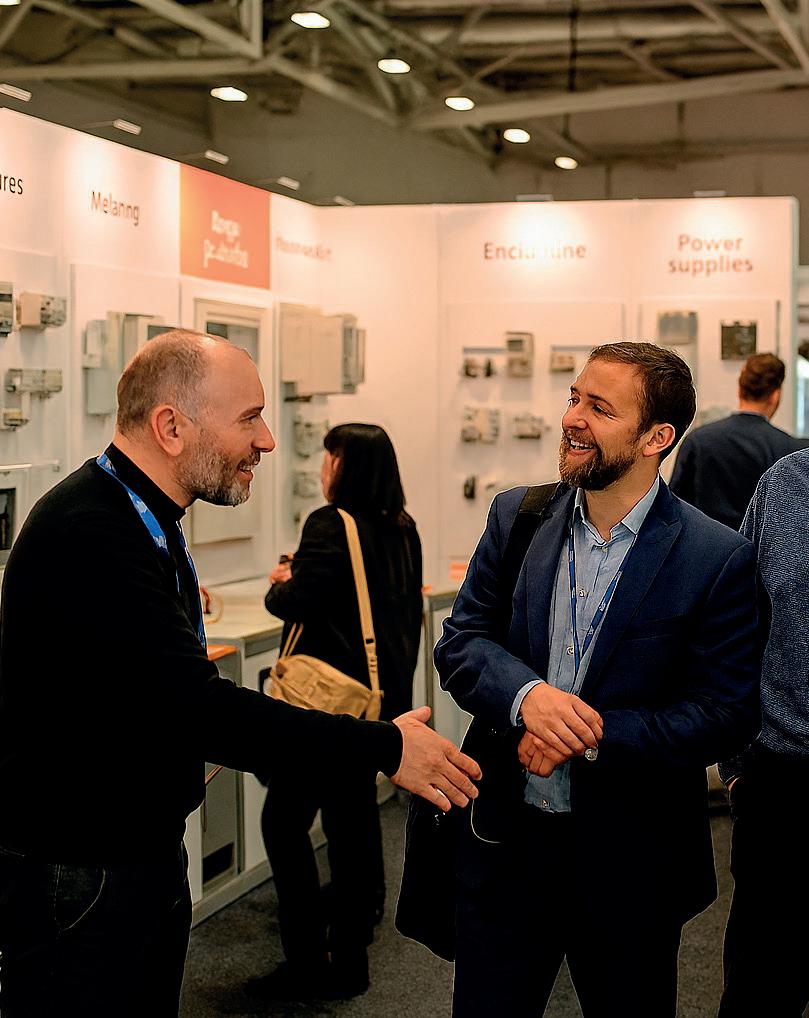
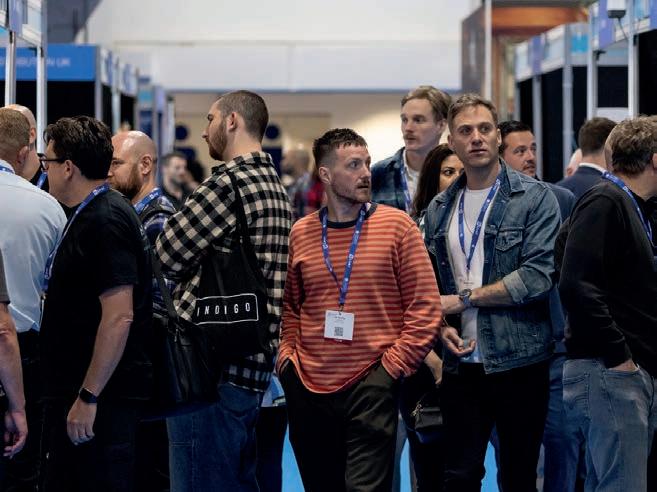
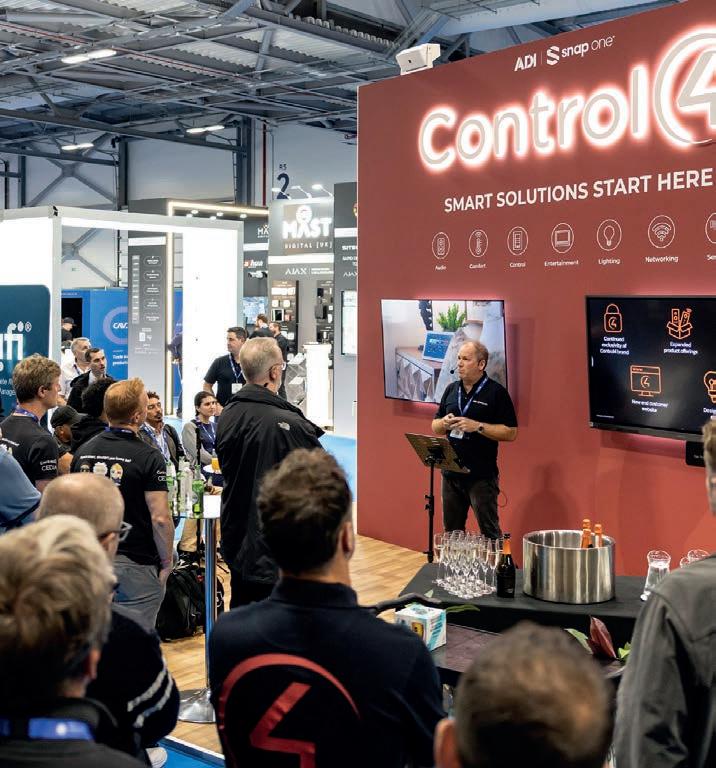
EI Live! the UK’s top trade show, teams up with ECN Live! for an all-new event experience. This unique collaboration promises unparalleled insights and opportunities in a unified venue.
The residential AV and home automation industries have relied on EI Live! as a primary event for 14 years, but as the market grows and overlaps with electrical contracting, there is an opportunity to bridge these industries. To address this, EI Live! is re-locating to the NEC Birmingham for its 2026 event and will run alongside ECN Live! This joint exhibition creates a collaborative space for AV and smart home professionals to engage directly with electricians and electrical contractors, fostering synergy across these interconnected markets.


With a history spanning nine decades, Contactum is one of the UK’s most trusted names in electrical solutions, renowned for delivering high-quality, reliable and robust circuit protection and wiring accessories that meet the evolving demands of modern installations.
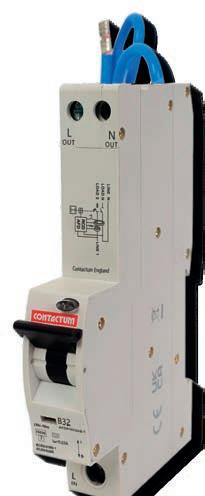
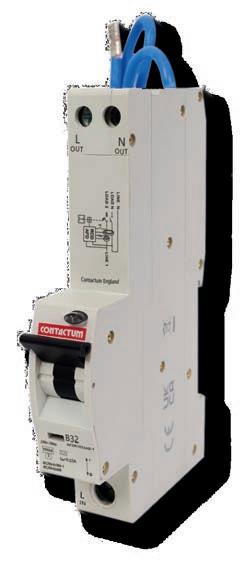
Contactum’s AFDD/RCBO safeguards against a broad spectrum of electrical faults
Founded in 1936, Contactum’s longevity reflects not only technical capability, but a long-standing commitment to safety, performance, and the needs of the electrical professional.
As part of the global alfanar group since 2009, Contactum continues to evolve while staying true to its heritage. That heritage remains central to the company’s identity and product philosophy, influencing everything from design and testing through to customer support and service.
Commenting on the milestone, Daniel Hewson, CEO of Contactum, says, “Heritage is at the heart of everything we do. Contactum was founded in 1936, and that legacy brings with it not only a deep sense of responsibility but also a genuine pride in delivering products that professionals can trust.
“Many electricians grew up using Contactum consumer units or wiring accessories, and we take that trust seriously. The knowledge and experience passed down through generations still shape the way we design, test and manufacture today.”
This blend of tradition and progress is increasingly important as electrical systems become more complex and building usage becomes more demanding. Installations today must address higher loads, evolving appliance technologies and extended operating hours, while also meeting stricter safety expectations and regulatory requirements. Contactum’s approach has always been to anticipate these challenges and provide solutions that deliver confidence for installers, specifiers, and end users alike.
That commitment is clearly demonstrated in the latest addition to the Contactum circuit protection portfolio: the new 10kA AFDD/ RCBO. Designed to provide the highest level of electrical safety, this compact device combines Arc Fault Detection Device (AFDD) technology, Residual Current protection, and Overcurrent protection into a single unit, offering comprehensive protection within one space-saving product.


Arc faults are a significant cause of electrical fires and can occur as a result of damaged cables, loose connections or ageing infrastructure. Traditional protective devices may not always detect these dangerous conditions, allowing faults to persist unnoticed. AFDD technology is specifically designed to identify the unique electrical signatures associated with arc faults and disconnect the circuit before serious damage or fire can occur.
By integrating AFDD functionality with Type A residual current and overcurrent protection, Contactum’s AFDD/RCBO safeguards against a broad spectrum of electrical faults, including arc faults, overloads, short circuits and earth leakage currents. This all-in-one approach not only enhances safety but also simplifies installation and maintenance by reducing the number of separate devices required within the distribution board.
The devices offer a 10kA short-circuit breaking capacity and are available in both Type B and Type C tripping characteristics, allowing straightforward integration into Contactum’s three-phase distribution boards. This flexibility makes the range suitable for commercial, industrial and public sector environments, where varying load profiles and equipment types must be accommodated safely and efficiently.
Despite the advanced technology inside, Contactum has ensured that the AFDD/RCBO maintains a compact form factor, supporting efficient board layouts and helping installers work within increasingly constrained spaces. As safety guidance continues to evolve and the use of AFDDs becomes more widespread, products that combine multiple protective functions without increasing panel size are becoming essential.
Product innovation is supported by strong operational and quality frameworks. Contactum operates an ISO-certified Integrated Management System, covering ISO 9001 (quality), ISO 14001 (environmental management) and ISO 45001 (occupational health and safety). This ensures that every aspect of the business, from product development through to logistics and customer service, aligns with internationally recognised best practice.


Sustainability and corporate responsibility also play an increasingly important role in procurement decisions across the electrical sector. Contactum has achieved a medal-level rating from EcoVadis, the world’s leading platform for assessing environmental, social and ethical performance, reflecting ongoing efforts to improve transparency, reduce environmental impact, and promote responsible practices throughout the supply chain.
In the UK, continued growth has also driven significant investment in infrastructure. The company’s relocation to a new 40,000 ft2 facility in Dunstable was a strategic decision to support both current demand and future expansion. The site features improved warehouse layouts, additional loading bays and infrastructure that enables capacity to double in the coming years, while also being well positioned for efficient nationwide distribution.
Becoming part of the alfanar group has been transformative, providing access to global manufacturing expertise, research capabilities and large-scale infrastructure resources, while retaining the benefits of responsive local service. This combination allows Contactum to offer what many in the industry value most: the heritage of a trusted brand, backed by the strength and innovation of a global organisation.
As Contactum marks its 90-year milestone, the 10kA AFDD/RCBO range reflects a business that continues to invest in safety-led innovation while remaining grounded in the values that built its reputation. With a strong legacy, modern manufacturing capability, and a clear focus on the future of electrical safety, Contactum remains committed to protecting modern installations and the people who rely on them for decades to come.
Contactum, contactum.co.uk



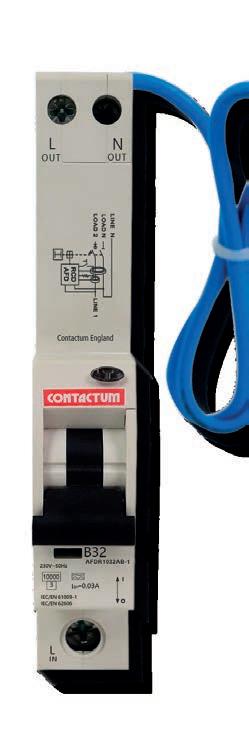
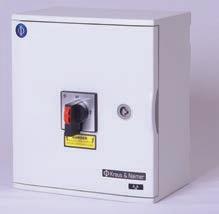
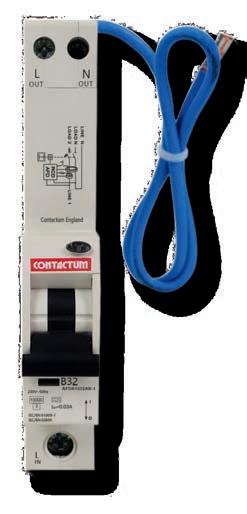
Contactum’s AFDR1032AB 32A Type B combined AFDD and RCBO



For 90-years, Contactum stands as a proud British organisation. Since 1936, our electrical solutions have delivered reliability, quality, and performance. Today, that legacy continues - designed and built for, and trusted by contractors across the UK - we deliver modern standards, support advancement in the industry, and power progress with engineering excellence, innovation, and a commitment you can rely on.


Scan to find out more


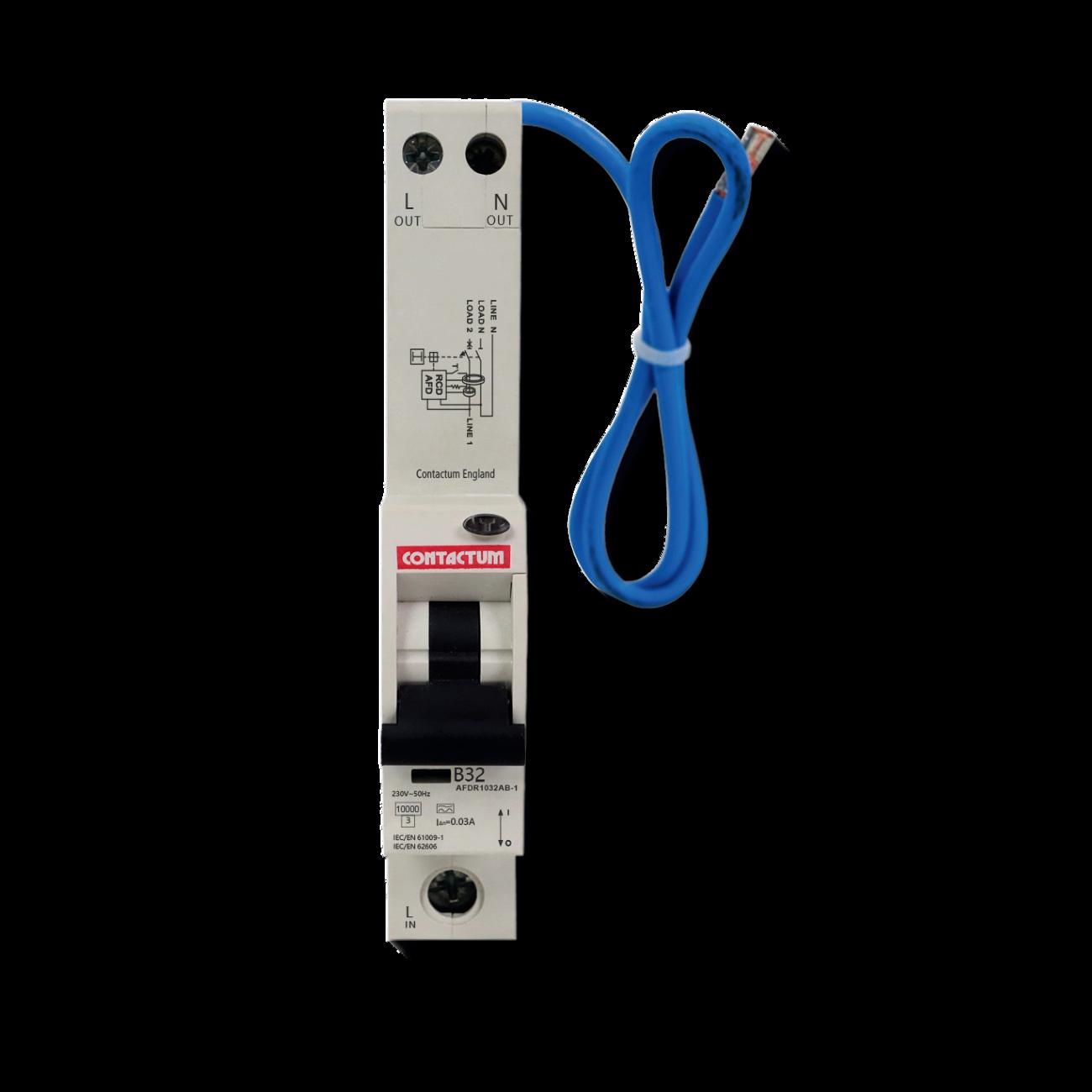
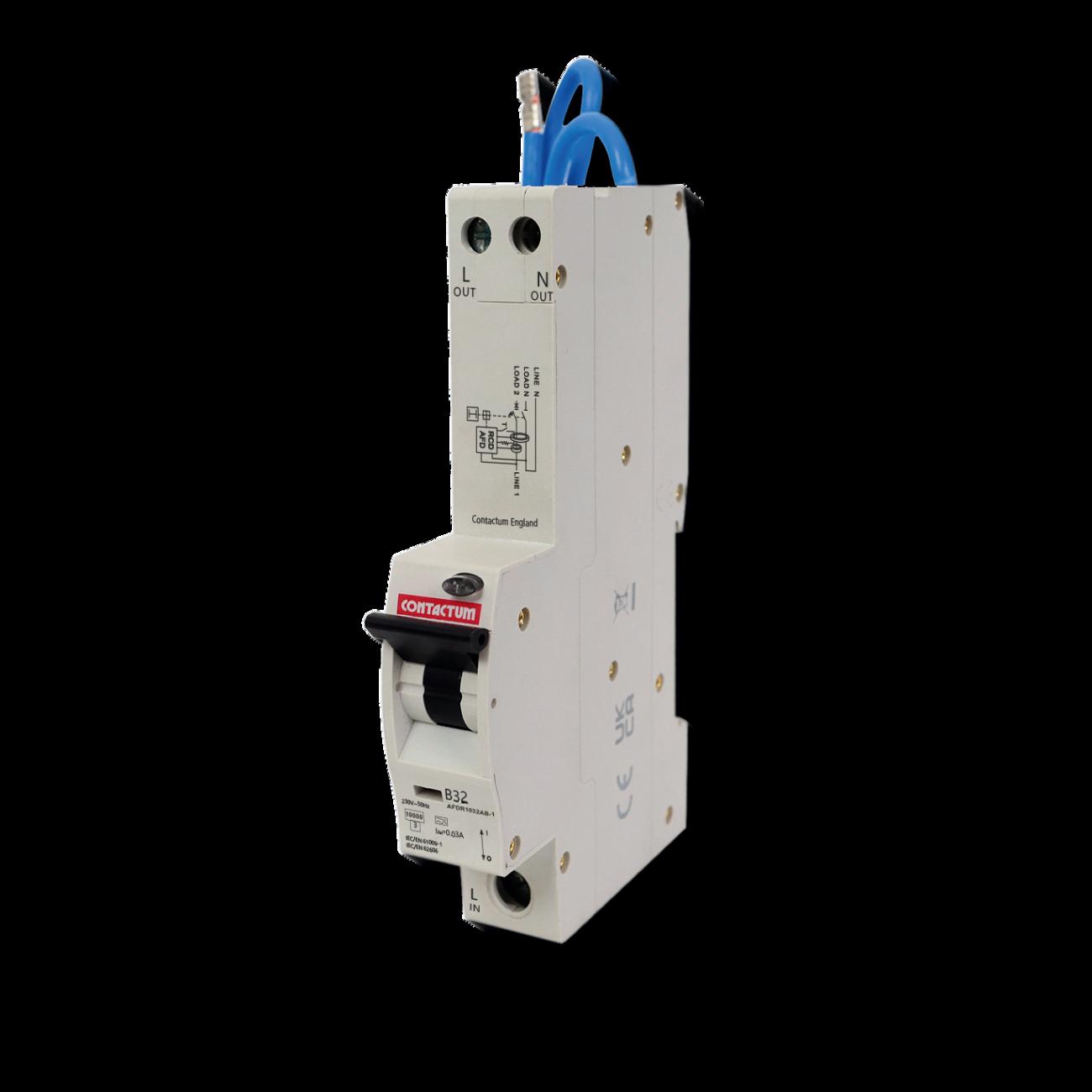
Delivering Advanced Electrical Protection
Series and Parallel Arc Fault Detection
10kA short-circuit breaking capacity
Type A residual current protection
Type B & Type C tripping characteristics
Double-pole switching
Positive contact indicator, lockable toggle & manual test/reset button
Heat-resistant, flame-retardant housing
Compliant with BS EN 62606 & BS EN 61009
10kA AFDD / MCBs are available on request in our extended range

Elite Control Services (ECS), a UK specialist in architectural lighting control systems, has completed the commissioning of a new LED lighting controls system at the Bet365 Stadium, home of Stoke City Football Club.
The project forms part of a wider lighting and controls upgrade at the stadium, replacing floodlights that had been in operation since 2014. The new system is intended to improve lighting performance while reducing overall energy consumption.
The lighting design was produced by Midstream, with ECS responsible for commissioning and integrating the controls, RGBW, and under-bowl lighting systems. The installation includes a combination of LED luminaires, projectors, and RGBW floodlighting, alongside a fully integrated architectural controls platform.
Control is provided through three main access points located in the Match Control, Media Suite, and Groundsman’s Shed.

Following commissioning, the system delivers illumination levels of 1,650 lux, aligned with Premier League requirements, while reducing the stadium’s energy use by 51%.
During the project, ECS carried out on-site demonstrations using temporary projectors and floodlights to determine beam angles and mounting positions. This process informed final installation decisions

The eFREIGHT 2030 consortium has reached a major milestone with the official opening of the UK’s first megawatt-scale electric heavy goods vehicle (eHGV) charging site, using HyperCharger technology from charging system provider, Voltempo
The site, which is located at the East Midlands Gateway and is designed to support Kuehne+Nagel’s UK road operations, formally opened on 15 January with Chris McDonald, Minister for Industry in the Department for Energy Security and Net Zero (DESNZ) and the Department for Business and Trade (DBT), in attendance.
The Kuehne+Nagel hub is the first MCS-ready (Megawatt Charging System) charger to be deployed in the UK. Designed and implemented by Voltempo, lead partner of the eFREIGHT 2030 consortium and the programme’s charging infrastructure provider, the new charging hub at East Midlands Gateway is powered by the company’s HyperCharger
system, capable of delivering charge rates up to one megawatt – enough to charge future eHGVs in less than 30 minutes.
It is the first of Voltempo’s megawatt-scale HyperChargers to be deployed under the planned national rollout of 35 depot charging hubs through eFREIGHT 2030, part of the UK Government’s £200 million Zero Emission HGV and Infrastructure Demonstrator (ZEHID) Programme, funded by the Department for Transport and delivered in partnership with Innovate UK.
The Kuehne+Nagel site features six DC charging bays powered by Voltempo’s HyperCharger infrastructure. At the heart of the system is a single, megawatt-scale HyperCharger pod, which intelligently distributes power across a network of chargepoints (with one positioned at each bay), enabling flexible, high-power charging to support future freight operations. Voltempo, voltempo.uk
for the RGBW lighting, projection equipment, data infrastructure, and control systems.
The upgrade also introduces colour-changing RGBW lighting across areas including advertising boards, pitch-side screens, and under-bowl spaces.
In addition, projection equipment is used to display club and stadium branding on the pitch ahead of matches.
Adam Hardy, Director at ECS, comments, “Our team worked tirelessly to ensure the lighting control system not only meets the Premier League specifications but also delivers an energy-efficient, dynamic experience for both players and fans.”
Elite Control Services, ecs-limited.uk
More than 30,000 people in Hackney and North London will benefit from upgraded energy supplies following the completion of an electricity project from distribution network operator UK Power Networks
The project, which began in July 2017, required the installation of 22km of cable and ducting across four new circuits, with the final circuit being energised in November 2025.
The new infrastructure will benefit more than 30,000 homes in Hackney and Walthamstow, paving the way for electric vehicles, heat pumps, and a greener future.
Errol Lord, Project Manager at UK Power Networks, says, “This initiative represents a significant investment in Hackney’s energy infrastructure and underscores our unwavering commitment to the local community.
“The project was meticulously designed not only to enhance network resilience, but also to meet the burgeoning demands of both residents and businesses in the area. The upgraded infrastructure will provide more reliable and sustainable energy to homes, schools, and local services.
“Throughout the duration of the works, we have maintained close collaboration with the community to minimise disruption and ensure everybody knew what was happening. We are grateful for the patience and understanding demonstrated by the residents, and we take pride in the collective effort that has brought this project to fruition.”
Teams working on the project included Alliance partner Clancy, D&R Jointing, and Enigma Scaffolding, as well as UK Power Networks’ office and field staff.
UK Power Networks, ukpowernetworks.co.uk
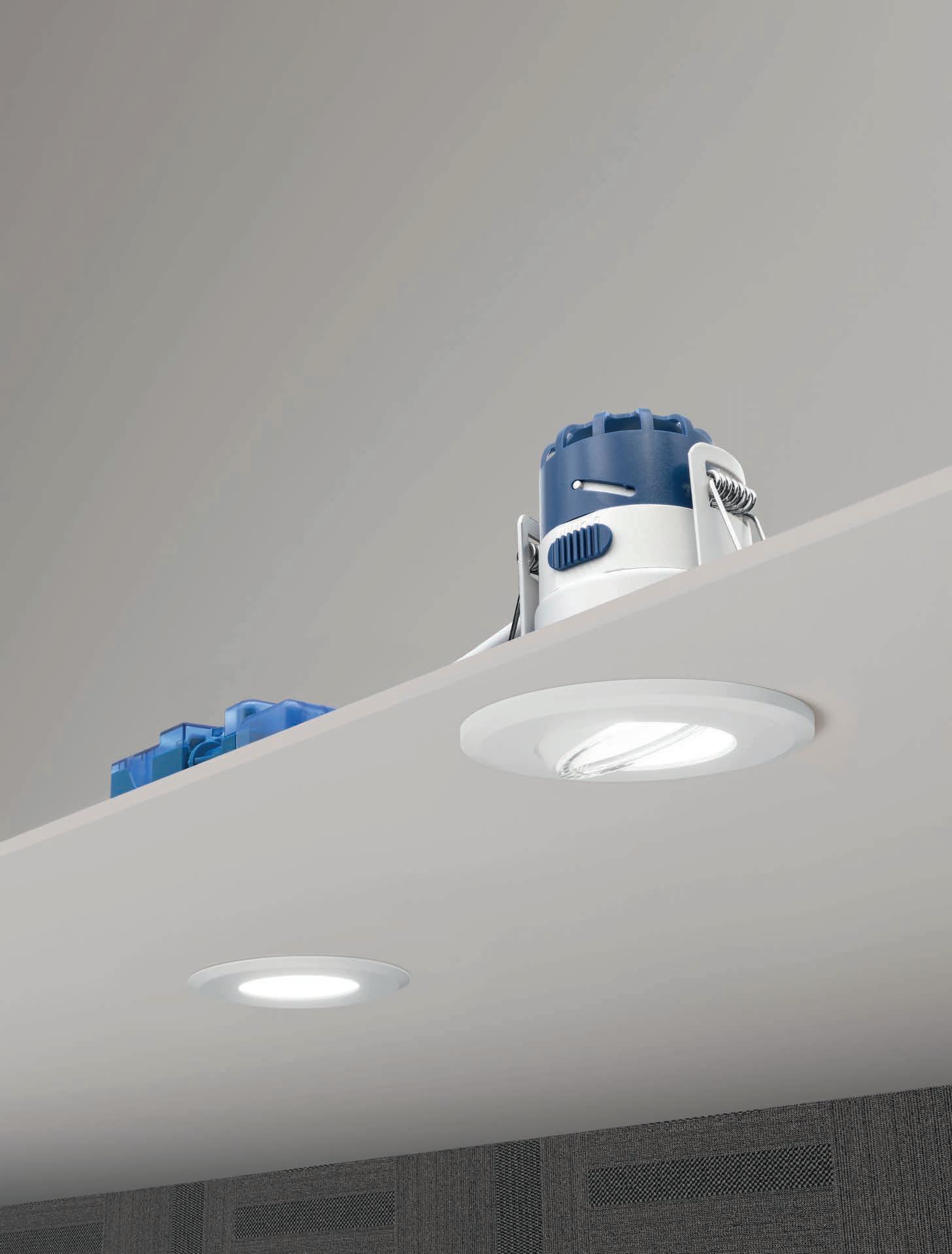
Zumtobel and its sister brand Thorn, both lighting brands of the Zumtobel Group, have completed a full lighting scheme for the refurbishment of Sacred Heart University’s Dingle campus in County Kerry, Ireland.
The €8 million (£6.9m) project forms part of a wider regeneration of the site, which includes the restored 19th-century Christian Brothers School and newer additions created to support the university’s study-abroad programme. The redevelopment introduced modern learning facilities while retaining the structure’s original form and character.
MRG Consulting Engineers & Architects and Freeman Electrical Services set performance requirements for the lighting installation, including heritage sensitivity and operational durability.
During the early design phase, Zumtobel was asked to explore alternative fitting options, producing models and visualisations to demonstrate the performance of its original recessed SLOTLIGHT design, which was ultimately retained.
A wide range of luminaires was selected for interior spaces. Classrooms and seminar rooms feature Beta 3, Chalice 3, and IQ Wave lighting, chosen for uniform illumination and glare control.
Track-mounted VIVO fittings highlight existing stonework, while custom SLOTLIGHT infinity Round pendants in a red finish provide focal points within circulation areas and echo campus colours.
Absence detection and daylight sensors are integrated throughout the interior

Octopus Energy, one of the UK’s largest energy suppliers, and Barratt Redrow, one of the UK’s largest housebuilders, have announced a partnership aimed at delivering homes with no household energy bills for up to 10 years, combining low-carbon building design with integrated clean energy technology.
The agreement brings together Octopus Energy’s Zero Bills tariff with Barratt Redrow’s new-build housing developments, enabling residents to live in homes designed to generate, store, and use their own energy without paying for electricity or heating during the guarantee period.
Launched in 2022, Zero Bills is positioned as the world’s first tariff of its kind. It applies to homes fitted with a heat pump, solar panels, and a battery system, allowing energy costs to be covered for at least five to 10 years, subject to usage conditions.
As an initial phase, the partners will deliver 54 Zero Bills homes across two developments
in Wixams, Bedfordshire, and Tewkesbury, Gloucestershire.
The first properties are expected to be completed in 2026, with further sites already under consideration across the UK.
The partnership follows Octopus Capital’s recent £100 million funding round through its Affordable Housing Fund, which is expected to support the delivery of more than 1,000 Zero Bills homes across England and Scotland.
Octopus Energy says it has already approved more than 5,000 Zero Bills homes through agreements with multiple developers, spanning affordable housing, private rental, shared ownership, and private sale.
The company has set a target of delivering 100,000 Zero Bills homes by 2030 and has expanded the initiative into markets including Germany, France, and New Zealand.
Octopus Energy, octopus.energy

lighting to balance operation against occupancy and natural light levels.
To meet the seaside location’s environmental demands, Thorn’s external luminaires incorporate corrosion-resistant treatments. Bollards include built-in power outlets and a combination of façade uplighting, lanterns, and floodlighting provides safety and architectural enhancement across the campus exterior.
Indoor colour temperatures were specified to create different atmospheres: 3000K for shared and social areas, and 4000K for teaching environments. Outdoor lighting balances warmer tones for sandstone with cooler whites for limestone, highlighting architectural details after dark.
Zumtobel, zumtobel.com
Tridonic UK , a supplier of lighting technology, has contributed to the refurbishment of The Distillers Building in Smithfield, Dublin, supplying a DALI-2 lighting control system as part of a wider upgrade delivered with ACEC Distributors.
The seven-storey office building has been redeveloped from its original limestone structure and is now designed to accommodate multiple government departments. The project required a lighting control system that could support flexible space use, long-term compliance, and efficient operation.
Tridonic worked with ACEC to deliver a wired DALI-2 installation across multiple floors, with lighting zones designed to allow future reconfiguration as occupancy and layouts change.
The installation includes sceneCOM EVO DA2 application controllers, MSensor G3 PIR sensors in surface-mounted and recessed formats, DALI-2 XCG3 pushbutton couplers, DALI-2 scene plates, and DALI-2 LED drivers.
The system is overseen through Tridonic’s lightMONITOR software, providing asset
visibility, automated emergency testing, and compliance reporting.
Sustainability formed a core part of the design brief. Tridonic’s generation four drivers and boards are C2C approved, with average driver efficiency exceeding 92%.
Presence detection and daylight-responsive dimming reduce unnecessary lighting use while maintaining consistent visual conditions throughout the building.
Paul O’Connor, Managing Director at ACEC, notes, “Tridonic’s control systems have enabled us to deliver a flexible lighting installation that supports the client’s sustainability ambitions.
“The availability of detailed energy and usage data also allows us to carry out post-occupancy evaluation and identify further opportunities for savings.”
Tridonic says The Distillers Building now serves as an example of how modern lighting control can support heritage-led redevelopment while meeting the operational demands of contemporary office spaces.
Tridonic, tridonic.com



Schneider Electric , a global energy expert, has launched ‘The Learning Loop’, a monthly CPD-accredited online learning programme designed to support ongoing training, upskilling, and professional development across the electrical industry in the UK and Ireland.
The new programme will offer two sessions each month, combining a CPD-accredited technical webinar with a follow-on session exploring how those principles are applied to real-world projects.
As an accredited CPD provider, Schneider Electric will issue certificates following attendance, allowing participants to log recognised CPD hours with professional bodies.
The programme builds on Schneider Electric’s established CPD offering, which saw approximately 5,000 attendees in 2025, and complements its extensive on-demand CPD library available to UK and Ireland audiences.
A variety of topics will be covered, with more to come, including:
• February: Selecting the Right Meter for Your Application | Schneider Electric’s Metering & Power Management Software
• March: Fundamentals of Automatic Transfer Switches | Our ATS Equipment Suite – Features, Benefits & Applications
• April: Introduction to Building | Management Systems When Buildings Speak: Translating Data into Action with Building Advisor
Following the inaugural event held last year, NICEIC a certification body for the UK’s electrical contracting industry, has confirmed the return of TechLive for 2026.
Two new in-person events are scheduled:
• NICEIC TechLive Surrey at Mercedes-Benz World in Weybridge on Thursday, 11 June
• NICEIC TechLive Sheffield at Magna in Rotherham on Wednesday, 30 September

The events are aimed at certified electrical businesses seeking face-to-face technical guidance, professional discussion, and structured continuing professional development (CPD).
With 2026 expected to bring notable regulatory updates for the electrical sector, NICEIC says the events will focus on supporting businesses through changes including Amendment 4 of the 18th Edition of the Wiring Regulations and recent updates to the Electrotechnical Assessment Specification.
Each TechLive event will feature a programme of technical and practical sessions delivered by NICEIC specialists and industry contributors. Attendees can select sessions most relevant to their work, allowing them to build up to five hours of CPD during the day.
The 12 sessions are grouped around four themes: industry and regulatory updates, electrotechnical and renewables fundamentals, mental health and wellbeing, and business tools.
Topics include inspection and testing, renewable technologies, mental wellbeing in the workplace, and upcoming requirements such as Making Tax Digital for Income Tax.
Paul Collins, Technical Director at NICEIC, states, “It is set to be a year of important changes across the sector. Through our TechLive events, industry experts will provide the information and insight businesses need, alongside the opportunity to complete up to five hours of CPD.”
Each event is limited to 300 tickets and you can register via the company’s website.
NICEIC, niceic.com
• May: Surge Protection in Electrical Distribution | Latest Developments in Acti9 & Powerpact 4 – Including SPDs
• June: Fundamentals of Busbar in Electrical Distribution | Schneider Electric’s Busbar Portfolio & Applications
Schneider Electric says The Learning Loop’s launch reflects growing demand across the electrical industry for structured, accredited training as technologies and standards continue to evolve.
The first session took place in January, with further sessions running monthly throughout the year.
Schneider Electric, se.com
With more than 30,000 British Standards currently in circulation, it can be challenging for installers to know which are most relevant to their day-to-day work. In the domestic fire and carbon monoxide (CO) safety sector, these standards provide a clear framework for best practice, helping installers deliver compliant, high-quality installations that ultimately save lives.
All Aico alarms are third-party certified by BSI and carry the Kitemark, giving installers confidence that products meet rigorous manufacturing standards.
Key standards Aico promotes include:
1. BS 5839-6: Code of practice for the design, installation, commissioning and maintenance of fire detection and fire alarm systems in domestic premises.
2. BS EN 50292: A guide on the selection, installation, use and maintenance of electrical apparatus for the detection of carbon monoxide in domestic premises, caravans and boats.

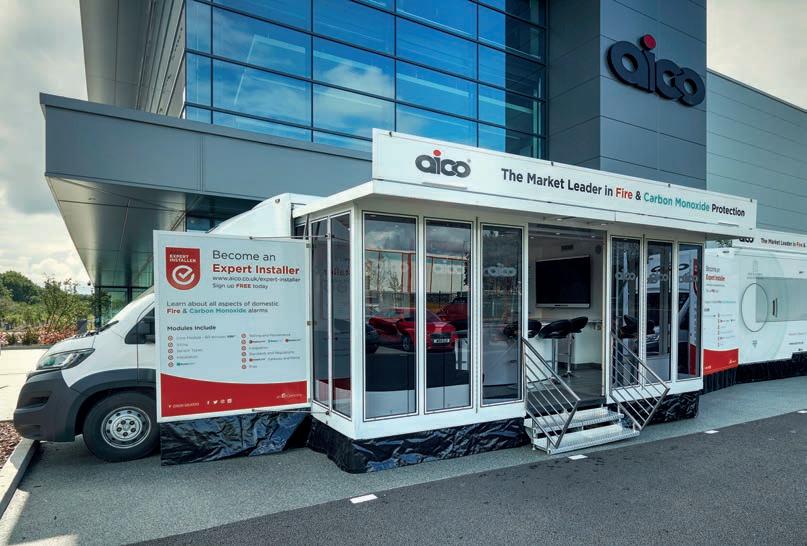
To support installers in applying these standards with confidence, Aico offers its free Expert Installer training programme. The two-hour session is FIA CPD accredited and covers all the current relevant standards for domestic fire and CO alarm installations, translating technical requirements into clear, practical guidance. The training goes beyond theory, explaining not just what the standards say, but why they matter and how they should influence installation decisions. From alarm grades and categories of coverage to system design considerations, Aico’s training equips attendees with the knowledge needed to correctly install domestic fire and CO systems.
Once completed, installers are invited to join Aico’s online Installer Community. The Installer Community app provides ongoing support through access to practical challenges, rewards, and the opportunity to progress onto City & Guilds assured training.
To register for Aico’s Expert Installer training, contact your local Relationship Manager or visit aico.co.uk/contact. Aico, aico.co.uk





In previous issues of ECN, Recolight has described some of the metrics which are used as a basis to understand the environmental impact of a product. These metrics included CIBSE’s technical memoranda, TM65 and TM66, as well as the more detailed Environmental Product Declarations (EPDs). These metrics are the foundation of more sustainable practices, but those using them should be carbon literate.
TM65 and EPD are two methodologies for embodied carbon assessment. The former is relatively high level, which rewards local supply chains and materials with typically low carbon impacts. EPDs, by comparison, are more granular. Both such documents simply contain impacts, not qualitative claims about the product. It is therefore down to the EPD user to utilise them as a tool for realising and rewarding more sustainable products.
Given the technical nature of an EPD, it’s not so obvious how to read or interpret the resulting data – a knowledge gap which Recolight continues to address.
An EPD provides transparent information on the environmental impacts across a product’s whole life cycle. To understand its whole life cycle, a life cycle assessment (LCA) is conducted, which is a string of calculations that return a set of results representing estimations of the product’s environmental performance (such as global warming potential, ozone depletion potential, and water use).
Figure One: An EPD provides transparent information on the environmental impacts across a product’s whole life cycle
The LCA methodology is quite comprehensive and should comply with various standards to allow for fairer product comparison. However, not all EPDs are created equal. The easiest means to survey an EPD’s reputability is to check whether it is produced in conjunction with an EPD programme which has been audited by ECO Platform, an umbrella organisation seeking
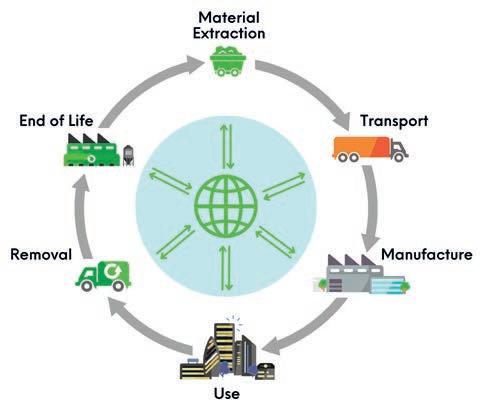
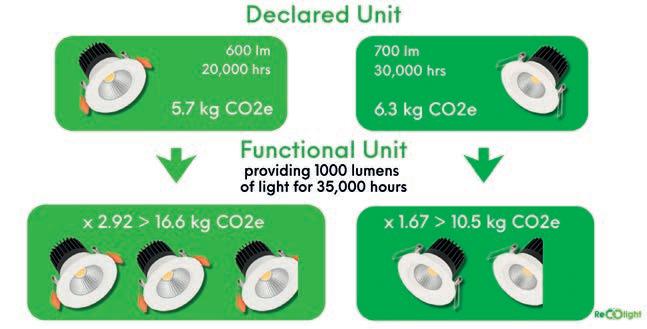
Figure Two: EPDs and the importance of transparent comparison between functional and declared units
to harmonise EPD within the built environment. While this doesn’t guarantee quality, it is the best place to start.
Interpreting EPDs – and comparing them – is not as straightforward as it might seem. According to ISO standards, EPD comparison is only valid when both declarations fulfil an extensive set of criteria. For results comparison, these criteria are understandable. For example, carbon conversion parameters are updated annually; therefore, comparing two products using data from different periods could be misleading. This dynamic nature of LCA introduces complexity which the EPD user should appreciate.
It should also be appreciated that results from an LCA – and therefore an EPD – are estimations of the impacts of a product, not absolute emissions. In fact, standard LCA studies often include sensitivity analyses to account for uncertainty. Numbers should be treated with a degree of caution.
Yet, despite the caveats, product comparison is inevitable in an industry where more and more EPDs are being used for commercial benefit. Product producers naturally seek to benchmark their environmental performance. It is not realistic to enforce all criteria for EPD comparison, though the EPD user should be carbon literate, identifying reputable sources and distinguishing between reasonable and questionable claims. Without this knowledge, EPDs risk becoming a marketing tool rather than a sustainability instrument.
The top criterion which must be respected during EPD comparison is that products are judged based on their ability to fulfil the same function, rather than by which unit is less impactful to make. For example, an EPD might report impacts for manufacturing one product unit (“declared unit”), but this overlooks real-world performance. A more meaningful approach reports results at the “functional unit” level. For example, in lighting, it is standard to compare the impacts of ‘providing 1,000 lumens for 35,000 hours’ using a product. Consider two luminaires: Product A, which achieves 600 lm for 20,000 hours, and product B, which achieves 700 lm for 30,000 hours. Their declared units are 5.7 and 6.3 kg CO2e per luminaire respectively (see Figure Two). However, given their functional differences, direct comparison is unfair. Instead, they must be compared on their capacity to illuminate a space. To provide 1,000 lumens for 35,000 hours would require x2.9 units of product A but only x1.7 of product B, equating to 16.6 kg CO2e versus 10.5 kg CO2e respectively. What started as comparable impacts are now significantly different when normalised to the same functional output.
EPD results tables offer good assessment of a product’s environmental impact and, as sustainability champions, we must advocate for responsible use of these figures to ensure fair comparison. Environmental data, such as those from an EPD, provide the opportunity to enable more sustainable electrotechnical products, and this can be realised with a carbon literate industry.
Recolight, recolight.co.uk
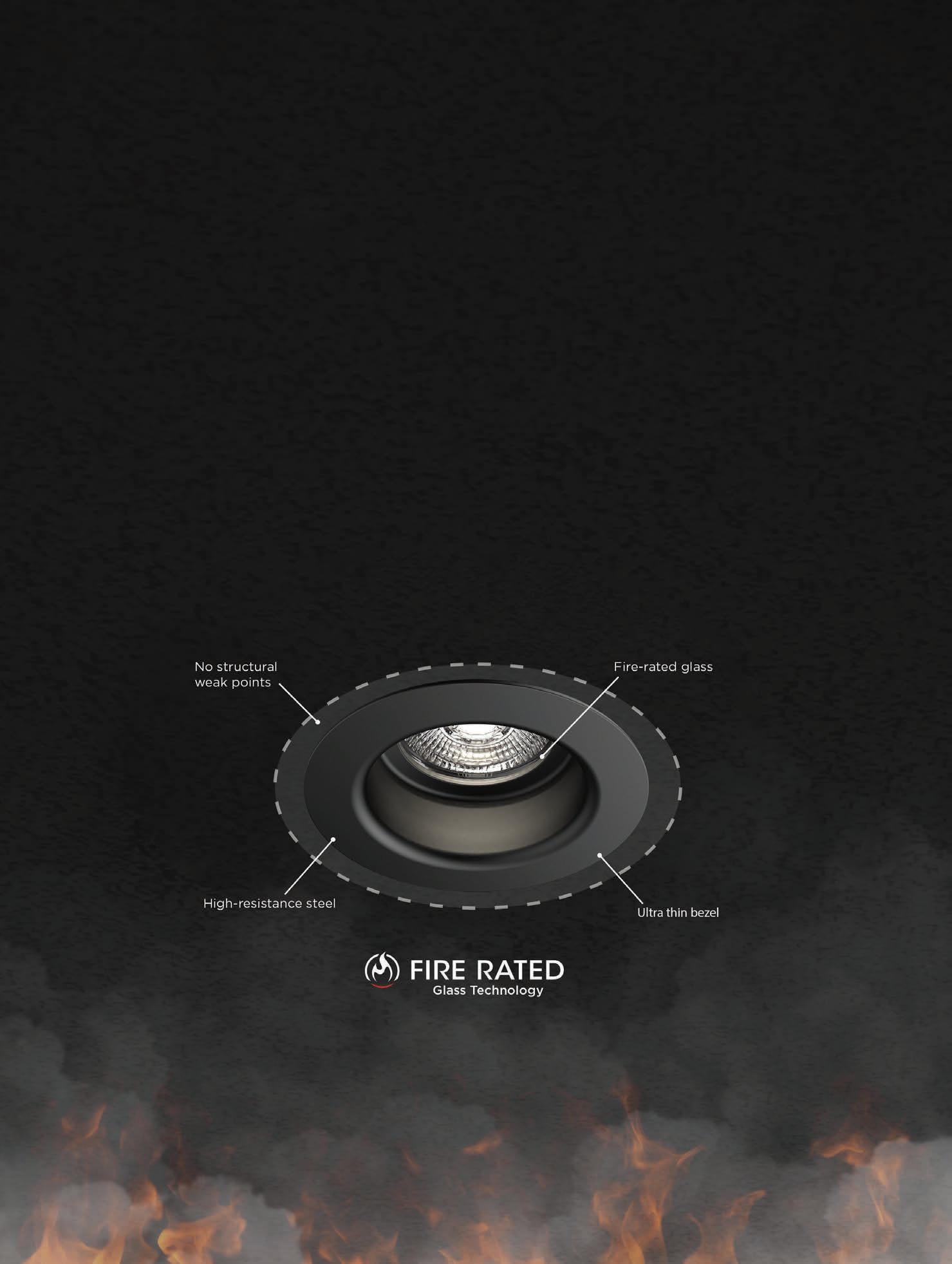
From large-scale architectural builds to compact residential spaces, Evofire delivers fire protection with a premium, seamless look. Choose from a complete range of fire-rated glass downlights, with colour and tilt options to suit any interior design.
UK Power Networks and Cory Group have partnered to connect one of the largest energy from waste (EfW) facilities in the UK to the electricity network.
The project will connect the new ‘Riverside 2’ EfW to the electricity network on the banks of the River Thames in Belvedere, London. Riverside 2 is projected to turn 650,000 tonnes of non-recyclable waste into energy that could produce enough power for 176,000 homes.
Processing waste at Riverside 2 will prevent non-recyclable materials being sent to landfill or overseas, improving waste infrastructure in the capital.
Riverside 1, located on the same site, currently diverts around 800,000 tonnes of waste from landfill each year.
UK Power Networks delivers electricity to nearly 20 million people across London, the South East, and the East of England, and has completed the commissioning of a brand-new 132,000-volt circuit to connect the plant to the local grid.
The Riverside 2 energy from waste plant has been connected to the electricity network with 10 kilometres of cable
In total, 10.6 kilometres of cross-linked polyethylene cable has been used, with engineering innovation at the heart of the project. Notably, a cable route was employed that manoeuvred around three different rivers and associated bridges, using directional drilling when needed and minimising environmental impact and disruption.
• River Darent: A steel pipeway was installed to carry the cable across the river via the existing A206 bridge.
• Norman Road: The cable was installed under the river using a directional drill.
• River Cray: The cable was laid in a cable trough fixed to the underside of the existing bridge over the river, removing the need to drill beneath the waterway.
The new circuit will provide an extra 82.5 Mega Volt Ampere (MVA) to the network to help cater for future electricity needs.
The facility was successfully connected to the electricity grid through collaborative works by Cory’s construction partner, JSM, and UK Power Networks. JSM installed the Riverside 2 substation and the 132,000-volt route to Littlebrook Substation, while UK Power Networks undertook significant upgrades at Littlebrook, including refurbishing a 132,000-volt circuit breaker, installing metering transformers, upgrading protection systems, and laying high-voltage cables within the substation boundary. These activities ensured a safe and reliable connection to the grid.
Jason Taylor, Programme Manager at UK Power Networks, explains, “The Riverside 2 project overcame complex engineering challenges along the way. The route tackled three different

Riverside 2 will stop 650,000 tonnes of non-recyclable waste from going to landfill

river crossings with tailored solutions: directional drilling at Norman Road, fixing of the cable trough carrying the cables to the underside of the existing bridge at the River Cray, and the construction of a dedicated cable bridge over the River Darent. These approaches minimised disruption to the environment and local infrastructure, while ensuring the robust installation of new equipment.”
Peter Kent, Managing Director of Riverside 2 at Cory Group, comments, “We are proud to deliver an essential public service and want to ensure there is no waste from waste. This includes recovering the energy contained in the waste we process and returning it back to local communities as baseload, partially renewable electricity. Riverside 2 will provide vital waste processing capacity for London and the South East, as well as generating electricity for the grid, and working together with our partners, including UK Power Networks and JSM, is a key part of delivering value for our communities.”
Stephen Bradley, New Business Director at JSM, adds, “JSM are delighted to have been given the opportunity to design and deliver the 132,000-volt substation and 10.6-kilometre, 132,000-volt cable route for this nationally significant project, all to UK Power Networks’ specifications. The cable route was planned with a high degree of cooperation with the London Borough of Bexley and Kent County Council to ensure the minimum amount of disruption to one of the main strategic arteries from Kent into South East London. This included designing multiple special engineering difficulties such as rail and river crossings.”
UK Power Networks, ukpowernetworks.co.uk

















































































































































Sonos reveals how its latest Era speakers are powering a seamless multi-zone audio system inside a luxury Kensington development, giving prospective buyers a taste of smart living before they get the keys.
The new, luxurious 100 Kensington residential development by SevenCapital and MARK Capital Management hosts an array of high-spec one, two, and three-bedroom apartments. The Oria is the first apartment building available for new residents.
Ready to greet prospective buyers, an accompanying marketing suite, including two mock apartments, showcases the 100 Kensington lifestyle to clients. For this, SevenCapital sought an integrated audio setup to welcome visitors at the door and enable them to experience what life could look and sound like in their new home.
Following a review of premium audio options, the company selected Sonos as the integrated audio solution for the marketing suite, ensuring a seamless, multi-zone experience the moment visitors arrive.
The client wanted an audio solution that was high-performing, stylish, and intuitive so that the teams working on site could easily operate it. The solution was also a sales tool, allowing the team to showcase the audio packages available to prospective buyers.
The audio in the marketing suite had to be simple to use and easy to navigate, with zonal sound that would allow for gentler volumes in different areas, at different times. For example, the team wanted audio to be louder at the entrance space to welcome guests, whilst being quieter in demonstration areas. It was also important to be able to reduce volumes to better facilitate conversation with prospective buyers.
Given the large number of reflective surfaces, including the glass-fronted façade, it was important that the speakers could easily adapt to the acoustics for
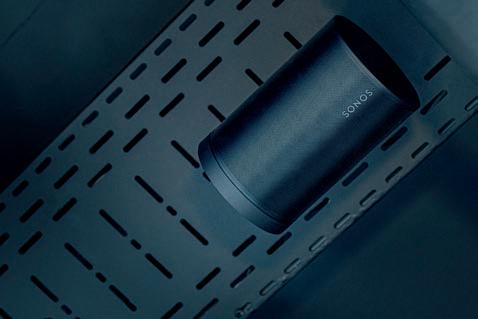
Premium audio technology from Sonos has been installed throughout the new Kensington development

clear, consistent, and targeted audio. Speakers also needed to be powerful enough for SevenCapital corporate partner events to be held in the space.
Following a site inspection, Sonos Platinum Installer Musical Images specified a simple Sonos system comprised of six Era 100 Pro and two Era 100.
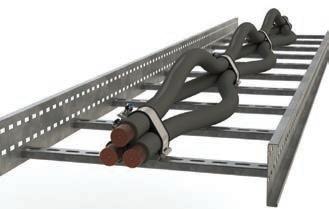
The Sonos Era 100 Pro speakers were installed across the main area of the marketing suite, high up in the exposed ceilings. So as not to obstruct the existing aesthetic, the mount was fixed to the cable trays that carry the electrical wires downwards from the ceiling instead of off the walls. The ceilings have been painted black and the team chose the Black Sonos speakers to match the modern interior.
Pat Shah, Director at Musical Images, explains, “The site was already completed when the install took place, and the process was pretty simple. Using the pre-existing CAT cables with PoE+, we were able to connect to the network as well as power with a single cable. It made the install incredibly easy and tidy as it offered plug-and-play capabilities in a commercial space. This means there is huge opportunity in the commercial retrofit market.”
With the client wanting an audio solution that was high-performing, stylish, and intuitive, Sonos Era speakers fit the bill perfectly
The challenging acoustics of the glass exterior meant that Sonos Trueplay technology was integral to deliver the correct audio balance in each area of the marketing suite. Sonos’s software measures the acoustics of the room then instantly fine-tunes the EQ to suit the space. Equally, to optimise the zonal audio
feature from the Era 100 Pro, the speakers were adjusted to project downwards, directly onto the customer below.
The two Sonos Era 100 speakers are featured in the model apartment showrooms – one in a bedroom and the other in a kitchen and dining area – offering a wireless audio solution for clients. These speakers also operate with zonal audio, enabling an immersive experience across the living area. Integrated Sonos sound systems are available on a scalable basis, with opportunities to invest in larger, multi-room audio systems; integrated, in-ceiling speakers; or home theatre Sonos systems.
All team members have smartphones and tablets with the Sonos app, enabling them to play soundtracks and control the audio zones at the tap of a button. Users are able to change the audio being played and attenuate volume up or down for each individual speaker.
“The team love it,” says Sarah Morris, Group Marketing Director at SevenCapital. “It’s quick and really easy to connect to. We wanted to partner with Sonos as not only are the systems easy to integrate into an existing site, but I also think it’s the best for music and sound.”
Pat Shah concludes, “Sonos is a brand that a lot of people are aware of. The Era 100 Pro will be a game changer in commercial applications, like the project at 100 Kensington.”
Sonos, sonos.com

In this month’s interview, ECN has the pleasure of speaking with James Cornet, Director of Tradefox – a training platform where users can learn safe isolation, electrics, and more, one simulation at a time. We discuss James’s beginnings in the electrical sector, how Tradefox came to be, his views on net zero and the skills shortage, and more!
ECN: Hi James! Can you tell us a little bit about your career to date, along with some of your early experiences in the electrical sector?
James: My dad was a property developer, so during my formative years I was always surrounded by construction work and heavy equipment. I left school at 17 without A-levels or a degree and started labouring on site. Through that, I learned about different trades and began training in electrical installations, both formally and alongside a highly skilled, multi-disciplined Albanian site team. I later worked in maintenance, which gave me valuable fault-finding experience.
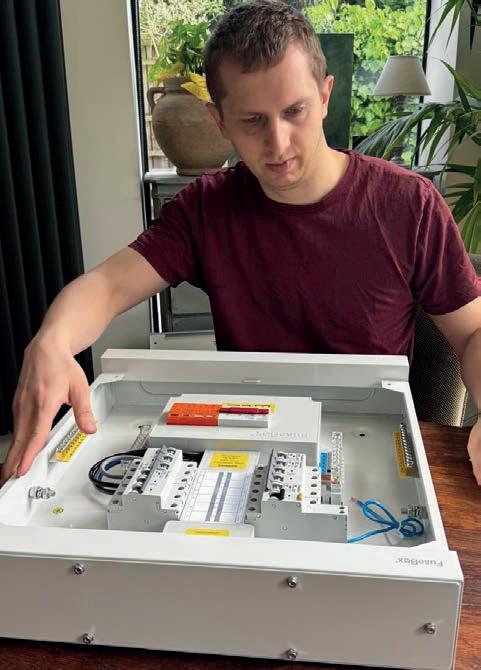
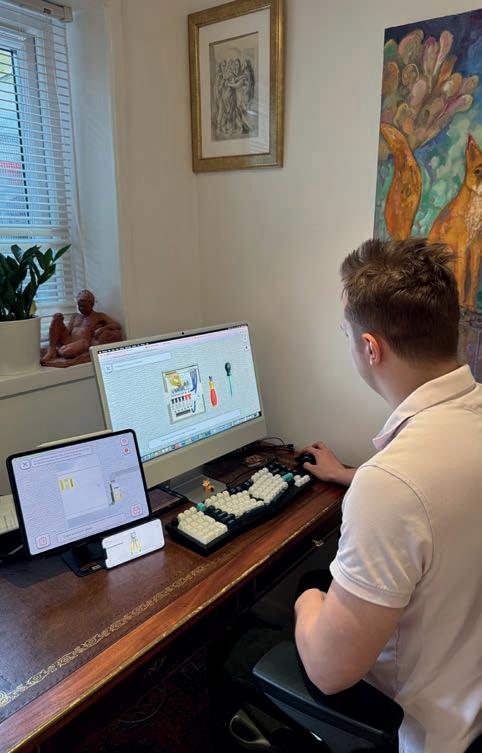
James Cornet created Tradefox to help electricians practise critical procedures safely, repeatedly, and affordably
I then spent a year working unpaid in my family’s construction office as an assistant project manager. With that experience, I moved into project managing residential developments with my family. The confidence those projects gave me was critical in taking the leap to start Tradefox. I learned to find a way through problems by any means necessary.
ECN: How did you end up becoming involved with Tradefox, and can you provide an overview of the services offered by the organisation?
James: A defining moment for me was the Grenfell Tower fire. It felt like it encapsulated everything that was broken in our system. The fact that the fire was reportedly started by an electrical fault in a fridge-freezer might have, on some level, been the push which caused me to start my electrical training about a month later. I would love for Tradefox to be part of the solution to the myriad of construction failures which were highlighted by the fire.
A series of coincidences that are outside the scope of this article eventually led me to start Tradefox. One moment that always sticks with me was when my mum and I were brainstorming business names in the kitchen. She suggested “Tradefox”, and at that exact moment we noticed a fox’s head staring at us from the garden shed. It felt like a sign.
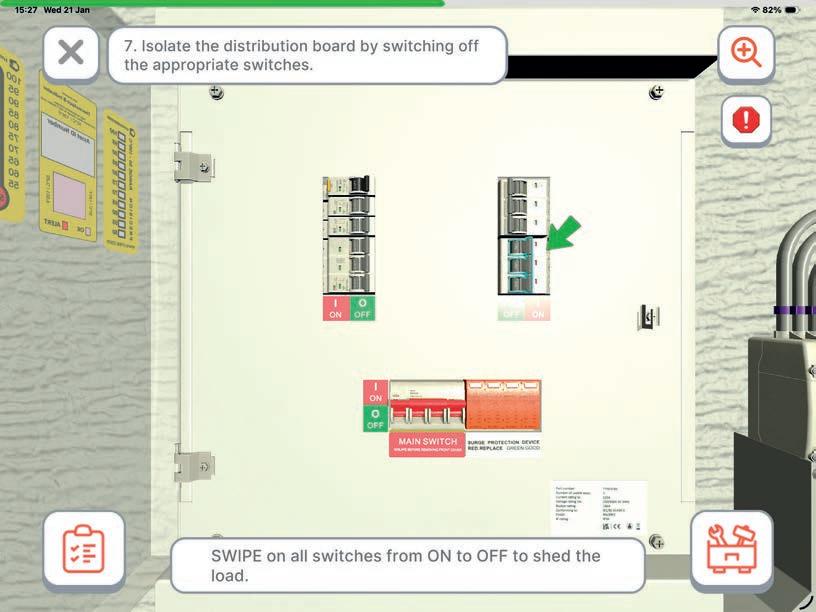
Tradefox is an interactive simulation-based training platform designed to help electricians practise critical procedures safely, repeatedly, and affordably.
ECN: How can Tradefox’s interactive online programmes be of assistance to electrical contractors?
James: Tradefox allows electricians to repeatedly practise high-risk procedures safely, something traditional training often struggles to provide.
Our mission is to simulate the entire low-voltage electrical installation curriculum. This means electricians can access interactive simulation training for core procedures for around £5–£10 per month. In many colleges, students may only practise something like safe isolation once, which simply isn’t enough.
Historically, this level of hands-on training has only been available through expensive, time-limited courses. Once you finish the course, you lose the ability to practise. With Tradefox, procedures such as safe isolation, testing and inspection are available anytime, allowing electricians to refresh and maintain competence over time.
At its core, Tradefox is about giving electricians the repetition they never get in college, at a price they can actually afford.
ECN: In what ways do Tradefox’s training programmes stand out from other options available for those in the electrical sector?
James: Our key strength is interactivity. There are many excellent videos and online courses available, but you can’t truly interact with them. Tradefox uses simulation technology to give technicians a hands-on experience.
The platform is also fully multi-platform, working across Android, iOS and web browsers, making it accessible wherever electricians choose to learn.
ECN: What specific electrical training simulations does Tradefox offer right now, and which are the most in-demand for 2026?
James: We currently offer a safe isolation simulation series and a basic wiring simulation series. As of mid-January, we have 10 simulations and 10 associated test modes live, with a further 15 simulations due to be completed shortly.
One simulation I’m particularly excited about is our diverted neutral current test simulation. According to 2024 safe isolation surveys, around 25% of electricians in the UK don’t use a lock-off kit during safe isolation. When you consider how many electricians may not own or regularly use a clamp meter, it’s likely that diverted neutral current testing is being missed entirely.
Several industry professionals have told me that simulation training may be the only realistic way to teach the diverted neutral current test properly, due to its depth and complexity.
ECN: What do you make of the UK’s ongoing skills shortage, specifically relating to the shortfall in the electrical sector?
James: The number of electricians has fallen sharply, from 214,200 in 2018 to 158,000 in 2024, and this doesn’t surprise me. Electricians are being hit from all sides. Changes to the NVQ system and constant retraining requirements are pushing many experienced workers out, leaving them feeling their qualifications are devalued and preventing vital knowledge from being passed on.
Apprenticeships are also becoming unviable for many businesses due to rising costs, while fast-tracking them is not a credible substitute for a traditional five-year apprenticeship. The adult learner route, which I took myself, is simply
not deep or long enough to consistently establish competence.
On top of this, there is a cultural issue. Electrical work is not appealing to the next generation, partly due to a class divide that undervalues trades in the UK. Working with your hands is often seen as lesser than office work, unlike in countries such as Germany where trades are held in far higher regard.
Unless we address both the structural and cultural issues, we risk hollowing out the trade at the exact moment we need it most.
ECN: What kind of impact will this skills shortage have on the net zero target, and can Tradefox help in this regard?
James: Many electricians already believe net zero is unattainable, and the skills shortage only reinforces that view. Net zero depends heavily on competent electrical work, from EV charging and heat pumps to grid upgrades and inspection and testing. Tradefox can’t solve the shortage on its own, but it can help improve competence, confidence and consistency at scale. If we want to meet net zero targets, we need better-trained electricians, not just more of them.
ECN: What does your typical working day involve, and what are some of the most satisfying elements of your job?
James: No two days are the same. I might be working on the app’s UI and UX, writing specifications, testing builds, managing the development team, paying bills, prioritising features, choosing sound effects, managing metadata, designing game mechanics, reading guidance documents, publishing blogs, checking analytics, or speaking with colleges and businesses.
The most satisfying moments are visiting colleges and seeing the impact the simulations have first-hand. That’s when all the struggle of building the product feels worthwhile.
When a lecturer tells me a student finally ‘gets’ safe isolation because they’ve practised it 10 times in Tradefox, that’s everything.
ECN: What were some of Tradefox’s biggest success stories of 2025, and how is the organisation set to evolve across 2026?
James: One of our biggest successes in 2025 was securing a pilot with a very important contractor – that’s all I can say for now. Another milestone is the continuously growing number of colleges now using our simulations. Adoption across UK further education is accelerating, and each new cohort of students feels like a long-term investment in safer work.
The global reach of Tradefox is its own milestone. Working with technicians in Africa, and hearing about how Tradefox is helping improve their safety practices is heartwarming.
Looking ahead to 2026, we’re building on the momentum of the last two years. We’ve onboarded a course designer and may add another developer. We now know the level of quality we can achieve and that we can execute as a team. I’m still working from home, but maybe one day, I’ll have an office!
ECN: What are some of the biggest challenges or competency gaps for electrical contractors at present, and how can Tradefox help?
James: One of the biggest gaps is procedural confidence in critical safety
tasks such as safe isolation, the diverted neutral current test, and testing and inspection. Many electricians don’t get enough repetition during training to build real competence.
Tradefox addresses this by allowing electricians to practise these procedures repeatedly in a risk-free environment, helping to reinforce correct habits and reduce dangerous shortcuts.
ECN: How has user feedback from electricians shaped the platform’s development?
James: I regularly consult a pool of electrical lecturers and industry experts on everything from technical accuracy to simulation UI/UX and even tool-dragging speed. I’ve found high-voltage industry safety principles to be particularly robust, and we apply many of these principles to low-voltage training.
An example of best practice from the HV industry is the principle of “test before you touch”, which we are embedding across multiple simulations to reinforce best practice.
ECN: Lastly, what do you most enjoy doing in your free time while away from work?
James: I enjoy learning languages and playing music – although you might also find me in Battlefield 6 on PS5, playing as a different type of “engineer”!
Tradefox, tradefoxapp.com


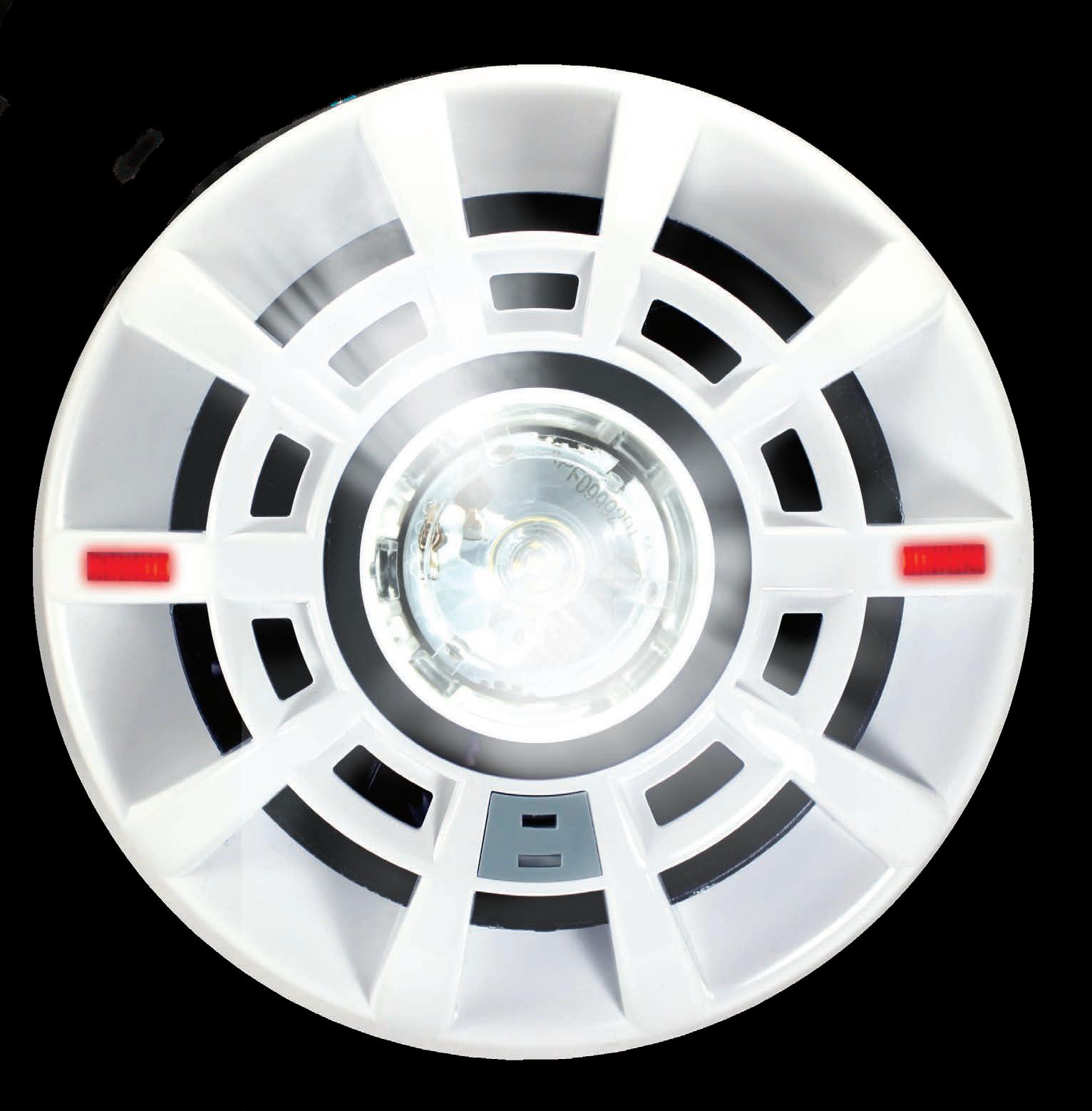
PROTECTION FROM FIRE LIKE NEVER BEFORE PROVEN FALSE ALARM REDUCTION
FULLY CERTIFIED TO EN 54 Parts 3, 5,7,13,17, 23, 29 & 31
HEAT DETECTION SMOKEMULTIDETECTIONSENSOR DETECTION
C-3-9.4 WHITE VAD 92DB(A) SOUNDER VOICE SOUNDER CO FIRE DETECTION ALL IN ONE DEVICE !
O-C-1.9-4 RED VAD

ENABLED




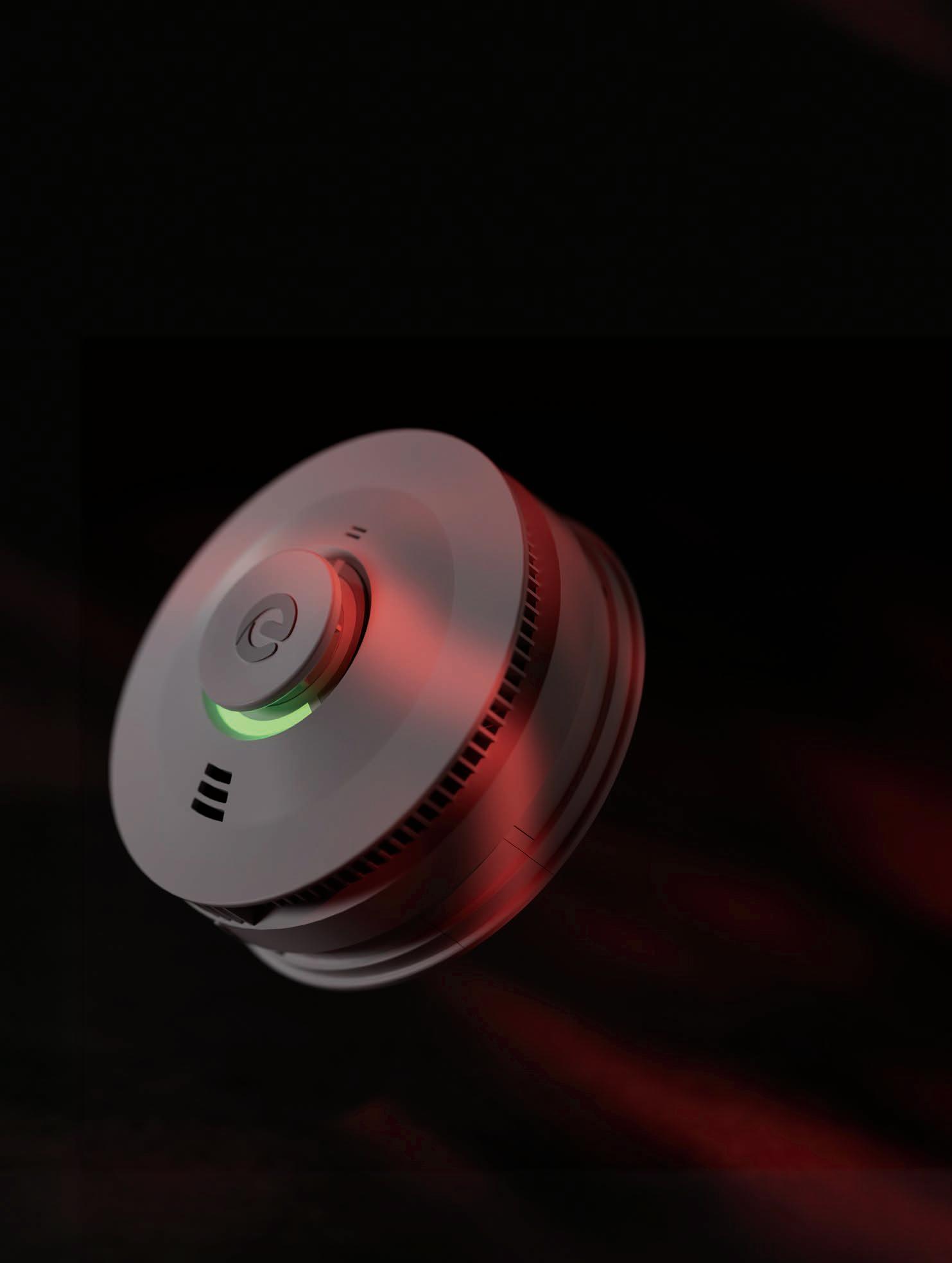
ESP – part of the Scolmore Group – is helping to create safer homes across the UK courtesy of its innovative Espire alarms range. In this month’s competition, the company is giving one lucky reader the chance to win an Espire fire and CO alarm bundle.
Launched last year, Espire from ESP is a comprehensive range of high-performance fire and CO alarm products. Boasting an array of innovative features, the range includes optical smoke alarms, heat alarms, combined smoke and heat alarms, carbon monoxide (CO) alarms and combined CO and heat alarms.
The optical smoke alarms are equipped with advanced infrared LED sensor technology that excels in detecting early signs of combustion particles, making them ideal for living areas, bedrooms, escape routes, and stairways. Key features include a 24-hour memory function, auto-dimming LED, dust compensation, and stainless-steel insect mesh barrier, designed to reduce nuisance alarms and improve accuracy over time.
Installers can choose from three power options to suit varying project requirements: powered by mains with a sealed, tamper-proof 10-year lithium battery; powered by mains with a 9V replaceable battery; or powered by a sealed, tamper-proof 10-year lithium battery.
The Espire Optical Smoke Alarms are to be installed in accordance with BS 5839-6.
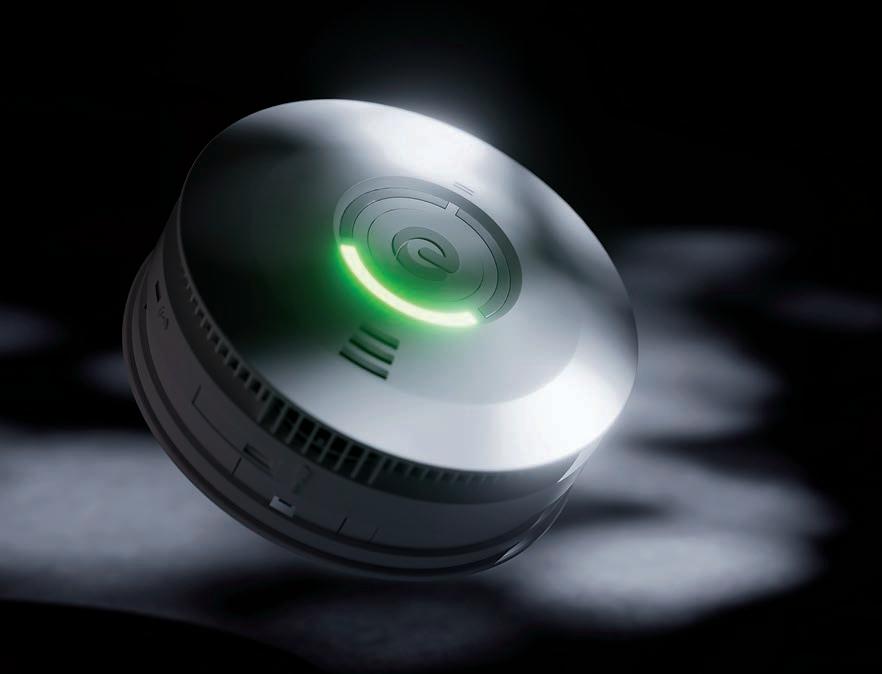
The ESP Espire offers auto dim functionality, which combines convenience, visibility and energy efficiency
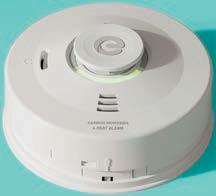
The dual CO and heat alarms are ideal for kitchens, utility rooms, and garages, and incorporate independent sensors for carbon monoxide and heat detection, allowing each threat to be monitored and managed separately.
The CO and heat alarms are also available in two options: powered by mains with a sealed, tamper-proof 10-year lithium battery; or powered by a sealed, tamper-proof 10-year lithium battery.
The Espire dual CO and heat alarms are to be installed in accordance with BS EN 50292.
Both the Optical Smoke and the dual CO and heat alarm models feature ESP’s signature lock-in base, hush function, auto sensor self-test, and 24-hour alarm memory. Installers can also benefit from optional RF-Link modules alarms for enhanced coverage.
The Espire bundle being offered in this month’s competition includes three optical smoke alarms and one dual CO and heat alarm.
ESP, espireuk.com
For your chance to win the ultimate Espire bundle, simply answer the following questions correctly:
1. Which products are included in the Espire range from ESP?
a) Optical smoke alarms for residential use
b) A comprehensive range including smoke, heat, and carbon monoxide alarms, plus combined units
c) Fire extinguishers and emergency lighting products
2. Where are Espire dual CO and heat alarms ideally installed?
a) Kitchens, utility rooms, and garages
b) Bedrooms, living rooms, and escape routes
c) Offices, reception areas, and outdoor spaces
3. Which feature helps Espire optical smoke alarms reduce nuisance alarms and improve long-term accuracy?
a) Manual sensitivity adjustment and external filters
b) Battery-powered operation with RF-Link modules
c) Infrared LED sensor technology with dust compensation and an insect mesh barrier
The winner of the December competition – a Virgin Experience Day, courtesy of Marshall-Tufflex – was Katherine Connolly of KConnolly Estimating.
All entries must be returned by 28 February 2026. The editor’s decision is final. For the full terms and conditions, visit electricalcontractingnews.com/ competition-terms.
The name of the winner will be published in the April 2026 issue of ECN.
*Prize not exchangeable
Distributor

City Plumbing, one of the most prominent and highly-regarded suppliers in the UK, is offering a one-stop solution for the electrified trades. Here, ECN looks at ElecStore, its dedicated brand for electricals, and explains why the supplier should be considered a trusted electrical partner. Electricians
The drive towards net zero is fundamentally reshaping the trade industry. Plumbers, heating engineers, and electricians are increasingly required to work across disciplines to meet the growing demand for technologies like heat pumps, solar PV, and EV charging.
Recent research shows installers spend over three hours a week just sourcing products. That’s nearly 10% of a working week, or over £150 in potentially chargeable time, lost to shopping around.
City Plumbing has evolved to meet this challenge by fully bridging the gap between plumbing, heating, and electrical supply, providing a simple, one-stop solution for increasingly integrated projects.
To support this shift, City Plumbing has launched ElecStore – its dedicated brand for electricals – putting the power and expertise you need right where you work:
• More than 14,000 products: A comprehensive range of electrical products, supporting projects no matter the size and including all the brands you trust.
• Nationwide expertise: Available across City Plumbing’s branches (over 350 in total), with in-brand expert advice.
• Dedicated support: City Plumbing has established 30 dedicated ElecStore electrical trade counters, each supported by an experienced electrical manager to give you in-depth product guidance.


“Increasingly, tradespeople are offering a wider range of services, especially as low-carbon technologies like heat pumps and electrical heating, such as electrical radiators or storage heating, become more commonplace,” says Hemal Morjaria, Managing Director for Heating, Renewables, Electrical at City Plumbing. “ElecStore ensures multi-skilled trades have access to the products and advice they need, all under one roof.”
Described by City Plumbing as “Your trusted electrical partner”, ElecStore is expanding its offering to bring you a new line of own-branded products designed to deliver exceptional value without compromising on performance or reliability. This range is specifically curated to provide cost-effective solutions across key trade categories, helping you maximise profitability on every job.
The range has launched with electric heating – convector, oil-filled radiators and space heaters, LED downlights, first fix accessories, plus a range of dehumidifiers. Plus, even more ElecStore branded products are arriving soon.
City Plumbing has over 350 branches across the UK and offers more than 14,000 products
City Plumbing understands that saving time and building confidence are critical. Its investments go beyond stock to streamline your complex installations and upskill your team.
The supplier’s suite of online Kit-Builder tools simplifies complex, integrated projects:
• Heat Pump Kit Builder
• Solar PV Kit Builder


• Underfloor Heating Kit Builder
In easy steps, these tools allow you to plan and source a complete, compatible system with real-time stock and pricing visibility, ensuring accuracy and speeding up quoting.
By evolving its offer, City Plumbing is supporting businesses at every stage through a time of rapid change.
Choose City Plumbing and ElecStore to simplify your projects and help grow your business. City Plumbing, elecstore.co.uk
ROLEC has become one of the UK’s most established manufacturers of EV charging solutions, supporting installers while meeting the demands of today’s rapidly evolving market. ECN explores the company’s extensive capabilities and how installers and end users can benefit.
Rising EV adoption, increasing power demands, and the need for scalable infrastructure create new challenges for both domestic and commercial installations.
ROLEC offers a comprehensive portfolio of AC fast and DC rapid charging solutions designed for a wide range of applications. Whether for residential driveways, workplace car parks, fleet depots, or destinations, ROLEC’s range is designed to outperform competitors in ease of installation, reliability, and flexibility for any project.
With products suited to single installations and multi-site rollouts, ROLEC supports you from start to finish, working across new builds, retrofits, and large-scale deployments.
Central to ROLEC’S approach is knowledge transfer. By investing in the training of both current and future electrical contractors, ROLEC helps ensure best practice across the entire project lifecycle.
Purpose-built training academies, along with comprehensive, free CPD-accredited courses, enable installation partners to deploy EV infrastructure efficiently and at scale. This commitment to collaboration and capability-building reflects ROLEC’s long-term view of industry growth – one built on competence, consistency, and confidence.
Every ROLEC charger is designed and manufactured to meet relevant UK Government legislation and building regulations, giving installers complete confidence. Compliance and reliability are built into the hardware, with rigorous testing ensuring long-term performance in demanding environments.
ROLEC’s EV product range delivers long-service operation for both installers and end users
Engineered using high-quality materials and robust enclosures suitable for outdoor,
Quantum is a sophisticated and resilient EV charging point, providing a combination of durability and impeccable design for all locations

By listening to installers on the ground, ROLEC shapes product development around real-world needs, ensuring chargers are practical for you to fit and maintain on site. With technical support, step-by-step documentation, and aftersales care, the company goes beyond being a supplier to become a long-term partner.
Features such as flexible cable entry points, clear internal layouts, robust mounting systems, and intuitive commissioning reduce installation time and complexity. Modular designs support efficient multi-charger setups, making ROLEC a trusted choice for larger projects where speed and precision matter.
These practical details may seem small, but together they help you work smarter, reduce call-backs, and deliver a premium finish each time.
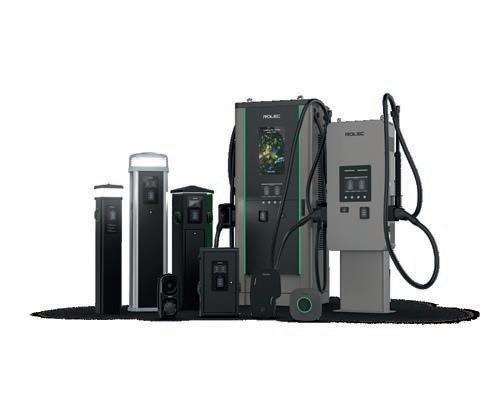
ROLEC recognises the growing need for scalability, connectivity, and adaptability. Its chargers come with true native OCPP as standard, designed to integrate with any software across more than 45 CPMS platforms, facilitating smooth onboarding to your customer’s chosen provider.
Unlike many hardware solutions that rely on cloud-to-cloud connections, ROLEC chargers communicate directly with the platform, eliminating extra layers that can cause outages. This ensures faster, more reliable communication and reduces the risk of downtime for charging networks.
At ROLEC, great work deserves recognition. The EVO Loyalty Incentive rewards installers for every 15 EVO chargers installed with a free EVO worth £449, making ROLEC not only the easiest to install but also the most rewarding for contractors in the UK market.
The scheme has been created to celebrate the rapid success of the EVO while rewarding the contractors behind it. Projects will be automatically tracked via the RolecConnect app during configuration, ensuring a seamless process, and ROLEC sends your free EVO straight to you.
With EVO, the benefits don’t stop at rewards. Work faster, powering through jobs with ease; you can install and configure units in under 10 minutes. This is a fantastic opportunity for ROLEC’s installer network to not only deliver the latest in EV charging technology but also be recognised for their ongoing work.
ROLEC continues to place education and installer confidence at the centre of its growth strategy. With UK manufacturing expertise, a versatile product range, and a focus on practical installation needs, ROLEC is driving the next phase of EV infrastructure rollout, offering installers best in class. From single home chargers to large-scale commercial and fleet installations, ROLEC delivers solutions that you can trust, operators rely on, and future networks require.
ROLEC, rolecserv.co.uk

Aico outlines how its connected alarms, hands-on training, and data-led HomeLINK platform are helping contractors to deliver safer homes, stay compliant, and navigate a fast-changing fire safety landscape. Through the Aico Expert training
Aico is the European market leader in home life safety, pioneering new technologies and delivering high-quality alarms developed and manufactured in Ireland.
For over 35 years, Aico has been at the forefront of home life safety in the UK, earning a reputation as a trusted partner to both electrical contractors and housing providers. As the UK’s leading specialist in domestic fire and carbon monoxide detection, Aico has built its reputation on delivering proven technology that protects lives while supporting installers, developers, and homeowners at every stage of a project.
In a sector shaped by evolving legislation, rising expectations, and increasing social responsibility, Aico has positioned itself not just as a product manufacturer, but as an industry innovator and educator.
Aico’s strength lies in its integrated approach to fire and carbon monoxide protection. The company offers a comprehensive range of alarms, sensors, and accessories designed to meet the needs of both existing homes and new developments. From smoke and heat alarms to carbon monoxide detection and environmental sensors, Aico solutions are designed to work seamlessly together as part of a Connected Home Solution.
Central to this offering is the 3000 Series, which combines advanced detection technology with the company’s ‘easi-fit’ base for simple installation and reliable performance over the product’s lifespan. When integrated with Aico’s HomeLINK technology, these devices provide valuable data insights that support better maintenance, compliance reporting, and resident wellbeing, including alarm activation and removal alerts, alarm replacement needs, and the date the device was last tested.
This system-based approach ensures that safety is not treated as an afterthought, but as a fundamental part of building and property management strategies.

Aico’s commitment to safety extends well beyond its products. Through the Aico Expert training scheme, the company delivers a wide range of CPD-certified courses, webinars, and face-to-face training sessions tailored to electrical contractors, housing professionals, and fire safety specialists. These sessions cover everything from product installation, legislation, best practice, and emerging changes in home life safety. By empowering professionals with knowledge, Aico strengthens standards across the industry and reinforces the importance of correctly specified and installed safety systems. This educational focus has become a cornerstone of the brand, reinforcing Aico’s position as a trusted industry partner.
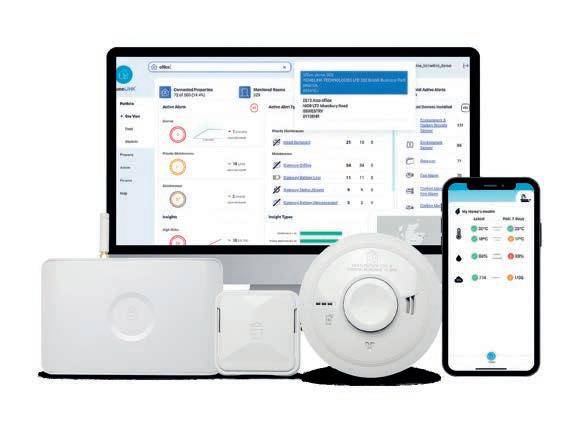
With increased focus on fire safety standards across the UK – including updates to Building Regulations and the continued emphasis on damp and mould detection with the recent introduction of Awaab’s Law – compliance has become more complex and more critical than ever. Aico works closely with industry bodies, housing organisations, and installers to help navigate these changes with confidence. By designing products that meet and exceed regulatory requirements, as well as providing clear guidance on specification and installation, Aico helps reduce risk for both contractors and landlords. This commitment to compliance is matched by a proactive approach to education, ensuring that those responsible for installing and maintaining life safety systems have the knowledge they need to do so correctly.
Innovation at Aico is driven by collaboration and real-world feedback. By working closely with installers, housing providers, and residents, the company gains valuable insight into the challenges faced on site and in occupied homes. This ensures that new developments are practical, user-friendly, and aligned with real needs.
HomeLINK is a prime example of this user-led innovation, delivering practical benefits without adding complexity. By providing actionable data, Aico ensures its Connected Home technology remains accessible and relevant to a wide range of residents and landlords.
Aico has positioned itself not just as a product manufacturer, but as an industry innovator and educator
Beyond products and technology, Aico is deeply committed to making a positive social impact. The company’s long-standing involvement in community initiatives, including partnerships with charities and support for educational programmes, reflects a broader commitment to improving lives.
Aico’s focus on social housing is particularly significant, helping to raise standards in environments where residents may be most at risk. By combining reliable technology with education and engagement, the company plays an active role in improving housing quality and safety. To put this approach into practice, Aico hosted several resident engagement days featuring fire safety and damp and mould prevention workshops, energy efficiency coaching, product and app demonstrations, and the opportunity for residents to provide feedback and ask questions.
As the industry moves towards smarter buildings, increased accountability, and greater transparency, Aico is well positioned to lead the way.
Continued investment in connected technology, education, and collaboration ensures Aico is not only responding to today’s requirements but actively helping to shape the future of the industry.
Aico’s combination of expertise, innovation, and purpose ensures it remains a name the industry can rely on.
Aico, aico.co.uk

The 3000 Series delivers advanced Fire and Carbon Monoxide detection in a range designed for simplicity, reliability, and the future.
Smart. Connected. Future-proof.

Discover more at: www.aico.co.uk
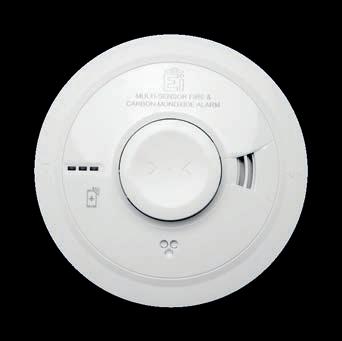
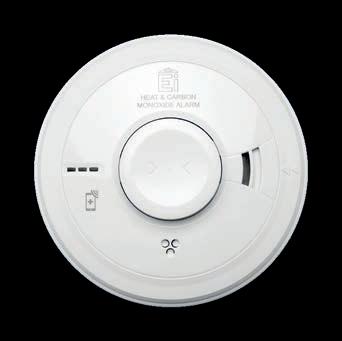


Choose Multi-Sensor or Single Sensor alarms, and upgrade with the Ei3000MRF for wireless interconnection and smart data access via the Ei1000G Gateway
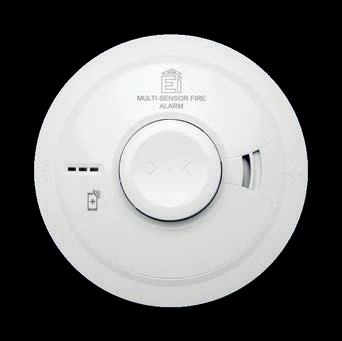




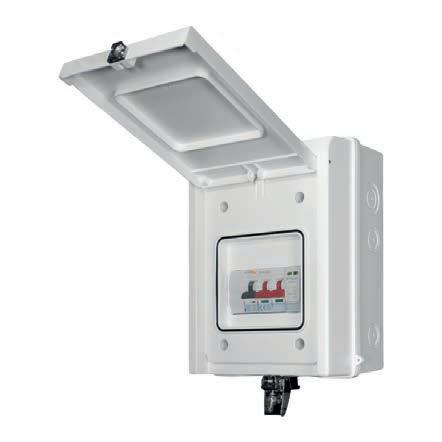
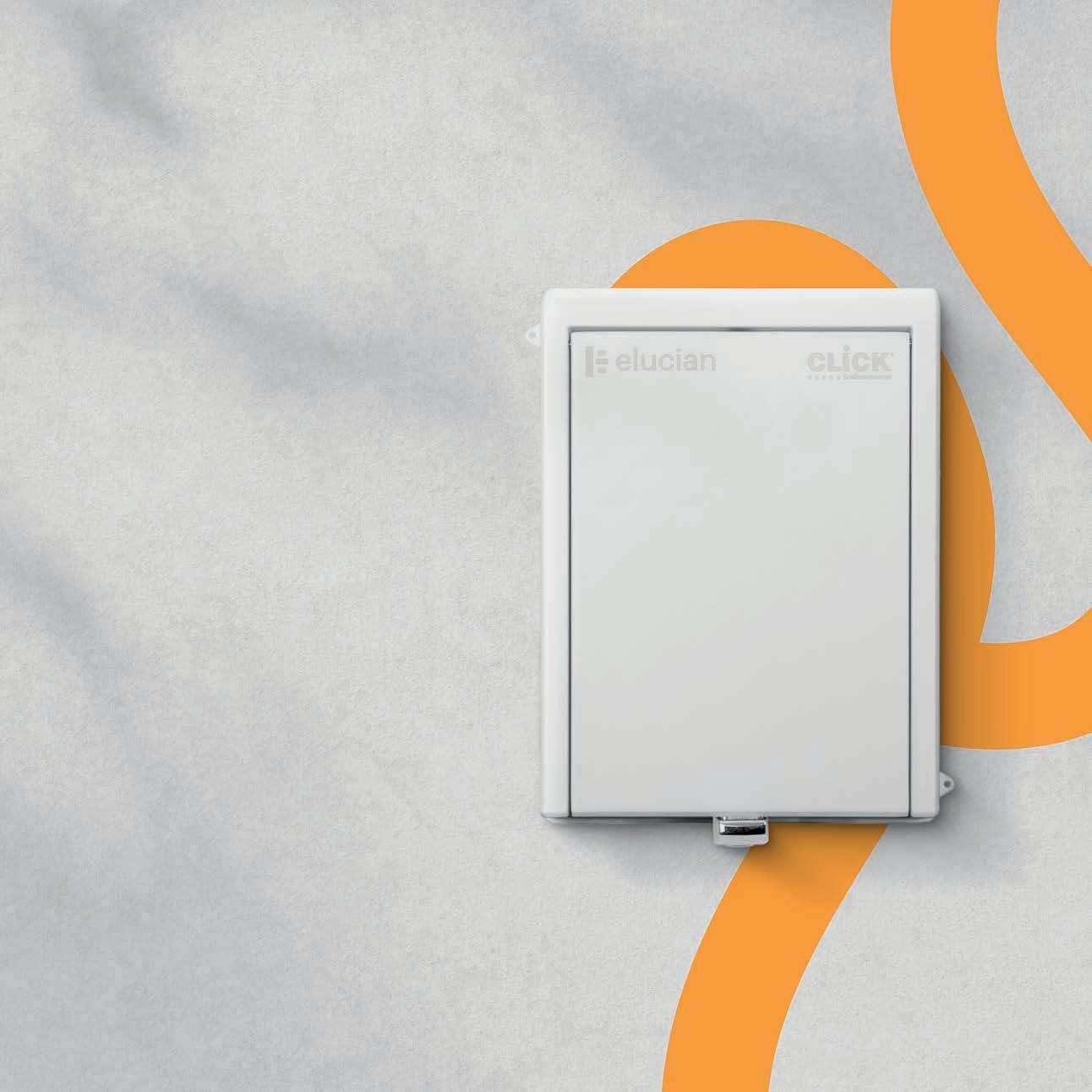
To kick off our latest Circuit Protection & Switchgear feature, Elucian – part of the Scolmore Group –explains how its consumer units are driving contractor confidence through innovation and choice.
In a market shaped by tighter regulations, higher customer expectations and increasing demand for reliability, the consumer unit has become far more than a basic distribution board. Contractors now expect flexibility, compliance, ease of installation and long-term performance as standard. It is within this evolving landscape that the Elucian range of single-phase and three-phase consumer units from Click Scolmore has established itself as a strong and increasingly popular choice across domestic, commercial and light industrial applications.
One of the key reasons behind the success of the Elucian range lies in its contractor-led design philosophy. Elucian consumer units are engineered to address the practical challenges electricians face on site – from tight installation spaces to increasingly complex circuit protection requirements.
Elucian covers single-phase solutions for residential and small commercial projects, alongside robust three-phase options designed to meet the demands of larger commercial installations. This breadth allows contractors to remain consistent with product selection across varied project types, simplifying specification and installation.
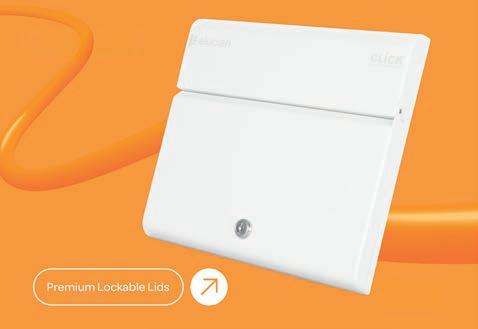
When it comes to consumer units, contractors are prioritising practical performance, flexibility and trust over brand familiarity alone Safety meets style with Elucian’s

With the ongoing emphasis on safety and compliance, consumer units must deliver confidence both today and in the future. Elucian units are designed to support modern protective devices and configurations, enabling installers to meet current standards while remaining adaptable to evolving requirements.
This focus on future-proofing has been reinforced through recent product launches, which have expanded the range and enhanced its flexibility.
The latest additions to the Elucian consumer unit range are new IP65-rated EV boards, developed to provide contractors with robust solutions tailored for the growing demand in electric vehicle charging installations.
As electric vehicle adoption accelerates across the UK, the role of dedicated EV boards has never been more critical. These specialist consumer units are designed to manage the unique electrical requirements of EV chargers, including high current loads, isolation, surge protection, and compliance with the latest wiring regulations. A purpose-built EV board not only ensures safety for homeowners and installers, but also simplifies installation, reducing the risk of errors and downtime.
Particular attention has been given to material selection and overall build quality of the EV boards, ensuring long-term reliability. A key design consideration is the operational temperature of the devices installed within the EV board, allowing consistent performance in varying site conditions. Backed by third-party certification, Elucian’s equipment is approved to operate within a temperature range of -25°C to +40°C.
Where the EV board may be exposed to the elements, material durability has also been carefully considered. The enclosure materials are resistant to fading from prolonged sunlight exposure, and the powder-coated finish provides added protection against UV degradation. Elucian offers a three-year warranty for the protective devices and a 10-year warranty for the enclosures.
The Elucian EV Boards are available in multiple configurations, with protective devices – RCDs or RCBOs, and surge protection devices (SPDs) pre-fitted – allowing installers to complete projects faster while ensuring full compliance with UK wiring regulations. The units also include a free way for additional circuits, offering flexibility for future upgrades.
a touch of professionalism
The full range comprises:
• 5 Way IP65 EV Unit with 100A Mains Switch, SPD and 32A B Curve RCBO
• 5 Way IP65 EV Unit with 100A Mains Switch, SPD and 40A B Curve RCBO
• 5 Way IP65 EV Unit with 63A 30mA Type A RCD, SPD and 40A B Curve MCB
• 5 Way IP65 EV Unit with 63A 30mA Type B RCD and 40A B Curve MCB
Available in a white or anthracite grey finish, the EV units feature multiple gland knockouts and come with a pre-fitted lock that provides safety from interference.
Contractor feedback plays a vital role in shaping safer, more practical consumer unit solutions. Electricians are at the forefront of installation and compliance, making their experience critical in identifying what works, what can be improved, and what ultimately protects end users. The feedback Elucian has received since it first launched the Elucian range back in 2021 continues to feed into the company’s product development programme.
Some of the features and benefits of the Elucian three phase range being lauded by installers include:
• Single-module 10kA AFDD with integrated RCBO – a compact, single-module Arc Fault Detection Device combined with RCBO functionality, rated at 10kA. The single-pole plus switched neutral design provides comprehensive protection against arc faults, overcurrent, and earth leakage, significantly enhancing fire safety within consumer units while maintaining full circuit isolation.
• Removable and reversible door – the consumer unit features a fully removable door that can be reversed to suit left- or right-hand opening requirements. This provides greater installation flexibility, particularly in confined spaces or where access orientation is critical, while also improving ease of maintenance and future access.

The IP65 rated Elucian EV Units deliver dependable charging performance with complete protection against dust and water, ideal for garages and outbuildings.
• Internal SPD and metering arrangement – Surge Protection Devices (SPD) and metering components are integrated within the consumer unit itself, rather than housed in a separate external enclosure. This results in a more compact, streamlined installation, reduces additional wiring and enclosures, improves overall aesthetics, and helps minimise installation time and cost.
• 125A and 250A flexibility – the board is designed to accommodate either 125A or 250A modules. This allows greater design flexibility, reduces panel space requirements, and supports future expansion or reconfiguration without major alterations.
Some of the features and benefits of the Elucian single-phase range that installers are shouting about include:
• Compact RCBO design – engineered in a slim, miniature format, allowing more protection devices to be installed within the same enclosure. This improves space efficiency without compromising performance or compliance.
• Wide range of consumer unit sizes –available in usable configurations from 7 ways to 19 ways. This offers flexibility to suit a variety of domestic and light commercial installations, from small dwellings to larger, more complex electrical systems.
• Flush-fitting lid – provides a clean, low-profile appearance once installed, making it suitable for visible locations while maintaining easy access for inspection and maintenance.
The Elucian product offering was recently enhanced with the addition of a bespoke in-house laser etching service. This service is suitable for single-phase consumer units in domestic and commercial applications that require personalised branding for electrical systems. This enables businesses to reinforce their brand identity and add a touch of professionalism to their electrical installations.
For over four years, Elucian has utilised state-of-the-art laser technology to create intricately detailed designs on the covers of consumer units – guaranteeing long-lasting clarity and durability. Once the logo is supplied to the Elucian team, a digital file is then created and uploaded
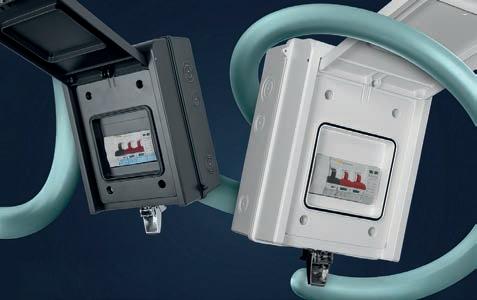
Elucian’s new IP65-rated EV boards are designed to assist with EV charging installations
onto the machine ready for etching. As well as producing precise, permanent etching of logos and branding, this service can also etch a variety of custom designs. This can include QR codes, technical specifications, and circuit identification.
This specialised service stands out as one of the few in the market offering fully customised consumer units, etched in-house at Scolmore Group’s headquarters. Since the launch of Elucian, close to 300 bespoke laser etching jobs have been delivered, each tailored to required specifications, proudly featuring company logos and branding. To date, this has included the etching of almost 10,000 consumer unit boards, demonstrating the strong and growing demand for customised, premium-quality solutions. The system’s flexibility accommodates both high-volume orders and tailored projects, making it an ideal choice for businesses seeking distinctive branding or design integration.
Contractors can enquire about Elucian’s bespoke laser etching service by contacting their local Area Sales Manager.
The consumer unit sector remains highly competitive, yet Elucian’s steady growth suggests that contractors are increasingly prioritising practical performance, flexibility and trust over brand familiarity alone. As electrical installations continue to evolve in complexity, the demand for adaptable, well-designed distribution equipment will only increase.
With a comprehensive single-phase and three-phase offering, supported by recent product launches and a clear focus on installer needs, the Elucian range is well placed to remain a strong contender within the UK electrical contracting market.
Elucian, elucianuk.com

Elucian, part of the Scolmore Group, explains how effective energy monitoring supports compliance with the Approved Document L2 regulations and enables building managers to better understand and manage energy use.
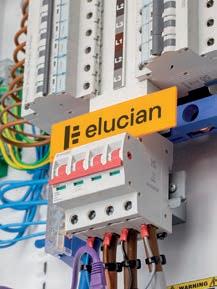
Suitable energy meters provide the necessary data to monitor and manage energy usage
Approved Document L2 (England) provides “…guidance on how to comply with Part L of Schedule 1 of the Building Regulations, and the energy efficiency requirements for buildings other than dwellings.” Wales, Scotland and Northern Ireland have their own requirements and are not reflected in this article.
Energy monitoring is critical in allowing managers of buildings to accurately assess the nature of usage and to promote good management of energy resources. The selection of suitable energy meters is necessary to provide those responsible for buildings the necessary data to monitor and manage energy usage.
Clause 5.17 of Approved Document L2 (ADL2) (available free of charge from the government website) states that, “Energy submetering should be installed in new buildings, or when fixed building services are provided or extended in an existing building,…”.
Three-phase energy meters are able to measure a range of values, including current and power
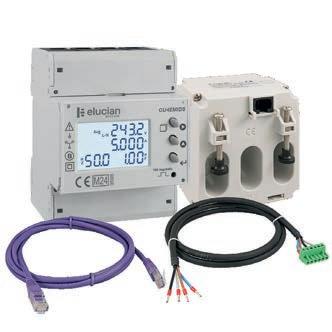
The clause gives detail on how to meet this requirement:
• Heating/cooling and lighting should be metered to be able to assign an end use to at least 90% of the installation. This requirement will typically lead to distribution boards being organised by circuit type.
There are a range of single-phase and three-phase energy meters, and there is little difference between how they might be installed. Such meters can be hard wired or connected by means of a current transformer. Each line conductor passes through the CT, and the power cable supplies the necessary voltage (typically 230V). This provides the necessary values to determine all of the necessary values.
The limits placed on hard-wired energy meters relate to the maximum current and cross-sectional area of the conductors. Meters supplied via a current transformer (CT) allow for larger currents to be measured, and there are very few constraints.
A typical ‘meter kit’ will contain a CT, an energy meter, a power supply cable, and an RJ45 cable.
Energy meters are able to measure a range of values including:
Energy monitoring is critical in allowing managers of buildings to accurately assess the nature of usage
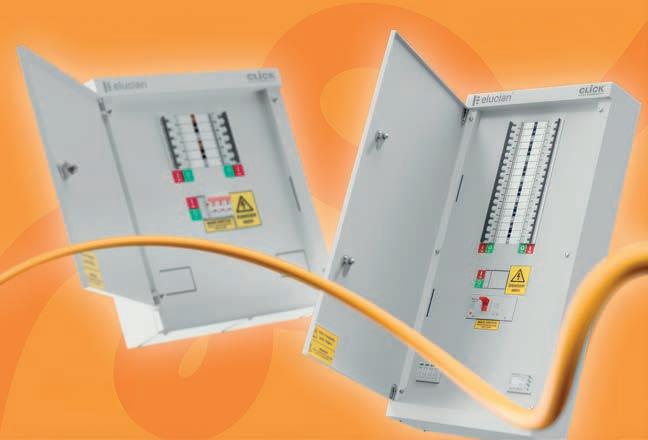
• Metering should be such that forecast energy usage can be accurately reported.
• Metering must be capable of monitoring individual tenants within the building.
• All renewable energy systems should be separately monitored.
• Where the total floor area exceeds 1,000m2, automatic meter reading and data collection facilities should be installed.
ADL2 references guidance published by the Chartered Institute of Building Service Engineers (CIBSE) and TM39 provides guidance on building energy metering. TM39 provides detailed technical guidance on metering and “…promotes best practice in the design of energy metering and submetering in non-domestic buildings.”
There is no requirement that every final circuit is metered – however, the clear application is that lighting is metered separately from general power, as well as from heating and cooling loads.
To this end, a designer should separate out such loads into separate distribution boards or combined lighting and power boards. Each section can be metered separately.
• Current (A),
• Active power (W or kW),
• Reactive power (Var or kVAr),
• Apparent power (VA or kVA), and
• Energy (Wh or kWh).
The measuring of energy usage is necessary to conform to the Building Regulations in England and Wales. Similar requirements exist in the other home nations.
Designers should ensure that lighting, heating and cooling loads are measured, and to this end such types of loads should be supplied from relevant distribution boards, that is, for example, a lighting board rather than a common mixed distribution board.
Persons responsible for buildings should make use of the monitored energy usage to ensure that waste is avoided and suitable strategies are in place to minimise
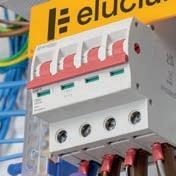
or
Isolator
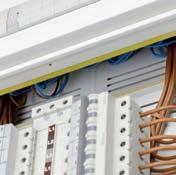
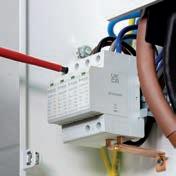
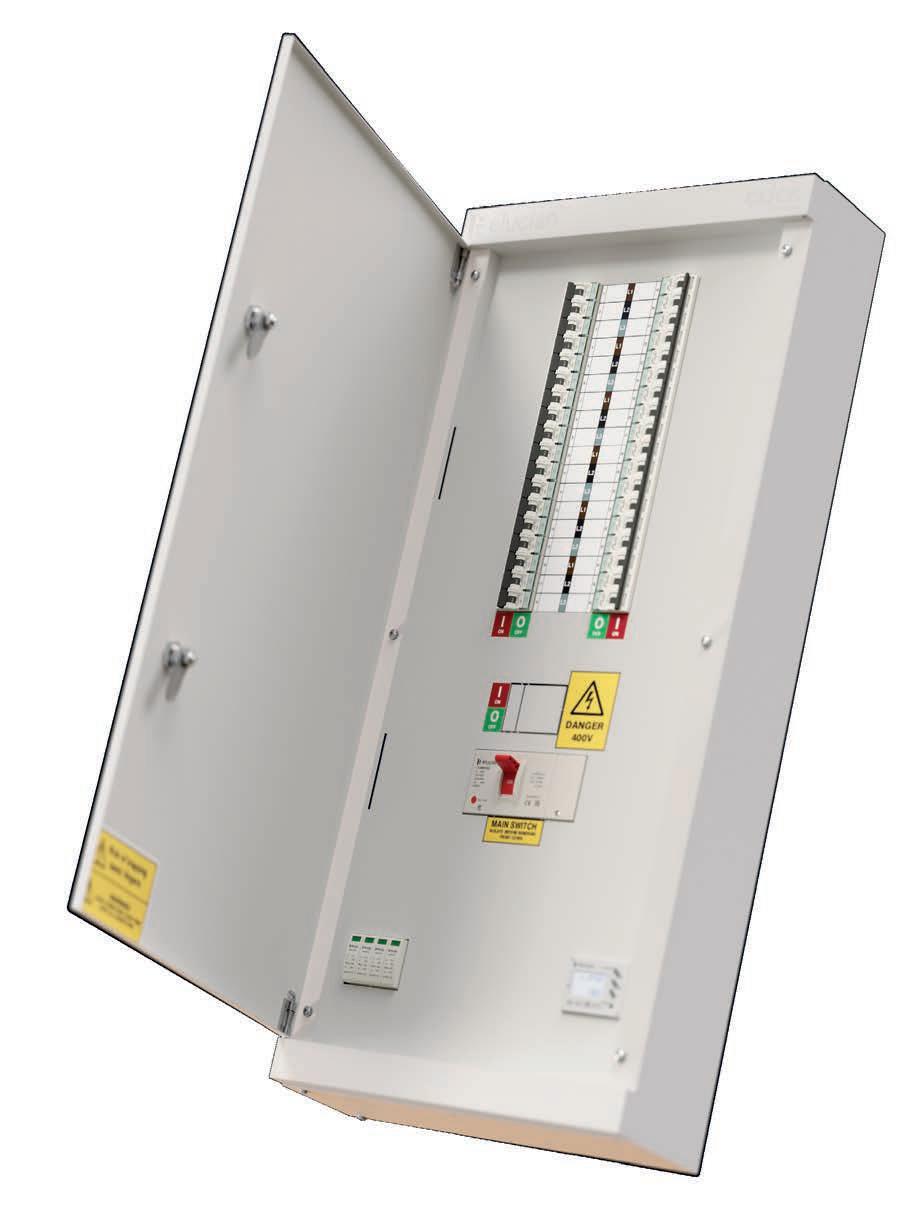
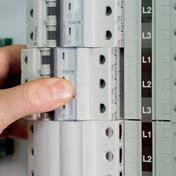
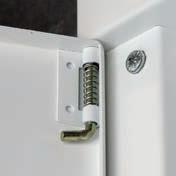
Vinod Dhanraj of Siemens Smart Infrastructure looks at the benefits of the Sentron ECPD (electronic circuit protection device) and how digital circuit protection improves availability, transparency, and efficiency in modern electrical installations.

Capacitive loads and systems in remote locations place new demands on electrical installations and require innovative solutions. The SENTRON ECPD electronic circuit protection device from Siemens uses digital intelligence to create completely new possibilities for line and device protection in the final circuit, saving costs and increasing availability.
Electrical installations are facing a variety of new challenges. For example, the enormous increase in capacitive loads, which could lead to unwanted tripping of circuit breakers because of high inrush currents, is proving to be particularly problematic. The growing number of electrical applications in remote or hard-to-reach locations also requires new approaches to ensure reliable and efficient system operation at all times.
The innovative SENTRON Electronic Circuit Protection Device (ECPD) from Siemens opens up new possibilities for overcoming these challenges. With an innovative combination of semiconductor technology, microcontrollers, and intelligent algorithms, it replaces the previous electromechanical protective switching technology and brings digital intelligence and transparency to the field level. This marks a fundamental paradigm shift in line and device protection.
It became a costly troubleshooting exercise: whenever a circuit breaker tripped at a mobile construction site of a workover service provider, technicians had to travel long distances to restore the system and resume operations.
The company encountered a common issue with electrical installations in remote

locations: although the operator is notified of the system failure, they don’t receive any information about the cause and cannot rectify the fault remotely. A technician must determine on site whether the problem is caused by a dangerous short circuit, a temporary overcurrent, or simply a false trip, and then switch the system back on. This leads to high costs, both because of frequent service calls that are ultimately unnecessary, and because of plant downtime and lost working hours until the system is successfully restarted. That is why the workover service provider recently opted for a pioneering integrated solution centered on the SENTRON Electronic Circuit Protection Device (ECPD) from Siemens. This communication-enabled electronic safety device paves the way for continuous remote monitoring, fault diagnosis, and safe restarting. This redefines the entire approach to maintaining remote and hard-to-reach facilities.
The SENTRON ECPD provides real-time information about its device status, continuously supplies data on current and voltage values thanks to its integrated measurement functionality, and enables automatic cyclical RCD self-tests. In combination with the Powercenter 1000/1100 data transceiver, the
The SENTRON ECPD paves the way for continuous remote monitoring, fault diagnosis, and safe restarting
Powercenter 3000 data concentrator, and the Sinema Remote Connect management platform for remote networks, the SENTRON ECPD provides an integrated solution for continuous monitoring and diagnosis of remote systems. Even gradual process changes and emerging disruptions can be detected reliably and, in most cases, remedied well in advance of a potential failure. If critical deviations occur, immediate action can be initiated remotely.
When the electronic circuit protection device trips, the control centre technician can immediately tell from the data supplied whether the overcurrent shutoff was caused by a serious fault or whether the inrush current peak of an inductive load was the reason for the trip. Once the cause of the fault has been determined, the technician can switch the system back on remotely.
With the SENTRON ECPD seamlessly integrated into the existing network infrastructure, digitalisation in the field provides immediate clarity about the cause of the fault. Continuously available information about the condition of the system significantly reduces the number of on-site visits and makes it possible to schedule service calls proactively. This increases the availability of remote systems and makes their operation more efficient and cost-effective in the long term.
Advanced electronic devices such as LED panels, LED strips in sports stadiums, and energy-saving lighting fixtures exhibit capacitive behaviour. They contain switching power supplies or electronic control gear (ECG) with built-in capacitors that charge up when they are turned on. This causes enormously high inrush current peaks, often hundreds of times the rated power of a device.
Conventional circuit breakers, developed for ohmic loads such as light bulbs or heaters, cannot distinguish these brief current peaks from genuine short circuits. The solutions available to
The APTA box is here. From confined spaces to complex wiring configurations, APTA is available in 3 sizes with multiple installation methods to support your project needs.
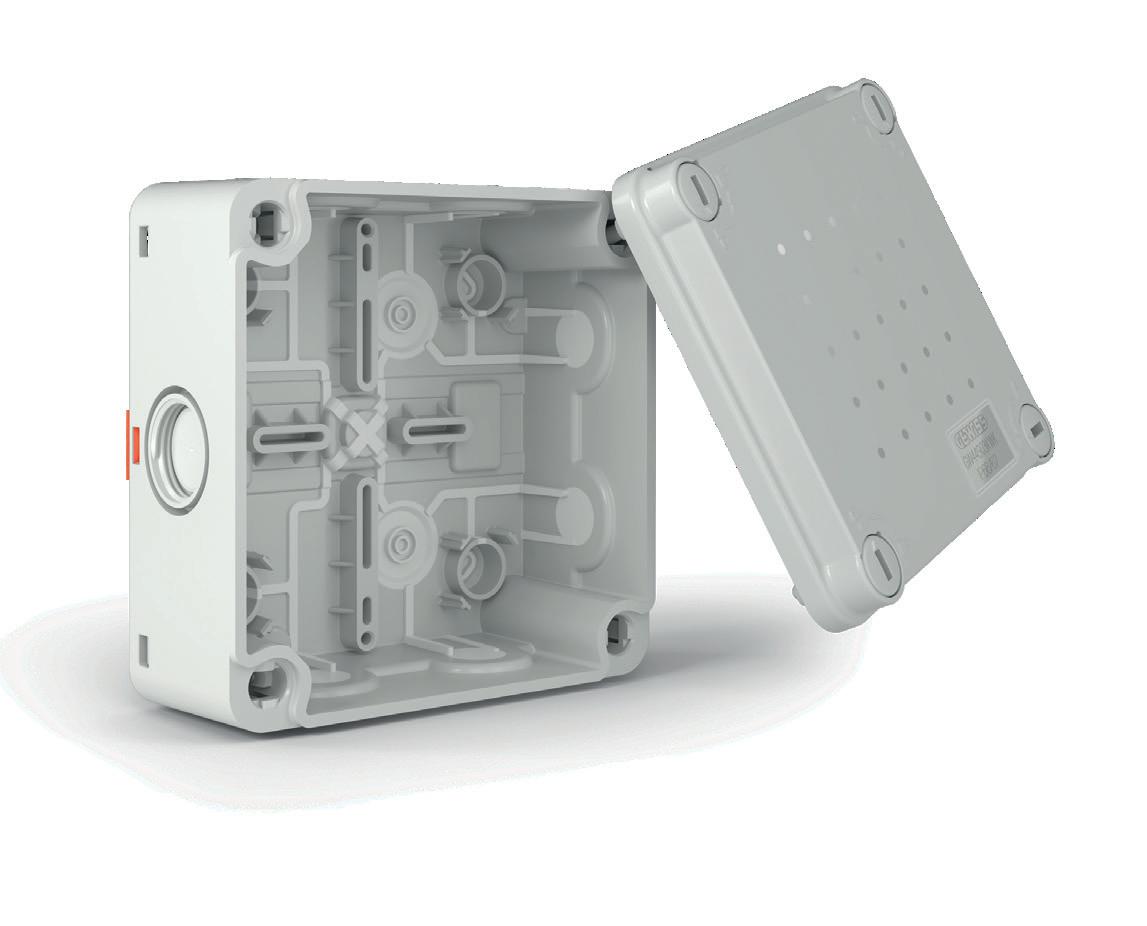
place during installation, improving safety and ease when working overhead or in tight spaces.
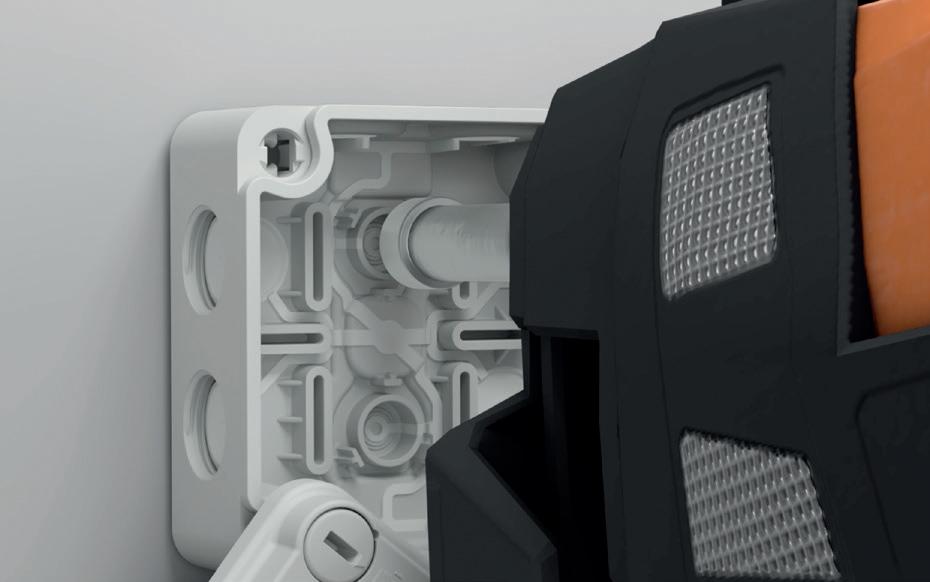
Patented ribs ensure perfect alignment every time without cracks.
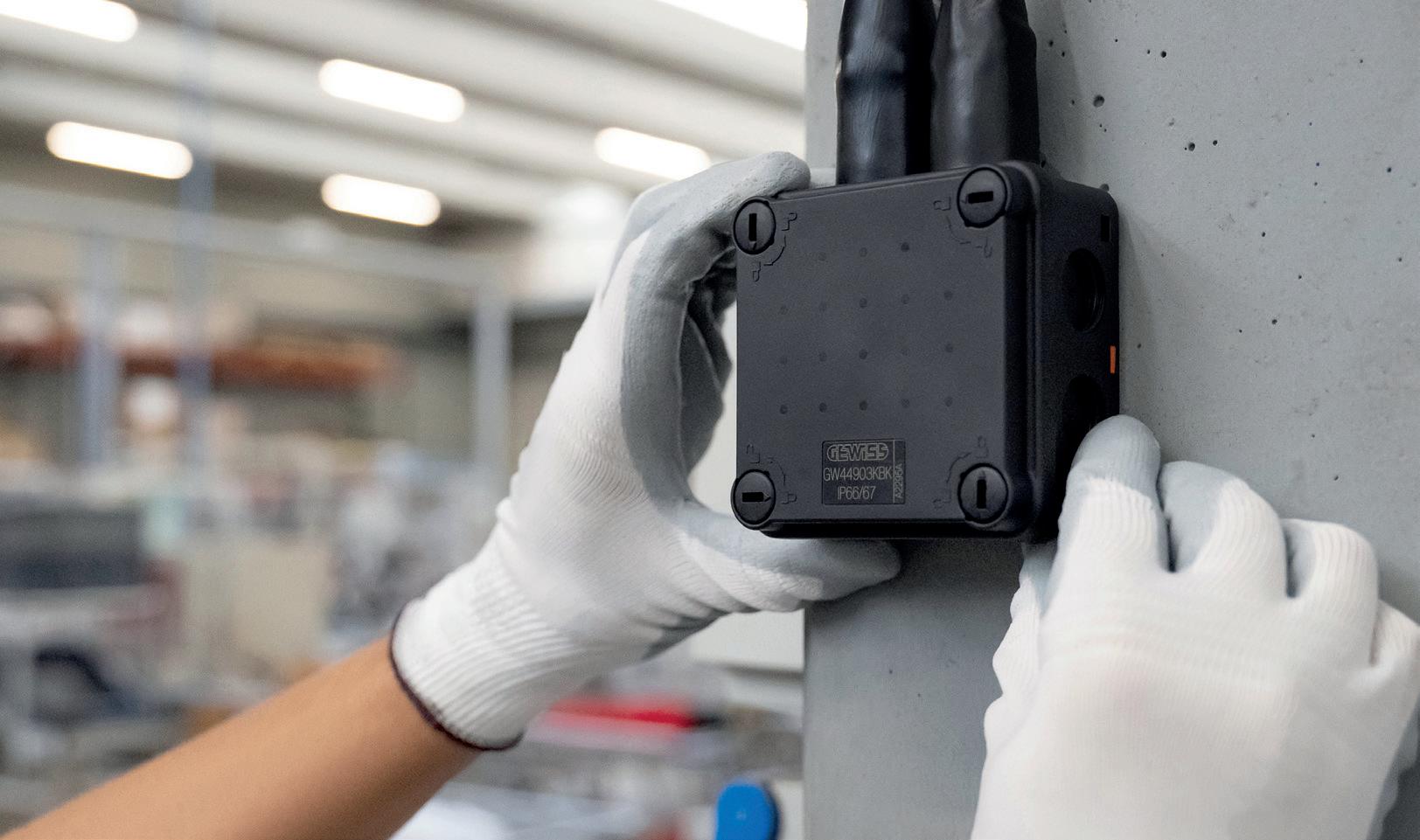
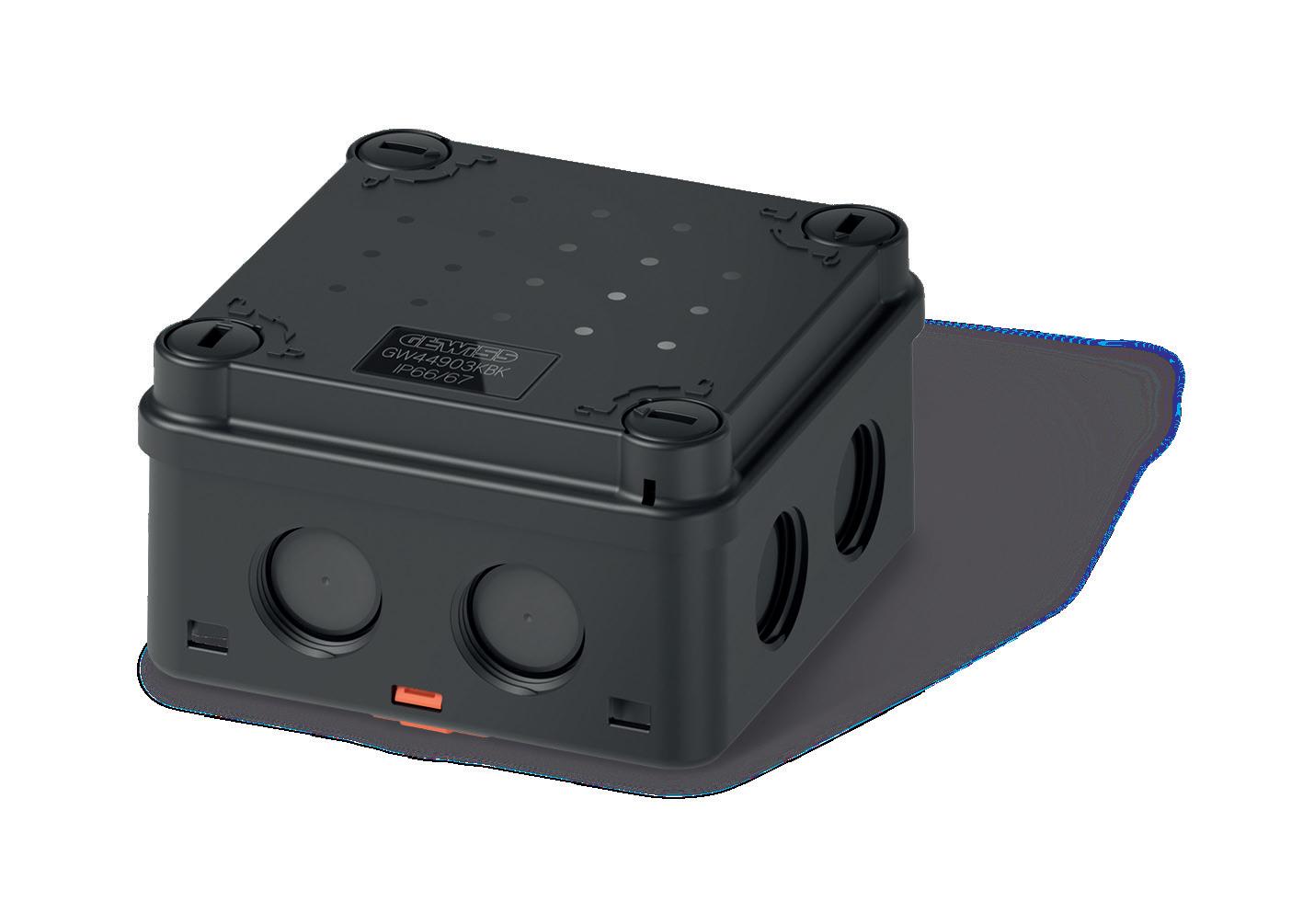
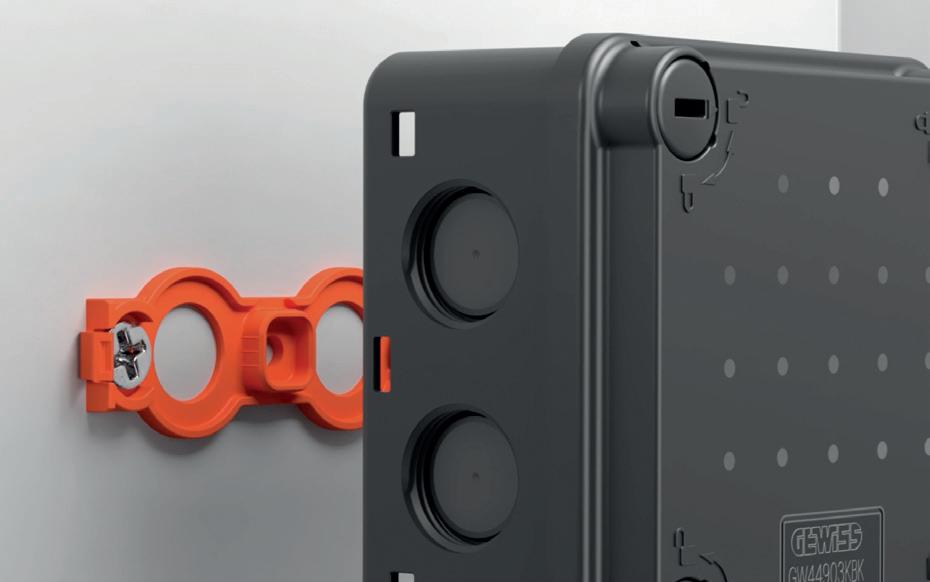
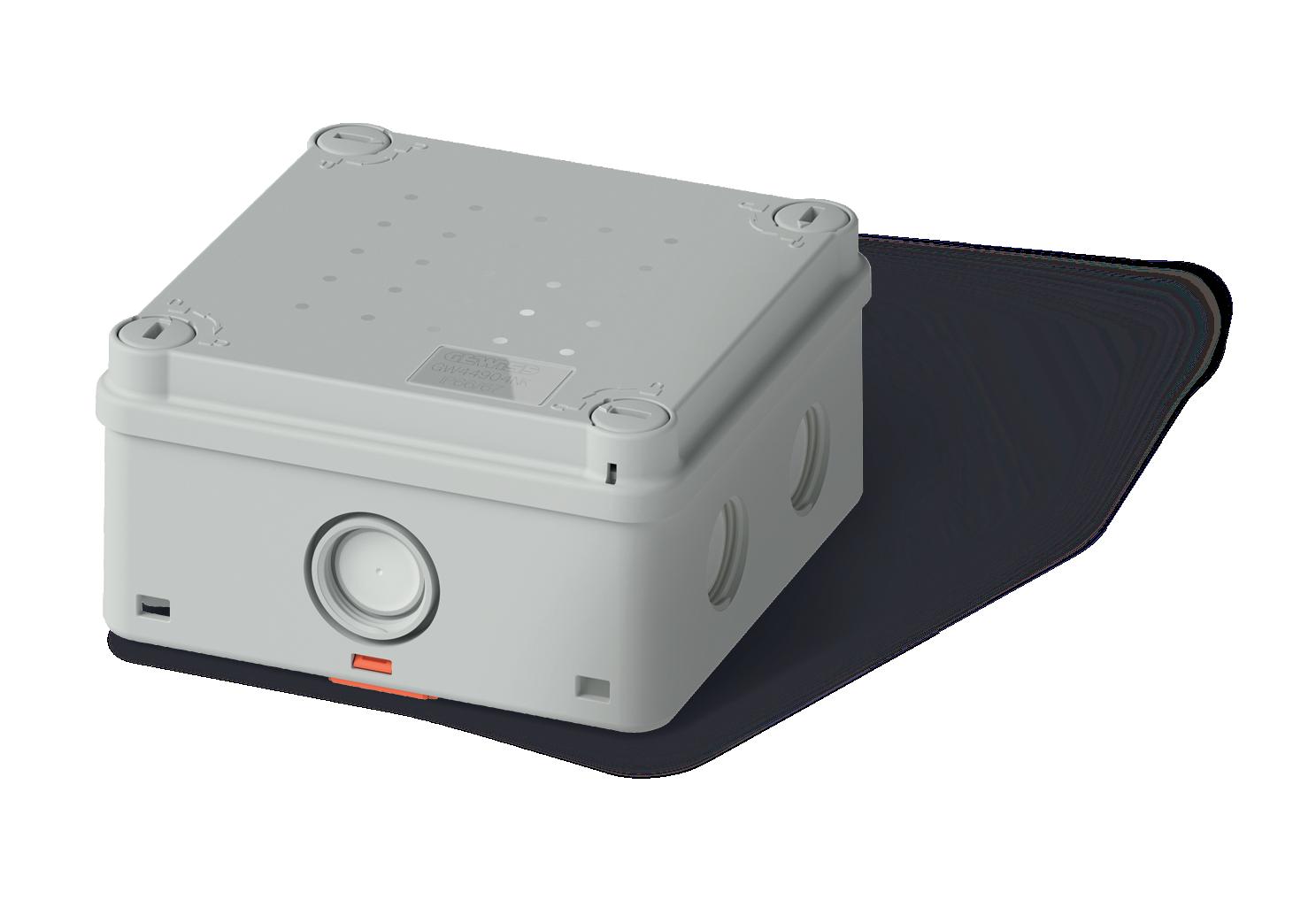

Secure wall installation is ensured with the supplied external bracket, without affecting the IP66/67 rating.

The innovative design allows quick fastening to trays or temporary site installations.
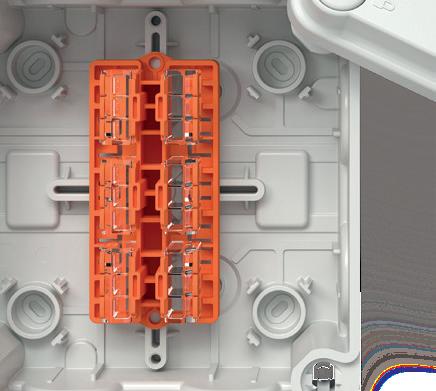

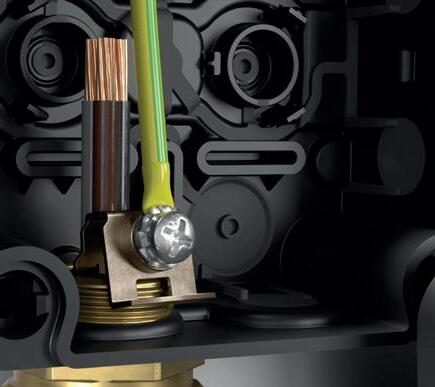

Since implementing the SENTRON ECPD, this LED wall in Amberg pictured above is only turned on when it is really needed
date are expensive and inadequate. One option is to oversize the cables and install additional circuits; another is to accept the risk of false tripping and circumvent it by operating the loads permanently in standby mode. None of this solves the underlying problem, but all of it leads to additional costs.
A practical example is the large LED wall in the lobby of the Siemens visitor centre named ‘The Impulse’ in Amberg, Germany. Because the 12 square metre LED wall caused the typical current peaks when it was switched on, leaving it off and simply turning it on when needed was not an option. Since there is nothing worse than presentation equipment failing in front of an audience, the LED wall was kept on standby at all times, consuming 9,000 kilowatt hours of electricity per year –enough for an electric vehicle to travel once around the world.
The solution was found in-house: the SENTRON ECPD. It uses intelligent algorithms to handle inrush currents: it analyses the current curve in real time within microseconds, detects the difference between a real short circuit and an inrush current peak, and immediately limits the inrush current. This allows high inrush currents to be actively managed right in the protection device. A current-controlled phase-angle controller with a defined current threshold reliably prevents false tripping, which significantly increases the availability of the systems. It also reduces wear on the downstream switching elements and switching power supplies.
Since the installation of the SENTRON ECPD, the LED wall in Amberg is only turned on when it is really needed. The 9,000 kilowatt hours of electricity saved per year is not just a question of cost; every kilowatt hour not wasted on standby mode is an active contribution to climate protection.
But the real innovation lies elsewhere. Because the SENTRON ECPD safely handles capacitive loads, planners can finally do away with the safety margins previously required in many installations in the form of oversized cables and additional circuits. This simplifies planning, promotes more sustainable use of valuable resources such as copper and plastic, reduces space requirements in the electrical distribution board, and ultimately saves a significant amount of money.
An equally innovative application is the use of the SENTRON ECPD on ships. The collaboration between Siemens and Bluegame, an Italian brand of the Sanlorenzo Group specialising in luxury yachts, demonstrates how the SENTRON ECPD improves the reliability of onboard electrical systems.
As an Innovative Technology Partner, Siemens was involved in the development of the new BGF45, the first model in Bluegame’s BGF series, a line of foiling multihulls unveiled at the 2025 Cannes Yachting Festival.
At the heart of this collaboration is the SENTRON ECPD. Together with other devices from the SENTRON product family, it is one of the core components of the electrical system in the BGF45. Installed in the on-board power distribution panels, it uses built-in monitoring functionality to intelligently manage energy flows, contributing to the yacht’s overall efficiency. At the same time, its ultra-fast response to faults minimises operational irregularities, reduces maintenance costs, and ensures operational safety and comfort in all sailing conditions.
Another benefit of the SENTRON ECPD is its exceptional versatility. The configuration and tripping behavior of Siemens technology can be adapted to the specific requirements of the ship, taking into account the various electrical loads and the degree of customisation required. Thanks to its multifunctionality, the SENTRON ECPD replaces numerous conventional devices with a single unit, saving up to 85% space in the distribution cabinet, and delivering savings of up to 80% on electronics, 90% on metals, and 90% on plastics.
“The SENTRON ECPD from Siemens delivers technology that ensures maximum safety, efficiency, and sustainability even on the world’s oceans,” explains Andreas Matthé, CEO of Electrical Products at Siemens Smart Infrastructure.
A collaboration between Siemens and Bluegame demonstrates how SENTRON ECPD improves the reliability of onboard electrical systems
The SENTRON ECPD is more than just an advanced circuit protection device – it exemplifies a fundamental change in electrical installation. “We are experiencing a development similar to the transition from electromechanical telephones to today’s smartphones,” says Marvin Tannhäuser, Principal Key Expert for Power Electronics at Siemens Smart Infrastructure in Nuremberg, who was involved in developing the SENTRON ECPD.
This innovative electronic circuit protection device demonstrates how new technology can be used not only to solve familiar problems, but also to open up entirely new perspectives. Marvin continues, “The real revolution is that we no longer have to choose between reliability and cost efficiency. With the SENTRON ECPD, we can now have both.”
For many companies and users, this means less downtime, lower costs, and significantly higher reliability of their electrical installations and systems. For the environment, it means less wasted energy and a smaller carbon footprint.
The Siemens SENTRON ECPD is a prime example of how seemingly inconspicuous devices can bring about major changes, and that the future of electrical installation lies not in avoiding problems, but in addressing them intelligently. This quiet revolution in the electrical distribution board goes largely unnoticed in most people’s everyday lives, but fundamentally changes the rules for planners, installers, and operators of electrical power distribution systems.
Vinod Dhanraj is Product Manager SENTRON ECPD at Siemens Smart Infrastructure – Electrical Products.
Siemens Smart Infrastructure, siemens.com

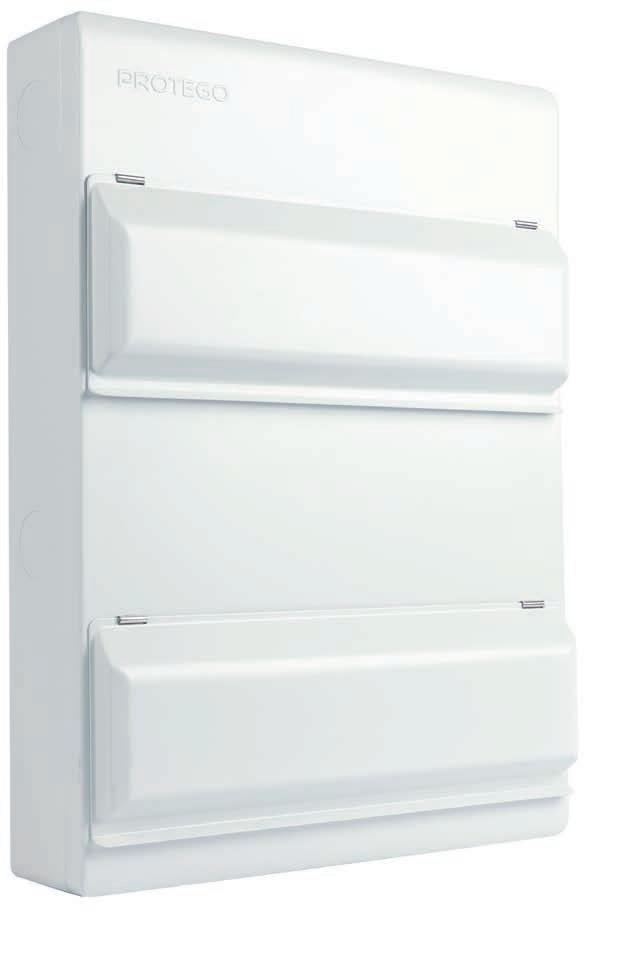
Easier to install with improved design & strengthened construction. Available with a range of devices to comply with the 18th edition amendment 2 regulations.
Existing Niglon devices can be used with Protego boards
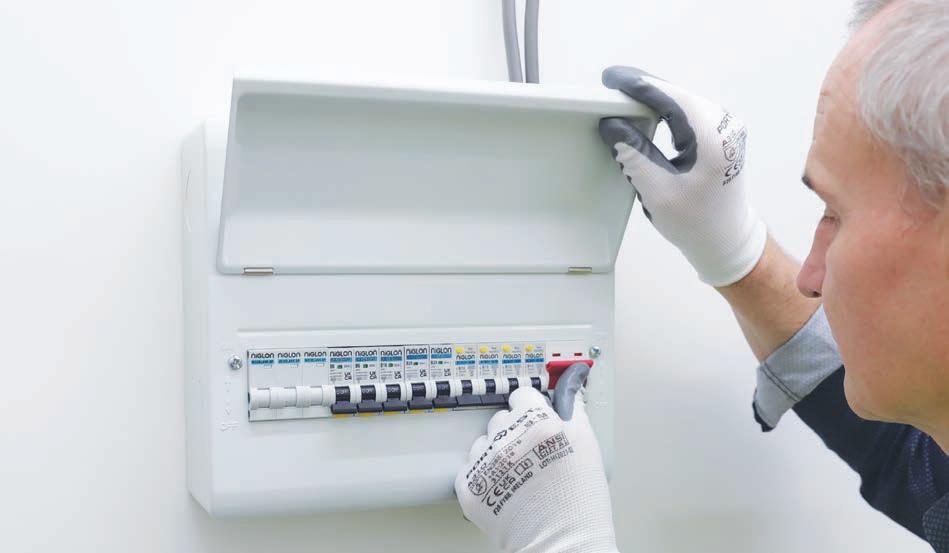
Designed to meet the necessary industry safety standard. Suitable for a variety of applications such as commercial & residential.
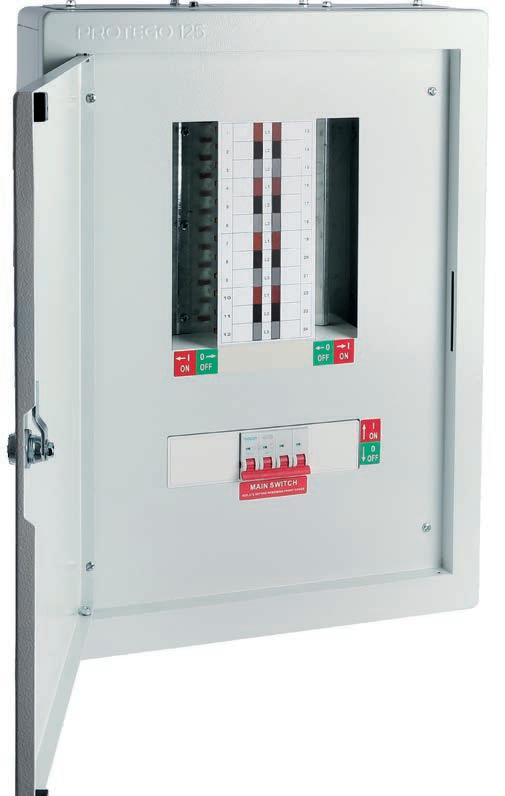
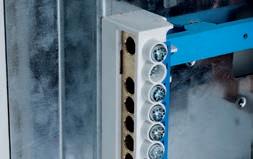
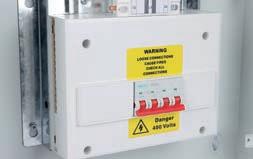

Kirsty Johnson, Technical Director at Surge Protection Devices, provides an overview of the application of surge protection devices, explaining when SPDs are required, how to select the correct type, and the key considerations for modern installations.
By this point, I should imagine that you are quite familiar with the term SPD (surge protection device), but there are still so many questions surrounding the use and application of surge protection devices. This article details an introduction to what type of device is needed and when surge protection is required under BS7671.
There are three types of SPDs depending on what you want to protect. If you are looking to protect a distribution board or consumer unit, it will be a type 1 or type 2 SPD. If you wanted to protect a specific piece of equipment, such as a fuse spur or single socket, it would be a type 3.
A type 1 device would only be required where there is an external lightning protection system, or the installation has an overhead supply. For all other circumstances, a type 2 device will be sufficient to provide adequate protection for distribution boards. Where protection against overvoltages is required for specific equipment, a type 3 device may be used to provide protection.
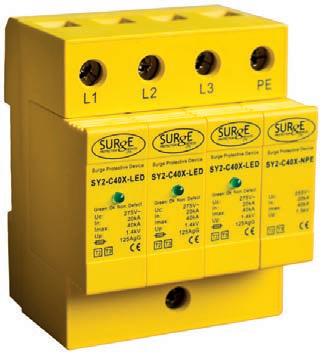
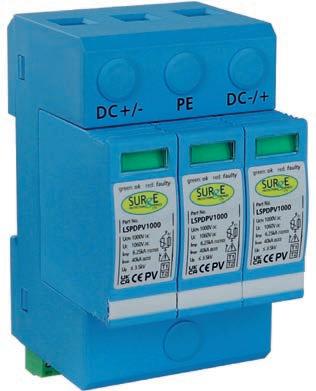
Regulation 443.4.1 says the following: “Protection against transient overvoltages shall be provided where the consequence caused by overvoltage could:
• Result in serious injury to, or loss of human life, or
• Deleted by Corrigendum, May 2023
• Result in significant financial loss or data loss
“For all other cases, SPDs shall be fitted to protect against transient overvoltages, unless the owner of the installation declines such protection and wishes to accept the risk of damage to both wiring and equipment as tolerable.”
The requirement to install SPDs where the consequences could result in serious injury to, or loss of human life is the most onerous requirement. This will mean that any distribution board supplying electrical equipment that is installed to protect life or prevent injury will require an SPD.
Indent three is similar to the previous requirement where an SPD should be installed where commercial or industrial activity could be interrupted. The requirement now is that an SPD shall be
provided where the consequence caused by overvoltage could result in significant financial or data loss.
The basic position of section 443 is now that SPDs shall be installed. In practical terms, most installations will have distribution boards that require surge protection due to the indents above, so it would only be distribution boards that did not require surge protection, as no circuits outlined in regulation 443.4.1 were present. Then a discussion is encouraged between the electrical designer and the client to ensure that no unacceptable losses occur from overvoltage, while also considering the requirements to protect against switching overvoltages from regulation 443.4.2.
Something important to remember is that if the building has an external lightning protection system, then the requirements of BS EN 62305 apply, which means that a Type 1 SPD is a requirement in these cases and BS 7671 do not apply. Where the building has an external lightning protection system, a Type 1 SPD will be required on the main incomer and any distribution boards supplying external circuits.
Some of these external circuits come in the form of the fastest growing areas of our industry – EV and PV.
EV chargers are both sensitive (limited impulse withstand capacity) and exposed to overvoltage. In fact, quite a few EV charger manufacturers will specify that an SPD should be installed or mention surge protection in the warranty details.
EV chargers can also be damaged by surges that come from inside the installation, in the form of switching overvoltages or voltage distribution on the supply network. This form of repetitive overvoltage could damage the sensitive components used in EV chargers.
Also, EV chargers can cause issues with the electrical installation. We have to consider that any cable that enters an installation can bring with it the risk of overvoltage. Due to EV chargers being


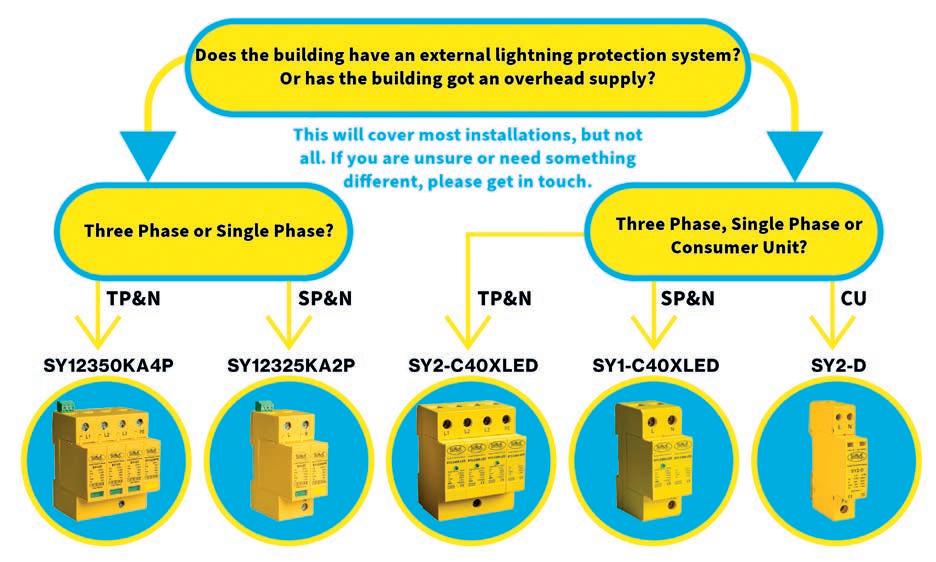
installed in exposed locations, they are liable to experience the effects of nearby lightning strikes.
If the building has an external lightning protection system, the DB supplying the EV charger will require a Type 1 SPD, as it is an external circuit. Please note, that this does not apply to buildings without an external lightning protection system.
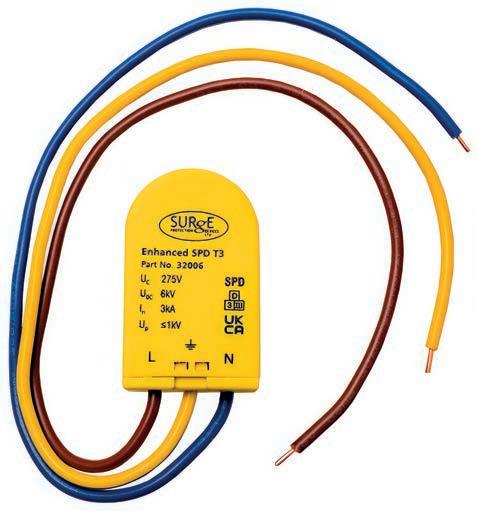
The number of solar PV installations is on the rise, with consumers wanting to reduce energy prices and the industry moving towards more of a prosumer approach to energy use. One of the aspects of PV system design that is often overlooked is surge protection.
BS7671:2018 section 443.4, which gives the requirements for when surge protection shall be installed, covers both AC and DC installations. This is something that is often not considered when we consider where surge protection is required. In section seven for special locations, we also have regulation 712.443.101, which states that where protection against transient overvoltage is required by section 443, such protection shall also be applied to the DC side of the PV installation. So, if the solar installation is on the roof of a building where the regulations in section 443 require SPDs to be installed, SPDs also need to be installed on the DC side of the installation to protect the inverter.
Some inverters state that they include overvoltage protection. For an incorporated SPD to fulfil the requirements of the wiring regulations, the manufacturer must specify that it is installed on the DC side of the inverter, as this ensures that it is providing protection on the correct side of the inverter. There are quite a few inverters on the market which say they have overvoltage
protection included, when in actual fact, it is only providing protection on the AC side of the system.
It must also state the type of SPD. The reason it is important for the type of SPD to be mentioned is that once a device is specified as a type, it must conform to the product standard BS EN 61643-31, as some manufacturers incorporate individual varistors, which are not considered to be a complete surge protection device. If you are unsure and want to check the technical credibility of an inverter, I would advise you to request a certificate of conformity, which will list the standards that the equipment conforms to.
Another consideration is that the inverter will only ever include a Type 2 surge protection device, so if the building has an external lightning protection system, then the installation will always require the use of external Type 1 SPDs to conform to BS EN 62305, as the cables will cross between the lightning protection zones. The same will apply for any DB supplying the PV, as it is supplying an external circuit. Again, this only applies if the building has an external lightning protection system. Solar panels themselves do not increase the likelihood of lightning damage to an installation; it is when it becomes an addition to a lightning protection system where we see the increased risk.
Although the SPDs are still defined as Type 1 and Type 2 devices, they are different to the SPDs we see used on the AC electrical systems, and only SPDs that are designed for the specific use on the DC side of a solar PV installation should be used. This is due to the continual loading and higher voltages of PV systems. The devices designed for the use on the DC side of PV systems are clearly marked with the PV symbol, as per the requirements in BS EN 61643-31. Also, they obviously look slightly different, with the live and neutral terminals being replaced by a positive and negative terminal.
Selection of a PV SPD is quite simple. From the above, you should know what type of SPD you need. The only other information needed is the operating capacity of the inverter, which is usually 600V or 1,000V. There are some specialist systems which are different, and there are devices available for those too.

Explore our range of 1 & 2 Gang Type C USB Sockets. Experience up to 70% faster charging compared to standard 5W USB chargers.




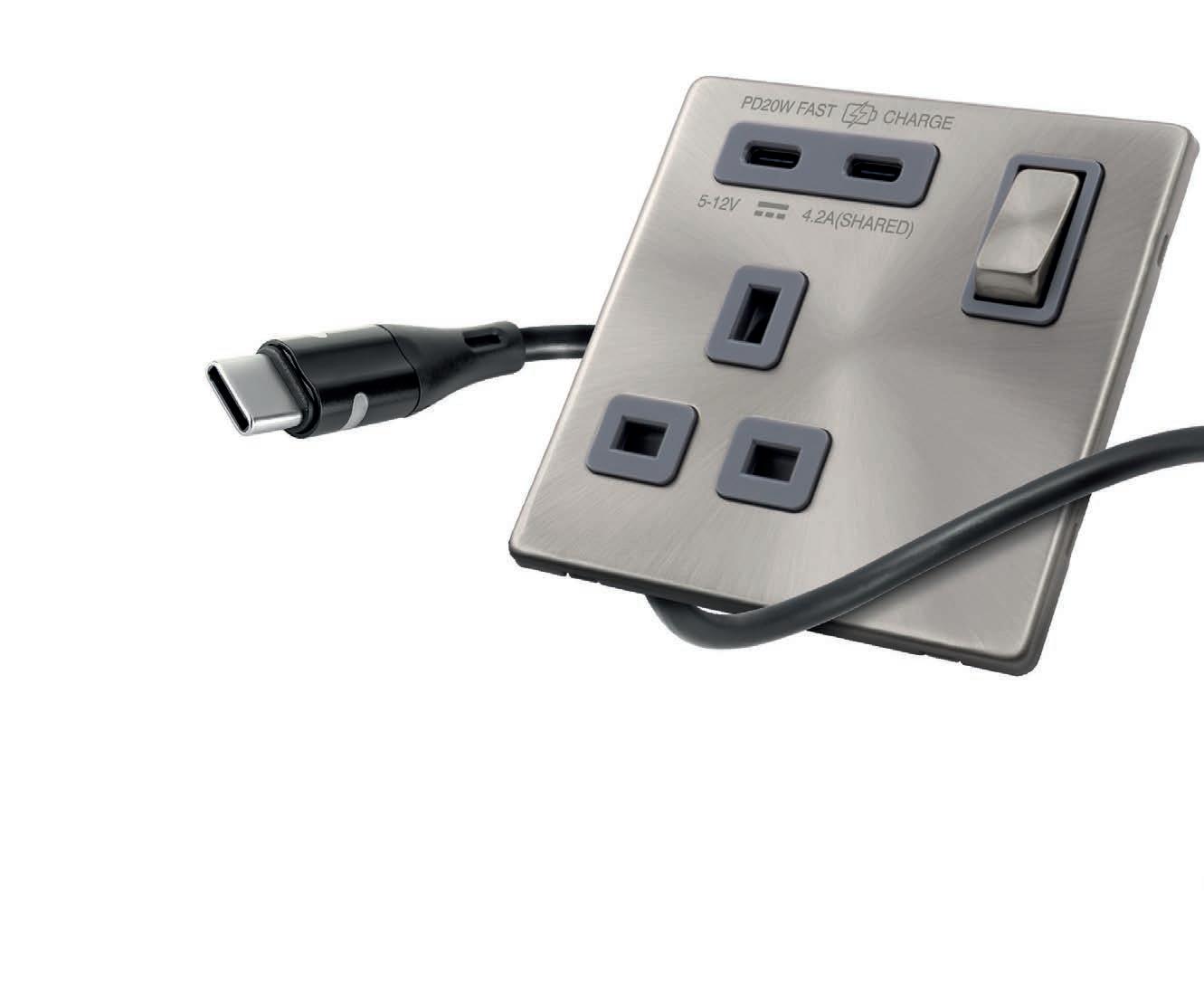

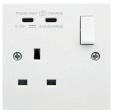




Once overlooked as purely practical items, wiring accessories are now stepping into the spotlight as an important part of interior design. Katie Plumstead, Group Marketing Manager with Scolmore Group, looks at the growing importance of aesthetics for this product category.
For decades, wiring accessories such as switches, sockets, and outlets were seen purely as functional products –devices that simply needed to work reliably and safely. Today, however, the landscape is shifting. Increasingly, end users, designers, and electrical contractors are recognising that these everyday essentials are not just about performance, but also about appearance, feel, and how they integrate into the overall design of a space.
The traditional white plastic switch may still dominate the market in volume – Click Scolmore’s Mode range of white moulded wiring accessories remains the company’s best-selling range – but demand for stylish alternatives has grown rapidly. Interior designers, architects and homeowners now view wiring accessories as an integral part of the overall interior design scheme. Matte finishes, metallic tones, and screwless faceplates are trending as homeowners look for premium finishes that complement modern interiors.
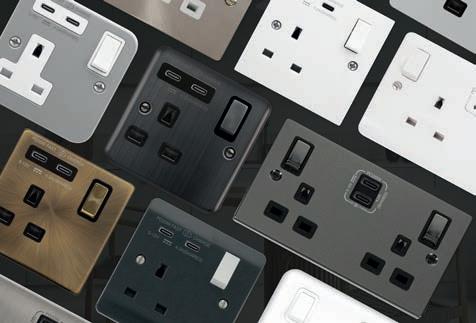

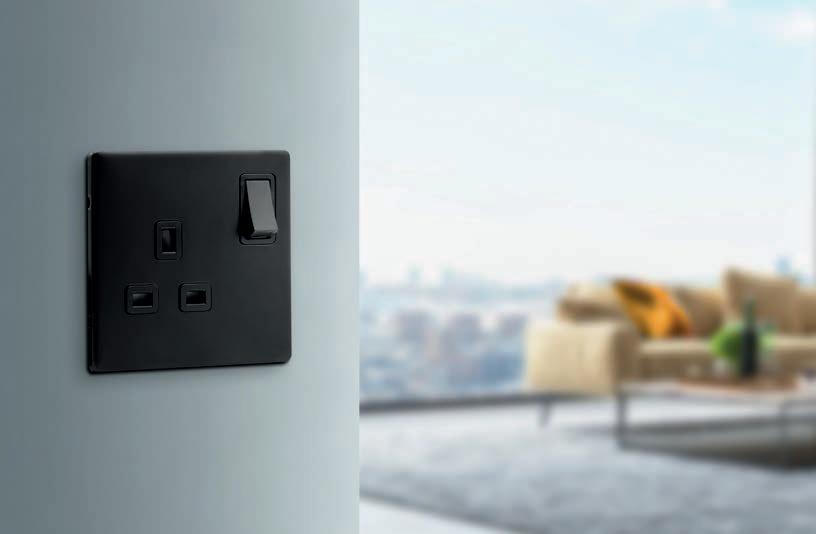
Scolmore has introduced a sleek Matt Bronze finish to its Definity Complete range of screwless, push-fit face plates The socket outlets with twin USB combine fast-charging capability with a high-quality finish
The shift is being driven not only by designers but also by a new generation of consumers who are highly attuned to detail. In an era when social media showcases every corner of a home, people are more aware of the small touches that elevate interior spaces. Wiring accessories, once ignored, now play a role in creating a premium, polished environment.
While appearance is becoming increasingly important, performance remains paramount. Installers must continue to ensure compliance with safety standards, ease of installation, and reliability. The most successful products are those that deliver both – combining modern aesthetics with robust engineering.
Click Scolmore continually innovates its wiring accessories ranges to reflect current trends. Last year, the company introduced a new sleek Matt Bronze finish to its Definity Complete range of screwless, push-fit face plates. This finish offers a contemporary, stylish option that seamlessly blends with modern interiors while maintaining the high-quality performance the Click Scolmore brand is known for.
Following the success of the Matt Bronze Definity Complete range, the finish has been extended to its popular Deco Plus and Deco ranges. Deco Plus is Click’s premium curved profile decorative wiring accessory range, while Deco offers a high-quality square profile alternative.
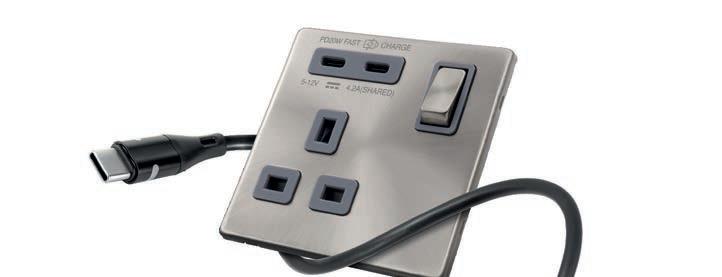



Matt Bronze offers a versatile solution for designers, contractors, and homeowners looking to elevate their interiors
The new Matt Bronze finish, available with black inserts, enhances the Deco Plus and Deco’s timeless appeal, ideal for both residential and commercial settings.
The introduction of Matt Bronze is a reflection of the growing demand for elegant, design-led electrical accessories. Available across a wide selection of switches, sockets, and accessories, the Deco Plus and Deco ranges in Matt Bronze offer a versatile solution for designers, contractors, and homeowners looking to elevate their interiors.
Matt Black wiring accessories continue to be a popular choice, with designers and homeowners alike opting for this bold, understated finish, proving that functionality and style can coexist seamlessly. Traditionally, wiring accessories such as switches, sockets, and plates were limited to standard colours such as white, beige, or metallic finishes. Adding a contemporary, sophisticated edge to any space, the matt black finish not only complements modern interior trends but also offers practical benefits, including reduced visibility of fingerprints and smudges.
Introduced to the Deco and Deco Plus ranges in 2023, the matt black finish has recently been extended to the New Media modules range. Designed to complement modern interiors, the matt texture offers a sleek, low-sheen appearance that blends effortlessly into contemporary environments – perfect for applications where elegance and performance are essential. The matt black finish is now available across a comprehensive selection of New Media modules.


As wiring accessories have evolved from purely functional items to design-led features, the next frontier is integrating smart, future-ready technology without compromising aesthetics. Click Scolmore’s latest innovation – the 13A 1 and 2 Gang Safety Shutter Socket Outlets featuring twin USB Type-C Power Delivery (PD) ports – exemplifies this approach. These sockets combine cutting-edge fast-charging capability with the same high-quality finishes and design-led philosophy seen across Click Scolmore’s Deco, Deco Plus, and Definity ranges. By incorporating USB-C PD, the new outlets address the growing demand for connected, technology-driven spaces. Users can charge smartphones, tablets, and laptops quickly and safely, while designers and homeowners benefit from a sleek, integrated look that complements any interior. Investing in these modern sockets ensures a future-proof solution for the devices of today – and tomorrow –without sacrificing elegance, functionality, or safety.
USB Power Delivery (PD) is an advanced, fast charging technology supporting a wide range of devices. It can charge smartphones and tablets up to 70% faster than a standard 5W USB charger. With universal adoption of USB-C PD, users can connect multiple devices without compatibility concerns.
Key features include:
• PD20W – fast charging 20W USB power delivery
• 3A independent charging per port
• 4.2A shared output – intelligent chip adjusts output to connected devices
• Twin type C ports – ideal for multiple devices
• Three pin safety shutters –enhanced protection
• Easy retro fit – replaces standard or USB sockets without the need for a deeper back box.
The new Twin Type C USB Sockets are available across Click Scolmore’s extensive portfolio, including Deco, Deco Plus, Define, Definity, Mode, Part M, Polar, Metal Clad, and Metal Clad Pro, providing a consistent solution for every installation style and environment.
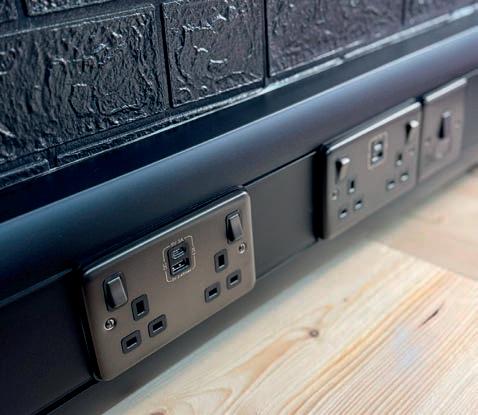
The introduction of Matt Bronze is a reflection of the growing demand for elegant, design-led electrical accessories
The evolution of wiring accessories demonstrates that function and style are no longer mutually exclusive. From sophisticated matt black and bronze finishes to the latest USB-C fast charging technology, modern wiring accessories combine performance, safety, and design in a single solution.
Matt Black wiring accessories continue to be a popular choice with designers and homeowners
For homeowners and designers, these products elevate interiors, create a polished, connected environment, and future-proof spaces for the devices of today – and tomorrow. For contractors and wholesalers, they offer tangible benefits as well: simplified installation, universal compatibility, and a product range that meets the growing demand for stylish, high-performance solutions.
Click Scolmore, scolmore.com
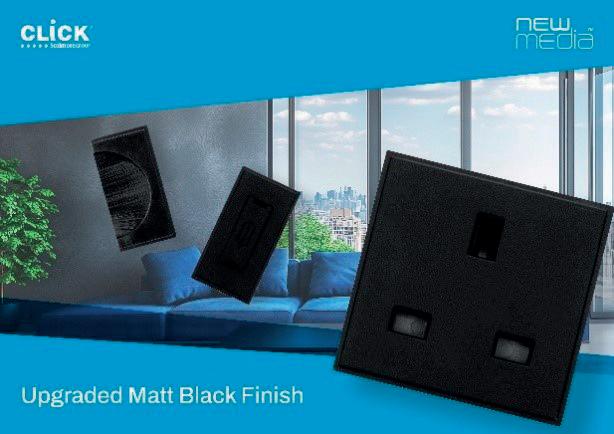

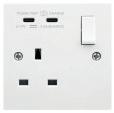


In this article, ECN looks at the reasons why Click Scolmore wiring accessories were recently specified for a £70 million flagship affordable housing development in Northminster, Peterborough.

Click Scolmore’s wiring accessories and Elucian consumer units have been selected and installed throughout a major £70 million flagship development of affordable homes in Northminster, Peterborough, underlining the brand’s continued presence within large-scale residential projects.
The nine-storey flagship Northminster development features a mix of one, two and three-bedroom apartments and town houses designed to provide high-quality, energy-efficient, and affordable homes in the heart of the city. The project aims to meet growing demand while revitalising the local area, bringing 315 new homes to market as part of a wider regeneration plan.
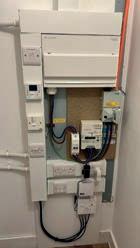
As part of the project’s commitment to quality and durability, products from Click Scolmore’s extensive range of wiring accessories have been installed across all apartments, ensuring both functionality and aesthetic appeal that align with the development’s modern interior design.
Products specified include Click’s Mode range of white moulded wiring accessories, which combine sleek, contemporary styling with ease of installation and low maintenance – which is ideal for high-volume residential settings. The modular design allows installers unprecedented flexibility in creating dedicated wiring solutions.
Mode’s antimicrobial properties were an additional benefit, helping to support cleaner living environments for residents. Sockets and switches from the range have been installed in all areas of the apartments, including bedrooms, kitchens, living areas and bathrooms.
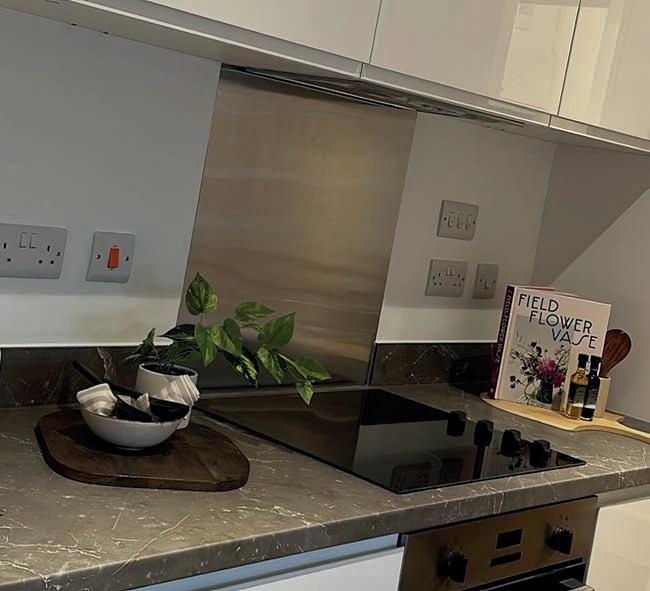
In communal areas, Click Scolmore’s robust Metal Clad accessories were selected to deliver enhanced impact resistance and longevity, which is crucial for high-traffic service zones. The comprehensive Metal Clad range is offered as part of Click’s Essentials wiring accessories and features electrophoretically coated plates and back boxes that provide a durable and long-lasting heavy-duty finish.
The range includes a number of two-way switch plates, switched sockets, safety shutter switched sockets and fused connection units, as well as 1-gang and 2-gang switched sockets with Outboard Neon Rockers. Some recent additions also feature a 13A 2 Gang DP 3 Pin Safety Shutter Switched Socket Outlet with Outboard Rockers (Twin Earth).
All switch products are of modular construction, allowing the installer total freedom in designing customised switching solutions according to on-site needs. Unfurnished plates and mounting boxes are available for use in conjunction with Click’s extensive range of MiniGrid and New Media modules.
To support the development’s commitment to quality and compliance, Click Elucian single phase consumer units were installed in each apartment, offering an effective, regulation-compliant solution that simplifies circuit protection and future maintenance.
The Elucian single phase range is an extensive collection of metal consumer units that were designed with the contractor in mind and developed to cover a broad range of installations, offering a number of features and benefits that enhance the products’ convenience, flexibility and safety properties. The comprehensive range includes mains switch boards, split load boards and combination boards – all three also available with SPD – plus IP65 garage units, garage boards, dual row boards and REC units.
The Elucian 100A mains switch consumer units were supplied pre-populated with a combination of AFDDs and RCBOs, which added to the overall object of sustainability for the project by negating the need for the protective devices to be delivered and installed separately, and thus saving on time and packaging.
With the requirement for a reliable, aesthetic, and compliant solution for a project of this scale, Click Scolmore’s Mode, Metal Clad, and Elucian ranges provided the perfect match. The products are easy to install and provide the clean look that was expected for a flagship development.
Completed by social housing association Cross Keys Homes, the Indigo development was delivered by national contractor Willmott Dixon in partnership with Briggs & Forrester Living providing the design, installation and verification of the Mechanical, Electrical & Public Health Services. It will offer sustainable, modern city centre living, just minutes from the train station and other key amenities. Click Scolmore, scolmore.com
With The Full Range Of Aquip IP66
Weatherproof Wiring Accessories

FEATURES & BENEFITS
MULTIPLE GLAND ENTRY POSITION
• Multiple knockouts (20mm) for entry from all angles
WEATHERPROOF - IP66
• Offers high level of protection against ingress of water jets and dust
MULTIPLE SWITCH CONFIGURATIONS
• Designed to fit switched MiniGrid® Or GridPro® Modules (depending on which yoke purchased.


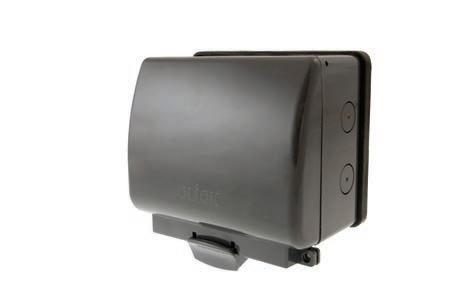
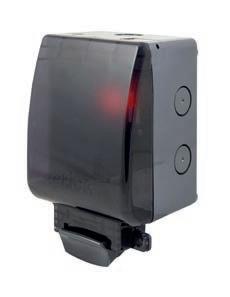
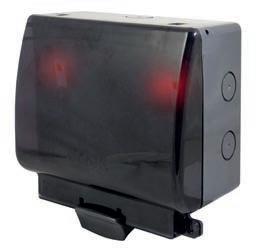
Ellie

Over the past few years, I’ve noticed that customers are paying far more attention to the look of their light switches and sockets. What were once purely functional fittings are now being treated as part of the interior design scheme. Decorative wiring accessories are no longer a niche upgrade; they’re becoming the norm.
Traditionally, switches and sockets were chosen at the last minute, usually white plastic, and usually the cheapest option. Today, many customers decide on their wiring accessories at the same time as paint colours, flooring, and lighting fixtures.
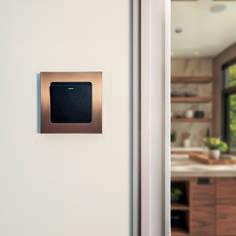
Retrotouch’s
Brushed Brass products are proving an increasingly popular option with homeowners
With modern, open-plan layouts and feature walls, switches and sockets sit in plain sight. Homeowners don’t want something that looks out of place; they want finishes that complement kitchens, living spaces, and bedrooms, that make a statement and look more high end too.

The UK renovation market has been booming, and that’s had a big impact on demand. Many customers aren’t rewiring whole houses; they’re upgrading kitchens, bathrooms, home offices, or garden rooms, and decorative accessories are a simple way to modernise a space without major disruption.
As electricians, we’re often asked, “Can we swap these for something more modern?”, or, “Is there a style that will match our décor better?”
Decorative switches and sockets fit perfectly into these conversations, and I believe that they succeed best when they balance professional needs (safety, fast installation, reliability) with consumer desires (style, future flexibility, ease of redecoration).
Consumers increasingly want choice and flexibility. Interior trends change quickly, and homeowners don’t want to be locked into one look forever. This is where modular decorative ranges really stand out.
Products with clip-on or interchangeable front plates, such as the Retrotouch Aura range, appeal to customers because:
• They can change the look (replace the plates) later without rewiring.
• Redecorating doesn’t automatically mean calling an electrician back.
• The core electrical installation stays compliant and untouched.
From my side, it also means fewer callbacks just for cosmetic changes, which is a win for everyone.
For electricians, labour time is more valuable than ever, and we increasingly prefer wiring accessories that fit standard UK back boxes, are quick to install, have clear terminals and solid build quality, and, where possible, allow front plates to be fitted once second fix is complete. Decorative should no longer mean “awkward to install”. Many modern ranges are designed with the installer in mind, not just the end user.
Platforms like Instagram and Pinterest, as well as home renovation TV shows, have had a big influence on these types of accessories. Customers can now see what’s possible and realise that things like switches and sockets don’t have to be purely functional. Brushed finishes, colour-matched plates, slim profiles, and modern designs are all becoming expectations rather than luxuries.
A key point I always stress to customers is that decorative accessories still need to meet UK safety standards. Reputable brands offer both compliance and aesthetics, which gives confidence to electricians installing them and homeowners using them.
To summarise, I believe that demand for decorative wiring accessories will only continue to grow. The drivers are clear: homes are being treated as long-term investments, so improvements are often being made; design increasingly matters just as much as function; customers want flexibility for future changes; and electricians want reliable, easy-to-install products that are also high quality.
We don’t want to install something that won’t hold up to use; we’ll look for quality decorative accessories that feel solid, operate smoothly and safely, and are built to last. Retrotouch, retrotouch.co.uk

















• Intumescent pads expand when subjected to heat. The char produced has low porosity & low thermal conductivity and serves as a protective barrier offering resistance to flame and fire spread.
• Featuring spring loaded side tabs to allow installation into different depths of plasterboard.
• Earth terminals as standard.
• Fire tested up to 90 minutes.
• Compliant with EN 60670-1: 2005 + A1: 2013
EN IEC 60670-1: 2021 + A11: 2021
BS 4662: 2006 + A1: 2009
EN 1363-1: 2020
EN 1364-1: 2015
Acoustic Rating - In accordance with BS EN ISO 10140-2:2010 & Robust Details, BS EN ISO 10140-4:2021
While bathrooms have long been recognised as critical points for lighting in the home, the finer details – particularly electrical accessories – are often overlooked. Yet these elements offer a chance to enhance buyer appeal and support selling up.
Hannah Liscomb, Head of Marketing at Knightsbridge, offers a few pointers.
Traditionally, bathroom lighting has received the lion’s share of design attention. Recessed spotlights, wall lights, illuminated mirrors, and mood lighting are now standard fare, supported by a well-developed market of IP-rated luminaires that comply with the 18th Edition of the IET Wiring Regulations (BS 7671) and the relevant parts of the Building Regulations.
Bathrooms remain one of the most regulated areas of a domestic installation, and getting the details right first time is essential. While lighting is often specified early, electrical accessories, such as shaving sockets, are still frequently treated as secondary items. In practice, these products can create avoidable compliance issues if zoning, IP ratings and protection requirements are not fully understood.
Historically, many of these accessories were basic white plastic units selected purely to meet minimum requirements. Increasingly, however, end users and designers are asking for decorative finishes, integrated USB charging, and smart controls. For installers, this means greater attention must be paid to product selection, intended location, and manufacturer instructions.
From an installation perspective, careful early planning reduces rework. Coordinating accessories with lighting layouts, fan positions and mirror locations helps ensure compliance while avoiding last-minute changes that can delay completion or trigger failed inspections.

Correct application of bathroom zoning remains critical. All work must comply with BS 7671 (18th Edition), with particular attention to the definitions of Zones 0, 1 and 2. Zone 3 was removed from the regulations a long time ago.
All circuits supplying equipment in a bathroom must be protected by a 30 mA RCD. Only equipment specifically designed for bathroom use and rated for the relevant zone may be installed within Zones 0, 1 or 2.
SELV equipment is required in Zone 0. In Zones 1 and 2, fixed equipment such as extractor fans and mirrors may be installed, provided they meet the appropriate IP rating and are installed in accordance with the manufacturer’s instructions. Socket outlets, including shaving sockets, are only permitted outside the bathroom zones.
Selecting compliant accessories at first fix helps avoid problems at second fix and simplifies testing, certification and sign-off.
Manufacturers are expanding bathroom accessory ranges to include decorative finishes and coordinated designs. For installers, this means ensuring that aesthetic choices do not override technical suitability. Shaving sockets, for example, are available in a wide range of finishes but must still be installed outside the zones and comply with BS EN 61558-2-5.
Some shaver lights now incorporate dual-voltage outputs and integrated USB charging. These can be a practical solution when correctly located, but installers must confirm zoning, IP rating and circuit protection before installation.
Extractor fans are also becoming more design-led, with options in stainless steel, black and grey finishes. While appearance may influence selection, airflow performance, noise levels and ducting arrangements remain critical to achieving a compliant installation.
Bathrooms leave little margin for error. Poor product choice or incorrect placement can lead to failed inspections, remedial work and unhappy clients. By understanding zoning, selecting the right IP-rated accessories and applying RCD protection correctly, installers can deliver safe, compliant and future-proof bathroom installations.
To discover the full Knightsbridge bathroom offering, you can download its latest e-brochure, The Complete Bathroom & Kitchen Guide, at mlaccessories.co.uk/ marketing-hub.
Knightsbridge, mlaccessories.co.uk


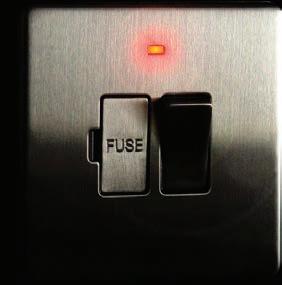
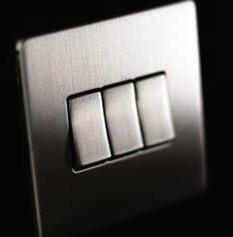
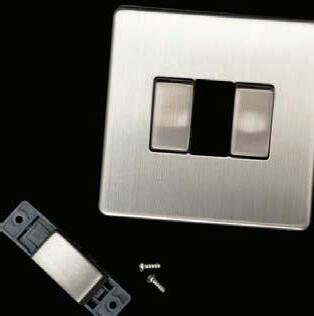
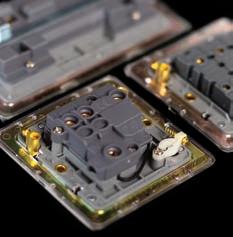
LGA Europe, trading as Selectric, has grown from a modest UK electrical accessories business into a respected supplier within the national wiring accessory and electrical wholesale market. ECN charts the company’s evolution and looks at the ways its product offering has expanded.
Over nearly three decades of operation, Selectric has built a strong portfolio of wiring accessory ranges that have become familiar in both retail and trade channels. The evolution of the company reflects changes in the electrical supplies market, driven by product diversification, regulatory compliance, and responsive distribution strategies.
The company was established by Jack Ellis, who continues to serve as Chairman to this very day, guiding its strategic direction. From its outset, the company positioned itself to serve the UK electrical wholesale market, emphasising quality, service and competitive pricing as core business principles.
The mid-1990s were characterised by significant growth in UK residential and commercial construction, accompanied by expanding demand for standardised electrical wiring accessories. Selectric entered this landscape alongside established manufacturers, aiming to secure market share through diversified product offerings rather than narrow specialisation. Its early focus was on traditional white moulded wiring accessories – the basic switches and sockets ubiquitous in new installs and renovations – allowing Selectric to establish fundamental supply relationships with electrical wholesalers.
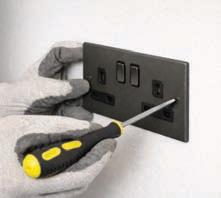
Throughout the late 1990s and early 2000s, Selectric broadened its wiring accessory portfolio. Beyond basic switches and sockets, the company introduced more stylistically differentiated and technically varied ranges. This included decorative metal accessory profiles in multiple finishes as well as modular systems designed for flexible electrical installation configurations.
The expansion into modular plate systems – which support interchangeable functional inserts – reflected the wider industry’s pivot towards adaptable and customisable installation solutions.
The diversification of product formats was an important strategic move. Decorative metal ranges and slimline profiles catered to residential and architectural applications where aesthetic considerations were increasingly influential. Meanwhile, modular platforms anticipated the professional electrician’s need for versatile wiring accessory options that could be specified across diverse building types.
In parallel with product expansion, the company’s distribution infrastructure matured. Selectric’s head office and distribution facilities in Salford, Greater Manchester – operating from a site with substantial warehousing capacity – allowed the business to leverage efficient logistics and connectivity to the UK motorway network. This infrastructure supported distribution to wholesalers and trade partners across the UK, reinforcing Selectric’s credibility as a national supplier.
A defining aspect of the company’s development has been its alignment with evolving technical and regulatory standards in the UK and broader European markets. Wiring accessories are governed by numerous safety and performance standards, including British Standards such as BS 1363 for socket outlets and BS 5733 for wiring accessories generally. Compliance with these standards has been integral to Selectric’s ability to compete with other established brands and to secure listings with major wholesalers.
Across the 2000s and 2010s, regulatory emphasis on energy efficiency, accessibility and consumer safety shaped product development across the electrical accessories industry. Selectric’s portfolio grew to include accessories compliant with accessibility regulations such as Part M of the UK Building Regulations, reflecting the sector’s broader imperative to support inclusive design and usability.

In recent years, the company has also incorporated technological features relevant to modern installations, such as integrated USB charging outlets and modular systems compatible with contemporary smart home and control technologies. These developments underscore a strategic blend of traditional accessory design with functionality aligned to current electrical usage patterns.
Today, Selectric remains an active supplier of wiring accessories, including decorative switches, socket outlets, modular systems and related products sold through electrical wholesalers and distribution networks. Its product breadth reflects a strategy of meeting professional trade demands, as well as addressing installer preferences across residential and commercial sectors.
Selectric’s trajectory – from modest beginnings to a nationally recognised wiring accessory brand – illustrates how focused product development, regulatory compliance, logistical investment and diversified offerings can sustain growth in a competitive manufacturing and distribution environment. The company’s history embodies the incremental evolution of a niche supplier responding to technological and market forces while maintaining a consistent operational base in the UK electrical market.

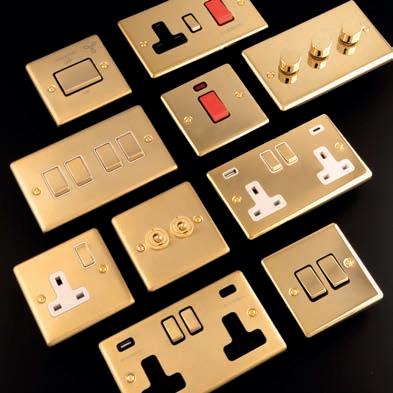

Kevin Bird, co-founder and CEO of Shocking Energy, explains why accreditation and digital operations are becoming a growth strategy – not an afterthought – for renewable installers.

For many electrical and renewable installers, accreditation has traditionally been treated as an administrative hurdle – something to tackle once growth is already underway. The prevailing logic has been simple: win the work, build the team, then deal with compliance when the business is “ready”. Across the UK renewables sector, that mindset is now being fundamentally challenged.
As solar, EV, battery storage, and heat pump projects increase in scale and regulatory scrutiny, accreditation is no longer something that can be bolted on at the end. At Shocking Energy, we are seeing a clear shift: forward-thinking installers are embedding accreditation and compliance earlier, using it as a lever to unlock faster growth, stronger partnerships, and greater control over their operations.
Demand for renewable installation capacity has never been higher, yet many installers are discovering that growth is no longer constrained by sales; it is constrained by operational readiness.
Accreditation strategy increasingly determines how quickly a business can take on larger contracts, work with utilities and energy suppliers, and move projects from installation through to energisation without delay. Where compliance is left until later, friction often appears just as momentum builds.
Processes that work at small scale –spreadsheets, shared folders, paper forms, and ad hoc evidence capture – begin to strain under pressure. Documentation needs reworking, audits consume management time, and reliance on third parties increases. The cost rarely appears as a single line item, but it shows up in delayed projects, missed opportunities, and teams being pulled away from growth activities.

Retrofitting accreditation into a fast-growing operation is rarely smooth. Evidence may exist, but not in the format, structure, or traceability that regulators, utilities, and partners expect.
By contrast, businesses that embed accreditation early avoid this disruption altogether. When regulatory requirements are designed into everyday workflows, evidence is captured as work happens. Audit readiness becomes the default rather than an exception, allowing growth to continue without the stop-start effect that retrofitted compliance so often creates.
Expectations upstream are also changing rapidly. Utilities, energy suppliers, and large commercial partners are no longer simply asking whether installers can achieve accreditation at some point in the future; increasingly, they expect proof that compliant operations are already live. Clear audit trails, consistent field data, and traceable job records are fast becoming prerequisites for serious partnerships.
Forward-thinking installers are embedding accreditation and compliance earlier, using it as a lever to unlock faster growth
This shift is changing how ambitious installers perceive accreditation. Rather than a box-ticking exercise, it is increasingly seen as a commercial enabler.
Achieving Safe Installation Provider
Accreditation from Shocking Energy allows installers to take greater control of project timelines, reduce reliance on third parties, and remove delays around energisation and commissioning. Combined with a platform like JobWay, accreditation becomes operational, not theoretical, enabling contractors to deliver faster, cleaner projects with fewer handovers and less rework. In competitive tenders and framework agreements, this level of control and audit readiness is becoming a differentiator, not just a requirement.
The installers navigating this transition successfully tend to take the same approach. Compliance is not owned by a single person or treated as a periodic project; instead, it is embedded into how jobs are planned, delivered, and closed out. Digital tools are central to this shift. By generating compliance outputs automatically from day-to-day activity, platforms like JobWay remove the need for retrospective paperwork and reduce the risk of gaps appearing as businesses scale.
At Shocking Energy, our focus is on making accreditation and compliance practical – something that supports growth rather than slowing it down.
As the renewable sector matures, the “accreditation last” mindset is becoming harder to justify

This is where digital operations matter just as much as accreditation itself.
Shocking Energy’s JobWay field-service platform plays a critical role here, capturing compliance evidence, photos, forms, and signatures as part of the job flow, as well as automatically generating the records needed for audits, reporting, and market notifications. For installers, this removes the disconnect between “doing the work” and “proving the work was done correctly”.
As the renewable sector matures, the “accreditation last” mindset is becoming harder to justify. Installers that continue to treat compliance as an afterthought risk slowing down at precisely the point when the market demands speed, certainty, and scale. Those that embed accreditation early – supported by the right digital tools – are finding it enables cleaner growth, stronger partnerships, and more resilient operations. Accreditation is no longer the final step once growth has happened; for the next generation of renewable installers, it is increasingly the foundation that growth is built on.
Shocking Energy, shocking.energy

Sync Energy Installers can earn rewards for eligible domestic chargers they install and connect in the Sync Energy App.
• Installations must be fully commissioned, app set up, and first charge completed by the end user via the Sync Energy App
• Complete two connected installs, earn £50 – complete 20 installs, earn £500
• Rewards paid as digital vouchers or cashback (for totals over £500)
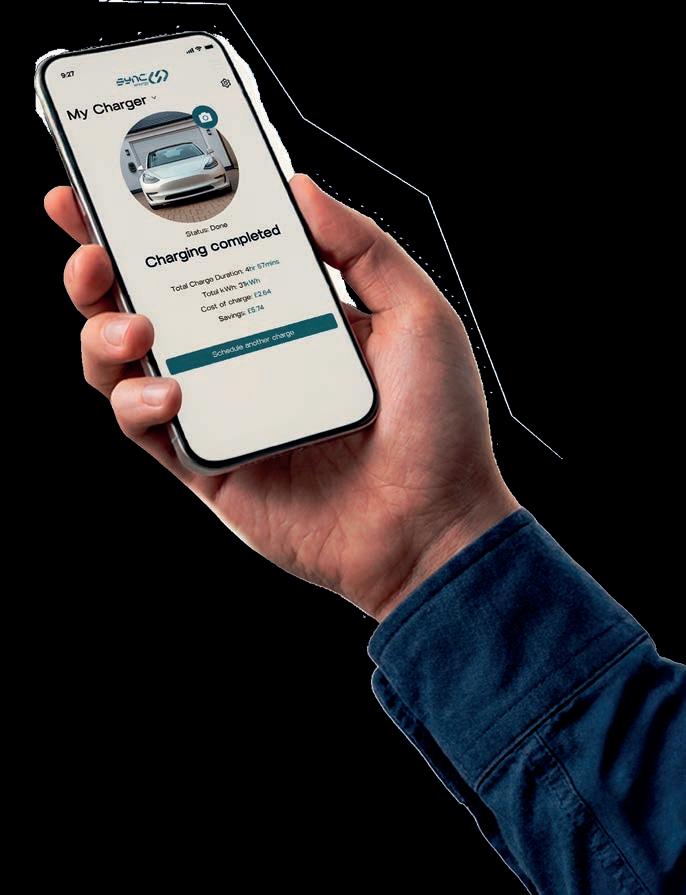
Find out more
David Humphriss, a former solar installer and now Head of Residential with SolarEdge UK, shares tips on how installers can guide their customers from first contact to long-term satisfaction, building a thriving business along the way.

In today’s competitive residential solar installer market, where aggressive pricing, tighter margins and sky-high homeowner expectations prevail, sustainable growth and success won’t come from just cutting prices, it comes from adding more value. Here are five ways for residential solar installers to grow their business with a smart customer journey.
Great selling isn’t about you – it’s about the person across the table. It’s tempting to lead with credentials or jump straight into system specs for what you would want, but understanding the goals and challenges for each specific customer is key to the rest of your sales process. Whether they’re after the fastest payback safety, smart tech integration or even sleek aesthetics, asking the right questions, especially about what
problem they are trying to solve, is key to building trust and closing the sale.
Once you’ve understood the customer’s goals, it’s time to educate, not sell. The system with the lowest upfront cost isn’t always the best value – highest energy production often means fastest payback. Help homeowners understand how different products meet their insurance needs, address safety concerns, or support smart home integration.
Present options as impartial advice, empowering them to make informed decisions. It’s a significant investment, and customers appreciate transparency. For example, when recommending systems with more advanced safety, explain why they matter and how they work. If they’re unsure about adding a battery, suggest starting with solar only and revisiting their consumption data after 6–12 months to assess how much they can tangibly benefit from more self-consumption with solar plus storage. This phased approach builds trust and gives you a reason to reconnect later with real data in hand.
Solar technology evolves quickly, with new smart devices, apps, and integrations constantly emerging, so it’s vital to stay on top of tech and trends

– engagement equals sales
Why are car dealers so successful? Because they make you sit in the car, adjust the seat, and picture yourself driving it. Solar should be no different. Involve homeowners in the process – walk them around the property, look at their roof and meter, and even let them help measure the site.
This hands-on approach builds excitement and gets them invested. Use a quality design tool to visually map the system on their roof and collaborate on adjustments to suit their preferences. More often than not, you’ll find the customer working with you to see how you can squeeze a bigger system out of their roof space.
While virtual quotes and desktop surveys are now common, personalisation still matters. If an in-person visit isn’t possible, screen share the design tool and walk through it together. Even remote engagement can significantly boost your close rate when it feels tailored and interactive.
How often do we get presented with a series of options, but the one we can’t forget or let go is the bigger, shinier option? Helping homeowners to understand that the best return on investment over the long run often comes from higher-yielding solar systems with smarter software, not necessarily the lowest price tag, is the quickest route to higher margins.
Educate them on why systems that offer more than just basic safety features and longer warranties are the safe and smart choice to safeguard their investment. When customers see the long-term benefits versus the low-cost options, they’re more likely to invest in quality.
In a competitive market, many installers focus on offering the lowest price, often at the expense of profit margins, installation quality, and long-term customer satisfaction. Rushed installations increase the risk of errors and safety issues, leading to costly site visits and reputational damage. Competing solely on cost is a race to the bottom. I’ve found that offering differentiation and added value is what sets you apart.



When it comes to implementing solar, David believes that installers should involve homeowners in the process as much as possible
Referencing local incentives, upcoming energy policies, or market trends is a great way to demonstrate expertise and add value. It’s also a smart way to start initial conversations or follow up with leads.
Solar technology evolves quickly, with new smart devices, apps, and integrations constantly emerging. While it’s tough for busy installers to keep up, partnering with a knowledgeable manufacturer makes a big difference. Look for vendors that offer regular, region-specific training and support to help you understand and sell more advanced systems.
Staying up to date helps you to deliver more value and improve the ROI for customers. In the UK, for example, installers registered with TrustMark and PAS2030:2035 can install PV under ECO4 funding. To deliver these, you can either work directly with energy suppliers or managing agents who assist with compliance and paperwork. Similarly, schemes like the UK Demand Flexibility Service allow smart meter users to shift energy use in return for financial rewards. But only registered providers are eligible, so the PV system you recommend homeowners matters.
Cyber security is also increasingly under the spotlight. Regulations like the UK’s PSTI and the EU’s RED are putting data security in focus and getting the ball rolling on basic PV system requirements. With tighter cyber security regulation on
PV inverter manufacturers on its way, get ahead by checking where vendors store your customer’s data and what protocols they follow to avoid potential future system noncompliance. The last thing you need is to have to rip up and replace installations later on. Being informed builds trust, and trust closes deals.
Great customer service begins with thoughtful follow-up during the sales process. Summarise what was discussed, outline the options, clarify expectations, and confirm the next steps. This shows you’ve listened, tailored the solution, and are already moving things forward. Your ability to deliver great service also depends on your suppliers. For smart components like inverters and batteries, choose manufacturers who offer responsive support, training, and have a strong UK presence. When issues arise, real-time help matters.
Post-installation, check in. Ask your customer if they’ve downloaded the app and walk them through it. This reinforces your commitment and gives the customer confidence to refer you. While you’re there, why not ask if they know someone else who might benefit from solar.
Today’s customers expect fast, professional service, more so than other industries, as energy bills rise. One minor fault can trigger demands for
compensation, even if energy production is barely affected. Setting clear expectations early can help to avoid these issues down the line – define your response times and explain when compensation would be given. Clear terms and conditions save time, avoid disputes, and improve satisfaction. Honesty upfront is better than issues down the line.
There are tools available to help you manage this relationship without adding to your workload. Some installer apps will allow you to set automated alerts on system performance, remotely configure settings, and easily access customer contact information for check-ins.
Professional follow-up not only improves satisfaction – it also boosts your reputation and repeat business.
There’s no doubt that today’s solar market is highly competitive for residential installers. Although it’s tempting to get involved in the race to the bottom, your long-term business success won’t come from cutting prices; it comes from adding value.
Listen to your customer. Engage them in the design process. Offer transparent, tailored advice, and partner with a manufacturer who helps you stay ahead and supports you when it counts.
This value-first approach will not only improve your close rate, but it will also build long-term customer relationships, and ultimately, long-term business growth.
SolarEdge UK, solaredge.com

Half day in person course
• Practical, hands-on learning with charge points
• Commercial EVCP installations focus
• Hardware installation & software configuration
• Load balancing and connectivity
• Back-office management
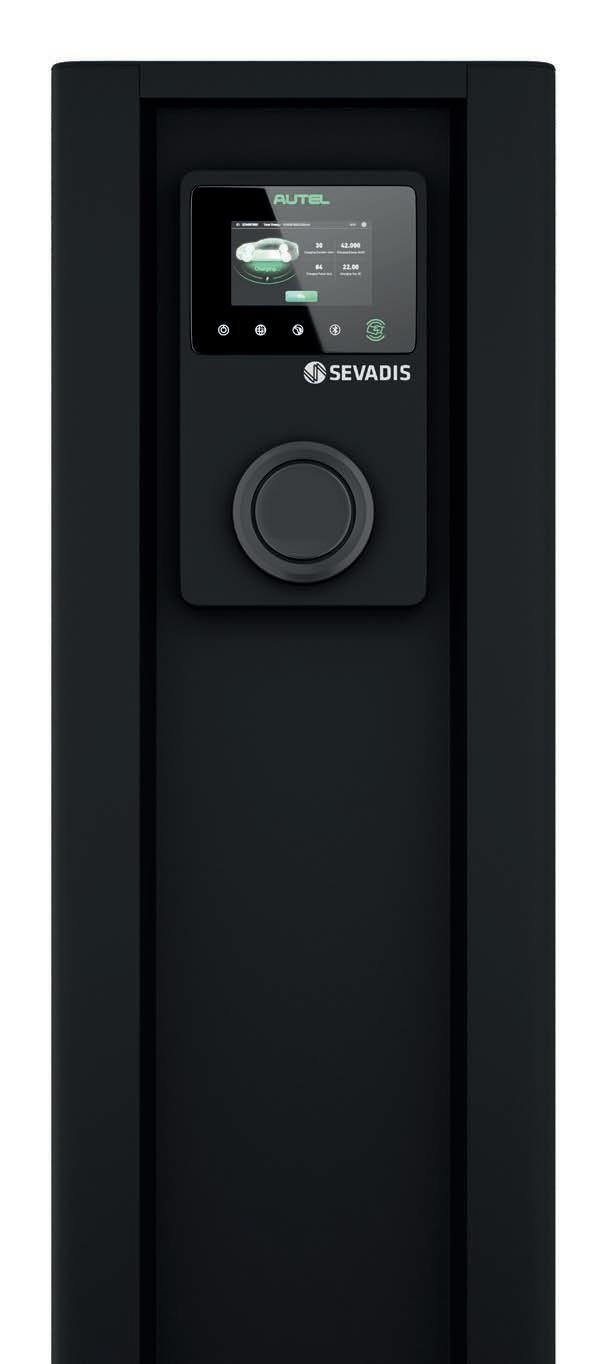
Fridtjof Falkgård Riege, Product Compliance Specialist at Easee, looks at the rise of bidirectional charging and explains why electric vehicles will soon act as mobile energy stores, powering homes and supporting buildings during high-demand events.

Across the UK and Europe, electrification is accelerating at pace with vehicles becoming smarter, charging technology more capable, and energy systems more dynamic. But the success of this transformation depends heavily on the electrical installers responsible for deploying, configuring and integrating the charging infrastructure that will carry us into the next era.
Preparations for widespread adoption of bidirectional charging are at different stages, depending on the technology at hand; more and more EVs hitting the roads are Vehicle-to-Load (V2L)capable, while Vehicle-to-Home (V2H) and Vehicle-to-Building (V2B) technologies are being rolled out in the near future. And then there is Vehicle-to-Grid (V2G), which, of all the bidirectional technologies being developed, holds the most potential in transforming the way we consume and manage energy.
Bidirectional charging represents one of the biggest shifts in energy systems in a century, Fridtjof believes
Fundamentally, however, installers will determine how quickly and how effectively the technology takes hold. What is now required is an ecosystem in which installers can deploy bidirectional-ready hardware easily, safely and at scale, without unnecessary regulatory or technical friction.
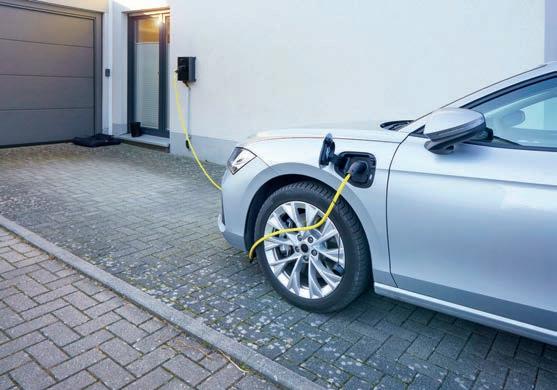
The potential of bidirectional charging is simply enormous; EVs will soon act as mobile energy stores, powering homes during expensive peak periods, supporting buildings during high-demand events, and supplying surplus energy back to the grid. With a single EV battery capable of running a household for days, the role these vehicles can play in strengthening energy resilience is transformative. The hardware enabling this is already available; V2G-ready chargers designed to work with both current EVs and those hitting the market in the years ahead are no longer theoretical, and both software frameworks and emerging industry standards are aligning.
For this technology to become part of everyday electrical infrastructure, however, it must be practical for the professionals who physically install it. Bidirectional charging cannot become mainstream unless it becomes straightforward, from a technical, procedural and logistical perspective, for installers to integrate into electrical systems. Installers are on the front lines of the electrification rollout, working inside people’s homes, businesses and energy systems, and they understand the constraints of real-world deployment better than anyone. If V2G-capable chargers require highly specialised set-ups, unique circuit designs or complex grid interactions, the rollout will slow. Future-proofing infrastructure must therefore mean simplifying installation, reducing unnecessary configuration, ensuring consistent standards across manufacturers, and guaranteeing that installers can deploy a charger today knowing it will remain compatible with tomorrow’s vehicles and regulations. When bidirectional hardware is plug-and-play from an electrical engineering perspective, the entire energy transition accelerates. Technical innovation only succeeds when regulation enables it, rather than constrains it. Installers are already adapting to evolving smart-charging rules, grid-connection requirements and safety frameworks, but as V2G-capable technology moves from early adoption to mass deployment, the rules surrounding its installation and operation must evolve just as quickly. Governments and standards bodies across Europe – including through frameworks such as AFIR and the EPBD –are beginning to outline how bidirectional energy flows should be measured, controlled
and authenticated. Yet clarity and consistency are still lagging, and installers need regulation that matches the simplicity of the technology and is predictable, harmonised, and aligned with the reality of installation work. Without this, even the most advanced charger becomes difficult or slow to deploy.
Bidirectional charging will fundamentally reshape the energy landscape, allowing Europe to increasingly draw stability from millions of distributed energy assets, instead of depending solely on large, centralised power stations. Each vehicle, building and home will contribute to balancing the grid, but this decentralised future only materialises when the infrastructure is physically in place. That makes installers the backbone of the transition and the determining factor in whether V2G becomes a niche capability or a critical, dependable energy asset.
Our collective mission must be to simplify the process of installing V2G-ready hardware and to accelerate its deployment. Installers are ready to deliver it, provided the tools, standards and regulations make it as straightforward as it needs to be. Bidirectional charging represents one of the biggest shifts in energy systems in a century, and the people who will make this shift possible are the installers who will wire this future into our homes, buildings and grids. We and the industry at large therefore need to provide them with simple-to-install, easy-to-integrate, regulation-aligned technology to unlock that enormous potential.
Easee, easee.com
With the prospect of bidirectional charging looming, it is believed that a single EV battery could be capable of running a household for days

Environmental monitoring experts and the AKCP partner for the UK & Eire.
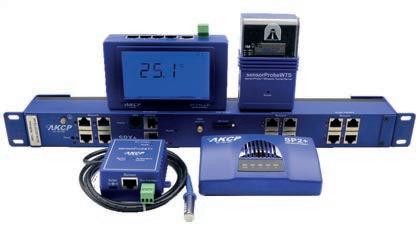
0800 030 6838 projects@serverroomenvironments.co.uk

• Mental health support
• Bereavement counselling
• Legal advice
• Advocacy
• CV Support following redundancy and job loss
• Psychiatric assessments
• Will support
• Emergency financial assistance
Access Assistance:

Complete our online form 0800 652 1618 9am - 5pm Mon - Fri support@electricalcharity.org Email us anytime
www.electricalcharity.org
Contact us for a FREE site survey or online demo to learn more about our industry leading environmental monitoring solutions with Ethernet and WiFi connectivity, over 20 sensor options for temperature, humidity, water leakage, airflow, AC and DC power, a 5 year warranty and automated email and SMS text alerts.

ECN is speaking with Emma Dutton of smart energy expert, AlphaESS, about her beginnings in the electrical sector, her perspectives on whether or not solar is worthwhile, her passion for training, her recent career move, and more.

ECN: Hi Emma. How did your journey into the electrical trade begin?
Emma: My journey as an electrician has always been about constant learning and thriving to be better than my male counterparts, especially in a male-dominated, competitive “dog-eatdog” industry. I’ve tackled everything from chopping out sockets in brick walls to installing various types of containment, conducting testing and inspections, and fault-finding. Fault-finding became my niche, leading me into reactive maintenance. I still love testing – especially tracking down faults and fixing them.
ECN: What sparked your interest in solar and battery storage?
Emma: I first encountered solar and battery storage in low-voltage systems (12/24V) on motor homes, fairgrounds, and boats. My first residential PV system came in 2007/2008, paired with early smart home technology, which I found fascinating. I dove into books and short courses to learn more. My maintenance career gave me the chance to experiment with equipment from numerous manufacturers. I’ve always enjoyed taking things apart and rebuilding them – even as a kid, my grandad would bring home odds and sods from Marconi, and we’d try to make something out of them. Looking back, technology has advanced exponentially, but we still have a long way to go.
ECN: You’ve seen a lot of changes in solar tech over the years. What stands out?
Emma: Early inverters were extremely heavy – honestly, they should never have been carried into lofts. Many have been disconnected and are left lying across beams! If they’d been properly removed and recycled, it would have been better. Panels are now being replaced with more efficient versions, and I feel the past 10–15 years have produced too many “throwaway” electrical products. That’s a rabbit hole for another day!
ECN: The big question – is solar worth it?
Emma: Definitely – 100% in my opinion. Electricity prices will keep rising, while PV panel prices are ridiculously low right now, and string inverters are following suit. Any savings sitting in a bank would be better invested in PV on the roof and/or a battery system. You can capitalise on free solar energy and take advantage of variable tariffs that energy companies offer nowadays.

Emma urges people to capitalise on free solar energy and take advantage of variable tariffs offered by energy companies
ECN: What innovations have excited you most in the last couple of years?
Emma: Over the past 18 months, I’ve seen fantastic progress. We’ve moved from separate string inverters and chargers to fully integrated hybrid machines. This speeds up installation, uses fewer materials, and brings costs down for the end user. Long-established manufacturers have expanded their R&D teams, improving hardware and software with AI algorithms that learn your daily energy habits. They can even manage or manipulate smart appliances and EV charging to save more money. Some systems now start producing electricity with as little as 50V – just one or two panels! That’s amazing. My grandad always said, “If it ain’t broken, don’t fix it,” but swapping an old FIT-era inverter for a newer one can boost productivity and save two to four hours of energy use per day. Battery storage is poised to boom again, especially as old leased FIT systems reach the end of their leases/contracts. Homeowners can add batteries now – even with a leased PV system. Go hybrid: once the old string inverter fails, connect the panels to the new system. One system, one maintenance plan – it’s a no-brainer.
ECN: As the Government decides what incentives to give homeowners and tenants, how should manufacturers operate in the meantime?
Emma: Manufacturers are racing ahead regardless, innovating with AI algorithms to capitalise on energy markets. It’s now a competition to build the best platform for grid trading and virtual power plants –though there’s always a middleman involved.
ECN: You’ve mentioned your passion for training and helping others. Why is that important to you?
Emma: From the start, I’ve strived to be better – not just for myself, but to help others and share knowledge. We need to train more tradespeople, especially women. I used to shy away from those debates, but it’s crucial to ensure training is available and accessible to everyone. I’m a strong believer in hands-on training – it sticks in your mind like nothing else. It lets people experience the good and bad sides of manual labour early on, so they know if it’s really the career for them – rather than spending years in college only to realise they hate being in a loft full of cobwebs! I’d love to see this practical approach brought back into classrooms.
ECN: What prompted your recent career move?
Emma: My leadership role as training manager at Solax was rewarding – it bridged the gap between technical design training and real-world field installation, and it fuelled my passion for training. But I felt I was missing something, so I handed in my notice at the beginning of December and got back on the tools. I fell in love with installation all over again. I’ve now taken on a new role with another long-established manufacturer, where I’ll use my expertise to upskill existing installers and train newcomers on some of the most innovative technologies available today.
AlphaEss, alpha-ess.co.uk


Powered Now, a leading job management software for the trades, has announced the launch of brand new AI-powered features on the platform, designed to help electrical businesses spend less time on admin.
With Powered Now introducing three different AI functions, users will now be able to proofread existing text, build on what has already been written, and generate brand new text from a simple prompt. Better still, the AI can be customised to match each user’s tone and style, so everything sounds like you – just written faster.
The software update has also improved invoicing capabilities, with users now able to split quotes into sections and turn them into multiple invoices in just a few clicks – ideal for a staged job, or part-payments. Every invoice clearly shows what is due, whilst the online version updates live to show what’s been paid, and what’s still outstanding, allowing for easier cash flow management.
The other improvements to the software include:
• The ability to create documents straight from appointments – users can jump from the scheduled job to paperwork in seconds, with no need to re-enter details.

The Powered Now app allows businesses to invoice, quote, and schedule jobs and teams

• Fully customisable templates – millions of configuration options across 28 templates to match each business’s branding and workflow.
• Electrical forms, simplified (EIC, EICR) – mass generate circuits, re-order and pre fill protective devices, allowing for up to 8,000 circuits to be documented on a single certificate.
• Upgraded text editor – further formatting options across all text boxes for cleaner, on-brand documents.
The latest software upgrade comes as the electrical sector gears up for the arrival of Making Tax Digital, with self-employed electricians having to digitally record income and expenses from 1 April 2026.
In addition to new AI-powered features, the app also offers simplified electrical forms and fully customisable templates
On the launch of its latest update, Benjamin Dyer, founder and CEO of Powered Now, comments, “With electricians facing more admin than ever before, it is crucial that businesses can easily keep their records accurate and accessible –
particularly with Making Tax Digital on the horizon. Our new AI-powered features are all about giving electricians back more time, ensuring admin does not get in the way of the day-to-day business running.
“We are continuously listening to feedback from our customers, whose changing needs have guided the latest developments of our software. We’re looking forward to working with existing and new customers to help them get the most out of our latest software update, and to unlock the true power that Powered Now has to offer.”
Powered Now is an all-in-one job management software designed specifically for trade businesses. With a dedicated, UK-based support team, the app allows businesses to invoice, quote and schedule jobs and teams – all from one app.
Electricians can begin a 14-day free trial now. To find out more about Powered Now, visit the website below.

When fire breaks out, smoke is often the greatest threat to life. Most fire-related fatalities result from smoke inhalation rather than burns, making effective smoke control a critical part of any building’s fire safety strategy. Addressing this challenge, Advanced has launched SmokeGo, a powerful new solution designed to deliver complete, compliant smoke management while dramatically simplifying configuration and operation.
Engineered for seamless integration with Advanced’s latest MxPro 5 fire panels, SmokeGo provides precise automatic and manual control of smoke fans and dampers for both dedicated and non-dedicated systems. At its core is a market-leading four-step configuration process, combined with intuitive matrix-based programming, allowing even complex smoke control strategies to be set up in a fraction of the usual time, without specialist coding.
SmokeGo is built to scale. Each system supports multiple fan and damper switch cards, with further expansion available via Advanced’s PENN (Peripheral Expansion Network Node) or additional panels. This makes SmokeGo suitable for projects of all sizes, from simple commercial buildings to complex, multi-compartment environments.
Compliance is central to SmokeGo’s design. The system is approved to EN 54 Parts 2 and 4 and designed to meet the requirements of ISO 21927-9 and BS 7346-8, giving specifiers, installers and building owners confidence that the solution meets the highest smoke control standards. For ongoing management and maintenance, SmokeGo integrates with AdvancedLive, Advanced’s smart remote management platform. Users can remotely check fan and damper status, receive real-time system notifications, and carry out essential fire system tasks without needing to be on site, helping to reduce callouts, downtime and disruption.
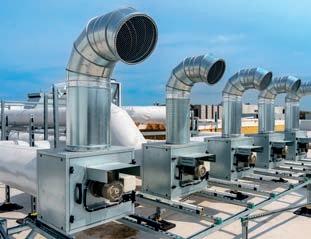
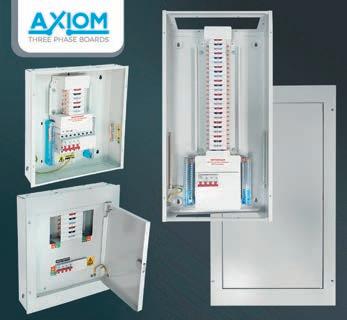
The Axiom Brand by the CED Electrical Group has been long established in both wiring accessories and consumer units, but it wasn’t until mid-2023 that the big step was taken to enter the industrial and large commercial arena with a comprehensive 3 Phase Distribution Range comprising boards, MCBs, RCBOs, as well as a new surge protection device designed purely for three-phase applications.
Axiom Distribution Boards are presented in six sizes – 4, 6, 8, 12, 16 and 24 way – each pre-fitted with 4 Pole 125A isolators. These all-metal robust enclosures, finished in pale grey, are designed for ease of installation and use, with reversible doors and removable gland plates on the top and bottom, as well as being supplied with wall mounting kits. Door locking will also be available for tamper proofing.
Sold separately are the 10kA protection devices, each available with eight ratings.
All Axiom 3 Phase products are IP20 rated, meet and beat relevant IEC and BS EN standards, and come with a 12-month guarantee.
CED Electrical, ced-elec.co.uk
SPONSORED STORIES FROM THE INDUSTRY
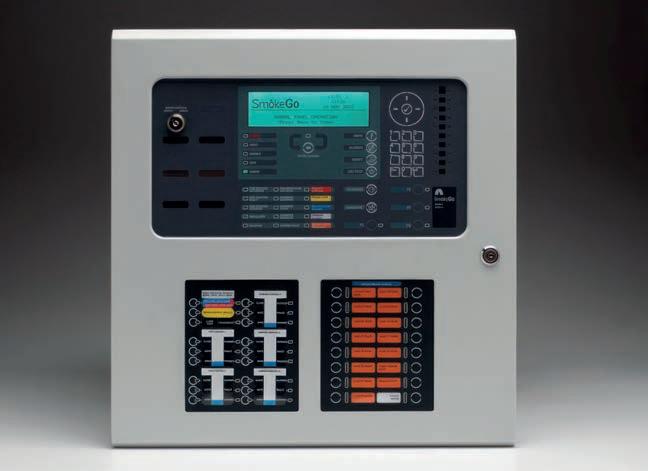
With flexible manual override options, advanced modes such as stairwell pressurisation and cascade operation, and optional bespoke panels via Advanced’s AdSpecials service,
SmokeGo delivers complete smoke control made simple. Learn more at advancedco.com/ product/smokego.
Advanced, advancedco.com
Ansell Lighting, a market leader in the design and manufacture of high-quality lighting, has announced two new additions to its comprehensive contractor service proposition.
The company is introducing new streamlined deliveries with improved pallet labelling and an OnSite Survey, further solidifying its commitment to supporting electrical contractors throughout every phase of a lighting project.

These new services are designed to work in tandem with Ansell’s existing offerings and have been designed to address common project pain points for contractors, such as on-site issues, delivery logistics, and post-installation support.
The first of the new improvements is Ansell Lighting’s new contractor-friendly pallet deliveries to simplify on-site logistics. Pallets will now arrive with clear labelling, indicating both the contents and the specific room destination for products within a project.
Also being added to the contractor service package is an OnSite Survey service, where Ansell Lighting’s own trained electricians will be made available to visit project sites to provide direct support and advice for installations.
Ansell Lighting, anselluk.com

The compact yet powerful Inceptor Milli Adjustable is the latest addition to Ovia’s growing Milli family of fire-rated domestic downlights. Designed with the same innovation, fire-rated safety and ease of installation as the standard Milli, the adjustable version offers a seamless 360° rotation and 20° tilt capability to deliver total directional lighting control.
Complementing the Inceptor Milli Fixed and Inceptor Milli Baffle versions, Inceptor Milli Adjustable brings unparalleled flexibility, performance and aesthetic appeal for domestic applications.

Offering 360° rotation and 20° tilt capability, the light output can be positioned exactly where it is needed. Ideal for new installations and retrofit projects, it has been designed with a cut-out range of 68mm to 75mm, ensuring compatibility with a variety of ceiling apertures. The broader range allows easier replacement of existing downlights without the need for additional adjustments.
A key feature of the Inceptor Milli[KP1.1] downlight range is the option to seamlessly switch between 6.4W and 4W power outputs using a single switch to offer unprecedented control. Ovia, oviauk.com
Click Scolmore, a leading manufacturer of wiring accessories for the professional electrical industry, has announced the launch of 13A 1 and 2 Gang Safety Shutter Socket Outlets featuring twin USB Type-C Power Delivery (PD) fast-charge ports.
Designed to meet the demands of today’s connected environments, the new socket outlets combine reliable 13A power with advanced USB-C PD technology, allowing fast and efficient charging of modern devices such as smartphones, tablets, and laptops – without the need for additional adapters.
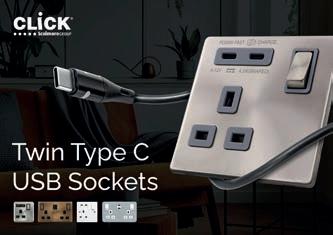
With USB-C now the global standard for power delivery, Click Scolmore has fully integrated USB-PD fast-charging technology into its socket outlets, offering contractors and installers a future-proof solution that delivers performance, safety, and convenience in one product.
Safety and compliance remain central to Click Scolmore’s product philosophy. Both the 1 Gang and 2 Gang variants incorporate integral safety shutters to help prevent accidental contact with live components, making them suitable for residential and commercial installations. The sockets are fully compliant with relevant UK standards.
Click Scolmore, scolmore.com
Kidde Safety Europe has introduced a new Fire and CO Alarm Control Switch that enables remote testing and silencing of interconnected Kidde FIREX hardwired alarms, providing a practical solution for properties where alarms are installed in locations that are difficult to access or require regular inspection.
The Fire and CO Alarm Control Switch makes the process easy with a convenient Test/Hush button that eliminates the need for physical access to the alarms. This is particularly valuable for elderly or disabled individuals and in properties with high ceilings. It also enhances safety and compliance where alarms are installed in non-occupied areas, such as lofts with photovoltaic (solar) equipment.

The solution aligns with BS 5839-6:2019, the British Standard for domestic fire detection systems, and the new control unit features separate visual indicators for fire and carbon monoxide detection to provide a quick and clear identification of the hazard.
The Fire and CO Alarm Control Switch can be connected into any part of a new or existing Kidde FIREX hardwired alarm installation.
Kidde Safety Europe, kidde.com/fire-safety/en/uk
The Q-Nect range of junction boxes and connectors from Unicrimp provides installers with secure and efficient connections for a range of residential, commercial, and industrial environments.
A key product in the range is the Q-Nect IP weatherproof junction box which is designed to make installations quicker and more efficient. It can house four of the 3 Port Lever Connectors using the 360° detachable cradle. The IP Box also utilises a curved lid which provides additional space for wires.
Key features:
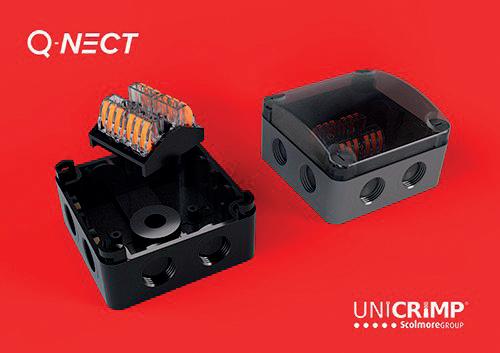
• Enhanced protection – the IP66 rating and self-sealing membranes offer superior protection.
• Junction box featuring 10 membrane entry points – protection against moisture and dust is enhanced.
• Up to eight M20 glands – the option of using up to eight M20 cable glands with the junction box.
• Multiple fixing options – the IP Box provides the option to fix directly to a wall using pre-moulded holes in the base, or utilising the detachable wall clip.
• Semi-transparent lids – installers can see the inside connections without compromising the integrity of the enclosure.
Unicrimp, unicrimp.com
ESP is setting high standards in specialist fire detection with its Espire Heat Alarm range. Designed for kitchens, garages, and dusty environments, these provide essential protection where traditional smoke alarms may be prone to false triggering. These alarms utilise a thermistor, which acts as a heat sensor, capable of detecting temperature fluctuations. The Espire Heat Alarm activates at 58°C and offers optimal performance in spaces where smoke or particles from cooking or work machinery might interfere with optical detection. A compact and contemporary design with a secure lock-in base ensures a streamlined installation and tamper protection.
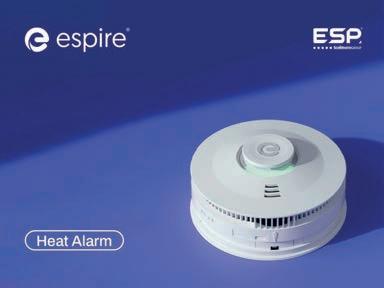
Key features across the range include auto sensor testing, a 24-hour memory function, and RF-link compatibility for wireless alarm integration.
Installers can choose from three power options to suit varying project requirements:
• Powered by mains with a sealed, tamper-proof 10-year lithium battery.
• Powered by mains with 9V replaceable battery.
• Powered by a sealed, tamper-proof 10-year lithium battery.
ESP, espireuk.com
Championing sustainable and future proof design, Ansell Lighting has unveiled a brand new, market first, modular downlight – Prism Pro XM.
Replacing the existing Prism Pro range, Prism Pro XM is a next-generation solution that combines the trusted performance of Prism Pro downlighting with a smarter, more flexible design.
Featuring a replaceable driver and light engine, the new product allows these individual components to be swapped quickly and easily in the event of a part failure or upgrade, extending product life and reducing waste and unnecessary wholeproduct replacement.
Available in standard, gimbal and anti-glare formats, the Prism Pro XM LED downlight is fully fire rated for 30, 60 and 90 minutes to meet Part B of Building Regulations across all ceiling types. It is also fully tested to meet Part C (moisture), Part E (acoustic) and Part L (energy) of the Building Regulations.
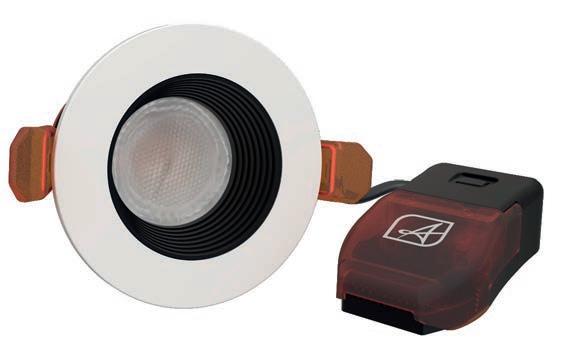
Power and CCT selectable between 2700K, 3000K, 4000K and 6000K, Prism Pro XM offers a choice of two outputs, in
Ansell Lighting, ansell-lighting.com
Elucian has recently added new IP65-rated EV boards to its popular consumer unit range, providing electricians with a robust solution tailored for the growing demand in electric vehicle charging installations.
As electric vehicle adoption accelerates across the UK, the role of dedicated EV boards has never been more critical. These specialist consumer units are designed to manage the unique electrical requirements of EV chargers, including high current loads, isolation, surge protection, and compliance with the latest wiring regulations. A purpose-built EV board not only ensures safety for homeowners and installers, but also simplifies installation, reducing the risk of errors and downtime.
The Elucian EV Boards, from Click Scolmore, are available in multiple configurations, with protective devices – RCDs or RCBOs, and surge protection devices (SPDs) pre-fitted – allowing installers to complete projects faster while ensuring full compliance with UK wiring regulations. The units also include a free way for additional circuits, offering flexibility for future upgrades.
Elucian, elucianuk.com
LEDVANCE has expanded its outdoor luminaire portfolio with the Urban Wall Vario – a highly versatile, decorative wall light designed to combine architectural aesthetics with robust outdoor performance.
Urban Wall Vario is designed to provide upward, downward or combined up-anddown light emission, enabling specifiers and installers to accentuate façade textures, highlight entrances and create depth and visual interest across building elevations.

Interchangeable reflectors are supplied as standard, allowing beam angles of 30° for more focused accent lighting or 55° for a wider, softer distribution, making it easy to tailor the lighting effect to the application.
On-site adjustability allows lighting effects to be fine-tuned during or after installation, with discreet controls enabling changes to light direction, colour tone and output without affecting the clean external appearance. This allows more sensitive integration of lighting with different façade materials and architectural styles.
Built for long-term outdoor use, the luminaire combines robust construction with protection against weather, impact and temperature extremes.
LEDVANCE, ledvance.com