The establishment of the EDI Activity Support Fund reflects Atlantic Technological University’s commitment to embedding equality, diversity and inclusion in every aspect of university life. Human rights and equality underpin this commitment and shape how we teach, learn, work, lead and engage across our campuses and communities. As a public body, ATU fulfils its responsibilities under the Public Sector Equality and Human Rights Duty by promoting equality, preventing discrimination and protecting the human rights of our staff, students and the wider community. Further information on the university’s obligations, commitments and ambitions in this area is set out in the ATU EDI Action Plan, which provides a clear signpost to our strategic priorities and the actions guiding our ongoing work
The Fund enables staff and students to turn these commitments into meaningful action by supporting innovative, practical projects that might not otherwise be realised. Across the university, it has created space for dialogue rooted in lived experience, strengthened inclusive practice, supported collaboration and community building, expanded access to opportunity and encouraged creative and critical engagement with issues of fairness and belonging. These initiatives demonstrate that EDI is not an abstract concept, but a shared responsibility expressed through our everyday actions and decisions. By investing in projects that promote dignity, respect, fairness and inclusion, the Fund helps ensure that ATU remains a place where diversity is celebrated and where everyone can work, learn and thrive in an environment defined by equity and mutual respect.
In this booklet, you will learn more about a cross-section of projects delivered by ATU staff and students through the EDI Activity Support Fund from 2023 to 2026, ranging from what prompted project leads to imagine these initiatives, to critical reflections on their impacts
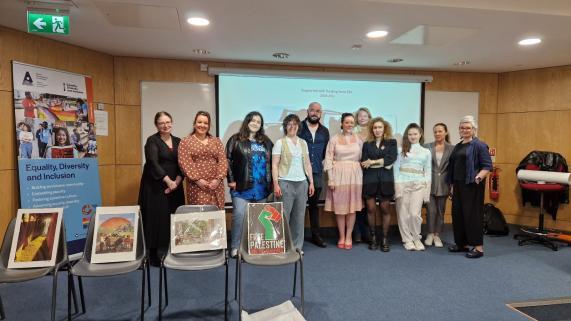
Shared Spaces: Art, Dialogue, and
Inclusion at ATU
2024–25 | David Friel | ATU Donegal | Early Education & Social Studies
What motivated the project?
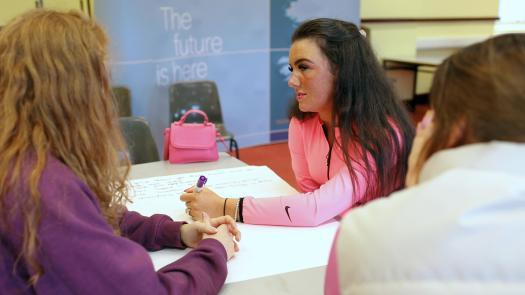
The project idea developed at the intersection of lived experience, student engagement and ongoing dialogue with community partners. It emerged in response to a recognised need to democratise space within the university, particularly for those from marginalised groups. The project sought to hold space for students, staff and individuals in diverse social positions to engage collectively in dialogue across difference and to centralise experiential voices that are frequently underrepresented within university life.
What did you set out to do?
The project set out to use participatory arts and dialogue to create the conditions for marginalised groups to come together in a shared space. It aimed to support collective reflection on inclusion, exclusion and belonging, while disrupting traditional hierarchies of voice within the university. Through creative and dialogic methods, the project sought to enable students, staff and community participants to engage across difference, centre experiential knowledge and co-produce understandings of equality grounded in lived experience.
How did you do it?
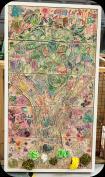
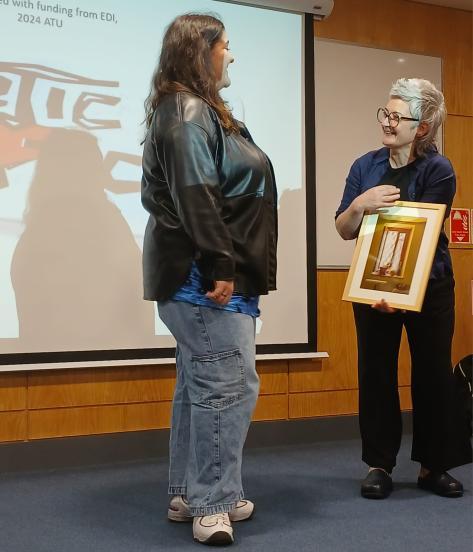
The project was delivered through facilitated workshops using participatory arts and dialogic methods, including the Tree of Hope approach. These methods supported participants to identify barriers, recognise sources of support and imagine alternative futures. Activities were deliberately nonhierarchical and accessible, allowing different forms of knowledge to be valued equally. The outputs from these sessions were brought together into a collective installation, visually representing shared themes and creating a public site of dialogue within the university.
Who was impacted?
Participants included students and staff from across the campus, alongside individuals from marginalised communities engaging through partner organisations. The wider campus community was also impacted through engagement with the installation and the conversations it generated. Partner organisations benefited through strengthened relationships with ATU and the recognition of community knowledge within an academic space. The project also contributed to institutional learning by linking lived experience directly to equality commitments and practice.
What has changed?
The project shifted inclusion from an abstract concept to a shared, visible, and relational practice. Participants reported feeling heard and recognised, rather than spoken about. New connections were formed across roles and communities, challenging traditional boundaries between university and community. The installation continues to act as a catalyst for discussion and reflection, keeping questions of belonging, power, and responsibility present in everyday campus life.
David’s reflections
“The project shifted inclusion from an abstract concept to a shared, visible and relational practice. Participants reported feeling heard and recognised rather than spoken about. New connections were formed across roles and communities, challenging traditional boundaries between university and community. The installation continues to act as a catalyst for discussion and reflection, keeping questions of belonging, power and responsibility present in everyday campus life.”
Participant reflections
“Have you ever asked the trees why they stand together, or wondered why different weeds grow side by side? Diversity is ours to leverage for progress. It is our weapon against intolerance. It is our strength, if we choose to embrace it.” Anne Omodara, Graduate
2023–24 and 2024–25
| Dr Gráinne Ketelaar | ATU Letterkenny | Department of Early Years & Social Studies
What motivated the project?
Poetry can be a powerful way to voice the things we see and feel happening in the world; the things that scare us, make us angry and make us sad. It speaks directly to many of the issues that EDI efforts within ATU are concerned with injustices of all kinds. Poetry can serve as a mechanism for calling these out, while simultaneously striking at our common humanity and touching our souls through the disarmament of word play.
What did you set out to do?
The poetry competition, in English and Irish, sought to bring staff and students together in a friendly spirit of creativity. It worked.
Submission numbers were strong for a new initiative, with approximately 50–60 entries. Submissions came from students of many different nationalities and from staff across a wide range of disciplines and roles within ATU.
How did you do it?
Flyers were developed to advertise the competition and shared as widely as possible. Judges were approached and agreed to participate, and finance processes were arranged for payment.
Poetry submissions were received, anonymised where necessary, and sent to the judges in the first year. In the second year, I acted as judge.
Who was impacted?
Students and staff with creative leanings towards poetry were directly engaged. The competition revealed a wealth of creative energy within the ATU body.
There was clear potential to build links between ATU and professional poets. Several emails were received asking when the competition would open, when results would be announced and who had won.
Although the profile of the second year was lower than the first, the number of entries increased.
What has changed?
There is strong potential for the poetry competition to become a regular feature of the ATU calendar. It sparked significant interest from aspiring poets across staff and students. Submission numbers increased from year one to year two, and with creative writing courses across the three main campuses, the reach was broad. Those who submitted appeared motivated by both the deadline and the sense of competition.
Gráinne’s reflections
“The breadth of subject matter, of voice, of imagination and reflection in the many varied and wonderful submissions from the people who make up our ever-evolving ATU body reveals what a rich and wonderful human body we are, full of resilience, joy, character and compassion. If the fight for social justice needs an army; the poetry competition revealed that we have legions of poets to hold our spirits.”
Race Equality Network
2023–24 | Dr John Mulloy ATU Mayo
Department of EHSS | Dr Tamsin Cavaliero ATU Sligo Department of Applied Social Care
What motivated the project?
The project grew out of seeing the expertise of the Race Equality Network develop across campuses and hearing repeatedly of the isolation felt by many students from different backgrounds. This led to a desire to use this pool of expertise and range of voices to reach out to undergraduate students, especially first years, in the form of a welcoming message to help combat isolation and create a more inclusive environment.
What did you set out to do?
As a key focus of the Race Equality Network is to promote awareness and education regarding race equality issues, challenge stereotypes and educate staff and students about the importance of diversity and inclusion, it was decided that one essential tool is the generation of representation, particularly visual resources. It was agreed that collectively co-creating a welcoming video for new students, with a focus on first years and the theme of race, would be especially useful in fostering an inclusive and welcoming culture within the university.
How did you do it?
We visualised key themes and developed a storyboard through a graphically facilitated process led by Dr Tamsin Cavaliero. This resulted in a video combining drawings and
live footage, professionally recorded and edited by Roj Whelan of Rojnroll Productions. The video was made available as a learning resource across ATU. We sought as diverse a representation as possible from staff and students, with particular emphasis on student voice across multiple campuses, to create a meaningful and reusable resource suitable for induction materials.
Who was impacted?
The primary audience was new first-year students, with the intention that the video would form part of the induction suite, welcoming them to the university with a focus on race and diversity. Participants in the workshop session including staff, student support and students from the Letterkenny, Sligo, Mayo and Galway campuses also found the process impactful and enjoyable. It created a new way of communicating about, at times, difficult topics in a creative and accessible manner.
What has changed?
The most immediate change was a renewed sense of dynamism within the Race Equality Network. Doing something collectively proved more meaningful than meeting alone. The experience brought together a wide range of people across campuses, and this collaborative energy carried through into both the video production and the broader work of the Network, helping to foster a more inclusive and welcoming culture within the university.
Tamsin’s reflections
“I think just making sure there’s a real broad and diverse representation of staff and students present at any event, maybe we could do more videos as well, to show different people’s experience and just show visually it is a diverse campus. Having and looking at people that look kind of like you is a comfort feeling that a lot of students miss ”
Participant’s reflections
“I think just making sure there’s a real broad and diverse representation of staff and students present at any event, maybe we could do more videos as well, to show different people’s experience and just show visually it is a diverse campus. Having and looking at people that look kind of like you is a comfort feeling that a lot of students miss.” Linda, Student Support
Creative Generations Festival
2024-25 & 2024-25
| Kate Brown | ATU
Sligo | Department of Social Sciences
What motivated the project?
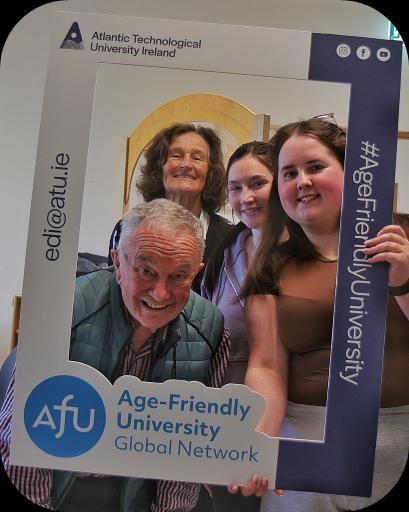
The Creative Generations Festivals in 2024 and 2025 developed from several years of intergenerational learning work on campus in partnership with older adults and children during Global Intergenerational Week. There was a desire to extend this work beyond the Department of Social Sciences and align it with the university’s application to join the AgeFriendly Global Network. The success of the 2024 week-long festival, together with ATU’s designation as an Age-Friendly University, led to a second one-day Bealtaine festival in 2025 to sustain and deepen the work.
What did you set out to do?
Across both projects, the aim was to transform the ATU Sligo campus into a living lab for intergenerational learning, making it visible, accessible and actively discussed while challenging ageist stereotypes. The intention was to create welcoming intergenerational contact zones through arts, dialogue, movement and shared creative practice, demonstrating how the university can act as a vital strand in the social and cultural weave of the community.
How did you do it?
The 2024 festival delivered a week-long programme bringing together research, arts and community engagement. Students presented equality and diversity projects under Knowing–Being–Doing. Sligo’s Youth Council, Comhairle na nÓg, highlighted work on mental health and LGBTQI+ rights and screened Here For You. Intergenerational Take-Over Days invited early years children and older adults from across the region onto campus.
Exhibitions included Generational Calm by Ruth Le Gear and A Picture Speaks, where children captured portraits with grandparents and grand-friends. The Inishowen Choir of Ages and the ATU Intergenerational Choir performed. The 2025 Bealtaine festival built on this foundation. BabyDance expanded to include parents and grandparents, and a Silent Disco in the Yeats Library created a neurodiverse-friendly environment, enabling participation without sensory overload. Cyanotype workshops saw children teaching older adults’ creative techniques, supported by artist Anna Leask and Social Care Practice students, with the work exhibited publicly.
Who was impacted?
Participants included multigenerational families, early learning centres, primary schools, older volunteers, students and staff. Neurodiverse pupils and students benefited from intentionally inclusive creative spaces. Members of the public visited campus for the first time, and schools and artists sought continued collaboration.
What has changed?
Campus cultural spaces became intergenerational contact zones. Stronger cross-campus networks developed, older volunteers increased, and the wider intergenerational learning programme was shortlisted for a National Age Friendly Recognition and Achievement Award. Families engaged in new ways, and participants reflected on changed perceptions across generations. The festivals strengthened recognition of children and older adults as cultural producers and agents of social contribution.
Kate’s reflections
“The funding from the EDI Activity Support Fund did more than ‘fund’ projects. It supported funds of knowledge and this is key to quality intergenerational learning and practice, where diverse cultural life experiences are valued and shared. understanding and respect across generations.”
Participants’ reflections
“I found that actively participating renewed my interest in further learning and alleviated concerns of being the odd one out amidst so many young people.” Older adult
Participation in ATU: Insights from Learners from the Traveller Community
2023–24
| Mairéad Cluskey | ATU Mayo Department of Environmental Humanities and Social Sciences
What motivated the project?
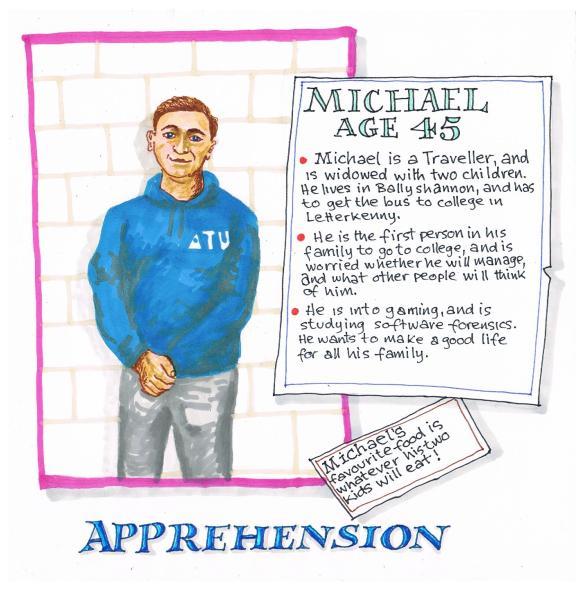
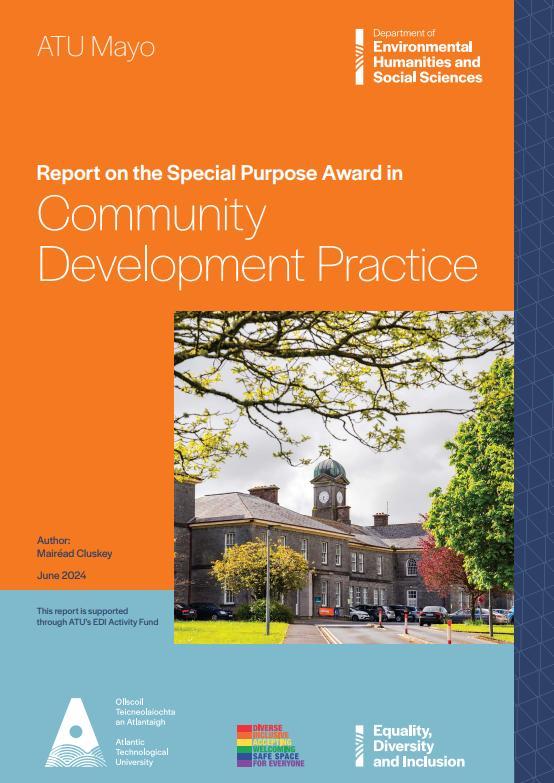
The Certificate in Community Development Practice programme board, in partnership with Traveller Education Officers, identified the need to capture key experiences and learning from the rollout of a Special Purpose Award designed to specifically welcome members of the Traveller community as students in ATU.
There was a recognition that these early experiences offered important insight for shaping future access and inclusion work.
What did you set out to do?
The project aimed to engage learners on the Special Purpose Award in reflecting on their access to and participation in the programme. It sought to complement their experience in ATU and affirm members of the Traveller community as ATU students. It also aimed to provide an educational resource highlighting barriers to Traveller participation in higher education and identifying strategies to promote accessible and inclusive learning spaces.
How did you do it?
Students participated in a 12-week Special Purpose Award. At two points during the programme, reflection and evaluation sessions were facilitated by staff from regional Traveller organisations. The data generated was analysed collaboratively with ATU staff to identify key principles and a framework to support Traveller participation in future ATU programmes. The findings were presented in the form of a report.
Who was impacted?
Learners contributed qualitative insights into their experiences and the design and delivery
of the Special Purpose Award. The programme board strengthened collaborative relationships across ATU and with Traveller organisations, supporting continued engagement with Traveller and community development initiatives. The wider ATU community benefited from the development of a framework to support engagement with members of the Traveller community and other marginalised communities in higher education. Student experiences were also featured on the ATU website.
What has changed?
Relationships strengthened internally and externally, with key stakeholders committed to advancing access to ATU and inclusive learning spaces. ATU has been recognised externally as a strong partner and genuine supporter of Traveller inclusion.
Mairéad’s reflections
“Creating the report, in partnership with the local Traveller organisation and the students themselves created a unique space of cocreation and trust. Important relationships were initiated and have continued to grow to advance work on access in ATU. It was also an important recognition that as an institution, we need to be open to learning from our students and our community partners.”
Participant’s reflections
“I would like for someone from my community to get the same experience and acceptance that I got when I came here.” Ellie McDonagh, Certificate in Community Development Practice, ATU Mayo campus
EU Green Annual Sports
Event: Gävle, Sweden (Work
Package 7)
2024-25 | Marcella Reilly | ATU Galway Mayo | Access and Participation
What motivated the project?
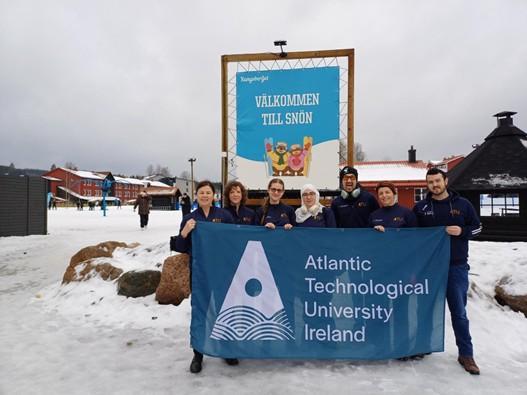
The EU Green Sports Event was to be held in Gävle, Sweden, where students and staff would have the opportunity to try skiing.
Skiing is a very costly sport, and I was concerned that the students we were encouraging to participate might not have the disposable income to buy appropriate ski clothing.
I did not want any student to miss out on what could be a once-in-a-lifetime opportunity because of a lack of suitable clothing.
What did you set out to do?
Our colleagues in Gävle advised on the clothing required, noting that temperatures at that time of year could reach minus 20 degrees.
There was no allocated budget for this. We needed to source funding to purchase essential winter clothing including jackets, ski trousers, gloves, neckwear and hats for five students across ATU, ensuring a range of sizes and equitable access.
How did you do it?
We priced several suppliers to establish the likely cost, which was substantial. At that time, the EDI Office was promoting the Activity Support Fund.
I felt that this project strongly aligned with the themes of collaboration and inclusion.
The event would enable student and staff collaboration across ATU and engagement within the EU Green Alliance.
Who was impacted?
Five students from five ATU campuses were given the opportunity to travel together to Gävle, Sweden, to participate in a winter sports event.
This supported students from low-income backgrounds, ethnic minority communities and those who had not previously engaged in international mobility programmes.
It enabled them to experience a different country, culture, sport and learning environment, while building cross-campus and international connections.
What has changed?
This initiative ensured that financial barriers did not prevent participation. It gave students access to an experience they may never otherwise have had and strengthened engagement across ATU campuses and the EU Green Alliance.
Participation in this event contributed to increasing social inclusion and nondiscrimination in higher education, reinforcing a shared sense of belonging through sport and cultural exchange.
Marcella’s reflections
“The importance of being able to secure funding to facilitate students participating in events such as these is so important. If we didn’t have access to the funding, we would have had to set-up a means of receiving donations of clothes or created different fundraising drives. Sports and cultural activities are so important and are a means of coming together and developing a sense of belonging.”
Disability Awareness Training
2024-25 | Margaret Mc Loone | ATU
Sligo | Department of Health Sciences & Nutrition
What motivated the project?
I believed it was important to provide training for both staff and students in the area of disability awareness. Increasing understanding of disability, particularly through the social model of disability, is essential within ATU and beyond. It is especially important to recognise that many disabilities are invisible. This also connected directly with my module, Promoting Health in Specific Populations, where people with disabilities are a key focus area for students. The training also offered a valuable opportunity for staff and students to engage together in shared learning, which was a nice part of the experience for everyone on the day!
What did you set out to do?
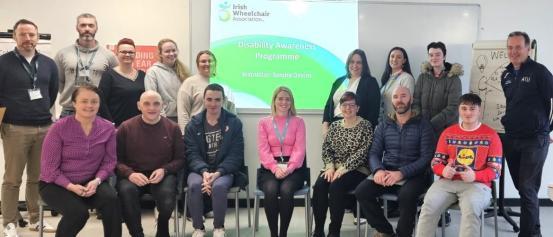
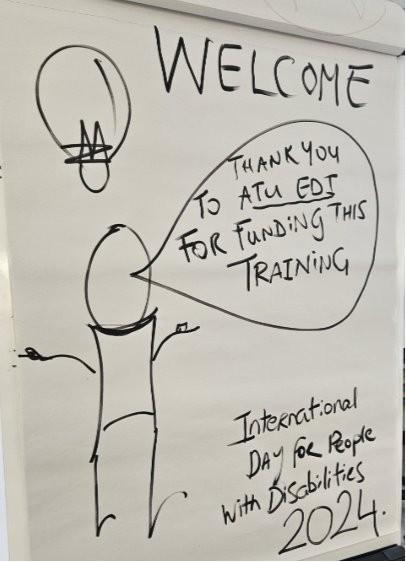
The intention was to arrange on-campus disability awareness training delivered by the Irish Wheelchair Association. The facilitator, Ms Sandra Devins, was invited to lead the session in Sligo.
The aim of the training was to explore participants’ personal understanding of disability. The objectives were to increase understanding in the area of disability; build confidence when interacting with a person with a disability and encourage openness to viewing disability as an ability that adds value to workplaces and society
How did you do it?
The in-house training session was delivered on campus in December 2024. It brought together students from the BSc Public Health & Health Promotion, BSc Health Science & Physical Activity and BSc Sport with Business programmes, alongside PMSS, academic and research staff.
Who was impacted?
Students and staff across disciplines participated in the session. The shared learning environment created space for reflection, discussion and critical thinking around disability, inclusion and everyday practice.
What has changed?
Students and staff reported increased awareness of disability and a deeper understanding of inclusive practice. The learning from the session was integrated into students’ reflective logs within the Population Health module and formed part of competency reflection discussions. The session contributed to embedding disability awareness more consciously within both teaching and institutional practice.
Margaret’s
reflections
“It was a really enjoyable session with lots of discussions and activities focussed making us think differently about how we might perceive and experience disability in our daily lives both in the workplace / university and in society in general. I saw how exclusion happens by default; I am making a conscious decision to make inclusion the default instead.”
The Lived Experience of a Disability Activist
2024-25 | Eimear Donlon & Máire Mc Callion | ATU Sligo | Department of Health Science
What motivated the project?
As lecturers on the BSc Health Science and Physical Activity programme, we recognised that while students learn about disability in theory, many have limited opportunity to engage directly with lived experience perspectives.
There was a clear need to deepen understanding of disability beyond clinical or functional framings and to foreground resilience, advocacy and social change.
We were particularly motivated to bring an activist voice into the university space, someone who could speak authentically about navigating education, sport and society as a person with a disability.
What did you set out to do?
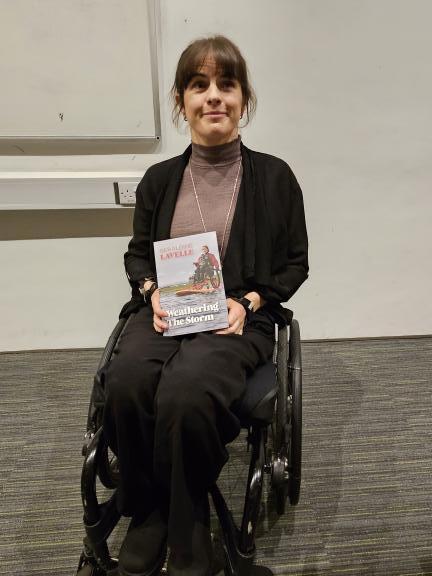
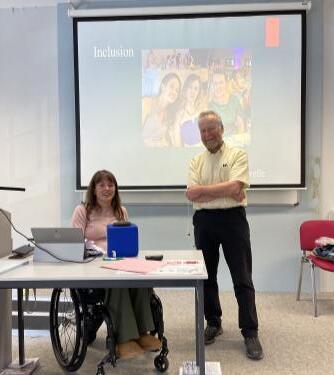
The aim was to invite disability activist Geraldine Lavelle to speak with students about her lived experience, including her work in advocacy, sport and community engagement.
The session sought to broaden students’ understanding of disability as shaped by social and environmental barriers rather than individual limitation.
We also aimed to create space for open dialogue, enabling students to ask questions and reflect critically on assumptions and practice.
How did you do it?
Geraldine Lavelle was invited to campus to deliver a guest lecture. The session was open to students across Health Science, Physical Activity and related disciplines.
Geraldine shared her experiences as a disability activist, including her engagement in inclusive sport, her advocacy work at local and national levels, and on how to successfully advocate for greater inclusion and resources She also spoke about writing her book Weathering the Storm
The session included time for discussion and questions, encouraging meaningful engagement.
Who was impacted?
Students from Health Science and related programmes attended, alongside staff. The session provided exposure to lived experience in a way that complemented academic learning.
Students engaged actively in discussion, reflecting on barriers, inclusion and their future professional roles.
What has changed?
The session contributed to a shift in how disability is discussed within the programme, strengthening emphasis on the social model of disability and the role of advocacy.
Students demonstrated greater awareness of environmental and attitudinal barriers and the importance of inclusive practice within health and physical activity settings.
Eimear & Máire’s reflections
“The students were evidently engaged and asked questions showing their understanding and willingness to learn and be conscious of inclusion.”
2025-26 | Michelle Lee | ATU Galway | Business and Enterprise
What motivated the project?
The project was motivated by a desire to create a visible and inclusive space within ATU where women in business and the Irish language could be celebrated together.
Timed to coincide with Seachtain na Gaeilge and International Women’s Day, the event sought to highlight the relevance of Gaeilge within contemporary professional life while showcasing women’s leadership and entrepreneurship.
It also aimed to strengthen cross-campus engagement and provide an accessible online platform where staff and students could participate, connect and celebrate linguistic and cultural diversity across the university community.
What did you set out to do?
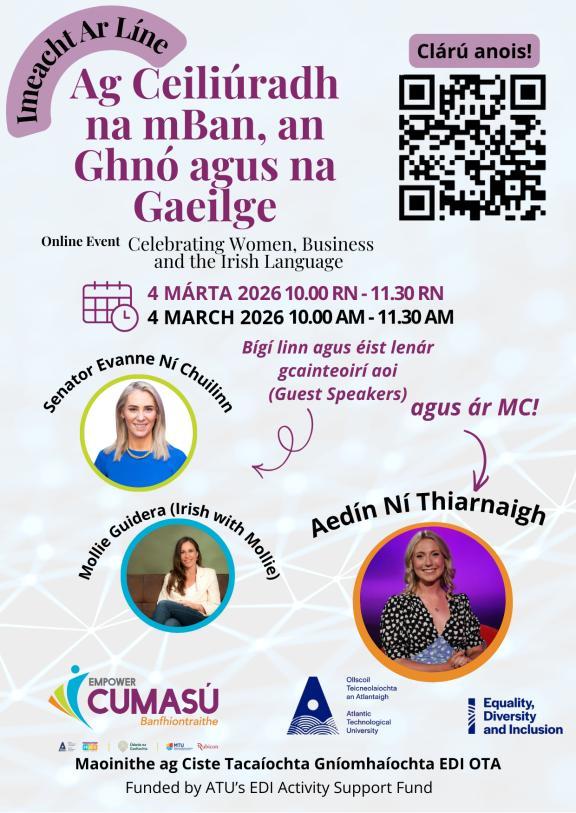
The project delivered a 90-minute online event on 4th March 2026, designed to foster collaboration and inclusion across the ATU community.
The event featured guest speakers Senator Evanne Ní Chuilinn and Mollie Guidera (Irish with Mollie), with Aedín Ní Thiarnaigh as MC, guiding discussion and engagement throughout.
The session created an engaging and accessible space for staff and students to connect, celebrate women in business and embrace the Irish language in a professional context.
How did you do it?
Hosted an online webinar open to all ATU staff and students to attend.
Who was impacted?
We hope that ATU staff and students who attend will feel inspired to use Gaeilge going forward, regardless of their level of proficiency.
Even starting with just a cúpla focal each day can grow into something much bigger over time.
Michelle’s reflections “Last year, EMPOWER Cumasú hosted a similar event to mark Seachtain na Gaeilge and International Women’s Day.
Building on its success, we felt it was only fitting to collaborate with ATU’s EDI Department this year to celebrate and embrace our Irish language, regardless of proficiency, while spotlighting women in business.
The event also encourages meaningful crosscampus engagement, bringing staff and students together in the spirit of collaboration and inclusion across the ATU community.”
Climbing for All
| Orla Prendergast | ATU Mayo
| Department of Outdoor Education
What motivated the project?
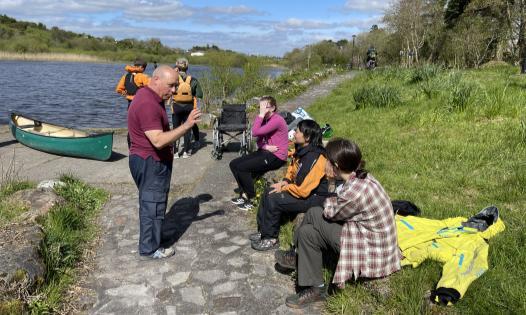
When the WAVE programme started on campus, I considered how we could better connect WAVE students with the wider student community. It is well recognised that participation in adventure sports brings multiple health and wellbeing benefits. However, opportunities for people with disabilities are often limited by lack of awareness or difficulty accessing activities. This programme sought to create a pathway for participation while building student interaction.
What did you set out to do?
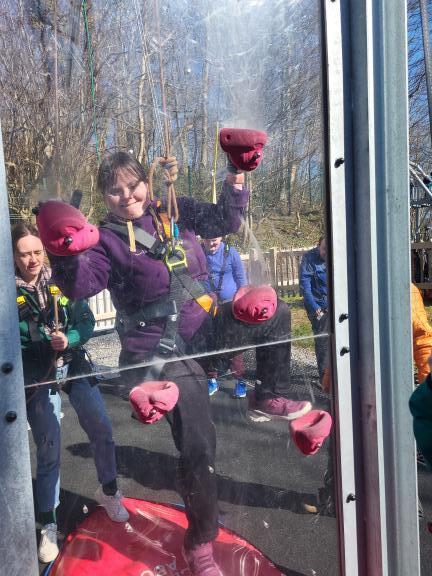
The project provided WAVE students on the Mayo Campus with the opportunity to participate in an outdoor climbing session in Westport House, a facility well suited to inclusive activity. The four-hour session was delivered by Year 3 Outdoor Education students.
To prepare, Outdoor Education students completed a Climbing for All workshop, where they experienced inclusive and modified climbing techniques suitable for people with disabilities. The course supports more inclusive teaching practice and wider EDI strategy. Many skills are transferable to other adventure sports and future careers, extending the impact of the project.
How did you do it?
A key highlight was the emphasis on equal opportunities. The WAVE programme is dedicated to fostering inclusive education for students with intellectual disabilities, and this trip embodied that mission. Outdoor Education students encouraged and supported their WAVE peers, creating an environment where every participant felt valued and empowered.
Who was impacted?
The collaboration between WAVE and Outdoor Education students demonstrated the power of inclusive learning beyond the classroom. Through teamwork and shared experience, barriers were reduced and friendships formed, reinforcing the role of outdoor education in building confidence and independence.
While inclusion in adventure sports has progressed, challenges remain in instructor perceptions, confidence and awareness. This pilot strengthened Outdoor Education students’ skills and confidence in delivering inclusive programmes and increased awareness of accessible adventure opportunities on the Mayo Campus and beyond.
What has changed?
The climbing session helped WAVE students develop self-confidence through overcoming challenges with peer support. Stronger links were built between WAVE students across campuses. The friendships formed have continued to support integration between the Outdoor Education and WAVE groups on campus.
Orla’s reflections
“The sense of comradery and support for each other along, with the sense of achievement from overcoming the challenges, was inspiring to see.”
Participant’s reflections
“The trip to Westport House Adventure Park was more than just a day of adventure, it was a testament to the impact of inclusion, support, and determination. The students returned to ATU with a renewed sense of accomplishment and a reminder that with encouragement and opportunity, they are capable of achieving great things.” Sinéad, WAVE Co Ordinator
Lámh for Inclusion (StudentLed Inclusive Communication Training)
2025-26 | Sarah Costello, B.Ed. Home Economics and Biology Year 2 & Dr Máire Love | ATU St Angela’s | Department of Education
What motivated the project?
While volunteering at the Special Olympics Winter World Games, I observed communication challenges faced by athletes.
I realised that developing inclusive communication skills is essential not only in special schools, but also in mainstream classrooms during placements.
This inspired Lámh for Inclusion, a student-led training initiative to equip participants with practical strategies for effective and inclusive communication.
What did you set out to do?
We set out to create Lámh for Inclusion, a student-led training workshop focused on inclusive communication and disability awareness.
The goal was to provide practical strategies for communicating and working with people of all abilities.
By collaborating with students across campuses, we aimed to build skills that could be applied in both special and mainstream school placements.
How did you do it?
We held a Lámh training day on 26 January, where I and 11 other students from ATU St Angela’s and ATU Donegal learned how to use Lámh.
This training prepared us to teach other students on campus.
In April, we will host a Lámh day and invite a special school from Sligo Town to St Angela’s, where we will communicate and interact using Lámh while baking cookies and making pizzas, putting our skills into practice in a shared and inclusive setting.
Who was impacted?
The project impacted both students and the wider campus community. The twelve students trained in Lámh gained skills to communicate inclusively and to teach others. Other students on campus will benefit from the workshops and training delivered.
The special school students from Sligo Town will be able to communicate and participate in activities using Lámh, helping them feel included and valued. Overall, the project promotes understanding and inclusion across campus.
What has changed?
As a result of the project, students on campus are more aware of inclusive communication and disability. Those trained in Lámh feel confident using it and teaching others.
The initiative has created opportunities for meaningful interaction between campus students and special school students, helping everyone feel included and valued.
It has begun building a more inclusive campus culture where communication barriers are reduced and understanding of different abilities is strengthened.
Sarah’s reflections
“Seeing students use Lámh to connect with others has been inspiring. It shows that with awareness and simple strategies; inclusion can become part of everyday life”
Participant’s reflections
“Communication is a vital part of everyday that builds connections between individuals. Which I feel everyone deserves and this project is a great way to help us connect with everyone ” Erin Myers
ATU Library EDI Webinar
2025
–26 | Dr Sarah McCann | ATU Galway City – Dublin Road | ATU Library
What motivated the project?
ATU Library aims to go beyond the provision of resources, services and spaces, and to contribute to community-building at ATU through talks, exhibitions and events. The speakers selected for this webinar series work in challenging and important areas and, when the world around us can feel filled with hate and conflict, it is vital to raise awareness on topics such as racism, discrimination and disability. Libraries worldwide value and promote diversity and inclusion, and we want to do that here in ATU. Due to budgetary constraints, ATU Library is generally unable to pay speakers at such events, which can undervalue their expertise and limit opportunities for the library.
What did you set out to do?
We set out to invite experts in their fields to speak with ATU staff and students about issues relating to equality, diversity and inclusion, with particular attention to the values central to libraries (IFLA, 2024). These talks aim not only to promote awareness but to actively value diversity and inclusion. A key part of valuing speakers is paying them appropriately, and the Activity Support Fund made this possible.
How did you do it?
We identified individuals and organisations working in areas aligned with ATU’s values,
ATU EDI priorities and ATU Library’s commitment to inclusion and diversity. The webinars explore disability, the experience of Travellers, anti-racism, feminism and marginalised communities. The first two webinars prioritise lived experience, while the third has a historical focus. The events have been promoted across our libraries, both in person and online, and through collaboration with partners within ATU.
Who was impacted?
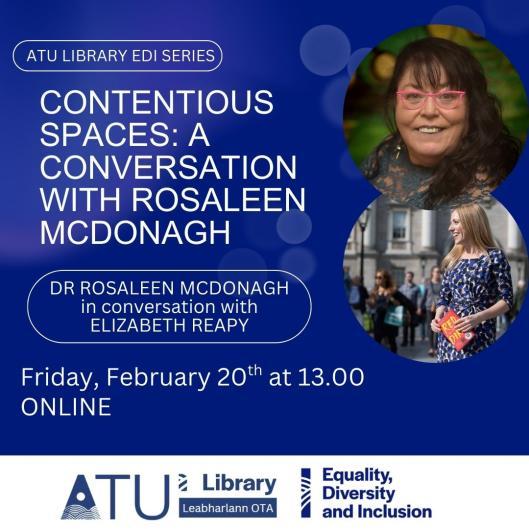
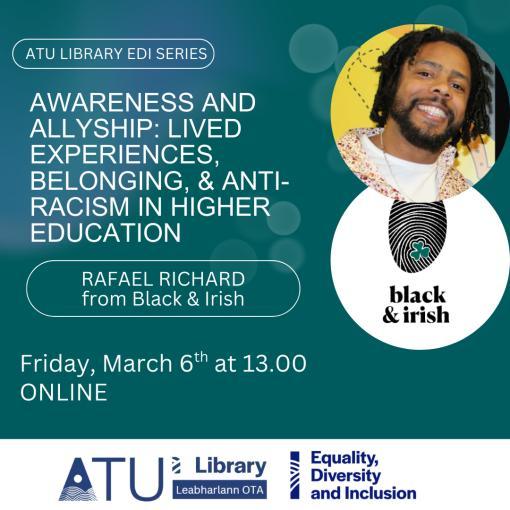
The talks are scheduled for February 20, March 6 and March 20. We hope that staff and students across ATU will attend and engage with the themes explored in the series.
Sarah’s reflections
“Here at ATU Library, we are thrilled to partner with the ATU EDI team to run this webinar series which speaks to the values of equality, diversity and inclusion which are the heart of library values.”
Pobal Bia World Gastronomy
2025-26 | Sinead Lomas & Sally Reidy | ATU Galway | Galway International Hotel School
What motivated the project?
We both staff Pobal Bia, the ATU student food pantry housed at the Galway International Hotel School. The food is supplied by FoodCloud, who collect and redistribute surplus food from supermarkets. We noticed that international students are especially appreciative of ingredients from their home countries. Our Culinary Arts students are enrolled in a World Gastronomy module and, when we saw the email from the EDI team, we realised this was an opportunity to combine our experience with Pobal Bia, the interests of our international students, and the motivation of the Culinary Arts students into a dynamic learning event.
What did you set out to do?
We set out to provide ingredients for students to create a dish from another country. Our students are familiar with gathering food from the student pantry and we knew they would be open to the experience. The World Gastronomy module focuses on appreciating how culture impacts cuisine. As Pobal Bia has become part of student culture at ATU Galway, we wanted to offer delicious, nutritious opportunities for students to create cuisine from other countries from scratch at home.
How did you do it?
Each World Gastronomy student chose a country and researched its cuisine. They selected a dish and printed the recipe. The ingredients were ordered and assembled alongside the recipe cards. The students then distributed the ingredients and recipes to other
students, who could take them home and prepare the dishes themselves.
Who was impacted?
ATU Galway students were impacted, including World Gastronomy students, regular Pobal Bia users, and Irish and International students who collected the free ingredients and recipe cards. The project provided an experiential learning opportunity for a diverse group. It was celebratory in nature, colourful and nutritious.
What has changed?
Students met peers from other programmes and learned about cuisines from different countries. It was a fun and interactive event. Lecturers collaborated with a wide range of students, and those who availed of the ingredients were deeply appreciative. There was a lovely “vibe” in the hallway on the day of the event as students lined up to receive their ingredients and recipe cards.
Sinéad’s reflections
“Food is more than nourishment - it reflects culture, identity, and our community. This project placed Equality, Diversity, and Inclusion (EDI) at the core, using global food traditions to help students explore the world through a more inclusive lens. By researching the stories behind different cuisines, the students gained a deeper understanding of cultural diversity and the importance of representation within society. They also explored how food can both connect communities and highlight inequalities, inspiring critical thinking around issues such as access, identity, and social fairness. Through this experience, the students recognised the power of food to bring people together, to heighten the importance of diverse voices, and promote a more inclusive and equitable society.”
Participant’s reflections
“I just wanted to say a big thank you for the event you organised last week. The bags with the ingredients and the step-by-step recipes from different countries were such a great idea. It was nice to take one home and try it. It honestly brought a bit of the taste of home back to me! Thank you for all the time and effort you put into making it happen. It was a lovely experience.”
Accessible Adventures Outdoors – Video
Resource
2023–24 | Stephen Hannon | ATU Mayo | Outdoor Education
What motivated the project?
Through teaching outdoor education students and working with adventure sports organisations, it became clear that many instructors lacked confidence, awareness and practical guidance when working with participants with disabilities. While inclusion in adventure sports has progressed, barriers relating to mindset, perceived competence and understanding of accessibility policy remain. These challenges highlighted the need for a practical and engaging resource to support inclusive practice in outdoor and adventure education.
What did you set out to do?
The project set out to co-create, with outdoor education students, a guided video resource to support adventure sports instructors in providing positive, meaningful and accessible experiences for people with disabilities. The aim was to influence perceptions, build confidence and competence, and demonstrate inclusive practice in action, while aligning with national guidance such as The Great Outdoors – A Guide for Accessibility
How did you do it?
The project was delivered in collaboration with Active Disability Ireland, Mayo Sports Partnership and Wild Atlantic Media. Students engaged in disability awareness training, consulted on best practice and co-designed the video content. Filming took place on location, with practical demonstrations of inclusive approaches. The finished video was professionally edited and disseminated nationally through social media, education
networks and adventure sport governing bodies.
Who was impacted?
The project directly impacted third-year outdoor education students by strengthening their understanding of inclusion and accessible practice. Indirectly, the resource supports outdoor instructors, centres, clubs and governing bodies across Ireland. Most importantly, the project contributes to improved access and quality of experience for people with disabilities who wish to participate in adventure sports and outdoor physical activity in inclusive and supportive environments.
What has changed?
The project has increased awareness and confidence around inclusive adventure sports practice among students and instructors. It provides a practical, shareable resource that challenges assumptions and demonstrates how accessibility can be embedded within outdoor programmes. The video supports a shift from viewing inclusion as an add-on to recognising it as integral to quality outdoor education and adventure provision. Inclusion training in adventure sport is now fully integrated into the programme, with two dedicated training days offered to students.
Stephen’s reflections
“This project helped translate policy and good intentions around inclusion into practical, realworld outdoor education practice that students and instructors can genuinely relate to.”
Participant’s reflections
“Seeing inclusive adventure sports in action changed how I think about what’s possible. It made inclusion feel practical rather than intimidating.” Laoise Morgan
Inclusive Futures: Raising Awareness of Employment
Challenges for People with Intellectual Disabilities
2025–26
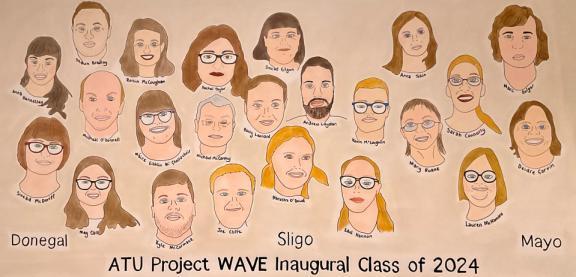
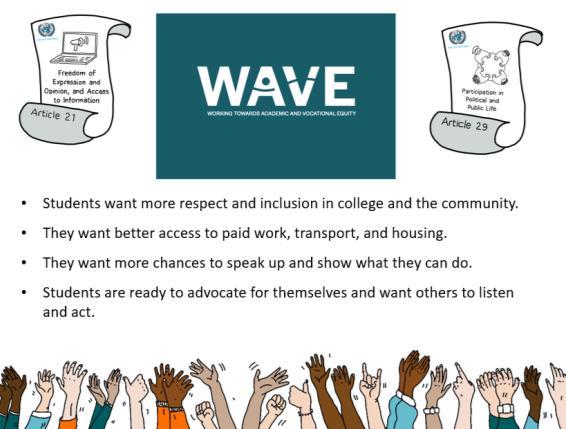
| Dr Tamsin Cavaliero | ATU Sligo | Project WAVE
What motivated the project?
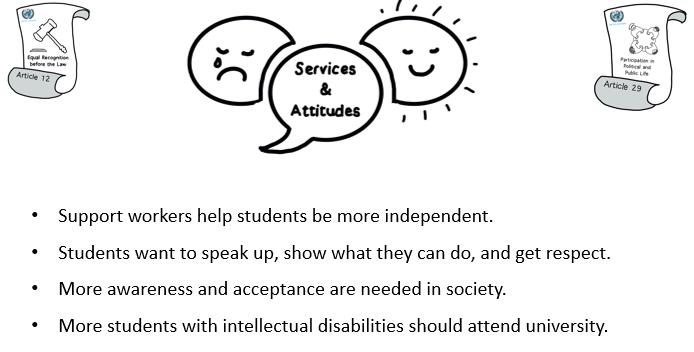
I observed a significant lack of accessible employment and higher education opportunities for people with intellectual disabilities in the North West. This challenge is compounded by limited public transport infrastructure, particularly in rural areas, which restricts independent travel to campuses and workplaces. Reduced access to employment increases the risk of long-term poverty and social exclusion. Engagement with students and families highlighted how geographic isolation continues to limit meaningful participation and progression.
What did you set out to do?
We set out to create accessible pathways into higher education and meaningful employment for people with intellectual disabilities in the North West. Our aim was to reduce barriers caused by limited transport, low employer engagement and restricted progression opportunities. We also sought to build awareness among university staff and students, strengthen collaboration across campuses and promote greater understanding of inclusion. Through partnerships and tailored supports, we aimed to enhance progression, independence and sustainable employment outcomes.
How did you do it?
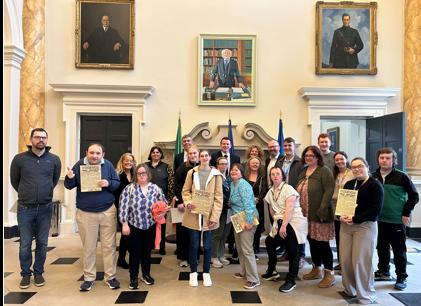
We visited Leinster House to lobby local representatives and delivered three interactive workshops, two in Sligo (November 2025 and January 2026) and one in Donegal (April 22nd 2026), focused on employability, inclusion and progression opportunities. These sessions
brought together students, staff, employers and community partners to encourage dialogue and shared learning. We supported a student-led awareness campaign to challenge perceptions of disability and promote capability. We also facilitated a cross-campus learning session connecting Project WAVE students with Social Care Access students to strengthen collaboration and mutual understanding.
Who was impacted?
Project WAVE students were directly impacted, with several securing valuable placement opportunities with key community partners and employers as a result of strengthened relationships and increased awareness. Access students benefited through greater engagement in cross-campus activities and inclusion initiatives. Social Care Practice students gained enhanced understanding of inclusive practice. The wider ATU campus community benefited from resources developed and shared, supporting increased awareness, collaboration and inclusive practice across faculties.
What has changed?
Awareness of inclusive education and employment pathways has increased across campuses. Stronger relationships have been established between students, staff, employers and community partners, leading to tangible placement opportunities for Project WAVE students. There is greater crosscampus collaboration and shared learning, and more positive perceptions of the capabilities of students with intellectual disabilities. Inclusion is now more visible and actively discussed within the wider university community
Tamsin’s reflections
“Thank you for the opportunity to be part of an incredible initiative it has been an absolute privilege to be involved and I have learned so much.”
Participant’s reflections
“I think Project WAVE means our own lives, and it changed everyone’s lives. Especially myself, I’m becoming more confident.”
Kevin McLoughlin, Project WAVE student, ATU Sligo
“I’ve been waiting since I was 16 years old for a chance at Third level education. This is a life changing course.” Shaun Bradley, Project WAVE Student, ATU Letterkenny
Videos
WAVE students receive a warm welcome to the Seanad
Wave students Group Talk
Learn more about WAVE, and how students and the whole ATU university benefits from the programme.
Our sincere thanks to all participants for their tremendous work, creativity and commitment in bringing these projects to life.
Your efforts embody the values set out at the heart of this initiative and within Atlantic Technological University’s wider commitment to equality, diversity and inclusion grounded in human rights, fairness, dignity and respect.
Through your leadership and collaboration, you have demonstrated that equality, Diversity & Inclusion is not simply a strategic priority, but a lived practice that shapes how we teach, learn, work and engage across our campuses and communities.
The impact of your work strengthens our collective responsibility under the Public Sector Equality and Human Rights Duty and helps ensure ATU remains a place where everyone can belong and thrive.
We warmly encourage both staff and students to consider applying when the EDI Activity Support Fund opens in June for the 2026/27 academic year and to continue transforming ideas into meaningful action.
Our door is always open so if you would like to discuss a proposal or learn more, please contact the team at edi@atu.ie