– Understanding the developing brain: Dr Bruce Perry visits ATU
– ATU celebrates Spring Conferring
7
Engaged Research in Action
21
Engagement and Innovation
– Students highlight how ATU’s entrepreneurial ecosystem prepares them for their future
– Digital hubs driving rural innovation, partners discuss at CODIL workshop
– iHub companies accelerate innovation across MedTech and Emerging Technologies
– Supporting SMEs to take practical steps in digital transformation
– A gathering of transformative educators at DigitalEd conference
Editor: Anne Donnelly
Design: The Foundation
Photography: Conor Doherty, James Connolly, Jessica Priddy, Clive Wasson, Aengus McMahon. Lauren Fitzgerald, Paul McGuckin, Brad Anderson, Katarina Rozvadska, Ugnius Brazdziunas, Michael McLaughlin and ATU staff.
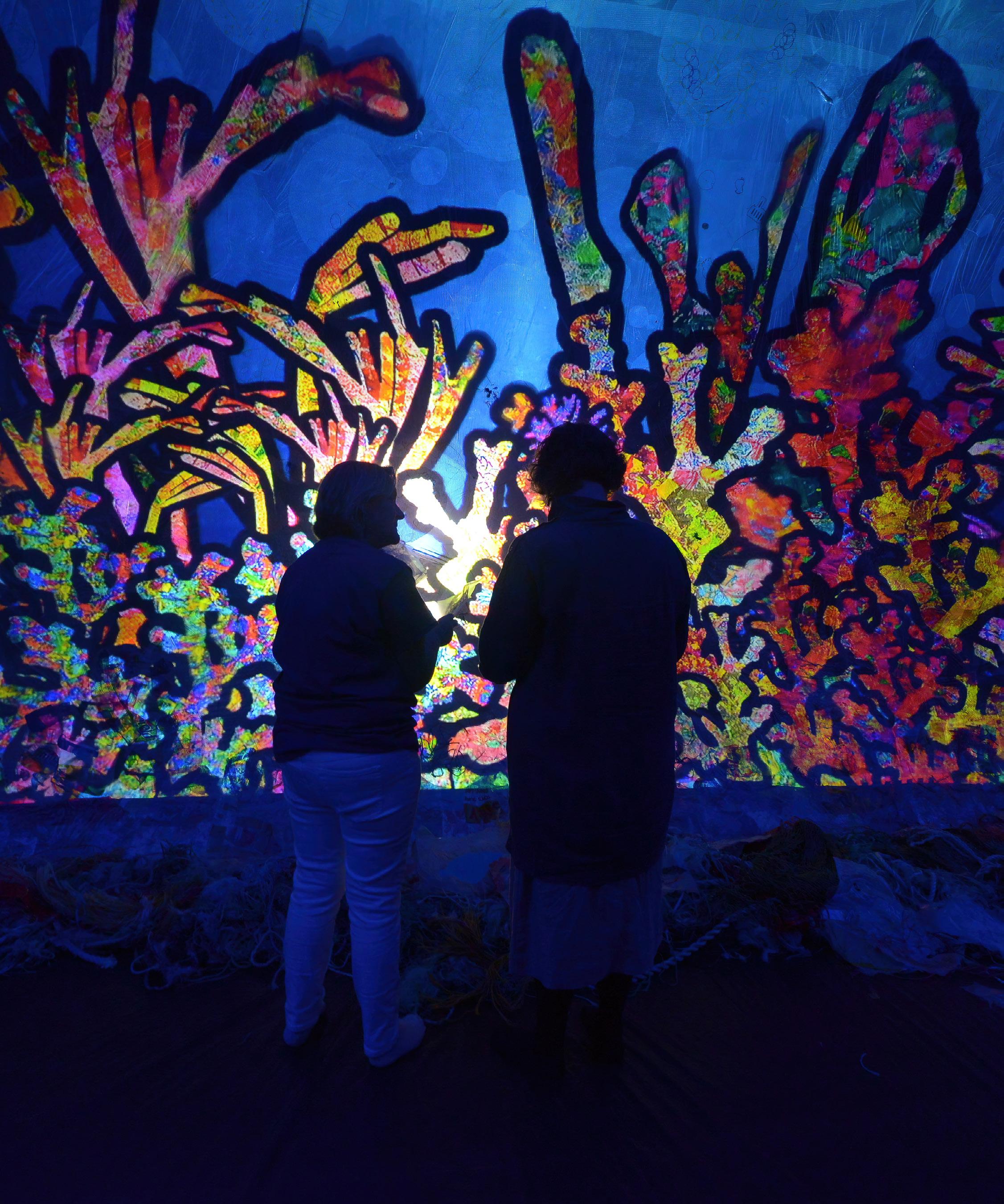
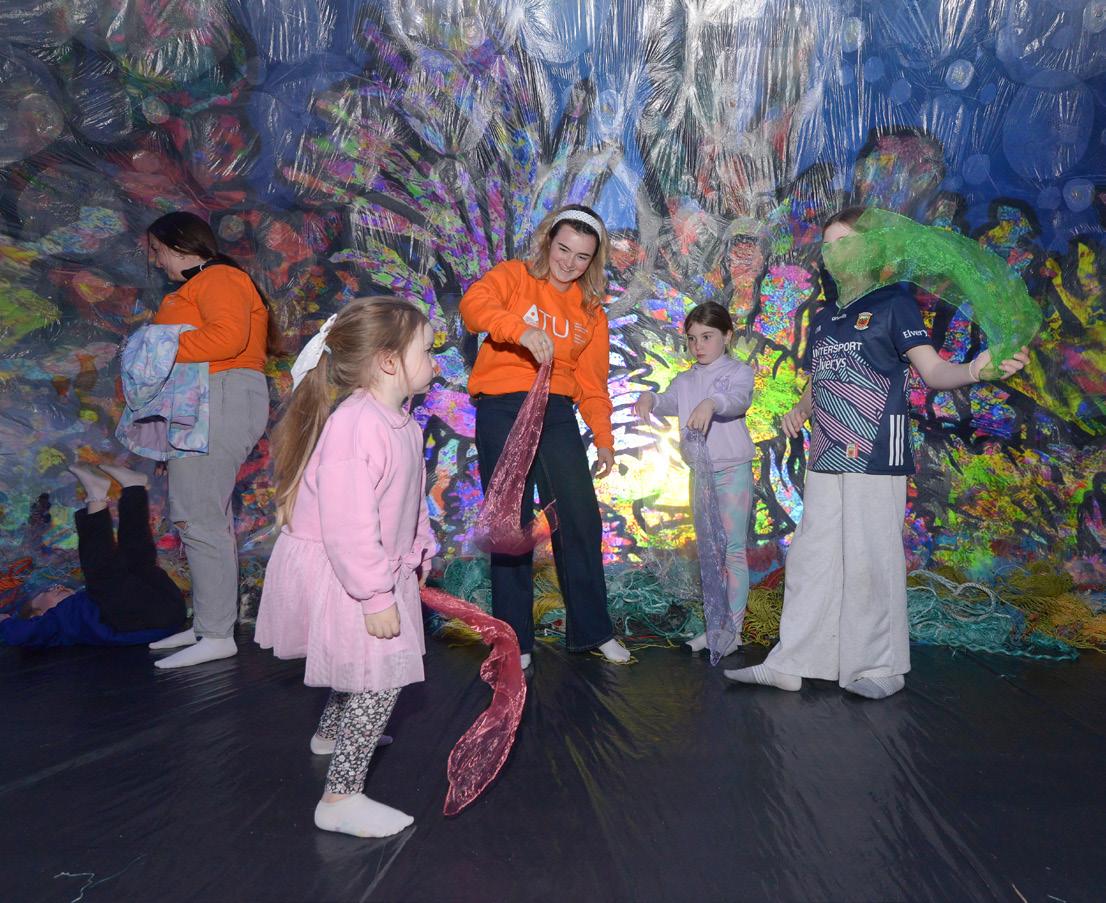
Cover photo: Visitors admire a large inflatable structure made entirely from plastic collected on beaches around Galway Bay at Ocean Voices: an immersive journey into plastic pollution and ocean care.
Contributors: ATU Communications team, Orlaith Ní Mheachair, Jorden McMenamin, Ivana Hanjs Bernadette Larkin, Turlough Raftery, Carina Ginty, Sinéad Ní Bhroin, Rita Melia, Louise McBride, Grace Latham, Margaret McLafferty, Laura Clifford, Muteeb Ahmad Sheikh, Valerie McTaggart, Leah Walsh, Atlanta McGloin, Sinéad Muller, Brian O'Dowd, Katie O’Dwyer, Caroline Fahy and Sinéad Muller.
LET US KNOW WHAT YOU THINK: If there is anything you would like to see in future issues of this magazine, please email anne.donnelly@atu.ie
– Are we flushing clean rainwater down the drain?
– Why coworking spaces doesn’t automatically create community
– New research to address gaps in nutrition support for young adult cancer survivors
25
Sustainability in Action
– Over 100 species recorded in campus BioBlitz
– Combining art and science to reveal the hidden pressures on wildlife
– Meet ATU’s Biodiversity Champions
– The return of the swifts
– Ocean Voices: an immersive journey into plastic pollution and ocean care
29
Equality, Diversity and Inclusion
– ATU launches first Race and Ethnic Equality Action Plan
Investing in women’s leadership
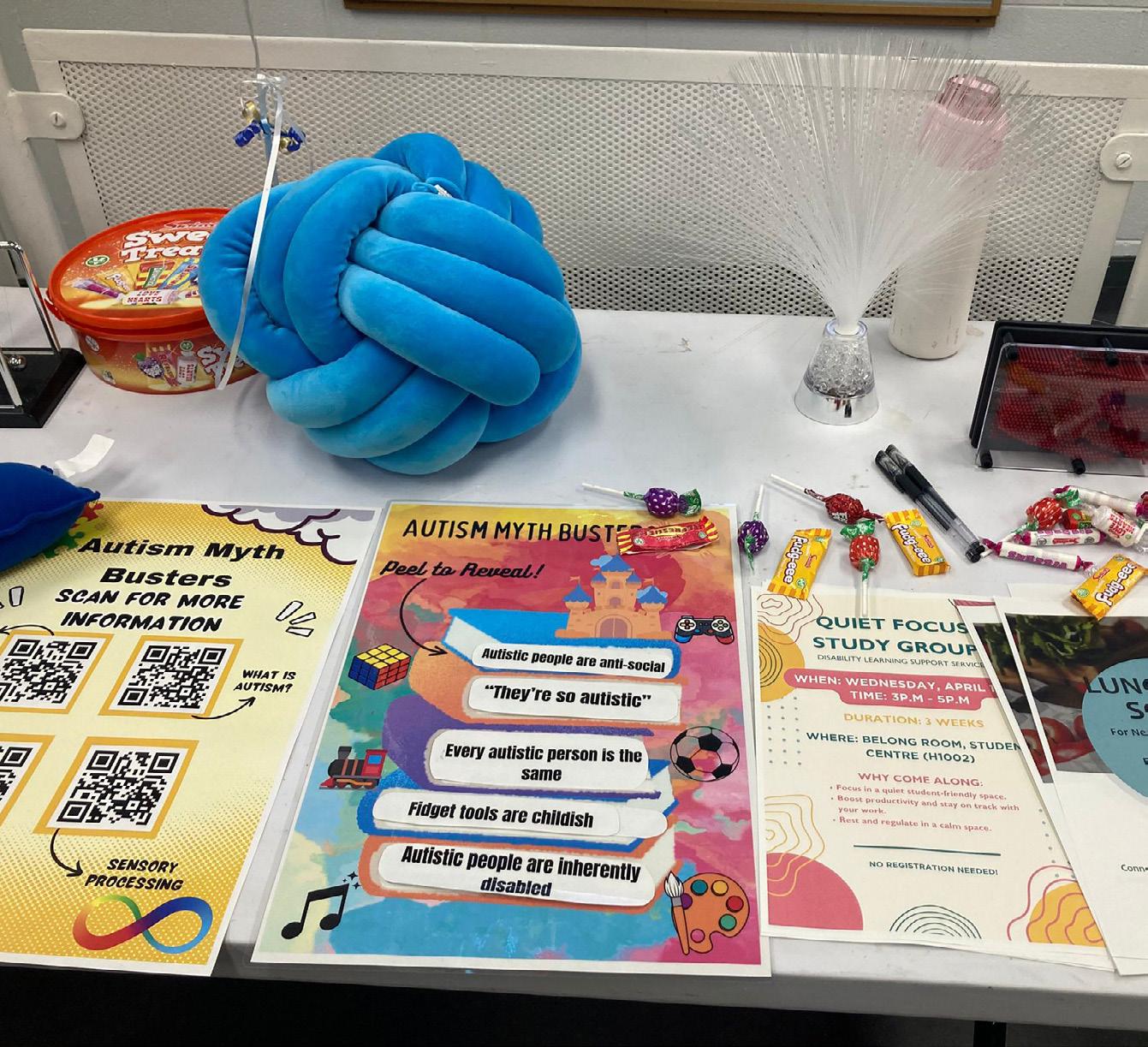
– Building an autism-friendly university
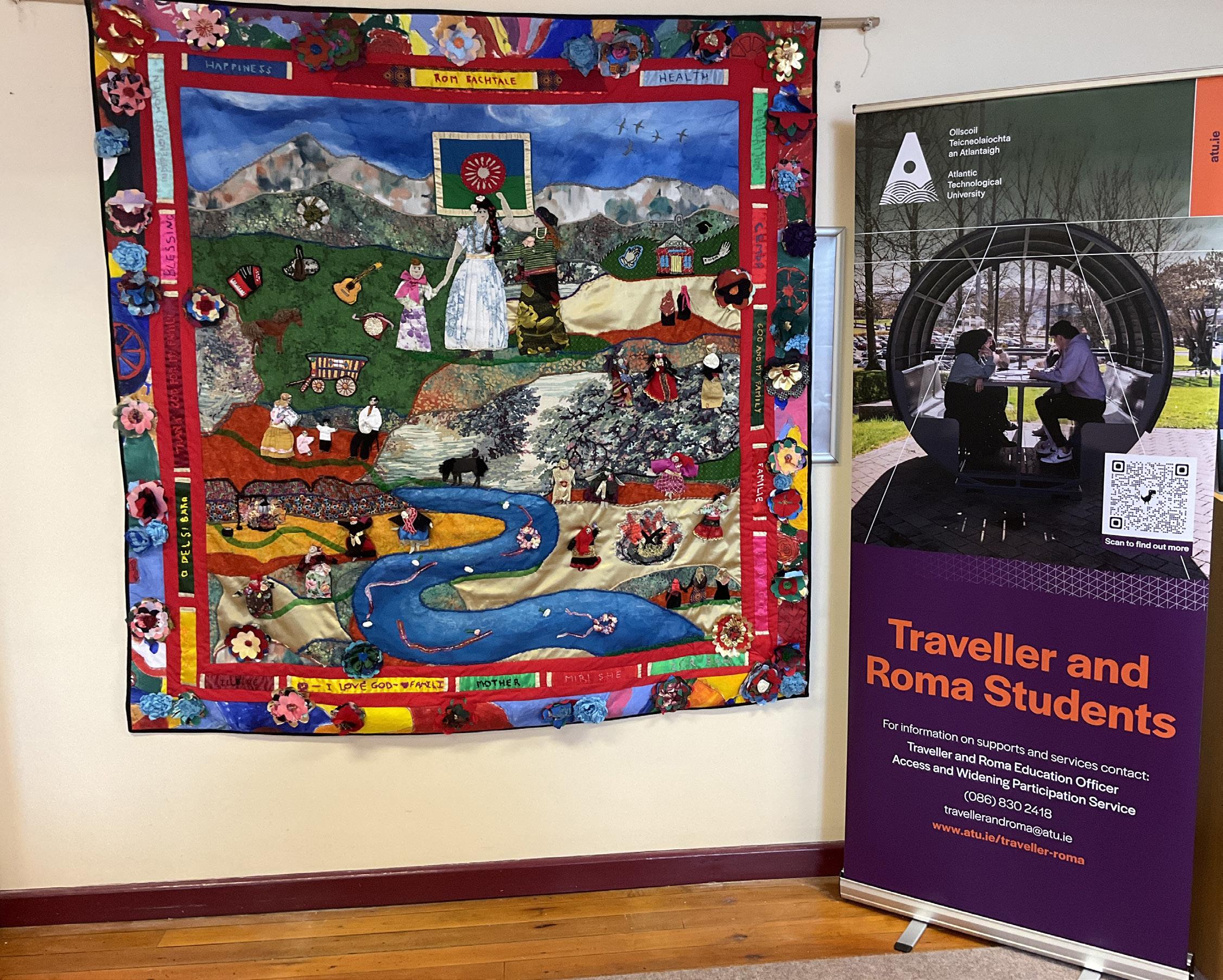
– Roma Women’s Tapestry Exhibition at ATU Libraries
36
Community, Creativity and Achievements
– Celebrating the literary legacy of George Moore
– Five Volumes of Creativity: Inside ATU’s Scrimshaw Journal
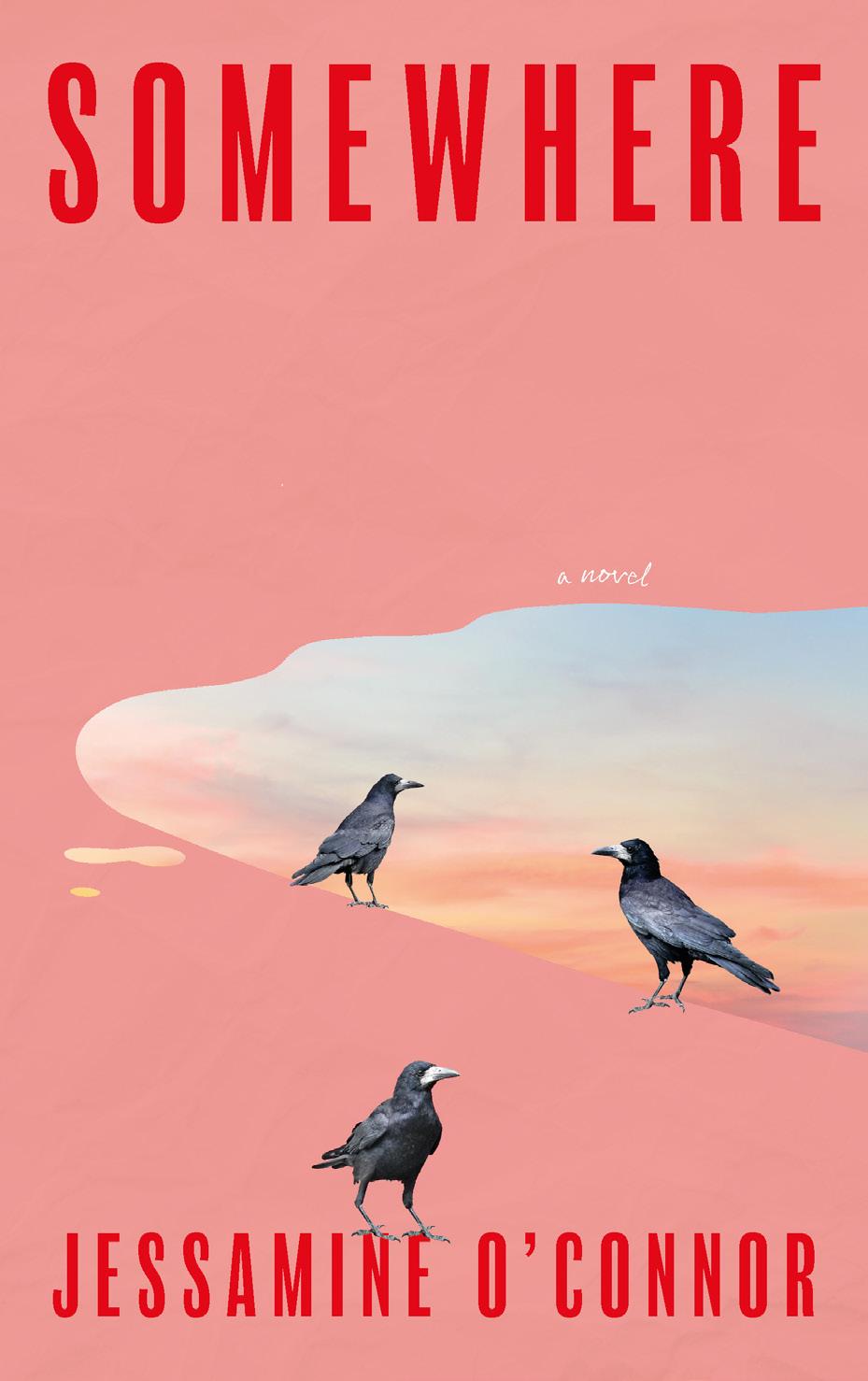
– Writing and Literature graduate launches her debut novel
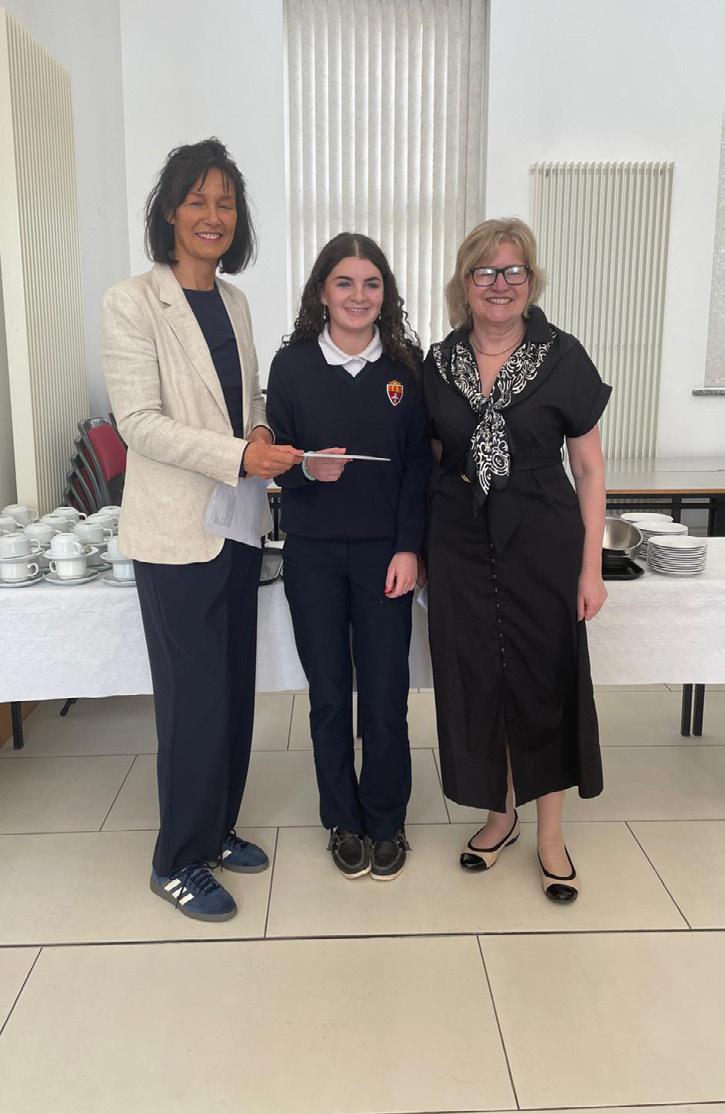
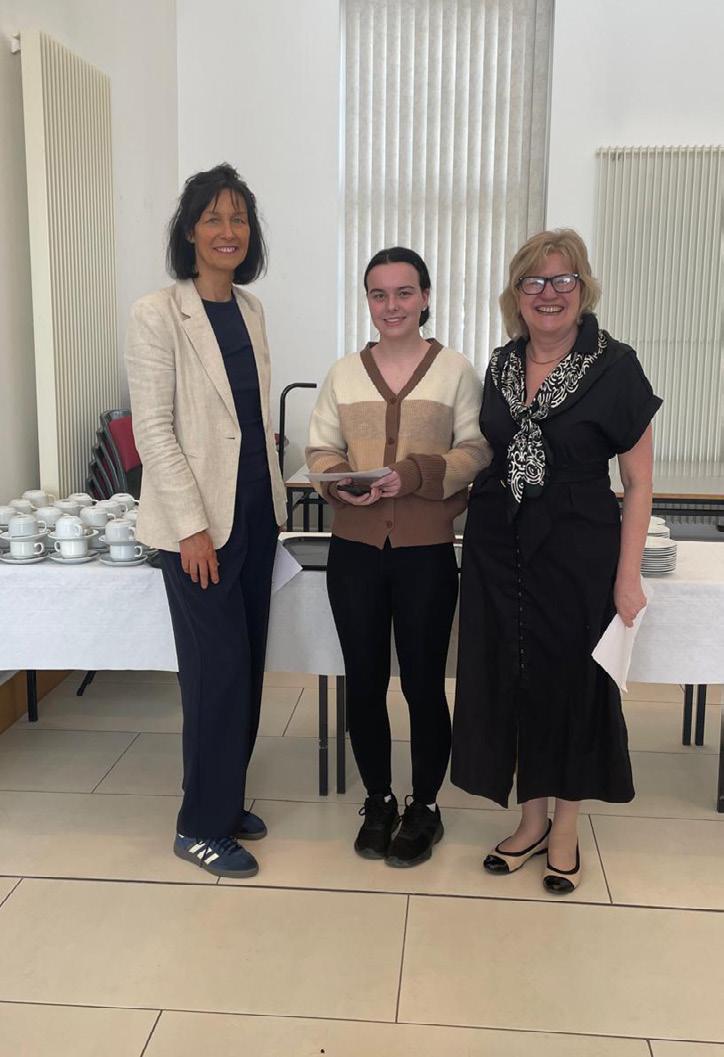
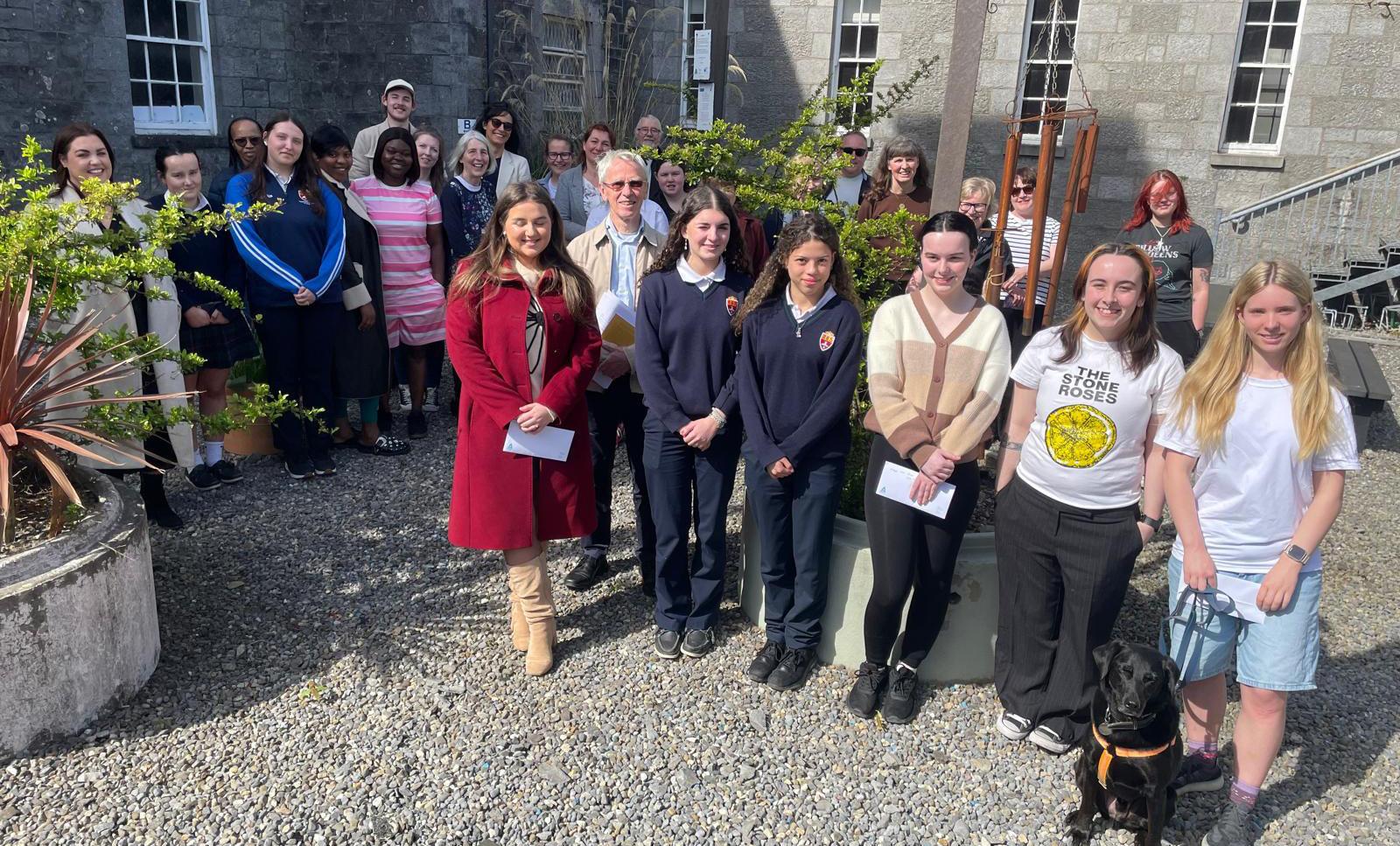
– Annual Poetry Pillar Competition
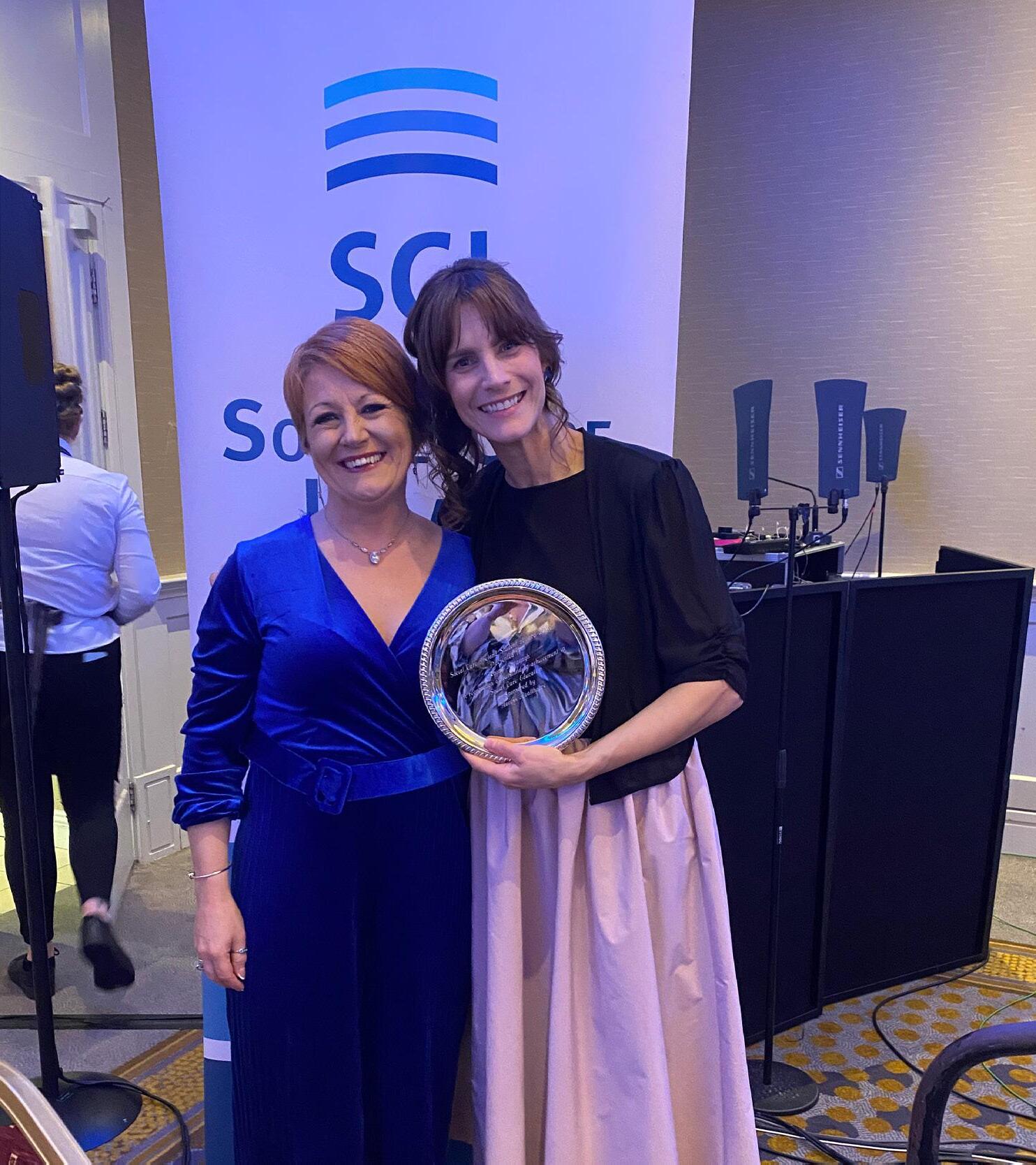
– Social Care student honoured with national award
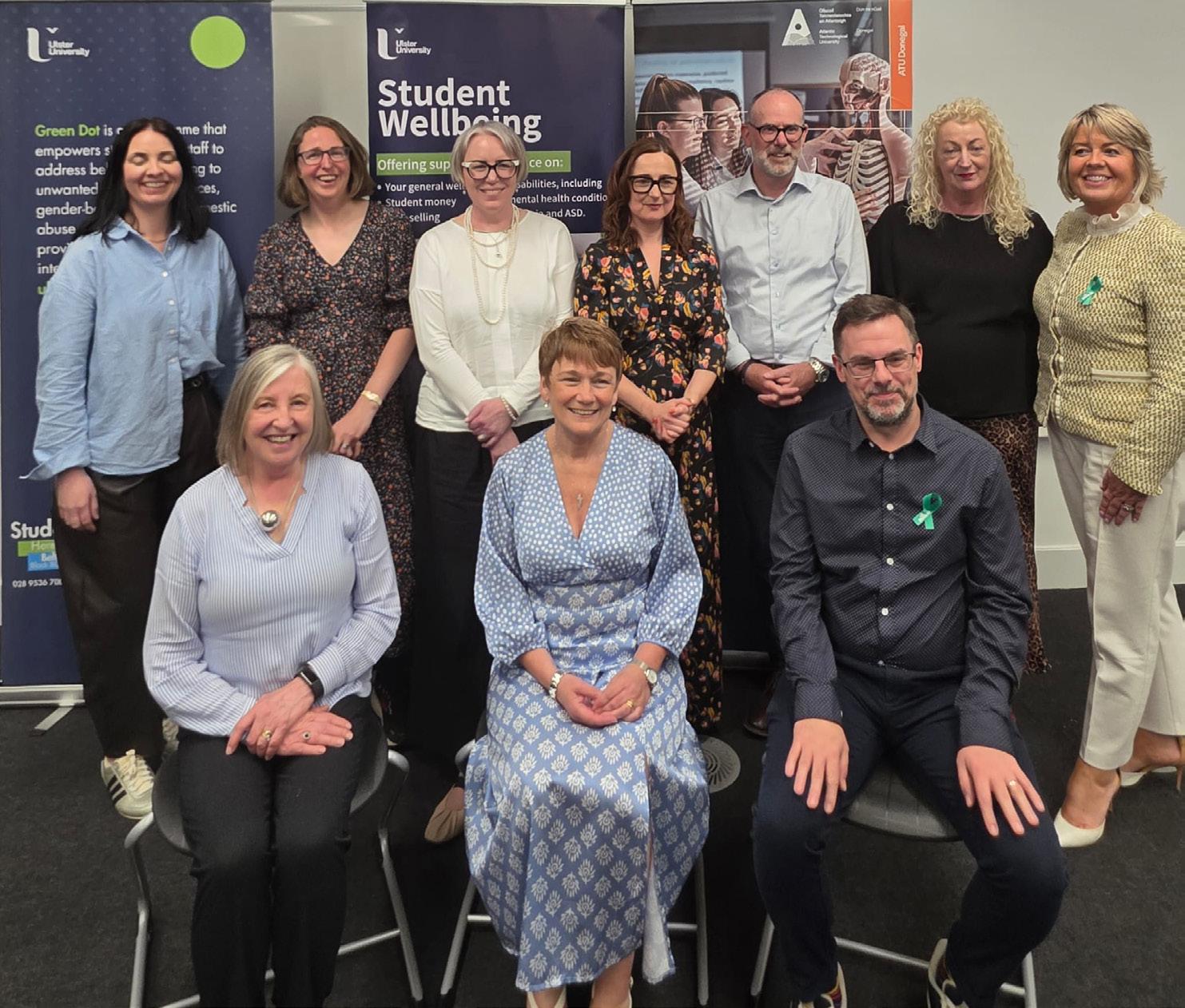
– A collaborative approach to student mental health
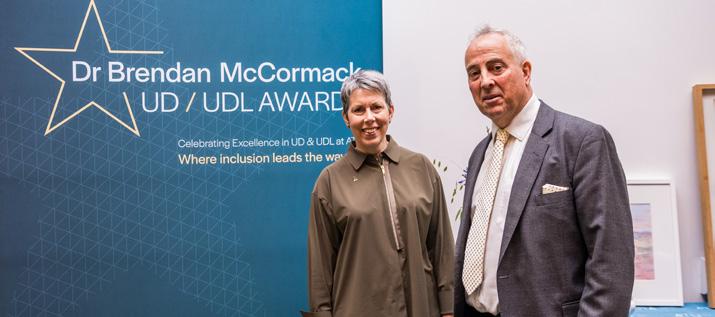
– Inaugural Dr Brendan McCormack Awards celebrate inclusive education
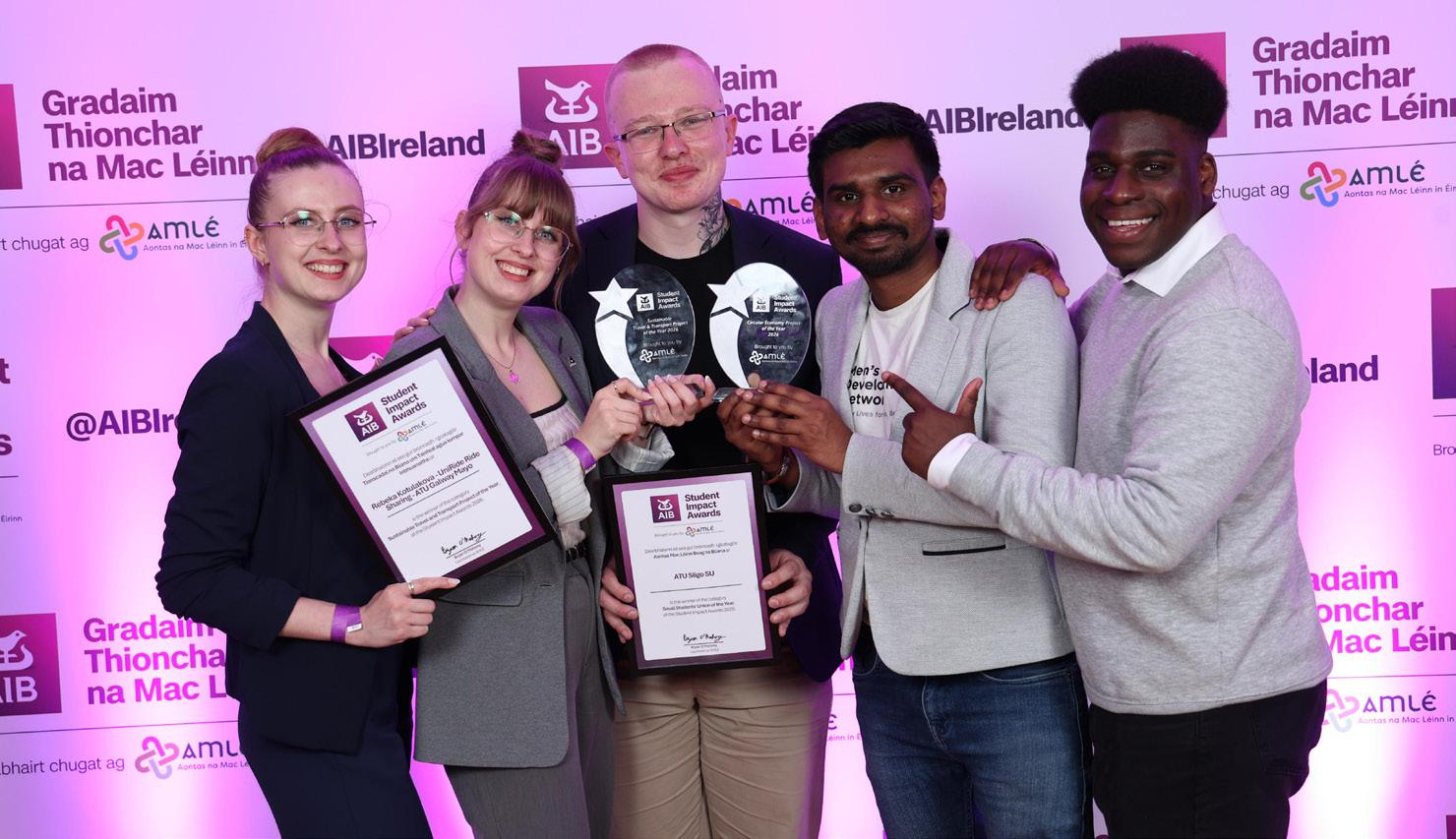
– Students shine at AIB Student Impact Awards
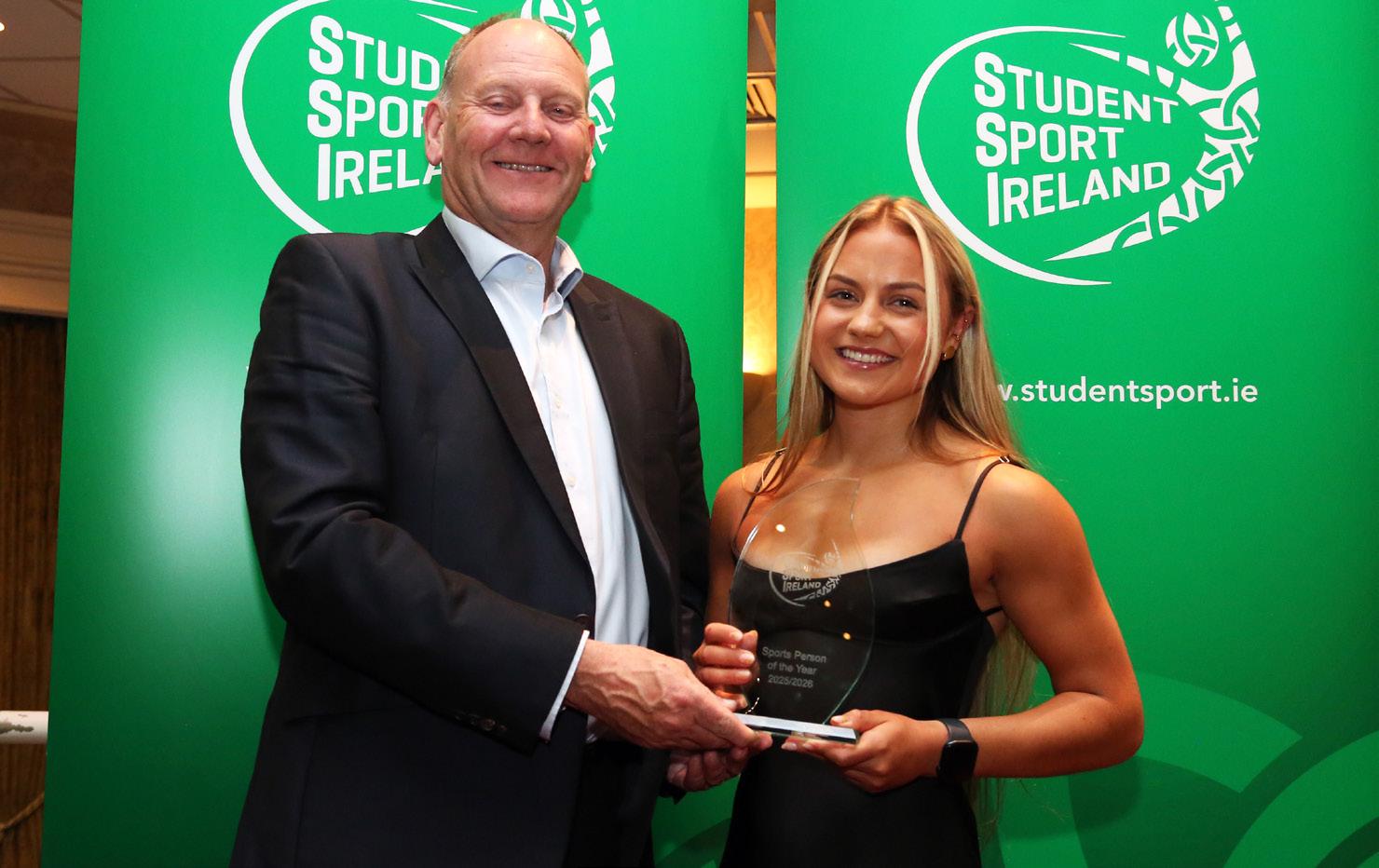
– Neasa Daly wins Student Sport Ireland Sports Person of the Year Award
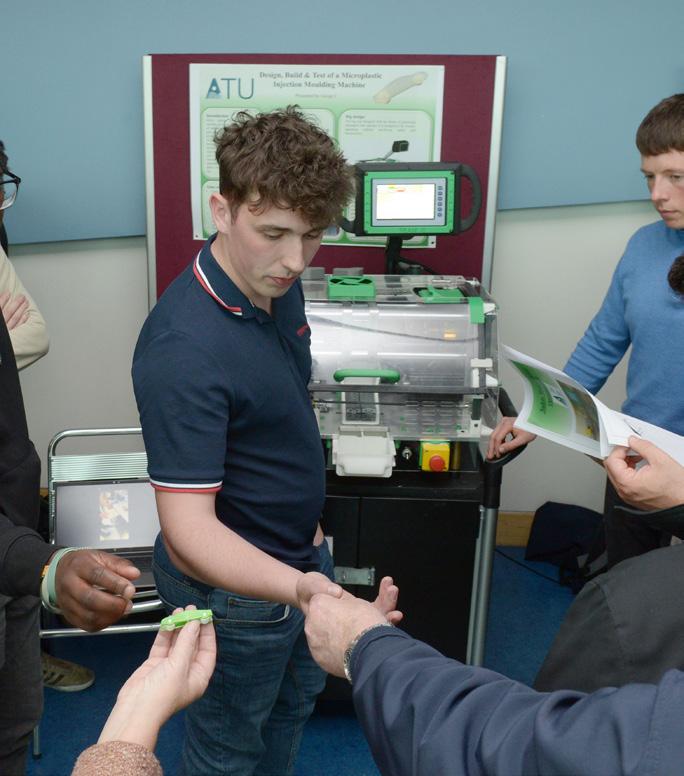
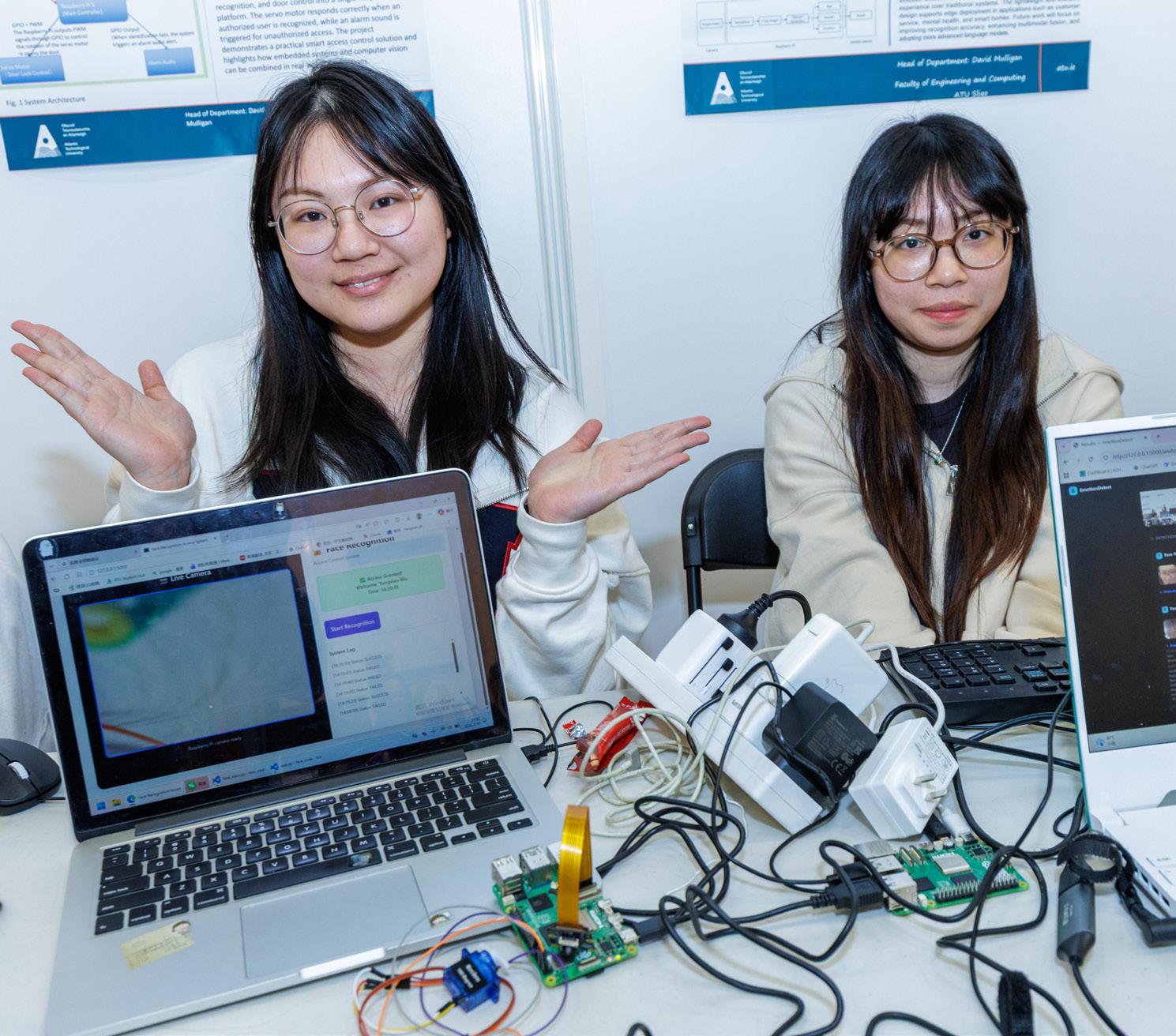
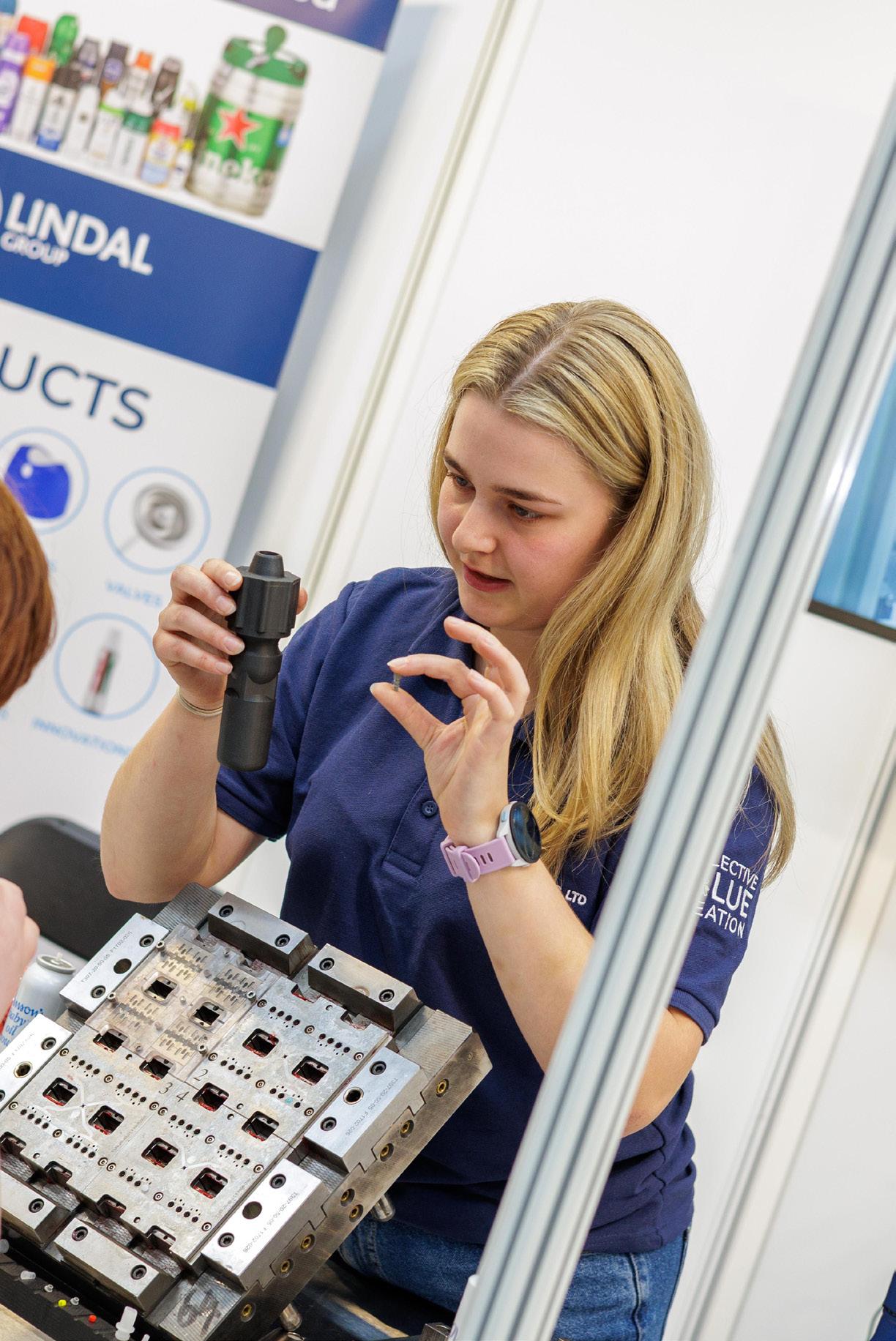
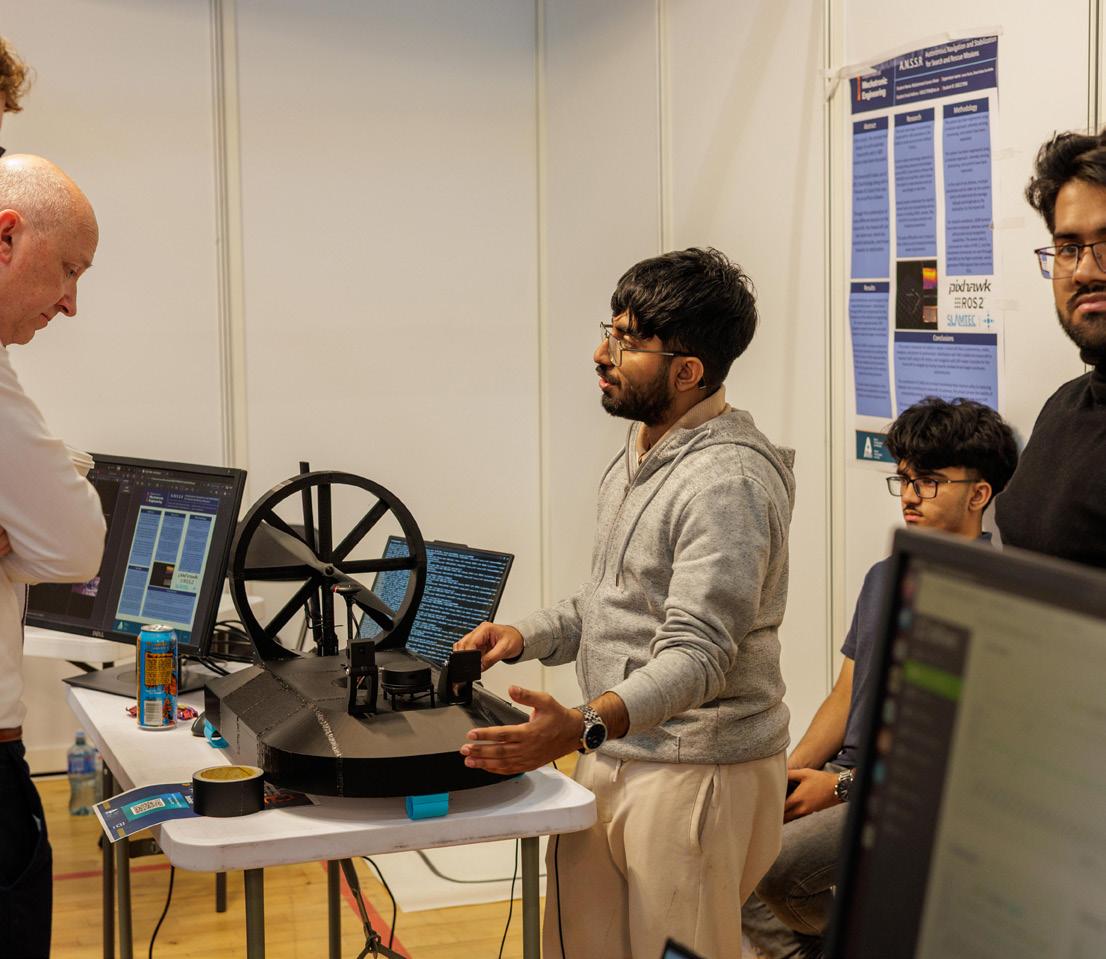
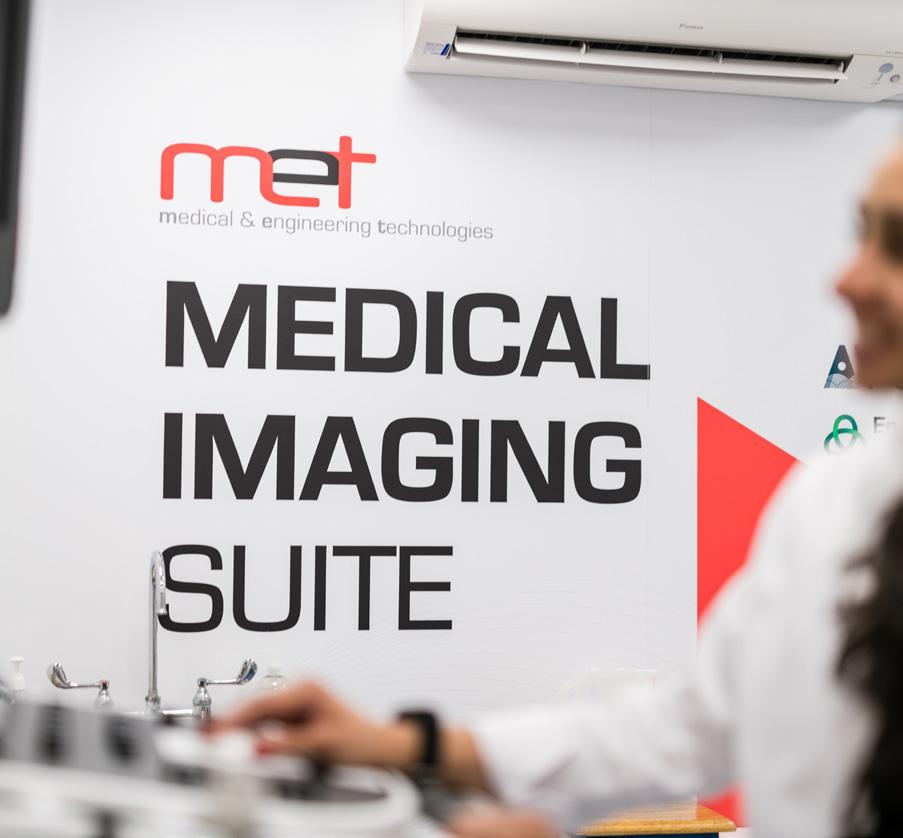
– Innovation on display at Engineering and Technology Expos
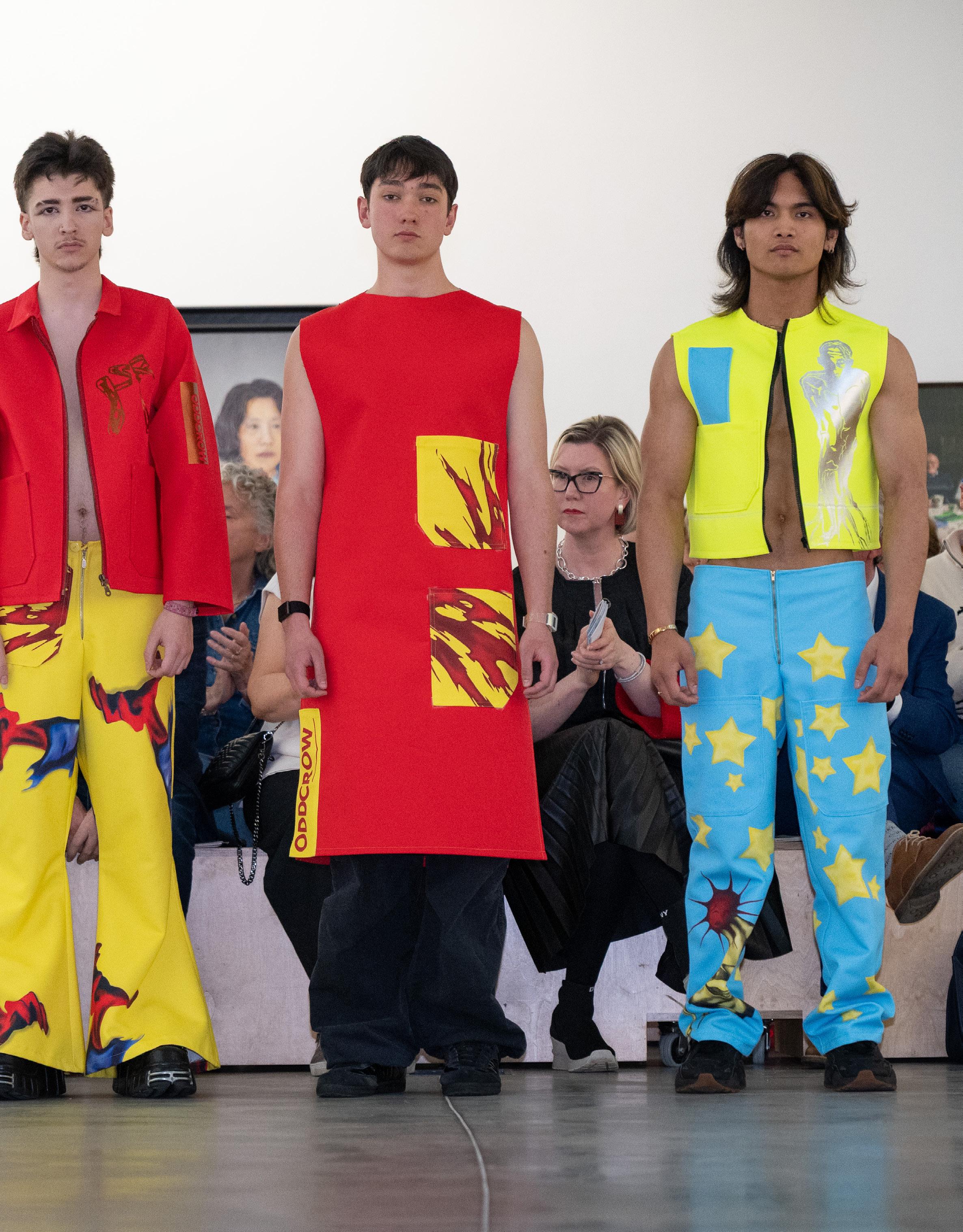
– Fashion students champion sustainability, heritage, and innovation
49
Alumni Spotlight
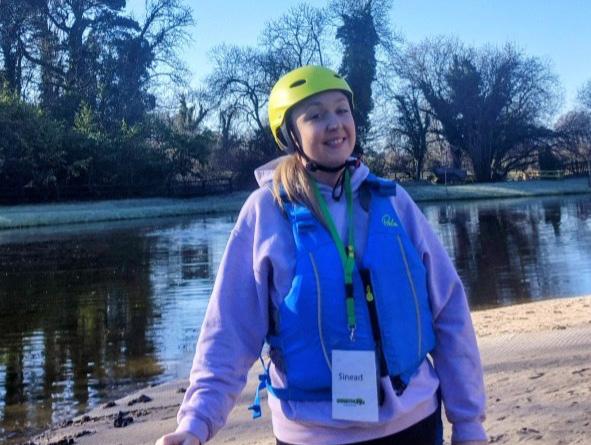
– From ATU to Barretstown, Sinéad Muller tells her story
Welcome from the Editor
Dear Reader,
I am delighted to welcome you to issue 25 of our ATU Magazine. In this issue, we highlight key moments from across the university, including the Spring Conferring ceremonies, and a visit from internationally renowned adolescent psychiatrist and neuroscientist Dr Bruce Perry, who shared how relationships and environment influence children’s development and long-term wellbeing.
In Engaged Research in Action, we showcase a range of impactful research addressing real-world challenges. These include examining if capturing rain at home could help reduce sewage overflows; exploring the dynamics of coworking spaces and community; and new research to address gaps in support for young adult cancer survivors.
In Innovation and Engagement, we feature student perspectives
on how ATU’s entrepreneurial ecosystem is shaping their future pathways, alongside stories on how digital hubs are supporting rural innovation and how our iHub client companies are advancing developments in MedTech and emerging technologies.
Sustainability continues to be a key priority across ATU and some of our highlights in recent months include a campus BioBlitz, which recorded over 100 species, and a creative collaboration that brought together art and science to highlight important ocean issues such as plastic pollution, and loss of marine life.
In Equality, Diversity and Inclusion, we celebrate the launch of ATU’s first Race and Ethnic Equality Action Plan, alongside initiatives supporting women’s leadership
and our ongoing efforts to build an autism-friendly university.
We also celebrate the many achievements of our students and staff across community, creativity, and academic life. From literary events and creative publications to national awards and student successes, this section reflects the vibrancy of our university community.
There is much more to explore in this issue, and whether you are a student, colleague, or one of our partners locally, nationally, or internationally, I hope you find something here that informs and deepens your understanding of the wide-ranging work taking place across the university.
Best Wishes Anne Donnelly
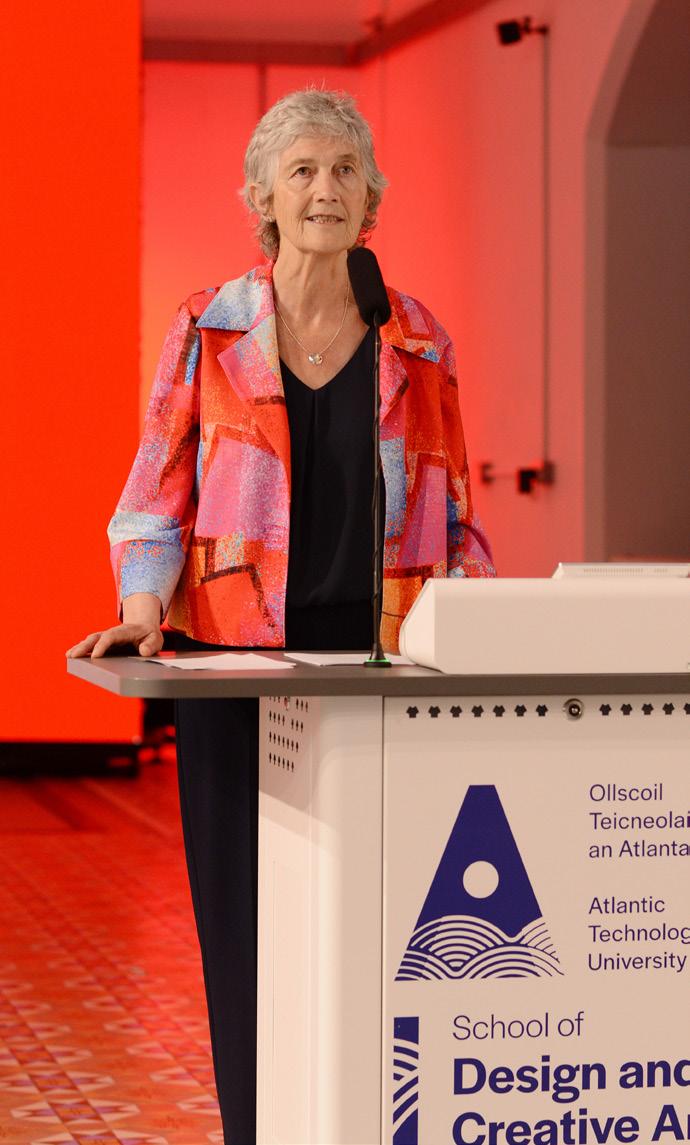
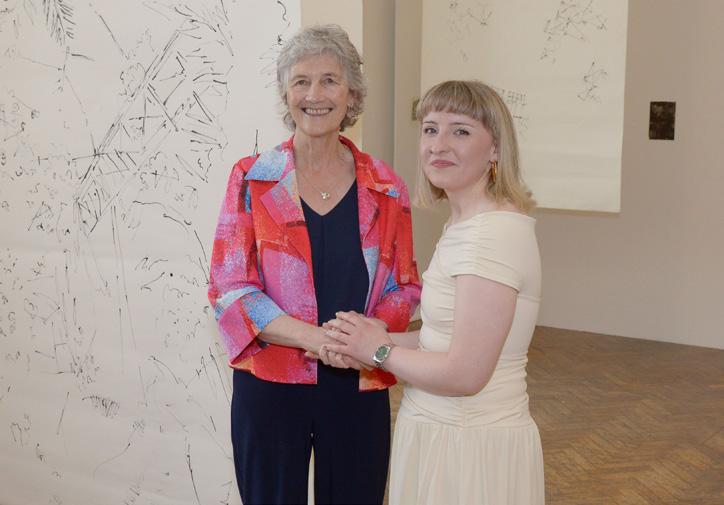
President Catherine Connolly launched the Department of Creative Arts & Media Degree Show 2026 at the ATU Galway Wellpark Road campus in early June. The exhibition brought together projects from a range of disciplines in the Department of Creative Arts & Media including Art, Design, Film & Documentary, Animation & Games Design and the Creative Media & Storytelling programmes. President Connolly is pictured here with student Hermione Ruffles.
Focal ón Eagarthóir
A chara,
Tá an-áthas orm fáilte a chur romhat chuig an 25 eagrán d’Iris OTA . Leagfar béim, san eagrán seo ar imeachtaí tábhachtacha a tharla fud na hollscoile, lena n-áirítear searmanais Bronnta an Earraigh, agus cuairt an Dr Bruce Perry, síciatraí déagóirí agus néareolaí a bhfuil cáil idirnáisiúnta bainte amach aige, a mhínigh an chaoi a mbíonn tionchar ag caidrimh agus timpeallacht ar fhorbairt agus ar fholláine fhadtéarmach leanaí.
Cuirfear réimse taighde tionchair inár láthair, in ‘Engaged Research in Action’. Taighde a thugann aghaidh ar dhúshláin an tsaoil mar atá. Áirítear leis seo scrúdú a dhéanamh ar an bhféadfadh báisteach a bhailiú sa bhaile cabhrú le róshreabhadh séarachais a laghdú; spléachadh a thabhairt ar dinimic spásanna comhoibrithe agus pobail; agus taighde nua chun aghaidh a thabhairt ar bhearnaí i dtacaíocht d’aosaigh óga a tháinig slán ó ailse.
In ‘Innovation and Engagement’ feicimid léargas na mic léinn ar an gcaoi a bhfuil éiceachóras fiontraíochta OTA ag múnlú an saol dóibh amach anseo, chomh maith le scéalta faoin gcaoi a bhfuil moil dhigiteacha ag tacú le nuálaíocht tuaithe agus faoin gcaoi a bhfuil ár gcliantchomhlachtaí san iHub ag cur
Má
tá
nithe
le forbairtí i gcúrsaí MedTech agus i dteicneolaíochtaí atá ag teacht chun cinn.
Leanann an inbhuanaitheacht de bheith ina tosaíocht ar fud na hOllscoile agus i measc cuid de na buaicphointí a bhí againn le míonna beaga anuas bhí BioBlitz ar champas, a thaifead breis is 100 speiceas, agus comhoibriú cruthaitheach a thug ealaín agus eolaíocht le chéile chun aird a tharraingt ar shaincheisteanna tábhachtacha na farraige móire amhail truailliú plaisteach agus meath beathra muirí.
In ‘Equality, Diversity and Inclusion’, déanfar ceiliúradh ar seoladh chéad Phlean Gníomhaíochta um Chomhionannas Ciníoch agus Eitneach OTA, mar aon le tionscnaimh a thacaíonn le ceannaireacht na mban agus iarrachtaí leanúnacha ollscoil atá
cairdiúil don uathachas a fhorbairt.
Déanaimid ceiliúradh freisin ar na héachtaí iomadúla atá bainte amach ag mic léinn agus ag an bhfoireann i saol an phobail, na cruthaitheachta chomh maith leis an saol acadúil. Ó imeachtaí liteartha agus foilseacháin chruthaitheacha go duaiseanna náisiúnta agus dea-scéalta nuachta na mic léinn, léiríonn an chuid seo beocht phobal na hollscoile.
Tá i bhfad níos mó le fiosrú san eagrán seo, agus cibé acu mac léinn, comhghleacaí nó duine dár gcomhpháirtithe áitiúil, náisiúnta nó idirnáisiúnta thú, tá súil agam go bhfaighidh tú rud éigin anseo a chuirfidh le d’eolas agus do thuiscint ar ghníomhaíochtaí éagsúla OTA.
Le dea-ghuí
Anne Donnelly
faoi leith ar mhaith leat a fheiceáíl sna heagráin atá le teacht, is féidir teagmháil a dhéanamh liom anne.donnelly@atu.ie ”
Sheol an tUachtarán Catherine Connolly Taispeántas Céime na Roinne Ealaíon Cruthaitheacha & Meán 2026 ar champas Bhóthar Pháirc an Tobair, OTA na Gaillimhe ag tús mí an Mheithimh. Thug an taispeántas tionscadail le chéile ó raon leathan disciplíní i Roinn na nEalaíon Cruthaitheacha & Meán, lena n-áirítear Ealaín, Dearadh, Scannán & Clár Faisnéise, Beochan & Dearadh Cluichí agus na cláir sna Meáin Chruthaitheacha & Scéalaíochta. Anseo, tá an tUachtarán Connolly agus Hermione Ruffles, iníon léinn san Ollscoil.
Highlights from Across the University Understanding the developing brain: Dr Bruce Perry visits ATU
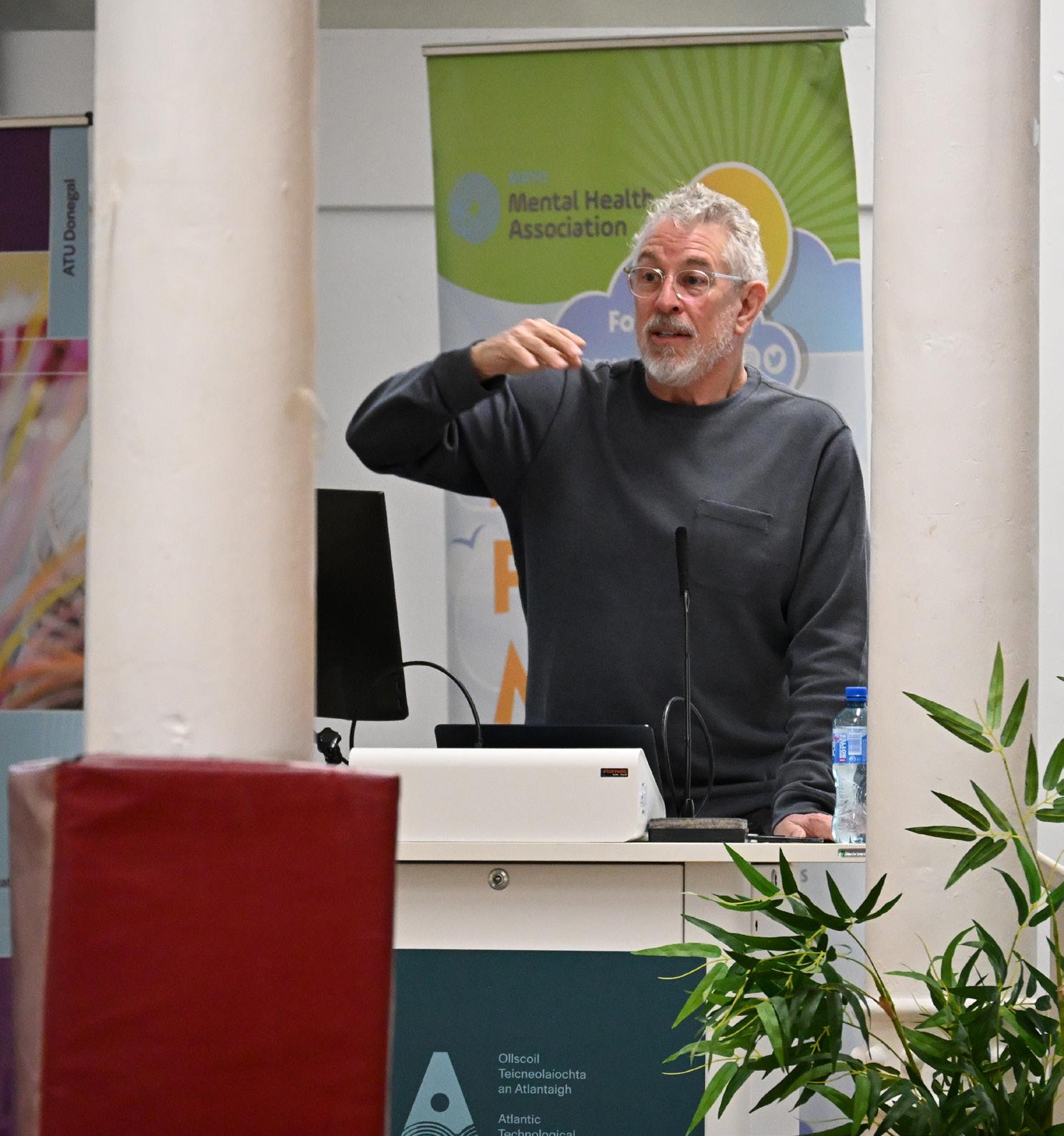
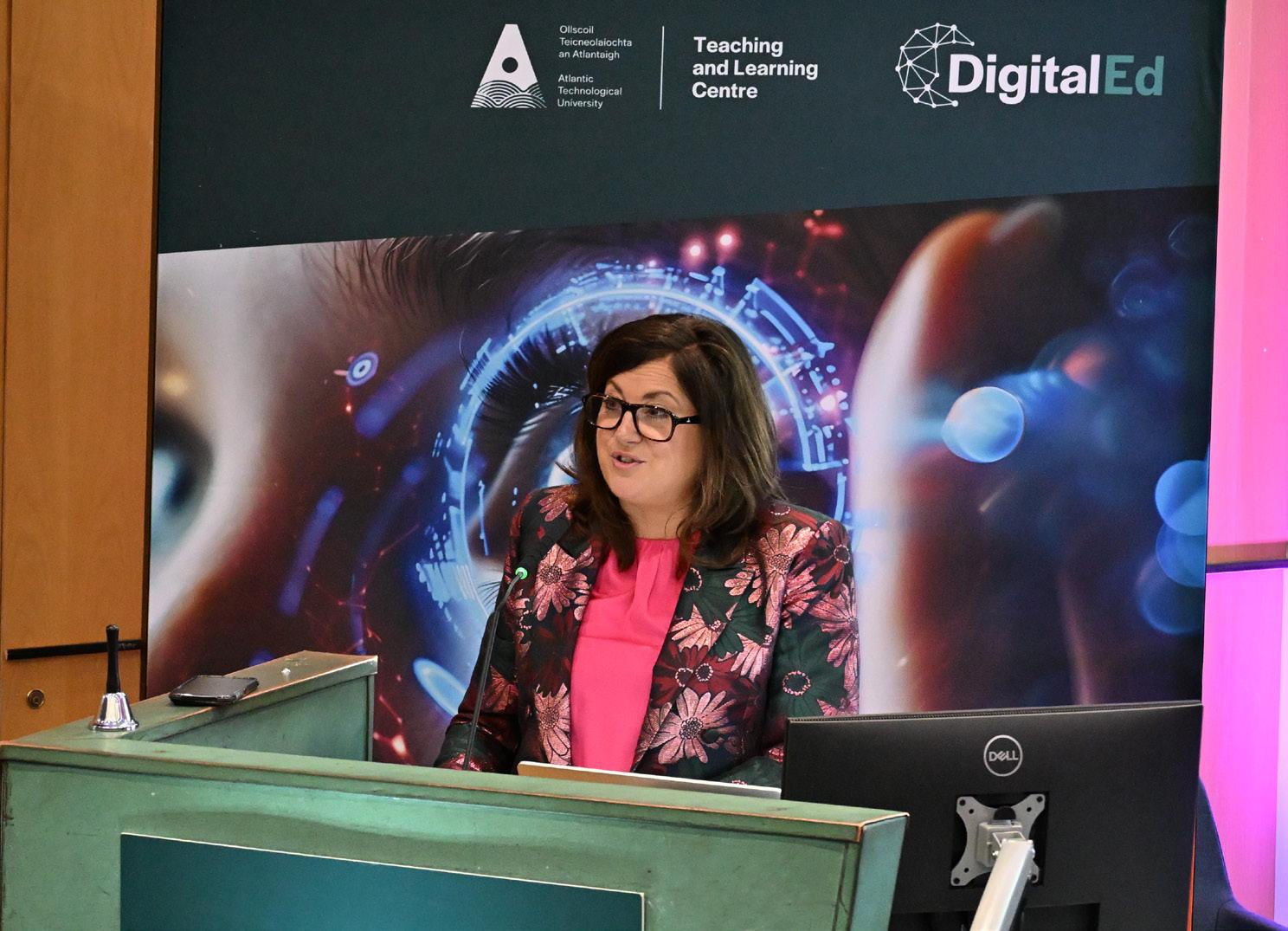
ATU welcomed world-renowned child and adolescent psychiatrist and neuroscientist Dr Bruce Perry to its Mayo Campus in April. During the visit he participated in a series of talks, discussions and Q&A sessions examining how stress, relationships and environment influence children’s development and long-term wellbeing.
The visit brought together a wide range of stakeholders, including the Department of Children, Disability and Equality, the Irish Association of Infant Mental Health, ATU lecturers and students, and industry partners such as the HSE, Tusla, Mayo County Council, Mental Health services, foster care families and support workers, and the Mayo Infant Mental
“Early relationships really matter.”
Dr Bruce Perry
Health Network and Forum.
Transforming understanding of trauma and development
For more than 30 years, Dr Perry’s work has transformed understanding of trauma, brain development and healing. As founder of the Neurosequential Model® and coauthor of the number one New York Times bestseller ‘What Happened to You?’ written with Oprah Winfrey, he is internationally recognised for translating complex neuroscience into practical insights that support children, families and communities.
His research has illuminated how adversity shapes the developing brain and how recovery and resilience are made possible through safety, connection and compassionate relationships.
Stress, resilience and neuroplasticity
During his visit, Dr Perry spoke about patterns of stress and how prolonged exposure can send unhealthy signals to nerve cells, leading to long-term effects. He explained how resilience develops over time, using public speaking as an example of how repeated exposure can reduce stress responses and build confidence.
He also highlighted neuroplasticity and the importance of regulating practices such as biking, knitting, art, mindfulness and other preferred activities to help manage stress.
“A dysregulated adult will dysregulate a regulated child,” he said, underlining the importance of educators maintaining their own wellbeing to support children effectively.
Contemporary issues in child development
The discussions also explored contemporary issues, including screen use, where Dr Perry emphasised that in-person interactions provide richer developmental experiences for the brain, while encouraging a balanced and cautious approach to technology. He also spoke about the importance of play in early childhood education, noting that joy is essential for learning and that overly structured attempts to direct play can undermine its natural value.
Student engagement and practical application
Tara Roche, an early childhood educator shared how she applies
Dr Perry’s work in practice, focusing on creating safe environments, predictable routines and flexible, child-centred transitions. She highlighted the importance of giving babies a voice, fostering curiosity and reflection, and building trust through parent involvement to support resilience.
ATU student Rhona Kavanagh, a fourth-year social care student who designed psychoeducational pamphlets based on Dr Perry’s work, said: “I use his work in my personal life but also professionally. I created two psychoeducational booklets based on his work, and his work truly inspires me.”
Building collaboration for children’s wellbeing
Dr Perry’s visit highlighted the importance of compassion, prevention and community-based approaches to supporting children and families. His emphasis on empathy, regulation and the power of relationships resonated strongly with attendees. The visit also strengthened collaboration between ATU and national stakeholders working to support children’s wellbeing, with plans for continued engagement and shared learning in the years ahead.
ATU celebrates Spring Conferring
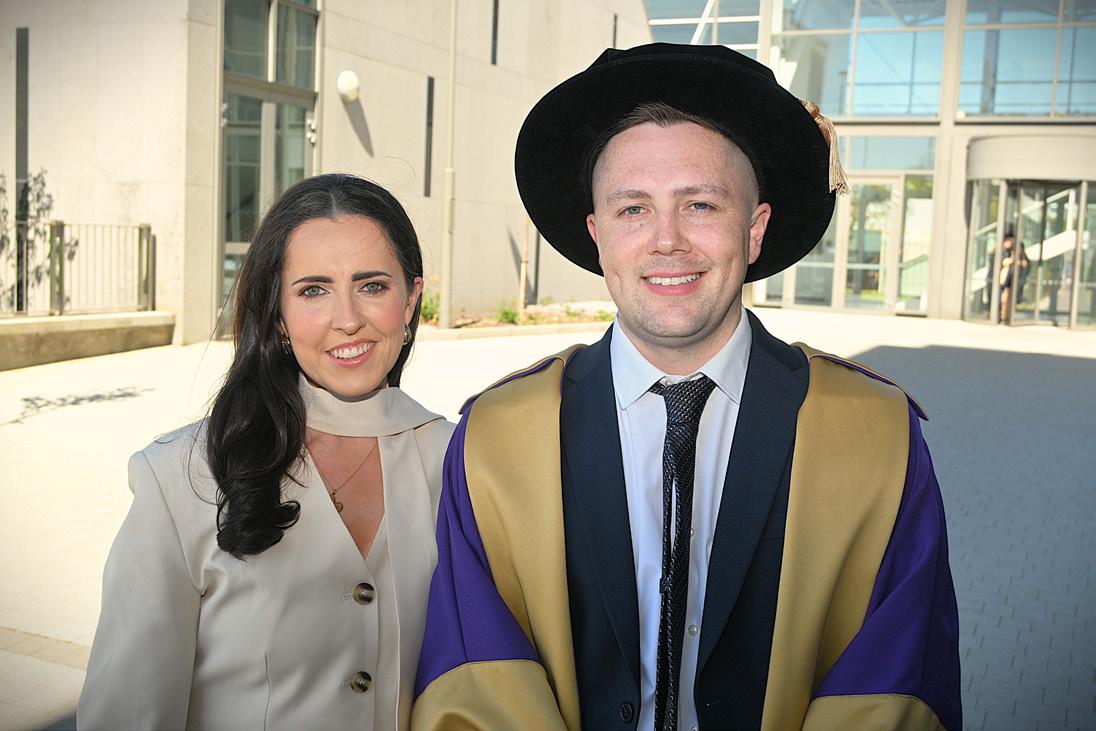
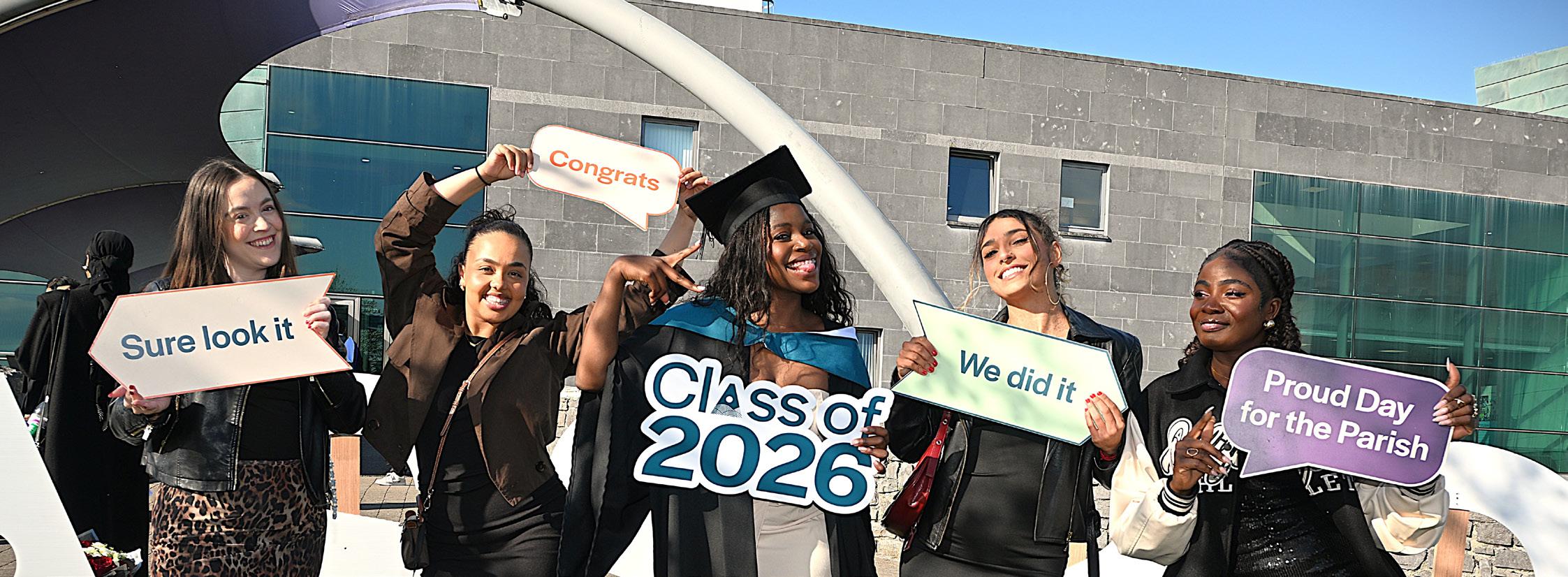
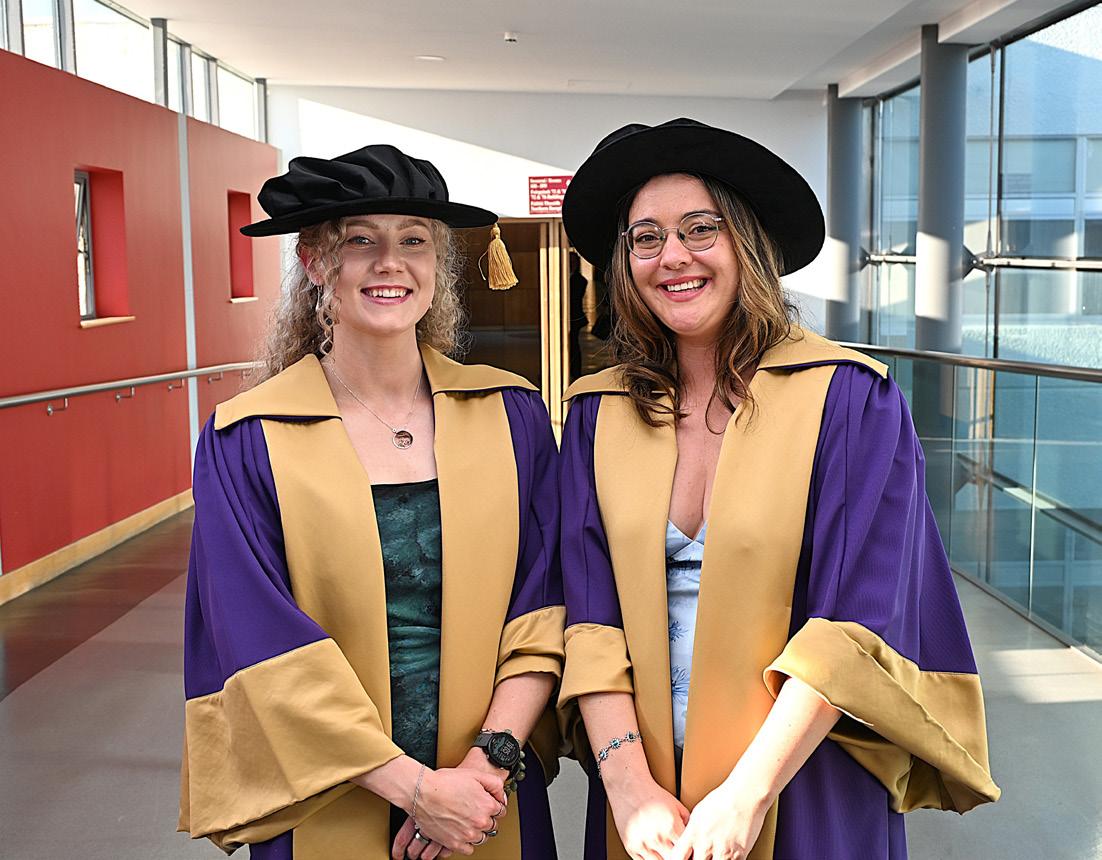
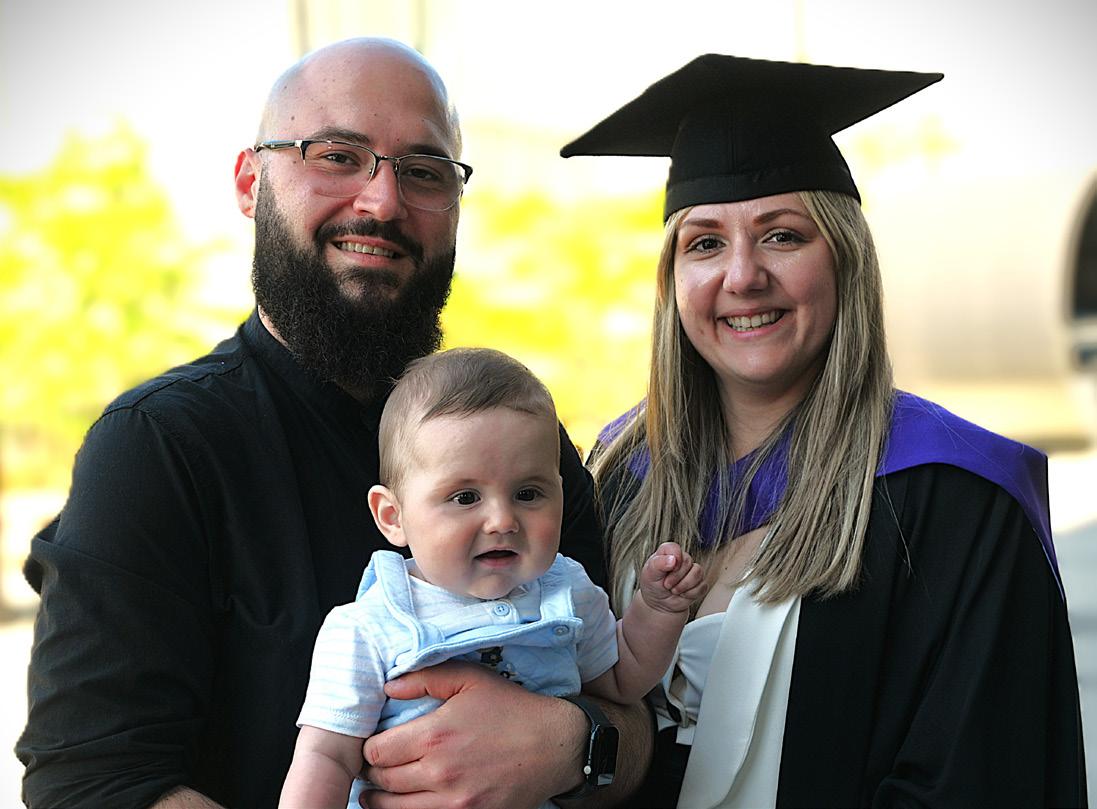
More than 500 students, including 14 PhD graduates, were conferred at Atlantic Technological University’s Spring Conferring Ceremonies, held across its Galway, Sligo and Donegal campuses in April.
The ceremonies brought together graduates, along with families, friends and staff, to mark academic achievement across a wide range of disciplines and award levels, from Higher Certificate to Doctoral degrees. Spring sunshine added to the sense of occasion, with campus celebrations reflecting the optimism of the graduating classes. Over 5,000 more students will be conferred at ATU later this year.
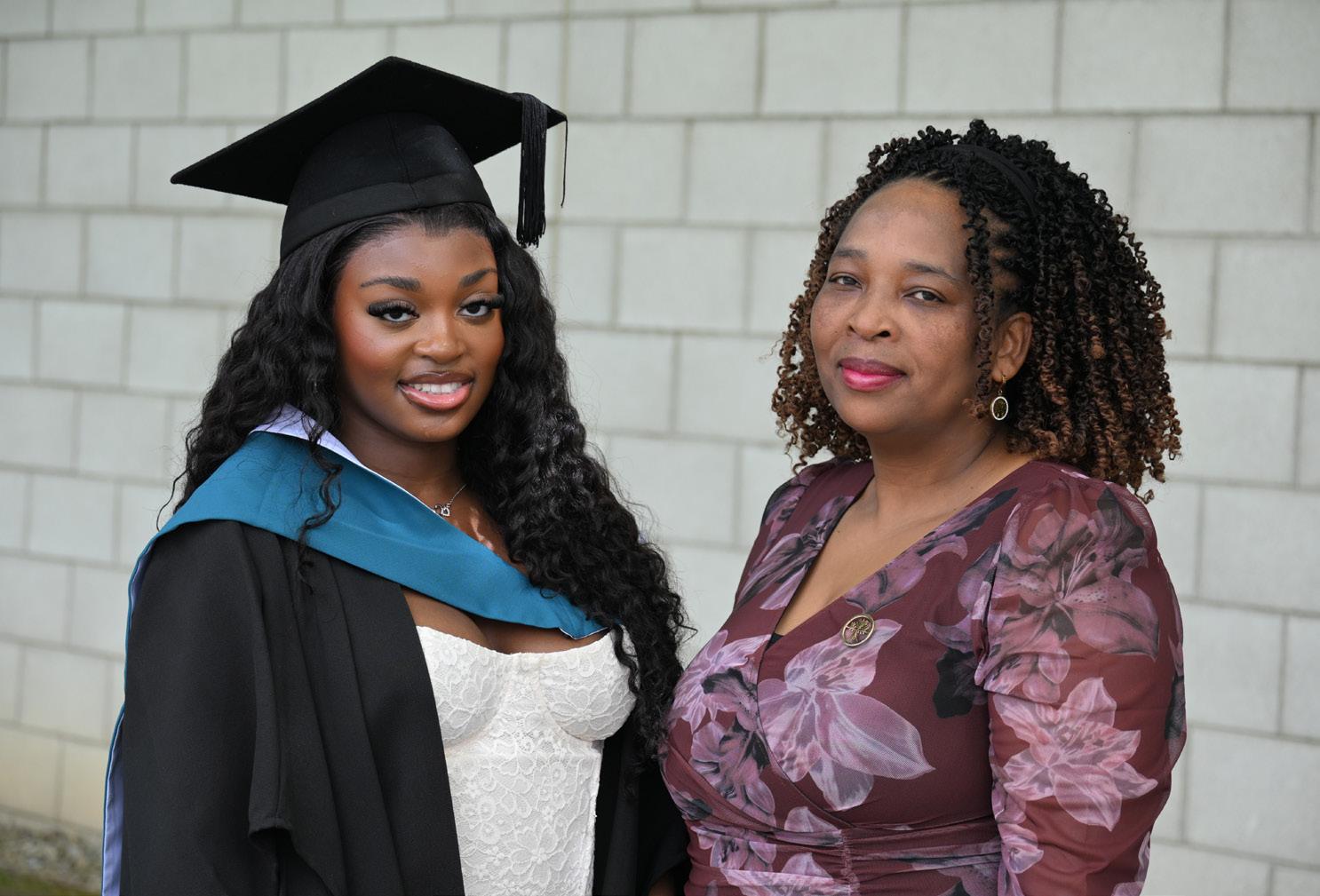
Jani Tanatswa Nyanyiwa and her mum Chipo at Jani’s recent graduation from ATU Letterkenny Campus.
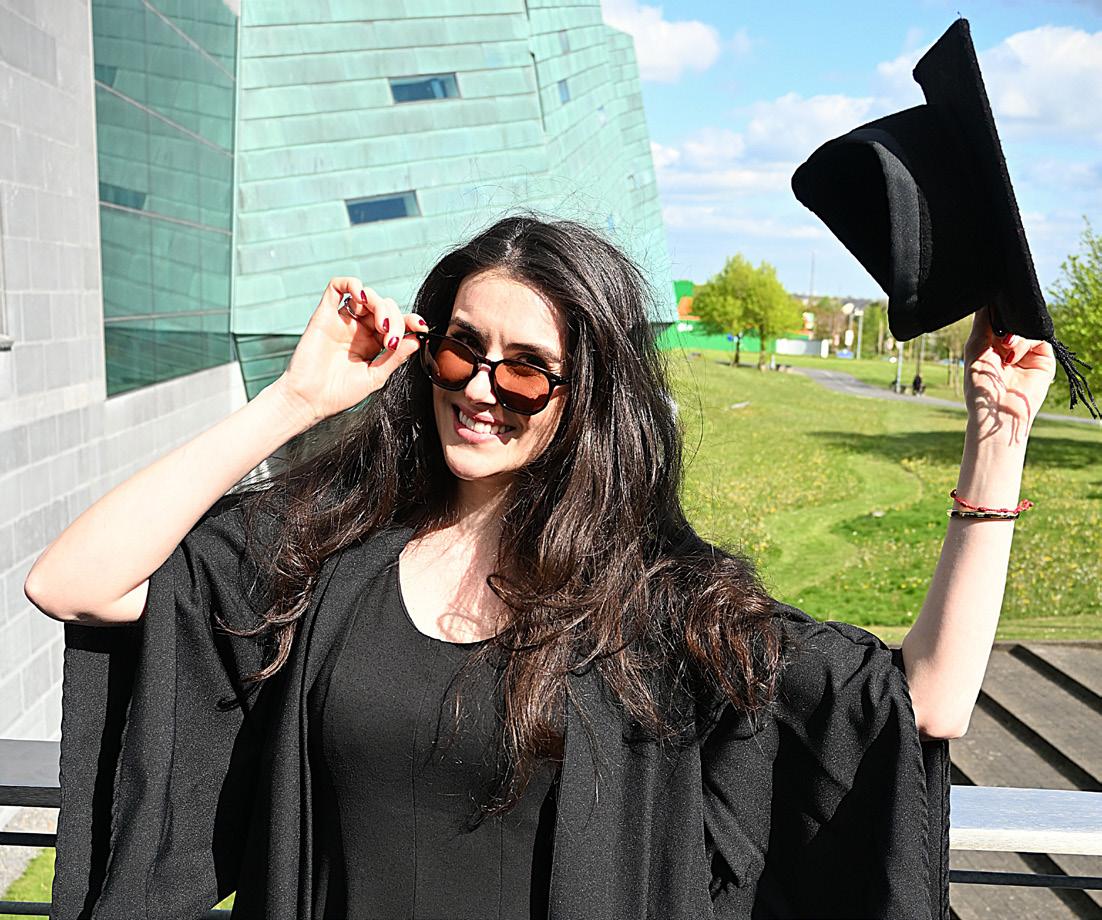
Fabiane Cancian, Brazil graduated from ATU’s Galway city campus.
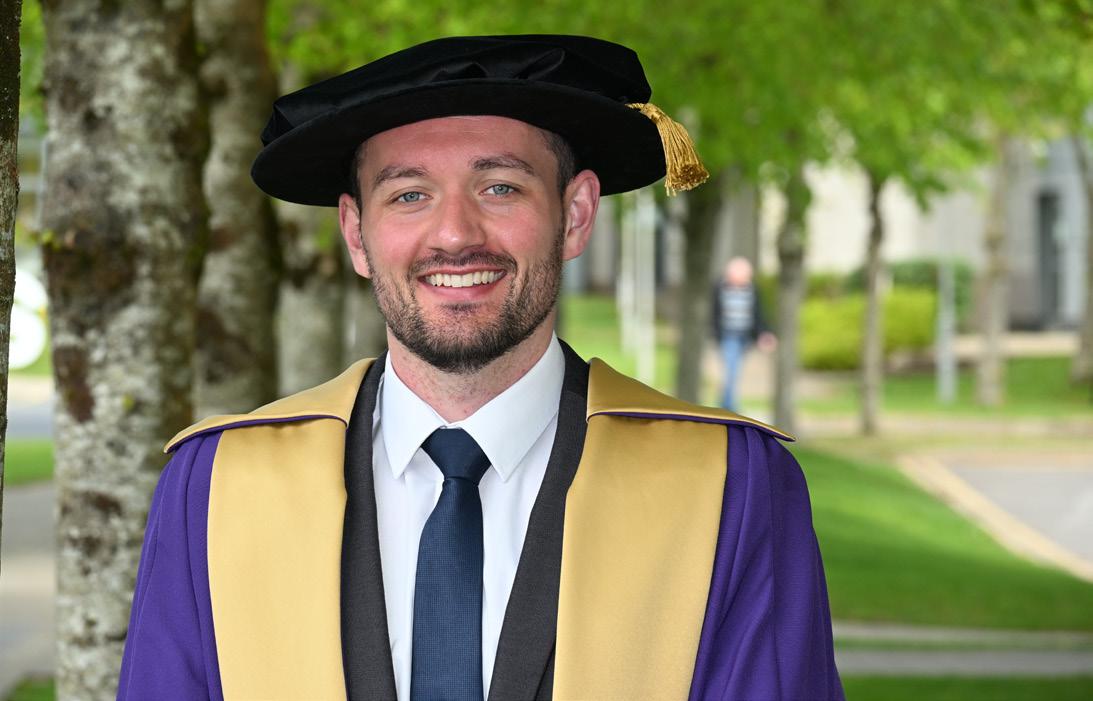
Dr Andrew McGeever who graduated from ATU with a PhD.
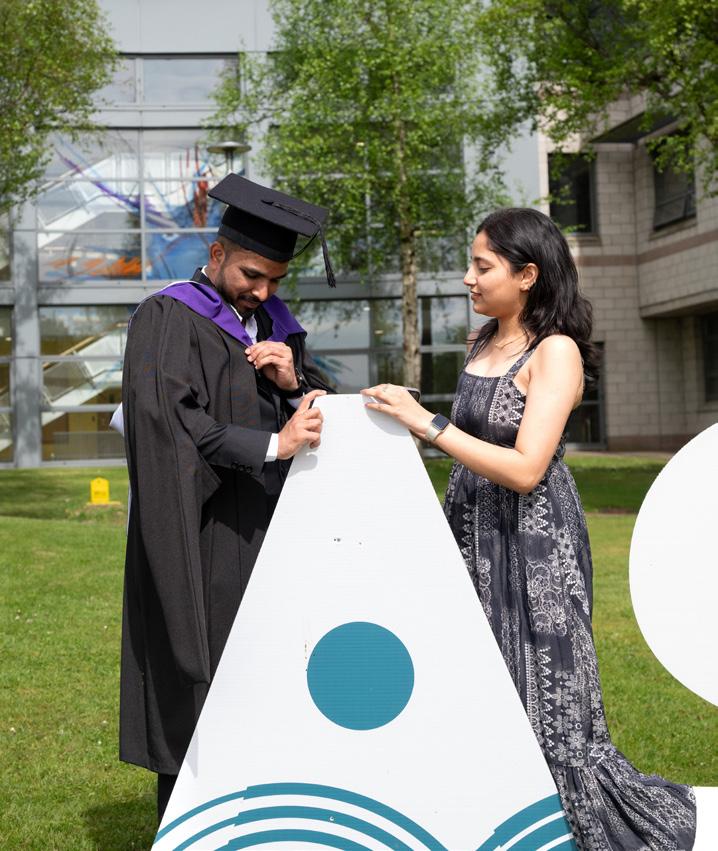
Manish Potlacheruvu and Swetha Genepally at ATU’s Spring Conferring.
Kristian Mallon graduated with a PhD titled ‘The Individual and Societal Impact of a Diagnosis of Inflammatory Bowel Disease in Ireland’. He is pictured here with Niamh Doherty.
Graduate Lapree Naube and friends celebrate at ATU’s Spring Conferring in Galway.
Graduates Thea Downey, Canada, and Brigid MacMurrough, Co Donegal at ATU’s Spring Conferring in ATU Sligo.
PhD graduates, Dr Tansy Ryan and Dr Maria Brown at ATU’s Spring Conferring.
Graduate Medina Ribic Hadzic, with her husband and son.
Engaged Research in Action
Are we flushing clean rainwater down the drain?
As climate change puts growing pressure on Ireland’s drainage systems, new research at ATU asks whether capturing rain at home could help reduce sewage overflows and ease the strain.
Writing on RTÉ Brainstorm, Dr Ruth Quinn, lead supervisor and researcher at ATU notes: “Rain is often seen as a nuisance in Ireland, but in the face of climate change and longer periods of drought, it is time to reframe it as a resource.”
One of the PhD researchers who is supervised by Dr Quinn, Muteeb Ahmad Sheikh is examining how simple rainwater harvesting systems could ease sewage overflows and relieve strained drainage networks across Ireland.
Why are our drainage systems struggling?
Rainfall that could be captured and reused is disappearing into drainage systems that are already under strain during heavy downpours. In Ireland, annual rainfall ranges from about 800mm in the east to over 2,000mm in the west, much of it running off roofs and hard surfaces.
When heavy rain arrives, the effects are familiar: bathing water warnings appear, rivers and coasts come under pressure, and in some towns stormwater and wastewater still share the same pipes. When those systems are overwhelmed, diluted sewage can overflow into the environment through Combined Sewer Overflows.
Recently one of the largest wastewater infrastructure projects undertaken in Ireland was completed to help resolve sewage overflow in Athlone. The construction of the €114 million Athlone Main Drainage Scheme has been described as a once in a generation project
But projects of this scale also raise a wider question: is expanding sewer infrastructure alone enough, or should we also be asking why so much clean rainwater is being sent into the system in the first place?
Can rainwater harvesting relieve the pressure?
According to PhD researcher Muteeb Ahmad Sheikh, up to a third of roof rainfall could be intercepted at
source. He says: “Early modelling simulations using long-term rainfall data suggest domestic systems could retain around 18–30% of annual roof runoff, depending on tank size and demand.”
This aligns with previous studies showing that rainwater harvesting systems can significantly reduce runoff volumes and peak flows at the household scale.
However, this effect is not constant. During heavy storms, retention drops to around 4–7% as tanks fill quickly, meaning these systems are not flood protection on their own.
“Sewer systems rarely fail because of a single storm event. They fail under repeated pressure over time,” explains Muteeb.
Even small reductions in runoff, and slight delays in peak flow, can reduce stress on infrastructure. Scaled across thousands of homes in Ireland, those small changes begin to matter.
A typical household tank might hold around 500 litres. On its own, that is modest.
“But 1,000 homes create around 500 cubic metres of temporary storage – roughly half an Olympic swimming pool taken out of the drainage network during rainfall”, says Muteeb.
Individually, the impact is small, but collectively it begins to resemble infrastructure. If systems retain even part of annual runoff, they reduce how much water enters combined sewers over time.
Questions for Ireland’s water future
However, rainwater harvesting will not solve sewer overflows on its own. Large-scale infrastructure investment like the Athlone project is still essential, but centralised systems are expensive and slow to deliver, and they often respond after problems emerge.
Distributed systems work differently because they act at the source. They also align with sustainable drainage principles, which aim to capture the first flush of rainfall– often the most polluted runoff.
This raises practical questions. Should rainwater harvesting be incentivised in high-risk areas? Should it be included more explicitly in planning guidance? Could neighbourhoodscale pilots demonstrate cumulative impact? And should distributed storage be included in drainage modelling?
Perhaps the question is not whether we can afford to store rain where it falls, but whether we can afford not to.
This research is funded under RISE@ ATU with supervision by Dr Ruth Quinn, and Dr Karla Munozesquivel with support from the JANUS Research Centre. RISE@ATU is co-funded by the Government of Ireland and the European Union through the ERDF Northern and Western Regional Programme 2021-27.
Muteeb Ahmad Sheikh is a PhD researcher at ATU studying how rainwater harvesting could help tackle water shortages, flooding and pollution in coastal communities. Before starting his doctorate, he spent three years working with WWFPakistan on water, sanitation and hygiene projects, experience that now shapes his research approach. His work focuses on how domestic rainwater harvesting and sustainable drainage systems can capture runoff before it becomes polluted, helping to improve water security while making neighbourhoods more resilient to climate pressures.
About Muteeb Ahmed Skeikh
Why coworking doesn't automatically create community
Hybrid working is game-changing for individuals, their families, and our region. It also takes pressure off large urban centres and revitalises local communities, whether you are working from home or availing of the facilities in a coworking space. This new way of working makes a real difference for everyone.
What began as a temporary pandemic response has become a long-term transformation of how, where and why people work. Although remote working may have solved the challenges of long commutes, it has raised a new question: how do we stay connected to others when work moves home.
Remote and hybrid work are now a permanent part of Ireland’s labour market and researchers, organisations, and policymakers are trying to understand what makes them sustainable.
Dr Valerie McTaggart’s study, “An investigation into how coworking spaces can be developed to support end user buy-in,” suggests that the future of coworking in Ireland is being shaped by three ingredients: space, community, and professional value.
Dr McTaggart says: “We spent a lot of time asking whether remote work could work. But far less time asking what people need for it to work well.”
Dr McTaggart carried out the research into remote working with Dr Christopher McLaughlin (Ulster University) and coworking spaces in collaboration with Dr Geraldine
Gorman, and Esther Quinn, bringing together perspectives on remote working and coworking across Ireland.
Productivity depends on more than Wi-Fi
Early debates about remote work often focused on technology: Did workers have laptops? Broadband? Video calls? But those were only the starting point.
“What really stood out was how much people’s experiences depended on the conditions around the work, not just the tools,” says Dr McTaggart.
Workers who thrived typically had a dedicated workspace, reliable digital
infrastructure, clear boundaries between work and home, and opportunities for social interaction.
Without those supports, remote work quickly became exhausting rather than empowering.
“ People were working from kitchen tables, family sizes increased as children returned home due to lockdowns, children were homeschooled, all putting additional pressure on remote workers. But this quickly settled down as people and organisations began to develop solutions ”
– Dr Valerie McTaggart
The
promise (and reality) of
coworking spaces
As remote work settled in, coworking spaces began appearing across Ireland. They were often seen as the solution to social isolation. A place to work near home while staying connected. But the research uncovered a surprising reality.
Dr McTaggart explains: “Coworking spaces don’t automatically create collaboration. Just putting people in the same room doesn’t mean interaction happens.”
Successful coworking spaces share three features: high-quality workspace design, active community facilitation and opportunities for professional development. When those elements align, people build real connections.
Designing the future of work, with workers in mind
Without question hybrid working is reshaping where people live, how businesses recruit, and how towns plan their futures. Local authorities, enterprise agencies, and employers are investing heavily in remote work hubs and coworking initiatives. But that infrastructure alone is not enough.
“ If we want
coworking
spaces to succeed long term, we must design them for people, not just productivity.”
Studies surveying remote workers and conducting interviews with users, managers, and policy makers involved in coworking spaces, have given us a clear picture of how people experience changing workplace models. We need to think about social connection and community building, not just desks and broadband.
The research also speaks directly to rural development and digital inclusion policy, where remote and hybrid work are increasingly central to regional growth. Looking ahead, future research will explore how hybrid models that combine home, office and coworking spaces can best support productivity, community and long-term regional economic resilience.
The goal is simple: understand how workplaces can support both performance and social connection.
Dr Valerie McTaggart
New research to address gaps in nutrition support for young adult cancer survivors
Leah Walsh, a first-year PhD researcher at ATU and recipient of a Government of Ireland Postgraduate Scholarship Programme, has launched a study to develop tailored nutrition support for young adult cancer survivors aged 18-39, a group widely recognised as underserved in cancer survivorship research.
Addressing the nutrition gap
Her research seeks to address a significant gap in nutritional care. Many survivors face physical, psychological and financial challenges that affect their nutritional health and long-term wellbeing.
advisory group using a Patient and Public Involvement (PPI) approach, the study aims to create a nutrition intervention that is both practical and evidence based.
Working closely with a patient voice.
Leah said her experience as a secondary school teacher gave her a unique perspective on this transformative stage of life. She said: “ Young adults are navigating education, careers, relationships, and independence. A cancer diagnosis at this point can disrupt every aspect of their lives. I knew I had to pursue research that gives this underserved population a
Young adult cancer survivors face a range of challenges, including nutrition-impact symptoms such as taste changes, nausea, or pain while eating. Despite improving survival rates, this age group often falls between paediatric and older adult care pathways.
At present, existing nutritional guidelines are neither agespecific nor adapted to the unique physiological requirements of cancer survivors. Consequently, there is a significant lack of targeted dietary guidance available for this
demographic. Leah’s research aims to fill this gap with evidence-based, patient-centred nutritional support.
Working with young adult survivors
“This research is about listening,” she added. “By working directly with young adult cancer survivors, we hope to create an intervention that is realistic, meaningful, and improves both nutrition and quality of life.”
The project is supervised by Dr Laura Keaver, senior lecturer in Human Nutrition and Dietetics at ATU, and Dr Gemma Pugh, Head of PatientReported Outcomes Research at Anthony Nolan. Anthony Nolan is the charity that makes lifesaving connections between people with blood cancer and blood disorders, by matching them with stem cell donors.
Highlighting the importance of Leah’s research Dr Keaver said:
“ Leah’s research addresses a critical gap in cancer survivorship care. By working directly with young adult cancer survivors, this study will develop practical, evidence-based guidance to support their health and wellbeing during a pivotal stage of life.”
Leah’s journey into research began during her undergraduate Human Nutrition degree at ATU, where she contributed to oncology research papers while working as a research assistant.
She later pursued a master’s in education and worked as a secondary school science teacher, deepening her understanding of the vulnerabilities young people face.
Leah Walsh, a first-year PhD researcher at ATU and recipient of a Research Ireland scholarship.
Engagement and Innovation
Students highlight how ATU’s entrepreneurial ecosystem prepares them for their
ATU is continuing to build a vibrant culture of innovation and entrepreneurship across its campuses, with students describing their experiences as exciting, confidence-building, and highly valuable in preparing them for modern workplaces.
and industry practice — while also having fun, building friendships, and discovering new possibilities for their future.
These initiatives encourage students to develop transferable skills including leadership, communication,
Through a growing ecosystem of initiatives including workshops, competitions, mentoring programmes, innovation challenges, enterprise development supports, and entrepreneurial training, students from diverse disciplines are stepping into experiences that mirror professional environments
teamwork, project management, innovation, critical thinking, adaptability, and presentation skills.
Feedback gathered from students who participated in programmes such as the EU Green Innovation Days, ATU Student Entrepreneur Awards and Student Inc highlight the important role entrepreneurship education
future
plays in graduate development, employability, and career readiness.
For many students, the journey began with curiosity, an idea, or simply the willingness to try something new. What followed was often a major boost in confidence, communication skills, resilience, creativity, and belief in their own potential.
One student described their experience of the EU Green Innovation Days as “fun and confidence - growing”, explaining that the programme showed them “you don’t need to win something to have fun”. Reflecting on the experience, they said they had learned to “take losing less personally”, while developing valuable public speaking skills and considering the possibility of starting a business in the future.
Participation in the Phase 1 Enterprise Ireland Programme and the Student Inc. Programme helped Renar Sternfiled transform a college assignment into a genuine entrepreneurial pathway. Renar, who graduated with a Bachelor of Arts (Honours) Degree in Product Design in 2025, said: “It was liberating to pursue a project that grew out of a college assignment.”
Students described entrepreneurship not simply as starting a business, but as developing the mindset and professional capabilities required to succeed in a wide range of careers and industries. They highlighted the importance of learning how to identify opportunities, communicate ideas effectively, work with others, respond
to challenges, and apply creative thinking to real-world problems.
By creating accessible pathways for students at every stage of their academic journey, ATU helps bridge the gap between academic learning and professional practice by allowing them to build industry-relevant skills in authentic, energetic and supportive environments.
ATU’s innovation and entrepreneurship ecosystem connects students with mentors, industry experts, enterprise agencies, and interdisciplinary learning opportunities that encourage experimentation, collaboration, and professional growth. By engaging directly with industry-facing projects and enterprise-focused activities, students gain insight into workplace expectations while developing the confidence, adaptability, and practical
skills needed to thrive in their future careers.
“ Whether students go on to launch a startup, join an established company, work in creative industries, or lead projects within their communities, the experiences gained through ATU’s entrepreneurial ecosystem are helping them graduate with the confidence and skills to make an impact from day one.”
To learn about the 2026-2027 calendar of entrepreneurship events for students please contact ATU’s Student Entrepreneurship Officer: grace.latham@atu.ie
Digital hubs driving rural innovation, partners discuss at CODIL workshop
Representatives from ATU delivered a thematic workshop to partners in the COVID-Disrupted Regional Innovation Ecosystems (CODIL) project which focused on the role of digital hubs in supporting entrepreneurship.
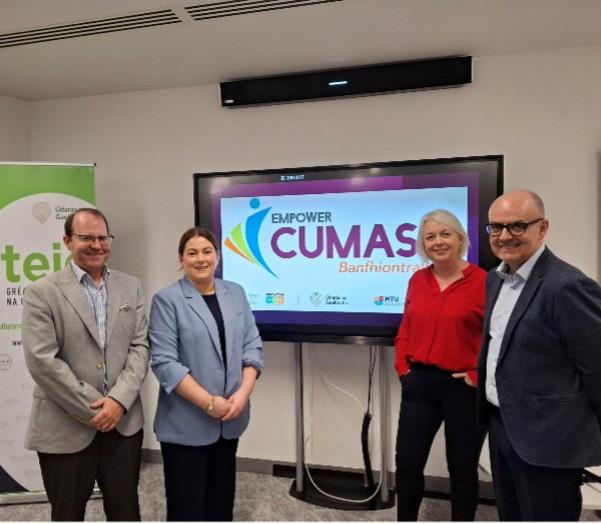
Michelle Lee, EMPOWER Cumasú Project Coordinator, ATU iHub Mayo and Geraldine Beirne, Enterprise Ireland New Frontiers Programme Manager, ATU Donegal-Sligo gave a presentation titled ‘Ag Úsáid Moil Digiteacha le Fiontraíocht a Chur Chun Cinn / Promoting Entrepreneurship using Digital Hubs’.
The presentation was followed by discussions among project partners on supporting entrepreneurship and innovation in rural and regional areas. The meeting, hosted by Údarás na Gaeltachta in gteic @ Gaoth Dobhair, provided valuable insights into how regional enterprises and innovation hubs contribute to local economic resilience and development.
The CODIL project aims to improve regional innovation policy instruments to better support the emerging distributed-team innovation model and its key component - highly skilled mobile knowledge workers. The project partnership spans several European regions, and to find out more about CODIL please click here.
Left to right: Pádraig Ó Beaglaoich, Ceannasaí Mol Digiteach (gteic) - Údarás na Gaeltachta; Michelle Lee, EMPOWER Cumasú Project Coordinator – ATU iHub Mayo; Geraldine Beirne, Enterprise Ireland New Frontiers Programme Manager - ATU Donegal-Sligo and Mícheál Ó Duibhir, Feidhmeannach Forbartha - Údarás na Gaeltachta.
Photo by Aisling Nic Aoidh (Údarás na Gaeltachta)
iHub companies accelerate innovation across MedTech and Emerging Technologies
The pace of innovation across the ATU iHub ecosystem continues to grow, with recent months delivering a series of major milestones for client companies operating at the forefront of medtech, digital health, advanced manufacturing, and inclusive technology.
From FDA regulatory clearances and international industry awards to investment backing and national recognition for women-led innovation, the latest successes highlight the growing impact of the ATU iHub network in supporting ambitious founders and globally scalable technologies.
A strong theme emerging across these developments is the increasing maturity of the regional innovation ecosystem. Companies supported through ATU iHub are no longer solely early-stage ventures; many are now progressing through advanced regulatory pathways, securing international investment, generating clinical evidence, and expanding into global markets.
The breadth of activity also reflects the diversity of innovation taking place, spanning women’s health, cardiovascular technologies, chronic disease management, movement analytics, sustainable manufacturing, and inclusive consumer products.
Minimally invasive technology for Chronic Venous Disease
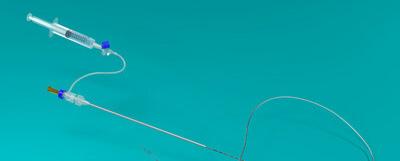
One of the standout developments came from ATU iHub client company InVera Medical who recently received FDA 510(k) clearance for its InVera Infusion Device, a minimally invasive catheter-based technology designed for the treatment of Chronic Venous Disease (CVD).
Affecting millions of people globally, CVD remains significantly under-treated despite its impact on patient mobility, pain, and quality of life.
InVera’s technology introduces a non-thermal alternative to traditional vein treatment procedures, eliminating the need for multiple painful anaesthetic injections associated with thermal ablation techniques.
The company reported positive 12-month pilot study results, including 90% vein closure rates and significant improvements in patient symptoms and quality of life outcomes. Importantly, researchers reported no serious adverse events during the study period. FDA clearance and CE Mark approval now position the company for commercial expansion across both US and European markets.
The achievement is particularly notable within the context of the ATU iHub ecosystem. InVera Medical becomes only the second client company within the network to achieve FDA clearance, following earlier success by Rockfield Medical Devices. It demonstrates the increasing capability of regional innovation infrastructure to support companies through highly complex product development, clinical validation, and regulatory approval processes that are essential for scaling medtech businesses internationally.
Advancing patient-centred palliative care solutions
Recognition for their innovation, vision, and commitment to improving patient care through advanced palliative care technologies, ATU iHub client company SymPhysis Medical was named Emerging Technology Innovation of the Year at the prestigious Tech Excellence Awards.
Founded in 2018 by CEO Tim Jones and Chief Scientific Officer Dr Michelle Tierney, SymPhysis Medical is a Galway-based medtech company specialising in patientcentred palliative care solutions, particularly for managing fluid buildup in late-stage cancer patients.
Enhancing access and visualisation during caesarean sections
Progress at NUA Surgical is helping to further drive momentum in the women’s health sector. NUA Surgical is an innovative medical device company focused on improving maternal health, particularly in obstetrics and gynecology.
Founded in 2019, the company has developed the SteriCISION C-Section Retractor, a self-retaining surgical tool designed to enhance access and visualisation during caesarean sections, ultimately reducing complications and improving safety for both mothers and babies.
The company achieved ISO 13485:2016 certification for the design and development of sterile devices for caesarean deliveries, a major milestone for any medical device company progressing toward international commercialisation.
ISO 13485 certification is recognised globally as the benchmark quality management standard for the medical device sector and demonstrates strong organisational capability in design control, regulatory compliance, and risk management.
Alongside this regulatory milestone, NUA Surgical has continued to expand its team and was shortlisted across multiple categories at the Life Science Industry Awards 2026, including Company of the Year and Innovation of the Year. COO Marie-Therese Maher also received individual recognition through a nomination for the Women in Life Sciences Award.
Revolutionising exercise technique with real-time data and analysis
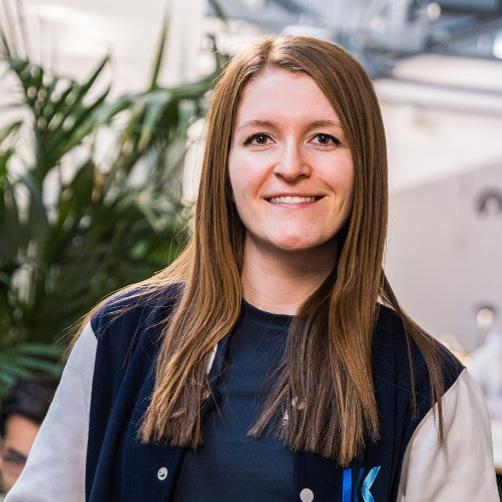
KinetikIQ founder Emma Meehan
Beyond medtech, the ATU iHub ecosystem is also supporting innovation in digital health and movement analytics. The company, KinetikIQ, has developed a software platform capable of delivering real-time feedback and analysis on exercise technique, with applications across physiotherapy, rehabilitation, fitness, and professional sport.
The platform addresses a growing global demand for technologies that combine movement science, preventative healthcare, and datadriven performance optimisation.
Already gaining traction in professional sport environments, KinetikIQ is positioning itself within the rapidly expanding movement health sector, where digital tools are increasingly being integrated into healthcare delivery and physical performance management.
The company, led by founder Emma Meehan – an Enterprise Ireland New Frontiers graduate – recently secured backing from Symvan Capital as part of its SEIS investment portfolio.
National recognition for women-led innovation
Another major highlight for the innovation community came through national recognition of four women-led companies connected to ATU iHub in the ThinkBusiness.ie ‘Women-Led Start-Ups to Watch 2026’ list. The recognition showcased founders operating across a broad spectrum of innovation sectors, while also underlining the growing importance of inclusive entrepreneurship within the Irish startup landscape.
Among those recognised was ByoWave founder Eibhlin O’Riordan, whose company develops modular adaptive gaming controllers
designed to make play more inclusive for children with disabilities.
Dr Lucy O’Keeffe of CroíValve was recognised for her leadership in advancing structural heart technologies through a company that operates research and development units within the ATU iHub network.
Additional recognition went to Margaret Rae of Konree Innovation, which is focused on sustainable manufacturing and materials innovation, and Dr Michelle Tierney of SymPhysis Medical for her continued leadership in women’s health innovation.
Taken together, these achievements demonstrate the increasing
sophistication, ambition, and international relevance of companies emerging from the ATU iHub ecosystem. They also reinforce the strategic importance of regional innovation centres in supporting entrepreneurship, research commercialisation, and highpotential startup growth across Ireland.
Supporting SMEs to take practical steps in digital transformation
Small and medium-sized manufacturers are under increasing pressure to adopt digital technologies, improve sustainability, and protect their operations from growing cyber risks. Yet for many, the challenge is not awareness – it’s knowing where to start.
With limited time, resources, and in-house expertise, many small and medium-sized enterprises (SMEs) struggle to move beyond early-stage digital initiatives. Disconnected systems, poor data visibility, and uncertainty around investment decisions continue to slow progress, while cybersecurity risks increase as operations become more connected.
As part of the TRANSFORM project – a European initiative led by AIM Centre (Ireland), in partnership with ESTIA Institute of Technology (France) and IESE Business School (Spain) and funded by the European Union – a series of industry-led webinars has highlighted a clear and practical way forward for SMEs navigating these challenges.
Three-stage approach to digital transformation
The webinars point to a simple three-stage approach to digital transformation.
The first stage focuses on purpose – identifying where technologies such as artificial intelligence (AI) can deliver real business value. This includes practical applications such as improving energy efficiency, reducing waste, and supporting sustainability targets.
The second stage focuses on implementation. A key barrier for many SMEs is not technology itself, but integration. By connecting data and systems across the production lifecycle – often referred to as the digital thread – organisations can improve visibility, enable real-time decision-making, and unlock value from existing infrastructure.
The final stage focuses on trust. As businesses adopt more connected systems, cybersecurity and governance become critical. Embedding security from the outset helps reduce risk and ensures that digital transformation can scale safely and sustainably.
Together, these insights provide SMEs with a clear starting point: focus on high-impact use cases, connect existing systems rather than replace them, and build security into every stage of the journey.
Regional collaboration and AIM Centre support
Through its work with industry, AIM Centre continues to support SMEs in taking these practical steps, including through the National AI Studio, which provides access to expertise and infrastructure to help organisations explore and implement AI in real-world settings. The centre is currently engaging with industry through its membership offering, with organisations now beginning to come on board and visit the Studio as part of this process.
Taking an incremental approach to transformation
Digital transformation does not need to be overwhelming or require significant upfront investment. Instead, organisations can make steady progress by taking practical, incremental steps that deliver measurable results.
Commenting on this approach David Bermingham, Director of AI from AIM Centre says: “The key message for SMEs is that digital transformation doesn’t have to be complex to begin with. By focusing on real business challenges and building from what already exists, organisations can take meaningful steps towards becoming more efficient, resilient, and competitive.”
Looking ahead: supporting SMEs into the future
Looking ahead, AIM’s ambition is to build on this work by continuing to support SMEs through accessible learning resources, stronger collaboration between industry and education, and the development of practical tools that help organisations navigate digital transformation with confidence.
The full webinars are now available to watch on AIM Centre’s YouTube channel, providing SMEs with ongoing access to practical insights and guidance. You can watch them by clicking here.
AIM Centre is supported by its funding partners ATU, Sligo County Council and Leitrim County Council, reflecting a strong regional collaboration to drive innovation and industry engagement.
AIM Centre
AIM Centre is Ireland’s leading centre for applied artificial intelligence (AI), supporting industry in the adoption of AI and digital technologies. Based in Sligo and Galway, AIM Centre works with SMEs and industry partners to deliver practical solutions across smart manufacturing, data analytics, and digital transformation.
As part of this mission, AIM Centre leads the National AI Studio, an Enterprise Ireland funded initiative designed to accelerate AI adoption across Irish industry, providing businesses with access to expertise, infrastructure, and support to explore, test and implement AI solutions in a practical and scalable way.
The AIM Centre in Sligo
A gathering of transformative educators at DigitalEd conference
On 13 May this year, educators, researchers, and innovators gathered at ATU Galway for the DigitalEd 2026 Conference – a flagship annual event exploring the evolving intersection of digital education, sustainability, and artificial intelligence (AI) led by the ATU Teaching and Learning Centre transformative education team.
Under the theme ‘Future -Ready Universities: Sustainable Digital Practices and Pedagogical Uses of AI in Teaching and Learning,’ the conference signaled a decisive moment for higher education: one where institutions are not just adapting to change but actively shaping it.
Delivered in partnership with the GenAI:N3 network, the conference brought together diverse voices across Ireland and beyond, with over 40 sessions spanning keynote addresses, parallel presentations, lightning talks, and interactive discussions.
What unfolded across the day was not simply a programme of talks but a narrative of transformation: a collective effort to redefine how universities teach, assess, and support learners in an AI- augmented world.
Setting the context: why DigitalEd matters now
Higher education is experiencing profound disruption. The rapid rise of generative AI, the demand for flexible and inclusive learning, and the urgency of sustainability have converged to challenge traditional models. DigitalEd 2026 responded to this moment by framing universities as “future-ready ecosystems” – adaptive, ethical, and student-centred.
Across the conference sessions, key questions emerged:
• How do we integrate AI without eroding critical thinking?
• What does ethical, transparent, and inclusive digital practice look like?
• How can technology enhance not replace human learning experiences?
Keynote voices: guiding the conversation
Prof. Liz Thomas – Designing for the Commuter Student
The first keynote explored the oftenoverlooked experience of commuter students. Prof. Thomas highlighted that a significant proportion of students travel to campus, yet their needs are rarely centred on design decisions. Her presentation emphasised a “whole-provider approach,” calling on institutions to rethink systems, policies, and digital supports to promote engagement and success. A key insight noted was inclusion is not an add-on, it must be designed into the entire learning ecosystem.
Prof. Maha Bali – Compassionate Assessment in the AI Age
The second keynote shifted the focus to assessment, a space profoundly impacted by AI. Prof. Bali challenged attendees to reconsider traditional assessment models through the lens of equity, compassion, and care.
Maha presented the following frameworks:
• The “two-lane” and “the cake mix” approach to AI use
• A “learning-equity matrix” to guide decision-making
• The importance of aligning assessment with values, not just outcomes
A key insight from the session noted assessment must evolve from policing AI use to fostering meaningful, equitable learning experiences.
Dr Louise Drumm – Ethical, Collective Futures
The final keynote broadened the lens to sector-wide collaboration. Dr Drumm highlighted how institutions can respond collectively to AI’s challenges through open education, shared values, and ethical leadership. Louise’s message reinforced the importance of community: No single institution can solve these challenges alone.
Dr Carina Ginty, DigitalEd Conference Chair.
Dr Carina Ginty, DigitalEd Conference Chair reflects on the learnings from the conference
Across the sessions, a consistent theme was that artificial intelligence should be positioned as a partner rather than a replacement in teaching and learning. Practical examples including AI-assisted interactive mathematics notebooks, lecturer-designed board games, and custom GPT tools demonstrated how AI can enhance creativity, accessibility, and student engagement when used intentionally.
This shift is accompanied by a growing recognition that traditional assessment models are no longer sufficient. Innovative approaches such as multi-stage assessments, incorporating AI-supported work alongside live defence and reflection, and ‘temporal friction’ strategies that encourage deeper thinking, highlight a move away from measuring final outputs toward understanding the learning process itself.
Equally prominent was the emphasis on ethics, transparency, and the evolving role of students within these changing environments. Concerns about bias, opaque systems, and data privacy reinforce the need for human-centred and participatory approaches to AI adoption.
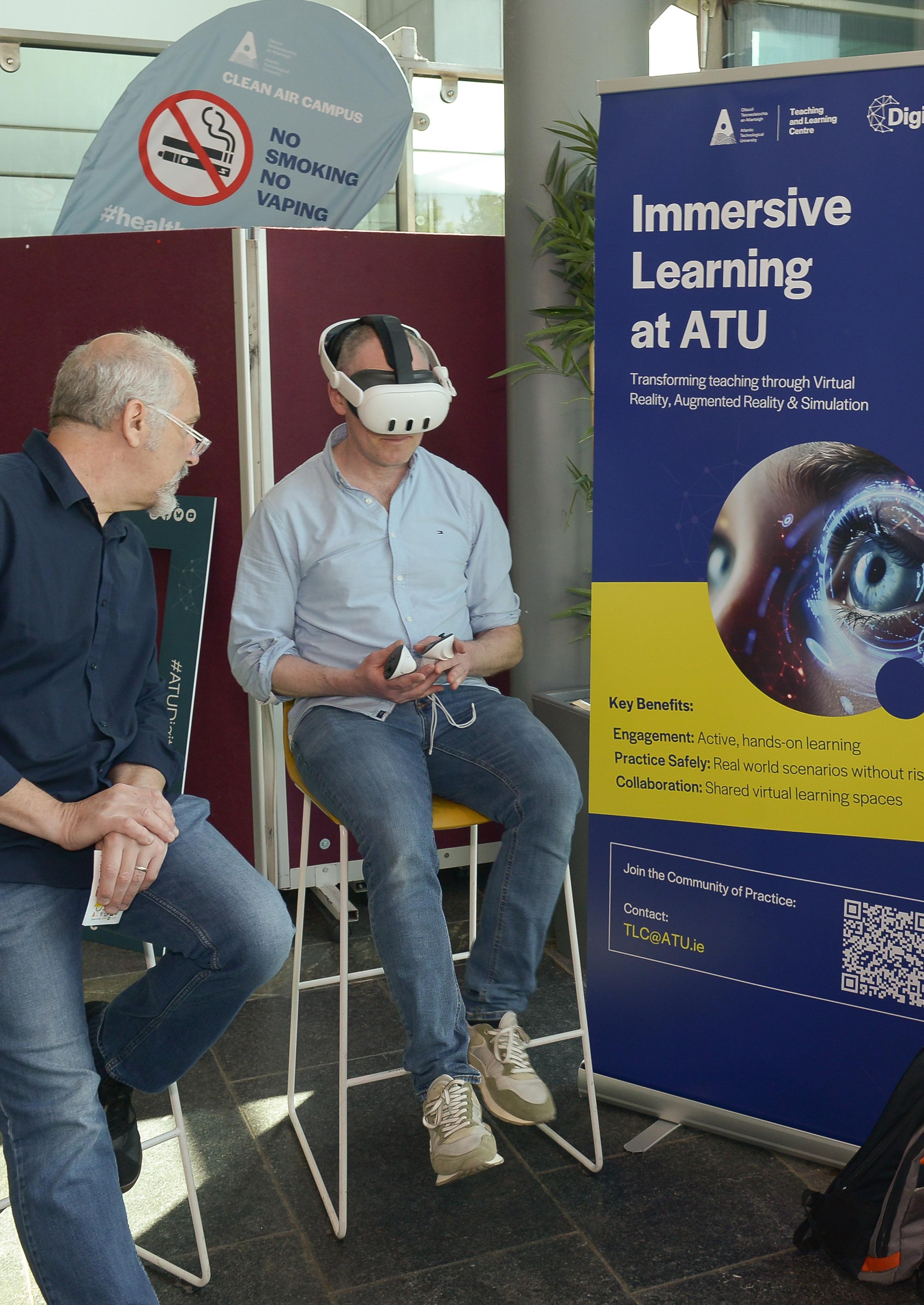
At the same time, immersive and experiential pedagogies ranging from virtual reality in accounting to hands-on simulations and real-world field experiences signal a shift toward more authentic learning. Central to all these developments is the importance of student agency: by co-designing resources, contributing to research, and building reflective portfolios, students are increasingly positioned as active partners in shaping future-ready, collaborative, and ethical higher education.
“ This conference highlights the significance of working collaboratively across the higher education sector to address the challenges and opportunities of AI technologies. The sharing of learning and resources is fundamental to shaping a meaningful response as AI continues to evolve at a rapid pace. Having a platform such as this for conversations and to stimulate thinking and problem-solving is exactly what’s needed at this critical time.”
Dr Hazel Farrell, GenAI:N3 Chair and AI lead at SETU
Call to action: charting a responsible path for AI integration in universities
An expert panel discussion chaired by Ken McCarthy (SETU) and a Gasta session chaired by Dr Tom Farrelly (MTU), concluded the conference providing a clear message and sense of responsibility that is emerging around the future direction of higher education. Institutions are now tasked with developing coherent and ethical strategies for integrating AI, while ensuring that innovation is balanced with accountability and trust.
This transformation also requires sustained investment in teaching and professional services staff development and equipping educators with the skills and confidence to engage with evolving technologies and pedagogies. At the same time, universities must prioritise student preparedness, ensuring graduates leave not only with disciplinary knowledge but with a range of transversal skills including digital literacy, critical thinking, resilience and adaptability that is needed for a rapidly changing world.
Looking ahead, these priorities must be underpinned by a commitment to education for sustainability and human-centred learning. Digital transformation should align with both environmental and educational goals, while keeping the human element firmly at the core of teaching and learning. The challenge for universities is no longer whether to adopt AI, but how to do so in ways that genuinely serve learners, educators, and society.
Next year’s DigitalEd conference will be held on 12 May 2027.
Key takeaways from DigitalEd 2026
1. Design for diversity – inclusivity must be embedded system-wide
2. Rethink assessment – focus on learning processes, not just outputs
3. Use AI responsibly – prioritise ethics, transparency, and trust
4. Embrace innovation thoughtfully – technology should support pedagogy
5. Promote playful and creative assessment methods - bridging theory and practice
6. Collaborate across institutions – shared challenges require collective solutions
Sustainability in Action
Over
100 species
recorded in campus BioBlitz
A change in the weather didn’t put off a dedicated crew of biodiversity recorders on ATU’s Galway city campus during Biodiversity Week in May. Friends of Merlin Woods joined ATU staff and students for the annual one-hour BioBlitz which recorded over 100 species of flora and fauna.
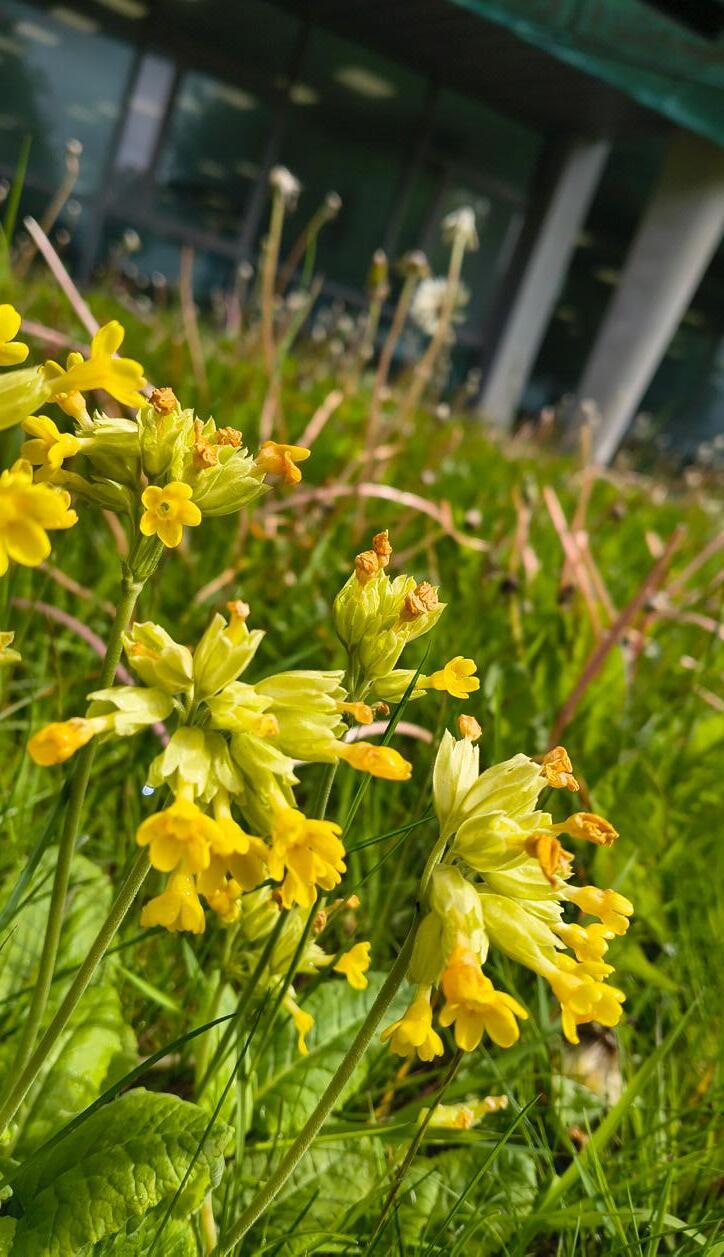
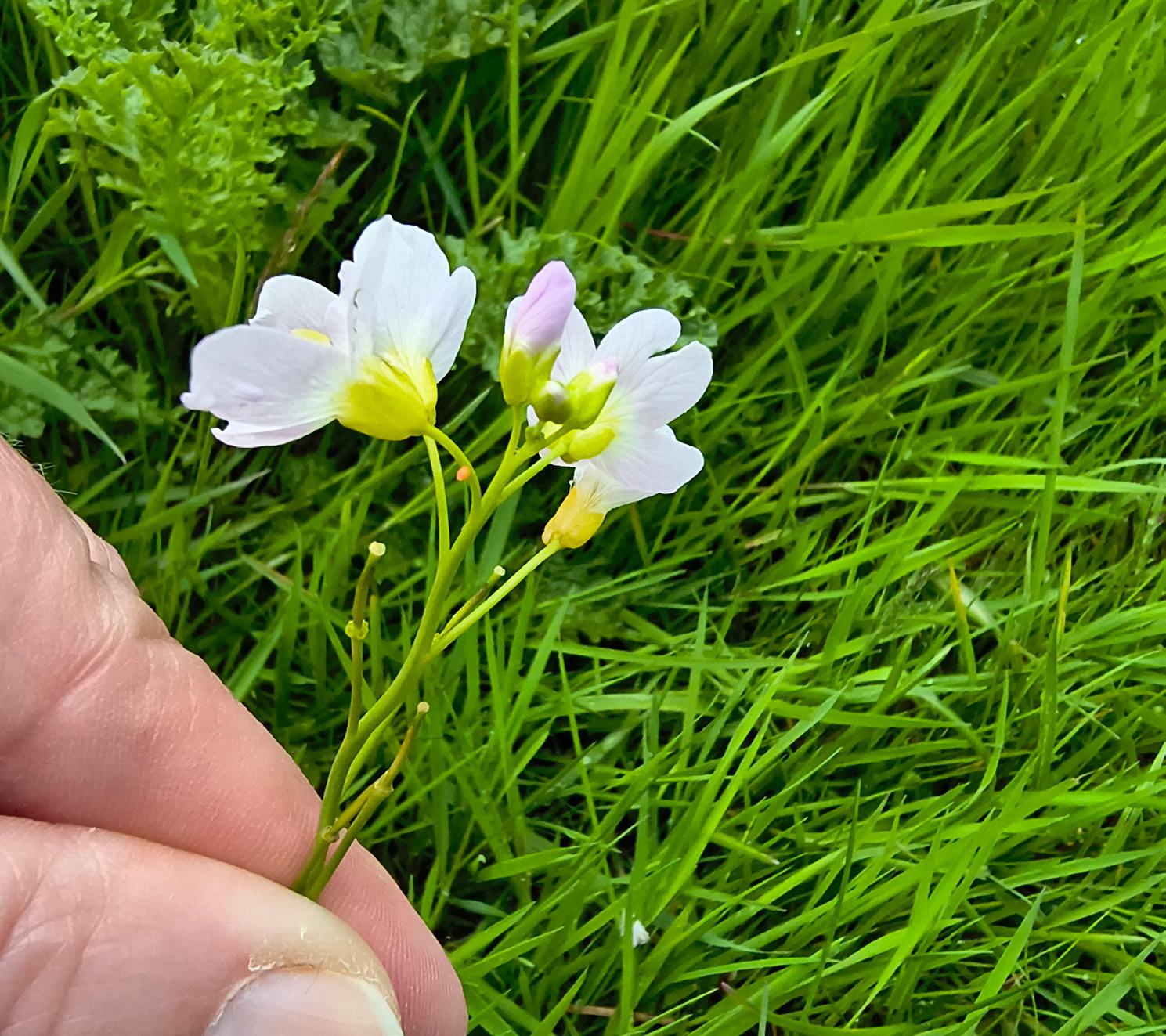
Among them were native orchids which thrive in the no-mow areas, along with orange-tip butterfly eggs found on cuckooflowers, an important food plant for their caterpillars.
When all data has been collated, they will be added to the campus data already available on the database of the National Biodiversity Data Centre. To submit your own biodiversity recordings, you can visit their website here.
growing at ATU ‘s Galway city campus.
Orange-tip butterfly eggs found on cuckooflowers at ATU’s Galway city campus.
Combining art and science to reveal the hidden pressures on
wildlife
ATU’s Wildlife Art Representing Pressures and Providing Education (WARPPed) project combines science and art to raise awareness about the pressures wildlife face due to various human activities. It promotes the message that we need to take meaningful action to reduce these threats and support biodiversity.
The project uses ethical taxidermy to produce specimens highlighting pressures such as light pollution, climate change and plastic pollution. One featured piece depicts a barn owl eating a poisoned mouse, illustrating how owls act as natural rodent controllers and how healthy owl populations can help manage rodents without the use of harmful poisons.
The WARPPEd Wildlife project was recently showcased at Dublin Zoo Native Species Festival, a three-day celebration of Irish wildlife and the people dedicated to protecting it. More than 1,100 second-level students explored a wide range of native wildlife exhibits and engaged directly with ATU scientists during the festival. To find out more about WARPPed click here
Cowslips
Meet ATU's Biodiversity Champions
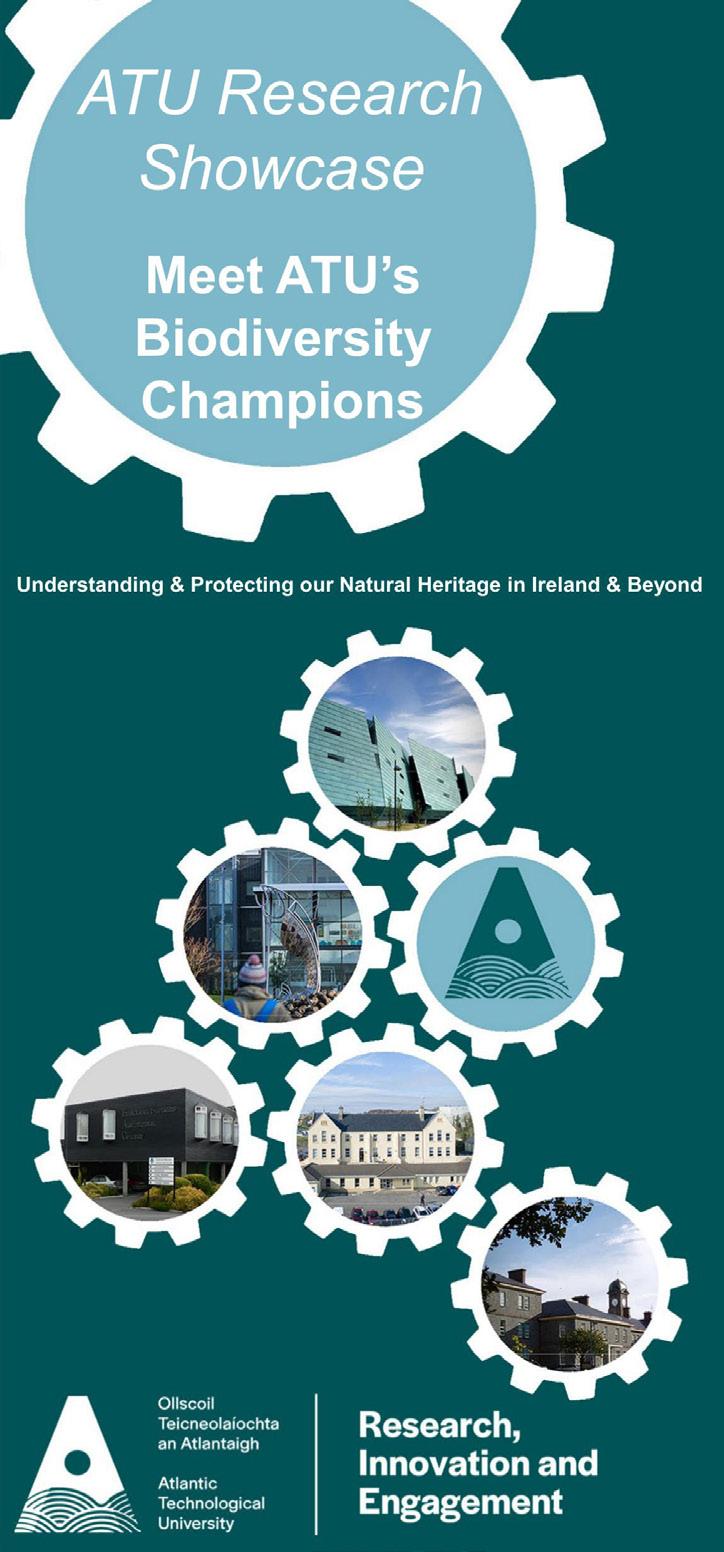
To mark Biodiversity Ireland Week 2026 in May the ATU Research Coordinator team launched the 5th edition of the ATU Research Showcase series.
This edition showcases 12 researchers striving to understand and protect our natural heritage and biodiversity in Ireland and across the globe.
The booklet highlights just a snapshot of ATU’s biodiversity expertise on how to help protect and restore biodiversity across the west and northwest of Ireland. To read the booklet please click here.
The return of the swifts
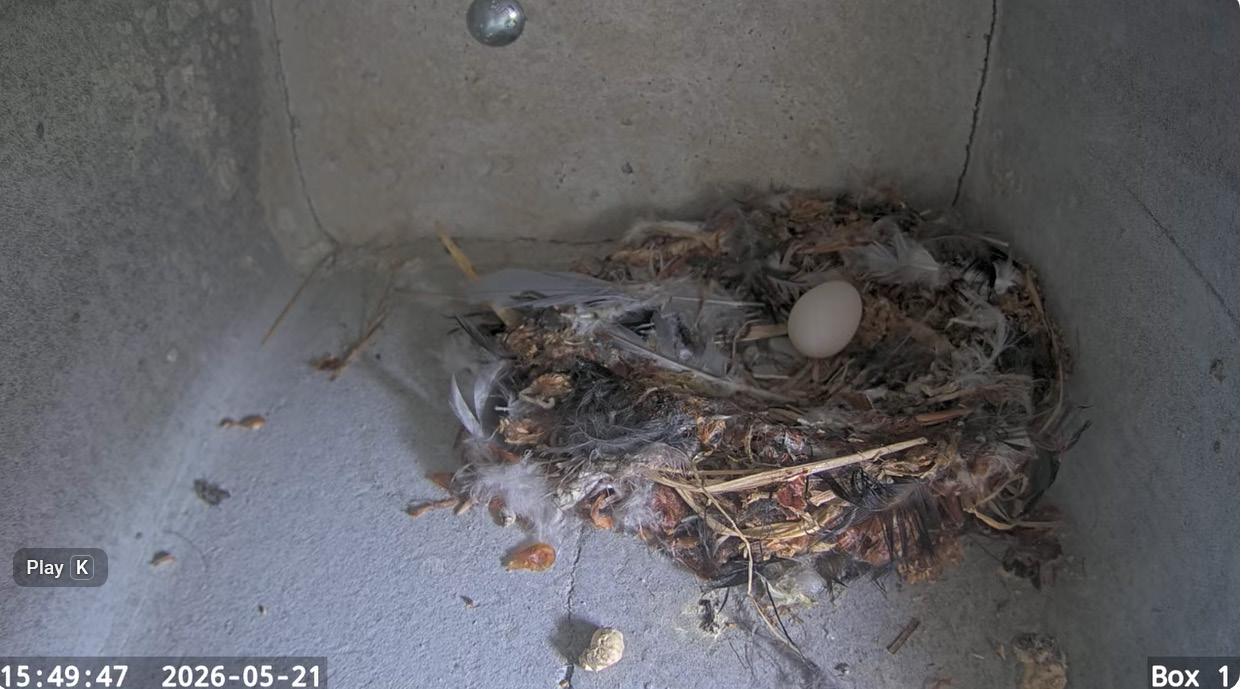
The swifts returned to Mayo and laid their first egg of the year in ATU’s nest boxes at ATU Mayo, just in time for the International Swift Conference hosted by Swift Conservation Ireland and ATU Mayo from 27-29 May.
The conference brought together over 180 swift enthusiasts from 16 countries including conservationists, researchers, ornithologists, and citizen scientists.
Opening the conference, Minister for Nature, Heritage and Biodiversity, Christopher O’Sullivan TD said:
“Each year this international event brings people together to exchange
knowledge and inform meaningful action to protect this red-listed bird. Communities here in county Mayo are true leaders in swift conservation and research, through survey work, research, conservation and collaboration. The volunteer-led use of nest boxes throughout the county is making a real difference to the prospects of the swift population and helping to prevent its decline. I would like to pay tribute to all of those involved in these efforts, including ATU Mayo, the Save our Swifts Project, Mayo County Council and the National Parks and Wildlife Service.”
To find out more about the conference please click here
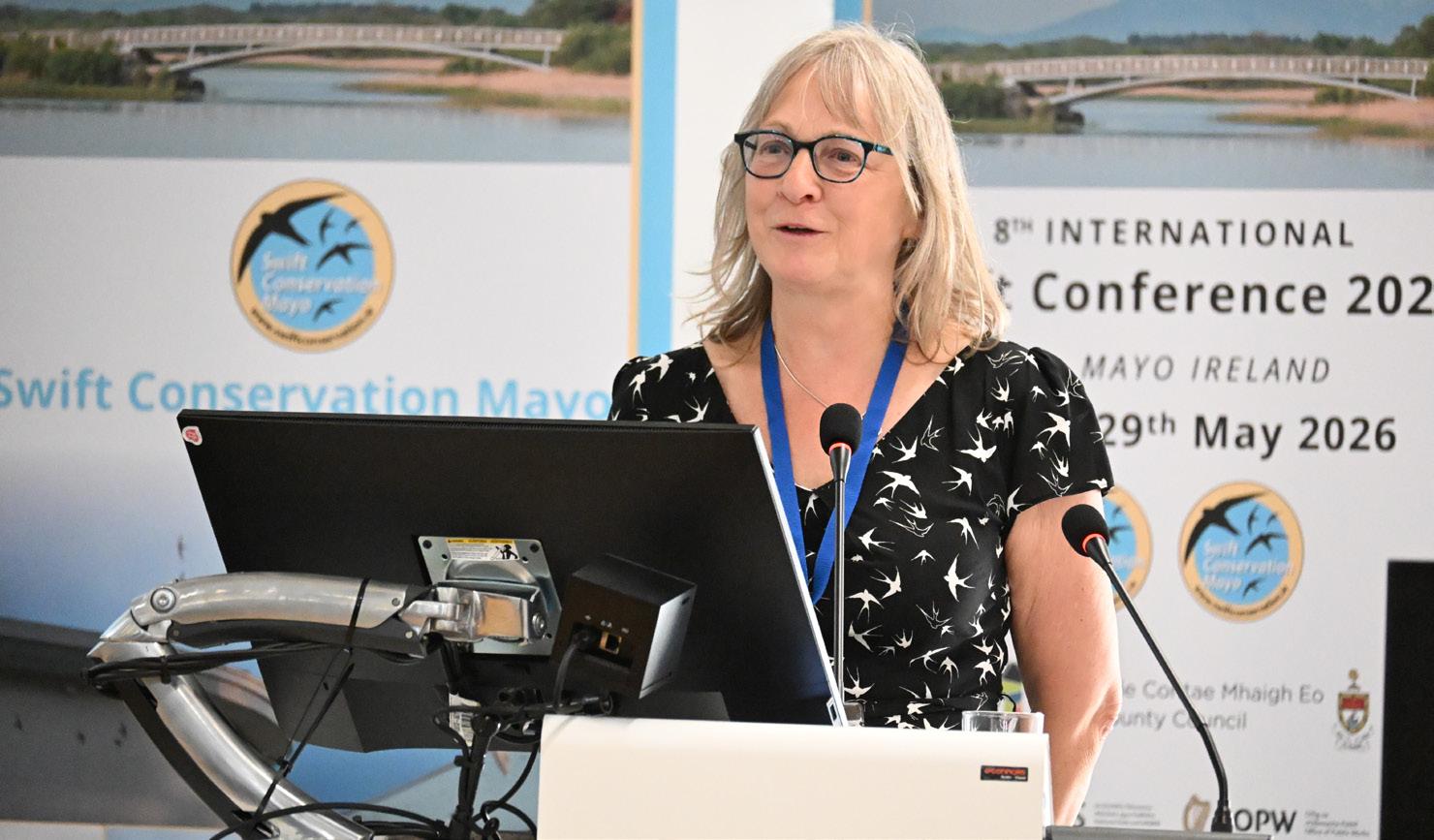
Lynda Huxley, founder of Swift Conservation Ireland/Mayo at the opening of the 8th International Swift Conference.
Ocean Voices: an immersive journey into plastic pollution and ocean care
Over 500 children, educators, families, and community members took part in Ocean Voices, a three day exhibition held at the Black Box Theatre in Galway from 30 April to 2 May. The event used art, sound, and hands on experiences to help people understand important ocean issues such as plastic pollution, loss of marine life, and caring for the sea.
Visitors entered a large inflatable structure made entirely from plastic collected on beaches around Galway Bay. They could see and touch sculptural shapes inspired by marine life and discarded plastic. Soundscapes and digital light projections added to the experience, helping visitors feel surrounded by the ocean environment.
The project grew from a year long collaboration between ATU BA Early Childhood Education and Care students and lecturers, guided by Arts Council Artist in Residence and ocean advocate JD Whitman. Its aim was to ignite students’ interest
in ocean literacy and explore how this interest could be shared with children in early childcare settings.
Ocean Voices reflected the Seven Ocean Literacy Principles and the United Nations Sustainable Development Goals (SDGs) and was informed by Irish marine research. It focused on three connected challenges: pollution, biodiversity loss, and climate change.
ATU is deeply committed to the SDGs particularly those that place quality education, climate action, responsible consumption, and life below water at their heart. Ocean Voices showed that sustainability is not an abstract concept, but something that connects people to place, to each other, and to everyday actions.
It also showed how important early childhood educators are as agents of change. By supporting future educators to explore ocean health and sustainability in creative ways, the project demonstrated
how learning about caring for the planet can begin in early childhood and spread through families and communities.
The cross-university project was led by ATU Early Childhood Education and Care lecturers Dr Rita Melia, Caroline Fahy, and Mary Skillington. Partners included the Arts Council through its Artist in Residence programme, with artists JD Whitman and Monica Munoz.
Contributors also included Galway Atlantaquaria, ATU alumna Dr Noirin Burke, and members of the Galway Childcare Committee – Geraldine Doran, Andrea Collins, and Caitriona Ryan – who first introduced the ocean literacy concept to ATU.
Alongside the exhibition, workshops in storytelling, sound, movement, and sensory play invited people to take part and connect with each other. These activities reinforced the message that education for sustainability works best when it is inclusive, relational, and rooted in community.
Student reflections on the Ocean Voices project
“ It also made me think about waste differently. Materials that would normally be thrown away were turned into something creative and visually interesting. This changed my perspective and made me more aware of the potential for reuse.”
“ The sound activity stood out to me. Sitting in the dark and listening to the sounds that we created was a bit strange at first, but it really made me think about what it might be like for life under the ocean which helped me to develop an emotional connection that I never would have had before.”
“ This newly gained knowledge has influenced my shopping habits. I no longer buy single-use plastic products. Where possible, I buy loose fruit and vegetables rather than prepacked in plastic.”
“ One thing that really stuck with me was learning that some marine species are starting to use plastic as their habitats. At first that sounds like they’re adapting, but it’s actually quite sad because it shows how normal plastic has become in their environment. ”
Ocean Voices was funded in part by the Marine Institute under the Marine Research Programme with the support of the Government of Ireland. Funding was also provided by the Irish American Partnership for Ocean Literacy and Connections project.
Equality, Diversity and Inclusion News
ATU launches First Race and Ethnic Equality Action Plan
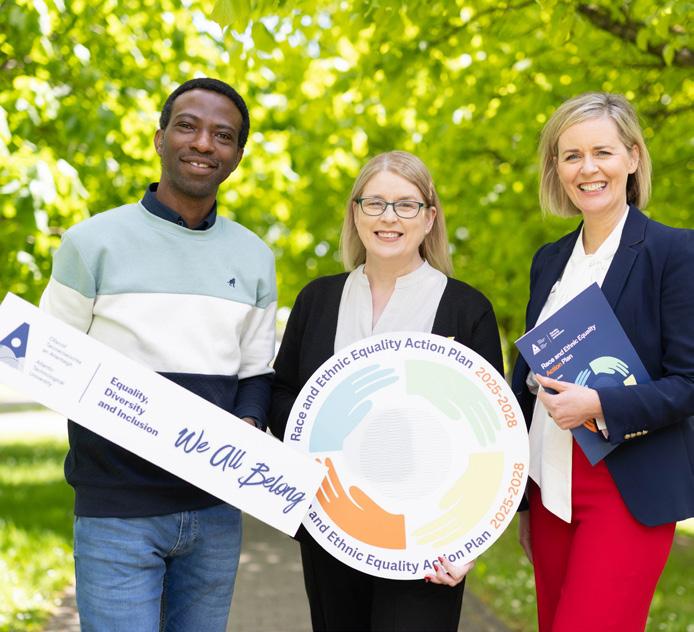
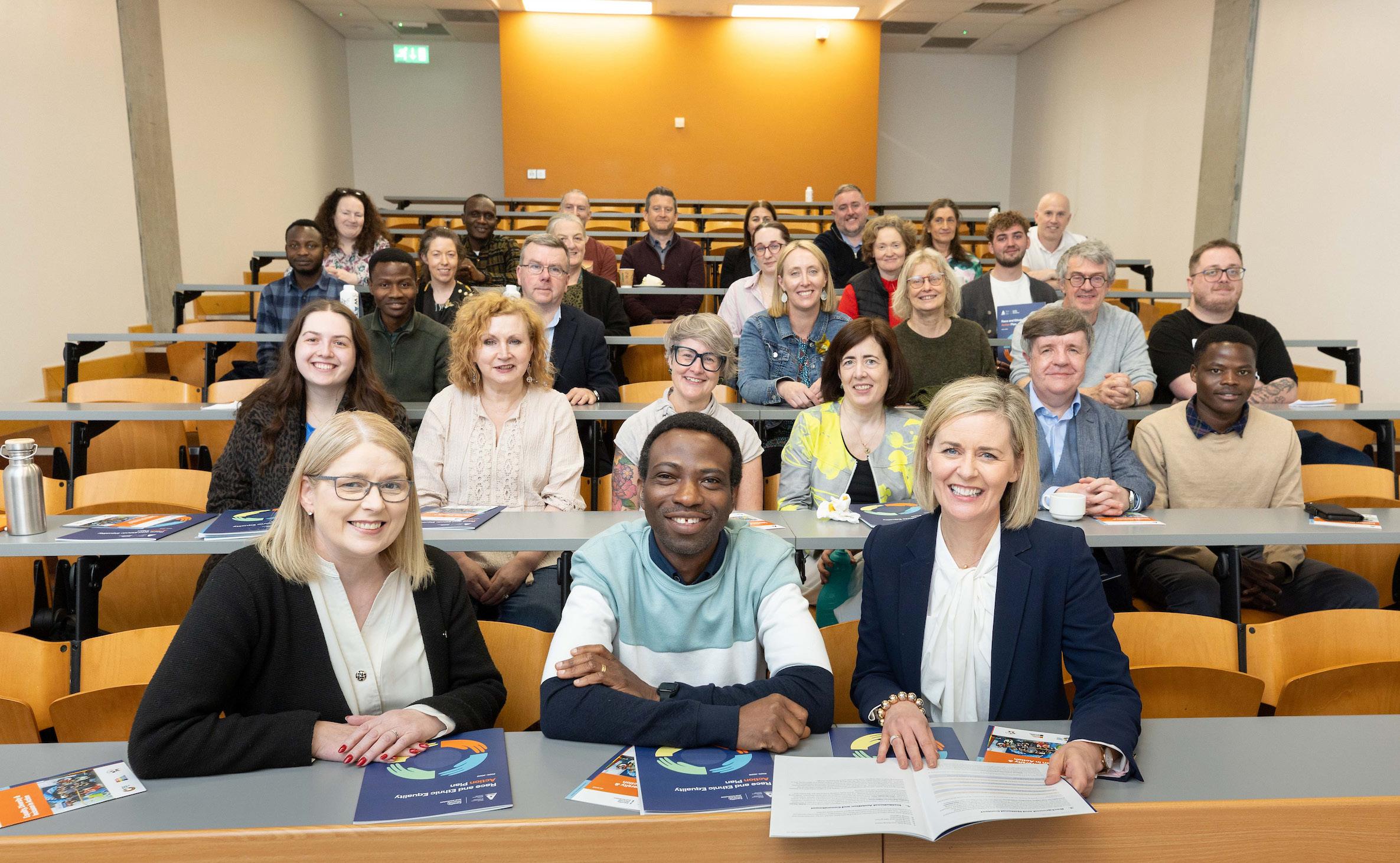
The university has taken a significant step forward with the launch of its first Race and Ethnic Equality Action Plan 2025/28, unveiled on 14 May 2026 at the ATU Galway City campus. Warmly received by staff, students and community partners, the plan signals a clear and sustained commitment to tackling racism and
embedding equality across every part of university life.
ATU President Dr Orla Flynn described the action plan as both a milestone and a call to action. She noted that racism can be “subtle, systemic, and pervasive,” and must be addressed with honesty and determination.
“ Today, we are committing ourselves to being an explicitly anti-racist university one that does not merely respond to racism when it arises but actively works to dismantle it.”
Dr Orla Flynn, ATU President
The work behind the plan has been extensive. It formally began in September 2024, led by a universitywide Race and Ethnic Equality Working Group chaired by ATU lecturer Dr Akinlolu Akande. Over two years, 22 members including staff and student representatives met regularly to shape a plan grounded in lived experience and tangible change.
Dr Akande reflected candidly on why the work matters. “Being ‘the only one’ shapes your experience in ways that
are difficult to fully explain unless you have lived it,” he said, recalling earlier moments in his own career when he felt both highly visible and unseen at the same time.
He emphasised that progress takes time saying that: “Trust is not built overnight. It is built through consistency. Through listening when it is uncomfortable. Through recognising that race equality work is not the responsibility of ethnic minority students and staff alone, but a shared institutional responsibility.”
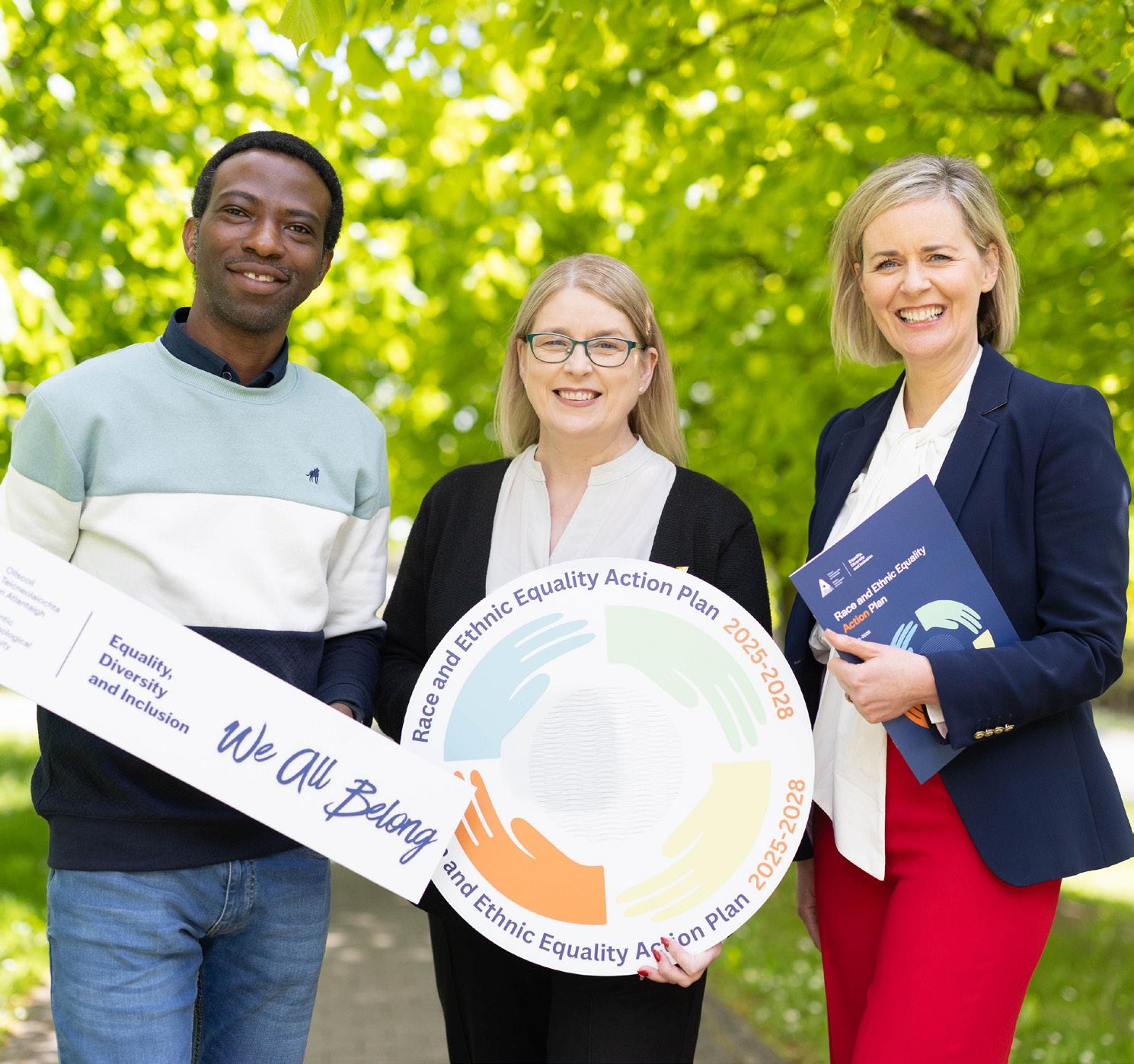
Left to right: Dr Akinlolu Akande, Prof. Jacqueline McCormack and Mary Nestor at the launch of ATU’s Race and Ethnic Equality Action Plan.
Consultation sat at the heart of the process, drawing on the voices of staff, students, senior management and external partners. ATU Galway Mayo Student’s Union Vice President for Welfare Conor Southby highlighted just how important student input has been.
“For many minority ethnic students, including Travellers and students of colour, ATU hasn’t always felt like a space that fully sees or supports them,” Conor said. “This action plan is about changing that in concrete, visible ways – so students don’t feel they have to shrink themselves to fit in, but know the university is willing to change too.”
The resulting plan is structured around six themes and outlines clear actions, timelines and responsibilities. Priorities include stronger reporting systems, better representation, more inclusive teaching practices and improved transparency in data. It is aligned with national policy, including the HEA Anti-Racism Principles and the National Action Plan Against Racism.
Speaking at the launch Dr Mary Nestor, Equality, Diversity & Inclusion Manager, acknowledged that this kind of work can sometimes be viewed as performative, but stressed its importance. The plan, she noted, is about “signalling clearly to our university community that we are doing the work and that it matters.” She emphasised that meaningful change will be measured not by words, but by everyday experiences across campuses.
President Flynn echoed that sentiment:
“ This is not just another document. It sets out in tangible ways what we will do to address race and ethnic inequality across all of our faculties and functions.”
The launch marks a beginning rather than an end. As Dr Akande reminded those gathered, real success will be measured not in documents, but in lived experience:
“ My hope is that, eleven years from now, no member of staff or student will feel the isolation, micro aggression and sometimes pure discrimination that many of us once experienced. ”
“ That they will see themselves reflected in leadership, in curriculum, in decision-making spaces, and in the everyday culture of this institution. That belonging here will not feel exceptional – but normal. We all belong.”
With this plan, ATU is setting out to make that vision real, step by step, and together.
Investing in women's leadership
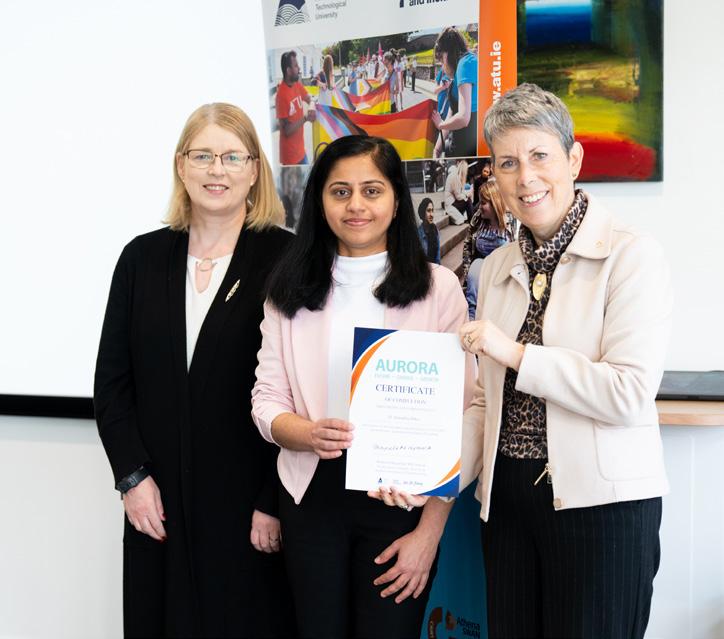
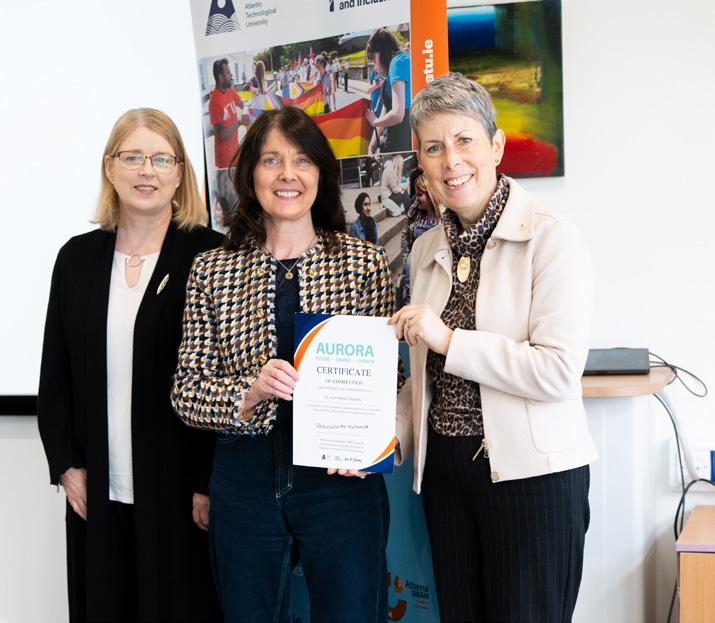
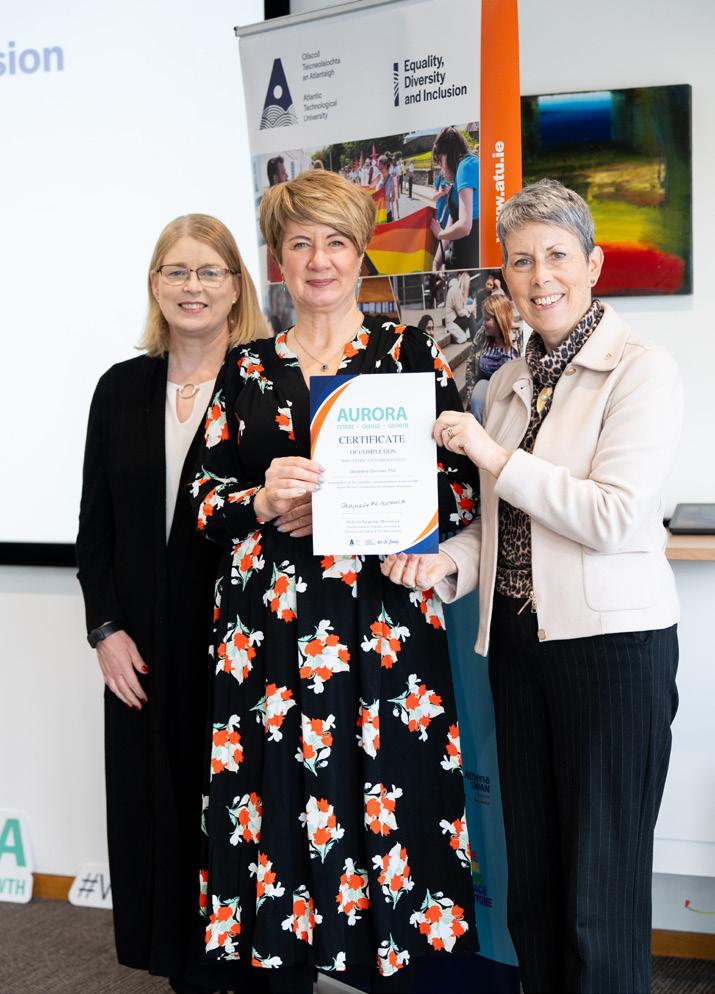
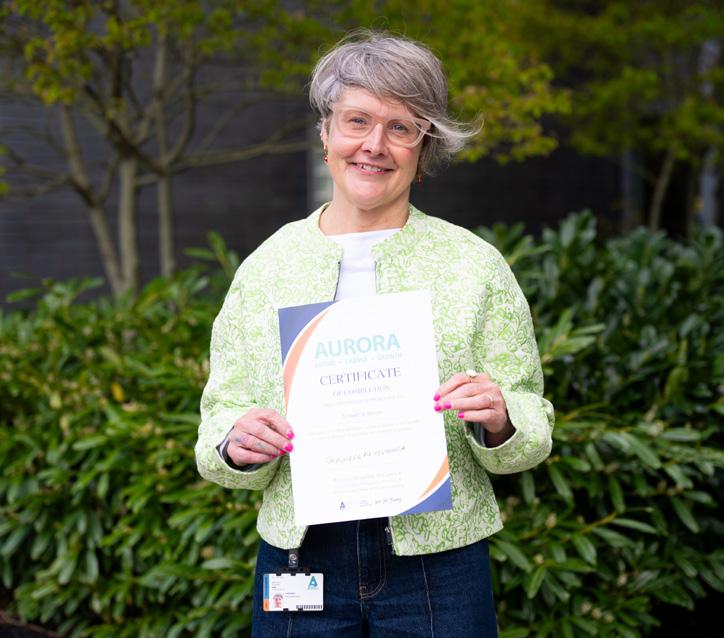
ATU continues to invest in future leaders through its support of the Aurora Leadership Programme for Women, a national initiative designed to strengthen leadership capability in higher education.
This year, 15 women from across ATU completed the programme, joining a growing network of colleagues who have engaged with Aurora as part of the university’s commitment to gender equality, inclusion and professional development.
The ATU participants who completed the programme are: Dr Ann Marie Casserly, Dr Aswathy Babu, Eimear Magee, Geraldine Gorman, Dr Jess Mannion, Judith Frazer-Klug, Louise Kearins, Mara Sintejudeanu, Margaret Killeen, Olive Kelly, Roisin Atcheson, Dr Sarah Carroll, Sinéad Ní Bhroin, Victoria Wilson, and Yvonne Sarsfield.
Open to women in academic and professional roles who are not currently in management positions, Aurora brings together participants from across disciplines and functions, creating space for reflection, connection and shared learning.
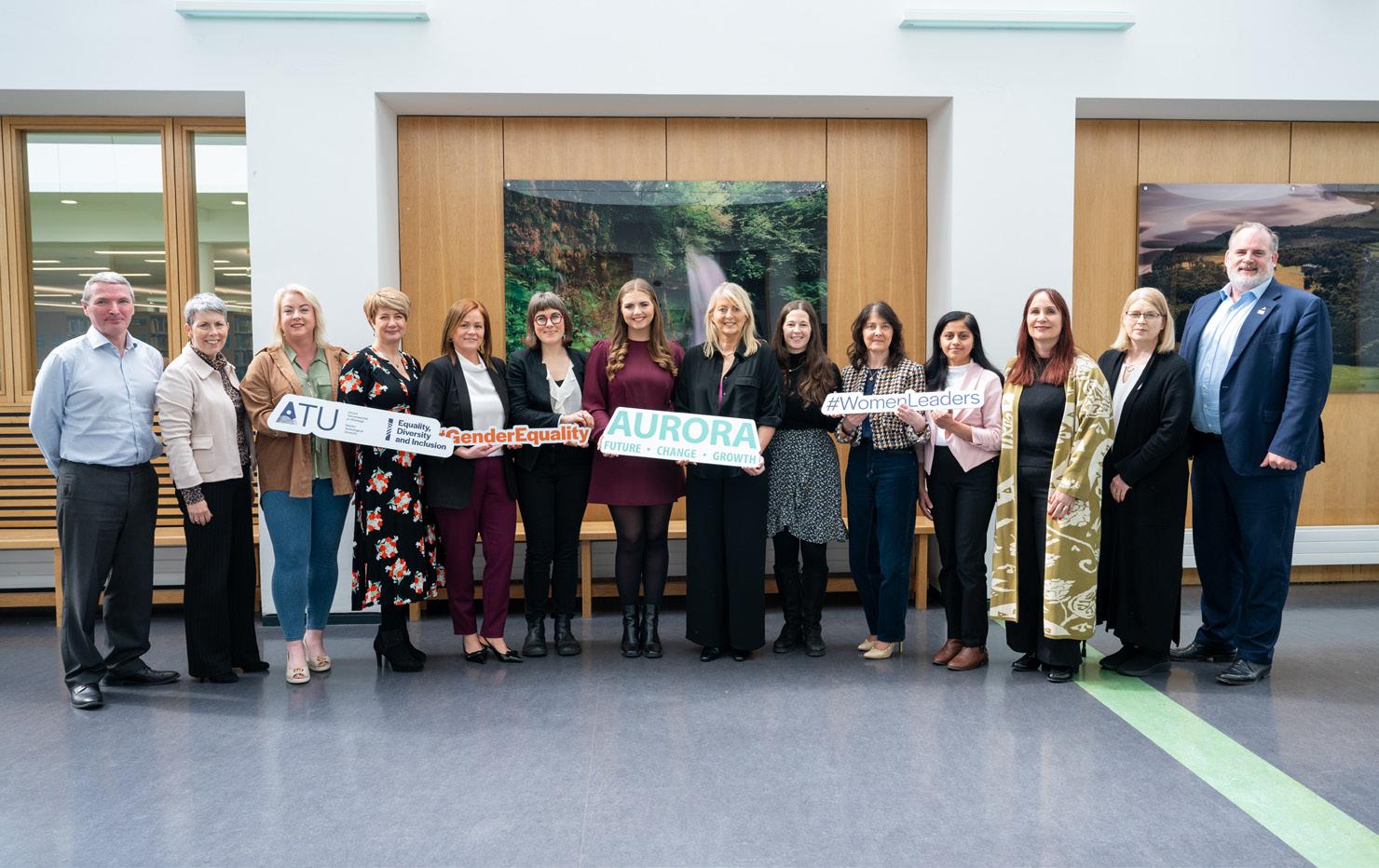
Some of ATU’s Aurora Class of 2026 at a presentation event with ATU President Dr Orla Flynn; Prof. Jacqueline McCormack, Vice President for EDI and Online & Flexible Learning; Prof. Graham Heaslip, Dean of Faculty of Engineering and Computing; and Tom Reilly, EDI lead Gender Equality.
Delivered online, the programme combines interactive workshops with mentoring and networking opportunities. Sessions explore themes such as identity, impact and voice, power and politics in organisations, and the development of core and adaptive leadership skills. Participants are encouraged to view leadership not simply as a role, but as a set of behaviours and actions that can be exercised at any stage of a career.
Participants also benefit from ATU’s mentoring supports, gaining guidance and perspective as they navigate their professional journeys. For many, this is a valuable opportunity to build confidence and broaden networks across the wider higher education landscape.
Aurora forms part of ATU’s broader work to advance gender equality. Through its Gender Action Plan and wider equality, diversity and human rights initiatives, the university continues to embed inclusive practices across policy, culture and everyday working life.
Recognising that progress requires an intersectional approach, ATU acknowledges the varied experiences that shape opportunities across
the university community. Factors such as career stage, role type and caring responsibilities all play a role, and programmes like Aurora provide space to explore these realities while developing practical leadership skills.
The university also emphasises the importance of allyship, with progress depending on shared responsibility and the active engagement of colleagues across the organisation.
Through continued investment in leadership development, ATU is supporting women to build confidence, capability and professional ambition – strengthening both individual careers and the wider university community.
“The Aurora programme has been a truly inspiring and empowering experience. It has helped me build confidence, broaden my leadership perspective, and connect with an incredible network of supportive colleagues across ATU. The mentorship and shared experiences throughout the programme have been invaluable to my personal and professional growth.”
Dr Aswathy Babu, Research Fellow, ATU Sligo
“The Aurora Women in Leadership programme has been a genuinely transformative experience for me, both professionally and personally. The Action Learning Set was a real highlight. It provided a safe, supportive space to bring forward real challenges, reflect honestly on my leadership, and learn from others in a very open way.
The trust built within the group was significant, and it speaks volumes that we have chosen to continue meeting beyond the programme. The mentoring element was also hugely valuable. Having that level of guidance and perspective made a real difference to my confidence, and I’m very grateful that this support is continuing. I would strongly encourage other women to take part in the programme, it’s a powerful opportunity to reflect, grow, and build meaningful connections that last well beyond the programme itself.”
Dr Geraldine Gorman, Lecturer, ATU Galway
“Aurora was an affirming and inspiring experience for me, both professionally and personally. The programme empowered me to think differently about leadership; it is not just a position but a mindset. It gave me space to have increased self-awareness and reflect on my leadership journey, while building confidence in my leadership capability. It gave me the opportunity to learn from women across ATU and other universities through a supportive network.”
Dr Ann Marie Casserly, Education Department, ATU St Angelas
“Taking part in Aurora has had a gradual but lasting impact on me. The programme shifted how I see myself and the opportunities open to me. It also reinforced my commitment to work that is grounded in intentional effort, shared learning, and, most importantly for me, collaboration. The programme sharpened my awareness of these values and strengthened my commitment to fostering meaningful collaboration across the university.”
Sinéad Ní Bhroin, EDI Team Administrator, ATU Donegal
Building an autism-friendly university
ATU is working towards becoming the first technological university in Ireland to achieve Autism Friendly Campus Accreditation across all its campuses.
The Autism Friendly HEI status awarded to ATU Sligo campus in 2022 shone a light on the strengths and needs of the autistic community and sent a clear message that ATU is committed to fostering an accessible and inclusive environment for autistic students, ensuring they can engage fully in all aspects of university life.
Progress across ATU campuses
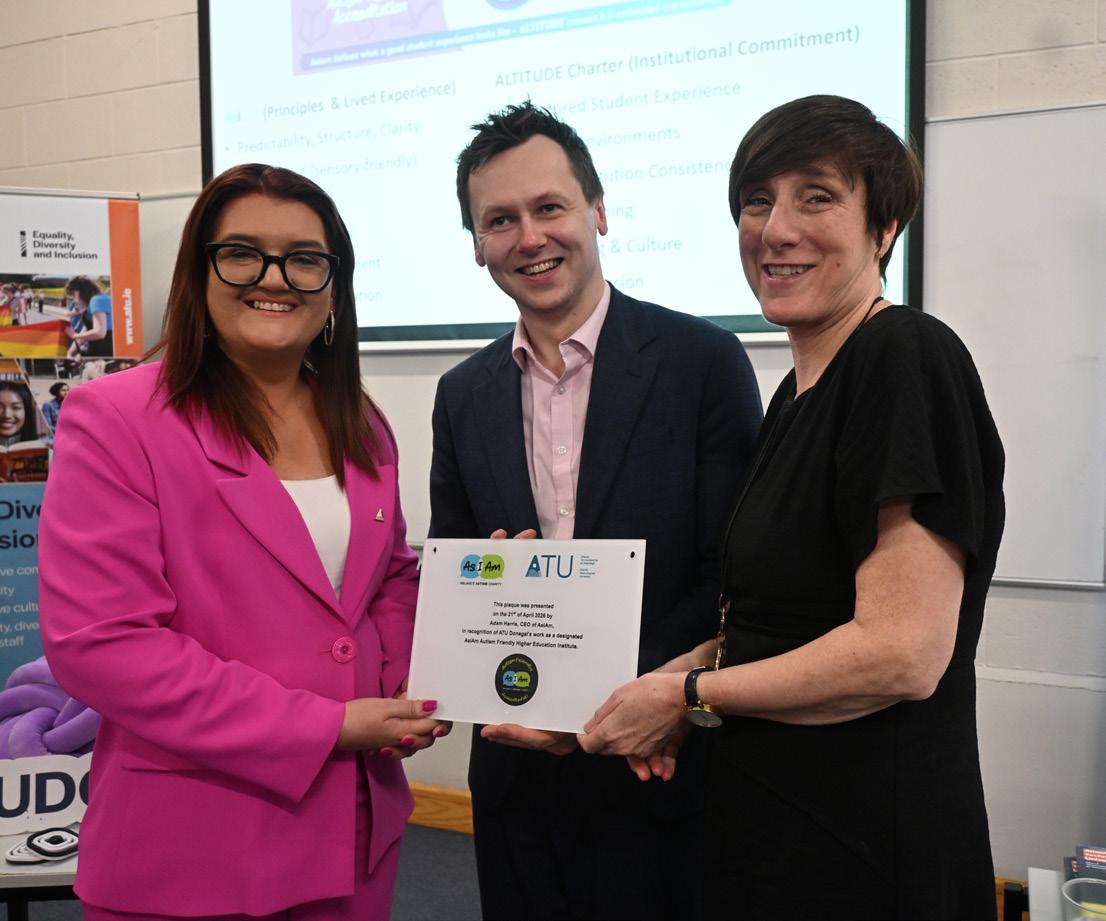
ATU Sligo’s accreditation in 2022 sparked similar movements across the other campuses. ATU St Angelas has taken steps to improve inclusivity for autistic students and has joined with ATU Sligo to apply for re-accreditation in 2026. Both campuses have been confirmed as Autism Friendly by AsIAm (Ireland’s Autism charity).
ATU Donegal campuses in Letterkenny and Killybegs received their Autism Friendly HEI status for the first time this year while ATU Galway Mayo recently welcomed their first Inclusion Learning Support Tutor to enhance supports for neurodivergent students and have started their application for Autism Friendly HEI status.
Growing demand for support services
The ATU Equity of Student Access, Participation and Success 2024/25 report noted that the Disability Learning Support Service (DLSS) in ATU has experienced a 30% year-onyear increase in students disclosing
autism and ADD/ADHD since 2021. This currently accounts for 26% (14% ADD/ADHD, 12% autistic) of primary disabilities and is the second highest presenting disability type (after Specific Learning Difficulty) amongst registered students.
Irish and UK studies consistently show that without flexible and inclusive supports, neurodivergent university students, particularly autistic and ADHD students, become overwhelmed and stressed, leading to reduced academic engagement, inability to meet goals and increased mental health challenges.
Listening to neurodivergent voices
Understanding the experience of neurodivergent students and staff is crucial for fostering inclusivity and support within our university. With
this in mind, ATU’s DLSS staff invited interested colleagues and students to join local action committees on their campus. The local committees report to the ATU steering committee.
This ensures that all voices and perspectives from across the campuses were welcome and represented. This year the action groups met every six weeks throughout both semesters, exploring all aspects of the university experience and identifying areas for growth and improvement.
The Disability and Learning Support Service staff also shared events, activities, and discussions with local groups, enabling wider engagement, the gathering of diverse perspectives, and more effective dissemination of information.
Highlights of Autism Friendly events at ATU
• Specialised Disability and Learning Support Service (DLSS) induction events for autistic and other neurodivergent students across campuses, including early needs assessments, a Neurodivergent Orientation session and information webinars.
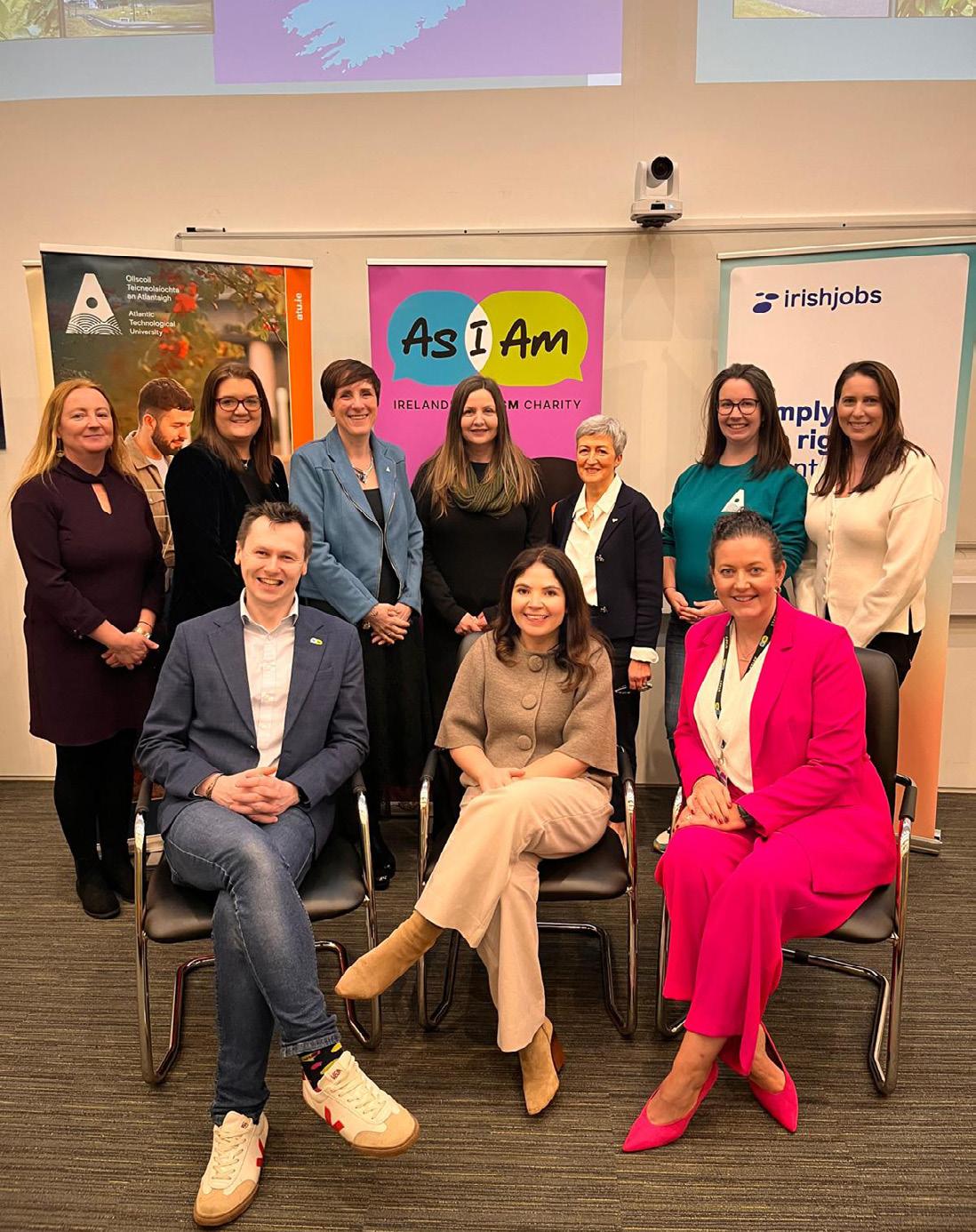
• The AsIAm Employment Seminar and Careers Event – a collaboration between the DLSS and Careers offices featuring Adam Harris and guest speakers, as well as stands from employers and community partners.
• The Autism Acceptance Festival – an online annual event hosted in collaboration with other Autism Friendly HEIs to celebrate autistic voices and experiences. This initiative encouraged open conversations and helped challenge common myths about autism, proving highly successful.
• The Preparation for University event in ATU Sligo for neurodivergent school leavers was an opportunity for secondary school students to visit ATU and learn more about supports available.
• Training and webinars delivered by guest speakers throughout the year, including author Pete Wharmby, who delivered talks for staff in September, and Dr Sarah Cassidy, President of the Psychological Society of Ireland, who delivered a series of webinars for staff in partnership with AsIAm.
• During the exam period, students were supported through a new Focus and Study Support group, complemented by involvement from the new Student Body Doubling Society. Exam workshops were delivered both in-person and online.
At an event in ATU Donegal celebrating the Killybegs and Letterkenny campuses’ new Autism Friendly HEI status are Debbie Molloy, Student Services Manager – Disability and Learning Support Services (DLSS), ATU; Adam Harris, Founder and CEO of AsIAm; and Dr Michèle Glacken, Vice President Students, Teaching & Learning, ATU.
Attendees at the AsIAm Employment Seminar at ATU Sligo in February.
Roma Women’s Tapestry Exhibition at ATU Libraries
A powerful Roma tapestry –Romní Bahtali – was showcased in ATU Libraries over the past academic year, in collaboration with Donegal Travellers Project.
Romní Bahtali is a phrase used to wish good fortune. The tapestry was created by Roma women living in Co Donegal.
Over two months, the group met weekly to share stories, reflect on Roma life, and explore themes of persecution, resilience, and cultural pride. Their conversations inspired the tapestry in which every detail symbolises elements of Roma identity, experience, and hope for a future where Roma heritage is honoured and Roma women shape their own narrative.
This project was funded by the Department of Children, Disability and Equality and Donegal Local Development Company and supported by Donegal Travellers Project.
Community, Creativity and Achievements
Celebrating the literary legacy of George Moore in Mayo
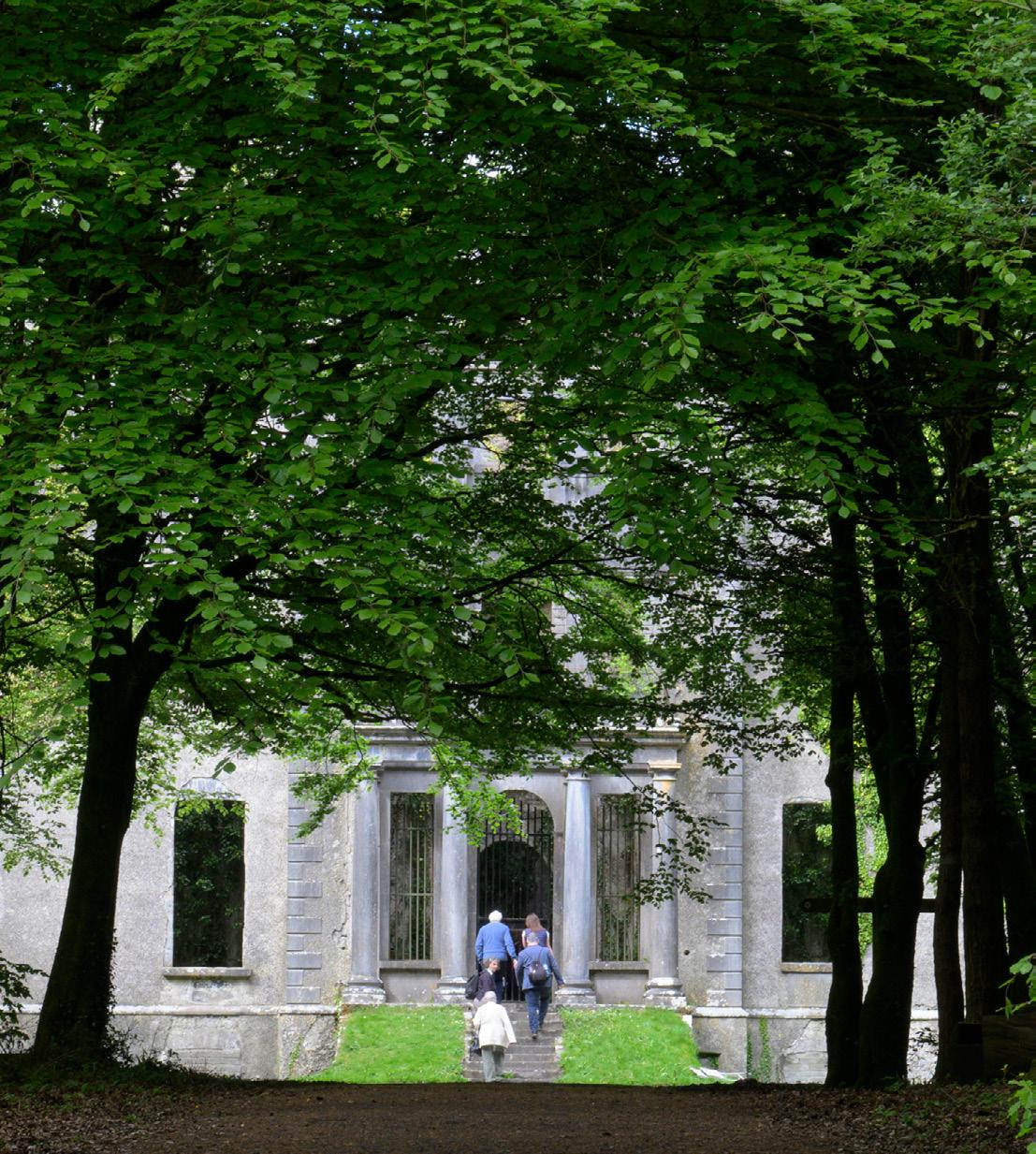
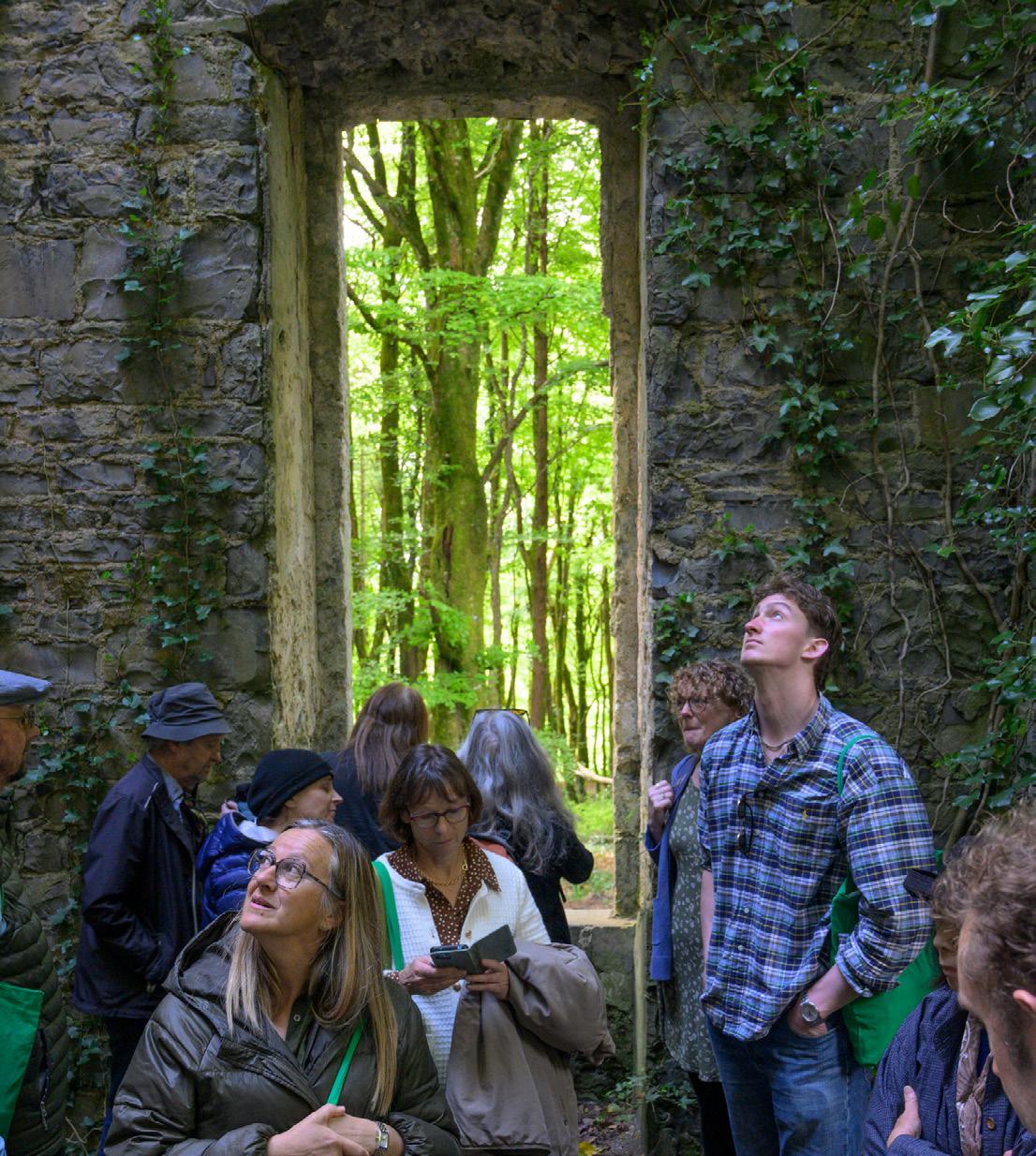
Over 70 delegates from nine countries attended the 13th International George Moore Conference in ATU Mayo in May. Talks ranged from Moore’s works and writings, family history and Moore Hall, to poetry readings, music, art and drama events. One of the highlights was the trip to Moore Hall where delegates were given an in-depth presentation on the Master Plan for the site from Mayo County Council.
Conference organiser Dr Fiona White said: “The delegates thoroughly enjoyed the three days, and I
am extremely grateful to those who helped out, and in particular the support from the Sunflower Foundation and Mayo County Council.”
“ A man travels the world over in search of what he needs and returns home to find it.”
George Moore, The Brook Kerith, (1916)
The writings of George Moore have continued to inspire scholars over more than a century. Moore’s body of
work includes poetry and short story collections, novels, plays, art criticism and memoirs and this wonderful literary legacy has instigated a series of international conferences. Such gatherings have added considerably to enthusiasm for the study of Moore’s works both at home and in many corners of the globe.
Mayo today embraces the memory of George Moore, cherishes the site of his family home, and seeks to protect the environment at his birthplace.
Conference attendees visit Moore Hall. Photo credit: Michael McLaughlin.
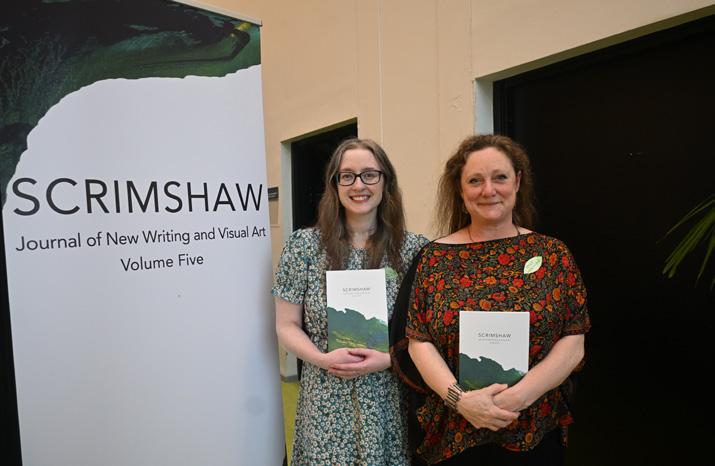
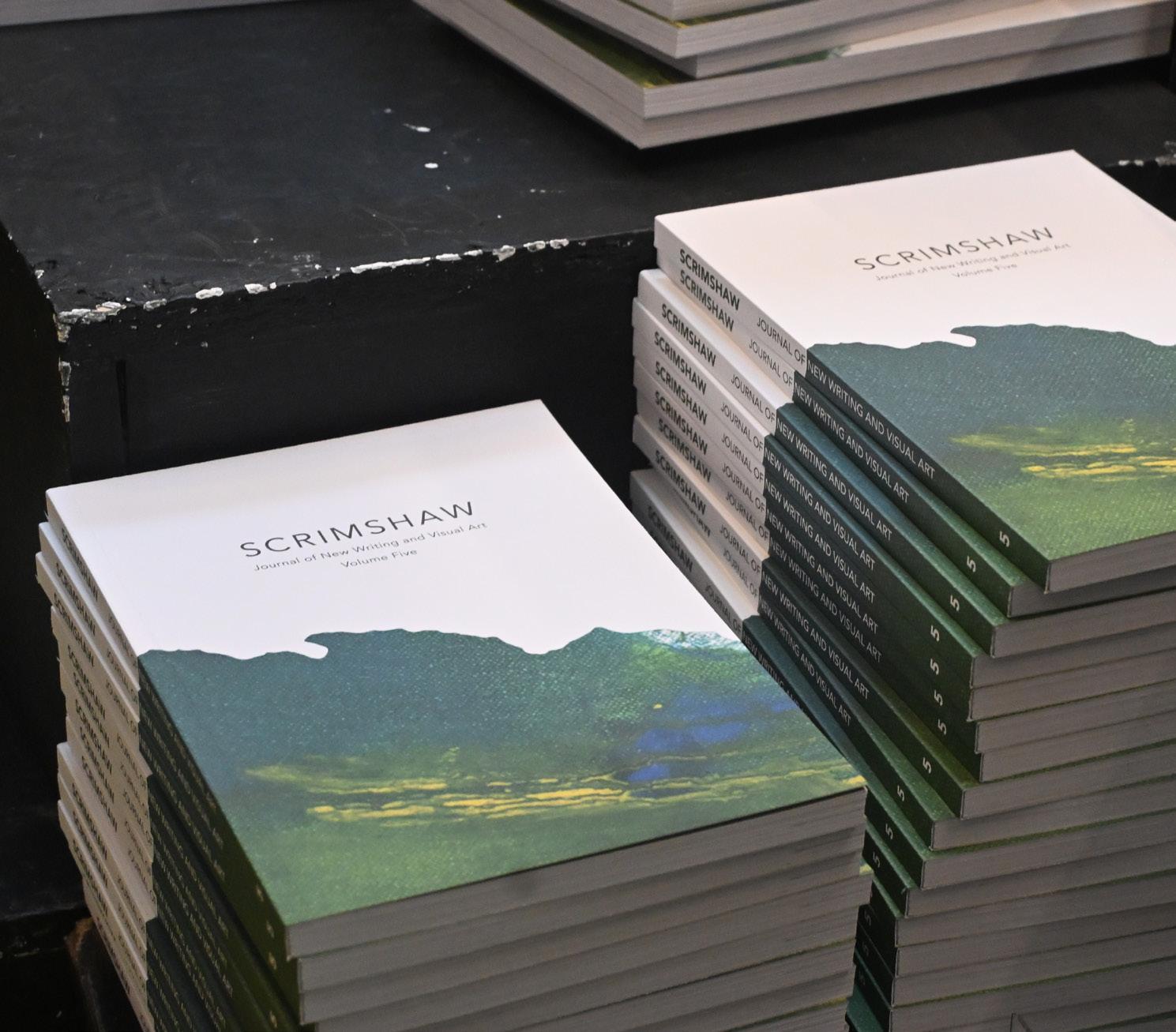
Five Volumes of Creativity: Inside ATU’s Scrimshaw Journal
ATU’s student-led Journal of New Writing and Visual Art marked its fifth volume with campus and national showcase events including its official launch which took place at ATU’s Sligo campus.
The latest volume features a rich and diverse range of work from current students, staff and alumni across ATU. It includes poetry, fiction, creative non-fiction, visual art, music and multimedia.
The launch featured readings from contributors and a special guest appearance by author and creative writing lecturer Garrett Carr. Originally from Killybegs, Co Donegal, Carr is the author of ‘The Boy from the Sea’, shortlisted for the An Post Novel of the Year Award, and ‘The Rule of the Land: Walking Ireland’s Border’, which was featured as a BBC Radio 4 Book of the Week.
Established in 2022, Scrimshaw has evolved from a student initiative into a recognised platform within Ireland’s literary and creative landscape. The journal continues to encourage participation across disciplines while fostering a vibrant and supportive creative community across ATU’s campuses.
Editors-in-Chief Melissa Breen and Emily James, final-year students on the Writing and Literature programme at ATU, said the fifth volume reflects both the growth of the journal and the strength of creative talent across the university.
“ Working on Scrimshaw has been an incredibly rewarding experience. This year’s volume brings together a wide range of voices and creative styles, and it’s been inspiring to see the level of talent across the ATU community. We’re proud to provide a platform where contributors can share their work and be part of something lasting.”
Emily James, Co-Chief Editor
“ Each volume builds on the last, and we were very conscious of continuing to raise the standard while staying true to what Scrimshaw represents. It’s more than a journal – it’s a space for expression, collaboration and confidencebuilding for emerging writers and artists. We hope readers connect with the work as much as we did while putting it together.”
Melissa Breen, Co-Chief Editor
The team included editors Dean McMorrow, Tara-Fay Ní Riain and Natalia Grobelska, with Gemmaclaire Haverty as PR and social media lead, and Karolina Stankova and Rozalie Kohoutkova as designers.
Funded by ATU, the journal is produced as a free publication, reinforcing the university’s commitment to accessibility in the arts. Copies of the 2026 volume will be available in ATU libraries and selected outlets in Cork, Dublin, Mayo, Galway and Sligo.
Building on the success of the Sligo launch, a new showcase event took place at the Irish Writers Centre in Dublin, extending the reach of the journal and its contributors to a wider national audience. Dr Keith Hopper, who lectures on the ATU programme was the guest speaker.
You can read the 2026 Scrimshaw Journal of New Writing and Visual art online by clicking here
Melisa Breen and Emily James at the launch of the fifth edition of the Scrimshaw Journal.
Writing and Literature graduate launches her debut novel
Jessamine O’Connor launched her debut novel, ‘Somewhere’ in May at Dubray Books in Dublin and Liber bookshop in Sligo.
Jessamine is a graduate of both the degree in Writing and Literature and the master’s in Creative Practice. She started writing her novel during her studies at ATU.
Published by Lilliput Press ‘Somewhere’ is a compassionate portrait of addiction, family and love in the shadowy parts of contemporary Dublin.
The central character Clodagh is an addict and over a span of several months she navigates the fallout from eviction, joblessness and the breakup with her partner Seamus while struggling with her addiction.
Author Una Mannion describes the book as: “ Beautifully crafted, devastating and human. O’Connor writes about addiction, its most despairing and miraculous moments, with utter compassion.”
Annual Poetry Pillar Competition
ATU’s annual poetry pillar competition continued to attract a high standard of entries in 2026 with separate categories for second level students and ATU students. To encourage participation among second level students a series of workshops was organised for Youthreach groups and facilitated by poet and ATU graduate Jessamine O’Connor as part of the Creative Schools - Creative Ireland Programme
This year’s prize winners in the second-level education category were: Emma Larkin for her poem ‘Wings of wonder’, Mia O’Neill for ‘The Doves’, and Gabrielle Ramos de Silva Fox for ‘The sustainable bird’.
The prize winners in the ATU student category were Eabha Fox for ‘Bird’, Lucy Lambe for ‘A pigeon in a beer garden’, and Sarah Mecheski for ‘Swallows’.
Left to right: Dr Deirdre Garvey, ATU; Eabha Fox, first place in the ATU student category; and Dr Sheila McArdle.
Left to right: Dr Deirdre Garvey, ATU; Emma Larken, first place in the second-level education category; and Dr Sheila McArdle.
Social Care student honoured with national award
Social Care Ireland has recognised the exceptional commitment, innovation and professional excellence of ATU student Rhona Kavanagh, awarding her the prestigious Social Care Ireland Student Award.
Rhona, a 4th year Bachelor of Arts (Honours) in Applied Social Care student received the award at the Social Care Ireland Conference gala dinner, where practitioners from across the sector gathered to celebrate excellence in practice, education and research.
Rhona was nominated by Teresa Fahy, Programme Chair and Lecturer in Applied Social Care at ATU, who praised her as “an exemplar of what this profession is all about.” Teresa highlighted Rhona’s dedication, academic excellence, and commitment to compassionate, evidence-based practice in supporting individuals and communities. She said:
“ Rhona’s achievement stands out in her exceptional ability to translate cuttingedge theory into accessible, practical tools that genuinely enhance service delivery. This is an extraordinary skill: to take something intricate and scientific, and shape it into something that brings clarity, support, and empowerment to families and professionals.”
Teresa also praised Rhona’s innovative children’s resource, ‘My Brain’, describing it as “a tool that supports co-regulation and emotional literacy in a way that is both developmentally sensitive and deeply compassionate.”
The Social Care Ireland Student Award not only recognises Rhona’s outstanding achievements but also highlights the many ATU Social Care students who continue to excel while
overcoming personal challenges. These students demonstrate resilience, leadership, and a deep commitment to social justice qualities that enrich communities and strengthen the social care profession.
Teresa Fahy, Lecturer in Applied Social Care at ATU with Rhona Kavanagh, 4th year Bachelor of Arts (Honours) in Applied Social Care student.
A collaborative approach to student mental health
ATU recently partnered with Ulster University to host a Student Mental Health Symposium, bringing together higher education professionals from across Ireland to explore a collaborative approach to student wellbeing.
Funded through the SPARK Mobility Initiative and developed through the UU–ATU Strategic Partnership Steering Group, the symposium aimed to strengthen cross-border collaboration between the two universities.
The event welcomed over 50 attendees from universities across the island of Ireland, including strong representation from ATU campuses. The symposium programme reflected a shared focus on research, policy and practice in student mental health.
Dr Nicola Byrom, Kings College London delivered the keynote session and Professor Siobhán O’Neill, Northern Ireland’s Mental Health Champion gave a presentation titled, ‘Mental Health in Northern Ireland: current issues and policy landscape’. This was followed by an expert panel featuring contributors Professor Barbara Dooley (UCD), Dr Eithne Hunt (UCC), and Prof. Gary Donohoe (UCG) who discussed student mental health research.
Afternoon sessions focused on practical and policy-driven perspectives. Dr Ross Woods (HEA) outlined key learnings from the review of the HEA National Student Mental Health and Suicide Prevention Framework, while Caroline Mahon, Healthy Campus Co-ordinator, gave an overview of the theory and policy behind the Healthy Campus approach.
Exploring connection, belonging and student experience
Participants also took part in special interest group discussions, with topics including curriculum, biobehavioural health, student belonging and engagement, minority student mental health, and neurodivergent students.
An interdisciplinary workshop explored cross-disciplinary perspectives on student loneliness, as an individual experience, and something shaped by daily routines, structural constraints, and health risks. The session explored approaches to understanding the causes and impacts of student loneliness, as well as potential solutions.
The day concluded with awards for best poster and lightning talk, followed by closing remarks from Dr Joanne Gallagher.
The symposium reflects the ongoing collaboration between ATU and Ulster University, supporting the development of shared knowledge and practice in student mental health across the higher education sector.
Inaugural Dr Brendan McCormack Awards celebrate inclusive education
ATU hosted the inaugural Dr Brendan McCormack Awards for Universal Design Beyond the Classroom (UD) and Universal Design for Learning (UDL) on its Sligo campus in March, celebrating colleagues who are advancing inclusive teaching and learning practices across the university.
The awards recognise innovation, collaboration and leadership in UD and UDL, with eight shortlisted ATU staff members presenting their initiatives to a live audience. Representing a diverse range of disciplines and professional roles across the university, the shortlisted nominees reflected the depth and breadth of inclusive practice at ATU.
Named in honour of Dr Brendan McCormack, former President of the legacy IT Sligo, the awards acknowledge his early leadership and support in laying the foundations for inclusive practice within the institution.
Dr McCormack said:
“ It’s a real privilege to be here today as a passionate advocate for Universal Design for Learning. When we first began this journey, UDL was not widely understood in higher education, so it is wonderful to see it now embedded across the wider environment. It’s particularly encouraging to see how open colleagues are to discussing new ideas and approaches to
design. As educators, we need to redesign the way we teach. For me, UDL is about widening inclusivity and access, and ensuring learning is available to all.”
Speaking at the event, Dr Niamh Plunkett, Head of Teaching and Learning (Advancing Excellence in Teaching & Learning) at ATU, highlighted that the awards were, first and foremost, a celebration of staff innovation, collaboration across campuses, and the impact of inclusive design on students.
The winners were Patrick Arcuri, Access Data Officer at ATU, who received the UD Beyond the Classroom Award, and Dr Fionn Downes, Assistant Lecturer in Mathematics at ATU, who received the UDL Award. Their work showcased what Universal Design for Learning looks like in practice and the meaningful impact it has on students.
The shortlisted nominees for the Universal Design for Learning (UDL) Award were Dr Sinead Keogh (Faculty of Business), Dr Fionn Downes (Faculty of Science), Jeremy Madden SFHEA (Faculty of Design, Education and Social Science), and Dr Rosemary Smyth (Faculty of Science & Health).
The university plans to build on the success of the inaugural event, with the awards set to become an annual celebration of excellence in Universal Design and Universal Design for Learning across ATU.
Dr Orla Flynn and Dr Brendan McCormack at the inaugural Dr Brendan McCormack awards.
Dr Niamh Plunkett, Head of Teaching and Learning (Advancing Excellence in Teaching & Learning), ATU.
Inclusive education in figures
To date, 315 staff have completed UD and UDL-related digital badges, and more than 500 colleagues have engaged in workshops, webinars and peer learning between 2022 and 2025.
Through the ATU Peer Network, 10 Inclusive Programme Reviews have been completed, while 21 staff have achieved a Postgraduate Certificate in UDL since 2022 and four have progressed to master’s level.
Students shine at AIB Student Impact Awards
Students from ATU have been recognised on the national stage at the AIB Student Impact Awards, an annual celebration of student-led innovation, activism, and community impact across Ireland.
Organised by Aontas na Mac Léinn in Éirinn (AMLÉ), the awards celebrate the work of students and Students’ Unions who are driving meaningful change – whether through sustainability initiatives, social impact projects, or leadership in student life. With a total prize fund of €15,500, they are among the most significant national recognitions of student achievement beyond the classroom
This year, ATU students and representatives secured multiple awards across key categories, while also achieving an impressive eight shortlist nominations, underlining the university’s growing reputation for fostering innovation, creativity, and real-world impact.
Celebrating ATU’s Award Winners
Among the winners was Emanuel Covasa, a student of Computer Networks and Cyber Security at ATU’s Sligo campus, who received the AIB Small Budget Project of the Year Award (€500). This category recognises projects that achieve significant impact through resourcefulness and efficiency –demonstrating that meaningful change does not require large
budgets.
From ATU’s Galway City campus, sisters Rebeka and Radka Kotulakova, students of Business Information Systems, were honoured with the Sustainable Travel and Transport Project of the Year Award (€500). Their work focused on promoting greener travel behaviours and reducing carbon footprints – an area of growing importance for campuses and communities alike.
Harish Sampathkumar, a master’s student in Engineering Management from ATU’s Donegal campus, received the Circular Economy Project of the Year Award (€500). His initiative demonstrated innovative approaches to reducing waste and embedding sustainable, circular practices into
everyday systems.
ATU’s impact was also recognised at an institutional level, with ATU Sligo Students’ Union awarded Small Students’ Union of the Year (€750) – a testament to their continued delivery of high-quality student representation, services, and campaigns.
These achievements are a testament to the dedication, creativity and drive of ATU students, who are stepping up, taking initiative, and delivering far beyond what is expected of them. Behind each award is a significant commitment of time, energy and ideas, resulting in projects that are creating meaningful and lasting change.
Left to right: Radka and Rebeka Kotulakova, Emil Kindl, Harish Sampathkumar and Jesus Quaye Saya.
Neasa Daly wins Student Sport Ireland Sports Person of the Year Award
ATU student Neasa Daly has won the prestigious Students Sport Ireland Sports Person of the Year Award, presented at this year’s Student Sport Ireland Sports Awards on 21 May.
Neasa plays both camogie and football for her local club Salthill/ Knocknacarra GAA and for ATU Galway. She is in the third year of a Bachelor of Arts in Interior Design in ATU’s Creative Arts campus in Galway City. Earlier this year, Neasa was also awarded Sports Personality of the Year at the ATU Galway Sports Awards. A dual player, she was instrumental in ATU Galway’s camogie team capturing both league and championship honours, while also playing a key role in the Ladies Football team’s journey to the Moynihan Cup final.
Molly Dunne, ATU Galway Sport Development Officer, said: "Neasa went above and beyond this year in representing the ATU Galway Ladies Football and Camogie squads. She successfully balanced a demanding college placement in Brighton, UK, with her sporting commitments, while playing a pivotal role in the success of both teams this season. Her dedication to ATU Galway sport was rightfully recognised with the ATU Galway Sports Personality of the Year award, and it is especially fitting that she has now been honoured at a national level as the SSI Sportsperson of the Year."
ATU’s Neasa Daly, Student Sport Ireland Sports Person of the Year receiving her award from Student Sport Ireland Chairman Morgan Buckley.
ATU’s Atlantic Games event won the coveted “Event of the Year Award” at the national awards – the university winning two of the six national awards on the night.
Rory McMorrow, ATUs Head of Access, Widening Participation & Sport, said:
“ The recognition of the Atlantic Games as Student Sport Ireland Event of the Year highlights the incredible work of our students and staff across the Galway, Sligo and Donegal campuses. The event showcased not only sporting participation and competition, but also the strong sense of community, collaboration and identity that exists across ATU.
These awards reflect the ambition, talent and spirit that continue to drive student sport within our university.”
The Student Sport Ireland Sports Awards celebrate the outstanding achievements, dedication, and sportsmanship of students and teams across the SSI community. The awards recognise excellence both on and off the field, highlighting the commitment, teamwork, and leadership shown throughout the sporting year. They also provide an opportunity to honour the hard work of athletes, coaches, volunteers, and supporters who contribute to the continued success and growth of sport within SSI.
Innovation on display at Engineering and Technology Expos
ATU’s campuses came alive in April and May as students showcased innovation, creativity and real-world problem-solving at a series of engineering and technology expos.
In Sligo, nearly 2,000 visitors attended the annual Engineering and Technology Expo, where over 50 industry and student stands highlighted opportunities in engineering, computing and emerging technologies. Student innovation took centre stage, with a wide range of projects recognised through the event’s annual awards programme, while the expo created a vibrant space for students, industry and the wider community to connect and explore the future of the sector.
At the Galway City campus, the annual Engineering Exhibition and Competition celebrated the creativity and technical ability of students, with projects demonstrating strong industry collaboration and a clear focus on real-world challenges. From an initial 120 projects displayed electronically, 70 were shortlisted for physical exhibition following a judging and voting process, with the final showcase running from 27 April to 1 May.
In Donegal, the annual Engineering Expo brought the work of all year group students together for peers and industry to see. Companies, organisations and fellow institutions exhibited and awards for the outstanding student work were presented.
The Donegal Expo has evolved into a closeknit, relaxed and focused event over the past 10 years, attracting representatives from all over the North-West and further afield.
At the Expo, fourth-year students presented their Research Project Posters, and third years their Design and Embedded System Projects. Second-year students exhibited their Applied Learning Projects, and first years their Problem-Based Learning work.
Photo highlights from across the expos at ATU
These snapshots capture the energy, ingenuity and teamwork on display at this year’s engineering and technology expos.
Fashion students champion sustainability, heritage, and innovation
ATU unveiled its Graduate Fashion Showcase on 20 May in Donegal. The main gallery of the Regional Cultural Centre in Letterkenny, home to the AIB Portrait Prize Exhibition, became the backdrop for emerging Irish fashion talent in the North-West.
The annual event brought together students from all years of ATU’s Fashion Design with Promotion programme. This year’s showcase highlighted the programme’s growing reputation for innovation, sustainability, and industry-ready craftsmanship.
Lecturer Sharon Maxwell described the evening as “ a celebration of the extraordinary creativity, resilience, and innovation of our emerging graduate designers.”
She noted that each collection reflected strong technical skill and craftsmanship, as well as “ deeply personal stories and forward-thinking approaches to sustainability and contemporary fashion.”
Second-year students worked under the theme Reimagined. They partnered with Letterkenny Tidy Towns to transform unwanted and preloved textiles sourced from local charity shops. The brief encouraged them to view discarded materials in a new way and to show how contemporary fashion can emerge from what already exists. Their work reflected the programme’s
commitment to circular design and community collaboration.
Third years developed their collections under the theme Perspective, exploring how meaning shifts through different viewpoints. Drawing on influences such as mindfulness, mythology, nature, and identity, they created collections ranging from sculptural and introspective to playful and expressive. Sustainability remained at the core, demonstrated through students’ use of recycled fibres, deadstock, and ethically sourced materials.
Fourth-year designers collaborated with industry partners including McNutt of Donegal, Magee 1866, Donegal Yarns, Orla Vera Accessories, and Cooneen. Challenged to reimagine remnant and deadstock textiles, they produced contemporary and bold silhouettes that celebrate the heritage and manufacturing excellence of the North-West whilst gaining valuable real-world design experience.
As the final collections appeared on the fashion runway, Lecturer Eilish Kennedy reflected on the impact of seeing the garments in motion. She said the pieces “carry a different kind of power once they are on the body.” She added that the students’ commitment to sustainable practices and material innovation resulted in collections that are
“ both visually compelling and socially conscious. Clothes are the architecture
for the body, and seeing these garments in movement on the runway allows the full vision and emotion of the work to come alive.”
The evening concluded with the announcement of this year’s award winners. The awards recognised excellence in sustainability, innovation, entrepreneurship and design. Please click here to read about this year’s winners.
The Threaded Stories collection by ATU student Josef Danhelovsky.
Alumni Spotlight
From ATU to Barretstown, Sinéad Muller tells her story
My Barretstown journey began in 2009, and quite simply, it changed my life. After spending a summer working at a camp in the United States, I returned home inspired by the experience and wishing something similar existed in Ireland.
At the time I was studying Outdoor Education in GMIT (now ATU) and at a volunteer fair on ATU’s Mayo campus, I met a group of warm, energetic people who introduced me to Barretstown.
Barretstown was founded by Hollywood actor Paul Newman in 1994 and is modelled on his renowned Hole in the Wall Gang Camp in Connecticut, USA, which is part of the SeriousFun Children’s
Network.
Like many people, I had always intended to volunteer “someday,” but something finally clicked. No more excuses. Barretstown was the place I needed to be. I signed up on the spot and even applied to work as a Summer Activity Leader, an impulsive decision that turned out to be one of the best I have ever made.
Barretstown is a residential camp for children and young people affected by cancer and other serious illnesses, as well as their families. Based in its 500-acre campus in Ballymore Eustace, Co. Kildare, it provides free programmes designed to support not
just physical health, but the emotional and social challenges that come with serious illness.
A weekend that changed everything
Driving into Barretstown for my first volunteer weekend felt like entering a storybook. The scenery was striking, a shimmering lake perfect for canoeing and fishing, a real castle, a theatre filled with creativity, and cosy cottages where families would stay, it was the ideal setting for magic to happen.
Following training with the incredible Barretstown camp team, we
“ it changes life for all of us who get to be part of the experience. ”
welcomed the families for a weekend programme designed to offer children space to play and families space to relax. From the outset, the focus was on normal childhood experiences, games, conversations, and shared laughter. For many of the children attending, living with serious illness can interrupt everyday play and routine. Barretstown provides an opportunity to resume it and allows campers to simply be kids again.
That first evening, families and volunteers watched a show in the Theatre, and I could see something shift in the parents as they relaxed for the first time in probably a long time, knowing medical staff were always nearby and their children were in safe, caring hands.
Saturday brought horse riding, archery, Lego towers reaching for the sky, arts and crafts, and endless moments of joy. Later that evening after a full day of activities we joined the children in their cottages for more fun, while parents had space to unwind and talk with others who truly understood what they were going through.
By Sunday, the weekend concluded with more activities and a beautiful closing slideshow of the families. Despite having only known these families and volunteers since Friday, the bonds formed were real, powerful, and uplifting. I left feeling energised and certain I wanted to return.
The heart of Barretstown: Therapeutic Recreation
At Barretstown, I learned about Therapeutic Recreation, the heart of every activity. It’s a psychosocial approach to wellbeing, which creates
an inclusive environment where campers are supported emotionally and encouraged to face challenges, achieve success, and discover strengths they may not have known they had.
What struck me most was that this journey of self-discovery extended beyond the campers, to parents, siblings, volunteers, and staff. Barretstown doesn’t just change the lives of the children who attend; it changes life for all of us who get to be part of the experience.
From Volunteer to Head of Camp
After that first transformative weekend, I returned as a Summer Activity Leader. Following on from this, I also had the privilege of working in sister camps within the SeriousFun Children’s Network that Barretstown is a part of, in both Connecticut and California. From those amazing experiences I shared what I learned with the Barretstown team.
Over the years, I’ve worked in several roles, each deepening my love for Barretstown and the families we serve. Today, I’m proud to say I’m Head of Camp, a journey I am so grateful for and never could have imagined when I walked into that volunteer fair back in 2009.
Why you should volunteer
Barretstown needs volunteers, people who want to make a real difference, people who believe in the power of fun, kindness, and community. You don’t need special skills. You just need openness, empathy, and a willingness to jump in and play.
Volunteering at Barretstown isn’t just meaningful, it’s energising, joyful, and unforgettable. You’ll meet incredible people, support families when they need it most, and become part of a community that truly changes lives.
Funding and Partnership Updates
Articulation Agreements with four ETB partners to expand access to higher education
ATU has officially signed articulation agreements with four Tertiary Education partners: Donegal ETB, Cavan and Monaghan ETB, Galway and Roscommon ETB, and Mayo, Sligo and Leitrim ETB.
These articulation agreements provide learners in Further Education (FE) with advanced entry routes from QQI Level 6 awards directly into Year 2 of selected undergraduate degree programmes at ATU. A total of 48 ATU programmes are included in this initiative, allowing successful applicants to gain entry without the need for additional assessment, subject to the availability of places and meeting entry requirements. To find out more please click here.
New international partnership with Southern Alberta Institute of Technology
ATU and the Southern Alberta Institute of Technology (SAIT) have signed a Memorandum of Understanding (MoU) to support collaboration in education, applied research, and innovation.
The agreement establishes a framework for cooperation between the Irish and Canadian institutions and outlines areas of shared interest, including applied research and industry engagement, student exchange, work-integrated learning and internships, faculty exchange, and the development and delivery of academic programmes at undergraduate and postgraduate levels.
The MoU also provides for collaboration on research, commercialisation, and innovation projects, as well as opportunities to pursue joint funding and external grants. To find out more please click here
New ATU–HSE programme to tackle medical scientist shortages
A new partnership between ATU and the Health Service Executive (HSE) aims to address persistent staffing shortages in Ireland’s diagnostic laboratory services, while simultaneously upskilling existing healthcare workers through a structured, part-time education pathway.
The Higher Diploma in Science in Medical Science, developed by ATU’s Medical Science Programme Board in collaboration with the HSE has been created in direct response to long-standing capacity challenges across hospital laboratories.
The two -year, part-time programme provides an alternative graduate - entry route to becoming a CORU-registered Medical Scientist, specifically targeting medical laboratory aides who already work within the health service and hold a Level 8 degree in a relevant science discipline. The initiative is expected to have particular significance for regional hospitals, where recruitment and retention pressures are often most acute. To read more please click here
DIGIGAS Project awarded Research Ireland funding to develop renewable gas and energy system breakthroughs
The DIGIGAS project, led by ATU’s Dr Abdalkarim Gharbia and co-led by Dr Nasim Eslamirad of University College Dublin, will create a digital model of Ireland’s renewable gas infrastructure. This model will allow researchers and industry to better understand how renewable gases, such as biomethane and hydrogen, can be safely and efficiently integrated into the national gas network.
The DIGIGAS project is funded under the Research Ireland Gas Networks Ireland Innovation Challenge which supports innovations designed to accelerate the integration of renewable gases into Ireland’s energy system and strengthen the performance of the national gas network. To find out more please click here
Researchers awarded €408,000 from Research Ireland funding as part of New Foundations programme
Four researchers from ATU have been awarded Research Ireland New Foundations funding for projects tackling issues ranging from menstrual health and cancer nutrition to bioplastics and parasites.
PhD researchers Erin Pyper, Leah Walsh, Megan Olley, and Sofia Rainey have been awarded €408,000 through Research Ireland’s New Foundations programme, part of a €36.3 million nationwide investment in early-career researchers. The initiative supports projects that address pressing social, environmental, economic, and health challenges across Ireland.
The New Foundations programme has funded projects across 14 Higher Education Institutions in Ireland. To find out more about ATU’s researchers’ projects please click here
National research partnership on remote work
ATU and the Western Development Commission (WDC) have announced a new national research partnership that will examine how remote and hybrid work is reshaping Ireland’s economy, communities and quality of life.
The two-year TU RISE funded project, ‘Connected Futures: The Economics of Remote and Hybrid Work in Ireland and its Impacts on Wellbeing, Mobility, and the Local Economy,’ will explore these changes at both national and regional level.
By combining ATU’s research expertise and regional reach with the WDC’s leadership in this area, this project will generate evidence-based insights to support national decisionmaking, strengthen communities and ensure that the benefits of new ways of working are shared across all regions of the country. To read more please click here.
Over €6.9 million funding for National Challenge Fund prizewinning teams
Minister for Further and Higher Education, Research, Innovation and Science, James Lawless TD, recently announced over €6.9 million in prize phase funding for four research teams across the final two challenge programmes under the National Challenge Fund, which focus on tackling textile waste and supporting sustainable aquaculture.
Funded by the EU’s Recovery and Resilience Facility, the Fund calls on researchers to identify problems related to Ireland’s Green Transition and Digital Transformation and work directly with those most affected to solve them.
The NanoSA team, led by Dr Niall Maloney, ATU with co-lead Prof. Enda McGlynn, Dublin City University and Societal Impact Champion Catherine McManus, Mowi Ireland, won the Future Food Systems Challenge.
Delighted with the funding Dr Niall Maloney said: “This support allows us to continue developing our platform for rapid, farm-site detection of pathogenic infections in salmon aquaculture. The training provided through the National Challenge Fund has been central in shaping our technological developments so that we’re addressing key challenges for the aquaculture industry.” To find out more please click here.
Ten years of nursing engagement and globalisation
ATU has developed a range of global initiatives to enhance the university’s profile on an international platform. One of these initiatives is the nursing exchange programme between the Faculty of Nursing Worcester State University (WSU) Boston and ATU’s Department of Nursing and Healthcare in Donegal.
This collaboration has been in place since November 2016 providing both faculty students and staff with the opportunity to undertake a period of academic study and practical placement during the Spring
semester.
The exchange programme provides an alternative perspective on healthcare and nursing practice abroad and facilitates the collaborative exchange of evolving perspectives within the Irish and American global health landscape.
Earlier this year nine students from WSU visited ATU’s Donegal Letterkenny campus and six ATU students travelled to WSU.
The ATU exchange students were struck by the differences in college life between Ireland and the U.S. They said: “The student life here is different. Everything is very fast-paced, and you live in dorms right on campus, which we don’t really have in Ireland.”
The exchange highlights the importance of the international experiences for nursing students to broaden their perspectives and bring back valuable insights to their home healthcare systems.
News in Brief
Students receive national recognition for road safety campaign
Students from ATU have received national recognition for a road safety campaign highlighting the devastating consequences of speeding.
The award-winning project formed part of the national Road Safety Reimagined initiative, led by An Garda Síochána and supported by ESB, which challenged students to develop impactful road safety communications. To read more please click here.
ATU wins National Gold Award as recycling initiative raises over €22,500 for hospice
ATU recently received the overall Gold Award at the inaugural Re-Turn Awards in Croke Park, recognising a standout recycling initiative that combines sustainability with community impact.
Led by lecturer Robert Craig, ATU Sligo’s Bottle and Can Return Initiative has raised over €22,500 for North West Hospice in just over a year. The project, which facilitated the return of approximately 135,000 bottles and cans, also diverts significant waste from landfill. As the top national winner, ATU was awarded a €5,000 prize, which will be donated directly to the hospice. To read more please click here
AI is shaping career planning- but students want boundaries
As generative artificial intelligence (AI) continues to transform how students explore careers, apply for jobs and prepare for interviews, new insights from ATU highlight a more nuanced reality: students are curious about AI, but they want guidance, structure and clear boundaries around its use.
Deborah Seddon, Careers Officer at ATU, has completed a dissertation exploring how higher education students perceive and engage with generative AI in career planning.
With more than 25 years’ experience in career guidance, including almost 18 years at ATU, her research offers timely insights into how universities can support students navigating AI in career planning. To read more about Deborah’s research please click here
Student teachers collaborate on AI in education during international programme
Student teachers from ATU recently participated in an Erasmus+ programme focused on the role of artificial intelligence (AI) in education, hosted by Hanze University of Applied Sciences in Groningen, the Netherlands.
Working in international teams, ATU student teachers from the Department of Creative Education explored how AI can be used and critically assessed in educational settings. To read more about their experience please click here.
Success at 2026 Enterprise Ireland Student Entrepreneur Awards
Three ATU student business ideas won top awards at this year’s Enterprise Ireland Student Entrepreneur Awards, held in Technological University Dublin (TUD) recently. Rory Staunton won the overall award and €10,000 cash prize for his product, AURA Sports Cream, a chilli infused muscle recovery cream. To read more please click here
Project to enhance commuter student experience
ATU has launched an extension of the Actions for Resilience, Inclusion and Student Engagement (ARISE) project, which is funded by the Sunflower Charitable Foundation.
The initiative aims to strengthen student supports across ATU’s campuses, with a particular focus on those who commute long distances and often face unique barriers to full participation in university life.
The ARISE Programme, made possible through the generous donation from the Sunflower Charitable Foundation, will support the continuation and expansion of the all-campus breakfast clubs, which in 2025 served over 13,500 breakfasts.
These clubs ensure that every student has access to a nutritious start to their day, supporting their capacity to learn, engage and thrive. To find out more please click here
New initiative connects nursing and pharmacy students in shared learning
ATU hosted its first Interprofessional Learning (IPL) Day between BSc General Nursing, BSc Intellectual Disability Nursing, and the MPharm Pharmacy programmes on 22 April. 36 nursing and pharmacy students participated in the event which took place across the Sligo and St Angela’s campuses.
This joint IPL initiative aimed to build confidence, mutual respect, and professional understanding through shared learning experiences early in students’ healthcare education programmes, with a focus on collaboration and communication across community and hospital support settings. To read more please click here
Global Learning and Curriculum Internationalisation
ATU recently hosted a special event at Galway City Council to reflect on the impactful work of internationally recognised scholar-practitioner Dr Stephanie Doscher with the university. A senior leader in higher education internationalisation in the United States, Dr Doscher worked closely with staff across ATU throughout April and May to support capacity building in Global Learning and Curriculum Internationalisation.
Her contribution forms part of ATU’s broader commitment to holistic internationalisation, globally engaged education for all students, and the development of globally competent graduates. To read more please click here
ATU Podcasts
Can influencers save sustainable fashion?
Fashion overconsumption is no longer just a retail issue; it is a psychological and cultural one.
PhD researcher Madiha Rubeel joins Sheila Clancy O’Donnell, founder of the Circular Dress Collaborative, to explore why so many people feel they have “nothing to wear,” even when wardrobes are full.
Together, they ask a key question: can influence culture be redirected to support sustainability instead of overconsumption? To listen to this episode please click here.
Researcher helps prove that Jaguars meow
In this episode, we speak to ATU bioacoustics researcher Yasmin Viana, who helped analyse the first recorded meow-like calls produced by female jaguars in the wild. Captured during longterm monitoring in Brazil’s Iguaçu National Park, the discovery challenges long-held assumptions about big cat communication. To listen please click here
How Ireland’s medtech sector is shaping global healthcare
Ireland quietly leads the world in medical technology, producing around 80% of the world’s cardiac stents and supporting thousands of jobs in medtech.
In this episode, Sana Ullah explores the challenges of balancing transparency, privacy, and patient safety in Ireland’s medtech sector.
His research highlights the real-world impact on Small and Medium-sized Enterprises (SMEs), regulatory compliance, and the global healthcare system. To listen please click here.