This strategy comes at a pivotal moment for the Atlantic Institute. As a Board, we have listened carefully to the reflections of Fellows, Program partners and staff. A consistent theme has been the experience of rapid change—of priorities shifting, plans pausing, and uncertainty about the Institute’s direction. These concerns are not peripheral; they go to the heart of trust, legitimacy and the Institute’s ability to fulfil its mandate as the connective tissue of the Atlantic Fellows community.
We also recognise that this period has, for some, been marked by fracture and a diminished sense of belonging. Repairing this is not a discrete task, but an ongoing commitment. As a Board, we see our role not only as stewards of strategy, but as stewards of the conditions for trust, care and renewed connection across the community.
We extend our sincere thanks to the Interim Executive Director, the staff team, and all members of the Atlantic Fellows community who have contributed with openness, resilience and a shared commitment to this work. This strategy is stronger because of that collective effort. Building on this, the Board will place particular emphasis on embedding the strategy within the Institute’s core systems: through strengthened decision-making processes, clearer roles and responsibilities, and more transparent measures of progress. We will also ensure that Fellows and Programs are meaningfully engaged in shaping and stewarding its delivery.
Institutionalizing this strategy is ultimately about trust. We invite all members of the community to continue to be part of this journey—ensuring that our commitments endure beyond moments of transition, and that the Institute acts with consistency, clarity and confidence over the long term.
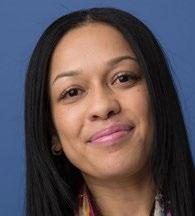
Nicolette Naylor, Chair
of the Atlantic Institute Governing Board
Strategy requires making choices.
The Atlantic Institute’s Strategic Plan 2026–2031 represents a set of integrative choices that will enable us to fulfil our mandate as connective tissue for the Atlantic Fellows community. It reflects careful listening, honest reflection and a commitment to strengthening the conditions that allow Fellows, Programs and partners to connect, collaborate and create impact together.
This strategy is not an endpoint. It is an invitation.
An invitation to contribute your knowledge, experience and leadership to a global community committed to advancing fairer, healthier and more inclusive societies. An invitation to strengthen the relationships, trust and collective capacity needed to address the complex challenges of our time. And an invitation to help shape what lifelong Fellowship can mean in practice.
The Atlantic Institute exists to help make those connections possible. We believe that meaningful change happens when people from different geographies, disciplines and lived experiences come together to learn from one another, challenge one another and act together in pursuit of a shared purpose.
Over the next five years, we will focus on cultivating lifelong Fellowship, deepening collaboration and knowledge exchange, and stewarding our community with clarity, accountability and care. Success will not be measured by the activities we deliver, but by the strength of the relationships we help nurture and the collective impact that emerges from them.
This work belongs to all of us. Whether you are a Fellow, Program partner, board member, staff colleague or supporter, I invite you to join us in bringing this strategy to life and in shaping the next chapter of the Atlantic Fellows community together.
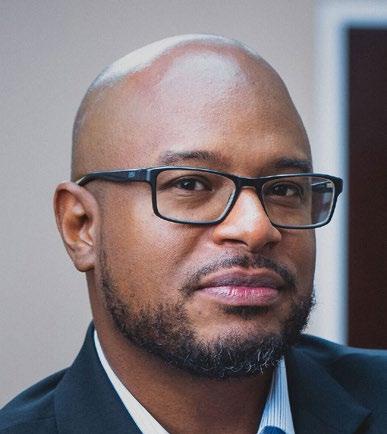
Kevin Liverpool, Interim Executive Director of the Atlantic Institute
Introduction
THE ATLANTIC INSTITUTE STANDS AT AN INFLECTION POINT
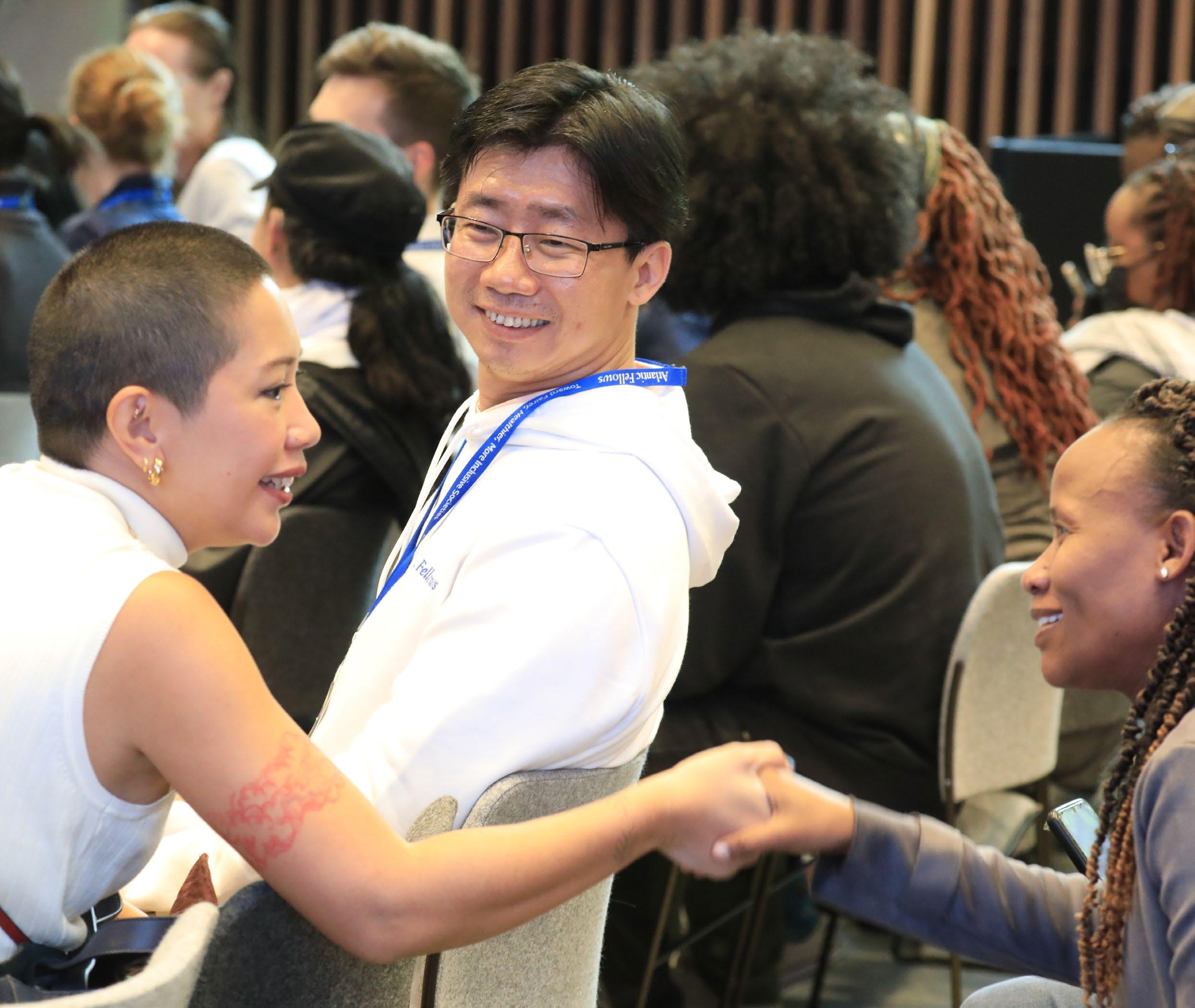
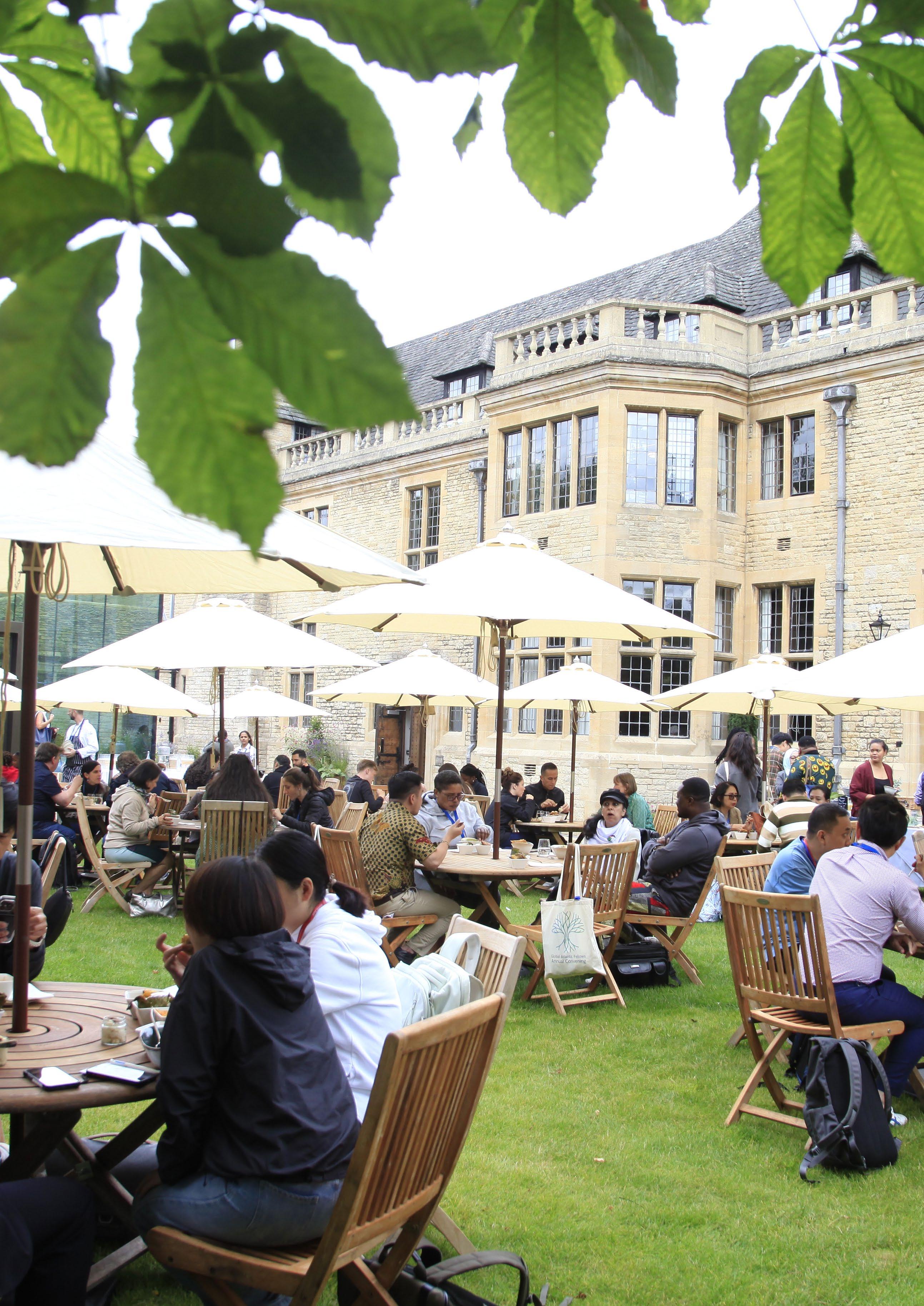
Nearly a decade after its establishment, the Institute has earned respect for its commitment to equity and its capacity to convene a diverse, transdisciplinary global community of leaders. Our inperson convenings, virtual engagements, the Extended Realities (XR) Lab1 and the Atlantic Fellows Residence, Kopanong2, have nurtured belonging, strengthened trust, and sparked curiosity and collaboration across geographies.
Yet, the Atlantic Fellows community has also surfaced persistent questions about the Institute’s distinct role beyond that of the seven Atlantic Fellows programs, and the added value it offers. Recent decisions, including pauses and shifts in direction, have caused uncertainty, feelings of disconnect and confusion amongst some Fellows and Atlantic Fellows program partners. Many seek greater clarity about the Institute’s mandate, stronger reciprocity in decision-making, and a clearer articulation of how the Institute relates to and adds value. This strategy sets out to answer those questions with humility.
The strategy responds directly to this moment by grounding our action in the principle of Sankofa3: the understanding that we must look back to our founding intent and the past ten years to move forward wisely. By reflecting on the Atlantic Institute Program Charter, “Our Founding Story” and lessons from the past, the Institute seeks to rebuild trust, clarify purpose and position itself as a catalytic force for the global Atlantic Fellows community and beyond. We recognize that trust is rebuilt through sustained and consistent practice over time, not simply through assurances contained in a document alone. As such, this plan sets out not only what we will do but also how we will operate differently to deliver it.
The Strategic Plan consists of three sections:
• Section 1 - The background and context
This section draws on the Atlantic Institute Review 2025 by the Institute for Voluntary Action Research (IVAR) to reassess the Institute’s purpose and distinctive contribution following the decision to extend its lifespan; and outlines some of the current global tensions that we work within.
• Section 2 - Our strategic foundation
This section sets out the core architecture of our strategy: our mission, our vision for the Atlantic Fellows community, our guiding principles and our Theory of Change. Together, these elements form our strategic DNA, the enduring logic that shapes how we think, work and lead.
1 The Atlantic Institute’s XR Lab, based at Rhodes House, is a dedicated space for Atlantic Fellows and partners to explore and apply immersive technologies in advancing equitable, inclusive societies. Learn more
2 Kopanong is the dedicated residence and convening space for Atlantic Fellows hosted by the Atlantic Institute in Oxford, UK. “Kopanong” is an African word of Setswana and Sesotho language origins meaning “a meeting place of diverse languages.” The residence is a hub for Fellows participating in Atlantic Fellows programs and other convenings, providing a communal environment where emerging leaders from diverse backgrounds can live, learn, connect and collaborate on ideas and initiatives for social equity and systemic change. Learn more
3 Sankofa is a West African concept, originating from the Akan people of Ghana, meaning “to go back and get it,” and expresses the principle that progress requires learning from and reclaiming the wisdom of the past.
•
Section 3 - Our strategic framework
Rooted in our vision and mission, this section outlines the strategic response shaping the Atlantic Institute’s next phase and presents its strategy for 2026–2031. It articulates the goals we aim to achieve and the strategic focus over the next five years. This provides a roadmap for translating our strategic intent into concrete action, ensuring that our work remains focused, impactful, and aligned with the needs of the Atlantic Fellows community and the broader ecosystem we seek to influence.
The strategy is both restorative — rebuilding trust, strengthening governance and communication, and re-establishing clarity of mandate — and catalytic, enabling cross-program collaboration, incubating high-impact initiatives, leveraging regional and global networks, and amplifying the influence and collective voice of Fellows in shaping policy and systemic change.
It is not a reinvention, but our Sankofa journey: a return to foundational wisdom and original intent, a reckoning with lessons learned and a bold step forward. We are reclaiming the Institute’s role as supportive, connective tissue and steward of a purposeful global catalytic community.
“We are reclaiming the Institute’s role as supportive, connective tissue and steward of a purposeful global catalytic community.”
In doing so, we will continue to build a connected, aligned and high-functioning global community of changemakers, capable of shaping fairer, healthier and more inclusive societies with courage, humility and resolve.
Over the next five years, the Institute will shift from an event-centered way of working to an intentional, reciprocal and networked operating model. We will develop clear pathways for Fellows to engage across cohorts and geographies, contribute to each other’s development, and collaborate across Atlantic Fellows programs in ways that lead to sustained action and impact.
“Sankofa” is a word from the Akan language in Ghana that translates loosely as “go back and get it.” It is often represented by a bird flying forward while turning its head backward, carrying an egg in its beak — symbolizing the future being nourished by the wisdom of the past.
The concept reminds us that progress does not require abandoning origins. Rather, it calls for an intentional return: revisiting foundational purpose, recovering essential values and retrieving lessons that may have been overlooked in moments of growth or transition.
For the Atlantic Institute, Sankofa signals returning to our original intent in order to reimagine our future with clarity, coherence and courage.
Section 1 – Background and context
1.1 THE GLOBAL CONTEXT
The Atlantic Institute’s next strategic chapter unfolds amid profound global disruption
Political, technological, economic and social systems are being reshaped simultaneously. Institutions that once appeared stable are under strain. Public trust is uneven. Global insecurity is increasing with a return to great-power hegemony. Although inequality between countries has declined, inequality within countries is widening in new and complex ways, with emerging technologies such as artificial intelligence posing a potential risk to this fragile convergence.
Pressures on democracy
Across regions, democratic norms face pressure from polarization, misinformation and declining civic trust. Civic space is shrinking in some contexts, while public institutions struggle to maintain legitimacy in others. At the same time, grassroots movements are reshaping conversations on justice, equity, gender, race, climate and economic inclusion.
For a vibrant community such as the Atlantic Fellows, where Fellows work at the intersection of systems change and lived experience, this creates both risks and opportunities.
Structural inequality
Inequality remains a central organizing challenge of our time. Wealth concentration, uneven access to health care and education, climate vulnerability, migration pressures and digital exclusion are interconnected and transnational. Global crises including pandemics, conflict and climate shocks have revealed the fragility of systems and the disproportionate burden borne by marginalized communities. Structural drivers of inequality are increasingly global in nature, yet solutions remain fragmented and locally siloed.
This landscape of geopolitical volatility reinforces the importance of cross-regional, transdisciplinary collaboration, as facilitated by the Atlantic Fellows programs. Complex structural problems require networked responses that transcend institutional and geographic boundaries.
Technology
Emerging technologies, including artificial intelligence, are reshaping governance, labor markets, knowledge production and civic engagement. While these technologies hold transformative potential, they also amplify inequalities, concentrate power and accelerate misinformation.
Technological systems are not neutral. They reflect and often amplify the existing power imbalances, concentrating solutions in the hands of a few companies. Yet they also create new possibilities for coordination, innovation and global connectivity. The Institute, therefore, has a critical role in ensuring that Fellows and the Atlantic Fellows programs are connected to emerging technological debates and are positioned to influence how innovation intersects with equity.
Narrative power
Narrative has become a strategic arena. Influence is increasingly shaped by visibility, storytelling and agenda-setting capacity. Leaders who can translate evidence and lived experience into compelling narratives will shape policy and public discourse.
For the Institute, this underscores the importance of amplifying Fellows’ voices, strengthening our collective identity, building a unifying brand and supporting engagement in global arenas where policies are being formed.
The opportunity for Atlantic Fellows and the Atlantic Institute
Amid uncertainty, there is a recognition that no single organization, discipline or intervention can address structural inequalities alone. Systemic change depends on collaborative networks capable of bridging sectors, translating knowledge across contexts and aligning influence.
The Atlantic Fellows community, spanning regions, disciplines and lived experiences, is uniquely positioned within this landscape. Its potential lies not in individual leadership but in the collective capacity that emerges when Fellows, Atlantic Fellows programs and institutional partners connect, learn and act together.
The global environment will remain fluid. Our responsibility is to build the adaptive capacity, relational strength and coherence required to respond effectively and lead responsibly within it.
1.2 TOWARD A 30-YEAR HORIZON
In November 2024, the Atlantic Institute Governing Board (AIGB) agreed on a horizon period of 30plus years, in accordance with the Atlantic Institute’s Program Charter which specifies a duration that is at least 15 years.
The Atlantic Fellows community was conceived as a lifelong community of leaders. Systems change does not happen within grant cycles. It unfolds over decades as leaders shift institutions, influence policy, build movements, create new fields of practice and cultivate new generations of changemakers. An extended duration for the Institute honors the original design: to support Fellows beyond their individual programs and to act as the supportive, connective tissue that makes lifelong impact possible.
Over nearly ten years, the Institute has demonstrated the power of convening leaders across disciplines, geographies and ideological perspectives to advance equity. The cumulative effect has been significant: cross-border collaborations and solidarities that would not otherwise exist.
However, some dimensions of the Institute’s potential remain only partially realized. While the Institute occupies a unique position, bridging the intersection of academia, philanthropy, civil society and public leadership, its role as a connector across ecosystems has not yet matured sufficiently to achieve its full potential. An extended duration enables the Institute to shift from episodic convening to offering more sustained ways of influencing ecosystems.
The global context has shifted dramatically since the founding of the Institute ten years ago. Polarization is deepening. Democratic values are under strain. Inequality is widening. In such contexts, institutions grounded in values-based leadership become more essential. The Institute provides a beacon for equity, shelter from the storm and a community of courage.
Therefore, extending the Institute’s duration is not simply about continuing to offer events and activities. It is about strengthening the foundations and creating the right conditions for making the Atlantic community’s work possible. In times of volatility, an institution that bridges difference, anchors itself in equity and supports leaders across decades is not solely a convener. It serves as a source of steadiness in an unsettled, uncertain world.
1.3 THE ATLANTIC INSTITUTE REVIEW 2025
The Atlantic Institute Review4 situated the Institute at a decisive moment in its institutional life: approaching its tenth anniversary, navigating leadership transition, operating within a volatile geopolitical environment and committing to extend its duration to 2055. The review made clear that the next period is not simply a moment of continuation, but one of recalibration.
As one staff member observed:
“Systemic change and the complex problems we are trying to solve require a longer time horizon ... progress against this mission takes time to manifest ... True collaboration will take many years.”
4 In March 2025, the Institute for Voluntary Action Research (IVAR) was commissioned to undertake a review of the purpose and unique contribution of the Atlantic Institute (AI), in light of its decision to extend the duration of the organization. For a digital copy of the Atlantic Institute Review 2025, please send your request to institutecomms@atlanticfellows.org
The extension of duration reflects a belief that systems change cannot be compressed into grant cycles or short-term strategies.
A partner organization reinforced this orientation toward long-term commitment:
“The Atlantic Institute can create the conditions for collective action that outlasts funding cycles ... it can think longer and bigger.”
At the same time, the report underscores that duration alone does not guarantee distinctiveness. The central strategic question emerging from the review is whether the Institute can generate value “greater than the sum of its parts,” moving beyond convening and grant-making toward demonstrable contribution to systemic change.
The strength of our core offerings
Participation data and qualitative feedback reveal that the Institute’s current offerings have been widely valued. High levels of engagement, particularly in global convenings, correspond with strong perceptions of belonging and intellectual stimulation.
Fellows described:
“…the building of a critical mass of like-minded changemakers ... an energy that keeps all Fellows involved and committed wherever they may be.”
Another Fellow emphasized ethical alignment as the distinguishing feature of collaboration: “A team needs to be aligned ethically with values and vision ... this is why working with Atlantic Fellows is so important.”
In-person convenings, in particular, are described as catalysts for connection and identity-forming: “The in-person convenings are irreplaceable for trust, collaboration and serendipitous connections.”
Program staff similarly described these gatherings as the Institute’s “superpower”: spaces that render the idea of shared identity tangible.
This evidence suggests that the Institute has successfully cultivated network density, relational trust and values coherence. These are foundational assets for long-term systems change.
Emerging strategic tensions
However, the review also surfaces several structural tensions that must inform strategic planning.
i) Focus vs. breadth
Across interviews and focus groups, participants called for greater intentionality. One partner advised: “Pick a few concrete priorities and go deep.” A Fellow echoed this need for momentum: “There needs to be a clear vision of building momentum ...”
Simultaneously, others cautioned against narrowing the Institute’s identity too tightly around themes. As one AIGB member noted: “The Principles document ... isn’t so focused on themes. It is focused on leadership.”
This reveals a core strategic question: Should the Institute define itself primarily by topics (climate, migration, reparations, etc.) or by approach (values-based, ethical leadership)? The most generative pathway, as one participant suggested, may be integrative — anchoring leadership practice within selected themes: “What does values-based, ethical leadership look like in climate discussions, racial justice, DEI conversations, reparations, etc.?”
ii) Collaboration as aspiration versus infrastructure
There is near-universal enthusiasm for prioritizing collaboration. A partner stated plainly: “The risk of not collaborating is that we don’t make the change that we have the capacity to make.”
Yet Fellows were equally clear that collaboration does not happen organically: “Collaboration doesn’t happen by magic: don’t assume that leaders will just collaborate naturally.”
Participants emphasized the need for scaffolding, reciprocity and resource alignment. Without this, convenings risk becoming episodic rather than catalytic. The desire is not merely for knowledge exchange, but for coalition-building and co-creation, moving “beyond knowledge sharing to cocreating … taking bold action that is rooted in shared goals.”
This signals a shift from hosting community to engineering collective capacity.
iii) Relational fracture and trust
Findings reveal that the Institute is operating within a context of relational strain. Words used to describe relationships during the period under review included “confusing,” “disconnected,” “strained” and “uncertain.”
Some Fellows cited the “silencing” of the Atlantic Fellows’ Palestine group and experiences during convenings as eroding trust. One Fellow reflected: “What we want is essentially the opposite of what currently exists. It’s very hard to get behind any kind of strategizing because the problems are just so fundamental.”
This context matters. Strategic ambition must be grounded in relational repair. As another staff member warned, “The shifts in strategy are having a detrimental impact on Fellows’ connection to the Institute.”
The extended duration amplifies, rather than reduces, the importance of trust. Thirty-year horizons require legitimacy and legitimacy grows from trust.
iv) Impact ambiguity
The review repeatedly highlights challenges around evidencing impact: over-reliance on self-reported outcomes, a lack of agreed indicators, ambiguity between global and hyper-local impact, and blurred attribution between the Atlantic Institute and the Atlantic Fellows programs’ influence.
One staff member posed the critical evaluative question: “What kinds of impact matter most — network depth, public visibility, policy influence, or innovation in equity practice — and how are these best evaluated over time?”
Another sharpened the moral lens: “It’s not about serving the Fellowship; it’s about serving the communities that are affected by the issues that the Fellowships address.”
This tension — Fellowship benefit vs. societal transformation — sits at the heart of the Atlantic Institute’s strategic future.
A beacon for equity
Participants articulated a compelling aspiration for the Institute to act as a convener of thought leaders rather than a singular institutional voice:
“It shouldn’t be an Atlantic Institute voice. It should be the place where really good thinkers and people with a genuine commitment come together and have a collective voice.”
The metaphor of a “beacon” resonated with many — a space that “guides,” “inspires” and “lights-up.”
Yet the beacon must be embodied in practice. A partner reflected:
“Spaces that humanize differences are rare and needed. They show us how to live with tension, not avoid it.”
Section 2 – Our strategic foundation
2.1 OUR MISSION
The Atlantic Institute seeks to amplify the influence and impact of the Atlantic Fellows and the Atlantic Fellows programs by:
• Supporting lifelong community among Atlantic Fellows with access to resources and opportunities to connect, learn and work together.
• Promoting collaboration and shared approaches across Atlantic Fellows with virtual and face-to-face platforms for sharing knowledge.
• Extending community by connecting Atlantic Fellows and their programs to a broader global network of equity-focused leadership initiatives.
• Raising global awareness of the work of the Fellows and of the programs.
In fulfilling its mission, the Atlantic Institute will provide connective architecture for a global community of Fellows. Where Atlantic Fellows programs cultivate cohorts of Fellows grounded in particular geographies and themes, the Institute will support Fellows to connect across the programs, and to act and influence collectively across boundaries. In doing so, the Institute must translate the intent of “Our Founding Story5,” ensuring systemic impact through empowered, values-driven communities into a sustained global community capable of advancing fairer, healthier and more inclusive societies over decades.
2.2 OUR VISION FOR THE GLOBAL ATLANTIC FELLOWS COMMUNITY
Atlantic Fellows are a diverse, international community of leaders who share a deep commitment to advancing fairer, healthier, more inclusive societies. They are courageous, compassionate, and collaborative thinkers and doers who collectively seek to bring lasting improvements to their communities and the world. Their diversity enables them to look at the causes of systemic problems from multiple perspectives to more effectively address the root causes rather than the symptoms.
The Atlantic Fellows programs bring together passionate, experienced individuals from different backgrounds, areas of expertise and professions to learn from one another and collaborate to advance solutions to pressing problems. Cohorts across the programs include advocates, lawyers, artists, business professionals, health practitioners, government officials, academics and researchers. The Atlantic Fellows programs are designed to increase Fellows’ understanding, capacity and commitment, and help them access the resources and networks that they need to accelerate their work and achieve demonstrable impact.
Each of the programs is unique and grounded in its local context but united through a shared Atlantic Fellows identity and the shared principles, objectives, experience, values and attributes it represents. The Atlantic Institute amplifies the influence and impact of the Atlantic Fellows network with longterm resources and opportunities to connect, learn and work together.
5 “Our Founding Story” outlines how the decision of The Atlantic Philanthropies to invest its final major resources in the Atlantic Fellows initiative, grounded in Chuck Feeney’s Giving While Living philosophy, led to the creation of a global, interconnected Fellowship community and the Atlantic Institute to sustain collaborative leadership and systemic impact. Learn more
The Atlantic Philanthropies established the Atlantic Fellows to culminate the foundation’s work in the geographies and themes in which it historically focused, and its long history of investing in people and their vision and ability to realize a better world. Atlantic’s final — and largest — investment, made alongside other partner organizations and governments, aims to support the work of a global community of thousands of Atlantic Fellows over the next two decades and beyond.
2.3 OUR PRINCIPLES
The guiding principles as set out in the founding Charter6 that informed the creation of the Atlantic Institute are:
To be a supportive, collaborative partner
The Atlantic Institute is a supportive and collaborative partner and resource for the Atlantic Fellows and the Atlantic Fellows programs.
To be responsive to the Atlantic Fellows community
As key stakeholders, the Atlantic Fellows programs and the Atlantic Fellows will have significant input into the priorities and programming of the Atlantic Institute.
To become a leading resource on global thinking
The Atlantic Institute will become a leading resource for global thinking on values-based leadership and on tackling inequality, providing the space, methodology and means for collaboration across disciplines, geographies and communities — within and beyond the Atlantic Fellowship. As hosts and collaborating partners, the Rhodes Trust, the Rhodes Scholar network and the University of Oxford offer valuable resources and synergies to help realize these objectives.
Activities to be focused on the global network and facilitating collaboration and learning
The primary purpose of the Atlantic Institute is to amplify the impact of the network of Atlantic Fellows programs and to foster/support a global community of Fellows by facilitating collaboration and learning across the programs. The Institute will also connect the Fellows and programs with a broader community of leaders and organizations.
Funds committed to the Institute’s activities shall not be used simply to support the activities of individual programs but shall be deployed strategically to advance the mission of the Atlantic Institute. Engagement with outside programs and activities shall also be ancillary to, and solely in support of, the Institute’s primary objectives.
The Institute shall achieve these objectives by facilitating the exchange of ideas, knowledge and understanding amongst Atlantic Fellows themselves and between Atlantic Fellows programs, but shall not adopt or promote any particular opinion or ideology.
6 The Atlantic Institute Charter is the founding document that establishes the purpose, governance structure, and operational principles of the Atlantic Institute. It defines the Institute’s mission to support and connect the global community of Atlantic Fellows, outlines the roles and responsibilities of its Governing Board and leadership, and sets the financial management framework. The Charter also codifies the shared values and principles that unite the Atlantic Fellows programs while remaining amendable (except for its core mission and values) to allow for organizational evolution. Learn more
Program life to be sufficient to support long-term community
A fundamental requirement of the Atlantic Fellows programs is to ensure a program life sufficient to build communities of scale — approximately 15 years and 300-400 Fellows from each program. The Atlantic Philanthropies’ funding for the Atlantic Institute is dedicated to supporting the global community of programs and Fellows for at least 15 years. Annual budgets shall be consistent with this intended duration. Potential supplemental funding may be raised to increase annual resources available, and/or longevity of the organization.
2.4 THEORY OF CHANGE
Advancing fairer, healthier, more inclusive societies requires values-based, solutions-oriented and influential people — who are culturally and professionally diverse — to learn from one another and collaborate on solutions. The problems that the Atlantic Fellows seek to address are complex and systemic in nature and larger than any one person, community or nation can effectively address alone or in the short term. To allow for sustained interactions, relationships and progress, Atlantic Fellows are lifelong Fellows with ongoing engagement in the community over time.
The programs aim to strengthen and connect these emerging leaders with a shared purpose, identity and community. Through the global community, Atlantic Fellows and the extended network of people and organizations they work with, can think and act collectively, both locally and globally. In doing so, these Fellows can make significant contributions toward solving some of the world’s pressing problems.
2.5 OUR STRATEGIC RELATIONSHIPS
The Atlantic Institute is a distinct program with a relational purpose. Rather than existing as a standalone entity, our identity is grounded in the relationships that gave rise to us, and our role is to strengthen the conditions through which our Fellowship community can remain connected, generative and enduring.
A partnership program
The Atlantic Institute is a partnership program of the Rhodes Trust7 and The Atlantic Philanthropies8 Our location at Rhodes House, Oxford, connects the Institute with the Rhodes Scholar community as well as with Oxford University and the rich ecosystem it offers for the learning and development of the Atlantic Fellows community. This partnership is strategic.
From The Atlantic Philanthropies, we inherit a values-driven mandate rooted in equity, fairness and the courage to take “big bets” on people. The Atlantic Fellows programs were the culminating investment of the limited-life foundation committed to Giving While Living. The Atlantic Philanthropies completed its work in 2020, and now the Institute carries forward the vision of investing in catalytic leaders and communities capable of advancing systemic change long after the foundation’s closure.
7 The Rhodes Trust is a UK-based educational charity, founded in 1902 and headquartered at Rhodes House, Oxford, that administers the prestigious Rhodes Scholarships and related global fellowship programs to bring together and develop exceptional leaders from around the world committed to service and impact. To learn more, visit https://www.rhodeshouse.ox.ac.uk/
8 The Atlantic Philanthropies is a private foundation, established in 1982 by Chuck Feeney and guided by his “Giving While Living” philosophy, that invested over $8 billion in health, education, human rights and equity initiatives around the world before completing its grantmaking in 2016 and closing in 2020. To learn more, visit https://www.atlanticphilanthropies.org/
From the Rhodes Trust, we gain an institutional home with deep experience in stewarding global alumni communities. The decision to house the Institute at the Rhodes Trust reflects strategic alignment as both institutions share a belief in lifelong fellowships, values-based leadership and the power of global networks to influence society. The Rhodes Trust provides governance stability, a fiduciary infrastructure and access to one of the world’s most enduring scholarship communities.
Our relationship with the seven Atlantic Fellows programs
The Atlantic Institute exists to connect the seven Atlantic Fellows programs to unlock the full potential of the Atlantic Fellows community, making the whole greater than the sum of its parts. These programs are independently governed, locally grounded and thematically distinct, yet united by a shared commitment to advancing fairer, healthier and more inclusive societies.
Atlantic Fellows programs across the globe
• Equity in Brain Health, based at the Global Brain Health Institute at Trinity College Dublin, Ireland; and the University of California in San Francisco, United States.
• Racial Equity, based at 21Hundred, London, United Kingdom.
• Social Equity, based at the University of Melbourne, Melbourne, Australia.
• Health Equity, based at The George Washington University Institute for Health Workforce Equity, Washington, D.C., United States.
• Health Equity in South Africa, based at Tekano near Cape Town, South Africa.
• Social and Economic Equity, based at the International Inequalities Institute at the London School of Economics and Political Science, London, United Kingdom.
• Health Equity in Southeast Asia, based at The Equity Initiative at the China Medical Board in Bangkok, Thailand.
Our relationship with the Atlantic Fellows programs is mutually strategic because:
• Each program is rooted in its geography and institutional host. The Institute does not direct their work. It provides connective tissue across them.
• The systemic challenges addressed by the programs transcend borders. The Institute enables Fellows and program teams to collaborate across disciplines and regions, accelerating collective insights and action.
• The founding vision emphasized the Fellowships as an enduring experience. The Institute provides the relational and convening architecture to sustain that vision over time.
Our relationship with Atlantic Fellows
Atlantic Fellows are not passive recipients of programs, services or offerings delivered by the Institute. They are the community. The Institute exists to steward the conditions through which Fellows can connect, collaborate, contribute and exercise collective agency across difference, geographies and disciplines.
Our relationship with Fellows is therefore strategic and reciprocal. Fellows are active participants in shaping the culture, norms and direction of the Atlantic community over time. They are leaders, practitioners, researchers, community organizers, artists, policymakers and movement builders working at the forefront of efforts to advance equity. Fellows bring their expertise, lived experience and critical insights that the Institute seeks to engage with respectfully.
The Institute approaches Fellows not as beneficiaries but as collaborators in a shared project: the long-term pursuit of fairer, healthier and more inclusive societies. While the Institute provides connective infrastructure, convening spaces and opportunities for exchange, the vitality and relevance of the community ultimately depend on the participation, leadership and relationships cultivated by Fellows themselves.
This relationship requires mutual responsibility. The Institute has a responsibility to create enabling conditions for meaningful participation, collaboration and belonging across the Fellowship. Fellows, in turn, help shape the character of the community through how they show up for one another, contribute knowledge, challenge assumptions, share opportunities and build across lines of difference. We believe that every member of the community carries experiences, insights and capacities that can strengthen the collective. The Fellowship is sustained not only by what individuals receive but also by what they are willing to contribute in service of one another and the broader pursuit of equitable societies.
“We believe that every member of the community carries experiences, insights and capacities that can strengthen the collective.”
Importantly, the Institute does not seek to become the central locus of community life. Instead, we see lifelong Fellowship as a distributed and evolving community in which Fellows exercise their agency in defining what participation, leadership and contribution can look like at different stages of their lives and work. The Institute’s role is to support that possibility by strengthening the connective tissue of the community and ensuring that Fellows can continue to find one another, learn from one another and act alongside one another over time.
(Go to page 20 for more detail about our approach to lifelong Fellowship.)
Why Oxford is strategic
Our location in Oxford is functional and strategic. The city is home to the University of Oxford, one of the world’s most internationally connected academic hubs. The Atlantic Institute’s location at Rhodes House situates it within a dense ecosystem of scholars, policymakers and practitioners from every region of the world.
The Atlantic Fellows community brings perspectives shaped by struggles for equity in diverse contexts. The University of Oxford is a global research university that actively positions itself today as inclusive and publicly engaged, having educated many world leaders and highly influential figures. However, it is historically associated with elite knowledge production as access was once restricted to the wealthy. The Rhodes Trust, in particular, has a contentious legacy, having been established by British colonialist, Cecil John Rhodes. Oxford’s historical associations have created discomfort and tension for some Fellows, but from within Rhodes House, the Institute can challenge, influence and diversify global narratives.
Atlantic Institute Strategic
Atlantic Fellows operate as a globally connected leadership community across regions and sectors.
OUTCOMES
OUTPUTS
ACTIVITIES
A suite of community infrastructure including onboarding platforms, global convenings, online collaboration spaces, shared communication tools, regular listening forums, and a formal partnerships framework that enables engagement within the Atlantic Fellows community and with external fellowship networks.
Global Gateway Community Building Support including Community Cafe Fellowship of Fellowships
Global Connect Summit AF Hub and Resource Bank Network for Good
Atlantic Fellows creators of knowledge, thought leadership, insights that influence
Thematic convenings of practice; knowledge Equity Review, and public-facing stories, media designed to capture, across
STRATEGIC PILLARS
Maintaining the relational infrastructure that enables Atlantic Fellows to belong, collaborate and act collectively. Knowledge Building knowledge and programs WORKSTREAMS
Global connectivity
STRATEGIC INTENT
MISSION OBJECTIVES
VISION
Supporting lifelong community among Atlantic Fellows with access to resources and opportunities to connect, learn and work together.
“We connect people
Promoting collaboration and approaches across Atlantic Fellows virtual and face-to-face platforms sharing knowledge.
Atlantic Fellows are a diverse, international community of leaders
Strategic Framework (2026-2031)
Fellows and programs are recognized as coknowledge, driving cross-program learning, leadership, and the dissemination of evidence and influence public narratives and practice.
convenings and cross-program communities
knowledge creation initiatives including the XR residencies and Fellow-led webinars; public-facing knowledge products such as impact media features and Fellow-led podcasts - all capture, share and amplify insights from the Atlantic Fellows community.
Knowledge and Engagement Products including “The Equity Review”
AF Branding Impact stories
The Atlantic Institute operates with effective and transparent governance, supported by a well-equipped team that sustains the integrity and impact of the Fellowship ecosystem.
Structured governance processes and forums; and institutional strengthening initiatives including staff training and professional development to build organizational capacity.
EDs and Board Forums Program staff retreat
Emerging Technologies Residencies Fellows in the media Fellow-led podcasts AIGB and GFAB
Knowledge Infrastructure
Thought Leadership & Public Narrative
Knowledge exchange
knowledge infrastructure that positions Fellows programs as co-creators and collaborators.
Governance Coordination
Professional development Kopanong: Atlantic Fellows Residence
Staff training & retreat Local projects
Institutional Strengthening, Capacity & Residence
Stewardship excellence
Ensuring that the Atlantic Institute and the Atlantic Fellows community are governed effectively.
people to change systems”
shared Fellows with platforms for
Extending community by connecting Atlantic Fellows and their programs to a broader global network of equity-focused leadership initiatives.
Raising global awareness of the work of the Fellows and the Atlantic Fellows programs.
leaders who share a deep commitment to advancing fairer, healthier, more inclusive societies.
Section 3 – Our strategic framework
3.1 OUR STRATEGIC RESPONSE
The Atlantic Institute Review calls for a central shift: from delivering events and activities to stewarding greater collaboration, continued learning and external influence. Our response is to build clearer pathways, foster the conditions for stronger reciprocity with programs and Fellows, and pursue a more disciplined model of collective action.
By 2031, the success of the Institute will be demonstrated through stronger trust and clarity across the community, deeper cross-program collaboration and greater external visibility of Fellows’ work and influence. We will also be able to point to credible indicators of community health, alongside examples of coordinated action that would not have happened without the connective infrastructure stewarded by the Institute, enabling a hub for values-based leadership and thought leaders, as well as global equity impact.
Strategic intent
“We connect people to change systems.”
This reflects our commitment to investing in the relationships between Atlantic Fellows, programs and partners so that ideas, knowledge and influence can flow more freely and effectively. Through these connections, new collaborations can emerge, collective strategies can take shape and pathways to systems-level change can be strengthened. By strengthening the connective tissue of our community, we enhance the conditions for collective influence, through collaborative initiatives, shared platforms and aligned narratives.
We connect people who are culturally diverse and who bring ways of knowing and being that exist beyond dominant Western paradigms. Indigenous wisdom traditions, from the Akan concept of Sankofa to the Māori expression Ka mua, ka mur i (“walking backwards into the future”), reveal resonances that transcend academic disciplines and conventional Western frameworks. They remind us that systems change is not only about inventing new solutions; it also requires re-emergence, reclamation, and renewal of ancient and sacred ways of understanding, relating and living.
Our role, therefore, is to cultivate the relational, intellectual and structural conditions that enable Fellows and programs to drive meaningful change. We are not the primary agents of change, but we are accountable for whether the community we steward actually makes such change possible.
3.2 LIFELONG FELLOWSHIP
Lifelong Fellowship is the Institute’s core commitment. Everything we do exists to create, sustain or strengthen the conditions for Fellows to remain connected, contribute and collaborate over their lifetime.
Lifelong Fellowship is not a promise of perpetual programming.
Lifelong Fellowship recognizes that the greatest asset of the community is not the Institute itself, but the relationships, trust, knowledge and collective capacity that exist between Fellows. The Institute’s role is not to sit at the center of every interaction, but to cultivate a community in which Fellows can continually find one another, learn from one another, support one another and build together in ways that are self-directed and adaptive over time.
This means ensuring that Fellows have:
• Pathways to discover others working on similar challenges or themes.
• Infrastructure that supports connection and collaboration across programs and cohorts.
• Opportunities to contribute leadership, knowledge, mentorship and resources back into the community.
• Equitable access to networks, visibility and participation, regardless of geography or institutional affiliations.
• Mechanisms for collective problem-solving during moments of opportunity, crisis or transition.
• A durable sense of belonging to a global community committed to advancing fairer, healthier, more inclusive societies.
Lifelong Fellowship is sustained mutual engagement within an evolving community of Atlantic Fellows through the conditions, relationships and opportunities that enable ongoing connection, contribution, collaboration and mutual support across the course of their lives.
Our approach to supporting lifelong Fellowship acknowledges that Fellows’ needs, capacities and modes of engagement will change over time. In our diverse community, we recognize that each Fellow is differently situated within their own evolving context, relationships, needs and contributions. Some Fellows may seek deep collaboration; others may participate episodically. Some may lead major collective initiatives; others may offer mentorship, convening power or intellectual contributions. The objective is not uniform participation but sustained engagement, ensuring that Fellows retain the ability to engage meaningfully with the community throughout their lives if and when they choose.
Importantly, this shifts the Institute’s role from being primarily a program deliverer to being a steward of the conditions, pathways and infrastructure that allow Fellows to navigate the Fellowship in ways that are relevant and valuable to them over time. Success is not measured by how many activities the Institute delivers, but by the agency Fellows exercise in shaping their own experience of the Fellowship and by the strength, resilience and self-sustaining nature of the relationships and collaborations they generate themselves.
Lifelong Fellowship is therefore both relational and infrastructural. It is the intentional design of a living global community capable of enduring beyond annual budgets, leadership transitions and political moments — and over time — extending beyond the Institute itself.
3.3 PRAXIS: THREE STRATEGIC PILLARS AND SEVEN WORKSTREAMS
To fulfil our strategic intent and ensure that we do the work of lifelong Fellowship well, our activities will be organized around three interconnected strategic pillars. Each pillar encompasses specific workstreams and is designed to deliver measurable outcomes.
Strategic pillar 1: Global connectivity
Theme: Maintaining the relational infrastructure that enables Atlantic Fellows to belong, collaborate and act collectively.
This pillar focuses on the who: the human connections that form the foundation of our community.
Workstreams
• Community building: Cultivating a sense of belonging and shared purpose.
• External partnerships: Connecting Fellows to a wider ecosystem of changemakers.
Key Activities
• Global Connect Summit: Our flagship in-person convening (formerly the Global Atlantic Fellows Annual Convening), serving as a key milestone in the induction of newly graduated Fellows into the global Atlantic Fellows community. After a two-year pause, we will resume this global gathering in December 2026, bringing together cohorts who completed their individual programs in 2024 and 2025. The Summit will be co-designed with Fellows and programs, and convened on a biennial basis.
• Global Gateway: A self-paced induction experience designed to prepare Fellows for lifelong Fellowship through a shared understanding of the history, purpose, values and evolving nature of the Atlantic Fellows community. The program will orient Fellows to the many ways participation, leadership, collaboration and exchange can take shape across the global community. The philosophy and methodology of the Global Gateway will be co-designed with programs, with its launch anticipated in September 2026.
• The Atlantic Fellows Hub9: This is the primary online space — the beating heart of our diverse and globally dispersed community. Through the Hub, Fellows and program staff can connect, learn and exchange knowledge across geographies, disciplines and contexts.
• Atlantic Community Café10: The online café seeks to build on the magic of random connection and enhance connections between Fellows as well as program staff. Each month, café subscribers receive an email inviting them to an online meeting with a randomly matched Fellow or program staff member. These introductions create opportunities for conversations and strengthen connections across the community.
• Resource Bank: This database will be where Fellows can go to exchange learning and expertise, connecting the skills and experience that exist across the Atlantic community with the evolving needs of Fellows. Through surveys, listening forums and community insights, we will surface commonly shared areas of interest and need to support Fellows through high-
9 Use your Atlantic Fellows email address to access the Hub here
10 Interested in joining the Atlantic Community Cafe? Please complete this form
quality learning experiences, workshops, webinars, training and practical resources in response. Over time, the Bank will become a growing repository of community-generated learning that strengthens connection and capabilities across the programs.
• Community building support: The Institute will offer many different ways of sustaining connections and deepening collaborations. In addition to our yearly scheduled convenings and activities, our informal events can include regional gatherings, community events, collaborative planning sessions or follow-up conversations on topics that emerge organically across the Atlantic Fellows community.
• Fellowship of Fellowships: The Institute can foster connections outside of the Atlantic Fellows community through a global Community of Practice (COP) that brings together leaders and practitioners from values-aligned fellowship programs at institutions such as the Ford Foundation and the Aspen Institute to exchange insights, share best practices and strengthen the field of fellowship-based leadership development.
• The Network for Good: The Rhodes Trust Network for Good unites a global community of thinkers and doers who believe the world’s greatest challenges are best solved together. Rooted in the Rhodes Trust’s mission to build a better world through global fellowship programs that develop and connect public-spirited, innovative people, the network aims to harness the collective power of Scholars and fellows across the partner programs.
The desired outcome
Atlantic Fellows operate as a globally connected leadership community across regions and sectors.
Strategic pillar 2: Knowledge exchange
Theme: Building knowledge infrastructure that positions Fellows and the programs as co-creators and collaborators.
This pillar focuses on the how: the tools, platforms and initiatives that enable learning and the creation of new ideas.
Workstreams
• Cross-program engagement: Facilitating collaboration and shared learning across different Fellowship programs.
• Knowledge infrastructure: Developing digital and programmatic tools to capture and share insights.
• Thought leadership and public narrative: Amplifying Fellow-led ideas to influence the wider world.
Key activities:
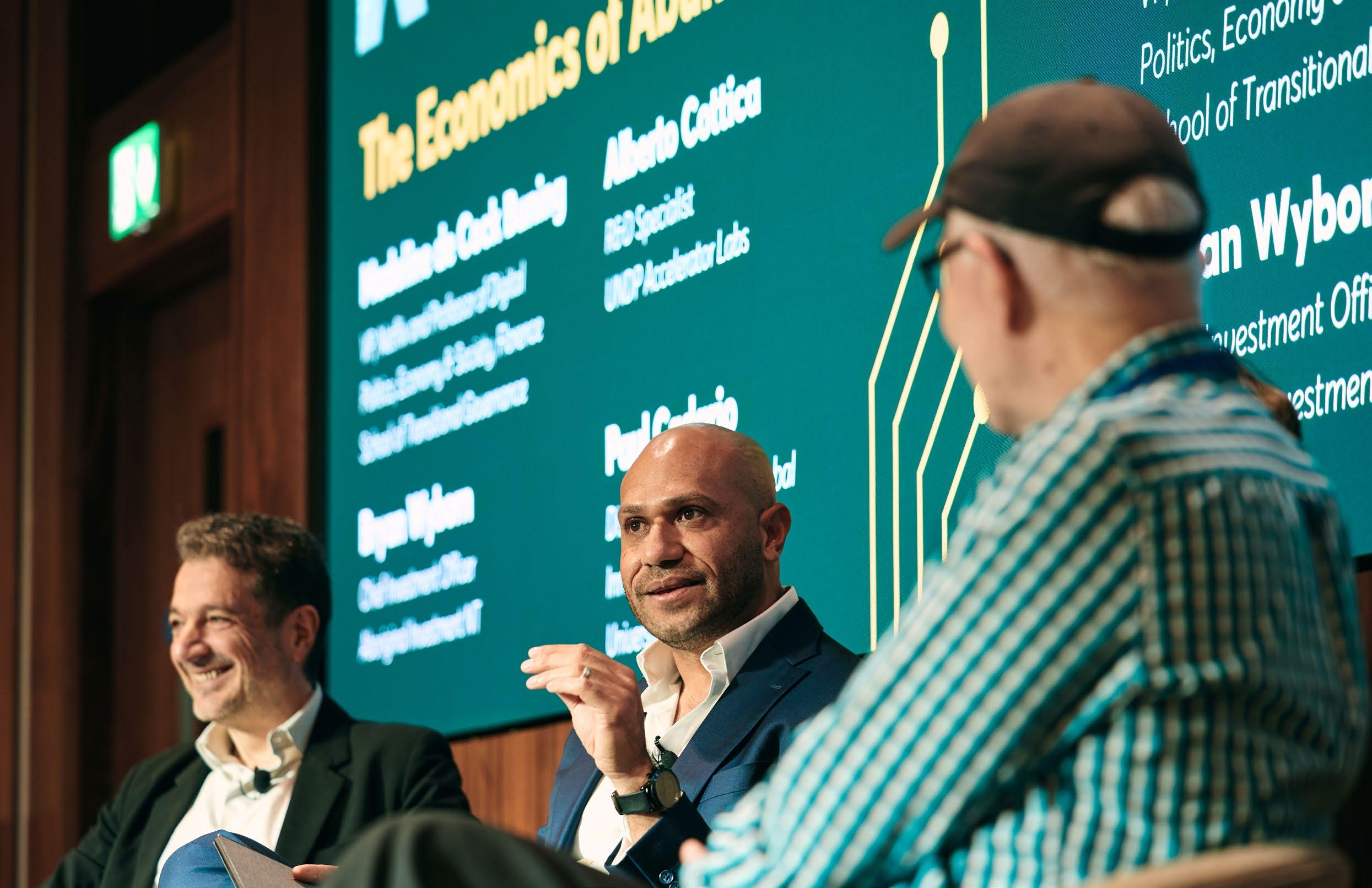
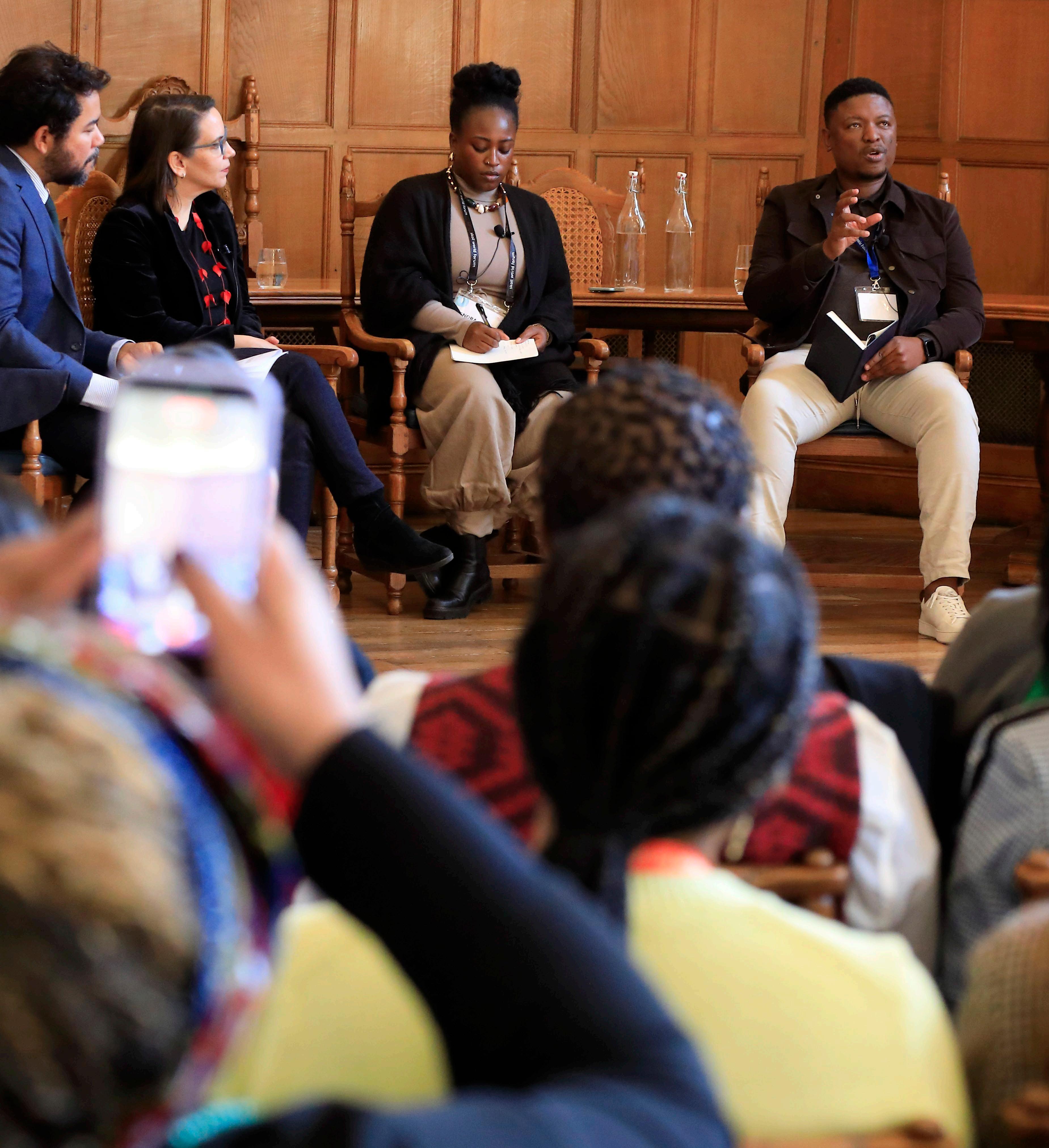
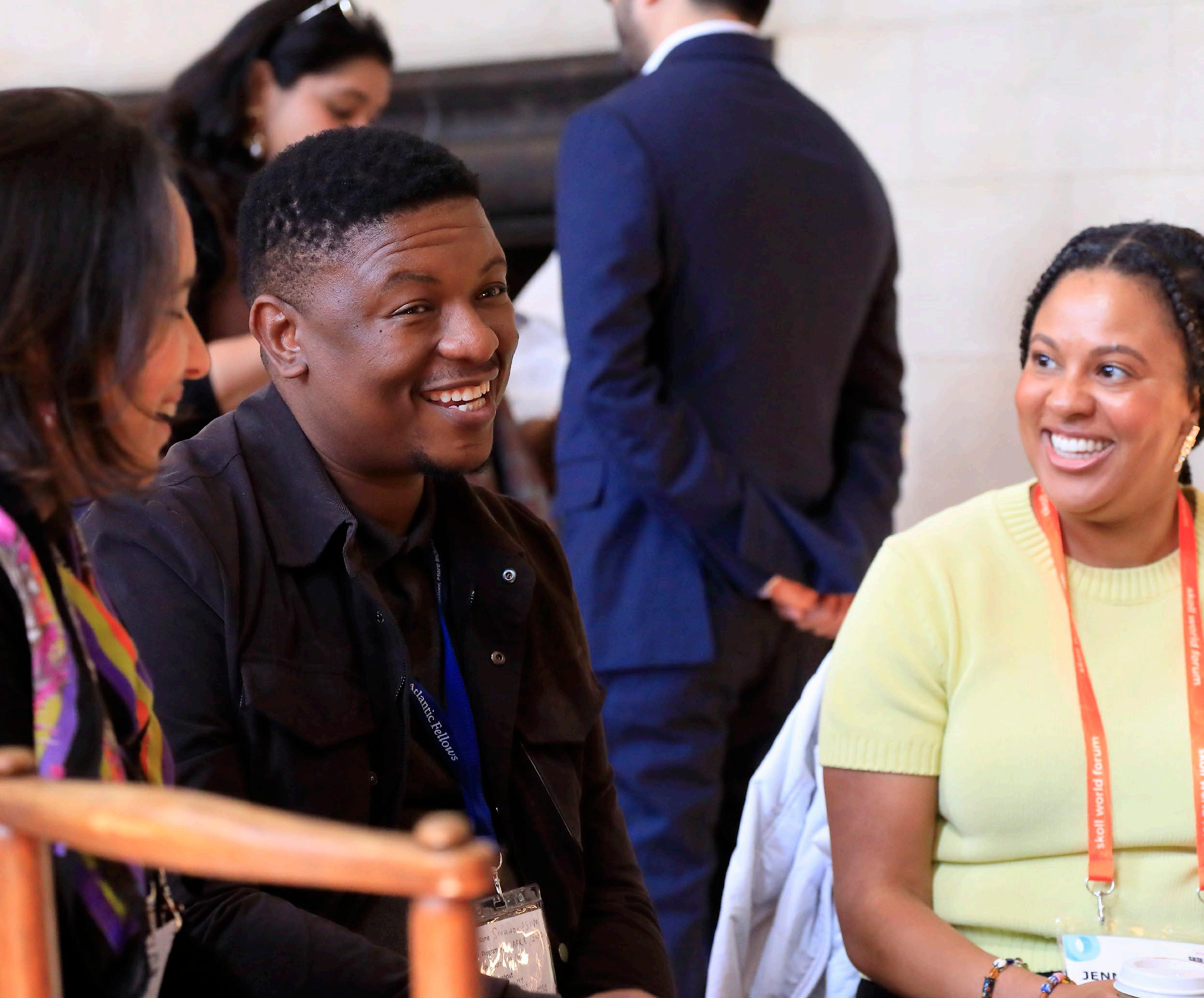
• Thematic Gatherings: Medium-sized gatherings will be designed to bring Fellows together around shared global challenges, areas of practice and cross-cutting themes emerging across the community. Our recent convening in Oxford, Atlantic Fellows at Skoll Week: Influencing Through Partnerships, serves as a guide to the nature and scale of future Thematic Gatherings. Convenings might explore areas such as climate, policy, leadership or systems change, depending on the priorities identified through ongoing community listening and engagement.
• Cross-program Communities of Practice (COPs): Collaborative learning and coordination spaces will bring together staff from across the seven Atlantic Fellows programs and the Institute for greater alignment, to share knowledge and surface emerging challenges, advancing collective good practice in key areas of Fellowship design, operations and community stewardship. These communities are intended to deepen cross-program relationships, reduce duplication and accelerate learning across the Atlantic Fellows ecosystem.
• “The Equity Review”: An interdisciplinary, biennial open-access publication is being developed by the Atlantic Institute in collaboration with Oxford University Press, the largest university press in the world. Through the Review, we aim to shape global discourse on systemic inequities by bringing together researchers, practitioners, Atlantic Fellows and impacted communities to generate rigorous analysis, foster transformative dialogue and strengthen collective understanding of the world’s most pressing challenges. The first publication is expected to be launched in mid-2027, with contributions from Fellows across all seven programs.
• Emerging technologies residencies: Immersive learning and collaboration opportunities will continue to help Fellows engage critically and creatively with emerging technologies and their implications for equity, democracy, public health, climate and social change.
• Knowledge and engagement products: A curated portfolio of impact stories, podcasts, media features, webinars and other multimedia offerings will be co-created with Fellows and the programs in response to the emerging needs, questions and interests of the Atlantic Fellows community. These products are intended to amplify community knowledge, surface diverse perspectives and practices, strengthen cross-program learning and deepen engagement across the global Fellowship.
The desired outcome
Atlantic Fellows and programs are recognized as co-creators of knowledge, driving cross-program learning.
Strategic pillar 3: Stewardship excellence
Theme: Ensuring that the Atlantic Institute is governed effectively to fulfil its mandate as connective tissue for the Atlantic Fellows community.
This pillar focuses on the foundation: the structures and capabilities that ensure the Institute operates with integrity, transparency and resilience.
Workstreams
• Governance coordination: Managing effective oversight and strategic guidance.
• Institutional strengthening, capacity and residence: Investing in the people and processes of the Institute.
Key Activities
• Executive Directors (ED) Forum: A strategic, trusted leadership circle that brings together executive directors from across the Atlantic Fellows programs and the Atlantic Institute to strengthen alignment, deepen collaboration, and collectively navigate opportunities and challenges facing the Fellowship community.
• All-Program Board Forum: A cross-program learning space that convenes board members from the Institute and Atlantic Fellows programs to share knowledge and expertise on governance practices, strategic priorities and the long-term stewardship of the Fellowship community.
• Program staff retreats: These retreats will be designed to strengthen trust and collaboration across the programs and the Institute while also creating opportunities for staff to share practices, explore emerging challenges, align around shared priorities and cultivate a stronger sense of collective purpose within the global Fellowship community.
• Professional development training: Training will be provided to respond to the emerging needs within the Atlantic Institute while also supporting continuous learning to ensure that the team keeps pace with change and is fit for purpose.
• Atlantic Institute Governing Board (AIGB): Subject to the provisions of the Charter, the Rhodes Trust delegates primary operational and programmatic oversight of the Institute to the AIGB to promote and support the Atlantic Fellows community, and the Institute’s mission and vision. The AIGB is composed of representatives from the Rhodes Trust, Atlantic Fellows program boards and executive directors, Atlantic Fellows and unaffiliated members.
• Global Atlantic Fellows Advisory Board (GFAB): GFAB supports the Atlantic Institute in remaining connected, responsive and accountable to the lived realities, opportunities and aspirations of the Atlantic Fellows programs, while helping Fellows engage meaningfully with, and influence the evolution of, the global Atlantic ecosystem.
• Local projects: Grounded in our responsibility to the community of Oxford, the Institute will support collaborative engagements with local organizations, leaders and residents on issues and initiatives that align with the work and priorities of Atlantic Fellows globally.
• Kopanong: Atlantic Fellows Residence: The dedicated residence and convening space for Atlantic Fellows is hosted by the Atlantic Institute in Oxford. It serves as a social hub for Fellows participating in Atlantic Institute and Atlantic Fellows programs and other convenings, providing a communal environment where emerging leaders from diverse backgrounds can live, learn, connect and collaborate on ideas and initiatives for equity and systemic change.
The desired outcome
The Institute operates with a well-equipped team and effective governance, ensuring the integrity of the Fellowship ecosystem.
Our commitment to repair and care
The Atlantic Institute recognizes that our community has not been untouched by fracture and mistrust. Some Atlantic Fellows have shared that being in Oxford — and particularly at Rhodes House — has brought up feelings of discomfort, tension and, in some cases, hurt. We recognize and acknowledge these reactions as valid responses to the histories and legacies associated with these spaces. These tensions and the breakdown of relationships experienced by some Fellows and programs over time have had a real human impact. In some cases, these experiences have meant disappointment, alienation, grief and a diminished sense of belonging within a community that aspires toward justice and dignity.
We do not believe that these wounds can be resolved through silence, institutional distancing or procedural responses alone. Nor do we believe that repair is achieved through symbolic gestures without sustained commitment. Repair requires process, accountability, relationship building and time.
We also recognize that conversations within our community regarding institutional ethics, financial stewardship, solidarity movements and global justice issues have surfaced important questions about how institutional practices align with the Fellowship’s shared values. While perspectives will vary across the community, we are committed to creating spaces for dialogue, reflection and engagement on difficiult issues that matter deeply to Fellows.
“We are committed to creating spaces for dialogue, reflection and engagement on difficult issues that matter deeply to Fellows.”
As we look ahead, the Institute commits itself to a forward-looking approach rooted in collaborative reconciliation and collective care. We understand reconciliation not as the erasure of conflict, but as the difficult, ongoing work of rebuilding trust, restoring dignity and creating conditions under which people can take positions on matters of principle but also listen to and respect the opinions of others despite disagreement, history or past harm.
This approach draws inspiration from leaders and traditions that understood healing as relational rather than transactional. Nelson Mandela demonstrated that durable reconciliation requires moral courage, truthful engagement with history and the willingness to create structures where former adversaries can participate in shaping a shared future. Importantly, Mandela’s approach did not confuse reconciliation with forgetting, nor unity with uniformity. Instead, it insisted on the possibility of coexistence grounded in dignity, truth and mutual responsibility.
We further recognize that many Indigenous traditions offer essential wisdom about care, healing, and communal responsibility. Across cultures, Indigenous approaches often understand well-being as collective rather than individual, emphasizing reciprocity, interdependence, ceremony, storytelling, accountability to community and the restoration of a relational balance. These traditions remind us that healing is not simply an institutional exercise; it is a social and moral practice carried by the community.
We also acknowledge that the Rhodes Trust itself is engaged in an ongoing process of reflection and transformation through its Legacy, Equity and Inclusion (LEI) Action Plan11. The LEI process articulated guiding principles and goals intended to examine institutional history, address questions surrounding the legacy of the imperialist Cecil Rhodes, and explore how the Trust might move forward in pursuit of inclusive excellence. While perspectives within our community on these efforts may differ, we recognize the importance of engaging transformation as an ongoing process rather than a fixed outcome.
For this reason, we commit to a whole-of-community approach centered on repair and care. This work cannot belong solely to the leadership, governance bodies or those most directly impacted by past tensions. It requires everyone’s participation — all Fellows, program staff, partners and institutional stakeholders. Repair is not a discrete initiative but an ongoing orientation toward how we hold conflict, difference, responsibility and belonging within our community.
We understand that trust cannot be demanded. It can only be rebuilt through consistent action over time. The Institute therefore commits not only to moments of dialogue but also to cultivating the long-term conditions necessary for relational repair: transparency, shared accountability, courageous conversation, participatory processes and cultures of care that endure beyond moments of crisis.
American philosopher and educator, bell hooks, reminds us: “Rarely, if ever, are any of us healed in isolation. Healing is an act of communion.”
We take this seriously. Our commitment is not merely to manage tensions, but to steward the conditions in which healing, belonging and renewed collaboration may become possible across our Fellowship community.
11 To learn more about the Rhodes Trust Legacy, Equity and Inclusion (LEI) Action Plan, please visit: https://www.rhodeshouse.ox.ac. uk/impact-legacy/
Looking forward
The next five years are a critical window of opportunity for the Atlantic Institute. By grounding ourselves in our Charter, heeding the insights of the community, leveraging Fellows and programs as a brain trust, and acting with renewed intentionality and transparency, we will build an Institute, so it is valued not only as a convener but as a catalyst for values-based leadership and systemic change.
We will steward a community that is connected and powerfully aligned, meeting the challenges of our time to build fairer, healthier and more inclusive societies. This is our moment for repair and for realignment, to look honestly at where we have been, what we have learned and what must now evolve. This is our Sankofa journey.
The work ahead, to advance fairer, healthier, more equitable societies, belongs to all of us.
An indicative two-year program of activities
Please note that this is an illustrative example only. The Atlantic Institute’s future program will be co-designed with Fellows and programs during the course of 2026.
KEY: Global Connectivity Knowledge Exchange Stewardship Excellence
FELLOW-LED LEARNING (RESOURCE BANK)
COMMUNITY EVENTS (COMM. BLDG. SUPPORT)
GLOBAL CONNECT SUMMIT
ONGOING OPPORTUNITIES FOR CONNECTION THEMATIC GATHERINGS
EMERGING TECHNOLOGY RESIDENCIES
WEBINARS AND VIRTUAL EVENTS
THE EQUITY REVIEW
Year One
OTHER
MEETINGS OF GOVERNANCE BODIES
Year Two
GLOBAL GATEWAY
THE HUB
MENTOR CONNECT CONNECTION TOOLKIT
FELLOW-LED PRODUCTS
CO-CREATION SPACES
WEBSITE & SOCIAL MEDIA
Rhodes House
South Parks Road
Oxford OX1 3RG
United Kingdom
EMAIL
atlantic.institute@atlanticfellows.org
WEB
atlanticfellows.org
SOCIAL
@atlanticfellows
@atlanticfellows
@atlanticfellows
@atlanticfellows
@atlanticfellows
A digital version of the Atlantic Institute Strategy, with live links to all references included in the footer notes, can be accessed by scanning the QR code.