
The global energy crisis and its impacts on Asian emerging economies
Written by Phil Cornell
The Atlantic Council Global Energy Center develops and promotes pragmatic and nonpartisan policy solutions designed to advance global energy security, drive economic opportunity, and foster a sustainable energy future.
Summary
The interruption of trade flows through the Strait of Hormuz is the largest energy market disruption in history.1 For emerging markets in South and Southeast Asia, the crisis is unfolding as a multichannel economic shock, affecting not only energy prices but also physical supply, fiscal stability, industrial output, and external financing conditions.
Introduction
Disruption to traffic from the Gulf is one of the most studied energy security scenarios, and so the scale of exposure is generally well understood. Roughly 20 percent of global oil and a similar share of liquefied natural gas (LNG) trade pass through the strait, making it the most critical chokepoint in the global energy system. In addition, the vast majority of those flows are destined for Asia, with the International Energy Agency (IEA) noting that nearly 90 percent of oil and LNG moving through the strait ultimately serve Asian markets.2
The concentration of that exposure shapes how the crisis is unfolding and what is to come. While global benchmarks such as
Brent crude capture part of the story, the real impact for emerging markets lies in physical cargo availability, freight costs, insurance premiums, and substitution constraints. These factors interact with domestic vulnerabilities that vary across countries, such as import dependence, limited fiscal space, and power systems that rely on imported fuels.
While the impacts of the crisis will certainly ripple across global markets well beyond Asia, the shock poses a concentrated stress test for emerging economies in the region.
For Asian energy importers, the crisis is already forcing difficult trade-offs between affordability, energy security, and macroeconomic stability. Where policy responses
1. Doloresz Katanich, “‘The Largest Energy Security Threat in History’ Is About to Push Oil Prices Further Up, IEA Warns,” Euronews, April 14. 2026, https://www.euronews.com/business/2026/04/14/the-largest-energy-security-threat-in-history-is-about-push-oil-pricesfurther-up-iea-warn.
2. “The Middle East and Global Energy Markets,” International Energy Agency, accessed May 27, 2026, https://www.iea.org/topics/the-middle-east-and-global-energy-markets.
have been adept and timely, the difference is clear. But impacts will ultimately depend on the duration and form of the disruption going forward, and hopes of early stabilization are considered “optimistic.”3
Why emerging Asia is the front line
Many countries in South and Southeast Asia have experienced rapid economic growth over the past two decades, but that growth has been accompanied by rising dependence on imported hydrocarbons, particularly from the Gulf. Countries such as Pakistan, Bangladesh, Thailand, and the Philippines rely heavily on imported crude, refined products, and LNG to meet domestic demand. About 80 percent of oil and oil products transiting the Strait of Hormuz are typically destined for Asia.4 Malaysia imports about half of its oil supply via the strait. Qatari LNG transiting the strait goes almost entirely to Asia— to China, but also Thailand, Vietnam, and the Philippines. A shortage of gas imports and limited reserves is pressuring gas-centric, power-generating economies including Taiwan, Thailand, South Korea, and Japan. To cope, some are likely to ramp up the use of coal-fired generation, especially where it is sourced at home. Oil, gas, and fuels producers are also maximizing local resources.
Even where domestic production exists, it has failed to keep up with demand growth and is insufficient to offset curtailed imports. In several cases, domestic refining capacity lags liquids demand, increasing reliance on imported products and reducing flexibility in times of disruption. This vulnerability is compounded by investment gaps. According to the IEA, energy investment in Southeast Asia is approximately 2.4 percent of gross domestic product (GDP), compared with a global average of 2.9 percent, and far below advanced economies on a per capita basis.5 Lower investment translates into weaker infrastructure, limited storage, and reduced resilience to supply shocks.
At the same time, many of these economies maintain politically sensitive fuel pricing regimes, including subsidies, tax caps, or cross-subsidization. These mechanisms can cushion consumers in the short term but create fiscal strain when global prices rise sharply. The consequence is a structural imbalance. As the International Monetary Fund (IMF) emphasized in its latest outlook (“Global Economy in the Shadow of War”), countries with high import dependence, limited fiscal buffers, and exposure to volatile commodity markets are particularly vulnerable to external shocks.6 In the context of Hormuz, that vulnerability is now being tested simultaneously across multiple economies.
Four transmission channels of crisis
The current disruption is best understood through four interconnected transmission channels: energy prices and availability; logistics and supply chains; fiscal pressures; and macro-financial conditions.
Energy prices and physical availability
The immediate effect of disruption in Hormuz on energy prices has been psychological. Financial markets mostly reflected expectations of the crisis duration and its impact, and early queues for petrol or liquefied petroleum gas (LPG) in Asian markets were the result of consumer hoarding rather than physical shortage. But the mounting impacts of tightening global supply are real, if uneven. Because Asian energy prices are benchmarked against Dubai crude, the sharp spike in Dubai crude relative to Brent means much higher energy prices for Asian markets.7 Additionally, while benchmark prices have risen, the more significant effect for importers has been the widening gap between benchmark prices and actual cargo costs, driven by scarcity and competition for alternative supplies. Benchmark prices fail to capture rapidly spiking prices of specific cargoes, which reportedly passed $300 per barrel
3. Abdul Abiad, John Beirne, Gabriele Ciminelli, Jaqueson Galimberti, and Matteo Lanzafame, The Impact of the Middle East Conflict on Asia and the Pacific: An Updated Analysis, ADB Briefs, no. 388 (Asian Development Bank, April 2026), https://doi.org/10.22617/ BRF260172-3.
4. Dan Hewitt and Sue-Ern Tan, “Feeling the Effects of the Energy Crisis,” International Energy Agency, April 2, 2026, https://www.iea. org/podcasts/everything-energy/feeling-the-effects-of-the-energy-crisis.
5. “Southeast Asia–World Energy Investment 2025,” International Energy Agency, 2025, https://www.iea.org/reports/world-energy-investment-2025/southeast-asia.
6. “Global Economy in the Shadow of War,” World Economic Outlook, International Monetary Fund, April 14, 2026, https://www.imf. org/en/publications/weo.
7. Eunice Tan, et al., “Asia-Pacific’s Energy Flows and Gaps in 10 Charts,” S&P Global, April 8, 2026, https://www.spglobal.com/ratings/ en/regulatory/article/asiapacifics-energy-flows-and-gaps-in-10-charts-s101678160.
The
in some cases.8 Refined products like jet fuel have more than doubled to more than $240 per barrel.9
As of April 2026, the most severe physical shortages are yet to arrive as inventories throughout the system are depleted. When stocks simply run out, fuel by fuel and country by country, current price spikes could seem trivial in retrospect. Aggressive wartime rationing might temper chaotic demand destruction, but sizable Asian economies might be living cargo to cargo as some East African countries already are.10 At that point, financial markets (which broadly underprice the magnitude of those impacts) and physical markets are in for a brutal realignment.11
High prices have already started to redirect supply from nontraditional sources including Mexico, Brazil, and the United States (where competition for energy is pushing up domestic prices).12 Russia was an early stand-in supplier after the United States eased sanctions enforcement, with Indian refiners increasingly functioning as a regional refining hub for Russian oil sent as vital products to South and Southeast Asia.13 But refiners throughout Asia are struggling to source crude and have reduced runs; refined-fuel exports fell to a nine-year low of 2.22 million barrels per day (mb/d) in April, down from 3.54 mb/d before the war.14
For LNG markets, the situation is even more acute. LNG is less fungible than oil and more dependent on long-term contracts and specialized infrastructure. Disruptions have pushed some Asian buyers into the spot market, where prices nearly doubled in April as Asian buyers are forced to outbid Europe for spot supply.15 The onset of El Niño and a steamy Asian summer will not help.16 Where acute physical scarcity starts to appear, it can manifest as electricity blackouts, but also as disrupted inputs to steel, cement, plastics, and especially fertilizers.
Food, logistics, and shipping
Pass-through to food prices due to fertilizer shortages and price increases has already impacted the March planting season in parts of South Asia. The Asian Development Bank (ADB) notes that many Asian economies remain highly dependent on fertilizer imports from the Gulf, with dependence rates exceeding 60 percent in several subregions.17 But rising food prices are also a function of transport costs (mostly diesel), whether to bring goods to market or to fuel fishing fleets.
Road transport is especially sensitive to diesel prices, which have spiked more dramatically than gasoline for structural reasons. Inventories of distillate fuels, including diesel, tend to run tighter than gasoline stocks with broader and less flexible demand, and prices are now up more than 100 percent.18 The
8. Sean Mathews, “Sri Lankan Buyer Paid $286 for Barrel of Oil, as Actual Prices Diverge from Markets,” Middle East Eye, April 15, 2026, https://www.middleeasteye.net/news/sri-lanka-buyer-paid-286-barrel-oil-actual-prices-world-diverge-markets.
9. “The Iran Conflict Affects Flights and Prices,” Institute for Energy Research, April 2, 2026, https://www.instituteforenergyresearch. org/international-issues/the-iran-conflict-affects-flights-and-prices.
10. “Tanzania Energy Crisis Surges as New Fuel Caps Paralyze Markets,” Streamline, May 8, 2026, https://streamlinefeed.co.ke/news/ tanzania-energy-crisis-surges-as-new-fuel-caps-paralyze-markets.
11. “Columbia Global Energy Summit 2026 | Energy Markets in an Age of Disruption,” Center on Global Energy Policy, April 22, 2026, https://www.youtube.com/watch?v=A0LicVvmGZA.
12. Jeslyn Lerh and Stefanie Eschenbacher, “Asia Gets First Mexican Fuel Oil Cargo in 9 Months After Mideast Disruption,” Reuters, May 8, 2026, https://www.reuters.com/business/energy/asia-gets-first-mexican-fuel-oil-cargo-9-months-after-mideastdisruption-2026-05-08/; Siyi Liu, Florence Tan and Seher Dareen, “Spot Crude Premiums Ease From Record Highs Despite Hormuz Closure,” Reuters, April 29, 2026, https://www.reuters.com/business/energy/spot-crude-premiums-ease-record-highsdespite-hormuz-closure-2026-04-29/.
13. Jeslyn Lerh, “Asia’s Russian Fuel Imports Poised to Hit All-Time High Due to Middle East Disruption,” Reuters, March 19, 2026, https:// www.reuters.com/business/energy/asias-russian-fuel-imports-poised-hit-all-time-high-due-middle-east-disruption-2026-03-19/.
14. Clyde Russell, “Asia Exports of Refined Fuels Plunge Amid Hormuz Closure,” Reuters Commentary, May 7, 2026, https://www.reuters.com/markets/commodities/asia-exports-refined-fuels-plunge-amid-hormuz-closure-2026-05-07/.
15. Tsvetana Paraskova, “Natural Gas Shock Hits Asia as War Disrupts Gulf Exports and Prices Soar,” OilPrice.com, April 13, 2026, https://www.investing.com/analysis/natural-gas-shock-hits-asia-as-war-disrupts-gulf-exports-and-prices-soar-200678317.
16. “A Scorching Asian Summer Will Add to Risk of Surging Gas Prices,” The Straits Times, May 26, 2026, https://www.straitstimes. com/asia/east-asia/a-scorching-asian-summer-will-add-to-risk-of-surging-gas-prices.
17. Abdul Abiad, et al., The Impact of the Middle East Conflict on Asia and the Pacific: An Updated Analysis, ADB, April 2026, https:// www.adb.org/sites/default/files/publication/1142926/adb-brief-388-middle-east-conflict-updated-analysis.pdf.
18. Robert Rapier, “Why Diesel Prices Spike Faster Than Gasoline in a Crisis,” Forbes, April 12, 2026, https://www.forbes.com/sites/ rrapier/2026/04/12/why-diesel-prices-spike-faster-than-gasoline-in-a-crisis/; Abiad et al., “The Impact of the Middle East Conflict on Asia and the Pacific.”
The
World Bank has warned that such disruptions can propagate through global supply chains, raising costs not only for energy but also for food and fertilizers.
In countries that import it (Malaysia and Indonesia import 30–40 percent of their refined fuel), diesel dependence also leaves mining and goods transport highly exposed to supply disruptions. Lack of supply will disrupt industrial and commercial operations, weighing on business activity and growth. For emerging markets, these costs are particularly burdensome, especially where there is a lack of strategic reserves or diversified supply chains.
Increased transport, insurance, and fuel costs also compound the crisis in that energy itself must be transported. Even where alternative supplies exist, transport costs and insurance premiums have risen sharply. Tankers avoiding the strait must take longer routes, and insurance for vessels operating near conflict zones has also risen significantly.
Fiscal pressure and subsidy dynamics
The third transmission channel is fiscal. Governments across emerging Asia have responded to rising prices with a familiar short-term toolkit, including fuel subsidies, tax cuts, and price controls. The Philippines has suspended taxes on certain fuels and is considering broader interventions. Thailand is drawing on its oil fund to stabilize prices. Pakistan and Bangladesh have adjusted tariffs and considered additional subsidies.
While these measures provide short-term relief and can be useful to bridge a quick disruption, they come at a cost, and many countries have limited fiscal space to sustain such actions. Because the crisis duration is so uncertain, countries need to sequence their emergency responses as it drags on. In some cases, efforts to curb demand or to acquire additional cargoes have helped to temper the subsidy burden, but where that burden has ballooned and depleted reserves, currencies have depreciated further driving inflation.
The IMF has cautioned against broad-based fuel subsidies, noting that they are often inefficient and fiscally unsustainable, and instead recommending targeted, temporary support.19 Go-
vernments face pressure to protect consumers, but doing so risks widening fiscal deficits and increasing debt burdens.
Macro-financial spillovers
The final transmission channel is macroeconomic. Higher energy import bills increase current account deficits, weaken currencies, and contribute to inflation. At the same time, tighter global financial conditions raise borrowing costs.
The IMF has warned that the current crisis is affecting countries through energy prices, supply chains, and financial markets simultaneously, increasing the risk of broader economic instability.20 Should the shock persist or intensify, as in the IMF’s adverse and severe scenarios, growth through 2027 could be reduced cumulatively by 1–2 percent.21 The ADB similarly notes that higher energy and food prices are likely to push inflation higher across developing Asia and could slow growth if the shock persists.22
Across Asian economies (with the notable exception of China), currencies are weakening as capital flows out of the region. This is creating a negative feedback loop as weaker currencies make energy imports more expensive, which further increases costs and intensifies pressure.
Country cases: A spectrum of exposure, policy
The impact of the crisis varies significantly across countries, reflecting differences in energy systems, fiscal capacity, and policy responses.
Pakistan
Pakistan represents one of the most exposed cases. The country relies heavily on imported LNG and crude, with limited domestic production, no emergency stocks, and constrained foreign exchange reserves.
With the onset of war, Pakistan’s gas surplus turned immediately to a deficit. While the country produces 2,700 million cubic feet per day, 600 million cubic feet per day comes under long-term contract from Qatar as imported LNG, providing
19. Simon Black et al., “Underpriced and Overused: Fossil Fuel Subsidies Data 2025 Update,” International Monetary Fund, December 19, 2025, https://www.imf.org/en/publications/wp/issues/2025/12/20/underpriced-and-overused-fossil-fuel-subsidies-data-2025update-572729.
20. World Economic Outlook, “Global Economy in the Shadow of War.”
21. Andrea Pescatori and Krishna Srinivasan, “Asia’s Economic Resilience Is Being Tested by the Energy Shock,” International Monetary Fund Blog, April 16, 2026, https://www.imf.org/en/blogs/articles/2026/04/16/asias-economic-resilience-is-being-tested-by-theenergy-shock.
22. “Economic Forecasts for Asia and the Pacific: April 2026,” ADB, April 2026, https://www.adb.org/outlook/editions/april-2026.
The global energy crisis and its impacts on Asian emerging economies
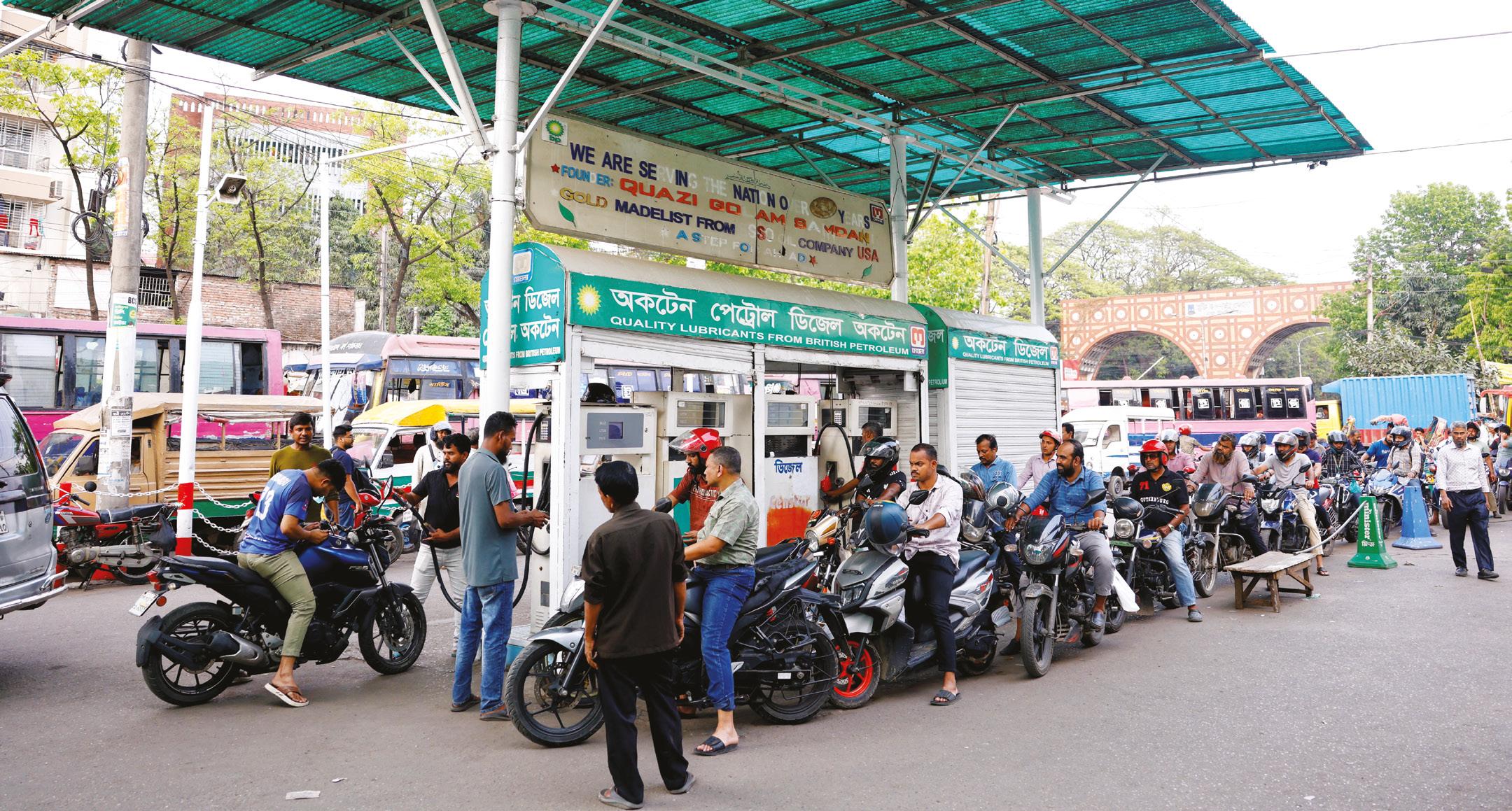
Motorists line up in Dhaka, Bangladesh, to refuel their motorcycles amid concerns over fuel supply amid the US-Israel conflict with Iran. REUTERS/Mohammad Ponir Hossain
about 21 percent of power generation.23 The Pakistani government responded to the shock by upping domestic production, safeguarding it for domestic use. But even imported coal and increased hydropower has not been enough to cover the shortfall.24 Now, spot LNG purchases are being considered at $20–$30 per million British thermal units (mmBtu)—far above recent levels—to bridge the gap. Meanwhile, the government has recently begun to raise power prices, which were already some of the highest in the region due to structural inefficiencies. Pakistan is bracing for daily planned power cuts when peak demand hits this summer. Rapid solar adoption over the past few years has significantly decreased imported gas dependence, with those households and businesses now shielded from power crisis.
Efforts to reroute crude imports were undertaken to avoid higher insurance costs. Pakistan consumes approximately
58.8 million liters of petrol and diesel every day.25 Every $10 increase in the price of a barrel of crude oil adds $400–500 million to its annual import bill. At peak shock pricing in March 2026, the annualized petroleum import bill would have exceeded $22 billion. The country is almost always one sustained disruption away from a balance-of-payments emergency.
Bangladesh
Bangladesh has experienced similar pressures, with LNG supply disruptions forcing it into the spot market at elevated prices.26 The response has included rationing gas supply, prioritizing power generation over industrial uses, and increasing reliance on expensive imports.
The result is a trade-off between maintaining electricity supply and sustaining industrial activity, particularly in energy-inten-
23. Abid Hussain, “How War on Iran Turned Pakistan’s LNG Surplus into a Looming Shortage,” Al Jazeera, April 3, 2026, https://www. aljazeera.com/news/2026/4/3/how-war-on-iran-turned-pakistans-lng-surplus-into-a-looming-shortage.
24. Hussain, “How War on Iran Turned Pakistan’s LNG Surplus into a Looming Shortage.”
25. Ammar H Khan, “Finding a Fuel We Can Afford,” Dawn, April 12, 2026, https://www.dawn.com/news/1990873.
26. “Cabinet Clears Import of 3 LNG Cargoes,” The Daily Star, May 8, 2026, https://www.thedailystar.net/business/economy/news/ cabinet-clears-import-3-lng-cargoes-4170351.
The global energy crisis and its impacts on Asian emerging economies
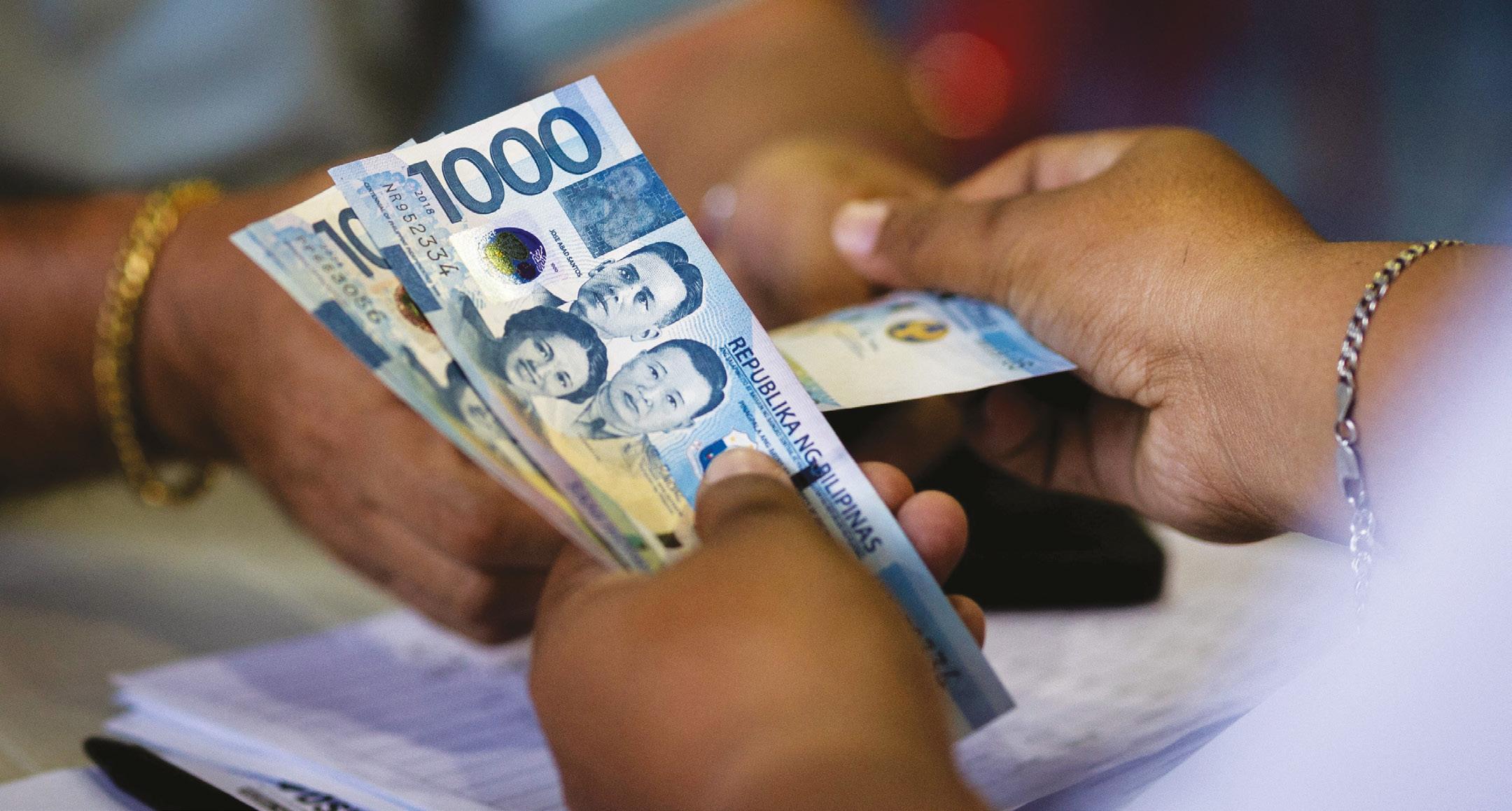
The Philippine government gave cash to drivers of ride-hailing services amid rising fuel prices due to the Strait of Hormuz crisis. REUTERS/Eloisa Lopez
sive sectors. So far, the government has capped key prices, but the fiscal burden of fuel and power subsidies has become untenable, and authorities are now considering raising key power tariffs.27 The government faces a difficult balance between maintaining affordability and deterring industrial shut-ins (for example, in the critical garment sector), while also preserving macroeconomic stability.
Philippines
The Philippines was the first to declare a national energy emergency because of dwindling fuel stocks. The government launched a strategic fuel program targeting up to 2 million additional barrels of supply. The Philippines holds approximately forty-five days of in-country diesel supply, well short of the IEA’s recommended ninety days. In the meantime, diesel
prices have more than doubled from $1.30 per liter to $3.12 per liter.28 Jeepney drivers, which form the backbone of transport for average Filipinos, have seen their incomes drop by as much as five times what they used to earn prior to the war, prompting the government to step in with a 5,000-peso support payment.29
The nation’s central bank has forecast that inflation could average above 5 percent this year.30 A government analysis of worst-case scenarios revealed that the Philippines could even experience a double-digit inflation figure if crude oil averages $150 per barrel.
Price increases and deprivation impact daily life significantly. Crowds of commuters have taken to walking down Manila’s boulevards in the absence of transport. LPG shortages mean
27. Asifur Rahman, “Govt Mulls Hike in Power Price as Subsidy Mounts,” The Daily Star, April 17, 2026, https://www.thedailystar.net/ news/bangladesh/news/govt-mulls-hike-power-price-subsidy-mounts-4153486.
28. Tim Swanston, “Soaring Gas Prices from Iran War Push Southeast Asian Countries to the Brink,” ABC News, April 3, 2026, https:// www.abc.net.au/news/2026-04-04/philippines-south-east-asia-gas-crisis/106530030.
29. “Philippine President Declares Energy Emergency as Impact of Iran War Felt,” Al Jazeera, March 25, 2026, https://www.aljazeera. com/news/2026/3/25/philippine-president-declares-energy-emergency-as-impact-of-iran-war-felt.
30. Swanston, “Soaring Gas Prices from Iran War.”
The
that many families are no longer cooking on stovetops or with gas, instead building small fires to cook dinner.
Thailand
Thailand’s multibillion dollar agriculture industry is affected by higher prices for fertilizer and fuel, which is used to pump water. The Thai government has rolled out subsidies for individual farmers and for agricultural chemicals. The government also ordered the restart of two decommissioned units at a major coal-fired power plant to add an additional 600 megawatts (MW) of capacity into the system.31 Despite its own shortages, it has also lifted export controls for vulnerable neighbors like Laos and Myanmar to ensure that essential fuel supplies continue. While these measures can mitigate immediate impacts, they raise questions about sustainability. Prolonged high prices would require continued fiscal support, potentially straining budgets.
India
India is better positioned than many peers due to its larger economy, diversified supply sources, and more developed refining sector. Policy responses have included adjustments to fuel taxes, export controls on refined products, and efforts to secure additional LNG cargoes.
In India, rising cooking gas prices have prompted migrant workers employed in manufacturing hubs, including at textile and automobile plants, to return to their home villages, signaling early labor shortages.32
However, even India is not immune. Rising import costs and pressure on domestic prices illustrate that scale provides resilience but not insulation.
Vietnam
Vietnam has experienced sharp fuel price increases during the current crisis, with diesel prices rising by as much as 84 percent and gasoline by 20–40 percent.33 The government has responded through a combination of per-liter stabilization payments (around 4,000–5,000 dong per liter), temporary suspension of fuel taxes through mid-2026, and demand management measures such as promoting remote work. While supply has remained sufficient in the near term, disruptions have already forced flight cancellations and contributed to rising inflation (4.65 percent in March and 5.46 percent in April) and a widening trade deficit.34 The approach reflects a strategy of partial price smoothing rather than full fiscal shielding, in contrast to more subsidy-intensive responses elsewhere in Asia.
Sri Lanka
Sri Lanka has experienced one of the most acute impacts of the crisis, driven by severe foreign exchange constraints and heavy reliance on fuel imports. The government has responded with a combination of price increases (fuel costs are up 25–35 percent), strict fuel rationing (5 liters per week for motorcycles, 15 for cars), and demand suppression measures.35 At the same time, it is still absorbing significant costs through emergency procurement, spending about $368 million on fuel imports in April and $522 million in May.36 A sustained escalation in the conflict, leading to a 25 percent increase in fuel prices, could add as much as $1-2 billion to Sri Lanka’s import bill. Rather than fully shielding consumers, Sri Lanka is combining partial fiscal support with aggressive demand management and external financing, reflecting extremely limited fiscal and foreign exchange space.37 The government also quickly arranged al-
31. Dan Hewitt and Sue-Ern Tan, “Feeling the Effects of the Energy Crisis,” International Energy Agency, April 2, 2026, https://www.iea. org/podcasts/everything-energy/feeling-the-effects-of-the-energy-crisis.
32. Ananta Agarwal, “Indian Auto, Textile Production Hit as Gas Crunch Drives Workers Home,” Nikkei Asia, April 14, 2026, https://asia. nikkei.com/spotlight/iran-tensions/iran-war/indian-auto-textile-production-hit-as-gas-crunch-drives-workers-home.
33. “Vietnam Suspends Some Fuel Taxes to Stabilise Domestic Market,” Reuters, March 26, 2026, https://www.reuters.com/business/ energy/vietnam-suspends-some-fuel-taxes-stabilise-domestic-market-2026-03-27.
34. “Vietnam’s Inflation Accelerates in April, Trade Deficit Widens as West Asia Crisis Lingers,“ Malay Mail, May 3, 2026, https:// www.malaymail.com/news/money/2026/05/03/vietnams-inflation-accelerates-in-april-trade-deficit-widens-as-west-asia-crisis-lingers/218572.
35. Rajni Gamage, “Sri Lanka’s Impending Energy Crisis: Implications for Political Stability,” National University of Singapore Institute of South Asian Studies, April 1, 2026, https://www.isas.nus.edu.sg/papers/sri-lankas-impending-energy-crisis-implications-for-political-stability.
36. Zulfick Farzan, “Sri Lanka’s Fuel Import Costs Jump Sixfold, Says President,” May 13, 2026, News First, https://www.newsfirst. lk/2026/05/13/sri-lanka-s-fuel-import-costs-jump-sixfold-says-president.
37. Jayathry Gunaratne, “Sri Lanka’s Fragile Recovery Under Global Pressure,” May 20, 2026, Meer, https://www.meer.com/ en/107585-sri-lankas-fragile-recovery-under-global-pressure.
ternative fuel cargoes to fill the supply gap, first from India and later from Russia.
Sri Lanka experienced a financial crisis in 2022, which saw fuel imports curtailed and long lines at the pump. Perhaps because of this previous crisis, the government was especially quick to react in 2026, reinstituting an existing petrol rationing scheme and restraining demand. The result was positive, with reduced queues at the pump and an easing of restrictions around the April holiday season, but long waits are back in May as supplies dwindle.
Policy responses: Cushioning versus sustainability
Across emerging Asia, policy responses are converging around a familiar set of tools including subsidies, tax adjustments, and administrative controls. Cushioning consumers from the price shock has been important not only to protect household incomes, but also to avoid industrial or manufacturing shut-ins that could worsen economic damage and lengthen the economic recovery time.
Regional governments have also moved quickly to introduce demand-side measures. The Philippines, Myanmar, and Sri Lanka moved to a four-day work and school week. Indonesia, Laos, Thailand, and Vietnam have encouraged remote working and limited all official travel. Myanmar also introduced restricted mobility schemes, with odd- and even-number plate days for driving.
The underlying tension is between short-term political necessity and long-term economic sustainability. Subsidies and tax cuts can reduce immediate pressure on households, but they also increase fiscal deficits, distort price signals, and delay structural adjustment.
The key determinants of effective emergency policy are timing and timeliness. Countries like Sri Lanka that responded quickly, pivoting to secure alternative cargoes while quickly organizing demand-side measures, have fared better than their exposure to exports via Hormuz might suggest. Countries that
responded late and after acute economic pain (whether foreign exchange pressure, fuel queues, or industrial shortages) had already emerged found themselves implementing harsher and more economically disruptive measures under significantly worse fiscal conditions. Bangladesh delayed major fuel conservation measures and additional LNG procurement until after spot LNG prices had already surged above $25 per mmBtu and foreign exchange reserves had fallen below $19 billion, contributing to industrial gas shortages and power disruptions that reportedly cut output in parts of the garment sector.
Outlook: Divergence and the limits of resilience
The trajectory of the crisis over the coming weeks will depend on the duration of disruption in Hormuz and the availability of alternative supplies.
If disruption through Hormuz persists, the main dividing line in developing Asia will be between countries that can finance adjustment and those that must suppress demand. The IEA’s data suggest Asia cannot easily diversify away from the shock in LNG because there is no alternative route for the bulk of Qatari and United Arab Emirates (UAE) exports that normally transit Hormuz. This makes substitution more expensive and more uneven than is the case with oil. Economies with stronger fiscal positions and better access to external finance might be able to cushion the blow for a period. Others will face a much harsher adjustment through inflation, current-account deterioration, administrative rationing, and weaker growth. In the short term, the most likely scenario is one of increased reliance on non-Gulf crude and LNG, higher freight and insurance costs, and continued fiscal intervention. Countries with stronger fiscal positions, more diversified energy systems, and greater access to capital will be better able to absorb the shock. Others will face more acute challenges, including currency pressure, rising inflation, and potential balance-of-payments stress. The IMF has already indicated that a number of countries might require financial assistance if conditions worsen.
Conclusion
The Hormuz disruption is often framed as a question of how high oil prices might rise. But for emerging markets, this is a test of energy-system resilience, fiscal capacity, and policy credibility. The countries most at risk are those where import dependence, limited flexibility, and constrained fiscal space intersect. In that sense, the crisis is acting as a sorting mechanism, revealing which economies have the buffers and institutions to manage external shocks and which remain vulnerable. For policymakers, the challenge is immediate but also structural. The decisions made in the coming weeks will determine how hard the economic shock is felt. Decisions made in the coming months about how to de-risk energy supply chains and rapidly diminish fuel import dependence might be even more transformative.
About the author
Phillip Cornell is a nonresident senior fellow at the Atlantic Council’s Global Energy Center. He is a specialist on energy and foreign policy, global energy markets and regulatory issues, critical energy infrastructure protection, energy security strategy and policy, Saudi Arabian oil policy, Gulf energy economics, and sustainable energy transition policy. He is currently principal for energy and sustainability at Economist Impact.
Prior to joining the Atlantic Council, Cornell was a senior corporate planning advisor to the chairman and CEO of Saudi Aramco. He has also served as special advisor to the executive director of the International Energy Agency (IEA) in Paris. Before joining the IEA, Cornell was the senior fellow and director of international programs at the NATO School (NSO) in Oberammergau, Germany. During that period, he also served on the secretary general’s committee in Brussels to develop NATO policy in the area of energy infrastructure security.
Cornell has held research positions at the Naval Postgraduate School (Monterey), the Royal United Services Institute (London) and the Center for International Security and Cooperation (Stanford), and he is the author of numerous articles and volumes on energy security and security policy.
He holds masters degrees in international economics (energy focus) and European studies (security focus) from the Johns Hopkins School of Advanced International Studies. He received his BA in international relations from Stanford University.
Acknowledgments
The views expressed are the authors’ own and do not necessarily reflect the views of any organizations with which they are affiliated.
The Atlantic Council is a nonpartisan organization that promotes constructive US leadership and engagement in international affairs based on the central role of the Atlantic community in meeting today’s global challenges.
© 2026 The Atlantic Council of the United States. All rights reserved. No part of this publication may be reproduced or transmitted in any form or by any means without permission in writing from the Atlantic Council, except in the case of brief quotations in news articles, critical articles, or reviews. Please direct inquiries to:
Atlantic Council
1400 L Street NW, 11th Floor Washington, DC 20005 (202) 778-4952
www.AtlanticCouncil.org