
Venezuela
can make the United States safer, stronger, and more prosperous
Two options for an ‘America First’ approach
About this issue brief
Informed by the Atlantic Council’s Venezuela Solutions Group
Bottom lines up front
y The first Trump administration drafted a framework for encouraging a democratic transition in Venezuela; with a few updates, it represents one policy path the second Trump administration could take.
y Nicolas Maduro’s recent promotion of a longtime rival may be a sign of how few friends he has left, raising the possibility that he may be more susceptible to “maximum pressure” campaign.
y Whether Washington opts for incentives or a hard line, the goal should be to keep presenting dilemmas that make a democratic transition more appealing than the status quo.
US policy toward Venezuela is at a crossroads, with a degree of uncertainty still hanging over the new administration’s approach. The White House faces a choice: Should the United States try to use sanctions leverage to obtain limited concessions from Maduro on energy security, migration, and democratic reforms? Or should it bet on a return to “maximum pressure” in the hope of deepening existing fissures among Venezuela’s ruling elites and hastening a more immediate transition?
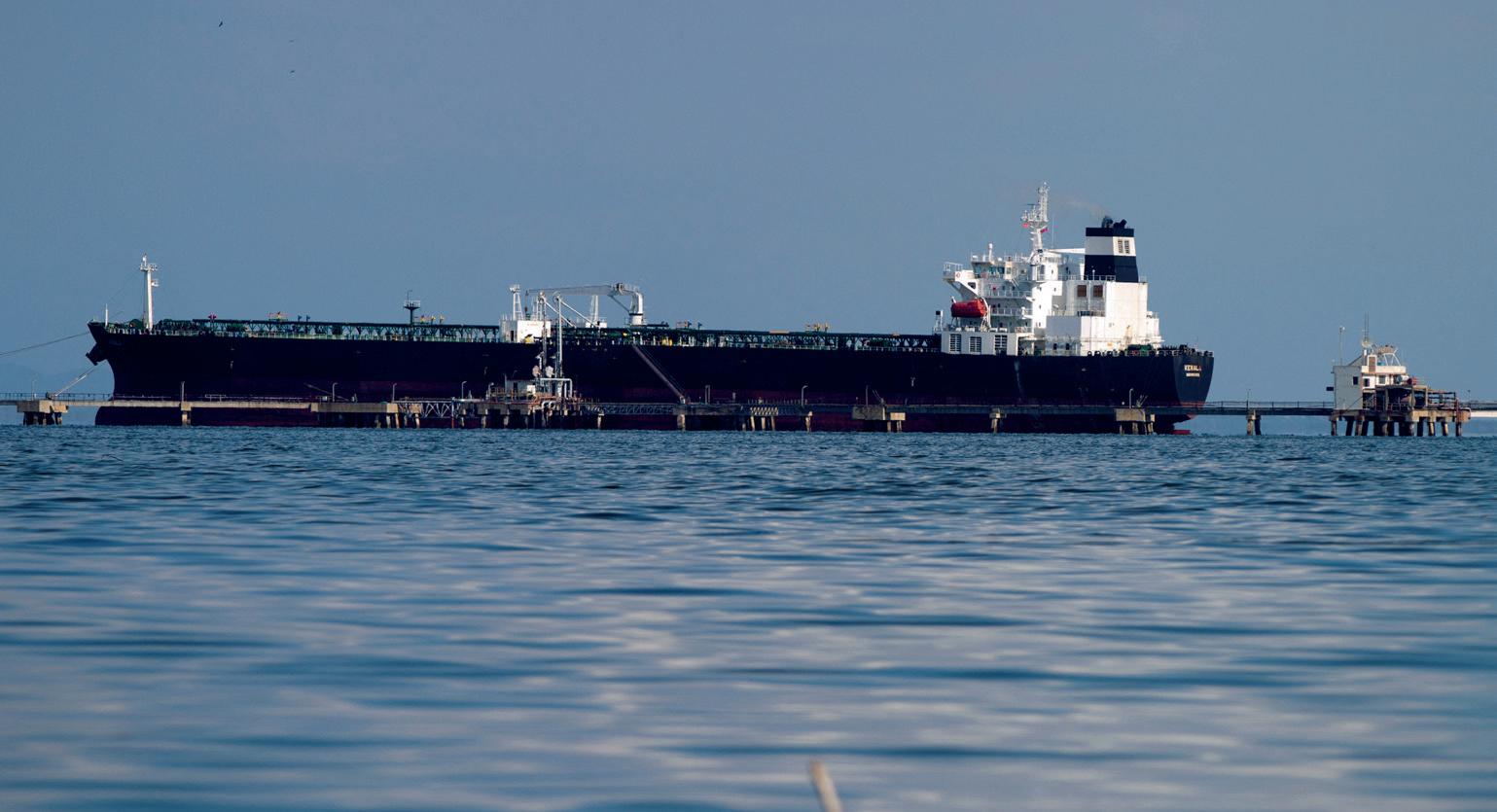
The oil tanker Kerala, chartered by Chevron, is loaded in the Bajo Grande oil terminal at Maracaibo Lake, Venezuela, January 5, 2023. REUTERS/Isaac Urrutia.
Two options for an ‘America First’ approach to Venezuela
from Treasury as well. The fact that these companies have been allowed to maintain a footprint in Venezuela, alongside the reality that deportation flights to Venezuela are ramping up (and increasingly coming directly from the United States rather than via an intermediary nation such as Honduras), suggests that there is fluid behind-the-scenes communication between Caracas and Washington—and that both countries see value in ongoing negotiations.
Separately, President Trump issued an executive order in March empowering Secretary of State Marco Rubio to impose a 25 percent tariff on goods from any country that imports Venezuelan oil and gas, framing the measure as retribution for high levels of outbound migration from Venezuela and the country’s hostility to US interests. However, to date these tariffs have not been implemented, and there is no indication that Venezuela has appeared as an agenda item in complex trade negotiations with buyers of Venezuelan crude on the black market, such as China or Malaysia.
Maduro has already outlasted maximum pressure once and clearly believes he can do so again. He may be right.
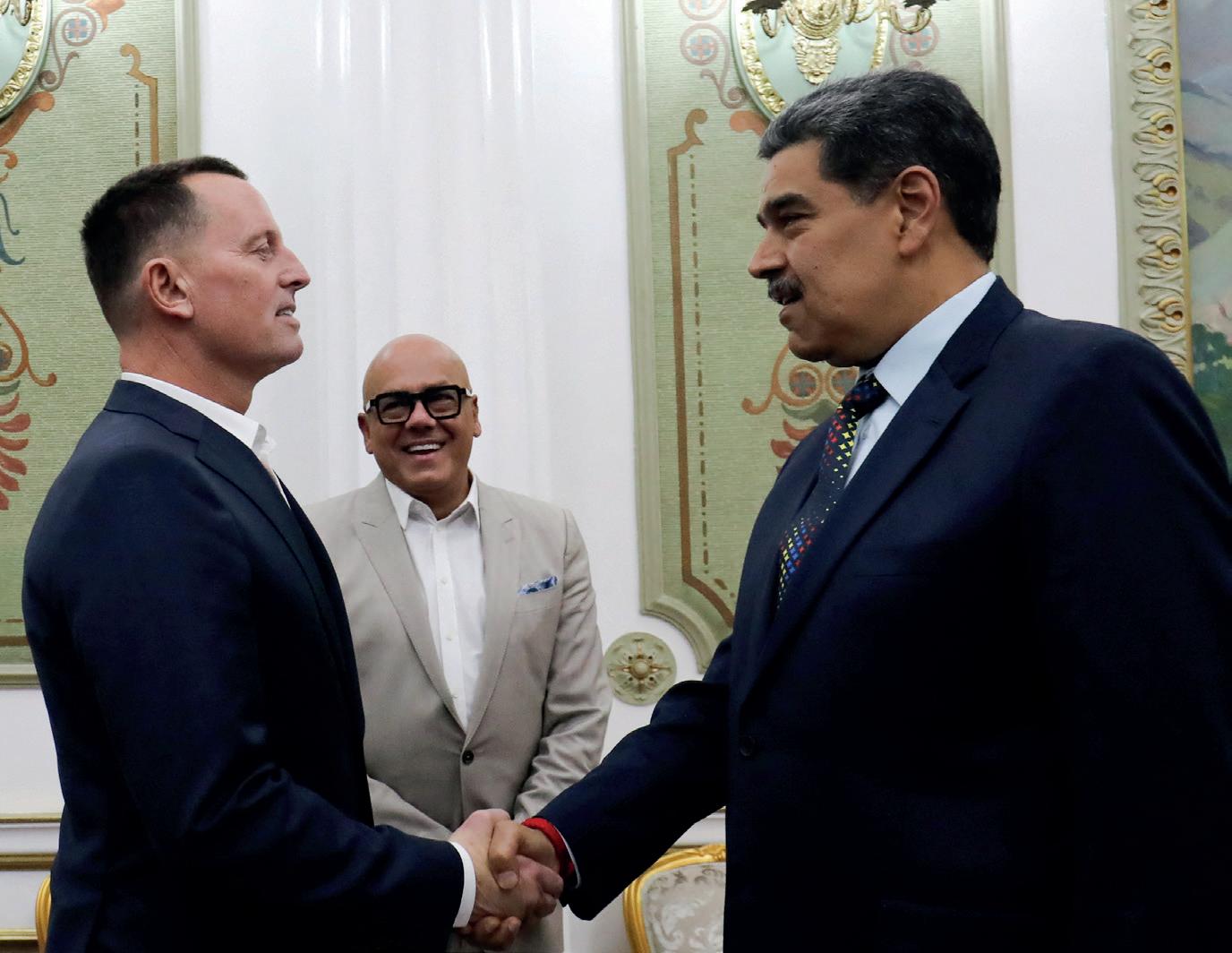
The second Trump administration has combined a US pressure campaign on Venezuela with limited engagement with the government of Nicolás Maduro. President Donald Trump has recognized the July 2024 electoral victory of Edmundo González, an important gesture of support for the opposition. After striking an initial deal in January for Caracas to resume acceptance of repatriation flights of deported Venezuelan migrants and securing the release of seven detained US citizens, the Trump administration has balanced engagement with a more pressure-focused approach.
On May 27, 2025, the US Treasury Department allowed a license permitting energy company Chevron to operate in Venezuela to expire, and has reportedly granted the firm a new restricted license that allows it to maintain a presence in the country without exporting oil to the United States or extracting revenue from oil sales. Other energy companies operating in Venezuela, including European oil majors, remain operational in the country and are reportedly seeking authorization for limited operations
To explore the potential pathways for the future of US policy toward Venezuela, the Atlantic Council’s Adrienne Arsht Latin America Center (AALAC) convened a private scenario-planning exercise during the presidential transition. Participants included US and international policymakers and members of the AALAC Venezuela Solutions Group, a diverse group of experts and practitioners from Venezuela, the United States, Latin America, and Europe. The group was brought together to advance the conversation on how to reach a democratic solution to the crisis in the South American country that likewise advances US interests. This memo builds on aspects of that conversation, which focused on diagnosing current developments and analyzing the opportunities and challenges faced by US policymakers. While there is significant consensus on the challenges posed by the current moment in Venezuela, two distinct policy proposals emerged for how to address those challenges. This memo presents an analysis of the reality on the ground and explains how both policy
Venezuela’s President Nicolas Maduro and President Donald Trump’s envoy Richard Grenell in Caracas, January 31, 2025. Miraflores Palace/Handout via REUTERS.
Two options for an ‘America First’ approach to Venezuela
proposals intersect with Trump’s interest in advancing an “America First” foreign policy agenda.
Venezuela: State of play
On July 28, 2024, Venezuela held presidential elections on a vastly unequal playing field, under conditions that international observers have documented as far from free and fair. While Venezuelan electoral authorities claimed that the incumbent, Maduro, won roughly 52 percent of the vote compared to 42 percent for opposition candidate González, the government failed to produce precinct-level tally sheets to back this up as required by law. The opposition, however, has presented official vote tally sheets which show that González won an overwhelming majority of votes in the race, beating Maduro 67 percent to 30 percent. Upon declaring victory, the Maduro government began a multiweek campaign of repression and persecution of democratic actors, ramping up arbitrary arrests which saw the number of political prisoners balloon to close to 2,000 in late 2024, before a series of sporadic releases decreased the number to 927 by June 2025. Meanwhile, a wave of
repression in the aftermath of the warped May 25 legislative elections has seen several new high-profile arrests, including that of opposition leader Juan Pablo Guanipa
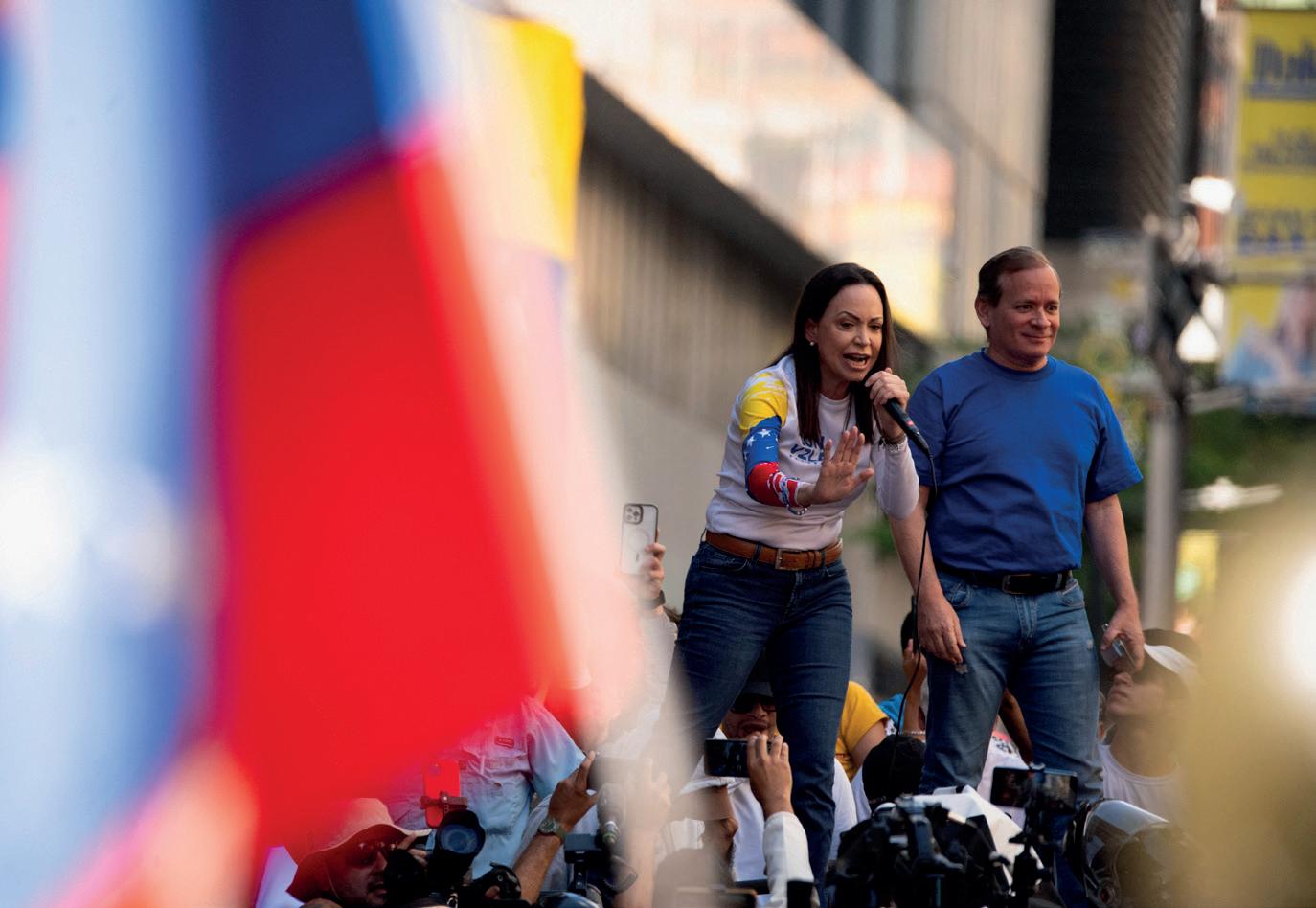
In the face of this repression campaign, opposition leader María Corina Machado has been forced into hiding, and González fled the country in late 2024. The government has issued an arrest warrant for González and announced multiple criminal investigations into Machado, while relatives and activists close to both leaders have been detained, intimidated, and harassed. Mass demonstrations have largely faded, though there were limited protests in cities across Venezuela on January 9, 2025—the day before Maduro assumed office for another six-year term based on the stolen July election—including a protest in Caracas, where Machado made her first in-person appearance in months and gave a speech to hundreds of supporters. Upon exiting the rally, Machado was briefly detained and released after reportedly being forced to record a video telling her supporters that she was safe and unharmed. While she remains popular and has vowed to remain in Venezuela, her public appearances since this video have largely been limited to video interviews and recorded remarks shared in international forums.
The broader Unitary Platform opposition coalition, meanwhile, appears fractured. Machado and the opposition parties closest to her called for a boycott of the May legislative and regional election given the lack of competitive conditions. Others in the coalition, such as Un Nuevo Tiempo and a faction of Primero Justicia, decided to participate in the election regardless, but won only one governor’s seat and less than 20 percent of the vote for National Assembly representatives. The debate between these two sides of the opposition has been fierce, even sparking the resignation of Unitary Platform Secretary General Omar Barboza, who cited his inability to reconcile these differences. His replacement, Roberto Enríquez, has sought to manage this fracture, but the relevance of the Unitary Platform as a cohesive coalition that can unify
Opposition leader Juan Pablo Guanipa with Maria Corina Machado at a rally in Caracas, January 9, 2025. On May 23, 2025, Minister of the Interior Diosdado Cabello said Guanipa had been arrested for allegedly leading a terrorist plot. Reuters photo.
Two options for an ‘America First’ approach to Venezuela
the anti-Maduro actors into a single bloc is in question.
While the opposition is publicly divided, some reports suggest dynamics in Maduro’s inner circle may also be strained.
While the opposition is publicly divided, some reports suggest dynamics in Maduro’s inner circle may also be strained. In recent months Maduro has increasingly relied on Diosdado Cabello, a retired army lieutenant and longtime rival within the Chavista coalition, to lead the post-presidential election crackdown. In August 2024 Maduro named Cabello interior minister, positioning him as head of the national police and the Bolivarian National Intelligence Service. This was the first time that Cabello has joined the executive branch since the death of former Venezuelan leader Hugo Chávez—and marked the end of more than a decade of Maduro keeping him at arm’s length. Cabello’s promotion may be a sign of how few friends Maduro has left within the coalition.
Other key powerbrokers in the United Socialist Party of Venezuela (PSUV) like Jorge Rodríguez, the National Assembly president and Maduro’s representative in ongoing negotiations with Washington, and his sister, Vice President Delcy Rodríguez, may not be excited at the prospect of six more years of economic chaos, violence, and international isolation. A potential division between hardliners and relative pragmatists has been the subject of much speculation in recent years and this dynamic may have deepened following the July election. One variable to watch is Maduro’s promise to reform Venezuela’s 1999 constitution this year, which holds possible ramifications for the distribution of oil rents and naming a successor once his current term ends in January 2031. The reform is currently before a commission involving key operators in the ruling party, including Jorge and Delcy Rodríguez, Attorney General Tarek William Saab, First Lady Cilia Flores, Supreme Court President Caryslia Rodríguez, National Electoral Council President Elvis Amoroso, and Defense Minister Vladimir Padrino López.
Given these trends, US policymakers are confronted with two competing visions for
how to respond to the crisis in Venezuela and how to advance an “America First” approach to the South American country:
Option I: Shaping incentives for an economic and democratic opening
One option is for the Trump administration to use its considerable leverage (including financial sanctions on individuals and the energy sector) to attempt to push Maduro toward political and economic reforms that advance the administration’s stated interest in Venezuelan acceptance of deportees. This approach involves shaping incentives for Maduro and his inner circle to extract concessions that could move Venezuela toward a gradual opening.
Opportunities: Maduro’s stated interest in reforming the constitution represents a slim but useful opportunity for the United States. While Maduro is unlikely to agree to anything that will threaten his control in the immediate term, offering sanctions relief is precisely what drove the government to organize, and ultimately to lose, the July 28 presidential election. Accelerating this incentive-based approach may yield some democratic progress and could hold benefits for wider US interests such as securing a US and Western footprint in Venezuela’s oil sector, boxing out Russian, Chinese, and Iranian influence, and containing outbound migration.
Potential pitfalls: Any incentive-based approach to Maduro requires caution. The Venezuelan leader has successfully maneuvered five separate US-backed negotiations with the opposition over the last decade, largely by making only narrow concessions while retaining a tight grip on power. Any political advances are likely to be limited and any economic reforms may run into challenges stemming from the undemocratic nature of Maduro’s government. This option may force trade-offs between the search for a democratic transition and the pursuit of other US geopolitical interests in Venezuela.
Two options for an ‘America First’ approach to Venezuela
Option I recommendations
While Venezuelans will continue to flee oppression and persecution... it is not in the US interest to accelerate this trend by engaging in actions that worsen domestic economic conditions.
y Dust off the Democratic Transition Framework and explore a roadmap for re-institutionalization. An overnight transition in Venezuela looks increasingly unlikely. But the 2020 framework that the Department of State put forward in the first Trump administration remains highly relevant and represents a blueprint that could be adapted to the current state of play. While the opposition’s “interim government” has been dismantled and the 2015 Venezuelan National Assembly has no influence in practice, the US administration should consider a new framework that maintains a focus on creative power-sharing arrangements that could lay the groundwork for a gradual, negotiated transition, with political and judicial guarantees for all parties. In crafting a new roadmap, the Trump administration should work with the Venezuelan opposition as well as relevant actors in chavismo (i.e., the system), and garner support from international partners on a path that can credibly restore the country’s democratic institutions.
y Advance migration policy cooperation and refrain from exacerbating outbound migration. On top of seeking ongoing cooperation with repatriation flights while guaranteeing due process, the administration should avoid adopting measures that contribute to, rather than stem, the flow of migrants and refugees from Venezuela. While Venezuelans will continue to flee oppression and persecution until they see a successful democratic opening, it is not in the US interest to accelerate migration by engaging in actions that worsen domestic economic conditions. This may also complicate the US administration’s efforts to accelerate repatriation flights back to Venezuela, which have occurred sporadically since January 2025.
y Pursue strategic engagement while avoiding unilateral concessions. The United States should maintain discreet back-channel communications with Maduro and his inner circle, with the aim of exploring opportunities for a broader democratic and economic opening to the benefit of US interests. This engagement must remain tied to specific, verifiable progress, and must avoid unilateral concessions without meaningful steps toward democratization. Benchmarks should include the release of political prisoners, an end to persecution of opposition activists, competitive electoral conditions, and restoring the country’s democratic institutions.
y Issue conditional sanctions licenses in exchange for economic and political benchmarks. The United States should use conditional sanctions relief as a tool to incentivize change. The Department of the Treasury should grant specific licenses to allow US firms and those of other allied Western nations to continue to invest in the energy sector in the country if there is substantial progress in advancing the roadmap described above. The Maduro government should also be pressed to open the oil sector, and broader private sector, to greater investment. By channeling investments through US-regulated financial institutions, Washington can help continue slow but critical growth in Venezuela’s economy while promoting anticorruption and transparency standards.
y Displace Russia, China, and Iran
To box them out, the Treasury Department should create sanctions “carveouts” that afford US energy companies greater control over production, contracting, and overseeing day-to-day operations and revenue in Venezuela. This in turn can help limit the government’s access to corrupt cash flows and prevent bad ac-
Two options for an ‘America First’ approach to Venezuela
tors from filling a void. To maintain a footprint for US and Western-aligned energy firms in Venezuela while constraining geopolitical adversaries, such an approach should keep sanctions on hostile nations’ activities while easing them on US and Western companies. This could also be paired with efforts to limit military and intelligence cooperation. Over time this approach could help ensure that Venezuela remains within the US sphere of influence. US involvement in the development of the dilapidated energy sector of Venezuela is not only a matter of supporting the local economy—it is a national security imperative that will limit the influence of US geopolitical rivals in the Western Hemisphere.
Option II: Broad pressure to advance regime collapse
The second option is for the White House to put forward an updated policy of maximum pressure, especially if Maduro does not cooperate with policies to reduce outbound migration and the influence of US geopolitical rivals. This involves using pressure mechanisms (including sanctions, indictments, and law enforcement) to attempt to provoke a fissure in Maduro’s inner circle that could break the government’s hold on power and trigger a democratic transition in which a new democratic government is more willing to work with the US on migration and security interests.
Opportunities: While Maduro retains a tight grip on power, it may be easy to overstate his level of control. So far, the government has refrained from arresting Machado, likely out of recognition that it could lead to both widespread protests and greater international pressure. The July 2024 election exposed the ruling party’s unpopularity and the recent wind-down of oil licenses promises to fuel an economic downturn that could increase unrest. In his March 14 invocation of the Alien Enemies Act, Trump cited links between the Maduro government and organized crime and assumed greater au-
thorities to seize Venezuelan assets in the United States.
Potential pitfalls: Maduro has already outlasted maximum pressure once and clearly believes he can do so again. He may be right. Oil analysts expect that a withdrawal of US and Western oil companies from Venezuela could cause production to fall by between 150,000 and 350,000 barrels per day (down from 921,000 bpd in January), but would not cut off Maduro’s oil revenue outright. Instead, Maduro is likely to fill the void by selling discount black-market oil to China, Russia, and Iran—and potentially give them greater control in Venezuela’s oil space, as seen from 2019 to 2021 before US and European companies began receiving waivers to operate in the country again. As under the previous pressure campaign, sanctions and escalatory rhetoric alone are unlikely to cause the regime to collapse. Instead, they may exacerbate the preexisting migration crisis. The ongoing economic downturn and repression campaign have caused 7.8 million Venezuelans to flee their homes.
Option II recommendations
y Remove all licenses allowing oil companies to operate in Venezuela. Under this approach, the administration would eliminate existing licenses which currently permit companies to operate in the country (even on restricted terms) to cut off one of the main sources of revenue for the Maduro regime. Rather than seeking incremental and measurable concessions in exchange for gradual sanctions relief, the US should make clear that broad economic sanctions will remain in place until Maduro resigns and new elections are held. This would focus attention inside Venezuela on the fundamental problem of Maduro’s illegitimate mandate, and cutting economic lifelines would increase the pressure on his inner circle to oust him. To counter any potential collateral damage, this policy should be accompanied by the expansion of humanitarian as-
Two options for an ‘America First’ approach to Venezuela
Recalibrating the use of individual sanctions may ultimately help disrupt regime cohesion at a time when Maduro especially needs a loyal inner circle.
sistance both inside Venezuela and to countries in the region that have seen increased migration flows. The US government should also continually gather evidence-based data on any collateral harms and adopt measures to mitigate them, including supporting Venezuelans impacted by them.
y Pursue investigations and prosecutions against government officials tied to money laundering, drug trafficking, and other criminal activities. The recent invocation of the Alien Enemies Act makes clear that the US administration views Maduro as responsible for driving an incursion that threatens national security. Accordingly, the United States could step up legal measures against Venezuelan officials implicated in criminal activities by conducting more thorough investigations and prosecutions through the Department of Justice and the Office of Foreign Assets Control. Increasing cooperation with regional and European partners could also assist in identifying illicit money flows and apprehending criminals involved in corruption and terrorism. The US should engage in greater coordination with partner governments to identify and seize assets controlled in offshore banks by Venezuelan elites to ensure that stolen money does not end up in Maduro’s coffers. This would send a strong message to those in Maduro’s inner circle that obedience to the regime will have consequences.
y Tighten enforcement of secondary sanctions on Beijing, Moscow, and Tehran- based organizations. The United States must shut the lifelines through which China, Russia, and Iran are pumping oil money and military aid to Maduro. This requires stricter enforcement of secondary sanctions on foreign banks, shipping firms, and energy companies doing business
with Venezuela, so that there are no illusions that the status quo will be tolerated. Cooperation with law enforcement of allied governments will also be essential to ensure that other payment channels are not used to circumvent the sanctions.
y Ramp up individual sanctions. The United States should expand the list of persons subjected to individual sanctions, adding new high-ranking officials, elements of the security force, and government-connected commercial actors involved in illicit activity. This effort must be closely coordinated with Canada and the European Union and clarify to sanctioned individuals exactly what actions they must take to seek sanctions relief. Recalibrating the use of individual sanctions may ultimately help disrupt regime cohesion at a time when Maduro especially needs a loyal inner circle.
y Boost the democratic opposition and civil society. The United States should demonstrate its commitment to the democratic opposition in Venezuela by increasing support for democracy promotion to civil society organizations, independent media, and grassroots movements working for change on the ground, even as the administration is overhauling democracy promotion and aid efforts around the world. Support should go beyond economic terms to include diplomatic backing as well. Recognizing Machado’s popularity could enhance the movement’s visibility as well as dissuade the further breakdown of the coalition. The goal of this US policy would be to support the opposition’s engagement with local communities across the countryside, placing them in a position to capitalize on widespread discontent and mobilize to assert their democratic freedoms.
Two options for an ‘America First’ approach to Venezuela
Conclusion
Regardless of the specifics of its policy approach, the Trump administration should ensure that Venezuela remains a foreign policy priority. Given its vast oil reserves, the deepening role that China, Russia, and Iran play in the country, and ongoing repression and migration affecting the United States and allied nations, Washington policymakers should treat the search for a demo-
cratic opening in Venezuela as a strategic imperative. Whether Washington opts for an incentives-based approach or a more hardline policy, the goal should be to keep presenting Maduro and others in the coalition with dilemmas that complicate consolidation and make a transition more appealing than the status quo. The key to success is to keep policy nimble and responsive to events on the ground and avoid a “set it and forget it” approach.
About the center
The Atlantic Council’s nonpartisan Adrienne Arsht Latin America Center (AALAC) broadens understanding of regional transformations while demonstrating the significance of Latin America and the Caribbean in a rapidly changing world. The center focuses on pressing political, economic, and strategic issues that define the region’s trajectory, proposing constructive, results-oriented solutions to inform public-sector, business, and multilateral action based on a shared vision for a more prosperous, inclusive, and sustainable future.
AALAC builds consensus for action in advancing innovative policy perspectives and prioritizes impact across geographic priorities – including Argentina, Brazil, Central America, Chile, Colombia, Mexico, Venezuela and through its Caribbean Initiative – alongside thematic areas that incorporate global Atlantic Council expertise: investment promotion, commercial ties, economic development, transnational criminal organizations, energy security, technology, democratic institutions, and mitigating Chinese influence.