From diversification to integration
A market-based LNG coordination mechanism in Europe
By Michał Kurtyka, Marcin Gawęda, and Lisa Basquel

Atlantic Council
GLOBAL ENERGY CENTER
The Atlantic Council Global Energy Center develops and promotes pragmatic and nonpartisan policy solutions designed to advance global energy security, drive economic opportunity, and foster a sustainable energy future.
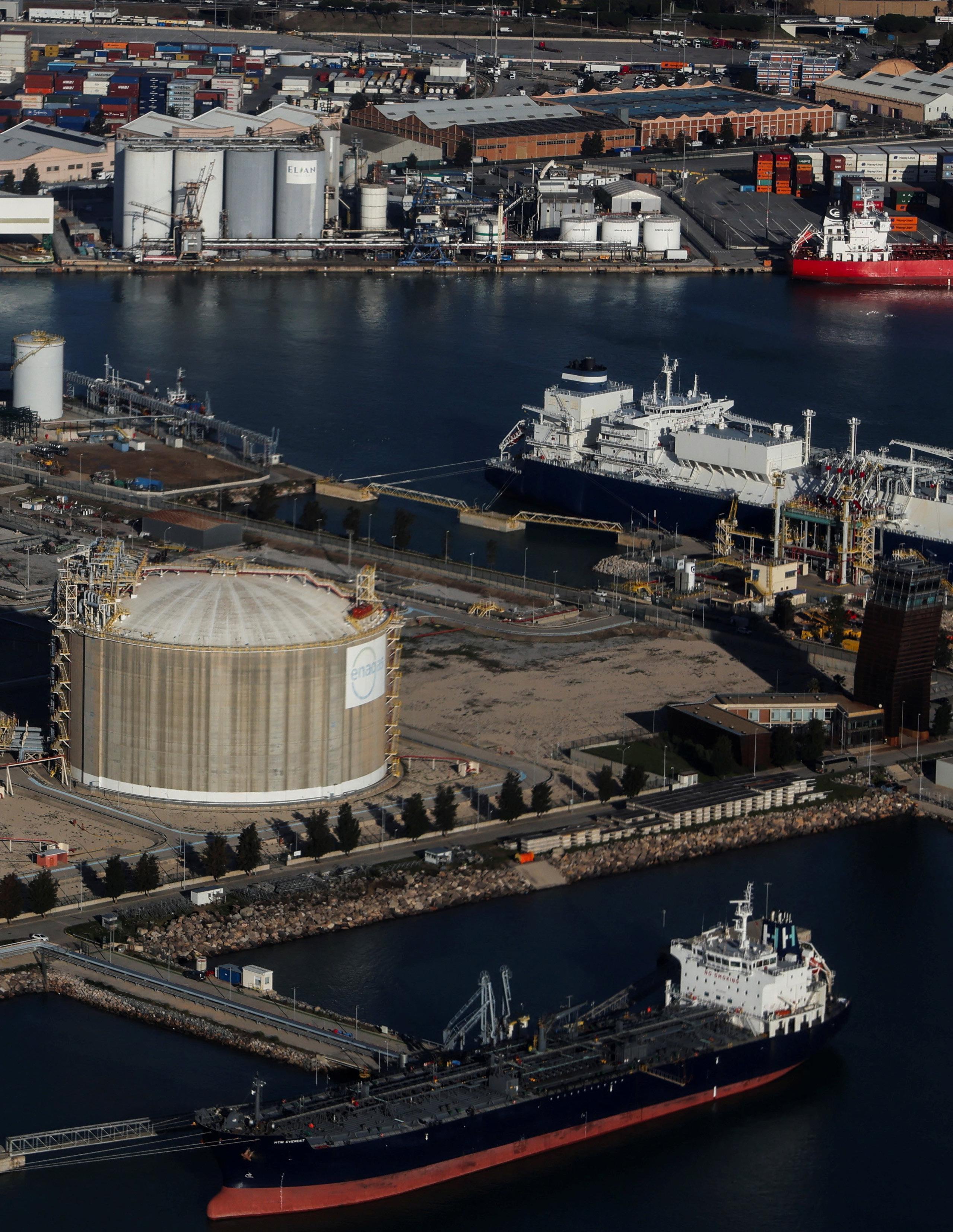
Cover photo credit: A gas terminal at the port of Barcelona, Spain. REUTERS/Nacho Doce.
ISBN: 978-1-61977-605-0.
© 2026 The Atlantic Council of the United States. All rights reserved. No part of this publication may be reproduced or transmitted in any form or by any means without permission in writing from the Atlantic Council, except in the case of brief quotations in news articles, critical articles, or reviews.
Please direct inquiries to:
Atlantic Council
1400 L Street NW, 11th Floor Washington, DC 20005
June 2026
Authors
Michał Kurtyka
Marcin Gawęda
Lisa Basquel
Acknowledgments
The Atlantic Council would like to thank the Partnership to Address Global Emissions (PAGE) for their support of this project.
Executive summary
The energy crisis of 2021–2022 forced a rapid and largely successful restructuring of Europe’s gas supply. Within two years, the continent had dismantled decades of pipeline dependence on Russia and replaced much of that supply with liquefied natural gas (LNG) from a wide range of producers. That transformation has been well documented and, on its own terms, deserves recognition.
But emergency diversification and long-term, durable energy security are not the same thing. This point is underscored by the ongoing crisis in Iran, which once again exposes how quickly regional instability can ripple through global energy markets. Even as Europe scrambles to respond to tightening LNG supply and surging prices, the Strait of Hormuz closure made plain that diversifying supply sources is a necessary but insufficient condition for resilience: without deeper regulatory harmonization and coordinated buyer behavior, the continent remains structurally exposed to each successive shock. Emer-
gency diversification is a response to a shock; but long-term durable energy security requires a structural redesign of how European gas markets are organized, priced, and supplied. This paper addresses the second, harder question.
The paper’s core argument is structural: Central and Eastern Europe has significantly expanded infrastructure but infrastructure alone does not produce a functioning market. What is missing is the next layer, meaning regulatory harmonization that converts physical connectivity into genuine cross-border market operation and the commercial depth sufficient to enable coordinated buyer behavior.
The path forward follows a clear sequence: first, the removal of structural bottlenecks; second, regulatory harmonization; and third, market formation. Each step is a precondition for the next, and interventions at later stages will underperform if earlier stages remain incomplete.
I. Europe’s structural gas vulnerabilities after 2022
The architecture of dependence
For more than five decades, European gas policy rested on a foundational assumption: that the economic interdependence created by long-term pipeline contracts with Russia constituted a form of security in itself. The events of 2021–2022 showed that assumption to be mistaken in the most costly way possible.
Before Russia’s full-scale invasion of Ukraine in February 2022, Russian pipeline gas accounted for roughly 40 percent of European Union (EU) consumption, supplying approximately 160 billion cubic meters (bcm) per year.1 That dependence, however, was unevenly distributed across Europe. Western European economies, such as Germany, Austria, and Italy, had developed extensive commercial ties with Russian suppliers through long-term contracts and dedicated pipeline infrastructure. Large incumbent buyers were therefore embedded in supply arrangements they had a central role in constructing. Central and Eastern European (CEE) states faced a structurally different vulnerability. Many had inherited Soviet-era gas systems built around a single eastern supply corridor with minimal interconnection to Western European hubs, possessing limited access to alternatives suppliers and no portfolio of long-term contracts.
These are not variations of the same problem. They require different analytical frameworks and different market responses. The experience of CEE—particularly its infrastructure constraints, pricing premiums, and contracting disadvantages—is the primary focus of what follows.
The supply shock that followed did not arrive all at once but unfolded across a sequence of discrete disruptions: the cessation of Yamal pipeline deliveries via Poland in late 2021, the progressive curtailment and eventual suspension of Nord Stream flows, and the subsequent reduction and, ultimately, complete cessation of Ukrainian transit volumes. The Ukraine–Russia gas transit agreement, which had been operative from 2020 to 2024, expired on December 31, 2024, and was not renewed, terminating Russian pipeline gas deliveries via
Ukraine in their entirety from January 1, 2025.2 From that point, TurkStream, with a capacity of approximately 15 bcm per year routed via Turkey and the Balkans, became the sole remaining Russian pipeline route to the EU. At its peak, the Title Transfer Facility (TTF) benchmark, which serves as the dominant European gas pricing reference, exceeded €300 per megawatt hour (MWh), against a pre-crisis average of around €25/MWh.3 The EU’s total gas import bill reached close to €400 billion in 2022 alone, representing more than three times the 2021 level.4
The price spikes were severe but the structural consequences are considerably more enduring. CEE markets, which lack direct access to Atlantic LNG terminals and rely on pipeline infrastructure calibrated to a different supply geography, recorded pronounced price premiums above the TTF benchmark during the crisis period. That differential, which at times reached more than €5/MWh above the Western European reference price, reflects not merely temporary disruption but a deeper and more systemic fragmentation in the organization and pricing of European gas markets.
While the premium has moderated since the acute phase of the crisis, the underlying structural conditions that produced it remain.
Emergency diversification: What was achieved
Europe’s response to the supply shock was, by historical standards, both rapid and effective. The LNG share of total EU gas imports increased twofold, rising from around 20 percent in 2018–2019 to approximately 40 percent in the twelve months from August 2022 to July 2023.5 Storage targets were met ahead of schedule. By autumn 2023, Bruegel assessed that the EU was adequately prepared for the coming winter even under scenarios involving a complete cessation of remaining Russian flows.
The composition of the supply mix changed fundamentally. Between 2020 and 2023, Russia’s share of EU gas imports decreased from approximately half to around 15 percent, with Norway emerging as the dominant external supplier.6 LNG
1. Dávid Csercsik, et al., “A Model-Based Analysis of the AggregateEU Mechanism: Implications of Overbidding and Non-Commitment,” Cornell University, April 7, 2025, https://arxiv.org/abs/2504.05269.
2. “Key Developments in European Electricity and Gas Markets,” Agency for the Cooperation of Energy Regulators, 2025, https:// www.acer.europa.eu/monitoring/MMR/electricity_gas_key_developments_2025.
3. Dávid Csercsik, et al., “A Model-Based Analysis of the AggregateEU Mechanism: Implications of Overbidding and Non-Commitment,” Cornell University, April 7, 2025, https://arxiv.org/abs/2504.05269.
4. Pawel Czyzak and Nolan Theisen, “Central and Eastern Europe Beyond Gas Imports,” Ember Energy, March 5, 2024, https://ember-energy.org/latest-insights/central-and-eastern-europe-beyond-gas-imports/.
5. Ben McWilliams, et al., “The European Union Is Ready for the 2023–24 Winter Gas Season,” Bruegel, October 10, 2023, https:// www.bruegel.org/analysis/european-union-ready-2023-24-winter-gas-season.
6. Agata Łoskot-Strachota, Ugnė Keliauskaitė, and Georg Zachmann, “Future European Union Gas Imports: Balancing Different Objectives,” Bruegel, July 3, 2024, https://www.bruegel.org/analysis/future-european-union-gas-imports-balancing-different-objectives.
Source: Bruegel, based on Eurostat and IEA data.
capacity expanded at a pace that would have been considered implausible under normal regulatory and investment timelines, with multiple floating storage and regasification units (FSRUs) commissioned across Germany, Italy, and the Netherlands within a single year.
Structural vulnerabilities that remain
While these achievements were significant in addressing the acute phase of the crisis, they did not resolve their structural roots and several underlying vulnerabilities therefore persist. Russian imports have not been fully eliminated. Ember Energy analysis published in 2025 found that EU imports of Russian gas rose by 18 percent in 2024, rising from 38 to 45 bcm, driven primarily by expanded flows into Italy, the Czech Republic, and France.7 Following the cessation of Ukrainian transit
from January 1, 2025, pipeline deliveries are now confined to TurkStream, while Russian LNG continues to reach EU terminals through means including shadow vessel operations and cargo relabelling practices designed to obscure origin.8 The 2027 Russian gas phaseout target, long endorsed by the European Commission and the Polish EU Council presidency as a political commitment, has now been given legally binding force: Regulation (EU) 2026/261 of the European Parliament and of the Council, adopted on January 26, 2026, establishes a phased prohibition on imports of Russian natural gas—both pipeline gas and LNG—with transition periods calibrated to existing contract types.9 This represents a structural reorientation in the regulatory framework rather than merely a political signal. Thus, the legal instrument exists and the question is whether market conditions are in place to absorb the transition without supply disruption. Where Russian supply remains com-
7. Pawel Czyzak, Nolan Theisen, and Tatiana Mindekova, “The Final Push for EU Russian Gas Phase-Out,” Ember Energy, March 27, 2025, https://ember-energy.org/latest-insights/the-final-push-for-eu-russian-gas-phase-out/. 8. Ibid.
9. “Regulation (EU) 2026/261 of 26 January 2026 on the Phasing Out of Imports of Russian Natural Gas and Preparation for the Phasing out of Imports of Russian Crude Oil, Improving the Monitoring of Potential Energy Dependencies and Amending Regulation (EU) 2017/1938,” Official Journal of the European Union, February 2, 2026, https://eur-lex.europa.eu/legal-content/EN/TXT/?uri=CELEX%3A32026R0261&qid=1704820799170.
Figure. 1: EU gas supply by source country (billion cubic meters)
From diversification to integration: A market-based LNG coordination mechanism in Europe
mercially available at a discount, market incentives will continue to favor it in the absence of binding regulatory constraint.10
Wholesale gas prices have not returned to pre-crisis levels. The TTF benchmark rose 59 percent through 2024 alone, reaching approximately €48/MWh by year-end, roughly double pre-crisis norms.11 European industrial consumers now pay substantially more for energy than their counterparts in the United States or China, a disparity that has direct implications for the competitiveness of the European industrial base.
The geographic distribution of LNG access remains markedly uneven. Regasification terminals are concentrated on Atlantic and Baltic coastlines. Between those entry points and the landlocked markets of Central, Eastern, and Southeastern Europe lies transmission infrastructure characterized by gaps, capacity constraints, and significant connectivity deficits.12 LNG availability at a terminal in Poland or Greece does not translate automatically into supply access for utilities in Slovakia, Hungary, or the Western Balkans.
Perhaps most important is the fragmentation of demand. Individual CEE utilities and national gas companies generally lack the commercial scale to attract long-term LNG offtake agreements on competitive terms. They are typically unable to satisfy the balance sheet requirements or multi-decade volume commitments that LNG project developers require in order to support final investment decisions.13 Without coordinated procurement, each buyer negotiates independently from a position of relative commercial weakness, in a market where scale and contracting credibility are determinative of both price and access.
The risk of structural relapse—a gradual drift back toward whatever pipeline supply proves cheapest—is embedded in the logic of fragmented procurement. Mitigating that risk requires coordination architecture capable of institutionalizing the lessons of the crisis within durable and commercial infrastructure frameworks.
10. Ben McWilliams et al., “The European Union Is Ready for the 2023–24 Winter Gas Season,” Bruegel, October 10, 2023, https:// www.bruegel.org/analysis/european-union-ready-2023-24-winter-gas-season. 11. Ibid.
12. “Gas Regional Investment Plan for Central-Eastern Europe 2021,” European Network of Transmission System Operators for Gas, December 2021, https://www.entsog.eu/sites/default/files/2021-12/entsog_GRIP_CEE_2021_211216.pdf.
13. Jack Sharples, “A Brave New World? LNG Contracts in the Context of Market Turbulence and an Uncertain Future,” Oxford Institute for Energy Studies, December 2023, https://www.oxfordenergy.org/wpcms/wp-content/uploads/2023/12/LNG-Contracts-inthe-Context-of-Market-Turbulence-and-an-Uncertain-Future-NG-187.pdf.
II. The evolution of LNG trade and Europe’s post-Russian-gas landscape
The acceleration of LNG trade
The growth of global LNG markets between 2016 and 2022 had already begun reshaping the geography of gas trade. A wave of US liquefaction capacity—enabled by the shale revolution and the commissioning of Sabine Pass, Corpus Christi, and Calcasieu Pass—had transformed the United States from a net importer to the world’s largest LNG exporter and introduced destination-flexible, Henry Hub-priced supply into a market previously structured around oil-indexed, long-term bilateral contracts.
Global LNG trade grew from approximately 260 million tonnes per annum (mtpa) in 2016 to more than 380 mtpa by 2021, with new buyers emerging across South and Southeast Asia and the Atlantic basin becoming a genuinely integrated trading region.
Russia’s curtailment and eventual cessation of gas supply to Europe transformed what had been a structural trend into an acute emergency. However, the scale of this reorientation was achieved under conditions of severe global constraint. Incremental LNG supply totaled just 25 bcm over the same period that European LNG imports grew by more than 64 bcm (a yearon-year increase of more than 60 percent), meaning Europe’s appetite could only be satisfied by redirecting cargoes already committed or destined for other markets.14
The redirection was near-instantaneous. As European spot buying accelerated in response to the supply shock, a significant share of LNG volumes destined for Asia and other markets rerouted toward Europe almost immediately. By the end of 2022, that surge had been accommodated by a nearly 30 bcm (approximately 8 percent) drop in Asian LNG imports and a 9 bcm (approximately 38 percent) drop in Latin American LNG imports, meaning that the collateral consequences of European emergency procurement fell on the market’s most price-sensitive buyers.15
The crisis demonstrated both the systemic importance of gas to European economies and the acute vulnerability created by concentrated supply dependency. It also demonstrated something more practically useful: that global LNG markets, if accessed at sufficient speed and scale, could partially substitute for pipeline supply, though at a cost and with displacement effects on other markets that no coordinated procurement strategy would willingly replicate.
The global LNG supply wave and its strategic implications
The regulatory and market context in which Europe now operates has changed on two fronts simultaneously. On the supply side, a historically large wave of new liquefaction capacity is entering the market. On the regulatory side, Regulation (EU) 2026/261, adopted in January 2026, established a legally binding phased prohibition on imports of Russian natural gas.16 Taken together, an unprecedented supply expansion and binding regulatory phaseout define the strategic window now available to European buyers.
The single most consequential structural feature of the medium-term LNG landscape is the scale of new liquefaction capacity expected online after 2025. Driven primarily by US Gulf Coast export projects and Qatari North Field expansions, the market is positioned to absorb approximately 300 billion cubic meters of new annual supply capacity by 2030, which represents the largest single expansion in the history of the LNG industry.17 While geopolitical disruptions in the Persian Gulf affecting Qatari export capacity introduce uncertainty about the precise project timelines, US supply additions alone represent a transformative increment. US LNG export capacity is targeted to grow from 15.1 billion cubic feet per day (Bcf/d) in 2025 to 18.6 Bcf/d in 2027.18 Five projects have reached final investment decision and are currently under construction on the US Gulf Coast—Golden Pass LNG (2.1 Bcf/d), Port Arthur LNG Phase 1 (1.6 Bcf/d), CP2 Phase 1 (2.0 Bcf/d), and
14. “Gas Market Lessons from the 2022–2023 Energy Crisis: Anatomy of a Natural Gas Crisis,” International Energy Agency, 2023, https://www.iea.org/reports/gas-market-lessons-from-the-2022-2023-energy-crisis.
15. Ibid. The near-instantaneous cargo redirection reflects the flexibility of spot LNG markets and the role of destination-flexible US LNG contracts, which allow cargo diversion without seller consent. Latin American importers, with weaker credit and less terminal infrastructure, were among the first displaced.
16. Regulation (EU) 2026/261 of the European Parliament and of the Council, adopted 26 January 2026, establishes a phased prohibition on imports of Russian natural gas—both pipeline and LNG—with transition periods calibrated to contract type: LNG under existing long-term contracts prohibited from January 1, 2027; pipeline gas under existing long-term contracts prohibited from September 30, 2027; short-term contracts subject to earlier termination. The regulation assigns enforcement to member states under Articles 6 and 7, with anti-circumvention and prior authorization provisions. For market implications, see Section I and Recommendation 7 of this paper.
17. International Energy Agency, “Gas 2025: Executive Summary,” IEA, 2025, https://www.iea.org/reports/gas-2025/executive-summary.
18. Energy Information Administration, “Short-Term Energy Outlook,” EIA, April 2026, https://www.eia.gov/outlooks/steo/archives/ apr26.pdf.
Rio Grande LNG (2.1 Bcf/d), and Woodside Louisiana LNG (2.2 Bcf/d)—collectively representing more than 10 Bcf/d of new export capacity.
For European buyers, this supply wave creates a genuine strategic opportunity but one with conditions attached. It is available only to buyers that present as credible, large-scale counterparties. The logic of LNG project financing is unforgiving in this respect, as upstream developers require long-term offtake commitments from creditworthy counterparties to service capital costs and will direct supply toward buyers capable of absorbing volume with commercial certainty.19 Fragmented European procurement, in which individual member states rely on spot purchases rather than coordinated long-term contracting, risks foreclosing access to precisely these terms.20 It follows that a European buyer that cannot commit volume at scale is likely to remain dependent on spot market prices, which is a structurally more expensive and less secure position than that available to counterparties capable of underwriting long-term offtake agreements.
The window is structural but not permanent. As Asian demand recovers and new supply is progressively contracted, the leverage available to European buyers will narrow. Building the commercial capacity to exploit the window also takes time as regulatory harmonization, infrastructure connectivity, and buyer coordination are not achieved quickly.
The question is not only whether Europe can organize in principle but whether it can do so before the contracting opportunities of the mid-2020s supply wave are absorbed by more commercially prepared counterparties. The sections that follow address the conditions that must be in place for that to be possible.
The liberalization of LNG contract architecture
Concurrent with the expansion of supply, the past half-decade has witnessed a significant evolution in LNG contract design, which has material consequences for the risk landscape facing all market participants. Prior to 2019, the dominant paradigm was the long-term, oil-indexed, destination-restricted contract: predictable for sellers, legible for regulators, but inflexible and increasingly misaligned with spot market realities.21
Since then, the market has moved in several directions simultaneously. While long-term agreements remain central to the market, contract activity has increasingly incorporated midterm agreements of around a decade becoming increasingly common alongside traditional twenty-year structures. Destination flexibility has expanded clauses, once a concession extracted only by the most powerful buyers, have become a near-standard feature, particularly in US LNG contracts structured on a free-on-board basis, where buyers control shipping and destination decisions. Pricing architecture has grown more complex, with increasing use of LNG-linked benchmarks such as Japan-Korea Marker (JKM) and hybrid formulas combining oil indexation with market-based LNG pricing, creating hybrid pricing formulas that distribute commodity price risk across both parties rather than assigning it entirely to buyers.22
These developments expand optionality for sophisticated buyers but impose new demands on commercial capability. A European aggregation mechanism or national importing entity that lacks the expertise to evaluate hybrid pricing structures, model basis risk between Henry Hub and TTF, or assess the optionality value of destination flexibility clauses will consistently underperform in contract negotiations. The liberalization of LNG contracting has, paradoxically, raised the floor of commercial sophistication required to benefit from it at precisely the moment when CEE buyers, with the weakest commercial infrastructure in the EU, most need to engage with it.
Asian demand, competitive tension, and the 2022 exception
Europe’s successful absorption of displaced LNG volumes in 2022 was not solely a function of European preparation or institutional agility. It was substantially enabled by a contingent and temporary condition: suppressed Asian demand. China’s COVID-related economic slowdown, combined with sluggish industrial recovery across South and Southeast Asia, left LNG cargoes available for redirection to European terminals at a moment when Europe was desperate to acquire them.23
However, that condition is not a structural feature of the market. Chinese LNG import growth, driven by coal-to-gas switching and reinforced by government decarbonization commitments, represents one of the most significant demand variables in the global energy system. South and Southeast Asian demand
19. Jack Sharples, “A Brave New World? LNG Contracts in the Context of Market Turbulence and an Uncertain Future,” Oxford Institute for Energy Studies, December 2023, https://www.oxfordenergy.org/wpcms/wp-content/uploads/2023/12/LNG-Contracts-inthe-Context-of-Market-Turbulence-and-an-Uncertain-Future-NG-187.pdf.
20. Agency for the Cooperation of Energy Regulators, “Analysis of the European LNG Market Developments,” 2024 Market Monitoring Report, https://www.acer.europa.eu/monitoring/MMR/LNG_market_developments_2024.
21. “Global Gas Security Review” International Energy Agency, 2019, https://www.iea.org/reports/global-gas-security-review-2019.
22. Shermaine Ang, “Global LNG Term Contracting Sees Structural Changes, Greater Adoption of Market-Based Pricing,” S&P Global Commodity Insights, February 27, 2023, https://www.spglobal.com/energy/en/news-research/blog/lng/022723-global-lng-termcontracting-structural-changes-market-based-pricing-adoption.
23. China’s LNG imports fell approximately 20 percent in 2022 before recovering in 2023. For South and Southeast Asian demand growth projections, see: “Gas Market Report Q1 2024,” International Energy Agency, 2024, https://iea.blob.core.windows.net/ assets/601bff14-5d9b-4fef-8ecc-d7b2e8e7449a/GasMarketReportQ12024.pdf; “LNG Outlook 2024,” Shell Global, 2024, https:// www.shell.com/what-we-do/oil-and-natural-gas/liquefied-natural-gas-lng/lng-outlook-2024.html.
from Bangladesh, Pakistan, India, Vietnam, and the Philippines is projected to grow materially through the 2030s as electrification and industrial development accelerate. When these demand centers return to more normal growth trajectories, the competitive tension in global LNG spot markets will reassert itself with force. European gas demand, meanwhile, is structurally declining as renewable deployment and efficiency improvements take effect, narrowing the window within which coordinated long-term contracting delivers maximum value relative to spot exposure.
This does not mean Europe will be priced out of the market. But it does mean that Europe’s access to flexible, competitively priced LNG cannot be taken for granted, and that a procurement strategy built around spot market opportunism, adequate as an emergency measure, is insufficient as a durable architecture. The 2022–2023 period was a favorable anomaly. Strategic planning that treats an anomaly as a new normal invites serious exposure.
AggregateEU: What coordination attempted and where it failed
The AggregateEU mechanism, established under Council Regulation 2022/2576 and operational from mid-2023, was the first serious attempt to operationalize coordinated demand aggregation at EU level. Launched as a part of the EU’s longer-term strategy to address the energy crisis, AggregateEU was designed to bring European buyers together to collectively coordinate voluntary gas purchases. Across five shortterm and one mid-term tender round through mid-2024, the platform matched approximately 43 bcm of supply and demand, including a mid-term tender matching 33.65 bcm.24 For a mechanism launched in the middle of a crisis, this was a meaningful result.
What the mechanism could not achieve was conversion. Of those 43 bcm of matched short-term volumes, contracts for only approximately 1 bcm were ultimately signed and reported to the European Commission.25 The gap is not incidental and it is not primarily explained by deliberate design choices around nonbinding participation, though those choices mattered. The deeper explanation is that AggregateEU was deployed in the absence of the market conditions it presupposed. Coordination tools work by expressing and concentrating market signals; they cannot generate those signals where the underlying market does not yet function. The mechanism assumed buyers with sufficient commercial depth to commit, contracting infrastructure capable of executing agreements, and pricing references stable enough to anchor bilateral agreements. In
CEE markets, where spot market liquidity is thin, transmission access is fragmented across national jurisdictions, structural pricing premiums above TTF remain embedded, those assumptions did not hold.
Analysis by the HUN-REN Centre for Energy Research formalizes the problem. Its modelling shows that nonbinding participation systematically generates overbidding: participants declare more demand than they intend to contract, either to maximize partner options or to cherry pick among matched counterparties. The result is significant apparent activity and negligible actual trade.26 Industry associations described the platform’s overall effect as “at best, neutral.”27 Bruegel’s assessment of EU joint gas purchasing identified the core tension that a mechanism that is both voluntary and nonbinding by design creates a platform that is easy to join and equally easy to leave without consequence.28
The lesson is not that coordination mechanisms are intrinsically flawed or that European buyers lack interest in coordinating; the lesson is that coordination mechanisms cannot substitute for market foundations. AggregateEU was asked to do something that the European gas market, and especially the CEE segment of it, was not yet structurally prepared to support. The path forward is not to redesign the coordination mechanism in isolation but to build the market conditions from which effective coordination can emerge, encompassing regulatory harmonization, pricing transparency, and infrastructure connectivity. AggregateEU was deployed at stage four of a sequence whose earlier stages had not been completed; that, more than any design flaw, explains its failure to convert matched volumes into signed contracts.
Toward durable architecture: Diversification
The organizing principle for European gas market architecture in this period should be strategic diversification that can absorb future shocks and promote price stability. The goal is a portfolio: US LNG providing volume and destination flexibility, Qatari LNG providing cost competitiveness and reliability on longer-term horizons, Norwegian pipeline gas providing baseload security, and developing North African and Eastern Mediterranean sources providing geographic optionality. Regulation 2026/261 closes the Russian pipeline and LNG option by law; the commercial task is to replace it on terms that do not reproduce the concentration risk in a different direction.
The supply wave makes this portfolio achievable in principle. The market is moving toward buyers, as new liquefaction capacity requires committed offtake and the leverage available
24. Dávid Csercsik, et al., “A Model-Based Analysis of the AggregateEU Mechanism: Implications of Overbidding and Non-Commitment,” Cornell University, April 7, 2025, https://arxiv.org/abs/2504.05269. 25. Ibid.
26. Ibid.
27. Ibid.
28. Alex Barnes, “EU Joint Purchasing of Gas—an Assessment,” Oxford Institute for Energy Studies, 2023, https://www.oxfordenergy. org/wpcms/wp-content/uploads/2023/09/EU-Joint-Purchasing-of-Gas-NG184.pdf.
to European purchasers is real. However, that leverage can only be realized by buyers with the commercial scale and institutional capacity to be taken seriously as long-term counterparties.
A fragmented European demand base will not capture those terms. Whether European institutions can build the necessary coordination architecture, and whether they can do so in the right sequence, is the central practical question the rest of this paper addresses.
The 2022 crisis created the political conditions for that effort. The 2026 regulatory phaseout removes the structural escape route that would otherwise allow market logic to undermine it. The coming supply wave creates commercial conditions in which, if the right market foundations are built, durable and diversified supply relationships might emerge. Those foundations, encompassing regulatory harmonization, infrastructure connectivity, and commercial depth, do not yet exist at the scale required. Building them is the subject of what follows.
Figure 2: CEE LNG imports by source country
Source: ACER, Key Developments in European Electricity and Gas Markets, 2025
III. The North–South infrastructure axis and CEE gas integration
A new organizing logic for regional gas architecture
The pre-2022 gas map of Central and Eastern Europe was organized around a single dominant logic: East–West pipeline flows originating in Russia, distributed through hub points in Austria and Germany, and terminating in the household and industrial consumers of Poland, the Baltic states, the Western Balkans, and the Black Sea littoral. That logic has been structurally invalidated. What is emerging in its place is not yet a fully realized architecture but the skeleton of one: a North–South infrastructure axis that reorients the regional system around LNG entry points on the Baltic, Adriatic, and Aegean coasts, connected to inland markets through a growing network of interconnectors, reverse-flow-capable pipelines, and cross-border capacity agreements.
This reorientation reflects deliberate investment decisions made under the pressure of crisis, accelerated by EU financing instruments and Project of Common Interest designations. However, because these investment decisions were made under emergency conditions, they do not produce a coherent regional system. Physical infrastructure is the first step in the sequence this paper establishes, and it is the step that has advanced furthest in Central and Eastern Europe, though unevenly. What converts infrastructure into a functioning market is the piece of regulatory harmonization, including network access rules, transparent tariff structures, and common capacity allocation mechanisms that allow cross-border trading to occur. Only from that regulatory foundation could the commercial depth needed for coordinated buyer behavior eventually develop.
LNG entry points and their catchment areas
Four LNG terminals anchor the emerging North–South axis, each serving a distinct catchment area and operating under different ownership and commercial structures.
Świnoujście and the Baltic gateway
Poland’s Świnoujście terminal, with expanded capacity of 8.3 bcm per year, is the largest LNG import facility in CEE and the primary entry point for the northern segment of the corridor. The addition of the FSRU Gdańsk, currently under construction and expected to become operational in early 2028, will add a further 6.1 bcm per year, bringing total Polish LNG import capacity to approximately 14.4 bcm per year upon commissioning. This would represent a substantial strengthening of Poland’s supply position, covering approximately two-thirds to three-quarters of current domestic gas demand, which was estimated to be around 21 bcm in 2024.29 Together, these facilities position Poland not merely as a self-sufficient gas market but as the primary redistribution node for the northern segment of the corridor. The extent to which that potential is realized depends not on terminal capacity but on the transmission infrastructure and its regulatory framework, which connects it to neighboring markets.
Klaipėda and Baltic resilience
Lithuania’s Klaipėda FSRU has served since 2014 as the Baltic states’ primary instrument of gas supply independence, with a regasification capacity of 3.75 bcm per year. The Baltic states have fully phased out Russian gas and completed their desynchronization from the BRELL electricity ring in February 2025, synchronizing with the Continental European Network. These achievements set the benchmark for the rest of the CEE region under Regulation 2026/261.30
Krk and the Adriatic Corridor
The Krk LNG terminal in Croatia, commissioned in 2021, anchors the southern segment of the North–South axis. Expansion from 2.9 toward 6.1 bcm per year has been completed, with the terminal already operating as a regional distribution
29. Świnoujście LNG terminal has a current send-out capacity of 8.3 bcm/year following the third tank expansion completed in 2023. The FSRU Gdańsk will add 6.1 bcm/year of regasification capacity upon commissioning, bringing total Polish LNG import capacity to approximately 14.4 bcm/year. See “LNG Map 2024,” Gas Infrastructure Europe (GIE), https://www.gie.eu/publications/maps/ gie-lng-map; ALSI—Aggregated LNG Storage Inventory,” Gas Infrastructure Europe (GIE), https://alsi.gie.eu/ and Andreas Walstad, “Poland’s Gdańsk LNG on Track, but Peak Demand Approaches,” Gas Outlook, May 8, 2025, https://gasoutlook.com/analysis/ polands-gdansk-lng-on-track-but-peak-demand-approaches/.
30. On the Klaipėda FSRU’s 3.75 bcm capacity, see ALSI—Aggregated LNG Storage Inventory, Gas Infrastructure Europe, https:// alsi.gie.eu/; On the Baltic states’ phase out of Russian gas from April 2022, see “Baltic States Stop Russian Gas Imports over Ukraine Invasion,” Al Jazeera, April 3, 2022, https://www.aljazeera.com/news/2022/4/3/baltic-states-stop-russian-gas-importsover-ukraine-invasion; On the BRELL desynchronization, see European Commission, “Baltic States Join the European Continental Electricity Grid,” February 9, 2025, https://cyprus.representation.ec.europa.eu/news/baltic-states-join-european-continental-electricity-grid-after-fully-disconnecting-russian-and-2025-02-09_en.
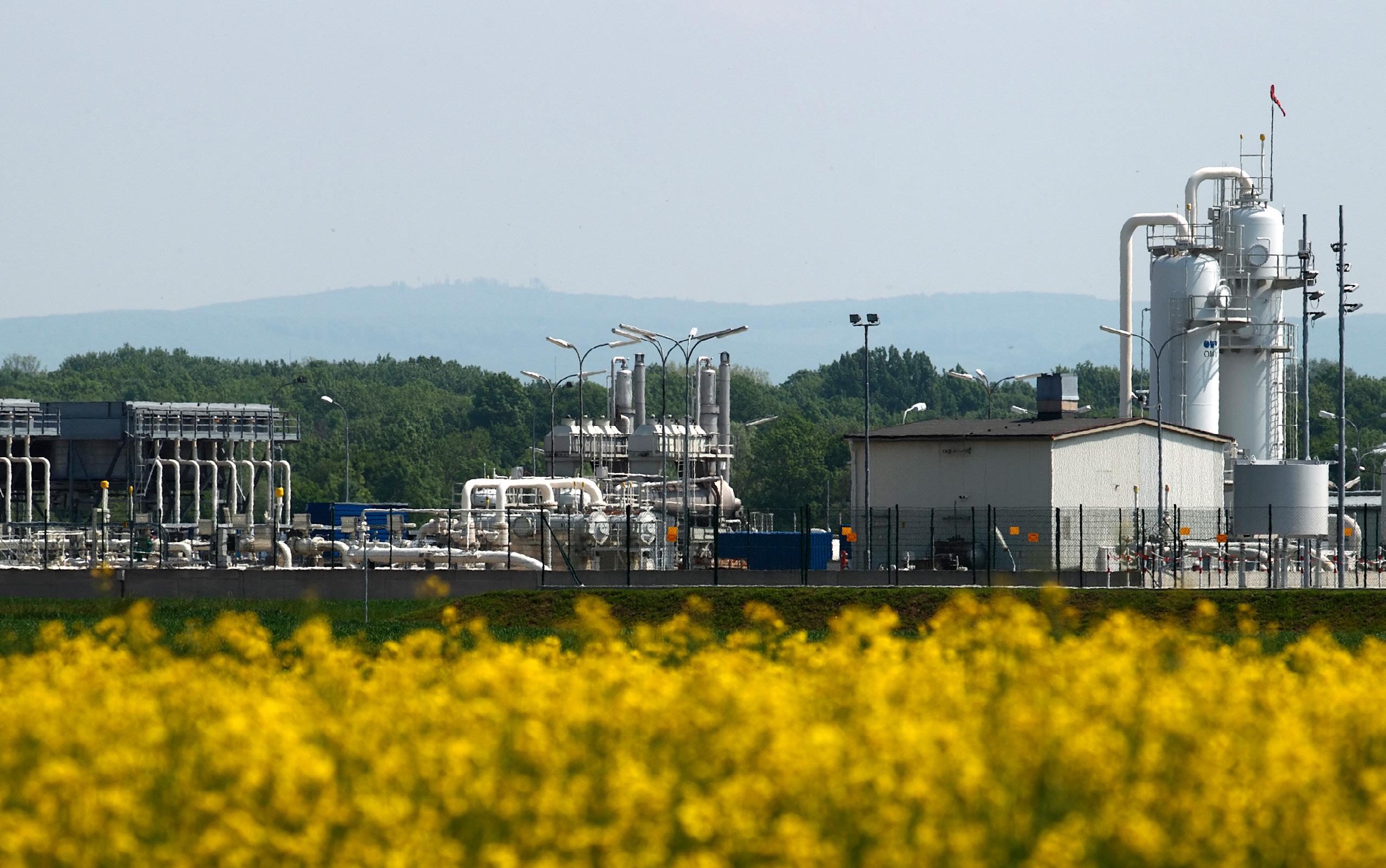
Austria has served as a European natural gas hub. REUTERS/Heinz-Peter Bader
hub serving Hungary, Slovenia, and Balkan markets.31 Krk’s geographic position on the Adriatic coast, with direct access to Central European pipeline infrastructure, makes it the natural anchor for a southern LNG supply route complementing the Baltic entry points. Its commercial access arrangements, however, remain nationally structured, limiting its function as a genuinely regional asset.
Alexandroupolis and the Southeast Corridor
The Alexandroupolis FSRU, at 5.5 bcm per year, is the entry point most directly targeted at the region’s most under-connected markets: Bulgaria, North Macedonia, Serbia, and eventual-
ly Bosnia-Herzegovina.32 Its strategic value lies not in its scale but in its position: connected via the Interconnector Greece–Bulgaria to the Bulgarian national grid, it represents the most direct route for seaborne LNG supply to reach the Western Balkans. Its commissioning and operationalization are among the most consequential near-term infrastructure events for Southeastern European gas security. But Alexandroupolis’s northward reach is physically constrained at the Kulata–Sidirokastro border crossing, which is the sole overland route through which Greek LNG terminal capacity can evacuate into the Balkan system. That bottleneck, and the others like it, is the subject of Section V.
31. On Krk’s capacity and expansion from 2.9 to 6.1 bcm/year, see “Krk LNG Terminal Gas Deliveries,” CEE Energy News, https:// ceenergynews.com/oil-gas/krk-lng-terminal-gas-deliveries/. On the terminal’s role as a regional distribution hub serving Hungary, Slovenia, and Balkan markets, see: European Commission/CINEA, “First Croatian LNG Terminal Officially Inaugurated in Krk Island,” January 29, 2021, https://cinea.ec.europa.eu/news-events/news/first-croatian-lng-terminal-officially-inaugurated-krk-island-2021-01-29_en.
32. The Alexandroupolis FSRU (Gastrade S.A.) is designed for 5.5 bcm/year capacity and commenced commercial operations on October 1, 2024. It is positioned to supply Bulgaria, North Macedonia, and Serbia via the Interconnector Greece–Bulgaria (IGB) and planned onward infrastructure. See: Gastrade S.A. project documentation; “Commercial Operations of Gastrade’s Alexandroupolis LNG Terminal Begins,” October 1, 2024, https://www.gastrade.gr/en/2024/10/01/commercial-operations-of-gastrades-alexandroupolis-lng-terminal-begins/; “Operation Report of the National Natural Gas System for the Year 2023,” DESFA, https://www.desfa. gr/en/infrastructure/nngs-operation-reports/; Note: the IGB connection creates a combined 12.5 bcm/year of Greek regasification capacity (Revithoussa 7.0 bcm/year + Alexandroupolis 5.5 bcm/year) whose northward evacuation is constrained at Kulata/Sidirokastro—see Section V.
Interconnectors, reverse flows, and system integration
LNG entry points generate supply optionality and interconnectors convert that optionality into actual market access. The commissioning of the Gas Interconnection Poland–Lithuania (GIPL) in May 2022 was the single most significant interconnector development in the region’s recent history.33 By establishing the first direct pipeline link between the Baltic gas system and the continental European network, GIPL ended a structural isolation that had persisted since the Soviet era, enabling bidirectional flows and creating the physical precondition for Baltic market integration into the North–South corridor. Beyond GIPL, the region has seen meaningful progress in reverse-flow capacity across a range of cross-border interconnection points. The Slovak Austrian, Czech–German, and Polish–Czech interconnectors have all been upgraded or reconfigured to support northbound and westbound flows that were commercially or physically impossible under the pre2022 system design. Reverse-flow capability has transformed what were single-direction transit pipelines into bidirectional assets capable of redistributing supply from western and northern entry points toward eastern and southeastern deficit markets.
The European ENTSOG CEE Gas Regional Investment Plan (GRIP) 2021 catalogued 109 infrastructure projects across the region addressing transmission, storage, LNG, and cross-border capacity.34 It is clear that progress has been uneven; while projects with EU co-financing, Projects of Common Interest status, and strong national backing have advanced, projects that are dependent on commercial financing or multi-jurisdictional coordination have experienced delays. But the more important structural finding is not about individual project time-
lines but about the gap between nominal LNG import capacity and real deliverability to inland markets, which is a gap created not by missing terminals but by missing transmission links and, critically, by the regulatory fragmentation that makes the existing transmission network commercially unusable as a unified cross-border system.35
CEE as a structural demand center
A persistent analytical error in discussions of CEE gas integration is the treatment of the region as a peripheral market defined by modest, declining demand. That framing is empirically contestable and strategically misleading. CEE gas demand is not stagnant; it is structurally positioned for mid-term growth driven by three distinct but reinforcing dynamics.36
The first is the coal-to-gas transition. Poland, the Czech Republic, Bulgaria, and Serbia remain among the most coal-intensive economies in the EU and the Energy Community space. Both EU-mandated and nationally adopted decarbonization commitments will require the displacement of a substantial portion of coal capacity over the next decade. Gas-fired generation, as a bridge fuel or backup capacity for renewable intermittency, will absorb a meaningful share of that displacement. Modeling scenarios consistent with Fit for 5537 compliance trajectories imply significant incremental gas demand from the power sector in these markets through the mid-2030s.
The second is electrification balancing. As CEE power systems integrate higher shares of variable renewable capacity—including wind in Poland and the Baltic states, and solar in Southeast Europe—the demand for flexible, dispatchable generation increases. Gas peakers and combined-cycle plants serve this function efficiently, and the economics of renewable-plus-
33. The Gas Interconnection Poland–Lithuania (GIPL) entered commercial operations in May 2022, providing 1.9 bcm/year northbound and 2.4 bcm/year southbound capacity. It is the first direct gas link between the Baltic states and the continental European gas system, ending Baltic energy isolation. See: GAZ-SYSTEM, “The Poland-Lithuania Gas Interconnector (GIPL) Will Start Commercial Operation as of 1st May,” February 28, 2022, https://www.gaz-system.pl/en/for-media/press-releases/2022/february-/28-02-2022the-poland-lithuania-gas-interconnector-gipl-will-start-commercial-operation-as-of-1st-may.html.
34. ENTSOG CEE GRIP 2021 catalogued 109 infrastructure projects: seventy-seven transmission pipeline projects, five LNG-related projects, eight underground gas storage developments, and nineteen energy transition projects. ENTSOG GRIP analysis identified persistent vulnerabilities under disruption scenarios: in a Ukrainian route disruption during winter 2021–2022, Poland failed to meet the N-1 supply adequacy criterion, while Hungary and Austria faced potential storage filling constraints under extended disruption. “Gas Regional Investment Plans (GRIPs),” European Network Transmission System Operators for Gas, last visited May 18, 2026, https://www.entsog.eu/gas-regional-investment-plans-grips.
35. “Pawel Czyzak and Nolan Theisen, “Central and Eastern Europe Beyond Gas Imports,” Ember Energy, March 5, 2024, https:// ember-energy.org/latest-insights/central-and-eastern-europe-beyond-gas-imports/.
36. CEE gas demand modeling: coal-to-gas transition scenarios draw on European Commission, “Fit for 55 Package Impact Assessment,” 2021 https://www.consilium.europa.eu/en/policies/fit-for-55/; Polish government energy mix projections through 2040 https://www.gov.pl/web/climate/energy-policy-of-poland-until-2040-epp2040; and “Accelerating Energy Diversification in Central and Eastern Europe,” IEA, September 2022 https://www.iea.org/commentaries/accelerating-energy-diversification-in-central-and-eastern-europe. Ukrainian reconstruction demand estimates based on “Third Rapid Damage and Needs Assessment (RDNA3),” World Bank/EU/UN, 2024, https://ukraine.un.org/sites/default/files/2024-02/UA%20RDNA3%20report%20EN.pdf, which estimates infrastructure reconstruction needs in the energy sector alone at approximately $47 billion.
37. ‘Fit for 55’ refers to the European Commission’s package of legislative proposals, presented in July 2021 under the European Green Deal, designed to reduce EU greenhouse gas emissions by at least 55 percent by 2030 compared to 1990 levels, and to achieve climate neutrality by 2050. The package revises EU law across energy, transport, industry and land use sectors. See European Commission, Fit for 55, https://www.consilium.europa.eu/en/policies/fit-for-55/.
gas systems in the CEE context are favorable relative to alternatives through the medium term.
The third, and most underappreciated, driver is Ukrainian reconstruction. The eventual stabilization and reconstruction of Ukraine following a peace agreement will generate energy demand of a scale and urgency without precedent in the post-Cold War European context. Ukraine’s gas infrastructure, which was partially destroyed and severely degraded by the conflict, will require comprehensive reconstruction. Conservative estimates of Ukrainian post-conflict gas demand suggest figures in the range of 20–30 bcm per year in a recovery scenario, and that demand will need to be supplied through or alongside the same corridor infrastructure that serves current CEE markets.
Aggregated across these three dynamics, CEE represents a structural demand growth trajectory of more than 100 bcm annually over the medium term, a demand opportunity of sufficient scale that the regulatory fragmentation and commercial shallowness that currently prevent it from functioning as an integrated market carry an increasingly high cost, and need for resolution.
Poland as regional gateway: Structural, not national
Poland’s emergence as the primary redistribution node in the North–South corridor is a structural consequence of geography, infrastructure stock, and market scale, rather than deliberate national energy policy—though Polish investment decisions have continued to reinforce that role. Poland’s 11,792-km high-pressure transmission network, its storage capacity of approximately 3.2 bcm—the largest in CEE after Germany and Austria—and its position at the intersection of Baltic, Central European, and Eastern European pipeline corridors make it the natural hub of the regional system.38
The strategic implication is that Poland’s infrastructure decisions are not purely domestic. Capacity constraints at Świnoujście, bottlenecks in the transmission network—most immediately, the Výrava interconnector with Slovakia, which cannot absorb the volumes the FSRU Gdańsk will add to the Polish system—or limitations in storage access affect both Polish consumers and the supply reliability of every market that
depends on flows through the Polish system. Conversely, investments in Polish gateway infrastructure generate positive externalities for the entire North–South corridor. This argues for governance arrangements that treat Polish infrastructure as a regional asset with regional governance dimensions, rather than as a merely national facility operated according to domestic commercial logic.
The interconnectivity deserts: Southeast Europe and the Western Balkans
If the North–South axis represents the region’s infrastructure achievement, the Western Balkans and parts of Southeast Europe represent its most consequential remaining gap. Bosnia-Herzegovina, Serbia, North Macedonia, and Kosovo share a set of structural characteristics that distinguish them from more integrated CEE markets: high single-source pipeline dependency, limited or absent LNG access, weak cross-border interconnection, and regulatory frameworks that have lagged the Energy Community’s integration requirements.39
The commissioning of the Interconnector Greece–Bulgaria (IGB) and the operationalization of Alexandroupolis represent the most important supply-side improvements for these markets in the near term. But as the Alexandroupolis case already illustrates, infrastructure availability is a necessary but not sufficient condition for supply diversification. The physical route from Greek LNG terminals to the Bulgarian system and onward to Serbia, North Macedonia, and Bosnia-Herzegovina runs through a set of specific bottlenecks that nominal capacity data systematically obscure. At Kulata/Sidirokastro, the primary overland crossing between the Greek and Bulgarian systems, and the principal conduit for southbound volumes prior to the Interconnector Greece Bulgaria (IGB)’s commissioning, capacity is currently constrained to 66.6 gigawatt hours (GWh) per day, a small fraction of the 12.5 bcm/year of upstream Greek LNG capacity it is supposed to evacuate. Expansion is planned in two phases but the second phase remains conditional. At Negru Vodă/Kardam, the Vertical Gas Corridor linking Bulgaria to Romania, Moldova, and ultimately Ukraine faces a constraint that expansion plans have addressed in principle but not yet in practice. These physical chokepoints ultimately determine whether Southeastern European markets access
38. Poland’s storage infrastructure comprises approximately 3.2 bcm of active working gas capacity, the largest in CEE after Germany and Austria. GAZ-SYSTEM operates 11,792 km of high-pressure transmission network with sixty-nine entry or exit points. GAZ-SYSTEM, “Transmission in Numbers 2022,” https://www.gaz-system.pl/dam/jcr:aeff6007-1772-49fb-87cb-651a2e92773e/przesyl_w_ liczbach_2022_en.pdf.
39. On interconnectivity gaps in Southeast Europe and the Western Balkans, see: “Annual Implementation Report 2023,” Energy Community Secretariat, https://www.energy-community.org/dam/jcr:3da7c4f8-ea23-4169-b1e9-66b0ed05fcb7/EnC_IR2023.pdf. Bosnia-Herzegovina, Serbia, and North Macedonia retain the highest pipeline import concentration ratios in the region, with single-source dependency persisting despite the commissioning of the Interconnector Greece-Bulgaria (IGB) and the Trans-Adriatic Pipeline (TAP).
LNG supply or remain dependent on whatever pipeline flows are available.40
Markets without the regulatory capacity to run competitive procurement processes, without creditworthy off-takers capable of contracting directly with global LNG suppliers, and without the commercial infrastructure to manage spot market exposures will not automatically benefit from physical connectivity improvements even when those improvements are delivered. Taken together, the infrastructure gap and the commercial gap are compounding with each reinforcing the other, meaning that neither can be resolved without addressing both.
This is where a coordinated demand aggregation mechanism would, under the right conditions, generate its most concentrated benefit. A coordination structure extending to Energy Community contracting parties, allowing Western Balkan utilities and state gas companies to participate in collective procurement under EU institutional frameworks, could address both the supply access gap and the commercial capability gap that underlies it.41 However, the qualifier matters. “Under the right conditions” means after the regulatory harmonization and infrastructure connectivity that allow market signals to flow across borders. A coordination mechanism launched into the current market structure in Southeast Europe would encounter the same constraints that defeated AggregateEU
40. The four analytically critical bottlenecks identified here are developed with full quantitative detail in Section V of this paper: Kulata/ Sidirokastro (Greece–Bulgaria): constrained to 66.6 GWh/day despite 12.5 bcm/year of upstream Greek LNG capacity, with Phase 1 expansion to 102 GWh/day under way; Negru Vodă/Kardam (Bulgaria–Romania): current firm capacity of 157.8 GWh/d constrains the Vertical Gas Corridor, and expansion to 295 GWh/day is decided but under implementation; Beregdaróc (Hungary–Ukraine): a pilot arrangement of approximately 3.5 bcm/year operating under temporary authorization that expired mid-2025, and awaiting final investment decision on a permanent interconnection management system; and Výrava (Poland–Slovakia): entry capacity of approximately 5.2 bcm/year is structurally insufficient to distribute FSRU Gdańsk volumes southward, and expansion to 10.9 bcm/ year is planned but not funded before 2030. See Section V and sources therein.
41. The Energy Community framework, which governs gas market regulation in the Western Balkans and Ukraine, provides the legal architecture for demand aggregation participation by non-EU members. See: “Energy Community Treaty, Article 6” https:// www.energy-community.org/enc-lex/law/treaty.html; The extension of collective procurement mechanisms to Energy Community contracting parties was created in Council Regulation (EU) 2022/2576, https://energy.ec.europa.eu/topics/energy-security/eu-energy-platform/aggregateeu_en.
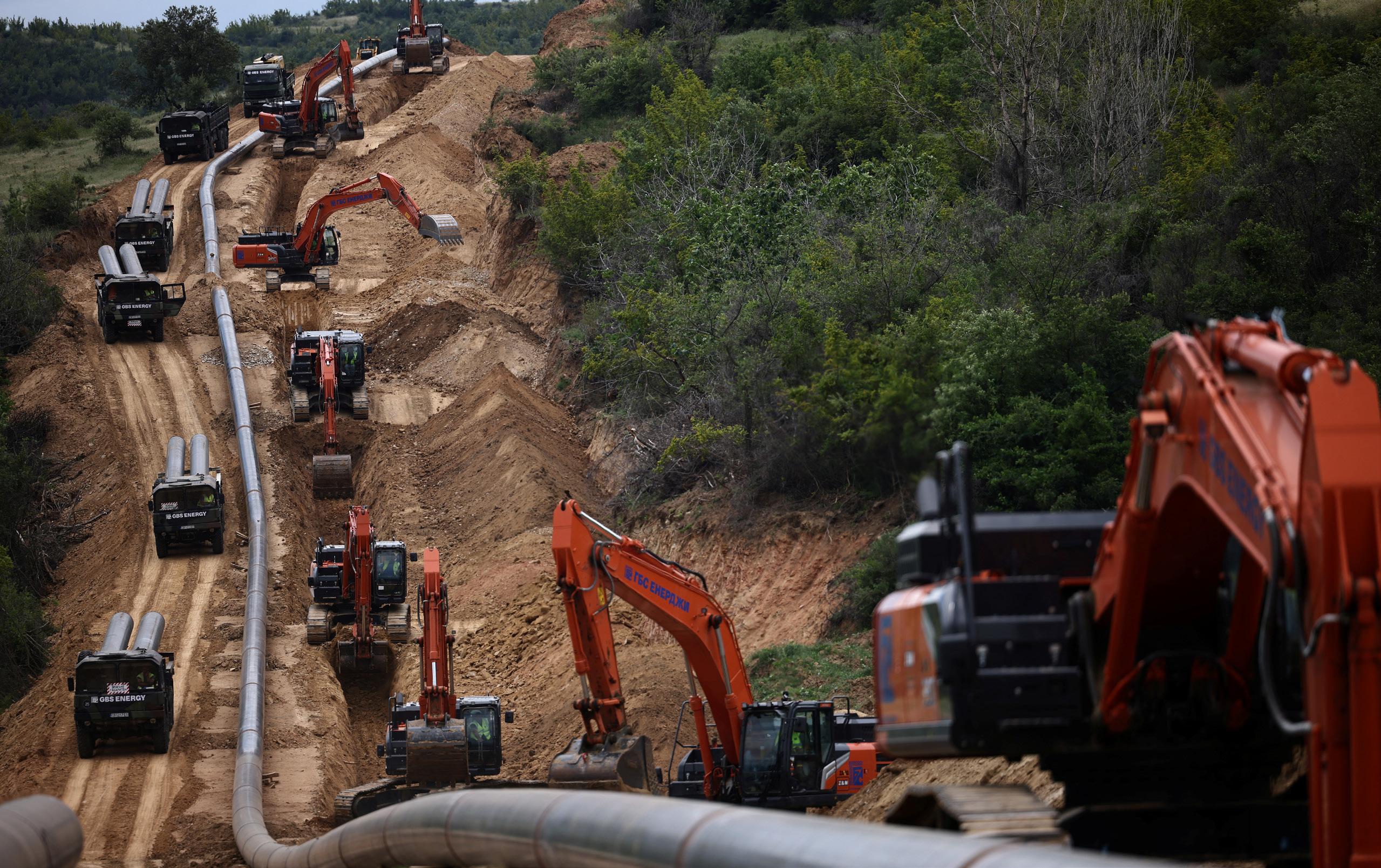
Excavators work on the site of the construction of the Vertical Gas Corridor, near Mikrevo, Bulgaria. REUTERS/Stoyan Nenov
in the broader CEE context because coordination is a market consequence, not a market substitute.
From projects to system: The governance gap and what comes next
The 109 projects catalogued in the ENTSOG GRIP represent a substantial collective investment in regional gas infrastructure. What they do not represent, taken individually, is a system. Individual terminal expansions, interconnector projects, and storage investments generate value in aggregate only if they are coordinated in timing, as well as in capacity design, commercial access terms, and the regulatory frameworks that govern their operation.
The North–South axis is emerging, but through a process of crisis-driven improvisation layered on top of national infrastructure planning cycles rather than through deliberate regional system design. This drives a predictable result—overinvestment in coastal entry capacity relative to inland transmission,
alongside persistent gaps in the secondary transmission network connecting entry points to inland demand centers. Ember’s analysis projects that LNG import capacity will exceed regional consumption by approximately 40 percent, some 24 bcm, by 2030.
The analytical sequence this section establishes is the organizing logic for what follows. Physical infrastructure is the foundation but it is being built unevenly. Regulatory harmonization is the layer that converts infrastructure into a market and it is the critical missing element in significant parts of the CEE region. Commercial depth is the layer that converts a functioning market into a platform for coordination and it depends entirely on regulatory harmonization being delivered first. A coordination mechanism at the top of that sequence, launched before the lower layers are in place, will not produce the outcomes it is designed to achieve. AggregateEU demonstrated the failures of that error. Section IV examines why, and what the correct sequencing requires.
IV. Operationalizing coordination: The case for a market-driven LNG buyers’ mechanism
Why the market alone cannot solve this
As demonstrated, the infrastructure transformation described in Section III is real and consequential. But it is the first step in a sequence, not a solution in itself. Regulatory harmonization is the second step in the sequence, and it remains the critical missing element across significant parts of the CEE region.
The sequencing for which this paper argues—infrastructure, then regulatory harmonization, then commercial depth—reflects a structural logic. The first step is advancing in Central and Eastern Europe, though unevenly. The second remains the critical missing element. It is only from that second step, once delivered, that the third could potentially develop. This outcome is contingent on resolving the infrastructure bottlenecks, regulatory fragmentation, and incentive gaps that currently prevent CEE markets from functioning as an integrated commercial space.
LNG project developers do not sell into spot markets by default; they build export capacity on the basis of long-term, binding offtake commitments from creditworthy counterparties. Without those commitments, projects do not reach final investment decision and supply does not come to market.42 The contracting logic of global LNG is fundamentally different from that of a commodity exchange: supply availability and market depth depend on long-term commercial relationships, not just on price signals.
For European mid-size buyers, this creates a structural barrier. They cannot individually absorb the volume commitments, duration, or balance sheet exposure that LNG project developers require. They often lack the commercial infrastructure to navigate complex pricing structures—hybrid Henry Hub/ TTF indexation, destination flexibility provisions, re-export clauses—that increasingly define the frontier of LNG contracting.43 And they frequently lack the infrastructure certainty needed to commit to specific delivery points over decade-long contract horizons, as the interconnectors and storage facilities required to receive and distribute contracted volumes have not yet been built.
All of this creates a compounding disadvantage. Without longterm contracts, buyers default to spot markets, but spot markets are inherently volatile. The TTF surged 59 percent through
2024 alone and CEE buyers, already paying a structural premium above the benchmark, bear the greatest exposure to that volatility.44 Without long-term demand commitments, infrastructure developers cannot make investment decisions, which perpetuates the very access constraints that force buyers onto spot markets. The logic is circular; breaking it requires a coordination mechanism that operates at the interface between commercial contracting and infrastructure planning.
From market conditions to commercial coordination: How a buyers’ alliance can emerge
The preceding sections establish that AggregateEU failed not from design flaws alone but from the absence of the market conditions it presupposed. What follows describes the characteristics that an effective coordination structure would need to exhibit and the conditions under which it could emerge. Such a structure would be a market outcome, not a policy instrument: the expression of a buyer community that has first built the regulatory, infrastructure, and commercial foundations for collective action.
If market conditions develop with harmonized access rules reducing cross-border frictions, price signals becoming more transparent, and infrastructure bottlenecks resolved to the point where delivery-point commitments are commercially viable, buyers in CEE and Energy Community markets might find it rational to coordinate market entry on a voluntary basis. However, demand aggregation is politically and commercially complex. It requires trust between entities that have historically competed, alignment of purchasing calendars across jurisdictions with different regulatory frameworks, and a credible governance structure that can sustain commitment without mandating it. These conditions do not yet exist at scale in the CEE region. The commercial logic of coordination becomes self-reinforcing only once sufficient market depth exists, and that depth depends on first resolving the structural barriers identified above. The precedent from East Asian markets illustrates where this evolution could lead under the right conditions. Through mechanisms such as the JERA-KOGAS cooperation framework, Japanese and South Korean LNG buyers developed coordinated approaches not through regulatory design but through the convergence of commercial interests
42. Jack Sharples, “A Brave New World? LNG Contracts in the Context of Market Turbulence and an Uncertain Future,” Oxford Institute for Energy Studies, December 2023, https://www.oxfordenergy.org/wpcms/wp-content/uploads/2023/12/LNG-Contracts-inthe-Context-of-Market-Turbulence-and-an-Uncertain-Future-NG-187.pdf. 43. Ibid.
44. Pawel Czyzak, Nolan Theisen, and Tatiana Mindekova, “The Final Push for EU Russian Gas Phase-Out,” Ember Energy, March 27, 2025, https://ember-energy.org/latest-insights/the-final-push-for-eu-russian-gas-phase-out/.
in deep, liquid markets.45 Europe’s structural position in global LNG markets has potential but that potential remains largely unrealized. CEE buyers currently lack the commercial depth to present as a coherent and credible constituency because they are isolated, individually weak counterparties operating in markets that do not yet provide the scale, creditworthiness, or contractual stability that LNG project developers require. That coordination will not emerge on its own; bridging that gap requires deliberate economic, regulatory, and infrastructure effort.
One working concept worth considering, subject to further development and conditional on the market conditions described above, is the idea of a dedicated aggregation vehicle operating as a purpose-built market entity rather than an intergovernmental platform. AggregateEU is a political instrument. What the CEE region requires is a market instrument that is structurally capable of holding commercial positions, not merely expressing demand preferences. A viable aggregation vehicle would need to be capable of acting as a contractual counterparty, signing offtake agreements with LNG project developers, and reselling volumes to regional buyers under standardized arrangements. This requires balance sheet capacity, governance structures that can sustain commercial commitments, and legal architecture that is compatible with EU competition law while remaining operationally credible to LNG project developers who require long-term, bankable demand commitments. Multiple institutional pathways could, in principle, support such a function, from enhanced versions of existing EU-level aggregation mechanisms such as AggregateEU to industry-led coalitions or chamber of commerce frameworks, commercial intermediation by established trading houses already active in CEE markets, and purpose-built vehicles structured to combine market credibility with access to development finance. The relative merits of each pathway depend on a multitude of factors including regulatory compatibility, capital requirements, governance complexity, and the pace of underlying market development, which warrant dedicated analysis beyond the scope of this paper. What matters most is that any vehicle be capable of acting as a committed commercial counterparty, not merely a demand-expression platform. What is analytically clear is that no such vehicle can precede the market conditions that would make its commercial functions viable. Regardless of its legal form, an aggregation entity launched into a fragmented, illiquid market without resolved transmission bottlenecks would face the same structural constraints that defeated AggregateEU. Thus, defining the institutional architecture through which such a vehicle could be established—in its legal form, governance
structure, capitalization model, and relationship to existing EU regulatory frameworks—is a question that warrants dedicated analysis beyond the scope of this paper.
On intermediation, portfolio players, including major trading houses and integrated energy companies with diversified positions across LNG supply chains, already bridge the gap between project developers and end buyers. In 2022, it was primarily these actors who facilitated the rapid rerouting of LNG cargoes toward Europe, absorbing volume risk in exchange for a market premium.46 A coordination structure would formalize this architecture without attempting to replicate portfolio players’ commercial capabilities through institutional design. Rather, it would create a framework within which those capabilities could be deployed on behalf of a coordinated demand base, provided that base had the commercial depth and regulatory underpinning to sustain collective action. Portfolio players willing to sign long-term offtake agreements with project developers could resell volumes to multiple participants under flexible resale arrangements, extending the commercial reach of each individual buyer while underwriting the supply commitments that project developers require. But this architecture presupposes a level of market maturity and risk-sharing capacity that CEE markets do not yet possess.
Infrastructure linkage is perhaps the most important structural innovation relative to AggregateEU. The alliance would generate demand commitments tied to specific delivery points and timelines, which is information that infrastructure planners and regulators currently lack. In CEE markets where terminal expansion decisions, interconnector investment, and storage development all depend on long-term demand visibility that spot markets cannot provide, this signal is the precondition for investment.47 A coordination structure would not direct infrastructure development; rather, under the right conditions, it could create the commercial incentives that make investment viable. For institutions such as the European Bank for Reconstruction and Development (EBRD) and the European Investment Bank (EIB), whose lending criteria require demonstrated demand viability, coordinated procurement commitments would represent exactly the kind of bankable signal that does not currently exist and whose absence is itself a structural barrier to the inland transmission investment that CEE markets most urgently need.
Pricing, benchmarks, and the limits of TTF
Any serious discussion of European LNG coordination must engage with pricing. The TTF benchmark has served as the primary European gas price reference for more than a decade
45. Dávid Csercsik, et al., “A Model-Based Analysis of the AggregateEU Mechanism: Implications of Overbidding and Non-Commitment,” Cornell University, April 7, 2025, https://arxiv.org/abs/2504.05269.
46. Jack Sharples, “A Brave New World? LNG Contracts in the Context of Market Turbulence and an Uncertain Future,” Oxford Institute for Energy Studies, December 2023, https://www.oxfordenergy.org/wpcms/wp-content/uploads/2023/12/LNG-Contracts-inthe-Context-of-Market-Turbulence-and-an-Uncertain-Future-NG-187.pdf
47. “Gas Regional Investment Plan for Central-Eastern Europe 2021,” European Network of Transmission System Operators for Gas, December 2021, https://www.entsog.eu/sites/default/files/2021-12/entsog_GRIP_CEE_2021_211216.pdf.
and provides genuine market depth and liquidity. But when applied to Central and Eastern European markets, it has structural limitations. The structural premium above TTF that CEE buyers consistently pay, established in Section I, is not a temporary dislocation but a persistent asymmetry that has direct consequences for contract design and benchmark development.
TTF’s volatility profile also deserves scrutiny. The benchmark has historically been among the most volatile gas price indices globally, susceptible to large swings driven by LNG competition effects, storage dynamics, and geopolitical events often distant from the immediate supply conditions facing CEE buyers.7 For buyers seeking to plan infrastructure investment or manage industrial energy costs over multi-year horizons, that volatility creates material planning uncertainty.
TTF became the European benchmark not because an institution declared it authoritative but because the Dutch virtual trading point accumulated sufficient transaction volume, participant diversity, and price transparency over more than a decade of organic development. A CEE-specific gas price index would need to follow the same logic. Demand aggregation would generate first transactions, transparent transactions could then produce price data, accumulated data at sufficient
scale could create a reference price, and a consistently cited reference price would then graduate into a benchmark. In a sufficiently deep and liquid regional market, transparent price formation could itself provide the coordination signal that a formal alliance structure would otherwise need to supply, making a price index and regional trading platform potential substitutes for a more formal mechanism rather than complements to it. This remains a conditional endpoint: it requires bottleneck removal, regulatory harmonization, and the commercial activity that only a functioning market can generate.
The European gas market is at an inflection point. The infrastructure buildout of the past three years has created new optionality, the regulatory harmonization agenda of the coming years will determine whether that optionality can be converted into genuine market depth, and only from that depth could the commercial mechanisms that Europe needs emerge through market logic rather than institutional design. Europe does not need to build an LNG buyers’ alliance—it needs to build a functioning regional gas market. Policymakers who focus on designing coordination mechanisms before the market conditions exist are repeating the error of AggregateEU. But those who focus on creating the conditions are addressing the problem at its structural root.
Swinoujscie LNG terminal is operated by Poland’s state-owned gas transmission company. REUTERS/Kacper Pempel
V. Infrastructure expansion and regional resilience
The transformed landscape
The physical infrastructure of European gas supply has changed more in the past four years than in the preceding two decades. ENTSOG’s 2021 GRIP for Central and Eastern Europe catalogued 109 infrastructure projects planned for the region, including seventy-seven transmission pipeline projects, five LNG-related projects, eight underground gas storage developments, and nineteen energy transition projects.48 Several of the most consequential have since been commissioned.
The Gas Interconnector Poland–Lithuania (GIPL) now enables bidirectional gas flows between the Baltic and Central European markets, a route that existed only on paper before 2021. Poland’s Świnoujście terminal has expanded from 6.2 to 8.3 bcm/year, with an additional FSRU facility in Gdańsk adding 6.1 bcm/year of regasification capacity.49 Lithuania’s Klaipėda terminal, with a base capacity of approximately 3.75 bcm/year, was the subject of a nonbinding open season launched at the end of 2023 to test market interest in an additional 2.5 bcm/ year of regasification capacity, potentially raising total capacity to 6.25 bcm/year. The expansion timeline targeted mid-2026, contingent on commercial interest from market participants; the GIE 2025 report confirms the Baltic states have made effective use of the Klaipėda FSRU and have fully phased out Russian gas.50 The Krk terminal in Croatia has expanded from an original capacity of 2.9 bcm/year toward a target of 6.1 bcm/year—a process confirmed as substantially advanced by 2025, with the terminal operating as a regional distribution hub serving Hungary, Slovenia, and Balkan markets.51 Austria, Hungary, Bosnia-Herzegovina, and Slovenia are among parties that have secured or explored expanded access.52 The Alexandroupolis FSRU off the northern Greek coast provides a new entry point for LNG into the southeastern corridor, connecting Balkan markets to Atlantic and Middle Eastern supply flows that previously could not reach them at all.
Where the gaps remain
What significant progress has occurred has been fragmented. Investment has concentrated at coastal entry points and primary transmission routes; the secondary network connecting those routes to inland demand centers in Slovakia, Hungary, the Western Balkans, and southeastern corridor markets has developed more slowly. ENTSOG’s CEE GRIP analysis identified persistent vulnerabilities under disruption scenarios. For example, in a Ukrainian route disruption during winter 2021–2022, Poland failed to meet the N-1 supply adequacy criterion, while Hungary and Austria faced potential storage filling constraints under extended disruption lasting 66–150 days.53
Ember’s 2024 analysis of Three Seas Initiative infrastructure planning identified the structural paradox this creates. By 2025, LNG import capacity across participating countries was expected to exceed historical Russian pipeline gas imports, yet demand projections indicate capacity will exceed consumption by approximately 40 percent, some 24 bcm, by 2030.54 The mismatch reflects overinvestment in coastal entry capacity relative to inland transmission, leaving terminals that can receive LNG unable to fully distribute it to the markets that need it most.
The gap between nominal LNG import capacity and real deliverability to inland markets is measurable at specific points in the transmission network, as documented in Transmission System Operator (TSO) Ten-Year Network Development Plans and project filings. At Kulata/Sidirokastro on the Greek–Bulgarian border, the sole overland transmission route connecting Greek LNG terminals of Revithoussa (7.0 bcm/year) and Alexandroupolis (5.5 bcm/year), totaling 12.5 bcm/year of regasification capacity, to Bulgarian and onward systems, is constrained to 66.6 GWh/day.55 Even following Phase 1 expansion (targeted at 102 GWh/day, decision taken March 2024), the physical passage cannot simultaneously evacuate the full terminal capacity northward; a Phase 2 option to 171 GWh/day remains condi-
48. “Gas Regional Investment Plan for Central-Eastern Europe 2021,” European Network of Transmission System Operators for Gas, December 2021, https://www.entsog.eu/sites/default/files/2021-12/entsog_GRIP_CEE_2021_211216.pdf.
49. Michał Paszkowski, “LNG Terminals in Central Europe: Importance and Operation,” IES Commentaries 1035, Instytut Europy Srodkowej, January 18, 2024, https://ies.lublin.pl/wp-content/uploads/2024/01/ies-commentaries-1035-11-2024.pdf.
50. “Central and South-Eastern Europe Decarbonisation Report 2025,” Gas Infrastructure Europe and Grant Thornton, May 2025, https://www.gie.eu/wp-content/uploads/filr/12355/GIE_CEE_SEE_Report_2025_final.pdf.
51. “Key Developments in European Electricity and Gas Markets,” Agency for the Cooperation of Energy Regulators, 2025, https:// www.acer.europa.eu/monitoring/MMR/electricity_gas_key_developments_2025.
52. Alex Barnes, “EU Joint Purchasing of Gas—an Assessment,” Oxford Institute for Energy Studies, 2023, https://www.oxfordenergy. org/wpcms/wp-content/uploads/2023/09/EU-Joint-Purchasing-of-Gas-NG184.pdf.
53. “Gas Regional Investment Plan for Central-Eastern Europe 2021,” European Network of Transmission System Operators for Gas, December 2021, https://www.entsog.eu/sites/default/files/2021-12/entsog_GRIP_CEE_2021_211216.pdf.
54. Pawel Czyzak and Nolan Theisen, “Central and Eastern Europe Beyond Gas Imports,” Ember Energy, March 5, 2024, https://ember-energy.org/latest-insights/central-and-eastern-europe-beyond-gas-imports/.
55. “2025–2034 Ten-Year Network Development Plan of Bulgartransgaz EAD,” Bulgartransgaz, April 2025, https://bulgartransgaz.bg/ files/useruploads/files/amd/3004/EN_TYNDP%20BTG%202025-2034.pdf.
Figure 3: Energy consumption mix by fuel type: CEE/SEE countries vs. EU-27 average (2023)
fossil fuels Oil products Natural gas Nuclear Renewables Other
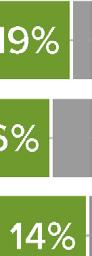


Source: GIE/Grant Thornton Decarbonisation Report 2025, based on Eurostat 2023
tional.56 At Negru Voda/Kardam on the Bulgarian–Romanian border, firm capacity of 157.8 GWh/day constrains the Vertical Gas Corridor; expansion to 295 GWh/day has been decided but is still under implementation.55 At Výrava on the Polish–Slovak interconnector, entry capacity of 143.52 GWh/day (approximately 5.2 bcm/year) is structurally insufficient to absorb the volumes that FSRU Gdańsk (planned at 6.1 bcm/year, with commissioning planned for 2027) will add to the Polish system; expansion to approximately 312 GWh/day (about 10.9 bcm/ year) is planned but not funded before 2030.57 At Beregdaróc
on the Hungarian–Ukrainian border, a pilot arrangement of approximately 3.5 bcm/year operates under temporary authorization that expired mid-2025; a permanent interconnection management system and dedicated pipeline require a final investment decision that has not yet been made.58 A structurally analogous constraint applies to the Krk–Hungary corridor: LNG Croatia’s terminal operates at 2.9 bcm/year and is commercially reserved through 2037, yet export capacity toward Hungary via Drávaszerdahely recorded utilization of approximately 8 percent of technical capacity in recent operational
56. “United with the EU: How Ukraine is Developing the Gas Market During the War,” Association of Gas Producers of Ukraine, September 2023, https://agpu.org.ua/images/pdf/28-09-2023_Wien.pdf.
57. Dávid Csercsik, et al., “A Model-Based Analysis of the AggregateEU Mechanism: Implications of Overbidding and Non-Commitment,” Cornell University, April 7, 2025, https://arxiv.org/abs/2504.05269 ; “Ten-Year Network Development Plan 2026–2035,” Eustream, 2025, https://www.eustream.sk/files/sk/transparency/rozvoj-siete/plany-rozvoja-siete/eus_tyndp_2026_2035.pdf; “Krajowy Dziesięcioletni Plan Rozwoju Systemu Przesyłowego 2024–2033,” GAZ-SYSTEM, February 2023, https://www.gaz-system.pl/dam/jcr:c23db40b-adcc-46d3-b723-d194f45f7346/kdpr_2026-2035_czesc_a_wyciag_-_po_uzgodnieniu.pdf.
58. FGSZ Ltd., “Consultation on 10-Year Network Development Proposal (2025),” FGSZ, 2025, https://fgsz.hu/file/documents/2/2992/2025_tyndp_en.pdf.
periods, constrained by an unfinished pipeline segment and infrastructure built for lower operating pressure.59 These constraints are the specific physical and commercial chokepoints that determine whether CEE LNG infrastructure translates into supply security for inland markets or remains a coastal asset.60
The operational picture is further complicated by constraints that do not appear in nominal capacity data. Ten-Year Network Development Plan (TYNDP) reporting captures technical and firm capacities at individual interconnection points but does not capture the cumulative tariff burden of multi-border transmission routes. The European Union Agency for the Cooperation of Energy Regulators’ Q3 2024 market monitoring report explicitly flagged that transmission tariff increases in some member states, combined with the cessation of Russian transit at the end of 2024, make cross-border trade essential for affordable gas prices in landlocked Central European markets.61 Regulatory analysis by the Florence School of Regulation documents that each additional border crossing on a multi-jurisdictional gas route adds measurable cost accumulation; a single-border impact on the Rhine-Alpine corridor was independently estimated at 0.387 EUR/MWh.62 Extrapolated across two to three transit borders on a typical North Sea LNG–CEE route, this structural stacking constitutes a material and persistent price wedge that renders commercial arbitrage economically unviable at prevailing spreads, meaning that capacity formally exists but is not commercially utilizable.63 A related pattern is visible in the Slovak system: Eustream infrastructure was designed for approximately 73 bcm/year of transit volume and today handles a fraction of that throughput. The cost of maintaining oversized compression infrastructure is allocated across declining volumes, generating transit tariffs that are
technically accurate but commercially prohibitive for potential users. These operational realities, meaning the difference between a system that exists and a system that functions as a unified market, are structurally absent from standard infrastructure assessments. 64
This infrastructure gap cannot be addressed by either coordination mechanisms or infrastructure planning alone. The missing element is commercial. Investment in inland transmission links requires demand signals with delivery-point specificity, which spot markets cannot provide and which individual buyers operating in isolation cannot credibly generate. This is precisely where market deepening—including, ultimately, coordinated procurement arrangements—becomes essential to infrastructure development rather than supplementary to it. But that market deepening is not yet present and will not self-generate. It requires regulatory harmonization to reduce cross-border frictions, risk-sharing mechanisms to attract private capital into inland transmission, and credible long-term demand visibility of a kind that CEE markets currently cannot supply. Only if and when those conditions are met could buyers operating in those markets generate the demand commitments that infrastructure developers require. The beneficial consequences of targeted investment in coastal-to-inland interconnectors, reduced price premiums, and improved supply resilience are conditional as a market outcome and flow from the conditions, not from the mechanism. By generating coordinated demand signals with delivery-point specificity, a mature buyers’ coordination structure creates the commercial basis for targeted interconnector investment, directing capital toward the links between coastal entry points and inland markets rather than toward additional terminal capacity that cannot be economically utilized.
59. “The Ten-Year Network Development Plan of the Gas Transmission System in the Republic of Croatia from 2014–2023,” Plinacro, July 2014, https://www.plinacro.hr/UserDocsImages/dokumenti/DESETOGODI%C5%A0NJI%20PLAN%20RAZVOJA%20ENG.pdf. Capacity data for Krk LNG export and HR–HU interconnection points are cited from this plan and verified against 2024–2025 updates recommended prior to publication.
60. “ENTSOG Ten-Year Network Development Plan 2024: Executive Summary,” European Network of Transmission System Operators for Gas, 2024, https://www.entsog.eu/sites/default/files/2025-10/Executive%20summary.pdf; “Ten-Year Network Development Plan 2022–2031“ Ambergrid, 2022, https://ambergrid.lt/uploads/documents/Amber%20Grid_TYNDP_2022.pdf.
61. “Key Developments in European Gas Markets—Q3 2024,” European Union Agency for the Cooperation of Energy Regulators, October 2024, https://www.acer.europa.eu/monitoring/MMR/gas_key_developments_Q3_2024.
62. Alberto Pototschnig, “European Gas Transmission Tariffication: Is it Really Fit for an Internal Gas Market?” Florence School of Regulation, European University Institute, May 6, 2024, https://fsr.eui.eu/european-gas-transmission-tariffication-is-it-really-fit-for-an-internal-gas-market/.
63. ACER’s Q3 2024 market monitoring report flagged that transmission tariff increases in several member states, combined with the cessation of Russian transit, make cross-border trade essential for affordable gas prices in landlocked Central European markets. While ACER has not published a single CEE tariff premium figure, regulatory analysis by the Florence School of Regulation documents that each additional border crossing generates a measurable cost accumulation: a single DE–IT border impact was estimated at 0.387 EUR/MWh. Extrapolated across two to three transit borders on a typical North Sea LNG–CEE route, this structural accumulation constitutes a material and persistent price wedge. The industry estimate of +4 EUR/MWh cited in conference proceedings is consistent with this order of magnitude but has not been independently verified in institutional publications.
64. Expert consultations (non-attributable). Structured consultations with representatives of transmission system operators, LNG terminal operators, and regional energy market participants conducted in the framework of the Three Seas Energy and Climate Forum in Dubrovnik in April 2025. Participants represent TSO management, LNG operations, and regional gas market advisory functions across CEE and SEE. Individual names and institutional affiliations are withheld at participants’ request. Observations from these consultations are used in this paper as analytical context and for cross-validation of TYNDP data; they are not cited as primary factual sources. Specific claims derived from these consultations are flagged as “requires validation” in the text.
Ukraine and Moldova as system assets
Analysis of Central and Eastern European gas system resilience cannot treat Ukraine and Moldova as external to the European energy system. Both countries are formally integrating into the EU’s Energy Community framework and possess system characteristics directly material to European supply security.
Ukraine’s underground gas storage (UGS) system, which is the largest in Europe with total capacity of approximately 30 bcm, has already functioned as a buffer for European supply balancing.65 During the 2022–2023 gas year, European commercial parties stored volumes in Ukrainian facilities under customs warehouse arrangements, using Ukrainian storage capacity as an extension of the broader European supply system while domestic Ukrainian demand was supplied separately.66 As of autumn 2023, approximately 3 bcm of the 16 bcm targeted for Ukrainian UGS reserves belonged to nonresident parties.67
Ukraine’s domestic production, maintained at approximately 18–20 bcm annually through the war years despite sustained infrastructure targeting, represents an additional system contribution.68 The Association of Gas Producers of Ukraine has documented estimated recoverable reserves exceeding 600 bcm in the eastern basin alone, with further prospective resources in the Carpathian region and Black Sea offshore areas.69 A post-war Ukraine with rebuilt production infrastructure and a functioning regulatory framework aligned with EU standards would represent a meaningful European domestic supply source, and one that reduces aggregate LNG import requirements and improves the system’s overall resilience.
Moldova’s situation has moved from precarious to acute. The cessation of Russian gas transit through Ukraine from January 1, 2025, cut off the supply route sustaining gas flows to the Transnistrian region. Gazprom ceased all deliveries, leaving Transnistria without gas and triggering an immediate humanitarian and electricity crisis.70 This was not a managed transition. The Energy Community Secretariat documented that at the height of the crisis, consumer gas tariffs increased by up to 600 percent and electricity tariffs by 400 percent, with the European Commission providing 250 million euros in emergency support for 2025 under a dedicated two-year decoupling strategy.71, Moldova’s right bank had already diversified away from Russian gas since late 2022, replacing approximately 1 bcm per year of Russian supply with EU-sourced alternatives via Romania.72 The Energy Community Secretariat’s November 2025 Annual Implementation Report confirms that the Iaşi–Ungheni–Chişinău pipeline now operates at maximum capacity, the transmission system operator (VestMoldTransgaz) has been certified as an independent system operator under EBRD and Transgaz ownership, and Moldova is integrating into the Vertical Corridor for access to LNG from Greece and the United States. Moldova’s path to supply security runs urgently through this regional integration and its situation illustrates precisely why the argument of this paper, that building market conditions must precede building coordination mechanisms, has real human and political stakes, not merely analytical ones.73
65. “EU and Ukraine: Potential for Stronger Energy Cooperation on the Path to Integration,” European Parliament, March 2025, https:// www.europarl.europa.eu/RegData/etudes/BRIE/2025/769551/EPRS_BRI%282025%29769551_EN.pdf.
66. “United with the EU: How Ukraine is Developing the Gas Market During the War,” Association of Gas Producers of Ukraine, September 2023, https://agpu.org.ua/images/pdf/28-09-2023_Wien.pdf.
67. “United with the EU: How Ukraine is Developing the Gas Market During the War,” Association of Gas Producers of Ukraine, September 2023, https://agpu.org.ua/images/pdf/28-09-2023_Wien.pdf.
68. “Ukraine’s Untapped Gas Potential: Resource Base and Ways to Cooperate,” Association of Gas Producers of Ukraine, October 2023, https://www.agpu.org.ua/images/pdf/6-10-2023.pdf.
69. Ibid.
70. “Moldova: Annual Implementation Report,” Energy Community Secretariat, November 1, 2024, https://www.energy-community.org/ dam/jcr:1ada75bb-8fee-4905-9e55-b0c4c636fa56/IR2024_Moldova.pdf.
71. Andreas Walstad, “Moldova Grapples with Energy Transition as Shortages Loom,” Gas Outlook, September 29, 2025, https://gasoutlook.com/analysis/moldova-grapples-with-energy-transition-as-shortages-loom/.
72. “Moldova: Annual Implementation Report,” Energy Community Secretariat, September 9, 2025, https://www.energy-community. org/dam/jcr:1a2e4b31-cdfe-45ae-9f82-354164604429/Moldova_IR25CP.pdf.
73. Ibid.
VI. Transatlantic energy ties as a structural outcome
The market logic of post-crisis LNG flows
The dramatic increase in US LNG deliveries to Europe after 2022 was not the product of coordinated policy, but rather a market response. European buyers, facing an acute supply shortfall and offering prices well above competing destinations, constituted the most commercially attractive demand center for flexible US export capacity. US LNG terminals, built from the outset with flexible destination provisions and Henry Hub-linked pricing structures, were designed precisely to allow volume reallocation toward the most remunerative market.74 The sixfold increase in US LNG flows to Europe in the twelve months following Russia’s supply curtailments was commercially rational, not politically engineered.75
The supply wave analyzed in Section II intensifies this competitive dynamic. As Asian demand recovers and new capacity is progressively contracted, the terms on which European buyers access US LNG will depend increasingly on whether they can present as credible, large-scale counterparties.
Deepening the relationship through market architecture
Moving from emergency LNG absorption to durable energy partnerships requires the market conditions that this paper argues must precede any formal coordination mechanism. US and Qatari LNG export projects—several of which have taken or are approaching final investment decisions in 2025–2026, with further phases pending sufficient offtake commitments— require long-term supply agreements to underpin project financing.76 European buyers cannot meet these requirements individually. A sufficiently integrated and commercially mature buyer community could, under the right conditions, begin to close that gap.
A CEE buyer community that has developed the commercial depth to coordinate voluntarily presents a credible demand proposition that LNG project developers across multiple pro-
ducing regions can evaluate on its merits. This is precisely the condition that spot market fragmentation cannot produce. The portfolio player intermediation architecture described in Section IV is precisely the commercial structure through which durable transatlantic supply relationships would operate in practice.
The Bruegel framework for evaluating EU gas imports against multiple criteria—namely geopolitical alignment, supply reliability, climate performance, transportation security, and supplier dependence—provides a useful analytical lens here.77 Diversified LNG supply from the Atlantic basin performs well on geopolitical alignment and supply flexibility. It also introduces specific risks: methane intensity profiles from US production merit monitoring against EU methane regulation requirements taking effect from 2030; long-distance transportation carries costs and choke point exposure that pipeline supply avoids; and US LNG pricing structures indexed to Henry Hub introduce a different volatility profile than TTF-linked arrangements.78 Under mature market conditions, a well-functioning demand coordination framework could allow European buyers to manage these trade-offs, contracting from multiple origins with pricing structures calibrated to specific buyer needs, rather than defaulting uniformly to any single supply source or benchmark. Realizing this potential, however, remains contingent on first building the market foundations that make such coordination commercially rational.
Demand-side coordination structures, of which a formal buyers’ alliance would be one possible form, could build exactly this architecture, but only if the underlying market conditions exist. In their absence, even well-designed coordination mechanisms will underdeliver, as AggregateEU demonstrated. The priority, therefore, is not to design the coordination structure but to create the market in which such structures become commercially rational. In this framework, transatlantic LNG flows are a structural consequence of European market maturation. They are not the purpose of the exercise.
74. “Gas Market Report, Q1-2023,” International Energy Agency, February 28, 2023, https://www.iea.org/reports/gas-market-report-q1-2023.
75. Ben McWilliams, et al., “The European Union Is Ready for the 2023–24 Winter Gas Season,” Bruegel, October 10, 2023, https:// www.bruegel.org/analysis/european-union-ready-2023-24-winter-gas-season.
76. Jack Sharples, “A Brave New World? LNG Contracts in the Context of Market Turbulence and an Uncertain Future,” Oxford Institute for Energy Studies, December 2023, https://www.oxfordenergy.org/wpcms/wp-content/uploads/2023/12/LNG-Contracts-inthe-Context-of-Market-Turbulence-and-an-Uncertain-Future-NG-187.pdf.
77. Agata Łoskot-Strachota, Ugnė Keliauskaitė, and Georg Zachmann, “Future European Union Gas Imports: Balancing Different Objectives,” Bruegel, July 3, 2024, https://www.bruegel.org/analysis/future-european-union-gas-imports-balancing-different-objectives.
78. Ibid.
VII. Policy recommendations
The analysis leads to eight recommendations directed at EU institutions, national governments, infrastructure operators, and commercial participants.
These recommendations are ordered to reflect the causal sequence the paper argues for, not alphabetically or by institutional addressee. As previously articulated, the logic is sequential: each step is a precondition for the next and interventions at later stages of the sequence will underperform if earlier stages remain incomplete. The operative sequence is: remove the specific physical and commercial bottlenecks that prevent existing infrastructure from functioning as a unified market; deliver regulatory harmonization that converts physical connectivity into genuine market integration; allow the commercial depth generated by a functioning market to support voluntary demand aggregation, if commercially viable; and permit the transaction volumes generated by aggregation to accumulate into the price data from which a regional benchmark can eventually develop. Policymakers who focus on stages three and four before stages one and two are completed will reproduce the structural failure of AggregateEU. The recommendations below are structured accordingly.
Recommendation 1: Prioritize regulatory harmonization as the foundation for market-based coordination
The European Commission, in cooperation with interested member states and Energy Community participants, should treat regulatory harmonization rather than coordination mechanism design as the primary near-term priority for CEE gas market development. This would look like harmonized network access rules and tariff structures across CEE jurisdictions; common capacity allocation mechanisms for cross-border interconnectors; and gas quality and balancing standards compatible with efficient trans-boundary trading. These are the structural preconditions for genuine market integration. Without them, the physical infrastructure already built cannot generate the commercial depth, investment signals, or risk-sharing capacity that effective coordination requires. The AggregateEU experience demonstrates the cost of sequencing this incorrectly: coordination mechanisms deployed in the absence of functioning market conditions produce high apparent activity and negligible commercial output. Regulato-
ry harmonization should be treated as market activation, not administrative tidying. Its purpose is to generate commercial incentives and supplier-side confidence, particularly from LNG project developers requiring scaled, creditworthy counterparties that CEE markets currently cannot provide. Only once that foundation is substantially in place should a legal and institutional framework for voluntary, commitment-capable demand coordination be developed. Early engagement with the European Commission on competition law boundaries remains essential.79
Recommendation 2: Develop a CEE gas price index and regional trading platform
The European Commission, the Agency for the Cooperation of Energy Regulators (ACER), and national regulatory authorities should support the development of a CEE-specific gas price index reflecting actual transaction prices at regional delivery hubs. A regionally anchored price index, alongside a regional trading platform capable of supporting standardized CEE gas contracts, would serve two functions simultaneously: it would provide buyers with a meaningful pricing reference and generate the price transparency that is itself a precondition for demand-side coordination. These market infrastructure elements deserve recognition not merely as complements to a buyers’ coordination mechanism, but as potential substitutes for a more formal alliance structure. In a sufficiently deep and liquid regional market, transparent price formation might itself provide the coordination signal that a formal institutional mechanism would otherwise need to supply.80
Recommendation 3: Formally integrate portfolio players as commercial intermediaries
Any regulatory framework governing demand-side coordination structures should explicitly recognize and enable the intermediation role of portfolio players, which are the commercial actors already bridging LNG project developers and European end buyers. ACER’s analysis of LNG market developments and Oxford Institute for Energy Studies research on portfolio optimization provide the analytical basis for designing appropriate safeguards against anti-competitive concentration.81
79. Dávid Csercsik, et al., “A Model-Based Analysis of the AggregateEU Mechanism: Implications of Overbidding and Non-Commitment,” Cornell University, April 7, 2025, https://arxiv.org/abs/2504.05269; “Gas Market Report, Q1-2023,” International Energy Agency, February 28, 2023, https://www.iea.org/reports/gas-market-report-q1-2023.
80. Pawel Czyzak and Nolan Theisen, “Central and Eastern Europe Beyond Gas Imports,” Ember Energy, March 5, 2024, https://ember-energy.org/latest-insights/central-and-eastern-europe-beyond-gas-imports/; “Gas Regional Investment Plan for Central-Eastern Europe 2021,” European Network of Transmission System Operators for Gas, December 2021, https://www.entsog.eu/sites/ default/files/2021-12/entsog_GRIP_CEE_2021_211216.pdf.
81. “Analysis of the European LNG Market Developments,” Agency for the Cooperation of Energy Regulators, 2024, https://www.acer. europa.eu/monitoring/MMR/LNG_market_developments_2024; Mashal Jaffery and Peter Thompson, “LNG Portfolio Optimization: Challenge, Opportunity and Necessity,” Oxford Institute for Energy Studies, October 2020, https://www.oxfordenergy.org/wpcms/ wp-content/uploads/2020/10/Insight-74-LNG-Portfolio-Optimization.pdf.
Recommendation 4: Bind demand aggregation to infrastructure investment planning
ENTSOG’s TYNDP process and national infrastructure planning frameworks should be updated to incorporate coordinated demand signals, whether they are generated by commercial aggregation mechanisms, coordinated procurement arrangements, or other forms of demand-side coordination into longterm system development assessments. Interconnector prioritization, storage investment, and terminal expansion decisions should be informed by delivery-point-specific demand commitments rather than individual buyer projections. This is the mechanism by which commercial coordination, when it exists, translates into bankable infrastructure investment.82
Recommendation 5: Accelerate interconnector development in Southeastern Europe and the Western Balkans
The coastal-to-inland infrastructure gap, the systemic weakness identified by both ENTSOG’s CEE GRIP and Ember’s Three Seas analysis, represents the most urgent remaining vulnerability in European gas system architecture.83 The European Commission, EBRD, and national governments should treat southeastern corridor interconnection as a priority investment, with financing instruments calibrated to the commercial risk profile of markets that currently lack the trading depth to self-finance infrastructure development.
Priority should be concentrated on a small number of high-leverage interventions for which the gap between nominal and deliverable capacity is both quantified and investable. Four interconnection points are analytically critical.
The first is Kulata/Sidirokastro on the Greece–Bulgaria border, which links 12.5 bcm/year of Greek LNG regasification capacity to onward systems. Phase 1 expansion to 102 GWh/day is under way and should be accelerated, with Phase 2 to 171 GWh/day advanced as a complementary priority.
The second is Negru Vșdă/Kardam on the Bulgaria–Romania border, which is the principal bottleneck on the Vertical Gas Corridor constraining onward flows to Romania, Moldova, and Ukraine. Expansion to 295 GWh/day has been decided and should be treated as an implementation priority.
The third is Beregdaróc on the Hungary–Ukraine border, which constitutes the second direct EU–Ukraine pipeline corridor and is currently operating under temporary pilot arrangements. The permanent interconnection management system infrastructure requires final investment decision and should be advanced as a strategic supply security measure for Ukraine.
The fourth is Výrava on the Poland–Slovakia border, which represents a structural constraint on the distribution of Polish Baltic LNG southward. Expansion to 10.9 bcm/year by 2030 should be treated as a hard deadline conditional on the FSRU Gdańsk commissioning timeline.
These four investments constitute the minimum infrastructure preconditions for the commercial depth that any coordination mechanism requires.
Recommendation 6: Include Ukraine and Moldova as full participants in regional coordination
Ukraine and Moldova should be integrated into regional gas market development frameworks and associated infrastructure planning as active participants, not observers. Ukraine’s underground storage system should be formally integrated into EU supply security planning.84 Once post-war reconstruction allows, Ukrainian gas production capacity should be treated as a European domestic supply resource rather than a foreign import source.85 Moldova’s energy integration path should include access to regional coordination arrangements, including any emerging demand-side aggregation mechanisms, as a near-term priority.
Recommendation 7: Ensure effective implementation of Regulation (EU) 2026/261—the Russian gas phaseout framework
The adoption of Regulation (EU) 2026/261 in January 2026 represents a decisive regulatory step that fundamentally changes the policy context for demand-side coordination. The regulation establishes a legally binding phased prohibition on imports of Russian natural gas: pipeline gas imports under existing long-term contracts are prohibited from September 30, 2027 (with a possible extension to November 1, 2027, in specific storage-related circumstances); LNG imports under existing long-term contracts are prohibited from January 1, 2027; and imports under existing short-term contracts benefit
82. “Gas Regional Investment Plan for Central-Eastern Europe 2021,” European Network of Transmission System Operators for Gas, December 2021, https://www.entsog.eu/sites/default/files/2021-12/entsog_GRIP_CEE_2021_211216.pdf.
83. Pawel Czyzak and Nolan Theisen, “Central and Eastern Europe Beyond Gas Imports,” Ember Energy, March 5, 2024, https://ember-energy.org/latest-insights/central-and-eastern-europe-beyond-gas-imports/; “Gas Regional Investment Plan for Central-Eastern Europe 2021,” European Network of Transmission System Operators for Gas, December 2021, https://www.entsog.eu/sites/ default/files/2021-12/entsog_GRIP_CEE_2021_211216.pdf.
84. “EU and Ukraine: Potential for Stronger Energy Cooperation on the Path to Integration,” European Parliament, March 2025, https:// www.europarl.europa.eu/RegData/etudes/BRIE/2025/769551/EPRS_BRI%282025%29769551_EN.pdf.
85. “Ukraine’s Untapped Gas Potential: Resource Base and Ways to Cooperate,” Association of Gas Producers of Ukraine, October 2023, https://www.agpu.org.ua/images/pdf/6-10-2023.pdf.
From diversification to integration: A market-based LNG coordination mechanism in Europe
from shorter transition periods ending in April–June 2026.86
This closes the gap that Ember’s 2025 analysis identified as critical: the absence of a legally binding phaseout pathway that would prevent market logic from pulling buyers back toward discounted Russian supply.87 The commercial conditions that drove an 18 percent increase in Russian gas imports in 2024 are now directly addressed by a regulatory constraint, not left to market dynamics alone. For market participants and policymakers, the immediate priority is ensuring orderly implementation: identifying alternative supply arrangements for volumes currently contracted under the transition periods, activating the national diversification plans required by Article 9 of the regulation88, and ensuring that enforcement mechanisms under Articles 6 and 7 are operationalized effectively. This includes prior authorization, customs monitoring, and anti-circumvention provisions. The market development agenda this paper describes and the regulatory phaseout framework established by Regulation 2026/261 are complementary instruments. The regulation closes the Russian supply option, creating the conditions for alternative supply including, potentially, coordinated demand structures and provides the commercial foundations for securing it on durable terms.89
Recommendation 8: Commission a feasibility study for a market-based CEE demand aggregation vehicle
The analysis in this paper identifies a structural gap that existing EU instruments do not fill: the absence of a market entity capable of acting as a creditworthy, committed counterparty
on behalf of aggregated CEE demand. AggregateEU demonstrated that a platform for expressing demand without the capacity to commit to it cannot bridge the gap between fragmented buyers and project developers requiring longterm offtake commitments. Multiple institutional forms could in principle fill this role, including improved EU-level aggregation mechanisms, commercial structures led by established trading houses or industry coalitions, or purpose-built vehicles designed to combine market credibility with access to multilateral development finance. The feasibility study proposed here should evaluate these pathways comparatively rather than assuming a predetermined institutional answer. The question is whether a viable institutional architecture for it can be designed, and whether it can be sufficiently market based to attract private capital and LNG supplier engagement, sufficiently mission anchored to access development finance from institutions such as EBRD and the Development Finance Corporation (DFC), and sufficiently independent of any single national government to be credible across the CEE region as a whole.
Regional energy utilities, development finance institutions, and private market participants with established positions in CEE gas markets should commission a dedicated feasibility study examining the legal form, governance structure, capitalization model, and regulatory compatibility of such a vehicle. This recommendation is addressed not to regulators or governments but to the private and institutional actors who have both the commercial interest and the capability to initiate it.
86. Jack Sharples, “A Brave New World? LNG Contracts in the Context of Market Turbulence and an Uncertain Future,” Oxford Institute for Energy Studies, December 2023, https://www.oxfordenergy.org/wpcms/wp-content/uploads/2023/12/LNG-Contracts-inthe-Context-of-Market-Turbulence-and-an-Uncertain-Future-NG-187.pdf
87. Pawel Czyzak, Nolan Theisen, and Tatiana Mindekova, “The Final Push for EU Russian Gas Phase-Out,” Ember Energy, March 27, 2025, https://ember-energy.org/latest-insights/the-final-push-for-eu-russian-gas-phase-out/.
88. The submission deadline of March 1, 2026 has now passed and the Commission’s assessment of those plans are ongoing.
89. Agata Łoskot-Strachota, Ugnė Keliauskaitė, and Georg Zachmann, “Future European Union Gas Imports: Balancing Different Objectives,” Bruegel, July 3, 2024, https://www.bruegel.org/analysis/future-european-union-gas-imports-balancing-different-objectives; Jack Sharples, “A Brave New World? LNG Contracts in the Context of Market Turbulence and an Uncertain Future,” Oxford Institute for Energy Studies, December 2023, https://www.oxfordenergy.org/wpcms/wp-content/uploads/2023/12/LNG-Contractsin-the-Context-of-Market-Turbulence-and-an-Uncertain-Future-NG-187.pdf
About the authors
Michał Kurtyka is a distinguished fellow with the Atlantic Council Global Energy Center.
Kurtyka previously served as the first minister of Poland’s Ministry of Climate, which expanded to become the Ministry of Climate and Environment. During his tenure starting in 2019, the Polish government adopted its 2040 Energy Policy, opening a new era for the Polish energy transition. He designed the implementation and financing of the energy transition, particularly in launching programs such as “My Water,” “Green Public Transport,” “Green Cars,” and “The City of Tomorrow.” He oversaw record increases in registration for the development of renewable sources, reaching thousands of megawatts of installed capacity in photovoltaics and one million prosumers. He launched industrial alliances for hydrogen, photovoltaics, and biogas, and he put forth a framework for the development of offshore wind. He also originated “The Electromobility Development Plan” and guided the creation of the Act on Electromobility and Alternative Fuels, enabling these forms of transport to develop dynamically.
Prior to becoming minister, Kurtyka was appointed as government plenipotentiary for the Presidency of COP24—the United Nations Climate Change Conference of the Parties in Poland. From July 2018, he also held the position of secretary of state in the Ministry of Environment. In December 2018, he became the COP24 president, which ended with the effective implementation of the Paris Agreement.
Starting in January 2016, Kurtyka served as the undersecretary of state in the Ministry of Energy, where he was responsible for the technological development and implementation of innovations in the energy sector, implementation of climate and energy policy in the fuel and gas sector, and relations with other countries and international organizations. He was also responsible for supervising the state’s participation in the biggest Polish oil and gas companies, such as Orlen, Lotos, and PGNiG.
Kurtyka is a graduate of the prestigious Parisian École Polytechnique and earned a scholarship in quantum optics at the National Institute of Standards and Technology, located near Washington, where he worked under the leadership of Nobel laureate in physics William D. Phillips. Kurtyka also specialized in economics, with a particular focus on industrial and market organization, studying under Jean Tirole, the 2014 Nobel laureate in economics. In the field of international economics, he studied at the University in Louvain-la-Neuve, and he earned his master’s degree at the SGH Warsaw School of Economics. He defended his doctoral dissertation at the University of Warsaw.
Marcin Gawęda is a Central and Eastern Europe–focused strategic advisor and policy practitioner specializing in energy security, gas infrastructure, LNG markets, and the geopolitical dimensions of strategic infrastructure development. His work with think tanks, NGOs, and senior transatlantic decision-makers focuses on regional connectivity, infrastructure resilience, and transatlantic cooperation across the CEE region.
Previously, he worked on major infrastructure and energy security projects involving cooperation with European institutions, international industry organizations, and regional energy initiatives. Examples of such projects include those related to the Baltic Pipe pipeline, the FSRU terminal in Gdańsk, the expansion of the LNG terminal in Świnoujście, and underground gas storage infrastructure. Gawęda also worked as an economic journalist and editor covering business, energy markets, and international affairs for leading Polish media outlets.
He holds an MBA in energy from Łazarski University and degrees in political science, central banking, and national security studies, including academic programs in Washington and Istanbul.
Lisa Basquel is the program assistant for European Energy Security at the Atlantic Council’s Global Energy Center, where she supports the Center’s transatlantic initiatives. Prior to joining the Atlantic Council, she worked at the Delegation of the European Union to the United States, contributing to both the Economic & Financial Affairs team and the Political, Security, and Development team.
Basquel previously interned in financial and professional services and was a member of the Washington Ireland Program’s Class of 2024, a leadership initiative that brings Irish university scholars to Washington, DC, for professional and personal development. During her academic career, Basquel served as a teaching assistant in the Department of Economics at Trinity College Dublin and was awarded a national prize for an essay on the impact of the European Single Market on Irish economic history. She is also a recipient of the European Central Bank Scholarship for Women and the Trinity College Dublin European Excellence Award.
Basquel holds a BA in government studies from the University of Galway, where she majored in economics and minored in political science and law, graduating with first-class honors. She earned an MSc in economics from Trinity College Dublin, where her thesis focused on euro-area monetary policy.
Atlantic Council Board of Directors
CHAIRMAN
*John F.W. Rogers
EXECUTIVE CHAIRMAN
EMERITUS
*James L. Jones
PRESIDENT AND CEO
*Frederick Kempe
EXECUTIVE VICE CHAIRS
*Adrienne Arsht
*Stephen J. Hadley
VICE CHAIRS
*Robert J. Abernethy
*Alexander V. Mirtchev
TREASURER
*George Lund
DIRECTORS
Stephen Achilles
Elliot Ackerman
*Gina F. Adams
Timothy D. Adams
*Michael Andersson
Ilker Baburoglu
Alain Bejjani
Colleen Bell
Peter J. Beshar
*Karan Bhatia
Stephen Biegun
Linden P. Blue
Brad Bondi
John Bonsell
Philip M. Breedlove
R. Nicholas Burns
Kurt M. Campbell
David L. Caplan
Samantha A. Carl-Yoder
*Teresa Carlson
*James E. Cartwright
Christopher Cavoli
John E. Chapoton
Ahmed Charai
Melanie Chen
Michael Chertoff
George Chopivsky
Wesley K. Clark
Kellyanne Conway
*Helima Croft
Ankit N. Desai
*Lawrence Di Rita
Dante A. Disparte
Denelle Dixon
*Paula J. Dobriansky
Joseph F. Dunford, Jr.
Joseph Durso
Richard Edelman
Stuart E. Eizenstat
Mark T. Esper
Christopher W.K. Fetzer
*Michael Fisch
Alan H. Fleischmann
Jendayi E. Frazer
*Meg Gentle
Thomas H. Glocer
John B. Goodman
Sherri W. Goodman
William E. Grayson
Marcel Grisnigt
Jarosław Grzesiak
Murathan Günal
Michael V. Hayden
*Robin Hayes
Tim Holt
*Karl V. Hopkins
Kay Bailey Hutchison
Ian Ihnatowycz
Keoki Jackson
Deborah Lee James
*Joia M. Johnson
*Safi Kalo
Karen Karniol-Tambour
*Andre Kelleners
John E. Klein
Ratko Knežević
C. Jeffrey Knittel
Joseph Konzelmann
Keith J. Krach
Franklin D. Kramer
Laura Lane
Almar Latour
Yann Le Pallec
Diane Leopold
Andrew J.P. Levy
Jan M. Lodal
Douglas Lute
Jane Holl Lute
Mark Machin
Marco Margheri
Michael Margolis
Chris Marlin
William Marron
Roger R. Martella Jr.
Judith A. Miller
Dariusz Mioduski
Richard Morningstar
Georgette Mosbacher
Majida Mourad
Mary Claire Murphy
Scott Nathan
*Julia Nesheiwat
Edward J. Newberry
Franco Nuschese
Robert O’Brien
*Ahmet M. Ören
Ana I. Palacio
*Kostas Pantazopoulos
David H. Petraeus
Elizabeth Frost Pierson
*Lisa Pollina
Daniel B. Poneman
Robert Portman
Dina H. Powell McCormick
Michael Punke
Ashraf Qazi
Laura J. Richardson
*Gary Rieschel
Charles O. Rossotti
Harry Sachinis
C. Michael Scaparrotti
*Ivan A. Schlager
Rajiv Shah
Wendy R. Sherman
Gregg Sherrill
Kris Singh
Varun Sivaram
Walter Slocombe
Christopher Smith
Clifford M. Sobel
Michael S. Steele
Richard J.A. Steele
Mary Streett
Nader Tavakoli
*Frances F. Townsend
Melanne Verveer
Tyson Voelkel
Kemba Walden
Michael F. Walsh
*Peter Weinberg
Ronald Weiser
*Al Williams
Ben Wilson
Maciej Witucki
Neal S. Wolin
Tod D. Wolters
Jenny Wood
Alan Yang
Guang Yang
Mary C. Yates
Dov S. Zakheim
HONORARY DIRECTORS
James A. Baker, III
Robert M. Gates
James N. Mattis
Michael G. Mullen
Leon E. Panetta
William J. Perry
Condoleezza Rice
Horst Teltschik
*Executive Committee
Members
List as of May 2026