
From alignment to action:
Building a durable US-Argentina critical minerals partnership
Reed Blakemore, Alexis Harmon, and Ignacio Albe
Atlantic Council
GLOBAL ENERGY CENTER
The Atlantic Council Global Energy Center develops and promotes pragmatic and nonpartisan policy solutions designed to advance global energy security, drive economic opportunity, and foster a sustainable energy future.
Authors
Reed Blakemore
Alexis Harmon Ignacio Albe
Cover: Brine pools used to extract lithium are seen at the Salar del Rincon salt flat, in Salta, Argentina, August 12, 2021. REUTERS/ Agustin Marcarian
© 2026 The Atlantic Council of the United States. All rights reserved. No part of this publication may be reproduced or transmitted in any form or by any means without permission in writing from the Atlantic Council, except in the case of brief quotations in news articles, critical articles, or reviews.
Please direct inquiries to:
Atlantic Council
1400 L Street NW, 11th Floor Washington, DC 20005
April 2026
Acknowledgments
The authors would like to thank ClearPath for its support of this project. This report was written and published in accordance with the Atlantic Council policy on intellectual independence. The authors are solely responsible for its analysis and recommendations. The Atlantic Council and its donors do not determine, nor do they necessarily endorse or advocate for, any of this report’s conclusions.
I. Introduction
Securing the materials that underpin the modern energy and industrial economy has become a shared challenge for resource-importing and resource-producing countries alike. The United States faces a crisis in its critical minerals supply chains that it cannot address alone. Even as new mines come online and new sources of supply are unlocked, the limitations of US geology and long project timelines translate into shortages of key minerals—such as copper, lithium, nickel, graphite, and heavy rare earths—that are needed to meet domestic demand for years to come. For resource-rich countries, the challenge is converting mineral endowments into sustained investment and durable development without repeating past cycles of dependence and underperformance.
Argentina sits at the intersection of these challenges. With the world's second-largest lithium resources, untapped world-class copper deposits, and rare earth reserves that are beginning to attract attention, the country holds assets that are increasingly central to global supply chains. Notably, Argentina now offers the United States something increasingly rare: a democratic, market-oriented partner with both geological endowment and the political will to develop it. At the same time, Argentina faces acute macroeconomic constraints and infrastructure gaps that
make attracting long-term, value-adding investment a national priority and a major challenge.
For decades, Argentina's potential has been widely recognized without translating into reliable supply. The country's history of policy volatility, macroeconomic instability, and unique provincial dynamics has made it the perpetual "frontier market"—rich in mineral promise yet chronically underperforming.
That pattern might be breaking. Under President Javier Milei, Argentina is implementing the most ambitious and aggressive economic reform program in decades, explicitly designed to attract long-term foreign investment in capital-intensive sectors like mining. The 2024 passage of the Incentive Regime for Large Investments (RIGI) provides thirty-year stability guarantees, addressing the single greatest barrier to mining development. Simultaneously, the Milei government has pursued closer alignment with the United States, culminating in the November 2025 Framework for an Agreement on Reciprocal Trade and Investment that explicitly prioritizes critical minerals cooperation.
This convergence of interests creates a strategic opening for both countries. For Argentina, mining offers a critical
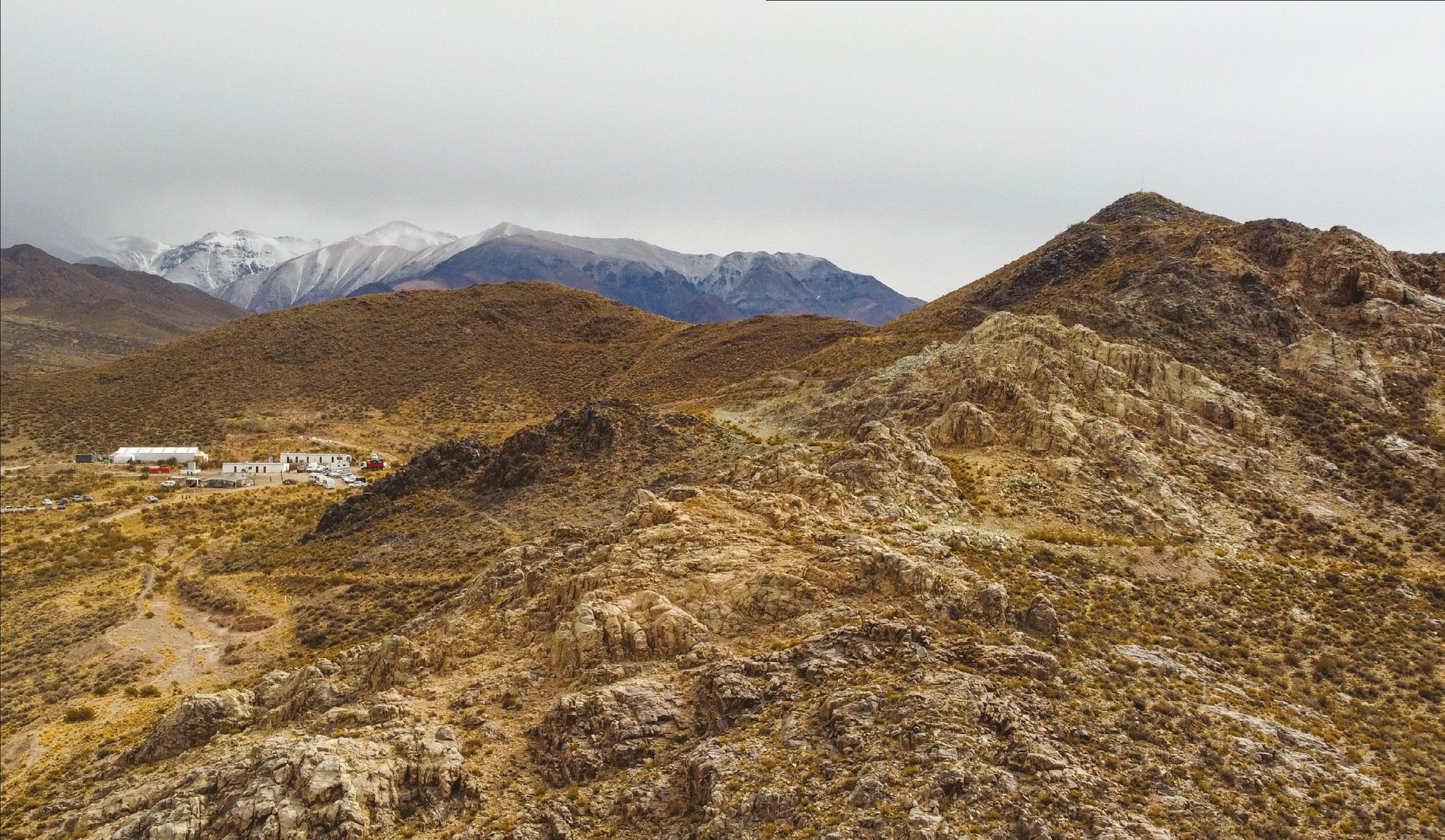
A drone view shows the site of the PSJ Cobre Mendocino project, a planned copper mine, near the Chilean border, in Uspallata, Mendoza, Argentina. August 2, 2025. REUTERS/Ramiro Gomez
source of foreign exchange, infrastructure investment, and export diversification at a moment when macroeconomic stabilization depends on sustained capital inflows. In this sector, Argentina holds a genuine comparative advantage and can compete at scale in global markets. For the United States, Argentina offers a potential high-volume, secure, and democratic alternative to Chinese-controlled supply chains. Equally importantly, Argentina represents a test case for whether US economic statecraft can demonstrate a competitive model for twenty-first-century engagement through sustained commercial engagement, rather than reactive opposition to Chinese influence. If Washington can mobilize visible investment, infrastructure, and local value creation to support a reform-oriented democratic partner, it would provide a replicable blueprint for engagement across the region and with resource-rich countries elsewhere that are navigating similar trade-offs between development priorities, strategic alignment, and supply chain integration. On the other hand, if US engagement remains limited, does not extend beyond Buenos Aires, or fails to support value-added development while Chinese firms continue to expand their commercial footprint, it will reinforce a perception that the United States struggles to deliver large-scale, patient investment in strategic sectors.
To explore these issues, this report makes three core arguments:
1. Argentina's mining sector is no longer a speculative bet on future potential; it is an active and increasingly contested space in which ownership structures, financing models, and market linkages are being determined now. Decisions taken in the near term, particularly in lithium and copper markets, will shape supply chain alignment for decades.
2. The United States has specific, deployable tools for development finance, export credit, technical assistance, and trade facilitation that can materially influence outcomes in Argentina's mining sector. The tools exist; the gap is strategic coordination and sustained political prioritization by both sides.
3. Effective engagement requires offering Argentina more than extraction-focused investment. Midstream and processing partnerships, skills development, transparent governance standards, and access to diversified global markets are areas where the United States can differentiate itself. The US value proposition must be qualitatively different rather than simply outbidding its competitors.
The report is structured as follows:
y Section II examines Argentina's mining trajectory from chronic underperformance to its current reform-driven inflection point.
y Section III analyzes current market dynamics, mapping who is investing, the influence of trade architectures, and the regulatory environment.
y Section IV provides detailed, actionable policy recommendations for the United States, plus a reflection on what Argentina must do to sustain reform credibility and build investor confidence.
y Section V concludes with an assessment of what success looks like and reflects on the path forward.
Overall, this report argues that there could be substantial mutual benefits from deepened US-Argentina collaboration in mining. Ultimately, the partnership this report envisions is one that works because it benefits both sides. For Argentina, a more integrated partnership could help attract the capital and technical expertise needed to translate resource potential into durable growth. For the United States, benefits are equally tangible: access to minerals that its economy and defense industrial base genuinely need, expanded market presence for US firms in a sector with intensifying competition, and a demonstration that American partnership can deliver results that matter to partner countries.
II. Argentina’s mining trajectory: Context and constraints
Mining in Argentina: A brief history
Argentina’s trajectory as a mining nation is best understood as a long-running disconnect between extraordinary resource potential and the political, macroeconomic, and institutional conditions required to develop it. This gap between promise and production has shaped investor perceptions for more than a century and continues to define both the opportunities and constraints facing the sector today.
Reports dating back to 1889 highlighted the country’s potential in copper, gold, silver, and other strategic mi-
nerals, particularly along the Andean cordillera. Yet while neighboring Chile built a mining-led export economy that consistently generates 5 to 15 percent of gross domestic product (GDP), Argentina's mining sector remained below 1 percent of economic output through most of the twentieth century—a striking underperformance for a country with geology comparable to its Andean neighbors. This relative failure was the direct product of volatile or even hostile policy. For much of the twentieth century, Argentina oscillated between periods of inward-looking industrial policy, aggressive liberalization, and macroeco-
Argentina has lagged behind its neighbors in developing its mineral wealth
Fig. 1: Argentina has lagged behind its neighbors in developing its mineral wealth.
Mining's contribution to GDP, 1970–2025
Source: The Changing Wealth of Nations, World Bank ( WB )
Source: “Mineral rents (% of GDP),” The Changing Wealth of Nations, World Bank, 2021, https://data.worldbank.org/indicator/NY.GDP.MINR.RT.ZS
nomic instability. Mining, which requires long investment horizons, stable rules, massive infrastructure investments, and access to international capital, was particularly illsuited to this environment. During the mid-century period of import substitution industrialization, the state prioritized manufacturing and agriculture while treating extractive industries with ambivalence or suspicion. Mining laws provided mixed incentives, foreign ownership was restricted, and profit repatriation was blocked.
Public geological surveys identified world-class copper and gold deposits like Bajo la Alumbrera by the middle of the century, but the government lacked the capital, technical capacity, and often the will to develop them at scale. Alumbrera would remain undeveloped for more than four decades after its discovery until the economic liberalization of the 1990s. Similarly, Argentina's lithium resources were identified by the late twentieth century but attracted minimal serious investment until the 2010s—decades after Chile established itself as a global leader.
Compounding these challenges was the emergence of a deeply entrenched “speculator culture” in the mining sector. Provincial elites and private individuals acquired large tracts of mineral-rich land to hold them as rent-seeking assets. Mining concessions were often granted through political favoritism rather than competitive processes, with holders betting that someone else would eventually pay premium prices for access. This dynamic blocked systematic exploration and allowed prime deposits to sit idle for generations. Even today, around 70 percent of Argentina’s national territory remains inadequately surveyed, meaning that large swaths lack the detailed modern geological data and systematic exploration required to quantify their true mineral potential—a stark contrast with Chile, where extensive geological mapping and baseline surveys have long underpinned a mature mining ecosystem.1 This legacy has constrained Argentina’s ability to ramp up production even as global demand for minerals has surged.
Macroeconomic instability, a topic explored at length below, further reinforced investor caution. Argentina's serial defaults (e.g., the crises of 1982, 1989, 2001, 2014, 2020), recurrent high inflation episodes, and currency collapses created a persistent risk premium. For capital-intensive sectors like mining, where projects can take a decade or more from exploration to production, this volatility proved particularly stifling as investors discounted Argentina’s geological promise vis-à-vis its political and financial unpredictability.
Liberalization, reversal, and uneven provincial trajectories
The 1990s marked a decisive, if temporary, break from this pattern. Under President Carlos Menem, Argentina undertook a sweeping program of market-oriented reforms aimed at reintegrating the country into global capital markets. For mining, these reforms were transformative. The federal government enacted a modern legal framework designed to attract foreign investment, most notably the Mining Investment Law and the Foreign Investment Law (Nos. 24.196 and 21.382, respectively). Together, these laws guaranteed fiscal stability for up to thirty years, eliminated restrictions on foreign ownership, capped royalties at 3 percent, and ensured equal treatment for foreign and domestic investors. Just as importantly, the federal government harmonized regulations with provinces and enshrined provincial ownership of subsurface resources in the constitution, deepening Argentina’s federal structure and creating the decentralized mining governance system that persists today.
This shift helped unlock a wave of exploration and development across the Andes. Foreign capital flowed into silver, gold, and copper projects, finally breaking Argentina’s long-standing cycle of underdevelopment. Bajo la Alumbrera finally entered production in 1997, making Argentina a significant copper exporter for the first time. Mining exports grew from negligible levels to over $1 billion annually by 2000.2
Argentina's 2001 sovereign default, currency collapse, and subsequent political upheaval put an abrupt end to the mining boom. The Kirchner administrations (2003–2015) imposed federal capital controls, restricted profit repatriation, and intervened in pricing and export regimes. While the mining laws of the 1990s formally remained in place, their guarantees were increasingly undermined in practice.
The result was a sharp decline in investor confidence. Mining investment collapsed, exploration budgets dwindled, miners shelved major projects, and Argentina’s reputation as a high-risk jurisdiction hardened, even as global commodity markets entered what became a prolonged growth cycle that drove massive investment into Chile, Peru, and Brazil. Copper development, which requires the longest timelines and largest capital commitments, suffered the most. While some gold and silver projects persisted, Argentina fell decades behind Chile in bringing major copper deposits into production, a gap that persists today.
Yet this period also underscored a critical structural feature of Argentina’s mining sector: the decisive role of provincial governance. While federal policy oscillated, several provinces, particularly Jujuy, Salta, and Catamar-
1. “Mining Potential in Argentina,” Argentine Republic Secretariat of Mining, February 2024, https://www.argentina.gob. ar/sites/default/files/mining_potential_in_argentina_pdac_2024.pdf.
2. Marcela Valente, “Commodities: Optimism Returns to Mining in Argentina, Chile,” Inter Press Service, May 6, 1999, https://www.ipsnews.net/1999/05/commodities-optimism-returns-to-mining-in-argentina-chile/.
ca, charted more investor-friendly paths. These provinces strengthened permitting processes, improved regulatory clarity, and actively courted foreign investment, especially as lithium emerged as a strategic resource. Others, such as La Rioja, took the opposite approach, maintaining political resistance to foreign development.
This divergence is reflected in international benchmarking. Surveys such as the Fraser Institute’s Annual Survey of Mining Companies consistently show wide variation in regulatory attractiveness across Argentina’s provinces.3 For investors, Argentina is not a single jurisdiction but a mosaic of subnational regimes, each with distinct political, social, and administrative dynamics. Investors who engaged deeply at the provincial level could often succeed despite federal dysfunction.
Recent reforms and renewed interest in Argentina as a mining powerhouse
The election of Milei represents the most ambitious attempt in decades to reset Argentina’s economic model and by extension the investment climate for mining. Milei’s reform agenda is explicitly designed to dismantle the policy volatility that has historically deterred long-term capital, positioning mining as a cornerstone of export-led growth.
Central to this effort is the RIGI, passed by Congress in 2024.4 RIGI is structured as a “legal fortress” for projects exceeding $200 million, promising thirty years of stability across tax, customs, and regulatory frameworks. It provides a tiered dismantling of capital controls, reduces the corporate income tax from 35 percent to 25 percent, and eliminates export duties for participating projects after a three-year grace period. There are many powerful critiques of how RIGI could constrain Argentina’s policy space for industrial upgrading.5 However, for mining investors accustomed to Argentina’s rule-changing history, RIGI represents a significant attempt.6 Notably, the law passed with significant congressional majorities, sugges-
ting both political longevity and a deeper embedding of reforms than by executive decrees.
These reforms are unfolding alongside a broader macroeconomic reset. Milei’s administration has prioritized fiscal consolidation, slashing subsidies and public spending to attempt to stabilize public finances. Though Milei’s methods have sparked extensive debate, inflation—while still high—has begun to decelerate, the debt-to-GDP ratio has been trending downwards, and financial risk indicators have improved markedly. Argentina’s country risk has fallen, easing access to international credit and lowering the cost of capital for domestic firms.7
External support has reinforced this trajectory. The currency swap line agreed between the US Treasury and the Central Bank of Argentina in September 2025 has provided an important financial backstop, signaling US confidence in Argentina’s reform path.8 For mining investors, this macro stabilization matters as much as sector-specific incentives. Long-term projects require confidence not only in mining laws, but in the broader economic environment in which those laws operate—and early signals from global markets suggest renewed interest. Major transactions (such as the BHP–Lundin acquisition of Filo del Sol and Rio Tinto’s acquisition of Arcadium, both of which include projects that are bolstered by RIGI), serve as confidence signals for a sector where perception often shapes reality.9
Structural constraints: infrastructure, geography, and federalism
Despite this renewed momentum, Argentina’s mining sector faces structural constraints that macroeconomic reform alone cannot resolve. Chief among these are infrastructure gaps and inherent geographical disadvantages. Argentina's Andean mines are landlocked, often over 1,000 kilometers from Atlantic ports. Unlike Chile, where mines sit close to Pacific ports, Argentine minerals must travel
3. Julio Mejía and Elmira Aliakbari, “Annual Survey of Mining Companies, 2025,” Fraser Institute, February 2026. https:// www.fraserinstitute.org/sites/default/files/2026-02/annual-survey-of-mining-companies-2025.pdf
4. “Government High Officials Introduced the "Incentive Regime for Large Investments" (RIGI) to Foreign Diplomats and Investors,” Argentine Republic Ministry of Foreign Affairs, International Trade and Worship, August 12, 2024, https:// www.cancilleria.gob.ar/en/announcements/news/government-high-officials-introduced-incentive-regime-large-investments-rigi.
5. Centro de Economía Política Argentina (CEPA), “La Política Anti Industrial del Gobierno de Milei: Implicancias del Régimen de Incentivos para Grandes Inversiones en la Ley Bases,” Informe CEPA Núm. 367, CEPA, May 8, 2024, https:// centrocepa.com.ar/informes/508-la-politica-anti-industrial-del-gobierno-de-milei-implicancias-del-regimen-de-incentivos-para-grandes-inversiones-en-la-ley-bases
6. Ignacio Albe and William Tobin, “What to Know About Argentina’s New Investment Promotion Regime,” New Atlanticist, Atlantic Council blog, December 5, 2024, https://www.atlanticcouncil.org/blogs/new-atlanticist/what-to-know-about-argentinas-new-investment-promotion-regime/.
7. Daniel Zaga and Federico Di Yenno, “Argentina,” in Global Economic Outlook 2026, Deloitte Insights, February 2026, https://www.deloitte.com/content/websites/us/en/insights/topics/economy/global-economic-outlook-2026.html.
8. Joshua Klein and Rebecca Nelson, “U.S. Financial Support to Argentina,” Congressional Research Service, December 30, 2025, https://www.congress.gov/crs-product/R48780.
9. Arathy Somasekhar and Nicolás Misculin, “Rio Tinto to Buy Arcadium Lithium for $6.7 Billion,” Reuters, October 9, 2024, https://www.reuters.com/markets/deals/rio-tinto-buy-arcadium-lithium-67-bln-2024-10-09/.
Bajo la Alumbrera: A microcosm of Argentina’s mining history
The history of the Bajo la Alumbrera mine illustrates Argentina’s historical failures and its shifting approach to mining. First identified in the 1950s as a world-class copper-gold deposit, Alumbrera remained undeveloped for forty years due to capital constraints and policy uncertainty. It was finally brought into production in the late 1990s following market-oriented reforms, operating for nearly twenty years as one of Argentina’s largest mines.
While Alumbrera generated export revenue and some employment, it also became emblematic of mining’s social and environmental shortcomings. Serious allegations of water contamination, weak environmental enforcement, and overpromised community benefits (e.g., jobs, social infrastructure) fueled sustained local opposition and legal challenges. The mine ceased operations in 2018 amid declining ore grades and mounting social pressure, ending Argentina’s copper production. Today, higher copper prices and Argentina’s reform agenda have renewed interest in Alumbrera, with Glencore announcing plans to restart operations in late 2026. Whether Alumbrera’s next chapter reflects improved environmental management and community engagement will be closely watched, not only locally but nationally, as Argentina seeks to demonstrate that its mining future will differ meaningfully from its past.
Source: “Glencore Capital Markets Day 2025,” Glencore, March 12, 2025, https://www.glencore.com/media-and-insights/news/ glencore-capital-markets-day-2025.
by truck or underutilized rail across vast distances, dramatically increasing logistics costs.
Rail infrastructure, which could mitigate these challenges, remains underdeveloped. The Belgrano Cargas line, critical for connecting the northwest to export corridors, is under-equipped for heavy industrial use and plagued by operational bottlenecks—though bidding is open to support privatization, in an attempt to catalyze development.10 Energy and water infrastructure, both essential for mining, are similarly constrained, particularly in the high-altitude northwest regions.
The Milei administration’s decision to freeze most public infrastructure projects as part of its fiscal austerity program has sharpened this challenge.11 The absence of public investment risks creating a bottleneck that private capital alone may struggle to overcome. In practice, this places greater emphasis on public–private partnerships, provincial coordination, and foreign participation in enabling infrastructure.
Federalism adds another layer of complexity. Provinces control key permits and retain ownership of mineral resources, meaning national reforms must be translated into provincial practice. Regulatory certainty, therefore, depends not only on Buenos Aires but on sustained engagement with governors and local authorities. While some provinces have strong governance and local mining regulatory expertise, others maintain informal barriers or political hostility to mining despite federal encouragement.
Successful foreign investors increasingly “go local,” replicating strategies long employed by Chinese firms that engage directly with provincial governments, bundle mining investment with infrastructure and local development, and build long-term relationships with local political actors.12 San Juan offers a particularly instructive example: In 2022, the province established a compensation framework that allows mining companies to recover the cost of building roads or energy infrastructure through future royalty payments when the legislature designates the investment as a public utility.13 By effectively converting royalty obligations into upfront infrastructure delivery, the model aligns provincial development needs with project economics and illustrates how provincial policy innovation can materially shape investment outcomes and overcome federal funding gaps.
10. Sebastián D. Penelli, “Argentina’s New 10-Year Lithium Plan Just Dropped,” Buenos Aires Herald, October 12, 2025, https://buenosairesherald.com/business/mining/argentinas-new-10-year-lithium-plan-just-dropped.
11. Lucinda Elliott, “Thousands of Argentine Builders Laid Off as Milei Slashes State Spending,” Reuters, May 22, 2024, https://www.reuters.com/world/americas/an-argentine-railway-builder-suffers-shadow-mileis-cuts-2024-05-22/.
12. Cecilia Jamasmie, “US $20B Backing, Stability Key to Argentina’s Mining Push,” MINING.COM, October 25, 2025, https://www.mining.com/us-20b-backing-stability-key-to-argentinas-mining-push/.
13. Lucila Sigal, “Argentina's Copper Dreams Need Infrastructure—But Who Will Build It?,” Reuters, August 8, 2025, https:// www.reuters.com/business/energy/argentinas-copper-dreams-need-infrastructure-who-will-build-it-2025-08-08/.
From future assets to strategic reality
Argentina stands at a rare inflection point where geological potential, global demand, provincial buy-in, and macroeconomic reform have largely aligned. For the first time in decades, the country has both the resources, the institutional framework, and the international interest to become a major minerals supplier.
However, history cautions against assuming inevitability. Argentina's long-delayed mining promise has faltered before, undone by macro shocks, political reversals, and infrastructure gaps. The central challenge is no longer identifying resources but mobilizing the capital, technology, and institutional cooperation needed to bring them to market at scale.
The United States has a clear commercial and strategic interest in Argentina’s mining transition. US firms are well-positioned to supply equipment, services, and capital, plus Argentine minerals represent critical inputs for an economy that will need growing volumes from reliable partners. A stable, competitive mining sector would not only diversify global supply but also serve as a test case for whether US partnerships can foster local development while offering a credible alternative to China-centered investment models.
Closing the distance between remote Andean deposits and global supply chains will require coordinated investment in logistics, energy, processing capacity, and workforce development, areas where US firms, financing tools, and technical expertise are uniquely well-positioned to contribute. Absent such engagement, the investment and infrastructure gaps that constrain Argentina's mining sector will increasingly be filled by capital and partners that embed Argentina’s output more deeply into non-US supply chains.
Social license: The make-or-break factor
Social license remains one of the most serious constraints on mining expansion in Argentina, particularly in provinces where mining has historically generated environmental harm without delivering durable local benefits. Past projects have too often been developed with limited consultation, weak environmental oversight, and inadequate revenue sharing, leaving lasting distrust among communities, especially in rural and indigenous areas.
Mining operations, particularly at scale, place pressure on scarce water resources, fragile ecosystems, and local infrastructure. In Argentina’s northwest, where lithium and copper deposits overlap with arid environments and agricultural livelihoods, concerns about water use, tailings management, and contamination are acute and legitimate.
Beyond environmental impacts, community opposition often reflects broader governance failures. Perceived and de facto inequities in the distribution of benefits, weak provincial capacity for oversight, and underwhelming local employment opportunities have fueled resistance. While Argentina has avoided the scale of social disruption seen in some neighboring countries, opposition has been sufficient to stall major projects and deter investment in certain provinces.
Addressing social license is therefore not a peripheral issue but a central determinant of whether Argentina’s mining expansion can succeed. Furthermore, higher standards of engagement, transparency, and community partnership can differentiate US involvement from other foreign actors and help convert social license into a competitive advantage.
Fig. 2: Despite world-class resource endowments, Argentina captures a limited share of global mineral production
Global Lithium Production (in thousand metric tons)
Chile
Other
Global Lithium Reserves
Note: Argentina (~28 million tons), Bolivia (~23 million tons), and Chile (~13 million tons) hold significantly larger lithium resources than shown here; resources are only classified as reserves once they are proven economically recoverable.
Global Copper Production (in thousand metric tons)
Global Copper Reserves
Source: US Geological Survey, Mineral Commodity Summaries 2026, March 2026, https://doi.org/10.3133/mcs2026.
3: South America’s Lithium Triangle is home to world-class deposits of both lithium and copper
Lithium Triangle
Copper mine
Salt flat
Source: US Geological Survey, Mining Technology, Reuters14
Just how high quality are Argentina’s assets?
Argentina sits atop some of the most competitive mineral endowments in the world, particularly in lithium and copper, with additional upside potential in gold, silver, and emerging critical minerals.
Lithium: Like Chile and Bolivia, Argentina is part of the Lithium Triangle, which contains the world’s highest-grade lithium brines. Argentina is currently among the top producers globally, ranking fourth in production in 2024, and aims to triple production in the next decade. Argentina’s lithium projects primarily extract from high-altitude brines, where arid conditions with high solar radiation and low humidity support natural evaporation processes that generally cost less and use less energy than hardrock mining (though it has drawbacks like long timelines and extensive water usage in water-constrained environments). These geological and climatic advantages have positioned Argentina as one of the lowest-cost jurisdictions globally, with a growing pipeline of projects poised to scale rapidly.
loped deposits in the world. Unlike lithium, copper development in Argentina has lagged due to capital intensity, long permitting timelines, infrastructure deficits, and policy volatility. Argentina essentially has no operating copper mines after Alumbrera’s 2018 closure, though projects are rapidly being revived. As global copper demand accelerates, Argentina’s undeveloped copper assets represent one of the largest sources of latent supply at a time when global deficits are projected to surge over the next decade.
Other minerals: Argentina also produces gold and silver at commercial scale and has prospective deposits of zinc, lead, and industrial minerals. While some resources are already in production, large portions of the country remain inadequately surveyed, suggesting significant untapped potential across multiple commodities. This combination of active production and underexplored resources reinforces the country’s potential as a diversified mining jurisdiction rather than a single-commodity producer.
Sources: World Population Review; US Geological Survey; Mining Technology; Reuters14
Copper: The country hosts several world-class porphyry copper systems along the Andean belt, including deposits with scale and grades competitive with leading producers Chile and Peru. Much of Argentina’s copper is concentrated in some of the highest-grade undeve-
Sources: Sebastián D. Penelli, “Argentina’s New 10-Year Lithium Plan Just Dropped,” Buenos Aires Herald, October 12, 2025; and Annalisa Villa, “Copper Faces 30% Supply Deficit by 2035, IEA Warns at UK Summit,” S&P Global, December 1, 2025, https:// www.spglobal.com/energy/en/news-research/latest-news/metals/120125-copper-faces-30-supply-deficit-by-2035-iea-warnsat-uk-summit.
14. US Geological Survey, Mineral Commodity Summaries 2026, March 2026, https://doi.org/10.3133/mcs2026; “Argentina: Copper Projects,” Reuters, Argentine government, n.d., https://www.reuters.com/ graphics/ARGENTINA-COPPER/ gkvlwkmwzpb; “The Five Largest Copper Mines in Operation in Chile,” Mining Technology, June 18, 2024, https://www. mining-technology.com/marketdata/five-largest-copper-mines-chile/?cf-view.
Fig.
Bolivia
Argentina
Chile
III. Current state of the market: Foreign engagement, trade, and the regulatory environment
In an economic era where secure access to critical mineral supply chains is an increasing priority, Argentina’s geological assets and improved macroeconomic trajectory have re-established investor interest. As capital increasingly flows, understanding who is investing, under what terms, and how Argentina’s mining output connects to global markets is central to assessing the future of the country’s mineral markets and broader development.
1. The competitive landscape: Who’s investing in Argentine mining
Foreign firms dominate Argentina’s modern mining sector, and the passage of RIGI has piqued the interest of companies from the United States, China, Canada, Australia, Europe, and increasingly India and other emerging-market players. Major global mining companies such as Rio Tinto, BHP, and Glencore have all advanced projects or investments in the country as reforms aim to unlock billions of dollars in new mining development. Domestic firms lack
the capital, technical capacity, and risk appetite for multibillion-dollar projects spanning decades. This reliance on foreign investment is typical of large-scale mining globally, though ownership patterns in Argentina vary significantly by commodity, project stage, and province.
Lithium has attracted the most sustained investment over the past decade, owing to shorter development timelines, lower upfront capital requirements than copper, and strong long-term demand expectations tied to electrification. While several Western firms established early positions in Argentina’s lithium sector, Chinese companies have become increasingly prominent, particularly during periods when capital controls and macroeconomic volatility deterred more risk-averse investors. Chinese firms have taken equity stakes, secured offtake agreements, and in some cases developed wholly owned projects, often bundled with financing or infrastructure commitments. This approach has enabled projects to advance despite macroeconomic constraints, but it also has resulted in a
(Copper)
(Lithium)
(Lithium)
Note: This map only includes advanced stage projects with capital expenditure exceeding 100 million USD.
Sources: “Mercado de Cobre: Panorama Internacional y Perspectivas Productivas para Argentina,” Secretaría de Minería de Argentina, February 2026, https://www.argentina.gob.ar/sites/default/files/mercado_de_cobre_2026.pdf; “Litio: Panorama Global del Mercado del Litio y el Potencial Litífero de Argentina,” Secretaría de Minería de Argentina, June 2025, https://www.argentina.gob. ar/sites/default/files/informe_litio_junio_2025.pdf.
Fig. 4: Geography of investment: Lithium and copper projects in Argentina by ownership
growing share of Argentina’s lithium output being tied to Chinese-controlled supply chains.
Copper, by contrast, remains largely greenfield and more diversified in ownership. Major late-stage projects are led by Canadian and Australian firms, with growing interest from diversified global miners seeking exposure to longterm copper demand. The lack of infrastructure, regulatory uncertainty, and relatively long lead times associated with copper development have historically made Argentina less competitive than Chile or Peru, but recent regulatory reforms and rising global prices have shifted this calculus. Eight copper projects could pull in $5.2 billion by 2030, if they reach the government's projection of producing 521,000 metric tons a year, comprising a third of the country’s mining exports and making the sector one of the country's largest net foreign exchange earners.15
Importantly, the massive scale of copper projects means they are more likely to anchor broader infrastructure development, like roads, rail, power, and water systems. In areas where infrastructure is underdeveloped, the absence of federal funding means the success of major copper projects may hinge on innovative approaches to public-private partnerships, royalty-backed financing, and provincial policy flexibility, all of which create potential entry points for strategic engagement.
China’s involvement in Argentina’s economy has been substantial and multifaceted, spanning direct asset purchases, financing of infrastructure, and greenfield industrial investment. Beijing’s total estimated investment in Argentina exceeds $23 billion, with roughly $8 billion directed toward acquisitions of energy and mining assets and another $10.6 billion in project finance for infrastructure such as the Belgrano Cargas freight line and major hydroelectric dams.16 Furthermore, China and Argentina maintain a $18 billion bilateral currency swap line to support the peso’s stability and bolster Argentine foreign reserves.17 To date, Chinese firms such as Ganfeng Lithium have moved beyond exploration to build operational facilities (for example, an $800 million lithium plant in Salta that is already exporting).18 They also support demand stability, negotiating offtake agreements with Chinese companies like the battery manufacturer known as CATL (Contemporary Amperex Technology Co. Limited) and battery and car maker BYD.19
This engagement pattern provides key benefits that Western investment models have often shied away from.
Chinese firms prioritize simplicity and speed, often bundling financing, engineering, procurement, and construction into turnkey packages that can compress project development timelines from years to months while channeling output into Chinese-linked supply chains. These arrangements commonly pair state-backed financing with Chinese contractors and long-term offtake agreements, allowing Chinese markets to supply critical inputs and secure downstream access simultaneously.
A further source of speed is Chinese firms’ willingness and capacity to engage directly with provincial and local governments rather than federal authorities, enabling faster permitting, tailored infrastructure solutions, and closer alignment with local political and development priorities. In many cases, Chinese state-owned enterprises (SOEs) reinforce these deals by offering ancillary social or infrastructure commitments such as roads or municipal services delivered in parallel with the core investment. These side agreements are often tailored to the political motivations of provincial and local officials, who benefit from visible near-term development wins. This engagement model can achieve local buy-in, accelerate approvals, and deepen political durability in ways that Western investment frameworks—typically constrained by compliance, shareholder governance, and narrower commercial scope—have often been unable to match.
Notably, Chinese engagement has shaped Argentina’s market in ways that diverge from recent political rhetoric in Buenos Aires and Washington. While officials from both the Milei and Trump administrations have described a strategic pivot toward the United States and a desire to reduce China’s influence in Latin America, outright displacement of Chinese capital is neither practical nor politically realistic in the short term given its embedded role in Argentinian development. Reversing this footprint would not only be costly but would risk delaying projects that Argentina views as central to its economic stabilization strategy.
This creates a paradox under US policy: Argentina's most advanced lithium projects are often those least compatible with emerging US industrial policy objectives given that they are tied up with Chinese financing, ownership stakes, or offtake agreements. These arrangements can effectively lock Argentina’s critical mineral output into nonUS value chains and may preclude eligibility for incentives (such as minerals tax credits under Trump’s “big, beautiful
15. Sigal, “Argentina's Copper Dreams.”
16. Eugenia Muzio, “Chinese Investment in Argentina Tops US$23 Billion, Defying Milei’s Alignment with Trump,” Buenos Aires Times, November 26, 2025, https://www.batimes.com.ar/news/economy/chinese-investment-in-argentina-topsus23-billion-defying-mileis-alignment-with-trump.phtml.
17. Kylie Madry, “Argentina Renews $5 Billion Swap with China in Much-Needed FX Boost,” Reuters, April 10, 2025, https:// www.reuters.com/markets/argentina-renews-5-billion-activated-swap-line-with-china-2025-04-10/.
18. “China's Ganfeng Starts Lithium Production at Argentina's Mariana Project,” Reuters, February 12, 2025, https://www. reuters.com/markets/commodities/chinas-ganfeng-starts-lithium-production-argentinas-mariana-project-2025-02-12/.
19. John Zadeh, “Argentina Aims to Boost Lithium Production by 75% in 2025,” Discovery Alert, April 9, 2025, https://discoveryalert.com.au/argentina-lithium-production-boost-75-growth-2025/.
bill”) due to foreign entity of concern (FEOC) restrictions. For US policy to be effective, it will therefore need to focus less on retroactively reshaping existing projects and more on influencing the next generation of investments— particularly in midstream processing, infrastructure, and greenfield developments—where ownership structures and market linkages are still being determined.
At the same time, the nature of Chinese engagement, particularly in infrastructure, creates openings for US engagement. In many cases, Beijing has functioned primarily as a financier and construction partner rather than a long-term operational steward, especially in rail, power, and logistics projects that underpin mineral development. These assets could support broader, more diversified supply chain integration if paired with Western capital, governance standards, and downstream investment.
Success for US interests will require offering credible and reasonably speedy alternatives to Chinese capital, for example, through the US International Development Finance Corporation (DFC), the Export-Import Bank of the United States (EXIM), trade facilitation, and working with international financial institutions (IFIs), aligning investment incentives with Argentine reforms like RIGI, and deepening commercial partnerships that extend beyond raw extraction into processing and certification aligned with US industrial policy objectives—all topics that will be explored more in depth in section IV.
2. Trade architecture: How Argentina connects to US markets
For US firms weighing multidecade, multibillion-dollar investments in Argentina’s mining sector, trade rules, regulatory alignment, and economic security frameworks must reliably translate production into market access, policy certainty, and eligibility for US and allied industrial incentives. In this respect, the November 2025 Framework for a United States-Argentina Agreement on Reciprocal Trade and Investment marks a structural shift in the bilateral relationship, moving it beyond episodic cooperation toward a rules-based architecture capable of shaping supply chain behavior.20
While the framework stops short of a comprehensive free trade agreement (FTA), its provisions function as a lite FTA with explicit strategic intent. Commitments to tariff liberalization (including exemptions from Section 232
actions), elimination of nontariff barriers, standards recognition, and intellectual property enforcement directly address long-standing frictions that have deterred US exporters and investors. Of particular relevance to mining and industrial supply chains are Argentina’s commitments to accept US and international conformity assessment procedures, align technical standards, and dismantle import licensing and statistical taxes. These measures reduce transaction costs for mining equipment, processing technologies, and intermediate inputs critical to project development—improvements that can substantively shift project economics.21
The bilateral approach has gained importance as multilateral coordination mechanisms have weakened. The Trump administration proposed the Forum for Responsible Global Energy (FORGE) as the successor to the Minerals Security Partnership (MSP), which was formed to coordinate allied critical minerals policy.22 Despite congressional efforts to codify multilateral minerals diplomacy, global buy-in remains uncertain and bilateral deals continue to dominate the administration’s approach to supply chain diplomacy.23 Besides, the bilateral framework offers something the MSP could not: enforceable market-access commitments and regulatory predictability tailored to US firms. The explicit commitment by both the Argentine and US governments to facilitate investment and trade in critical minerals suggests that a follow-on agreement is likely, particularly as Argentina seeks to translate RIGI-enabled investment into export markets insulated from possible future policy reversals.
The central challenge remains implementation. Trade agreements generate lasting value through execution rather than signature. Without operational follow-through that is reinforced by complementary tools including development finance, offtake facilitation, and sustained commercial diplomacy, the framework risks remaining a signaling device rather than the supply-chain-shaping instrument both governments require. If fully realized, however, it could anchor Argentina’s mining expansion firmly within a US-aligned trade and investment ecosystem.
3. Regulatory environment, investment incentives, and provincial dynamics
Argentina's mining sector operates under one of the most permissive legal frameworks in the region, par -
20. “Joint Statement on Framework for a United States-Argentina Agreement on Reciprocal Trade and Investment,” White House, November 13, 2025, https://www.whitehouse.gov/briefings-statements/2025/11/joint-statement-on-frameworkfor-a-united-states-argentina-agreement-on-reciprocal-trade-and-investment/.
21. “Trade Facilitation,” World Trade Organization, https://www.wto.org/english/news_e/brief_tradefa_e.htm.
22. Reed Blakemore and Alexis Harmon, “US Critical Minerals Policy Goes Collaborative with FORGE,” Dispatches, Atlantic Council, February 12, 2026, https://www.atlanticcouncil.org/dispatches/us-critical-minerals-policy-goes-collaborative-with-forge/.
23. “The Dominance Act: Developing Overseas Mineral Investments and New Allied Networks for Critical Energies,” Office of Congresswoman Young Kim, https://youngkim.house.gov/wp-content/uploads/THE-DOMINANCE-Act-Onepager.pdf; and Divya Rajagopal, “Japan, France, Canada Work on Alternatives to US-Led Trade Bloc for Rare Earth Supplies,” Reuters, March 6, 2026, https://www.reuters.com/world/asia-pacific/japan-france-canada-work-alternativesus-led-trade-bloc-rare-earth-supplies-2026-03-06/.
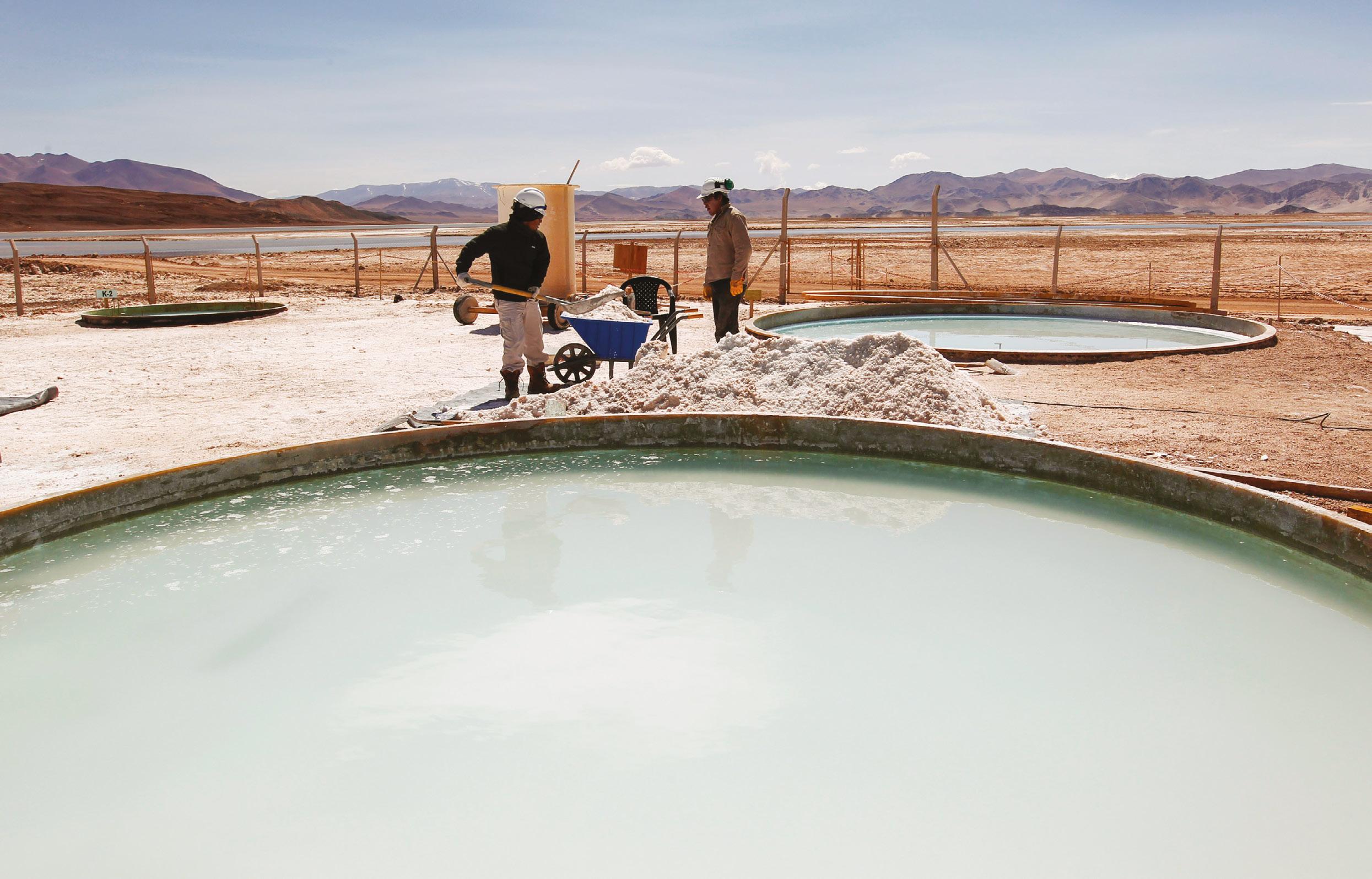
Workers shovel halite concentrate at the Salar del Hombre Muerto, or Dead Man’s Salt Flat, a source of lithium on the border of the northern Argentine provinces of Catamarca and Salta, October 28, 2012. REUTERS/Enrique Marcarian
ticularly when benchmarked against Lithium Triangle neighbors Chile and Bolivia. The foundational elements of this framework were established during the 1990s liberalization period and remain substantially intact, though macroeconomic instability and de facto policy reversals have periodically undermined their perceived credibility among international investors.
The Mining Investment Law provides long-term fiscal stability guarantees, caps provincial royalties at 3 percent, and eliminates tariffs on imported capital goods and operational inputs. The Foreign Investment Law guarantees national treatment for foreign investors, enabling them to acquire and hold mineral rights without sector-specific ownership restrictions or profit repatriation limitations. Critically, unlike Chile (which has moved toward greater state intervention in lithium) and Bolivia (which maintains a state monopoly over lithium extraction), Argentina permits full private ownership, exploration, and production across all minerals without differentiation. These structural features have made Argentina fundamentally attractive to private capital even during periods of broader economic turbulence.
What has changed under the Milei administration is mostly not the legal architecture itself but the credibility of its enforcement and the depth of the protection against policy reversal. As discussed above, the passage of the Incentive Regime for Large Investments represents a significant effort to insulate major projects from Argentina’s historical policy volatility. By offering thirty-year stability guarantees
across tax, customs, foreign exchange, and capital repatriation regimes, RIGI directly targets the risks that have most often deterred large-scale mining investment. For projects exceeding $200 million—and especially those above $1 billion which receive enhanced provisions—the regime materially alters Argentina’s risk profile.
Notably, foreign exchange restrictions have historically been among the most significant constraints facing investors in Argentina. Capital controls and limitations on access to US dollars have periodically complicated profit repatriation, import payments, and the servicing of foreign debt. These restrictions are particularly challenging for junior mining firms, many of which raise capital in international markets and depend on the ability to move funds across jurisdictions during exploration and development phases. By providing clearer guarantees around foreign exchange access and capital repatriation for qualifying projects, RIGI attempts to address a key source of investor uncertainty that has historically raised the cost of capital for Argentine mining projects.
Mining plays a central role in the administration’s macroeconomic strategy. Large mining investments are viewed not only as sources of export revenue but also as anchors for restoring confidence, accumulating foreign exchange reserves, and easing pressure on the peso. In this sense, mining is both a sectoral opportunity and a macroeconomic lever. Early signals, from renewed mergers and acquisitions activity to advancing major projects, suggest that RIGI has begun to shift investor sentiment.
However, sustained credibility will depend on consistent implementation across political cycles and demonstration that stability guarantees withstand the inevitable political pressures that emerge as projects advance.
At the same time, regulatory fragmentation at the provincial level remains a significant structural constraint that federal reforms cannot fully overcome. Argentina's constitutional framework vests ownership of mineral resources in provincial governments, resulting in substantial variation in permitting timelines, regulatory enforcement capacity, environmental oversight stringency, and community engagement practices across mining jurisdictions. Provinces differ not only in technical capacity but also in political orientation toward mining, fiscal dependence on extractive revenues, and willingness to absorb social and environmental risk.
In practice, this produces a highly uneven operating environment. While several provinces (notably Jujuy, Salta, and Catamarca) have developed relatively sophisticated mining-governance frameworks and actively cultivate investor relationships, others maintain informal barriers, inconsistent application of federal law, or outright political opposition to mining development. Court rulings, local referenda, and shifting provincial coalitions have repeatedly demonstrated that federal encouragement alone cannot override provincial resistance.24 This provincial heterogeneity means that investment-climate assessments must be conducted jurisdiction by jurisdiction rather than treating Argentina as monolithic.
Provincial capacity also matters. Differences in environmental monitoring resources, land registry quality, and coordination between mining, water, and Indigenous affairs authorities can materially affect project timelines and risk profiles. In some jurisdictions, under-resourced governments struggle to process permits efficiently, enforce compliance predictably, or induce public benefits or local linkages, creating uncertainty for both communities and investors.25 In others, strong provincial mining companies or development agencies play an active role in shaping project design, infrastructure sequencing, and local value capture, adding another layer of negotiation beyond the federal government.26
Successful foreign investors have increasingly adopted "go local" strategies that prioritize sustained provincial-level engagement, relationship building with regional political officials such as mayors and provincial legislators, and structuring investments to deliver visible provincial benefits such as employment, supplier development, and infrastructure development. Notably, these approaches mirror tactics employed effectively by Chinese firms but remain underutilized by many Western companies accustomed to dealmaking at the national level.
For US firms considering Argentine entry, understanding and navigating this subnational landscape represents as significant a determinant of success as the quality of the federal policy framework. Federal reforms may improve headline competitiveness, but outcomes on the ground will continue to be shaped by provincial politics, institutional capacity, and social license27—factors that reward long-term engagement and investment over transactional investment strategies.
Market implications
Taken together, Argentina’s current market structure reflects both momentum and imbalance. Argentina has successfully attracted substantial foreign capital despite historical volatility, including major investments from Canadian, Australian, and Chinese firms, demonstrating that geological potential and improved policy frameworks can overcome investor skepticism. However, this capital influx also has led to concentrated ownership that may limit future US influence, particularly in lithium where Chinese firms control a large share of production and have locked in long-term supply through vertically integrated operations.
Thus, Argentina can evolve along two distinct trajectories: one where mining expansion remains largely dependent on Chinese capital and supply chains despite rhetorical alignment with the United States or one where deliberate US engagement positions Argentina as an anchor of the Western Hemisphere’s critical minerals security. The former trajectory will occur by default through US inaction; the latter would require a coordinated US policy response.
For the United States, the implication is clear. Argentina’s mining sector has transitioned from a speculative frontier to an active, contested space where policy choices today
24. “Transition Minerals in Argentina: Investments First, Rights Later,” Fundación Ambiente y Recursos Naturales, November 11, 2025, https://farn.org.ar/wp-content/uploads/2025/11/Transition-Minerals-in-Argentina-Investments-First-Rights-Later.pdf.
25. Carlo Pietrobelli et al., “Suppliers’ Entry, Upgrading, and Innovation in Mining GVCS: Lessons from Argentina, Brazil, and Peru,” Industrial and Corporate Change 33, no. 4 (2023): 922–39, https://doi.org/10.1093/icc/dtad079.
26. Carlos Freytes, Martín Obaya, and Víctor Delbuono, “Federalism and the Development of Productive and Technological Capacities Related to Lithium,” Fundar, October 2022, https://fund.ar/wp-content/uploads/2022/10/Fundar_Litio-y-Federalismo-1.pdf.
27. The International Atomic Energy Agency (IAEA), for instance, defines social license as “ongoing approval within the local community and among other stakeholders” for a project, which also has political and public acceptance. See “Maintaining a Social License,” IAEA, accessed March 19, 2026, https://www.iaea.org/resources/nuclear-communicators-toolbox/basics/trust/social-licence.
will shape supply chains for decades. Chinese firms are proactively investing, projects are advancing, and commercial relationships are forming in real time. Thus, the question is not whether Argentina will develop its mining sector but whether the United States will be sufficiently engaged to influence its development, capital financing, and clientele.
The following section examines how US policy tools can be deployed strategically to shape these outcomes in alignment with broader US objectives for supply chain resilience and partnership in Latin America.
Key milestones in US-Argentina commercial diplomacy
Market opening and early alignment
Argentina’s market-oriented reforms under then President Carlos Menem align with US commercial interests, driving increased investment in energy, mining, and infrastructure. Momentum fades following macroeconomic instability.
Retrenchment and uneven engagement
Argentina’s sovereign default and subsequent interventionist policies constrain foreign investment. US-Argentina commercial ties persist but lack durable sectoral or institutional frameworks.
Re-engagement and limited institutionalization
Renewed dialogue on trade and investment emerges, but without a comprehensive trade agreement or binding sectoral cooperation mechanisms.
Critical minerals rise on the bilateral agenda
Growing US focus on supply chain resilience and China diversification elevates Argentina’s lithium and copper potential in US strategic planning, largely through multilateral channels. However, Argentina is not formally part of the Minerals Security Partnership, nor does it benefit from US Inflation Reduction Act incentives due to a lack of a free trade agreement.
Argentina passes RIGI
Argentina adopts the Incentive Regime for Large Investments, improving conditions for long-term foreign investment and reshaping US investor perceptions.
US-Argentina Critical Minerals MOU
The two governments sign a memorandum of understanding establishing cooperation on critical minerals exploration, extraction, processing, and investment, launching a formal bilateral dialogue.
US-Argentina Currency Swap
US Treasury provides a twelve-billion-dollar currency swap line, signaling confidence in Argentina’s reform path and providing a macroeconomic backstop.
Trump-Milei Framework announced
The US and Argentine presidents announce a Framework for an Agreement on Reciprocal Trade and Investment, covering market access, regulatory alignment, and investment cooperation. Critical minerals identified as a priority area.
US-Argentina critical minerals cooperation framework signed
As part of the US-led Critical Minerals Ministerial, the United States and Argentina signed a “Framework Instrument for Securing Supply in the Mining and Processing of Critical Minerals,” making Argentina one of eleven countries to conclude bilateral agreements with the administration that day.
IV. Expanding the US-Argentina partnership: Strengthening supply chains and strategic alignment
Argentina’s reemergence as a major mining jurisdiction coincides with a period of strategic reassessment in US foreign economic policy. Confronted by acute supply chain vulnerabilities and deepening concern over China-centered production networks, Washington requires partners that can deliver scale, reliability, and political alignment simultaneously. Argentina, a partner endowed with world-class resources, newly reformed investment rules, and a government openly committed to reorienting the country toward the United States, represents both a tangible opportunity and a critical test case for US economic statecraft in the Western Hemisphere.
The friendly relationship building and emergent dealmaking is an encouraging sign for mineral supply chains, but whether this moment translates into a durable partnership will depend less on rhetoric and more on execution. Thus, the central challenge is to convert alignment into bankable projects, integrated supply chains, and visible development outcomes. For the United States, this requires moving beyond episodic diplomacy toward a more deliberate deployment of financial, technical, and institutional tools. For Argentina, it requires translating macroeconomic reform into project-level certainty, social legitimacy, and investable infrastructure.
The stakes extend beyond Argentina's mineral sector to encompass a broader question: whether the United States can demonstrate a competitive model for economic re-engagement in Latin America that offers a distinct value proposition centered on transparency, long-term partnership, technology transfer, and shared industrial development rather than simply extractive resource relationships.
The case for US engagement is grounded in clear commercial and strategic self-interest. Commercially, Argentina's lithium and copper reserves offer US firms first-mover advantages in markets that will define global industrial supply chains for decades. US firms that establish early equity positions, supplier relationships, and offtake agreements in Argentina's next generation of projects stand to capture significant returns as those projects scale. Even more importantly, diversifying critical mineral supply directly addresses acute strategic vulnerabilities. A reliable, democratic, Western Hemisphere supplier does not just add a line to a procurement spreadsheet. It reduces the leverage that strategic competitors could exercise over the United States in a crisis, when supply chain dependencies become pressure points. Both the commercial
opportunity and the strategic imperative argue for moving from episodic engagement to deliberate, sustained partnership, which is precisely what the recommendations below are designed to enable.
What the United States can do
1. Elevate cooperation from dialogue to delivery
The United States and Argentina have constructed an expanding architecture of engagement on minerals: the 2024 Critical Minerals MOU, Argentina’s designation as a major non-NATO ally, and the 2025 Framework for an Agreement on Reciprocal Trade and Investment. Yet much of this cooperation remains declaratory rather than operational, creating risk that political momentum dissipates before producing tangible outcomes.
Washington should first consolidate existing dialogues into a structured, action-oriented implementation mechanism focused on mineral and industrial supply chains. Rather than a purely technocratic forum, this mechanism should be launched under White House authority to ensure strategic coherence, with execution led by the agencies that control real economic tools. On the US side, this would include the Development Finance Corporation as the lead investment arm, supported by the Department of the Treasury on economic security and financial alignment, the Commerce Department on trade and industrial cooperation, and the State Department on commercial diplomacy and provincial engagement.
Energy Security Compacts aligned with the Millennium Challenge Corporation compact model are a possible approach for consideration; notably, this model is gaining increasing steam in Washington, as evidenced by its inclusion in a bipartisan bill introduced in the House in January 2026. 28 Properly designed, such compacts can move beyond ad hoc project support to provide a coordinated platform through which governments and firms jointly reduce investment risk, accelerate infrastructure development, and deepen integration across supply chains. In the case of Argentina, an energy security compact focused on mining and associated infrastructure could help synchronize US development finance tools, commercial diplomacy, and private-sector engagement while reinforcing Argentina’s reform agenda and longterm investment stability.
On the Argentine side, the economy and mining ministries could lead in partnership with subnational organizations
28. “Reps. Kim, Bera Lead Dominance Act to Break China’s Chokehold and Secure America’s Energy Future,” Office of Congesswoman Young Kim, January 13, 2026, https://youngkim.house.gov/2026/01/13/reps-kim-bera-lead-dominanceact-to-break-chinas-chokehold-and-secure-americas-energy-future/.
such as El Consejo Federal de Inversiones, Argentina’s interprovincial technical and financial body managed by the governors of Argentina’s provinces, to promote regional development, productive investment, and planning. However, it is critical that this coordination does not become another layer of bureaucracy. For implementation and monitoring, empower the existing embassy commercial team in Buenos Aires to work as the primary coordination hub for DFC, EXIM, and US Trade and Development Agency (USTDA) activities, supported by commercial officers embedded in key mining provinces; having representatives in the field is key. This puts decision-making closer to projects and reduces Washington-based bureaucracy as much as possible. Its mandate should be explicitly practical: identifying and resolving specific bottlenecks to US investment, coordinating deployment of US financing tools with RIGI-eligible projects, aligning technical standards and certification frameworks, tracking project pipelines in real time, and escalating emerging obstacles to ministerial level for resolution.
Such a mechanism would serve multiple purposes. Internally, it addresses a persistent weakness in US economic statecraft: the tendency for agencies to operate in silos in capital cities with limited strategic coordination. Externally, it signals to private investors that political alignment is being translated into administrative follow-through rather than remaining at the level of presidential summits and framework agreements. For Argentina, it provides a single point of contact for navigating US bureaucracy and ensures that development priorities remain a key component of bilateral engagement.
2. Align
US financial tools with Argentina’s reformed investment regime
Argentina’s passage of RIGI fundamentally alters the risk profile for large-scale projects, particularly in mining and associated infrastructure. Yet US development and export finance tools have been slow to adapt to middle-income reformers like Argentina, often remaining constrained by development mandates originally designed for low-income countries or by cumbersome interagency processes that cannot move at commercial speed.
To be effective, US financial tools must meet Argentina where it is rather than where traditional development models assume it should be. This requires several operational shifts in key agencies:
y The International Development Finance Corporation should deploy its full tool kit more strategically in Argentina in alignment with the Trump administration’s more expansive vision for the organization,
including direct equity investments, political risk insurance products, and debt financing structures that crowd in US private capital. Despite being classified as an “advancing income country,” Argentina's profile—large-scale projects with high strategic value and explicit political alignment with the United States—fits squarely within the DFC’s clarified mandate following reauthorization, especially if investments are critical minerals-related. However, it does require a more flexible interpretation of risk-return parameters than the DFC has historically applied, recognizing that strategic infrastructure and supply chain projects may not generate market-rate returns while still delivering substantial national security value—an issue that the reauthorization bill takes head on by requesting the development of an agency-wide risk framework.
y The EXIM should expand its role in financing US mining equipment, processing technologies, and engineering services exports to Argentina, particularly where projects align with supply chain security objectives. Argentine mining operations require massive imports of specialized drilling equipment, ore processing machinery, analytical instrumentation, and technical services. The United States currently has a 75 percent market share in mining equipment exports to Argentina, but this share faces pressure from Chinese competitors offering integrated engineering, procurement, and construction financing packages at rates EXIM cannot match.29 EXIM's competitive advantage is not price but superior lifetime value.30 Priority should be given to financing transactions in areas where US offerings provide clear differentiated value that justifies EXIM financing: advanced automation systems that reduce operating costs over project lifetimes, environmental monitoring technologies that help projects meet high standards, and engineering services packages from US firms that combine equipment supply with technical optimization. EXIM should also prioritize transactions where US equipment exports create opportunities for follow-on service and maintenance contracts; initial equipment sales supported by EXIM can establish long-term commercial relationships benefiting US exporters. The goal is using EXIM's financing capacity to help US equipment manufacturers compete against bundled Chinese offers while maintaining financial discipline and supporting US jobs through exports.
y The USTDA should be deployed more assertively in Argentina, leveraging its mandate for early-stage project interventions to shape technology selection
29. “Argentina Country Commercial Guide,” International Trade Administration, August 1, 2025, https://www.trade.gov/ country-commercial-guides/argentina-mining.
30. Fred P. Hochberg, "Export Import Bank Annual Conference 2011 Opening Remarks," speech delivered at the Export-Import Bank Annual Conference, Washington, D.C., March 31, 2011, Export-Import Bank of the United States, https://www. exim.gov/news/archives/speeches/export-import-bank-annual-conference-2011-opening-remarks.
and commercial partnerships before procurement decisions are made. This is particularly timely given USTDA's expanding focus on critical minerals as a priority sector. USTDA's relatively small grants (typically several hundred thousand dollars) can have outsized influence during project planning when decisions remain fluid. Priority areas for deployment include: feasibility studies for midstream processing facilities, including lithium hydroxide conversion, battery-grade chemicals, and copper refining; technical assistance for advanced mining technologies such as automation, water management, and environmental monitoring; and project preparation for shared infrastructure (e.g., roads, power, water) ideally serving multiple mining operations. While USTDA studies influence project design, they do not guarantee US firm participation. Well-intentioned feasibility studies can end up supporting projects that instead go to Chinese contractors or technology. To reduce this risk and maximize commercial benefit, USTDA grants should ensure meaningful participation of US firms in study teams, promote transparent and competitive processes, and facilitate public dissemination of findings so US industry can compete successfully in projects shaped from the earliest stages.
y The Department of the Treasury should work closely with international financial institutions such as the World Bank Group and the Inter-American Development Bank to accelerate capital deployment, technical assistance, and workforce skills transfer across strategic mining and supply chain projects.
3. Co-invest in midstream and processing capacity
If the US-Argentina partnership is to deliver more than raw material exports, it must extend beyond extraction to expanding midstream and processing capacity that embeds higher environmental and labor standards, greater operational transparency, and longer-term industrial linkages that build domestic technical capacity.
For lithium, this encompasses progression from basic lithium carbonate production (which is already occurring in several Chinese projects) to lithium hydroxide refining, battery-grade chemical production, and potentially cathode precursor materials manufacturing.31 For copper, it includes ore concentration facilities, smelting capacity where energy economics permit, and refined copper metal production for industrial applications. US firms maintain technological leadership in many of these processing segments, particularly in automation, environmental controls, quality assurance systems, and process optimization— areas where Chinese competitors primarily compete on cost rather than technical sophistication.
However, midstream processing economics are challenging and must be confronted honestly. It is worth noting that Chile has pursued lithium hydroxide conversion for over a decade with limited success. SQM (Sociedad Química y Minera de Chile) and Albemarle (an American specialty chemicals manufacturing company) built plants, but much production still ships as carbonate to Asian processors that achieve better economics through scale and vertical integration with battery manufacturers. Argentina faces even greater challenges: less developed infrastructure, higher political risk, and no domestic battery manufacturing to justify local cathode production. Transportation, energy reliability, and input-output scale all impose real cost pressures that cannot be ignored.
This means the United States must strategically focus on a handful of demonstration projects following rigorous economic analysis, which account for transportation costs, unreliable energy costs, and ability to scale. Even a limited number of successful midstream projects would carry outsized signaling value, demonstrating both economic viability and that US partnership offers durable industrial presence and technology transfer rather than simply commodity offtake relationships. The strategic objective is not displacing private investment but catalyzing it by reducing first-mover risk and demonstrating commercial viability of higher-standard operations.
4. Technology transfer and bilateral R&D partnerships
Technology represents one of the United States' strongest and most durable comparative advantages in mining-sector engagement, as well as one that aligns directly with Argentina's stated development needs and environmental challenges. Joint research initiatives focused on water-efficient extraction methodologies, direct lithium extraction (DLE) process optimization, advanced tailings management, and low-carbon processing technologies could simultaneously reduce social and environmental opposition to mining expansion while improving project economics and operational performance.
Formalizing bilateral R&D partnerships would involve linking the US Department of Energy’s National Laboratories, the US Geological Survey, leading mining-engineering universities, and private-sector firms with Argentine research institutions including CONICET (National Scientific and Technical Research Council), provincial universities in mining regions, and mining-sector research centers. These partnerships should focus on challenges specific to Argentine geology and operating conditions— high-altitude mining, arid climate water constraints, seismic considerations—where research findings would have immediate practical application.
Such partnerships would reinforce a perception of the United States as a long-term innovation collaborator rather than a transactional commodity buyer, create sustained
31. “Development History,” Ganfeng Lithium Group, n.d., https://www.ganfenglithium.com/about1_en.html.
institutional relationships likely to survive political transitions in both countries, and position US firms as preferred technology partners as Argentine mining operations scale. Technology licensing frameworks should be structured to enable Argentine adoption and adaptation of US innovations while protecting intellectual property rights, creating mutual economic benefit rather than one-way technology transfer.
Specific priority areas for both sides include: DLE technology that can reduce water consumption by 90 percent or more compared to traditional evaporation ponds while also accelerating production timelines; copper bioleaching processes that reduce both the energy requirements and environmental impact of traditional smelting; real-time water quality monitoring systems that provide transparent community assurance; and renewable energy integration strategies that reduce both operational costs and carbon footprints of remote mining operations. Of course, freely transferring proprietary technologies and intellectual property developed in the United States goes directly against American commercial interests, and Argentina will largely remain a customer of US technologies. However, even in these cases, Argentina remains a strong market for commercial-scale demonstration and deployment of key technologies, creating commercial relationships that benefit both countries.
5. Workforce development and local capacity building
Mining expansion in Argentina will be constrained not just by capital but by skills. Remote provinces face acute shortages of trained labor, contractors, and technical specialists. The United States lacks comparable expertise in these areas relative to countries like Canada, Australia, and China. Engaging in workforce development abroad offers a strategic dual benefit: Argentina builds local capacity while the United States gains opportunities to train engineers and miners in new methods and approaches.
US engagement here offers high returns at relatively low cost compared to capital-intensive infrastructure or direct project investment. Workforce training programs, certification partnerships, and exchanges between US and Argentine technical institutions can help build local capacity while reinforcing social license. For US firms, this reduces operational risk; for Argentina, it ensures that mining translates into durable regional development and middle-class job creation rather than temporary construction employment followed by limited ongoing opportunities. Implementation approaches should include: partnering leading US mining-engineering schools with Argentine provincial technical institutes to develop curriculum and exchange programs; deploying technical advisers to support incountry training programs; and supporting development of local contractor networks capable of providing goods and services to mining operations, reducing dependence
Employees grab carbonate lithium after being processed at the Rincon Mining lithium pilot plant, at the Salar del Rincon salt flat, in Salta, Argentina, August 12, 2021. REUTERS/Agustin Marcarian
on imports while creating adjacent entrepreneurial opportunities.
However, brain drain must also be acknowledged as a structural constraint on workforce development. Argentina already has mining-engineering programs at several universities, and provincial technical schools increasingly provide relevant skills training. The challenge is often retention: many trained workers leave for higher-paying opportunities abroad, meaning that investments in human capital often end up benefiting other countries’ mining industries. Even so, workforce development remains essential, and retention-oriented incentives (e.g., circular mobility frameworks, company commitments tied to RIGI benefits) could be impactful.
Ultimately, strengthening local talent pipelines allows projects to staff operations domestically rather than relying on costly expatriate labor, improving project economics while reinforcing social license in host communities.
6. Shape markets, not just supply: Demand-side and offtake tools
US supply chain strategy has historically focused on upstream capacity, but demand certainty is often just as important as financing. For Argentina, where lithium prices have declined significantly from 2022 peaks and copper projects remain greenfield, predictable demand can help bridge the gap between feasibility and final investment decision.
The United States has several underdeveloped levers in this space. Long-term offtake agreements—whether through defense procurement, federally supported industrial buyers, or consortia of private firms—can stabilize revenue expectations while anchoring Argentine production in US-aligned value chains. These agreements need not involve premium pricing or subsidy; rather, they provide volume certainty that enables project financing while allowing producers to capture upside when commodity prices strengthen. Equally important for demand is regulatory clarity. Clearer pathways for Argentine materials to qualify under US tax credits, procurement rules, or strategic stockpiling frameworks would directly shape investment incentives on the ground.
These approaches should be carefully bounded. Policymakers should avoid long-term, fixed-price purchase commitments, which create fiscal exposure and distort market signals. A narrow exception may apply in defense procurement, where volumes are limited and diversification carries clear national security value. More broadly, the objective should be to reduce uncertainty and crowd in private demand, not substitute government purchasing for commercial markets.
7. Practice subnational and commercial diplomacy: “going local”
One of the clearest lessons from China’s success in Argentina—and across Latin America more broadly—is the importance of sustained subnational engagement. Mining decisions in Argentina are made largely at the pro-
vincial level, where constitutional authority over mineral resources concentrates permitting power, infrastructure-access determinations, and community-relations management. US diplomacy, by contrast, has historically focused on federal-level relationships and periodic high-level visits that generate positive momentum but limited operational follow-through at the provincial level.
If the United States aims to be a preferred partner for Argentina’s mining expansion, it must systematically “go local.” This means sustained engagement with governors, provincial mining ministries, and local development agencies in key jurisdictions like Catamarca, Salta, Jujuy, San Juan, and Mendoza. Proactive commercial diplomacy that supports US firms in navigating complex provincial regulatory processes, aligns federal financing tools with local priorities, and facilitates partnerships with local suppliers can materially improve project outcomes with relatively little financial investment.
Such engagement does not require replicating China’s model, but it does demand institutional presence and relationship continuity that the current US diplomatic footprint does not provide. This engagement could include: organizing regular province-specific investment missions and reverse trade missions bringing provincial officials to meet US firms and financing institutions; supporting expansion and professionalization of US chambers of commerce and industry associations in mining provinces; and creating dedicated communication channels between provincial mining authorities and US agencies that bypass Argentine federal intermediaries when needed.
Furthermore, effective US engagement requires understanding provincial development priorities, especially within key mining jurisdictions. Provinces are not focused solely on maximizing extraction volumes or royalty revenues; they also are seeking infrastructure that benefits communities beyond mining sites, durable employment opportunities, technical training that builds lasting local capacity, and pathways to broader economic diversification. US engagement that acknowledges and supports these objectives will be far more effective than approaches that treat provinces merely as permitting authorities to be navigated.
What Argentina can do
1. Translate reform into predictability at the project level
RIGI has reset expectations, but credibility depends on implementation. Investors will judge Argentina by consistency between RIGI's promises and actual project experiences, particularly in early test cases that establish precedent and interpretation. Several actions are critical to building this track record: publishing detailed implementation regulations promptly; establishing transparent, standardized approval processes with clear timelines and decision criteria; and establishing credible enforcement mechanisms for situations where provincial noncompliance threatens RIGI stability guarantees.
2. Strengthen social license
Argentina’s mining future depends on public legitimacy. Social opposition has terminated as many mining projects in Argentina as policy instability or commodity price volatility. Addressing this requires moving beyond minimum legal compliance to proactive, transparent community engagement that builds genuine social license.
This should include the consistent application of free, prior, and informed consent (FPIC) processes before project approval; the establishment of clear, enforceable benefit-sharing frameworks covering local employment, local procurement, and community-development investments; and the timely delivery of tangible local infrastructure benefits. Environmental governance must also align with international best practices, including independent environmental monitoring with publicly accessible, realtime reporting, alongside the deployment of technologies that reduce water use, waste, and land disturbance. These challenges are becoming more acute as pro-mining narratives gain political momentum and environmental concerns risk being sidelined, as reflected in accelerating project approvals and proposed legislation that would expand mining activity into environmentally sensitive areas, including glacier-adjacent zones.32 Without credible safeguards and community trust, this trajectory risks reigniting opposition and undermining the very investment momentum Argentina seeks to sustain.
3. Provinces as laboratories for innovation
Mining-sector expansion cannot occur at scale without substantial infrastructure improvements. Milei's fiscal consolidation program has essentially frozen federal infrastructure spending, creating potential bottlenecks that could constrain mining development even as projects receive approval and financing.
Provinces should therefore be treated as laboratories for policy and financing innovation. With federal spending constrained under fiscal consolidation, Argentine provinces are experimenting with a range of alternative models, including mining-linked infrastructure concessions in which private developers build and operate assets in exchange for long-term usage rights and concessions on royalties; user-fee systems that allow highways to become self-financing as part of highway privatization; or shared infrastructure models.33 These approaches can unlock shared logistics, energy, and water solutions serving multiple projects while reducing upfront capital burdens. San Juan offers a useful precedent: its 2022 compensation framework allows mining companies that develop road or energy infrastructure to be repaid through future mining royalties when provincial legislators designate the investment a public utility. This model aligns private incentives with public infrastructure needs, preserves fiscal discipline, and creates entry points for US participation that are often more flexible than national programs.
32. “Milei Files Bill to Change Law Protecting Glacier Areas to Promote Mining,” Buenos Aires Herald, December 16, 2025, https://buenosairesherald.com/business/milei-files-bill-to-change-law-protecting-glacier-areas-to-promote-mining.
33. Sigal, “Argentina's Copper Dreams; “Argentina’s Public Highway Maintenance Company to be Privatized,” Buenos Aires Herald, February 14, 2025, https://buenosairesherald.com/business/infrastructure/argentinas-public-highway-maintenance-company-to-be-privatized; and John Zadeh, “Argentina’s Copper Dreams Hindered by Infrastructure Challenges,” Discovery Alert, August 8, 2025, https://discoveryalert.com.au/argentina-global-copper-market-2025/.
V. Conclusion: The stakes of a US-Argentina partnership and the opportunity for a replicable model
The United States faces an urgent challenge it cannot solve domestically: securing reliable, diversified sources of critical minerals in a world of intensifying geopolitical competition and increasingly fragile supply chains. With large-scale lithium and copper resources, a reform-oriented government, and explicit interest in deepening ties with Washington, Argentina represents one of the most compelling near-term opportunities for the United States to translate strategic intent into tangible economic partnership. It also serves as a test case for a model of renewed economic engagement in Latin America that competes effectively not by matching Chinese capital on a dollar-for-dollar basis, but by offering transparency, technology transfer, market access, and institutional partnerships that deliver superior long-term development outcomes.
Over the past two decades, China has become the dominant economic partner for much of Latin America by deploying state-backed financing at scale, quickly building visible infrastructure, and accepting risks that Western institutions systematically avoided. This engagement has delivered tangible results: port upgrades, railways, power plants, and mining operations. Meanwhile, US responses have remained primarily reactive, criticizing Chinese debt sustainability and governance standards without offering competitive alternatives at comparable scale and speed. The result has been steady erosion of US economic influence across a region where geographic proximity, commercial ties, and shared democratic values should provide natural advantages.
Argentina under Milei represents the most favorable conditions for demonstrating an alternative model that Latin America has seen in years. The government has enacted comprehensive market-oriented reforms while explicitly seeking US partnership. If the United States cannot mobilize effective partnership under these conditions— with clear political alignment, strategic mineral endowments, and an open reform agenda—it sends an unmistakable signal to the rest of Latin America that US economic statecraft remains aspirational and that only Beijing offers the large-scale capital necessary for infrastructure-intensive development. Once entrenched, this perception becomes self-reinforcing as governments conclude that maintaining access to Chinese capital represents pragmatic necessity rather than ideological choice.
Success in Argentina would demonstrate several propositions simultaneously. First, the United States can deploy development finance, export credit, and technical assistance to support strategic partners at scale, such as
through energy security compacts. Second, transparency, environmental standards, and community engagement represent competitive advantages rather than obstacles, differentiating US partnership through superior social license, reduced long-term political risk, and alignment with increasingly sophisticated civil-society expectations across Latin America. Third, US market access, technology transfer, and institutional capacity building create more durable value than purely extractive relationships, positioning partners for sustained prosperity rather than boombust cycles tied to commodity price volatility.
Crucially, this model is replicable precisely because Argentina is ultimately not unique. Many Latin American countries face similar trade-offs between attracting capital, managing social and environmental pressures, and preserving policy autonomy amid great-power competition. Chile, despite its mining maturity, faces decisions about how to develop lithium resources under increasing state intervention and whether to maintain Western technological partnerships or accept Chinese vertical integration. Peru confronts similar choices as it seeks to expand copper production amid political instability and social opposition. Brazil is determining how to develop vast mineral resources while balancing environmental commitments, Indigenous rights, and economic development imperatives. Ecuador and Colombia are evaluating whether mining can be reconciled with environmental and social priorities. Each country is watching how the United States engages with Argentina as an indicator of whether US partnering represents a viable alternative to Chinese capital.
Success would establish a replicable template for US engagement, demonstrating that transparent, rules-based partnership can compete effectively against state-directed alternatives. Failure would confirm that the United States has ceded economic leadership in the Western Hemisphere to a strategic competitor whose model, despite its shortcomings, delivers infrastructure and capital that the United States cannot match. Thus, the alternative to purposeful US engagement is not neutrality but continued drift toward outcomes contrary to American interests.
Argentina is ready. The Milei government has undertaken politically costly reforms and signaled clear alignment. The question is whether Washington can meet this moment with coordination, capital deployment, and sustained attention commensurate with strategic stakes. The next few years will provide the answer—and Latin America will be watching.
About the authors
Reed Blakemore is director with the Atlantic Council Global Energy Center, where he is responsible for the center’s research, strategy, and program development. His work focuses on oil and gas markets, critical minerals, trade and geopolitical risk, and the evolution of bilateral relationships in the energy transition.
Blakemore is the author of several Global Energy Center reports, including “The Role of Minerals in US Transportation Electrification Goals,” “Enhancing US-Japan Cooperation on Clean Energy Technologies,” and “The Role of Oil and Gas Companies in the Energy Transition.” He has spoken in front of the US House of Representatives Committee on Natural Resources, and has been featured in Bloomberg, S&P Global Platts, and Al Jazeera, among others.
Prior to joining the Atlantic Council, Blakemore held positions at the International Institute for Strategic Studies–US and at the United States Senate Foreign Relations Committee.
He earned a master’s degree from the George Washington University Elliott School of International Affairs in Security Policy Studies, with emphases in defense analysis and transnational security Issues. He received a bachelor’s degree in international relations from the University of Redlands, where he was also a member of Phi Alpha Theta, the national history honor society.
Alexis Harmon is an assistant director at the Atlantic Council’s Global Energy Center, where she focuses on the policy, economics, and geopolitics of critical energy supply chains, from mining to manufacturing.
Prior to joining the Atlantic Council, Harmon worked for the University of Cambridge’s Institute for Manufacturing, where she conducted research on the future of global industrial strategies. Harmon previously served as chief of staff of the Ambassador’s Office at the US embassy of the
Islamic Republic of Afghanistan until the embassy’s closure. She has also worked as a diplomatic officer for the refugee resettlement nonprofit Operation Snow Leopard and as a researcher for Georgetown University’s Institute for Women, Peace and Security.
Harmon holds a bachelor’s degree in political science from the University of California, Los Angeles, and a master’s degree in international development from the University of Cambridge.
Ignacio Albe is an assistant director at the Atlantic Council’s Adrienne Arsht Latin America Center, where he supports programming on Argentina, Brazil, inter-American affairs, and issues related to political economy. Albe supports the Center’s work on Argentina’s economic and political agenda, as well as programming and research on the Southern Cone and the Summit of the Americas process.
Prior to joining the Atlantic Council, Albe worked at the Center for Global Development and the Georgetown Americas Institute, where he conducted macroeconomic research focusing on issues related to political economy in Latin America with a focus on Argentina. He has also worked at the Inter-American Development Bank, the Inter-American Dialogue, and Blue Star Strategies. In 2023, he was awarded the National Academy of Public Administration’s Herbert Roback Fellowship. In Argentina, Albe was the personal assistant to the mayor of his hometown in the Buenos Aires Metropolitan Area.
Albe holds a master of science degree in foreign affairs from Georgetown University’s Edmund A. Walsh School of Foreign Service; a master of law degree in China studies with a concentration in politics and international relations from the Yenching Academy of Peking University in Beijing, China; and a bachelor’s degree in international relations from the Universidad del Salvador in Buenos Aires, Argentina. Originally from Argentina, Albe speaks Spanish, English, Portuguese, and French.
Atlantic Council Board of Directors
CHAIRMAN
*John F.W. Rogers
EXECUTIVE CHAIRMAN EMERITUS
*James L. Jones
PRESIDENT AND CEO
*Frederick Kempe
EXECUTIVE VICE CHAIRS
*Adrienne Arsht
*Stephen J. Hadley
VICE CHAIRS
*Robert J. Abernethy
*Alexander V. Mirtchev
TREASURER
*George Lund
DIRECTORS
Stephen Achilles
Elliot Ackerman
*Gina F. Adams
Timothy D. Adams
*Michael Andersson
Ilker Baburoglu
Alain Bejjani
Colleen Bell
Peter J. Beshar
*Karan Bhatia
Stephen Biegun
Linden P. Blue
Brad Bondi
John Bonsell
Philip M. Breedlove
R. Nicholas Burns
David L. Caplan
Samantha A. Carl-Yoder
*Teresa Carlson
*James E. Cartwright
Christopher Cavoli
John E. Chapoton
Ahmed Charai
Melanie Chen
Michael Chertoff
George Chopivsky
Wesley K. Clark
Kellyanne Conway
*Helima Croft
Ankit N. Desai
*Lawrence Di Rita
Dante A. Disparte
Denelle Dixon
*Paula J. Dobriansky
Joseph F. Dunford, Jr.
Joseph Durso
Richard Edelman
Oren Eisner
Stuart E. Eizenstat
Mark T. Esper
Christopher W.K. Fetzer
*Michael Fisch
Alan H. Fleischmann
Jendayi E. Frazer
*Meg Gentle
Thomas H. Glocer
John B. Goodman
Sherri W. Goodman
Marcel Grisnigt
Jarosław Grzesiak
Murathan Günal
Michael V. Hayden
*Robin Hayes
Tim Holt
*Karl V. Hopkins
Kay Bailey Hutchison
Ian Ihnatowycz
Keoki Jackson
Deborah Lee James
*Joia M. Johnson
*Safi Kalo
Karen Karniol-Tambour
*Andre Kelleners
John E. Klein
Ratko Knežević
C. Jeffrey Knittel
Joseph Konzelmann
Keith J. Krach
Franklin D. Kramer
Laura Lane
Almar Latour
Yann Le Pallec
Diane Leopold
Andrew J.P. Levy
Jan M. Lodal
Douglas Lute
Jane Holl Lute
William J. Lynn
Mark Machin
Marco Margheri
Michael Margolis
Chris Marlin
William Marron
Roger R. Martella Jr.
Judith A. Miller
Dariusz Mioduski
Richard Morningstar
Georgette Mosbacher
Majida Mourad
Mary Claire Murphy
Scott Nathan
*Julia Nesheiwat
Edward J. Newberry
Franco Nuschese
Robert O’Brien
*Ahmet M. Ören
Ana I. Palacio
*Kostas Pantazopoulos
David H. Petraeus
Elizabeth Frost Pierson
*Lisa Pollina
Daniel B. Poneman
Robert Portman
Dina H. Powell
McCormick
Michael Punke
Ashraf Qazi
Laura J. Richardson
*Gary Rieschel
Charles O. Rossotti
Harry Sachinis
C. Michael Scaparrotti
*Ivan A. Schlager
Rajiv Shah
Wendy R. Sherman
Gregg Sherrill
Kris Singh
Varun Sivaram
Walter Slocombe
Christopher Smith
Clifford M. Sobel
Michael S. Steele
Richard J.A. Steele
Mary Streett
Nader Tavakoli
*Gil Tenzer
*Frances F. Townsend
Melanne Verveer
Tyson Voelkel
Kemba Walden
Michael F. Walsh
*Peter Weinberg
Ronald Weiser
*Al Williams
Ben Wilson
Maciej Witucki
Neal S. Wolin
Tod D. Wolters
Jenny Wood
Alan Yang
Guang Yang
Mary C. Yates
Dov S. Zakheim
HONORARY DIRECTORS
James A. Baker, III
Robert M. Gates
James N. Mattis
Michael G. Mullen
Leon E. Panetta
William J. Perry
Condoleezza Rice
Horst Teltschik
*Executive Committee
Members
List as of January 1, 2026
The Atlantic Council is a nonpartisan organization that promotes constructive US leadership and engagement in international affairs based on the central role of the Atlantic community in meeting today’s global challenges. © 2026 The Atlantic Council of the United States. All rights reserved. No part of this publication may be reproduced or transmitted in any form or by any means without permission in writing from the Atlantic Council, except in the case of brief quotations in news articles, critical articles, or reviews. Please direct inquiries to: Atlantic Council 1400 L Street NW, 11th Floor Washington, DC 20005
(202) 463-7226
www.AtlanticCouncil.org