
Atlantic Council Powering Data Centers In Emerging Markets

Page 1


Powering data centers in emerging markets

TURKEY PROGRAM

Within the Atlantic Council’s longstanding commitment to strengthening the transatlantic relationship, the Atlantic Council Turkey Program conducts research, provides thought leadership, and offers a platform for strategic dialogue between the US, Turkey, and NATO allies to address the region’s toughest challenges and explore opportunities, including in the fields of energy, business & trade, technology, defense, and security.

Atlantic Council

GLOBAL ENERGY CENTER

Developing and promoting pragmatic and nonpartisan policy solutions designed to advance global energy security, enhance economic opportunity, and accelerate pathways to net-zero emissions.

Author

Phillip Cornell is a nonresident senior fellow at the Atlantic Council’s Global Energy Center. He is a specialist on energy and foreign policy, global energy markets and regulatory issues, critical energy infrastructure protection, energy security strategy and policy, Saudi Arabian oil policy, Gulf energy economics, and sustainable energy transition policy.

Acknowledgments

The Atlantic Council would like to thank Çalık Enerji for supporting our work on this project.

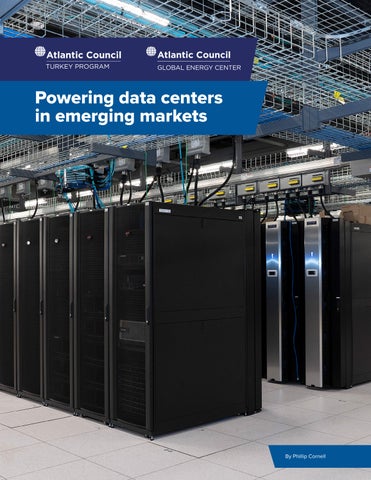
Cover photo credit: Scientific Data and Computing Center (SDCC) from the US Department of Energy.

ISBN: 978-1-61977-548-0

© 2026 The Atlantic Council of the United States. All rights reserved. No part of this publication may be reproduced or transmitted in any form or by any means without permission in writing from the Atlantic Council, except in the case of brief quotations in news articles, critical articles, or reviews.

Please direct inquiries to:

Atlantic Council

1400 L Street NW, 11th Floor Washington, DC 20005 February 2026

Introduction

Artificial intelligence (AI) is driving a rapid expansion of data center infrastructure worldwide, going beyond a few mature digital economies and growing quickly in emerging markets. This expansion is having major effects on energy demand, with specific dynamics in countries that are not part of the Organisation for Economic Co-operation and Development (OECD). The International Energy Agency (IEA) projects global electricity use by data centers to more than double by 2030 to about 945 terawatt hours (TWh), or 3 percent of total global demand, up from 1.5 percent of total demand in 2024.1 Demand will continue to surge through 2040, marking one of the fastest-rising segments of modern energy use.

Until recently, most public attention has focused primarily on the United States, China, Europe, and Japan, where cloud and hyperscale capacity are already extensive.2 However, the energy and infrastructure requirements of AI are quickly spreading beyond those boundaries. In Southeast Asia, the Middle East, Latin America, and the Black Sea region, a combination of accelerating digitalization, lower land costs, and access to relatively inexpensive or stranded power is attracting a new wave of investment.3

1. “Energy and AI,” International Energy Agency, April 10, 2025, https://www.iea.org/reports/energy-and-ai.

2. Almost 85 percent of 2024 hyperscale investment was in the United States (51 percent), China (16 percent), and Europe (16 percent). Cary Springfield, “Why Hyperscale Is Leading the Data-Centre Revolution,” International Banker, November 27, 2024, https://internationalbanker.com/technology/why-hyperscale-is-leading-the-data-centre-revolution/.

3. “Stranded power” refers to electricity (or energy that can be converted to electricity) that cannot otherwise be used economically, typically because of location (it is produced far from demand), grid constraints, or timing (it is produced when demand is low). Crusoe Energy has built an early business model on harnessing otherwise stranded power, for example by building data centers near remote gas production. The data center market is expected to double in Latin America from 2023 to 2029 and to grow rapidly elsewhere. Nur Cristiani and Kenneth Datta, “Empowering Growth: The Opportunity in Latin America’s Energy Infrastructure,” J.P. Morgan, August 26, 2025, https://privatebank.jpmorgan.com/latam/en/insights/markets-and-investing/ideas-and-insights/empowering-growth-the-opportunity-in-latin-americas-energy-infrastructure.

The pull of emerging markets: Overflow, domestic growth, energy cost, and flexibility

Sometimes the decision to site data centers in emerging markets is to serve as overflow capacity for established markets reaching saturation. In 2019, Singapore introduced a moratorium on new data center construction to manage rising energy use and carbon intensity. By the time it reopened permitting in 2022 under stringent efficiency rules, the pause had already redirected developers toward the bordering Malaysian state of Johor. By 2025, more than two-thirds of all data center capacity under construction in the region was located in Malaysia—and especially in Johor, where the two countries created a special free trade zone for data and energy.4

Yet emerging markets are not simply overflow locations. Rapid economic development and accelerating digitalization mean they are becoming demand centers in their own right. Expanding e-commerce, financial technology (fintech), and streaming industries, together with the localization of cloud services, are generating new domestic requirements for computing power. India, for example, hosts 20 percent of the world’s data but less than 6 percent of global data center capacity, driving an investment boom in the sector.5 The key question is whether these countries’ energy systems, which often display price volatility, limited redundancy, and uneven regulation, can support this next generation of AI infrastructure in a sustainable and scalable way.

The IEA attributes the majority of future data center electricity demand to the rapid deployment of advanced servers designed for AI workloads. Their annual consumption is expected to increase fivefold by 2030.6 At the same time, capacity to deliver that power is increasingly constrained. Around one-fifth of global data center projects face delay risks because of grid bottlenecks, with connection queues stretching up to a decade in some advanced markets.7

Equipment shortages add further stress. Transformer lead times have nearly doubled in the past three years, and manufacturers are managing record backlogs.8 These conditions are raising development costs and extending project timelines in the very regions that once anchored hyperscale growth. As a result, operators are reassessing where and how they

Figure 1: Data center electricity consumption (TWh)

AI-optimized servers Conventional Servers

Source: IEA World Energy Outlook 2025

4. Ashley Tang, Eduardo Baptista, and Jun Yuan Yong, “Malaysia Reins in Data Centre Growth, Complicating China’s AI Chip Access,” Reuters, September 11, 2025, https://www.reuters.com/world/china/malaysia-reins-data-centre-growth-complicating-chinas-aichip-access-2025-09-12/.

5. Ira Dugal, “India File: $100 Billion Data Centre Boom Tests Resource Limits,” Reuters, December 2, 2025, https://www.reuters.com/ world/india/india-file-100-billion-data-centre-boom-tests-resource-limits-2025-12-03/.

6. “Gartner Says Electricity Demand for Data Centers to Grow 16% in 2025 and Double by 2030,” Gartner, November 17, 2025, https:// www.gartner.com/en/newsroom/press-releases/2025-11-17-gartner-says-electricity-demand-for-data-centers-to-grow-16-percentin-2025-and-double-by-2030.

7. “Energy and AI.”

8. Ibid.

REGION

CLUSTER

Source: IEA World Energy Outlook 2025

build. The IEA notes that one of the most effective strategies for avoiding grid constraints is to site new facilities in areas with adequate generation and transmission capacity, which increasingly points toward those emerging markets where such capacity exists.9

The Singapore experience illustrates how local policy and saturation can redirect regional investment. After lifting its moratorium, the government granted new data center licenses only within a limited “green pilot” window and required developers to work with domestic partners to improve energy efficiency.10 In parallel, Malaysia’s Johor state benefited from the spillover, offering lower tariffs, abundant land, and streamlined permitting to attract billions of dollars in commitments from international operators.11 Johor is now “the fastest growing market within Southeast Asia,”12 increasing from 10 megawatts (MW) in 2021 (before the Singapore moratorium) to 1.6 gigawatts (GW) today, and with 2.7 GW expected by 2027.13 Similar dynamics are now playing out elsewhere. In both Europe and the United States, local governments are tightening environmental and zoning

regulations, while grid congestion in established corridors such as Northern Virginia or Amsterdam is prompting companies to search for secondary or peripheral markets.14 For many firms, emerging economies represent a practical way to release spatial and regulatory pressure.

The attraction of emerging markets lies not only in lower costs but also in greater energy flexibility. Many of these economies possess renewable resources that remain underutilized because of transmission limitations. That includes abundant solar in the Middle East and North Africa, hydro in East Africa, geothermal in Indonesia, and wind across central Anatolia. With suitable hybrid generation and storage systems, such resources can be harnessed to supply reliable on-site or microgrid power for data center operations. Strategic siting near available generation capacity can mitigate global bottlenecks.15 This principle is already guiding project design in parts of Latin America and sub-Saharan Africa, where developers are combining renewable sources with gas-to-power and battery systems to provide the firm energy needed for

9. Ibid.

10. “About the Green Data Centre (DC) Roadmap,” Infocomm Media Development Authority of Singapore, September 11, 2025, https:// www.imda.gov.sg/how-we-can-help/green-dc-roadmap.

11. Tang, et al., “Malaysia Reins in Data Centre Growth, Complicating China’s AI Chip Access.”

12. Sara Loo, “Data Centres, Energy Demand and Sustainability: Can Malaysia Strike the Right Balance?” ISEAS Yusof Ishak Institute, June 12, 2025, https://www.iseas.edu.sg/articles-commentaries/iseas-perspective/2025-43-data-centres-energy-demand-andsustainability-can-malaysia-strike-the-right-balance-by-sara-loo/.

13. Per Johor state’s data center development coordination committee vice chair, Lee Ting Han, as cited in: “Johor Rejects Nearly One-third of 14 Data Centre Applications in Jan-May to Protect Water, Power Resources,” Business Times, November 19, 2024, https://www.businesstimes.com.sg/startups-tech/johor-rejects-nearly-one-third-14-data-centre-applications-jan-may-protect-water-power-resources.

14. David Hayhow, “Five Key Challenges for the Data Centre Industry,” Lockton, November 17, 2024, https://global.lockton.com/gb/en/ news-insights/five-key-challenges-for-the-data-centre-industry.

15. “Energy and AI.”

Figure 2: Characteristics of data center capacity in the pipeline

high-uptime AI workloads (i.e., those requiring constant reliability).16

Among frontier regions, Turkey occupies a distinctive position. It bridges Europe, the Middle East, and the Black Sea, combining growing domestic digital demand with an increasingly diversified electricity system. National statistics from the Turkish Electricity Transmission Commission (TEİAŞ) show an installed capacity of about 120 GW, of which roughly 50 GW come from renewable sources.17 This mix of hydro, wind, solar, and

gas provides a potential platform for regional colocation and edge-computing hubs (described in section 3, below) serving the Turkish market as well as southeastern Europe and the Caucasus.18

The geography of AI-driven data center growth is widening. What began as a technological race among advanced economies is becoming a global infrastructure challenge. Emerging markets will play a decisive role if they can align energy availability, policy stability, and technological adaptability.

16. Vaughn O’Grady, “Botswana and Nigeria to House Renewable Energy-Powered Data Centres,” Developing Telecoms, October 1, 2025, https://developingtelecoms.com/telecom-technology/energy-sustainability/19142-botswana-and-nigeria-to-house-renewable -energy-powered-data-centres.html.

17. “Electricity Transmission in Türkiye,” Türkiye Elektrik İletim A.Ş., last visited February 18, 2026, https://www.teias.gov.tr/en-US/electricity-transmission-in-turkiye.

18. Prableen Bajpai, “What Is Colocation, and Who Are the Biggest Players Investors Should Know?” NASDAQ, August 8, 2023, https:// www.nasdaq.com/articles/what-is-colocation-and-who-are-the-biggest-players-investors-should-know.

Photo by İsmail Enes Ayhan on Unsplash.

Emerging-market conditions and risks

Emerging markets offer both a solution and a stress test for the next phase of the global AI data center build-out. Their energy systems, investment climates, and regulatory environments differ markedly from those of advanced economies. These differences create opportunities for innovation and cost advantages, but they also introduce new layers of operational and policy risk that determine which countries will succeed in attracting sustainable, long-term digital infrastructure investment.

Grid maturity and reliability

Many emerging markets lack the redundancy and voltage stability of advanced grids. Unplanned outages remain frequent, and generation quality varies widely between regions. According to the World Bank, firms in low- and middle-income countries experience an average of ten to fifteen electrical outages per month, compared with fewer than one in high-income economies.19 For data center operators, such volatility requires significant investment in resilience. Facilities in these contexts often rely on dual power feeds, uninterruptible power-supply (UPS) systems, and dedicated on-site generation, which can add between 10 percent and 20 percent to total project costs.20 When public grids cannot guarantee reliability, microgrids or private distribution networks become a prerequisite for attracting hyperscale or colocation investments. The challenge is particularly acute in rapidly urbanizing zones such as Nairobi, Jakarta, and Manila, where demand growth is outpacing network reinforcement. Power-sector regulators in these markets are beginning to adopt reliability standards and connection codes modeled on European norms, but implementation remains uneven. The result is that many early projects rely on self-generation or long-term power-purchase agreements (PPAs) directly with independent producers rather than public utilities.

Energy pricing and volatility

Price volatility is another structural risk. In many emerging markets, electricity tariffs remain influenced by subsidies or currency fluctuations. The IEA’s “Southeast Asia Energy Outlook 2024” reports on fluctuating industrial electricity prices in the economies of several members of the Association of Southeast Asian Nations (ASEAN)—as much as 40 percent year to year between 2021 and 2023—driven by fossil fuel import costs and exchange rate movements.21 For developers, such volatility complicates long-term cost projections. As a result, operators increasingly seek hybrid supply models that combine grid purchases with on-site renewables and storage. According to a recent PricewaterhouseCoopers study, 22 percent of current data center power in the region is sourced from renewables, and that price unpredictability is one of the key deterrents to higher adoption.22

Abundant but stranded renewable potential

Many emerging economies possess excellent renewable resources that remain underutilized because of weak transmission links or capital constraints. In North Africa, for example, high-irradiance solar corridors could produce power at less than 3 cents per kilowatt hour, yet limited interconnection capacity prevents large-scale export or industrial use.23 Similar patterns exist in East Africa, where hydropower and geothermal output often exceed local demand during off-peak seasons but cannot be transmitted efficiently. For data center operators, such stranded resources can be an advantage. Facilities that locate close to renewable generation sites can tap low-cost electricity without competing with the public grid (a strategy that has underpinned Crusoe Energy’s rise as the fastest-growing data center developer).24 The Breakthrough Institute notes that “emerging economies hold the potential for globally competitive data center development if they can provide cheap, firm energy through a mix of renewables and

19. “Infrastructure,” World Bank Enterprise Surveys, last visited February 19, 2026, https://www.enterprisesurveys.org/en/data/exploretopics/infrastructure?subGroup=-1.

20. “Building Hyperscale Data Centers in Emerging Markets,” Digital Realty, March 5, 2019, https://www.digitalrealty.com/resources/ blog/building-hyperscale-data-centers-in-emerging-markets.

21. “Southeast Asia Energy Outlook 2024,” International Energy Agency, October 21, 2024, https://www.iea.org/reports/southeast-asia-energy-outlook-2024.

22. “Powering Possibility: Closing the Clean Energy Gap for Asia Pacific Data Centres,” PricewaterhouseCoopers, July 2025, https:// www.pwc.com/gx/en/asia-pacific/pwc-asia-pacific-data-centres-clean-energy-gap-2025.pdf.

23. “Renewable Power Generation Costs in 2023,” International Renewable Energy Agency, September 2024, https://www.irena.org/ Publications/2024/Sep/Renewable-Power-Generation-Costs-in-2023.

24. “Impact on the Environment,” Crusoe Energy, last visited February 19, 2026, https://www.crusoe.ai/about/impact.

flexible generation.”25 This approach is already evident in pilot projects pairing solar power with battery storage in Kenya and with small gas-turbine backup in Egypt and Oman.26

Connectivity constraints and redundancy gaps

In addition to reliable energy supply, robust international and domestic connectivity is essential to data center performance. Many emerging markets continue to face limited subsea cable diversity, fragile terrestrial backhaul, or aging landing station infrastructure. Outages on the two major African coastal fiber links have repeatedly demonstrated the vulnerability of Southern Africa’s international connectivity, while Turkey’s Black Sea routes still lack the redundancy available in Mediterranean or Atlantic corridors. Latin America has strengthened coastal connectivity, especially in Brazil, but inland markets remain constrained by limited long-distance fiber links and high deployment costs. These factors can shape siting decisions even where energy is abundant because high-density AI workloads (i.e., those that concentrate large amounts of compute) require both stable transport capacity and operational predictability.

Regulatory variance and permitting complexity

Regulatory environments across emerging markets vary considerably. In some jurisdictions, digital infrastructure investment is encouraged through tax holidays and streamlined licensing. In others, overlapping land use and environmental procedures can delay projects for years. Permitting times in frontier markets average eighteen to thirty-six months, compared with six to twelve months in the most mature markets.27 Regulatory uncertainty also affects energy procurement. Foreign-owned

data center operators can face restrictions on direct access to generation assets or wholesale electricity markets. The result is a patchwork of energy sourcing models. In Indonesia and Malaysia, data centers often purchase electricity from state utilities at regulated tariffs; in Nigeria and South Africa, developers can contract directly with independent power producers; and in Turkey, the energy market regulator EMRA is advancing reforms to allow greater use of bilateral PPAs and free power trade between licensed entities that will support large-load users such as data center zones in securing market-based supply contracts.

Skills, supply chains, and local ecosystem readiness

Another key constraint is human capital and the supporting industrial base. Data center construction and operation require a variety of specialized electrical, mechanical, and cooling skills. Although global contractors can fill the gap during construction, long-term operation depends on local expertise. While the lack of domestic technical expertise remains a primary barrier to hyperscale deployment across emerging markets, training programs linked to universities and vocational institutes are beginning to close this gap.28 Supply chains are similarly uneven. Equipment such as chillers, switchgear, and high-capacity cables is often imported, exposing projects to shipping costs and customs delays. Well-intentioned localization policies can sometimes slow timelines if domestic manufacturing capacity is insufficient. This makes strategic partnerships between developers, governments, and local suppliers critical for long-term cost control and reliability.

25. Firm energy is electrical energy that can be delivered reliably and continuously to a customer, even during system stress, because it is backed by sufficient (often dispatchable) generation, transmission, and contractual guarantees. Juzel Lloyd, Vijaya Ramachandran, and Seaver Wang, “Data Centers, Emerging Economies, and the Need for Cheap, Firm, Energy,” Breakthrough Institute, February 10, 2025, https://thebreakthrough.org/journal/no-20-spring-2024/data-centers-emerging-economies-and-the-need-forcheap-firm-energy.

26. Andy Colthorpe, “Kenya Government Power Company Appointed for World Bank-Funded Energy Storage Pilot,” Energy Storage News, November 20, 2023, https://www.energy-storage.news/kenya-government-power-company-appointed-for-world-bankfunded-energy-storage-pilot/; Zachary Skidmore, “Oman Data Park Taps Local Developer for 1.4MW Onsite Solar Project at Data Center,” Data Center Dynamics, August 21, 2025, https://www.datacenterdynamics.com/en/news/oman-data-park-taps-local-developer-for-14mw-onsite-solar-project-at-data-center/.

27. “Global Data Center Market Comparison,” Cushman & Wakefield, last visited February 19, 2026, https://www.cushmanwakefield. com/en/insights/global-data-center-market-comparison.

28. “The Rise of Emerging Markets in the Data Center Race,” Global Data Center Hub, November 6, 2025, https://www.globaldatacenterhub.com/p/the-rise-of-emerging-markets-in-the.

Hyperscale, colocation, and edge deployment models

Emerging markets are not homogeneous. Their suitability for data center development depends on electricity reliability, grid interconnection, market demand, and regulatory maturity. As a result, the most successful deployment strategies in these economies tend to follow three distinct models: hyperscale, colocation, and edge.

Hyperscale data centers (typically exceeding 20 MW of installed computing capacity per site) are the backbone of global AI infrastructure.29 They achieve economies of scale in computing and cooling but require large, continuous, and predictable electricity supply. In many emerging markets, such facilities face difficulties securing long-term grid access or stable tariffs. Developers often encounter longer grid-connection timelines and limited substation redundancy, which require additional investment in on-site generation and storage.30

Where large, reliable generation clusters exist, however, hyperscale projects can deliver major economic dividends. In Johor, TNB has upgraded transmission corridors to supply multiple 100-MW-class campuses, while offering preferential renewable energy packages through the Green Electricity Tariff.31 These measures have already attracted international hyperscalers such as Microsoft and Amazon Web Services, and the region now counts 42 projects worth $39 billion approved as of the second quarter of 2025.32 For investors, hyperscale builds in emerging markets remain capital intensive and dependent on local energy partnerships. Their viability improves when developers can secure direct access to renewable power or operate within government-designated digital zones that guarantee infrastructure and permitting support.

Unlike hyperscale, colocation models distribute both cost and risk among multiple tenants. Colocation facilities typically range from 5 MW to 20 MW and are designed to host enterprises, cloud providers, and content delivery networks under long-term lease agreements. Colocation is often the preferred entry point for digital infrastructure in emerging markets because it limits single-investor exposure and allows incremental scaling. Colocation accounted for more than 60 percent of new data center capacity announced in secondary and emerging markets in 2023.33 This approach suits markets with moderate grid reliability and growing but uncertain demand.

When Equinix opened its first Johannesburg data center (JN1) in 2024, it noted that the colocation model enabled it to match expansion to local demand while managing power risk through modular design and on-site generation. Liquid-cooling and hybrid renewable supply options help it to address the region’s intermittent grid performance.

Colocation also supports domestic enterprise development. In markets such as Brazil and Indonesia, local telecom operators and banks lease racks in shared facilities to reduce their own capital requirements while maintaining regulatory compliance for data sovereignty. This shared model aligns well with government priorities for digital transformation and can accelerate cloud adoption across small and medium-sized firms.

Edge data centers are smaller installations, usually below 1 MW, designed to minimize latency by placing compute resources close to end users. While they consume less total energy, their distributed nature makes energy efficiency and maintenance critical. In emerging markets, edge computing can address both connectivity and grid constraints. Regions with limited subsea cable access or congested intercity transmission can deploy edge facilities powered by local renewables or hybrid microgrids. Modular and prefabricated designs are expanding quickly in Southeast Asia and sub-Saharan Africa because they allow staged power deployment and the use of localized renewable generation. Interconnected edge centers can also leverage strategic locations.34

Edge computing is also being deployed to enhance resilience. Smaller facilities located near renewable generation clusters can continue limited operation during broader grid outages. This flexibility aligns with the IEA’s finding that “locating data centers in areas with available generation capacity” can significantly reduce exposure to system bottlenecks.35

The case for hybrid strategies

In practice, the boundaries between these models are increasingly blurred. Developers often combine hyperscale backbones with regional colocation or edge satellites to balance efficiency, redundancy, and cost. Modular build-outs, in which capacity is added as local grid conditions improve, are particularly suitable for emerging markets. A growing number

29. “Data Center Power: Fueling the Digital Revolution,” Data Center Knowledge, March 22, 2024, https://www.datacenterknowledge. com/energy-power-supply/data-center-power-fueling-the-digital-revolution.

30. “Energy and AI.”

31. Luqman Amin, “Govt Rules Out Johor Power Plant, Focuses on Grid Upgrades to Meet Demand—Deputy Minister,” Edge, February 17, 2025, https://www.tnb.com.my/assets/newsclip/18022025b.pdf.

32. Tang, et al., “Malaysia Reins in Data Centre Growth, Complicating China’s AI Chip Access.”

33. “Global Data Center Market Comparison.”

34. “Powering Possibility.”

35. “Energy and AI.”

of investors are also integrating on-site microgrids, which can draw on a mix of solar, gas, and battery storage. This combination of flexible siting, modular design, and hybrid power is likely to define the next generation of AI data center development across emerging markets. It allows operators to manage uncertainty while aligning with national objectives for energy security and sustainability.

Different classes of AI and cloud workloads

Digital compute infrastructure is not uniform, and each workload type has specific siting and energy requirements. Large AI training clusters concentrate high-density accelerators and therefore prioritize access to cheap and firm power, strong cooling capacity, and predictable operating conditions, which gives them more flexibility to locate farther from major population centers. AI inference clusters support real-time applica-

tions and benefit from locating closer to users because latency and network performance become critical. Traditional cloud and enterprise data centers, by contrast, are often shaped by regulatory factors such as data sovereignty and compliance obligations. These distinctions help explain why emerging markets might attract cloud and inference deployments earlier, while only a smaller subset will compete for large-scale training complexes. With AI inference projected to dominate AI compute demand by 2030—accounting for more than half of AI workloads and roughly 30–40 percent of total data center demand globally—and with traditional cloud adoption growing rapidly in emerging markets, inference and cloud workloads are expected to drive disproportionate data center growth in emerging markets compared with highly concentrated model training facilities.36

36. Chhavi Arora, Marc Sorel, and Pankaj Sachdeva, “The Next Big Shifts in AI Workloads and Hyperscaler Strategies,” McKinsey & Company, December 17, 2025, https://www.mckinsey.com/industries/technology-media-and-telecommunications/our-insights/thenext-big-shifts-in-ai-workloads-and-hyperscaler-strategies.

Technology and energy sources

The expansion of AI data centers in emerging markets depends not only on location and financing but also on the ability to design facilities that can operate reliably under variable energy and climatic conditions. Technical choices around on-site generation, power integration, and cooling are central to both sustainability and competitiveness.

Where public grids cannot guarantee uninterrupted supply, operators increasingly rely on hybrid generation systems that combine renewables, storage, and flexible fossil fuel backup. These hybrid microgrids are now regarded as standard practice for large-scale facilities in regions with grid instability. According to the IEA, “The rapid growth in electricity demand from data centers is driving developers to seek on-site power generation and storage to manage supply risk and integrate renewables effectively.”37 Indeed, hybrid configurations can reduce exposure to outages and enable higher renewable penetration without compromising uptime. Hybridization also provides a bridge toward decarbonization. In fossil-fuelproducing countries such as Nigeria or Egypt, flare-gas-topower technologies convert waste emissions into reliable electricity. According to the Breakthrough Institute, “Pairing firm gas generation with intermittent renewables may offer emerging economies the most pragmatic route to cheap, firm energy for digital growth.”38 This pathway ensures both reliability and measurable emissions reductions compared with diesel backup.

Energy storage, especially batteries, is a booming sector in which innovation will help unlock emerging market competitiveness. Scaling variable renewables to both harness abundant emerging market resources and deliver the highly constant power demanded by data centers requires significant energy storage to smooth variability. Nearly half of new data center projects in Southeast Asia include some form of storage integration, ranging from short-duration lithium-ion systems to longer-duration flow batteries.39 These configurations allow facilities to participate in demand-response or frequency-regulation markets where regulation permits. Malaysia and Chile have both introduced frameworks for third-party battery operators, while Turkey has begun to pilot ancillary-service markets that could reward large consumers for flexible load

management. These steps will be critical to aligning private data center investment with broader grid-stability goals. Technology will also help to overcome the critical problem of cooling, which typically represents between 30 percent and 40 percent of total data center energy consumption and is especially challenging in tropical or desert climates with high temperatures. Operators in emerging markets are therefore adopting a range of alternative solutions. Liquid and immersion cooling is becoming standard, especially for high-density compute. Equinix’s JN1 facility in Johannesburg uses direct-tochip liquid cooling that can reduce power-usage effectiveness by up to 20 percent compared with standard air cooling.40 Adiabatic and evaporative systems, in which modular chillers employ recycled condensate water to lower consumption while maintaining reliability in high humidity, are emerging in key Southeast Asian markets. Thermal-storage chilling uses chilledwater storage to shift cooling load away from daytime peaks and support grid-balancing efforts. Integrating passive design and heat-recovery technologies can further reduce overall energy intensity, particularly where facilities can provide waste heat for industrial or district-cooling use.41 Such cobenefits enhance both economic and environmental performance.

Also critical are innovations in how data centers are built. Modular construction techniques are transforming data center expansion in volatile markets. Prefabricated modules can be assembled rapidly, aligned with the pace of grid upgrades, and relocated if necessary. Modular deployments can cut build times by between 20 percent and 30 percent and capital costs by up to 25 percent in emerging market contexts.42 Flexibility also extends to information technology (IT) and cooling architecture. Designing systems that can operate efficiently at wider temperature and voltage ranges allows facilities to maintain uptime even during minor grid fluctuations. The IEA stresses that “flexible design standards for both power and compute systems will be essential to ensure resilience as demand accelerates in less mature electricity markets.”43 All of this underscores the importance of innovation to deliver flexibility, in terms of both the power system and operations. This is especially important in riskier markets and will determine which ones can host sustained AI infrastructure growth.

37. “Energy and AI.”

38. Lloyd, et al., “Data Centers, Emerging Economies, and the Need for Cheap, Firm Energy.”

39. “Powering Possibility.”

40. “Equinix Opens Its First Data Center in Johannesburg Enhancing Digital Infrastructure and Connectivity in the Region,” Equinix, October 24, 2024, https://newsroom.equinix.com/2024-10-24-Equinix-opens-its-first-data-center-in-Johannesburg-enhancing-digital-infrastructure-and-connectivity-in-the-region.

41. Damir Požgaj, et al., “Energy Efficiency Through Waste-Heat Recovery: Hybrid Data-Centre Cooling in District Heating Applications,” Applied Sciences 16, 1 (2025), 323, https://www.mdpi.com/2076-3417/16/1/323.

42. “Global Data Center Market Comparison.”

43. “Energy and AI.”

Policy alignment and governance frameworks

Policy will determine whether emerging markets can translate investor interest into durable, energy-efficient data center capacity. The most successful jurisdictions align digital economy strategies with national energy plans, simplify permitting and grid access, and enable flexible power procurement, storage, and grid services.

National AI or cloud strategies should be matched with power system plans that identify where generation and transmission headroom exists. The IEA recommends planning the right mix of energy sources for uninterrupted supply, and emphasizes that more generation alone is insufficient without parallel grid and flexibility measures.44 Governments should publish corridor-level maps that combine data center zoning with substation capacity, transformer lead times, land use constraints, and renewable interconnection queues. Singapore’s Green Data Centre Roadmap provides a useful model that ties efficiency targets to siting and operational standards in a single policy instrument.45

Permitting is another issue. Lengthy, sequential permits raise costs and often push projects into less efficient on-site generation. A single-window process that runs environmental clearance, building approvals, and grid impact studies in parallel can reduce timelines materially. Connection delays and equipment bottlenecks are now major risks to timely build-out, implying that reforms must explicitly address queue management and transformer procurement.46 Singapore’s roadmap pairs efficiency requirements with clear application pathways, and several ASEAN markets are adopting similar templates.

Flexible power procurement is critical because developers need the ability to contract firm low-carbon supply directly, to combine grid power with on-site renewables and storage, and to hedge price volatility. Some utilities already offer products to simplify such procurement; clarifying rules for corporate PPAs and allowing data centers to participate in balancing or capacity instruments can provide flexibility.

Energy storage is another key issue, including codifying how batteries and hybrid plants are remunerated for capacity and system services. Chile updated its framework to recognize storage in capacity payments and to compensate hybrid

plants with storage, setting a clear benchmark for emerging markets that seek grid firmness without overreliance on peaking fuels.47 Similar recognition would allow data center microgrids to provide grid support in constrained areas.

Ancillary services and self-generation rules should accommodate new sources of flexibility, including batteries paired with on-site solar and gas. Turkey has continued to refine grid codes and ancillary service obligations for generators, including unlicensed solar and wind, which is relevant where data center campuses coinvest in local renewable capacity.48 Clear interconnection and metering guidance reduces risk for investors and utilities alike.

Efficiency policies need to reflect local climatic realities. The Tropical DC methodology in Singapore’s roadmap demonstrates how regulators can allow higher safe-operating temperatures and still reduce cooling energy, backed by quantified guidance for operators. The roadmap cites 2–5 percent cooling-energy savings for every one-degree Celsius increase in operating temperature under defined conditions. Clear, climate-specific standards are especially important in hot and humid emerging markets where conventional temperate zone metrics are not directly transferable.

Coordination with utilities in planning can determine whether data centers strain a power system or help stabilize it. Joint planning cycles between developers and operators need to evaluate feeder-level impacts, seasonal resource adequacy, and demand-response opportunities. The IEA emphasizes that smarter integration of data centers into grids is often faster than new generation in relieving bottlenecks, which argues for codesigned flexibility and interconnection agreements.

Finally, governments should invest in key enabling technologies such as digital permit tracking, public dashboards for grid connection queues, and transparent criteria for capacity allocations. Recent discussions in Europe about allocating fixed grid capacity to large data center users highlight the importance of clarity in preventing speculative reservations and protecting other industrial loads.

44. Ibid.

45. “About the Green Data Centre (DC) Roadmap.”

46. “Energy and AI.”

47. Cristobal Faine, “Chile: Approval of Significant Changes in Recognition and Compensation of Energy Storage Systems and Hybrid Plants,” Garrigues, April 6, 2024, https://www.garrigues.com/en_GB/new/chile-approval-significant-changes-recognition-and-compensation-energy-storage-systems-and.

48. Rüştü Mert Kaşka, “Important Amendments Concerning Unlicensed Electricity Generation Plants,” Erdem & Erdem, January 31, 2025, https://www.erdem-erdem.av.tr/en/insights/important-amendments-concerning-unlicensed-electricity-generation-plants.

Workforce, skills, and ecosystem readiness

Data center development in emerging markets depends on a pipeline of technicians, engineers, facilities managers, and security specialists. The global industry is expanding, yet operators report persistent challenges in recruiting and retaining staff with the necessary electrical, mechanical, and operations skills. Workforce policy therefore matters as much as electricity policy. Countries that couple capital investment with skills development, vendor training partnerships, and certification pathways will build more resilient digital infrastructure.

The Uptime Institute found that skills gaps are concentrated in junior and mid-level operations, according to developers, and that many firms still rely on poaching from other operators rather than building new entrant pipelines or structured retention.49 Its survey found that 2024 staffing challenges remained largely unchanged from 2023 and that “more effort is needed to expand labor pools and skill sets to match the pace of capacity growth.”

Emerging markets can attract investment if they demonstrate credible plans to train and certify technicians at a scale commensurate with demand. Investors increasingly look for local apprenticeship schemes, accredited programs with community colleges or vocational institutes, and clear pathways from entry-level roles to operations management. In parallel, governments and utilities can help by clarifying occupational standards for critical facilities, electrical work on high-voltage systems, and safety codes for liquid-cooling installations. Another key priority is retention. Exit risks are higher where salary compression and long shifts reduce morale. The 2024 Uptime Institute findings show that shortages cluster in junior operations roles, suggesting that structured progression and targeted compensation matter for continuity.

Several large operators and platforms run training programs that governments and developers can localize through public-private partnerships. Microsoft’s Datacenter Academy (DCA) offers a community skilling model that partners with local education providers to create pathways into data center operations and technician roles.50 Amazon Web Services’ programs have helped more than 31 million learners build cloud skills across two hundred countries and territories, not only

exceeding its target of 29 million learners but doing so ahead of its original schedule.51 Google reports 1 million graduates globally, with examples of graduates moving into data center technician roles.52 Partnerships with public colleges and technical institutes can align these certificates with local hiring. And Equinix operates entry pathways including career transition and apprenticeship tracks into data center operations teams, including for energy management.

Public development banks are also strengthening ecosystems where talent is scarce. The International Finance Corporation’s $100-million financing for Raxio Group supports multi-country data center builds in Africa and is intended to catalyze local capability as well as physical infrastructure.53

National skill-building programs are also central to attracting investment. Turkey’s industrial policy emphasizes vocational and on-the-job training to raise competitiveness, which can be aligned with data center operations roles, power systems, and cooling. National technology bodies (such as Tubitak Bilgem) provide a research anchor in cybersecurity and advanced informatics that complements workforce development. In the ASEAN region, successful skills initiatives work in tandem with permitting and utility programs that target data centers. Malaysia’s policy efforts to attract hyperscalers and colocation operators have, for example, been accompanied by vendor-led training and local hiring, often integrated with university partnerships and short-course academies.

These examples offer key lessons for emerging markets looking to develop energy and digital talent to attract investment. Occupational standards for data center roles should include electrical work on medium- and high-voltage systems, liquid-cooling safety, and industrial control operations, and align these standards with industry certifications. Projects that are cofunded or partially publicly financed can include requirements for apprenticeships and supervisor training, with disbursements tied to completion and retention. Porting existing skills and enabling people to transition into the data center energy workforce is key. Technicians from power plants, hospitals, laboratories, and telecoms often have transferable skills. Clear pathways reduce time and cost to redeploy talent.

49. Andy Lawrence, et al., “Uptime Institute Global Data Center Survey 2024,” Uptime Intelligence, July 2024, https://datacenter.uptimeinstitute.com/rs/711-RIA-145/images/2024.GlobalDataCenterSurvey.Report.pdf.

50. “Microsoft Datacenter Academy,” Microsoft, last visited February 19, 2026, https://careers.microsoft.com/v2/global/en/datacenteracademy.html.

51. “Our Upskilling Programs,” Amazon News, last visited February 19, 2026, https://www.aboutamazon.com/workplace/upskilling-commitments.

52. Lisa Gevelber, “Google Career Certificate Graduates Reach 1 Million,” Google, last visited February 19, 2026, https://blog.google/ company-news/outreach-and-initiatives/grow-with-google/google-career-certificate-graduates-reach-1-million/.

53. Colleen Goko, “World Bank Backs Africa Digital Deal Push with $100 Million Raxio Deal,” Reuters, April 3, 2025, https://www.reuters.com/world/africa/world-bank-backs-africa-digital-data-push-with-100-million-raxio-deal-2025-04-03/.

Uptime’s 2023 findings show that many operators recruit from other mission-critical industries but lack structured engagement with these pools.54 Governments should also collect and share statistics on salaries, turnover, and training outcomes in the digital-infrastructure sector. Reliable data enable policymakers to anticipate bottlenecks, benchmark compensation, and identify where incentives or scholarships are most needed. Finally, training and education should align with broader industrial policy. Data center construction and operation depend on a wider ecosystem of contractors, component suppliers, and maintenance firms. Vocational programs that train electricians, refrigeration specialists, and safety officers therefore have spillover benefits for national industrial competitiveness. Turkey’s

2030 Industry and Technology Strategy and Malaysia’s National Energy Transition Roadmap both recognize workforce development as a pillar of competitiveness for digital and green industries.

Human capital is emerging as a decisive constraint on data center growth. Power reliability and permitting can be solved through capital and policy reform, but trained technicians and experienced operations managers take years to develop. For emerging markets, embedding workforce planning in every stage of the data center life cycle is as critical as securing financing or energy supply.

54. Lawrence, et al., “Uptime Institute Global Data Center Survey 2024.”

Conclusion: Building the energy foundations of the AI era

The rise of artificial intelligence is transforming data centers from passive digital warehouses into active participants in national energy systems. The resulting surge in electricity demand, projected by the IEA to more than double to 945 TWh by 2030, has made data centers both symbols and stress tests of the clean energy transition.55 Emerging markets are now at the center of this shift. They offer the land, political interest, and latent renewable resources that congested mature hubs often lack. Yet in many emerging economies, grid redundancy remains limited, pricing is volatile, and regulatory frameworks can be uneven. For digital investment to become an engine of sustainable growth rather than a source of strain, governments and investors must treat energy infrastructure and digital infrastructure as inseparable. Key insights include the following.

y Flexibility is the decisive factor. The next generation of AI data centers will succeed where energy supply can adapt, through hybrid microgrids, storage, modular expansion, and regulatory regimes that reward demand responsiveness. Flexibility also applies to governance: licensing that adapts to new technologies, and permitting systems that coordinate environmental, grid, and construction approvals in parallel.

y Siting choices will shape regional economies. Whether near large populations or stranded renewables, each location entails trade-offs between latency, energy cost, and resilience. The most successful strategies will combine both: high-density interconnection near cities and

low-cost compute capacity near abundant power, linked through improved connectivity.

y Workforce and ecosystem readiness are as vital as megawatts. Reliable data center operation depends on a skilled labor force, competent local contractors, and public institutions that understand mission-critical infrastructure. Human capital cannot be imported indefinitely, but must be built locally through vocational training, apprenticeships, and partnerships with global operators.

y The energy transition and the digital transition must evolve together. Data center growth can accelerate investment in renewables, storage, and grid flexibility, but only if energy planning and digital policy are coordinated. When treated as separate silos, both risk underperformance. When integrated, they can reinforce one another, creating infrastructure that powers not only AI workloads but also cleaner, more resilient economies.

Emerging markets therefore stand at a strategic inflection point. The decisions made in the next five years about where and how to build will determine whether the world’s expanding digital architecture becomes a burden on fragile energy systems or a catalyst for their modernization. The prize is a new geography of digital innovation, anchored in sustainable power and human capability.

55. “World Energy Outlook,” International Energy Agency, November 12, 2025, https://www.iea.org/reports/world-energy-outlook-2025.

ANNEX: CASE STUDIES AND SITING COMPARISONS

This section examines five markets that illustrate different pathways for AI data center growth in emerging economies. The case studies focus on siting logic, energy strategy, cooling and connectivity, permitting and power procurement, and workforce implications.

1. Johor overflow evolves into a regional hub. Singapore’s 2019 moratorium, followed by a tightly controlled reopening in 2022 under the Green Data Centre Roadmap, pushed new commitments into southern Malaysia, particularly Johor. Multiple analyses document the spillover pattern. More than two-thirds of the capacity under construction in Southeast Asia’s five main growth markets is committed in Malaysia, driven by Singapore’s high costs and policy limits.56

Johor’s appeal includes available land, easier permitting, and packages from state utility TNB, including the Green Electricity Tariff that allows corporate customers to contract renewable electricity. Malaysia is also planning system-level responses, with officials indicating that data centers could require 19.5 GW of power capacity by 2035 in Peninsular Malaysia. Major investments include Microsoft’s announced $2.2 billion for cloud and AI infrastructure in Malaysia, with a focus on the Johor Bahru cloud region as part of its rollout. ByteDance and Google have also disclosed multibillion-dollar investments.

This is a classic case in which regional policy and cost pressure in a mature hub can catalyze a neighboring release valve. The viability rests on timely grid reinforcement, workable renewable power products, and clear rules for power availability and water use.

2. South African colocation serves as a growth beachhead. South Africa combines the region’s largest enterprise market with better international connectivity than most of sub-Saharan Africa. Major investments include an Equinix JN1 facility in Germiston, in Greater Johannesburg, which opened in October 2024 and established a neutral interconnection hub and a colocation entry point that can scale with demand. Colocation lets operators implement modular power and advanced cooling step by step. JN1 is designed for interconnection growth, with phased capacity and readiness for higher-density, liquid-cooled racks that are consistent with AI workloads. In grids with intermittent reliability, shared infrastructure and modular expansion reduce risk while building the ecosystem of carriers, cloud on-ramps, and content networks.

3. Brazil serves as a bifurcated landscape. Brazil’s largest colocation and hyperscale footprint is in Greater São Paulo, where platforms like Scala Data Centers are executing multisite campus strategies. A recent milestone confirms municipal approval of the Tamboré campus master plan in Barueri, described as the largest campus in Latin America by capacity. Earlier phases include vertical hyperscale builds such as SP4/SP5. Fortaleza (Ceará) is Brazil’s primary Atlantic landing cluster, with systems such as SACS, Monet, EllaLink, SAm-1 and BRUSA, and with Angola Cables’ data center developments positioned as a regional hub.

Brazil has begun to see single-tenant or export-oriented projects. A proposed R$50 billion (about $9.26 billion) data center complex at Pecém, reportedly tied to TikTok as a sole client, would include 300 MW of power and new wind capacity from partner Casa dos Ventos. The federal government introduced temporary tax exemptions for data center equipment in 2025 to accelerate siting and attract international platforms, while debating digital competition rules. Brazil blends core-market campuses near demand and coastal cable-landing hubs that can support export-oriented compute. The challenge is long-term power procurement and cooling efficiency in warm, humid climates, which argues for hybrid power and heat-recovery strategies.

4. Turkey sits at a regional crossroads. The nation combines growing domestic demand with cross-border connectivity between Europe, the Middle East, and the Caucasus. It benefits from expanding overland connections and a growing set of subsea systems and landings. Istanbul is a key landing point, and the Black Sea contains multiple in-service and planned routes that improve diversity. Official statistics show 116 GW of installed capacity as of February 2025, with about 70 GW from clean sources, and TEİAŞ lists more than 120 GW by July 2025. This mix

56. Tang, et al., “Malaysia Reins in Data Centre Growth, Complicating China’s AI Chip Access.”

of hydro, wind, solar, and gas supports siting models that combine colocation in Istanbul with modular builds in Anatolian locations, where land is abundant and cooling loads can be shifted with thermal storage.

Government statements and market trackers point to new data center investments and policy attention to hyperscale opportunities. Turkey’s comparative advantage is connectivity diversity and a diversified power mix, with potential to serve Southeastern Europe and the Caucasus. The policy priorities are clear permitting, corporate PPA access, and ancillary services frameworks that reward storage and flexible load, which are under active discussion in the market.

5. India features rapid growth on a coal-heavy grid. India’s data center capacity is projected to expand almost ninefold by 2030, rising from about 1.3 GW in 2024 to more than 10 GW as internet use increases and AI infrastructure scales across industries. At present, data centers account for roughly 0.5 percent of the country’s total electricity consumption, a share expected to reach about 3 percent by the end of the decade. India’s heavy reliance on coal in its power mix continues to generate emissions as well as local air and water pollution. Major metropolitan areas such as Mumbai, Chennai, and Hyderabad are emerging as focal points for new data center development, but their urban grids are already under pressure from rapidly growing digital and industrial loads. Balancing the expansion of digital infrastructure with reliable and cleaner electricity supply will be a central policy and investment priority in the coming years.

These examples demonstrate what matters most during complex siting decisions for data centers.

Energy availability and contracts are key drivers. Johor moved quickly on grid corridors and corporate renewable options through TNB. In Brazil, long-term power hedging and cooling efficiency are decisive; in Turkey, diversified capacity must translate into bankable corporate PPAs. South Africa’s colocation path reduces risk while the grid stabilizes.

Connectivity and proximity to subsea landings and rich interconnection drive performance and ecosystem growth. Johor leverages Singapore’s cables and carrier density. In Brazil, Fortaleza anchors Atlantic routes; Istanbul’s geography adds route diversity across the Black Sea and to the Middle East.

Permitting and policy are key. Singapore’s structured reopening sets a reference for efficiency standards, while Malaysia’s evolving approach balances rapid growth with system constraints. Federal incentives and state-level facilitation in Brazil can shorten timelines for major campuses, and Turkey’s next step is to integrate siting with energy-market reforms.

Atlantic Council Board of Directors

CHAIRMAN

*John F.W. Rogers

EXECUTIVE CHAIRMAN

EMERITUS

*James L. Jones

PRESIDENT AND CEO

*Frederick Kempe

EXECUTIVE VICE CHAIRS

*Adrienne Arsht

*Stephen J. Hadley

VICE CHAIRS

*Robert J. Abernethy

*Alexander V. Mirtchev

TREASURER

*George Lund

DIRECTORS

Stephen Achilles

Elliot Ackerman

*Gina F. Adams

Timothy D. Adams

*Michael Andersson

Alain Bejjani

Colleen Bell

Sarah E. Beshar

Karan Bhatia

Stephen Biegun

John Bonsell

Linden P. Blue

Brad Bondi

Philip M. Breedlove

David L. Caplan

Samantha A. Carl-Yoder

*Teresa Carlson

*James E. Cartwright

John E. Chapoton

Ahmed Charai

Melanie Chen

Michael Chertoff

*George Chopivsky

Wesley K. Clark

*Helima Croft

Ankit N. Desai

Dario Deste

*Lawrence Di Rita

*Paula J. Dobriansky

Joseph F. Dunford, Jr.

Richard Edelman

Stuart E. Eizenstat

Tara Engel

Mark T. Esper

Christopher W.K. Fetzer

*Michael Fisch

Alan H. Fleischmann

Jendayi E. Frazer

*Meg Gentle

Thomas Glocer

John B. Goodman

Sherri W. Goodman

Marcel Grisnigt

Jarosław Grzesiak

Murathan Günal

Michael V. Hayden

Robin Hayes

Tim Holt

*Karl Hopkins

Kay Bailey Hutchison

Ian Ihnatowycz

Wolfgang Ischinger

Deborah Lee James

*Joia M. Johnson

*Safi Kalo

Andre Kelleners

Brian Kelly

John E. Klein

Ratko Knežević

*C. Jeffrey Knittel

Joseph Konzelmann

Keith J. Krach

Franklin D. Kramer

Laura Lane

Almar Latour

Yann Le Pallec

Jan M. Lodal

Douglas Lute

Jane Holl Lute

William J. Lynn

Mark Machin

Marco Margheri

Michael A. Margolis

Chris Marlin

William Marron

Roger Martella

Gerardo Mato

Erin L. McGrain

John M. McHugh

*Judith A. Miller

Dariusz Mioduski

*Richard L. Morningstar

Georgette Mosbacher

Majida Mourad

Virginia A. Mulberger

Mary Claire Murphy

Julia Nesheiwat

Edward J. Newberry

Franco Nuschese

*Ahmet Ören

Ana Palacio

*Kostas Pantazopoulos

Alan Pellegrini

David H. Petraeus

Elizabeth Frost Pierson

*Lisa Pollina

Daniel B. Poneman

Robert Portman

*Dina H. Powell McCormick

Michael Punke

Ashraf Qazi

Thomas J. Ridge

Gary Rieschel

Charles O. Rossotti

Harry Sachinis

Curtis Michael Scaparrotti

Ivan A. Schlager

Rajiv Shah

Wendy R. Sherman

Gregg Sherrill

Jeff Shockey

Kris Singh

Varun Sivaram

Walter Slocombe

Christopher Smith

Clifford Sobel

Michael S. Steele

Richard J.A. Steele

Mary Streett

Nader Tavakoli

*Gil Tenzer

*Frances F. Townsend

Clyde C. Tuggle

Francesco G. Valente

Melanne Verveer

Tyson Voelkel

Kemba Walden

Michael F. Walsh

Ronald Weiser

*Al Williams

Ben Wilson

Maciej Witucki

Neal S. Wolin

Tod D. Wolters

*Jenny Wood

Alan Yang

Guang Yang

Mary C. Yates

Dov S. Zakheim

HONORARY DIRECTORS

James A. Baker, III

Robert M. Gates

James N. Mattis

Michael G. Mullen

Leon E. Panetta

William J. Perry

Condoleezza Rice

Horst Teltschik

William H. Webster

*Executive Committee Members

List as of July 2025

Turn static files into dynamic content formats.
Create a flipbook
Atlantic Council Powering Data Centers In Emerging Markets by Atlantic Council - Issuu