Artificial intelligence and the future of African mining
Anthony Carroll and Jef Karel Caers
Atlantic Council AFRICA CENTER
Led by Rama Yade, previously an ambassador and minister in the French government, the Atlantic Council’s Africa Center champions a new African narrative prioritizing investment opportunities and forward-looking partnerships. The center promotes dynamic geopolitical partnerships with African states, and the redirection of US and European policy priorities toward strengthening security and bolstering economic growth and prosperity on the continent.
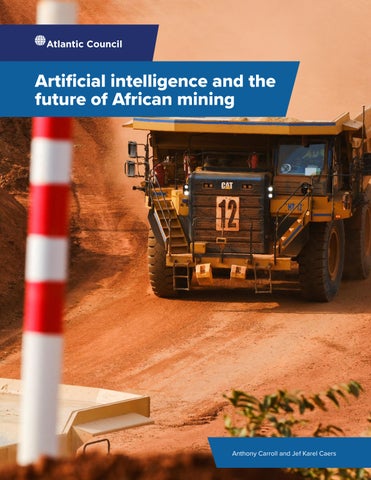
Cover: A dump truck is seen at a mining pit as commercial gold production begins at the Newmont Ghana Gold Limited, Ahafo North Mine, in Afrisipakromcommunity in the Ahafo Region, Ghana. October 29, 2025. REUTERS/Francis Kokoroko © 2026 The Atlantic Council of the United States. All rights reserved. No part of this publication may be reproduced or transmitted in any form or by any means without permission in writing from the Atlantic Council, except in the case of brief quotations in news articles, critical articles, or reviews. Please direct inquiries to: Atlantic Council 1400 L Street NW, 11th Floor Washington, DC 20005 2026
Authors Anthony Carroll and Jef Karel Caers
Acknowledgments The Atlantic Council Critical Minerals Task Force is grateful to Aiteo, Rawbank, KoBold Metals, Rio Tinto, and Managem for their support of the task force’s work, including this report. This report was written and published in accordance with the Atlantic Council’s policy on intellectual independence, which requires all donors to agree to the Council maintaining independent control of the content and conclusions of its work. The authors are solely responsible for its analysis and recommendations.
Table of contents Bottom lines up front.....................................................................................................................................2 Executive summary........................................................................................................................................2 Introduction: Africa, critical minerals, and technology............................................................................3 Section 1: AI’s potential to transform mining from exploration to processing in Africa....................6 1.1. Untangling disparate AI uses for mining applications.......................................................................6 1.2. Contemporary AI and data applications in global mining............................................................... 7 1.3. Agentic AI and mining policy.................................................................................................................. 8 Section 2: Snapshot of AI use cases for mining in Africa.......................................................................9 2.1. AI-driven mineral exploration and deposit discovery.......................................................................9 2.2. AI uses in African mining operations................................................................................................. 12 2.3. AI uses in African processing.............................................................................................................. 12 2.4. AI uses in traceability and supply chain transparency...................................................................13 2.5. AI uses in policy modeling and supply chain resilience................................................................14 2.6. Challenges in uptake and uneven adoption....................................................................................14 Section 3: Strategic and policy recommendations................................................................................. 16 3.1. Building US government capacity and alliances for AI and mining............................................ 16 3.2. Mobilizing capital for AI, digitalization, and mining adaptation.................................................. 16 3.3. Expand US bilateral, export, and diplomatic tools......................................................................... 16 3.4. Supporting African governance, data sharing, and local expertise............................................17 3.5 Promote “skills-to-work” systems and local expertise....................................................................17 Conclusion: An integrated agenda for smart mining in Africa............................................................. 19 About the Authors....................................................................................................................................... 20 Atlantic Council Board of Directors........................................................................................................... 21
Artificial intelligence and the future of African mining
Bottom lines up front Colonial-era maps and infrastructure hinder access to the roughly 30 percent of global critical minerals in Africa. AI-powered mining and mapping tools could help expedite discovery, reduce drilling time, and modernize operations. The US should develop “smart mining” partnerships with African countries that advance US security objectives while providing long-term dividends for African nations.
Executive summary Africa stands at the nexus of geopolitical competition for critical materials that power the energy transition, defense, and digital economies. Combined, Africa holds about one-third of global critical mineral reserves. But it remains burdened by colonial-era geological surveys and infrastructure and exports its bounty largely unprocessed into Chinese-dominated supply chains. Middle powers like the United Arab Emirates (UAE) have emerged as significant players in mining investment on the continent, while the United States and its allies have sharpened their interest in African mineral markets.1
As the United States is a leader in global AI, the US government should leverage its expertise in new technologies, mapping, and big data to develop partnerships with African countries that advance US security objectives while providing long-term dividends and economic development for African nations. These efforts should be pursued as a single, integrated “smart mining” agenda rather than as siloed AI and mining investment tracks, so that these investments in African markets support one another. This report also addresses uneven AI adoption and persisting challenges for African economies in future mining, including supply chain vulnerability to external shocks, infrastructure and governance gaps, and labor and skill needs. A successful AI and digitalization transition for African mining will involve concerted efforts to encourage targeted capital in exploration and infrastructure development, US–Africa partnerships with cross-disciplinary staffing and expertise, and the integration of local African expertise across mining ventures.
This report highlights artificial intelligence (AI) and big data innovations and their applications for Africa’s mining sector. It argues that AI and digitalization offer African states, the United States, and allied partners a strategic opportunity to move beyond legacy constraints and one-sided partnerships in the mining sector. AI and data applications in Africa can help expedite discovery, reduce drilling time and modernize operations, while de-risking investment and supporting policy modeling. AI and data partnerships can potentially advance supply chain transparency, strengthen local capacity across digital and applied sciences, and yield benefits for African communities.
1.
Hubert Kinkoh, “The Governance of Natural Resources in Africa and the Role of the Gulf States,” Gulf Research Center, August 2024, https://www.grc.net/single-commentary/183; Moa Ringvall and Gunilla Reischl, “From Oil to Minerals: Gulf States as Middle Powers in the Race for Critical Minerals,” Swedish Institute of International Affairs, February 2026, https://www.ui.se/globalassets/ ui.se-eng/publications/ui-publications/2026/ui-brief-no.-2-mar-2026.pdf.
ATLANTIC COUNCIL
2
Artificial intelligence and the future of African mining
Introduction: Africa, critical minerals, and technology Mining has played a major role in Africa’s economic development for millennia.2 There is evidence of the development of sophisticated iron forging and smelting among the Nok people of Nigeria dating from the sixth century and evidence of sophisticated subsurface mining in Zimbabwe and South Africa from the eighth to eighteenth centuries.3 Under colonial rule, natural resource extraction by European powers provided limited social and economic dividends to the continent and hindered the development of long-term infrastructure needed to unlock the potential of African mining.4 The post-colonial period reproduced many of these trends, with mining agreements mainly benefiting foreign businesses, rent-seeking political elites, and companies reluctant to develop local human technical and managerial capacity or local supply chains.5 African countries often became reliant on a single export commodity subject to global pricing fluctuations, while inflated prices for capital and labor constrained the evolution of other economically competitive sectors.6
While Africa holds an estimated 30 percent of global critical mineral reserves, the continent remains vastly underexplored—and exploration is the oxygen of the mining industry. Recent analysis reveals that, despite this mineral wealth, Africa receives only 10 percent of the global mineral exploration budget and often relies on geologic surveys from the colonial era.7 The 30 percent figure includes significant variation across minerals. As Figure 1 shows, Africa’s known share of global reserves ranges from nearly 90 percent of platinum group metals down to approximately 2 percent of lithium.8 Beyond exploration, Africa has also seen little modernization in mining practices and highly limited post-extraction processing. The overarching constraint in most African countries remains the lack of infrastructure required for expanded mineral exploration, extraction, and processing.
2.
Legends of Africa’s wealth ranged from the mythology of King Solomon’s mines to the Three Wise Men who allegedly carried (refined) gold, frankincense, and myrrh, possibly from Africa, to the infant Jesus in Bethlehem. In geopolitical history, a prominent example was the Mali Empire under Mansa Musa in the fourteenth century, which exerted significant control over regional gold resources and exports from West Africa through the Mediterranean.
3.
Emma George Ross, “The Age of Iron in West Africa,” Metropolitan Museum of Art, October 1, 2002, https://www.metmuseum.org/ essays/the-age-of-iron-in-west-africa; A. Hammel, et al., “Pre-Colonial Mining in Southern Africa,” Journal of the Southern African Institute of Mining and Metallurgy 100, 1 (2000), 49, https://www.saimm.co.za/Journal/v100n01p049.pdf.
4.
The colonial period began the First Scramble for Africa, which saw the exploitation of Africa’s human and natural resources by European nations vying for power, alongside businessmen like Cecil Rhodes dreaming of a privately owned Cape-to-Cairo rail network, as well as King Leopold’s Congo Free State attempting to build its own private empire. Exported natural resources were transported in raw, unprocessed form to the colonial powers via road, rail, and port networks, with little interest in sharing this bounty with local communities. Thomas Pakenham, The Scramble for Africa: The White Man’s Conquest of the Dark Continent from 1876 to 1912 (New York: Random House, 1991); Robert I. Rotberg, The Founder: Cecil Rhodes and the Pursuit of Power (New York: Oxford University Press, 1988).
5.
This was otherwise known as the “Resource Curse.” Richard M. Auty, Sustaining Development in Mineral Economies: The Resource Curse Thesis (London: Routledge, 1993).
6.
Examples of dependence include bauxite in Guinea, copper in Zambia, oil in Nigeria, or diamonds in Botswana. This was otherwise known as “Dutch Disease.” W. Max Corden and J. Peter Neary, “Booming Sector and De-Industrialisation in a Small Open Economy,” Economic Journal 92, 368 (1982), 825–848, https://academic.oup.com/ej/article/92/368/825/5220457. During post-colonial Africa’s first generation of leaders, efforts to develop cross-border infrastructure and supportive trade agreements often proved futile despite calls for continental political and economic unity.
7.
Gracelin Baskaran, “Underexplored and Undervalued: Addressing Africa’s Mineral Exploration Gap,” Center for Strategic and International Studies, May 9, 2025, https://www.csis.org/analysis/underexplored-and-undervalued-addressing-africas-mineral-exploration-gap; Julia Baum and Marvellous Ngundu, “Africa Has Critical Minerals but Needs a Unified Strategy,” Institute for Security Studies, May 22, 2025, https://futures.issafrica.org/blog/2025/Africa-has-critical-minerals-but-needs-a-unified-strategy.
8.
Data from: “Mineral Commodity Summaries,” US Geological Survey, May 2026, https://pubs.usgs.gov/periodicals/mcs2026/ mcs2026.pdf.
ATLANTIC COUNCIL
3
Artificial intelligence and the future of African mining
Fig. 1: Africa’s share of selected global critical mineral reserves Percent of World Reserves, 2025
84.6%
Platinum-Group metals 50.8%
Cobalt Manganese
36.7%
Chromium
34.8% 25.5%
Bauxite
22.6%
Graphite (natural) 10.30%
Copper Lithium 0%
2.4% 20%
40%
60%
80%
Source: US Geological Survey. Data from Mineral Commodity Summaries 2026.
Today’s renewed competition over African resources is based on the heightened demand for a supply of critical minerals pursued by a new set of actors, principally China and Gulf powers such as the UAE.9 Africa’s endowments of cobalt, manganese, graphite, bauxite, copper, the platinum group of metals, and tantalite-titanium-tin are of the very materials that fuel the battery storage, information technology, and defense industries. Rare earth elements (REEs) often co-occur with these minerals and metals and are thereby ripe for extraction. Across critical minerals and other natural resources, China has acquired significant geological data for extraction and processing—and has not shied away from wielding such dominance for geopolitical aims.
natural resources. Several countries—such as Nigeria and Zimbabwe (2022), Namibia (2023), and Gabon (2029)—have imposed immediate or phased bans on the export of unprocessed minerals. Meanwhile, the Democratic Republic of the Congo (DRC)—Africa’s “mother lode” of critical minerals—is seeking to institute a stockpiling program to limit the pricing practices imposed by countries with dominant market positions.10 Despite this, the deployment of technology for mining arrives at a critical juncture, offering African countries and their partners a means to capture more value from these resources without resorting to export bans. Indeed, this late adoption of technological breakthroughs could be turned to an advantage. Cutting-edge exploration technologies using advanced geologic data analysis, predictive modeling, and geospatial information can expedite discovery—possibly beyond the 30
In response to this heightened demand, at least a dozen African countries have begun implementing or planning a spectrum of measures that restrict the export of unprocessed
9.
The UAE has backed multibillion-dollar equity buyouts of tier-one extractive and processing assets on the continent, such as in Zambia. The UAE has also signed an agreement for industrial-scale mine development in eastern Democratic Republic of the Congo. Mechanisms for this influence in African mining include sovereign wealth funds and state-backed conglomerates. For discussion on Abu Dhabi’s International Resources Holdings (IHR), other UAE entities, or the role of the Kingdom of Saudi Arabia, see: Ringvall and Reischl, “From Oil to Minerals: Gulf States as Middle Powers in the Race for Critical Minerals”; Kinkoh, “The Governance of Natural Resources in Africa and the Role of the Gulf States.”
10.
“DRC to Stockpile Critical Minerals with New Reserves,” Financial Times, April 15, 2026, https://www.ft.com/content/d0f19c7c-2f5c4865-a326-e4765bbcec58?syn-25a6b1a6.
ATLANTIC COUNCIL
4
Artificial intelligence and the future of African mining
Fig. 2 China’s dominance in critical mineral refining Selected minerals, percent of global refining capacity
Graphite
96%
Manganese
95%
Cobalt
77%
Rare earth elements (REEs)
76% 70%
Lithium 45%
Copper Chromium 0%
42% 20%
40%
60%
80%
100%
Source: International Energy Agency. Data from “Global Critical Minerals Outlook 2025,” May 21, 2025; “Critical Minerals Dataset,” last updated 2025.
percent estimate cited above. Extraction technologies can also be more efficient and less disruptive, providing higher returns and lower social costs. Processing is becoming more nimble and able to be deployed closer to mineral reserves, providing an opportunity for Africa to extract more value from its mineral bounty.
opportunities are already proven outside of Africa. Examples include AI and machine learning uses in optimizing copper recovery in Chile or autonomous systems that streamline mining logistics in Australia. 13 In Africa, these advances can reduce not only geologic and processing risks but also political risk, making the mining sector more attractive for investment. As US and global markets increasingly require verified, geopolitically secure supply chains, AI and data technologies could offer new tools for traceability, helping African nations boost the value of their critical mineral resources.14
Globally, mineral exploration has traditionally been a costly, low-success-rate endeavor. Approximately 0.5 percent (or five of every thousand) of early-stage prospects have led to commercially viable outcomes, while exploration, permitting, and construction processes can last more than ten years.11 McKinsey estimates that data and AI-driven smart mining could save producers $290–390 billion per year by 2035.12 Such
11.
“Improving Mineral Exploration,” Burgex, October 8, 2021, https://www.burgex.com/2021/10/08/improving-mineral-exploration; Karen Roberts, “Sustainable Mineral Supply,” University of Delaware, March 15, 2017, https://www.udel.edu/udaily/2017/march/sustainable-mineral-supply.
12.
Jovana Trivan and Srđan Kostić, “Smart Mining: Joint Model for Parametrization of Coal Excavation Process Based on Artificial Neural Networks,” Archives for Technical Sciences 2, 29 (2023), 11–12, https://arhivzatehnickenauke.com/article/274.
13.
“BHP and Microsoft Use AI to Lift Escondida Copper Recovery,” BHP, press release, May 30, 2023, https://www.bhp.com/news/ media-centre/releases/2023/05/bhp-and-microsoft-use-ai-to-lift-escondida-copper-recovery; “World-First Automated Trains Deployed at Rio Tinto’s Iron Ore Operations,” Rio Tinto, press release, December 28, 2018, https://www.riotinto.com/en/news/releases/2018/world-first-autonomous-trains-deployed.
14.
“Critical Materials: Action Needed to Implement Requirements That Reduce Supply Chain Risks,” US Government Accountability Office, September 10, 2024, https://www.gao.gov/assets/gao-24-107176.pdf.
ATLANTIC COUNCIL
5
Artificial intelligence and the future of African mining
Section 1: AI’s potential to transform mining from exploration to processing in Africa 1.1. Untangling disparate AI uses for mining applications
y Predictive and analytical AI: Systems that ingest vast amounts of data to generate predictions or forecasts based on those data. Examples include machine learning, deep learning (neural networks), generative AI (e.g., LLMs), and computer vision.
The convergence of AI, big data analytics, and digital transformation has been reshaping the global mining industry, from exploration to mine operations to processing. While often used as an umbrella term, AI encompasses a rapidly evolving landscape of sub-disciplines and methodologies—including data science, unsupervised learning, machine learning, deep learning, computer vision, autonomous systems, large language models (LLMs), and agentic AI—used to varying degrees across mining applications, as illustrated in Table 1 below. These tools can be broadly divided into two main categories of functionality.
y Acting and autonomous AI: AI that acts and makes decisions in the real world or in digital environments, such as robots or AI agents. The table below provides an overview of both functionalities, in mining and beyond.
Table 1: AI functionality and applications in the mining value chain.
Mining phase
Exploration
Predictive and analytical AI
Acting and autonomous AI
Example outside mining: Weather prediction.
Example outside mining: An agent that writes software.
Example in mining: Predicting mineral potential over a region using geophysical and geological data.
Example in mining: An agent that sequentially plans exploration drilling.
Example outside mining: Diagnosing cancer in medical images. Operations
Processing
Example outside mining: Self-driving cars.
Example in mining: Predicting the grade on a mining face using hyperspectral imaging.
Example in mining: Autonomous vehicles in a mine.
Example outside mining: A chatbot that answers questions.
Example outside mining: Weather prediction.
Example in mining: Predicting froth flotation performance from video capture data.
Example in mining: Automated management of mineral processing circuits under variable feedback.
Rather than making discoveries without human involvement or displacing geological fieldwork, AI can support, augment, and enhance decision-making about which data to acquire, how to plan a mine while accounting for safety risks, or how to reduce waste in mineral processing.15 Increased AI use can potentially mean better integration of human expertise in exploration,
15.
mining operations, and processing with data-driven tools and computational techniques that were not possible a decade ago. Research has shown that big data-driven exploration and subsurface monitoring can reduce exploratory drilling time by 75–80 percent, while AI-supported predictive maintenance can improve operational efficiency by reducing equipment
Litshedzani Mutele and Emmanuel John M. Carranza, “A Modulated Mineral Prospectivity Mapping of Orogenic Gold Mineralization, Pietersburg Greenstone Belt, South Africa: Exploration Targeting from a Mineral Systems Approach,” Natural Resources Research 35, 2 (2025), 877–900, https://link.springer.com/article/10.1007/s11053-025-10595-7.
ATLANTIC COUNCIL
6
Artificial intelligence and the future of African mining
ASTER image from the Escondida open-pit mine in Chile’s Atacama Desert. Source: NASA.
downtime by up to 50 percent and costs by 10–40 percent.16 These statistics are aggregated globally and not specific to Africa.
and train networks), while Chile has seen advances in machine learning for processing and metallurgy and digital twins for optimizing copper extraction. Key examples include the BHP–Microsoft partnership at Escondida Mine in Chile, using machine learning and cloud computing for copper recovery, while complementing the site’s separate advances in bioleaching. Meanwhile, Rio Tinto’s AutoHaul at Pilbara, Australia, uses computer vision and autonomous AI to operate the world’s largest automated rail network.18 Chile’s state-owned Codelco reported that its machine learning-powered digital data center added approximately eight thousand metric tons of copper to its annual yield at Chuquicamata, meaning an additional $80
1.2. Contemporary AI and data applications in global mining AI and big data capabilities are evolving at a rapid pace across developed mining geographies worldwide. These include Canada, a leading country for AI-led greenfield exploration for minerals such as lithium, copper, cobalt, and REEs.17 Across operations, Australia has been a leader in autonomous, AI-driven logistics and robotics application in mining (including truck
16.
John Mern and Jef Caers, “The Intelligent Prospector v1.0: Geoscientific Model Development and Prediction by Sequential Data Acquisition Planning with Application to Mineral Exploration,” Geoscientific Model Development 16, 1 (2023), 289–313, https://gmd. copernicus.org/articles/16/289/2023; Wasiu Oyediran Adedeji, et al., “AI-Driven Smart Factories: From Predictive Maintenance to Autonomous Production Systems,” Faculty of Natural and Applied Sciences Journal of Computing and Applications 2, 4 (2025), 87–94, https://www.fnasjournals.com/index.php/FNAS-JCA/article/view/1078; Sabine Dall’Omo, “Unearthing AI’s Real Value in African Mining,” Mail and Guardian, February 11, 2026, https://mg.co.za/thought-leader/opinion/2026-02-11-unearthing-ais-real-valuein-african-mining.
17.
“Canada and the Northwest Territories Partner on Innovative, AI-Based Core Scanning Initiative to Support Critical Minerals Development,” Natural Resources Canada, press release, July 14, 2025, https://www.canada.ca/en/natural-resources-canada/ news/2025/07/canada-and-the-northwest-territories-partner-on-innovative-ai-based-core-scanning-initiative-to-support-critical-minerals-development.html.
18.
Rio Tinto is a supporter of the Atlantic Council’s Critical Minerals Task Force. This report is a product of the task force.
ATLANTIC COUNCIL
7
Artificial intelligence and the future of African mining
million in annual earnings.19 As these examples demonstrate, AI and applied data science tools help tackle problems—from exploration to mining operations and processing—that require integrating diverse components and disciplines.20 Worldwide, leading mining companies harnessing AI and data technology for mining purposes include BHP, Rio Tinto, Anglo American, Codelco, Freeport-McMoRan, Glencore, and KoBold Metals.21
more of exploration and mining activities.23 Some of this information is structured (e.g., tables, maps), while other data are unstructured (e.g., mining codes, geological reports). The Zambian Geological Survey Department web portal offers a notable example of digitized mapping and the importance of public data for mining and policy modeling.24 As governments look to improve data and digital baselines, they are interested in evaluating the effects of mining policy on supply chain dynamics and revenue forecasting, whether for internal regulation or setting royalties and export controls. Traditionally, answering such questions would require significant expertise across digitization, computer science, microeconomics and macroeconomics, law, and other fields. Through agentic AI, much of this can be achieved today through prompting, allowing analysts to ask, for example, what would happen if “country X” imposed an export control on “mineral Y.”25
1.3. Agentic AI and mining policy Forward-looking AI is evolving rapidly, including agentic AI— combining predictive and acting functionalities—with potential promise for policy modeling and development in mining. While LLMs were useful for researching information or writing reports in 2025, newer versions of models and interfaces (e.g., Anthropic’s Claude) can be equipped with reasoning and can execute tasks on a computer when given access. AI is at an inflection point, particularly in its capacity to reason from information provided in specific documents, write code, upload input data, and run that code to produce complex and quantitative answers rather than the summaries that 2025 LLMs produced.22 This shift has important and yet untapped potential for mining globally.
At the same time, digitization and accurate mapping of mineral resources remain vital to generating the kind of granular data needed to run such models. Equipped with more comprehensive data and digital mapping systems, African governments could bypass traditional software engineering and the expert systems of the last fifty years, leveraging cutting-edge technology to develop customized solutions themselves.26
Although mapping remains a challenge in much of Africa, many governments hold non-digitized data on a century or
19.
Ewa Manthey, “How AI Can Help Speed up the Energy Transition,” Think, February 26, 2024, https://think.ing.com/articles/how-aican-speed-up-green-energy-transition.
20.
“BHP and Microsoft Use AI to Lift Escondida Copper Recovery”; “World-First Automated Trains Deployed at Rio Tinto’s Iron Ore Operations.”
21.
KoBold Metals is a supporter of the Atlantic Council’s Critical Minerals Task Force. This report is a product of the task force. Beyond leading mining operators, key actors include innovation accelerators such as Creative Destruction Lab (CDL) and BHP’s Xplor program. Other notable actors include research organizations such as Australia’s Commonwealth Scientific and Industrial Research Organisation (CSIRO). The following section will highlight emerging players on the African continent, including specialized AI and data technology companies.
22.
Rogé Karma, “So, About That AI Bubble,” Atlantic, May 1, 2026, https://www.theatlantic.com/economy/2026/05/ai-bubble-revenue-anthropic/687022.
23.
Glen T. Nwaila, et al., “Mineral Reconnaissance through Scientific Consensus: First National Prospectivity Maps for PGE–Ni–Cu–Cr and Witwatersrand-Type Au Deposits in South Africa,” Natural Resources Research 33, 6 (2024), 2357–2384, https://link.springer. com/article/10.1007/s11053-024-10390-w.
24.
“GSD Store,” Zambian Geological Survey Department, last visited June 5, 2026, https://gsd.gov.zm/search.
25.
Agentic AI involves LLMs that can be equipped with specific skills (e.g., the open-source LangChain). An LLM can read a microeconomics textbook, implement models in Python code, and execute that code with data supplied in tables to the AI—work that would have previously required significant software engineering.
26.
Mutele and Carranza, “A Modulated Mineral Prospectivity Mapping of Orogenic Gold Mineralization, Pietersburg Greenstone Belt, South Africa.”
ATLANTIC COUNCIL
8
Artificial intelligence and the future of African mining
Section 2: Snapshot of AI use cases for mining in Africa Across Africa, AI tools are evolving from theory to practice in key areas of the mining chain, ranging from predictive geological modeling to autonomous operations. However, the adoption environment remains fragmented, with applications centered in Southern Africa and isolated model examples elsewhere on the continent. In Africa, notable AI breakthroughs in exploration, mining operations, and extraction remain in early stages of development, with processing the next frontier. While African countries feature some high-profile cases, the continent is a more nascent theater for AI deployment than more established theaters of AI and big data applications in mining, such as Australia, Canada, and Chile.27
ulations based on aggregated global data indicate that these AI models have the potential to cut exploration drilling time by up to 75 percent.31 Similar high-profile approaches are being piloted in both Namibia and Botswana. A key example is the partnership between Battelle Laboratories, Tsodilo Resources, and the University of Cape Town (UCT), which uses automated mineralogy data to characterize complex rare earth deposits and identify mineral phases at microscopic scale.32 Firms such as Terra AI and Earth AI have shown how proprietary AI models can narrow drilling targets and de-risk early-stage exploration—traditionally the higher-risk and most capital-intensive phase of the project life cycle.33
2.1. AI-driven mineral exploration and deposit discovery
While AI innovations can reduce costs for mining firms, they are also attractive from a policy perspective. African governments are increasingly partnering with technology companies; an example is Zambia’s partnership with Xcalibur for whole-ofcountry mapping, with full commercial release to be launched in 2027. This, in turn, attracts investments from new players. As AI requires data to improve planning and exploration, African countries’ support for digital mapping is essential to generate the kinds of data needed for AI applications in exploration.
The most visible breakthroughs in Africa have come in exploration. KoBold Metals—a US-based, AI-enabled exploration and mining firm—has used machine learning models trained on geophysical, geochemical, and legacy survey data to identify high-probability deposits of cobalt, copper, and lithium across the DRC and Zambia. AI was used to plan drilling, reducing drilling cost and time in the Mingomba project on the Zambian Copperbelt.28 This case concerns a brownfield discovery in which reanalysis of nearby drilling indicated the potential for additional copper mineralization. Geologists and data scientists reanalyzed existing data, generating new hypotheses regarding the extent of mineralization through automated three-dimensional modeling of the geological structures. The AI proposed an optimal drilling sequence to reduce uncertainty on the grade and volumes of ore quickly.29 The Mingomba discovery illustrates how AI-driven exploration methodology can help develop technically complex deposits. Other major mining companies such as Rio Tinto and BHP are also using AI to plan and optimize drilling—notably in South Africa.30 Sim-
27.
AI-driven exploration advances in Africa are undergirded by innovations in remote sensing, geospatial tools, and mapping applications. Firms are now integrating hyperspectral imaging and drone surveys with data from the ASTER and Sentinel-2 satellite missions to enable deep-learning probability mapping at continental scale. Firms such as TerraEye, XRTech, and Xcalibur have been deploying these tools across emerging mining hubs in Africa, providing big data-driven geological insights
Meanwhile, the United States remains the global leader in AI and big data, though not specifically in terms of their use in mining applications. For discussion of the United States and mining, see: Helene Nguemgaing and Alan Collins, “The Missing Link in Critical Minerals Push Isn’t Mining—It’s Processing Expertise,” Conversation, May 11, 2026, https://theconversation.com/the-missing-link-in-americas-critical-minerals-push-isnt-mining-its-processing-expertise-281002.
28.
“Mineral-X,” Stanford University, last visited May 11, 2026, https://mineralx.stanford.edu.
29.
Jef K. Caers, “The Future of AI in Critical Mineral Exploration,” Sustainable Earth Resources Communications 1, 2 (2025), 69–82, https://serc.yandypress.com/index.php/3104-977X/article/view/121; Max Bearak, “A.I. Needs Copper. It Just Helped to Find Millions of Tons of It,” New York Times, July 11, 2024, https://let.iiec.unam.mx/node/5348.
30.
“BHP Xplor,” BHP, last visited June 3, 2026, https://www.bhp.com/about/our-businesses/xplor. Through this Xplor program, BHP is backing tech-forward companies such as Mineural and Orion Minerals, which use AI platforms to help with exploration including in South Africa’s Northern Cape region.
31.
Mern and Caers, “The Intelligent Prospector v1.0.”
32.
Muflih Hidayat, “Tsodilo UCT Rare Earth Skarn Exploration Advances in Botswana,” Discovery Alert, May 4, 2026, https://discoveryalert.com.au/rare-earth-exploration-botswana-skarn-gcwihaba-tsodilo-uct.
33.
“AI-Powered Mineral Exploration,” Terra AI, last visited June 3, 2026, https://www.terraai.com/minerals.
ATLANTIC COUNCIL
9
Artificial intelligence and the future of African mining
Fig 3. Example of Terra AI’s use of multimodal AI models to narrow drilling targets on an example copper porphyry model.
Source: Terra AI.
and mineral mapping with a fraction of the time and cost needed for traditional ground surveys.34 Xcalibur Smart Mapping uses multiphysics airborne data acquired from specialized aircraft fleets to offer subsurface information on natural resources and critical minerals at the country level, including in Angola, DRC, Nigeria, Uganda, and Zambia.35 The company reports having flown more than fifty million linear kilometers globally with more than forty aircraft. These new technological applications can be especially valuable when combined with local drilling data or geological fieldwork to determine hotspots for detailed exploration. AI advances in these areas help address a critical gap—Africa’s lack of public geoscience datasets and mapping—by supporting vital information flows and capacity needed for mineral exploration.
While mining has historically been slow to adopt new technologies, AI and digitalization could help African countries reverse past economic distortions and improve the information environment by generating precise data for contract negotiations, revenue forecasting, regulatory oversight, policy, and infrastructure planning. The prevalence of artisanal and smallscale mining (ASM) in Africa also offers significant potential to shape data flows and increase productivity.36
34.
Sunena Gupta, “Rock Solid AI: How Digital Tools Are Unearthing a New Era of Mining Exploration,” CleanTech Group, July 7, 2025, https://cleantech.com/rock-solid-ai-how-digital-tools-are-unearthing-a-new-era-of-mining-exploration; “Satellite Gold Exploration: Mapping & Detection,” XRTech Group, 2026, https://xrtechgroup.com/satellite-gold-exploration-mapping-detection.
35.
“Country Mapping Programme,” Xcalibur, last visited May 21, 2026, https://xcaliburmp.com/country-mapping-programme; “Xcalibur Smart Mapping, in Collaboration with the Zambian Presidency, Has Officially Commenced Its Nationwide High-Resolution Aerial Geophysical Survey,” Zambian Geological Survey Department and Xcalibur, press release, November 2024, https://xcaliburmp. com/tag/zambia.
36.
Darin Christensen, et al., “Estimating the Footprint of Artisanal Mining in Africa,” National Bureau of Economic Research, April 2025, https://www.nber.org/papers/w33646.
ATLANTIC COUNCIL
10
Artificial intelligence and the future of African mining
Fig 4. Xcalibur country mapping of Angola.
Country Mapping programme | Case Study CHALLENGE Angola's mining and exploration potential has traditionally been linked to diamonds and oil & gas.
However, a lack of up-to-date geological data historically led to investor uncertainty.
RESULTS
Major relevant geological structures were discovered, and for the first time in 40 years, major mining companies (Rio Tinto, Anglo American, Ivanhoe Mines) decided to invest in Angola out of oil & gas and diamonds.
SOLUTION Xcalibur Smart Mapping, in collaboration with the Government of Angola, implemented a Geophysical and Geological Mapping Program between 2015 and 2021, as part of Angola's National Geology Plan (PLANAGEO) Several low resolution (1 KM line spacing) magnetic and radiometric flyovers were performed providing critical information about Angola's mineral resources
Sources goes here
This case study illustrates the potential of geophysical and geological mapping, using magnetic and radiometric flyovers to provide information on Angola’s mineral resources. This mapping was a collaboration between Xcalibur and the government of Angola as part of Angola’s National Geology Plan. Source: Xcalibur Smart Mapping.
Fig 5. Example of Xcalibur’s XENAI platform and change-detection mapping, examining artisanal mining expansion in a selected area of Kaduna, Nigeria, from 2018 to 2025.
This map illustrates high-confidence hotspots of mining activity (red and orange) and possible disturbances requiring validation (dark red), compared to vegetated, natural, or agricultural states (green). The AI model quantifies the spatial extent of mining expansion and clusters of new activity for regulatory review, and estimates affected hectares. Source: Xcalibur XENAI (Earth intelligence framework).
ATLANTIC COUNCIL
11
Artificial intelligence and the future of African mining
To foster long-term participation by communities in mining ventures, AI and data-driven exploration must be informed by local knowledge and accompanied by investments in African workforces. Local institutions including ASM and labor groups, traditional authorities, and geologists have significant insight into their countries’ environments and a granular understanding of localized opportunities or challenges that trained AI models cannot replicate. African and US universities also play a vital role in advancing technical know-how in data science and new technologies.37 Smart mining partnerships that integrate African expertise into model design will deliver more politically durable and commercially viable outcomes than foreign partnerships that view African contexts as simple extraction sites for raw materials and data. Engaging local specialists and supporting workforces can help make investments in African exploration and mining ventures more credible and efficient in the long run.
ical terrain.40 According to Siemens, up to 40 percent of South African mines are expected to use digital twins by 2040.41 Combining new sensing technologies with AI might revolutionize block cave mining; for example, Ideon Technologies’ REVEAL platform for subsurface mapping and four-dimensional monitoring may hold the potential to reduce drilling by up to 80 percent, although the evidence of its applications in African markets remains inchoate.42
2.3. AI uses in African processing AI is also deployed in processing, the next frontier in maximizing mineral yield, with notable examples in South Africa’s mining sector. Tech innovations have been historically driven by domestic innovation hubs like Mintek, with advanced process control systems such as FloatStar and FrothStar to stabilize complex flotation circuits in platinum concentrators across South Africa’s Bushveld complex.43 More recent advances include Kilken Platinum’s use of AI-driven monitoring at the Thabazimbi tailings retreatment plant to track production metrics in real time and optimize platinum group metal (PGM) recovery, with the goal of doubling monthly PGM output from a baseline of 40 kilograms (kg) to 83 kg.44 Major mining operators are also integrating digital twins in platinum processing. Anglo American’s Mogalakwena mine uses data-driven models to optimize coarse particle recovery—allowing for larger grind sizes and improved water efficiency—while using a new modular fines flotation pilot plant to capture ultra-fine platinum group metals.45
2.2. AI uses in African mining operations In the context of operating mines, AI applications cluster around safety, automation, and predictive maintenance. Computer vision systems are being deployed across South Africa’s platinum belt to monitor worker proximity to heavy equipment and detect rockfall and related risks.38 Automation and remote operations have advanced furthest at Resolute’s Syama gold mine in Mali.39 Predictive models are being used to optimize blasting and ore body modeling in Zambia, while digital twins are emerging in South Africa as a tool for whole-of-mine planning—including detecting danger and adapting operations in challenging phys-
37.
Examples include the University of Cape Town, Colorado School of Mines, and Hudson Valley Community College, with further discussion in Section 3.
38.
“African Mining Accelerates Adoption of Artificial Intelligence,” Cape Business News, March 17, 2026, https://www.cbn.co.za/industry-news/mining/african-mining-accelerates-adoption-of-artificial-intelligence; Shane Cooper, “AI in African Mining Stuck between Promise and Constraints,” African Mining, March 3, 2026, https://www.africanmining.co.za/2026/03/03/ai-in-african-mining-stuckbetween-promise-and-constraints.
39.
Landry Signé, “Digitalizing Africa’s mines,” Brookings, December 3, 2021, https://www.brookings.edu/articles/digitalizing-africas-mines. “Syama,” Resolute Mining, last visited July 1, 2026, https://www.rml.com.au/assets/syama-mali.
40.
“Fleet Space Partners with CopperTech Metals & Axiom Group to Deploy Agile Geoscience in Zambia,” Fleet Space, February 12, 2026, https://www.fleetspace.com/newsroom/fleet-space-partners-with-coppertech-metals-axiom-group-to-deploy-agile-geoscience-in-zambia; Johan Coetzee, “Digital Innovations Reshaping the Future of Mining in Africa,” Engineering News, February 10, 2026, https://www.engineeringnews.co.za/article/digital-innovations-reshaping-the-future-of-mining-in-africa-2026-02-10-1.
41.
“South Africa in 2040: Pictures of Transformation,” Siemens, 2024, https://assets.new.siemens.com/siemens/assets/api/ uuid:1d7403ba-4414-4f99-8ccf-84f60a0b1063/PicturefTransformationZA.pdf; Dall’Omo, “Unearthing AI’s Real Value in African Mining.”
42.
Ideon partners include BHP and Rio Tinto. “About,” Ideon Technologies, last visited May 11, 2026, https://ideon.ai/about; “Ideon and Rio Tinto Global Partnership Applies Next-Generation Subsurface Intelligence to Reduce Cost and Accelerate Critical Minerals Supply,” Ideon Technologies, press release, last visited May 15, 2026, https://ideon.ai/post/2025/10/06/ideon-and-rio-tinto-global-partnership-applies-next-generation-subsurface-intelligence-to-reduce-cost-and-accelerate-critical-minerals-supply.
43.
“Welcome to Mintek,” Mintek, last visited June 23, 2026, https://mintek.co.za; Agit Singh, Jurgens Louw, and Dave Hulbert, “Flotation, Stabilization, and Optimization,” Journal of the South African Institute of Mining and Metallurgy, November 2003, https://www. saimm.co.za/Journal/v103n09p581.pdf.
44.
“AI Drives Mining Efficiency in Africa,” Finance News Network, April 22, 2025, https://www.finnewsnetwork.com.au/archives/finance_news_network1422175.html.
45.
“ProProcess Engineering Starts Commissioning Modular Fines Flotation Plant for Anglo American Platinum,” International Mining, August 24, 2021, https://im-mining.com/2021/08/24/proprocess-engineering-starts-commissioning-modular-fines-flotation-plant-anglo-american-platinum
ATLANTIC COUNCIL
12
Artificial intelligence and the future of African mining
UK Foreign Secretary James Cleverly visits Mimbula Copper Mine in Ndola, Zambia, 2023. Source: UK government.
Beyond South Africa, downstream processing has advanced significantly at Ivanhoe’s Kamoa-Kakula copper complex in the DRC. Using data analytics to optimize copper recovery, the complex targeted a 95 percent recovery rate, supported by the production of approximately 400,000 metric tons of copper in 2025, and established a new on-site smelter that now produces sulfuric acid at scale.46
ing verified African supply chains.47 On the continent, AI and blockchain integrations are being piloted to verify source materials across the mining value chain. Tracr, a platform modeled on diamond traceability, uses secure scanning and matching to create a unique “digital fingerprint” for each stone, facilitating verification across international borders.48 In the tantalum sector, Circulor uses AI-enhanced blockchain systems to trace high-risk conflict minerals. In Rwanda, for example, the platform utilizes the biometric facial recognition platform URU to verify the identity of artisanal miners and track the dynamic mass balance of ore, helping to prevent the blending of illicit materials into certified global supply chains.49
2.4. AI uses in traceability and supply chain transparency End users in global markets and regulators—e.g., the European Union, Japan, and the United States—are increasingly concerned with verified sourcing. The US Defense Federal Acquisition Regulation Supplement, for example, restricts defense contractors from sourcing strategic materials such as cobalt, tantalum, and REEs from geopolitical adversaries, prioritiz-
Transparent data sharing can also help to bridge the trust deficits between multinational firms, governments, and local communities. For example, the same predictive analytics that optimize ore recovery can also map and reduce risks tied to
46.
“Kamua-Kakola Copper Studies for Improving Recovery from Tailings,” Engineering and Mining Journal, September 2023, https:// www.e-mj.com/departments/processing-solutions/kamoa-kakula-copper-studies-options-for-improving-recovery-from-tailings.
47.
“Critical Materials: Action Needed to Implement Requirements That Reduce Supply Chain Risks.”
48.
“Blockchain Technology and Diamond Traceability: Tracr,” De Beers Group, 2024, https://www.debeersgroup.com/about-us/ case-studies/2024/tracr.
49.
“Circulor Achieves First-Ever-Mine-to-Manufacturer Traceability of a Conflict Mineral with Hyperledger Fabric,” Hyperledger 2018, https://www.lfdecentralizedtrust.org/hubfs/Hyperledger/Printables/Hyperledger_CaseStudy_Tantalum_Print.pdf; “Policy Brief Assessment of Rwanda’s Potential in AI and Innovation,” United Nations Development Programme, April 8, 2026, https://www.undp. org/rwanda/publications/policy-brief-assessment-rwandas-potential-ai-and-innovation.
ATLANTIC COUNCIL
13
Artificial intelligence and the future of African mining
community grievances, labor disputes, water contamination, health risks, and other environmental, social, and governance (ESG) hazards. This is relevant in ASM zones where formal monitoring is limited, such as in Guinea, the DRC, or Nigeria.50 Frameworks for community-owned data, in which ASM cooperatives could be compensated for the data they generate for AI applications, could be explored to help better balance commercial AI demand with local economic development, as transparency helps build the consent and trust needed for durable foreign mining ventures.5152
Section 1, agentic AI’s ability to evaluate policy can be applied to critical bottlenecks, such as the sourcing of sulfuric acid.
2.6. Challenges in uptake and uneven adoption Despite these innovations, AI use cases in Africa remain disconnected and adoption is highly concentrated. While digital mapping and data-driven exploration offer promising examples, some technologies—such as full automation—remain in early stages on the continent, in contrast to advances in Australia.53 Geographic disparities across mining contexts are also clear, with applications mainly concentrated in Southern Africa. Meanwhile adoption is lagging in other mining hubs such as West and Central Africa, where infrastructure deficits, security risks, and transport and logistics constraints hamper corporate investments in AI-driven mineral exploration, extraction, and processing. Beyond shortages of public and digital data, structural challenges for African mining include the limited number of power grids, road and rail networks, deep-water ports, and chemical plants needed for advanced extraction and processing, as well as persisting gaps in public and private financing
2.5. AI uses in policy modeling and supply chain resilience With respect to current operational challenges, AI-based design of facilities and engineering systems has the capacity to address a range of problems, such as the availability and production of sulfuric acid, the cornerstone of mineral extraction and processing. Sulfuric acid offers a concrete example of how “systems thinking” AI could help mining operators and governments in Africa assess risks and opportunities with respect to local and global critical minerals supply chains. As outlined in
CASE STUDY Sulfuric acid, traditionally sourced from oil and gas extraction, is subject to geopolitical challenges and disruptions (e.g., the closure of the Strait of Hormuz). The alternative is to source sulfuric acid from processing pyrite (FeS2,), otherwise known as “fool’s gold,” which is abundant in many African deposits. While producing sulfuric acid locally would solve several problems at once, the challenge lies in designing processing facilities that are economically viable and optimized for the variability of pyrite feedstock. While there are promising alternatives and substitutes for sulfuric acid, significant uncertainty persists regarding their viability and required production scale. For corporate investors—in AI, automotive, or mining industries—or government policymakers, it remains unclear where to focus their efforts or what the optimal balance is between continuing traditional sourcing from oil and gas and pursuing alternative methods. Because agentic AI is a technology that can combine subject matter expertise with data to solve complex planning problems, such technology can run scenarios on the viability of substitution or local sourcing accounting quantitatively for geological, economic, and geopolitical uncertainty, thereby reducing the guessing game of resource investment. The same technology is well suited to planning sulfuric acid extraction from processing waste with variable feedstock in Africa.52
50.
Jeffrey Fralick, “App Will Track Harmful Dust from Bauxite Mining in Guinea,” State of the Planet, Columbia Climate School, July 17, 2020, https://news.climate.columbia.edu/2020/07/17/app-dust-bauxite-mining-guinea.
51.
Chris Huggins, “Is Collaboration Possible Between the Small-Scale and Large-Scale Mining Sectors? Evidence from ‘Conflict-Free Mining’ in the Democratic Republic of the Congo (DRC),” Extractive Industries and Society 13, 443 (2022), https://www.sciencedirect.com/science/article/pii/S2214790X22001356?via%3Dihub; “AI Governance in Africa: Case Studies on Data Sovereignty,” Organisation for Economic Co-operation and Development, April 30, 2026, https://www.oecd.org/en/publications/oecd-artificial-intelligence-case-studies_c517fcf5-en/ai-governance-in-africa_1ff55135-en.html.
52.
Muflih Hidayat, “Turning South Africa’s Coal Waste Into Sulfuric Acid Production,” Discovery Alert, May 6, 2026, https://discoveryalert.com.au/south-africa-coal-waste-sulphuric-acid-production-pyrite.
53.
“Evidence-Based Research on the Impact of New Technologies in the Mining Industry,” Intergovernmental Forum on Mining, Minerals, Metals and Sustainable Development, December 2025, https://www.iisd.org/system/files/2025-12/new-technologies-mining-impact.pdf.
ATLANTIC COUNCIL
14
Artificial intelligence and the future of African mining
for power infrastructure.54 Approximately 600 million people, nearly 40 percent of Africa’s population, lack access to baseline electricity. The high cost of power in much of Africa renders energy-intensive AI applications and data centers particularly challenging, despite advances and clustering in South Africa or new opportunities in Ethiopia or Kenya.55 In the long run, infrastructure investments are key to supporting mineral extraction and processing on the continent, along with the data flows and digital architecture required for a modernized, tech-enabled mining sector.
Fig 6. Africa’s data center power footprint Installed capacity (GW)
Total installed capacity (GW)
2024
World
97
North America
43
United States
42
Central and South America
0.4
Europe
16
Africa
0.4
Middle East
0.4
Asia Pacific
36
China
24
Data source: International Energy Agency
54.
“Financing Electricity Access in Africa,” International Energy Agency, 2026 https://www.iea.org/reports/financing-electricity-access-in-africa/executive-summary.
55.
“Financing Electricity Access in Africa”; “Energy and AI,” International Energy Agency, April 2025, https://www.iea.org/reports/ energy-and-ai; Roger B. Jantio, “How Will Africa Make Use of AI? Two Visions for the Continent’s Tech Future,” D+C Development and Cooperation, March 31, 2026, https://www.dandc.eu/en/article/africa–artificial-intelligence–leapfrogging–economy– two-visions; Ede Ijjasz-Vasquez, Landry Signe, and Vera Songwe, “Unlocking Africa’s Critical Minerals for Broad-Based Prosperity and Global Competitiveness,” Brookings, January 14, 2026, https://www.brookings.edu/articles/unlocking-africas-critical-minerals-for-broad-based-prosperity-and-global-competitiveness. Despite opportunities for tapping into lower-cost energy for data center development, such as in Ethiopia, these facilities would require greater integration in regional markets to be viable. The AfCFTA Protocol on Digital Trade provides a useful framework but regulatory fragmentation continues to impede the free flow of computing services across borders. See the AfCFTA and its relevant annexes on emerging technologies. African countries combined hold an estimated $4.1 trillion in domestic institutional capital. These resources can help spur energy development and digital infrastructure needed for an AI-driven mining sector. Emmanuel Ebube, “Africa Has $4 Trillion in Capital but Struggles to Deploy It into Infrastructure,” African Economy Inc., April 23, 2026, https://africaneconomyinc.com/finance/africa-has-4-trillionin-capital-but-struggles-to-deploy-it-into-infrastructure-afc-says; “African Leaders Champion Sovereign Data to Strengthen Economic Security and Continental Integration,” UN Economic Commission for Africa, April 3, 2026, https://www.uneca.org/stories/ african-leaders-champion-sovereign-data-to-strengthen-economic-security-and-continental.
ATLANTIC COUNCIL
15
Artificial intelligence and the future of African mining
Section 3: Strategic and policy recommendations Nevertheless, AI and digitalization continue to offer African countries and their partners means to understand and report on existing mineral resources, streamline operations, and capture greater value from critical minerals. Technological applications in African mining should also be deployed alongside investments in complementary sectors—notably infrastructure, governance, geosciences, and digital education—while building upon local expertise and supporting capacity building in mining geographies.
gy Security (JOGMEC) to combine US strengths in AI and big data with Japan’s established networks in African geological training and geoscientific capacity building.57 This collaboration in digital technology and AI for African mining would complement investments in transport and energy corridors by the Group of Seven (G7) Partnership for Global Infrastructure and Investment (PGII).
3.2. Mobilizing capital for AI, digitalization, and mining adaptation
3.1. Building US government capacity and alliances for AI and mining
Establish a tech and mining adaptation fund. The DFC should fund a $300 million public-private smart mining vehicle, modeled on the Orion Critical Mineral Consortium and managed by a specialized private entity. This platform would de-risk AI and data-driven projects in African mining and provide risk-mitigating tools to encourage venture capital investment in African tech startups across exploration, operations, and processing. Fund eligibility should prioritize capital-light AI solutions in resource-constrained, limited infrastructure environments. With respect to risk mitigation, the World Bank’s Multilateral Investment Guarantee Agency (MIGA) provides political risk insurance, currency conversion, and other guarantees that can help those backing tech and mining projects in higher-risk countries.58
Expedite cross-disciplinary staffing. Relevant US agencies— including the State Department, Commerce Department, US International Development Finance Corporation (DFC), US Trade and Development Agency (USTDA), and US Geological Survey (USGS)—should hire specialists bridging AI and data science, business development, and African policy, rather than treating AI and mining as separate competencies. The State Department can use Interagency Agreements (IAA) or Participating Agency Service Agreements to support the establishment of new roles in agencies, explicitly designating these roles as critical to achieve US strategic objectives. While US agencies already provide support for AI and mining in Africa, including grants and de-risking tools, they should be empowered to rapidly expand their technical capability to help fasttrack decision-making and unleash funding given the urgency of critical mineral markets. The Millennium Challenge Corporation’s new support model for critical minerals corridors—which combines investments in infrastructure, energy, digital innovation, and new technology—provides a useful approach for risk sharing with African countries while integrating data, tech, and infrastructure projects to modernize logistics and secure mineral transport routes.56
Finance local production of mining chemicals. The DFC and the USTDA should develop grants for feasibility studies on optimizing production of mining chemicals in Africa, such as sulfuric acid derived from pyrite waste. This approach would address African reliance on costly imports shipped through geopolitical chokepoints and help develop infrastructure that would underpin long-term US investments in African mineral extraction and processing.
3.3. Expand US bilateral, export, and diplomatic tools
Leverage allied capital and capacity. Under the newly launched Forum on Resource Geostrategic Engagement (FORGE), which replaced the Minerals Security Partnership in early 2026, the State Department should co-fund smart mining ventures with Quad allies that have deep institutional ties in Africa, such as Japan. The State Department can deploy Pax Silica funds with the Japan Organization for Metals and Ener-
Pair mapping projects with data sharing. The USTDA should tailor grants for feasibility studies in mapping, pairing US firms with African counterparts to map mineral assets and supply chain infrastructure. In exchange for USGS technical assistance to modernize African mapping capacity, partner governments would share geological data with the United States
56.
Aubrey Hruby, “The Millenium Challenge Corporation Is Needed for Peace in the Great Lakes Region–and US Mineral Security,” Atlantic Council, November 4, 2025, https://www.atlanticcouncil.org/blogs/africasource/the-millennium-challenge-corporation-isneeded-for-peace-in-the-great-lakes-region-and-us-mineral-security.
57.
As a founding member of the Pax Silica coalition, Japan provides a model through JOGMEC, which acts as state-backed capital for mineral supply chains as strategic infrastructure. “Strengthening Relations with African Countries through the 9th Tokyo International Conference on African Development (TICAD9),” Japan Organization for Metals and Energy Security, September 9, 2025, https://www.jogmec.go.jp/english/news/release/release_00425.html.
58.
“World Bank Group to Double Guarantees for Africa to Catalyze Investment, Create Jobs,” Multilateral Investment Guarantee Agency, May 19, 2026, https://www.miga.org/press-release/world-bank-group-double-guarantees-africa-catalyze-investmentcreate-jobs.
ATLANTIC COUNCIL
16
Artificial intelligence and the future of African mining
and FORGE countries through secure channels.59 To alleviate concerns that newly generated data could benefit US competitors, the United States and allied partners might explore a joint mechanism with African partners to develop sovereign data enclaves where geological data would be cryptographically restricted.
South African Institute of International Affairs and US universities should co-convene an AU Green Minerals Strategy Annex focused on AI, data sharing, and African capacity in digitalization and smart mining.62 Meanwhile, leading tech companies should ensure that AI-related grants to African economies include specific provisions for data uses and digitalization of the mining sector across exploration, operations and processing.63
Showcase US AI at African mining industry events and conferences. The US Commerce Department should use its AI export programs to highlight the evolution of US AI and data tools at major mining convenings in Africa. This can be achieved through devoted sessions that focus on how AI can address local demands, in-country operations, and processing.
Mobilize domestic capital. African governments should tap into domestic capital such as sovereign wealth funds (SWFs) to finance infrastructure to spur an adaptive, tech-enabled mining sector, including data centers and renewable energy projects.64 Good examples include Morocco’s Ithmar Capital, with significant investments in pan-African infrastructure and green energy projects, and Rwanda’s Agaciro Development Fund, which is eyeing power grid and data center development domestically. African SWFs are even more important in light of funding disruptions to infrastructure resulting from the Iran conflict and the UAE’s role as one of the largest investors in Africa.65 The African Continental Free Trade Agreement (AfCFTA) Protocol on Digital Trade and its annexes should be used to facilitate free access to computing services across borders.
Offer sequenced alternatives to export bans. Where export ban policies are under consideration, the US government (through the State and Commerce Departments) can advise African governments to consider sequenced alternatives such as proportional increases in local processing requirements over five-year periods. This would give both governments and foreign operators time to adapt while encouraging investment in midstream processing.
3.4. Supporting African governance, data sharing, and local expertise
3.5 Promote “skills-to-work” systems and local expertise
Make mining a pillar of AI policies and streamline AI in mining governance. African governments should designate mining and critical minerals as explicit pillars within national AI strategies.60 African mining ministries should appoint AI technology officers to report to ministers, helping these ministries better understand AI uses through data science expertise. Ministers should establish African Union (AU)-aligned, open data frameworks for public datasets and mapping, while more sensitive information can be shared through licensing agreements or data trusts.61 Regional think tanks such as the
Empower African industry, labor, and research. US firms, national labs, and universities should expand partnerships with African institutions to establish research hubs and training curricula focused on AI for mining. Capacity building should prioritize data science, mapping, and digital infrastructure management to showcase the US competitive advantage in these areas compared to China’s traditional support for geology departments in Africa. Best practice examples include Newmont (Ghana), and Battelle Laboratories (Botswana–Namibia,
59.
This support could entail a greater focus on AI applications in geospatial and remote sensing. “EU and US Launch Strategic Partnership on Critical Minerals,” European Commission, press release, April 23, 2026, https://ec.europa.eu/commission/presscorner/detail/en/ip_26_862; “Africa’s Green Minerals Strategy.”
60.
Stafford Masie, “SA Risks Missing Critical Global AI Window through Well-Intentioned Policy Misalignment,” Daily Maverick, April 19, 2026, https://www.dailymaverick.co.za/article/2026-04-19-sa-risks-missing-critical-global-ai-window-through-well-intentionedpolicy-misalignment.
61.
“Africa’s Green Minerals Strategy”; “African Minerals Development Centre: About,” African Union, last visited May 11, 2026, https:// au.int/en/amdc; “African Green Minerals Observatory,” African Minerals Development Centre, last visited July 1, 2026, https://www. africangreenminerals.com.
62.
“African Green Minerals Observatory.” The SAIIA already provides vital support to the AU’s African Minerals Development Centre and related bodies for capacity building and information sharing.
63.
Recent examples illustrate a focus on AI uses for health, telemedicine, governance, and education, among other areas. Segun Adeyemi, “Rwanda Emerges as Africa’s First AI Scaling Hub with 17.5 Million Funding Boost,” Business Insider, October 20, 2025, https://africa.businessinsider.com/local/markets/rwanda-emerges-as-africas-first-ai-scaling-hub-with-dollar175-million-fundingboost/vse0x52.
64.
Such domestic institutional capital includes SWFs. While US and international vehicles can fund capital-light AI software for mining uses, scaling these innovations also requires improvements in baseline power and digital networks. Beyond traditional hydro and solar, governments should also explore emerging renewables such as geothermal, wind, and river-harnessed energy. “African Leaders Champion Sovereign Data to Strengthen Economic Security and Continental Integration”; Ebube, “Africa Has $4 Trillion in Capital but Struggles to Deploy It into Infrastructure.”
65.
For example, Botswana and Angola’s SWFs have recently aligned to purchase Anglo American’s equity in DeBeers.
ATLANTIC COUNCIL
17
Artificial intelligence and the future of African mining
South Africa).66 US colleges such as Colorado School of Mines or Hudson Valley Community College should expand African partnerships to offer students practical courses and credits in AI, digital science, business analytics, and technology across the mining chain.67 Meanwhile, the Pentagon’s new Economic Defense Unit should consider funding US national labs to invest in AI and digital technologies that can be deployed at scale in exploration, mining operations, and processing in Africa.68 Across mining geographies, US national labs can support new technology applications in partnership with leading African institutions such as Morocco’s University Mohamed VI Polytechnic (UM6P) or South Africa’s Council for Scientific and Industrial Research (CSIR).69
Embed community-focused expertise. US mining operators and partner tech firms should increase their recruitment of local geologists, environmental experts, and community liaison advisers when deploying AI applications in African exploration and established mining areas. Leveraging human capital, local data, and know-how helps improve AI modeling and performance, such as by integrating local perspectives on drilling opportunities and challenges. This also allows for better forecasting of safety and hazard risks, and addressing possible grievances over land, labor disputes, water contamination, and other ESG concerns. In ASM areas, smart mining ventures could explore community frameworks for compensating ASM cooperatives for the data they generate for AI applications. Doing so would help strengthen foreign operators’ compliance with local laws and customs, and advance community relations and local buy-in in exploratory stages, operations, and future mining hubs.
66.
Innovations like the Colorado School of Mines’ new critical minerals facility can transfer expertise and help scale academic tools into industrial applications. Multisectoral partnerships such as the Battelle–Tsodilo–UCT initiative can advance AI-driven exploration using local geological expertise, while building in-country and regional capacity. Hidayat, “Tsodilo UCT Rare Earth Skarn Exploration Advances in Botswana.”
67.
“Foundations of Artificial Intelligence (Microcredential),” Hudson Valley Community College, last visited May 11, 2026, https://www. hvcc.edu/programs/microcredentials/offerings/foundations-of-artificial-intelligence.html.
68.
Kate O’Keeffe, “Pentagon’s ‘Deal Team Six’ Takes Aim at China’s Rare Earth Power,” Bloomberg, May 14, 2026, https://news.bgov. com/bloomberg-government-news/pentagons-deal-team-six-takes-aim-at-chinas-rare-earth-power.
69.
UM6P features campuses in both Morocco and New York City, making it a promising venue for US–African research collaboration in AI and technology for mining uses. Other relevant African universities include South Africa’s Center Scientific and Industrial Research (CSIR) based in Pretoria, and DRC’s University of Lumbubashi.
ATLANTIC COUNCIL
18
Artificial intelligence and the future of African mining
Conclusion: An integrated agenda for smart mining in Africa As the global scramble for critical minerals intensifies, there is a clear opportunity to leverage cutting-edge technology to build more transparent, efficient, and resilient supply chains— in Africa and beyond—that will define the geopolitics of the coming decades. The deployment of AI and big data tools in African mining offers clear promises and opportunities, with notable advances in mineral exploration and digital mapping. Illustrative cases of tech advances in operations and processing are clustered in the more developed mining contexts of Southern Africa, highlighting patterns of uneven adoption and geographical disparities on the continent. This report demon-
ATLANTIC COUNCIL
strates that the path to capturing greater value from critical minerals, securing supply chains, and fostering durable economic growth will require moving beyond legacy extraction models and siloed foreign investments in AI and mining. The United States and its strategic partners should embrace a cohesive strategy that integrates technological innovation with local African capacity and infrastructure development to strengthen energy access and modernize logistics corridors. Only then can African nations, the United States, and US allies transform mining on the continent from a low-tech commodity enterprise into a data-driven engine of growth.
19
Artificial intelligence and the future of African mining
ABOUT THE AUTHORS Anthony Carroll, esquire, is an international affairs consultant with five decades of experience as an investor, philanthropist, and thought leader in Africa. He is a co-founder and executive board member of Mining Indaba and also serves on the board of ReElement Technologies. He has held fellowships with the Center for Strategic and International Studies and the Carnegie Endowment for International Peace, and served as an adjunct professor of African Studies at the Johns Hopkins University School of Advanced International Studies. He also served in the Peace Corps in Botswana. Jef Karel Caers, PhD, is professor of Earth and planetary sciences at Stanford University. His research focuses on decision-making under uncertainty, critical mineral supply chains, and the transition to renewable energy. He has published in journals covering mathematics, statistics, Earth sciences, engineering, and computer science. He is the founder of Mineral-X, a community-building effort developing technological innovations and new pathways in the mineral supply chain, from upstream exploration to processing. Mineral-X is funded in part by KoBold Metals, Ideon, Fleet Space, and Xcalibur Smart Mapping, all of which are mentioned in the report. The authors thank Archibald Henry, independent expert on African affairs, and David Zhen Yin, co-founder of Stanford Mineral-X, for research support and contributions to the report.
ATLANTIC COUNCIL
20
Board of Directors
A next-generation agenda: Bridging Indo-Pacific and European perspectives on security
CHAIRMAN *John F.W. Rogers EXECUTIVE CHAIRMAN EMERITUS *James L. Jones PRESIDENT AND CEO *Frederick Kempe EXECUTIVE VICE CHAIRS *Adrienne Arsht *Stephen J. Hadley VICE CHAIRS *Robert J. Abernethy *Alexander V. Mirtchev TREASURER *George Lund DIRECTORS Stephen Achilles Elliot Ackerman *Gina F. Adams Timothy D. Adams *Michael Andersson Alain Bejjani Colleen Bell Sarah E. Beshar *Karan Bhatia Stephen Biegun Linden P. Blue Brad Bondi John Bonsell Philip M. Breedlove David L. Caplan Samantha A. Carl-Yoder *Teresa Carlson *James E. Cartwright John E. Chapoton Ahmed Charai Melanie Chen Michael Chertoff George Chopivsky Wesley K. Clark *Helima Croft Ankit N. Desai
*Lawrence Di Rita *Paula J. Dobriansky Joseph F. Dunford, Jr. Richard Edelman Stuart E. Eizenstat Tara Engel Mark T. Esper Christopher W.K. Fetzer *Michael Fisch Alan H. Fleischmann Jendayi E. Frazer *Meg Gentle Thomas H. Glocer John B. Goodman Sherri W. Goodman Marcel Grisnigt Jarosław Grzesiak Murathan Günal Michael V. Hayden Robin Hayes Tim Holt *Karl V. Hopkins Kay Bailey Hutchison Ian Ihnatowycz Deborah Lee James *Joia M. Johnson *Safi Kalo Karen Karniol-Tambour *Andre Kelleners John E. Klein Ratko Knežević C. Jeffrey Knittel Joseph Konzelmann Keith J. Krach Franklin D. Kramer Laura Lane Almar Latour Yann Le Pallec Diane Leopold Jan M. Lodal Douglas Lute Jane Holl Lute William J. Lynn Mark Machin
Marco Margheri Michael Margolis Chris Marlin William Marron Roger R. Martella Jr. Judith A. Miller Dariusz Mioduski *Richard Morningstar Georgette Mosbacher Majida Mourad Mary Claire Murphy Julia Nesheiwat Edward J. Newberry Franco Nuschese Joseph S. Nye *Ahmet M. Ören Ana I. Palacio *Kostas Pantazopoulos David H. Petraeus Elizabeth Frost Pierson *Lisa Pollina Daniel B. Poneman Robert Portman *Dina H. Powell McCormick Michael Punke Ashraf Qazi Laura J. Richardson Thomas J. Ridge Gary Rieschel Charles O. Rossotti Harry Sachinis C. Michael Scaparrotti Ivan A. Schlager Rajiv Shah Wendy R. Sherman Gregg Sherrill Jeff Shockey Kris Singh Varun Sivaram Walter Slocombe Christopher Smith Clifford M. Sobel Michael S. Steele
Richard J.A. Steele Mary Streett Nader Tavakoli *Gil Tenzer *Frances F. Townsend Melanne Verveer Tyson Voelkel Kemba Walden Michael F. Walsh *Peter Weinberg Ronald Weiser *Al Williams Ben Wilson Maciej Witucki Neal S. Wolin Tod D. Wolters *Jenny Wood Alan Yang Guang Yang Mary C. Yates Dov S. Zakheim HONORARY DIRECTORS James A. Baker, III Robert M. Gates James N. Mattis Michael G. Mullen Leon E. Panetta William J. Perry Condoleezza Rice Horst Teltschik William H. Webster
*Executive Committee Members List as of March 24, 2025
The Atlantic Council is a nonpartisan organization that promotes constructive US leadership and engagement in international affairs based on the central role of the Atlantic community in meeting today’s global challenges. © 2026 The Atlantic Council of the United States. All rights reserved. No part of this publication may be reproduced or transmitted in any form or by any means without permission in writing from the Atlantic Council, except in the case of brief quotations in news articles, critical articles, or reviews. Please direct inquiries to: Atlantic Council 1400 L Street NW, 11th Floor Washington, DC 20005 (202) 463-7226 www.AtlanticCouncil.org