Geoeconomic Fragmentation and Net-Zero Targets
APRIL 2024
Introduction
The second half of the twentieth century experienced significant economic integration. International trade, cross-border migration, capital flows, and technological diffusion increased per capita incomes across countries and reduced global poverty.1 However, events such as the global financial crisis of 2007 to 2009, Brexit, and the COVID-19 pandemic—all against the backdrop of escalating great power rivalry and tensions between the United States and China—have demonstrated the rise of geoeconomic fragmentation (GEF). Since the 2022 Russian invasion of Ukraine, a growing number of world leaders have addressed the impacts of GEF on global energy and agricultural markets. 2 For one, higher and increasingly volatile food and energy prices have made it increasingly difficult for developing nations to prioritize environmental concerns and implement sustainable development initiatives. 3
The International Monetary Fund (IMF) describes GEF as a pattern of “policy-driven reversal of global economic integration” that threatens capital flows to low-income countries, hinders innovation in emerging markets, and discourages cooperation on international crises.4 Stemming from the prioritization of national security objectives, GEF takes the form of policies that reduce reliance on other countries by incentivizing domestic production and employment. In our increasingly fragmented world, nations have focused on reshoring essential goods and supply chains, including minerals crucial for green technologies, semiconductors, and military hardware due to concerns over national security and geopolitical motives.5 These transformations are in
1 Aiyar et al., Geo-economic Fragmentation, 2023.
2 Alvarez et al., Geoeconomic Fragmentation and Commodity Markets, 2023; and Hakim and Makuch, “Conflicts of Interest,” 2022.
3 Mohseni-Cheraghlou and Evans, “Climate Change Prioritization,” 2024.
4 Aiyar et al., Geo-economic Fragmentation
5 Alvarez et al., Geoeconomic Fragmentation and Commodity Markets
SHIRIN HAKIM and AMIN MOHSENI-CHERAGHLOU
GEOECONOMICS CENTER
direct opposition to the founding principles of the Bretton Woods institutions (BWIs)—the International Monetary Fund, the World Bank, and the World Trade Organization (WTO)— which collectively seek to promote free trade, globalization, unified and competitive exchange rates, and the reorientation of public expenditures to achieve reductions in global poverty and increased economic prosperity for developing nations.6
The costs of GEF are far-reaching and include higher import prices, segmented markets, diminished access to technology and labor, reduced productivity, and lower living standards.7 A June 2023 article in the IMF’s Finance & Development magazine points to diminished output in a scenario where countries must align with either a US-EU or China-Russia trade bloc, with output losses of as much as 2.3 percent of global gross domestic product (GDP).8 Advanced economies and emerging markets could face permanent losses of between 2 percent and 3 percent, while low-income countries are at risk of losing more than 4 percent of their GDP. These losses could deepen risks of debt crises, exacerbate social instability, and increase food insecurity. The most vulnerable nations, heavily dependent on the imports and exports of key commodities, will find it particularly costly to adapt to new suppliers under fragmented trade conditions.9 Moreover, a 2023 IMF paper with a comprehensive analysis of GEF and its potential effects on the future of multilateralism found that increasing international trade restrictions could lead to a long-term decline of up to 7 percent in global economic output, or approximately US$7.4 trillion.10 Building on these findings, an October 2023 IMF blog, titled “Geoeconomic Fragmentation Threatens Food Security and Clean Energy Transition,” argued that disruptions in the global trade of goods induced the spike in inflation experienced globally in 2022, heightened food insecurity in lower-income nations, and contributed to a deceleration in global economic growth. In addition, GEF is posing a threat to food security and the clean energy transition, namely by impacting the trade of essential minerals and agricultural goods, according to the blog co-authors.11
GEF also risks short-circuiting the multilateralism needed to coordinate climate change mitigation and sustainable development in the years to come. An IMF policy report, titled “Geo-Economic Fragmentation and the Future of Multilateralism,” noted signs of GEF including:
■ Formation of regional economic blocs.
■ Declivities in cross-border capital flows.
■ Prioritization of resilient supply chains over and above efficiency.
■ Growing income inequality.
■ Rising geopolitical tensions.
■ Increasing discontent associated with a free trade system.12
Among the goals of the BWIs is to achieve global net-zero emissions by 2050; however, GEF has limited these organizations’ abilities to work with governments, businesses, civil society organizations, and other stakeholders to mobilize resources and accelerate the transition to a low-carbon economy.13 Policymakers and scholars have raised growing concerns, suggesting that increased GEF will have implications for sustainable development outcomes. However, there remains a paucity of research on the impact of GEF on net-zero targets specifically. This report builds on previous scholarly work to examine the impacts of GEF on the ability of nation states to attain their net-zero targets to combat climate change.
Net-Zero Targets: An Overview
Progress among nations pursuing net-zero targets is disparate. As seen in Figure 1, over ninety nations, including major greenhouse gas (GHG) emitters like China, the United States, and India have set net-zero emissions targets, cover-
6 Luckhurst, “What Are the Bretton Woods Institutions?,” 2017.
7 Aiyar et al., Geo-economic Fragmentation
8 Bolhuis et al., “The Costs of Geoeconomic Fragmentation,” 2023.
9 Bolhuis et al., “The Costs of Geoeconomic Fragmentation.”
10 Aiyar et al., Geo-economic Fragmentation
11 Alvarez, Andaloussi, and Stuermer, “Geoeconomic Fragmentation Threatens Food Security and Clean Energy Transition,” 2023.
12 Aiyar et al., Geo-economic Fragmentation.
13 Alvarez et al., Geoeconomic Fragmentation and Commodity Markets
2 ATLANTIC COUNCIL ISSUE BRIEF Geoeconomic Fragmentation and Net-Zero Targets
Source: Net Zero Tracker, https://zerotracker.net
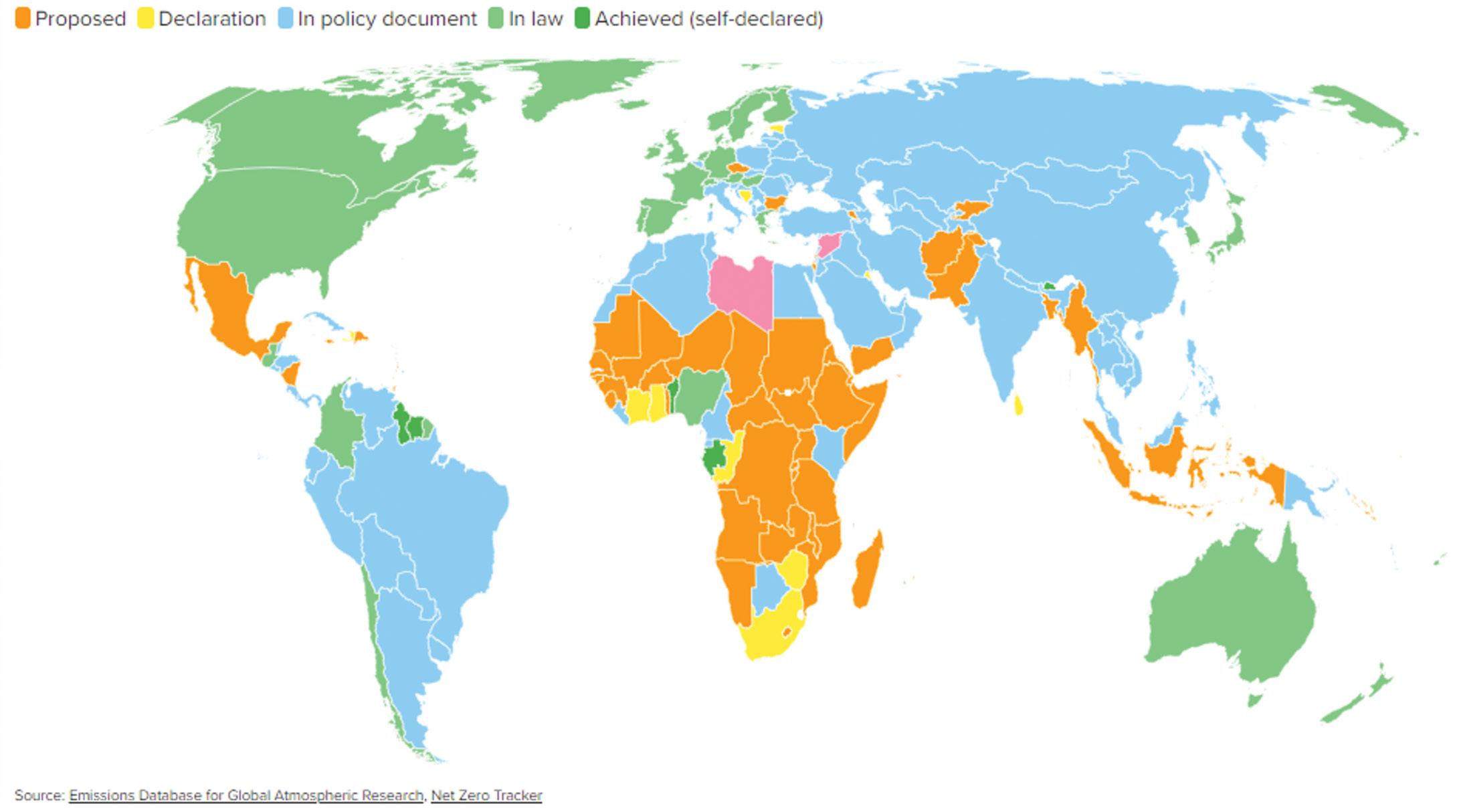
ing nearly 80 percent of global GHG emissions.14 However, the implementation and credibility of these targets vary significantly. New Zealand, the United Kingdom (UK), and the European Union are leading with higher confidence in achieving their goals, backed by comprehensive policies and innovations in governance structures. In contrast, approximately 90 percent of top GHG emitters, including India, Australia, Brazil, and the United Arab Emirates (UAE), are unlikely to meet their targets, due to a lack of legally binding commitments and detailed implementation plans, and ineffective policies in place.15 This gap highlights the challenges in aligning national strategies with global climate objectives and underscores the need for increased cooperation, policy rigor, and technological advancement to ensure a more uniform and effective transition to netzero emissions globally. In the context of reaching net-zero targets, such fragmentation could hinder global cooperation and resource sharing, making it more difficult for coun -
14 Climate Action Tracker, 2023, https://climateactiontracker.org/
15 “Science Based Targets vs. Net Zero,” GRESB, November 25, 2019.
tries, especially those with limited resources, to transition to greener economies. For example, developing nations that are already struggling to balance economic growth with sustainable development may find it increasingly challenging to access the necessary technology and funding for green initiatives.
GEF, Trade in Environmental Goods, and Tariffs
As seen in Figure 2, more than 51 percent of global CO2 emissions are produced by China, the United States, the EU’s twenty-seven member states (EU-27), and other Group of Seven (G7) economies, which have a net-zero target date of 2050, except China, which has a target of 2060. At the same time, these economies depend heavily on each other when it comes to the trade of environmental goods (EGs), which are central to their green energy transition, reducing
3 ATLANTIC COUNCIL
and Net-Zero Targets ISSUE BRIEF
Geoeconomic Fragmentation
Figure 1. Net-Zero Progress (2022)
Proposed Declaration In policy document In law Achieved (self-declared)
China
China
2.
Ca na da United States Unit ed K ingdom EU- 27 Ja pa n Rest of the World
Ca na da United States Unit ed K ingdom EU- 27 Ja pa n Rest of the World
Source: “GHG Emissions of All World Countries,” European Commission, 2023, https://edgar.jrc.ec.europa.eu/report_2023; and authors’ calculation.
their CO2 emissions, and achieving their net-zero targets. Figure 3 shows that, in absolute terms, this mutual dependence between China, on the one hand, and G7 and the EU-27, on the other hand, has been rising rapidly over the past three decades. In relative terms, while the combined G7 and EU-27’s share in China’s total EG imports has declined over the past three decades, they still account for more than 50 percent of China’s total EG imports. Moreover, China’s share in the G7 and EU-27’s total EG imports increased from 2.2 percent to 15.2 percent during the same period (see Figure 4). Given the strong interdependence (of China and the G7/EU-27) in the market for EGs, growing fragmentation, especially in technologies and industries impacting the green energy transition, will pose significant impediments to reaching net-zero targets.16
However, as seen in Figure 5, top CO2 emitters in G7 and EU27 states, such as the United States, Germany, and Japan, have taken measures to reduce their EG dependency on
China, reflecting the complex dynamics involved in GEF influencing the trade of clean technologies. In recent years, for example, the United States has undertaken a strategic shift toward bolstering domestic production of clean technologies, driven by motives to work toward energy independence, job creation in the green sector, and federal incentives promoting local manufacturing.17 Increasing attention to environmental and labor standards in the production of these technologies has also led to a reassessment of sourcing strategies, away from China and toward the EU-27 and other allied countries such as Japan and South Korea.
In addition to increasing fragmentation in EG trade between China and the G7 and EU-27, there are signs for rising pressure for other countries to also choose sides. The authors of a 2021 IMF paper, Sizing Up the Effects of Technological Decoupling, find a more significant loss takes place if “‘nonaligned’ countries are forced to pick sides and trade exclusively with one dominant bloc rather than being free
16 Alvarez, Andaloussi, and Stuermer, “Geoeconomic Fragmentation Threatens Food.” 17 MIT, “Tracking US Progress,” 2023, https://news.mit.edu/2023/tracking-us-progress-path-decarbonized-economy-0915.
4 ATLANTIC COUNCIL ISSUE BRIEF Geoeconomic Fragmentation and Net-Zero Targets
Figure
CO2 Emission of Selected Countries (% share of total 2022 emissions)
48.6% 29.2% 11.2% 6.7% 0.8% 2.2% 1.4%
G7 & EU-27’s EG imports from China (billion $ )
China’s EG imports from G7 & EU-27 (billion $ )
Source: Cross Border Indicators, IMF, https://climatedata.imf.org/pages/bp-indicators; and authors’ calculation.
to trade with multiple dominant blocs.” 18 An IMF study of commodity markets by Alvarez et al. generated a hypothetical scenario with disruptions to the trade of essential minerals between blocs and found that GEF could induce up to a 30 percent decline in renewable energy investments and electric vehicles by 2030,19 which would create significant obstacles for the race to net zero. The authors stress the importance of minerals for attaining net zero and note that the demand for minerals in EG will “rise severalfold in the coming years,” but will face significant obstacles in an increasingly fragmented world as natural resource commodities are concentrated in select geographic locations that may become more difficult to access. 20 On the other hand, choosing trade partners based on need rather than political alliances would contribute to more productive and sustainable flows of both capital and resources to meet netzero targets.
18 Cerdeiro et al., Sizing Up the Effects, 2021.
As nations respond to GEF by prioritizing national interests and security, there has been a marked rise in protectionist policies, including the imposition of tariffs. Tariffs have not only impacted the affordability and accessibility of EGs, but also have broader implications for international collaboration, innovation, and financial stability in the EG sector. Addressing trade barriers associated with tariffs is crucial for ensuring a smooth and equitable transition to a net-zero future.
Tariffs create significant barriers to the free trade of EGs, especially for developing and low-income countries, which are already facing challenges in accessing these technologies. A 2022 World Trade Organization (WTO) report highlights the disparities in access to crucial elements for achieving net zero. The report finds that tariffs on EGs are notably higher in low-income countries, impeding their
19 Alvarez, Andaloussi, and Stuermer, “Geoeconomic Fragmentation Threatens Food.”
20 Alvarez, Andaloussi, and Stuermer, “Geoeconomic Fragmentation Threatens Food.”, 9.
5 ATLANTIC COUNCIL Geoeconomic Fragmentation and Net-Zero Targets ISSUE BRIEF
0 20 40 60 80 10 0 120 140 160 1994 1 9 9 5 1996 1997 1998 1999 2000 2001 2002 2003 2004 2005 2006 2007 2008 2009 2010 2011 2012 2013 2014 2015 2016 2017 2018 2019 2020 2021 Billion $
Figure 3. Environmental Goods Imports, 1994-2021 ($ billion)
Share of China in G7 & EU-27’s EG imports (%)
Share of G7 & EU-27 in China’s EG imports (%)
ability to achieve their net-zero targets (see Figure 6). The authors estimated that eliminating tariffs and reducing nontariff measures on a subset of energy-related environmental goods and environmentally preferable products could boost global exports by “5 and 14 percent above the baseline, respectively, by 2030.”21
GEF also contributes to the imposition of trade barriers that may lead to the aforementioned impediments to the free flow of crucial green technologies across borders. This can contribute to the scarcity or misdirection of financial resources that are essential for sustainable initiatives; in addition, businesses may relocate their operations to places with lenient environmental rules, amplifying pollution and degradation in those areas. Many countries are reevaluating their dependencies on foreign technologies and resources, leading to an increase in tariffs as a tool to pro -
tect domestic industries. This, in turn, is slowing down the global diffusion of clean technologies, which is essential for achieving net-zero targets. For instance, tariffs on solar panels and wind turbines can significantly increase the cost of transitioning to renewable energy sources, thereby hindering global efforts to combat climate change. 22
Additionally, GEF-induced tariffs have indirect consequences on innovation and collaboration. High tariffs discourage international cooperation and research and development (R&D) investments in clean technology sectors, as companies face restricted market access and increased costs. This can lead to a situation where advancements in clean technologies are confined within specific geographic or economic blocs, limiting the global community’s ability to benefit from these innovations.
21 WTO, World Trade Report 2022: Climate Change and International Trade, 2022, 117. 22 Lee and Kaufman, “Q&A | Solar Tariffs,” 2023.
6 ATLANTIC COUNCIL ISSUE BRIEF Geoeconomic Fragmentation and Net-Zero Targets
0% 10% 20% 30% 40% 50% 60% 70% 80% 1994 1995 1996 1997 1998 1999 2000 2001 2002 2003 2004 2005 2006 2007 2008 2009 2010 2011 2012 2013 2014 2015 2016 2017 2018 2019 2020 2021
Figure 4. Environmental Goods Imports, 1994-2021 (%)
Source: Cross Border Indicators, IMF, https://climatedata.imf.org/pages/bp-indicators; and authors’ calculation.
1994199519961997199819992000200120022003200420052006200720082009201020112012201320142015201620172018201920202021
Share of China in Japan’s EG Imports(%)
Share of China in US’ EG Imports (%)
Share of China in Germany’s EG Imports (%)
Share of China in C anada’s EG Im ports (%)
Moreover, the inconsistency in tariff policies across different regions due to GEF creates an unpredictable trade environment. This unpredictability can deter investments in clean technology projects, as businesses and investors seek stable and predictable markets for long-term investments. The resultant financial uncertainty can slow down the pace of both the development and deployment of new, more efficient, and environmentally friendly technologies.
GEF, Technological Decoupling, and FDI
“Technology decoupling” involves reducing international technological interdependence, often in response to national security concerns, the desire for economic autonomy, and/or escalating trade tensions. In the context of GEF, technology decoupling is constrained by reductions in the cross-border flow of critical technologies and knowledge. The concern is that this decoupling effectively diminishes
23 Aiyar et al., Geo-economic Fragmentation, 4.
the comparative advantages associated with the production of green technologies. Technological decoupling is estimated to lead to steeper losses in the global economy than trade restrictions. With the added fragmentation brought by technological decoupling, estimates for the loss in output are between 8 percent to 12 percent in some countries, depending on the severity of trade fragmentation. 23 Philip Barret argues in an IMF paper that international technological diffusion is necessary to cut global emissions of carbon dioxide to almost zero within the next few decades to avoid catastrophic climate outcomes. 24 However, the risks of protectionism, especially when climate policies such as subsidies do not comply with international rules, could undermine trust in multilateral trade rules and result in retaliatory measures. Therefore, advanced economies, where most green innovation takes place, have a significant responsibility to share technology with emerging and developing economies, potentially offering a double dividend by reducing emissions and yielding economic benefits 25 GEF
24 Barret, Can International Technological Diffusion Substitute for Coordinated Global Policies?, 2021.
25 Barret, Can International Technological Diffusion?
7 ATLANTIC COUNCIL
Fragmentation and Net-Zero Targets ISSUE BRIEF
Geoeconomic
0% 5% 10% 15% 20% 25% 30% 35% 40% 45%
Figure 5. Share of China in Environmental Goods Imports, Selected Countries (%)
Source: IMF, https://climatedata.imf.org/pages/bp-indicators; and authors’ calculation.
Source: World Trade Organization, World Trade Report 2022: Climate Change and International Trade, 121, https://www.wto.org/english/res_e/ booksp_e/wtr22_e/wtr22_ch6_e.pdf
and the subsequent technological decoupling poses significant challenges to the diffusion of such technologies, which can delay net-zero targets.
The same is true regarding foreign direct investment (FDI). In developing countries in particular, FDI is integral to expanding private-sector development of industries, sustainable development initiatives, and adoption of green technologies. With GEF, opportunities for developing countries to access crucial capital for the purchase and development of clean technologies become increasingly difficult. J. Ahn et al. identify three FDI channels to low-income and developing economies that are being impacted by GEF: the increasing transformations in the flow of FDI between the United States and its EU and G7 allies to promote “friendshoring” supply chains , countermeasures in the European Commission’s proposed Net Zero Industry Act to address subsidies in -
troduced by the US Inflation Reduction Act, and an effort by China to promote import substitution to depend less on geopolitical rivals. The study also notes a noticeable decline in strategic FDI in 2019 to countries in Asia that have experienced only slight growth, but this excludes China, which has not been able to exhibit recovery.26 Ahn et al. correctly argue this decline in FDI, or “slowbalization,” dates back to the aftermath of the 2007-09 global financial crisis (GFC). Figure 7 shows that the net inflows of FDI increased from around 1 percent of global GDP in the early years of 1990s to its all-time high of more than 5 percent in 2007. However, FDI has been declining in the aftermath of the GFC, a pattern that also is visible for the share of trade in the global GDP (Figure 8). In 2018, the share of FDI in global GDP went below 1 percent—its lowest point in the past twenty-five years; as of 2022, a decade and a half after GFC, this ratio stood at a mere 1.7 percent of the world’s GDP.
26 Ahn et al.,
Fragmentation and Foreign Direct Investment,” 2023.
8 ATLANTIC COUNCIL ISSUE BRIEF Geoeconomic Fragmentation and Net-Zero Targets
“Geoeconomic
7.3 4.5 1.4 11 7.6 2.8 0% 2% 4% 6% 8% 10% 12% Low-income Middle-income H igh-incom e Env ironment al Goods Ot her Goods
Figure 6. Tariffs on Environmental Goods versus other Goods (%) of Applied Tariffs
Geoeconomic Fragmentation and Net-Zero Targets
Source: World Bank. World Development Indicators database.
9 ATLANTIC COUNCIL
ISSUE BRIEF 0% 1% 2% 3% 4% 5% 6% 1990 1991 1992 1993 1994 1995 1996 1997 1998 1999 2000 2001 2002 2003 2004 2005 2006 2007 2008 2009 2010 2011 2012 2013 2014 2015 2016 2017 2018 2019 2020 2021 2022 35% 40% 45% 50% 55% 60% 65% 1990 1991 1992 1993 1994 1995 1996 1997 1998 1999 2000 2001 2002 2003 2004 2005 2006 2007 2008 2009 2010 2011 2012 2013 2014 2015 2016 2017 2018 2019 2020 2021
Figure 7. Global FDI, Net Inflows (% of GDP)
Figure 8. Global Trade (% GDP)
Source: World Bank, World Development Indicators database.
Ahn et al. also forecast that the growing FDI fragmentation will contribute to a decrease in global output by roughly 2 percent of the world’s GDP. Increasingly, geopolitical alignment plays a significant role in determining FDI flows, a trend that has significantly increased in recent years with growing GEF and a substantial rise in FDI flows between allied countries. 27 Hence, the decline in global FDI and its negative impact on global GDP will further marginalize emerging and developing economies as there will be fewer opportunities to access capital, technology, and know-how from advanced economies. 28
GEF, Environmental Governance, and Bretton Woods Institutions
As GEF is characterized by the division of global economic systems due to security considerations, trade conflicts, and other geopolitical and noneconomic disruptions, it poses significant challenges to effective environmental governance. This fragmentation often leads to nations or regional blocs adopting varying environmental standards, which can result in an undesirable “race to the bottom.” For example, geopolitical tensions between the United States and China,
27 Aiyar, Malacrino, and Presbitero, “DP18434 Investing in Friends,” 2023; and Ahn et al., “Geoeconomic Fragmentation.”
28 Aiyar, Malacrino, and Presbitero, “DP18434 Investing in Friends”; and Ahn et al., “Geoeconomic Fragmentation.”
10 ATLANTIC COUNCIL ISSUE BRIEF Geoeconomic Fragmentation and Net-Zero Targets
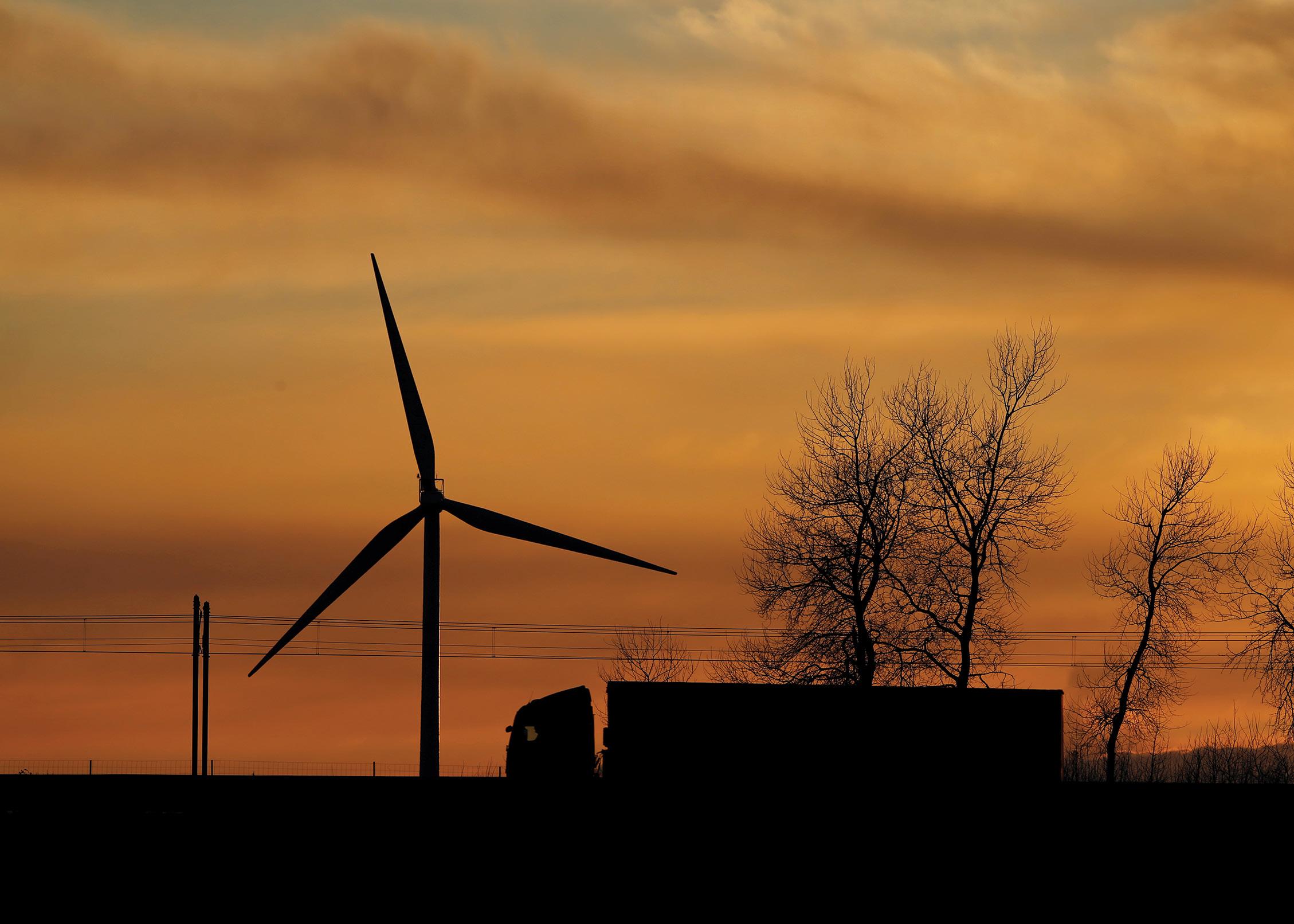
A truck drives in front of power-generating windmill turbines on the Paris-Lille highway during sunset in Wancourt, France, April 3, 2019.
REUTERS/Pascal Rossignol
and Russia’s aggression against Ukraine represent financial fragmentation and geopolitical tensions that “may also split commodity markets along geopolitical lines,”29 write Catalán et al. in a 2023 IMF report. The fragmentation can also hamper the formation and enforcement of multilateral environmental agreements, as seen in the past decade when key economic players abstain from or withdraw from global commitments. This has made it more difficult to coordinate a global response to climate change. As Catalán et al.’s report points out, addressing climate change requires “international cooperation to set country-level greenhouse gas
29 Catalán et al., “Geopolitics and Financial Fragmentation,” 2023, 87.
30 Catalán et al., “Geopolitics and Financial Fragmentation,” 87.
reduction commitments as well as deeper global financial integration to support the needed investments to mitigate and adapt to climate change.”30
GEF also poses the potential to hinder the sharing of pivotal environmental data and a diminished spirit of cooperation on transboundary environmental issues. When economies are fragmented, there is a tendency to prioritize immediate economic benefits over long-term sustainable objectives. Such divisions can further strain diplomatic engagements (especially on shared environmental concerns), disrupt
11 ATLANTIC COUNCIL
Fragmentation and Net-Zero Targets ISSUE BRIEF
Geoeconomic
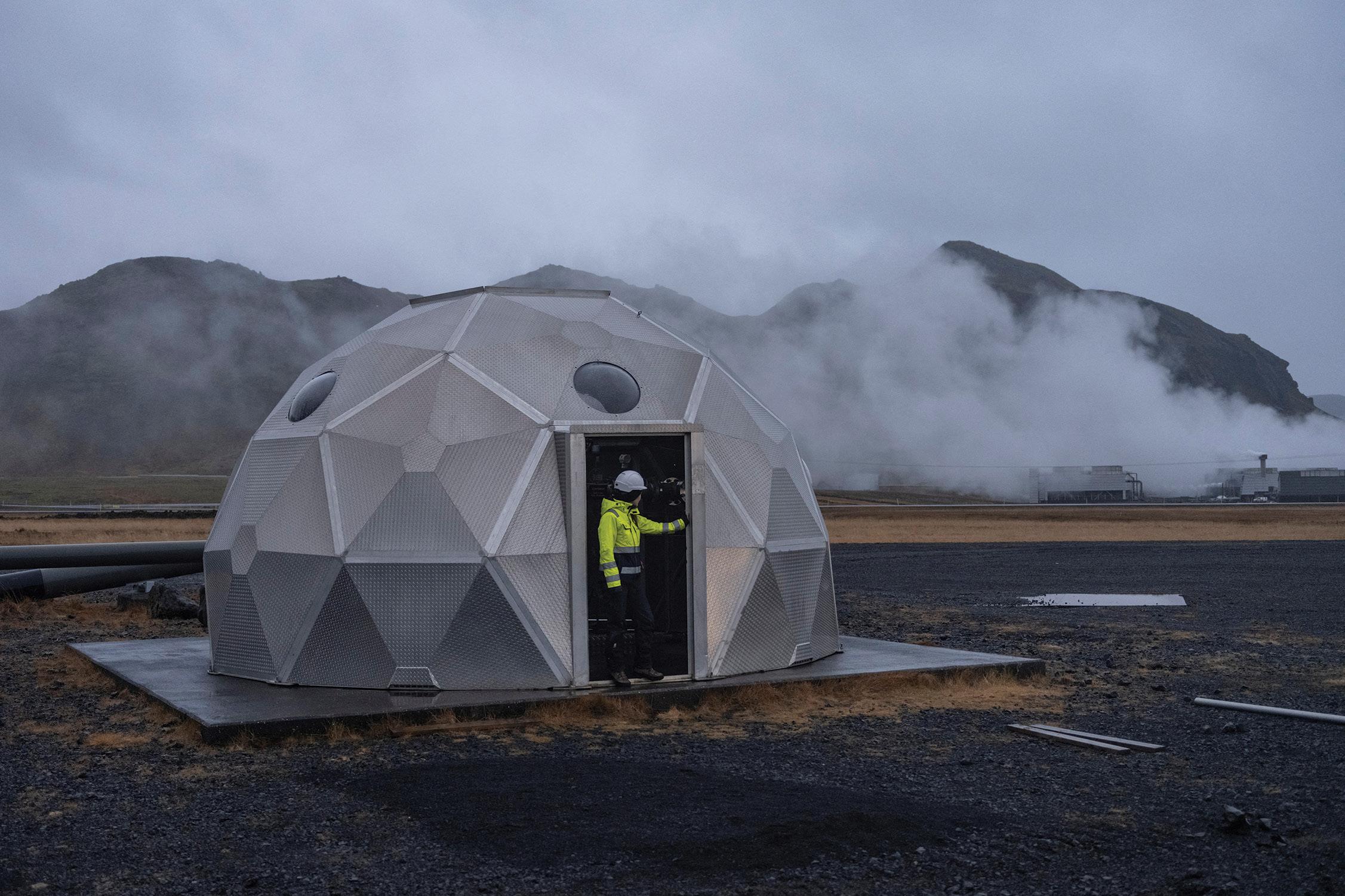
Silja Yraola, an employee of Icelandic startup Carbfix, enters the dome with injection well at its facility in Olfus, Iceland, November 21, 2023. Icelandic startup Carbfix is the world’s first CO2 mineral storage operator, permanently sequestering CO2 by mixing it with water and injecting into basalt rock. At its facility in Olfus, on the southwestern coast of Iceland, CO2 piped in from the nearby power plant is being mixed with water drawn up from the ground and injected into the basalt rock below. REUTERS/Marko Djurica TPX IMAGES OF THE DAY
eco-friendly supply chains, and increase costs for sustainable products, making a cohesive, global approach to environmental governance more challenging.
In contrast, Barett finds “emissions-reducing policies have a positive policy spillover to other countries, dissuading socially harmful technological development, raising the cost of pollution and driving down emissions worldwide.” 31 Research has indicated that increased openness can foster innovation by stimulating domestic competition. The diffusion of ideas, technology, and broad innovation is critical for climate change mitigation efforts.
In light of the complexities illustrated above, it is evident that GEF presents significant challenges to achieving environmental and sustainability objectives, yet potential avenues for leveraging international integration for positive climate outcomes can be facilitated through efforts by the BWIs. The interconnected nature of our global economy— underpinned by the intricate web of trade, FDI, technology diffusion, and environmental governance—underscores the need for a multipronged, multilateral, and collaborative approach. As such, achieving net-zero targets in the face of GEF requires a nuanced understanding of these interrelations that address both the risks and opportunities inherent in our rapidly evolving global governance landscape.
While the BWIs have made considerable efforts to integrate climate change into their considerations, they have faced increasingly fragmented geoeconomic conditions that have strained their ability to promote economic integration and inhibited their efforts in achieving inclusive economic growth. Both the IMF and World Bank have experienced unique challenges in their lending practices and efforts to provide policy advice in association with urgent concerns with climate change. Although the BWIs presupposed that increased financial assistance would yield positive outcomes, under GEF conditions, this aid risks being used to promote forms of economic development that are in opposition to net-zero targets.
Notably, Alvarez et al. recommend the generation of a “green corridor” agreement “to preserve integrated markets for minerals that are critical for decarbonization.” 32 Given that the BWIs have many overlapping goals and the race to net zero requires a concerted and strategic effort to succeed, this paper recommends the establishment of a
31 Barett, Can International Technological Diffusion?, 4.
mechanism that spans the BWIs—including the IMF, World Bank, and WTO—that is chiefly dedicated to the road to net zero. Building on the “green corridor” proposed by Alvarez et al., this report calls for the establishment of a bolder net-zero corridor that will not only work to safeguard the facilitation of EG trade, but also actively develop and monitor goals and progress, allocate funding appropriately, and regulate tariffs to ensure that nations producing environmental goods do not face impediments even as GEF increases. Within the net-zero corridor, as envisioned by this study, the IMF would be largely dedicated to providing technical advice and monitoring relevant metrics of economic and financial performance; the World Bank, using this data, would allocate funding to incentivize EG trade; and the WTO would work toward ensuring that EG trade is safeguarded by regulating tariffs and trade barriers. Additionally, the net-zero corridor would aim to address the impact of GEF on net-zero targets by:
1) Special and differential treatment : As discussed earlier, tariffs on EGs are higher in low-income countries, creating disparities in access to EGs on the road to net zero. The use of special and differential treatment for low-income and developing countries in the context of environmental goods and services within the net-zero corridor would ensure that all nations can participate effectively in the future sustainable global economy.
2) Global cooperation and multilateralism: The BWIs can leverage their unique position as international institutions and conveners to foster global cooperation, encouraging countries to work together to meet climate goals despite other trade and economic conflicts. As platforms for international collaboration, the BWIs already encourage dialogue, but there is scope for these organizations to play a more coordinated and proactive role in fostering collaboration specifically on climate finance and policy coordination that could be achieved by the net-zero corridor.
3) Public-private dialogue: The establishment of a netzero corridor would allow the BWIs to encourage dialogue between governments and the private sector to effectively align international trade rules with industry practices in the field of renewable energy and environmental goods.
32 Alvarez, Andaloussi, and Stuermer, “Geoeconomic Fragmentation Threatens Food.”, 85.
12 ATLANTIC COUNCIL ISSUE BRIEF Geoeconomic Fragmentation and Net-Zero Targets
Significant reforms in the mandates and operations of the IMF, World Bank, and WTO are necessary for these organizations to be able to promote global collaboration and mobilize public and private resources around meaningful climate action. Our recommendations follow by institution.
International Monetary Fund
As an entity dedicated to monitoring global macroeconomic trends and financial markets, the IMF has integrated climate concerns into its operations by developing metrics and models of the economic ramifications of climate change with a focus on mitigation, adaptation, and the transition to a low-carbon economy for member states. For example, the IMF has advocated for the development of carbon taxes and the reduction of fuel subsidies, and contributed
technological advice on how member states can better reach their nationally determined contributions (NDCs). However, more can be done. For example, the IMF should investigate generating metrics on the impact of GEF on netzero targets. As mentioned earlier, there exists a paucity of research and data sources examining the impacts of GEF on climate outcomes. The IMF can work toward the generation of metrics that consider the changing dynamics of FDI dedicated to EG, quantify technology decoupling and its associated impacts, measure trade dependence between member states and the associated risks, assess the degree of fragmentation resulting from tariffs and regional trade blocs, and integrate environmental governance and performance indicators to provide effective recommendations for member states in their transition to a net-zero economy in a global landscape characterized by increasing GEF.
13 ATLANTIC COUNCIL Geoeconomic Fragmentation and Net-Zero Targets ISSUE BRIEF
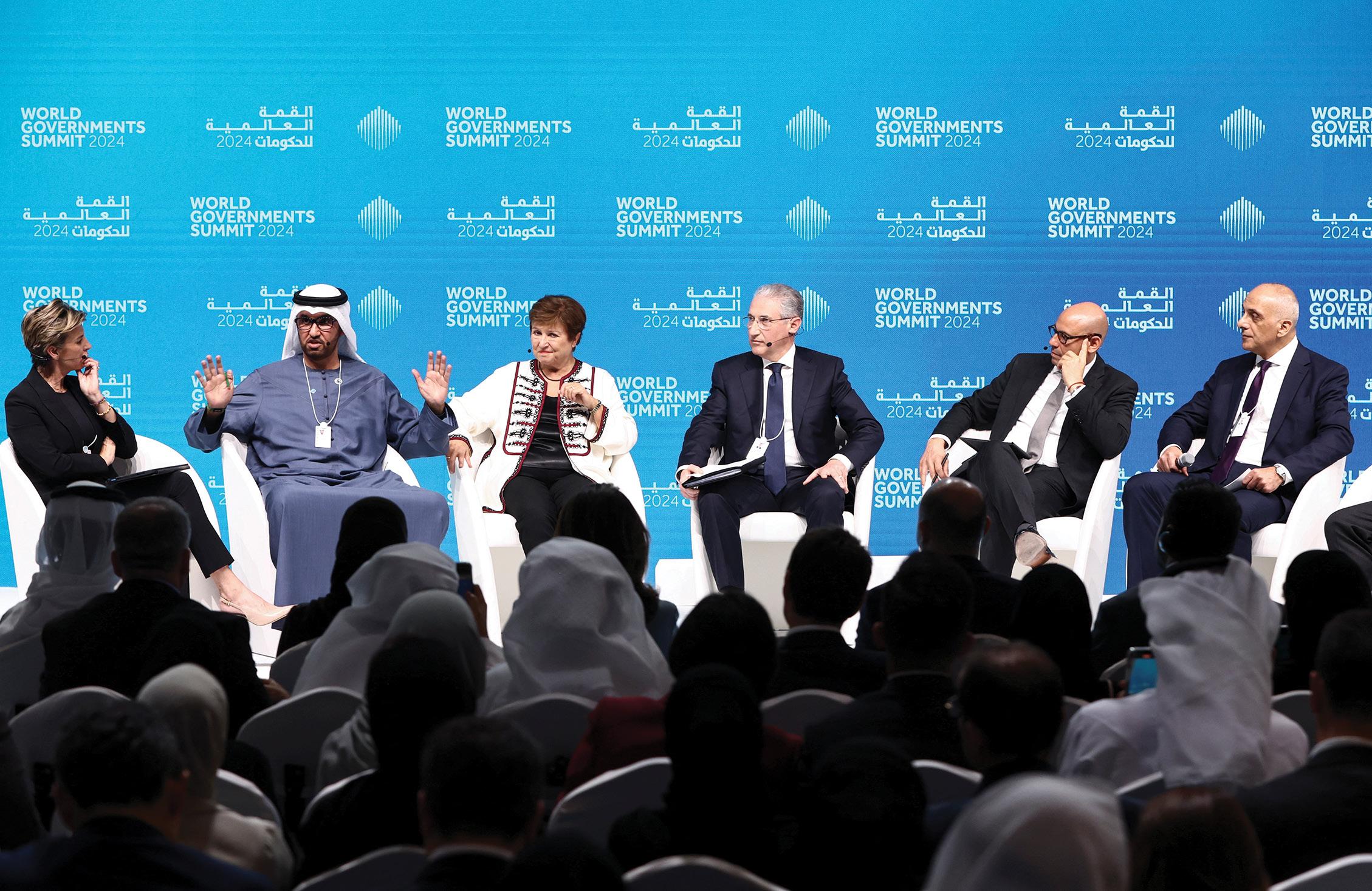
CNN host Becky Anderson, UAE Minister of Industry and Advanced Technology and COP28 President Sultan Ahmed Al Jaber, International Monetary Fund (IMF) Managing Director Kristalina Georgieva, Azerbaijan’s Minister of Ecology and Natural Resources and COP29 President, Mukhtar Babayev, United Nations Framework for Climate Change Executive Secretary Simon Stiell and Jordan Minister of Environment Muawieh Radaideh attend a panel at the World Governments Summit, in Dubai, United Arab Emirates, February 12, 2024. REUTERS/Amr Alfiky
Furthermore, the IMF should actively integrate GEF considerations into IMF policy advice and technical assistance. The IMF regularly provides policy advice to countries, and this has increasingly included advice on sustainable development and how to achieve economic growth that is compatible with climate goals. The addition of metrics associated with GEF in IMF advice and assistance can aid countries in mitigating the impacts of fragmentation on attaining their net-zero targets. While the IMF already advocates for incorporating environmental concerns into broader economic planning, the institution can continue to develop this integration more deeply with GEF in focus.
The World Bank Group
As one of the largest sources of funding and knowledge for developing countries, the World Bank can play a pivotal role in reducing the impact of GEF on the attainment of net-zero targets. The World Bank has already undertaken climate associated initiatives by aiding clients in the implementation of their NDCs and long-term strategies, as well as calling for improvements in climate action-oriented policy and encouraging the integration of private-sector stakeholders in development. 33 In 2022, the World Bank completed more than $31.7 billion of investments in climate initiatives, making the organization the most prominent investor in climate action in developing countries. 34 Additionally, the World Bank has initiated steps to align its financing with the objectives of the Paris Agreement, signed at the 2015 United Nations Climate Conference. 35 With the aid of the IMF’s technical assistance, the World Bank can act as the strategic investment arm of the net-zero corridor to ensure the appropriate allocation of funds in order to reach netzero targets.
The World Bank, through the International Bank for Reconstruction and Development (IBRD) and the International Finance Corporation (IFC), issues green bonds to finance projects that meet specific environmental criteria. Since its first issuance in 2008, the World Bank has been a significant player in the green bond market, helping to establish and develop the market for these instruments.
The IFC, a member of the World Bank Group, also issues green bonds and is one of the pioneers in the market, using the proceeds to support investments in renewable energy, energy efficiency, and other areas that reduce greenhouse gas emissions. 36 Both the IBRD and IFC have become key players in international efforts to mobilize financial resources for climate-friendly development projects around the world, setting examples for standards and transparency in the process. Through these efforts, the World Bank has sought to encourage private- and public-sector investment in projects that contribute to environmental sustainability and the fight against climate change.
While the World Bank has a number of funding mechanisms that support environmental objectives like the Global Environmental Facility, there is a potential to expand these efforts or establish a new fund specifically dedicated to net-zero targets. This could include the establishment of a fund exclusively dedicated to countries that are vulnerable to the impacts of GEF and are in need of aid to mitigate the impacts of GEF on imports of EGs and related technologies. Moreover, through its promotion of private-public partnerships (PPPs), the World Bank can crowd in the needed private capital to bridge the current massive gap in sustainable development and global infrastructure financing, which is going to only become wider because of GEF. Hence, the World Bank needs to pay particular attention to the private sector’s involvement in the global development agenda. The establishment of the Private Sector Investment Lab37 to create solutions addressing barriers to investing in emerging markets is a positive step in this direction. But more in-depth research as well as conversation between the World Bank management and private-sector leaders are needed.
World Trade Organization
The WTO, as the primary international body governing trade rules, can take several steps to mitigate the impact of GEF on net-zero targets. First, the WTO can work toward the successful conclusion of the Environmental Goods Agreement (EGA), which aims to eliminate tariffs on
33 “NDC Support Facility,” World Bank, n.d., https://www.worldbank.org/en/programs/ndc-support-facility.
34 “World Bank Group Exceeds New Climate Finance Target—$31.7 Billion in Funding for Climate Action,” World Bank, September 7, 2022, https://www.worldbank. org/en/news/feature/2022/09/07/world-bank-group-exceeds-new-climate-finance-target-31-7-billion-in-funding-for-climate-action#:~:text=STORY%20 HIGHLIGHTS,the%20duration%20of%20the%20plan.
35 “NDC Support Facility,” World Bank.
36 “What You Need to Know About IFC’s Green Bonds,” World Bank, 2021.
37 “World Bank Names 15 Leading CEOs and Chairs to Join the Private Sector Investment Lab,” World Bank press release, July 10, 2023, https://www.worldbank. org/en/news/press-release/2023/07/10/ceos-and-chairs-to-join-private-sector-investment-lab.
14 ATLANTIC COUNCIL ISSUE BRIEF Geoeconomic Fragmentation and Net-Zero Targets
a wide range of EGs, thereby making it easier and cheaper for countries to access the technologies they need for a green transition. The EGA negotiations were launched in Davos on the sidelines of the World Economic Forum in 2014. Though it is not an established agreement, the EGA is a set of ongoing negotiations among committed WTO members with the aim of eliminating tariffs on a range of EGs. The goal is to make it easier and cheaper for countries to access technologies that can be crucial for environmental protection and combating climate change, such as solar panels, wind turbines, and water treatment filters. Participation in the EGA has grown to forty-six of 164 WTO members, representing a majority portion of global trade in environmental goods. 38 The EGA builds upon a list of fifty-four environmental goods for which Asia-Pacific Economic Cooperation (APEC) leaders agreed to reduce tariffs to 5 percent or less by the end of 2015, with the intent to expand this list and to involve as many WTO members as possible. However, the negotiations have stalled since 2016 as a result of disagreements over issues such as the list of products to be included and a unanimous approach to addressing tariff reductions. In addition, countries with significant economies such as Brazil and India are not taking part, partly due to concerns about the impact of cheaper foreign imports. The negotiations were further complicated by differing demands and political pressures from major participating countries, notably China and the United States. 39 The successful conclusion of the EGA would facilitate access to important EG, particularly as its benefits would extend to all WTO members,40 which could accelerate global efforts to transition toward more sustainable economies aligning with net-zero targets.
Second, the WTO can strengthen its dispute settlement system. The WTO’s dispute settlement mechanism, which was established to efficiently resolve trade disagreements, can help prevent and mitigate trade conflicts by ensuring a steady flow of renewable environmental goods and technology. The mechanism is central to the function of the WTO as it provides a structured process for resolving trade disputes between member countries. It ensures that the rules of global trade are enforced and adhered to in order to maintain an open and reliable trading system. This mechanism would not be possible without the unhindered flow of
environmental goods and technology. As such, the trade of these goods is critical in enabling countries to achieve their net-zero targets. However, the trade of these commodities are susceptible to disputes due to the complex web of policies and regulations that govern them. For example, trade conflicts can emanate from protectionist measures, subsidies for domestic green industries can make these commodities less accessible, or disagreements over environmental standards may complicate a concerted effort to work toward net-zero. By strengthening the dispute resolution system, these conflicts can be mitigated by providing a clear, rule-based system to resolve issues associated with environmental goods and technology. This could in turn ensure a steady flow of renewable energy goods and technologies. The WTO could work toward clarifying rules concerning environmental subsidies and trade policies to ensure they are aligned with net-zero targets. This would result in a more stable and predictable trading environment for EGs, which is needed for furthering cooperation on climate goals and net-zero targets.
By leading such initiatives, the WTO could play a critical role in ensuring that trade policies are not only conducive to economic growth but also aligned with the urgent need to address climate change and support the transition to net-zero economies worldwide.
Conclusion
This study highlights how the current trend toward economic disintegration threatens to undermine the collaborative efforts necessary for combating climate change. As the Bretton Woods institutions strive to navigate the challenges posed by GEF, the research underscores the urgent need for a revived commitment to multilateralism and the adoption of innovative strategies to facilitate the transition to a low-carbon global economy. Through a combination of targeted reforms and focused initiatives such as the proposed net-zero corridor and particular attention to the role of the private sector in global development agenda, the BWIs can play a pivotal role in ensuring that increasing GEF does not come at the expense of the clean energy transition and moving toward a net-zero future.
38 “Environmental Goods Agreement (EGA),” Trade and Environment section, WTO website, https://www.wto.org/english/tratop_e/envir_e/ega_e.htm.
39 Reinsch, Benson, and Puga, “Environmental Goods Agreement,” CSIS, October 28, 2021.
40 “Environmental Goods Agreement (EGA),” WTO.
15 ATLANTIC COUNCIL Geoeconomic Fragmentation and Net-Zero Targets ISSUE BRIEF
About the Authors
Shirin Hakim is an Iranian-American scholar of environmental policy and sustainable development and a Bretton Woods 2.0 Fellow. Hakim is also a Senior Fellow and Head of the Environment, Climate Security, and Public Health Unit at the Iran Futures Program at the Center for Middle East and Global Order. Hakim is a rising voice and frequent commentator on Iranian geopolitics, economic sanctions, climate change, and the nexus between environmental and security issues.
Hakim holds a Bachelor’s in Science in Public Health from the University of Massachusetts Amherst and completed her PhD in Environmental Policy at the Centre for Environmental Policy at Imperial College London. Her dissertation focused on the impact of economic sanctions on sustainable development in Iran, where she was one of the first scholars to examine these sanctions’ effects on sustainable development, the environment, and international climate goals. Before her PhD, Hakim held research positions at Harvard Medical School on HIV/AIDS in Islamic majority contexts, at Cornell Medical Center on radiation oncology, and at Tehran University of Medical Sciences on Disaster Risk Management (DRM) in Iran. Hakim engages in contemporary policy issues as a frequent speaker and contributor at the intersection of environmental issues and socioeconomic realities in Iran and the broader MENA region.
Amin Mohseni-Cheraghlou is the macroeconomist with the GeoEconomics Center and a Senior Lecturer of Economics at the American University in Washington, DC. He is also an Adjunct Faculty at the Columbia University’s Climate School and School of Professional Studies in New York. He leads GeoEconomics Center’s Bretton Woods 2.0 Project and frequently contributes to the Center’s analytical outputs on various issues related to the global economy and international finance. Previously he served as a research economist and consultant in different departments of the World Bank between 2007 and 2020. Most noticeably, he was part of the core team at the World Bank working on several rounds and updates of Bank Regulation and Supervision Survey, Global Financial Development Report, and leading the development of Global Financial Development Database. Amin’s areas of expertise are development macroeconomics, energy economics, and international financial and trade relations with a focus on US, China, and the MENA region. He holds a Ph.D. in Economics, an M.A. in International Development, and a B.S. in Electrical Engineering.
Acknowledgments: The authors wish to thank Bretton Woods 2.0 Next Gen Fellows Jack Tapay-Cueva and Zainub Ali for their research assistance. The authors also thank Nicole Goldin, Jeremy Mark, Martin Mühleisen, Geoffrey Okamoto, and Hung Tran for providing thoughtful comments and the leadership and staff of the Atlantic Council GeoEconomics Center including Naomi Aladekoba, Mrugank Bhusari, Cate Hansberry, and Josh Lipsky.
16 ATLANTIC COUNCIL ISSUE BRIEF Geoeconomic Fragmentation and Net-Zero Targets
Works Cited
Ahn, J., B. Carton, A. Habib, D. Malacrino, D. Muir, and A. Presbitero. (2023). “Geoeconomic Fragmentation and Foreign Direct Investment.” IMF World Economic Outlook: A Rocky Recovery. Washington: International Monetary Fund.
Aiyar, M. S., D. Malacrino, and A. Presbitero. (2023). “DP18434 Investing in Friends: The Role of Geopolitical Alignment in FDI Flows,” CEPR Discussion Paper No. 18434. Paris and London: Center for Economic Policy Research Press. https://cepr.org/publications/dp18434
Aiyar, M. S., M. J. Chen, C. Ebeke, M. C. H. Ebeke, M. R. Garcia-Saltos, T. Gudmundsson, and M. J. P. Trevino. (2023). Geo-economic Fragmentation and the Future of Multilateralism. IMF Staff Discussion Notes. International Monetary Fund.
Alvarez, J., M. B. Andaloussi, C. Maggi, A. Sollaci, M. Stuermer, and P. B. Topalova. (2023). Geoeconomic Fragmentation and Commodity Markets. IMF Working Papers WP/23/201. International Monetary Fund.
Alvarez, J., M. B. Andaloussi, and M. Stuermer. (2023, October 3). “Geoeconomic Fragmentation Threatens Food Security and Clean Energy Transition.” Blog. International Monetary Fund. https://www.imf.org/en/Blogs/ Articles/2023/10/03/geoeconomic-fragmentation-threatens-food-security-and-clean-energy-transition.
Barret, P. (2001). Can International Technological Diffusion Substitute for Coordinated Global Policies to Mitigate Climate Change? IMF Working Paper WP/21/173. https:// doi.org/10.5089/9781513585765.001
Bolhuis, M. A., J. Chen, and B. Kett. (2023, June). “The Costs of Geoeconomic Fragmentation.” Finance & Development, 35-37. International Monetary Fund. https:// www.imf.org/en/Publications/fandd/issues/2023/06/ the-costs-of-geoeconomic-fragmentation-bolhuis-chen-kett.
Catalán, M. (co-lead), M-S. Dovì, S. Fendoglu, O. Khadarina, J. Mok, T. Okuda, H. R. Tabarraei, T. Tsuruga (co-lead), and M. Yenice, under the guidance of F. Natalucci and M. Qureshi. “Geopolitics and Financial Fragmentation: Implications for Macro-Financial Stability.” In Global Financial Stability Report, April 2023, 81-101. International Monetary Fund.
Cerdeiro, D. A., R. Mano, J. Eugster, D. V. Muir, and S. J. Peiris. (2021). Sizing Up the Effects of Technological Decoupling. IMF Working Paper WP/21/69. International Monetary Fund.
Climate Action Tracker. (2023). https://climateactiontracker.org/
Fung, Courtney J. (2016). “China and the Responsibility to Protect: From Opposition to Advocacy.” PeaceBrief 205. United States Institute of Peace.
Góes, C., and E. Bekkers. (2022). The Impact of Geopolitical Conflicts on Trade, Growth, and Innovation World Trade Organization.
GRESB. (2019, November). “Science Based Targets vs. Net Zero: What’s the Difference? Why Do They Matter?” https://www.gresb.com/nl-en/science-based-targets-vsnet-zero-whats-the-difference-why-do-they-matter/
Hakim, S., and K. Makuch. (2022). “Conflicts of Interest: The Environmental Costs of Modern War and Sanctions.” Commentary. Royal United Services Institute. https:// www.rusi.org/explore-our-research/publications/commentary/conflicts-interest-environmental-costs-modern-war-and-sanctions.
Lee, L. Y., and N. Kaufman. (2023). “Q&A | Solar Tariffs and the US Energy Transition.” Blog. Center on Global Energy Policy at Columbia University. https://www.energypolicy.columbia.edu/ qa-solar-tariffs-and-the-us-energy-transition/
Luckhurst, J. (2019). “Governance Networks Shaping the G20 through Inclusivity Practices.” South African Journal of International Affairs 26, no. 4: 521-547.
Massachusetts Institute of Technology. (2023, September). “Tracking US Progress on the Path to a Decarbonized Economy.” MIT News. https://news.mit.edu/2023/ tracking-us-progress-path-decarbonized-economy-0915.
Mohseni-Cheraghlou, A., and H. Evans. (2024, January). “Climate Change Prioritization in Low-income and Developing Countries.” Issue Brief. Atlantic Council. https://www.atlanticcouncil.org/in-depth-research-reports/issue-brief/climate-change-prioritization-in-low-income-and-developing-countries/.
17 ATLANTIC COUNCIL
Net-Zero Targets ISSUE BRIEF
Geoeconomic Fragmentation and
Mulder, N.. The Economic Weapon: The Rise of Sanctions as a Tool of Modern War. New Haven, CT: Yale University Press, 2022.
Müller, M., and M. Laboure. (2023, August). “How the Great Decoupling Impacts Global Trade.” Deutsche Bank.
Reinsch, W. A., E. Benson, and C. Puga. (2021, October). “Environmental Goods Agreement: A New Frontier or an Old Stalemate?” Center for Strategic and International Studies (CISA). https://www.csis.org/analysis/environmental-goods-agreement-new-frontier-or-old-stalemate.
World Bank. (2022, September). “World Bank Group Exceeds New Climate Finance Target—$31.7 Billion in Funding for Climate Action.” Feature Story. https://www. worldbank.org/en/news/feature/2022/09/07/worldbank-group-exceeds-new-climate-finance-target-31-7billion-in-funding-for-climate-action#:~:text=STORY%20 HIGHLIGHTS,the%20duration%20of%20the%20plan.
World Bank. (2021). “What You Need to Know About IFC’s Green Bonds.” Climate Explainer Series https:// www.worldbank.org/en/news/feature/2021/12/08/ what-you-need-to-know-about-ifc-s-green-bonds.
World Trade Organization. (2022). World Trade Report 2022: Climate Change and International Trade, Chapter 6, Key Facts and Findings. https://www.wto.org/english/ res_e/booksp_e/wtr22_e/wtr22_ch6_e.pdf
18 ATLANTIC COUNCIL ISSUE BRIEF Geoeconomic Fragmentation and Net-Zero Targets

CHAIRMAN
EXECUTIVE CHAIRMAN EMERITUS
CHAIRMAN
PRESIDENT AND CEO
EXECUTIVE CHAIRMAN EMERITUS
EXECUTIVE VICE CHAIRS
PRESIDENT AND CEO
VICE CHAIRS
EXECUTIVE VICE CHAIRS
TREASURER DIRECTORS
VICE CHAIRS
TREASURER DIRECTORS
Jarosław Grzesiak
Jarosław Grzesiak
HONORARY DIRECTORS
HONORARY DIRECTORS
*Executive Committee Members
List as of March 27, 2024
*Executive Committee Members
List as of March 27, 2024
The Atlantic Council is a nonpartisan organization that promotes constructive US leadership and engagement in international affairs based on the central role of the Atlantic community in meeting today’s global challenges. © 2024 The Atlantic Council of the United States. All rights reserved. No part of this publication may be reproduced or transmitted in any form or by any means without permission in writing from the Atlantic Council, except in the case of brief quotations in news articles, critical articles, or reviews. Please direct inquiries to: Atlantic Council 1030 15th Street, NW, 12th Floor, Washington, DC 20005 (202) 463-7226, www.AtlanticCouncil.org