Atlanta Music Project World Music Festival Choir Concert
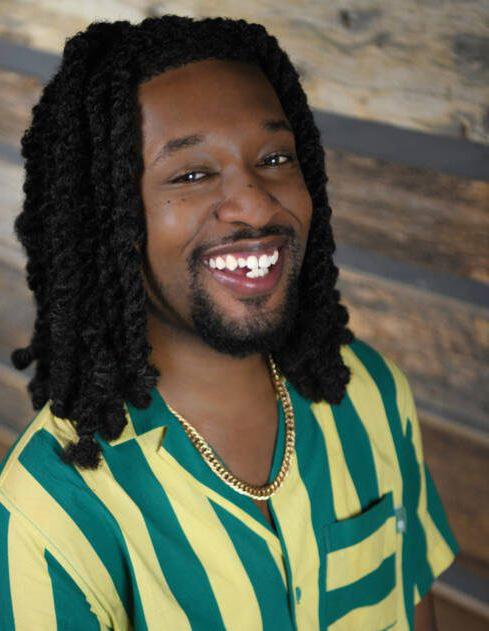
Keeyen Martin, a dynamic Charlotte, NC native, has swiftly established himself as a captivating force in R&B, Pop, and Soul music. Recently celebrated as the “Electrifying R&B Prince,” Keeyen’s genre-blending style continues to inspire audiences worldwide, with performances that bridge generations and leave a lasting impact at every show. Earning the prestigious Michael Jackson Scholarship to Morehouse College, Keeyen achieved his BA in Music and Spanish before going on to complete his Master’s in Entertainment Business from Full Sail University.
His academic achievements are matched by an illustrious performance career: Keeyen has shared stages with industry
legends including Stevie Wonder, Aretha Franklin, Pharrell Williams, John Legend, Monica, Lil Wayne, Fantasia, Jennifer Hudson, Teyana Taylor, Kanye West, Rick Ross, Keyshia Cole, Tweet, Michelle Williams, Mya, Keri Hilson, Raheem Devaughn, Peabo Bryson, KeKe Wyatt, PJ Morton, Common, Lalah Hathaway, and BeBe & CeCe Winans, among others.
Keeyen’s performance résumé includes sold-out R&B tours, a 25-city international tour across the UK and Europe, and appearances at the BET Awards, Roots Picnic, Red Bull Music Fest, VH1 Save The Music, BET Music Matters, Sofar Sounds, Grammy Week events, and the TV One Trumpet Awards. He has performed on iconic stages, including the Vatican for Pharrell’s Grace For The World Concert, as well as major festivals, television events, and global tours.
Beyond performing, Keeyen is an educator and mentor who has guided more than 1,000 youth through The Atlanta Music Project and Inspire The Fire. He has provided voice lessons, coaching, and artistic training, recently teaching Artist Development at Morehouse College, working with The ABSYO Chorus in Antigua and Barbuda, and teaching arrangements to a 250-voice choir in Rome, Italy.
His artistry includes charting singles such as Scared To Love, You Should Know, Girl I’m on the Way, and Paradise, while his debut EP Neutral has surpassed one million streams. His music has been featured on The Real Housewives of Atlanta, BET, Bravo, Fox, and in national films. Through his performances, mentorship, and creative work, Keeyen Martin continues to shape contemporary R&B as an artist, educator, and visionary.
MEETTHECONSULTINGCURATOR
COLLIN EDOUARD
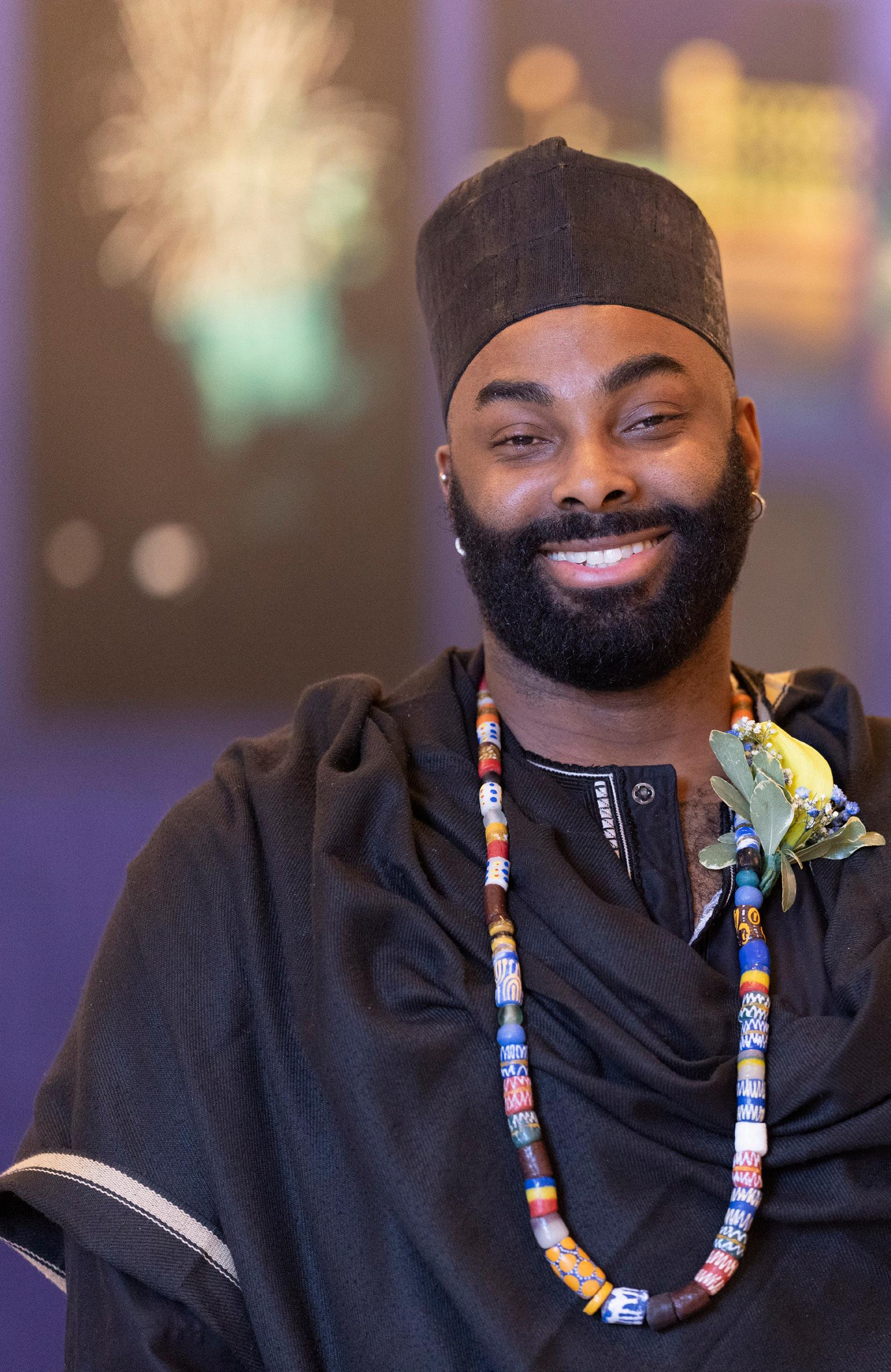
Houngan Collin Edouard is a Ph.D. candidate whose scholarship lives at the intersection of academic rigor and grassroots healing. Over the years, he has redefined the relationship between academic spaces and local diverse cultural landscapes. Collin’s work is rooted in the belief that local practitioners — from Haitian musicians to grassroots activists — are not merely subjects of study, but essential ‘knowledge bearers’ who deserve equal partnership with the university. He researches the role of vocality in Haitian Vodou ceremonies. For his research, he won the 2023 Karen McCarthy Brown Award from the Scholarly Association for the Study of Haitian Vodou (KOSANBA) and the 2024 Emerging Scholars Award from the Haitian Studies Association. He is a Voting Councilor and Director of Outreach with Phi Beta Kappa New York (PBKNY), and a Junior Board member with KOSANBA. Edouard holds degrees from the University of Cambridge, Teachers College, Columbia University, and The City College of New York.
He serves as adjunct professor of music at the University of Bridgeport, where he won the 2024 Excellence in Teaching Award. He designed the course Music of the Global South, facilitating cross-cultural engagement through diasporic musical practices. His scholarship and pedagogy foreground marginalized sonic traditions and their social contexts. A contributing author to The New Teacher’s Guide to Overcoming Common Challenges, Edouard has led educational and musical initiatives across Spain, Uganda, Turkey, India, Iraq, England, and the United States. He is a priest in the Haitian Vodou tradition and a member of Sosyete Nago.
CZECHIA
Napadly
písně (Songs
Descended on My Soul)
“Napadly pisne v dusi mou”, No. 1 of the V Přírodě, Op.63 (5 songs, “In Nature’s Realm”)
Composed in 1882, January 24-27 - Antonín Dvořák
Text written by Vítězslav Hálek (1835–1874)
“Napadly písně” (which translates to “Songs Came to Me” or “Songs Fell into My Soul”) is a beautiful choral piece by Czech composer Antonín Dvořák. It is the first movement of his choral cycle V Přírodě (In Nature’s Realm), Op. 63 (1882).
The Czech “J”: Always pronounced like an English “Y” (e.g., jako = YAH-ko).
The Czech “CH”: Pronounced like the soft, breathy “ch” in the Scottish word Loch or German Bach. Never punch it like the English “chair.”. Heavy emphasis on the first syllable of every word.
• Pronunciation: [YAH-ko kdizh PAHD-neh RO-sah nah poh-oosht]
• Meaning: Like when dew falls on the wilderness,
• Czech Text: na poušť i na tichý luh.
• Pronunciation: [nah poh-oosht ee nah TIH-khee lookh]
• Meaning: On the wilderness and on the quiet meadow.
CZECHIA
“Proč
bychom se netěšili” (Why Would We Not Rejoice? Aka Let Us Rejoice and Be Merry)
From the comic opera Prodaná nevěsta (The Bartered Bride/The Sold Bride)
Music by Bedřich Smetana
Libretto by Karel Sabina
“Proč bychom se netěšili” is the opening chorus of the opera. The opera is a celebration of rural life and love in a small Czech village. “Proč bychom se netěšili” is sung by the villagers who are excited about the upcoming fair.
Czech: Proč bychom se netěšili, English: Let us rejoice, let’s be merry
Czech: když nám Pán Bůh zdraví dá, English: while the Lord grants us good health
Czech: kdož z nás ví, zdaž pout’ budoucí
English: who knows whether this time next year
Czech: vesele tak uhlídá.
English: all of us shall still be here
Czech: A kdo ženat, která vdaná, English: Married men and married women
Czech: rozžehnej se s radovánky.
English: say goodbye to joy and freedom.
Czech: Žena doma hospodaří, English: household chores await the woman
Czech: muž se uklídá za džbánky.
English: while to drinking takes her good man.
Czech: Ouvej, ouvej, English: Alas, alas,
Czech: konec radostí, English: this the end of joy
Czech: hrnou se starosti, zlosti, mrzutosti! English: instead there will be strifes, worries and conflicts!
Czech: Ouvej, ouvej! English: Alas, alas!
Czech:Proč bychom se netěšili, English: Let us rejoice, let’s be merry
Czech: když nám Pán Bůh zdraví dá, English: while the Lord grants us good health
Czech: jenom ten jest v pravdě šťasten, English: only he is truly happy
Czech: Kdo života užívá. English: who enjoys life while he lives.
CZECHIA
A Ja Sam (All By Myself)
Traditional Czech Polka
This song is one of the most popular Czech polkas. Its a happy upbeat song, but the lyrics are actually about a guy whose lover left him.
Czech: A já sám, vzdyčky sám,
English: All alone, always alone
Czech: Své koníčky osedlám
English: I saddle my horses
Czech: A já sám, vzdyčky sám
English:All alone, always alone
Czech: Své koníčky osedlám
English: I saddle my horses
Czech: Své koníčky okšíruju
English: I’m brushing my horses
Czech: Svou Mařenku pomiluju
English: My Maria, I love her
Czech: A já sám, vzdyčky sám
English: All alone, always alone
Czech: Své koníčky osedlám
English: I saddle my horses
SOUTH AFRICA TEXTSANDTRANSLATIONS
Ke Nna Yo Morena
Setswana Traditional
Translation: Setswana Traditional
This is a gospel song praising the Lord by saying our eyes are strong and fighting for his glory.
Ngothando Mbuso Ndlovu
Background: Ngothando is a song written in IsiZulu, a language spoken by the Zulu people (AmaZulu) in South Africa. The song is a message to the rest of the world that it is only through love that we can conquer the barriers that stand between us, the poverty and disease that surround us. Let’s open our hearts and not fear the unknown. Let’s search deep within ourselves, knowing that we do have enough resources.
Ngothando Translation and IPA Pronunciation Guide
Original Text Translation
Ngothando kuphela, Through love, only, IPA: [ŋGo’tando ku’pєla]
Sonqoba konke, We will conquer everything, IPA: [son’!oba kon’kє]
Sivul’ iinhliziyo zethu, Let us open our hearts, IPA: [si’vul inçli’zio ‘zєtu]
Singesabi lutho, And let us fear nothing, IPA: [si’ŋGesabi ‘luto]
Ngothando... Through love... IPA: [ŋGo’tando]
SOUTH AFRICA
Ndikhokhele Bawo
A traditional prayer sung in isiXhosa
Arranged by Lhente-Mari Pitout
Background: Ndikhokhele Bawo is a popular prayer still sung in churches in South Africa today. The music has been taught orally to countless singers from a young age and has been heard from their grandparents during the service. The call and response of the soloist leads the choir/ congregation in the service. This arrangement is part of the regular repertoire of the professional choir EXIGENCE.
“Lithisikiya,” an anti-apartheid song in three indigenous languages of South Africa: Xhosa, Zulu, and Sotho.
The text involves a plea for equality and opportunity (Leth’isikhiye - “Give me the key” in Xhosa, Vula’masango - “Open the door” in Zulu) to a call to action. (Shayi Thobela - “Do not obey” in Sotho) to what is often interpreted as a prayerful sound (Tsi-wi-wi-wi - no meaning).
PROGRAMNOTES
BY COLLIN EDOUARD
CONSULTING
CURATOR, AMP
WORLD MUSIC FESTIVAL
CZECHIA
To clarify any potential misunderstandings regarding the name Czechia, we would like to provide some brief information In 2016, the Czech Republic officially adopted “Czechia” as its shortened official name in English. While the full political designation, “the Czech Republic,” remains valid for official and diplomatic documentation, the government has endorsed the use of Czechia in general contexts. This decision creates a more straightforward alternative, akin to how “France” is used to refer to the French Republic.
Napadly písně (Songs Fell to my Soul)
Antonín Dvořák (1841–1904)
Antonín Leopold Dvořák was a distinguished Czech composer, conductor, and educator, regarded as one of the most prominent and early internationally recognized musicians from the Czech Republic. Having received extensive training as a violinist, organist, and pianist, Dvořák was a prolific composer who left an enduring legacy in chamber, choral, and symphonic music. He gained significant international recognition in the 1870s with the release of his “Slovanské tance” (Slavonic Dances) Op. 46, which was initially composed for piano four hands and later arranged for orchestra. Dvořák’s compositions are characterized by a rich incorporation of Bohemian and Moravian folk elements, using rhythmic motifs and melodic lines derived from these traditions. As his career progressed, he began to integrate influences from American folk music and from his students’ works. His orchestration is both subtle and intentional, closely reflecting his unique compositional identity and distinguishing him from other prominent Romantic composers of his era.
The selection presented this evening is Napadly Písně, the first piece in his famous five-part choral cycle “V Přírodě” (In Nature’s Realm, Op. 63), Poems by Vítězslav Hálek (1835-1874). It was first performed on November 22, 1882, in Tábor by the Hlahol Society of Singers under the direction of Josef Pfeiffer. The musical characteristics of Napadly Písně include an Andante in G major that beautifully encapsulates a lyrical, warm, and uplifting atmosphere. This particular tempo and key create a sense of ease and serenity, inviting listeners to engage with the piece’s emotive qualities. Imagine, during a deep contemplative moment, lyrical sounds flood your body seemingly from nowhere, and these sounds that cocoon you illustrate the quiet of the moon and the shuffling of the wind before the sun wakes. One can almost understand how the use of these sounds inspires one to imagine lush fields, flowing rivers, and tranquil scenes found in the countryside. Do you see them? Can you feel them? The style of the work is a testament to Dvořák’s deep affection for the Bohemian countryside, or the “stéblokadeřavé stráni” (shrubby hillside), as the harmonic progression undulates up and down, loud and soft, weaving rich, folkinspired melodies imbued with cultural significance and charm. Throughout the composition, a near-impressionistic quality vividly evokes the beauty of nature, allowing the listener to experience a sensory landscape filled with pastoral imagery.
PROGRAMNOTES
BY COLLIN EDOUARD
CONSULTING CURATOR, AMP WORLD MUSIC FESTIVAL
CZECHIA
Goin’ Home: Words and Adaptation by William Arms Fisher (18611948)
Our second piece continues with Antonín Dvořák, who wrote his Symphony No. 9, “From the New World,” soon after arriving in America in 1893. A melody from the second movement took on a new life as a popular American song that continues to be reinvented. The theme, originally played by a solo English horn, begins the second (largo) movement and, for a time, sparked debate over the origin of these sounds. Was it an American spiritual? A gospel hymn? Were its tunes inspired by indigenous Americans? Is it a Czech folk tune? Or was it something that braided these elements together?
Dvořák had come to New York City to serve as director of the National Conservatory of Music of America, a conservatory founded in 1885 with the goal of cultivating American music. Dvořák soon began working on the symphony, which he said reflected his impressions and greetings from the New World. He brought to it his studies of spirituals and Native American music, as well as his own Czech culture. This is evident in the repeated phrase “Goin’ home, goin’ home,” a direct motif drawn from American spirituals. It’s a blend of melodies that reflect essential American concepts, particularly as viewed through the lens of European sensibilities. It evokes the vastness of the American landscape, capturing the grandeur of its open spaces and the beauty of its natural scenery. At the same time, there is an undercurrent of nostalgia reminiscent of Dvořák’s own experiences. This composition seems to convey a poignant sense of isolation in America, expressed through music that yearns for the familiarity of his European heritage found in the lush greenery mentioned earlier. This blend of longing and appreciation paints a vivid picture of the emotional landscape he navigated while far from home.
One of Dvořák’s students, William Arms Fisher, was the one who put words to the longing melody from the second movement. He called the new song, “Goin’ Home,” and had it published in 1922. Singer Jan Clayton (1917-1983) performed it in the 1948 movie, The Snake Pit, and ten years later, it was famously sung at a 1958 concert by Paul Robeson (1898-1976) at Carnegie Hall. It is an unlikely piece that demonstrates that unity can be found in the familiarity of space and nostalgia.
PROGRAMNOTES
BY COLLIN EDOUARD
CONSULTING CURATOR, AMP WORLD MUSIC FESTIVAL
CZECHIA
Proč bychom se netěšili (Why Should We Not Rejoice?)
Bedřich Smetana (1824–1884)
Bedřich Smetana was naturally gifted as a composer and gave his first public performance at the age of six. He is perhaps best known for his cycle of six symphonic poems, titled “Ma Vlast,” which translates to “My Fatherland.” This collection is often associated with his opera “Libuše” and has been regarded as a representation of the Czech nation’s enduring struggle for identity. “Ma Vlast” serves as both an analysis of Czech history and a depiction of its stunning landscapes, reflecting Smetana’s admiration for the richness and greatness of the Czech nation.
Tonight you will hear one of the most beloved Czech musical works, Proč bychom se netěšili (“Why Should We Not Rejoice?”), from the exuberant chorus of Bedřich Smetana’s comic opera The Bartered Bride (Prodaná nevěsta). Premiered in 1866, the opera became a cornerstone of Czech national identity, celebrating rural life, folk traditions, and the spirit of ordinary people with warmth, humor, and irresistible musical vitality. The song appears early in the opera as the villagers gather to celebrate at a country fair. Their joyful refrain, “Why should we not rejoice?”, captures the festive atmosphere of a community united by music, dance, and shared celebration. Smetana’s music bubbles with energy, propelled by lively rhythms, bright harmonies, and melodies that evoke the character of Czech folk song without directly quoting traditional tunes. More than a simple drinking or festival song, Proč bychom se netěšili embodies the optimism and communal spirit at the heart of the opera. Smetana created a distinctly Czech musical voice, one that spoke not through grand political statements but through the lives, customs, and songs of everyday people.
The lasting appeal of this chorus can be attributed to its infectious sense of joy. Its music invites both performers and listeners to engage in a celebration, effectively transforming the concert hall into a vibrant gathering place filled with laughter and anticipation. More than 150 years since its premiere, Proč bychom se netěšili continues to symbolize Czech cultural pride and serves as a symbol of music’s ability to unite individuals in shared happiness. Indeed, “Why should we not rejoice” encapsulates the notion that, despite the challenges we face in the world, we can still appreciate the blessings of life.
PROGRAMNOTES
BY COLLIN EDOUARD
CONSULTING CURATOR, AMP WORLD MUSIC FESTIVAL
CZECHIA
A Ja Sam (And I alone), Traditional Polka
We shift tonight’s selections to more traditional sounds of the region. Aj Ja Sam conveys a powerful sense of independence and self-reliance, symbolized by saddling one’s own horse. This imagery serves as a metaphor for taking control of one’s own life and responsibilities. Throughout the piece, the importance of bearing one’s own burdens is highlighted, akin to the dedication required to care for and saddle one’s horses, which often demands hard work and commitment. In addition to themes of independence, the song beautifully explores the concept of finding solace in personal connections. The deep affection expressed for a loved one adds a layer of warmth and intimacy, suggesting that while individuals may strive for autonomy, they also value meaningful relationships. The instrumentation contrasts the somewhat lonely nature of the text with the joyous accordion, tuba, and up-tempo pace. As such, it weaves together themes of loneliness, independence, and joy, illustrating the complex emotional landscape of forging one’s own path while cherishing connections with others. It emphasizes the balance between self-sufficiency and the human desire for companionship, making it a rich and poignant reflection on life’s journey. And, like any folk song, A Ja Sam highlights the voices of the people and shows that no matter how lonely certain parts of life may be, standing on one’s own two feet animates pride and ignites a reason to dance.
PROGRAMNOTES
BY COLLIN EDOUARD
CONSULTING CURATOR, AMP WORLD MUSIC FESTIVAL
SOUTH AFRICA
Ke Nna Yo Morena, (It is I, the Lord ), Setswana
Traditional Song
Maintaining the flow of traditional sounds of the people, we travel south to a place where we are all connected. A song of unshakable faith and a desire to communicate with something greater, Ke Nna Yo Morena focuses on the energies that cannot be seen or explained: one must experience it to understand. For this performance, the choir will be singing in the song’s local language. Setswana, also known as Tswana, is an indigenous language of Southern Africa. It serves as the national language of Botswana and is recognized as one of the eleven official languages of South Africa. The language is spoken by approximately 8 to 13 million individuals throughout the region, highlighting its significance in the cultural and linguistic landscape of Southern Africa. Ke Nna Yo Morena is frequently sung alongside the song “Tshela Moya” (Pour out Your Holy Spirit). Rooted in South African oral tradition, the exact original composer of the song is unknown, but this did not hinder it from blossoming as a communal chant used to celebrate the divine presence, express thankfulness, and acknowledge God’s supreme rule. Because of its popularity, some have labeled it “South African gospel,” but that label might flatten the nuanced experience of this particular community. With its scheelike cadence and uplifting harmonic progression, it reflects the rich tradition of Black South Africans utilizing layered spiritual meanings to communicate faith, community resilience, and praise across diverse congregations. It will be a challenge not to feel a divine presence while listening to this song.
Mbuso Ndovu is a distinguished music director, choir conductor, composer, producer, and artist hailing from Madadeni-Newcastle in KwaZulu-Natal, South Africa. Throughout his educational journey, Mbuso actively participated in choral singing, gumboot and traditional dances, as well as Isicathamiya (Mbube). Mbuso has established himself as a highly sought-after music director, clinician, adjudicator, and producer, recognized for his exceptional contributions to the fields of Traditional African choral music and African indigenous music and dance. Currently, he directs and conducts vocal and dance ensembles, choirs, bands, and African drumming and marimba groups. His notable works have been published and performed in several local and international settings, reflecting his commitment to the advancement of music and cultural expression.
One of his many selections, Ngothando, performed in isiZulu, highlights the transformative power of love, illustrating its capacity to unite individuals, mend divisions, and foster compassion within communities. Drawing inspiration from the rich vocal traditions of South Africa, Ngothando integrates expressive melodies, emotive harmonies, and percussive rhythms on the shekere, bongos, and djembe to produce a work that is both heartfelt and uplifting. The music exemplifies Ndlovu’s dedication to merging traditional African musical elements with contemporary choral arrangements, resulting in a sound that is not only accessible and engaging but also deeply meaningful. You can almost hear the call for unity from the djembe that begins the song. The voices “hmmm” together while the drum speaks, an act that grounds interconnectedness. Through its profound message of unity, kindness, and shared humanity, Ngothando emphasizes that love transcends boundaries and serves as a powerful catalyst for understanding and hope. The work’s warmth and sincerity render it a memorable contribution to any choral performance, inviting both performers and audiences to reflect on the connections that unite us all.
Perhaps no one can say it better than the composer himself in his own words:
“The song is a message to the rest of the world that it is only through love that we can conquer the barriers that stand between us, the poverty and disease that surround us. Let’s open our hearts and not fear the unknown. Let’s search deep within ourselves, knowing that we do have enough resources.”
When the volume of the world increases to a debilitating level, it is in those times when we are still and contemplative that we rediscover our balance. The next selection offers such a moment. Ndikhokhele Bawo is a beloved South African hymn whose title translates as “Lead Me, Father.” Sung in isiXhosa, the song is a heartfelt prayer for guidance, strength, and trust in God’s direction through life’s challenges and uncertainties. The hymn’s gentle melody and expressive harmonies create an atmosphere of reverence and reflection. As the text repeatedly calls upon the Heavenly Father for leadership and protection, the music builds a sense of faith and assurance, inviting both singers and listeners into a shared expression of devotion. Its simplicity allows the message to shine clearly, while its emotional depth gives the work lasting resonance. Listen carefully for the solists Amira Gaines, Maya Winfrey, and Makyla Platt, who will guide the larger ensemble in their supplication. Ndikhokhele Bawo is a hymn that is widely performed by choirs across Southern Africa and beyond, embodying the rich tradition of African sacred music. This communal song serves not only as an act of worship but also as a source of solace and comfort. Its enduring message of trust and guidance resonates with audiences, providing a brief moment of peace, hope, and spiritual reflection. In South Africa, Ndikhokhele Bawo is more than just a song; it is a shared experience of worship. It is widely taught in churches and communities, frequently sung during Holy Communion or times of reflection. Its enduring legacy highlights the power of communal singing as both a source of comfort and a tool for spiritual preservation.
PROGRAMNOTES
BY COLLIN EDOUARD
CONSULTING CURATOR, AMP WORLD MUSIC FESTIVAL
SOUTH AFRICA
Lithisikiya (Give me the key, open the door) Trad. South African arr. Aaron Carter-Cohn
Historically and culturally, this particular piece has emerged as a significant anti-apartheid vocal anthem, acting as a musical beacon of hope and liberation for many during a tumultuous period in South Africa’s history. The song is rooted in the struggle against apartheid, a system of institutionalized racial segregation and discrimination that was enforced by the South African government for decades. Traditionally, it is recognized as a South African freedom song that gained prominence during the anti-apartheid movement, embodying the spirit and resilience of those fighting against oppression.
The lyrics of this powerful anthem are sung in indigenous languages such as Xhosa and Zulu, with a key translation meaning “Give me the key, open the door.” This phrase serves as a profound call for liberation and symbolizes the desire to dismantle the oppressive structures designed to limit the mobility of its most vulnerable citizens. We hear soloist Jirad Williams open the song with the demand for the key s that opens new pathways for Black South Africans with the phrase from the song’s title. The song, alongside others like it, played a crucial role during the struggle, as it provided a means to unify individuals, offer comfort, and facilitate secret communication among Black South Africans enduring violent political repression. The use of percussive instruments in these performances emphasizes a shift towards a collective call for unity, transforming the rhythm into a battle cry that resonates deeply with the experiences of Black South Africans. These musical expressions became an integral part of gatherings, protests, and meetings, fostering a sense of solidarity among those striving for freedom and justice. Apartheid officially came to an end on April 27, 1994, marking a pivotal moment in the nation’s history just 32 years ago. Due to the powerful message conveyed by its lyrics and musicality, this traditional freedom song remains a staple in university and community choral repertoires worldwide. Furthermore, its enduring relevance speaks to the universal quest for liberation and human rights, showcasing the transformative power of music in times of struggle.
PROGRAMNOTES
BY COLLIN EDOUARD
CONSULTING CURATOR, AMP WORLD MUSIC FESTIVAL
USA
Alleluia Ralph Manuel (b. 1951)
A respected conductor, educator, and composer, Ralph Manuel is known for crafting choral works that are both artistically rewarding and deeply communicative. In Alleluia, he captures the timeless spirit of celebration and hope, offering a musical journey that uplifts the heart and leaves a lasting impression long after the final note has faded. Renowned for his remarkable ability to compose expressive and accessible choral music, Manuel has created a work that highlights the diverse tonal qualities of the choir. From delicate, shimmering passages to powerful climaxes, this piece exemplifies the full spectrum of vocal sound. Whether performed in a sacred setting or a concert hall, “Alleluia” serves as a poignant reminder of music’s unparalleled capacity to unite voices, elevate spirits, and celebrate the richness of the human experience.
The term “Alleluia” evokes profound joy and holds universal significance across cultures. In this dynamic and richly textured arrangement by Ralph Manuel, this simple yet powerful expression of praise is transformed into an exuberant musical celebration. The composition invites singers to immerse themselves in the vibrant harmonies and rhythmic vitality, while listeners are encouraged to experience a profound sense of wonder, gratitude, and hope. Through this piece, the spirit of communal joy and reflection resonates deeply, creating a shared moment of upliftment and connection.Rather than relying on a lengthy and complex texts, Manuel allows the music itself to tell the story.This is evident by the manner in which Alleluia is performed throughout the piece demonstrates a remarkable sonic breadth and rhythmic inversion. Expansive melodies rise and soar, energetic rhythms propel the work forward, and rich harmonies create moments of both excitement and reflection. It is a deeply expressive contemporary choral masterwork. Known for its melodic simplicity and warm, rich harmonic textures, this a cappella piece builds slowly through suspended resolutions and lush chords to create a powerful, meditative atmosphere. How many ways can you detect alleluia is expressed in the song. Why would the composer choose to rely on interpretation rather than lyrical interpretation? The answer lies in the openness to listen with your heart. As a result is a piece will feels at once intimate and triumphant; a musical expression of shared joy that transcends language and culture.
PROGRAMNOTES
BY COLLIN EDOUARD
CONSULTING
CURATOR,
AMP WORLD MUSIC FESTIVAL
USA
The Word Was God Rosephanye Powell (b.1962)
Dr. Rosephanye Powell is recognized as one of America’s leading female composers of choral music, having garnered significant acclaim for her outstanding contributions to the field. Her impressive repertoire includes works published by esteemed publishers such as Hal Leonard Corporation, Gentry Publications, Oxford University Press, Alliance Music Publications, and Shawnee Press. Dr. Powell’s compositions have been performed, recorded, and premiered by distinguished conductors and ensembles in prestigious venues, including Carnegie Hall, Lincoln Center, and Spivey Hall, captivating audiences across the nation. In addition to her remarkable compositional achievements, Dr. Powell is an accomplished educator, holding the position of Coordinator of Voice Studies, as well as serving as the conductor of the Women’s Chorus and co-conductor of the Concert and Gospel choirs at Auburn University.
From Gospel of John (1:1), declaring: “In the beginning was the Word, and the Word was with God, and the Word was God”, Powell brings this foundational Christian text to life through a compelling blend of expressive lyricism, rhythmic vitality, and dramatic choral writing. The potency of language is conveyed through a distinct staccato articulation. Emerging from silence, life comes to fruition, with the vocal lines interweaving and evolving in synergy. From its initial measures, this composition encapsulates the awe and grandeur of creation, offering a profound reflection on the eternal nature of the Word and its fundamental role as the source of life and illumination.
Powell’s masterful use of texture and dynamics creates a sense of unfolding revelation, as voices build from moments of quiet reflection to soaring declarations of conviction and praise. Known for her ability to merge classical choral traditions with elements of African American musical expression, Powell crafts a setting that is both intellectually engaging and emotionally stirring. The music’s rich harmonies and energetic momentum illuminate the text’s timeless message, inviting listeners to contemplate the relationship between word, faith, and creation. The section “All things were made by him” mirrors the explosive and expansive creation of the universe where the words fluctuate between intelligible and unintelligible. The colliding phrasal structure buttress the shock waves needed to settle life in the universe. The Word Was God stands as a testament to Powell’s artistry and her gift for transforming sacred texts into complex musical experiences. The result is a work of both spiritual depth and musical brilliance, leaving audiences with a renewed sense of wonder and inspiration.
PROGRAMNOTES
BY COLLIN EDOUARD
CONSULTING CURATOR, AMP WORLD MUSIC FESTIVAL
USA
Oh What a Beautiful City Negro Spiritual arr. Eurydice V. Osterman (b.1950)
Dr Eurydice V. Osterman is a published author and composer whose works have been read and performed around the world. A listing of her works is cited in the book, Music by Black Women Composers: A Bibliography of Available Scores by Helen Walker-Hill, CBRM Monographs, No.5, 1995. She is also the featured composer in the dissertation on Angelique Clay, “The Life and Music of Eurydice V. Osterman.” She is the author of the book, What God Says About Music. Dr. Osterman earned both the Bachelor and Master of Music degrees from Andrews University in Berrien Springs, Michigan in Music Education, and the Doctor of Musical Arts degree in Composition from The University of Alabama in Tuscaloosa. She is currently professor of music and a former chair of the department. She also served as chair or the Department of Music at Northern Caribbean University in Jamaica. Dr. Osterman is an accomplished organist, and has conducted music seminars throughout the United States, Europe, the Caribbean, South America, and Africa. She is the recipient of many awards and holds membership in several professional organizations, including Phi Kappa Lambda, a national honor society.
Rooted in the rich tradition of Negro Spirituals, Oh What a Beautiful City expresses a longing for hope, freedom, and the promise of a better life beyond earthly struggles. The “beautiful city” of the text refers to the heavenly New Jerusalem, a symbol of peace, joy, and eternal rest. For generations, spirituals like this one served as powerful expressions of faith, resilience, and perseverance in the face of hardship. In this arrangement, Osterman preserves the spiritual’s heartfelt simplicity while enriching it with expressive harmonies and vibrant choral textures. The music alternates between moments of quiet reflection as tonight’s soloist Da’janel Chatmon opens the way for the exuberant celebration, capturing both the yearning and the triumph embodied in the text. Repeated phrases and energetic rhythms invite singers and listeners alike to share in the anticipation of reaching that promised city. It is within the compound syncopated rhythmic pattern that encourage the body to move from one place ot another. More than a song of the afterlife, Oh What a Beautiful City reflects the enduring human desire for hope, justice, and belonging. Its message continues to resonate today, reminding audiences of the strength found in faith, community, and the belief in a brighter future.
PROGRAMNOTES
BY COLLIN EDOUARD
CONSULTING
CURATOR,
AMP WORLD MUSIC FESTIVAL
USA
Due Glory Braxton D. Shelley
Rev. Dr. Braxton D. Shelley is a distinguished musicologist specializing in African American popular music. He holds the position of tenured associate professor within the Department of Music, the Institute of Sacred Music, and the Divinity School. Dr. Shelley’s scholarly pursuits are primarily centered on African American gospel performance; however, his research also encompasses media studies, sound studies, phenomenology, homiletics, and theology. Dr. Shelley obtained his Bachelor of Arts in Music and History from Duke University and subsequently earned his PhD in the History and Theory of Music at the University of Chicago. Additionally, he completed a Master of Divinity at the University’s Divinity School during his doctoral studies. His first publication, titled Healing for the Soul: Richard Smallwood, the Vamp, and the Gospel Imagination, presents a comprehensive analytical framework for gospel music. This work integrates insights from cognitive theory, ritual theory, and homiletics, alongside critical examinations of repetition, form, rhythm, and meter.
One of his notable compositions, Due Glory, is a powerful contemporary gospel song recorded with his ensemble, Testimony. Due Glory has been performed at prominent gospel gatherings such as the Gospel Music Workshop of America and The National Convention of Gospel Choirs and Choruses. The track beautifully showcases his background as both a celebrated musicologist and an ordained minister. Tonight’s soloists Joshua Banks, Makyla Platt, and Madison Cromartie exchange time with the choir expressing reverence and gratitude to God who can and will do anything for his beloved children. Shelly masterfully supports the vocal lines with a harmonic progression that somehow touches the pulse of the heart. It is a prime example that he practices what he preaches. His work blends theology and musical theory to explore how sound can communicate spiritual power. He demonstrates this spiritual power through the upward modulations in key which amplifies the message of the song.
PROGRAMNOTES
BY COLLIN EDOUARD
CONSULTING CURATOR, AMP WORLD MUSIC FESTIVAL
USA
Soon Ah Will Be Done Negro Spiritual arranged by William L. Dawson (1899-1990)
We conclude tonight’s program by featuring a distinguished musician who requires no formal introduction. William Levi Dawson was a pioneering African American composer, conductor, educator, and arranger whose work elevated the musical and cultural significance of Negro spirituals. Born in Anniston, Alabama, he overcame humble beginnings to study at Tuskegee Institute, where he later returned as director of the School of Music and transformed its choir into an internationally acclaimed ensemble. Dawson earned degrees in music theory, composition, and conducting, gaining recognition as a composer, trombonist, and educator. His most celebrated works, including Negro Folk Symphony and numerous spiritual arrangements such as Soon Ah Will Be Done (tonight’s selection) and Ezekiel Saw the Wheel, combined classical techniques with African American folk traditions. Through his compositions, performances, and leadership, Dawson helped establish spirituals as a vital part of the American choral canon, leaving a lasting legacy that continues to influence musicians and audiences today.
One of the most internationally recognized spirituals, Soon Ah Will Be Done is a declaration of faith, perseverance, and liberation from the pains of the physical world. The text speaks of a time when earthly troubles will be left behind and the singer will be united with God, reflecting both the Christian hope of eternal life and the longing for freedom that resonated deeply among enslaved African Americans. In the skilled hands of Dawson, this seemingly simple spiritual is elevated into a profoundly expressive choral masterpiece. Dawson’s arrangement effectively captures the emotional intricacies of the text through complex harmonies, dramatic contrasts in dynamics, and a gradual crescendo of intensity. The steady, march-like tempo propels the piece forward, aligning beautifully with the narrative conveyed in the lyrics. Instances of quiet contemplation transition seamlessly into soaring climaxes, reflecting the journey from struggle and weariness to hope and triumph. The arrangement masterfully builds and releases tension, culminating in a resonant resolution at the final cadence. More than a song about life beyond this world, Soon Ah Will Be Done embodies the resilience of a people who found strength, comfort, and dignity through music. Dawson’s masterful setting honors that legacy while bringing new depth and artistry to the spiritual tradition. It is a moving work that continues to inspire audiences with its message of faith, endurance, and the promise of peace beyond adversity.
the atlanta music project mission and history
Founded in 2010, the Atlanta Music Project (AMP) provides world-class music training and performance opportunities supporting youth growth and development. Operating in under-resourced communities, AMP’s mission is to empower youth to realize their possibilities through music.
AMP serves over 1,000 young musicians annually through band, orchestra, and choir programs, private lessons, and the annual month-long AMP Summer Series. The AMP Senior Youth Orchestras and Choirs perform and compete both nationally and internationally. Additionally, AMP houses a college and career program, supporting AMP high school students and alumni. Since 2021, AMP has awarded $545,000 in college scholarships to its alumni.
AMP music ensembles perform more than 60 concerts annually, performing in venues all across Atlanta, from community centers to the Mercedes-Benz Stadium. AMP music ensembles have performed alongside international stars such as cellist Sterling Elliott, rapper Lecrae, operatic baritone Edward Parks, R&B singer Monica, The Piano Guys, the Harlem Quartet, electric violinist Lindsey Stirling, pianist Terrence Wilson, and the Imani Winds. AMP musicians can be seen performing with rapper T.I. on NPR’s Tiny Desk concert series.
AMP’s young musicians have successfully auditioned for Georgia All-State ensembles, and performed with the Atlanta Opera, the Atlanta Ballet, and the Fox Theatre. AMP ensembles have concertized as far away as Los Angeles, Aspen, Mexico, Canada, and New Zealand. The AMP Senior Youth Choir was crowned winner of the Youth Choirs category at the Open Competition of the 2024 World Choirs Games.
AMP is the recipient of several prestigious awards: 2015 Local Community Service Award (Spelman College), 2016 Neighborhood Builder (Bank of America), 2016 & 2017 Top 50 Youth Arts Program (USA President’s Committee on the Arts & Humanities), 2018 MLK Jr. Community Service Award (Emory University), 2019 Luminary Award for Arts Education (ArtsATL), and 2021 Infusion Award (Lewis Prize for Music).
AMP’s current major funders include the Chestnut Family Foundation, Cousins Foundations, Warner Music Group & Blavatnik Family Foundation Social Justice Fund, Bloomberg Philanthropies, Chick-fil-A Inc, Georgia Power, Intuit Mailchimp, the Abraham J. & Phyllis Katz Foundation, the Arthur M. Blank Foundation, the Sartain Lanier Foundation, the Luluma Foundation, Mayor’s Office of Cultural Affairs, Fulton County Arts Council, Georgia Council for the Arts, Georgia Department of Education, Bloomberg Philanthropies, Delta Community Credit Union, the Next Generation Fund, and the Community Foundation for Greater Atlanta.
In 2024, AMP became the recipient of five Steinway pianos and was awarded the prestigious honor of being a Steinway Select School, making AMP one of eight schools in the country with this distinction.
AMP’s partners and collaborators include the City of Atlanta Department of Parks and Recreation, Atlanta Public Schools, Clayton State University, and the Chestnut Family Foundation.
AMP’s existence is a direct result of the 2009 TED Prize, which was awarded to Dr. Jose Antonio Abreu, founder of Venezuela’s El Sistema. AMP’s co-founders were members of the Sistema Fellows Program at the New England Conservatory in Boston. AMP is a member of “El Sistema USA,” the National Alliance of El Sistema Inspired Programs.
For more information visit http://www.atlantamusicproject.org
ATLANTA MUSIC PROJECT BOARD OF DIRECTORS
Philip M. Juravel, CPA, Chair
Jennifer Dorian, Vice-Chair
Byron Gibbs, Treasurer
Racheal Woods, Secretary
Sarah Griesenauer-Barros, Ben Cherian, Anne Cross, Deva Hirsch, Valerie L. Holmes, James F. Lock III, Ceasar C. Mitchell Jr., Aisha Moody, Shawn Pacely, Elijah Brown, Dantes Rameau, John Sparrow, Mick Brons, Jaylen Mize