




















Funding provided in part by the Fulton County Board of Commissioners under the guidance of the Department of Community Development.
Major funding for this organization is provided by the Fulton County Board of Commissioners.
This program is supported in part by the City of Atlanta Mayor’s Office of Cultural Affairs.
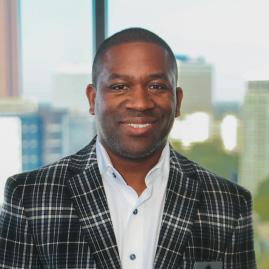
It gives me great pleasure to welcome you all to the Atlanta Music Project World Music Festival, part of our 16th season!
For those of you who may not know, our first program, launched in 2010, was a small but mighty after-school orchestra at the Gilbert House, a City of Atlanta Recreation Center in Southwest Atlanta. We had 30 elementary school students attending five days per week, with classes lasting two hours each day. Today, we serve more than 1,000 young musicians annually through our youth orchestra and choir programs, which provide tuition-free classes, extraordinary performance opportunities, and college and career preparation.
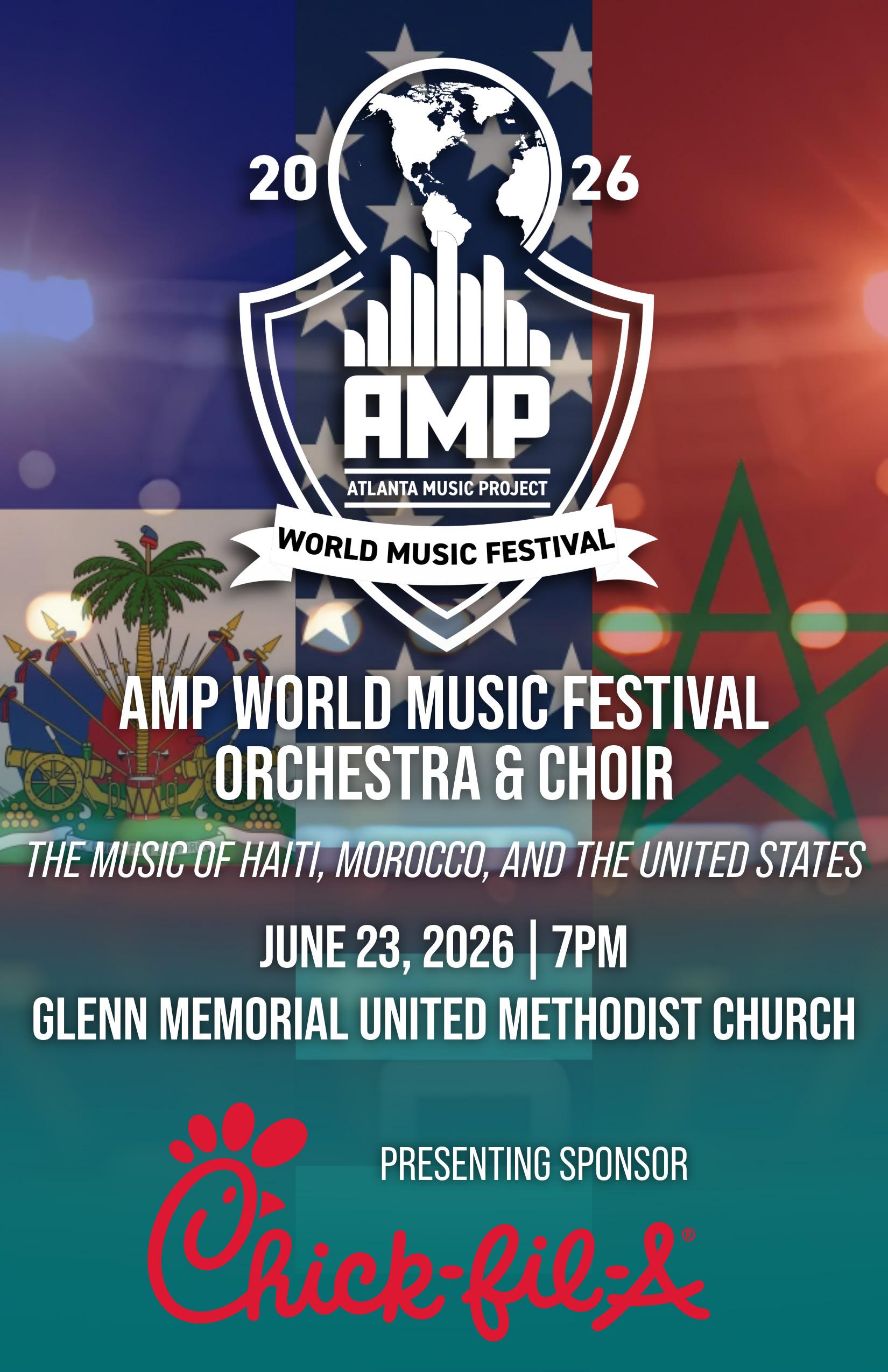
When Atlanta was awarded eight matches for the 2026 FIFA World Cup, we immediately knew we wanted to be part of the festivities. With the world descending upon Atlanta, we developed the concept of the World Music Festival to share the talents of our young musicians while immersing them in the music and cultures of the visiting nations.
From the vibrant rhythms of South Africa and Morocco to the rich musical traditions of Czechia, Spain, Haiti, Cape Verde, and beyond, the AMP World Music Festival will transport audiences across continents through unforgettable live performances. As the world comes to Atlanta for the World Cup, we appreciate you joining us in celebrating the beauty, diversity, and power of music to bring people together.
The AMP World Music Festival Orchestra and Choir will present three spectacular concert events unlike anything the city has seen before. Each performance will take place on the eve of a FIFA World Cup match in Atlanta and will celebrate the music, culture, and spirit of the United States and the two nations set to compete the following day.
The AMP World Music Festival Orchestra features AMP faculty members seated in principal chairs, with our student musicians performing alongside them in each section. The AMP World Music Festival Choir features our students alongside college music majors serving as Music Mentors.
Under the guidance of our festival curator, Collin Edouard, and with the support of our score arrangers, ensemble coaches, and conductors, we have done our utmost to provide our students with a rich cultural experience. Our ensembles strive to present the music of the countries visiting Atlanta for the World Cup in a way that is both authentic and capable of transporting audiences to those places, even if only for a fleeting moment. If you are visiting from your home country, we hope our musicians can offer you a piece of home while you are here in Atlanta.
The AMP World Music Festival is more than a concert series. It is a musical journey around the globe, and we are delighted with your presence tonight! And we wish your World Cup team, whichever team that may be, the best of luck in their matches.
With Gratitude,

Dantes Rameau, Co-Founder & CEO
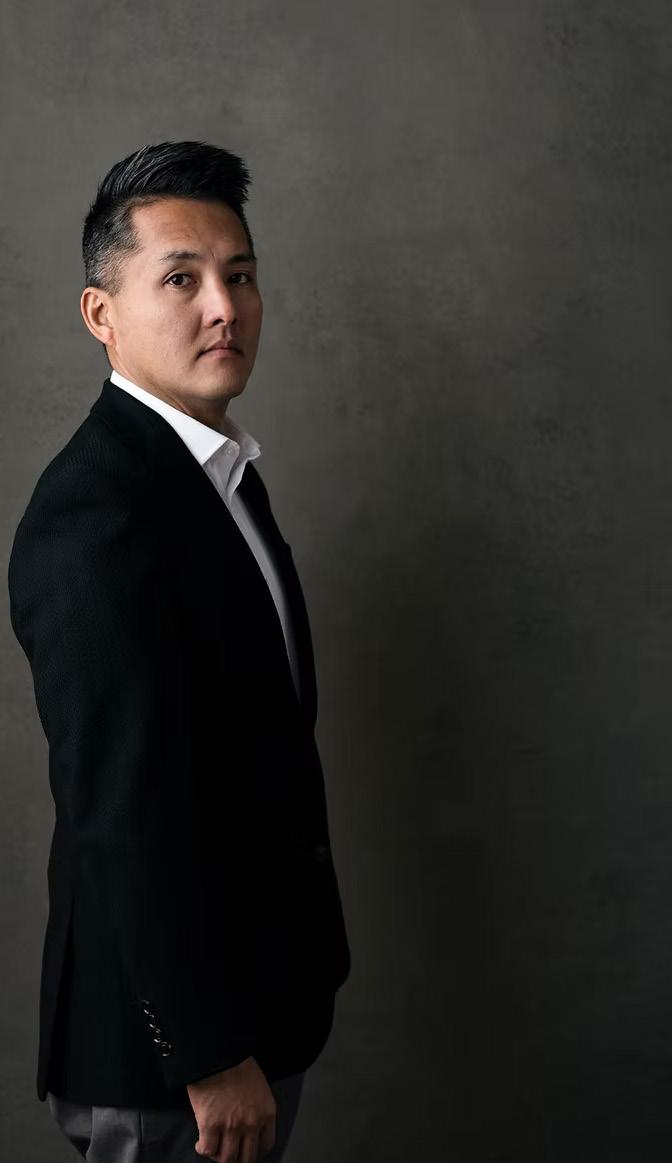
John Young Shik Concklin is Music Director of the Spartanburg Philharmonic and Hendersonville Symphony Orchestra. He also serves as Conductor with the Atlanta Music Project, an El Sistema organization focused on social justice and music, and the Piedmont Chamber Orchestra, a mentoring orchestra for high school and collegiate musicians. In the 24/25 season, he completed his North Carolina Symphony debut and was announced as a National Finalist for the Vytautas Marijosius Memorial Award for orchestral programming.
John is a values forward leader who believes that there is a unique pathway to success for every musical organization in every community, large or small. He seeks to humanize the orchestral experience for audiences through story telling, relationship building, and nuanced culture shifts that make accessibility more inclusive. Organizations for which he has played a leadership role have seen unprecedented artistic growth, a steady increase in ticket sales, and an intangible lift in spirit that translates across the organization and community. John is deeply committed to the teaching of conducting and leadership and seeks to engage education and learning at every level. He readily seeks opportunities to discuss and share about conducting and makes regular school visits wherever he is working.
Previous positions include Associate Conductor of the Georgia Symphony, Assistant Conductor of the Cleveland Pops Orchestra, and faculty appointments at Vanderbilt, Clemson, Furman and Converse Universities He has been a fellowship conductor at the Aspen Music Festival, a teaching assistant at the Brevard Music Center, and a finalist at the New World Symphony and Debut Orchestras
John has been a finalist for the 2019-2020 American Prize in Conducting. He has competed internationally at the Almaty, the Nino Rota, and the Città di Brescia Conducting Competitions. He is also regularly invited to coverconduct for the Nashville, Atlanta, and Kansas City Symphony Orchestras.
A flexible musician, John has also performed at the Super Bowl Halftime Show and has collaborated with Monica, a Grammy-winning R&B artist.
John studied at Vanderbilt University, Yale University, and the Cleveland Institute of Music. His mentors include David Zinman, Carl Topilow, Shinik Hahm, and Robin Fountain. He received further training from Lorin Maazel and Michael Tilson-Thomas.
John and his wife, Lauren Maxwell, co-founded Mozart for a Cause, a multi genre chamber music concert that fundraises for local causes.

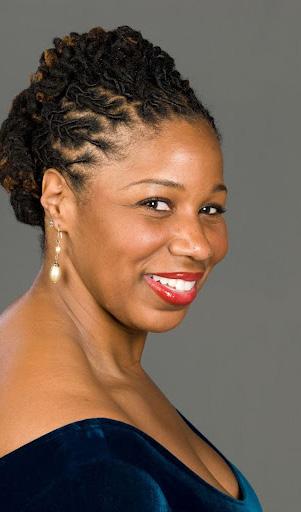
Mezzo-Soprano, Pamela Dillard, a native Atlantan, performs frequently on concert stages, recitals, oratorio, and operas in Atlanta, Augusta, and Florida. Pamela was a featured artist on the concert “Sisters in Song” performing with Atlanta’s leading female song stylists, celebrating America’s Jazz Divas. She is a Professor of Voice at Spelman College, a board member of Capitol City Opera Company of Atlanta, and a member of the National Association of Negro Musicians, Inc. where she serves as a national board member. Pamela debuted with the Atlanta Symphony Orchestra in Prokofiev’s Alexander Nevsky, returning the following year to sing the title role in Bizet’s Carmen. She has appeared on the stages of several American opera companies and orchestras including, Atlanta Opera, Opera Carolina, Opera Columbus, Tulsa Opera and Boston, Saint Louis, Colorado, New Haven, and Cobb Symphony Orchestras and The Brooklyn Philharmonic among others.
Pamela performed internationally with L’Opéra-Comique of Paris, France as Lily Holmes in Gershwin’s Porgy and Bess in Paris, Normandy, Luxembourg, and Spain. She has sung under the baton of many of the world’s greatest conductors, some of which are Robert Spano, Donald Runnicles, Keith Lockhart, Yoel Levi, John Williams, Wayne Marshall, and David Morrow.
Earning her B.F.A. from Newcomb College of Tulane University, Pamela was a recipient of the M.L. King Graduate Fellowship at Boston University where she received a Master of Music. Her recordings include, Watch and Pray, Spirituals and Art Songs by African American Women Composers and Grant Still’s Highway One both for Videmus. She is the featured artist on the Grammy-nominated soundtrack to Stephen Spielberg’s Amistad.
Keeyen Martin, a dynamic Charlotte, NC native, has swiftly established himself as a captivating force in R&B, Pop, and Soul music. Recently celebrated as the “Electrifying R&B Prince,” Keeyen’s genre-blending style continues to inspire audiences worldwide, with performances that bridge generations and leave a lasting impact at every show. Earning the prestigious Michael Jackson Scholarship to Morehouse College, Keeyen achieved his BA in Music and Spanish before going on to complete his Master’s in Entertainment Business from Full Sail University.
His academic achievements are matched by an illustrious performance career: Keeyen has shared stages with industry legends including Stevie Wonder, Aretha Franklin, Pharrell Williams, John Legend, Monica, Lil Wayne, Fantasia, Jennifer Hudson, Teyana Taylor, Kanye West, Rick Ross, Keyshia Cole, Tweet, Michelle Williams, Mya, Keri Hilson, Raheem Devaughn, Peabo Bryson, KeKe Wyatt, PJ Morton, Common, Lalah Hathaway, and BeBe & CeCe Winans, among others.
Keeyen’s performance résumé includes sold-out R&B tours, a 25-city international tour across the UK and Europe, and appearances at the BET Awards, Roots Picnic, Red Bull Music Fest, VH1 Save The Music, BET Music Matters, Sofar Sounds, Grammy Week events, and the TV One Trumpet Awards. He has performed on iconic stages, including the Vatican for Pharrell’s Grace For The World Concert, as well as major festivals, television events, and global tours.
Beyond performing, Keeyen is an educator and mentor who has guided more than 1,000 youth through The Atlanta Music Project and Inspire The Fire. He has provided voice lessons, coaching, and artistic training, recently teaching Artist Development at Morehouse College, working with The ABSYO Chorus in Antigua and Barbuda, and teaching arrangements to a 250-voice choir in Rome, Italy.
His artistry includes charting singles such as Scared To Love, You Should Know, Girl I’m on the Way, and Paradise, while his debut EP Neutral has surpassed one million streams. His music has been featured on The Real Housewives of Atlanta, BET, Bravo, Fox, and in national films. Through his performances, mentorship, and creative work, Keeyen Martin continues to shape contemporary R&B as an artist, educator, and visionary.
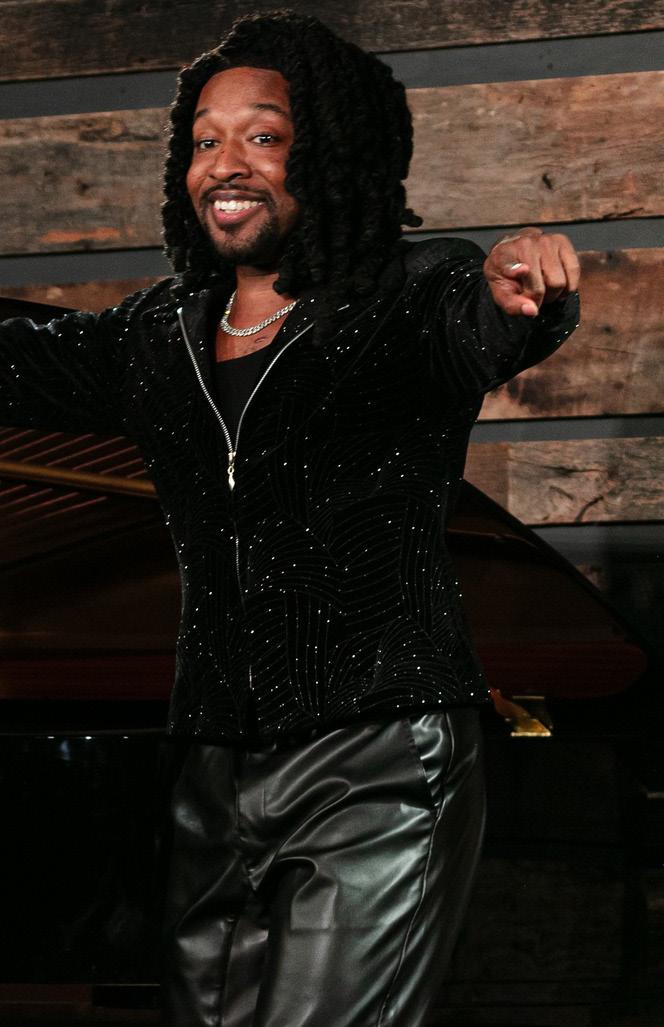


Born in 1971, he was first an educator and then a trainer. He created an artistic center which he directed for several years. Then, he trained in coaching and music therapy, which he practiced individually and in companies.
Adnane Matrone, confirmed conductor and Moroccan songwriter, began his musical career as an autodidact: What transformed him happened to him on a personal level. Understanding the origin of this suffering, he realized that no one could free him. He then used his talents, knowledge and intuition to create liberation techniques for himself. These techniques freed him and his life changed dramatically.
He began his academic musical training at the age of 17 at the Conservatory of Music and Dance in Rabat, where he obtained his degrees in classical guitar, harmony, musical analysis, choir conducting and percussion. He continued with a conductor training at the International Academy of Orchestral Conducting “Costa Atlantica” with the maestro: Luis Miguel dos Santos Clemente.
At the same time as his career as a classical guitarist, he studied at university in Biology-Geology as well as in Psychopedagogy and Transactional Analysis. His knowledge of the musical world, his passion and his creativity have nourished the oriental range with a pleasant polyphonic touch that he transmits to us through the orchestras and choirs he directs, including the choir CasaSawt.
Author, composer, choir director and conductor, Adnane Matrone currently directs the harmony orchestra of the Royal Navy of Morocco as well as two choirs in Casablanca, chairs the Maroc en Chœur movement whose objective is the promotion of choral singing in Morocco, as well as the SAWT International Choral Festival in Casablanca. His latest challenge to date: to develop in Morocco a social assistance program by learning music and choral singing for underprivileged children through the association “El Sistema Maroc” which he chairs.
Adnane Matrone is a contemporary artist driven by the desire to meet the demands of the constantly evolving musical world. He leads training courses in choir directors, harmonizations in Arabic music and accompaniment of Arabic songs ... Holder of certificates in Music therapy, Manager coach and Professionalization in coaching, Adnane Matrone, has for more than twenty years allowed very varied groups to live adventures unique musical and vocal music around Arabic music.

Paul Beaubrun is a Haitian musician / songwriter known for his fusion of traditional Haitian music with elements of rock, blues, afrobeat and reggae. Rooted and grew up in Port-au-Prince, he was surrounded by the infectious rhythms and soulful melodies of his heritage. He comes from a musical family, he is son of the grammy nominated band Boukman Eksperyans.
Music has always coursed through Paul’s veins. From his earliest memories, when he moved to New York City as a youth, he discovered a new world of sounds and experiences that would shape his own musical journey.
Gained recognition both locally and internationally for his unique art, at the heart of Paul’s music is a captivating sound, a masterful blend of his exceptional guitar playing skill and multi-instrumentalist, soulful vocals, and innovative musical arrangements. Drawing on his rich cultural heritage, he seamlessly weaves together elements of Haitian Creole, French, and English, creating a musical tapestry that reflects the diverse influences that have shaped his artistic vision. With each note, Paul takes listeners on a journey through the history and culture of Haiti, while also exploring the broader themes of identity and resilience that resonate with audiences around the world.
Paul’s talent and versatility as a musician have led him to collaborate and perform with a diverse array of renowned artists, including Ms. Lauryn Hill, Maxwell, Michael Brun, Arcade Fire, Jackson Browne, Sheryl Crow and Bob Weir. His captivating live performances have taken him to some of the world’s most prestigious venues, such as The Beacon Theater and Radio City Music Hall in New York City, Massey Hall in Toronto, The Ryman Theatre in Nashville, The House of Blues in Chicago, and The Montreal Jazz Festival, Coachella Valley Music and Arts Festival in California. He has also performed at international festivals and events, including Festival Internationale Nuits d’Afrique in Montreal, Le Trianon in Paris, The Paleo Festival in Switzerland, No Siesta Fiesta in Norway, Afropunk Festival in various locations worldwide and many more. Through these collaborations and performances, Paul has achieved worldwide success and established himself as one of Haiti’s most accomplished and celebrated musical exports.
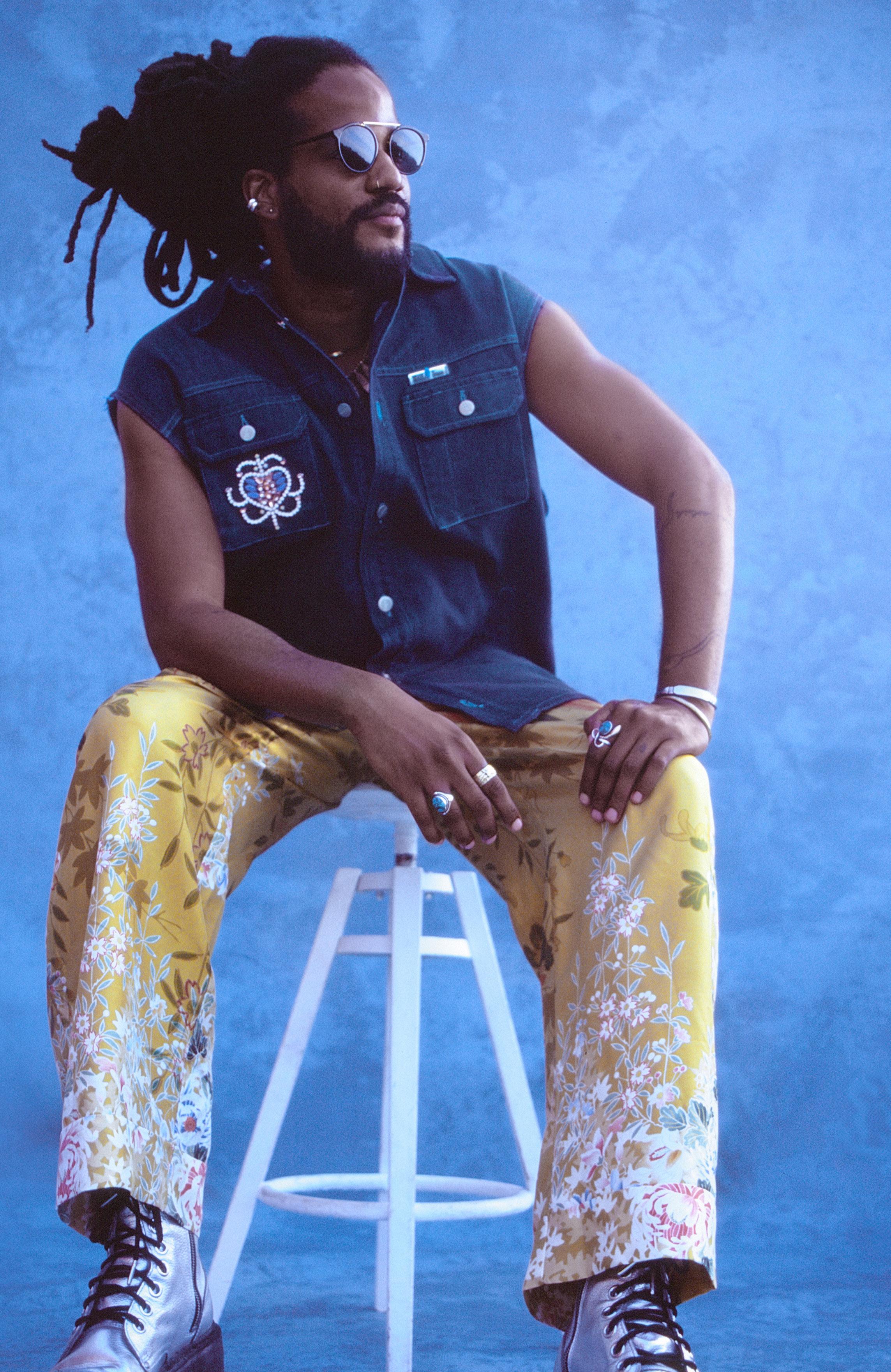


Reynalden Daden Beaubrun “DADEN-B1”is a Haitian drummer originally from CapHaïtien who has been based in Boston for nearly ten years. Trained in classical music at the Christian University of Northern Haiti (UCNH), he began his musical journey as a xylophonist with the Symphony Orchestra before dedicating himself to jazz drumming. Recognized as one of the pioneers of jazz drum education in Haiti, he became the first jazz drum instructor at the National School of Arts (ENARTS) and the first to introduce the discipline at the Christian University of Northern Haiti. His musical style draws inspiration from rock, jazz fusion, Latin jazz, classical music, and world music.
Throughout his career, Daden-B1 has collaborated with numerous renowned artists and participated in national and international tours alongside Emeline Michel, Beethova Obas, Dadou Pasquet, Carole Demesmin, Leon Dimanche, Lionel Benjamin, Boulot Valcourt, Eddy François, Dadi Beaubrun, Jimmy Jean Felix, Elie Lapointe, Jean Claude Eugene, Armstrong Jeune, Mikaben, Alan Cavé, James Germain, Arly Larivière as part of the Orchestra Konpa Symphony Tour, as well as Paul Beaubrun.
He has also had the honor of performing with internationally acclaimed jazz guitarist Mark Whitfield, who has collaborated with Quincy Jones and Chris Botti, as well as with musicians from Juan Luis Guerra’s horn and percussion sections. His career has also led him to work with American, Bahamian, Cape Verdean, and Angolan artists and musicians, reflecting a rich history of cultural exchange and international collaboration.
A versatile musician with a distinctive sonic identity, Daden-B1 has established himself as one of the few drummers of his generation capable of seamlessly blending Afro-Caribbean Jazz, Pop/Rock, and World Music. His playing is refined, powerful, and deeply rooted in Afro-descendant rhythmic traditions, allowing him to move effortlessly across a wide range of musical styles. He can be found both on stage and in the studio, performing at festivals, major productions, and numerous artistic projects at home and abroad, always driven by the same passion, discipline, and commitment to promoting music as a universal language.
His career has taken him to some of North America’s most prestigious stages, including Carnegie Hall, where he has performed more than twelve times, as well as the Barclays Center, Madison Square Garden, Lincoln Center, the John F. Kennedy Center for the Performing Arts, and UBS Arena. He has also appeared at major festivals such as the Montreal International Jazz Festival, the Savannah Jazz Festival, and the Montana Folk Festival.


Born in 1971, he was first an educator and then a trainer. He created an artistic center which he directed for several years. Then, he trained in coaching and music therapy, which he practiced individually and in companies.
Adnane Matrone, confirmed conductor and Moroccan songwriter, began his musical career as an autodidact: What transformed him happened to him on a personal level. Understanding the origin of this suffering, he realized that no one could free him. He then used his talents, knowledge and intuition to create liberation techniques for himself. These techniques freed him and his life changed dramatically.
His academic achievements are matched by an illustrious performance career: Keeyen has shared stages with industry legends including Stevie Wonder,
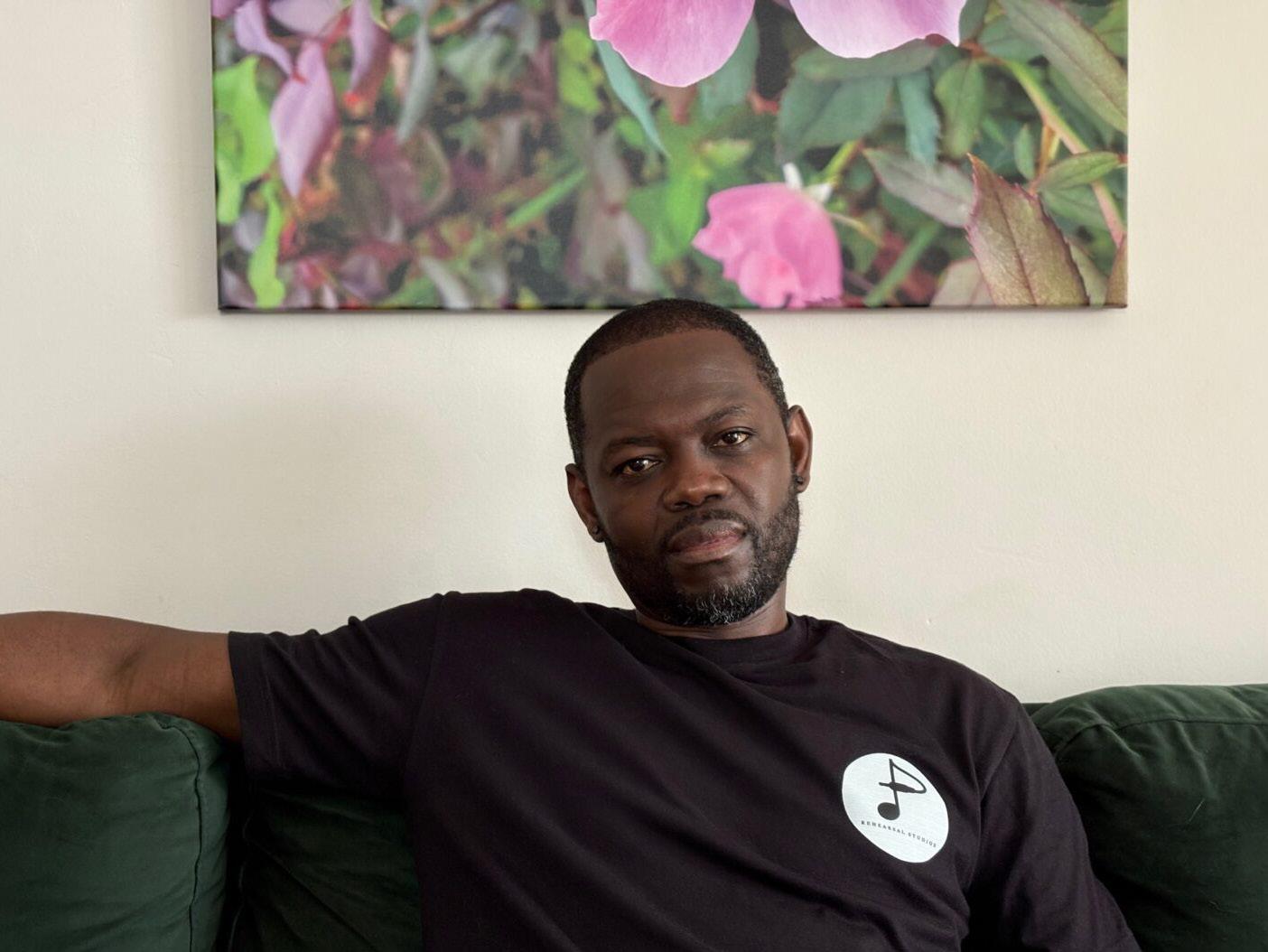
Nizar Dahmani is an Moroccan American Drummer and Percussionist whose musical career began at the age of 10 in the city of Jemaatshaim , safi, Morocco. Growing up immersed in his country’s rich musical traditions (chaabi - gnawa ..) while being exposed to international rhythms and styles, Nizar developed a dynamic approach to drumming that bridges diverse musical worlds.
As a self-taught artist, Nizar’s passion for rhythm has propelled him to perform on stages across the globe, captivating audiences in the United States, Europe, and the Arab world. His deep knowledge of traditional Arab rhythms and his innovative techniques have made him a sought-after collaborator for Big names artist from Morocco, Lebanon, Israel,Egypt ,Algeria , and beyond. Over the years, Nizar has toured extensively in Europe, the United Kingdom, North Africa, Canada, the Middle East, and throughout the United States.
Nizar is a pioneer in the Arab world, achieving several firsts in the drumming community. He is the first drummer in the Arab world who perform solo drum show on public television 2M TV, breaking barriers and showcasing the power of percussion as a standalone art form. Additionally, he is the first drummer in the Arab world who offer YouTube lessons in Arabic, making drumming accessible to a wider audience and inspiring aspiring musicians across the region.
In 2022, Nizar achieved a career milestone by featuring on the stage with the Grammy-winning band SnarkyPuppy, further solidifying his reputation as a versatile and accomplished musician. That same year, he became an official artist for Vater Drumsticks, and in 2023, he joined the roster of PaisteCymbals, aligning himself with world-renowned brands that recognize his artistry and skill.
Since relocating to the United States in January 11, 2019, Nizar has continued to evolve as both a performer and an educator. His signature drumming style seamlessly blends the diverse influences that have shaped his musical journey. As an educator, Nizar is dedicated to teaching drummers of all levels, helping native Arabic speakers and non-natives alike connect deeply with the rhythms of Arabic and world music.
On June 7, 2024, Nizar celebrated a significant personal achievement by becoming a U.S. citizen, a moment that reflects his journey of growth and connection since relocating to the United States in 2019.



Samed Ennour Derdek, tenor, is a Moroccan supply chain and logistics executive with nearly two decades of experience leading operations, distribution, and strategic supply chain initiatives across the consumer goods and aerospace sectors. Since beginning his career in 2007, he has built a reputation for driving operational excellence, logistics transformation, and organizational performance in complex, multinational environments.
Samed currently serves as Group Logistics and Distribution Manager at EQUATORIAL COCA-COLA BOTTLING COMPANY (ECCBC), where he oversees logistics and distribution activities across the company’s operations.
An industrial engineer by training, Derdek studied at Ecole Mohammadia d’Ingénieurs, one of Morocco’s leading engineering institutions. Throughout his career, he has specialized in supply chain management, logistics, distribution, lean manufacturing, inventory optimization, and operational leadership.
Beyond his corporate responsibilities, Derdek is an active participant in Morocco’s logistics and supply chain community. He has contributed to industry discussions on logistics digitalization and supply chain innovation and has been recognized by colleagues for his strategic vision, leadership skills, organizational discipline, and ability to guide teams through operational challenges.
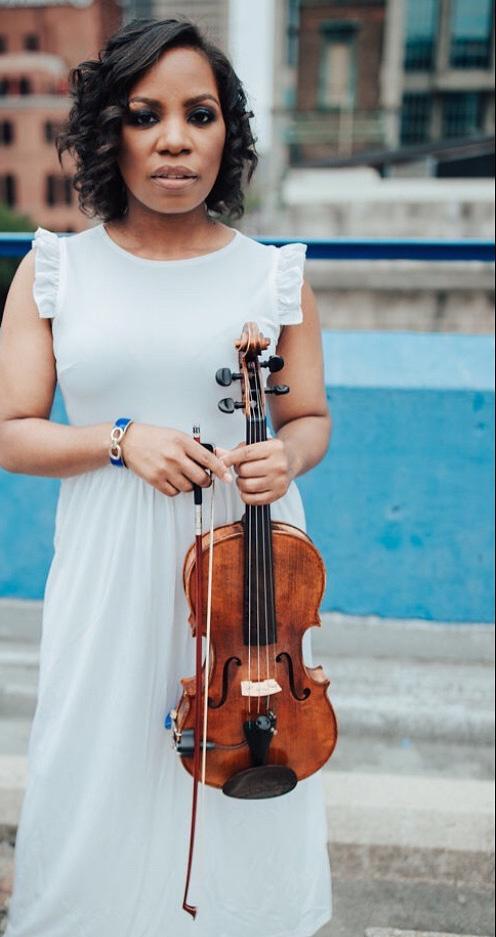
Nicole Hardin is a composer, arranger, violinist, violist, conductor, contractor, and creative entrepreneur whose work bridges orchestral music, commercial entertainment, education, and community engagement. Renowned for her extraordinary ability to translate musical ideas from imagination to score, Hardin has become a highly sought-after arranger and orchestrator for some of the industry’s most celebrated artists and productions.
Her extensive credits include collaborations with Eminem, Rihanna, Beyoncé, Mariah Carey, John Legend, Toni Braxton, Lizzo, Tyla, CeCe Winans, and Ms. Lauryn Hill. Most notably, she served as string arranger, conductor, and contractor for *The Miseducation of Lauryn Hill Anniversary Tour* featuring the Fugees, bringing her distinctive musical voice to audiences around the world.
Born into a musical family, Hardin’s connection to music began early. She recalls hearing her father play organ in church as a toddler and being immersed in classical music by both of her parents. Her exceptional ear for music, refined through years of study and performance, has become one of her greatest professional assets, allowing her to create, arrange, and adapt music quickly and effectively in highpressure environments.
A passionate educator at heart, Hardin spent a decade teaching orchestra before transitioning fully into the music industry. Her commitment to mentorship and student development continues through her ongoing work with the Atlanta Music Project (AMP), where she has composed original works and created arrangements for collaborations featuring artists such as Lecrae, Monica, and T.I. She is particularly dedicated to writing music for young musicians, believing that meaningful artistic experiences help shape the next generation of performers and creators.
For the AMP World Music Festival, Hardin arranged The Voices of Cape Verde, a symphonic suite inspired by the country’s rich musical traditions, folk melodies, and diverse cultural history. Her thoughtful research and commitment to authentic representation informed the work, which celebrates the unique genres, rhythms, and stories of Cape Verde through the symphony orchestra.
As both an artist and mentor, Hardin encourages aspiring composers to listen broadly, master the fundamentals of music, seek strong mentorship, and remain lifelong learners. Through her work on stage, in the studio, and in the classroom, she continues to inspire audiences and musicians alike while expanding the possibilities of contemporary orchestral music.

Jordan Owen is an American conductor, cellist, and composer whose work bridges performance, education, and creative collaboration. He currently serves as the fully funded Assistant Conductor of the UNCG Orchestra’s and Opera Theatre and Conducting Fellow with the Spartanburg Philharmonic for the 2024–25 season, assisting with rehearsals, performances, and leading education and community initiatives.
An emerging conductor with a passion for expressive storytelling and accessibility in classical music, Jordan has led ensembles including the New York Session Symphony, ICWC Festival Orchestra, Spartanburg Philharmonic, and the Petrie Festival Orchestra. He has also studied and performed at the Wintergreen Music Festival, where he appeared with the Wintergreen Festival Orchestra, and was selected as one of three 2024 New York Session Symphony Emerging Conducting Fellows. In 2025, he will be one of six invited participants in the CODA Conducting Masterclass with Carl Topilow.
Jordan toured the southern United States with the Atlanta Music Project Senior Youth Orchestra, and will return in the upcoming season to conduct and record performances for their fall and winter projects. Dedicated to music education, he works with high-level student ensembles and young musicians throughout the Southeast, fostering technical development and artistic awareness through mentorship and outreach.
As a composer, Jordan is a winner of the RISE Symposium Composition Competition, and his music reflects his JamaicanAmerican heritage, integrating rhythmic vitality and tonal sophistication. Future projects include a new work for members of the Spartanburg Philharmonic Chamber Ensemble, to be recorded and premiered in 2025.
Jordan’s musical roots stem from singing in a church chamber choir, where he first discovered the power of ensemble music. He later studied cello, performing nationally and abroad, including a tour of Germany’s Black Forest with the FEST WOCHE Music Festival. He is a founding member of the Calm Cadence Collective, an interdisciplinary ensemble exploring music, mindfulness, and community engagement through collaborative performances and workshops.
Jordan earned his Bachelor of Music in Theory and Composition with a concentration in Music History from the Petrie School of Music at Converse University and is currently completing his Master of Music in Orchestral Conducting at the University of North Carolina at Greensboro under the guidance of Dr. Jungho Kim. His artistic interests extend beyond the concert hall—he is passionate about projects that combine music with visual storytelling, exploring ways orchestral sound can heighten narrative and emotional depth across disciplines.
In his career, Jordan seeks to create performance experiences that are both artistically rigorous and deeply human— rooted in empathy, curiosity, and the shared spirit of musical communication.

Houngan Collin Edouard is a Ph.D. candidate whose scholarship lives at the intersection of academic rigor and grassroots healing. Over the years, he has redefined the relationship between academic spaces and local diverse cultural landscapes. Collin’s work is rooted in the belief that local practitioners — from Haitian musicians to grassroots activists — are not merely subjects of study, but essential ‘knowledge bearers’ who deserve equal partnership with the university. He researches the role of vocality in Haitian Vodou ceremonies. For his research, he won the 2023 Karen McCarthy Brown Award from the Scholarly Association for the Study of Haitian Vodou (KOSANBA) and the 2024 Emerging Scholars Award from the Haitian Studies Association. He is a Voting Councilor and Director of Outreach with Phi Beta Kappa New York (PBKNY), and a Junior Board member with KOSANBA. Edouard holds degrees from the University of Cambridge, Teachers College, Columbia University, and The City College of New York.
He serves as adjunct professor of music at the University of Bridgeport, where he won the 2024 Excellence in Teaching Award. He designed the course Music of the Global South, facilitating cross-cultural engagement through diasporic musical practices. His scholarship and pedagogy foreground marginalized sonic traditions and their social contexts. A contributing author to The New Teacher’s Guide to Overcoming Common Challenges, Edouard has led educational and musical initiatives across Spain, Uganda, Turkey, India, Iraq, England, and the United States. He is a priest in the Haitian Vodou tradition and a member of Sosyete Nago.

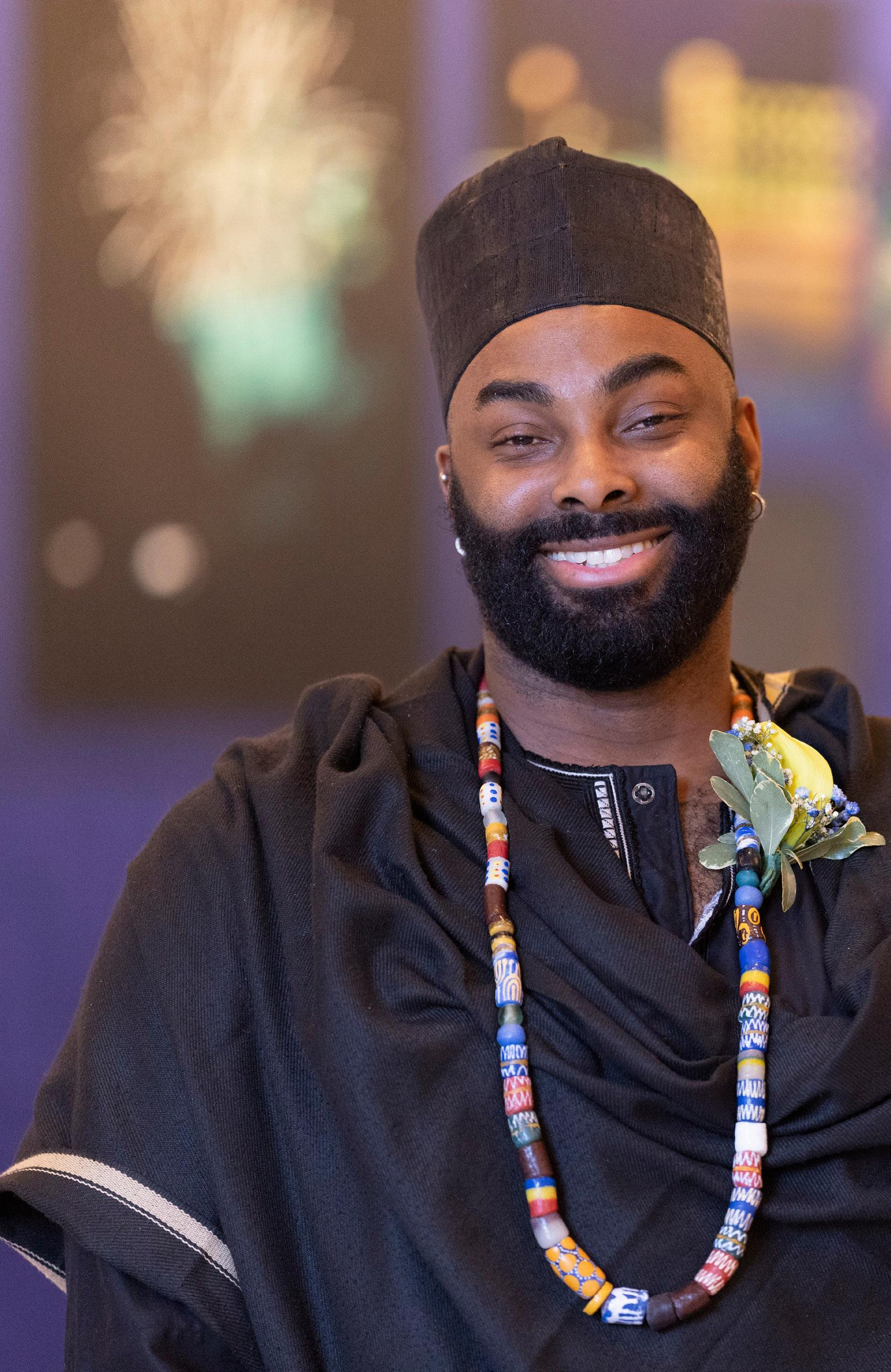
Keeyen Martin | Conductor Pamela Dillard | Conductor
Alayki Mini Salam.....................................................................Traditinal Chant arr. Adnan Matrone
Soloist
Ildikó Binecz
Khili................................................................................................Lemchaheb arr. Adnane Matrone
El Madi Fat..............................................................................Mass El Ghiwane
We Are..................................................................................Ysaÿe M. Barnwell
Soloist
Madison Cromartie
Hear My Prayer.............................................................................Moses Hogan
Revelation 19:1.........................................................................Jeffrey LaValley As recorded by Stephen Hurd
Mayi-a Gaye...............................................................Traditional Haitian Vodou arr. Boukman Eksperyans
Soloists
Jessica Leggins, Makyla Platt, & Cheyenne Harris
Ké m Pa Sote ..................................................................Boukman Eksperyans
Soloist
Paul Beaubrun
John Young Shik Concklin | Conductor
Tower of Power Greatest Hits....Emilio Castillo, Stephen Kupka, David Garibaldi arr. Victor Lopez
La Danse Marocaine No. 2..................................................arr. Adnane Matrone
La Danse Marocaine No. 4.....................................................Moroccan popular arr. Adnane Matrone
La Danse Marocaine No. 6.......................Musique: Patrimoine berbère marocai arr. Adnane Matrone
Hijaz........................................................................................Adnane Matrone
Espoir.....................................................................................Dickens Princivil
Rit Lavi A..........................................................................Christopher Ducasse
John Young Shik Concklin | Conductor
El Massira................................................................................Abdellah Issami arr. Jean charle Biondi
Makhelaw Magalou...........................................Mounir Maarouf, Blaise Batisse arr. Adnane Matrone
Kitar Al Hayat.......................................................................Abderahim Sekkat arr. Adnane Matrone
Alléuia Medley.....................................................Ansy Deus & Greater Purpose arr. Nicole Hardin Soloists
Paul Beaubrun, Keeyen Martin, Adedayo Akanbi, Justice Banks, Da’janel Chatmon, Camille Childers, & Elouise Hunt
ATLANTA MUSIC PROJECT WORLD MUSIC FESTIVAL ORCHESTRA
VIOLIN I
Kerren Berz*
Marlee Carter
Julie Saxton*
Caliah Matamoros
Giulliana Scaramazza**
Moses Morano
Gustavo De La Torre*
Reyna Case
VIOLIN II
Jessica King*
Foster Wilson
Courtney Vega King*
Anaika Dominic
Maria Ortiz**
Ta’Kari Tatum
Ethan Waithe
VIOLA
Shadwa Mussad*
Tyson Jones
Alvoy Bryan*
Kree Willingham
Andrew Atkinson
CELLO
Ismail Akbar*
David Walton
Giancarlo Ortiz*
William Spann
Preston Walton
DOUBLE BASS
Joshua Shepard**
Emir Zayas
Nia Blount
Malachi Beckham
Bryan Ogbannu
FLUTE
Matthieu Clave*
Leighlah West
Lailani Smith
Christina Paul OBOE
Natalie Beckenbaugh*
Chineye Emenogu
Nehemiah Preston
CLARINET
Andrew Warwick*
Amir Foster
BASSOON
Lazara Santana*
Shanae Cousley
FRENCH HORN
Dilon Bryan*
Anthony Flores
Joshua Wheaton
Jameson Olowoyo
TRUMPET
Guillem Senent*
Ethan Crawford
Dineo Halisi-Adams
TROMBONE
Calvin Morris*
Joel Patrick
BASS TROMBONE
Lovrick Gary*
Jakob Cobbs
TUBA
Robert Boone*
PIANO
Adrian Ford^
PERCUSSION
Dominic Ryder*
Kori Harmon
John Tyler
Nizar Dahmani^
Paul Beaubrun^
Daden Beaubrun^
KEYBOARD
Bill Dorcely^
ELECTRIC BASS
Delva Michael^
SOPRANO
Adedayo Akanbi
Amira Gaines
Cheyenne Harris
Da’janel Chatmon
Elissa Jefferson**
Ildikó Binecz
Joi Leggins
Lauren Hunter
London Moten
Thais El-Amin
Zoie Fielder
ALTO
Areli Palacios
Cailey Inman**
Camille Childers
Dakota Woodfin
Elouise Hunt
Haille Edwards
Jada Hilliard
Jayden Brown Fielder
Jessica Leggins
Madison Cromartie
Makyla Platt**
Maya Winfrey
Reagyn Requena
TENOR
Antwan Hailey**
Brandon Johnson-Jewell**
Dekerri Lunsford Jr.
Jirad Williams
Justice Banks
Justin “Nova” Williamson
Maxwell Smith
Nathan Carter**
Raja Green Hornes
Sean Norton**
BASS
Aiyé Banks
Alexander Beaty
Christopher Brooks**
Daniel Emanuel
Ellison Lord
Joshua Banks
Matteo Herane
Noah Brunson**
Royal Joseph
Shane Abraham**
Xavier Doyle**
BY COLLIN EDOUARD
CURATOR, AMP
Tonight, the Atlanta Music Project World Music Project Orchestra & Choir invites you on a musical journey spanning Haiti, Morocco, and the United States, exploring powerful themes of the divine, protest, identity, homeland, and triumph. Though separated by geography, language, and history, the music of these cultures reveals a shared human experience, one shaped by faith, resilience, memory, and hope. From sacred songs of praise and spiritual devotion to anthems of resistance and cultural pride, each work on this program tells a story of communities striving to preserve their heritage, assert their identity, and overcome adversity. The rhythms, melodies, and voices you will hear tonight carry the echoes of ancestral traditions while speaking to contemporary aspirations for justice, belonging, and renewal. Performed by the talented young musicians of the Atlanta Music Project, this concert celebrates music’s extraordinary ability to transcend borders, connect cultures, and illuminate the values that unite us. As orchestra and choir come together in this vibrant tapestry of global traditions, we invite you to reflect on the enduring strength of the human spirit and the universal power of music to inspire, uplift, and bring people together. This evening’s musical program will be expertly conducted by John Concklin, Pamela Dillard, Keeyen Martin, and Adnane Matrone. We are fortunate to feature an impressive assembly of talented musicians, including Nizar Dahmani, Paul Beaubrun, Samed Ennour, Bill, Delva Michel, and Daden “Daden B1” Beaubrun, who will elevate the musical experience. We invite you to prepare for a remarkable evening filled with exceptional performances.
Alayki Minni Salam is a beloved Algerian song that expresses a heartfelt greeting to the land of one’s ancestors. Though its exact origin story remains somewhat shrouded in the oral tradition and its original creator is unknown, it remains a traditional song from the Maghreb region, cherished by communities across both Algeria and Morocco. Its opening words,”Upon you, my greetings of peace, O land of my forefathers/ancestors”, set the tone for a work filled with affection, nostalgia, and great cultural pride. The text paints vivid images of moonlit evenings, mountains, flowing streams, and the natural beauty of the homeland. Through these poetic descriptions, the singers reflect on cherished memories and express gratitude for the place that shaped generations before them. The recurring refrain serves as both a greeting and a declaration of enduring love for one’s roots. This arrangement by Adnane Matrone reflects the rich traditions of North African music. Its elegant melody, flowing rhythms, and expressive phrasing encourage performers to convey warmth and sincerity in their delivery. Imagine for a moment being in a place that feels like home, a place that your family comes from, and singing back to the sounds of that homeland. Whether performed in a traditional context or adapted into a contemporary choral arrangement, the song’s emotional depth resonates with audiences across various backgrounds, evoking a sense of home that transcends cultural boundaries. Certainly, this arrangement will ignite a need to be home because it is more than a patriotic song; Alayki Minni Salam is a tribute to memory, identity, and the bonds that connect us to those who came before us. It reminds us that our histories, cultures, and ancestral lands continue to shape who we are.
BY COLLIN EDOUARD
CURATOR, AMP
This legendary Algerian and Moroccan folk song, originally released in 1977 by the pioneering Moroccan rock band Lemchaheb, was active from the 1970s to the 1980s. The Moroccan musical group, founded in 1972 in Casablanca, is known for composing lyrics denouncing the excesses of the Moroccan political regime and for its sense of provocation. They are known for their unique blend of musical styles, combining traditional Moroccan music with modern influences. Formed in the early 1970s, they quickly gained popularity for their socially and politically charged lyrics, addressing issues like inequality and injustice. Their music, characterized by a mix of Western instruments and traditional Moroccan rhythms, has a distinct sound that resonates with diverse audiences. Lemchaheb’s contributions have left a lasting impact on the Moroccan music scene and continue to inspire many artists. The lyrics are sung in a North African Arabic dialect and generally express themes of heartbreak, longing, and staying true to one’s roots. A recurring translated phrase revolves around a plea for understanding: My beloved, why do you turn against me and forsake me, leaving my dwelling place desolate? Few musical groups have had as profound an impact on modern Moroccan music as Lemchaheb. Formed in the 1970s, the ensemble became known for blending traditional Moroccan musical styles with contemporary influences, creating songs that resonated deeply with audiences through their poetic lyrics, social commentary, and celebration of cultural identity. Like many of Lemchaheb’s works, the song speaks directly to everyday experiences while inviting listeners to reflect on broader questions of individuality and human dignity. This arrangement draws upon the rich traditions of Moroccan folk music and emerged during a period of significant artistic and cultural transformation in Morocco, when musicians increasingly used popular music as a vehicle for social reflection and cultural pride.
BY COLLIN EDOUARD
CONSULTING CURATOR, AMP WORLD MUSIC FESTIVAL
El Madi Fat “What’s Past is Past” by Nass El Ghiwane arr.
Adnane Matrone
This song captures the bittersweet relationship between memory and time. Performed by the legendary Moroccan group Nass El Ghiwane, the song reflects on the universal human tendency to look back on the past with longing, while reminding us that life moves inexorably forward. Since its release, it has become one of the ensemble’s most cherished and enduring works, resonating with audiences across generations. The group, which originated in avant-garde political theater, has played an influential role in Moroccan chaabi. Chaabi music is frequently found in weddings, and this style is often associated with festivals. Often referred to as the “Rolling Stones of Africa,” Nass El Ghiwane emerged in 1969 as a transformative force in Moroccan music. Drawing upon traditional Moroccan, Gnawa, and Sufi musical traditions, the group created songs that blended poetic storytelling with social reflection, giving voice to the hopes, struggles, and aspirations of ordinary people. Their music became a cultural phenomenon, celebrated for both its artistic depth and emotional honesty. The text of El Madi Fate meditates on the fleeting nature of life and the impossibility of reclaiming what has passed. Images of extinguished candles, tears, and fading memories evoke a sense of nostalgia, while the recurring refrain serves as a gentle reminder that dwelling on the past cannot change it. Instead, the song encourages acceptance, resilience, and an appreciation for the present moment. Hypnotic rhythms, expressive vocals, and repetitive melodic patterns create a reflective atmosphere that draws listeners into a shared emotional experience. The song’s simplicity is its strength: each repetition deepens its message, transforming personal reflection into a communal meditation on memory, loss, and hope. Today, El Madi Fate remains a powerful symbol of Moroccan musical heritage. Its timeless message transcends language and culture, reminding us that while the past shapes who we are, our lives are ultimately lived in the present.
BY COLLIN EDOUARD
CONSULTING CURATOR, AMP WORLD MUSIC FESTIVAL
We Are is a powerful affirmation of identity, community, and shared humanity. Barnwell’s work invites performers and listeners to reflect on the values that unite us: strength, resilience, compassion, hope, and lineage. Barnwell is best known for her work with the acclaimed vocal ensemble Sweet Honey in the Rock, whose music blends African American musical traditions with messages of social justice, cultural awareness, and collective empowerment. In We Are, she draws upon these traditions to create a song that is both deeply personal and universally resonant. Listen while soloist Madison Cromartie grounds us in the feeling and theme of tonight’s selection. Built on a simple yet important text, the piece unfolds as a musical declaration of belonging. Each time you hear “We Are,” it celebrates the qualities that define individuals and communities while reminding us of our interconnectedness. The repetitive structure and lyrical clarity, though not always identical, allow the message to grow in intensity, transforming the work into a communal expression of affirmation and unity. Musically, We Are combines accessible melodies with rich harmonic textures, encouraging singers to listen closely to one another and to perform with sincerity and conviction. Its strength lies not in complexity, but in its ability to communicate directly to the heart. As voices join together, the song becomes a celebration of collective purpose and shared experience. This shared experience demonstrates that we are all connected by a vast lineage of ancestors whose stories still live within us. In a world often marked by division, We Are offers a timely reminder of the power of community. Through music, Barnwell challenges us to recognize our common bonds and to embrace the dignity, strength, and beauty present in every person.
BY COLLIN EDOUARD
CONSULTING CURATOR, AMP WORLD MUSIC FESTIVAL
Moses Hogan, renowned for his rich harmonies, expressive vocal writing, and deep respect for the spiritual tradition, transformed many beloved folk songs into compelling concert works that continue to inspire choirs worldwide. Hear My Prayer is a heartfelt plea for divine guidance and comfort. Rooted in the Negro Spiritual Tradition, the text expresses a unshakable sense of faith amid hardship, conveying both vulnerability and unwavering trust. Like many spirituals, the song reflects the resilience of a people who found strength, hope, and community through music during times of struggle and uncertainty. Hogan’s arrangement elevates this simple prayer into a dramatic and emotionally charged musical experience. The work unfolds through expressive melodic lines, rich harmonic textures, and dynamic contrasts that heighten the urgency of the text. Moments of quiet introspection alternate with powerful climaxes, allowing the choir to convey the full range of human emotion, from sorrow and longing to confidence and hope. A hallmark of Hogan’s style is his ability to blend technical sophistication with authentic emotional expression. The contrast in volume signifies both Hogan’s musicianship and the mindful nuance it takes to truly convey what a supplication may sound like in this setting. Like a conversation, there are dynamic shifts, and he demonstrates that even when speaking to the divine, these contrasts are no different. These musical elements are vehicles for storytelling, showcasing spiritual depth. Each phrase builds upon the last, drawing listeners into a deeply personal conversation between the individual and the divine. As you listen, notice how the music grows from a simple supplication into a powerful affirmation of faith.
BY COLLIN EDOUARD
CONSULTING CURATOR, AMP WORLD MUSIC FESTIVAL
Mayi-a Gaye “The Corn is Spread Out” Traditional Haitian Vodou arr. Boukman Eksperyans
Founded in Port-au-Prince in 1978, Boukman Eksperyans is one of Haiti’s most influential and internationally acclaimed musical groups. Named after Dutty Boukman, the Vodou priest whose leadership helped ignite the Haitian Revolution of 1791, the band pioneered the rasin (“roots”) movement, blending traditional Haitian Vodou rhythms and chants with elements of rock, reggae, and contemporary popular music. Through their powerful performances and socially conscious lyrics, Boukman Eksperyans has become a symbol of Haitian cultural pride, resilience, and spiritual heritage. Their music celebrates the richness of Haiti’s African roots while addressing themes of freedom, unity, justice, and hope, creating a sound that is both deeply rooted in tradition and profoundly relevant to the modern world.
The first selection, arranged by Boukman Eksperyans, is rooted in the rich spiritual and cultural traditions of Haiti, Mayi a Gaye “The Corn is Spread Out.” It is a traditional Vodou song that celebrates the connection between community, nature, and the sacred. Like many songs from the Haitian Vodou tradition, it draws upon everyday imagery to express deeper spiritual truths, weaving together themes of fertility, abundance, gratitude, and renewal. In Haitian culture, corn is more than a staple crop; it is a symbol of sustenance, life, collective well-being, and a means of communicating with the divine. The specific lyrics are complex and sacred, but they speak to life’s complexities and how difficult things can be. It is also a plea to the spirits that we, the children ready to receive them, have prepared all that is needed to improve our current situation; all we need now is the presence of the divine. Songs such as Mayi-a Gaye serve as both musical offerings and vessels of memory, preserving traditions that have been passed from generation to generation. Their melodies and rhythms carry echoes of West and Central African musical practices, reflecting the resilience and creativity of the Haitian people.
BY COLLIN EDOUARD
CONSULTING CURATOR, AMP WORLD MUSIC FESTIVAL
The second selection from Boukman Eksperyans is among their most celebrated songs Kè m Pa Sote, a title that translates as “My Heart Does Not Leap” or directly “I Am Not Afraid.” At its core, Kè-m Pa Sote is an anthem of courage. Its message speaks to steadfastness in the face of adversity, affirming the strength that arises from conviction, community, and spiritual grounding. The song’s lyrics reject fear and uncertainty, offering a declaration of confidence and perseverance instead. Though deeply rooted in the Haitian experience, its message resonates universally with anyone who has faced challenges and chosen determination over despair. Musically, the work embodies the energy of the rasin movement. Its rhythmic style and fiery complexity are those of the petwo rhythms that connect to the fiery spirits in Haitian Vodou. Many of these petwo spirits were present during the zhaitian revolution. Driving percussion, layered rhythms, and soaring vocal lines draw from Haiti’s rich Vodou traditions, while contemporary influences broaden its expressive reach. The result is music that feels at once ancient and modern, ceremonial and celebratory. Kè-m Pa Sote gains a new sense of scale and grandeur. The interplay between voices and instruments evokes the dynamic energy of gathering, ceremony, and celebration that lies at the heart of Haitian musical culture. More than a popular song, Kè-m Pa Sote stands as a testament to resilience, the unwavering belief that even in difficult times, the human spirit can remain steadfast, courageous, and unafraid. This performance is extra special as it will be led by the internationally acclaimed musician Paul Beaubrun!!
BY COLLIN EDOUARD
CURATOR,
USA Tower of Power by Emilio Castillo, Stephen Kupka, and David Garibaldi arr.
Greatest hits from the band Tower of Power, the legendary Oakland-based ensemble whose unmistakable blend of funk, soul, jazz, and R&B has energized audiences for over five decades. Founded in 1968 by tenor saxophonist Emilio Castillo and baritone saxophonist Stephen “Doc” Kupka, the band developed a signature sound built on forward-moving rhythms, infectious grooves, and one of the most celebrated horn sections in contemporary music. Tonight’s performance will feature hits like “What Is Hip?”, “ You’re Still a Young Man,” and “Down to the Night Club. This arrangement by Victor Lopez showcases the elements that have made Tower of Power an enduring force in American music. Tight horn lines, syncopated rhythms, and bluesinfused harmonies combine to create an irresistible sense of momentum and excitement. The music demands both precision and passion, with every section of the ensemble contributing to the band’s trademark groove. A key architect of the Tower of Power sound is drummer David Garibaldi, whose innovative rhythmic concepts revolutionized funk drumming. His intricate yet deeply grounded grooves transformed the drum set into an integral voice within the ensemble, influencing generations of drummers and shaping the rhythmic language of modern funk and popular music. More than a showcase of technical brilliance, Tower of Power’s music celebrates the power of collective energy. The exchange between horns, rhythm section, and soloists creates a colorful musical conversation that is at once sophisticated and accessible. Whether through hard-hitting funk, soulful ballads, or jazz-inspired improvisation, the band’s music continues to inspire performers and audiences worldwide. As you listen, notice the precision of the horn section, the relentless rhythmic drive, and the joyful spirit that have become hallmarks of the Tower of Power legacy.
BY COLLIN EDOUARD
CONSULTING CURATOR, AMP WORLD MUSIC FESTIVAL
La Danse Marocaine No. 2, No. 4, & No. 6 arr. Adnane Matrone
The next three selections presented this evening, La Danse Marocaine No. 2, La Danse Marocaine No. 4, and La Danse Marocaine No. 6, offer an enchanting symphonic journey through the rich and diverse musical traditions of Morocco. Drawing inspiration from the coastal Aïta Marsaouia of the Chaouia region, the mountain folklore of Aïta Jabalia in northern Morocco, and the enduring musical heritage of the Amazigh (Berber) people, these works celebrate the cultural mosaic that has shaped Moroccan identity for centuries. Through imaginative orchestration and contemporary interpretation, conductor Adnane Matrone transforms traditional songs, dances, and oral traditions into compelling orchestral landscapes. Together, these pieces honor the resilience, spirituality, and artistic creativity of Morocco’s communities, while demonstrating how folk traditions continue to evolve and inspire new generations of musicians and audiences.
La Danse Marocaine No. 2 serves to revive the Marsaoui style, integrating it into a modern, urban context while updating it to align with contemporary aesthetic preferences. Following the symphonic interpretation of the Moroccan dance “Taarida” (No. 55), the Marsaoui represents a stunning adaptation, crafted with remarkable artistry. The Aïta Marsaouia has historically been a cherished musical genre among the Moroccan populace. During the colonial era, artists such as Bouchaib Bidaoui embraced the Aâyout, an authentic form of heritage that played a crucial role in the resistance against colonialism, using it to articulate vital messages and reflect the daily experiences of individuals in the Chaouia region.
La Danse Marocaine No. 4 is deeply rooted in Aïta Jabalia, also known as Taktouka Jabalia, which is a form of Chamali (northern Moroccan) folklore. This traditional art form originates from the mountainous regions of northwestern Morocco. In urban areas such as Tangier, Tetouan, Ouezzane, and Asilah, the enchanting melodies of Aïta Jabalia continue to resonate through cafés in working-class neighborhoods. Characterized by a predominantly male repertoire, Aïta Jabalia’s lyrics often take the form of invocations directed toward God, the Prophet Muhammad, and the esteemed saint Moulay Abdeslam Ben Mchich. One of the most renowned Aïta songs, “Awliae Allah” (Saints of God), exemplifies this theme. The songs draw upon the rich folklore of specific mountain tribes, including Jbel Lhbib, Béni Arouss, Béni Guerfet, Lanjra, and Lakhmass. Additionally, the musical heritage of these regions includes Al Oughnia Al Jabalia (the “mountain song”), a genre cherished by the local population, often sung in solitude or during celebratory occasions such as weddings, baptisms, and festivals.
BY COLLIN EDOUARD
CONSULTING CURATOR, AMP WORLD MUSIC FESTIVAL
La Danse Marocaine n° 2, n° 4, & n° 6 arr. Adnane Matrone CONT.
La Danse marocaine No. 6 embodies the rich tradition of Moroccan dance, a remarkable art form influenced by Berber, Arab, and sub-Saharan cultures. These dances are noted for their energetic rhythms, expressive movements, and profound spiritual significance. There exists considerable diversity among them, reflecting the various regions of the country. Amazigh (Berber) music has had a resonant impact on the national landscape, representing an ancient and culturally rich indigenous tradition deeply embedded in North African heritage. This tradition is characterized by vibrant rhythms, poetic oral storytelling, and distinctive regional instruments, encompassing everything from traditional village dances to contemporary, globally infused sounds. This period has seen the significant popularity of groups such as Oudaden and Izenzaren, whose powerful influence has shaped musical gatherings across the country.
BY COLLIN EDOUARD
CURATOR,
Named after one of the most expressive and recognizable melodic modes in Middle Eastern and North African music, Hijaz by Adnane Matrone is a captivating exploration of musical heritage through a contemporary orchestral lens. Drawing inspiration from the Hijaz maqam, a scale renowned for its distinctive intervals and evocative character, the work bridges centuries of tradition with modern symphonic expression. The Hijaz mode, which some who study western classical music may know Maqam Hijaz as the Phrygian Dominant scale, is a foundational Middle Eastern musical mode that has long been associated with feelings of longing, mystery, spirituality, and deep emotional resonance. Its unmistakable melodic contour can be heard throughout the musical traditions of Morocco, the Arab world, Turkey, and beyond. In this composition, Matrone transforms these ancient musical elements into a richly textured orchestral landscape, allowing traditional melodic gestures to unfold through the colors and expressive possibilities of the modern ensemble. While listening, what images come to mind as the winds and the strings swell during their emotive, expressive phrases? As both conductor and composer, Matrone has dedicated much of his artistic work to celebrating Morocco’s diverse musical traditions and presenting them in new symphonic forms. Hijaz exemplifies this vision, drawing upon a shared musical language that connects North Africa, the Middle East, and the broader Mediterranean world. Rich in color, emotion, and cultural significance, Hijaz serves as a musical bridge between past and present. It invites listeners to experience the beauty of an enduring musical tradition while discovering its renewed voice in the concert hall, where ancient melodies continue to inspire, transform, and transcend boundaries.
BY COLLIN EDOUARD
CONSULTING CURATOR, AMP WORLD MUSIC FESTIVAL
What better selection after “we are not afraid” than something that can evoke hope? The French word espoir means “hope”, a simple yet powerful idea that lies at the heart of the human experience. In Espoir, Haitian composer and musician Dickins Princivil offers a musical reflection on resilience, faith, and the enduring belief that brighter days lie ahead, even in the face of adversity. Princivil, born in Port-au-Prince, Haiti, on July 19, 1961, is a multifaceted musician and cultural figure. His expertise spans the cello, double bass, and electric bass guitar, and he studied in the United States. He has over 40 years of experience at the Sainte Trinité School, is a professor, author, composer, arranger, and conductor, and has collaborated with notable Haitian artists. In 2016, he founded the Melodick Philharmonic Orchestra and has held numerous concerts to celebrate his career. Additionally, he is involved in photography and architecture, both of which represent Port-au-Prince’s cultural heritage. Drawing inspiration from Haiti’s rich musical heritage, Princivil crafts a work that balances introspection with optimism. Its melodies unfold with warmth and sincerity, while its rhythms evoke the vitality and strength that have long characterized Haitian culture. The music speaks to the universal desire for renewal, reminding listeners that hope is not merely a passive wish, but an active force that sustains individuals and communities through times of challenge. Throughout the piece, moments of tenderness give way to passages of growing energy and affirmation, creating an emotional journey from uncertainty toward confidence and light. The smooth string frequencies give way to the rhythmic claves, maracas, and congas. These instrumental choices may be a signpost that, even as we shift, adjust, and expand, we never forget where we come from. The work’s expressive character reflects the resilience of a people who have repeatedly transformed hardship into creativity, solidarity, and perseverance.
BY COLLIN EDOUARD
CONSULTING CURATOR, AMP WORLD MUSIC FESTIVAL
“Rit lavi a,” a phrase in Haitian Kreyòl, translates to “The Rhythm of Life.” This composition explores the intricate journey of our existence on Earth, encompassing the peaks and valleys, joy and sorrow, and the opposing forces of good and bad that define our experience. The harmonious integration of these contrasting elements captures the essence of life, reflecting its beautifully imperfect nature. Navigating this journey while radiating positivity embodies the core essence of life and its rhythm. This musical work draws inspiration from two traditional Haitian Vodou rhythms, Ibo and Yanvalou. Both styles are integral to Haiti’s cultural fabric and are characterized by unique drumming and dance forms. Ibo is associated with the Ibo people, one of the ethnic groups brought to Haiti during the transatlantic slave trade, while Yanvalou is a fundamental rhythm in Haitian Vodou from the West African Fon people, often connected with themes of “Knowledge,” “Patience,” “Strength,” and “Healing.” The undulating spinal movements of Yanvalou dance signify the wise elder serpent spirit Danbala. You will hear the shaker pulsing, symbolizing the calabash wrapped in snake vertebrae to form what’s called the ason, designed to call spirits forward in Vodou ceremonies. These rhythms play a significant role in Haitian Vodou ceremonies and other cultural and religious events. The Ibo drumming style is particularly utilized to invoke lwa yo, Vodou spirits, during Vodou rituals. As articulated by the esteemed Ati Max G. Beauvoire, “Movement itself is life; that is how you know you’re alive. That’s why we call it ‘Dan’ in Vodou, because everything that moves has life”. The selection not only animates the essence of life but also serves as a form of spiritual expression within the Vodou tradition.
BY COLLIN EDOUARD
CURATOR,
El Massira “The March” composed by Abdellah Issami, lyrics by Fathallah Lamghari arr. Jean Charle Biondi; Choral adaptation, Adnane Matrone
El Massira is a legendary Moroccan patriotic and nationalist song composed by the acclaimed Moroccan musician and composer Abdellah Issami. The lyrics were written by Fathallah Lamghari, and it famously became an anthem celebrating the Green March. The Green March was a coordinated mass demonstration organized by the Moroccan government and military in November 1975, with the objective of compelling Spain to relinquish its control over the disputed autonomous province of Spanish Sahara. At that time, the Spanish government was preparing to withdraw from the territory as part of the broader decolonization process in Africa, similar to its earlier grant of independence to Equatorial Guinea in 1968. The Sahrawi people, the indigenous inhabitants of the region, sought to establish an independent state. During this demonstration, approximately 350,000 Moroccans advanced several kilometers into Western Sahara. Subsequently, Morocco gained control over a significant portion of the former Spanish Sahara, a status it continues to maintain today. Certainly, the qualities of the march come through in the choral adaptation that Matrone constructed, but what is also apparent in this version of the song is the sense of triumph, knowing that the journey of the march will have positive results. Listen to how the choir sings Allahu Akbar, meaning God is the greatest, while the orchestra confirms and punctuates this declaration in the instrumentation. Language is far from a barrier as the affect of joy and victory circulates the sound frequencies.
BY COLLIN EDOUARD
CURATOR, AMP
Makhelaw Magalou “They didn’t leave anything unsaid” by Manal Benchlikha, Mounir Maarouf, and Blaise Batisse arr. Adnane Matrone
One of the most influential voices in contemporary Moroccan music, Manal Benchlikha has earned international acclaim for blending modern pop, R&B, and hip-hop influences with themes drawn from Moroccan culture and personal experience. In Makhelaw Magalou (“They Didn’t Leave Anything Unsaid”), she explores the exhilaration and vulnerability of love, capturing the emotional intensity of a relationship that transforms one’s world. The song’s lyrics tell the story of a life changed by a chance encounter. The narrator recalls the moment she first saw her beloved, describing it as the day fortune smiled upon her. Expressions of devotion, longing, and emotional surrender run throughout the text as she grapples with feelings so powerful they border on obsession. Despite the uncertainty and risks that accompany love, she remains willing to follow her heart wherever it leads. Makhelaw Magalou combines contemporary production with melodic sensibilities rooted in North African traditions. For this performance, the song has been reimagined through a grand arrangement for full orchestra and choir, expanding its original pop framework into a richly layered symphonic experience. Sweeping orchestral textures amplify the emotional depth of the music, while the choir lends a collective voice to the song’s themes of longing, passion, and devotion. This fusion of contemporary Moroccan popular music with the sonorities of the concert hall creates a powerful dialogue between modern and classical traditions, revealing new dimensions within the work. Beyond its romantic narrative, the song reflects the evolving landscape of Moroccan popular music, where artists like Manal are redefining cultural expression for a new generation. By seamlessly blending global musical trends with local identity, she has become a leading figure in the modernization of Moroccan music while remaining connected to its rich artistic heritage.
BY COLLIN EDOUARD
CONSULTING CURATOR, AMP WORLD MUSIC FESTIVAL
Kitar Al Hayat “The Train of
by
Abdelhadi Belkhayat arr. Adnane Matrone
First recorded in the 1970s and spanning roughly 16 minutes in its full version, the song uses a train as a metaphor for the passage of time and the journey of human life. Among the most recognizable voices in Moroccan music, Abdelhadi Belkhayat has captivated audiences for decades with his rich vocal artistry, emotional depth, and masterful interpretations of Arabic song. Tonight’s selection is one of his most enduring classics, representing a poetic reflection on the passage of time and the journey of human existence. Using the image of a train traveling along an endless track, the song presents life as a voyage filled with encounters, departures, joys, and sorrows. Like passengers boarding and leaving at different stations, people enter and exit our lives, while time continues its relentless forward motion. The metaphor is simple and yet complex, inviting listeners to contemplate the fleeting nature of youth, the inevitability of change, and the importance of cherishing each moment along the way. Musically, Kitar Al Hayat exemplifies the golden age of Moroccan and Arab popular song. Always a crowd pleaser, its nostalgic melodies, expressive phrasing, and rich familial textures create a sense of grandeur and emotional remembrance. Belkhayat’s powerful voice brings warmth and sincerity to the text, transforming a philosophical meditation into a deeply personal and moving experience. This song has been enhanced through a sophisticated arrangement for a full orchestra and choir, thereby enriching its emotional and dramatic dimensions. The orchestral accompaniment amplifies the song’s cinematic qualities, while the choir conveys a collective voice that reflects universal themes of these essential anchor moments in our lives. Kitar Al Hayat remains a timeless reminder that life is a journey best embraced with gratitude, resilience, and wonder. As the “train of life” continues forward, the song encourages us to appreciate the experiences, relationships, and memories that shape our path and give meaning to the voyage.
BY COLLIN EDOUARD
CONSULTING CURATOR, AMP WORLD MUSIC FESTIVAL
Alléluia Medley Ansy Deus & Greater Purpose arr. Nicole Hardin
We end the concert series, tying together all the themes: hope, resilience, pride, power, movement, resistance, and triumph. A celebration of faith, gratitude, and joyful worship, Alléluia Medley by Ansy Deus & Greater Purpose brings together the energy of contemporary gospel music with the rich musical traditions of Haiti. Centered on the timeless proclamation “Alléluia”, a word of praise recognized across cultures and generations, the work invites performers and listeners into an atmosphere of thanksgiving and spiritual uplift. Rather than presenting a single musical idea, the medley weaves together multiple themes of praise, creating a dynamic journey that moves from moments of heartfelt devotion to exuberant expressions of joy. Infectious rhythms, soaring melodies, and powerful vocal lines combine to create a sense of celebration that transcends language and cultural boundaries. The music reflects a faith that is both deeply personal and communal, drawing strength from the shared experience of worship. Ansy Deus and the ensemble Greater Purpose are known for music that inspires, encourages, and unites audiences. In Alléluia Medley, their message is clear: praise becomes a source of hope, resilience, and renewal. The clever lyrics begin in French, the language that attempted to colonize Haiti, but halfway through, they switch to Haitian Kreyòl, the language spoken by the Haitian people since their independence. This shift in the song’s language was no accident; it symbolizes a triumph that still reverberates in the hearts of the Haitian people today. The work reminds us that gratitude and faith can sustain communities through challenges while also providing occasions for rejoicing and fellowship. More than a collection of songs, Alléluia Medley is an invitation to celebrate, lift voices in gratitude, embrace hope, and experience the unifying power of music and praise.
Ayibobo!
Founded in 2010, the Atlanta Music Project (AMP) provides world-class music training and performance opportunities supporting youth growth and development. Operating in under-resourced communities, AMP’s mission is to empower youth to realize their possibilities through music.
AMP serves over 1,000 young musicians annually through band, orchestra, and choir programs, private lessons, and the annual month-long AMP Summer Series. The AMP Senior Youth Orchestras and Choirs perform and compete both nationally and internationally. Additionally, AMP houses a college and career program, supporting AMP high school students and alumni. Since 2021, AMP has awarded $545,000 in college scholarships to its alumni.
AMP music ensembles perform more than 60 concerts annually, performing in venues all across Atlanta, from community centers to the Mercedes-Benz Stadium. AMP music ensembles have performed alongside international stars such as cellist Sterling Elliott, rapper Lecrae, operatic baritone Edward Parks, R&B singer Monica, The Piano Guys, the Harlem Quartet, electric violinist Lindsey Stirling, pianist Terrence Wilson, and the Imani Winds. AMP musicians can be seen performing with rapper T.I. on NPR’s Tiny Desk concert series.
AMP’s young musicians have successfully auditioned for Georgia All-State ensembles, and performed with the Atlanta Opera, the Atlanta Ballet, and the Fox Theatre. AMP ensembles have concertized as far away as Los Angeles, Aspen, Mexico, Canada, and New Zealand. The AMP Senior Youth Choir was crowned winner of the Youth Choirs category at the Open Competition of the 2024 World Choirs Games.
AMP is the recipient of several prestigious awards: 2015 Local Community Service Award (Spelman College), 2016 Neighborhood Builder (Bank of America), 2016 & 2017 Top 50 Youth Arts Program (USA President’s Committee on the Arts & Humanities), 2018 MLK Jr. Community Service Award (Emory University), 2019 Luminary Award for Arts Education (ArtsATL), and 2021 Infusion Award (Lewis Prize for Music).
AMP’s current major funders include the Chestnut Family Foundation, Cousins Foundations, Warner Music Group & Blavatnik Family Foundation Social Justice Fund, Bloomberg Philanthropies, Chick-fil-A Inc, Georgia Power, Intuit Mailchimp, the Abraham J. & Phyllis Katz Foundation, the Arthur M. Blank Foundation, the Sartain Lanier Foundation, the Luluma Foundation, Mayor’s Office of Cultural Affairs, Fulton County Arts Council, Georgia Council for the Arts, Georgia Department of Education, Bloomberg Philanthropies, Delta Community Credit Union, the Next Generation Fund, and the Community Foundation for Greater Atlanta.
In 2024, AMP became the recipient of five Steinway pianos and was awarded the prestigious honor of being a Steinway Select School, making AMP one of eight schools in the country with this distinction.
AMP’s partners and collaborators include the City of Atlanta Department of Parks and Recreation, Atlanta Public Schools, Clayton State University, and the Chestnut Family Foundation.
AMP’s existence is a direct result of the 2009 TED Prize, which was awarded to Dr. Jose Antonio Abreu, founder of Venezuela’s El Sistema. AMP’s co-founders were members of the Sistema Fellows Program at the New England Conservatory in Boston. AMP is a member of “El Sistema USA,” the National Alliance of El Sistema Inspired Programs.
For more information visit http://www.atlantamusicproject.org
Philip M. Juravel, CPA, Chair
Jennifer Dorian, Vice-Chair
Byron Gibbs, Treasurer
Racheal Woods, Secretary
Sarah Griesenauer-Barros, Ben Cherian, Anne Cross, Deva Hirsch, Valerie L. Holmes, James F. Lock III, Ceasar C. Mitchell Jr., Aisha Moody, Shawn Pacely, Elijah Brown, Dantes Rameau, John Sparrow, Mick Brons, Jaylen Mize
Aisha Moody, Co-Founder & Chief Program Officer
Amber Taylor, Associate Director of AMP Academy
Breanna Johnson, Director of Choral Programs
Dantes Rameau, Co-Founder & Chief Executive Officer
D’Laney Bowry, Development & Grants Manager
Durand Bailey, Senior Director of Operations
Jack W. Wagner, Director of Grants
Jessica Stinson, Music Career Advisor
José L. Morales, Marketing & Graphic Design Associate
Lauren Jones, Program Operations Associate
Lauren Spence, Executive Assistant to the Chief Executive Officer
Liesl McWhorter, Youth Orchestras Program Manager
Lydia Falcon, After-School Programs Associate
Michael Crawford, Facilities Manager
Miriam Huppert, Director of College & Career Services
Monicia Banks, Van driver
Nassareen Rahman, Van Driver
Ron Pace, Finance Manager