Atlanta Jewish Times, VOL. 101 NO. 14, JULY 31, 2026
A nominee must be Jewish, be at least 25 years old and must not turn 40 before November 15, 2026.
You can nominate yourself, a client, a friend, a peer, your boss, anyone who meets the criteria.
The judges will review and make a final decision. Atlanta Jewish Times’ 40 under 40 nominees are judged on their business success and their achievements as an active member of Jewish Atlanta.
Those that are selected must make themselves available for an interview and supply a headshot.
Nominations will go through 11:59 p.m. on September 10, 2026. See contest website for official rules.
Atlanta Jewish Connector Coordinator DIANA COLE diana@atljewishtimes.com
GENERAL OFFICE
Office Manager
RONIT FRANCO-PINSKY ronit@atljewishtimes.com
Distribution Manager
LOU LADINSKY lou@atljewishtimes.com
Administrative Assistant ROBIN FREEDMAN robin@atljewishtimes.com 404-883-2130
Intern JOSH LUTCHEN intern@atljewishtimes.com
The Atlanta Jewish Times is printed in Georgia and is an equal opportunity employer. The opinions expressed in the Atlanta Jewish Times do not necessarily reflect those of the newspaper. Periodicals postage paid at Atlanta, Ga.
POSTMASTER send address changes to Atlanta Jewish Times
270 Carpenter Drive Suite 320, Atlanta Ga 30328. Established 1925 as The Southern Israelite www.atlantajewishtimes.com
Conexx: America Israel Business Connector Atlanta Press Club
American Jewish Press Association
Sandy Springs/Perimeter Chamber of Commerce
Please send all photos, stories and editorial content to: submissions@atljewishtimes.com
Cheers to 100 Years GALA
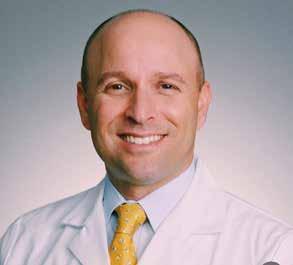
Drs. Marc Seltman & Richard Kaplan and Staff of Personal Care Physicians of Atlanta are pleased and honored to welcome our newest member, Dr. Howard Silverboard.
Dr. Silverboard has had a long and distinguished career practicing Internal Medicine in Atlanta. After specializing for many years in Pulmonary Medicine, he is shifting his knowledge, passion and skills to Primary Care. We are pleased to have this wise, kind and compassionate physician join our team. Dr. Silverboard will be enrolling patients beginning July 1st, 2026.
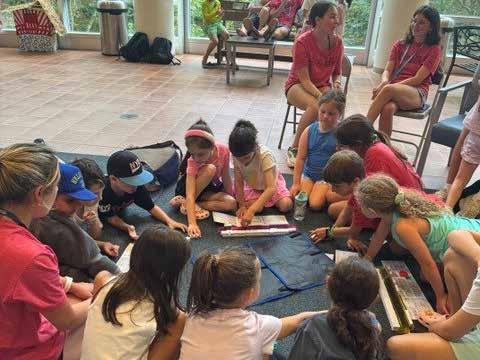
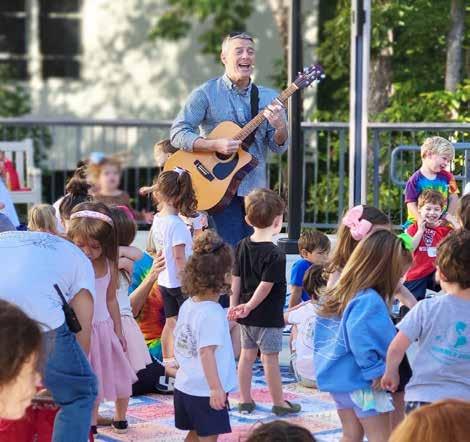
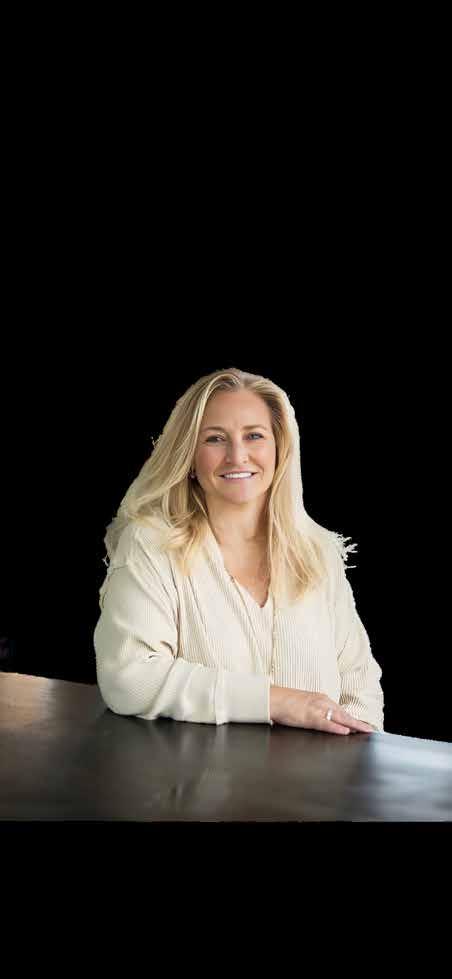
Cover Photo: With summer camps ending, that only means one thing … school is about to be back in session.
Local Israelis to Fly Home for Elections
By Jan Jaben-Eilon
On July 12, the Israeli election date was finally set for Oct. 27, 2026.
But even before the date was clear, many Israelis living in Atlanta were already preparing – one way or the other – to fly back to Israel to vote. Israeli citizens must physically be in Israel to vote, unlike other democracies that allow for remote voting, such as the U.S. Only Israelis in diplomatic missions overseas, and Israeli sailors on Israeli ships at sea can vote abroad.
Some local Israelis made plane reservations on their own. But many others signed up with an initiative known as Fly&Vote, organized by a nonpartisan, nonprofit group called AID (Aid Israel Democracy) Coalition. The goal of the group was to help bring as many as 50,000 voters to Israel.
In a WhatsApp message days after the election date was set, Fly&Vote reported: “Since the initiative’s announcement, tens of thousands of Israelis with voting rights living outside Israel have turned to the Fly&Vote initiative. Twentyfive thousand-plus of them have already registered, with 5,000 registering in the last 24 hours since the election date was announced.
“Israelis from all over the world have already registered: half of them from the U.S., 10 percent from the Netherlands, 6 percent from Switzerland, 4 percent from Britain, 4 percent from Canada, 4 percent from France, 2 percent from Australia, 2 percent from Portugal, 2 percent from Thailand, and 2 percent from Germany,” the statement added. “For comparison, in the previous elections held in 2022, about 10,000 Israelis abroad participated.”
“This election is different in the sense that it’s post-Oct. 7, and with things happening with Iran and the rise of religious regulations and tendencies in Israel,” Guy Tessler said it’s more important to vote in the coming election.
The Fly&Vote website states that even if Israeli citizens have lived outside Israel for a number of years, they are still eligible to vote; they just need to show their Israeli passports or identity cards. Fly&Vote helps Israeli expats determine if they are eligible to vote and where they can cast ballots. Now that an election date is set, the initiative has started helping those registered to secure seats on flights to Israel. It does not pay the travel costs for participants.
Days after the election date was set, notices sent to those registered with Fly&Vote stated that the participants can choose their “preferred flight date and route. There are flights available, and we have alternatives.” Those alternatives may include charter flights from key locations to which participants can travel. “Fly&Vote has a clear goal: to bring Israelis to Israel for the elections
ATLANTA DERMATOLOGY
Rachel M. Bates, PA-C
Experienced Dermatology Physicians Assistant
Now Accepting New Patients
-Skin Cancer Screening -Medical Dermatology -Cosmetic Services
Shai Robkin said he and his wife are seriously considering flying back to vote even if the timing isn’t good for them.
- at an affordable price.”
This initiative is not the first of its kind, by any means. In several Israeli elections, planes have been organized to transport ultra-religious Jews – mostly from the New York area – to travel to Israel to vote. In 1999, a grassroots organization was loosely formed to facilitate Israelis who wanted to return to Israel to vote. In that case, how those Israelis planned to vote was not a consideration.
Apparently concerned about which Israelis will fly via charter flights, Israeli left-leaning newspaper Haaretz reported that officials in the country’s Transportation Ministry indicate that they are beginning to discuss possible ways to limit charter flights to Israel before the election.
Many Israelis now living in Atlanta report that flying back to Israel to vote is not new for them. Guy Tessler, recently named volunteer chair of the AtlantaRa’anana Sister City Committee, said he voted in the 2015 Israeli election, and he plans to vote in October.
“This election is different in the sense that it’s post-Oct. 7, and with things happening with Iran and the rise of religious regulations and tendencies in Israel,” Tessler said it’s more important to vote in the coming election.
Another local Israeli who plans to travel to Israel to vote is Meirav Mayer. Although she signed up with Fly&Vote, she already bought her own plane ticket separately. “But if they will be able to get better options, I’ll fly through them,” she added.
“I voted in the last four of five elections,” said Avishay Ben Zvi, noting he missed the election during the COVID
Yohanan Plesner, president of the Jerusalembased Israel Democracy Institute, stated: “Every election in Israel is important, but the 2026 election will be among the most consequential in decades. At stake is the democratic character, social cohesion, and future direction of the world’s Jewish state and the Middle East’s only democracy.”
pandemic. “I went in coordination with my work, so I had to go anyway.” His wife, Shirley Shani Ben Zvi also has repeatedly flown back to vote. “This is not new for us.”
The Ben Zvis signed up with Fly&Vote but made their flight reservations separately because they thought it would be easier with the whole family flying.
“This election is crucial,” emphasized Shirley Ben Zvi. “There’s no way that the people who ran the country when the disaster happened on Oct. 7, 2023, should still be in power. Every one of them should have resigned on Oct. 8. This is not the Israel I grew up in. If I want my daughters to have the option to be there, this one right now is not an option. I want the option to exist.”
The Ben Zvis used to live on Kibbutz Nir Oz, less than two miles from the Gaza border, which was mostly destroyed on Oct. 7. Avishay’s 80-year-old father, Amitai, was killed Oct. 7. About a quarter of the 400 residents were either killed or kidnapped that day.
Initially, Shai Robkin said it was doubtful he and his wife, Judy, would fly to Israel for the election because they already had plans to fly there in November. However, “while I was relatively certain that the election would be on Oct. 27, now that the date has been officially set, I have been overwhelmed with a sense of guilt about not going.” He said the sense has only intensified since the date was set. “That said, the likelihood of our going back to vote is now 50-50. The timing is far from ideal for us personally, but we are seriously giving it consideration.”
The Robkins own an apartment in
According to Shirley Shani Ben Zvi, “There’s no way that the people who ran the country when the disaster happened on Oct. 7, 2023, should still be in power. Every one of them should have resigned on Oct. 8.”
Jerusalem that they rent out, but they have friends with whom they can stay if they decide to go vote. Shai said they had not registered with Fly&Vote but noted that their passports are up to date.
According to Tessler, however, current Israeli passports do not guarantee the citizens can vote. “I know some friends who have been here for a while and were purged [from the voter registry] even though they still have an Israeli citizenship and a passport.”
That’s the concern of a number of local Israelis. And it is one reason why they sign up with Fly&Vote. The organization checks the individual’s Israeli identity number and passport number to verify eligibility. However, Israel is not required to publish its approved list of registered voters until 54 days before the election, or early September.
Many local Israelis contend that despite the risk of traveling to Israel and still not being allowed to vote, it is still worth it. One Israeli, who did not want to be identified, acknowledged that he had not flown back to vote previously, but feels that this election is critical. If his vote were to help change the direction of the country, he wouldn’t just be “saving Israelis but saving the world from [Prime Minister Benjamin] Netanyahu.”
He added that this election is also the first time he’s heard from Israelis in Israel urging him to come vote. Tessler has heard the same from friends and family back in Israel to which he travels three to four times a year. There’s an urgency, he said, with them telling him that they’re counting on him to come vote.
In past years, some Israelis said that those who live abroad should not be allowed to vote because they are not serving in the military and not paying taxes. However, after the Hamas-led attack on southern Israel on Oct. 7, 2023, many Israelis abroad flew back to either serve in
“I voted in the last four of five elections,” said Avishay Ben Zvi, only missing the one during the COVID pandemic. “This is not new for us.”
the military or volunteer in whatever capacity they could. And many Israelis, like the Robkins, own homes in Israel and thus pay taxes. At one point, Netanyahu went on record promoting voting rights for Israelis abroad.
But it’s not just individual Israelis who are encouraging those abroad to travel to Israel to vote. Several professional organizations in a wide range of fields, including high-tech, are scheduling conferences in Israel around the time of the election to provide another incentive to come to Israel.
Indeed, dozens of academic organizations have scheduled conferences days before the Oct. 27 election. According to Haaretz, “no less than 44 conferences” have been scheduled, most “under the rubric of Israel’s Science and Academia Week, an event that organizers hope will draw tens of thousands of participants.”
Tessler acknowledged that one election will not save Israel because the demographic trends are going against his preferences of a liberal, secular Israel. “It may delay the trends but I’m doubtful,” he said. “I will do my best to delay the process but I’m not optimistic.”
Echoing local Israelis, Yohanan Plesner, president of the Jerusalem-based Israel Democracy Institute, stated: “Every election in Israel is important, but the 2026 election will be among the most consequential in decades. It will be the first national vote since Oct. 7 and the judicial overhaul crisis, amid unresolved questions over the integration of the ultra-Orthodox, and at a time of profound regional security challenges and opportunities. Israelis will not only be asked to decide who should govern, but the very nature of our democracy will also be on the ballot. At stake is the democratic character, social cohesion, and future direction of the world’s Jewish state and the Middle East’s only democracy.” ì
Symphony Orchestra Jazz
Making the Move One Step at a Time
By Hadassah Bay
There is a familiar image of Aliyah: the airport arrival, the flags, the music, the young family stepping off the plane into a waiting, cheering crowd.
It is an iconic moment. But the real story begins long before the wheels touch the tarmac.
For many North American Jews making Aliyah today, the decision takes shape over time, through family conversations, professional planning, school decisions, paperwork, some doubts, lots of excitement, and the slow realization that Israel has moved from being a place they love to a place where they want to build their future.
That is how it happened for Amira and Michael Bobrov of Atlanta.
Amira and Michael are both physicians, making Aliyah this summer with their three children. Their connection to Israel is not new. Both attended medical school in Israel, giving them an early experience of living in the country not only as visitors, but as students beginning to imagine their professional futures. Amira’s sister, a pediatrician, has also made Aliyah
and is now working in Israel. Through the International Medical Aliyah Program (IMAP), a joint initiative led by Nefesh B’Nefesh in partnership with Israel’s Ministry of Aliyah and Integration; Health; the Negev, Galilee and National Resilience, the Jewish Agency for Israel and bolstered by The Marcus Foundation among others, the support now available to physicians seeking to make Aliyah and enter Israel’s medi-
cal system has made the process far more manageable.
For the Bobrovs, then, Aliyah was never a sudden idea. It was always part of the plan. They had spoken for years about moving to Israel a few years after residency, once the timing made sense professionally and personally.
“With my oldest starting first grade, it seemed like the right time for this to become reality,” Amira says, “as the transition will be easier the younger the children are when they move.”
It was not a decision born of dissatisfaction. Quite the opposite.
“We have a wonderful life in Atlanta,” she says, “but it’s time to make Aliyah!”
That combination — gratitude for the life they have built and clarity about the life they want to build next — is at the heart of their decision. They are not running away from Atlanta. They are choosing Israel.
That kind of planning is exactly what Marc Rosenberg, Vice President of Diaspora Partnerships at Nefesh B’Nefesh, recommends, although, he adds, every Aliyah plan has its own story. Each family comes with its own timeline, its own practical
questions, and its own set of concerns.
According to Rosenberg, this summer is expected to be a busy Aliyah season, with more than 2,300 North American olim set to arrive. About 60 percent of North American olim typically come during June, July, and August, when school is out and families are already in transition. This year, Nefesh B’Nefesh is coordinating 47 cluster flights.
What makes the numbers striking is not only their scale, but their timing. Over the past two years, Israel has lived through war, uncertainty, sirens, reserve duty, and deep national strain. Yet, Rosenberg says interest in Aliyah has not waned. Since the beginning of the recent war with Iran, nearly 900 Aliyah files have been opened by Jewish North Americans.
For Rosenberg, the most compelling Aliyah stories are not about what people are leaving behind, but about what they hope to build.
The larger story, he says, is not what is pushing people out of North America, but what is drawing them toward Israel: family, values, children, community, and belonging.
NAMED BEST OF JEWISH ATLANTA 3 YEARS RUNNING
At Canterbury Court senior living community, life can take you wherever you’d like to go.
Schmooze.
Our expanded 14-acre campus offers new elegantly finished and customizable apartment homes, enhanced amenities and services, beautiful gardens and lush green spaces, and plenty of cultural and social opportunities. All with the peace of mind of a continuum of care, if ever needed. With all this awaiting you, what are you waiting for?
To learn more and to schedule a personal tour, contact us today at 404-737-2639, visit
CanterburyCourt.org/Schmooze, or scan the QR code.
Actual residents enjoying outdoor, chef-prepared dining at The Grille.
3750 Peachtree Road, N.E.
3750 Peachtree Road, N.E.
CanterburyCourt.org
Amira and Michael Bobrov
NEWS
“The smiling people getting off the plane are thinking about their future,” Rosenberg says. “They’ve done their research, they’ve spent time here, they have family here. This is a decision they’ve thought about carefully.”
Without a doubt, Aliyah has become much easier today than ever before. Aliyah today is supported by an infrastructure that simply did not exist generations ago. Through the partnership between Nefesh B’Nefesh, Israel’s Ministry of Aliyah and Integration, the Jewish Agency for Israel, Keren Kayemeth LeIsrael, and Jewish National Fund-USA, prospective olim have access to guidance, resources, and support at every stage of the journey.
But just as important is the community that has already paved the way. Nearly 100,000 North Americans have made Aliyah through Nefesh B’Nefesh, meaning many newcomers arrive to find family members, friends, and familiar faces already building lives in Israel. For many, that network transforms Aliyah from a leap into the unknown into a natural next step.
For Amira, the most exciting part of Aliyah is imagining what life will look like not only on arrival day, but one year later.
“My vision for this time next year: we will be settled and where we want to be,” she says. “The children will speak Hebrew and have friends. My husband and I will have jobs and a social network.”
At the same time, she is realistic about the work it will take to get there. Packing up a house, helping children integrate into a new society, and working in Hebrew all feel daunting. For physicians, even familiar professional skills must be adapted to a new language, a new system, and a new medical culture.
But that, too, is already becoming part of the preparation. “Medical Hebrew classes through Nefesh B’Nefesh have been a big confidence booster,” Amira says.
Today’s olim are not arriving with unrealistic expectations, but for many families, the challenges are part of a larger decision to build a life of meaning and belonging.
For Amira, that decision is rooted in the kind of connection she wants her children to have with Israel. “I believe that creating a core relationship with Israel — mastery of the language, strong social connections, and participation in society — will better prepare my children for facing outside criticism than anything could in America,” she says.
She also hopes that Jewish life will become less dependent on deliberate religious practice and more woven into the fabric of everyday life. In Israel, Jewish time, Jewish language, Jewish history, and Jewish responsibility are not only taught; they are lived.
Still, Amira is clear that Aliyah is not about escaping a lack in Atlanta.
“Honestly, I have a wonderful life in Atlanta,” she says, “but I feel a calling to participate in and contribute to Israeli society.”
That may be the clearest expression of the new Aliyah story: not a rejection of one home, but a pull toward another; not a move driven by fear, but by responsibility, connection, and the desire to take part.
ì
From Backyard Dream to 700 Campers
By Marcia Caller Jaffe
What began as a simple idea in Eileen Price’s backyard has grown into one of Metro Atlanta’s largest Jewish day camps, serving more than 700 campers each summer while recreating the spirit of overnight camp without requiring children to do just that.
Now celebrating its 14th operating summer, In the City Camps (ITC) has become a fun-filled fixture, offering children an immersive camp experience centered on Jewish values, friendships, and connection to Israel.
Price, an Atlanta native, says the vision was inspired by her own childhood. “I grew up in Atlanta attending Greenfield Hebrew Academy and Yeshiva Atlanta. I was active in BBYO, and I spent my summers at Camp Barney Medintz and Camp Isidore Alterman. Jewish community and camp shaped who I became.”
After graduating from Emory University, Price worked at the Jewish Federation of Greater Atlanta and at The Marcus Foundation. It was there, while
immersed in philanthropy, that she began imagining a different kind of Jewish summer experience.
“I had four young children, all my friends had young kids, and I thought,
‘How hard could it be to run a camp in my backyard?’” she recalled. That backyard experiment opened in 2012 with just 65 campers. Today, ITC welcomes more than 700 children each season af-
ter expanding through several locations before establishing its current home on the Atlanta Jewish Academy campus. Each summer, approximately 200 seasonal staff members help operate
Eileen Snow Price has steered In The City Camps that now serves 700 campers with 200 staff members.
Campers have a wide variety of elective activities to choose from.
ITC campers are engrossed in stimulating projects.
the camp. Five regional bus routes bring campers from various communities: Brookhaven, Sandy Springs, Decatur, Toco Hills, East Cobb, Alpharetta, Johns Creek, Dunwoody, and Intown neighborhoods. Important safety measures include three armed security officers, while mental health professionals from Jewish Family & Career Services visit to support campers and staff.
“We take both physical security and emotional well-being very seriously. Families are trusting us with what matters most to them,” related Price.
Although camp operates for only eight weeks each summer, ITC functions as a year-round organization. Planning begins immediately after each season concludes. Staff recruitment, counselor training, activity development, fundraising, registration, programming, and Shabbat planning continue throughout the year in preparation for the next summer.
At the heart of the experience is camper choice. Children select from more than 20 activities each day, allowing them to customize schedules. Options include sports, drama, arts and crafts, cooking, woodworking, rock climbing, pickleball, water play, foam pits, tie-dye, talent shows, Mah Jongg, and Israeli cultural programming. Interwoven are Hebrew language, Jewish values, Israel education, and spirited Friday Shabbat celebrations that reinforce the camp’s mission.
“We want children to leave camp with wonderful memories, but also with a stronger Jewish identity and lifelong friendships,” she said.
ITC serves children from pre-K through rising ninth grade. Tuition for
its primary programs is $500 per week, with reduced pricing for preschool and counselor-in-training programs. Beforecare, after-care and transportation are available for additional fees. Need-based scholarships are available.
“Our Camper Scholarship Fund exists because cost should never be the reason a child misses the camp experience,” Price said.
The camp’s growth is supported by a volunteer board chaired by Eydie Koonin, along with major philanthropic partners like The Marcus Foundation, Zalik Foundation and Federation. Families and grandparents also play an important role in sustaining the nonprofit through tuition and charitable support. ITC has approximately one counselor for every five campers, allowing staff to know campers personally with individualized attention. The camp also works with families to accommodate children with different learning, developmental, and social needs whenever it can safely do so.
Price credits much of ITC’s success to understanding leadership. “My strength is vision, relationships, and recognizing talent. I know what I do well, and I hire people who are better than I am in other areas. Building trust — with families, staff and donors — is what allows everything else to happen,” she related.
Away from camp, Price treasures family life with her husband, David, and their four children, Avi, Emma, Zion, and Levi. Price’s ambitions extend beyond annual enrollment numbers.
She concluded, “My goal has never been to build something that depends on me. I want to build an institution that will continue serving Atlanta’s Jewish families for decades to come.” ì
Atlanta Jewish Film Festival Tightens Structure & Rules
By Bob Bahr
ATL Jewish Film, which presents the annual Atlanta Jewish Film Festival (AJFF), for the first time in its long history has adopted a comprehensive outline of its core values and the rules by which the organization is governed.
The document, which is the result of months of intense discussion by the organization’s Board of Directors, was created after Israel’s Atlanta Consulate withdrew from its partnership in this year’s event and the support that it provided.
According to Joel Neuman, board vice president and who co-chaired the discussions about the new rules, the organization was not prepared earlier this year to directly address the concerns of the Consulate when they were raised.
“When issues arose,” Neuman commented, “we didn’t have the comprehensive set of practices and policies and guidelines and a framework that we needed to really guide decision making when sensitive issues came up.”
The Consulate’s unprecedented action, which shocked many event supporters, was particularly damaging because it came just after the start of the nearly monthlong series of this year’s films. The Israeli office’s criticism was of the festival’s selection of a student representative from Morehouse College on a Jury Award panel.
The student had apparently posted what the Consulate described as “antisemitic and anti-Israel content” on social media. The festival’s initial response was that they
could not find any justification to ban a jury member for public comments that criticized Israel.
But it soon followed with a public apology for what had occurred and began the intense effort to clarify and codify the festival’s basic values. Shari Labovitz, who has been a leading supporter of the AJFF since its inception a quarter-century ago, and a co-chair of the Board’s governance committee, indicated that the effort involved a complete discussion of what the organization stood for.
“I think in, in large part, we were motivated by looking at the criticism,” Labovitz said, “evaluating the criticism, and what we did starts with our core values, and frankly, that’s where we started.”
Under a section of what is called “Standards for Public Representation,” the organization states that it will not knowingly include individuals that participate with the organization in any way, publicly, “whose public statements
or actions materially conflict with the organization’s Core Values.” Specifically, that is described as efforts to delegitimize Israel and engage in antisemitism and other forms of bigotry.
The document also outlines a concerted effort at making sure that all organizational representatives and invited guests, including film artists, abide by ATL Jewish Film’s mission and values as a Jewish cultural institution.
But the organization also emphasized that it has not altered its commitment to artistic freedom, open discussion and the presentation of a broad selection of “films that explore complex, challenging or thought-provoking subjects.” That’s unchanged, according to Kenny Blank, ATL Jewish Film’s artistic and executive director.
“I think the framework, the policies that have been developed, articulate what we stand for, just as much as the things that, as a Jewish organization, we will not tolerate. I mean, this was really an opportunity to affirm what we stand for as an organization, and not a change in our mission.”
What has changed, according to the group, is the level of guidance and structure under which the organization functions. According to a statement that accompanied the new rules, “Together, these measures strengthen accountability and transparency, bring greater rigor and care to decision making and preserve the artistic freedom and curatorial independence essential to our mission.”
The Israeli Consulate’s sharp and swift reaction in February to the film group’s initial misstep was a dramatic departure in the relationship between the Atlanta Jewish Film Festival and the Israeli government’s representatives in Atlanta.
The relationship between the two has generally been cordial and supportive over the event’s 25-year history.
The film festival has provided the community with an unparalleled opportunity to explore the often complex structure of social, political, and religious life of the Jewish state. Frequently, the films have been accompanied by the personal participation of Israeli actors, directors, and other important creative figures from the country’s important film industry.
This year, almost one-third of the films the AJFF screened were either from Israel or co-produced there; and three of the six Jury prizes were awarded to Israeli films.
Blank fully expects the future to sometimes pose difficult issues, but he’s confident there will be fewer bumps in the long road ahead.
“As a Jewish organization, as a Jewish film festival, we are tackling topics and issues that are sometimes thorny and difficult ... now, we have this wonderful package of values and framework to help guide us in that work.”
For more than a quarter-century, the Atlanta Jewish Film Festival has played an important role in understanding Israel and the Jewish world.
In Loving Memory: Hochdorf Creates Opa Project
By Robyn Spizman Gerson
In June 2020, Shoshana Hochdorf’s beloved father passed away, and three days later she found out she was pregnant with her first child. Filled with grief and an understandable mix of bittersweet sadness, she and husband, Adam’s, blessed news arrived at a most painful time. It is often said, when one door closes, another opens.
Knowing that her beloved father would never know her children, her firstborn, and they would never know him, Shoshana’s personal story inspired an idea that was heartfelt. Her mission would help bridge her own grief to a purposeful project and help others do the same.’
As days followed, Shoshana said to her husband, Adam, “I’d love to somehow make a children’s book about my dad. A way for our baby to know him. She decided then, that once their baby was born, she’d figure it out.”
Nine months later, with the pandemic in force and after a 5½-week NICU stay, baby boy Rafa, was brought home.
That night, Adam gave Shoshana a push present that took her by total surprise. She said, “I opened the box to find a book called ‘Opa.’ The German word means grandfather, which is what my dad went
by. Adam, with the help of my incredibly talented sister-in-law, made the children’s book all about my father and I was overwhelmed.”
Shoshana shared, “I cherished knowing the book was there, but it took me a solid year to be able to read it to Rafa. I cried the whole way through. Not long after, a friend (and newly inducted member of the club) asked me where Adam had made it. That was when I realized I wanted to help others dealing with loss make books about the people they love. So, this year on Father’s Day, and on Instagram in the sea of happy family pictures, I shared it in honor of and in celebration of my dad.”
Shoshana added, “We now have two children, Rafa and Ruby. Now living in Brooklyn, The Opa Project is still a work in progress. I quietly launched it on a day that can be hard for a lot of people to hopefully spread some light and maybe offer a way to connect the children you love to the people you’ve lost.”
The Opa Project makes personalized children’s books to connect the children you love to the people you’ve lost. Each book is a way to introduce a child to a grandparent, parent, or loved one they never got the chance to meet. By creating something truly specific to your family, Shoshana’s books share not just a name, but the whole person: the team they rooted for, the sayings they were known for, the recipes they made famous. The books turn bedtime into a moment of connection, telling a loved one’s story in a way a young child can hold onto.
Each book includes custom illustrations and is printed as a hardcover keep-
sake, made to be read again. Even if your child may never have met them, they can still know them. Her friend and early collaborator, Casey, named the project, The Opa Project, and her husband’s gift became the origin of Shoshana’s mission to create meaning from loss and a book of love, legacy, and a lifetime of memories. Regarding some of the books she has made, Shoshana shared, “My friend, Casey, and I met 12 years ago working at Zocdoc, where I still work full-time. She and I became close friends and stayed friends. Her dad passed away, not too long after my dad. She was the original person who asked about how we had mine made. She and I were pregnant at the same time, me with my second and her with her first, and so I worked with her siblings to create her book. And another one was called ‘Bea’s Joy.’ This one I made for a colleague whose mom passed away, and he found out he and his wife were pregnant not long after. He was incredibly supportive of the larger project and immediately wanted one about his mom.”
Shoshana added, “When my dad passed away, in that moment, I was dedicated to my children genuinely knowing my dad. When friends saw my husband’s gift, they asked where we had it made, and what started as one family’s way of holding onto someone we loved became something I wanted to offer to others. We’re in our early days, taking on a small number of stories at a time to make sure we can deliver something you’ll truly love. Ruby is a baby, but I’m certain she knows who Opa is and that is everything to me.”
For more information, please visit https://www.theopaproject.com/ ì
The original “Opa” book written by Adam Nathan, Shoshana’s husband, and illustrated by Allison Baker, Shoshana’s sister-in-law.
Shoshana Hochdorf reads her book, “Opa,” to her son, Rafa, at age 2.
Chabad of Buckhead Welcomes New Rabbi
By Marcia Caller Jaffe
Chabad of Buckhead and Brookhaven has announced the appointment of Rabbi Mendel and Itty Wuensch as the new directors of Chabad Young Professionals (CYP) Buckhead, a meaningful step in the organization’s continued investment in Atlanta’s growing community of Jewish young professionals.
Originally from Florida, the Wuensches’ bring experience in Jewish education, community building, and leadership. Rabbi Mendel most recently served as the rabbi of the English-speaking community in Ir Yamim, Netanya, Israel, where he helped cultivate a thriving synagogue. Itty co-founded Oryah Seminary in Israel, a post-high school educational program for young Jewish women combining advanced Jewish learning with personal growth, leadership development, and mentorship. Through Oryah, she has inspired and guided hundreds of young women in preparing for the next life stage.
Rabbi Mendel and Itty plan to create a warm, welcoming home for Jewish young professionals. “We are honored to join the Chabad of Buckhead family and are grateful for the opportunity to serve this incredible community. Our hope is to create a place where every young Jewish adult feels welcomed, inspired, and proud of their Jewish identity. We look forward to meeting people, building lasting friendships and growing together.”
Their time in Israel was described as “incredible.” As a team, they led the Ir Yamim Aliyah community. Rabbi Wuensch described the sacrifices of “choosing less money and less physical ease for something deeply meaningful. Also, many have family on the Israel Defense Force front lines.
Itty related, “Living among such passionate, determined people and witnessing, up close, the miracles G-d has performed during the most monumental times in our recent history, was a powerful blessing. We look forward to returning with the final redemption.”
In terms of Buckhead being in such a “happening” area, they instantly fell in love with that part of the city. Rabbi Wuensch explained, “The beauty, wholesomeness, and nature here reflected the people we met: down-to-earth, friendly, happy, and truly looking to grow and connect in a real way. “
Itty and Rabbi Mendel both grew up in the tight-knit Bal Harbour community and married at 22. They were raised in-
side Itty’s grandfather, Rabbi Sholom Lipskar’s, legendary Chabad synagogue, The Shul of Bal Harbour. Living within walking distance of East Wesley, they want to be close enough for people “to knock on the door and come on in.”
In their new roles, they will oversee Chabad’s rapidly growing young professionals division, expanding opportunities for Jewish adults in their 20s and 30s through Shabbat dinners, holiday celebrations, educational classes, social events, and community-building initiatives.
“This is a tremendously exciting moment for our community. As our community continues to grow, so does our responsibility to invest in its future. Rabbi Mendel and Itty embody everything we hoped for in leaders of CYP: warmth, authenticity, vision and a genuine love for every person they meet. We are incredibly excited to welcome them to Atlanta and are confident they will make an extraordinary impact on the lives of countless young Jewish adults,” said Rabbi Yossi New, regional director of Chabad of Georgia, who expressed gratitude to Chabad of Georgia for guidance and support throughout this process.
Rabbi New added, “Many Jewish college students become deeply connected to their Judaism due to their involvement with the Chabad House that serves their campus. Chabad Young Professionals allows that connection to continue and flourish. Kudos to Rabbi Yisrael and his supporters for their vision. Buckhead has been the perfect place in Atlanta to establish a CYP chapter, and we continue to see its tremendous growth.”
The Wuensches’ new role represents another milestone in Chabad of Buck-
head’s ongoing expansion, reflecting its commitment to serving the evolving needs of the Buckhead Jewish community while strengthening Jewish life for the next generation, some of whom did not have the benefit of a Jewish education.
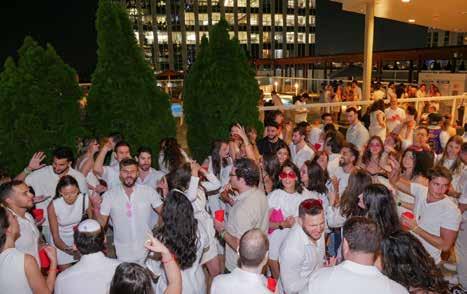
Sign up for the Tu B’av White
Party from 10 p.m. to 1 a.m., Aug. 1, featuring an all-night DJ, hookah bar, and VIP tables. Tickets can be purchased online for $50 and are $60 at the door. For more information, please visit https://app.acuityscheduling.com/ schedule/9ffa6288 ì
Rabbi Mendel and Itty Wuensch with their three children, Riva, Meir, and Rachel, look forward to their move to Buckhead.
This week, Nefesh B’Nefesh’s Zionist Education Initiative (ZEI) welcomed the inaugural cohort of its ZEI Fellowship to Israel, bringing together 12 accomplished Jewish educators from leading schools across North America for an immersive learning experience designed to help shape the future of Israel education.
Nefesh B’Nefesh’s Zionist Education Initiative has already taught Zionism classes to more than 50,000 gap year students and is now extending that impact deeper into the Diaspora school system. Nefesh B’Nefesh has developed a dedicated Zionism curriculum for high schools abroad, which has already been taught and tested in more than 10 schools across North America.
Building on that foundation, the organization is now working in partnership with Koren Publishers to create the
Today in Israeli History
July 31, 1988: Jordan’s King Hussein announces that he is giving up political claims to the West Bank, although he seeks to retain influence over Jerusalem. King Abdullah I annexed the West Bank and East Jerusalem in 1950.
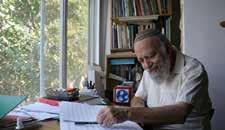
Israel Prize-winning composer Andre Hajdu works in his Jerusalem home. // By Booradley0212, own work, CC BYSA 4.0, via Wikimedia Commons
Aug. 1, 2016: Composer and ethnomusicologist Andre Hajdu dies at 84. Born in Hungary, he first visited Israel in 1966, moved to Jerusalem that year, and taught at the Tel Aviv Music Academy and Bar-Ilan University.
Aug. 2, 1923: Shimon Peres, the only Israeli to serve as prime minister and president, is born in what is now Belarus. Peres makes aliyah in 1934, enters politics in 1941 and is first elected to the Knesset in 1959.
Aug. 3, 1981: An excavation on the eastern side of Jerusalem’s City of David is suspended amid attacks by Haredi Jews, most of them from the anti-Zionist Neturei Karta. The site reportedly includes a Jewish cemetery.
ISRAEL PRIDE
NEWS FROM OUR JEWISH HOME
Israeli Teens Take UN Stage for World Youth Skills Day
Ten Israeli teens performed six songs at the United Nations Headquarters as part of World Youth Skills Day, whose 2026 theme, “Skills for a Shared Future,” calls on young people to help shape a world being reshaped by AI. The Tzofim Friendship Caravan, now in the middle of its annual summer tour of North America, performed “Shir HaTzofim,” “One Day,” “Eretz Eretz,” “There Will Come A Day,” and “Viva La Vida”, amongst other numbers for more than 50 people.
can play as young Israelis in the years since Oct. 7, 2023.
first-ever textbook on Zionism designed specifically for high school students in the Diaspora. To bring this curriculum to scale, Nefesh B’Nefesh launched its first Fellowship this summer, bringing together representatives from 12 high schools across North America that will begin implementing the curriculum in their classrooms starting Fall 2026.
Compiled by AJT Staff
Both Israelis and Palestinians celebrate the literary legacy of Yitzhaq Shami.
Aug. 4, 1888: Yitzhaq Shami, an early writer of modern Hebrew literature, is born to an Arabic-speaking father and a Ladinospeaking mother in Hebron. He fills his stories and poems with Arabs and Mizrahi Jews.
Aug. 5, 1995: Composer Menachem Avidom dies at 87. A Russian native, he became an innovator in fusing Middle Eastern and European musical theories, beginning in 1944, and paved the way for Mizrahi musicians.
Aug. 6, 2015: Stage and screen actress Orna Porat dies at 91 in Tel Aviv. Originally a German Christian, she moved to the Land of Israel with a Jewish British officer she met after World War II and converted.
Aug. 7, 1904: Ralph Bunche is born in Detroit. He wins the 1950 Nobel Peace Prize for negotiating a series of armistice deals between Israel and its neighbors in 1949 after his U.N. boss, Folke Bernadotte, is assassinated.
Before the show, the group sat down with Dr. Felipe Paullier, the UN’s Assistant Secretary-General for Youth Affairs as part of a series of events to mark World Youth Skills Day 2026. The conversation between the former head of the Uruguayan Youth Institute and the Tzofim Caravan performers covered how AI is likely to change adolescence and childhood, what role young people should have in global institutions, and what role they
Aug. 8, 1984: Hebrew linguist and lexicographer Avraham Even-Shoshan dies at 77 in Tel Aviv. From 1946 to 1958, he worked on the New Dictionary of the Hebrew Language, now known as the Even-Shoshan Dictionary.
Aug. 9, 2006: Israel’s Security Cabinet approves an expansion of the offensive in southern Lebanon nearly a month into the Second Lebanon War. A U.N.-brokered ceasefire ends the war five days later.
Aug. 10, 1979: Economist David Horowitz dies at 80. The Israeli Finance Ministry’s first director-general, he lobbied for the creation of the Bank of Israel, then served as its first governor from 1954 to 1971.
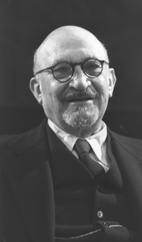
As the president of the World Zionist Organization, Chaim Weizmann pushed for the formation of a Jewish Agency representative of all world Jewry. // By Hans Pinn, National Photo Collection of Israel
Aug. 11, 1929: The 16th Zionist Congress ratifies a broadly representative Jewish Agency for Palestine, including non-Zionists.
World Zionist Organization President Chaim Weizmann wanted an agency reflecting the views of all Jews.
Israeli Ambassador to the UN, Danny Danon, said: “Israel’s young generation is one of our nation’s greatest strengths. Today, their talent, spirit and love for their country were on full display. Through productive conversation and an inspiring musical performance, they reminded everyone that Israel is a vibrant, creative, and diverse society. Today, we learn once again that culture has the power to build bridges.”
Compiled by AJT Staff
Aug. 12, 1991: Yeruham Cohen dies at 75. He was an army intelligence aide, and during negotiations on a truce with a surrounded Egyptian army in the Negev in 1948, Cohen became friendly with opposing officer Gamal Abdel Nasser.
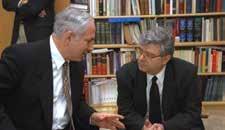
Supreme Court President Aharon Barak welcomes Prime Minister Benjamin Netanyahu to his office in Jerusalem in October 1997. // By Amos Ben Gershom, Israeli Government Press Office, CC BY-SA 3.0
Aug. 13, 1995: Aharon Barak, a Supreme Court justice since 1978, is appointed to serve as the court’s president. He expands the court’s power, especially in reviewing government and military actions and protecting civil liberties.
Aug. 14, 1910: Natan Alterman, a poet, journalist, translator, author and playwright, is born in Warsaw. He publishes his first poetry book, “Stars Outside,” in 1938. His poem “The Silver Platter” is a Yom HaZikaron standard.
Items are provided by the Center for Israel Education (israeled.org), where you can find more details.
The Tzofim Friendship Caravan perform at the UN Headquarters in New York City as part of World Youth Skills Day on July 16.
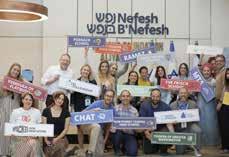
Nefesh B’Nefesh launched its first Fellowship this summer, bringing together representatives from 12 high schools across North America.
Burnt Beams from 2,600 Years Ago Unearthed
By Gil Zohar
Coinciding with the nine days preceding Tisha b’Av when Solomon’s Temple was destroyed in 586 BCE by the Babylonian king, Nebuchadnezzar, massive burnt wooden beams attesting to that conflagration were discovered recently at an archaeological dig in the Givati parking lot in the City of David. The excavations were conducted by the Israel Antiquities Authority (IAA) and Tel Aviv University (TAU) within the City of David - the country’s most active archaeological site - situated within the Jerusalem Walls National Park.
According to Excavation Director Efrat Bocher, “The beams appear to have served as the roof of an inner courtyard in a building from the First Temple period. During the destruction, they collapsed onto the floor. We believe that the plaster cladding of the building’s walls, melted by the fire, covered the charred wooden beams, and ultimately enabled their exceptional preservation.”
“It is very rare in Israel to find wood with such a large number of growth rings,” said Dr. Johanna Regev of the IAA, who is studying the find. “Here, in the City of David, we found thick beams with many rings, offering significant research potential – with more growth rings enabling higher dating resolution. Until now, we could date finds within a range of hundreds of years. Now, we can attain much greater precision, narrowing the dating range down to as little as 10 years.”
The excavation directors noted that Jerusalem’s deported residents, following their return after King Cyrus the Great of Persia issued his famous liberation decree, likely decided to preserve the memory of the destruction by leaving behind remains that tell the
story of the catastrophe.
“The concept of a landscape of memory is familiar from many cultures around the world,” explained Dr. Yiftah Shalev, who directs the excavation on behalf of the IAA alongside Prof. Yuval Gadot of TAU. According to Dr. Shalev, “Preserving memory is a human need, seeking to preserve what once existed. Here, we see it in its clearest form: a deliberate choice to leave ruins in place as a testament to the destruction and build the new layer over them.”
“We are just before Tisha b’Av,” adds Bocher. “This discovery makes you feel that you are witnessing the very moment of destruction, the moment when it all happened. It’s deeply moving.”
Minister of Heritage Amichai Eliyahu commented on the new discovery: “Jerusalem’s soil continues to provide tangible evidence of the city’s ancient past. The wooden beams burned in the destruction of the First Temple stand as a powerful reminder of the Jewish people’s presence in Jerusalem some 2,600 years ago. On the eve of Tisha b’Av, this discovery under-
scores that our connection to Jerusalem is rooted not only in faith, but also in history, archaeology, and collective memory. It is our responsibility to continue uncovering, preserving, and passing this heritage on to future generations.”
After the Givati parking lot is excavated to bedrock, the site will become the new headquarters of the City of David National Park. The reinforced roof of the building will house a cable car stretching
across the Valley of Hinnom - the biblical Gehenna where infants were sacrificed to the fire god, Moloch - to the future train station and light rail stop now under construction at Jerusalem’s Ottoman-era railroad station.
After preservation work, the charred wooden beams will likely be displayed at the Israel Museum. ì
Gil Zohar is a journalist and licensed tour guide in Jerusalem.
The excavations were conducted by the Israel Antiquities Authority and Tel Aviv University.
The charred beams were uncovered during excavations by the Israel Antiquities Authority and Tel Aviv University within a building that collapsed by the intense fire at the time of the First Temple’s destruction.
Memoir Traces Life Before and After Oct. 7
By Dave Schechter
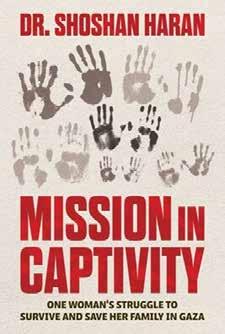
Shoshan Haran has written an emotionally charged, first-person account of the ordeal her family endured beginning on Oct. 7, 2023, when Hamas terrorists attacked a section of southern Israel known as the “Gaza envelope.”
“Mission in Captivity: One Woman’s Struggle to Survive and Save Her Family in Gaza” was published in Hebrew earlier this year and awarded the 2026 Bernstein Prize, an Israeli literary honor. An English translation, published by Wicked Son (distributed by Simon & Schuster), releases on Oct. 6.
“My country, where were you? Our world, where were you?” Haran asks in the preface.
Haran is an agronomist, with a doctoral from the Hebrew University of Jerusalem. She is the founder and president of Fair Planet, a non-governmental organization that has aided a half-million subsistence farmers in Ethiopia, Rwanda, and Tanzania by providing high quality seeds and training.
Her parents, Rina and Avram Havron, were among the founders in 1946 of Kibbutz Be’eri, located three miles from Gaza. Shoshan and her husband, Avashalom Haran, made the kibbutz their home, as did her younger sister, Lilach, and brother-in-law, Eviatar Kipnis, who lived 300 feet away.
[Disclosure: Haran and I share a set of great-great-grandparents. Her great-grandfather, Israel Schechter, was the twin brother of my great-grandfather, Solomon. Before Oct. 7, I knew nothing of her and relatively little about the Israeli side of my family tree.]
During the Simchat Torah holiday, Shoshan and Avshalom hosted their daughter and son-in-law, Adi and Tal Shoham; their grandchildren, Naveh, 8, and Yahel, 3; and Avshalom’s sister, Sharon Avigdori, and her daughter, Noam, 12.
On Oct. 7, the government’s assurances that technology would protect the “Gaza envelope” were proven horribly flawed. The Israel Defense Forces were hampered by an insufficient number of troops available (due in part to the holiday), incomplete information from the battlefield, disrupted communications, and what Israelis call “conceptzia,” the governing assumptions about Hamas that trumped intelligence reports and warnings of preparations for an attack.
(The word “conceptzia” was coined by the Agranat Commission that examined the failures leading up to the 1973 Yom Kippur War.
Beginning at 6:29 a.m., as Hamas fired thousands of rockets toward Israel, an estimated 3,800 members of its uniformed commando unit, followed by some 2,000 civilians, breached fences separating Gaza from Israel. They rampaged through kibbut-
zim, towns, and an outdoor music festival, slaughtering 1,200 men, women, and children. Another 251, including the bodies of at least two dozen dead, were kidnapped and taken into Gaza.
Haran’s husband, sister, and brotherin-law (and his caregiver) were among 101 civilians — 10 percent of the population — killed at Be’eri. Thirty residents were taken hostage.
As she draws a line between life before and after Oct. 7, Haran writes as an exceptionally self-aware narrator. [The quoted material that follows is from the English translation, which was provided to the AJT.]
As terrorists attacked the Haran home with assault weapons, a bulldozer, and likely thermobaric grenades, Shoshan, Avshalom, and their guests huddled in the safe room.
“Naveh asks Tal, ‘Daddy, are we going to die now?’”
“And Tal, who values trust with his children above all and is always totally open with them about everything, cannot bear for the last thing he might say to Naveh to be a lie. So, he answers, ‘I don’t know.’”
There is no escape.
“We have mere seconds to decide. After a split second, Avshal concedes: There is no choice. We decide to surrender. We can already hear grenades exploding outside. The terrorists might throw a grenade inside at any moment and wipe us all out. Avshal and Tal raise their hands above their heads, and Tal shouts in Arabic, ‘Waladi, waladi!’ There are children with us.
“We stop resisting. Avshal opens the steel panel on the safe room window. We are totally mute. Tal climbs out first through the gaping hole. Avshal follows.
“That will be my last glimpse of my beloved partner in life.”
Hours after being separated from her husband and son-in-law, after seeing dead
bodies in her neighborhood and black smoke billowing from her sister’s home, after being deposited at a Gaza apartment (where the terrorists had stashed toys and other diversions, preparing for kidnapped children), “A sudden realization washes over me: There is no point thinking about our former life. It’s all gone. It is futile to look back.”
A new reality sets in.
“I understand I must conquer my rage and terror to achieve one singular mission of shielding my family from these monsters and their twisted, malicious values. I look at Naveh and Yula, so young, so delicate, so innocent, and I know: I must not lose control. I cannot show weakness. I must look the terrorists directly in the eyes, never lower my gaze, display no emotion. I must project only determination and inner resolve.
“From the moment of our abduction, my role is clear to me: I am bringing everyone home alive. I say this to nobody but myself, over and over. This is my mission.”
Haran resolves not to break. “The bathroom is the only place where we can let out emotion, anger, and frustration; the only place we can cry freely, away from the eyes of children or captors. But even there, all throughout my captivity, I do not cry. I fear crying will crack the hardened armor I have donned. It will weaken me, make me fall apart.”
Prompted by a conversation with one of their captors, Haran contemplates the consequence of her kibbutz (and others) employing Gazans. “We thought that the simple fact that they earned a dignified living with us, providing for their families while befriending ours, would help to foster deeper familiarity between our two peoples and thus lay the groundwork for future coexistence and peace.
“But we did not fully understand the ferocity of their frustration as they saw our
spacious homes, manicured lawns, and pretty trees and flowers, gaining a glimpse of our comfortable lives. We could not fathom the power of the envy festering in their hearts when, at the end of each workday, they returned to their homes in Gaza — back to neglect, hardship, and widespread unemployment. We foolishly assumed that they would see us as a model and become inspired to build a better future for themselves and their families.”
She wonders whether the Gazans who worked at Be’eri provided intelligence that aided Hamas.
The relationship between captors and captives is clear. “Everything is in the terrorists’ hands. Our lack of control over the most trivial things, which we take for granted in the free world, is psychologically shattering and undermines our sense of self.”
That includes basic needs. “The conditions in captivity are harsh. Beyond the constant life-threatening danger and the deprivation of freedom, food is scarce and hygiene is dismal.”
Inside the Gaza apartment, Haran can feel the rumble of Israeli air strikes. She fears for the children’s welfare. The women work to keep them occupied for hours on end, day after day.
On Nov. 25, 2023, after 50 days, Haran, her daughter, sister-in-law, and the three children were part of an exchange of hostages for Palestinians imprisoned by Israel.
As they meet other hostages, a young woman relates her experience as a captive. “As she speaks, I am struck by the realization that other hostages genuinely went through hell: degrading conditions, sadistic physical abuse, forced isolation, cruel psychological manipulation, and even moments when they were forced to witness their friends dying in agony.”
Though Haran was impressed by the IDF’s preparation for their care, “I think about the sharp contrast between the army’s absence, the abandonment and neglect we experienced on Oct. 7, and the meticulous welcome it has prepared for us now, with
ISRAEL
soft teddy bears, coloring books, clothes, and refreshments.”
“Where was the IDF when we truly needed its protection?”
When her sister, Lilach, is not among family members who visit the hospital unit, “I understand: She is gone.”
There is even more traumatizing news.
“Then comes the most terrible moment of all. Shaked and Yuval [her children] ask me to join them in my private room. Through choked voices and tears, they tell me that my beloved Avshal, their father, is not being held hostage by Hamas after all.
“He was murdered in Be’eri on that black Saturday.
“The news strikes me like the blade of a cold, sharp ax.”
The government is almost too efficient. Haran receives a new ID card. “There, in black and white, next to ‘relationship status,’ it reads: ‘Widow.’ It has only been a few hours since my children told me Avshal was murdered, and already I have a new official status. It hurts. It is cruel. It is unfathomable.”
There is no home return to at Be’eri. Haran moves into an apartment elsewhere in Israel. “I still cannot grasp that I have no home. That I am homeless in the full sense of the word. I still cannot absorb that I have no clothes that are truly mine. None of the treasured objects I collected over the years. None of the jewelry passed down through generations of my family.”
The pain of her husband’s death is intense. “And now he is missing from my life, missing from our children’s lives, missing from the lives of the grandchildren he loved so much.
“Grief washes over me. Grief over him, over me, over us. We will no longer complete the circle of life together.”
Haran puts her energies into efforts to free the remaining hostages, including travels to Washington, D.C., and speaking at the United Nations.
Tal was held hostage, in worse conditions, for 505 days, until his release on Feb. 22, 2025, as part of a ceasefire deal. Haran recorded reactions as the family watches television: “09:47 — There he is, that’s Tal, walking onto the stage! We erupt into colossal screams. Yuval leaps in the air with joy. Mor and Lee, Tal’s siblings, burst into tears and embrace. He is thin, very thin, pale as chalk, blinking in the first daylight he has seen after many months held in the darkest tunnels.”
Despite all that she has experienced, all she has witnessed, all that she has lost, and for all of her grief and anger, she resolves “to blaze my own path,” without her husband, her sister, and her brother-in-law. She writes at the end: “With renewed strength and a most profound recognition of the need to strive for a better world, I report for duty before the future.” ì
Shoshan Haran, author of, “Mission in Captivity: One Woman’s Struggle to Survive and Save Her Family in Gaza.”
6490 SCOTT VALLEY ROAD
Or VeShalom Golf Tournament set for Aug. 17
On Monday, Aug. 17, at Bear’s Best Atlanta, Congregation Or VeShalom (OVS) of Brookhaven will hold a golf tournament fundraising event for the first time in well over a decade. Judging by the early buzz for the late-summer event in Suwanee, it seems safe to say it won’t be another decade-plus until the esteemed synagogue hosts another fundraiser of this type.
Fueled by the mission to raise supplementary funds for year-round special programs, Congregation Or VeShalom, founded more than a century ago by Sephardic Jewish families from the Island of Rhodes, originally aimed for a 65-person event. Currently, with the big day still several weeks out, more than 80 attendees are slated to play at the Jack Nicklaus-designed golf course and partake in the postgolf festivities, which include a banquet luncheon, awards ceremony, and raffle. Surely, the larger-than-expected turnout will not only help Or VeShalom meet its fundraising goals, but it will also allow congregants to socialize and forge connections in a unique setting merely weeks before they reconvene for the High Holidays.
“This is going to be really fun because I’m finding that a lot of our programs and fundraisers happen around the synagogue, as does that occur with many congregations,” said Talya Wittenberg, program and engagement manager for Or VeShalom who’s been the driving force behind the logistical planning for this golf
event. “But with this one, it’s just going to be really nice to get out and get fresh air and be able to be a community outside of the synagogue. I think a lot of communities and congregations can sometimes miss that — where you have this beautiful environment in the building, but it doesn’t always necessarily translate the same way outside the building.
“I’m personally really just excited to see all the people who don’t necessarily make it to synagogue every week, just be able to come out and get some fresh air and have some fun outside of the building. It will be such a nice little getaway for all of our congregants. It’s really just a friendly way to begin some competition for the day.”
The golf tournament, set to tee off at 9:45 a.m. and preceded by an early-morning putting contest (available for both golfers and spectators and held in conjunction with a continental breakfast), is also a means for honoring longtime Or VeShalom member and three-time congregation president (1978, 1979, 2005) Dr. Sidney Tourial, whose daughter, Jennifer, will serve as the keynote speaker at the afternoon banquet, which is scheduled to start at 2 p.m.
“For more than 50 years, Sidney has been instrumental in writing and directing OVS plays, contributing immensely to the cultural and communal life of the congregation,” Congregation Or VeShalom said in an official statement. “A dentist by profession, he has also played a significant role in the greater Atlanta Jewish community through leadership and volunteer involvement with the AJCC and the Atlanta Jewish Federation. An avid golfer, Sidney has enjoyed playing courses around the world. He and his wife, Susan, have three children and six grandchildren, and he is
honored to be this year’s golf tournament honoree.”
Congregation Or VeShalom empowers its congregation with a constant offering of family programs, adult learning opportunities, holiday celebrations, and community outreach events. A fundraising golf tournament such as the one planned for Aug. 17 is incredibly vital in raising funds to subsidize these communal gatherings as well as Sunday School tuition assistance programs. In terms of holidays, two marquee annual celebrations that are free of charge, the Hanukkah Bazaar and Purim Carnival, can be magnified and accessible to a larger swath of Atlanta’s Jewish community — without having to rely on securing outside sponsorships.
But in the short-term, Wittenberg and her colleagues at Or VeShalom are hoping that this late-summer golf tourney will help the synagogue continue building
momentum in its outreach efforts.
“We’re working really hard to open ourselves up to the broader Jewish Atlanta community,” added Wittenberg. “We would love for people to come check us out. It’s such a welcoming environment.”
Though public registration will close on Aug. 3, those interested in registering are still able to do so by calling Or VeShalom directly at 404-633-1737. Registration for an individual golfer is $250, while a foursome is $900.
Those interested in learning more about sponsorship opportunities, which range from $360 to $2,500, are encouraged to check out the following link: ovs. shulcloud.com/form/golf2026
Should inclement weather descend on the region on Aug. 17, the golf tournament will not be cancelled. A postponement date within this calendar year will be announced as soon as possible. ì
Congregation Or VeShalom’s golf tournament on Aug. 17 will honor longtime member and three-time congregation president, Sidney Tourial (second to the right) // Photo Credit: Susan Tourial
Braves were Well Represented at All-Star Game
By David Ostrowsky
The primary narrative heading into the 2026 MLB All-Star Game at Philadelphia’s Citizens Bank Park (CBP) on July 14 was that some of the game’s brightest stars were either unable to or uninterested in participating in the 96th staging of the Midsummer Classic against the backdrop of America 250.
While fans, many of whom paid well into four figures on the secondary market for tickets, sorely missed seeing splashy names such as Shohei Ohtani, Jacob Misiorowski, and Aaron Judge take the field, the Atlanta Braves’ organization had a dynamic five-player contingent (Chris Sale, Matt Olson, Ozzie Abies, Drake Baldwin, Raisel Iglesias) fully dedicated to the sport’s crown jewel event.
In an age when many big-name players don’t want to risk getting injured in a spectacle of an exhibition — or simply want an extended break from the grind of the regular season — the Braves’ perfect attendance was notable.
“I think it’s a special opportunity to get selected for an All-Star Game,” said Atlanta’s veteran first baseman and fourtime All-Star, Matt Olson, the day before he and his NL All-Star mates fell to their AL counterparts, 4-0, in front of 43,916 fans in steamy South Philly. “I think it’s always fun to come and be around some of the best in the game and just talk it up with them and talk about past at-bats against a guy or facing a team. It’s just fun to be in a clubhouse with a group of guys that you’re not normally with and just talk some shop.”
The Braves All-Stars opting in for the first-ever All-Star Game at Citizens Bank Park (truly an October house of horrors for the ballclub this decade) was not just a nod to the fans — with a potential impending labor stoppage, next year’s Midsummer Classic at Wrigley Field is not a given — but also to the dozens of employees in the Atlanta organization who toil long hours behind the scenes.
“We have a great organization, and we want to represent them because they do a great job keeping us healthy, keeping us ready for the games,” shared Albies while gearing up for his fourth All-Star Game, and first since 2023.
While the Braves’ All-Stars, and, yes, even Blooper, the Braves mascot, drew mostly jeers during the pregame introductions, it wasn’t anything like the reception Braves players are accustomed to when the games really matter in the City of Brotherly Love.
“Philly fans, they really pull for their
Though many of the fans on hand at Philadelphia’s Citizens Bank Park for this
didn’t give the Braves’ All-Stars a particularly welcoming reception,
represented the organization quite
team. I’ll say playing here in the All-Star Game is definitely different than the playoffs,” added Albies.
The National League has been considered the far superior league this season with heavyweights such as the Braves, Dodgers, and Brewers given the best odds to be the ones celebrating come Halloween. But the Senior Circuit was a no-show at this year’s All-Star Game, particularly in the batter’s box as not a single National League player got in scoring position. All told, the NL scratched out merely three singles in the Phillies’ hitter-friendly home ballpark with the Braves’ three position players — Baldwin and Albies, who started at catcher and second base, respectively, and Olson, the reserve first baseman spelling Freddie Freeman — going a combined 0-5.
Olson has consistently ranked atop the home run leaderboard this summer and with the shallow right-field fence at CBP, he was certainly a contender to provide some late-inning heroics and be Atlanta’s first All-Star Game MVP since 2010 (Brian McCann).
“I do like hitting at this ballpark,” acknowledged Olson. “It’s one of the better ones I would say. The ball normally goes pretty well here.”
The most noteworthy performance for the Braves came courtesy of Iglesias,
the indomitable closer who pitched in his first All-Star Game at age 36. The anchor of the Braves’ bullpen trotted out to the mound in the top of the sixth and worked around a Willson Contreras two-out single to escape the frame unscathed.
Meanwhile, Sale, riding a Cy Youngworthy season into his tenth All-Star Game, did not get a chance to show millions worldwide how he has boosted his Hall of Fame credentials for the Braves.
“It was one of those things where the organization wanted us to stay away from him,” Dave Roberts, manager of the NL All-Stars (and Los Angeles Dodgers) explained afterwards.
Sale first pitched in an All-Star Game as a 23-year-old member of the Chicago White Sox in 2012. That Midsummer Classic, held at Kansas City’s Kauffman Stadium and the last one in which Chipper Jones participated, represented a different era in baseball history. But the honor — no matter how many times it has been bestowed upon him — still means something as he writes the final chapter of his career. Especially considering the spate of injuries that temporarily derailed the lanky southpaw’s path to Cooperstown when he was pitching for the Boston Red Sox at the beginning of the decade.
“Going through the injuries, it was tough. Even when I came back from some
MLB All-Star
of my injuries, my stuff wasn’t great,” said the 37-year-old Sale during All-Star media day. “This is what I kept working hard for, knowing that if I can get back to being healthy, then I know I can compete at a high level.
“I love this event [the All-Star Game]. I’ve always been a fan of being here. Being a pitcher, it sounds kind of funny, but as a kid, I loved watching the Home Run Derby. There’s nothing like your first AllStar Game. I think the first one’s always probably the most special, but I’ve always tried to find a way to enjoy each individual experience for what it is and appreciate that it might not happen again. You soak it all in. You appreciate it and you try to make memories of it.
“It’s kind of like summer baseball when you’re in college — you’re playing against guys that for a few days or for a couple months, you’re teammates. I enjoy that experience. I enjoy the camaraderie, the hanging out in the clubhouse. You select me to go to an All-Star Game, I’m going to be there.”
Though Sale didn’t toe the mound and the Braves’ hitters had a quiet evening at this year’s Midsummer Classic, some good did come out of the All-Star break as the club had a nice reset, and has since re-established itself as the front-runner to capture the NL East flag. ì
year’s
Game
Atlanta’s robust five-member contingent
nicely // Photo Credit: Atlanta Braves social media
Israeli Elections 101 Seminar set for Aug. 18
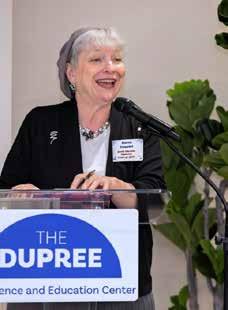
As Israel prepares for a national election, the Jewish Community Relations Council of Atlanta (JCRC), in partnership with The Dupree Conference and Education Center, Atlanta Rabbinical Association, and Center for Israel Education (CIE), will present “Israeli Elections 101: Understanding How Israel Votes,” a community educational program designed to explain Israel’s parliamentary democracy, electoral process, coalition formation, and long-term political issues.
No prior knowledge of Israeli politics is required or expected, and attendees are encouraged to bring their questions.
The free program will take place from 8:30 a.m. to 9:45 a.m., Tuesday, Aug. 18, at The Dupree. Doors open at 8:15. Registration is required.
The featured speaker will be Ken Stein, CIE’s founding president and chief content officer and a leading educator on modern Israeli history and politics.
Unlike the U.S. electoral system, Israelis vote for party lists rather than individuals, and members of the Knesset are elected through nationwide proportional representation. No party has ever won an outright majority, so coalition governments are always necessary.
The free program will take place from 8:30 a.m. to 9:45 a.m., Tuesday, Aug. 18, at The Dupree. Doors open at 8:15. Registration is required.
KAI Fusion to Debut Next Year
By Marcia Caller Jaffe
Of late, Buckhead has gotten the short shrift in new dining venues, shadowing Midtown and the Beltline. However, homegrown Selig Enterprises plays both ends with dynamism in multi turfs.
Most recently, they renovated The Block at Phipps and plan to open KAI Fusion, an Asian restaurant, in the summer of 2027, occupying the prominent corner location along Peachtree Road in one of Atlanta’s busiest retail and dining corridors.
Selig Enterprises, which is always reinventing itself, like its Epicurean Hotel, will have 7,000 glamorous square feet for KAI Fusion, in the old Iron Hill Brewery, under restaurateur Sam Dong.
Shirley Gouffon, senior vice president at Selig, said, “Sam’s track record of creating successful restaurant concepts is very impressive, and he brings the same thoughtful vision to KAI Fusion. This restaurant will be a significant addition to The Block at Phipps and a great complement to Buckhead’s dining scene.”
KAI’s menu will showcase a contemporary blend of Japanese, Chinese, Thai, and other pan-Asian cuisines, featuring fresh sushi, dim sum, Thai specialties, and chef-driven signature dishes. There will also be an expansive craft cocktail program centered around a full-service bar and an 18-foot sushi counter designed as the restaurant’s focal point.
Dong’s culinary journey began after immigrating from China to the United States at age 19. Over the past two decades, he has built successful restaurant concepts while refining his expertise in Japanese cuisine. His career has dotted through New York, Ohio, Miami, and Philadelphia, where he operated acclaimed restaurants, including Green Papaya and Yume Sushi. He and wife, Dia, will lead the new venture.
Designed to accommodate intimate dinners and larger celebrations, KAI Fusion will include a spacious main dining room, a semi-private event space and an indoor-outdoor layout featuring operable windows and patio seating.
“We want to equip community members with a clear, nonpartisan understanding of Israeli democracy beyond ‘Netanyahu good’ or ‘Netanyahu bad,’” says JCRC’s board president, Michael Jacobs.
Register at www.eventcreate.com/e/ israeli-elections-101, and visit www.atlantajcrc.org to learn more about JCRC’s work.
In addition to providing valuable knowledge for the Oct. 27 Israeli election, the program will help attendees get the most out of “Israel at a Crossroads: Understanding the 2026 Elections,” a three-part Dupree series led by Rabbis Natan Trief of Temple Sinai and Yitz Tendler of Congregation Beth Jacob, beginning Aug. 26. Get more information and register at www.eventcreate.com/e/ israel-at-a-crossroads.
JCRC of Atlanta serves as a common table for the Atlanta Jewish community, convening individuals and organizations to discuss critical public policy issues and advocate for solutions grounded in Jewish values. “Israeli Elections 101” is kicking off JCRC’s fall focus on the Israeli and U.S. elections and the need for civil discourse about them.
Compiled by AJT Staff
Selig Enterprises expects KAI Fusion to be one of Buckhead’s premier dining destinations.
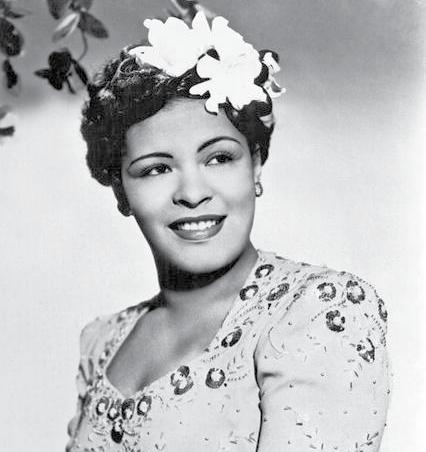
Strange Fruit
It’s worth remembering that before “Strange Fruit,” there was Irving Berlin’s, “Supper Time.”
Berlin wrote it in 1933 for Ethel Waters to sing in “As Thousands Cheer.” It was a song about lynching, though it never used the word. Instead, it placed a Black mother in the doorway of an ordinary evening, trying to tell her children that their father would not be coming home for supper.
Six years later came “Strange Fruit,” and it went even further.
The song was written by Abel Meeropol, a Jewish schoolteacher from The Bronx who wrote under the name Lewis Allan. But “Jewish schoolteacher” is only part of the picture. Meeropol was also a committed leftist and social activist. Years later, after Julius and Ethel Rosenberg were executed, Meeropol and his wife adopted their two young sons and raised them as their own. His conscience did not end on the page.
Meeropol wrote the poem after seeing Lawrence Beitler’s photograph of the 1930 lynching of Thomas Shipp and Abram Smith in Marion, Ind. The image haunted him, and the poem eventually became, “Strange Fruit.” You can feel the photograph in the lyric. The song begins not with explanation, but with an image: “Black bodies swinging” in the Southern breeze.
It is worth remembering, too, that Meeropol was not the only Jewish voice responding to lynching at the time. Jewish writers in the Yiddish press were also pub-
lishing poems, essays, and protest pieces about anti-Black violence in America. In other words, “Strange Fruit” did not emerge from nowhere. It grew out of a larger moral conversation.
Still, a song is not only written. It has to find the right room, and then the right voice.
That room was Café Society in Greenwich Village, New York’s first integrated nightclub. Its owner, Barney Josephson, created it so Black and white artists could work together onstage, and Black and white audiences could sit together out front. That alone was radical.
There are different versions of exactly how “Strange Fruit” reached Billie Holiday. In one version, Josephson heard the song and asked Meeropol to play it for her. In another, Robert Gordon, who was directing Holiday’s show at Café Society, heard it at Madison Square Garden and brought it to her. Either way, the song’s path to Holiday ran through Café Society.
Holiday understood the danger of singing it. This was not just another number. This was a Black woman standing in front of integrated audiences and singing about lynching in America. Many club owners did not want her to sing it. Some forbade it. Columbia, her label, wanted nothing to do with recording it. It was too dangerous for business.
So, Holiday went to Milt Gabler, the Jewish owner of Commodore Records. Gabler understood that the song had to be recorded. As the story goes, he said something to the effect of: I don’t care if it makes a dime — we have to put this out. Columbia gave Holiday a one-session release, and Gabler recorded it.
At Café Society, Josephson made sure “Strange Fruit” closed Holiday’s set. The waiters stopped serving. The room went dark except for a single spotlight on her face.
There was no encore. Josephson wanted the audience to leave America’s first integrated nightclub with that song as the last sound, the last image, the last feeling they carried out into the night.
Ahmet Ertegun, the Turkish-born co-founder of Atlantic Records and one of the most important record men of the 20th century, later called “Strange Fruit” “a declaration of war” and “the beginning of the civil rights movement.” Time named it the Song of the Century. It forced lynching into American popular music, into the nightclub, into the record store, and into the ears of people who might have preferred not to know.
And Holiday paid for that courage. Harry Anslinger, the racist head of the Federal Bureau of Narcotics, targeted her relentlessly. In 1947, she was arrested for narcotics possession and sent to prison. Afterward, she was denied the cabaret license she needed to perform in New York clubs. Even on her deathbed in 1959, federal agents came to her hospital room, arrested her for drug possession, handcuffed her to her hospital bed, and placed her under police guard. A judge later ordered the handcuffs removed, but she remained under federal watch. Doctors had begun treating her with methadone — a medically supervised drug used to ease opioid withdrawal — and she reportedly began to improve. But under pressure from the federal narcotics agents guarding her
room, the treatment was stopped. She died soon after.
Meeropol wrote the song. Josephson created the setting in which it could be heard properly. Gabler made sure it was recorded when Columbia would not touch it. But Billie Holiday gave “Strange Fruit” its force, and she paid dearly for carrying it. The song became inseparable from her not simply because she sang it, but because she kept singing it when club owners, record companies, and eventually the government itself wanted her silent. That is the extraordinary thing about this story: three white Jewish men helped make it possible for one of the most important songs about the Black experience in America to reach the woman who could tell the truth inside it. Once Holiday sang it, it became hers forever. ì
Joe Alterman
Hitting The Chai Notes
Three Jewish men helped produce, platform, and distribute Billie Holliday’s iconic hit, “Strange Fruit” // Photo courtesy of Wikimedia Commons
Serious News in the ‘Silly Season’
Germans have a name for this time of year, sauregurkenzeit, or “sour cucumber time.”
Spaniards know it as serpiente de verano, a “summer snake.”
In English, this is the “silly season.”
The term dates to England and a letter complaining about the Times of London newspaper, published on July 13, 1861, in The Saturday Review of Politics, Literature, Science, and Art.
With Parliament in recess, the government would be on holiday, as would the leading journalists of the day. Without matters of state to report on, the newspaper featured lighter, less serious fare.
At least one reader disapproved: “In those months the great oracle becomes — what at other times it is not — simply silly. In spring and early summer, the Times is often violent, unfair, fallacious, inconsistent, intentionally unmeaning, even positively blundering, but it is very seldom merely silly.”
The month was named August in 8 BCE by the Roman Senate, to honor Emperor Augustas Caesar. August could be excused for having an inferiority complex. July has the Fourth of July and September has
Labor Day. August has nothing of similar stature. With apologies to the late comedian Rodney Dangerfield, August “don’t get no respect.”
Labor Day used to draw a line between the end of summer vacation and a return to school.
As recently as the 1980s, that was true for most public schools. Today, some 70 percent return before Labor Day and that rises to nearly 100 percent in the South and West, according to Education Week. Metro Atlanta districts begin classes in the first week of August. Students already have returned in some exurban and rural districts.
William Powers wrote five years ago in The Atlantic magazine: “There’s something quaint about the notion that every August, the news just packs up and goes away. Though we’re no longer an agrarian society, it’s nice to think we still honor the ancient rhythms of the seasons.”
When I was a pup in this business, older hands would mutter that nothing of consequence happens in August. That, of course, was a myth.
In my professional lifetime, during August:
1978: President Jimmy Carter declared a federal health emergency at Love Canal in New York after toxic waste leaked in a residential community, the first such declaration of a non-natural disaster.
1981: MTV launched, changing the music industry.
1990: Iraqi troops invaded Kuwait and President George W. Bush ordered “Operation Desert Shield,” a massive buildup of U.S. and allied military in the region.
Beyond Your Expectations...
1998: President Bill Clinton became the first sitting president to testify before a grand jury, questioned about his relationship with White House intern Monica Lewinsky.
2000: Democratic presidential nominee Al Gore selected Sen. Joe Lieberman as his vice-presidential running mate, making Lieberman the first Jewish American on a major party ticket.
2005: Hurricane Katrina made landfall near the Louisiana-Mississippi border, devastating Gulf Coast communities and flooding New Orleans.
So, what might we expect this August?
Rabbis will write their High Holy Days sermons (Rosh Hashanah begins at sunset on Sept. 11).
A tropical storm or hurricane named Cristobal, Dolly, or Edouard — the next three on the National Hurricane Center’s alphabetical list —- will threaten a shoreline.
Large numbers of Georgians will obsess over college football, moving some to bark like dogs in public. By the way, the “dog days of August” refers to the summer heat, not the team representing the state’s flagship university.
Georgia counties will begin mailing property tax bills, followed by property owners complaining about those bills.
The U.S. will remain at war with Iran. The price of oil will remain volatile. The price of products made from petroleum or transported using a derivative of petroleum will remain volatile.
There was a time when the conventional wisdom held that Americans would not pay attention to election campaigns until after Labor Day. Those days are long gone.
In the run-up to the midterm elections, national political reporters will become part-time residents, as a spotlight again shines on Georgia, particularly the U.S. Senate race between Democratic incumbent Jon Ossoff and Republican challenger U.S. Rep. Mike Collins.
Candidates and political action committees have raised tens of millions of dollars for this and other Georgia races and will appeal for millions more. Georgians will gripe about the unceasing political advertising on television, radio, and streaming platforms, but those outlets will rejoice as their cash registers ring with campaign spending.
You can add “Israel” to your election campaign bingo cards, along with “affordability” and “pocketbook issues” (or its cousin, “kitchen table issues”). American support for Israel will be an issue around the country, particularly when U.S. House and Senate, and some gubernatorial, candidates debate.
Speaking of volatile politics, Israel’s Oct. 27 election will select the next 120-seat Knesset. The results will determine which party forms a majority coalition in the parliament and, as such, whether Prime Minister Benjamin Netanyahu remains in the office he has held for 19 of the last 30 years.
August may include National Ice Cream Sandwich Day and National Tooth Fairy Day, but there’s no shortage of serious news.
So much for what the French call la torte-saison , a “dead, dull season.” ì
Dave Schechter
From Where I Sit
David Mastro
Dancing in the Rain
By Alla Umanskiy
It was pouring rain on a Friday afternoon, and I was picking up my daughter from her summer job at our synagogue’s Jewish day camp. I pulled up to the front of the temple, parked, and threw my emergency blinkers on, while I waited for my girl. There was a large group of young women in front of the temple, all in bring pink “STAFF” shirts. They were outside in what can only be described as a tropical monsoon. They were jubilant, and they were dancing.
I couldn’t really hear any music, though there could have been some. It didn’t matter. These young ladies –mostly camp staffers from out of town, probably in their late teens and early 20s – were jumping around in puddles, all completely soaked. Some took off their shoes. All were in leggings, black long skirts, and aforementioned pink camp shirt. “Chabad girls,” as we call them. They were beautiful, long wet hair streaming down their backs.
They were smiling, all hands in the air and feet moving. They were yelling
things I couldn’t hear through my car windows. That didn’t matter either. It was Friday, end of the week, almost Shabbat. The Atlanta heat had finally been broken by the rain. It was all worth a celebration, and that’s what this was.
I sat in my car, mesmerized by these young women. A year or two from now, most of them might be married, starting families and new lives. They might scatter around the world, maybe open Chabad houses of their own, maybe lead their own summer camps. But on this day in late July in Georgia, they were full of freedom and youth and exuberance and rain. I sat and I wished that there will be many more days like this in their lives, carefree days of jumping around with friends, days of music and rhythm and bare feet in warm puddles.
I sat and remembered – of course, I did; we all do – another group of young people who danced and rejoiced to music just a few years ago. This is not a story that needs retelling. We know it well. We cry ourselves to sleep to it.
But these young ladies, they gave me hope. They made me see that yes, we will
dance again; yes, life goes on – always, always – no matter unbearable pain. Yes, no one can extinguish our life, our thirst for freedom, our desire to be happy, our right to exist and to dance.
Thank you, girls. You were dancing today, and it mattered. I saw you today. And it mattered also. Thank you for the joy – nothing matters more. Shabbat Shalom. ì
Sometimes it’s worth it to take the time to dance in the rain.
Innovators Gather to Shape Future of Jewish Education
By Marcia Caller Jaffe
Atlanta took center stage in Jewish day school education last month, hosting more than 100 Jewish educators, administrators, philanthropists, and practitioners from across the country for the Jewish Education Innovation Challenge’s (JEIC) 13th annual Innovators Retreat (IR), a three-day gathering hosted by the Mayberg Foundation. Their central question: “How can Jewish day schools stay rooted in timeless values while embracing artificial intelligence?”
The Innovators Retreat rotates to a different community each year. Atlanta was the chosen host city for the 2026 convening. The three-day gathering at The Dupree Conference and Education Center featured intensive learning, reflection, and forward-thinking dialogue. The retreat received sponsorship funding from The Zalik Foundation and the Jake F. Aronov Foundation, with support from Jewish Federation of Greater Atlanta.
“Our work at JEIC proves we can design Jewish studies in a way that em-
powers students to deeply own their Jewish identity,” said Mayberg Foundation President and Trustee, Manette Mayberg.
That mission resonated with Atlanta educators who arrived hungry for
that conversation across the community.
“Day school educators are often siloed — we’re in our own school, we’re in our own community,” added Shelley Fogelson, manager of day school partnerships
at Federation. “The Innovators Retreat offered an opportunity for participants to project beyond the day-to-day demands and come together as a community of professionals to learn, exchange ideas,
Jewish Education Innovation Challenge
Managing Director Sharon Freundel
Jake Aronov, principal, Jake F. Aronov Foundation, and Manette Mayberg, Mayberg Foundation president and trustee
BACK TO SCHOOL & COLLEGE
100
and think about implementation.”
In the months leading up to the retreat, JEIC’s managing director, Sharon Freundel, worked closely with Jewish day school leaders to understand Atlanta-area schools’ priorities and shape the retreat’s content accordingly. The result was a dedicated pre-conference day for Atlanta-area educators and administrators, featuring hands-on workshops on AI applications in Judaic studies. One session had teachers experiment with tools that let students design Tanakh characters and evaluate their AI-generated images against textual sources and commentaries, using technology as a prompt for deeper engagement with the text — not a shortcut away from it.
In another session, educators compared two versions of a classroom creativity exercise: one done by hand, one with AI assistance. The AI version was faster and looked more polished — but left students with less to say to each other afterward. The room took it as a concrete illustration of what’s at stake: not whether to use AI, but how to preserve the struggle and the human connection on which Jewish learning has always depended.
For Amanda Abrams, executive director of The Zalik Foundation, the retreat represented something rare in the Jewish professional landscape — a space where educators, philanthropists, and practitioners could learn together around a shared purpose.
“These are conversations I have not seen in other Jewish professional or Jewish educational gatherings,” she said. She highlighted the value of mixing national and local voices: “It enabled our local schools and educators to hear perspec-
practitioners
tives they wouldn’t otherwise have heard — and on the flip side, the perspectives of local students and teachers give grounding to what national leaders are exploring.”
For Atlanta’s day school educators, the retreat offered inspiration along with connection to colleagues across town and peers from across the country, and practical tools to bring back to the classroom.
“It was so heartening to see the strong presence of Jewish day school education in Atlanta, with schools ranging from Reform through community to Modern Orthodox and Yeshivas,” Freundel shared. “This incredible model serves as an inspiring blueprint for what other Jewish communities across the United States can achieve.”
She added, “We are grateful to our partners who helped us provide the space for Atlanta’s Jewish day school educators to come together, learn, and explore emerging challenges and opportunities in Jewish education.”
As Atlanta’s Jewish philanthropic community continues to invest in day school education, IR26 made one thing clear: Atlanta’s Jewish schools are not sitting back to watch. They have boarded the AI train.
The Jewish Education Innovation Challenge catalyzes radical improvement in Jewish day schools, challenging them to optimize student internalization of Jewish wisdom, identity, and decision making. Learn more at jewishchallenge. org. Information about The Mayberg Foundation’s work in Jewish education can be found at mayberg.org; and information about The Zalik Foundation can be found at zalik.org. ì
More than
Jewish educators, administrators, philanthropists, and
from across the country gathered at The Dupree for the 13th annual Innovators Retreat.
BACK TO SCHOOL & COLLEGE
TDSA Breaks Ground on New ‘Field of Dreams’
Torah Day School of Atlanta (TDSA) marked a historic milestone on Sunday, June 7, as they broke ground on a new “Field of Dreams.”
This is the first major capital improvement project since its Lavista Road campus was built in 2002. In addition to addressing longstanding drainage issues, the project will debut a new track and field along with outdoor classrooms and a playground recreating the major regions of the land of Israel, including materials and equipment produced in Israel and representative of its natural environments.
The celebration began in the gymnasium, where donors, parents, faculty, students, and community leaders gathered to commemorate this exciting moment. Introduced by Build Our Future Campaign Co-Chairs Elizabeth Lieberman and Marsha Spector, the program featured inspiring remarks from DeKalb County Commissioner Michelle Long Spears who was instrumental in guiding
with her welcoming remarks, “Torah Day School of Atlanta is critical to this community, and I am excited to be here today to join in this milestone event as our col
off the ground was a challenge grant from the Zalik Foundation. The Foundation encouraged TDSA to think beyond the school day and design the space as a
Amanda Abrams, executive director of the Zalik Foundation, shared, “Children need space to run, to play, to take a breath from the school day and just be
Torah Day School of Atlanta officials and community broke ground on a new “Field of Dreams" on June 7.
Stu ering Education and Research
Arthur M. Blank Center for
e Universi of Texas at Austin Moody College of Communication
BACK TO SCHOOL & COLLEGE
where its children can play and explore. We also encouraged TDSA to think bigger — to envision an asset for the entire Toco Hills neighborhood, a place where families gather on weekends, kids play on Shabbos, and neighbors come together to be outside and in community with each other. That vision is what made this truly exciting to us.”
Rabbi Meir Cohen, TDSA head of school, shared a compelling vision for the transformed outdoor experience and the impact this project will have on generations of students to come.
“This is the start of a campus enhancement and expansion that will include stunning centerpiece areas that serve as community gathering places, classrooms and learning areas that recognize the need for flexible learning environments — all with the core theme of building pride for our Torah-centric school. We envision growth, not only in enrollment, but most importantly in the quality of the educational experience our students will
receive so they will be the best possible Jewish leaders of tomorrow.”
The event concluded on the field where project donors had the honor of turning the first shovels of dirt, assisted by an enthusiastic group of TDSA students. TDSA Board President and parent Shlomo Storch summed up the importance of the event as a watershed moment that will set off a lasting positive chain reaction.
“This project is about giving today’s students a better experience. But it’s also about preparing for tomorrow. When children feel proud of their school, they feel more connected to their teachers, their friends, and their community. They create memories that stay with them long after they’ve forgotten what classroom they sat in or what grade they were in. Years from now, students will run on this field, play on this playground, gather outdoors with friends, and create memories of their own.” ì
Compiled by AJT Staff
DeKalb County Commissioner Michelle Long Spears
Amanda Abrams, executive director of The Zalik Foundation
Beyond the Backpack: What Students Need to Thrive
By Rebecca Cochran
As summer winds down, back-toschool prep usually centers on practical details: supplies, schedules, and routines. But beyond No. 2 pencils and loose-leaf paper, what does your child really need to thrive this school year?
Every child enters the school year with unique learning styles and individual needs. Through the Horwitz-Zusman Child & Family Center (H-Z) at Jewish Family & Career Services (JF&CS), families access a multidisciplinary team of psychologists, doctors, clinicians, and educators working together to identify strengths, address challenges, and build practical strategies for success.
Psychoeducational Assessments: Lori A. Wilson, Ph.D., Lauralee Bernstein, M.A., and Amy Silverman, Ph.D.
With more than 60 years of combined experience, the H-Z Assessment Team conducts comprehensive evaluations exploring cognitive, academic, social-emotional, and behavioral functioning.
“A comprehensive psychoeducational evaluation provides families with a roadmap,” says Wilson. “When we understand how a child learns and processes information, we can identify their strengths and areas of need, and
guide parents on recommendations and next steps that will help their child thrive.”
These evaluations can help families better understand learning differences, ADHD, or emotional and behavioral fac-
tors influencing a child’s school experience, while highlighting strengths and offering personalized recommendations for growth.
“An evaluation is a valuable tool to help a student gain insight into their learning profile,” says Bernstein. “When a student understands how they learn best, what their strengths are, and where they may need support, they are better equipped to advocate for themselves. In turn, self-advocacy helps build confidence and leads a student to be better prepared to handle challenges and achieve their academic goals.”
With the addition of Dr. Silverman, the team brings extensive experience helping families understand the relationship between learning, attention, emotions, and behavior.
“I am thrilled to be back working at JF&CS, where I worked nearly 18 years ago,” says Silverman. “We are a truly collaborative group of professionals who take the time to get to know children and families in order to develop meaningful, individualized recommendations. Throughout my career, I have worked in
many different private practices, university, and community-based settings, but have returned to JF&CS because I truly value using a strength-based lens to help children, adolescents, and young adults better understand themselves in order to reach their full potential.”
Neurodevelopmental Medical Services: Howard
Schub, M.D.
Dr. Schub provides medical expertise for developmental, neurological, and behavioral concerns. As founding partner of Child Neurology Associates and ASCEND Pediatric Neurology as well as former chief of neurology at Children’s Healthcare of Atlanta, Schub brings more than 40 years of experience in areas including ADHD, developmental delay, and pediatric movement disorders such as tics and Tourette Syndrome.
“Every child is unique, and understanding their development requires looking at the full picture,” says Schub. “By collaborating with families and a team of specialists, we can better understand each child’s needs and identify the supports that will help them succeed.”
Executive Function Coaching: Marlena
Reese, Ed.D.
Executive functioning skills include organization, planning, time management, task initiation, emotional regulation, and self-monitoring. These skills support everything from managing homework and long-term projects to balancing college, work, and family responsibilities.
“Whether I’m working with a high school student preparing for college, a young adult finding their footing, or an adult managing the demands of career and family, my goal is the same: to help people understand how they learn best, and develop practical strategies that create lasting success,” says Reese.
Dr. Reese works with adolescents, college students, young adults, and adults, providing coaching tailored to each person’s goals. She specializes in supporting individuals with ADHD, autism, learning differences, anxiety, and executive functioning challenges, using a strength-based, neuroscience-informed approach to help clients build sustainable systems and develop skills for independence.
Emotional and Behavioral Support
H-Z clinicians support children and families navigating emotional, behavioral, and developmental needs. Whether a child experiences anxiety, attention challenges, learning differences, or social concerns, the team works to understand what may be happening beneath the surface.
Children often communicate through their behavior before they have the words to explain what they’re feeling. JF&CS clinicians use evidence-based approaches to help families understand what’s going on, build on each child’s strengths, and develop practical strategies to grow resilience and coping skills, building confidence along the way.
Because supporting a child means supporting the whole family, JF&CS recognizes that back-to-school transitions impact parents, too. Through JF&CS Adult Clinical Services, caregivers can access dedicated support for their own mental health and well-being.
Whether a child is entering kindergarten, transitioning to middle or high school, or facing new challenges, the right support makes all the difference. The Horwitz-Zusman Child & Family Center partners with families to build confidence and help children succeed in school and beyond.
To learn more or schedule an appointment, visit jfcsatl.org/hz ì
Dr. Howard Schub
Marlena Reese, Ed.D.
BACK TO SCHOOL & COLLEGE Blank Gives $4M to Boost HBCU Graduation Rates
By Bob Bahr
For several hundred students who are returning to classes this fall at Atlanta’s historically Black colleges and universities (HBCU’s), the financial burden of completing their education has become much easier.
The Arthur Blank Family Foundation announced earlier this year that it has made more than $4.2 million in scholarships available to nearly 600 students enrolled at Clark Atlanta University, and Spelman and Morehouse Colleges. That’s important because, according to recent statistics, Black students have a college graduation rate of only about 40 percent, which is significantly lower than the rates for white students at 64 percent and Asian students at 74 percent.
In recent years, Arthur Blank and his foundation have offered significant grants to the development of the social and economic structure in the largely Black neighborhoods that lie just west of his Mercedes-Benz Stadium. Clark Atlanta University, Morehouse College, and Spelman College are all less than three
miles from the large sports arena.
Over the next 10 years, the Blank Foundation expects to support nearly 10,000 of these Atlanta students at Black colleges. The effort to boost Black college student graduation rates can serve as a
model for other foundations according to Blank, who has made a personal commitment to the program’s success. He is hopeful that other philanthropic institutions follow his lead and expand their investment in helping these students suc-
A Strong School Year Starts with the Right Support
Testing and support for students of all ages:
n comprehensive psychoeducational testing
n pediatric developmental neurology including ADHD diagnosis & treatment
n executive functioning coaching
ceed in graduating.
“We are deeply committed to supporting the students who will carry that legacy forward. We recognize that these campuses, like many across the country, are home to generations of students
Black college graduates can double their potential earning power with a college degree.
BACK TO SCHOOL & COLLEGE
Kayla Drummond graduated from Clark Atlanta University with a degree in business administration after receiving financial aid from the Blank Foundation. whose promise inspires us,” Blank said. “Our hope is that by helping more students earn their degrees, launch successful careers and become alumni who give back, we are investing in a cycle of opportunity that benefits young people and their families in Atlanta and communities across the nation for years to come.”
The Blank Foundation views the funding as particularly critical for students who are struggling to meet the financial burdens of higher education.
“We’ve seen what’s possible when students get the support they need to cross the finish line,” said Margaret Connelly, managing director of founder initiatives for the Arthur M. Blank Family Foundation. “That’s what drives this work, and why we hope this initiative encourages others to invest in closing these gaps and helping more students achieve the futures they’ve worked so hard to reach.”
This year’s grants are part of a 10year commitment of $50 million that the Blank Foundation announced last year to keep hard-working students in school and to graduate. Studies have shown that the median income of Black students who graduate with a bachelor’s degree is twice as great as those Black students with only a high school diploma.
Clark Atlanta University student Kayla Drummond was among those students who were able to graduate this year because of the Blank Foundation’s financial aid. Like so many of her peers at the university, she had exhausted all her financial options before she entered her senior year. The failure to graduate, she feels, would not only have made a dif-
ference in her future, but it would have affected so many others who had encouraged her.
“From my first time stepping on Clark Atlanta’s campus, I felt a sense of family and this is where I belong,” Drummond said. “This diploma isn’t just for me, it’s for my family, it’s for my friends, the love, the prayers, the support.”
The scholarship aid is particularly aimed at students from low-income families who have exhausted their eligibility for Pell Grants, a need-based form of higher education aid from the Federal government. Unlike traditional college loans, it does not have to be repaid. But that doesn’t mean that Pell-eligible students don’t take out more loans, work longer hours at outside employment, and face a higher degree of food and housing insecurity.
Students who are in good academic standing and have fully exhausted other financial options, including scholarships, Federal grants, state assistance, and loan programs will be eligible to receive funding at the discretion of their respective institution. The funding will largely support students in their junior and senior years, when financial stress can be most acute as family resources may be spread thin or other family members begin college.
“Even a small financial gap can be the difference between walking across the graduation stage or walking away,” said Fay Twersky, president, Arthur M. Blank Family Foundation. “We are proud to stand with Atlanta’s HBCU’s and help more students achieve their dreams. These grants are a material investment in hope.” ì
BACK TO SCHOOL & COLLEGE
Davis Teacher Launches Hebrew Typography Tool
By: Jordan Ross
Harrison Bleiberg, a kindergarten Hebrew and Judaics teacher at The Davis Academy, has channeled more than a decade of experience in the professional Jewish space into a new online tool. Bleiberg has always preferred creating his own classroom tools and learned how much different fonts can impact students who are learning Hebrew, leading him to create Hebrew Font Maker, a part of ivritsuite.com.
Despite having experience in web design and JavaScript coding, building a piece of software to achieve his goal of a font maker proved to be a challenge.
“Within the first week I went on summer break, I started working on the font maker again, testing the workflows, fixing bugs, and finally finishing the very font project that first inspired this tool,” Bleiberg shared. “When I initially launched the tool, I shared it on my personal social media and in some Jewish educator Facebook groups. Within the first week, I had over 1,000 hits to my website and over 250 unique visitors from all across the world. I received messages from all kinds of folks, including Soferim,
One of Bleiberg’s main goals was accessibility as he continues to develop the tool as a go-to destination for Hebrew and Judaics teachers.
artists, historians, and even a cultural advisor and linguist for the U.S. Military!”
One of Bleiberg’s main goals was accessibility as he continues to develop the tool as a go-to destination for Hebrew and Judaics teachers. The tool is completely free. This access has allowed the tool to spread beyond teachers, and “is now being used by people who rarely share a tool: Torah scribes studying letterforms, Hebrew and day-school teachers building their own
classroom materials, graphic designers, and — [Bleiberg’s] favorite part — people reviving lost typefaces by scanning letters out of old, out-of-print Hebrew books, essentially rescuing Jewish printing heritage one font at a time.”
One of the first users of the website was Baruch Sienna, a notable Canadian Ketubah artist and graphic designer. Bleiberg noted, “[Sienna’s] experience and feedback as a professional font maker was instru-
mental in taking the font maker to the next level.”
Bleiberg shared that he has no intention of turning a profit from his typography tool.
“Education is its own reward and knowing that I am making Hebrew and Jewish education more accessible is enough for me.”
The URL for the font maker is https:// ivritsuite.com/Hebrew_Font_Maker.html ì
Harrison Bleiberg is a kindergarten Hebrew and Judaics teacher at The Davis Academy.
DINING Renovated Nakato Forges Ahead
By Marcia Caller Jaffe
Many Atlantans credit Nakato on Cheshire Bridge as their first taste of sushi, as “cold rice, warmish fish, a burst of something briny. One bite in and we are experts.”
For more than half a century, Nakato has been woven into Atlanta’s dining landscape, introducing generations to authentic Japanese cuisine as a cultural bridge between Japan and Georgia. The family-owned restaurant just began a new chapter with a $2.4 million renovation led by third-generation owner, Sachi Nakato Takahara.
Helping tell that story is Debbie Rosen, president of The Rosen Group Atlanta, who leads Nakato’s marketing and public relations efforts. Her communications campaign highlights not only the extensive renovation, but also the remarkable family legacy. She said, “Rather than reinventing an Atlanta landmark, Takahara has carefully restored and elevated it.”
Takahara’s grandmother first arrived in Atlanta in 1972 and purchased the former Caruso’s Restaurant on Cheshire Bridge, transforming it into Nakato with architectural details and craftsmanship imported from Japan. At a time when authentic Japanese restaurants were virtually unknown in Atlanta, Nakato hosted ambassadors and dignitaries. Born and raised in Atlanta, Takahara is suited to guide the restaurant through a changing culinary landscape while remaining faithful to its roots.
Working with Atlanta-based Nelson Design Group (The Battery Atlanta), Takahara personally selected every design element in the renovation. The result is a brighter, more contemporary space where Japanese artistry is the focal point, beginning with the handcrafted white oak bar, built by Atlanta furniture maker, Whitney Wolf (The Jack Ellis Company) that anchors the dining room. The wood carries its own Atlanta story, salvaged from a white oak tree that fell during a storm at Wolf’s family home in nearby Druid Hills. The symbolism appealed to Takahara since white oak is also native to Japan, creating a physical connection between her family’s homeland and the city where Nakato has flourished for five decades.
Suspended above the bar is a custom canopy from Japanese Paulownia wood and in a traditional Asanoha pattern, a centuries-old geometric design showing growth, strength, and resilience. The ren-
ovated hibachi dining room showcases a dramatic Seigaiha wave motif in blue and metallic gold, symbolizing peace, prosperity, and the endless rhythm of the sea. Nearby, artwork inspired by Katsushika Hokusai’s iconic “Great Wave” provides another reminder of Japan’s artistic heritage. Our server stated that the hibachi room was constantly busy, while the renovated Garden Room, where we dined, was more subdued.
Another treasured feature is traditional Tatami Rooms, among the few authentic examples in the United States. Handcrafted tatami mats were shipped back to Japan for meticulous restoration by artisans dedicated to preserving traditional techniques. These rooms are worth a special occasion experience.
Nakato replaced hibachi grills and ventilation systems (operating since
1991) with state-of-the-art equipment, improving guest comfort and culinary performance. The redesigned outside area features an entrance canopy and landscaped streetscape creating a graceful front.
What we sampled:
Sake (not the same pronunciation as the wine) Harami: salmon belly - as clean as it gets, “melt in your mouth”
Nasu Dengaku: miso glazed eggplant; served hot; on the sweet side
Sea Bass in kobu seaweed broth; steamed then grilled
Gindara: miso marinated grilled black cod
Illuminati Roll: standing proudly almost triangular, topped with waving micro greens (kaiware sprouts), yellowtail and salmon outside, then spicy tuna, avocado, sesame seeds
Japanese tiramisu
The menu is extensive: tempura, rice and noodles, chef’s specials, soups, hot pots, all the sushi in the rainbow. Don’t miss the Kiss of Death roll! Menu notes gluten and egg ingredients. Unusual surprises include caviar inserts, golden eye snapper, and Yum Yum Roll with smoked salmon and cream cheese for those who like a “Jewish-isy” fusion.
Nakato introduced a Happy Hour from 4 p.m. to 6:30 p.m., Monday through Thursday with creative cocktails (around $10) like Lychee Blossom, Yuzu Spirits, Sake, then dumplings, sushi boards, miso Caesar salad, avocado tuna dip and more.
Nakato is located at 1776 Cheshire Bridge Road. For more information, please call 404-873-6582. ì
Green tea ice cream
The Garden Room and bar entrance were part of the renovation // All photos courtesy of The Rosen Group
The Nakato front entrance was updated.
The Illuminati Roll was rewarding and technically crafted.
Flavor is on full display at the newly-renovated Nakato.
Chai Style Home
Inset: The expansive great room has a feature wall that is often rotated. Here is original, “Urban Cubism,” by Brooklyn artist, Flore and a bronze bust by Vincent BeaufilsHourdigas. The room is anchored by a multi-colored Bova sofa, midcentury modern chaise velvet, suede, and leather texture. The Vesta jewel-shaped coffee table centers the room.
More Than a Nod to MidCentury Modern
Step inside the home of gallerists Philippe and Laura Horowicz’ sanctuary as a reflection of two entrepreneurs whose lives revolve around art and architecture, alongside creating their own MidCentury Modern home.
As founders of Carousel Fine Art, they built one of the Southeast’s fastestgrowing contemporary galleries, representing emerging and internationally established contemporary artists across street art, pop art, photography, and modern painting. Philippe said, “Living with art every day reminds us why we do what we do. Great art changes how you live and feel in your home, and it’s a dialogue that moves from room to room.”
Their home is a retreat from the pace of business and a living gallery. Clean lines, expansive glass, warm natural materials, and contemporary artwork create sophistication without sacrificing comfort.
Laura explained, “We wanted a home that feels connected to nature. Natural light was one of our biggest priorities
… being able to see outside from almost every room while still creating intimate and cozy spaces. This is our sanctuary.”
The project marks the couple’s first home renovation together involving extensive interior and exterior redesign, with future additions already in the works. Carousel operates in Buckhead Village, West Palm Beach, Miami, Chicago and Washington D.C. area coming soon.
Marcia: Your accent is unmistakable. Share your roots.
Philippe: I was born in the Swiss Alps. My grandfather escaped Poland during World War II and settled in Switzerland, where he rebuilt his life from nothing. My mother is an artist from Holland, and I grew up around painting and creativity. I didn’t realize at the time how much that would influence my future.
I moved here at 16 to pursue a golfing career. I spoke very little English and knew almost no one. What started as an opportunity through sports became much bigger. I’ve always believed that if you’re willing to work harder than everyone else, opportunities eventually appear.
Laura and I founded Carousel Art Group in 2019 after identifying a problem in the art world: countless exceptional works were sitting unseen in galleries’
storages instead of being enjoyed. We began by partnering with luxury real estate agents to stage high-end homes with museum-quality artwork, helping properties stand out while introducing collectors to artists in a more natural setting. That simple idea became the foundation of Carousel Fine Art. Today, we represent both emerging and internationally established artists across multiple galleries, but every step of our growth has been built one relationship, one collector, and one home at a time.
Marcia: Your furniture here is carefully selected.
Laura: Some pieces were hunted for, while others found us — a modular Italian sofa, vintage Mid-Century discoveries, objects from travel. Together, they feel less like furniture and more like memories.
Marcia: Your television room feels different from the rest of the house.
Laura: This space was the biggest question mark initially. Dingy carpet and wall color made it appear stale and more confined than it actually was.
We removed the carpet, converted the opening into an open double entrance, extended the wood flooring, drenched the room in soft blue. It stopped feeling like a basement and became a
quiet retreat. We used natural tones in the furniture and accents. The only other color would be the art. The built-in functions as a bar, library, sculpture display, and visual bridge. Mirrors and lighting create depth, while light oak cabinetry and a cream terrazzo top reference MidCentury roots.
I took a bigger risk in the powder room balancing geometric marble and travertine tile creating tension between precision and softness. I love Wabi-Sabi philosophy — beauty isn’t found in perfection, but in authenticity. The electrician questioned if I wanted the pendant intentionally off-center. I absolutely did!
Marcia: Explain “intentional” artwork.
Philippe: Every piece tells a different story. Cuban-born Eric Alfaro has become one of the most exciting contemporary painters we represent. With prodigy-level technique, he transforms oil and acrylic into sensational imagery. Our favorite work from him is directly in front of our bed.
Caroline Dechamby is our most important female artist and an integral part of the Carousel story. I grew up in her atelier. She combines playful energy and feminine spirit inspired by modern masters while remaining completely “her own.”
Marcia Caller Jaffe
Main: Laura and Philippe enjoy blue merle, mini golden doodle, Peppa. Above the fireplace is a near-abstract expressionist painting of koi in pastel hues by Cuban artist, Eric Alfaro // Photos by Howard Mendel
Above: Philippe poses by one of his favorite pieces by KAI, a juxtaposition between what’s seen and what’s perceived, “Perspective.” The concrete look and deckled edges of the print are cohesive with the artist’s stand-alone techniques.
This glowing shelving on the front side of the TV room is color drenched in Behr’s “Urban Raincoat” shade of blue.
Bottom: Philippe and Laura are in the process of perfecting the backyard for entertaining. Laura’s herb garden also has lavender, fig trees, tomatoes, and blueberries. They inherited irises, azaleas, roses and gardenias from the previous homeowner.
Jean-Daniel Lorieux’s bold image at the foyer was shot in the 1970s with a bright yellow background. The model playfully sticks out her tongue out. We don’t want anyone taking themselves too seriously!
Mr. Brainwash redefines contemporary pop. His work features a young boy and girl on a swing, reminding us of ourselves as young dreamers.
Alexi Torres’ Judaica … compositions explore heritage, faith, identity, and nature themes. We acquired his painting of a portrait of Chuck Yeager, the first man to fly at the speed of sound … reminding not to limit ourselves to others’ beliefs of what’s possible.
Patrick Hughes is a conversation starter. His patented “reverspective” technique creates optical illusions appearing to move.
Between our home here and Miami, we also “live” with works by Retna, Beau Simmons, Adam Umbach, KAWS, Danielle Orchard, Onemizer, Chance Cooper, Neill Wright, Jisabr, BYC, Gregory Watin, Adam Parker Smith and Kai.
Marcia: What happens in the kitchen?
Philippe: Laura genuinely loves to cook with her spice collection, some of which grows in our yard. Dining out, we like a complete experience. Le Bilboquet is our go-to … so close to the gallery. For special times, we head to Atlas where we collaborate on rotating artwork, making the restaurant like an extension of our galleries.
Marcia: How did a Kentucky model end up marrying a redheaded Swiss?
Laura: We met in Orlando while I was modeling. Philippe wasn’t exactly making the first move.
After a few days of bumping into each other, I asked to meet for a drink. Ten years later, it worked out well. ì
Right:
Top Left: Laura took great care designing this Wabi Sabi powder room with travertine and marble tile and a simple floating vanity.
Top Right: The Horowiczes removed the carpet and opened up the space to compose this serene TV room. There is a playful print referencing both Roy Lichtenstein and Andy Warhol. This is the only TV they wanted the home to have.
Bottom Right: The dining area off the kitchen has an eclectic, contemporary feel with an abundance of natural light. Laura took great care in finding the perfect colorful “starburst” lighting and a vintage table that is paired with modern velvet dining chairs.
Bottom Left: The Mid Century Modern kitchen has warm wooden cabinetry and a waterfall quartzite island in distinctive earthy color tones. Laura’s arsenal: a secret spice drawer is situated next to the stove.
CALENDAR
Saturday, August 1
Blood Drive – 9 a.m. to 2 p.m. Do the mitzvah of donating blood with the Jewish War Veterans’ Blood Drive. Every day, blood donors help patients of all ages: accident and burn victims, heart surgery and organ transplant patients, and those battling cancer. The need for blood is constant! Where it says, “Find a Drive,” enter code “JWV” at https://tinyurl. com/3rpva2vf.
Popsicles and Parsha in the Park - 4:30 to 5:30 p.m. We sure hope you’ll join us Shabbat afternoon for our Summer Popsicles & Parsha in the Park — right on the OHT Playground! Join Congregation Ohr HaTorah for Torah, trivia, popsicles, snacks, and fun! Find out more at https:// tinyurl.com/4udctpcr.
Tu B’Av White Party – 10 pm to 1 a.m. Remember our unforgettable Tu B’Av White Party? The energy, the music, the connections — we’re bringing the magic back on Saturday, Aug. 1! Come celebrate Tu B’Av with Chabad Young Professionals, meet incredible people, dance all night, and make memories you’ll be talking about long after the music stops. RSVP at https://tinyurl.com/mutbb6f5.
Monday, August 3
Regency Girls – 7:30 to 8:30 p.m. Please join NCJW Atlanta to hear highlights from “Regency Girls,” performed by the Broadway-bound cast. Get tickets at https://tinyurl.com/3anv46b4.
Wednesday, August 5
How to Build a Synagogue Inclusion Committee – 12 to 1 p.m. Creating a truly inclusive synagogue takes more than good intentions — it takes committed people, shared vision, and practical strategies. Join JAccess for an interactive webinar designed for synagogue inclusion committee members and leaders who want to strengthen accessibility, belonging, and meaningful participation within their communities. Hear directly from synagogue inclusion committee volunteers in Atlanta as they share real-world experiences, lessons learned, and practical approaches to building and sustaining an effective committee. Join this webinar by visiting https://tinyurl.com/35kt7644.
Thursday, August 6
America and the Jews: History, Identity, and the Road Ahead – 12 to 1:15 p.m. “America and the Jews: History, Identity, and the Road Ahead” is a four-part virtual series that offers participants an accessible look at the forces that have shaped Jewish life in America — and the questions now testing that relationship. Tracing its arc from the foundational ideals that bound Jews to the American democratic experiment to the political, cultural, and generational pressures defining this moment, the series examines what it has meant — and what it means today — to be Jewish in America. Get the Zoom link at https://tinyurl.com/36saxw5y.
Butterfly Encounter Date Night – 5:30 to 7:30 p.m. Spread your date night wings and join a CNC naturalist for this exclusive date night experience at the Butterfly Encounter. This is a great time to enjoy nature with your date and spend time in the Encounter. Feel free to bring your own picnic and drinks (non-alcoholic) to have, but we will also have some light snacks and drinks included for you to enjoy. As part of the experience, you will learn all about butterflies, enjoy a guided walk through CNC’s Wildlife Walk, and conclude with an animal demo highlighting one of CNC’s native animal ambassadors. Limited spaces available at https:// tinyurl.com/y5mp85et.
Friday, August 7
Dive Into Shabbat - Pool Party at the JCC - 5 to 8 p.m. Just as water nourishes the earth, tradition nourishes our souls: both flowing, refreshing, and full of life. Families are invited to enjoy pool games, water fights, music, and holiday treats while exploring the connection between water, learning, and renewal. Celebrate Shabbat with laughter, splashes, and a fresh take on ancient traditions! Celebrate Shabbat with family and friends! Bring your own picnic or purchase refreshments at the snack bar. Open swim begins at 5 p.m. followed by Shabbat songs and blessings with Rabbi G at 6 p.m. Free ice pops, challah, and grape juice are provided. Bring your friends and enjoy this unique Shabbat celebration. Learn more at https://tinyurl.com/mwp2d4mf.
Saturday, August 8
Popsicles and Parsha in the Park - 4:30 to 5:30 p.m. We sure hope you’ll join us Shabbat afternoon for our Summer Popsicles & Parsha in the Park — right on the OHT Playground! Join Congregation Ohr HaTorah for Torah, trivia, popsicles, snacks and fun! Find out more at https:// tinyurl.com/4udctpcr.
CANDLE-LIGHTING TIMES
Torah Reading: Eikev
Friday, July 31: Light Shabbat Candles: 8:21 PM
Saturday, August 1: Shabbat Ends: 9:18 PM
Torah Reading: Re’eh
Friday, August 7: Light Shabbat Candles: 8:14 PM
Saturday, August 8: Shabbat Ends: 9:11 PM
Torah Reading: Shoftim
Friday, August 14: Shabbat Ends: 8:06 PM
Saturday, August 15: Shabbat Ends: 9:03 PM
Sunday, August 9
Back-to-School Food Drive Benefiting Camp Jenny - Congregation Dor Tamid’s Social Action invites you to participate in our Back-to-School Food Drive Benefiting Camp Jenny. Food will be donated to children experiencing food insecurity. Camp Jenny is looking to collect easy-to-make microwavable foods and non-perishables that are kid-friendly. Place food in the bins at the patio door. Learn more at https://tinyurl.com/3wsjx7zd.
Back-to-School Book Swap – 10 to 11:30 a.m. Join PJ Library for a joyful endof-summer celebration at our Back-toSchool Book Swap! Bring your gently loved PJ Library books and swap them with other families to refresh your bookshelf just in time for the new school year. We’ll have music, snacks, and story time fun for kids and their grownups. It’s the perfect way to say goodbye to summer and hello to new stories, new friends, and a brand-new chapter! RSVP at https://tinyurl.com/6t7fd2s3.
Rabbi Shalom Lewis’ Book Launch
– 1 to 3 p.m.
Rabbi Shalom J. Lewis, respected spiritual leader, speaker, and educator, announces the release of his new book, “Faith Without the Leap,” a thought-provoking exploration of faith, reason, and spirituality in today’s increasingly skeptical world. “Faith Without the Leap” explores the questions that matter most — about G-d and the soul, life and death, ethics and faith, tradition, and change. Learn more at https://tinyurl. com/bxe346tj.
Grand Opening & Jewish Family Festival – 2 to 5 p.m. With tremendous gratitude and excitement, Congregation Beth Israel invites you to join us for a historic milestone event in Jewish life in North Georgia: the grand opening of the Jacques Preis & Evelyne Salama Youth Education Center. Together, we will celebrate 10 years of miraculous growth and the historic opening of the first Jewish Youth Education Center in Forsyth County! Following the ceremony, get ready for an unforgettable Jewish Family Festival unlike anything our community has experienced before, featuring delicious kosher food, live Jewish music, rides, giant inflatables, games, prizes, and nonstop excitement for the entire family! Please register to get more information at https://tinyurl. com/msz7x7n4.
Atlanta Jewish Times Community Events:
Sunday, October 18
2026 Atlanta Kosher BBQ Festival – 12 to 4 p.m. Our Festival is centered around a Kosher BBQ Competition where approximately 25 teams compete in kosher Brisket, Beef Ribs, Chicken, and Chili categories. We have a large Vendor Village, children’s activities, music, silent auction, and of course, BBQ. The Atlanta Kashruth Commission supervises the Atlanta Kosher BBQ Festival. Because we are fully compliant with their kosher food handling requirements, all spectrums of the Jewish community can participate, plus, because it is BBQ, the entire Atlanta community joins us as well. This ultimately makes us the most diversly attended food event in Georgia. There will be something for everyone, rain or shine. Learn more at https://tinyurl.com/yjjmapk8.
Sunday, January 31, 2027
Atlanta Jewish Life Festival – 12 to 4 p.m. Come celebrate the vibrant Jewish culture and community at the Atlanta Jewish Life Festival! This in-person event is jam-packed with food, music, and activities for all ages. Whether you’re looking to connect, learn, or just have a great time, this festival is the place to be. Everyone’s welcome — bring your friends and family for a day full of fun and celebration! Purchase tickets at https://tinyurl. com/433h78ad.
Monday, August 10
Back-to-School Food Drive Benefiting Camp Jenny - Congregation Dor Tamid’s Social Action invites you to participate in our Back-to-School Food Drive Benefiting Camp Jenny. Food will be donated to children experiencing food insecurity. Camp Jenny is looking to collect easy-to-make microwavable foods and non-perishables that are kid-friendly. Place food in the bins at the patio door. Food drive runs through Aug. 14. Learn more at https:// tinyurl.com/3wsjx7zd.
Thursday, August 13
America and the Jews: History, Identity, and the Road Ahead – 12 to 1:15 p.m. “America and the Jews: History, Identity, and the Road Ahead” is a four-part virtual series that offers participants an accessible look at the forces that have shaped Jewish life in America — and the questions now testing that relationship. Tracing its arc from the foundational ideals that bound Jews to the American democratic experiment to the political, cultural, and generational pressures defining this moment, the series examines what it has meant — and what it means today — to be Jewish in America. Get the Zoom link at https://tinyurl.com/36saxw5y.
Friday, August 14
Tot Shabbat - 6 to 8 p.m. Tot Shabbat from Congregation Dor Tamid is a Shabbat program geared for children (second grade and younger) to laugh, meet new children, make new friends, and explore the wonders of Judaism in an exciting fun way! The service is filled with songs, prayers, blessings, stories, snacks, and a place where a kid can be a kid when they pray to G-d. This service meets on selected Friday nights throughout the year at 6 p.m. Each service is followed by a pot-luck Shabbat dinner. Parents are encouraged to model the behavior they would like to see in their own children. So, remember: come to Tot Shabbat ready to dance, sing, pray, and have fun. Tot Shabbat is geared toward children 4 and under. Learn more at https://tinyurl.com/pr5pvr2e.
2nd Friday Shabbat Live - 7 to 8:30 p.m. Join Chabad Intown every second Friday this summer for a beautiful Shabbat evening filled with community, connection, and a relaxed summer vibe. Begin with candle lighting, followed by spirited and soulful Shabbat services, and then gather for fresh challah, comforting chicken soup, and tasty appetizers! It’s easy, welcoming, and full of the kind of togetherness that makes Shabbat so special. RSVP at https://tinyurl.com/c5bvvsb7.
KEEPING IT KOSHER
Baked French Toast Casserole
Ingredients
8 eggs
1 and 1/2 cups milk
3/4 cup sugar
1/2 teaspoon Gefen Cinnamon
1 tablespoon Gefen Vanilla Extract
pinch of salt
8 cups (2-inch squares) brioche bread
1/4 cup sliced strawberries
1/4 cup blueberries
Gefen Maple Syrup, to drizzle
Directions
1. In a bowl, whisk together the eggs, milk, sugar, cinnamon, vanilla, and salt. Add the bread and toss it with the egg mixture. Set aside for 30 minutes or cover and place in the refrigerator overnight.
2. Preheat oven to 400 degrees Fahrenheit.
3. Transfer the contents of the bowl (most of the liquid will be soaked up) to an 8×10-inch casserole dish and bake for 30–35 minutes.
4. Top with berries and maple syrup.
Photography and Styling by Chay Berger Recipe by Glicky Eizikovits kosher.com
The Big Game
A man calls his rabbi and says, "Rabbi, I have a big problem. I just bought tickets to the big game, and it's on Yom Kippur. What should I do?"
The Rabbi replies, "No problem, you can just record it!"
The man gasps, "Oh! That's great! I didn't know you could tape Kol Nidre!"
Len Lefkowitz, Stone Mountain
YIDDISH WORD
Meshugluten
n. A person who is irrationally convinced they have celiac disease and therefore cannot tolerate any wheat products.
“Until Abe’s doctor found that Abe had an ulcer, he was another crazy meshugluten.”
From the Yiddish “meshugana,” meaning, “a crazy person.”
The Reluctant Destroyer
By: Yoni Glatt, koshercrosswords@gmail.com
Difficulty Level: Medium
Across 1. Home, for one 6. Host Sajak
9. Keyboard key, briefly 13. Push back, as an attack 14. Japanese capital, formerly 15. Traveling, say 16. Prophet who warned the Jews about 39-Across 18. They might have pigs 19. Ornate bird 21. “Long, long ___” 22. Yisrael preceder
25. Prophet who warned the Jews about 39-Across 27. Hard-to-find cards, to collectors
29. Actor Sheridan of “Ready Player One”
30. “The” sch. in Columbus
31. “Harry Potter” spell useful for those constantly losing things
35. Jermaine and Michael’s brother
39. The subject of the puzzle
42. “Let’s move it!”
43. On the ocean
44. “Good Grips” kitchenware maker
45. The Blue Jays, on scoreboards
47. Calf feeder
49. King that (foolishly) rebelled against 39-Across 55. “___ I” (“Ditto”)
56. Prefix for birds
57. 1990s dance hit, or the guy (John) who sang it
59. Judge, for short
61. King that (foolishly) rebelled against 39-Across
65. It might be big or bright
66. Goddess of the dawn
67. Reeves of “Parenthood”
68. Kind of egg?
69. What a backer is hoping for, for short
70. Any song from the 50’s Down
1. Eavesdrop, maybe
2. “Aloha” token
3. Abbr. in car ads
4. 39-Across’s men destroyed it, with “the”
5. “Dawn” author Wiesel
6. What’s prayed for in the last blessing of the Amidah
7. Created for a specific purpose
8. Rotary phone’s successor
9. Steve Rogers, to some co-workers
10. Adjust a bit
11. Actor’s asset
12. Odor eliminator
17. “Woohoo!”
20. Essential
22. Swedish dough
23. Improves one’s eyesight, perhaps
24. Caribbean scuba spot
26. Potch
28. RBI fly
32. Personal integrity
33. Pet for Schrodinger
34. Many have to be Real now
36. Vineyard Vines alternatives
37. Saddled
38. Munroe of the “X-Men”
40. Until
41. “Fontaine” filler
46. Borscht Belt exclamations
48. Book in which a humbled 39-Across acknowl-
edges G-d
49. Psagot product
50. Dodge artfully
51. Cheryl of “Curb Your Enthusiasm”
52. Buzzing instrument
53. Dramatic entrance announcement
54. 2500, in old Rome
58. Israeli port city (var.)
60. Kit follower
62. Eliezer or Vashem
63. “Me” to Itai 64. Shade
This week, 100 years ago - 1926
The New York Supreme Court recognizes validity of Ketubah as marriage certificate in an estate case, granting property rights to the deceased’s wife.
Rabbi Hebert Samuel of Montreal dies suddenly during the Central Conference of American Rabbis in Ashville.
Romanian communities elect Rabbi Niemirower to the country’s senate.
This week, 75 years ago- 1951
Young Jewish aeronautical enthusiast Robert Kautzman wins first place in his category in the New York Daily Mirror’s annual air show and model flying fair.
Dick Savitt becomes first Jewish tennis player from the U.S. to win the Wimbledon championship.
A young Jewish Scout, Herbert Seltzer, was awarded a special citation for bravery after helping save
two Torahs from a fire at Ahavas Achim Synagogue.
Israeli Foreign Minister Moshe Sharett warns that the recent assassination of Jordan’s King Abdullah could endanger Israel.
This week, 50 years ago - 1976
Miss Israel, Rina Messinger, a 22-year-old Tel Aviv University student, wins the 1976 Miss Universe crown.
Dr. and Mrs. Jay A. Levitt of Atlanta announce the birth of a son, Jared Michael Levitt.
Mr. and Mrs. Nathan Bromberg of Atlanta announce the engagement of their daughter, Helen, to Max Benkel.
Congregation B’nai Dorot formally affiliates with the Union of American Hebrew Congregations and celebrates the dedication of a new Torah.
18-year-old Jesse Gelbaum becomes the third of three Jewish brothers to become an Eagle Scout.
Issues of the AJT (then Southern Israelite) from 1929-1986 can be found for free online at https:// gahistoricnewspapers.galileo.usg.edu/lccn/ sn78003973/
OBITUARIES
Adam Alterman
59, Atlanta
Adam Lane Alterman, 59, passed away peacefully after an extended illness on Wednesday, July 15, 2026. Born in Atlanta, he was the son of the late Helene Herman Louza and Richard and Marty Alterman. He graduated from Riverwood High School in 1984 and attended the University of Georgia (UGA).
After graduating from UGA, Adam joined Commercial Real Estate Advisors, where he became a partner and part-owner and enjoyed a successful career as a commercial real estate broker and investor.
Adam loved life. He was an avid music fan who grew up during the heyday of classic rock ’n’ roll, loving groups ranging from The Who and Pink Floyd to the Grateful Dead. Until recently, he traveled around the country to see many of his favorite jam bands, including Phish and My Morning Jacket.
Adam was very active and loved spending time outdoors, especially hiking, camping, and biking with his son, Ben. He was athletic from a young age, playing football and baseball, and as an adult, he loved snowboarding, mountain biking, and hiking. He also loved to travel, finding adventure wherever he went.
Adam had many good friends, most of whom he first met in elementary school. He loved his family deeply. He was predeceased by his younger brother, Byron and his mother, Helene. He is survived by his wife, Lisa; his son, Ben; his father, Richard, and stepmother, Marty; his former wife, Becky; his brothers, Joe (Stephanie) and Mitchell (Paige); and many cousins and other extended family members.
The family wishes to thank Dynamic Hospice and CaraVita caregivers, especially Chinwe and Ruby for the compassionate care and support they provided to Adam.
In lieu of flowers, memorial contributions may be made to Mission MSA (Multiple System Atrophy) in memory of Adam Lane Alterman at https://donate.missionmsa.org/ memorial.
Funeral services were held at Arlington Memorial Park at 10 a.m., Friday, July 17, 2026. Shiva followed from noon until 8 p.m. at the home of Richard and Marty Alterman, 1000 Ivy Falls Drive, Atlanta, Georgia 30328.
Condolences may be shared with the family at www.legacy.com.
Obituaries in the AJT are written and paid for by the families; contact Account Manager Ilyssa Klein at Ilyssa@atljewishtimes.com or 404-883-2130, ext. 122, for details about submission, rates and payments. Death notices, which provide basic details, are free and run as space is available; send submissions to submissions@atljewishtimes.com.
Morris Jay Friedman 78, Atlanta
Morris Jay “Mo” Friedman passed away peacefully on June 26, 2026. Born in Atlanta to Alfred Milton and Vivian Mae Friedman, of blessed memory, he was a “Renaissance Man” who dedicated his life to learning, adventure, and most of all family.
After graduating from Grady High School and the University of Georgia, Morris earned both a Doctor of Education and a Doctor of Philosophy from Georgia State University. The majority of his career was spent working as vice president for academic affairs at Gwinnett Technical Institute where he was known not just as an administrative leader, but as a mentor and tireless advocate for student success.
Beyond his professional accomplishments, Morris embraced life with enthusiasm. Morris often described retirement as his “Quest for Too Much Fun.” Among his many hobbies over the years were guitar, photography, golf, cycling, and working on his cherished Mustang. His car was easily identified in the community by his tag which said, “VAGABOND.”
As a certified kayak instructor and river trip coordinator for Georgia Canoeing Association, Morris shared his love of kayaking with his daughters and granddaughter who still enjoy time on the lakes and rivers. He also shared his love of music with them and took immense pride in their accomplishments in the arts.
Morris was a devoted member of Temple Beth David in Snellville, where he taught Sunday School, served as education director, and participated in numerous committees. He also served as cantor for more than a decade.
Morris is survived by the love of his life, Felice, whom he met when they both were counselors at AJECOMCE (MJCCA) Day Camp. They spent their days teaching Jewish traditions, leading activities and wrangling campers, all while building a bond that would last through 55 years of marriage.
In addition to Felice, Morris is survived by daughters, Michelle Friedman and Alisa Moore; son-in-law, Rufus Stanley Moore; granddaughter, Raina Moore; brothers, Freddy and David Friedman; and many beloved relatives. His family would like to extend special thanks to their primary caregiver, Natascha Banda.
A private memorial service is planned. In lieu of flowers, the family requests donations in Morris’ memory to Georgia Canoeing Association or to Michael J. Fox Foundation for Parkinson’s Research. Arrangements by Dressler’s Jewish Funeral Care, 770451-4999.
Garvin Kleber
96, Atlanta
Garvin Kleber, age 96, passed away on July 19, 2026.
While growing up in Miami, Fla., Garvin attended Miami High School, and the University of Miami under a band scholarship and played with The U of M “Band of the Hour.” He met and married Barbara (Levy) of Coral Gables and this past August celebrated their 69th wedding anniversary.
Following college, Garvin enlisted in the U.S. Air Force and played with The Air Force Band in Washington, D.C.
Garvin was a member of Ahavath Achim Synagogue.
After 50 years, he returned to music, and as a principal clarinetist joined The Atlanta Musician’s Orchestra as well as The New Horizons Band of Atlanta and The Clarinet Quartet.
Garvin was a caring and devoted husband, father, and grandfather. All who knew him will remember his kindness, good humor and strong family values.
Survivors include his beloved wife, Barbara, three sons, Steven (Jamie) Scott (Nancy Habif) and David (Dori), as well as his nine grandchildren, Shaun, Troy (Sarah Jane) Brandon, Chase, Selena, Morgan, Shane, Nathan, and Naomi as well as a great-grandson, Leo.
A graveside service was held at 1 p.m. on Tuesday, July 21, at Arlington Memorial Park. In lieu of flowers, contributions may be made to the charity of one’s choice. Dressler’s Jewish Funeral Care, 770-451-4999
Barbara Petasnick
89, Atlanta
Robert Pugrant 91, Dunwoody
Bob Pugrant, 91 years old, passed away on Saturday, July 25, 2026, from complications associated with Myasthenia gravis. A 43-year resident of Dunwoody, he most recently resided between Canton and Blairsville, Ga.
Bob is survived by his wife of 62 years, Pat Pugrant; daughters, Beth Brooks-Silvey and Deborah Gerwit; son, Jeffrey Pugrant; and grandchildren, Ariel and Johnathan Read, Grant and Claire Gerwit, Abby Gerwit, and Ken, Charlie, and Liza Harrison.
Bob was constantly described as the “nicest sweetheart of a man,” and he brought a smile to everyone who crossed his path.
A devoted father, husband, and leader, Bob was a respected Group Life Insurance Consultant for 40 years with John Hancock Insurance Company. He was active in the Boy Scouts Woodbadge program, an avid wood carver, a devoted member of the Concourse — where he often spent his mornings with Archbishop Wilton Gregory — and an active member of the Soleil Veterans Club. Additionally, he was involved with the Breman Jewish Heritage Museum in Atlanta and the Israeli Boy & Girl Scout Program for more than 38 years.
Bob’s devotion to his family showed in every part of life. He taught them to boat and fish, instilled a love of the Atlanta Braves, showed them not to be afraid to try anything and to make the best of every day. His love of cooking and good food kept him busy, as he and Pat spent countless evenings each week mastering recipes from the Food Network together. Services were held graveside at Arlington Memorial Park at 2:30 p.m. on Monday, July 27, 2026. In lieu of flowers, donations in Bob’s memory may be made to the Myasthenia Gravis Organization or to charity of your choice.
Bruce S. Ribner 80, Atlanta
Barbara Petasnick, 89, beloved wife, mother, grandmother, sister, aunt, and friend to many, passed away July 18, 2026, in Atlanta. Barbara was born on Jan. 3, 1937, in Chicago to Ida and Morrie Haft, the oldest of 13 cousins. She graduated from Chicago Teachers College and, in August 1958, married Jerry Petasnick of Sheboygan, Wis., son of the late Caroline and Morris “Chub” Petasnick. While Jerry attended medical school, Barbara taught fourth, fifth and sixth grades in Madison, Wis., and River Forest, Ill. In January 1965, Barbara became the proud mother of twin daughters, Sheri and Laura. She was an adoring bubbe to Alex and Oren; a devoted and caring big sister to Carol and Richard; and a loving niece, aunt, and cousin to a large extended family.
Barbara’s numerous achievements included serving as first woman president of Illinois’ District 30 school board; president of the sisterhood of Congregation Beth Shalom in Northbrook, Ill.; first woman president of the congregation; and a Chicos Customer of the Year for 20 years running. She loved to entertain and was a first-class cook, famous for hosting all the Jewish holiday meals, engagement parties for her nieces and nephews, and, perhaps most of all, her epic New Year’s Day parties.
Barbara is survived by Jerry, her doting and faithful husband of 68 years; her daughters, Sheri Panovka and Laura Petasnick Berkey; sister, Carol Slavin; grandsons, Alex and Oren Panovka; son-in-law, Adam Berkey; and numerous cousins, nieces, and nephews. In addition to her parents and in-laws, she was predeceased by her brother, Richard, and her son-in-law, Alon.
A graveside service was held at 10 a.m. on Wednesday, July 22, 2026, at Arlington Memorial Park: 201 Mount Vernon Highway, Sandy Springs, GA 30328. Shiva took place at the home of Sheri Panovka Wednesday evening at 6:30 p.m.
In lieu of flowers, donations may be made to Congregation Beth Shalom in Northbrook, Ill., or Ahavath Achim Synagogue in Atlanta.
Bruce S. Ribner, MD, MPH, was born in Brooklyn, N.Y., on July 30,1945. He was the son of Dr. Manuel and Natalie (Kenigstein) Ribner. Bruce was valedictorian of his Abraham Lincoln High School graduating class in 1962 and entered Princeton after graduation. He graduated from Princeton summa cum laude in chemistry in 1966 and then went to Harvard Medical School. He graduated from medical school in 1970 and joined the Army National Guard Reserve, where he served for eight years. Bruce also simultaneously took his first academic position as an infectious disease specialist and began helping to establish the Medical College of Ohio in Toledo. While there, he met and married his wife, Barbara. After several years of practice/research, he attended the University of Michigan and obtained an MPH in epidemiology. That ignited his interest in the newly formed specialty of hospital epidemiology. Bruce worked as a hospital epidemiologist in Houston, Asheville, and Charleston before moving to Atlanta in 2000 to work at Emory University. While at Emory University, Bruce conceived of, formed, wrote the policies for, and became the medical director of the Serious Communicable Disease Unit. The most exciting moment of his career occurred when the unit admitted four Ebola patients in 2014. The unit performed superbly, with all four patients surviving, and consequently, he was asked to give the plenary speech at the annual meeting of the Infectious Disease Society of America in October of that year. Professor Ribner retired from Emory University in 2021.
He and his wife, Barbara, are the parents of three sons, Aaron, Adam, and Thad (Brie), along with an additional son, Amer Smailbegovic (Zemira). They have seven grandchildren and two great-grandchildren. Bruce was preceded in death by his parents. In addition to his immediate family, Bruce is survived by a brother, Dr. Jeffrey (Deborah) Ribner of Endwell, N.Y., and their family.
Donations or Memorials in his Honor may be made to American Friends of Magen David Adom, the Nature Conservancy, or Ahavath Achim Synagogue or to a charity of the donor’s choice.
OBITUARIES
Edith Weiss
84, Atlanta
Edith “Mimi” Weiss was born in April 1942 in Jánoshalma, Hungary. She never met her father as he was forced into labor camp and later died before her birth. Edith, her older sister, Lea, and their mother were transported to a concentration camp only to be rerouted to a labor camp, an act which saved their lives. In 1945, she and other family survivors returned to Hungary. Her mother remarried another Holocaust survivor and the family moved to Békéscsaba where they lived until 1957. At age 15, Edith and Lea emigrated to Israel by themselves, starting first with crossing the border into Austria. They stayed a year in Austria sewing in a sweat shop. After reaching Israel, the sisters were separated: Edith was sent to a boarding school in Jerusalem and Lea was sent a kibbutz near Be’er Sheva.
Edith was a prolific artist. She began developing her artistic talent as a child after the war when she was frequently given a piece of paper and a pen or pencil as a form of entertainment. In her early teens in Hungary, she took a brown paper bag and drew a picture of an old man on it, and this artwork won Edith an international competition. The prize included a trip around the world, but the prize was canceled when the organizers discovered that Edith was Jewish.
Edith got married in Tel Aviv in 1963 and two children followed. She loved her life in Israel and was very happy there. She created successes like a daycare center, which was one of the first that served newborns to 3-year-olds, and provided both transportation and meals. The family moved to Rehovot in 1973 and lived in a private home, a status symbol in that time. Edith’s art career flourished in Israel where her works were exhibited in galleries and art fairs. Her art allowed her to become the breadwinner for the family.
In 1979, the family followed Edith’s husband’s career and moved to England and spent summers in Nigeria. Shortly after moving to the U.S. in 1985, the marriage ended in a bad divorce. Edith moved to Rochester, N.Y., in 1989 to be closer to her sister, and bought her first investment property in 1990. Edith moved to Atlanta almost 10 years later as her first of her grandchildren were born. Edith’s real estate investments became her career, and she continued to create art for her own enjoyment throughout her life. In recent years, Edith loved searching for and finding bargains at estate sales and antique stores.
Edith passed away suddenly on July 17, 2026. Graveside services were held on July 20 at Arlington Cemetery with Rabbi Ephraim Silverman presiding. Survivors include her sister, Lea Malek, her daughter and son-in-law, Anat and Steve Alperin, her grandchildren, Yoel and Shira Alperin, her son and his family as well as many nieces, nephews, cousins, and other family members in the U.S., Israel and Europe. Donations in Edith’s memory may be made to her favorite charities: American Friends of Magen David Adom or Friends of the Israel Defense Forces. Arrangements by Dressler’s Jewish Funeral Care, 770-451-4999.
CLOSING THOUGHTS
A Deeper Look into the Life of David
Rabbi Richard Baroff DD
During these days of trouble for the Jewish community and for the State of Israel, the inspirational phrase from Psalm 122 keeps coming into my mind: “pray for the peace of Jerusalem.”
This phrase was composed by the great warrior and poet king of the United Kingdom of Israel - King David.
David’s life was filled with irony. He wrote beautifully of peace but was of necessity a man of war. Jerusalem, the City of David, is known as the City of Peace. The idea of peace (shalom) is linguistically embedded in the very name of Jerusalem — Yerushalayim. Yet, a little over 3,000 years ago, David conquered Jerusalem from the Jebusites.
David’s life always had two sides:
the poetic and spiritual side, and warrior and political side. As a result, his life was replete with the glory of war and conquest; but we remember him as well, indeed perhaps more, for his soft words of wisdom and comfort: the Lord is my shepherd I shall not want… (Psalm 23) is one example.
David slew the Philistine champion, the giant — Goliath of Gath. David fought the great enemy, the Philistines, more effectively than Samson or Saul had, yet at one point, he took refuge among the Philistines when King Saul sought to kill him.
David was Saul’s loyal soldier, sonin-law, and best friend to the king’s son, Jonathan. Yet, David fled from the jealousy and paranoia of his father-in-law.
David wrote beautifully of Saul and Jonathan after they were killed in battle against the Philistines, “How the mighty have fallen."
David would take revenge on the Philistines, effectively destroying them as a threat.
David would enter Jerusalem danc-
ing before the ark, recaptured from the Philistines, as it entered Jerusalem. Yet, King David, being a warrior through his service to Saul, and then through his long reign, could not build G-d’s holy temple which would house the Ark of the Covenant. That honor would fall to David’s remaining son, Solomon, whose name, Shlomo, means the man of shalom - of peace.
David would have many children but little peace. Two of David’s sons, Absalom and Adonijah, would rebel against him. Another son, first born of Bathsheba, died because David and Bathsheba had committed adultery, and because David arranged that her previous husband, Uriah the Hittite, might die in battle so that the lustful king could be free to marry the woman he loved. The prophet, Nathan, excoriated David for this grave sin.
David’s dual nature is paralleled for me in the city which is called the City of David. Yerushalayim shel Zahav — Jerusalem of Gold. It is the city which looms so large in the imagination of western civilization. That is why Jerusalem was at
the center of medieval maps. It is at the crossroads of three continents, and also of the three Abrahamic faiths: Judaism, Christianity, and Islam. Like its founder, as the center of Jewish and western spirituality, King David, it is full of contradictions and irony: the City of Peace in our aspirations, but a city of war for the most part over thousands of years.
And yet we pray with David: we pray for the peace of Jerusalem. ì
BUYING DIAMONDS
ALL SHAPES AND SIZES
BUYING GOLD & PLATINUM
CLASS RINGS, OLD SETTINGS, BROKEN AND UNWANTED JEWELRY
BUYING ALL FINE JEWELRY
PRECIOUS METALS AND GEMSTONES
BUYING ALL FINE WATCHES
ROLEX AND OTHER CLASSIC MAKERS, VINTAGE AND OTHERWISE
BUYING COINS & CURRENCY
COLLECTIBLE, BULLION, 1964 AND BEFORE SILVER COINS
BUYING ALL STERLING SILVER
FLATWARE, HOLLOWARE AND JEWELRY (NO POLISHING REQUIRED)