BY AMANDA BENNETT
It’s always a pleasure to share this publication, which we think of less as a publication and more of an update for friends. Seemingly everyone is busier than ever, and we don’t get to visit and catch up as much as we’d like.
As you all know, some of the “boring” behind-the-scenes work is the foundation for everything public facing. We recently updated our Plant Collections Policy and are continuing to write Collections Management Plans for key groups. The “how” to the “what” as I tell staff. I hope in future issues to discuss strides and strategic decisions made because of them. We’re also clarifying some subjective areas within the policy about how we elevate plant groups to full-fledged collections. And in a parallel thought process, we want to ensure a tropical canopy layer in our conservatory for years to come. These take time to gather data, analyze and write, but it’s with the belief that wheels are set in motion and we have a solid path forward to tangible, mission-focused goals.
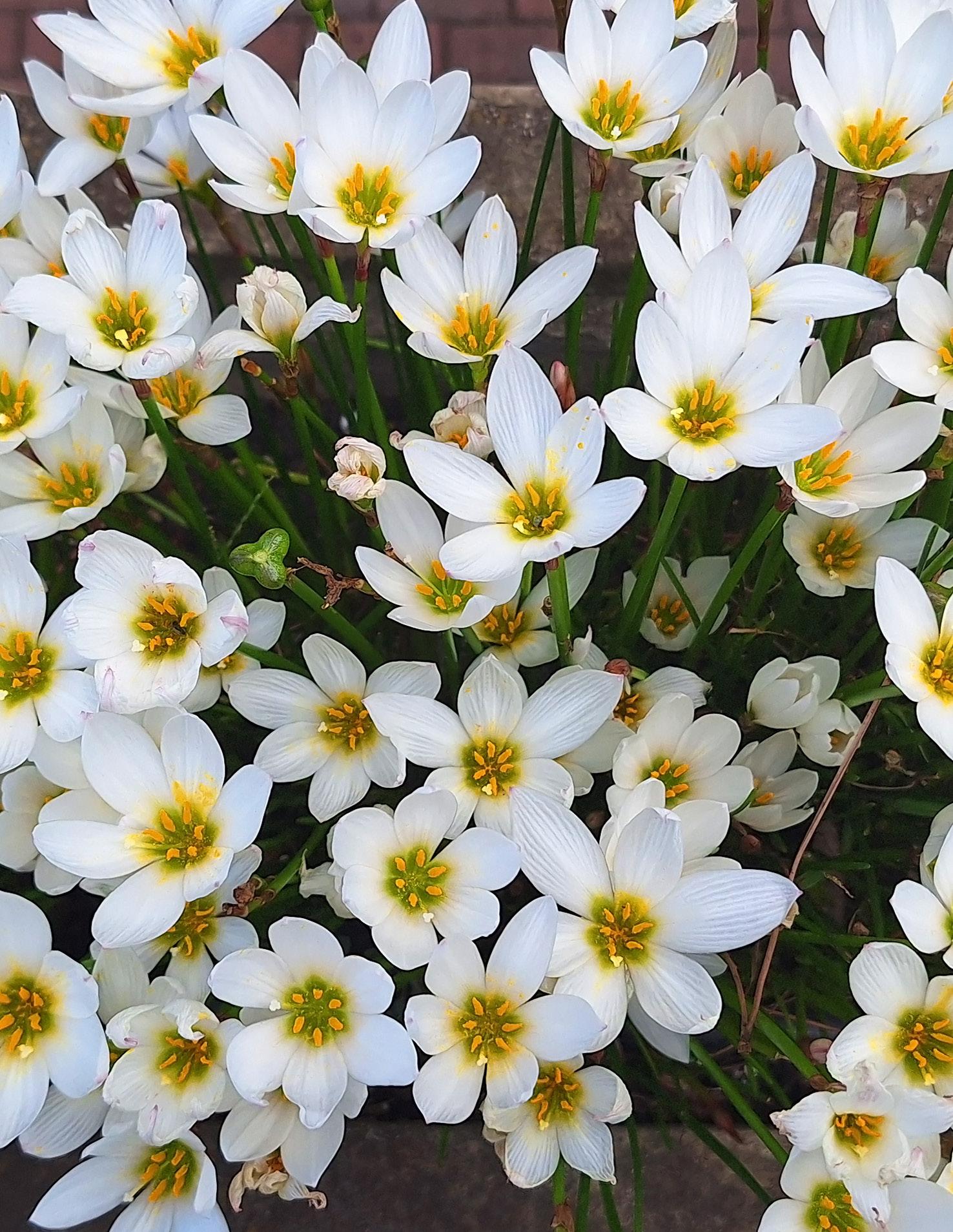
Education is obviously a key component of what we do. Being able to display global collections and tell their stories is still what gets me hyped every day. Putting together a succinct and engaging display showcasing Amborella and discussing plant evolution, having the opportunity to utilize unusual and wild collected plants in new garden spaces and renovating existing gardens with a carpet of Zephyranthes are all examples of well-planned opportunities to use our plants to make personal connections with our guests.
We hope you enjoy these updates among friends, and I hope they inspire you to take a step back and celebrate some of your own behind-the-scenes successes.

Amanda Bennett Vice President, Horticulture & Collections
Atlanta Botanical Garden
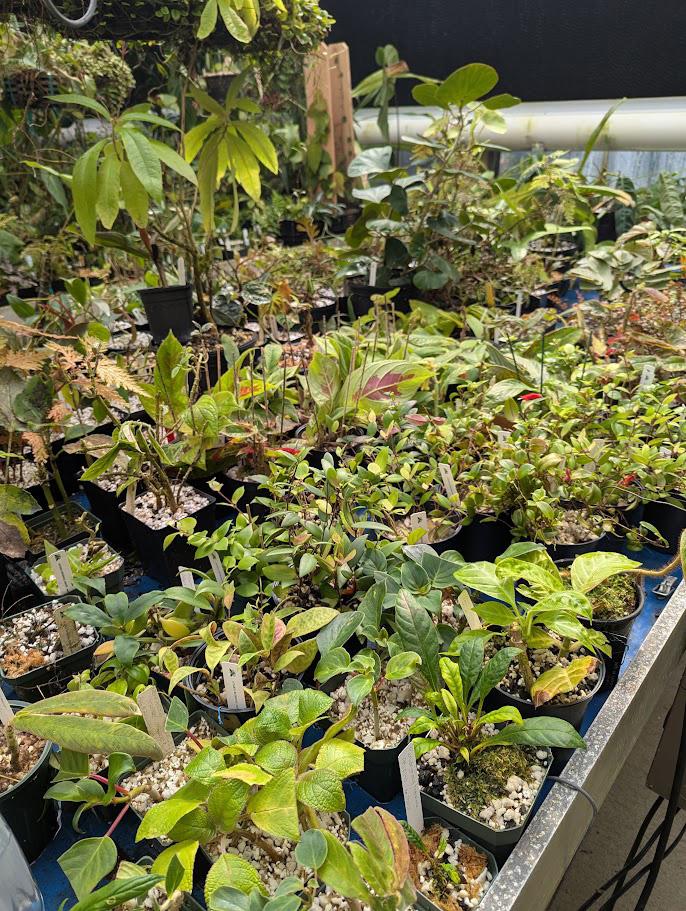
Gesneriad cuttings
BY DAVID RULAND, Greenhouse Manager
A good amount of 2024 into early 2025 was spent trying to reimagine some spaces in the greenhouse in order to accommodate our current collections better as well as make room for other teams and their growing needs. It is an ever-evolving, omnipresent challenge when working in a confined set of dimensions and a continuously evolving plant collection with varying opinions and input to consider.
With some imagination, a bit of negotiation and a whole lot of persistence, we’ve managed to rearrange some collections in the greenhouses in an improved, sensible manner while also freeing up space deemed suitable and preferable for other conservatory teams to use for their specific collections. This includes additional space for micropropagated orchid seedlings, the next wave of palms for the Conservatory as well as designated room for the succulent, Nepenthes, conifers and Aroid collections, for example. There is always a great deal of follow-up rearranging that needs to take place to allow for such provisions, and this year we have been propagating and rearranging collections in order to maximize the potential for the defined spaces allotted per collection.
One collection that is finally getting its just due are the Aroids. While they are historically my first botanical-collection love and still one of my all-time favorite plant groups, I am slightly ashamed to admit they haven’t always received the amount of favor that other collections have won over the years. Partially because of their relatively tough and usually vigorous nature, they have oftentimes had to take a back seat to some of the more touchy or faster growing collections. This year they are getting reworked and repotted with fresh media, new rooted material and upgraded containers and cedar baskets to grow in. I have been delegating assorted areas throughout the greenhouse to their various growing needs. These can range from ever humid warm conditions for our tropical friends like
Anthurium, Dieffenbachia and Philodendrons to assorted temperatures and periodically dormant conditions for our seasonal stinkier favorites like Amorphophallus, Dracontium, Anchomanes and others. As they are reworked with the help of dedicated volunteers, we are also taking some time to rearrange their growing space to incorporate some into our gesneriad area. The gesneriads are also being reworked form cuttings to regain smaller collection plants with more vigor and healthier root systems for a while.
Along the same subject lines of rearranging collections, it’s amazing how much an increase in light intensity makes for certain types of plants. In 2024 I decided to move our bromeliad collection from Greenhouse 2 to Greenhouse 3. Not only did this increase the amount of light they receive on a daily basis because of curtain percentages and programming differences, but they also received a cooler temperature range at night through much of the winter and spring. This is also from programming and temperature parameters for that zone. They have responded fantastically with much more vivid coloration and sturdy new growth as well as some spectacular flowering. I will be looking mostly at some of our Neoregelia specimens as well as a few other genera to hopefully share pups with other interested institutions.
Collection maintenance in a relatively small greenhouse shared with other teams and agendas can often be challenging. However, when the right balance appears to have been struck among everyone, the resolve to make it work out often provides the grower and teams the perfect amount of inertia to override any smaller complications or headaches along the way. The amount of time and brainspace recovery when one isn’t trying to constantly reimagine every step of the way and can just get back to working on the horticulture again is immeasurable. The results are almost always well worth the hassle and challenge.
BY ETHAN GUTHRIE, Sr. Manager, Gainesville Horticulture
There have been some wonderful projects over the last few years at the Atlanta Botanical Garden, Gainesville. These include a new parking lot expansion along with the perennial border renovation and of course the continued propagation and addition of new and interesting plants to the garden.
To be completely honest, a lot about what has been going on lately in the Gainesville Garden has been maintenance on all of the new areas and plantings. I think a lot of people think once a new area is completed that that’s it, and now we can just enjoy it. As horticulture folks, we all know this isn’t necessarily true especially here in the South where we deal with extreme heat and periods of drought in the summer. The first couple of years after a major planting are critical to the establishment of the new plants and garden as a whole. Of course, watering is a big part of this. Even with a good irrigation system it can be difficult to manage newly planted plants. Thankfully our clay soil is good for something, which is holding water! This really does help in the establishment of new plantings especially bigger trees that need to reach deeper for water, and even the smaller plants stay moist longer.
Other projects in the works in the new parking area will be the addition of new “orchard” plants to continue with the theme of small fruits. Multiple fig tree varieties along with more blueberries and pomegranates will be planted this year with the intention of continuing this theme in the future. Along with fruiting trees and shrubs, some plants are being added to help cover and hold the ground between the plants. With the area being too large to mulch, we decided to utilize some
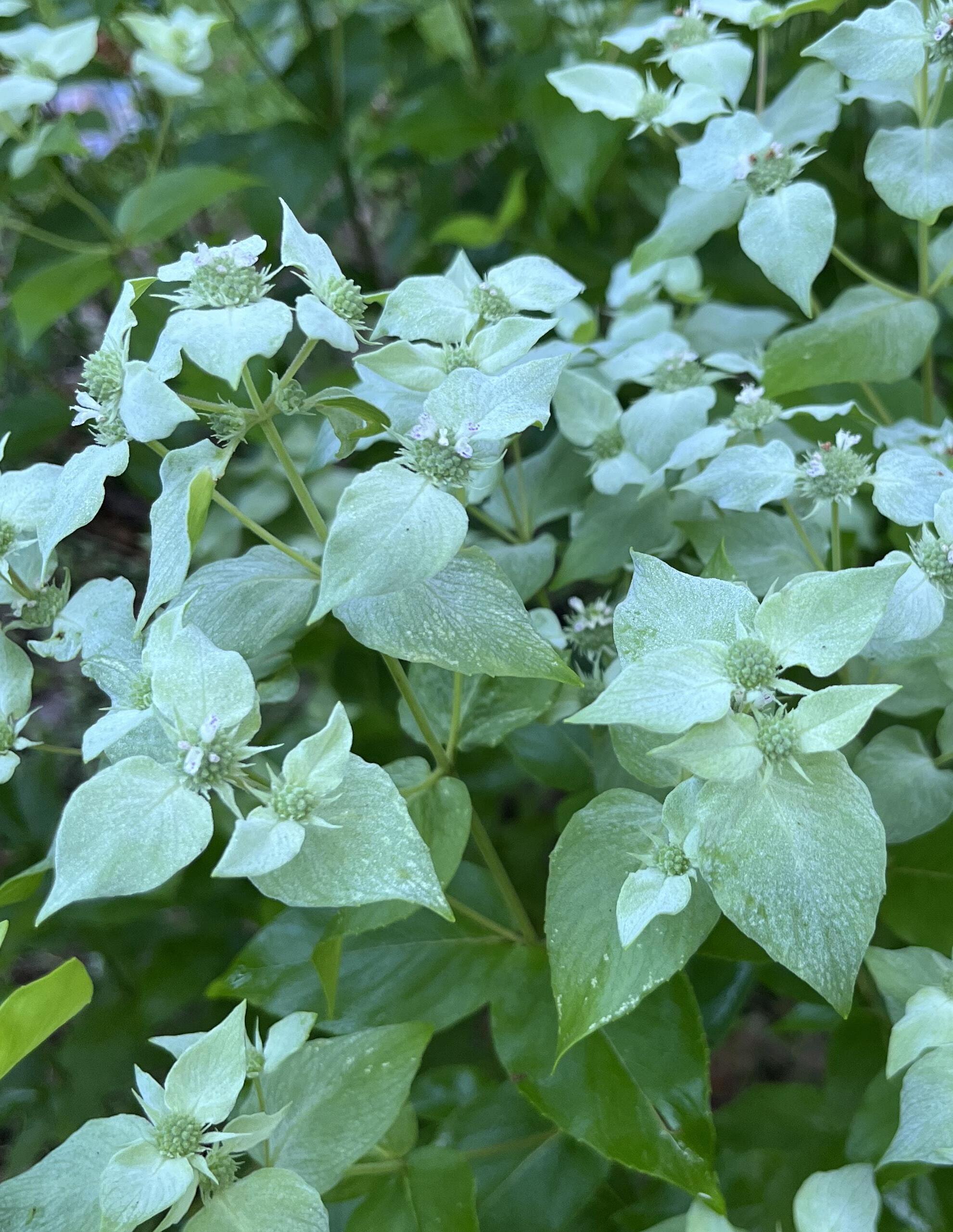
Pycnanthemum muticum
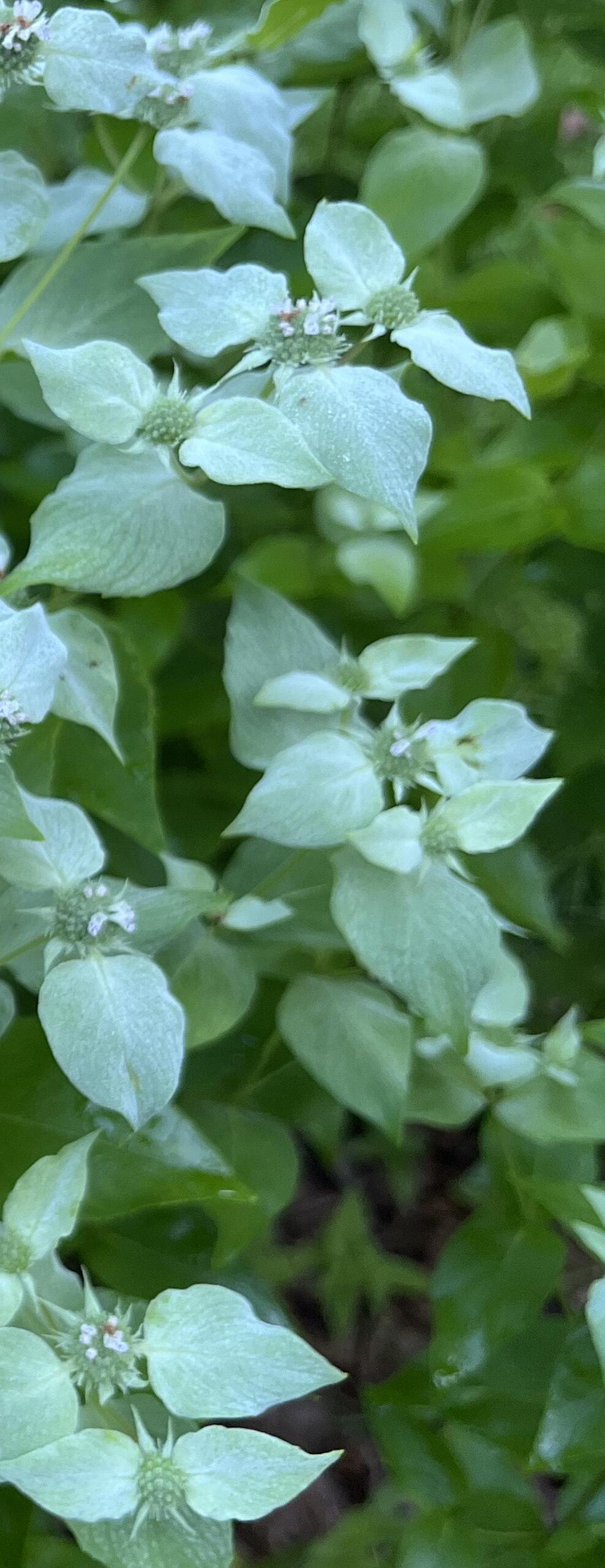
spreading perennials such as Pycnanthemum muticum to cover ground, attract pollinators and choke out some weeds. Also adjacent to the new parking area is our recently developed edible garden. It is about a year and a half old now but has produced some lovely bounty already. The intention of this garden will be for educational purposes only and used in programming and donations to local food banks. I know this year we have already harvested some bumper crops!
I also wanted to give a quick update on the rain lilies, Zephyranthes and Habranthus, we have been working to collect. Last year we did our first big planting from these plants in the Children’s Garden. Some Permatil was tilled into the areas to be planted because of the heavy clay to help with drainage and aeration. Eight total species and cultivars were planted to see how they would perform. Most of them came through the winter beautifully with a couple exceptions. Z. rosea was not a fan of our wet winter and did not come back in the ground unfortunately. Luckily, we were able to send about 20 trays of various rain lilies to the Atlanta Garden as well. We are hopeful some that don’t do so well for us will do better there.
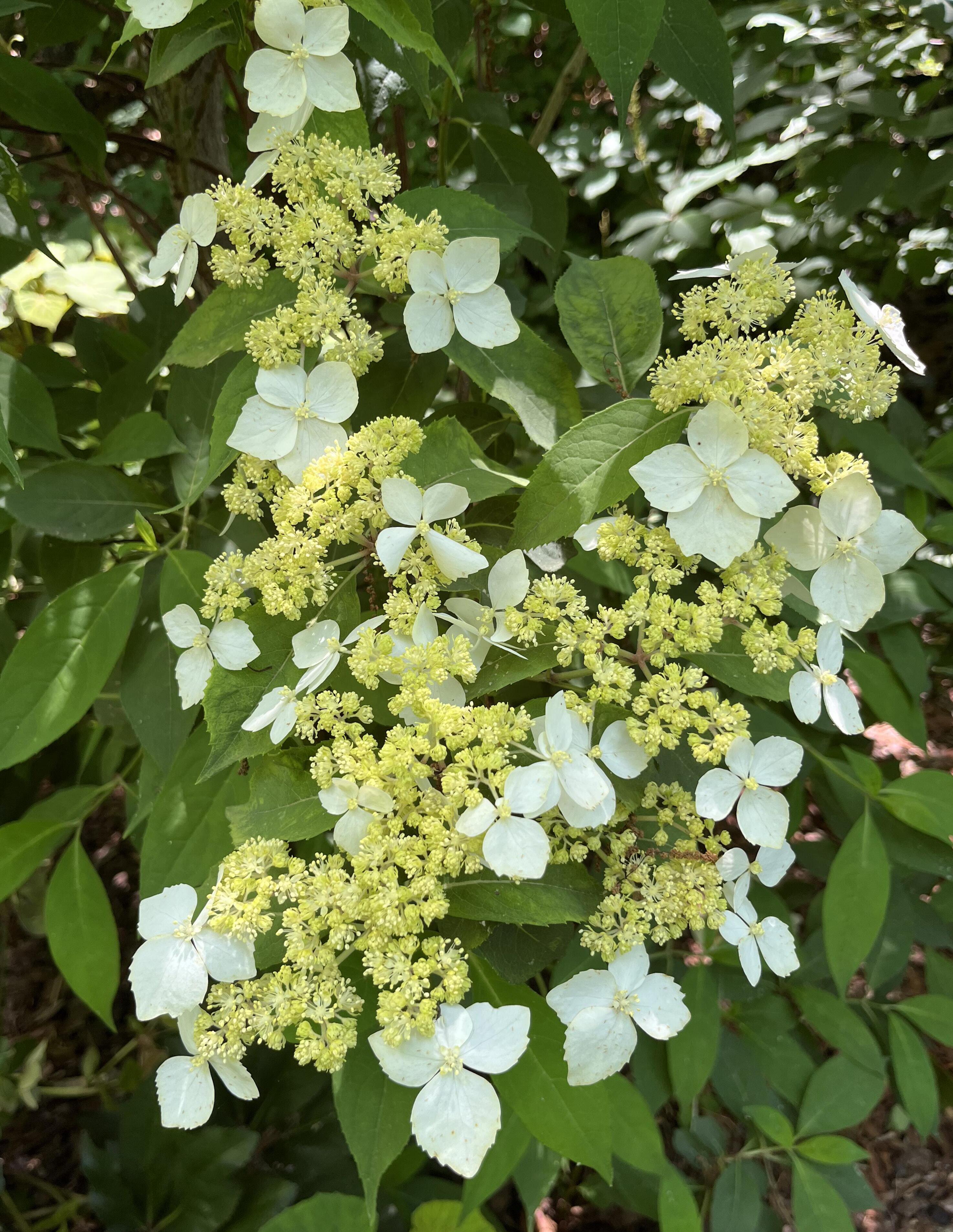
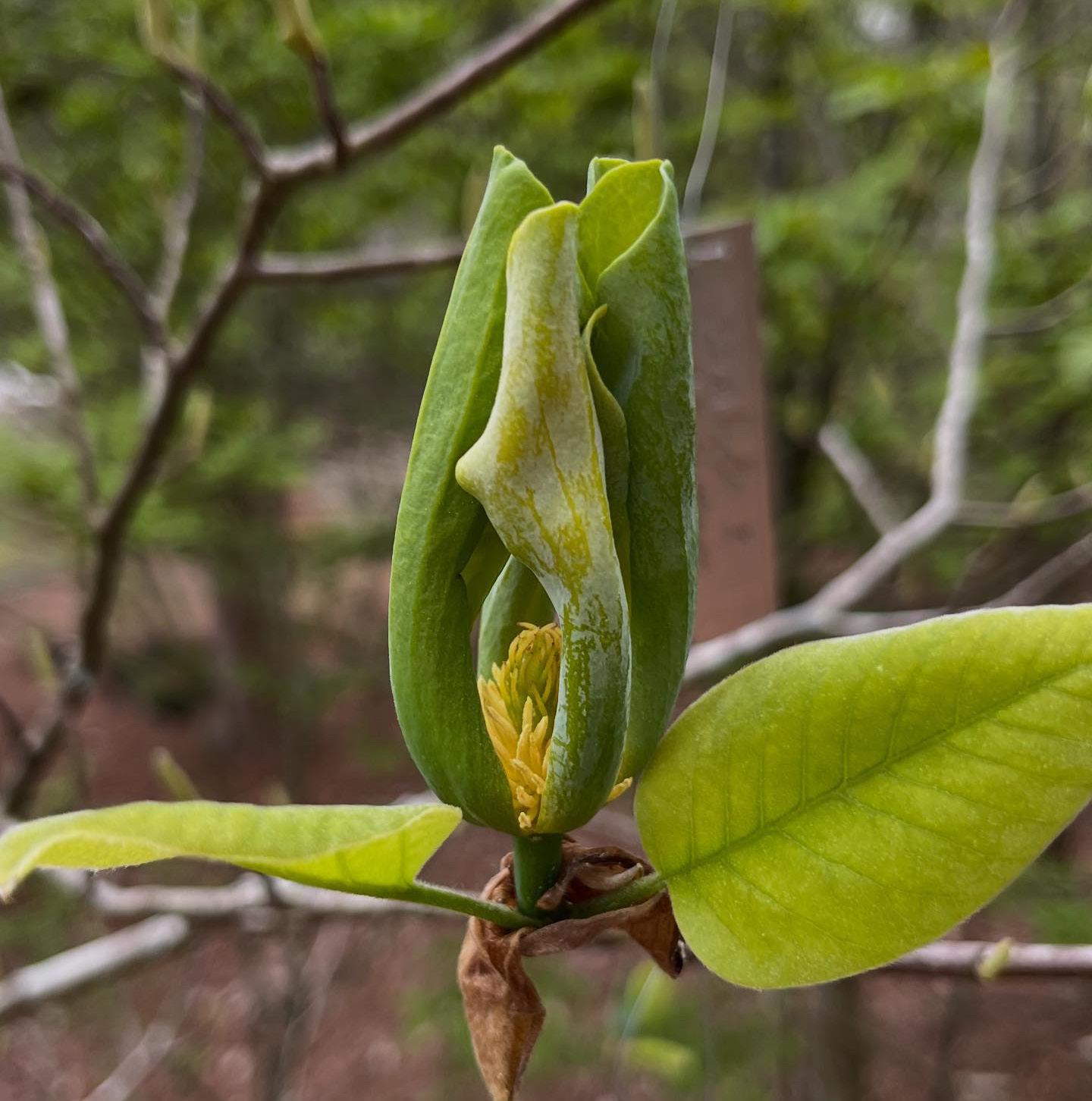
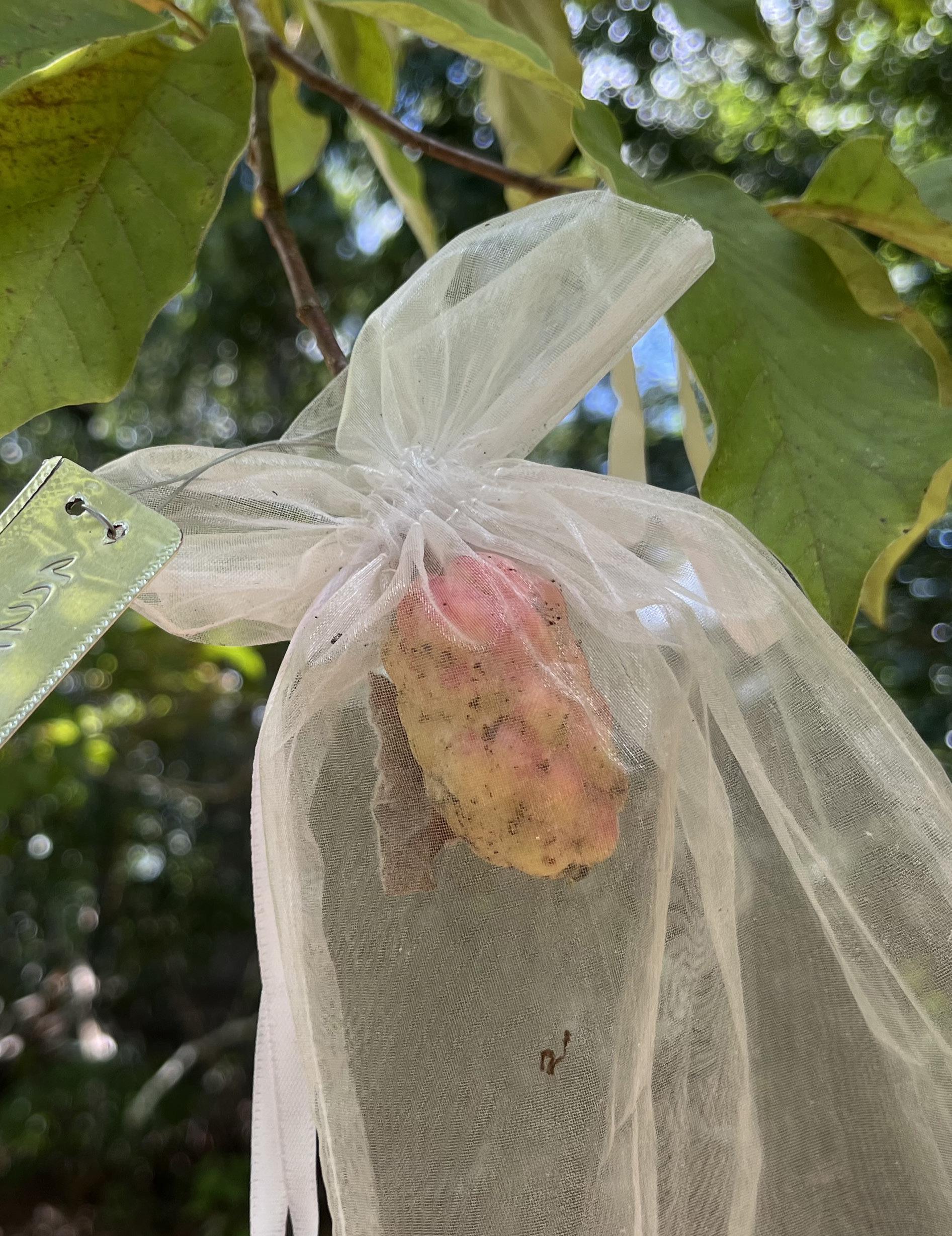
Last but definitely not least, our greenhouse horticulturist, Will Robinson, has been working diligently to continue to propagate plants from our collections such as Hamamelis, Magnolias, Acers, and Hydrangeas. We were able to have a Hydrangea specific sale this spring all from plants propagated from the collection. It was a huge success, selling about 125 Hydrangeas, and introducing so many people to different plants they’d never seen before. Along with Hydrangeas, I continue my work on Magnolia breeding with our incredible collection. The past couple years I have focused on crossing our two specimens of M. tamaulipana with each other which has been extremely successful in creating M. tamuaulipana seedlings. Along with these crosses I also was fortunate to be able to make some M. maudiae crosses as well as collect open pollinated seed. For us, M. maudiae usually is a delight to see in bloom, but rarely sets seed due to multiple spring freezes. Many of these seedlings are now being grown in an evaluation field on the property along with many more being distributed through the Magnolia Society International seed sale.
BY DEREK PINSON, Fuqua Conservatory Horticulturist
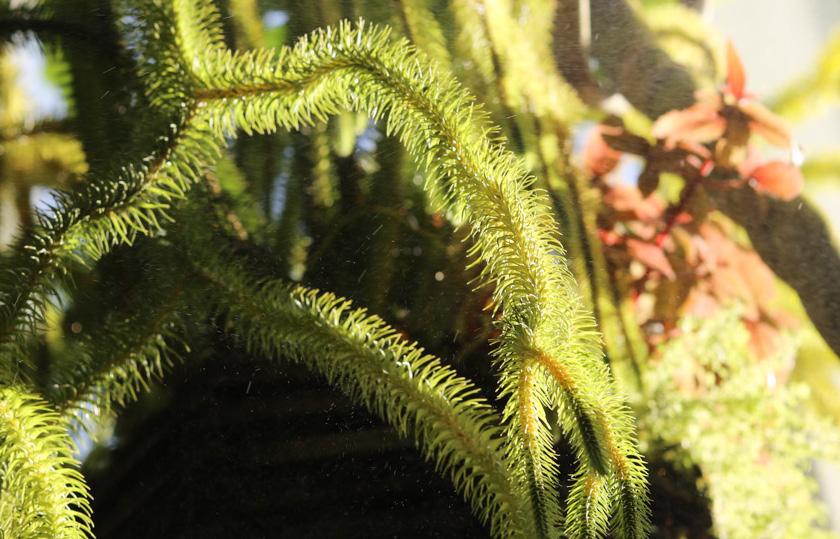
Every year, Garden horticulture teams take on countless display changeouts to maintain garden spaces that continuously evolve with the seasons and public trends. One of these displays with the most direct line to public education is the Fuqua Conservatory’s annual Special Exhibit.
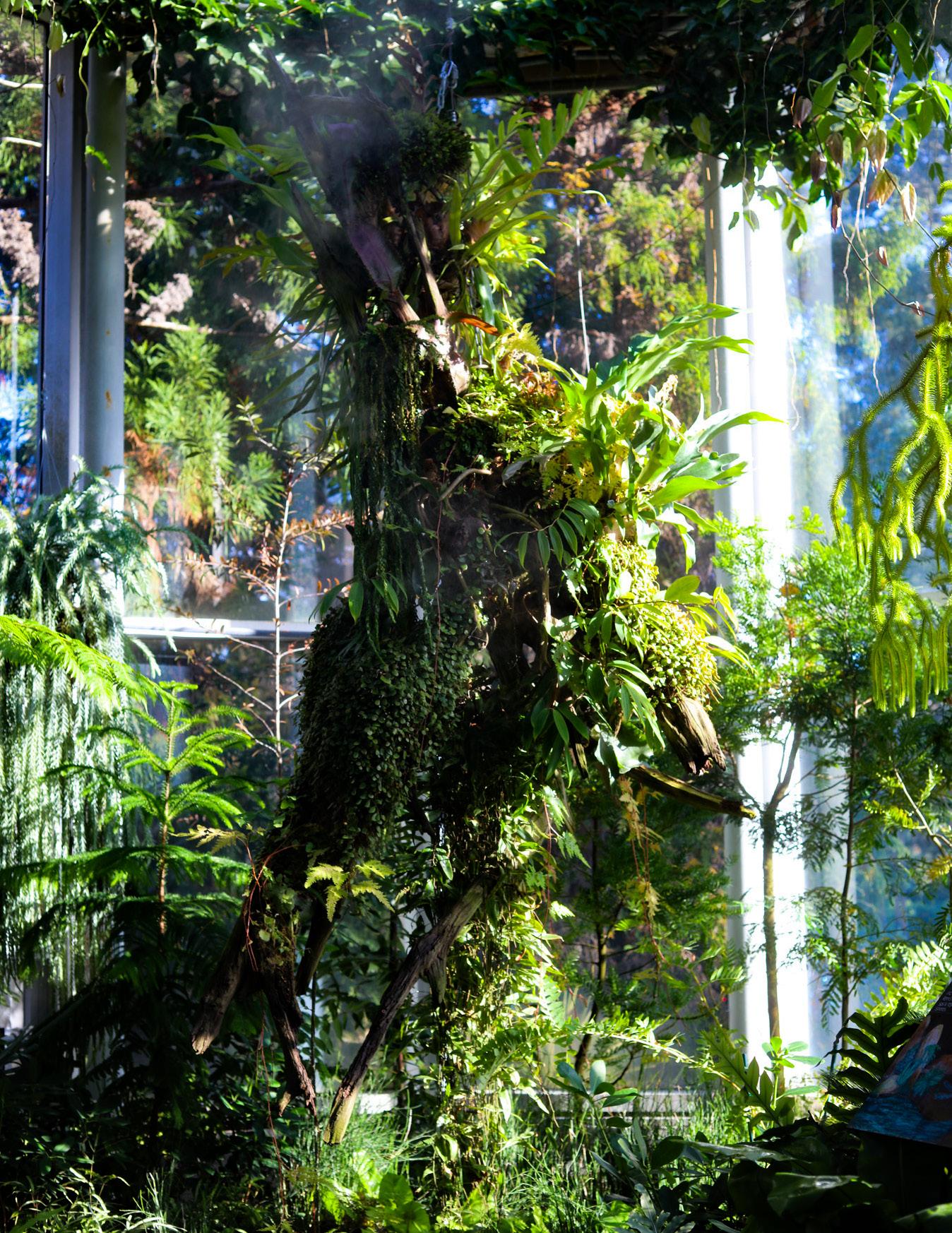
Situated in a dedicated, turret-style feature of our glasshouses that has the special distinction of serving as a venue for the Fuqua Conservatory’s only rotating display, the exhibit acts as a visual punctuation to our Orangerie—a permanent installation itself brimming with ethnobotanical information. Each year the Conservatory team works with our education department, horticulture management and our greenhouse facilities staff to design and construct an exhibit that will be both visually captivating and educational for our visitors. The theme for this year’s exhibit is The Story of Early Plant Evolution.
Concept development for these Special Exhibits typically begins as an inter-departmental collaborative effort more than six months before installation is to occur. We consider a number of factors, including novelty, public relevance and back-of-house collections that we might like to feature
for public viewing. We often focus on specific taxonomic groupings, plants of certain ethnobotanical interest or ecological storytelling. Past examples include Plant and Animal Relationships, Gingers of the World and Bromeliads: Big and Small. This year we turned our sights to our extensive but largely unseen collections of relict plant lineages.
Though the timeline of the exhibit reaches back to the earliest examples of land-dwelling groups like mosses and ferns, part of the story that these collections would allow us to tell is one of particular relatability to the public at large: a densely-forested landscape that served as a misty backdrop for the ultimate messengers of Earth’s distant past, the dinosaurs. Our collective imagination for the flora of this time provides broad brushstrokes of “alien” botanical forms, enormous ferns and myriad green yet nameless foliage, lacking the higher resolution that we hope to bring to viewers who may be surprised to learn that many of these plants and their descendants still exist today. Take a walk in our Southeastern forests and one may encounter Common Groundcedar, Diphasiastrum digitatum, countless bryophytes, or a fern’s emerging fiddlehead—small-scale echoes of a time when these plants’ forebears dominated the landscape. Though diminutive
in comparison to their ancestors or some modern tropical relatives, these species can serve as a direct throughline to this time. That is, if the connection can be made.
To build our microforest of the distant past that we envisioned would best make this connection, we selected ancient groups such as Lycophytes (Huperzia, Selaginella), Polypodiophytes (Osmunda, Equisetum, Psilotum), Cycads and Gondwanan conifers (Agathis, Dacrydium, Retrophyllum), through to emergent angiosperms (Amborella, Austrobaileya). Our selections spotlight relict species while allowing for creative latitude to include some modern relatives that lend to the overall look and feel of the installation. To further the relatability and to fully demonstrate the timeline that we wished the exhibit to encompass, we chose the end of the Cretaceous as the temporal cutoff for our story, a point in Earth’s history which also coincides with the extinction of the non-avian dinosaurs.
Most of the stars of our plant list were on hand, but we did have to seek out some species in larger numbers to act as fillers, such as Equisetum hyemale, Blechnum brasiliense, Pteris cretica and Illicium floridana. For these selections, we worked with managers from our outdoor horticulture team to make acquisitions from nurseries we work with for bulk materials, which we would then store in our greenhouse facilities until installation. Others, such as Asplenium nidis, were on hand from recently-concluded Fuqua Orchid Center exhibits. Some selections such as Platycerium elephantotis were ordered from specialty vendors, and a few such as our Selaginella species were propagated from existing display plants.
Once a design is finalized and all plant material acquired, we begin the installation process, which usually takes about two weeks. Starting with deconstruction of the previous year’s exhibit, we first determine which of those plants will go where, including those that will be returned to our backup collections, planted for display somewhere in the conservatory or composted. After clearing the space, we take advantage of an opportunity for a deep clean of the floors and surrounding glass before we begin laying out the new exhibit. Using our design as a guide, much of the final arrangement is determined spontaneously because of a number of factors such as expected versus actual sizes of plant material received.This year, as the team was working on the installation, a young boy visiting on a field trip exclaimed, “There should be dinosaurs here!” before we were even finished, so we knew we were on the right track.
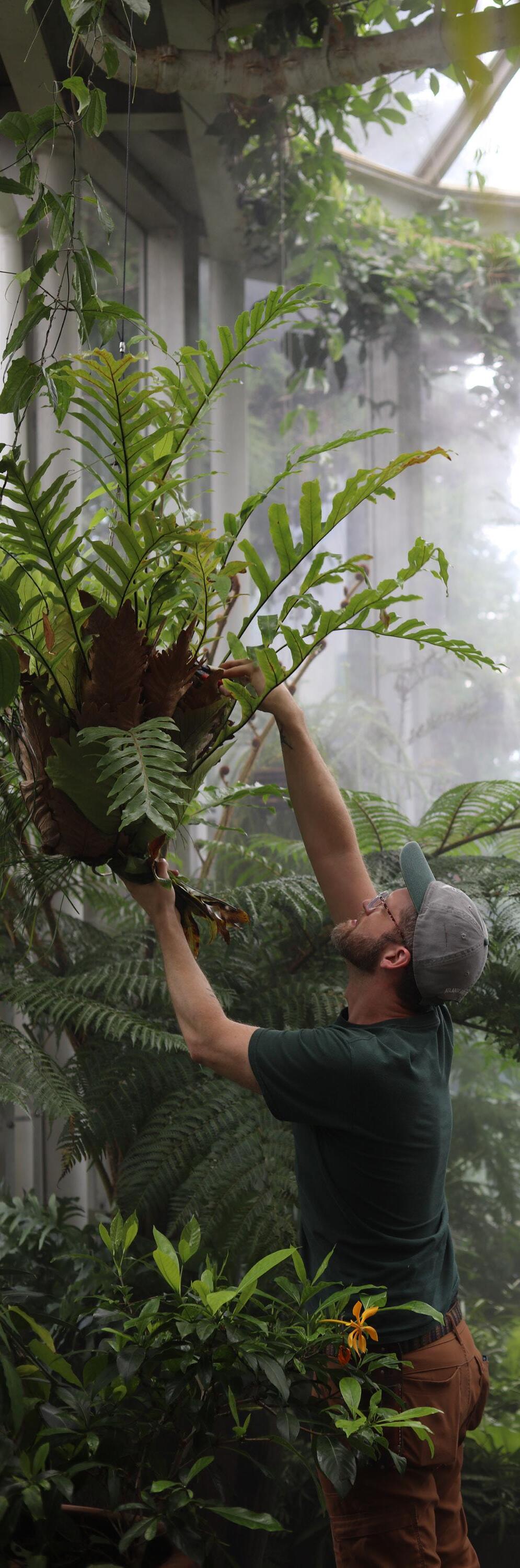
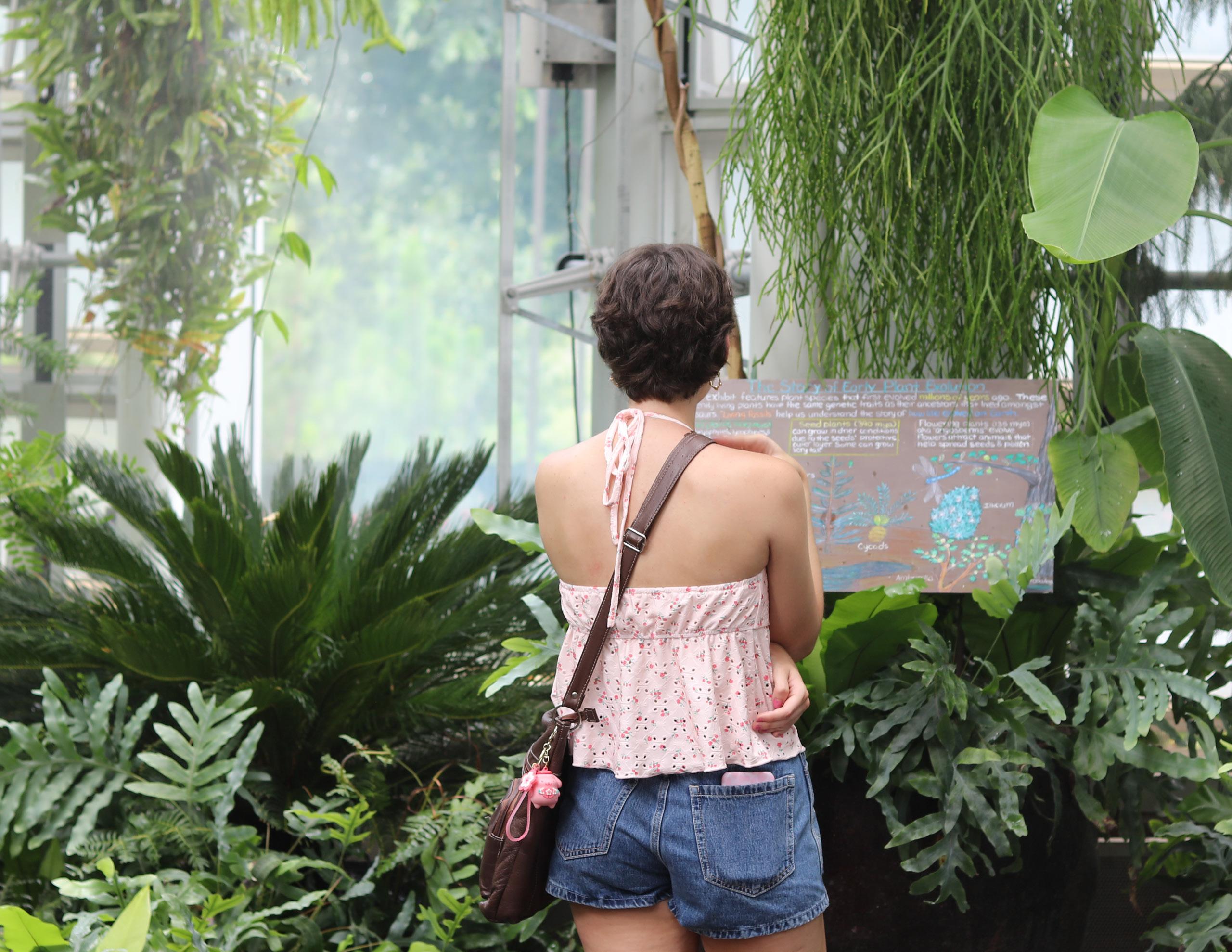
When the bulk of the exhibit is installed, then begins the fine detail work to enhance overall realism. For this exhibit, such work included transplantation of various mosses, ferns and Selaginellas from our greenhouses to decorative driftwood pieces that remain as semi-permanent planting surfaces from one installation to the next. Now adorned with a veil of fog from our overhead mist system, all that remains to call the exhibit complete is interpretive signage.
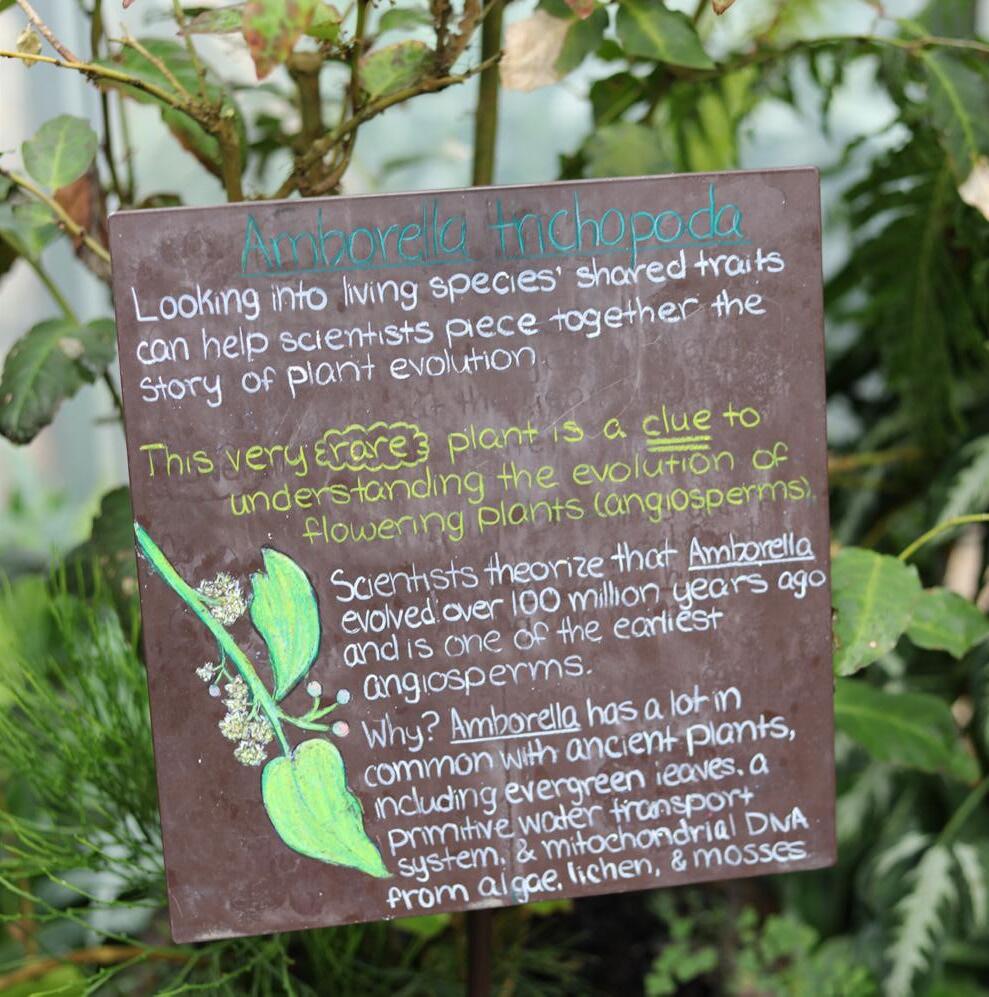
Up to this stage the Garden’s interpretative specialist has been in ongoing contact with horticulture staff as the concept evolves, researching the topic and drafting language for ephemeral signs that will fulfill the educational goal of the exhibit in a concise but engaging way. Typically, the signs are produced only after the installation is complete in case of needed adjustments to the final product. This year’s exhibit features one large sign visually
representing the evolution of plants from the earliest land dwellers to emergent angiosperms, highlighting evolutionary milestones through small bites of information. A second sign details the importance of Amborella trichopoda in the search for clues about the origins of angiosperms.
With everything now in place, we can present the finished product to our colleagues and visitors, and the team works together to maintain the exhibit to the highest standards in the intervening year.
Our story of Earth’s earliest plants may end with the conclusion of the Cretaceous period, but the exhibit will remain for visitors and colleagues to experience until spring of 2026 when we rotate to our next, as yet undetermined theme. Find this misty microforest of times-gone-by between the Conservatory’s Orangerie and Desert House.
BY SCOTT McMAHN, Manager of International Plant Exploration
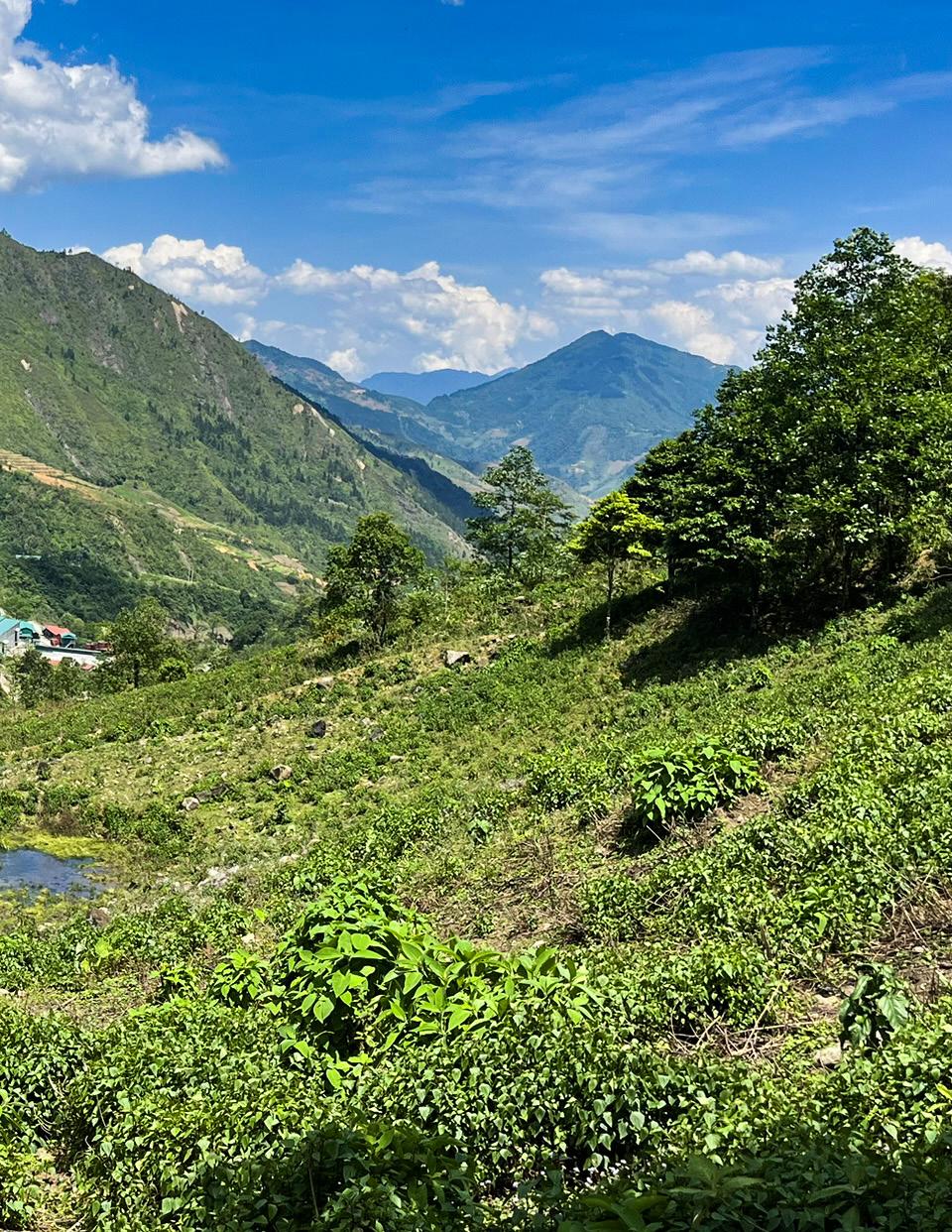
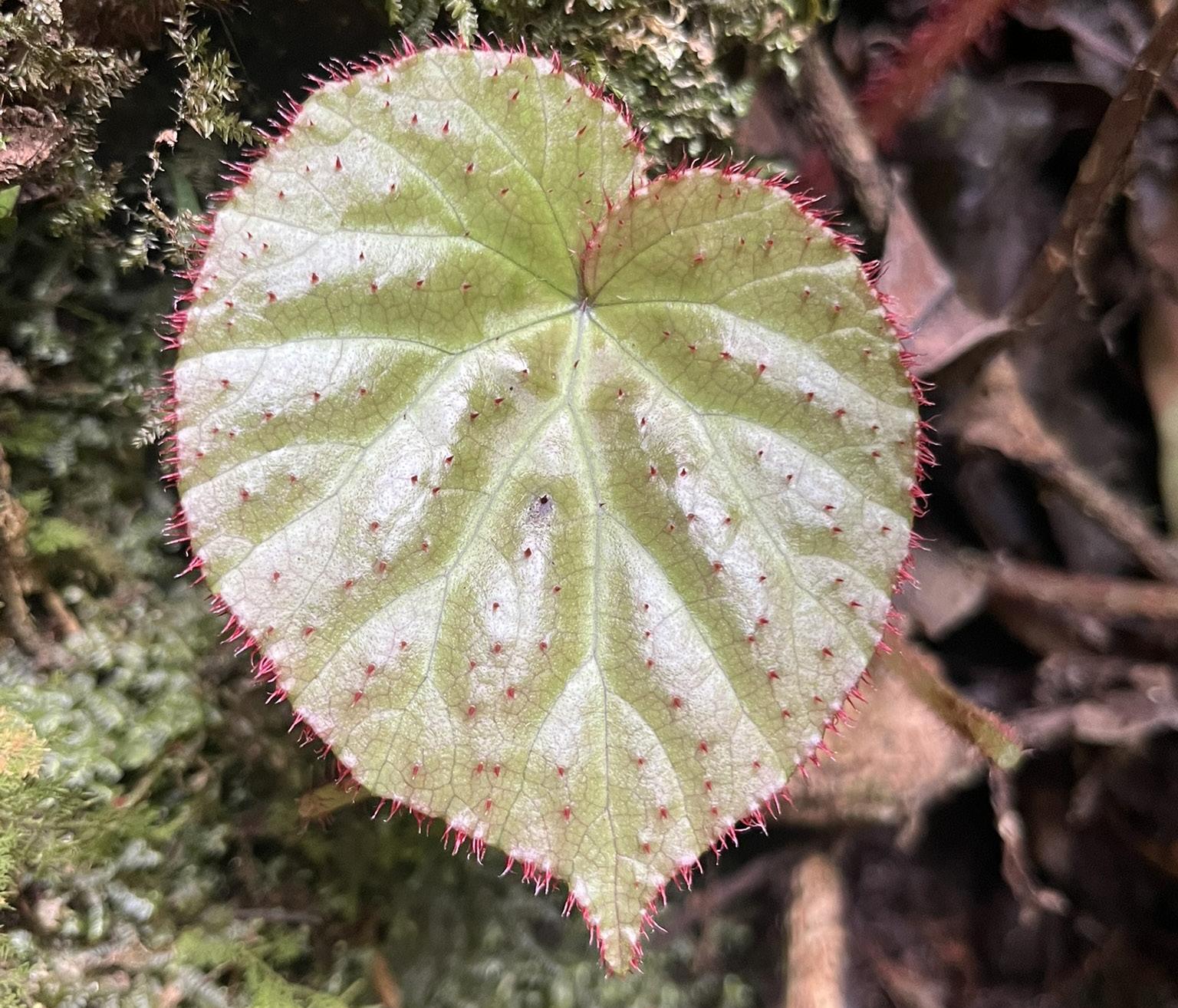
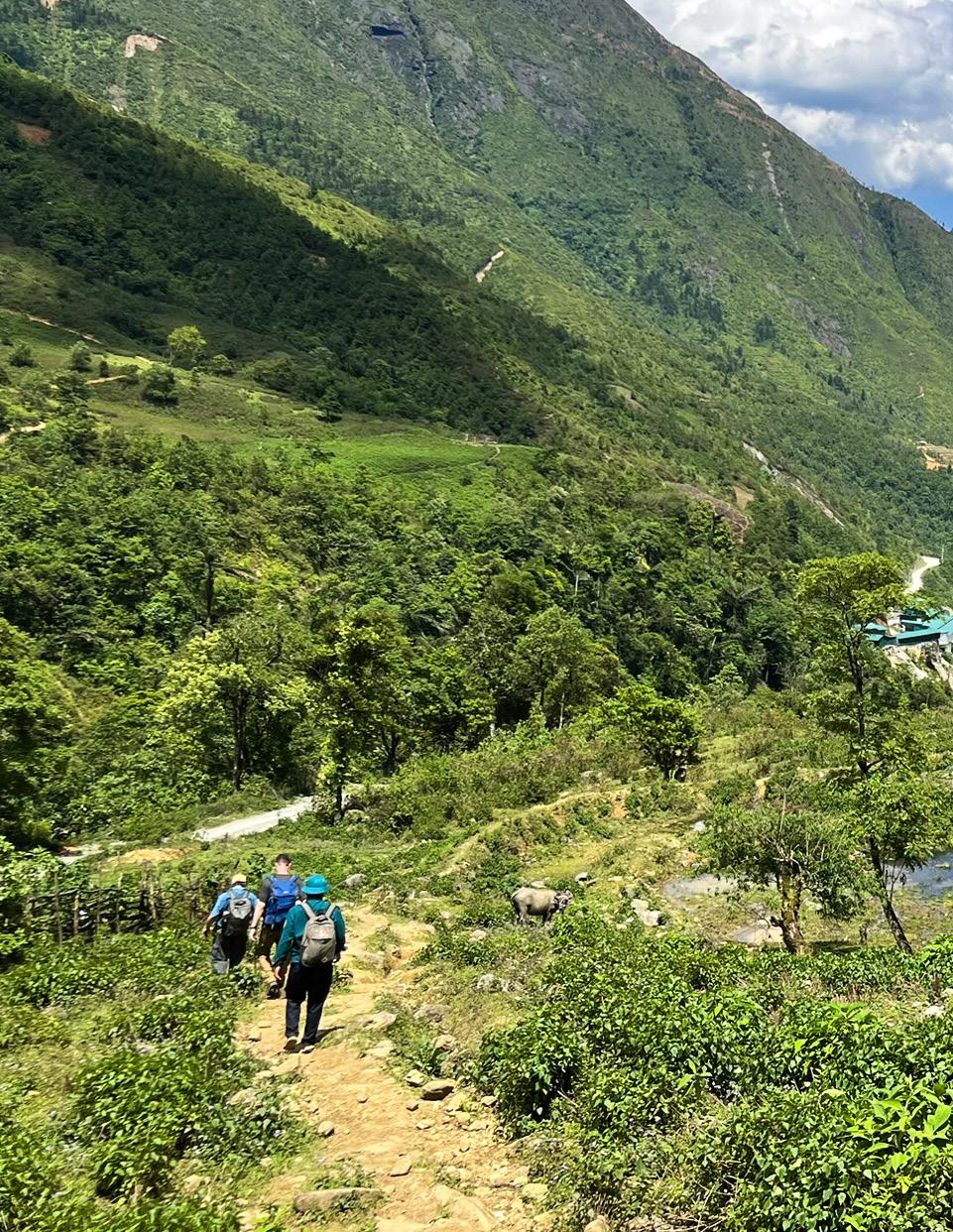
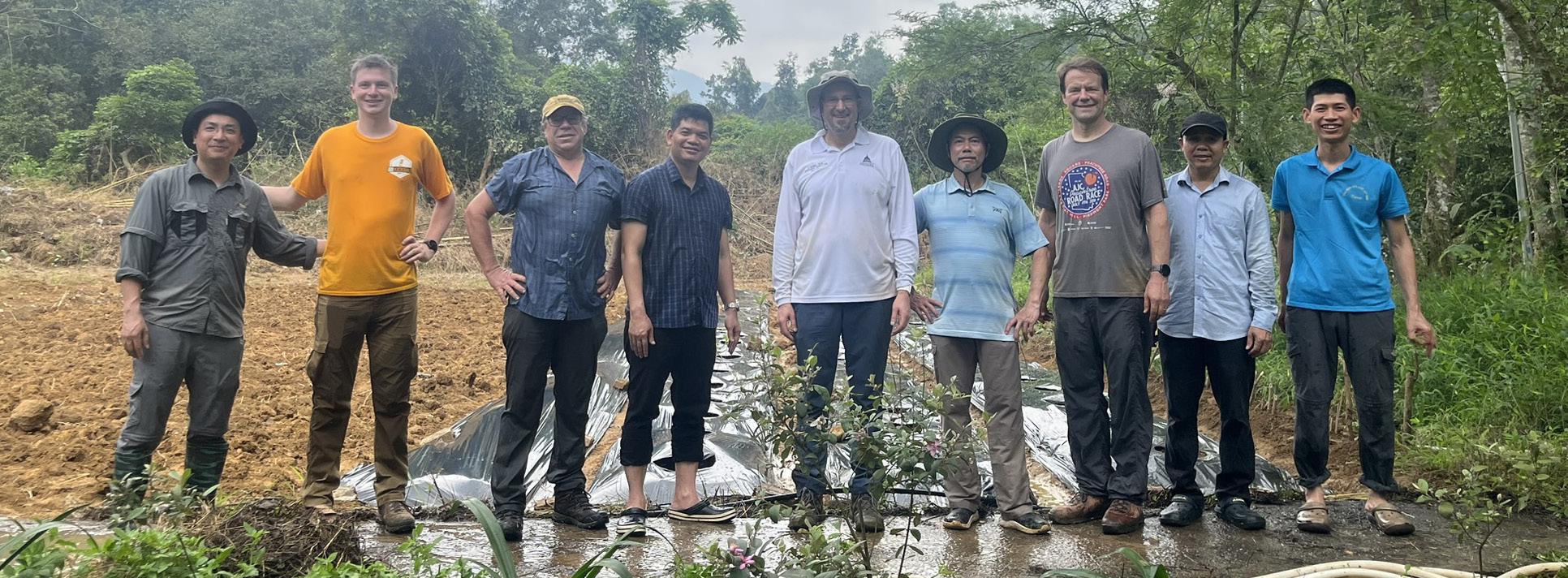
In the fall of 2007, I made my first trip to Vietnam, and that is where the collaboration between the Garden and our Vietnamese colleagues began.
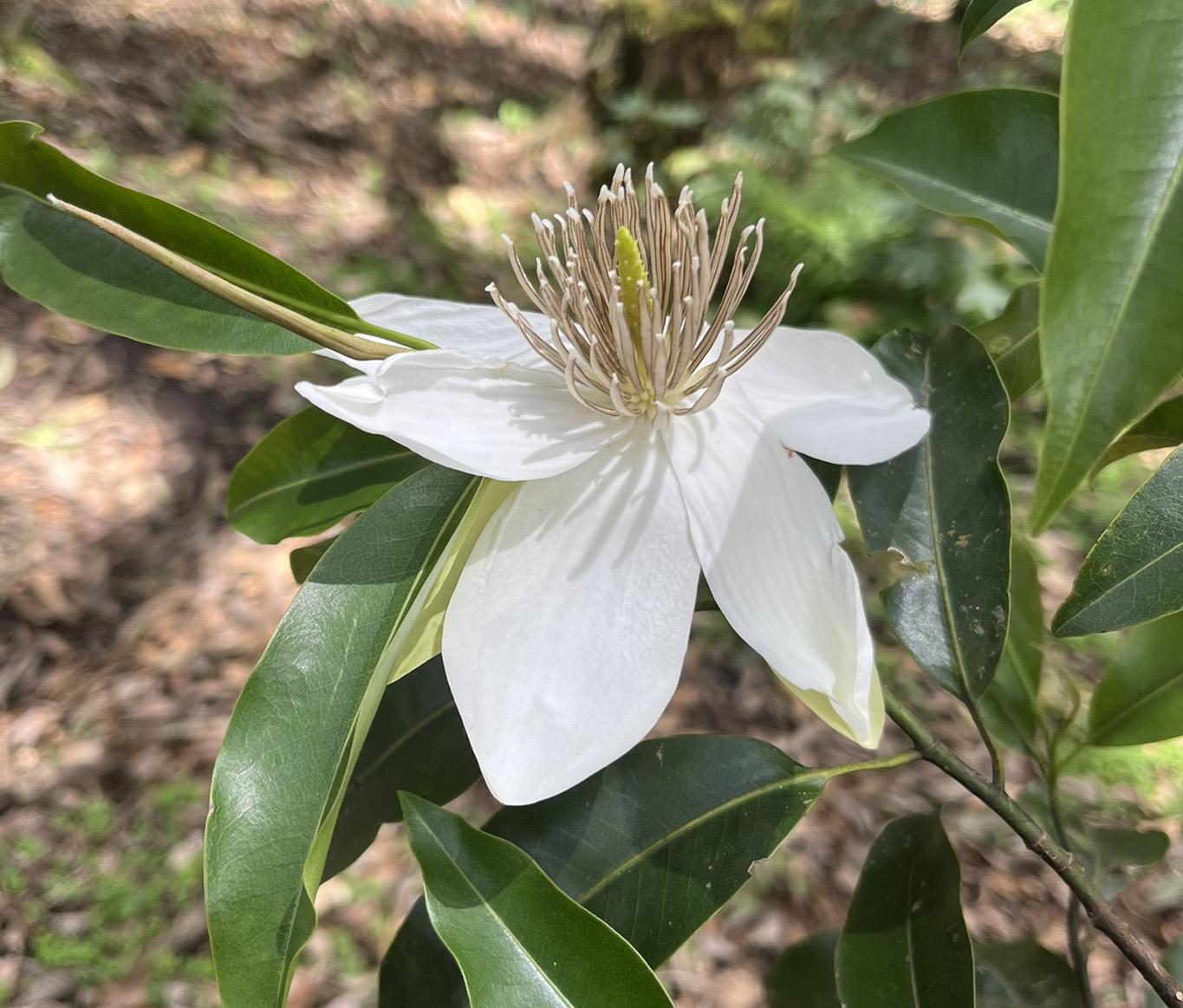
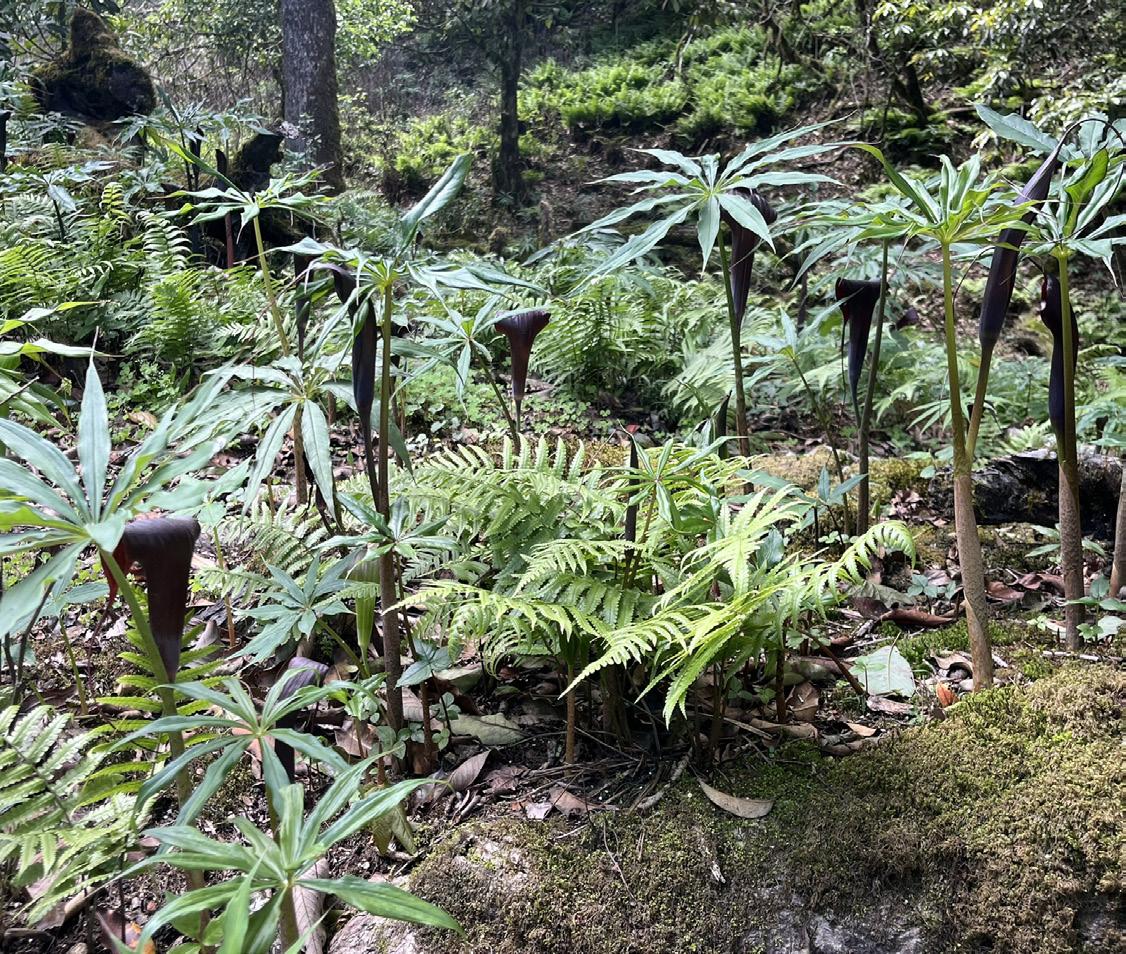
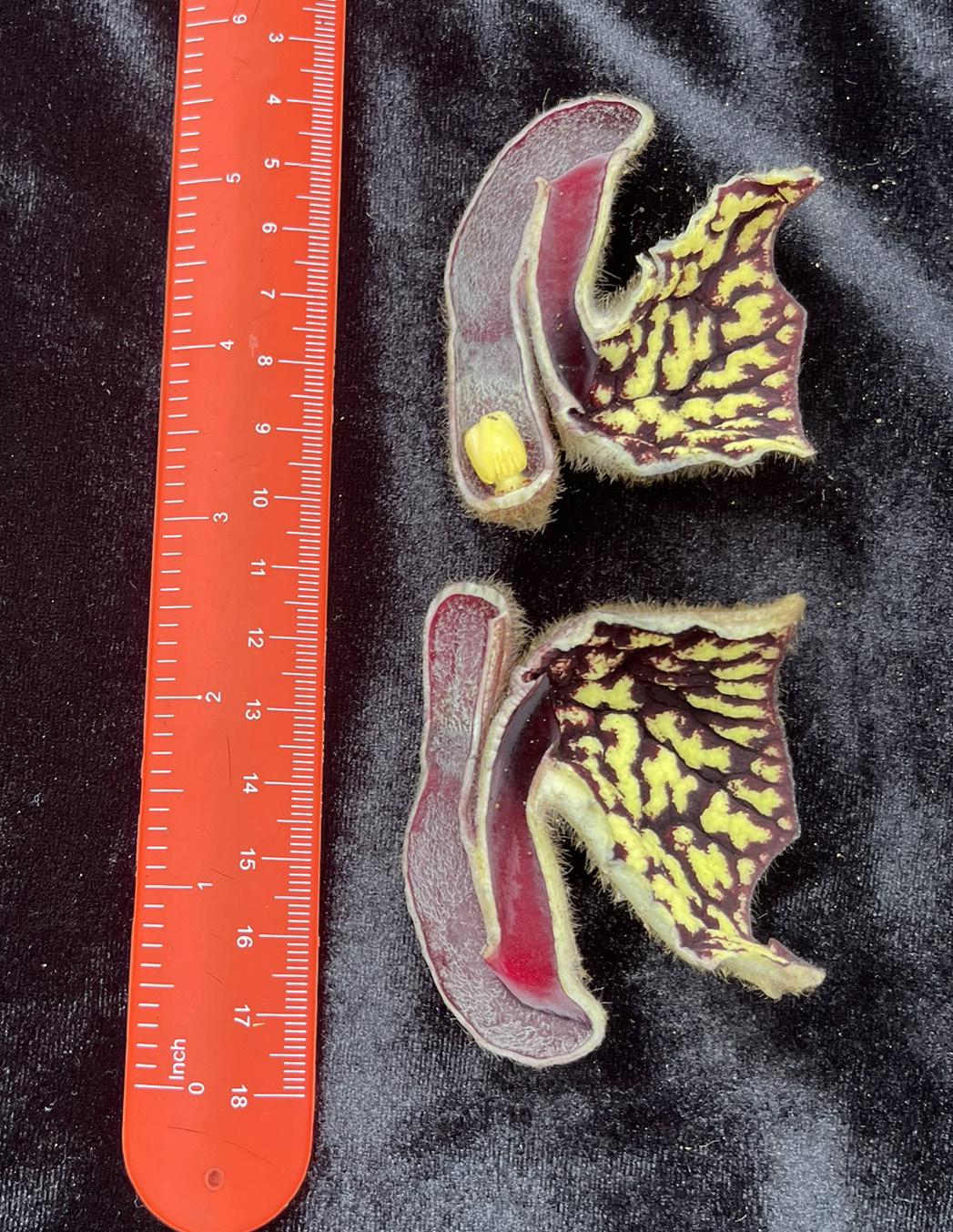
At first, the trips were focused on the North for studying and collecting material from the highest mountain in Indochina, Fan Xi Pan Mountain (10,326 feet) located in Lao Cai Province. We were lured into those mountains mainly because of the extraordinary diversity that we knew existed in those higher altitude, broadleaf evergreen jungles. Rhododendron, Magnolias, Hydrangeas, Illicium, Acer, Arisaema, Begonia and most intriguing of all, more than a dozen species of “hardy” Schefflera that we were dying to evaluate here in the southeast United States. So off we went.
As we began to dive deeper and deeper into the flora of Vietnam, our Vietnamese colleagues began suggesting other, more remote and less explored areas for us to conduct fieldwork. After a few trips, our team from the Vietnam Academy of Science and Technology (VAST) began to gel. We found ourselves working with the same researchers again and again, each time building on the knowledge base each of us had gained from our previous fieldwork together. Everyone has a job while conducting fieldwork, and we began working like a well-oiled machine in the jungle with two people collecting seed, one person preparing a bag with collection info, one person noting the GPS and elevation points, one person collecting an herbarium sample and the rest of the team scouting for other individuals of that particular collection.
However, over the years, the focus on these trips has shifted a bit. We still conduct fieldwork with the idea of
documenting and collecting new germplasm/species, but we are also working to piece together our understanding of just how diverse the flora of Vietnam really is. Along these lines, the Garden and Vietnam have recently begun working on a long-term project focused on the Magnolias of Vietnam. There are currently 61 species of Magnolias described in Vietnam with new species being described every year. Very little is known about many of these evergreen trees, so we are working to create a germplasm repository of sorts for Magnolias at the VAST Biodiversity Station outside of Hanoi. For the past several years, the Garden has been sending a team to work at the Biodiversity Station for three to four days after the collaborative fieldwork is done. Together, the crew has been working to create a better “soilless” media for container growing, seed sowing protocols for wild collected germplasm, clearing nursery and field growing areas for future collections and planting an orchard of Magnolia understock to be used for grafting wild collected Magnolia scion material from future expeditions.
The Garden is the lead institution for BGCI’s Global Conservation Consortium for Magnolias and the work done at the Biodiversity Station will help provide important data for this international Magnolia project. In addition, the Garden will host two of our VAST colleagues for three weeks in August to allow for practical training and knowledge exchange giving them the opportunity to work side by side with our horticulture and conservation crews. After 18 years of collaborative fieldwork in more than a dozen different provinces in Vietnam, the work the Garden and VAST are doing continues.
BY TIM MARCHLIK, IPEP Coordinator
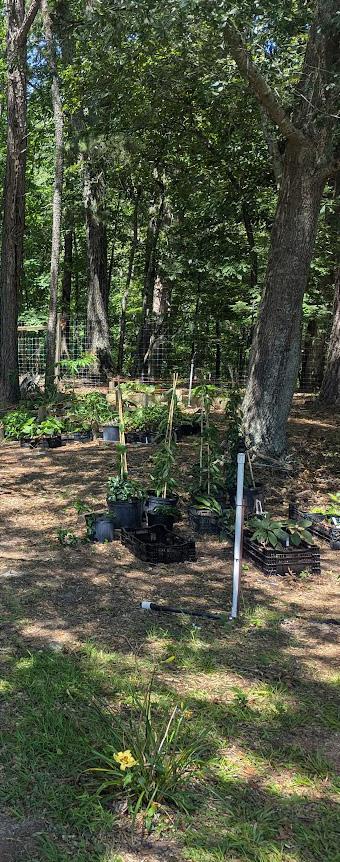
The Garden’s Evaluation Nursery is an invaluable resource when it comes to plant collections as well as the Garden’s capacity to grow and distribute plants.
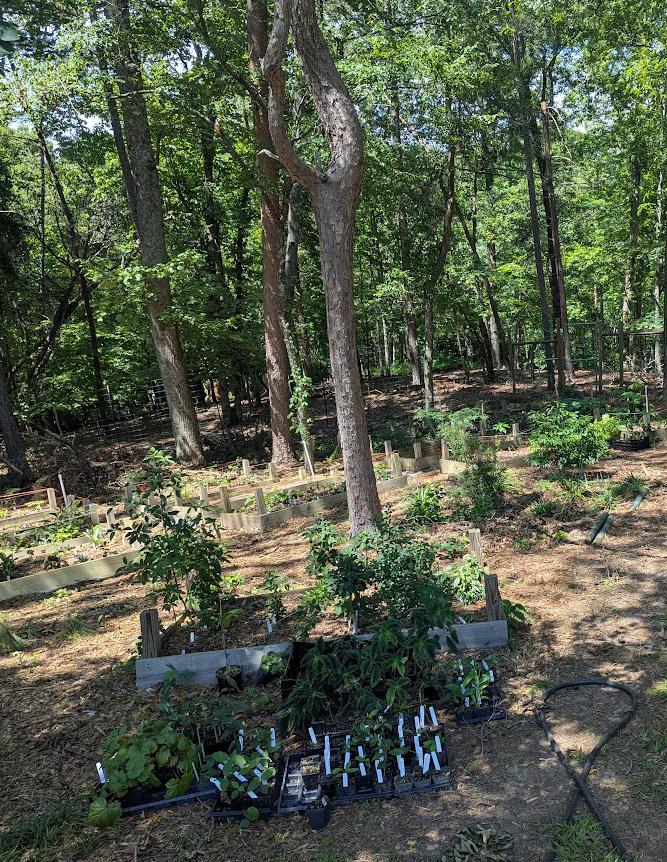
One of the main purposes of the Garden’s International Plant Exploration Program, started in 2016 by horticulturist Scott McMahan, is to evaluate new plants for landscapes of the Southeast. At that time, to do that a trial nursery was needed to fully assess the traits of the plants. Over the past seven years the nursery has been developed in various phases to increase capacity building and expand collections.
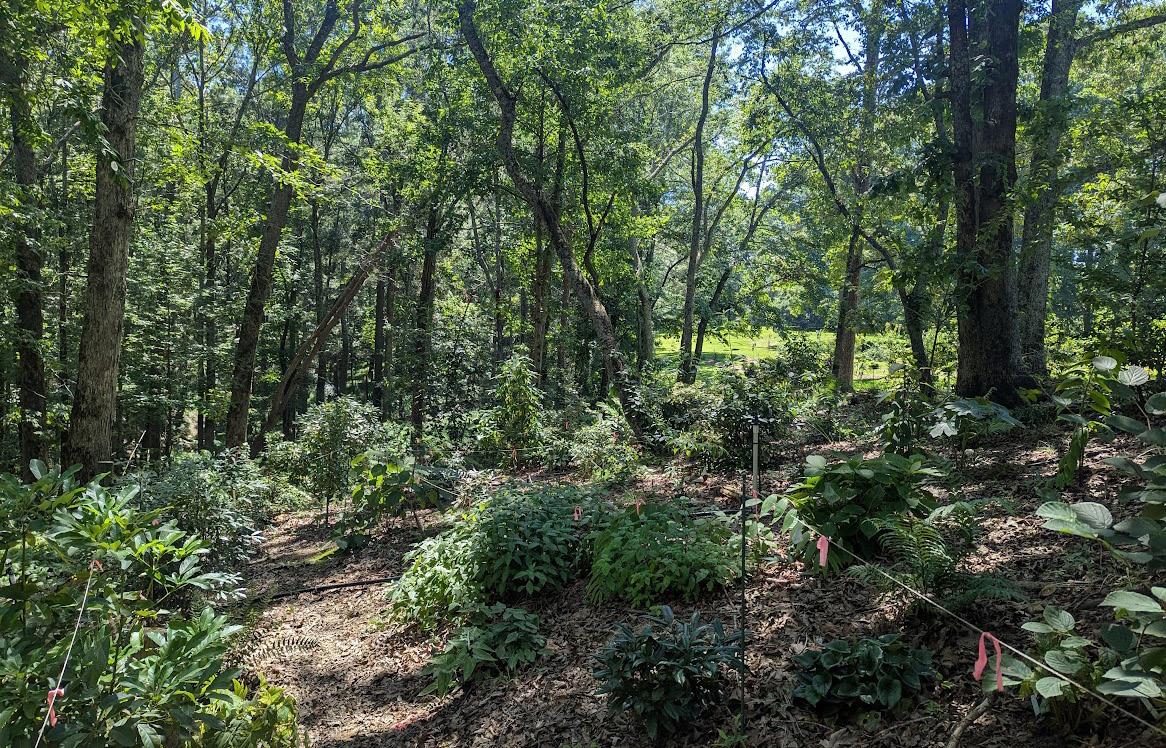
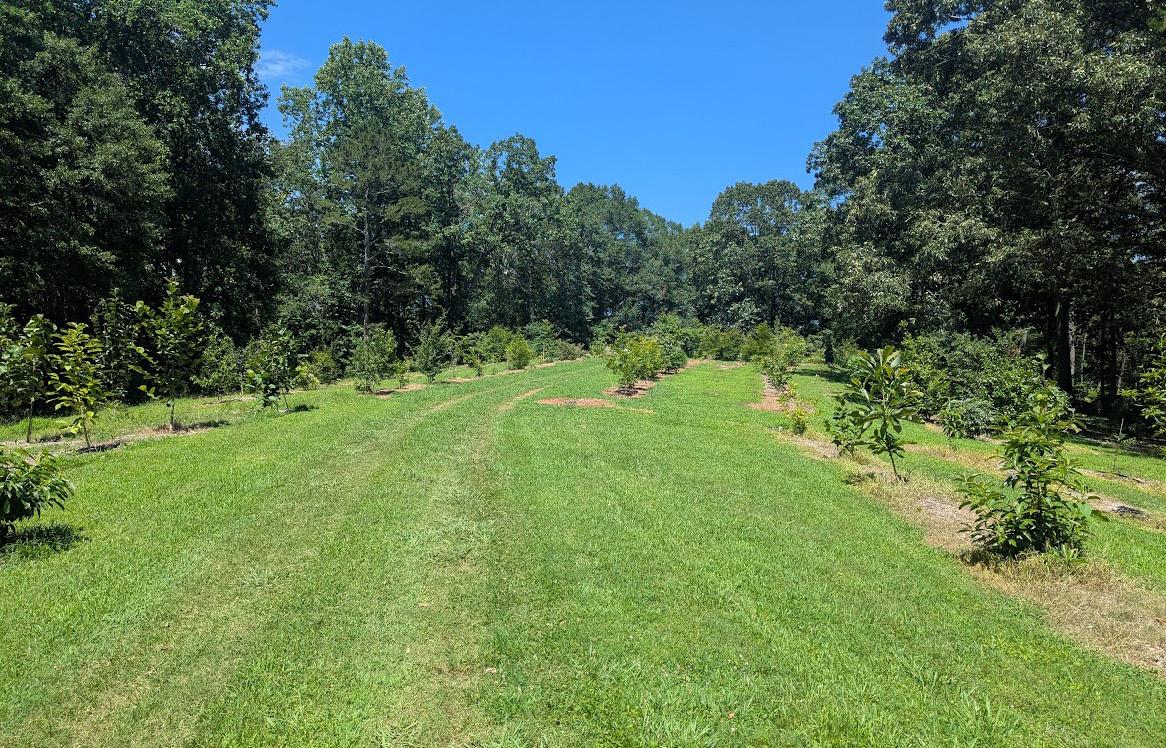
The Evaluation Nursery consists of full-sun field rows for trees and shrubs, a woodland slope for trialing shade-loving plants and raised beds to nurture young propagules. Plants in the nursery are evaluated for invasive potential, ornamental characteristics and hardiness. As plants grow up to size in the field and the woodland, staff are able to use a tree-spade to place the trees in ball-and-burlap. These specimens are then transplanted to display areas of the Midtown and Gainesville gardens. Some plants are also propagated for distribution to other institutions or to increase quantities for collections.
Plants grown in the nursery typically are sourced from collection trips to Southeast Asia, specifically Vietnam and China. But the staff also plant out specimens received from other institutions, plant collectors/breeders and plant nurseries, and are able to provide feedback about the plants and also experiment with germplasm that hasn’t been grown in our climate.
Over the past six years, the Garden has spaded more than 100 trees and shrubs, accounting for 75-plus distinct taxa. Some of these include Cercis chuniana, Carpinus fargesiana, Schima sinensis and many others. Most have been used in display areas at both garden locations as space becomes available or an area is edited.
But, as the Garden continues to grow it needs more large trees for renovated areas and expansions. This is where the nursery has been able to play a big role. For the recently expanded parking lot at the Gainesville Garden, more than 25 trees of 3-inch caliper or
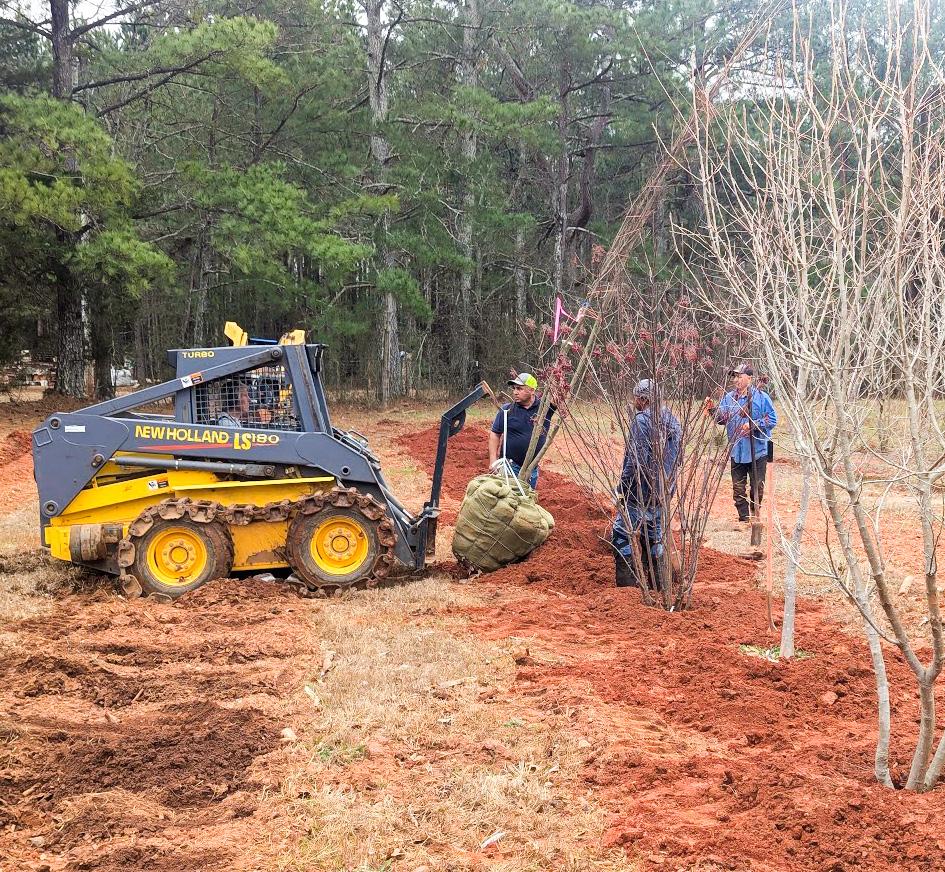
more were planted. For the Midtown Garden’s planned 8-acre expansion, including mostly sunny areas, trees from the evaluation nursery also have been spaded to be used in the new designs. Most of the trees, however, were already at a size where they needed to be moved out of the evaluation nursery and have been moved to a field nursery outside Athens, GA, where they will be grown until needed for the expansion.
The nursery also grows many herbaceous perennials, from hardy Gesneriads, hardy Begonias, hardy orchids to climbing vines, Hedychium (ginger lilies), and Phlomis. These typically grow quite quickly and need to be divided or reduced in size over time as space fills up. Staff are able to
take divisions, cuttings or seed, and propagate these plants for use in the display gardens as well as distribution.
Overall, the evaluation nursery has been an excellent area to grow collections and increase capacity building. Some plants found to have invasive characteristics have been eradicated from the nursery, but there have not been many. Staff have also discovered hardy forms of plants thought to only be tropical in the past, but if collected from the proper latitude and elevation they can thrive. There have also been plants that were not identified to the species level, or misidentified, and staff have been able to properly identify them as they grow and flower.
BY PAUL BLACKMORE, Fuqua Conservatory & Conservation Display Garden Manager
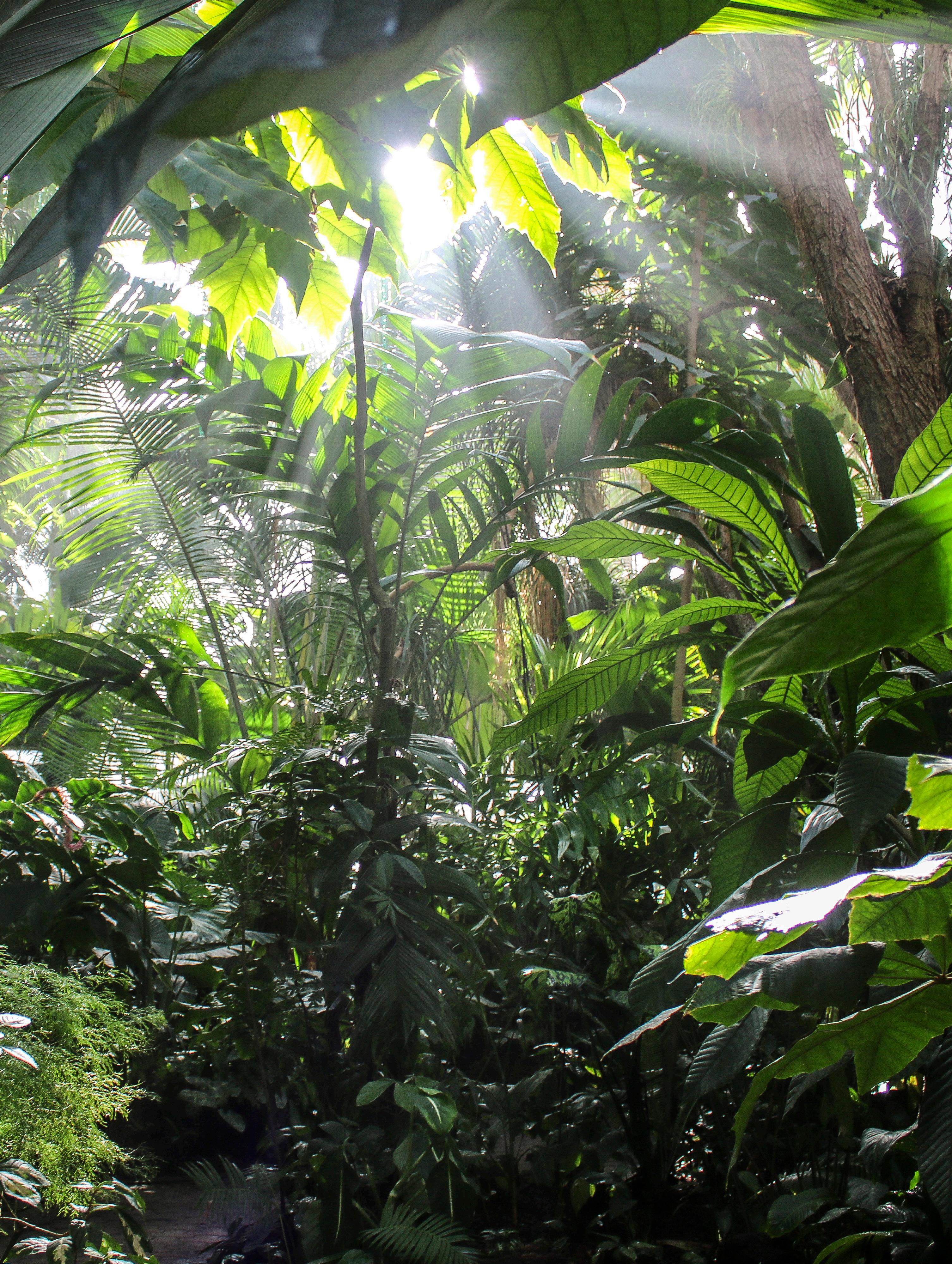
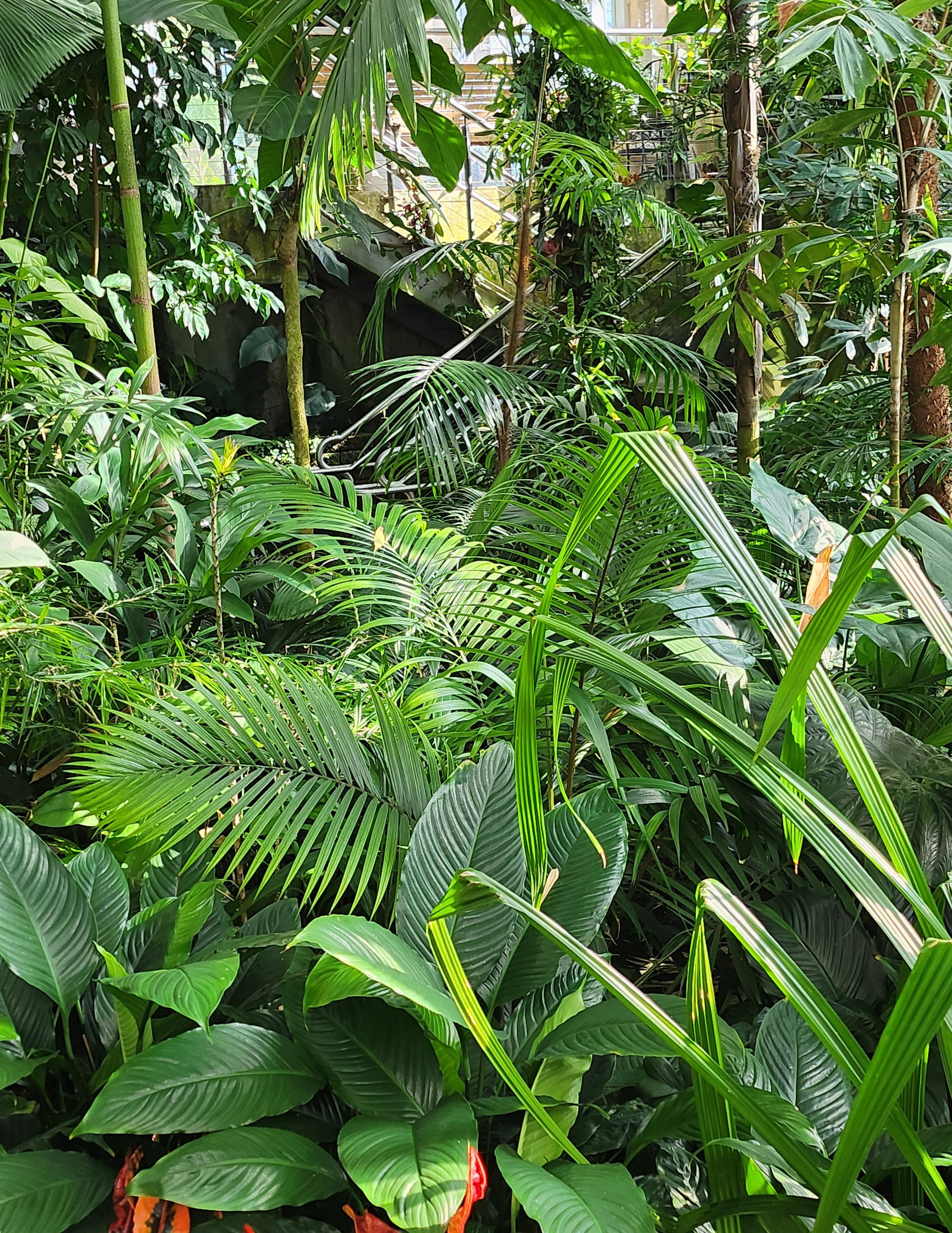
The Garden’s Tropical Rotunda is a unique conservatory in the United States. When it opened in 1989, the design intent was to create a realistic model rainforest to exhibit rich and diverse flora of the world’s equatorial forests.
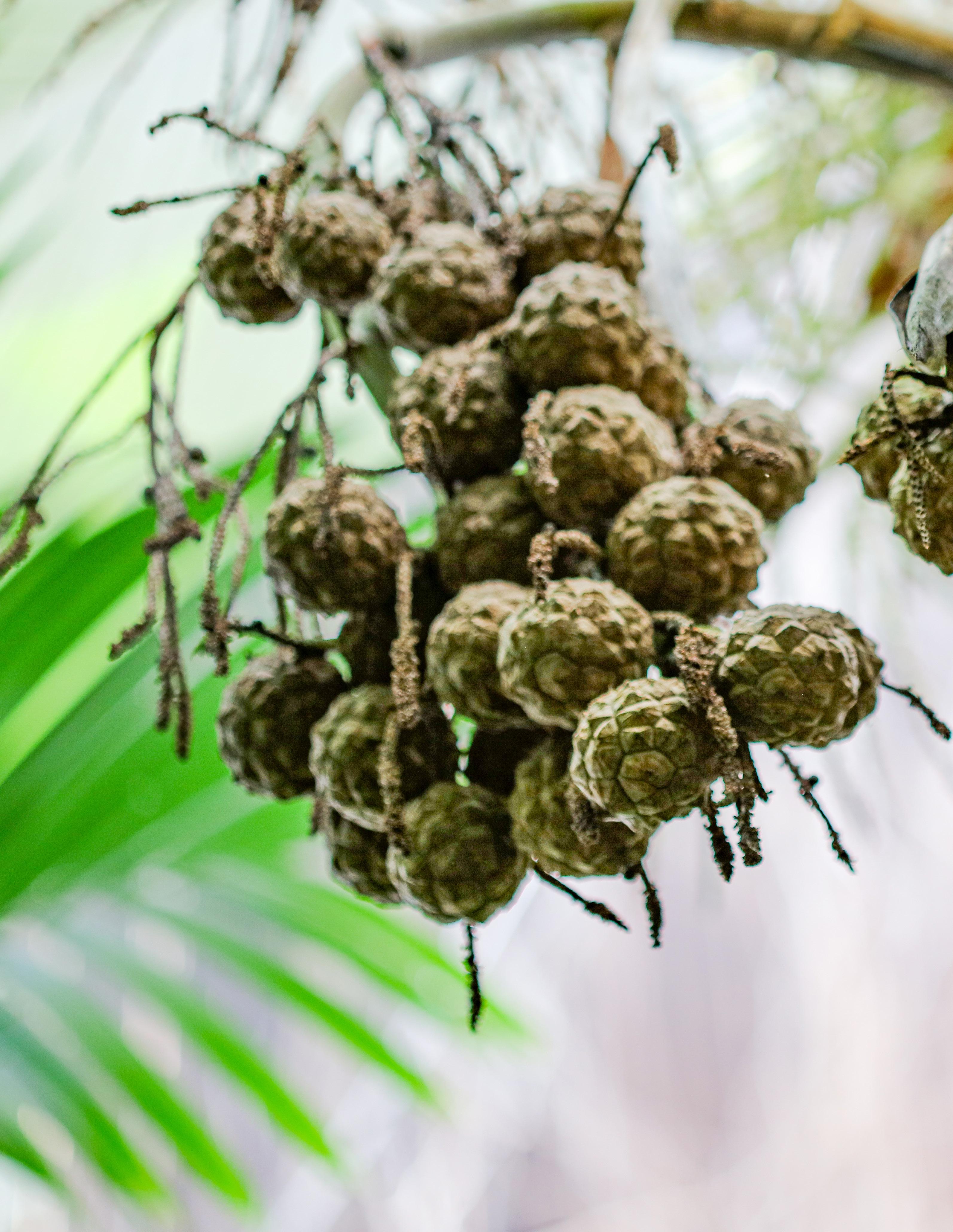
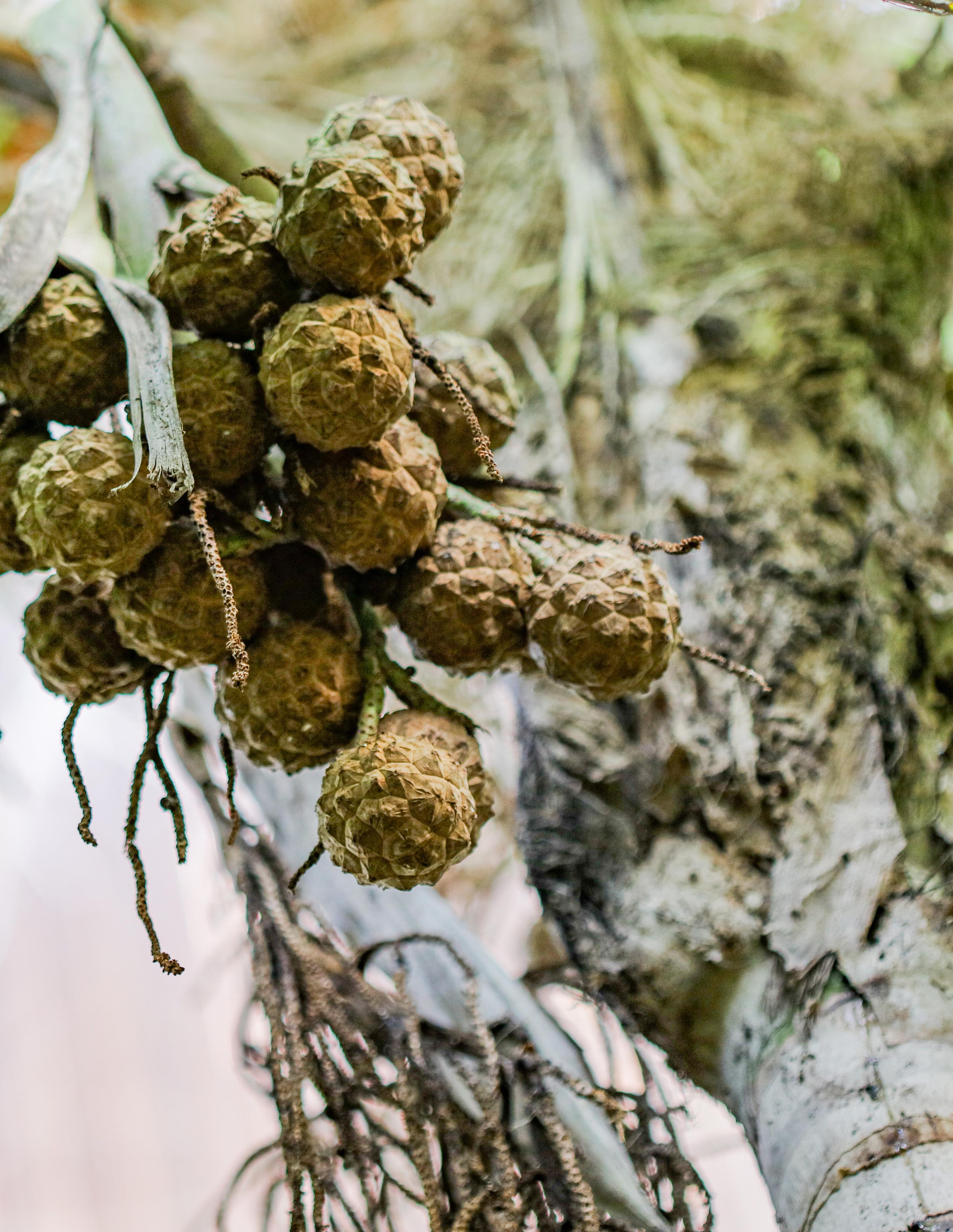
The palm collections are an essential part of the display, making up about 27 percent of the perennial plantings and are highly ornamental in shape, form and color. The palms add an exotic richness to the plantings while supporting the Garden’s mission in offering numerous opportunities for education and enjoyment.
The rotunda’s height is 80 feet from ground to roof, a luxury that most conservatories do not enjoy. This height is advantageous as it permits many rainforest species to reach their mature height resulting in the establishment of a well-structured vertical planting and a canopy.
The botanical diversity of the palm collection is impressive. Of the 2,600 species in 181 genera that make up the palm family (Arecaceae), the rotunda is home to 465 specimens, composed of 185 species from around the tropical world.
Although a handful of palms grow to reach the upper heights of the building, the majority of the palms, 75 percent, only reach the mid layer at around 30 to 40 feet where they form a dense community of vegetation.
To maintain the rich diversity of the palms and the quality of the plantings and displays, the successional planting plan is based on the recognition that all plants have a life span and will eventually die or in some cases outgrow their location and have to be removed. To address these losses there is a need to plan the ongoing production and installation of high quality planting material over a five to 10 year period, ensuring a yearly supply of planting material.
The first step to writing the plan is to develop a list of appropriate species that should be grown for future planting. The selection of these species is based on many factors and is different for every garden.
Planning is fundamental! So
Here are the Garden policies that we use to determine how to select plant material for theTropical Rotunda:
1.The Living Collections Policy guides and outlines the development of the living collections
2.Tropical Rotunda design intent describes the design of the display and its intended purpose or message
3. Five-year palm development plan guides the palm collection specifically
what now?
A checklist for how to select plants for your environment:
Consider the physical and climatic conditions:
Winter vs. summer temps.
Light conditions
Physical elements
Height of the building
Soil depth and type
Notes:
Consider these factors carefully, some species may outgrow the building rapidly and need to be removed!
What are the ecological requirements of the species?
LightTemperature
Humidity requirements
Do you know the final height and size of the species?

At the Garden we have to ensure that the species complies with policy documents that offer guidelines for the selection of planting material.
Once the list is finalized it is necessary to find plants. There are various sources that can be used to acquire high-quality plant material. It is important to ensure that the plants come from reputable and trusted suppliers, and they are correctly named, free from pests and diseases and if collected overseas, they have all the required documentation.
1. SEED FROM EXISTING COLLECTION PLANTS
These seeds are free for the taking and easy to collect; however, one must be aware that you cannot be 100 percent sure that they are true to type as many palm species will hybridize with others from the same genera. Caution must be taken when curating these plants.
TABLE 1: REPLACEMENT PLAN FOR THE ORIGINAL PLANTING 1989
When purchasing seed from commercial sources make sure the quality and age of the seed and its germination is good. It must be stated that buying palm species as seed is certainly more affordable than purchasing plants, but growing palms from seed can take a lot of time and may not be suitable if you are looking to plant within two or three years.
3. PLANTS FROM TRUSTED NURSERYMEN & SUPPLIERS
Over the years I have developed a list of palm growers that I trust. It is vital that the nurseryman knows his plants and the plants are correctly named, and the quality of the plant material is of a high standard. When placing an order, the cost of shipping should also be taken into consideration. I purchase about 70 percent of my palms from two trusted growers and have rarely been disappointed.
At the Garden we continually exchange well documented plant materials with other, trusted botanical gardens and institutes as part of an informal plant exchange network.
Original species Year Planted Removed/ planned removal Replacement species
Dypsis leptocheilos 1989 2027-2028 Hyophorbe lagenicaulis
Deckenia nobilis 1990 2028
Areca catechu 1990 2027
Roscheria melanochetes 1990 2028
Chambeyronia macrocarpa 2006 2030
Bismarkia nobilis 1998 2020
Dypsis madagascariensis 1990 2028
Prestoea accuminata
Pigafetta filaris
Phoenicophorium borsigianum
Chambeyronia macrocarpa
Tahina spectabilis
Roystonea regia
Calamus mopi 1990 Rattan palm Remains, continually pruned
All replacement plants are 10 years old
Five years old on planting 2028
Five years old on planting 2028
Five years old on planting 2028
Five years old on planting 2028
Five years old on planting 2030
Three years old on planting 2019
Five years old on planting 2030
Remain throughout the life of the building
This is an effective and affordable way for us to gain new and often rare plants whilse distributing and backing up our own collections. A significant part of our rare plant collections came to us via plant exchange. One notable example is the Madagascan “blessed palm” Tahinia spectabilis (discovered in 2007) and the stunningly beautiful and unattainable Geonoma epetiolata native to Costa Rica and Panama.
The key to success of this plan is long-range planning. Once the target taxa list is finalized and a budget agreed upon, the exciting work of plant sourcing and procurement can begin. The idea is to acquire plants and to grow them over several years until they reach a sufficient size to be planted, or are needed to replace a loss or removal.
Table 1 shows that the initial Garden plantings between 1988 - 2003 were unplanned and very limited, the period between 2005 - 2015 with no regular planting, then 2016 - 2022 the successional planting plan was implemented. The number of palms planted in 2023 declined and this was due to the lack of remaining planting space in the Tropical Rotunda.
The original palm collection, installed in 1989 at the opening of the Rotunda, was predominately a diverse collection of large, semi-mature specimens. The collection slowly expanded in diversity in numbers until 2004. Then with a review of the design intent and a pivot to create more of an indoor tropical rainforest experience, the collection boomed.
When the rotunda was first planted a wide range of semi-mature palms was installed. Unfortunately over the past 36 years most have reached maturity and died or been removed. We do still have seven full-sized palms from the original plantings; these are listed below along with their anticipated year of removal and replacement species.
The success of the Tropical Rotunda palm collection depends on thoughtful succession planning, rigorous species selection and ongoing sourcing of exceptional plant material. This long-term approach ensures that the Rotunda remains a vibrant, immersive, and botanically rich environment for decades to come.
TABLE 2: A GLANCE AT PART OF THE PALM SUCCESSIONAL PLANTING PLAN FOR THE NEXT 20 YEARS
Canopy level Height (feet)
Ground and upper ground layer 0-10’
Mid to upper-mid layer 10-50’
Canopy to emergent layer 50-80’
Selected suitable species from general Qualities
Calyptrocalyx sp
Chamaedorea sp
Licuala sp
Rhapis sp
Dypsis sp
Calyptrogyne sp
Cyrtostachys sp
Lodoicea maldivica
Clinosperma sp
Deckenia nobilis
Marojejya darianii
Johannesteijsmannia
magnifica
Chambeyronia sp
Borassus aethiopum
Dypsis leptocheilos
Shade tolerant, highly ornamental, low growing, rare and interesting.
Acquired
Planting
2026
Purchase as seedlings 2028 +
Mid layer maturity, impressive palms, highly ornamental in shape, form and color. Form the bulk of the mid layer canopy.
2026
Purchase as seedlings 2030 +
Upper canopy palms. Large stately species of high ornamental value.
2027 purchase as medium plants
2030 +