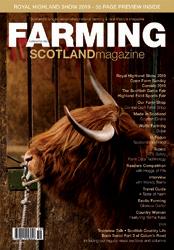
Farming Scotland Magazine (May - June Edition 2026)
Proud to support Scottish farming, and agriculture throughout the five nations
Royal Highland Show Preview
Scotsheep 2026
Open Farm Sunday
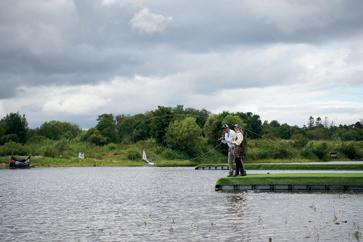
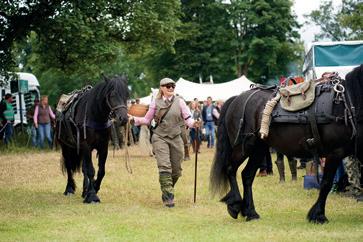
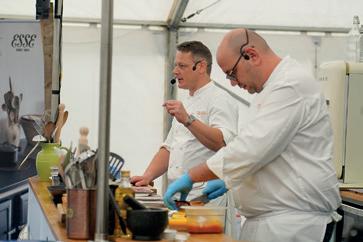
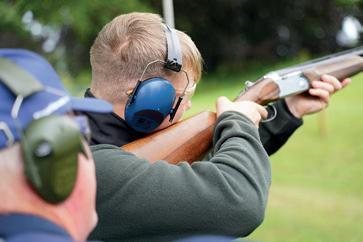
Scottish Game Fair
Rural Hero Awards
In Focus
Boost your farm security with Weaving gates
Topic
Making animals secure in their fields with Gallagher Fencing
Fighting Rural Crime
Bird of Prey Crime
magazine
Articles
British Farm Awards
The right to roam?
How Ordnance Survey supports agriculture
The third shepherdess
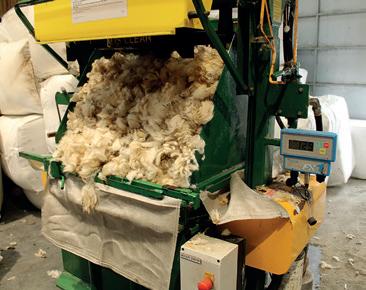
Breeding for quality wool
Scottish Country Life with Jake Swindells
Travel Scotland
Inverness Castle Experience
Letter from Bilbao
From Dr Mariano Gómez plus Ffermio Cymru • Beatha an Eilean
Farmhouse Kitchen • Women in Agriculture including our regular news areas and columns
Tuathanachas Alba
editor's bit
Time to challenge what is ‘Traditional?’
When one supports local food produce, especially those who brand their produce as ‘Traditional’, I expect a high standard product.
So here is a simple question, “When did Palm Oil become a traditional ingredient in Scotland, or the rest of the UK for that matter?”.
I ask because I feel I am being somewhat conned by a recent purchase of Traditional Scottish Oatcakes, only to see ‘palm’ on the ingredients list.
How the hell can anyone claim this product to be traditional?
This marketing phrase should not be allowed, and the food authorities/advertising standards etc should put a stop to this lie of tradition.
My Granny never used palm oil in her life!
Where are all these Palm Oil plantations in Scotland? – I see nothing.
And of course, it is Palm Oil plantations that are helping to destroy rain forests and displace local populations throughout parts of South America.
I find the claim to be ‘traditional’ while including such ingredients to be a sham and an act of fakery.
I now refuse to purchase any product included palm, not just because it is part of the fake traditional scam, but because of the damage its expansion is doing ‘out of our sight’ to the planet.
Slàinte, Athole.
arable
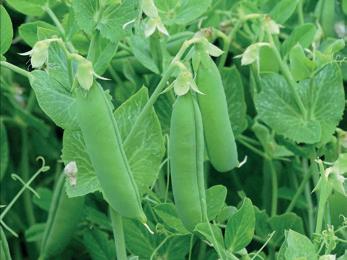
Pea trials aim to tackle costly UK virus losses
A new research project backed by Defra’s ADOPT fund will investigate the growing threat posed by viruses in UK vining pea crops, with the aim of giving growers clearer evidence on when and how control measures are justified.
Virus infection is becoming an increasingly costly and unpredictable challenge for the sector, with farmgate losses estimated to reach as much as £65 million each year.
Turnip Yellows Virus – one of the key threats to peas – is just one known to reduce yields significantly, with some studies suggesting losses of up to 40%. However, many of these figures are based on modelling rather than direct evidence from commercial crops.
At the same time, shifting weather patterns are increasing the risk of infection. Earlier aphid migration, linked to climate change, is exposing crops to virus pressure sooner in the season, particularly where peas are drilled later in the spring.
The new ADOPT-funded project will bring together the Processors and Growers Research Organisation (PGRO) and growers from the Green Pea Company network to generate clearer, field-based answers.
Researchers will begin by using high-throughput
sequencing to identify the full range of viruses present in vining pea crops. This approach will allow them to detect not only well-known viruses but also those that may be present without causing obvious symptoms in the field.
Erin Matlock, PGRO Research Agronomist, said: “Alongside this diagnostic work, a series of farm-scale tramline trials will be established to test different aphicide programmes and, crucially, the timing of applications across crops drilled on different dates.
“By comparing treated and untreated tramlines, the trials will provide practical evidence on when intervention is justified and when it may not be necessary. The results are expected to support
more precise integrated pest management decisions and help growers target control measures more effectively.”
The virus project forms part of a wider programme of farmer-led research supported through ADOPT funding. By enabling growers to test ideas directly on their own farms, the scheme is helping to generate robust, practical evidence that can be quickly applied across the industry.
ADOPT funding is designed to help farmers trial new ideas, practices and technologies on their own farms while reducing the risks associated with innovation.
ADOPT is part of Defra’s Farming Innovation Programme, delivered in partnership with Innovate UK.
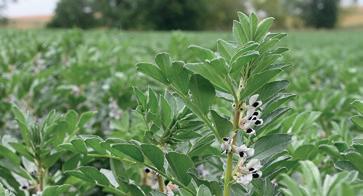
Spring agronomy action to boost beans performance
After unprecedented severe attacks of chocolate spot in beans earlier this season, that has seen some fields decimated, most crops that received an early fungicide treatment have started to recover, with clean growth emerging in warmer drier conditions.
Significant levels of inoculum are still present on lower diseased leaves, however, with ongoing fungicide protection still required on emerging leaves, and especially as crops reach the all-important first pod stage, advocates
www.farmingscotlandmagazine.com
Syngenta Technical Manager, Simon Jackson.
“Treatment timings are a balance between managing costs and necessary disease control,” he highlights. “Current crop growth would indicate the first pod stage will be earlier
than normal. Timing for Elatus Era application, from first flower buds visible (BBCH51), could potentially happen as early as late April this season.”
The key bean fungicide timings, as shown by research at PGRO, are first pod set, with a final application 21 to 28 days later.
“Syngenta trials have shown that controlling rust early with Elatus Era reduces rust incidence later. Given the high level of inherent disease risk this year, a robust rate of 0.66 l/ha will also give good control of chocolate spot, as shown in trials,” Simon advises. “Elatus Era has proven a good option to build a strong base for rust control.”
Mid-April is also a good time to think about nutrition in beans, he suggests. The YEN project has highlighted the importance of applying nutrients in bean crops.
“Trials for the last three years have shown that Vixeran, a unique bacteria solution which fixes atmospheric nitrogen, helps
to improve yields. Bean plants are naturally set up to work with symbiotic rhizobium bacteria they host in root nodules; Vixeran lives in the leaves and around the root to fix further atmospheric nitrogen into ammonium, which is readily available to the plant,” explains Simon.
“This can be especially beneficial where soils are inherently low in rhizobial bacteria, or where the nodules have been damaged by pea and bean weevil larvae.” Syngenta recommend a Vixeran application from the 6 true leaf stage (BBCH16), through to early flower.
“Application conditions are more crucial than timing,” says Simon. “The crops should be actively growing. Avoid application just before or after frost events, and aim to avoid treatment if periods of bright sunshine are forecast immediately after application.”
Recent trials work with PGRO has shown that Vixeran treated
crops retained more pods per plant and improved bean weight - the crucial components that lead to increased yields.
Simon points out that bean crops also respond especially well to sulphur supplements, which should be considered at the April timing along with magnesium. Trace elements such as manganese, boron and zinc should also be assessed, with leaf tissue analysis giving an indication of crop nutrient status.
As the season progresses, Simon outlines an application of
Amistar fungicide 21 to 28 days after the Elatus Era treatment will provide good control of rust later in the crop. “It will also give broad spectrum protectant disease control with a good contribution to downy mildew which may appear late,” he advises. “We would recommend mixing Amistar with a triazole if rust pressure is high, or there is still chocolate spot is still present.
“The aim to help make bean yields more consistent, resulting in a more sustainable return from this important crop,” he adds.
Farm trials tackle mounting ryegrass threat
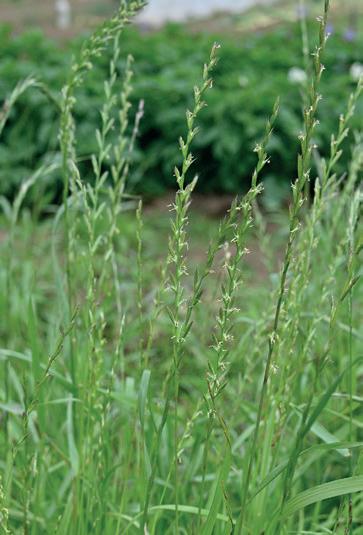
With Italian ryegrass becoming an increasing problem on some UK farms, leading agronomy firm Hutchinsons has established a new farm-based demonstration to help growers tackle the issue.
The heavy land farm, on the Essex coast near Harwich, has been battling grassweeds for a number of years, and while black-grass has been largely brought under control, recent years have seen ryegrass become more prolific, with populations hitting 120-150 plants/m2.
“Weed control started getting harder following the stubble burning ban in the 1990’s,” explains host farmer, Andrew Strachan. “We’ve made great progress against black-grass, and have farmed around 98% of it out, but Italian ryegrass has taken over as the main issue, and is proving a lot harder to control.”
Some of this pressure could be a legacy of historic land use on the farm, as two fields previously grew ryegrass for seed, and several other fields were used for orchards, with grass around the trees, he notes.
Wheat yield in the worstaffected field has been up to 60% below the farm average, and in that situation, land was ploughed and fallowed for a season to address the problem.
“That field is now one of the cleanest on the farm,”
Mr Strachan says. Working with his Farmacy agronomist, Jim Woodward, he actively managed the fallow with targeted cultivations and herbicide use to reduce populations as much as possible before drilling with wheat the following autumn.
Rotational ploughing one year in seven remains a useful tool for managing grassweeds within the min-till system, although in very dry years, Mr Strachan is aware that ryegrass can still germinate out of the cracks that develop in the silty, clay-based soil.
The farm is also trying other approaches to tackle ryegrass, such as alternative cropping/ clover undersowing, different herbicide strategies, improving field hygiene on cultivation and harvesting equipment, and drainage improvements to help crop establishment and competition over grassweeds.
“We’ve made some progress, and the worst fields are getting better, but at the moment, there’s still always some level of seed return, so it’s a question of what’s acceptable.”
Mr Strachan welcomes the insight that the Hutchinsons (Continued on page 10)
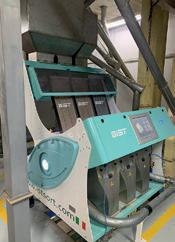
Is Contamination In Your Crop Costing You Money?
Yes, then Colour Sorters are the answer
Why should I consider buying a colour sorter?
It increases the value of your crop by removing the impurities which pull your price per ton down.
What does a colour sorter do?
It sorts the grain using colour and size differences between the grain type you want to keep and the impurities you want to remove. The impurities can be other grains, discoloured or infected grains, ergot, glass, and so on.
Why should I buy a colour sorter from Perrys?
Perrys distribute the IST colour
sorters which are straightforward to use, incredibly well designed, and highly accurate with low levels of waste grain, while also being very cost-effective compared to other well-known brands.
Plus, they are fully supported from within the UK.
What capacity ranges do the IST colour sorters come in?
Approximately 4 to 48tph on wheat depending on the number of chutes. They can be used on a wide range of combinable crops.
Integration is key As Perrys design & manufacture
a full range of handling, cleaning, drying, storage and control systems we are well placed to ensure you have everything you need to integrate the sorter into your operation.
A British Manufacturer Perrys are based in the UK which means that all the support you need is rapidly available, including a large stock of spares.
Contact Perrys today for all your handling, storage & drier requirements on 01404 890 300 or email sales@perryofoakley.
co.uk, and receive a free, no obligation quotation.
trials will bring, both for his situation, and for other farmers facing similar problems.
Wider challenge
Indeed, ADAS weed science consultant, John Cussans, says Italian ryegrass used to be a relatively localised problem in a few hotspots areas, but is now becoming more widespread across many parts of the UK.
“Sometimes it is because of an historic legacy, but other times that’s not the case, and it can be hard to pinpoint exactly where issues have come from.”
Ryegrass is a “very different beast” to black-grass, for a number of reasons, he adds. These include:
• Protracted germinationpeak weed germination is in the autumn, with another flush in spring, but will occur year-round, limiting the effectiveness of cultural controls, such as delayed drilling or spring cropping
• Aggressive, competitive plants - large, stout, tufted, plants outcompete crops for light, nutrients and water and are hard to suppress once established
• High seed return - one plant can produce three to fourtimes more seed than one black-grass plant, so even low populations can quickly return a lot of seed
• Stress tolerance - being of Mediterranean origin, ryegrass can tolerate more stressful conditions (e.g. drought) better than other plants
• Herbicide resistance - Italian ryegrass has the propensity to develop resistance to herbicides, and since the first issues were discovered in the UK in 1990, resistant populations are found in many parts of the country. ACCase resistance blocks the site of action specific to ‘fop’, ‘dim’ and ‘den’ chemistry, while resistance has also been confirmed to ALS-inhibiting herbicides, flufenacet and, most recently, glyphosate.
Testing by ADAS as part of the Hutchinsons trials shows herbicide-resistant populations are present at the Harwich demonstration farm, with ‘RR’ resistance confirmed to cycloxydim, pendimethalin, and pinoxaden. Although test populations were still susceptible to equivalent field rates of clethodim, testing at lower ratesused to highlight potential issues in advance - did show concerns for this chemistry too, Mr Cussans notes. Encouragingly, populations are still susceptible to iodosulfuron + mesosulfuron.
“With new chemistry available, there are still plenty of effective options for controlling ryegrass, but the challenge is often the cost-effectiveness of some of these, so we have to consider how they can be best used alongside other cultural controls,” adds Hutchinsons development manager, Jennie Watson. “That is all part of the work we’re doing here at Harwich.”
PANEL Summary of 2026
trials
Replicated trials at the Hutchinsons Ryegrass Management Farm include:
• 25 different pre- and post-em herbicide options, featuring new and existing chemistry, used as one-off applications of a single product, through to more complex sequences and mixes
• A smaller trial examining how three different glyphosate application timings affect subsequent ryegrass numbers, to highlight the protracted germination pattern
• A field-scale trial of different cultivation techniques to asses their impact on crop establishment, ryegrass populations, and seed return. Cultivation techniques include; leg/disc/press drill, disc/ press/drill, and direct drill (no cultivation)
• Cross-drilling on a small area of the field, involving two passes with the drill, each at half the full seed rate (the second pass at a 20-degree angle to the first), to see whether this can improve crop competition when using a drill with a wider row width.
Taking precision feeding into the field
Farmers could significantly improve their maize yields and silage quality by analysing their crops and applying more precise nutrition. That’s according to new research by Mole Valley Feed Solutions, which found that a large number of crops suffered from critical nutrient deficiencies last year.
Rather than assessing soil nutrition, the researchers decided to look at what the plants themselves were taking up. They sent samples of 23 maize crops from Cornwall to Gloucestershire at around the 20cm growth stage for Scientific Agricultural Partnership (SAP)
analysis in June / July. And the results were stark: Almost all were critically low in nitrate, ammonia, molybdenum and sulphur, and most were low in magnesium, calcium, manganese and boron.
As a result, Lisa Hambly, head of grassland and forage agronomy at Mole Valley Farmers, suggested applying specific soil and foliar treatments to rectify these deficiencies. “Everyone talks about nitrogen, but crops need more than that. For example, sulphur is very underrated in crops and is essential for plants to utilise the nitrogen – if that is a limiting
factor you can apply as much nitrogen as you like but it won’t get utilised in the correct way. It can cause more disease problems and issues when it comes to drying down at harvest.”
The crops sampled were all grown on soils that reached the target indices for pH, nitrogen, phosphate and potash (NPK), explains Bethany Sealey, junior ruminant account manager. “The key requirements for maize are NPK, magnesium, sulphur, calcium, zinc, boron, manganese, copper and iron.”
Crops that are deficient in key nutrients will not only fail to reach their genetic yield potential, they will also likely fail to deliver the required
nutrition to cows once ensiled, she adds. “This year we want to follow the results right through from field to clamp, to link the whole nutrition cycle together.”
With increasingly unpredictable weather causing a forage shortage in many areas last year, producers are focusing on resilience, explains Ms Hambly. “We need to pay greater attention to the very early stages of a crop’s life: By six leaves maize has already decided how many spaces it’s got on the plant for corn kernels. One week’s difference in development was everything last year.”
Newer varieties’ yield potential is significantly higher than older varieties, and extra-
early varieties will yield less than their later counterparts, possibly by 3t/ha. Those crops simply cannot be treated in the same way. “You have to look at it like feeding a cow – high-
yielders need more nutrition than low-yielders,” says Ms Hambly. More precise nutrition will maximise the plant’s genetic potential while improving nutrient use efficiency and protecting the environment, she adds. “We could be producing a lot more high-quality homegrown forage as a result.”
After this winter’s heavy rain, the first step before planting maize – or any other crop, including grass – should be to dig a hole and analyse soil condition and nutrition. “Following heavy rainfall, nitrogen and sulphur will have leached, and there will be more compaction. Getting that back in balance will make a massive difference.”
Potato risk management more important than ever
Potato production is a risky business, but there are a growing number of strategies to combat the ever-growing lists of threat to the industry.
GB Potatoes recently discussed risk in its Cutting the odds: Managing risk in potato production webinar. It heard from GB Potatoes chair Alex Godfrey, the CEO and President of Potatoes USA, Blair Richardson and Rory Gibson, Scottish regional director of insurance specialists Howden, who introduced new cover especially for growers.
Potatoes have always been a weather-sensitive crop, but with conditions becoming more volatile, protecting production is essential, argued Rory as he explained a new parametric protection policy for GB Potatoes members.
“We are seeing increasingly extreme and unpredictable weather patterns, while traditional insurers are becoming more risk averse,” he said.
“Meanwhile, reduced farming subsidies and more uncertainty in crop returns mean protection is more important than ever.”
He explained that unlike traditional insurance that covers the risk of a peril such as fire, parametric insurance covers against a measurable event, such as 20 millimetres of rain. Once a certain threshold is met payment can be made in as little as 24 hours and always within two months without the need for an assessor visit. The offer for potato growers is:
• Main risks identified: excess rain during harvest, not drought.
• Cover period: 15 August – 15 November.
• Three rain trigger categories:
• Short, intense rainfall (3 day event).
• Medium, prolonged rainfall (10 day event).
• Cumulative wet season over the whole period.
These thresholds are measured by satellite data and information from local weather centres. Rory said that potato policyholders will typically look to cover £5,000 per hectare of income. That would cost approximately £259/ha or just over £5/tonne. Typical payments are likely to be £2,273/ha for £1,554 of cover over five years.
Myth-busting
Blair Richardson explained how a concerted campaign over many years has helped manage the reputational risk of potatoes and reinforce their standing as nutritious and versatile food for all ages.
“Fifteen years ago, little research existed on potato nutrition. Misperceptions—like the ‘couch potato’ stereotype—shaped public opinion. In 2010 we began investing $2–2.5 million annually in health and nutrition research, totalling about $30 million so far. This investment now enables us to respond quickly and confidently when inaccurate information appears in the media.”
He said the rise of social media has made the task of dispelling inaccurate information even more information, with studies showing that the vast majority of nutrition information on Tik Tok is inaccurate and 45% of nutrition information on Instagram misleading.
“Influencers have financial incentives to prioritise virality over accuracy. This makes credible, science based research essential for defending the industry.
Misinformation spreads faster than corrections, so our strategy includes engaging directly with media.”
This approach has resulted in a 36% retraction rate and a 60% reduction in the number of misinformation incidents requiring intervention.
“Our messaging—such as ‘potatoes are real food, real performance’—has gained strong traction, now ranking among the top search results for potatoes. This shift reflects the payoff of proactive investment rather than reactive communication.”
Blair said that Potatoes USA’s efforts to myth-bust are a global task and said that GB Potatoes is most welcome to use its information and resources to promote the benefits of potatoes in the UK and beyond. GB Potatoes has already taken him up on the offer to help develop its own nutritional messages.
GB Potatoes manages risk
During the webinar, Lincolnshire potato grower and GB Potatoes chair Alex Godfrey, demonstrated that the organisation is working to help growers and the wider industry to manage its risks by
focusing on its five key aims of building collaboration across the supply chain; horizon scanning to identify emerging issues; lobbying to influence policy, legislation and research priorities; promoting the British potato industry through traditional and social media and providing members with access to leading technical research and expertise.
Regular activity by GB Potatoes includes interaction with potato sector organisations and consultation groups for the seed and fresh groups. GB Potatoes also collaborates with the Horticultural Crop Protection forum and the National Potato Innovation Centre, with which it is running a joint summit in London in the summer to demonstrate the importance of the potato industry to policymakers.
Residual AHDB funding of £1.8 million means that riskreducing projects such as the Fight Against Blight programme, aphid monitoring, virus management
tools, CIPC residue monitoring and reputational management can continue, although Alex warned that the industry would need to self-finance these initiatives within the next three to five years.
A major win for GB Potatoes has been the CiC-START PhD programme, said Alex. Run jointly with the Scotch Whisky Research Institute, it has secured funding for 24 PhD positions over three years, including money for pre-competitive research.
This focus on the next generation is also seen in the Potato Industry Development Programme, facilitated by GB Potatoes, which is supporting enthusiastic new entrants.
Participants have already visited potato supply chain companies Haith, McCain, Branston and AKP, with visits to Scotland and London planned.
To find out more about becoming a member of GB Potatoes, visit www.gb-potatoes.co.uk.
Post-em biostimulant boosts maize establishment to mitigate weed and weather stress
performance of this year’s
crops can be boosted with the application of a new postemergence biostimulant which improves root, shoot and leaf
development to make young plants more vigorous and less susceptible to stress. Application in conjunction with a compatible herbicide at the same post-
The
maize
emergence timing further enhances crop performance without the need for an additional sprayer pass.
Trialled by ProCam agronomists last year and now available on a nationwide basis,
Pro+ Fulvivex is a biostimulant comprising concentrated humic and fulvic acids as well micro and macro-nutrients which stimulate cell division to promote root, shoot and leaf growth. It also improves nutrient uptake and chlorophyll production, resulting in healthier, more vigorous plants which go on to produce higher yields.
“Pro+ Fulvivex stimulates specific hormonal pathways to enhance biological activity within crops including cereals, oilseed rape, sugar beet and maize,” explains Ryan Came-Johnson, maize technical lead for product manufacturer, Corteva.
“It also improves photosynthesis efficiency by activating enzymatic processes and increasing chlorophyll production, thereby enabling plants to utilise nutrients more effectively and making them more tolerant of stress.
“The end result in maize is a healthier, more vigorous crop which goes on to produce a greater fresh weight and higher dry matter yield. In fact, trials have shown that the inclusion of Pro+ Fulvivex can increase dry matter yield by 0.8 to 1.6 tonnes per hectare, with larger cobs resulting in an increase in overall starch production.”
ProCam agronomist Guy Peters trialled Pro+ Fulvivex in the South West in 2025 and was impressed by its ability to push crops ahead of weed competition and weather-related stressors.
“Despite advances in maize genetics, we’re still essentially trying to grow a tropical crop in a temperate environment which, in recent years, has become increasingly volatile,” Guy explains. “Last year’s drought highlighted just how easy it is for mother nature to put forage stocks in short supply, so it makes sense to take every step to ensure maize crops establish quickly and are able to grow away from weed or environmental pressures with as few hindrances as possible.”
A profitable, sustainable, and resilient future for Scottish agriculture
By Andrew Connon, President, NFU Scotland
Scotland’s farmers and crofters are the backbone of our rural economy, producing high-quality food, sustaining iconic landscapes, and supporting thriving communities. Yet, with rising costs, labour shortages, climate pressures, and global market volatility, these are not easy times for our industry.
That’s why the fastapproaching Scottish Parliament elections mark a pivotal moment. Whatever the outcome, NFU Scotland is ready with a clear plan to work with the next Scottish Government and Parliament to secure a profitable, sustainable, and resilient future for Scottish agriculture. Our manifesto maps this out (see QR code).
Our post-election plan focuses on long-term financial certainty. Farming is a multi-year endeavour: investing in livestock, crops, and infrastructure requires stable funding. We are calling for an increased
multi-annual, ring-fenced agricultural budget to support active farmers and crofters while driving innovation, technology adoption, and skills development.
We also need a fair transition to new agricultural support. Codesigned schemes, phased implementation, and simplified compliance will ensure farmers can continue producing food while contributing to climate and nature goals. Definitions of “active farming” and “eligible land” must reflect real-world practice, not bureaucracy for the sake of it.
Food security and supply chain fairness are central to our plan. With significant groundwork underway on both, we will continue to press the next Scottish Government to set measurable national production targets, promote Scottish food in public procurement, while ensuring retailers treat producers fairly. Because right now, too often, they don’t. Strengthening local
www.nfus.org.uk
processing infrastructure and supporting co-operatives will make Scottish supply chains more resilient and profitable.
Finally, people are at the heart of everything we do. We will champion young farmers and crofters, apprenticeships, ensuring the next generation has the skills and support to keep rural Scotland vibrant.
We know you are ready to deliver. And we are ready to fight your corner. With the next Scottish Government, we will continue to push for a profitable, sustainable, and resilient future for Scottish agriculture. With every election comes opportunity, and we intend to turn that opportunity into real outcomes for our members.
Andrew Connon, President, NFU Scotland
NFU Scotland manifesto
FLAVOUR OF SCOTLAND
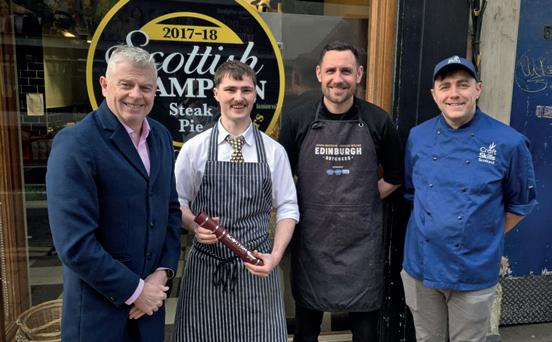
Craft Excellence: Young Leith Butcher Earns Craft Diploma
Sonny Stuffins of James Anderson Butchers in Leith has become the latest young professional to achieve the Craft Butcher Diploma of Scotland, the highest formal qualification currently available in the nation’s retail butchery sector. The award is only granted once apprentices successfully complete both SVQ Level 5 and SVQ Level 6 qualifications, typically following a four year Modern Apprenticeship journey.
Delivered exclusively by Craft Skills Scotland, the Diploma is recognised across the industry as comprehensive evidence of technical skill, product knowledge, and professional excellence within the Scottish butchery trade. The achievement not only marks a major milestone for apprentices, but also reflects the high standards upheld by independent butchers across Scotland.
As part of its commitment to supporting talent and strengthening the retail butchery sector, the Scotch Butchers Club, operated by Quality Meat Scotland (QMS), funds 50% of the Diploma cost for its members. This financial support helps remove barriers for small businesses and encourages continued professional development across the industry.
Gordon Newlands, Brand Development Manager at QMS, believes it’s vitally important every candidate receives recognition and support at this key point in their career.
He said: “Reaching the Craft Butcher Diploma is a tremendous achievement, and Sonny should be extremely proud of the dedication and professionalism shown throughout the apprenticeship. This qualification sets a benchmark for excellence in our industry, and it’s inspiring to see the next generation of skilled craftspeople coming through. Through the Scotch Butchers Club, we’re committed
to supporting apprentices and employers on that journey, ensuring Scottish butchery continues to thrive.”
Ewan Thomson, Director of James Anderson Butchers, where Sonny completed his apprenticeship, also expressed pride in his commitment and success. He said: “Sonny has worked incredibly hard from his
very first day in the shop, and we’ve watched him grow into a confident, skilled and enthusiastic young butcher. Achieving the Craft Butcher Diploma is a well deserved milestone that reflects his dedication to learning the craft the right way. We’re absolutely delighted for him and proud to have supported him throughout his apprenticeship.”
The Craft Butcher Diploma remains an important driver of the industry’s progression - raising standards, nurturing skilled talent, and strengthening Scotland’s global reputation for quality butchery.
For those interested in pursuing a career in butchery, more information can be found at butcherycareers.co.uk
Connage helps to platform The Scottish Academy of Cheese
A team of five from Connage Highland Dairy have taken part in a new training initiative aimed at strengthening skills and knowledge across Scotland’s growing artisan cheese sector.
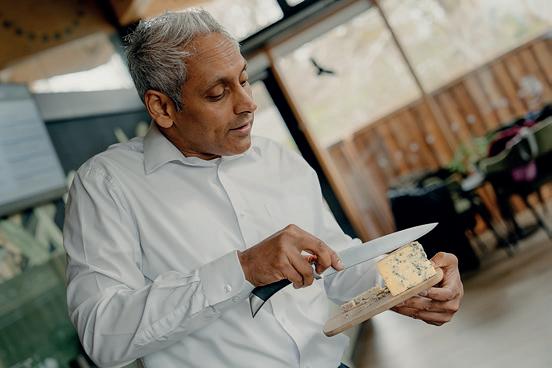
Owner Jill Clark and four members of her team recently travelled to The Storehouse in Easter Ross to attend the first session delivered by Tanny Gill through the Scottish Academy of Cheese.
The Scottish Academy of Cheese has been set up by Tanny, cheese enthusiast and judge, to improve understanding of cheese across the industry and beyond, while helping to raise the profile of Scottish cheese at home and internationally.
The training brought together industry professionals in a collaborative and hands-on environment, focused on tasting, understanding and celebrating
the diversity of cheese produced in Scotland and beyond.
For Connage, the decision to attend as a full team reflects a wider commitment to investing in people and maintaining high standards.
Jill said: “It is so important that we continue to build knowledge and confidence within our team. Cheese is a craft, and the more we understand it, the better we can share that
with our customers. Taking the team together made it even more valuable. We also had a delicious lunch at The Storehouse which made the day even better!”
The training covered key aspects of cheese appreciation, from flavour profiles and production methods to how cheeses evolve with the seasons. It also highlighted the importance of provenance and storytelling in helping consumers connect more deeply with what they are eating.
Attending as a group means the Connage team can bring that knowledge straight back to The Cheese Pantry, enhancing the experience for customers through informed recommendations and a greater understanding of the cheeses on offer.
The session marks the beginning of what is hoped to be a wider programme of training opportunities through the Scottish Academy of Cheese, supporting skills development and helping to strengthen
Scotland’s reputation for highquality artisan cheese.
Jill added: “There is a real opportunity for Scottish cheese to shine, and it is exciting to see
An exciting new culinary competition is coming…
The Tartan Pantry Competition
Open to Chefs with a minimum of two years professional experience living and working in Scotland, the competition sets out to celebrate our wonderful array of authentic Scottish produce.
that being supported through training like this.”
The Connage Express remains open every day from 8 am to 7 pm, and the Cheese
Pantry is open Wednesday to Saturday from 10 am to 4 pm, so do pop in and see what is new. Shop online at www.connage. co.uk.
Then the fun begins – and the twist for the Final cook promises to deliver some exceptional plates of food!
Full details on the website, entries open on the 1st of June and we can’t wait to see our fabulous Scottish chefs give it their all!
Competitors will be asked to create an innovative fine dining menu to reflect their skill and understanding of how ingredients marry together and the finalists will be selected from these initial submissions.
Insight-Led Campaign
Highlighting Benefits of Shopping at your Local Scotch Butchers Club Outperforms Across Every Channel
A new, research driven Quality Meat Scotland (QMS) marketing campaign designed to connect consumers with their local butcher who proudly stock Scotch Beef, Scotch Lamb and Specially Selected Pork has exceeded industry benchmarks across radio, digital, social and print, driving thousands of shoppers to seek out quality assured Scotch meat.
Launched in February, the campaign was developed to support members of the Scotch Butchers Club and to encourage customers to consider the benefits of shopping with independent butchers when buying Scotch Beef, Scotch Lamb and Specially Selected Pork.
The work marked a step change in approach which was shaped by independent consumer research, commissioned to understand evolving red meat shopping behaviours. The findings reinforced the enduring appeal of local butchers – notably quality, trust and specialist expertise – while also combating some of the barriers and myths of shopping at a local butcher such as perceived high cost and lack of shopper confidence knowing what to ask for at the counter. These insights informed a refreshed marketing strategy using media channels to serve creative which focused on reassurance, accessibility and value.
The campaign ran across a carefully planned media mix to achieve high awareness levels, including broadcast radio, Facebook and Instagram, digital advertisements and newspaper adverts, ensuring strong reach and repeated exposure to campaign messages at both Scotland-wide and more local levels.
Advertising aired across Bauer’s Hits Radio Network, including Forth 1 and Clyde 1, which delivered particularly strong results and on average, listeners heard the message up to five times, supporting message cut through and recall.
Adverts across Facebook and Instagram performed strongly, showing the effectiveness of targeted localised messaging and demonstrating a strong appetite for butcher led storytelling, whilst digital display advertising on BBC Good Food also worked well in driving engagement. Print advertising provided dependable coverage by reinforcing campaign messages in trusted local titles.
Across the whole campaign that ran for just under four weeks, advertising encouraging footfall to local Scotch Butchers Club members was seen or heard 13.6 million times, driving over 6,000 visits to the Find a Butcher page on makeitscotch.com.
Scotland The Brand
Scotland has to get its finger on the pulse
By Ruth Watson
Peas and other legumes have significant potential to deliver plant protein, good soil health, and food security. Relying on imported protein in a global marketplace where we are competing against huge nations with greater bidding power makes us vulnerable. While international trade will always be important, Scotland has to develop the capacity to feed each of us, and the livestock so many of rely on. Scotland is about 80% dependent on imported protein which is both a huge risk and a clear example of a market our farmers are missing out on.
The ‘Give Peas a Chance’ project, named the ‘Best Local Initiative Championing Children’s Healthy Food’ at the Children’s Food Awards 2025, shows how local, organically grown plant protein can be successfully integrated onto school menus, while also highlighting the need for local processing and infrastructure.
This partnership between Soil Association Scotland, Aberdeen City Council catering and procurement
teams, pea producer Phil Swire of Balmakewan Farm, the Royal Highland Education Trust (RHET), and the Royal Northern Countryside Initiative (RNCI) used organic, dried and split LG Aviator peas in the school meals. Good for the youngsters who enjoyed the new recipes, good for the farmer, and very good for soil health and biodiversity at Balmakewan Farm, near Laurencekirk.
The project has highlighted the serious lack of processing not just in Scotland, but across the British Isles. Processing capacity is key and the potential to develop a new industry presents a massive opportunity for Scotland. Leaving it to farmers to foot the bill and take all the risk is not a sensible strategy, in my opinion.
Over the past five years, Sweden has developed infrastructure, market, and supply in an initiative driven and supported by its government. Scotland could – and should - learn from the Swedish experience. We have to give peas - and our farmers - a chance.
Ruth Watson is the founder of the Keep Scotland the Brand campaign
WORLD FARMING
Maize, rice and cassava drive more deforestation than major export-oriented crops like cocoa, coffee, and rubber. This has been shown by researchers from Chalmers University of Technology, Sweden, in the most comprehensive global survey of how different commodities are causing deforestation. The study confirms the major impact of meat production, but reveals several overlooked drivers of deforestation.
Food production is the main cause of deforestation in the world, but until now there has not been any detailed mapping of which crops affect deforestation in which countries.
Chandrakant Singh, researcher at Chalmers University of Technology, is the lead author of a new study that addresses this knowledge gap. He has developed the Deforestation Driver and Carbon Emissions (DeDuCE) model, together with his colleague Martin Persson, who has extensive experience researching which agricultural commodities drive deforestation. The model links agricultural products with data on deforestation globally.
“Deforestation’s links to food production have long been studied, but have often focused on some products, such as beef, soybeans and palm oil, which are well known in the context of deforestation; and some countries in the world, such as Brazil or Indonesia. In our study, we’ve combined extensive satellite data on land use with agriculture statistics in a way that gives us the most comprehensive and accurate picture yet of what is driving deforestation worldwide,” says Singh.
The model covers 179 countries and 184 commodities. It shows that a total of 122 million hectares of forest have disappeared
The food commodities driving deforestation globally
due to agriculture-driven deforestation during the period 2001–2022, of which more than 80 per cent has been lost in the tropics. The study confirms what we previously knew about the main drivers of deforestation: clearing forests to create pasture for meat production, as well as producing major export commodities such as soybeans and palm oil. But the study also contributes some more unexpected results.
Staples a strong driver of deforestation
The mapping shows that locally produced and consumed staple crops have a greater impact on deforestation than many major export commodities. Staple crops such as maize, rice and cassava together are responsible for about 11 percent of all agriculture-driven deforestation, while the figure for cocoa, coffee and rubber combined is less than 5 per cent.
Unlike many other commodities, such as palm oil in South-East Asia and soybeans in South America, deforestation linked to staple crops is not concentrated to specific regions, but is distributed across large parts of the globe.
“The debate on deforestation has circulated a lot around how people in rich countries like ours cause deforestation with our commodities imports, and this is absolutely important to get to grips with. But we mustn’t forget that a large proportion of deforestation is driven by agricultural production for domestic markets. So to really reduce deforestation, we must also take action in the producer countries,” says Martin Persson.
The researchers hope that their results can provide important decision support for government agencies and companies wanting to take action to reduce deforestation.
“Our data shows where the risks are and where initiatives are needed most. The goal is for the model to connect researchers, decision-makers, companies and civil society,” says Singh.
Emissions from deforestation lower than anticipated
The study also provides a detailed picture of the carbon dioxide emissions that deforestation associated with agricultural and forestry products causes. Farmers and cattle ranchers often clear forested land by burning it, which means that the carbon stored in the vegetation is emitted as carbon dioxide.
These emissions are estimated at around 41 billion tonnes of carbon dioxide between 2001 and 2022, or on average close to 2 billion tonnes per year. This is a much lower figure than in previous global compilations, where annual carbon dioxide emissions have been estimated at more than twice these figures. According
to Dr. Singh, the difference can be explained by the fact that their study has used a finer-scale attribution method than those used in the previous calculations.
“But even if the figure is lower than previous estimates, agriculture-driven deforestation still causes around 5 per cent of the world’s total carbon dioxide emissions,” he says.
Improving the model further the goal
The researchers estimate that the model will be expanded to include non-food commodities in the future.
“We see a need to broaden the analysis beyond food and agriculture. One example is the mining and energy sector, which is a major driver of both direct and indirect deforestation. By broadening the analysis, we can get a more complete picture of which economic activities are putting pressure on forests around the world,” says Singh.
British Farming Awards 2026 are open for entries
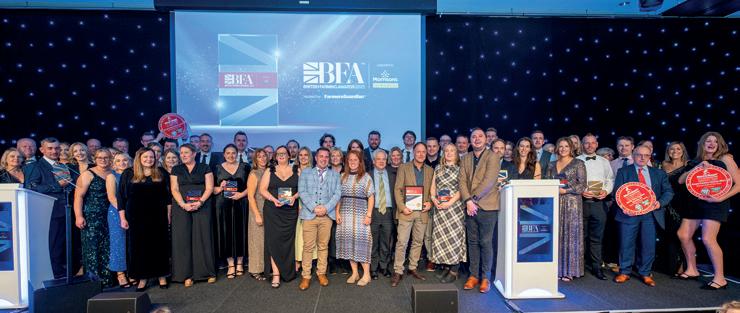
The British Farming Awards are back for 2026, and its 20 categories are open for entries and nominations. This year there are 18 returning awards alongside 2 new categories available for entry; Agricultural Supplier of the Year and Farm Adviser of the Year. With the 2025 awards evening hosting a record number of guests, this year we aim to continue to shine a light on the phenomenal work taking place across the industry and the driving forces behind it. This year the UK farming industry is facing some of its toughest challenges in recent memory. From government policy changes on inheritance tax to pressures on land use and environmental regulations, British farmers are under immense strain. However, farmers and the wider agricultural industry continue to push on and achieve incredible successes. The British Farming
Awards is a place for those farmers to come together and celebrate this incredible industry.
The event, supported by Morrisons and Myton Food Group, is back for its 14th year, to celebrate the diversity and resilience of UK farmers and their businesses. Alongside the core farming sectors, arable, beef, dairy, and sheep, the awards highlight the huge importance of sustainable and regenerative farming practices, innovations within agritech and those who have diversified successfully and profitably. The awards also champion the role of farming families, new entrants and agricultural students, all of whom are vital to the future of the industry.
Categories to Enter
Agri-innovation of the Year
Agricultural Student of the Year
Agricultural Supplier of the Year
Agriculture’s Woman of the Year – Sponsored by NFU Mutual
Arable Farmer of the Year
Beef Famer of the Year
Content Creator of the Year –
Sponsored by Hillsgreen Contractor of the YearSponsored by Case IH
Dairy Farmer of the YearSponsored by Asterra
Diversification of the Year (Small/Medium)
Diversification of the Year (Large)
Employer of the Year
Family Farming Business of the Year – Sponsored by Goodyear
Tires
Farm Adviser of the Year
Farm Worker of the Year
Grassland Farmer of the Year –
Sponsored by Germinal New Entrant to Agriculture Award
Sheep Farmer of the Year
Sustainable Farmer of the Year –
Sponsored by NSF
Regenerative Farmer of the Year – Sponsored by Ethical Butcher
Special Recognition Awards
This year, the awards will present two special recognition awards during the ceremony for the following categories, Farming Hero: Flying the Flag for British Agriculture, and Outstanding Contribution to British Agriculture, sponsored by Intertek SAI Global. These awards are given to members of the agricultural community who have shone out due to their significant involvement in the industry, whether that be through years of service, promoting the industry, or through going above and beyond to better the community.
The British Farming Awards looks forward to welcoming the agricultural community once again to the VOX Birmingham on 15 October and celebrating the achievements of its contemporaries.
Follow the link to enter: British Farming Awards - Enter the BFAs
Ffermio Cymru
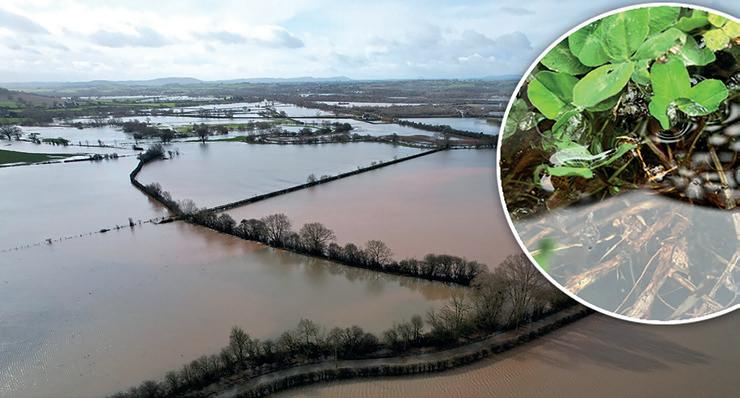
Gall darganfyddiad myfyriwr hybu datblygiad
cnydau sy’n gwrthsefyll llifogydd
Mae myfyriwr o Brifysgol Aberystwyth wedi datgelu sut mae gwahanol fathau o blanhigion yn ymateb i lifogydd, gan gynnig mewnwelediadau a allai helpu cnydau i ymdopi â thywydd eithafol.
Canolbwyntiodd yr astudiaeth, a gyhoeddwyd yn y Journal of Agronomy and Crop Science, ar Lotus japonicus, codlys o’r teulu sy’n cynnwys pys a ffa. Fe’i defnyddir yn eang fel organeb fodel mewn ymchwil ar amaethyddiaeth gynaliadwy.
Canfu’r ymchwil fod mathau o blanhigion o wahanol leoliadau yn Japan yn mabwysiadu strategaethau gwahanol i oroesi llifogydd. Gall rhai oroesi cyfnodau byr o dan ddŵr drwy arafu eu twf i arbed egni, tra bod eraill yn parhau i dyfu i gyrraedd uwchben wyneb y dŵr.
Dangosodd yr astudiaeth fod ymatebion blodeuo yn
wahanol rhwng mathau o ranbarthau daearyddol gwahanol. Y canfyddiad a synnodd yr ymchwilwyr fwyaf oedd bod rhai wedi blodeuo o fewn ychydig ddyddiau ar ôl i’r llifogydd ddod i ben, tra bod eraill wedi’u gohirio hyd at dair wythnos. Mae’r amrywiaeth hon o ymatebion i lifogydd yn dangos amrywiaeth enetig fawr ac yn gwneud Lotus japonicus yn ymgeisydd delfrydol i astudio llifogydd mewn codlysiau.
Cynhaliwyd y prosiect gyda gwyddonwyr yn Sefydliad y Gwyddorau Biolegol, Amgylcheddol a Gwledig ym Mhrifysgol Aberystwyth. Dywedodd yr Athro John Doonan, Cyfarwyddwr y Ganolfan Ffenomeg Planhigion Genedlaethol:
“Drwy ddeall sut mae mathau unigol o blanhigion yn ymdopi â llifogydd, rydym ni’n gallu nodi nodweddion a allai lywio rhaglenni bridio yn y dyfodol i ddatblygu
cnydau sy’n gallu goroesi tywydd eithafol. Mae’r canfyddiadau hyn yn cynnig cyfleoedd newydd i ddatblygu cnydau mwy gwydn, gan helpu i sicrhau diogelwch bwyd mewn hinsawdd sy’n newid. Mae hyn yn arbennig o bwysig ar gyfer codlysiau, sy’n chwarae rhan ganolog mewn systemau ffermio cynaliadwy a gwydn ledled y byd.”
Dywedodd Eamon Durkan, arweinydd y prosiect a myfyriwr israddedig yn yr Adran Gwyddorau Bywyd ym Mhrifysgol
Aberystwyth:
“Roedd datblygu’r prosiect ymchwil hwn gyda’r Athro Doonan a Dr. Corke yn gyfle unwaith mewn oes. Gyda’u cefnogaeth, llwyddais i fynd i’r afael ag un o faterion allweddol ein hoes: newid hinsawdd. Ar ben hynny, roeddwn wrth fy modd y gellid defnyddio canlyniadau fy nhraethawd hir a’m cyhoeddiad i ddatblygu codlysiau sy’n gwrthsefyll newid hinsawdd.”
Ychwanegodd Gordon Allison, Darlithydd yn yr Adran Gwyddorau Bywyd ym
Mhrifysgol Aberystwyth:
“Mae prosiect traethawd hir y flwyddyn olaf israddedig yn goron ar radd Baglor. Rydym yn ymfalchïo mewn cynnig prosiectau labordy ymarferol ac yn y maes i fyfyrwyr fel y gallan nhw ddatblygu arbenigedd mewn dylunio a chynnal ymchwil, dadansoddi data, meddwl beirniadol a sgiliau proffesiynol i’w cario ymlaen i’w gyrfaoedd yn y dyfodol.
“Mae prosiect Eamon ar straen boddi yn Lotus japonicus yn enghraifft ardderchog o waith a wnaed yn bosibl drwy gydweithio ag IBERS. Mae cyhoeddi draethawd hir israddedig a adolygwyd gan gymheiriaid yn gamp enfawr, i Eamon a’i fentoriaid. Mae’n sicr yn arwydd o ddechrau gyrfa lwyddiannus yn y gwyddorau biolegol.”
Angen Gweithredu! Mae angen i ffermwyr a busnesau ailgofrestru gyda Cyswllt Ffermio a symud i One Login GOV.UK
Mae Llywodraeth Cymru wedi cyhoeddi newidiadau pwysig i’r ffordd y mae ffermwyr a busnesau’n cael mynediad at wasanaethau cymorth gwledig,bydd gofyn i chi ailgofrestru i barhau i gael mynediad at wasanaethau Cyswllt Ffermio.
Fel rhan o’r newid cenedlaethol i ffwrdd o Borth y Llywodraeth, bydd angen i bob defnyddiwr symud i One Login GOV.UK.
Anogir busnesau ffermio i weithredu nawr i sicrhau mynediad di-dor at yr ystod lawn o wasanaethau cynghori, cymorth cynllunio busnes, datblygu sgiliau, e-ddysgu, hyfforddiant Iechyd a Lles Anifeiliaid, a’r rhaglen eang o adnoddau sydd ar gael i helpu busnesau ffermio i baratoi ar gyfer y Cynllun Ffermio Cynaliadwy,
ynghyd â holl wasanaethau eraill Cyswllt Ffermio.
Bydd gofyn i ddefnyddwyr ailgofrestru gyda Cyswllt Ffermio gan ddefnyddio eu cyfrif One Login GOV.UK newydd. I baratoi, dylai busnesau gymryd y camau hawdd canlynol:
Crëwch eich cyfrif One Login GOV.UK drwy ymweld â: www. gov.uk
Unwaith y bydd eich cyfrif One Login wedi’i sefydlu, byddwch yn gallu ailgofrestru gyda Cyswllt Ffermio – Gallwch wneud hyn drwy RPW ar-lein, unwaith y bydd gennych gyfrif One Login. Bydd angen eich rhif CON presennol arnoch hefyd yn ystod y broses ailgofrestru. (Mae llythyr wedi’i anfon at bob defnyddiwr yn rhestru pob rhif CON sy’n gysylltiedig â’u busnes.)
Mae’n hanfodol cwblhau’r cam hwn i sicrhau y gallwch barhau i gael mynediad at holl wasanaethau Cyswllt Ffermio a’ch cofnod Storfa Sgiliau. Drwy ddilyn y broses ac ailgofrestru, bydd eich holl hanes hyfforddiant blaenorol a gwybodaeth am eich Cynllun Datblygu Personol (CDP) yn trosglwyddo’n awtomatig o’ch hen gyfrif i’ch un newydd.
Mae cynnal mynediad at eich data Storfa Sgiliau hanesyddol yn arbennig o bwysig i unrhyw un sy’n bwriadu gwneud cais am y Cynllun Ffermio Cynaliadwy. I unrhyw un sydd angen cymorth neu arweiniad cam wrth gam, mae Canolfan Wasanaeth Cyswllt Ffermio ar gael i’ch cefnogi. Cysylltwch â’r tîm ar 03456 000 813 neu ewch i wefan Cyswllt Ffermio.
NFU Cymru welcomes arrival of new law providing greater protection against livestock attacks
NFU Cymru has welcomed the arrival of a new law today (Wednesday 18th March) which grants police and courts greater powers to tackle livestock worrying and dog attacks on farm animals.
The Dogs (Protection of Livestock) (Amendment) Act 2025, which will be in place across England and Wales, provides clearer powers for police to seize and detain dogs suspected of involvement in an incident or considered to pose an ongoing threat to livestock. With significant technological and scientific advancements, police can use these to take DNA samples or mouth impressions from dogs they suspect of worrying livestock. The new police powers can be used to investigate incidents of livestock worrying that happened before the bill was passed into law in
December 2025. The act now also allows courts the ability to impose unlimited fines and even prison sentences to owners in the most serious cases.
Figures released by NFU Cymru’s partners at NFU Mutual last month1 show farm animals in Wales worth an estimated £385,000 were severely injured or killed in dog attacks last year, up 23% on 2024.
NFU Cymru is pleased to see this change, which comes as a result of long-term NFU and NFU Cymru campaigning. The unions have been lobbying and working with MPs and Peers to secure the changes in the House of Commons and the House of Lords since 2019, resulting in a ‘historic win’ for farmers in England and Wales.
NFU Cymru President Abi Reader said: “Attacks by dogs on livestock have devastating
impacts on farmers, their families and their animals. That’s why the NFU has long called for tougher laws to reflect the seriousness of this crime, including wider powers for police and increased penalties for irresponsible dog ownership.”
“I believe these new powers will act as a strong deterrent and will make a real difference to safeguarding our livestock and giving farmers greater confidence that irresponsible dog owners will be held to account. The previous £1,000 cap on fines for these offences was not fit for purpose in many instances, but particularly so in cases where it was pedigree stock with strong genetics and long-lasting blood lines, so these new powers mean that farmers will no longer be the ones suffering the emotional and financial toll of this crime.”
Alongside enforcement, police, countryside and industry bodies are raising awareness of the new law through a series of public engagement activities.
Dog owners planning to visit the countryside can help ensure the safety of livestock by:
• Keeping dogs on a lead when walking through rural areas where livestock are kept, but let go of the lead if chased by cattle
• Being aware that all dogs, regardless of size, breed, and temperament, can cause the distress, injury and death of farm animals
• Reporting attacks by dogs to the police or local farmers
• Never letting dogs loose unsupervised in gardens near livestock fields – many attacks are caused by dogs which escape and attack sheep grazing nearby.
Kinross farmer opts for Weaving gates to boost farm security
On call
servicing and free delivery proves popular for Scottish farmers
With the average cost of rural crime at £7 million, according to NFU Mutual’s 2025 Rural Crime Report, securing farm properties should be a top priority for any farming operation. Jimmy Smith from Kinross, Scotland, has relied on the same gate supplier, Weaving, for over ten years to safeguard his poultry units.
Supporting his son Cameron, Jimmy manages three main businesses: Christmas trees, 72,000 layers, and 1,000 acres dedicated to hen feed.
“We have two standalone hen sites, so it’s very important for us that nobody gets access,” Jimmy explains.
His initial choice of gate was inspired by a visit to Hereford. At the Chase Distillery, he noticed their Weaving Machinery gate and didn’t seek quotes elsewhere.
“I said there, and then, that is the gate I need,” he recalls.
Fifteen years later, Jimmy installed a second, smaller gate after the excellent experience with his first.
“I’m absolutely delighted. These gates do exactly what you expect them to. They don’t allow unauthorised people in, but they do allow authorised people in.
When somebody looks at the gates, they know that they are not allowed entry.
“I find somebody that’s good, and I stick with them,” he adds.
As a well-established business and one of only a few providers of twelve-metre sliding gates in the UK, Weaving Machinery is known for reliability, says George Flack, Sales Representative at Weaving Machinery.
“We have a long history in farm machinery, manufacturing high-quality fabrications. All of our steel gates are fabricated inhouse, including the electrical work,” says George.
The idea to expand from selling just machinery into gates originated from the team’s real on-farm experiences. “We would visit farms where the farmer would mention thefts of items like quad bikes, leading them to see it as an unmet market opportunity,” he adds.
Operating its own fleet of lorries means that delivering gates up to 12 metres is included in the service. George estimates that this alone can save significant amounts in delivery costs, especially when delivering to Scotland.
Aluminium Gates also available
Gate widths up to 12 metres
The company now supplies to both farming businesses and commercial businesses, spanning across storage units, retail parks and distribution centres, with all gates integrated with mobile phone controls and built-in keypads.
Additionally, customers can opt for a spec to suit their needs, from key fob control to number plate recognition.
But it’s not only the gates’ performance and sourcing reliability that matter; aftercare is equally important. With nationwide service, a 2-year warranty on the FAAC equipment, and various service plans, farmers can trust that their gates are as secure as the farm itself.
“We offer tiered service plans, gold, silver, and bronze, that differ in service frequency, free hardware protection options, and same-day callouts,” George explains.
New offices, parts department and showroom open this spring at Weaving Machinery
Following 14 months of building work, Weaving Machinery’s new headquarters office and showroom opened this spring. Built at their factory site in Evesham, the facility will allow farmers to look over Weaving’s range, see how it is constructed and have a practical demonstration on the surrounding farm.
“We are tremendously excited about having access to the new offices and showroom,” says Simon. “Farmers are always fascinated to see how we make our equipment, and now we will have a facility to host and entertain groups of farmers and agronomists to go alongside that.”
If you are a farmer and wish to visit the Worcestershire site first-hand,
Simon says you can contact Weaving Machinery at info@ weaving-machinery.com to arrange a tour.
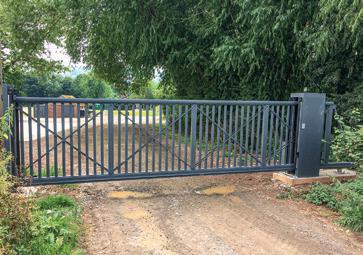
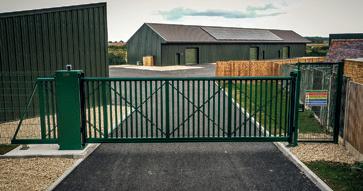
Weaving Steel Sliding gate
Jimmy Smith’s Weaving gates
environment
Farmers join up on an unprecedented scale to hit Government’s environmental targets
The launch of a groundbreaking farmer-led, catchment-scale conservation plan has been made possible by the formation of the Environmental Farmers Group (EFG), a natural capital cooperative representing 585 farmers across the UK. The EFG’s first Environmental Transition Plan measures the Government’s goals of reversing biodiversity decline, improving water quality and reducing greenhouse gas (GHG) emissions against the stated commitment of EFG members in the Hampshire Avon catchment and demonstrates the farmers’ potential to meet and beat them.
Avon Valley farmer and EFG chairman Rob Shepherd says: “The Hampshire Avon Catchment was EFG’s first area and represents 102 farmers who between them manage 26% of that 175,000ha catchment, so they are critical to delivering the Local Nature Recovery Strategy. EFG provides a mechanism to allow them to join forces with a joined-up approach that can achieve much more than the sum of its parts. This plan is not another top-down desktop wish list but an expression of commitment by the farmers themselves who care passionately about their local environment and want to step up to maintain and improve the iconic habitats, wildlife and water systems on their land.”
Nature
Based on current farm conservation plans drafted for EFG members by its scientific advisory body the Game & Wildlife Conservation Trust (GWCT), farmers are willing to put forward an average 5.5% of their land area for nature recovery in the catchment, over and above land in existing agri-environment
schemes. The Environmental Transition Plan shows how by delivering a network of different types of habitats at this scale, 11 of the 13 Government targets for biodiversity recovery are achievable.
GWCT has developed a three-pronged approach: a whole-catchment network of motivated and collaborating farmers; a coherent species recovery plan; and a network of carefully located resilient habitats. In addition, its ecologists have identified ‘umbrella’ species for the catchment’s nine different ecosystems which will provide a focus and inspiration for landscapescale conservation efforts.
GWCT CEO Nick von Westenholz says: “We believe the plan can work because the farmers already have an impressive track record of success in the region achieved through the Farmer Cluster structure developed by GWCT back in 2013. Farmer Clusters in the catchment have reversed the decline of red-listed species including lapwing, water voles and redshank and increased the number and range of rare butterflies. Connecting these initiatives under the catchmentscale EFG network is the logical next step and we look forward to supporting the farmers to make it happen.”
Water
Much pioneering work has also been done by Farmer Clusters in the catchment to improve the health of the famous chalk stream tributaries of the Hampshire Avon. Since 2023, farmers have started their own water quality testing programme on the Wylye, Nadder and Ebble tributaries,
together with a stretch of the Lower Avon and will expand this to the Bourne in 2026.
Tim Palmer, farmer and EFG board water lead, says: “We are monitoring nitrogen, phosphorus and sediment pollution using an on-farm laboratory. The aim is for farmers to inform themselves whether and how their farming operations might be contributing to nitrate, phosphates or sediment in the river, so that, if needed, they can take steps to reduce that.”
This winter, with funding from the Fishmongers’ Company’s Charitable Trust, GWCT hosted a Water Workshop for all the Cluster groups in the Avon catchment where farmers expressed a commitment to work collaboratively within and beyond the EFG to improve each of the 40 water bodies in the catchment.
Emissions
As part of the Transition Plan, EFG is adopting the NFU’s ambitious goal set out in 2019 of reaching net zero GHG emissions across the whole of agriculture in England and Wales by 2040. It will help farmers to improve productive efficiency, reduce inputs and increase carbon storage through bigger hedgerows, more woodland, and more carbon-rich soil with funding from natural capital markets.
Fair reward for public goods
Former GWCT CEO and EFG board member Teresa Dent CBE who coordinated the plan says: “We are grateful to the Esmee Fairbairn Foundation for funding the development of this Environmental Transition Plan, which is the first step. Key to its long-term success will be the willingness of society to give farmers a fair reward for the delivery of these environmental goods and services.
Natural Capital Advisory (NCA), brokers environmental trades for EFG, director Christopher Sparrow added: “Joining the EFG gives farmers a route to access the new natural capital markets, and EFG is starting to find some funding through that, but there is a long way to go. We hope Defra will recognise the innovation and potential of this large-scale, farmer-led approach, which is now being replicated across England and support its development with start-up funding.”
EFG chairman and farmer Rob Shepherd
Investing in energy infrastructure
£6 million to grow offshore wind supply
Investment in the offshore wind supply chain in the Inner Moray Firth and Stornoway will bring new jobs and expand Scotland’s renewable energy capabilities.
Funding of £3.9 million will support infrastructure development at the Ardersier Energy Transition Facility in the Inner Moray Firth. The Facility offers critical infrastructure for both fixed and floating wind projects and will be the largest of its kind on the North Sea coast.
Navantia UK receives £2.05 million towards a £5 million project at the Arnish yard in Stornoway, creating more than 75 jobs. New plant and equipment will enable the Port
to handle larger projects and cut energy use.
Additional investment of £965,000 in pre-construction work will prepare Arnish for further development. Navantia’s workforce, which includes 30 apprentices, is forecast to go up from 150 to 250 over the next ten years.
Deputy First Minister Kate Forbes said: “The growth of both Ardersier Energy Transition Facility and Navantia’s operations at Arnish will bring meaningful benefits to Lewis and the Highlands.
“Offshore wind is one of the biggest economic opportunities Scotland has ever had. These investments will significantly
boost Scotland’s clean energy sector, support new well-paid, skilled jobs in Stornoway and boost economic opportunity at Ardersier.”
Navantia UK CEO Donato Martinez said:
“This support will help accelerate our investment programme at Arnish, a facility with a strong track record in complex offshore fabrication and a highly skilled workforce.
“Navantia UK is building on these strengths to ensure Arnish is best placed for future opportunities across the energy market, including offshore wind, creating high quality, long-term jobs for the community.”
chain
Interim chief executive officer of Ardersier Port’s owner Haventus Ian Cobban said:
“We welcome approval of this valuable capital funding. The alignment of national, regional and local government in Scotland, in support of the renewable energy industry, has been of critical value to Haventus, as we developed our facility.
“Ardersier now enters its operational phase at a moment when the UK’s security of energy supply is a focus of attention. We look forward to playing our part as a central element in the supply chain for a new national and global industry.”
The right to roam?
By David McKie, Partner Levy & McRae Solicitors LLP
It is something that affects everybody who wants to use the outdoors, but has a very significant impact on farmers, landowners and estate workers.
We have had in Scotland for over 20 years the “right to
roam”. This is now an enshrined right for all citizens in Scotland.
Access rights are now a matter of law. The rights are: -
• to cross land; and
• to be on land for recreational purposes, a relevant educational
activity, or for carrying on commercially an activity which that person could otherwise carry on (for example birdwatching).
That right, however, is not absolute. Access rights need to be exercised responsibly.
The law says that the rights are not exercised responsibly if they cause unreasonable interference with the rights of others.
That has given rise to some case law over the years. I am
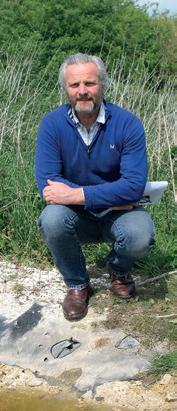
David McKie
not intending this article to be a detailed analysis of court decisions, but a broad overview of the rights of farmers, landowners and outdoor employees.
I thought it would be helpful to focus on three areas in particular.
For more information on this, it is a very good idea to have a look at the Scottish Outdoor Access Code, which can be found here. https://www. outdooraccess-scotland.scot/ practical-guide-all
Dog walkers
The greatest number of “flashpoints” which are likely to arise relate to people walking their dogs. Responsible dog walking is a perfectly reasonable and lawful activity. The vast majority of people are law abiding. However, if dogs are not under control, that can become a problem for landowners. It is, of course, also a problem for the dog owner if their dog is dangerously out of control.
The Scottish Outdoor Access Code is quite clear that dogs should not be allowed to approach animals or people uninvited. This is an area which I come across myself when I am out walking. Many dog owners think that other people are dog lovers. Not everybody is and some people can be intimidated by dogs. From a farming perspective, however, the most problematic area is if a dog is potentially going to worry or attack livestock. I have had examples of dogs worrying pregnant ewes which have caused them to miscarry or has resulted in injury or death. That can be a criminal offence for which the dog owner can be prosecuted.
Farmers do not have the generic right to shoot a dog for being out of control, but they
may have a defence for killing or injuring a dog if they are able to establish that they were protecting livestock. In order to do so, the following key points arise:-
• They must show that the dog was currently worrying by attacking, chasing or scaring livestock or was about to do so.
• The shooting must be a last resort and there must be no other reasonable means of ending or preventing the attack. From a practical perspective, you should engage with the dog owner if they are there and take all steps to get the dog back under control.
• If the dog has left the area and is no longer a direct threat, you cannot shoot it.
• You must report the shooting of a dog to the police within 48 hours.
This is relevant for gamekeepers too, because dogs can disturb ground nesting birds. If an owner has more than two dogs not under control and they start chasing mammals (such as a fox or a hare) that in itself could be a breach under the new Hunting with Dogs Act 2023.
Campers
I am getting more queries these days about what can be done
about campers. Wild camping is legal, but I hear quite a lot of reports about people setting fires irresponsibly and leaving mess and equipment behind.
Once again, the Scottish Outdoor Access Code gives very clear guidance to campers. Breaches of these regulations could give rise to a legal action.
The Code is very clear that you should avoid camping in fields of crops or near animals, that you should take away all belongings and leave no trace of your visit and also that, if you are using fires, you must not light an open fire. We have seen devastation in recent years in the countryside by fires which have got out of control, having been started either accidentally or recklessly.
Similarly, with parking, it is important to use car parks. The Outdoor Access Code does not allow motorised access.
The Code recommends that landowners should work with their local authority and recreational bodies to assist in the management of such camping.
Drones
I now see drones regularly, not only in the country, but in the city. They are in wide circulation, and many people use them. The approach of the Outdoor Access Code does
not prevent the use of drones, but makes it clear that drones must not be flown near houses, schools, or busy sites. Drones must avoid disturbing wildlife, particularly in sensitive areas or during breeding seasons. They must not endanger people or livestock and they must be flown well over 50 metres distance away.
Drones must be used within a line of sight of the user and in the circumstances, that theoretically should give you a line of sight to the person using the drone. If you are concerned about it, you should try and speak to the owner and, where possible, obtain registration numbers.
My details are below, and if anyone has any general queries about these issues, they come up regularly in my practice and I would be happy to answer or deal with any concerns which may arise.
As a matter of general practice, I have dealt with problems involving all of the above three issues, as well as use of cameras, kayaks, bikes (motorised and others), motorbikes, quad bikes, gates, air sports, deer management, forestry, wildlife disturbance, horse riding, golf courses, interference with property and many other areas. I would be happy to help anyone with general or specific queries.
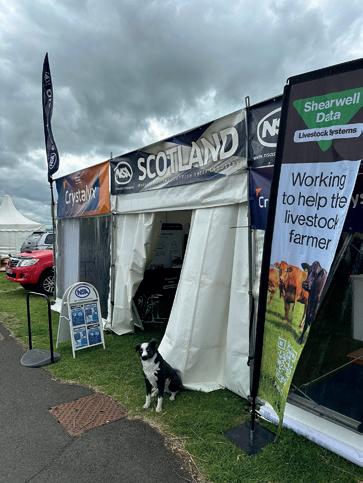
NSA Scotsheep 2026
Wednesday 10th June at Wedderlie Farm
NSA Scotsheep 2026 will take place on Wednesday 10th June at Wedderlie Farm, promising a full and engaging day dedicated to showcasing the very best of the sheep sector. Organised by NSA Scotland, the event will bring together farmers, breeders, industry professionals and the wider rural community for a packed programme of livestock, demonstrations and knowledgesharing. With gates open from 9am to 5pm, visitors will have a full day to explore everything Scotsheep has to offer, making it a must-attend event in the agricultural calendar.
At the heart of the event will be a wide-ranging farm tour, giving visitors a unique opportunity to explore the host farm at Wedderlie. Attendees will gain first-hand insight into the farm system, livestock management and day-today practices that underpin a successful sheep enterprise. This element of the event is particularly valuable for those looking to benchmark their own systems or gather ideas that can be applied back on their farms. Seeing real-life operations in action provides a level of understanding that simply cannot be replicated elsewhere, helping visitors take away practical and relevant knowledge.
Alongside the farm tour, a series of technical and practical demonstrations will run throughout the day. These sessions will highlight the latest innovations, technologies and
best practices within the sheep sector, while also recognising the importance of traditional skills that remain essential to the industry. From handling systems and grazing strategies to flock health planning and performance monitoring, visitors will be able to see a wide variety of approaches in action. These demonstrations are designed to be both informative and accessible, ensuring that attendees of all experience levels can benefit.
One of the standout features of NSA Scotsheep is always the live demonstrations. Delivered by experienced industry professionals, these sessions will cover key topics such as animal health, efficient handling techniques and improving flock performance. Designed with practicality in mind, each demonstration aims to provide clear, actionable take-home messages. Whether you are an established farmer, a new entrant, or someone with a general interest in agriculture, these insights can help drive improvements in efficiency, productivity and overall flock welfare.
The popular Farm to Fork element will once again play an important role in the event. This feature focuses on showcasing the journey of lamb from field to plate, helping to bridge the gap between producers and consumers. Butchery and cookery demonstrations will highlight the quality, versatility and value of Scotch lamb, while also offering inspiration for those looking to diversify or add value to their product. It is an engaging and educational experience that celebrates the end product of the sheep industry while reinforcing the importance of high standards throughout the production chain.
Livestock will, of course, be a major highlight of Scotsheep 2026. Visitors can look forward to a wide range of competitions and displays, featuring high-quality sheep from across the country. These classes not only celebrate excellence in breeding but also provide a platform for producers to showcase their stock to a large
and knowledgeable audience. For many attendees, it is an opportunity to compare different breeds, bloodlines and traits, while gaining a deeper appreciation for the diversity and quality within the sheep sector.
Competitions are expected to draw strong interest and participation, with skilled professionals demonstrating the very best techniques in modern sheep farming. These events are both educational and entertaining, offering spectators the opportunity to learn while enjoying the atmosphere. They also highlight the level of skill, dedication and attention to detail required to produce top-quality livestock, reinforcing the professionalism and pride within the industry.
Throughout the day, a series of workshops will offer more focused, hands-on learning opportunities. Covering key topics such as flock management, breeding strategies, sustainability and nutrition, these sessions are designed to be interactive and informative. Visitors will have the chance to engage directly with experts, ask questions and gain tailored advice that can be applied to their own systems. This practical, knowledgesharing approach is a key reason why Scotsheep continues to
attract such a wide and engaged audience year after year.
Trade stands will form a central part of the event, with a large number of exhibitors showcasing the latest products, services and innovations available to the sheep sector. From animal health solutions and genetics to machinery, equipment and infrastructure, the range of exhibitors will reflect the breadth and diversity of the industry. It is an ideal opportunity for visitors
to discover new products, speak directly with suppliers and stay up to date with the latest developments shaping the future of sheep farming.
Beyond the core farming focus, Scotsheep 2026 will also offer plenty for the wider public to enjoy.
Local food and craft exhibitors will add to the atmosphere and create a welcoming day out, so buy tickets now at www.scotsheep.org.uk
How Ordnance Survey supports agriculture and land management through innovation and use of its trusted and authoritative data
As pressures continue to rise on land use, food production and environmental resilience, accurate and trusted geospatial data has become essential to modern agriculture. Ordnance Survey (OS), the national mapping service and one of the largest holders of geospatial intelligence on land use in Great Britain, plays an integral role in supporting farmers, whether for farm management, environmental reporting or automated machinery. OS also has a role to play in encouraging innovation in the sector and supporting the roll-out of effective telecoms.
Recently, the Department for Environment, Food and Rural Affairs launched the Land Use Framework policy paper on how England can best coordinate multiple demands on the use of land to develop more resilient landscapes and deliver a more prosperous future. OS, as providers of foundational national geospatial data, along with other partners, will work with Defra over the next 12 months to understand user needs when increasing access to richer land data, and to test options for improving data accessibility and interoperability for decisionmaking.
Use of trusted OS data
OS provides up to 30,000 updates to the OS National Geographic Database (OS NGD) every day. The OS NGD themes include Land, Buildings, Land Use, Structures, Transport, and Water and contains land information data which can also be seen in the OS MasterMap Topography and Sites products.
In recent years, OS has released the new Field Boundary
layer into the OS NGD, beneficial for a variety of uses, from understanding and assessing biodiversity net gain, to supporting Environmental Land Management Schemes. It is also valuable for a range of environmental sector customers, environment agencies, major landowners and farmers, as well as both local and central government in delivering net zero ambitions. OS has also released enhancements to the land cover information in the OS NGD, by linking to habitat classification schemes and providing percentage coverage information for natural land cover features. In the last year, OS has released a new beta product, Enhanced Land Cover, which provides enhanced ecology mapping for England using UK habitat classifications.
OS Land Use data is widely used by central, devolved and local government bodies. Agencies such as the Rural Payments Agency also use OS MasterMap daily
in its mapping. OS has recently worked with the Scotland’s Rural Payments and Inspections Division to understand their field management systems and develop
models using OS NGD data that support their specific requirements. This work is vastly reducing the hundreds of thousands of land parcels sent off for checking
after change detection finds new or altered fences or boundaries, delivering a faster, smarter and more accurate way to manage agricultural land information. By automatically detecting potential parcel changes, the new workflow removes redundant manual tasks, targets effort where it matters most, and significantly improves data quality. This streamlined, datadriven approach supports more efficient subsidy administration, strengthens compliance, and helps the organisation meet business plan commitments without additional resource.
OS is constantly looking to provide a greater and richer variety of data to customers and in May 2024 added third party datasets from the British Geological Survey – the leading provider of the UK’s scientific earth data - which has extended the offering to OS customers significantly.
Smart farming – the gamechanging use of driverless tractors
Long-term partner CNH, which is parent company to the Case IH, New Holland and STEYR agricultural equipment brands and Raven technology brand, worked closely with OS to support their ultra-precise positioning of farm machinery, specifically tractors. The approach was to power them by OS Net – OS’s GNSS system of 118 base stations covering the whole of Britain – enabling Real Time Kinematic positioning information. The auto-guided tractors were proven to operate at centimetre accuracy ensuring more efficient seed sowing, pollination, fertiliser distribution and pest control. This accurate guidance system provided optimum signal availability no matter what the topography, helping eliminate the inaccuracy, downtime and stress that can be caused by signal loss, as well as reducing labour needs with longer periods of operation.
Since those first trials, the use of driverless tractors has grown exponentially in Britain. Up to 2024, 11,500 – 12,000 were registered annually, dropping last year to just under 9,000, with East Anglia and the South West of England seeing the highest number
of new tractor registrations a year. CNH continues to be a leader in precision agriculture technology.
Driverless tractors increase efficiencies, saving cost, and optimise yields throughout the complete crop cycle of planting, spraying, harvesting and cultivation, and allow year-to-year accuracy for repeat tasks. The driverless vehicles are operated with the aid of a supervisor monitoring progress at a control station or more usually with a manned tractor ahead.
Nurturing innovation
OS has also nurtured innovation in land management through Geovation, an initiative in association with HM Land Registry, which grows and supports GeoTech and PropTech startups.
One of the startups in the inaugural Geovation Accelerator programme in 2015 was Land App, founded by fourth-generation farmer Tim Hopkin. He saw how hard it was for a family farm to survive when vital information was stuck on paper maps in cupboards or in complex, expensive software. He realised that if one 90-acre farm couldn’t find a clear way forward, the entire land economy was at a standstill.
His solution was Land App, the essential, easy-to-use digital mapping platform that helps land managers unlock the full potential of their land. A cloud-based platform, Land App uses OS data to allow landowners, planners, and developers to manage and visualise land data, facilitating efficient planning and land use decisions.
Ten years on and Land App is a trusted national platform on which 80% of England’s agricultural land is already mapped. Land App works with corporate and government partners, including the Forestry Commission, UK Centre for Ecology & Hydrology (UKCEH), Sainsbury’s and Waitrose, to help farmers and suppliers improve land quality, restore biodiversity, and build long-term resilience.
“At Land App, we envision a future with better food security, more diverse landscapes, and healthier people. By giving the
rural sector the tools to plan with confidence, we are helping to ensure that the heritage I fought to save on my own farm is protected for generations to come across the globe,” said Tim Hopkin.
Geovation has continued to support innovation in the agricultural sector; another recent startup Soil Benchmark focuses on the role of sustainable soil management in tackling major environmental challenges. To date, around 14% of England’s agricultural land is included in its app. The platform uses both OS NGD in terms of field parcels and also OS Water data extensively; this helps drive a lot of the environmental risk and compliance calculations.
The latest to join the Geovation Accelerator programme is Oko Ag (oko.ag). Its founder Alexandra Simmons has one aim: to simplify agricultural funding. By combining geospatial intelligence with AI, the platform makes it quicker and easier for farms to see what public and private funding is available to them.
She said: “Agricultural funding is vital to the financial stability and long-term resilience of farm businesses. It helps derisk on-farm changes, but the system is incredibly complex, with hundreds of funding opportunities that are constantly changing. We’re starting with the basics by creating a central directory of public and private funding. Using geospatial intelligence, we match farms with relevant opportunities and help farmers navigate schemes so they can make more efficient and effective decisions.”
How OS helps to connect rural communities by supporting the 5G roll-out
Effective telecoms in any sector is essential with a current market focus on building out 4G and 5G coverage to help hit government targets. OS supports faster and more reliable broadband in more rural areas by providing highly accurate and detailed geospatial data for the prospective location of new telecom masts, as well as for radio planning, highlighting where structures or the natural environment could obstruct
signal through line-of-sight. The Shared Rural Network has already delivered mobile broadband to 96% of the UK, improving 4G coverage in the areas that need it most. However, despite national progress in connectivity, there is still a lag in rural areas.
As well as supporting the smart technology outlined above, farms in more remote locations need better broadband for dayto-day living, from accessing online services to enabling their participation in a modern, digital agricultural economy, to supporting educational needs for families living on farms.
As 5G networks are expanding across the country, a new and innovative use of 5G in agriculture is as a sensing ability. Telecom providers can use radio waves from a mast, and if the signal can be interrupted by moving herds, this can show their location, making herd management easier and reducing labour demands.
Tom Stabb, Customer Development Lead for Telecoms at OS, said: “OS is really making a difference in the telecoms sector by bringing clarity to operations, which we do through our highly detailed and accurate location data. The insights from our data strengthen decision-making, improve the effectiveness of network designs, and remove the likelihood of costly mistakes, whilst also addressing the digital divide by supporting the delivery of more advanced connectivity to rural and hard to reach areas. Wherever telecoms networks are needed, whether in dense cities or remote communities, we play a vital part.”
The ongoing need for trusted location data
As land use pressures intensify and the farming sector embraces significant advances in technology, location data is becoming an essential enabler of more efficient, sustainable land management. As the sector continues to evolve, OS data and expertise remain central to driving innovation, improving productivity and delivering long-term resilience across agriculture.
science & technology
New digital tool helps consultants manage SFI
Environmental schemes inevitably create more administration for farmers and advisers, so many consultants are turning to digital tools to help manage records.
The Farm Consultancy Group (FCG) recently began using Regeno’s Farmwalk app, which was designed to streamline record-keeping. It allows farmers and advisers to capture photos, voice notes and other evidence while in the field and automatically links them to relevant scheme requirements. It also supports Welsh and Scottish schemes as well as standards like Red Tractor and LEAF.
FCG uses the platform to support its stewardship management service, which helps farmers manage their Sustainable Farming Incentive (SFI) and Countryside Stewardship agreements. “We were getting more and more requests from the Rural Payments Agency asking for field records and evidence to support stewardship claims,” says Steph Emmerson, director at FCG. “Our systems worked, but they were manual and time consuming. We knew there had to be a more streamlined way of managing that information.”
The consultancy team helps clients by collecting evidence like grazing records, photographs and seed invoices to ensure compliance requirements are met.
“We were very good at getting clients into schemes,
but we knew there was more we could do to support them with the ongoing record-keeping and evidence collection,” says Steph. “Having everything in one place makes the process much more streamlined and professional in terms of the service we can offer our clients.”
The platform also supports consultants during client meetings by recording discussions and tracking followups. “Previously I would have a meeting, make notes and then later write up a summary,” Steph explains. “Now I can almost send that summary during the meeting, which saves a lot of time and makes sure nothing gets missed.”
Kimberley Broughton, farm consultant at FCG, says the system is already helping reduce the time spent on routine administration. “Previously we would collect documents from clients, take photos on farm and then spend time filing everything back at the laptop,” she says. “It was quite time consuming, but the app makes the process much quicker and easier to manage.”
The platform can also highlight any missing records, helping consultants ensure evidence requirements are met before inspections or compliance checks. “It flags up anything that’s missing, so you can quickly chase it or upload it,” says Kimberley. “It just gives you that confidence that everything is there and organised if you need it.”
As well as supporting environmental schemes, the consultancy believes digital tools like this could have wider applications across other areas of farm compliance. Regeno also includes a dedicated health and safety module and a Nitrate Vulnerable Zone (NVZ) calculator, helping broaden
its use beyond stewardship administration alone.
“We can definitely see tools like this fitting into consultancy going forward,” adds Kimberley. “It’s very user friendly and once you’ve used it across a few farms it becomes straightforward to integrate into day-to-day work.”
From the initial consultation to the final vote, SCF worked hard to secure improvements to the latest Crofting Bill. While we knew from the outset that this never was going to be the bold reform crofting needs, the changes introduced along the way have considerably strengthened the current Bill.
Initial proposals for withdrawing commission scrutiny on all croft assignations have been dropped after consultation. Instead, a more proportionate procedure to fast track family assignations has been introduced, unless the assignee already has 3 or more crofts, in which case full scrutiny remains. Standard securities on croft land for commercial lenders have not been introduced either. More consideration must be given to implications in terms of such measures’ potential to further drive increasing croft prices making crofts unaffordable for local families and young new entrants.
After the first draft Bill was published, SCF lobbied government and MSPs to considerably strengthen the Bill with the following successes:
- Definitions around environmental use of crofts have been strengthened to prevent misuse and neglect under the guise of “rewilding”.
- Ministers now have the power to make regulations on the transfer of owner-occupied crofts and associated grazing shares, thereby creating the possibility of aligning this process to that for tenancy assignations.
- The commission needs to issue guidance on how it deals with applications for consent to be absent from the croft for a prolonged period of time.
- The Bill better reflects the general principle that grazing shares should stay with the croft and now features more mechanisms to re-unite shares with the croft where when they have been separated.
- Landowners seeking to impose conditions on crofterled environmental initiatives of common grazings must
crofting
By Donna Smith
Crofting Bill: major wins and remaining concerns
From the consultation to the final Bill – improvements achieved and fought for
justify why these conditions are reasonable and the commission may alter or remove any unreasonable conditions imposed by the landlord.
- Crofters’ position in crofterled environmental initiatives on common grazings has been further strengthened by improving the decisionmaking process and enabling the Commission to include considerations such as benefit to the crofting community and public interest.
- A commitment that the next government must begin to consult on and review the entirety of crofting law within three years.
Further enhancements resulting from our input resulted in various changes which very much strengthen the Commission’s powers when someone is in breach of their
duties and enforcement of statutory duties is now included as an explicit general function of the Crofting Commission.
It remains to be seen if the measures introduced with this Bill are enough to address the widespread issues around absenteeism and land abandonment.
With commitment from Government to start the process of wholesale crofting law reform within three years, some matters need to be addressed urgently to protect crofting and crofters’ rights.
One particular area of concern is how the new provisions enabling environmental use of common grazings and the evolving carbon and nature markets will impact on the crofting system as the matter of carbon and how crofters’ rights can be protected from land grabs in the name of “net zero” remains
largely unresolved.
What is at stake here, is not so much the financial benefits from carbon credits, it’s the underlying question of carbon rights and their implications for land and power relations more generally. The market, agents and private landowners are moving at pace to set the terms already, with carbon rights being assumed to sit with the landowner, despite this being unfounded in existing law.
If these rights are allocated solely to the landowner, this will undermine existing rights crofters have had since the introduction of the first Crofters’ Act in 1886. However, it also has serious consequences for the country’s wider understanding of land rights and natural capital. It has potential impact upon the government’s land reform agenda and may also diminish agricultural producers’ opportunities to contribute to emission reduction, whilst delivering environmental projects which can contribute to rural development.
The government has been advocating for private green finance as a way to leverage in further capital to achieve ambitious net zero and biodiversity targets. Many crofters are sceptical towards carbon markets, as speculative trading of intangible financial instruments, and would rather not engage with them in the first place. However, as government grants do not cover the full capital cost for environmental initiatives such as native broadleaf planting or peatland restoration, engagement with these markets may be needed. If landowners insist on keeping carbon revenue for themselves, this may be enough to break a crofter-led project and not get it off the ground in the first place.
We believe, and continue to do so, that carbon markets are a false solution. Yet, when crofters are prepared to do all the work and take all the risk for environmental initiatives and they are the most affected by the long-term consequences, they should be holding any rights from the activities in question.
Scottish farmers encouraged to welcome visitors for Open Farm
Sunday’s 20th anniversary
With pressures mounting on Scottish farmers and crofters, building trust with consumers has never been more important.
As Open Farm Sunday celebrates its 20th anniversary on 7 June 2026, farmers and crofters across Scotland are being encouraged and supported to take part, providing a valuable opportunity to welcome visitors and build stronger connections with the people they feed.
One of this year’s first-time hosts is Jock and Fiona Gibson from Edinvale Farm, located 150-250 metres above the Moray Firth. The Gibsons have reared grass-fed cattle since the mid1970s, supplying Shorthorn and Highland beef through their family-owned butchers, Macbeths, in nearby Forres.
Since taking over the farm from his parents in 2015, Jock and his wife have grown the enterprise with a focus on environmental stewardship and eliminating carbon emissions.
The time is right Keen to share their nature-
friendly farming more widely, hosting an Open Farm Sunday event has been on the Gibson’s horizon for some time.
“It is something that we have wanted to do for ages but never had the time or resource to do it.
We’ve recently taken on additional help, and we realised it doesn’t need to be a huge event to make a difference, so it seemed like a great opportunity to give it a try,” says Jock.
Their event will feature guided farm tours, talks about beef and sheep production, live butchery demonstration and beekeeping displays, alongside static machinery and family-friendly activities. By partnering with local experts, the day will offer insights into sustainable farming and food production and provide the perfect occasion to showcase and sell their produce.
Connecting communities
For Jock that direct connection with the local community is a key motivation for opening his gates.
The Gibson family
“We are really looking forward to being part of Open Farm Sunday and putting on a more structured event,” he says. “As a business, it will hopefully help bring the consumer closer to what we do and make a stronger link between our farm and our butchers’ shop.”
With consumers increasingly curious about where their food comes from, Open Farm Sunday is a chance to move people’s experiences beyond supermarket shelves through meaningful conversations. It’s a valuable opportunity to explain how sustainable food production works in tandem with nature while covering topics such as animal welfare and the day-to-day realities of modern agriculture.
“It’s a two-way thing,” Jock adds.
“Open Farm Sunday makes farms more easily accessible, but it also gives farming businesses the help and support to welcome visitors when it might not feel the most natural thing to do.
Building trust through transparency
“It’s really important that as farmers, we do engage and don’t just live in a bubble. We often criticise the public for not understanding us. Often though, we equally don’t understand the public’s mindset or preconceptions. We need to bring both groups closer together, highlighting the positives but also addressing any concerns.”
The value of that open and honest, face-to-face exchange is backed up by visitor data, with 92% of attendees surveyed last year leaving Open Farm Sunday with increased trust in British farming.
It’s a positive outcome that more businesses are picking up on, with a 20% increase in the
number of farms hosting events in 2025. It’s a trend that Open Farm Sunday Manager, Annabel Shackleton is keen to continue.
“We want to make sure that hosting an event is a manageable, worthwhile and, most importantly, enjoyable for everyone who takes part –whether that’s hosting a farm tour for 30 people through to bigger events for 300+,” she says.
Farmer focussed support
“I would encourage farmers and crofters to visit our website and look at the information that’s available. Our inspiring webinar recordings and case studies feature experienced host farmers sharing tips and insights on how they organise their OFS events, covering practical aspects such as managing visitor numbers using free ticketing services, simple ways to engage visitors, health and safety as well as the range of free resources that can be ordered from the OFS online shop.
“This year, Open Farm Sunday is on 7th June, but events can take place on alternative dates. We’re keen to encourage more first-time hosts across Scotland to follow Jock’s initiative and take part. No matter what size your event, the key things is to make it work it for you.”
As Edinvale prepare for their first event, Jock is keeping his hopes straightforward: “Good weather, good food and good craic. We might only get two of those things though!”
It’s a sentiment that captures the spirit of Open Farm Sunday. It has a serious purpose to engage, educate and inspire while at its heart, remains Scottish hospitality, good conversation and giving people a memorable experience.
Meet the Highland cattle
Annabel Shackleton Open Farm Sunday Manager
Farm walk and stunning views at Edinvale farm.
Beatha an eilean
Feum air suil eile a thoirt air LFASS
Le Murray MacLeòid
Feumaidh an Riaghaltas ùr a bhios anns as dèidh an taghadh dèiligeadh gu sgiobalta leis an ana-cheartas a tha timcheall sgeama LFASS.
Tha an sgeama air a bhith ann an àite son bliadhnachan mòra a-nis ach tha aithne ann nach eil e ag obair mar bu chòir - sin a bhith toirt taic cheart dha na sgìrean far a bheil am feum as motha, mar a tha còir.
Tha raointean farsaing de dh’Alba air an comharrachadh mar “Less Favoured” agus tha sin a’ ciallachadh gu bheil sgìrean torach mar an t-Eilean Dubh agus Siorrachd Obar Dheathain a’ faighinn an aon rud ‘s a tha leithid na h-eileanan.
Ged a tha aithne air a bhith mu chuairt g’eil ana-cheartas ann an seo, chan eileas air mòran idir a dhèanamh mu dheidhinn, bhon tha dragh ann ma thig crathadh mòr, gum bidh cuid ann a’ bhios a’ call a-mach gu dona.
Tha Aonadh nan Tuathanach ann an Alba a-nis a’ gabhail ris nach gabh cùisean a rèiteach gu sìmplidh as aonais sgrùdadh farsaing air dè bhuaidh a bhios aige - agus dè an t-slighe air adhart.
Ach, tha aon rud ann a dh’fhaodadh tachairt gu math luath, tha iad ag ràdh, ‘s e sin gun tig am buidseat gu leir a chosg, rud nach eil air a bhith tachairt.
Thuirt comhairliche poileasaidh na buidhne, Lucy NicIllebhraith, nach eil an sgeama “idir freagarrach son feumalachdan àiteachais san là an-duigh”.
Tha cuideachd duilgheadas bunaiteach eile leis an sgeama. Tha na h-ìrean paighidh stèidhichte air àireamh stoc eachdraidheil, a’ ciallachadh gu bheil cuid fhathast a’ faighinn taic agus iad cur às dhan stoc agus feadhainn nach eil a’ faighinn an rud air a bheil iad airigh.
Thuirt Lucy gu bheil an suidheachadh sin ceàrr, agus ag adhbhrachadh mì-rùn.
A-thaobh a bhith cosg am buidseat gu leir, thuirt i: “Ann
an roinn far a bheil mòran chroitearan is tuathanaich a’ faireachdain nach eil iad a’ faighinn taic cheart, tha a bhith fàgail airgead gun a chaitheamh na cothrom caillte.
“Le sin tha an NFU ag iarraidh gun tig a chaitheamh ann an dòigh a tha coinneachadh amasan sonraichte agus a tha nas freagraiche son feumalachdan àiteachais san là a th’ann.”
Thuirt i gum bu chòir an airgead seo a bhith air a chleachdadh son barrachd
cothromach a chur a-steach dhan sgeama agus gun tig a thoirt dhan fheadhainn a tha dha-riribh a’ dèanamh fìor obair agus tha air an àireamh stoc aca a thogail.
“Dhèanadh seo feum nas pragtaigeach dhen airgead, gheidheadh a thoirt dha na daoine cheart agus gun crathadh mòr a thoirt air cùisean,” thuirt i.
A thaobh sgrudadh nas fharsainge, thuirt i gu feum atharrachadh a thighinn a tha “susbainteach” agus a bhios a’ freagrachadh an fheadhainn a tha dha-riribh ag obair na talmhainn.
Bu chòir dha cuideachd, thuirt i, àite a thoirt dha na diofar sgìrean agus fearann a tha ri fhaighinn ann an Alba agus chan ann a bhith stèidhichte air rud a tha eachdraidheil.
Lucy NicIllebhraith bhon NFU Tha an sgeama air a bhith dol son bliadhnachan
A four-day celebration of Scotland’s rich agricultural heritage, our vibrant rural communities, and the extraordinary people who drive this vital sector forward and make it such a vibrant place to work.
Scotland
It gives me great pleasure to welcome you to the Royal Highland Show 2026
As Chairman of the Royal Highland and Agricultural Society of Scotland (RHASS), it is incredibly rewarding to see months of planning and hard work come to life across the Show. Every person who walks through our gates becomes part of something truly special – the largest outdoor event in Scotland and our charity’s biggest annual fundraiser.
This year, we are proud to celebrate the theme of food production, shining a spotlight on the journey from farm to fork and the innovation, care and expertise behind that process.
Education and learning remain at the heart of the Show, placing skills, knowledge and innovation front and centre. From helping younger generations understand where their food comes from, to championing lifelong learning across the sector and shining a spotlight on ground-breaking progress within the industry through the RHASS Innovation Awards – the longest-running competition of its kind - which continue to highlight the trailblazing ideas shaping the future of farming.
The Royal Highland Show is a unique showcase of the breadth and depth of Scotland’s rural sector, with more than 300 prestigious trophies awarded across the four days.
Spanning 197 hectares – the equivalent of 180 football pitches – there is something for everyone to enjoy. From livestock and equine excellence to pole climbing and axe throwing, as well as exceptional food and drink in Scotland’s Larder and the Food for Thought Theatre, the Show offers an unforgettable experience. Visitors can also explore our diverse tradestands, featuring everything from cutting-edge machinery and renewable technology to handmade crafts, fashion and outdoor living.
Families are at the heart of the Show, with children aged 15 and under able to attend for free. At the RHET Discovery Centre, children can take part in a wide range of hands-on activities while learning about the importance of Scottish agriculture. Back by popular demand, children can get behind the wheel of a mini Land Rover and tackle their very own off-road adventure course, just like the grown-up version. Elsewhere, our Kid Zone and wellness and chill-out area offers space for both fun and relaxation. Sunday will once again be a dedicated family-focused day, with highlights including live milking and shearing demonstrations alongside the full programme of entertainment.
As part of Scotland’s National Year of Reading, we are also delighted to launch a nationwide short story competition for young people, helping to connect classrooms with Scotland’s land, food systems and rural communities. Pupils across Scotland have been invited to bring the future of farming to life through creative writing, exploring themes such as sustainable food production, agricultural innovation, and caring for animals, crops and the environment. The winning entries will be showcased at this year’s Show.
The Royal Highland Show also offers something increasingly rare – the chance for our rural community to come together in person. With over 200,000 visitors last year, the site temporarily becomes the sixth largest ‘town’ in Scotland, bigger than Paisley or Dunfermline. It is a powerful reminder of the strength, spirit and scale of our sector, and a chance to connect with friends and colleagues from far and wide.
More than a Show, this is a platform for progress. The business done here, the connections made and the stories shared all play a vital role in shaping Scotland’s rural economy. And at its heart is RHASS’s enduring commitment to our members and the wider industry: to preserve our agricultural legacy and support the next generation of farmers, rural businesses, and communities.
We hope you enjoy everything the Show has to offer – and of course, don’t forget to get your tickets for The Reeling on Saturday, as the exciting contemporary folk music festival makes its way to Ingliston for a special Royal Highland Show edition! Visit www. royalhighlandshow.org to secure your tickets for the Show and The Reeling.
Here at RHASS, our members are at the heart of everything we do. Membership supports our year-round work, funding innovative projects for agriculture and rural communities, as well as the Royal Highland Show itself. We encourage you to consider joining the Society to support this work while enjoying exclusive benefits, including access to tickets across all four days, entry to the Members’ Village, and discounts on livestock and competition entry fees to name a few. Speak to a member of our team at the Show to find out more, or visit rhass.org.uk.
Thank you for your continued support, and have a fantastic Royal Highland Show 2026!
Warmest regards,
James Logan Chairman of the Royal & Highland Agricultural Society of Scotland
James Logan
Chairman of the Royal & Highland Agricultural Society of
The 2026 Royal Highland Show is set to surprise and delight show-goers yet again
The Royal Highland Show, produced by Scotland’s agricultural charity, RHASS (Royal Highland & Agricultural Society of Scotland) is promising an unforgettable event for all attendees in its 204th year.
For the foodies: Stuffed full of food and drink, the show offers boundless opportunities to sample Scotland’s finest produce including cookery demos with top chefs and a huge choice of food vendors serving everything to satisfy anyone’s palate.
For families: A key attraction for families, the RHET Discovery Centre is the perfect entertaining and educational base for younger visitors to the show. With a dedicated kid zone located in the Countryside Area, there is plenty of fun for all the family to enjoy including hands on skills training.
For the shopaholic: For the avid shoppers, a vast range of retail opportunities await spread
across numerous shopping villages, offering clothing, shoes, crafts, gifts, pet supplies, art, toys and a range of premium shopping outlets which can be found at the Countryside Village. Event attendees also might be surprised to find the Renewable Village, offering a variety of sustainable products and services including wind, solar, hydroelectric,
geothermal, tidal, biomass companies and more.
For the thrill seekers: Delivering the action and drama, sparks will fly in the heat of Farriery competition, equine entrants will be saddled up for show jumping, meanwhile, over in the forestry arena, visitors will be on the edge of their seats as they are entertained by axe
The A-Z of the
throwers, live chainsaw carving, and pole climbers.
For the traditionalists: The many traditional aspects of the show will continue to provide weekend-long entertainment. Watch as the country’s top shearers battle it out for the esteemed title of Scottish National Champion or head to the main ring to see the Heavy Horse Turnouts. The spectacle of the Sixes taking place on Sunday is another one not to be missed.
For music lovers: The line-up is not to be missed.
Supported by the Royal Bank of Scotland, the 2026 Royal Highland Show will take place across four days at the Royal Highland Centre, Ingliston, Edinburgh, from 18th – 21st June, promising an unforgettable experience for attendees of all ages. For more information and to purchase tickets, please visit https://www. royalhighlandshow.org
Royal Highland Show 2025
A – Agricultural equipment –See the fantastic display of farm machinery and take the opportunity to visit the stands –the Agri Innovation Arena is a must-visit.
B – Beer – Enjoy a pint from the Royal Highland Show’s brewery partner and principal beer supplier, Innis & Gunn.
C – Countryside – Set by its own lochan, the Countryside Arena is home to exciting demonstrations, and canoeing.
D – Dairy – The Scottish Dairy Produce Championship’s celebrate the very best of Scotland’s Milk, Cream, Ice Cream, Cheese, and Butter. Head to Scotland’s Larder to see who takes the crown.
E – Equestrian – The Show always welcomes an impressive range of horse breeds, from the adorable Shetland Pony to the majestic Clydesdale.
F – Food – Explore hundreds of food and drink brands in
Royal Highland Show 2026
Scotland’s Larder, enjoy live cookery demos from top chefs in the Food for Thought Theatre nestled within it, and take your pick from a huge range of delicious food stands.
G – Grand Parade – enjoy a spectacular display of the country’s best livestock and horses as a parade of prizewinning animals make their way across the main ring.
H – Highland Cattle – Witness one of Scotland’s most iconic animals, the gorgeous Highland Coo, up close and in the flesh!
I – Innovation – Discover the latest trail-blazing agriinnovations as the Innovation Awards winners are crowned at the Show. Categories for this year include mechanical and engineering advancements, digital and management solutions, and crop and animal feed advancement.
J
– Judges – The Show attracts some of the top judges from across the world to judge livestock, equine, food, drink and many more competitions.
K – Kids go free – with plenty of entertainment for the little ones including a dedicated Kid Zone with mini tractors, a soft play area, face painting, circus skills and story telling, and hobby horsing, Kids aged
L
15 and under go free when accompanied by an adult.
– Logs – Make sure to visit the Forestry Arena, which is home to the Scottish Pole Climbing Championships along with action-packed axe throwing and wood carving demonstrations.
M – Music – the Show caters for all musical tastes, you could be disco dancing one minute, doing a ceilidh the next, before enjoying a traditional Scottish pipe band later on. Don’t forget to buy your ticket to the Reeling on Saturday when the renowned trad-fest will make its debut in Ingliston for a very special Royal Highland Show edition.
N – Native Breeds – get up close with Scotland’s finest native animals and see the pride and tradition of generations of farming on display.
O – Online – Get all the latest up-to-date information on the Show on the official Royal Highland Show app, website and social media channels for the latest updates.
P – Produce – You will find plenty of locally produced and ethically sourced food served at the Show – from delicious haggis neeps and tatties to freshly prepared fish and chips and lobster rolls, finished
off with a bowl of Scottish strawberries bursting with flavour.
Q
– Queen Bee – Find out all you need to know about honey and the importance of bees in the Show’s Honey Marquee by the West Entrance, and don’t miss the prize giving at the Honey Championships!
R – Rural Life – celebrate the traditions, skills, and communities at the heart of Scotland’s countryside, from working sheepdog demos and traditional crafts to the people and businesses who make rural Scotland thrive.
S
– Shopping – A vast range of retail opportunities await spread across numerous shopping villages where you can find clothing, shoes, crafts,
Scotland’s Larder
gifts, pet supplies, art, toys and much more.
T – Trials – The BMX riders will have you on the edge of your seat with their stunt displays in the Forestry Arena.
U – Unwind – The Show is the perfect place to catch up with friends, enjoy a good day out.
V – Variety – Cattle and sheep, farriery at The Forge, showjumping, heavy horse turnouts, ceilidh bands, choirs, shopping, artisanal food and drink, a ride on the big top –there’s SO much to see and do.
W – Wool – Always a highlight, the MacRobert Theatre provides some of the fastest action of the show at the Sheep Shearing and Woolhandling competitions.
X – Xcitement – There’s plenty of excitement at the Show – make sure you get your programme so you don’t miss out on a single thing!
Y – Youth – The RHET Discovery Centre is home to activities and exhibits designed to engage young minds. Pay it a visit if you have little ones in tow!
Z – Zones – To make the most of your visit we want to ensure you can get around the site easily. Watch out for the coloured zones on your map and RHS App to help guide you around.
Scotland’s Larder is a mustsee destination for all Foodies and a great place to meet local
producers, taste the best of Scottish produce and discover artisan offerings from across
the UK. Browse aisles full of delicacies to find everything from Scotland’s juicy strawberries
and varied cheeses to full bodied Whiskies and fruity Gins. Why not take the opportunity to speak
Royal Highland Show 2026
with the makers and hear how they got started first-hand!
The Food for Thought Cookery Theatre, within Scotland’s Larder, is full of entertaining cookery demonstrations from award-winning chefs, alongside conversations and Q&As with food writers, cooks and producers.
This year in Scotland’s Larder, you will find:
Alanda’s UK
Angels Dare Cocktails Ltd
Angus Soft Fruits Ltd
Argyll Food Producers Ltd
Baxters Food Group
BergHOFF Worldwide GB
Braw Sauces
Brownhill whisky co ltd
Burren Balsamics
Cakes by Rebecca
Chardon Macarons
Cherry Tree Preserves (UK) Ltd
Dark Art Distillery
Demijohn
Dunnet Bay Distillers
Edinburgh Cider Co
Edinburgh Honey Co
Ellon Spirit Company
Filia Tres Chocolates
Flapjackery
Flint and Flame
Food Hub (NES) Ltd
GJ and C Vance and Co
Great Glen Charcuterie Ltd
Growers Garden
Hebridean Charcuterie
Heck! Food Ltd
Hot Star Honey
Just a Littlemore cookie company
Kandy Kitchen Crerations Ltd
Kilted Fudge Company Ltd
Lactalis McLelland
Lucas Ice Cream
Lussa Drinks Company
Mackies of Scotland
Malvavisco Marshmallows
Mighty Spice
Modern Standard Coffee
Morningdog Coffee Ltd
Bakkafrost Scotland Limited
Ninefold Distillery
P. A. Arbuckle & Sons
Perthshire Preserves
Punjana Ltd
Rabbit Hole Cakes
Rola Mor
Rora Dairy
Ross’s of Edinburgh Ltd
Rowan Glen Ltd
Schoolyard Kitchen
Selbrae House Ltd.
SHORE The Scottish Seaweed Co.
Small Farmers Coffee Limited
Sole trader
Spice Harmony
Stahly Quality Foods Ltd.
Summerhouse Drinks Ltd
Supernature Oils Ltd
Tayport Distillery
The Brownie Bar
The Chocolate Fondue Company
The Damn Fine Cheese Company
The Gin Bothy
The Great British Cheese Company
The Little Parlour
The Magic Knife Company
The Spirits Embassy
The Yorkshire Kitchen
Tilly Confectionery Ltd.
Visitor Centres
Walkers Shortbread Ltd
Wark Farm
Wee Knob of Butter
Wee Tea Company Ltd
Whiterocks
Zingy Tingy Beetroot
2026 RHASS Innovation Awards
The RHASS (Royal Highland and Agricultural Society of Scotland) Innovation Awards, previously known as the Technical Innovation Awards, is the oldest competition run by RHASS, with awards presented annually at the Royal Highland Show to highlight the trail-blazing innovations driving progress across the agricultural sector.
Last year, four applicants received gold awards, with the winners’ innovations being displayed within the agricultural zone during the Royal Highland Show. These included:
• Merlo UK for their electric telehandler ew25.5 which boasts an innovative new cab and hydraulics.
• Graintek UK for their baby portable grain dryer, the smallest mobile dryer in the world
• New Holland for their T6 methane power tractor, which gives a sustainable way of working
• SoilEssentials Ltd for their SKAi spot spraying system, which gives a much more sustainable way of spraying as it detects and sprays only where needed
Katy McFadyen, Competitions
Executive at RHASS, said: “The Innovation Awards are one of our longest-running competitions at RHASS and bring to light the incredibly talented individuals and innovations that help shape the future of Scottish agriculture.
“We’ve been really excited to see the range of businesses and ideas that have come forward this year, and were particularly
pleased to see entries within Crop and Animal Feed Advancement, where innovation is vital to the industry’s future.
“Our thanks go out to Agrii for kindly sponsoring two of our awards categories this year, supporting the continued legacy of the awards.”
Award categories for 2026 are:
• Mechanical and Engineering Advancements (Machinery, Robotics and Automatic Solutions).
• Digital and Management Solutions, sponsored by Agrii (IT and Computing solutions & Livestock and Arable management. Can include but not limited to Apps, Electronics, GPS Software, Farm Software, Livestock and Arable Management).
• Crop and Animal Feed Advancement, sponsored by Agrii (Chemical or technical advancement within crop production or animal feeds. To include the advancement of breeding programmes or innovation to arable crops during their production cycle, and the enhancement of animal nutrition.
Winning entries will be awarded either a Certificate of Commendation, Silver Award, or the coveted Gold Award, which recognises innovations that have demonstrated exceptional marketplace success and industry influence.
In addition to the accolades, award winners will be invited to display their winning entry in a central display area during the
Royal Highland Show 2026
Royal Highland Show and will have the opportunity to work with RHASS to help showcase their products to a wider audience.
Greig Baird, Head of Agronomy Teams, Scotland, Agrii said: “Real progress in
agriculture comes from solving real problems, and that starts with innovation that’s been tested, proven and provides onfarm solutions. The RHASS Innovation Awards give those ideas an important platform, reaching farmers, growers and
agri-businesses who are actively shaping how the industry operates.
“By supporting the Digital and Management Solutions and Crop and Animal Feed Advancement categories, we’re proud to help shine a spotlight on innovations that
are delivering practical benefits, driving efficiency and shaping the future of Scottish agriculture. There really isn’t a better stage than the Royal Highland Show to showcase the work that’s making a genuine difference on the ground.”
Judges for Royal Highland Show 2026
Regarded as one of the highest honours in the industry, the judges for the 2026 Royal Highland Show feature some of the most respected names within the industry, with the panel reflecting generations of experience and knowledge represented across all sections.
Katy McFadyen, Royal Highland Show Competitions Executive, said: “Our judges are central to the competitions at the Show. Every year, they bring a huge amount of know-how from across the sector and apply the consistently high standards that help make the Show what it is, while setting the benchmark for excellence across the industry. We’re really looking forward to welcoming our judges to the 2026 Show and continuing the Royal Highland Show’s longstanding tradition of world-class competition.”
Kay Adam, chair designate of the Royal Highland Show board, said: “The strength of the Royal Highland Show lies in the people who stand behind it, and our judges are among the most important of those. The 2026 panel brings together generations of expertise, insight and passion for the sector, and I look forward to seeing them help deliver another outstanding Show.”
Overall Young Handler
The judges for Overall Young Handler rotates to a different section every year, and 2026 will be the sheep section, with the task of judging falling upon Mr and Mrs Leggat, Logiealmond.
Beef Section
The Interbreed Team Competition and Overall Beef Interbreed Championship, two of the most prestigious and eagerly awaited classes of the beef section, will be judged by Mr David Murray, Kirriemuir, Angus. With 45 years of judging experience, Mr Murray has been involved with Aberdeen Angus, Charolais and Commercial Cattle and has judged at The Royal Welsh and The Royal Highland Show’s three times each and has judged at both Stirling and Perth Bull Sales on seven occasions.
The Beef Young Handlers will be judged by Ms Anne McPherson, Inverness, Invernesshire. Anne has judged for 30 years including at The Royal Welsh Show, The Royal
Highland Show, and The Royal Norfolk Show. Ms McPherson, who has been showing since the age of 7, is a five-time beef breeder champion at The Royal Highland Show and a two-time breed record holder at Perth and Stirling Bull Sales for Simmentals. Notably, Ms McPherson was awarded the John Miller Trophy for Stockmanship at The Royal Highland Show in 2005.
Beef Interbreed Teams and Overall Beef Interbreed Championship
Mr David J Murray, Kirriemuir, Angus
Beef Native Breeds
Inter Breed Team Championship
Mrs Libby Clarke, Lurgan, Co Armagh
Royal Highland Show 2026
Beef Breeder Competition & Junior Beef Inter Breed
Championship
Mr Douglas Graham, Blair Drummond, Stirling
Beef Inter-Breed Pairs
Competition
Mr Andrew Reid, Ellon
Beef Cattle Young Handlers
Anne MacPherson, Inverness, Invernesshire
Beef Shorthorn
Mrs Sally Horrell, Peterborough, Cambs
Aberdeen Angus
Mr Alan Lawson, Hallington, Newcastle Upon Tyne Galloway
Mr John Tullie, Hawick, Roxburghshire
Belted Galloway
Mr Bobby Landers, Newton Stewart, Wigtownshire
Highland
Mr Bryon MacNaughton, Farr, Inverness-Shire
Hereford
Miss EN Thorne, Haven, Pembrokeshire
Lincoln Red
Mr Matt Bagley, Gainsborough, Lincolnshire
British Charolais
Mr Will Short, Co. Tyrone, Northern Ireland
British Simmental
Mr Adrian Ivory, Meigle, Blairgowrie
British Limousin
Mr Gareth Corrie, Co. Down, Northern Ireland
British Blue
Mr Andrew Price, Maidstone, Kent
Salers
Mr Colin J Wight, Biggar, South Lanarkshire
Commercial Cattle
Mr Michael Alford, Cullompton, Devon
Dairy Section
Overall Dairy Interbreed
Mr Robert Butterfield, Bentham, Lancaster
Ayrshire
Mr Allan Clark, Newton Stewart, Wigtownshire
Holstein and British Red & White
Mr Hefyn Wilson, Cardigan, Ceredigion
Dairy Shorthorn
Mr David Winnington, Gnosall, Staffordshire
Jersey & Dairy Any Other Breed
Mr Johnny Lochhead, Dumfries, Dumfriesshire
Dairy Calf Interbreed and Showmanship
Mr Jonny Woodhouse, Millon Cumbria
Sheep Section
The North Country Cheviot section will be judged by Mr Danny McCarthy, Thurso, Caithness. Primarily involved in North Country Cheviot’s, Mr McCarthy has over 35 years of judging experience and his flock has won breed champion at The Royal Highland Show on eight occasions, culminating in the interbed champion and winner of the Queens Cup in 1991.
Overall Sheep Inter Breed Championship
Mr Jim Pate, Gorebridge, Midlothian
Overall Sheep Pairs
Inter-Breed
Championship
Mr Paul Quick, Crediton, Devon
Sheep Young Handler
Mr James McKerrow, Ellon, Aberdeenshire
Blackface
Mr Allan Wight Jnr, Biggar, South Lanarkshire
Suffolk
Mr Iain Barbour, Annan, Dumfriesshire
Lleyn
Mr Barry Latimer, Co. Tyrone, Northern Ireland
Ryeland
Mr Alun Parry, Llangaffo, Gaerwen
Commercial Sheep
Mr John Guthrie, Crieff, Perthshire
Border Leicester
Mr John Hamilton, Lanark, Lanarkshire
Jacob
Mr Lyndon Trumper, Brynderi, Abergavenny
North Country Cheviot
Mr Danny McCarthy, Thurso, Caithness
North Country Cheviot Hill
Mr Andrew Elliot, Galashiels, Scottish Borders Cheviot
Mr Tom Elliot, Jedburgh, Scottish Borders Texel
Mr Brian Hanthorn, County Armagh, Northern Ireland Hampshire Down
Mr Allen McFadden, County Down, Northern Ireland Swaledale
Mr Will Cockbain, Keswick, Cumbria
Bluefaced Leicester –Traditional Type
Mr Derek Henderson, Wylam, Northumberland
Bluefaced Leicester – Crossing Type
Mr Stewart Park, Sanquhar, Dumfriesshire
Charollais
Mr Geoff Probert, Holt Heath, Worcester Hebridean
Mr Richard Small, Shrewsbury, Shropshire
North of England Mules
Mr John Mason, Skipton, North Yorkshire
British Rouge
Mr James Kerr, Craigavon, Northern Ireland Beltex
Mrs Anne Story, Carlisle, Cumbria
Zwartbles
Miss Fiona Brown, Penrith, Cumbria
Scotch Mule
Mr William Lockhart, Tongland, Dumfries and Galloway
Bleu Du Maine
Mr Will Price, Wem, Shropshire
Shetland
Mr Andrew Bain, Pencaitland, East Lothian
Blue Texel
Mr C Davies, Brecon, Powys
Royal Highland Show 2026
Dutch Spotted
Mr Will Workman, Brecon, Powys
Valais Blacknose
Mr Phil Garrod, Dilwyn, Hereford
Kerry Hill
Ms K Esler, Kingston Seymour, Somerset
Goat Section
Mr Adrian Bull, Pewsey, Wiltshire is taking on the role of judging Dairy Goats, Kids, Milking, and Boer Goats. With over 40 years of experience including judging at the Royal Welsh, Royal Cornwall, Great Yorkshire, and many county shows, Mr Bull is passionate about supporting newcomers to competing, and has proudly passed on his knowledge and experience to his children who have gone on to have their own successful herds.
The Scottish Dairy Goat Show will be judged by Mr Andrew Morrey, Churchstoke, Powys. Mr Morrey has also been
judging for over 40 years and has won interbreed champion at The Royal Highland Show and The Royal Welsh Show twice each as well as multiple county and national shows, all with homebred exhibits.
Heavy Horse Section
A third-generation breeder of Clydesdales, Miss Charlotte Young, Ayr, Ayrshire will judge the Clydesdale Young Handlers and Young Stockman and Ridden Clydesdales, conformation. Miss Young has been judging for over 10 years including at the Northern Spring Show, local summer shows and Clydesdale foal shows in Ireland, Scotland, and England. She won reserve champion turnout at The Royal Highland Show, class champion at The Great Yorkshire Show and Clydesdale champion at the Royal Highland Show in 2019. Clydesdales In Hand
Males
Mr William Hall, Co Antrim, Northern Ireland
Royal Highland Show 2026
Females
Mr William Mitchell, Kirknewton, Midlothian
Clydesdale Young Handlers & Young Stockman
Miss Charlotte Young, Ayr, Ayrshire
Ridden Clydesdales
Ride – Ms Polly Coles, Barnsley, South Yorkshire
Conformation – Miss Charlotte Young, Ayr, Ayrshire
Highland Ponies In Hand
Males - Mrs Victoria Fletcher, Kippen, Stirlingshire
Mr Robin Stewart, Banchory, Kincardineshire Shetland Ponies In Hand
Mrs Gillian Cowan, Stoke on Trent, Staffordshire
Miniature Shetland Ponies In Hand
Mr AR Bell, Glenoe, Larne
The Sanderson Trophy
Mr Derek Bailey, Clonmel, Co Tipperary
Shetland Pony Young Handlers
Mrs Eleanor Warren, Milnathort, Kinross
Overall Heavy Horse Young Handler
Miss Amanda Stewart, Glasgow, North Lanarkshire
HARNESS, GROOMING, TURNOUTS
Heavy Horse Turnouts
Mr Gawin Holmes, Beamish, Stanley
Harness Grooming & Decoration Mr Gawin Holmes, Beamish, Stanley
Light Horse Section
Mr David Dixon, Guisborough, Cleveland will be judging Overall Light Horse In Hand, and Hunters
Under Saddle - Working Hunter and Ladies Side Saddle Horse, Conformation. Mr Dixon has judged for over 30 years, across the world, including at all major county shows in the UK, Australia, New Zealand, South Africa, Sweden and Ireland. He has qualified for the in-
hand final at the Horse of The Year Show on several occasions and was the breeder of the Supreme Pony and Supreme In Hand, at the Horse of The Year Show.
Hunters In Hand
Mr Matt Ainsworth, Bromsberrow, Hererfordshire
Hunter Under Saddle Weights and Smalls
Ride – Miss Sarah Chapman, Llandinam, Powys
Conformation- Mr Matt Ainsworth, Bromsberrow, Hererfordshire
Hunters Under SaddleWorking Hunter and Ladies Side Saddle Horse
Ride – Miss Zara Owen, Llanfechain, Powys
Conformation – Mr David Dixon, Guisborough, Cleveland Sports Horses (In Hand)
Miss Sarah Chapman, Llandinam, Powys
Retraining of Racehorses (Final)
Ride – Mr Will Murray, Durham, Co Durham
Conformation – Ms Jane Reid, Broughty Ferry, Angus
Highland Ponies Under Saddle
Ride – Mrs Rebecca Chalmers, Perthshire
Conformation – Ms Kate Dykes, West Linton, Peebleshire
Ride – Mrs Barbara McGrath, Pelton Fell, Chester-Le-Street
Conformation – Mrs Anne Bigley, Peterchurch, Herefordshire
Small Breeds
Ride – Miss Catryn Bigley, Michaelchurch Escley, Herefordshire
Conformation – Mrs Helen Horsfall, Todmorden, Lancashire
Coloured Horses and Ponies
Under Saddle
Ride – Ms Vicky Smith, Beeston, Cheshire
Conformation – Mr Ian Smeeth, Forty Green, Gloucestershire
Royal Highland Show 2026
Livestock and competitions
Competitions at the 2026 Royal Highland Show will be held in the following sections:
• Beef Cattle
• Dairy Cattle
• Sheep
• Goats
• Heavy Horse
• Light Horse
• Farriery
• Shearing
• Showjumping
• Fleece
• Scottish Honey Championship
• Scottish Dairy Products Championship
Exciting changes for this year include updates to the judging days for the Dairy Cattle and Shearing categories,
the introduction of new classes in certain Sheep breeds, some changes to the Dairy Produce Schedule to make classes more relevant and a new Donkey Young Handler class.
In a bid to showcase and expand the scope of competitions for the public, additional livestock and competition demonstrations for event visitors will take place on the Sunday.
Kay Adam, Chair Designate for the RHASS Royal Highland Show board for 2026, said: “The Show celebrates the very best livestock and produce from across the country, and we look forward to another year of outstanding entries. Each year, the competitions team works hard to ensure the sections reflect demand, introducing new classes
where possible while maintaining the traditions that return year after year. It’s particularly encouraging to see entries in our young handler categories continuing to grow,
and we hope that trend continues this year. We look forward to welcoming competitors to the Royal Highland Centre very soon.”
RHASS Presidential Initiative
“Explore Aberdeenshire”
The Royal Highland Show 2026 will shine a spotlight on the North East as the Royal Highland and Agricultural Society of Scotland (RHASS) Aberdeenshire Presidential Initiative prepares to bring a bold and celebratory programme to the heart of the showground.
Led by RHASS President Pat Machray OBE, alongside Vice Presidents Dave Green, Dr Robert Lovie, Robert Maitland and Anna Mitchell, with Rev Ken MacKenzie LVO serving as Chaplain, the 2026 Presidential Initiative will celebrate everything that makes Aberdeenshire one of Scotland’s most important rural powerhouses.
With around 20% of Scotland’s agricultural output coming from the region, the initiative will use its platform at the Show to highlight
Aberdeenshire’s global reputation across agriculture, food and drink, whisky, education, music, culture and tourism.
Visitors to the Presidential Initiative stand can expect a striking, octagonally mapped exhibition space, built around eight key pillars of Aberdeenshire agriculture:
• Young Farmers Clubs
• Agritourism
• Distilleries
• Agricultural/Food businesses
• Research and Education
• Activities including golf and mountain bike trails
• Heritage properties and Gardens
• Agricultural shows and Highland Games
The stand will be a hub of activity throughout the event and will welcome people to their
“fly cup” but will also include mountain bikes for youngsters and interactive elements designed to bring the region’s rural offering to life.
The initiative will also play a key role in marking a major milestone for one of Scotland’s most iconic breeds, celebrating 150 years of Aberdeen Angus cattle.
In addition, Aberdeenshire livestock exhibitors will be presented with special plaques and trade exhibitors from the region will have banners to display at the Show, ensuring the presence from the North East is clear across the entire event. This will also involve a competition for children to find the plaques
Royal Highland Show 2026
and banners, with prizes up for grabs.
Adding to the sense of occasion, 2026 will see the introduction of a brand-new President’s Salute to close the Show, set to be a standout moment with the Lonach Highlanders and Pipe Band coming down from the North East for a fitting finale to the Aberdeenshire year.
Ahead of the Show, the Aberdeenshire Presidential Initiative has already made a
significant mark through its fundraising efforts, led by a charity ball held in October 2025, which raised more than £250,000, with further activity continuing in the lead-up to the Show.
Funds raised will support RHASS, the Scottish Association of Young Farmers Clubs’
“Big Build”, and RSABI, helping to strengthen rural communities and invest in the future of Scottish agriculture.
Pat Machray OBE said:
“The funds raised by the Aberdeenshire Presidential Initiative will directly support our partner charities, allowing us to expand our impact and contribute towards ensuring a thriving future for Scotland’s agriculture.
“With 20% of all Scottish agriculture output coming from Aberdeenshire, we are delighted to have a stage at the show, giving us the opportunity to showcase some of the fantastic food, drink, and talent from across
the region. As a team, we want to ensure by the time the Royal Highland Show 2026 concludes, our initiative has spread the word on all the North East has to offer, inviting all those who attend the show to also ‘Explore Aberdeenshire’.”
With a packed programme, strong charitable impact and a clear sense of regional pride, the Aberdeenshire Presidential Initiative is set to be one of the defining features of the Royal Highland Show 2026.
NSA Scotland at the Royal Highland Show
NSA Scotland will once again be a key presence at the Royal Highland Show 2026 on Thursday 18 - Sunday 21 June, 2026, with its well-established NSA Scotland Marquee providing a central hub for the sheep sector. Located at Stand 1 (B), Avenue M (TBC), and positioned next to the MacRobert Sheep Shearing Theatre, the marquee will offer a prominent and accessible space for members, exhibitors, and visitors to connect, engage, and share knowledge throughout the Show.
The marquee will accommodate a wide range of activity, combining information, networking, and live demonstrations within a welcoming and well-organised setting. The space plays an important role in highlighting NSA Scotland’s work while also giving partner organisations and industry stakeholders the opportunity to showcase their contributions to the sheep sector.
A particular highlight of the NSA Scotland Marquee at the Royal Highland Show 2026 will be the hosting of the fleece competition, set up by the Royal Highland Show. This competition provides a fantastic platform to celebrate the quality, diversity, and craftsmanship associated with wool production across Scotland
and beyond. It is an opportunity to recognise the skill involved in producing high-quality fleeces and to shine a spotlight on an often underappreciated but vital part of the sheep industry, this will draw interest from both exhibitors and visitors, offering a chance to examine and appreciate the characteristics that define excellence in fleece quality. From texture and staple length to cleanliness and overall presentation, the competition highlights the attention to detail and stockmanship that underpin successful sheep farming enterprises. By hosting this competition, the NSA Scotland Marquee becomes not only a place of discussion but also a centre of celebration for wool and its place in the wider agricultural landscape.
Our marquee will continue to provide a space for engagement with industry representatives, technical experts, and policy discussions. Visitors will be able to gain insights into current challenges and opportunities within the sheep sector, from flock health and disease control to market trends and sustainability. NSA Scotland’s presence ensures that important conversations are taking place at the heart of the Show, helping to inform and support producers in
an ever-changing industry. The location next to the MacRobert Sheep Shearing Theatre enhances the visibility and accessibility of the marquee, ensuring strong footfall throughout the event.
This prime positioning helps attract a diverse audience, from seasoned industry professionals to those with a general interest in agriculture, making it an ideal setting for outreach and engagement.
NSA Scotland’s continued involvement in the Royal Highland Show reflects its commitment to supporting sheep producers and promoting the importance of the sector.
On the Sunday, we will be holding our next generation sheep dressing competition which attracts much interest from both keen competitors and excited supporters.
Overall, the NSA Scotland Marquee at the Royal Highland Show 2026 will be a vibrant and dynamic space, combining competition, collaboration, and conversation, while reinforcing the organisation’s role at the heart of the sheep industry in Scotland. So be sure to come and visit us, where you will find a warm welcome, even if just to sit down and have a blether over a tea or coffee.
Scottish Beekeepers creating a ‘buzz’
The Scottish Beekeepers Association (SBA) have a full honey tent planned for this year with the usual honey, wax, honey baking and associated bee product entries. Under the guidance of the Highland Show Steward Aylett Roan we have planned for the tent to be designated the Scottish Honey Championships.
Michelle Berry our development manager is arranging
a full cohort of guide stewards to help answer questions that visitors may have about honeybees and other pollinators and as usual the bees will be there flying from their glass sided observation hives. Hopefully it will be warm and sunny and we will be able to observe their dance language routines as they tell their colleagues where the best nectar sources are around Ingliston. The honeybees can inform their sisters
of the precise geographic direction of the sources and the richness of the source.
In addition to the bee product entries, we will have entries for photos on beekeeping subjects and plan to have as many young people helping in the tent as possible as young children regard older children as the best sources of cool information about bees.
As usual the shop will be selling delicious local honeys
and other bee products.
The artisan sections will be showing demonstrations of skep making (ruskies for the Scots speakers), We will also have wax moulding demos and a demo of encaustic art (painting with hot wax) and of course for the children the ever-popular candle rolling and honey tasting.
The Royal Highland Education Trust (RHET) is arranging school visits to the
Royal Highland Show 2026
honey tent on Thursday and Friday and we look forward to meeting some of the school children who always show a keen interest in the bees.
The Scottish Education Qualifications body now has a N5 qualification in beekeeping on offer which can be taken up by schools and colleges, based on the SBA’s Basic Beekeeping syllabus and many Scottish schools have chosen to offer this course, having trained teachers in beekeeping, and many have set up their own small apiary run by a school bee club.
The honeybees are still being pestered by the varroa mite but some colonies are showing signs of becoming resistant. They have developed “super-smeller” workers that can detect if there are varroa mites in a sealed cell and then open the cell. Other workers then chew out the bee pupa being attacked within the cell and although the mother mite may escape, it interrupts/ destroys one of her breeding cycles. This enables the bees to keep the varroa levels down to manageable numbers. We are trying to breed from these varroa resistant queens.
Local beekeeping associations are always interested in farms that may be able to provide a corner of land for a few beehives for their members, so do make contact if you can
help – there’s sure to be a jar or two of honey available in exchange.
So please do visit the honey tent, located by the West Gate, you’ll be made most welcome.
The Royal Highland Show Presents The Reeling
The popular trad festival is making its way to the Royal Highland Centre for a special edition on Saturday 20 June
A new major partnership between one of Scotland’s most exciting contemporary folk festivals, and the Royal Highland Show will see The Reeling make its way to the capital for the very first time, on Saturday 20 June.
Following the success of the Royal Highland Hoolie over the past three years, organisers at the Royal Highland Centre have teamed up with The Reeling, the celebrated festival founded in Glasgow, to deliver a bumper trad music experience during Show weekend.
The one-day Highland Show edition of The Reeling will shine a spotlight on the very best of Scotland’s contemporary trad scene, with a line-up featuring Breabach, Dlù, Dougie MacLean, Elephant Sessions, Kinnaris Q and Skippinish.
Advance tickets can be purchased via the Royal Highland Show website with combined Royal Highland Show and The Reeling entry priced at £75. The Reeling-only tickets are £45, while child tickets are £27.50. A VIP upgrade to The
Reeling can be purchased for an additional £30.
Gate prices will be higher and availability cannot be guaranteed, so early booking is advised.
The Royal Highland Centre - Scotland’s largest indoor and outdoor venue - delivers some of the biggest events in the country, welcoming more than one million visitors every year. As well as hosting the Royal Highland
Show, which welcomes over 220,000 visitors to Ingliston each year across the four-day event, the venue has become a major destination for live music.
This August, it will welcome a series of Summer Sessions featuring Biffy Clyro, Florence and the Machine and brand-new festival Heather on the Hill, created by Nathan Evans and Saint PHNX.
Royal Highland Show 2026
The arrival of The Reeling signals another significant step in the venue’s ambition to grow and diversify its festival and largescale event offering.
Mark Currie, Director at Royal Highland Centre, said: “This is an incredibly exciting partnership opportunity for us and really signifies the direction we are going in as we continue to build and strengthen our event and festival offering at the Royal Highland Centre.
“The Royal Highland Show weekend is the perfect platform for an event like this. Over the past three years, the musical element of the Show through the Royal Highland Hoolie has become a real draw for Show-goers, and we know that partnering with The Reeling will only build on that momentum.
“Bringing one of Scotland’s most exciting trad music festivals to Ingliston for a special Highland Show edition
feels like a natural evolution, and we’re proud to be working with The Reeling to create something new and ambitious as part of the Show weekend.”
Founded by Michael Pellegrotti, co-director of Skye Live, The Reeling has quickly established itself as a flagship celebration of contemporary Scottish folk music since launching at Rouken Glen Park in 2023.
Now, the festival makes its
move to Scotland’s capital for a special edition.
Michael Pellegrotti, Founder of The Reeling, said: “We’re delighted to partner with The Royal Highland Show to bring The Reeling to Edinburgh for the first time. Both events celebrate the very best of Scotland, making this a natural collaboration.
“With a fantastic line-up of artists and so much to experience at the show, it’s set to be a great day out for everyone.”
A look at some of our magazine clients exhibiting this year…
Albutt Attachments have been a proud supplier of attachments to Scottish farmers for over 60 years. With over three decades of exhibiting at the show, family firm Albutt Attachments returns to greet established customers, welcome new ones and to share the firm’s knowledge and expertise, aspiring to meet the requirements of today’s modern Scottish farmer.
Albutt Attachments is a family business, specialising in manufacturing high specification attachments for the Agricultural, Waste, Construction and Forestry industries. Durability, longevity and sustainability are the standout features of this brand in a competitive manufacturing market.
The company founder, Robert Albutt, began the firm over 60 years ago. The company’s roots are embedded in farming, with four generations of the Albutt family directly involved in agriculture. Current managing director, Alistair Albutt, now employs 50 members of staff at their Gloucestershire facility. Albutt Attachments have grown to become one of the leading names in the global attachment market.
A prime example of their professional expertise is the 14foot, 2.2 tonne folding push off Buckrake. This is one of several impressive, practical and time saving attachments on display at the 2026 Royal Highland Show. Albutt Attachments Buckrake ranges include forged steel tines, ideal for tractors and telehandlers in addition to the Hardox tine range for large tractors and wheeled loading shovels. Both ranges use an ergonomic design to create a high strength-to-weight ratio. Large capacity flow share valves ensure an even push. The full mesh gates enable the operator to always have a clear view, complemented by work lights for those long working days.
Albutt Attachments are looking forward to displaying their products at this year’s Royal Highland Show and listening to the issues faced by farmers, dealers and the forestry sector, working with them to create solutions with the Albutt Attachment range.
Come and meet them at Avenue Q, stand 290A.
Amazone to showcase new spreader tech at Royal Highland Show 2026
At RHS 2026, AMAZONE will showcase a range of new and proven technologies, including the new ZA-TS 01 series of spreaders with AutoSpread, alongside key machines from its drilling, crop protection and cultivation portfolios.
A strong focus will be placed on high-output establishment and precision application, with machines such as the telescopic 4.5 metre Precea, ZA-TS 4201 with AutoSpread, UF mounted sprayer with ContourControl, and Pantera self-propelled sprayer.
ZA-TS 4201 – fertiliser spreader with AutoSpread
Precision application is represented by the ZA-TS 4201, equipped with AutoSpread for fully automatic calibration of both application rate and, for the first time, spread pattern.
AutoSpread measures spreading distance and direction in real time, automatically adjusting the drop point and disc speed on the move. The result is consistently accurate spreading across the full working width.
Coupled with WindControl and BorderTS make a machine that works in a wider range of conditions and delivers exact fullrate fertiliser spreading right up to the field boundary.
Combined with the TS spreading system and new in-house
ISOBUS software, the ZA-TS delivers exceptional accuracy, even in challenging conditions.
UF mounted sprayer with ContourControl
Also on show will be the UF mounted sprayer with the proven ContourControl boom guidance system.
ContourControl provides fully automatic, side-independent boom guidance, maintaining the optimum distance to the crop across the full width, even on uneven terrain.
This results in improved application accuracy, reduced drift and more consistent spray performance, particularly in challenging conditions.
With such excellent boom contour following and available in a 2,000 litre capacity with an additional 1,500 litres from the constantly recirculating Front Tank makes the UF a truly high capacity setup in a super compact form factor.
ATV City ATV
Albutt Attachments
Amazone
parts supplier of Utility ATV and UTV parts in the UK has been displaying some of its wears at the Royal Highland Show since 2005.
In that time ATV City has seen many changes in the ATV/UTV accessory market, the quality of goods now has improved and the thought behind products to make the users experience not only better but safer and easier.
Health and Safety plays a massive role in everyone’s lives these days and ATV City offer a couple of new products that will be on display at the show.
The first product is the Lifeguard/Quadguard, this product was developed in New Zealand and is distributed by ATV City. The Lifeguard is a crush protection device which has a flexible arch that should the ATV roll the arch absorbs impact and helps to prevent the chance of injury to the rider.
The second product is the new ATV helmet, the Hyper A3V. The helmet is certified to the current
demanding safety requirements. It is ideal for ATV and UTV users, with its tough yet lightweight shell, two drop down visors, removeable and washable liner, quick release buckle and size adjuster control. The helmet comes in two sizes but due to be adjustable fitment fits nearly all riders.
ATV City still offers is superb range of weedwipers and sprayers to fit all ATV’s and UTV’s , and recently has started distributing a new range of ATV trailers suitable for gathering logs, leaves, horse muck, grass cuttings.
ATV City hopes you will come onto our stand and see the new range of goods we have to offer.
BD Supplies
celebrated 25 years in business, marking a major milestone in our journey as specialists in animal husbandry and hoof trimming equipment. Today, we continue to build on that legacy, supporting farmers and professionals across the UK and Ireland.
We stock a comprehensive range of hoof trimming supplies, including knives, trimming discs, and industryleading KVK and Appleton hoof trimming crates. As the sole importer of KVK products in the UK and Ireland, we are proud to offer crates designed to ensure optimal working posture for the operator while minimising discomfort for livestock.
One of our best-selling products is our Professional Block Adhesive, manufactured to meet our exact specifications. Suitable for use with both wooden and rubber blocks, it is widely recognised for its strength, reliability, and
consistent performance. We also offer our own range of durable, high-quality rubber blocks.
Our animal husbandry range also includes the MediDart injection system, available in both pole and crossbow formats. These systems provide a practical, low-stress solution for administering medication to cattle at grass, eliminating the need to handle entire groups when only individual treatment is required.
In addition, we are proud suppliers of Rapid walk-behind tractors, Graham Edwards trailers, and a wide selection of welding equipment, all supporting the day-to-day needs of modern farming.
Alongside our agricultural focus, BD Supplies has successfully expanded into a thriving biomass wood pellet delivery business. We are fully BSL and Woodsure registered, offering both bagged and bulk deliveries to domestic and
In 2025, BD Supplies proudly
Royal Highland Show 2026
commercial customers.
While the business continues to grow and diversify, agriculture remains at the heart of everything we do. We are always looking to introduce innovative products to the UK market—solutions that deliver real value to today’s farming industry.
At BD Supplies, our customers come first. You can expect high-quality products, dependable service, and efficient next-day delivery.
Bryce Sumo
As is customary, Bryce Suma will once again be showcasing their premium range of performance Post Drivers from the standard 3-pt models through to their XL and Vulcan range as well as ever popular 180 Pro MK2 tracked unit.
Over the years Bryce have won countless prestigious Awards for their post drivers, and now with a proven formula for high performance and durability, the focus is on producing post drivers that are as near bombproof as possible. Like everything in agriculture nowadays, performance and output is the key to moving forward with efficiency. Good labour is scarce so getting more done in the shortest time with less man hours available is what it is all about. Jock says “today we have combines with 40 foot plus headers, tractors with horse power north of 600 pulling massive tillage and seeding equipment, and we have stock farmers needing livestock handling systems that allow high throughput of animals with
speed, safety and efficiency, and that’s what we are doing with Bryce post drivers.” Bryce emphasise that their machine efficiency due to their uniquely Patented designs and hydraulic setup leads to Less hammer strokes = Less wear and tear = Less time = MORE PROFIT !!
The Bryce 180 PRO Mk2 one-man tracked fencing machine is proving increasingly popular both at home and around the world with a record order book ahead for this time of year by far.
Recent orders were received from North America, Germany, Estonia, Sweden, UK and N.Ireland as well as Eire with excellent reviews and consistent demand.
“Everyone is looking for ways of making the job easier - but only if it doesn’t give you grief” Jock adds. It’s easy in today’s hi-tech world to get sucked into electronics, but if theses break down in remote rural locations, fence erection and production immediately stops.
However, if a customer requests for example radio control, we discuss the pros and cons and deliver accordingly.
Our company policy is always to please the customer, and go along with any specific personal requests, but it must not jeopardise Bryce reliability or durability.
Bryce Post Drivers have a 5-year guarantee on the main frame and post cap plus 1-year unconditional guarantee on all other components.
Bunning shows four spreaders at RHS 26
Four manure spreaders of varying sizes and specifications will highlight the breadth of
Bunning’s range to Scottish users visiting the Royal Highland Show 2026.
All of the Bunning spreaders at the show have been retailed to customers in Scotland and northern England, with two destined for Aberdeenshire, and one each to Penrith and Campbeltown. On the stand will be a Lowlander 120 HY Horizontal Beater and Spinning Disc (HBD) with weigh cells; a Lowlander 150 HD Twin Vertical Auger (TVA); a Lowlander 105 TVA; and a Lowlander 85 TVA. Each machine configuration offers something different for end users, helping show visitors to assess the spreaders and any options to suit their farming enterprise.
Ben Johnson, UK and Ireland sales manager, says each user has different requirements and their spreaders can be tailored to suit.
“From arable, beef and dairy enterprises handling spreading in house, to hill farms upgrading from older machinery, the Bunning HBD and TVA ranges on show highlight the options available when purchasing. Of the four retailed machines on show, one buyer is replacing an 18-year-old spreader, while another is adding to his existing fleet of machines.”
Ben continued to say that adding the latest technology to new spreaders is now a big consideration during the purchasing process.
“Weigh cells with Isobus rate controller are a popular option and can be fitted on any size of machine from the factory to improve the spreading accuracy. Scotland is a very important market, and we’re delighted to be back to meet new and existing customers at the show.”
Dalbo UK
At DALBO we’re delighted to announce that we will once again be exhibiting at the Royal Highland Show this year. This is a very important show for us, being a key part of our year with Scotland being a very important and growing market for our product ranges from DALBO, BREVI and APV.
APV’s range means we are able to offer an extensive product portfolio in grassland rejuvenation and seeder technology. APV are the world leader of cover crop seeders and we are delighted to be able to offer the widest range of Pneumatic seeders on the market, with hopefully something to suit your specific needs.
Having also taken on our sister brand of BREVI, this will mean we are able to offer a solution for a wide range of power harrows and rotavators, with examples on display.
We will of course continue to focus on our key DALBO products, and once again at the show we will be exhibiting our most popular models.
DALBO has always been an innovative company as time after time it has launched market changing products. DALBO takes great pride in being at the forefront of technology and the introduction the snowflake Cambridge ring was a typical example of this. Offering the world market a 6 year guarantee on a Cambridge ring was unprecedented but the new snowflake design hasn’t disappointed.
We look forward to welcoming you onto our stand at the Royal Highland Show 2025.
DALBO - where originality matters.
Bunning
Greencrop Greencrop
UK importer and manufacturer and has grown from a small local business covering the East of England, to a UK national supplier and distributor. Based in Beeston, mid-Norfolk, we combine manufacturing and importing expertise to deliver practical, high-quality solutions for both clean water irrigation and slurry management.
A significant part of our range is built in the UK, and we manufacture our own enginedriven pump sets for irrigation, slurry and digestate, alongside hose recovery reelers, vacuum and water tankers, high-speed bunded fuel bowsers with AdBlue, PTO and electric pumps, and yard scrapers. This gives us the flexibility and control to ensure our products meet the demands of modern farming.
We also work with leading European and international manufacturers. As sole UK importers, we supply Irrimec
hose reel irrigators from Italy, Otech linear systems from France, and the Multicam dirty water irrigator from New Zealand. For slurry handling, we exclusively import Veneroni mixers and pumps, as well as WAM separation systems. Our portfolio is further strengthened by Danish hydraulic pumps and mixers.
In recent years, we’ve expanded into crop harvesting equipment with the addition of Kemper grass and maize headers. These are precision-engineered products designed for efficiency and durability, offering high working speeds, excellent visibility and features that make operation and maintenance straightforward.
What sets us apart is our depth of knowledge. With extensive experience across irrigation, slurry and digestate systems, we work closely with customers to understand their needs and recommend the right solution.
Royal Highland Show 2026
Supported by a dedicated dealer network, we’re proud to supply the length and breadth of the UK - helping farmers improve efficiency, productivity and sustainability.
Find out more about us at www.greencorp.co.uk. Tel: 01383 701992; e: enquiries@ greencorp.co.uk.
Harry West
West Maelstrom Rear Discharge Spreadersfrom Harry West (Prees) Ltd
Built to a high specification and capable of achieving spread widths of up to 12M (40ft), the West Rear Discharge unit is particularly suited
for farmyard manure. Fitted with an optional hydraulic rear door it can also be used with poultry muck and semi-solids.
The twin rear vertical beaters operate at a powerful 400 rpm from the PTO input drive of 1000 rpm. For trouble free maintenance the rear beaters are fitted with replaceable blades and feature a protected two-piece drive-line with a wide angle PTO c/w slip clutch.
The rear discharge machine has large diameter tyres (580/70R38) to minimise any ground pressure and is fully equipped for road use with standard hydraulic brakes, hand brake and lighting.
The wide mouthed design of the main body allows for easier loading with modern telehandlers and larger buckets. The introduction of body extensions alters the model number to reflect the increased load capacity.
Additional options are available for these machines
Royal Highland Show 2026
including electric in cab controls for the bed chains, mudguards & weighing systems/GPS.
Six different models are available in the West Maelstrom Rear Discharge line up, ranging from 8cuM-18cuM.
For further information go to www.harrywest.co.uk or contact our sales office on 01948 840465.
JMT HONDA is your local HONDA ATV dealer based in Central Scotland.
For over 40 years JMT HONDA has served the farming community. As Honda Authorised Dealers we supply, maintain and repair your HONDA ATV and PIONEER models using genuine Honda parts and Honda-trained service technicians.
We are also agents for LOGIC Products for ATV & UTV vehicles, supplying and maintaining LOGIC machinery for agriculture, equestrian, forestry and ground care applications.
HONDA has developed its class-leading range to cater for every requirement, from the entry level TRX420FM1 to the top of the range TRX520FA6, with your choice of manual gearshift, electric shift or fully automatic DCT models, power steering, straight axle or independent rear suspension and 2 years Warranty as standard.
The latest in the line-up, the HONDA PIONEER 520 is proving to be a very popular and reliable choice. HONDA’s compact UTV is perfect for transporting lighter loads over rough terrain, with room for two whilst fitting through tight gaps and smaller gates.
A tipping bed makes unloading easy, and gearshift
paddles make it fun to drive. Call us to arrange a DEMO of ANY HONDA ATV and PIONEER.
Visit our stand at the Outdoor Agricultural stands to view the Honda ATV and PIONEER range, a display of LOGIC products and our range of trailers, sprayers and ATV accessories.
Slurry tankers
Specialized field tankers or self-propelled tankers can be seen more and more on our fields.
Fitted with low pressure tyres for less ground compaction, high capacity pumps to feed the wider rear implements and to allow working non-stop at higher speeds, … The Joskin field tankers like Cobra2, Tetrax2 or Xtrem2 are built for this purpose.
It also means that these field tankers need to be fed with high volumes of slurry, and this on time.
Therefore it is important to work with ferry tankers which can handle that task in all safety.
All the 3 Joskin ferry tanker models are up to that job.
The Modulo2, with a capacity up to 18,000 litres/4,000 gallons, is the prooven all-rounder in the Joskin tanker range. A lowcentre of gravity and the Joskin Roll-Over bogie guarantee a smooth ride.
The second model is the Volumetra , which is available up to 28,000 litres/6,200 gallons with 2 or 3 axles. Its integrated chassis makes the Volumetra a more rigid tanker and which is also lower. Combined with its standard hydraulic suspension, this results in a stable tanker, even in the most difficult conditions and/or at high speed.
The Tetraliner is specifically developped for road work. This turntable tanker rolls behind the tractor. The Roadliner version is fitted with a unique Dolly system which creates weight on the eyelet and thus a better traction of the tractor. The standard air suspension guarantees comfort and stability equal to that of an HGV. The Tetraliner is available with capacities from 21,000 litres/4,600 gallons to 28,000 litres/6,200 gallons.
These 3 models can be fitted with unloading arms, Ø8’’or 10’’ funnels, Ø8’’or 10’’ filling arms, loading and/or unloading flow metres, …
Again, there is a Joskin tanker for every job !
Knight to show new sprayer tech developments at RHS 2026
Knight will display the new SmartRinse sprayer cleansing technology. An automated washing system, SmartRinse is designed to ensure greater levels of highway safety as well as reducing the risk of crosscontamination between crop protection products. Contour Master boom height & levelling is designed for enhanced product efficacy, improved workrates and reduced risk of crop and boom damage, Contour Master boom levelling can be specified across the range of mounted, trailed and self-propelled Knight sprayers
The system uses independent distance sensors – four on the standard version and six on the 6G variant for even faster response on wider Tri-Fold Knight booms. The sensors feed information instantly to a processor controller which governs modulating valves that provide seamless, accurate corrections of boom height and the centre boom section attitude. In addition, the valves control the positive/negative grade
inclination of the left and right inner boom, and of the left and right outer booms.
For spot spraying Knight will also show SmartInject, applied product is transferred from a separate tank via a secondary line, applied product is only mixed with the main tank solution directly at the nozzle.
These developments have been introduced alongside proven Knight technology, including MAXImizer PRO circulation, Tank Control PRO automated fill functions, and K.I.N.S (Knight Individual Nozzle Switching), which provides air operated individual nozzle control. Helping minimise product wastage on headlands and short work, KINS uses Knight’s air-switching on/ off valves, and can be specified on 250mm or 500mm nozzle spacing.
Kverneland to take wraps off all-new flagship spreader, the Alentix
Wraps will come off an all-new fertiliser spreader this summer, called the Alentix.
Representing a new era in high-performance spreading, the Alentix is an all-new flagship model that sits above the Exacta TL.
As such, its specification is high. A full-Isobus model, Alentix boasts a hopper capacity of up to 4,700 litres and a spread width capability of up to 54m, along with the ability to offer application rates from 0-550kg/ ha.
Available with conventional mechanical pto or iDC (intelligent Disc Control) hydraulic drivelines, the Alentix brings several innovations to market. These include a two-
JMT Honda
Joskin
for road transportation
Knight
Kverneland
piece spreading disc, which simplifies disc changes when moving between the different three different types of eightvane disc now available. Inside the hopper are honeycomb profile hopper grids, designed to improve material flow; and Rapid Rate represents a revised aperture dosing system that provides faster regulation of application rates, using two sliding plates with each carrying half an over-lapping square aperture. As the plates are moved apart, the aperture increases in size improving flow.
Rapid rate is based on the proven Rotaflow process, but with advanced control offers up to 100 steps of adjustment. When it comes to application accuracy, the spreader is sat on four weigh cells working in combination with dual reference sensors, which boost accuracy for section contorl and variable rate.
In addition, the spreader’s rear panel can be folded down
to create a walkway across the back of the hopper, while an integrated ladder simplifies access to the hopper when filling and cleaning.
An integrated quick-hitch makes coupling and uncoupling safer and easier, and parking stands are built into the spreader’s frame. In addition, hopper extensions are no longer bolted together, but clip together, adding further convenience to the Alentix.
Lemken UK
LEMKEN UK to Showcase the Solitair XMR Drill for the First
Royal Highland Show 2026
Time at the 2026 Royal Highland Show
LEMKEN UK is set to make a major impact at the 2026 Royal Highland Show with the first UK show appearance of the Solitair XMR, the company’s nextgeneration pneumatic seed drill designed to meet the demands of modern arable farming. Its debut marks a significant milestone for LEMKEN’s expanding presence in the UK, particularly in Scotland’s progressive farming sector.
The Solitair XMR has been engineered for precision, efficiency and adaptability— three qualities increasingly essential for growers facing tighter margins, unpredictable weather and rising expectations around soil health. With its high-capacity hopper, advanced metering system and intelligent ISOBUS-based control, the XMR delivers consistent seed placement even at higher working speeds. Visitors to the
Highland Show will be able to explore how its redesigned coulter bar, improved ground contour following and reduced maintenance requirements translate into real-world performance gains.
For Scottish farmers working across varied soil types—from light coastal loams to heavier inland clays—the Solitair XMR’s versatility is expected to be a standout feature. Its ability to switch quickly between crops and adjust seeding rates on the move gives growers greater control and efficiency during tight drilling windows. LEMKEN’s team will be on hand throughout the show to demonstrate the machine’s capabilities and discuss how it integrates with wider digital farming systems.
The Royal Highland Show has long been a key event for LEMKEN UK, and the company’s 2026 presence underscores its commitment to supporting the region’s
Royal Highland Show 2026
agricultural innovation. The Solitair XMR’s first appearance is anticipated to draw strong interest from both existing LEMKEN users and farmers exploring new drilling solutions.
LEMKEN UK invites all visitors to stop by its stand to see the Solitair XMR up close and learn how the latest generation of LEMKEN technology is shaping the future of precision drilling.
Lynx Engineering
Lynx Engineering, one of the UK’s leading machinery importers, will be exhibiting a wide range of tractor-mounted products on its trade stand at the Royal Highland Show.
Brand-new this year will be examples from the TractorBumper range of integrated safety bumper, weight and storage systems.
TractorBumper combines enhanced on-the-road visibility, sleek design, cool customisation and flexible functionality. All bumpers are width-adjustable and incorporate an LED lighting package, turn indicators, width marker poles and reflector chevrons, highlighting the full tractor width to other road users from further away.
Model choices include bumper only, bumpers with toolboxes, or extra front weight, or both. Storage capacities are from 50 to 300 litres. Weight options go up to 2500kg. Customisation including tractor colour matched decals and logo provides an individual finishing touch.
Also on show will be examples from the STOLL front loaders range including the new STOLL ProfiLine ISOBUS-Connected front loader. No specific loader or mid mount valves are needed on the tractor. Instead, full integration of the front loader controls with the tractor system is delivered via the tractor’s onboard joystick and ISOBUS terminal. Once installed, as many as 12 additional functions
become available, selectable via the tractor’s display terminal and set according to parameters defined by the operator.
STOLL’s brand-new TracLift front loader, which fills a gap in the German manufacturer’s mid-range offering with a price point between their Solid and ProfiLine FZ model ranges, should also prove to be a major attraction on the stand.
Other products to be exhibited by Lynx will include Dromone pick-up hitches and Ball and Spoon coupling systems, Zuidberg front linkage and PTO systems, examples from the Düvelsdorf range of grassland maintenance equipment, plus a selection of variable density block and toolbox weights.
More information on the Lynx website at: www.lynx-engineering. co.uk
McHale Engineering
McHale is looking forward to the return of the Royal Highland Show, where they will be exhibiting a wide range of machinery on their stand over the four-day event. This year, McHale has expanded its stand size and will showcase an extensive selection from its grassline range.
Including the McHale centre delivery rake range, which has been expanded to include the new McHale R80-90. As the largest rake in the range, it offers a working width of 8–9 metres, enabling the gathering of four 3-metre swaths into one, with an impressive working rate of up to 8 hectares per hour.
Additional innovations include the newly developed TerraDrive axle, available as an optional extra on McHale Fusion 4 Plus machines. Designed to provide additional traction, through the use of hydraulic motors within the axle, helping to distribute workload more efficiently, improving mobility while reducing strain on the tractor.
Visitors will also have the opportunity to see the latest generation of McHale’s trusted variable chamber balers in the form of the V6-II & V8-II. Providing operators with new control functionality with ISOBUS now coming as standard across the V6750-II & V8950-II machines. This next generation of V6 & V8 machines also feature Load Cell Bale Shape Indicators for more accurate and responsive measurement of the bale shape, Active Density Control which varies the density pressure regulation at predetermined points of the process and these machines will be TIM ready to allow the baler to control certain functions of the tractor for improved operator comfort.
Beyond these innovations, McHale will display its full machinery lineup on Avenue S, including mowers, tedders, rakes, integrated baler wrappers, fixed and variable chamber balers, bale wrappers, and straw blowers, along with silage feeding equipment.
McHale’s sales and service team will be available throughout the event to discuss the latest products and technologies. Visitors can find the McHale stand at Avenue S, Stand 254 (A).
Merlo UK
Merlo Returns to the Royal Highland Show with a Strong Line Up
Merlo UK is pleased to return to the Royal Highland Show once again at Avenue E, Stand 86A, where visitors will be able to explore a broad selection of Merlo’s latest telehandlers, all chosen with the needs of Scottish farming and construction businesses in mind.
A Range Built for Scottish Conditions
This year’s stand will feature a cross section of machines suited
to the varied demands across Scotland—from livestock and mixed enterprises to large arable businesses and construction operations. Visitors can expect to see:
• Compact machines ideal for traditional farmyard layouts
• Mid size and high capacity agricultural telehandlers designed for larger farms, heavier work and high volume loading
• Construction and multipurpose models including stabilised models, suited to construction operations, rural contractors, estates, and diversified farming businesses.
The full line up will be confirmed ahead of the show.
Supporting Scottish Business
Merlo machines continue to be a popular choice throughout Scotland thanks to their strong build, operator comfort, efficiency, and advanced technology. Whether handling bales, feeding livestock, loading grain, or managing construction and maintenance tasks on farm, Merlo’s range delivers the versatility and performance required across Scottish businesses.
Visit Merlo UK – Avenue E, Stand 86A
The Royal Highland Show provides the perfect opportunity to meet the Merlo UK team, explore the latest machines, and discuss the right solutions whatever your business needs.
Merlo looks forward to welcoming visitors and showcasing a range built to perform across Scotland’s diverse landscape.
Murray Machinery
Established in 1979, Murray Machinery Ltd has been operating from within Aberdeenshire for over 40 years, manufacturing material handling attachments to fit telescopic handlers, forklifts
and tractor loaders for the UK agricultural sector.
We have an extensive product range of over 40 machines with numerous variations such as bale handling equipment, muck-grabs, grain buckets, push-off buckrakes, stone forks, snow blades, access platforms and quick hitch adaptors as well as our award-winning gravel road grader.
Our gravel road grader won the Gold Award at the Royal Highland Technical Innovation Awards 2023. The purpose of the Murray Gravel Road Grader is to reinstate gravel roads which have fallen into a state of disrepair, to a new and pristine condition.
The grader has various options available including bolt on hardox edges, hydraulically operated ripper teeth, hydraulically operated tilting frame, marker boards and rear lights. With the addition of a rear compactor roller, the Murray Machinery gravel road grader is now able to carry out four different functions in the same machine.
With careful adjustment of the levelling beams the road grader is able to leave the road surface high in the middle or the machine can also put a camber or a slope on the whole width of the roads therefore helping to take care of rain water management. In utilising stone from the existing road surface, great savings can be made on time, effort and money spent on maintaining your gravel road.
Murray Machinery Ltd are very proud to announce that we were also the 2023 recipient of the RHASS President’s Initiative Salver for achieving the Gold Technical Innovation Medal for our Gravel Road Grader.
Perry of Oakley
Royal Highland Show
All Your Grain Drying, Handling & Storage Needs Fulfilled by a single British Manufacturer.
Whether you are looking to improve your current set-up or invest in a new grain facility Perry of Oakley, a British manufacturer, can supply it all.
Automatic Grain Driers
The Perry grain driers are automatic, economic & reliable. Whatever your grain drying needs Perrys have a drier to meet them with throughput capacities from 5tph to 150+tph on wheat.
Optional extras including PLC panel upgrades, centrikleens to reduce dust & chaff, automatic moisture control and also fire detection.
Storage
To compliment the grain drying Perrys offer a full range of storage solutions with square hopperbottom bins, plus hopper-bottom and flat-bottom silos. The bins can store from 1 to 100 tonnes (based on
wheat at 750kg/m3). The bins are suitable for both indoor and outdoor use and can be manufactured with forklift channels.
The silos range from 35 up to 20,000 tonnes of storage dependent on silo type, diameter & height. Perrys also provide a full range of silo accessories include catwalks, aeration systems, discharge auger systems, sweep augers, and several systems for monitoring the stored grain are also available.
Cleaning & Sorting
Perry also offer a range of rotary cleaners and optical colour sorters to provide a complete solution to your grain processing needs.
Handling
To integrate the drying, cleaning, sorting and storage Perrys have an excellent track record in design & manufacturing of handling. Everything from a single machine through to your whole plant - Perrys can supply it all which removes all your integration challenges.
Royal Highland Show 2026
Supported from the UK, right when you need it most. Contact Perrys today for all your handling, storage & drier requirements on 01404 890 300 or email sales@perryengineering. com, and receive a free, no obligation quotation
Polycrub
Whether you’re growing a few veg in the back garden or working a croft or small farm, most growers want the same things: to use space well, become more self-sufficient, stretch the season, and enjoy a bigger, more varied harvest— without watching their hard work vanish in a storm.
That challenge is exactly what sparked the first Polycrub in Northmavine, a remote community in the far north of Shetland. Nearly 20 years ago, locals wanted to grow fresh produce undercover, but nothing available could cope with Shetland’s famously wild weather. So they designed and built their own storm-strength growing spaces. Twelve were created and shared between neighbours. It was meant to be a one-off community project… until word got out.
Soon, people across Shetland and beyond were asking for these super-strong structures, and a social enterprise was born. The name ‘Polycrub’ tips its hat to Shetland history: traditional round stone shelters, called planticrubs, protected young kale plants. Polycrub uses modern polycarbonate instead—so the old idea lives on in a new material.
Today, Polycrub reinvests profits back into the Northmavine community and supports growers far and wide. Polycrubs are accredited for crofting grants, brilliant for small-scale growing and livestock, and designed to extend the season. They’re engineer-certified to withstand winds up to 120mph—and those original community Polycrubs are still standing strong.
More than a greenhouse, a Polycrub can be a shed, hen hoose, lambie hoose, or a welcoming community hub. Crofters also use them to diversify—growing produce for local shops, hotels, or veg boxes. And the opaque ‘Opyl’ version works especially well for poultry, small livestock, or secure storage.
One day, the wind will howl and the rain will lash—while you’re inside, safe and dry, glad you chose storm strength. Explore the range at www.polycrub.co.uk.
Pottinger
This year is the first time Pottinger will be displaying an IMPRESS baler combination at the Royal Highland Show.
The IMPRESS 3130 FC PRO fixed chamber baler is planned for a number field demonstration’s in Scotland and the model will makes its first appearance on stand 129. The stand out feature on the IMPRESS baler range is the chopping system and LIFTUP rotor technology which places the knife bank above the rotor.
The PRO versions are equipped with 32 knives (16 on MASTER models), however both chopping systems are constructed in the same way. The pull-out or swing-out knife banks are known mainly on Pottinger loader wagons. The IMPRESS brings the same level of convenience to round balers. The result is being able to perform maintenance work on the knifes while standing in an upright position.
The knife group selection system can be operated without pulling out the knife bank. Dummy knives are not required thanks to the top-mounted knife bank on the IMPRESS and the knife slots always stay clean. Each knife is individually secured by its own spring. If a foreign object gets into the rotor, it pushes the knife back.
Once the foreign object has passed, the knife pivots back automatically ensuring its protection.
Transferring the bale between the baler and wrapper must function smoothly in all operating conditions regardless of the size and weight of bale. With the linear bale transfer carriage, bales of all types are transferred safely on slopes of up to 40 %.
Pottinger bale & wrapper combinations can be equipped with optional weighing system and moisture sensor. These are just some of the standout options available on the IMPRESS models. The weighing system is located on the wrapper platform and features 4 load cells that measure the weight of each bale. Bales can be weighed on slopes as well as on level ground.
Powerwasher Services Ltd is a proud family-owned and operated business that has thrived across three generations. We specialise in the sale, hire, service, and repair of a wide range of high-quality equipment, including Power Washers, Scrubber dryers, Vacuums, Generators, Compressors, Heaters, Water Pumps, custom built Fire Fogging systems, and cleaning detergents. Our commitment to delivering excellent products at competitive prices, coupled with outstanding customer support, has made us a trusted name throughout Scotland.
Established in 1983 by Jack Whitecross, a dairyman with deep roots in the agricultural sector, PWS has grown to serve a variety of other industries, including transport and haulage, hospitality and leisure, engineering and manufacturing, and the oil, gas, and marine sectors. Today, we can provide bespoke equipment tailored to meet the individual
needs of businesses within these fields.
With a fleet of 10 service vans and two dedicated sales representatives actively serving customers daily, we are committed to offering expert advice and reliable support for all sales, service, hire, and repair needs. Whether you need maintenance assistance or recommendations for the best solutions for your business our knowledgeable team is ready to help.
Over the past 43 years, we have built strong, lasting relationships with our customers through dedication and a consistent focus on quality products. This commitment has established us as industry leaders and earned us the loyalty of clients throughout Scotland.
We invite you to visit our stand at the Royal Highland Show to discuss your needs or simply enjoy a friendly chat over a cuppy. At PWS, we prioritize building relationships and supporting your business success every step of the way, ensuring you experience The PWS Difference.
Schäffer UK & Ireland
Schäffer UK and Ireland will be showcasing a wide range of machinery at this year’s Royal Highland Show, giving visitors the opportunity to see handlers suited to the evolving demands of modern farming. The display will feature everything from compact wheel loaders designed for tight spaces to larger telescopic wheeled loaders built for high-capacity handling tasks, highlighting Schaffer’s versatility across the construction, agricultural, and municipal sectors.
Renowned for decades of manufacturing expertise, Schäffer has built a strong reputation as a leading producer of highperformance compact, wheel and telescopic loaders for agriculture, construction and industrial use. Its machines are engineered with a clear focus on durability, efficiency,
Powerwasher Services
reliability and operator comfortqualities that have helped the brand establish a loyal customer base across the UK and Ireland.
Operating through an established dealer network, Schäffer continues to expand its footprint in the agricultural sector and is now among the fastest-growing telehandler brands in the UK and Ireland. The company offers a versatile range of telehandlers and articulated loaders, designed to deliver high lift capacities, excellent manoeuvrability and low operating costs, making them ideal for modern farming environments. These machines are compact and able to perform in tight spaces without compromising productivity, therefore suited to busy farmyards.
Visitors to the Royal Highland Show can expect to see a selection of Schäffer’s latest models, including telescopic wheel loaders that combine reach and power with compact dimensions and
impressive lifting capacities, with a strong emphasis on innovation and customer-led design.
The Royal Highland Show provides the perfect opportunity for visitors to view Schäffer machinery up close, speak with our experienced sales representatives, and discover why Schäffer is growing in the market and becoming a trusted favourite as a reliable and versatile helping hand on site.
Shearwell Data
Shearwell is a leading provider of animal identification
Royal Highland Show 2026
and management solutions, dedicated to supporting livestock farmers with a comprehensive range of products including tags, readers, apps, and handling equipment. With over 30 years of experience in the industry, Shearwell is farmer-owned and operated, giving them a deep understanding of what matters most to their customers: highquality products, fast delivery, and exceptional customer service.
Shearwell’s commitment to quality is evident in every product. Their product range is rigorously tested on farm to ensure reliability and ease of use. Known for industry-leading retention rates, Shearwell also offers the added benefit of free replacement tags for the life of the animal (for full details please visit www.shearwell. co.uk). With a customerfocused approach, Shearwell’s knowledgeable team is always available to offer expert support,
ensuring that you have the right solutions to meet your needs.
Their innovative cloudbased software, MyFarmWorks, is a comprehensive solution for managing animal health records, breeding, performance data, and more. This powerful software seamlessly integrates with Shearwell EID systems, making data entry, analysis, and reporting easier than ever before. Plus, MyFarmWorks simplifies tasks like government notifications, and you’ll never face hidden costs, as you pay one price - for any number of cattle, sheep or both!
You can be sure you are making the right decision to choose Shearwell. Their solutions are user friendly and when combined with their expert support, you can be confident in your decision. If you have any questions, please call their Scotland Representatives on 07714 744 686 or 07788 209 438 or pop by their stand at the Highland – they will be in the NSA tent.
Royal Highland Show 2026
Terrington Machinery
Terrington Machinery Limited have been importing and distributing Einbock Grassland Harrows and Pneumatic Seeders for over 30 years, having built up a dealer network covering the whole of the U.K
In that time, the range of Harrows and Seeders has increased due to the customer demands for machines to cope with different conditions.
The harrow range includes four different models.
Sportstar – For fine turf, Golf courses etc. Complete with 6.5mm tines at 12.5mm spacing.
Grass-Manager – For pasture maintenance. Complete with 8mm tines at 25mm spacing.
Grass-Manager SR – For more aggressive working on permanent pasture or heavy land. Complete with 10mm tines at 25mm spacing.
Grass-Manager PRO – Using hydraulic pressurizing of the sections to apply or release pressure on the tines from the tractor seat giving the user control for different working conditions within a field. Complete with 10mm tines at 25mm spacing and heavy sprung front levelling boards.
Any of the range of harrows can be fitted with an Einbock Pneumatic box to convert into Pneumaticstar Seeders to enable reseeding, undersowing of grass or seeding any small seed.
Pneumaticbox MD – A mechanical metered seeder box that is metered from a landwheel on the harrow.
As standard with twin electric fan up to 6m but PTO and Hydraulic are available.
Pneumaticbox STI – An electronic version that can be either used with a landwheel and top link sensor or 7 pin info socket that takes
information from the tractor. As standard with tank level sensor, airstream monitor and full in cab control to allow for seed rate adjustment and full read out of seed rates, speed and daily working acreage etc. Again, twin electric fans are as standard but PTO and Hydraulic are available.
Visit www.terringtonmachinery.co.uk to see the complete range of harrows and seeders available.
At this year’s Royal Highland Show, we will have the latest generation of the Spirit drill, on stand. Renowned for its ability to combine cultivation, consolidation and drilling in a single pass, the Spirit has long been a favourite for growers seeking high work rates without compromising establishment quality.
For the latest model year, Väderstad has introduced a series of significant updates designed to further enhance precision and output. At the heart of the new Spirit is the upgraded TriForce II coulter system, a patented suspension design that allows each coulter to follow ground contours more accurately while maintaining consistent pressure. This results in improved seed placement across varying soil types and challenging field conditions, ultimately supporting more even crop emergence.
Coulter pressure has also been increased, offering a wider operating range and enabling the drill to perform effectively at higher speeds or in more demanding conditions. Alongside this, operators can now benefit from hydraulic depth adjustment directly from the cab, improving ease of use and allowing on-the-go fine tuning.
Capacity has not been overlooked either. Recent updates have seen hopper sizes increased to up to 5,000 litres across more
models, reducing fill times and boosting overall efficiency in the field.
In addition, the integration of Väderstad E-Control system provides intuitive, iPad-based management of key drilling functions, giving operators full control over settings such as seed rate, depth and tramlining from the tractor seat.
With its blend of precision engineering, smart technology and increased capacity, the latest Spirit continues to push the boundaries of high-performance drilling
Elevate Your Farming with V-Mac Silos
For farmers, efficient feed storage isn’t just a matter of convenience; it’s crucial for livestock health and cost management. Enter V-Mac Silos, a revolutionary solution that redefines feed storage with its superior quality, durability, and user-friendly design.
Health and Safety Redefined
V-Mac Silos prioritize the wellbeing of your animals. Crafted from high-quality, corrosion resistant, magzinc steel, they ensure feed integrity and freshness while keeping contaminants and pests at bay. With V-Mac Silos, your livestock’s health is safeguarded in a hygienic environment, minimizing risks associated with traditional storage methods.
Cost-Efficiency at its Core
Say goodbye to feed wastage and unnecessary expenses. V-Mac Silos are engineered to minimize spoilage, maximizing the utility of every pound of feed. Their innovative design facilitates easy monitoring and dispensing, reducing the risk of overfeeding and optimizing cost management.
Vaderstad
V-Mac Silos
Investing in V-Mac Silos isn’t just a storage solution; it’s a strategic move toward long-term financial sustainability.
Seamless Ease of Use
Experience hassle-free feed storage with V-Mac Silos. Designed for maximum convenience, they feature user-friendly elements like easy-fill openings and smoothflow outlets. Whether you’re a seasoned farmer or new to the field, you’ll appreciate the simplicity and efficiency of V-Mac Silos. Spend less time on storage logistics and more time on what truly matters – nurturing your livestock.
Unmatched Build Quality
Built to endure the rigors of farm life, V-Mac Silos boast exceptional durability. Crafted from heavy-duty materials, they withstand harsh weather conditions and everyday wear and tear with ease. With V-Mac
Silos, you’re not just investing in storage; you’re investing in reliability that lasts for years to come.
In conclusion, V-Mac Silos offer more than just storage solutions; they represent a paradigm shift in feed management. Elevate your farming experience with V-Mac Silos – where quality, efficiency, and reliability converge to empower your agricultural endeavors.
Yamaha ATV will once again return to the Royal Highland Show, reaffirming its long standing
Royal Highland Show 2026
commitment to supporting the farming and rural community across Scotland. As one of the UK’s most important agricultural events, the show provides the perfect platform for Yamaha to showcase its breadth of machinery designed to work as hard as the people who rely on it every day.
Taking centre stage on the Yamaha stand will be a wide selection of ATVs across the utility, leisure and sport models. Visitors can explore the ever popular Kodiak range, renowned for its durability, reliability and ease of use on farms and estates, alongside the Grizzly, Yamaha’s flagship ATV that blends hardworking capability with added comfort and performance. These machines are designed to tackle demanding terrain while offering the flexibility needed for everything from daily farm work to off road recreation.
Also on display will be Yamaha’s side by side Viking and UMX models, versatile and robust workhorses ideal for carrying
tools, materials and passengers. Built with practicality in mind, both continue to prove their value to a multitude of users who need dependable performance in all conditions.
Beyond its ATV line up, Yamaha will showcase products from across its diverse product range, including a selection of motorbikes, marine products, and a dedicated merchandise and clothing shop, giving visitors the opportunity to experience the full Yamaha lifestyle in one place.
The stand will be fully supported by local Yamaha dealers from across the Scottish regions, ensuring expert advice, local knowledge and friendly support are always on hand. Whether you’re looking for a proven work tool or simply want to explore the latest Yamaha innovations, the Royal Highland Show remains an unmissable opportunity to see how Yamaha continues to stand alongside Scotland’s rural industries.
Yamaha ATV
fighting rural crime
Bird of Prey Crime
Constable Gavin Ross, Scottish Investigative Support Officer, UK National Wildlife Crime Unit, seconded from Police Scotland.
This is the fourth in a series of articles intended to highlight wildlife crime in Scotland. This piece looks at crime against birds of prey, also known as raptor persecution, it will cover what is occurring, what to look out for, the law, and hopefully encourage increased reporting of wildlife criminality which has a significant impact on Scotland’s natural environment.
There are three main crimes in relation to raptors: disturbance, taking and killing.
Disturbance
All raptors are listed in Schedule 1 of the Wildlife and Countryside Act. It is an offence if anyone “disturbs any wild bird included in Schedule 1 while it is building a nest or is in, on or near a nest containing eggs or young”.
Golden eagles, White-tailed eagles, Hen Harrier and Red Kite are also on Schedule 1A so are protected year-round from harassment.
Golden Eagles and Whitetailed Eagles are also on Schedule
A1 which gives their nests yearround protection by making it an offence if anyone at any time “takes, damages, destroys or otherwise interferes with any nest habitually used by any wild bird included in Schedule A1”
Examples of disturbance are photographers getting too close to nests causing distress to parent birds, gas guns operating close to nests or forestry operation.
Taking
Egg collecting was a threat to all bird species for decades. It was hoped that this pastime had died off in recent years, but an ongoing police operation has identified an underground group of criminals trading eggs so sadly it continues.
Other recent police operations have identified the taking of peregrine falcons from the wild whilst they are at egg or chick stage. These stolen eggs and chicks are laundered into the captive breeding programmes of peregrine falcons and peregrine
falcon hybrids. This industry known as “aviculture” has seen a huge growth in recent years driven by the demand for falcon racing competitions and falconry in the middle east.
Scotland leads the way in utilising DNA to identify these crimes by initially evidencing that a claimed captive born peregrine is not related to the parents it’s claimed to be from but also linking birds in captivity to parent or sibling birds in the wild. This pioneering work is led by Science and Advice for Scottish Agriculture.
Killing
Where raptors conflict with human interests they sometimes get killed. Examples of conflict can be to protect game shooting birds such as grouse, pheasant or partridge from hen harriers, lambs from white tailed eagles or racing pigeons from peregrines.
Examples of methods of killing are trapping, poisoning and shooting.
Scottish Government has created and amended wildlife legislation on several occasions in recent years. This has led to increases in potential sentences (up to 5 years imprisonment), restrictions on the use of some methods such as requiring training before using certain traps and ID tags being attached, introducing the ability to restrict use of general licences or have licences to shoot grouse removed and vicarious liability which means people holding supervisory positions, employers or land owners could be liable for the actions of others. It had appeared that the situation was improving, there is less known raptor persecution now than there has been in recent history and poisoning has greatly reduced, the above government led legislative changes have undoubtedly had a preventative effect, but technology is also assisting. Many raptors, in particular eagles and hen harriers, have satellite tags fitted. Whilst they are fitted for scientific reasons the data they send can be key to not just identifying that a crime has taken place but potentially exactly where and when it occurred.
Gavin Ross
In recent months unfortunately there appears to have been an increase in raptor persecution with multiple police investigations into peregrine chicks being taken, several eagle persecution incidents and other poisoning and shooting incidents.
As with most crimes against wildlife, they are difficult for police to evidence due the lack of eyewitnesses, no CCTV, weather effecting forensic opportunities etc. Please, if you see something suspicious, report it!
What to do if you witness wildlife crime
Do If it is safe to do so. Take note of the date, time, and weather conditions.
If possible, identify a map reference using the What Three Words app, or ideally a GPS reading of both the incident scene and location from where you witnessed the incident.
Note a description of those involved including gender, age, height, clothing, etc.
Write down any vehicle registration numbers, make, model, and colour that may be involved.
Identify other witnesses and obtain their name and contact details.
If possible, video or photograph the scene, or make a rough sketch.
Cover up any suspected poisoned baits or victims to prevent any animal or person from coming into contact with them.
Even if you are not surereport the incident. The evidence of wildlife crime may not always be obvious.
Do not:
Do not disturb the scene by moving items or walking about unnecessarily.
Do not touch dead animals or birds, especially if you suspect that poison may have been used.
Do not interfere with legal countryside practices such as the legal use of traps, hides, high seats, and shooting butts.
Never approach suspects or intervene if you suspect someone is committing a wildlife crime –you may put yourself in danger.
Report it
If you witness something you consider a serious wildlife crime, and it is ongoing phone 999.
If you witness something that has taken place phone 101 or report via email: Contactus@ scotland.police.uk.
If you have information or suspicions this may be a missing
piece of an investigative jigsaw and you could be a witness or the information could be anonymised
and used as intelligence, maybe as part of a search warrant or surveillance operation.
Use your local contacts, dial 101, or your local Police force website Contactus page or call Crimestoppers (0800 555 111) to report this.
Poisoned Golden Eagle and bait Pole trap
New study from the Royal Veterinary College shows how livestock welfare can be improved through one simple change
New research from the Royal Veterinary College (RVC) has revealed that changing when animals are inspected during transport could significantly improve their welfare. The findings provide a practical framework for improving how animal wellbeing is assessed at abattoirs and could help guide future inspection practices.
Each year, millions of animals in the UK are transported to abattoirs. Welfare issues such as injury, fatigue and distress can occur during transport but are not always identified under current inspection systems. This study shows that a simple change - observing animals as they are unloaded from vehicles, rather than once they are settled in holding pens - could dramatically improve how these are detected. Earlier identification of these potential welfare concerns could also help reduce unnecessary suffering and improve conditions for animals up to the end of life, while also supporting food safety standards.
Published in Veterinary Record, the study was led by a team of researchers at the RVC, including final-year veterinary student, Sayaka Mochizuki; and Senior Lecturer in Veterinary Public Health, Kurt Arden; assisted by Declan Arden from the University of Plymouth. Together, the researchers set out to understand how effectively welfare issues are identified during routine antemortem inspections, comparing observations made during unloading with those carried out later in lairage holding pens.
Over the course of the study, thousands of animals, including cattle, sheep and pigs, were observed at a UK abattoir. The results showed that observing
animals during unloading significantly increased the detection of welfare issues such as lameness, slipping and falling. Across all species, welfare problems were far more likely to be identified at this stage, with detection rates increasing more than tenfold in some cases. This is largely because issues become much easier to spot while the animals are in motion, rather than while they are stationary.
As a result, the research team propose a simple solution – a new, practical inspection approach called Animal-Based Measurement (ABMs) which implements simple visual checks during unloading to identify potential health issues. Incorporating this strategy could enable veterinarians to identify problems earlier, provide more effective feedback to farmers and transporters and take action to reduce suffering. It also offers a straightforward, evidence-based way to improve food safety standards. Importantly, this method can be implemented in real-world settings without disrupting abattoir operations.
The research highlights a clear opportunity for simple but effective change. By updating inspection practices to require routine observation during unloading, regulation can take a meaningful step forward in protecting animal welfare.
Sayaka Mochizuki, final year veterinary student at RVC and lead author of the study, said:
“Animal transport ultimately serves the human economic and commodity interests. While the experience is relatively brief, it defines the final moments of the lives of production animals and the nature of their death. We have a moral obligation to undertake this process as ethically as possible, and our
proposal provides a simple but effective way toward a more improved norm.”
Kurt Arden, Senior Lecturer in Veterinary Public Health at the RVC and co-author of the study, said:
“Improving animal welfare does not always require complex
solutions, sometimes all it requires is a new perspective. This study demonstrates how simple, practical changes can reduce suffering, and underscores the important role veterinary students play in producing research that delivers real-world impact.
FARMING SCOTLAND MAGAZINE
Next issue out July 2026
Subscription page 107 and 129
New National Colostrum Survey Launched to Improve Calf Health and Welfare
A new national survey has been launched to assess how colostrum is managed on UK beef and dairy farms and identify opportunities for improvement, following recent data highlighting gaps in passive transfer¹.
Run by Red Stag Media in conjunction with MSD Animal Health, the colostrum survey aims to build a clearer picture of onfarm practices, identify areas for improvement, and highlight ways to optimise calf health and welfare. Five farmers who complete the survey will be randomly selected to each receive a £100 voucher.
The previous colostrum survey, carried out in 20232, revealed missed opportunities for monitoring key parameters such
as calf serum total protein and colostrum IgG concentration2. It also showed that some farms were not optimally managing colostrum storage temperatures or harvesting colostrum promptly after calving, small adjustments that can deliver significant health benefits, says Dr Kat Baxter-Smith, Veterinary Adviser at MSD Animal Health.
“Colostrum management remains one of the most important, but often most variable, aspects of calf rearing on UK beef and dairy farms,” she explains. “We know that getting those first feeds right has a lifelong impact on health, growth and performance.
“It’s also increasingly important for calf rearers and finishers, as colostrum management on the dairy
farm can influence how calves go on to perform on other units.”
Evidence suggests that a high proportion of calves on some farms are still failing to achieve adequate passive transfer, even where colostrum quality appears good1.
A recent case report published in Vet Record1 highlighted the scale of the challenge. The study1, based on a seasonal-calving dairy herd in Northern Ireland, found that more than three-quarters of calves tested had inadequate passive transfer, despite colostrum testing at the recommended 22% Brix or above. All calves later developed scours.
Authored by Dr Ryan Davies of Veterinary Technical Consulting Ltd and Dr Katie Denholm of the University of Glasgow, the paper1 emphasised the importance of testing calves for passive transfer using blood samples at 24 hours to seven days of age, rather than relying solely on colostrum quality testing.
Dr Baxter-Smith adds: “Even where colostrum quality looks good
on a Brix refractometer, that doesn’t always mean calves are successfully absorbing enough antibodies. Without monitoring passive transfer through blood sampling, it’s easy to miss what’s really happening.
“Through this survey, we hope to identify weak points in colostrum management, which can then be addressed through practical guidance and support. Small adjustments, such as harvesting colostrum sooner after calving, storing it correctly, improving hygiene, or reviewing feeding protocols can make a significant difference to calf immunity.
“By completing this survey, farmers are helping us build a clearer national picture of colostrum management,” she adds.
“That insight will allow vets and advisers to provide more targeted, practical guidance that ultimately improves calf health and farm profitability.”
The survey can be completed here: http://unbouncepages.com/ msd-calf-colostrum-survey/
Planning and flexibility crucial for grazing success this year
Have a clear plan for this spring’s grazing, and then have a plan B and a plan C. That’s the advice from grazing consultants and farmers Graham Lofthouse and John Ritchie, who are involved in helping Monitor Farm Scotland farms make more of their grass. John, who farms at Montalt Farm in Perthshire, started closing up paddocks in midOctober, resting grass for 100120 days over winter. This allows roots to recover so they have energy to ‘get going’ in spring. So far, he has opening paddocks for an initial ‘spin round’, with priority stock -
twin- and triplet-bearing ewesgrazing each paddock for a day, starting about four to five weeks before lambing. “The grass is as good in protein and energy as bought-in feed.
“This initial short, sharp graze helps eat off the winter growth, and sets grass up for spring. It’ll grow four to five times quicker following this, but it must be a short, fast graze of not more than two days and then into the next paddock.”
After this, and about 10 days before lambing, his ewes are set stocked in the fields where they will lamb. “They need some
time to acclimatise and spread out, finding lambing spots, and this also makes it easier for shepherds.”
Graham, who farms sheep and cattle near Stow in the Borders, takes a similar approach, but adds that turnout timings and ‘magic day’ when grass supply outstrips demand, are different for every farm, depending on their geography.
“We’re in a steep valley and it’s windy, with little sun, so we are a week to 10 days behind farms over the hill in Lauderdale.”
He says that whatever system you are using, it’s essential not to overgraze at this early stage.
“Grass grows grass; you need the leaf there to capture sunlight and take up nutrients.”
With many farms enduring a very wet winter, John warns that growth may be slow as wet soils take longer to warm up and some leaching will have occurred.
“Have a plan and know what’s there, as stock must get what they need. If you need to buy an input such as feed or fertiliser, do it.”
Having a plan B and even a plan C is important, adds Graham. “Plan A doesn’t always work, so be ready for that. If you’re grazing early, don’t be afraid to take them off, and think about how you could manage silage or feed. If the weather goes to pot and there’s no grass the worst thing you can do with ewe mobs is take the snacker out – that approach is carnage.
Heightened risk of grass staggers in cattle after wet winter
Grass staggers (hypomagnesaemia or grass tetany), caused by low blood magnesium levels, could be more of a risk in cattle this spring where farms have experienced excessive winter rainfall, according to Rumenco’s Technical Services Manager Dr Alison Bond.
Common sub-clinical symptoms, including reductions in milk yield and feed intake, will directly impact performance
in dairy and beef suckler herds, she says, whilst a small percentage of cases may result in ‘downer cows’ due to muscle dysfunction, or death.
“Magnesium deficiency is often a risk in the spring, as typical seasonal conditions conspire to impact on its availability,” she explains. “These can include a dilution effect in lush fastgrowing grass, for example,
or magnesium uptake being inhibited by late frosts or early applications of nitrogen and potassium fertilisers.
“This season, where many farms have endured excessively high rainfall over the winter months, risks of deficiency could be higher than usual, with minerals including magnesium being leached from soils at a greater rate.
“Providing supplementary magnesium as a routine is the best strategy, because once symptoms become evident, even in a small number of cattle, a lot of damage will already have been done.”
Dr Bond points out that the average lactating suckler cow requires 26g/day of magnesium, or around 0.2% of her daily dry matter intake. However, assuming a daily dry matter intake of grazed grass of 13kg/ day, the cow will be significantly deficient during the peak grass growing period.
“Spring grass will typically have a magnesium level of just 1g/kg of dry matter, so – on a grazing only diet – the cow is receiving only 13g/day, or about half of her 26g/day requirement. These figures apply to an average spring, so the deficiency is likely to be greater where farms have endured a very wet winter. When a similar calculation is made for dairy heifers, for example, the deficit in an average spring is around 20%, so also significant.
“Supplementation is essential at this time of year to make up the shortfall, thereby avoiding often invisible sub-clinical losses, or the more obvious symptoms like reduced intakes, lower milk production, hyperexcitability, muscle spasms and starey eyes, for example.”
Free access mineral blocks and buckets are, according to Dr Bond, the most reliable and cost-effective way to supplement magnesium, as well as other important vitamins, minerals and
trace elements. She recommends Rumenco’s Supalyx Magnesium bucket, which contains 15% of palatable bioavailable magnesium as well as other minerals, vitamins and trace elements. Alternatively, she advises the provision of Maxx Cattle Mag, also formulated with a highly palatable and bioavailable magnesium source.
“Palatability and bioavailability are key points with these
formulations,” she adds, “and supplementing with blocks or buckets allows free access for all stock, with minimal labour requirements.
“Magnesium deficiency is in many ways an invisible source of losses in cattle, so making it easily available in this form during the high-risk months will be an effective preventative measure for many.”
Aberdeen-Angus represents nearly one in four calf registrations
Almost a quarter of all calves registered in the UK were sired by an Aberdeen-Angus bull last year, according to new data from BCMS.
The data shows 579,000 calves were sired by an Aberdeen-Angus bull in 2025, representing 23.5% of all calf registrations in the year – up from 21.81% of registrations in 2024.
Aberdeen-Angus Cattle Society CEO Robert Gilchrist says the latest data confirms the breed continues to lead the way as the most popular beef sire used by British farmers.
“The proportion of registered calves by an Aberdeen-Angus
bull has been steadily rising over the past decade and in 2021 the breed became the most popular,” says Mr Gilchrist.
“Whether a suckler cow or a dairy beef animal, the natural fleshing ability of the AberdeenAngus is of high value, particularly as producers look to sharpen their focus on cost of production and minimise inputs.”
Tips for easing calf management
Finding small ways to make milk mixing and calf management easier could make all the difference in the calf shed, easing labour input and boosting overall calf performance.
Alan Smith, Business Manager for Feed For Growth (Volac Milk Replacers Limited) in Scotland, believes targeted investment in equipment and forward planning will pay dividends on any calf unit.
“The pre-weaned calf thrives on consistency, whether that’s milk volumes, mixing rates or milk temperature, so having ways to make it as easy as possible to deliver the same thing, every day, will lead to success,” he says. “Ultimately, if a job is easy to do, it’s more likely to be done and be done properly,”
Mr Smith believes preparation and having processes in place for calf management is crucial, whatever the number of calves being reared. He believes there are four key areas to consider to make calf management easier:
Make targeted investments
What investment could you make to ease calf management? That might mean buying a milk taxi that mixes and controls milk temperature and can be calibrated to feed set amounts per calf or per group or simply making a dedicated area for mixing milk and cleaning equipment.
“This area should include everything you need, such as alkaline and acid disinfectants for cleaning and a good supply of warm water which can be helped by installing a water boiler,” he explains.
It’s also worth considering how pens are set-up. Are they easy to access and do you have enough single or double calf pens to cope with a busy calving period?
Make it easy to record
Have a large white board in the calf shed where any issues or treatments can be recorded. Make sure it’s big enough for the number of calves being managed so information doesn’t have to be rubbed off to make room.
“Keep a close eye on calf drinking speed and make a note on the board of any individuals that show a drop so the next person knows to monitor them,” he says.
“A drop in drinking speed can be an early indication of issues such as pneumonia or scours. If it varies today, you will likely see a problem tonight or tomorrow.”
Focus on pen hygiene
Keeping beds clean and dry should be a priority to safeguard calf health. Clean pens between calves, use plenty of straw and apply an appropriate disinfectant powder.
“Straw may be expensive, but don’t be tempted to cut back as you don’t want to take a risk with pen hygiene,” Mr Smith stresses.
As always, feeding plenty of quality colostrum should be a priority to lay the foundations for good immunity, he adds.
Choose a quality, easy mixing calf milk replacer
“Opting for a quality CMR that mixes well will mean less time preparing feed and more time focusing on calf management which will help elevate performance. It will also mean less residues on feeding equipment which will make it easier to clean,” Mr Smith explains.
Feed For Growth’s CMR range has been designed to deliver consistent nutrition that’s easy to mix. For example, in Feed For Growth’s whey protein concentrate (WPC) powders, the WPC and vegetable oil base is combined as a liquid and homogenised resulting in evenly distributed particles that readily dissolve in water. The balanced liquid is then spray dried for optimum mixability. Joining different sized particles together also facilitates easy mixing by increasing the surface area for water to act on. This translates into a CMR that mixes well, every time – regardless of volume, ensuring each calf receives the same nutrition at every feed, which will benefit growth and immunity.
Future-Proofing Scotland’s Red Meat Workforce
A new partnership campaign is underway to attract and inspire the next generation of workers to Scotland’s red meat sector. Cutting Edge Roles in Red Meat, developed by Quality Meat Scotland (QMS) and the Scottish Red Meat Industry Resilience Group (SRMRG), is now live and shines a spotlight on the breadth of careers available across the supply chain.
Designed to tackle critical labour and skills challenges, the campaign combines practical guidance for employers with insight led messaging for jobseekers. At its heart is a new online toolkit bringing together real employee stories, short videos, recruitment advice and evidence based messaging to connect with students, school leavers and career changers. The aim is simple: to show what roles exist, how to get started and where a career in red meat can lead.
The campaign builds on Meating Our Potential, which supports producers to boost productivity, build confidence and secure the future of the sector.
QMS’s Red Meat Industry Profile 2025 highlights the urgency of action, estimating
employment in primary processing fell to around 2,500 in 2024, reflecting skills shortages, succession challenges and a tight labour market.
Research commissioned by QMS found strong interest in working in the sector, but a lack of awareness about available roles. Cutting Edge Roles in Red Meat addresses this gap through authentic case studies spanning production, processing, butchery, trade, health and safety, business and technology.
Kate Rowell, Chair of Quality Meat Scotland, said: “People are open to careers in red meat once they understand the range of roles available. This campaign shows the sector is open to all and full of opportunity.”
With 97% of jobseekers researching employers online before applying, the toolkit is purpose built for digital sharing and local outreach. Available now by visiting qmscotland.co.uk or by scanning the QR code below, it is designed for employers, HR teams and industry partners across Scotland to help bring modern red meat careers to life and connect with future talent.
Cutting Edge Roles in Red Meat
pigs
Industry-Wide Pig Biosecurity Survey
Launched Amid Rising Disease Threats
UK pig producers are being urged to take part in a short industry survey designed to assess how prepared farms are to deal with major disease threats such as African Swine Fever (ASF).
The five-minute survey, launched by Roam Technology, a global, science-driven specialist in hygiene, disinfection and performance solutions, aims to build a clearer picture of current biosecurity practices on UK pig farms and identify areas where further support may be needed.
With the threat of transboundary diseases increasing across Europe, the survey comes at a critical time for the UK pig sector.
Nigel Bennet, Biosecurity Specialist at Roam Technology, says the risks facing the industry are very real.
“External disease threats such as African Swine Fever (ASF) present one of the biggest risks to the UK pig sector. While the UK remains free from ASF, the disease continues to circulate across Europe, with the most recent cases in Spain, highlighting the importance of maintaining the highest possible biosecurity standards,” he explains.
“By understanding what producers are currently doing well, and where there may be gaps, we can help ensure the industry has the tools, knowledge and support needed to strengthen farm biosecurity and reduce the risk of disease entering the country.”
Recent disease developments in Europe have demonstrated how unpredictable the spread of ASF can be. In September 2023 the virus jumped more than 400km across the Baltic Sea to Sweden from infected areas in Latvia and Poland, underlining the role that human activity can play in disease transmission.
“Events like this demonstrate that the most likely route of transmission is humanmediated,” adds Mr Bennet. “A disease incursion into Great Britain could only occur through a breach in biosecurity, and the consequences for the UK pig industry would be significant in terms of both economic and trade impacts.”
Concerns about the UK’s vulnerability to external disease threats have also been raised by the National Pig Association (NPA), which last year gave
evidence to the Environment, Food and Rural Affairs (EFRA) Committee highlighting biosecurity lapses at UK ports.
The organisation reported evidence suggesting illegally imported meat is entering the country through both personal and commercial routes. The NPA has also expressed concern that enforcement resources for existing control measures may not be sufficient.
Mr Bennet says industry awareness and preparedness remain key. “Strong on-farm biosecurity remains the UK pig
sector’s first line of defence. By taking just a few minutes to complete the survey, producers can help contribute to a clearer understanding of the industry’s readiness and ultimately help strengthen protection for the entire sector.”
The survey takes around five minutes to complete and is open to all UK pig producers. Farmers completing the survey can be in with a chance of winning a £100 voucher of their choice.
Complete the survey here: https://www.surveymonkey.com/ r/5DLCQLJ
Sunshades keep sows cool and contented
A new sunshade from Con-tented Products provides comfortable respite for hot sows in outdoor paddocks – reducing stress and maintaining productivity.
Climate shift that’s creating prolonged periods of intense sunlight poses a serious risk for outdoor pigs. Last summer’s maximum UV Index in eastern counties recorded ‘Very High
Risk’ of harm every month from May to August, while experience in 2024 also revealed that periods of ‘Very High’ levels can occur as early as March.
In Essex last year, ‘Very High Risk’ warnings were issued on 37 days (61%) of June and July – with one period of 22 days in June when the max daily UV never dropped below
High Risk. Under such intense conditions outdoor sows can suffer adverse effects from sun, as well as productivity losses in hot conditions.
Norfolk outdoor pig farmer and Con-Tented Products consultant, Rob McGregor, highlights that productivity losses from heat stressed sows can adversely affect conception rates, litter sizes
and potentially create spikes in mortality. Boars are also highly susceptible to heat stress affecting activity and fertility.
“Stock seeking to escape the heat of the day in huts and wallows creates greater stress on individual sow behaviour and disharmony across the herd – which inevitably impacts on productivity,” he advises.
“Providing effective shade in dry sow paddocks improves comfort for sows and boars during hot weather. That helps to reduce heat stress and encourage animals to spread more evenly across the paddock.”
Rob advocates a reduced reliance on wallows to cool sows delivers savings in water, labour and machinery, while reducing hygiene risks.
This season Con-Tented Products has introduced a new sunshade to span between the company’s large dry sow arcs. Constructed from durable shading fabric, it creates a generous shaded sleeping area.
The shade fabric blocks UV light, while allowing heat to
escape. Furthermore, the fabric and the design prevent water pooling in the event of heavy summer rainstorms. The rip-stop construction offers a long service life and reduced waste.
Con-Tented pig specialist, Jamie Macdonald, highlighted the quality of the shades assures they are not single season use that would end up in landfill after one summer.
“They offer incredibly good value when measured against returns. Pig farmers are often accustomed to investing large sums to make small gains in welfare and herd performance. The cost per sow or per litter produced from a paddock of up to 30 sows sharing a 4 m x 6 m
shade can be recovered in no time at all,” he says. Typically, 30 - 40 shades are used on a large 1000+
sow commercial breeding unit during gestation in the service and dry sow group housed paddocks.
New products and fresh thinking at the Pig & Poultry Fair
Farming never stands still. Fresh ideas, new products and the latest research all combine to ensure that production systems are constantly evolving, improving animal welfare, efficiencies, and environmental impact. Nowhere is this truer than in the pig and poultry sectors, which are perpetually pushing the boundaries to meet consumer needs and societal demands.
With over 330 exhibitors, visitors to the British Pig & Poultry Fair on May 13-14 will be treated to a wide range of new products and advice. In the egg sector, Farmermobil’s brand new Starter S mobile unit with multi-tier system is a ready-to-go solution for anyone looking to quickly add or scale up egg production on their farm. Combining proven aviary technology with smart automation - feeding, egg collection, and climate control - it delivers high output with minimal labour.
For pig producers, new products range from a simple MS Rattle cup from Farm Mix, which helps with stock movements, to Livestock IQ from Blackston Coopers; a new farm management system with structured workflows
and alerts. Other options include Porcilis PCV M Hyo ID from MSD Animal Health; a needlefree vaccine against PCV2 and Mycoplasma hyopneumoniae. Or producers could chill out with a ZenBlock from Hemp Feed – a new mineral block designed to support animal welfare and natural behaviour in modern production systems.
For those looking to tackle diseases and maximise biosecurity, Enviro Spore’s new Bioburden test kits offer a simple, visual way to see bacterial pressures inside their poultry sheds. The kits provide clear visual results without specialist equipment, turning an invisible hygiene challenge into something farmers can see and track themselves. This enables producers to better understand hygiene conditions, compare sheds or crops, and make more informed management decisions.
Good biosecurity across the whole supply chain protects farms from ever-present disease threats, says Tessa Seymour, commercial director at Fair Partner ABN. “Biosecurity, from mill to farm, helps protect your livestock, your business, and the supply chain.
Prevention isn’t optional – it’s essential.”
Biosecurity and health are key themes in the Innovation Theatre, examining issues like how Galebreaker’s automated micro-climate control in sheds can improve pig growth rates and health. Lallemand will explain how targeted microbial management can reduce ammonia emissions, while Jefo Nutrition will explore how advanced microencapsulation of essential oils and organic acids and improve pig and poultry performance.
“Innovation comes in many forms,” says Alice Bell, event
organiser at RASE. “From simple, effective ideas to cutting-edge artificial intelligence, each has a role to play on farm. Whether visitors are chatting to exhibitors or listening to expert speakers in the Forum programme, we aim to connect producers with the ideas that shape their tomorrow.”
The British Pig and Poultry Fair is free to attend and takes place on 13-14 May at the NEC, Birmingham. A full list of new products is available on the website - for more information and to register for your FREE ticket visit www.pigandpoultry. org.uk.
Hundreds Expected at Cornwall’s Dairy Gold Cup Open Day in June
Hundreds of dairy farmers and industry professionals are set to descend on Cornwall this June for the Open Day at the 2025 RABDF NMR Gold Cupwinning farm, a competition run by the Royal Association of British Dairy Farmers (RABDF).
The family-run T N Morrow and Partners, Treveale Farm, Ladock, near Truro, will open its doors on Tuesday 30 June 2025, giving visitors the chance to tour the farm, meet the awardwinning team, hear from industry experts, and explore a line-up of trade stands.
The farm, led by Paul Broad, his wife Wendy (née Morrow), Wendy’s brother Irwin Morrow, and Paul and Wendy’s sons David and Philip, was named winner of the prestigious 2025 RABDF NMR Gold Cup at Dairy-Tech, Stoneleigh, in February. The family manage every aspect of the farm themselves, from milking and calf rearing to forage management.
With significant investment in a new dairy unit in 2018 and
youngstock facilities in 2023, the farm now runs the highperforming pedigree Holstein Maymor herd of 471 cows, producing over 12,000kg of milk per cow a year.
Attendees will see firsthand how a closed herd, strong genetics, and fine-tuned nutrition are driving performance and longevity, and ensuring low youngstock mortality. This will offer visitors practical insights to take back to their own businesses. They will also be welcomed by RABDF Chairman Robert Craig and they can attend a series of talks throughout the day covering key topics including milk markets, maximising milk from forage, slurry management, business planning, and disease control.
Commenting on the Open Day, Robert Craig, RABDF Chairman, said: “Open days like this are a great opportunity for farmers and industry professionals to see best practice in action and network with other farmers. Treveale Farm
is a worthy Gold Cup winner, and visitors will leave with practical ideas, fresh thinking, and valuable connections to help drive their own businesses forward.”
Ben Bartlett, sales and marketing director at NMR, added: “As proud sponsors of the Gold Cup, NMR is delighted to support this Open Day and celebrate the achievements of Treveale Farm. It’s a fantastic opportunity for farmers to see,
first-hand, how the management decisions are data driven and the attention to detail which underpins such an outstanding dairy business.
To book your free ticket, please visit https://www. eventbrite.co.uk/e/2026rabdfnmr-gold-cup-open-daytickets-1984616202486?aff=o ddtdtcreator. More details on speakers and trade stands will be available soon. For further information, visit rabdf.co.uk.
Milk price pressure puts focus on rumen health ahead of turnout
Malvern, United Kingdom –With milk prices under pressure and margins tightening, many dairy farmers are focusing on maximising milk from grass. However, the transition from winter diets to grazing must be managed carefully to maintain cow health and performance.
Managing diet changes at turnout is key to optimising rumen function and avoiding production setbacks, says Dr Colin Byrne, ruminant technical and deployment manager at Lallemand Animal Nutrition.
“With milk prices where they are, farmers are understandably looking to make the most of lower-cost feeds like grass,” says Dr Byrne.
“But the move from winter diets to grazing can cause rapid changes in the rumen environment if it isn’t managed properly.”
Fresh grass differs significantly from conserved forage in terms of fibre levels, sugar content and fermentability.
These differences can disrupt rumen microbial balance and
increase the risk of sub-acute ruminal acidosis (SARA), which can reduce feed efficiency and cow performance.
“When cows move from a conserved forage diet onto lush grass, the rumen microbial population needs time to adapt,” he explains.
“Rumen pH is everything,” says Dr Byrne.
“To ensure efficient rumen fermentation, the rumen needs to remain above pH 5.8 to maintain a stable microbial environment. Lush spring grass ferments very quickly in the rumen, which can
cause pH to drop if cows aren’t properly adapted.”
Introducing a rumen-specific live yeast ahead of and during the grazing season can help support cows through the dietary transition.
“It helps cows cope with dietary changes at turnout by supporting fibre-digesting microbes and stabilising rumen pH,” he says.
Research has shown that cows fed diets containing the rumen-specific live yeast Saccharomyces cerevisiae
CNCM I-1077, known as
Levucell SC, spend significantly less time under SARA.
In trials, rumen pH dropped below the critical threshold for around 240 minutes per day on control diets, compared with just 78 minutes per day when the rumenspecific live yeast was included.
But good grazing management remains essential, says Dr Byrne.
Gradual turnout is still best practice when introducing cows to grazing, allowing the rumen microbiome time to adapt.
“Most dairy farmers want cows out at grass day and night
as soon as possible, particularly when they are looking to maximise milk from forage,” adds Dr Byrne.
“But protecting rumen function ahead of turnout helps minimise production blips and keeps cows performing consistently.”
For herds supplementing grazing diets with concentrates, Levucell SC TITAN can be incorporated into compound feed formulations to ensure live yeast stability, providing an additional tool to support rumen function during periods of dietary change.
New survey points to multi-cut silage putting dairy farmers ahead
Dairy farmers making multicut grass silage seem to be in a stronger position when it comes to improving milk from forage and the resilience of their businesses to dry weather, a new survey suggests.
Conducted among more than 100 UK dairy farmers by Volac, the survey showed that more than three-quarters of all respondents (77%) rated maximising the amount of milk they produce from homegrown forage (silage and/or grazing) as extremely important to their business.
However, when exploring the differences between farmers taking four or more cuts a year in a multi-cut system, and those taking three cuts or fewer in a conventional system, multi-cut makers had made better milk from forage (MFF) progress, says Volac technical business manager, Amanda Clements, and seemed to cope better with the 2025 drought.
“What was clear was that a higher proportion of multi-cut makers had already increased their MFF figure over the last five years, at 93% versus 76% of conventional silage makers,” explains Amanda. “In addition, the grass silage yields and quality of those making multi-cut seemed to have been less severely impacted by 2025’s dry weather.
“Less than half (45%) of multi-cut makers whose farms were affected by the dry season said they had suffered reduced grass silage yields, compared with nearly three quarters (73%) of those who had made silage conventionally.
“Indeed, a quarter (25%) of conventional silage makers who suffered losses saw their yields cut by more than half, compared with just 14% of multi-cut makers. And a lower proportion of multi-cut makers whose farms were affected by the dry weather saw reduced grass silage quality – at 27% versus 44%.”
Amanda says these findings align with results of Volac’s onfarm trial work comparing the yield and quality of multi-cut versus conventionally-cut grass. Although not conducted in a drought year, the trial showed that five grass cuts yielded 0.92t/ ha more dry matter (DM) over a season than three cuts, she says, with the multi-cut grass also being 0.5 MJ/kgDM higher in metabolisable energy (ME) on average and almost 3% higher in crude protein.
“This higher quality fits with multi-cut’s potential to improve milk from forage. However, turning multi-cut grass into good silage does require attention to detail,” she adds. “Shorter
cutting intervals mean less time for slurry bacteria to dissipate if applying slurry between cuts, and multi-cut’s higher protein content can contribute to buffering the fermentation.
“Both these issues increase the case for using a quality inoculant to boost the fermentation. Indeed, a further stage of our multi-cut research showed that by applying Ecosyl inoculant, average DM loss was halved compared with leaving multi-cut untreated, and there was clear evidence of better protein preservation.”
Turning back to the survey findings, Amanda says of the farms affected by the drought, nearly all the multi-cut group
(98%) had taken an early first cut in 2025, compared with less than three-quarters (71%) in the conventional group. However, of those who did, an almost identical proportion in each group (67% and 69%) felt the early first-cut helped to improve total tonnage. “This is important because an early first-cut not only removes old and dying overwintered grass, it also stimulates fresh regrowth, which can help with both yield and quality,” she adds.
“Given the sharp reduction in milk prices we’ve seen recently, what was also interesting from the survey was how milk price influenced the views of the two farmer groups.
“Twice as many multi-cut makers than conventional makers (40% versus 18%) felt milk price didn’t affect the importance of MFF, while a far higher proportion of conventional producers (79% versus 60%) felt maximising MFF became more important with lower milk prices. This might suggest that multicut farmers are more routinely focused on MFF, not just when under milk price pressure.
“Also, more of the multi-cut farmers (82% versus 64%) who had already increased their MFF said they wanted to increase it further.”
Supporting the strategic importance of silage
In a volatile global political and conflict landscape, where rising input costs put even more pressure on squeezed margins, focus on good forage growth, preservation and utilisation becomes strategically more important.
“Making the most out of homegrown feedstocks, and reducing losses from ensiled forages, should be a key priority, from both a feed security and cost perspective,” explains Charlotte Ward, ruminant technical manager at KW Feeds.
“A good silage inoculant can have a positive impact on all stages of the ensiling process, including reduced losses from fermentation, feed-out, top layer-spoilage, and feed refusal,” she continues.
With its unique combination of bacterial strains, SiloSolve FC supports better quality forage, and reduced dry matter losses from the clamp.
These strains work together to rapidly remove oxygen from the clamp, directly defend against yeast and mould action after ensiling, and help to preserve forage value from harvest, until the end of feed-out.
“The relatively modest investment in the right inoculant has the potential for a huge return on investment,” concludes Ms Ward.
For details call Stephen Ball at KW Feeds on 07749 402280 or email on stephen.ball@abagri. com
Cobalt Deficiency Spike Drives Need for Preventative Action in Lambs
Sheep farmers are being encouraged to take a proactive approach to managing cobalt deficiency, also known as pine, in newly weaned lambs, as surveillance data1continues to show a consistent seasonal spike in cases between July and September.
Figures from the Animal and Plant Health Agency (APHA) and Scotland’s Rural College (SRUC) quarterly surveillance reports1 identify cobalt deficiency as the third most common diagnosis during this period between 2016 and 2025. This highlights the need for targeted management during the post-weaning transition, when lambs are particularly vulnerable to nutritional and metabolic challenges.
Cobalt requirements
Cobalt is an essential trace element required for the synthesis of vitamin B12 in the rumen and plays a critical role in supporting growth, appetite and immune function. Deficiency can result in ill-thrift, reduced daily liveweight gain, lethargy and poor overall performance, known collectively as ‘pine’. In more advanced cases, neurological signs and liver damage associated with ovine white liver syndrome can occur.
Nia Williams, Technical Livestock Manager at Nettex, says the continued incidence of cobalt deficiency in mid- to late summer is likely influenced by a combination of environmental, nutritional and management factors.
Deficiency
She explains: “Weather patterns can have a significant impact on cobalt availability, with high rainfall leaching cobalt and other trace elements from soils and drought conditions limiting cobalt uptake. We often see a seasonal decline in pasture cobalt
levels over the summer months because of this, coinciding with when lambs are weaned and have high requirements for growth.
“In addition, high iron or manganese levels, high pH soils and recent liming, can ‘lock up’ cobalt in the soil, further reducing its availability to livestock.
“There is also a close and interchangeable association between cobalt deficiency and parasitic challenge,” adds Ms Williams. “On one hand, high worm burdens can damage the gut, reducing vitamin B12 absorption, while on the other, cobalt/vitamin B12 deficient lambs may have compromised immunity, increasing susceptibility to parasites. It is important to work closely with your vet or animal health adviser to establish if cobalt deficiency may be exacerbating a parasite challenge.”
Prevention
Strategic supplementation remains one of the most effective ways to mitigate risk, with products such as Nettex’s Cobalt, Selenium & Vitamin B12 Drench providing a practical and reliable method of maintaining adequate trace element status during the high-risk weaning period.
Ms Williams adds: “The post-weaning phase is a critical stage in a lamb’s development and with appropriate nutritional support, cobalt deficiency is largely preventable, helping to avoid unnecessary production losses and sustain optimal growth performance.”
Nettex’s Cobalt, Selenium & Vitamin B12 Drench also contains vitamin B1 (thiamine) and therefore can also help to reduce the potential risk of Cerebrocortical Necrosis (CCN), which typically affects lambs aged four to eight months.
“CCN is commonly triggered by dietary changes, such as weaning or movement onto new
pasture, which disrupt rumen microbial populations,” explains Ms Williams.
Early clinical signs include blindness, isolation, aimless wandering and the characteristic “stargazing” posture, where the head is held arched backwards. The disease can progress rapidly, with affected animals becoming recumbent and developing seizures.
“A prevention strategy through the use of drenches such as Nettex’s Cobalt, Selenium
& Vitamin B12 Drench is always preferable to treatment, especially in the case of CCN, as treatment requires veterinary intervention and multiple injections of vitamin B1 for at least three days,” adds Ms Williams.
Close observation, alongside appropriate nutritional and health management, is key to supporting lamb performance and reducing the risk of both conditions during the postweaning period.
New Royal Veterinary College research sheds light on orf management on UK sheep farms
New research from the Royal Veterinary College (RVC) on the prevalence and management of orf on UK sheep farms has identified opportunities to improve prevention and disease control. The findings will help inform proactive veterinary
engagement, through discussion on treatment protocols, and prevention strategies to improve flock health and welfare.
Orf is a common viral disease affecting sheep and goats and is widely recognised within the livestock industry. The disease
typically causes lesions on the lips, muzzle and sometimes the udder and feet, which can lead to pain, reduced feeding, slower growth and increased mastitis risk. However, despite its importance for animal health, there is limited evidence in the UK on how frequently the disease occurs or how it is managed on farms. Farmers play a key role in identifying infection and deciding how and when to intervene, yet their experiences and management approaches have been largely underexplored. As a zoonotic disease (a disease that can be passed from animals to humans), improving understanding of current orf management is essential to support effective disease control and protect both animal and human health.
Led by Beth Reilly, Senior Teaching Fellow in Small Ruminant Health and Flock Management at the RVC, alongside JP Crilly, Lecturer in Small Ruminant Health and Flock Management, the study was conducted in collaboration with NoBACZ Healthcare Ltd, a company developing wound
care solutions. The research team developed an anonymous online survey, which was distributed to sheep farmers across the UK via social media. In total, 421 UK sheep farmers participated, making this the first UK-based study of this scale to investigate farmers’ current orf treatment practices.
The findings revealed that orf remains widespread on UK sheep farms, with 88.8% of respondents reporting having identified orf lesions in their sheep. Farmers reported a median treatment cost of £5 per affected lamb and £100 per affected flock, highlighting the ongoing economic impact of the disease. Although uncomplicated orf cases do not require antibiotic treatment, topical antibiotic sprays were the most reported treatment used by 65.2% of respondents, while 26.7% used injectable antibiotics and 22.7% reported using both injectable and topical antibiotics. Notably, 13.6% of respondents reported using salt licks as part of orf treatment practices. However, only 34.5% of respondents reported using
relief in affected animals. Despite the high reported prevalence of orf, veterinary involvement in diagnosis was
limited, with only 23.8% of farmers flocks consulting a veterinarian when orf was suspected.
New FETF grant for clipping handpieces
A new round of DEFRA funded FETF grants for animal health and welfare items now includes up to 50 percent funding towards battery powered clipping handpieces. FETF331CA offers £136 towards the cost of a new clipper which can be used for sheep and cattle either on farm or as a contracted service. Commenting on the grant, Heiniger managing director Ashley Musgrave said:
“Clipping is an essential part of livestock health and welfare. This grant represents an opportunity for anyone looking to improve the health and wellbeing of their stock to save a significant amount and invest in a quality handpiece that will help them to do so.”
In 2025 Heiniger launched the Xcell, a battery powered
pain
clipper suitable for sheep and cattle.
“The Xcell is a dual speed clipper that can be supplied with two batteries to help even the most demanding users to clip all day. The high-speed unit can run at 2,500/2,800 double strokes a minute whilst remaining quiet with very low vibration levels. It qualifies for the FETF grant, which stipulates a contribution being given to only cordless devices with at least two batteries and a minimum power of 150 watts,” adds Mr Musgrave.
For farms using corded handpieces, the grant offers an opportunity to purchase a cordless, mobile solution which will expand the number of applications.
“The grant only applies to cordless handpieces. This can be seen as an opportunity for farms with mains operated clippers to invest in a battery powered alternative that can be carried anywhere to enable easy, small tasks like dagging, belly clipping lambs or trimming cattle to take blood tests without the need to round up stock,” he says.
The grant stipulates that both farmers and contractors can apply, which will make it appealing for those operating as contract sheep shearers or for farms looking to invest in new equipment.
“Contractors need a handpiece that is going to stand up to constant and prolonged use. It is also important that backup is provided, which is why Heiniger offers a three-year warranty, and a UK-based service centre to repair handpieces and sharpen blades,” he says.
The new FETF application window opens on 17 March and will close on 28 April.
“It is a great opportunity, but a short window, so we implore all who qualify to take advantage and use the funds to invest in the best equipment to ensure livestock are managed safely and efficiently,” concludes Mr Musgrave.
The VET
Nematodirosis in Lambs
By Balfour S Hay BVMS MRCVS
Nematodirosis is a serious parasitic disease of young lambs which should be on every sheep farmer’s radar at this time of year, due to its ability to strike very suddenly and cause substantial losses. It is caused by the worm Nematodirus battus which behaves very differently epidemiologically to the other common gut worms of lambs. Eggs shed from the previous year’s lamb crop lie dormant on the pasture over winter, with the larvae inside them requiring specific environmental conditions in order to hatch: a period of cold weather (known as ‘cold priming’) followed by a prolonged warmer spell (above 10°C).
Periods of such environmental conditions can therefore trigger a ‘mass hatch’ of infective Nematodirus larvae. If this mass hatch coincides with a time where young lambs are starting to take in a significant amount of grass (typically
6-12 weeks of age), then they can suddenly be exposed to very high numbers of larvae in a short period of time, resulting in sudden outbursts of disease. This typically presents as rapid weight loss, profuse watery diarrhoea, abdominal pain, dehydration, and ultimately deaths.
Importantly, Nematodirus is capable of causing these symptoms before it has even matured into an egg-laying adult (this takes 2 weeks inside the lamb). Therefore, lambs with acute nematodirosis will often test negative on faecal egg counts. The signs of nematodirosis also closely resemble coccidiosis, which is also common in this age group of lambs (and in some cases lambs may be infected with both!). This highlights the importance of consulting your vet for further investigations if outbreaks of such symptoms arise in your lambs.
After infection, surviving lambs are often left with lasting gut damage, resulting in significant long-term production losses. This gut damage may also reduce the absorption of trace elements such as cobalt and selenium, with these deficiencies then further contributing to ill-thrift Due to the limitations of faecal testing for this disease, online Nematodirus forecasts (e.g. SCOPS), which predict mass hatches based on environmental conditions, are an essential tool for guiding treatments of lambs, alongside close monitoring for signs of infection. White wormers are generally considered the treatment of choice for nematodirosis. Better still, we can try to avoid the disease altogether by ensuring that at-risk lambs are not on pastures grazed by last year’s lambs, especially at forecasted high risk periods. By staying one step ahead of Nematodirus, we can help ensure young lambs continue to thrive and are more resilient going forward into the postweaning period.
Industry-wide lambing survey launched to capture pressures facing farmers
Sheep farmers are being urged to take part in an industry-wide lambing survey this spring to help build a clearer picture of the challenges facing the sector, from disease threats and vaccine supply issues to unpredictable weather and other emerging pressures.
The UK Lambing Survey 2026 is being led by the University of Nottingham and Fiona Lovatt of Flock Health Ltd, who also chairs the Sheep Antibiotic Guardian Group (SAGG).
Dr Lovatt is encouraging sheep producers to complete the survey, stressing the importance of gathering accurate information from farms across the UK.
She said: “There isn’t a time in a sheep farmer’s calendar more stressful than the lambing season. In recent years, the pressure has risen further due to the additional threat of both Schmallenberg and Bluetongue viruses, disrupted vaccine supplies, unpredictable weather conditions and increasing scrutiny of what, for some, had become routine lambing-time practices.
“The UK sheep industry has a good reputation for responsible medicine stewardship, good practice and high welfare standards, which we are keen to maintain and defend. For this to happen, it is essential we gather baseline data on what takes place ‘on the ground’ or ‘in the lambing shed’. We are very grateful to everyone who supports this survey, both by filling it in and encouraging others to do so.”
The UK Lambing Survey 2026 is now live and is supported
by organisations from across the sheep industry. The survey takes around 12 minutes to complete. All responses are anonymous, with no farmer, farm names or locations, identifiable from the answers.
Shepherds managing separate flocks with different tupping dates are encouraged to complete a separate survey for each flock, as soon as possible after the last ewe has lambed. The survey will close on 30th June 2026.
Aggregated findings from the survey will be made publicly available and will be used to directly inform the sheep section of the Responsible Use of Medicines in Agriculture Targets Task Force report (RUMA TTF) which contains antibiotic stewardship commitments and targets from each livestock sector from 2025 to 2029.
The results will also build on data collected, analysed and published by researchers at the University of Nottingham in 2012, 2017 and 2024, all years in which UK farmers faced severe losses due to Schmallenberg virus.
The survey can be completed using the following link https:// bit.ly/lambingsurvey2026 or by scanning the QR code.
Different situations call for a flexible focus
By Alec Telfer Chairman of NSA Scotland
At the end of February, I became Chairman of NSA Scotland, it is with a sense of pride that I take up this post, but also with trepidation that I must follow the good work done by others who have gone before.
As I see it, we are in an extraordinary situation where we have a Government who are totally fixated on NET ZERO and are hell bent on the destruction of everything that relates to anything rural. The green eyed monster of socialism has come up with Land Reform and housing legislation, which in turn is reducing the opportunities for proper agricultural tenancies. In the past, pre 2003, an agricultural tenancy was a chance for keen young entrants, but now this decent term opportunity has effectively been removed.
I think it is important that the link between idealistic Land Reform issues being brought before us by an urban based political “elite”, whose sole aim is to give land to the rural communities and remove the rights of those who own the land, and the diminishing opportunities for those with a genuine farming interest, is brought into focus.
The results of new studies are now emerging, which show the grazing of
pasture enhances carbon sequestration within the soil through increased photosynthesis in growing plants. It also follows that the lack of grazing, especially on our hill and upland pastures, increases the potential for wildfires (far more damaging to our ecosystems). The perceived notion that “rewilding” is the cure all, and is the answer to enhanced diversity is complete nonsense, something farmers and land managers have understood for millennia.
Now, more than ever in the lifetime of most of us, with troubles in the Middle East and also Ukraine and the problem with global transport that this ensues, the food security of our nation should be of utmost importance. Yet our rulers appear to be totally focussed on environmental matters. Governments must be flexible in times of need and I will be pressing this point at every opportunity, it’s no good aiming for an environmentalists utopia when the chips are down and food can’t reach our shores. We must refocus on self sufficiency and encourage home based food production now!
The same goes for energy security, but that’s another story. Then again, our farmers are part of that solution.
For further information, please visit https://www.nationalsheep.org.uk/webinars/
A fresh format for SEIB Search for a Star in 2026
Popular showing series qualifiers to take place at prestigious venues within the existing show calendar
The 2026 season of SEIB Insurance Brokers Search for a Star and Racehorse to Riding Horse gets under way with an exciting new format for its 28th year, culminating in the final held at Horse of the Year Show (HOYS) in October.
In a significant shift, all qualifiers will now run alongside existing shows, rather than as stand-alone events. The updated calendar features a host of prestigious venues, including leading county shows, the Pony Club Championships and the Defender Burghley Horse Trials.
Series organiser Nicolina MacKenzie, of the Absolutely Genuine Company, explained:
“We’re really excited about the changes in place for the 2026 running of SEIB Search for a Star. We’re working with several fantastic teams who are looking forward to welcoming Search for a Star competitors at their shows. Another change to Search for a Star this year is that just one combination will qualify for the chance to compete in either the HOYS or Your Horse Live (YHL) Search for a Star championships in each qualifying class. This means we are able to offer more qualifying shows across a wider selection of venues. The Search for a Star HOYS and YHL championships will remain the same as in previous years.”
Eligibility rules for amateur riders have also been updated. To
take part, competitors must not have appeared at HOYS within the previous five seasons, meaning those who have not competed there since, and including 2021, are now eligible for 2026, provided they meet the amateur criteria.
The new season is already in motion, having kicked off at BSPS Area 7 and the Wiltshire Horse Show. Entries are open for upcoming qualifiers at the British Show Horse Association Spring Show, Rutland County Show and Royal Three Counties, with further dates to be announced via the SEIB competitions website and social media channels.
A total of 19 classes will run in 2026, including the everpopular Racehorse to Riding Horse section. HOYS finals will cover hacks, hunters, working pony and horse classes, riding horses, traditional gypsy cobs, show cobs, and the longestablished Racehorse to Riding Horse championship.
Championships will include ridden classes such as Still a Star open veterans, lead-rein, first ridden and open ponies, alongside mountain and moorland classes. In-hand finals will feature plaited horses and ponies, traditional cobs, veterans and mountain-andmoorland types.
For further information, visit the SEIB competitions website or follow the SEIB Search for a Star Facebook page for updates and entry details. Each qualifying show has a specific Search for a Star Facebook Event set up to include all information for that event.
More Than a Path: Why Off-Road Access Matters to Everyone
With summer on the horizon and the promise of long daylight hours ahead, many of us will be looking forward to spending more time outdoors. Across our countryside, off-road tracks and land offer a wonderful way to enjoy rural landscapes, whether on horseback, on foot or by bike.
For horse riders, these routes are an essential part of safely accessing the countryside. From the access land across Scotland, and the bridleways and byways of England and Wales, off-road access allows riders to exercise their horses and enjoy the outdoors, without relying heavily on busy roads. Riding on public roads can be risky, and incidents involving horses and vehicles remain a serious concern. Access to well-maintained bridleways and off-road tracks helps riders spend less time in traffic while still enjoying the freedom of the countryside.
However, the benefit of exploring off-road extends far beyond the equestrian community. These shared routes help people connect with nature, explore rural areas and enjoy
healthy outdoor activity. They are part of the fabric of our countryside, used by walkers, cyclists and riders alike, and they help make our landscapes more accessible to everyone.
Like many rural routes, offroad paths need care and attention to remain usable to all. Overgrown vegetation, fallen trees, damaged gates or encroaching fences can all make routes difficult to use, especially on a horse.
The good news is that everyone can help protect these valuable routes. If you come across a problem, reporting it to your local authority can help ensure it is addressed. Clear information, photographs and accurate locations can make it easier for issues to be resolved.
As the countryside becomes busier over the summer months, looking after our off-road routes helps ensure that riders, walkers and cyclists alike can continue to enjoy the beauty of our countryside together. To find out more about off-road access and rights of way, visit bhs.org.uk/ access.
The GWCT Scottish Game Fair returns better than ever for 2026
Scotland’s much-loved outdoor celebration is back with a bang. The Game & Wildlife Conservation Trust (GWCT) Scottish Game Fair is returning to the stunning grounds of Scone Palace this July (Friday 3-Sunday 5), promising an expanded programme of entertainment, live music, country sports, food, shopping and family-friendly activities, welcoming a range of well-known faces from across food, farming, rural life and culture.
Building on the success of previous years, the 2026 Scottish Game Fair will deliver
a packed programme from morning through to evening, with a renewed focus on live performance, storytelling, hands-on demonstrations, and immersive experiences across the showground.
Music takes centre stage in 2026 with the Scottish Game Fair evolving into a true summer festival experience. The dedicated stage, which is bigger and better than ever before in the heart of the event, will host a full programme of live music and performances across all three days. The music programme forms part of a new
summer festival sponsorship, in partnership with NFU Mutual.
Across the weekend, visitors can enjoy a rolling programme of performances including headline acts, local traditional and contemporary Scottish music, Scottish dancers, and guest appearances.
A major new addition for 2026 is Battle of the Bothy Bands, a live music competition launching at the Scottish Game Fair. Across all three days, six shortlisted bands will take to the Main Stage at Scone Palace, with two bands performing each day in front of thousands of
visitors. Each act will deliver a live set showcasing their talent, energy and originality, with the winner decided through a combination of judges’ scores and public votes. At the end of the weekend, one band will be crowned the first-ever Bothy Bands champions and will walk away with a £1,000 cash prize.
Adding to the excitement around Battle of the Bothy Bands, this year will welcome Coinneach MacLeod, best known as The Hebridean Baker, who will have involvement across the full weekend in different areas of the event, celebrating the shared traditions of music, food and Scottish culture, and will also be a key judge in the music competition. The Hebridean Baker will also bring his muchloved blend of food, heritage and storytelling to The Cookery Theatre programme. His sessions will celebrate Scottish ingredients, island traditions and the cultural stories behind the recipes.
The Cookery Theatre is back with an expanded programme, offering live demonstrations, discussions and storytelling centred around food, produce, provenance and rural life. This year’s Cookery Theatre will be centred around cooking for real life, focusing on food that people can recreate at home, whether that’s cooking on a budget, making the most of seasonal or sustainable produce or building
Blairgowrie Pipe Band
confidence in the kitchen. Led by Daniela Forbes, The Cookery Theatre will run throughout each day with assorted well-known guest chefs and cookery experts, creating a vibrant hub of activity and conversation.
The Main Arena remains at the heart of the Scottish Game Fair, delivering three days of top-class displays, demonstrations and commentary. The programme will expand on last year’s popular themes, with dedicated days celebrating gundogs, terriers and hounds, alongside rare Scottish working dog breeds. Falconry displays, hill pony parades and traditional country sports will all return, with further attractions to be confirmed.
Crafted In Scotland! is a new area launching this year, celebrating Scottish craft, creativity and heritage. Showcasing talented local
makers and producers from across the country, this area is perfect for visitors who love discovering beautiful, meaningful, Scottish-made products.
The Scottish Game Fair will also place a renewed emphasis on fashion and textiles, with opportunities to highlight Scottish tweed, mills and contemporary country wear brands.
Gleneagles chefs at the Kitchen Theatre
Fishing demo at the SGF
Ghillie getting ready for Fred Taylor Memorial
Have a go clay shooting
Mordor Gundogs
Local River Restoration Campaign Launches on World Water Day to Help Save Atlantic Salmon
A major new campaign to restore one of Lancashire’s most cherished rivers and bring back an iconic species was launched on World Water Day
Led by Ribble Rivers Trust and the North Atlantic Salmon Fund, Hodder Together for Salmon is an ambitious, community-driven project focused on restoring the River Hodder and supporting the recovery of the endangered Atlantic salmon.
Flowing through the heart of the Forest of Bowland, the River Hodder has long been a stronghold for salmon, with generations of
fish returning each year to spawn. However, decades of pollution, habitat loss, and climate pressures have led to a worrying decline in their numbers, prompting urgent action to protect the river and the wildlife that depends on it.
A River in Need, and a Community Ready to Act
The Hodder Together for Salmon project will deliver practical, on-
the-ground solutions to restore the river’s health. This includes improving habitats for young fish, restoring spawning gravels, and tackling pollution at its source. Alongside this, the project will reconnect people with their river through education, citizen science, and volunteering opportunities, helping to build a lasting culture of care for the Hodder and the wider Ribble catchment.
Jack Spees, CEO at Ribble Rivers Trust, said:
“World Water Day is the perfect moment to launch this campaign. The River Hodder is an incredibly special place, but it’s under real pressure. Salmon are a symbol of healthy rivers, and their decline shows us that action is needed. The encouraging news is that recovery is possible, and this project is about bringing people together to make that happen.”
Local Businesses Backing the River
The campaign has already attracted strong backing from local businesses, reflecting a shared commitment to protecting the landscapes that make the Ribble Valley so special. Businesses including ICycle, Studio Bakery, Roefield Leisure Centre, Fitright Clitheroe, The Beer Shack, Fairham Gin, Brainstorm Games, and Cowgills have pledged rewards such as vouchers, experiences, and products. These rewards will be available to supporters who donate, helping to drive engagement while
showcasing the amazing local businesses that are giving back to their community.
Donations Doubled for Maximum Impact
The campaign aims to raise £20,000 in four weeks. Thanks to funding from the North Atlantic Salmon Fund through the Orri Award, every donation will be match funded, doubling the impact of public support and turning contributions into immediate, tangible action for the river.
A Chance to Be Part of the Story
Healthy rivers support far more than salmon. They provide habitats for birds, mammals, and insects, improve water quality, and create places where people can connect with nature. By supporting Hodder Together for Salmon, individuals and businesses alike have the opportunity to play a direct role in restoring one of Lancashire’s most important rivers and securing its future for generations to come.
Robert Sloss, Chairman of NASF (UK), said:
“We created The Orri Award to back the kind of projects that make a real difference on the ground. By restoring river habitat, particularly spawning gravels, we can deliver rapid ecological gains while also engaging communities in meaningful, hands-on conservation. This is about securing the future of wild salmon while rebuilding people’s connection to their rivers.”
John Deere dealers commit to strengthening link with Forces leavers
More John Deere dealers have signed the Armed Forces Covenant in support of service leavers who can resettle into roles within the agriculture and turf industries.
At a ceremony held at the National Transition Event at Silverstone Circuit, Hunt Forest Group and Ripon Farm Services added their names to the covenant, which had already been adopted by Ben Burgess and Tallis Amos Group, as well as John Deere itself.
Signatories pledge to ensure that those who serve, or have served, in the armed forces, and their families, are treated fairly and should face no disadvantage compared to other citizens in the provision of public and commercial services.
The move complements John Deere’s Military Hiring Programme, which offers service leavers new career opportunities to work on some of the world’s most advanced machinery used by farmers and turf professionals.
Members of the armed forces have been identified as ideal candidates to bring their unique skill sets and experience to technician roles within UK and Ireland dealerships.
Those who enrol in the programme are given free, tailored training and are supported to fill vacancies within the dealership network.
“We are passionate about finding a way to give back to those who have served our country,” says Allan Cochran, John Deere Branch Training Manager.
“The armed forces produce people who are highly skilled, motivated and extremely competent, and many already have the engineering skills needed to become qualified technicians.
“It’s the perfect fit for John Deere – we are able to play our part in supporting those resettling
following careers in the armed forces while also attracting a different pool of people into the business.”
Interested service members and ex-service members can learn more and fill out a contact card by visiting www.deere.com/ JDMHP.
After making contact, they will be put in touch with an individual from the John Deere network who has resettled following a career in the armed forces to discuss all potential options.
Ripon Farm Services
“We are incredibly proud to support people transitioning from military service into new careers with us,” says Phil Gregg, Director of Ripon Farm Services. “Service leaders bring exceptional skills, dedication, and technical expertise that align perfectly with the needs of our industry, and our commitment to the Armed Forces Covenant reflects our belief that they deserve clear, meaningful pathways into civilian employment.
“We look forward to supporting them build successful careers with us and through the John Deere Military Hiring Programme.”
Hunt Forest Group
“It was a privilege to represent Hunt Forest Group on the John Deere UK stand at the recent military hiring event at Silverstone,” says Nick Hill, Group Service Manager at Hunt Forest Group. “Meeting so many talented service personnel was a highlight and gave us a great opportunity to showcase our business and the career pathways available through the John Deere Military Hiring Programme.
“We were especially encouraged by the strong interest in technician roles from individuals bringing exceptional experience
and technical discipline from their military careers.”
Tallis Amos Group
“After signing the Armed Forces Covenant more than a year ago, Tallis Amos Group continues to reap the benefits of offering resettlement pathways to service leavers who are often ready-made for our business,” says Guy Bunting, Recruitment Coordinator at Tallis Amos Group. “We are proud to offer opportunities to service leavers that include training and
development further aiding their transition into civilian life.”
Ben Burgess
“Signing the Armed Forces Covenant reflects our core values as a business,” says Ben Turner, Managing Director at Ben Burgess. “We’re proud to support those who serve and have served, and we’re fortunate to have veterans already working across Ben Burgess whose skills and experience make a real difference every day.”
Mediation Initiative to Address Conflict in Agriculture
Scottish agriculture is set to benefit from an RSABI initiative which has seen a dozen individuals with practical agricultural knowledge and experience trained as mediators to help farming families resolve conflict and move forward positively.
The charity, which supports people in Scottish agriculture, is now embarking on a major awareness push to highlight the opportunity and benefits
of mediation, which can be a successful, or cost alternative to legal or court action.
During the coming year the charity will also help farmers and crofters cover the cost of mediation, by offering an initial £500 towards mediation fees, with the potential for further support depending on the circumstances.
The aim is to address the stress and anguish when tensions emerge relating to a wide range of different
aspects of farming life – from relationship breakdowns between family members to fallouts between neighbouring farmers or crofters. As well as heartbreak and a negative impact on the mental wellbeing of those involved, major rifts will almost invariably hit farm business performance.
The mediators will work with those involved in a conflict situation to help them move constructively towards an agreement and improved understanding. Importantly, the mediators don’t suggest solutions themselves but work impartially and fairly with the parties involved to support them to reach an agreement themselves, always with the assurance of confidentiality.
With those working in agriculture facing a considerable number of challenges and pressures, along with uncertainty and financial and other worries, the potential for tension and conflict is very real and something the RSABI welfare team regularly encounter.
“Sadly, we see far too many situations around the country where farming families have reached an impasse due to relationships breaking down, and the result can be a miserable existence for all concerned,” said Carol McLaren, Chief Executive of RSABI.
“There are many family farm businesses where parents and children or siblings work together every day but a situation has emerged where they no longer talk to each other and, as time passes, things continue to deteriorate, affecting the business and the mental health of everyone involved.
“The pressure which builds can be immense and the outlook can start to look bleak, but the good news is mediation – which has an
80% success rate - can make a big difference in these situations. However, success depends on both parties being willing to take part in the process on a voluntary basis and having a shared wish to find a way to improve the situation.
“Very often misunderstandings are the result of poor communication which can be a key factor behind relationship breakdowns, and things can go into a downward spiral. In some cases, if nothing is done things can get very serious indeed, but it is always possible to change the trajectory.
“By increasing awareness of the benefits of professional mediation, we hope to find a way to improve the lives of many farming families. Mediation won’t work in every circumstance but it is definitely worth giving it a go and it is never, ever too late to try to improve a situation.”
The RSABI mediators come from a range of locations and backgrounds – from agricultural consultancy to banking – and all share a sound practical working knowledge of agriculture.
They have been trained by Sacro to the equivalent to SCQF level 6, accredited by Scottish Mediation, with many weeks of training covering areas such as conflict management, active listening, and how to create a safe space for clients to talk about what has been happening and explore how things can be moved forward.
Taking the first step towards mediation is very simple - all that is required is to contact RSABI’s free confidential support service, available 24 hours a day by calling 0808 1234 555. Alternatively, you can get in touch via RSABI’s confidential webchat service or email helpline@rsabi.org.uk
100 Free Quad Bike Helmets for
Scottish agricultural charity RSABI and the Farm Safety Foundation (Yellow Wellies) have launched the next phase of a major quad bike safety campaign, #UseYourHead, which is seeing a quad bike helmet being given away each day for 100 days in the run up to the Royal Highland Show.
The initiative is driving home the importance of wearing a helmet every time you get on a quad bike. It is backed by a range of ambassadors, including Arran farmer Callum Lindsay, one of the stars of the new series of BBC’s This Farming Life.
Callum sustained major head injuries after being propelled off his quad bike when it hit a stone out on the hill and is now committed to the importance of wearing a helmet. He is encouraging everyone to take quad bike safety seriously and to recognise the dire impact an accident can have not just on the quad rider but
also on their family and farm business.
“Too often the RSABI team see first hand the impact of terrible quad bike accidents, not only on the injured individuals, but also on their families, the farm business and the wider farming community,” said Carol McLaren, CEO of RSABI.
“Our hope is that our 100 day helmet giveaway will prompt farmers to “think safety”, as we urge them to take a few extra moments to consider the terrain, weather and other risk factors, especially at this time of year when the stress and strain of work too often leads to judgement errors which can be life-changing.”
Information about how to apply to RSABI for a free Logic Manufacturing helmet can be found on RSABI’s website www. rsabi.org.uk and via the charity’s social media platforms.
RSABI offers free practical, financial, and emotional support. Its free confidential support service is available 24 hours a day, every day of the year, by calling 0808 1234 555 (calls won’t show up on phone bills) or through a confidential webchat service, available on RSABI’s website www.rsabi.org.uk.
Scotland’s rural heroes urged to step forward as landmark 10th Helping It Happen Awards open
New £10,000 ‘Rural Champion’ prize launched in biggest year yet
Scotland’s rural heroes are being called into the spotlight as nominations open for the 2026 Helping It Happen Awards – with a brand new £10,000 prize up for grabs in the awards’ milestone 10th year.
Organised by Scottish Land & Estates, the awards have spent the past decade shining a light on the people, businesses and community projects powering rural Scotland.
To mark the landmark year, a major new Rural Champion Award has been unveiled – with a £10,000 prize courtesy of The Royal Countryside Fund, which has supported rural communities across the UK since 2010.
Headline sponsor NatureScot continues its support, with 13 categories recognising excellence across the rural economy, alongside the coveted Outstanding Contribution to Rural Scotland title.
The awards are open to all – from farms and estates to rural businesses, charities and community groups – with no requirement to be a member of Scottish Land & Estates.
Sarah-Jane Laing, chief executive of Scottish Land & Estates, said: “This is a huge year for Helping It Happen as we celebrate a decade of recognising the very best of rural Scotland – and we wanted to mark it in a way that really raises the bar.
“The new Rural Champion Award, backed by a £10,000 prize courtesy of The Royal Countryside Fund, gives us a powerful opportunity to recognise the individuals who go above and beyond for their communities. These are the people making a real difference
every day, often without recognition, and this award is about putting them firmly in the spotlight.
“If you know someone who deserves that recognition, now is the time to put them forward. These awards are about celebrating the people who
Sarah-Jane Laing with children from Fenton Barns Nursery at the launch of HiH 10
keep rural Scotland moving, innovating and thriving.”
The Royal Countryside Fund has been working to empower rural communities since 2010, working across the whole of the UK to create a thriving countryside. The new Rural Champion Award will celebrate an individual who embodies this ambition, and who has made a significant, lasting impact on their rural community.
Ellie Burnage, Head of External Affairs at The Royal Countryside Fund said: “At The Royal Countryside Fund, we know that change can happen – because we see it every day. It starts with real people with local knowledge, passed down through generations. That’s why we work alongside farming families and rural communities – to truly understand their individual needs and provide locally based support to match. We’re so excited to be working with Scottish Land and Estates to recognise the wonderful people who make our countryside so brilliant through the new Rural Champion Award.”
The 10th annual awards were launched at Fenton Barns Nursery, a 2019 finalist. Set on a working farm near North Berwick, Fenton Barns Nursery has built its reputation around immersing children in the natural environment from their earliest years.
Nicola Simpson, owner of Fenton Barns Nursery, said: “We’re incredibly proud to help launch the 10th Helping It Happen Awards. Being recognised as a finalist previously gave our whole team a real lift and helped showcase what we do here.
“These awards shine a light on the passion, care and innovation that exists right across rural Scotland, and it’s fantastic to see that continuing in such a big anniversary year.”
Nominations for the Helping It Happen Awards 2026 are now open via the Scottish Land & Estates website, with entries closing later this summer. Winners will be announced at a gala ceremony this autumn.
Award Categories for 2026:
• Conservation Award sponsored by Levy & McRae
• Education Award sponsored by TerraMagna
• Enhancing Our Environment through Land Management Award – sponsored by NatureScot
• Good News Award –sponsored by Media House International
• Innovation in Farming Award – sponsored by EQ Chartered Accountants
• Iver Salvesen Award for Combatting Climate Change – sponsored by Murray Beith Murray
• The Award for Outstanding Contribution to Rural Scotland
• Rural Business Award –sponsored by Shepherd + Wedderburn
• Rural Champion Awardsponsored by The Royal Countryside Fund
• Rural Property Award –sponsored by Bidwells
• Rural Rising Star Award – sponsored by Scottish Woodlands
• Tourism & Visitor Management Award – sponsored by GLM
• Working with Communities Award – sponsored by The Exiteers
Fuel Efficiency on Arable Farms
Global events have fuel prices on the rise. It is not clear when things will improve, so it’s important to ensure your business is as fuel efficient as possible. There are simple measures that operators can undertake to help improve fuel efficiency, and saving even a few percent can translate into a decent financial saving for a farming business.
Equipment
Time pressures mean settings and maintenance may not get the same attention, but getting this right can make a tremendous difference. This includes making sure equipment is level when working and that linkages are set correctly.
Machinery maintenance
This starts from the basics such as regular greasing and lubrication but also extends to ensuring that items such as filters are working as efficiently as possible. Remember the sharpening of blades or changing of plough metal.
consumption. Reducing tyre pressures for sowing and then putting some air back in for silage carting would help get the best of both tyre performance and fuel efficiency.
Don’t drive aggressively Driving at unnecessary high engine speeds, accelerating too fast and braking hard is not good for the tractor and results in increased fuel consumption. Try shifting up the gears and reduce engine speed where possible particularly when undertaking PTO work.
Monitor and record
What tasks use the most fuel? If you don’t measure, you don’t know if something can be improved. Making small changes to machines and driver habits could bring big savings in the months ahead.
Next issue out July 2026
Subscription page 107 and 129
Tyre pressure
Tyres can also play an important role in fuel
Track Fuel Prices Daily With fluctuating prices it’s worth taking advantage of any dips in the market by tracking prices and filling up when they occur, rather than waiting until you absolutely need to fill up and risking a higher price.
Third shepherdess takes charge as women lead hill farming at Luss Estates
“The Glen Gals” now stewarding 15,000 acres on the banks of Loch Lomond
A new farm tenancy on the banks of Loch Lomond has seen another young shepherdess take over - the third on the estate, now collectively responsible for around 15,000 acres and 7,000 sheep.
Alice Rankin, 32, has entered into a new 25-year MLDT lease with Luss Estates Company to run Edentaggart Farm, a 4,000acre holding, together with a 2,800-acre adjacent holding on a SLDT lease, in succession to her father, Andrew, following the conclusion of his partnership tenancy and SLDT.
By taking on the new tenancy, Ms Rankin joins neighbouring farmers Kay Wilson and Caitlin Ross, each managing large expanses of the Estate.
Together, they proudly call themselves the Glen Gals.
Farming forms an integral part of Luss Estates Company’s balanced, mixed approach to land use, sitting alongside natural capital and biodiversity projects, clean energy, housing, and tourism and visitor facilities, as set out in the Estate’s 10-year vision plan.
Sir Malcolm Colquhoun, Luss Estates Company chairman, said: “Farming is at the core of what we do on the Luss Estate, and we are delighted that Alice has chosen to enter into these new tenancies with us.
“Edentaggart Farm has been very productive under the stewardship of Alice’s father, Andrew, and Alice has had an important part to play in their success. She was very clear that she wanted to take over the running of the farm, and we think it is a terrific opportunity
for her and the Estate to work together to ensure its continued success.”
Alice Rankin said: “Taking over the tenancy at Edentaggart farm is something I’m incredibly proud of. My family has been farming here for the last 36 years, and I am very grateful to have the opportunity to build on what my father has established and take the business forward in my own right.
“I am very passionate about Scottish hill farming and the important part it plays in Scottish agriculture, landscape and local economies. I appreciate the positive and supportive approach taken by Luss Estates Company throughout this process. Having the trust and long-term commitment in place gives real confidence to invest, plan ahead and make the most out of the farm.
“To have two such great neighbours, Kay and Caitlin, on either side makes the next 25years more enjoyable. We all
farm in slightly different ways but are a huge support to each other and to the commitment of hill farming and the longterm landscape of the estate. We are definitely three hardy hill lasses!”
Patrick Colquhoun, Luss Estates Company Director and SLE Policy Vice Chair of Policy, said: “Alice brings energy, skill and a deep understanding of Edentaggart and its landscape, and we are confident she will continue to manage the farm in a way that supports food production, animal welfare and the wider objectives of the Estate.
“Tenant farming in Scotland is not without its challenges, often due to circumstances outwith the control of both tenants and landlords. Succession can also be a significant challenge, and having a long-term agreement that gives confidence to both parties is crucial. However, we do believe tenant farming can
bring real benefits, as it has done through our agreements with Kay and Caitlin. We’re delighted for the three Lomond Shepherdesses to be part of Luss Estates.”
Kay Wilson succeeded to the 1991 Act tenancies of Shemore and Shantron farms in 2020 and 2025 respectively. An 11th-generation farmer, her family has been farming in the area since the 1750s and are the longest-standing tenants on Luss Estates. Caitlin Ross also has strong family ties to the estate, succeeding to the 1991 Act tenancy of Doune of Glen Douglas farm in 2024. Kay Wilson said: “We’re proud to be part of such a strong and supportive farming community here on Luss Estate, and we’re absolutely delighted that Alice has been given the opportunity to continue farming in the neighbouring Glen.
“Alice brings a tremendous wealth of knowledge and experience and is always there to lend a hand or share valuable advice. We wish Alice every success and happiness as she continues her farming career, and we look forward to many more years walking the hills alongside her.”
Caitlin Ross said: “I’ve been lucky enough to spend the last 28 years growing up next to Alice, so to now be both farming in our own rights as neighbours and as friends is a very special feeling. I wish Alice the best of luck in her farming career and look forward to the years ahead chasing sheep and whatever else the future holds across these incredible landscapes we’re lucky enough to call home.”
L to R Caitlin Ross, Alice Rankin, Sir Malcolm Colquhoun, Kay Wilson and Lady Colquhoun
It has been an exciting and busy few months for WiAS. The team was delighted to be invited to the NFUS AGM and Conference in Glasgow, where the optimism and pride in Scottish agriculture were truly inspiring. The event also offered a wonderful opportunity to connect, socialise, and catch up with friends and colleagues from across the country.
Adding to the excitement, WiAS is preparing to launch our new website, and to celebrate, we hosted a photo competition for our followers. The response was overwhelming, with an incredible number of entries capturing the breathtaking beauty, passion, and pride of farming in Scotland. Each image was a vivid reminder of what makes Scottish agriculture so special.
Looking ahead, WiAS is thrilled to host the upcoming event New Wellies and Big Dreams on May 19th at Turcan Connell in Edinburgh. The event will feature guest speaker and WiAS Committee member Colleen
McCrindle, who will share her inspiring journey as a firstgeneration farmer.
Colleen’s story begins with fewer than 100 rented acres and a flock of 260 sheep and has grown into a thriving 500-acre contract farming operation, now managing 650 sheep and 28 cows in calf. Her journey is a testament to determination, resilience, and the belief that a future in farming can be built without inheritance.
In her talk, Colleen will explore what it means to start from scratch in an industry where tradition often dictates opportunity. She will discuss the unique challenges faced by first-generation farmers— financial barriers, limited access to land, and the ongoing pressure to prove oneself in a demanding sector. Yet, her story also highlights the fresh perspectives, innovation, and deep appreciation that this journey brings.
A key focus will be on contract farming, a model that opened doors for Colleen and her partner. She will share insights
into the lessons learned, the realities behind the scenes, and why this approach can empower others seeking to carve out their own place in agriculture.
Colleen will also address an often-overlooked aspect of farming—the importance of selfcare and community. Agriculture
can be isolating, and the pressures are real. Building supportive networks, sharing experiences, and recognising the human side of farming are as vital as healthy stock and fertile land. Her hope is to inspire others to see possibilities where the path isn’t obvious, reminding everyone that the future of farming depends not just on the land, but on the people who nurture it.
Tickets for New Wellies and Big Dreams are available now online via: evenbright.co.uk
Making sure animals are secure in their fields
An electric fence seems simple - as long as there is voltage on the wire, the animals stay in the field. In practice, however, it is harder to tell whether the fence is working or not. New equipment from Gallagher helps farmers prevent animals from escaping
Grass growing against the wire, wear and tear on connections and wires, or a damaged insulator can cause the voltage and reliability of an electric fence to gradually decrease. This often goes unnoticed until the animals discover the problem and take advantage of it.
“This is why it is important to check the operation of a fence regularly,” says Bart Otten, product specialist at Gallagher. “An electric fence only works properly if there is sufficient voltage. Minor deviations often occur sooner than expected. Through testing, these changes can be spotted in time and action taken.”
Manual testing: a snapshot
The usual way to check a fence is to perform manual testing with a fence voltmeter. By taking measurements at various points along the fence, farmers can determine whether the voltage is high enough. This method is simple and inexpensive, but it always provides only a snapshot. To get a reliable picture of how the fence is performing, measurements must be taken regularly and at multiple points.
According to Bart, this is the main limitation. “Manual testing works as long as farmers keep doing it. In practice, it takes time and requires discipline. Moreover,
measurements can only be taken when the farmer is standing by the fence. If something changes in the meantime, they will not know until they take another measurement later.
“For smaller fences, manual testing is perfectly adequate, but as they grow larger or encompass multiple pastures, it becomes increasingly difficult to get a complete picture from isolated measurements.”
Greater insight with the smart i Series system
To increase the insight, Gallagher has developed the i Series system. This continuously monitors what is happening
on the fence and displays the information via an app. Instead of a snapshot, the farmer is given a continuous picture of the fence’s performance.
The basis of the system is the i Series energiser. Unlike other devices, these Gallagher units measure not only the voltage on the fence but also the current flowing through the system.
This combination provides a more accurate picture of the condition of the fence. “Many people only look at the voltage,” Bart explains. “But that doesn’t always tell the whole story. By also measuring the current, it is possible to see what is actually happening on the fence and
Dairy cows can be paddock grazed behind an electric fence
Beef cattle can be grazed in blocks or cells bounded by electric fencing
whether energy is being lost somewhere, whether suddenly or not.”
In addition, i Series devices use adaptive technology that automatically adjusts the power output to the load on the fence. For example, if vegetation grows against the wire, the device can supply extra power to maintain the voltage. This is because modern devices are powerful and minor issues can sometimes still be compensated for without being immediately visible in the voltage. By continuously measuring, such changes become apparent sooner.
Gallagher app
Farmers can see directly how the fence is performing via the Gallagher app. The app displays the voltage and current on the fence and sends a notification when the values exceed a set threshold.
This allows for quicker intervention should a problem arise. The system can also be expanded with fence monitors, which divide the fence into different zones. Each zone is monitored separately, making it easier to locate and prioritise faults. This can save a great deal of time, particularly for larger farms with several kilometres of fences.
“If farmers know exactly which part of the fence has changed, they do not have to walk the entire system,” says Bart. “This makes maintenance a lot more efficient. And perhaps even more importantly, with this system, animals are provided with the safest pasture. It also gives the farmer peace of mind that they are always in control.”
Smart i Series energisers are available from £799. Visit www.gallagher.eu/iseries for more information.
Information on the voltages and current flowing through each fence zone is sent to the farmer’s phone
estate
Beavers must be backed as Stirling study shows biodiversity boost animals bring to wetlands
Beavers should be embraced as key allies in the fight against biodiversity loss according to scientists at the University of Stirling, after new research revealed the significant ecological benefits the animals bring to wetland habitats.
Beaver populations across Europe and North America are recovering from historically low levels after being hunted to near extinction.
Across Britain, the species are being reintroduced because of their positive impact on biodiversity and their role in managing river flows. However, these efforts are often met with opposition from landowners.
Now a new study led by Dr Alan Law of the University of Stirling’s Faculty of Natural Sciences has shown that, on average, beaver-created wetlands had 19% more species than other types of wetland.
The research team now believe that their findings could hint at the scale of past biodiversity loss associated with a lack of beaverdependent wetlands, while offering a glimpse of what could now be gained from their widespread reintroduction.
Study lead Dr Alan Law, a Lecturer in Nature-Based Solutions, said: “Biodiversity is good for humans as we depend on it, whether directly or indirectly, for essential resources such as food and clean water. A species such as beaver that improves biodiversity via restoring our environments for free should be welcomed with open arms.
“We need to learn to live alongside beavers again, accept that parts of our environment are under new hydrological management by an experienced engineer, and provide time and space to fully realise the wider benefits that come from this.”
The study took place at 18 different wetland sites in Evo, Finland, nine of which were created by beavers.
Using eDNA technology which detects organisms by capturing and sequencing tiny traces of genetic material they shed into their environment, the team were able to establish the number of invertebrates (including true flies, river flies, worms and crustaceans) and vertebrates (amphibians, fish, birds and mammals) by analysing water samples from the locations.
In-situ surveys were also used to study aquatic plant and water beetle species.
A total of 380 different species were detected across the two wetland types, with 105 species
being restricted to beaver wetlands and 65 to those without beavers, the rest being shared.
The increase was most notable for plants, beetles and true flies, while plant functional diversitythe way plants grow, reproduce and use resources - was 55% higher in beaver wetlands compared with control sites.
Study co-author Professor Nigel Willby added: “The planet is experiencing a biodiversity crisis. To stop biodiversity loss, it’s not enough to just protect and conserve land - we also urgently need to restore the natural processes that create and maintain habitat, and this includes the ecosystem engineering activities of beavers.
“Beavers physically reshape landscapes by selectively felling trees, digging canals, grazing plants and building dams on small streams. The unique combination of shallow water, dead or fallen trees, woody dams and grazing or digging by beavers themselves makes their wetlands ultrabiodiverse, but also impossible to mimic.”
Scotland is a model for world-leading wildlife conservation, based on joined-up approach
Scotland’s approach to conservation is a model for other nations to follow, delegates were told at the Wildlife Estates Scotland (WES) Assembly at Hopetoun House this week.
Land managers from across the UK and Europe joined conservationists, agricultural consultancies and rural business leaders to share best practice, evaluate the risks and opportunities of nature-based investment and reaffirm their commitment to nature.
Speakers at the event included Sarah-Jane Laing, chief executive of Scottish Land & Estates (SLE), Professor Colin Galbraith, chair of NatureScot, Jurgen Tack,
secretary general of the European Landowners’ Organisation, Carolien Samson, head of sustainable banking at Oxbury Bank, Dr Hannah Rudman from Highlands Rewilding, Mark Cunliffe-Lister, owner of Swinton Estate in North Yorkshire, Alicia Clements, director of Wildlife Estates Ireland, Freddie Ingleby, managing director of Caledonian Climate and Lucy Jenner, head of natural capital consultancy at Savills, headline sponsor of the event.
The coveted Wildlife Estates accreditation is open to any size and type of landholding, farm, or estate. WES recognises and promotes exemplary sustainable
land management that delivers demonstrable and lasting benefits for Scotland’s natural heritage, rural economy and communities.
WES is the national version of the European Wildlife Estates initiative, established in 2010
under the umbrella of the European Commission’s DirectorateGeneral for Environment. The WES membership covers an area of 2.8 million acres.
Scotland is currently in second place in the league
estate
table of Wildlife Estates land in Europe, with only Spain ahead. A new partnership between Wildlife Estates Scotland and Oxbury Bank was announced at the event. The Oxbury Transition Facility will enable WES members to secure flexible funding to help farmers manage
cashflow and capital needs as they transition to lower-carbon, more resilient farming systems. The scheme incentivises farmers and land managers who are transitioning to agricultural methods that reduce carbon emissions, improve soil health and increase biodiversity.
Rural support plan provides positive platform for next phase of agricultural reform
The new Rural Support Plan has been welcomed as a constructive starting point for the next phase of agricultural reform - but future Scottish Ministers have been urged to build on it with stronger investment and clearer communication to give rural businesses confidence to plan for the future.
Scottish Land & Estates, the rural business organisation, commented following publication of the new plan earlier this week which was required under the Agriculture and Rural Communities (Scotland) Act. The plan sets out ministers’ strategic priorities and funding arrangements for rural support over the next five years, including details of schemes expected to come into operation.
In summary, Scottish Land & Estates said the plan:
• Provides a clearer framework and direction of travel for future rural support
• Offers greater certainty through multi-year planning and a commitment to avoid a “cliff edge”
• Represents a solid starting point for the next Scottish Government to build upon
• Raises concerns that transition timelines have slipped, with limited change expected before 2030
• Maintains a flat cash budget, risking a continued real-terms reduction in funding
• Highlights the need for clearer communication and stronger engagement to support effective delivery on the ground
• More detail was needed around
the definition of ‘active farmers’ and where support will be targeted
Eleanor Kay, Senior Policy Adviser – Agriculture & Climate Change at Scottish Land & Estates, said: “The Rural Support Plan is a welcome step forward, providing greater clarity on the Scottish Government’s intended direction and a useful foundation for the next phase of agricultural reform.”
“It is particularly positive to see a commitment to multi-year planning and avoiding a cliffedge in support, which will help give rural businesses a degree of certainty as they plan ahead.
“However, that certainty must now be matched with pace and ambition. The transition to a new support system appears to have slipped beyond the original timeframe, with limited change expected before 2030. At a time when the sector is under increasing pressure to deliver on climate, nature and food production, that delay is concerning.
“There is also a clear tension between rising expectations on land managers and the tools available to deliver them. If we want to see meaningful progress, the sector must be properly supported to adapt and innovate.”
‘How can we farm productively and look after our environment?’
By Ross MacLeod GWCT Scotland
The Scottish Government declared climate change and biodiversity loss emergencies in 2019 - now supported by the Agriculture and Rural Communities Act, the Natural Environment Act and the Scottish Biodiversity Strategy. The strategy aims for Scotland to be Nature Positive by 2030, and to have restored and regenerated biodiversity across the country by 2045.
With over 70% of Scotland’s area involved in agriculture, this places a considerable burden on farmers and crofters to do so productively, profitably and efficiently whilst also delivering for nature.
Scottish Government has emphasised ‘evolution, not revolution’ as it introduces new requirements under the Agricultural Reform Programme rolling out between now and 2030. Yet this also challenges the pace of change required to meet the Scottish Biodiversity Strategy timetable. Can we square the circle?
Earlier this Spring, the Game & Wildlife Conservation Trust chaired a farmer cluster workshop at Turriff in the River Deveron catchment.
This brought together guest speakers Georgia Watson from NFU Scotland, Wendy Kenyon from the Atlantic Salmon trust, Teresa Dent, who spoke about the development of the Environmental Farmers Group in England, and Jim Cruickshank, Chair of the Deveron, Bogie and Isla Rivers Trust. The meeting was very well attended by farmers, land managers, estate and fishery owners keen to explore the potential for working collaboratively to balance productive land management with sound biodiversity stewardship. The discussion ranged from species conservation to water quality and soil health. There was real appetite to progress at scale to meet the challenges posed by climate change and biodiversity loss. An agrienvironment liaison manager is now being appointed by the Rivers Trust to assist collaboration in the Deveron area. GWCT aims to repeat this approach in other catchments across Scotland. The event was made possible by the Fishmongers Company’s Fisheries Charitable Trust.
Eleanor Kay, Senior Policy Adviser
Benefits of breeding for wool quality
As global demand for sustainable textiles grows, wool presents an opportunity for farms to increase revenue by improving the quality of a flock’s wool. Competition shearer and sheep farmer, Matt Smith has been improving the value of his Romney flock’s wool for years but suggests it may be another ten years before he reaches the fleece quality that will bring a significant uplift in his flock’s wool value.
“We have spent heavily on genetics and part of this has been to increase the micron density of our flock’s wool. Better quality wool is in high demand as a sustainable material to make high end clothing, and a higher micron density and comfort factor will bring better prices for our fleeces,” he explains.
The fleece from his Romney flock commands a good price, but he believes he can improve on this because he has found a new way to measure the micron density and comfort factor of the wool they produce.
“I have been fortunate to trial a new handheld wool measuring device from Woven Optics. It tests the micron and comfort factor of any sample in real time, which has enabled me to look at how breeding decisions have
had an impact on wool quality,” he says.
The device from Woven Optics has been developed in Australia where it has proved accurate way to test wool in any situation. In the UK, Woven Optics has partnered with Heiniger to bring the device to farms like Matt’s.
“I have been working with Hefin Rowlands, from Heiniger, to measure and monitor our Romneys using the Woven Optics device. While the device would be a significant investment to own it is still a small cost compared to what we invest in genetics,” he says.
He suggests it is also the easiest and best way to monitor how our breeding decisions are improving the wool price of the flock. Something he hopes others farms will realise and look to in order to increase the value of wool throughout the UK.
“It is the enabler that can change the way farms in the UK think about breeding, sheep health and wool value. To have a machine capable of testing wool, on farm in seconds, is the key we need to get wool back on track and start prioritising it as a genetic target,” he says.
For Matt, it is a part of larger debate that relates to animal health as much as productivity for meat or wool.
“Sheep breeding has moved away from selecting traits that will provide better quality wool. However, with prices recovering and on the increase, I think now is the best opportunity we have had for years to champion British wool by helping bring analysis to farms so that they too can invest in breeding that will further increase the value of our wool,” he says.
He suggests that by breeding for carcass weight to fulfil meat buyers’ desire to sell larger prime cuts, wool quality has been forgotten. He sees this as a mistake that has taken sheep farmers down a path that is compounding common health issues.
“Through contract shearing on farms all over the country, I have seen the move away from fleece quality cause flocks to have fleeces that are more yellow in colour. The fleece also has a stronger smell which makes the sheep more prone to problems with flies,” he says.
Through a lack of desire to focus on wool quality, he believes some breeds are becoming more dependent on chemicals,
antibiotics and anthelmintics. His fear is that this will lead to resistance and further health concerns.
“As a sheep breeding nation, we are in danger of forgetting the relevance of wool quality to sheep health. Changes in colour, and sheep sweating more as temperatures rise, both contribute to problems with flies. If we prioritise wool quality as part of the breeding process we can reduce the impact of these problems and reduce dependence on pharmaceuticals,” he adds.
Matt sees technology like the Woven Optics wool measuring device as the solution to helping farms move away from intensive breeding and look to wool quality as a way to improve sheep health while increasing the value of every sheep.
“Breeding trends are not going in the right direction and are not sustainable. By adding value to each sheep through wool quality farmers can breed healthier sheep that are more valuable. We have the technology and I am already working hard to make use of its potential because I can see that there is money to be made from wool and benefits to flock health and my overall farm system,” he concludes,
Fleeces
Matt Smith
land & property Charming farmhouse with outstanding equestrian facilities hits the Ayrshire market
A charming equestrian property with 27 acres of land, nine stables and an outdoor arena, hits the market in rural Ayrshire through property consultancy Galbraith.
High Moncur Farm is a traditional three-bedroom Ayrshire farmhouse with extensive equestrian facilities. Located in a peaceful and private rural retreat in Kilwinning, North Ayrshire, the property enjoys far-reaching countryside views towards the Isle of Arran.
The attractive stone-andslate farmhouse, dating back to around 1739, was previously a dairy farm and formed part of the Eglinton Estate. Well-balanced accommodation includes a cosy living room with wood burning stove and dual aspect windows, whilst the welcoming kitchen/ breakfasting room leads to the conservatory/dining room with French doors opening out to the terrace and lawns.
Ideally suited to equestrian enthusiasts, complimenting the nine stables is an all-weather outdoor arena measuring approximately 60m x 20m. The arena enjoys a superb position overlooked by the conservatory, allowing for year-round use and comfortable viewing in all seasons.
High Moncur Farm also offers future potential, with a range of traditional outbuildings that may be suitable for redevelopment, subject to the necessary planning consents.
Natalie Fotheringham, residential sales manager for Galbraith in Ayr, said: “High Moncur Farm is a fantastic rural property given its generous acreage, established facilities, and beautiful natural surroundings. Having been lovingly owned and maintained by the current owners for the past 27 years, the property
represents a rare and versatile proposition, and it should appeal not only to equestrian buyers but also to those seeking a lifestyle change or potential development opportunity in a well-connected rural location.”
Extending to around 20.46 acres, the grazing land is perfect for equestrian or smallholding use. The holding also includes an area of amenity woodland and a picturesque riverside meadow
land & property
bordered by the River Lugton, offering a haven for wildlife and a tranquil natural setting.
Despite its idyllic rural setting, High Moncur Farm benefits from excellent
connectivity. It is conveniently located near the A737 and A736, providing easy access to Kilwinning and onwards to Glasgow. The nearby railway station offers regular services between Ayr and Glasgow, while both Prestwick and Glasgow Airports are within comfortable reach.
The surrounding Ayrshire countryside is renowned for its outdoor lifestyle, with nearby attractions including Eglinton Country Park, sandy beaches along the coast, and worldfamous golf courses such as Royal Troon, Prestwick and Turnberry. Equestrian centres at Morris and Muirmill, both approximately 10 miles away, further enhance the appeal for riders of all levels.
High Moncur Farm, Kilwinning, North Ayrshire is for sale through Galbraith at offers over £550,000.
Why moving large trees can be a smart investment
When people picture tree planting, they usually imagine a small sapling tied to a stake. It’s a familiar symbol of environmental action across parks, housing developments and roadside verges. But behind this image hides a powerful alternative –one that is frequently overlooked – the opportunity instead, of moving large trees, writes Aaron Morley at Ruskins the soil and tree specialists.
With modern equipment and careful planning, transplanting large trees is no longer an ambitious idea, but a practical solution, one that can deliver environmental, financial and ecological benefits that newly planted saplings may take decades to deliver. For developers, planners and land managers, it can also be a much smarter investment.
One of the most immediate benefits is cost. Large, established trees are expensive to purchase and install. The process of sourcing specimens, transporting them from nurseries and planting them safely can quickly escalate overheads, particularly when the aim is to create an instant mature landscape.
By contrast, trees that already exist on a development site can often be relocated using specialised tree spades and lifting equipment. When handled by experienced operators, this process can be relatively straightforward and significantly more economical. In many situations, transplanting an existing large tree can cost a fraction of buying and planting a new tree of comparable size, when moved with a Tree Spade - sometimes up to 90% less. It is one of those rare cases where the environmentally responsible option also happens to make financial sense.
Unlocking development sites while keeping their character
Development sites frequently contain trees that create complications during planning. These trees may sit in the footprint of proposed buildings/ gardens, access roads or service routes. Traditionally, this would often lead to their removal. Transplanting offers an alternative.
Rather than losing valuable trees, they can be carefully relocated elsewhere on the site, perhaps to the perimeter, along boundaries, or within new green spaces. This approach allows development to proceed while still retaining many of the environmental benefits that the original trees provided.
From a planning perspective, this can also demonstrate a clear commitment to environmental stewardship. Large trees carry far more ecological value than newly planted saplings and retaining them in some form can strengthen the environmental credentials of a project. In some cases, transplanting can even help unlock sites that might otherwise face planning challenges due to existing tree constraints.
This is because there is growing public awareness of the role trees play in tackling climate change and supporting biodiversity. Across towns and cities, tree planting initiatives are becoming increasingly common. However, one important fact is often overlooked - young trees take decades to deliver meaningful environmental benefits.
A newly planted sapling will contribute very little in terms of carbon storage, shade, cooling or habitat during its early years. In many cases, it may take 20 to 30 years before it begins to make a significant environmental contribution. Mature trees, on the other hand, are already
performing these roles. They store larger amounts of carbon, intercept rainfall, provide shade and cooling and support complex ecosystems of insects, birds and other wildlife. In other words, large trees are doing the heavy lifting.
By transplanting large trees rather than replacing them with young ones, those environmental benefits continue without interruption. From a sustainability perspective, that continuity matters.
Working with ecology rather than against it
Another advantage of transplanting is the flexibility it provides when addressing ecological considerations. Development sites often contain hedgerows, trees or vegetation that support protected species or important habitats. Instead of removing these features entirely, sections can sometimes be relocated in ways that maintain or even improve their ecological value.
Hedgerows, for example, can be transplanted and reoriented so they receive more sunlight, which benefits basking insects and other wildlife. Sections of hedgerow can be moved to create stronger habitat links between
green spaces, allowing wildlife to move more easily. When linking isolated habitats, this will massively benefit wildlife.
Similarly, moving certain trees or hedges may help redirect wildlife activity away from areas where development will take place. This can be particularly useful when dealing with species that rely on established vegetation for shelter or movement. The aim is not simply to preserve isolated elements, but to strengthen the overall ecological network.
In many communities, trees and hedges contribute strongly to the character of streets and landscapes. When these features are removed, the change can be noticeable and sometimes unpopular. Transplanting can help retain that familiar character.
For example, hedgerows that need to be cleared to create better road visibility, do not always have to be lost entirely. Sections can often be relocated to either create the visibility display or to add to the site boundary, preserving the visual continuity of the street scene while still meeting safety requirements. It’s a small detail, but one that can make a big difference to how new developments feel within their surroundings.
Planning considerations and biodiversity requirements
Environmental regulations and biodiversity policies are also playing an increasingly important role in development planning, which aligns with broader biodiversity objectives, which increasingly focus on preserving existing ecological value wherever possible, rather than replacing it later with mitigation planting.
However, perhaps the most compelling argument for transplanting large trees is simply that it gives them a second life. Trees that might
otherwise be felled because they stand in the wrong location can instead become valuable features elsewhere on a site. They might provide screening for new developments, shade in public spaces, or structure within new landscape designs. Rather than losing decades of natural growth, that investment of time and nature is preserved.
Specialist contractors such as Ruskins with experience in soil management, tree handling and transplanting techniques play a key role in making these operations successful. Careful preparation, appropriate
equipment and an understanding of soil conditions all contribute to high survival rates when moving mature trees. For companies like ours working closely with trees and soils, transplanting has become an increasingly important part of how development sites are managed responsibly.
Despite its advantages, transplanting large trees is still relatively unknown outside professional landscaping and arboricultural circles. Many people assume that once a tree is in the ground, it cannot be moved.
The reality is quite different. With the right equipment and expertise, many trees and hedges can be relocated successfully, allowing developments to progress while preserving valuable environmental assets.
At a time when climate change, biodiversity loss and sustainable development are all pressing concerns, solutions that balance progress with environmental responsibility are more important than ever. Sometimes, that solution is not planting a new tree - it’s simply moving the one that’s already there.
For more information visit: www.ruskins.co.uk
Scotland’s Finest Woods Awards 2026 – entering has never been easier
Entries are now open for all categories of Scotland’s Finest Woods Awards 2026 and it has never been easier to submit a superb example of excellence in woodlands and forestry.
With a new website – www. sfwa.co.uk – and easy to use online entry forms it could not be simpler to have your work championed on the national stage.
Entries opened earlier in the year for the Schools and Early Years categories, and closed on March 31.
Entries for all other categories are now also open, with a deadline of May 31.
Jean Nairn, Executive Director of Scotland’s Finest Woods, said: “We are delighted to launch a new website with a simple to use digital application form, making entering a straightforward process. We hope you like the new format.
“Scotland’s Finest Woods celebrates outstanding achievement in woodland creation and management across a wide range of settings, including schools, farms, forestry businesses,
community projects and urban woodlands.
“Not only do winners gain recognition and publicity for their dedication to caring for trees, there are cash prizes and one of the competition’s prestigious trophies, presented at a glittering awards ceremony which will take place at the end of the year.
“For many entrants, the opportunity to host a visit from the judges is also a rewarding and inspiring experience. So why not enter your project this year and be in with the chance of winning?”
There are 10 competitions at this year’s Scotland’s Finest Woods Awards covering Urban Forestry, Quality Timber, Farm Woodland, New Native Woods, Community Woodland, Schools and Early Years.
In 2025, the awards went to a diverse range of work from forestry to farming, community groups to a new prize for urban forestry.
Wilma Harper, Chair of Scotland’s Finest Woods, the charity which operates the programme, said: “The breadth
of entries we receive is testament to the great work going on across Scotland. Stories of innovation, excellence and best practice make Scotland Finest Woods Awards what it is – a superb celebration and recognition of all the brilliant things going on in woods across the country.”
Enter now Schools and Early Years entries are now closed. All other entries must be submitted by 23:59 on Sunday May 31, 2026.
For full details, criteria and entry forms see: www.sfwa. co.uk
The cost of living a rural life
By Jake Swindells
Rural life used to be the cheap option as fewer people wanted to live in such areas.
As a youngster in the 80’s, I remember my family looking at moving house and comparing prices for properties in towns against the more remote areas and the difference was astonishing. You could buy 2 cottages in the countryside for the same price as a town house, so, thankfully, the countryside was where we lived.
I spent many of my early years “in the sticks” in the depths of Dumfries and Galloway and as far from a major town of city as you might get in Scotland. I quickly learned to fully appreciate how life works and that planning everyday things, such as shopping or filling up with petrol or diesel, is key to successful rural living. The big monthly shop for groceries and even the bi-annual visit to Ayr or Glasgow for anything
else that was needed over and above. It’s how it was. It was the best place to grow up and I wouldn’t change it for the world. Things were, however, a little more expensive. Local shops were a bit pricier to shop in and fuel had a couple of extra pence per litre added on top to cover transport costs and this was all accepted. It did mean that living in rural Scotland was slightly more expensive that the day-to-day costs of living
Jake Swindells
in a town, but this is the choice we made.
Today, we have the internet and this not only enables us to search out any information we need, but allows us to work from home, opening up our rural parts to those who would not previously have considered it. One thing we do know from research we carried out is that, property prices aside, it now costs much more to live in the countryside than it does in our towns and cities.
Because the majority of rural homes do not benefit from a fixed gas supply, the options to heat these homes are limited and most are reliant on heating oil for boilers. In 2025, the average cost to heat a Scottish home using piped gas was £1849. Those homes that are off grid with a reliance on heating oil paid, on average £3472, a significant difference and something which cannot be ignored when choosing where to live. Whilst the conflict in Ukraine was in its 4th year in 2025, the Iranian / U.S. / Israeli impact hadn’t yet materialised. These figures are now significantly higher, particularly the oil costs associated with the movement of oil in the East. Mr Swinney MSP was recently pictured in the North of the country where fuel prices reached £2.29 –the highest in the UK. In their
defence, The SNP government are challenging Westminster to act now to reduce costs declaring it “an emergency”
Looking at other options, heat pumps are generally more available than they used to be, and some schemes are available should the homeowner / occupier qualify. The grant or loan threshold may be means tested, or you might qualify because of an existing health condition such as Asthma, but the running costs do seem to be lower than both gas and heating oil. The average cost of running a heat pump (for both heating and water) in 2025 was £994.50. Though this is a significant saving for any household, the average cost of installation of an air source heat pump (depending on property
size and insulation) is between £7000 - £15000, which makes it unaffordable for many who don’t qualify for installation grants or loans. Solar panels fall into a similar category.
In April 2025, the average price in Scotland for Petrol was £1.31 per litre and for diesel it was £1.41. Just 12 months on and these numbers have rocketed to £1.50 and £1.91 respectively. Given that around 72% of journeys in Scotland are made by car and only 3% by public transport, it isn’t surprising that rural residents are paying more not only for fuel but also for the privilege of living in a rural area. We drive more because our public transport system is expensive and services are being cut at a record rate. Just this week
I learned of a vital commuter route to my local town was being stopped and the government still wonder why people don’t use public transport more.
With the family farm tax debacle following the pickup truck tax, you would be forgiven in thinking that the UK Labour government might have it in for our farmers too. Sadly, the government haven’t finished there with the cost of red diesel rising by 50p per litre within a 12-month period. The very people who are trying to make a living by putting food on our tables are getting squeezed to within an inch of their existence, while the UK government reaps around 60% of the profits sold from fuel in tax alone while the Chancellor considers an additional tax on those who
drive in excess of 10,000 miles per year. Irish farmers and contractors have had enough and have taken to the streets with machinery, blockading main routes from ports and refineries.
You have to ask the question “is our government working for us or is it working against us?” No matter what the cost, I would still rather live in rural Scotland than anywhere else and I accept that I will be paying a premium to do so. It is my choice, but the rural voter will not forget who put us in this situation when it comes to polling day whether it is North or South of the border. No matter what, The Scottish Countryside Alliance will keep fighting for rural Scotland and beyond.
Filling up costs more than ever
King of the Castle
Head to the New Inverness Castle Experience for Tales of the Highlands
The biggest tourist attraction to welcome visitors to Scotland this year is arguably the Inverness Castle Experience, which received £47 million of funding to bring it to life. Firstly, it’s not a castle, neither is it a museum. Instead this former courthouse and jail has been remodelled to offer an ‘experience’ that sums up the stories of the Highlands. This story can’t be told without discussing the land and the labour that go into it. In many ways, the Inverness Caste Experience sums up Scots’ love
By Janice Hopper
affair with our countryside and wilderness, the way we feel when we see the mountains and breathe the air. It’s an emotive experience as well as an educational one.
Upon arrival, guests’ first stop is to ascend to the top of the tower and survey the summits, iconic buildings, River Ness and the land surrounding them. From there you’re introduced to a ‘seanchaidh’ or storyteller before a beautifully intricate and illuminated restored Rose Window. The storyteller invites
Lochardil House
Highland Resources and Landscape - ICE
Spirit Room Inverness Castle Runrig Exhibition The Inverness Castle Experience
Inverness Castle
you to listen to tales of the people and places of the Highlands by touring themed experiencerooms housed in the South Tower, armed with a foolproof and easy-to-use headset.
The exhibition rooms themselves cover a myriad of topics, including the highs and lows of farming life, such as the Highland Clearances when sheep had more value than people, leading to mass emigration. In the textile room tartan, wool, traditional ganseys, Fair Isle, and knitting are discussed, highlighting the practical links between fashion, fishing and farming. The folklore that working people, fishing and agricultural communities lived
by, from Sìthichean fairies to kelpies, are brought to life. Our sense of community and how our country diaries are shaped by gatherings such as shinty games, Highland Games and Shows is showcased, where we see the best of livestock, dancing, food and sport. Basically Inverness Castle summarises the challenges of this land, its strengths and obstacles, and how they shape how we live, our character, our produce, our industry and our story. Children aren’t forgotten either, as an endearing cartoon Collie Dog called ‘Cuillin’ guides youngsters around the exhibits. The dog forms part of a statue to Flora MacDonald that’s located at the front of the castle.
Travel Scotland
Next stop, the North Tower, where visitors tour the Ceilidh Rooms and Gallery, both celebrating the creativity and artistry of the Highlands. The Ceilidh Rooms showcase music with an interactive exhibition on the Skye band Runrig. The term ‘runrig’ has its roots in subsistence farming, a common method of land tenure in the 18th and 19th centuries, dividing strips of land that were shared or rotated among tenant farmers, ensuring everyone received their fair turn working different plots of land. The exhibit mentions how authentic Scottish folk music and musical traditions often start in the home, in the croft, supported in rural community spaces across the Highlands and Islands — a grassroots organic development of musical talent born out of country gatherings. Kids, and big kids, enjoy the hands-on mixing desk where visitors get a chance to re-mix a Runrig track, and there are plenty of tunes to get the toes tapping.
Next door in the Gallery, an exhibit shares the labours of over 600 stitchers who handcrafted over fifty tapestry panels rich with colour and creativity. The Summer Isles Stitchers depicted a Sheep Fank, the Wvyis Stitchers created the iconic Blackhouses, and the Highland Feltmaking Group were inspired by author Nan Shepherd and her text The Living Mountain. Sheep were a popular subject, as they’ve provided income and sustenance for generations of Highlanders: the Big Sheep was created by the Bunillidh Stitchers; while Farr North Stitchers focussed on Cheviot Sheep. Cattle were an equally popular inspiration: with the Uist Strands spending hours crafting a Black Highland Cow; while the North Skye group brought their Red Highland Cow to life, stitching into his fur the history of their area including old drove routes such as the Bealach na Bà in Applecross.
After viewing both North and South Towers, take a break in the Saltire Bistro. Its menu punches above its weight for a visitor attraction café. Alongside Sunday roasts and afternoon teas, it’s
possible to grab a casual cake and coffee or light bites from a range of suppliers including Brackla Farm eggs, cheese from Highland Fine Cheeses, Connage Highland Dairy and Orkney Cheese, seafood from Sea Stocks, fruit, veg and charcuterie from Williamson Foodservice and butchery from John M Munro. The soft drinks menu is a wonderful showcase of Scottish talent, supplying an array of flavours by Nuisance, Rapscallion Sodas, Summerhouse, Bon Accord, Walter Gregor and Kompassion Kombucha.
For a tale of barley, the West Tower invites guests to discover the stories of Highland distilling in a showcase of spirits produced locally. A long list of distilleries are highlighted, such as Clynelish in Brora and Dunnet Bay near Thurso. The castle even has its own single malt Scotch whisky called ‘Seanchaidh’, celebrating both storytelling and the iconic Uisge Beatha.
End the trip in the gift shop, which again focusses on Scottish quality and tells its own story through scent, sound, texture and taste, with gifts inspired by the landscapes, legends and culture of the Highlands. Products include items from Candles from the Croft, The Highland Soap Company, The West Highland Tea Company, Chocolates of Glenshiel, Struan Apiaries, Keycraft Toys and Green Grove Weavers to name a few. One thing’s certain, visitors always bid farewell to the castle with their own stories to tell.
Info Box
- Where to Stay - For a tranquil country house setting, situated within its own grounds on the outskirts of the city of Inverness, consider Lochardil House (highlandcoasthotels. com).
- Research the Inverness Castle Experience at invernesscastle.scot. An adult ticket currently costs £20, but it’s free to explore the gardens, terrace, gift shop and bistro.
- Discover more about the local area at visitinvernesslochness. com.
Eating at the Saltire Bistro
The Viking Shipyard, Isle of Skye
NG 3929 1639
By James Crawford
I arrived at the tip of the Rubh’ an Dunain peninsula early on a summer’s morning and did not leave again until nearing sunset. I had come by boat, heading west from the stone jetty at the tiny hamlet of Elgol and sailing through the waters of Loch Scavaig and the Soay Sound. The peninsula reaches out in a near-perfect triangle from the south-western corner of the Isle of Skye: a flat wedge, its base set right at the foot of the serrated ridgeline of the Cuillin mountains,
that recedes to a point, gesturing almost directly west towards the Atlantic Ocean. At its tip, there is a notch in the land, like a hole worked into a flint blade, that forms an irregular circle of water known as Loch na h-Airde. Running directly from that loch to the sea is a narrow, curving channel, just over 120 metres in length.
I tracked alongside the peninsula’s southern edge: four miles of towering cliffs, many of them over a hundred metres in
height, that only taper downwards as the land runs out. A flat outcrop of dark, volcanic rock formed a natural breakwater and we dropped anchor there, facing directly into the channel. The mountains rose up behind the shore, at once distant and looming. Their summits were obscured by huge, cotton-ball puffs of cloud, while the rest of the sky was perfectly clear. A pod of curious seals slipped their heads up above the water beside us. It was just after nine o’clock in the
morning, but the sun was already hot.
I covered the short distance to land by rowing boat. It was low tide, the outflow channel reduced to a thin trickle running between piles of black rocks and orange seaweed. The boulder field narrowed but continued, leading right through the middle of a grassy shore, and I followed its trail all the way up to Loch na h-Airde. The loch was gathered in a little depression, not much more than 200 metres wide and surrounded by low, rocky terraces covered in wild grass. Undisturbed by the faint breeze, its surface was a solid veneer of dark blue.
In the year 2000, a retired local doctor, David MacFadyen, was walking the shoreline on the western side of the loch. A dry spell of weather had left the water levels unusually low and, as he looked across the reeded fringe to the exposed loch bed, he spotted an upright arm of wood. Digging it carefully out of the silt, he realised that it was man-made: a single piece of solid oak, fashioned into an elongated rib shape, with notches cut into each end. What he had found was a crossbeam, used in traditional boatbuilding to connect floor timbers to a hull. Subsequent radiocarbon dating revealed that it was at least a thousand years old.
View from my boat looking inland towards the entrance to the Viking shipyard, Isle of Skye
I have seen this crossbeam, where it is now held, in Skye’s Museum of the Isles. The preservation of the wood is remarkable. Although it has split and cracked along its grain – creating a series of shallow wrinkles and furrows – its overall shape has been retained perfectly. Archaeologists think that it once belonged to a kind of clinker known as a faering: a six-metrelong, four-oared vessel that originated in western Scandinavia. A Viking boat.
Over time, more timbers emerged from the loch bed, one from an even larger clinker, perhaps ten metres long. There was no doubt that these boats had been built for distant travel, for navigating across oceans. Which begged the question – what were they doing buried in the mud of a shallow, inland loch?
As morning drifted into afternoon, the tide turned. Rising water was beginning to flow rapidly over the rocks in the channel. What had looked like a dry, rocky stream bed began to transform before my eyes. The inrushing sea formed a hard black line, tendrils of now submerged seaweed waving like hands just below its surface. I sat for a time, maybe an hour, just watching. There was something transfixing about the way the watercourse pulsed and stirred under the tidal current. Minute by minute, it became increasingly obvious that the stones filling the channel were not placed naturally. They were walls. While they had largely disintegrated on the eastern bank, on the western side they remained solid and true. What I was looking at was a canal.
From perhaps as early as a millennium ago, boats had been travelling up and down this canal. After the timbers were discovered, marine archaeologists came to dive in the shallow waters of the loch, identifying the traces of stone-built quays at the head of the channel.
BOOK SERIALISATION
Excavations on the shoreline uncovered the remains of two dry docks – known as nausts – where boats were pulled up onto land for repair. The traces of buildings – boathouses, store houses, living quarters – began to emerge all around the lochside.
Today, Rubh’ an Dunain is not easy to reach. It is a four-mile walk along a lonely track from the nearest road: an eight-mile round trip. It is cut off from the rest of Skye by the towering rock wall of the Cuillins. Travel by foot and there is no doubting its remoteness. It is a site that only makes sense when viewed from the sea.
For a time, almost certainly for many hundreds of years, it would have been a place of constant activity. Ships coming and going. The incessant noise of repairs and construction, the chopping of wood and the hammering of nails. Simply by widening and bolstering the loch’s outflow channel – and then adding a sluice gate to control the water level – the Vikings had engineered this natural landscape to create a perfect harbour and shipyard. For many generations, people used this peninsula, living almost their entire lives between land and sea. To them, its future
abandonment would have seemed inconceivable.
I left as evening approached, the summer sun partly obscured by a haze of high cloud, the sky turning a mix of pale yellow and purple. Hauled the rowing boat down from one of the old nausts and into the now brimming canal. For just a few metres, I rode the pull of the tide down the channel. How long since any other boat had last done the same? And then I was clear, oars gripping the water, prow aimed due south, heading towards the distant silhouettes of Rum and Eigg, and the open sea.
The top of the funnel of the Ard Nev deer trap, looking north across the sea to the Skye Cuillins
A Trifle Different
By Wendy Barrie
Trifle is a real favourite in our house and this one is a variation on the classic, with carrot sponge, apple butter and a light creamy topping. All elements are delicious as stand-alone desserts and together they create an appealing ensemble.
Apple butter is made by cooking quartered apples to a pulp, passing the fruit through a sieve into another pan and reducing the liquid by boiling until it is the consistency of whipped cream. The time taken can vary depending on the apple variety – longer cooking caramelises the natural sugars to rich honey tones. It will keep for a year in sterilised jars.
Ingredients:
75mls Summer Harvest rapeseed oil
100g soft brown sugar
125g carrots, washed and grated finely
2 eggs
125g flour
1tsp baking powder
Pinch of salt
Method:
1 level tsp ground cinnamon
25g sultanas
1 medium jar of homemade apple butter
300mls double cream
300mls natural full fat yoghurt
Walnuts & muscovado sugar to decorate
• Pre-heat oven to 190°C. Butter and line a 20cm/8” sandwich tin
• In a bowl, whisk together the sugar and oil, followed by the eggs.
• Fold in dry ingredients, adding carrots, spice and sultanas.
• Pour mixture into the tin and bake for 30-35 minutes until well risen and set. A skewer should come it clean. Invert sponge onto a wire cooling tray.
• Whip cream to a soft floppy consistency that will hold its shape. Lightly fold in an equal quantity of yoghurt and set aside.
• To create the trifle, crumble a dainty slice of cake in the base of each glass, spoon over a generous portion of apple butter followed by a layer of yoghurt cream.
• Finish with a scattering of muscovado sugar and top with a walnut.
• Set aside for at least half an hour before serving to allow the sugar to dissolve for a caramel finish. This quantity will make 4 portions in large wine glasses, with leftover carrot cake for another day.
Wendy is a cook, food writer & campaigner for local sustainable produce & biodiversity. Founder Director of award-winning Scottish Food Guide, Scottish Cheese Trail & Scottish Farm Shops, Wendy is also Leader for Slow Food Ark of Taste & Cooks Alliance in Scotland, IGCAT Global Experts Network member, International Judge & co-founder of Scottish Bread Championship. She has co-written “Meadows: The Swedish Farmer & The Scottish Cook,” with her husband, on regenerative food production, available online & from selected farm shops.
I value places with soul: respectful people proud of their history and traditions; heritage breeds, artisan produce, fishermen and chefs, so I contacted Wendy to arrange this gastronomy trip for us. We Basques share her love for nature, history and food culture, and above all, the warmth and friendliness of the people.
Knowing the roots of this unique land like no one else, our first stop with Wendy was Hendersons in Edinburgh, UK’s longest running vegetarian restaurant, where we were treated to Cullen skink with a difference. Traditionally made with Finnan haddock, in this case the maritime flavours were entirely from red dulse, foraged
locally, resulting in a delicious natural smokiness and fresh coastal flavour. That evening we dined at The Wee Restaurant, North Queensferry on wonderful 32 day dry-aged ribeye with peppercorn sauce and grilled whole lemon sole with hazelnuts and samphire.
Throughout our stay we were billeted at the charming Aberdour
Hotel, a historic coaching inn in the picturesque Fife village. With easy reach of our guide, it gave us the opportunity for beautiful pre-breakfast walks along the sandy beaches. Our stay deliberately coincided with the inaugural Fife Seaweed Fest - exploring this inter-tidal world was another of my goals on this trip. I met incredible people
Mariano and Wendy
Seafood tempura with seaweed by The Dory
Mariano and Jayson Byles
from different disciplines in the fascinating sphere of seaweed: scientists, artisans, storytellers, cooks, enthusiasts, and tasted soup with nori, sea spaghetti and carrageen pudding. Thanks to Fran, our personal translator for the day, we could grasp small localisms and specific algaerelated terms.
No trip to the East Neuk would be complete without a pause at Ardross, Elie, where Claire, a young Slow Food member and farmer, runs this carefully curated shop with her sister Nikki, offering local and seasonal produce. Prepared meals are made by their mother, Fiona. What an amazing team!
A bracing walk to St Monans windmill, part of the historic local salt production, took us nicely to dinnertime a few miles on at The Dory bistro and gallery, Pittenweem. With a picture postcard view of the small fishing fleet resting in the ancient harbour and maritime artwork adorning the walls, we had a memorable meal including Ulva seaweed with pickled cucumber salad, Cumbrae oysters with seaweed anchovy butter, Pittenweem clams and lobster with garlic and herbs, and fritto misto di mare in a seaweed batter.
The following day, heading south, we enjoyed a tutored cheese tasting at Errington Barn with Selina Cairns, daughter of the founder Humphrey Errington, producer of fine raw-milk cheeses including their famous Lanark Blue. Next stop, a hunting lunch at Buccleuch Arms, including local haggis, wild pigeon and black pudding. A quick peek at handcrafted crooks in St Boswells and a beautiful keepsake from Kinsman Blake Ceramics, Smailholm, and it was off to Hardiesmill.
I must confess that as a veterinarian working on the conservation of endangered local breeds and a lover of good beef
from these breeds, Hardiesmill left a wonderful impression on me, meeting Alison Tuke and her marvellous Native Aberdeen Angus cattle. They are truly worthy of pride for this traditional breed. Alison also showed us the aging chamber where she matures the most spectacular cuts of meat, as well as her small slaughterhouse where she sensitively processes the animals, then the butchery of her beef with great care and attention to animal welfare. She prepared and delighted us with some of the most flavourful cuts: texture, aroma... pure pleasure!
After a day’s enchanting drive through forests and past carefully tended farms, we paused at Fingerpost to see their horse-powered vegetable production and polytunnels in action, including heritage tomatoes, gourds, hen and duck eggs, greens and roots. Onwards to Edinburgh, with a drive by Greyfriars Bobby, to Whighams Wine Cellars for dinner where I ordered, and thoroughly enjoyed, Cullen skink—the classic version this time.
Our last full day held great surprises that I will never forget and that I recommend to any enthusiast visiting this unique and wonderful part of Scotland. First a workshop at Scottish Food Studio where we practiced traditional techniques used in local cuisine, including using wooden moulds engraved with
thistles, crafted by artisans who have since passed away, to make delicious shortbread. After a buffet from our prepared dishes, we headed to Kingsbarns Beach (via Crail Ceramics, another pottery well worth a visit) where the quirky and interesting Jayson Byles of East Neuk Seaweed was waiting for us. We strolled along the beach as he explained aspects of the local seaweed and invasive species, a consequence of climate change. We foraged as we chatted, and he cooked our haul over an improvised fire in a sheltered spot, supplemented with jars of his fermented seaweed, and treated us to an incredible feast including bruschetta with seaweed butter,
fresh roasted limpets, pigeon with a seaweed crumb, pan fried with chilli, onion and sea spaghetti, channelled wrack with spicy ginger, sugar kelp and chanterelles with dulse to name but a few! An incredible experience.
With the sensation of sea breeze on our faces, the scent of the sea and seaweed, and the lingering taste of Jayson’s dishes, prepared with such delicacy and mastery, we returned to Scottish Food Studio for desserts and coffee. A veritable Scottish gastronomic studio and a tribute to the products of Slow Food’s Ark of Taste. Highly recommended. I’ll be back. Thank you, Scotland!
Henderson’s Cullen Skink
BBQ by the sea with Easy Neuk seaweed
Mariano and Alison Tuke of Hardiesmill
Merlo Aftersales Initiative Sees Appointment of Two New Service Partners in East Anglia
Merlo UK is pleased to announce the appointment of two new Merlo Service Partners in East Anglia, strengthening aftersales support for Merlo customers across the region.
As part of this new aftersales initiative, Cranworth Farm Services of Norfolk and MARST Agri of Suffolk, both formally authorised Merlo dealers, will remain with the Merlo network transitioning to the status of authorised Merlo Service Partners.
This development complements the appointment of Ernest Doe & Sons as the official Merlo Dealer for East Anglia at the beginning of February and will further enhance
the high standard of service expected across the Merlo network.
As authorised Merlo Service Partners, Cranworth Farm Services and MARST Agri will have full access to genuine Merlo parts, Merlo’s technical information and Merlo technical training.
Robin Cooch, National Aftersales Manager for Merlo UK, commented:
“We are delighted to continue our service relationship with MARST Agri and Cranworth Farm Services. Both have been excellent dealers within the Merlo network, and we are pleased that customers will continue to benefit
from their experience, expertise, and commitment to
service.”
This initiative reflects Merlo’s ongoing commitment
to further strengthening customer support and ensuring comprehensive Merlo parts and service coverage across the UK.
Carr’s Billington increases Massey Ferguson area to include South East Scotland
Massey Ferguson has announced changes to its dealer network in South East Scotland, with Carr’s Billington extending its trading area to include the borders and Lothian regions. The move increases the Carr’s trading area for Massey products by around 10%.
Tom Jobling, Machinery Director at Carr’s Billington, says: “We’re delighted to increase our coverage with MF products in South East Scotland. We’ve been a Massey Ferguson dealer for over 30 years and already operate with the brand across eight depots in northern England and Scotland. Our existing team is well placed to support the new customers as we take on the bigger area, with further staff additions planned as the changes take effect.
“The business, under our feed and rural supplies division, already has four sites across the new area, so we’re already known and can support farmers and growers as required. The machinery sales and support will be handled from the Morpeth depot initially, and a formal announcement on a permanent location in the new area will follow soon.”
Tim Walters, brand manager for Massey Ferguson UK and Ireland, says: “Carr’s Billington is steeped in MF heritage and is purely focussed on selling the brand, so we’re delighted to increase its area and improve MF’s visibility in a key location.”
MF’s South East Scotland area was previously run by Scot Agri, who remains an MF dealer across Angus, Aberdeenshire and parts of
30th
Moray. Its Kelso depot will remain active on AGCO’s system until
June to facilitate a smooth transition for customers.
Building on Success: Quicke extends proven ballasting technology to larger AG tractors
Following the widespread adoption and success of the So Easy wheel weights among farmers, Quicke is proud to announce a significant expansion of their product range planned for the end of the year. Recognizing the growing demand for highperformance solutions in heavyduty operations, they will expand the product range for bigger AG tractors, tailored for tractors rims between 38”-42”. This strategic launch builds on the proven reliability of their existing range of wheel weights and add on to their wide portfolio of products for all around the tractor.
Easy on and off – So Easy wheel weights optimize tractor performance by balancing weight distribution to maximize traction and minimize wheel slip. This reduced slippage could directly lower fuel consumption and prevents the excessive tire wear associated with inefficient power transfer. Properly adjusted ballasting ensures optimal control of both ground pressure and soil traction. Depending on the working conditions, the wheel weights can be easily mounted and removed – hence the slogan, “So Easy.”
The So Easy wheel weights from Quicke, made of robust cast iron feature a high-quality finish and are easy to handle, adjust and combine thanks to the modular add-on system. Currently available in the weight range 75-400 kg per wheel, with the planned expansion to also offer increased weight per wheel up to 845 kg. So Easy is a smart and modular wheel weight system that can be fitted to nearly any AG tractor on the market, thanks to its unique fasting method as it is bolted directly on the axle studs. So Easy wheel weights are compatible with both adjustable axles and tire pressure control systems.
MF use Scotgrass to show full machinery lineup
A packed display of static and working tractors and grassland equipment from Massey Ferguson highlighted the wide selection of products available from the brand to maximise forage production.
The MF working demonstrations began with a front mounted MF DM 316 FQ-KC mower, combined with the rear mounted MF DM 316 TL-V-KC, which are both fitted with a tine conditioner to provide a faster wilt. These are followed by a MF TD 776 X, 7.7m hook tine tedder, and MF RK 662 6.6m twin rotor rake, before a MF RB 4160 V variable chamber baler, and an MF 3130 F Protec combination baler wrapper completed the working lineup.
Each grassland implement was powered by an MF 5M, MF 5S, MF 6S or MF 7S, while collecting the bales was handled using an MF 5S.145 fitted with an MF loader, and the latest MF TH 7038 telehandler, with the Dyna-CT transmission. This latest option provides stop/start technology, cruise control and speed limiter, to make daily operations more efficient and comfortable. The extensive static displays included models from the recently revised MF 1M series and the new MF 2M compact range, along with an MF 9S that has been through the MF By You customisation studio.
MF’s full range of machines were at Scotgrass, including the MF 8S Xtra, which recently
achieved first place in the DLG PowerMix tests. The Dyna E-Power model beat six competitors in the 330hp category, with the results indicating unmatched possible fuel savings up to 3.74 l/hr. The Dyna-VT transmission recorded second place in the CVT category,” adds Lindsay.
Scotgrass was the first stop for the latest MF eXperience tour, which is now heading to Hexham and Surrey after the show. This provides customers with an immersive look at the MF range and the chance to operate machines.
Triple expansion for Gordons Construction Equipment with new central Scotland depot
Scotland’s Gordons Construction Equipment is opening its seventh location, the first in central
Scotland, this summer. The new depot for the family-owned plant machinery specialists, which is
machinery
headquartered at Castle Douglas and has six sites in Carlisle and the South-West of Scotland, will open in Blairgowrie, Perthshire.
This is part of a triple expansion for Gordons Construction Equipment as it also becomes a licensed dealership for two other wellknown machinery brands, Dieci and Bomag. Combined with Develon, which it is has the exclusive dealership for in Scotland, this will make Gordons Construction a one-stop shop for digging, material moving, lifting and compaction equipment.
“We are really excited about this next stage,” explains Kevin Fraser, one of four Directors of Gordons Construction Equipment. “Dieci and Bomag perfectly complement the Develon offering to give our customers the full spectrum of kit they need for every scale of project, while the Blairgowrie depot will give our customers in
the East and North of Scotland a chance to come and see the equipment more conveniently. Importantly, it also means we will be able to offer a prompt service to these regions of Scotland with both parts and engineer support.”
Formed in 1865 by James Gordon, and bought by the Montgomerie family 100 years ago, Gordons was originally a supplier of agricultural equipment, expanding into construction in 2017. It has since been the exclusive dealership for Develon in Scotland.
The Blairgowrie depot is Gordons’ first constructiononly depot with a range of plant machinery for different types of business and projects including house and factory building contractors, landscape gardeners, joiners, waste handling, forestry and peatland restoration. Kevin explains it will also be attractive for farmers looking to buy a digger, telehandler and other
equipment for farm and land management.
Dieci includes a range of tele and rotation handlers and Bomag specialises in compaction equipment including road rollers, planers and recyclers, which complements Develon’s range of excavation equipment.
“All three of these companies reflect our values and quality of service,” says Kevin. “Their innovation and advanced technology create high industry standards in productivity, safety, operator comfort and sustainability which we are very pleased to be able to offer our customers.”
The Blairgowrie site was bought from Fergus Mitchell, who is retiring, and Gordons Construction Equipment looks forward to building on the valued reputation and service he built. Ahead of the opening of the new depot, local businesses have been employed to create hard standing for the machinery and create the new workshop and showroom.
Nicerangeof usedmachines
nowinstock
UK sprayer business broadens options
A new UK import business has been formed between sprayer manufacturers AGROMA and Knight Farm Machinery to extend the sprayer options available to customers in the UK and Ireland.
AGROMA UK Ltd has been founded by Brian Knight, MD of Knight Farm Machinery, and the directors of AGROMA GR, Konstantin Mavrov and Nikos Petkos, to give existing AGROMA and Knight dealers access to a wider range of sprayers to match different customer requirements.
AGROMA UK will import and distribute AGROMA mounted, trailed and specialist sprayers via an expanded sales team through established and new UK and Ireland dealers. Based in Veria, 40 miles west of Thessaloniki in northern Greece,
AGROMA manufactured its first sprayer in 1977. Today, its facilities cover 7,000 sq m, with a factory accredited to EN ISO 9001:2015 quality standards.
“AGROMA and Knight Farm Machinery have collaborated on projects for many years, so we
know each other’s manufacturing and design principles very well,” says Brian Knight.
“We share the same commitment to engineering excellence, advanced technology and machine quality, so this partnership is a natural step.”
Farmers urged to take advantage of reopening of Specialist Advice Grants scheme
Farmers in Scotland are being urged to look at whether they can use the Specialist Advice Grants scheme to help them meet the ‘Whole Farm Plan’ conditions for the Basic Payment Scheme.
Hamish Dunbar-Nasmith, a farming consultant within the Rural team of Strutt & Parker, says that now is a good time to consider the SAG scheme, which reopened on 1 April.
“The basic premise of the scheme, which is run by the Farm Advisory Service, is that it funds tailored and specialist advice from a farm advisor of your choice.
“It is a popular scheme through which farmers can seek advice on a range of business topics, including habitat management, farm business efficiency and succession planning.
“Helpfully, it also includes £1,600 of funding for a farm biodiversity audit, which is one of the five options set out on the Whole Farm Plan list.”
Mr Dunbar-Nasmith said the option of funding a carbon audit through the scheme has been withdrawn for 2026.
“However, there is still a grant available for a carbon
audit action plan, which will be useful for businesses who have received a carbon audit and need further support and advice to implement it.”
Whole Farm Plan conditions were first introduced in 2025 and are a set of plans and audits designed to help farmers understand more about their own business, so they can farm more sustainably.
“This year farmers will again have to confirm on their Single Application Form (SAF), that they have completed at least two of the listed activities by 15 May 2026,” says Hamish.
“But by 2028 at the latest, farmers will need to have all the plans and audits that are applicable to their business in place. These also need to be updated at various points, so they remain valid - for example, carbon and biodiversity audits need to be updated every five years.”
The Whole Farm Plan activities are as follows:
· Carbon audit
· Biodiversity audit
· Soil analysis
· Animal health and welfare plan
Integrated pest management plan
NFU Scotland responds to Scottish farm business income figures 2024-2025
NFU Scotland has responded to the latest Scottish Government Farm Business Income (FBI) figures for 2024–2025, which show a partial recovery in average incomes following the previous year’s sharp downturn.
While the headline figure –around £58,800, up approximately 30 per cent year-on-year – is welcome, the Union warns it masks ongoing volatility, fragile profitability and uneven performance across the sector
NFU Scotland President Andrew Connon said: “The latest Farm Business Income figures provide some welcome signs of recovery following what was an exceptionally difficult year for Scottish agriculture. However, we must be clear – this is a recovery from a very low base, not a return to stability or sustained profitability.
“The sharp fall in incomes in 2023–2024, where the average
FBI dropped to around £35,500, underlines just how exposed our sector is to volatility. That volatility hasn’t gone away - it remains one of the defining features of Scottish agriculture.”
The figures show that while livestock sectors saw improved incomes driven by stronger market prices, and dairy businesses experienced a significant rebound, this recovery remains uneven. In contrast, arable farms continue to face a tightening margin squeeze, with falling output prices and rising fixed costs placing sustained pressure on profitability.
NFU Scotland highlighted that a key and consistent message from the data is the sector’s ongoing reliance on direct support.
“Only around 41 per cent of farms are profitable without support payments. That means the majority of Scottish farm businesses still depend on that
support to remain viable,” Mr Connon continued.
“That is not a weakness. It reflects the unique role that farming plays in Scotland. Our farmers and crofters deliver high-quality food, support rural communities, manage our landscapes and contribute to climate and biodiversity goals. Direct support is fundamental to maintaining that.”
The Union also pointed to continuing cost pressures, including rising labour costs, alongside ongoing external risks such as global market shocks, geopolitical instability and increasingly volatile weather driven by climate change. It warned that escalating tensions in the Middle East are already contributing to renewed volatility in energy and input costs, underlining how quickly conditions can change and making the need for long-term
funding certainty and greater resilience across the sector even more acute.
“These figures reinforce a clear message – profitability at farm level remains fragile. Even in a year of improved income, too many businesses are struggling to generate returns that allow for reinvestment or to properly reward labour,” Mr Connon said.
NFU Scotland welcomed the Scottish Government’s recent commitment to future agricultural support through its Rural Support Plan, describing it as a critical step in providing much-needed certainty for the sector.
“Securing clarity on future support has been a major priority for NFU Scotland and a significant win for our members. But certainty must now be matched with delivery. Farmers need the confidence to invest, innovate and plan for the long term.”
PEOPLE ON THE MOVE
Dr Ian Archer
The James Hutton Institute is delighted to announce the appointment of Dr Ian Archer as Managing Director of James Hutton Scientific Services. Dr Archer succeeds Dr Jonathan Snape and will take up his new role on 1st May.
Scientific Services is the commercial arm of The James Hutton Institute, providing world class research and technical expertise across a broad range of scientific disciplines, including agriculture, environment and food security.
Faye Barron
Laurencekirk-based agricultural cooperative Ringlink has appointed Faye Barron as Human Resources Manager, a role that will see her lead the company’s recently established HR division.
Her role involves supporting people and culture within the internal Ringlink business while providing a suite of HR support services to its membership of over 4,000 businesses.
Faye brings extensive experience to the team, ranging from consultancy roles at Hunter Adams and Empire HR to in-house positions that include people development company Insights and nearly seven years as Director of People at Aberdeen Performing Arts.
Managing director Graham Bruce said: “We’re delighted to welcome Faye to the team. She is the ideal appointment to lead the growth and development of our new HR division in what is an increasingly fast-moving employment landscape.
Professor Ingo Hein
The James Hutton Institute, an internationally renowned research centre that aims to provide scientific solutions to the challenges of the climate and nature crises, is delighted to announced that Professor Ingo Hein has been appointed Deputy Director of the National Potato Innovation Centre (NPIC).
Professor Hein is Head of Potato Genetics at the Hutton, where he is based, and Professor of Crop Genetics at the University of Dundee.
He has over twenty years of research experience in potato biology, with a focus on identifying disease resistance to the most significant pathogens threating global potato production.
His work explores the diversity of wild potato species in the Commonwealth Potato Collection, housed at the Hutton, and established varieties, to uncover novel traits, advancing these discoveries through state-of-the-art genomics and genetics technologies.
Hazel Cooper
OPICO has appointed Hazel Cooper as Marketing Manager. Hazel takes responsibility for delivering all aspects of marketing content for the OPICO brands and at sister company Stocks Ag.
Hazel brings a valuable insight to the role, having previously worked within an agricultural dealership, giving her an understanding of the needs of farmers, contractors and other machinery buyers. Her agricultural knowledge is complimented by more than 10 years of marketing experience, gained in a different industry, working for a manufacturer where she successfully delivered B2B and B2C marketing strategies, brand development, and productlaunch campaigns.
THE BOOK SHELF The Driving Seat
By Abigail Abbas
A darkly funny domestic noir thriller, The Driving Seat by Abigail Abbas has very few direct parallels in the world of either straight crime or contemporary literary fiction. Spanning these two genres, the newly released debut novel brings something fresh and exciting to the publishing scene, establishing Abigail Abbas as an emerging writer to watch.
The Driving Seat follows protagonist Emma Propeller as she becomes increasingly desperate to leave a doomed marriage and the scrutiny of her overly critical mother-in-law. When her husband becomes even more volatile and verbally abusive, Emma jumps at the chance to flee London and take up a peculiar post as a live-in driver on a Perthshire Highland estate. Escaping with her one-year-old baby to the Scottish Highlands, Emma must keep her true identity a secret, all while learning the ins and outs of this strange new place. She soon realises that all is not well with her employer, the glamourous marchioness of the estate, the very woman she spends her days chauffeuring around Scotland. As Emma’s own past starts catching up with her, she becomes ever more entangled in the marchioness’s impulsive whims.
What truly sets this novel apart is its tone – this book manages to be both laughout-loud funny and genuinely harrowing at times. Told from Emma’s dry, witty perspective, the reader becomes sucked into the unpredictable world she finds herself in, desperate for her to find some way through every preposterous development in the story. The prose is short and quippy, establishing Emma as a truly original and recognisable narrator to root for. There is a whole host of at times beguiling and other times endearing side characters, such as Angry Shona the local taxi driver / childminder, Emma’s flaky yet well-intended sister, Hannah, and Mark, the stoic yet compassionate estate manager. Abigail Abbas lets the mysterious plot unravel with a light touch, and as all of the astonishing details emerge of what really propels the marchioness’s erratic behaviour, you will find yourself entirely enthralled by the narrative and unable to put this book down. Published just this month, it is hard to believe that The Driving Seat is Abigail Abbas’s first novel, and we will all eagerly await to see what comes next from this promising new literary talent.
The Driving Seat by Abigail Abbas was published by Polygon, an imprint of Birlinn in April 2026 (£9.99, paperback) https://birlinn.co.uk/product/the-driving-seat/