The First Forty Years of ASU's Morrison Institute for Public Policy
FORT EARS
1982-2022
T h e Fi r st Forty Years of ASU’s M orrison Institute for Public Policy
To be a leading resource for relevant research and informed policy choices of public value, with rigorous adherence to facts and data.
Morrison Institute Vision
From the President From the Director
Arizona and the Southwest have long benefitted from the foresight and generosity of the Morrison family, who recognized the need for a public-serving, community-focused research institute and stepped up to help bring it into being. Here at Arizona State University, we are grateful for their commitment to advancing Arizona and its people by providing the funding to establish Morrison Institute for Public Policy four decades ago.
Since its inception, Morrison Institute has proven to be a steadfast, unbiased source of information for education, public discourse, development, and policymaking in our state and region. Through research and analysis, center experts offer usable insight into a spectrum of pressing issues, from dwindling water supplies to affordable housing, and help create strategies and connections that strengthen our communities.
As a nonpartisan research organization, Morrison Institute continues to move us all forward by remaining a credible, impartial resource for every sector of society — guiding individuals, helping our leaders make informed decisions, and advising policymakers, businesses, and organizations.
Congratulations to Morrison Institute on its 40th anniversary, and thank you to all who make its important work possible.
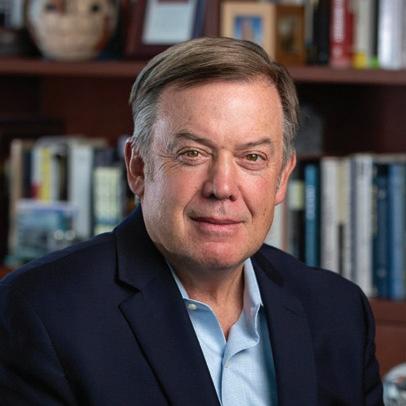
Michael M. Crow, President Arizona State University
The Morrison family understands what it takes to grow things. In 1982, June and Marvin Morrison and their son, Richard, found fertile soil at ASU. They planted the seed of a publicserving policy research institute that has endured to see its fifth decade.
With deep gratitude, I reflect on their vision, devotion to Arizona, civic leadership, and determination to create a sacred place for facts and policy ideas to flourish free from partisanship. Through decades of social and political change, the institute has continuously produced consequential policy research and driven informed discourse and decision-making on policy issues and options.
It is my great privilege to lead Morrison Institute forward. I pause at this 40th anniversary to honor the incredible generosity of the institute’s founders, the resolute leadership of the institute’s past directors, and the impactful body of research that many talented staff, past and present, have produced over the years. All of their work has been in service to a state they love, expressed through the rigorous pursuit of data and analysis to inform sound policy.
I invite you to join me in celebrating Morrison Institute by looking back on how it took root, grew in an ever-changing Arizona landscape, and will continue to bear fruit in the years ahead.
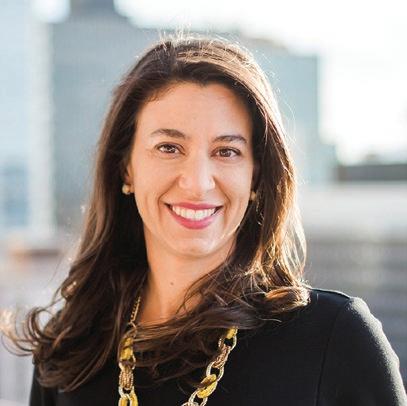
Andrea Whitsett, Director
Morrison Institute for Public Policy, Arizona State University
For millennia, the place we now call Arizona has been inhabited by people whose practices and policies impacted our future. They left their marks. We see them. We live them.
In some regards, what we as Arizonans do today makes us no different than those who came before us. We’re leaving marks, for better or worse, that future generations will see and experience. History informs us that we should think — deeply, carefully, strategically — about what we’re doing.
With an eye toward the future, how should we manage the challenges before us? How do we anticipate what’s to come? What should policy and decision-makers at state and local levels consider in preparing for inevitable change? What economic, environmental and social policies will encourage optimal, equitable growth and development?
Who will research consequential questions about Arizona and the people who call it home, and share honest, objective, data-driven analysis with everyone?
More than 40 years ago, a group of young, ambitious Arizonans united behind an effort to create a think tank to research
public policies important to the state and the region. Facts, information, impartial analysis, they said, were necessary to help Arizonans process truth, have healthy public discussions and make informed decisions.
The Morrison Institute for Public Policy at Arizona State University was established in 1982 to help a state growing by leaps and bounds understand in-the-moment challenges and prepare for changes promised in the fast-approaching 21st century. A public policy think tank was something new for Arizona then but not now.
That Morrison Institute enters a fifth decade, frankly, is amazing considering the think tank nearly didn’t reach its fifth year; had to earn respect within an academic institution; was targeted at the Arizona Legislature; had to compete for relevance in a digital age of rapid-fire changes in the way we disseminate and consume facts and research-driven analysis; and was challenged by calamities like the Great Recession and a global pandemic.
Morrison Institute is old Arizona twining in the new. To tell the full Morrison Institute story that spans 40 years is to tell many stories. One of the first important ones took place in the White Mountains.
Left: Spiral petroglyph attributed to the Hohokam people on Signal Hill in Saguaro National Park, Arizona. Right: Moonrise from the series Revisiting the Photographs of Marvin Morrison, photographed by Marvin Morrison, reproduced by Gina DeGideo, 2013. (Courtesy of Howard Morrison, the Morrison Family, and Gina DeGideo.)
The Beaver Dam Accords
Beavers at the headwaters of Black River helped set the scene for what would be pivotal talks that built a conceptual framework for a new, Arizona-centric public policy institute. So many things flowed naturally from there.
During a weekend in the White Mountains more than 40 years ago, Richard and Elaine Morrison of Gilbert hosted a gathering of like-minded, young Republicans, many of whom were building bona fides as movers and shakers in Arizona: Steve Twist, John Shadegg, Maricopa County Attorney Tom Collins, Susan Bitter Smith, and Dave Guthrie, who would become a Mesa City Council member. John McCain joined in support of the effort soon after that weekend.
“Not in my wildest dreams did we think we would end up with a legacy U.S. senator, a member of Congress, a city councilperson,” said Bitter Smith, who has built an extensive elected office record, including her current position on the board of the Maricopa County Community College District. “That wasn’t the purpose of the gathering.”
The purpose of the gathering was to discuss everything happening — politically, economically, socially — in a state they loved and to take action.
Richard remembers spending a few hours during one of the weekend’s brainstorming sessions at a site southwest of Hawley Lake at the headwaters of Black River. Beavers had dammed up the river, and the water and seepage created a lovely spot lush with foliage. He and his friends reached written agreements on their ideas. Sometime later, Elaine dubbed those agreements the “Beaver Dam Accords.”
“It stuck in our family,” Richard said, laughing. “I don’t know that it stuck with anybody else, but I remember it.”
Of all the best-laid plans of that highly motivated bunch of conservatives gathered at Hawley Lake, the creation of a public policy institute is the only accord still in play.
Everyone at the retreat was a thought leader, Richard said, but Twist, then chief assistant attorney general and now a prominent conservative policies advocate, had gone further with his thinking about how to form the institute than anyone else in the group.
“These were the words that sort of got burned on my chest, as they say, or across my forehead may be more socially acceptable. Steve Twist said, ‘You know what we need is a public policy institute in Arizona. We don’t have one and Arizona is maturing. We need one to improve the quality of public debate.’ I mean, who can argue against that?”
The logic was clear to Twist, who in the decades after providing key support for the establishment of Morrison Institute would be a co-founder of the Goldwater Institute and a national voice for criminal justice policies, such as mandatory sentencing, and the victims’ rights movement.
“It just seemed to me,” he said on reflection 40 years later, “that the quality of debate would be enhanced by having a think tank that was dedicated to studying public policy issues, and that all levels of government — executive, legislative, judicial — would benefit from having an institute or think tank that was focused on public policy issues for Arizona and the Southwest.”
The group at the beaver dam mused on practical and logistical issues for establishing an institute. Should it be a 501(c)3? Should it be housed in a university? Based in Phoenix? In Tucson?
“They all agreed,” Richard said, “that it should be at the center of political power in our state, meaning the State Capitol, and, at the time, they were all really, really comfortable with the idea that it would be at ASU.”
Steve Twist and Richard ran the think tank idea up the flagpole at ASU. They met with former Army Lt. Gen. Frank Sackton, a friend of Twist. Sackton was a key figure in campus administration, serving as special assistant to the university president, athletic director and founding dean of the ASU College of Public Programs. Before arriving at ASU in 1976, he held several influential military positions, including serving as secretary to Gen. Douglas MacArthur during the post-World War II reconstruction of Japan.
Sackton was “very encouraging” to the idea of filling an information void, Richard said. Sackton told him and Twist that the institute could be a clearinghouse for all of the very good, policy-oriented work at ASU. But Sackton said the problem with faculty research is that it wasn’t readable.
“He thought that a lot of stuff would need to be re-written, packaged so to speak, for dissemination to policymakers — state, county, local,” Richard said. “That statement stuck with me. It made a strong impression that’s the vector the institute should take.”
But first it needed to get off the ground.
“ It just seemed to me that the quality of debate would be enhanced by having a think tank that was dedicated to studying public policy issues, and that all levels of government — executive, legislative, judicial — would benefit from having an institute or think tank that was focused on public policy issues for Arizona and the Southwest.” — Steve Twist
Farming, Faith and Facts
The idea of the Morrison Institute didn’t come out of thin air. It’s rooted in the salt of the earth.
The uncommon decency of generation after generation after generation of Morrisons established and helps sustain the institute that bears the family’s name. A public policy think tank just made sense to them. It still does.
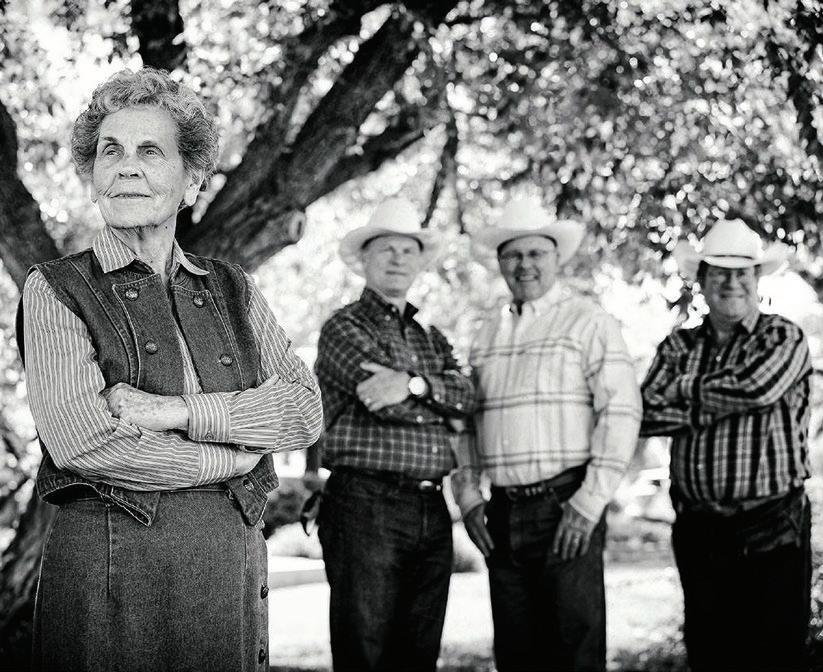
What the institute does with its research and other civic enrichment endeavors can be traced to the partnership established in the 1940s with the union of Marvin and June Morrison. Third-generation Arizonan Marvin married his high school sweetheart, June Neely, whose farming family moved to Arizona from Texas in 1924 when she was a baby. Marvin and June were experts at growing and raising things, including their three sons and their community.
“In their time, they were the paradigm of civic virtue, civic involvement,” Richard said.
“When I was in high school, my father was on 35 boards and commissions,” he said. “He had been on the Gilbert School Board for 16 years. He was the president of Arizona Farm Bureau. He was on Arizona’s first atomic energy commission, which, of course, paved the way for Palo Verde. He was on the board of several life insurance companies and casualty insurance companies. He was head of the Maricopa County Industrial Development Authority. … What’s all the more remarkable was that he was a real farmer. He really worked every day. He and his brother raced themselves to the farm office every morning to see who could get there first, and they were usually there by four o’clock in the morning. He was a hard-working man.”
“Renaissance man” is a phrase friends and associates often use to describe the intellectually curious Richard, who as a septuagenarian is working on a doctoral degree in organizational leadership. So many parts make up the whole
“ I just fell in love with them, the whole family.” — Ed Fox
man: farmer, fighter pilot, lawyer, author, developer, professor and Episcopalian priest. He is also the firstborn of Marvin and June, husband of Elaine and father of Julie and Ellen.
“I wish Arizona had about 10,000 more Richard Morrisons: engaged, thoughtful, ethical and public-spirited citizens who understand the complexity of balancing public needs with private rights,” said Grady Gammage Jr., a Morrison Institute distinguished fellow and former advisory board member. “His various contributions have made a real difference to how we think about natural resources, public policy and governance.”
Ed Fox, former vice president at Pinnacle West, the parent company of APS, served simultaneously on the Morrison Institute advisory board with Richard and on the Phoenix Zoo board with Elaine. Fox read from Hebrew scripture — a portion of the Old Testament — at Richard’s ordination. Fox called it “one of the great things in my life.”
“I just fell in love with them, the whole family,” Fox said. “They care so deeply about their religion. I’m not religious, but, boy, do I appreciate people who truly in their hearts believe and think that the world can be a better place. I think their religion is part of that transition and evolution. … I have great respect for that and for how much they care about the community.”
So does Steve Twist.
“I think they’ve made an amazing contribution to the health of Arizona and the public policy debate that goes on,” Twist said. “It was very generous of the family to start this and to continue to support it. I think very highly of Richard. His mom and dad were pioneers here. They’re entitled to a lot of respect.”
Civic engagement and community investment are central to the family’s ethos. Asking questions and seeking answers is a
part of doing business. Robust policy discussions are staples of family dinner conversations.
Still, Marvin and June wanted to do more, to give back to the community. They turned to their son Richard, the lawyer, for some estate planning advice on charitable giving. They had planned gifts to be distributed upon death, but they were also open to making an immediate donation. An endowment to ASU to establish a nonpartisan public policy think tank to help Arizonans understand issues shaping the state was something the elder Morrisons wanted to seed. Their $300,000 investment in the early 1980s would be about $900,000 in today’s dollar value.
June Morrison said she is pleased with the decision she and Marvin made to support a public policy institute, noting that in their agriculture and community lives they had “observed from time to time various things” that suggested a clear need.
“What we wanted was unbiased data for the legislators,” June said in the spring of 2021. “Everything that was to go to Legislature was to be unbiased because so often things were one way or the other. … We had heard of other places where they had done this same thing, and so we decided to do that.”
But it’s the timing of his parents’ decision that still has Richard in awe.
The Morrisons formed Arizona Dairy Company in 1972. In 1981, they decided to double the size of the dairy, making it one of the largest in the United States. The decision cost a lot of money. Interest rates during the early-1980s recession topped 20%.
The Morrisons had borrowed almost all they needed for the expansion. It took many years after that expansion for the dairy to reach the break-even point economically.
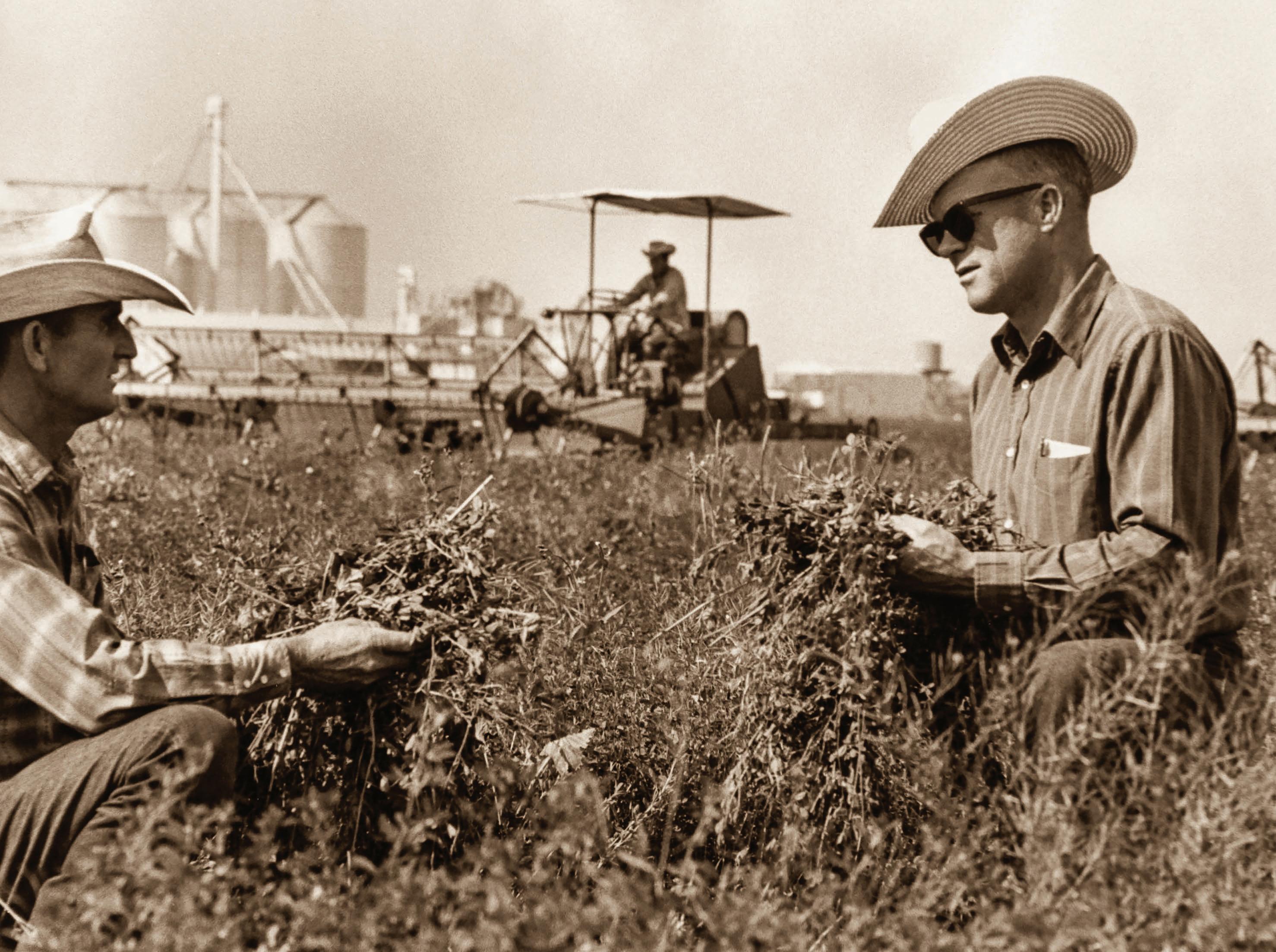
Left: Ken (L.) and Marvin (R.) in the Field from the series Revisiting the Photographs of Marvin Morrison, unknown photographer, reproduced by Gina DeGideo, 2013. (Courtesy of Howard Morrison, the Morrison Family, and Gina DeGideo.)
“It’s remarkable they were in that frame of mind (of charitable giving),” Richard said. “They gave away $300,000 during a time when they were really anxious to find funding to expand this dairy, and they had to borrow almost all of it. But you know? They didn’t care.”
Richard has been a constant but unobtrusive presence at the institute since its founding. He and Elaine have two daughters who also have been engaged with the institute. Their eldest daughter, Julie, now an author, conducted Morrison Institute research as an intern en route to an early career in transportation planning. Their youngest daughter, Ellen, worked for 15 years in urban planning and recently served two years as a Morrison Institute advisory board member.
“From a fairly young age, I grew up understanding that public service and investment with the intent to do good was very, very important to my parents and to my grandparents,” Ellen said. “Even before I knew it had a name, even before there
Let’s Do This
was anything attached to it, I knew that the values were there because that was something we talked about as a family: How to create that good where and how you can? … The most remarkable thing to me about growing up in this group of people is that even with all the good that they’ve done, they’re continuously looking at how to do more. They care so deeply about the well-being of the community and healthy, informed decision-making. They aren’t driven by ego. They didn’t have a personal agenda here except to try to further the work because they saw that it was needed.”
The Morrisons’ farming sensibilities, a certain kind of faith in people and processes, and a penchant for facts and truth to move conversations and plans forward all have found their way into the Morrison Institute way of doing business — through five directors, phenomenal growth in the state, an information dissemination landscape that is dramatically different from the pre-internet era of its founding, and the decades-long descent into hyper-partisanship and political polarization.
The first advisory board of the Morrison Institute was a veritable who’s who of Arizona business and civic leaders, most of them friends or professional acquaintances of the “Beaver Dam Accords” authors. It was huge — easily 40 people.
Keith Turley, then president of Arizona Public Service, was among them. Why? Because Richard Morrison asked, for one thing.
Turley and Richard shared East Valley roots. Richard was a member of Class 1 of Valley Leadership, an organization Turley co-founded to train a new generation of community leaders. And Turley knew Richard’s mother. Richard said they went on a few dates in high school.
But another reason Turley, an ASU alum, agreed to support the creation of a public policy institute was that era’s tradition of leaders of major, Phoenix-headquartered corporations and banks who made themselves integral parts of the civic fabric
of Arizona. They were called movers and shakers for a reason, and it was considered advantageous to network with them. The Morrison Institute advisory board was a place to be.
When the ASU College of Public Programs moved from the Tempe campus to the downtown Phoenix campus, it relocated to the former headquarters of APS. Morrison Institute’s physical space includes the ninth-floor office once occupied by Turley, where Richard gave his pitch about a new public policy institute.
Dennis Palumbo, an academic with experience running a large, state-funded center for public affairs at the University of Kansas, was the first director of Morrison Institute. He led the institute from 1983-86, standing up the institute with
the faculty-driven construct Lt. Gen. Sackton and then-ASU President Russell Nelson envisioned.
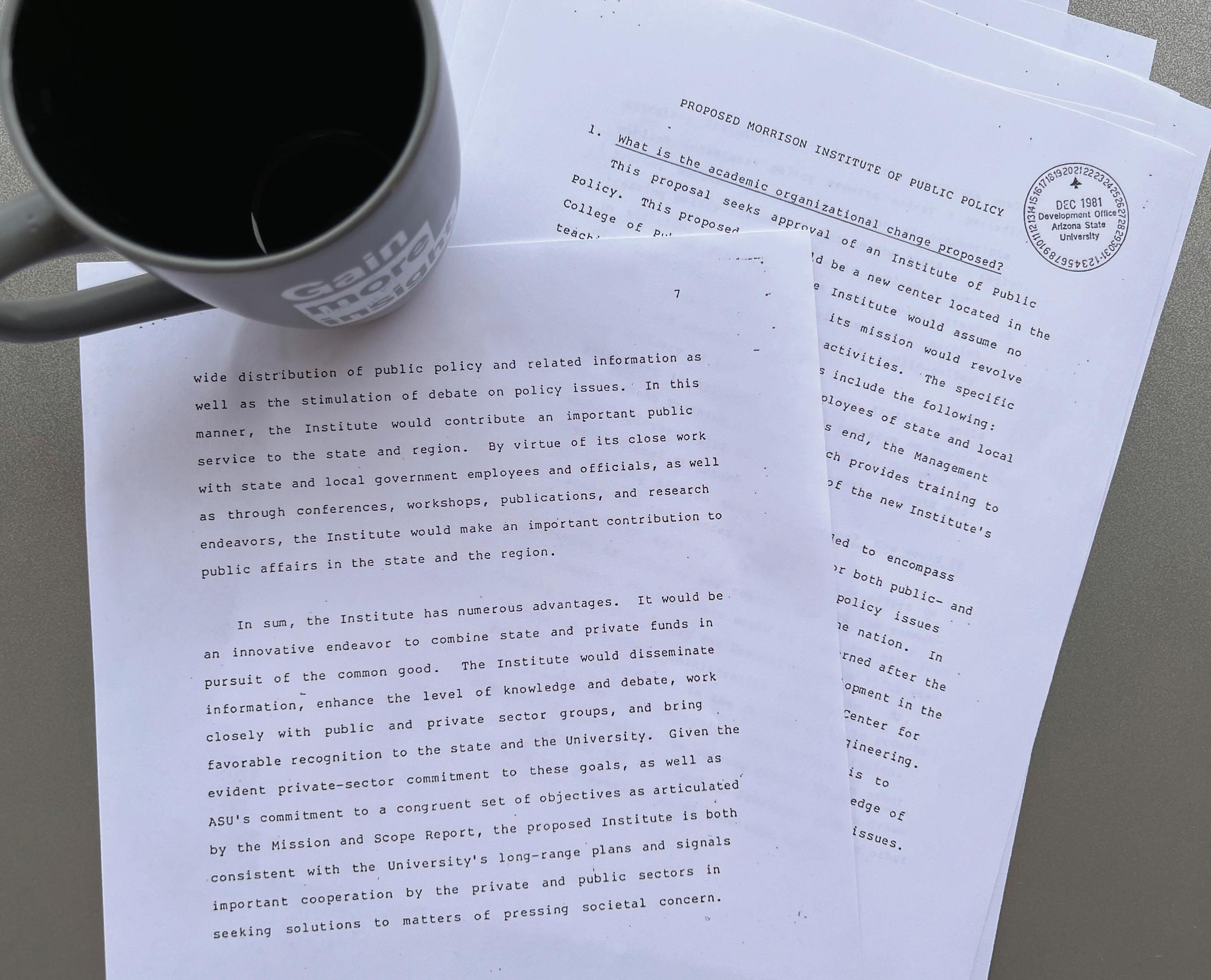
The institute was conceived with an entrepreneurial spirit. It was expected to financially cover nearly all of its operations. Early Morrison Institute reports were largely faculty-produced, and they came at a price. The institute paid ASU faculty members for their work at a rate higher than what it generated. The endowment dipped dangerously low. The advisory board raised concerns.
Palumbo returned to a faculty position and the institute took a long, deep breath. It would not be a last breath.
Rob Melnick, director of international programs and presidential professor of practice in the ASU School of Sustainability, was director of Morrison Institute for 21 of its 40 years. Prior to taking the Morrison position, he had attended graduate school at ASU, worked as a faculty member and in administration, and then took a leadership role at Hudson Institute, a think tank and research center in Washington, D.C.
But Melnick was not the first choice to be Morrison Institute’s second director.
“You’re a cockroach.”
That’s what the late Jack DeBolske, then executive director of the League of Arizona Cities and Towns and a Morrison advisory board member, told Melnick during his job interview. DeBolske was once called the most powerful man in Arizona and considered by many to be the father of the Phoenix freeway system. In 2015, he was awarded the Morrison Institute for Public Policy Legacy Award.
“He said, ‘You change jobs a lot, dart here and there,’” Melnick recalled with a laugh. “It’s funny in retrospect, but not at that moment.”
Melnick had doubts, too, during the interview process. He told President Nelson he was fuzzy on how the actual work gets done at the institute because he didn’t see any staff to execute it.
“Who does all this research you want done?” Melnick asked. “He looked at me with an absolutely sincere straight face because he believed what he said. He said, ‘Well, the faculty will do that. They’ll just do it.’ And I said, ‘Excuse me? Really?’ He said, ‘Yes, their service requirement. They’ll do that.’
“It was like we were on two different planets. I knew faculty and service in the university is not as you and I think of service to the community. It’s service to the profession.”
Fortunately for Morrison Institute, the first choice for the second try at finding someone to lead the institute declined the offer. In 1987, Melnick took up the challenge of a difficult reboot, to fulfill a mission of establishing a think tank with a public purpose. It was a five-year transition to fully implement a staff-driven business plan rather than a faculty-driven one.
Melnick learned quickly after meeting with faculty members that their focus was on producing studies that would appear in academic journals and help them move along a tenure track, not research that would be delivered directly to elected officials and community leaders.
“Some of them had some interest, but there was no sense of obligation,” Melnick said.
Academics also cast aspersions on Melnick for calling his strategic plan a business plan.
“To liberal academics, business is bad. Corporations are bad,” Melnick said. “I cannot tell you how universally negative the response was when I called it a business plan. … I made it a point of doing that to say that, ‘Look, if I’m going to run this place, I’m going to run it as a business. You’re telling me that all these faculty are going to rise to the occasion. It’s not going to happen. A lot of the money had been spent, and, frankly, it’s
a business plan. Besides which, the people on the board who are most savvy about the policy issues are the businesspeople, and they’re more concerned with Arizona’s future than the ivory tower is.’
“I pissed off a lot of people. I’m not going to kid you.”
For a while, Melnick was Morrison Institute’s only full-time staff person. He did nearly everything — identified and researched issues, wrote reports and worked to broadly disseminate them to a general audience.
“The growing pains are a big part of the Morrison Institute story,” Melnick said. “It’s because at the time, with all the best intentions of the Morrison family, of the president at the time, the director of the School of Public Affairs, and the (community) people who rallied around this thing, the institute was a very unusual undertaking for this institution called ASU.
“At that time, the biggest problem facing ASU was parking, for God’s sake. I mean it. Seriously. You can imagine. We were growing by leaps and bounds. Arizona was (growing) in terms of expansion in population and land use. It came at a very odd time. The good news is that we got through that. We developed a strong reputation, and then we sort of hit our groove. We hit our rhythm.”
“ The growing pains are a big part of the Morrison Institute story. It’s because at the time, with all the best intentions of the Morrison family, of the president at the time, the director of the School of Public Affairs, and the (community) people who rallied around this thing, the institute was a very unusual undertaking for this institution called ASU.” — Rob Melnick
Left: Aerial view of Arizona State University and the city of Tempe c. 1984. Arizona State Library, Archives and Public Records, History and Archives Division, Phoenix, #01-9483.
As Morrison Institute grew, a central staff of non-faculty researchers produced a slew of readable reports on issues and policies — citizen participation in government, economic development, environment, education, social conditions, water, government structure and intergovernmental relations.
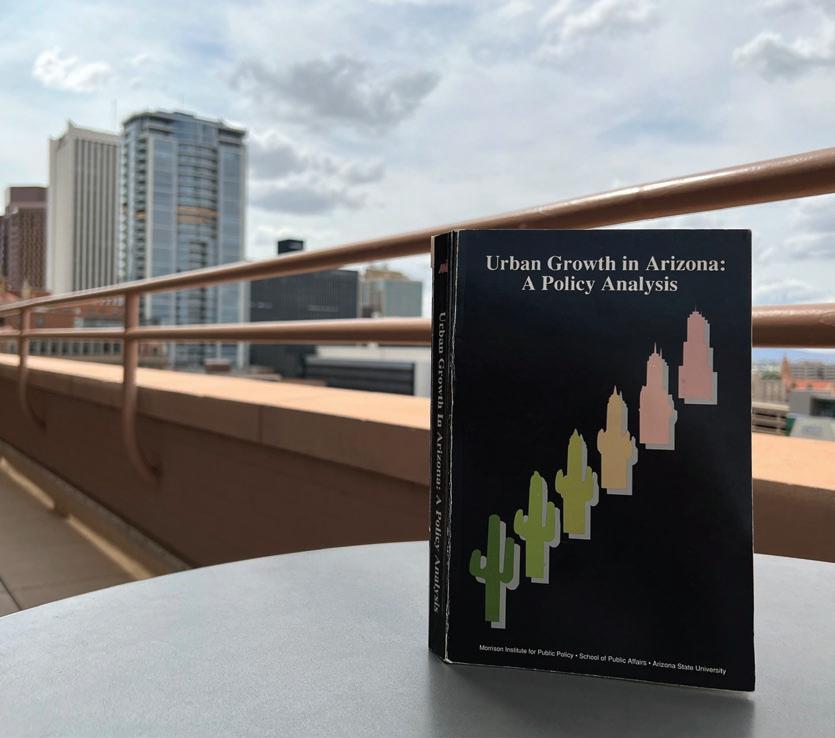
Melnick believes the coming of age for Morrison Institute was the work commissioned by a joint committee of the Arizona Legislature, “Urban Growth in Arizona: A Policy Analysis.” It is a 12-chapter book that features contributors delving into several facets of growth. Melnick wrote conclusions and policy recommendations for the 1988 report, which was released when “everything was coming up roses.”
“If you look at the report,” Melnick said, “it was very prescient about what we were going to run into down the road while everyone was so busy enjoying the spoils of this growth.”
As Morrison Institute grew, a central staff of non-faculty researchers produced a slew of readable reports on issues and policies — citizen participation in government, economic development, environment, education, social conditions, water, government structure and intergovernmental relations.
Then came accolades, which brought even more contracts for research work and requests for help with strategic planning, facilitation of public policy forums and program evaluation.
From 1988 to 1992, Morrison Institute generated more than $2.6 million in research grants and contracts. At the end of its first decade, it had a staff of 17 full- and part-time employees and seven graduate assistants, most of whom were paid by external sources of funds.
Morrison Institute staff developed a voice — objective, authoritative, conversational — and a brand that was disseminated through strategic communication and marketing of its products. The release of major reports became news events. They were difficult to miss.
The institute’s reports rarely enjoyed universal appeal. They were met with criticism from opposite ends of issues. Melnick considered those occasions, and there were many, a bit of a sweet spot.
“When Russ Nelson was still president, maybe three years in, I wrote a report on education reform,” Melnick said. “K-12 education, as you know, is always a big topic. … It was like all of our other reports. We would ask the question. We would do the research. We would compare what we did to other places and come out with policy recommendations.
“After the report came out, I got a call from Russell Nelson and he summoned me to his office, which was generally not a good thing. I entered his office, and he started laughing and I couldn’t figure it out. So, I said, ‘What’s up?’ He said, ‘I got a call from the teachers’ union, and they said that your report was way too harsh on the teachers and didn’t adequately criticize the school administrators.’ He said, ‘About an hour later I got a call from the school administrators saying the opposite.’ I said, ‘Well, Russ, if I’ve pissed off everybody, I’ve done my job.’
“We had a good laugh about that, but it set the tone for the institute — not to piss off everybody but to recognize that’s why you have academic freedom, that’s why your integrity matters. It doesn’t matter who funded your study, just the facts.”
But just the facts with practical analysis often wasn’t enough on campus. Melnick was reminded every five years during the institute’s sunset review report for the Arizona Board of Regents how difficult it was for faculty to see the institute in the correct light.
“The first one was eye-opening,” Melnick said. “It was unbelievably painful. I thought we had done a really good job of taking this situation that was so difficult, building something that in five years we had quite a bit of work done. We had impact in the policy world. We were gaining a reputation. We had brought in a lot of money.
“And I got taken to the cleaners by the review panel because the review panel was made up of academics, and all they could say is, ‘You haven’t published in the journals.’ To which I would respond, ‘That’s not the mission. Have you looked at the mission statement?’ And they would say, ‘Yeah, yeah, yeah, but you haven’t published in the journals.’ … It was just ridiculous.”
Left: Cityscape of Phoenix taken from the Arizona State Capitol c. 1986. Arizona State Library, Archives and Public Records. History and Archives Division, Phoenix, #01-8563.
Which Way, Arizona?
Just as Morrison Institute was firing on all cylinders, a surprise attack in 1995 from a powerful Arizona lawmaker created an inflection point that put in question its very existence.
Looking back now on the history of Morrison Institute, Melnick says, “There were birthing pains and then there were growing pains — and then there was just pain.”
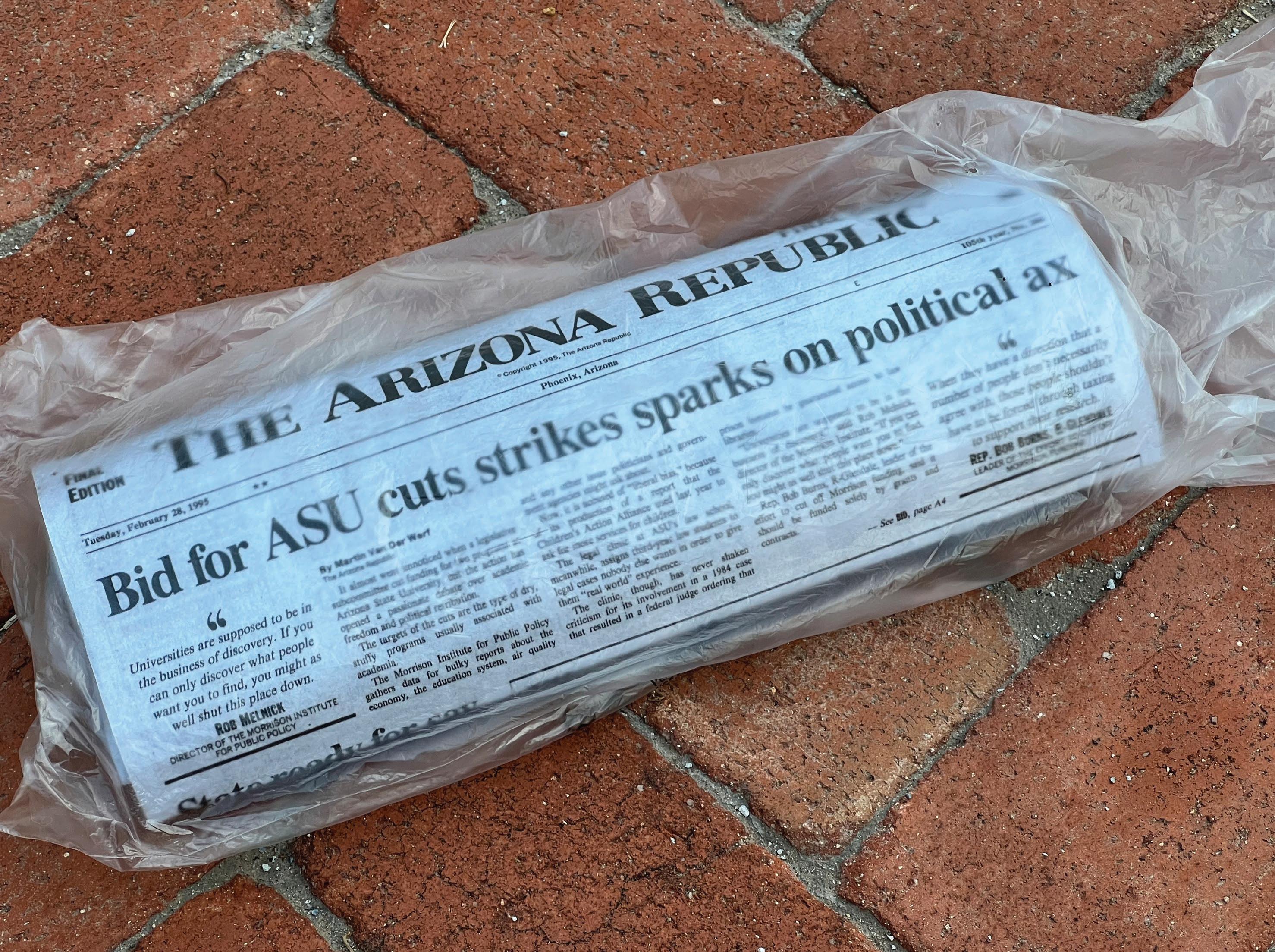
“Bid for ASU cuts strikes sparks on political ax.”
That was the headline of a Feb. 28, 1995, front-page article stripped across the top of The Arizona Republic. Pull quotes from Melnick and state Rep. Bob Burns, R-Glendale, who was leading an effort to block state dollars from supporting Morrison Institute, bracketed the story:
“Universities are supposed to be in the business of discovery. If you can only discover what people want you to find, you might as well shut this place down.”
“When they have a direction that a number of people don’t necessarily agree with, those people shouldn’t have to be forced through taxing to support their research.”
“I remember it like it was yesterday. It was such a remarkable situation,” Melnick said. “We did a report on child care and recommended that child care be subsidized by the state of Arizona, not because … we were a bunch of liberal left-wing yo-yos, but because we saw it as a very important economic issue, not just a social issue. If you could subsidize child care, make it affordable, it would bring women back into the workforce. … It was a twofer, an economic and a social wellbeing thing.”
According to The Arizona Republic, a legislative subcommittee sought to block funding to two programs at ASU — the Morrison Institute and a legal clinic at the law school. The article suggested retribution was at play. Morrison Institute was accused
of “liberal bias” because of a report Children’s Action Alliance used to advocate for more services for children. The newspaper said the legal clinic “has never shaken criticism for involvement in a 1984 case that resulted in a federal judge ordering that prison inmates be guaranteed access to law libraries.”
The proposal to block public funding, about a third of the Morrison budget, was a sucker punch, seemingly coming out of nowhere.
“But it was the best thing that ever happened to the institute — even though I didn’t get any sleep for a week,” Melnick said.
The kerfuffle forced a reckoning about whether Morrison Institute should be in Arizona’s future. Key influencers made it known that it should.
“I had the great good fortune of having at the time the chairman of the institute board … (then-APS president and CEO) Mark DeMichele, who utterly didn’t suffer fools,” Melnick said. “He was like a Gila monster. … He was really pissed off for the right reasons, not just because he was chairman of the advisory board. He saw this for exactly what it was.”
Melnick also had support from Richard Morrison. In that same 1995 Republic article, Richard said forcing the institute to operate only with private sources would change the character of the institute’s research.
“The Morrison Institute has done contract work, but the difference between a think tank with a public purpose and one that is doing solely contract work is the latter is a hired gun,” he told the newspaper. “That’s not what we were after.”
Richard and Elaine Morrison invited Melnick to breakfast in the East Valley to talk about the threat at the Legislature.
“They had been completely hands-off but had been watching the whole thing,” Melnick said. “Their name was sort of getting dragged through the mud. We had a breakfast meeting in the East Valley, and it made a profound difference in my life because what they said, in no uncertain terms, was, ‘We support you and what you’ve done no matter how this turns out.’ And it wasn’t clear how it was going to turn out at that time.
“They said, ‘No matter how it turns out we are behind you.’ And it wasn’t dinging Bob Burns or any of that other stuff. They were just saying, ‘We support what you have done. You’ve done important things; continue to do them.’ I was moved to tears, literally. It was so generous of them. I mean they were watching an investment about to go down the tubes, getting creamed in the media by the Bob Burns fans, etc. And they just were the best. They were the best.”
Burns’ attack pushed to the forefront some key questions about public policy in Arizona: Does the state want a think tank like the Morrison Institute? Does ASU want to house a public policy research institute? Do policymakers want access to fact-based, independent research?
The answers were yes. The attempt to block public funds from being allocated to Morrison Institute failed. But it left a mark on the organization.
“It was very painful,” Melnick said. “Very, very painful. It was at once a high point and a low point. Trial by fire.”
Melnick would lead Morrison Institute for another 13 years.
Policy and People
After one of the biggest threats to its existence was behind it, Morrison Institute under Melnick continued building a portfolio of research, analysis and community engagement.
• It convened town hall-style gatherings and facilitated policy discussions with decision-makers and influencers.
• It organized study trips for advisory board members and other community leaders to see firsthand how communities outside Arizona addressed challenges that Arizonans faced.
• It hosted a legislative academy for new lawmakers that shared insights into complex policy questions.
• It integrated and leveraged its tie to the university by connecting students and faculty with practitioners through a community fellows program.
The institute’s bread and butter during its first 20-plus years, literally what paid the bills and what earned it respect as a trusted source of information, was how it prepared and presented research and analysis on topics vital to the present and future of the state and its communities. Key to its success then and now is the relationships it built among community members, the people living the realities of public policy.
Just as academics were a tough crowd for the ASU public policy think tank, there was some winning over to do in the community. The work is not at all academic to community members devoted to improving the human condition in Arizona and the region.
Diana “Dede” Yazzie Devine, president and CEO of Native American Connections, and a Morrison Institute distinguished fellow, credits the think tank for flipping the researchercommunity relationship model by putting public needs ahead of research interests.
“Sometimes big research institutions, ASU, too, they go look for the funds, and they come to the community provider and
“ I went all over giving speeches about ‘Five Shoes.’” — Betsey Bayless
say, ‘We’re going to prove this, and do you want to be our research for that,’” said Devine. “‘We want to use your people for our research that we’ve already got funded. We’ve already got the hypothesis.’
“There were times,” she said, “when I would describe ASU’s research as ivory tower. Morrison was always a little bit outside of that tower and seeing outside of that tower. … Morrison always had a little bit different reputation.”
And a massive body of work is at the foundation of that reputation. The institute released reports like “Understanding Charter Schools” (1995), “Growth and the Future of Greater Phoenix: Quantity, Quality or Both?” (1995), “Transit in the Valley: Where Do We Go from Here?” (1996), “Strategic Economic Development Vision for the Arizona-Sonora Region” (1996), “Hitting Home: Voices of Domestic Violence” (1997), “Which Way Scottsdale?” (2003), “Vibrant Culture — Thriving Economy” (2004), and “The Treasure of the Superstitions: Scenarios for the Future of Superstition Vistas” (2006).
A series of reports between 1997 and 2007 called “Arizona Policy Choices” took on a life of its own in both style and substance. They were designed to stimulate debate and be a reference for the future. Arizona Policy Choices were topics Morrison Institute wanted everyone to discuss, and it worked to create opportunities for residents and public policy leaders to do that and do it well.
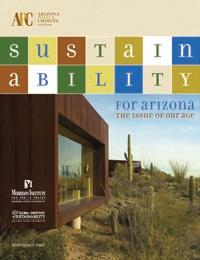
Arizona Policy Choices volumes featured critical thinking on leading-edge topics. The first one, “Balancing Act: Tax Cuts and Public Policy in Arizona,” addressed tax policy from both practical and philosophical perspectives. The last one, “Sustainability for Arizona: The Issue of Our Age,” focused on a topic just beginning to register on the public conscience.
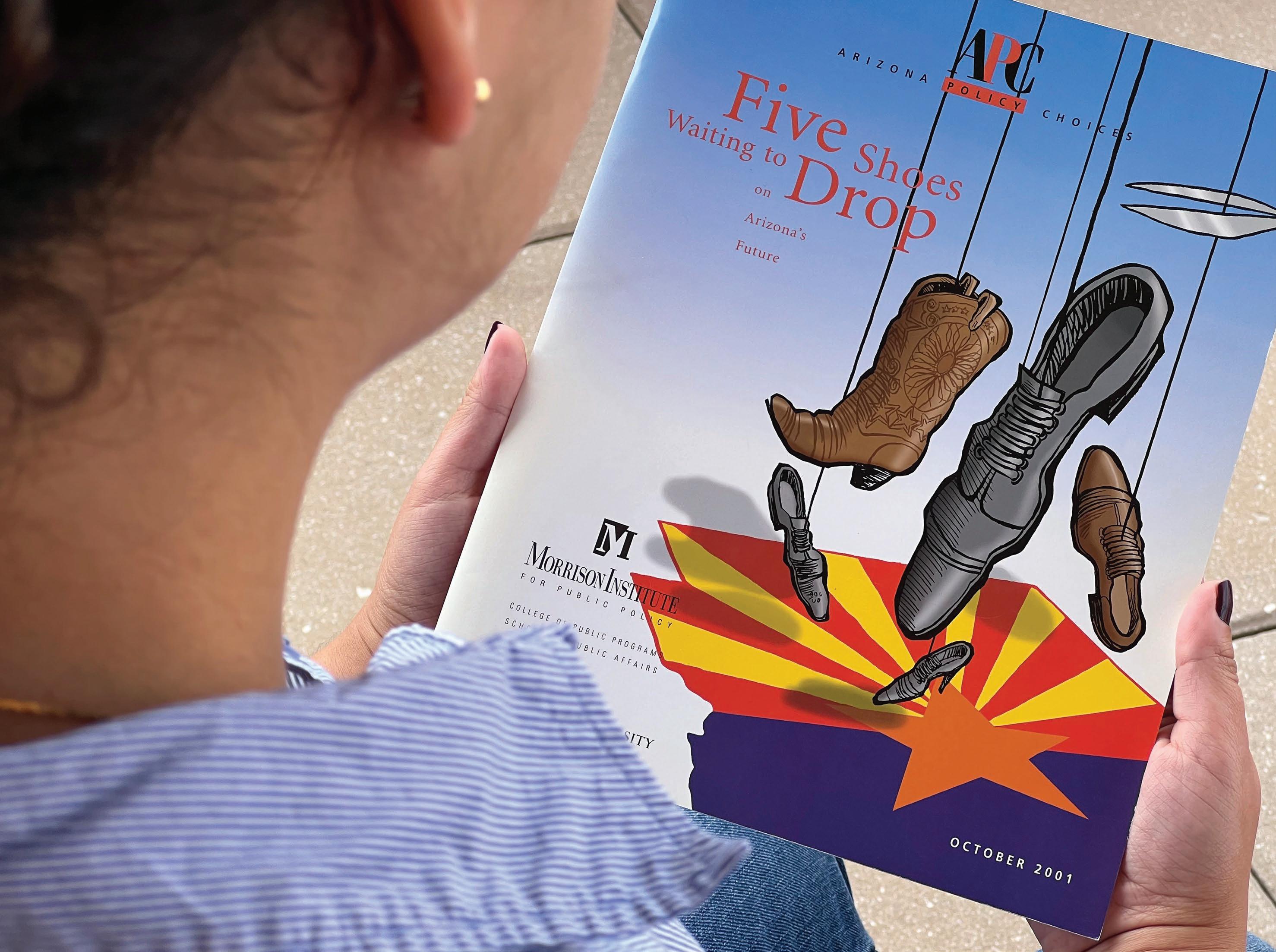
The release of Arizona Policy Choices reports, with crisp writing and stylish design, often were media events, generating news articles, opinion pieces and broadcast segments. None generated a longer, louder buzz than “Five Shoes Waiting to Drop on Arizona’s Future” in 2001. It is a Morrison Institute signature project that 20 years later still triggers memories and feelings of longtime observers.
“Five Shoes” talked about trends that were underway in Arizona but couldn’t be seen yet by the general public. It went into detail about Arizona’s ability to attract and keep talent, the significance of ensuring Latino education success, what it takes for long-term success in the new economy (then high-tech jobs), the quality of Arizona leadership, and significant issues with the Arizona tax system.
“Everybody just loved ‘Five Shoes,’” said Betsey Bayless, then Arizona Secretary of State and a member of the Morrison Institute advisory board. “I went all over giving speeches about ‘Five Shoes.’”
The “Five Shoes” rollout and a series of slick presentations — spearheaded by lead author and associate director of Morrison Institute Mary Jo Waits — spanned two years and generated sustained coverage of the findings.
“Clearly, from a public policy institute perspective, it did exactly what you want it to do — identified an issue,” said Ed Fox, who was chairman of the Morrison Institute advisory board when “Five Shoes” was released. “It did the analysis and people at all levels of state wanted to know what it was. Did it result in change in any laws? I don’t know that, but it did what a policy institute can do if it doesn’t get into political lobbying, which is influence the decision-makers. Whether they do anything with it or not is not something you can control.”
Changing with the Times
The past 20 years of Morrison Institute are nothing like the first 20 years. Times changed. Arizona changed.
changed.
In 2002, President Michael Crow took the helm of ASU with the intent of creating a New American University that clearly and purposefully integrates higher education with the real world, with research and teaching focused on local and global outcomes. ASU would become more responsive to the community.
“ASU must be more than a place — it must become a ubiquitous presence and a driving force, in local neighborhoods, in the metropolitan region and statewide,” Crow wrote in The Arizona Republic shortly after his inauguration. “ASU must become an integral part of the community and a lifelong presence in the lives of its alumni as well as the general citizenry.
“ASU must become a presence in our local schools, but I also expect ASU to become a force in our government, in our museums, in our cultural institutions, in our homes and in our retirement communities. It must maintain a presence and relevance in the lives of all of Arizona’s diverse communities. Where necessary, ASU should attempt to improve the quality of life in communities across Arizona.”
Crow could have been speaking about the work of the Morrison Institute since its founding.
The New American University model was advanced by a new university charter that measures success by inclusivity
and “advancing research and discovery of public value; and assuming fundamental responsibility for the economic, social, cultural and overall health of the communities it serves.” ASU now promotes an institutional culture that is dramatically different than what Melnick encountered on campus during his early years as director and what community members experienced as typical off-campus interaction with universitybased research.
Morrison Institute and its leaders adapted to changes at the university and in society.
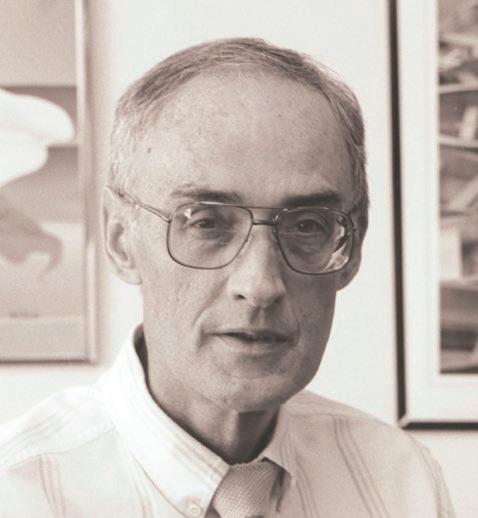
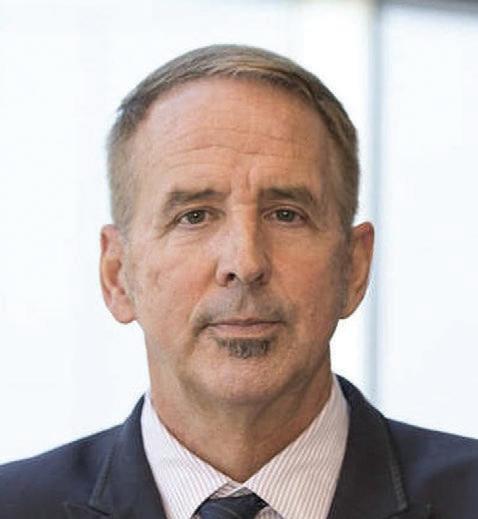
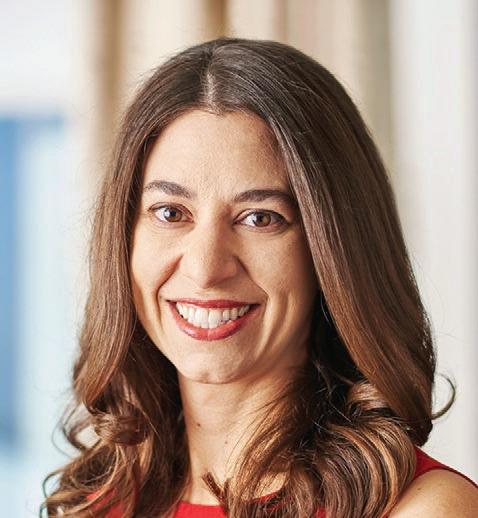
Dennis Palumbo 1982-1986 Rob Melnick 1987-2008
Sue Clark-Johnson 2009-2013
Thom Reilly 2014-2017
Andrea Whitsett 2018-Present
After Melnick, the late Sue Clark-Johnson, a former president of the Gannett Newspaper Division, guided the institute from 2009-13, through an era of synthesizing information for broad consumption in a manner similar to long-form journalism. She also established the distinguished fellows program, which formalized relationships with select Arizona leaders so the institute can regularly tap into their knowledge and thinking, and the annual State of Our State event, a rare but necessary opportunity to gather Arizona’s thought leaders, policymakers and decision-makers together for discussions about key topics. The Latino Public Policy Center was launched during Clark-Johnson’s tenure and was led by founding director Joseph Garcia from 2012-19. The Latino Center’s signature publications include “Arizona’s Emerging Latino Voter,” “Citizenship or Something Less? Economic Implications for Arizona,” “Defining Border Security in Immigration Reform,” and “English Language Learners: What’s at Stake for Arizona?” Based on the center’s premise that Latino issues are Arizona issues, Morrison Institute considers demographics, historical context, racial equity and the disproportionate impact of certain policies on communities of color in its research design, data analysis and community engagement.
From 2014-17, Thom Reilly applied his experience in public administration, including as manager of Clark County in Nevada, to help cement Morrison Institute’s bona fides as a subject matter expert in key topics such as water policy and child neglect and safety. Under his watch, the Kyl Center for Water Policy was created (see pages 28-29 for more about the Kyl Center) and the Arizona Community Foundation funded a three-year Morrison Institute research project to identify child welfare and child well-being trends in Arizona.
Morrison’s fifth director, Andrea Whitsett, now leads the think tank with a public purpose into its fifth decade. She joined Morrison Institute in 2007 as a public policy research assistant and has spent nearly half her tenure in leadership roles. Whitsett, who in 2019 was named a “40 Under 40” honoree by the Phoenix Business Journal, has the longest tenure at Morrison among current staff. In 2018, Whitsett was named
director, a role she has redefined to emphasize relationship building and community engagement.
Whitsett is the proud granddaughter of Julieta Saucedo Bencomo, who was a force of nature in her community, particularly when it came to education. In 1979, she became the first Latina to serve on the Arizona State Board of Education. She served on the Governor’s Council on Aging and was a Hon Kachina Award recipient.
“I was definitely influenced by my grandmother being this matriarch of the family, a powerhouse,” Whitsett said. “I don’t share her personality. She would have told you I’m very diplomatic, and she would have said it with some degree of exasperation. She was more comfortable being a disruptor, pissing people off. When she was speaking up on a matter of justice, her conviction was so great it made her impulsive and fearless.”
Being part of a huge extended family of independent thinkers from all walks of life and with perspectives across the political spectrum, Whitsett said, is what makes Morrison Institute’s practice and purpose feel natural. The challenge of striking balance and finding common ground in the best interest of everyone is normal.
Whitsett is no less passionate than her grandmother about advancing community interests. Mary Pahissa Upchurch, a senior partner with Gray Associates and Morrison Institute’s board chair, said Whitsett has transformed the institute to ensure underserved communities are included in the organization’s work.
As the first Latina to run Morrison Institute, Whitsett is attuned to understanding the impacts of public policy on people of color. For instance, under her leadership, the institute secured funding from the Walmart Foundation for a 2021 study focusing on the combined impacts of heat and COVID-19 on Latinos and Native Americans living in Phoenix.
“Andrea has worked tirelessly on behalf of the greater Arizona community, in the exploration and evaluation of public policy
issues important to all Arizonans, whether young or adult, rural or urban, and regardless of race or ethnicity,” Upchurch said.
On child welfare in Arizona, for example, not only has Morrison Institute achieved expert status through research and the effective communication of that work, it leads on the issue with Whitsett being a core team member of Arizona’s Collective Impact for Child Safety and Well-Being. And, in 2019, the institute focused its major annual event on the perceptions of people in rural Arizona. Whitsett’s renewal of the institute’s focus on research with potential impact across the state can also be seen in a recent six-county study on housing affordability that applies a race equity lens to historical and current housing issues, as well as a just-started project on health literacy in underserved communities in Gila County.
“Finding Morrison Institute was serendipity,” said Whitsett. After applying for another job at ASU, she was pointed toward a yet-to-be-posted opportunity, a Morrison Institute research apprenticeship. “When I took the job, I had absolutely no idea what it would come to mean to me.
“When I experienced the culture of the place, its integrity, its unique nonpartisan platform for informing system-level change, I fell in love. The institute’s devotion to serving Arizonans by providing the data and analysis necessary for sound policy and planning — who wouldn’t want to be part of that?”
That legacy, Whitsett said, explains why Morrison Institute consciously eschews advocacy as it fulfills its mission to improve public policy discussion and development, why it chooses topics, partners, and collaborators so carefully, and why it designs research questions the way it does — all the while living within its means.
“We spoke to dozens of policy leaders across the state as part of our current strategic planning process,” she said. “Time and again, we heard the need for research, analysis and policy choices that rigorously adhere to facts and data. With more noise out there, the demand for objective research is greater than ever.”
Morrison Institute Today
Amid polarization, hyper-partisanship and rampant disinformation, Morrison Institute’s role today of being an accessible, data-driven think tank that provides careful, objective analysis rarely has seemed more important. The institute continues to build deep knowledge on key topics, serve as a bridge between research and practice, and acts as a connector and collaborator in addressing clear and present challenges that threaten Arizona’s prosperity.
After several years of staff reductions following the Great Recession, Morrison Institute staffing has bounced back to 19 full-time and part-time employees plus eight student research assistants. Whitsett is assembling a growing team that includes an associate director for research, a Kyl Center for Water Policy research director and more subject matter experts.
Redefining Morrison Institute leadership and adjusting staff makeup reflect the community’s interest in specific topics and the growing demand for rigorous, original research and polling that is intentional about capturing the views of all residents, not just voters.
In the run-up to its 40th anniversary, Morrison Institute released a bevy of reports that speak to issues of the day — public safety, water policy, child well-being, housing.
Early in 2021, the institute conducted a survey for the Mesa Police Department about residents’ perceptions of the department and community safety. Based in part on the survey, the Mesa City Council approved additional body cameras, a top priority of residents.
“Morrison’s survey of Mesa residents gave us a broad, crosscutting perspective of the community’s perceptions,” said Assistant Chief Harold “Lee” Rankin. “The findings became a critical component of the information we use to make policy and budgetary decisions, which impact all of the city’s residents.”
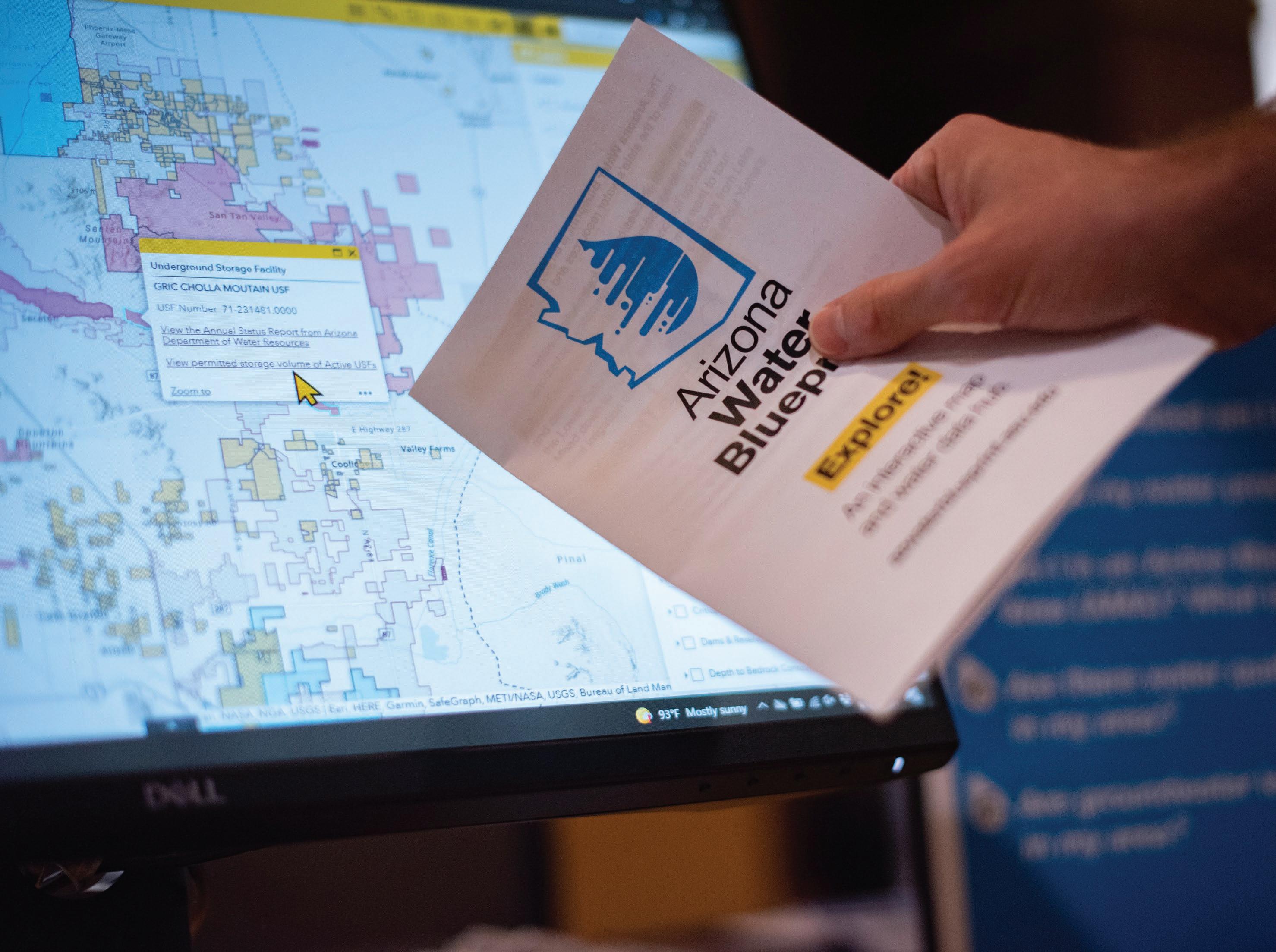
In June 2020, the Kyl Center for Water Policy introduced the Arizona Water Blueprint, an interactive map and water data
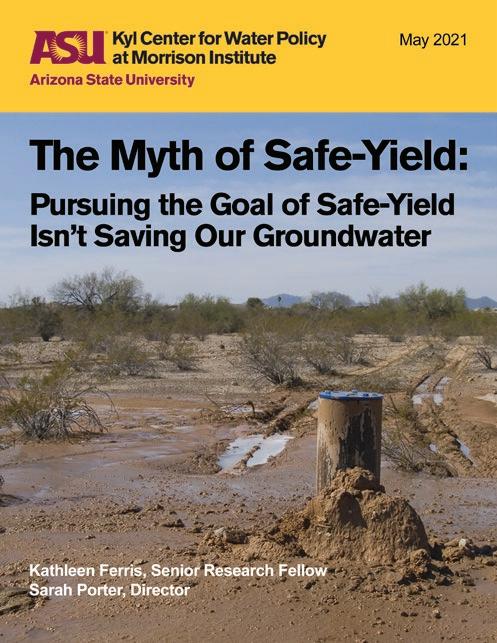
hub that combines data and multimedia content to help make complicated water-related topics easier to understand. In 2021, the center released several publications and perspectives, including “The Myth of Safe-Yield,” about unsustainable groundwater use; “Ten Tenets of Water Equity,” about fair access to safe, clean water in communities; and “Return to Watering the Sun Corridor,” a perspective by attorney Grady Gammage Jr. about water supply and demand in Arizona.
A multi-year grant from the Arizona Community Foundation to produce data-driven research about child neglect continued to produce information and analysis about child welfare in Arizona. In 2021, that partnership produced a policy paper on the Family First Prevention Services Act and a report titled the “Cost of Adverse Childhood Experiences in Arizona,” which described the link between childhood trauma and associated chronic illnesses later in life that carry steep price tags for individuals and society.
Morrison Institute responded to the growing housing crisis in Arizona by delving into this significant social, health and economic challenge. “Housing is Health Care,” released in May 2021, examines how housing and in-home supports affect public spending on individuals with chronic mental illness in Maricopa County. “Building Arizona,” released in April 2021, added another level of analysis to the affordable housing crisis in Arizona with an examination of the low- and middleincome rental housing market. Morrison Institute research and analysis of affordable housing shares information about the link between lack of access to affordable housing and longterm negative effects on health, children, the environment and economic mobility. It examines racial disparities in access to secure housing and homeownership rates and explores short-
and long-term actions that could increase the availability and affordability of rental units in Arizona.
Beyond publications, Morrison Institute partnered with Arizona Community Foundation and Republic Media for the New Arizona Prize: Housing Security Challenge to find a solution that “innovates beyond the construction of housing units to address housing security through supportive services related to racial inequality, economic and physical mobility, social work, public health, education, or other related factors.” The $250,000 prize was awarded to the Tempe Community Action Agency to address housing insecurity among the senior population living in the East Valley.
And to build more and better bridges between research and public policymaking, Morrison Institute redesigned its Arizona Legislative Academy by expanding it into the Arizona Governance and Policy Academy, an educational program for elected officials and staff members at state and local levels of government. The academy offers several types of content, including short, spotlight webinars on new research; updates on topics on the public policy radar that are moving quickly; and deeper-dive primers on ever-present policy issues.
Morrison Institute did all this work and more during a pandemic.
All things considered, the institute fared well during the disruptions of COVID-19. Leadership found ways to be supportive and adapt to needs in partnership with the community and funders. Pandemic-era work, including the success of reinvigorating the Arizona Governance and Policy Academy with the help of a generous gift from APS, is a testament to its strength and flexibility and an indication it will endure as an Arizona fixture.
In the run-up to its 40th anniversary, Morrison Institute released a bevy of reports that speak to issues of the day — public safety, water policy, child well-being, housing.
Keeping it Real and Relevant
What Morrison Institute does today to fulfill its founding mission is different but also the same as it was 40 years ago. Honoring the original intention to ensure Arizona has a nonpartisan think tank with a public purpose to help inform decision-making requires near-constant adaptation to societal and technological changes. But Arizonans still need facts and objective analysis of what’s important now and for the future.
Morrison Institute established a record as a synthesizer of research and information on important issues driving policymaking and political agendas. But in recent years, it has focused more intently on producing original data collection and analysis and becoming subject matter experts that community members and clients say they need to understand and address complex, often interconnected issues in the state and region. Survey-based research is part of that work, but so is the data mining that leads to analysis that informs systems change.
A prime example of original research is “Spotlight on Arizona’s Kids,” the multi-year collaboration with Arizona Community Foundation and the Arizona Department of Child Safety to gather and analyze data on child neglect and enhance prevention strategies. The project has presented legislators, state agency officials, court and law enforcement personnel, child advocates, and business leaders with a series of publications that examine the scope of issues related to child neglect.
With “Spotlight on Arizona’s Kids,” Morrison Institute grew in its role as a subject matter expert on child neglect, the leading reason families enter the child welfare system in Arizona. The institute’s bona fides came one data point at a time. The community benefits from having data masters in their backyard and technology has allowed Morrison to share truths about
“ The competition for people’s attention is different today than 20, 30 or 40 years ago, but what matters to people is remarkably constant — health, education, jobs, livability, natural resources, good governance. Interest in these core issues hasn’t waned. I sense an impatience for new, original information that’s worthy of spurring policy action. That’s the bar we must clear. I want us to produce research that gets attention not for being flashy but because it is useful.” — Andrea Whitsett
child neglect and prevention resources with the public through interactive mapping.
Erica Quintana, the senior policy analyst behind the child well-being initiative, reviewed 800 reports of child neglect to establish a research foundation for the project.
“The expertise that we have to become familiar with the data sources and how to use them and access them, not everyone knows how to do that,” Quintana said. “Not everybody has SPSS (Statistical Package for the Social Sciences) or the statistical tools or knowledge to pull variables out of a codebook or out of a database and then generate the information that they need. … No one loves the margins of error. That’s not the sexy part of data analysis, but it’s really important. We try to be good stewards of data and information, and I think people really respect that and need that, especially now.”
Steve Seleznow, president and CEO of Arizona Community Foundation, said Morrison Institute treats data in a fair, valid,
reliably nonpartisan way that the state’s largest community foundation needs to bring light to key issues.
“Let the data speak for itself and then be thoughtful about the analytical frames that could not be politicized,” said Seleznow, who is a Morrison Institute distinguished fellow. “We fund (Morrison Institute) to get hard questions answered and to advance issues of importance to the state and to leaders of the state so that they’ll pay attention to the right things and build policies and make decisions on a reputable set of data from a major academic and research university.”
That Morrison Institute is housed in ASU’s Watts College of Public Service and Community Solutions is intentional. Former Dean Jonathan Koppell said the trust and reputation the institute has built up over the years from analyzing policy issues and connecting evidenced-based ideas to likely policy outcomes makes it an integral component of the college’s quest to integrate academia, policy and community.
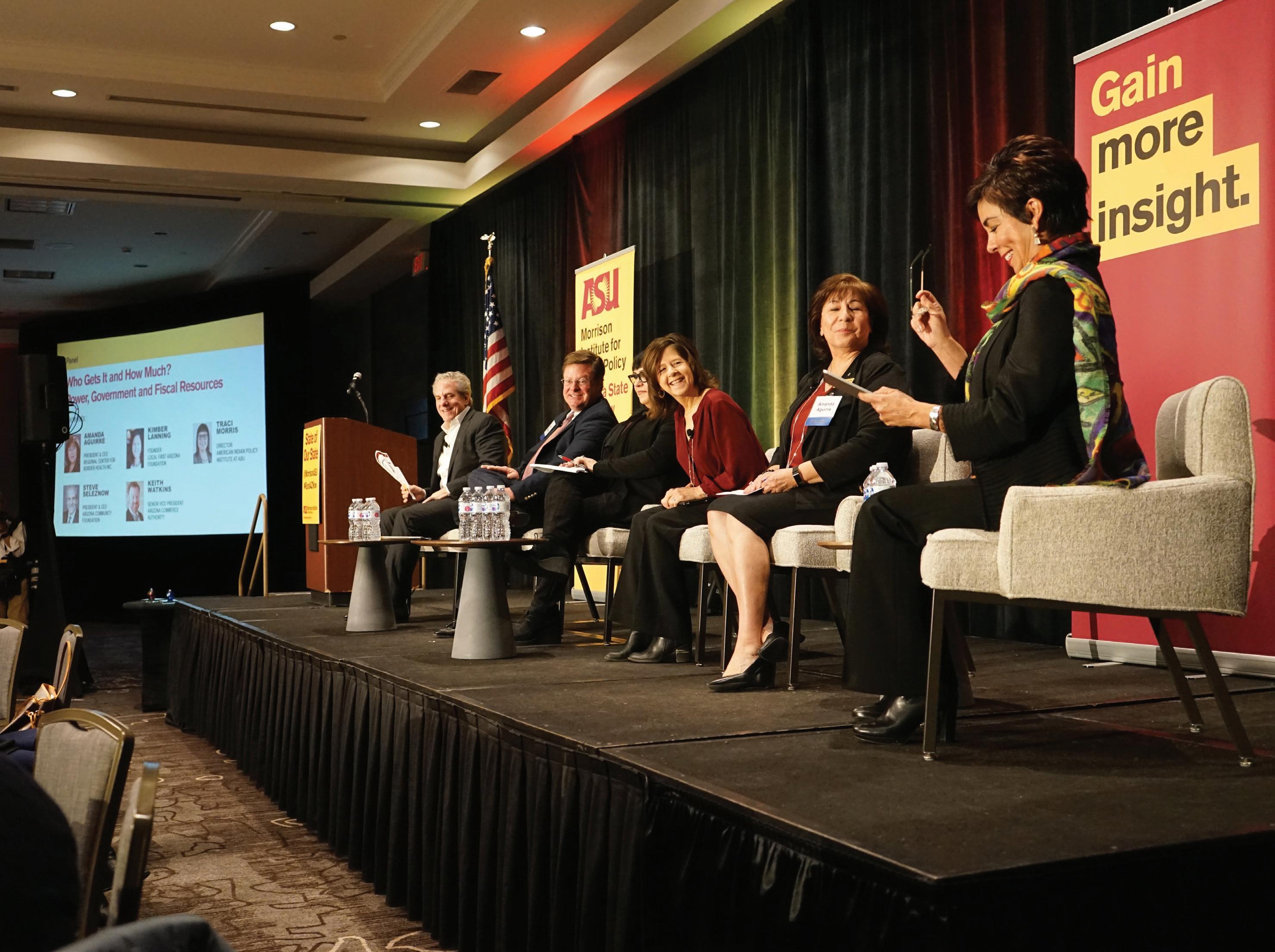
Left: Morrison Institute’s annual State of Our State event brings together Arizona’s thought leaders, policymakers and decision-makers for discussions about key topics. In 2019, the event’s theme was “Rural Arizona Now.”
“I feel very strongly that part of the reason to provide this kind of analysis is to encourage people to take steps to remedy the things that we identify,” Koppell said. “Part of the role is to de-mystify the problems we confront.”
Some problems are intense and tragic. Child neglect in Arizona is one of them. Koppell believes Morrison Institute’s reputation helped a beleaguered child welfare system accept analysis and recommendations.
“Department of Child Safety (DCS) is an organization that makes an easy target for people who want to criticize,” Koppell said. “So, understandably, they were worried that any analysis is going to be a setup for people who want to criticize it. I think it says a lot that the agency said we believe that the Morrison analysis is not going to hide stuff, but they’re not out to get us either. This isn’t an undertaking with the goal of finding fault with the agency; it’s an undertaking with a goal of better understanding what’s going in the child welfare system in terms of the outcomes for Arizona’s children.”
Morrison Institute advisory board member Kate Brophy McGee was a Republican Arizona lawmaker with a special interest in child welfare when she made the first introduction between former Morrison Institute Director Thom Reilly and former DCS Director Greg McKay regarding a collaboration on child neglect issues in Arizona. The results she sees today show Morrison Institute’s work has had the important impact of taking the political air out of the issue, she said.
“This really was a good example of data and nonpartisan research being put to effective use around a very politicized topic,” Brophy McGee said, adding that the collaborative process and research methodology can be updated and replicated on other issues important to Arizona and the region.
But the ongoing problem in the quest to have more informed civil discourse, as Brophy McGee sees it, is too few people
are listening to facts and truth and connecting the dots to policy and outcomes. She’s encouraged by the development of the Arizona Governance and Policy Academy to beef up information dissemination and policy discussion.
“It will teach people how government works and pull them out of the sound bite, troll atmosphere (of social media) and nasty blogs and emails that are highly inaccurate that occur on both sides,” Brophy McGee said.
Even in the middle of the COVID-19 pandemic, Morrison Institute found ways to connect information and analysis to government agency efforts to improve policymaking. For example, Arizona Health Care Cost Containment System
(AHCCCS) staff benefitted from the findings of the “Housing is Health Care” report, which addresses the issue of stable housing for people with chronic mental illness.
“We were encouraged to see the Morrison Institute’s ‘Housing is Health Care’ report, as it supports work AHCCCS is engaged in currently to improve health outcomes for individuals living with serious mental illnesses by addressing social determinants of health,” said Jami Snyder, director of AHCCCS, Arizona’s Medicaid program. “With the Morrison Institute’s research, Arizona can point definitively to the positive results of Arizona’s innovative public funding efforts to address chronic homelessness.”
Even in the middle of the COVID-19 pandemic, Morrison Institute found ways to connect information and analysis to government agency efforts to improve policymaking.
Center of Attention: The Kyl Center for Water Policy at Morrison Institute
Additional investment by the Morrison family helped establish the center named for former Arizona Sen. Jon Kyl, one of the nation’s leading experts in water law and policymaking. The Kyl Center for Water Policy within the Morrison Institute was established in 2014.
Early in its existence, Morrison Institute logically seized upon water policy in rural and urban areas as one of the most consequential issues for Arizona’s future. Monumental public policy decisions are behind the Colorado River Compact of 1922, construction of the Central Arizona Project, the 1980 Groundwater Management Act, and the 2019 Drought Contingency Plan.
In 1985, Morrison Institute produced “Water in Mesa: Growth or No Growth?” It was the basis that year for a three-day discussion that was part of the long-running Mesa Speaks planning conference series. According to The Arizona Republic 110 community and business leaders attended. Richard Morrison remembers that report and the engaging community conversation it sparked at Mesa Speaks as the type of informed discussions on public policy he and his family wanted.
More reports would follow as water policy, the most complex, most hard-fought and arguably the most important policy in the region, continued to shape Arizona’s growth and development.
Additional investment by the Morrison family, this time $1 million, helped establish the center named for former Arizona Sen. Jon Kyl, one of the nation’s leading experts in water law and policymaking. The Kyl Center for Water Policy within the Morrison Institute was established in 2014.
“Taking up the topic of water pleased my parents to no end because, of course, you don’t do anything in agriculture in this valley without water,” said Richard, whose legal career had a focus in water law.
The center is an honor Jon Kyl did not expect.
“My first thought was, ‘If this is going to bear my name, I hope it’s going to do good things,’” Kyl said.
He hasn’t been disappointed.
Kyl, who is an active advisory board member for the center, said he appreciates the work the center has done under the leadership of Director Sarah Porter, including the development of “an enormously important project” — the new interactive map and data hub called the “Arizona Water Blueprint.”
“This Blueprint will be developed into a world-class knowledge base for anybody that has any interest in making any kind of water policy in our state,” Kyl said. “It’s really something.”
Porter, formerly executive director of Audubon Arizona, was part of the environmental stakeholder group involved in discussions about the formation of the Kyl Center.
“I was really excited because I thought, ‘Here is what we need,’” Porter said. “We could identify policy issues but maintain a holistic focus so that over time, maybe with luck, there will emerge ideas and collaborations that really can be big solutions.”
Successful water policy relies on the various stakeholders making known what they need and negotiating, and that’s how the Kyl Center approaches its work — by thinking about the whole.
“It’s really extraordinary to me that we have that opportunity,” Porter said. “We might produce a report on the adjudication, a report on the Central Arizona Groundwater Replenishment District, or any number of these policies. … Those reports are never written in a vacuum; they’re always written in the context of the holistic problem of meeting water resilience throughout the state.”
Susan Bitter Smith, an original Morrison Institute advisory board member, said the Kyl Center was instrumental in providing information during her service on the Central Arizona Project board and the Arizona Corporation Commission.
“It was really the first time I got a chance to actually use in real-world time the (Morrison Institute) information,” Bitter Smith said. “I was certainly interested in other research, but now I was the personal beneficiary of what they were providing me in my elected jobs.”
With the droughts in the West and the levels at Lake Mead and Lake Powell dropping at alarming rates, there’s much more to do to secure and protect a vital, finite resource.
The Kyl Center models itself after Morrison Institute in that it strives to be an objective, nonpartisan source of information. But that doesn’t mean the fact-based research and analysis produced by the water center’s experts shouldn’t produce strong reactions. Kyl has some.
“Water is the lifeblood of our state, of course,” Kyl said. “We have identified our problems early in the past, and we’ve been able to reach a consensus. It’s not a partisan political thing at all.
“And, therefore, we’ve always been ahead of the curve and not behind the curve. … The state of Arizona has a lot of very deep thinking to do here, and the parties need to start getting into a more cooperative mood to get the problem solved.”
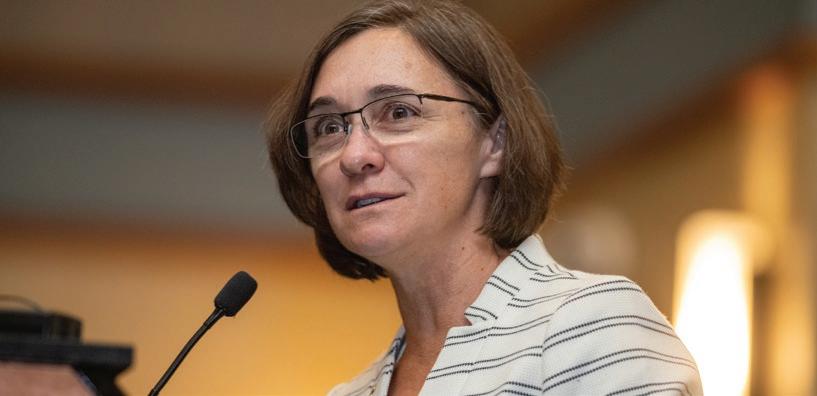
Left: In June 2020, the Kyl Center for Water Policy introduced the Arizona Water Blueprint, an interactive map and water data hub. Above: Since the Kyl Center for Water Policy’s launch in 2014, Sarah Porter has been its director.
Engaging, Thoughtful, Informed
Forty years ago, some friends left a retreat in the White Mountains agreeing to focus their energy and growing influence on something they believed a maturing Arizona needed — a public policy institute to improve the quality of public debate. Their brainchild, the Morrison Institute, remains like no other think tank in Arizona.
“It’s legacy,” former ASU Watts College Dean Jonathan Koppell said, “is that even in a state where we have very lively policy debates and where partisan passions are real, and even at a time in the country where it seems like it’s impossible to have any kind of substantive interaction that isn’t overwhelmed by partisanship, Morrison Institute has built and maintained a reputation that makes its work acceptable and trusted across party lines.”
That took vision, a commitment to making the institute a reality and then fortitude to keep it going. Thom Reilly, Whitsett’s predecessor as director, said he saw Morrison Institute’s history, talent and expertise as assets upon which to build a strategic plan to generate more impact in the state and region.
“The coolest thing we had is the founder at our tips,” Reilly said. “We could engage Richard Morrison. He’s just a wonderful person — very engaging, very thoughtful, very informed.”
Engaging, thoughtful, informed. Morrison Institute tries to embody those same qualities as an Arizona public policy think tank with a public purpose.
“What I cherish about Richard is that he is a believer,” Whitsett said. “He believes in the goodness of people. He believes in facts. He believes in Arizona. And, most importantly, he embraces every opportunity he gets to activate all of that goodness. It is truly inspiring.”
“
What I cherish about Richard is that he is a believer. He believes in the goodness of people. He believes in facts. He believes in Arizona. And, most importantly, he embraces every opportunity he gets to activate all of that goodness. It is truly inspiring.” — Andrea Whitsett
Forty years ago, Richard Morrison could think of no argument against an effort to improve the quality of debate and public policy decision-making in Arizona with a university-based think tank that would engage in fact-based research and careful, objective analysis. He treasures what has followed in the work of an institute that bears his proud family name.
“I’ve never thought of (the institute) as being my creation or being my vision or my responsibility,” Richard said. “I was happy for its existence, and I’ve been on the advisory board since its inception, but for many years I just went mostly to listen, be able to report to my parents, who had become increasingly infirm, that there was nothing going on there that you’d be concerned about.
“But fast forward. I think those of us who are a little bit older wonder if we’ve got any legacy or whether anybody will ever remember anything we ever did. I now recognize that somebody, sometime, somewhere will remember to say that I was involved in the formation of the Morrison Institute, as the part of either my legacy or the family legacy, if you will. I suppose there will be some accuracy in the description. Somebody will say that, and I’m so glad.”
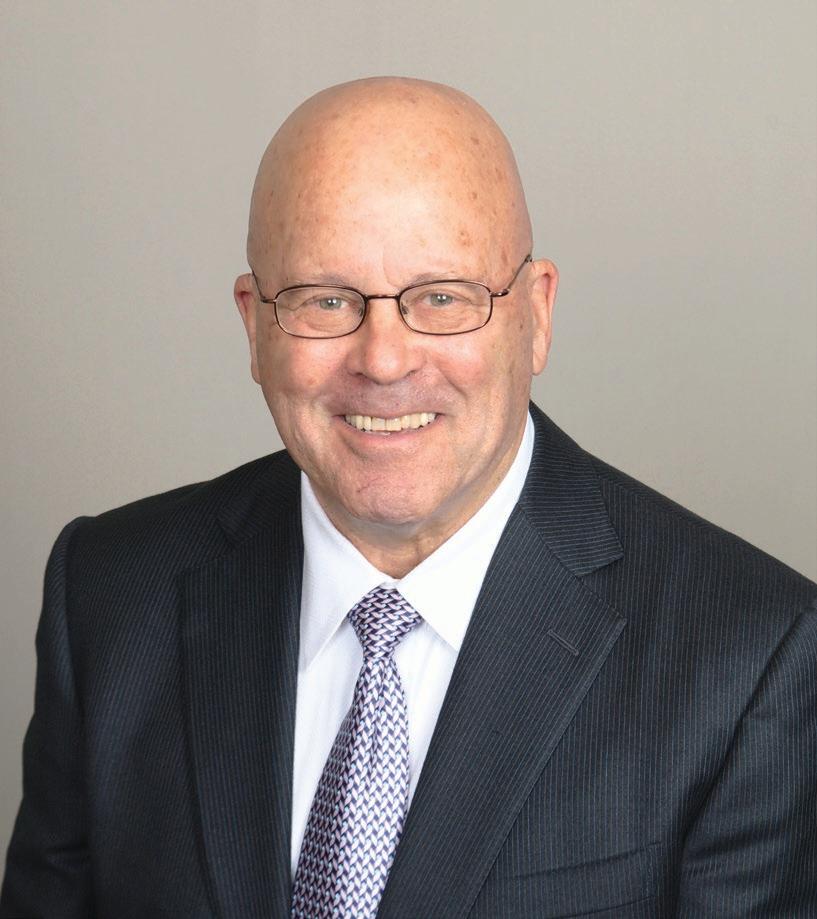
Left: King from the series Revisiting the Photographs of Marvin Morrison, photographed by Marvin Morrison, reproduced by Gina DeGideo, 2013. (Courtesy of Howard Morrison, the Morrison Family, and Gina DeGideo.) Above: Richard Morrison.
Timeline of Representative Morrison Institute Publications
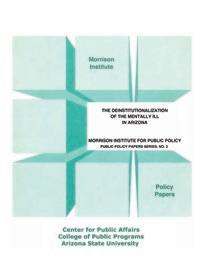
The Deinstitutionalization of the Mentally Ill in Arizona
Vocational Education and Economic Change in Arizona: Policies for a Prosperous Future
Morrison Institute founded*
The Council-Manager Form of Government
The Status of Minority Students at Arizona State University
Establishing an Institute
Water in Mesa: Growth or No Growth?
Economic Vitality in Arizona: The University Connection
Infrastructure Studies: Overview of Eleven Federal, State, and Regional Studies
Charter Schools: A Viable Reform Initiative
Getting the Facts: A Workforce Research Plan for Arizona
Working Relationships: Arts, Education and Community Development
Balancing Acts: Tax Cuts and Public Policy in Arizona
Sights Unseen: Children’s Issues in Rural Arizona
Growth in Arizona: The Machine in the Garden
Visiting Page/ Lake Powell: An Economic Analysis of the Page-Area Tourism Cluster
Five Shoes Waiting to Drop on Arizona’s Future
The Changing Face of the Software Cluster in Arizona
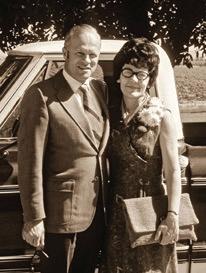
* Marvin and June Morrison from the series Revisiting the Photographs of Marvin Morrison, unknown photographer, reproduced by Gina DeGideo, 2013. (Courtesy of Howard Morrison, the Morrison Family, and Gina DeGideo.)
Gray Matters: An Economic Analysis of Yavapai County’s Senior Industries
Playing the Inside Game: The Challenge of Urban Revitalization in Arizona
Skepticism, “Fixability,” or Just a Day’s Work: How Arizona Law Enforcement Officers Approach Domestic Violence Cases
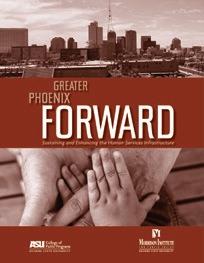
Greater Phoenix Forward: Sustaining and Enhancing the Human-Services Infrastructure
Unlocking Resilience: The Key to Healthy Aging in Arizona
Dropped? Latino Education and Arizona’s Economic Future
A Day in Our Shoes: Adults with Developmental Disabilities Share Their Experiences Living in Small Cities and Towns
The “Neglect of Neglect”: Exploring the Less-Visible Side of Child Maltreatment
Perceptions of the Pandemic and its Effects: The COVID-19 Poll
The Price of Uncertainty: The Potential Economic Impact of the Gila River Adjudication
Which Way Scottsdale? Scottsdale 2.0: Next Version
Pitch Perfect: Considerations for a Dedicated Funding Source for Arts and Culture
Sustainability for Arizona: The Issue of Our Age
The Price of Stewardship: The Future of Arizona’s State Parks
Watering the Sun Corridor: Managing Choices in Arizona’s Megapolitan Area
Who is Arizona’s Independent Voter?
Resisting Violence & Raising Grades: Creating Safe and Supportive Schools in Arizona
Morrison-Cronkite News Poll: Opioids & Addiction
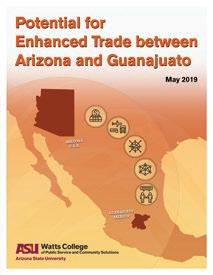
Potential for Enhanced Trade Between Arizona and Guanajuato
“Housing is Health Care”: The Impact of Supportive Housing on the Costs of Chronic Mental Illness
Our Vision
To be a leading resource for relevant research and informed policy choices of public value, with rigorous adherence to facts and data.
Our Values
Objective
Morrison Institute is nonpartisan and strives to eliminate bias from its research.
Rigorous
Morrison Institute employs research methods that are transparent, current, aligned with the project and carefully followed to produce accurate, credible and impactful work.
Collaborative
Morrison Institute engages with the community and stakeholders and does so in a respectful manner.
Innovative
Morrison Institute produces research relevant to the public needs of today and tomorrow and stays on the leading edge of research principles and methods.
Our Approach
We analyze important policy issues to advance public understanding in Arizona and beyond.
We consider current and historical contexts when studying an issue.
We develop tools that help communities make informed decisions. We provide forums to engage with public policy research.
What We Do
Inform
We inform policy discussion and action with high-quality, accessible analysis.
Research
We conduct rigorous, independent research and analysis on consequential issues.
Convene
We engage stakeholders with one another around research and policy choices.
Thrive
We cultivate a thriving organization with a healthy culture and stable resources.
Morrison Institute Board of Advisors, 2021 Distinguished Fellows
Mary Pahissa Upchurch, chair
Senior Partner
Gray Associates, Inc.
Lisa Urias, vice chair
Chief Program and Community Engagement Officer
Arizona Community Foundation
Richard Morrison, member emeritus
Co-Founder
Morrison Institute for Public Policy
Denny Barney
President and CEO
The PHX East Valley Partnership
Betsey Bayless
President Emeritus
Valleywise Health
Ann Becker
Vice President, Sustainability
Arizona Public Service Company
Kate Brophy McGee
Former State Senator
Arizona Legislature
Kerwin V. Brown
Managing Principal
K-Vaughn Consulting, LLC
Pearl Chang Esau
Founder and CEO
Shan Strategies
Diego Espinoza
State Representative
Arizona Legislature
Karl E. Gentles
Partner
The Gentles Agency
Max Gonzales
Executive Vice President, Strategy and Relationship Management
Chicanos Por La Causa, Inc.
Paul Hickman
President and CEO
Arizona Bankers Association
Edmundo Hidalgo
Vice President of Outreach Partnerships
Arizona State University
John R. Hoopes
Vice President
Salt River Project
Cynthia Lietz
Interim Dean
ASU Watts College of Public Service and Community Solutions
Jacob Moore
Associate Vice President of Tribal Relations
Arizona State University
Ruth Soberanes
International Trade Specialist
U.S. Commercial Service
Greg Stanton
U.S. Representative
Arizona’s 9th Congressional District
Morrison Institute’s distinguished fellows program formalizes relationships with select Arizona leaders so the institute can regularly tap into their knowledge and thinking.
Amanda Aguirre
Don Budinger
Grady Gammage Jr.
Terry Goddard
Maria Harper-Marinick
Jonathan Koppell
John Lewis
Paul J. Luna
Sharon B. Megdal
Ronald Reinstein
Denise Resnik
Robert Robb
Steve Seleznow
Gary Trujillo
Diana “Dede” Yazzie Devine
Stephen J. Zabilski
Cynthia Zwick
Sue Clark-Johnson Leadership Award Honorees
Sue Clark-Johnson led Morrison Institute from 2009 through 2013 after an impactful career in journalism. Sue was an accomplished news executive who served as publisher of The Arizona Republic and president of Gannett’s newspaper division. The Sue Clark-Johnson Leadership Award honors Arizonans who share Sue’s spirit for making the most of each day.
Betsey Bayless
Lattie Coor
Richard Morrison
About the Author
To write this history, Jennifer Dokes conducted 45 interviews and combed through Morrison Institute and newspaper archives. She relied on sources and connections that come from a journalism career in Arizona that began in 1985, not long after Morrison Institute’s founding. She worked for Arizona news outlets for nearly 30 years, including 22 years as a member of The Arizona Republic editorial board.