ASU is a comprehensive public research university, measured not by whom we exclude, but rather by whom we include and how they succeed; advancing research and discovery of public value; and assuming fundamental responsibility for the economic, social, cultural and overall health of the communities it serves.
Inclusive Excellence at the College of Health Solutions
The College of Health Solutions has a mission to improve the mental and physical health of our larger and immediate communities by better understanding the challenges that individuals and populations face, while striving to be part of the solution. The college is committed to the idea that every member of our society should have the opportunity for good health and wellness throughout their lifespans. In an effort to actualize this ideal, we embrace and support inclusive excellence in everything we do, including teaching, research, service, and clinical practice.
See our commitments to inclusive excellence
Introduction Welcome
Welcome to the post-baccalaureate certificate in Pre-Health at Arizona State University!
We are delighted that you have selected this program to advance your academic career. As postbaccalaureate students, you will have the unique opportunity to interact with faculty who bring diverse clinical expertise to the classroom; in fact, many of our courses are taught by practicing physicians and healthcare providers. This program is designed to provide both the rigorous prerequisite knowledge and the hands-on practical learning essential for a competitive application to a wide variety of health professional programs.
This handbook is designed to facilitate your success by establishing clear expectations for both faculty and students. It also outlines the standards and policies set by the College of Health Solutions and the Graduate College. As a student, you are responsible for reviewing this document and utilizing it as a primary reference as you navigate the program
As the Certificate Director of the Post-Baccalaureate Certificate in Pre-Health, it is a privilege to support you on your educational journey. On behalf of our entire faculty and staff, I want to reiterate our unwavering commitment to your success. We are excited to partner with you as you work toward completing this certificate and preparing for the next chapter of your professional life.
Please do not hesitate to contact us if any policies or procedures require clarification. We are here to support you every step of the way, and we look forward to working with you!
Marjon Forouzeshyekta D.C.
Associate Teaching Professor, Program Director, and Post-baccalaureate Certificate Director
Vision and mission
The certificate program in science of health care delivery provides a comprehensive introduction to health systems, aligned with the commitment to advancing public value and inclusive excellence. The curriculum focuses on U.S. health systems design, health economics, health policy, and leadership, with an emphasis on creating solutions that improve patient outcomes and foster the well-being of communities. This program reflects the mission to embrace innovation and inclusivity, and to measure success by whom we include and how they succeed, equipping learners with the knowledge to contribute meaningfully to the advancement of equitable and efficient healthcare.
Program overview
The Pre-Health post-baccalaureate certificate is designed for individuals preparing to apply to professional health programs, including medicine, physician assistant studies, dentistry, physical therapy, pharmacy, and other allied health fields. The program provides a structured yet flexible academic pathway for students seeking to complete prerequisite coursework, strengthen their foundation in the sciences, or enhance their academic profile in preparation for competitive admissions processes.
Students begin the program with MED 478 Clinical Practice and Pathways in Health Professions, a foundational course that introduces health career pathways, application timelines, professional expectations, and strategies for building a competitive application. Throughout the certificate, students work closely with a dedicated pre-health advisor to develop an individualized plan of study aligned with their intended professional goals. Advising support includes guidance on prerequisite coursework, course sequencing, application preparation, and professional development planning.
The certificate combines structured academic planning with flexibility in elective selection, allowing students to tailor their coursework to the requirements of specific professional programs. Because admission requirements vary by institution and profession, some students may complete coursework beyond the certificate minimum to meet specific prerequisites or strengthen their academic competitiveness.
Graduates of the program are positioned to pursue advanced study in a wide range of health professions. With growing national demand for healthcare providers across clinical and community settings, the certificate supports students in preparing for entry into graduate-level health professional programs that lead to careers serving diverse populations and addressing evolving healthcare needs.
Through rigorous coursework, strategic advising, and exposure to professional pathways, the Pre-Health post-baccalaureate certificate provides focused preparation for students committed to advancing toward careers in healthcare.
Program contacts
Program director: Marjon Forouzeshyekta, mforouze@asu.edu
Program advisor: Ryan Vann and Brandon Hardy, prehealthdpc@asu.edu
Program faculty:
• Bryan Henderson (profile) – physics
• Edward Hilvano (profile) – organic chemistry
• Darcy Kimball (profile) – chemistry
• Josh Klein (profile) – biology, neuroscience
• Scott Lefler (profile) – biochemistry
• Rollin Medcalf (profile) – pharmacology, pathophysiology, anatomy and physiology
Admission
Admission to the Pre-Health post-baccalaureate certificate is available for Fall, Spring, and Summer terms See deadlines to apply. Applications will be reviewed by the admissions committee only once all materials have been received. Application status can be monitored in MyASU. Official admission decisions will be emailed to the student.
Quick Facts:
• Location: Online
• Start terms: Fall, Spring, Summer
• Time to completion: Varies
Graduate admission requirements
ASU maintains minimum standards for consideration for admission to graduate programs. The program may establish requirements in excess of those established by the university.
• An earned bachelor’s degree or higher from a regionally accredited institution in the U.S., or the equivalent of a U.S. bachelor’s degree from an international institution officially recognized by that country.
• A minimum grade point average of 3.00 (scale is 4.00 = “A”) in the last 60 semester hours or 90 quarter hours of undergraduate coursework is required to be considered for admission to an ASU graduate degree program.
• International applicants must provide proof of English proficiency.
Academic program requirements
To be admitted to the certificate, applicants must complete the following steps:
1. Be admitted as a non-degree graduate student
a. [college = College of Health Solutions, campus = Online]
2. Submit the supplemental application.
Pre-admission credit policy
Credit hours completed at ASU or at another regionally accredited U.S. institution or international institution officially recognized by that country, before the semester and year of admission to an ASU graduate program, are considered pre-admission credits. With program approval, students may apply pre-admission credits completed with a grade of “C-” or better toward the post-baccalaureate certificate. Credits must be transferrable to ASU (see the Transfer Guide).
Some pre-admission credits may be applied toward the certificate with program approval; however, students must be admitted to the certificate program and complete at least one required course after admission to be eligible to earn the certificate.
Note: While the certificate may accept pre-admission credits with a grade of 'C-' or better toward program completion, most professional health programs (e.g., medical, dental, PA) require a grade of 'C' or higher for prerequisite fulfillment. Students are strongly encouraged to verify the specific grade requirements of their target institutions.
Tuition and assistance
Tuition and fees
Tuition is set by ASU and the Arizona Board of Regents each year. View the general Tuition and Fees Schedule, or calculate a more specific estimate of charges using the ASU Tuition Estimator Information on residency requirements can be found at Residency for Tuition Purposes
The Pre-Health post-baccalaureate certificate has a program fee of $175 per credit.
Financial assistance
Financial assistance is available through a variety of sources, including:
• College of Health Solutions scholarships
• Graduate College fellowships
• Traditional financial aid (loans and grants).
For more information and assistance, visit the Financial Aid website
Note: To be eligible for federal aid (loans and grants) and scholarships that require a FAFSA, students must be admitted to a degree program. Students pursuing only a certificate are not eligible for federally-funded aid.
Curriculum and graduation requirements
Program requirements
The Pre-Health post-baccalaureate certificate is comprised of 15 credits.
Required core (3 credits)
• MED 478 Clinical Practice and Pathways in Health Professions (3)
Electives (12 credits)
• See electives section
Note: Grades of C or better are required in all courses for this program.
A certificate GPA of 3.0 or higher is required. Admissions to health professions graduate schools is very competitive. Students should research recommended cumulative and science GPA minimums for their desired programs.
Electives
The certificate requires a minimum of 12 credits of elective coursework in addition to the required MED 478 course. Electives should be selected in consultation with advising to align with the student’s intended health profession pathway (e.g., medicine, physician assistant, dentistry, physical therapy, pharmacy, or other allied health fields). Since prerequisite requirements vary by profession and institution, students are responsible for researching admission requirements for their intended programs and selecting coursework accordingly.
While the certificate requires a minimum of 12 elective credits (15 total credits), many professional health programs require additional science coursework, laboratory experiences, or subject-specific prerequisites beyond the certificate requirements. Students may therefore need to complete coursework in excess of the certificate minimum to meet admission criteria for their desired professional schools. Advising support is available to help students develop an academic plan that strengthens their academic preparation and overall competitiveness for professional school admission.
In addition to meeting with an advisor, students are encouraged to consult the following resources:
• ASU Pre-Health Advising Career Pathways
• AAMC Medical School Admission Requirements (MSAR) o MSAR pdf
• PAEA Centralized Application Service for Physician Assistants
• ADEA Dental School Applicants
• PTCAS Directory (Physical Therapy)
Behavioral and Social Sciences
• CDE 232 Human Development (3)
• COM 100 Introduction to Human Communication (3)
• COM 225 Public Speaking and Presentations (3)
• PSY 101 Introduction to Psychology (3)
• PSY 341 Developmental Psychology (3)
• PSY 366 Psychological Disorders (3)
• SOC 101 Introductory Sociology (3)
Biological Sciences
• BIO 181 General Biology I (4)
• BIO 182 General Biology II (4)
• BIO 201 Human Anatomy and Physiology I (4)
• BIO 202 Human Anatomy and Physiology II (4)
• BIO 340 General Genetics (4)
• BIO 351 Developmental Biology (3)
• BIO 353 Cell Biology (3)
• BIO 360 Animal Physiology (3)
• BIO 420/MIC 420 Immunology: Molecular and Cellular Foundations (3)
• CHM 237 General Organic Chemistry Laboratory I (1)
• CHM 238 General Organic Chemistry Laboratory II (1)
Health Professions Exploration and Preparation
• CHS 484 Topic: Applied Health Experience (1-3)
• CHS 494 Topic: Health Research Scholars (1-3)
• MED 394 Topic: Preparing for Medical School (1)
• MED 484 Internship (1-3)
Health Sciences
• CHS 260 Health Professions Terminology (3)
• HCD 201 Economics for Health Majors (3)
• HCD 302 Health Care Management (3)
• HCD 303 Global Health Care Systems (3)
• HCD 330 Health Care Systems in the U.S. (3)
• HEP 444 Epidemiology (3)
• HSC 310 Health Communication (3)
• HSC 432 Legal Issues in Health Care (3)
• MED 445 Prevention and Management of Chronic Disease (3)
• MED 450 Leadership and Professionalism (3)
• NTR 241 Human Nutrition (3)
• PBH 410 Public Mental Health (3)
• PBH 422 Health Disparities and Access to Health (3)
Humanities
• MED 300 Historical and Contemporary Issues in Health (3)
• MED 320 Applied Medical/Health Care Ethics (3)
Mathematics and Statistics
• HCD 300 Biostatistics (3)
• MAT 117 College Algebra (3)
• MAT 170 Precalculus (3)
• MAT 251 Calculus for Life Sciences (3)
Physics
• PHY 101 Introduction to Physics (4)
• PHY 111 General Physics (3)
• PHY 112 General Physics (3)
• PHY 113 General Physics Laboratory (1)
• PHY 114 General Physics Laboratory (1)
Application to graduate
Students should connect with the program advisor during the semester of planned certificate completion. The program advisor will review to ensure that all requirements will be met in the anticipated completion term. After acceptable final grades have posted for the remaining courses, the program advisor will submit a request on the student’s behalf to the Graduation Office to award the certificate.
Plan of study
To support timely progress and informed academic planning, students are expected to enroll in MED 478 Clinical Practice and Pathways in Health Professions during their first term in the certificate program. This required course introduces health profession pathways, application processes, and professional expectations, and helps students identify appropriate coursework aligned with their intended career goals.
In consultation with the program advisor, students will develop an individualized plan of study outlining the sequence and timing of elective coursework. Students are highly encouraged to meet with a program advisor prior to the start of their second term to discuss their specific course sequence. The plan of study is considered a 'living document' and should be formally reviewed and updated with advising if the student’s target health profession or timeline changes.
While the certificate requires a minimum of 12 elective credits, some students may need to complete additional coursework beyond the 15-credit certificate minimum to satisfy prerequisite requirements for their intended professional health programs. Because admission requirements vary by institution and profession, students are responsible for researching program-specific prerequisites and working with advising to ensure appropriate course selection and sequencing.
Students are encouraged to review their academic progress regularly and consult advising before making changes to their plan of study.
Graduation audit (DARS)
Students may track their progress in the certificate by running a graduation audit, or DARS. Instructions on how to run a DARS audit is included in Appendix A. For questions and guidance, connect with the program advisor
Specializations and certifications
The College of Health Solutions prepares graduates for excellence upon entering the workplace. Since certification and licensure requirements vary by profession and from state to state, we recommend that you visit the ASU licensure website to determine if your program meets the requirements of individual state licensures or national certifications, as applicable. If you have specific questions, please contact your program director or degree coordinator.
Satisfactory academic progress
All graduate students are expected to make systematic progress toward completion of their graduate program. This progress includes satisfying the conditions listed below, and achieving the benchmarks and requirements set by the individual graduate programs as well as the Graduate College. If a student fails to satisfy the requirements of their program and/or the benchmarks outlined below, the student may be dismissed from their program based on the academic unit’s recommendation to the Graduate College at which time the dean of the Graduate College makes the final determination.
Satisfactory academic progress includes:
1. Maintain a minimum 3.00 for all GPAs.
2. Satisfy all requirements of the graduate program.
3. Satisfy the maximum time limit for graduation for the student’s graduate program
GPA and grades
Graduate students must maintain a minimum 3.00 (scale is 4.00 = “A”) grade point average (GPA) to maintain satisfactory academic progress and to graduate. The minimum 3.00 GPA must be maintained on all GPAs (Program GPA, Overall Graduate GPA and Cumulative GPA):
1. The Program GPA is calculated on all courses that appear on the student’s graduation audit.
2. Cumulative GPA represents all courses completed at ASU during the graduate career.
3. The Overall Graduate GPA is based on all courses numbered 500 or higher that appear on the transcript after admission to a graduate program or graduate non-degree. This includes shared coursework if in an approved accelerated bachelor’s/master’s program.
Transfer credits and some courses taken in the Sandra Day O’Connor College of Law are not calculated in the Program GPA or the Graduate GPA. Courses lower than a “C” cannot be used toward program requirements but will be included when calculating the Cumulative GPA and Graduate GPA.
See university grade definitions and policies
The Pre-Health post-baccalaureate certificate requires a certificate GPA of 3.0 or higher and that courses be completed with grades of C or better. Students who earn a grade lower than C in a course must repeat the course and earn a C or better in order to apply the course toward program requirements.
Incomplete grade requests
An incomplete grade request may be considered by an instructor when a student, who is doing otherwise acceptable work, is unable to complete a course (e.g., final exam or term paper) because of illness or other conditions beyond the student's control. Unfinished work must be completed with the same instructor except under extenuating circumstances. The completion date is determined by the instructor but may not exceed one calendar year from the date the mark of "I" is recorded. Once the work is completed, faculty must request a change on the grade roster to post the grade. If a student does not complete the missing coursework by the date that is agreed upon on the incomplete request form, the instructor may change the grade to what was earned based on the work completed in the class.
If the coursework is not completed after a calendar year, the incomplete will be automatically changed to a failing “E” grade for undergraduate courses (400-level and below) and becomes permanent for graduate courses (500-level or above). Repeating a class in which an incomplete is awarded will not replace a permanent "I" grade for graduate coursework on the student's transcript. Repeating the course will not replace a failing grade in the student’s GPA, though subsequent successful completion of a course may be necessary for fulfilling program requirements. Students must complete the incomplete request form and submit it to their instructor for review and processing. Students should be mindful that incomplete grades may impact financial aid
Academic probation and dismissal
Failure to maintain a minimum 3.0 GPA or failure to satisfactorily progress in the program as referenced in this handbook will result in the student being placed on academic probation. Students will be notified of probationary status and expectations for improvement by the program director or program advisor Time limits for probationary status may vary. Typically, students have 9 credit hours or one year, whichever comes first, to raise their GPA.
Students who fail to meet requirements or timeline needed to demonstrate satisfactory improvement will be recommended for dismissal from the program. Notice will be provided by the program and will include procedures for appeal.
Time to completion limit
All coursework used to complete the post-baccalaureate certificate must be completed within a two-year time limit. The two-year period begins with the term of admission to the program OR the earliest term of applied pre-admission credit.
Exceptions to the time limit policy must be approved by the program director and the College of Health Solutions. Extensions of more than two years must also be approved by the Graduate College. The Graduate College may withdraw students who are unable to complete all degree requirements and graduate within the allowed maximum time limits.
Appeal and grievance processes
Grade appeal
For assignment grade disputes during a class, students must contact the instructor of the course.
The process to appeal a final course grade may only be initiated by a student once the course has concluded and a final grade has been posted to the student’s transcript. Per university policy, course grade appeals must be processed in the regular semester immediately following the issuance of the final grade in dispute (by commencement for fall or spring) regardless of whether the student is enrolled at the university.
The course grade appeal process begins with a discussion about the matter between the student and the course instructor. If the matter is unresolved, the student should submit a Grade Appeal Form for further review by the program director. If this review does not adequately settle the matter, the student should begin the formal procedure of appealing to the College of Health Solutions Academic Standards and Grievance Committee.
Student grievance
Students who wish to file a grievance about a non-grade-related matter may use the established student grievance procedure. Non-grade-related grievances may include dissatisfaction with an instructor, problems with a classmate or other unresolved situations.
Appealing recommendation for dismissal
1. Students may appeal a decision for dismissal from the program by submitting a letter to the program director.
a. The appeal letter must be received within 10 business days of the date of the letter of dismissal. The letter should state the reasons justifying a reversal of the original decision and provide substantive evidence in support of the request.
b. Letters received after the 10 business-day interval will not be reviewed, and the dismissal will be final.
c. The program committee will review all letters of appeal that are received within the 10 business-day time frame. The committee will submit their decision to the program director within 10 business days of receipt of the student’s letter.
2. The program director will then notify the Student Success Hub of the decision. The Student Success Hub will inform the student of the decision.
3. If the appeal is denied, the student may appeal to the CHS Academic Standards and Grievances Committee within 10 business days of receiving the denial of the appeal. The CHS Academic Standards and Grievances Committee will review the dismissal and appeal materials and make a recommendation to the dean of the College of Health Solutions. The dean will have 20 calendar days to make a final decision.
4. If at any stage, a timely appeal is not submitted by the student, the program director will recommend dismissal to the Graduate College via the Student Success Hub. The Graduate College will then inform the student of the dismissal by letter.
Student code of conduct and academic integrity
ASU expects and requires its students to act with honesty, integrity, and respect. Required behavior standards are listed in the ASU Student Code of Conduct, the ABOR Code of Conduct, the Computer, Internet, and Electronic Communications Policy, the ASU Student Academic Integrity Policy, and outlined by the Office of Student Rights & Responsibilities Violations of a Graduate College, College of Health Solutions, or Arizona State University policy will result in academic review and may consequently result in student disciplinary procedures.
Academic integrity
The ASU Student Academic Integrity Policy lists violations in detail. These violations fall into five broad areas that include, but are not limited to:
1. Cheating on an academic evaluation or assignment.
2. Plagiarizing.
3. Academic deceit, such as fabricating data or information.
4. Aiding academic integrity policy violations and inappropriately collaborating.
5. Falsifying academic records.
See information on the academic integrity procedure within the College of Health Solutions
Newly admitted graduate students will receive a "priority task" on their MyASU directing them to complete a canvas module on academic integrity. The module consists of a PowerPoint that outlines academic integrity and students must take a quiz and pass with an 80% or higher.
Student code of conduct
Violations of the ASU Student Code of Conduct, other than the provision concerning academic dishonesty, are more generally considered inappropriate behavior. The Office of Student Rights and Responsibilities reviews and sanctions these matters. If a student violates both the academic integrity provision and additional provisions of the Student Code of Conduct, both the college and the Office of Student Rights and Responsibilities will review the matter. Each independently makes determinations concerning violations and appropriate sanctions.
Professional conduct
ASU is a community and a professional work environment. Graduate students are expected to treat their peers, teachers, students, staff, and members of the ASU community with respect and work with them in a professional manner. Graduate students are representatives of their program, the College of Health Solutions, and ASU. Students must demonstrate the requisite qualifications for successful professional performance, including interpersonal skills, basic communication skills, appropriate professional conduct, and satisfactory performance in field experiences.
Graduate students who demonstrate behaviors or characteristics which make success in their related fields questionable will be reviewed by the program committee. The committee’s review may result in a recommendation for dismissal from the program or implementation of probational conditions for continued participation. Students may appeal a recommendation for dismissal by following established procedures
College and university procedures and policies
All policies and procedures outlined in this handbook are in accordance with policy set by the Graduate College and Office of the University Provost. In some cases, program policies may be more restrictive than those set by Graduate College and Provost.
Registration policies
Students are strongly encouraged to enroll in courses well in advance of the start of the term. Enrollment must be complete by the Add/Drop deadline for the session in which the class is offered. Courses that are dropped by the Add/Drop deadline will not appear on a student’s transcript. If a course is removed from a student’s schedule after this deadline, it will be considered a withdrawal and a grade of “W” will be recorded. Term dates and deadlines, including the Add/Drop, Tuition Refund, Course Withdrawal, and Session Withdrawal deadlines, can be found on the Academic Calendar.
Discrimination, harassment, and retaliation
Title IX of the Education Amendments of 1972 is a federal law which provides that no person be excluded on the basis of sex from participation in, be denied benefits of, or be subjected to discrimination under any education program or activity. Both Title IX and university policy ACD 401 make clear that sexual violence and harassment based on sex is prohibited. An individual who believes they have been subjected to sexual violence or harassed on the basis of sex can seek support, including counseling and academic support, from the university. For information on resources, visit the sexual violence awareness, prevention, and response website.
Student support resources
Academic program support
Students have 24/7 access to the program Canvas site, which serves as the primary hub for program communication, announcements, internship opportunities (e.g., MED 484), advising updates, and office hour access. This platform ensures that students remain connected to faculty, advisors, and program resources throughout their enrollment. Admitted students receive access prior to the start of their first term to review onboarding materials and important program information.
Additionally, students will be added to the Pre-Health Canvas site, providing them with expanded access to professional development and career-specific resources.
Advising and pre-professional support
The College of Health Solutions Pre-Health Advising team serves as the primary advising unit for students in the post-baccalaureate certificate. Advising support is integrated and includes both academic program guidance and preparation for professional health program applications.
Advisors assist students with:
• Development and review of the individualized plan of study
• Course selection and sequencing aligned with intended health profession pathways
• DARS monitoring and graduation audit review
• Registration policies and procedural guidance
• Time-to-completion planning
• Professional school prerequisite alignment
• Application timeline strategy and competitiveness planning
Students are strongly encouraged to meet with a Pre-Health advisor at least once per term and prior to adjusting their course plan. Early and consistent engagement with advising is particularly important for students preparing to apply to competitive health professions programs.
While advisors provide strategic guidance and resource support, students are responsible for researching admission requirements for their intended professional programs and ensuring that selected coursework aligns with those requirements. Completion of the certificate does not guarantee admission to a professional health program.
Pre-health resources
• ASU Pre-Health Advising Modules
o Self-enroll
• CHS Pre-Health Events and Resources (Announcements)
o Self-enroll
Graduate students in the College of Health Solutions may access the CHS website for information on college policies and resources
University resources
• Graduate College
• Office of the University Provost
Academic and career support
• ASU Libraries
• Graduate Writing Center
• Career and Professional Development Services
• Graduate Student Government
• Student Clubs and Organizations
Business and finance services
• Financial Aid and Scholarship Services (financial aid)
• Billing and Student Finances (tuition, fees, and payments)
• Parking and Transit Services (permits, shuttles, public transit)
• Sun Devil Card Services (ID cards)
• Enterprise Technology (technology assistance)
• Sun Devil Dining (meal plans, M&G, hours)
Counseling services
ASU Counseling Services provides confidential, time-limited counseling and crisis services for students experiencing emotional concerns or other factors that affect their ability to achieve their goals. Support is available 24/7.
Reasonable accommodations are determined on a case-by-case, course-by-course basis to mitigate barriers experienced due to a disability (SSM 701-02). Students with disabilities who require accommodations must register with the Student Accessibility and Inclusive Learning Services and submit appropriate documentation. It is recommended students complete this process at the beginning of the term and communicate as appropriate with their instructor.
• Email: Student.Accessibility@asu.edu
• Phone: (480) 965‐1234
• FAX: (480) 965‐0441
Pregnancy: Students requesting services due to pregnancy (SSM 701-10) should be prepared to submit documentation regarding the pregnancy, any complications and clearance to return to school related activities. Student Accessibility can work with students to foster continued participation in a program,
whether that be with academic accommodations such as absences or assistance requesting a leave, or through other requested accommodations.
Health and fitness
All ASU students enrolled in in-person programs have access to Sun Devil Fitness facilities on all campuses. For more information about facilities, membership and group fitness classes, see the Sun Devil Fitness and Wellness website
For information about health insurance and appointments with care providers, see the ASU Health Services website.
International students
ASU’s International Student and Scholars Center (ISSC) can provide support and answers to questions about visas, employment, scholarships and travel. International students are strongly encouraged to consult the ISSC regarding minimum total enrollment and minimum in-person enrollment requirements to support their visa status. See the ISSC website for more information or to schedule an appointment with an ISSC adviser.
The ASU Coalition of International Students is comprised of international student organizations and promotes engagement activities and resources, including an international student guidebook, to support international students.
Veterans and military
The Pat Tillman Veterans Center provides guidance and support for students who are veterans, activeduty military or military dependents. For more information, please call the office at 602 496-0152 or visit the Veterans Center website
Appendix
A: How to run a DARS audit
The DARS audit is a tool that can show your progress within the certificate program against the program requirements.
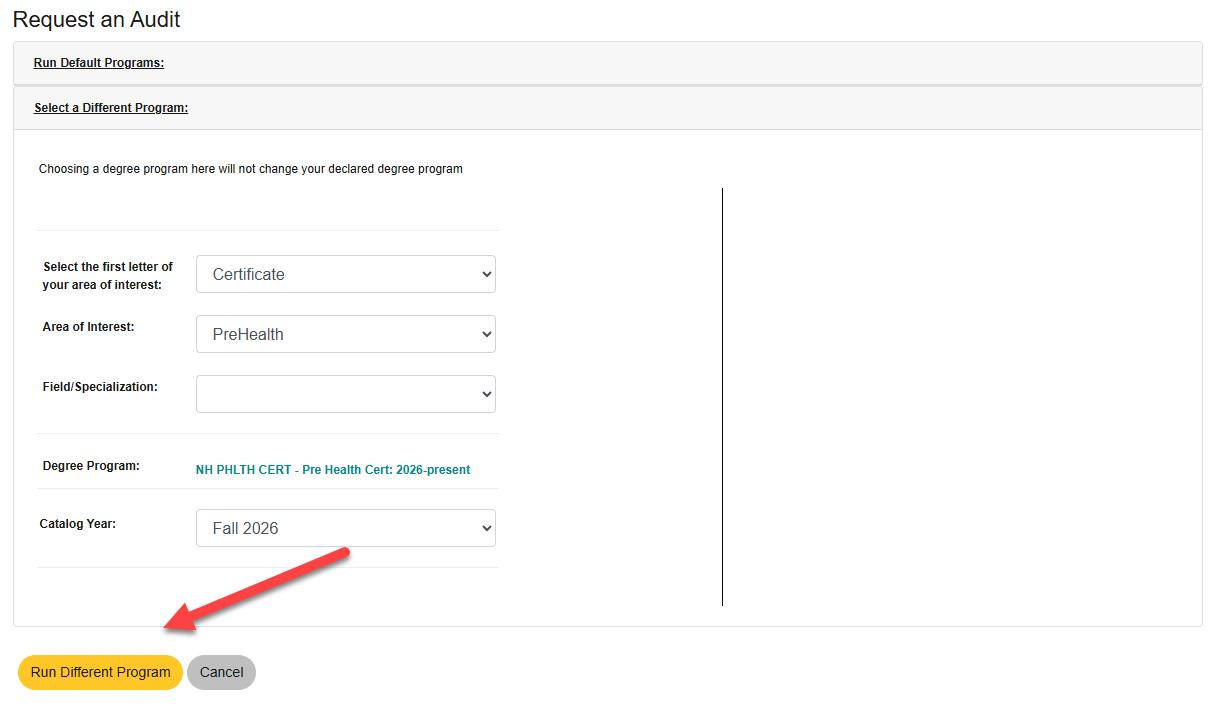
1. Open DARS self-service at https://webapp4.asu.edu/uachieve/audit/create.html
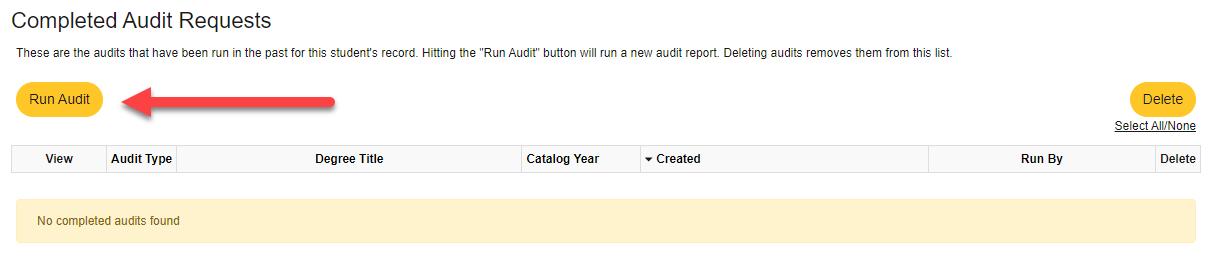
2. Select “Run Audit”
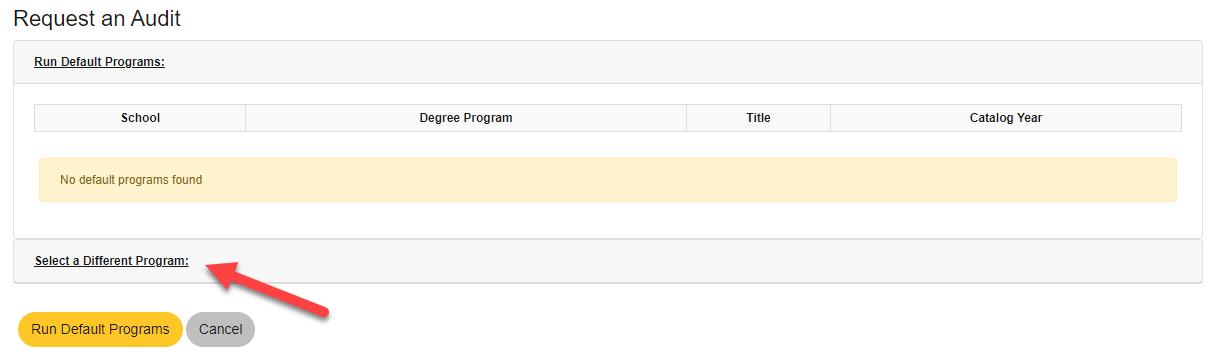
3. Select “Select a Different Program”
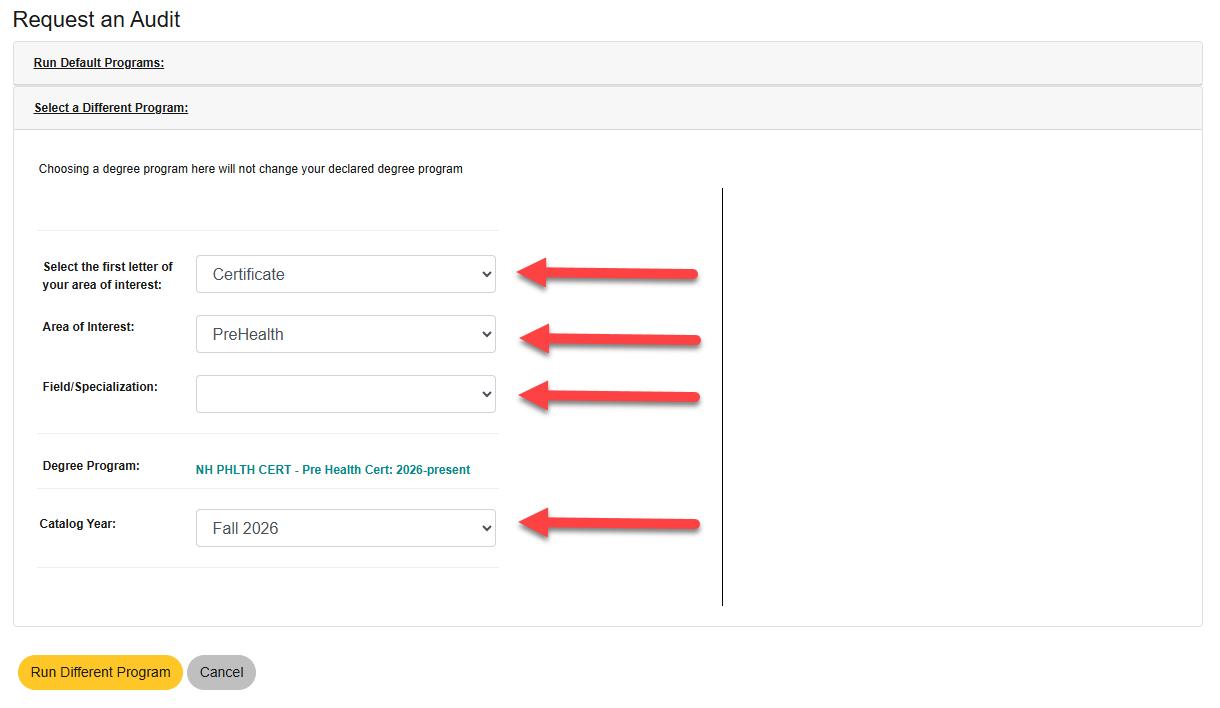
4. Enter the following information in the indicated fields:
a. Select the first letter of your area of interest: Certificate
b. Area of Interest: PreHealth
c. Field/Specialization: Select the blank
d. Catalog Year: Select the catalog that you are on.
i. Note: If you started in a Spring or Summer term, select the preceding Fall term. For example, students who start the certificate program in Spring 2027 will need to select the Fall 2026 catalog.
Select
5.
“Run Different Program”
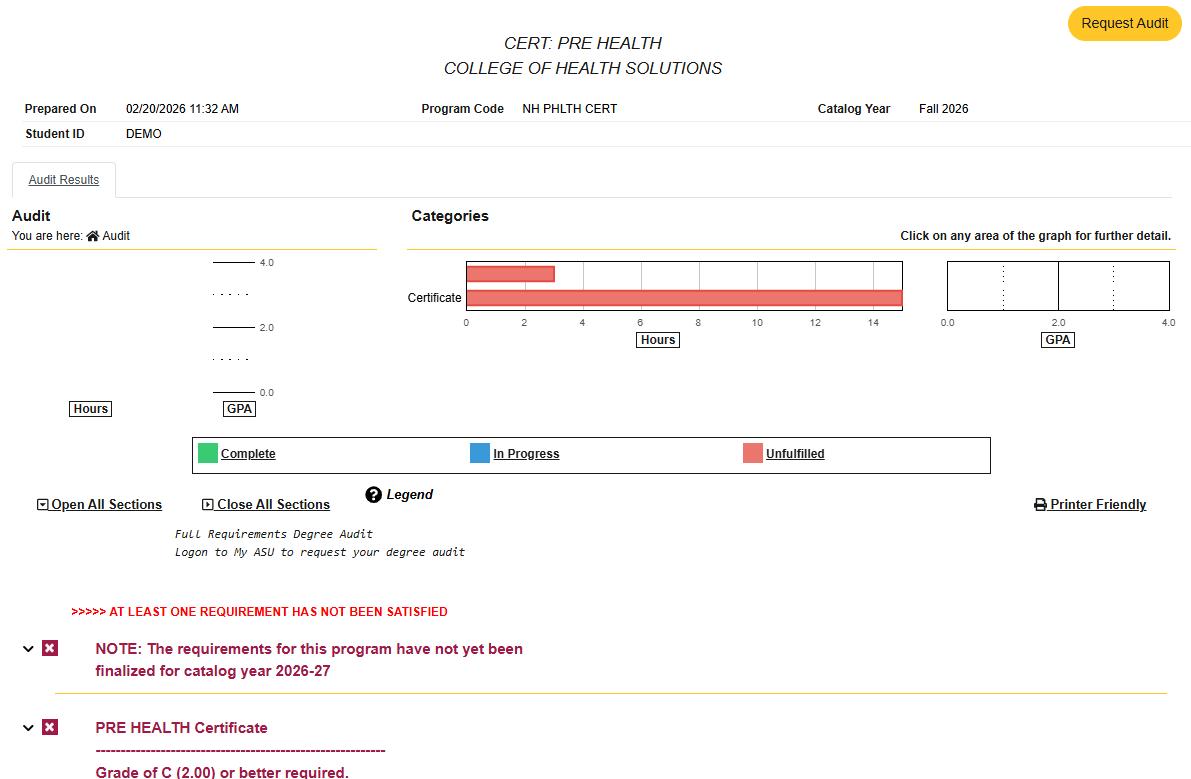
6. The screen will show as in-progress.
7. When the audit is complete, the screen will refresh to show you the results.
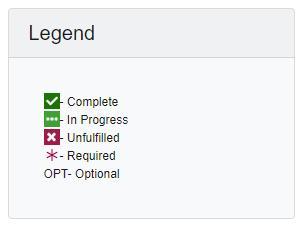
8. The audit will compare your progress against the certificate requirements. To complete the certificate, all requirements must show a green checkmark.