
ASU Charter
ASU is a comprehensive public research university, measured not by whom we exclude, but rather by whom we include and how they succeed; advancing research and discovery of public value; and assuming fundamental responsibility for the economic, social, cultural and overall health of the communities it serves.
Inclusive Excellence at the College of Health Solutions
The College of Health Solutions has a mission to improve the mental and physical health of our larger and immediate communities by better understanding the challenges that individuals and populations face, while striving to be part of the solution. The college is committed to the idea that every member of our society should have the opportunity for good health and wellness throughout their lifespans. In an effort to actualize this ideal, we embrace and support inclusive excellence in everything we do, including teaching, research, service, and clinical practice.
See our commitments to inclusive excellence.
Introduction Welcome
Welcome to the PhD program in Population Health (POP) at Arizona State University! The mission of the program is to train students to bridge health care and public health systems, engaging with nontraditional sectors of society to understand and address the determinants of health and improve health outcomes for local populations. The program aims to provide students with a comprehensive, rigorous academic core of knowledge and professional skills that prepare them to become educators, researchers and leaders dedicated to advocating, promoting, and achieving positive improvements in ‘total’ population health of communities. The program is designed to ensure that students can integrate and analyze the complex biological, behavioral, social and economic factors and systems that impact the health of populations through academic coursework and community engagement. Students will learn to employ advanced analytic approaches to investigate multiple data sources, and develop, implement, and study programs and initiatives to improve the health of populations. This blend of academic and experiential learning will prepare students for future careers in the rapidly changing and interconnected field of population health.
Graduates of the POP PhD at ASU will be prepared for research careers in research-intensive universities, governmental agencies and health-related research positions in private industry. Students are strongly encouraged to pursue post-doctoral research opportunities upon graduation. The POP PhD program is designed to allow students to tailor their course of study and research in four areas: 1) health equity; 2) complex adaptive systems; 3) urban environments for health; and, 4) dissemination and implementation science.
The POP PhD program requires an average enrollment of 3 to 4 years of full-time study after completing a master’s degree. Specific outcomes of the POP program include the following:
• Train students and graduates to become proficient in various research disciplines and methodologies needed to collect data, conduct research, and implement programs or disseminate information to improve population health.
• Equip students and graduates with the ability to synthesize and evaluate scientific, clinical, and other information on the role of population health and their interaction on the health of diverse populations.
• To prepare and engage scholars in the dissemination of research findings through presentations at scientific conferences as well as publications in peer-reviewed journals.
• To train research scholars to be productive members of the scientific community as evidenced by attainment of employment in a post-doctoral research position, academic faculty position, government or health-related position in private industry.
• To prepare scholars to become leaders in the fields of population health sciences through participation in professional development trainings and opportunities
Vision and mission
The mission of the Doctor of Philosophy Degree in Population Health at ASU is to provide students with a comprehensive, rigorous academic core of knowledge and professional skills that prepare them to become educators, researchers, and leaders dedicated to advocating, promoting and achieving improvements in population health. The program is designed to ensure that students can integrate and analyze – through academic coursework and community engagement - the complex biological,
behavioral, social and economic factors and systems that impact the health of local populations. Students will also learn to employ advanced analytic approaches to investigate multiple data sources, and also develop, implement, and study programs and initiatives to improve the health of local populations. This blend of academic and experiential learning will prepare students for future careers in the rapidly changing and interconnected field of population health.
Program contacts
Program director: Raminta Daniulaityte, raminta.daniulaityte@asu.edu
Graduate support coordinator: Serena Brown, chsgrad@asu.edu
Executive and curriculum committee (ECC): The POP PhD program is an interdisciplinary academic degree offered by faculty from different academic administrative units at ASU. While the program is housed in the College of Health Solutions, the administrative locus of the degree program is 7 voting members of Executive and Curriculum Committee (POP ECC). This committee meets monthly to discuss program issues. The program director serves as chair of the POP ECC. In total, the POP ECC is comprised of the following faculty representatives:

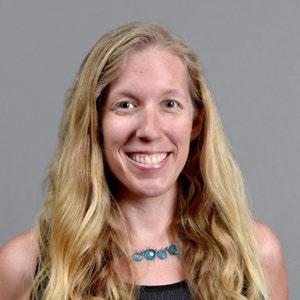



Alexis Koskan Associate Professor
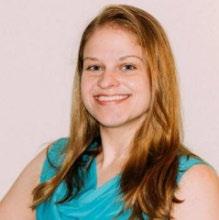
Mindy McEntee Assistant Professor
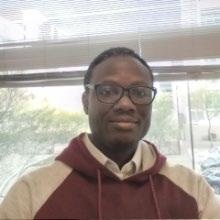
Adewale Oyeymi Associate Professor
TBD Student Representative (non-voting, student-elected)
Faculty in the POP ECC vote on all petitions (e.g., committee changes, outside course requests, etc.) and student-related topics (e.g., curriculum changes, exam changes, etc.). The committee meets once per month and, the ECC meeting schedule is located on the program Canvas site. The processes for petitions and milestones are provided in this handbook along with examples as needed. Students are encouraged to review the handbook thoroughly. If you have a question or request, email the program
Raminta Daniulaityte Professor
Cady Berkel Professor
Marisa Domino Professor
Maxwell C. K. Leung Assistant Professor
director and the graduate support coordinator the details of your request with ample time for the POP ECC to review and vote.
Petition Process:
Please refer to the Committees section under Program requirements for information about how to submit petitions for committee members.
Petitions to the POP ECC represent well thought-out ideas that are additive to the program and the student experience. A successful petition request confers a program benefit to the student. Petitions that request waiving parts or excusing parts of the programs will not be viewed positively by the POP ECC. If you are academically struggling or have issues in your life that are affecting academic performance, schedule a meeting with the graduate support coordinator, who has tools to help you.
To submit a petition to the POP ECC, complete the following:
• Start with the Handbook, the guiding document of the program, and search for policy that applies to what you are asking for.
• Make an appointment with the graduate support coordinator about your petition. They may know university-wide policies that are not in the handbook and may have seen similar petitions put before the POP ECC and be able to add perspective.
• Draft a justification statement that explains the clear program benefit that the petition will confer and provide minimal backup. The statement should not be long or unnecessarily argumentative, but it should be to the point.
• Submit the petition to the graduate support coordinator at least 5 business days before the next POP ECC meeting for consideration
Admission
Admission to the Population Health, PhD is available for Fall terms. To ensure consideration for admission, all application materials should be sent to Graduate Admissions before the final deadlines See deadlines to apply Applicants are encouraged to review application requirements and materials early. Application status can be monitored in MyASU. Official admission decisions will be emailed to the student.
Each Fall, the program hosts an in-person Prospective Student Day as an opportunity for prospective students to learn more about the program, the faculty, and research activities. For more information, reach out to chsgrad@asu.edu.
Note: Prospective students must identify a potential mentor in the personal statement. It is strongly encouraged that applicants contact one or more possible mentors to discuss their research interests prior to submitting their application. See the approved faculty list for individuals approved to chair or co-chair.
Quick Facts:
• Location: Downtown Phoenix campus
• Start terms: Fall
• Time to completion: 4 years
Graduate admission requirements
ASU maintains minimum standards for consideration for admission to graduate programs. The program may establish requirements in excess of those established by the university.
• An earned bachelor’s degree or higher from a regionally accredited institution in the U.S., or the equivalent of a U.S. bachelor’s degree from an international institution officially recognized by that country.
• A minimum grade point average of 3.00 (scale is 4.00 = “A”) in the last 60 semester hours or 90 quarter hours of undergraduate coursework is required to be considered for admission to an ASU graduate degree program.
• International applicants must provide proof of English proficiency
Academic program requirements
In addition to the graduate admission requirements, the program requires the following as part of the application:
Undergraduate or graduate degrees – Bachelor's or a master's degree in any relevant field from a regionally accredited institution; preference is given to applicants who completed a data-based research thesis during a master's degree program.
Prerequisite coursework – Undergraduate or graduate-level epidemiology course (e.g., EXW 642, HEP 444, NTR 557 Nutritional Epidemiology, or POP 644 Epidemiology) and a graduate-level research statistics course (e.g., EXW 501 Research Statistics or NTR 502 Statistics in Research).
Personal statement – Limit 3 pages, address the following
• What scientific or health problem are you interested in contributing to within your career?
• What are the skills and knowledge that you have already developed that make you prepared to take part in our PHD program?
• How do you see yourself contributing to this problem (e.g., as a researcher, teacher, professional scientist within an industry position, policy-maker, etc.)?
• What skills and knowledge do you lack currently that you are interested in learning from our PhD program?
• Why are you interested in the ASU Population Health PhD program?
• Which faculty member(s) are you interested in working with? Why? In what ways do your interests and future career ambitions match with this (these) faculty member(s)?
• What else do you think we should know about you when we review your application to our program?
References – Contact information of three references is required. References will be contacted via email to submit a letter of recommendation and respond to a series of questions about the applicant. References should be academic or professional sources who are familiar with the applicant’s potential to be successful in the field of population health.
Resume or curriculum – Include relevant employment, scholarship and publications (including any completed thesis), presentations, and organization memberships.
Writing sample – Six to ten pages; should be a sample from a research paper, which could be an extended abstract, part of literature review, a short research paper, or a portion of a master’s thesis.
Oral interview – Conducted by videoconference with program faculty; required prior to acceptance
Note: Applicants who would like to be considered for a teaching or research associate (TA or RA) position must also complete the TA/RA application form.
Mentor approach
Students work with a mentor from the beginning to the end of the doctoral program. A single primary mentor or two primary co-mentor relationships are possible in the program. The mentor(s) are selected by mutual agreement between student and faculty based upon student’s research interests and the faculty’s research expertise. Prior to admission, the faculty member(s) must state their willingness to mentor the student.
All mentors must be approved by the Graduate College to serve on a student’s committee as a chair. For a list of currently approved faculty, visit the Graduate Faculty website.
Review and selection process
After prospective students’ applications are complete, an ad hoc faculty review committee will review and score applications in batches. If a student passes this phase of the review, students are then invited to an interview. After the interview phase, the POP Executive and Curriculum Committee will review a prospective student’s entire application submission and vote on admissions for each student.
Final admission decisions are based on: 1) the compatibility of the applicant’s research interests and career goals 2) available and willing POP approved mentor, 3) previous academic training, 4) undergraduate and graduate GPA scores, 5) interview, and 6) professional recommendations. Students may be denied admission if: a) their undergraduate or graduate GPA is under 3.0, b) their stated research interests do not match those of an available mentor or c) there is insufficient university funding
(either as a TA or an RA) or insufficient personal funding available to the student. Thus, admissions may be limited by funding and/or mentor availability. In other words, even if a student has high scores, if there is no funding available and/or no available mentor, the student will be denied admission.
Provisional acceptance guidelines
In some instances, a student may be admitted provisionally and/or with a deficiency. Students should refer to the official admission letter sent by the Graduate College via MyASU to determine if they have been admitted with a provision and/or deficiency.
A provisional admission requires a student to maintain a 3.0 or higher GPA within a specified timeframe. If the 3.0 is not achieved by the end of the timeframe specified on the official admission letter, the student will be automatically dismissed from the degree program.
A deficiency requires a student to fulfill a competency area within a given timeframe. The academic program will monitor students with deficiencies. If a deficiency is not completed within the timeframe indicated on the official admission letter, the student may be recommended for dismissal from the academic program.
Pre-admission credit policy
Credit hours completed at ASU or at another regionally accredited U.S. institution or international institution officially recognized by that country, before the semester and year of admission to an ASU graduate degree program, are considered pre-admission credits. With the approval of the academic unit and the Graduate College, students may include a maximum of 15 graduate-level credit hours with grades of “B” or better that were not used toward a previous degree. Preadmission credits must have been taken within seven years of admission to the ASU degree or certificate program to be accepted. Certain types of graduate credits cannot be transferred to ASU (see the Graduate College Policy Manual). Official transcripts must be sent to Graduate Admission Services from the records office of the institution where the credits were earned.
Tuition and assistance
Tuition and fees
Tuition is set by ASU and the Arizona Board of Regents each year. View the general Tuition and Fees Schedule, or calculate a more specific estimate of charges using the ASU Tuition Estimator Information on residency requirements can be found at Residency for Tuition Purposes
The Population Health, PhD does not have a program fee.
Financial assistance
Financial assistance is available through a variety of sources, including:
• College of Health Solutions scholarships
• Graduate College fellowships
• Traditional financial aid (loans and grants).
For more information and assistance, visit the Financial Aid website
Additional graduate fellowships and awards include:
• Dr. Jane C. Hurley Memorial Scholarship
• Lattie and Elva Coor Graduate Fellowship
• Martha E. Bernal Memorial Award
Travel assistance
Financial assistance for travel related to conferences, workshops, or training related to a student’s graduate program is available through several resources.
• Graduate College travel awards
• Graduate and Professional Student Association travel grants
• College of Health Solutions student conference support
Assistantships
All funded RA and TAships within the program are competitive. RA and TA positions consist of a ninemonth position (August – May) and include a tuition waiver. All students must have the expertise, experience, and willingness to be a TA and teach courses or laboratories in the relevant undergraduate curriculum or be an RA as funding allows. International students must demonstrate English proficiency before they can begin a TA appointment. An ASU Graduate Assistantship (TA/RA) handbook and policy Manual is available from the Graduate College (TA/RA handbook) to provide an overview of ASU policies and support services pertinent to teaching and research assistants and associates.
• Eligibility: In order to be eligible to receive an appointment as a TA/RA, a student must be regularly admitted to and enrolled in the graduate degree program. During the fall and spring semester, a TA/RA must be enrolled for a minimum of six hours. During the summer session(s) a TA/RA must be enrolled for a minimum of 1 hour, if on a TA/RA appointment over the summer. Students on hourly GSA appointments over the summer do not need to enroll in 1 credit. Audited courses or undergraduate courses may not be used to fulfill this requirement.
• Training for TAs: All new TAs are required to complete Pre-Service Training prior to your first semester as a TA.
• Reappointment: TA/RA appointments are, by definition, term appointments. TAs/RAs should not assume that they will be reappointed merely because no notification or termination at the end of the appointment period has been received. Reappointments are subject to and contingent upon the continuing availability of funds and the TA’s/RA’s satisfactory performance. TAships are based upon the availability of funds and are not guaranteed. In considering reappointments, the hiring unit or project director must consider the TA’s/RA’s contribution to the objectives of the unit or project along with the associate’s academic progress.
• Evaluations. TAs/RAs will be reviewed biannually (October and April) to inform students as to their progress and outline areas for improvement if necessary. Evaluation of performance shall not be based on sex, age, disability, race, color, religion, marital status, veteran status, national or ethnic origin, or sexual orientation or gender identity, nor shall it be influenced by a student exercising protected rights to freedom of expression or association. These reviews will include an evaluation of the student’s abilities and behaviors concerning the completion of assigned tasks; ability to work independently once tasks are explained; ability to analyze problems and find solutions; cooperation with supervisors and other TAs/RAs; and professional behavior. These reviews will be communicated in writing to the student concerned. The TA/RA should subsequently sign the evaluation and may append a response. The evaluator should provide a copy to the student and forward a copy of these documents to the graduate support coordinator and the head of the academic unit for placement in the student’s official file. Should a student receive a negative review (i.e., score of 3 or lower), then the student will be given one semester to improve. A student who receives a second unsatisfactory review will NOT have their position renewed.
• Termination: In the rare instance that a TA/RA is to be terminated prior to the end of the appointment period, then the TA’s/RA’s supervising faculty member or head of the academic unit should write to the student describing the reasons for the action. The dean of the academic college (when applicable) and the dean of Graduate College should receive copies of the letter. Within 10 days of the receipt of the notice of termination, the TA/RA may appeal the decision at the unit and college level. If a TA/RA is unable to continue an appointment, he or she must inform the supervising faculty member and the program director in writing of the reasons for the action, with the understanding that the student will lose financial support.
• Summer funding: TAships are NOT available over the summer. RAships are dependent upon funding. Students who want to teach in the summer are encouraged to apply to be a Faculty Associate (FA) upon availability. Any openings for summer teaching are filled from a general pool of FA applicants.
Curriculum and graduation requirements
Program requirements
The Population Health, PhD is comprised of 84 credits, including a practicum, comprehensive exams, and a dissertation
Required Core (15 credits)
• BST 515 Applied Biostatistics in Medicine and Informatics (3)
• EXW 645 Advanced Applied Methods and Data Analysis (3)
• POP 605 Population Health Systems Science and Theory (3)
• POP 633 Population Health Ethics (3)
• POP 641 Qualitative Research Methods (3)
Track Area (15 credits)
• Complex Adaptive Systems
• Dissemination and Implementation Science
• Health Equity
• Health Services Research and Policy
• Urban Environments for Health
Electives (30 credits)
• [select in consultation with supervisory committee]
Research (6 credits)
• EXW 700 Research Methods (3)
• EXW 701 Scientific Grant Writing (3)
Other Requirement (6 credits)
• POP 591 Topic: Professional Topics and Pop Health Literature (3)
• POP 780 Practicum (3)
Culminating Experience (12 credits)
• POP 799 Dissertation (12)
Note: Grades of B or better are required in all courses.
A minimum of three credits in the track area must be from the POP prefix.
Courses outside of the POP program need to be approved by the POP Executive Committee via petition prior to course enrollment.
Up to 30 credits from a completed master’s degree may be used to fulfill the elective area.
A maximum of 6 credit hours of 400-level coursework can be included on an iPOS with program approval.
Track areas
It is expected that all 15 credit hours in the focus area or theme will be in a focused content area within the program. Students will be expected to articulate which track they plan to complete when they submit their iPOS. A list of approved courses in the focus areas is provided. Additional courses can be requested by the student or their committee via petition to the POP ECC. No more than three credit hours in the focus area may be taken as “590 or 690” (i.e., reading and conference or independent study) A minimum of three credits in the track area must be from the POP prefix.
Complex Adaptive Systems
The Complex Adaptive Systems track is designed for students who want to challenge traditional causeand-effect assumptions and explore the dynamic relationships and interactions that shape healthcare and public/population health systems. With a focus on complexity science and its applications to realworld challenges, students will gain a comprehensive understanding of the theory, principles, models, data, and techniques used to analyze and understand complex systems.
Requirements for the Complex Adaptive Systems track include:
• Required theory courses:
o ASM 570 Fundamentals of CAS Science (3)
o POP 610 Social Epidemiology (3)
o POP 615 Organizational Behavior and Theory in Population Health (3)
• At least two (2) of the following:
o ANB 602 Current Issues In Animal Behavior (1)
o BIO 545 Populations: Evolutionary Genetics (3)
o BMI 598 Special Topics (1 - 4)
o CAS 520 Agent-based Modeling (3)
o CAS 571 Applications of Complex Adaptive Systems (3)
o CDE 598 Special Topics (1 - 4)
o HCD 570 Process Engineering (3)
o PAF 591 Topic: Introduction to Policy Informatics (3)
o SOS 532 Sustainable Urban Dynamics (3)
Concurrent certificate in Complex Adaptive Systems: Students who pursue the Complex Adaptive Systems track may concurrently pursue the graduate certificate in Complex Adaptive Systems Science
The following stipulations apply:
• Students interested in earning the graduate certificate must apply for and be accepted to it.
• No more than 40 percent of coursework for the graduate certificate can be completed prior to admission to the certificate program.
• All credit hours can be share between the graduate certificate and the PhD, provided the courses meet the requirements of both programs.
• A member of the PhD committee needs to be a member of the CASS Graduate faculty.
• The student must apply complex system approaches in some way in the dissertation and 3 hours of research or dissertation credit must be with a CASS Graduate faculty member (e.g., the member that is on the committee, though it could be someone else).
Dissemination and Implementation Science
Conventional health research may not prioritize implementation, but the Dissemination and Implementation Science track is designed to bridge that gap. By training students to identify, translate, and effectively promote the implementation of evidence-based research, this track equips future leaders with the skills necessary to quickly disseminate research findings and drive meaningful transformation in population health and healthcare organizations.
Requirements for the Dissemination and Implementation track include:
• Required:
o POP 611 Implementation Science in Population Health (3)
o POP 615 Organizational Behavior and Theory in Population Health (3)
o POP 598 Topic: Health Program Planning and Evaluation (3)
• At least two (2) of the following:
o AIS/POP 505 Foundations of Indigenous Health (3)
o CHS 598 Topic: Designing Digital Health Tech for Behavior Change (3)
o COM 519 Social Influence and Persuasion (3) OR COM 604 - Theory Construction in Communication (3)
o HCD 570 Process Engineering (3)
o MCO 561 Defining the Digital Audience (3)
o MCO 563 Social Media Campaigns and Engagement (3)
o NTR 501 Survey Research Methods (3)
o NUR 616 Community-Based Participatory Research (3)
Health Equity
The Health Equity track offers a unique opportunity to make a real impact in the lives of those facing health disparities. By training students to conduct empathetic research that incorporates the lived experiences of vulnerable populations, this track empowers future leaders to collaborate with communities and use an asset-based approach to address the social determinants of health.
Requirements for the Health Equity track include:
• Required:
o AIS/POP 505 Foundations of Indigenous Health (3)
o POP 610 Social Epidemiology (3)
• At least two (2) of the following theory:
o ASB 510 Health: Social and Biocultural Theories (3)
o HCD 521 Health Policy and Equity (3)
o HCI 550 Health Care Policy and Innovation (3)
o POP 575 Social Determinants of Population Health (3)
o POP 612 Foundations of Health Services and Policy Research (3)
o PSY 591 Topic: Stereotyping, Prejudice, and Discrimination (3)
• At least one (1) of the following:
o NTR 501 Survey Research Methods (3)
o NUR 616 Community-Based Participatory Research (3)
Health Services Research and Policy
Major shifts in the design of health systems and health care are expected in the next decade. The Health Service Research and Policy track prepares students to analyze and improve health care systems, access, and policies. This track helps bridge practical health care with broader underlying macro-social community health concerns, offering a more comprehensive understanding and approach to addressing health disparities and improving “population health management” outcomes.
Requirements for the Health Services Research and Policy track include:
• Required:
o BST 602 Applied Multi-Level and Longitudinal Data Analysis (3)
o BST 609 Categorical Data Analysis in Health Sciences (3)
o POP 612 Foundations of Health Services and Health Policy Research (3)
• At least one (1) of the following:
o ECN 525 Applied Regression Models (3)
o STP 530 Applied Regression Analysis (3)
• At least one (1) of the following:
o BST 517 Advanced Biostatistics for Biomedical Research and Health Care (3)
o ECN 725 Econometrics I (3)
o ECN 726 Econometrics II (3)
o HCD 598 Topic: Health Insurance: Providers/Policymakers/Consumers (3)
o NUR 614 Design and Implementation of Theory-Based Interventions (3)
o PAF 513 Foundations of Data Science I: Introduction to Data Programming in R (3)
o PAF 514 Foundations of Data Science II: Data Wrangling (3)
o POP 611 Implementation Science in Population Health (3)
Urban Environments for Health
With the rapid growth of cities and the impacts of climate change, there has never been a more pressing need for innovative solutions to address the complexities of urban health. The Urban Environments for Health track prepares students to meet these challenges head-on, with a focus on evidence-based and transdisciplinary approaches. From addressing infectious diseases to promoting healthy lifestyles and improving environmental conditions, this track provides students with the skills and knowledge to drive positive change in urban communities.
Requirements for the Urban Environments for Health track include:
• Required theory courses:
o POP 610 Social Epidemiology (3)
o POP 615 Organizational Behavior and Theory in Population Health (3)
• At least one (1) of the following:
o GIS 598 Topic: GIS and Public Health (3)
o GIS 598 Topic: GIS Methods for Non-Majors (4)
o PUP 576 GIS Workshop for Planners (3)
• At least two (2) of the following:
o ABS 598 Special Topics (1 - 4)
o CHS 598 Topic: Designing Digital Health Tech for Behavior Change (3)
o GIS 521 Geographic Information Science Programming (3)
o GIS 561 Fundamentals of Spatial Optimization (3)
o GIS 562 Location Analysis and Modeling (3)
o GIS 563 Local Statistical Modeling (3)
o GIS 571 Spatial Statistics for Geography and Planning (3)
o GIS 591 Seminar (1 - 12)
o GIS 598 Topic: GIS for Climate Change Science (3)
o LAP 598 Special Topics (1 - 4)
o NTR 501 Survey Research Methods (3)
o PUP 501 Planning, History and Theory (3)
o PUP 520 Planning Practice, Ethics and Processes (3)
o PUP 531 Planning and Development Control Law (3)
o PUP 544 Urban Land Use Planning (3)
o PUP 571 Quantitative Methods for Planners (3)
o PUP 598 Special Topics (1 - 4)
Professional seminar
The purpose of the 591 seminar is to keep current on literature and topics in the population health fields. The 1-credit course will be taken three times for a total of 3 credits during the student’s time in the program. Various objectives of the class are: to develop professionally, to gain exposure to other population health tracks and foci, examine traditional or emerging topics in population health, examine novel or emerging theories or research methods used in the population health field, and/or delve into a topic of the instructor’s choice. Other topics may include elements of grant writing, publication, mentoring graduate and undergraduate students, and issues of diversity in population health. The course format will be based on the instructor’s choice, but can include assignments, article reviews and/or debates. The course prepares students to become content experts in population health and contributes to their ability to contribute to scholarly activity, publishing, teaching, and service.
Practicum
The practicum is an applied skill-building experience outside of the primary faculty mentor’s research to result in a final product to be negotiated with the preceptor of the practicum (e.g., final paper, certification/proficiency test for a new skill, report from an implementation exercise). The practicum is likely to be with a faculty member at ASU, though external experiences may be considered on a case-bycase basis. Students who seek to complete external experiences should contact the graduate support coordinator as soon as possible. External experiences require completion of an affiliation agreement between ASU and the external site, which can take up to 6 months for approval. ASU cannot guarantee that an agreement will be reached with a site. For both internal and external practicums, an agreement form for the practicum must be filled out by the student in collaboration with the faculty member, signed by the preceptor and program director, and submitted to the graduate support coordinator. The form can be found on the program’s Canvas site.
Research
All students are expected to be actively involved in research at all stages of their doctoral study through their participation in research courses, independent or faculty-led research projects, seminars, colloquia, as well as research, technical, and skill building experiences. Students are expected to be generally involved in all aspects of the professional and research culture of the program and as often as possible attend supplementary research seminars, journal clubs, colloquia, and conferences as they are offered each semester. In addition, full-time students are expected to hold regular “office hours” or be on campus (office, class or lab) and be available regularly.
POP PhD students are expected to publish research articles throughout the program. To that end, each student is expected to complete research skill building/research experiences/projects in the first few years, leading to the Dissertation. The student should be prepared to discuss the status of these research experiences/project at their Annual Review.
Committees
Students will need to form two committees as they progress through the program: the supervisory committee (which oversees the annual review, iPOS) and the comprehensive exams/dissertation committee. The student’s mentor serves as the chair of these committees, and with the student, is responsible for completing any forms and soliciting any signatures from committee members. The Graduate College and the POP program have specific eligibility criteria for faculty who chair and serve on committees.
Faculty who are eligible to chair a committee or be a POP committee member for this program (referred to as endorsed Population Health faculty) are viewable on the Graduate Faculty website. In the event a faculty member is not already endorsed by the POP program and would like to participate on a student’s committee, the student should connect the faculty member with the program director for steps to be considered by the POP ECC and officially endorsed as Population Health faculty. Note that the POP ECC reviews these requests during regular monthly meetings. Students should anticipate this timeline for new faculty being considered for the following committees
Supervisory committee – In the first semester, students begin forming their supervisory committee. The supervisory committee consists of at least three members, who must be endorsed POP faculty mentors. Students can invite an additional external member to serve on this committee, but it is not necessary. The supervisory committee will assist with course selection and conduct annual reviews.
Comprehensive exams and dissertation committee – The comprehensive exam and dissertation committee must have five (5) members and contain a minimum of three approved mentors in the POP program and at least one external committee member. This committee is responsible for administering and evaluating the comprehensive exams and providing oversight to the dissertation phase. The comprehensive exam/dissertation committee does not have to be the same as the supervisory committee. While the comprehensive exam and dissertation committees do not need to be identical, students are encouraged to have the same members to better support the dissertation phase of the program. Students must have at least the chair or co-chairs listed and approved on the iPOS before the comprehensive exams can be taken.
External committee members – There are two types of external members: a) those within the College of Health Solutions who are not approved/endorsed faculty mentors of the POP program and b) other qualified individuals. All external committee members are subject to approval by a vote from the POP Executive and Curriculum Committee. External committee members should provide expertise not already available within the POP mentor faculty. Eligibility and approvals for these external committee members are as follows:
● College of Health Solutions faculty (maroon): All non-POP faculty must meet minimum independent research productivity (three recent first authored/senior authored peer-reviewed manuscripts) to serve on a POP student’s committees.
● Other qualified individuals (gold): Students are encouraged to engage qualified individuals to serve on their dissertation committees. Other qualified individuals include tenure-track and research faculty within ASU and other academic institutions, practitioners with recent practice,
policy, and/or research experience relevant to the specific topic addressed in the dissertation (e.g., MDs, state health department administrators, industry partners, health care or public health leaders, etc ).
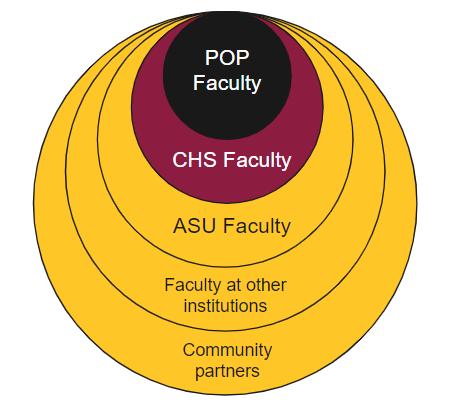
External committee members must be approved by the POP ECC and the Graduate College. (Note: comps/dissertation committees must include at least one external committee member.) To request an external committee member, students must submit a justification statement and an updated curriculum vitae of the potential committee member to the graduate support coordinator. The justification statement should be 300 words or less and describe the potential committee member’s unique role in the student’s research and what they will add to the committee. Students should keep in mind that, in addition to expertise, availability is also an important consideration. The curriculum vitae should be as up to date as possible and include publications, conferences, and presentations. The graduate support coordinator will facilitate review of the request by the following:
1. Program director – initial review
2. POP ECC – program approval
3. Graduate College – final approval
Requests that receive final approval will be processed by the Graduate College to allow for the external committee member to be selected in iPOS. In some cases, a date of birth might be required to establish identity. Contact the graduate support coordinator for details.
Changes to committee members – If a student would like to change a committee member, they must submit a change in their iPOS. Changes must be approved by the program director and the Graduate College. At least 5 days should be expected for these approvals, and longer if POP Executive and Curriculum Committee votes are necessary (the POP ECC meets once per month during the academic year). Please, plan accordingly. Students are required to notify the affected faculty of changes including changes that result in a faculty member’s service no longer being needed on a committee. Students are discouraged from making voluntary faculty changes to the comp exam/ dissertation committee after defending the dissertation prospectus successfully.
Written and oral comprehensive exams
Upon completion of most course work (six or less credit hours remaining in iPOS excluding dissertation hours), and prior to proposing or commencing dissertation research, students are to meet with their mentor and their supervisory committee to discuss preparing for the comprehensive exams. The student should schedule the written comprehensive examination during or after the 4th semester in the program AND all students need to take and pass their comps by their 9th semester in the program. Students needing longer than this for justified reasons (e.g., prolonged illness) must submit a written petition to the POP ECC for consideration; there are no guarantees that the POP ECC will grant an extension. (Reminder: the iPOS must be approved and at least the chair or co-chairs listed and approved on the iPOS before the comprehensive exams can be taken.). All students must be registered for a minimum of one credit hour (including summer) during the semester they plan on taking and defending comprehensive examinations.
The structure and content of the comprehensive exams include three components with distinct time guidelines: Critique a manuscript (24-hours); prepare a novel 6-page grant proposal (15 calendar days); and, an oral exam (1 week following committee feedback from the written portion).
Manuscript Critique
• Critique manuscript selected by the committee
• 24 hours to complete
• Committee feedback within 2 weeks
• Feedback to the student at the same time as the grant summary statement
Grant Proposal
• Prepare 6-page (plus aims page) grant proposal on a topic selected by the committee
• 15 days to write proposal
• Committee review to mentor in 2 weeks
• Mentor consolidates and provides feedback to student in 1 week
• Student has 1 week to prepare for orals
Oral Exam
• 4 weeks after completing grant proposal
• Defend manuscript critique
• Respond to committee feedback on grant proposal
• Address questions related to the program
Example of timeline:
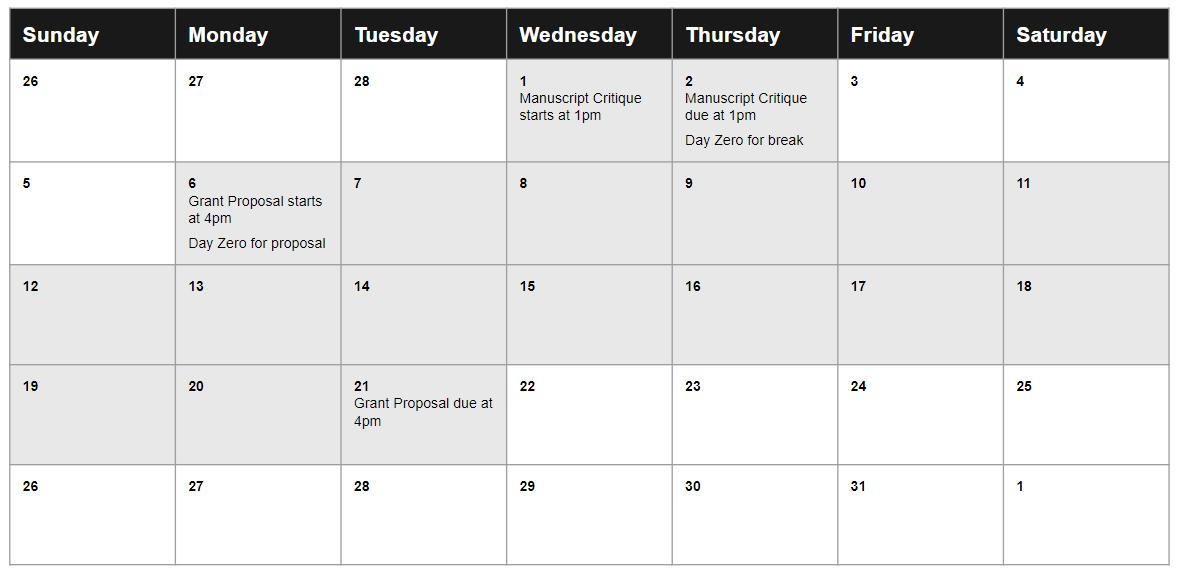
Manuscript critique: In consultation with the comprehensive exam committee, the mentor will choose a journal article for the student to critique. The student will answer several questions and follow standard reviewer guidelines from the journal to write their critique with special emphasis given to major and minor revisions needed. The student will have twenty-four hours to complete and submit the critique to their mentor. The review must be done independently without collaboration or help from others. The mentor will distribute the written critique to the comprehensive exam committee for review. The student will be expected to orally defend their critique during the oral exam section. The questions and grading rubric for the manuscript critique are included in the end of the handbook.
Grant proposal: The day on which the student submits their manuscript critique represents “day zero” for the 3-calendar day pause before beginning the grant proposal, which starts on day four. Students must prepare a novel 6-page grant proposal, plus aims page Prior to starting the comprehensive examination, the student and their mentor will identify topics of potential interest and present those to the committee and seek their approval. These topics must be different from topics the student previously used for other proposals including in EXW 700 and 701, different from their mentor’s prior research, and different from any other grant the student may have previously worked on or written. For this exercise to be useful, it is suggested that the student (and their committee) choose topics that could be used for the student’s dissertation topic. (Note: Although similar to an R21 proposal, this 6-page plus aims proposal does not have to be constrained by a budget or time frame typical for an R21 grant.) Further, to allow some additional flexibility with the grant format, the grant proposal could be in a pre-doctoral format appropriate for an identified funding agency. The specific grant format should be determined by the student’s mentor and supervisory committee.
Once the topics are approved, the mentor will choose one of the topics for the student to complete. The student will be given 15 calendar days to complete the grant proposal and submit it to their committee.
The grant must be done independently without collaboration or help from others. The committee will review the proposal using appropriate review guidelines and submit their reviews to the mentor within a predetermined time frame (typically two weeks). The committee members will indicate to the primary mentor whether the student has passed the written exam, passed with revisions, or failed to pass the written comprehensive exam at this time. The primary mentor will inform the student of the exam results and the next steps (see section on grading below).
For students who pass the written exam without required revisions and prior to the oral exam, the comments will be consolidated and blinded by the mentor (i.e., in a summary statement form) and shared with the student one week before the oral exam. The student will be expected to respond and offer solutions to the reviewer’s feedback (point by point) and defend their grant proposal at the oral exam.
Oral exam: Once a student has passed the written comprehensive exam, the oral exam will be scheduled by the committee to be held at a mutually convenient time, typically within 2 weeks of passing the written exam. Orals will be structured in 3 parts: defend questions regarding their manuscript critique regarding the major/minor revisions suggested; discuss and respond to reviewer’s feedback of their grant proposal (Note: A visual presentation should be developed to help direct the discussion “point by point” in response to the reviewer’s feedback); and, respond to any additional generic or “big picture” questions related to their focus area in regard to population health science.
Grading: The written and comprehensive exams are conducted on a pass/fail basis. Students must pass both the written and oral exams. The chair solicits signatures from the committee on the Report of the Comprehensive Exam Pass/Fail Form and submits the form to the graduate support coordinator by emailing chsgrad@asu.edu and the program director who will submit the results to the Graduate College.
Re-examination policy: A pass or fail will be determined by an overall vote by the student’s 5-member comprehensive exam committee. Per university and POP program policies, only one re-examination is permitted. This retake must be supported by the student’s committee and have approval from the Graduate College.
Written exam grading: A grade of “pass” indicates that the student addressed the questions at a level of quality commensurate with the majority of the examiners’ expectations, including the chair. To pass the written exam, students must meet the majority of the examiners’ expectations and the chair for both the manuscript critique and grant proposal.
Students may also receive a “conditional pass” if the majority of the committee, or the committee chair, require minor revisions to the written document to pass. The chair and the committee may communicate via email to come to this determination. A formal chair/committee meeting is not required but may be helpful in some situations. The required changes must be provided to the student in writing and copied to the chair of the comprehensive exam committee. Students must complete the revisions within 3 calendar weeks of receiving feedback from the committee on the required revisions. In addition to an updated aims page and 6-page research strategy, students will submit a 1-page introduction (see NIH procedures on revisions) summarizing what was changed in their grant. Similarly, if the student was asked to revise the manuscript critique, they must submit the revised document and a one-page summary of changes made. The student may not advance to the oral defense until they have received a grade of “pass” from each comprehensive exam committee member. Students who receive a grade of “pass” from each committee member will advance to the oral defense within two weeks of receiving their grades.
In some cases, the chair and the committee may want to see minor revisions completed to the written proposal and/or the manuscript critique after the oral examination. Per the committee’s decision, the
student would be required to resubmit the revised written exam (proposal and/or manuscript critique) along with a 1-page introduction summarizing the changes made to the revised documents. This must be completed within 3 calendar weeks and submitted to the committee. The chair and committee members will determine if the revisions are acceptable and meet expectations. This determination can be completed by assessing resubmitted written materials. The chair may decide to meet with the student to discuss the revised proposal and/or manuscript critique, but the formal oral re-examination is not required. The student will only be allowed to have one opportunity to revise their written exams.
Note: The comprehensive exam must reflect independent work! When preparing written or oral examination materials, or when working on revisions (if applicable), the student may reach out to the chair/committee members to clarify what the committee was looking for in comments, but not to provide guidance or specific direction on the preparation of comprehensive exam materials or revisions.
A grade of “fail” is given when the majority of responses are inaccurate, insufficient or unacceptable. If a student fails either the manuscript critique or the grant writing component or both, the student will receive a grade of fail on the written comprehensive exam. A grade of “fail” indicates that the student did not demonstrate the appropriate level of knowledge and expertise required for dissertation work and that it is unlikely that additional time and study will result in success. In this situation, the student will be recommended for dismissal from the program. The dismissal notification will include appeal procedures. A failing grade from the committee chair or a simple majority of the committee is a failing grade for the entire written examination. Failing the comprehensive examination(s) is considered final unless the supervisory committee and the head of the academic unit recommend, and the dean of the Graduate College approves, a re-examination. Only one reexamination is permitted. A petition with substantial justification for re-examination, endorsed by the members of the student’s supervisory committee and the program director, must be approved by the dean of the Graduate College before students can take the examination a second time. Re-examination may be administered no sooner than three months and no later than one year from the date of the original examination.
Results of the written examination are recorded on the Report of Doctoral Comprehensive Examinations Form (see Appendix I) and given to the graduate support coordinator who will submit them via the iPOS to the Graduate College.
Written examination re-take: The retake of the written exam must be approved by the dean of the Graduate College before the retake can commence. Students will only have to retake the written component in which they earned a failing grade. If the student failed both sections, they will have to retake both the manuscript critique and the grant proposal components.
If the student fails the manuscript critique, the mentor and committee need to identify a new article to critique. The new critique may not be started any sooner than 3 months from the original attempt. This allows the student to gain additional mentoring or take additional classes to better prepare the student for a successful attempt. Students must pass the second attempt of the manuscript critique to move onto the oral comprehensive exam. Once started, the student will have 24 hours to complete the critique. The new manuscript critique will be re-evaluated by the examination committee.
If the student fails the grant proposal, they will be required to submit a new grant proposal. The mentor and committee will select a NEW question for the student to write a grant proposal. This option may not be started any sooner than 3 months from the original attempt. This allows the student to gain additional mentoring or take additional classes to better prepare the student for a successful attempt. Students must pass the second attempt of the grant proposal to move on to oral comprehensive exams.
Oral exam grading: A grade of “pass” issued by the majority of the comprehensive examination committee including the chair indicates that the student may embark on development of a dissertation proposal (prospectus).
A grade of “re-test” is rendered when the majority of the comprehensive examination committee and chair believes the student has the capability to successfully complete the oral comprehensive examination at a later date. If a “re-test” is the grade rendered, the supervisory committee and the program recommend a re-examination A re-examination will be permitted with approval of the dean of the Graduate College. Only one reexamination is permitted. A petition with substantial justification for reexamination, endorsed by the members of the student’s supervisory committee and the head of the academic unit, must be approved by the dean of the Graduate College before students can take the examination a second time. The re-examination may be administered no sooner than three months and no later than one year from the date of the original examination.
A grade of “fail” indicates that the student did not demonstrate the appropriate level of knowledge and expertise required for dissertation work and that it is unlikely that additional time and study will result in success. In this situation, the student will be recommended for dismissal from the program. The dismissal notification will include appeal procedures.
Results of the oral examination are recorded on the Report of Doctoral Comprehensive Examinations Form (see Appendix I). The completed form must be emailed to the graduate support coordinator at chsgrad@asu.edu who will submit the results via the iPOS to the Graduate College.
Dissertation and prospectus
Students may begin the dissertation research only after being advanced to candidacy (i.e., passed comprehensive exams and the dissertation proposal has been approved). Per ASU Graduate College policy, only 12 credits of dissertation may be listed on the iPOS.
Research standards for publication of dissertation: Graduate research is the study of an issue that is of sufficient breadth and depth to be publishable in a respected POP-related journal. The effort should reflect a minimum of 1500 hours of thoughtful work for a dissertation (PhD). The research should follow the ‘scientific method’ and thus be both objective and reproducible. The dissertation should demonstrate independent, original, and creative inquiry. There should be predefined hypotheses or developmental goals and objectives that are measurable and can be tested. The document should demonstrate proficiency with written English and should conform to the Office of Graduate Education format guidelines. Students should begin their dissertation only after they have passed their comprehensive exams.
Dissertation proposal/prospectus defense: Per Graduate College policies, students cannot begin their dissertation until they have passed their dissertation proposal defense. The dissertation proposal defense may not be scheduled until the student has passed the comprehensive exams. The dissertation prospectus consists of two components: a written proposal and an oral examination. The written proposal must contain a formal title page, introduction with a statement of purpose/ question/ specific aims and hypotheses, a complete literature review, and must describe in detail the methods to be used including descriptions of subjects, instruments, statistics and other procedures (i.e. chapters 1-3). For the oral examination, students will be asked to present their proposed research study and defend their research design in addition to answering any additional generic or “big picture” questions related to their focus area population health. Before beginning the written dissertation proposal, it is recommended that the student schedule a pre-proposal meeting with their committee to discuss the purpose, specific aims,
hypotheses, and proposed research design. This will allow the committee to provide constructive feedback on the scientific merits of the project.
Students must allow sufficient time for their mentor and committee to review their work prior to the defense. The student must provide a formal dissertation proposal to the dissertation committee at least 10 business days prior to the oral defense. The student’s mentor must approve the written dissertation proposal prior to submission to the committee. The proposal defense is a public event. Within 10 business days of the proposal defense, the student must send the proposal abstract, date of the proposal, room location, committee members including their respective credentials, and zoom link to chsgrad@asu.edu and chsreception@asu.edu to enable an announcement of the event to be sent to POP faculty and students.
Note: ASU uses an online formatting tool that follows the Format Manual to generate a template into which you can insert your document text. The student cannot begin data collection until all approvals of the proposal have been completed and after all Research Compliance (IRB or IACUC) approvals are received
Full time students should aim to defend their dissertation proposal within one year of passing their comprehensive exams. Students needing longer than this for justified reasons (e.g., prolonged illness) must submit a written petition to the POP ECC for consideration; there are no guarantees the POP ECC will grant an extension.
Proposal/prospectus grading: The committee determines whether the student has passed, passed with minor revisions, or failed the dissertation proposal/prospectus defense. For minor revisions, the student will have no longer than 3 months to make revisions based on feedback from the committee. The committee feedback will be documented during the defense by the chair and provided to the student. A simple majority of the committee and the chair must approve the revisions for the student to pass the dissertation proposal/prospectus. The chair solicits signatures from the committee on the Report of the Proposal Defense Pass/ Fail form and emails the form to the graduate support coordinator (chsgrad@asu.edu) who will submit the results to the Graduate College.
Failure of the doctoral dissertation prospectus oral defense is considered final unless the supervisory committee and the head of the academic unit recommend, and the dean of the Graduate College approves, a second proposal defense. If such a petition is approved, students must submit the new prospectus by the end of six months (the six months begins from the date that the first doctoral dissertation proposal defense was held). If the academic unit does not grant the student permission to retake the proposal defense, or if the students fail to pass the retake of the proposal defense, the Graduate College may withdraw the students from the degree program. Students are required to register for at least one semester hour of credit that appears on the iPOS or one hour of appropriate graduatelevel credit during the fall, spring or summer session in which doctoral prospectus is defended
Advancement to candidacy: The Graduate College will send a letter indicating that the student has been advanced to candidacy once the comprehensive exams are passed and the dissertation proposal defense forms are approved and submitted. Students should not enroll in dissertation hours (POP 799) until after being advanced to candidacy Doctoral students who have been advanced to candidacy are required to maintain continuous enrollment (at least 1 credit hour each semester) until all degree requirements have been completed and graduated.
Dissertation research: After the dissertation proposal and IRB application have been approved, the student will undertake the approved dissertation project. Remember, the student will not be able to begin
the dissertation if the proposal is not complete and approved. A total of 12 dissertation credit hours must be taken prior to graduation. It is highly recommended that the appropriate structure and style format be followed throughout each stage of the dissertation process from the proposal to the final draft.
Students have two options for the dissertation:
1. A traditional dissertation, which is an in-depth volume describing (a) theoretical background and literature to date, (b) the methods and results of a research project, and (c) a detailed discussion of the strengths, limitations, interpretation and significance of the findings;
2. A series of publishable papers (typically 3 papers), with appropriate introductory and concluding sections. A three-paper format generally includes the following chapters: introduction, literature review (including theoretical background), methods, paper 1, paper 2, paper 3, discussion, and conclusions.
All students who conduct any research using human subjects are required to submit their research proposal to the Institutional Review Board for approval prior to conducting their study. This procedure is necessary even for students who are doing secondary data analysis. Students at ASU are not eligible to submit their own IRB. Students will have to work with their faculty mentor to submit to the IRB.
Data meeting: A doctoral candidate who is near the completion of their dissertation research should hold a “data meeting” with their dissertation committee, ideally, two months before the dissertation defense date. At this meeting, the candidate will offer a complete report on their results by sharing data, statistics, models, figures, and tables related to the aims of their research. This meeting allows the dissertation committee to review the results and offer any recommendations on the state of the analysis plan and offer suggestions for any new analyses prior to the final document and defense.
Scheduling the defense: Once the student’s committee has approved scheduling of the dissertation defense, the student will:
• Work with chsreception@asu.edu to book a room for their defense. Students must know the location of their defense before they can schedule their defense through the Graduate College.
• Student enters their defense date for approval by the Graduate College through the iPOS. The oral defense must be scheduled at least 10 business days before the anticipated defense date. Please see the available resources to help prepare for your defense, which includes the 10Working Day Calendar.
• Email chsgrad@asu.edu and chsreception@asu.edu the defense template to announce the defense to faculty and students.
• Once the request has been submitted, the request must be approved by the POP program. Note: the defense is not officially scheduled until approved by the POP program and the Graduate College
Dissertation submission: Once the defense has been scheduled, the student must upload their complete, defense-ready document for format review to the Graduate College 10 calendar days prior to the defense.
1. Students must submit documents through their iPOS by clicking on the Format tab and uploading a Word or PDF document as an attachment. If you are attaching multiple files, the documents must be submitted as a compressed zip file.
2. Documents should only be submitted after consultation with the student's committee/chair and must be a complete, defense-ready document (i.e. meets standards set by the ASU Graduate College Format Manual, complete content).
3. The Graduate Format team will not review incomplete documents or those that have not been formatted according to the format manual. If a partial or incomplete document is submitted, the document will be returned without evaluation and revisions will be requested before further review.
4. Students must be enrolled in at least (1) credit hour during the semester they plan to defend their thesis/dissertation and while working on format revisions.
Oral dissertation defense: All students are required to hold a public defense of their dissertation on an ASU campus. The dissertation committee should be provided an electronic copy of the “final” dissertation no fewer than 10 business days prior to the oral defense. Students should plan for 3 hours for their dissertation defense. In addition, an abstract of the dissertation and information about the defense time and location should be sent to chsgrad@asu.edu and chsreception@asu.edu no fewer than 10 business days in advance of the oral dissertation defense (This allows the program to invite the public to attend the dissertation). The defense includes a seminar open to the public, approximately one hour including questions from the audience, covering the substance of the dissertation. A closed-door meeting of the thesis committee and the student, up to 2 hours, follows. A vote of the dissertation committee is taken before and after the committee discusses the examination. Revisions and modifications may be recommended, even if the committee has determined the student has passed the exam.
Note: Students planning on defending oral exams, proposals, or dissertations in the summer, must register and pay for at least one credit hour of coursework. Students can register for any summer session; it does not have to be the same session in which you are defending; however, students must be registered before the defense can be scheduled. Students may need to pay out of pocket for this credit and related fees, as it is rare for the program to cover tuition in the summer.
Committee presence at defense: The student, committee chair (or one co-chair), and at least 50% of the committee must be physically present at the defense. If the chair or 50% of the committee cannot be physically present, then the oral defense must be rescheduled to another date. If a member(s) cannot be physically present at the defense, that committee member may participate in the defense in one of three ways. These options are listed in the order of preference:
• The absent committee member videoconferences into the defense location.
• The absent committee member teleconferences into the defense location.
• The absent committee member provides a substitute to be physically present (approved by the committee chair, the head of the academic unit & graduate college) for the defense only. The substitute must be someone who is approved to serve on graduate supervisory committees for that program. The absent committee member should provide the substitute questions, in writing, to be asked at the defense. The substitute, although respecting the opinions expressed by the regular committee, must be free to use his/her judgment in voting on whether the student passes or fails the defense.
An email needs to be sent to grad-gps@asu.edu with the student’s ID number and the name of the tele/videoconferencing member. If a committee member will be absent from the defense, the committee chair/co-chair or graduate support coordinator must notify the Graduate College as quickly as possible via phone at (480) 965-3521 before the defense takes place. To assign a substitute, be prepared to
provide the Graduate College with the full name and email address of the faculty member who will serve as the substitute. This information must be submitted before the defense.
The dissertation committee will receive instructions regarding defense reporting procedures via email from the Graduate College 7 days prior to the defense. Faculty serving on the dissertation committee may access iPOS through their MyASU in order to report results. Reported results can be viewed in iPOS under the Defense Results tab.
Degree completion/ final revisions: The student is to make any final corrections to the dissertation as recommended by the committee and mentor and then the final version of their document (that has been approved by the mentor and dissertation committee) is evaluated by a format reviewer in the Graduate College and submitted to UMI/ProQuest for printing.
Keep in contact with the format advisors (gradformat@asu.edu) as well to complete all format changes. To avoid jeopardizing your graduation, be sure to submit your final revisions by the posted semester deadline. If the deadline is not met, the student will be required to register (and pay) for one (1) graduatelevel credit hour the following semester to be able to graduate.
Revision process: After making the required corrections outlined in the email and reviewed the entire document, upload the document to the Graduate College via your iPOS. (Note: A format advisor checks your work against the Format Manual requirements. They also spot-check for misspellings, inconsistencies, typographical errors, and grammatical problems, but a thorough review of the entire document for these errors is the responsibility of the student and his/her chair.). Turnaround time for review fluctuates depending upon the volume of documents, and increases as the semester deadlines approach, students should expect a response within 3-5 business days. This process will continue until your document is ready for electronic submission through UMI/ProQuest.
Final submission to ProQuest: Student will receive an email from the format advisor notifying you that your document is ready for electronic submission through UMI/ProQuest. Read the email carefully as you may receive instructions before final submission to UMI/ProQuest. You must have received format approval from the Graduate College and have your defense results reported to the Graduate College through iPOS in order to be eligible to complete the final step of submitting to ProQuest.
Master in passing
Doctoral students who are in good standing and complete the requirements of the approved master in passing (MIP) may be awarded the related master’s degree (Population Health, MS). All coursework included in an MIP Interactive Plan of Study must have been completed after the semester and year of admission to the doctoral program.
Students with an existing master’s degree with the same major or who include any blanket hours from a previously awarded master’s degree on their doctoral Interactive Plan of Study (iPOS) are not eligible for a Master’s in Passing.
To discuss the necessary steps to apply for the Master in Passing, students should confer with the graduate support coordinator.
Requirements for Master in Passing:
The Master in Passing is comprised of 30 credits, including a thesis or portfolio. The degree awarded for completion of these requirements is a Master of Science in Population Health.
Required Courses (21 credits)
• BST 515 Applied Biostatistics in Medicine and Informatics (3)
• EXW 645 Advanced Applied Methods and Data Analysis (3)
• EXW 700 Research Methods (3)
• EXW 701 Scientific Grant Writing (3)
• POP 605 Population Health Systems Science and Theory (3)
• POP 633 Population Health Ethics (3)
• POP 641 Qualitative Research Methods (3)
Electives (3 or 9 credits)
• [consult with program director]
Culminating Experience (0 or 6 credits)
• POP 599 Thesis (6), or
• Portfolio (0)
Note: Grades of B or better are required in all courses A grade of Y is required in POP 599.
Courses outside of the POP program need to be approved by the POP Executive Committee via petition prior to course enrollment.
A maximum of 6 credit hours of 400-level coursework can be included on an iPOS with program approval.
Electives
Students must consult with the program director regarding selection of elective coursework. Students who pursuing the thesis as the culminating experience must complete 3 credits of elective coursework and students who pursuing the portfolio must complete 9 credits of elective coursework.
Culminating experience
The culminating experience must demonstrate the student’s application of the principles of population health science as presented throughout their graduate studies. Students pursuing the Master in Passing in order to supplement their doctoral experience must complete a thesis (6 credits of POP 599). Students who are unable to complete the doctoral program and choose to pursue the Master in Passing are required to complete a portfolio (0 credits).
Committee
Students must form a committee to oversee their culminating experience for the Master in Passing. The committee must have at minimum 3 members who are endorsed POP faculty. Faculty who are eligible to chair a committee or be a POP committee member for this program (referred to as endorsed Population Health faculty) are viewable on the Graduate Faculty website. If the student is pursuing the portfolio, the program director must be part of the student’s committee (either part of or in addition to the required 3 POP faculty).
Thesis
Students completing a thesis take 6 credit hours of POP 599 over the course of two terms. Selection of the thesis topic should be done collaboratively between the student and their committee, accounting for both the interests of the student and the expertise available from the committee. Similar to a dissertation, the thesis requires: a proposal/prospectus with oral defense, a data meeting with committee members, adherence to format guidelines, an oral thesis defense, and final submission of the thesis to ProQuest. The faculty must complete an internal Thesis Proposal Report Form to report on the pass/fail status of the MIP thesis prospectus defense and the MIP Thesis Defense Form to report the pass/fail status of the thesis defense. Contact the graduate support coordinator for copies of these forms. Students must work with their committee and the graduate support coordinator regarding the expected timeline for each of these components.
Portfolio
The portfolio is a non-credit option that requires students to submit a written introduction and discussion section that bookends the submission of at least three notable activities or academic accomplishments (e.g., projects, reports, presentations, publications, etc.). Students must receive approval from the POP Executive Committee in order to pursue the portfolio option. The student's committee, including the program director, will review the portfolio. The purpose of the portfolio is to show a mastery of the principles of population health science and practice through a compilation of completed work. The portfolio is a professional document written in AMA style and will be reviewed and evaluated for technical content and presentation quality by the committee noted above. Students must work with their committee and the graduate support coordinator regarding the expected timeline for the portfolio.
Application to graduate
Students should apply for graduation during the semester of planned graduation and must apply prior to scheduling the dissertation defense and no later than the deadline specified for that term. Students must have an approved iPOS on file before applying for graduation. The student should report to the graduate support coordinator any classes on their iPOS (especially POP 799) that may have an incomplete or grade of “Z”. Be proactive and follow-up with your mentor and the graduate support coordinator to ensure that all grades are entered. A student will not receive a letter of degree completion until all final grades are entered.
Check if you:
• Have an approved iPOS (no pending changes or petitions)
• Have met all minimum 3.0 GPA requirements (iPOS and Graduate)
• Have an approved full committee on the iPOS (no pending changes)
• Have satisfied all milestone requirements (for example, written comprehensive examination)
• Have reached candidacy
• Are an active student and currently enrolled
Per ASU policy, students completing a doctoral program may only participate in graduation ceremonies if all degree requirements are met prior to the deadlines for that semester. Students who need an extra semester to complete coursework must defer their graduation to the next term and participate in the next available ceremony.
Plan of study
To graduate in a timely manner, students should follow a sample plan of study. Deviation from a plan of study should be discussed with the graduate support coordinator and program director. Failure to follow a plan of study may result in delayed graduation. Full time is 6 credit hours per semester for students supported on a TA/RA. Otherwise full time is 9 credits per semester.
Sample Plan of Study, Fall Start
Note: This sample plan assumes completion of a previous master’s degree. Students without a master’s degree already complete should consult with the program director and graduate support coordinator for an individualized study plan.
Milestones
There are program milestones that must be met to demonstrate continuous progress in the program. These benchmarks include: Annual Goals/Contract, Midterm Review, Annual Review, Written/Oral Comprehensive Exam and Defense, and the Dissertation phase (Dissertation Proposal Defense, Advancement to Candidacy, and Dissertation Defense). While the details of this process are outlined below, we have included a milestone checklist in the appendices. Please note, unless otherwise noted, most deadlines are in the frame of business days (e.g., 10 days = 10 business days).
Mentor agreement: Students and their primary mentor(s) are required to discuss and complete a mentoring agreement that stipulates expectations for the student as well as expectations for the mentor(s). The completed and signed agreement must be submitted no later than October 31st each year. The student and mentor(s) can elect to revisit the agreement at any time. If changes are agreed upon, an updated signed agreement must be submitted. An example of a mentor agreement can be found in the program Canvas site.
Annual scholarship and service contract: All doctoral students must have their academic progress reviewed annually. All students who have not been advanced to candidacy (i.e., those who have yet to pass their dissertation proposal) are required to develop a contract with their mentor regarding their
scholarly and service goals to be accomplished each year they are enrolled in the program. This agreement/contract is to be signed by the student and mentor and submitted no later than October 31st of each year via online form submission (see program Canvas site for link). A template of the scholarly goals and service contract is included in this handbook. An example contract is available in Appendix C
Midterm review: All first- and second-year students, and select others, will be asked to meet with the program director in the Spring (March-April) to discuss the program and any issues that concern the student, to determine if the student is on track and whether the program is meeting the student’s needs. The review consists of a 10 to 15-minute informal discussion. All TAs and RAs will be separately evaluated bi-annually (October and April) by their supervising faculty member. More detail about this review is provided later in this document.
Annual review: Students are required to be evaluated annually by their supervisory committee until they have reached candidacy (e.g. have successfully passed the proposal of the dissertation prospectus). The review consists of a 30-minute review of your annual contract and portfolio noting your accomplishments in research and service.
Procedures are as follows for the Annual Review:
1. Students are responsible for scheduling 3 mentors from their supervisory committee and one member from the POP ECC to attend their annual review interview. If your supervisory committee has a POP ECC member present, no additional members of the ECC are needed. The reviews are to be scheduled during a regular workday M-F from 8 am to 5 pm during the month of April and must be completed by the last day of classes during the spring semester. Interview dates and times are to be mutually decided between the student and the faculty committee members.
2. Students are responsible for scheduling the day, time, and room/Zoom link for their annual review. Contact chsreception@asu.edu for assistance in booking a room. Once this is done, email the final details to chsgrad@asu.edu
3. Prepare a portfolio of your annual accomplishments. A checklist of the materials to provide in the portfolio is presented at the end of this document. Create an electronic pdf (please put into single file) copy of the portfolio and send to your mentor, your supervisory committee, the graduate support coordinator and the program director
Failure to satisfactorily accomplish/complete the stated objectives on the contract/agreement will indicate to the committee that the student has not made satisfactory progress in the program and the student may be placed on academic probation. If program progress is deemed unsatisfactory, steps for improvement (with timelines for correction) will be outlined in a letter to the student. Failure to make improvements within the given timeline after being issued a letter of unsatisfactory performance can be grounds for dismissal from the program.
Interactive plan of study (iPOS)
The Interactive Plan of Study, or iPOS, is an agreement between the student, the academic unit, and the Graduate College. The student must submit their iPOS in the first semester of the program. Students are encouraged to review the iPOS at the end of each semester to ensure the courses listed on the iPOS match the student’s transcript and that the courses meet the plan of study course requirements. See more information on iPOS
Faculty advisor/chair: faculty mentor
Change of coursework: If a change of coursework is needed, the student must update the courses listed in the iPOS and submit a course change for review. This process is required if you projected a course you did not complete, or if you need to change courses listed. The iPOS will be routed electronically to the graduate support coordinator for review and approval, and then for auditing by the Graduate College.
Specializations and certifications
The College of Health Solutions prepares graduates for excellence upon entering the workplace. Since certification and licensure requirements vary by profession and from state to state, we recommend that you visit the ASU licensure website to determine if your program meets the requirements of individual state licensures or national certifications, as applicable. If you have specific questions, please contact your program director or degree coordinator.
Satisfactory academic progress
All graduate students are expected to make systematic progress toward completion of their graduate program. This progress includes satisfying the conditions listed below, and achieving the benchmarks and requirements set by the individual graduate programs as well as the Graduate College. If a student fails to satisfy the requirements of their program and/or the benchmarks outlined below, the student may be dismissed from their program based on the academic unit’s recommendation to the Graduate College at which time the dean of the Graduate College makes the final determination.
Satisfactory academic progress includes:
1. Maintain a minimum 3.00 for all GPAs.
2. Satisfy all requirements of the graduate program.
3. Satisfy the maximum time limit for graduation for the student’s graduate program (six years for masters and certificates, ten years for doctoral)
4. Successfully pass comprehensive exams, qualifying exams, foreign language exams, and the oral defense of the proposal/prospectus for the thesis or dissertation.
5. Successfully complete the culminating experience.
6. Graduate students must remain continuously enrolled in their graduate program. Failing to do so without a Graduate College approved Leave of Absence is considered to be lack of academic progress and may result in the Graduate College withdrawing the student from their program.
Satisfactory progress in Population Health, PhD program requires students to:
• Complete and pass annual reviews until advancement to candidacy
• Complete and pass comprehensive examinations within indicated timeframes
• Complete and pass the dissertation defense
GPA and grades
Graduate students must maintain a minimum 3.00 (scale is 4.00 = “A”) grade point average (GPA) to maintain satisfactory academic progress and to graduate. The minimum 3.00 GPA must be maintained on all GPAs (Plan of Study (iPOS) GPA, Overall Graduate GPA and Cumulative GPA):
1. The iPOS GPA is calculated on all courses that appear on the student’s approved iPOS
2. Cumulative GPA represents all courses completed at ASU during the graduate career.
3. The Overall Graduate GPA is based on all courses numbered 500 or higher that appear on the transcript after admission to a graduate program or graduate non-degree. This includes shared coursework if in an approved accelerated bachelor’s/master’s program.
Transfer credits and some courses taken in the Sandra Day O’Connor College of Law are not calculated in the iPOS GPA or the Graduate GPA. Courses lower than a “C” cannot appear on the iPOS but will be included when calculating the Graduate GPA. Courses with an “I” grade (incomplete) or “X” grade (audit) cannot appear on the iPOS.
See university grade definitions and policies.
The Population Health, PhD program requires grades of B or better in all courses. Students who earn a B- or lower in a course must repeat the course and earn a B or better in order to apply the course toward program requirements.
Incomplete grade requests
An incomplete grade request may be considered by an instructor when a student, who is doing otherwise acceptable work, is unable to complete a course (e.g., final exam or term paper) because of illness or other conditions beyond the student's control. Unfinished work must be completed with the same instructor except under extenuating circumstances. The completion date is determined by the instructor but may not exceed one calendar year from the date the mark of "I" is recorded. Once the work is completed, faculty must request a change on the grade roster to post the grade. If a student does not complete the missing coursework by the date that is agreed upon on the incomplete request form, the instructor may change the grade to what was earned based on the work completed in the class. If the coursework is not completed after a calendar year, the incomplete becomes permanent. Repeating a class in which an incomplete is awarded will not replace the "I" on the student's transcript. Students must complete the incomplete request form and submit it to their instructor for review and processing. Students should be mindful that incomplete grades may impact financial aid
Academic probation and dismissal
Failure to maintain a minimum 3.0 GPA or failure to satisfactorily progress in the program as referenced in this handbook will result in the student being placed on academic probation. Students will be notified of probationary status and expectations for improvement by the program director or graduate support coordinator. Time limits for probationary status may vary. Typically, students have 9 credit hours or one year, whichever comes first, to raise their GPA.
Students who fail to meet requirements or timeline needed to demonstrate satisfactory improvement will be recommended for dismissal from the program. Notice will be provided by the program and will include procedures for appeal.
Students may be recommended for dismissal from the Population Health, PhD program for failing to meet necessary milestones and timelines as indicated in this handbook. These pertain, but are not limited to: annual reviews, TA/RA review, professional conduct, comprehensive exams, prospectus defense, and dissertation defense.
Time to completion limit
Doctoral students must complete all program requirements within an eight-year period. Graduate courses taken prior to admission that are included on the iPOS must have been completed within seven years of the semester and year of admission to the program (previously awarded master’s degrees used on the
Interactive Plan of Study are exempt). The eight-year period begins with the term of admission to the doctoral program OR the earliest term of applied pre-admission credit.
Exceptions to the time limit policy must be approved by the program director and the College of Health Solutions. Extensions of more than two years must also be approved by the Graduate College. The Graduate College may withdraw students who are unable to complete all degree requirements and graduate within the allowed maximum time limits.
Appeal and grievance processes
Grade appeal
For assignment grade disputes during a class, students must contact the instructor of the course.
The process to appeal a final course grade may only be initiated by a student once the course has concluded and a final grade has been posted to the student’s transcript. Per university policy, course grade appeals must be processed in the regular semester immediately following the issuance of the final grade in dispute (by commencement for fall or spring) regardless of whether the student is enrolled at the university.
The course grade appeal process begins with a discussion about the matter between the student and the course instructor. If the matter is unresolved, the student should submit a Grade Appeal Form for further review by the program director. If this review does not adequately settle the matter, the student should begin the formal procedure of appealing to the College of Health Solutions Academic Standards and Grievance Committee.
Student grievance
Students who wish to file a grievance about a non-grade-related matter may use the established student grievance procedure Non-grade-related grievances may include dissatisfaction with an instructor, problems with a classmate or other unresolved situations.
Mentor changes
Mentoring and being mentored is a two-way relationship and it takes work. A student is accepted into and retained in the program ONLY if a mentor agrees to work with them. In other words, a student’s acceptance into the program is a significant commitment of time and resources by the mentor and is a career-altering decision by the student. Both parties must communicate clearly and listen carefully to each other.
Occasionally students are confronted with the position of wanting to change mentors. If a student determines that they are struggling with working with a specific mentor because of a personality conflict and/or if they find that they have a change in research focus that their current mentor cannot support, then the first thing to do is TALK with your mentor, the program director, or one of the POP ECC members right away. Often these issues can be relieved by simply opening a clear line of communication and/or by developing a co-mentoring relationship with another faculty. The POP ECC will also support measures to mediate the situation.
If it is decided that the student still wants to petition the Executive Committee to change mentors, then the following procedures should be followed:
• Students must document in their petition, a timeline of the steps that they have taken to relieve the conflict. Please identify who you spoke with, when, and what has been tried thus far to relieve the conflict.
• Identify in your petition what the issues are and why you are requesting the change.
• Describe what possible solutions or remedies of the situation that you are recommending (i.e., a change in focus area, TA/RA position, or a change in mentor).
Once submitted, the POP ECC will review the petition and will ask the mentor and/or student to come to the meeting to describe their perspective of the situation. The POP ECC will discuss whether a change in mentorship is the best solution for both parties. The POP ECC will decide whether it will recommend that the student identify another mentor within the program with overlapping interests and one who is willing to work with them. Be aware, that it is not always possible to find an alternative approved mentor with the expertise and availability needed in the program. If an appropriate alternative mentor is not available, then the student may need to withdraw from the program and find a program that is better suited to their needs. Change in mentors will likely have funding implications. If the student is funded by the POP program or a research grant, then funding must also be available for an approved change in mentors.
Appealing recommendation for dismissal
1. Students may appeal a decision for dismissal from the program by submitting a letter to the program director.
a. The appeal letter must be received within 10 business days of the date of the letter of dismissal. The letter should state the reasons justifying a reversal of the original decision and provide substantive evidence in support of the request.
b. Letters received after the 10 business-day interval will not be reviewed, and the dismissal will be final.
c. The program committee will review all letters of appeal that are received within the 10 business-day time frame. The committee will submit their decision to the program director within 10 business days of receipt of the student’s letter.
2. The program director will then notify the Student Success Hub of the decision. The Student Success Hub will inform the student of the decision.
3. If the appeal is denied, the student may appeal to the CHS Academic Standards and Grievances Committee within 10 business days of receiving the denial of the appeal. The CHS Academic Standards and Grievances Committee will review the dismissal and appeal materials and make a recommendation to the dean of the College of Health Solutions. The dean will have 20 calendar days to make a final decision.
4. If at any stage, a timely appeal is not submitted by the student, the program director will recommend dismissal to the Graduate College via the Student Success Hub. The Graduate College will then inform the student of the dismissal by letter.
Student code of conduct and academic integrity
ASU expects and requires its students to act with honesty, integrity, and respect. Required behavior standards are listed in the ASU Student Code of Conduct, the ABOR Code of Conduct, the Computer, Internet, and Electronic Communications Policy, the ASU Student Academic Integrity Policy, and outlined by the Office of Student Rights & Responsibilities Violations of a Graduate College, College of Health Solutions, or Arizona State University policy will result in academic review and may consequently result in student disciplinary procedures.
Academic integrity
The ASU Student Academic Integrity Policy lists violations in detail. These violations fall into five broad areas that include, but are not limited to:
1. Cheating on an academic evaluation or assignment.
2. Plagiarizing.
3. Academic deceit, such as fabricating data or information.
4. Aiding academic integrity policy violations and inappropriately collaborating.
5. Falsifying academic records.
See information on the academic integrity procedure within the College of Health Solutions
Newly admitted graduate students will receive a "priority task" on their MyASU directing them to complete a canvas module on academic integrity. The module consists of a PowerPoint that outlines academic integrity and students must take a quiz and pass with an 80% or higher.
Student code of conduct
Violations of the ASU Student Code of Conduct, other than the provision concerning academic dishonesty, are more generally considered inappropriate behavior. The Office of Student Rights and Responsibilities reviews and sanctions these matters. If a student violates both the academic integrity provision and additional provisions of the Student Code of Conduct, both the college and the Office of Student Rights and Responsibilities will review the matter. Each independently makes determinations concerning violations and appropriate sanctions.
Professional conduct
ASU is a community and a professional work environment. Graduate students are expected to treat their peers, teachers, students, staff, and members of the ASU community with respect and work with them in a professional manner. Graduate students are representatives of their program, the College of Health Solutions, and ASU. Students must demonstrate the requisite qualifications for successful professional performance, including interpersonal skills, basic communication skills, appropriate professional conduct, and satisfactory performance in field experiences.
Graduate students who demonstrate behaviors or characteristics which make success in their related fields questionable will be reviewed by the program committee. The committee’s review may result in a recommendation for dismissal from the program or implementation of probational conditions for continued participation Students may appeal a recommendation for dismissal by following established procedures
College and university procedures and policies
All policies and procedures outlined in this handbook are in accordance with policy set by the Graduate College and Office of the University Provost. In some cases, program policies may be more restrictive than those set by Graduate College and Provost.
Continuous enrollment policy
Students must be registered for a minimum of one credit hour during all phases of their graduate education, including the term in which they graduate. This includes periods when students are engaged in research, conducting a doctoral prospectus, working on or defending theses or dissertations, taking comprehensive examinations, taking Graduate Foreign Language Examinations, or in any other way using university resources, facilities or faculty time.
Registration for every fall semester and spring semester is required. Summer registration is required for students taking examinations, completing culminating experiences, conducting a doctoral prospectus, defending theses or dissertations, or graduating from the degree program. See more information on the continuous enrollment policy.
Requesting a leave of absence
Graduate students planning to discontinue registration for a semester or more must submit a leave of absence request via their Interactive Plan of Study (iPOS). This request must be submitted and approved before the anticipated semester of non-registration. Students may request a maximum of two semesters of leave during their entire program. Students with a Graduate College-approved leave of absence are not required to pay tuition or fees, but in turn are not permitted to place any demands on university faculty or use any university resources These resources include university libraries, laboratories, recreation facilities or faculty and staff time. See more information on the leave of absence policy.
Registration policies
Students are strongly encouraged to enroll in courses well in advance of the start of the term. Enrollment must be complete by the Add/Drop deadline for the session in which the class is offered. Courses that are dropped by the Add/Drop deadline will not appear on a student’s transcript. If a course is removed from a student’s schedule after this deadline, it will be considered a withdrawal and a grade of “W” will be recorded. Term dates and deadlines, including the Add/Drop, Tuition Refund, Course Withdrawal, and Session Withdrawal deadlines, can be found on the Academic Calendar
Discrimination, harassment, and retaliation
Title IX of the Education Amendments of 1972 is a federal law which provides that no person be excluded on the basis of sex from participation in, be denied benefits of, or be subjected to discrimination under any education program or activity. Both Title IX and university policy ACD 401 make clear that sexual violence and harassment based on sex is prohibited. An individual who believes they have been subjected to sexual violence or harassed on the basis of sex can seek support, including counseling and academic support, from the university. For information on resources, visit the sexual violence awareness, prevention, and response website
Student support resources
Academic program support
Students are given access to a Canvas site when they arrive in their first Fall term As a messaging platform and as a repository for documents, it is an invaluable resource and students are encouraged to consult it throughout the program.
The program director is available to meet individually with students regarding questions about the program, connecting with program faculty, and more. The graduate support coordinator is available to assist students with concerns regarding iPOS, course registration concerns, college and university policy/procedure questions, and information regarding graduation. Students are encouraged to connect with the graduate support coordinator once per term or when making any adjustments to their iPOS.
Graduate students in the College of Health Solutions may access the CHS website for information on college policies and resources and advising information
University resources
• Graduate College
• Office of the University Provost
Academic and career support
• ASU Libraries
• Graduate Writing Center
• Career and Professional Development Services
• Graduate Student Government
• Student Clubs and Organizations
Business and finance services
• Financial Aid and Scholarship Services (financial aid)
• Billing and Student Finances (tuition, fees, and payments)
• Parking and Transit Services (permits, shuttles, public transit)
• Sun Devil Card Services (ID cards)
• Enterprise Technology (technology assistance)
• Sun Devil Dining (meal plans, M&G, hours)
Counseling services
ASU Counseling Services provides confidential, time-limited counseling and crisis services for students experiencing emotional concerns or other factors that affect their ability to achieve their goals. Support is available 24/7.
In-person counseling: Monday-Friday 8 a.m. – 5 p.m.
ASU Counseling Services, Student Services Building 234 Tempe, AZ 85287
480-965-6146
After-hours/weekends
Call EMPACT’s 24-hour ASU-dedicated crisis hotline:
480-921-1006
For life threatening emergencies
Call 911
Disability accommodations
Reasonable accommodations are determined on a case-by-case, course-by-course basis to mitigate barriers experienced due to a disability (SSM 701-02). Students with disabilities who require accommodations must register with the Student Accessibility and Inclusive Learning Services and submit appropriate documentation. It is recommended students complete this process at the beginning of the term and communicate as appropriate with their instructor.
• Email: Student.Accessibility@asu.edu
• Phone: (480) 965‐1234
• FAX: (480) 965‐0441
Pregnancy: Students requesting services due to pregnancy (SSM 701-10) should be prepared to submit documentation regarding the pregnancy, any complications and clearance to return to school related activities. Student Accessibility can work with students to foster continued participation in a program, whether that be with academic accommodations such as absences or assistance requesting a leave, or through other requested accommodations.
Health and fitness
All ASU students enrolled in in-person programs have access to Sun Devil Fitness facilities on all campuses. For more information about facilities, membership and group fitness classes, see the Sun Devil Fitness and Wellness website
For information about health insurance and appointments with care providers, see the ASU Health Services website
International students
ASU’s International Student and Scholars Center (ISSC) can provide support and answers to questions about visas, employment, scholarships and travel. International students are strongly encouraged to consult the ISSC regarding minimum total enrollment and minimum in-person enrollment requirements to support their visa status. See the ISSC website for more information or to schedule an appointment with an ISSC adviser
The ASU Coalition of International Students is comprised of international student organizations and promotes engagement activities and resources, including an international student guidebook, to support international students.
Veterans and military
The Pat Tillman Veterans Center provides guidance and support for students who are veterans, activeduty military or military dependents. For more information, please call the office at 602 496-0152 or visit the Veterans Center website
Appendix
A: Checklist for completing degree
Ongoing checklists (until candidacy)
Steps and Deadlines Complete
1. Register for courses promptly each term
Some courses, or sections of a course, fill up quickly so you are encouraged to register when your name appears in the registration queue. You must be registered by the first day of each term; if not, you will be “inactive” and will have to complete a form (and likely pay a late registration fee) in order to be readmitted.
Tips:
● While most coursework should be completed before the Comprehensive Oral Exam, students are permitted to take coursework after the Comprehensive Oral Exam.
● Dissertation credits cannot be taken prior to passing the Comprehensive Oral Exam and the Dissertation Proposal Oral Exam.
● To maintain full-time enrollment, enroll in at least 9 credits for each Fall and Spring term. A minimum of 6 credits must be taken in each Fall and Spring term in order to be eligible for TA/RA and financial aid.
2. Complete an annual mentor/mentee contract with your mentor.
All doctoral students must discuss their faculty and student expectations annually. Students are required to review the contract and discuss foundational expectations with their mentor each year they are enrolled at ASU. This agreement/contract is to be signed by the student and primary mentor. These contracts should be filed no later than October 31st and submitted via online upload (see program Canvas site for link).
3. Complete an annual scholarship contract with your mentor
All doctoral students must have their academic progress reviewed annually. All PhD students who have not been advanced to candidacy, are to develop a contract with their mentor regarding their scholarly and service goals to be accomplished each year they are enrolled at ASU. This agreement/contract is to be signed by the student and mentor.
Tips:
● These contracts should be filed no later than October 31st and submitted via online upload (see program Canvas site for link).
● A template is included in the POP student handbook. Examples are available upon request.
4. Complete mid-term review with program director
All 1st and 2nd year PhD students and selected others will be asked to meet with the program director every Spring semester to discuss issues that concern the student, to determine if the student is on track and whether the program is meeting the student’s needs. Students should work directly with the director to determine an acceptable time and location to meet.
5.
Complete annual review
Until you pass to candidacy (after your dissertation proposal), you will be required to hold an annual review each Spring semester with your supervisory committee (3 members, which need to be POP faculty members). A POP Executive Committee faculty member also needs to attend the meeting. Your annual review will review your progress towards accomplishing your annual contract, your course grades, and other accomplishments and challenges in the program. At least 10 business days before the meeting, send your committee members a BRIEF summary, addressing the above points in a single PDF. Send a copy of the summary to the graduate support coordinator (chsgrad@asu.edu).
Tips:
● The annual review needs to be completed by the first Friday in May, so start planning in late March/early April.
● Send chsreception@asu.edu a room request which includes the date/time/number of attendees at least 10 business days in advance, and they will schedule the room. Once the student has this information, the student is required to send an email to the attendees with the meeting information and cc chsgrad@asu.edu.
Milestones to graduation
Steps and Deadlines
1. Submit your iPOS
Fill out and complete your Plan of Study. See directions on how to submit your iPOS Meet with your mentor to review your iPOS before posting online and submit a copy to the graduate support coordinator (chsgrad@asu.edu)
Tips:
● Submit your iPOS by the time you have enrolled in 50 percent of the minimum credit hours required for your degree program.
● It can be updated, but each change will require approval from the program director and the Graduate College. Plan ahead.
● iPOS must be completed and approved before comprehensive exams can be taken.
● Students may not include on their iPOS any credit hours that have been applied towards a previously awarded degree.
● A maximum of 12 credits can be transferred into the iPOS from ASU or another institution.
● While you may have additional courses that are listed on your transcript and not included on your iPOS, the courses in the iPOS must match those listed on your transcript.
2. Assign members to your Comprehensive Exam committee
This committee serves on the student’s written and oral comprehensive exams. Students must verify the members of the comprehensive exam committee in their iPOS. Any changes to the comprehensive exam committee from the supervisory committee must be approved by the program director and the Graduate College.
Tips:
Complete
● Students tend to have the same members of their supervisory committee on their comprehensive exam committee, but this is not required.
● It is recommended that your comprehensive exam committee is comprised of the same members as your dissertation committee.
● You cannot sit for the comprehensive exam until your committee members are approved by the program director and the Graduate College. Plan ahead.
● At least 5 members (3 of which are POP faculty mentors) are required on this committee.
● If a committee member is not a POP faculty mentor, students must work with the graduate support coordinator (chsgrad@asu.edu) to have them reviewed and approved by the POP ECC and the Graduate College.
3. Comprehensive Exam
Upon completion of most course work (six or less credit hours remaining in iPOS excluding dissertation hours), and prior to proposing or commencing dissertation research, students are to meet with their mentor and their supervisory committee members to discuss preparing for their comprehensive exams. The structure and content of the comprehensive exams include three components with distinct time guidelines (see POP PhD Student Handbook): 1) Critique a manuscript, 2) Prepare a novel grant proposal and 3) Oral Exam.
The chair solicits signatures from the committee on the Report of the Comprehensive Exam Pass/Fail Form and submits the form to the graduate support coordinator (chsgrad@asu.edu). The student or his/her chair is responsible for submitting the form to the graduate support coordinator. Please remember, the student must pass both the written and oral components of the comprehensive exam to pass.
Tips:
● Students should complete the comprehensive exams upon completion of most course work (six or less credit hours remaining in iPOS excluding dissertation hours).
● Make sure your comprehensive exam committee has been approved before you sit for the exam.
● All students must be registered for a minimum of one credit hour (including summer) during the semester that they plan on defending comprehensive examinations.
● After your oral exam, the chair of the committee should submit the form to the graduate support coordinator (chsgrad@asu.edu).
4. Assign/update members to your Dissertation committee
The Dissertation Committee must have five (5) members and contain a minimum of three approved mentors in the POP program.
Tips:
• Students cannot sit for the Dissertation Proposal until the committee is approved by the program director and the Graduate College. Plan ahead.
• If a committee member is not a POP faculty mentor, students must work with the graduate support coordinator (chsgrad@asu.edu) to have them reviewed and approved by the POP ECC and the Graduate College.
5. Dissertation Proposal Oral Exam
The student must provide a formal dissertation prospectus to the dissertation committee at least 10 business days prior to the defense. The student’s primary mentor must approve the written proposal prior to submitting it to the committee. The prospectus must be formatted correctly. The final structure of the proposal is determined by the committee but at minimum it must include: a formal title page, introduction with a statement of purpose/ question/ specific aims and hypotheses, a complete review of the related literature, and must describe in detail the methods to be used including descriptions of subjects, instruments, statistics, and other procedures. A copy of any relevant IRB forms should be included with the proposal. The student will not be able to begin data collection until all approvals of the proposal have been completed and after all IRB approvals are done. Within 10 business days of the proposal defense, please send an abstract and date of the event to chsgrad@asu.edu. A room will be scheduled, Zoom meeting, and announce the event to POP faculty and students. The chair solicits signatures from the committee on the Report of the Proposal Defense Pass/Fail form and submits the form to the graduate support coordinator (chsgrad@asu.edu). The graduate support coordinator will report the results of the proposal defense to the Graduate College.
Tips:
● The dissertation proposal defense may not be scheduled until the student has passed the comprehensive exams.
● Make sure your dissertation committee has been approved before you sit for the exam.
● All students must be registered for a minimum of one credit hour (including summer) the semester that they plan on defending their dissertation proposal.
6. Final steps to graduate: Apply for graduation
Prior to defending your dissertation, you must apply for graduation through the “Graduation” tab on your MyASU. At this point, you need to audit your iPOS to determine if any changes need to be made. You should also submit documents for format review and schedule the Oral Defense. You must submit a Survey of Earned Doctorates form.
Tips:
● You have an approved iPOS (no pending changes or petitions)
● You have met all minimum 3.0 GPA requirements (Cumulative, iPOS, and Graduate)
● You have an approved full committee on the iPOS (no pending changes)
● You have satisfied all milestone requirements above (for example, written comprehensive examination)
● You have reached candidacy
● You are an active student and currently enrolled. Confirm that your defense date occurs in the last semester that you are enrolled. Failure to do so may delay graduation and you may incur additional fees.
7. Final steps to graduate: Scheduling your Dissertation Defense
Schedule three hours for your Final Oral: The Final Oral Exam includes a one-hour public presentation and then a two-hour meeting with your committee. Your committee must have at least two weeks’ notice that your dissertation will be given to them by a specific date. It is also required that all committee members have at least two weeks to read your dissertation before the exam date. In other words, a month before the exam, the committee has to know the exam date and that they are getting the final draft in two weeks.
Submit your Final Oral Exam date electronically to the Graduate College within 10 days of your defense. This ensures the Graduate College will send the pass/fail form via electronic form to your committee.
Tips:
● At least 50% of your committee must be physically present at the defense. Your chair must be physically present at the defense.
● Please pay careful attention to the graduate college deadlines. If you do not defend your dissertation by the Graduate College’s semester deadline, you are responsible for any tuition and fees incurred in the subsequent semester.
● Once you have a date, email chsreception@asu.edu to schedule a room large enough for a public defense.
8. Final steps to graduate: Public announcement
The one-hour presentation must be announced to all POP doctoral faculty and doctoral students. At least two weeks prior to your final oral exam, please send the following information to the graduate support coordinator (chsgrad@asu.edu) for the announcement: how you want your name and previous graduate-level degree listed, the day, date and time of the one-hour presentation, building and room location; title of the thesis/talk and an announcement abstract no more than 300 words.
9. Final steps to graduate: Submitting your Dissertation
Once the defense has been scheduled, the student must upload his or her complete, defense-ready document for format review to the Graduate College 10 calendar days prior to the defense, through the student’s iPOS. Once the defense has been scheduled, the student must upload his or her complete, defense-ready document for format review to the Graduate College 10 calendar days prior to the defense.
Tips:
● Students must be enrolled in at least (1) credit hour during the semester they plan to defend their thesis/dissertation and while working on format revisions.
● Documents should only be submitted after consultation with your committee/chair and must be a complete, defense-ready document (i.e. meets standards set by ASU Graduate College Format Manual, complete content).
● For questions regarding documents that require special format, please email gradformat@asu.edu
10. Final steps to graduate: PhD Degree Completion
On the day of your defense, the Pass/Fail form will have already been sent to your committee chair from the Graduate College for your committee to sign.
Once the defense is over, most students have some revisions to complete. Begin working on these soon after your defense. The student is to make any final corrections to the dissertation as recommended by the committee and mentor and then the final version of their document (that has been approved by the mentor and supervisory committee) is evaluated by a format reviewer in the Graduate College.
Students will receive an email from the Graduate College format advisor notifying you that your document is ready for electronic submission through UMI/ProQuest. Read the email carefully as you may receive instructions before final submission to UMI/ProQuest. You must have received format approval from the Graduate College and submitted your Pass/Fail form to the Graduate College in order to be eligible to complete the final step of submitting to UMI/ProQuest.
Tips:
● To avoid jeopardizing your graduation, be sure to submit your final revisions by the posted semester deadline (graduation deadlines). If the deadline is not met, the student will be required to register (and pay) for one (1) graduate-level credit hour the following semester to be able to graduate.
● Work with the program director to confirm that your final dissertation credits have been entered.
● A student will not receive a letter of degree completion until all final grades are entered.
B: Template for annual scholarship and service contract
Academic Year: _________
Student Name: ________________ Date: ______
Mentor Name _________________________________________________
Scholarly Goals
Be very specific in terms of dates/ conference names/ locations/ abstract names/ journal titles and locations etc. Make sure to have measurable learning objectives, as appropriate.
1. To learn and acquire skill in …
a. Demonstrate proficiency in …
i. To illustrate this skill
b. Demonstrate proficiency in …
i. To illustrate this skill
2. Assist with ...
a. Demonstrate competence in
b. Gain an understanding of
3. Write and submit ____ manuscript and submit to __________________
4. To attend at least two (2) professional conferences (list specifics) ____ and ________.
5. To submit one (1) abstract to academic conference. (give specifics)
Service Goals:
1. Volunteer reviewer for GPSA grants.
2. To participate in the Graduate Club including …
3. Participation in other college, university, or professional service activities.
Student Signature Date Mentor Signature Date
Submit completed and signed agreement to the graduate support coordinator at chsgrad@asu.edu
C: Example of annual scholarship and service contract
Annual Scholarship and Service Contract
Academic Year: 2021-2022
Student Name: Jane Doe
Date: October 28, 2021
Mentor Name: Dr. Doogie Howser
Scholarly Goals
1. Coursework and Methods Development
a. Successfully complete core and advanced courses, specifically POP 633, POP 641, and EXW 700.
b. Refine research methodology and scientific skills through active engagement in coursework and research applications.
2. Research Engagement
a. Assist Dr Howser in project and team management
b. Participate in data collection for two ongoing studies (e.g., Study 1 and Study 2).
c. Provide data management support for the XYZ projects.
3. Publication and Presentation
a. Conduct statistical analyses focusing on the predictors of XYZ, and regularly discuss findings with my mentor.
b. Prepare and submit a conference abstract detailing the results obtained.
c. Draft the introduction and methods sections of a manuscript based on the previous analyses.
d. Aim to present findings at two professional conferences, one local and one national, upon acceptance of submitted abstracts.
4. Community and Network Engagement
a. Strengthen and cultivate community partnerships, specifically by collaborating with the Department of Hogwarts on XYZ project.
b. Expand professional network by actively engaging with members of the Department of Hogwarts.
Service Goals
1. Pop Health Community Involvement
a. Actively participate in the Pop Health club, including attending social activities, and meetings and contributing as a member of the social subgroup committee.
2. Professional Service
a. Engage with the Graduate and Professional Student Association (GPSA) by serving as a grant reviewer, reviewing at least two grant applications during the academic year.
Student Signature, Date
Mentor Signature, Date
10/29/2021
10/29/2021
D: Annual review portfolio requirements
Please organize the following documents into one pdf file in the following order 1-9. Submit to the graduate support coordinator (chsgrad@asu.edu).
1. A signed copy of the Annual Review Cover Page Form
2. A copy of the signed Annual Scholarly and Service Contract
3. Provide a statement/ short paragraph addressing each of the following (please limit to 2 pages total):
● Status of the Plan of Study (iPOS)
● Status of coursework performance and GPA
● Status of goals in annual contract
● Status of current proposed research and/or evidence of progress toward the dissertation
● Any awards or grants received (be specific).
4. Provide the following:
● An updated copy of student’s curriculum vitae
● A current copy of the student’s transcript
● A copy of the iPOS
E: Annual review cover page form
(please complete each Spring semester until Candidacy)
Name:
Focus Area:
Supervisory Committee (5)
Date:
E-mail Address:
Comprehensive Exam/Dissertation Committee (5)
Chair: Chair:
Member: Member: ___________________________________
Member: Member: ___________________________________
Member: Member: ___________________________________
Member: Member: ___________________________________
Program Course Requirements and Milestones
First term of program: ______ Date iPOS filed: Current iPOS status: ____
Research Project(s) during the 1st year: __
Research Project(s) during the 2nd year:
Research Project(s) during the 3rd year: _
List the course prefix & course #, semester/year completed (e.g., EXW 700 Fall’21)
Required and Research Core: (24-credits including practicum):
Track (15-credits):
PhD Seminar (3):
List the date program milestone completed/passed
Comprehensive Written Exam:
Comprehensive Oral Defense:
Dissertation Proposal Defense:
Candidacy is defined as comprehensive examinations passed, dissertation proposal formally approved, and formal notification from the Graduate Education Program of PhD candidacy. Twelve (12) credit hours of dissertation (799) must be taken after formal admission to candidacy.
Mentor’s Comments/Review Regarding Student Performance and Status of Annual Scholarly and Service Contract: Please provide a brief review and statement concerning coursework performance; professional accomplishments and status research projects; and service accomplishments.
Mentor Signature:
F: Evaluation of teaching/ research assistants and associates
Name: TA/RA
Faculty Supervisor(s) ____________________
Semester/ Year ___________
Evaluation Date: _____________________
(After completing and signing this form, faculty should provide a copy to the TA/RA at the time of the evaluation. Additional pages may be attached as needed.)
EVALUATION:
Indicate performance by entering one of the following ratings and providing comments as relevant.
1=Unacceptable 2=Needs improvement 3=Adequate 4=Very Good 5=Excellent
NA=Not applicable
General Rating Comments
On-time attendance
Meets deadlines
Organization
Initiative
Appropriate appearance
Communication with supervisor
Knowledge and skills
Maintained at least 3.0 GPA Grade point average is:
Maintained at least 6 credit hours
TA
Preparation for class
Accuracy of information provided
Timely delivery of class materials
Quality of explanations
Following directions
Work quality and efficiency
Cooperative ability with other TAs
Respectful treatment of students
Professional behavior & interactions
Other: RA
Literature searches
Manuscripts/writing
Study-design tasks
Interaction with study participants
Laboratory skills
Data organization/analysis
Attention to protocol detail
Timely delivery of required material
Professional behavior & interactions
Other:
Overall performance
Additional Comments:
Problems identified (if applicable):
Follow-up actions to be taken (if applicable):
Faculty Signature Date
TA/RA Signature Date
Fall evaluation: Completed Faculty Evaluation Form to TA/RA DATE:
Spring evaluation: Completed Faculty Evaluation Form to TA/RA DATE:
Copy of evaluation is to be forwarded to student’s faculty mentor, the program director, and the graduate support coordinator for placement in the student’s official file
G: Written comprehensive exam
Manuscript review
Please review the manuscript selected by your mentor and your committee and write a critique as if you were providing comments to the authors and/or the editor by answering the following questions. If with your assessment you determine that the work is publishable, include constructive suggestions on how to improve the manuscript (design, analysis, data presentation, highlighting of strengths and limitations, appropriateness of conclusions, etc.). If you would reject the manuscript, justify your comments with constructive feedback regarding the flaws of the study design, analysis or manuscript content.
1. Comment on the appropriateness and sufficiency of the rationale/review of the literature
2. Provide a substantive critique of the strengths and/or weakness of the study design, adequacy of the sample and sampling approach, measurement and analysis techniques used.
3. Comment on how results are presented, in the narrative and in tables and figures.
4. Provide a substantive critique the discussion and conclusion.
5. Comment on the overall impact of the work in relationship to current state of the science.
6. Clearly indicate if you would A) accept the manuscript in its current form, B) suggest the authors make minor revisions, C) suggest the authors make major revisions, or D) reject the manuscript.
7. Based on the guidelines to authors form the journal, are there any additional feedback that you would provide to the authors?
Grading Rubric
Grant proposal guidelines
Grant is to be 6 pages plus a Significant Aims page, not including references. (It may contain an appendix if justified). The grant is not expected to have a budget.
The NIH scoring system was designed to encourage reliable scoring of applications. The NIH grant application scoring system uses a 9-point scale for both overall impact scores and scores for individual review criteria. NIH expects that scores of 1 or 9 to be used less frequently than the other scores; 5 is considered an average score. Reviewers who assign high ratings to all applications diminish their ability to communicate the scientific impact of an individual application. Therefore, reviewers who carefully consider the rating guidance below can improve the reliability of their scores as well as their ability to communicate the scientific impact of the applications reviewed. We encourage reviewers to anchor their responses on the score of 5 and provide adjustments based on the student’s performance on each criterion. Reviewers will provide 4 scores: 1) Significance; 2) Innovation; 3) Approach; and 4) Overall Impact.
Summary
• The NIH grant application scoring system uses a 9-point scale
• Rating should be in whole numbers only (no decimal ratings).
• Scores of 1 or 9 to be used less frequently than the other scores.
• 5 is considered an average (anchor) score.
Scoring Guide
Criterion Scoring
• Criterion scores are intended to convey how each assigned reviewer weighed the strengths and weaknesses of each section
• Providing scores without providing comments in the review critique is discouraged
• Each review criterion should be assessed based on the strength of that criterion in the context of the work being proposed
• Reviewers should consider the strengths and weaknesses within each criterion. For example, a major strength may outweigh many minor and correctable weaknesses.
• As a result, a reviewer may give only moderate scores to some of the review criteria but still give a high overall impact score because the one review criterion critically important to the research is rated highly; or a reviewer could give mostly high criterion ratings but rate the overall impact score lower because the one criterion critically important to the research being proposed is not highly rated.
Overall Impact Score
• The impact score for the application is not intended to be an average of criterion scores.
• The impact score for an application is based on each individual reviewer’s assessment of the scored criteria
• Reviewers are guided to use the full range of the rating scale and spread their scores to better discriminate among applications
• Reviewers whose evaluations or opinions of an application fall outside the range of those presented by the assigned reviewers and discussant(s) should ensure that their opinions are brought to the attention of the entire committee
• Overall impact for a research project is the project’s likelihood to have a sustained, powerful influence on the research field(s) involved, but may be defined differently for different types of applications.
• An application does not need to be strong in all categories to be judged likely to have major impact, e.g., a project that by its nature is not innovative may be essential to advance a field
The mentor will summarize the scores and provide the student with the reviewer’s comments. The student will prepare a presentation for the comprehensive oral defense that will address the weaknesses identified by the reviewers.
H: Written comprehensive exam grant review form
POP Internal Form – aligned with the updated NIH Simplified Peer Review Framework
Application Title:
Student Name:
Faculty/Reviewer Name:
Overall impact
Reviewers will provide an overall impact score to reflect their assessment of the likelihood for the project to exert a sustained, powerful influence on the research field(s) involved, in consideration of the following scored review criteria and additional review criteria (as applicable for the proposed project). An application does not need to be strong in all categories to be judged likely to have major scientific impact.
Write a clear, concise paragraph that explains the basis for your score. Identify and weigh the most important strengths and weaknesses of the application.
Score (1-9):
REVIEW CRITERIA
1. Importance of the Research (significance and innovation)
Major Score Drivers Strengths
Weaknesses
2. Rigor and Feasibility (approach)
Major Score Drivers Strengths
Weaknesses
Score (1-9):
Score (1-9):
I: Report of doctoral comprehensive exams
POP Internal PASS/FAIL Form
The Plan of Study must be approved by the Graduate College before a student is eligible to take the doctoral comprehensive examinations. The completed report should be submitted immediately to the academic unit.
Instructions:
• Part 1: The student completes Part 1 and submits the form to committee chair.
• Part 2: After each examination (written and oral), the examining committee chair completes Part 2.
• Part 3a and b: The examining committee completes Part 3a for the written exam and Part 3b for the oral exam by signing the form and indicating their votes of Passed, Conditional Pass, or Failed. The student may only progress to the oral exam after successful completion of the written exam.
• Part 4: The program director completes Part 4 by signing the form, confirming the majority vote of the examining committee, signifying that the proper procedures have been followed for the examination and the results of the examination will be electronically submitted to the Graduate College.
Part 1: Student Information
Name of Student (Last, First, Middle)
Degree
Doctor of Philosophy
ASU ID #
Major Population Health
Part 2: Examination Dates (MM/DD/YYYY)
Date of Written Comprehensive Examination Test Date of Oral Comprehensive Examination Taken
Part 3A: Written Examination Result
NAMES OF COMMITTEE (TYPED)
Please describe recommended revisions (if any) and the due date for revisions. Attach additional documentation as needed.
Date of revisions approval:
Part
3B:
Oral Examination Result
NAMES OF COMMITTEE (TYPED)
SIGNATURES
Part 4: FINAL RESULT
PASSED FAILED SIGNATURE, program director DATE
All comprehensive examination results, including failure in any one of the required examinations, must be reported to the Graduate College. Failure in the comprehensive examinations is final unless the student petitions for a reexamination, the supervisory committee, and the head of the academic unit recommend, and the dean for Graduate College approves the re-examination.
J: Report of doctoral dissertation proposal defense
POP Internal PASS/FAIL Form
The student must successfully complete the doctoral comprehensive examinations and the results must have been electronically submitted to the Graduate College before the submission of the dissertation proposal/prospectus results. The student will be advanced to candidacy after successful completion of the dissertation proposal/prospectus.
Instructions:
• Part 1: The student completes Part 1.
• Part 2: The dissertation committee chair should write in the date (MM/DD/YY) of the proposal/prospectus defense and indicate whether the student’s proposal has been approved to submit to the student’s committee.
• Part 3: The dissertation committee completes Part 3 by signing the form and indicating their votes of Passed, Passed with Revisions, or Failed.
• Part 4: The program director of POP completes Part 4 by signing the form, confirming the majority vote of the committee, and signifying that the proper procedures have been followed for the proposal/prospectus defense.
Submission: The complete report must be submitted immediately to the graduate support coordinator at chsgrad@asu.edu. If this report is not complete and submitted to the graduate support coordinator, the results will not be sent to the Graduate College.
Part 1: Student Information
Name of Student (Last, First, Middle)
Degree
Doctor of Philosophy
ASU ID #
Major Population Health
Mentor approval to submit the written proposal to student’s committee (signature/date):
Part 2: Proposal/Prospectus Defense Date (MM/DD/YYYY)
Date Taken
Part 3 Proposal/Prospectus Information NAMES
Please describe recommended revisions (if any) and the due date for revisions. Attach additional documentation as needed.
Date of revisions approval:
Graduate Dissertation Committee: If the committee, as listed above, is different than the committee listed on the approved Program of Study, the student should submit a Graduate Committee Change Form to officially change the committee.
Part 4: Final Result
PASSED FAILED SIGNATURE, program director
DATE
All results, including failure of the dissertation proposal/prospectus, must be reported to the Graduate College. Failure of the proposal/prospectus is final unless the supervisory committee and the head of the academic unit recommend, and the dean for Graduate Education approves a second proposal/prospectus defense.
K: Dissertation proposal and doctoral defense public announcement
Submit the information below to the graduate support coordinator (chsgrad@asu.edu) no fewer than 10 business days prior to the approved schedule defense. Must be submitted in typed, electronic format.
• Student name
• Mentor/Chair name
• Committee members
• Title of Dissertation
• Date, time and location of Dissertation Defense
• Abstract