
SW-IFL Introduction 01.
SW-IFL Impact 04.
SW-IFL Story 08.
Enabling Opportunities for Change 24. Understanding Environmental Parameters & Drivers 09.
Creating Change for the Future 39.
SW-IFL Journal Publications 51.
SW-IFL Advisory Board
56.
SW-IFL Collaborating Partners & Organizations
58.
SW-IFL Leadership Team
SW-IFL Research Teams
63.
60. Acknowledgements
64.
65.
The US Department of Energy (DOE) funds four urban integrated field laboratories (UIFL) to advance the science underpinning our understanding of the predictability of urban systems and their interactions with energy, water, economics, and other sectors of the region This is achieved through a unique focus on innovation involving novel approaches to rapidly advance basic science for the public and private sectors through stakeholder collaboration




As one of the four UIFLs, the focus of the Southwest Integrated Field Laboratory (SW-IFL) project is to engage stakeholders and provide scientists and decision makers with high-quality, relevant knowledge capable of spurring and guiding responses to extreme heat and related urban environmental concerns.
Arizona contains one of the fastest growing urban corridors in the US, including major cities of Tucson, Phoenix, and Flagstaff With many of the region’s urban areas routinely experiencing 30+ days of temperatures above 110 °F (43 °C) each summer, the population is stressed by the complex interactions of extreme heat, atmospheric pollutants, and limited water
This project is a partnership among the three Arizona public universities, two national laboratories, and industry partners Our stakeholder network stretches across the region and includes city governments, county-level agencies, industry leaders, community groups, and local non-profits






5 / 9 16
Arizona is eighth for year-over-year population growth in US Current population is > 75M
Average summer nighttime low temperature in Phoenix has increased by more than 5 °C over the past 60 years.
In 2025 Arizona experienced its second longest dry spell with 159 consecutive days without measurable rain in Phoenix marking August as both the 16 driest and the 2 hottest on record th nd
Phoenix has 5 worst ozone pollution and 9 worst annual PM Local air pollution is impacted by emissions, temperature, wildfires, and drought th th 25

Heat caused 602 deaths in Maricopa County in 2024, a 6% decrease from 2023, marking the first decrease in a decade.
The Southwest Integrated Field Laboratory is composed of an interdisciplinary team that seeks to:
Improve understanding of environmental parameters and drivers by asking the research questions:
What are the links between extreme heat, air chemistry, the urban and agricultural irrigation, and socioeconomic clusters?
What is the impact of urban planning strategies on urban climates.
Enable opportunities for change by asking the research questions:
How do multi-scale climate and surface/human drivers interact?
How will their impacts manifest spatiotemporally across urban environments and into the future?
Create change for the future by asking:
How can SW-IFL science best inform decision-makers and the general public to create a desirable urban environmental future for Arizona?
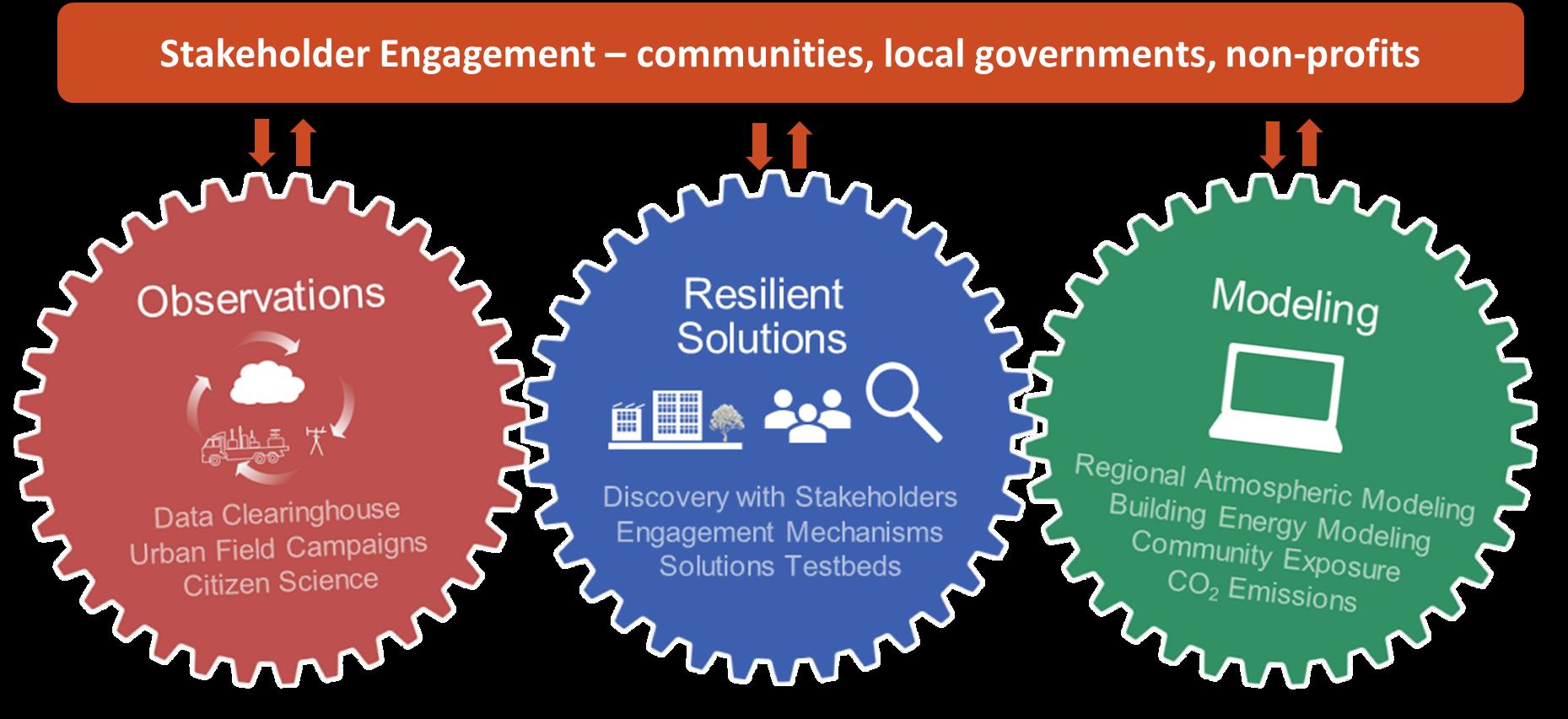
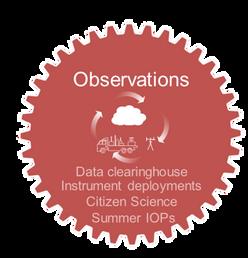
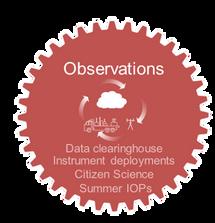
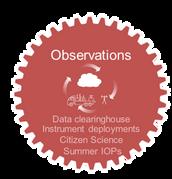
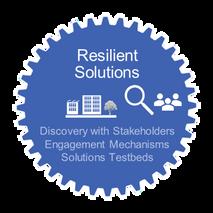
This interdisciplinary team is comprised of three thematic groups: Observations, Modeling, and Resilient Solutions, which engage in activities that include data collection on land-atmosphere exchange processes, atmospheric composition and emissions while leveraging existing networks that collect weather, air quality, and hydrological data in order to address extreme heat and its associated environmental and societal stressors
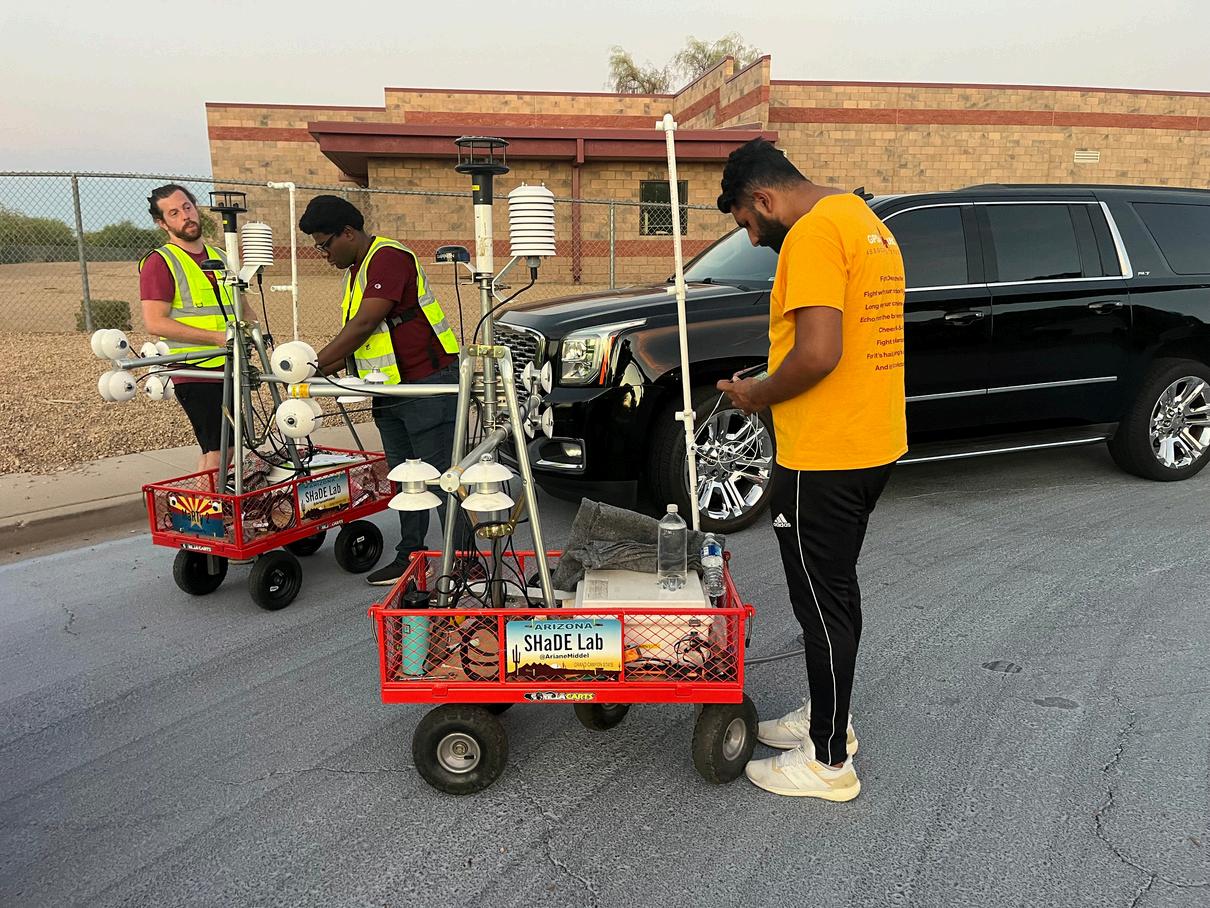

Intensive observational periods (IOPs) occur throughout the summer months when temperatures are at their highest and utilize fixed assets and mobile observatories that measure boundary-layer processes. Focused, neighborhood-scale, heavily-instrumented test bed experiments elucidate drivers of microclimate variations and evaluate the efficacy of proposed solutions
Test bed experiments leverage data from the IOPs and include additional short- and long-term measurements that engage researchers from across our university network and citizen scientists from our stakeholder organizations and communities. These test beds include a combination of natural or planned experiments that isolate and evaluate specific strategies and technologies Additionally, community test beds use a collaborative codesign approach to develop, deploy, and evaluate solutions for communities
Other activities, such as mobile applications, heat planning and governance, residential thermal comfort, transportation surveys, and K-12 activities, are also currently underway These activities help develop next generation predictive modeling capabilities for urban regions by improving representations of fine-scale physical processes, while coupling existing state-of-the-art models that integrate human behavior and atmospheric phenomena ranging from neighborhood to regional and global scales.








The information below is based upon survey results of participant responses gathered by Arizona State University’s College Research and Evaluation Services Team (CREST)
Education
Are students satisfied with their training? What knowledge and skills are gained through participation of year-long students?

80% of student respondents would recommend participating in the project
96% reported increases in their ability to conduct research in an ethical and responsible manner, interpret research results, solve research-related problems, and work as part of a research team.
What types of outreach are implemented and what is the impact?
SW-IFL HeatMappers
Reported high satisfaction with their experience and significant gains in preparing research posters and presenting results
“I was able to learn more about how to use different technology to create pieces of science communication. I also learned how to take complicated data with scientific topics and translate them into easily understandable materials”

83% of teachers who participated in the 2025 SW-IFL summer traverse campaigns reported they were more likely to introduce and incorporate SW-IFL content into their classrooms
One year later...
Teachers who participated in the 2024 traverse campaigns reported, in a follow up survey, that they are more optimistic in their ability to contribute solutions to environmental challenges
Educational Outreach continued -
“I found that working together, getting each other's insights, and communicating constantly made this challenge valuable, as this sort of experience is what I would be practicing in a future workplace ”
Students cited opportunity for collaboration, the advancement of their skills, and research as the most valuable aspects of participating in the challenge
Students reported high levels of satisfaction with their experience with Interdisciplinary Challenge hosted in Spring 2025
“Getting to work on a group project that was this open-ended made the challenge really fun, quick, and helped me expand the way I solve problems related to the environment ”
Stakeholders
What collaboration efforts exist among researchers, community groups, and government partners?

Institutional Transformation
Responding Advisory Group members reported they were often unable to attend SW-IFL meetings throughout the year, but appreciated the opportunities to provide insights and perspectives into SW-IFL research and activities
Responding community partners agreed that SW-IFL researchers were accepting of people with different perspectives and ideas
What are collaboration efforts across teams, and does convergent research increase over time?

100% of surveyed faculty members were satisfied or very satisfied with the frequency of interactions with faculty and staff
85% agreed or strongly agreed that SW-IFL members created value for the community the project serves worked jointly to advance group goals added value to each other’s work created new knowledge or insights together
Institutional Transformation continued
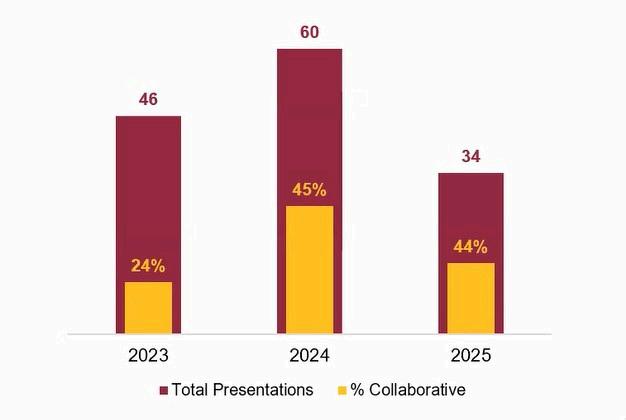
CREST analyzed the proportion of collaborative presentations given by the SW-IFL team.
As seen in the chart to the right, collaborative presentations have increased throughout the duration of the project
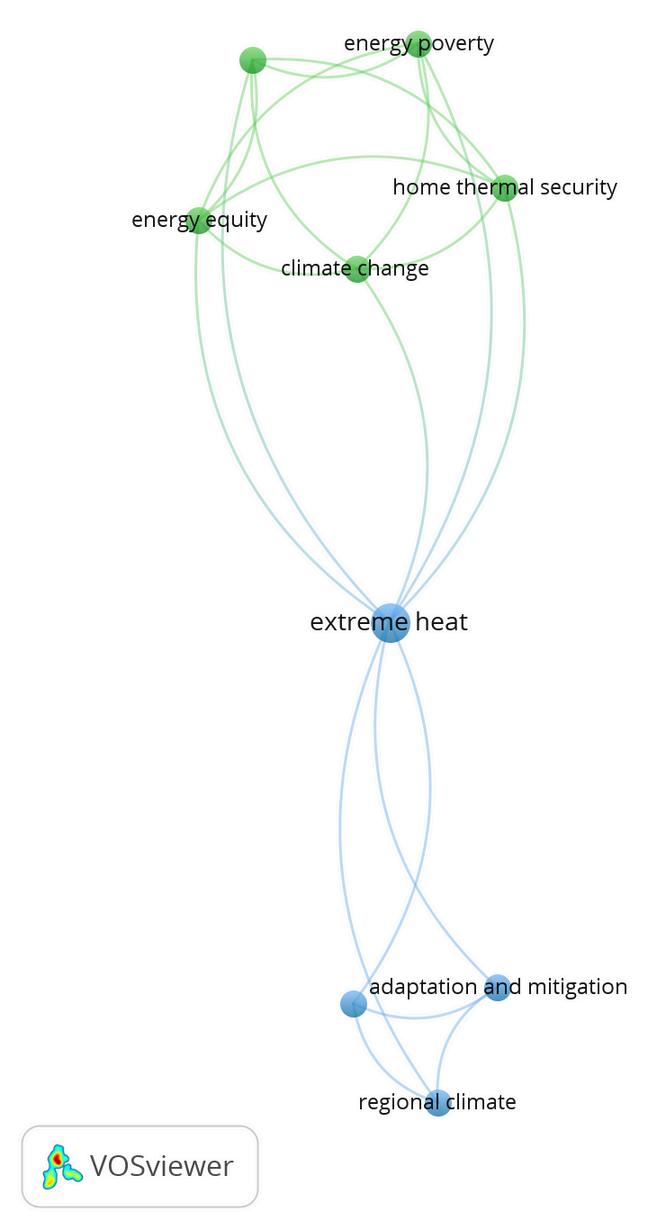
A bibliometric analysis of SW-IFL journal publications reflects interconnected growth among publications and keywords, as well as an increase in convergent research as the project continues.
Journal Publications 2023
2023to2025

To address key research questions for the SW-IFL project, we started by gathering as much existing information as we could regarding the land use/land cover, built infrastructure, emissions, and socio-demographic factors that influence the urban environment system. Sources for these data include U.S. Census, remote-sensed satellite data products, and urban GIS databases. Next, we gathered as much data as possible from existing networks of environmental observational infrastructure. This includes weather and air quality data from the National Weather Service, public utilities, flood management districts, and local air quality management networks These data form the foundation for our understanding of the drivers of the urban climate system
As we continue to explore relationships in the urban system, we also started exploring strategies and solutions for reducing extreme heat and the adverse societal and health effects of heat and related environmental conditions We study solutions through two distinct mechanisms First, we have developed testbeds in which to monitor and evaluate a range of solutions These include technology/solutions testbeds that focus exclusively on field evaluation of the efficacy of different types of solutions such as green and blue infrastructure and innovations in cool materials They also include community testbeds in which we integrate monitoring and evaluation of physical phenomena with inquiries focused on understanding the social science aspects of how environmental drivers and solutions interact with people
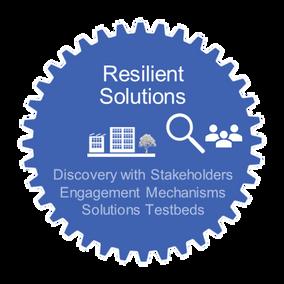
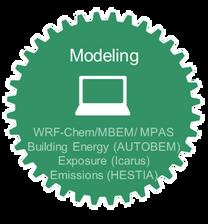
While the SW-IFL researchers and efforts are organized in three working groups Observations, Modeling, and Resilient Solutions these teams actually work together closely across a spectrum of inquiry that starts with understanding environmental parameters and drivers, uses this understanding to propose and explore possible solutions, and then works with the public, government agencies, the media, and other stakeholders to create change for the future. This spectrum of inquiry creates the structure for this report on the activities and outcomes from the third year of the SW-IFL project.
This annual report encompasses year 3 (2025) of the SW-IFL project, its activities, findings, and research A full list of the project participants can be found in the SW-IFL Research Teams section of this report
What are the links between extreme heat, air chemistry, the urba agricultural irrigation, and socioeconomic clusters?
What is the impact of urban planning strategies on urban climat



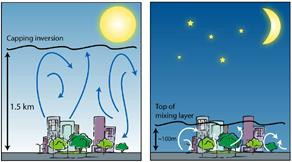


In year three, the SW-IFL researchers focused on the two-way interactions between the climate and the built environment This work focused on utilization of long-term data sets that provide information about street level and upper environmental conditions so we can understand robust behaviors and trends in how air and air quality change as they relate to height, and how pollutants and heat may be vertically transported and mixed into the atmosphere.
Data from pre-existing networks and databases
Data from new measurement networks and databases
Data from new field campaigns
In regards to urban climate questions, SW-IFL researchers work closely with both pre-existing data and our community stakeholders to incorporate their insights regarding existing and potential resilience solutions Utilizing these pre-existing networks and databases helps researchers craft relevant research questions, fill in gaps in our in-field observations, and provide crucial data to our modeling efforts

National Household Travel Survey –
Model of America -
This pre-existing database is a digital twin of buildings that helps SW-IFL researchers identify regions of different sizes so they can extract statistics on building morphology to help create research questions linked to climate, such as: What is the distribution of building height in a certain neighborhood? Or Are buildings more uniform or more different?
ModelofAmerica: https://wwwornlgov/news/ornls-simulation-tool-creates-digital-twinbuildings-coast-coast
This pre-existing NHTS database collects data on daily non-commercial travel across all modes and represents a key source of data on travel behavior in the United States. SW-IFL researchers analyzed this survey to better understand the regional time spent traveling by different transportation modes across different demographic and environment contexts.
NationalHouseholdTravelSurvey:https://nhtsornlgov/ MaricopaCountyFloodDistrictsDataSets:https://datamaricopaopendataarcgiscom
Maricopa County Flood District Data Sets –
This database is composed of information stretching back to 1980 and extending into present day for the Phoenix metropolitan area from 365 rain gauges and roughly 40 weather stations that collect data on air pressure and temperature; wind speed, direction, and peak; solar radiation; dew point; and relative humidity
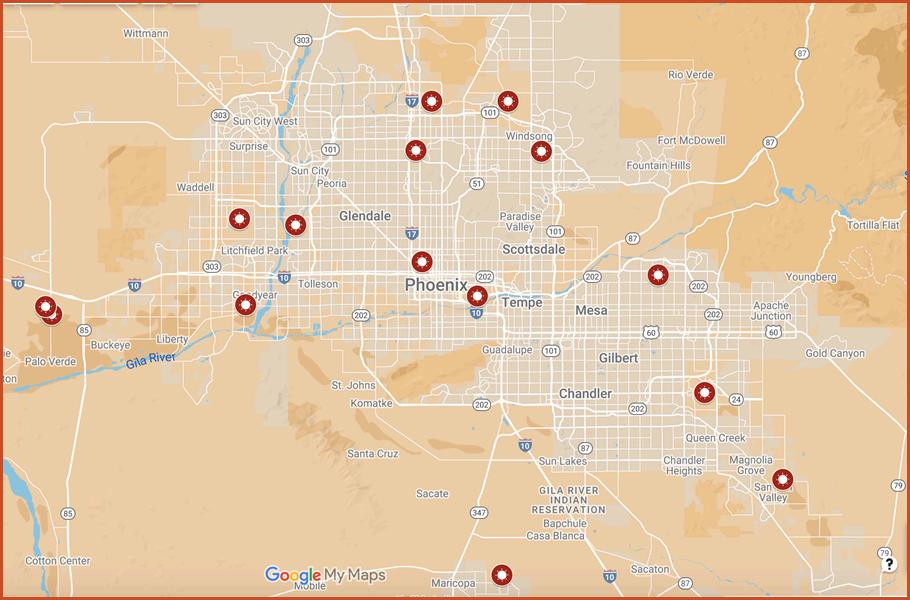
ASOS and AZMET Weather Station Networks –
Using this pre-existing database of 79 weather stations allowed SW-IFL researchers to map station locations indicating the sparse coverage of the existing weather station network in the urban environment Most of these stations are installed at airports which provides limited information on climate conditions in the neighborhoods
Flood District of Maricopa County
Identified rain gage & weather dataset

ASOS & ASMET Weather Station Networks
Mapped locations of each station Identified areas with sparse coverage
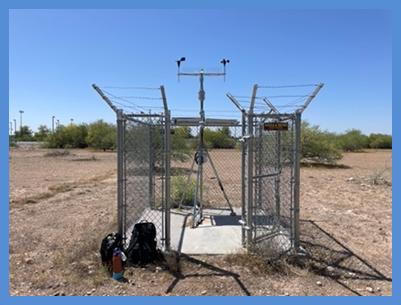
The eddy covariance (EC) network spans twelve installed neighborhood weather stations meant to gather traditional weather data at the street level That data is then contrasted with the traditionally placed stations near the airports to create datasets for researchers


Building upon efforts initiated in year two, in year three, the SW-IFL team added to existing datasets, incorporated additional, more labor-intensive instruments designed for specific field campaigns, and enhanced their sensor network in order to achieve higher spatial coverage in historically underserved neighborhoods and contrasting climatic regions
SW-IFL researchers at Brookhaven National Laboratory analyzed and quality checked the observational dataset collected during the 2024 intensive observational period (IOP) field campaigns Scripts were created to identify outlier points within the datasets which were then cleaned to ensure accuracy for model evaluation
Example of data correctly flagged for removal by Step and Proximity test
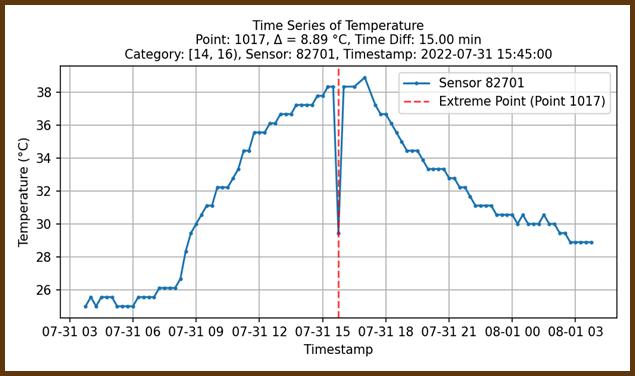
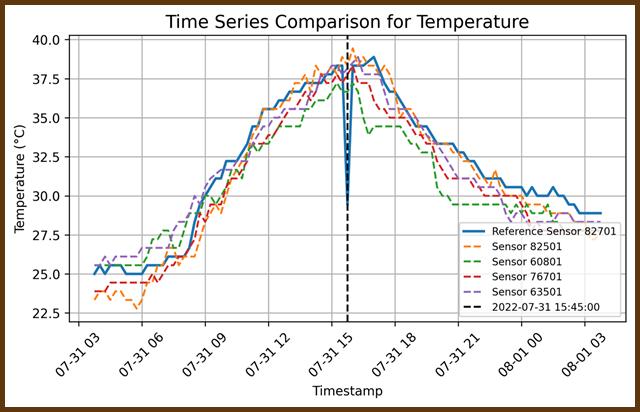
Literature review and calibration of thresholds for the Step and Persistence tests; boxplots showing changes in recorded values, threshold sensitivity analysis, and inspection of suspicious short period time series
The 2024 IOP field campaigns in year two specifically measured evapotranspiration, or the process of water evaporating from the land surface and being released as vapor from plants through transpiration in Encanto Park in Phoenix, Arizona. The resulting data set provided critical information in designing this year’s IOP field campaign in evaporative cooling benefits, and additional experiments were conducted simultaneously with vehicle traverses collecting surface and air temperatures of the same location
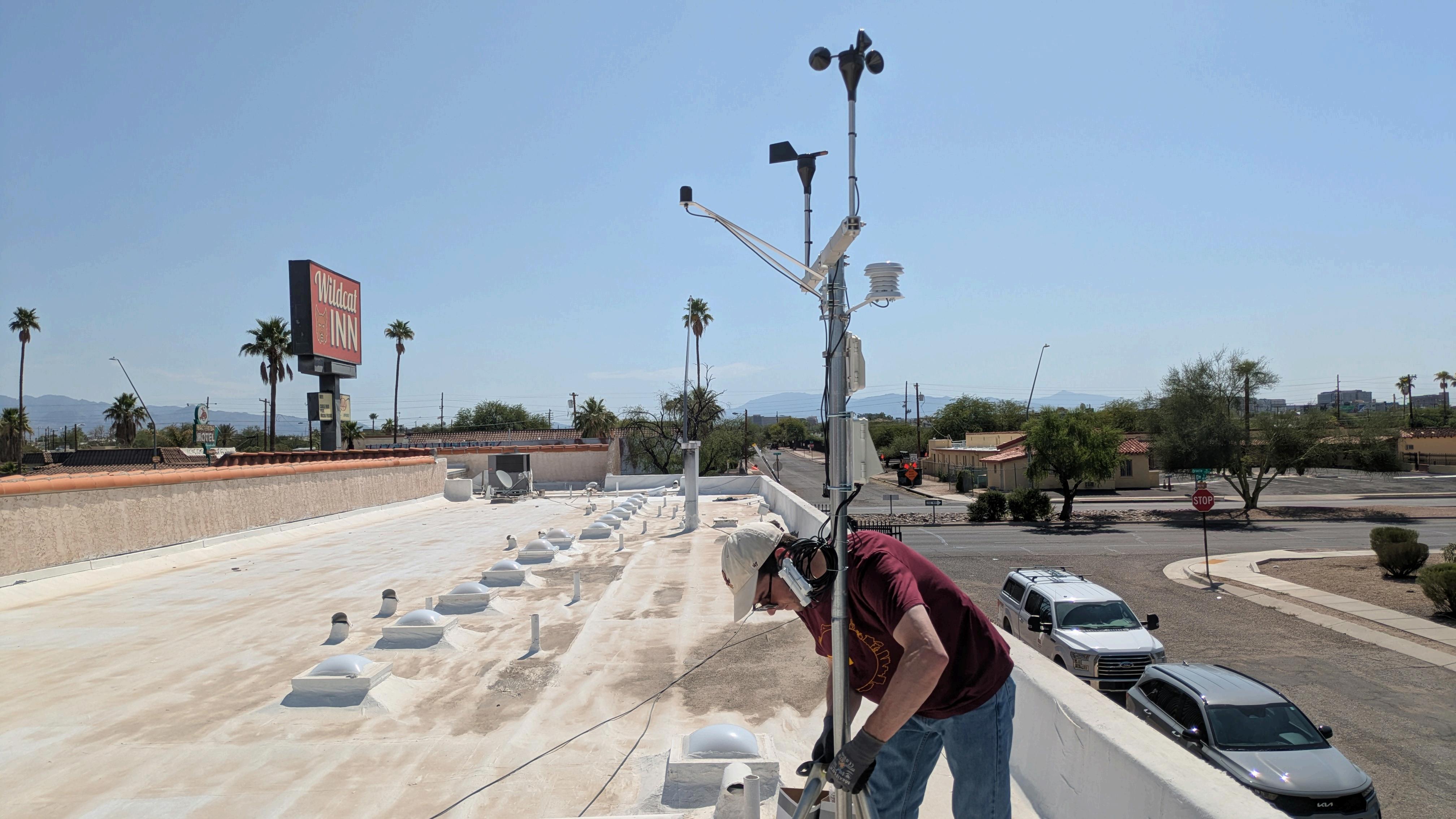
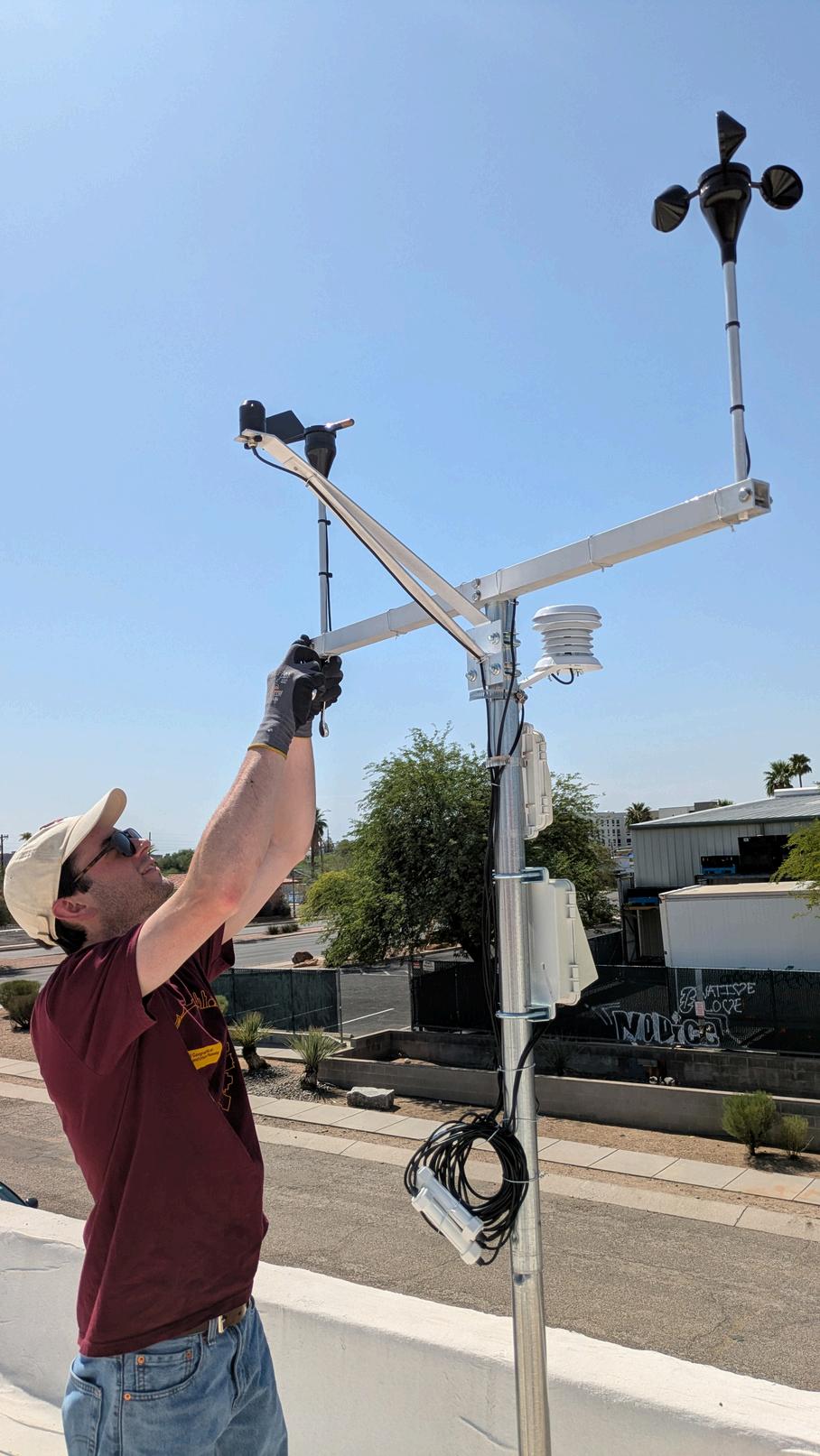
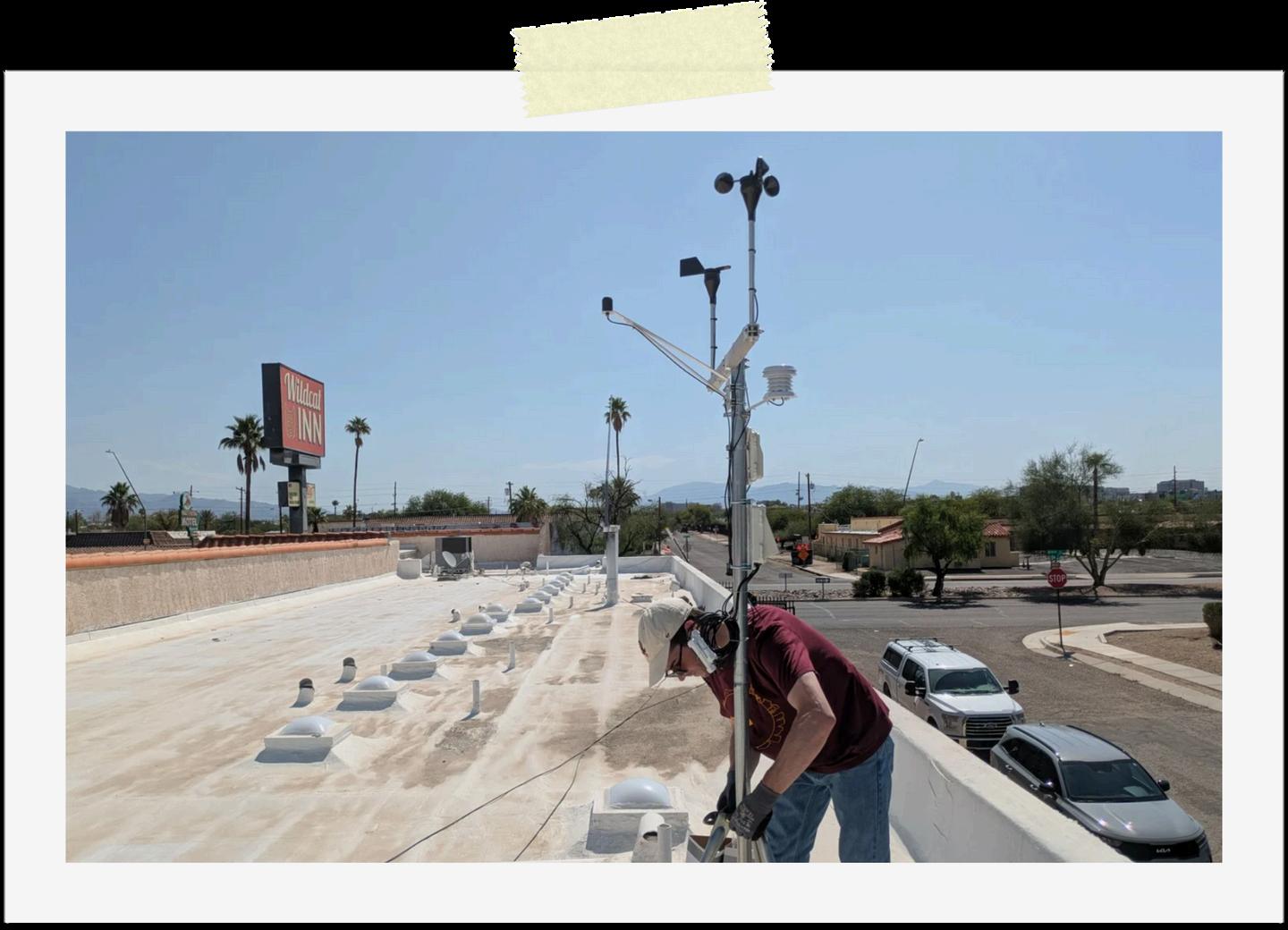
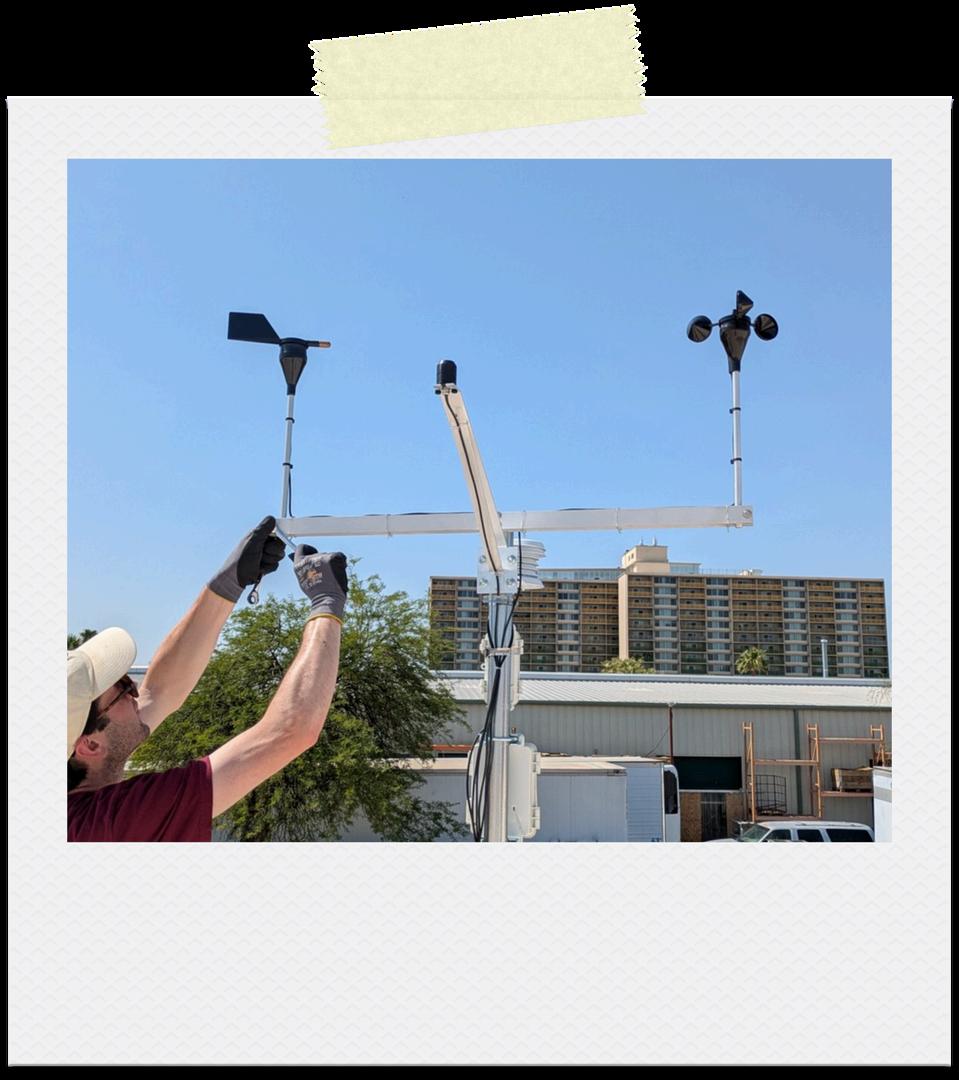
Researchers designed an additional Onset weather station to assist in gathering data on air temperature and relative humidity, wind speed and direction during intensive observational period (IOP) activities in Tucson This additional weather station was installed at the Wildcat Inn in Tucson for the 2025 IOP activities
MaRTy Cart and MaRTines –
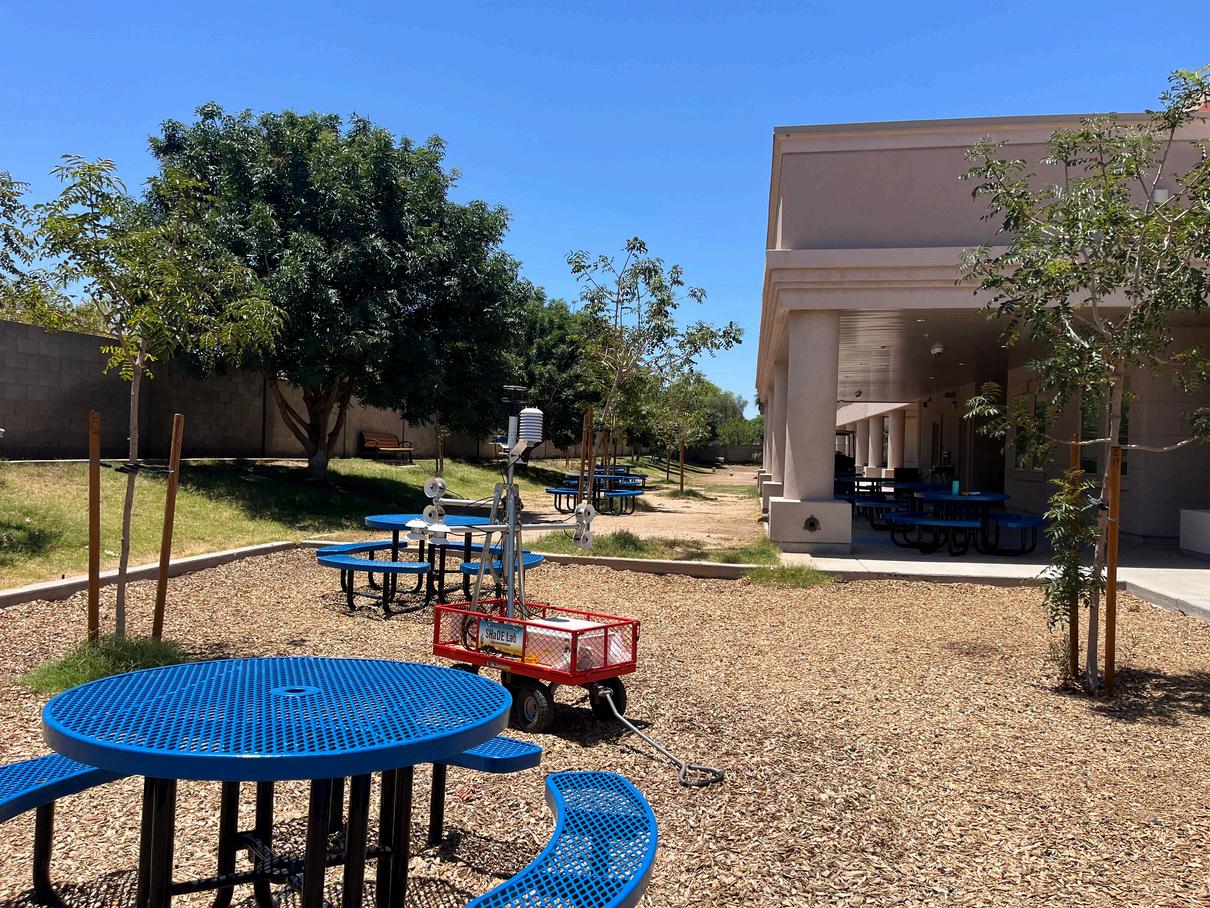
To understand the the impact of extreme heat on the human scale, the SW-IFL project deployed thermal sensing devices in Phoenix neighborhoods to collect data on the surrounding microclimate. They also count the number of people in the shade and sun to determine the relationship between how people use public outdoor spaces and the mean radiant temperature (MRT)--a measure of the net radiation received by a human body.
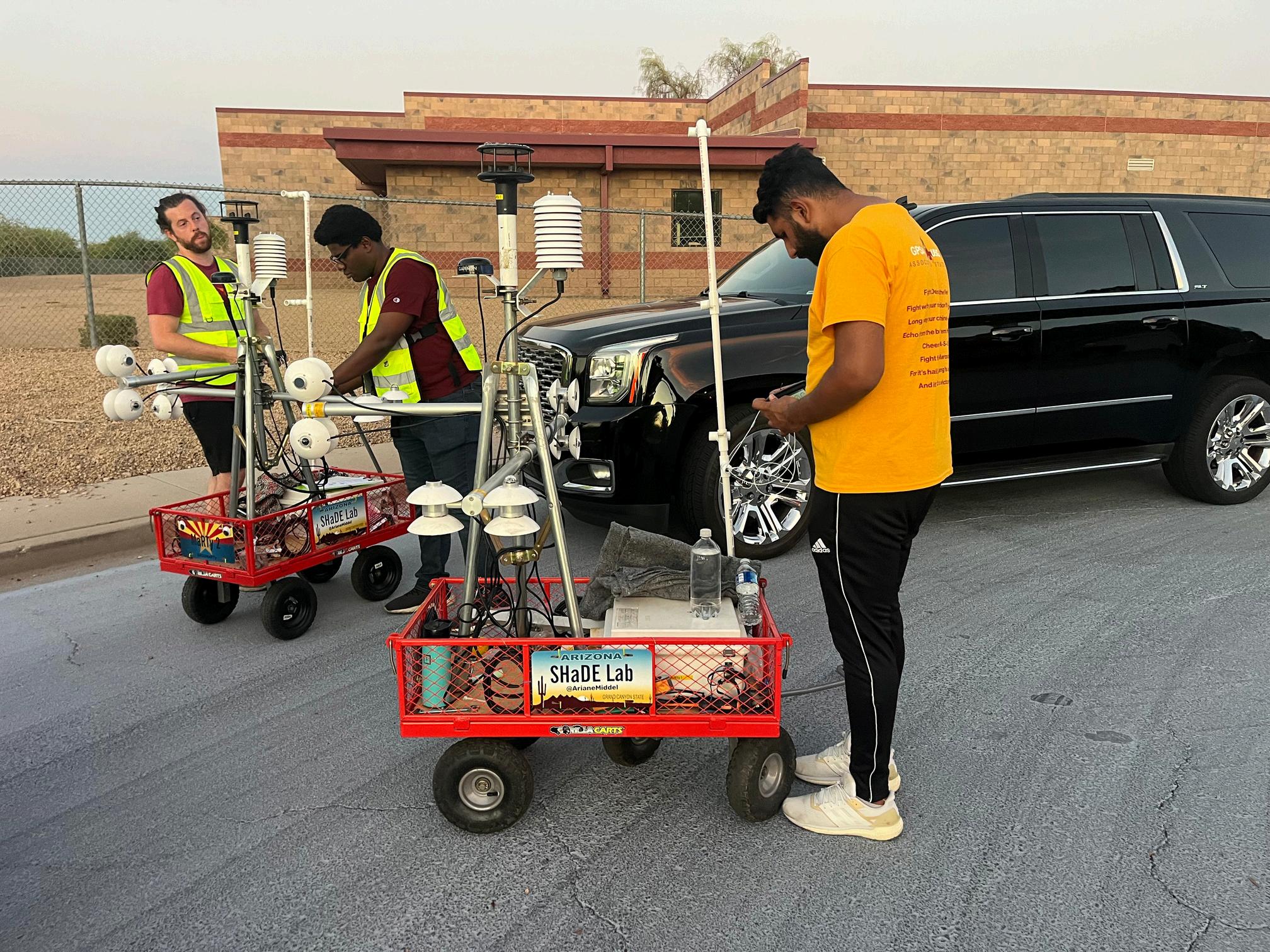
For more information on MaRTy: https://shadelabasuedu/tools-data
MaRTy Cart –A mobile biometeorlogical instrument platform that collects air temperature, humidity, wind speed and direction, GPS coordinates and Mean Radiant Temperature (MRT) using the 6directional method
MaRTiny –
MaRTy’s little sibling is a low-cost Internet of Things (IoT) biometeorological sensing device with embedded computer vision (patentpending)
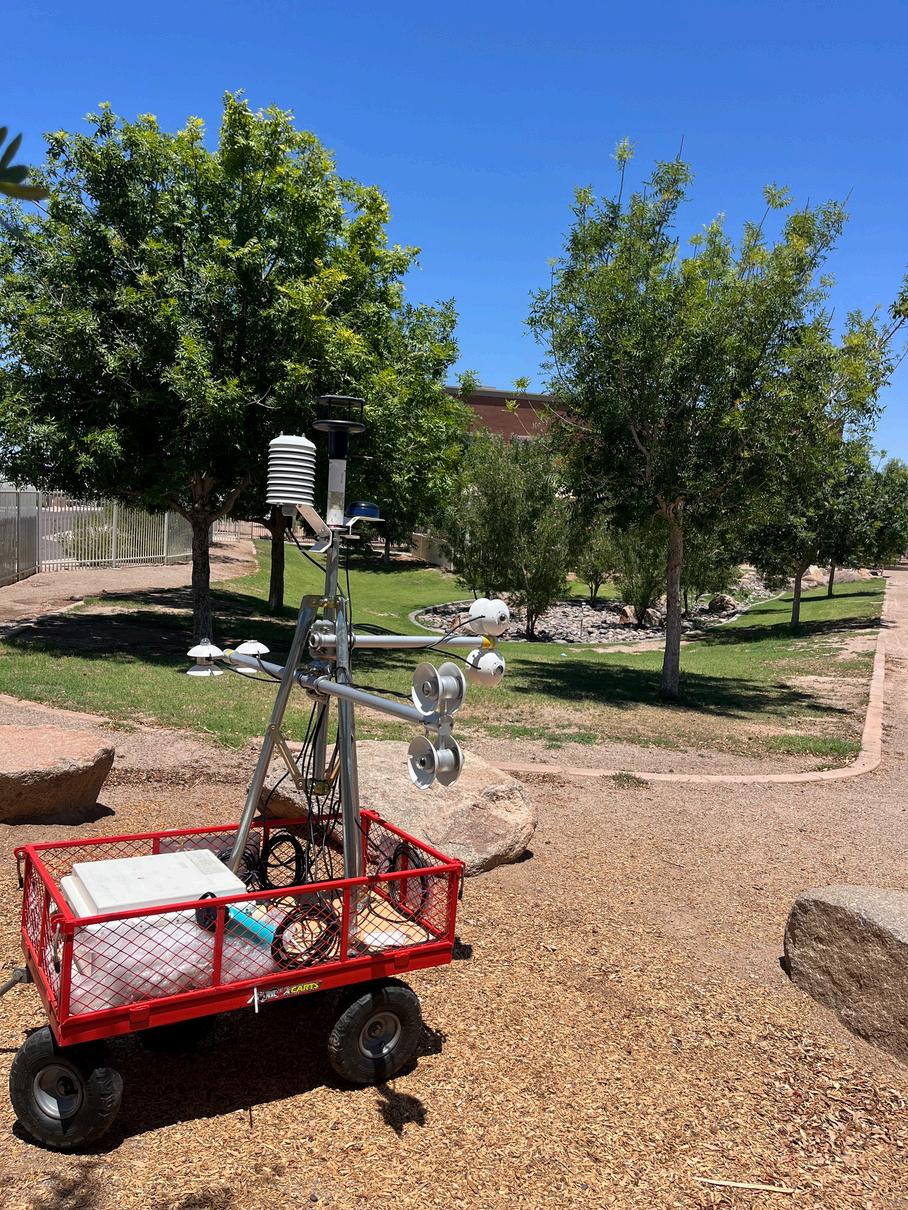
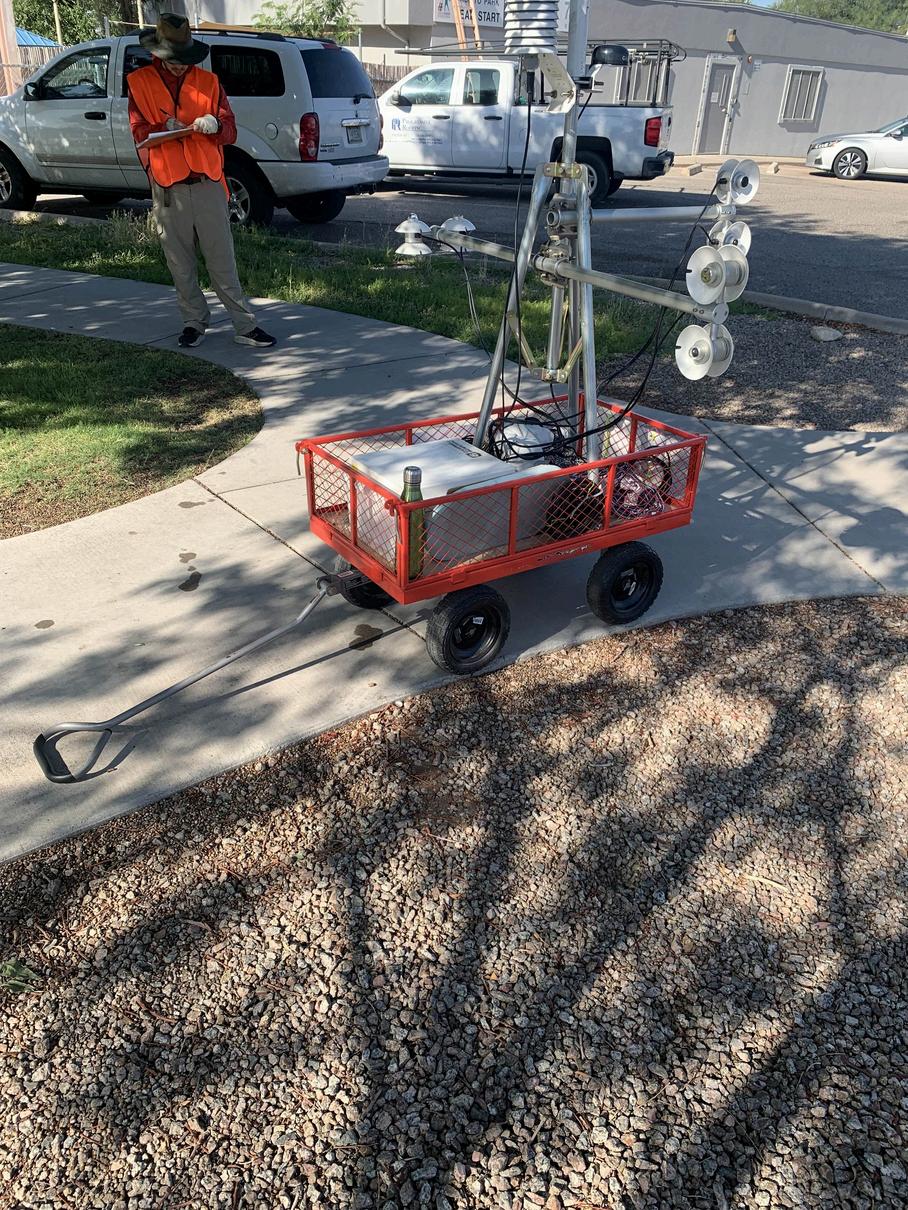
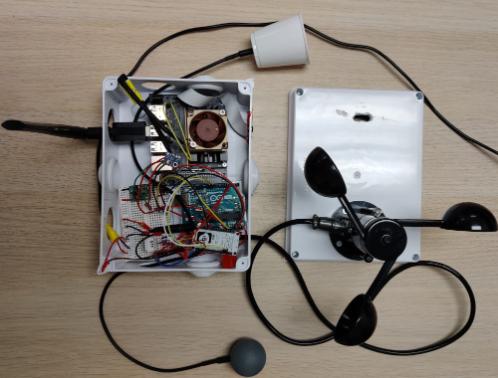
SW-IFL researchers expanded the EC network by establishing a fourth site at ASU’s Polytech Campus These towers measure the exchange of energy particles and gasses within the atmosphere.
They are strategically installed in different land use regions and registered with Department of Energy (DOE) AmeriFlux, a network of Primary Investigator-managed sites measure ecosystem carbon dioxide (CO ), water, and energy fluxes in North, Central and South America. 2
Desert area near urban surfaces – Desert Botanical Garden Site https://amerifluxlblgov/sites/siteinfo/US-Px1
Low rise, residential neighborhood in Phoenix – Maryvale Neighborhood Site https://amerifluxlblgov/sites/siteinfo/USPx2
Managed and irrigated turf grass facility by City of Phoenix –Encanto Golf Course site https://amerifluxlblgov/sites/siteinfo/US-Px3
Parcels of barren land, low-rise residential, and mid-rise construction - ASU Poly Campus site https://amerifluxlblgov/sites/siteinfo/US-Px5
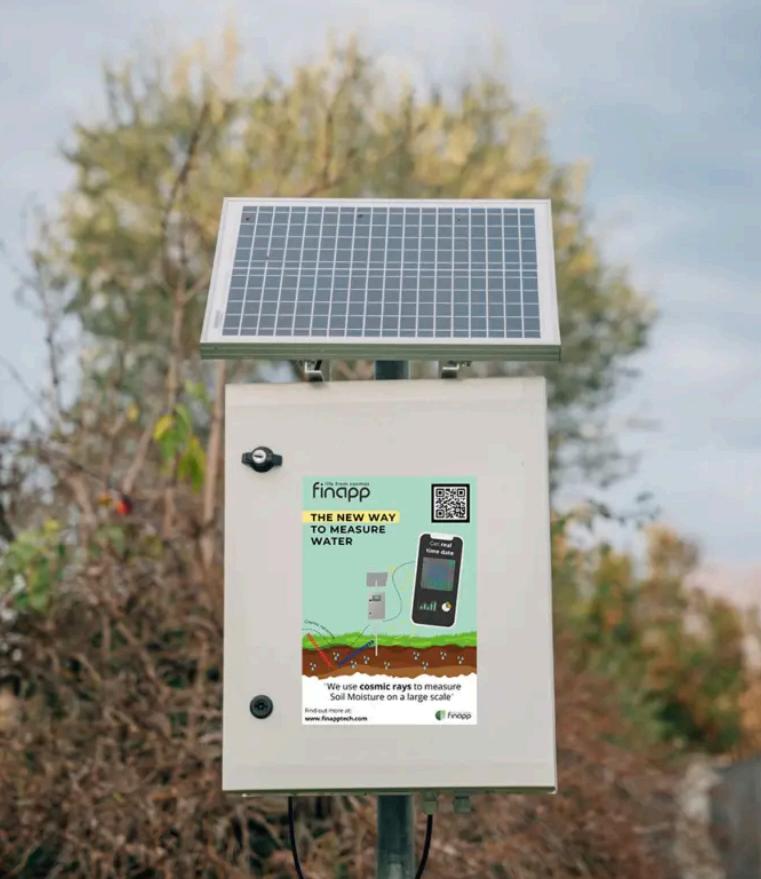
The SW-IFL team also installed a cosmic-ray neutron sensing (CRNS) sensor (pictured right) purchased from Finapp in conjunction with Arizona Water Innovation Initiative (AWII) This additional sensor allows researchers to determine soil moisture by counting the backscattered neutrons generated by the interaction between comic ray (fast neutrons) from the sky and water present in the soil and surface biomass (leaf litter and grass)
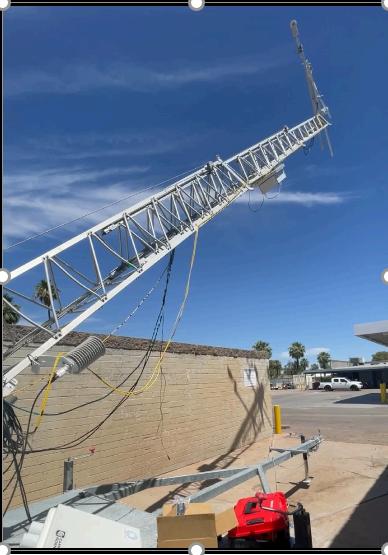
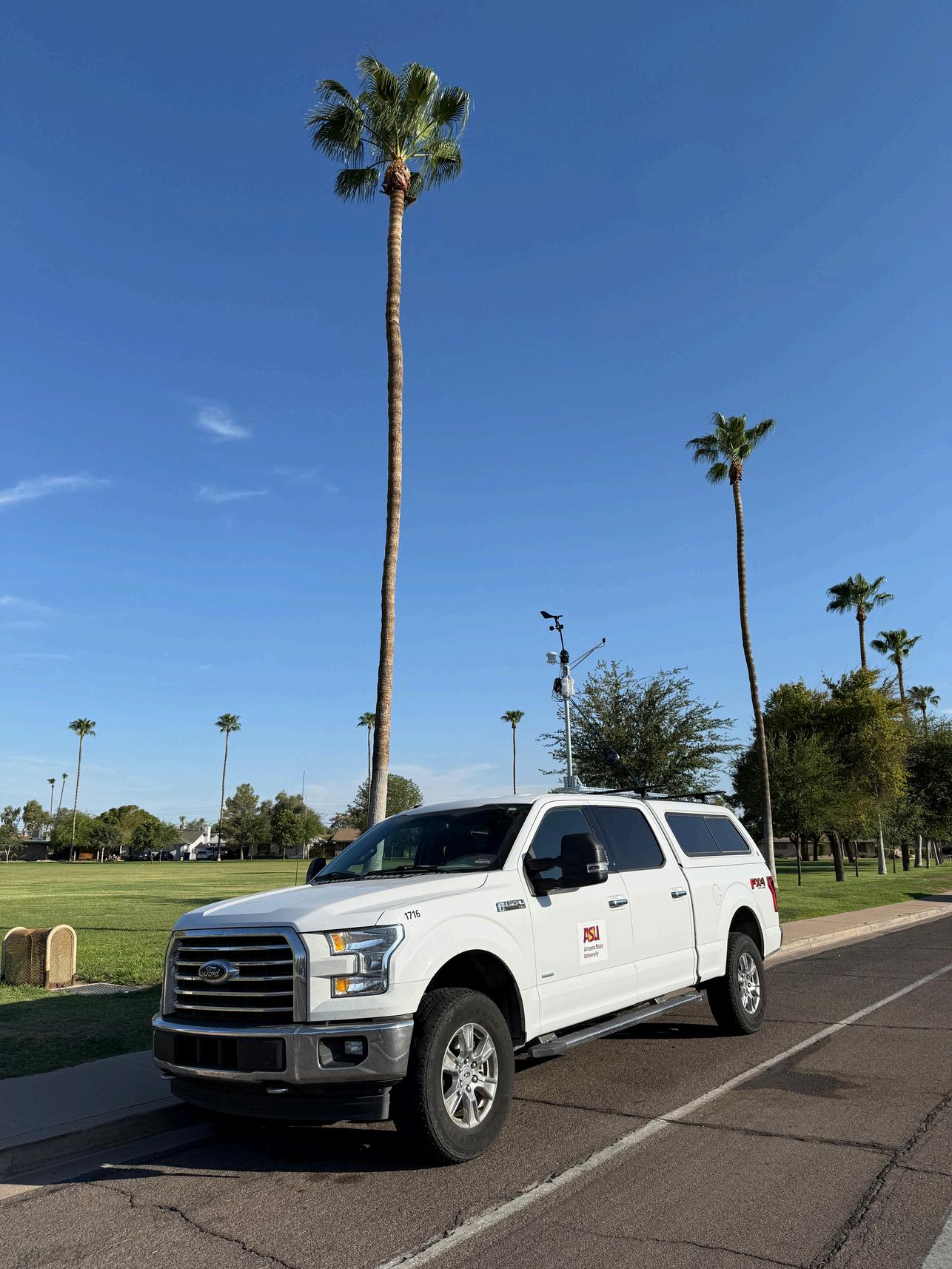
For the 2025 IOP campaigns, a mobile EC tower (pictured left) was deployed to Tucson, however, due to a structural issue, the tower was inoperable during the IOP activities It was eventually moved back to Phoenix, repaired, and redeployed to continue monitoring heat and water movements
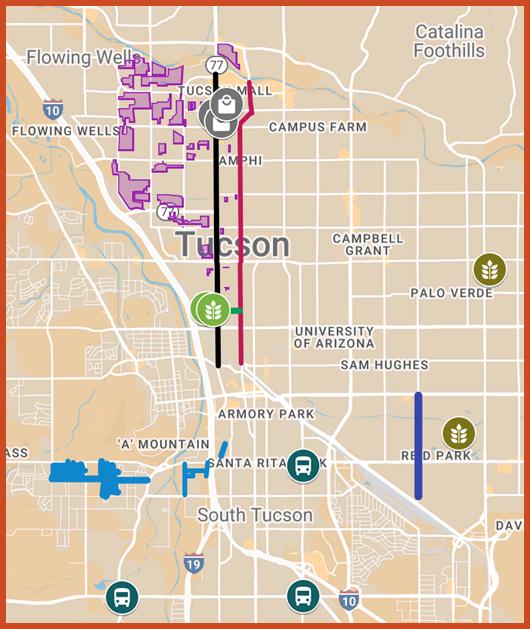
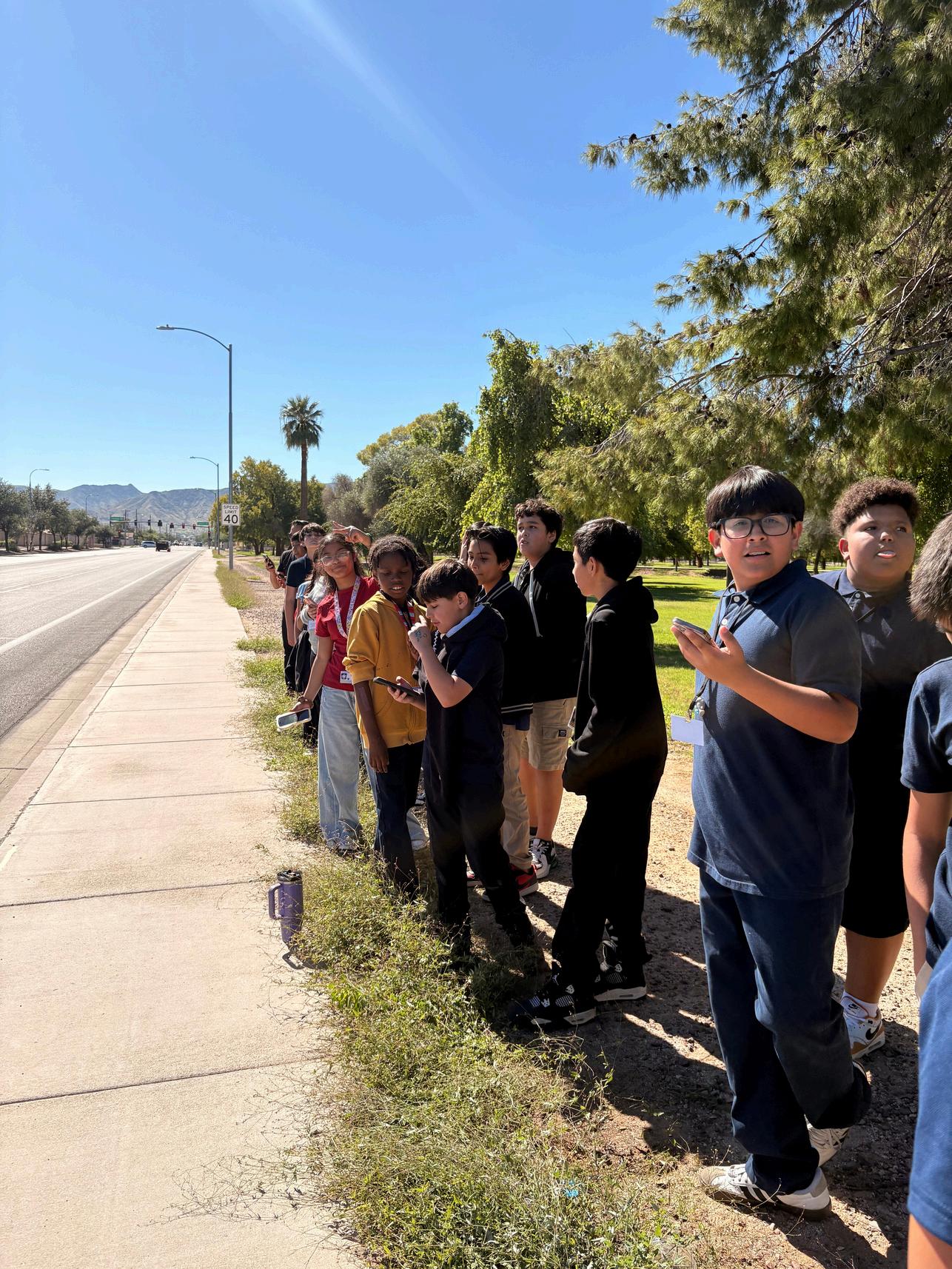
In a continuation of efforts from year two, the SW-IFL team expanded their vehicle traverse measurements, which collect air and surface temperature with vehicle mounted sensors, into the Tucson Oracle Road Testbed. Throughout the 2025 IOP campaign, local educators helped the SW-IFL team collect data from both Tucson and Phoenix locations.
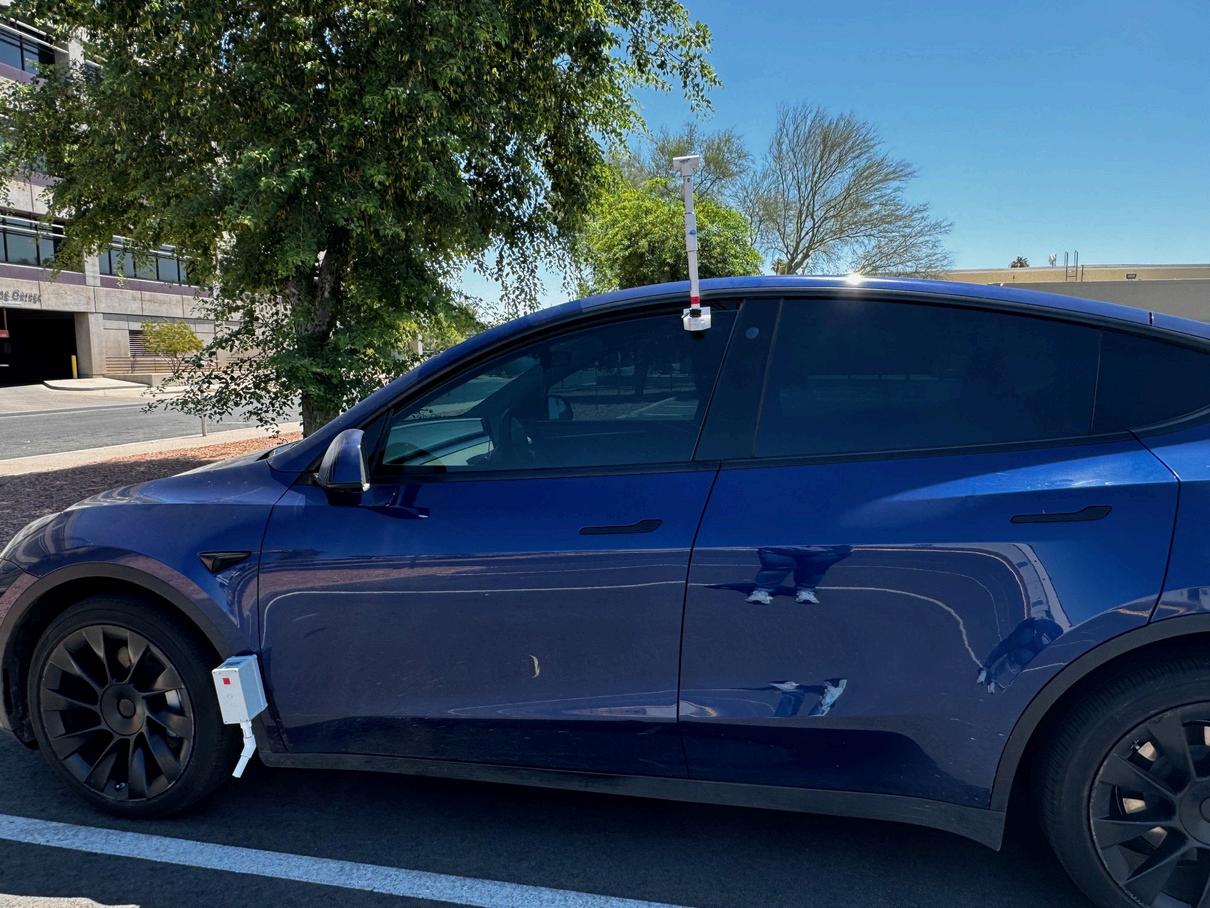
SW-IFL researchers designed bike mounted and truck mounted sensors to deploy in pre-determined neighborhoods in both Tucson and Phoenix to gather data of the impact of data centers on downwind neighborhoods

SW-IFL researchers added PurpleAir sensors that monitor air quality to the SUNEt and AirSmart networks in the following
locations Tucson, South Tucson, Santa Cruz County, Patagonia, and Sahuarita/Corona de Tucson, and a new dashboard was created for AIRsmart nework. This work was done in collaboration with organizations such as the Calabasas Alliance, Tucson Audubon Society, schools, and local government offices

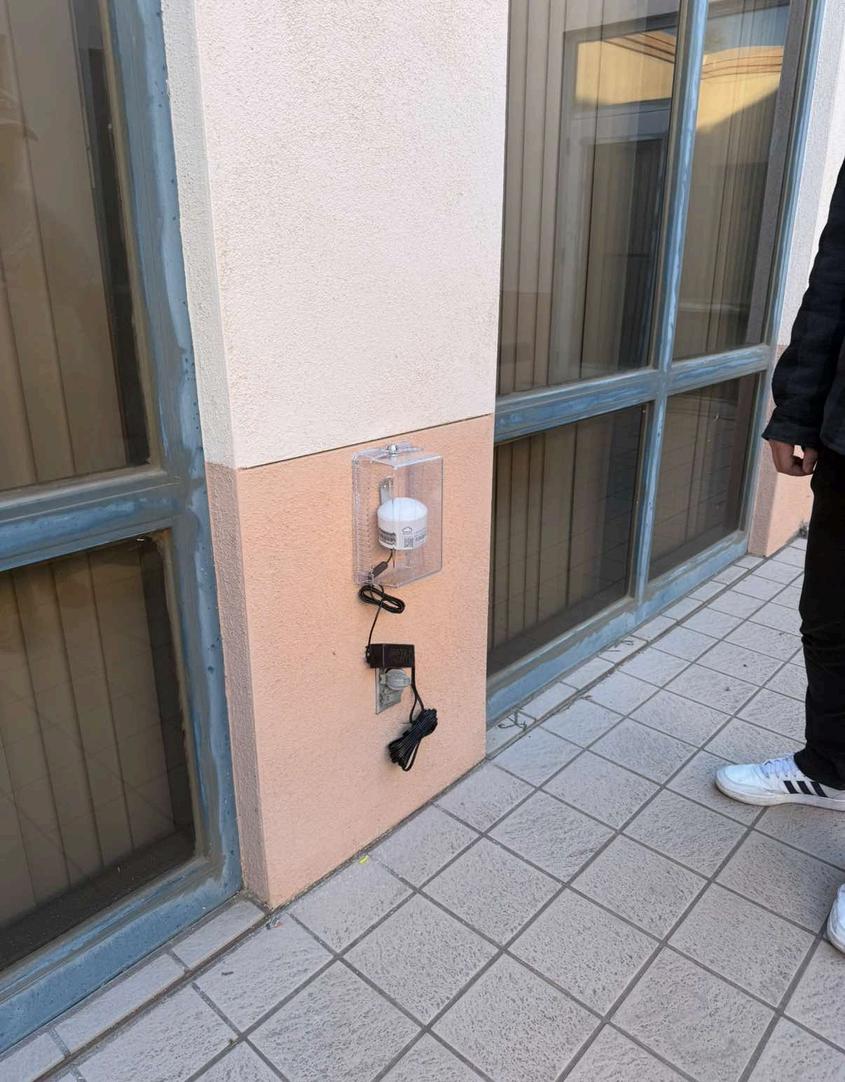
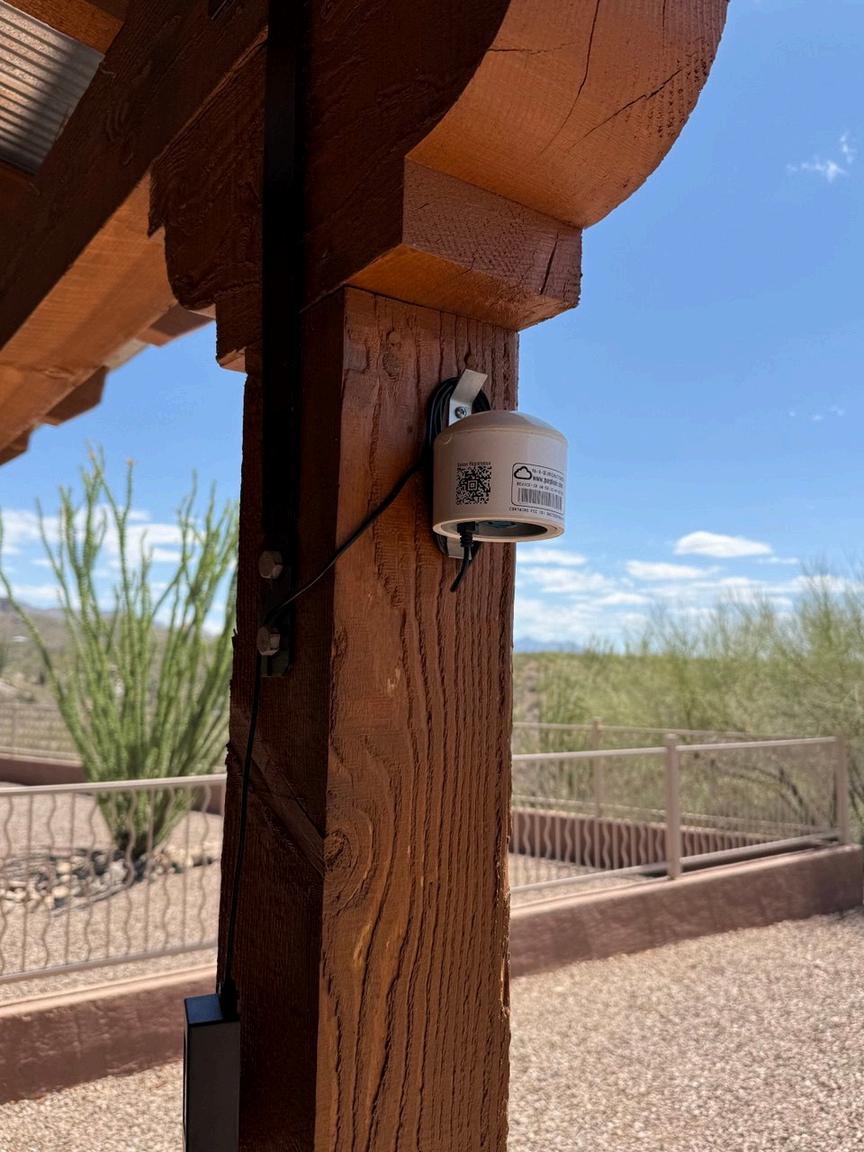
To achieve a broad spatial coverage of community engagement, the SW-IFL researchers also worked with citizen scientists to leverage both existing and new data in relation to various research questions
Working with the City of Mesa, SW-IFL researchers identified vacant lots that best fit the 10minute walkability goal set by the city After conducting community workshops to gain insight on community members’ needs, the SW-IFL team presented two design alternatives for the lot selected by the city and modeled the impact of implementing the suggested designs on air temperature From this study, two papers identifying priority areas and modeling scenarios are in the works

The SW-IFL team continues to expand and refine applications that assist community scientists by expanding measurement networks to city- and state-scale, while also linking research observations to scientific model evaluation

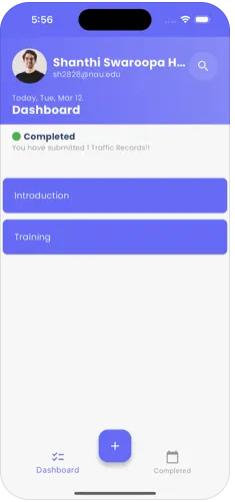
To create a more robust database related to carbon dioxide (CO ), air quality, and anthropogenic heat emissions generated by traffic, SW-IFL researchers at Northern Arizona University developed the HESTIA Traffic App. 2
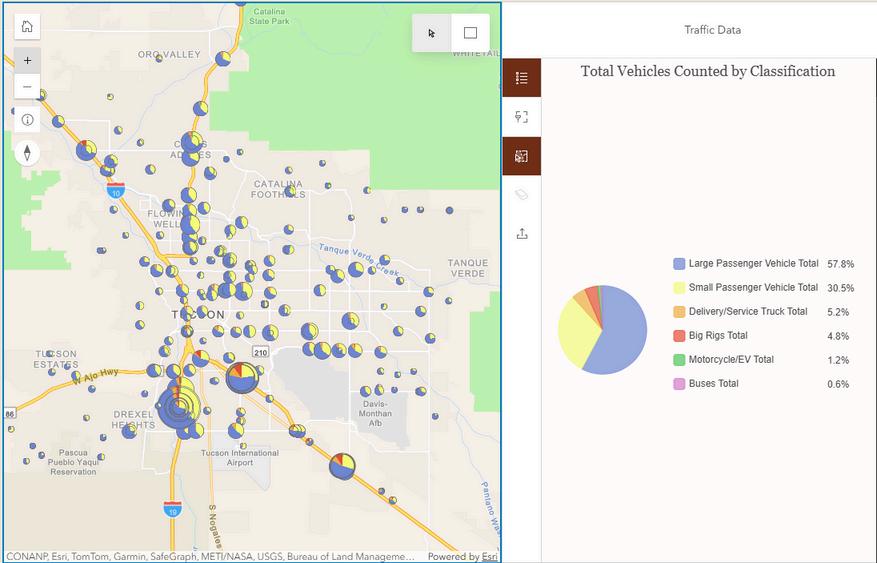
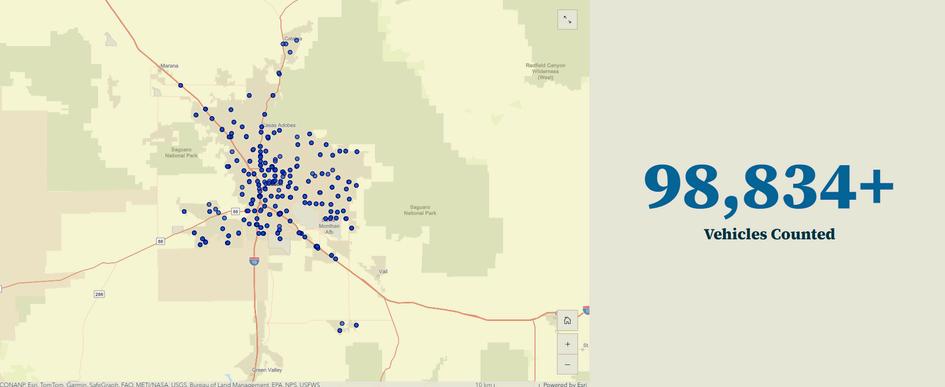
With the help of community scientists and SW-IFL HeatMappers, traffic counting efforts that began in year two were completed during year three Over the course of two summers, a total of 2540 locations were recorded from all three urban locations (Tucson, Phoenix, Flagstaff) and 271,272 total vehicles were counted
A beta version of the traffic counting app has incorporated artificial intelligence (AI) with ~95% accuracy was deployed in August of 2025

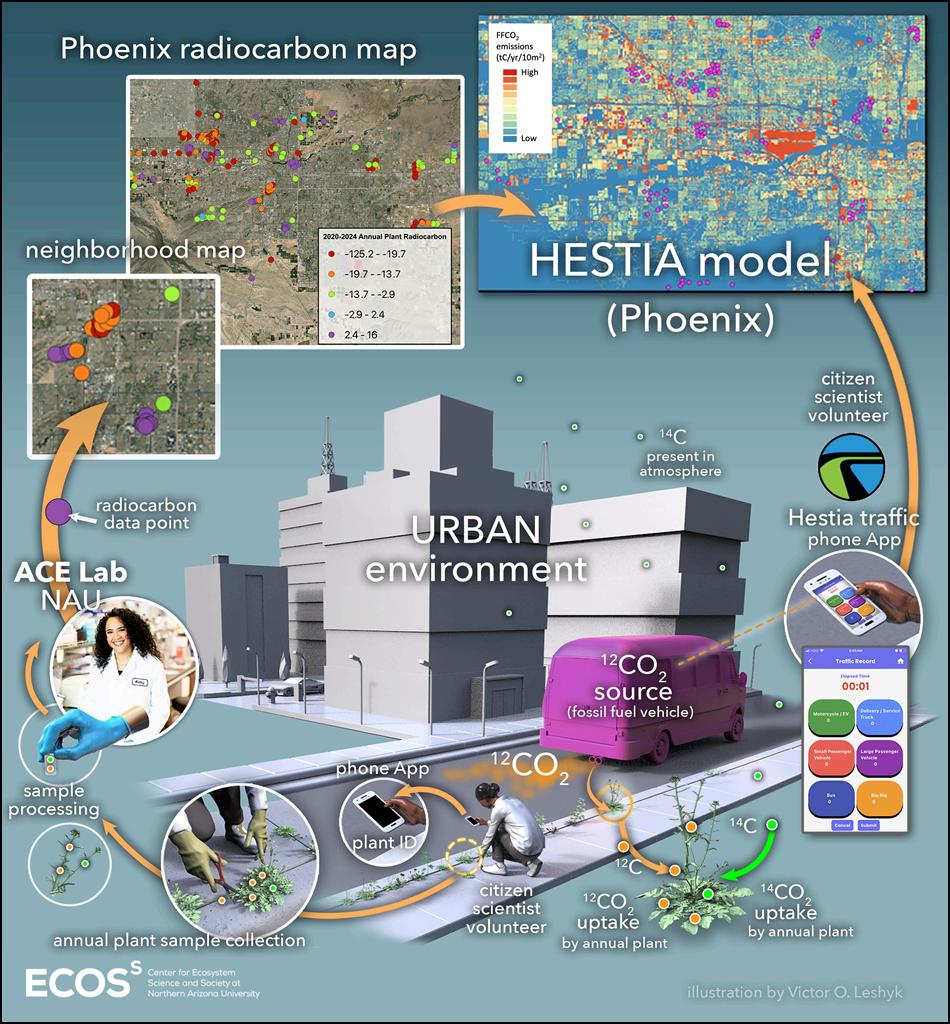
SW-IFL researchers at Northern Arizona University (NAU) designed the annual plant sampling in coordination with the spatial modeling of urban greenhouse gas emissions provided by Dr Kevin Gurney (NAU) and other urban observations of heat, air quality, and greenhouse gases collected by the SW-IFL Observation team
The goal of collecting these samples is to measure relative carbon dioxide (CO ) emissions To do so, workshops on plant sampling collection were conducted by Northern Arizona University researchers and involved community partners from Sky Island Alliance, The Sonoran Desert Museum, and their volunteer programs by utilizing the iNaturalist app, which provides a platform to record plant collection and species identification for citizen scientists
In April and May of 2025, samples were collected in the Phoenix metro area by volunteers and collated by community partners before being delivered to the Arizona Climate and Ecosystems (ACE) Isotope Laboratory in Flagstaff, Arizona The samples were then analyzed for radiocarbon, which indicates spatial patterns of fossil fuel imprints of the urban atmosphere

From June 2025 to July 2025 the SW-IFL research team conducted field campaigns to build upon efforts started in year two of the project As we were unable to utilize Brookhaven National Lab’s Multiscale Applied Sensing (CMAS) mobile labs this year, researchers relied on local resources and instrumentation to fill in the spatial gaps
For year three, the IOP activities were not as expansive as they were in year two but the field campaign activities did stretch from Flagstaff to the Phoenix metro area, and down into Tucson. They involved SWIFL researchers, community partners, local educators, citizen scientists, and early career scientists.
The main goal of year three’s IOP was to focus on furthering researchers understanding on two specific scientific objectives co-designed across the three SW-IFL Research Teams (Observations, Modeling, and Resilient Solutions) and our stakeholders
Science objective 1: Optimizing the mapping of air temperature using artificial intelligence (AI)
Question 1:
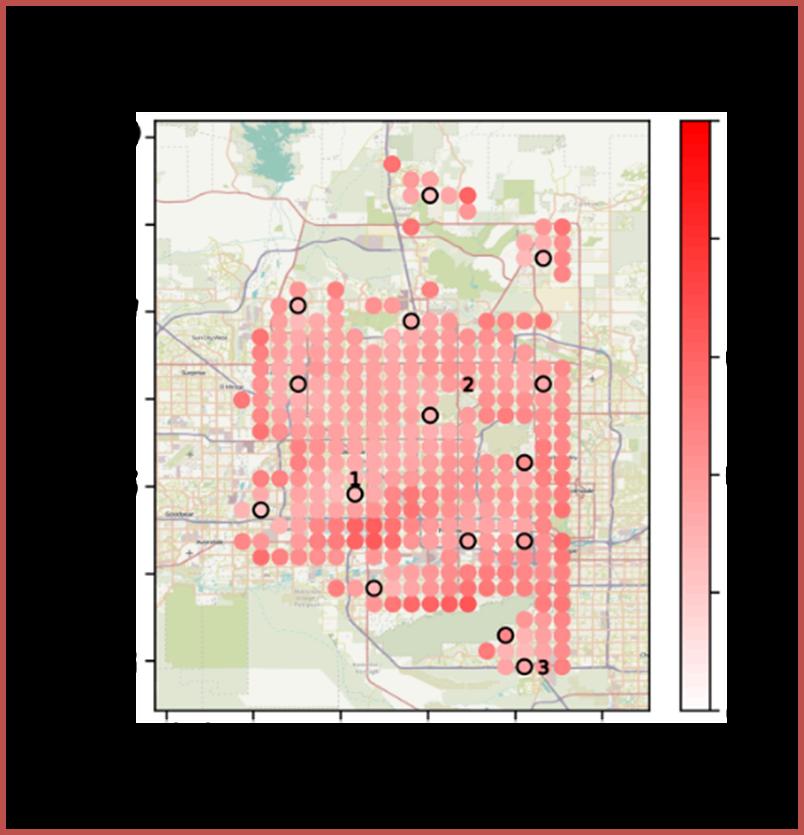
Can AI map air temperature across the entire Phoenix metro area using data from a limited number of sensors?
To answer this question, SW-IFL’s Observation Team developed a Gaussian Proces (GPs) AI tool to select sensor deployment locations while minimizing information loss.
This required training the AI tool on Weather Research Forecasting (WRF) climate simulation output and asking the tool to predict six optimal 2km grids for sensor deployment
SW-IFL researchers then conducted community scientist-led traverses with sensor kits at these sites
6 hours of data were collected on 3 different days
Next steps:
Introducing 2025 traverse measurements in the AI tool and re-assessing performance.
Science objective 2:Cool Air Advection
Question 1:
How much can a large green space cool the air?
Question 2:
If any green space can, will the cool breeze created above this green space travel downwind to benefit a neighborhood that doesn’t have this green space directly mixed in, and how does this change with wind speed? Will a stronger wind result in cooling further downwind, benefitting a larger segment of the population?
To answer these questions, SW-IFL researchers started with datasets collected during year two’s IOP campaigns
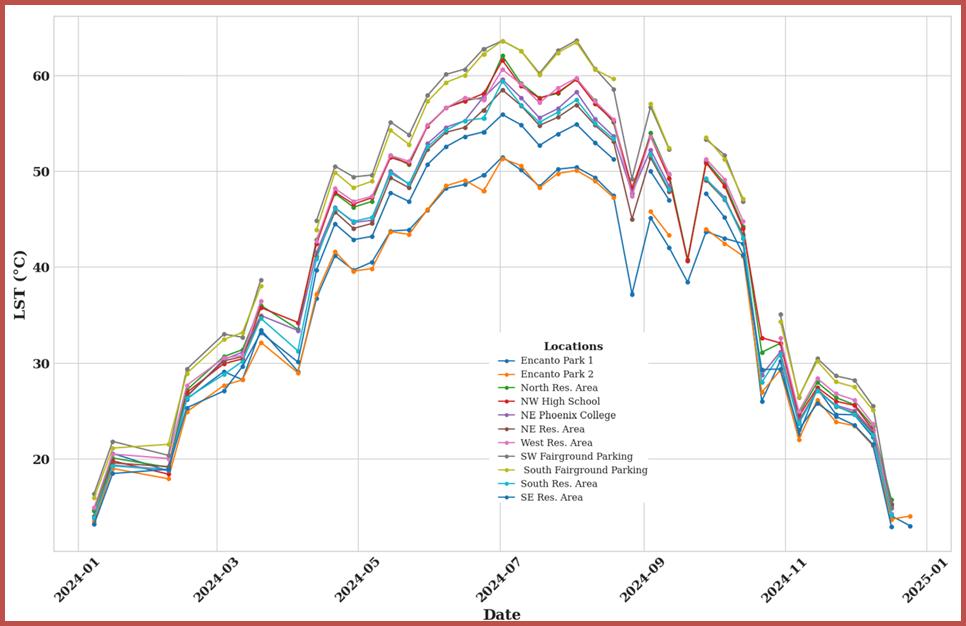
Data from the 2024 mobile lab campaign that measured urban cooling of irrigated parks such as Encanto Park in Phoenix, Arizona, created a comparison of Land Surface Temperature (LST) of paved locations, such as parking lots, and green spaces, such as urban parks. Results show an average surface temperature difference up to 10°C
Below, is one such example done with MODIS remote sensing analysis that shows varied land surface temperatures for Encanto Park in Phoenix, Arizona, and identifies hot spots clustered near parking lots (south/southwest) and cool spots clustered around urban parks (center/east)

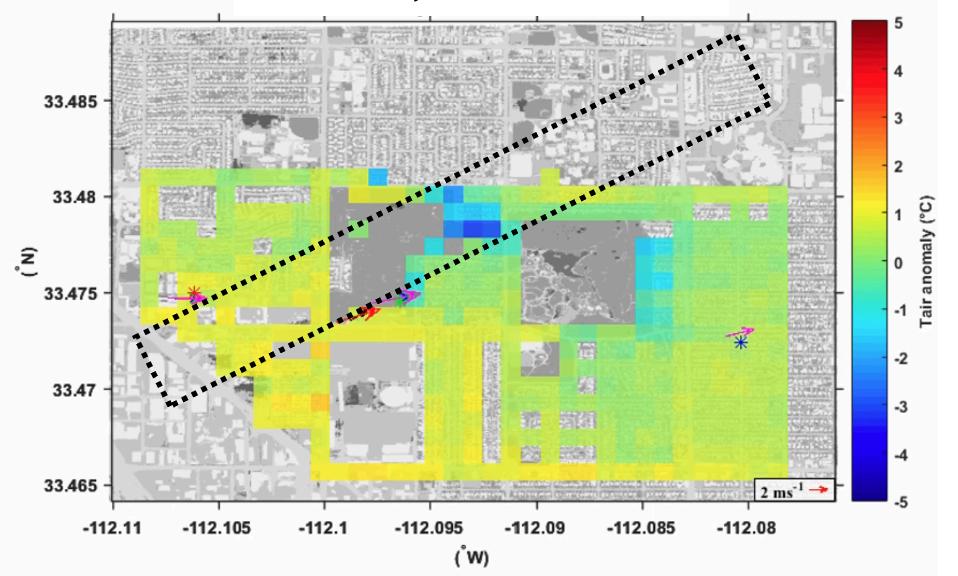
Colorful arrows depicted horizontal wind vectors at various heights between 0-25m The star marks the reference station location
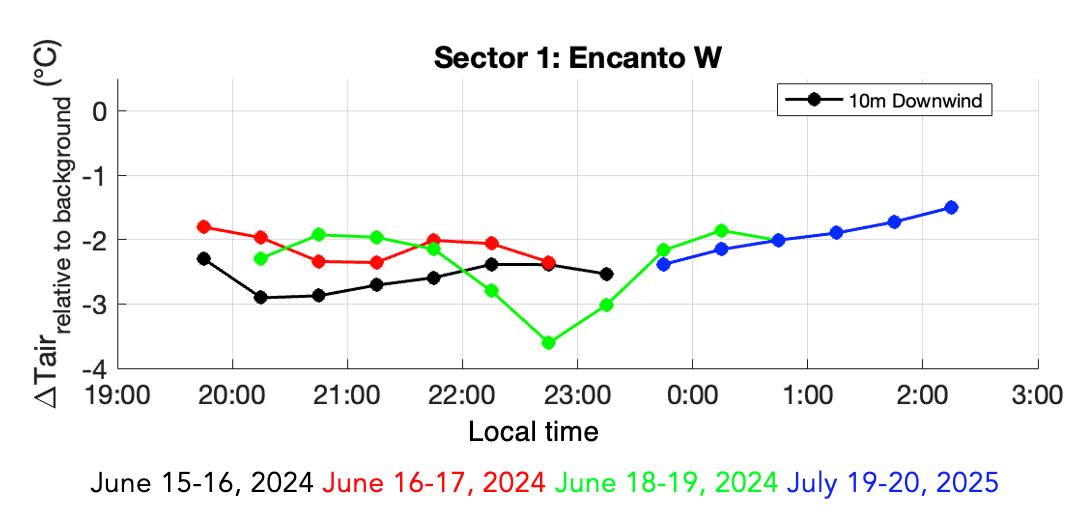
Additional data from the 2024 and 2025 IOP activities in Encanto Park show that during light to moderate winds, air cooling intensity is ~2-3°C in the Encanto W sector
This significant cooling effect extends beyond park boundaries and penetrates ~180m into the downwind neighborhood This cooling persists all night (19:00 - 3:00 LT) and is similar across summer days in June 2024 and July 2025
The results of these activities (pictured below) are currently captured in an article submitted by Dr Katia Lamer (BNL) and is currently under peer-review Air Temperature anomaly relative to the park refer June 17, 2024, 23:34 LT
For year three, the Observations team collected additional data towards the science questions from year two on cool air advection and intraneighborhood variability
During the summer IOP, researchers simultaneously employed instrument deployments and several tools to further explore the interactions between the built environment and turfgrass park
Three campaigns were designed to take place from late May to early September 2025: pre-monsoon, monsoon, and extreme heat wave
Each campaign measured heat fluxes, evapotranspiration, air temperature, and relative humidity, with the goal to release the data to the entire community before the end of the SW-IFL project.

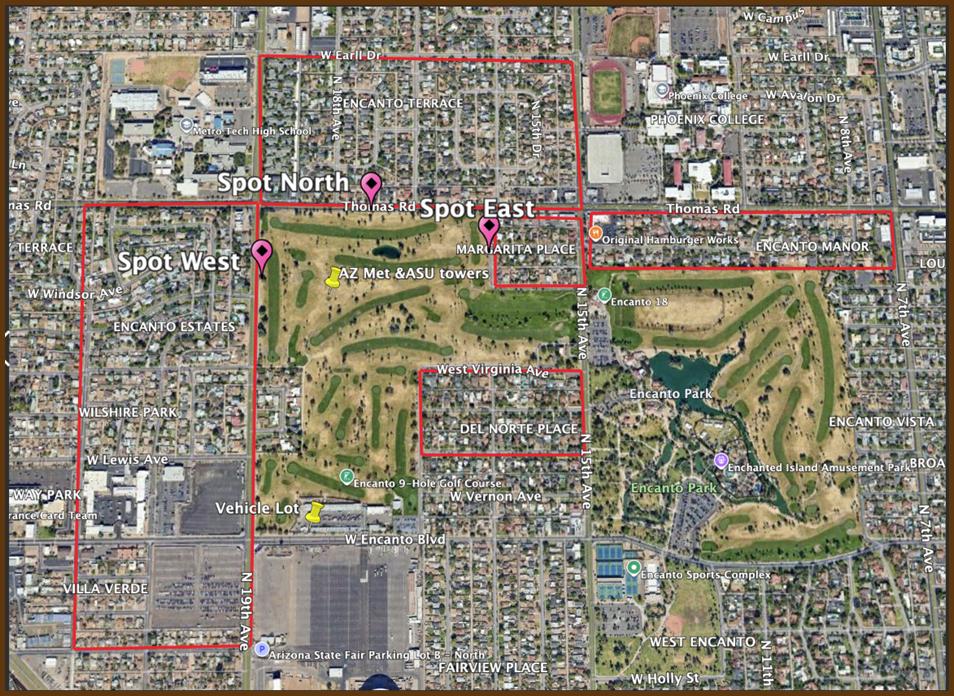
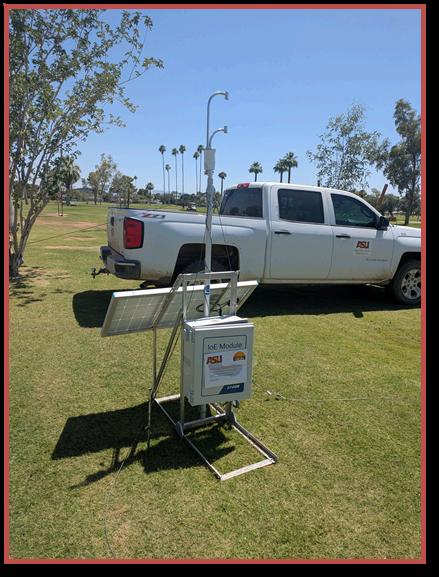
In conjunction with instrument deployment, vehicle traverses were also completed to collect air and surface temperatures.

Next Steps:
Using the Parallelized Large-eddy Simulation Model (PALM) to reproduce observations, then validating those simulations with field observations Once that is complete, sensitivity studies will be performed to better understand the cooling potential under different wind directions, wind speeds, and irrigation patterns
Alongside our IOP activities SW-IFL also had smaller, pilot projects underway,
MaRTiny: A low-cost internet of things (IoT)device for heat studies that addressed the lack of continuous human-relevant heat exposure data tied to behavior, a critical gap in urban-climate research, led by Dr Ariane Middel (ASU)
Dr Deepak Amaripadath (ASU )led a study on the scientific understanding of the stress thresholds of urban trees to extreme heat and water stress by providing granular data on the thermal dynamics.
A Smart Monitoring Systems for predicting and preventing heatrelated illnesses in construction, led by Dr Siyuan Song (ASU)
Dr. Xiang Zhang (ASU) led a project exploring the data-driven solar gain forecasting-enhanced model predictive control of operable shading in building under extreme heat
How do multi-scale climate and surface/human drivers interact?
How will their impacts manifest spatiotemporally across urban environments and into the future?
The focus of the SW-IFL project is how extreme heat translates across sectors, across society, and across populations To do this, SW-IFL researchers use a sophisticated modeling approach that differs from traditional urban climate modeling This inventive approach addresses the primary research questions of how multi-scale climate, surface, and human drivers interact, and how their impacts manifest spatiotemporally across urban environments and into the future, with a two-pronged approach that involves test beds and predictive activities
RESEARCH TOOLS:
Community Test Beds
Technology Test Beds
Predictive Activities

The SW-IFL Modeling team works closely with the Observation team to determine what sort of data collection is appropriate for the specific research activity and enhance our predictive capabilities. They add this to work with the Resilient Solutions team to identify which interventions to study for implementation at scale, such as across an entire city, and into the future.

imate modeling community has focused on e by analyzing the evaluation of simulations. undamental observations carried out at of time, such as the IOPs and field the previous section. This allows us to chanisms that lead to an out of a particular ular endpoint For example, traditional focus emperature forecast for today?”, whereas ring “what are the factors that lead to

This collection of various observational data from our Observation team, or ‘data dictionary’, allows immediate and seamless access to data to evaluate and validate not only existing atmospheric modeling frameworks but also novel modeling frameworks currently being developed, with a focus on intervention science that provides quantifiable benefits for people and society.
The SW-IFL project works with community partners to implement large test beds in order to observe the local effects of different types of interventions While community test beds focus on neighborhood-scale data collection to inform policy, technology test beds are used to predict performance of various cooling strategies applied at scale and into the future.
In year three’s IOP, the Oracle Road Corridor Community Test Bed led by Dr Kristina Currans with University of Arizona (U of A) provided SW-IFL researchers an opportunity to conduct multiple focused neighborhood-scale data collection activities to further understanding of microclimate variations and the interplay of man-made structures, features, and environment (local built environment) with extreme heat
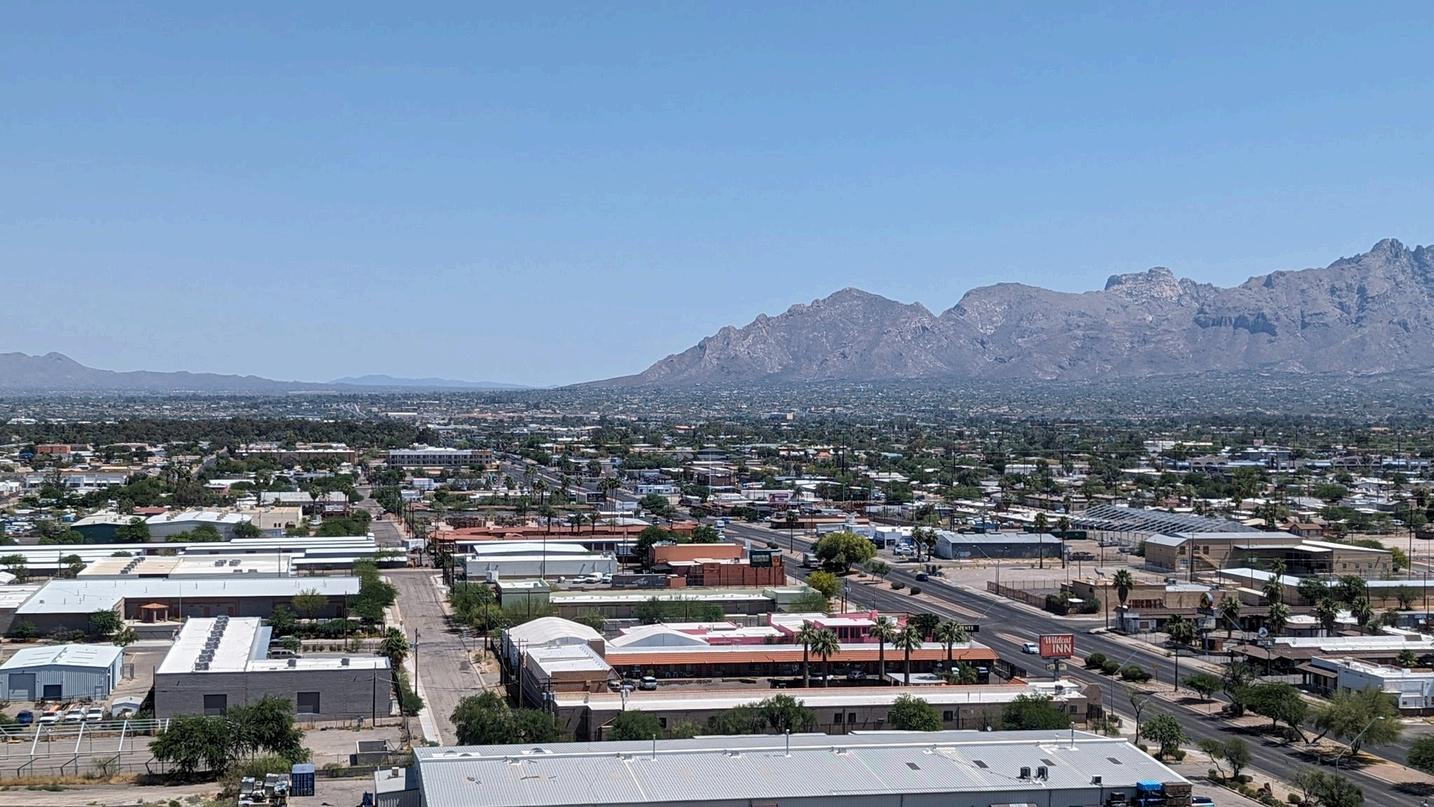
Located in Tucson, SW-IFL researchers worked with community partners to asses ongoing and planned intervention needs in this four-mile transit corridor with high social vulnerability characteristics This test bed was a key part of our 2025 IOP field campaign, and will continue to play a significant role as the project moves forward
After obtaining permission from the City of Tucson, weather station were installed on a publicly owned multi-family apartment building and at Wildcat Inn These installations connected the SW-IFL Observations team at large with local non-SW-IFL researchers focused on water conservation and
HeatMapper students completed data collection along planned routes in both industrial and residential neighborhoods This work was completed in collaboration with traverse campaigns led by ASU SW-IFL researchers and local educator volunteers, and U of A Home Thermal Security Team (HST) The results were compiled by HeatMappers into StoryMaps and presented at the 2025 All Hands Meeting in September 2025
15 Volunteer educators from Red Rock Elementary assisted with taking surface and air temperatures with vehicle mounted sensors through planned neighborhoods in the Oracle Corridor Test Bed during the IOP
Additionally, 8 Phoenix educators from various Phoenix schools assisted in similar traverses in the Phoenix metro area
Meetings were held with City of Tucson officials from the Department of Transportation and Mobility, to discuss pragmatic issues related to the installation of cool pavement treatments SW-IFL involved researchers then connected with ASU SW-IFL researchers working with City of Phoenix on cool pavement treatments, to coordinate a study during June 2025

A document was created by SW-IFL researchers to aggregate collaborated information on Oracle Road Corridor Test Bed This information includes the test bed background, demographic, and geographic context for researchers as well as descriptions of lines of inquiry and research questions from stakeholder discussions
In collaboration with the plan evaluation team, data has been collected on a plan deployment in the Oracle Corridor and the broader Tucson area, linking policy, program, projects, and corresponding budgets at a city/county-level to census tract level The goal is to link policies to impact on the ground with respect to impervious surfaces and green infrastructure

ModelforPredictionAcross Scales(MPAS)
WeatherResearchand Forecastingmodel(WRFCHEM)
ModifiedBuildingEnergy Model(MBEM)
This is the primary tool utilized by the SW-IFL Modeling team It is an amalgamation of direct linkages between various modeling components of the Earth climate system and four distinctive parts: global atmosphere, urban atmosphere, technology (built environment), and human actions and decisions (humans and technology), that interact in distinctive ways both spatially and temporally
AutomaticBuildingEnergy Modeling(AUTOBEM)
Modelsforsustainable agriculture(HESTIA)
Individuallyexperienceheat andairpollution(ICARUS)
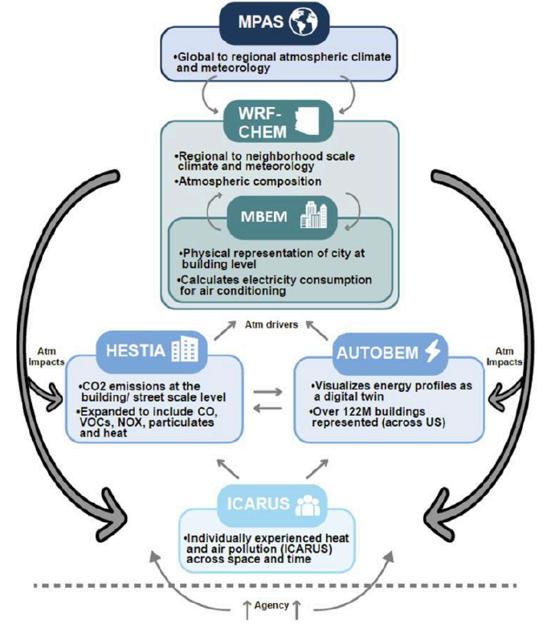
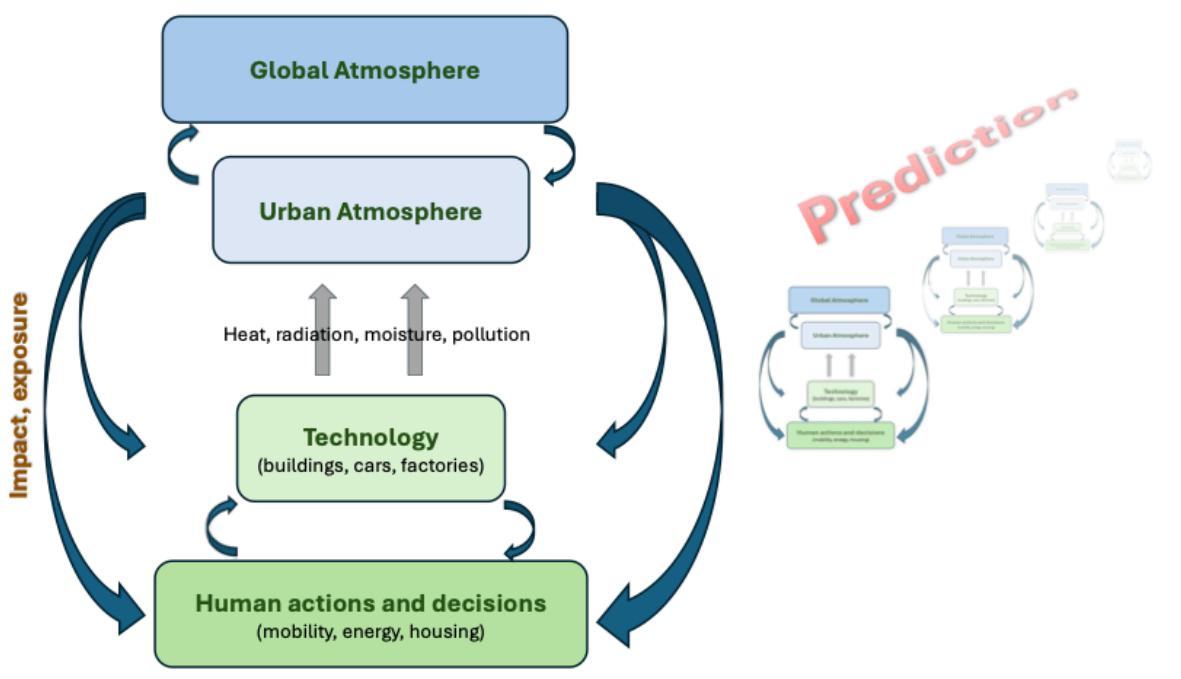
The challenge faced by SW-IFL Modeling researchers was how to get the traditional diagnostic models such as Model for Prediction Across Scales (MPAS), Weather Research and Forecasting model (WRFCHEM), and others, to not only talk to one another, but produce meaningful information that can then be scaled from the global level down to the local level while evaluating the associated impacts on predictive outcomes This is especially difficult when adding in scaling issues and meaningful outputs across the various models In year three, simulation framework for short-term (10 day) assessment based on MPASWRF models was finalized with new simulations corroborating robustness of prior results
The diagnostic models include: Model for Prediction Across Scales (MPAS), Weather Research and Forecasting model coupled with Chemistry (WRF-CHEM), Modified Building Energy Model (MBEM), Automatic Building Energy Modeling (AutoBEM), models for sustainable agriculture (HESTIA), and individually experience heat and air pollution (ICARUS) models
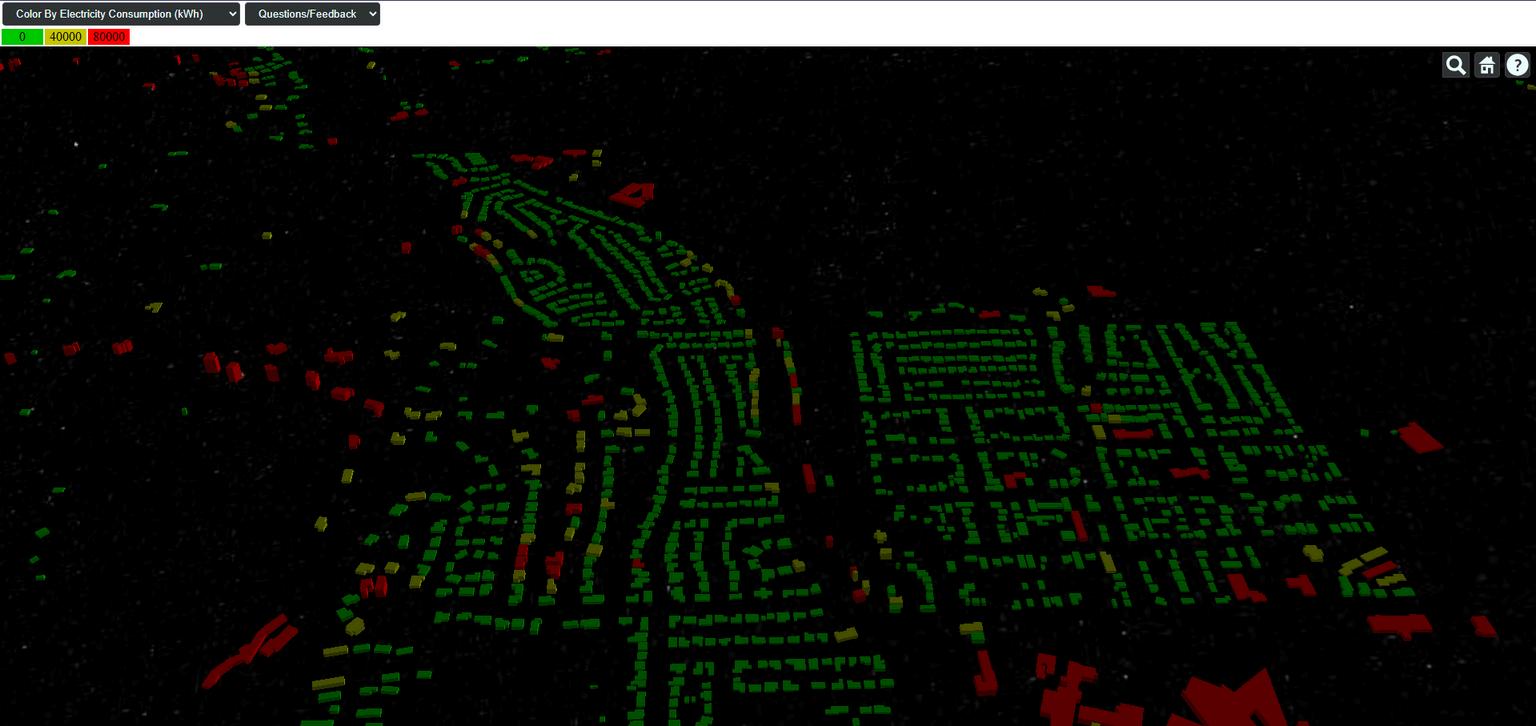
BuildingEnergyModelingmapofFlagstaff,ArizonafromORNL https://bitly/virtual flagstaff
Establishing fundamental, baseline criteria for the various emission models, coupled with human decision makers, help identify opportunities for future policy interventions through location specific, inventory emissions characterizations that are scalable The goal to build a diagnostic product that enables future predictions based on research and determine the impact of various interventions on society is at the heart of the SW-IFL project

Developed by Dr Mikhail Chester at Arizona State University (ASU) this is a statistically based, spatial, temporal, rerouting transit model Its primary objective is to simulate neighborhood to large-scale travel and indoor activities, environmental hazards and exposure, and mitigation opportunities
For example, if exposure to heat or radiation undergoes a change, what is the scale representation of that change and how does that modify or reroute travel behavior? Similarly, how might implementation of heat mitigation strategies translate to such rerouting?
In year three, SW-IFL researchers have been working with coupling technology drivers such as carbon dioxide (CO ), air quality, heat emissions, and waste emissions, that factor into rerouting pedestrian paths to lower heat exposure in urban environments 2
ICARUS is currently capable of “micro” decision making with travel route changes, including using values in near real-time conditions to create detours This is possible because the model uses highly resolved start and end points for trips at parcel-level precision and guards against unreliable detours
However, in the modeling world one of the biggest challenges is resolution and SW-IFL researchers are working to refine ICARUS’s work with a lower level of detail or specificity (coarse resolution)
Science objective: Decreasing pedestrian exposure to heat using ICARUS, the heataware re-routing model.
Question:
Does the resolution of the input temperature raster impact the performance of the heataware re-routing?
To answer these questions, SW-IFL researchers assembled a high-resolution dataset of road network, land use, agent home & destination, and mean radiant temperature (MRT)
They coarsened the MRT raster to mimic real-life situations where only coarse MRT raster is available.
Then ICARUS procssed all MRT raster and evaluated the impact on pedestrian exposure
The Result:
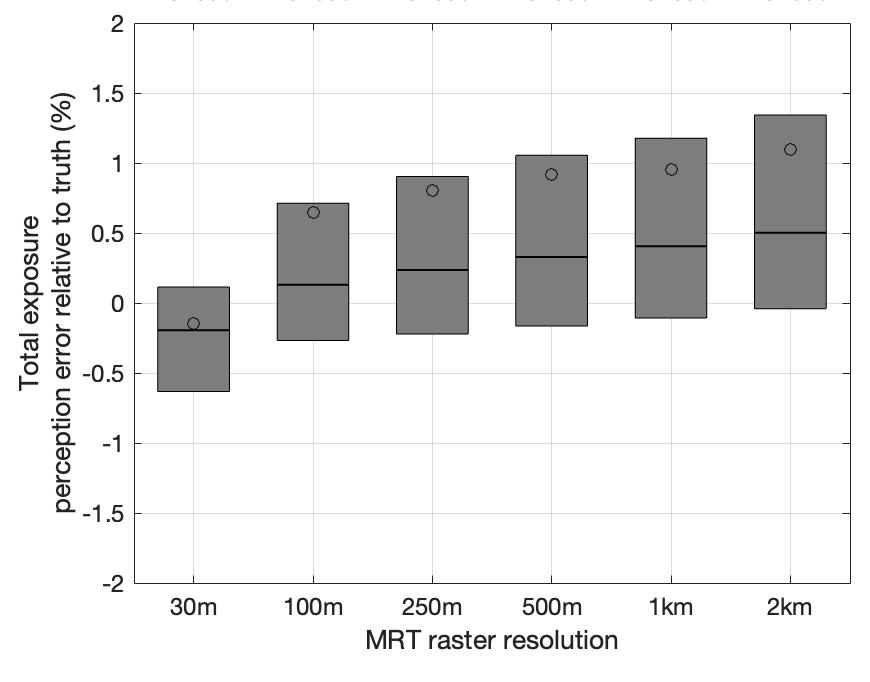
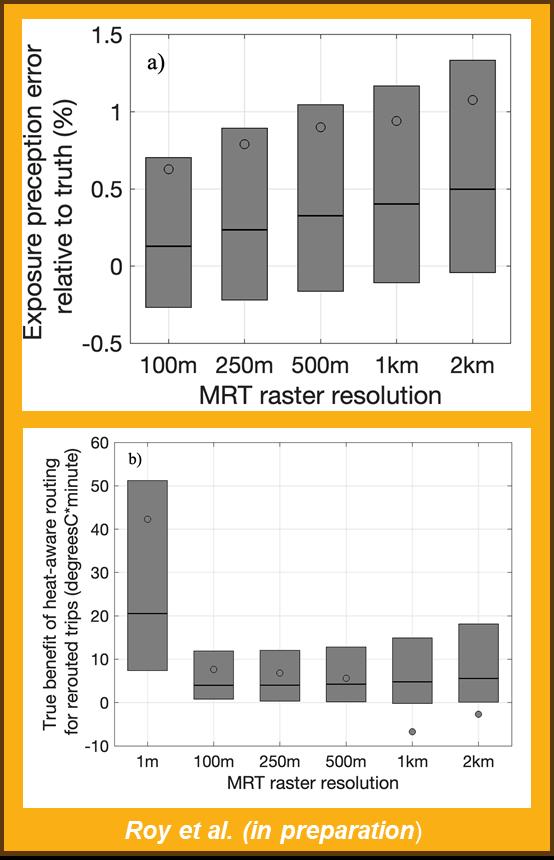
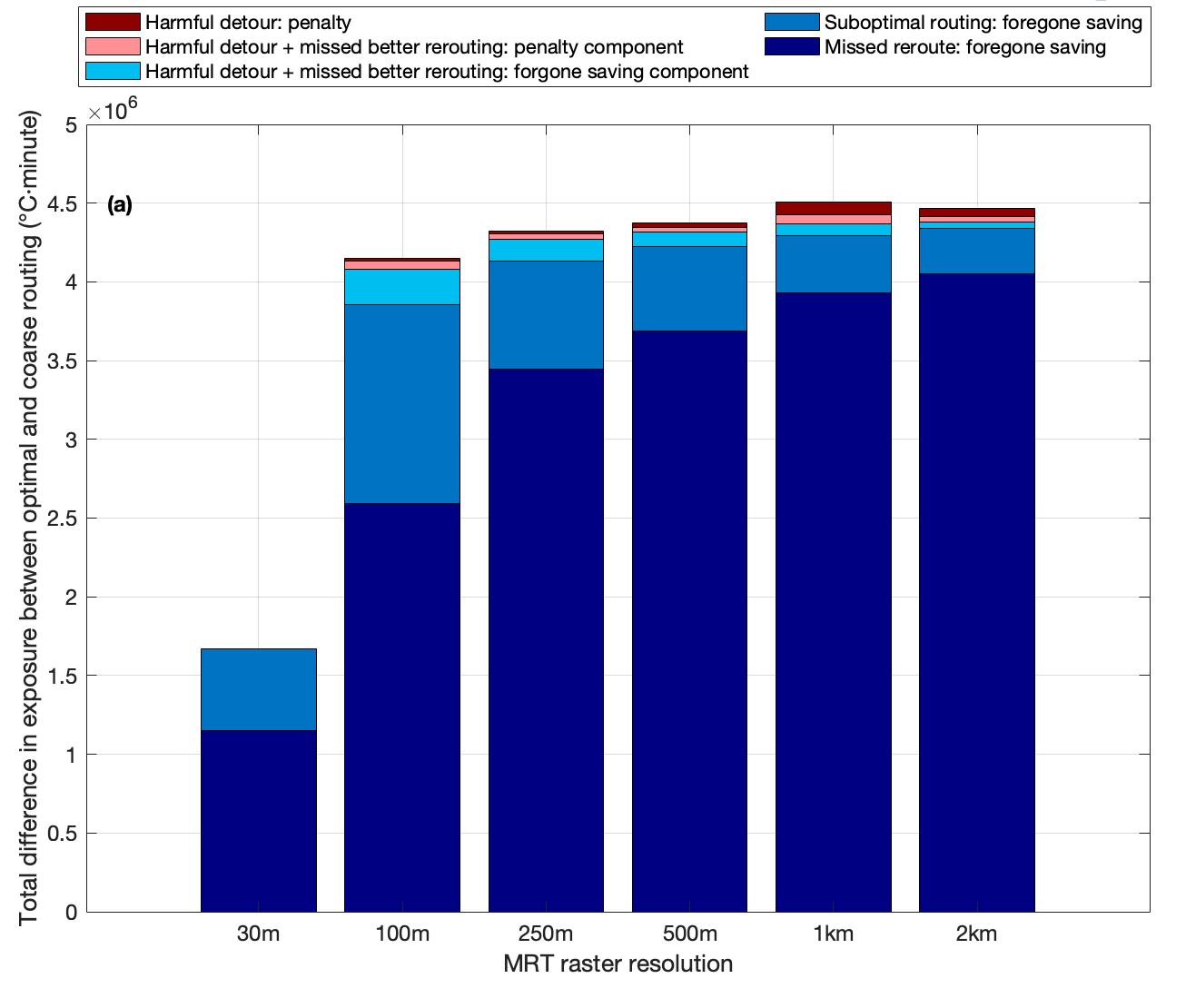
Mean radiant temperature (MRT) rasters coarser than 100m resolution cause an overestimation of pedestrian exposure since they blend small cool patches with large high heat areas Using these coarse MRT rasters for heat-aware routing leads to missed cool detours, suboptimal rerouting and even harmful rerouting where the pedestrian is sent on a warmer path In contrast, 30m resolution MRT rasters do not generate harmful rerouting, and while they cannot identify all cool detours, they identify enough for generating benefits on the order of 20°C*minute for rerouted trips, which is on par with what can be achieved with 1m MRT rasters
The following findings are currently in preparation for publication:
Skipped exposure savings grow with coarser resolution input data (MRT)
Skipped detours dominate the losses
Mis-routing occur but degrade exposure benefit losses negligibly
Detours at coarser resolutions do offer partial cooling (benefits are <2%)
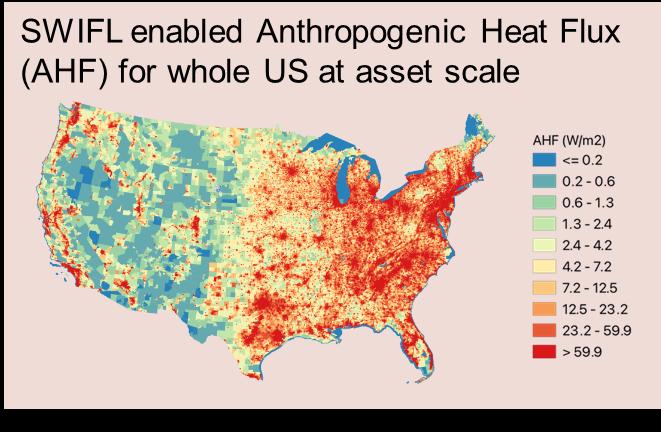
The modeling team completed emission model estimates of fossil fuel carbon dioxide (FFCO ) a spatially explicit, hourly, sector specific (eg, transportation, commercial buildings) and technology specific data inventory of carbon dioxide (CO ) emissions, local air pollution and anthropogenic waste heat from 2010 until the present across all sections in three urban domains in Arizona down to the asset scale 2 2
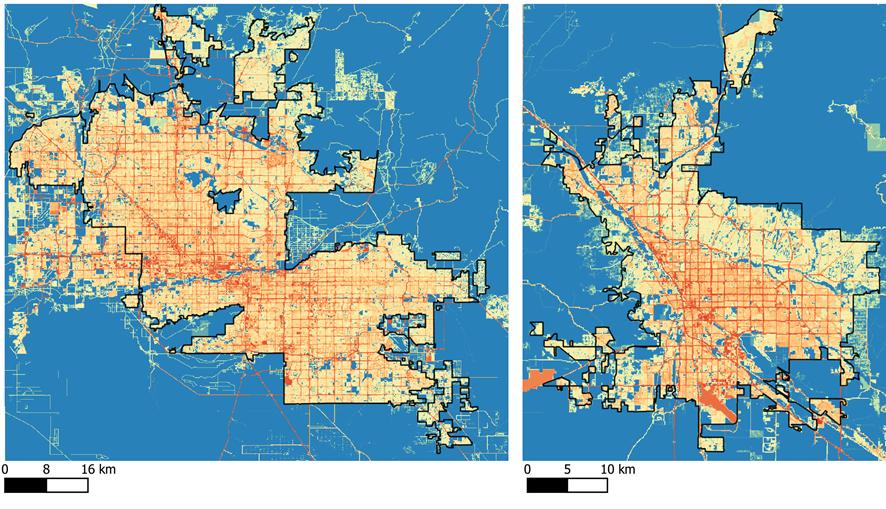
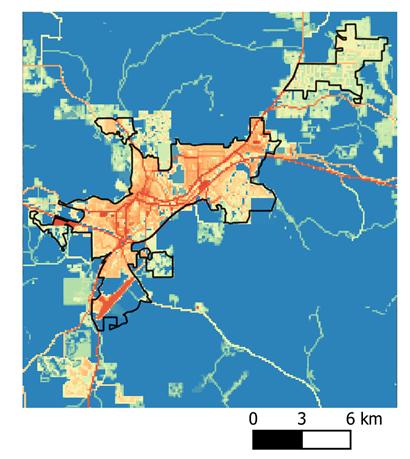
Additional cross-comparisons are being done with AutoBEM and gridded at 1km to make it convenient for atmospheric modeling
During this year, algorithms were built in the HESTIA system to generate waste heat from all of the combustions in the three urban domains This was then leveraged to do the same for the entire United States in regards to waste heat The analysis of waste heat confirms that the flux is highly concentrated in city cores, with fluxes being approximately 40% higher in core areas compared to the larger urban domain This emphasizes the critical need for fine-scale data to accurately address both heat production and high human exposure
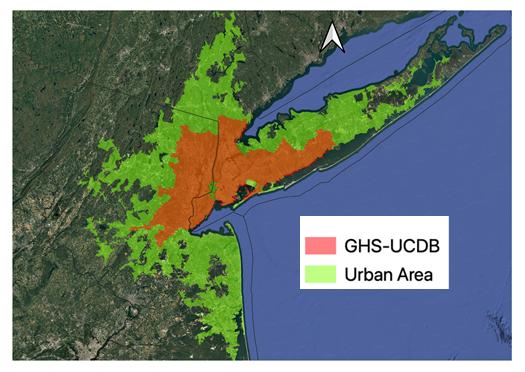
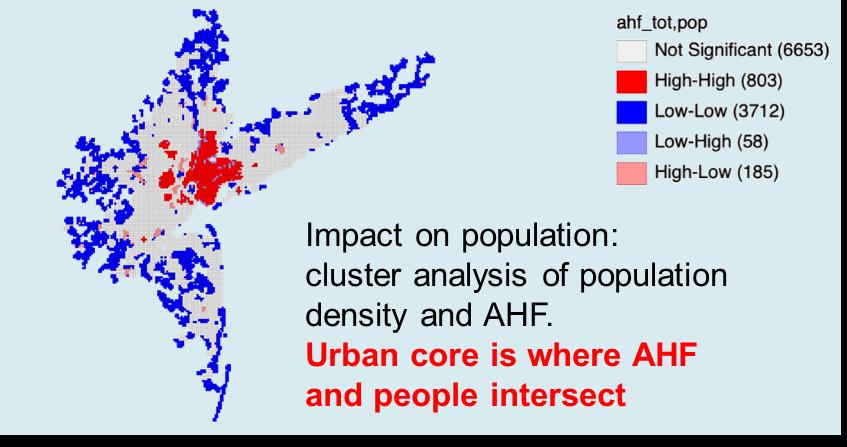
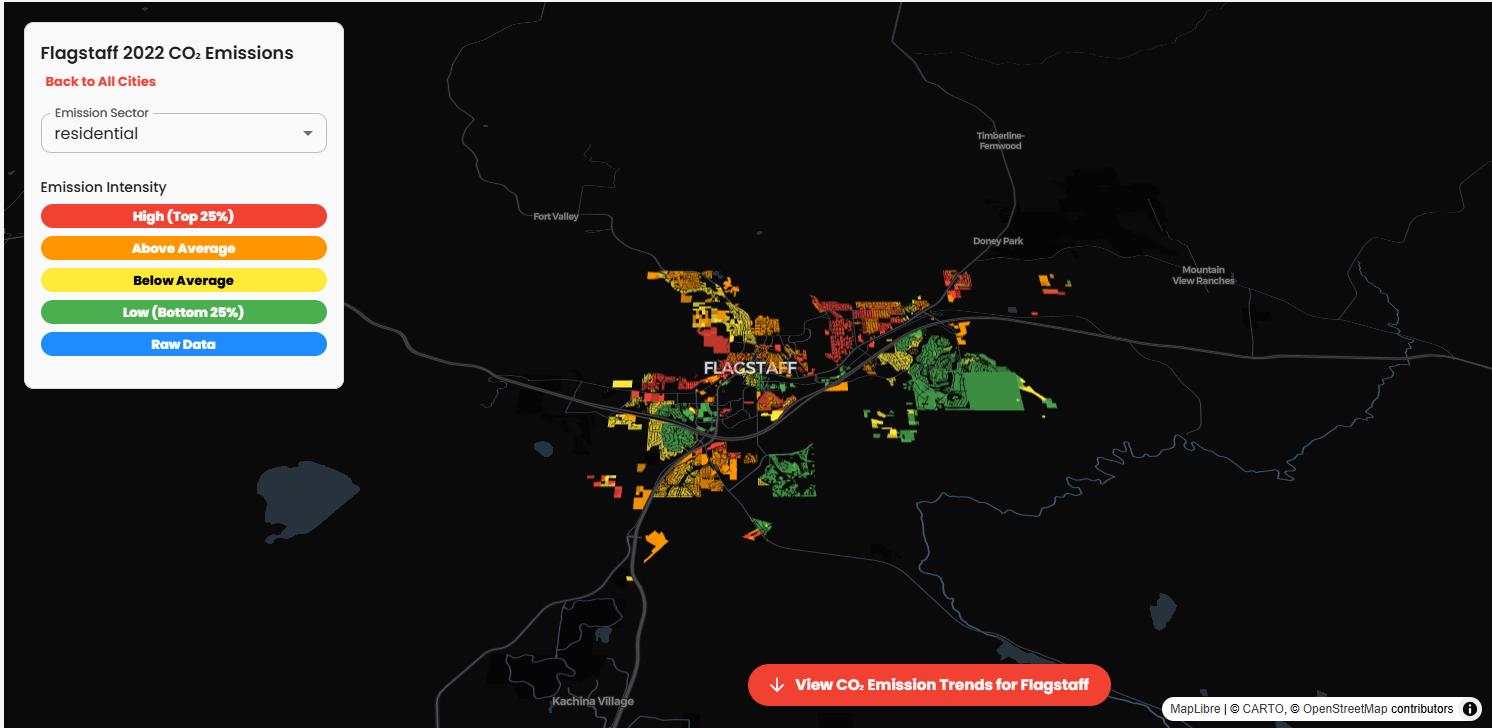
To share relevant research data with policy makers, the HESTIA Emissions dashboard was created by the SW-IFL research project This dashboard reflects the CO emissions from twenty-two cities across Flagstaff, Phoenix, and Tucson areas that combine emissions, sector composition, and trends over time
https://hestiarctrafficnauedu/emissions-data
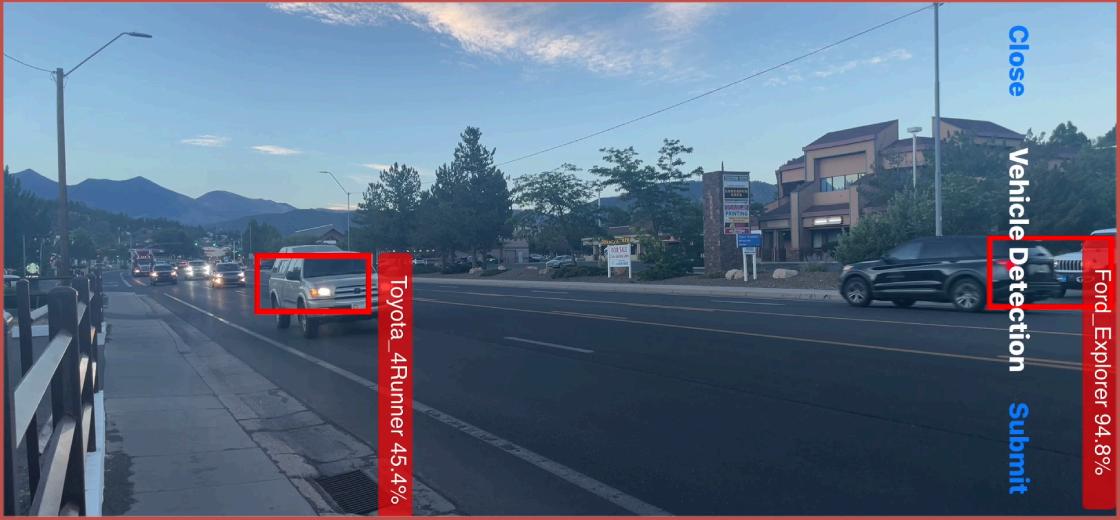
As mentioned previously, the HESTIA traffic app was developed by SW-IFL researchers at NAU to collect traffic data to improve modeling of carbon dioxide and vehicular heat emissions The goal of this app is to capture this human driven component of atmospheric climate modeling that is not only generally not accessible, but also unable to be simulated effectively.
The app’s foundational ability to detect and categorize vehicles is performing at 94.7% accuracy. The remaining errors are not detection failures but rather fine-grained classification challenges between visually similar models The team has created an AI-enable version of the application utilizing AI recognition technology to classify not just the broad six vehicle classes used in the manual app, but refine identification to make and model This will allow the user to stand at a roadway and have their phone count and identify the passing vehicles This AI-enabled version is currently being beta tested
Traditionally urban climate and meteorological downscaling is performed through the utility of reanalysis data. Reanalysis data is a blended observational and modeling product that is put on a horizontal and vertical mesh. Reanalysis data serve as initial conditions (IC) and lateral boundary conditions (LBCs) and are used to “force”, or guide, a regional climate model over a particular area of choice This is done because regional climate models need information at their boundaries This approach has produced a lot of great research over the decades
The SW-IFL Modeling team hypothesizes that a more accurate approach is to use the MPAS model, the global parent of WRF, instead of the more traditional European reanalysis product ERA-5, for the duration of a model integration researchers are interested in To enable this, the output from MPAS is used to create the WRF model’s ICs and LBCs for the WRF domain Unfortunately due to the passing of SW-IFL researcher, Dr Mohamed Moustaoui (ASU), work on this research is currently delayed
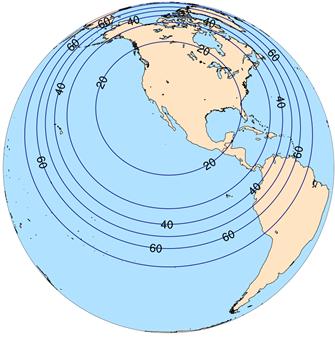
MPAS Mesh
Configuration: 20 km grid spacing across SW US
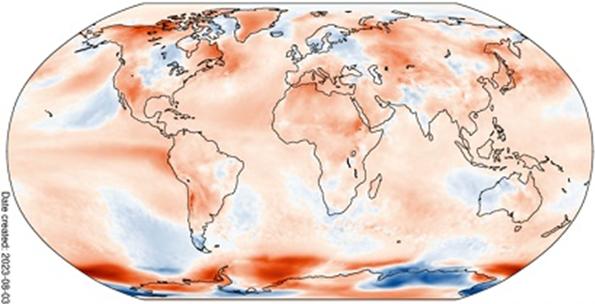
ERA-5: reanalysis at a resolution of 025 degrees

+ LBCs
+ LBCs
WRF Domain Configuration
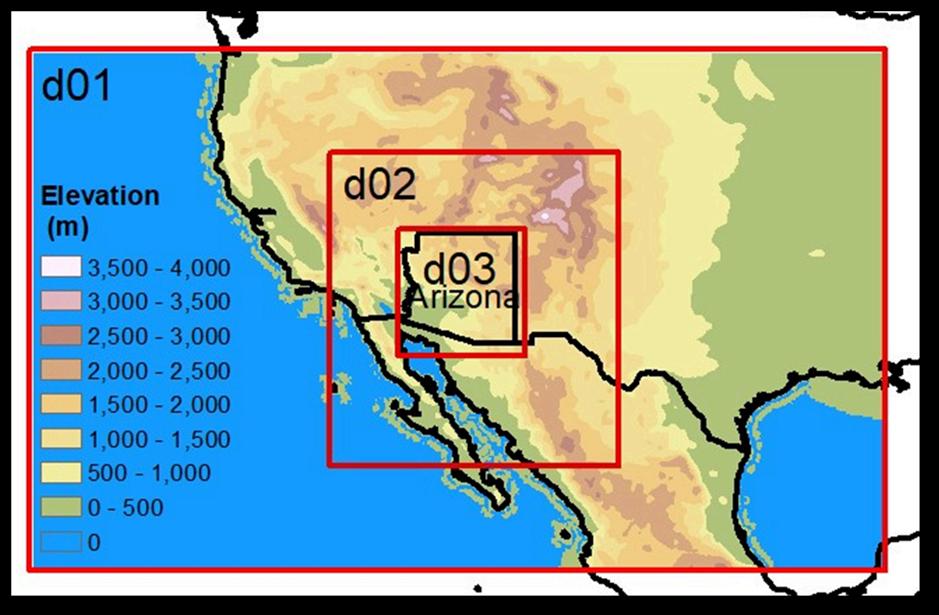
WRF Domain: D01-D02-D03 are 18, 6, 2 km horizontal grid spacing, respectively
Coupling a diagnostic model with a prognostic model can generate valuable products for human decision makers to incorporate into their policy making SW-IFL Modeling researchers have implemented direct coupling between some of the MoM components, such as AutoBEM, an individual building scale energy demand model from ORNL, and WRF output
One such coupling currently being researched by SW-IFL team members at Oak Ridge National Laboratory (ORNL) can be seen below asks the question when integrating models of different scales, and in some cases different physical processes, which enforcing conditions of the coupled models is making the calculations This is also known as model input sensitivity
This graphic is a comparison of percent change in electricity consumption down to the asset-scale in Arizona utilizing input from the Weather Research and Forecasting (WRF) model in red and input from for a typical meteorological year (TMY) used by AutoBEM in blue
It shows that there is a higher energy use statewide when using WRF simulations for that particular year.
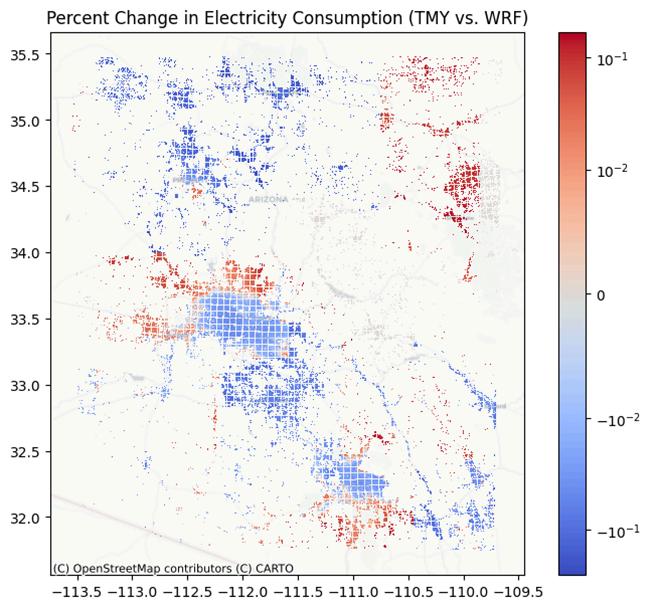
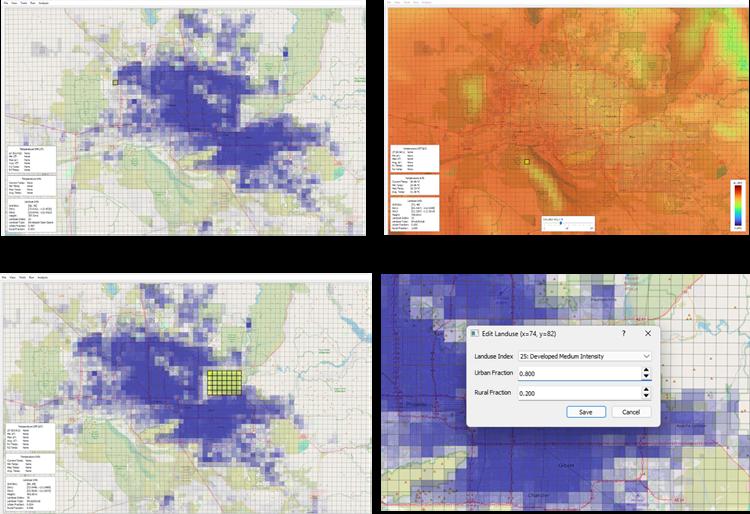
SW-IFL researchers at ASU, NAU, and ORNL are working on various one-way couplings of the WRF mode, AutoBEM and HESTIA models and have successfully executed AutoBEM simulations with WRF-driven simulation output One such work started last year by Dr Mohamed Moustaoui (ASU) and Dr Matei Georgescu (ASU) was the creation of the Predictive Heat Advection Simulation Engine (PHASE-I)
This predictive tool allows users, such as city planners or community developers, to run simulations on urban land use and then explore those results with built-in analytical tools to measure potential impacts and evaluate cooling strategies before breaking ground
Coupling the regional climate WRF model to a human-heat balance model, SW-IFL researchers developed and applied a novel interdisciplinary framework that addressed a longstanding and often debated question in climate-health research: doe irrigation benefit outdoor labor capacity via environmental cooling, or is it offset by atmospheric moistening
This finding indicates a ~30% reduction in the number of discouraged outdoor work hours during the daytime in irrigated cropland and

Using the exceptionally hot and dry Arizona summer of 2023 as a testbed, researchers demonstrated that irrigation enhances labor capacity primarily through a reduction in dry heat gain (ie sensible heat exchange) from the environment to the human body, not through changes in moist heat loss mechanisms, as previously assumed urban regions. This methodological approach utilized by the SW-IFL researchers is directly translatable to any region in the world.
Science objective: Achieving accurate mesoscale weather predictions
Approach:
Include new input datasets into WRF model
Perform a multi-parametric evaluation of the model output using the 2024 SW-IFL field campaign data.
The SW-IFL Modeling team continues to use its modeling capabilities to work with both the Observations and Resilient Solutions teams In the question of accurately predicting mesoscale weather predictions, Modeling team researchers include both the building morphology for the Model of American Digital Twin of Buildings, and the satellite-derived datasets from “Understanding Uncertainties in Surface-Atmosphere Exchange” (USURF) on road and roof albedo (the fraction of light that a specific surface reflects)
Science objective: Cool Air Advection
Questions:
How much can a large green space cool the air?
If any, can the cool breeze travel downwind (and how far)? How does this change with wind speed and direction?
SW-IFL researchers will use data from the IOP campaigns and various modeling tools to address the impact of cool air advection Modeling tools like PHASEI can examine the question of the cooling effect of a specific location and the associated issues with transport, such as how far downstream is that plume of cool air transported Other modeling tools can help answer what happens when the wind direction changes and how does that redirection impact the plume of cool air.

To answer these questions, SW-IFL researchers have the following work planned:
Use the PALM ultra high-resolution urban meteorological model
Validate simulation using field observations
Perform sensitivity studies to better understand cooling potential under different wind direction, wind speed, and irrigation patterns
Dr Dan Li (Boston University) will work with SW-IFL researchers on using the ultra high-resolution urban meteorological model, PALM, to examine the data at the same level the observations were actually conducted in an effort to address scale discrepancies
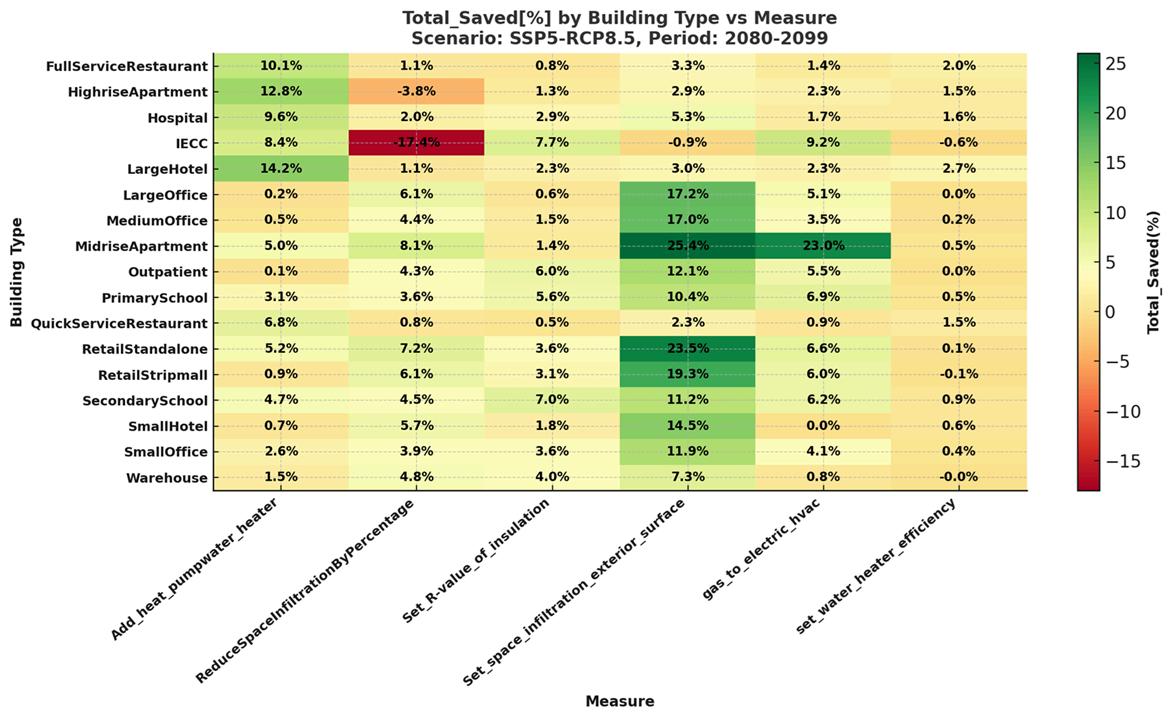
SW-IFL researchers at ORNL are working on future energy use and interventions This includes analysis of 18,951 building in Flagstaff, Arizona using AutoBEM, a building energy model, and evaluating six energy conservation measure (ECMs) under future climate scenarios (1980-2099) Findings show that by the end of this century, under the highest emissions scenarios, building electricity use may increase up to 7%
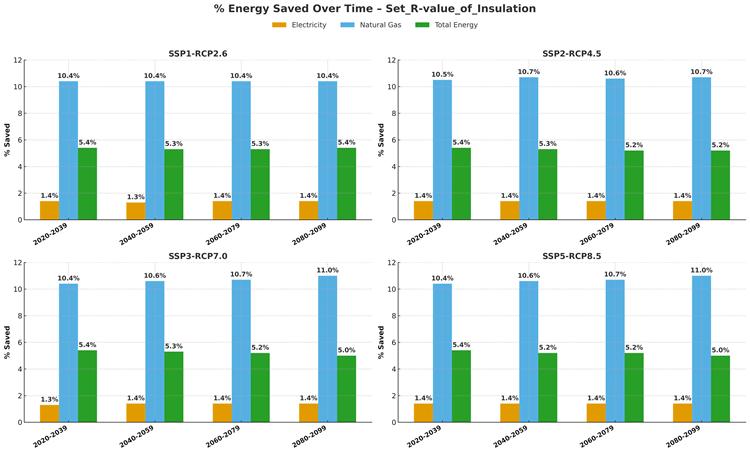
To mitigate that impact, ORNL researchers tested scenarios incorporating the following six ECMs:
Heat pump water heater
Gas ⟶ electric HVAC
Reduce space infiltration (%)
Set infiltration by exterior surface
Increase insulation R-value
Improve water heater efficiency
In the chart below you can see the impact of the various ECMs tested The key results show increasing insulation or converting from gas to electric HVAC may provide robust opportunities to reduce emissions aross various building types
How can SW-IFL science be best utilized to help decisionmakers and communities to create a sustainable urban environment for Arizona's future?

Arizona currently faces the challenges of extreme heat and air quality A core goal of SW-IFL is to utilize cutting-edge science to inform Arizona's decision makers and communities to empower them to address these challenges
To do that effectively, the focus of the SW-IFL Resilient Solutions team is to garner community engagement, disseminate the project’s research activities, and then develop a cadre of solutions and tools that will help create positive change for Arizona’s future.
RESEARCH TOOLS:
Engagement
Dissemination
Solutions and Tools
In this report, we highlight some, but not all, of the team’s activities in year three and we start with projects that enabled researcher engagement with stakeholders and communities.
In an effort to engage community decision makers into SW-IFL research, two Discovery Fellows spent five months working on-going research programs and providing knowledge exchange with community and education experts Both Fellows presented posters of their work at the September 2025 All Hands Meeting in Tucson, Arizona
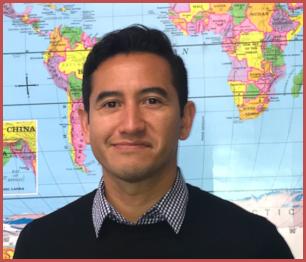
Edgar Ochoa, a teacher in the Arizona Teacher Residency Program at Ed & Verma Pastor Elementary in Phoenix, worked with NAU’s Dr Helen Rowe to connect the HESTIA Traffic Ap with teaching climate change drivers through action and a K-12 competition
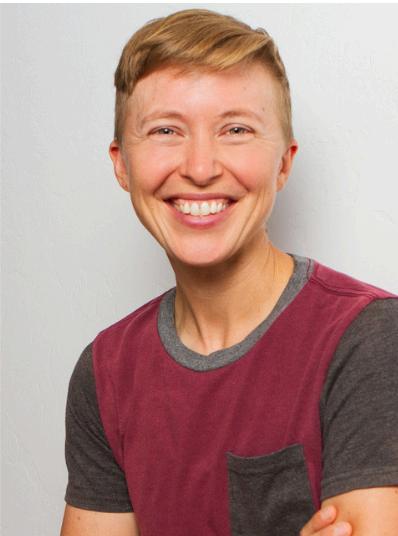
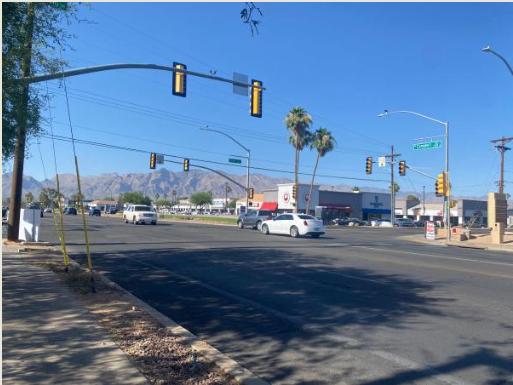
Raye Winch, Director of Policy & Strategy at Tu Alliance for Housing Justice worked with U of A Mark Kear to study the sub-metered utilities in m home parks and its impact on home thermal se
Led by Dr Patricia Solís at Arizona State University, this student cohort program was created to engage the next generation of clime and urban resilience leaders. Designed as a hands-on research and education experience, the students worked directly with local communities, city departments, and organizations as they work alongside Resilient Team researchers to collect valuable data in the field
Eight student participants were solicited across three participating SW-IFL universities and through six real-world projects, they helped map urban heat, studied how heat affects daily life (such as commuting or staying cool

at home), and collected valuable local data to improve researcher models Their efforts were presented at the 2025 All Hands Meeting in September in Tucson through their project-specific story maps
Traffic CO Emissions App: 2
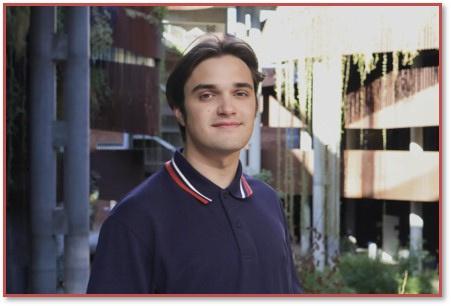
Working with NAU’s Dr Kevin Gurney and post-doctoral researcher, Dr Anna Kato, U of A students, Samantha Provenzano and Alekzander Emerson Ryan, spent the summer collecting data on vehicle counts and types at various locations across the Tucson metro area Additionally, they provided insights for refining and improving the HESTIA Traffic app
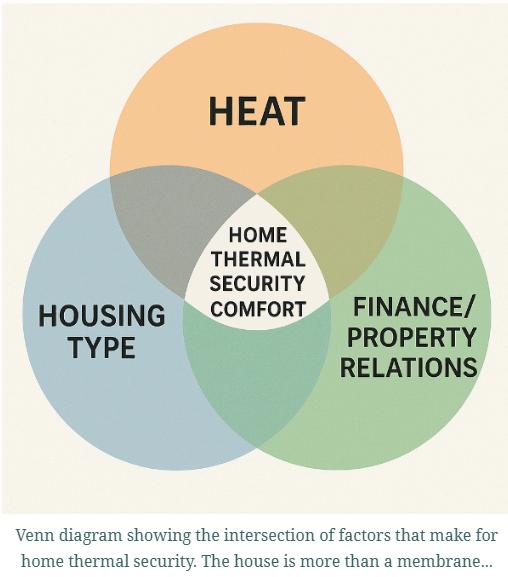
The Impact of Heat on Society (Home Thermal Security):
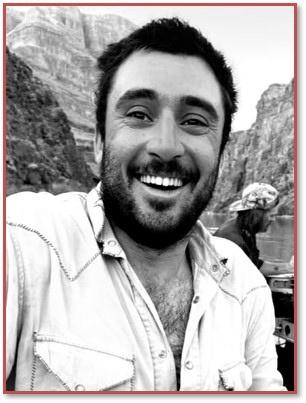

Using innovative content coding techniques, U of A student, Jonathan (Yoni) Goodman brought home thermal security survey and interview data together for qualitative analysis under U of A’s Dr. Mark Kear.
Venn diagram showing intersection of factors that make for home thermal security
Impacts of Green Infrastructure & Trees at Bus Stations & Parking Lots:
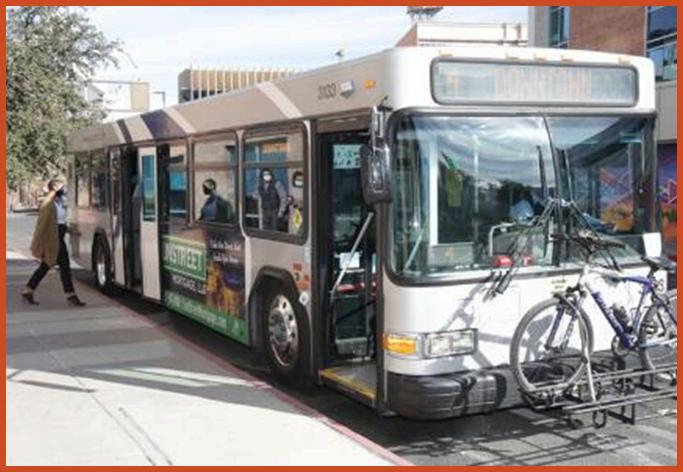
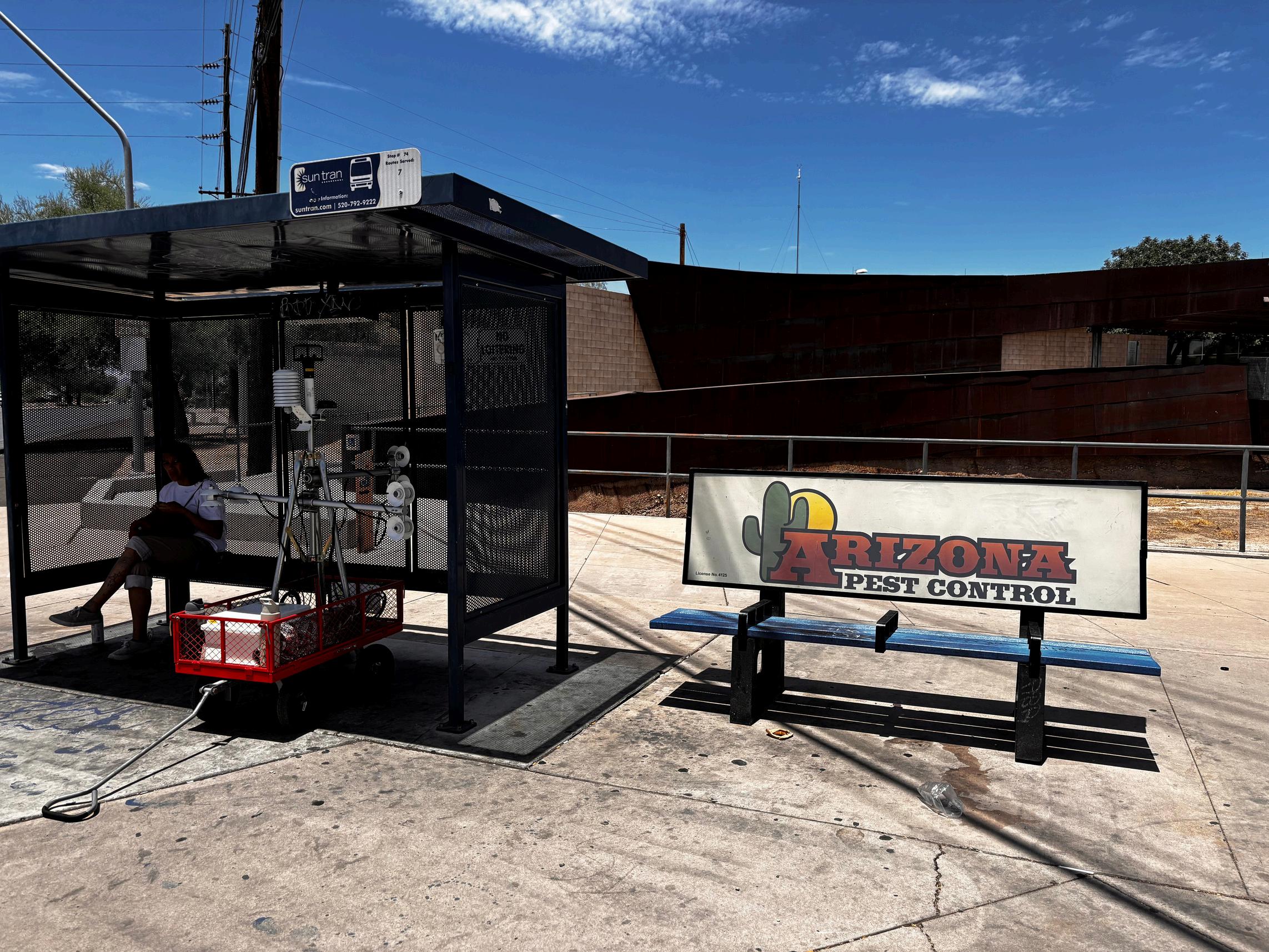
Utilizing ASU’s MaRTy Cart to gather heat data at bus stops with different levels of green infrastructure in the Tucson metro area, U of A students, Artemis-June Torre and Sofia Dracopoulos worked with U of A’s researcher, Dr Kristin Curran and student, Paul Daniel George-Blazevich, along with ASU’s MaRTy Cart Team led by Dr Jennifer Vanos and Dr Ariane Middel
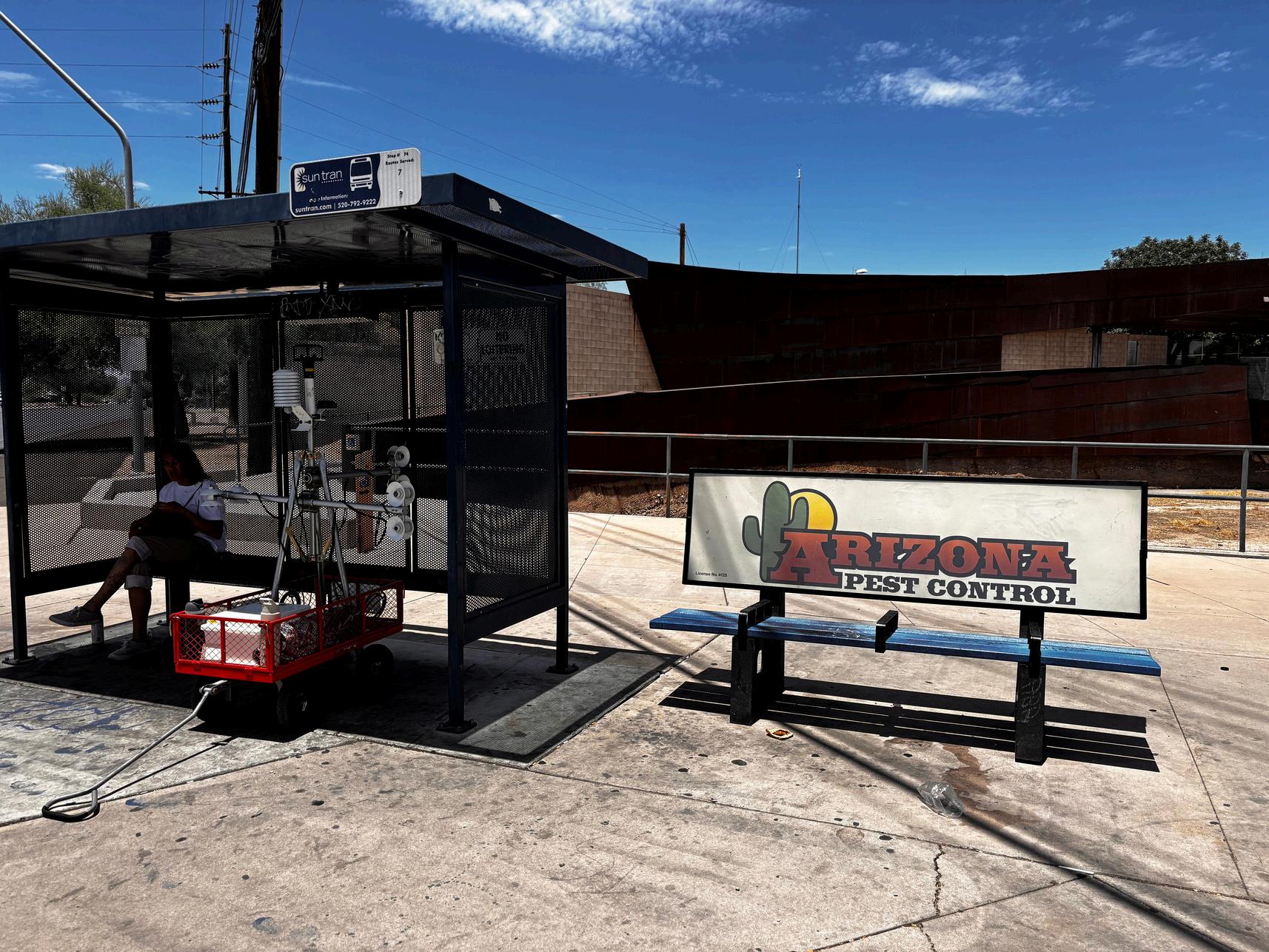
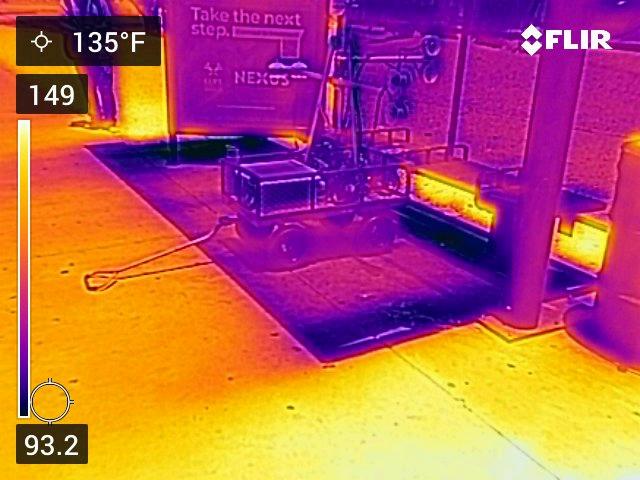
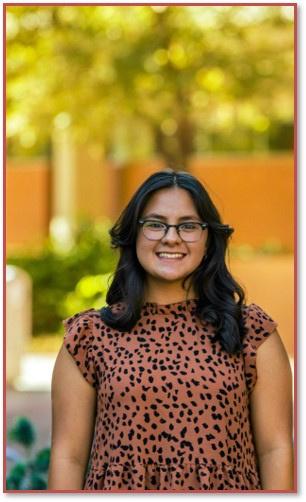
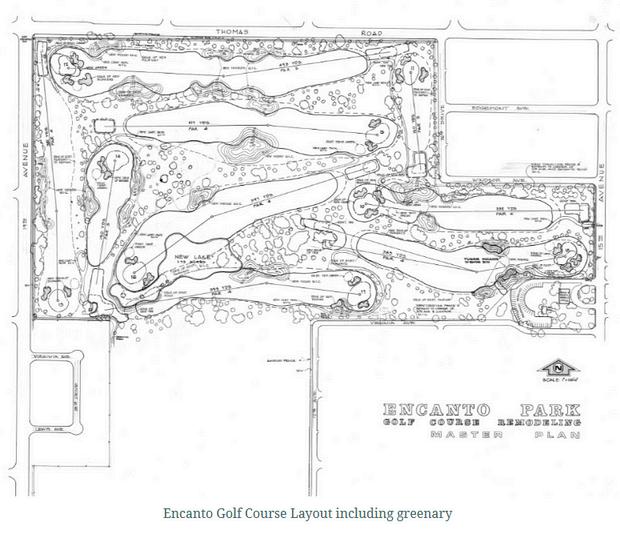
In order to study the role of cool plumes in reducing neighborhood heat, student Diane Bañuelos (ASU) worked under ASU’s Dr Enrique Vivoni and Dr Nidia RojasRobles and BNL’s Dr Katia Lamer to document the land surface properties, vegetation characteristics, and irrigation schedule of Encanto Golf Course
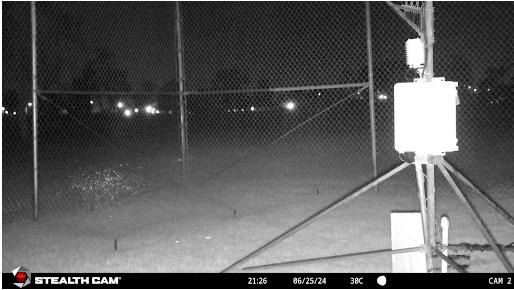
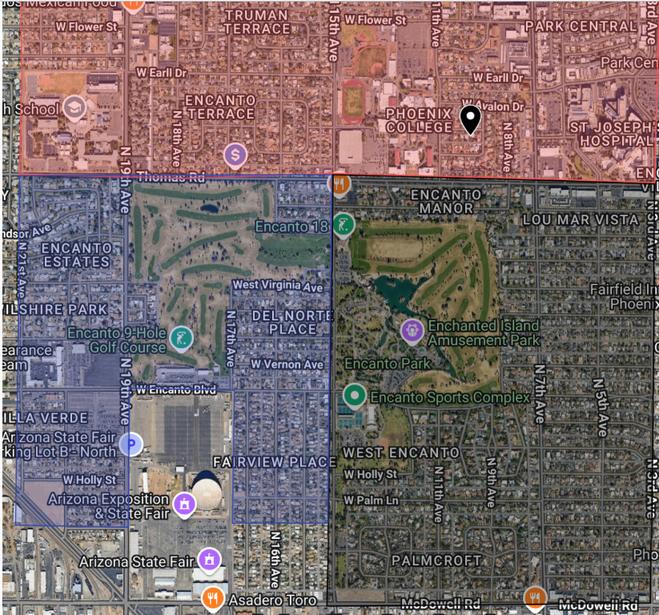
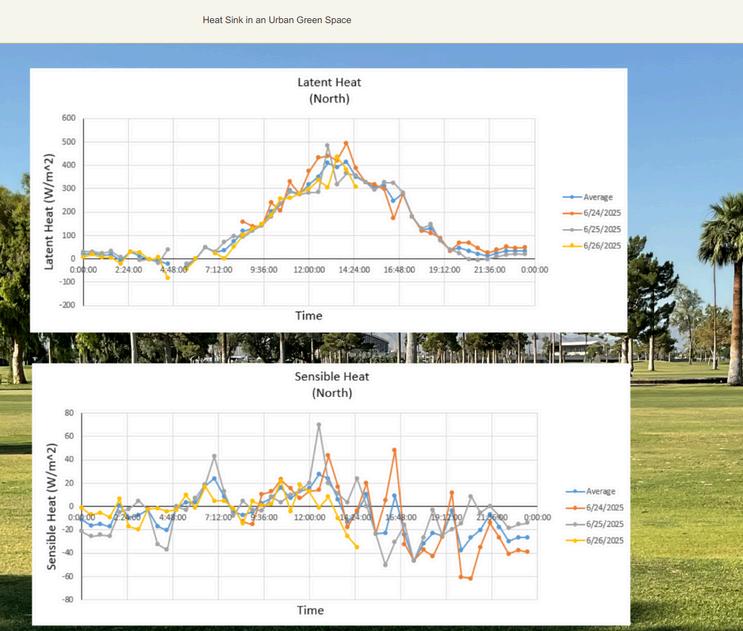
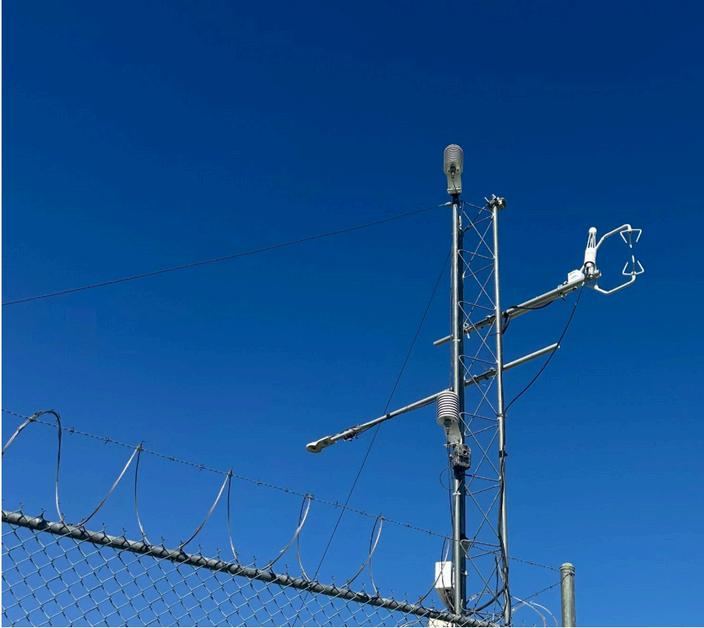
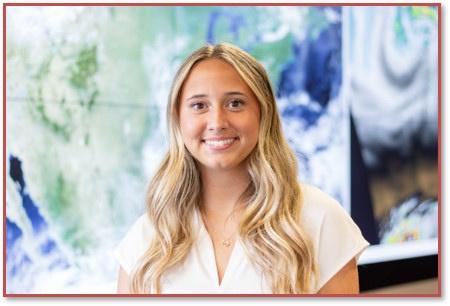
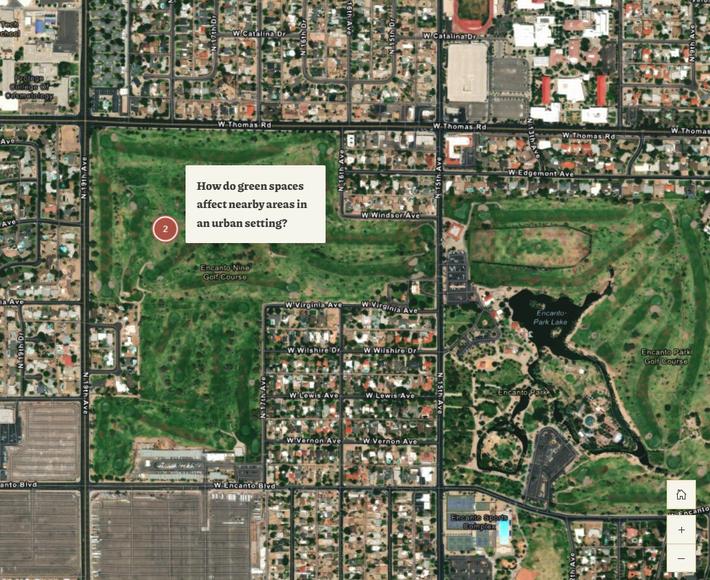
To address how green spaces affect nearby areas in urban settings, student Abby Neumann (ASU) worked with ASU researchers, Dr Enrique Vivoni and Dr Nidia RojasRobles, on quantifying heat exchange (as sensible heat), water movement (as latent heat) as well as wind speed and wind direction
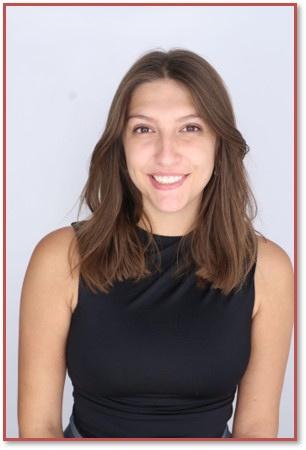
Overseen by Dr Katia Lamer (BNL), student, Ashley Falk (Penn State University) focused on science communication by translating SW-IFL research on extreme heat, its drivers, and the resulting mitigation solutions into accessible, visual content that supports community resilience.
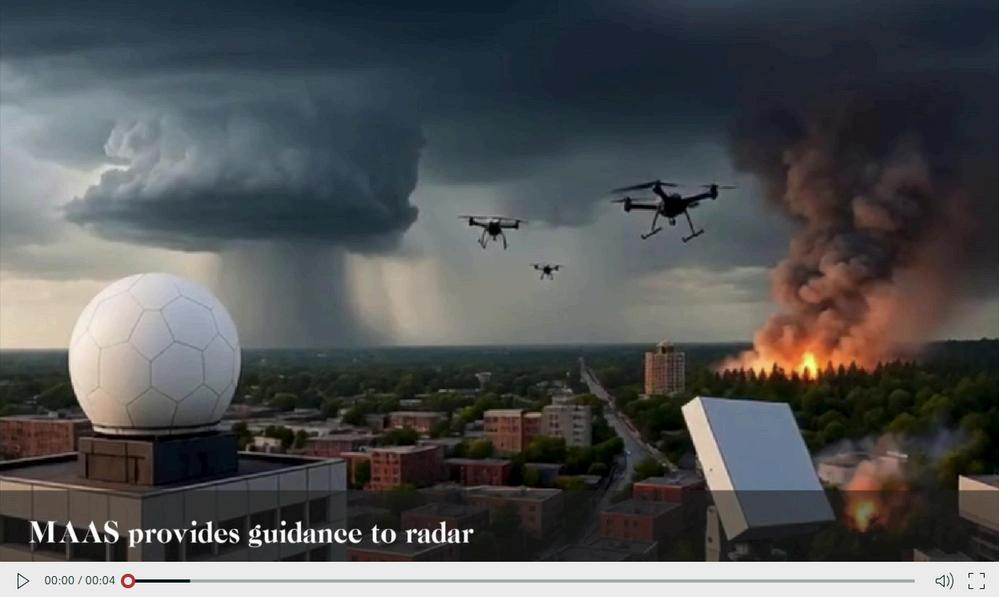

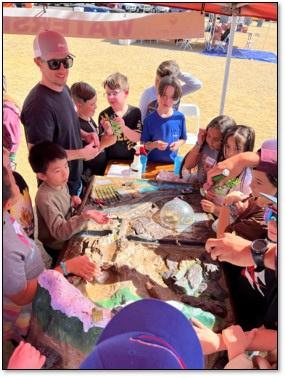



This University of Arizona program aims to improved science education across Arizona through curriculum design, teacher training workshops, and education events for k-12 students The program aims to incorporate topics related to extreme heat to it's existing education work on water
In year three, previously developed 4 grade curriculum continues to be used during the Water Festivals, introducing content focused on SW-IFL related research topics and current heat-related content In the upcoming academic year 7 and 8 grade curriculum developed during the project’s year three will be implemented
Led by Dr Alison Meadow (U of A) the UIFL Transdisciplinary Team Science project was focused on strengthening transdisciplinary team science knowledge and practices across the urban integrated field laboratory (UIFL) network. After conducting a pre-survey that explored perceptions of team science, engaged research, and transdisciplinary research approaches , this team presented three professional learning sessions attended by participants from all four UIFL teams You can view the recorded sessions at https://sw-iflasuedu/crossifl-transdisciplinary-team-science
SW-IFL Interdisciplinary Design Challenge –
The SW-IFL Interdisciplinary Design Challenge was led by Dr Kenneth Kokroko (U of A) and provided students from Arizona’s three state universities an opportunity to develop innovative design proposals informed by SW-IFL research for transit stops that addressed the increasing impacts of extreme heat on transit users. Architecture and Engineering firm leaders from across Arizona provided feedback on the resulting designs that integrated innovative technologies and nature-based solutions You can view the winning designs at https://swiflasuedu/sw-ifl-interdisciplinary-design-challenge
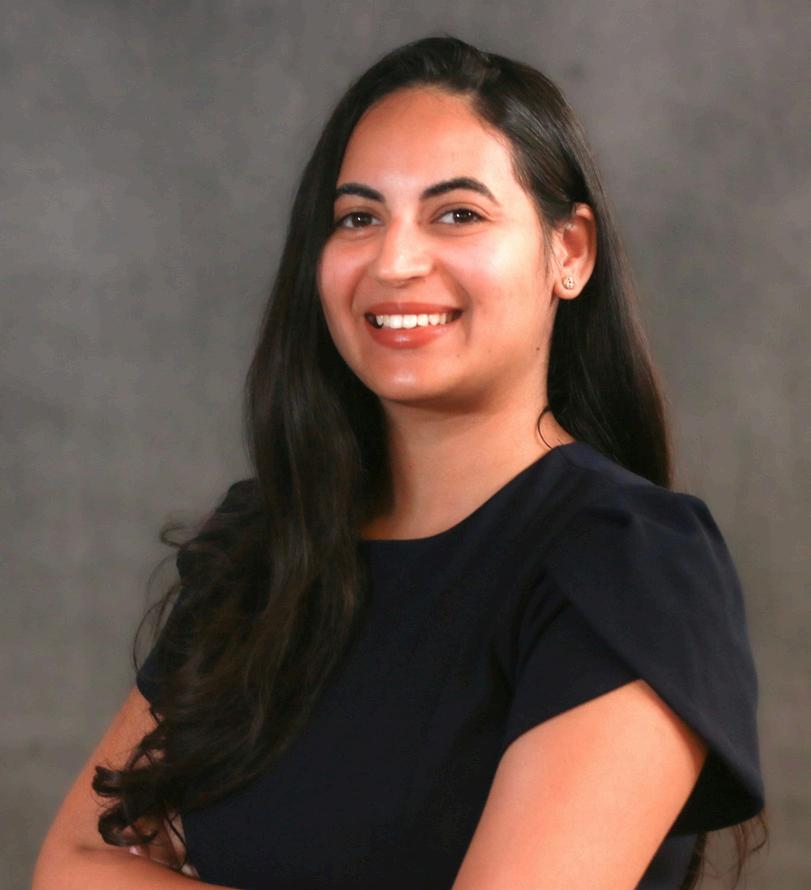

Lefttoright,Firstplacewinners: RababeSaadaoui(ASU)and JosephKaranja(ASU), HonorableMention,Linus Friedman(UofA).
The SW-IFL project strives to share information with different groups and highlight their research through a variety of communication channels, including intrateam meetings, internal and external newsletters, webinars, seminars, journal publications, various media interviews, and multiple conference presentations
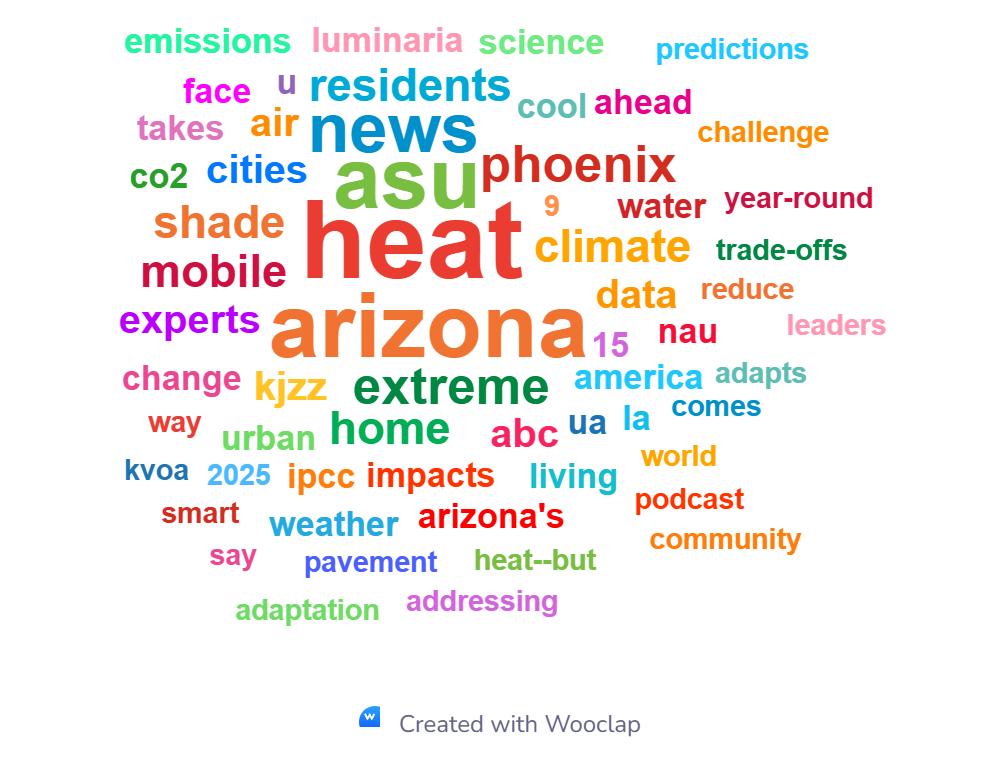

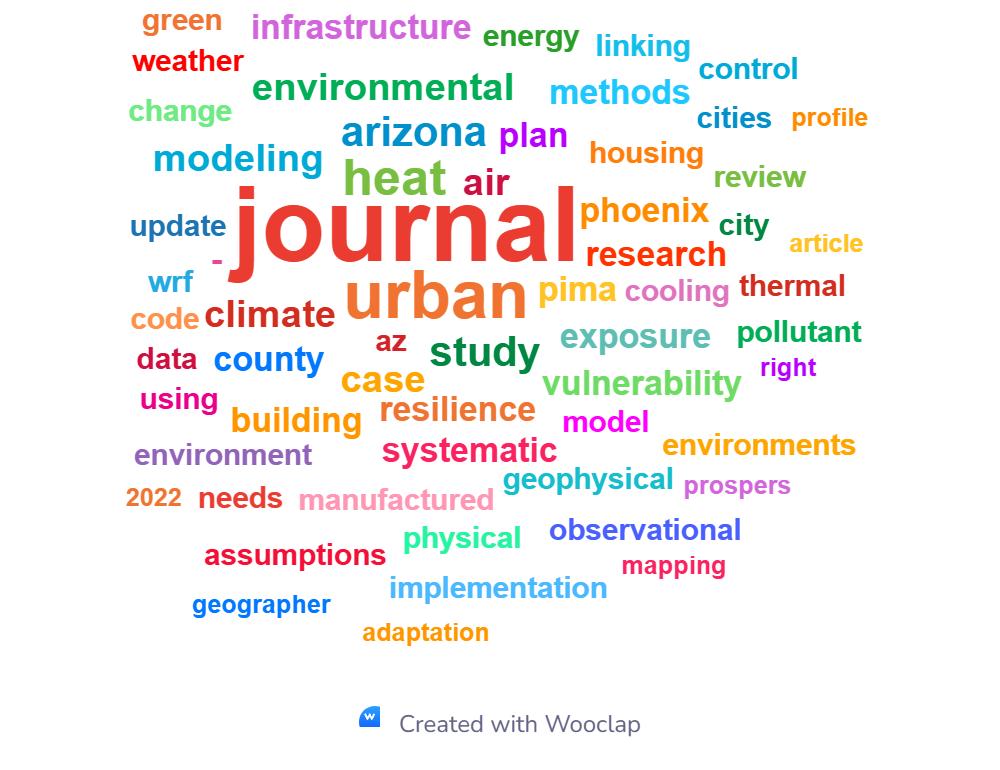
As engagement is a key component of the SW-IFL project, during this third year of the project, various team members shared the project’s findings and participated in numerous global events to influence government policy beyond city-level engagement
Global Workshop:
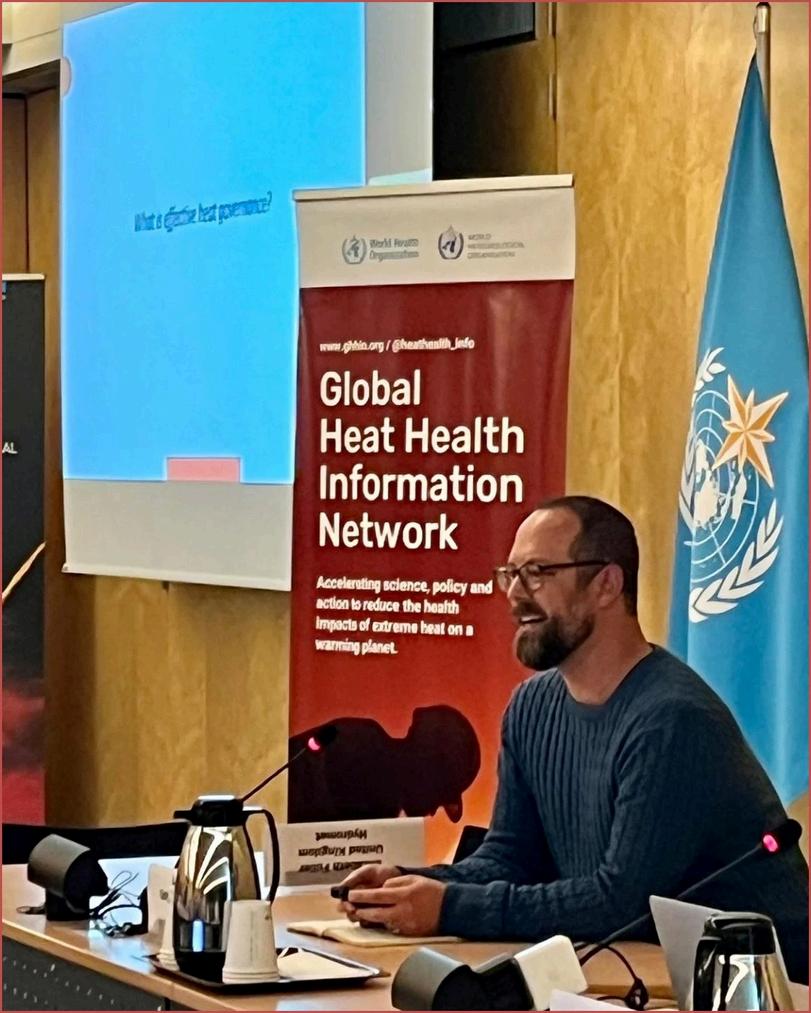
Hosted by the World Meteorological Organization (WMO), World Health Organization (WHO), United Nations (UN) Disaster Risk Reduction, and Global Heat Health Information Network (GHHIN) in Geneva, Switzerland in December 2024, Dr Ladd Keith (U of A) participated in the development of a global heat governance framework and presented SW-IFL research at the workshop, “Towards a Common Framework for Extreme Heat Reduction”
National Academy of Sciences:

Dr. David Sailor (ASU) participated in a panel on Extreme Heat during the 2025 Board on Atmospheric Sciences and Climate (BASC) meeting with a session titled, “Helen Floods, Los Angeles Fires, Phoenix Heat: Lessons Learned for More Resilient Communities on May 5, 2025.
Dr Matei Georgescu (ASU) was ask Planetary Health Symposium” in L planning springtime symposium r disorders of aging, food systems, p between the U.S. and China. Dr. Ge
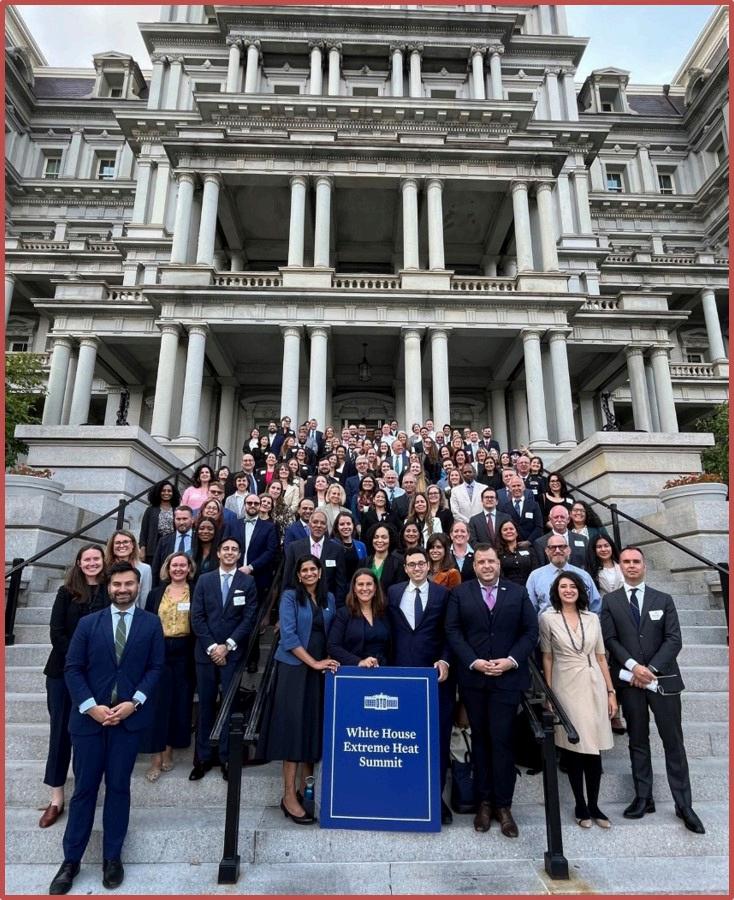
In September 2024 Dr Patricia Solís (ASU) attended the first summit on extreme heat held in the White House in Washington, D.C. with other nationwide experts and federal agency researchers.

AAEES certifies qualified environmental scientists recommended by peers in their field of specialty through a process prescribed by the Academy’s bylaws This year, the Academy welcomed Dr Jean Andino (ASU) as a Board Certified Environmental Engineer (BCES) “ - via eminence” in Air Pollution Control The “eminence” pathway is granted only those few the Academy considers eminent in the Environmental field and serves as a designation that the researcher is the “Best of the Best”
Dr Kevin Gurney (NAU) was selected as a lead author for IPCC’s Special Report on Climate Change and Cities He is part of an esteemed group of 97 experts from 56 countries who contributed to this groundbreaking report scheduled to release in March 2027 This report will provide critical insights into urban climate action and bridges the latest scientific findings with practical city-focused solutions to address urgent challenges posed by climate change.

Dr Ladd Keith (U of A), Dr Sara Meerow (ASU), Dr Jennifer Vanos (ASU), and postdoctoral student, Shaylynn Trego (ASU) participated at the NSF NCAR Research Symposium in Boulder, Colorado in June 2025. The team presented, “Human and Geographic Dimensions of Extreme Heat and Heat Risk” at the symposium.
Fullbright Specialist Program Award:
Dr Ladd Keith (U of A) was awarded a position in the Fullbright Specialist Program This program pairs highly qualified US academics with host institutions to share their expertise Dr Keith will collaborate with academics and practitioners on heat resilience at the National Institute of Technology (NIT) Patna, India in November 2025.
Philanthropic Educational Organization Scholar Award:
Postdoctoral student Shaylynn Trego (ASU) was awarded a Philanthropic Educational Organization (PEO) Scholar Award for the 2025-2026 academic year in recognition of her impactful work on heat governance.
Blavatnik National Award for Young Scientists:
Dr. Katia Lamer (BNL) was nominated for the Blavatnik National Award for Young Scientists based in part on her work with the SW-IFL project. This award honors America’s most innovative young faculty-rank scientists and engineers and celebrates their accomplishments in three disciplinary categories of Life Sciences, Physical Sciences & Engineering, and Chemical Sciences

Arizona Governor
Katie Hobb’s Workplace Heat Safety Task Force:
Dr Ladd Keith (U of A) was appointed to the state task force in 2025
City of Phoenix Heat Advisory Committee:
Dr Siyuan Song (ASU) was appointed to the committee in 2025
Pima County Manufactured Housing Working Group:
Dr Mark Kear and postdoctoral student, Elise Otto, from U of A were invited to serve on the Pima County Manufacture Housing Working Group

Harvard’s Bloomberg Center for Cities and Career Advancement: Postdoctoral researcher, Dr Malini Roy (U of A), collaborated with scholars and city practitioners on heat mitigation strategies at the DataSmart City Solutions hosted by Harvard’s Bloomberg Center for Cities in March 2025 In September 2025, Dr Roy accepted an Assistant Professor position at the University of Texas Arlington, in the Department of Public Affairs and Planning

Career Advancement:
ASU’s postdoctoral researcher, Dr. Saeideh Sobhaninia, accepted a Visiting Assistant Professor position at the University of Washington in the Department of Urban Design and Planning in September 2025
Career Advancement:
BNL’s postdoctoral researcher, Dr Edwin Davis, accepted a scientist position at the Vikram Sarabhai Space Centre in India and will begin his appointment in December 2025
Career Advancement:
In September 2025 ORNL’s Research & Development Associate Staff, Dr Fengqi Li, accepted an Assistant Professor position with the Center for Architecture Science and Ecology (CASE) at the Rensselaer Polytechnic Institute (RPI) in Brooklyn, New York
Planning Discovery –
In year three of the SW-IFL project, the Resilient Solutions team continued translating research into real-world planning and policy, community engagement, and practical interventions.
These year three activities were focused on expanding ongoing plan evaluation efforts and exploring new tools for assessing plans' effectiveness at addressing heat in urban areas The team led by Dr Ladd Keith (U of A) and Dr Sara Meerow (ASU) built and expanded upon work completed in year two

Heat Action Plan Evaluation:
Plan Quality Evaluation for Heat Resilience Guidebook:
An open access Plan Evaluation for Heat guidebook was published that will allow planning practitioners and researchers to evaluate their own community plans for heat resilience.
A global assessment of 34 city-scale heat action plans and 20 national-level heat action plans from across the globe was completed
Climate Action Plan Evaluation (CAPE):
In collaboration with the City of Tucson and Pima County officials, researchers piloted the Climate Action Plan Evaluation (CAPE) approach in both Plan Tucson and Pima Prospers plans to holistically diagnose gaps in planning.


Plan Implementation:

Data collection for evaluation of retrospective plan implementation is underway Historical land use and land cover data will be used when analyzing changes in both the built and natural environments in urban areas
Artificial Intelligence (AI) Large Language Model-based Plan Evaluation:

Researchers piloted an AI-based plan evaluation approach to assess accuracy of Large Language Models (LLM) for coding plans for heat resilience A manuscript summarizing findings and potential of LLM-based planning assessment is underway
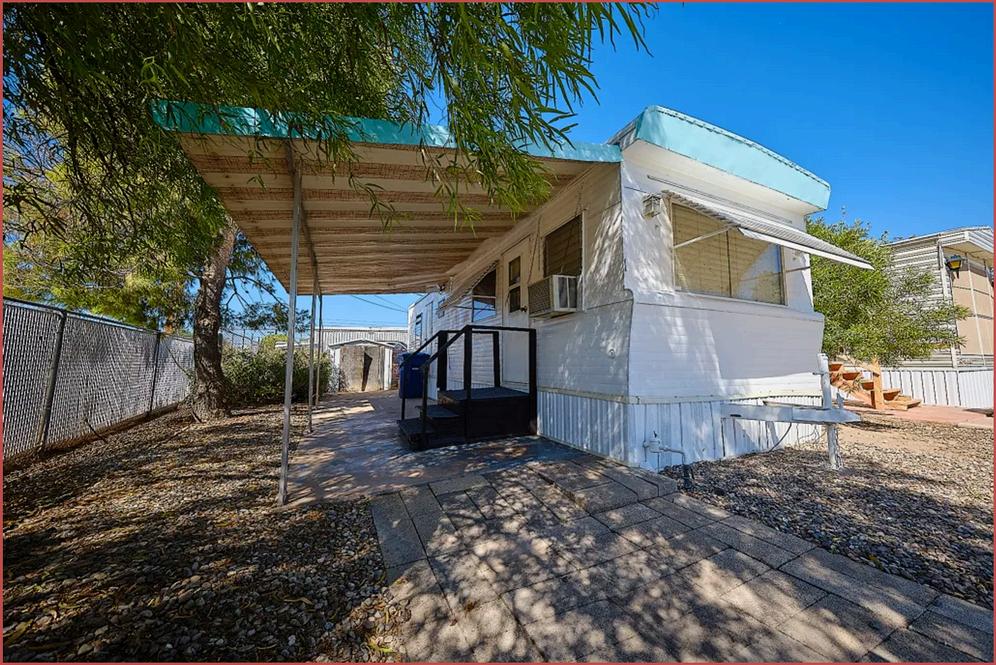
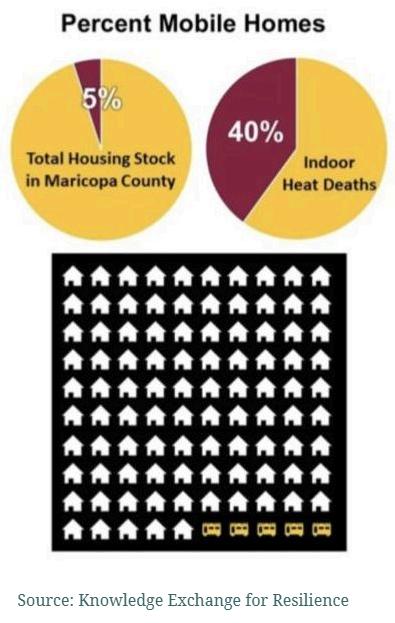
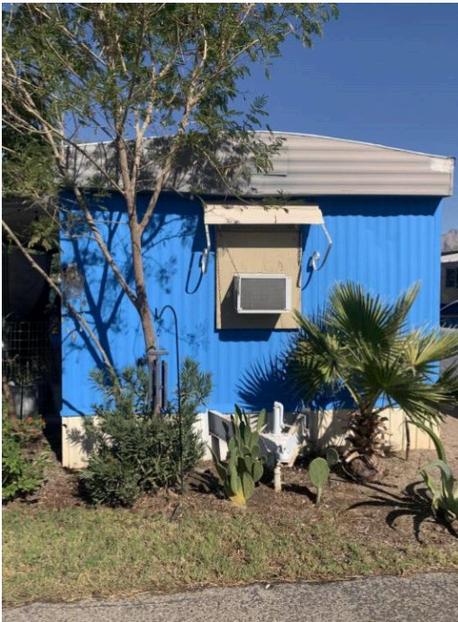
Research activities led by Dr. Mark Kear (U of A) and graduate research student, Elise Otto, assess the impact of micro- and macro-climate conditions on thermal condition that exist inside mobile homes. Researchers shared the analysis of the 2024 Home Thermal Security data with mobile home residents who participated in the research study Research study participants then shared their insights and reflections, including concerns regarding the upcoming summer, to help inform targeted interventions with the community
Dr Kear provided expert advice to the City of Tucson and their community partners on the submission of an eleven million dollar manufactured housing grant meant to rehabilitate housing units in an effort to make them more climate efficient
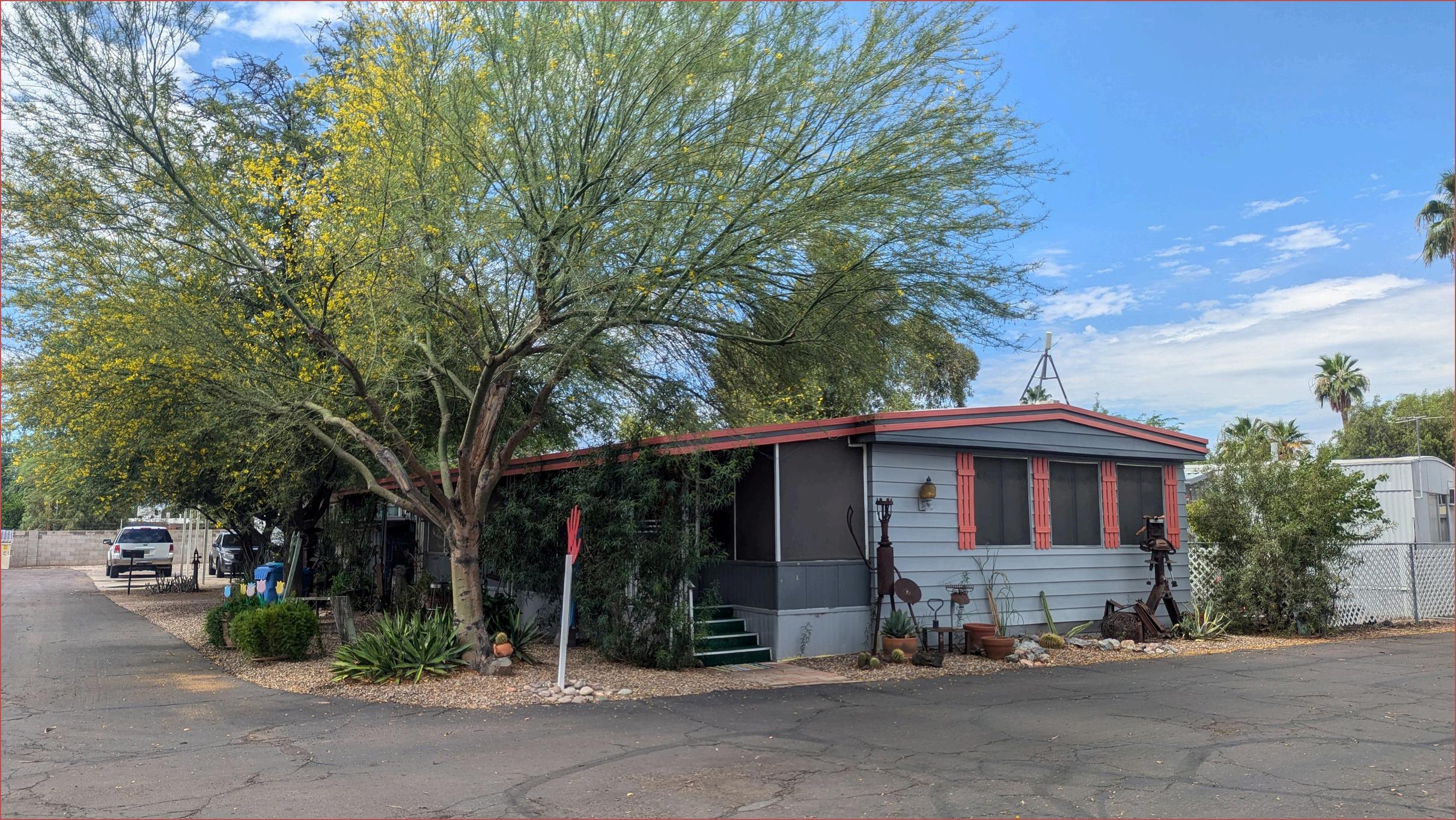
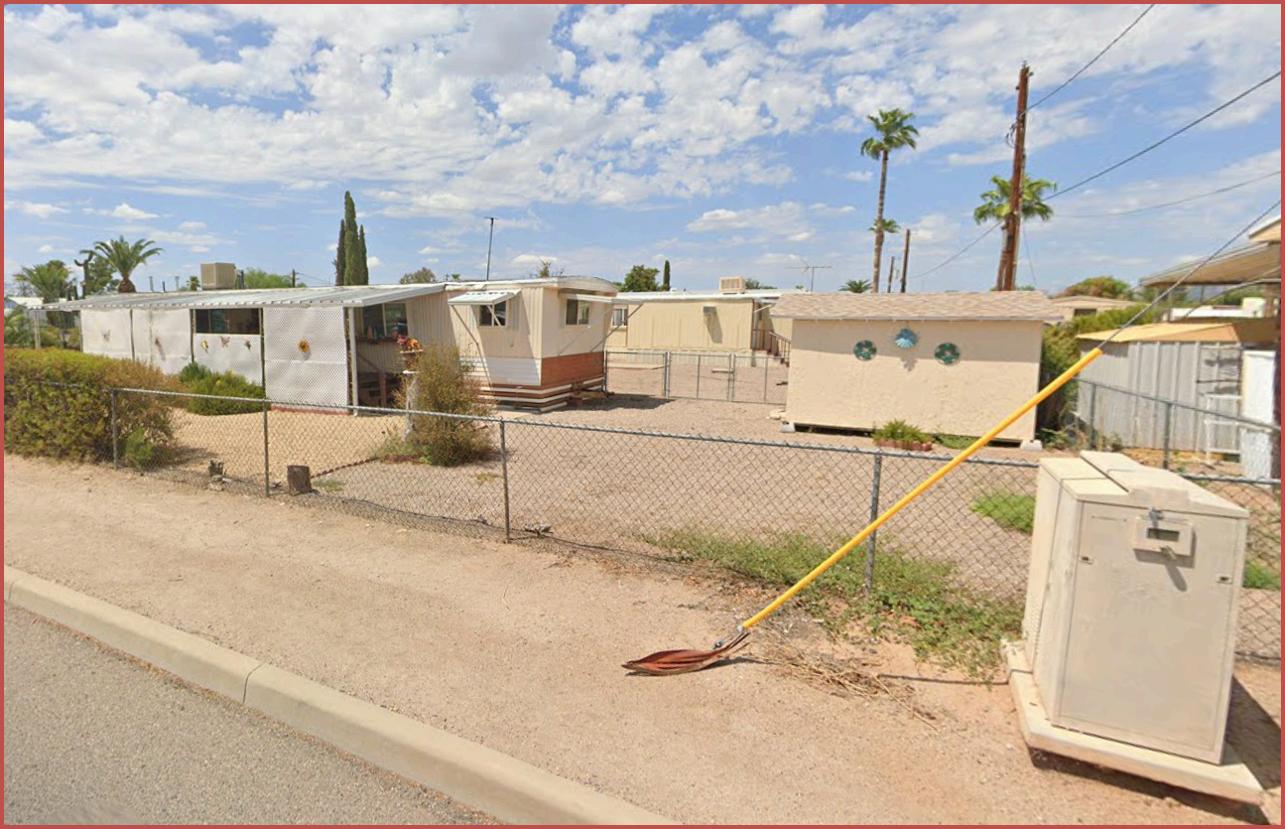
Left:Manufacturedhomeadaptedforheatwithshade-providingvegetation Right:MobilehomesinOracleCorridorTestbed Photo credit:MarkKear(UofA)
Arizona Urban Corridor Land Cover Change and Associated Changes in Mosquito Vectors –
Led by Dr Heidi Brown (U of A) research was conducted on the impact of changing land cover and built environment (structures created by humans for human use) on mosquito populations and vector-borne diseases The analysis plan was then presented to the Arizona Department of Health and Service partners


Dr Philip Stoker (U of A) led research activities on estimating water demand based on land use under different climate scenarios Currently researchers are running analysis for all of the active management areas (AMA), or areas with a heavy reliance on mined groundwater, in Arizona to see how those climate scenarios could affect future water use
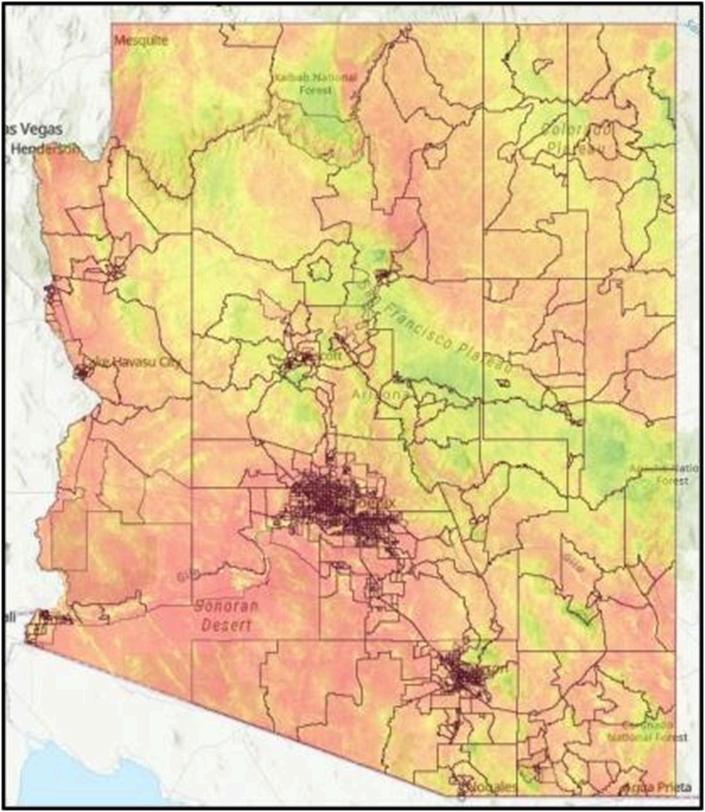
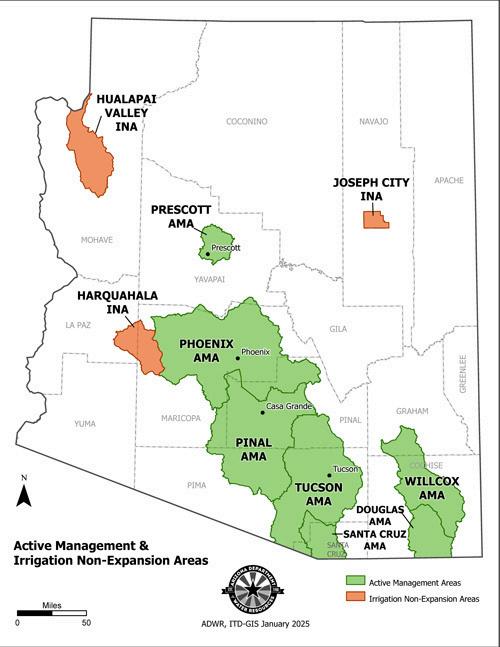
Located on the SW-IFL website, the Arizona Heat Exposure Dashboard is a beta version of a onestop-shop for heat related information SW-IFL researchers are continually adding to this dashboard in an effort to create a comprehensive data tool for decision-makers. This tool will share valuable information such as heat vulnerability and heat exposures. While some well-resourced cities, such as Phoenix and Tucson, may find this a duplication of existing information, the ultimate goal is to scale access to those communities in Arizona who do not have access to such sophisticated tools and resources


In an effort to provide a foundation on which new scientific discoveries and inventions are built, the SW-IFL research team values sharing research data both internally and externally To this end, in year three the SW-IFL team published their work in a variety of professional journals, technical reports, and media interviews
A co-produced workflow for addressing inequities in cooling center access.
Citation:
Watkins, Lance, Heidi E. Brown, Ladd Keith, Erika Austhof, Hsini Lin Cox, Samuel N. Chambers, Joseph Tabor, Aaron Gettel, and Melissa Guardaro A co-produced workflow for addressing inequities in cooling center access Community Science 3(4), e2023CSJ000038, November 2024, https://doiorg/101029/2023CSJ000038
The right to climate adaptation: mapping heat resilience in Arizona.
Citation:
Solís, Patricia The right to climate adaptation: mapping heat resilience in Arizona The Geographer, Winter The Royal Scottish Geographical Society, December 2024, https://issuucom/rsgspubs/docs/rsgs the geographer winter 2024/26
Obstacles to Affordable and Attainable Housing for Mobile and Manufactured Home Communities
Citation:
Britton, Britnie, Patricia Solís, Cindy Stotler 2024 Obstacles to Affordable and Attainable Housing for Mobile and Manufactured Home Communities Knowledge Exchange for Resilience Solutions Series Tempe: Arizona State University https://hdlhandlenet/2286/R2N195018
Climate change key driver of catastrophic impacts of Hurricane Helene that devastated both coastal and inland communities.
Citation:
Vahlberg, M, J Arrighi, M Roy, L Poole-Selters, C Van Sant, M Grieco, R Singh (2024) Vulnerability and Exposure for Hurricane Helene In Clarke, B, et al Climate change key driver of catastrophic impacts of Hurricane Helene that devastated both coastal and inland communities World Attribution Studies: Imperial College: London, October 2024, https://wwwworldweatherattributionorg/climate-changekey-driver-of-catastrophic-impacts-of-hurricane-helene-that-devastated-bothcoastal-and-inland-communities.
Household, sociodemographic, building and land cover factors affecting residential summer electricity consumption: A systematic statistical study in Phoenix, AZ
Citation:
Edwin Alejandro Ramírez-Aguilar, David J Sailor, Elizabeth A Wentz Household, sociodemographic, building and land cover factors affecting residential summer electricity consumption: A systematic statistical study in Phoenix, AZ. Energy, Volume 313, December 30, 2024, 133819, ISSN 0360-5442, https://doiorg/101016/jenergy2024133819
Field Evaluation of the efficacy of passive radiative cooling infrastructure: A case study in Phoenix, Arizona.
Citation:
Sailor, David J; Fagliarone, Gina; Hebrink, Tim; Amaripadath, Deepak Field evaluation of the efficacy of passive radiative cooling infrastructure: A case study in Phoenix, Arizona. Building and Environment, January 1, 2025, 112226, ISSN 03601323, https://doiorg/101016/jbuildenv2024112226
Exploring air temperature variability and socio-demographic inequalities in heat exposure through machine learning: A case study of Maricopa County, Arizona
Citation:
Alamin Molla, David J Sailor, Aaron B Flores, Exploring air temperature variability and socio-demographic inequalities in heat exposure through machine learning: A case study of Maricopa County, Arizona, Urban Climate, Volume 59, February 2025, 102276, ISSN 2212-0955, https://doiorg/101016/juclim2024102276
Electric utility vulnerability to wildfires and post-fire debris flows in California.
Citation:
Eleanor M Hennessy, Chester, Mikhail V (March 2025), Electric utility vulnerability to wildfires and post-fire debris flows in California Environ Res: Infrastruct Sustain, 5 015019, https://iopscienceioporg/article/101088/2634-4505/adb90a
Effects of Urbanization and Climate Change on Heat Stress Under Relatively Dry and Wet Warm Conditions in a Semi-Arid Urban Environment.
Citation: Salamanca-Palou, F, Guzman-Echavarría, G, Vanos, J, Moseley, P, Domino, M E, & Georgescu, M. (2025). Effects of urbanization and climate change on heat stress under relatively dry and wet warm conditions in a semi-arid urban environment Earth's Future, 13, e2024EF004983 https://doiorg/101029/2024EF004983
Urban Weather Modeling using WRF: Linking Physical Assumptions, Code Implementation, and Observational Needs
Citation:
Joshi, P, Lin, T-S, He, C, and Lamer, K: Urban Weather Modeling using WRF: Linking Physical Assumptions, Code Implementation, and Observational Needs, EGUsphere [preprint], https://doi.org/10.5194/egusphere-2025-1751, 2025.
The Imperative for Hazard- and Place-Specific Assessment of Heath Vulnerability.
Citation:
Joseph Karanja and Jennifer Vanos and Matei Georgescu and Amy E Frazier and David Hondula, The Imperative for Hazard- and Place-Specific Assessment of Heat Vulnerability. Environmental Health Perspectives, Volume 133, April 2025, 055003, https://ehpniehsnihgov/doi/abs/101289/EHP14801
Where should the green go? A systematic literature review of methods for siting green infrastructure to mitigate rising heat and stormwater risks in cities worldwide.
Citation:
Saeideh Sobhaninia, Sara Meerow, Aubrey Dugger, Thomas Hopson, Cenlin He, Olga Wilhelmi Where should the green go? A systematic literature review of methods for siting green infrastructure to mitigate rising heat and stormwater risks in cities worldwide Urban Forestry & Urban Greening, Volume 107, May 2025, 128790, ISSN 1618-8667,https://doi.org/10.1016/j.ufug.2025.128790.
Heat mitigation and management in the City of Phoenix, Arizona: A case study of America's hottest large city.
Citation:
Trego, S, Meerow, S, Keith, L, & Hondula, D M (2025) Heat mitigation and management in the City of Phoenix, Arizona: A case study of America’s hottest large city Journal of Urban Affairs, 1–12, https://doiorg/101080/0735216620252511021
Systematic review on cooling benefits of landscape strategies for urban thermal environments in the United States.
Citation:
Deepak Amaripadath, David J Sailor, Systematic review on cooling benefits of landscape strategies for urban thermal environments in the United States, Sustainable Cities and Society, Volume 129, July 2025, 106497, ISSN 2210-6707, https://doi.org/10.1016/j.scs.2025.106497.
Winds of Change: The Role of Urban Expansion and Thermal Advection in Driving Phoenix’s (AZ) Warming Trends.
Citation: Moustaoui, M, & Georgescu, M (2025) Winds of change: The role of urban expansion and thermal advection in driving Phoenix's (AZ) warming trends. Journal of Geophysical Research: Atmospheres, 130, e2024JD043166. https://doiorg/101029/2024JD043166
A comparison of plan integration for flood and heat resilience: A case study of Baltimore, Maryland
Citation:
Saeideh Sobhaninia, Sara Meerow, Ladd Keith, Malini Roy, Shaylynn Trego, Melina Matos, A comparison of plan integration for flood and heat resilience: A case study of Baltimore, Maryland, International Journal of Disaster Risk Reduction, Volume 127, 2025, 105638, ISSN 2212-4209, https://doiorg/101016/jijdrr2025105638
Extreme heat vulnerability of manufactured housing in arid urban environments.
Citation:
Stoker, P, Santiago, X, & Kear, M (2025) Extreme heat vulnerability of manufactured housing in arid urban environments Urban Studies, 0(0) https://doi.org/10.1177/00420980251351241.
Urban Weather Modeling using WRF: Linking Physical Assumptions, Code Implementation, and Observational Needs.
Citation:
Joshi, P, Lin, T-S, He, C, and Lamer, K: Urban Weather Modeling using WRF: Linking Physical Assumptions, Code Implementation, and Observational Needs, EGUsphere [preprint], https://doiorg/105194/egusphere-2025-1751, 2025
Toward equitable environmental exposure modeling through convergence of data, open, and citizen sciences: an example of air pollution exposure modeling amdist increasing wildfire smoke.
Citation:
Honghyok Kim, Chris Chaeha Lim, Toward equitable environmental exposure modeling through convergence of data, open, and citizen sciences: an example of air pollution exposure modeling amdist increasing wildfire smoke, Environmental Research, Volume 286, Part 2, 2025, 122881, ISSN 0013-9351, https://doiorg/101016/jenvres2025122881

Other Deliverables:


Use the QR Code to access a complete linked list of Journal Publications and Technical Reports
Data Set: Model America - 2022 Arizona Building Energy Simulation Results from ORNL's AutoBEM.
Citation:
Li H ; Stubbings A ; Chowdhury S ; Li F ; New J (2025): Model America - 2022 Arizona Building Energy Simulation Results from ORNL's AutoBEM Southwest Urban Corridor Integrated Field Laboratory (SW-IFL), ESS-DIVE repository Dataset. doi:10.15485/2513865
Climate Profile for Pima County for Pima Prospers Plan Update.
Citation:
Roy, Malini and Ladd Keith Climate Profile for Pima County for Pima Prospers Plan Update. Pima County, December 2024, https://contentcivicpluscom/api/assets/c60add15-ef4a-4902-8cabe5e6d549ed06

Patent: Air Pollutant Control Systems and Methods
Citation: Andino,JM, Rana,A, Young, T, Air Pollutant Control System and Methods, US Patent Pending #63/886,567, filed 23 September 2025, US Patent and Trademark Office
U of A study looking at connection between extreme heat and increased 911 calls.
Researchers share what they've learned about Phoenix's 'cool pavement'.
ASU and City of Phoenix Officials Reveal Results of Second Phase of Cool Pavement Scientific Testing.
Climate change reshapes cities, both environmentally and financially.
ASU researchers testing 'cool roof' coating at Safe Outdoor Space.
Cool pavement could be a way to reduce the impacts of extreme heat--but it comes with trade-offs.
The year-round challenge of addressing urban heat impacts.
Climate Adaptation Predictions for 2025: What the Experts Say.
Climate experts, community leaders gather at UA for Heat Summit.
Authors for the IPCC Special Report on Climate Change and Cities selected
Suffering hidden from view: Mobile home and RV residents in Pima County die from heat at high rates.
Phoenix Metropolitan area: A perfect place to understand land-atmospheric energy and CO2 exchange in a hot environments.
Is planting tress 'DEI'? Trump administration cuts nationwide tree-planting efforts.
Measuring how water and heat move in a desert city.
Media Advisory: U of A experts from a range of disciplines available to discuss extreme heat
Maximizing the benefits of green infrastructure.
Shade Sculptures Unveiled Across Phoenix.
Arizona takes lead as OSHA opens hearings on federal heat rule.
All shade is good shade: The roles and challenges of trying to mitigate Phoenix heat with shade.
How to keep Your Home Cool in Extreme Heat.
Reshaping our planetary relationships.

Despite more extreme heat, Phoenix reduced heat-related deaths.
In Phoenix's extreme heat, people living in manufactured homes face higher risk
A step in the right direction: Map data will help pedestrians better navigate Phoenix Streets
Mapping Arizona's heat: Arizona State University
Checking Earth's Temperature
Patagonia residents launch air monitoring effort ahead of Hermosa Mine operations.
Local partner with UA, ASU to monitor air quality ahead of mining.
Arizona AG warns mobile home park residents to watch utility bills closely
The Urban Heat Island: What is it and how does it impact Valley weather?
Mobile home residents face increased risks from severe weather
ASU study offers insights into protecting heat-vulnerable jobs in Arizona
La Universidad de Arizona utiliza la Inteligencia Artificial para prevenir incendios forestales
Living without air conditioning in Tucson's deadly heat.
Lost Science: He Studied How Emissions Are Heating Up U.S. Cities
Student Cohort takes on Arizona Heat
NAU team using citizens scientists to collect crucial data with AI-enabled mobile traffic app
Arizona professor makes first-ever maps showing neighborhood-specific CO2 emissions data.

The SW-IFL Advisory Board is composed of two groups: Technical Advisory Group (TAG) and the Stakeholder Advisory Group (SAG) Together they address both the process and technical aspects of the project Their goals are threefold:
To expand awareness of and trust in the research program among a broad community of stakeholders
To build consensus around how to responsibly navigate the development and deployment of the models, measurements, and technologies in testbeds
To serve as a resource to enable two-way learning between the research team and decisionmakers





Collaboration partnerships are a key component of the SW-IFL project, and the team strives to create working relationships with various professional and community partners to further both the research and resulting resilient solutions














































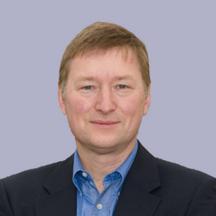
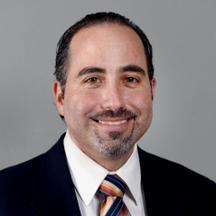

David Sailor, ASU Principal Investigator

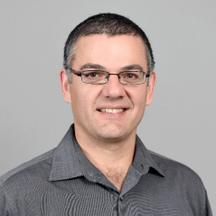
Enrique Vivoni, ASU Observations Co-Lead
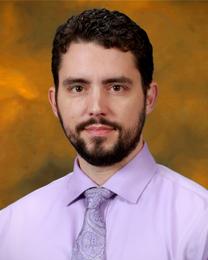
Patricia Solis, ASU Resilient Solutions Co-Lead
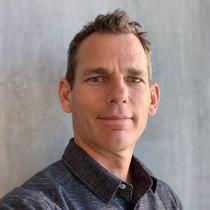
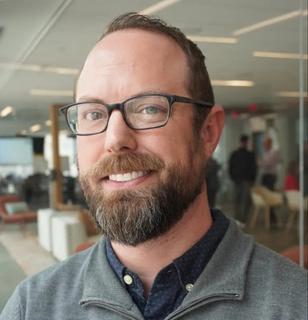
Matei Georgescu, ASU Modeling Co-Lead
Joshua Ryan New, ORNL Institutional Lead

CREST Evaluation Team
Jean Andino, ASU Deputy Director
Ted Schuur, NAU Observations Co-Lead
Ladd Keith, U of A Institutional Lead, Resilient Solutions Co-Lead
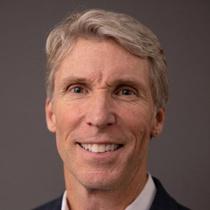
Kevin Gurney, NAU Institutional Lead, Modeling CoLead

Wendy Barnard, ASU CREST Evaluation
Emerson Weinbrecht, Research Analyst Assistant, ASU
Karen Gordon, Research Scientist, ASU
Katia Lamer, BNL Institutional Lead
Project Staff
Shannon Zweig, SW-IFL Project Manager, ASU
Kirsten Lake, SW-IFL Project Co-Ordinator, U of A Eli Martin, SW-IFL Field Technician, ASU

Jean Andino, ASU
Deepak Amaripadath , ASU
Aashish Aryal, ASU
Isaac Buo, ASU
Ashley Cadena, NAU
Kristina Currans, U of A
Edwin Davis, BNL
Stevan Earl, ASU
Aaron Flores, ASU
Matthew Fraser, ASU
Amanda Grant, U of A
Parag Joshi, BNL
Joseph Karanja, ASU
Katia Lamer, BNL
Chris Chaeha Lim, U of A
Gabrielle Lopardo, ASU
Amanda Lucero, U of A
Eli Martin, ASU
Giuseppe Mascaro, ASU
Ariane Middel, ASU
Khayrun Nahar Mitu, ASU
Alamin Molla, ASU
Vernon Morris, ASU
Eli Perez-Ruiz, UACJ
Nidia Rojas-Robles, ASU
Helen Rowe, NAU
David Sailor, ASU
Ted Schuur, NAU
Siyuan Song, ASU
Daniel Waxman, BNL
Jennifer Vanos, ASU
Enrique Vivoni, ASU
Efrain Vizuete-Jaramillo, ASU
Jean Andino, ASU
Deepak Amaripadath , ASU
Natalia da Silveria Arruda, ASU
Eric Bieber, U of A
Savannah Blide, U of A
Ebenezer Boateng, ASU
Heidi Brown, U of A
Isaac Buo, ASU
Esmeralda Rubi Carrasco, U of A
Kristina Currans, U of A
Terrace Ewinghill, U of A
Aaron Flores, ASU
Hannah Friedrich, U of A
Gregg Garfin, U of A
Matei Georgescu, ASU
David Hondula, ASU
Joseph Karanja, ASU
Kirstyn Kay, U of A
Mark Kear, U of A
Ladd Keith, U of A
Parker King, ASU
Kenneth Kokroko, U of A
Katia Lamer, BNL
Chris Chaeha Lim, U of A
Amanda Lucero, U of A
Eli Martin, ASU
Alison Meadow, U of A
Sara Meerow, ASU
Mahin Mehnaz, U of A
Alamin Molla, ASU
Elise Otto, U of A
Kiran Patel, U of A Mattheus Porto, ASU
Mahin Rahman, ASU
Helen Rowe, NAU
Alekzander Ryan, U of A
David Sailor, ASU
Sina Sedaghat, ASU
Patricia Solis, ASU
Siyuan Song, ASU
Philip Stoker, U of A
Kara Tanoue, U of A
Lisa Townsend, U of A
Shaylynn Trego, ASU
Jennifer Vanos, ASU
Enrique Vivoni, ASU
Carson Woodruff, U of A
Jill Williams, U of A
Mary Wright, COP

Omar Abuasba, ASU
Jean Andino, ASU
Mikhail Chester, ASU
Shovan Chowdhury, ORNL
Edwin Davis, BNL
Pawlok Dass, NAU
Xiangwen Deng, ASU
Melissa Dumas, ORNL
Lech Gawuc, NAU
Matei Georgescu, ASU
Kevin Gurney, NAU
Parag Joshi, BNL
Joseph Karanja, ASU
Anna Kata, NAU
Ladd Keith, U of A
Katia Lamer, BNL
Dan Li, BU
Fengqi Li, ORNL
Hang Li, ORNL
Alamin Molla, ASU
Mohamed Moustaoui, ASU
Joshua Ryan New, ORNL
Mattheus Porto, ASU
Edwin Ramirez Aguilar, ASU
Sneha Roy, ASU
Pankaj Sadavarte, NAU
David Sailor, ASU
Vivek Singh, ORNL
Ted Schuur, NAU
Avery Stubbings, ORNL
Huilin Sun, NAU
Enrique Vivoni, ASU
Rob Wolfinbarger, ASU
Xuesong Zhou, ASU
*TeamLeads&Co-Leads
KEY:
ASU:ArizonaStateUniversity
UofA UniversityofArizona
NAU:NorthernArizonaUniversity
BNL BrookhavenNationalLaboratory
BU BostonUniversity
ORNL:OakridgeNationalLaboratory
COP CityofPhoenix
UACJ:UniversidadAutonomadeCiudad Juarez