Rethinking column preparation as a strategic manufacturing capability
Biopharmaceutical manufacturing operations are undergoing significant transformation. Over the past two decades, upstream process intensification has dramatically increased manufacturing productivity, with upstream titers increasing more than tenfold in many biologics processes. While these gains have improved output and process efficiency, they have simultaneously increased pressure on downstream processing (DSP) operations.
As a result, downstream operations are increasingly becoming the primary manufacturing bottleneck within biologics production. Chromatography remains one of the most resource-intensive and operationally critical areas within DSP, contributing significantly to manufacturing cost, operational complexity, and facility scheduling constraints. DSP can represent between 50–80% of total biologics manufacturing cost, with chromatography accounting for a substantial proportion of downstream operating expense.
At the same time, manufacturing organizations are under increasing pressure to accelerate clinical timelines, improve facility utilization, support flexible manufacturing strategies, and reduce operational burden across GMP operations. These pressures are driving broader adoption of single-use
The growing operational burden of column preparation
Column preparation has traditionally been managed internally within manufacturing operations. However, at commercial and clinical scale, this model can create substantial operational burden. Internal preparation activities frequently involve multi-week setup and validation timelines, dedicated facility space, specialist operational expertise, HETP qualification testing, cleaning and turnaround activities, and extensive coordination across manufacturing schedules.
As manufacturing cycles compress and facility utilization expectations increase, these activities become more difficult to manage efficiently. Internal preparation models may initially appear operationally straightforward, but they can create hidden manufacturing risk when resources, timelines, and facility schedules become constrained.
The operational risk associated with internal column preparation extends beyond labor requirements alone. Poor packing reproducibility can lead to repacking activities, additional qualification testing, increased buffer consumption,
shortened resin lifetime, and disruption to GMP manufacturing schedules. In intensified manufacturing environments, delays of even a few days can create substantial downstream consequences across manufacturing networks.
Column packing is highly processand resin-dependent
Traditional fixed facilities
Hybrid intensified ops
• Fixed capacity
• Manual packing
• Long set up times
• Higher labor load
• Single-use tech
• Higher titers
• Faster campaigns
• Partial modular
Modular, flexible operations
• Agile capacity
• Outsourced activities
• Service based
• Rapid deployment
The industry is evolving away from facility-centric preparation strategies toward more flexible and operationally responsive preparation models. Increasingly, preparation activities are being evaluated through the lens of manufacturing agility, responsiveness, and operational scalability rather than simply as isolated technical tasks.
Column packing performance is highly dependent on resin chemistry, column geometry, compression behavior, flow dynamics, and operator technique. Small variations in slurry preparation, compression rate, flow ramping, or hardware alignment can significantly impact downstream performance and reproducibility.
The objective of successful column packing is to achieve a stable, uniformly packed bed capable of delivering consistent flow distribution, minimal pressure drop, and reproducible chromatographic performance. In practice, however, resin behavior can vary substantially between media types, and standard vendor guidance does not always translate effectively across different column sizes, manufacturing scales, or process conditions.
For manufacturing organizations operating under compressed timelines, this creates operational challenges that can be difficult to manage internally at scale. Repacking activities, troubleshooting investigations, and repeated qualification testing can all contribute to delays in manufacturing readiness while increasing labor burden and operational complexity.
The impact of poor packing performance can extend beyond chromatography efficiency alone. Inadequate bed formation may contribute to reduced separation efficiency, larger elution volumes, increased downstream processing requirements, and additional processing time. More extensive processing can also increase product exposure to fluid handling and shear conditions, potentially affecting product quality and yield.
As manufacturing operations continue to intensify, column preparation requires specialized operational expertise and reproducible methodologies capable of supporting reliable performance across scales and manufacturing campaigns.
Resin class
Agarose
Polymethacrylate
Ceramic hydroxyapatite
Packing challenge
Bed compression variability
High pressure sensitivity
Mechanical fragility
Table 1: Resin chemistry and associated packing challenges.
Resin chemistry influences packing strategy
Different chromatography media exhibit fundamentally different mechanical and hydrodynamic behaviors during packing. Consequently, a single packing strategy rarely translates effectively across resin classes, particularly during scale-up or accelerated GMP manufacturing timelines.
Agarose-based media can demonstrate significant bed compression variability and may be susceptible to non-uniform bed formation or inconsistent flow distribution if packing conditions are not carefully controlled. Polymethacrylatebased media can exhibit greater pressure sensitivity and narrower operational windows during packing, increasing the importance of controlled compression and flow conditions.
Mechanically sensitive media such as ceramic hydroxyapatite (CHT) present additional operational complexity due to the fragile ceramic bead structure. Poorly controlled packing conditions can contribute to bead fracture, fines generation, elevated pressure, reduced efficiency, and shortened resin lifetime.
These operational differences highlight why resin-specific expertise is becoming increasingly important within downstream manufacturing operations. Packing methodologies often require careful adaptation depending on media properties, process requirements, and manufacturing scale.
Manufacturing organizations increasingly recognize that reproducible packing performance depends not only on equipment capability, but also on operational experience with different resin chemistries and associated process sensitivities.
Operational impact
Inconsistent column performance across campaigns
Elevated backpressure and reduced operating flexibility
Resin fracture, fines generation, and repacking risk
Reliable packing of mechanically sensitive media
Mechanically sensitive media such as ceramic hydroxyapatite illustrate the importance of carefully controlled packing methodology. Successful packing of CHT media requires careful management of slurry preparation, compression conditions, flow ramping, and handling-induced mechanical stress.
Controlled slurry preparation and carefully managed packing conditions can support stable bed formation while reducing the risk of fines generation and unnecessary resin compression. Standardized handling procedures and reproducible packing methodologies are critical for maintaining consistent HETP and asymmetry performance during qualification activities.
Packing strategy considerations for CHT media
• Controlled slurry preparation, compression, and flow ramping to minimize mechanical stress
• Packing conditions tailored to support stable bed formation and reduce fines generation
• Standardized handling and packing methods supported reproducible HETP and asymmetry performance
• Performance assessed using effciency and pressure metrics throughout qualification
Operationally, this level of control becomes increasingly important as manufacturing timelines compress and operational flexibility becomes a higher priority across GMP manufacturing environments. Poorly controlled packing activities can increase the likelihood of repacking, troubleshooting investigations, elevated backpressure, and manufacturing delays.
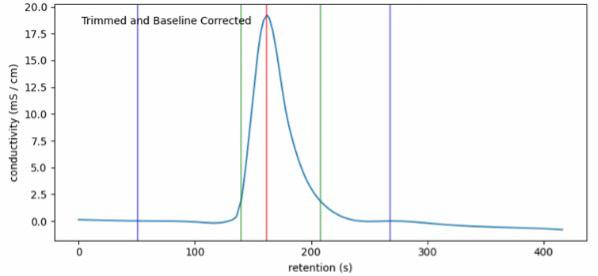
In Figure 2, ceramic hydroxyapatite (CHT) media was packed and evaluated using standard chromatographic performance metrics including HETP, asymmetry, operating pressure, and plate count. These parameters were monitored to assess bed stability, packing reproducibility, and the impact of controlled packing conditions on mechanically sensitive media performance. The resulting packing performance demonstrated stable bed formation, reproducible efficiency metrics, low operating pressure, and minimal evidence of fines generation during qualification activities.
Specialist providers operating dedicated packing operations develop operational expertise through repeated execution across multiple resin chemistries, manufacturing scales, and GMP campaigns. This combination of standardized methodologies, resin-specific process understanding, and responsive manufacturing support is becoming increasingly important as manufacturers prioritize operational agility and manufacturing readiness.
For manufacturing organizations, the value of specialist support shifts beyond packing execution alone. Reduced internal troubleshooting, reduced engineering burden, and improved manufacturing readiness can all contribute to improved operational efficiency across manufacturing networks.
Evolving approaches to column preparation
As downstream manufacturing operations become increasingly complex, manufacturers are continuing to adopt service-based pre-packed preparation strategies. Compared with traditional internal preparation approaches, service-based models can reduce internal labor requirements, facility footprint demands, resin handling exposure, and cleaning or turnaround activities.
Importantly, these models can also support more standardized and reproducible preparation methodologies across manufacturing sites and campaigns. Reduced site-to-site variability and reduced operator dependency can help support
Specification
Column internal diameter
Result
Evolve®D 7 cm
Column bed height 10 cm
Chromatography media Ceramic hydroxyapatite (CHT) HETP 0.033 cm
Asymmetry 1.86
Plates/m 3025
Pressure 0.46 bar
Figure 2: CHT packing performance data and chromatogram.
greater manufacturing consistency, particularly during scaleup and multi-site manufacturing operations.
Flexible service-based preparation models are becoming increasingly aligned with broader industry shifts toward modular manufacturing, intensified processing, and operationally agile manufacturing networks. Manufacturers are prioritizing operational responsiveness and manufacturing readiness alongside traditional technical performance criteria.
This shift is particularly relevant within accelerated clinical manufacturing environments, where delays in manufacturing readiness can create significant operational disruption. Internal preparation models may initially appear faster under ideal conditions, but they often remain highly dependent on internal resource availability, packing success, engineering support, and manufacturing schedule alignment.
By comparison, responsive service-based preparation models are increasingly differentiated by flexible scheduling capability, rapid deployment support, and consistently high on-time-in-full (OTIF) delivery performance.
Traditional internal column preparation
Internal packing operations
Internal HETP qualification activities
Dedicated preparation space and infrastructure
Greater internal resource requirement
Extended manufacturing preparation activities
Increased resin handling activities
CIP and turnaround activities
Site-to-site variability in packing approaches
Internal scale-up and packing method development
While operational flexibility and manufacturing responsiveness are important, preparation models can also have substantial economic implications at manufacturing scale. Representative modeling for a 60 cm pre-packed column demonstrated potential campaign preparation savings of up to approximately $280,000, representing a 67% reduction, while reducing labor requirements by approximately 160 FTE hours compared with a self-packing model (Figure 3). As manufacturing operations
Service-based pre-packed preparation model
Campaign-ready deployment
Pre-qualified performance testing
Reduced facility footprint requirements
Reduced operator involvement
Faster manufacturing readiness
Campaign-ready deployment
Reduced cleaning and turnaround burden
Standardized preparation methodologies
Scalable operational support
become increasingly intensified, these efficiencies may contribute not only to cost reduction, but also to improved manufacturing throughput, operational scalability, and more effective utilization of GMP manufacturing infrastructure.
Manufacturing readiness and operational flexibility
Manufacturing readiness has become an increasingly important operational metric across GMP manufacturing operations. Delays in readiness can contribute to underutilized facility capacity, paused manufacturing campaigns, delayed batch release activities, and missed manufacturing windows.
While many manufacturers continue to successfully operate internal preparation models, increasing manufacturing complexity and compressed timelines are driving reassessment of how these activities are managed operationally.
In multi-product GMP facilities, delays associated with preparation activities can create cascading disruption across manufacturing suites, engineering resources, QC activities, and batch release timelines. Operational modeling suggests that even a 3–5-day delay in GMP readiness can create tens of thousands of dollars in operational impact while reducing overall manufacturing predictability.
Delays
As a result, operational responsiveness and lead-time agility are important differentiators in service-based preparation partnerships. Manufacturing organizations are prioritizing partners capable of supporting compressed manufacturing timelines while maintaining reliable delivery performance.
This trend is contributing to growing demand for responsive preparation models capable of supporting rapid manufacturing readiness without sacrificing reproducibility or operational reliability.
Internal
Pre-packed responsive model ~5–8 weeks
Dependent on internal resource availability, packing success, and manufacturing schedule alignment
Designed to support rapid manufacturing readiness with consistently high ontime-in-full delivery performance
The hidden economic opportunity of resin recovery
Resin recovery represents another increasingly important operational and economic consideration within downstream manufacturing. Protein A and other chromatography resins represent major manufacturing investments, particularly within commercial biologics manufacturing.
Column hardware design can significantly influence practical resin recovery performance. Factors such as flow path geometry, hold-up volume, and unloading configuration may affect the amount of residual resin remaining within a column during recovery activities. Purpose-designed pre-packed systems can help minimize unnecessary hold-up volume while supporting more efficient resin recovery and operational handling workflows. While recovery differences may appear operationally minor, improvements in recoverable resin volume can translate into substantial retained resin value across multiple manufacturing campaigns.
In one representative example, modeling performed using a 60 cm Protein A column demonstrated that a 19% improvement in recoverable resin volume equated to more than $100,000 in
retained resin value compared with a conventional recovery approach (Figure 5). These results highlight how operational considerations beyond chromatographic performance alone can materially influence manufacturing economics.
Beyond direct cost reduction, improved resin recovery can also support supply-chain resilience, improved manufacturing resource utilization, and reduced dependency on replacement resin procurement.
As biologics manufacturing continues to scale globally, resin management strategies are becoming increasingly important not only from a cost perspective, but also from a manufacturing continuity and supply-chain perspective.
$600,000.00
$500,000.00
$400,000.00
$300,000.00
$200,000.00
$100,000.00
$448,000.00 $554,400.00
Evaluating strategic service partners
As manufacturing timelines compress and downstream operations become more complex, manufacturers are evaluating service partners beyond simple supply considerations alone. Manufacturing organizations are now prioritizing partners capable of supporting operational flexibility, manufacturing responsiveness, and scalable manufacturing support. Key considerations commonly include GMP quality systems, reproducibility across manufacturing campaigns, lead-time performance, change control support,
technical governance, scale-up capability, supply continuity, and global technical support.
This reflects a broader industry shift in which column preparation is being viewed as a strategic operational capability rather than a purely transactional manufacturing activity. The ability to consistently deliver campaign-ready columns is becoming more important for manufacturing agility, operational reliability, clinical execution, and manufacturing scalability.
For specialist service providers, this means the value proposition extends beyond packing execution alone. Operational responsiveness, reproducibility, technical expertise, and manufacturing support capability are now equally important components of downstream manufacturing partnerships.
Conclusion
Biopharmaceutical manufacturing is entering a period in which operational agility, manufacturing responsiveness, and scalable manufacturing support are becoming increasingly important competitive differentiators. As downstream processing becomes a growing manufacturing constraint, column preparation is evolving from a supporting operational activity into a strategically important contributor to manufacturing readiness, operational flexibility, and cost efficiency across biologics manufacturing operations.
At the same time, increasing resin complexity and compressed manufacturing timelines are making reproducible column preparation more operationally demanding. Manufacturing organizations are reassessing traditional preparation approaches and recognizing the value of specialist support capable of reducing operational burden while improving reproducibility, scheduling flexibility, and manufacturing responsiveness.
As manufacturing operations continue to intensify, servicebased preparation models are helping organizations improve scalability, reduce preparation-related risk, and support more agile manufacturing operations through standardized methodologies, responsive operational support, and improved resin management strategies.
Ultimately, column preparation is becoming more than a routine DSP activity. It is emerging as a strategic contributor to operational resilience, manufacturing agility, and efficient large-scale biologics production.