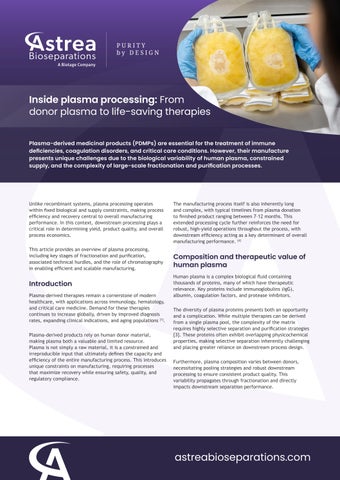
Inside plasma processing: donor plasma to life-saving therapies
Plasma-derived medicinal products (PDMPs) are essential for the treatment of immune deficiencies, coagulation disorders, and critical care conditions. However, their manufacture presents unique challenges due to the biological variability of human plasma, constrained supply, and the complexity of large-scale fractionation and purification processes.
Unlike recombinant systems, plasma processing operates within fixed biological and supply constraints, making process efficiency and recovery central to overall manufacturing performance. In this context, downstream processing plays a critical role in determining yield, product quality, and overall process economics.
This article provides an overview of plasma processing, including key stages of fractionation and purification, associated technical hurdles, and the role of chromatography in enabling efficient and scalable manufacturing.
Introduction
Plasma-derived therapies remain a cornerstone of modern healthcare, with applications across immunology, hematology, and critical care medicine. Demand for these therapies continues to increase globally, driven by improved diagnosis rates, expanding clinical indications, and aging populations [1]
Plasma-derived products rely on human donor material, making plasma both a valuable and limited resource. Plasma is not simply a raw material, it is a constrained and irreproducible input that ultimately defines the capacity and efficiency of the entire manufacturing process. This introduces unique constraints on manufacturing, requiring processes that maximize recovery while ensuring safety, quality, and regulatory compliance.
The manufacturing process itself is also inherently long and complex, with typical timelines from plasma donation to finished product ranging between 7–12 months. This extended processing cycle further reinforces the need for robust, high-yield operations throughout the process, with downstream efficiency acting as a key determinant of overall manufacturing performance. [4]
Composition and therapeutic value of human plasma
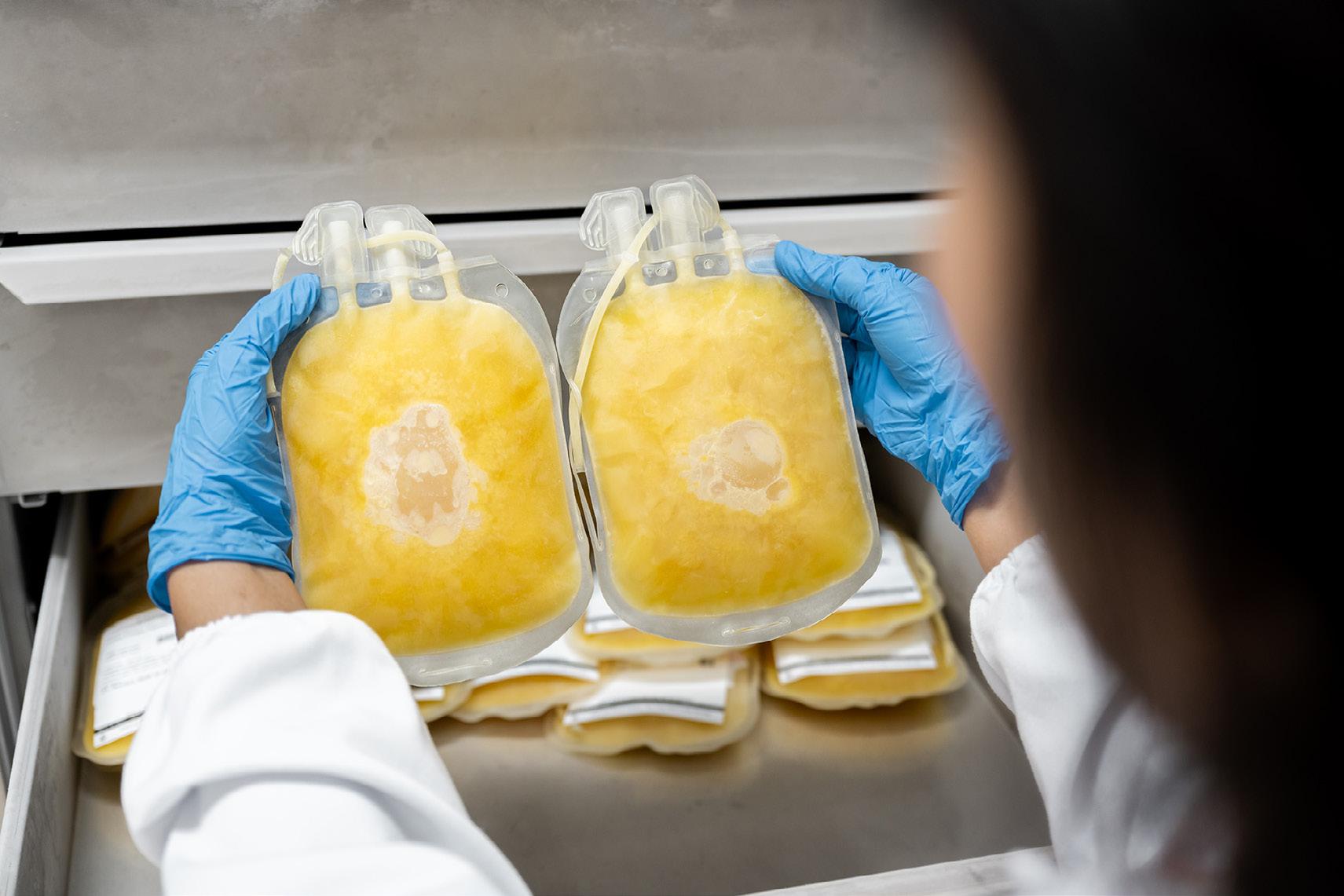
Human plasma is a complex biological fluid containing thousands of proteins, many of which have therapeutic relevance. Key proteins include immunoglobulins (IgG), albumin, coagulation factors, and protease inhibitors.
The diversity of plasma proteins presents both an opportunity and a complication. While multiple therapies can be derived from a single plasma pool, the complexity of the matrix requires highly selective separation and purification strategies [3]. These proteins often exhibit overlapping physicochemical properties, making selective separation inherently challenging and placing greater reliance on downstream process design.
Furthermore, plasma composition varies between donors, necessitating pooling strategies and robust downstream processing to ensure consistent product quality. This variability propagates through fractionation and directly impacts downstream separation performance.
Plasma fractionation processes
Overview of fractionation
The industrial production of plasma-derived products typically begins with fractionation, a process designed to separate plasma into distinct protein fractions.
Cold ethanol precipitation, commonly referred to as the Cohn process, remains a foundational method in plasma fractionation. This technique exploits differences in protein solubility under controlled conditions of temperature, pH, ionic strength, and ethanol concentration [2].
While highly effective and well established for bulk separation, ethanol fractionation is inherently limited in selectivity and cannot achieve purity levels required for modern therapeutics, necessitating further downstream purification steps.
Process workflow
The overall plasma processing workflow consists of several key stages:
• Plasma collection via plasmapheresis and subsequent freezing
• Pooling of thousands of donations to reduce variability
• Fractionation to isolate protein groups
• Purification to remove impurities and contaminants
• Final formulation and sterile filling
Each stage must be carefully controlled to balance yield, purity, and throughput, while maintaining compliance with regulatory requirements. In practice, process design is a continuous series of trade-offs between yield, purity, and throughput.
Importantly, multiple therapeutic proteins are recovered from the same plasma pool, meaning process decisions at one stage can directly impact the yield and recovery of other products. This interdependence introduces additional complexity into process optimization.
Challenges in plasma processing
Raw material variability
One of the primary constraints in plasma processing is the inherent variability of the starting material. Plasma pools are derived from large donor populations, each contributing variability in protein composition.
Because the raw material cannot be standardized, this variability must be managed through strong process design and control strategies to ensure consistent product quality across batches and manufacturing sites [2] .
Scale and complexity
Plasma processing operates at industrial scale, often involving large volumes and extended processing times. Recovering multiple products from a single feedstock further adds to the technical demands of the process.
Additionally, manufacturers must ensure viral safety through validated clearance steps, adding further constraints to process design. These requirements introduce additional processing steps that must be integrated without compromising yield or throughput.
Economic pressures
Plasma is a high-value raw material, and its limited availability places significant pressure on process efficiency. Even small improvements in recovery yield can have a substantial impact on overall production output and cost-ofgoods [3]
Given the extended manufacturing timelines and the need to recover multiple products from a single pooled feedstock, inefficiencies introduced at any stage can have amplified impacts across the entire process. At recent industry discussions, this perspective is echoed by industry experts such as John Curling, who has highlighted that the fundamental constraints of plasma fractionation continue to place downstream efficiency and recovery at the centre of process optimization [5]. At the same time, increasing global demand for plasma-derived therapies intensifies the need for efficient and scalable manufacturing solutions [1] .
Role of chromatography in plasma purification
Chromatography has become a critical component of modern plasma processing, particularly in the purification stage. It enables selective separation of target proteins from intricate mixtures, improving product purity and consistency.
In modern plasma fractionation, chromatography goes beyond polishing, and is increasingly the primary determinant of recoverable yield and overall process efficiency. This reflects a broader shift in bioseparations, where increasing emphasis is placed on achieving higher levels of selectivity tailored to specific molecular and process requirements, rather than relying solely on platform approaches. Different chromatographic techniques, including highly selective media, are employed depending on the target molecule and process requirements.
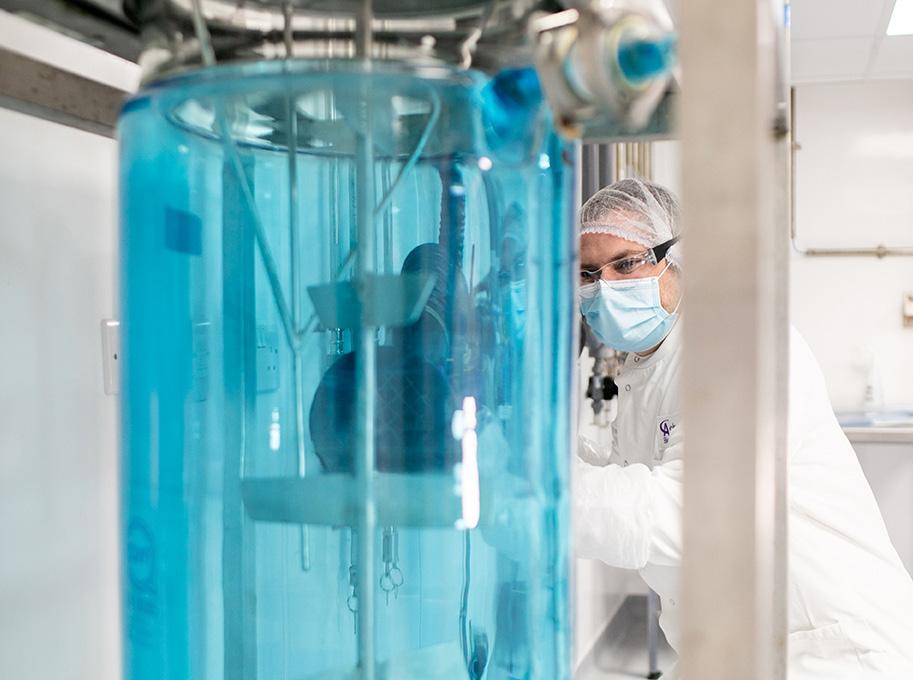
In immunoglobulin purification, maintaining high recovery yields is essential to maximize throughput and overall process efficiency. Yield losses at this stage directly translate into reduced output from a constrained raw material. In contrast, albumin purification is often optimized for robustness and reproducibility at scale, where process consistency and operational stability become equally as important as achieving the required purity specifications.
Chromatography plays a critical role in resolving co-eluting plasma proteins and removing process-related impurities, contributing directly to product quality, safety, and regulatory compliance.
Industry trends and technological developments
The plasma manufacturing industry is undergoing significant transformation in response to increasing demand and evolving regulatory expectations.
Key trends include:
• Greater adoption of hybrid processes combining fractionation and chromatography
• Increased use of automation and process analytical technologies (PAT)
• Development of advanced chromatography media and membrane systems
• Focus on sustainability, including reduction of ethanol usage and solvent/water waste
These developments reflect a broader shift toward integrating more selective and controllable downstream operations into traditionally bulk-driven processes.
At the same time, supply constraints, exacerbated by global events such as the COVID-19 pandemic, have underscored the need for more resilient and efficient manufacturing systems, as well as greater regionalization of production [3] .
Industry challenges and enabling solutions in plasma purification
Despite decades of process optimization, plasma fractionation continues to be shaped by a combination of raw material limitations, process inefficiencies, and increasing regulatory expectations.
A defining issue is the finite and variable supply of human plasma. As global demand for plasma-derived medicinal products continues to rise, manufacturers must maximize recovery from each liter of plasma while maintaining consistent product quality [1]. This places purification at the center of process optimization, as it is often where the largest recoverable gains in yield can be realized.
In parallel, traditional fractionation processes, while robust, are often associated with long processing times, high solvent usage, and limited flexibility. Ethanol-based precipitation remains effective for bulk separation, but it lacks the selectivity required for modern purity standards and can introduce inefficiencies when scaled.
In practice, this positions downstream processing as the primary lever for process optimization, as opportunities to modify upstream inputs or fractionation steps are inherently limited. It is at this stage that process performance, product quality, and economic efficiency ultimately converge. The need to process large volumes of complex protein mixtures, remove impurities, and incorporate multiple validated viral inactivation and removal steps, which impose additional constraints on process conditions and integration, further limiting flexibility in downstream design. As a result, process performance increasingly depends on how effectively individual purification steps are integrated, rather than optimized in isolation.
These challenges are further compounded by increasing regulatory scrutiny. Manufacturers must demonstrate not only product purity and safety but also process consistency and robustness across sites and campaigns [2] .
The combination of long processing timelines, multi-product recovery, and strict viral safety requirements means that downstream operations must be both highly efficient and tightly controlled, as opportunities for reprocessing or recovery are limited. With limited plasma supply and fixed fractionation capacity, process efficiency gains translate directly into increased output from existing infrastructure.
Role of advanced chromatography technologies
To address these challenges, there has been a shift toward integrating more advanced chromatography solutions into plasma processing workflows.
Modern chromatography media are designed to offer:
• Enhanced selectivity, supporting more efficient impurity removal
• Higher binding capacities, enabling improved recovery yields
• Greater robustness under industrial processing conditions
• Improved scalability for large-volume operations
In particular, advances in chromatographic selectivity are enabling more efficient separation of closely related plasma proteins that are not adequately resolved through conventional approaches. Mixed-mode and highly selective separation media are enabling more efficient purification of complex plasma proteins, complementing traditional fractionation approaches.
Enabling the next generation of plasma processing
As the industry continues to evolve, the integration of advanced downstream technologies will be essential to meeting growing demand. Chromatography is expected to play an increasingly central role, particularly as manufacturers move toward hybrid processes that combine traditional fractionation with more selective purification techniques.
Future process improvements are likely to be driven not by changes in raw material or fractionation, but by incremental gains in downstream efficiency and selectivity. In practice, this means moving beyond stepwise optimization toward more integrated process design, where separation performance, capacity, and process economics are considered together.
This shift is already driving closer collaboration between technology providers and manufacturers, with increasing focus on developing application-specific purification strategies tailored to the unique constraints of plasma-derived products. Rather than relying solely on established platform approaches, there is growing emphasis on designing processes around specific product streams, impurity profiles, and operational constraints.
Areas of active development include improving chromatographic selectivity for closely related plasma proteins, increasing binding capacity to maximize recovery from limited feedstock, and enhancing process robustness to maintain performance across large-scale, multi-batch operations. These advances are particularly important in the context of long processing timelines and multi-product recovery, where inefficiencies can propagate across the entire manufacturing chain.
In parallel, there is increasing interest in process intensification and integration strategies, aimed at reducing processing time, improving facility utilization, and enabling more flexible manufacturing configurations. While plasma fractionation remains inherently large-scale, these approaches offer opportunities to improve overall process efficiency without requiring additional infrastructure or compromising established safety and regulatory frameworks.
In this context, technology providers have an important role in supporting innovation, not only through the development of advanced materials, but through partnership with manufacturers to translate these technologies into robust, scalable processes that deliver measurable improvements in yield, consistency and operational performance.
This is increasingly reflected in collaborative development models, where purification technologies are designed and optimized in close alignment with customer processes and manufacturing requirements.
Conclusion
Plasma processing represents one of the most complex manufacturing challenges in biopharmaceutical production. The combination of variable raw material, large-scale operations, and stringent regulatory requirements necessitates highly optimized and robust processes.
Chromatography plays a central role in addressing these obstacles, enabling improved purification performance, higher yields, and enhanced product quality.
As demand for plasma-derived therapies continues to grow, the ability to maximise recovery from a constrained resource will remain the defining challenge, and opportunity, within plasma manufacturing. Ongoing innovation in downstream processing technologies will be essential to enabling sustainable, scalable production.
References
[1] Global Growth Insights. Human Plasma Products Market Size, Share & Industry Analysis. Available at: https://www.globalgrowthinsights.com/market-reports/human-plasma-products-market-104687/
[2] Burnouf, T. Modern Plasma Fractionation: Key Developments and Trends. Annals of Blood. Available at: https://aob.amegroups.org/article/view/11497/html
[3] CRB Group. Trends in the Plasma Manufacturing Industry. Available at: https://www. crbgroup.com/insights/pharmaceuticals/trends-plasma-manufacturing-industry
[4] Plasma Protein Therapeutics Association (PPTA). Plasma collection and manufacturing. Available at: https://www.pptaglobal.org/resources/plasma-collection-and-manufacturing
[5] Curling, J. Perspectives on plasma fractionation and downstream processing. Industry commentary, 2026.