Ravel’s Enchanting Boléro, Weilerstein Headline Sunday
BY EMMA KIRBY Marketing Manager
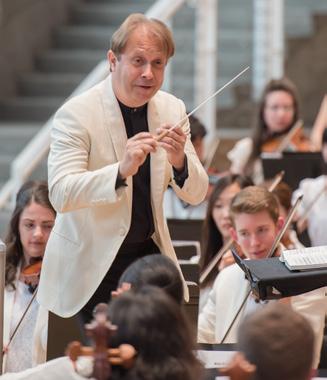
If you have attended a concert at the Aspen Music Festival and School this summer, it’s likely that you’ve gotten a taste of Maurice Ravel’s shimmering textures and elegant melodies. On this occasion of the 150th anniversary of the French composer’s birth, the Ravel-fest at the AMFS is far from over—and the Aspen Festival Orchestra concert on Sunday, August 17 provides a chance to hear Ravel’s most famous orchestral work, Boléro. Conductor Ludovic Morlot returns to Aspen to lead the orchestra in a 20th-century program of Ravel, Debussy, and Lutosławski featuring Festival-favorite cellist Alisa Weilerstein.
For all its popularity (or perhaps owing to it), Ravel’s Boléro is stunningly simple in comparison to his other works. Ravel himself is quoted as saying, “I’ve written only one masterpiece— Boléro Unfortunately, there’s no music in it.”
“[Morlot] has a command of that French style that will make him perfect for this program.”
Alan
Fletcher Munroe President and CEO, Aspen Music Festival and School
Written with nods to the traditional Spanish bolero dance style, the 15-minute piece is marked as “tempo di Bolero” and features a flowing, graceful melody. The snare drum introduces a steady underlying rhythm that continues for the
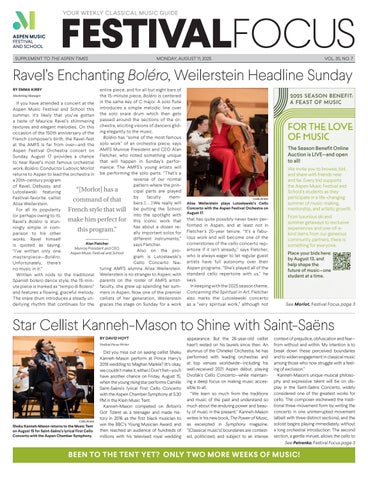
entire piece, and for all but eight bars of the 15-minute piece, Boléro is centered in the same key of C major. A solo flute introduces a simple melodic line over the solo snare drum which then gets passed around the sections of the or chestra, eliciting visions of dancers glid ing elegantly to the music. Boléro has “some of the most famous solo work” of an orchestra piece, says AMFS Munroe President and CEO Alan Fletcher, who noted something unique that will happen in Sunday’s perfor mance: The AMFS’s young artists will be performing the solo parts. “That’s a reverse of our normal pattern where the prin cipal parts are played by faculty mem bers. [ ] We really will be putting the School into the spotlight with this iconic work that has about a dozen really important solos for different instruments,” says Fletcher. Also on the program is Lutosławski’s Cello Concerto featuring AMFS alumna Alisa Weilerstein. Weilerstein is no stranger to Aspen; with parents on the roster of AMFS artistfaculty, she grew up spending her summers in Aspen. Now one of the premier cellists of her generation, Weilerstein graces the stage on Sunday for a work
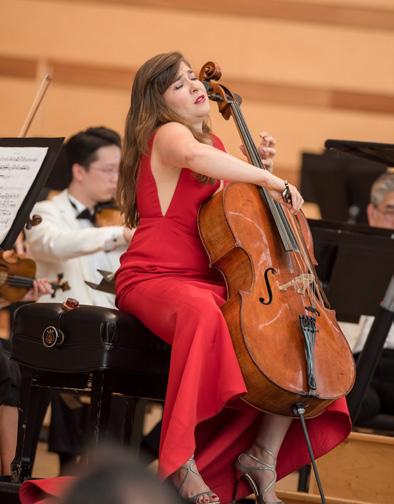
that has quite possibly never been performed in Aspen, and at least not in Fletcher’s 20-year tenure. “It’s a fabulous work and will become one of the cornerstones of the cello concerto repertoire if it isn’t already,” says Fletcher, who is always eager to let regular guest artists have full autonomy over their Aspen programs. “She’s played all of the standard cello repertoire with us,” he says.
In keeping with the 2025 season theme, Concerning the Spiritual in Art, Fletcher also marks the Lutosławski concerto as a “very spiritual work,” although not
BY DAVID HOYT Festival Focus Writer
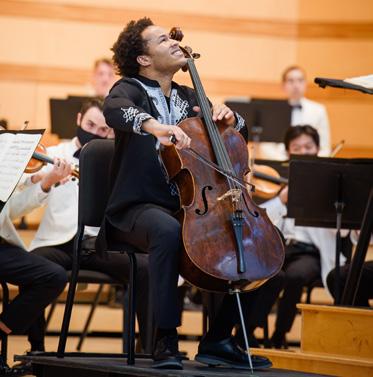
Did you miss out on seeing cellist Sheku Kanneh-Mason perform at Prince Harry’s 2018 wedding to Meghan Markle? (It’s okay, we couldn’t make it, either.) Don’t fret—you’ll have another chance on Friday, August 15, when the young rising star performs Camille Saint-Saëns’s lyrical First Cello Concerto with the Aspen Chamber Symphony at 5:30 PM in the Klein Music Tent.
Kanneh-Mason competed on Britain’s Got Talent as a teenager and made history in 2016 as the first black musician to win the BBC’s Young Musician Award, and then reached an audience of hundreds of millions with his televised royal wedding
appearance. But the 26-year-old cellist hasn’t rested on his laurels since then. An alumnus of the Chineke! Orchestra, he has performed with leading orchestras and at top venues worldwide—including his well-received 2021 Aspen début, playing Dvořák’s Cello Concerto—while maintaining a deep focus on making music accessible to all.
“We learn so much from the traditions and music of the past and understand so much about the enduring power and beauty of music in the present,” Kanneh-Mason writes in his new book, The Power of Music, as excerpted in Symphony magazine. “[Classical music’s] boundaries are contested, politicized, and subject to an intense


The Season Benefit Online Auction is LIVE—and open to all!

We invite you to browse, bid, and share with friends near and far. Every bid supports the Aspen Music Festival and School’s students as they participate in a life-changing summer of music-making, mentorship, and artistic growth. From luxurious ski and summer getaways to exclusive experiences and one-of-akind items from our generous community partners, there is something for everyone.
Place your bids here: by August 13, and help shape the future of music—one student at a time.

Star Cellist Kanneh-Mason to Shine with Saint-Saëns
context of prejudice, obfuscation and fear— from without and within. My intention is to break down these perceived boundaries and to widen engagement in classical music among those who now struggle with a feeling of exclusion.”
Kanneh-Mason’s unique musical philosophy and expressive talent will be on display in the Saint-Saëns Concerto, widely considered one of the greatest works for cello. The composer eschewed the traditional three-movement form by writing the concerto in one uninterrupted movement (albeit with three distinct sections), and the soloist begins playing immediately, without a long orchestral introduction. The second section, a gentle minuet, allows the cello to
See Petrenko, Festival Focus page 3
See Morlot , Festival Focus page 3
Sheku Kanneh-Mason returns to the Music Tent on August 15 for Saint-Saëns’s lyrical First Cello Concerto with the Aspen Chamber Symphony.
CARLIN MA
Alisa Weilerstein plays Lutosławski’s Cello Concerto with the Aspen Festival Orchestra on August 17.
CARLIN MA
Aspen’s Next Generation Creative Composition Lab
BY SARAH CHASE SHAW
Festival Focus Writer
While the Aspen Music Festival and School dazzles audiences each summer with more than 300 public events in an eight-week span, a quieter but equally extraordinary experience unfolds behind the scenes in the Susan and Ford Schumann Center for Composition Studies. Nestled within the heart of the Festival, this intensive program offers a rare, high-level opportunity for emerging composers to refine their craft under the guidance of some of the world’s leading composers and performers.
Led by renowned composer-in-residence Christopher Theofanidis, the program admits just 10 composition fellows from more than 200 applicants annually. These fellows spend the full summer session immersed in collaborative learning, creative risk-taking, and compositional experimentation. “We try to choose a cohort of people who we think will complement and stimulate each other in really unique ways,” says Theofanidis. Though the program has traditionally drawn graduate students and recent graduates, Theofanidis notes that younger participants— sometimes as young as 18—often show remarkable artistic growth across repeat summers.
The curriculum is rigorous and expansive. Fellows meet three times a week for two-hour seminars with Theofanidis and other faculty, as well as visiting composers. These sessions cover technical elements such as orchestration, as well as aesthetic and philosophical dimensions of music-making. Guest appearances this season have included contemporary luminaries like Jessie Montgomery (the
program’s principle guest composer this season), Conrad Tao, Jasmine Barnes, and Thomas Adès. AMFS Music Director Robert Spano and Munroe President and CEO Alan Fletcher—both accomplished composers—also lead sessions, adding insight from both artistic and leadership perspectives.
Fellows complete at least two compositional projects,
with a third option available. The first is a seven-minute orchestral piece. After composing it, the fellows have the rare opportunity to workshop the piece live during a 30-minute orchestral reading with the Aspen Conducting Academy Orchestra. Standout works then move forward to a workshop and public performance, culminating in the presentation of the Hermitage Prize.
The second composition project is a 10-minute chamber
work performed by the Aspen Contemporary Ensemble at the Festival’s “First Glimpse” concerts, held at 3 p.m. on August 13 and 22. This rehearsal process is iterative and unique to Aspen, says Theofanidis. “Most music schools don’t focus on this level of detail. Usually the music and the parts are delivered, it’s performed, and that’s all there is. Here, students get the opportunity to learn from others about how to shape their compositions.”
A third project offers the chance to compose a short dramatic or lyric song for the Aspen Opera Theater and Vocal Arts program. These pieces are featured during Opera Encounters on August 23 and at an afternoon performance at Harris Hall.
The program concludes with two major awards. The Hermitage Prize, a partnership with the Hermitage Artist Retreat in Florida, includes a prestigious six-week residency and $1,000 stipend. Past winners include Spano, Fletcher, Nico Muhly, and Theofanidis himself. “The Hermitage Prize at AMFS is the only student residency awarded each year,” notes Hermitage Artistic Director Andy Sandberg.
The Jacob Druckman Prize, named after the late composer who taught at AMFS for two decades, is conferred after the season ends. The reward? The winner is commissioned to write an orchestral work to be débuted during the following summer’s Festival.
“There are so many learning opportunities through this program,” says Theofanidis. “There’s a real infrastructure at the Festival which is really splendid for learning intensively for two months.”
NEW THIS SEASON: FREE FRIDAYS FOR YOUNG ADULTS, 19-35!
Continued from Festival Focus page 1
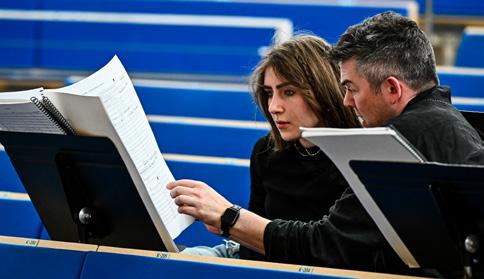
Student composer Laila Arafah reviews her score with 2024 guest composer Nico Muhly during an orchestra read-through with the Aspen Conducting Academy Orchestra.
DIEGO REDEL
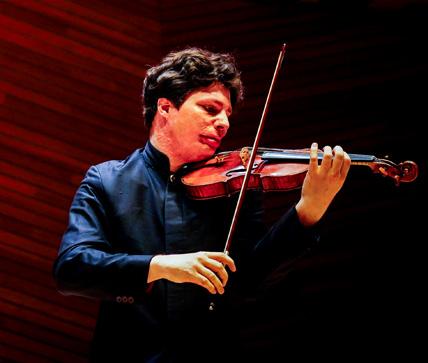
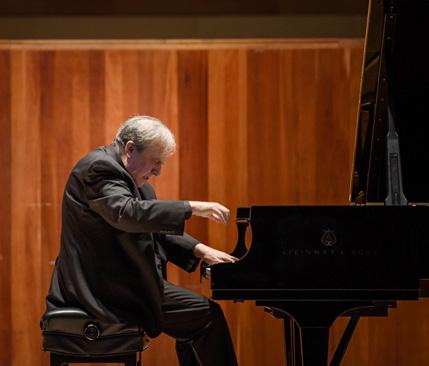
Harris Concert
HADELICH AND WEISS: Tuesday, August 12 | 6 PM
Star violinist Augustin Hadelich reunites with noted collaborative pianist Orion Weiss for a not-to-miss, all-American program. Perhaps in anticipation of America’s quincentennial next year, their repertoire includes Ives’s Fourth Violin Sonata, which brings out a sweetness not often seen in the composer’s works; John Adams’s irresistible Road Movies; and Copland’s instantly recognizable “Hoe Down” from Rodeo
ISBIN: Wednesday, August 13 | 7:30 PM
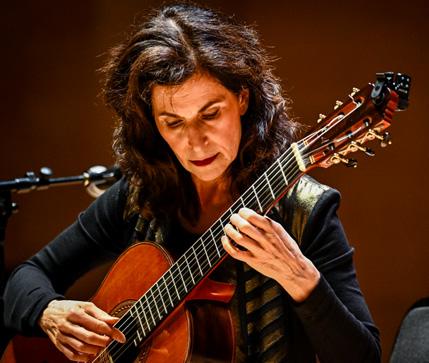
Director of the AMFS’s classical guitar program Sharon Isbin brings Spanish, Latin American, and contemporary flair to Harris Hall with a program featuring works by Granados, Albéniz, Villa-Lobos, Lauro, Sávio, and the rhythmic vitality and lyrical warmth of Karen LeFrak’s vibrant, Latin dance-influenced Habanera Nights, Urban Tango, and Miami Concerto.
BRONFMAN: Thursday, August 14 | 6 PM
One of the all-time piano greats, Yefim Bronfman returns to Aspen for a classic program featuring Schumann’s Arabeske in C major—a deceptively simple work that many amateur pianists have studied but likely never played with Bronfman’s refinement and precision. Also on the program are Brahms’s Third Piano Sonata, Debussy’s Images, and Prokofiev’s Seventh Sonata—an acrobatic, brilliant work full of sardonic wit, which is reflected in the wit of Bronfman himself.
MALOFEEV: Saturday, August 16 | 7:30 PM
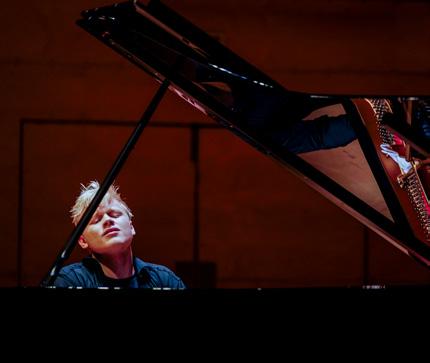
Piano sensation Alexander Malofeev brings brilliance and depth to Schubert’s lyrical Drei Klavierstücke and Kabalevsky’s bold Third Piano Sonata, before joining an AMFS faculty and student string quartet for Shostakovich’s powerful and poignant Piano Quintet in G minor.
Petrenko Returns: ‘Expect Emotions’
sing with a soaring cadenza. By contrast, the final section displays lightning-fast technical fireworks leading to an invigorating conclusion.
Russian-British conductor Vasily Petrenko returns to Aspen to lead this wide-ranging program. Since becoming the youngest-ever principal conductor of the Royal Liverpool Philharmonic Orchestra in 2006, a position he maintained for 15 years, Petrenko went on to serve as chief conductor of the Oslo Philharmonic Orchestra from 2013 to 2020 and has been music director of London’s Royal Philharmonic Orchestra since 2021.
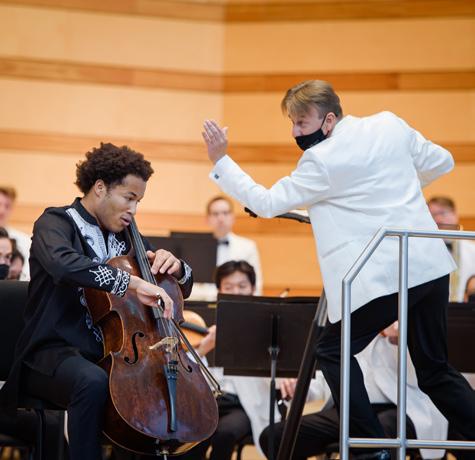
“We’re very common partners on stage, and I know Sheku from his early teenage years,” Petrenko said. “It’s a great pleasure for me to see his progress and maturity of interpretations over the years. I’d expect a lot of emotions and phrasing flexibility in this incredible concerto.”
Rounding out the program is a tour of twentieth-century Russian and French music. “All four composers [SaintSaëns, Prokofiev, Debussy, and Stravinsky] were connected to Diaghilev’s Russian Seasons in Paris,” Petrenko said.
“Musically, there’s a lot of French influence from late 19th- to early 20th-century culture. They’re also very colorful, but transparent; using relatively small forces, composers were able to achieve a wide range of effects and emotions.”
Prokofiev’s light “Classical” Symphony dates from 1917, the first of seven symphonies he would compose. Structured in four relatively brief movements, the piece looks back to Haydn and Mozart and has remained one of his most popular works. Likewise, Stravinsky’s Symphony in C also harkens back to tradition and the music of an earlier, perhaps simpler era—but listeners may notice a stylistic shift between the first two movements, composed in Europe, and the final two, completed after Stravinsky had emigrated to America during World War II. Debussy’s brief Deux danses, dating from 1904, features the harp in a Danse sacrée and Danse profane that demonstrate the French composer’s talent for creating dreamy soundscapes filled with musical color.
“I’m always very keen to be in Aspen,” Petrenko added. “I am looking forward to this unique collaboration with the very talented young musicians and the special audience of Aspen. And, of course, I will spend some time in between rehearsals hiking and observing the magnificent nature!”
Morlot
Continued from
page 1
overtly. Instead of being explicitly religious, “we think of [the theme] as dealing with moments when you’re listening to or making music” and the accompanying feelings, he says. He surmises that the audience might “feel something within but greater than [themselves]; both inward and exponential,” during the performance.
Rounding out the program in the Ravel year, Morlot will lead the orchestra in a shorter work by Ravel, Une barque sur l’océan, adapted for orchestra from his piano suite Miroirs, and Debussy’s short ballet
Jeux. “I just think [Morlot] has a command of that French style that will make him perfect for this program,” says Fletcher of the native French conductor.
This Sunday, don’t miss your chance to hear works spanning from the most famous of Ravel’s oeuvre to the lesser-known gems of the cello repertoire performed by one of Aspen’s most celebrated guest artists.
Conductor Vasily Petrenko, who also conducted Sheku Kanneh-Mason’s Aspen début in the AMFS’s first season after the pandemic in 2021, returns to the stage with the young cellist this Friday, August 15.
Ludovic Morlot returns to the Tent on August 17 to conduct the Aspen Festival Orchestra.
CARLIN MA