
Aspen Waite


“In the depth of winter, I finally learned that within me there lay an invincible summer.”
— Albert Camus
- Amit Ray

If you are reading this and you would like to contribute an article, get in touch with me at: Paul@aspen-waite.co.uk
Welcome to the Summer 2026 edition of Aspen Waite News.
The world is becoming increasingly fractured, and the UK is divided on many levels.
At Aspen Waite, we remain committed to supporting the business community as trusted advisers and true friends.
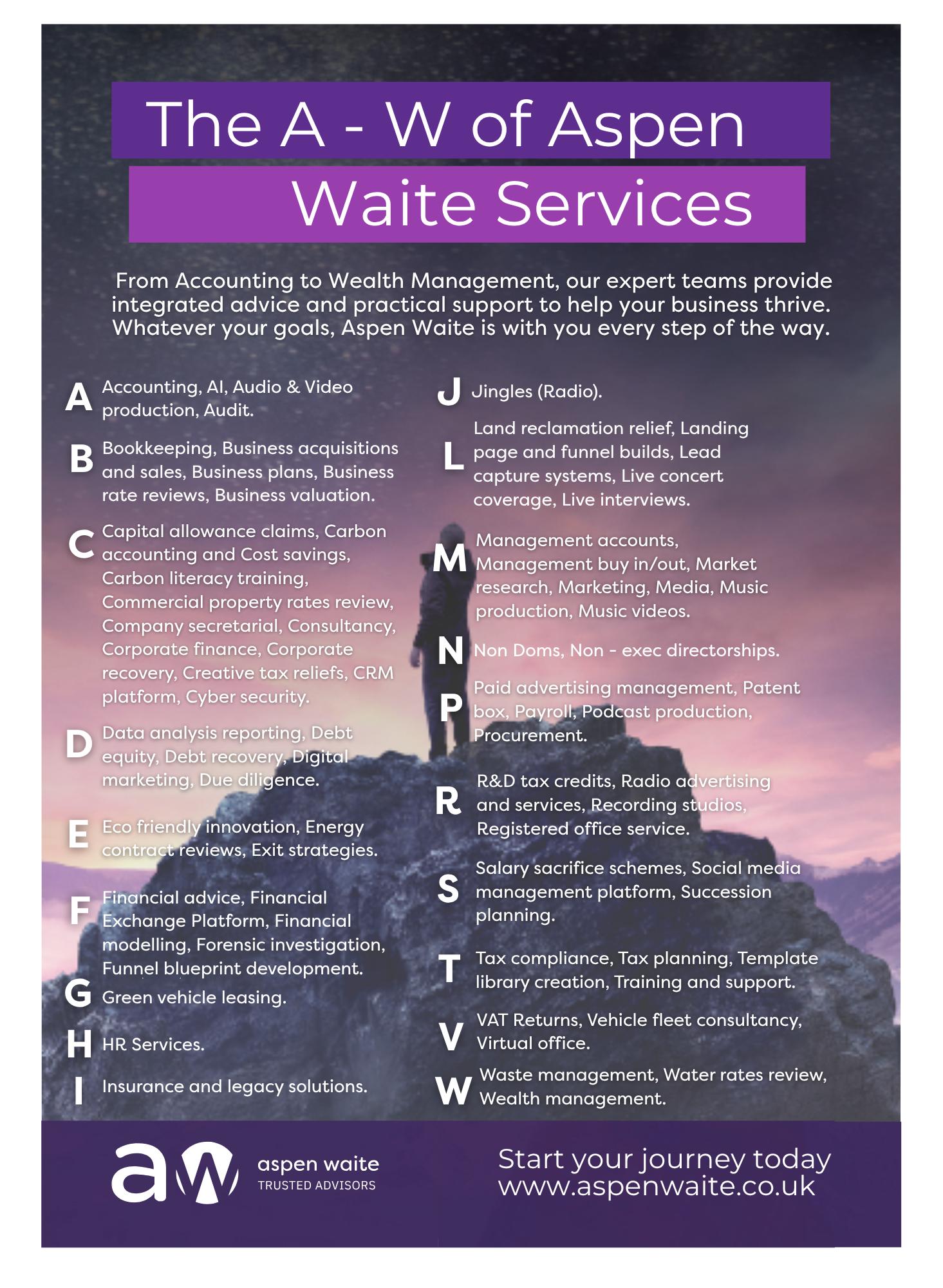
We have a renewed goal of becoming the UK’s leading advisory firm, driven by technology and focused on AI and digitalisation.
Aspen Waite is the home of the Complete Business Growth Service. Where a specialist service is not provided inhouse, we partner with high-quality firms that share our values, integrity, and commitment to client success.
In our opinion, the single biggest threat facing businesses today is cyber attack. Any business that does not have secure IT systems is vulnerable, as demonstrated by what happened to Marks & Spencer.
Aspen Waite is proud to work closely with its strategic partner, Cyber Tzar, which helps businesses understand, manage,

and mitigate risk across digital portfolios and supply chains.
Andrew and his team demonstrate an outstanding passion for business and share our strong belief that every business deserves the highest quality of service.
Both Aspen Waite and Cyber Tzar began as start-ups, so we understand the challenges involved in growing a successful business.
By carrying out a quality review of a business’s systems, we can provide advice and strengthen controls, enabling businesses to grow with confidence and minimise the risk of cyber attack across their operations and supply chains.
At this stage of my career, I feel privileged to have the opportunity to work with Andrew and play my part in helping Cyber Tzar become Europe’s leading cyber security provider.
I am extremely confident this will happen, and I am not sure I have ever worked with someone whose ambition is as genuine as Andrew’s.
The accountancy profession is changing

rapidly, and firms that fail to adapt will be squeezed out of the market. The future belongs to advisoryled and cloud-based firms, with AI and digitalisation driving that transformation.
I am a strong supporter of AI, and it is already changing the way business is done. Research and report writing have become much more efficient.
I firmly believe in embracing change; it is always better to be at the front of the queue than trying to catch up later.
We have real clarity at the moment, despite the pace of change and increasing complexity. We are fortunate to have a highly skilled team focused on technology and innovation.
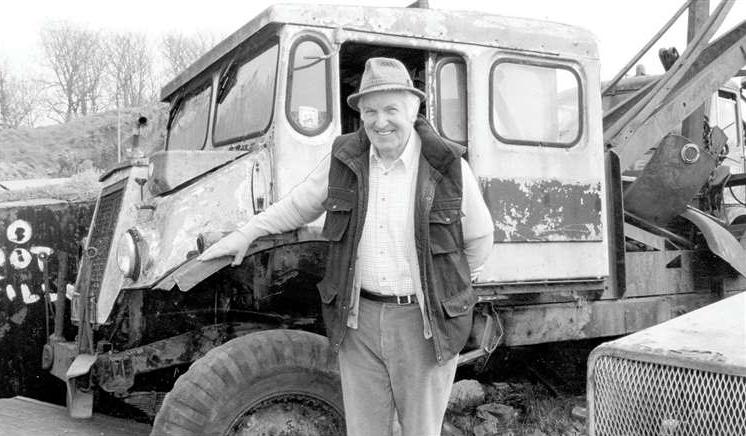
In May, my good friend and client of 26 years, George Farwell, passed away at the grand age of 93.
George founded G Farwell Ltd in 1952 and continued going to work every day right up until the end.
Lisa and I were fortunate to spend some quality time with him over the first May bank holiday, including taking him for a drive in his car at his request. It was a lovely way to say goodbye, and I believe he was at peace with himself when he passed away.
I am now the lead
executor of George’s estate and look forward to helping his grandson, Adam, continue the legacy of a truly great man.
The funeral took place while I was on holiday, so my PA, Tina, attended on my behalf. Her report is included in this edition.
A true man of the Forest (nexus).
Talking of Forests, don’t forget to tune in to Albion’s Keeper every Thursday at 9.00 pm on Aspen Waite Radio at aspenwaiteradio.com.
Boy, does the world need something to believe in!
The economy remains in poor shape, with a lack of leadership and a growing sense that we should give up on our own country.
One consolation has been the strong performance of global stock markets, which has delivered excellent returns for investment and pension portfolios.
We have invested five years in building and growing our Legacy business. It was very much my baby, but my brother Mark has done a wonderful job of transforming the original Green concept into a much broader business centred around cost reduction. Legacy has effectively become Aspen Waite Sales.
We are very proud to have been recognised by the ICAEW for our work
in sustainability, the Climate Hub, Climate Champions, and the Roll of Honour.
I must admit to feeling a little humbled, as I am not renowned for my patience. Investing in Legacy over the past five years has been a significant cost, but it has all proved worthwhile.
So, Mr Waite has his serious game face on! There is much to do.


The Art of Selling
Why great businesses grow through relationships, trust and genuine value
PAUL WAITE
I often find it amusing when people ask me about sales training.
The truth is that I have never had any formal sales training. Everything I have learned about winning business, building relationships and growing a company has come through experience. Some lessons were learned quickly; others took years. But after more than three decades in business, one thing has become abundantly clear: selling is rarely about selling.
Accounting is not generally regarded as the most exciting industry in the world. In fact, many would describe it as a sector that is notoriously dull and boring. Yet that hasn’t stopped thousands of firms from growing, thriving and building hugely successful businesses.
The reason is simple. Every business, regardless of industry, depends on people. Understanding people is ultimately what sales is about.
Sales and Marketing: Different Disciplines, Shared Purpose
Sales and marketing are often spoken about as though they are the same thing. In reality, they are quite different disciplines, although both serve the same objective: creating business development and generating revenue.
Revenue growth generally comes from three sources:
• Attracting new clients
• Retaining existing clients
• Selling additional services to existing clients
The most successful organisations understand this distinction and invest heavily in building a strong brand. When a brand becomes powerful enough, it develops a reputation that can generate opportunities almost independently of the people within the business.
We see this throughout professional services. The largest audit firms dominate listed company audits. Across many industries, firms establish themselves as perceived specialists and become the default choice for certain sectors. Whether that perception always reflects reality is another discussion entirely, but the commercial impact is undeniable.
A Market Full of Opportunity
The UK accounting sector is worth more than £30 billion and continues to grow at over five per cent annually.
While the “Big Four” accountancy firms control around 60 per cent of the market, the remaining sector remains highly fragmented. There are approximately 40,000 accountancy firms operating across the UK, with around 80 per cent employing four people or fewer.
Almost half generate less than £100,000 in annual fees.
Against this backdrop, Aspen Waite has continued to grow. At our peak we ranked as the 79th largest accounting firm in the UK. Today we remain firmly within the top 150 and I believe we can comfortably return to the top 100 within the next 15 months.
More importantly, I believe there is significant demand for a quality, caring accountancy firm.
When you look at the size of the market, even a tiny share represents a substantial opportunity. Excluding the Big Four, just one per cent of the market would equate to approximately £120 million of fees. Even one tenth of one per cent represents £12 million. Those are realistic, achievable targets for a business that knows where it is going and stays true to its values.
The Forces Shaping the Future
The profession is changing rapidly.
Artificial intelligence and technology adoption are transforming the way firms operate. Private equity investment continues to pour into mid-tier firms, bringing fresh capital and accelerating consolidation across the sector. At the same time, businesses are increasingly seeking strategic advice rather than simply compliance services.
Alongside these opportunities, there are also challenges.
Firms continue to face talent shortages, growing cyber security threats and rising operating costs.
Personally, I view these developments as positive. Change creates opportunity for firms willing to adapt, invest and think differently.
At Aspen Waite, we are doing exactly that.
We are investing in our future. We offer a broad range of services. We are embracing AI proactively rather than resisting it. We have access to world-class cyber security expertise through our strategic partnerships. We work with exceptional clients, collaborate with outstanding professional partners and retain the ability to make decisions quickly.
Most importantly, we understand business.
After 33 years, we know what makes organisations succeed and we know what makes them fail.
And we are different.
Selling Without Selling
One of the most important lessons I have learned is that successful selling rarely feels like selling.
The best business developers are often the people who don’t consider themselves salespeople at all.
Their approach is remarkably simple.
They do a great job.
They become as technically competent as possible.
They respond quickly.
They make clients feel important. They genuinely care.
They identify problems and proactively offer solutions.
They know when to involve colleagues with different expertise.
They spend time meeting people and building relationships rather than hiding behind a desk.
They focus on delivering value rather than competing solely on price.
They collaborate with other professionals for mutual benefit. Most importantly, they take the time to understand the client’s business.
The greatest opportunities rarely emerge from a sales pitch. They emerge from trust.
The Human Side of Business
Trust is difficult to earn and easy to lose.
That is why common sense remains one of the most underrated business skills available.
Think carefully about what you are doing. Be authentic. Never try too hard.
Clients are remarkably perceptive and can quickly identify insincerity.
People prefer to work with individuals they trust, understand and enjoy speaking to. That is why listening is often more valuable than talking. It is why empathy matters. It is why body language matters.
Over the years, I have found that stories are often more powerful than statistics. Facts are important, but stories create connections. They help people understand challenges, opportunities and outcomes in a way that spreadsheets rarely can. Finding common ground is equally important. Shared interests build rapport and help relationships develop naturally. Some people have a genuine gift for this; others need to work at it. Either way, it remains one of the most effective ways of building lasting business relationships.
Building
a Reputation That Lasts
Technology has changed the way businesses operate, and tools such as artificial intelligence are becoming increasingly important. Every professional should be learning how to use them effectively.
At the same time, the fundamentals remain unchanged. A strong website matters.
High-quality marketing materials matter.
A recognisable brand matters.
Preparation matters.
Planning matters.
Consistency matters.
Above all, principles matter.
I often joke that I am a RollsRoyce rather than a Skoda. Beneath the humour lies an important point. Every business must understand its value and stand by it. Competing solely on price is rarely a sustainable strategy.
The strongest businesses know who they are, what they stand for and the value they bring to their clients.
A Final Thought
Perhaps the most important lesson of all is this: the privilege belongs to us.
When a client chooses to spend their time speaking with us, they are giving us something valuable. We should never take that for granted.
Approach every conversation with curiosity. Listen more than you speak. Seek to understand before trying to persuade.
If you focus on helping people, solving problems and building genuine relationships, business development becomes a natural outcome rather than a forced process.
That, in my experience, is the real art of selling.
Paul Waite - CEO
paul@aspen-waite.co.uk

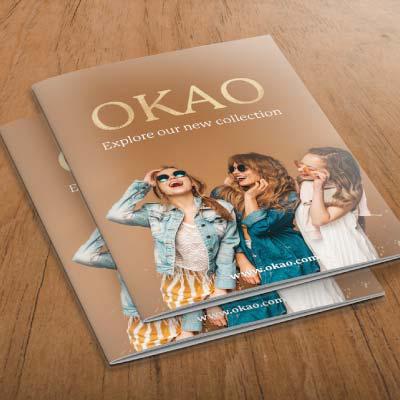
Aspen Waite welcomes its latest Partner in Business - 1Vision Print
Established in 2003, 1Vision Print has built a reputation as a trusted, one-stop shop for all things print. With a straightforward approach, transparent pricing and nationwide delivery, the company takes the hassle out of sourcing printed materials, branded merchandise, workwear and display solutions.
By providing a single quotation that includes delivery, with no hidden extras, 1Vision Print makes the buying process simple and stress-free for businesses across the UK.
The business operates across four key areas:
Printed Literature
From business cards and leaflets to letterheads, brochures and magazines, 1Vision Print offers a comprehensive range of printed literature solutions.
Whether you already have artwork prepared by a graphic designer or prefer to create your own, 1Vision Print can print directly from supplied artwork. Alternatively, their team can assist with artwork creation and design to ensure a professional finished product.

Promotional Merchandise
If it can be branded, 1Vision Print can help.
Promotional merchandise remains one of the most effective ways to keep your brand front of mind, and 1Vision offers access to a vast range of products suitable for businesses of all sizes. From promotional gifts and giveaways to branded pens and office essentials, their team can help identify merchandise that aligns with your brand and marketing objectives.
If you’re unsure where to start, they are always happy to discuss your requirements and recommend suitable products.
Clothing and Workwear
1Vision Print provides a wide range of branded clothing and workwear solutions, with both printing and embroidery services available.
Unlike many suppliers, there are no minimum order quantities, making it easy for businesses to order exactly what they need. Whether you’re looking for uniforms, promotional clothing or branded apparel for events, the team can help create a professional and consistent look for your organisation.
Display Solutions
For exhibitions, trade shows, conferences and events, first impressions matter.
1Vision Print offers a comprehensive range of display solutions, including exhibition stands, flags, banners, café barriers and promotional displays designed to help businesses stand out from the crowd.
Their expertise ensures that your brand remains visible, professional and impactful wherever you choose to showcase it.
Find Out More
As an Aspen Waite Partner in Business, we are delighted to welcome 1Vision Print to our growing network of trusted specialists.
To learn more about their products and services, visit: www.1visionprint.co.uk
You can also follow 1Vision Print on Instagram, Facebook and LinkedIn for the latest product updates, ideas and industry insights.
Beyond the Numbers: Building a More Sustainable Future
WHY MEASURING OUR ENVIRONMENTAL IMPACT IS BECOMING AN ESSENTIAL PART OF GOOD BUSINESS
When people think about sustainability, they often think about large manufacturers, energy companies or global corporations.
Accountancy firms rarely spring to mind.
Yet every organisation, regardless of its size or sector, has an environmental footprint. More importantly, every organisation has a responsibility to understand that footprint and consider how it can be reduced over time.
At Aspen Waite, we believe sustainability is not a separate agenda. It is part of running a responsible, forward-thinking business.
That belief is one of the reasons we are proud to be recognised as an ICAEW Climate Champion Firm, joining a growing network of practices committed to helping businesses understand climaterelated risks, opportunities and responsibilities.
Why Measurement Matters
One of the fundamental principles of business is that you cannot effectively manage what you do not measure.
Whether we are advising clients on profitability, cash flow or growth, the starting point is always understanding the numbers. The same principle applies to environmental performance.
Over the past year, Aspen Waite has worked with Ecologi to undertake a detailed assessment of our greenhouse gas emissions across our operations. This process has enabled us to gain a clearer understanding of where our environmental impacts arise and identify practical opportunities for improvement.
The exercise is not about producing a report for the sake of compliance. It is about creating a meaningful baseline from which informed decisions can be made.
Positive Progress
The findings from our latest Emissions Management Report are encouraging.
During the reporting period, Aspen Waite reduced its total greenhouse gas emissions from 140.16 tonnes of carbon dioxide equivalent (tCO₂e) to 121.04 tCO₂e, representing a reduction of more than 13 per cent compared with the previous reporting period.
Our emissions intensity relative to revenue also improved, falling from 70.08 tCO₂e per £1 million of revenue to 62.07 tCO₂e.
While there is still much work to do, these results demonstrate that progress is possible when sustainability becomes part of everyday decision-making rather than a standalone initiative.
Understanding Where Emissions Come From
One of the most valuable aspects of the assessment has been identifying the areas that contribute most significantly to our overall footprint.
Like many professional service businesses, the majority of our emissions do not come directly from our offices or vehicles. Instead, they arise throughout our wider value chain.
Purchased goods and services account for the largest proportion of our emissions, alongside employee commuting, business travel and capital investments.
This highlights an important lesson that many businesses are beginning to discover: environmental impact extends far beyond energy bills and company vehicles.
It includes the decisions we make about suppliers, technology, travel, procurement and the way we work.
Understanding these wider influences allows us to focus our efforts where they can make the greatest difference.

Sustainability and Business Performance
There is sometimes a perception that sustainability and commercial success are competing priorities.
In reality, they are increasingly interconnected.
Businesses that improve operational efficiency often reduce costs. Organisations that embrace innovation frequently identify opportunities to reduce waste. Companies that take environmental responsibilities seriously are often better positioned to attract talent, build trust and strengthen relationships with clients and stakeholders.
For many organisations, climate considerations are becoming an important part of risk management, strategic planning and long-term resilience.
The conversation is no longer about whether sustainability matters. It is about how businesses respond.
Looking Ahead
Aspen Waite has committed to achieving Net Zero emissions by 2050.
That commitment will not be achieved through a single project or initiative. It requires continuous improvement, regular measurement and a willingness to challenge established ways of working.
Our roadmap includes improving operational efficiency, reviewing travel policies, supporting sustainable commuting, engaging with suppliers and continuing to refine our understanding of emissions throughout our business.
Most importantly, it involves maintaining momentum.
Climate change is one of the defining challenges of our generation. Businesses of every size have a role to play, and professional advisers have a unique opportunity to help others navigate the transition.
As an ICAEW Climate Champion Firm, we see this not simply as a responsibility but as an opportunity to lead by example.
The figures in an emissions report are important. However, the real value lies in what those figures inspire us to do next.
By measuring, understanding and acting, we can continue building a business that is not only successful, but sustainable for the future.
Mark Waite - CEO Aspen Waite Legacy mark.waite@aspen-waite.co.uk

Planning for Retirement in Volatile Times
In an increasingly volatile world, what do market ups and downs mean for those investing for their retirement?
On the surface, investing for retirement may seem straightforward – the younger you are, the more risk you might be prepared to take with your investment portfolio. For those approaching retirement, derisking their portfolio is likely to be a preferred approach.
Market swings and volatility may be perceived as having a negative effect for many people at different stages of retirement planning. People worry about being able to ‘time the market’. But what really is market volatility
and how can you use it to your advantage in your retirement portfolio?
Market volatility is a measure of how much the price of an asset fluctuates over time. Periods of high volatility are defined by unpredictable, abrupt price swings, whereas low volatility means more stable asset price movements.
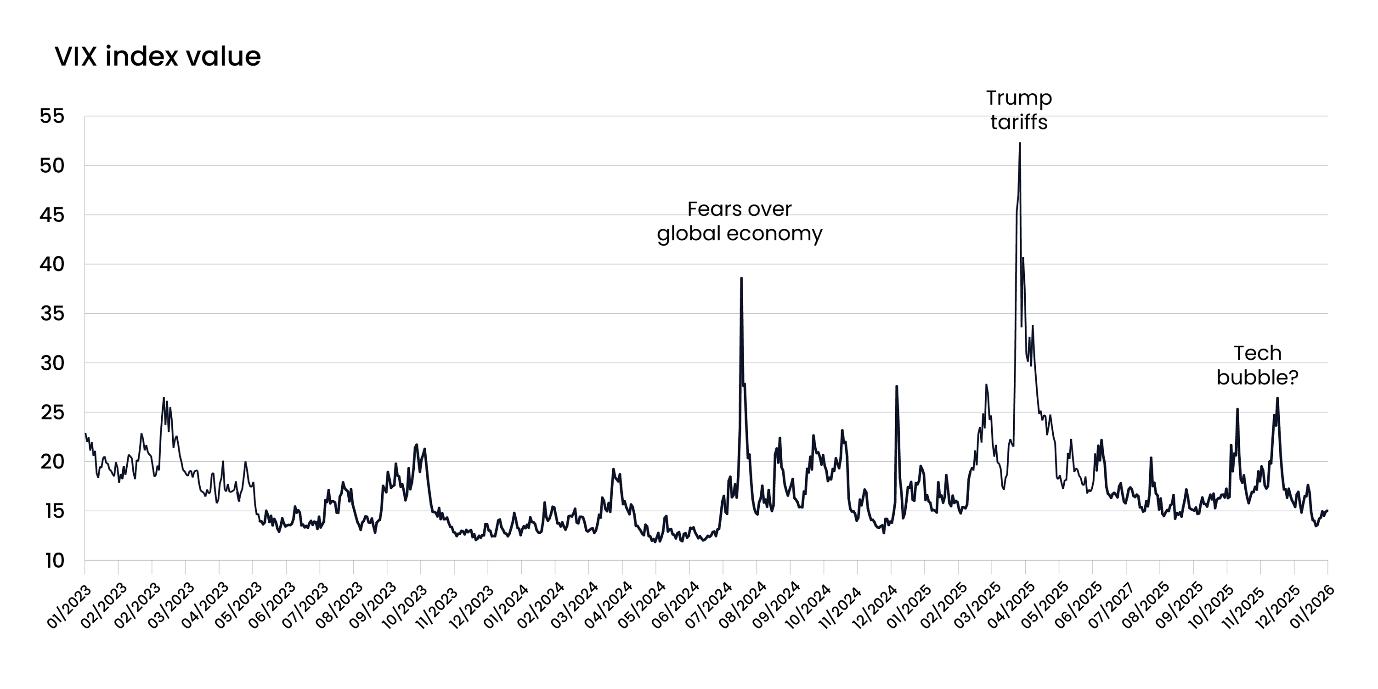
The financial markets experienced periods of high volatility back in April 2025, when US President Donald Trump announced tariffs on imports from many countries. Later in November, the S&P 500 experienced a fall when investors became anxious over fears of overvalued technology stocks. The
index later stabilised when the market reacted positively after the Federal Reserve said it would cut interest rates further, boosting investor optimism.
Many financial markets experts look to the VIX index to understand sentiment across the equity market. The VIX provides a measure of volatility and the expectation of future price changes in the S&P 500.
But how is this volatility relevant to your investments, and how can it affect them?
Time is of the essence
Volatility is typically caused by uncertainty from economic, political or company-specific factors. When professional financial planners are making assessments on the level of volatility in their clients’ portfolios, they pay particular attention to their investing timeframe. For instance, if you are close to retirement, your portfolio might have less time to recover from any potential losses and therefore it makes sense to protect it from high volatility. Conversely, if retirement
is a long way away, your portfolio has more time to potentially recover from higher volatility periods and outgrow any losses.
This means keeping your portfolio invested for as long as possible makes it more likely these shortterm market shocks will be smoothed out.
In any case, high volatility can be unsettling; after all, the money you are investing is at risk. It may be tempting to sell shares in the belief that this will protect you against
further losses.
But history suggests that when the temptation to sell out feels strongest is in fact the point when it is most important to stay invested, as the chart below illustrates.
Cumulative returns on a £10,000 investment over 20 years - MSCI World Total Return Index.
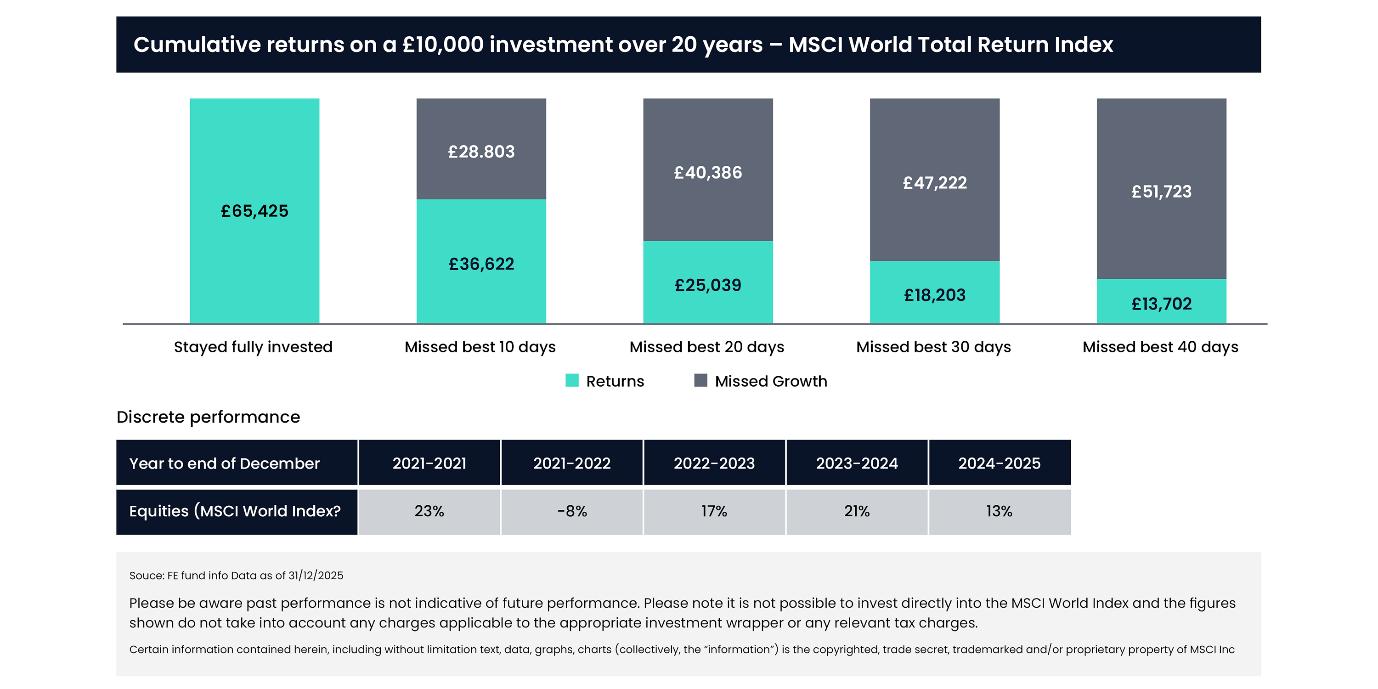
If you had invested £10,000 in the MSCI World Total Return Index 20 years ago and kept it untouched, your pot would have grown to £65,425. But if you instead chose to sell off and missed the 10 bestperforming days, your pot would have grown to £36,622, resulting in a £28,803 difference.
Making the most of ups and downs
It is no secret that volatility has a negative reputation, but its advantages are less well known and leveraged.
If you regularly put money into a pension or make other regular contributions across your investments, you are increasing your chances to benefit from one
of the effects of volatility. When volatility is high, investors tend to sell their assets, making prices go down. Conversely, in a lowvolatility environment asset prices tend to go up.
If you invest regularly, you are buying more of an asset when prices are lower and less of that asset when prices are higher. Buying cheaper assets during a downturn could result in quicker growth when markets begin moving upwards.
This strategy of investing a fixed amount at regular intervals is called pound cost-averaging. It has the potential to deliver growth as it reduces the risk of trying to
time the market.
Claire Trott, Head of Advice at St. James’s Place, says:
“For most of us, we receive a regular income so paying each month into our pension rather than waiting until the end of the year makes sense in many ways. Firstly, some of your funds will be invested for longer, and secondly, you can benefit from pound-cost averaging rather than taking the risk that at the end of the year will be the right time to invest.”
Many eggs, many baskets
There are ways for investors to reduce exposure to volatility, one of which is through portfolio diversification.
Diversification can be achieved in different ways. For instance, in an equities portfolio, diversification could happen through a combination of different sectors, industries or geographies.
But looking more broadly at what makes up a portfolio, diversification could mean a blend of different asset classes.
Concentration in a portfolio works as long as its assets are growing; but if these assets take a hit, there are no other parts of your portfolio to potentially offset these losses.
Diversification plays a part in managing the volatility of a portfolio by offsetting losses in one part with gains in other parts. For instance, a portfolio with investments exposed to different asset classes, such as equities and bonds, should have less exposure to volatility when it happens across specific parts of the market.
Many asset managers, including St. James’s Place, place diversification at the core of their investment principles aiming to improve investment outcomes. A financial adviser should be best placed to guide you through the best way to choose the right portfolio based on your appetite for risk.
At a glance
• You can help manage the volatility risk of your retirement portfolio by choosing the level of risk you are willing to take across your ISA, pension and other investment products. Diversification also helps to manage volatility risk.
• Even though volatility can be nerve-racking for investors, history suggests it is important to remain invested in tough times to benefit from the longterm gains of investing.
• Market volatility could potentially help those who make regular contributions to their investments accelerate portfolio growth.
The value of an investment with St. James’s Place will be directly linked to the performance of the funds selected and may fall as well as rise. You may get back less than you invested. Past performance is not indicative of future performance.
The favourable tax treatment of ISAs may not be maintained in the future and is subject to changes in legislation.
The information does not constitute advice and should not be relied on as such. It does not constitute a recommendation or an offer or solicitation. No responsibility can be accepted for any loss arising from action taken or refrained from based on this publication.
Certain information contained herein, including without limitation text, data, graphs, charts (collectively, the “Information”) is the copyrighted, trade secret, trademarked and/or proprietary property of MSCI Inc. or its subsidiaries (collectively, “MSCI”), or MSCI’s licensors, direct or indirect suppliers or any third party involved in making or compiling any Information (collectively, with MSCI, the “Information Providers”), is provided for informational purposes only, and may not be modified, reverseengineered, reproduced, resold or redisseminated in whole or in part, without prior written consent.
BLOOMBERG®” and the Bloomberg indices listed herein (the “Indices”) are service marks of Bloomberg Finance L.P. and its affiliates, including Bloomberg Index Services Limited (“BISL”), the administrator of the Indices (collectively, “Bloomberg”) and have been licensed for use for certain purposes by the distributor hereof (the “Licensee”). Bloomberg is not affiliated with Licensee, and Bloomberg does not approve, endorse, review, or recommend the financial products named herein (the “Products”). Bloomberg does not guarantee the timeliness, accuracy, or completeness of any data or information relating to the Products.
© S&P Dow Jones Indices LLC 2026.
Jon Cowgill BSc (Finance) Dip PFS Certs CII (MP & ER) Cowgill Wealth Management jon.cowgill@sjpp.co.uk 07411797581
Cyber Resilience: From Technical Issue to Business Priority
ANDREW HORKAN
Over the past year, cyber security has become one of the most significant risks facing UK businesses. What was once viewed primarily as an IT concern is now recognised as a business issue affecting operations, finances, reputation, customer trust and long-term growth.
Recent Government-backed research estimates that cyber crime costs the UK economy approximately £14.7 billion annually, while 43% of UK businesses reported experiencing a cyber breach or attack during the previous year. For medium-sized businesses this rises to 67%, and for larger organisations to 74%.
High-profile incidents affecting organisations such as Marks & Spencer and Jaguar Land Rover have highlighted the scale of disruption cyber attacks can cause. Beyond the direct financial impact, these incidents demonstrate how cyber risk can spread throughout supply chains, affecting customers, suppliers and business partners alike.
For many organisations, the challenge is no longer understanding that cyber threats exist. The challenge is understanding where risk exists within their own organisation and wider ecosystem.
Positive Progress Across Aspen Waite Clients
Over the past six months, Aspen Waite has seen encouraging improvements across its client base as organisations take a more proactive approach to cyber risk management.
Sector-wide improvements have been recorded across a broad range of industries (see table in next column).
These improvements reflect a growing recognition that cyber resilience is becoming a core element of business resilience.
Organisations are increasingly taking steps to improve visibility of risk, strengthen controls and address vulnerabilities before they become operational issues.
The Common Challenges Businesses Face
While progress is being made, several recurring themes continue to emerge across organisations of all sizes.
One of the most common issues remains weaknesses in email security, particularly where domain protection controls have not been fully implemented. Given that phishing remains one of the primary routes used by attackers, this continues to be an area requiring attention.
We also continue to see organisations operating with outdated web technologies and software components that contain known vulnerabilities. These can create unnecessary exposure if not actively managed.
Finally, infrastructure exposure remains a significant concern. Many organisations unknowingly leave systems, services or applications publicly accessible, creating opportunities for attackers to exploit weaknesses that could otherwise be identified and resolved.
Looking Beyond the Organisation
One of the most significant lessons from recent cyber incidents is that organisations are increasingly exposed through the businesses they depend upon.
Modern organisations operate within highly connected ecosystems of suppliers, software providers, outsourced services and technology partners. While these relationships create efficiency and growth opportunities, they can also introduce risk.
Understanding those risks has become increasingly important.
Through the use of the Cyber Tzar platform, Aspen Waite has been helping clients gain greater visibility of cyber risk across their wider supply chains, enabling businesses to identify potential vulnerabilities and take proactive action before issues develop into business disruption.
Aspen Waite has also applied the same approach internally, improving its own cyber resilience score from 587 to 851 through a structured programme of continuous improvement.
As cyber risk continues to evolve, businesses are increasingly recognising that improving security is only part of the challenge. They must also be prepared to demonstrate resilience, governance and accountability.
That focus is becoming increasingly important as the regulatory landscape continues to change.
Preparing for the Cyber Security and Resilience Era
The growing focus on cyber resilience is not being driven solely by increasing threats. It is also being driven by regulators, customers, insurers and investors who are demanding greater assurance that organisations can manage cyber risk effectively.
Across both the public and private sectors, expectations are changing.
Cyber security is no longer viewed simply as a technical control. It is increasingly being treated as a governance issue requiring oversight, accountability and ongoing management.
The Cyber Security and Resilience Bill
The UK Government’s proposed Cyber Security and Resilience Bill represents one of the most significant developments in cyber regulation in recent years.
The legislation is expected to strengthen cyber security requirements across the UK economy, with a particular emphasis on operational resilience, supply chain security and accountability.
While details continue to evolve, the direction of travel is clear.
Organisations will be expected not only to protect their own systems but also to demonstrate that they understand and manage cyber risks arising from suppliers, third parties and critical business dependencies.
The focus is shifting from compliance at a single point in time towards continuous assessment and ongoing resilience.
Increasing Focus on Directors and Boards
Another notable change is the growing expectation placed upon directors and senior leadership teams.
The UK Government’s Cyber Governance Code of Practice and wider regulatory guidance increasingly emphasise that cyber risk should be treated in the same way as financial, operational or legal risk.
Directors are expected to understand:
• Their organisation’s cyber risk profile
• The resilience of critical business services
• Supply chain dependencies and third-party risks
• Incident response and recovery arrangements
• The effectiveness of governance and oversight processes
Cyber risk is no longer something that can be delegated entirely to IT departments. It is becoming a board-level responsibility.
Moving Beyond Annual Compliance
Historically, many organisations have relied upon annual supplier questionnaires, certifications and periodic assessments to demonstrate cyber assurance.
While these approaches remain valuable, they provide only a snapshot in time.
Technology environments change continuously. Suppliers evolve, infrastructure changes, software is updated and new risks emerge.
As a result, organisations are increasingly moving towards continuous monitoring and evidencebased risk management rather than relying solely on annual reviews.
Building Long-Term Resilience
The organisations best positioned for the future will be those that view cyber security not as a compliance exercise but as a business capability.
Strong cyber resilience helps organisations:
Protect revenue and operations
Strengthen customer trust
Reduce supply chain disruption
Meet regulatory expectations
Improve governance and oversight
Enhance long-term business resilience
Cyber security is no longer solely about protecting systems and data. It is about protecting business continuity, reputation and growth.
As regulation evolves and threats continue to increase, organisations that take a proactive approach to cyber resilience will be better positioned to navigate change with confidence.
Through its own cyber improvement programme and its work with clients, Aspen Waite is helping businesses make that transition, turning cyber security from a technical challenge into a strategic business advantage.

This reflects a broader shift from compliancefocused cyber security towards operational resilience.
ANDREW HORKAN - CYBER TZAR

AI and the Future Accountant
WHY TOMORROW’S MOST VALUABLE PROFESSIONALS WILL COMBINE HUMAN INSIGHT WITH ARTIFICIAL INTELLIGENCE
Not long ago, artificial intelligence felt like something reserved for science fiction.
Today, it is writing reports, analysing data, answering customer queries, creating marketing campaigns and assisting businesses across almost every sector of the economy.
For accountants and business advisers, the question is no longer whether AI will impact the profession.
The question is how we adapt to it.
At Aspen Waite, we see artificial intelligence not as a threat to professional services, but as one of the most significant opportunities the profession has experienced in decades.
The Profession is Changing
For many years, accountants have been associated with compliance activities.
Bookkeeping.
Tax returns.
Accounts preparation.
Data entry.
Whilst these services remain important, technology has steadily automated much of the administrative work that once consumed large amounts of professional time.
Artificial intelligence is accelerating this transition.
Tasks that previously took hours can now be completed in minutes. Large volumes of information can be analysed almost instantly. Patterns, anomalies and opportunities can be identified faster than ever before.
The future accountant will spend less time processing information and more time interpreting it.
From Accountant to Strategic Adviser
The most valuable professionals of the future will not simply understand numbers.
They will understand businesses.
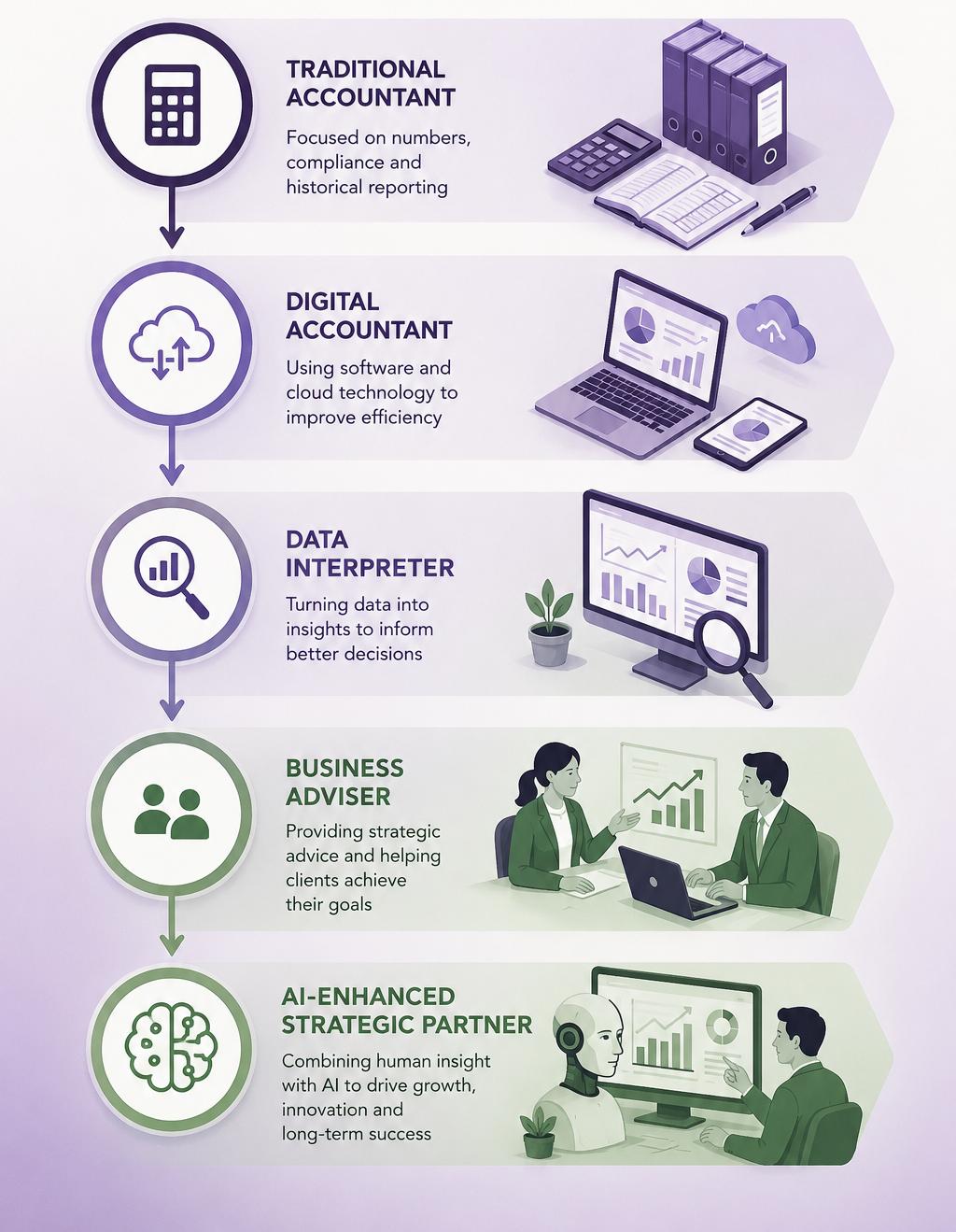
Clients increasingly require guidance on:
• Business growth
• Technology adoption
• Cyber security
• Sustainability
• Succession planning
• Funding and investment
• Process improvement
We must remember:
1. AI can generate information, but 2. It cannot replace experience.
3. It cannot build trust.
4. It cannot understand the ambitions, fears and motivations of a business owner sitting across the table.
Those human skills are becoming more valuable, not less.
DREW
Six Skills Every Future-Focused Professional Should Develop
1. AI Literacy
Every professional should develop a practical understanding of artificial intelligence.
This does not mean becoming a programmer.
It means understanding:
• How AI works
• Its limitations
• Data security implications
• Where it adds value
• Where human oversight remains essential
Those who understand how to work alongside AI will have a significant advantage.
2. Data Interpretation
Businesses are generating more data than ever before.
The challenge is no longer obtaining information.
The challenge is understanding what it means.
Future advisers must be able to identify trends, explain risks and transform raw information into meaningful business decisions.
Professional judgement remains essential.
Accountants and advisers must continue to challenge assumptions, evaluate risks and apply experience to every recommendation.
5. Continuous Learning Technology is evolving rapidly.
Skills that are valuable today may need refining tomorrow.
The professionals who thrive will be those who remain curious and committed to lifelong learning.
6. Relationship Building
Companies are already using AI to:
• Improve forecasting
• Streamline administration
• Enhance customer service
• Analyse markets
• Reduce repetitive tasks
• Support decision making
Those who embrace these tools responsibly are likely to gain significant competitive advantages.
However, successful implementation requires governance, security and clear strategic objectives.
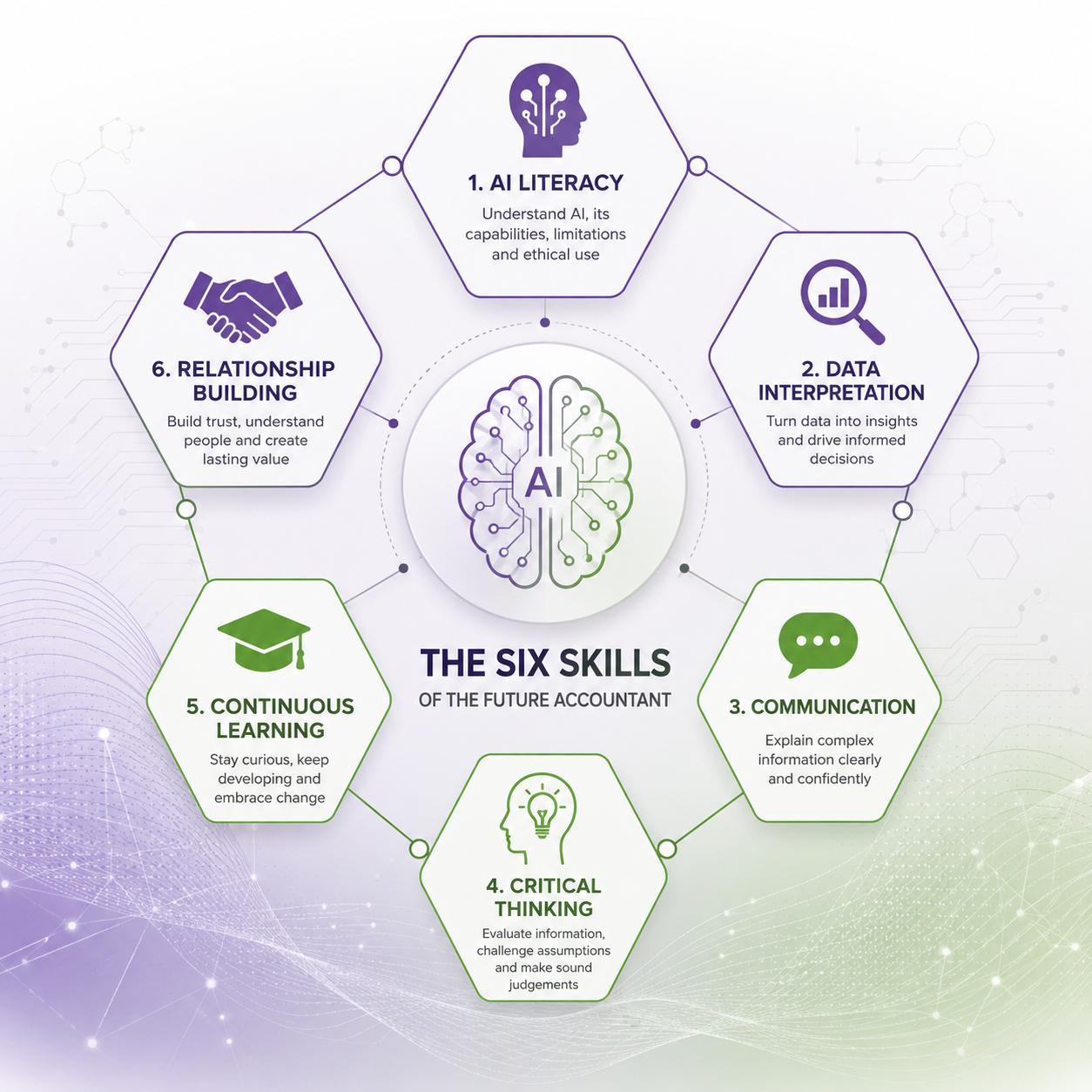
Trust remains the foundation of every successful advisory relationship.
3. Communication
One of the biggest misconceptions about technology is that technical knowledge alone creates value.
In reality, clients value clarity.
The ability to explain complex issues in simple language will remain one of the profession’s most important skills.
4. Critical Thinking
AI can provide answers.
It cannot always determine whether those answers are correct.
No algorithm can replace empathy.
No chatbot can fully understand a family business that has been built over generations.
Relationships will continue to differentiate great advisers from average ones.
Opportunities for UK Businesses
Artificial intelligence is not just transforming accountancy. It is reshaping businesses throughout the UK.
Technology alone is not a strategy.
It is an enabler.
The Human Advantage
Despite headlines predicting the end of traditional professions, history suggests a different outcome.
Technology rarely eliminates valuable expertise.
Instead, it changes how expertise is delivered.
The calculator did not eliminate accountants. Spreadsheets did not eliminate accountants.
Cloud software did not eliminate accountants.
Artificial intelligence will not eliminate accountants.
It will transform the profession and create opportunities for those willing to evolve.
At Aspen Waite, we believe the future belongs to professionals who combine technological capability with human insight.
The accountants of tomorrow will not simply manage numbers.
They will help shape decisions, solve problems and guide businesses through an increasingly complex world.
That future has already begun.
Drew Armstrong

The Invisible Economy: What Your Cash Flow Is Secretly Telling You About The Value Of Your Business
For decades business owners have been taught to focus on revenue. Grow sales.
Increase profits.
Reduce costs.
Improve margins.
While these metrics remain important, they often fail to explain a critical question:
Why do some businesses create wealth while others simply create work?
The answer increasingly lies inside what economists call the Intangible Economy.
The Economy Has Changed
Fifty years ago, the world’s largest companies were dominated by tangible assets.
Factories.
Machinery.
Property.
Inventory.
Today the opposite is true.
The majority of value created by leading businesses comes from assets that cannot be touched:
Data Brands
Intellectual property
Software
Customer relationships
Proprietary processes
Knowledge systems
These assets do not simply generate profits.
They create predictability.
And predictability creates value.
The Forgotten Asset Nobody Talks About
When investors evaluate a business, they rarely focus only on turnover.
Instead they ask:
“How predictable is the future?”
The more predictable a business becomes, the higher its valuation tends to be.
Yet one of the greatest predictors of future performance is often overlooked:
Cash flow behaviour.
Not cash flow itself.
Cash flow behaviour.
How customers pay.
When they pay.
Why they delay.
How frequently disputes arise.
How much management intervention is required.
How consistently cash converts from invoices into bank deposits. These patterns reveal the quality of the underlying business.
Every Invoice Tells A Story
Most companies view an unpaid invoice as an accounting issue.
Increasingly, AI reveals something much deeper.
An overdue invoice may indicate:
Customer dissatisfaction
Poor onboarding
Weak contract management
Pricing problems
Communication failures
Operational bottlenecks
Concentration risk
Process weaknesses
In other words:
Accounts receivable becomes a diagnostic tool for business health.
This is where Collect Solutions Ltd takes a fundamentally different approach.
Rather than simply chasing payments, Collects.io analyses behavioural patterns across the receivables process.
The objective is not merely to collect cash.
The objective is to understand what cash flow is trying to tell us.
AI Is Turning Cash Flow Into Intellectual Property
Historically, collections depended on human experience.
A credit controller might instinctively recognise warning signs.
Today AI can identify patterns across thousands of transactions simultaneously.
Collects.io has been built around the principle that cash flow contains hidden intelligence. Patterns.
Signals.
Behavioural indicators.
Operational weaknesses.
The system analyses dozens of collection scenarios and hundreds of resolution pathways to identify underlying causes before they become major problems.
What emerges is not simply better collections.
What emerges is a growing body of intellectual property about how businesses behave.
And intellectual property is the currency of the intangible economy.
From Collections To Valuation
This is where things become interesting.
Most business owners think cash flow and valuation are separate subjects.
They are not.
Businesses with predictable cash flow tend to enjoy:
Better lending terms
Higher investor confidence
Lower funding costs
Stronger growth capacity
Greater resilience during downturns
Ultimately, they become more valuable.
Predictability attracts capital. Uncertainty repels it.
Every day investors, lenders and acquirers make decisions based on perceived risk.
Cash flow behaviour is one of the clearest indicators of that risk.
The New Competitive Advantage
The next generation of successful businesses will not simply own better technology.
They will own better insight. They will understand: How customers behave
How money moves
How risk develops How value is created before competitors do. That knowledge becomes an asset. That asset becomes intellectual property.
And intellectual property becomes enterprise value.
Final Thoughts
The greatest opportunity presented by AI is not automation. It is visibility.
For the first time, businesses can see patterns that were previously invisible.
Collect Solutions Ltd was founded on a simple belief:
Cash flow is not just a financial outcome. It is a reflection of the health, resilience and value of the entire business.
The companies that learn to interpret those signals will do more than improve collections. They will build stronger businesses. Create greater wealth.
And thrive in the emerging intangible economy.
Matteo Turi FCCA
CFO | Valuation Architect | CoFounder, Collect Solutions Ltd
Modern Lead Generation:
Native Forms, Qualification and the Channels That Actually Convert
You already know that Facebook is a leisure platform, LinkedIn is where professionals present themselves, and Google catches people mid-search. The more useful question is: how do you engineer quality leads out of each, and what role does AI play in connecting the dots between acquisition and conversion?
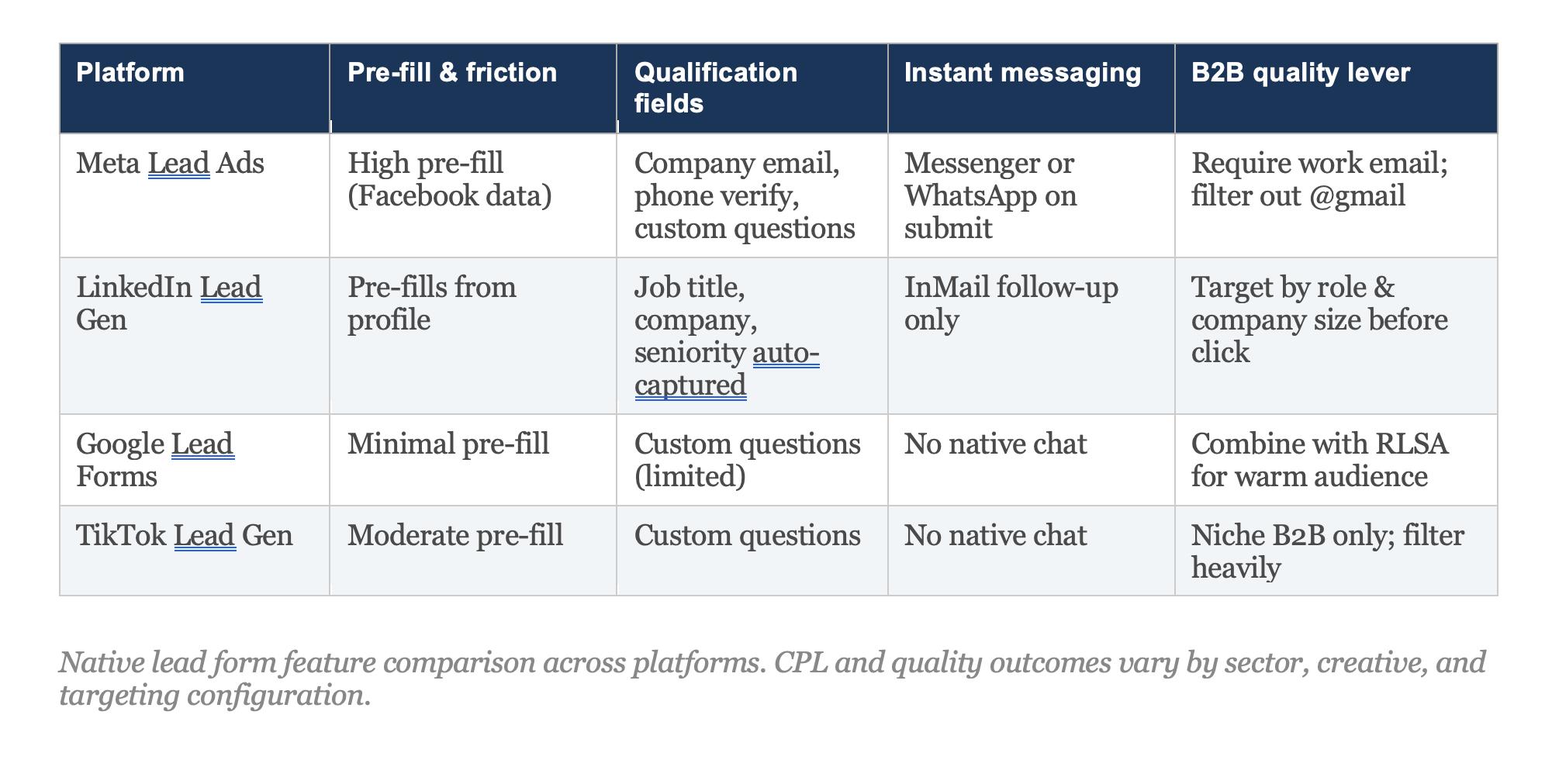
Native Lead Forms: Friction as a Feature, Not a Bug
Every major platform now offers a native lead form that keeps the user on-platform when they respond to an ad. The benefit is obvious: fewer steps means more completions. But for B2B advertisers, high completion rates are only valuable if the leads are worth having. The real skill lies in using the form itself as a first qualification layer.
Meta Lead Ads: Volume With Built-In Qualification
Meta Lead Ads allow you to add custom questions before the form submits. Requiring a company email address (and explicitly excluding free providers such as Gmail or Outlook in your instructions) filters out a significant proportion of casual responders. You can add a dropdown asking for company size, budget range, or purchasing timeline. Combined with Meta’s phone number verification option, this produces a warmer, more intentional lead at the point of capture. Critically, Meta allows you to trigger a Messenger or WhatsApp conversation the moment a form is submitted. A well-configured automated message along the lines of ‘Thanks for your enquiry, a member of our team will be in touch within two hours’ sets an expectation, keeps the conversation open on a channel the prospect already uses, and dramatically improves the odds of making contact before the lead goes cold.
The form is not just a data collection tool. Designed well, it is the first stage of your qualification process and the opening move in your follow-up conversation.
LinkedIn Lead Gen Forms: Quality Built Into the Platform
LinkedIn’s Lead Gen Forms pre-populate from the member’s profile: job title, company, seniority level and industry are all captured automatically. For B2B advertisers, this matters. You are not relying on self-reported form data but on the information a professional has chosen to present publicly.
The more important advantage, however, is what happens before the click. LinkedIn’s targeting allows you to restrict your ad delivery to specific job functions, seniority tiers, company sizes, and industries. By the
NORBERT JUHASZ
time someone sees your form, they have already passed a meaningful filter. A Managing Director at a 150-person UK manufacturing business does not see your ad by accident.
The limitation is cost and follow-up. LinkedIn does not offer native chat integration post-submission in the way Meta does. Your follow-up relies on email (captured in the form) or an InMail, neither of which carries the immediacy of a WhatsApp message. This makes your CRM integration and the speed of your sales team’s response more critical on LinkedIn than on any other channel.
Google Lead Form Extensions: Intent Without the Landing Page
Google’s Lead Form extensions attach a submission form directly to a Search or YouTube ad, removing the need for a landing page click. The advantage is capturing intent at its peak. The person is already searching for a solution, and the form removes the drop-off that a landing page click would otherwise introduce.
The qualification options are more limited than on Meta or LinkedIn, but they can be partially offset by pairing lead forms with RLSA (Remarketing Lists for Search Ads), targeting only users who have previously visited specific pages of your site or excluding audiences who have already converted. You are narrowing the pool before the form is even shown.
TikTok Lead Generation: A Specific Use Case, Honestly Assessed
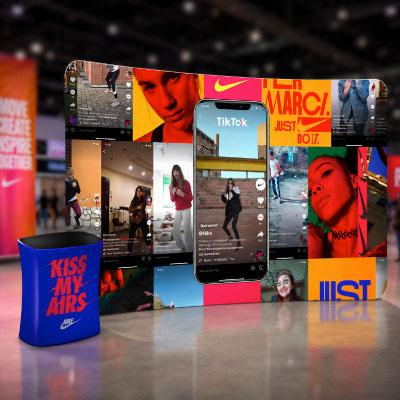
TikTok offers a Lead Generation ad format with pre-fill, custom questions, and reasonable completion rates. For most traditional B2B SMEs, it is not a primary channel. The audience skews younger, content demands are high, and CPL benchmarks for professional services are inconsistent.
Where it does have a legitimate role is in sectors where decision-makers happen to be active on the platform: creative agencies, tech startups, retail buyers, and hospitality operators. If your customer profile includes people in their late twenties to early forties in these sectors, TikTok warrants a small test budget. Treat it as a volume channel and apply the same qualification logic (custom questions, work email requirements) that you would use on Meta.
WhatsApp and Conversational Channels: The FollowUp Layer
WhatsApp is best understood as a post-capture channel rather than a lead generation channel in its own right. Meta’s Click-to-WhatsApp ads are the exception: they bypass the form entirely and open a WhatsApp conversation directly from an ad. These work well for service businesses where an immediate twoway conversation is more valuable than a structured data capture.
For businesses already using Meta Lead Ads, the WhatsApp integration via the Meta Business Suite or a third-party CRM connector (Escaler, HubSpot, Zapier, or a dedicated tool such as Respond.io) allows an automated opening message to be sent the moment a form submits. This is not a complex technical implementation, but it requires a connected WhatsApp Business API account, a setup step that many SMEs have not yet completed.
which new submissions most closely match previous converted customers so your sales team can prioritise accordingly.
• Automated but contextual follow-up sequences that adapt based on the prospect’s engagement, rather than sending the same email to everyone regardless of behaviour.
• Conversational qualification via AI chat, either on your website or within WhatsApp, where an AI assistant can ask a short set of qualification questions before routing the lead to a human.
The businesses generating the best-quality leads are not necessarily spending the most. They are qualifying earlier, following up faster, and using AI to handle the volume that their sales teams cannot.
Where AI Changes the Equation
Platform-level AI, including Meta’s Advantage+ and Google’s Performance Max, already handles delivery optimisation. The more significant opportunity is in what happens between form submission and sales conversation.
AI-powered outbound tools such as Escaler’s Prospecting Tool, Clay, Apollo with AI enrichment, or Seamless.AI can identify and pre-qualify prospect lists before you spend a penny on ads. They crossreference company data, technographic signals, and intent data to surface businesses that match your ideal customer profile. This is particularly useful for LinkedIn campaigns, where feeding a refined list into LinkedIn’s Matched Audiences feature produces sharper targeting than demographic filters alone.
Post-submission, AI adds value in three specific ways:
• Lead scoring against your CRM data, flagging
Choosing Your Configuration
There is no universal answer, but there are sensible defaults. For most UK B2B SMEs targeting established businesses, LinkedIn Lead Gen Forms combined with a fast email and WhatsApp follow-up sequence will outperform most alternatives on lead quality.
For volume at lower CPL, particularly where your audience is broader or your proposition has consumer crossover, Meta Lead Ads with strong qualification fields will deliver more pipeline for the same budget.
Google remains essential for capturing active, inmarket demand. TikTok earns a test if your sector and audience profile justify it.
And in every case, the configuration of your form, the speed of your follow-up, and the quality of your CRM integration will matter more than which platform you choose.
Author: Norbert Juhasz, Esemdee, Co-Founder
THE FAIR WORK AGENCY (FWA)
RHONA HOPE
The Fair Work Agency acts to protect workers, support fair competition and ensure employers comply with the law.
April 2026 launch under the Employment Rights Act 2025
The Fair Work Agency’s reach and capabilities will significantly impact businesses across the UK. This centralisation of enforcement and expansion of powers marks a pivotal shift, requiring businesses to be more vigilant than ever regarding compliance with employment law.
What’s changing?
A new government agency called the Fair Work Agency was launched on 7 April 2026. The Fair Work Agency will make it easier for employees to access help if their workplace rights aren’t being respected.
What the Fair Work Agency will do:
• Bring together enforcement of key workplace rights in one place.
• Work closely with ACAS (Advisory, Conciliation and Arbitration Service) to provide better support and guidance to workers about their rights.
• Investigate employers who break the law.
• Issue penalties to employers who don’t comply.
• Enforce rights including the national minimum wage.
What this means for you
The Fair Work Agency has real powers to investigate and take action.
Trade unions will have representation on the Fair Work Agency Advisory Board, ensuring workers’ voices are heard in how the agency operates.
The Fair Work Agency is now up and running.
From April 2026:
• The Fair Work Agency will publish guidance on its organisation page about how employees can contact them and raise concerns.
• Employees will be able to make referrals if they think their rights are being breached.
Territorial extent
The Fair Work Agency’s (FWA) remit combines the functions of the current state enforcement bodies, covering:
• The National Minimum Wage and the National Living Wage across the whole of the United Kingdom.
• Serious labour exploitation and modern slavery related offences currently tackled by the Gangmaster and Labour Abuse Authority (GLAA) in England and Wales.
• The gangmasters licensing regime across the whole of the United Kingdom.
• The regulation of employment agencies and employment businesses in England, Wales and Scotland currently enforced by the Employment Agency Standards Inspectorate (EAS).
The Fair Work Agency’s remit does not extend to:
• Modern Slavery offences are devolved in Scotland and Northern Ireland. The FWA will continue the GLAA’s close working with the police, local authorities and other relevant enforcement bodies in Scotland and Northern Ireland.
• Employment law is devolved to Northern Ireland. In line with the existing devolution settlement, regulation of employment agencies and employment businesses in Northern Ireland will continue to be carried out by the Employment Agency Inspectorate (EAI) within the Northern Ireland Department for the Economy.
• Enforcement of agricultural wages in Scotland, Wales and Northern Ireland will remain the responsibility of devolved governments.
What the FWA means for your organisation and how to stay compliant.
Before 7th April 2026, there was no single body to investigate a range of employment rights. Now FWA can inspect workplaces, enter business premises, examine documents and evidence, require individuals to provide documents or information or attend interviews and answer questions.
Civil penalty regime now applies to National Minimum Wage underpayment, the FWA can operate a civil penalty regime (modelled on the National Minimum Wage Act 1998) where enforcement officers can issue Notices of Underpayment for sick pay and holiday pay as well as NMW.
The FWA can now bring tribunal claims on a worker’s behalf and provide legal advice and assistance.
This means that from 6 April employers are legally required to keep records of annual leave for six years. Employers must be prepared to keep records of:
• Statutory and contractual leave entitlement
• Amount of leave taken
• How much leave an employee has left
• Pay associated with periods of leave
These records should be kept for six years
The FWA has extended enforcement powers, including those related to Statutory Sick Pay and some elements of holiday pay. It offers support to employers who want to comply with the law and can bring tribunal claims on behalf of workers who are not going to bring proceedings themselves. Additionally, the FWA can offer legal assistance with costs recoverable from “guilty” employers and pursue up to six years of underpayments of labour market costs such as holiday pay and sick pay, with additional financial penalties on employers. The FWA is part of the government’s Make Work Pay plan, which signals an intention to extend equal pay expectations to race and disability in the future .
Summary of What’s New? The Rise of the Fair Work Agency - Expanded Powers and Enforcement
• Streamlined Enforcement: The Agency will bring together existing bodies like HMRC and the Gangmasters and Labour Abuse Authority, creating a single, more efficient enforcement mechanism.
• Quicker Underpayment Recovery: It will possess enhanced powers to enforce statutory payments and recover underpayments, bypassing the often lengthy tribunal system for quicker resolution.
• Employee Representation: Crucially, the Fair Work Agency will be empowered to bring tribunal claims on behalf of individuals who are unable or unwilling to do so themselves. This dramatically lowers the barrier for employees seeking redress.
• Cost Recovery from Businesses: If a claim brought by the Agency is successful, it will have the power to recover all incurred costs directly from the business. This means non-compliance could lead to substantial financial burdens beyond just the compensation to the employee.
How to Prepare: Safeguarding Your Business
The introduction of the Fair Work Agency demands a proactive approach to employment compliance. Businesses must adapt their practices to mitigate the risks associated with these new, strengthened enforcement powers.
• Conduct a Compliance Audit: Thoroughly review all aspects of your employment practices, from contracts and payment records to working hours and leave policies, to ensure full adherence to
statutory requirements.
• Ensure Accurate Statutory Payments: Verify that all statutory payments (e.g., SSP, National Minimum Wage, holiday pay) are correctly calculated and paid on time to avoid potential underpayment claims.
• Review Dispute Resolution Procedures: Strengthen your internal grievance and dispute resolution processes to address employee concerns effectively before they escalate to the Fair Work Agency.
• Educate Management and HR: Ensure your management team and HR personnel are fully aware of the Fair Work Agency’s powers and the implications for non-compliance.
• Maintain Meticulous Records: Keep comprehensive and accurate records of all employee-related documentation, including contracts, pay slips, attendance, and performance reviews.
Proactive preparation is key to protecting your business from potential investigations, claims, and financial penalties from the new Fair Work Agency.
The arrival of the Fair Work Agency signals a new era of employment law enforcement. Don’t leave your business exposed to increased scrutiny and potential penalties. Aspen Waite People provides the up-to-date guidance, robust compliance tools, and expert advice you need to ensure your practices are beyond reproach.
The Fair Work Agency applies to every UK employer, regardless of size. Whether you have five employees or fifty, the same rules apply and the same inspectors can come knocking.
For SME owners and managers who are already stretched, that is an important change to understand.
The good news is that this agency is not targeting businesses that try to do the right thing. However, good intentions are not enough. If your records are incomplete, your holiday pay calculations are wrong, or your payroll processes have gaps, the Fair Work Agency will find them.
You didn’t start a business to become an employment lawyer. The Employment Rights Act 2025 adds layers of complexity to hiring and managing staff. Aspen Waite People acts as your virtual HR department, giving you the contracts, policies, and answers you need, so you can focus on growth.
Rhona Hope

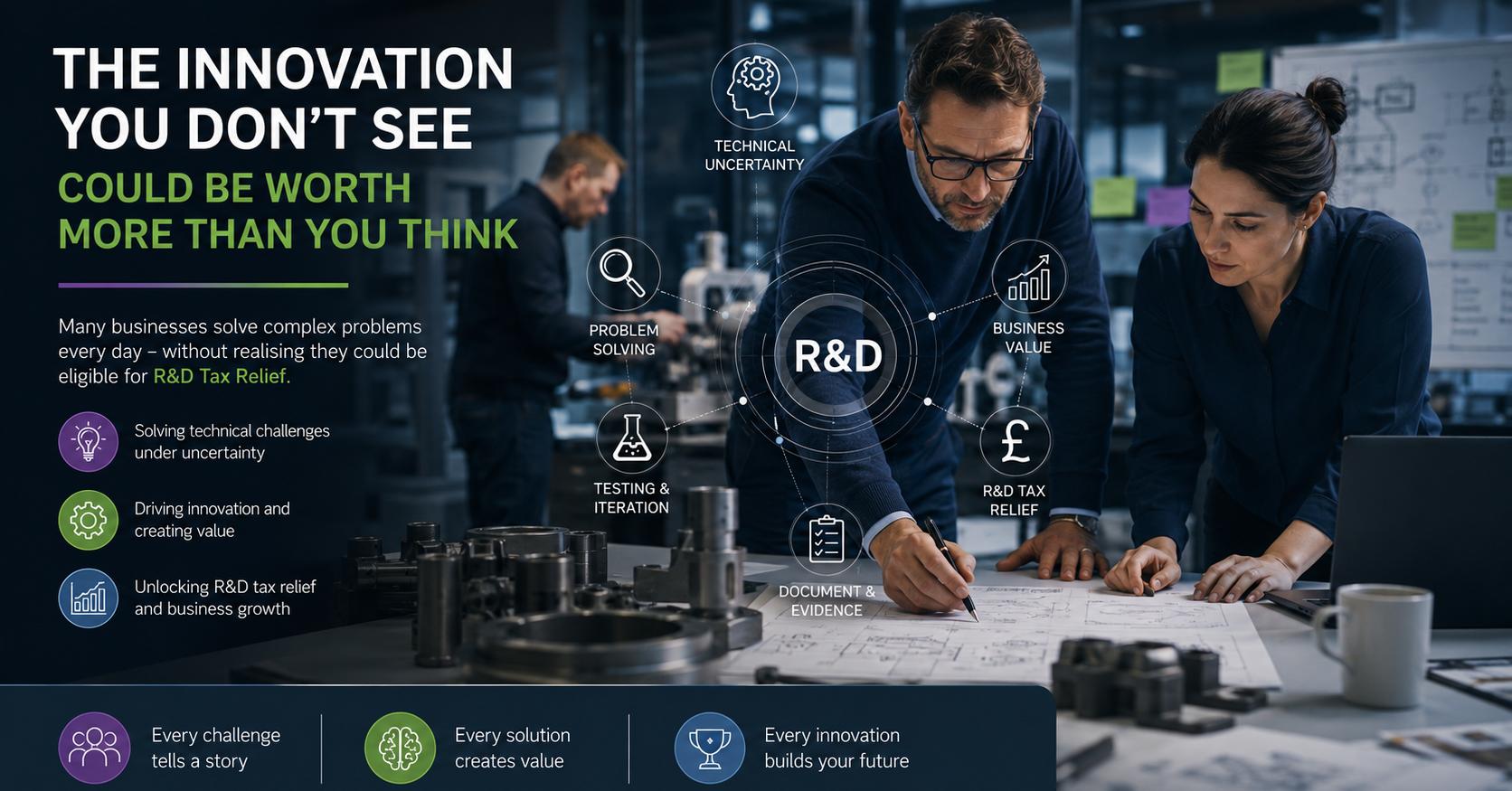
Where Businesses Unknowingly Leave R&D
Tax Relief on the Table
Innovation often exists within businesses long before it is formally recognised.
In a recent conversation with Aspen Waite Founder and CEO Paul Waite, Kay Chouhan explored why qualifying R&D activity is frequently overlooked, how technical problem-solving becomes embedded within day-today operations, and why recognising innovation is about far more than tax relief alone.
Drawing on Paul’s experience supporting businesses across a wide range of sectors, the discussion revealed how hidden innovation can influence not only tax relief claims, but also business value, investment potential and long-term growth.
Based on that conversation, Kay shares her insights below.
The core issue: R&D is usually invisible while it is happening
Most businesses are not consciously trying to do R&D. They are trying to solve operational or technical problems.
At the point work begins:
1. there is often no clear known solution
2. teams are working through uncertainty
3. and outcomes are achieved through testing, iteration, and adjustment
Once resolved, the solution becomes embedded into “business as usual”.
At that point, the original uncertainty is rarely captured or visible.
Where qualifying R&D typically sits in practice
Paul referenced situations across multiple sectors where qualifying activity emerged inside very normal commercial environments:
1. engineering and glass technology where molecular structures were being altered to create shatterresistant products
2. food manufacturers developing lactose-free ice cream alternatives for Asian markets
3. breweries changing production methods to achieve outcomes not previously possible
KAY CHOUHAN
4. construction-related projects where teams had to develop solutions for contaminated building sites when no obvious method existed at the outset
In each case:
1. the commercial objective was clear
2. but the technical route to achieving it was not
That distinction — between commercial intent and technical uncertainty — is where qualifying R&D often begins.
The HMRC distinction
From an HMRC perspective, the key question is not whether something is innovative in a broad sense.
It is whether:
at the start of the work, there was genuine technical uncertainty that could not be resolved using readily available knowledge or established approaches.
Not all improvement qualifies.
Routine optimisation, efficiency gains, or incremental operational improvements often sit outside the scope.
R&D generally begins when:
1. the outcome is not technically known at the outset
2. existing approaches are insufficient
3. and experimentation or technical iteration is required to reach a solution
Why this is often missed
Most businesses don’t miss R&D because it isn’t happening.
They miss it because it sits inside normal operational language:
1. operations see “fixing and delivery”
2. engineering sees “problem-solving or adoption”
3. finance sees outputs and cost centres
But the underlying uncertainty — the part that matters for R&D — is rarely captured while the work is happening.
So later, when businesses assess eligibility, they are often reconstructing activity without the original context.
Where this becomes strategically important (not just tax)
This is also where the conversation extends beyond tax into corporate development and value creation.
Paul highlighted that in some cases — particularly in acquisitions — businesses are bought without fully recognising the embedded technical work that has taken place over time.
In other words:
1. acquired companies may have been solving complex technical problems for years
2. without ever formally identifying parts of that activity as qualifying R&D
3. meaning the underlying innovation profile of the business is not fully visible at point of transaction
This creates an important question at board level: how much technical capability and problem-solving capacity is embedded in a business but not reflected in its financial or operational narrative?
For investors and acquirers, this is not just a tax question — it becomes part of understanding:
1. operational maturity
2. technical depth
3. and hidden drivers of value creation
What you should look for internally
A practical way to surface potential R&D activity is to look for where teams had to “work something out” rather than execute a known process.
Key signals include:
1. work began without a clear technical solution
2. multiple approaches were tested before success
3. constraints required experimentation to overcome
4. outcomes were not achievable using standard methods at the start
If these patterns exist, the next question becomes whether they are being consistently captured and assessed through the correct lens.
In
many cases
The issue is rarely the absence of innovation. It is visibility.
And visibility affects three things at once:
1. R&D tax relief recognition
2. operational learning and repeatability
3. and how the business is perceived in a transaction or investment context
In many cases, these are not separate conversations. They are different expressions of the same underlying reality: how the business solves problems under uncertainty.
Closing remarks
Most mid-market businesses are doing more technical problem-solving than they formally recognise.
The opportunity is not to “find R&D”.
It is to recognise where it already exists — while the uncertainty is still visible — and ensure it is properly understood not only for tax purposes, but also for how the business is evaluated strategically over time.
Because in many businesses, innovation is not missing. It is simply not yet fully visible in the language used to describe how the business actually operates.

A Farewell to a Great Man Remembering George Farwell
George Farwell touched the lives of countless people throughout his 93 years. Following his passing in May 2026, Tina Fincham and Karen Mustey share their reflections on a remarkable man, his final farewell and the legacy he leaves behind.
TINA FINCHAM
On 8 June 2026, Carl and I had the privilege of attending the funeral of George Farwell on behalf of Paul Waite and Aspen Waite.
The day began with outbreaks of rain and a chill in the air, but despite the weather there was a strong sense of warmth amongst everyone who had gathered to celebrate George’s life.
The funeral took place at St Mary Magdalen Church in New Milton and was attended by around 450 mourners, a true reflection of the respect, admiration and affection George inspired throughout his life. His popularity within both the business community and his personal circles was evident from the sheer number of people who came to pay their respects.
George arrived in a way that was perfectly fitting for the life he had led. Rather than a traditional hearse, his coffin was transported on a low loader and accompanied by two further low loaders and a digger. It was a wonderful tribute to the industry he loved and the legacy he leaves behind.
The service was full of touching memories and stories. We learned more about George’s passion for Southampton Football Club, a team he followed with great enthusiasm. Many mourners wore red and white in recognition of his love for the club, while others wore green to represent their connection to the business. As George entered the church to the sound of When the Saints Go
Marching In, there were many smiles amongst the congregation. It was also lovely to hear stories about George’s love of shooting. His grandsons shared fond memories of the advice, encouragement and wisdom he passed on to them over the years. These stories painted a picture of a man who not only achieved great success but also took the time to teach, support and inspire those around him.
The eulogies were delivered by Adam Farwell, Robert Guppy, John Oliver, who had been George’s solicitor for many years, and Karen Mustey, George’s PA and friend. Each tribute was heartfelt and informative, revealing different aspects of George’s character and allowing everyone present to appreciate the remarkable life he had lived.
As the service drew to a close, Michael Holliday’s The Story of My Life played as George made his final departure from the church. It was a beautiful choice of music and seemed to perfectly capture the story of a life well lived.
George’s coffin was then returned to the low loader and departed to applause and cheers before making its way to the cemetery for a private burial and his final resting place.
The wake was held at The Retreat in the New Forest, where friends, family and colleagues gathered to share memories and express their gratitude. Many spoke about
the opportunities George had given them, the people he had employed, and the support he had shown to so many families over the years. By then the sun had emerged, bringing a sense of comfort to what had been an emotional but uplifting day.
It was truly a fitting farewell for a great man.
George lived by a simple but powerful principle:
“Do unto others as you would have done unto you.”
It was more than just a saying; it was a philosophy that guided the way he lived his life and treated those around him.
George also chose these words as the title of a book he wrote to leave as part of his legacy. Paul Waite has been honoured with a special copy of the book, which serves as a lasting reminder of the values George held dear.
I have to say it was a beautiful service and one that touched my heart deeply. There were certainly a few tears along the way, but also many smiles as people reflected on the memories they shared with George.
Goodbye George. Rest in peace and Godspeed.
Tina Fincham
Remembering George Farwell A Personal Reflection
KAREN MUSTEY
George Farwell was a huge part of my life for many years.
We shared a love of nature, animals, gardening, the New Forest and, perhaps most importantly, the same wicked sense of humour.
Over the years, George became far more than a colleague or employer. He was my closest friend, my advisor, my confidant and, as I often joked, my “number two husband”. He taught me to shoot, introduced me to countless wonderful people, showed me everything there was to know about growing vegetables and, on occasions, happily organised my life for me.
He also drove me mad from time to time.
But I would not change a single moment of the years we shared.
George was special because he had a remarkable ability to keep people grounded. He taught me patience, encouraged me to be more forgiving and always reminded me to look at the bigger picture.
He was a man of his word. His handshake meant something.
His loyalty was unwavering.
And his heart was as big as a house. One of the reasons we worked so well together was that I was never afraid to challenge him. I was certainly not a “yes person” and George respected people who were prepared to speak honestly and stand their ground. We did not always agree, but we always respected one another.
That was George.
Strong-minded, determined and successful, but always willing to listen.
Many people knew George as a businessman. Others knew him as a councillor, a mentor, a supporter of local causes or a lifelong Southampton Football Club fan.
I knew him simply as George.
The man who cared deeply about his family, his friends, his staff and his community.
The tributes paid at his funeral reflected exactly that. The hundreds of people who attended, the stories that were shared and the respect shown throughout the day demonstrated just how many lives he touched.
Even in the weeks before his passing, George was thinking about others. Shortly before his death, he gathered his workforce together to thank them for their loyalty and hard work and to reassure them that their jobs would remain safe and secure after he was gone. That simple act said everything about the kind of man he was.
George often lived by the saying:
“Do unto others as you would have done unto you.”
It was not merely a phrase he liked. It was the way he lived his life.
He even chose those words as the title of the book he wrote as part of the legacy he wished to leave behind.
George was respected by many, admired by many more and loved by countless people whose lives he touched over the years.
He will be missed far more than he ever realised.
Thank you, George, for your friendship, your wisdom, your humour and your kindness.
Rest in peace.
Karen Mustey
A Year of Work Experience with Aspen Waite
I’ve been doing work experience at AW for the past year, and it’s been an experience I’ve truly loved. It has opened up so many opportunities that I never would have had otherwise and has helped me grow both personally and professionally. Through my time here, I’ve gained confidence in myself and my abilities, and it’s helped shape the direction I want my future to take.
Everyone at AW has been incredibly welcoming, supportive, and encouraging. I’ve always felt comfortable being myself, and I’ve never felt judged or out of place. Calum has been especially understanding and supportive throughout my journey. Whenever I make mistakes, he takes the time to explain what went wrong and helps me learn how to improve for next time, which has really helped me develop my skills and confidence.
I’ve really enjoyed being part of Russian Roulette with Calum, discovering new music and exploring genres I may never have listened to otherwise. Alongside this, I’ve been involved in scheduling shows, inputting music into the system, and editing tracks when needed for broadcasting. One of the biggest highlights for me has been having the opportunity to host my own show, Good Times. Creating and developing my own show has given me valuable hands-on experience in presenting and producing content that connects with listeners. It’s taken a lot of learning, self-reflection, and fine-tuning, but I’m now at a point where I’m genuinely proud of what I’ve created, and I’m excited to keep building on it.
Recently, I was nominated for — and won — the Pride of Somerset Youth Art and Culture Award 2026. My college teacher
IMOGEN LEGG
nominated me because they were proud of the progress I’ve made through my work experience at AW, the confidence I’ve gained, and everything I’ve been able to achieve during my time here.
It was an incredibly proud moment for me, and I honestly wouldn’t have been able to achieve it without the support, guidance, and encouragement Calum has given me throughout the past year.
Looking ahead, I hope my experience at AW will continue to help me grow within the industry and allow me to find my place in the world of radio and broadcasting.
Imogen Legg Media Student at Bridgwater & Taunton College

A Year in the Life of Rosie Wall
RELATIONSHIP AND BUSINESS DEVELOPMENT MANAGER AT ASPEN WAITE 2025-2026
ROSIE WALL

The “Macro” Role of Relationship and Business Development Manager, as I see it, is diverse and wide ranging, from Client Prospecting, acquisition and retention to surveying Client Needs, offering business solutions and introductions, including the provision of conflict resolution and positive networking. Often presenting and pitching the company ideology/ethos, as well as offering services and products the focus in cross and upselling remains on “Value added” and “Value offered”.
Much of the “Micro” day to day work of the Relationship manager is ensuring paperwork and key prospects are being briefed/ kept in the loop/reminded. This requires a soft touch, detailed knowledge of the products and services and the ability to assess for tailored engagements and introductions. This requires ongoing detailed research as well as very active listening, empathy and support and rapid response thinking.
Conclusively, informed data analysis and reporting of metrics also play a part in feeding back
to Management. Crucially the role very much focusses on retaining Client loyalty and Client buy ins. This is in tangent with providing improved client services and a longer company lifetime investment. This valuable contribution aids both our own and our Clients growth equally. The Notable AW Management Developments I have been proud of in 2025-2026 have been:
Maintaining and Developing Existing and Fresh Business Relationships
Contacting and identifying customer/client needs through outreach by telephone, in person and via Teams closely supporting Mark Waite, Chief Operating Officer.
Proofing and developing an updated AW Services Brochure and Web Link with Emily Waite, Social Media Manager and Craig Arthur, Head of IT, towards these aims.
I have also felt very proud to be working with Head of Operations and Co-founder Norbert Juhasz and CEO and Co-Founder Andras Tasi at ESEMDEE in Streamlining Marketing and Sales, targeting different business sectors with bespoke areas of interest. Also my work with the Cyber Tzar Team, CEO Andrew Horkan, Martin Stevenson COIO and Ryan Jones, SPM.
Streamlining Marketing and Sales: We have honed a single use unified Client Database to work from a central point from within Escaler. Working alongside our resident expert Norbert, we have developed a targeted Marketing Campaign Plan for 2026 with the full range of our services & have systematically timed bespoke mail shots.
We have developed and brokered day to day, week to week relationships with our larger allied
companies such as Cyber Tzar on Cyber Security with weekly debriefs.
We have deepening Partner Relationships, sharing information on behalf of all our Experts: Beattie Partnerships, Beaumont Recoveries, Concorde Insurance, Elev8, GEAB, Octopus, PRM Waste Systems, Satellite Finance Solar Southwest, Storm Saver, Sustainable Energy Finance, World Pay.
We have succeeded in offering Client Business Planning Advisory money savings in the following areas including for Sustainability Planning:
• Cyber Security with Cyber Tzar.
• Retrospective Energy and Water. Audits, including reviews on usage.
• On site energy generation (including Solar Panels/Ground Mounts/Vehicle Charging.
• Aerobic and Anaerobic Food digesters.
• Business Rates and Insurance.
• Capital Claims on properties purchased prior to 2014 including industrial units.
• On-Line Staff Training for Carbon Literacy to acquire the “Carbon Literate” certification on your website.
• Card Payment Reductions with App for contactless payments.
• Escaler CRM Platform for Marketing and Sales.
• Electric Vehicle Salary Sacrifice with Fuel Card Account.
• Aspen Waite People HR Service Provider.
• Multicurrency account platform with fixed exchange rates.
• Merchandise and Promotional Material.
Consequently, we have successful engagement in a variety of business sectors including Farms/Schools/Car Dealerships/ Nurseries/Hotels/Cafes/Breweries/ Racing Stables and Wholesalers to name but a few. We are progressing sales across the line for 15 on going outstanding cases including 30 being taken to sales point working from across multiple domains.
We have developed and shared AW Socials across LinkedIn including sharing with our partners such as Cyber Tzar as well as our Team Experts.
Planning
for Developed Business Structures and Operations for Aspen Waite
We have enjoyed “Think tanking” ideas on Company unification in relation to payroll and debt collection and taken pride in our discussions and participation in
targeted working groups. We have established a refreshed whole staff buy in and interest in BD and Sales with the monthly sales meetings *Agenda/Minutes/ Action lists – sharing also for sales and promotion the AW Magazine. Streamlining protocols and operations we have-supported the introduction of Blip within Bright HR – daily check in and out for Staff and intend on developing a more detailed “Meet the Team” Bio for staff members both for the AW Magazine as well as the Website. This has been very much a sense of -refreshed re-branding as per Paul’s longer-term vision.
No two days are the same and my working relationship to support Paul with his overall Company visions as CEO and with Mark as Chief Operating Officer is an on-going joyful and productive professional experience. We believe the best is yet to come and the secret to our success is “whistling whilst we work”! If I were
to compare how were to “a dance”, I would say somewhere between the Tango and the Quick Step but not discounting the Jive!
Rosie can be contacted @: Rosie.Wall@aspen-waite.co.uk
Mobile: 07958225961
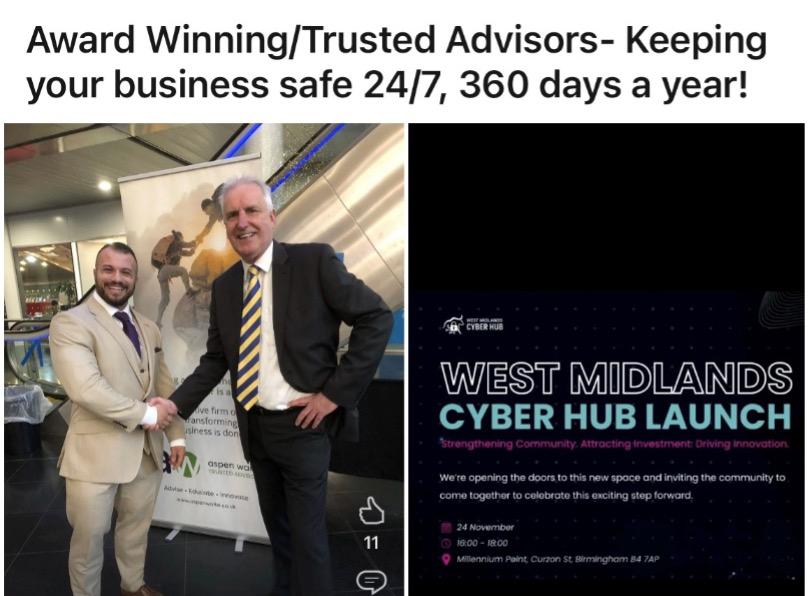
Reinventing Vinyl for a Sustainable Future
THE STORY BEHIND EVOLUTION MUSIC, EVOVINYL AND BRIGHTON VINYL
MICHAEL DEARSLEY
Evolution Music and Brighton
Vinyl started in the same place: a love of music and a genuine concern for the planet it exists on. The founders came from Roulette Records, an independent label, and it was through that work with artists that the problems became harder to ignore. The most immediate was the material sitting at the heart of every vinyl record, PVC, one of the most environmentally damaging plastics in existence. That observation became a mission, and that mission became Evolution Music, an avenue for research and development into sustainability within the music industry. Brighton Vinyl grew from the same instinct. When the opportunity arose to take on the historic Engineerium site in Brighton and Hove, it felt like the right space for something that had been missing: a genuine home for music and sustainability, built around a state-of-the-art pressing plant and designed as a complete ecosystem for musicians and artists at every stage of their journey.
Evolution Music
Evolution Music was founded around the need for environmentally friendly alternatives in the music industry. Coming from an independent record label, the idea of working with grassroots ethics is built into the ethos. The Directors reflect that. Marc Carey, our CEO, brings a career that spans both the music industry and the sustainability sector, the combination that sits at the heart of everything Evolution Music does. Simon Green, our Commercial Director, brings extensive marketing experience across multiple industries and leads on how we take Evovinyl to market. Kevin Da Costa contributes deep expertise in
vinyl pressing, giving the team the technical grounding to ensure that what we develop actually works within the realities of modern production. And holding the financial side of both Evolution Music and Brighton Vinyl together is Paul Waite, our CFO, whose firm Aspen Waite has worked alongside us for eight years, handling accounts, payroll, and the R&D tax credits that have played a meaningful role in funding the Evovinyl development journey. It is the kind of long-term partnership that matters more than it might sound, particularly for a small company doing something that has never been done before.
EvoVinyl
The first of those is Evovinyl. A plastic-free alternative to traditional PVC vinyl, developed from scratch rather than modified from existing compounds. That distinction matters. Most bioplastic alternatives on the market still contain harmful chemicals and fossil fuel derivatives. Taking a PVC-based formula and changing one element of it, which addresses the optics without addressing the problem. PVC itself is considered one of the most environmentally damaging plastics in existence. Across its full lifecycle (production, use, and disposal) it releases toxic chlorine-based chemicals and is one of the world’s largest sources of dioxins. Those toxins accumulate in water, air, and food chains, and are linked to cancer, immune system damage, and hormone disruption. Evolution Music didn’t want to make a slightly better version of that. They wanted to replace it.
Instead, Evovinyl is developed using plant-based polymers and entirely natural materials such as sugarcane and other agricultural
waste products to create an entirely new compound that matches the physical and sonic qualities of PVC without carrying its environmental cost.
Part of making that switch viable at scale is removing the barriers that would stop people from making it. Which is why Evovinyl is fully compatible with all modern pressing machines, hand presses and autopresses. Artists, labels, and pressing plants can move to Evovinyl without changing their equipment, their workflow, or their expectations of the finished product. That was a deliberate decision and part of the goal toward short-term, immediate solutions to the sustainability problem.
Collaborators
The artists and organisations Evolution has worked with reflect both the breadth of interest in what they are building and the seriousness with which the music industry is beginning to engage with sustainability. Artists who have released Evovinyl products include Coldplay, Nile Rodgers and Chic, Camila Cabello, Michael Stipe, Brian Eno, Franc Moody, Beatie Wolf, Hot Chip, Future Utopia, Will Spence, and Fatboy Slim. A range that spans genres, generations, and audiences, and demonstrates that the appetite for a sustainable alternative is not limited to any one corner of the industry. On the label and industry side, Evolution Music has built relationships with Secretly Group, Ninja Tune, Music Declares Emergency, Earth Percent, and Bye Bye Plastic. Organisations that between them represent a significant portion of the independent sector’s sustainability thinking and are actively working to change how the industry operates.
The aim is to make the material as available as possible, an early decision Evolution Music made was removing any chance of exclusivity with any particular label and opening the door for independent artists to gain access.
After years of development, Evovinyl has now reached full commercial availability with a plastic-free compound that is physically and sonically indistinguishable from traditional vinyl. That is not the end of the work. They are continuing to develop the material for use with experimental pressing techniques such as injection moulding, working with innovators such as Good Neighbour Records on what the next generation of vinyl manufacturing could look like. They are also conducting a full lifecycle analysis on the latest variant to understand where further improvements can be made and how they can continue to reduce Evovinyl’s environmental footprint. Alongside all of this, they are exploring future research and development into projects like environmentally friendly cabling as the next step in addressing the broader material impact of the music industry.
Brighton Vinyl
Brighton Vinyl is housed within the British Engineerium, a Victorian industrial landmark in Hove that once powered the city through steam. It is an unlikely home for a
record pressing plant, and that is precisely what makes it the right one.
Brighton and Hove has always had a particular relationship with music, creativity, and independent thinking. Brighton Vinyl is built around that culture rather than despite it. At its core is a stateof-the-art pressing plant, but the ambition goes further than pressing records. The space functions as a venue for events and workshops, with plans in development to create a full endto-end workflow for artists, from recording through to the finished pressing, all under one roof.
That connection to Brighton’s music community is already taking shape. Through the work of Evo and BV’s CTO (Kevin DaCosta) the team have now built relationships with artists who call the city home, and those relationships are carrying over into Brighton Vinyl. Fatboy Slim immediately saw the potential of Brighton Vinyl and the unique space that is the Engineerium. A fitting collaboration given his place as the unofficial King of Brighton, his influence on the musical identity and his long-standing connection to the city. It is the kind of partnership that reflects what Brighton Vinyl is trying to be: not a facility that exists at a distance from the community around it, but one that is genuinely embedded in it.
The building itself is as much a part of the project as what happens
inside it. There is something deliberate about taking a space with genuine historical and cultural weight and filling it with something that looks forward. Brighton Vinyl is not trying to be a heritage project, but it respects what the Engineerium represents and is committed to preserving it. The goal is a space where the musical community can work, collaborate, and grow, one that fits into Brighton’s long tradition of doing things differently, without making a performance of it.
Make Music Better
Evolution Music and Brighton Vinyl are two different expressions of the same belief. That the music industry is worth investing in, and that investing in it properly means being honest about what needs to change. One is rethinking the materials that records are made from. The other is building the kind of space that independent music has always deserved. Neither is a finished project. Both are moving in the right direction. The work continues, and there is a great deal still to do, but the foundations are in place, and the people building on them care about getting it right.
If you are an artist, label, pressing plant, or simply someone who cares about the future of music and the planet it exists on, we would love to hear from you. Get in touch or visit www.evolutionmusic.co.uk to find out more about Evolution Music and Evovinyl.
Rosie Wall and Marc Carey Collaborate At Art and Multi-Media Exhibition – Sandwich,Kent
Following my last Arty entry to the AW Spring Magazine, just an update with my Art Exhibition Act 3 Scene 2, which I consider to have been a triumph and long held life’s ambition. The exhibition was held at St Mary’s Church Sandiwich, Kent and was an Arts Community collaboration and Community Event hosted by myself and Marc Carey at Deal Radio, featuring Marc’s New Age podcast “The Universe Journey”. The private view performance as an instillation, immersive experience was a true artistic multiMedia collaboration.
Before the event, we spared no effort to suspend 12 linen paintings, each measuring 5 ft by 6 ft, from the church rafters. Hanging them took three men, a three-storey tower moved nine times, and a total of 10 hours. It was a true labour of love and the fulfilment of a vision developed over three years. The oil paintings were created on both sides of the linen so that light could pass through and make them visible from either side.
The theme of Act 3, Scene 2 reflects both the theatrical nature of the exhibition and my 25 years of teaching English and Drama. Exploring birth, life, death, and legacy, it aimed to convey a powerful message: that we should use our energy well and leave a positive mark on the world. Marc’s music used philosopher’s voice overs to transcendental sounds.
Long listed for the Jackson’s 2025 Prize, three pieces were around the lamentation of global conflicts and many other paintings about the mysteries of the Universe. My influences were 19th 20C and 21C expressionists such as Gorky, Kandinsky, Appel, Strasner, Matisse, Soutine and contemporary Australian Artists such as Elizabeth Cummings and Paul David Higgs.
Four paintings were sold, but I am still searching for a studio—or a sponsor to help fund a home studio on site.
Sending you all Summery Arty-ness from myself and the Aspen Waite Team!
ROSIE WALL - RELATIONSHIP AND BUSINESS DEVELOPMENT MANAGER


JOIN THE WORLDPAY COMMUNITY WITH

WHO ARE WORLDPAY?


Worldpay powers businesses of all sizes to make, take and manage payments. They are a global leader in financial technology with unique capabilities to power omni-commerce.
Whether online, in store or mobile, you’ll find Worldpay at the heart of great commerce experiences in 146 countries and across 135 currencies They help their customers become more efficient, more secure and more successful They support over 1 million merchants with over 40 billion transactions globally & are committed to helping businesses both large & small They have the expertise to help you find the best payment solutions for your business
WHAT MAKES A GOOD LEAD?
Does your business accept card payments?
If so, do you accept card payments in multiple ways, for example face-to-face, online and over the phone?
Did you see an increase in card payment volume from the pandemic? Is your business experiencing an increase in card transaction volume and value?
An increase in card transactions may allow you to have a better pricing plan Worldpay offers custom pricing to meet your unique requirements
Are you new to card payments? Are you looking for a new card payment provider?
Are you a newly established business who needs a card payment solution? Are you looking to process new card payment methods?
WorldPay has rich payment solutions for different payment demands. Their expertise can help you find the right solutions
Are you looking for a more efficient & secure payment platform?
WorldPay offers a service with purpose, delivering solutions that are simple, seamless and secure
Do you use a different payment supplier for face-to-face and online?
If so, a single supplier for card payments may offer a smoother process across different payment channels and you may be able to save costs from consolidating payment service suppliers.
Is the business trading?
Even if the business isn’t trading yet, if you will be within 6 months, we still want to speak to you.
Are you the decision maker?
It’s great if we can have a conversation with the decision maker – we want to be able to offer a great deal and get a ‘yes’ there and then
What time is best to call?
Running a business means you are going to be extremely busy most of the time. We want to speak to all of our potential customers at a time that’s convenient to you.
INTERESTED TO FIND OUT HOW WORLDPAY CAN HELP YOUR BUSINESS?
Complete the form below:
https://ow.ly/xUz550SyOMc
The Travel Tapes
Finding Joy in the Journey
As the sun shines, the footballs get kicked and the familiar chorus of Brits insisting that it might just be a bit too hot rears its head once again, I’m down here in Australia preparing for our Christmas in July.
My name’s Nathaniel, and I’ve been a presenter on AW Radio for the past five years. For much of the last year I’ve been travelling, sharing stories from the other side of the world every Thursday evening.
In the previous editions of this magazine, I’ve reflected on some of the lessons I’ve learned throughout this journey. I’ve written about finding beauty in the small things and pushing through difficult moments. This time, however, I want to talk about something a little different.
For the first time, the end is beginning to feel real.
With each passing day, I find myself becoming more aware that my time here is running out. The trips are becoming fewer, the countdown is getting shorter, and the chapter I’ve spent months building is slowly approaching its final pages. To be honest, it’s something that I’m still currently coming to terms with myself.
It’s strange to have once more built up a life that I need to leave behind. Last time I was leaving home it was to go on an incredible journey that I’d planned for the majority of my life.
This time I’m leaving somewhere that over the last eight months I’ve been fortunate enough to create a home in. One filled with friendships, unforgettable experiences and a version of myself that didn’t exist before I arrived. But this time I’m not leaving with a plan. Instead, I’m faced with a mountain of uncertainty.
That feeling has only become stronger recently, particularly after celebrating my birthday. Waking up surrounded by people who gave up their time to mark the moment with me was something I’ll never take for granted. Yet moments like that also make leaving harder. They remind you of everything you’ve gained,
NATHANIEL WARREN
and everything you’ll eventually have to say goodbye to.
For a while, I tried to fight that uncertainty. I searched for guarantees. I made promises to myself and to others that I couldn’t possibly keep. I wanted reassurance about what came next, some kind of roadmap through the fog ahead.
Eventually, though, I realised I was looking for something that simply doesn’t exist.
Nothing is promised.
And perhaps that’s okay.
One thing I’ve started doing is making a list. Every place I still want to visit, every restaurant I want to try, every experience I don’t want to miss goes onto it. Some of those things might never happen, but seeing them written down reminds me that there is still plenty of life left to be lived in the time I have here.
I’ve also found it important to acknowledge that my time is limited. Not to dwell on it, but to use it. I want to leave knowing that I embraced every opportunity I could. That when this period ends, I won’t be left wondering what might have happened if I’d only made more of the moments I was given.
Most importantly, though, I’ve been reminding myself that it’s okay not to know what’s next.
There’s an age old question that asks what you’d do if you found a book containing your entire life story, from birth to death. Once you reached the page describing the present day, would you keep reading? Would you skip ahead and discover every twist, every triumph and every heartbreak waiting for you in the years ahead?
I’d be willing to bet that many of you would close the book.
Because as frightening as uncertainty can be, it’s also what makes life exciting.
The fact that we don’t know what’s coming next means that anything is possible. A new opportunity, a new friendship, a new adventure, or an entirely new era could be waiting just around the corner. To spend all of our time worrying about the future is to miss the story we’re living right now.
So wherever you find yourself this summer, try to be present. Enjoy the phase you’re currently in rather than rushing ahead to the next one.
And when that next chapter finally does arrive, you might just find yourself turning back a few pages, smiling at how good this one really was.
Have a wonderful summer.
Nathaniel Warren
The Travel Tapes airs every Thursday from 8–9pm on AW Radio.





Summer is here, so why not give these recipes a try.
Strawberry, feta & mint salad
John Porteous John.Porteous@aspen-waite.co.uk
This is a lovely fresh dish that can be enjoyed on its own or as a tasty side. 10 miutes prep, 10 minutes to marinate. Perfect
Ingredients
This should serve 4 people
• 400g / 14oz strawberries, hulled and sliced
• ½ red onion, halved and thinly sliced
• 1 cucumber, peeled, halved lengthways, deseeded & sliced
• 125g / 4½oz pitted black olives, halved
• 2tbsp balsamic & olive oil dressing, plus extra to serve
Method
• Large handful of fresh mint leaves
• 200g / 7oz feta cheese, drained and crumbled
1. In a large bowl, toss the strawberries, onion, cucumber and olives with the dressing. Set aside for 10 minutes or so to allow the flavours to mingle.
2. Roughly tear the mint leaves and fold them through the salad, then top with the crumbled feta.
3. Serve with crusty bread and more of the dressing that people can add as they like.
Hot honey pulled chicken loaded fries
John Porteous John.Porteous@aspen-waite.co.uk
This is a great Friday night dinner – or something to have while watching the World Cup! Serve straight to the table from the oven and let everyone dig in.
Serves 4; 3 hours prep and cook
Ingredients
• 12 chicken thigh fillets
• 4 tbsp hot honey marinade
• 350g / 12½oz tomato sauce / passata
• 1 lime, juiced
• 600g / 21oz frozen French fries
• 1 handful jalapeños
• 2 tbsp pickled red onions
• 200g / 7oz strong cheddar cheese sauce
• Spring onions, chopped, and used as needed
• 1 tbsp smoked paprika & chilli butter
Method
1. Coat the chicken thighs in the hot honey marinade. Turn the slow cooker to high. Heat 1tbsp oil in a saucepan and brown the chicken thighs in batches, moving them to the slow cooker.
2. Once finished, deglaze the pan with 100ml water, and pour into the slow cooker as well.
3. Add the tomato sauce and lime juice, season well and ensure everything is mixed. Cover and cook for 2-3 hours until you can shred the chicken.
4. When the chicken has around 30 minutes to go, preheat the oven to 220C/200C fan/gas 7.
5. Pop the French fries onto a baking tray and cook in the oven for 20 minutes.
6. To assemble, pile the fries into bowls, top with the pulled chicken, paprika and chilli butter, cheese sauce, jalapeño, pickled red onions and spring onions. You can either serve the loaded fries individually or have one large serving bowl for everyone to help themselves to.





Strawberry (or Raspberry) Pretzel Salad
John Porteous John.Porteous@aspen-waite.co.uk
This pretzel salad is an American potluck favourite. It’s easy to assemble and is always a hit at parties. The combination of sweet, salty and tart make it irresistible.
10/12 serving slices; 20 min prep; 10 min cook; 3½ hour rest
Ingredients
• 135g pack strawberry / raspberry jelly
• 2½ cups (200g) small salted pretzels
• ¼ cup (50g) granulated sugar
• 8 tbsp unsalted butter
Method
• 8oz (225g) cream cheese, softened
• 2/3 cup (100g) granulated sugar
• 8oz (225g) whipping cream
• 1lb (450g) fresh strawberries, or…
• 12oz (350g) raspberries
1. Pre-heat oven to 180°C/350°F. Follow instructions on jelly to make 1 pint. Set aside to cool to room temperature.
2. Crush the pretzels in a zip-lock bag with a rolling pin, or pulse in a blender.
3. In a medium saucepan, melt the butter, then add ¼ cup sugar and stir. Mix in the crushed pretzels. Transfer to a 13”x9” glass casserole dish, pressing the pretzel mix evenly over the bottom of the dish, and bake for 10 mins, then cool to room temperature.
4. Use an electric hand mixer to beat the cream cheese and ½ cup sugar on med/high speed until fluffy and white. Beat the whipping cream until stiff and fluffy, then fold into the cream cheese until no streaks remain. Spread mixture over cooled pretzels, spreading to the edges of the dish to create a tight seal. Refrigerate for 45 mins.
5. Hull and slice the strawberries then stir into the room temperature jelly. Pour and spread strawberry mixture evenly over the cooled cream cheese layer and refrigerate until set (2-4 hrs).
Or…
5. Place the raspberries evenly on top of the cream filling and then pour the jelly over and refrigerate until set (2-4 hrs).
Framboise (raspberry liqueur)
John Porteous John.Porteous@aspen-waite.co.uk
A great way to use raspberries is to make this gorgeous liqueur.
Ingredients
• 1lb / ½kg raspberries
• ¾lb / 340g caster sugar
• Gin or vodka
Method
1. Put the raspberries and sugar into a Kilner jar and lightly crush
2. Cover well with the gin / vodka. Stir once a day for a week to help dissolve the sugar.
3. Leave for at least a month (preferably 2 or 3) and strain through a fine mesh sieve into a jug and decant into clean bottles.


Raspberry Espresso Martini
John Porteous John.Porteous@aspen-waite.co.uk
A fruity twist on the much-loved coffee cocktail, and a great way to use your framboise.
Ingredients
• 60ml fresh espresso (or strongly brewed coffee)
• 25ml raspberry liqueur
• 25ml bourbon
• 10ml Kahlúa or Tia Maria
• 1 dash Angostura Bitters
• Nutmeg, freshly grated
Method
Shake the fresh espresso, raspberry liqueur, bourbon (I like to use Woodford Reserve), Kahlúa and Angostura Bitters in a cocktail shaker.
Add plenty of ice and shake again until very cold. Strain into a martini glass. Top with freshly grated nutmeg.
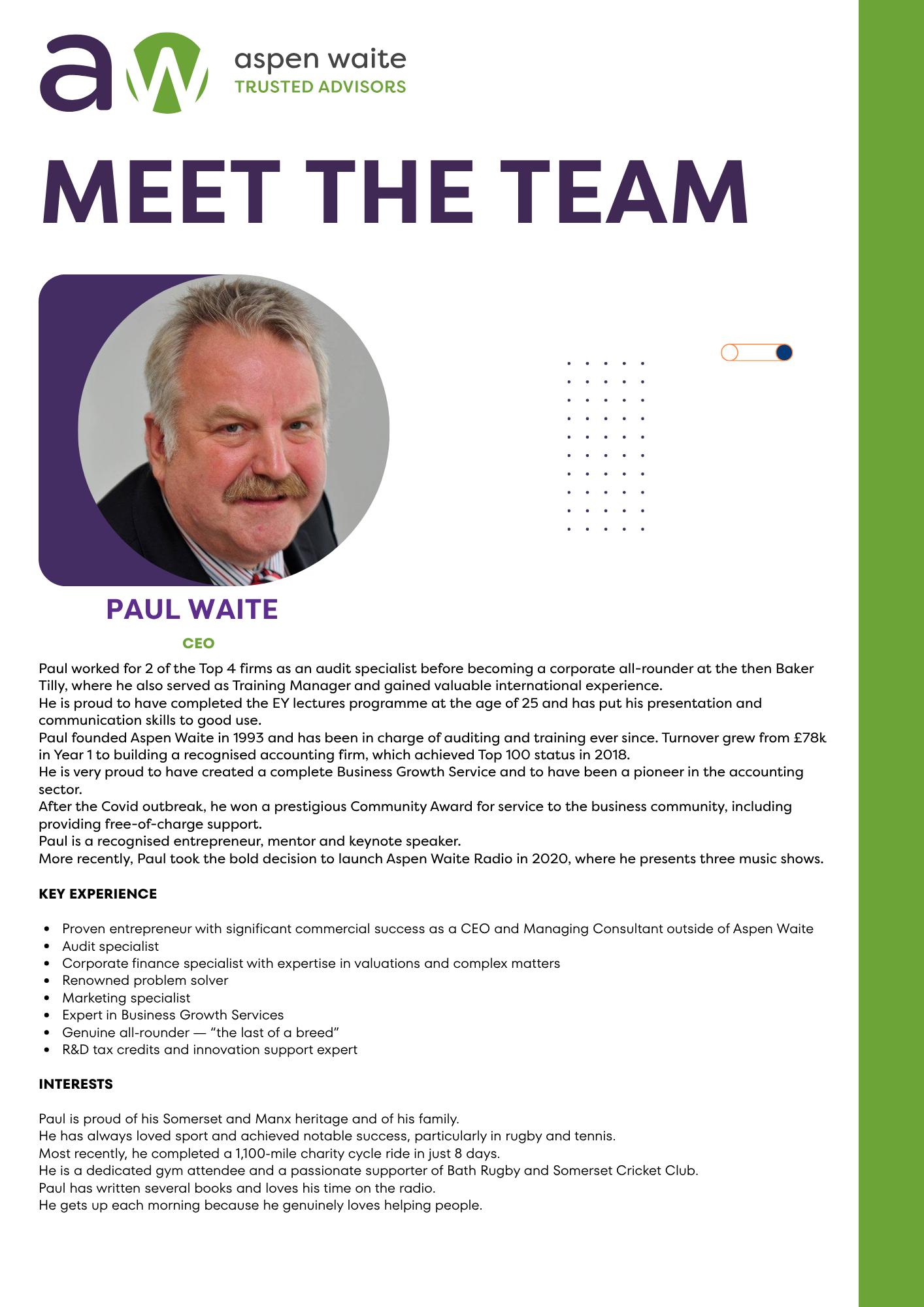
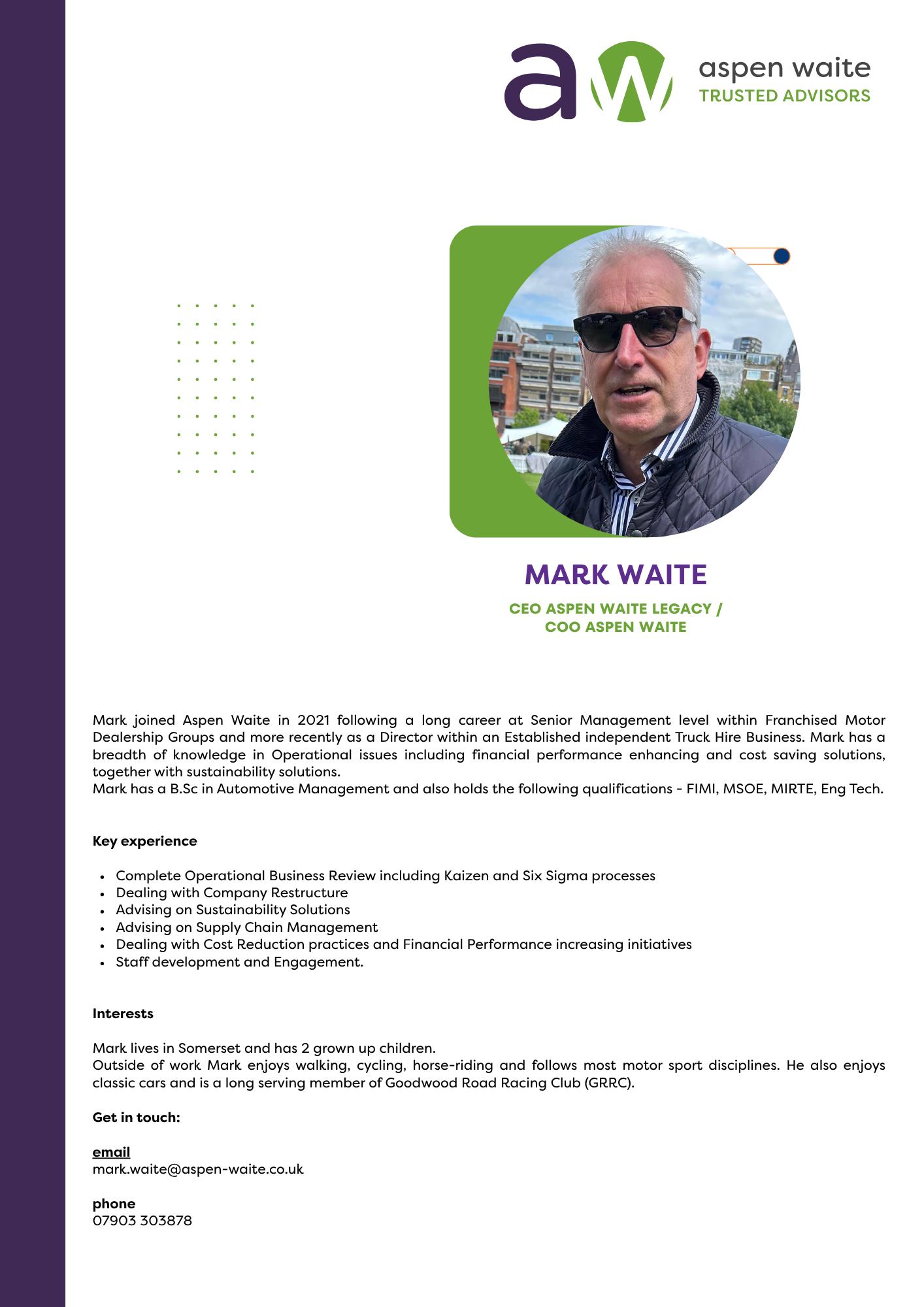
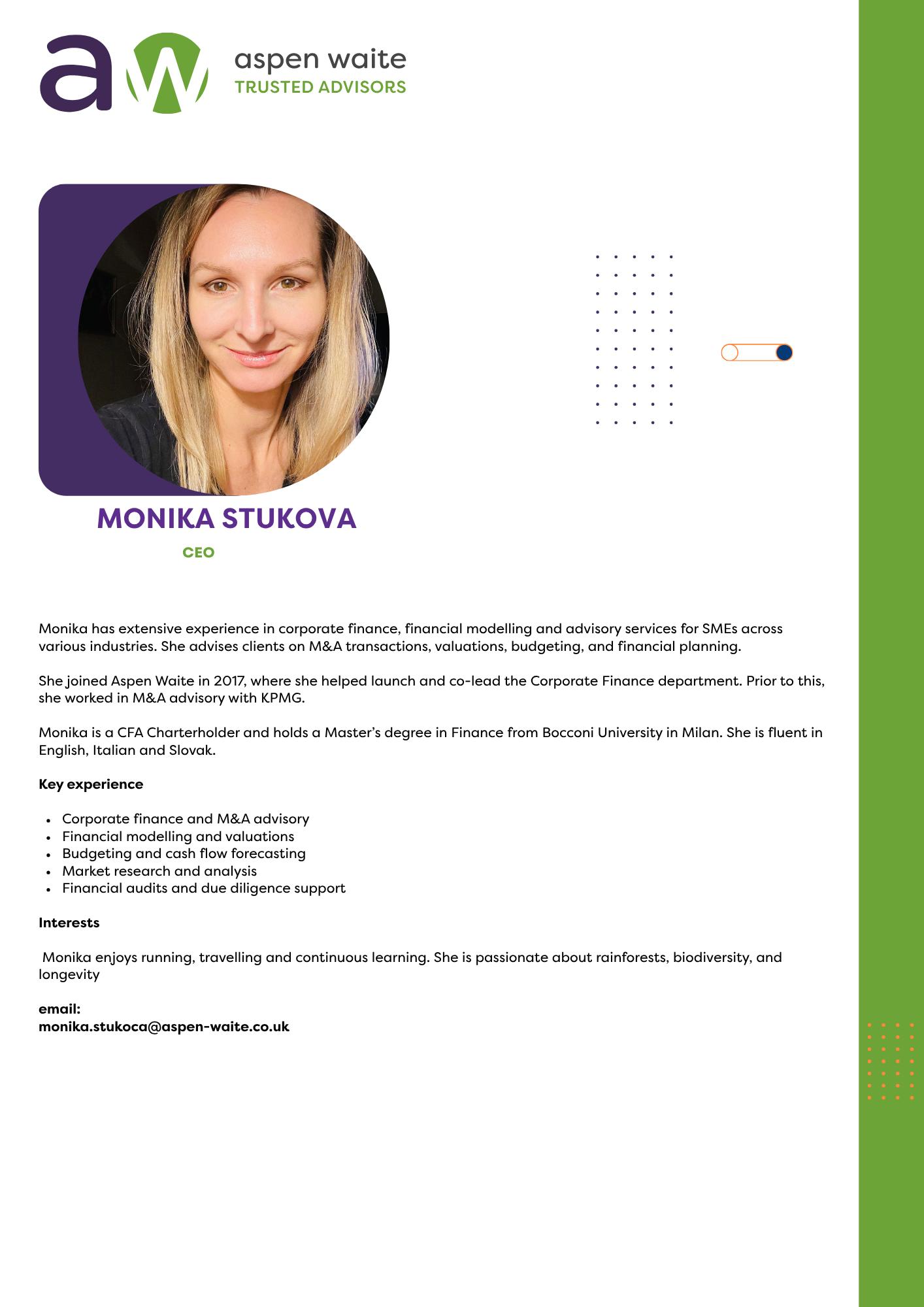
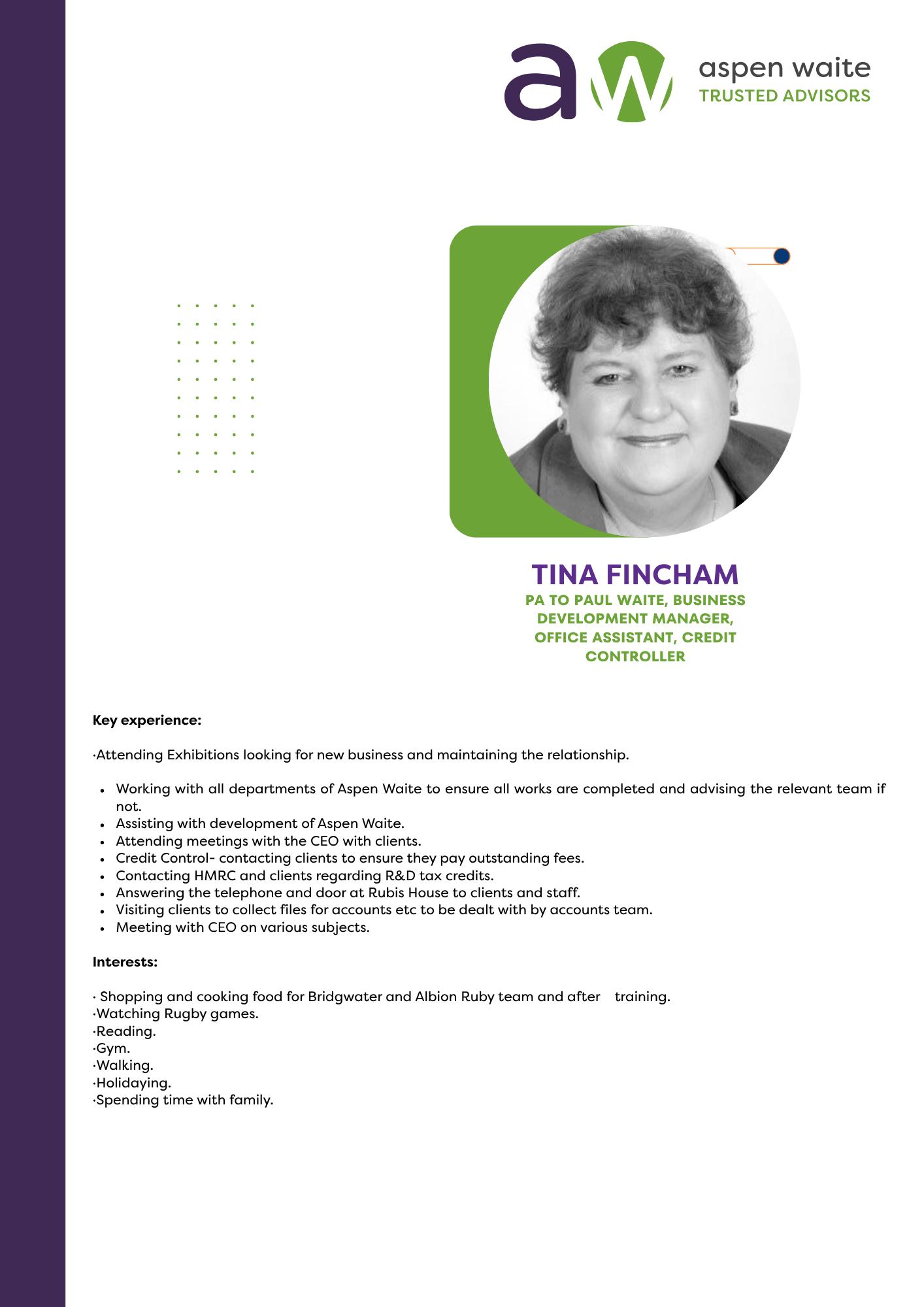
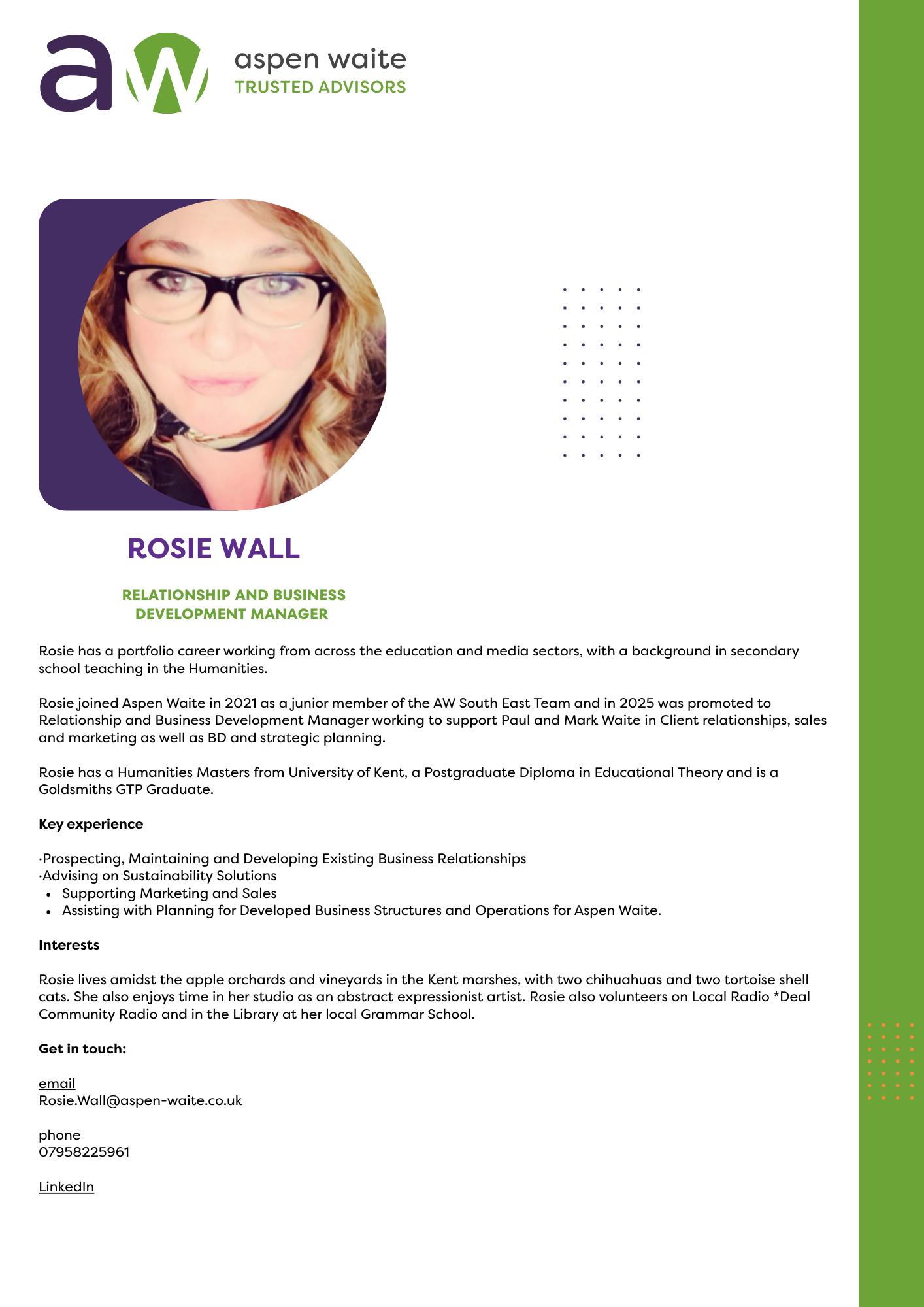
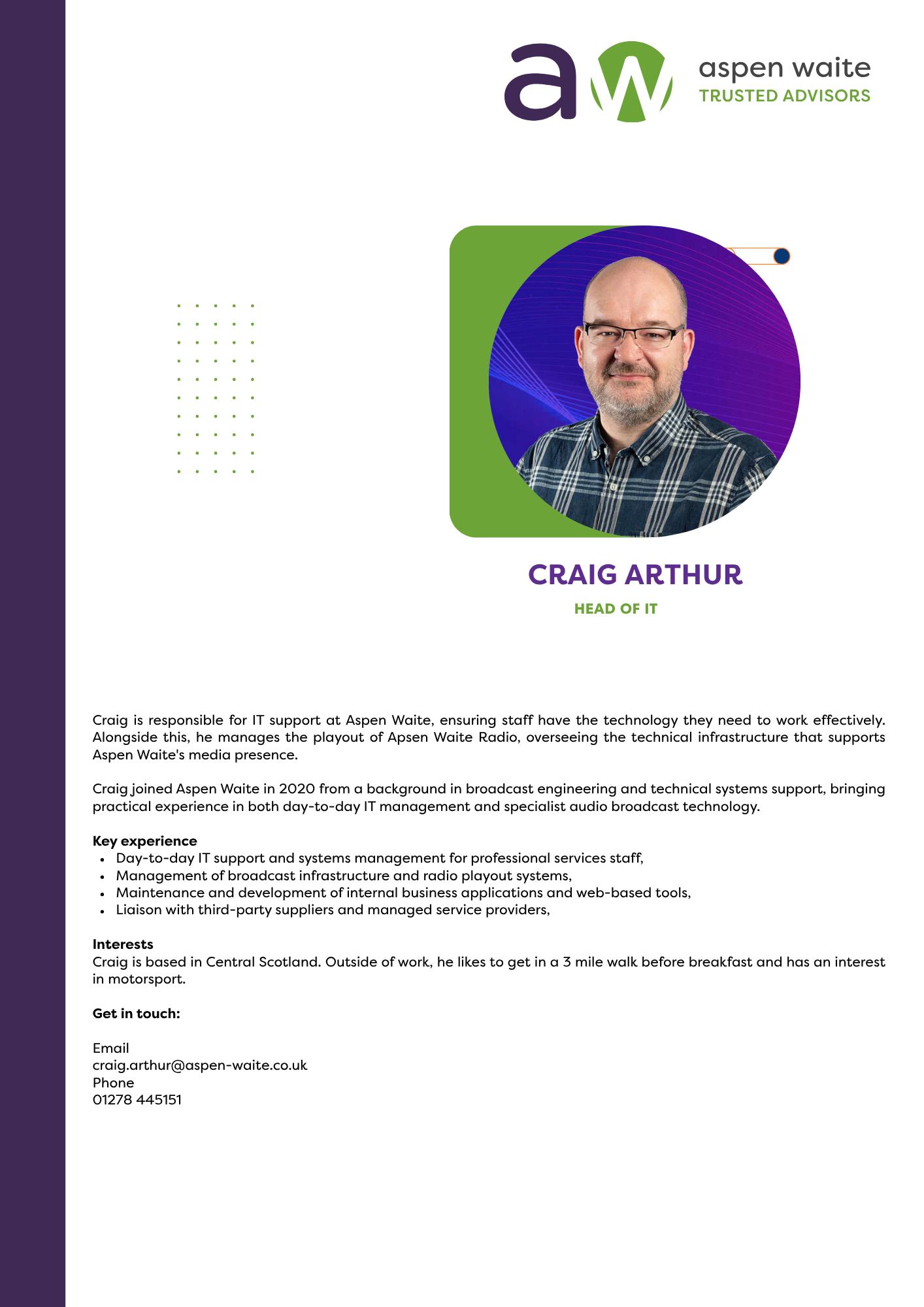
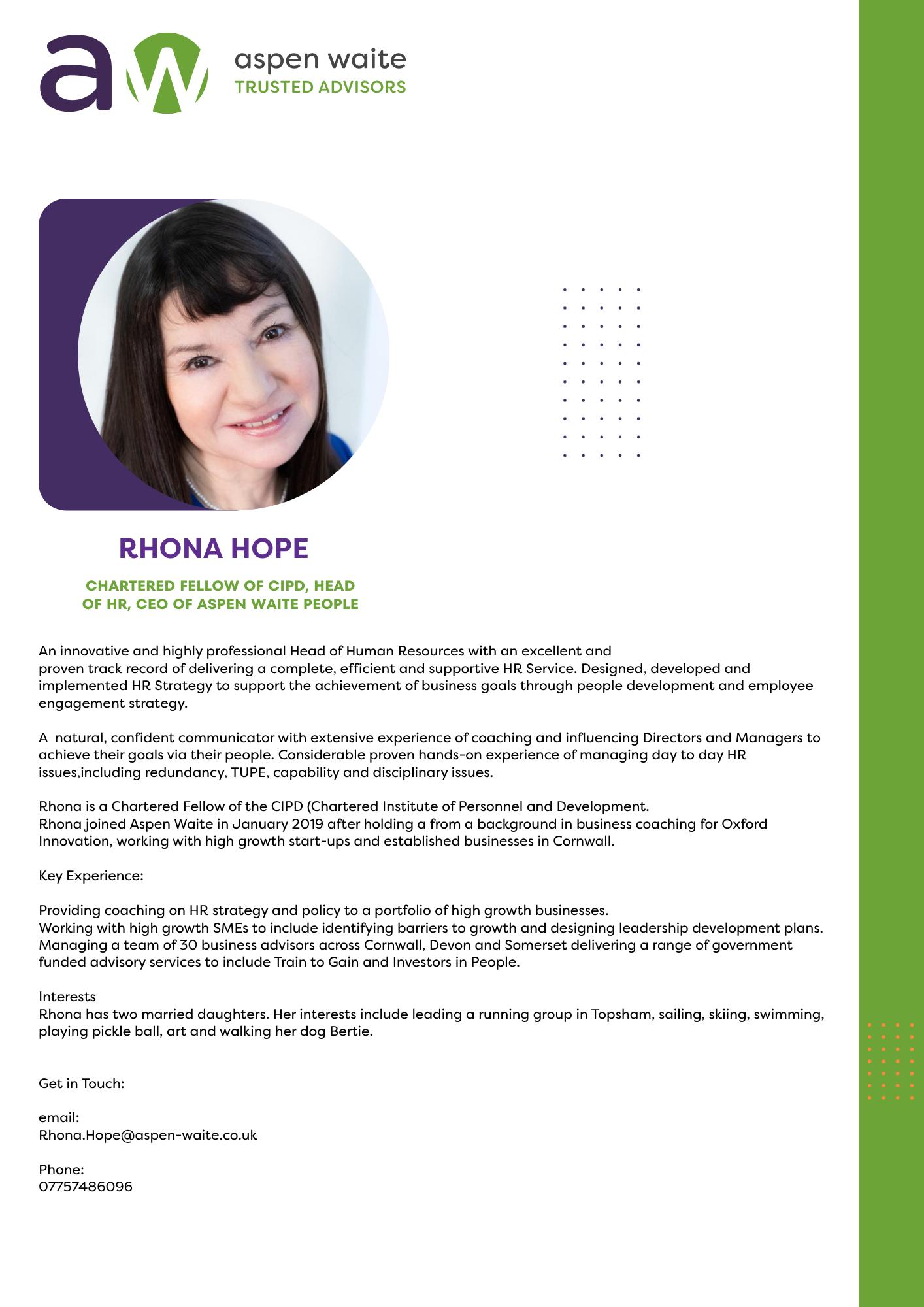
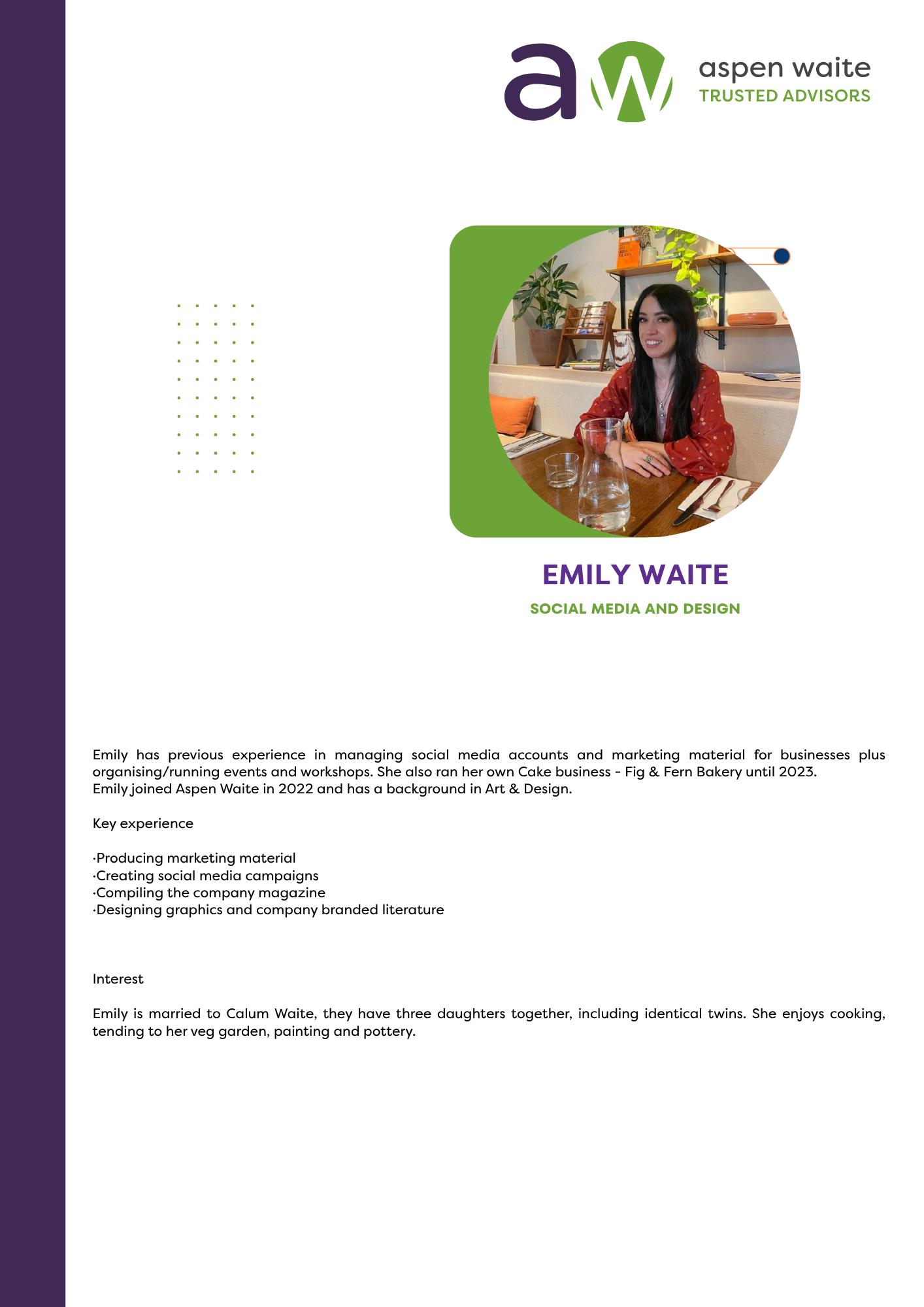
So why not book a meeting today to start your journey?
Head Office
Rubis House 15 Friarn Street
Bridgwater, Somerset
TA6 3LH
Tel: 01278 445151
Lions House Media, Trade and Innovation Centre
Benjamin Holloway House West Quay
Tel: 01235 766162 At Aspen Waite we’re here for you, always.
Bridgwater
TA6 3HW
Tel: 01278 445151

London New Broad Street House 35 New Broad St
London
EC2M 1NH
Tel: 02038 807314
Wantage
Boston House
Grove Business Park
Wantage, Oxfordshire
OX12 9FF
Dedicated representation in Ireland and Scotland and trusted partners and associates nationwide.

Editorial Team
Paul Waite, Editor in Chief
Emily Waite, Branding, Editing and Design
Craig Arthur, Print and Digital Support
Drew Armstrong, Digital Support and Design
John Porteous, Proof Reading
Samuel Waite, Proof Reading
Thanks to all our content contributors.