ASO Foundation for Research and Education (ASOFRE)
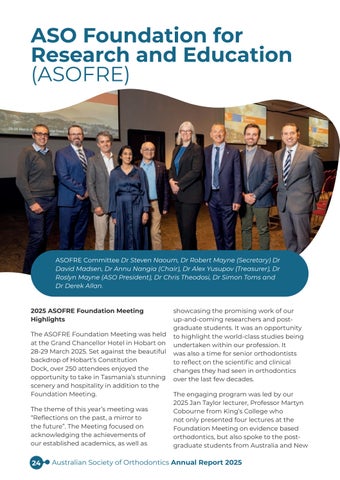
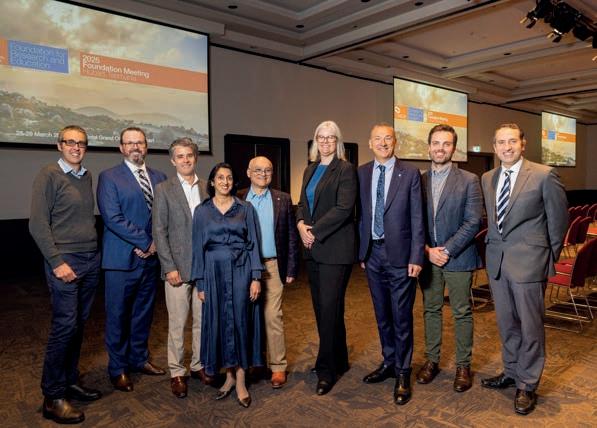
ASOFRE Committee Dr Steven Naoum, Dr Robert Mayne (Secretary) Dr David Madsen, Dr Annu Nangia (Chair), Dr Alex Yusupov (Treasurer), Dr Roslyn Mayne (ASO President), Dr Chris Theodosi, Dr Simon Toms and Dr Derek Allan.
2025 ASOFRE Foundation Meeting Highlights
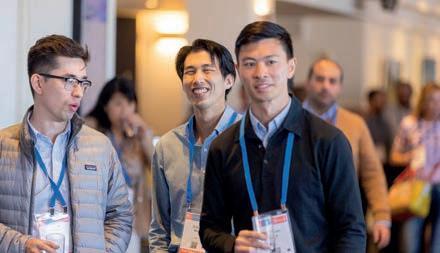
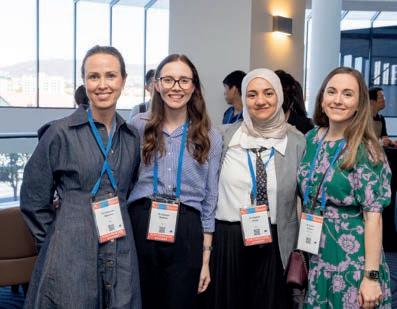
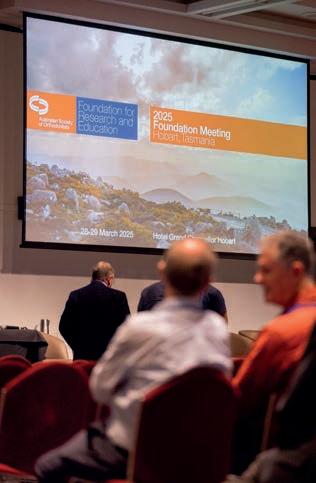
The ASOFRE Foundation Meeting was held at the Grand Chancellor Hotel in Hobart on 28-29 March 2025. Set against the beautiful backdrop of Hobart’s Constitution Dock, over 250 attendees enjoyed the opportunity to take in Tasmania’s stunning scenery and hospitality in addition to the Foundation Meeting.
The theme of this year’s meeting was “Reflections on the past, a mirror to the future”. The Meeting focused on acknowledging the achievements of our established academics, as well as
showcasing the promising work of our up-and-coming researchers and postgraduate students. It was an opportunity to highlight the world-class studies being undertaken within our profession. It was also a time for senior orthodontists to reflect on the scientific and clinical changes they had seen in orthodontics over the last few decades.
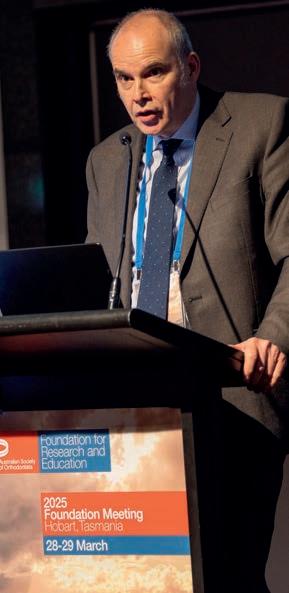
The engaging program was led by our 2025 Jan Taylor lecturer, Professor Martyn Cobourne from King’s College who not only presented four lectures at the Foundation Meeting on evidence based orthodontics, but also spoke to the postgraduate students from Australia and New
Zealand for two days prior to the Meeting. Professor Cobourne shared insights from the world of orthodontics as he was taught and to what he does now.
In addition to Professor Cobourne, this year’s event saw a vibrant and engaging program brought to life by a diverse group of speakers, academics, and attendees.
Our Scientific Committee, led by Dr Robert Mayne, curated an impressive and diverse line-up of speakers, covering a range of contemporary topics in orthodontic research and clinical care. Each session sparked valuable discussion and fostered knowledge exchange among professionals at every stage of their careers.
View Photo Gallery
Increased support to empower the next generation: In addition to various grants and awards, the ASOFRE now fully funds the Foundation Meeting and Congress registration of orthodontic students at Australian Universities.
Australasian Postgraduate Orthodontic Meeting
The event was scheduled two days prior to the ASOFRE Foundation Meeting and attracted around 70 post-graduate students. The program featured a combination of student presentations from all Australasian schools and lectures from Professor Martyn Cobourne from King’s College, London.
One of the highlights of the meeting was the ASO-funded teambuilding event that operated like an “Amazing Race” through the historical sites of downtown Hobart. Students mingled with fellow attendees and engaged in some fun activities.
We would like to thank the event industry sponsor Solventum and the ASO for their ongoing support of this program which has always been a highlight of the period of graduate training in Australia.
Congratulations to our 2025 ASOFRE Award Winners
On 29 March 2025, the ASOFRE revealed the recipients of the 2025 ASOFRE Awards. The ceremonies honoured individuals
whose exceptional achievements have greatly enriched both our Society and the broader professional community.
Dr Laura Truong Elsdon Storey Research Award
Prof Paolo M Cattaneo The Raymond Begg Research Award
Dr Brendan Chow The Australasia Student Poster Award 2025
Dr Denice Loo AB Orthodontics Fellowship
ASOFRE Income and Expenditure
In 2025, Members and public donors contributed over $43K to the Foundation and the ASO extends its sincere gratitude to Members for their continued support. The ASO would also like to thank our sponsors for their support.
During the year the ASOFRE supported orthodontic research through the funding of postgraduate student travel grants ($41,500), University support & grants ($297,673), HOD travel expenses ($9305), and awards ($32,750) including examiner honorariums, to a total of $436,499
ASOFRE 2027 Foundation Meeting
The ASOFRE is excited to share its upcoming initiatives as we continue to strengthen orthodontic research and professional collaboration across Australia and beyond.
We are currently planning our next Foundation Meeting, scheduled for 1720st March 2027 at the Hotel Realm Canberra. Building on the outstanding success of our Hobart Meeting, the 2027 event will follow the same proven formula: a dynamic international speaker, highquality evidence-based presentations, and meaningful opportunities for professional connections.
Attendees can expect engaging lectures from leading global researchers and clinicians, interactive discussions, and a program designed to inspire innovation in orthodontic practice and research. Our goal is to once again create an environment that fosters curiosity, collaboration, and academic excellence.
The ASOFRE remains strongly committed to nurturing the next generation of researchers. We are encouraging students and postgraduate candidates to apply
Grateful Patient Program
We sincerely appreciate ASO Members who have encouraged their patients to support the Foundation through the Grateful Patient Donation Program. This initiative allows patients to make tax-deductible contributions, furthering our mission. Patients can donate online via the ASO website by clicking the “Grateful patient donation” button.
for research projects and to become actively involved in advancing orthodontic knowledge. Supporting emerging investigators is central to our mission, and we are particularly focused on providing mentorship, presentation opportunities, and financial assistance where possible to students and academics.
We look forward to funding worthwhile and exciting new research projects that contribute meaningfully to clinical practice and scientific understanding. By investing in high-quality research and creating platforms for knowledge exchange, the ASOFRE aims to continue driving innovation and strengthening the future of orthodontics both nationally and internationally.
Dr Annu Nangia
2025 Project Highlights
Dr Darshan N Desai
The University of Adelaide
Estimation of centres of rotation for the maxillary and mandibular incisors during non-extraction space closure cases with the Invisalign® appliance.
Summary
This study aimed to determine the centre of rotation (Crot) of maxillary and mandibular incisors during nonextraction space closure (NESC) using the Invisalign® system (Align Technology, Santa Clara, Calif). Identification of the centre of rotation (Crot) allows determination of the type of orthodontic tooth movement (OTM), such as uncontrolled tipping, controlled tipping, torque, and translation. A secondary objective was to assess the accuracy of planned changes in labiolingual angulation. Currently, no studies have evaluated the planned type of orthodontic tooth movement (OTM) or the accuracy of clear aligner therapy (CAT) in achieving these planned movements during NESC. Two null hypotheses were tested: (1) no difference exists between planned and achieved types of OTM, and (2) no difference exists between planned and achieved labiolingual angulation changes following the initial aligner series.
Materials and Method
Digital models representing pretreatment (T0), planned (T1), and achieved
(T2) outcomes were analysed using Geomagic® Control X™ (version 2022.0; 3D Systems, Cary, NC). Three-dimensional vectors representing incisor long axes were generated, and their intersections determined the Crot at T1 and T2.
Movement type was classified according to Crot location. Labiolingual angulations were measured relative to the Y-axis plane. A total of 240 maxillary incisors from 60 patients and 166 mandibular incisors from 42 patients met inclusion criteria. Planned and achieved types of OTM were compared after completion of the initial aligner series.
Results
Accuracy of achieved OTM type ranged from 33–35% for maxillary and 41% for mandibular incisors. Uncontrolled tipping was most accurately expressed, whereas translation was least successful. Planned retroclination was consistently overexpressed, whereas planned proclination was underexpressed and often led to unintended retroclination.
Conclusion
Less than half of the planned types of orthodontic tooth movement were achieved during NESC with Invisalign®. Uncontrolled tipping had the highest accuracy, and translation had the lowest. Clinicians should anticipate discrepancies between planned and achieved movement types when designing clear aligner treatment.
Note: This research project resulted in two separate publications in the American Journal of Orthodontics and Dentofacial Orthopedics:
1. Estimation of centers of rotation of the maxillary incisors during nonextraction space closure using the Invisalign appliance.
2. Planned and achieved orthodontic tooth movement and labiolingual inclination changes of mandibular incisors during nonextraction space closure with clear aligners: A retrospective cohort study
Dr Deborah Du
The
University of
Queensland
Anterior tooth autotransplantation:
Objective and patient-centred outcomes
Summary
Replacement of teeth in the anterior zone can be challenging due to aesthetic requirements. Tooth autotransplantation can be a viable option for replacing missing, compromised or ectopically placed anterior teeth. One significant advantage is the potential of these teeth to erupt with the adjacent teeth during growth and throughout life. They are often a cost-effective option compared with dental implants and prosthetic restorations.
This project aimed to assess both objective and patient-centred outcomes of autotransplanted teeth to the anterior maxilla and mandible, including success and survival rates. Nineteen patients were recruited for the study and the sample included 23 transplants. The most common procedure involved transplanting a premolar into the central incisor region (60.9%). The average followup time was 2 years and 5 months. The survival and success rate was 100% and 91.3% respectively. One of the failures was from ankylosis and the other from invasive cervical resorption.
Materials and Method
Public and private patients from a single oral maxillofacial surgeon were invited to attend an in-person review to assess the health and appearance of the tooth, with radiographs taken as required. A questionnaire involving a six-item 100mm visual analogue scale was distributed to understand how patients felt about their treatment, including their level of satisfaction and the aesthetic outcomes of their treatment.
The transplanted tooth was assessed for probing depths, mobility, sensibility testing through cold testing or electric pulp testing (EPT), colour of the tooth, surrounding soft tissue morphology including presence of a mesial and/or a distal papilla, and signs of ankylosis.
Results
The majority of transplants were of a normal colour (87.0%), with the other two transplants being grey and yellow. Most transplants (96%) had normal soft tissue morphology. The overall satisfaction of the transplants was 94 out of 100. When rating the appearance of the tooth and gums, the average rating was 88 out of 100 and 93 out of 100 respectively.
Conclusion
Autotransplants into the anterior aesthetic region can be a predictable and natural-looking biological treatment option for patients with traumatised, severely compromised or ectopic teeth. This is especially critical in growing patients for continued alveolar bone growth. However, there are associated risks such as ankylosis, discolouration and loss of vitality.
Dr Asanka Perera
The University of Western Australia
Volumetric bone quality assessment of post sarme midpalatal suture region
Summary
This research investigates the long-term bone quality of the midpalatal suture in adults who have undergone surgically assisted rapid maxillary expansion (SARME). Using multisliced computed tomography (CT), the study will assess three-dimensional volumetric bone density at least 10 months post-expansion, providing an accurate representation of healing in skeletally mature patients. The investigation will also compare SARME patients with untreated adult controls to determine whether postoperative bone quality returns to physiological levels. In addition, the study will examine potential differences in bone regeneration across three anatomical segments of the palate: the anterior region anterior to the incisive foramen, the middle portion extending to the upper first molar level, and the posterior region up to the posterior nasal spine. By providing detailed volumetric data, this research aims to address the current lack of long-term evidence of 3dimensional bone quality and support clinical decision-making regarding retention duration, stability expectations, and treatment planning for maxillary expansion in adults.
Materials and Method
This retrospective study will include 60 adult participants divided into two groups: 30 patients who have undergone surgically assisted rapid maxillary expansion (SARME) and 30 age-matched untreated controls. All subjects will be 20 years or older and selected based on availability of high-quality multisliced CT scans, with CT scans taken at least 10 months postoperatively. Volumetric bone quality of the midpalatal suture will be assessed using specialized three-dimensional software capable of quantifying Hounsfield unit-based density and bone volume. Standardized regions of interest will be analyzed by 2 investigators across anterior, middle and posterior palate segments. Intra-observer reliability will be evaluated through repeated measurements on randomly selected scans.
Results
The study is anticipated to reveal longterm variation in midpalatal bone regeneration following SARME, with reduced density and volume particularly in the posterior palate. Comparison with untreated controls is expected to clarify whether bone quality returns to normal physiological levels, providing clinically relevant insight for retention planning and stability assessment.
Conclusion
This study will provide clinically relevant insight into long-term midpalatal bone regeneration after SARME using volumetric CT assessment. Identifying regional differences and comparing outcomes with untreated controls will clarify whether suture healing approaches normal physiology, ultimately guiding decisions on retention duration, treatment stability, and future expansion planning in adult patients.
Dr David Stuhmcke
The University of Sydney
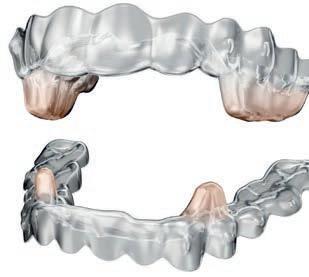
Evaluation of efficacy of a clear aligner functional appliance for the treatment of class ii malocclusion in adolescents
Summary
This prospective study evaluated the efficacy of the Smartee™ S8-GSTB™, a clear aligner-based functional appliance, in the management of growing adolescent with Class II malocclusion. Outcomes were compared with those achieved using a conventional appliance, the Sydney Bonded Twin Block (SBTB).
Materials and Method
Twenty-three patients with Class II Division 1 malocclusion at cervical vertebrae maturation stages (CSVM) 3-4 (mean age 12 years; range 11-14 years) were treated with the Smartee™ S8GSTB™ for nine months. Cone-beam computer topography (CBCT) scans were obtained at baseline (T1) and posttreatment (T2). Lateral cephalogram and orthopantomogram (OPG) were constructed from the CBCTs to assess the skeletal and dentoalveolar changes between T1 and T2. Findings were compared with published outcomes from 17 patients treated with the SBTB by Lalli.
Results
Statistically significant differences between groups were limited to SNB angle (p = 0.012), ANB angle (p = 0.001), Wits appraisal (p = 0.015) and mandibular plane angle (p=0.01): the Smartee group showed greater SNB increased and ANB reduction, whereas Wits appraisal decreased more with the SBTB.
Conclusion
The Smartee™ S8-GSTB™ was effective in correcting Class II malocclusion and produced skeletal and dentoalveolar changes comparable to the SBTB. Statistically significant differences in ANB angle, SNB angle and mandibular plane angle between groups were small and unlikely to be clinically meaningful. Treatment success was strongly influenced by patient compliance with aligner wear (≥22hrs/day), with noncompliance accounting for five treatment dropouts.
Dr Nicola Wong
The University of Melbourne
Expert consensus on curriculum guidelines for the orthodontic component of dental student education using a modified e-Delphi method
Summary
This study aimed to establish expert consensus on essential learning outcomes (LOs) and practical teaching exercises (PTEs) for undergraduate orthodontic education. A modified threeround electronic Delphi method was used, involving orthodontic educators and recently graduated general dental practitioners. Fifty-one participants (72% response rate) completed all rounds. Of 58 LOs and 7 PTEs evaluated, most achieved consensus. Two LOs (students being prepared to carry out treatment with clear aligners and conventional removable appliances) and two PTEs (wire bending and treatment planning of complex orthodontic cases) did not. The resulting consensus-based guidelines aim to reduce variability in orthodontic teaching and improve graduate preparedness.
Materials and Method
A modified e-Delphi method was employed, involving three rounds of questionnaires. The expert panel
included two key groups: orthodontic educators and recently graduated general dental practitioners. The initial list of LOs and PTEs was developed through a comprehensive review of existing literature and guidelines. Experts rated the importance of each LO and PTE on a 5-point Likert scale (1=‘strongly disagree’, 5=‘strongly agree’), with free-response options also available. Consensus levels were predefined at 70%. Items that did not reach consensus were further analysed across subgroups. Thematic analysis of qualitative data followed Braun and Clarke’s framework.
Results
A total of 58 LOs and 7 PTEs were evaluated. Two LOs failed to achieve consensus (students being prepared to carry out treatment with clear aligners and conventional removable appliances). Two PTEs did not achieve consensus (wire-bending and treatment planning of complex orthodontic cases). Differences between expert groups did not significantly influence the lack of consensus.
Conclusion
This study proposes expert-consensus curriculum guidelines for undergraduate orthodontic education, emphasising core competencies in diagnosis, growth and development, interdisciplinary care, and treatment recognition. These adaptable guidelines aim to standardise teaching and improve graduate preparedness for safe assessment, management, and referral of orthodontic patients.