Lisa Bernard, Karina Mae, Sketchworks Architecture, Sun Vault Roofing
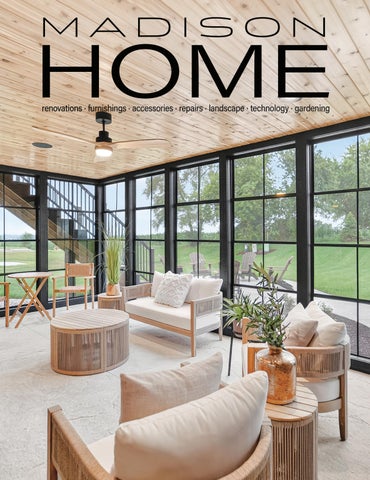
Cover photograph
Provided by Classic Custom Homes of Waunakee
photographs this page
Top: Provided by Classic Custom Homes of Waunakee, Middle: Provided by Sun Vault Roofing, Bottom: Garden Search and Rescue
additional photographs Adams, Classic Custom Homes of Waunakee, Dane County Humane Society, Garden Search and Rescue, Chad Renly of Branded Exposure LLC, Rubin's Furniture, Sun Vault Roofing
FEBRUARY - APRIL 2026
Watch for the next issue MAY-JULY 2026
subscriptions Madison Home is available free at over 150 locations. To purchase an annual subscription (four issues), send $24 and mailing information to: Madison Home
c/o ASJ Publishing LLC PO Box 559 McFarland, WI 53558
comments
We welcome your questions and comments: Madison Home
c/o ASJ Publishing LLC PO Box 559
McFarland, WI 53558 mhm@madisonhomemagazine.com
advertise
To inquire about advertising space, please call 608.729.4888 or email mhm@madisonhomemagazine.com
ASJ Publishing LLC PO Box 559 McFarland, WI 53558 608.729.4888 madisonhomemagazine.com
from the PUBLISHER
Like you, I appreciate the content in each issue. I am a firm believer in utilizing the expertise of others to complete projects, and the articles provide insight into the work of various individuals and businesses, helping you and them make connections.
In this issue, we share a ranch home project from Classic Custom Homes of Waunakee and a furniture highlight from Rubin’s. Adams encourages us to prepare for a variety of potential seasonal power outages by adding a standby generator. Sun Vault Roofing introduces us to energysaving and aesthetically pleasing solar shingles. Karina from Garden Search and Rescue helps us begin our spring garden planning.
Additionally, Dane County Humane Society’s Wildlife Center discusses how we can live with wildlife in our yards and make our yards more welcoming to them. And Sketchworks Architecture presents their Sauk Prairie Early Learning Center project.
As I look around my home and yard to start a mental list of projects I hope to complete by year’s end, I wish you the same enthusiasm in creating your list and satisfaction of a job well done as things get completed. I hope you reach out to our experts, both content contributors and advertisers, to help with your projects. And remember, while you may not be able to finish everything on your list in one year, your planning is not wasted; the work will simply occur at a later date. Feel good about what you are able to complete in the short time the season provides.
Amy Johnson
RANCH
REIMAGINED
BY KYLE JACOBSON
I have always appreciated the unassuming profile of a ranch-style home, often suggesting a casual lifestyle through an open layout. When Brea Bartelt, senior designer and project coordinator of Classic Custom Homes of Waunakee, was tasked with designing a ranch different from the standard ranches currently on the market, she thoughtfully created a home that balances cozy with luxury.
That approachable presence is felt even before entering the home. The exterior is modest at first, grounded by a stone-facade skirt then elevated as that material wraps the columns. Nods to Frank Lloyd Wright-inspired details create a sense of place, further reinforced by the greygreen paint and “natural wood tones to soften it a little,” says Brea. The approach culminates at the eight-foot double doors—not imposing, but inviting, with three large glass panels making up each door.
Brea says, “When we use one flooring material in the main areas, you have so much more flexibility for the spaces. Say at the holidays when you have a bunch of people over, you can cheat the furniture out a little bit, and it does not look out of place.”
The sizable foyer gives wall space for art then opens up to the great room and large windows. “We moved the stairs to the back of the house and the dining room to the front,” says Brea. “By doing this, it created a more defined entry and gave the whole house a different feel and flow.” The main floor was a balancing act defining spaces without completely closing them off. For example, the dining room has a wide opening, making its fairly enclosed space feel very much a part of the house.
The great room has a walkway that interrupts the center of the space, so to restore balance, the ceiling tray was extended across the full footprint of the room, anchoring a centered fireplace. Visual symmetry is reinforced through the color and design of the built-ins on either side. White oak accents create cohesion throughout the home—from interior doors and headers to select cabinetry. Hickory-toned luxury vinyl plank flooring ties these elements together, pulling in complementary tones while keeping the space light and airy.
Considerable effort went into increasing the space’s sense of scale. In the tray ceiling, a minimalist ceiling fan carries the wood tones upward, emphasizing the room’s height. Where the effect might have felt overbearing, a large picture window overlooking the deck and backyard brings the outdoors in, making for a space that’s quite refreshing—cozier than anticipated.
On the other end of the great room, the kitchen brightens the space, carrying the natural wood motif through its cabinets. A touch of the exterior design is reflected in the island’s color scheme as well. White GE Café appliances pop against the white oak cabinetry, feeling cohesive without being visually heavy. Task and ambient lighting are thoughtfully placed to adapt the room to the moment. Whether cooking, eating, or enjoying a digestif, the space remains practical and comfortable.
Outdoor living was equally intentional. The main-level deck remains open, creating an ideal space for grilling
while allowing light to pour into the great room. Below, the three-season porch has become one of the homeowner’s favorite spaces. “If everyone is in the backyard, you do not want to be sitting above them,” says Brea. “You want to be at the same level as the activity. Placing the three-season room below lets you enjoy the space while staying connected to the yard.”
The three-season focuses on natural wood tones with its cedar boxcar ceiling and a chiseled slate stampedconcrete floor. Black-framed walls allow the lush, sloped backyard to bring color into the room. With recessed lighting and a ceiling fan that matches the one in the great room, the space is designed to feel like part of the house rather than a space reserved for large gatherings.
“It’s a large, multiuse space,” says Brea. “The vinyl windows stack up or down, which is perfect in the spring and fall. If it is windy, you can lower them just enough to block the breeze while still enjoying fresh air.”
There’s much more to explore in this home, from the primary bedroom and the bathrooms to great entertainment spaces in the lower level. Throughout, the open concept is married with visual and physical dividers to create intimate spaces, harmonizing a range of design philosophies through Classic Custom Homes’ many years of experience.
Kyle Jacobson is a writer living in Sun Prairie.
Photographs provided by Classic Custom Homes of Waunakee.
Classic Custom Homes of Waunakee
401 North Century Avenue Waunakee, WI 53597
608.850.4450
cchofwaunakee.com
Modern Life, Well Furnished
American Leather furniture, proudly made in Dallas, Texas, is exceptional furniture that begins with thoughtful design, unmatched craftsmanship, and a commitment to innovation. Since 1990, American Leather has redefined what it means to create custom, made-toorder furniture, handcrafting every piece. From the revolutionary Comfort Sleeper to versatile accent chairs and motion furniture, their collections are designed to elevate your home with timeless style, unparalleled comfort, and endless customization options. Whether you are hosting guests or creating your perfect retreat, American Leather offers furniture that is unique as the moments it helps you create. American Leather not only offers the most beautiful and durable leather, but also the most innovative performance fabrics in the market. Stop by Rubin's Furniture today to see their variety of upholstery choices, multiple configurations, and style options to create a piece that fits perfectly in your home. Items sourced from Rubin's Furniture. rubinsfurniture.com
A NEW KIND OF ROOFTOP
A New Kind of Rooftop “Wait—That is Solar?”
That is the first thing a neighbor said as they strolled past a Madison home where we had just finished installing an integrated solar shingle roof. From the street, the house looked newly refreshed: crisp rooflines; a striking architectural color; and a clean, uninterrupted surface catching the evening light. Nothing about it suggested hardware, rails, brackets, or the usual profile of solar panels.
Moments like this are becoming surprisingly common. Integrated solar shingles are new to Wisconsin, and they are already changing the way people think about solar power. Instead of mounting panels above the roof, this technology turns the roof itself into a solar array seamlessly, quietly, and with an aesthetic that feels more like luxury than energy equipment. For many Madison homeowners, it is the first time solar feels not just acceptable, but irresistible.
A Roof That Looks like Design, Not Equipment
Conventional solar panels perform great, but they are visually obvious. Rails and brackets sit above the roofline, and wiring and hardware can often be seen from the street. For homeowners who value curb appeal or who live in neighborhoods with distinct architectural character, that is often the deciding factor between going solar and holding off.
Solar shingles take a different approach. Each shingle integrates thin photovoltaic technology inside a protective, textured housing that attaches directly to the roof deck. The result is a low-profile, flush-mounted surface that blends with surrounding asphalt shingles. From a distance, many people may never realize they are looking at a solar system at all. It is a solution that does not ask homeowners to choose between performance and beauty.
Engineered for Wisconsin Weather
A beautiful roof must still be a hardworking roof, especially in Wisconsin. Solar shingles are designed for the realities of our climate: freeze-thaw cycles, high winds, hail, and heavy winter snow loads.
Their low-profile installation is not just aesthetic; it is functional. With no rails or raised hardware, there is nowhere for ice to collect or wildlife to nest. And with far fewer penetrations than a rack-mounted system, there are fewer long-term leak points to worry about. For many homeowners, that peace of mind can be just as appealing as the look.
Who is Choosing Solar Shingles?
While the technology is new to our region, early adopters tend to fall into a few groups. The first are simply homeowners looking to replace an aging roof. A roof replacement creates the perfect moment to upgrade the home’s appearance while adding solar at the same time.
Then there are those interested in the design of their homes. These are the people who care deeply about curb appeal. Often they are surprised with the look after buying solar shingles for the first time, saying, “This actually fits my home.” They might live inside the Beltline, in newer subdivisions, in historical neighborhoods, or on lakefront properties. There are also architects and homeowners building additions, ADUs, or new homes who love the clean look and integrated approach.
Last are people who have found their forever home just wanting something they will not have to replace in their lifetimes. They appreciate getting a beautiful new roof and renewable energy in one project from one contractor team.
A New Way to Think About Solar
Most people are familiar with the idea of solar panels. Solar shingles introduce something different: the possibility of solar that complements the home rather than competes with it. They generate clean energy, protect the roof, and maintain architectural style, and they do it all as one unified surface.
For some, the appeal is aesthetic. For others, it is durability and roof integrity. For many, it is simply the chance to upgrade the home in a way that feels modern, thoughtful, and aligned with how Madison homeowners approach design.
The Rooftop of the Future Has Arrived in Madison
As our region embraces smarter, more sustainable building practices, the roof is becoming more than a protective layer. It is becoming an opportunity. A chance to save energy, reduce visual clutter, and enhance the home’s silhouette rather than disrupt it.
Solar shingles will not replace traditional panels for everyone, and they are not meant to. But for homeowners who want their roof to do more while continuing to look great, this new technology offers a beautiful, quiet, and powerful alternative. Madison is beginning to discover what the next generation of roofing looks like.
Contributed by Sun Vault Roofing.
Photographs provided by Sun Vault Roofing.
Sun Vault Roofing
6709 Raymond Road Madison, WI 53719 608.608.1082
sunvaultroofing.com
Preparing Your Home for Outages with a Standby Generator
BY KYLE JACOBSON
Wisconsin weather is rough on a home. From heavy snow and ice storms to strong winds and severe thunderstorms, it is hard to think of a season where the chance of a power outage is not present. Cole Hubble, vice president of the Generator Division at Adams in Wisconsin, adds that “aging infrastructure and increased demand on the electrical grid play a role as well. As weather patterns become more unpredictable, outages that once felt unusual are becoming part of the norm.”
What is often most concerning with these outages is we do not know how long they will last. For many homeowners, this can be quite scary, even life-threatening. We are all aware of the comforts we lose: heating and air conditioning and being
stuck in the dark with only candles and flashlights for navigation. But if you rely on specific types of medical equipment, like an oxygen concentrator, things are much more serious.
Some homeowners also cannot afford to lose things that help keep up their homes. Without an operational sump pump, a torrential rainstorm could be catastrophic. Having to throw away spoiled food from the freezer and refrigerator could be costly. And you will lose security systems and internet access, which can feel unsettling.
For Cole, the solution is simple. “Having a backup generator plan is critical to maintaining your home’s safety and comfort. A standby generator provides automatic, reliable backup power when an outage occurs—whether you are home or away. Instead of scrambling to adjust, your home continues to function: lights stay on, heating and cooling systems run, and essential appliances and home systems operate as expected. For many homeowners, the greatest benefit is peace of mind, knowing the family is safe, comfortable, and protected regardless of what is happening outside.”
If you have ever thought about getting a generator for your home but did not know where to start, reaching out to a company that specializes in generator installation, like Adams, is a great first step. “Installing a generator is not just about connecting equipment,” says Cole. “It involves electrical systems, fuel sources, local codes, and safety considerations. A manufacturer-trained professional ensures the system is sized correctly, installed to code, and integrated seamlessly with your home.”
For our homes, we have to decide which upgrades are about convenience and which are about reliability. A generator provides both, and knowing it will meet your home’s power demands and work reliably when you need it to is essential. Cole says, “While not everything can be controlled, preparation gives homeowners the power to reduce risk and stress. Investing in solutions that protect comfort, safety, and daily life is not about fear; it is about confidence. And for families who have lived through extended outages, that peace of mind is well worth it.”
Jacobson is a writer living in Sun Prairie.
provided by Adams.
Kyle
Photographs
CREATING A Wildlife-Friendly Yard
by Lisa Bernard
Many wild animals are comfortable living in and around urban environments, even as humans continue to encroach on their habitats, but these areas historically have limited resources for wildlife. However, with thoughtful planning and a few intentional practices, homeowners can support local wildlife while still enjoying a beautiful, functional outdoor space. Dane County Humane Society’s Wildlife Center offers a few tips to create a yard where wild animals and homeowners can coexist.
The foundation of a wildlife-friendly yard begins with plant selection. Native plants are especially important because they have evolved alongside local wild animals and provide the food and shelter these animals need.
Ornamental and non-native plants provide little nutritional value, whereas native trees, shrubs, and flowers produce nectar, seeds, berries, and leaves that birds and other animals rely on. They also attract pollinators, which help plants reproduce and support a
This showy goldenrod (Solidago speciosa) was providing a safe sleeping spot for bumble bees.
An eastern chipmunk supervises the planting of swamp milkweed (Asclepias incarnata) and bee balm (Monarda fistulosa) received from the Plant Dane program in fall 2020.
Native plants fill flower beds at DCHS's Wildlife Center in spring 2021.
healthy ecosystem. By choosing a diverse mix of native species that bloom and fruit at different times of year, you ensure a steady food supply from spring through winter.
Providing shelter is just as important as providing food. Wildlife need safe places to rest, nest, and hide from predators. Trees and shrubs of varying heights create natural layers that are inviting to different species.
Perfectly manicured lawns provide little value to wildlife and require significant resources to maintain. Consider reducing lawn size and replacing sections with native plant beds, wildflower meadows, or ground covers. Allowing grass to grow slightly longer and leaving clover or flowering weeds can provide food for pollinators, like bees and butterflies.
Reduce or eliminate chemical use, like pesticides, herbicides, and chemical fertilizers, because they can harm beneficial insects, poison animals, and disrupt the food chain. Instead, use natural alternatives, such as compost, mulch, and manual weed removal. Adding bat houses to encourage bats to stay in the area can also help control the insect population naturally.
You can support wildlife and keep your vegetable garden by setting boundaries. Use fencing or plant barriers to guide animals away from areas where they are unwanted, like vegetable gardens. To encourage harmonious coexistence, do not forget to secure trash cans and avoid leaving food outside, including pet food. If conflicts arise, focus on humane deterrents, like motion-activated lights or noise makers, which can be better long-term deterrents than removing an animal from their habitat or using harmful traps. Traps placed outside, like glue traps or snap traps, often harm animals that are not the intended target when they are placed in the environment.
If you are looking to attract more birds to your yard, add a bird feeder. Where you place the bird feeder does matter. The feeder should be within 3 feet of your home or 30 feet away to help birds avoid striking windows. Adding window decals can also help prevent window strikes. Also remember to clean the bird feeder at least every month to help prevent the spread of diseases. Bird feeders should be cleaned with soap and water then disinfected by soaking the feeder for 10 minutes in a 10-percent diluted bleach solution (the Wildlife Center recommends 1 tablespoon of bleach to 16 ounces of water).
By working with nature instead of against it, your yard can become a thriving refuge for wildlife and a peaceful retreat for you. Coexisting with wildlife not only supports biodiversity, but also reconnects us with the natural world.
Lisa Bernard is development and communications supervisor at Dane County Humane Society.
Photographs provided by Dane County Humane Society.
Dane County Humane Society Wildlife Center 5132 Voges Road Madison, WI 53718
608.287.3235 giveshelter.org
Dreaming of Spring Gardens
BY KARINA MAE
Dreaming of Gardens in Winter: Planning, Pruning, and Preparing for Spring
When the garden lies dormant and the air feels still, it is easy to think the work has ended. But winter is actually one of the most valuable times to dream, plan, and prepare for the lush growth ahead. These colder months give gardeners a chance to slow down, reflect, and make thoughtful choices that will shape the garden’s health and beauty for the coming year.
Winter Planning and Imagination
Catalog browsing becomes a kind of ritual for many gardeners each winter. Flipping through pages filled with vibrant blooms and vegetables sparks ideas for new color palettes, unique plant combinations, or even entirely new garden beds. This is a wonderful time to think about adding artful or functional elements —a new bench, birdbath, trellis, or fountain to bring texture and movement into the landscape.
Dormant Season Tasks
Winter is also prime time for dormant pruning, a cornerstone of tree and shrub care. When deciduous plants have shed their leaves, their structure is easier to see, allowing gardeners to identify crossing, damaged, or diseased branches. Pruning during this period helps shape the plant for better growth, encourages stronger branching, and prevents the spread of disease. It’s also the perfect time to remove any broken limbs that might have been hidden during the growing season.
Sketching garden layouts and reviewing last year’s plans can reveal both successes and areas for improvement. Maybe garden hoses need better storage, seating could be more accessible, or a few plants need relocating to thrive. Making these adjustments now helps ensure that when spring arrives, you will already have a clear plan in place.
After pruning, applying horticultural oil is a smart way to protect plants. This treatment helps smother overwintering insects and larvae that might otherwise cause problems come spring. It is a simple but highly effective preventive step that keeps your garden healthier in the long run.
Welcoming Wildlife
While much of the garden rests, wildlife still depends on it. Winter feeding stations and heated water dishes can attract an amazing diversity of birds. Offering seed, suet, or fruit encourages yearround habitat and helps local species thrive. These small gestures not only support biodiversity, but also fill your garden with activity and color, even in the depths of winter.
Reviewing last year’s plans can reveal both successes and areas for improvement that can help ensure when spring arrives you will already have a clear plan in place.
Indoor Beauty and Creative Projects
For those eager to bring a hint of spring indoors, forcing branches of forsythia, quince, or magnolia can be deeply rewarding. By collecting cuttings in midwinter and placing them in water indoors, you can coax beautiful blossoms to appear weeks before nature would normally allow. The sight of soft pinks, yellows, and whites brightening a room in February feels like a gentle reminder that warmer days are on their way.
Winter is also ideal for preparing the practical side of gardening. Cleaning, sharpening, and oiling your tools ensures they will be ready for the busy months ahead. Sharp blades make cleaner cuts, reducing stress on plants and minimizing the spread of disease. Taking time now to care for your tools pays off all season long.
By collecting cuttings in midwinter and placing them in water indoors, you can coax beautiful blossoms to appear weeks before nature would normally allow.
Setting Intentions for a Beautiful Year
Ultimately, winter gardening is not about frantic activity; it is about thoughtful preparation. It is the time to nurture ideas, shape the structure of your space, and strengthen the foundation of your garden’s ecology. Whether you are planning colorful new borders, pruning with care, supporting wildlife, or simply sketching designs by the fire, each small act adds up to a vibrant, thriving garden when spring returns.
Karina Mae is owner and designer at Garden Search and Rescue.
Photographs provided by Garden Search and Rescue.
Garden Search and Rescue Madison, WI 608.438.9571 gardensearchandrescue.com
Winter Garden To-Do-List
Review last year’s garden notes and plan new layouts.
Order seeds and mark planting dates.
Perform dormant pruning to shape trees and remove diseased wood.
Apply horticultural oil to control overwintering pests
Set up bird feeders or heated water dishes for wildlife
Force branches of Forsythia, Magnolia, or Quince for indoor blooms
Clean, sharpen, and oil your garden tools
Sketch design updates or plant new seating and structures
Keep your winter garden journal handy, and next spring you will thank yourself!
Where Design Meets Play
by Sketchworks Architecture
Set against the landscape of Culver Community Park, the new Sauk Prairie Early Learning Center is a welcome addition to a community that needed more childcare options. With a creamy board and batten exterior, cedar trusses, and brick accents, the building blends in seamlessly with the park’s natural surroundings.
The center is a unique public-private partnership with the Sauk Prairie School District, the Village of Prairie du Sac, and the Sauk Prairie Area Chamber of Commerce. According to First Children’s Finance, “48 businesses and individuals funded the entire $5.2 million cost.” The center can accommodate up to 168 children, from infants to five-year-olds.
“This project stands as one of the proudest achievements of my professional life,” says Tywana German, executive director of the Sauk Prairie Area Chamber of Commerce. “It represents a transformative step for our community.”
Nick Badura, project manager with Sketchworks Architecture, explains the firm was tapped in 2023 to design the center. The project broke ground in August 2024 and was completed in August 2025—just in time for the 2025-26 school year.
Bathed in natural light and designed with spaces that encourage creativity, connection, and play, the 14,000-square-foot center blends modern functionality with a warm, community feel. Nick explains that the facility is equipped with classrooms, a generously sized kitchen, quiet rooms, and a large outdoor playground. Appropriately, the center also has a multipurpose room
that can be used on nights and weekends for community meetings and as a gathering space.
Sketchworks’ Interior Designer Brittany Erskine was intentional with her design choices, drawing upon the center’s natural setting and childcare focus. “We wanted to incorporate some fun design features and bright colors while still complementing the architecture of the building,” says Brittany. “Entering the building, the finishes are on the neutral side, with wood ceiling elements and pops of color in the furniture. And the rest of the elements in the corridor and classrooms are muted to allow the furniture, casework, and artwork to shine.”
Sauk Prairie’s riverside setting even factors into the center’s design. “The corridor that connects all the classrooms has a fun floor pattern to mimic a river, similar to the Wisconsin River, that acts as a wayfinding path,”
adds Brittany. Light woods are utilized in furnishings and cabinetry, which act as a counterpoint to the fun, splashy colors Brittany peppered in each classroom.
“Thinking of a rainbow, each classroom has an accent color on the side of its door and within the room,” says Brittany. “Coral is assigned to the infant rooms, green is for the toddler rooms, and blue and purple for the preschool rooms.”
The center’s multipurpose room ties in the same finishes, such as wood beams to highlight its vaulted ceiling, but pulls in teal accents in the wall décor and carpet border. Brittany points out that the room is designed as an indoor play area for children during inclement weather, so she specified carpeting and acoustic wall treatments to reduce noise.
“The center not only provides a beautiful, functional space for early learning, but also directly alleviates the childcare shortage that has long challenged Sauk Prairie,” says Tywana. “It is strengthening local families, supporting businesses, and ensuring that children gain the foundational skills they need to be successful in life.”
Contributed by Sketchworks Architecture.
Photographs by Chad Renly of Branded Exposure LLC.
Sketchworks Architecture
2501 Parmenter Street, Suite 300A Middleton, WI 53562