
∠
Te Ambassador
Developing compassionate, inquisitive learners prepared for global responsibility Fall 2017
The American School in Japan
CECILIA VINESSE ’05
Young adult author discusses publishing with fellow writer Mike Currinder
∠
DR JIM HARDIN
Introducing ASIJ’s new head of school as he joins our community
∠
JAMES SCULLION ’07
Interview with Emmy Award-winning sound engineer
∠ PAUL VUKELIC ’48
An alumni family’s involvement in the infamous Sorge spy ring


04 Turning a Page
Cecilia Vinesse ‘05 and middle school teacher
Mike Currinder discuss writing their debut novels
12 Jim Hardin
Interview with ASIJ’s new head of school
20 The Sounds of Oz
Emmy award-winning sound engineer James Scullion ‘07
In this Issue
27 Spotlight on Safeguarding
Monica Clear discusses safeguarding at school
32 Journalist, Gymnast, Schoolboy, Spy
Paul Vukelic ‘48 and his family’s secret spy history
43 Spirited Away Class of ‘87 reunion and Spirit Day


03 \\ Head of School’s Message
\\ Fundraising Report
Reunions 70 \\ Upcoming Reunions
\\ Class Agents 73 \\ Artifacts 74 \\ Obituaries
80 \\ The Big Short
Editor | Director of Communications
Matt Wilce
Art Director
Simon Wise
Photography
Jarrad Jinks
Simon Wise
Head of School
Jim Hardin
Director of Advancement
Erin Nelson
Communications | Alumni Relations
Jarrad Jinks
Database Specialist Jean Ren
Editorial Inquiries communications@asij.ac.jp alumni@asij.ac.jp

The American School in Japan 1-1-1 Nomizu, Chofu-shi Tokyo 182-0031, Japan
The Ambassador is published by the Advancement Offce, The American School in Japan
ASIJ alumni, families, faculty and friends receive The Ambassador
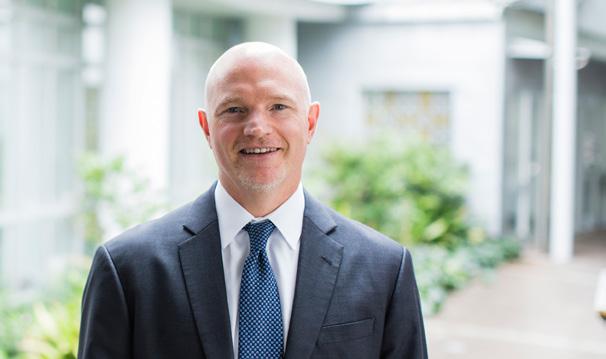
It is my pleasure to write my inaugural message for The Ambassador magazine although I must admit I was more reluctant about being photographed and featured as the subject of one of the interviews. Since the interview was conducted at the start of the school year, Stephanie Rogen and Chan Hardwick from Greenwich Leadership Partners (GLP)’s visit has taken place and we have begun moving forward with our strategic design process. Thank you to all the community members who took part, whether it was answering the survey we sent out or attending one of the meetings with GLP. Your input is a valuable part of the process and informs our work moving forward. I want to take this opportunity to follow up with you about their visit and what our next steps might be. Our strategic design process will take at least two or three months to complete. Stephanie and Chan’s visit was a starting point—now, frankly, the real work begins. They will provide a written report to us and they already shared some of their observations with the Board and leadership team in person. Following their visit, we have already begun thought-provoking discussions about our core values and our school culture and continue to seek input from our community about those. As things progress over the coming months, I hope to share more detailed information with our wider school community.
In the pages of The Ambassador I see some great examples of what makes ASIJ special. Whether it is seeing a teacher and alumna share their experiences of publishing their debut novels, or celebrating the successful sound career of an alum who started out tinkering in a music class at school, the impact that ASIJ has on our students' future is clear. Also highlighted is the important progress the school continues to make on safeguarding and the work being done by Monica Clear, our new safeguarding coordinator. I know that many alumni have been keen to learn more about this topic and hopefully the interview with Monica will provide that update.
I was excited to experience my frst Spirit Day (see page 43) in September and meet the numerous alumni who attended, including the Class of 1987 who had a reunion on campus and shared tales of their time here. This fall, we hosted a gathering in Tokyo for trustees, donors and the wider community and in the new year similar events will be held in New York City and San Diego (see page 71 for more details).
I hope that through these events I will get to meet more of you in person and hear your stories. In the short time that I have been part of this community, I have received such a warm welcome and I hope that you feel the same when you visit campus. It's an incredibly exciting time to be at ASIJ.

Turning a Page
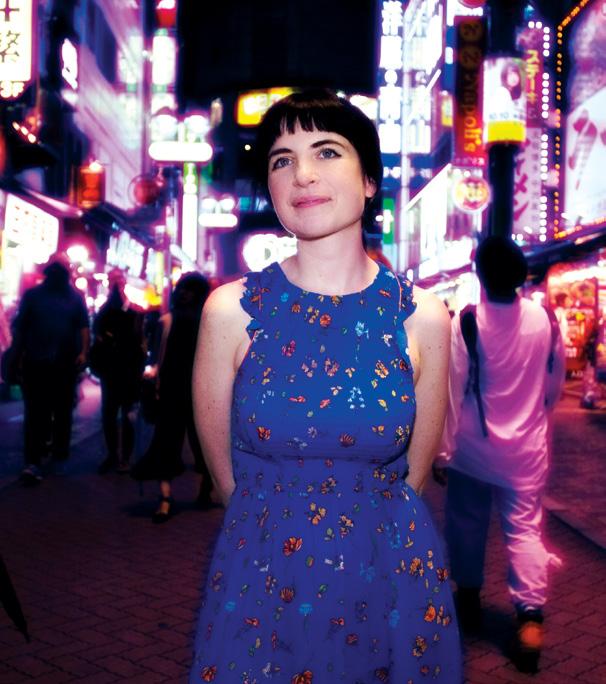
Jarrad Jinks and Matt Wilce sit down with new young adult authors Cecilia Vinesse ’05 and middle school teacher Mike Currinder to read between the lines of their debut novels, discussing inspiration, the writing process and publishing.

Cecilia Vinesse ‘05 sits on the tatami mat foor of an izakaya in Shibuya, recalling quirky outings with her family and confused waiters that always ask “where are you from?” It’s a good question. Cecilia’s mother, from the UK, speaks with a Scottish accent and her French father speaks French-accented English. Although Cecilia was also born in France, her multicultural family moved to Japan, living between Tokyo and the United States, when she was only two years old. She speaks a neutral US Midland accent. Despite having lived in three countries by the age of six, Cecilia doesn’t feel a displaced sense of home. For seven of her most formative years, Tokyo was home. During that time she attended ASIJ from grade eight until her sophomore year of high school when her family moved back to their place in South Carolina. The leadup to that move felt different, impending, and Cecilia could not shake the thought that she may never return to Tokyo. “All the stuff I couldn’t deal with—packing my room and saying good-bye to my friends and leaving Tokyo—all that hovered at some indistinct point in the indistinct future. So I ignored it.”
Cecilia channeled those emotions of loss and leaving the place she calls home into her frst book, a young adult novel titled Seven Days of You. Tokyo’s neon city lights form the backdrop to the books’ teen angst and a story that overfows with Japanese pop-culture references. Published in March, her debut novel follows Sophia as she says goodbye to Tokyo, her best friend, and her semi-secret crush in seven, perfect, fnal days before leaving for the States. Much of the story takes place in Cecilia’s old haunts of Yoyogi-Uehara and Shibuya—“a whirlpool of energy. A thunderstorm of sounds colliding and humming.” Naturally, the book draws heavily from Cecilia’s own experience of leaving Japan as a teenager, when the only thing she knew how to do was “to hold on as tightly as possible and count every single second until I reached the last one. The one I dreaded most. Sudden, violent, fnal.”
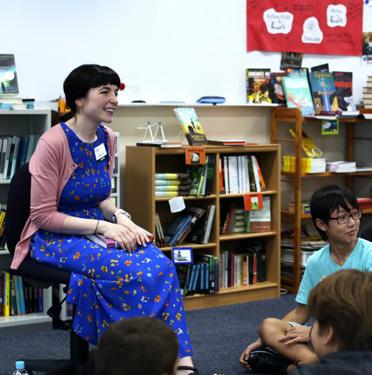
In the end, Cecilia would return to Tokyo once again nine years later, briefy, on her way to teach in Sapporo. “It was a very different experience from living in Japan as an expat kid, but my time in Tokyo was starting to feel really distant...It ended up being a great excuse to do lots of sneaky research for Seven Days of You.” Tokyo’s hold on Cecilia’s memories and nostalgia again proved inescapable. On September 12, 2017 she revisited her alma mater to catch up with campus life and culture. During her visit, Cecilia took the time to speak with the high school book club and middle school classes about her book and becoming a writer.
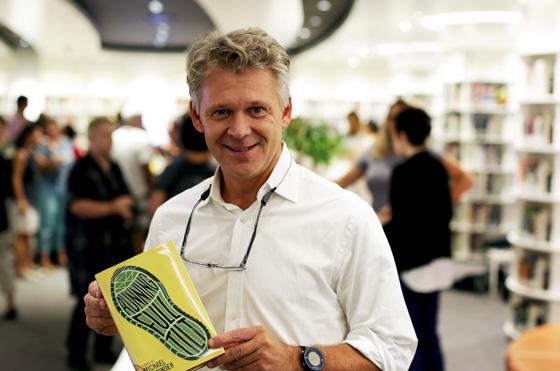
Seated opposite Cecilia in one class is middle school teacher Mike Currinder, who also recently published his debut young adult novel. Much like Cecilia, Mike draws inspiration from his own life, referencing experiences he had growing up with an older brother who suffers from cognitive disabilities. “Basically, I took our collective life experiences and compressed it into one year.” His novel, Running Full Tilt, explores the challenges of living with a sibling with disabilities, introducing readers to 16-year-old Leo, who has a complicated, but close relationship with his older brother Caleb. “I wanted to write a story about a sibling relationship with a brother who has some signifcant issues, and some of the challenges that presents to the younger sibling.” Among those challenges, Caleb’s violent outbursts begin to wear on Leo as he searches for a way to cope. Mike also wanted to use his experience as a competitive runner and for both Mike and Leo, running is an outlet that they use to channel the stress that is involved in turbulent times with their older brothers. “I wanted to use running, ultimately, as a tool and means for reconciliation for the siblings.” Mike’s novel and its core themes even inspired this year’s Community Fun Run cause as students ran in support of the Autism Research Institute.
Following Cecilia’s class visits, director of communications Matt Wilce spoke with her and Mike on becoming authors and their writing process.
I heard you say that you are interested in going to new places and having new experiences but you chose to rather write about leaving somewhere that you love. Why did you made that choice?
Yeah. That particular move was diffcult for me because when I left the States I knew I was going back there at some point, but when I left Japan I had no idea if I would ever be back. I had no ties to it outside of just living there with my family for a little bit. So I think that move in particular I found really devastating because it just felt like I was closing this door that I didn’t know if I could ever open again. And the build up to that move are some of my most vivid memories because I knew I was going to have to close that door. I knew I was going to have to leave it all behind so all of my senses were on extra alert and I was extra aware.
So were you trying to purposely create memories, do things to capture that?
Yes. I tried to mentally capture as much of it as I possibly could and tie up all my loose ends and make sure my friends and I were still, you know, on really excellent terms and that I could just kind of leave it as perfectly preserved as possible. And then maybe in some way I’d be able to keep it.
Do you feel you still have a sense of something missing?
Yes, but maybe that’s just part and parcel of living in a bunch of different places. When I was writing the book I felt I was dealing with a lot of my saying goodbye to Tokyo and what that meant at that particular age and what it meant for the relationships that I had, even though obviously it’s completely fctional—nothing that happened in the book happened to me. But just that sense of saying goodbye to people and fguring out what that means in terms of what your relationship will be like after you leave and what place this experience will have in your life after you leave. Writing the book felt like I was sort of coming to terms with a lot of that or making sense of it. But then it still doesn’t go away. So many of us have that background, that there’s never one place that feels like home. There is always something at the back of your mind saying “oh I feel comfortable in this way and that place and I feel comfortable in another way in this place.” I think that just follows most of us around.
You worked in children’s publishing. How did you fnd that transition to go from one side of the desk to being the author on the other side?
I worked in marketing so I had a slightly different experience than an editor, so I was looking at a book when it was a fnished product. And I was looking at it considering,”How does this ft into the book world? What place does this have? Who’s it going to appeal to? How are they going to fnd it? What’s going to make it interesting?”
Lessons I learned doing that helped me when I was putting together my own book because I knew what someone down the line would think: “Where does this ft? What other books does this ft in with? Who is who is going to like it? Who’s it going to appeal to?” So I had a little bit of my marketing hat on as well when I was putting it together and it helped me clarify and maybe simplify what I wanted to do with the book. Instead of aspiring to create a treatise on living abroad I was able to say, “well what’s a really simple, clean, clear way to get my message across?” That training, being on the other side of the desk, was really helpful in the writing part of it.
This book draws on your experience although it’s not directly autobiographical. I’m curious as to what your second book is about.
Well everybody talks about second novel syndrome which is when you spend all of this time quietly and privately, for years, searching for your frst novel and writing and revising and trying to fnd a story that you want to tell and then you feel like you’ve used it all. And you used it all in one book and you’ve told the story you have been trying to tell for so long and the story that you’ve been building up toward. And then, in a much shorter frame of time, you have to do that again about something completely different. What I did with the second one was what everybody does, which is panic. And I felt like I was never going to fgure it out, felt like it was never going to feel right. It was a much different process than the frst one. I think what most authors say is that every time you write a book, you’re not learning how to write books, you’re learning how to write that particular book because every book has its own set of challenges and its own path to existing.
[MIKE ENTERS ROOM]
Grab a seat we’re just chatting about writing.
Writing! Everything you [Cecilia] said in class made me feel so much better—about the process and how long it takes because to me that was the part that was just like “really? It takes that long?”

I just asked about Cecilia’s second book. Your frst book Running Full Tilt draws on your personal experience and your brother’s autism. Are you writing a second?
Yeah, I’m working on something right now which is also personal, because I do believe that the best stuff comes from what you know. I’ve also heard that quote over and over that your frst fve are going to be autobiographical before you go on, so I am drawing upon an experience that my wife and I had when we frst met. We led a community service trip down to Central America where everything that could have possibly gone wrong went wrong. Basically, exploring the whole idea of community service and whether or not humans are really capable of doing these projects. I think that’s something worth touching upon, if your heart is in the right place, ultimately, you learn from experience—it could be really rich. But was it really a worthwhile endeavor to begin with? I’m kind of exploring that.
Cecilia made the transition from working in publishing to being a writer. You teach middle school. Is that why you went for a young adult novel or was that just naturally the right ft for this story?
I’ve always loved coming of age stories. I’ve always liked the young adult genre. I’ve always
∠ Cecilia speaks with Mike’s students on writing and becoming an author
like that character—the teenager who has got something in their life that doesn’t make sense to them, that’s crazy and they’re trying to make sense of, coming to terms and having those critical moments where they’re they’re making sense of their world. And not being secure enough to know what’s legit, what’s not. I think I’ve always liked that. I have always gravitated to those types of stories.
What’s your classic go-to for that genre, one that you would go back and re-read?
I love Sherman Alexia [Reservation Blues]. I liked Tobias Wolf’s This Boy’s Life. I read several times and also watched What’s Eating Gilbert Grape. I like that type of family dysfunction mixed with that age in terms of “what the hell’s going on?”
I was saying in the frst class that I did with you that one novel that changed how I looked at books was The Disreputable History of Frankie Landau-Banks by E Lockhart. He wrote We Were Liars which was a big hit in recent years. I really like that book a lot, but Frankie Landau-Banks is one of my absolute favorite books ever because, though it’s told in a really wry voice—it’s this girl who goes to this quite prestigious boarding school in the northeast and it’s very male—there’s a male secret society and they’re the ones who run the pranks and run the show and she decides she’s going to take over the male secret society and start ruling it. It’s so unbelievably funny and smart, and it was about young women. That was what changed my mind because I think I was sort of pushing away from that idea. I thought that if I was going to be serious and a real writer and a real intellectual person I couldn’t, even though I was a young woman, tell stories about young women or that stories about young women were frivolous. Once that book opened the gate for me then I just started reading all of these books by authors for young women, Stephanie Perkins, Jennifer E Smith, Sarah Milknowski, Meg Cabbot, and that was when I started to realize that these were the stories that I gravitated towards and I didn’t have to be embarrassed about
that. There was nothing wrong with that even though I’d sort of been telling myself that they were in some way second class stories. I was locked in that conversation that people have about those kind of books and now I’m on the other side of the fence. You know, realizing that it’s all literature.
I’m curious as to when and how you write, because I know there are people who treat it as a nine to fve—you get up, you do your certain number of hours. Do you have a word count in your head that you have to hit each day?
Listening to writers talk, it makes me feel so much better to hear they may only do fve pages a day. What was interesting listening to Cecilia talk about her process, because I pounded Running Full Tilt out in like eight months. And when I did, yeah it was a piece of crap. Then I went back and worked on it for another four months. You know, when I queried I thought they were only asking for 10 pages and I think I was fortunate to fnd an agent who could work with me on it.
Well they know good material when they see it. It’s their job.
Yeah, she liked the arc of the story but we went back and it was just brutal in terms of the feedback I received, regarding actual writing craft. But to answer your question, I had a summer during which we had two old dogs and so my wife and I took turns travelling and I spent the bulk of summer here with nothing to do—it was like 110 degrees outside— so I had this story that was kind of eating at me and just pounded it out. Then it was a lot of just waking up at four in the morning to try to get a couple hours in before work. Now, I have aspirations for a certain number of words, but I never meet them. But it’s like you said—it’s putting in the time, saying “I’m going to sit here here for 90 minutes.”
I’m so impressed because getting up at four in the morning is something I could never do. I just can’t do it. I could never ft it in around my job either. I was really bad at that. Now I write full time but that has its own challenge in that when I started writing full time I thought “well great, that’s nine to fve all writing hours that I’m going to sit there and write and I’m going to take a break for lunch.” And then of course you burn out so incredibly quickly and you cannot keep it up. I’d be like, “I found Instagram, I wrote two sentences” and then I would realize I’ve now been on Instagram for three hours because I don’t want to go back to writing because it’s too much time to fll. So, I feel like the past year has been a lot of experimentation and fguring out what schedule works best for me and what I’ve fgured out is that I do a four hour writing block in the morning
before I check email or anything. And I have internet turned off and I try to do it as early as possible but, let’s be real, I start around 9am. I fnish around 1pm— I break it up so I have fve minute breaks every hour— and whatever gets written gets written.
I don’t push myself to hit particular word counts unless I’m rough drafting, in which case I do. But if I’m just trying to make progress I don’t put a word count. And then in the afternoon I do admin email, any blog post or articles that anyone is due, any emails that need doing, any working stuff that I need to do and then I take my evenings off. I’m trying to be more structured about it because I wrote the frst book around a job at a library—I was writing it around my library hours, late into the night. And it was really fun and quite romantic sitting up all night by moonlight writing books but there was just no way I could keep up as a profession.
So how would you feel if you couldn’t write? Do you feel pressure to write?
I don’t know about you but I’m kind of feeling a little bit pressured to get something done. I never thought I would see this, and so even though they said it’s going to come out on a specifc date, I just thought I’m not going to believe it until I see it. And also all the energy that went into getting this done and even putting edits on it two or three months ago, it took away from me having opportunity to really think about what I want to do next.
It’s like the hill you never think you’ll crest and then you do and you’re like “oh what do I do now? What does this look like? This is really weird.”
Sitting down this summer, I met with my editor and she was said, “well, when am I going to see the next thing?” And so now I feel like I have to push it out. And then listening to people talk, you know in terms of some of the writers who are just pumping stuff out every eight weeks, you’re thinking, what’s that about?
Yeah. The last one I did, I wrote it in a year and a half, and that was also me taking some time added on to what they’d given me. I like having my rough drafts private and not thinking that that anybody has to see them in process—if it’s totally terrible nobody has to look at it and that’s fne. But then having it on a contract and having somebody being like “I’m going to see this really terrible draft and there’s nothing you can do about it you have to give it to me on this day and I’m going to give you comments on it” and I’m sitting there thinking “no, no, no, n,o no, it’s really terrible, I know it’s terrible, I already know.” So that was a completely different experience writing with that eye on you rather than
writing alone. But I think it’s that thing I was saying before where you learn to write that book—you don’t learn to write books in general. You learn to write, “Ok this is the book I have to write now and I’m going to learn how to write this book.” It’s not anything like learning how to write Seven Days of You.
So when you get that feedback, do you take it well, does it knock you back a little? How do you move forward with feedback from an editor, agent or beta reader?
I had a friend who’s been through the process a couple times, he never did get anything published, but his only advice to me was if you want to get something published, basically he said “do whatever they tell you to do.” But I felt I had some really kind people that were working with me that said, “we really want it to go in this direction.” And I got lots rejections from publishing houses that wanted to see a revision of it, but based upon the frst round of feedback I got from them it was pretty harsh, but it was all really, really good. I mean, they were absolutely right. Everything they said made it a better book and I felt like the reason I got this novel published was because, in the end, my agent was able to say to this particular publishing house, who was trying to launch a new line of young adult books “Mike listens to feedback and he meets his deadlines.” But like I said, I really respect people that gave me feedback along the way.
I think as long as you trust the person’s perspective and you don’t think they’re coming out of nowhere, and if they connect with your book in some way, more likely than not you are going to trust their feedback because they connect with something that you’re doing and they see what you’re doing and they want to supplement that—they don’t want to take away from it. So I think nine times out of ten, hopefully, you feel like the person giving you feedback really knows what they’re talking about and they really can see things from a slightly different perspective and they can help you pull it apart and put it back together in a way that you would like better than what you currently have.
I also have to say too, you have to understand that this is what they do for a living and they’re really good at giving feedback in a constructive way. I never felt like I got feedback that was just like, this is worthless. And that was the thing that blew me away, going through the process for the frst time, was
working with my agent. I worked with her for a year and I heard that now a lot of agents will work closely with you for your frst novel and get it to a pretty polished state before they start selling it to an editor. And what I thought was so surprising was how much time and energy she invested into it without receiving a nickel—she was just as invested in it as I was.
And also, I think too, one of the things I want to echo is when you said...what my agent said up front, “this is how long it’s going to take.” At frst I thought “I’m done with this thing, here.” She basically set me straight—this is going to be for three or four year process. It could be fve. “But this is the way I plan to do it.”
Do you feel distanced from it now that it’s out?
I’m kind of over it, in a certain sense. I haven’t opened it that much, it’s just weird, you know, looking at it. Yeah, I feel distance from it.
So when you see the fnal product, like today when you open it to do a reading, do you still think “I wish I could change that” or have you done that and moved on to the next project?
I look at what I wrote and, in some ways, I think “Well, why didn’t I combine these two sentences” or “why didn’t I...” but I know my editor, too, had a certain age group in mind and a certain demographic of readers. And so she kind of always would say “you know, his character wouldn’t talk this way” but I wanted it to be more sophisticated than that.
I correct some sentences when I’m reading because there’s a couple of sentences that I just did so many variations of and I never quite decided what was my favorite but I had to submit my fnal pages and that was it. So sometimes when I’m reading it I’ll go back and use a different version or I’ll have different experiences and I’ll think I wish I used that in the book or I wish I’d done more with that character—those thoughts will come up but then you just have to think it’s a time capsule of that experience of writing this book and I can’t correct for that. You could keep perfecting it on and on, but it may no longer have the essence that it has or be the thing that it is.
It’s evident that Mike and Cecilia’s hard work and perseverance paid off as both their debut novels were published to positive reviews. School Library Journal called Cecilia’s writing “highly readable” and compared her to young adult authors such as Stephanie Perkins. Publisher’s Weekly featured Seven Days of You as one of their children’s publisher’s favorite reads of 2016, saying “I’m still marveling at how Vinesse made me feel nostalgic for something I’ve never experienced.” They also called Running Full Tilt “both tender and unabashedly honest,” praising Mike’s execution in expertly navigating the complicated relationship between brothers Caleb and Leo. Horn Book Magazine agreed that the novel’s strength was the depiction of its relationships.
Both authors have also received critical acclaim from their peers. Jack Gantos, author of Dead End in Norvelt, creator of Rotten Ralph and Joey Pigza, who visited ASIJ in 2010 and 2013, described Running Full Tilt as “a fast-paced convincing drama of a young runner whose legs circle him back to the many conficts he is trying to escape—but he can’t outrun himself. A quick read with a kick at the fnish.” Jennifer E. Smith, author of The Statistical Probability of Love at First Sight said Seven Days of You is a “dazzling and genuinely romantic story” while Katie Cotungno, New York Times bestselling author of 99 Days, offers high praise in calling the novel “a deliciously fzzy, neon-bright romance: a swoony tangle of past and future, love and friendship, and what exactly it means to be home.” With plaudits like these, it’s clear that both writers’ future work will be eagerly anticipated.
∠ Mike celebrates at the faculty book launch for his novel Running Full Tilt
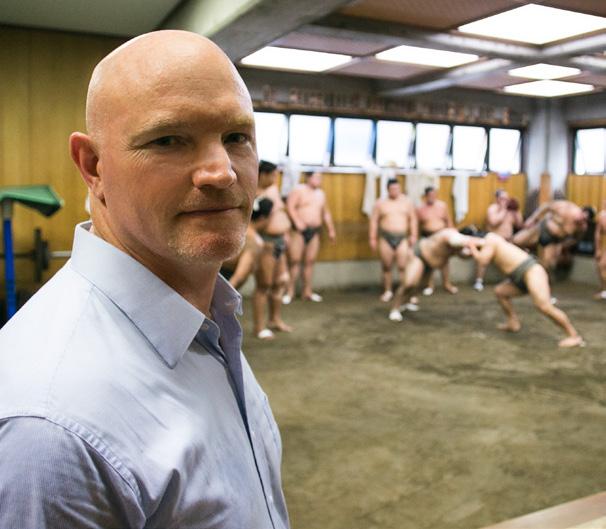

Dr Jim Hardin
Matt Wilce gets to know ASIJ’s new head of school Dr Jim Hardin.
The smell of camellia oil hangs in the humid, early-morning August air and there’s a bang as several hundred pounds of sumo hits the wooden wall at the side of the dohyo. A semi-circle of perspiring wrestlers stand facing the ring as one of their junior members hits the dirt and lies panting for breath. This is head of school Jim Hardin’s dramatic introduction to sumo and one of his frst forays into understanding the culture of his new home—Tokyo. Jim watches the young rikishi train while Kyoko Takano from ASIJ’s Japan Center whispers an explanation in his ear. When the time comes to leave, the Oyakata gets out of the battered recliner that he’s been observing training from and comes to the entrance to greet Jim. Nobuyoshi Hakkaku, a former yokozuna and current chairman of the Japan Sumo Association, is a man of few words, but with interpretation pleasantries are exchanged and the formal request for the sumo stable’s participation in ASIJ’s Spirit Day is made. An invitation to eat chanko nabe together is even proffered.
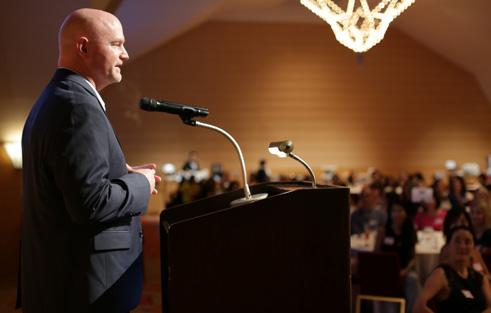
After the early start at the Hakkaku-beya sumo stable, Jim heads across town to the PTA Welcome Coffee at Tokyo American Club, where a roomful of over 300 ASIJ parents gather to kickoff the new school year. The room is flled with chatter as old and new friends catch up on what the summer brought before talk turns to the start of school. For many it will be their frst meeting with Jim and their frst opportunity to hear him speak at length. In his speech, he talks about his personal experience, welcoming the other newcomers to the community, and highlights some of the changes ahead this school year. Lunch with the Chofu PTA executive board and a meeting at the US Embassy with the regional security offcer follow his remarks and then it’s back to the Chofu campus. It’s a busy day, but then so many are when you are head of school at ASIJ.
A native Nebraskan who started out working in Broken Bow Public Schools, Jim began his international teaching career in Eastern Europe at the age of 23. One of 60 teachers sent to the newly opened Peace Corps post in Poland in 1990, Jim and fellow participants were the frst wave of volunteers to teach English in a nation emerging from decades of communist rule. It was an exciting time to be in Eastern Europe and Jim, whose great-grandfather came from the border area of Poland and Lithuania, saw an opportunity to make a difference. “Poland is right in the middle of things right now...things that are changing the course of history,” he told the Lincoln Journal before taking up his post in 1990. Refecting back on the experience now, Jim says, “I gained perspective on 45 years of Cold War politics because my Peace Corps service happened to be in Poland from 1990–92. Most of my students had
never met an American before, so I was something of a novelty. That experience altered my worldview and ultimately helped me be a better, more openminded person.”
The Peace Corps, which was founded in 1961 by President Kennedy to help developing countries and foster better relations with the United States, also impacted Jim’s personal life. “My wife and I met when we were Peace Corps volunteers, so it won’t be surprising that we wanted an international experience for our children when they were young. We wanted our son and daughter to grow up with a broader perspective of the world—proud of being from the United States, but also with a sense of their obligations as global citizens,” he explains. During his time in the Peace Corps Jim also “learned about the importance of taking risks and choosing to live a life outside my comfort zone.”
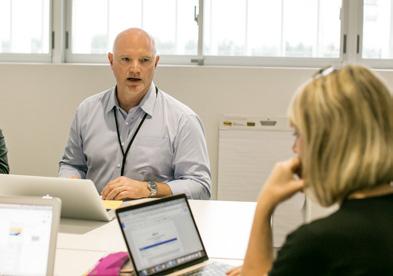
The experience had a lasting effect on Jim’s life. “We planned to stay abroad for only two years, after which we intended to resume our old life in Colorado, but we fell in love with the international lifestyle, specifcally the quality of life we were experiencing as a family,” he explains. After spending six years in Aberdeen in Scotland and seven in Dubai in the UAE, Jim and his wife Marti, an elementary teacher, made the move to Japan this summer—their frst time being overseas without either of their children, as their son, Matthew, and daughter, Cassidy, are both in college now. Asked how he thinks his children would describe him, Jim believes “they would say I can be stubborn, critical and intense, but I think they’d also tell you that I’m harder on myself than anyone else by far, and I’m always willing to admit my mistakes.” He adds that his children would probably say that he talks way too much about the virtues of growing up on a farm in Nebraska and that he thinks he’s funnier than he really is. “I think Marti would say that I always try to do the right thing and that integrity is very important to me.”

Adjusting to being emptynesters as well as joining a new school community, Jim and Marti are excited to explore Japan. “I love history and have always been fascinated by Japan. I hope my wife and I will be able to travel extensively in Japan and learn
about its culture and traditions. I was raised in a very rural part of the United States, and I’ve always believed that to know a country well, you have to get out of its major cities and into more rural places,” Jim says.
Spending his childhood in Beaver City, Nebraska, Jim grew up on a corn and wheat farm. The county seat town had a population of 700 back then and his graduating class in high school had 16 students. As a teenager he raised cattle to pay for college through the Nebraska 4-H Youth Development Program. He also spent a summer working on a sheep farm in Australia—something the local paper noted was quite adventurous. A keen sportsman in his youth—he wrestled and played football and baseball—he’s still a fan, supporting the Chicago Cubs and Nebraska Cornhuskers. “After my childhood dreams of playing in the NFL didn’t quite pan out, I decided to be a veterinarian. I eventually discovered that I enjoyed the humanities more than the sciences, which led me to start planning for law school,” Jim says. “Fortunately, I had a few experiences working with young people that led me to refect on what I really wanted out of life, and I ended up pursuing a career in education.”
After graduating with a BSc from the University of Nebraska-Lincoln, Jim went on to receive a master of arts in English education from the University of Chicago. He would pursue further postgraduate work later in his career at George Washington University, where he received an MA in educational
leadership, before entering the PhD program at Capella University. “My dissertation was related to the work of Stanford University’s Albert Bandura. Specifcally, I studied the impact of collective teacher effcacy, which is a construct of Bandura’s Social Cognitive Theory,” Jim explains. “Bandura contends that the teachers who have the most profound impact on student learning are the ones who have unusually high levels of self-effcacy, which concerns a teacher’s self-perception of her capability to infuence student learning. I was interested in how a faculty’s shared values, beliefs and convictions infuence student agency and the culture of learning in an international school setting.”
It was the simple mission statement of “exceptional care for every child” at Jim’s frst international school that had a profound effect on his own educational philosophy. “That mission didn’t change my values or beliefs, but it brought clarity and a heightened sense of accountability to an ideal, which refned my professional practice and strengthened convictions that were already in place.” He goes on to say, “I believe teachers need to see every child’s glass as half full and that requires knowing each student as an individual and being tenacious in trying to discover and understand his unique potential. An education shouldn’t be a one-size-fts-all, paint-bynumbers experience, and it ultimately needs to inspire each student’s effort, care, pride and integrity.”
A good head of school makes sure there’s behindintegrity the words ‘student-centered.’
- Jim Hardin
After spending the frst half of his career teaching in public schools, mostly in Colorado, Jim was resolved at that time to never move into an administrative position. “I loved teaching, I loved my students, and I was happiest when I could just do my thing and focus on my classes. My frst international school experience changed me. I started to take a larger interest in school culture and systems,” he says. “My own children were very young then, and I think seeing the school experience through their eyes amplifed my curiosity and my sense of responsibility to connect to a larger whole. I also worked with some great school leaders who didn’t allow me to retreat into my own classroom,” he adds. “Now, years later, I realize I love the challenge and responsibility of building school culture on a more systemic and strategic level.”
Jim made the move into school leadership at the International School of Aberdeen, and later became superintendent at Dubai American Academy.
As a head of school, Jim regards his most sacred responsibility as making sure students are safe and secure, saying it is “critical for a school to have systems and protocols that are robust and well-designed.”
He sees making sure there’s alignment between the school’s mission, programming and instructional practices as another key priority. “All schools talk about how they’re student-centered, but I’m not sure there’s always fdelity in those claims,” he notes. “A good head of school makes sure there’s integrity behind the words ‘student-centered.’ I also think a good head of school has his eye on the future, not only on the present, and is always thinking strategically. All of these priorities ultimately play out in how school culture is built and maintained, which is where a head of school has his greatest impact.”
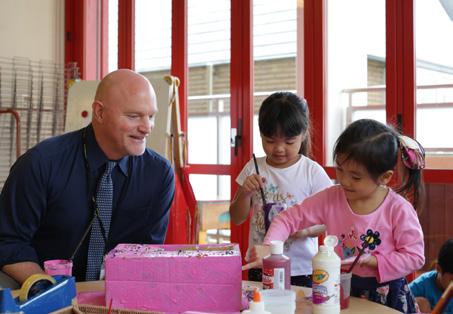
Moving out of the classroom into school leadership comes with some downsides. “I miss the relationships with students most of all. I miss the joy of seeing a student excel beyond what she thought possible and the pride she feels in a job well done. I miss the challenge of fguring out what motivates individual students. I miss the creativity involved in planning lessons that engaged students intellectually and ethically, and I miss the satisfaction of hearing my students arguing about something hours or days after a class had ended,” Jim says. He works hard at getting out of the offce to participate in school life— whether that’s reading a story to a kindergarten or frst grade class, presiding over sumo battles at Spirit Day, cheering on the Mustangs at volleyball or engaging the student council in discussion. By the end of November, Jim hopes to have visited every teacher’s classroom and when you see him kneel down to ask a 3-year-old at the ELC a question or talk to an older student his face lights up.
It is clear that ASIJ is a place Jim wants to be. “I was attracted to the high expectations of the community. I would not be happy in a school that was complacent and simply wanted to maintain its status quo,” Jim says. “A decade or two ago most schools talked about school improvement plans, which were mostly reactive measures to fx or improve existing systems in the school. We’ve moved into an era where schools are much more intentional about designing their futures strategically. This is important because there have been so many transformative developments in education over the past ten to ffteen years.”
Jim’s goal is for ASIJ to understand its own identity, including its institutional aspirations for the future. He sees the process beginning with an examination of the school’s mission and core values. “During this process a school’s mission is either reaffrmed
or refned, which is important and much more than wordsmithing,” he explains. “Schools like ASIJ claim to be mission-directed, which means all decisions about programming, curriculum, pedagogy, staffng, facilities and even admissions should be deliberately tethered to mission. A good process is future-oriented, not simply determined to maintain a status quo that’s worked well in the past.” Jim sees a good process as one that engages the community, especially as the school tries to understand its own strengths (what should be sustained) and what it needs to do differently. To that end he worked with Greenwich Leadership Partners (GLP) to conduct a survey which was sent to all community members in October.
“We went through a process that involved interviewing some of the top strategic design consultants in the world. Our goal was to select a consultant that would facilitate a rigorous process that was not only respectful of ASIJ’s past and sensitive to preserving our unique strengths, but also one that challenged us to refect on what we aren’t doing as well as top independent and international school around the world,” Jim explains. The objective was to fnd a strategic design frm that had deep experience helping schools understand and adapt to social, political, economic, technological and pedagogical trends and one that was well informed about what other schools are doing in their strategic design processes. “We wanted a frm that was connected to current trends in university admissions— a frm that would help us know how we can help our students distinguish themselves in their applications to elite colleges and universities,” he adds. “We
ultimately wanted a strategic design consultant that would facilitate a bolder, more farsighted process that would challenge ASIJ to reestablish itself as one of the top international schools in the world.” GLP was selected as the frm best suited to deliver on those goals and Stephanie Rogen, Principal and Founder of GLP, and Chan Hardwick, another partner with the frm are working with ASIJ this fall on the process. “Stephanie’s reputation and work has been lauded by many, including Tony Wagner in his recent book Mostly Likely to Succeed, and we are excited about Stephanie and Chan’s visit to ASIJ in November,” Jim comments.
A keen historian, you could say that Jim is a student of leadership. Each year he reads at least one biography of an American president—his favorite subjects being Abraham Lincoln, Theodore Roosevelt, James Madison, Harry Truman and Thomas Jefferson. This summer, he read Counselor: A Life at the Edge of History, the autobiography of Ted Sorensen, one of President John F. Kennedy’s closest advisors and trusted speechwriter. “Sorensen was from Nebraska, and my mother knew his family when she was a student at the University of Nebraska in the late 1940s,” Jim explains. “Sorensen confrms what historians have already widely reported about Kennedy—that he welcomed dissent and liked to surround himself with people who challenged his thinking. That’s probably my key takeaway from the book. Leaders need teams that push them to understand alternative viewpoints and refne their thinking. Weak leaders create cultures of fear where people are afraid to disagree.”
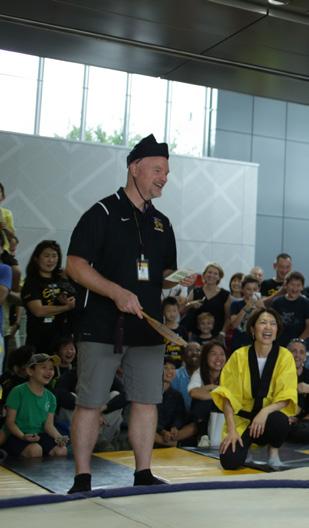
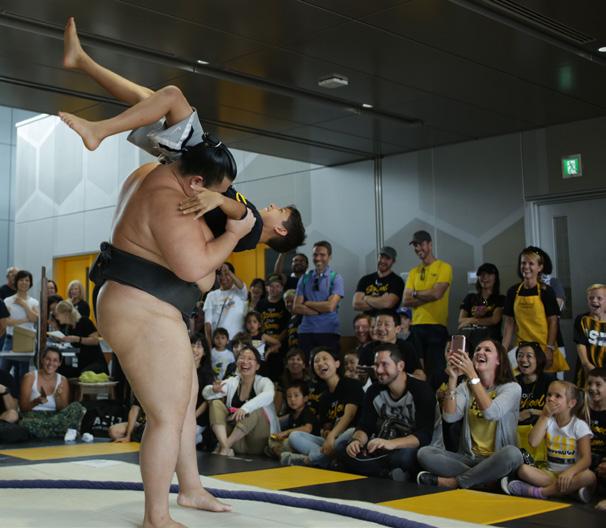
Over a hundred eager children from the ELC and Elementary School and their parents are crowded in the second foor plaza of the Creative Arts Design Center awaiting the arrival of two sumo wrestlers. Jim stands to one side getting to grips with the rules of sumo, his eboshi hat, and how to pronounce “nokotta, nokotta!” as he readies himself to adjudicate in the dohyo It is Jim’s frst Spirit Day and the frst time that the Japan Center has offered a sumo wrestling experience. Places to take part are snapped up in minutes and small competitors, as well as a few plucky parents, each take turns wrestling with the sumo. Once Jim’s stint in the ring ends, he heads downstairs where members of the Class of ‘87 are gathered for their 30th reunion. Jim greets the alumni and welcomes them back to school, chatting to them about where ASIJ is today and hearing tall tales from their time here in the eighties. Spirit Day is only just getting started—see page 48 for more coverage—and Jim has burgers to fip, volleyball and football teams to cheer for and a bubble soccer game to compete in. Later, he’ll prepare for the arrival of candidates for the high school principalship. It’s a busy day, but then so many are when you are head of school at ASIJ.

Te Sounds of Oz
James Scullion ’07 talks with Jarrad Jinks about music, grumpy old audio guys, the sounds of sorcery and winning an Emmy with the Lost in Oz sound editing team.
Dorothy, Toto and Scarecrow move cautiously through the hidden depths of Glenda the Good’s fying castle—a palace kept aloft by way of witchcraft. At the bottom of a dimly-lit staircase they come across an effervescent and incandescent blue lake of oblivion water. The Good Witch of the South is missing and fnding her may be key in Dorothy’s quest to return home to Kansas.
The lake hisses as Scarecrow, Glenda’s right-hand man, approaches. The oblivion water’s sound warning that a single touch will slowly sap remembrance from any who touch it. They enter a nearby boat with a thud
and the motor hums quickly to life. The water reacts with a sizzle and continuous, nearly inaudible chimes as the propeller churns and the trio venture deeper into the cavernous void of the castle’s depths, surrounded by the memory-erasing reservoir that likely stole Scarecrow’s recollection of Glenda’s whereabouts.
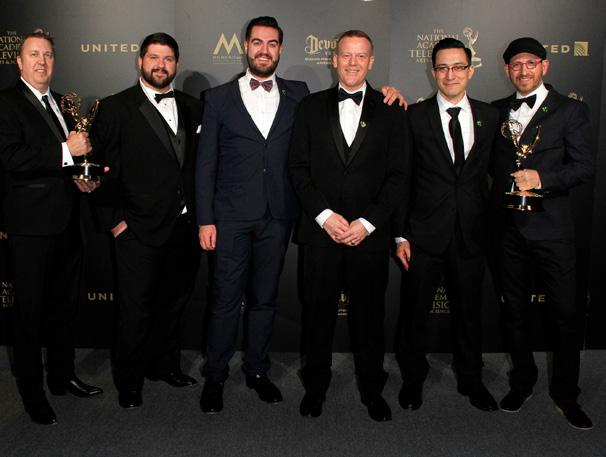
In Lost in Oz, an imaginative retelling of Frank L Baum’s classic tale, Dorothy, Toto and a number of other familiar characters fnd themselves beautifully animated and surrounded by a multi-Emmy awardwinning soundscape in Amazon’s original TV series. As part of the sound editing team that won a
Courtesy of Bang Zoom! Entertainment
Daytime Creative Emmy for Outstanding Sound
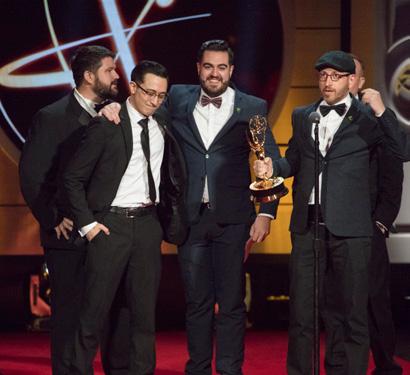
Editing in Animation for their work on Lost in Oz, James Scullion ‘07 helped build a reality in which the sound of magic collides with real-world elements. Teams of talented sound designers, engineers and editors record each line of dialogue and then collaborate to craft a world around the words and images, supplying the sounds to complete an immersive experience—the putter of cars powered by wizardry, the simmer of sorcerous substances and the shuffe of a straw-stuffed scarecrow.
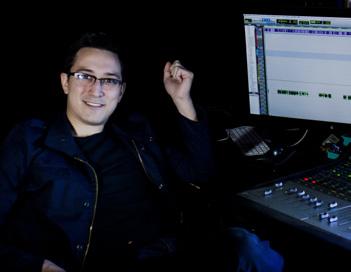
James attended ASIJ for nine years, beginning in elementary school and graduating in 2007, during which time he participated heavily in the performing arts, both onstage and backstage. When asked about his time at ASIJ and if there was any specifc teacher that inspired or contributed to his career choice, James reply was, admittedly, “a little cornball.” He feels that, in a way, every teacher had an infuence on his life and career choices. Pushed to name names, James goes on to mention a few in particular—David Neele (Digital Film/Tech, Theater Design), Brent Huber (FF ’88–’17, AP ‘88–’05), Kerry Nichols (FF ‘87–’08) and Ed Staples (FF ‘98–’08). “All of their encouragement and instruction in the theater arts and in music really helped me a lot.”
Refecting on his infuences earlier in life, James often tells people that the work he does now is a perfect marriage of what he loved growing up—music, storytelling, theater, writing and technology. “Sound for picture is really all of those things put together, and there was defnitely kind of a sense of understanding across different media at ASIJ.” James recalls one of his frst forays into sound, a music technology class he took in middle school, taught by the late Brent Huber. He describes it as a mind opening experience in regards to what is possible with a computer. “Brent Huber was always teaching us fundamentals in music and the more traditional ideas but also was completely open to newer crazy ideas.” While some students in his class moved towards composition, James enjoyed just making nonsensical sounds, and Brent encouraged him to continue, “if you like making crazy sounds that’s cool, that’s your thing!”
And just like James, David Neale also works both sides of the stage, putting that understanding of different media into practice. “When I was in middle school he
∠ James (second from left) along with the members of the Lost in Oz sound editing team accept the Daytime Creative Emmy for Outstanding Sound Editing and Animation (Courtesy of National Academy of Television Arts and Science)
When you’re younger, there’s always one guy who kind of actually knows how the PA system and all that works...and that guy was me.
would be directing the plays...when I got to high school he would be coordinating the back stage as the technical director, but I would still go to him for acting advice and he would always encourage all of the actors, I remember, to understand what was happening behind the stage, understand what was going on behind the scenes.”
That lesson in particular resonated with James and he illustrates the importance by describing a divide in his profession, an us-and-them mentality. “There’s a bit of a stereotype in audio engineering-type work of the grumpy old sound guy—like that great line in The Conversation (1974) with Gene Hackman ‘I don’t care about what they’re saying, I just want a good fat sound,’ which is true to an extent.” But James, when he did music engineering and now as he works with flmmakers and actors, has always made it a goal to bridge that gap—in line with David’s philosophy. “I don’t ever want people to think on one side we’ve got the people that write and the people that shoot and the people that act, and then on the other side we’ve got the sound guys, who are kind of like these weird technical dudes who do some sort of wizardry which we don’t really understand too much about.”
David’s impact on James compounded with a school program, an “extracurricular thing called MUSE.” MUSE—meaning Musicians United Stage Entertainment—was an impassioned revitalization of Battle of the Bands without the competitive element. As the organizer, David wanted the music to have
inherent value, to be played and enjoyed. MUSE allowed James and other students a consistent stage for practice and performance. “And as a result I ended up being in three or four different bands, and we managed to play a fair amount.” David recalls James’ band, Quite the Gentleman, of which James was the bass player. Infuences from his surprisingly eclectic taste in music, listening to bands like They Might Be Giants, shone through in those low notes. David says “Even as a middle school student James had his own way of doing things. He wasn’t concerned about trying to act a certain way or ft a particular mold.” James didn’t limit himself to the bass, either. “With MUSE, I also did a little bit more of the technical things. When you’re younger, there’s always one guy who kind of actually knows how the PA system and all that works... and that guy was me.”
James feels that the openness at ASIJ, with different departments collaborating together, helped him to foster his multimedia loves into more tangible aspirations and mentions that “in particular ASIJ has such a strong program for the arts.”
After ASIJ, James moved on to attend university at the Savannah College of Art and Design (SCAD) in Georgia. SCAD is unique, in terms of studying sound, in that they have an animation department, a flm department, game design and motion graphics—four different mediums that require audio. “So for a sound person, there’s a lot of opportunity there to collaborate with different types of media.” While in college, James
Courtesy of James Scullion

worked infrequently in animation, preferring to focus his attention elsewhere. “I ended up doing a lot of live action at SCAD because I liked it and, maybe in some way, it was also because because they were in the same building as me—so I ended up meeting a lot of flmmakers.”
Throughout university, James’ focus remained on live action sound engineering and he graduated with a BFA in Sound Design for Film and Television. He moved to Los Angeles, CA, in 2013 and worked as a freelance sound editor for television, editing with stations such as MTV, Animal Planet, National Geography, PBS and the History Channel. James’ focus began to shift from live action exclusively after starting with Bang Zoom! Entertainment, a postproduction house specializing in video games and animation.
In exploring his increasing interest for sound in animation, James notes some distinct points of divergence making it clear that, when compared to live action, animation is very different.
“In live action, frequently, you need to come up with basically every single sound for that scene.” In any given movie, nearly every sound you hear did not happen on set—footsteps, clothes moving, birds chirping and punches all must be created. According to James, “usually you don’t want to have actors actually punch each other.” Those sounds are built out with attention to every detail, from the heft of fabrics to nearly imperceivable background noises, and layered to fll out what one in that setting may hear naturally. “So the footsteps, even though we recorded them and we were really careful with the details—we were like ‘oh yeah, let’s make sure to use this boot because this boot really sounds like the way that this character’s boot looks’—in the mix we we might ultimately dip that real low so that you barely know it’s there.”
Sound for animation, as James points out, foregoes the extensive layering that creates a full-bodied and true-to-life atmosphere of audio in each scene, instead taking a more singular approach. “[Animation] is much more
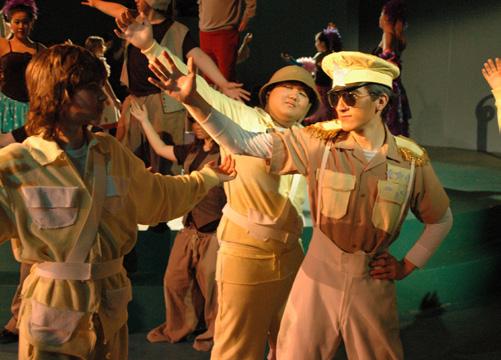
James gets down in 2006’s Seusical the Musical

James plays bass guitar at the 2005 MUSEic Fest in the band Peridot
about focused sounds, moment to moment, that call attention in different ways—if you try to make it too real, then there’s a disconnect because you’re looking at something that part of your brain knows inherently is not real yet there’s all these sounds...it’s almost an uncanny valley thing.”
James is careful not to wander too far down that uncanny valley and likens sound for animation to the beat of Charlie Watts’ drums— linear, concentrated. The philosophy is refected in Lost in Oz. Scenes like those containing the fying monkeys, as their guttural roars give way to the sounds of engine-powered wings and fowing into the resonance of mechanical futter, illustrate the same clarity as a Charlie Watts’ cadence, with few other audible sounds layered on top of the succession of focused effects.
James looks up to the team at Skywalker Sound, inspired by the production values of their work on Pixar flms. “To me, they are a gold standard of really any sound work but especially animation sound work.” Skywalker Sound, George Lucas’ multi Oscar-winning studio, exhibits a detail to their design that complements the 3D animation without approaching a verisimilitude viewers may fnd unappealing, and while maintaining a focus James admires in the Hanna-Barbera cartoons—recollections of characters falling endlessly down off-screen stairs to singular sounds of drums and honks with each strike of another step.
In refecting on why Lost in Oz took the Emmy in Outstanding Sound Editing in Animation, James’ initial reaction was simply “they liked what they heard.“ James looks at the foley work, sound recorded in post production, as an example for where Lost in Oz excels. Something that James found clear from the outset was that the producers wanted to build this world that was fantastical but had a sci-f fair to it— fying cars powered by magic—where magic is generated by an element in an almost chemistrylike process. And so the sound team set out to build something as unique as the concept. “If I wanted to I could have just found something that sort of worked from a sound effects library but instead, and this is something that we run into on the show a lot, we decided to build something new by taking some clips from libraries and then recording our own audio, combining them together and making our own thing out of it. I think stuff like that comes through to the audience.” James looks back to oblivion water, the abundant, memory erasing liquid used as an occasional but signifcant plot device, and the showrunner’s desire to
make it apparent, but not overtly explicit, that the substance was magical. James decided to craft an enchanted liquid sound by dunking a waterproof microphone into a glass of soda and introducing alka seltzer tablets into the mix. Using that audio of close-mic’d bubbles, and a bit of his own sound-editing sorcery (guitar pedals), he created something unique.
James points to another example, the voices for Emerald City’s villainous gang of fying monkeys. “The trick with these fying monkeys was that they had to seem really cool and like bad guys but they can’t seem too scary, because it is a kid’s show.” The Lost in Oz team came to the conclusion that howler monkeys had elements that they liked when paired with imagery from the character design team, but wanted to add another level of individuality, morphing the howler monkey-inspired performance of a voice actor together with that of other primates to create the diverse and unique voice for the henchman to the series’ primary antagonist.
Passion fuels that desire to go the extra mile and the teams that contributed to Lost in Oz had no shortage of excitement for the project. James speculates that, as a series that won three Emmys in total, Outstanding Sound Editing (Animation), Outstanding Sound Mixing (Animation), and Outstanding Children’s Animated Program, and nominee for an additional two, Lost in Oz was well received because of that passion. “One of the things in Lost in Oz that I really liked, that you don’t often get, is that everybody was 100% invested in this project, they really care and are willing to put in that extra effort. I think that stuff like that comes through in different ways and affects the quality.” He further notes that it can be diffcult when working on a project to fnally receive the animations and realize that it hasn’t lived up to your expectation. However, with Lost in Oz the animators, designers and sound were all contributing amazing work.
Lost in Oz ran for a single season receiving fve-star reviews from viewers on its exclusive platform and there are hopes for a second season. James is currently contributing to ongoing series such as Disney XD’s Guardians of the Galaxy and Spider Man—but he also has aspirations to continue his career in live action. “I would love to work on some of the stories coming out of television productions.” He has a great respect for crews on shows like Game of Thrones who can produce a movie-length episode and full mixes on such short time frames. Following his work on Snake Outta Compton (2018), James would love to work on
more independent features and comedy feature flms. “It is fun to have those rare moments to play a sound gag and get a laugh because of the sound.”
With an Emmy under his belt at the age of 27 and the sounds of fying monkeys at his back, it’s an understatement to say James has options. But, wherever his career takes him, he ruminates, James is reminded of an old sound mixer he knows, careful to note that mixers are somewhat stereotyped for complaining because they get tossed everything at the last minute to be fxed. ”I remember him one time after complaining, and I remember this, that old mixer saying ‘but hey, it beats working for a living.’”
∠ James backstage at the Emmys as part of the sound editing teams that won two Emmys for their editing and mixing for Lost in Oz
(Courtesy of National Academy of Television Arts and Science)
Spotlight on Safeguarding
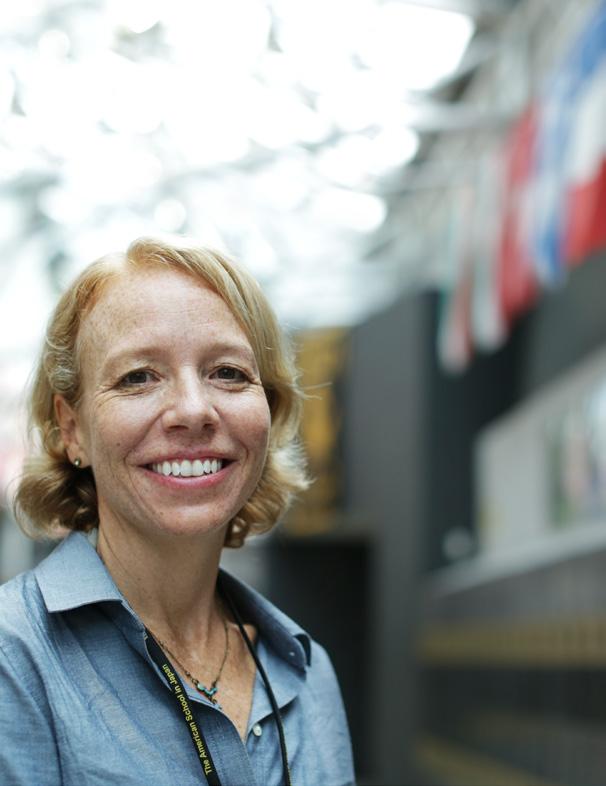
Matt Wilce shines the light on safeguarding at ASIJ and talks with Monica Clear about her new role at school.
It’s August 16 and ASIJ’s 22 new faculty and staff, including Monica Clear, are in the midst of their orientation. Leading the afternoon session is Tim Gerrish, the founder of International Child Protection Advisors (ICPA), who talks about safeguarding and what teachers should be mindful of at school. A former detective with Scotland Yard for 30 years, Tim was Head of the UK National Criminal Intelligence Service Serious Sex Offender unit and then Head of International Partnerships at the Child Exploitation and Online Protection center (CEOP). He was awarded an OBE by her Majesty Queen Elizabeth II for services to international child protection in 2013. Tim has worked with ASIJ for the last three years to help the school strengthen its safeguarding measures and provide training for faculty and staff and guidance to the leadership team.
“A school can never be 100% sure that a child abuse incident will not happen within its walls, but a school needs to be able to say with confdence that it is doing everything it can to prevent any incident ever occurring,” Tim says. “Every international school should have a child safeguarding policy, a code of conduct and robust reporting measures in place. This does not simply mean having a set of documents on a shelf; it is about having procedures and a culture that are implemented and practiced day in, day out by every single member of the school, in every area of operation.”
One of the frst opportunities ASIJ has to emphasize safeguarding is during the hiring process. “In terms of recruiting, we are continuously reviewing our procedures and looking at best practices to make sure that we are current,” explains HR director Ryoko Takano. Tim Gerrish indicated that taking simple steps such as putting a safeguarding statement on the school’s employment page can help deter applications from inappropriate candidates. Once prospective faculty or staff apply, “we use the US-based McDowell Agency to background check all employees and also conduct additional checks as appropriate. We continue to look for ways to enhance the background check procedures to make them more comprehensive and effective for a candidate pool coming from all around the world,” Ryoko adds. During the current cycle of hiring the school has also added safeguarding questions to the interview process for applicants and as part of the reference check process. Once hired, all faculty and staff are required to sign the school’s safeguarding agreement each year.
Demonstrating a commitment to do more than just create policy, ASIJ made the decision to hire a full-time safeguarding offcer this school year. “When we formed our safeguarding taskforce, we quickly realized that we needed a dedicated safe-guarding coordinator who could orchestrate and integrate best practices in safeguarding across the entire school,” says Tiffany Farrell, the Board of Directors’ liaison on safeguarding. “Given that this role is only recently emerging in a school
setting, we were very pleased to hire someone with a broad and extensive background in child safeguarding policy and hands-on work, Monica Clear.”
Monica, who has a BSN from Rutgers and a masters in health and human services from Brandeis University, most recently worked specifcally in child protection with United Nations High Commission for Refugees (UNHCR) in Malaysia. There she ran training sessions for their staff in the Children at Risk Department. “I also coordinated a small funding program out of the High Commission of Canada which supported local civil service organizations in Malaysia, some working on issues of child sexual abuse and violence against women,” she says. She is joined at ASIJ by her husband Joe Tremarco, who is part of the middle school learning support team, and their son and daughter.
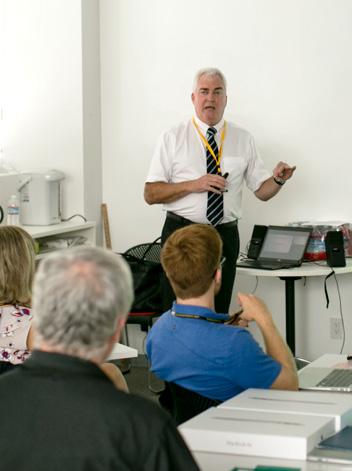

With Monica’s appointment, ASIJ becomes the only international school in Japan to have a full-time safeguarding offcer on staff. “I know from attending regional conferences that only a handful of other international schools around the world have taken the defnitive step to create a separate position for child protection or safeguarding. By doing so, ASIJ has shown commitment at a level above and beyond most other schools. This commitment has been driven and supported by the Board of Directors and the leadership team, which is crucial for success,” Monica says.
A trained nurse, Monica comments, “I realized early on that I was not about the quick fx or adrenaline rush of an emergency room setting, or the revolving door of acute care. The positions I found most fulflling were the ones in which I could build relationships with the patient or client.” This led her to public health nursing in community settings such as schools, homes and even a mobile health van. “In all these jobs, you can’t ignore the context of real life realities. Everything from economic insecurity to addiction affected people’s health on profound levels, and I learned the power of empathy and support in achieving better health outcomes for individuals.” She goes on to say, “a number of my positions have involved working with families where I would encounter issues of abuse often, and the safeguarding of children became a constant thread throughout my work, no matter the setting. It became secondnature to work from a child-centered perspective, and always asking, ‘what is in the best interest for this child?’”
Monica began consulting with ASIJ during the last school year before taking up her position full-time this August. Her work spans both the Early Learning Center (ELC) and Chofu campus and will encompass everything from training staff and conducting parent education sessions to risk assessment and working directly with students. “As I see it, my role is to be the voice of advocacy on protecting and promoting the safety of our students, in almost every aspect of operations. This ranges from ensuring we have comprehensive policies and procedures in place to address safeguarding concerns if they arise, to making sure the school trips meet our thresholds of health and safety.” Beginning with the eighth grade’s Lake Sai trip, Monica will participate in feld trips in the middle and high schools to assess risks and areas for enhancement.
Monica goes on to say, “I also feel strongly that my role is to serve as a support and resource for the entire ASIJ community. This means coordinating and providing training to faculty and staff who work with the students on a daily basis on recognizing
∠ Monica with her husband Joe Tremarco, daughter Nola and son Liam
∠ Tim Gerrish training new faculty at ASIJ
signs and symptoms of abuse so that they feel confdent in reporting any concerns.”
This includes working hands-on with the director of transportation to help keep transitions to and from home/school smooth. Monica also provided training at the start of the school year for over 150 bus monitors on how to recognize and respond to safeguarding issues.
During the frst semester, Monica will also provide workshops on safeguarding for parents in each division and then continue to work with the parent groups on issues of interest such as positive parenting and managing child behavior. “I also plan to work with students at all divisional levels to fnd out how we can improve their sense of well-being and belonging at the school,” she says. “I will look for ways to boost the age-appropriate student curriculum around personal safety. I’m also quite interested in enhancing a sense of student belonging at the school and taking a look at our transition program for new students so that as an institution we create buffers around common vulnerabilities specifc to the international school population, like transient lives and constantly changing support systems.”
Part of Monica’s work involves raising awareness about the potential signs of abuse. “We know children who are being abused may feel guilty or ashamed about the
abuse, and be scared to tell anyone what’s happening. Therefore, parents, teachers, school nurses, and other school staff are in unique positions to recognize signs of abuse, neglect, or maltreatment of a child, or have a student disclose something to them,” she says. “There are commonly recognized warning signs that are not conclusive in and of themselves, but may indicate a possibility of harm being done to that child.” Signs of physical abuse may include bruising, welts, cuts or burns that are inconsistent with ageappropriate activity or explanations. Signs of sexual abuse may include injuries or discomfort in or around the genitalia, sexual behavior or knowledge that is not ageappropriate. Emotional abuse can manifest delays in emotional development, withdrawn or avoidance behavior, loss of interest in school or loss of self-confdence. “The best general advice I can give is to be hyper-aware of any changes in a child’s personality, mood, behavior and school performance. Frequent absence from school should raise red fags, as well as withdrawing from friends or usual school activities,” Monica adds.
Educating the adults in our community on how to respond to safeguarding is an equally important aspect to the job. “Clearly, this is not a one-person job. Safeguarding takes a community, and we are all gatekeepers with a role to play,” she says. If a child chooses
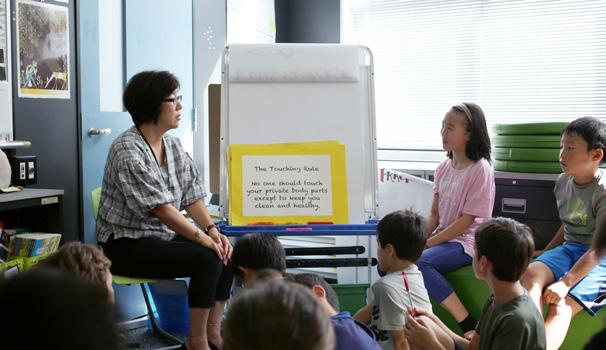
∠ Elementary school counselor Naho Kikuchi conducting a fourth-grade class on staying safe
to make a disclosure, Monica’s advice is to frst, listen carefully to the child. “Tell them they’ve done the right thing in talking to you about it, and say you believe them. Let them know it is not their fault and explain what you are going to do next,” she explains. “If the child is an ASIJ student, call or come see me, and our child safeguarding team will follow the policies and procedures for follow-up. If this child is local, but not an ASIJ student, I can offer some local resources for help and support,” she adds. “Internationally, many countries and cities have national or regional helplines to call if you suspect a child is being harmed, and I would encourage everyone to be aware of their local resources. No matter what, it is important to report it. Many adults who have a concern feel an understandable hesitation in reporting the information, often thinking, ‘What if I am wrong?’” she says. “The better question to ask is, ‘What if I am right?’”
In June of 2015, ASIJ’s Board of Directors apologized for harm caused by a former teacher, Jack Moyer, during his employment at school between 1962 and 2000 either as a teacher or consultant. In addition to supporting those survivors who came forward, the Board committed to several other actions to assist with reconciliation in our community, one being that the school reach out to third-party organizations in Japan that also had affliations with Jack Moyer. As committed in the apology, the report produced by Ropes & Gray following their investigation of the case, along with the survivors’ own personal accounts, were published on the school’s website. The report was translated into Japanese and passed through the FBI to the
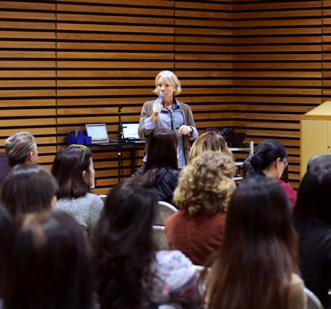
∠ Monica at the PTA high school parent group session on safety in Tokyo, which included presentations from the FBI and US Embassy
appropriate offce of the National Police Agency. “After conducting research and reviewing archival mat-erials we identifed a number of institutions that had ties to Moyer and in October we mailed letters in Japanese to that list,” Tiffany Farrell explains. “Working with Monica, we also created protocols to deal with any inquiries generated by this outreach, including identifying resources in the community that can offer support,” she adds.
“ASIJ remains committed to learning from its past and to assisting in the healing and reconciliation of any who suffered sexual abuse while they were a student here. The Board’s commitment to reimburse counseling costs for all survivors is still in place and we are ready to assist anyone who comes forward,” Tiffany explains. “We have learned much about what we need to do as a school to enhance our safety. We know that this will always be a work in progress, and we remain actively engaged in taking positive steps forward to enhance our programs, practices and policies,” she adds.
“As we come out of a dark period in ASIJ’s history with regards to keeping children safe, we do so with a mandate to create a robust and comprehensive program, rather than just checking off boxes of items to have in place ‘just in case.’ I don’t think most schools work from that reality or perspective,” Monica says. “My hope is that we can take lessonslearned as a community, move forward with a model safeguarding program, and share our knowledge with other international schools regionally and globally to cast a wider net of protection for all students.”
Journalist, Gymnast, Schoolboy, Spy
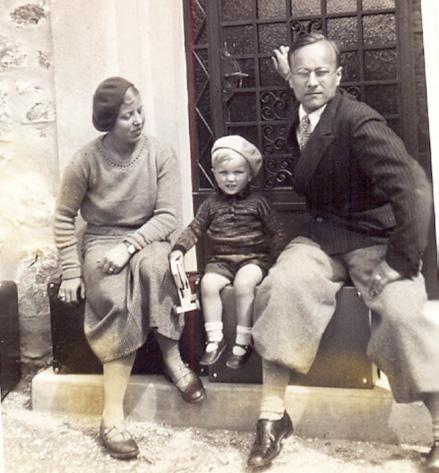
Family photos courtesy of Diane Vukelic
Matt Wilce talks to Paul Vukelic ’48 and uncovers his connection to Moscow’s most successful spy ring.
In the 1930s, The American School in Japan was an eclectic place—a melting pot of missionaries, adventurous businessmen, diplomats and journalists. It was the kind of place where the fresh-faced basketball coach Jim Rasbury could reinvent himself a few years later as FBI bureau chief in San Francisco, where your classmate Beate Sirota ‘39 could end up writing part of the Japanese constitution, where your lab partner David Nicodemus ‘33 would go to work on the Manhattan Project in Los Alamos, where you’d have lunch with Mari Matsukata ‘41, granddaughter of a former prime minister. It was where the Greatest Generation grew up—honing language skills and connections that would see them through the coming confict on all sides of the fght. It was the kind of place where your parents could turn out to be Soviet spies.
Amongst the electric train set and toy carriages on the second-foor room of a suburban, wooden house in Tokyo vital information is broadcast to Soviet Russia. Paul Vukelic ‘48, owner of the toys, has to stay downstairs with his mother Edith when his father’s friend Max Clausen pays a visit. Max always comes with a heavy, battered, black suitcase—often on a Sunday—and heads upstairs. It’s not until many years later that Paul, an elementary school student at the
time, discovers that his parents worked for Richard Sorge in arguably the most successful spy ring of the 20th century and that Max sent German and Japanese secrets back to Moscow from his playroom.
So how did ASIJ come to play host to such a notorious spy ring?
Paul’s father Branko Vukelic was born in Osijek—now the fourth largest city in Croatia—in 1904. As a young man he joined the local Communist youth organization and participated in several demonstrations against the government. Following his involvement with protests and clashes with the police, Branko was registered as an anti-state element in 1925. According to the family, it was only the intervention of his father, a lieutenant colonel in the Army, that saved him from prosecution and prison.
At the age of 22, Branko, his mother Vilma and his siblings moved to Paris, where he enrolled at the University of Paris. It was while he was studying law there that he met Edith Olsen, a Danish girl working as the au pair to a family from Denmark, when they were both vacationing at the beach in Pontaillac. On graduating he took a job with the Compagnie Générale d’Electricité gaining employment in time to support Edith who he discovered was pregnant. Edith returned
briefy to Denmark to give birth to the baby, named Paul, before rejoining Branko in Paris, where the couple married.
In 1931, Branko returned to Zagreb in Croatia to fulfll his conscription obligation. Drafted to infantry, he was sent to the remotest garrison possible—Štip in Macedonia. His family believed this to be punishment for his political views and previous anti-regime activities. Again, Branko’s father intervened, and through army connections succeeded to have his son released from army on medical grounds under the pretence of myopia. After only four months, Branko was out of uniform and back in France.
gymnastics and establish some credentals to allow her to work as an instructor in Japan. Branko arranged visas and secured a cover working on a special Far East issue of the French magazine Vu. Edith left their son with her mother in Denmark and returned to Paris and then on to the south of France where Branko’s mother Vilma was living. The couple said their au revoirs and readied themselves for a new life as Soviet spies in Japan.
It was in Paris that Branko was recruited by the Soviets. He’d returned to the City of Light in January 1932 and returned to communist activity. Active among the city’s Yugoslav left-wing exiles, intellectuals and activists and eager to promote Communist ideas and causes, Branko made it clear that he was ready to help the Soviet Union. After he rejoined the party, Branko was approached by a comrade with an offer of how he could assist. The rendezvous took place at the frst foor restaurant at the Eiffel Tower, where Branko met a mysterious woman known as Countess Olga—reputedly Lydia Stahl, a special agent working for Jan Berzin, chief of the GRU (Soviet army intelligence service). Olga told him “our task is to protect Soviet Russia. This is the duty of of all good communists, but our special duty is to collect information,” according to testimony in Gendaishi Shiryo. Branko initially claimed he wasn’t qualifed to help and vacillated for a few months before Olga and his Serbian Marxist friends convinced him to acquiesce. Branko’s interest in photography and ability to speak eight languages made him a better candidate than he imagined. He was told to prepare for a move to Japan.
After she was vetted by Moscow, Edith was sent to Denmark to brush up on her
Branko and Edith set sail for Tokyo from Marseilles on December 30, 1932. Traveling via the Suez Canal and stopping in Singapore, eventually making port in Yokohama on February 11 the following year. The Vukelics were supposed to take lodgings at the Sanno Hotel, but Branko decided instead to live at the swanky Imperial Hotel. He soon realised that the ¥10 a day cost would eat into what was proving to be a meager budget. His comrades had given him ¥1,800 before he left France, but his calculations on living costs in Tokyo were a decade out of date. Branko’s instructions were to watch The Japan Advertiser for an ad announcing a vacancy at the Bunka Apartments and then to apply. After a period of austerity, the Vukelics eventually took up residence in the slightly cheaper Bunka Apartments in Ochanomizu and according to Review Branko later recalled: “In 1933, when we arrived, a married European couple spent more than ¥10 a day even in the Bunka Apartments. Furthermore, ¥10 a day did not allow for any extras—sightseeing, for example. ¥10 a day did not allow for one sen to be spent on things like that.”
The Bunka Apartments were no slum though and were considered the height of fashion at the time. To the Japanese they were the epitome of Western luxury and were constructed as a model of modern living by the educator Kokichi Morimoto who had a doctorate from Johns Hopkins University in the United States. Designed in 1925 by the American expatriate architect William Merrell Vories—who a few years later would create The American School in Japan’s iconic iron gate—the four-story block was constructed in the Spanish Mission style. Each of the 42 units came with its own telephone and the building housed a cafe, salon, banquet room, garage
Edith Vukelic
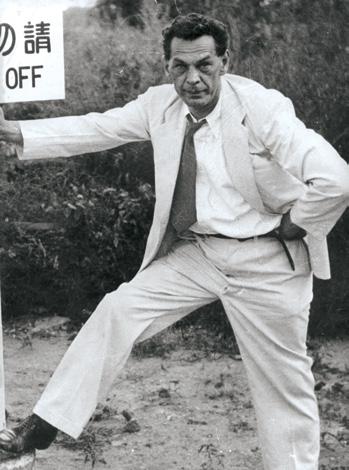
and several shops. The proximity of the Chuo line and the trains that rattled past all day, did detract a little from the relative luxury though.
According to Branko’s later confession, the ¥1,800 given to him was to last his frst six months in Tokyo, hence the tight budget. His contact “Schmidt” aka Richard Sorge was not due to contact him until October that year and so the family’s focus became settling into life in Tokyo and getting by on their meager allowance. Branko’s cover was as a special correspondent for the groundbreaking French weekly Vu , which featured reports from around the world along with stunning photography from the likes of Man Ray. He also reported for the Yugoslav newspaper Politika
Their limited income was augmented by Edith’s work as a gymnastics teacher at two local schools. Danish gymnastics had become quite a trend in Japan following a 1931 visit by Niels Bukh, who had trained the Danish team at the 1912 Stockholm Olympics. Japanese educator Kuniyoshi Obara was interested in including non-competitive physical education into the Japanese school system following the Danish model and so many schools started offering callisthenics during the 1930s building on the popularity of NHK’s radio gymnastics (rajio taiso), which had begun in 1928.
Although they had run into each other during events at the Foreign Correspondents Club, Branko’s frst offcial contact with his contact “Schmidt” was made at the Meguro Hotel. Sorge was sat at a table reading a book, with a drink in hand, when Branko entered and introduced himself. The spies exchanged pleasantries, discussing the book Sorge was reading while referencing specifc page numbers—page 128 was Branko’s sign, page 171 Sorge’s—so that each would know the other was a genuine agent. Their bona fdes established, their real work could begin.
Branko was new to the twilight world of espionage, but ringleader Sorge was an old hand at navigating the shadows having already worked undercover in Europe and run operations in China. Born in Baku, in what is now Azerbaijan, Sorge was
∠ Richard Sorge poses by the side of the road in Japan
(Courtesy of Das Bundesarchiv)
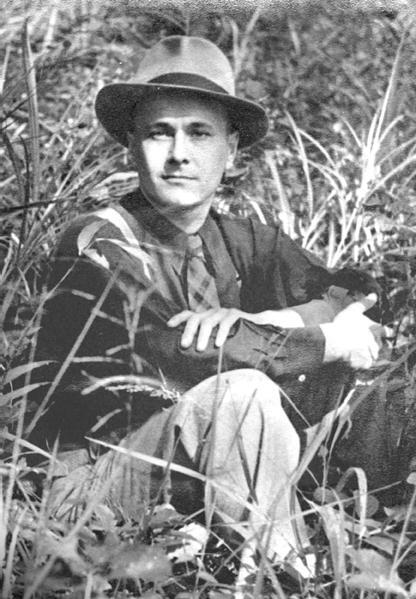
Branko Vukelic
a Soviet military intelligence offcer who had been sent to Germany in 1929 to join the Nazi Party and establish a cover as a journalist. Having run an intelligence operation for three years in Shanghai from 1930, he was sent to Japan in May 1933 to establish a network in Tokyo posing as a journalist for Berliner Börsen Zeitung and the Tägliche Rundschau.
Known as Vukie by some of his colleagues in the press corps, Branko’s value to Sorge was his strong contacts in French and British circles—but his role in the network was also to photograph documents and prepare the microflms to be couriered out of Japan. Prior to his assignment, Branko received photographic training in Paris to ready him for his new role. In Shanghai, Sorge had worked with Bruno Wendt, who was now in place as his radio operator in Tokyo—he would later be replaced by Max Clausen who Sorge had also used during his Chinese operation. The rest of the team still needed to be assembled and so Sorge’s frst instructions to Branko at their meeting were to host a cocktail party and to invite Asahi Shimbun journalist Hotsumi Ozaki, who he’d also met in Shanghai. Ozaki was to be the fourth member of their group with journalist Miyagi Yotoku from the Japan Advertiser completing the quintet of agents. The group proved to be highly effective leading General MacArthur to later describe their work as “a devastating example of a brilliant success of espionage.”
With all the agents in place, Sorge’s team quickly began to generate material based on their connections. Tokyo’s German community was small with 1,118 members according to the 1933 Japan-Manchuko Yearbook, including some like the Schrecks who sent their children Karl ‘38 and Gerhard ‘44 to ASIJ. Sorge quickly became part of the scene, cultivating sources such as Rudolf Weise, who was chief of the Deutches Nachrichtenbüro news agency. A fxture at the German Club, the Rheingold and Fledermaus bars, German Chamber of Commerce and embassy receptions, Sorge developed a wide-reaching network of sources. His personal relationship with German diplomat Eugen Ott, who was promoted to Ambassador in 1939, proved to be the most valuable and he was given unprecedented access at the German Embassy as a result—rumors circulated in the foreign community that Sorge was also
accessing Ott’s wife. A striking woman at six foot with prematurely gray hair, Helma Ott had the reputation in Tokyo’s German circles of being “a little pink” according to socialite Mitsutaro Akira. This was based somewhat in fact as Helma’s frst husband had been a Communist and she had joined the party herself in Munich in 1919. Despite the double risk of the affair being exposed and the Communist background of his lover, Sorge went ahead with the dalliance before moving on to other lovers.
Sorge was not the only spy indulging in infdelity. Branko met Yoshiko Yamasaki in 1934 when she was his translator at an excursion to watch a noh performance. A graduate of the Tsuda Women’s College, Yoshiko spoke excellent English and Branko was immediately smitten. Although they had a chaperone— Yoshiko’s father—at their frst encounter, they were soon meeting without supervision. Having left Paul in the care of her twin sister and mother in Denmark, Edith was desperate to be reunited with her son after three years apart. In June 1935, she traveled back to Denmark on the Trans-Siberian railway. The bloom had already come off the Vukelic’s marriage and during the journey Edith had an affair of her own with a German passenger. Edith returned to Tokyo with Paul by ship in 1936 and resumed her role alongside Branko. Her husband’s interest in Yoshiko was already evident and although Edith and Branko would live together for another two years, the marriage was effectively over.
Although Edith later downplayed her involvement in the spy ring, her role was more than just acting as host to Clausen’s radio transmitter. Sorge and his agents were generating considerable volumes of documentation in addition to the information sent via radio. According to German diplomat and Sorge chronicler Hans Otto Meisner, about 30 microflm cartridges were being created a month and couriered to the Soviets—an incredible volume of written material on top of the thousand plus words broadcast by Clausen a month. With such high traffc, Sorge was in desperate need of more couriers and Max’s wife Anna and then Edith were pressed into making trips to China. With cartridges of micro-flm sewn into their garter belts, Anna and Edith were dispatched to Shanghai. Anna made four trips as a courier—sometimes smuggling her contraband
tied around body under her breast—meeting her contacts at locations such as The Palace Hotel or the bookstore on Bubbling Well Road. Edith also made several trips, meeting Comintern agent and Sorge’s former lover Agnes Smedley.
During this time Paul recalls playing with the neighborhood kids after school, running around with kites and spinning tops. “I had a wonderful time in Japan and played with Japanese kids and had fuency in Japanese as a child. Often I used to translate for my mother,” he recalled in a 1999 interview. Paul was also a keen rider as a child and remembers learning to ride at stables in Meguro. At school Paul started out in 1938 in Katherin Cretcher’s mixed frst and second grade class, a diverse group of 15 students of seven nationalities. The following year, as a second grader he was the “room chairman” for the second semester and one of the highlights was a trip to the main Tokyo Post Offce. Following the trip Paul wrote: “We have a nice Post Offce in our room. We sell stamps at the Post Offce. We wrote letters to the girls and boys in America.” Paul also played a sweet potato in the “Potato Dance,” where he was thrown into a coal bin by the “Irish Potatoes.”
Following her divorce from Branko in 1939, Edith negotiated with Sorge to remain on Moscow’s payroll receiving a retainer of ¥400 a month—double what her exhusband received. In return for the generous allowance, Edith continued to make her home available to Clausen to use for his wireless broadcasts—Günter Stein, a journalist whose house the group had used, had made a hasty escape to London, leaving Clausen with one less place to transmit from. Sorge assisted Edith in fnding a new residence at 2133 in Kami-Meguro 4-chome. The two-story, wooden home was about 10-minutes walk from ASIJ’s Meguro campus and well-appointed for radio broadcasts. Clausen knew from experience that operating from the second foor of a wooden frame house helped prevent magnetic interference and facilitated clear transmission.
Clausen could turn Paul’s room from a place of play to a radio transmitter in about 10 minutes, stringing two seven-meter long tinplated copper wires around the room in lieu of an outdoor antenna. The location in a wellpopulated area also helped with security as narrowing down the location of a broadcast was particularly diffcult—especially when the Kempeitai (military police) lacked mobile tracking equipment. Following the divorce Branko married Yoshiko in January 1940 and moved to a house at 22 Sanai-cho, Ushigomeku (now part of Shinjuku-ku), which was also used by Clausen to transmit.
As Branko and Sorge were both part of the press corps it was not unusual for them to be seen together in public. Paul recalls meeting Sorge once at a popular German restaurant known for its pig’s trotters and wurst. “We were at Lohmeyer’s and Sorge was with us but I don’t really remember much,” he says. “My childhood impression of Sorge was that he was very smart,” he told the Japan Times in 2008.
Paul remembers spending time in Karuizawa and at Lake Nojiri, staying in both popular mountain resorts with either his mother or father and their different circles of friends— which included the Danish Ambassador Lars Tillitse and British Ambassador Sir Robert Craigie and British correspondent Melville Cox. Known as Jimmy to his friends, Cox was the head of Reuters and a popular member of the press corps. Paul remembers staying with him and his Belgian second-wife Anne and their “six or seven Afghan dogs.” Branko was good friends with Jimmy, sharing an offce at the Domei News Agency with him, and was able to use the relationship to get information past the censors and into the


frst and second grade class in front of their Post Offce

British media—stories that his own agency Havas was unwilling to publish once the pro-Nazi Vichy government was in place.
By 1940, Japanese paranoia regarding espionage had reached a peak, with anti-spy posters plastered around the city. Foreigners of all backgrounds were regarded with suspicion and it wasn’t uncommon for the Kempetai to question servants, scrutinize the trashed namecards from dinner parties or even detain tourists for photographing ships. Paul remembers Edith being questioned at home by the police and translating for his mother. According to British writer and academic John Morris, even having back copies of newspapers fled chronologically could get you into trouble—the police were apparently less concerned if you had unorganized piles lying around. A vocal critic who questioned Japanese policy at offcial press conferences, Jimmy soon became a target for the authorities who arrested him for espionage on Saturday, July 27, 1940 at his beach house in Chigasaki during a nationwide roundup of 14 suspected British agents.
Finding background fles of newspaper clippings on the navy, the ”China Incident” and Anglo-Japanese relations, the police questioned Jimmy, suspecting he was a SIS operative. After two days of interrogation at the Kempeitai headquarters adjacent to the Imperial Palace moat, Jimmy allegedly threw himself from the third-storey room at 3:46pm and was pronounced dead at the scene. “My mother was very upset. We’d spent
quite a lot of time with the Cox family,” Paul recalls. Branko and the rest of the press corps were equally shocked. Questions were asked in British parliament as well as in the Tokyo community with widespread disbelief that Jimmy had committed suicide, despite the production of a confessional note addressed to Anne. His treatment and death shook the foreign community in Japan and made the front pages of newspapers around the globe. Times had changed and war in the Pacifc seemed increasingly likely.
With heightened scrutiny by the authorities and ever increasing risk of being caught, Edith became interested in moving on. The decision to leave was not hers alone though and Sorge obtained Moscow’s permission for her to leave Japan. Paul recalls that his mother was lucky to secure passage on the ship using her connections at the Danish Embassy and friendship with the Ambassador to secure tickets. Other sources, suggest that Sorge himself used infuence to get them on board. Branko had been unsuccessful at helping them evacuate as Nazi-occupied Yugoslavia was not an enemy of Japan and therefore they were not considered to be political refugees. Despite the assistance of the Danish Embassy, “we could not go back to Denmark because it was fully occupied by Germany,” Paul says. “My mother’s sister [Gudrun] and her husband had migrated from Denmark to Freemantle [Australia] in 1939 before the war began and so it was logical that my mother would go somewhere she had relatives.”
Paul with some neighborhood friends in Tokyo
The plan was for Paul and Edith to join Gudrun in Australia—that was if they survived the journey.
Edith and Paul prepared to set sail for Australia on September 25, 1941 aboard the SS Anhui. “As we waited to board the ship, my father appeared from nowhere. I hadn’t seen him for some time, as he hadn’t lived with us for more than a year. He looked shocked,” Paul recalls. It was the last time Paul would see his father. “I found out later that he gave my mother money and his ring. Years later, she gave the ring to me and I still wear it,” Paul says. The Chinese steamer left Yokohama after signifcant delays to allow the Japanese police to thoroughly search its 361 passengers. A retaliation for the strict searches being made of Japanese evacuees in Singapore and Hong Kong, “not one seam of a suit, not one fold of a skirt was unnoticed, every hat and every shoe was closely inspected” by the police according to newspaper reports. As a result, three diamonds and $50 were recovered from one Indian gentlemen alone.
En route to Hong Kong, the 3,494-ton steamer hit a typhoon. “Ice chests had been lashed onto the decks to accommodate food for everyone but the ice chests were washed overboard. Water was sloshing around in the holds” Paul recalls. “I remember lying in my bunk watching ice-chests and luggage that had washed overboard foating backwards as the ship fought to maintain its course.” Four of the eight lifeboats were also ripped from the deck by the 140mph winds. When Paul went searching for his mother he discovered her “sitting in a bathroom with six other people all holding on to the bath, enjoying glasses of neat gin.” Paul also remembers that Sir John Latham, Australia’s First Minister to Tokyo, was one of their fellow passengers. Contemporary accounts describe his behavior as inspiring as he refused preferential treatment and remained in the well deck with the rest of the
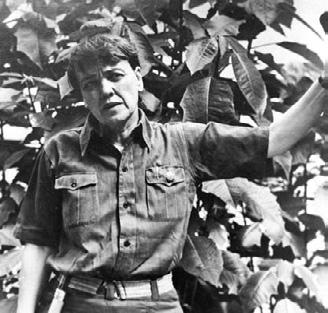
passengers. Also on board, although Paul doesn’t recall meeting, was British diplomat GHD Bell the father of alumnus Alfred Bell ‘41—it’s unclear whether Alfred and the rest of the family were passengers.
By the time the Anhui limped into Hong Kong harbor, Captain Llewellyn Evans, who had remained on the bridge for 24 hours straight through the worst of the storm, was a hero to his passengers and crew. With only a handful of minor injuries and some lost luggage, things could have been much worse. The ship remained anchored for 10 days while repairs were made, giving the passengers the opportunity to spend a few hours each day a shore. Eager to report on the dramatic voyage, several journalists boarded the ship to interview the crew and their charges. Years later, Paul learned that Agnes Smedley was among those who came aboard. According to Edith’s recollection, Agnes was shocked to encounter Sorge’s former courier on the ship and the pair pretended not to know each other. Agnes was herself preparing to evacuate to the United States following a gall bladder operation in Hong Kong.
Once the Anhui was seaworthy again, they set sail for Singapore where Edith and Paul boarded the Centaur, a combination passenger liner and refrigerated cargo ship. The ship operated a trade route between Western Australia and Singapore and was
∠ Agnes Smedley in 1939
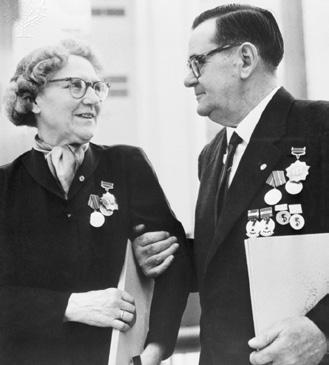
designed to carry 72 passengers and 450 cattle. Following the outbreak of war, it was ftted out with a Mark IX naval gun and two Vickers machine guns and protection against naval mines. Edith and Paul joined 47 other passengers in the frst class accommodation on board, with another 13 second class passengers and three unlucky Chinese passengers who were confned to the deck.
The Centaur made port at Surabaya, Broome and Carnarvon en route to Freemantle. At Surabaya, Paul somehow managed to wander off on his own. “In the end, the crew were sent out to fnd me and there I was in a horse and cart, oblivious of the trouble I’d caused,” he later recalled. At the next two stops no passengers were allowed ashore and only some cattle were loaded.
Edith and Paul made port at Fremantle on October 26, 1941. The quarantine records listed Edith’s profession as “Prof. of Gymnastic” and her address as the Claremont, a suburb of Perth. Edith’s sister Gudrun and her husband Carl Ove Johannes Pedersen, both prominent swimmers in their native Denmark, had emigrated to the area to run the Nedlands Baths. Paul and Edith joined them at the
∠ Anna and Max Clausen receive the For Merit to the Fatherland Order in 1969 (Courtesy of Alamy)
baths, which had been built along the Swan River in 1909. The Pedersen’s ran the baths for several decades, offering swimming classes, life-saving and “water ballet” in a fully enclosed shark proof area.
Edith and Paul had left Japan in the nick of time. After eight years of operating without detection, Sorge’s spy ring was about to be exposed by the Japanese police. Early in the morning on October 18, Branko, Sorge and Claussen were arrested. A ten man team was sent to each of their houses, surprising Branko and Yoshiko in bed after being let into the house by their maid. Branko was allowed to get dressed, while being thoroughly searched for poison capsules and weapons, before being bundled into the waiting police car. Less than a hour later he was languishing in Sugamo Prison, nursing a hangover and wondering what his fate would be. The discovery of his dark room complete with numerous photos of Japanese military facilities, a copying camera and a specialist high-speed telescopic lens made it clear that the Tokko (secret police) had got their spy.
Although Branko kept quiet for the frst day in prison, Tomiki Suzuki from Tokko’s AmericanEuropean Division later tricked him into talking by pretending Sorge had already confessed. Over the coming weeks, Branko divulged more and more information which added to the intelligence gathered from the rest of the spy ring. As a result, Branko was given a life-sentence for his espionage in April 1944. In July, he was transferred from Sugamo to Abashiri Prison on the northern coast of Hokkaido where the harsh winter proved too much for him—he died of acute pneumonia on January 13, 1945. Edith was informed of his death by the Red Cross, but Paul doesn’t remember

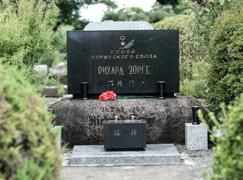
her discussing the details of what she was told. “My mother never spoke about Sorge or Claussen,” Paul says. After they left Japan, “she was quite deliberately—and I didn’t realize until much later—completely evasive. She had visits a number of times from the ASIO [Australian Security Intelligence Organization]. They came and asked her a lot of questions, but she never discussed it with me.”
As a fair-haired, Japanese-speaking boy, Paul was something of an oddity when he arrived in Australia. “I loved living in Australia. I don’t think I ever really thought about my father or his absence…We just got on with things,” Paul says. Soon Australia was at war with his old home and US Navy pilots were learning to fy Catalina seaplanes on the nearby Swan River. “I left school when I was 14 and was a messenger boy and eventually got into the motor trade and property,”
Paul says. An unconventional start and extended stays in Europe, eventually saw him evolve from digging potatoes in Denmark into a successful businessman and local council member.
It wasn’t until the ffties and sixties that the full extent of the activities of the Sorge spy ring were widely recognized. On November 5, 1964 by decree of Praesidium of the Supreme Soviet Branko Vukelic was posthumously awarded the Order of the Patriotic War (First Degree). Sorge, who had been executed on November 7, 1944, received the title Hero of the Soviet Union
and was honored with an East German postage stamp bearing his face. His grave is now in Tama Cemetery, just down the street from ASIJ’s Chofu campus, where it receives regular visits from groups and individuals interested in the man Le-Figaro dubbed “Stalin’s James Bond.”
Over time, Paul became interested in discovering what had happened to his father and connecting with Yoshiko and his halfbrother Hiroshi. “I came to Japan in 1972 for the frst time since the war,” he told the Japan Times in a 2008 interview. “I asked Foreign Ministry offcials about my father and Sorge, but they did not respond to my questions.” Paul’s second wife Pauline and daughter Diane were both Rotary exchange students in Japan and their profciency in Japanese and assistance helped Paul learn more about his family’s history, including a moving visit to Abashiri Prison.
Today, Paul is a genki 87-year-old who recently married for the fourth time. He still regularly visits Japan and remembers fondly his childhood in Tokyo. “I’ve been a lot more interested in this the last 15 years than I ever was before, because you continue to hear more about the Sorge saga—through flms, books and articles,” he says. With such an unusual life-story of his own, the surface of which is barely scratched here, Paul published his own memoir in 2015 with the help of local writer Wilma Mann. From his boyhood brush with history to rediscovering his Croatian roots in adulthood, Paul is proof that ASIJ is the kind of place where everyone has a story.
∠ Paul and his halfbrother Hiroshi in Roppongi
∠ Sorge’s gravesite in Tama Cemetry
Spirited Away
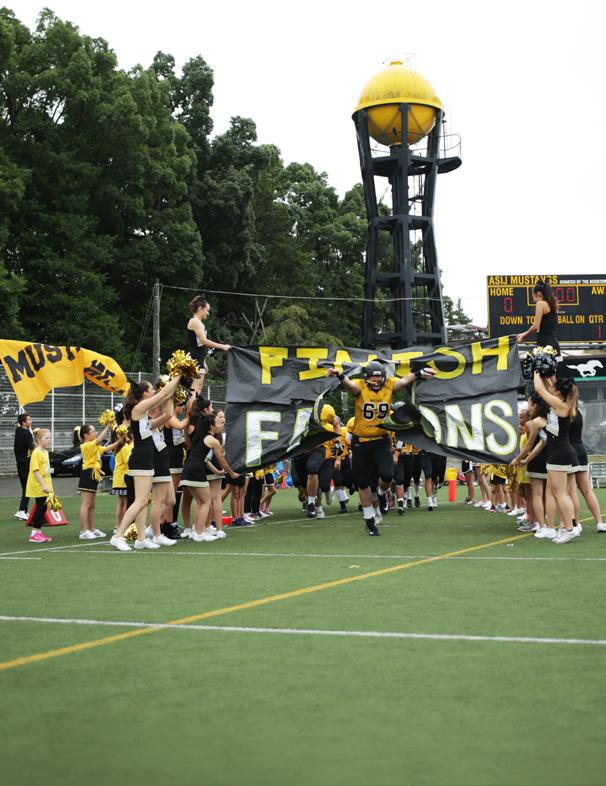
Several decades after leaving ASIJ, members of the Class of ’87 once again set-out for Tokyo, revisiting campus on one of the largest event-days of the year, Spirit Day.
Every fall, ASIJ buzzes in a week-long furry of activities focused on school spirit and community building. The week culminates in Spirit Day, formerly known as homecoming, a day dedicated to cheering on the Mustang sports teams, playing games and eating delicious food. This year, Spirit Week was extra special as we welcomed back to Japan and campus 30 alumni from the Class of ‘87, who assembled with their families in Tokyo for their 30th reunion—the frst on-campus reunion during Spirit Day.
Anticipation built in the days leading up to the Class of ‘87’s return to Tokyo—for many, their frst time back since attending ASIJ in the ‘70s and ‘80s. Just as our alum’s excitement grew in the lead-up to their trip back, school spirit spread around campus as students prepared for the spirit day festivities with a week of different activities where students, parents and faculty showed their Mustang pride. For the frst time, the ELC also got in on the action, joining the Chofu campus in wearing crazy hats/hair on Monday, silly socks on Tuesday, class colors on Wednesday, favorite team jerseys on Thursday and school colors on Friday for Black and Gold Day.
High school activities culminated in Friday’s Spirit Assembly, where students performed skits, introduced the sports teams and connected with their classmates. As Spirit Week wound down on Friday and faculty and students headed home to rest up for Saturday’s main event, the Class of ‘87 was just getting started. The alumni began their reunion that night with a welcome dinner at the Tokyo American Club, followed by revisiting the Roppongi nightlife of their youth.
Family, friends, students, faculty and, of course, alumni fnally came together on Saturday for Spirit Day. The Class of ‘87 again, for the frst time since their high school days, hopped on a bus heading to the Chofu campus. Decked-out in black and gold spirit-wear—vintage jerseys, cheerleaderesque dress, and “Our School, Our Team, Our Dream” T-shirts gifted by the Advancement Offce, they arrived to a greeting by Erin Nelson, director of advancement, at their base for the day in the Creative Arts Design Center. Reunion-goers sipped free Starbucks coffee courtesy of the PTA before heading out for a campus tour—enjoying the nostalgia of the more historic areas of campus and learning the ins-and-outs of what’s new.
Following the tour, Jim Hardin, head of school, introduced himself and welcomed the Class of ‘87 back to campus. Jim also touched upon the upcoming strategic planning and felded various
questions from the group. Robert Sharp presented Jim with a gift of $7,700 to the Strength and Courage Award on behalf of the class.
The Class of ‘87 continued the day by enjoying the Spirit Day events, joining the community in a host of attractions, food and general displays of mustang pride. Student groups introduced their causes, clubs and showed off their activities—one group even ushered guests horrifyingly into the Halloween season as Abot Kamay led (un)willing participants through the spooky remnants of what once was an unhappy girl’s birthday party in their Haunted Hotel.
Spots to take part in the Japan Center’s sumo experience were snapped up within minutes of opening as eager guests lined up to go toe-totoe with two bona-fde sumo wrestlers. Okinofuji and Hokuto-ou visited from Hakkaku-beya Sumo Stable to face their toughest challengers to date—hoards of ASIJ community members. Jim Hardin acted as the guest gyouji (referee) for the showdown.
In total, our ASIJ Mustangs competed in four different sports during Spirit Day. Both middle school volleyball teams beat Seisen with scores of 2-0 and 2-1 and the high school junior varsity volleyball team won against Seisen as well, with a score of 2-0. The high school varsity tennis teams also stood out, with the boys overcoming St. Mary’s 5-0 and the girls defeating Seisen 4-1.
The varsity football game began with a coin toss by the visiting sumo wrestlers and our Mustangs played the far-away visiting team from Seoul American School, taking the victory 55-14. Our cross-country teams competed at Tama Hills during Spirit Day where both the boys and girls teams brought home the win.
The halftime show included a heated bubble soccer match for the second year running, nearly surpassing the highly-anticipated varsity football game itself in ferocity. This year, the leadership team went bubble-to-bubble against faculty.
Spirit Day is made possible thanks to the Chofu PTA Boosters as well as over 145 volunteers, all contributing to make the day run smoothly. While many of our community members headed home, full-stomached, the Class of ‘87 reunion-goers proved insatiable. On Saturday night they moved on to a boisterous dinner at Gonpachi—the inspiration for a sequence in Kill Bill and celebrity favorite—followed by nijikai at a karaoke bar for some eighties music and then a sanjikai for those still left with stamina.
∠ Thomas Gistren ‘87 introducing the reunion slideshow
∠ Kenyon Childs ‘87 catches up with high school Spanish teacher Javier Fernandez
∠ Class of ‘87 alumnae Sachiko Hara and Yoshiko Okada reminisce at the TAC welcome dinner
∠ Kari Wilkinson Kohl ‘87, Scott Williams ‘87 and Joe Clough ‘87 at the TAC welcome dinner
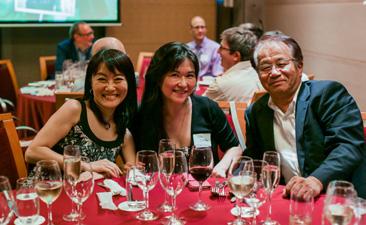

The class of ‘87 reunion-goers began with a welcome dinner in the Washington and Lincoln rooms at Tokyo American Club on Friday, Sep 29. Guests ate, drank and caught up with their former classmates. Scott Williams ‘87 prepared and showcased a slideshow of photos from their past, sparking reminiscent conversation and quite a bit of laughter and Tomas Gistren ‘87 followed up with a brief speech. Checking in on how well the class of ‘87 retained their Spanish language knowledge, their high school Spanish teacher, Javier Fernandez, also attended.
∠ Class of ‘87 alumni and their family members left the Grand Hyatt in Roppongi early Saturday morning on one of ASIJ’s 30 buses at 9am, heading to campus for their frst Spirit Day. Anticipation for the festivities ahead compounded as one alumna started passing around album pages full of photos.

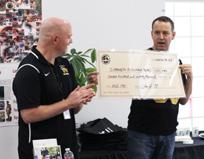
∠ Robert Sharp presented head of school Jim Hardin with a gift of $7,700 to the Strength and Courage Award on behalf of the class
∠ Robert Sharp and Jennifer Wilson decked out in spirit wear



∠ On-campus sports on Spirit Day included football, volleyball, tennis and karate. The high school varsity tennis teams stood out, with the boys overcoming St. Mary’s 5-0 and the girls winning versus Seisen 4-1. The high school junior varsity volleyball team won against Seisen as well, with a score of 2-0.

∠ The ASIJ Mustang made an appearance, sporting a fresh, less angry-looking head. Students waved “Hi,” high-fved and took photos with the Mustang as he made the rounds, raising spirit. One child was brave (and tall) enough to reach into the mustang’s maw—luckily, the new head lacks teeth.
∠ ASIJ students from grades 2–12 participated in the second Annual Karate Tournament, where they competed in kumite (sparring) and kata (form)


∠ The high school pep band played the day’s soundtrack
∠ Guest sumo wrestlers Okino-fuji and Hokuto-ou kicked-off the varsity football game with the offcial coin-toss. Elementary school students who attended a three day cheer clinic also joined the high school cheer team for an on-feld performance before the main game.
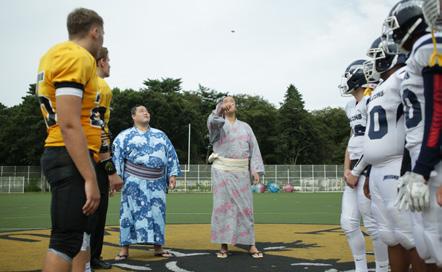
∠ During the 2016–17 school year, the PTA began a Winterfest raffe pre-drawing, giving participants an early opportunity to win a trip to Tokyo Disney Resort. The PTA held a pre-draw for the second year running—the lucky winner this year was current parent Yoko Chang.
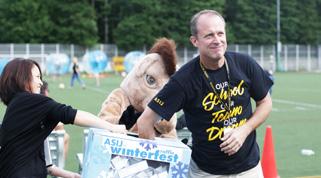
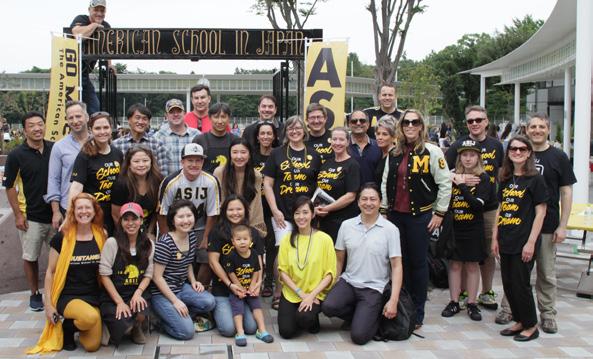

∠ The boisterous dinner at Gonpachi where, in spite of Tomas Gistren’s ‘87 exaltations at the TAC dinner, they did not have the whole foor. The nijikai was at a karaoke bar where they proceeded to croon the night away to ‘80’s hits. A few extremely hardy souls carried on with a sanjikai at a club in Aoyama where, at 3am, DJ Quietstorm (Rob Jordan ‘87) showcased his DJ skills to an adoring crowd.
Class of ‘87 with ASIJ Alumni Council
FUNDRAISING REPORT 16–17
Fund
Strength & Courage Award ¥764,025 Other ¥12,896,648
Strength & Courage Award ¥764,025 Other ¥12,896,648
Giving by Constituency
2 FRIENDS 4
FACULTY/STAFF 30 CURRENT & FORMER
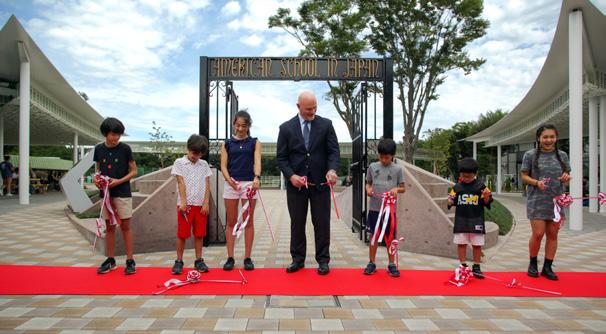
Heart of Campus
When school began in late August, students and faculty returned to fnd a revamped courtyard at the heart of campus. Remodeled over the course of the last two summers, the courtyard now features three canopies that provide additional covered seating for more than 200 people allowing students to eat outdoors and watch events on the main feld in the shade. Other improvements include numerous power outlets, a designated area for grilling and a new drinking fountain. ASIJ’s iconic gate returns to its previous position, now fanked by class stones dating back to 1962.
On Friday, September 15 representatives from Tange and Associates and Koshin joined us for a formal ribbon cutting ceremony. Alumni parent Denise Tange, wife of architect and trustee Paul Tange, cut the ribbon along with head of school Jim Hardin and the president of Koshin construction Shigeto Ozawa. In a second ribbon cutting we invited the children of donors to the courtyard renewal and our high school student council president to do the honors. May Tokui, high school student council president; siblings Cameron (grade 2), Aidan (grade 4) and Emanuelle DiCicco (grade 7); Yuki Nakamura (grade 1); and Kazuma Matsuo (grade 2) took part as a crowd of parents, students and faculty watched. Thanks to the generosity of our donors we have an enhanced community space to enjoy.
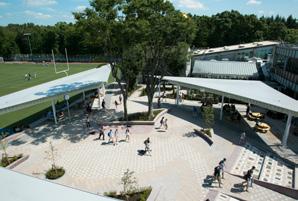
Courtyard Donors
Emanuelle ‘23, Aidan ‘26, Cameron ‘28, Yuko and Daniel DiCicco ‘89
Kazuma ‘28, Taro and Yuki Matsuo
Yuki ‘29, Hiroharu and Mariko Nakamura
Isaac Yeskel ‘27, William Yeskel and Noriko Murai in memory of Jill Yeskel
GIFT CLUB MEMBERS
Second Century Circle
¥5,000,000 OR MORE
Chofu PTA
ELC PTA
1902 Society
¥1,000,000—¥4,999,999
DiCicco, Daniel C. ‘89 & Yuko H.
Hatakeyama, Yasu & Makiko
Higa, Ernest M. ‘70 & Aya
Matsuo, Taro & Yuki
Miller, Anthony M. & Melin, Cecilia B.
Nakamura, Hiroharu & Mariko
Ryu, Jin R. ‘77
Sasanuma, Taisuke & Catherine W.
Tahara, Kunio & Eriko
Talbot, Jay S. & Yuki
Yeskel, William H. & Murai, Noriko
Zee, Jinly K. ‘90
Headmaster’s Circle
¥200,000—¥999,999
Anton, Yuriko J. ‘84 & Philip J.
Art, Cameron & Julie
Bernier, Jeffrey S. & Seiko S.
Cannon, Alan & Kitakado, Fuyumi
Class of 1987
Della Pietra, Anthony P. & Fujimoto, Sayaka
Downs, Vicky
Edmunds, Eric F. & Misa
Ehrenkranz, Andra K. ‘83 & John
Epstein, Jonathan S. & Liu G.
Flannery, John L. & Tracy B.
Folsom, Richard L.
Fu, Ming-Xia & Nishikawa Fu, Hiroko
Fujishima, Julie K. ‘84
Harada, Mary ‘81 & Greg
Hashimoto, Yutaka & Hisae
House, Andrew J. & Fukushima, Ikuko
Ikeno, Atsushi & Rei
Imai, Eijiro & Hiromi
Ishido, Masayuki & Keiko
Kawada, Tadahiro & Susan
Kehoe, James & Garavaglia, Lilia
Kindred, Jonathan B. & Sachiko
Kobayashi, Takashi & Terumi
Lane, Nicholas & Holly
Massion, Peter P. & Daver, Roxana
Decade Clubs recognize donors who have given for 10, 20, 30 or more consecutive years. Donations of any amount count toward Decade Club status. Decade Club members have a tremendous impact at ASIJ with their sustained support.
If you wish to secure your spot in a Decade Club, please consider enrolling in recurring donations through Give2Asia at www.give2asia.org/asij. Your donation will be automatically charged to your credit card each year and will be tax-deductible in the United States.
Donations listed here were made between July 1, 2016 and June 30, 2017.
McGuire, Matthew E. & Abe, Michi
Mizuno, Toshizumi & Junko
Moorefeld, John A. & Farrell, Tiffany A.
Murakami, Yumiko & Moses, Todd
Nakashima, Amane & Chizuru
Nishimi, Tetsuya ‘94
Noddin, Robert L. & Janette I.
Oshima, Robert F. ‘68
Piez, Catherine A. ‘82
Platek, Nir Z.
Porte, Thierry G. & Tashiro-Porte, Yasko
Reilly, Kenneth & Debbie
Rekate, Jason W. & Anna C.
Sare, Steven D. & Pierce, Jr, Peter G.
Seltzer, Susan & Theodore S.
Semaya, David J. & Masako W.
Shah, Sachin N. & Rajul
Takagi, James M. & Tsukasa
Taylor, Michael W., Lynne C., Wils ‘17, Nate ‘19, Oliver ‘21 & Finlay ‘24
Toppino, Jon-Paul & Stephanie H.
Tsusaka, Miki & Jun
Wihman, Peter A. & Liisa H. E.
Winebarger, John R. & Fumie
Zahedi, H E Ardeshir
Black and Gold League
¥100,000—¥199,999
Bedolla, Eugenio & Vega, Maria T.
Black, Jerry T. & Sayuri
Boatwright, David ‘73
Buege, Brian W. ‘87
Chitani, Yinsei ‘68 & Yoshio
Conrad, Andrew J. & Chitose S.
Cox, William G. ‘62
Drummond, Lowell H. ‘73
Evans, Eric & Lisa
Fukikoshi, Akihiro & Tomoko
Fukuma, Lalaka ‘93
Hall, Katherine A. & Larik M.
Honda, Germaine H.
Huber, Susan L.
Isenberg, Joshua R. & Reese, Lenore
Jones, David G. ‘76 & Mayumi
Kamano, Hiroyuki & Harumi
Keese, Jack S. & Pamela L.
Kobayashi, Masayuki & Wakae
Kudaka, Naoko M.
Kwan, Jason T. & Sora
Latimore, Timothy W. & Chieko
Lund, Andrew E. ‘81 & Denise
Majid, Nasir & Chie
Malamud, Jonathan & Hanai, Tomi
Mentzas, Spyridon
Mera, Yuhka ‘81
Meyer, Joseph & Minako
Morgenstern, Frederick N. ‘83 & Kendra
Muir, James T. & Kanai, Miwa
Neale, David
Nishida, Tina Y. ‘85 & David A.
O’Brien, Jeffrey M. & Willcut, Deborah L.
Ogawa, Andrew S. ‘90
Okada, Hikaru & Yoshiko
Plum, John E. & Mimi K.
Regent, Cristopher & Heidi
Romaine, Matthew M. I. ‘97
Ryu, Soonja ‘73
Saburi, Eugene H. & Cheri T.
Schmelzeis, Joseph P. ‘80
Schmidt, Matthew L. & Lisa H.
Schultz, Mark D. & Hjordis H.
Smith, Charles M. & Kunieda, Emi
Suzuki, Rei R. ‘84
Yamamoto, Koji & Yuko
Yamasaki, A. Paul & Affah R.
Yen, Jean ‘64
Yonamine, Paul K. & Lynda S.
Mustang Club
¥50,000—¥99,999
Anonymous
Armstrong, Peter H. ‘52
Bird, Jack E. & Thomas, Karen C.
Case, David E. & Kanae T.
Cooper, Peter R. & Pamela
Corcoran, Michael V. ‘94 & Theresa
Durfee, Peter R. ‘88 & Megumi
Farion, Francois & Nathalie
Flynn, Karin ‘72
Hattori, Hitomi ‘83, Seikou, Enna ‘11 & Mina ‘16
Hugel, Michael ‘80
Ishibashi, Kenzo & Seiko
Karim, Arshad ‘92 & Tanabe, Hiroko
Kuwana, Yumi ‘82 & Eiichiro
L’Heureux, Marc & Heidi H.
Lury, Richard R. ‘65 & Gemma
Maa, Ming-Hokng & Liao, Kaitlyn
Mallat, Mary Margaret & Deck, David D.
Martino, William L. ‘63
Morachnick, William J. & Nikki C.
Mori, Yasuaki & Mariko
Moss, Carolyn M. ‘73 & Hawkins, Daniel J.
Muhl, Richard R.
Nagata, Paul ‘74 & Susan
Nelson, Erin
Norris, Margaret ‘65
Schlichting, Richard D. & Cynthia M.
Shorrock, Hallam
Wakat, Barbara M. ‘88
Walsh, Lisa K. ‘80
Whitehead, Charles K. ‘79
Whitson, Thomas W. & Kyung S. Williams, John S. ‘87 & Heidi
Yamada, Leslie L. ‘64 & Tadataka
Yamashita, Atsushi & Akari
Zhang, Robert Qing Q. & Matsushima, Mika
DECADE CLUBS Quadruple
Decade Club
Glazier, Kenneth C. ‘67
Triple Decade Club
Adams, Jim D. & Nancy
Boatwright, David ‘73
Brooke, George M. ‘63
Burkart, Edward I. ‘48 & Pauline A.
Cohen, Frederick ‘69
Downs, Vicky
Fielding, Raymond E. ‘48
Haines, Andrew L. ‘60 & Elizabeth
James, Larry G. & Sharon
Moss, Carolyn M. ‘73 & Hawkins, Daniel J.
Nicol, Joanna ‘52
Nielsen, Jeannette A. ‘59
Pariser, Rudolph ‘41 & Louise
Pietraszek, Henry T. & Margaret
Shimizu, George ‘39
Thede, Ann L.
Double Decade Club
Armstrong, Peter H. ‘52
Blizzard, Jan ‘71 & D. Craig
Bruzek, Patricia Floch
Carlin, Christopher D. & Donna K.
Chitani, Yinsei ‘68 & Yoshio
Coopat, E. Thomas & Cheryle P.
Cooper, Peter R. & Pamela
Cox, William G. ‘62
Crandall, Leslie G. & Aiko K.
Duke, Susan N. ‘83
Fattal, Leon ‘57 & Suzanne
Francischetti, Mark P. ‘72
Harnik, Peter L. ‘69 & Yoko M.
Honaman, Andrew M. ‘77
Huo, Eugene J. ‘96
Huo, Jeffrey S. ‘94
Jones-Morton, Pamela
Kidder, Paul M. ‘76
Kobayashi, Albert S. ‘42 & Elizabeth
Livingston, Jerry K. ‘81
Lund, Andrew E. ‘81 & Denise Magnuson, Jody ‘73
McVeigh, Thomas R. ‘70 & Rebecca B.
Mera, Yuhka ‘81
Meyer, Mary A. ‘65
Morgenstern, Frederick N. ‘83 & Kendra
Pierce, Lucia B. ‘68
Plum, John E. & Mimi K.
Pontius, Pamela R. D. ‘97
Porte, Thierry G. & Tashiro-Porte, Yasko
Sanders, Michael ‘87
Schaffer, Sally ‘76
Shorrock, Hallam
Squier, Middleton P. & Carol L.
Tunis, Jeffrey S.
Vehanen, Martin J. ‘61
Wakat, Barbara M. ‘88
Walsh, Robert R. ‘81
Wierman, Albert & Ineke
Decade Club
Berkove, Ethan J. ‘86
Cannon, Alan & Kitakado, Fuyumi
Ehrenkranz, Andra K. ‘83 & John
Ewart, Emilie F. ‘97 & Jake
Fujishima, Julie K. ‘84
Greig, Katherine H. ‘94
Harte, Esther L.
Hayase, John K. ‘85
Jones, David G. ‘76 & Mayumi
Kamano, Hiroyuki & Harumi
Kirby, Kyoko O. ‘80 & Peter S.
Meller, Louise S. ‘63
Nishida, Tina Y. ‘85 & David A. Norris, Margaret ‘65
Piez, Catherine A. ‘82
Schlichting, Richard D. & Cynthia M.
Snell, Richard T. & Francine J. S.
Stokes, Paul A. & Rose
Sult, Nathan ‘75
Tanimoto, Hiroshi & Michiyo
Wilce, Matthew D.
Williams, John S. ‘87 & Heidi
Yao, Alejo & Lusan
PARENT DONORS Parents & Alumni Parents
*Adams, E. Scott & Vera-Germaine M.
*Adams, Jim D. & Nancy
Anonymous
*Art, Cameron & Julie
Bedolla, Eugenio & Vega, Maria T.
Benning, Miyuki
Bernier, Jeffrey S. & Seiko S.
Besson, Thomas & Ruri
*Bird, Jack E. & Thomas, Karen C.
Black, Jerry T. & Sayuri
*Blizzard, Jan ‘71 & D. Craig Cannon, Alan & Kitakado, Fuyumi
*Carlin, Christopher D. & Donna K.
*Case, David E. & Kanae T.
*Chitani, Yinsei ‘68 & Yoshio
Conrad, Andrew J. & Chitose S.
*Coopat, E. Thomas & Cheryle P.
*Cooper, Peter R. & Pamela
*Cosby, Jeannette
Della Pietra, Anthony P. & Fujimoto, Sayaka
DiCicco, Daniel C. ‘89 & Yuko H.
*Downs, Vicky
*Duke, Benjamin C. & June
Durfee, Peter R. ‘88 & Megumi
Edmunds, Eric F. & Misa
Epstein, Jonathan S. & Liu G.
*Evans, Eric & Lisa
Farion, Francois & Nathalie
*Farkas, Jennifer J. ‘65 & Arthur J.
Moorefield, John A. & Farrell, Tiffany A.
*Flannery, John L. & Tracy B.
*Folsom, Richard L.
*Fu, Ming-Xia & Nishikawa Fu, Hiroko
Fujishima, Julie K. ‘84
*Fujita, Kenji & Tamaki
Fukikoshi, Akihiro & Tomoko
*Gogerty, Daniel J. & Lana J.
Hall, Larik M. & Katherine A.
*Harte, Esther L.
Hashimoto, Yutaka & Hisae
*Hatakeyama, Yasu & Makiko
*Hattori, Hitomi ‘83, Seikou, Enna ‘11 & Mina ‘16
*Higa, Ernest M. ‘70 & Aya
*Honda, Germaine H.
*House, Andrew J. & Fukushima, Ikuko
*Huber, Susan L.
Ikeno, Atsushi & Rei
Imai, Eijiro & Hiromi
*Ishibashi, Kenzo & Seiko
Ishido, Masayuki & Keiko
*James, Larry G. & Sharon
*Johnson, Brian & Christine
*Jones, David G. ‘76 & Mayumi
Karim, Arshad ‘92 & Tanabe, Hiroko
Kawada, Tadahiro & Susan
*Keese, Jack S. & Pamela L.
Kehoe, James & Garavaglia, Lilia
*Kindred, Jonathan B. & Sachiko
Kobayashi, Masayuki & Wakae
Kobayashi, Takashi & Terumi
*Kudaka, Naoko M.
Kwan, Jason T. & Sora
*L’Heureux, Marc & Heidi H.
Lane, Nicholas & Holly
*Larson, Thomas A. & Akiko Y.
Latimore, Timothy W. & Chieko
*Laun, Yvonne
Maa, Ming-Hokng & Liao, Kaitlyn
*Majid, Nasir & Chie
Malamud, Jonathan & Hanai, Tomi
*Mallat, Mary Margaret & Deck, David D.
Massion, Peter P. & Daver, Roxana
Matsuo, Taro & Yuki
McGuire, Matthew E. & Abe, Michi
*McNeill, Jeffrey & Kazuko
*Mendoza, Elias & Chizu
Mentzas, Spyridon
*Meyer, Joseph & Minako
*Michels, William C. & Mary S.
Miller, Anthony M. & Melin, Cecilia B.
*Morachnick, William J. & Nikki C.
Morgenstern, Frederick N. ‘83 & Kendra
*Mori, Yasuaki & Mariko
Muir, James T. & Kanai, Miwa
Murakami, Yumiko & Moses, Todd
Nakamura, Hiroharu & Mariko
Nakashima, Amane & Chizuru
*Nakayama, Mayumi ‘93
*Nelson, Brian D. ‘85 & Mana
*Nishida, Tina Y. ‘85 & David A.
Noddin, Robert L. & Janette I.
O’Brien, Jeffrey M. & Willcut, Deborah L.
Okada, Hikaru & Yoshiko
*Onishi, Randall & Susan
*Pietraszek, Henry T. & Margaret
Platek, Nir Z.
*Plum, John E. & Mimi K.
*Porte, Thierry G. & Tashiro-Porte, Yasko
*Possman, John B. & Shoko
*Poulson, Robert & Eiko
Isenberg, Joshua R. & Reese, Lenore
Regent, Cristopher & Heidi A.
Reilly, Kenneth & Debbie
Rekate, Jason W. & Anna C.
*Relnick, Philip R. & Nobuko
*Saburi, Eugene H. & Cheri T.
Sare, Steven D. & Pierce, Jr, Peter G.
Sasanuma, Taisuke & Catherine W.
*Schlichting, Richard D. & Cynthia M.
Schmidt, Matthew L. & Lisa H.
Schultz, Mark D. & Hjordis H.
Seltzer, Susan & Theodore S.
Semaya, David J. & Masako W.
Shah, Sachin N. & Rajul
*Shorrock, Hallam
Smith, Charles M. & Smith, Emi K.
*Snell, Richard T. & Francine J. S.
Sobajima, Hisaya & Kinuko
*Squier, Middleton P. & Carol L.
*Stokes, Paul A. & Rose
Suzuki, Rei R. ‘84
Tahara, Kunio & Eriko
*Takada, Yuko
*Takagi, James M. & Tsukasa
*Talbot, Jay S. & Yuki
*Tanimoto, Hiroshi & Michiyo
Toppino, Jon-Paul & Stephanie H. Tsusaka, Miki & Jun
*Tunis, Jeffrey S.
*Usui, Yoichi ‘69 & Mariko
*Wallingford, R. Douglas ‘74
*Wardell, Linda R.
Weinland, Richard G. & Novo, Sandra E.
*Whitson, Thomas W. & Kyung S.
*Wierman, Albert & Ineke
Wihman, Peter A. & Liisa H. E.
Winebarger, John R. & Fumie
*Yamamoto, Koji & Yuko
*Yamasaki, A. Paul & Afifah R.
Yamashita, Atsushi & Akari
*Yanagihara, Kaworu
*Yao, Alejo & Lusan
*Yeskel, William H. & Murai, Noriko
*Yonamine, Paul K. & Lynda S.
Zhang, Robert Qing Q. & Matsushima, Mika
*Alumni Parent
ALUMNI DONORS 30s
’39 Moss, Richard
Shimizu, George
40s
’41 Pariser, Rudolph
’42 Kobayashi, Albert S.
’45
McKnight, Veronica M. (Schwartz)
’48 Burkart, Edward I.
Fielding, Raymond E.
50s
’50 Harding, Nancy J. (Dickey)
Lenz, Pamela L. (Alexander)
Martenstein, Thomas B.
Tucker, Gordon L.
’51 Fisher, Carl M.
Kurtz, Barbara A. (Hester)
’52
’53
’56
Armstrong, Peter H.
Nicol, Joanna (Strother)
Hastings, James E.
Minenko, Theodore T.
Harkness-Nelson, Sarah E. (Wheeler)
Matsumoto, Tadashi C.
’57 Fattal, Leon
’58
’59
Chang, James G.
Riess, Michael
Nielsen, Jeannette A. (Elsener)
60s
’60 Haines, Andrew L.
Lyons, Phyllis I.
McKee, Craig L.
Peacock, Jeffrey D.
’61 Vehanen, Martin J.
’62
’63
’63
Cox, William G.
Meyer, Frederick C.
Brooke, George M.
Martino, William L.
Meller, Louise S.
Wardlaw, Andrew B.
Weld-Martin, Anne E.
’64 Yamada, Leslie L. (Davis)
Yen, Jean
’65 Farkas, Jennifer J. (Burkard)
Lury, Richard R.
Meyer, Mary A.
Norris, Margaret (Tsukahira)
Rubenfeld, Linda (Steele)
’66
Marsh, Daniel W.
’67 Glazier, Kenneth C.
Kerr, Virginia M.
Yokokawa, Mary M. (Muro)
’68 Chitani, Yinsei (Chang)
Colville, Glenn L.
Honda, Masahiro
Oshima, Robert F.
Pierce, Lucia B.
Vivian, Talbot N.
’69
Cohen, Frederick
Harnik, Peter L.
Usui, Yoichi
York, Betsy (Kopp)
’70
70s
Higa, Ernest M.
Huskins, Deborah L.
McVeigh, Thomas R.
’71
Sanoden, James P.
Weiss, Stephen E.
’72
Flynn, Karin (Jagel)
Francischetti, Mark P.
Rainoff, Brandon
’73
Boatwright, David
Clough, Julie (Van Wyk)
Drummond, Lowell H.
Leybold, Sandra L. (Colville)
Magnuson, Jody (Kroehler)
Melnick, Mark
Moss, Carolyn M.
Reiser, Dorothy J. (Cohen)
Ryu, Soonja
Thomas, Victoria
’74
Nagata, Paul
Reynolds, A-Lan (Von Hornlein)
Wallingford, Doug
’75
Kidder, Jonathan E.
Sult, Nathan
’76
Anderson, Russell D.
Hayao, Kenji
Horwitz, Elizabeth M. (Yanagihara)
Jones, David G.
Kidder, Paul M.
Rich, Miriam S.
Schaffer, Sally
’77
’78
’79
Honaman, Andrew M.
Ryu, Jin R.
Struebing, Joel
Ursin, Elizabeth M. (Laun)
Whitehead, Charles K.
I support ASIJ because of the unique people I met, the experiences I had, and the knowledge that the school works hard to offer this to students today.
-Max Taffel ’04
80s
’80 Hugel, Michael
Schmelzeis, Joseph P.
Walsh, Lisa K. (Featherstone) ’81 Harada, Mary (Che)
Livingston, Jerry K.
Lund, Andrew E.
Mera, Yuhka
Walsh, Robert R.
’82 Kuwana, Yumi (Mera)
’83
Piez, Catherine A. (Mera)
Duke, Susan N.
Ehrenkranz, Andra K. (Bowman)
Hattori, Hitomi (Wakita)
Morgenstern, Frederick N.
90s
’90 Ogawa, Andrew S.
’91 Kaser, Patrick S. Nakamatsu, Gaylynn K. ’92 Karim, Arshad
’93 Fukuma, Lalaka (Ogawa) Nakayama, Mayumi
’94 Cooper, Brendan E.
Corcoran, Michael V. Greig, Katherine H. Huo, Jeffrey S. Nishimi, Tetsuya
’95 Kirk, Philip J. Sundquist, Alexander
’84
Fujishima, Julie K.
Suzuki, Rei R.
’85 Hayase, John K.
’86
’87
Nelson, Brian D.
Berkove, Ethan J.
Hashima, Nancy M.
Benson, Timothy A.
Buege, Brian W.
Gates, Megan N.
Kohl, Kari O. (Wilkinson)
Little, Andrew W.
Olson, Eric E.
Perry, Kimberly J.
Sanders, Michael
Sharp, Robert L.
Vivirito, Dawn M. (Peterson)
Williams, John S.
Young, Kenneth H.
’88
Durfee, Peter R.
Morgenstern, David H.
Quinn, William P.
Wakat, Barbara M.
’89

DiCicco, Daniel C.
Hasegawa, Linnea M.
Vaughan, Kathleen M.
’96 Huo, Eugene J. ’97 Ewart, Emilie (Fisher) Pontius, Pamela R. D. Romaine, Matthew M. I. ’99 Pontius, Elizabeth P. D.
00s
’01 Garrett, Gregory C. ’01 Woods, Matthew M. ’04 Taffel, Max W. ’07 Wetzel, William A.
10s
’11 Heideman, Alexander M.
DONORS Tribute Gifts
In honor of Tim Thornton
Bernier, Jeffrey S. & Seiko S.
Cannon, Alan & Kitakado, Fuyumi
Chofu PTA
Cooper, Peter R. & Pamela
ELC PTA
Flannery, John L. & Tracy B.
Folsom, Richard L.
Johnson, Brian & Christine
Kawada, Tadahiro & Susan
Kindred, Jonathan B. & Sachiko
Ladd, Edwin V. & Carol W.
Latimore, Timothy W. & Chieko
Meyer, Joseph & Minako
Miller, Anthony M. & Melin, Cecilia B.
Moorefeld, John A. & Farrell, Tiffany A.
Morgenstern, Frederick N. ‘83 & Kendra
Porte, Thierry G. & Tashiro-Porte, Yasko
Poulson, Robert & Eiko
Schmelzeis, Joseph P. ‘80
Toppino, Jon-Paul & Stephanie H.
Tsusaka, Miki & Jun
Wallingford, R. Douglas ‘74
Yamasaki, A. Paul & Affah R.
Yonamine, Paul K. & Lynda S.
In memory of Brent Huber
Caskey, Jean M.
Evans, Eric & Lisa
Hall, Larik M. & Katherine A.
Honda, Germaine H.
Huber, Susan L.
Keese, Jack S. & Pamela L.
Neale, David
Romaine, Matthew M. I. ‘97
Walker, Peter V. & Baker, Glenda
In memory of Felicia Gressitt
Bock, Audie E.
In memory of Yasuko F. Shorrock
Shorrock, Hallam
Faculty & Staff
+Adams, E. Scott & Vera-Germaine M.
Benning, Miyuki
Branstetter, Genta
+Bruzek, Patricia Floch
+Caskey, Jean M.
+Chitani, Yinsei ‘68 & Yoshio
+Cooper, Peter R. & Pamela
+Crandall, Leslie G. & Aiko K.
+Downs, Vicky
+Edgar, J. Clifton & Suzanne B.
+Gogerty, Daniel J. & Lana J.
+Huber, Susan L.
Jinks, Jarrad H. & Colosimo, Anna
+Jones-Morton, Pamela
L’Heureux, Marc & Heidi H.
+Ladd, Edwin V. & Carol W.
Mallat, Mary Margaret & Deck, David D.
+Muhl, Richard R.
Neale, David
Nelson, Erin
Nickle, Carole
+O’Brien, Jeffrey M. & Willcut, Deborah L.
+Snell, Richard T. & Francine J. S.
+Squier, Middleton P. & Carol L.
+Vasché , Pauline Phillips
+Walker, Peter V. & Baker, Glenda
Weinland, Richard G. & Novo, Sandra E.
Wilce, Matthew D.
+Williams, Renee L.
+Williams, Areta
Wise, Simon
+Former Faculty/Staff
Friends
Bock, Audie E.
Kamano, Hiroyuki & Harumi
Raby, Jason
Thede, Ann L.
Zahedi, H E Ardeshir
Coca-Cola (Japan) Co., Ltd.
Delta Air Lines
Ito-En Co. Ltd.
Sony Interactive Entertainment, LLC.
Luxurique Inc.
Chang, Victor & Oumi, Shihon
Ochi, Masato
United Airlines
AIG Japan Holdings Afac International, Inc.
STRENGTH & COURAGE
Donors SPRING 2015–JUNE 30, 2017
All Strength and Courage Award donors since the award was formed are listed here. In the Spring 2017 issue, only 2015–16 donors were recognized and we wish to recognize all donors in this issue.
Adams, E. Scott & Vera-Germaine M.
Beitchman, Gregory H. ‘87
Benson, Timothy A. ‘87
Blaine, Belinda ‘79
Bruzek, Patricia Floch
Buege, Brian W. ‘87
Davis, Jenny Skillman ‘72
Ewart, Emilie F. ‘97 & Jake
Faulk, Andrew & Laura P.
Gates, Megan N. ‘87
Herault, Gretchen S. ‘86
Higa, Jonathan M. ‘10
Hoffman, Joseph C.
Hugel, Michael ‘80
Huskins, Shirley E.
Isenberg, Joshua R. & Reese, Lenore
James, Larry G. & Sharon
Jenkins, Norman L. & Drusilla
Jones-Morton, Pamela
Kamano, Hiroyuki & Harumi
Kawada, Tadahiro & Susan
Kohl, Kari O. ‘87 & David
Kuroda, Mitzi ‘77
L’Heureux, Marc & Heidi H.
Laun, Yvonne
Lenoe, David E. ‘89
Lund, Andrew E. ‘81 & Denise
Meyer, Joseph & Minako
Miller, Scott M. & Mary E.
Morey, Mickey
Morgenstern, Frederick N. ‘83 & Kendra
Moss, Carolyn M. ‘73 & Hawkins, Daniel J. Murbach, Robin ‘75
Nakamatsu, Gaylynn K. ‘91
Nelson, Erin
Regent, Cristopher & Heidi A. Schmelzeis, Joseph P. ‘80
Sharp, Robert L. ‘87
Simmons, Janet K. ‘76 & Charles K.
Smith, Tara L. ‘78
Steele, Sybil B. ‘91
Sterling, Kimberly
Ueda, Takafumi & Misaki
Ursin, Elizabeth M. ‘79
Vivirito, Dawn M. ‘87
Walsh, William A. ‘80 & Marion
Young, Kenneth H. ‘87
Zimmerman, Cory W. ‘02
We acknowledge that ASIJ students often display personal attributes that should be highlighted and commended as much as their academic successes. We are happy to contribute to the Strength and Courage Award because it celebrates the traits we hold most dear; the traits our students must possess to create a better, brighter world.
—Andy and Laura Faulk, ASIJ elementary school teachers

THE GATE SOCIETY
The Gate Society recognizes members of the ASIJ community who have provided for ASIJ through their estate plan, trust or other fnancial instrument. Bequests and other planned gifts help ensure that ASIJ can continue to provide a rigorous and innovative education to a diverse student body.
Alumni, parents, former faculty and staff, and friends in the United States who wish to support ASIJ through Gate Society membership may name “Give2Asia/ASIJ” in their will or other fnancial instrument. For more information, please contact info@give2.asia.org.
Community members in Japan may name “Gakko Hojin
The American School in Japan” in their plans. Please contact donate@asij.ac.jp for more information.
If you have included ASIJ in your estate plans, please let us know at donate@asij.ac.jp so that we can recognize your commitment as a member of the Gate Society.
Donors
Anderson, Irene ‘74
Bergt, David E. ‘60 & Jeannine C. Cohen, Frederick ‘69
Cooper, Peter R. & Pamela
Downs, Vicky
Glazier, Kenneth C. ‘67
‡Harris, Frederick P.
‡Haven, Robert D.
Hesselink, Ann P. ‘71
‡Hoffsommer, Abigail ‘27
‡Hoffsommer, Walter A. ‘29
Huddle, James R. ‘70
Jones-Morton, Pamela
Ludlow-Ortner, Robert C. & Julia C. ‘72
Muhl, Richard R.
Nelson, Erin
‡Nicodemus, David B. ‘33
Proctor, David M.
Shibata, Hideko Y. ‘66
‡Snyder, Ronald J.
‡Sullivan, John J.
ASIJ is making a real difference in this troubled world. Te world’s resources are stretched beyond sustainability without meeting basic needs of much of its populace. Voters and politicians talk past each other without communicating. Yet there is hope.
ASIJ is addressing problems and opportunities through innovations in education within a caring community. I know of no better way to prepare for the future than by leaving a legacy to ASIJ today.
—Ken Glazier ‘67

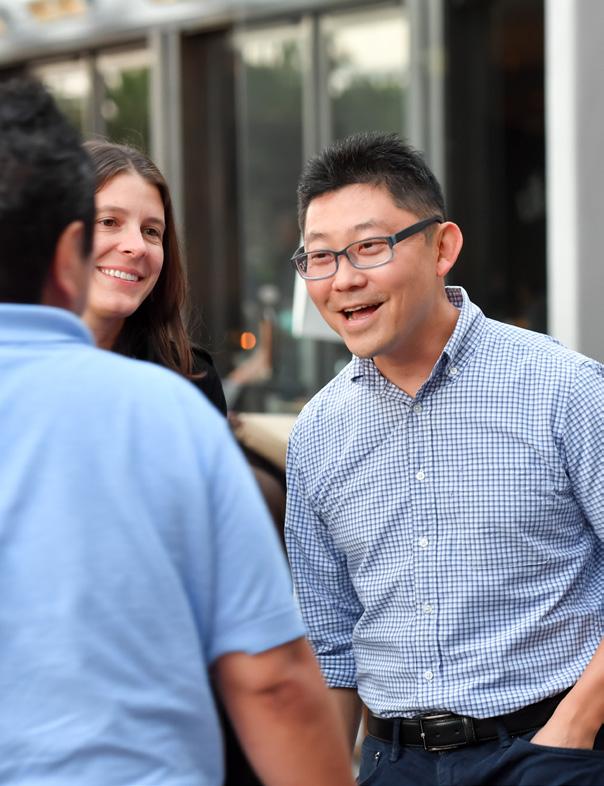
San Francisco, California
September 15–16, 2017






We had a great turnout, with over 50 attendees. Alumni from our class came out from all over. What an amazing weekend it was for all, reconnecting with everyone after 25 years— some even much longer—but we all seemed to share that it didn’t feel long at all. We had representation from Japan, United Kingdom, Canada and all over the United States— New York, Boston, Washington DC, Alabama, Florida, Texas, Portland, Southern California and Northern California.
It was a two day event on September 15 and 16, right after the devastating hurricane attacks in the southern parts of the United States, so special kudos out to Jenn Wilder ‘92 (Florida), Naomi Peters ‘92 and Tommy Mayfeld ‘92 (Texas), Kathryn Tubb ‘92 (Alabama), who still were able to make it out to our reunion. Our thoughts and prayers were out to all that were affected, and to all others with various hardships around the world.
The frst night was at Crystal Jade, a great location overlooking the Bay Bridge—we couldn’t ask for a more perfect night, a beautiful setting with the weather in full cooperation. The second night was at Yamasho, a Japanese izakaya with karaoke, where we had a surprise attendance by Jeremy (FF’85–’93, AP ‘85–’92) and Kristine (FF ’86–’93, AP ‘85–’92) Durfee—thanks Adam ‘92 for bringing your parents! Another special mention is we had seven of the class of ‘92 that attended from K–12, and we all made it to this reunion: Jenn Wilder, Dan Brandt, Kay Arita, Arshad Karim, Kay Yokota, Naomi Relnick and Mike Kashino. We all were blown away by the joy and camaraderie of our special group of ambassadors, and by everyone making the trek from near and far. It felt like just yesterday that we were all in school together, we shared an unique and unmatched experience, a testament to this special bond we have that is very special to all of us. I hope to see more of us for our 30th…in Tokyo?
Cluster Reunion
Preston, Connecticut September 15–16, 2017
Attendees included Bob Chen ‘55 and his wife Aie Teck Lau; Lixya da Silva Preston ‘58 and her husband Russell Preston; Charles Gordon ’58 and his wife Nancy; Sarah Wheeler Harkness ’56; Ted Matsumoto ’56 and his wife Carol; Sandra MacIver Thompson ’56; Betty Lee Kuo ’55; Ann Li ’58; and Mei Sun Li ’56.
Flying and driving in from both ends of California, New Hampshire, Massachusetts and Connecticut as well as Ottawa, Canada, nine alumni from mid-50s classes and four cheering spouses gathered like exultant homing pigeons on September 15. The group gathered at the stunningly beautiful heritage inn Captain Grant’s 1754 in Preston, CT. The setting for the reunion was rural New England—white clapboard, steepled churches down the road and, of course, remnants of an ancient mariner cemetery on site replete with ghosts. Hosted by inn owners Ted Matsumoto ’56 and his wife Carol, attendees feasted on reminiscences of their Meguro teen years and heaps of steaming mussels and lobsters prepared by Carol.
Midway through the weekend, the group enjoyed a bright sunny day in the sailing community of nearby Mystic, which included an adventure on a newly restored steamboat as much younger and more limber sailing students clambered the impossibly tall rigs of a whaling ship moored at the same dockyard.
Organizer Mei Sun Li ’56 brought an assemblage of photos taken by her from reunions as far back as the 95th anniversary Global Reunion bash in Seattle in 1997 and as current as the 2015 ‘50s gathering in San Diego, which had been hosted by attendee Lixya da Silva Preston ’58. A news article entitled Rootless in Seattle by journalist Charles Gordon ’58, also present, richly describing his intense personal response to the 1997 coming together, inspired much conversation about the extraordinary impact of ASIJ on everyone’s lives.

45th Cluster Reunion
Portland, Oregon
June 23–25, 2017
The ‘70s decade reunion, held on June 23–25 in Portland, OR, to celebrate the 45th reunion of the Class of ‘72, was a huge success thanks to all who attended and the reunion committee led by Lisa DeYoung Jastram ‘74. Everyone had a great time reconnecting at the Friday Social Box dinner, organized by Peggy Horn-Courtney ‘72, and the fun continued from there.
In true Portland fashion, there were a variety of activities planned for Saturday: a bike tour led by Greg Dale ‘72, a walking tour led by Peggy, a lunch cruise on the river organized by sisters Lisa de Young Jastram and Paulette DeYoung Golden ‘72, and a winery tour organized by Dave Worth ‘74 and Sharon Brannen Smith ‘72. Saturday evening culminated with a wonderful reception at the Kimpton Monaco facilitated by Mary “Yoko” Brannen ‘74. Check out the class pictures taken by Richard Walker ‘74, posted on asij74.com under the Portland Reunion link. On Sunday, various groups met for breakfast at different locations and continued reconnecting. A special thank you to everyone who helped “behind the scenes,” Doug Easton ‘72, Steve Sundberg ‘74, Dave Jastram ‘71 and the reunion committee spouses!
20th Reunion
Las Vegas, Nevada
September 1–2, 2017

The Class of 1997 descended on Las Vegas over Labor Day weekend for their 20th reunion. They all stayed at the Mandalay Bay Resort and Casino and a great time was had by all who attended. In attendance were Class of ‘97 alumni Mike Phan, Jon Suzuki, Colin Smith, John Allstadt, Sabrina Plum, Liz O’Neill, Nathan and Michelle Harrison Watabe, Yuki Matsushita, Ben Dyba, Dan DiNovis, Lara Spinazzi Cohen, Jason Noble, David Goldstein, Peter Brown and Matt Logan. Many showed up on Thursday, Aug 31 with the remaining people arriving the next day. On Friday, we all congregated around the pool area and got to connect a little further than the social media interactions we have had. On Friday evening, we had a private room at Libertine Social within the Mandalay Bay. After a great meal and some cocktails, some of us stayed around the casino to gamble a bit while others went to visit the old Las Vegas strip for a little more local fare.
On Saturday we all gathered for breakfast and decided to venture out to try out Topgolf Las Vegas. We took a bus over and enjoyed the experience and the beautiful weather. Saturday evening we dined at Kumi at Mandalay Bay again. During dinner, Ben Dyba shared his tattoo of Katsu Kokubu ’96 that he got on his right shoulder. We all then went to a few places on the strip and enjoyed our time together. On Sunday most of us said our goodbyes and promised to not let our 25th reunion be missed.





10th Reunion
New York, New York
August 25–27, 2017


The Class of ‘07 held their 10th reunion this year in New York City from August 25–27. Over 20 people from the class attended, starting out at the Jane Hotel rooftop, catching up while looking at the beautiful New York skyline. It was then onwards to Tokyo’s favorite pastime, karaoke, where the music ranged from 2000s pop and rap songs to classic sing-a-longs to musical theater!
On Saturday, a few of us enjoyed lunch in the sun in Central Park, followed by a private three course dinner at the Marlton Hotel, complete with ASIJ balloons. It was a great chance to reminisce, connect to those we were close with and get to know others we weren’t. We shared stories of travel, careers, relationships— including recent engagements and upcoming wedding plans. Can’t wait until the next one!
Attendees included Class of ‘07
alumni Rosalind Onions, James Scullion, Jeannie Harrell, Will Treece, Yumi Matsuo, Saya Signs, Mary Prager, Nao Hiraoka, Samantha Klug, Carly Baird, Morgan Flannery, Nara Lee, Vladimir Kostek, Kendall Bennewitz, Pranav Gupta, Laura Schwab and Patrick van Kessel, Will Wetzel, Denise Moung, as well as Chris Legaspi ‘08 and Emi Yoshii ‘09
Happy Hour
San
Francisco, California
September 14, 2017
On Thursday of the ‘92 reunion weekend in San Francisco, a number of reunion attendees and other members of the ASIJ Bay Area alumni community gathered at alumni-owned Black Sands Brewery for happy hour. Before the night was over, approximately 30 alumni of all ages had stopped by to connect with fellow Mustangs and meet director of advancement, Erin Nelson.




Attendees included Fred Schodt ‘68, Gary Yamada ‘00, Yumitaro Watanabe ‘92, Daniel Brandt ‘92, Robert Sharp ‘87, Andy Ogawa ‘90, David Lenoe ‘89, Erin Nelson (ASIJ Advancement), Miles Bird ‘08, and Black Sands Brewery owners Stefan Roesch ‘99 and Robert Patterson ‘99.
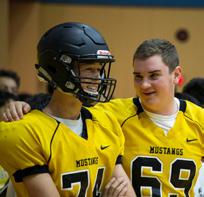




FOLLOW LIKE SHARE

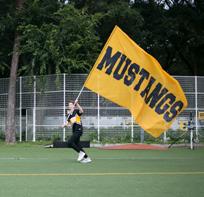

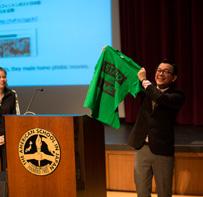

50th Golden Cluster Reunion CLASS OF ’68 50TH REUNION
Contact: David Sakamoto, Nicholas Connor (ClassAgent@ASIJ1968.com)
Mission Bay, San Diego, California
April 27–May 1, 2018
Registration: www.tsunaguasij.net/registration
The class of 1968, in partnership with the classes of 1967, 1969, 1970 and 1971, has been furiously organizing an ASIJ “Golden Reunion” to be held in California during the Japanese “Golden Week” 2018 spring holiday. This uniquely special reunion will include not only those who will be celebrating their Golden ASIJ Anniversary but also the greater ASIJ community, with alumni, spouses, classmates, other kinds of mates, former and current employees, parents, and friends enthusiastically invited to attend.

Community Reception
New York City, New York
Saturday Feb 3, 2018
Registration details to be emailed soon (alumni@asij.ac.jp)

25th Reunion
Los Angeles, California
August 25, 2018
Katie Sakuma Moore (ktsakuma@yahoo.com) or Mayumi Nakayama (mayumi.kathi@gmail.com)

Community Reception
San Diego, California Sunday, Apr 29, 2018
Registration details to be emailed soon (alumni@asij.ac.jp)

Hong Kong Annual Shinnen-Kai
Hong Kong
Friday, Jan 19, 2018
Didi Abe (9536 7355)
1955 William L. Cryderman wcryderman@comcast.net
1956 Mei Sun Li meisunli@comcast.net
Sandra L. Maclver Thompson sandra.thompson3@comcast.net
1957 Charles C. Wu wucc57@gmail.com
1958 Class Agent Required
1959 Class Agent Required
1960 David E. Bergt dbergt@comcast.net
1961 Stu Bennett stu.bennettCEO@ SanFranciscoSeamaster.com
1962 Katherine C. Bauernschmidt Clarke kcbclarke@gmail.com
1963 Nancy Wu naninvan@me.com
William L. Martino txmartino@yahoo.com
1964 Class Agent Required
1965 Class Agent Required
1966 Annie Nichols Campbell campbell.annie@gmail.com
1967 Grenda F. Penhollow Moss grendamoss@yahoo.com
1968
David T. Sakamoto dave.sakamoto@ infoontheweb.com
Nicholas D. Connor ndconnor@yahoo.com
1969
Laura B. Hertenstein Swanson laura@swanson.com
1970 Daniel Garnitz dangar46@yahoo.com
1971 Kathy K. Kobata kkobata21@gmail.com
1972 Class Agent Required
1973 Class Agent Required
1974 Class Agent Required
1975 Reiko E. Niimi rniimi@gmail.com
1976 Elizabeth M. Yanagihara Horwitz liz@lizhorwitz.com
1977 Carl E. Sundberg carl_sundberg_ja@yahoo.com
1978 Deanna Adams Smith deannasmith1959@gmail.com
1979 Dean Kistler skierdean1@aol.com
ALUMNI Class Agents
1980 Class Agent Required
1981 Sherry L. Davis Tighe tighezoo@sbcglobal.net
1982 Lisa Bastick omalasq@mac.com
1983 George Mimura georgemimura@yahoo.com
1984 Class Agent Required
1985 Sandra L. Orton Tweed sandra@prestonmatthews.com
1986
Diane E. Stewart Wack diwack@msn.com
1987 Robert L. Sharp robert@robertsharp.com
1988 Kathrine L. Schmitt Simon schm0495@gold.tc.umn.edu
Sergei P. Hasegawa sergei@purekitchen.com
1989 Linnea M. Hasegawa tamagomeshi@yahoo.com
Samantha Fritz Hurd samf@austin.rr.com
1990 Kentaro K. Relnick krelnick@me.com
1991 Maiko Galles maikomizutani@hotmail.com
1992 Daniel Brandt dbrandttennis@gmail.com
1993 Katherine S. Sakuma Moore ktsakuma@yahoo.com
McMahon T. Reid homereid@mit.edu
1994 Margaret R. MacCallum margaretreiko@gmail.com
Midori Kano mkano128@gmail.com
1995 Yuki P. Maddox Vos pearlvos@hotmail.com
1996 Hisashi A. Shimizu sunny_shimizu@hotmail.com
1997 Class Agent Required
1998 Kacie E. Rosenberg Leviton kacie_r@hotmail.com
Rose E. Hastings rosehastings@gmail.com
1999 Naomi D. Hayase naomidhayase@gmail.com
Tamina M. Plum taminaplum@gmail.com
2000 Gary T. Yamada gtyamada@gmail.com
2001 Class Agent Required
2002 Anna L. Tuttle Delia annalynnosu@gmail.com
Mitsuhiko Tsukimoto moonbook@gmail.com
2003 Class Agent Required
2004 Jason Mothersill jasonmothersill@gmail.com
2005 Tatsuya Izumi izumtat@gmail.com
2006 Andrew T. Dirkse tdirkse@asij.ac.jp
Mana Sasaki Kalohelani mkalohelani@gmail.com
2007 Rosalind E. Onions rosalind.onions@gmail.com
Carly Baird baird.carly@gmail.com
2008 Jemil Satterfeld jemilsatt05@gmail.com
Miles Bird miles.t.bird@gmail.com
2009 Ashley Teslik ashleyteslik@gmail.com
Caitlin E. McHose caitlin.mchose@gmail.com
2010 Janet H. Kanzawa janet.kanzawa@gmail.com
2011 Hannah T. Siegel hannahtsiegel@gmail.com
Philip T. Tseng philtseng7@gmail.com
2012 Seung Joon Sung sjsung94@gmail.com
2013 Class Agent Required
2014 Akira Camargo akinicamargo0125@gmail.com
Sayuri Sekimitsu sayuris@stanford.edu
2015 Mina F. Hattori minahattori@me.com
2016 Jayne K. Harris 16jkharris@gmail.com
Ray M. Hotta ray.hotta@yahoo.com
2017 Andy Takagi andy.takagi@gmail.com
Allessandra Rogers rogeal01@luther.edu
Want to volunteer as a class agent? Email alumni@asij.ac.jp
This heavy ship’s bell was discovered in the band room and is periodically used during concerts. It was originally a gift to the athletics department in the 1990s from an ambitious parent who thought it could be rung after every touchdown.
Artifacts
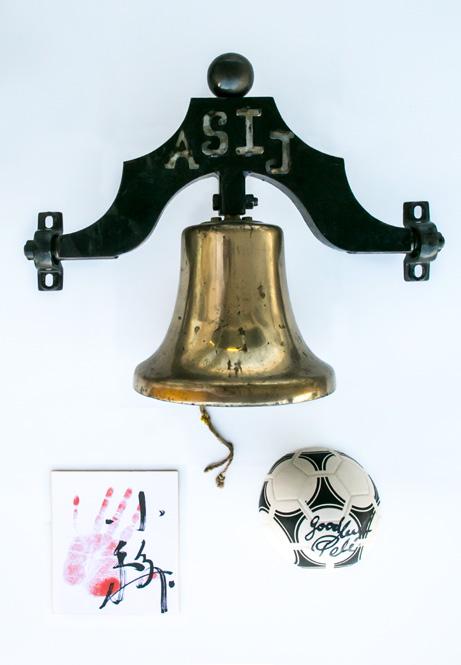
Taking pride of place in a display case in the Middle School is this ball signed by Pele. The legendary soccer player visited campus in 1992 to flm a TV commercial. Between takes he met with students and teachers and presented this autographed ball to the school.
What big hands you’ve got! Famed sumo wrestler Konishiki has participated in several events at school ranging from the Centennial Celebration in 2002 to more recent PTA Galas. This handprint and signature are a memento from one of his visits.
Sayonara

JOHN ANDREW “ANDY” SMITH ‘86 was born on November 3, 1968 in Topeka, Kansas to seminary students Ed and Sharon Smith. Soon thereafter, Ed and Sharon were appointed as missionaries to serve in Japan. His frst home was in Chofu, only a few blocks away from ASIJ. As a toddler he would make friends by calling out to the Japanese kids he would see out his window. His time there was short, though, and soon his family moved to Tokushima where they were, for a short while, the only foreigners in the prefecture. Andy entered Kindergarten where he was treated just like everyone else. The next year, he entered Showa Primary School. Eventually, the Smiths moved back to the same home in Chofu. Andy started school at ASIJ in the 4th grade and soon began making friends again. His best friends throughout his life were mainly those who shared his bilingual abilities. He attended Tokorozawa Christian Church with his family and continued by himself when they moved to their next church assignment. He enjoyed engaging with the youth group and attending the national youth retreat at the Baptist camp, Amagi Sanso on Izu.
Andy loved the spotlight. Besides being in ASIJ’s choir and vocal ensemble, he loved TV. Often, during breaks from high school, he would go downtown to the TV studios just to be caught on camera behind the presenters outside the picture window in the background. He then got bit by the acting bug. He frst enjoyed being an extra in countless productions. Then he was offered speaking roles. He had big parts and even a lead role in various NHK series. He was also in three Godzilla movies.
After High School, Andy attended Oklahoma Baptist University in Shawnee, Oklahoma. During this time, he spent a year studying abroad, back in Japan, at Seinan Gakuin in Fukuoka. He was the de facto leader of the international students, primarily because of his Japanese language abilities. But his time at Seinan Gakuin produced more than leadership qualities. It was there he met his future wife, Mina. After his year in Fukuoka, he returned to Oklahoma, fnished his degree, and immediately returned to his favorite place, Tokyo. He continued various TV roles, including one of the notorious Japanese games shows, TV Champion. It shouldn’t be a surprise that he beat out 39 others to gain the title, The Most Japanese Foreigner.
Andy realized that his television career was probably not sustainable so he found a job working for Softbank Magazine where he wrote a
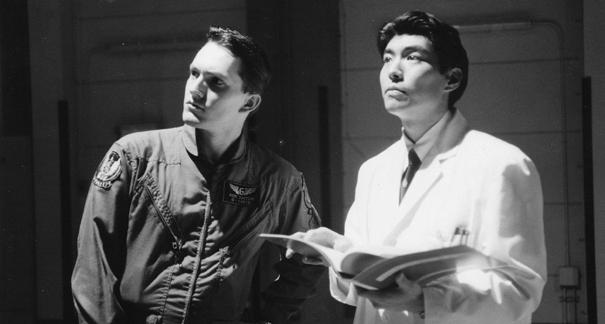
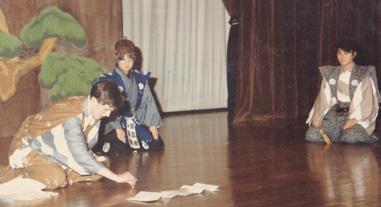
featurette called An American in Tokyo. He was also an editor for one of their magazines, DosV. His in-laws were so impressed, they bought every issue—even though they didn’t have a computer. Andy then moved on to work for Canopus where he sold equipment to television stations who were upgrading to high defnition. Eventually that work slowed as well, and he found a job working as a technical translator for Canon until his passing.
Andy and Mina brought his parents their frst grandchild, Mirie in 1997 then had a second child, Jay, in 2000. He loved his children and they loved him. He would spend free time just being dad to them. They enjoyed many breaks and vacations with each other.
He was a free spirit—often enjoying solitude amongst the millions of residents of his beloved hometown of Tokyo. But he loved and provided for his family foremost.
Upon his death, lifetime friend Richard Oue ’87 held a small family funeral.
Andy is survived by his wife, Mina, children Mirie and Jay, his parents, Ed and Sharon, his siblings, Jim Smith ’90 and Susan Herrera ’92, numerous cousins, nephews and nieces.
MARTHA KIPP BARBER ‘45
passed away on May 6, 2017 at the age of 90.
Martha was born in Yokohama, Japan on May 6, 2017 and attended ASIJ for a year from 1938–1939. She moved to Santa Monica, CA, as WWII began. Martha graduated university with a BS in physical education from UCLA and taught health and PE at Hamilton High in Los Angeles until her retirement. She travelled often to Mexico and Oregon and was very involved in the Brentwood Garden Club. As a class agent for the class of ‘45 until her passing, Martha’s daughter Sheridan mentions that “she stayed in contact with many of her ASIJ friends until the very end.” She is survived by her two daughters, Sheridan Barber and Kimberley Barber Hieatt, and four grandchildren.
ERNEST D. CARLSON M.D.
‘39 passed away during the early morning hours on July 21, 2017, surrounded by his loving family.
Ernest was born to missionary parents, attended ASIJ from 1928–1931 and, after a brief time away, returned in 1936 to attend until his graduation in 1939. He graduated ASIJ with just six other students. Ernest’s children write: “For Dad, growing up in Japan was a great pleasure and privilege. He enjoyed the adventure of crossing the Pacifc by steamship at age 10 and again at 18, when he sailed with two best friends to start college in the USA.”
Ernest attended college in Wheaton, Il, as a Bible major and changed to pre-med as a sophomore. He transferred to Pepperdine in 1941 after the bombing of Pearl Harbor to be nearer his parents, who assisted the Japanese-Americans suffering due to forced relocation. He met his wife, Joyce Kersey, there. In 1944, he began medical school at USC and married Joyce two weeks later. At LA County General Hospital Ernest received special training in surgery, orthopedics and obstetrics, and decided to go into family medicine. He
then earned his MD degree in 1948 and began residency at Ventura County General Hospital. In 1950, Ernest opened his frst medical practice in Santa Paula, CA, and two years later was called to serve in the Public Health Service on the Cherokee Indian Reservation in the Smoky Mountains of North Carolina. From 1954 Ernest kept busy with his practice, participation in the Presbyterian Church and volunteer work, and family life. He went on to establish a hospital in Santa Paula, which he describes as “one of the greatest satisfactions of my life.” He traveled the world with his family, seeing places like British Columbia, the Sierras, Tahoe, Sweden, France and revisited Japan. Ernest was also an active community member, participating in the Presbyterian Church and maintaining roles such as a position on the Santa Paula Memorial Hospital Board, acting as President of both the Ventura County Medical Society as well as the Ventura County Physicians for Social Responsibility and founding of the local Santa Paula CROP WALK, to name a few. After retirement Ernest and Joyce took sailing lessons, and enjoyed many sailing adventures in the Puget Sound. Snow skiing and water skiing were favorite sports, and Ernest snow skied until he was about 76. Ernest is survived by his wife Joyce, sister Rosalie Dahl, and children David Carlson, Paul Carlson, Susan Belgum and Carol Lundstrom, eleven grandchildren, and nine great grandchildren. He was predeceased by his son Mark Carlson.
STEVEN “CHICO” DAINS ‘79 died on March 1, 2017 in Eau Claire, WI. He served in the US Army and had a passion for being on the lake and boating.
JAMES HESTER (AP ‘74–’79) passed away on December 31, 2014 at his home in Princeton, NJ. Born in Chester, PA, James and his family moved several times, following his US Navy Chaplain father’s various assignments. He graduated from Woodrow Wilson high school in California and attended Princeton University, where he won honors in the humanities, election to Phi Beta Kappa and was awarded an A.B. degree in 1945.
COMMUNITY Obituaries
James joined the United States Marine Corps’ offcer candidate program where he was trained as a Japanese language offcer.
He subsequently served in Japan in a civilian role as the civil information and education offcer on the Fukuoka Military Government Team.
In 1947, James entered Pembroke College, Oxford, as a Rhodes Scholar and earned his bachelor’s degree in Philosophy, Politics and Economics. After returning to the United States in 1950, he became assistant to the American Secretary to the Rhodes Trustees.
James was recalled to active duty in 1951 and served for seventeen months before leaving the service. He received a D Phil degree from Oxford University in 1955. He then worked in management consultation and consumer research for three years before returning to academia.
In 1957, he became provost of the Brooklyn Center of Long Island University in New York City and subsequently Vice President of Long Island University. James became Dean of both undergraduate and graduate schools of arts and science at New York University in 1960 and went on to become the 11th President of New York University in 1962, at the age of 37. As President of New York University, Dr Hester earned a reputation for the role he played in strengthening the university and as a spokesman for urban, private higher education.
Following his tenure at NYU, Dr Hester served as Rector of The United Nations University in Tokyo from 1975–1980, President of the New York Botanical Garden from 1980–1989, and President of The Harry Frank Guggenheim Foundation from 1989–2004. In later years Dr Hester fulflled a lifelong ambition and became a professional portrait painter, and had numerous showings of his work.
He is survived by his wife, their three children Janet Gerrish, Margaret Giroux, and Martha Stafford ‘79, seven grandchildren and his two siblings.
CHIKAKO HISA (FF ’83–’87, AP ‘78–’86) passed away peacefully early on the morning of August 22, 2017. Chikako was a kindergarten assistant teacher who continued as an active part of the ASIJ community by substituting and volunteering. She also worked each summer for the Summer Passport Program. A ceremony was held on September 2 at Fuchu no Mori. Chikako is survived by her daughter Lisa Soice ‘86.
DONALD ROBERT HUFFMAN (AP ’78–’82, ‘84–’88) of Bristol, IN, and Georgetown, TX, passed away on May 4, 2017 at his home in Bristol. He was 84 years old. He was born on August 7,1932 in Timberville, VA, and graduated from Timberville High School and Bridgewater College, where he played varsity football. He did postgraduate work at Lamar University in Beaumont, TX, and served two years in the US Army at the end of the Korean War.
On December 1, 1961, Don married Martha Lou Branham (AP ’78–’82, ‘84–’88) in Beaumont, TX, who survives. Also surviving are two sons and a daughter, Stephen Huffman ‘81, Tamara Gardner ‘83 and Rodney Huffman’88.
Don’s career employment was with Miles Laboratories of Elkhart. He started as a salesman in Houston, TX and subsequently moved to the head offce in Elkhart where he worked in various positions in Government Business, Product/Marketing Management and International Management in Miles’ Medical Diagnostic Division. In 1978 he moved to Tokyo, Japan, with his family, where he held the position of CEO of Miles-Sankyo Co, a joint venture of Miles/Bayer in the manufacture and sale of medical diagnostics for Japan, Taiwan and South Korea. He returned to the USA in 1993 and retired in 1995.
FRED HIRATA ‘84 passed away on May 21 at the age of 51. He attended ASIJ from 1982 until his graduation.
While living in Japan, he was an active member of The American Chamber of Commerce in Japan (ACCJ), the Tokyo Foreign Correspondence Club, the Tokyo American Club and served several years as an auditor on the ASIJ Board of Directors.
In recent years Don and Martha have enjoyed retirement at their winter home in Sun City, TX, and at their summer home in Bristol.
COMMUNITY Obituaries
DONALD P. KNODE (AP ‘62–’65, ‘67–’86) passed away on February 15, 2017 in Bradenton, Florida. He was responsible for opening the frst Merrill Lynch offce in Japan in 1961, served on the Board of Directors at ASIJ and was proud to be the father of three ASIJ graduates, Karen Knode Trepte ‘71, Kim Knode Watkinson ‘79 and Stephen Knode ‘86. His wife of ffty years, Barbara Hazzard Knode (FF ‘88–’94, AP ‘62–’65, ‘67–’86) taught in the High School English Department at ASIJ and directed some of the Spring Musicals. Donald lived for more than 30 years in Tokyo and served as president of the American Chamber of Commerce of Japan.
NOËL REEDY ‘89 passed away on August 17, 2017 in Las Vegas, NV.
Moving into early 1947, Rick was assigned to the International Prosecution Section at the Class A War Crimes Trial, working largely with British Navy colleagues, parsing and writing summaries of offcial German documents. He later ran a small team of German and Japanese translators who worked on documents of interest to the international legal staff for use as evidence. He continued with work in G-2, military intelligence, operations writing daily reports on political, economic and social developments for the daily intelligence summary. Rick returned to Michigan as a civilian in 1948, completed his BA in Japanese language and literature and MA in political science, and was quickly recalled to active duty in 1951 when he resumed his position in G-2.
ULRICH “RICK” STRAUS ‘44 passed away on August 25, 2017 at the age of 90. Rick was born in Germany in 1926 and grew up in Japan from 1933 to 1940, attending the ASIJ elementary and middle schools from 1936. He then emigrated with his family to the US and, in high school, was scouted by the army as a born-in-Japan Military Intelligence Service Language School (MISLS) program candidate. He matriculated to the University of Michigan in 1944, where he was permitted as a civilian to participate in the language program. Rick completed basic training a year later.
The US Army commissioned Rick in January 1946, sending him back to Tokyo to operate in the Allied Translator and Interpreter Section near Tokyo Station. He worked on translation projects, including some involving letters to General MacArthur from the Japanese public.
Returning once again to Michigan in 1953, permanently leaving the military, Rick was awarded a Fulbright grant at Keio University to research for a PhD. During this time he also passed the foreign service examination and, in 1957, formally joined the State Department. His frst assignment within the State Department was in the Bureau of Intelligence and Research where he served until 1959. Rick was once again relocated to Japan, serving in the political section of the American Embassy as a labor attaché in Tokyo. He served during the 1960 Ampo (Security Treaty) demonstrations, served as the deputy director of the Japan Desk in Washington during peace negotiations and negotiations for the return of Okinawa and Iwojima, and also as Consul General in Okinawa from 1979–82.
In 1959, Rick married Sarah Wolcott and after retiring from the State Department taught at George Washington University, the College of William and Mary, Johns Hopkins University and Georgetown University. Rick is also a published author of the 2011 book The Anguish of Surrender: Japanese POWs of World War II. Rick is survived by his wife, Sarah; his children, Michael Straus, John Straus, and Rebecca Straus; a brother, Thomas Straus; and four grandchildren Christopher, Ian, Meg, and Nathan. Rebecca writes that Rick remembered his years at ASIJ very fondly.
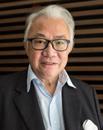
SIR DAVID TANG (AP ‘00–’03) passed away on August 29, 2017 at the age of 63. David founded the high-end fashion brand Shanghai Tang in 1994 and operated a number of private clubs and restaurants. He was knighted in 2008 for his philanthropic work both in Britain and Hong Kong. David is survived by his wife, Lucy, and two children, Victoria ‘03 and Edward ‘04, from his frst marriage, to Susanna Cheung (AP ‘00–’03)
DAVID THOMAS ‘70 passed away peacefully and with his family on May 18, 2017. He had multiple myeloma, which he fought bravely for many years. David attended ASIJ from 1969 to his graduation in 1970. He leaves behind his wife is Carole Navarro, who graduated from Sacred Heart, and sister Victoria Thomas ‘73.
ROBERT VAJDA ‘88, known fondly as Bobby, passed away on May 3 in Green Bay, WI, after his eight-month battle against a rare autoimmune disease. Bobby attended school at St. Mary’s International School before moving to the UK to attend Oratory Preparatory and then back to Tokyo, where he attended ASIJ from 1986 until his graduation. He worked as a concierge in prestigious hotels which took him to the Bimini Islands, where he managed a small resort. He then began a career at Poolworks in De Pere, WI, where he met his wife, Michelle. Bobby is survived by his wife, fve children and his parents, Akiko and Peter Vajda (AP ‘86–’90) as well as his three siblings, Thomas, Catherine Tarin ‘89 and Patricia Sharp ‘90.
Te Big Short Big questions, Short answers
Fifth grade teacher SUZANNA VOIGT joined ASIJ in 2013 after teaching at international schools in China, Bolivia and Mexico. With a background in anthropology, Suzanna is an avid traveler and enjoys experiencing different cultures and spending time outdoors. A keen musician, she enjoys playing the viola in the local Fuchu Community Symphony Orchestra.
Where are you from?
I am from the United States. I was born in Wisconsin but grew up in Oklahoma and Texas. I went to college and lived in Minnesota for several years before moving overseas.
Why did you choose to go into education?
I majored in cultural anthropology but did not see it as a career, just something I was really interested in. After working for several years with educational programs in a science museum and a living history museum, I decided that working with children was something that I would enjoy doing because I enjoyed both teaching and learning with children and school groups.
What kind of student were you in school?
I was very studious and serious as a student.
If you weren’t a teacher, what would you do?
Perhaps I would fnd a way to travel and see more of the world. I would also like to volunteer my time helping people such as immigrants or refugees. Is there such as a thing as a professional reader?
What is your favorite thing about ASIJ? The people!
What is your favorite thing about Japan?
I am always impressed with the ethos of respect and responsibility that seem to be embedded in so many aspects of Japanese culture. It is also an incredibly beautiful country not only because of its natural environment, but in its architecture and art as well.
What advice do you give your students?
Learn from your mistakes and keep trying. Ask questions and be curious. Be kind to others.
Which words or phrases do you most overuse?
Shhhh!
Which talent would you most like to have?
I would like to have great photography and writing skills.
Who are your favorite writers?
Isabel Allende [The House of the Spirits], Geraldine Brooks [March] and Amy Tan [The Joy Luck Club] to name just a few.
Which historical fgure do you most identify with?
According to unreliable online quizzes: Theodore Roosevelt, Leonardo da Vinci and Catherine the Great.
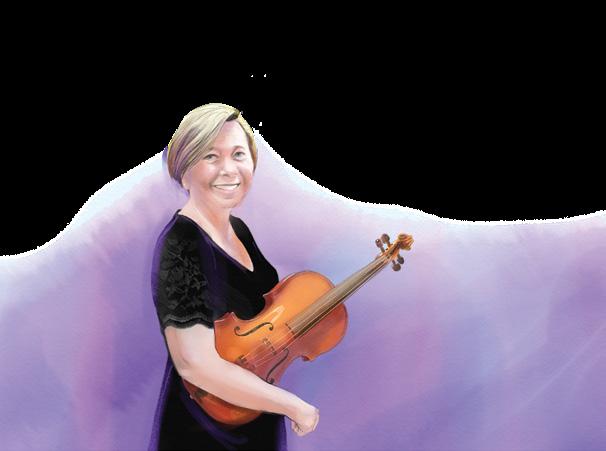
Which living person do you most admire?
Jane Goodall
When and where are you happiest?
I am happiest when surrounded by the beauty of nature such as on hikes in Japan or Bhutan, exploring the wilds of New Zealand or the Great Wall of China, traveling through the rainforest in Costa Rica or the salt fats of Bolivia...and the list goes on.
Who are your heroes in real life?
Malala Yousafzai, Wangari Maathai, Mother Teresa, Jill Robinson, Ryan Hreljac and Barack Obama.
What is your most treasured possession?
One of my most treasured possessions is my viola. I have had it since I was a junior in high school. I had a paper route for three years in high school to earn the money to purchase it. I have taken my viola with me and have enjoyed playing with groups in Texas, Minnesota, Costa Rica, Mexico, Bolivia and Japan.
Illustration by Olivia Hertrick