

Ejercito pushes long-term infra master plan to stimulate growth
by JAn escosio Inquirer.net
MANILA — Senate Senior Dep-
uty Majority Leader JV Ejercito
renewed on Thursday his call for the immediate passage of Senate Bill No. 2— the proposed Master Plan on Infrastructure and National Development Act (MIND) Act.
“This will hit two birds with one stone. I think this will be the key. This will really stimulate economic growth all over the country,”
Ejercito, an advocate for a national infrastructure masterplan since the 17th Congress, said in a mix of English and Filipino during the public hearing of the Senate committee on economic affairs and the committee on public works and finance.
“The centers of growth are not only in Metro Manila, not only in Cebu, not only in Davao. It needs to be spread, like, for example, in other areas in Mindanao,” he went on.
“Railways and mass transit are the keys to faster movement of people, business, and the economy. Infrastructure development is not only for the current adminis-
tration. This is for future generations of Filipinos,” he added.
Ejercito’s bill seeks to institutionalize a long-term Comprehensive Infrastructure Development Masterplan and create the MIND Council to ensure that major infra projects are coordinated, data-driven, transparent, and continue beyond changes in political leadership.
The lawmaker from San Juan said the government must prioritize projects that create sustainable jobs and livelihood opportunities instead of making people rely solely on cash assistance programs.
“Let’s not rely solely on aid programs. We all need decent jobs and livelihoods that will be sustainable in the long run. Aid is just short-term and not sustainable. What we want are real jobs and livelihoods so we can raise the quality of life of our countrymen,” Ejercito said.
Ejercito acknowledged that the government already laid down the policy groundwork through the Department of Economy, Planning, and Development (DepDev) Law (Republic Act No. 1214) and
Executive Order No. 72.
But he pointed out that it is crucial to institutionalize the system through the passage of the proposed MIND Act, one of his priority measures in the 20th Congress.
During the deliberations on the DepDev Law, Ejercito also proposed Section 15 to be included in the country’s long-term vision, goals, and strategy for infrastructure development in the Longterm Development Framework.
“If we look at our neighbors in the Asean [Association of Southeast Asian Nations], we’ll see how far we have been left behind in infrastructure development. This is not rocket science. They chose a clear direction and had long-term plans. It’s time we also do these,” he said. No more last-minute budget insertions
As the current Senate finance chief, Ejercito said the Senate would put an end to the practice of last-minute insertions during the bicameral conference committee and strengthen the participation of local governments in determining priority infrastructure projects.
Fil-Am found guilty of wife’s murder...
“While today’s verdict is significant, May is still missing,” Bowles said. “We continue to hope that one day, she will be found so her family can lay her to rest with the dignity she deserves.”
Maya still missing
Drouaillet, who for years organized searches for her younger sister, said, “Justice will have been served today, but we still have my sister out there. We still have the second step to go through. We still have to bring my sister home, to bring her to her three children.”
Prosecutors allege Larry killed his wife in their home because she sought a divorce, then loaded her body into an SUV and disposed of her on Jan. 8, during a period of about 12 hours in which his whereabouts remain unknown.
Her body has never been found, but police and prosecutors say there is no evidence to suggest she was alive after that date.
While Bowles conceded to jurors that she could not specifically say how May Millete died, she argued Larry was the only person with the means and motive to kill her.
‘Spell casters’ The prosecution’s case focused largely on what Bowles described as Larry’s possessive and controlling behavior, which allegedly included regularly tracking May’s whereabouts, controlling her finances and ultimately soliciting the assistance of “spell casters” he believed could magically influence May to give up her plans for divorce.
The requests to spell casters evolved over the months leading to May’s disappearance from seeking to make her fall in love with him again to making her obey him to causing her to become sick or incapacitated so she would be dependent on him.
Bowles argued those messages illustrated his capability to cause his wife physical harm and noted his spell requests abruptly ended following May’s disappearance.
The prosecutor also sought to dispel the notion that May voluntarily vanished, noting May’s plans for the coming year and her devotion to her three children.
Affair with co-worker
Defense attorney Liann Sabatini said in her closing arguments that Larry’s behavior was colored by May’s ongoing affair with a co-worker and that his conduct that was being classified as stalking was actually Larry conducting a “tragic investigation” in which he was trying to confirm whether May was cheating.
Sabatini argued Larry was being psychologically abused and “gaslit” by May, whom she said was denying the affair to family and friends while at the same time portraying Larry as “crazy” and “the villain” for suspecting it.
While she said jurors might not agree with how Larry handled the situation, Sabatini said, “There is no playbook for heartbreak.”
‘Well-planned’
Regarding the alleged murder, Sabatini told jurors they were being asked to speculate rather than rely on facts in a case that lacked a body, crime scene, murder weapon or eyewitnesses.
Bowles argued the lack of a body was even more compelling evidence that May’s disappearance was criminal and “so wellplanned that it is nothing other than premeditation.”
Though Bowles said she could not articulate the exact method of death, the presence of poison hemlock in the home has been referenced as a potential method. The contents of a vial found inside the Millete home following his arrest tested positive for coniine — a poisonous compound found in poison hemlock — and
Larry had searched numerous times for poison hemlock online, as well as other methods for killing or incapacitating someone.
Poison
But Sabatini dismissed the poison theory as “silly,” arguing there was no reason for Larry to keep the plant inside his home nearly a year after May’s disappearance if he was guilty and that it was more likely one of his children picked the plant, as poison hemlock is commonly found throughout San Diego County.
She also argued that Larry searched for the plant as a means to commit suicide due to his despair over his deteriorating marriage.
Surveillance footage captured May entering the family’s home at around 4:45 p.m. Jan. 7, but no video footage has captured her leaving.
According to trial testimony, her last known contact with anyone was in a text message with one of her sisters at around 8:15 p.m. Jan. 7, then her cell phone terminated all cellular connections at about 1:25 a.m. Jan. 8.
Larry — whose phone also terminated cell connections on the morning of Jan. 8 — allegedly left the family’s home in an SUV at about 6:45 a.m. and did not return until about 6 that evening. San Diego County District Attorney Summer Stephan said in a statement released shortly after the verdict, “Finally, justice has been served for Maya and for everyone who has carried the weight of her absence for more than five years. Our hearts are with Maya’s family, friends and especially her three children, who have endured an unimaginable loss. Justice delayed can never erase years of grief, but today’s verdict affirms that no victim is forgotten and no family is abandoned in our pursuit of the truth.”
(With CNS report)
Cyclospora cases rise as officials investigate...
parasite that infects the intestines, typically after a person consumes contaminated food or water. The infection can cause prolonged watery diarrhea, abdominal cramps, nausea, fatigue and weight loss.
The Centers for Disease Control and Prevention had received reports of 843 laboratory-confirmed cases acquired in the United States across 31 states as of July 9. Eighty-six people had been hospitalized, and no deaths had been reported.
Federal officials cautioned that those figures are preliminary. Some patients are never tested, and several weeks can pass between the onset of symptoms and the reporting of a confirmed case.
The illnesses also do not represent a single nationwide outbreak traced to one food. Investigators are examining several clusters, along with cases that have not been connected to a common source.
Michigan has reported a large concentration of cases, with 3,309 illnesses as of July 14 and 44 reported hospitalizations as of July 9. The Michigan and federal totals are not directly comparable because they cover different reporting periods and use different surveillance and case-classification systems.
Reported death toll from Indayenhanced monsoon rises to 27
by AJPress
MANILA — The reported death toll from Typhoon Inday and the southwest monsoon it intensified rose to 27 on Thursday, July 16, as disaster authorities continued to verify casualties and assist communities hit by landslides and flooding.
The Office of Civil Defense said 10 deaths were reported in Sarangani, seven in Lanao del Sur, four in Davao Occidental, two each in Zamboanga Sibugay and Bukidnon, and one each in Iloilo and Zamboanga del Sur. Nine people were injured and 13 remained missing. The figures were still subject to validation.
Many of the deaths were linked to landslides or drowning after days of heavy rain. Sarangani recorded the largest toll after a landslide struck homes in Barangay Poblacion in Malapa-
tan. Lanao del Sur also reported multiple deaths following a landslide in Calanogas. Inday, known internationally as Bavi, did not cross the Philippine landmass. It entered the Philippine Area of Responsibility as a super typhoon on July 8 and remained over waters east and north of Luzon. Although its center stayed offshore, Inday strengthened the southwest monsoon, bringing heavy rain, strong winds and rough seas to parts of Luzon, the Visayas and Mindanao. The storm left the Philippine monitoring area on July 11.
The Department of Social Welfare and Development said 257,174 families, or 1,093,667 people, had been affected in 1,327 barangays across 13 regions as of Thursday evening.
Nearly 30,000 people remained displaced, including 17,008 staying in evacuation centers.
The department reported 1,646 damaged houses, including 901 destroyed and 745 partially damaged. The government and its partners had provided about P81.37 million in food, shelter materials, hygiene supplies and other assistance.
The death toll had stood at 15 on July 11 and rose as search operations continued and local governments submitted additional reports. Officials attributed the casualties to the combined effects of Inday and the enhanced southwest monsoon, rather than to the typhoon alone.
After leaving the Philippines, Bavi passed near Taiwan and Japan’s southern islands before making landfall in China’s Zhejiang province, where authorities evacuated nearly 2 million people.
Transportation services were also suspended in several areas as Bavi approached.
Federal bank regulators tell lenders to weigh...
PAGE 1
applies existing credit-risk standards to borrowers who are not legally authorized to work in the country.
It does not impose a blanket lending ban or direct institutions to reject applicants solely because of immigration status. Instead, the agencies said lenders should determine whether uncertainty surrounding employment authorization could affect the stability of income, repayment capacity, collateral recovery or other relevant credit factors.
Lenders may examine whether employment income is current, verifiable, stable and likely to continue. Depending on the loan and the borrower’s circumstances, institutions may review pay stubs, W-2 forms, tax returns, employer verification, bank statements or evidence of continuing work authorization.
The agencies said repayment risk may increase if a borrower loses a job because of a lack or expiration of work authorization, cannot obtain lawful reemployment or is removed from the
United States. Institutions were advised to consider whether repayment would remain adequate during an interruption in employment or income.
For secured loans, regulators said institutions may encounter added difficulty contacting borrowers or locating and repossessing movable collateral, including automobiles. They also advised lenders to monitor concentrations of borrowers in industries, employers or regions that could be disproportionately affected by changes in immigration enforcement, employment-verification practices or labor availability.
The action follows a May 19 executive order by President Donald Trump directing federal financial regulators to address risks associated with extending credit or financial services to people who may be inadmissible to or removable from the United States and who lack legal authorization to work.
The guidance also cites a June 8 statement from the Consumer Financial Protection Bureau on ability-to-repay requirements
and immigration status. Under federal rules, creditors making covered home loans must make a reasonable, good-faith determination that a consumer can repay according to the loan’s terms. Credit card issuers must consider a consumer’s ability to make required minimum payments.
The CFPB said creditors relying on U.S.-based employment income may consider information bearing on a borrower’s continuing ability to earn that income when remaining in the country is necessary for the work. It also said federal credit regulations permit consideration of immigration status and related information needed to determine a creditor’s rights and remedies regarding repayment. The interagency document reminds financial institutions of existing obligations rather than creating a new lending rule. Its practical effect will depend on how banks and credit unions incorporate work-authorization risk into underwriting, account management, loan classification and portfolio oversight. (AJPress)
10 years after Philippines' arbitral
PAGE 1
Calls for practical support
The statement came as foreign ambassadors in Manila used the anniversary to call for stronger defense, maritime and technical cooperation with the Philippines.
At a Stratbase Institute conference marking the award's 10th anniversary, representatives from more than 30 foreign missions attended what the think tank described as an unprecedented gathering of foreign missions.
Ambassadors from Australia, Canada, the European Union, France, Germany, India, Japan, South Korea, New Zealand and the United Kingdom stressed support for UNCLOS, which underpins the arbitral ruling.
They framed the award not only as a legal victory, but as a standard that must be defended through capability-building.
for its own status of visiting forces agreement.
She said the UK was pursuing joint military exercises and hoped to move from observer to participant in future drills.
"We were particularly pleased to be a part of Exercise Balikatan '26 as an observer nation, with aspirations to be a participating nation in the future, and are planning to participate in Exercise Sama-Sama '26 later this year, deepening our interoperability with the Philippines and our allies," Hulton said.
Citing Canada's recently signed visiting forces agreement with the Philippines, Canadian Ambassador David Hartman said Ottawa looked forward to co-chairing practical initiatives with ASEAN partners, including workshops on UNCLOS, climate security, cybersecurity and defense cooperation.
win...
lington was using its Starboard Maritime Intelligence Program to help regional partners reduce the risk of miscalculation through better data.
European Union Ambassador Massimo Santoro highlighted the EU's IORIS platform, a real-time information-sharing tool for maritime authorities, and said "additional instruments" could soon translate shared objectives into more tangible support.
Stratbase Institute president Victor Andres "Dindo" Manhit said, meanwhile, the initiatives reinforce the findings of an institute-commissioned survey showing that 86% of Filipinos want the government to continue defending the West Philippine Sea with like-minded nations.
Consumers should wash their hands with soap and warm water for at least 20 seconds before and after preparing food. Produce should be rinsed under clean running water before it is eaten, cut, peeled or cooked. Dish soap, detergent, bleach and household disinfectants should not be used on food. The FDA does not recommend commercial produce washes, which should not be relied upon to eliminate Cyclospora.
Firm produce such as melons, cucumbers, potatoes and carrots should be scrubbed with a clean produce brush. Bruised areas should be removed, and rotten produce should be discarded.
Cutting boards, knives and counters should be cleaned between uses, particularly when preparing raw meat, poultry or seafood. Produce labeled “prewashed” or “ready to eat” generally does not require additional washing.
Interviews with more than 1,000 Michigan patients suggest that lettuce or salad greens may be involved, according to state health officials. Other foods remain under consideration, and investigators have not identified a specific variety, brand, packaged salad, farm, processor, distributor or supplier. The Food and Drug Administration had not listed a recall tied to its active Cyclospora investigations as of July 14. Federal guidance does not call for consumers to avoid restaurants. Those who are concerned may choose dishes that are thoroughly cooked and served hot or ask that raw lettuce, fresh herbs and uncooked garnishes be left off their meals. At home, washing fruits and vegetables remains an important safeguard, but health officials say it cannot guarantee that Cyclospora has been removed. The parasite may remain in the folds and crevices of leafy greens and other produce.
Michigan has issued stricter temporary guidance in affected counties, recommending whole heads of lettuce instead of bagged greens, removal of the outer two or three layers and individual washing of the remaining leaves. Cooking provides greater protection than washing. Michigan officials say heating food to at least 158 degrees Fahrenheit, or 70 degrees Celsius, kills the parasite.
Symptoms most commonly begin about a week after exposure but may appear earlier or more than two weeks later. Watery diarrhea is the primary symptom, often accompanied by cramping, nausea, fatigue, low-grade fever or weight loss. The illness may persist for weeks or appear to improve before returning.
People with persistent or recurring diarrhea should contact a health-care provider, especially if they develop dizziness, unusual thirst, weakness or reduced urination. Patients should mention Cyclospora because testing for the parasite may not be included in routine stool examinations.
The CDC identifies the prescription antibiotic trimethoprim-sulfamethoxazole as the preferred treatment, although a clinician should determine whether it is appropriate.
Health officials say the investigation remains open. Until a source is identified, consumers are advised to follow local alerts, handle produce carefully and seek medical care for persistent diarrhea, while avoiding assumptions about any restaurant, grower or brand not linked by investigators. (AJPress)
French Ambassador Marie Fontanel said defending international law requires more than statements of principle.
"Legal principles alone are not enough. Whenever rules are challenged, like when nations speak up, words must be backed by practical cooperation," Fontanel said, as quoted in a news release.
"Defending international law requires power. Power requires ships, aircraft, joint drills, agreements. It requires that like-minded partners can operate together quickly, credibly, lawfully," she added.
Australian Ambassador Marc Innes-Brown said Canberra looked forward to signing a new defense cooperation arrangement with Manila in 2026, building on Australia's 10-year, $160 million investment in maritime cooperation with Southeast Asian partners, including the Philippines.
He said Australia had doubled its bilateral maritime assistance to the Philippines through a new $18 million investment to strengthen maritime domain awareness, legal and policy development, operational capabilities, cyber resilience, professional education and law of the sea training.
Several envoys also pointed to new or pending defense arrangements that would make joint training and operations with the Philippines easier. Manila seeks to build a wider network of security partners beyond its treaty ally, the United States.
United Kingdom Ambassador Sara Hulton said London was in formal negotiations with Manila
India, Japan, South Korea and New Zealand also cited practical initiatives, such as disaster response exercises and maritime intelligence systems to ship transfers, offshore patrol vessels and local shipbuilding support.
Indian Ambassador Sri Harsh Kumar Jain said the Philippines had joined the Indian Navy's Information Fusion Center. He also said the first India-Philippines disaster management exercise would be held in Manila next month to strengthen preparedness and joint capabilities in disaster response, crisis management and resilience.
Manila and Tokyo are advancing discussions on the transfer of Abukuma-class vessels, Japanese Ambassador Endo Kazuya said. Recent engagement between the two government also involve TC-90 training aircraft as a demonstration of their "concrete resolve to build a future-oriented security partnership."
Pointing to features of a partnership beyond defense, South Korean Ambassador Lee Sanghwa said the two countries have shifted focus toward shipbuilding, including Korean-built offshore patrol vessels and support for local vessel construction at the HD Hyundai Subic Shipyard. Technology, data and deterrence The ambassadors stressed the need for greater maritime domain awareness as Chinese coast guard and maritime militia vessels continue to operate in parts of the West Philippine Sea, often leading to confrontations with Philippine vessels. New Zealand Ambassador Catherine McIntosh said Wel-
"As China's gray zone activity persists, and as the contest extends into cyber and information domains, defending the gains of the award requires modern, integrated, multi-domain defense posture," Manhit said.
"Every port call, every joint patrol, every diplomatic statement citing the award carries the same message. The defense of the West Philippine Sea is no longer the Philippines' burden to carry by itself," he added.
Award as legal anchor
The July 12, 2016 award invalidated China's sweeping claims in the South China Sea that exceeded maritime entitlements under UNCLOS. The 14 governments described the ruling as a milestone and reaffirmed the importance of freedom of navigation and overflight, as well as other lawful uses of the sea.
They also urged parties to abide by the award and settle disputes peacefully through dialogue and other lawful mechanisms consistent with international law.
German Ambassador Andreas Pfaffernoschke said stability in the West Philippine Sea is a "litmus test for the global rule of law."
"We are convinced that the strength of the law must always prevail over the law of the strong. Right makes might, not might makes right," Pfaffernoschke said.
"The 2016 Arbitral Award is final, and it is legally binding on all parties to the dispute. It is not a disputable opinion, it is an authoritative clarification of maritime entitlements," he added. (With reports from Ian Laqui and a report from Adrian Parungao) n

Cayetano answers complaint over Dela Rosa’s ‘escape’ – Ombudsman
by John eRic mendozA Inquirer.net
MANILA — Sen. Alan Peter Cayetano has answered the obstruction of justice complaint filed against him over Sen. Ronald “Bato” Dela Rosa’s alleged “escape,” the Office of the Ombudsman said on Thursday.
The anti-graft body said it received Cayetano’s counter-affidavit on Wednesday in response to the complaint-affidavit filed by Tindig Pilipinas on June 3. “This counter-affidavit is in response to the ongoing preliminary investigation into the obstruction of justice complaint filed by members of civil society,” the anti-graft body said in a statement.
Aside from Cayetano, the respondents in the Tindig Pilipinas complaint are Sen. Robin Padilla and dismissed Senate Sergeantat-Arms (SAA) Ma O. Aplasca.
On June 23, Assistant Ombudsman Moreno Generoso directed Cayetano, Padilla, and Aplasca to submit their counter-affidavits to the complaint filed by Tindig Pilipinas within a non-extendible period of 15 days. Padilla and Aplasca have yet to submit their respective counter-affidavits, according to the Office of the Ombudsman.
Should Padilla and Aplasca

fail to file their counter-affidavits within the prescribed period, the case will be deemed submitted for resolution, and the anti-graft body will no longer entertain additional documents or pleadings.
On May 11, armed with an International Criminal Court warrant, National Bureau of Investigation (NBI) agents tried to arrest Dela Rosa when he surfaced at the Senate after hiding for more than six months.
Dela Rosa managed to elude the NBI agents and obtain “protective custody” from the Senate, granted by Cayetano in his capacity as then-Senate president.
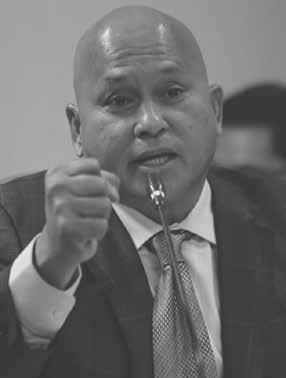
On May 13, the Senate standoff culminated in a shooting between personnel of the Office of the Sergeant-at-Arms and NBI agents at the GSIS Complex.
After the tension prompted by the shooting incident, Dela Rosa went back into hiding after leaving the chamber premises with Padilla aboard the latter’s vehicle in the early hours of May 14. The Criminal Investigation and Detection Group has officially concluded that Dela Rosa’s transport with Padilla was not a “mere hitch ride” but “a highly coordinated, preplanned logistical maneuver specifically executed to avoid detection while escaping the Senate premises.” n
Ombudsman: 2019 SEA Games raps vs. Dizon junked for lack of evidence
by John eRic mendozA Inquirer.net
MANILA — The graft complaint filed against Public Works Secretary Vince Dizon has been dismissed due to “insufficient evidence,” Assistant Ombudsman Mico Clavano said Thursday.
Clavano made the pronouncement as the National Bureau of Investigation announced it intends to probe alleged irregularities surrounding the Southeast Asian (SEA) Games.
Dizon, who chaired the Bases Conversion and Development Authority at the time, oversaw much of the infrastructure for the 2019 SEA Games Complex in New Clark City.

“Upon checking the records of this case, it appears that the case filed against Sec. Vince Dizon, etc., regarding the construction of the sports facilities for the 2019 SEA Games has been dismissed for insufficiency of evidence,” Clavano said in a statement. Clavano said the dismissal was contained in an Ombudsman joint resolution issued in December 2021. Matibag earlier said the NBI
Public Works Secretary Vince Dizon
intends to examine alleged anomalies in the country’s hosting of the SEA Games, including about P10 billion in unliquidated funds, the lack of competitive bidding for some projects, and the controversial P50-million cauldron.
Marcos meets with Singapore Prime Minister Wong
by dexteR cAbAlzA Inquirer.net
MANILA — President Ferdinand Marcos Jr. on Wednesday met with Singapore Prime Minister Lawrence Wong at the Istana to reaffirm the 57 years of bilateral relations between the Philippines and Singapore as part of the president’s working visit to Singapore.
The Presidential Communications Office (PCO) said the two leaders discussed expanding trade, harnessing opportunities in artificial intelligence, attracting more investments, and strengthening collaboration in health and social development.
During the bilateral meeting, they also agreed to pursue new bilateral agreements that will further benefit both nations.
Manila and Singapore also maintained their shared commitment to keeping the Association of Southeast Asian Nations (Asean) a peaceful, stable, and prosperous region with greater opportunities for their peoples.
Singapore is set to lead the regional bloc next year after the Philippines, with Asean’s chairship rotating annually among its 10 member states in alphabetical order. Wong also shared photos of his meeting with Marcos on his official social media account.

“Singapore remains one of the Philippines’ largest foreign investors, and there is potential to deepen our cooperation in areas like artificial intelligence, as well as the green and digital economies,” Wong said.
“We also discussed ways to strengthen the longstanding ties between our peoples,” he added. Marcos will also participate in a private roundtable discussion organized by the multinational economic think tank Milken Institute at the Philippine Embassy in Singapore, where he will meet with business leaders as part of the government’s efforts following the Philippines’ recognition as an upper-middle-income country.
Meanwhile, First Lady Liza Araneta-Marcos will deliver a message at the Global Economic Cooperation East Summit at the invitation of the Future Economic Cooperation Council, an India-based economic platform that brings together business and government leaders to advance global strategic economic cooperation. Marcos’ working visit to Singapore from July 14 to 16 is his 45th overseas trip since assuming the presidency in 2022. Singapore has been a favorite destination for Marcos. His visit this year will be his fourth since he started his term—two of which were to watch the high-class Formula One (F1) Grand Prix. n
Notice of Class Action Settlement
Authorized by the U.S. District Court, Eastern District of New York — Notice of Class Action Settlement —
Si desea leer este aviso en español, llámenos o visite nuestro sitio web.
TO: All merchants in the U.S. who accepted Visa or Mastercard credit or debit cards at any time since December 18, 2020.
This notice (“Notice”) is authorized by the Court to inform you about an agreement to settle the equitable relief claims in a class action lawsuit, called In re Payment Card Interchange Fee and Merchant Discount Antitrust Litigation, No. 05-md-01720 (BMC)(JAM)(E.D.N.Y.). The lawsuit claims that Visa and Mastercard, separately, and together with certain banks, violated antitrust laws and caused merchants to pay excessive fees for accepting Visa and Mastercard credit and debit cards, including by adopting interchange rules and rates, and other network rules, which the lawsuit has claimed constituted unlawful price fixing, unreasonable restraints of trade, and monopolization.
The defendants say they did nothing wrong. They maintain that their business practices are legal, justified, and the result of independent competition, and have benefitted both merchants and consumers. The Court has not decided who is right because the parties agreed to a settlement, which was preliminarily approved by the Court on June 9, 2026.
A. What Merchants Will Get from the Settlement
During the lawsuit, the Court previously certified an Equitable Relief Class under Federal Rule of Civil Procedure 23(b)(2) and has now preliminarily approved a settlement of the Class claims (the “Rule 23(b)(2) Class Settlement” or “Settlement”). Under the Settlement, Visa and Mastercard have agreed to substantive changes to the Visa and Mastercard rules applicable to merchants who accept their cards as a form of payment.
The Class includes all persons, businesses, and entities that accept any Visa-Branded Cards and/or Mastercard-Branded Cards in the United States at any time during the period between December 18, 2020 and the date of preliminary settlement approval, or June 9, 2026. The Court has set November 16, 2026 as the date for a final approval and fairness hearing (the “Fairness Hearing”) in connection with the Settlement, after members of the Class have had the opportunity to evaluate the Settlement and exercise their rights, as set forth in the Notice. Further information regarding the Settlement and the Fairness Hearing will be posted on www.InterchangeEquitableReliefSettlement.com.
Under the Rule 23(b)(2) Class Settlement, Mastercard and Visa will modify certain rules to preserve, establish, or expand the circumstances in which merchants can, among other things, do the following:
• Decline acceptance of Visa- or Mastercard-Branded Commercial Credit Cards and/or Premium Consumer Credit Cards.
• Surcharge customers a fee for the use of any Visa or Mastercard-Branded Credit Cards, including based on the type of card used (e.g., a different surcharge for rewards and non-rewards cards).
• Offer discounts to customers who do not pay with Visa or Mastercard-Branded Credit Cards, or based on the financial institution that issued the Visa or Mastercard-Branded Credit Card.
• Decline acceptance of Visa or Mastercard-Branded Cards at all outlets that operate under the same trade name or banner, even if that merchant accepts those same cards at outlets that operate under a different trade name or banner.
• Engage in Pilot Programs whereby they accept Visa or Mastercard-Branded Credit Cards at some but not all outlets operating under the same trade name or banner for a limited duration or test out various acceptance, surcharging and discounting options at some but not all outlets operating under the same trade name or banner, including not accepting Commercial or Premium Consumer Credit Cards, for a limited duration.
• Accept some digital wallets at brick-and-mortar locations but decline others and enable some digital wallets for on-line transactions but not enable others, and “steer” among the cards within a digital wallet under the same rules that govern steering among traditional cards.
• Receive the benefit of credit interchange rate reductions: Visa and Mastercard will reduce published and negotiated Credit Card interchange rates for U.S. merchants.
• Receive the benefit of Credit Card interchange rate caps: The Settlement Agreement reduces and caps “Standard” Consumer Credit Card rates at a specified level and otherwise caps Credit Card interchange rates, such that neither Visa nor Mastercard will increase any of its published Credit Card interchange rates above the rates effective as of March 31, 2025 and each will reduce its network-wide average Credit Card interchange rate to or below the specified level.
• Form Merchant Buying Groups that meet certain criteria to negotiate with Visa and Mastercard.
• Receive access to a Merchant Education Program, established and administered under the Settlement Agreement, to help understand and maximize the benefits of the rule changes, including how to effectively “steer” in States that restrict surcharging.
B. Monetary Aspects of the Rule 23(b)(2) Class Settlement
There is no monetary payment to members of the Class in this Settlement. This Rule 23(b)(2) Class Settlement concerns only the Equitable Relief Claims set forth in the lawsuit. Claims for monetary damages arising out of the defendants’ alleged antitrust violations are the subject of a separate settlement for the Rule 23(b)(3) Class. For information concerning the separate Rule 23(b)(3) Cash Settlement Class, please visit the website: www.PaymentCardSettlement.com
The Settlement does provide for Visa and Mastercard to make certain payments into the Rule 23(b)(2) Class Settlement Escrow Account, which money will be used to pay:
• The cost of settlement administration and notice, as approved by the Court,
• The cost of Merchant Education Program expenses, as approved by the Court,
• The cost of an Independent Auditor who will ensure that Visa and Mastercard comply with the credit card interchange-rate reduction commitments, and
• Attorneys’ fees and expenses, including any named Class Representative service awards, as approved by the Court.
The money in this fund will be distributed only if the Court grants final approval of the Settlement, and the money for attorneys’ fees and expenses, and service awards to Class Representatives, will be distributed only if the Settlement has become final and all appeals are exhausted, and the Court approves the application for attorneys’ fees and expenses, and Class Representatives’ service awards. Attorneys’ fees and expenses, and service awards to the Class Representatives: For work done through final approval of the Settlement by the Court, as well as any work they will be required to do in the future, Class Counsel will ask the Court for attorneys’ fees and reimbursement of reasonable and necessary litigation expenses, and any service awards to the named Class Representatives that the Court may award, in an amount not to exceed $206,000,000. The Settlement Agreement requires Visa and Mastercard to pay these fees and expenses separately from the other Settlement financial obligations and they will not reduce any other benefits of the Settlement; members of the Class will not be required to pay any amount toward these fees and expenses.
C. Legal Rights and Options
Merchants who are included in this lawsuit have the legal right to Object to the Settlement. The deadline to object is: September 14, 2026. To learn how to object, visit: www.InterchangeEquitableReliefSettlement.com or call toll-free: 877-318-7713.
Note: You cannot elect to be excluded from the Rule 23(b)(2) Class Settlement. For more information about these rights and options, visit: www.InterchangeEquitableReliefSettlement.com or call toll-free: 877-318-7713.
D. If the Court Grants Final Approval of the Settlement
If the Court grants final approval to the Settlement, members of the Rule 23(b)(2) Class will be bound by the terms of the Settlement and will release all claims against all released parties listed in the Settlement Agreement. The Settlement will resolve and release any claims by payment card acceptors against Visa, Mastercard and other defendants that were or could have been alleged in the lawsuit, including any claims based on interchange or other fees, no-surcharge rules, no-discounting rules, honor-all-cards rules, and any other network rules. The Settlement will also resolve any payment card acceptor claims based upon the future effect of any Visa or Mastercard rules as they were or are in place on December 18, 2020 and up to the Settlement Final Date (as defined in the Settlement Agreement), the modified rules provided for in the Settlement, or any other rules substantially similar to those rules. The release will not bar claims involving certain specified standard commercial disputes arising in the ordinary course of business.
For more information on the release, see the Superseding and Amended Rule 23(b)(2) Class Settlement Agreement at: www.InterchangeEquitableReliefSettlement.com.
E. The Court Hearing About This Settlement
On November 16, 2026 at 11:00 am ET, the Court will hold a hearing to decide whether to approve the proposed Settlement, Class Counsel’s request for attorneys’ fees and expenses, and service awards for the named Class Representatives. The hearing will take place at: United States District Court for the Eastern District of New York
U.S. District Judge Brian M. Cogan 225 Cadman Plaza East Brooklyn, NY 11201
You do not have to attend the Court hearing or hire an attorney, though you may do either at your own expense. The Court appointed the law firms of Hilliard Shadowen LLP; Grant & Eisenhofer P.A.; Freed Kanner London & Millen LLC; and Nussbaum Law Group, P.C. to represent the Class (“Class Counsel”).
F. Questions?
For more information about this case (In re Payment Card Interchange Fee and Merchant Discount Antitrust Litigation, MDL 1720),
COURT PROCEEDINGS. Senator Rodante Marcoleta arrives at the Sandiganbayan in Quezon City on Wednesday, July 15, 2026. He was escorted by police and Criminal Investigation and Detection Group (CIDG) personnel for the scheduled court proceedings. PNA photo by Robert Oswald P. Alfiler
Senators Alan Cayetano (left) and Ronald “Bato” Dela Rosa. Photos from INQUIRER Files
OPiniOn

The Arbitral Ruling must shape policy, not just speeches
Ten years after an arbitral tribunal issued its decision in the South China Sea case brought by the Philippines, 14 governments reaffirmed that the award is final and legally binding between Manila and Beijing on the maritime questions it decided. The European Union issued a separate statement supporting the ruling. China again said it does not accept or recognize it.
The declarations were important. Yet the more useful question is not what governments said on July 12, but what the Philippines does during the rest of the year.
What does the arbitral ruling mean?
Editorial
The 2016 award was issued by a five-member tribunal constituted under the United Nations Convention on the Law of the Sea, or UNCLOS. The case began in 2013. The Permanent Court of Arbitration in The Hague served as registry, but the UNCLOS tribunal decided the dispute.
The tribunal did not determine ownership of disputed islands, reefs or shoals. It neither drew a maritime boundary nor awarded the entire sea to the Philippines. Instead, it clarified the maritime rights countries may claim under UNCLOS and examined whether specified activities complied with the convention.
Its central finding was that China’s claims to historic rights within the relevant part of its ninedash line had no lawful effect where they exceeded the maritime entitlements allowed by UNCLOS.
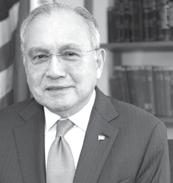
EARLIER this week, the Philippine embassy in Washington commemorated the 10th anniversary of one of the most consequential legal milestones in Philippine history – the landmark Arbitral Award rendered under the United Nations Convention on the Law of the Sea (UNCLOS). Commemorating this important anniversary with us were fellow ambassadors in Washington, members of the diplomatic circle, senior US officials, scholars and friends from many countries.
The ruling was handed down by the Arbitral Tribunal on July 12, 2016 – and 10 years later, its importance has reached far beyond the West Philippine Sea, standing as a shining beacon for the rule of law and peaceful dispute settlement. Most significantly, it serves as enduring proof that international disputes can be resolved through law rather than force, through reason rather than intimidation.
As the late Foreign Affairs Secretary Albert del Rosario stated when he faced the Permanent Court of Arbitration in 2015, the Philippines has “respected and
IN 2023 up to the first quarter (Q1) of 2024, we had the fastest-growing economy among our Association of Southeast Asian Nations (Asean)-6 peers, namely, Singapore, Thailand, Vietnam, Malaysia, and Indonesia. Now, our 2.8 percent gross domestic product (GDP) growth in Q1-2026 is the slowest. From being the most dynamic Southeast Asian economy only three years ago to the most sluggish now, the Philippine economy has reversed its fortunes yet again, in the familiar boom-and-bust cycle it has been persistently prone to, for nearly seven decades in the running. It was 35 years ago, in 1991, when we last grew the slowest among our Asean peers (other than in abnormal post-crisis rebounds).
It’s not just about GDP growth. We now also have the fastest price increases, with our 6.8 per-
The tribunal also found that none of the naturally formed hightide features in the Spratly Islands could generate a 200-nautical-mile exclusive economic zone. It determined that Mischief Reef and Second Thomas Shoal are low-tide elevations within the Philippines’ exclusive economic zone and continental shelf. At Scarborough Shoal, it did not decide sovereignty, but recognized traditional fishing rights enjoyed by Filipino and other fishermen.
It further found that China had breached specified obligations under UNCLOS by interfering with Philippine sovereign rights, failing to prevent harmful harvesting and causing coral reef damage through land reclamation and construction.
China did not formally participate and continues to reject the award. Under UNCLOS, however, the decision is final and binding on the parties. Its practical value depends on diplomacy, national capacity and consistent policy.
For Filipinos, the sea is not abstract. It is food in public markets, income for coastal families and
Arbitral Award: A path to peace, not conflict
implemented its rights and obligations under the Convention in good faith.” The filing of the case in January 2013 was a message to the global community that the Philippines has chosen to take the path of law to protect its maritime territory in a peaceful manner. Looking around the room during the commemorative occasion, I was reminded that it was not simply a Philippine event. It was an affirmation by the international community that respect for international law remains the cornerstone of peace and stability. Certainly, the gathering reflected a shared belief that rules – not power alone – must guide relations among nations.
At a commemorative conference led by the Department of Foreign Affairs in Pasay City the other day, Secretary Tess Lazaro told guests that the gathering was “not merely to look back at a page in history” but to “look forward, bound by a fundamental, enduring truth: that the rule of law is, and must always remain, the ultimate guarantor of global peace.”
To be clear, the 2016 Arbitral Award was never about humiliating another country or de-
claring winners and losers. The ruling demonstrated that even the most difficult disputes can be brought before an impartial tribunal within the framework of UNCLOS. It reinforced the principle that competing maritime claims and disagreements of member-states over the interpretation of maritime laws should be addressed peacefully through established legal mechanisms. That lesson has become even more relevant today. Around the world, vital waterways continue to be affected by geopolitical tensions. The war in the Middle East and the consequent situation in the Strait of Hormuz, one of the world’s most vital maritime chokepoints, is a vivid example of this reality. Nearly one-fifth of the world’s oil supply passes through this narrow corridor. And whenever tensions rise, energy prices react instantaneously, shipping costs increase, inflation follows, causing global markets to become uncertain and unsettled. The consequences are felt not only in the Middle East but all across Asia, Europe and the Americas. The same principle applies in the Indo-Pacific. Freedom of u PAGE 7
From boom to bust, again
cent May inflation rate topping that of our Asean peers. We also have the worst unemployment rate at 5.3 percent as of Q12026. On all my three “PiTiK” yardsticks of economic health (for presyo, trabaho, and kita), we’re now the worst performer in the neighborhood. While it’s due to a combination of external and internal stresses, it’s more of the latter. We seem to be our own worst enemy, with much of our economic wounds being self-inflicted, hence could have possibly been avoided.
The detailed numbers tell the story. While the Iran War’s disruption of the world economy offers a ready explanation for our troubles, we were already moving downhill well before that. Price increases began speeding up (i.e., the inflation rate began climbing) late last year, driven by food prices that surged due to reduced supplies from typhoon-related crop damage and higher input costs. Domestic rice (palay) production indeed fell by 5.2 and 6.3 percent, respectively, in Q4 last year and Q1 this year.


work for crews, traders and vendors. When access becomes uncertain, the consequences reach the boat owner repaying a loan, the crew returning with a smaller catch and the family waiting for someone to come home safely.
The Philippines has taken meaningful steps.
The Maritime Zones Act and the Archipelagic Sea Lanes Act, enacted in 2024, strengthened the

SO instead of independence being the culmination of a period of national solidarity, in our case it was one that came as a kind of anticlimax. Nowhere else in our part of the world (not even in India, where the leaders of the independence movement spent the war years in jail) was national loyalty confused with loyalty to the colonial power—a dubious distinction, clear in its absurdity to the prewar political leadership but not to the broader public or the previously sidelined, who saw the war as an opportunity to supplant the monolithic political structure of the prewar years. The destruction of the country as the price of liberation, and the conditions imposed to secure rehabilitation, not only further soured public opinion, but also made the rhetoric surrounding independence seem hollow. Divided, discredited, and destitute, the political class could not and would not find ways to accommodate any challenges to it; all this meant that the first decade of independence was spent fighting a civil war in
domestic legal framework under UNCLOS. Executive Order No. 57 reorganized maritime coordination under the National Maritime Council and assigned the National Maritime Center responsibilities for information-sharing, surveillance coordination and documentation.
Central Luzon, and it wasn’t until the mid- to late ’50s, and briefly, that national solidarity returned. Manuel Roxas and Ramon Magsaysay could likely have achieved the reunification of the prewar factions, but their deaths in both cases closed off the opportunity. Recent scholarship by Lisandro Claudio also suggests that the entire economic project of the period was anchored on the wrong assumptions—of having to prove to the old colonial masters that Filipinos could be thrifty and loyal to Washington’s policy formulations, which were skeptical of industrialization—when our neighbors did the exact opposite in defiance of the “experts,” with Park Chung-hee being a famous example. It hasn’t helped that since a premium is put on appearances, understanding that the substance is different isn’t acknowledged even by our fellow Filipinos. The democracy that had emerged prior to World War II would be more familiar to many of our neighbors then and now than to Filipinos today, who only look, if they look back, to surface similarities with the West. It had become ingrained enough that its instincts—to belong to a monolithic party with little independence from a coalition leader—have
remained, even as these instincts repeatedly collide with a public conditioned into believing its understanding of democracy is shared by the leaders it elects. Hence what I have come to call the “Three Old” and the “Three New.” The Three Old are our political inheritance from the Long Republic from 1935 to 1973 and are a bandwagon democracy, a plebiscitary democracy, and a partyless democracy. A mandate is contested and earned by a coalition whose success is measured not just in votes but in the breadth of the coalition; a mandate is retained, and periodically refreshed, through a combination of actual elections (at the start, to choose an administration, and in midterms, to determine its continuing viability) and symbolic referenda, whether through public opinion or public rituals; and this is where the instincts of the political class dating to the colonial era are to belong to the majority regardless of who constitutes it. The Three New are the fruit of our having become a middle-class Republic in the 1950s, with the reentry of the Catholic Church into political life and its cultivation of civil society. These are that since 1987 (and fou PAGE 7
On the jobs front, after unemployment reached a historical record low of 3.1 percent in June and December of 2024, it rose again last year, especially in the second half, averaging 4.6 percent in Q4, then worsening further to 5.3 percent last quarter. What particularly worries me is that jobs in the agriculture, fisheries, and forestry sectors have continuously declined over the last two years and fell consistently and significantly in the last seven consecutive months. This continuing slide in the sector that is the very backbone of our economy must be arrested. Yet the quantity of jobs tells only half the story. The other disturbing development is in the quality of jobs: as of last year, over half (50.4 percent) of jobless Filipinos had actually gone to college, of which 38.2 percent were graduates (see “Our educated jobless,” No Free Lunch, 2/11/25). These figures remained high at 45 and 34 percent as of last April, respectively, with college-educated workers remaiu PAGE 7
TO look at a student activist standing on a university bench, megaphone in hand, is to look at the very engine of Philippine progress. Historically, our nation’s turning points have been written by the young, the idealistic and the impatient. But today, a quieter, more insidious battle is being fought over these very minds – one where the primary weapon is not the rifle, but the dictionary.
In contemporary national security vocabulary, “terror grooming” has emerged as the definitive term for how underground movements recruit the youth. To the state, it is a clinical diagnosis of manipulation. To progressive groups, it is a dangerous, weaponized label designed to muzzle dissent. But beyond the political crossfire lies a deeply sophisticated linguistic pipeline that systematically transforms youthful empathy into armed militancy.
But when we take into consideration the glossary of radicalization, the journey from a comfortable classroom in Manila to an armed encounter in the mountains of Luzon or Samar does not happen overnight. It begins with the deliberate hijacking of universally noble concepts. When recruiters call on students to “serve the people,” they tap into a profound, healthy desire to do good. It is a beautiful sentiment. But in the dictionary principles of the underground, “serving” is gradually and systematically redefined. It shifts from community feeding programs to “immersion” trips (exposure) and finally, to the “armed struggle.” This ancient art of verbal inversion – of hiding destructive intent behind a facade of virtue – recalls a sobering warning from Scripture: “Woe to those who call evil good and good evil, who put darkness for light and light for darkness, who put bitter for sweet and sweet for bitter.” (Isaiah 5:20) The truth of the matter is, the linguistic translation for terms in the underground relatively translates to this: “armed strug-
gle” for violent rebellion, “tactical offensives” for deadly ambushes and worse, “martyrs of the people” to romanticize the PREVENTABLE loss of the lives of young people and turning the casualty into an occasion to further recruit the next batch of “martyrs.” By the time a young person realizes they are holding an automatic weapon in a lonely and isolated forest, the vocabulary of their daily life has already normalized it. They do not see themselves as lawbreakers; they have been taught to see themselves as the only legitimate arbiters of justice.
And what about the pain of the parents? I have heard one too many stories and it is heartbreaking. For parents, this is a slow-motion nightmare. It starts with small changes – sudden secrecy, a shifting vocabulary and a growing distance. Then comes the day the bedroom is left emp
ty, and the phone calls stop. Par
ents are left to navigate a cruel, living grief. They do not
if their child is
Cielito F. Habito
The long view Manuel L. Quezon III
PH remittance growth stayed at 4-year low in May
by iAn nicolAs P. cigARAl
MANILA — Money sent home by overseas Filipinos continued to post modest growth in May, underscoring the vulnerability of remittance flows as tensions from the prolonged conflict in the Middle East threaten to disrupt the livelihoods of migrant workers.
Cash remittances sent through banks rose 2 percent from a year earlier to $2.7 billion, according to data released by the Bangko Sentral ng Pilipinas (BSP). The pace matched April’s increase, leaving remittance growth at its slowest in four years.
In the first five months of the year, cash remittances totaled $14.1 billion, up 2.5 percent from a year earlier. That, however, remained below the BSP’s downwardly revised forecast of 2.7-percent growth for full-year 2026.
“The May remittance data suggest that growth remains positive but may be losing some
PAGE 6
momentum,” Ruben Carlo Asuncion, chief economist at UnionBank of the Philippines, said.
“More importantly, the renewed risk of a US-Iran escalation raises the possibility that the impact on OFW employment and deployment in the Middle East could become more visible in the months ahead,” he added.
“While remittances remain resilient for now, we believe downside risks have increased and may not yet be fully reflected in the latest data.”
Jonathan Ravelas, senior adviser at Reyes Tacandong & Co., said the continued growth of remittances despite the turmoil in the Middle East was “encouraging.”
“This reflects the diversification of Filipino workers across different regions and the strong culture of family support among OFWs,” Ravelas said.
“Historically, periods of uncertainty often lead overseas Filipinos to prioritize household financial security back home,” he added.
The United States remained the largest source of remittances, accounting for 39.4 percent of total inflows based on reported origin. The BSP, however, noted that the figure largely reflects the location of correspondent and remitting banks, many of which are based in the United States.
Singapore accounted for 7.4 percent of total remittances, followed by Saudi Arabia with 6.4 percent.
Looking ahead, John Paolo Rivera, senior research fellow at the Philippine Institute for Development Studies, said remittances may remain broadly resilient for the rest of the year, although growth may stay moderate given global uncertainties.
“Key risks include a prolonged geopolitical conflict, slower global growth, and persistent inflation in host economies,” he said. “Nevertheless, remittances should continue to provide important support to domestic consumption, the peso, and the country’s external accounts.” n
From boom to bust, again...
ning the largest segment of our unemployed. These job market weaknesses have been with us well before external geopolitical pressures heightened with the Iran War.
But it’s on the incomes and production front, i.e., the GDP slowdown, where lies our biggest challenge. There are three key observations worth noting. First, while the flood control corruption scandal triggered the economy’s dramatic slowdown, public construction spending was already declining even before the scandal broke out. President Marcos brought the scandal out in the open with his State of the Nation Address in late July (in Q3), but government construction already fell by a hefty 8.2 percent even in Q2 last year. Then it plummeted to -25.9 percent in Q3, and an even deeper, to -35.8 percent in Q4.
Second, fixed capital formati-
PAGE 6
on, or overall fixed investments that create jobs, had already been slowing down consistently since 2021, after the country emerged from the pandemic recession. From a rebounding surge of 9.9 percent in 2021, it softened every year thereafter down to 6.3 percent by 2024, then barely grew at 0.8 percent last year, weighed down by the deep dive in government construction. This continued its steep drop (by 31.5 percent) into Q1-2026, and has now pulled overall fixed capital formation to actually fall, at -2.7 percent. This should worry us because investment spending, which builds future productive capacity, should ideally be driving our economy’s growth rather than one-off consumption, which has always prominently been our economy’s growth driver. But even this has also slowed down to only 3 percent from previous rates exceeding 5 percent.
The third observation is a ray of good news: our exports growth of 7.8 percent has defied both a global trade slowdown induced by the Trump tariffs and our overall economy’s drastic slowdown. Our export growth far outpaces the overall economy’s 2.8 percent growth, and is driven by goods exports (rather than services exports like business process outsourcing, which has slowed down). This signals world market opportunities for our production sectors, where much of our homework should now focus.
The bright side to it all is that we now have nowhere to go but up. (Inquirer.net)
* * *
The opinions, beliefs and viewpoints expressed by the author do not necessarily reflect the opinions, beliefs and viewpoints of the Asian Journal, its management, editorial board and staff.
* * * Email: cielito.habito@gmail.com
The battle for the Filipino youth...
mare to experience the horror of every knock on the door or latenight phone call that can potentially carry a paralyzing dread of news about your child. The ultimate devastation arrives when a mother and father – who sacrificed everything to send their child to a prestigious university, dreaming of a bright professional future – receive that child back in a wooden casket, returned from a remote encounter they had no part in.
The hope, however, is in knowing that some members of Congress are now trying to do something about this problem.
HB 7204 introduced by Rep. Alexander Pimentel as “The Terror Grooming Prevention Act” is being proposed and hopefully, this will be implemented sooner rather than later in order to allow the government to intervene early, protect the youth and prevent them from being used in armed conflict.
But it is important to note that the first line of defense lies in the local officials. National legislation is only as strong as its local execution. The true, daily frontline of this battle is not found in the halls of Congress, but in our barangay halls and municipal offices. Local government officials have a binding,
ethical duty to act as the primary shield for their young constituents. Barangay captains, mayors and provincial leaders cannot afford to be passive observers. They are the ones who intimately know the families, the local disputes and the vulnerabilities of their communities.
For the administration, passing the Terror Grooming Prevention Act is framed as a duty of care – a way to stop handlers from exploiting minors before they end up in body bags. But the challenge for our legislators is to possess the maturity to hold two truths at once: we must fiercely protect our children from being manipulated into violent conflicts and we must just as fiercely protect their constitutional right to be angry, to protest and to demand a better country.
Our youth do not belong to the state nor do they belong to the underground. They belong to their futures, to their families and to a nation that desperately needs their brilliance alive – not immortalized on a revolutionary poster.
We must build a Philippines where a young person can cry out for justice and be met with a listening ear and a functional system, rather than a closed fist or a deceptive whisper from the
shadows.
We must build a country where a young person’s fierce desire to change the world is met with a shovel to build, a book to teach and a safe path to lead. The most truly revolutionary act we can perform as a nation is to ensure that our children actually survive to inherit the very justice they so bravely seek.
We must build a Philippines where our children’s fierce passion to serve is met with open paths rather than quiet dangers, guiding them toward a future they can actively and safely build.
The truest victory we can offer our land is a home where every young dreamer is cherished, where the sacrifices of hardworking parents are honored, and their children’s brilliant dreams are allowed to safely bloom. Let us protect the sacred bond of the Filipino family, ensuring that the legacy we pass down is not a legacy of grief, but a legacy of shared promise, thriving communities and where every family dinner table remains complete. (Philstar.com)
The opinions, beliefs and viewpoints expressed by the author do not necessarily reflect the opinions, beliefs and viewpoints of the Asian Journal, its management, editorial board and staff.
The Arbitral Ruling must shape policy...
PAGE 6
assistance for participating fishermen. These measures matter, but they should be judged by results.
The first obligation is a sustained, professional civilian presence. Coast Guard and fisheries operations should not expand only after confrontations or anniversaries. Vessels require maintenance, fuel, trained crews, secure communications and predictable funding. Personnel need rules that protect life, preserve evidence and reduce miscalculation.
Restraint is not surrender. Professional seamanship and disciplined communication can defend Philippine rights more effectively than heated language unsupported by capability.
Fishing communities must be treated as citizens with economic and safety needs, not merely as symbols of national resolve.
Beyond fuel and ice, fishermen need weather information, communications, tracking, insurance, rescue capacity and stable markets. They should not carry national policy in small boats while decisions are made safely on land. Environmental protection deserves equal attention. Coral
reefs, spawning grounds and fish stocks are living resources, not merely evidence in a territorial argument. Defending jurisdiction while allowing the marine environment to deteriorate would leave future generations with a legal victory over depleted waters.
Documentation must be systematic and credible. Photographs and videos can explain incidents, but official disclosure should inform rather than inflame. Records should include verified coordinates, time stamps, vessel identification and secure preservation of original material.
International partnerships can provide vessels, radar, training and expertise. Such cooperation should strengthen Philippine capacity rather than substitute for it. Maritime policy must remain Philippine-led and guided by the country’s security and economic interests.
None of this requires hostility toward China. The dispute concerns maritime rights and official conduct, not Chinese people or Filipino Chinese communities. Diplomatic channels, crisis communications, fisheries discussions and ASEAN negotiations should remain open.

Marcos expands cash aid to 7.5 million households amid high inflation
by AJPress
MANILA — President Ferdinand Marcos Jr. has expanded government cash assistance to an estimated 7.5 million households as rising food, fuel and transportation costs continue to pressure low-income families.
The assistance will be distributed under the Unified Package for Livelihood, Industry, Food and Transport, or UPLIFT, the government’s coordinated response to energy and economic disruptions linked to the conflict in the Middle East.
About 3.5 million beneficiaries of the Pantawid Pamilyang Pilipino Program, or 4Ps, and the Walang Gutom Program will receive a one-time additional payment of up to P2,000, Malacañang said.
Another 2.5 million poor and near-poor households identified through the government’s 2024 Community-Based Monitoring System will receive P2,000 a month from July through December. The same monthly assistance will be provided to about 1.5 million low-income workers and their families whose records have been verified by the Social Security System. Taken together, the three groups represent about 37.5 million Filipinos, based on the government’s estimate of five people per household.
Palace Press Officer Claire
Castro said the Department of Budget and Management had released P12.375 billion for the expanded program. Officials did not provide a detailed funding breakdown or say whether the amount represented the full cost of the assistance or an initial release. Payments are expected to be made through digital channels to speed distribution and reduce the need for beneficiaries to travel to government offices or designated payout centers.
Detailed guidelines covering payment dates, notification procedures, documentation and the handling of beneficiaries appearing in more than one government database had not been publicly released at the time of the announcement. The Community-Based Monitoring System gathers household-level information used by national and local governments to identify vulnerable communities and plan social-protection programs. The 2024 data collection included information on household income, employment, food security, transportation, financial access and participation in government assistance programs.
UPLIFT was authorized under Executive Order No. 110, which Marcos signed on March 24 after declaring a national energy emergency. The order established a government-wide
response covering fuel and food supplies, public transportation, livelihoods and assistance for vulnerable sectors. It also directed agencies to provide support to affected transport workers, farmers and fisherfolk, maintain essential services and act against hoarding, profiteering and other practices that could disrupt supplies or drive prices higher. The emergency declaration is effective for one year unless extended or lifted earlier by the president.
The expanded assistance comes as inflation remains elevated. The Philippine Statistics Authority reported that headline inflation eased to 6.4 percent in June from 6.8 percent in May but remained sharply higher than the 1.4 percent recorded in June 2025.
Food and nonalcoholic beverages, housing and utilities, and transportation were the largest contributors to the June inflation rate. Transport prices rose 12.8 percent from a year earlier, while the index covering housing, water, electricity, gas and other fuels increased 8 percent.
The program relies primarily on existing government beneficiary and employment databases rather than a new application process. Its rollout will depend on how quickly agencies verify records, identify overlapping entries and provide clear instructions to qualified households. n
Forty and forty...
PAGE 6
reshadowed in 1957), we have a minority presidency, an unchangeable Constitution, and the substitution of families and fandoms for political parties. We continue to have vast expectations of presidents but deny them the foundation of their power, a majority mandate; we are increasingly disappointed with, and even despairing of the system achieving any lasting change, when we cannot even change the rules of the game despite the clear shortcomings of the system; and we are moving backward in terms of political organization when the times call for modernity and not a return to premodern ways of organizing.
The fruit of 1986 was the 1987 Constitution, which anchored itself on a threefold vision: to
channel people power into reinvigorated institutions; to make accountability more accessible, in large part by limiting the executive’s prerogatives; and to institute an activist judiciary to uphold rights. The first failed, the second has created a gulf between the traditional expectations of responsibility, which cannot be fulfilled for lack of authority, and the last has made the first happen and continued to undermine the second (for example on rulings on budgetary processes making governance even more difficult).
Dialogue is not the opposite of firmness. Philippine policy becomes more credible when it is stable, lawful and able to survive changes of administration. The award is not the property of one president or political faction. It is a legal asset of the Republic.
The government should publish a measurable annual account of implementation: capabilities added, missions completed, fishermen assisted, incidents documented, environmental assessments conducted and public funds spent. Sensitive operational details can remain protected, but performance should be open to scrutiny.
The Philippines does not have to choose between protecting its rights and maintaining a workable relationship with China. A mature policy should do both: uphold the law without bravado, sustain dialogue without erasing legitimate differences and translate a courtroom victory into safer waters, stronger institutions and greater security for Filipinos who depend on the sea.
That is the proper measure of the arbitral award after ten years, not how forcefully it is praised each July, but whether it shapes national policy every day. (AJPress)
*
* * The opinions, beliefs and viewpoints expressed by the author do not necessarily reflect the opinions, beliefs and viewpoints of the Asian Journal, its management, editorial board and staff.
*
* * Email: mlquezon3@gmail.com; Twitter: @mlq3
Forty years, then, were spent seeing the collapse of a system unable to be itself, where we adopted a national attitude of victimhood to excuse ourselves from having to look too closely at ourselves. This was followed by 40 years of insisting on magical thinking to paper over the almost immediately exposed shortcomings of our experiment in a newly restored democracy. The republic at 80 is one where, at last, the period of decay and decline where something has to take its place, just as the 40 years from the ’30s to the ’70s led to a dictatorial experiment. We must ask ourselves what kind of experiment comes next, at the end of our current 40-year fall of the Fifth Republic. (Inquirer.net)
Arbitral Award: A path to peace...
PAGE 6
navigation and secure sea lanes are essential to global commerce. Every nation, whether large or small, ultimately benefits when maritime disputes are managed peacefully and in accordance with international law.
The Arbitral Award therefore offers a broader template. While each dispute has unique facts, the underlying principle is universal: dialogue, diplomacy and impartial legal processes provide a far better path than confrontation. The Philippines has consistently maintained that adherence to UNCLOS strengthens stability, encourages responsible conduct and reduces the danger of miscalculation.
As ASEAN chair, the Philippines is well positioned to champion these principles. ASEAN has long supported peaceful settlement of disputes and a rules-based regional order, and the Arbitral Award complements these aspirations by demonstrating that law can be an effective instrument for managing complex maritime issues.
Let’s not also forget the compelling economic dimension – investors seek stability, and businesses expand where the
rule of law prevails. Manufacturers, insurers and shipping companies depend on open sea lanes. Every unnecessary confrontation therefore imposes additional costs that ultimately fall on ordinary citizens due to higher prices, disrupted supply chains and slower growth. As I have often said, economic security and national security are inseparable. The award is also a reminder to smaller and middle powers that international law gives every nation a voice. There may be great disparity between nations in terms of military strength or economic influence, but legal principles establish standards that apply equally to all. Here in Washington, conversations after our embassy commemoration reflected quiet optimism. Many guests are of the opinion that while disagreements among nations are inevitable, conflict is not. They also expressed hope that the discipline of diplomacy and the authority of international law will continue to prevail over coercion. History has shown us that wars are costly, but history also teaches that wise diplomacy can
prevent conflict. The global community has every reason to support peaceful legal mechanisms that reduce tensions before they escalate into crises. The Arbitral Award reminds us that justice and stability are mutually reinforcing, not mutually exclusive. The Strait of Hormuz offers a timely reminder of what is at stake. When strategic waterways become flashpoints, the entire world pays the price. When nations choose dialogue over confrontation, everyone benefits.
Ten years after the Arbitral Award, its greatest legacy is not merely what it resolved for the Philippines. Its greater contribution is the example it offers humanity – that even the most difficult disputes need not be settled by intimidation or conflict. The rule of law remains far less costly than the price of war, and peace still remains the strongest foundation for prosperity. (Philstar.com)
ORAL ARGUMENTS. House of

Philippines urged to diversify economic base as AI threatens BPOs
by RenAlyn RAmiRez Philstar.com
MANILA — The Philippines' next test may come from the industry that helped power its rise: call centers and business process outsourcing.
As artificial intelligence threatens to disrupt jobs in the sector, global management consulting firm Kearney said the country's new upper-middle-income status should push the government and businesses to build more engines of growth, from manufacturing to tourism, and invest in the infrastructure needed to support them.
Among the risks cited by Kearney Philippines country head Marco de la Rosa and Southeast Asia managing partner Varun Arora is AI's impact on call centers and the business process outsourcing industry, one of the country's major economic drivers. In 2023, Kearney said up to 100,000 jobs in the Philippines could become obsolete because of AI, which it said was already affecting financial institutions
and telecommunications.
While AI is feared to disrupt many industries globally, the Philippines has more at stake than most countries. The BPO sector has become of its largest sources of jobs and foreign exchange, generating $38 billion in revenue and employing 1.82 million workers in 2024. The industry has also helped absorb college-educated workers and anchor office demand in major urban areas.
De la Rosa said such risk makes infrastructure investment more urgent, especially if the Philippines needs to build up industries beyond BPOs.
"So, if we need to diversify away from contact centers and BPOs, and we need to look into other industries, be it manufacturing or tourism, all of those things require good, stable, strong and scalable infrastructure," De la Rosa said in a Philstar.com interview. Infrastructure is important on its own, but it becomes even more critical for a country trying to broaden where growth comes
from.
Preparing for shocks
Arora said governments and companies also need to prepare for more "black swan events," or unpredictable shocks with serious consequences, especially those tied to technology.
"What if these black swan events happen? Then what will we do? So let's say there is, and I'm not saying just Philippines, but let's say there is a massive cybersecurity incident which happens that can rattle an economy," Arora told Philstar.com in the same interview.
Arora said these uncertainties are unlikely to disappear soon, and foreign investors will increasingly look at whether markets have enough resilience and options to absorb disruption.
"The uncertainties created by AI and technology and the risk of job losses, as well as the risk of technology disruptions, cyberattack or technology breakdown or AI going wrong, those uncertainties are very high for companies right now," Arora said. n
World Bank lending program for Philippines intact despite UMIC upgrade
by louellA desideRio Philstar.com
MANILA — The country’s recent ascent to upper-middle income country (UMIC) status will not affect the World Bank’s lending program for the Philippines.
The multilateral lender said the income upgrade is also expected to encourage foreign investments into the Philippines.
“From the World Bank perspective, moving to upper-middle income country will not affect our program. Our lending will not change. Our program will remain the same,” World Bank division director for the Philippines Zafer Mustafaoglu said in an interview with “Money Talks” aired over One News yesterday.
Under its country partnership framework for the Philippines for 2025 to 2031, the World Bank aims to improve Filipinos’ quality of life by expanding opportunities and strengthening resilience.
The framework focuses on protection for the poor, education, health, job creation, resilience, digital connectivity and encouraging private investment.
With the Philippines’ recent entry into the upper-middle income grouping, Mustafaoglu said the World Bank would be focusing on supporting the country’s reform measures.
‘Upper-middle income country status is a milestone, but it’s not the end. It is important to continue focusing on key reform areas, key bottlenecks to overcome and continue supporting the country,” he said.
He said that the World Bank would continue to support the Philippines in terms of infrastructure, addressing learning gaps, health, as well as digitalization.
He also said that the World Bank is focused on helping the Philippines mitigate the impact of the Middle East crisis, particularly on the poor.
While the upper-middle income status is expected to en-
courage foreign investments to the country, he also said that creating a good business environment is important.
“When I look at the Philippines, opening a firm is still a challenge. It takes 75 days in the Philippines compared to one to three days in neighboring countries,” he said.
He said the opening of businesses is very important for job creation and for economic growth.
While Philippine economic growth slowed to 2.8 percent in the first quarter, the World Bank expects the economy to recover after this year.
Mustafaoglu said that the World Bank expects the economy to post an average growth of around 5.5 percent in 2027 and 2028.
Earlier, the World Bank said it expects the Philippine economy to grow by 3.7 percent this year, within the government’s revised 3.5 to 4.5 percent growth target for this year. The economy grew by 4.4 percent in 2025. n

SC
dismisses
petition vs Escudero,
Comelec
unit over campaign donations
Roundtable with U.S. Trade and Development Agency Head Tom Hardy

THOMAS “Tom” R. Hardy, acting head of the U.S. Trade and Development Agency (USTDA), recently held a roundtable with foreign press members in Washington, D.C., moderated by Zafar Hashemi.
Hardy leads USTDA’s efforts to advance high-quality infrastructure projects that strengthen U.S. national security, create export opportunities for American goods and services, and support U.S. jobs.
He outlined the agency’s “America First” approach to infrastructure development and foreign assistance in emerging markets.
“USTDA is foreign assistance with a purpose,” Hardy said. Its mission, he explained, is to support development in partner countries while advancing U.S. national security, strategic and trade interests.
USTDA’s early-stage project assistance helps partner countries implement major infrastructure projects while positioning American companies to supply trusted technologies and solutions.
Hardy said the Luzon Economic Corridor is driving USTDA’s current program in the Philippines.
“USTDA is financing the design for the Subic-Clark-Batangas Railway,” he said. The agency is also examining investments at Subic Bay and in port infrastructure upgrades.
He said these efforts support Philippine economic security while advancing U.S. national security and broader regional stability.
USTDA has worked closely with the U.S. Indo-Pacific Command in Hawaii to identify commercial infrastructure investments that could strengthen the Philippine economy. Possible projects include the energy and port sectors, with USTDA providing seed capital to attract private funding.
Hardy also cited digital-sector projects with PLDT on network expansion and with the Department of Information and Communications Technology and the







Philippine government on broadband coverage.
He said the Philippines is seeking trusted digital vendors and that USTDA supports American companies such as Cisco and Microsoft over Huawei, ZTE and other providers the U.S. government considers potential security risks.
He described the agency’s work in Subic Bay as an economic and national security priority in the region.
Eat Bulaga’s “Age Is Right” Staffer Earns Praise
I got to know Rovi Bernardino Padilla through beauty queen Catherine Muguerza, who appeared on the TV5 noontime show Eat Bulaga in its “Age Is Right” segment. When Catherine called me in May 2026, I was attending a film and theater workshop conducted by the PhilStagers in Manila. I could not leave to attend an afternoon taping at TV5. I informed Rovi, and he readily understood. Rovi contacted me again in July 2026. I have heard many good things about this Eat Bulaga staffer.
Jayson Tan thanked Rovi, writing that he was “the main reason why I was chosen to be a part of this show. Thank you so much for this once-in-a-lifetime opportunity.”
Others who thanked him included indie actor Benjie Belena; Ilonggo singer-songwriter Aleck Calata; Cebuano dancer-choreographer Abigail Abion Padilla; veteran radio talent Tina Loy; character actor and stuntman Charlie Panopio; TV host Zeyzey Bolima;
signboard maker Nelson Infante Pano; and beauty queen Angelica Mae Diez.
10th Anniversary of the Philippines’ Arbitral Victory in the West Philippine Sea
Members of fisherfolk communities joined supporters who gathered July 12 at the tomb of former President Benigno Simeon Aquino III to commemorate the 10th anniversary of the Philippines’ landmark arbitral victory in the West Philippine Sea.
Those present included Kiko Aquino Dee, Lorenzo Tañada, Kim Henares, Dr. Patricia Licuanan, Teresita Deles, Volt Bohol, fisherfolk leader Restituto del Rosario, fishermen Rey Miranda and Tirso Atiga, Ramon Balang and Brainard “Jojo” Roxas.
Members of the Liberal Party of the Philippines, the August Twenty One Movement and the Ninoy and Cory Aquino Foundation also attended. They paid tribute to Aquino’s leadership in pursuing the arbitration administered by the Permanent Court of Arbitration and defending the country’s sovereign rights under international law.
The Mass was presided over by the Rev. Fr. Joseph Patrick Echevarria, SJ, who had been assigned to Loyola College of Culion in Palawan and lived among fishing communities affected by China’s activities in Philippine waters.
“Violet” Selected for International Tagore Film Awards
The short film “Violet” has been officially selected for the 2026 International Tagore Film Awards in Kolkata, India.


“We are grateful that our story continues to reach audiences beyond borders, sparking conversations on issues that matter and giving voice to stories that deserve to be heard,” said writer-director PX Ilano.
The film stars Elia Ilano, Ataska, Kian Co, Randy T. Dela Cruz, Malou Naredo Canzana and JJ Cillo. It was written and directed by Paulo Xavier Ilano, with Nelson Villamayor serving as editor and director of photography.
It was produced by Wereldwijd voor Kinderen, State of Youth Manila and KidsRights Foundation, an NGO accredited by the United Nations Economic and Social Council.
“Violet” is an official grantee of the International Children’s Peace Prize 2026 Project Theme Fund, whose theme is “Peace and Education.”
Boy Gozum Pays Tribute to His Parents
Photographer and artist Rafael “Boy” Gozum recently paid tribute to his parents, Rafael Sr. and Marciana.
On July 24, he will hold a group exhibition featuring 80 artists in honor of his late father, former Mayor Rafael Gozum Sr., at the family mansion’s museum in Cabatuan, Isabela.
For more information, email rafaelgozumjr22@gmail.com
Court (SC) has dismissed a petition filed against Sen. Francis Escudero and the Commission on Elections’ (Comelec) Political Finance and Affairs Department (PFAD) over campaign donations he received for his 2022 senatorial bid.
Comelec chairperson George Erwin Garcia shared the notice of the resolution to reporters on Friday. The document was received by the PFAD on the same day.
“The Court resolved to DISMISS the Petition for Review dated December 23, 2025, filed by the petitioner, for being the wrong remedy,” the resolution issued by SC En Banc dated June 3, 2026, read.
The petition by private citizen John Barry Tayam stemmed from the resolution of PFAD to terminate its investigation into the case of Escudero, citing a lack of evidence to support a complaint that the senator and Lawrene Lubiano, president of Centerways Construction and Development Inc. violated the Section 95 of the Omnibus Election Code (OEC). PFAD is responsible for reviewing and assessing the statements of contribution and expenditures of poll candidates.
Escudero earlier confirmed that he received a P30 million donation from Lubiano for his senatorial bid, however, he clarified that he did not help the firm secure major flood control projects. The firm was one of the 15 contractors revealed by President Ferdinand Marcos Jr. to be awarded most of the flood control projects in the country.
Section 95(c) of the OEC states that “[n]o contribution for purposes of partisan political activ-
ity shall be made directly or indirectly by any of the following: (c) natural and juridical persons who hold contracts or subcontracts to supply the government or any of its divisions, subdivisions, or instrumentalities with goods or services, or to perform construction or other works.”
The last part of the Section 95 also states that “[i]t shall be unlawful for any person to solicit or receive any contribution from any of the persons or entities enumerated herein.”
PFAD ruled that stock or nonstock corporations are “treated as separate and distinct legal entities from the natural persons composing them.” It added that Lubiano is a “separate legal personality” of his own despite being the firm’s president.
“There is no evidence establishing that the funds used in the contribution originated from Centerways, or that its corporate money crept into campaign funds of respondent Escudero through the contribution made by respondent Lubiano,” the PFAD said in its decision.
With this, Tayam said that he believes that “Lubiano is Centerways, Centerways is Lubiano.”
“Hindi pwedeng sabihing personal capacity, ang tagal na nyang contractor. It’s a matter of technicalities kaya kailangan ng tulong ng Korte Suprema,” he said in an ambush interview upon filing the petition.
(We can’t say that it’s personal capacity; he’s been a contractor for a long time. It’s a matter of technicalities; that’s why Supreme Court’s help is needed.)
When sought for a reaction to the SC resolution, Escudero’s camp said: “No comment.” n
Financial resilience after disasters sought
MANILA — As they confront disaster-related problems, countries should develop strong institutions and mobilize key stakeholders to achieve financial resilience, an adviser to an intergovernmental policy forum said. Countries are facing growing challenges from disasters, said Stephane Jacobzone, senior adviser for the Organisation for Economic Cooperation and Development (OECD)’s public governance directorate.
“Sound public financial management, strong institutions, coordination between national and local levels and transparent
reporting on results – these are what it takes to deliver for communities,” Jacobzone said. Representatives from the government, development partners, private sector, academe and civil society convened from July 13 to 16 for the OECD’s mission. Christina Frasco, presidential adviser for sustainable and resilient communities, said advancing sustainable and resilient communities “is among President Marcos’ foremost priorities.” Held under a European Union-funded project, the mission provides a platform for experts to exchange experiences and enumerate practical approaches to enhance resilience and sustainable development. n
USTDA Acting Head Tom Hardy
(From left) Kiko Aquino Dee, Rey Miranda, Resty del Rosario and Tirso Atiga. Lorenzo Tañada (4th from right) and Volt Bohol (extreme right) with the members of ATOM.
Tom Hardy with the members of the foreign press and moderator Zafar Hashemi. Eat Bulaga’s Age Is Right staffer Rovi Bernardino Padilla.
Elia Ilano in VIOLET.
Supporters of former President Noynoy Aquino and ATOM members.
Photographer-artist Boy Gozum with photo of his late parents Marciana and Rafael Sr. in Cabatuan, Isabela.
Father Joseph Patrick Echevarria, SJ. (center). PORT VISIT. Japan Coast Guard's training vessel
by Dianne Sampang Inquirer.net
MANILA — The Supreme
The World Bank headquarters in Washington, DC. STAR / File by Alexis RomeRo Philstar.com
Angel Locsin questions Robin Padilla over silence on red-tagging after communist remark
by Jan milo Severo Philstar.com
MANILA — Actress Angel Locsin has publicly called on Sen. Robin Padilla to wake up, expressing disappointment over what she described as the lawmaker's changing political positions while recalling their past friendship.
In a Facebook post addressed to Robin, whom she referred to as "Kuya," Angel recalled the stories he used to share about his younger years.
"Nung mga panahong magkasama tayo, madalas mong ikwento yung panahon na namundok ka at nag-armas para ipaglaban ang bayan. Sabi mo pa nga, dinadalaw ka ng ex mo sa bundok," she said
She said Robin's remarks during the July 14 impeachment trial of Vice President Sara Duterte, in which he described himself as a communist, reminded her of the person she once knew and admired.
"Sa statement mo na to, kahit papaano, natuwa akong makita ulit yung dating Robin Padilla na nakilala ko. At least, honest ka ngayon, Kuya," she said. Angel also questioned Robin's silence when she was subjected to red-tagging, saying he knew the accusations against her were untrue.
"Ang tanong ko lang, nasaan ka nung panahong nirered-tag ako kahit alam mong hindi totoo? Actually, kasama mo pa nga at kachikahan yung mga nangrered-tag. Naghugas-kamay at pumikit sa katotohanan," Angel said.
The actress likewise questioned the senator's priorities as a public official, saying many Filipinos had supported him because they expected him to champion the interests of the Muslim community.
"Isa sa mga pinakamalaking dahilan kung bakit ka binoto ng maraming Pilipino ay dahil inasahan nilang magiging matapang kang boses para sa mga kapatid nating Muslim. Pero bakit parang mas ipinaglalaban mo pa si Quiboloy? Naniniwala ka ba talaga na siya ang 'appointed son of God'?" she said. Angel also expressed disappointment over Robin's stance on China, saying it was different from the patriotism she once admired in him.
"Isa ka sa pinaka-makabayang taong nakilala. Ikaw si Andres Bonifacio. Kaya nakakalungkot pag nakakabasa ako ng stand mo pagdating sa China. Hindi ito ang Robin Padilla na nakilala at hinangaan ko,” the

actress said. She went on to reflect on what she described as the similarities in their personal journeys, saying they both came from humble beginnings and owed their success to the Filipino people.
"Kahit paano, alam kong halos pareho tayong landas na dinaanan. Galing sa hirap, nagtrabaho ng maaga, tinangkilik at nakapagpasaya ng mga tao. Ang utang na loob natin ay sa ating diyos at sa lahat ng Pilipino — hindi lamang sa isang tao," the actress said.
Angel concluded her message with a direct appeal to the senator.
"Tama na, Kuya. Gising na. Hindi pa huli ang lahat," she said.
As of publication, Robin had not publicly responded to Angel's statement.
The two worked together in GMA's 2007 fantasy-adventure television series "Asian Treasures."
What happened before?
Angel has long been a target of red-tagging.
Former military officials repeatedly accused the actress of having links to communist groups, while former National Task Force to End Local Communist Armed Conflict (NTF-ELCAC) spokesperson Lorraine Badoy frequently singled her out over her humanitarian work and advocacies, especially during the Duterte administration.
The actress consistently denied the allegations and publicly defended herself against the accusations.
Badoy, who has been outspoken on social media in accusing personalities she claims have links to communist groups, has yet to comment on Robin's remarks.
Katrina Halili gets emotional recalling her struggles as single mother
by Jan milo Severo Philstar.com
MANILA, Philippines — Actress Katrina Halili was moved to tears when she and fellow "StarStruck" alum Sheena Halili talked about her struggles as a single mother.
Katrina also opened up about the current state of her relationship with ex-partner Kris Lawrence, the father of her only child, Katie.
“Kumusta ka? Blooming ka,” Sheena told Katrina, which she answered, "Oh talaga?"
“Siguro kasi na-forgive mo na,” Sheena replied. Despite sharing the same surname, the two actresses are not related by blood.
“Ay, oo. The fact na kinakausap ko na siya, na-forgive na siya,” Katrina answered.
Katrina became emotional when she admitted that there were times when she felt guilty because she did not spend enough time with her daughter.
“Marami akong napapanaginipan last year. Nagso-sorry ako kay Katie. Wala akong time, ganyan,” Katrina said.
"Okay lang ‘yun. Ngayon lang tayo nagkita. Magkuwento ka na,” Sheena replied.
Katrina continued: “Kaya ko in-open na okay na kasi dati kapag nagkikita kami, nod lang ganu’n oh. Umaalis na ako. Hindi ko siya pinapansin.”
"Minsan nga umaalis pa tayo kapag parating na siya. ‘Tara na, tara na. Umalis na tayo,’” Sheena said. Kris recently admitted that he is now courting Ka-

Kris Lawrence and Katrina Halili Screenshot via Katrina Halili's Facebook trina again and is hoping for a second chance.
In an interview, Kris said that he will not waste the "second chance" that Katrina gave him, especially being Katie's father.
“I’m very, very grateful that she kept me in the decision that we’re co-parenting a hundred percent and everything is so beautiful right now. Napansin namin 'yung smile ni Katie, a big shift. Katie’s smile is so much better, it’s so genuine. It almost feels like she does not have autism. I believe it’s because the energy is all back and it’s all whole now," he said.
“Now she feels love from both parents. I’m there every single day. She sees that me and Kat are happy. The fact that me and Kat are happy, it trickles down to her and it makes her feel secured and loved. The magnitude is just phenomenal,” he added.
Singer Banig Roberto’s son joins
by gavin martinez Inquirer.net
NETFLIX’S “Avatar: The Last Airbender” intro-
duced a new face to fans, with Filipino Taiwanese child actor Jordan Roberto Chien portraying Young Zuko in the series’ second season.
He is the son of Filipina singer and International Star Search champion Josephine “Banig” Roberto.
Chien makes his first appearance in Episode 2, “A Fight, Once Begun,” where viewers are taken back to the Fire Nation prince’s childhood.
His portrayal centers on one of the most defining moments in Zuko’s early life as he witnesses the painful separation from his mother, Ursa – an event that helps explain the emotional scars and inner conflict that shape the character’s story.
Although the role marks Chien’s biggest acting project to date, the young performer is no stranger to the entertainment industry. Before joining the live-action adaptation, he had already appeared in campaigns for the Los Angeles Lakers, Disneyland and Mattel. For Chien, however, the journey to becoming Young Zuko was every bit as memorable as appear
ing on screen. Reflecting on the experience through
the child actor described months of auditions, callbacks and anxious waiting before finally receiving the news that changed everything.
“I can’t even begin to tell you how incredible this journey was for me to be able to play Young Zuko.

From the very first audition, to the callbacks, to the director’s session and the nerve racking anticipation… but to finally receive the news that afternoon from my agent, it was hands-down one of the best days of my life.” His mother, Josephine Roberto, echoed that excitement in a social media post, saying their family’s involvement in the Avatar universe was something they never imagined would happen. “My excitement level is beyond words right now!” she wrote, describing the project as an experience that “my whole family and me as a mom is something we will forever cherish.” As a mother, she shared that watching from the sidelines and allowing him to thrive in his passion has been deeply rewarding, noting that while beginning a career at a young age is never easy, “when you love what you do, it becomes your playground!”


Bea Alonzo, Vincent Co wed in private Makati civil ceremony
by AJPress
MANILA — Actress Bea Alonzo and businessman Ferdinand Vincent Co were married July 13 in a private civil ceremony at Makati City Hall, with Makati Mayor Nancy Binay officiating.
The marriage became public the following day after Binay shared a photograph with the couple and offered her congratulations. Alonzo confirmed the wedding on July 15, posting a series of black-and-white images from the ceremony with the oneword caption, “Home.”
The photographs showed the newlyweds signing documents, exchanging rings and posing beside a small cake marked “Just Married.” Alonzo wore a structured white ensemble and carried a bouquet of white flowers, while Co wore a white Barong Tagalog. Alonzo later said she did her
own makeup and that a close friend took the photographs. The pared-down arrangements kept the ceremony largely outside public view.
Joey V. Garcia of GERA Law, Alonzo’s lawyer, said the wedding took place at about 7 p.m. He also confirmed that Alonzo and Co had signed a prenuptial agreement before the ceremony.
Garcia said the agreement was entered into freely and voluntarily and did not create any legal impediment to the marriage. Its terms remain private, and neither Alonzo nor Co has discussed them publicly.
The civil wedding followed months of public interest in the couple’s plans. In March, St. Peter the Apostle Parish in Manila published marriage banns bearing their legal names, formally signaling their intention to marry. The notice did not state when or

where the ceremony would take place.
Alonzo publicly acknowledged her relationship with Co in August 2025, saying she was happy while making clear that she wanted to keep much of her personal life private. The couple made only occasional public appearances and did not announce an engagement before the wedding.
Co, whose full name is Ferdinand Vincent P. Co, is president and a director of Puregold Price Club Inc., a publicly listed supermarket operator.
Alonzo is among the Philippines’ most established film and television actresses. Her credits include One More Chance, The Mistress and Four Sisters and a Wedding.
The couple has not announced whether the civil ceremony will be followed by religious rites or a larger reception.









Photos from Instagram/@beaalonzo
Angel Locsin and Robin Padilla worked together in GMA's 2007 fantasyadventure television series "Asian Treasures."
Photo from jordanrobertochien/Instagram

HEALTH @HEART
Philip S. Chua, MD, FACS, FPCS
THE SILENT killer of the 1970s, high blood pressure, is now replaced by Metabolic Syndrome, a cluster of three or more risk factors like abdominal obesity, high blood pressure, high triglycerides, abnormal lipids, and insulin resistance (pre-diabetes T2), which is actually a “pandemic” today, robbing us of our health and potential longevity.
“The syndrome feeds into the spread of diseases like type 2 diabetes, coronary diseases, stroke, and other disabilities. The total cost of the malady, including the cost of health care and loss of potential economic activity, is in trillions,” according to the US.. National Institute of Health.
Metabolic syndrome kills millions of people annually around the world by way of complications of type 2 diabetes, heart attack, stroke, and other metabolic illnesses. Metabolic Syndrome kills more people globally than all casualties from all wars in human
history.
Killing us “softly”
The expanding waistlines of Americans (and Filipinos) over the past several decades have been alarming, not only from the cosmetic/physical point of view but, more importantly, from their adverse impact on health and morbidity. and mortality.
The researchers from Charles E. Schmidt College of Medicine at Florida Atlantic University, in an article posted in the Journal of Cardiovascular Pharmacology and Therapeutics, stated that “being overweight and obesity contribute to metabolic syndrome, which affects 1 in 3 adults and about 40 percent of adults aged 40 and older…that the risk factors are more than just the sum of their parts.”
Obesity is indeed surpassing tobacco as the pre-eminent preventable cause of early morbidity and premature deaths in the United States and globally.
The rule of thumb is that optimizing health requires a waistline of less than 40 in men and less than 35 in women, along with a healthy lifestyle: diet (foremost!), then exercise, abstinence from tobacco and alcohol, and stress management.
The authors of the study explain “that the visceral fat component of abdominal obesity leads not only to insulin resistance but also to the release of non-esterified free fatty acids from adipose tissues or body fat…the lipids then accumulate in other sites such as the liver and muscles, further predisposing individuals to greater insulin resistance and dyslipidemia, and adipose tissue may produce various adipokines that may separately impact insulin resistance and cardiovascular disease risk factors.”
Persons with metabolic syndrome are generally without symptoms and severely underdiagnosed and untreated, but have a 10-year risk of a first heart attack, according to the Framingham Risk score of 16 to 18 percent, which puts them in a higher risk category similar to those who already had a previous heart attack.
Various clinical studies have shown that even with a normal Body Mass Index (BMI), individuals with an expanding waistline from visceral fat could still have metabolic syndrome. Those who consume soft drinks of any kind, cola or uncola, diet or regular, caffeinated or not, have a higher risk
for the development of metabolic syndrome, especially children. Indeed, soft drinks are toxic to our bodies, to our DNA
As I have highlighted in the book Let’s Stop “Killing” Our Children, a healthy lifestyle and disease prevention, to be fully effective, must start in the womb, and dieting and discipline must begin in the crib to protect the children’s DNA. This pre-emptive and proactive strategy at the cellular/molecular level would exempt them from having the so-called “expected and normal diseases of aging,” like arthritis, high blood pressure, diabetes T2, heart diseases, stroke, Alzheimer’s, and even cancer. Indeed, these are preventable.
The pandemic of obesity, which began in childhood, has been increasing over the past century (1 billion worldwide today). The current generation of children (1 in 10 are obese, 1 in 5 are overweight) and adolescents (who eat more calories and unhealthy foods and who exercise less) will reach middle age with higher morbidity and mortality from metabolic and cardiovascular diseases, stroke, and cancer, worse than their parents’.
While colon cancer rates have been going down among the elderly (55 and older) since the

1980s, they are increasing among those in their 20s and 30s. This was the recent alarming finding of a US cancer registry, which reviewed nearly half a million colorectal cancers diagnosed between 1974 and 2013, published in the Journal of the National Cancer Institute and in the March 1, 2017 issue of the New England Journal of Medicine.
The research shows that for colon cancer, a rate increase of 2.4 percent annually was noted for those in their 20s and 1.0 percent among those in their 30s. For rectal cancers, the yearly increase was even higher, 3.2 percent. This report revealed an alarming retrogression in our battle against colorectal cancers: “that young adults' colorectal cancer risk is now similar to that of adults born around 1890.”
The investigators pointed out that high obesity rates over the past several decades “may play a role in this generation. Obesity increases the risk for all types of cancers and cardiovascular diseases, like high blood pressure, heart attack, stroke, and diabetes.
Diet and calories are major culprits.
Our lifestyle, which includes what and how much food we eat, where we exercise or not, and all our self-indulgences/abuses, contributes a lot to our state of health. Metabolic syndrome, especially obesity, and red meat and processed meat consumption all increase the risk for cancer. Neglecting regular medical/ dental check-up and recommended tests also increases our health risk.
Shedding off at least 5 pounds of our excess weight through disciplined caloric counting and walking exercise for about 20
Glaringly
IN THE balikbayan box industry, every shipment tells a story. Behind every box are the sacrificesof hardworking Filipinos abroad and the families in the Philippines who patiently wait for thelove, care, and support sent to them.
For LOGO Cargo, delivering balikbayan boxes is more than a business. It is a responsibilitybuilt on trust, service, and malasakit.
Under the leadership of CEO Joel P. Longares, LOGO Cargo continues to strengthen its missionof providing reliable, safe, and organized cargo services for Filipino families around the world. With years of experience in the industry, Mr. Longares remains committed to improving thewaybalikbayan boxes are handled, monitored, and delivered from abroad to the Philippines.
Through organized systems, dedicated manpower, warehouse operations, trucking support, andcontinuous customer assistance, LOGO Cargo works to make every shipment more secure andconvenient for its customers. From pickup to warehouse processing, container loading, tracking, and final delivery, the company focuses on giving families peace of mind.
But beyond logistics, LOGO Cargo is also known for its heart for service.
CEO Joel P. Longares has led the company with the belief that service must always come withcompassion. One of the reasons he chose to help with abandoned shipments is his deep concernfor Filipino families. He understands that every abandoned balikbayan box is not just a package, but

a symbol of sacrifice, love, and hope from hardworking Filipinos abroad.
This is reflected in LOGO Cargo’s continued efforts to help process and deliver abandonedbalikbayan boxes affected by issues with previous cargo providers. These efforts have givenhope to many families who feared that their long-awaited packages would never arrive. This mission requires time, manpower, resources, and dedication. Yet LOGO Cargo continues tostep forward because the company understands the emotional value of every balikbayan box. Each box represents love from overseas, hard work, and the desire to provide for family. With Mr. Longares at the helm, LOGO Cargo continues to grow not only as a cargo company, but also as a trusted partner of Filipino communities. His leadership reflects the company’s promise: to serve with honesty, deliver with care, and help families stay connected no matter thedistance. As LOGO Cargo continues to expand its cargo and money remittance services, its missionremains clear: to provide dependable service for every Filipino family and to carry every padalawith care, purpose, and malasakit.
LOGO Cargo — Your Padala, Fully Handled.
Olivia Rodrigo sets new career milestone as ‘The Cure’ stays No. 1
by gavin martinez Inquirer.net
FILIPINO American singer-songwriter Olivia Rodrigo adds another milestone to her growing list of chart achievements as “The Cure” continues its remarkable run on Billboard, while her latest album shows no signs of slowing down just weeks after its release.
The track has secured a sixth consecutive week at No. 1 on Billboard’s Alternative Streaming Songs chart, making it the longest-running leader of her career on the ranking. With the feat, “The Cure” overtakes the performance of her previous chart-topper, “Bad Idea Right?” giving her a new personal best on the streaming-focused tally. The song’s momentum extends far beyond a single chart. “The Cure” continues to rank among the top 10 on nearly every Billboard list where it appears, including the Hot Rock & Alternative Songs, Hot Alternative Songs, Streaming Songs and Billboard Global 200 charts. Rodrigo’s latest album, “You Seem Pretty Sad for a Girl So in Love,” has also become a dominant force across Billboard’s streaming rankings. Eight songs

Photo from oliviarodrigo/Instagram from the project currently appear on the Alternative Streaming Songs chart, with five of them occupying spots inside the top 10. The record, which arrived just a month ago, has enjoyed an impressive launch. It debuted at No. 1 upon release and has continued to post strong streaming gains in the weeks that followed. Every one of its 13 tracks also entered the Billboard Hot 100. Rodrigo began introducing fans to the project before its release through the singles “Drop Dead” and “The Cure,” both of which helped build anticipation for her third studio album.

Lombardo announces $3 million for rural community development
CARSON CITY, Nev. — Gov. Joe Lombardo announced that $3,099,545 in Community Development Block Grant funds has been awarded to seven rural Nevada projects for 2026.
The grants, administered by the Governor’s Office of Economic Development, will support water, sewer, public facility and community improvement projects across five counties and several municipalities. Ely will receive $603,750 for upgrades to its wastewater treatment plant. Fallon was awarded $750,000 to rebuild the Serpa sewer lift station, while Lovelock will receive $500,000 for sewer improvements. Elko County was
awarded $513,120 to replace the Tuscarora water tank.
Esmeralda County will receive $557,675 for the Goldfield Community Center and $100,000 for a water-sealing project at the Goldfield firehouse. Nye County was awarded $75,000 to update the environmental review for the Pahrump Fairgrounds.
Lombardo said the investments are intended to strengthen essential infrastructure, improve public facilities and help rural communities prepare for future growth.
Nevada has administered the federal grant program since 1982, awarding more than $110 million to rural communities. The program supports projects
designed to improve living conditions, expand affordable housing and create economic opportunities, primarily for residents with low and moderate incomes.
The U.S. Department of Housing and Urban Development oversees the program nationally.
GOED’s Rural Community Development Division administers it in Nevada and works with local governments to identify eligible projects
Clark County’s Department of Environment & Sustainability is partnering with Switch Together and nonprofit Solar United Neighbors to help Southern Nevada residents obtain competitive pricing on rooftop solar, battery storage and electric vehicle chargers. The effort is part of All-In Clark County, the county’s climate and sustainability initiative. Through group buying, Switch Together brings interested homeowners and small businesses together to negotiate discounted pricing for
Solar United Neighbors will provide education and guidance to help participants determine whether solar is suitable for their properties and understand the in-
stallation process.
Residents can learn more during a Solar and Battery Storage 101 and Meet the Installer event at 5:30 p.m. Thursday, July 23, at the West Las Vegas Library, 1861 N. Martin Luther King Jr. Blvd., Las Vegas. Additional program and registration information is available at Allin.ClarkCountyNV.gov/sun. Details about Switch Together are available at SwitchTogether.com. Participation is optional, and residents are not obligated to accept an installation offer.

The city of Las Vegas will offer a free Citizens Police Academy from 6 to 9 p.m. Wednesdays, Aug. 26 through Nov. 18, 2026. The program, conducted by the city’s Department of Public Safety, is designed to give residents a closer look at local law enforcement operations.
Topics will include patrol procedures, arrests, search and seizure, case law, use of force, bike and motorcycle patrols, custody operations, animal protection and the processing of service calls. Applicants must live or work in the city of Las solar installations and optional equipment, including home batteries and EV chargers. Robert Burgy, Clark County’s climate and sustainability program manager, said the partnership gives residents another way to compare options, make informed decisions and take practical steps toward a more sustainable and resilient region.
Vegas, be at least 18 and have no felony, gross misdemeanor or misdemeanor convictions. Applications are due July 29, and space is limited. Selected participants will undergo a background check and brief phone interview before enrollment. Classes will not meet on Veterans Day, Nov. 11. The academy is educational and does not constitute an offer of employment. For additional details, call 702-229-5913 or email jarchambault@ LasVegasNevada.gov.
Goodwill of Southern Nevada brings Christmas savings to July
LAS VEGAS — Goodwill of Southern Nevada will hold a “Christmas in July” Black Tag Sale from July 29 through 31, offering discounts on donated holiday merchandise.
City of Las Vegas recruiting for 64 AmeriCorps positions
The city of Las Vegas is recruiting 64 part-time AmeriCorps members for 10- and 12-month service terms. Applicants must be at least 17, have a high school diploma or GED by the end of service, and be a U.S. citizen or lawful permanent resident.
Members will support programs serving children, teens, young adults and families. Assignments include Batteries Included/NextGen youth leadership, Community Navigator, Strong Future Technology training, ReInvent Schools, Strong Start GO, Strong Start Academy Elementary School, community affairs outreach and youth fire prevention.
Duties may include tutoring, reducing chronic absenteeism, connecting residents with services, supporting early-education activities, helping young people prepare for technology careers, organizing community events and teaching fire safety.
Benefits may include a stipend of up to $24,962 for a one-year term, an education award of up to $7,395 after successful completion, eligibility for federal student-loan forbearance or deferment, professional development and training.
Service hours, stipend amounts and education awards vary by position and successful completion of program requirements.
The positions allow participants to strengthen local services while gaining practical experience in community-based public service.

Applicants may register for an upcoming information session through the city’s online AmeriCorps interest form. For details, email americorps@lasvegasnevada.gov or call 702-229-2609.
WINN celebrates 10 years of workforce development in Nevada
CARSON CITY, Nev. — Nevada’s Workforce Innovations for a New Nevada Fund is marking its 10th anniversary after investing nearly $25 million in industry-driven training programs since accepting its first applications in 2016, the Governor’s Office of Economic Development said.
Created by the Legislature in 2015, WINN helps employers find skilled workers while connecting Nevadans to careers in sectors targeted for economic diversification. Administered by GOED’s Workforce Development Division, the program supports training in advanced manufacturing, information technology, transportation and logistics, natural resourc-
es, creative industries, health care and water sustainability.
Programs are delivered through approved education and training partners, including Nevada’s four community colleges, with participation from employers.
Over the past decade, WINN has supported diesel technology training at Great Basin College in Ely, a re-entry initiative at Truckee Meadows Community College for justice-involved participants, and an expansion of advanced welding instruction at the Local 525 Joint Apprentice and Journeyman Training Center in Southern Nevada. In the latest funding cycle, GOED awarded the program’s full $4 million legislative allotment to
six initiatives involving all four community colleges, more than 20 employers and over 500 students. Recent awards supported advanced manufacturing and information technology programs at the College of Southern Nevada; mine safety training at Great Basin College; manufacturing, heavy-equipment and diesel training at Truckee Meadows Community College; and an advanced manufacturing center at Western Nevada College in Fernley. GOED said the program will continue expanding employer-aligned training as it enters its second decade across urban and rural communities throughout the state.
Las Vegas rents ease, but affordability pressures remain
Goodwill said it operated 21 retail stores, a clearance center and an online shop in 2025. The organization also reported selling more than 12.7 million donated items and diverting over 30 million pounds of usable goods from local landfills. Customers should confirm store inventory and sale conditions before visiting during the promotional period.
Items with black tags will be 50 percent off on July 29 and 30, then 75 percent off on July 31, according to the nonprofit’s sales calendar. Available merchandise may include Christmas trees, ornaments, wreaths, lights and table decorations, with selection varying by store. Proceeds support Goodwill’s free employment services, including career coaching, workshops, job-search assistance, training and placement with local employers.
Las Vegas gas prices face renewed pressure as U.S.-Iran fighting resumes
Pump
LAS VEGAS — Gasoline prices in Las Vegas remained lower than a week and a month earlier Tuesday, but rising crude oil prices and renewed fighting around the Strait of Hormuz increased the risk that recent relief at the pump could be short-lived. The average price of regular gasoline in Las Vegas was $4.53 a gallon on July 14, according to AAA. That was about 2 cents below the previous day and week, nearly 41 cents below the June 14 level, but about 81 cents higher than a year earlier. Nevada’s statewide average was $4.545, compared with $3.859 nationally. The U.S. Energy Information Administration placed the national average at $3.855 on July 13, up 7.8 cents from a week earlier. The market pressure followed renewed U.S.Iran fighting and fresh risks to shipping through the Strait of Hormuz, a route that carried

The valley remains cheaper than Los Angeles, though rents are still well above their pre-pandemic level and many lower-income households continue to face housing strain.
LAS VEGAS — Asking rents in the Las Vegas Valley have declined from a year ago, offering some relief after years of increases, but the region has not returned to pre-pandemic affordability levels.
A comparison using Zumper rental data placed the valley’s median one-bedroom asking rent at about $1,053 in June 2019 and $1,235 in June 2026. The $182 increase amounts to 17.3 percent.
The comparable Los Angeles figure declined about 1 percent over the same period, leaving an estimated difference of roughly 18 percentage points in cumulative change. The comparison does not mean Las Vegas has become more expensive than Los Angeles.
Zumper’s June 2026 city-level data listed the median one-bedroom asking rent at $1,190 in Las
Vegas and $2,200 in Los Angeles. The Las Vegas figure was 1.7 percent lower than a year earlier, while Los Angeles was down 4.3 percent.
The figures are not directly interchangeable. The seven-year comparison used a Las Vegas Valley estimate, while the monthly table reported city-level data.
Both measure advertised rents, not payments made by tenants already under lease.
Federal data provide another benchmark. The Department of Housing and Urban Development set its fiscal 2026 one-bedroom Fair Market Rent at $1,478 for the Las Vegas-Henderson-North Las Vegas metropolitan area and $2,085 for the Los Angeles-Long Beach-Glendale area. HUD uses those estimates in federal housing programs; they are not listing-site medians.
Nevada’s 2025 Annual Housing Progress Report said Clark County jurisdictions ended the year with 24,009 subsidized units after adding 577. The state identified 226,165 low-income households with at least one significant housing problem, including excessive housing costs, overcrowding or inadequate facilities. The report estimated that subsidized units and other assistance equaled 11 percent of identified need without housing vouchers and 16 percent when adjusted voucher totals were included. The data point to a market that has softened without fully reversing increases since 2019. Las Vegas remains substantially cheaper than Los Angeles, but higher rents and limited affordable-housing supply continue to weigh on lower-income households.