Student loan overhaul begins as SAVE borrowers face new deadline
About 7.5
WASHINGTON — Millions of Americans with federal student loans are entering a repayment system that changes monthly-payment choices and limits how much graduate students and parents may borrow.
Key provisions of a 2025 federal law took effect July 1, including two new repayment plans and tighter loan caps. Separately, the SAVE plan ended March 10 after a federal court approved a settlement requiring the Education Department to dismantle it. The Education Department says loan servicers will send notices to about 7.5 million SAVE borrowers. The deadline is not the same for everyone: Each borrower will have 90 days from the date specified by the servicer to choose another plan. Those who do not act will be placed automatically in the Standard Plan or the new Tiered Standard Plan. One new choice is the Repayment Assis-
New California laws change food labels, school phone rules and housing near transit
Measures taking effect July 1 also regulate restaurant allergens, streaming-ad volume, autonomous vehicles and local minimum wages
SACRAMENTO — California entered July with new rules governing grocery labels, school smartphones, driverless vehicles, streaming advertisements and housing near major transit stops.
The measures took effect or reached statutory deadlines July 1, but their scope varies by product, business, school and community. Under Assembly Bill 660, covered food manufactured on or after July 1 must use standardized wording when a quality or safety date is displayed.
“BEST if Used by” will generally indi-
U.S. Supreme Court ends 2025–2026 term with landmark rulings on presidential power, birthright citizenship, elections and LGBTQ rights
by AJPress
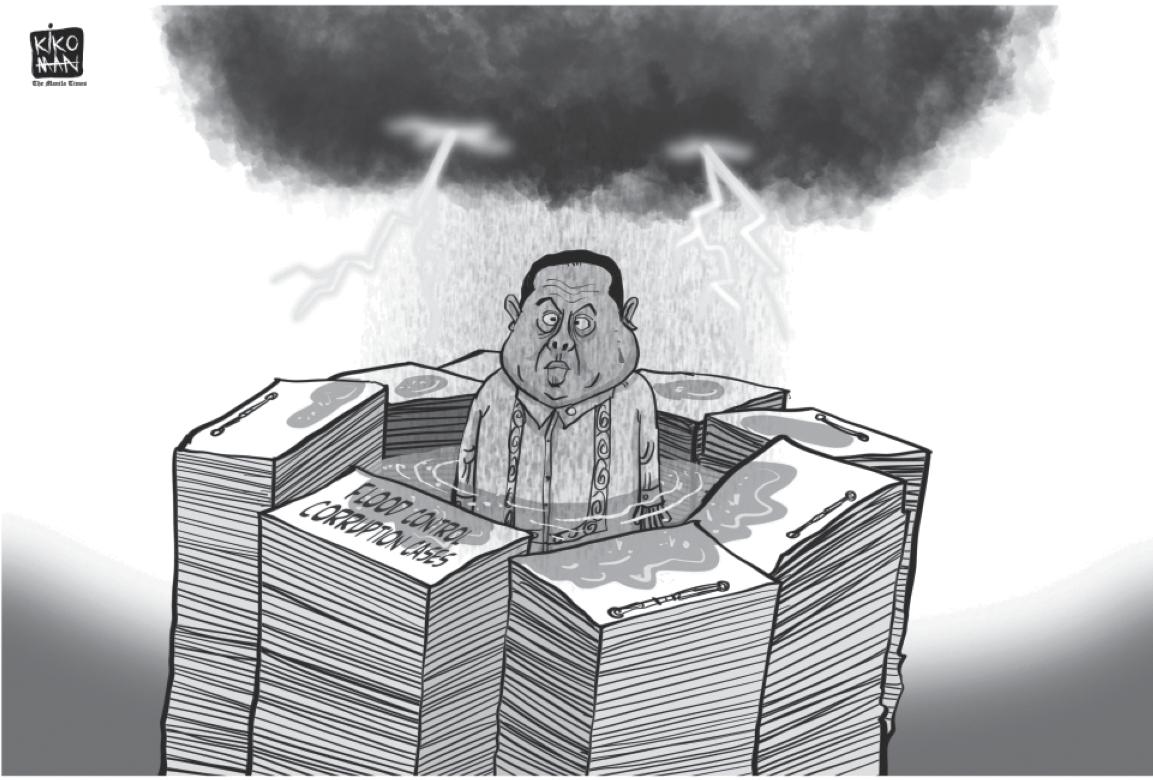
Former public works chief Bonoan may turn state witness in flood-control cases
The Ombudsman has asked the Sandiganbayan to remove Manuel Bonoan as an accused so he can testify for prosecutors, anti-graft court has not yet approved the request.
by AJPress
has postponed proceedings in criminal cases against former Public Works and Highways Secretary Manuel Bonoan while it considers requests from state prosecutors to remove
Three-day INC rally puts Marcoleta case under national scrutiny
Mass demonstrations disrupted Metro Manila and intensified debate over P75 million in disputed contributions, but the senator’s acknowledgment that he accepted campaign support does not by itself establish plunder.
by AJPress
MANILA — The Iglesia ni Cristo ended a three-day demonstration Thursday after mobilizing thousands of supporters behind Sen. Rodante Marcoleta, drawing national attention to an unresolved Ombudsman investigation involving P75 million in alleged campaign contributions.
Justice Department prioritizes alleged birth-tourism fraud after citizenship ruling
Directive targets suspected visa and financial crimes but does not alter citizenship rights recognized by the Supreme Court
by AJPress
him as an accused and use his testimony in cases involving alleged irregularities in flood-control projects.
As of July 1, Bonoan had not formally become a state witness. He remains charged unless the anti-graft court approves the
Philippines enters World Bank’s upper-middle-income ranks
GNI per capita reaches $4,850, marking an economic milestone that leaves questions about jobs, prices and household security
The gatherings began near the People Power Monument along EDSA on June 30 and concluded at Liwasang Bonifacio in Manila on July 2. The protest caused significant traffic disruption, prompted police and transportation deployments and forced local authorities to balance the right to peaceful assembly against its effects on by
u PAGE 5
MANILA — The Philippines has moved into the World Bank’s upper-middle-income category after its gross national income per capita rose above the institution’s latest threshold, advancing from its previous lower-middle-income classification. The World Bank classification, released July 1, applies from July 2026 through June 2027 and is based on 2025 income data. Philippine GNI per capita reached
$4,850, exceeding the $4,636 minimum for upper-middle-income economies.
Under the new thresholds, lower-middle-income economies have GNI per capita from $1,176 to $4,635. Upper-middle-income economies range from $4,636 to $14,375, while those above $14,375 are classified as high income.
The Philippines joined Jordan, the Federated States of Micronesia, Sri Lanka and Vietnam in
America at 250 must renew its promise
The nation’s anniversary should be more than a celebration of American achievement. It should also measure how faithfully the country has kept the principles it declared in 1776.
by AJPress
On July 4, the United States marks 250 years since the Second Continental Congress adopted the Declaration of Independence. Fireworks, concerts, flags and ceremonies will honor a nation whose institutions, industries, universities, military and culture have profoundly influenced the world.
The anniversary, however, should invite more than national pride. It should prompt an honest examination of the country America became and the work still required to bring its conduct closer to its ideals.
The Declaration advanced a revolutionary proposition: People possess unalienable rights, and government derives its legitimate authority from the consent of the governed. Yet the nation formed around those principles did not initially extend them to everyone. Slavery remained entrenched. Indigenous peoples were displaced and dispossessed. Women had no vote. Citizenship and political participation were restricted by race, sex, property ownership and legal status. America did not begin as a finished democracy. Its enduring achievement is that its founding ideals established a standard by which the nation could be judged and gave excluded people a language with which to claim their place within it. The abolition of slavery, constitutional guarantees of citizenship and equal protection,
MANILA — The Sandiganbayan
AJPress
Former public works chief Bonoan may turn...
PAGE 1
prosecution’s motions.
The Office of the Ombudsman filed motions signed June 29 asking the Sandiganbayan’s Second and Fifth divisions to amend the criminal informations by excluding Bonoan. Both divisions directed the parties to submit comments before ruling on the requests.
The Second Division postponed a July 1 pretrial conference in a graft case until July 14. The Fifth Division moved proceedings in the related plunder case to July 28.
Bonoan has not entered a plea in the cases.
Ombudsman Jesus Crispin
Remulla announced June 29 that prosecutors had entered into a cooperation agreement with the former Cabinet official. Remulla said Bonoan had offered to provide information about how the alleged transactions operated and to identify officials and private individuals who may have participated.
The agreement does not by itself remove Bonoan from the cases. It is also not a confession, guilty plea or judicial finding that the allegations against him or the other defendants are true.
Bonoan is charged with Sen.
Jinggoy Estrada and former Department of Public Works and Highways officials Denryl Caesar Cortuna, Manuel Bulusan and Arturo Gonzales Jr. in a plunder case involving more than P573 million in alleged unlawful payments. They also face related graft charges. Prosecutors allege that funds allocated to selected infrastructure projects under the 2025 national budget were tied to predetermined commissions. They accuse Estrada of receiving more than P573 million through the alleged arrangement.
Estrada has denied receiving kickbacks and has challenged the cases against him. The three former public works officials have entered not-guilty pleas. No court has determined that the alleged arrangement occurred as prosecutors describe it. Bonoan’s cooperation agreement does not establish the guilt of any defendant.
The Sandiganbayan must decide whether Bonoan may be removed from the criminal informations and permitted to testify for the government.
Under the Rules of Criminal Procedure, a court considering such a request must examine the prosecution’s evidence and the
proposed witness’s sworn statement. Prosecutors must establish, among other requirements, that the testimony is necessary, can be substantially corroborated and comes from a person who does not appear to be the most guilty.
The final decision rests with the court, not the Ombudsman. If the Sandiganbayan grants the request, Bonoan’s discharge would generally operate as an acquittal and prevent another prosecution for the same offense. That protection could be lost if he refuses or fails to testify in accordance with the sworn statement supporting his discharge.
If the court denies the request, Bonoan would remain an accused.
Bonoan remains confined at the Philippine National Police General Hospital in Camp Crame under a hospital-detention arrangement approved on medical grounds. Prosecutors have cited his age and health in explaining the need to preserve his testimony.
The Sandiganbayan’s rulings will determine whether Bonoan remains among the defendants and whether prosecutors may proceed with their plan to use him as a witness. n
Philippines enters World Bank’s...
moving up one income category.
Togo advanced from low-income to lower-middle-income status.
The World Bank said the Philippine reclassification reflected broad-based expansion rather than a surge in a single sector.
Gross domestic product grew by an average of 5.8% annually from 2021 through 2025, with gains across major industries.
Economic Planning Secretary Arsenio Balisacan said the milestone showed the economy’s resilience and acknowledged the contribution of overseas Filipino workers to national income.
Balisacan said the government’s longer-term objective is to create more productive and better-paying jobs at home so working abroad becomes a choice rather than an economic necessity.
The World Bank calculates GNI per capita through its Atlas method, which converts na-
tional income into U.S. dollars while smoothing short-term exchange-rate swings. The measure includes income earned by a country’s residents, including net income from abroad.
The $4,850 figure is a national statistical average, not the typical salary of a Filipino worker. The reclassification does not mean most Filipinos have entered the middle class, nor does it make the Philippines a high-income or developed economy.
The change could affect access to concessional loans and development assistance because some institutions use income classifications in setting eligibility. Any reduction would depend on the rules of individual lenders and programs.
The designation may also shape how investors and international institutions compare the Philippines with peer economies, although it does not automatically change
the country’s credit ratings or borrowing costs.
The milestone comes amid weaker conditions in 2026. The economy grew 2.8% in the first quarter, while inflation reached 6.8% in May. The government has lowered its full-year growth forecast to 3.5% to 4.5%.
Economic vulnerability also remains widespread. A World Bank report in June said poverty fell to 15.5% in 2023 from 23.5% in 2015. Nearly 28% of Filipinos, however, remained vulnerable to falling into poverty, while the secure middle class accounted for about one-quarter of the population.
The move establishes a higher benchmark for the Philippines. Its significance will depend on whether rising national income translates into stable jobs, higher productivity and broader gains for poor and vulnerable households. n
U.S. Supreme Court ends...
PAGE 1
justices strengthened presidential authority within the executive branch. In others, they drew constitutional and statutory limits on executive action.
One of the term’s most closely watched decisions involved President Donald Trump’s Executive Order 14160, which sought to deny automatic U.S. citizenship to certain children born in the United States to parents who were unlawfully or temporarily present in the country.
In Trump v. Barbara, the Court ruled that the order could not take effect. Six justices voted to block it. Five concluded that the children covered by the order are citizens at birth under the Citizenship Clause of the 14th Amendment. Justice Brett Kavanaugh agreed that the order was unlawful, but based his vote on federal citizenship statutes enacted by Congress rather than on the constitutional question.
The split produced an important distinction: a 6-3 judgment against the executive order, but a 5-4 division on the constitutional reasoning. The result preserved the long-standing rule associated with United States v. Wong Kim Ark, the 1898 case involving the U.S.-born son of Chinese immigrants that has long anchored birthright-citizenship law.
The ruling carried significance beyond immigration. It underscored that executive orders cannot rewrite constitutional guarantees or override citizenship laws passed by Congress.
The Court also addressed presidential power directly in Trump v. Slaughter, a case involving Trump’s removal of Federal Trade Commissioner Rebecca Slaughter. In a 6-3 decision, the Court held that statutory lim-
its protecting FTC commissioners from removal were unconstitutional, expanding presidential control over independent regulatory agencies.
The ruling continued the Court’s recent focus on the separation of powers and the structure of the executive branch. It strengthened the president’s authority over officials who exercise executive power, while leaving future disputes to determine how similar principles apply to other institutions created by Congress.
Together, the birthright-citizenship and removal-power rulings showed two sides of the Court’s approach. The justices recognized broader presidential control within the executive branch, but also made clear that executive power does not extend to overriding the Constitution or federal statutes.
In election law, the Court struck down federal limits on coordinated spending between political parties and candidates.
In National Republican Senatorial Committee v. Federal Election Commission, the majority held that the Federal Election Campaign Act’s limits on political-party coordinated expenditures violated the First Amendment.
The ruling allows political parties and candidates greater freedom to coordinate campaign expenditures. Supporters of the challenge argued that the limits restricted core political expression. Defenders of the law said the rules helped prevent circumvention of contribution limits.
The Court sided with the challengers, reshaping a key part of federal campaign-finance law.
On LGBTQ issues, the Court upheld laws in West Virginia and
Idaho restricting transgender girls and women from competing on school athletic teams designated for females. The ruling addressed school athletics and did not resolve every legal question involving gender identity, transgender rights or LGBTQ protections.
The decision leaves states with greater authority to regulate eligibility for school sports. It does not require states with different policies to adopt the same restrictions, and future litigation may address related questions in education, health care, employment or other areas of civil-rights law.
The term’s decisions are likely to reverberate across government and public life. Federal agencies will adjust to the Court’s rulings on presidential supervision. Election officials, political parties and campaigns will operate under new campaign-finance rules. Schools and state officials will interpret the ruling on athletic participation. Immigration lawyers and families will rely on the Court’s reaffirmation of birthright citizenship. The 2025–2026 term ultimately underscored the Supreme Court’s central role in defining the boundaries of American law. The justices did not simply settle isolated disputes. They clarified who may claim citizenship at birth, how far a president may go, how campaigns may spend money and how states may regulate school sports. Those rulings will now move from the courtroom into agencies, schools, campaigns, state legislatures and lower courts, where their practical meaning will be tested long after the term has ended. (AJPress)
Student loan overhaul begins as SAVE...
PAGE 1
tance Plan, or RAP. Payments range from 1% to 10% of adjusted gross income and are reduced by $50 for each dependent. The minimum payment is $10.
Borrowers who make their full payment on time will not have unpaid interest added to the balance. When a payment reduces principal by less than $50, the government will contribute enough to bring that month’s principal reduction to as much as $50. Any balance remaining after 360 monthly, on-time payments may be discharged.
The Tiered Standard Plan is not based on income. It provides fixed repayment periods of 10, 15, 20 or 25 years, depending on
the amount owed. A longer term can reduce the monthly bill but generally increases the interest paid over time. Other plans may remain available depending on loan type and eligibility.
Former SAVE borrowers should not assume their bills will change by the same amount. Payments depend on income, dependents, loan balance and the selected plan. Borrowers who qualified for a zero-dollar or very low SAVE payment may face an increase.
Under the new limits, graduate students may borrow $20,500 annually and $100,000 in total. Students in qualifying professional programs may borrow $50,000 annually and $200,000
overall. New Grad PLUS loans are eliminated.
Parent PLUS borrowing is capped at $20,000 annually and $65,000 overall for each dependent student. A $257,500 lifetime federal limit also generally applies to covered student borrowers.
A temporary exception may apply to students enrolled in the same program by June 30 who had already received a Direct Loan for that program before July 1.
Borrowers should read their notices, use the federal repayment calculator to compare available options and act before the deadline stated in their notice. (AJPress)
Justice Department prioritizes alleged birth...
PAGE 1
The directive does not change the citizenship status of children covered by the Supreme Court’s ruling. It also does not make pregnancy, childbirth or lawful travel for medical treatment a crime. Any prosecution would require evidence establishing a federal offense.
The State Department says travel undertaken primarily to give birth in the United States so a child may obtain citizenship is not a permissible basis for a visitor visa. Separate rules allow travel for legitimate medical treatment, subject to visa requirements and proof that related expenses can be paid.
The directive followed the Court’s decision in Trump v. Barbara, which blocked Executive Order 14160. Trump signed the order in January 2025, directing federal agencies not to recognize citizenship for certain U.S.born children whose mothers were unlawfully present or held temporary status and whose fathers were neither U.S. citizens nor lawful permanent residents.
The justices affirmed the lower court’s injunction by a 6-3 judgment but divided over the legal basis. Chief Justice John Roberts, joined by Justices Sonia Sotomayor, Elena Kagan, Amy Coney Barrett and Ketanji Brown Jackson, held that the affected
children are citizens at birth under the Fourteenth Amendment. Justice Brett Kavanaugh supplied the sixth vote against the order, concluding that it conflicted with the federal citizenship statute while disagreeing with the majority’s constitutional analysis. Justices Clarence Thomas, Samuel Alito and Neil Gorsuch dissented.
The majority relied in part on United States v. Wong Kim Ark, the Court’s 1898 birthright-citizenship precedent. The Justice Department policy leaves that ruling intact while shifting enforcement toward suspected fraud involving visas, travel and birth-tourism operations. n
New California laws change food labels...
PAGE 1
cate quality, while “USE by” will identify a date connected to food safety. The law also generally prohibits consumer-facing “sell by” labels, although stores may continue using coded inventory information.
The measure does not require every product to carry a date or force retailers to remove older inventory. Infant formula, eggs, pasteurized in-shell eggs, beer and other malt beverages are excluded.
Senate Bill 68 requires certain large restaurant chains to provide written information about major allergens in menu items.
The requirement applies to chains with at least 20 locations offering substantially similar menus. Covered allergens include milk, eggs, fish, shellfish, tree nuts, peanuts, wheat, soybeans and sesame.
Assembly Bill 3216 required school districts, county offices of education and charter schools to adopt policies limiting or prohibiting smartphone use on campus or during school supervision.
The law does not impose a single statewide ban. Local agencies may set their own storage and enforcement rules, with exceptions for emergencies, autho-
rized instruction, medical needs and individualized education programs.
Senate Bill 79 changes development rules near qualifying rail stations and high-frequency transit stops. In covered areas, certain housing projects may be permitted at greater heights or densities than local zoning previously allowed. The law preserves some local authority and includes requirements involving affordable housing, tenant displacement, demolition, labor standards and fire safety.
Local governments may adopt qualifying alternative transit-oriented development plans, subject to state review.
Driverless vehicles are now subject to a formal enforcement and emergency-response system. Under Assembly Bill 1777 and Department of Motor Vehicles regulations, an officer who observes an alleged violation while an autonomous driving system is engaged may issue a notice of autonomous vehicle noncompliance to the manufacturer.
The notice is not a conventional ticket issued to a human driver and does not establish that a vehicle is unsafe. Companies must
maintain emergency communication systems and respond to geofencing instructions intended to keep vehicles away from emergency areas. Senate Bill 576 prohibits commercial-supported streaming services from transmitting advertisements louder than accompanying programming. Services without commercial advertising are excluded, and the law does not create a private right to sue.
Assembly Bill 1084 streamlines petitions seeking a name change to conform to a person’s gender identity. Adult petitions generally must be granted without a hearing within six weeks, subject to statutory exceptions. Different notice procedures apply to minors when all living parents do not sign. Several local minimum wages also rose July 1. The City of Los Angeles rate increased to $18.42 an hour, while
work within California. (AJPress)
West PH Sea: DND slams China over arbitral ruling response
by Zacarian Sarao Inquirer.net
MANILA
— The Department of National Defense (DND) on Sunday slammed the Chinese Embassy in Manila over its response to the Department of Foreign Affairs’ (DFA) reaffirmation of the 2016 Arbitral Award, saying the embassy’s statement “offers a window into the true intentions of the Chinese Communist Party in dealing with our country.”
The DND issued the statement after the Chinese Embassy on June 23 rejected the DFA’s reaffirmation of the arbitral ruling, describing the award as “political manipulation disguised in legal garb” and “illegal, null and void.”
“The Chinese Embassy statement replying to our [DFA] is a window into the true intentions of the Chinese Communist Party in dealing with our Country,” said Defense Sec. Gilberto Teodoro Jr. in a statement.
“It clearly shows their insincerity and duplicity which are
amply personified by their Embassy officials. We condemn the arrogant display of deceitful indignation by them,” the defense chief said.
“Hindi kapanipaniwala ang mga sinasabi kaya idinadaan sa alboroto (their claims are not credible, so they resort to bluster),” he added.
The Philippines and China have been in a maritime dispute as the latter—through its so-called 10-dash line—claims ownership of much of the South China Sea, including the West Philippine Sea, or the waters within the Philippines’ 370-kilometer exclusive economic zone (EEZ).
The 2016 Arbitral Award, which stemmed from a case filed by Manila in 2013, invalidated Beijing’s sweeping claims, but the Asian giant does not recognize the ruling.
(For comprehensive coverage, in-depth analysis, visit our special page for West Philippine Sea updates. Stay informed with articles, videos, and expert opinions.)
VP defense team to present ‘surprise
by Bella Cariaso Philstar.com
MANILA — For security reasons, the defense team of impeached Vice President Sara Duterte has opted to keep secret the identities of some of its 90 witnesses, but would be ready to present them as “surprise witnesses” if necessary during her trial.
This was according to defense spokesman Michael Poa in an interview with Bilyonaryo News Channel.
Poa also rejected insinuations that Duterte’s legal team was just copying the witnesses of the House of Representatives prosecution panel.
“I took exception to that because we’re not copying their witnesses. We submitted a pre-trial brief at the same time. So it’s not as if we copied it. But most are similar to their witnesses,” Poa said.
“We did not include certain witnesses, especially their names, for security reasons. So maybe that’s where our witnesses differ. But I cannot share their names for security purposes. And that’s part and parcel of the guidelines we
gave at the pre-trial conference. That we cannot name the witnesses for as long as we state the purpose, what their purpose is,” Poa added.
The House prosecution has said it would present at least 57 witnesses during the impeachment trial. The Senate impeachment court has approved a 92-day trial for Duterte.
“We just say five witnesses from, for example, the Office of the President, or five witnesses from the Department of Education, for example, to prove certain allegations, or to disprove certain allegations of the prosecution. That’s what we’re doing. Now, that’s allowed,” he explained.
The approved trial period –contained in the 14-page Pre-Trial Order signed by Senate President Sherwin Gatchalian on June 29 – is much shorter than the previous estimate of seven to eight months.
Based on the order, 62 trial dates have been set for House prosecutors and 30 for the Vice President’s defense team.
“On the part of the defense, we’ve been preparing for this for over a year now. In fact, we had
Vice President Sara Duterte. STAR /
our first impeachment complaint last year and we were ready to go to trial then, and we’re ready to go to trial now. But the first to present their evidence would be the prosecution. So, for us, we’re hoping that the public would be patient enough to also wait for the evidence of the defense,” Poa explained. He added the defense team may decide not to present all 90 witnesses. “It will still depend on the case that the prosecution will make. It will depend on how the prosecution presents their evidence and we will have to react accordingly,” he pointed out.
you heard about
Poa also denied that the points raised by the defense team were just technicalities.
“Number one, the issues we are raising are constitutional by nature. It goes, it delves into due process. For example... a lot of the alleged or purported evidence that they are bringing up to the impeachment court are things that were not even attached to the impeachment complaints filed,” he said.
“And for the defense, depending on what they present, that’s the time we actually determine what we need to bring out, and what we don’t need,” Poa said. n
C l a r i t a , a n d
A n t e l o p e V a l l e y s .
we’re Hiring!
B i l i n g u a l p r o f e s s i o n a l s w h o a r e p a s s i o n a t e a b o u t e q u i t y , c o m m u n i t y
s e r v i c e , a n d s u p p o r t i n g i n d i v i d u a l s w i t h d e v e l o p m e n t a l d i s a b i l i t i e s a n d
t h e i r f a m i l i e s
I d e a l c a n d i d a t e s :
A r e f l u e n t i n E n g l i s h a n d T a g a l o g
H a v e e x p e r i e n c e w o r k i n g w i t h d i v e r s e c o m m u n i t i e s , s o c i a l s e r v i c e s ,
h e a l t h c a r e , e d u c a t i o n , o r c a s e m a n a g e m e n t
A r e s t r o n g c o m m u n i c a t o r s , a d v o c a t e s , a n d p r o b l e m ‐ s o l v e r s
V a l u e c u l t u r a l h u m i l i t y , c o l l a b o r a t i o n , a n d f a m i l y ‐ c e n t e r e d s e r v i c e
W a n t m e a n i n g f u l w o r k t h a t m a k e s a l o n g ‐ t e r m d i f f e r e n c e
our filipino support group
L o o k i n g f o r s u p p o r t t h a t u n d e r s t a n d s y o u r f a m i l y ’ s n e e d s ? N L A C R C
o f f e r s F i l i p i n o c o m m u n i t y
KJ Rosales
White Ribbon March presses anticorruption and political reform demands
Faith and civil society groups call for stronger investigations, closer scrutiny of public spending and meaningful restrictions on political dynasties investigations and prosecutions involving alleged corruption. Any proceedings would remain subject to evidentiary standards, due process and the presumption of innocence.
by AJPress
QUEZON CITY — Thousands
joined the White Ribbon March on Sunday, June 28, renewing a faithled campaign against corruption and calling for government accountability and political reform.
Participants gathered for a Mass at the EDSA Shrine before marching to the People Power Monument. The Quezon City Police District estimated attendance at about 3,500, while the Philippine National Police said the event was generally peaceful, with no major disturbance reported.
The march drew participants from Catholic, Protestant, evangelical and Muslim communities, along with labor, business and civil society groups. Organizers described the event as nonpartisan.
The Catholic Bishops’ Conference of the Philippines’ Episcopal Commission on Interreligious Dialogue said elected officials could attend but would not be given speaking roles. CBCP President and Lipa Archbishop Gilbert Garcera encouraged participation, describing the march as an appeal for truth, justice, accountability and integrity in public life.
Organizers presented the gath-
ering as a continuation of the Trillion Peso March protests, which focused attention on alleged irregularities involving flood-control projects. A principal demand was the enactment and strict enforcement of an anti-political dynasty law.
Article II, Section 26 of the 1987 Constitution directs the state to guarantee equal access to opportunities for public service and prohibit political dynasties “as may be defined by law.”
The House of Representatives approved House Bill 8389, or the proposed Anti-Political Dynasty Act, on third and final reading on June 3. Debate has continued over which family relationships, elective positions and forms of simultaneous or successive officeholding should be covered.
Participants urged lawmakers to adopt stronger restrictions on the concentration of elective offices among members of the same families. Critics of the House-approved bill have argued that its provisions are too limited, while supporters describe it as an initial step toward carrying out the Constitution’s directive.
Marchers also called on the Office of the Ombudsman and the Department of Justice to expedite
The Ombudsman may investigate and prosecute misconduct involving public officials. The Justice Department, through its prosecutors and investigative agencies, may investigate suspected crimes and determine whether evidence supports charges.
Participants urged the Commission on Audit to intensify its examination of government accounts, identify questionable expenditures and refer potential violations to the appropriate authorities. COA may issue audit findings and notices of disallowance, while recovery of funds may require further administrative or judicial proceedings.
Some participating organizations raised additional political demands, but those positions were not necessarily shared by every participant or included in the organizers’ common platform.
Religious leaders said misuse of public money deprives communities of resources intended for education, health care, infrastructure and other services. n
New U.S. envoy begins Manila posting with security and trade agenda
Lee Lipton takes up his assignment as the Philippines and the United States mark 80 years of diplomatic relations and 75 years of their defense treaty
by AJPress
MANILA — Lee Lipton formally began his work as United States ambassador to the Philippines this week, opening his tenure with discussions on defense, maritime affairs, investment and regional security during meetings with President Ferdinand Marcos Jr. and Foreign Affairs Secretary Ma. Theresa Lazaro.
Lipton presented his credentials to Marcos at Malacañang on June 30, completing the diplomatic process authorizing him to represent Washington in Manila. He had paid a courtesy call on Lazaro at the Department of Foreign Affairs a day earlier.
According to the Presidential Communications Office, Marcos and Lipton discussed economic and commercial cooperation, defense and security, maritime affairs, regional developments and the Philippines’ chairmanship of the Association of Southeast Asian Nations.
At the DFA, Lazaro outlined Philippine priorities for the new ambassador’s tenure, including defense cooperation, economic security, trade, investment, regional affairs and stronger people-to-people ties.
The officials also discussed the Luzon Economic Corridor, an infrastructure and investment initiative launched by the Philippines, the United States and Japan in 2024. The program seeks to improve transportation, energy systems, digital connectivity and industrial supply chains linking Subic Bay, Clark, Manila and Batangas.
Eight additional partner governments joined the initiative in May, expanding efforts to attract private investment in transport, energy, advanced manufacturing and other sectors. An investor forum is scheduled in Manila in September.
Lipton also affirmed U.S. support for the Philippines’ ASEAN chairmanship. Manila is leading the regional organization amid
continuing concerns over maritime security, trade pressures and geopolitical competition in the Indo-Pacific.
His priorities broadly reflect those he presented during his U.S. Senate confirmation process. In March, Lipton said he intended to strengthen security cooperation, improve supply-chain resilience, advance the Luzon Economic Corridor and promote fair and transparent trade.
The Senate confirmed Lipton on May 18. He succeeds MaryKay Carlson, a career diplomat who served as ambassador beginning in 2022.
Before his Philippine assignment, Lipton served at the U.S. Mission to the Organization of American States and previously worked in the fashion and hospitality industries.
Lipton begins his posting as the two countries mark 80 years of diplomatic relations and 75 years since the signing of their Mutual Defense Treaty. n
Philippine solar-panel imports accelerate as electricity costs remain high
Rooftop installations are expanding, but financing and upfront costs continue to limit access
by AJPress
MANILA — Solar-panel imports into the Philippines have accelerated as households and businesses look for protection from high electricity costs and volatile fuel markets.
Energy research group Ember estimated that the country imported panels representing 5,068 megawatts of generating capacity in 2025. It said Chinese exports to the Philippines exceeded 3,000 MW in March and April 2026 alone, indicating that demand remained strong.
The figures measure equipment entering the country, not operating capacity. Some panels may remain in inventory or await installation, permits and grid connection.
The expansion comes as electricity prices remain elevated. Meralco’s residential rate rose from P13.1734 per kilowatt-hour in February to P14.4833 in June, an increase of nearly 10 percent. The utility cited factors including transmission charges, tight Luzon supply, higher spot-market and fuel prices, and peso depreciation.
Three-day INC rally puts Marcoleta case...
commuters, workers, students, patients and businesses.
INC spokesperson Edwil Zabala announced the conclusion of the religious organization’s “We Are One” rally Thursday evening. Participants began dispersing shortly afterward.
The INC said the demonstrations opposed what it regarded as selective justice in the planned prosecution of Marcoleta, one of its members. Church representatives maintained that they were not seeking to block lawful proceedings but wanted the law applied fairly.
The Office of the Ombudsman has said it is preparing plunder and related charges against Marcoleta, former Quezon City representative Mike Defensor and businessmen Joseph Espiritu and Aristotle Viray.
Investigators allege that Marcoleta received P30 million from Defensor, P25 million from Espiritu and P20 million from Viray in January 2025, when he was serving in the House of Representatives and campaigning for the Senate. The alleged contributions totaled P75 million.
Marcoleta and the other respondents have denied wrongdoing. Marcoleta has described the prospective prosecution as politically motivated. The Ombudsman has rejected that characterization and said its actions are based on evidence gathered during the investigation.
The controversy intensified after critics revived remarks Marcoleta made during a television program in November 2025.
Marcoleta acknowledged that friends had contributed to his campaign. He said the donors asked that their identities remain confidential and that he consequently reported no contributions in his Statement of Contributions and Expenditures.
The remarks may be relevant to the Ombudsman’s case, but they do not constitute an admission that Marcoleta committed plunder or accepted a bribe.
The P75 million total and the identities of the three alleged contributors come from the Ombudsman investigation, not necessarily from Marcoleta’s televised acknowledgment.
Former Bayan Muna representative Teddy Casiño argued that the statement raised questions about the legal character of the money and whether it should have appeared in other financial disclosures. His comments rep-
resent a political and legal argument, not a judicial finding.
Receipt of more than P50 million does not, by itself, establish plunder. Under the Plunder Law, prosecutors must prove that a public officer accumulated at least P50 million in ill-gotten wealth through a combination or series of specified criminal acts. Those acts may include receiving unlawful commissions, gifts, kickbacks or other financial benefits connected to government transactions or obtained by reason of public office.
Prosecutors would therefore have to establish not only that Marcoleta received the money but also that it constituted ill-gotten wealth acquired through conduct covered by the statute.
The alleged private source of the funds does not automatically place them beyond anti-corruption laws. At the same time, a private contribution to a political candidate is not inherently criminal. The purpose, handling, disclosure and use of the money remain disputed.
The Commission on Elections separately examined Marcoleta’s campaign filing, which reported no contributions.
In March, Comelec ended its fact-finding inquiry against him, saying the evidence was insufficient to establish an election offense by the candidate. It recommended further proceedings concerning the alleged donors’ possible failure to submit required contribution reports.
The Comelec action did not determine that Marcoleta never received the money, nor did it resolve whether plunder, bribery or another anti-graft offense occurred. Comelec and the Ombudsman apply different laws and standards.
The Sandiganbayan earlier issued a precautionary hold-departure order against the four respondents while the investigation proceeds. The order restricts foreign travel and is not a finding of guilt.
As of Thursday, the Ombudsman said the planned filing remained on track. No completed court filing or arrest warrant against Marcoleta had been publicly confirmed by press time.
The first rally began before dawn June 30 without a Quezon City permit. The city later authorized the second day under conditions intended to keep EDSA
open and participants within designated areas.
Quezon City declined to authorize another day near the monument, citing public complaints, traffic disruption and alleged breaches of permit conditions. The INC moved the final gathering to Liwasang Bonifacio, a designated freedom park in Manila.
Malacañang said the government respected peaceful assembly but maintained that demonstrations should not unduly interfere with the rights and safety of others. Palace Press Officer Claire Castro said rallies could neither convict nor clear anyone and that any criminal liability must be determined by the Ombudsman and the courts.
The demonstrations placed the Marcoleta investigation at the center of national attention but did not resolve the legal questions surrounding the disputed funds. Those questions now return to the Ombudsman and, if charges are filed, the Sandiganbayan. The allegations have not been adjudicated in court. n
Qualified customers with renewable-energy systems of up to 100 kilowatts may receive credits for excess electricity delivered to the grid. The credits are based on the utility’s blended generation cost, not the full retail rate. Financing remains a barrier. Access remains uneven because most households must still finance the full installation cost. GSIS has allocated P12.5 billion for loans of up to P500,000 at 5 percent annual interest over five years for qualified government employees.
The government targets a 35 percent renewable-energy share by 2030 and 50 percent by 2040. n
Ember estimated that Philippine rooftop solar capacity had reached about 1,300 MW by early 2026 and projected that distributed capacity could approach 3,500 MW within two years. It also estimated that a residential system’s payback period had fallen to 3.1 years, although actual savings depend on system cost, financing, roof conditions and electricity use. The Department of Energy has shortened processing times for net-metering applications. Distribution utilities and electric cooperatives must process complete applications within 10 working days.
FeAtures OPiniOn
The birthright citizenship debate continues, but Trump’s order cannot take effect
The Supreme Court did not end disagreement over citizenship policy. Five justices found the president’s restrictions unconstitutional, while a sixth concluded that they violated existing federal law.
THE Supreme Court’s ruling on birthright citizenship separates a continuing policy debate from an executive order that may not be enforced.
Americans may still debate whether citizenship by birth should remain the constitutional rule, whether a parent’s immigration status or permanent ties should matter, and how the United States should address unlawful immigration, temporary visas and travel undertaken for childbirth. The ruling does not end those discussions. It establishes what the law presently requires.
Editorial
In Trump v. Barbara, the justices considered whether Executive Order 14160 complied with the Citizenship Clause of the 14th Amendment and the federal citizenship statute.
President Donald Trump issued the order on Jan. 20, 2025. It directed federal agencies not to recognize citizenship when a child’s mother was unlawfully present and the father was neither a U.S. citizen nor a lawful permanent resident, or when the mother was lawfully but temporarily present and the father was neither a citizen nor a permanent resident.
The administration argued that birth within the United States and subjection to its laws were not enough. In its interpretation, the phrase “subject to
babe’s eye view
Babe Romualdez
OMBUDSMAN Crispin “Boy-
ing” Remulla was in Washington, D.C. for important meetings with the US Department of Justice. Significantly, his team requested the Philippine embassy to arrange a dialogue with leaders and representatives of Filipino American organizations, community groups and professional associations to discuss issues that involve accountability and governance.
One major topic that dominated the conversations was the massive corruption scandal involving flood control projects that Filipino Americans have been closely following. Everyone – not only those present during the special dialogue with Ombudsman Remulla – from Washington to Manila and countries across the globe, are all asking: why is the biggest fish –who should be held accountable – still not being charged?
This issue cuts deep because Fil-Ams are the biggest contributors to remittances and charitable projects to the Philippines. To many of them, this is about protecting homes, businesses, communities and the very lives of Filipinos from the increasingly destructive and fatal consequences
Demand and supply
Boo Chanco
MANY of us have been wondering why our country is now an economic basket case in a region of tiger economies. I came across a paper by Dr. Jesus Felipe and his team of economists at La Salle that analyzed what went wrong and what we should do next.
The paper is on economic transformation and growth in the Philippines, focusing on how our politics and rent-seeking economic elites doomed us to where we are now. It is a highly technical paper but it contains good insights that should be shared with a wider audience.
Most (but not all) of the words in this column are taken from the La Salle study with some editing to convey a story that flows, fits my space limitations and considers the attention span of a mass audience.
Dr. Felipe and company started by identifying the dramatis perso-
the jurisdiction” required complete political jurisdiction, sufficient allegiance and a more permanent connection to the country.
The government maintained that temporary visitors retained their principal attachment elsewhere and that people unlawfully present lacked the U.S. domicile it considered necessary. It also urged a narrower reading of the Supreme Court’s 1898 decision in United States v. Wong Kim Ark. Wong was born in San Francisco to Chinese immigrant parents who lived permanently in the United States but were barred from naturalization. The administration argued that the case protected children of permanently domiciled immigrants but did not settle the status of children born to temporary visitors or people unlawfully present.
Chief Justice John Roberts, joined by Justices Sonia Sotomayor, Elena Kagan, Amy Coney Barrett and Ketanji Brown Jackson, rejected that interpretation. The five-justice majority held that the children covered by the order are citizens under the 14th Amend-
National heroes or national villains?
of floods due to climate change/ natural disasters, aggravated by insufficient protection due to substandard and inexistent or “ghost” flood control projects. Every year, countless Filipinos endure the same cycle – heavy rains, clogged canals and creeks, rising floodwaters, damaged homes, paralyzed business activities and tragic loss of life. Entire communities are displaced. Children are traumatized. Families lose everything.
That is why allegations that trillions of pesos allocated for flood mitigation may have been lost to corruption have triggered nationwide anger, with social media also sparking online rage because of posts that depict the plight of ordinary Filipinos wading in knee deep and dirty floodwaters, their homes submerged – in contrast with the Facebook photos and TikTok videos of the wives and “nepo babies” of politicians and contractors accused of corruption flying in private jets, wearing expensive jewelry and designer outfits, flaunting their lavish lifestyles and obscene wealth. Public anger is not simply about stolen money –it is about stolen protection. Funds that were intended to save lives may have instead been siphoned into the pockets of a few.
Ombudsman Remulla gave updates about the high-profile investigations that their office is
conducting, knowing fully well that the issue involves “serious concerns on public accountability, transparency and the protection of public resources.”
He also had confidential meetings with officials of the US Department of Justice and the World Bank whose Integrity Vice Presidency (INT) unit conducts investigations on alleged fraud, corruption, collusion and coercion to ensure that the bank’s financial resources are used to alleviate poverty and not used for illicit activities.
The World Bank also partnered with the United Nations Office on Drugs and Crime (UNODC) to establish the Stolen Asset Recovery Initiative (StAR) that seeks to end safe havens for corrupt funds and help developing nations recover stolen public assets to help fight corruption and end impunity. The UNODC estimates that “hundreds of billions of dollars are paid in bribes and hundreds of billions ‘laundered’ around the world each year.”
According to the Office of the Ombudsman, 209 complaints involving flood control projects are undergoing fact-finding investigations in the first six months of this year alone, with four cases already filed before the courts – more than double the 124 complaints last year that underwent fact-finding u PAGE 8
Magicians and workhorses
nae in our development drama. First off are the rentiers or rent seekers. These are firms that live off regulatory rents provided by the government. They mostly export natural resources to global markets. These firms only invest heavily in machinery that extracts and packages resources already provided by nature.
Then there are the magicians. These are the firms that compete in the global market through businesses operating in a competitive environment. They produce complex products worthy of demand from other countries.
Developing countries usually have firms that export garments, agricultural products, tourism and processed items.
Then come the powerbrokers or firms that live off regulatory rents provided by the government but only sell to the domestic market. Most of these firms are regulated by the government and entry is limited.
Companies that require franchises, port operations and gambling are good examples. Powerbrokers place a premium on
ment.
The majority interpreted jurisdiction as the United States’ authority to govern people within its territory. Foreign nationals, including temporary visitors and people unlawfully present, remain subject to that authority. Their children, when born in the United States, are therefore born under U.S. jurisdiction, the majority concluded.
I have been searching for some topic that would be good news for the Philippines instead of the current spate of bad news. It is enough to make one feel that this nation’s future can only be viewed as full of pessimism. Our government institutions are in disarray, especially with the current struggle in the Senate. An impeachment trial for the Vice President is already bogged down by accusations from both sides, the prosecution and the defense. Our economic news is highlighted with inflation figures that are seemingly on the rise and the peso-dollar rate at an all-time low. The looming 2028 election should provide some hope for the future. However, at this point, it does not look like this is going to happen. Finally, there are the endless corruption scandals where it seems we know who is at fault but most of them are still freely walking around. As if all these were not enough, I just heard the announcement that criminal cases might be filed against the officials of the Ateneo de Manila University under the Anti-Hazing Law for the deaths of two basketball players.
I have been looking for some good news that will promise employment and economic growth for our country. Under President Noynoy Aquino, who was president from 2010-2016, the Philippines was being written about by economists all over the world as an economic “rising tiger.” Economists and geopolitical observers around the world had stopped calling us the “sick man of Asia.”
I thought that we were on the verge of the golden age of the Philippine economy. Then in 2016, a new president came in and we were back to being again the “sick man of Asia.”
However, a few weeks ago, I read two interrelated stories that could be the impetus that the Philippines needs to become again the rising tiger. These are the Luzon Economic Corridor and Pax Silica, a multinational initiative that aims to establish trusted supply chains for semiconductors, artificial intelligence, electronics manufacturing and critical minerals among allied nations.
In April 2026, the Philippines formally became a member of the Pax Silica Coalition. The name Pax Silica comes from the Latin “Pax” meaning peace or stability and “Silica” referring to silicon, the primary material used in semiconductor chips. This coa-
lition seeks to create a stable international network capable of producing and transporting advance technologies without relying heavily on a single country. Although the coalition did not specifically name that country, it is obvious to most geopolitical observers that the country being referred to is China. The good thing about this initiative for the Philippines is that the member-countries will encourage governments and private companies to invest in facilities that can manufacture, process and transport technologies essential for the future global economy.
The Philippines was welcomed to join Pax Silica because of its strategic geographical location on the South China Sea. Our other assets are that we already have an electronic manufacturing sector, a skilled English speaking workforce and abundant mineral resources. We have significant reserves of nickel, copper, chomite and cobalt. These are minerals essential for AI hardware, batteries and advanced electronics.
One development accompanying the Philippines’ membership in Pax Silica is the establishment of the first “AI-native industrial acceleration hub” within the Luzon Economic Corridor. This project will cover approximately 4,000 u PAGE 8
forming relationships with politicians and regulators (they lobby for political favors) to keep their licenses. One powerbroker today runs a political party.
Finally, workhorses are firms that only sell within the domestic market but operate competitively. They are largely the sources of goods and services in the market available to the public, such as food, beverages and beauty services. Workhorses mainly comprise farmers, builders, restaurant owners and some small entrepreneurs.
Powerbrokers favor barriers to entry instead of regulated competition due to the advantages they receive from the confusion of bureaucratic procedures and inconsistent enforcement.
Magicians and workhorses require better infrastructure and clarity in regulations. Magicians and rentiers also advocate for specialized infrastructure, such as special economic zones and port facilities.
Additionally, magicians and rentiers call for subsidies or lower u PAGE 7
THE impeachment case of Vice President Sara Duterte has revived yet another constitutional numbers game. But numbers and debates aside, I firmly believe that a major turning point in this political saga lies in the pretrial that concluded on June 25 and laid the cornerstones before the trial proper begins on July 6 and the votes to be cast at the end of the trial.
AT THE OUTSET, LET ME
POINT OUT THE CONSTITUTIONAL GUIDANCE: “No person shall be convicted without the concurrence of two-thirds of all the Members of the Senate.” (Article XI, Section 3[6]). In the 24-member Senate (acting as the Impeachment Court), this translates academically to the magic number of 16. On this threshold number, let me share two eminent views from my fellow Supreme Court retirees.
Retired Senior Associate Justice (SAJ) Antonio T. Carpio con-
tends that the votes required to convict are based on “all members of the Senate” who remain legally qualified to perform their sworn duties. In his view, the preventive suspension of Sen. Jinggoy Estrada removes him from the computation because, per Trillanes v. Pimentel (June 27, 2008, per J. Carpio Morales, en banc), a suspended official cannot hold public office; therefore, he cannot act as a senator-judge. The impeachment case of Vice President Sara Duterte has revived yet another constitutional numbers game. But numbers and debates aside, I firmly believe that a major turning point in this political saga lies in the pretrial that concluded on June 25 and laid the cornerstones before the trial proper begins on July 6 and the votes to be cast at the end of the trial.
AT THE OUTSET, LET ME POINT OUT THE CONSTITUTIONAL GUIDANCE: “No person shall be convicted without the concurrence of two-thirds of all the Members of the Senate.” (Article XI, Section 3[6]). In the
24-member Senate (acting as the Impeachment Court), this translates academically to the magic number of 16. On this threshold number, let me share two eminent views from my fellow Supreme Court retirees.
Retired Senior Associate Justice (SAJ) Antonio T. Carpio contends that the votes required to convict are based on “all members of the Senate” who remain legally qualified to perform their sworn duties. In his view, the preventive suspension of Sen. Jinggoy Estrada removes him from the computation because, per Trillanes v. Pimentel (June 27, 2008, per J. Carpio Morales, en banc), a suspended official cannot hold public office; therefore, he cannot act as a senator-judge. SAJ Carpio also maintains that Sen. Ronald “Bato” dela Rosa, who has been hiding and evading an arrest warrant from the International Criminal Court, cannot yet be excluded from the count because he has not been formally arrested or placed under preventive detention. u PAGE
Artemio V. PAng
The Court traced the Citizenship Clause to the common-law principle of jus soli, under which citizenship generally follows the place of birth. It recognized narrow historical exceptions, including children
DOJ reviews homicide, anti-hazing referrals in deaths of two Ateneo players
CIDG submits additional recommendation against former coach Tab Baldwin and eight others; prosecutors have not decided whether charges should be filed complete supplemental filing and identities of all those included were not immediately released.
by AJPress
MANILA — The Department of Justice is reviewing a supplemental police referral recommending homicide or reckless imprudence resulting in homicide charges against former Ateneo de Manila University men’s basketball coach Tab Baldwin and eight others over the deaths of student-athletes Rene Clert Baterbonia and Divine Adili.
The Criminal Investigation and Detection Group submitted the additional referral July 1. It followed a June 26 submission recommending complaints under the Anti-Hazing Act against Baldwin and 10 other coaches and team personnel.
The referrals are not criminal charges filed in court. The DOJ must first determine whether the evidence is complete and sufficient before deciding whether to open a preliminary investigation.
DOJ spokesperson Polo Martinez said the supplemental referral recommends homicide and/ or reckless imprudence resulting in homicide “as the evidence and applicable law may warrant.”
Baterbonia and Adili died June 8 during an off-campus Ateneo basketball activity in Dipacu-
lao, Aurora. They were reported missing during a water exercise and were later recovered from the sea.
Aurora police initially reported no indication that the athletes had been intentionally harmed.
The DOJ later directed the National Bureau of Investigation to examine the circumstances, while the CIDG opened a separate inquiry into possible hazing and criminal negligence.
The CIDG alleged that coaches and other team personnel supervised the players and proceeded with the water activity despite hazardous conditions and inadequate safeguards.
Investigators also alleged that the athletes underwent strenuous exercises and penalties while 20 players were being assessed for 17 positions on Ateneo’s final University Athletic Association of the Philippines roster. Those assertions are investigative findings that have not been tested in a preliminary investigation or in court.
The June 26 referral named Baldwin and 10 other team personnel. The CIDG’s July 1 statement said the homicide-related recommendation covered Baldwin and eight others, but the
Republic Act No. 11053 covers harmful forced physical activity imposed as a condition of admission to or continued membership in an organization. It excludes customary athletic activities serving a lawful purpose, subject to safeguards including medical clearance.
Prosecutors must determine whether the Aurora exercises were legitimate athletic preparation, whether participation affected continued team membership and whether required safety measures were followed.
Baldwin has described the deaths as an accident. He apologized to the families but did not acknowledge that the activity constituted hazing or that a crime had occurred.
Baldwin and team manager Christopher “Epok” Quimpo resigned June 15. Ateneo has said it will cooperate with investigators and conduct its own review.
The DOJ may return the referrals for further case-building or docket them for preliminary investigation before determining which alleged offenses, if any, are supported by the evidence. n
State, official or working visit? Here’s the difference
by Kurt Dela Peña Inquirer.net
MANILA — Not all overseas trips by world leaders are the same. State, official, and working visits each serve different diplomatic purposes and follow different protocols.
State visit
A state visit is the highest form of diplomatic engagement between countries. Reserved exclusively for heads of state, it is marked by the highest level of ceremony, including full military honors, the playing of both countries’ national anthems, and a state banquet.
Beyond the ceremonies, a state visit is intended to strengthen bilateral relations at the highest political level. It often includes meetings between leaders, the signing of agreements, and engagements aimed at deepening cooperation in areas such as trade, defense, investment, education, and culture.
Official visit
An official visit is typically undertaken by a head of govern-
ment or, in some cases, a cabinet-level official at the invitation of the host government. While it may include military honors—particularly for a visiting head of government—it generally does not feature the full ceremonial program or state banquet associated with a state visit. Instead, the focus is on advancing bilateral relations through meetings, policy discussions, and the signing of agreements.
For both state and official visits, the host country generally covers the official delegation’s expenses, including accommodations and transportation, although arrangements may vary depending on the host country’s protocol.
Working visit
A working visit is the least ceremonial type of diplomatic engagement. It does not require a formal invitation and may be undertaken by a high-ranking government official.
It is primarily focused on official business, such as bilateral meetings, international conferences, ministerial discussions,
or sectoral negotiations. Unlike a state or official visit, a working visit does not include military honors or a state banquet, and the visiting delegation generally shoulders its own expenses.
Marcos’ Canada visit
From July 1 to 4, President Ferdinand Marcos Jr., together with First Lady Liza Araneta Marcos, will visit Canada for an official visit at the invitation of the Canadian government.
The trip will be Marcos’ 44th international visit since assuming office on June 30, 2022. It will also mark the first official visit by a Philippine president to Canada in more than a decade.
The Canada trip follows a series of overseas engagements this year, including visits to the United Arab Emirates in January, the United States in March, Japan in May, and Russia from June 17 to 18.
On June 16, Marcos welcomed German President Frank-Walter Steinmeier to Malacañang during Steinmeier’s state visit to the Philippines from June 15 to 17. n
America at 250 must renew its promise...
PAGE 1
women’s suffrage, civil rights protections and the widening of political participation were not inevitable. They were secured through sacrifice, organizing, litigation, legislation and public courage. Each advance brought the country closer to the principles it had proclaimed, even as equality remained incomplete. At 250, the United States remains powerful, inventive and capable of extraordinary generosity. It has endured civil war, economic depression, foreign attacks, social upheaval and bitter political transitions. But endurance should not be confused with invulnerability. A constitutional system depends on more than written law. It requires respect for truth, lawful processes and limits on power; protection of dissent and a free press; equal justice; and a willingness to regard political opponents as fellow Americans rather than enemies. When those standards weaken, public trust erodes and government becomes less capable of addressing common problems. The anniversary should therefore be an occasion for national renewal. Patriotism is neither
blind approval of government nor hostility toward criticism. It is a commitment to the country strong enough to recognize achievement, confront failure and insist that public institutions meet the standards the nation claims to uphold.
Filipino Americans have a distinct place in this history. The relationship between the Philippines and the United States was shaped by colonial rule, migration, war, labor and family. Filipino farmworkers were central to the 1965 Delano grape strike and the broader struggle for agricultural labor rights. About 260,000 Filipino and Filipino American soldiers served under United States command during World War II, while many veterans and their families spent decades seeking recognition and benefits commensurate with that service.
Later generations strengthened American life as nurses, physicians, teachers, entrepreneurs, military personnel, public officials, artists, journalists and community leaders. Their experience reflects a larger truth: America has never been shaped by one ancestry, one faith or one route of arrival. It has been continually remade by people who inherited its
freedoms, fought to enlarge them or came believing those freedoms could include them.
This history should neither be romanticized nor reduced to injustice alone. Celebration without honest reflection becomes mythology; criticism that cannot recognize progress becomes cynicism. A mature national identity must be capable of holding achievement and failure together.
The United States should honor the courage that produced independence, the Constitution that organized the republic, those who defended the country and the generations that expanded the meaning of American freedom. But the strongest tribute to 1776 is not to declare the promise of equality complete. It is to preserve the principles that make further progress possible.
Two hundred fifty years after independence, America remains an unfinished undertaking. Its future will depend less on the grandeur of this year’s observances than on whether its people continue to defend lawful government, equal citizenship, honest public debate, shared responsibility and liberty for all.
That would be a worthy beginning for the next 250 years. n
Filipino history gains a public home in Las Vegas
The Filipino American Museum opens in a cultural district
by the community’s businesses and efforts to preserve its story
by AJPress
LAS VEGAS — Inside the Boulevard Mall, carved figures, woven textiles, baskets, ritual objects and household tools introduce visitors to a history that began long before the modern Philippines took shape.
The objects form the centerpiece of “Ifugao: People of the Cordilleras,” the opening exhibit at the Filipino American Museum. Drawn from the Therese Hermosisima Finnegan Collection, the presentation examines the artistry, spiritual traditions and daily life of the Indigenous people of the Cordillera region in northern Luzon.
The museum formally opened June 12, Philippine Independence Day, linking the institution to history it seeks to present.
Located at Suite 320, 3680 S. Maryland Parkway, the museum stands inside the Filipino Town Cultural District established by Clark County in 2025. Its location joins two developments in Southern Nevada’s Filipino American community: recognition of a commercial and cultural center, and the creation of an institution devoted to preserving history.
For decades, Filipino-owned restaurants, markets, offices, churches and community organizations developed across the Las Vegas Valley without an official district. Maryland Parkway gradually became a center for commerce and cultural activity.
Clark County received an application to designate the area as Filipino Town in September 2024. After public notice and local review, the district was formally established April 15, 2025.
The county resolution described it as a means of preserving and celebrating Filipino culture, commerce, food, celebrations and religious traditions. An official district sign was unveiled at the Boulevard Mall in October 2025. The museum now gives the area a permanent educational component.
Museum founder and President Rozita Villanueva Lee has spent decades working with Filipino American and Asian American organizations in Nevada. She previously served on President Barack Obama’s Advisory Commission on Asian Americans and Pacific Islanders.
The institution is intended to collect material, organize exhibitions and give younger Filipino Americans and other visitors a place to encounter Philippine and Filipino American history.
The Ifugao presentation directs attention to a part of Philippine history often overshadowed by accounts centered on Spanish colonization, American administration and migration to the United States.
The display includes bulol figures associated with rice and agricultural life, along with textiles, baskets, tools and ceremonial objects. Together, the pieces offer a view of a community shaped by ancestral lands, religious beliefs, agriculture and craftsmanship.
The museum does not present the exhibit as a complete history of the Philippines. Organizers instead envision rotating displays examining Indigenous cultures, migration, art, photography, personal accounts and contemporary creative work. The model reflects both the breadth of the subject and the limits of the current space.
PAGE 6
The museum also plans educational programs for children, families and adults. Its outline includes traditional crafts, dance, cuisine, Filipino history, storytelling and kulintang music. A full calendar remains in development.
Lee serves as president, with Carl Magno as vice president.
David Tupaz is chief curator and executive director; Ron Cabildo is director of global marketing and strategic alliances; Vissia Calderon is secretary; and N. Raquel Bridges is treasurer.
The museum begins with a modest footprint and limited schedule. It must build its collection, refine its programming and sustain public interest.
Its setting may help. Unlike a large institution in a formal cultural complex, the museum sits inside an active shopping center.
Visitors may arrive specifically to see an exhibit or discover it while
visiting a restaurant, store or community event nearby. For immigrants, the collections may recall places and traditions known from the Philippines. For their children and grandchildren, the displays may provide context for customs encountered at home but rarely examined in school. For visitors, they offer an introduction to a community with a longstanding presence in Southern Nevada. The museum’s first exhibit begins in the Cordillera mountains. Future presentations are expected to move through other regions, periods and forms of expression. For now, the Filipino American Museum has created a place to begin.
The museum is open Fridays through Sundays from noon to 6 p.m. General admission is $10. Students and seniors pay $5, and children younger than 12 are admitted free. n
Magicians and workhorses...
taxes but for different reasons. Rentiers seek subsidies for increased profits, whereas magicians aim for improved competitiveness and greater market presence overseas. Understanding these demands is essential for analyzing the interest of the elites in promoting growth.
The Philippine economy is dominated by rentiers and powerbrokers. The landed elite, usually family-centric oligarchs endowed with generational wealth, dominated the rent space in the Philippines (something that remains up to the present).
During the post-colonial era, the country witnessed the growth of an “elite democracy” where a small group of influential families held sway over both the economy and politics.
The prevalence of elite families implies a lack of a clear distinction between those who control the government and those who control businesses.
Workhorses and magicians, who operate in low-complex goods like small and medium-sized enterprises and retail, constitute 99.51 percent of businesses in the country and provide the majority of employment and income, particularly for vulnerable workers.
Economic transformation is the key to the nation’s future. The question is, once again: who will lead this process? The history and politics of the Philippines have created a system such that the
future of the nation will remain in the hands of the economic-turned-political elites.
The majority of conglomerates’ subsidiaries feed on regulatory rents. No wonder they favored non tradable goods for the domestic market. This created a boom in non-tradables such as property, malls, public transportation and renewable energy. They are not export oriented.
Our government needs a better plan to induce the jump from non-tradable goods and simple products toward more complex products, most of which should be exported in global markets.
Overall, the problem of the Philippines is not that it has too many powerbrokers and rentiers. The problem, ultimately, is the lack of magicians. This has been detrimental to the state of the country and its lack of competitiveness in the world economy.
The integration of the interests of the political and economic elite led to a lack of export-oriented firms because businesses thrive on regulatory rents. There is a constant negative feedback loop that benefits powerbrokers and takes away the competitive sectors’ opportunities for growth.
In order to start a process of much-needed structural transformation of the Philippine economy, it is necessary to implement a comprehensive roadmap that guides the country’s major conglomerates toward producing and exporting tradable goods. Only the nation’s large companies have
the capacity to lead this process. There should be a clear program for linking multinationals to domestic suppliers that includes technology acquisition. Otherwise, the country will remain doing low-value activities such as assembly.
For the last 30 years, we have been asking the same questions regarding how the country can grow, but it has not led to results. If the economy does not open up to competitive sectors, the Philippines will either face boombust periods of growth or stagnation. A significant share of its workers will still be employed in the agricultural sector, or most output will be generated by regulatory rents prone to corruption and monopolization. Unless we can break away from the historical curse caused by our power elites, our country seems hopeless.
I was thinking, how many malls and luxury condominiums do we really need? Couldn’t the Zobels, the Sy-blings and other elite families start thinking about export industries now? They owe it to the
At the grand opening of The Filipino American Museum Photo Courtesy of Ms Rozita Lee
shaped
Philippines faces financing test in race to build digital backbone
Public investment, development lending and regulatory reform are emerging as critical to expanding broadband access and supporting the country’s technology-driven economy
by AJPress
MANILA — The Philippines’ effort to compete in a digital global economy is confronting a question: who will finance the networks needed to connect communities, businesses and institutions nationwide?
CitizenWatch Philippines, a nonprofit advocacy organization, is urging the government and development-finance institutions to commit capital to broadband infrastructure, arguing that telecommunications companies cannot shoulder the full cost of extending networks into areas where commercial returns remain uncertain.
The group said public investment could help bring fiber-optic connectivity to rural and underserved communities, where difficult terrain, high construction costs and limited demand can make projects less attractive to operators.
CitizenWatch estimated that telecommunications and broadband companies spent more than P1.8 trillion in capital expenditures from 2011 through 2025, based on disclosed financial statements.
The amount is the organization’s calculation, not an official government or industry total. Its
statement did not provide a company-by-company breakdown that would allow the figure to be reproduced. Telecommunications capital spending also covers mobile networks, towers, data centers, software and other assets—not only fiber systems.
CitizenWatch said government appropriations, development-bank lending and public-private partnerships could absorb risk in projects companies may find commercially difficult. It linked stronger infrastructure to artificial intelligence, cloud computing, advanced manufacturing, financial services and other industries dependent on reliable connections.
The government is already expanding its role.
The World Bank approved $287.24 million for the Philippine Digital Infrastructure Project in October 2024. The program supports the government’s national fiber-optic backbone and middle- and last-mile connections intended to reach institutions and communities outside major commercial centers. It is expected to provide new or improved broadband access to more than 20 million Filipinos by 2028.
The Department of Budget and Management also released P3 billion in 2025 for internet connectivity in public schools and communi-
ty locations. The funding included support for at least 8,253 public schools and the Department of Information and Communications Technology’s Free Public Internet Access Program.
The government has expanded the National Fiber Backbone and launched the National Digital Connectivity Plan, which calls for faster deployment, competition and broader service in geographically isolated areas.
The Konektadong Pinoy Act, which lapsed into law on Aug. 24, 2025, created an open-access framework for data transmission and encouraged infrastructure sharing, subject to registration, technical and cybersecurity requirements.
The Philippine Statistics Authority estimated that the digital economy generated P2.74 trillion in gross value added in 2025, equivalent to 9.8 percent of gross domestic product, and employed about 10.39 million people. The figures are preliminary.
CitizenWatch did not identify an appropriation or lending facility. Any expansion of public financing would require standards, project review and safeguards to direct government capital toward underserved areas without subsidizing investments the private sector can finance. n
National heroes or national villains?...
PAGE 6
investigations, with 36 proceeding to preliminary investigation and/or administrative adjudication.
Ombudsman Boying knows the work is enormous and would require cooperation with regional groups such as the Southeast Asian Ombudsman Forum or SEAOF, a regional platform composed of independent government watchdogs and anti-corruption agencies across Southeast Asia. As part of case building, member-countries exchange best practices on intelligence-gathering, digital forensics and asset-recovery protocols to track down illicit funds across borders.
We were pleased to hear from Ombudsman Boying that there are so many young idealistic lawyers coming from top schools such as UP, Ateneo, La Salle and several other schools who have come forward and contribute to the good of the country, like Assistant Ombudsman and spokesman Mico Clavano and Assistant Ombudsman for Internal Affairs Luigi Bonoan, whom I was pleased to meet at our Philippine embassy
event. One can’t really blame Filipinos for feeling suspicious and cynical, having seen the same story countless times: scandal erupts. Headlines explode all over. Public outrage intensifies. Investigations begin. Hearings are televised nationwide. But then nothing happens. The ombudsman’s office carries a heavy burden. It must prove that the rule of law still matters and that public office remains a public trust. Boying told me about the medical issues he went through and truly believes he has this calling in life as ombudsman. He said, “Our office stands at the forefront of addressing one of the most significant governance challenges confronting our country. I will do my job without fear or favor.” If credible evidence points to wrongdoing, charges will be filed swiftly, fairly and without fear or favor. No sacred cows. No political exemptions. No selective justice. If institutions act decisively, the message will be powerful: corruption has consequences. That message can restore confidence
in governance, encourage honest public servants and reassure citizens that justice remains possible. Even the strongest democracies face scandals and corruption, but what separates strong institutions from weak ones is accountability. If this flood control scandal fades into silence, public cynicism will deepen – and that is dangerous. When people stop believing institutions can work, they disengage. Dysfunction becomes normalized. Corruption becomes harder to uproot.
The question now foremost in the minds of Filipinos is this: will those entrusted with public service rise to the occasion as national heroes – or will they be remembered as national villains who betrayed public trust? The answer lies with the Office of the Ombudsman. (Philstar.com) *
The opinions, beliefs and viewpoints expressed by the author do not necessarily reflect the opinions, beliefs and viewpoints of the Asian Journal, its management, editorial board and staff.
* * * Email: babeseyeview@gmail.com
Pax Silica: Too good to be true?...
PAGE 6 acres or around 1,619 hectares and will operate an Economic Security Zone designed specifically for industries supporting artificial intelligence, semiconductor manufacturing, electronics, logistics and critical mineral processing.
Rather than being a single industrial park, the Luzon Economic Corridor is a network connecting Subic Bay, Clark, Manila and Batangas through upgraded transportation infrastructure, ports, airports, railways, digital connectivity and industrial zones. The Pax Silica Industrial Hub will be located within this corridor. These two mammoth projects could provide substantial benefits to the Philippines if properly implemented. Pax Silica is expected to attract billions of pesos in foreign direct investments as multinational companies establish manufacturing plants, research facilities, lo-
gistics centers and data infrastructure. These foreign investments will stimulate local businesses, improve infrastructure and generate additional tax revenues that can support education, health care and public services.
Employment generation will be another substantial benefit. This AI industrial hub is expected to create tens of thousands of direct and indirect jobs over several years. Employment opportunities that will be generated will be quality jobs like engineers, software developers, AI specialists, semiconductor technicians, construction workers, logistics personnel, researchers, cyber security experts, manufacturing operators, equipment maintenance specialists and administrative professionals. According to Philippine government officials, more than 20 companies have already expressed interest in investing. Undersecretary
of State Helberg says that more than a dozen American companies have expressed interest. One company has publicly stated their plan to participate. This is Foxconn, the world’s largest contract electronics manufacturer. This Taiwan-based company has hundreds of thousands of employees worldwide.
Many people say these plans are too good to be true. I sincerely hope that the government will focus on this development plan instead of paying more attention to political maneuvering. This is what our people need badly and deserve – good paying jobs. (Philstar.com)
The opinions, beliefs and viewpoints expressed by the author do not necessarily reflect the opinions, beliefs and viewpoints of the Asian Journal, its management, editorial board and staff.
Email: elfrencruz@gmail.com
The birthright citizenship debate continues...
PAGE 6
The voting requires explanation because the justices agreed on the result by a different margin than they agreed on the constitutional reasoning.
Six justices voted to block Executive Order 14160, producing a 6-3 judgment. Three voted to allow it to take effect.
On the constitutional question, however, the division was 5-4. Five justices held that the children covered by the order are citizens under the 14th Amendment. Justice Brett Kavanaugh disagreed with that interpretation, placing him with the three dissenting justices on that issue, although he did not join their opinions. Kavanaugh nevertheless supplied the sixth vote against the order. He concluded that it conflicted with Section 1401(a), the federal citizenship law enacted by Congress. In his view, Congress could create additional exceptions, but the president could not establish them by executive order when they did not appear in existing law. Five justices therefore found the
restrictions unconstitutional, while Kavanaugh found them unlawful under federal statute. His broader view of congressional authority did not command a majority.
Justices Clarence Thomas, Samuel Alito and Neil Gorsuch dissented, although their reasoning differed. Thomas, joined by Gorsuch, emphasized domicile, or a permanent legal home. Gorsuch also questioned the breadth of the challenge. Alito focused on complete allegiance and whether a person remained subject to another country. Those divisions explain why the policy debate will continue. Supporters of a narrower rule may argue that citizenship should require parental domicile, lawful residence or a more permanent national connection. Supporters of the existing rule may argue that citizenship based on birthplace provides a clear standard and avoids different legal classifications among children born in the country. The ruling concerns the child’s citizenship. It does not grant lawful
From first lady to family matriarch, Imelda Marcos turns 97
Nearly a century after her birth, the former first lady remains a familiar figure in Philippine public life, her story encompassing government service, cultural institutions, exile, litigation and a political family now spanning three generations.
by AJPress
MANILA — The photographs released for Imelda Romualdez Marcos’s 97th birthday place several versions of her life beside one another.
There is the young woman in a formal terno, the first lady beside President Ferdinand Marcos and, in later images, the family matriarch surrounded by children, grandchildren and great-grandchildren.
President Ferdinand Marcos Jr. marked his mother’s July 2 birthday with a personal tribute.
“Few are blessed with the gift of celebrating 97 years,” he wrote, describing her as the heart of a family that now reaches across four generations.
The message was a son’s portrait of his mother. Her public biography is considerably broader.
For more than six decades, Imelda Marcos has occupied a distinctive place in Philippine life. She has been first lady, governor of Metropolitan Manila, minister of human settlements, legislator, presidential candidate and member of the House of Representatives. Her name became associated with cultural institutions, specialized hospitals and large public buildings. Her life also encompassed the fall of her husband’s government, exile, court proceedings and the family’s political return.
Born in Manila on July 2, 1929, Imelda Remedios Visitacion Romualdez spent much of her youth in Tacloban, Leyte. She became known through singing engagements and beauty competitions before entering Manila’s social and political circles.
In 1954, she married Ferdinand Marcos, then a congressman from Ilocos Norte. He later became a senator, Senate president and, in 1965, president of the Philippines. At 36, she entered Malacañang as first lady.
Her butterfly-sleeved ternos became internationally recognizable, while her appearances abroad made her one of the administration’s most visible representatives. Her role soon extended beyond ceremony.
In 1975, Marcos became governor of the Metropolitan Manila Commission. She later served as minister of human settlements and as a member of the Interim Batasang Pambansa, holding formal authority in metropolitan administration, housing, community development and related infrastructure.
Her public record remains linked to institutions still operating today. The Cultural Center of the Philippines identifies her as the first chair of its board of trustees. The Philippine Heart Center recognizes her as its founding chair, while the Philippine International Convention Center records that she commissioned the complex in the 1970s.
These institutions are among the most visible products of her years in government. Their
cultural and medical roles have endured, while their scale, cost and place within national priorities remain part of historical discussion about the period.
Ferdinand Marcos placed the country under martial law in 1972, citing insurgency, separatist conflict and threats to public order. Congress ceased functioning, political opponents were detained and major news organizations were closed or placed under government restrictions. Imelda Marcos continued to hold senior government positions during much of that era.
The Philippine government later enacted Republic Act No. 10368, recognizing and providing reparations for victims of killings, torture, enforced disappearance, arbitrary detention and other human-rights violations committed during the Marcos regime. The Human Rights Victims’ Claims Board recognized 11,103 victims.
That official record is essential historical context, although it does not by itself constitute a criminal judgment against Imelda Marcos personally.
The Marcos government ended in February 1986 after a disputed election, military defections and the People Power uprising. The family left Malacañang for Hawaii, where Ferdinand Marcos died in 1989.
Imelda Marcos returned to the Philippines in 1991, beginning a political and legal second act. Civil and criminal proceedings involving her produced differing outcomes, including acquittals, dismissals, forfeiture judgments involving specified assets and a 2018 graft conviction that she appealed.
In June 2026, the Sandiganbayan separately dismissed the
unresolved claims in a long-running civil forfeiture case after the government declined to present further evidence concerning the remaining properties. Court records show that the ruling did not reverse four earlier partial judgments in the case. Her return also led back to elective office. Marcos ran for president in 1992, won a House seat from Leyte in 1995 and later served three terms representing Ilocos Norte’s second district. Her children extended the family’s political presence. Imee Marcos represented Ilocos Norte in the House, served three terms as provincial governor and was elected to the Senate in 2019. She won a second Senate term in 2025.
Ferdinand Marcos Jr. served as governor, congressman and senator before winning the presidency in 2022, returning the family to Malacañang 36 years after its departure.
A third generation now holds office. Ferdinand Alexander “Sandro” Marcos, the president’s eldest son, represents Ilocos Norte’s first district and serves as House majority leader. Imee Marcos’s son Matthew Marcos Manotoc, who served as Ilocos Norte governor from 2019 to 2025, is now the province’s vice governor.
At 97, Imelda Marcos appears less frequently in public. Recent photographs present her primarily as a mother, grandmother and great-grandmother, seated at the center of a family whose place in Philippine politics has endured across generations. Her birthday is first a family milestone. It is also an occasion to look back on a public life that has unfolded alongside many of the Philippines’ defining political and cultural changes. n
For now, look at the means...
PAGE 6
In contrast, retired Justice Adolfo S. Azcuna, a distinguished framer of the 1987 Constitution, argues that should Sen. Dela Rosa be judicially declared a fugitive from justice and disentitled to his seat, his status would amount to a “constructive resignation.”
status to the parents of a U.S.-born child, prevent immigration enforcement against them or create an immediate right to permanent residence.
Congress may continue to legislate on immigration enforcement, visas and fraud. But a law imposing substantially the same citizenship exclusions would confront the five-justice majority’s constitutional holding. Kavanaugh believed Congress possessed broader authority, but that view did not receive five votes. The constitutional rule could be changed by amendment, and a future Supreme Court could reconsider the decision. Neither possibility alters the present result.
Some may agree with the administration’s proposed restrictions, while others may support the rule adopted by the majority. That disagreement remains part of the country’s political and legal debate.
Executive Order 14160 stands on different ground. Under the Supreme Court’s ruling, it may not be enforced as written. (AJPress)
WITH DUE RESPECT, THE THRESHOLD TO CONVICT WOULD BECOME VITAL ONLY after the trial is finished and after the votes are cast. If the votes to convict are 16 or more, then any discussion of the threshold would be academic. However, if this figure is less than 16, then the required denominator would become crucial. At the present though, what infinitely matter more are the pretrial and later, the trial proper.
Tiu v. Middleton (July 19, 1999, Third Division, a decision I had the honor of writing for the Court) referred to “pre-trial [a]s an essential device for the speedy disposition of disputes.” During this period, both the prosecution and the defense lay their cards on the table to avoid surprises and delays during the trial proper.
Note, however, that an impeachment case is sui generis—a class of its own kind. For example, the impeachment pretrial does not permit amicable settlements, as in civil cases, or plea bargaining, as in criminal cases. A more jugular question than the voting threshold is what would
happen should VP Sara resign amid the pretrial and trial. Well, that issue deserves a full column. For now, let us look at the means, not yet the end. The “Notice of Pre-Trial Conference,” issued on June 9 by Senate President Sherwin Gatchalian, sought—among others—to secure: (1) a stipulation of facts and a simplification of issues; (2) the marking of documentary or real evidence and waiver of objections or admissions to evidence; (3) the number and identities of witnesses of both the defense and the prosecution (including “Mary Grace Piattos”); and (4) such other matters as will promote a fair and expeditious trial.
FAITHFULLY ADHERING TO THE PRETRIAL GUIDELINES, the prosecution and the defense revealed their witnesses and exhibits and established the paper trail of their respective positions.
A well-executed pretrial ensures that when the senator-judges finally sit, they will judge based on clear, unvarnished facts rather than on useless debates on technicalities or evidentiary loopholes. Therefore, why was there so much ado about the marking of the so-called “BIR Green Box” that necessitated written comments from the opposing parties? After all, the purpose of marking is simply to identify it as a piece of prosecution evidence–a clerical job that does not involve the exercise of ju-
dicial discretion. Of course, its opening, admissibility, relevance, credibility, and weight would be addressed to the sound discretion of the SIC.
Per Senate Secretary Renato Bantug, who acts as the SIC’s clerk of court, the prosecution asked for 62 trial days, and the defense, 30 days or a total of 92 days. If held three days a week (the Senate needs also to legislate and to conduct committee hearings), the trial, Bantug estimated, would take at least seven months to finish. Looks like a long journey before the SIC would reach its final judgment. Unless some unusual events happen, the prosecutors walk out, or VP Sara resigns. In sum, the true strength of a nation lies not in the perceived infallibility of its leaders, but in the integrity of the institutions ready to correct the frailties of those in power. Whether the Senate can summon that integrity when it convenes on July 6 will be revealed in due time. Until then, both the prosecution and the defense bear the shared responsibility of laying the procedural foundations to end the saga. (Inquirer.net)
President Ferdinand Marcos Jr. shared a photographic collage marking the 97th birthday of his mother, former first lady Imelda Marcos, on July 2, 2026. The images show her during different periods of her public life and at later family gatherings. Photo from the official Facebook account of President Ferdinand Marcos Jr.
The duty to provide complete and accurate financial disclosure in a California divorce
COUPLES that are going through the divorce process in California should understand that the Family Code and the Family Courts requires that they provide complete and accurate disclosure to the other spouse. The financial disclosures are taken seriously by the Courts and failure to disclose could have serious consequences for the non-disclosing party in a divorce case. The parties are required to prepare and exchange preliminary declaration of disclosure which includes and fl-142 schedule of assets and debts, fl-150 income and expense declaration, 2 years tax return, a statement of all material facts and information regarding the valuation of all assets that are community property or in which the community has an interest, a statement of all material facts and information regarding obligations for which the community is liable, and an accurate and complete written disclosure of any investment opportunity, business opportunity, or other income-producing opportunity presented since the date of separation that results from any investment, significant business, or other income-producing opportunity from the date of marriage to the date of separation. If the case does not settle and proceeds to trial, the parties would have to exchange final declaration of disclosure which consists of the above information with the characterization of the assets and debts whether community or separate and the valuation of those items.
Family Code Section 2100 states that “[a] full and accurate disclosure of all assets and liabilities in which one or both parties have or may have an interest must be made in the early stages of a proceeding for dissolution of marriage or legal separation of the parties.” This disclosure
must be made regardless of the characterization of the assets and liabilities as community or separate property.
Family Code Section 1100 defines disclosure as “the act of providing information to the other party or to the court.” Disclosure can be made in a variety of ways, including through the exchange of financial documents, such as tax returns and bank statements, or through written declarations.
Family Code Section 721 states that “[e]ach party to a proceeding for dissolution of marriage or legal separation has a duty to make full and accurate disclosure of all financial information and material facts.”
This duty includes disclosing information about all assets and liabilities, as well as information about income and expenses. The duty of disclosure is important for several reasons.
First, it allows each spouse to have a full understanding of the marital estate before they enter into negotiations, settlement, or go to trial. This helps to ensure that the division of property and debts is fair and equitable.
Second, the duty of disclosure helps to reduce the likelihood of fraud and concealment of assets. If a spouse fails to disclose all of their assets or liabilities, the other spouse may be able to set aside the divorce judgment.
Finally, the duty of disclosure helps to promote the public policy of California, which favors the speedy and efficient resolution of divorce cases.
If a spouse fails to comply with their duty of disclosure, they may face a number of penalties. The court may order the spouse to pay the other spouse’s attorney’s fees and costs. The court may also order the spouse to disclose the hidden assets or liabilities and award the non-disclosed asset to the other spouse. In some cases, the court may even set aside the divorce judgment.
The best way to comply with the duty of disclosure is to be honest and forthright with your spouse and with the court. Gather all of your financial documents and review them care-
fully. If you have any questions about what to disclose, consult with an experienced divorce attorney. Here are some specific tips for complying with the duty of disclosure:
1. Disclose all assets and liabilities, regardless of the characterization as community or separate property.
2. Disclose all income and expenses, including income from employment, investments, and businesses.
3. Disclose all debts, including credit card debt, student loans, and mortgages.
4. Disclose all gifts and inheritances received during the marriage.
5. Disclose all business interests, including partnerships, corporations, and limited liability companies.
6. Disclose all information about any income-producing opportunities that arose after the date of separation but that resulted from any investment made during the marriage.
If your divorce entails significant assets such as a business interests, real estate holdings, retirement plans, inheritance, it is important to seek the guidance of an experienced family law attorney to help you navigate through your case.
*
* * Please note that this article is not legal advice and is not intended as legal ad- vice.The article is intended to provide only general, nonspecific legal information.This article is not intended to cover all the issues related to the topic discussed. The specific facts that apply to your matter may make the outcome different than would be anticipated by you.This article does create any attorney client relationship between you and the Law Offices of Kenneth U. Reyes, APC. This article is not a solicitation.
* * * Attorney Kenneth Ursua Reyes is a Board Certified Family Law Specialist. He was President of the Philippine American Bar Association. He is a member of both the Family law section and Immigration law section of the Los Angeles County Bar As- sociation. He is a graduate of Southwestern University Law School in Los Angeles and California State University, San Bernardino School of Business Administration. He has extensive CPA experience prior to law practice. LAW OFFICES OF KENNETH U. REYES, APC is located at 3699 Wilshire Blvd., Suite 700, Los Angeles, CA, 90010. Tel. (213) 388-1611 or e-mail kenneth@ kenreyeslaw.com or visit our website at Kenreyeslaw.com (Advertising Supplement)
Health @Heart
PhiliP s. ChUA, Md, FACs, FPCs
THE Ebola virus, especially the Bundibugyo strain, the current variant in the active outbreak in the Democratic Republic of Congo and Uganda in Central Africa, is a serious killer. As of June 21, 2026, there were almost a thousand cases and at least 250 deaths from this Bundibugyo Ebola outbreak. This rare strain has a fatality rate between 25 percent and 90 percent, compared to the SARSCoV-2 virus of COVID-19 fatality rate of 0.5 percent to 1 percent.
While Ebola is vastly more deadly than COVID, which is more rapidly transmitted than Ebola, this outbreak is primarily contained in sub-Saharan Africa, while the highly infectious COVID-19 has devastated 229 countries and territories around the globe. There were 704.7 million cases of confirmed COVID-19 and 7.1 million deaths, but the WHO estimated the actual toll to be between 15 and 30 million worldwide due to “indirect and unrecorded excess mortality.”
Ebola instills a greater fear among people because of its high fatality rate, and the fact that there is currently no vaccine against the Bundibugyo virus.
This, once again, highlights the life-saving value of vaccines, which three anti-vax radio hosts in the United States had minimized and declared useless and dangerous during the height of the COVID-19 pandemic, until they themselves were all infected and died of COVID-19. On their deathbed, they were apologizing to the millions of their audience, admonishing them to get vaccinated. Their misguided anti-vax stand and pronouncements had surely caused countless COVID infections and deaths. Misinformation could, indeed, be deadly, deadlier than the virus itself.
While there is no confirmed Ebola within the United States and in the Philippines as of this writing, we have to be well-informed and vigilant nonetheless, especially about travel to those cities affected by the outbreak.
RPT: “Federal health agencies have established proactive monitoring and travel restrictions. For example, the Department of Health and Human Services (HHS) and the CDC have restricted the
Crafting a Niche in the American Food and Furniture Landscape
THE Philippines is strengthening its presence in the American market by showcasing its agricultural heritage, design expertise and sustainable products at major U.S. trade shows.
Led by the Department of Trade and Industry’s Center for International Trade Expositions and Missions (CITEM), the effort uses the FOODPhilippines and DESIGNPhilippines banners to position the country as a sourcing destination for specialty foods and high-value home furnishings. The broader goal is to expand exports while supporting local producers, designers and micro, small and medium enterprises.
CITEM joined two major American events in 2025: the 49th Winter Fancy Food Show in Las Vegas in January and the High Point Market in North Carolina in April. Participation in the 2025 Winter Fancy Food Show
The United States is a major destination for Philippine food exports. Coconut oil, pineapple products and processed foods are among the leading categories, while processed tropical fruits and dairy products also contribute to trade.
Overall, the United States was the Philippines’ top export market in 2024, receiving about $12.14 billion in food and nonfood goods.
CITEM organized the Philippine delegation to the Winter Fancy Food Show as the country returned to the event after the pandemic. The show was one of the largest U.S. trade events devoted to specialty foods and beverages, bringing together manufacturers, distributors, importers and buyers from around the world.
The Philippine presentation focused on gourmet and specialty foods, beverages and ingredients suited to the North American market. Products included coconut water, coconut sugar and other natural, organic and functional food items aimed at health-con-
scious consumers.
The Philippines occupied 108 square meters of exhibition space. Fifteen Philippine MSMEs participated under the FOODPhilippines banner, with targeted export sales of US$27.04 million. The delegation sought to strengthen market visibility and take advantage of demand for healthy, convenient products and authentic international flavors.
The event also promoted IFEX Philippines, the country’s largest business-to-business and export-oriented trade show for food, beverages and ingredients. Its 19th edition was held from May 21 to 23, 2026. According to CITEM, Philippine exhibitors generated business discussions and promising leads, including interest from distributors seeking to place products in major U.S. retail chains such as Costco and Walmart.
The participation also reinforced the Philippines’ position as a supplier of distinctive, high-quality ingredients aligned with consumer demand for culinary diversity and natural products.
The Winter Fancy Food Show began in 1959 as an expansion of the original Fancy Food Show, which started in New York City in 1954. The Specialty Food Association held the Las Vegas event annually until 2025, when it staged the final edition under that name. The event was later rebranded as Winter FancyFaire, which debuted in San Diego in January 2026. Participation in the High Point Market
CITEM’s participation in the April 2025 High Point Market marked the Philippines’ return to the event after a 17-year absence. The mission, presented under the DESIGNPhilippines banner, was part of the agency’s effort to expand the country’s share in key
Ebola versus COVID
entry of non-citizens and lawful permanent residents who have been in areas with active outbreaks—such as the Democratic Republic of the Congo (DRC) or Uganda—within the last 21 days.”
The current globally available vaccines like Ervebo (Merck) and Zabdeno/Mvabea (Johnson & Johnson) are uniquely designed for the more common Zaire ebolavirus species, responsible for the Ebola outbreak in 2014-2016, the largest in history, where 11,325 died among the 28,646 cases, a case fatality rate of 39.5 percent.
RPT: ‘Health authorities and scientists are fast-tracking new tools to combat the Bundibugyo outbreak:
•rVSV Platform Candidate: The World Health Organization (WHO) considers a new single-dose shot using the same platform as Ervebo to be the most promising candidate.
•Moderna mRNA Vaccine: Development is underway on an mRNA-based candidate targeting the surface proteins of the Bundibugyo virus.
•Timeline: The Africa CDC estimates that a targeted vaccine could be ready for human clinical trials in the affected regions toward the end of 2026. There is no question that vaccines will help contain this outbreak and save lives.
Because there is no vaccine or specific antiviral cure for this strain, medical teams on the ground are relying strictly on aggressive supportive care—such as fluid replacement—to lower mortality rates, alongside standard isolation and contact-tracing protocols.”
Hopefully, the Ebola virus could be contained where it is endemic right now and not become another pandemic.
If Ebola invades our shores, God forbid, I pray that we (our government and our people) would not sacrifice medical science in favor of civil rights and behave as unwisely and irresponsibly as many of us did during the COVID-19 pandemic, contributing to the devastating death rates.
Creatine: safe?
Use of the creatine supplement appears to be trending. Creatine is a natural compound made from amino acids (building blocks of protein) that supplies energy to body cells. About 95 percent of the body’s creatine is stored in skeletal muscles to fuel highintensity physical activities. The rest is in the brain, liver, kidneys, and other tissues.
The body naturally produces about half of the daily creatine needs in the liver and kidneys, and the other half comes from animalbased foods like red meat and fish. Creatine enhances athletic performance, improves muscle recovery, reduces muscle damage, provides bone support, increases anabolic hormones, and also benefits cognitive function.
Creatine is considered generally safe and is sold as an over-thecounter drug. It comes in powder, chewables, and pills. The popular Collagen Peptides (Amino acid) supplement does not contain creatine.
Since creatine supplements
have potential adverse side effects, do not take them without first consulting your physician.
Caution: Dental implant
Dental implants are highly advertised, confusingly suggesting it is the best solution for missing or damaged teeth. In this era of tissue preservation in all forms of surgical management, preserving teeth as long as possible is naturally best. Removing teeth and doing dental implants without considering other simpler and safer solutions is reckless, because dental implants have potentially severe, even life-threatening, complications.
Dental implants are artificial tooth roots, typically made of titanium, that are surgically drilled into the jawbone. Since our mouth is full of bacteria, the potential complications include infection of the gums and the bones, nerve injury with numbness and tingling, maxillary sinus (behind the nose) perforation for upper jaw implants, causing cavernous sinus thrombosis in the brain area, and mechanical issues like loose or fractured screws.
The cost of a dental implant per tooth is about $1100 to $2300 in the Philippines and ranges between $3,000 and $6000 in the United States, prompting Americans to travel to Cebu or Manila for dental implants, especially for multiple teeth. The savings more than cover the expenses for airfare, hotel, food, Grab (Uber, Lyft, inDrive), and, plus a bonus, a vacation in pristine beach resorts.
The rate of infection in dental implants ranges between 5 and 10 percent, which is medically too high. Severe bone degradation affects 10 to 20 percent of patients in the long term. Death from a dental implant is rare.
While most of the dental implants are successful, it is not as simple and safe as bridges, dental veneers, etc. Since severe complications are possible, discuss all the details and ramifications with your oral surgeon before agreeing to have dental implants.
* * * The opinions, beliefs and viewpoints expressed by the author do not necessarily reflect the opinions, beliefs and viewpoints of the Asian Journal, its management, editorial board and staff. * * * The main objective of
international markets.
High Point Market is widely regarded as the world’s largest home-furnishings trade show. It draws buyers, manufacturers, designers and industry professionals and features residential and commercial furniture, rugs, carpets, lighting, textiles, bedding, decorative accessories and outdoor furnishings.
CITEM organized an outbound business mission and benchmarking activities to promote Philippine design and craftsmanship. The delegation showcased furniture, home accessories and lighting while seeking to connect local producers with international buyers.
Ten Philippine companies participated, presenting products made from sustainable and indigenous materials, including rattan, abaca and reconstituted stone. Business-matching activities helped Philippine manufacturers and designers build relationships in the U.S. home décor and furnishings market, where Filipino products are recognized for craftsmanship, durability and detailed design.
CITEM returned to the High Point Market in 2026, giving participating companies another opportunity to study new design directions, material innovations and consumer preferences and to refine products for the global market.
The United States remains an important market for Philippine furniture and furnishings because of steady demand and favorable trade opportunities. Opportunities in the American market
CITEM’s continued participation in major U.S. trade shows offers several advantages for Phil-
ippine companies. These include stronger export demand, wider market access, direct contact with buyers and distributors and deeper insight into consumer and design trends.
The events also provide Philippine MSMEs with platforms to present natural food products made from coconut, mango and calamansi, as well as furniture and home accessories that highlight local materials and design capabilities.
By maintaining a presence at the Winter Fancy Food Show, Winter FancyFaire and High Point Market, the Philippines can strengthen recognition of its products in North America and build longer-term commercial relationships.
The initiatives have produced business leads and supported efforts to position the country as a source of authentic, high-value and design-forward goods. They also connect local enterprises with international partners and reinforce the Philippines’ reputation as a dependable sourcing destination for quality specialty products.
Sustained participation will be essential to converting initial contacts into durable export contracts.
CITEM’s trade-show strategy reflects the government’s broader aim of building an innovation-driven economy, expanding exports and creating more opportunities for Philippine producers and
Freedom through embodying the Spirit of Christ
WHAT does it mean to have a deep spirituality? How can one cultivate a strong relationship with God? One fundamental answer—often challenging to implement—is found in the words of St. Paul in this Sunday’s Second Reading (Romans 8:9, 11-13):
“You are not in the flesh; on the contrary, you are in the Spirit, if only the Spirit of God dwells in you. Whoever does not have the Spirit of Christ does not belong to him. For if you live according to the flesh, you will die; but if, by the Spirit, you put to death the deeds of the body, you will live.” To grow in holiness and embody a profound spiritual life requires having the Spirit of Christ and consistently living in that Spirit throughout our daily lives. This can only be achieved through an intense, personal, and disciplined prayer life. Practically, this means that our first moments upon waking should be dedicated to prayer—offering thanksgiving and praise to God for the life and blessings He provides, including our daily needs, our good health, and our strong faith in Him, especially during trying times. Our daily lives should consistently involve a conscious effort to recognize the hand of God working within us—protecting, directing, and strengthening our resolve. This task can be
daunting, given the myriad distractions we face both externally and internally. By “internally,” I refer to personal struggles such as comparison, envy, fear, anger, hurt, and trauma. Externally, distractions may include social media, material possessions, and worldly concerns. While these things are not inherently bad, they can disrupt our peace, cloud our understanding of what truly matters in life, and take away our time for prayer and reflection.
Our days should involve open hands and hearts, ready to receive our Lord—His love, mercy, and will for our lives. This requires us to be childlike in our faith, believing in and trusting Him always, while casting all our fears and troubles upon Him. This understanding aligns with what Jesus conveys in this Sunday’s Gospel when He prays to His Father, stating that He has hidden these truths from the wise and learned and revealed them to little ones. We must continually remember the words of Jesus:
"Come to me, all you who labor and are burdened, and I will give you rest. Take my yoke upon you and learn from me, for I am meek and humble of heart; and you will find rest for yourselves. For my yoke is easy, and my burden light." At the end of each day, as we prepare for sleep, we should examine our conscience regarding how we have lived in the Spirit of Christ—reflecting on our faith in Him and our love for both Him and the people He has placed in our paths. This reflection should always include a spirit of gratitude
Mekeni was one of the Philippine participants in the WWF Show 2025 in Las Vegas.
High Point Mayor Cyril Jefferson (2nd from left) graced the opening of the Design Philippines showroom together with Philippine Embassy Minister Hans Siriban (2nd from right), CITEM Creative Consultant Tony Gonzales (1st from right) and PTIC Commercial Counsellor Kenneth Yap (1st from left) at the 2026 High Point Spring Market in North Carolina.
First Lady Louise Araneta-Marcos with CITEM Executive Director Leah Pulido Ocampo (extreme right) explores the 2026 IFEX Philippines’ exhibition floor at World Trade Center -- discovering curated MSME showcases that feature regional flavors, unique products, and export-quality innovations proudly crafted for the global market.
American Association of Neurological Surgeons awards NOF Co-founder
Philipp Aldana the
“Humanitarian Award”
American Association of Neurological Surgeons awards NOF Co-founder Philipp Aldana, MD, FAANS, FAAP, the “Humanitarian Award” at the AANS 2026 Annual Conference in San Antonio, Texas.
JACKSONVILLE, FL– The Amer-
ican Association of Neurological Surgeons (AANS) awarded NOF
Co-founder Philipp Aldana, MD, FAANS, FAAP, the “Humanitarian Award” on April 30, 2026 at the AANS Annual Conference in San Antonio, Texas.
The AANS, a leading scientific and educational organization representing more than 12,000 neurosurgeons worldwide, has awarded the Humanitarian Award since 1997 to members time and talents to charitable or public service and whose actions have brought honor to the neurosurgical specialty.
The award recognizes Dr. Aldana’s dedication to advancing neurosurgical care and improving access to treatment for underserved communities worldwide. Dr. Aldana is a pediatric neurosurgeon who co-founded NOF in 2010
together with his wife, Carmina Montesa Aldana. Through NOF, he has made neurosurgical care more accessible to disadvantaged communities in the Philippines, Indonesia, Malaysia and Ethiopia.
Headquartered in Jacksonville, Florida, NOF is a non-profit organization whose mission is to advance neurosurgical care in underserved communities around the world through service, education, and support.
Dr. Aldana serves both as the H.E. James Endowed Chair in Pediatric Neurosurgery at Wolfson Children's Hospital, and the Chief of the Division of Neurosurgery at Nemours. Both hospitals are based in Florida.
With receiving the award, Dr. Aldana shares, “All the volunteers and supporters of NOF are humanitarians, working tirelessly and
giving generously to fulfill its mission of advancing neurosurgical care in underserved communities worldwide. This award belongs to them. We all need to be humanitarians in our own way and make a deliberate choice to help the underserved and underprivileged, whether it be across the world or in your hometown.”
*** About The Neurosurgery Outreach Foundation, Inc. (NOF)
The Neurosurgery Outreach Foundation (NOF) is a Floridabased 501(c)(3) non-profit organization whose mission is to advance neurosurgical care in underserved communities around the world through service, education, and support. For more information about NOF and to support its programs, visit http://www.neurosurgeryoutreach.org/.
PUPAA-USA GALA 2026: Celebrate, Connect, and Become a Member
An invitation to the PUPAA-USA Gala
Come and join us for an afternoon of superb food, music, and dancing on Saturday, September 19, 2026, from 11:00 AM to 3:00 PM at the Quiet Cannon, Crystal Ballroom 1, located at 77 Bella Verde Drive, Montebello, CA 90640.
The admission ticket for this formal gala is $80 per person.
Our theme, “Give Back and Move Forward to a New Beginning,” aims to support economically disadvantaged yet academically outstanding students of the Polytechnic University of the Philippines.
The event will also feature the Induction of New Members of PUPAA-USA and the Installation of the following 2026–2028 Board of Directors and Officers:
Chairman of the Board of Directors -Violeta Cristobal Vice Chairman – Honeylette De Leon
President – Marissa Palanca
Executive Vice President – Beng Panado
Vice President, Finance/Treasurer – Gerry Fernando
Vice President, Planning & Goals – Jun Mapoy
Vice President, Membership – Airmee Sarmiento
Assistant Vice President, Membership-USA – Linda Paor
Advisers: Dr. Henry Divina Monette Santillan-Rivera
Come and celebrate the achievements of our alumni community as we welcome a new chapter of leadership and service. This special occasion will also offer an opportunity to reconnect with fellow alumni, strengthen professional and personal networks, and support our alma mater's mission of giving back.
To RSVP, please contact:
Linda Paor – (323) 705-7870
Aimee Sarmiento – (323) 450-6019
Marie Valleser – (213) 321-0797
Vangie Codilla - (818) 468-3386
Become a Member of PUPAA USA Today
Are you a graduate, former student, or faculty member of PCC/PUP?
We invite you to become a member of PUPAA USA, reconnect with fellow alumni, and take part in
PAGE 9
programs and initiatives that support and strengthen our community.
You are eligible to join PUPAA USA if any of the following applies to you:
•A PCC/PUP high school, college, or university graduate
•A former PCC/PUP student who attended for any period of time, even if you did not graduate or later transferred to another school
•A current or former PCC/PUP faculty member
We welcome individuals who share our commitment to fellowship, service, and giving back to our alma mater. Members are encouraged to actively participate in and support PUPAA USA's programs, projects, and activities, helping strengthen our alumni community and advance its mission.
If you are interested in becoming a member of PUPAA USA, please contact any of the Membership Committee officers listed below.
•Aimee Sarmiento (Vice-President, Membership) (323) 450-6019 or everest702004@yahoo.com
•Linda Paor (Assistant Vice President, Membership-USA) (323) 705-7870 or erlindapaor@yahoo.com
•Vangie Codilla (Assistant Vice President, Membership-Global) (818) 468-3386 or vangie.codilla@gmail.com
They will be happy to answer your questions and provide additional information about the membership process, benefits, and opportunities for involvement.
We encourage you to learn more about our organization and the many ways you can connect, contribute, and grow through membership. We look forward to welcoming you and having you become part of our vibrant and growing alumni network.
Join us as we strengthen our bonds as PUP alumni, support meaningful initiatives, and make a lasting impact on our communities and our alma mater.
Freedom through embodying...
towards God, our Creator and Guide, for all He has done for us, as well as a penitential attitude regarding any sins or failures we may have committed. Finally, our prayer should conclude with a total surrender of our lives and everything we are to Him. Our Saints are our guides and mentors in living lives of holiness. Thus, we must strive to learn more about them and how they devoted themselves to prayer and charity. They are not only our mentors but also our friends. Now residing with God in heaven, we can ask them to intercede for our needs. Some Saints may become our closest defenders, allies, and protectors. Cultivating an intimate relationship with them in prayer brings healing and comfort to our lives. On this July 4th weekend, I wish you all a life liberated from fear and sin—a life filled with peace, made possible through
your intimate and loving relationship with God the Father, the Son, and the Holy Spirit. Blessings to all!
With much love, Fr. Rodel Balagtas
* * * The opinions, beliefs and viewpoints expressed by the author do not necessarily reflect the opinions, beliefs and viewpoints of the Asian Journal, its management, editorial board and staff.
* * * Fr. Rodel “Odey” Balagtas is the pastor of Incarnation Church in Glendale, California
A Quiet Movement Rises: Our Community Foundation
Marks Two Years of Filipino American Pride and Service
MESA, Ariz. — What began as a quiet vision to serve and uplift has grown into a meaningful effort promoting Filipino American pride, wellness, education and community building. Our Community Foundation, a 501(c)(3) nonprofit organization based in Arizona, celebrated its second anniversary on June 20, 2026, with its signature outreach event, “Our Community Rising 2026: Training, Resources & Opportunity for All.” The event was held in partnership with The Church of Jesus Christ of Latterday Saints at 1050 S. Hobson in Mesa, Arizona.
At the heart of the foundation’s growth is Edward Lago, founder and visionary of Our Community Foundation. A respected Filipino American community leader in Arizona, Lago saw the need for a space where families, young people, professionals and other community members could come together not only to receive support but also to learn, grow, stay healthy and build a stronger future.
by EllEn RodRiguEz-Swing
Under his vision and leadership, Our Community Foundation has spent the past two years creating free programs, sports festivals, wellness activities and educational workshops designed to empower individuals and families. Although rooted in Arizona, the foundation’s community work has also extended beyond state lines, including a previous collaborative event in Cerritos, California. The event reflected its growing reach and commitment to building connections among Filipino American communities.
“This foundation was born from a simple belief that when we give people access to learning, wellness, resources and a place to belong, we help them rise,” Lago said. “Our Community Rising is not just an event. It is a movement of people helping people, families supporting families and a community coming together with pride, purpose and hope.”
The anniversary event featured a full day of free classes and activities, including voice
lessons, drumming, art, Muay Thai, basketball, volleyball, pickleball, basic emergency preparedness and financial preparedness. The program reflected the foundation’s mission to educate, empower and provide opportunities for people of all ages.
The celebration was attended by several distinguished guests, including Philippine Consul General Adelio Cruz, who served as the keynote speaker, and his wife, Catherine A. Cruz. Jenny Ho-Vijungco, honorary consul of the Philippines in Arizona, was also in attendance. A community dinner was held from 2:30 to 4 p.m., bringing together participants, volunteers, instructors, sponsors and supporters in a spirit of gratitude and celebration.
As Our Community Foundation enters its third year, its quiet effort continues to grow—strengthening families, promoting healthy living, creating opportunities and celebrating Filipino American pride and service.
Our Community Foundation organizers and volunteers were joined by the Office of the Philippine Consul General of Los Angeles (L-R: Trent Brow, Aice Giddings, Ellen Swing, Catherine Cruz, Consul General Adelio Angelito Cruz, Our Community Foundation founder Edward Lago, Tiffany Nguyen, Kristine Bartolome)
LOS ANGELES
Billy Crawford wins Season 9 of France’s ‘Mask Singer’
Filipino singer and television host was revealed as L’Âne after performing Michael Jackson’s “Beat It” in the finale
by AJPress
FILIPINO singer, dancer and television host
Billy Crawford won the ninth season of France’s Mask Singer, adding another French television title to a career that has moved between European pop music and Philippine broadcasting.
Crawford was revealed as L’Âne, or The Donkey, during the TF1 finale on June 27. He performed Michael Jackson’s “Beat It” before being named the season winner and removing the character’s mask.
French singer Carla Lazzari, who competed as Le Poussin, finished second, while singer Anisha Jo, appearing as Le Bouquet, placed third. The program, hosted by Camille Combal, follows the international Masked Singer format in which celebrities perform in costume while panelists and viewers try to identify them.
After the finale, Crawford thanked the production and costume teams, the audience and his family. He said the donkey character carried personal meaning because he chose it with his son, Amari, in mind.
The victory was Crawford’s second on a French television competition. In 2022, he and professional dancer Fauve Hautot won the 12th season of Danse avec les stars, France’s version of Dancing with the Stars.
His success on French television extends a relationship with the country that began during his recording career in the early 2000s. Songs including “Trackin’,” “When You Think About Me,” “You Didn’t Expect That” and “Me passer de toi” helped establish him with French audiences. In 2003, the NRJ Music Awards named him international male artist of the year.
Crawford later became a familiar television presence in the Philippines as a host and performer. He also had prior experience with the
franchise, having hosted Masked Singer Pilipinas when the Philippine adaptation premiered on TV5 in 2020. His appearance in France placed him in a different role. Rather than guiding viewers through the identities of masked performers, he spent the season competing anonymously inside one of the show’s elaborate costumes.
The result brought together two phases of Crawford’s career: his early success as a recording artist in France and his later work as a television performer in both France and the Philippines.
Benjie Paras says son Kobe is stepping away from basketball
The former PBA star disclosed his son’s decision in an interview with columnist Dolly Anne Carvajal. Kobe Paras has not issued a public retirement announcement.
by AJPress
MANILA — Kobe Paras no longer wants to con-
tinue playing basketball, according to his father, former Philippine Basketball Association star Benjie Paras.
Benjie disclosed his son’s decision during an interview with entertainment columnist Dolly Anne Carvajal for her Dollywood PH YouTube channel.
“Pahinga na. Ayaw na niyang mag-basketball,” Benjie said, explaining that Kobe was taking a break and no longer wanted to play.
Benjie said he felt some regret that his son would not follow him into the PBA but would not pressure his children to pursue careers they did not want. He said Kobe had already tried professional basketball and that he supported his decision.
The remarks are the clearest public account to date that Kobe, 28, has stepped away from competitive basketball. Kobe himself, however, has not issued a public statement formally announcing his retirement. The development is therefore attributed to his father rather than presented as a retirement declaration by Kobe.
Kobe last played professionally for Altiri Chiba in Japan’s second-division B.League during the 202223 season. The club announced on March 3, 2023, that it had ended his contract by mutual agreement after discussions between the two sides.
The 6-foot-6 forward previously played for Niigata Albirex BB in Japan’s top division. Before turning professional, he spent the 2016-17 season
at Creighton University and later played for the University of the Philippines Fighting Maroons during the 2019 UAAP season. Paras also represented the Philippines in international competition. FIBA records show that he played in the 2014 Asian under-18 championship and appeared in two senior national-team games during the 2021 Asia Cup qualifiers. Speculation about a possible return continued after his departure from Japan. Paras did not join the list of applicants for the PBA Season 50 draft in August 2025.
Benjie said Kobe had shifted his attention toward business. Kobe’s decision to step away from basketball rests on his father’s account, as he has not publicly addressed his playing future.
Christian Bables says LGBTQ+ roles have not limited his choices
The award-winning actor, who portrays twin brothers in “Drags to Riches,” says he is no longer troubled by typecasting or recurring questions about his sexuality.
by AJPress
MANILA — Christian Bables said he is no longer troubled by concerns that portraying LGBTQ+ characters could typecast him as he takes on another drag role in the comedy “Drags to Riches.”
During a promotional event for the film in Quezon City, Bables said one reason he continues to accept such characters is the opportunity to make audiences laugh. He also said he has become less affected by questions about his sexuality arising from the roles he plays.
Bables became widely known for playing Barbs, the loyal friend of Paolo Ballesteros’ character, in the 2016 film “Die Beautiful.” The performance earned him the Metro Manila Film Festival award for best supporting actor. He later won best actor at the Hanoi International Film Festival for “Signal Rock” and at the 2021 Metro Manila Film Festival for “Big Night!”
His other projects involving LGBTQ+ characters include “The Panti Sisters,” “Mahal Kita, Beksman,” “Drag You and Me” and “Broken Hearts Trip.” His work outside those roles includes “Signal Rock,” “Dirty Linen” and “Saving Grace.”
In interviews, Bables has identified himself as straight and described himself as an LGBTQ+ ally. That description rests on his public statements; fictional characters do not establish anything about an actor’s private life.
Bables has also addressed questions about heterosexual actors portraying LGBTQ+ characters. He has said he approaches such roles as an actor and ally seeking to help tell stories involving the community.
In “Drags to Riches,” Bables portrays twin brothers with sharply different lives: Jarold, from a corporate family, and Jonas, a drag performer recruited to take his missing brother’s place.
Directed
opened June 24 at SM Cinemas. The film is rated R-13 and runs about one hour and 50 minutes.
Bables has presented the role as another acting choice shaped by the character, the material and the chance to connect with audiences, rather than a limitation.
by AJPress
MANILA — Singer and vocal coach Jade Riccio has recorded “The Denial Song,” the official soundtrack for iWant’s supernatural workplace comedy
“Nurse
The Star Music release accompanies a Los Angeles-filmed supernatural comedy centered on a Filipina nurse who communicates with spirits and communicate with spirits. The cast also includes Anthony Jennings, Princess Punzalan, Ruby Rodriguez, Gigette Reyes and Tootsie Guevara. Filmed in Los Angeles, the production draws on the experiences of Filipino nurses in the United States and was partly inspired, Labella has said, by his mother’s nursing career.
iWant describes the program as its first Filipino-produced series filmed in Hollywood, a platform characterization rather than an independently established industry-wide distinction. Riccio joined Star Music in 2019 and has worked in classical crossover performance, vocal coaching and music production.
Photo from Instagram/@christiaaan06
Photo from Instagram/@tf1
Photo from Facebook/@cornerstoneofficial
Photo
Iñigo Pascual plays Troye and Elijah Canlas portrays Andre, who help transform Jonas into a convincing stand-in for Jarold. K Brosas and Benjie Paras are also in the cast.
by Victor Villanueva and produced by Cornerstone Studios, “Drags to Riches”
Mandaluyong court orders
Anjo Yllana to pay PHP 3.5 million to TVJ Productions
Civil ruling restricts republication of statements covered by the case; court says it did not determine whether the underlying allegations were true or false
by AJPress
MANILA — A Mandaluyong
City court has ordered former television host Anjo Yllana to pay PHP 3.5 million to TVJ Productions Inc. after granting the company’s request for a permanent injunction over statements he made on social media.
In an 18-page decision dated June 29, Regional Trial Court Branch 279 Presiding Judge Gloria Monica S. Lopez ruled for TVJ Productions in its civil action for injunction and damages.
The injunction prohibits Yllana, his representatives and others acting on his behalf from publishing, broadcasting, sharing, distributing or re-uploading on TikTok or other digital platforms statements covered by the ruling that damage the goodwill and reputation of TVJ Productions and its noontime program, Eat Bulaga.
The restriction is not a blanket prohibition against Yllana discussing the company, the program or its hosts. The court said it applies only to expressions that directly prejudice the established goodwill or brand equity of Eat Bulaga. Reports quoting
the decision said the injunction is enforceable within the National Capital Region. The court awarded TVJ Productions PHP 1 million each in temperate, moral and exemplary damages, plus PHP 500,000 in attorney’s fees and litigation expenses. The awards will carry legal interest of 6 percent a year from the time the judgment becomes final until fully paid.
The case arose from videos and livestreams posted in 2025 in which Yllana discussed TVJ Productions, Eat Bulaga and personalities associated with the program. TVJ Productions alleged that the statements harmed its reputation and commercial goodwill. The court said the statements were publicly disseminated in reckless disregard of whether
they were true or false and were calculated to tarnish the goodwill of the company, the program and its personalities.
The ruling, however, stated that the court was not determining whether Yllana’s allegations were true or false. It considered whether TVJ Productions was entitled to an injunction and civil damages. The case did not involve criminal liability.
TVJ Productions welcomed the ruling, describing it as a vindication of Eat Bulaga, its hosts and management. Tito Sotto, one of the company’s principals, said the decision showed that the Philippine justice system works.
Yllana hosted Eat Bulaga from 1998 to 2020. The ruling remains subject to post-judgment remedies and appellate review.
As Summer Travel and California Tourism Increase, CDFA Reminds Travelers: Don’t Pack a Pest
Agency
Emphasizes Heightened Summer
Travel Increases the Risk of Pests Hitchhiking in Produce and Other Agricultural Products
SACRAMENTO — With travel demand expected to be exceptionally strong throughout summer 2026, the California Department of Food and Agriculture (CDFA) alongside federal partners and county agricultural commissioners across California, are reminding travelers not to pack agricultural products that can harbor invasive pests and plant diseases.
According to AAA, many Americans are planning to travel more frequently this year and expect to take more vacations in 2026 than they did in 2025.
Officials say the increased movement of summer travelers, coupled with rising tourism tied to this year’s major global soccer events, including several matches hosted throughout California, significantly increases the risk of invasive fruit flies and other harmful pests hitchhiking in fruits, vegetables, plants and other agricultural products.
While this risk is often unintentional, invasive pests and diseases can spread quickly once introduced and cause serious damage to California’s agricultural industries and backyard gardens.
“Summer travel season means increased movement not just for people, but for harmful pests
as well,” said CDFA Director of Plant Health and Pest Prevention Services Division Victoria Hornbaker. “Invasive fruit flies commonly enter California by hitchhiking in fresh produce brought in by travelers. As travel activity continues to increase, prevention is more important than ever. Most travelers simply don’t realize that bringing produce into the state can introduce destructive pests, which is why we’re reminding everyone: Don’t Pack a Pest, whether you’re leaving for a trip or returning home.” Agricultural specialists and dog detector teams are diligently working at airports, seaports and border crossings to help identify potential threats in travelers’ luggage and prevent harmful pests and diseases from entering California. It’s critical that travelers declare agricultural items for inspection to help keep California
free of invasive pests. California experienced unprecedented invasive fruit fly outbreaks in 2023 and 2024, believed to be caused by unauthorized movement of infested agricultural products, resulting in multiple quarantines statewide and response efforts exceeding $200 million. California continues to monitor and respond to invasive pest detections, with 169 invasive fruit fly detections reported in 2025. The state has two active invasive fruit fly quarantines in place and successfully completed four eradication efforts over the past year. State officials say preventing invasive pests before they enter California is far more effective and far less costly than responding to largescale infestations. For more information, visit StopInvasivePests.com or DontPackaPest.com.
Anne Curtis looks to Cannes as she enters a more selective career phase
After 29 years in entertainment, the actress is pursuing projects with greater creative range while keeping a long-term ambition in view
by AJPress
MANILA — After nearly three decades in Philippine entertainment, Anne Curtis says she is approaching her next chapter with greater selectivity—and with one enduring ambition: to attend the Cannes Film Festival because of a film she helped bring to the screen.
Curtis discussed the goal during a recent media gathering marking her 29th year in show business. She said she would be willing to wait for the right project, even if the opportunity came much later in life.
Her remarks were aspirational. Curtis did not announce a Cannes submission, invitation or festival selection, nor did she identify any current project as being considered for the event. At this stage of her career, Curtis said she has become more deliberate about accepting roles. She prefers to review complete scripts before committing and is seeking material that allows her to explore different genres and characters.
Her most firmly announced film is Remote, a Manila-set paranoia thriller directed by Mikhail Red. Curtis is attached to play a journalist investigating killings that may be linked to an inter-
national outsourcing company.
Evolve Studios and Viva Films are producing the project; no release date has been announced. Curtis has also discussed a possible reunion with No Other Woman director Ruel S. Bayani, though the project remains untitled. Another possible collaboration with Irene Villamor is still in the early discussion stage.
She is also set to return as former police officer Nina Manigan in Netflix’s BuyBust: The Undesirables, co-starring Gerald Anderson. Netflix has listed the series for 2026 but has not announced a premiere date.
The developing slate reflects her renewed emphasis on film and carefully chosen work. Cannes remains a long-term goal, not a confirmed destination. For Curtis, the ambition is less about appearing on the red carpet than earning her way there through a film.
(From right) Anjo Yllana and Tito Sotto, Vic Sotto, Joey de Leon Image: Facebook/ eatbulagatvjofficial; YT/Fast Talk with Boy Abunda
Photo from Facebook/@official.AnneCurtis
LA Press Club honors Maria Ressa with Daniel Pearl Award; Janet Nepales wins two honors
by JanEt SuSan R. nEpalES
MARIA Ressa received the Daniel Pearl Award for Courage and Integrity in Journalism from the Los Angeles Press Club on Sunday, June 28, during the 68th Annual Southern California Journalism Awards at the Crystal Ballroom of the Millennium Biltmore Hotel in downtown Los Angeles.
The 2021 Nobel Peace Prize laureate and author of “How to Stand Up to a Dictator,” “Seeds of Terror: An Eyewitness Account of Al-Qaeda’s Newest Center of Operations in Southeast Asia” and “From Bin Laden to Facebook” accepted the award from Judea Pearl, father of Daniel Pearl, the Wall Street Journal foreign correspondent who was killed by terrorists in Pakistan in 2002.
Ressa attended the annual awards gala with her sister, Nicole, and was introduced by Pearl.
Janet R. Nepales, Hollywood correspondent for GMA-7 and the Asian Journal, also received two honors for stories published by GMA News Online.
Nepales won second place in the News — Foreign Correspondents category for “Fil-
Am Jonathan Eusebio Talks of His Feature Film Debut, ‘Love Hurts’” and third place in the Entertainment News or Feature — Foreign Correspondents category for “Historic Wins of Sean Baker and ‘Anora’ at the Oscars.”
Below is Ressa’s speech, lightly edited for grammar and clarity:
“Judea Pearl. The LA Press Club. Thank you to all the journalists in the room.
“Look, I come from the Philippines.
“I joke that we moved from hell to purgatory. But I worry that you have just gone to hell. I go to Purgatory Road. So, before I leave you today, let me tell you why it was so important to me to receive the Daniel Pearl Award. I want to tell you how close Danny’s story came to mine.
“Before Rappler, before the Nobel, before any of this, I was CNN’s lead investigative reporter in Asia, and I chased terrorists for a living. My first book is ‘Seeds of Terror.’ I tracked the networks that linked Al-Qaeda to Southeast Asia — the men who planned, in Manila in 1994, what would, six years later, become 9/11. I interviewed the killers, their Filipina girlfriends and their neighbors. I went to places no one else would go.
“In November 2001, I was in New Delhi, tracking a man named Omar Sheikh.
“Two years earlier, terrorists hijacked an Indian Airlines flight and forced India to free him from prison. He walked out — and the world let him go. I was building the story. Then Omar Sheikh offered me an interview in Karachi.
“I wanted to go. I had the reporting, I had the trail, and here he was offering an interview. But my features editor at CNN, my mentor, Steve Cassidy, thought it was too dangerous. I argued with him, but he did not give me the budget. He never approved the trip, so that meeting never happened.
“Weeks later, Omar Sheikh lured Daniel Pearl to a meeting in Karachi. He handed him to Khalid Sheikh Mohammed — the man I had been chasing, who had been in Manila in 1994 and who would confess to masterminding 9/11. He murdered Danny with his own hand. The same network I had spent years tracking across Southeast Asia had reached Danny Pearl.
“I have lived with that distance every day since. The same man. The same city. Steve decided it was too dangerous for me to go. No one made that decision for Danny, so he went. He paid for the truth with his life.
“That is our work. We go to the place where no one else will go, ask the question no one else will ask and carry the truth back so you do not have to go yourself. They killed Danny for it — and they filmed it to terrify the rest of us into silence.
“It did not work. Here is what I have learned in the years since then: When people are afraid, fear spreads. You know this in LA. But so does courage.
“Judea took the worst thing that can happen to a family and turned it into a light for the rest of us. That is its own kind of courage, and it humbles me to stand inside it.
“The threat has changed shape since Karachi. The killers used to need a camera and a knife. Today, they have something faster — technology that
floods the world with lies, turns the truth-teller into the criminal and does it at a scale Danny’s killers could never have imagined. The lie now travels faster than the fact. That is not an accident. It is a design. And it is how a democracy dies — not with one blow, but by a thousand cuts.
“With every cut, you bleed out until, at some point, the body dies.
“So, what do we do?
“We hold the line. We do not die. We do not hide. You do not really know who you are until you are forced to fight for it — and in that fight, you find out you are not alone. It takes a network to beat a network. It takes all of us. Who? The journalists in the room. The citizens. Fight for your rights now.
“Because every day you do not, you get weaker. In 2019, I kept getting arrest warrants. I got them so often that I developed a workflow for posting bail. Eleven arrest warrants, 11 criminal charges.
“Rappler had 10 cases. It took us a decade to win those 10 cases for Rappler. I won 10. I still have one more left.
“To be here in front of you today — and my friends Ruben and Janet Nepales know this — I still have to ask the Philippine Supreme Court for approval to travel. It takes much longer to claw back your rights than to protect them now.
“You have to look at the Philippines because, when I spoke with Jon Stewart, I told him that what you are seeing in America today is the ‘Philippinization’ of America. But here is where you can find hope: You hold the line.
“You do your job as journalists because here I am in front of you, and the guy who tried to jail me for the rest of my life was arrested last year for crimes against humanity. Yes, he is now in prison, waiting for trial. Justice does come. But you have to work. Some of this work is part of the evidence now being used against him.
“Look, let me end with this. America is at a critical moment. What you do matters. You heard me tell Harvard students that I’ll go back to Danny. The question he answered with his life is the one I leave with you tonight. It is a question I asked in ‘How to Stand Up to a Dictator,’ which reached No. 3 on The New York Times bestseller list because Americans are trying to understand how we got to this moment. It showed what Americans were looking for. You have to write about how we got to this place and time and what we need to do to get out of it.
“Because today, we are fighting for facts. Last year, at the U.N., I was choosing how to describe this moment — an Information Armageddon or an Information Apocalypse. But that means the battle is over, and because I am an optimist, I chose Information Armageddon. This is that moment. If you value your rights, you have to jump in and answer the question Danny answered with his life, the question I asked Filipinos a decade ago and Americans need to answer now. A simple question: “What are you willing to sacrifice for the truth?”
Pechanga rewards members can ride off in style or take home a cool 100-grand during the July Mercedes-Benz & EASYPLAY® drawings
TEMECULA, Calif. — Pechanga Resort Casino gives its Rewards members a big decision this summer – take home a Mercedes-Benz G 580e all-electric SUV valued at nearly $190,000 or choose $100,000.00 cash. Those are the grand prizes up for grabs every Saturday in July. Entering the drawing proves a piece of cake and whoever wins the grand finales, held every week, will choose the luxury vehicle or the cool cash.
Starting Wednesday, July 1 through Saturday, July 25, Pechanga Resort Casino Rewards members need to remember that playing with their Rewards cards properly inserted into slot machines or at table games is their ticket to earning drawing entries. On Saturdays in July, guests with drawing entries should make their way back to Pechanga between 5 p.m. and 9:30 p.m. to activate their entries by inserting their Rewards card into any slot machine or having a rated table games session during the times above.
Rewards members will want to start checking the TV monitors on the casino floor each hour from 6 p.m. to 9 p.m. Guests whose names were randomly selected from the drawing entries will be posted. At 10 p.m., entrants will want to watch the monitors and listen out for their name to be called in the night’s grand prize drawing. The winner drawn receives 10 minutes to claim their
prize. If no winner is present, another name will be randomly selected. A total of four MercedesBenz 580e SUVs or $100,000 cash prizes will be given away in this supersized summer drawing at Pechanga Resort Casino.
The drawing is open to all Pechanga Rewards members. Signing up to become a Rewards member is free, easy and open to those 21 and older. Simply visit the Rewards desk during a visit to Pechanga Resort Casino, show a valid, government issued ID and you will be on your way to earning valuable perks. Visit Pechanga.com/join for additional information. *** About Pechanga Resort Casino Pechanga Resort Casino offers one of the largest and most expansive resort/casino experiences anywhere in the United States.