

on nationwide
deportation
Divided D.C. Circuit permits DHS to resume expanded expedited removal while statutory limits and credible-fear procedures remain
by AJPress
WASHINGTON — A federal appeals court has cleared the Trump administration to resume a nationwide expansion of expedited removal, a deportation process that generally bypasses a hearing before an immigration judge.
In a 2-1 decision issued June 23, the U.S. Court of Appeals for the District of Columbia Circuit vacated a nationwide stay blocking the Department of Homeland Security policy since August 2025. The ruling permits immigration officers to apply the procedure to noncitizens nationwide, rather than near the border.
The decision does not make every

June 23 action involves more than $6.5 billion in allegedly false claims and includes a $906 million wound-care case tied by prosecutors to a resort project in Cagayan
by AJPress
WASHINGTON — Federal and state authorities have charged 455 defendants, including 90 doctors and other licensed medi-
cal professionals, in a nationwide health care fraud enforcement action involving more than $6.5 billion in allegedly false claims.
The Justice Department said the action covered 56 federal judicial districts and 45 states and U.S. territories. Fifty state Medicaid Fraud Control Units participated, the most in Justice Department history.
The June 23 action was announced sepa-
Deaths of three students and injuries to 20 others prompt scrutiny of firearm custody, campus safeguards and emergency preparedness
by AJPress
MANILA — The June 22 shooting at San Jose National High School in Tacloban City has prompted a national review of school gun safety, including firearm storage, owner accountability, campus safeguards and emergency preparedness.
Three students were killed and 20 others were injured. Police took two students, ages 14 and 15, into custody.
Authorities said 15 of the injured sustained
MANILA — The United States has become the Philippines’ largest source market for international visitors, moving ahead of South Korea during the first half of 2026. Preliminary Department of Tourism figures showed 591,569 arrivals from the U.S. market as of June 17, Tourism Secretary Dita Angara-Mathay said. u PAGE 3
overtakes South Korea as Philippines’ leading visitor market
Nearly 592,000 visitors from the United States arrived through mid-June as overall international arrivals continued to rise
by AJPress
The department separately recorded 2,955,014 international visitor arrivals from Jan. 1 through June 16, an increase of 6.16 percent from the same period in 2025. Because the cutoff dates differ by one day, the figures should not be used to calculate an exact U.S. market share for mid-June. A detailed January-to-May re-
PAGE 3
Court rejects consolidation request as plunder and graft prosecutions move forward before two divisions
by AJPress
MANILA — The Sandiganbayan has rejected Sen. Jinggoy Estrada’s attempt to combine three criminal cases arising from alleged irregularities in government flood-control projects, leaving the prosecutions to proceed separately before two divisions of the anti-graft court.
The procedural setback came as the Senate began enforcing a 90-day preventive suspension
that temporarily bars Estrada from performing his legislative duties and receiving his salary and benefits while one of the graft cases remains pending.
In an eight-page resolution promulgated June 24, the Sandiganbayan Fifth Division denied Estrada’s motions to consolidate or jointly try one plunder case and two graft cases. The court said the prosecutions involve different transactions, project locations and combinations of
S&P cuts Philippine growth forecast as Moody’s warns of pressure on banks
Separate assessments show how slower investment, high prices and costly credit could affect jobs, household spending and business activity
by AJPress
MANILA — Two international credit-rating firms have raised concerns about the Philippine economy and banking sector, pointing to weaker public investment, high prices and rising borrowing costs.
S&P Global Ratings and Moody’s Ratings are firms that assess the strength of governments, banks and companies. Investors and lenders use their reports to judge whether borrowers can repay debts. Their findings can influence u PAGE 2
4
PAGE 1
rately from three health care and COVID-related fraud matters disclosed in April. Those earlier matters involved two companies, two individual defendants and more than $500 million in attempted billings.
The $6.5 billion represents claims that prosecutors and regulators allege were false or fraudulent. It is not a judicial finding that the defendants received or stole the entire amount. Payments made by Medicare, Medicaid, TRICARE and other programs vary by case.
Authorities said they seized more than $182 million in cash, luxury vehicles, jewelry and other property. The Centers for Medicare and Medicaid Services separately suspended 1,079 providers and revoked the billing privileges of 1,403 others.
The Medicaid component involved 295 defendants and more than $518 million in allegedly false claims, both department records.
Among the largest prosecutions is the case against Marizel Yukee, 49, a Las Vegas resident and Nevada-licensed nurse practitioner accused of controlling four mobile wound-care companies in Texas, Nevada, California and Hawaii.
A federal grand jury in Houston charged Yukee with conspiracy to commit wire fraud and health care fraud, two counts of health care fraud, conspiracy involving illegal health care kickbacks and transactional money laundering.
Prosecutors allege that Yukee and others submitted more than $906 million in false claims to Medicare and TRICARE from approximately October 2023 through April 2026. The programs paid more than $297 million.
Prosecutors allege that Yukee and others sought out elderly Medicare beneficiaries, including terminally ill patients receiving hospice care, and arranged for amniotic wound allografts that were not medically necessary. Some of the products were made from human placental tissue and applied to assist with wound closure.
The indictment says some allografts were applied without first attempting, completing or confirming more
conservative treatment. Others were allegedly used on infected wounds, wounds that had healed, wounds that were not responding or wounds that prosecutors say would not heal because of terminally ill patients’ comorbidities.
Some terminally ill patients died within days of receiving the products, the indictment says. The filing does not allege that the allografts caused their deaths.
Prosecutors also accuse Yukee of falsifying or causing the falsification of medical records, paying alleged kickbacks to induce patient referrals and soliciting and receiving alleged kickbacks from distributors in exchange for purchasing allografts.
A Nevada company nominally owned by a member of Yukee’s family allegedly received approximately $15.95 million in kickbacks. The indictment does not identify the family member or the companies described through generic labels.
Federal authorities said they seized property valued at approximately $35.2 million. The assets included more than $30 million in bank accounts, approximately $467,000 in cash, eight vehicles and luxury jewelry.
Among the property was a Ferrari 296 GTS purchased for approximately $594,000 and a custom Bulgari necklace purchased for approximately $865,000.
The indictment alleges that proceeds of the purported scheme were used to acquire a Hawaii residence and a $3 million certificate of deposit. It further alleges that approximately $4.6 million was used to construct a beach resort in the Philippines.
The forfeiture notice identifies the project as the Ultra Coastal Beach Resort in Santa Ana, Cagayan, and lists funds sent for construction and real property traceable to those funds among the assets the government may seek to forfeit.
The indictment does not state that Yukee owns the resort. A seizure or forfeiture notice is not a judicial finding that property was acquired through criminal conduct.
The Yukee case is part of
broader federal scrutiny of Medicare spending on amniotic wound allografts and related products commonly called skin substitutes.
Medicare Part B spending on skin substitutes rose from $256 million in 2019 to more than $10 billion in 2024, according to CMS.
The Justice Department charged 11 defendants, including eight medical professionals and a company executive, in wound-care cases across six federal districts.
In one alleged arrangement separate from the Yukee case, providers billed Medicare more than $4 billion for one company’s allografts between approximately December 2021 and June 2024. Medicare paid more than $2 billion.
Prosecutors allege that the company acquired products from tissue banks, relabeled them and sold them at markups of as much as 2,000 percent, charging up to $1,450 per square centimeter.
CMS changed its reimbursement system effective Jan. 1, reducing Medicare’s payment to about $127 per square centimeter.
The Justice Department said data analytics and financial analysis helped investigators identify unusual billing and payment patterns in many of the cases.
The prosecutions are at varying stages, and the allegations have yet to be tested in court. Each defendant retains the presumption of innocence, and the government must prove its case beyond a reasonable doubt.
Justice Department national announcement: https://www.justice.gov/ opa/pr/national-health-carefraud-takedown-results-455defendants-charged-connection-over-65
Official defendant list and case summaries: https://www.justice.gov/ criminal/criminal-fraud/ health-care-fraud-unit/2026national-hcf-case-summaries
Available court documents: https://www.justice.gov/ criminal/criminal-fraud/ health-care-fraud-unit/2026national-hcf-court-documents
Federal indictment against Marizel Yukee: https://www.justice.gov/ criminal/media/1446921/ dl?inline= n
gunshot wounds, while five others were hurt as they fled. Police recovered 40 shell casings, a 9 mm Glock pistol and a .38-caliber revolver.
Police said the Glock was a service weapon issued to a police officer related to one of the minors. The revolver was registered to a security agency in Cebu. Investigators are examining how the firearms came into the minors’ possession and whether lapses in storage, custody or supervision contributed.
Interior Secretary Jonvic Remulla said June 25 that he would recommend changes to firearms laws to impose criminal liability on owners whose weapons are illegally accessed or transferred and used in crimes.
The Department of the Interior and Local Government said Remulla had called for a more comprehensive law addressing negligent firearm ownership. Its announcement did not provide language, penalties or a timetable for congressional action.
Remulla also said authorities would pursue a malversation complaint involving the police officer and a National Police Commission administrative case. No criminal or administrative liability has been established.
The attack has also focused attention on security at school entrances. The Department of Education said San Jose National High School had guards, surveillance cameras
and random bag inspections before the shooting. Regional police chief Brig. Gen. Jason Capoy said one guard had been assigned to cover multiple entrances and exits when the firearms were brought onto campus.
Education Secretary Sonny Angara ordered schools to review compliance with safety and learner-protection policies. DepEd Order No. 6 includes security guards, closed-circuit television cameras, metal detectors and random bag inspections.
DepEd Undersecretary Malcolm Garma said implementation varies according to a school’s resources. Angara also said the department would accelerate the hiring of school counselors and psychologists to strengthen mental-health and early-intervention services.
President Ferdinand Marcos Jr. ordered a thorough investigation and heightened security in schools and other public areas.
Government agencies are considering whether emergency training designed for natural disasters should be expanded to cover shootings and other human-caused emergencies. Officials have discussed tighter entrance controls, consistent inspections, emergency-response training and faster reporting of threats.
A resolution filed in the House seeks an inquiry into the Tacloban shooting and other recent incidents of school violence. House Reso-
lution No. 1146, filed by Manila 2nd District Rep. Rolando Valeriano, calls for a review of prevention programs and school-safety policies.
The Commission on Human Rights has opened an independent investigation and urged authorities to examine the weapons’ source and whether failures in firearm custody or school security contributed.
The commission warned that stronger safeguards should not turn schools into militarized environments. It called for expanded guidance counseling, mental-health services, anti-bullying programs and other child-protection measures.
Investigators have examined bullying, online activity and other possible influences, but authorities have not announced a final motive.
Both minors are covered by juvenile justice and child-protection laws, and their identities must remain confidential. Police filed complaints against the 15-year-old alleging three counts of murder, three counts of frustrated murder and multiple counts of serious physical injury. The allegations do not establish guilt. The 14-yearold is subject to an intervention program under the Juvenile Justice and Welfare Act.
The continuing investigations will determine how the firearms reached the minors and whether any person or institution failed to meet legal, administrative or security obligations. n
The private assessment placed the country ahead of Thailand and Colombia, citing affordability and visa access while noting regional differences in healthcare.
by AJPress
MANILA — The Philippines placed first in a 2026 ranking of 20 retirement destinations, receiving 78 points in the Retirement Abroad Index produced by United Kingdom-based insurance provider Expatriate Group.
Thailand followed with 77 points, Colombia with 73 and Portugal with 71.
The index measured healthcare quality, visa accessibility, health insurance requirements, cost of living, and expatriate community and in-
tegration. Each category carried a maximum of 20 points.
The Philippines received 18 points for cost of living, 17 for visa accessibility, 16 for integration, 15 for health insurance requirements and 12 for healthcare quality.
A Department of Tourism release issued June 19 said the country ranked first across all five categories. The index’s published table, however, shows that the Philippines led in visa accessibility, while other destinations received higher scores in the remaining categories.
The ranking covered 20 selected destinations and was based on a combination of cost-of-living and healthcare indexes, immigration rules, migrant-population estimates, English-proficiency data and an international survey of expatriates. Its integration measure was framed partly around the circumstances of British retirees.
Affordability and access to the Special Resident Retiree’s Visa, or SRRV, contributed to the Philippine score.
The Philippine Retirement
Most respondents still value opportunity and democratic government, but nearly two-thirds say the country is no longer a great place for immigrants
by AJPress
WASHINGTON — A new national survey presents a divided picture of how Asian American, Native Hawaiian and Pacific Islander adults view the United States: strong attachment to its democratic and economic ideals, paired with broad concern that the country has become less welcoming to immigrants.
The AAPI Data and Associated Press-NORC Center for Public Affairs Research poll found that 64 percent of respondents believed the United States had once been a great place for immigrants but was no longer. Thirty percent said it remained a great place for immigrants, while 5 percent said it never had been.
At the same time, large majorities identified several principles as central to the country’s identity. Eighty percent said the ability to secure good jobs and achieve the American dream was extremely or very important. Seventy-nine percent cited democratically elected government, and 73 percent pointed to the blending of cultures and values from around the world.
Taken together, the findings suggest dissatisfaction with the current immigration climate rather than a wholesale rejection of the United States. Forty-eight percent described the country as one of the world’s greatest nations, and 18 percent said it stood above all others. Thirty-four percent said other countries were better.
The survey was conducted April 20-28 among 1,075 AAPI adults nationwide. Respondents were drawn from NORC’s Amplify AAPI Panel, which is designed to represent Asian American, Native Hawaiian and Pacific Islander households in all 50 states and the District of Columbia. The overall margin of sampling error was plus or minus 4.4 percentage points.
The poll also asked whether immigration status had affected respondents or people they personally knew during the previous 12 months. Fifty-one percent reported at least one of four experiences listed by the survey.
Forty-one percent said they or someone they knew had begun carrying proof of immigration status or U.S. citizenship. Thirty-four percent reported changed travel plans, 22 percent cited significant changes in daily routines, and 10 percent said they or someone they knew had been detained or deported because of immigration status.
Those figures do not show that each respondent personally experienced the reported event. The questions combined respondents’ own experiences with those of people they knew, and the categories could overlap.
The survey also did not independently review the circumstances of any reported detention or deportation. Nor did it establish that federal policy directly caused the respondents’ views or actions.
The poll was fielded during a period of intensified immigration enforcement under President Donald Trump. The administration has said its policies are intended to enforce federal immigration law and address public-safety and national-security concerns.
Federal law requires many registered noncitizens age 18 or older to carry evidence of registration. The survey’s document-carrying category was broader, however, because it also included proof of U.S. citizenship and did not ask why respondents or people they knew began carrying documents.
Political affiliation produced some of the sharpest differences in the results.
Eighty percent of AAPI Democrats said the United States was no longer a great place for immigrants, compared
with 52 percent of independents and 37 percent of Republicans. Sixty-two percent of AAPI Republicans said the country remained a great place for immigrants.
The survey’s ethnic crosstabs included 127 Filipino respondents. Among them, 57 percent said the United States had once been a great place for immigrants but was no longer, 33 percent said it remained one, and 10 percent said it never had been.
Among the Filipino respondents, 38 percent said they or someone they knew had begun carrying immigration or citizenship documents, 25 percent reported changed travel plans, 17 percent reported major changes in routines, and 6 percent said they or someone they knew had been detained or deported because of immigration status.
Because the Filipino subgroup was relatively small, its percentages carry greater statistical uncertainty than the full survey and should not be treated as precise estimates for all Filipino American adults.
The survey also found that respondents did not view cultural preservation and integration as mutually exclusive. Fifty-eight percent said maintaining culture and traditions was extremely or very important for immigrants living in the United States. Fifty-four percent said speaking English fluently was equally important, while 48 percent placed that level of importance on blending into American society.
The results point to a community weighing the country’s stated ideals against present-day experiences. Most respondents continued to value opportunity, democracy and cultural pluralism, even as a clear majority expressed doubt that the United States still offers immigrants the welcome it once did. n
1
undocumented immigrant eligible. Under the January 2025 DHS designation, expedited removal applies, with limited exceptions, to people who have not been admitted or paroled, are found inadmissible on specified fraud, misrepresentation or documentation grounds and cannot establish continuous U.S. presence for the preceding two years.
People who can prove two years of continuous presence fall outside that category. Those admitted or paroled are also excluded.
An immigration officer may issue a removal order without the hearing and administrative review available in immigration court. Regulations require officers to state the charges, allow a sworn response, provide interpretation and obtain supervisory approval.
A person may challenge placement by asserting U.S. citizenship, lawful permanent resident, refugee or asylee status, prior admission or parole, or sufficient continuous presence. Judicial review is narrowly restricted.
A person who expresses fear of persecution or torture, or an intention to seek asylum, is ordinarily referred for a credible-fear interview.
A negative finding receives supervisory review and, upon request, may be reviewed by an immigration judge. A positive finding sends the claim into further proceedings
rather than immediate removal.
The policy was announced by acting Homeland Security Secretary Benjamin Huffman on Jan. 21, 2025. DHS said it restored expedited removal to the fullest extent authorized by Congress.
Before the 2025 expansion, the principal land-border rule generally covered people apprehended within 100 air miles of an international land border and within 14 days of entry. Separate provisions covered certain sea arrivals encountered anywhere in the country within two years. A comparable nationwide designation adopted in 2019 was rescinded in 2022.
Make the Road New York challenged the 2025 designation and a related DHS memorandum. In August 2025, U.S. District Judge Jia Cobb stayed the policies nationwide after finding that the challengers were likely to succeed on a due-process claim and had shown a substantial risk of erroneous removal.
Judge Justin Walker, writing the lead appellate opinion, concluded that the policies provide constitutionally adequate notice and an opportunity to object. Walker wrote that due process does not require officers to explain that proving two years of continuous presence would remove someone from the expanded category, reasoning that such an obligation would amount to legal advice.
Judge Neomi Rao supplied the second vote to vacate the stay and joined Walker’s due-process analysis. In a separate concurrence, she argued that Congress had sharply restricted judicial review and nationwide relief.
Judge Robert Wilkins dissented from the due-process ruling. He said the procedures do not require officers to ask how long a person has lived in the country or explain the two-year limit, leaving some people without a meaningful opportunity to show the process does not apply.
The district court cited cases in which people present for more than two years were nevertheless removed. Walker acknowledged evidence of errors but said they reflected failures by individual officers, not constitutional defects in the written directives.
The court rejected the challenge to the written directives but did not adjudicate any particular removal.
DHS General Counsel James Percival said the ruling vindicated the department’s decision to apply the law as written. ACLU attorney Anand Balakrishnan said the system is unfair and prone to error and that the organization is reviewing its next steps.
The ruling removes the nationwide stay. It does not eliminate statutory eligibility limits, the credible-fear process or the narrow forms of judicial review preserved by Congress. n
port showed 531,859 visitors from the United States, up 7.07 percent from 496,742 a year earlier. Arrivals from South Korea declined 9.56 percent to 501,789 from 554,855.
The United States accounted for 19.40 percent of arrivals during the five-month period, compared with South Korea’s 18.31 percent.
The shift is significant for a tourism industry long supported by South Korean travel. South Korea remained the Philippines’ largest source market in 2025, with 1,346,301 arrivals, while the United States ranked second with about 1.32 million.
South Korea remains a major market. The DOT said in March that it was working with airlines and 15 South Korean travel agencies on
discounted fares, tour packages and promotions featuring Manila, Cebu, Bohol, Boracay and Clark.
The government figures establish the decline in South Korean arrivals but do not identify a single cause. Economic conditions, exchange rates, air capacity and travel preferences can affect visitor movements, but available data do not show how much any factor contributed.
Angara-Mathay, appointed tourism secretary in April, presented the latest figures during an American Chamber of Commerce of the Philippines meeting in Makati. Her remarks framed the increase as an opportunity to improve access to destinations beyond the country’s established gateways. She said the government would work with transpor-
tation agencies, airlines, airport operators and private companies to maintain routes, develop new connections and attract tourism investment.
The DOT is also promoting meetings and conventions, food, wellness, education and retirement travel to encourage longer stays and higher visitor spending.
The Philippine Statistics Authority estimated tourism’s direct contribution at P2.27 trillion in 2025, equivalent to 8.1 percent of gross domestic product. Tourism industries employed an estimated 7.70 million people, or 15.7 percent of total employment.
The latest figures underscore the growing importance of the U.S. market while showing that South Korea remains close behind. n
Filipina star’s Berlin semifinal run and two WTA 125 titles mark the strongest stretch of her professional career
by AJPress
Alexandra Eala will enter Wimbledon week with the strongest résumé of her professional career: a Top 30 world ranking, two WTA 125 singles championships and a breakthrough semifinal appearance at a WTA 500 tournament.
The 21-year-old Filipina rose to World No. 30 after reaching the semifinals of the Berlin Tennis Open, placing her in position to become the first Filipina seeded in a Grand Slam singles draw. The Grand Slams – the Australian Open, French Open, Wimbledon and US Open – are tennis’ four major championships.
In Berlin, Eala defeated former Wimbledon champion Elena Rybakina and Ukrainian
veteran Elina Svitolina before falling 6-2, 6-4 to Czech player Linda Noskova, who went on to win the title.
The performance extended a season of steady progress. The WTA lists Eala with a 27-16 record this season and $852,858 in prize money. She reached a career-high singles ranking of No. 29 earlier this year.
On June 7, Eala captured the Lexus Birmingham Open, defeating Czech player Nikola Bartunkova 5-7, 6-3, 7-5 in the final. The grass-court victory gave her a second WTA 125 singles championship following her 2025 title in Guadalajara.
WTA 125 tournaments are part of the WTA pathway but are separate from the maintour WTA 250, 500 and 1000 events. Eala has not yet won a
borrowing costs and investor confidence, but they are not government regulators.
S&P cut its 2026 Philippine growth forecast to 4.1 percent from 5.8 percent. Moody’s, in separate assessments, changed its outlook for the Philippine banking system from stable to negative and criticized a temporary Bangko Sentral ng Pilipinas rule allowing banks to exclude some paper losses from regulatory capital calculations.
The reports do not mean the economy is shrinking, that banks are failing or that the Philippines has received a sovereign credit-rating downgrade. They indicate that conditions are difficult than previously expected.
If S&P’s forecast proves accurate, the economy would still grow, but more slowly. Slower growth can mean fewer new jobs, weaker income gains and less business expansion.
S&P cited weak household spending, reduced government infrastructure investment and high energy costs. Official figures show the economy grew 2.8 percent in the first quarter. Household spending increased 3 percent, but overall investment declined 3.3 percent.
Government infrastructure spending fell sharply. The Department of Budget and Management reported that infrastructure disbursements
main-tour singles title, though she reached her first WTA Tour final at Eastbourne in 2025.
Her final singles tuneup before Wimbledon ended with a first-round loss to Belgium’s Elise Mertens at the Bad Homburg Open.
Eala will learn her opening-round opponent when the Wimbledon singles draw is held June 26. The Championships begin June 29 at the All England Lawn Tennis Club.
She arrives in London no longer as a newcomer but as an established contender, with a growing record of victories over top-ranked opponents. Wimbledon will test whether she can convert that momentum into her first deep run at one of tennis’ four major championships. n
defendants, and that merging them could delay rather than accelerate the proceedings.
Although the cases share some factual questions, the Fifth Division said the plunder prosecution requires a separate process for any request for temporary release. Under the Constitution, a person charged with an offense punishable by reclusion perpetua may be denied bail when the evidence of guilt is strong. The court must conduct a hearing and evaluate the prosecution’s evidence before ruling on a bail application.
The Fifth Division said combining the cases could hold up the graft proceedings while bail-related hearings in the plunder case are conducted. Trying them separately would allow the graft cases, which do not require the same preliminary bail proceedings, to move toward trial independently.
The Sandiganbayan’s official docket shows that the three cases were filed and assigned May 28.
an is Estrada’s only co-accused in the graft case pending before the Second Division.
The allegations have not been proved in court. Estrada has denied wrongdoing and challenged the legal and factual sufficiency of the charges. His lawyers sought to quash the criminal informations and asked that all three prosecutions be heard by one division.
The June 24 resolution rejected consolidation but did not decide the pending motions to quash or determine whether any defendant committed the offenses charged.
suspension of an incumbent public official facing prosecution under a valid information covered by the statute.
Senate Secretary Renato Bantug Jr. said the chamber began implementing the order June 22 after Senate President Sherwin Gatchalian notified Estrada’s office.
dropped 25.6 percent in the first quarter to P236.1 billion. It cited unusually high spending early last year, completion of earlier obligations, project delays and stricter billing checks.
Inflation has made the slowdown harder to manage. Consumer prices rose 6.8 percent year-on-year in May, still above the government’s 2 percent-to-4 percent target.
The BSP raised its policy rate by a quarter-point to 4.75 percent on June 18. Higher rates can help slow inflation, but also make mortgages, vehicle loans, credit-card balances and business borrowing more expensive.
Moody’s said slower growth, high prices and rising debt payments could reduce loan demand and make repayment harder for borrowers.
A negative banking outlook does not mean banks are insolvent. Moody’s said Philippine banks were still expected to maintain strong capital, funding and liquidity.
Moody’s separately questioned the BSP’s temporary treatment of losses on government bonds. From April 1 through Dec. 31, banks and quasi-banks may exclude unrealized losses on peso-denominated government securities when calculating regulatory capital.
An unrealized loss is a decline in value on paper because the security has not been sold. Bond prices fall when interest
rates rise, making older bonds less attractive than new securities offering returns.
The BSP said the rule prevents short-term market swings from making bank capital ratios appear weaker than the banks’ underlying position. Banks must still report the losses to the central bank and in financial statements.
Moody’s concern is that excluding those losses can make capital ratios appear stronger than under normal rules. Regulatory capital is the cushion banks maintain to absorb losses and continue lending.
Moody’s estimated that government securities represented about 30 percent of banking-system assets as of March. It identified Metrobank and Security Bank as having large portfolios exposed to market-value changes. The observation was not an allegation of misconduct, insolvency or failure to meet capital requirements.
Taken together, the reports describe connected pressures. High prices weaken purchasing power. Higher rates make borrowing more expensive. Slower government investment reduces economic activity. Weaker growth can make loan repayment harder. Neither assessment was a sovereign-rating downgrade. S&P continues to assign the Philippines an investment-grade BBB+ rating with a stable outlook. n
Criminal Case No. E-SB-26CRM-0004, alleging a violation of the Anti-Graft and Corrupt Practices Act, was assigned to the Second Division. Criminal Case No. E-SB-26-CRM-0005, another graft case, and No. E-SB-26-CRM-0006, a plunder case, went to the Fifth Division.
The Office of the Ombudsman alleges that more than P573 million in illicit payments connected with fiscal 2025 public-works allocations and flood-control projects were delivered to Estrada. Prosecutors charged former Public Works Secretary Manuel Bonoan alongside the senator.
Department of Public Works and Highways officials Manny Bulusan, Arturo Gonzales Jr. and Denryl Caesar Cortuna are also defendants in the cases before the Fifth Division. Bono-
Estrada posted P90,000 bail after the Second Division issued an arrest warrant in the graft case on May 29. He was taken into custody again June 1 after the Fifth Division issued a warrant in the plunder case and was subsequently committed to the Quezon City JailMale Dormitory in Payatas. He initially sought a court hearing to determine whether the prosecution’s evidence in the plunder case was strong enough to justify continued detention. His lawyers withdrew that request June 4 after members of the Fifth Division said proceeding with it would require arraignment and could affect his pending motion to quash.
The defense said it would give priority to resolving the challenge to the criminal information. Estrada and Bonoan’s arraignment before the Fifth Division was reset for June 30 at 8:30 a.m.
In the Second Division graft case, Estrada declined to enter a plea during arraignment. Following court procedure, the division entered a not-guilty plea on his behalf.
That division later ordered Estrada’s preventive suspension under Section 13 of Republic Act No. 3019, the Anti-Graft and Corrupt Practices Act. The law requires the
Bantug said the order prevents Estrada from performing his functions as a senator and suspends his salary and benefits for 90 days. Senate officials have also said the restriction covers his participation as a senator-judge in the impeachment proceedings against Vice President Sara Duterte.
Bantug said Estrada’s office may continue operating through its employees, although he had not yet submitted his final recommendation on the arrangement. He said the suspension would automatically end after the prescribed period unless superseded by another lawful order.
A preventive suspension is an interim judicial measure, not a criminal punishment or a finding of guilt. Supreme Court rulings have held that suspension under the anti-graft law is mandatory after the validity of the criminal information has been sustained and may not exceed 90 days.
Estrada has said he is considering available legal remedies. He also said he would not use his Senate position or official privileges to shield himself from the judicial process.
The senator separately faces 11 graft counts filed in 2014 over the alleged misuse of Priority Development Assistance Fund allocations. Those cases are not part of the newly filed flood-control prosecutions or the June 24 consolidation ruling.
The ruling did not address the merits of the charges, which remain to be tested in court. n
Authority administers the retirement program, while the Bureau of Immigration issues the visa. Principal applicants must be at least 40.
Under the SRRV Classic option, pensioners age 50 and older must place a $15,000 deposit, while those ages 40 to 49 must deposit $25,000. The corresponding deposits for nonpensioners are $30,000 and $50,000.
At mid-June exchange rates, the four deposit levels were equivalent to approximately
P908,000, P1.51 million, P1.82 million and P3.03 million.
Pensioners must also show lifetime monthly income of at least $800 for a single applicant or $1,000 for an applicant with dependents, equivalent to aboutP48,000 and P61,000.
The index estimated that a retired couple could live in the Philippines on £750 to £1,000 a month, or approximately P60,000 to P80,000 at midJune exchange rates. Actual expenses vary according to location, housing, healthcare, insurance and lifestyle.
Healthcare was the country’s lowest-scoring category. The assessment cited modern private hospitals and English-speaking medical professionals in Manila and Cebu City, while noting that standards can vary outside major urban centers.
The result places the Philippines first within the index’s 20-destination field. Individual retirement costs and conditions remain dependent on healthcare needs, housing, taxes, insurance and longterm financial resources. n


The latest nationwide takedown shows why Medicare and Medicaid need stronger payment safeguards, better-designed incentives and earlier intervention
The Justice Department’s latest nationwide health care fraud action is remarkable for its scale: 455 defendants, including 90 doctors and other licensed medical professionals, accused in schemes involving more than $6.5 billion in allegedly false claims.
The charges remain allegations. Every defendant is entitled to due process and the presumption of innocence. But the significance of the announcement reaches beyond the outcome of any one prosecution. It raises a harder question: How can claims of such magnitude move through publicly financed health programs before the system intervenes?
IT has become well known by now that Xi Jinping wants to be the next Mao Zedong in China’s history. This would mean the revival of Maoism. It is therefore crucial for us to understand exactly what is Maoism and to appreciate its history.
Maoism is one of the most powerful political ideologies that has reshaped society and influenced global affairs. One
Health care fraud is commonly described as the work of dishonest individuals exploiting government programs. That is only part of the problem. Large schemes also depend on payment rules, information gaps and administrative weaknesses that can reward volume before anyone has determined whether the underlying care was necessary, appropriate or even delivered.
Medicare and Medicaid must process enormous numbers of claims quickly enough to keep hospitals, physicians, pharmacies and suppliers operating. That speed is essential. It also creates risk. The government often pays on the strength
Will Maoism try to become a global ideology again?
of the books that I highly recommend for those wanting to understand this ideology is “Maoism: A Global History” by the historian Julia Lovell, published in 2019 by Alfred A. Knopf.
It is the story of Maoism not just as a Chinese political doctrine but as a global phenomenon that inspired revolutionary movements, political struggles and social transformation across the world. In the book’s blurb, it says, “This revelatory work of world history offers a

new understanding of the 20th and 21st century. For decades, the West has dismissed Maoism as a local phenomenon that dissipated with the death of Mao. This book re-centers China in the global history of the past 80 years.”
The book does not just focus on Mao Zedong and the history of China. It also tells the story of how Maoist ideas traveled beyond China and were adopted by diverse groups in Asia, Afri-
of records prepared by the provider seeking reimbursement, while patients may lack the expertise or, in hospice and long-term care
CAN a nation be born in a
While the unfurling of the Philippine national flag marked the official dawn of Philippine sovereignty on June 12, 1898, history shows that true independence is an ongoing process rather than a one-time achievement. Thus, 128 years after the national tricolor was first raised in Cavite, the Filipino nation remains on a continuous journey to prove
settings, the capacity to challenge what was ordered in their names.
that the freedoms purchased with the blood of our martyrs and revolutionaries are not in vain.
Nation-building is an ongoing process, not a one-time task. Even after achieving independence, Filipinos continue to build the nation as each new generation works to eradicate poverty, eliminate corruption, educate the citizenry, and heal systemic wounds that hinder the realization of the Filipino’s full potential.
Jochen Hippler (1998) as-
serts that nation-building has three major elements—an integrative ideology, “which provides for integrating the sub-groups of the inhabitants of a country into one society.”
Another element is an integrated society, which implies nationwide integration of geographic regions, economic sectors, and politics. It also presupposes a functioning infrastructure and intellectual discourse of a national scale. The last element is an existing
The danger grows when reimbursement rises with the quantity, size or listed price of a product.
Medicare spending on skin substitutes illustrates the point. The Department of Health and Human Services inspector general found that Part B expenditures on the wound-care products surpassed $10 billion annually by the end of 2024, driven by higher use and higher prices.
The Centers for Medicare and Medicaid Services subsequently changed the payment method, saying the 2026 policy was expected to reduce spending on the products by nearly 90 percent without compromising access or quality.
The lesson is broader than wound care: Payment policy is also fraud-prevention policy.
When reimbursement permits extraordinary margins, a legitimate treatment can be pushed beyond clinical need, paired with inflated prices or supported by records that make excessive use appear routine. By the time investigators reconstruct the billing and follow the money, substantial public funds may already have been disbursed.
The answer is not to delay every payment or treat every provider as suspect. Overbroad controls can postpone care, burden honest practices and discourage participation in public programs. The goal should be targeted scrutiny based on measurable risk.
Claims involving sudden billing spikes, implausible treatment volumes, unusually high spending per patient or abrupt changes in a provider’s practice pattern should receive closer review before payment.
Regulators should also compare related claims across programs so that Medicare, Medicaid and supplemental insurers do not pay different portions of the same questionable bill without knowing that another payer has raised concerns.
Federal agencies already possess tools that can make a difference. The Government Accountability Office reported that CMS estimated its administrative actions prevented or could prevent
about $11.9 billion in potentially fraudulent Medicare payments from fiscal 2022 through 2024.
That figure includes projected cost avoidance and possible court-ordered recoveries, so it should not be mistaken for cash already recovered. Even so, it demonstrates the value of payment suspensions, provider revocations, prepayment review and data-driven investigation.
GAO also found that supplemental insurers sometimes paid beneficiary cost-sharing on claims submitted by providers whose Medicare payments had been suspended because CMS had not shared that information. CMS began providing suspension reports to supplemental payers in late 2025.
Such information sharing should become routine and timely, with appropriate protections for provider privacy and due process.
Provider enrollment deserves equal attention. Regulators should know who owns and controls companies billing public programs, whether those principals are connected to previously sanctioned entities and whether abrupt ownership changes coincide with rapid growth in claims.
Beneficial-ownership verification should be treated as a basic program-integrity function, not a paperwork exercise.
Congress and federal agencies must also align reimbursement with clinical evidence. Payment rules should not make the costliest product the most attractive one to use.
When a treatment carries unusually high margins or shows explosive growth without a comparable clinical explanation, CMS should consider stronger documentation, narrowly focused prior authorization or independent review for the highest-risk claims.
Professional accountability matters as well. Licensed practitioners hold positions of public trust. When credentials are used to support improper billing, the potential harm extends beyond financial loss.
Unnecessary procedures can expose patients to pain and infection. Unsafe prescribing can deepen ad-
diction. Improper hospice enrollment can misuse a benefit intended for people approaching the end of life.
Licensing boards, federal regulators and health care employers should share substantiated disciplinary information promptly while preserving notice and the right to contest allegations. Frontline workers and patients also need confidential reporting channels and meaningful protection against retaliation.
Criminal prosecution remains essential. It can punish proven wrongdoing, bar convicted or formally sanctioned providers from public programs and deter others from treating Medicare and Medicaid as easy sources of private gain.
State Medicaid Fraud Control Units reported almost $2 billion in criminal and civil recoveries in fiscal 2025, returning $4.64 for every dollar spent.
But takedowns cannot substitute for prevention. A system that recognizes a scheme only after large payments have left the government is acting too late, even when prosecutors ultimately recover part of the money.
Medicare and Medicaid are not merely vast payment systems. They are public promises to older Americans, people with disabilities and families who depend on them when illness leaves little room for error. Every fraudulent claim weakens those promises by diverting money from legitimate care and forcing taxpayers to absorb the cost.
The government must continue to prosecute those who abuse the system. But enforcement after the money has been paid is not enough. A program that repeatedly discovers fraud only after losses have multiplied is not fully protecting either its beneficiaries or the public treasury.
The standard should be higher: payment rules that do not reward excess, oversight that detects implausible claims before they are paid and professional accountability that matches the trust placed in medical credentials.
The country should not have to wait for the next billion-dollar takedown to repair vulnerabilities it already knows exist. (AJPress) n

PAGE 6
state apparatus, which actually fulfills its functions on all of the national territory. (source: https://tinyurl.com/muczn3rk).
“Telling thee the truth, hating all kinds of injustice.” The Philippines has all these elements of statehood, but why do we continue to wallow in political disunity more than a century and three decades after Dr. Jose Rizal penned “Filipinas dentro de Cien Años” (The Philippines a Century Hence), which was published in “La Solidaridad” from 1889 to 1890?
Geography can partly explain this—we live in an archipelago with 7,641 islands, as well as cultural and linguistic differences represented by over 180 indigenous and regional languages.
But a cursory reading of that famous essay would yield insights into the same troubling thoughts that kept our national hero and his fellow reformers up at night. Rizal pointed out the colonial master’s prevailing indifference and abuses, saying: “Spain, thou hast remained deaf, and, wrapped up in thy pride, hast pursued thy fatal course and accused us of being traitors, merely because we love our country, because we tell thee the truth and hate all kinds of injustice.”
Rizal, still hoping that Spain would listen and implement much-needed reforms, such as the grant of representation and recognition of fundamental human rights, issued Spain an ultimatum:
“What dost thou wish us to tell our wretched country, when it asks about the result of our efforts? Must we say to it that, since for it we have lost everything—youth, future, hope, peace, family; since in its service we have exhausted all the resources of hope, all the disillusions of desire, it also takes the residue which we cannot use, the blood from our veins and the strength left in our arms? Spain, must we some day tell Filipinas that thou hast no ear for her woes and that if she wishes to be saved she must redeem herself?”
And Rizal, speaking from beyond the grave through this heartfelt essay, holds up a terrifying mirror to us, reflecting an inevitable societal convulsion if we continue on our present trajectory, failing to set aside our political differences, embrace one another as brothers and sisters, and show respect for one another.
For now, Rizal’s ultimatum may be directed at us—citizens freed from longtime colonial overlords—yet a considerable number of us remain shackled by poverty, malnutrition, inequality, and a subpar educational system, further compounded by the elite’s indifference and the political class’ divisiveness. Millions of Filipinos are still forced to leave their families behind in pursuit of better lives abroad, only to find themselves in the arms of their modern-day masters, while our graduates face a bleak future simply because they have not been
raised in an environment that makes innovation and excellence a way of life.
In Rizal’s masterpiece, “Noli Me Tangere,” after rescuing Ibarra, Elias says, “I die without seeing the dawn brighten over my native land! You who have it to see, welcome it— and forget not those who have fallen during the night!” These words will continue to haunt the living.
Like the tragic deaths of Rene Baterbonia and Divine Adili during an ill-conceived team-building activity for an elite basketball team in the choppy waters of Dipaculao, Aurora, Elias’ words are a poignant reminder that although death comes to us all, the lives of those who deserve to live longer are snuffed out too soon, their dreams forever drowned, because some of us choose to look the other way. The work of nation-building cannot stop because the Philippines continues to wrestle with the foundational sins of greed, which sustains social inequality; corruption that entrenches political dynasties and business elites; political divisiveness; and the exploitation of natural resources and the pursuit of untrammeled development that gives license to environmental abuse. (Inquirer.net)
* * *
The opinions, beliefs and viewpoints expressed by the author do not necessarily reflect the opinions, beliefs and viewpoints of the Asian Journal, its management, editorial board and staff.
* * * Email: lim.mike04@gmail.com n
by Marc Jayson cayabyab, bella cariaso Philstarlife.com
MANILA, Philippines
— Leaders of the Catholic church and other religious groups and civil society organizations will hold another big rally at the EDSA People Power Monument on June 28, Sunday, in a continuation of the Trillion Peso March as they push for accountability amid the corruption scandal in the country.
At a press conference, Catholic Bishops’ Conference of the Philippine (CBCP) InterReligious Leaders’ Council for National Transformation lead convenor and Kidapawan Bishop Colin Bagaforo said rally will be dubbed the “White Ribbon Movement March.”
“We will have a big rally this June 28, 2026 and we will do this at the People Power Monument. It will be led by the Inter-Religious Leaders Council for National Transformation. We emphasize that this rally is therefore faith-based, faith-generated and the product of discern-
ment by the council formed through prayer, listening and shared responsibility before God,” Bagaforo said.
He added that the rally is meant to again remind the government that Filipinos deserve a better future.
“We believe that a better future can only be achieved through better politics, politics that serves the people’s interests, protects human dignity and is guided by justice rather than greed,” he said.
Bagaforo said participants will start to march at noon toward the People Power Monument.
According to Bagaforo, those involved in corruption should be held accountable and should be jailed.
He said participants will also push for the implementation of a real anti-political dynasty law.
“We should start implementing what is written in the Constitution about the political dynasty and the so-called electoral reforms, change the mechanism and system of our electoral sys-
tem,” the bishop said. “We invite all religious organizations, civil society organizations, non-government organizations, educational associations, farm workers, fishermen, laborers to join and rally with us, together we will pray, we will pray that God will hear our prayers and may the hearts of our political leaders, may the hearts of those who are guilty, may they change and listen to the voice of the people and to the voice of the Lord,” he added.
Win: No cover-up
Senate President Sherwin Gatchalian yesterday denied his predecessor Sen. Alan Peter Cayetano’s allegation that the new leadership would cover up for the masterminds in the flood control mess.
Speaking to radio dzMM yesterday, Gatchalian said the Senate Blue Ribbon committee chaired by Sen. Erwin Tulfo would continue the investigation that was started last year by Sen. Panfilo Lacson.
PAGE 9
PTV general manager responds after senator questions Kiko Aquino-Dee’s independence from the Marcos administration
by AJPress
MANILA — People’s Television Network General Manager Lino Cayetano publicly called on his brother, Sen. Alan Peter Cayetano, to stop after the senator questioned whether Francis “Kiko” Aquino-Dee was acting independently of the Marcos administration.
“Hay. Tama na, Alan. Apologies to the Aquino family,” Lino Cayetano wrote on social media.
He also called for prayer, reflection and remembrance, referring to the deaths of former President Benigno “Noynoy” Aquino III and the Cayetano brothers’ father, former senator Rene Cayetano.
Aquino-Dee is a co-convenor of Tindig Pilipinas and a grandson of former President Corazon Aquino and former senator Benigno “Ninoy” Aquino Jr. He is also a nephew of former President Aquino, who died on June 24, 2021.
The exchange came as the Office of the Ombudsman began processing an obstruction-of-justice complaint filed by Aquino-Dee and representatives of several civil-society and political groups against Cayetano, Sen. Robin Padilla and former acting Senate Sergeantat-Arms Mao Aplasca.
The response followed remarks Alan Cayetano made during an online broadcast Wednesday. Addressing Aquino-Dee, the senator said: “Just remember who you are, Kiko. You are an Aquino, you are not Kiko Dee-Marcos. Don’t get instructions from the administration.”
The complaint alleges that the three respondents impeded legal processes during the events surrounding Sen. Ronald “Bato” dela Rosa’s departure from the Senate amid gunfire and a lockdown at the chamber on May 13.
The complainants allege that Cayetano placed dela Rosa under Senate protection, Padilla transported him away from the premises and Aplasca restricted access by National Bureau of Investigation personnel. The claims have not been established by the Ombudsman or a court.
The Ombudsman ordered Cayetano, Padilla and Aplasca to submit counter-affidavits and supporting evidence within 15 days of receiving the directive. The complainants may then submit reply-affidavits.
The order is a procedural step and does not constitute a finding of guilt or administrative liability.
Dela Rosa is wanted by the International Criminal Court on allegations of crimes against humanity arising from killings during the anti-drug campaign conducted while he served as national

PAGE 6
ca, Europe and Latin America. Maoism therefore should not be understood solely as a Chinese ideology. Maoism became a global force because it offered an appealing revolutionary model for groups fighting against imperialism, inequality and political oppression. Maoism also highlighted the revolutionary potential of peasants and rural populations. This approach became very popular in developing countries where the majority of the population live in rural areas. This is different from the original Marxist ideology which emphasized industrial workers as the primary agent of revolution.
We should remember that in the Philippines, this ideology led by the New People’s Army started in the rural areas. Up to now, the few remaining revolutionary groups are still primarily in far-flung provinces.
The book explains how the original Marxist-Leninist principles were adapted to Chinese conditions and emphasized guerrilla warfare, mass mobilization and peasant participation. These innovations contributed to the success of the Chinese Communist Revolution in 1949. These are the same principles that our present revolutionary groups are still using.
The global impact of this book is its scope because it goes beyond China and examines how Maoism influenced revolutionary movements such as those in Vietnam, Cambodia, Peru, Nepal, India and several African nations.
A very interesting statement in the book reads: “It argues that the domino theory did have
some purchase on reality: that Mao and his lieutenants did want to spread their blueprint for revolution to Southeast Asia and beyond. Almost every country in the region – Vietnam, Philippines, Indonesia, Malaysia and Burma – had strong capable communist movements influenced and, for the most part, materially supported by Mao’s China after 1949.”
The book demonstrates that Maoist ideology was often adapted to local circumstances, rather than copied directly from China. This explains that the flexibility of Maoism as an ideology appealed to diverse revolutionary movements.
The book, however, acknowledged that China’s support for different revolutionary organizations expanded Maoism’s international reach. Therefore, it recognizes that China’s foreign policy was the result not only of an ideological commitment but also of its strategic interests.
An interesting part of the book is the story of journalist Edgar Snow who wrote “Red Star Over China.” The author writes: “Edgar Snow is the first main character in this global history of Maoism because without him, both a domestic and an international cult of Mao would be hard to imagine.” Snow’s book was widely read by future leaders of the Malayan Communist Party and became a handbook for guerrilla movements in Russia, in the Philippines and in India.
Lovell also examines Maoist influence in Western societies. During the 1960s and 1970s, Maoist ideas attracted students, intellectuals and activists in Europe and North America.
A Trillion Peso March series was held amid the ghost project scandal in the country. As for the 18 alleged “bagmen” or bodyguards of fugitive Zaldy Co who have accused several administration officials and allies of receiving flood control kickbacks in suitcases, Gatchalian said they were invited to attend the June 8 Blue Ribbon consultative meeting, but they chose to hold a press briefing in Sen. Robin Padilla’s office instead.
He said the opportunity for them to tell the truth was wasted.
Many viewed Maoism as an alternative to Western capitalism and Soviet socialism. Mao’s image became associated with rebellion, radicalism and social transformation.
An interesting insight in the book is that Lovell notes that many Western supporters of Maoism had actually only a limited understanding of the realities of life in Maoist China.
The book also writes about certain violent revolutionary movements. It examines how extreme organizations such as Peru’s Shining Path and Nepal’s Maoist Insurgency show how Maoist principles were employed in armed struggles against established governments. These case studies reveal the appeal and dangers of revolutionary ideology. While some movements sought social justice and political reform, others became associated with violence, repression and human suffering. Unfortunately, Lovell did not use the New People’s Army as one of the case studies.
Lovell writes that Maoism should be understood as a global historical phenomenon rather than simply a part of Chinese history. She writes: “Maoism became one of the 20th century’s most influential exports shaping revolutions, insurgencies and political imaginations far beyond China’s borders.”
If Xi Jinping really becomes another Mao Zedong, will he also try to make Maoism a global ideology? (Philstar.com)
The opinions, beliefs and viewpoints expressed by the author do not necessarily reflect the opinions, beliefs and viewpoints of the Asian Journal, its management, editorial board and staff
Email: elfrencruz@gmail.com n
by Melanie Uson Philstar.com
DURING the second status conference on June 23, Judge Joanna Korner addressed the spread of fake news surrounding former president Rodrigo Duterte's case and cited remarks made by his former lead counsel, Nicholas Kaufmann, despite an earlier warning from the court.

Lawyers involved in Duterte's case were reminded to maintain professionalism and refrain from publicly commenting on the proceedings before the International Criminal Court.
“This case has attracted, not surprisingly, a substantial amount of media interest in the Philippines in particular. That's not, of course, only mainstream media, but, as is common these days, social
police chief under former President Rodrigo Duterte. Dela Rosa has denied wrongdoing and challenged the ICC’s jurisdiction.
Malacañang rejected Alan Cayetano’s suggestion that Aquino-Dee had acted on instructions from the administration. Palace Press Officer Claire Castro said
Aquino-Dee had repeatedly criticized the Marcos government and argued that his participation in the complaint did not demonstrate Palace coordination.
President Ferdinand Marcos Jr. appointed Lino Cayetano general manager of the state-run television network on June 3. He took his oath before Presidential Commu-
nications Secretary Dave Gomez the following day.
A former Taguig mayor, congressman and television director, Lino Cayetano did not address the merits of the Ombudsman complaint. His statement focused instead on his brother’s language toward Aquino-Dee and included an apology to the Aquino family. n
Gatchalian dared the men to separately issue affidavits to back up their sweeping claims they delivered kickbacks in suitcases to several lawmakers and officials, instead of resorting to media fanfare.
The new Senate President also vowed to cooperate with the Supreme Court that is conducting oral arguments on the petitions challenging the constitutionality of unprogrammed appropriations and the billions in alleged “budget insertions” in the General Appropriations Act. In an interview in Cebu City, Sen. Risa Hontiveros
echoed Gatchalian’s remarks denying Cayetano’s claims of a cover-up.
“I don’t know what cover-up Senator Alan is talking about,” she said, adding that the 18 alleged bagmen were invited to the Blue Ribbon consultative meeting, which they chose to ignore.
New Senate President Pro Tempore Vicente Sotto III in the meantime scoffed when asked to react to the latest Facebook Live session of Cayetano.
“It’s not good for the country. Let’s move on to more urgent issues to help our countrymen,” Sotto said. n


by caMille santiago Philstar.com
EducationUSA Philippines and Fulbright Philippines have launched a joint search for 15 Filipino future leaders to join their prestigious Graduate Studies Cohort Program.
The merit-based program provides a clear pathway to top US graduate schools in AI, nuclear power, and space science. It fixes common hurdles like limited information and a lack of mentorship by guiding Filipino applicants through every step of the application process.
To help participants ace their admissions, the program provides personalized one-onone advising, group learning sessions, skills workshops, and direct access to U.S. university representatives and alumni.
The Artificial Intelligence cohort is geared toward advanced manufacturing, data science, intelligent systems, robotics, and semiconductor engineering. Meanwhile, the Civil-Nuclear Power Generation cohort offers specialized guidance in nuclear engineer-

ing, energy systems, reactor technologies, nuclear safety, and clean energy development.
Finally, the Space Science & Technology track will support pioneers in aerospace engineering, satellite systems, remote sensing planetary science, and space-related technologies.
Organizers are calling on Filipino STEM students and professionals with strong academic and leadership potential to step forward. They noted that the program is not a scholarship and does not guarantee admission to a US graduate program.
To be eligible, you must be a Filipino citizen or a Philippine-based applicant who
holds a Bachelor’s degree (or is currently in their final year of college). While professional experience is not required, it will make your application more competitive.
Submitting English proficiency scores is completely optional. However, if you already have them, competitive targets include a 80+ for TOEFL iBT, 6.5+ for IELTS Academic, or 105+ for the Duolingo English Test.
Applicants are reminded that all submissions must be accurate, complete, and written in English—AI-generated content is prohibited.
Aspring graduate students may apply here. The deadline for the application is on June 30. n
PAGE 9
media, and additionally appears to have provoked suppliers of what is undoubtedly fake news, and obviously fake news," she began.
Korner stressed the importance of accurate and responsible reporting as the case continues before the ICC. She also pointed to interviews given by Kaufmann as she reiterated the court's warning against inappropriate public commentary by counsel.
“Can I just issue a reminder to the media that anything which is said in private session may not be reported? Part of the reporting of the earlier proceedings in this case was not assisted by comments made by previous defence counsel, Nicholas Kaufmann, to the media," she continued.
Korner said the pre-trial chamber had previously reminded Kaufmann of his professional obligations to the court, but that the warning "had no effect." She added that some comments he made in media interviews following the Appeals Chamber's jurisdiction ruling reflected his personal views on the court's
legal decisions and were inappropriate for counsel involved in the case.
"In the light of this previous history, this trial chamber feels it incumbent to repeat the reminder or warning," Korner said.
"To all counsel in the case, for the reasons that I have already expressed as to the importance of this trial, we see no reason why counsel should feel it necessary to make any comment to the media. The appropriate forum for counsel to raise matters is in the courtroom. Trials are not conducted by the court of public opinion but by this court during the course of the proceedings," Korner stressed.
Corner noted that, aside from broad provisions in the Defence Code of Conduct, ICC codes provide little guidance on lawyers' interactions with the media. She said the court considers this a gap that should be remedied as soon as possible.
The court set the dates for the upcoming status conferences: July 14, Sept. 7, Oct. 13, and Nov. 2. These dates have been placed on the calendar,
although Korner said that hearings may be canceled if there are no matters that need to be discussed.
The judge noted that the Sept. 7 conference is expected to be particularly important because reports are expected to have been submitted by then. She added that the court also expects Duterte to attend that hearing, unless prevented by a medical issue.
Duterte waived his right to attend the June 23 status conference. He also skipped his first status conference last May 27, which focused on the start date of his trial, pre-trial deadlines, the volume of evidence to be presented, and the language to be used at trial.’’
He is set to go on trial before the ICC on Nov. 30, months after judges confirmed in April three counts of crimes against humanity against him. Prosecutors allege he played a role in at least 76 killings linked to his anti-drug campaign under his administration.
The former president has been detained at The Hague since his arrest in March 2025. n

The
a young traveler whose search for justice draws Kara Zor-El into an interstellar pursuit
by AJPress
NEW YORK — Filipino-British actress Eve Ridley makes her feature-film debut in “Supergirl,” appearing opposite title star Milly Alcock in a major supporting role in the DC Studios production.
Ridley, 14, joined Alcock and other cast members at the film’s world premiere June 22 in Brooklyn, New York. The movie began opening internationally June 24 and is scheduled to open in theaters and IMAX across North America on June 26.
She plays Ruthye Marye Knoll, a determined young traveler whose search for justice after an attack on her family draws Kara Zor-El, also known as Supergirl, into a pursuit across several worlds.
Ridley said she completed several auditions before learning that she had secured the role. Her previous screen credits include Netflix’s “3 Body Problem” and the BBC medical drama “Casualty.” She also performed voice work for the children’s animated series “Peppa Pig.”
Directed by Craig Gillespie from a screenplay by Ana Nogueira, “Supergirl” was inspired by “Supergirl: Woman of Tomorrow,” the 2021-22 comic-book series written by
Tom King and illustrated by Bilquis Evely.
Ridley said she read the comic series and studied its characters before filming. She also underwent about two months of stunt preparation that included martial arts, boxing, sword fighting and wire work.
Ridley said the production introduced her to the scale and physical demands of major studio filmmaking. She credited Alcock with helping her adjust by answering questions and offering guidance during filming.
Screenwriter Ana Nogueira described Ridley as professional and self-possessed and said the actresses developed an immediate sisterly rapport.
Ridley said Ruthye’s formal, composed manner provides a contrast to Kara’s more casual and unpredictable personality.
Ridley said some of her reactions on camera drew from genuine surprise. She recalled first seeing Matthias Schoenaerts after he had been transformed through costume, hair and makeup into Krem of the Yellow Hills. The encounter, she said, produced a sense of fear that she used in the scene.
She also recalled Jason Momoa checking that parts of his Lobo costume were not hurting her during a physical

sequence. Ridley said Momoa paid close attention to her safety as they performed the scene.
The cast also includes David Krumholtz and Emily Beecham, with David Corenswet appearing as Superman. Peter Safran and James Gunn produced the film for DC Studios.
Born in Tyneside, England, Ridley has described her Filipino background as coming through her maternal family. She said her grandmother
grew up in the Philippines and her mother is half Filipino.
Ridley said she has not yet visited the country but hopes to travel there, see its beaches and learn Tagalog so she can communicate more easily with relatives.
“Supergirl” marks Ridley’s first role in a major studio feature. As Ruthye, she sets the story in motion by enlisting Kara in a mission that takes them across several worlds in pursuit of Krem. n
The actress has resumed work on “Whispers From Heaven,” while she and businessman Vincent Co have not publicly addressed the current status of their relationship
businessman Vincent Co. Alonzo is working on “Whispers From Heaven,” a political thriller directed by Zig
Jose Mari Chan says physical-album royalties have faded in streaming era
The veteran singer-songwriter says digital plays still generate income but worries about younger musicians trying to build sustainable careers
by AJPress
MANILA — The royalty checks Jose Mari Chan once received from sales of records, cassette tapes and compact discs have largely disappeared as listeners have shifted to digital platforms.
Chan, whose recording career spans more than five decades, said he continues to earn royalties, particularly from streaming. His remarks concerned payments tied to physical-album sales, not all income generated by his music.
The distinction reflects a music business transformed by technology. In the era of physical recordings, royalties could be calculated from the number of albums sold
under an artist’s contractual agreement. Streaming relies instead on digital plays, licensing arrangements and contracts involving platforms, labels, publishers and other rights holders.
Chan said the changing model has made him concerned about younger Filipino singer-songwriters trying to support themselves through music. Established performers with extensive catalogs can use streaming to keep older recordings in circulation and reach new listeners. Emerging artists, however, often must build sizable audiences across several platforms and supplement recording income through concerts, endorsements and commercial work.
PAGE 12
Dulay and produced by GMA Network. The project marks her return to a continuing te-

by Kristofer Purnell Philstar.com
MANILA, Philippines — Actress Kathryn Bernardo will officially unveil her Madame Tussauds wax statue next month before it moves to its permanent home in Hong Kong.
Madame Tussauds Hong Kong and Kathryn herself announced last year she would be the latest and youngest Filipino to be immortalized by the famous tourist attraction.
The Hong Kong branch hosts the wax replicas of other Filipinos celebrities, namely, Manny Pacquiao, Pia Wurtzbach and Catriona Gray. A wax figure of Lea Salonga, meanwhile, can be viewed at the Singapore branch on Sentosa island.
Before it heads over to Hong Kong — where Kathryn coincidentally shot her 2019 blockbuster "Hello, Love, Goodbye" with Alden Richards — the new Filipino statue will be revealed publicly on July 9 in Makati.

Madame Tussauds Hong Kong said the event would be taking place at the Glorietta Palm Drive Activity Center while inviting fans to join a challege to meet Kathryn and her wax figure in person.
Kathryn shared last October that having her own wax figure was a dream come true and expressed her gratitude to the Madame Tussauds Hong Kong team for their trust.
"I'm excited for my fans worldwide to visit and interact with my twin, especially in Hong Kong, since it's such a
meaningful milestone for me," Kathryn said.
Wade Chang, general manager of Merlin Entertainments Hong Kong, meanwhile, noted the value of the Filipino market and praised Kathryn as "an inspiring artist who has worked tirelessly to achieve her success."
Other celebrity statues in Madame Tussauds Hong Kong include Rihanna, Timothée Chalamet, Chris Hemsworth, Ahn Hyo-seop, Kim Soo-hyun, Bae Suzy, and Hyun Bin. n
PAGE 11
levision drama and is among the productions tied to her 25th year in the entertainment industry.
Recent production footage showed Alonzo on location with co-star Tom Rodriguez and in discussion with Dulay. The cast also includes Maricar Reyes, Cassy Legaspi, Jason Abalos and Jake Macapagal.
Questions about Alonzo’s schedule emerged after she was absent from several production dates.
Antonio Pastorpide, the series’ senior program manager, said Alonzo’s management disclosed her previous commitments before filming began. The production adjusted its schedule and continued working on scenes that did not require her, according to his statement.
The explanation indicates that filming proceeded around Alonzo’s existing obligations. It does not establish that production was suspended because of preparations for a wedding or developments in her personal life.
Alonzo publicly confirmed her relationship with Co in August 2025, saying that they were together and that she was happy. She also indicated that she wanted to protect the

privacy of a partner who was not part of the entertainment industry. Their legal names later appeared in marriage banns announced by St. Peter the Apostle Parish in Manila. Marriage banns are a formal notice of an intention to marry under Catholic practice. The announcement gives members of the community an opportunity to disclose any possible canonical impediment to the marriage. It does not establish that a wedding has taken place.
Neither Alonzo nor Co publicly announced a wedding date or confirmed details of a ceremony.
LOS ANGELES – BINI is set to join H.E.R., Lea Salonga and Katseye’s Sophia Laforteza in a soundtrack collaboration for Dreamworks Animation’s upcoming film, “Forgotten Island.”
Fresh from their historic Coachella debut, BINI is contributing a new track titled “A Parallel World,” produced by composers Nathan Matthew David and Shawn Wasabi.
In an interview with Variety, Angela Leus – the Filipino American senior vice president of Film Music at Universal Pictures – said she emphasized the importance of authenticity in the film’s soundtrack when she first met with directors Joel Crawford and Januel Mercado.
“Joel and Jan had a very creative understanding of what the music was going to be, so it was very easy to come to them and say, ‘There’s this group called Bini — they’re amazing.’ It was a no-brainer and easy to get to that point,” she told Variety.
Filipino roots
Drawing from her roots in the Philippines and her parents’ musical influences, Leus aimed to honor both established and emerging Filipino artists.
“From the very beginning, I said, ‘I need to connect with every Filipino music


creator out there,’” she said. “It required a deep dive and outreach to our community both in the Philippines and here.”
The movie will debut at next week’s Annecy Animation Film Festival before hitting theaters later this year.
It follows best friends Jo and Raissa, voiced by H.E.R. and Liza Soberano, as they em-
bark on one last adventure. Their journey leads them into a night filled with shapeshifters, demons and witches, challenging their friendship as they navigate a magical portal to find their way back home.
Top talents Lea Salonga, Dolly de Leon, Manny Jacinto, Jo Koy and Amielynn Abrera are also in the cast. n
PAGE 11
Co is president and a director of Puregold Price Club Inc., the publicly listed retail company founded by his family. He has continued appearing at corporate events, including a Puregold gathering in Pasay City in May.
Alonzo, meanwhile, has resumed sharing professional and travel updates through her verified social-media account. Her recent posts have included photographs from trips abroad as well as material connected to her work and business interests.
Neither Alonzo nor Co has issued a public statement describing the current status of their relationship. n
Music royalties can arise from several separate rights. Under Philippine copyright rules, songwriters and performers may receive different forms of compensation. A composer may earn from reproduction, public performance, broadcast, streaming or commercial licensing, while a singer may hold separate rights connected to a recorded performance. Publishers, record labels and collective-management organizations may collect and distribute those payments depending on ownership and licensing arrangements. As both a singer and song-
writer, Chan has built a catalog of romantic ballads and Christmas songs familiar to generations of Filipino listeners. His official discography began with Deep in My Heart in 1969 and includes Constant Change, Christmas in Our Hearts, Thank You, Love, A Heart’s Journey and The Manhattan Connection. His best-known compositions include “Beautiful Girl,” “Can We Just Stop and Talk Awhile,” “A Love to Last a Lifetime,” “Please Be Careful With My Heart,” “Christmas in Our Hearts” and “A Perfect Christmas.” Digital services have extended the commercial life of those recordings while al-
lowing younger audiences to discover songs first released decades before streaming became the dominant way of listening to music.
Chan has said the bond between his songs and their listeners matters more to him than commercial measurements. At the same time, his comments point to the difficulty many musicians face in turning the reach of digital distribution into dependable income.
He continues to perform with younger singers as his catalog moves from records and cassette tapes to compact discs and streaming playlists, even as the business supporting those songs
by Kristofer Purnell Philstar.com
MANILA, Philippines —
The Academy of Motion Picture Arts and Sciences (AMPAS) is inviti ng more than 500 industry personalities to become members and potential voters in future Oscar ceremonies.
Among those invited by the Academy is Filipino director Arvin Belarmino, specifically in the organization's Short Films branch.
In its release, AMPAS notably mentioned Belarmino's short films, "Agapito" and "Hinakdal," the latter won Best Screenplay, the Audience Award, and the special NETPAC Award at the 2023 Cinemalaya Philippine Independent Film Festival.
The 15-minute "Agapito" is Belarmino's tribute to his brother. He co-directed it with Kyla Danelle Romero.
"Agapito" premiered at last year's Cannes Film Festival then later screened at the Toronto International Film Festival, where it received a Best International Short Film Honorable Mention.
Also invited by AMPAS in the same branch is Filipino-American director Andrew Stephen Lee, whose short films include "At Little Wheelie Three Days Ago" and "Manila Is Full of Men Named Boy." Both made festival rounds.
A number of Filipinos joined the Academy in the
past, including Dolly de Leon (Actors branch), Baby Ruth Villarama (Documentary Branch), and directors Brillante Mendoza and Lav Diaz for the Directors branch.
Star invites
The big names in AMPAS' latest list of invites are naturally in the Actors branch, led by recent Oscar nominees Jacob Elordi, Teyana Taylor, and Inga Ibsdotter Lilleaas.
Other notable actors invited are Jenna Ortega, Josh O'Connor, Josh Gad, Julia Garner, Stephen Fry, Mia Goth, Jon Bernthal, Simu Liu, Anthony Ramos, David Dastmalchian, Jemaine Clement, Paddy Considine, and Bill Skarsgård.
"Weapons" visionary Zach Cregger and Safdie brothers Benny and Josh were invited
to join the Directors branch.
The Safdie siblings were also invited to join the Writers branch — and Josh in the Editors branch too — and per Academy rules, they and seven other individuals must choose only one branch to join.
"KPop Demon Hunters" directors and producers Maggie Kang, Chris Appelhans, Michelle Wong, and Mingjue Helen Chen were all invited to join the Animation branch, while the animated movie's singer, EJAE, was invited in the Music branch.
New Disney chief Josh D'Amaro, singer-songwriter Sara Bareilles, and cinematographers Michael Bauman and Adolpho Veloso were also invited by the academy. n
by Jan Milo severo Philstar.com
MANILA, Philippines —
Global style icon and Kapuso actress Heart Evangelista is back in the country after attending the 75th anniversary celebration of luxury fashion house Max Mara in Shanghai, China.
Heart joined international stars such as Katie Holmes and Michelle Yeoh at the event. They shared the front row at the Max Mara Resort 2027 fashion show held at the Long Museum on June 16.
Other notable personalities, including Maude Apatow, Eileen Gu, Nicky Hilton and her parents Rick and Kathy Hilton, as well as Tina
WITH more than six decades of history, it was a surprise that this year’s Binibining Pilipinas gala was its first. And at the event, a new platform to recognize the pageant’s exemplary alumnae was also launched. Its first inductee was Gloria Diaz, the “OG” queen herself.
The first Filipino woman to bring home the Miss Universe crown was also the first recipient of the Binibining Pilipinas “Sisterhood Hall of Fame” award, handed out during the gala held at the Novotel Manila Araneta City in Quezon City on Monday evening, June 22.
No less than 2010 Miss Universe fourth runner-up Venus Raj and Bb. Pilipinas 1985 Joyce Anne Burton-Titular called as “the queen of resurgence,” presented Diaz with her award.
Raj was credited for the Philippines’ resurgence as an international pageant powerhouse by breaking the country’s Miss Universe drought and starting a 12-year placement streak in the international pageant.
“Beginning this year, the Binibining Pilipinas Charities Inc. (BPCI) will honor a member of the Binibining Pilipinas Sisterhood whose significant contributions have made this a family of alpha women, icons of inspiration and service to humanity,” she said.
In accepting her recognition, Diaz shared how winning the 1969 Miss Universe pageant has impacted her life, in mostly favorable ways. But she also said she tries to push back the feeling so as not to get pressured by others’ expecta-

Heart Evangelista attends Max Mara's 75th anniversary celebration in Shanghai, China, wearing a
Leung and other fashion icons from around the world, also attended the occasion. While in Shanghai, Heart shared on social media some of her fashion finds from lesser-known brands that she discovered while exploring the city after her events.
Her hosting stint on “The People Have Spoken” on GMA-7 every Saturday continues to receive positive feedback. Many believe Heart is interested in further expanding her hosting career, even beyond the program. n

tions of her.
“My children themselves never really knew what Miss Universe was until maybe five, 10 years ago, when they realized it was a contest, it’s not like being a congressman or senator. So they said ‘it’s forever,'” she said
Diaz said her kids were curious why people knew her, even when they travel. “The Filipinos were very nice to me, and would talk to me as if it was today that I was Miss Universe,” she said.
Diaz said it has been a “great privilege” to be working with BPCI Chair Stella Marquez-Araneta and her husband Jorge Araneta, as well as the people from the organization.
The gala also highlighted BPCI’s commitment to serving the underprivileged, especially the children, through its partnerships with various organizations that promote social welfare, education and women empowerment.
Reigning Bb. Pilipinas Katrina Anne Johnson, Burton’s co-host at the program, shared that she missed some of the pageant’s activities and almost did not make it to the gala be-
cause of the 7.8-magnitude earthquake that hit Mindanao earlier this month.
And BPCI will raise funds for earthquake relief operations in Sarangani and other affected areas through the 2026 Bb. Pilipinas National Costume Competition at the New Frontier Theater at Araneta City in Quezon City on July 2. Proceeds from the show will be turned over to the Philippine Red Cross.
Johnson also shared that the 2026 Bb. Pilipinas Grand Coronation Night will have performances from P-pop group Alamat, heartthrob Kyle Echarri, and actor-singer Jericho Rosales.
Burton, meanwhile, announced that reigning Miss International Catalina Duque from Colombia and The Miss Globe Chayathanus Saradatta from Thailand will visit Manila for the finals.
The 2026 Bb. Pilipinas Grand Coronation Night will be held at the Smart Araneta Coliseum in Quezon City on July 18. Johnson and Annabelle McDonnell will relinquish their titles to their respective successors at the end of the competition. n
by: Harvey Garcia Inquirer.net
The 'Sun Chaser' cast includes Eugene Cordero, Charo Santos-Concio, Dingdong Dantes and AC Bonifacio
LIZA Soberano and Manny Jacinto star in the animated adventure series, “Sun Chaser,” which released its debut episode on YouTube on June 23.
The series explores Filipi-
no mythology and follows reluctant hero Jordan Santos, a teenager whose carefree summer in the Philippines takes a turn when a supernatural force threatens his home island.
The series is created by Filipino Americans Bobby Pontillas and Bernard Badion, and is produced by an all-Filipino team of artists from Manila-based Toon City Animations and Playlab.
The team launched a kickstarter campaign alongside their debut episode to call for financial support to produce future installments of the season.
“Every single frame of Sun Chaser was drawn, animated, and finished in the Philippines. By Filipino artists who gave everything they had to this world,” the team wrote. “Not outsourced. Not assisted. Fully, completely, one hundred percent made in the Philippines.” n
PhiliP S. Chua, MD, faCS, fPCS
Our planet would be at an imminent grave risk of being destroyed if Global Warming, more appropriately termed Climate Change, were true. Although controversial, like the multitude of problems threatening the world, this major one could be caused by its intelligent inhabitant, man himself, and his careless and irresponsible behavior, especially in the last two hundred some years. Human beings are not new to self-abuse, self-destruction, and irreverence in their environment, despite their education, culture, and the massive data in this age of exploding informational technology and mind-boggling advances in science and medicine.
Man’s self-abuse and rape of his environment are almost certain to doom the world he lives in, unless he listens to Mother Nature and promptly starts to take a wise, proactive strategy in dealing with his potential ecological dilemma. Man cannot afford to lose this one, his only proven sanctuary in the galaxy. And what could happen is scary. Let’s not destroy this good earth before we find another home.
Historically, the Earth’s climate has gone through various changes, from ice ages to prolonged periods of heat waves. The factors involved include changes in Earth’s orbit, the intensity of solar radiation, and volcanic eruptions. The latter part of the 18th century ushered in a greater human factor: the Industrial Revolution, which has contributed to more massive environmental pollution.
The human “contributions” include the carcinogenic fumes from cigarettes, carbon monoxide/dioxide from engine emissions, chemical contamination from the household agents (soaps, bleaches, tile and toilet cleaners, etc.) we use daily, factory polluting our atmosphere and dumping of toxic waste products into the our rivers and lakes, deforestation and destruction of our greeneries, invasion of the original habitats of animals and disturbing the natural order of things, and the environmental insults that urbanization brings with it in general. These changes in the landscape of nature have affected the health and atmosphere of our planet, causing its “body” to have a
temperature that is rising like a fever from an “infection,” and at an arguably alarming rate faster than it should be. And all this because of what we, its intelligent inhabitants, have done to the one and only “life-sustaining home” we know in the galaxy.
The burning of fossil fuels, such as coal and oil, and deforestation over the past two centuries have led to the “greenhouse effect,” where the toxic gases in the atmosphere have significantly increased to the point of trapping heat, like in a glass panel enclosure of a greenhouse, causing the Earth’s temperature to climb more rapidly than ever before in its history. The resultant man-induced depletion of the ozone layer (nature’s protective “umbrella” shielding us from the harmful variety of sun rays) is likewise a great health hazard, a most plausible contributing factor in the alarmingly increasing rate of various cancers killing people in the world today.
Although greenhouse gases, at safe levels, are essential for life as we know it to keep our planet comfortably warm, abnormally high levels are far too dangerous for our planet. At present, man’s abuse of his environment has adversely affected many aspects of our lives, including our means of subsistence, agriculture, and aquaculture, to mention a couple.
Data from the National Oceanic & Atmospheric Administration and NASA “show that the earth’s average surface temperature has increased by about 1.2 to 1.4 degrees Fahrenheit since 1900…the warmest global average temperatures on record have all occurred within the past 15 years, with the warmest two years being 1998 and 2005.” This indisputably means the human factor has caused this dreadful and scary phenomenon.
Indeed, as guests on this planet we call home, we humans have not been courteous, respectful, ecology-conscious, and environmentally friendly enough to Mother Earth. This has resulted in the gradual deterioration of our ecosystem to its ravaged state today.
What would be the signs of a widespread and longterm trend toward global warming? The manifestations would include unusually warmer weather and heat waves; glacier melting; Arctic
and Antarctic warming; and ocean warming, rising sea level, and coastal flooding. Should the various volcanic eruptions, tsunamis, typhoons, hurricanes, flooding, and evident weather changes concern us?
If man does not do anything about his behavior towards his environment, our home, our planet, the resultant impact, according to experts, will lead to the following “harbingers”: diseases spreading more easily, spring arriving earlier, coral reef bleaching occurring, plant and animal range shifts and population changes taking place, downpours, heavy snow falls and giant tidal waves and flooding, droughts and fires happening often.
While government initiatives by all nations around the globe are vital to the remedial solution to this potentially catastrophic dilemma that could make our world uninhabitable and wipe out civilization as we know it, our individual and concerted community discipline, behavioral modifications, and proactive lifestyle changes could immensely help and positively impact how much longer we can keep Planet Earth a safe place to live in. Hopefully, our space exploration is successful soon enough in finding another friendly planet man could colonize.
The ball is in our court. Our fate is in our hands. We'd better get started.
The opinions, beliefs and viewpoints expressed by the author do not necessarily reflect the opinions, beliefs and viewpoints of the Asian Journal, its management, editorial board and staff.
*
Philip S. Chua, MD, FACS, FPCS, a Cardiac Surgeon Emeritus based in Northwest Indiana and Las Vegas, Nevada, is an international medical lecturer/author, Health Advocate, medical missionary, newspaper columnist, and Chairman of the Filipino United Network-USA, a 501(c)3 humanitarian foundation in the United States. He is a decorated recipient of the Indiana Sagamore of the Wabash Award in 1995, presented by then Indiana Governor, US senator, and later a presidential candidate, Evan Bayh. Other Sagamore past awardees include President Harry S. Truman, President George HW Bush, Astronaut Gus Grissom, pugilist Muhammad Ali, distinguished educators, renowned scientists, etc. (Wikipedia). Websites: FUN8888.com, Today.SPSAtoday.com, and philipSchua.com. On Amazon.com, search for “Where is My America?” Email: scalpelpen@gmail.com n
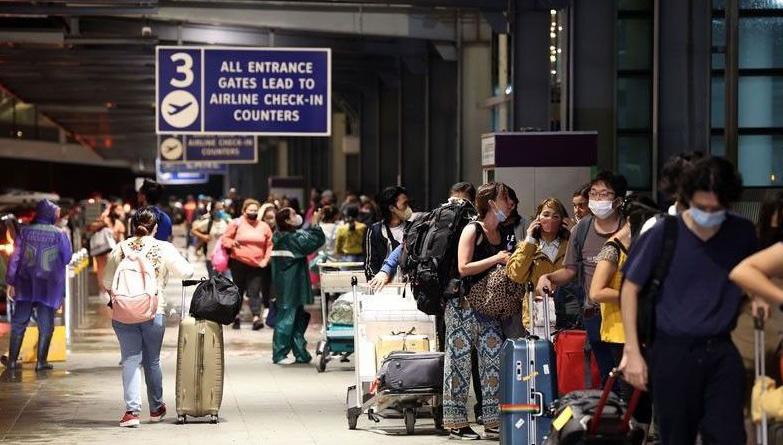
by renalyn raMirez Philstar.com
MANILA, Philippines —
Sixty-four percent of Filipino families cannot afford a P10,000 hospital bill without going into debt, pushing many Filipino workers to seek better income abroad just to secure access to basic healthcare, according to a new report.
The Boston Consulting Group surveyed 1,337 overseas Filipino workers across the United States, the Middle East, Asia and the United Kingdom in June 2025. It found that access to healthcare was among the main forces behind their decision to work abroad.
Based on the report, financial security that can guarantee access to health services during medical emergencies is a top priority for 70% of Filipino families. However, most respondents also admitted they struggle to pay even small emergency health expenses.
Twenty percent of respondents said they could pay less than P1,000 for a medical emergency without borrowing money or using health insurance. Twenty-eight percent said they could pay only up to P5,000, while 16% said they could afford up to P10,000.
"For many households, getting sick is a major financial event just as much as it is a medical event, which can mean debt, delayed tuition, or rapidly eroded savings," the report said.
Health workers, health worries
The report noted that Filipinos make up 60% of nurs-
es in the United Arab Emirates, supporting the medical system of a major global economy.
It also found that many of them are older Filipino workers whose main motivation for working abroad is earning more income for their family’s health needs.
"The OFW, then, is one of the family’s most important forms of insurance, strengthening the family against fragility by leaving it," the report said.
The report grouped the 1,337 OFW respondents into four clusters: LongHaul Guardians, or older OFWs; Family Lifelines, or millennial breadwinners; Anchored Earners, or older Gen Z workers to millennials who treat overseas work as temporary; and Self-Builders, or younger millennials seeking to build their own life abroad.
While all clusters identified "higher income potential" and "overall quality of life" as their main reasons for working abroad, the report found that Long-Haul Guardians were the most concerned about the health of family members left in the Philippines. Forty-three percent of them said this was their top concern.
A majority of Long-Haul Guardians, described by the report as "emotionally depleted Gen X OFWs," work in the Middle East. Healthcare was among the top three industries where they work.
Based on the report, Long-Haul Guardians were the only OFW cluster with healthcare among their top three industries. Younger
OFWs were more concentrated in construction, hospitality and food services.
In the Philippines, the government allocated P448.125 billion for the health sector in the 2026 national budget. Economic think tank IBON Foundation, however, criticized the amount, saying it remains "far from the 5% standard" of the World Health Organization.
Medical emergencies and debt
Medical emergencies accounted for 40% of the most recent loans of OFWs, indicating that unexpected health concerns were also the top reason Filipino workers abroad resorted to borrowing.
Medical emergencies were also the top reason for extra remittances among respondents. In the past year, 39% of OFWs in the US, 31% in the Middle East, 46% in Asia and 56% in the United Kingdom said they had to send extra money to families in the Philippines to pay for emergency medical expenses.
Share of OFWs who said they sent additional money in the past year to cover relatives’ emergency medical costs
The report noted that OFW remittances are the third-largest source of foreign currency inflows in the Philippines, equivalent to 7% of gross domestic product, with overseas cash remittances reaching $35.6 billion in 2025.
"The Philippines has become increasingly dependent on the support that overseas Filipinos send home," the report said. n
My P.E.P.
(People, Events,Places)
rogElio ConStantino MEDina

“Nasaan ka ba?” (“Where are you?”) then-Sen. Benigno Simeon Cojuangco Aquino III, fondly called Noynoy, asked in an Aug. 31, 2009, text message to me.
I was among those who suggested, through text, that he first undertake a spiritual retreat before proceeding with his crucial decision on whether to run for the highest office in the Philippines. He readily thanked me for that piece of advice.
In retrospect, it seemed prophetic that, in a corner of St. John Bosco Parish in Makati City, I asked for his mobile number for the first time. I had never done so during the years I had known him out of respect for his privacy. But I felt that something momentous would happen in the near future, and Noynoy gave me his number at once.
That was on Aug. 21, 2008, during the commemoration of the 25th anniversary of the death of his father, former Sen. Benigno “Ninoy” Aquino Jr.
As I listened to his mother’s speech, titled “Keeping Ninoy Alive in Our Hearts and Minds,” I sensed that something historic would soon occur — that Noynoy would take the lead and find himself in the national spotlight. The touching “I Am Ninoy” campaign was also launched that day.
I vividly remember his mother, former President Corazon “Cory” Aquino, saying:
“‘I Am Ninoy’ is a modern-day Filipino’s simple expression of solidarity with those who profess faith in the principles of truth, justice, spirituality, democracy and human rights. It echoes the slogan that we of older generations used to utter proudly on the streets: ‘Ninoy, hindi ka nag-iisa.’ To us then, the mood was one of defiance in the face of the brazen tyranny that claimed Ninoy’s life, among thousands of others, and held our freedom ransom.”
During his mother’s wake at La Salle Green Hills, where Tita Cory’s remains were first brought for public viewing, Noynoy left his friends and came toward me. He whispered that he had received all my text messages. At that moment, I suddenly had a
vision that he would become the nation’s leader.
My first exclusive interview with Noynoy, however, took place when he was still known primarily as the president’s son.
He recalled the happy moments he shared with his father when Ninoy was a senator. They would watch films, play jokes on each other, go to church, dine at a Chinese restaurant, vacation in Tarlac and Baguio, ride horses and jeepneys, participate in charitable and outreach work for the poor, and work on school assignments together.
He also recalled the declaration of martial law in September 1972, when he was 12 years old and still a pupil at Ateneo Grade School.
Noynoy spoke about becoming close to his father again when he was about to graduate with a degree in economics from Ateneo de Manila University.
“I vividly remember that I had a date for my class graduation ball,” he said. “My dad asked me who my date was, and I revealed her name to him. My father, as if he knew all the people in the world, asked, ‘Ano niya si _____?’
“I answered, ‘Dad, tatay niya iyon!’
“My father then said, ‘Sinisisi nga ako ng tatay niya dahil natalo sila. Dinaya raw sila sa halalan, pero sila talaga ang nandaya. Malaki pa rin ang sama ng loob sa akin.’
“I learned this only three hours before I was supposed to pick up the girl. I said to my father, ‘Dad, kung malaki pa rin ang galit sa iyo ng taong iyon, e, martial law pa naman ngayon, baka naman ang sumalubong sa akin ay shotgun!’
“Tawa kami nang tawa. He said to me, ‘Hindi naman niya gagawin iyon. Edukadong tao iyon.’”
Noynoy also recalled the family’s memorable years in exile in Boston, Massachusetts. He would pick up his father’s friends from the airport, cook rice and other food, and take care of his father’s dog.
Before Ninoy returned to the Philippines, Noynoy suggested that his father negotiate from a position of strength and return through a backdoor route in southern Mindanao. His father rejected the proposal.
“Sabi ko, ‘Bakit mo aasahan si Marcos na magkaroon ng magandang loob? Bakit mo pagkakatiwalaan na maging reasonable man lang?’” Noynoy recalled.
“Wala sa ugali’t pagkatao ni Marcos iyon. Ngunit puwede mong gawing reasonable kung nandoon ka na sa position of strength na kailangan ka niyang pakinggan. Baka iyon ang mas magandang solusyon.
“Ang sagot ng tatay ko, ‘Anong mangyayari niyon, confrontational kaagad? Maski sinuman ang manalo, problema ang mamanahin mo at maraming mapipinsala at masasaktan. Hindi yata iyon tama.’
“Pero sabi ko nga, tatay ko ito. Siyempre, nagmamalasakit ako. Para bang papasok ka sa isang swimming pool na puro buwaya at mga shark na gutom na gutom.”
Noynoy was also supposed to travel with his father when Ninoy returned to the Philippines. Had Noynoy accompanied him on the flight home, he might also have been killed, just like his father.
Noynoy told me that, when he was about a year old, he suffered from an intestinal flu, and there were fears that he would not survive. He became severely malnourished. But with his parents’ unwavering faith and trust in God, Noynoy survived.
Years later, during his mother’s early years as president, he was seriously wounded during an attempted coup but survived that grim episode. Perhaps there was a reason that only God knew.
Even after his mother was no longer president, I would see Noynoy during EDSA anniversary commemorations, the annual observance of his father’s death every Aug. 21 at Manila Memorial Park in Parañaque, protest rallies against proposed changes to the Constitution, and the Mass for Truth at La Salle Green Hills in February 2008.
I also saw him at the launch of “Cory — An Intimate Portrait,” edited by former presidential appointments secretary Margie Penson-Juico, at Bestsellers bookstore in Robinsons Galleria. Noynoy attended the event on behalf of his mother.
One time, I went to his mother’s home at 25 Times Street in Quezon City to give her a birthday card. She kindly invited me inside for lunch, and, of course, Noynoy was there.
At the invitation of former Sen. Agapito “Butz” Aquino, I spent Christmas Day with the
a family
Aquino-Oreta



There, I met Noynoy’s cousins, nephews and nieces.
During the burial of Doña Aurora Aquino, whom I had met and interviewed when she was alive, in Concepcion, Tarlac, Noynoy remained composed as he recalled the kindness of his “Lola Gindang,” or “Lollie,” as his grandmother was affectionately called. Noynoy later became the 15th president of the Republic of the Philippines, and the rest is history.
Former Philippine President Benigno “Noynoy” Aquino III died on June 24, 2021, at the age of 61..
* * *
The opinions, beliefs and viewpoints expressed by the author do not necessarily reflect the opinions, beliefs and viewpoints of the Asian Journal, its management, editorial board and staff.
* * * rogeliocmedina@yahoo.com n