U.S. expands use of citizenship revocation policy for naturalized
Americans
The Justice Department says the civil cases target people accused of concealing crimes, fraud or other material facts during the naturalization process.
WASHINGTON — The Justice Department has filed civil actions seeking to revoke the citizenship of 17 naturalized Americans, escalating the Trump administration’s use of denaturalization as part of its broader immigration enforcement agenda. The cases, filed in federal district courts across the country, accuse the defendants of serious offenses or of concealing material facts during the naturalization process. The allegations include sexual abuse of minors, wire and bank fraud, health care fraud, unlawful wholesale drug distribution, use of false identities and immigration-related
Federal judge blocks Trump’s $100,000 H-1B visa fee
Federal court rules administration lacked congressional authority to impose six-figure charge on skilled-worker visas, setting up a likely appeal over the limits of presidential immigration powers.
BOSTON — A federal judge on Monday struck down President Donald Trump’s $100,000 fee on new H-1B visas, ruling that the administration lacked authority to impose the charge without congressional approval and marking a significant legal setback for one of its most consequential immigration policies affecting highly skilled foreign workers.
Aftershocks near 3,900 as devastated Mindanao communities seek food, water
The magnitude 7.8 Sarangani quake has left 55 reported dead, injured more than 1,100, damaged tens of thousands of homes and displaced families across southern Mindanao.
by AJPress
Sandiganbayan closes remaining claims in Marcos wealth recovery case filed in 1991
by AJPress
MANILA — A Philippine anti-graft court has dismissed the remaining unresolved claims in one of the government’s largest and longest-running efforts to recover assets allegedly amassed by the family of former President Ferdinand E. Marcos, bringing to a close a forfeiture case that
San Diego Mayor Todd Gloria assumes U.S. Conference of Mayors presidency in historic first
Filipino American mayor becomes first San Diego leader and first openly LGBTQ+ mayor to head the national organization representing U.S. cities
by AJPress
LONG BEACH, CA — San Diego
Mayor Todd Gloria has assumed the presidency of the United States Conference of Mayors, becoming the first mayor from San Diego and the first openly LGBTQ+ mayor to lead the national organization.
began more than three decades ago.
In a resolution promulgated on June 2, the Sandiganbayan’s Second Division dismissed the remaining portions of Civil Case No. 0141, a forfeiture action filed by the government in 1991 through the Presidential Commission on Good Government (PCGG). The court said the dismiss-
u PAGE 4
and Seismology said the earthquake struck at 7:37 a.m. on Monday, June 8, offshore of Sarangani, near Maasim town, at a depth of about 33 kilometers. u PAGE 3
Hawai‘i chef Rhoda Magbitang wins Top Chef Season 23
by AJPress
CHARLESTON, S.C. — Rhoda Magbitang, executive chef of CanoeHouse in Waimea, Hawai‘i, won Season 23 of Bravo’s Top Chef, ending a season that moved through the Carolinas and tested chefs on regional ingredients, speed, discipline and point of view.
Magbitang defeated Sherry Cardoso and Laurence Louie in the finale, which aired June 8. The season, titled Top Chef: Carolinas, brought together 15 chefs for the show’s familiar rhythm of Quickfire and Elimination challenges, with the winner receiving the $250,000 grand prize and the title of Top Chef. Her path to the finale was hardly straightforward. Magbitang started strong, winning early elimination challenges and quickly establishing herself as one of the chefs to watch. Then, in Episode 5, she was sent home. The loss did not end her season. Through Last Chance Kitchen, the show’s parallel competition for eliminated chefs, Magbitang cooked her way back into the main contest. By the time she reached the finale, her story had become one of recovery as much as momentum: a chef forced to regroup, sharpen her cooking and return with clearer purpose.
Born in Antipolo, Philippines, and now based in Hawai‘i, Magbitang brought to the competition a cooking style shaped by Filipino food, Pacific ingredients and fine-dining technique. Before joining CanoeHouse, she trained at Le Cordon Bleu and worked in Los Angeles kitchens, building the technical foundation that would later support her more personal cooking on the show. The final challenge asked each chef to prepare a four-course progressive meal that reflected the people, places and experiences that shaped them. Magbitang
ELECTION UPDATES
CALIFORNIA’S June primary has set the stage for two high-profile November contests, one statewide and one in the nation’s secondlargest city. In the governor’s race, Xavier Becerra and Steve Hilton are projected to advance, giving voters a choice between a Democratic former federal official and a Republican former media executive. In Los
Raman in a runoff that will test voter confidence in City Hall’s response to homelessness,
Results remain unofficial until certification.
Becerra, Hilton projected for November matchup in California governor’s race
by AJPress
Gloria, whose ancestry includes Filipino, Puerto Rican, Dutch and Native American roots, is among
Gloria was installed as the 84th president of the bipartisan group during its 94th Annual Meeting in Long Beach, where mayors from across the country gathered to discuss policy priorities affecting American cities. The organization represents more than 1,500 cities with populations of at least 30,000 and advocates on municipal issues before Congress and federal agencies. The leadership transition follows the conference’s succession process, through which Gloria previously served in senior leadership positions before advancing to the presidency. His new role places him in a key leadership position within one of the country’s largest organizations representing city governments.
SACRAMENTO — Democrat Xavier Becerra and Republican Steve Hilton are projected to advance to the Nov. 3 general election for California governor, setting up a fall campaign that will test whether frustration over the cost of living can give Republicans traction in one of the nation’s most Democratic states. Unofficial returns from the California Secretary of State showed Becerra leading the June 2 primary, with Hilton in
second place and Democrat Tom Steyer third. As of the state’s latest posted update Thursday evening, Becerra had 2,504,645 votes, or 28.0 percent. Hilton had 2,225,051 votes, or 24.9 percent. Steyer had 2,025,650 votes, or 22.6 percent. The results remain unofficial. County elections officials are continuing to process and count vote-by-mail ballots received by the June 9 deadline, along with provisional and other ballots, during the canvass period.
Karen Bass to face Nithya Raman in L.A. mayoral runoff
The CanoeHouse executive chef turned Filipino comfort dishes into a finale menu that completed one of the season’s most notable comebacks. The November contest will pit the incumbent mayor against a progressive City Council member after no candidate won a majority in the
by AJPress
LOS ANGELES — Mayor Karen Bass and Los Angeles City Councilmember Nithya Raman will face each other in the Nov. 3 runoff for mayor, narrowing a crowded primary to a contest between an incumbent seeking another term and a challenger asking voters to reconsider the direction
Aftershocks near 3,900...
PAGE 1
PHIVOLCS classified it as a major offshore earthquake and said damage and aftershocks were expected.
By Friday morning, June 12, PHIVOLCS had recorded 3,860 aftershocks from the June 8 quake, including tremors felt in affected areas. The continuing seismic activity has complicated relief work and kept many residents away from damaged homes, schools and public buildings while engineers conduct safety inspections.
Government disaster-response figures placed the death toll at 55, with 1,120 injured and 31 missing as of Friday. Authorities cautioned that figures could still change as local governments, police and emergency agencies reconcile reports from areas where access and communications remain difficult.
The scale of the destruction has made the Sarangani quake one of the most severe disasters to hit Mindanao in recent years. It has killed dozens, injured more than 1,000, displaced tens of thousands and damaged homes, schools, roads, bridges and public buildings. In the hardest-hit communities, the disaster has moved beyond collapsed structures and cracked roads into a wider humanitarian emergency, with families still seeking clean water, food, medicine, electricity, communications and safe shelter.
The Department of Social Welfare and Development said 137,081 families, or 553,068 people, had been affected across 401 barangays in the Zamboanga Peninsula, Davao Region, Soccsksargen and the Bangsamoro region as of its June 12 evening report.
Of those, 15,611 families, or 63,667 people, remained displaced. The agency said 9,393 people were staying in evacuation centers, while 54,274 others were temporarily sheltering with relatives or friends. DSWD also reported 45,556 damaged houses, including 8,865 totally damaged and 36,691 partially damaged homes.
President Ferdinand Marcos Jr. ordered national agencies to focus on clearing roads, restoring electricity and water service, and accelerating the delivery of relief to isolated communities. Government teams have used ground, air and sea assets to move food, medicine, tents and other emergency supplies into areas where landslides, damaged bridges and collapsed road sections slowed access.
In Sarangani, Glan, Maasim and Malapatan were among the areas requiring urgent intervention. In Davao Occidental, Malita, Don Marcelino, Jose Abad Santos and Balut Island were also identified among the hardest-hit communities. In several villages, residents reported urgent needs for potable water, food, power, communications and temporary shelter.
DSWD said more than P84.27 million in humanitarian assistance had been provided to affected families as of Friday evening. It also reported millions of family food packs available across disaster resource centers and field offices, along with standby funds and non-food relief items.
The scale of the damage has raised questions over longer-term rehabilitation funding.
Sen. Sherwin “Win” Gatchalian urged the government to tap available funds in the 2026 national budget for emergency response and rebuilding in Mindanao. He said about P180.48 billion could be mobilized from several sources, including the National Disaster Risk Reduction and Management Fund,
the Local Government Support Fund, the Contingent Fund, agency Quick Response Funds, DSWD assistance programs and education allocations.
The amount identified by Gatchalian has not been announced as a single released package for the quake. It represents funds he said could be tapped for relief, rehabilitation, reconstruction and recovery, including repairs to damaged schools and classrooms.
The earthquake struck on the first day of public school classes, forcing evacuations and safety checks across Mindanao. Education officials earlier reported damage to more than 1,300 public schools, with assessments continuing as engineers inspected classrooms, school buildings and other facilities. Some campuses may require repairs, temporary learning spaces or alternative learning arrangements before normal classes can resume.
The government also said mental-health support would be provided to students affected by the disaster. Marcos directed attention to the emotional toll on children and said teachers would be trained to help identify learners showing signs of trauma or distress.
In General Santos City, one of the hardest-hit urban centers near the epicentral area, officials inspected hospitals, schools, public buildings, roads, bridges and commercial establishments. Some patients were moved to temporary areas while hospital structures were assessed for cracks and other damage. A building at Notre Dame of Dadiangas University collapsed, with authorities reporting that no one was inside at the time.
Transportation and public infrastructure remained major concerns. In South Cotabato, a highway section was reported to have collapsed after the strong shaking, while bridges and roads in parts of Soccsksargen and Davao Occidental were placed under inspection. Officials said limited access on some routes affected the movement of ambulances, relief trucks, rescue teams and evacuees.
In Davao Occidental, the Malalan Barangay Hall in Jose Abad Santos collapsed, underscoring the quake’s impact on local government facilities in remote communities. Officials also reported damaged homes, public buildings and roads in coastal and upland areas, where access for assessment and relief teams was complicated by damaged infrastructure.
The Department of the Interior and Local Government directed affected local governments to inspect buildings, public infrastructure and residential houses before allowing residents to return. The agency said structures showing visible damage should undergo rapid assessment, and unsafe buildings should be subject to evacuation or temporary relocation measures.
The Department of Health said quake victims admitted to government hospitals in Mindanao would be covered under the Zero Balance Billing policy, while health officials inspected damaged medical facilities and deployed medical supplies and hygiene kits. Some patients in Sarangani hospitals remained in temporary areas while structural assessments continued.
The earthquake also triggered tsunami warnings in the southern Philippines and nearby areas. PHIVOLCS earlier advised coastal residents to move to higher ground or farther inland. Tsunami waves were later monitored in parts of Sarangani
and Sultan Kudarat, including Kiamba, Sarangani. Authorities later said the broader tsunami threat had passed, though coastal communities were advised to continue following local safety guidance.
Energy officials continued efforts to restore electricity in affected areas while assessing power lines, substations, fuel depots and other facilities. Some communities remained without stable power because damaged roads and landslides delayed access for repair crews.
The Philippines lies along the Pacific Ring of Fire, where earthquakes and volcanic activity are frequent. Across Mindanao, authorities continued inspecting schools, hospitals, roads, bridges, ports, utilities and public buildings while warning residents to stay away from damaged structures as aftershocks persisted. n
San Diego Mayor Todd Gloria assumes...
the highest-profile Filipino American elected officials currently serving in local government. His election also places a Filipino American leader at the head of an organization that serves as a collective voice for cities across the United States.
In remarks following his installation, Gloria said he was honored by the confidence of fellow mayors and pledged to focus on issues affecting communities nationwide, including housing affordability, public safety and economic opportunity.
Those priorities reflect challenges facing many local governments as cities continue to confront housing shortages, infrastructure needs, budget pressures and growing demand for public services.
The Conference of Mayors has described Gloria’s presidency as a historic milestone, noting that he is the first openly LGBTQ+ mayor to lead the organization. His term begins as municipal leaders across the country continue to seek solutions to rising housing costs, homelessness, transportation demands and economic competitiveness.
Gloria has served as mayor of San Diego since December 2020 after previously serving on the City Council, including as council president and interim mayor. He became the first openly LGBTQ+ person and the first person of color elected mayor of San Diego.
SCRRA is seeking proposals for communications support on the Rancho & Marengo Siding Extension project. Proposal documents may
His election brings additional national visibility to San Diego while placing one of California’s largest cities in a prominent leadership role within the organization. The conference’s policy resolutions often shape its advocacy efforts on housing, transportation, public safety, climate resilience and economic development.
Gloria succeeds Oklahoma City Mayor David Holt, who served as conference president during the past year. As he begins his term, Gloria has said he intends to emphasize practical approaches to addressing the challenges facing cities and their residents. n
Hawai‘i chef Rhoda Magbitang...
answered with a menu rooted in Filipino family cooking.
She served sweet potato with uni, lugaw, grilled eggplant omelet with pork belly, and kaldereta with short rib. The dishes were familiar in spirit but carefully composed for the competition: lugaw, the rice porridge often associated with comfort and care; tortang talong, the grilled eggplant omelet common in Filipino homes; and kaldereta, a rich braise often served at gatherings and celebrations.
Magbitang chose not to close with a traditional dessert. Instead, she ended with kaldereta, a dish she linked to her father. It was a quiet but telling decision. Rather than using the finale to distance herself from home cooking, she leaned into it and asked the judges to meet the food on its own terms. That choice gave the meal its force. The menu did not present Filipino cuisine as a flourish or a theme. It treated it as structure: the source of flavor, memory and technique. In a competition where chefs are often pushed to declare who they are through food, Mag-
bitang’s answer was direct. Her win also brought attention to the culinary world she represents. She is the first Top Chef winner from Hawai‘i, and her finale placed Filipino dishes in one of American food television’s most visible settings. For many viewers, the victory offered a rare mainstream moment for food long understood in Filipino households as layered, demanding and deeply expressive. The season itself was built around place, with the Carolinas providing much of the backdrop and pantry. Against that setting, Magbitang’s finale added another geography: the Philippines of her childhood, the Hawai‘i where she now cooks professionally, and the restaurant kitchens that shaped her technique. By the end, the judges were not simply weighing a comeback. They were weighing a meal that connected personal history with control and refinement. Magbitang’s final menu made its case without excess: Filipino food, handled with confidence and precision, belonged at the center of the finale. The judges agreed. n
Senate Publishes Amended Impeachment Rules Ahead of VP Duterte Trial
by AJPress
MANILA — The Philippine Senate has published amendments to its impeachment trial rules, giving senators the authority to elect presiding officers in cases involving officials other than a sitting president. The move comes as the chamber prepares for the trial of Vice President Sara Duterte.
The changes, approved under Senate Resolution No. 48 and published on June 9, 2026, revise Rule II of the Rules of Procedure on Impeachment Trials. Senators may now designate a presiding officer by majority vote, though the Chief Justice of the Supreme Court continues
to preside over presidential impeachment trials, as required by the 1987 Constitution.
Vice President Duterte’s Trial The Senate convened as an impeachment court on May 18, 2026, following the House of Representatives’ transmission of Articles of Impeachment. The complaint alleges graft, unexplained wealth, and constitutional violations, charges Duterte has denied.
Pre-trial conferences are ongoing, with a session set for June 18, 2026, and trial proceedings expected to begin in July 2026.
Conviction requires a two-thirds vote of all 24 senators (16 votes).
Leadership Dispute and Le-
gal Context
The amendments follow a contested Senate leadership reorganization in early June, with Senate President Pro Tempore Sherwin Gatchalian assuming primary leadership responsibilities. Former Senate President Alan Peter Cayetano questioned the procedural basis, but a petition challenging the reorganization was dismissed by the Supreme Court on June 10, 2026, citing lack of legal standing.
Analysts say the changes formalize informal Senate practices, clarifying procedural discretion without altering constitutional mandates on quorum, trial structure, or conviction thresholds. n
U.S. expands use of citizenship revocation...
misrepresentations.
The actions were brought under the Immigration and Nationality Act, which allows the government to seek revocation
of naturalization if citizenship was illegally obtained or procured through concealment of a material fact or willful misrepresentation.
None of the civil complaints has yet resulted in a judicial determination of liability, the Justice Department said. The announcement has drawn renewed attention to denaturalization, a consequential but limited legal process that allows the federal government to challenge citizenship granted through naturalization. It does not apply to people who became U.S. citizens by birth. It applies only to naturalized citizens, and the government must prove its case in federal court.
Federal officials said the latest cases involve naturalized citizens originally from several countries, including Cuba, Haiti, Colombia, Mexico, Jamaica, India, Somalia, China, Congo, Trinidad and Tobago, and the Philippines.
Among the cases cited by the Justice Department is that of Jheromell Obejera Arcilla, a native of the Philippines. The government filed a civil denaturalization complaint in federal court in Maryland alleging that Arcilla sexually abused a minor before and during the period in which he naturalized and made false statements in connection with his citizenship application.
The department said Arcilla was indicted in 2020 on Maryland sexual offense charges and pleaded guilty in 2021 to one count of sex abuse of a minor.
The government is seeking to revoke his citizenship on claims that he lacked the good moral character required for naturalization and knowingly misled immigration authorities.
Other complaints described by the department involve people accused of concealing fraud schemes, false identities, undisclosed criminal conduct or immigration misrepresentations.
The Justice Department also cited cases involving a Cuban-born woman who admitted in criminal proceedings that she and
co-conspirators fraudulently billed tens of millions of dollars through physical therapy clinics, and an India-born staffing company executive accused of filing fraudulent H-1B visa petitions and making false statements during naturalization.
The Justice Department’s Civil Division has made denaturalization a stated enforcement priority. A department memorandum directed federal lawyers to prioritize cases involving national security concerns, war crimes, human rights violations, gang or cartel activity, undisclosed felonies, sex offenses, violent crimes, financial fraud, immigration fraud and other significant matters. Because denaturalization can result in the loss of citizenship, the cases are subject to federal court review and require the government to establish the legal grounds for revocation. Federal law has long permitted the government to seek denaturalization when naturalization was obtained through fraud, concealment or legal ineligibility.
If a court grants denaturalization, the person loses U.S. citizenship and the legal benefits attached to it, including a U.S. passport and protection from removal as a citizen. The person may revert to a prior immigration status and may become subject to deportation proceedings, depending on the facts of the case.
The Justice Department said the 17 cases were brought by its Office of Immigration Litigation with assistance from U.S. Citizenship and Immigration Services, U.S. Immigration and Customs Enforcement and U.S. attorney’s offices in several jurisdictions.
The cases underscore a narrow but consequential legal reality for naturalized immigrants. U.S. citizenship obtained through naturalization can be challenged in court if the government alleges and proves that it was obtained through fraud, concealment or statutory ineligibility. (AJPress)
Sandiganbayan closes remaining...
PAGE 1
al applied only to properties not already covered by previous judgments and forfeiture orders.
The ruling does not affect earlier court decisions that transferred substantial assets to the Philippine government, including Swiss bank deposits, assets held through Arelma Inc., the Malacañang jewelry collection and proceeds from artworks that courts previously determined were subject to forfeiture.
Civil Case No. 0141 was filed on Dec. 17, 1991, as part of the government’s post-1986 campaign to recover alleged ill-gotten wealth linked to the Marcos family and their associates. According to court records, the petition covered a broad range of assets, including corporations, bank accounts, real estate holdings, jewelry, paintings and other properties. The complaint placed the value of the assets involved at roughly $5 billion, excluding properties already covered by separate cases. Over the years, portions of the case were resolved through separate rulings.
The most prominent involved approximately $658 million in Swiss deposits that the Supreme Court ultimately ordered forfeited in favor of the state. Other rulings upheld the forfeiture of assets associated with Arelma Inc., a corporation found by the courts to have held funds linked to the Marcoses, as well as the Malacañang jewelry collection and other identified properties.
The remaining claims stayed pending for years as the litigation continued.
The resolution leaves intact all prior forfeiture judgments obtained by the government under Civil Case No. 0141 and related proceedings. It closes only the unresolved portion of the 1991 petition that remained pending before the anti-graft court.
The PCGG, created in the aftermath of the 1986 People Power uprising, has reported recovering hundreds of billions of pesos in cash, shares, real estate and other assets from the Marcoses and their associates through settlements, forfeiture proceedings and court judgments. Civil Case No. 0141 was among the most significant cases filed as part of that recovery effort.
The Sandiganbayan’s June 2 resolution effectively closes the remaining chapter of that particular forfeiture case while leaving earlier recoveries and final court rulings undisturbed. n
Court records show that in recent hearings, the Sandiganbayan repeatedly asked government lawyers whether they intended to continue presenting evidence on properties still listed in the original petition but not covered by earlier judgments. In May, the court questioned state lawyers about delays in presenting evidence and witnesses related to the unresolved assets. The government subsequently informed the court that it would no longer present additional evidence regarding the remaining properties. According to the Sandiganbayan resolution, the position was based on advice from the PCGG that most of the assets identified in the petition had already been recovered through various proceedings and judgments. With no further evidence to be presented on the unresolved properties, the court dismissed the remaining claims.
Boeing supplier Heatcon to build aerospace facility in Clark
The 25-year lease covers manufacturing, materials distribution and composite-repair operations at the Clark Civil Aviation Complex.
by AJPress
CLARK FREEPORT — Clark International Airport Corp. has signed a 25-year lease agreement with Heatcon Asia Inc., a Boeing supplier, for an aerospace facility at the Clark Civil Aviation Complex. CIAC said the project will house manufacturing, materials distribution and in-shop composite repair operations. The agreement was signed June 9 by CIAC President and Chief Executive Officer
Jojit Alcazar and Heatcon Asia
President Howard Victor Banasky.
The facility is part of CIAC’s effort to develop Clark Aviation Capital as an aviation, logistics and maintenance-related business district. CIAC is the aviation and land development arm of the Bases Conversion and Development Authority.
According to CIAC, Heatcon expects to start operations by the second quarter of 2027 and make an initial investment of about $2.94 million within the first three
years.
Heatcon says it supplies aerospace composite repair equipment, including hot bonders, accessories, technical services and materials used in composite-structure repair. The company serves aircraft manufacturers, defense organizations, airlines and maintenance, repair and overhaul operators.
CIAC said Heatcon’s presence is expected to support Clark’s bid to attract more aircraft maintenance and aerospace-related investments. n
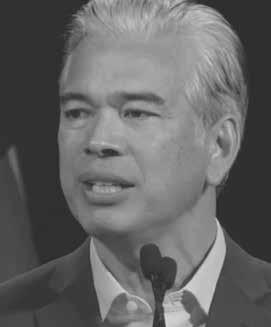
California DOJ Takes Aim at Rising Costs with New Affordability Response Team
by AJPress
SACRAMENTO — California
Attorney General Rob Bonta announced on Monday the creation of a dedicated Affordability Response Team, an enforcement unit within the state Department of Justice tasked with investigating practices that contribute to the state’s high cost of living.
The team, comprised of legal specialists from multiple DOJ divisions, will focus on issues ranging from consumer protection and housing markets to healthcare pricing and financial fraud. According to the department, the initiative will provide Californians with a central avenue for reporting suspected unlawful practices that inflate prices.
“For many Californians, basic expenses like groceries, medical care, and vehicle repairs are a source of financial strain,” Bonta said.
Mandate and Areas of Focus
The DOJ said the unit will examine potential violations of state antitrust law, scrutinize pricing and contractual practices in housing and healthcare, and pursue instances of consumer fraud and deceptive business conduct. It will coordinate with existing divisions,
including Antitrust and Consumer Protection, and provide public guidance for residents seeking to submit complaints.
State data and independent research show that California continues to face some of the highest living costs in the nation. Median home prices and rents in metropolitan areas far exceed national averages, while healthcare, transportation, and other essentials remain a persistent financial burden for many households.
Economic Context and Federal Dynamics
National trends complicate California’s affordability landscape.
Federal antitrust enforcement and merger review priorities have evolved in recent years, reflecting shifts in policy focus and agency staffing. Market analyses indicate that demand in certain high-end sectors, such as luxury goods and private aviation, has grown, driven by spending among high-networth households.
Experts caution that while enforcement at the state level can influence consumer costs in specific sectors, broader market trends and federal policy continue to shape pricing and competition nationally.
Structure and Accountability
The Affordability Response Team will operate under the oversight of the Attorney General’s office. DOJ officials said they plan to publish periodic summaries of case activity, enforcement outcomes, and guidance on reporting suspected unlawful pricing or business conduct.
This initiative marks the latest effort by California state officials to address the persistent financial pressures faced by residents. By consolidating expertise across multiple divisions, the state aims to strengthen enforcement and provide greater accountability for practices that can drive up costs for consumers. n
Federal judge blocks Trump’s $100,000...
U.S. District Judge Leo T. Sorokin of Massachusetts found that the fee functioned as an unauthorized tax rather than a permissible immigration restriction. The decision came in a lawsuit brought by a coalition of 20 Democratic state attorneys general challenging the policy, which was announced in September 2025 and applied to new H-1B visa petitions. The H-1B program allows U.S. employers to hire foreign professionals in specialty occupations requiring specialized knowledge and expertise, including positions in technology, engineering, health care, education and scientific research. The program is capped at 65,000 visas annually, with an additional 20,000 available for workers who hold advanced degrees from U.S. institutions.
The administration argued that the president possessed broad authority under federal immigration law to restrict the entry of foreign nationals when deemed in the national interest. Sorokin rejected that argument, finding that Congress had not authorized the executive branch to impose a six-figure charge as a condition of visa issuance.
The ruling removes, for now, a major financial hurdle that critics said would have fundamentally altered the economics of the H-1B program. State officials, universities, hospitals and employers had argued that the fee would make it substantially more difficult to recruit specialized workers and could worsen labor shortages in sectors that depend on highly skilled talent.
gress and former speaker of the California Assembly, enters the runoff with the advantages of incumbency and long-standing ties across local, state and national politics. Her campaign is expected to focus on her administration’s work on homelessness, housing, public safety, city services, wildfire
Singson posts bail after cyberlibel arrest, says case aimed to discredit him
by AJPress
QUEZON CITY — Former Ilocos
Sur Gov. Luis “Chavit” Singson posted bail after he was arrested Thursday, June 11, in connection with a cyberlibel case pending before a Vigan court, police said, while the longtime political figure denied wrongdoing and said the complaint was meant to discredit and intimidate him.
The Quezon City Police District said Singson, 84, was taken into custody at his residence in Barangay Ugong Norte after authorities served a warrant issued by Branch 21 of the Regional Trial Court in Vigan City.
Police said the warrant stemmed from an alleged violation of Republic Act No. 10175, or the Cybercrime Prevention Act of 2012, in relation to cyberlibel.
Singson was brought to QCPD Police Station 12 for booking, doc-
umentation and other legal procedures. He later posted a P60,000 cash bond and was released from police custody, police said.
Authorities did not immediately identify the complainant, release the case record or specify the allegedly libelous statement.
The absence of those details left unclear what online statement or publication formed the basis of the criminal complaint.
In an interview with Bombo Radyo Vigan, Singson denied wrongdoing, said he had posted bail after receiving the complaint and expressed readiness to face the case. He described the proceedings as an opportunity to defend what he called the truth.
In separate remarks reported by ABS-CBN News, Singson said the case was intended to discredit and intimidate him. That statement reflected Singson’s account of the case and was not supported by any official finding in the records
reviewed.
No statement from the complainant, prosecutors or Singson’s legal counsel was immediately available in the official and published records reviewed.
The Cybercrime Prevention Act classifies online libel as a cybercrime offense when libel, as defined under the Revised Penal Code, is committed through a computer system or similar information and communications technology. The Supreme Court has said cyberlibel is not a separate crime, but libel committed through a computer system.
Singson, a businessman and longtime Ilocos Sur political figure, has served as governor of Ilocos Sur and mayor of Narvacan. He also
Southern California Regional Rail Authority (SCRRA) Paunawa ng Pampublikong Pagdinig
Muling Pagsasaayos ng Pamasahe, Pagtataas ng Pamasahe at Posibleng Pagbabawas ng Serbisyo
Ang Southern California Regional Rail Authority (SCRRA), na nagpapatakbo bilang Metrolink, ay magsasagawa ng isang pampublikong pagdinig sa Pulong ng Lupon ng mga Direktor sa Biyernes, Hunyo 26, 2026 upang suriin ang pagpapatibay ng binagong istruktura ng pamasahe na ipinatupad noong Hulyo 1, 2025 bilang isang pilot program, pati na rin ang posibleng pagtaas ng pamasahe at pagbawas ng serbisyo.
Mula Hulyo 2025, ginagamit na ng mga pasahero ng Metrolink ang bagong pinasimpleng istruktura ng pamasahe, na nagbawas sa bilang ng mga available na uri ng tiket, nagpababa sa presyo ng karamihan sa mga monthly pass, at nagpalaki ng mga diskuwento para sa mga sumasakay. Sa Hunyo 2026, hihilingin sa Lupon na aprubahan ang binagong istruktura ng pamasahe. Isasaalang-alang din ang pagtataas ng pamasahe, na makaaapekto sa mga one-way ticket at SoCal Day Pass ng Metrolink, gayundin ang pagbabawas ng lebel ng serbisyo. Layunin ng Metrolink na lumikha ng mas maraming oportunidad para sa inklusyon at pakikilahok ng komunidad sa pamamagitan ng pag-anyaya sa publiko na suriin at magbigay ng puna tungkol sa muling pagsasaayos ng pamasahe, mga pagtataas ng pamasahe, at mga iminungkahing pagbabawas ng serbisyo. Ang pampublikong pagdinig ay isasama sa agenda ng Pagpupulong ng Lupon ng mga Direktor ng SCRRA sa: Biyernes, Hunyo 26, 2026, 9:00 nang umaga https://metrolinktrains.com/about/board-meetings/agendas-documents/ Ang impormasyon tungkol sa programang ito ay maaaring tingnan ng publiko sa website ng Metrolink sa metrolinktrains.com o sa lobby ng gusali ng punong-tanggapan ng SCRRA, na matatagpuan sa 900 Wilshire Blvd., Los Angeles, CA 90017, sa mga regular na oras ng opisina, Lunes hanggang Biyernes, mula 8:00 a.m. hanggang 4:00 p.m. Ang mga komento at mungkahi ay maaaring isumite nang personal o nakasulat sa mismong pampublikong pagdinig, o i-post online bago ang pampublikong pagdinig sa metrolinktrains.com/ecomments o sa pamamagitan ng koreo, kung matatanggap bago ang pampublikong pagdinig, sa atensyon ng Metrolink Fares sa punong-tanggapan ng SCRRA. Lahat ng pampublikong komento, anuman ang anyo ng komunikasyon, ay dapat isumite at matanggap nang hindi lalampas sa Hunyo 15, 2026. Ang usaping ito ay maaaring ipagpaliban ng Lupon sa ibang oras o petsa ayon sa kanilang pagpapasya.
6/13/26
CNS-4047037# ASIAN JOURNAL (L.A.)
For decades, employers have used the H-1B program to fill positions in industries facing shortages of qualified workers. Existing government filing fees generally amount to several thousand dollars, making the proposed $100,000 charge a dramatic departure from longstanding practice.
The ruling affects foreign professionals and U.S. employers in health care, engineering, information technology and academic research, where the H-1B remains a major legal work-visa route.
The administration is expected to appeal, leaving higher courts to decide the policy’s future and the broader question of how far a president may go in reshaping immigration rules without Congress. (AJPress)
the way City Hall operates. Her city biography describes her as an immigrant, a working mother and a graduate of Harvard University and the Massachusetts Institute of Technology. The race is officially nonpartisan, but the runoff is expected to sharpen debate over policing, homelessness policy, housing development, labor influence and the pace of government reform. Bass will ask voters to extend her time in office and judge her administration by its record. Raman will ask voters to choose a more urgent break from the status quo. The November contest will turn on a broader question of confidence in City Hall: whether voters believe the current administration is making measurable progress, or whether Los Angeles is ready to entrust the city to a councilmember promising a different approach.
The results remain unofficial until certification. n
Photo from RobBonta instagram
OPiniOn
Philippine independence and the unfinished work of freedom
EVERY June 12, the Philippines commemorates the birth of a nation that dared to declare itself free.
The flag raised in Kawit in 1898 was more than a symbol of separation from colonial rule. It was a claim to dignity. It announced that Filipinos were not subjects to be governed by foreign powers, but a people capable of shaping their own destiny.
Editorial
More than a century later, however, a harder question remains: Has that freedom become real in the daily lives of the Filipino people?
The Philippines is politically independent. It has its own Constitution, elected leaders, courts, flag, anthem and place among nations. No foreign monarch governs the islands. No colonial governor signs decrees in Manila. In the formal sense, the Filipino nation is free.
Yet political independence is not the same as full freedom.
A people can be free on paper and still be constrained by poverty. They can be free to vote, but trapped in patronage. Free to speak, but weakened by fear, disinformation or economic dependence. Free to dream, but compelled to leave the country to survive. Free to call themselves citizens, but treated too often as clients, subjects or statistics by those in power. This is the unfinished question of Philippine independence.
The Filipino struggle did not end with the lowering
WHAT’S happening to our country? Why are we allowing this to happen? Why are we shooting ourselves in the foot?
Historically, the Senate has played a vital role in protecting democratic institutions and ensuring that government remains responsive to the people. It has been home to many of the country’s most respected statesmen, who understood that while political disagreements were inevitable, the national interest had to remain paramount.
Unfortunately, what many Filipinos are seeing today is a Senate increasingly consumed by partisan conflicts, media spectacle and political positioning, seeming to forget the significant difference between responsible oversight and political theater, or that constructive criticism is not the same as endless political warfare.
Instead of focusing on legislation that can improve the lives of ordinary Filipinos, public attention is often diverted to issues that appear designed more to generate headlines than solutions. The timing could not be worse, considering that the Phil-
long view
L. Quezon III
BOTH the House of Representatives and the Senate adjourned sine die on June 3, ending the first regular session of the 20th Congress. They won’t reconvene until July 27, when the second regular session will begin with the election of officers and then a joint session for President Marcos’ State of the Nation Address to Congress. In the meantime, neither chamber can hold plenary sessions, and no laws can be passed. The activities of both chambers are limited to committee hearings and meetings of the Commission on Appointments to confirm or reject executive appointments, while bicameral committees can continue to monitor, for oversight purposes, executive programs and implementation of the laws. Of course, the President, for his part, can call Congress to a special session to tackle specific legislation
of a foreign flag. It entered a more difficult stage: the struggle to build a society in which freedom is not reserved for the wealthy, the connected or the powerful, but made real in the daily lives of ordinary people.
True freedom means more than national sovereignty. It means a farmer is not chained to debt. A worker is not forced to choose between hunger and abuse. A young graduate is not driven abroad by the absence of opportunity. A voter is not manipulated by money, dynasty or machinery. A journalist is not threatened for asking questions. A citizen is not made to beg for services that should be delivered as a matter of right.
The limits on freedom today are often found within the habits of national life. They can be seen in corruption treated as normal, in political dynasties treated as inevitable, in poverty treated as fate, in silence mistaken for peace, and in endurance romanticized as virtue.
Filipinos are often praised for their resilience. But resilience should not become an excuse for injustice. A people should not have to be endlessly resilient because systems repeatedly fail them. The Filipino spirit is strong, but strength should not be used to justify suffering.
There is also a deeper challenge of civic life: the tendency to accept less than what the nation de-
ippines stands at a critical moment in its history. Opportunities before us are immense, but so are the challenges. Watching from Washington, D.C., I am constantly reminded that the world is changing at an extraordinary pace, with the global economy being reshaped by technological advancements, artificial intelligence, supply-chain realignments and intensifying competition among major powers. Countries throughout Asia are racing to attract investments, create jobs, strengthen industries and position themselves for the future.
The Philippines should be doing the same. Under the current leadership of President Marcos Jr., the country has significantly strengthened its international partnerships, reaching unprecedented levels of cooperation as demonstrated by the President’s successful visit to Japan, which has become one of the Philippines’ most dependable security partners.
Japan has supported the modernization of our Armed Forces and Coast Guard through equipment transfers, training programs and capacity-building initiatives. Japanese assistance has strengthened our maritime
The
considered urgent. The Senate’s adjournment took place when Senate President Pro Tempore Sherwin Gatchalian, as acting Senate president, gaveled the session to a close on June 3. Not to be outdone, the “king without a kingdom,” as former Sen. Franklin Drilon calls him, Sen. Alan Peter Cayetano, issued a memorandum to his rump (senator-supporters, that is) saying he was declaring an adjournment sine die. Except it seems no legislature on Earth (definitely not American ones from whom we borrowed our parliamentary practices) does so by letter, as it requires a session where the appropriate motions can be made and approved first. It’s like that American editorial cartoon that showed former President Ferdinand Marcos Sr., fist raised, as a bored American customs agent in Honolulu told him, “Yes, Mr. Marcos, aside from martial law, do you have anything to declare?”
The Palace has made noises that President Marcos might
FeAtures
serves; to confuse loyalty to personalities with love of country; to inherit historical wounds without confronting them honestly; to allow misinformation to replace memory; to mistake spectacle for leadership and popularity for public service. Independence Day, therefore, should be more than a patriotic ritual. It should be a national examination. What
awareness and enhanced our ability to monitor and protect our territorial waters. This growing security partnership reflects a shared understanding that economic prosperity and national security are closely linked, as investors seek stability and businesses require predictability.
As ASEAN chair in 2026, the Philippines enjoys a level of international visibility and influence that comes only once in a generation. Investors are taking a fresh look at our country – and this is precisely the moment when our political institutions should be projecting stability, maturity and confidence.
Foreign investors are paying attention. They look beyond economic statistics and watch political developments closely. Before making long-term commitments, investors ask simple but important questions: Is the political environment stable? Are government institutions functioning effectively? Can policies be implemented consistently? Is there a clear focus on economic growth and national development?
These questions matter because investment decisions often involve billions of dollars and thousands of jobs. Political u PAGE 7
THERE was this interesting article at The Washington Post last week about the alarming decline in the population of many countries. It cited a recent essay for The Financial Times by John Burn-Murdoch suggesting that the culprit is smartphones.
Burn-Murdoch’s data suggest that smartphones could be causing birth rates to decline because young people are spending less time together. They are simply substituting scrolling smartphones for the social activity that leads to babies.
The article asked: Because less socialization is a big part of the problem, what can we do about it? Should we ban smartphones? Should we sue TikTok to make its content less compulsively scrollable? Should we force single young people to attend mandatory speed dating?
Or, The Post op/ed piece by Megan McArdle suggested: why not change the culture around smartphones to limit their harm? Communities, she wrote, could collectively decide to give kids dumb phones rather than
smartphones… and “to generally treat the infinite scroll as something like smoking… it’s bad for you and kind of déclassé.”
Déclassé. Borrowed from French, it is often used to describe something that used to be fashionable, respectable, or high-class, but has since become unseemly, vulgar, or out of style.
Déclassé. Used to describe things or behaviors that are considered inferior or unfashionable.
The Post op/ed pointed out that social sanction can be much more effective than any law at deterring destructive behavior. I immediately thought, maybe social sanction can punish corruption in a way the Sandiganbayan has failed all these years.
“Few people shoplift, vandalize public property… because they’d be ashamed to violate the social contract – and even more ashamed to have the neighbors find out.
“It is possible to rewrite the social contract, constructing new social norms to handle new kinds of destructive behavior… But it takes a lot of work, because the social sanctions that reinforce the norms have to be applied (consistently!) by ordinary people going about their daily lives.”
That op/ed piece at The Post made a strong point about society working together to discourage bad behavior. For us, we could work together to make politicians and tycoons plundering the country social pariahs. Doing so is justified in the Bible. God has always ordered his people to remove wickedness… In his words in several verses in Deuteronomy, “purge the evil from among you.” Corruption and stealing from the national or sacred treasury are treated as severe moral and structural crimes in the Old Testament, and handled differently than common theft.
While everyday property theft was settled through financial restitution, institutional corruption by leaders, judges and priests was condemned by God as a nation-destroying sin.
Proverbs 29:4 highlights how systemic theft ruins a society: “By justice a king gives a country stability, but those who are greedy for bribes tear it down.” The prophet Isaiah links systemic government corruption directly to the moral decay of the state. Just as ancient societies crumbled from within due to moral rot, modern nations fail when their corrupt leaders sysu PAGE 7
call Congress to a special session; in any case, the existing Cayetano-era impeachment trial schedule calls for the trial proper to begin on July 6, with hearings from 2 p.m. onward until July 22. After the State of the Nation Address, hearings will be from 3 p.m. onward starting July 28.
Two questions arise: how many senators will be left when the trial begins or when the new session starts? And what to do about the phantom menace that is Cayetano? When it comes to the detained, the Supreme Court permits no flexibility. Former Senior Associate Justice Antonio Carpio reminds us that the Supreme Court has ruled that a detained prisoner “cannot practice their profession nor engage in any business or occupation, or hold office, elective or appointive while in detention.” Tony Laviña, who quoted constitutional law professor Carlo Cruz, added, “members of the Congress who are in jail cannot fully function as legislators. They may propose u PAGE 7
NONSENSICAL. Illogical. Irrational. The “Theatre of the Absurd,”* a mid-20th-century dramatic movement born from the trauma of World War II, initially seems to offer nothing but despair. On its surface, the works of playwrights like Samuel Beckett, Eugene Ionesco, and Jean Genet depict a universe devoid of purpose, where communication fails, and logic collapses. However, this radical artistic movement is not a declaration of defeat. By stripping the false certainties of modern life, the “Theatre of the Absurd” acts as a profound instrument of hope. It forces audiences to confront the void, thereby liberating them to construct their own meaning and reclaim their unique human identity. This is best exemplified in Beckett’s masterpiece, “Waiting for Godot.” The play features two vagrants, Vladimir and Estragon, who pass the time on a barren road waiting for a mysterious figure named Godot, who never arrives.
The setting is bleak, and their actions are repetitive. Yet, within this apparent stagnation lies a powerful testament to human resilience. The characters continue to wait day after day, choosing survival and companionship over utter surrender. When Estragon suggests parting, they remain together. When they contemplate to ending their lives, they fail to execute their plan, and resolve to return the next day. This refusal to give up, despite the apparent futility of their situation, illustrates the stubbornness of the human spirit. The hope in Godot is not found in the arrival of a savior, but in the enduring capacity of human beings to support one another and persist through the darkest uncertainties. The “Theatre of the Absurd” fosters hope by dismantling societal constructs that seem to trap humanity. Ionesco’s “The Bald Soprano” exposes the emptiness of bourgeois complacency and conventional language. The characters engage in repetitive, nonsensical small talk that fails to convey any real substance. By exaggerating the breakdown of communication to a comical degree, Ionesco does not merely despair
over human isolation. He satirizes the artificial social constructs that cause it. The play serves as a wake-up call. By laughing at the ridiculousness of automated lives and hollow speech, the audience is jolted out of its own complacency. This comedic disillusionment is inherently hopeful. It suggests that once we recognize the absurdity of our own self-imposed social constraints, we are finally free to break them and pursue genuine and authentic human relationships.
The “Theatre of the Absurd” also offers a unique form of existential optimism through the celebration of the present moment. In Albert Camus’ influential essay, “The Myth of Sisyphus,” the mythological figure is condemned for eternity to push a boulder up a hill, only to watch it roll back down. This work provides the philosophical foundation for the theatrical movement. Camus concludes that “one must imagine Sisyphus happy.” This sentiment translates directly to the stage. In Beckett’s “Happy Days,” the protagonist Winnie is buried up to her waist, and later her neck, in a mound of u PAGE 7
In-fighting, grandstanding, colluding—kawawa ang Filipino
by Carl Martin agustin Inquirer.net
AS they say, elect a clown and expect a circus, and this week in the Senate has proven just that.
Following Senator Jinggoy Estrada’s arrest on Monday, June 1, for plunder and graft charges in connection with the flood control scandal, the then-majority bloc skipped the plenary session scheduled the same day, leaving 11 minority senators without a quorum.Come the next day on Tuesday, June 2, half of the seats remained vacant, and another day in the Senate came to pass.
In a Facebook post, Alan Peter Cayetano maintained that their absence was a boycott aimed at defending Senate independence. He also criticized recent politically-charged warrants and investigations motivated by a desire to tip the scales in favor of the minority bloc in the Senate.
But, for the then-minority bloc comprised of Senators Risa Hontiveros, Francis “Kiko” Pangilinan, and Vicente “Tito” Sotto, among others, it was simply an effort to avoid a confrontation in the Senate, where their dwindling numbers through Estrada and Senator Ronald “Bato” dela Rosa would put their strength into question. Nonetheless, regardless of which side you’re on, it’s plain to see that the Senate, embroiled in an uncertain power struggle, has been stopped from doing its actual job.Rather than attending to their official tasks, some members of the Senate have instead prioritized politicking and grandstanding, leaving highly
important bills and agendas by the wayside. Everything else they could’ve done
Following the Monday absence, the then-minority bloc took issue with the boycott and lamented the various tasks they weren’t able to attend to.
“Ang Senado ay hindi pag-aari ng iisang may hawak ng gavel. Institusyon ito ng taumbayan at napakadaming mahalagang panukala ang nabibinbin dahil sa drama ng mayorya (“The Senate does not belong to one person holding the gavel. It is an institution of the people, and many important measures are being delayed because of the majority’s drama”),” said the then-minority bloc in a joint statement.
According to the Office of Senator Risa Hontiveros, whom we’ve reached out to, the supposed plenary agenda that day included the following: The third reading for Senate Bill No. 2092, or an Act Declaring the Waling-Waling (Vanda Senderiana) as the National Orchid of the Philippines; House Bill No. 6639, or An Act Granting Philippine Citizenship to Bennie Francois Boatwright III; and House Bill No. 6644, or An Act Granting Philippine Citizenship to Matthew James Ramos.
Meanwhile, several bills were to be discussed for amendment: Senate Bill No. 1511 or the Anti-Hospital Detention Bill, which aims to prevent medical institutions from holding patients hostage for being unable to pay their bills; and Senate Bill No. 1905 or the Magna Carta of Barangay Health Workers, which seeks to establish formal channels for compensation and
Becerra, Hilton projected...
Counties have until July 2 to certify results, and the Secretary of State is scheduled to certify the statewide Statement of Vote on July 10.
Hilton’s hold on second place effectively ended Steyer’s path to the November ballot and narrowed a crowded primary into a two-candidate race to succeed Gov. Gavin Newsom, a Democrat barred by term limits from seeking another term. Under California’s top-two primary system, all candidates for voter-nominated offices appear on the same ballot, and the two highest vote-getters advance regardless of party preference. The system can produce two candidates from the same party. This year, it is headed toward a more familiar Democrat-versus-Republican contest.
The campaign is expected to revolve around pressures that have defined California politics: housing affordability, homelessness, public safety, energy costs, insurance availability, business regulation and the broader cost of living.
Becerra, a former California attorney general, former member of Congress and former U.S. health and human services sec-
retary, enters the general election with decades of state and federal experience. If elected, he would become the first Latino elected governor of California. His campaign is expected to emphasize experience, health care, consumer protection and the defense of California policies against the Trump administration. In the primary, Becerra emerged from a Democratic field that included Steyer, former Rep. Katie Porter, former Los Angeles Mayor Antonio Villaraigosa, San Jose Mayor Matt Mahan and others.
Hilton, a British-born former adviser to former British Prime Minister David Cameron and a former Fox News host, has campaigned as a conservative outsider arguing that California needs a break from Democratic control in Sacramento. His message has focused on affordability, taxes, regulation, energy costs, public safety and the state’s high cost of living.
Hilton has received the endorsement of President Donald Trump, a factor that may consolidate Republican support while giving Democrats a clear line of attack in a state where Trump remains unpopular with many voters.
benefits for community health frontliners.
Not to mention, Senate Bill No. 1900 or the Agricultural and Fisheries Cooperatives Act, as well as Senate Bill No. 1991 or the Agriculture and Fisheries Extension Act (Senate Bill No. 1991), were also unable to proceed.
“Four of the eight [bills] on the agenda today were supposed to be agriculture bills that would have benefited farmers and fishermen, and all of the citizenship bills were not acted upon due to this abandonment of responsibility,” said Senator Kiko Pangilinan after Tuesday’s session.
A victory for whom?
Now, following Senator Francis “Chiz” Escudero’s surprise appearance in Wednesday’s, June 3, plenary session, the Senate finds itself in the middle of yet another power shift: a new majority of 12 versus a new minority of 10, and with Senate President Pro Tempore Sherwin Gatchalian, elected also on Wednesday, at the helm.
But with Senator Alan Peter Cayetano continuing to assert his position as Senate President, the confusion continues. Was his ousting constitutional? Which Blue Ribbon Committee will we follow? Each side has its arguments, and yet we’re still at an impasse with no end in sight. But in the end, regardless of allegiances, it doesn’t matter who is Senate President or not, or who the majority is. Until this circus is sorted out, the people who rely on the Senate to do their jobs can do nothing but watch and stand by as their pleas are tossed by the wayside. n
A UC Berkeley Institute of Governmental Studies poll released Thursday offered an early measure of the general-election landscape, showing Becerra ahead of Hilton among registered voters. The survey was conducted before the primary and also found a significant share of voters undecided, underscoring the months of campaigning ahead.
Steyer, who spent heavily from his personal fortune and ran as a critic of corporate power, remained outside the top two after the count widened the gap between him and Hilton. His finish underscored one risk of California’s primary system: candidates from the same party can divide the vote while a more consolidated opposition candidate advances.
Becerra now faces the task of consolidating Democratic support after a splintered primary.
Hilton faces a steeper climb: turning dissatisfaction with Sacramento into a statewide coalition in a state where Republicans have been locked out of the governor’s office since Arnold Schwarzenegger left in 2011.
The fall campaign now moves from a divided primary field to a sharper contest over California’s direction after Newsom. n
Philippine independence...
These questions do not diminish the meaning of June 12. They deepen it. The heroes of independence did not fight merely so Filipinos could inherit a flag. They fought so Filipinos could stand upright as a people. The unfinished task is to make that dignity real not only in ceremony, but in governance, justice, education, livelihood and truth.
For Filipinos abroad, the question of freedom is equally personal. The diaspora carries the nation across oceans, building lives in other countries while remaining bound to the homeland by memory, family and obligation. Their success is a source of pride. But their departure also reflects a painful reality: for many, the freedom to prosper had to be found elsewhere. To ask whether Filipinos are truly free is not to deny the gains of independence. It is to insist that independence must be completed in the lives of the people. A truly free Philippines would not merely be sovereign. It would be just. It would not merely hold elections. It would cultivate accountability. It would not merely celebrate heroes. It would form citizens. It would not merely export workers. It would create conditions worthy of their return. It would not merely remember history. It would learn from it.
June 12 should still be celebrated with pride. But pride must not become complacency. The flag should be raised not only as a tribute to the past, but as a demand upon the present.
The Filipino people are free from colonial rule. But the deeper freedom - from poverty, fear, corruption, ignorance, helplessness and the politics of dependenceremains unfinished.
That is the true challenge of independence.
The nation was born when Filipinos declared themselves free. It will become fully free only when every Filipino can live with dignity, truth and genuine power over the conditions of life. (AJPress)
Hope in the absurd...
PAGE 6 earth under a blazing sun. Despite her terrifying physical entrapment, she celebrates her daily rituals, optimizes her small possessions, and sings. Winnie finds joy in the immediate present. She refuses to let her grim circumstances diminish her appreciation for existence. Her survival strategy shows that even when the broader universe offers no grand design for her current state, the small, immediate acts of living can be deeply fulfilling. The ultimate hope of the “Theatre of the Absurd” rests in the liberation of the spectator. Traditional theater often presents audiences with neat moral resolutions, providing a false sense of security. The “Theatre of the Absurd” leaves questions unanswered and conflicts unresolved. By refusing to hand the audience a prepack-
aged meaning, the plays shift the responsibility of creating purpose onto the viewers themselves. When an audience leaves a performance of an absurd play, they are no longer passive consumers of a story. They are active participants in an existential exercise. The emptiness depicted on stage becomes a blank canvas, inviting the audience to fill it with their own values, choices, and definitions of a good life. The “Theatre of the Absurd” is not a philosophy of doom. It is a courageous confrontation with reality. Through the excited persistence of Vladimir and Estragon, the valiant acts of Sisyphus, and the resilient joy of Winnie, these plays demonstrate that human value does not depend on a guaranteed cosmic plan. By stripping away illusions of guaranteed
PAGE 6
Ostracize the crooks...
tematically plunder the national treasury.
That should be enough Biblical verses to convince the Bible-quoting Senate President he is walking on the wrong side. Jesus warned us about those who falsely claim to have been sent by him. Through their fruits, our Lord warns, we should know who they really are.
My main point today is the need for Philippine society to act decisively to purge the evil from among us.
It is tragic that we are a society blinded by money. Whoever has it and has plenty of it is honored and never mind how that wealth was acquired.
We invite them to be wedding sponsors. We beg to be invited to their parties. We do selfies with them which we proudly post on Facebook. We give them awards at the local Rotary Club. Corrupt public works contractors are interviewed on television showing their ill-gotten wealth and presenting them as models for our youth.
We must stop lionizing and start ostracizing politicians and business tycoons who we know couldn’t have become wealthy in
PAGE 6
safety, the movement empowers humanity to find strength in solidarity, humor in despair, and purpose in the mere act of enduring. It reminds us that when the world makes no sense, we retain the magnificent freedom to create our own light.
*The “Theatre of the Absurd” is a term coined by critic Martin Esslin in 1960 to describe a specific style of plays written by a group of primarily European playwrights in the 1940s, 1950s, and 1960s. (Inquirer.net)
* * * The opinions, beliefs and viewpoints expressed by the author do not necessarily reflect the opinions, beliefs and viewpoints of the Asian Journal, its management, editorial board and staff.
* * * Dr. Joel Tiu Maquiling may be reached at jmaquiling@ateneo.edu
the right way. The late US President Harry S. Truman made it clear that “no man can get rich in politics unless he is a crook…” That means, if politicians are among the wealthiest people in a society, that society is fundamentally corrupt. Or put more simply: a rich politician must be a crook unless proven otherwise.
We should flood our giant billboards with that quote from President Truman so people will wake up.
Unfortunately, we have normalized corruption. Many of us, at one point or another, had been guilty of saying, lahat naman sila corrupt. “Basta may nagawa”/“As long as they share the money”.
Corruption in the Philippines is sustained by a public that applies accountability selectively. This inconsistency allows corrupt practices to persist, shielded by the very citizens who should be demanding reform.
Stop denouncing corruption if you are not ready to do something about it.
Will the top conglomerates stop contributing to the campaign funds of known corrupt politicians? I don’t think so.
Are the Makati Business Club, the Management Association of the Philippines and other similar business groups ready to lead a nationwide campaign to ostracize corrupt politicians? To treat rich and corrupt politicians as déclassé? Nope, they thrive in the same cesspool environment.
Everyone I talk to in high society lament our country’s state of corruption and claim to worry about the future of generations to come. Well, take one more step and do something. We can’t just blame the Sandiganbayan for this failure. A national campaign to ostracize corrupt politicians will show we are finally ready to follow the Biblical command to purge the evil from among us.
The only problem is, our leaders have lost any sense of shame. Kapalmuks na ang mga ito. Hindi tinatablan ng hiya. Kawawang Pilipinas! (Philstar.com)
Senate today: Why are we shooting...
instability comes with a cost. Whenever investors perceive uncertainty, they become more cautious. Every political crisis increases risk perceptions. Prolonged political confrontations send signals that national priorities may be taking a backseat to political ambitions.
Investors who become uncomfortable can easily direct their resources elsewhere. Vietnam continues to attract major manufacturing investments. Indonesia is aggressively pursuing industrial expansion. Other ASEAN neighbors are positioning themselves to benefit from global economic shifts. Competition for investments has never been more intense.
The Philippines cannot afford to create doubts about its commitment to stability and progress. This is why the role of the Senate is so important.
The challenges we face are serious enough without adding unnecessary political distractions: external security concerns in the West Philippine Sea; the AFP modernization program that requires sustained support; economic competitiveness remains a constant challenge; the rapid emergence of AI and new technologies demand forward-looking policies.
These are issues that will
PAGE 6
shape the country’s future for decades and deserve the full attention of our leaders. Instead, too much energy is devoted to conflicts that do little to improve the lives of ordinary Filipinos.
One of the great lessons of history is that nations rarely fail because they lack potential. More often, they fail because they squander opportunities through division, complacency and short-sightedness.
The Philippines has spent decades trying to achieve its economic breakthrough. Today, we may finally be approaching that moment. Our economy remains among the stronger performers in the region. International partnerships are expanding. Investor interest continues to grow. The country’s strategic importance has never been greater.
These advantages should unite us around a common purpose.
Political differences will always exist. That is the nature of democracy. Healthy debate should be encouraged. Accountability must always be upheld.
But there comes a point when leaders and everyone in public service must ask themselves: are our actions helping move the country forward, or are they holding it back? Are our pronouncements inflaming tensions (as seen in the physical altercation that happened outside the
Senate last Thursday)?
Nations lose not because they lack opportunity but because they become distracted, divided and consumed by internal disputes while the rest of the world moves forward.
The Senate has every right –and indeed every obligation – to exercise oversight and uphold accountability, but it also has a responsibility to help move the nation forward. At this critical moment, the real contest is not between political factions or personalities – it’s between nations competing for prosperity, security and relevance in a rapidly changing world.
Filipinos are not looking for more political drama. They want solutions, and they need leaders focused on governing.
History will not remember who won the loudest political argument but those who helped build a stronger Philippines. The opportunities are before us. The whole world is watching.
Some Fil-Ams told me, “At the rate we’re going, we need adult supervision.” (Philstar.com)
*
* * The opinions, beliefs and viewpoints expressed by the author do not necessarily reflect the opinions, beliefs and viewpoints of the Asian Journal, its management, editorial board and staff.
* * * Email: babeseyeview@gmail.com
The phantom menace...
bills (such as the case of former senator Leila de Lima). But they generally cannot attend and vote in sessions. (People v. Jalosjos, Trillanes v. Pimentel).”
Since there remains the distinct possibility that up to nine senators are in danger of ending up in jail here at home or abroad, while remaining in office but unable to do their jobs, Cruz dares to suggest the time has come to reconsider how we interpret the Constitution’s language. Specifically, the phrase “all of the members” which, he says, “is generally set as a standard under the Constitution for the exercise by the Congress of quite a number of its powers which require votes.”
Simply put, if you insist, despite their absence, that all senators should be counted in computing specific requirements, such as the two-thirds required for conviction in an impeachment trial, you would have the absurd situation where that verdict would be an impossibility not because of the evidence, but for sheer lack of warm bodies. In
fact, he lists five instances where the Senate would find it impossible to discharge its constitutional responsibilities for lack of members able to vote: participate in a declaration of war; give its concurrence to treaties; achieve a quorum or elect its officers; expel colleagues; or convict in an impeachment.
Since Avelino v. Cuenco has become famous again, we forget there were two decisions: the first was more conservative and the second, more categorical. On March 4, 1949, it said it didn’t want to rule on Avelino questioning Cuenco’s assumption of the Senate presidency, but if it did, it believed a valid quorum existed. On March 14, 1949, upon a motion for reconsideration, the Supreme Court categorically announced there was a quorum and Cuenco was validly elected.
* * * The opinions, beliefs and viewpoints expressed by the author do not necessarily reflect the opinions, beliefs and viewpoints of the Asian Journal, its management, editorial board and staff.
*
* * Email: mlquezon3@gmail.com; Twitter: @mlq3
A large chunk of the resolution summarized the chief justice’s views: “The Chief agrees with the result of the majority’s pronouncement of the quorum upon the ground that, under the peculiar circumstances of the case, the constitutional requirement in that regard has become a mere formalism, it appearing from the evidence that any new session with a quorum would result in the respondent’s election as Senate President, and that the Cuenco group, taking cue from the dissenting opinions, has been trying to satisfy such formalism by issuing compulsory processes against senators of the Avelino group, but to no avail, because of the latter’s persistent efforts to block all avenues to constitutional processes. For this reason, he believes that the group has done enough to satisfy the requirements of the Constitution and that the majority’s ruling is in conformity with substantial justice and with the requirements of public interest.” (Inquirer.net)
‘BIYAYANG BIGAS’. Workers unload sacks
Alex Eala rallies to win Birmingham Open title before Queen’s Club exit
Top-seeded Filipina captures the WTA 125 grass-court championship in England, then bows out in the second round of the HSBC Championships in London.
by AJPress
LONDON — Alexandra “Alex”
Eala added another milestone to her growing résumé on Sunday, June 7, rallying from a set down to defeat Czech fifth seed Nikola Bartunkova, 5-7, 6-3, 7-5, and capture the Lexus Birmingham Open title at Edgbaston Priory Club in Birmingham, England.
The victory gave Eala her second career WTA 125 singles title.
Eala entered the tournament as the top seed and highest-ranked player in the field. The Birmingham Open, a grass-court event in the weeks preceding Wimbledon, carried a total purse of $225,000 and
attracted several players ranked inside the world’s top 100.
The championship match tested Eala’s patience and adaptability. Bartunkova took the opening set and appeared poised to seize control, but Eala gradually shifted the momentum with steadier serving, disciplined baseline play and timely point construction in longer rallies.
After taking the second set, Eala held firm through a tight decider, secured the decisive break and served out the championship.
usual subplot. Eala and Bartunkova had partnered in doubles earlier in the week before their campaign ended in the opening round. Days later, they met again with the singles title at stake.
Eala’s grass-court winning streak ended days later at the HSBC Championships at Queen’s Club in London, where she lost to sixth-seeded American Iva Jovic, 6-2, 6-2, in the Round of 16. The result came after Eala opened her Queen’s Club campaign with a win over Zhang Shuai.
Former PAL chief Stanley Ng named tourism undersecretary
Aviation executive brings private-sector experience to Department of Tourism as Philippines pursues long-term visitor growth.
by AJPress
MANILA — Former Philippine Airlines president and chief operating officer Stanley K. Ng has been appointed undersecretary at the Department of Tourism, bringing decades of aviation and corporate leadership experience to an agency seeking to expand visitor arrivals and strengthen the country’s tourism industry.
The title capped a demanding week for Eala. Less than 24 hours earlier, she had defeated Switzerland’s Rebeka Masarova, 6-2, 4-6, 6-3, in a rain-interrupted semifinal that featured multiple delays and stretched deep into the evening.
AUTHORITY (LACMTA) INVITATION FOR BID
LACMTA will receive Bids/ Proposals for OP142724 - HIRAIL INSPECTION VEHICLE by email to bids@metro.net.
A Virtual Pre-Bid conference will be held on Friday, June 12, 2026 at 2:00 p.m. For details, please see the copy of the Bid specification as referenced below. All Bids must be submitted to LACMTA on or before 10:00 a.m. Pacific Time on Friday, July 10, 2026, at which time bids will be opened and publicly read. Bids received after the above date and time may be rejected and returned unopened. Each Bid must be sealed and marked Bid No. OP142724. For a copy of the Proposal/ Bid specification visit our Solicitation Page on our Vendor Portal at https://business.metro.net or for further information email Ricardo Narvaez at narvaezr@metro.net.
6/13/26 CNS-4050722# ASIAN JOURNAL (L.A.) LOS ANGELES COUNTY
Rather than fading physically after that late match, Eala returned Sunday and produced another three-set victory under pressure.
The final also carried an un-
The Birmingham triumph still marks another boundary pushed in Eala’s fast-rising career. Her 2025 semifinal run at the Miami Open announced her arrival among the sport’s emerging talents; her title week in Birmingham gave her another grass-court trophy before Wimbledon, even as Queen’s Club offered a reminder of the demands of moving quickly from one high-level tournament to the next. n
Ng previously led Philippine Airlines through a period marked by the recovery of international travel, route restoration and renewed passenger demand. In 2025, the airline announced a leadership transition in which Richard Nuttall succeeded Ng as president, while Ng moved to PAL Holdings as vice president and member of the board.
The appointment adds an executive with extensive airline and transportation experience to the tourism department at a time when connectivity remains a critical factor in the growth of the visitor economy. Industry observers have long identified air access, regional connectivity and transportation infrastructure as key components in attracting both international and domestic travelers.
Ng joins the Department of Tourism under Secretary Dita An-
gara-Mathay, who assumed office earlier this year. The department has said its leadership team is focused on promoting a more competitive, inclusive and sustainable tourism sector while strengthening partnerships with stakeholders across the travel industry.
According to government data, the Philippines recorded 6.48 million foreign visitors and returning overseas Filipinos in 2025, generating approximately P694 billion in tourism
Duterte: Senate chaos reflects Marcos’ leadership
by ZaCarian sarao Inquirer.net
MANILA — Vice President Sara Duterte on Wednesday blamed President Ferdinand Marcos Jr. for the ongoing chaos and division in the Senate, saying the dispute reflects his leadership.
Duterte made the remark amid tensions between two Senate blocs—one led by Senate President Pro Tempore Sherwin Gatchalian, who heads the current majority, and another led by Sen. Alan Peter Cayetano, who continues to assert his claim to the Senate presidency.
“The chaos in the Senate reflects the leadership of the administration. The chaos and lack of direction in our country reflect the kind of leadership we have in the Palace and in our administration,” Duterte said in a chance interview with reporters.
“Because everyone recognizes the direction of a leader—when there is no direction, no vision, people really end up going their separate ways. That is what we
are seeing, not just in the Senate, but across the entire country,” she added.
Duterte then called on the Senate to set aside their differences and determine their priorities, including what their duties are under the 1987 Constitution. She said it should include currently unavailable senators—referring to Sen. Jinggoy Estrada, who is detained amid plunder and graft charges; and Sen. Ronald “Bato” dela Rosa, who is in hiding amid an International Criminal Court arrest warrant.
“They are not two groups but a single institution. The 24 of them should discuss—together with those who are detained and those who are in hiding—what the priorities of their institution should be and what their duties are under the Constitution,” she said in Filipino.
When asked if she recognizes Gatchalian as the new Senate leader and if she recognizes that there was a quorum in electing him, Duterte responded that it is up to the Supreme Court to decide. n
Philippine Army denies Lacson claims on military discontent, destab plots
by renalyn raMireZ Philstar.com
MANILA — The Philippine Army rejected the claims of Sen. Panfilo “Ping” Lacson about the alleged growing discontent among its members that may trigger destabilization plots.
In a statement on Wednesday, June 10, the Philippine Army assured the public that the concerns and welfare of its soldiers are being addressed and taken care of by its leadership.
“The morale and welfare of our troops remain our paramount consideration. Through responsive leadership, continuous engagement, and institutional support, we ensure that our personnel remain motivated, professional, and focused on their mission,” the statement read.
Growing frustration in the armed services?
This came as a response to Lacson’s earlier claims that frustration among members of the armed services is growing and may be taken advantage of by “unscrupulous, power-hungry groups and destabilizers”.
“I am not saying our uniformed services are unprofessional. But in the middle of confusion, they may mistake unscrupulous groups for their allies,” Lacson said in an interview with dzMM.
Lacson said he is not dismissing the possibility that the presence of the 18 bagmen in the Senate on Monday, despite not attending the consultation meeting conducted by the Blue Ribbon Committee under Sen. Erwin Tulfo’s leadership, “could be used as part of a broader effort to sow chaos and trigger destabilization”.
“It is possible that armed elements not from the uniformed services could create confusion and sow chaos – including a possible shooting. You can just imagine the chaos and anarchy, and this can trigger
a destabilizing event,” Lacson said.
On Tuesday, June 9, Senate President Pro Tempore Sherwin Gatchalian ordered a work-from-home arrangement for Senate employees on June 10 to 11 after the National Bureau of Investigation relayed information about a possible threat to safety.
The threat, according to Lacson, was allegedly rooted in issues of corruption, particularly the flood control mess and Senate leadership issues.
“As per information, though still sketchy and raw, the level of frustration within the armed services has reached up to battalion and regional levels,” Lacson said.
The Philippine Army, however, assured its non-partisanship in its statement.
“As a disciplined and professional organization, the Philippine Army stands firm in our oath of service. We are a non-partisan organization and will not intervene in any political activity. Our commitment to democratic principles and the rule of law is unwavering,” its statement said. (With reports from Adrian Parungao)
Vice President Sara Duterte and President Ferdinand Marcos Jr.
Newly appointed Department of Tourism Undersecretary Stanley K. Ng takes his oath before Tourism Secretary Dita Angara-Mathay in Manila. Ng, a former Philippine Airlines executive, brings aviation industry experience to the tourism department. Photo from Department of Tourism Philippines
Army personnel raise their hands as they pledge allegiance to the
Flag during the Recognition for participating personnel in the 129th Philippine Army Founding Anniversary Ceremonies on March 30, 2026 at the Headquarters Philippine Army, Fort Bonifacio, Taguig City.? Philippine Army via Facebook
Alexandra “Alex” Eala’s Birmingham Open WTA 125 title, secured with a three-set victory over Czech player Nikola Bartunkova, gives the Filipina added momentum ahead of Wimbledon. Photo courtesy of Alex Eala/Instagram
From "Catch Me if You Can" to "Tell
Barrister’s Corner
THE landscape of divorce litigation has undergone a tectonic shift. No longer is the "outspouse" (the partner without direct access to the books or business) forced to play a highstakes game of "detective" to find community assets. Modern fiduciary duties have turned the "burden of discovery" on its head, moving from a culture of "hide-and-seek" to a mandate of radical transparency. Historically, divorce discovery was an adversarial marathon. The spouse who managed the business or the family's complex investments (the "in-spouse") held all the cards, while the "outspouse" was burdened with demanding the right documents and asking the perfect questions just to see the community estate. This often led to "discovery wars" where the wealthier, more informed spouse could simply out-wait or out-spend the other. However, the legal tides turned with the landmark case In Re: Marriage of Feldman. The court essentially declared that the era of "hide the ball" is over. Under Family Code §721(b), spouses are bound by the same fiduciary rules that govern business partners. This means you owe your spouse the "highest duty of good faith and fair dealing". The main statutory authorities in California
All or Pay Up"
reinforcing this include Family Code Sections 1100(e), 2100(c), and 2102, Family Code §1100(e) requires parties to act as fiduciaries until the final division of assets. Family Code §2100(c) requires full and accurate disclosure of all assets and liabilities, regardless of how they are characterized. Family Code §2102: Extends these duties from the date of separation until the date of distribution.
In the Feldman case, the husband failed to disclose the existence of several new companies and assets, arguing that their creation was just "standard business" and that the wife wasn't harmed because she eventually found out about them. The court’s response was a $390,000 wake-up call in sanctions and fees. The court clarified several critical points. First, sanctions can be issued even if the other spouse suffers no economic loss. The goal is to deter the behavior itself. Second, failing to disclose an asset is a breach even if that asset is small compared to the total estate. Third, you cannot wait for a formal discovery request. You must proactively disclose material facts in writing, supplement them continually, and disclose new projects immediately. “A spouse who is in a superior position to obtain records... must acquire and disclose such information to the other spouse." Marriage of Brewer & Federici. A common misconception is that the duty to disclose ends when the judge signs the divorce decree. In reality, the fiduciary obligation remains in effect until the assets are actually distributed. If you wait un-
til after the judgment to move money or "forget" to mention a post-judgment dividend from a community asset, you remain at risk for sanctions or a complete "set aside" of the judgment. If you are the partner with superior access to information, the burden of proof is now on you. You must determine what is "material" and err on the side of over-disclosure. While this may increase your initial legal and accounting fees, it is a fraction of the cost of a $390,000 sanction or having to litigate your entire divorce a second time.
Please note that this article is not legal advice and is not intended as legal advice. The article is intended to provide only general, non-specific legal information. This article is not intended to cover all the issues related to the topic discussed. The specific facts that apply to your matter may make the outcome different than would be anticipated by you. This article does create any attorney client relationship between you and the Law Offices of Kenneth U. Reyes, APC. This article is not a solicitation.
*
Attorney Kenneth Ursua Reyes is a BoardCertified Family Law Specialist and an active CPA. He is founder and owner of the Law Offices of Kenneth U. Reyes, APC and Reyes Capital Management, LLC. He was President of the Philippine American Bar Association. He is President of the PABA Foundation. He is a member of both the Family law section and Immigration law section of the Los Angeles County Bar Association. He is a graduate of Southwestern University Law School in Los Angeles and California State University, San Bernardino School of Business Administration. LAW OFFICES OF KENNETH U. REYES, APC is located at 3699 Wilshire Blvd., Suite 700, Los Angeles, CA, 90010. Tel. (213) 388-1611 or e-mail kenneth@kenreyeslaw.com or visit our website at Kenreyeslaw.com (Advertising Supplement)
Prosperity Begins in the Soul
FOR years, I thought financial freedom was mostly about numbers. Better income. Bigger savings account. Smaller debt. Simple, right? Then I spent three decades in the mortgage industry and discovered something surprising. I’ve seen people earn six figures and still lose sleep over money. I’ve seen families move into beautiful homes and remain anxious about their future. I’ve also met people with far less who seemed to walk around with a peace that money couldn’t buy.
That’s when I realized money is a little like a microphone—it doesn’t change what’s inside us. It just makes it louder.
The Bible says in 3 John 1:2, “Beloved, I pray that you may prosper in all things and be in health, just as your soul prospers.” Notice it doesn’t say, “May your bank account prosper.” It starts with the soul.
That’s not always the message our culture sells us.
We’re told that if we just make more money, buy the right house, get the promotion, or finally reach that magical financial number,
everything will fall into place.
Yet many people arrive there and wonder why they still feel worried, insecure, or stuck. The issue often isn’t the money.
It’s the story we’ve been carrying about money. Maybe you grew up hearing, “Money doesn’t grow on trees.”
In my Filipino household, wasting food was practically a crime. If I didn’t finish my rice and adobo, I was convinced God, my mother, and every ancestor before me were disappointed. Those lessons taught gratitude, but some of us also picked up fear, scarcity, and beliefs we never stopped to question. Over the years, I noticed many of my clients weren’t struggling because they lacked information. They were struggling because of what was happening beneath the surface: unhealed disappointments, fear of failure, shame from past mistakes, beliefs that quietly whispered, “I’ll never get ahead” or “I’m just not good with money.” No budget spreadsheet can fully fix what needs healing in the heart.
That’s one of the reasons I wrote Heal Your Money Wounds God’s Way . I wanted to help people look beyond dollars and cents and uncover the hidden beliefs that may be standing between them and the life they’re praying for.
Because prosperity isn’t just about what you have. It’s about becoming the person who can receive, steward, and enjoy God’s blessings with peace.
And sometimes the greatest financial breakthrough doesn’t begin in your wallet. It begins in your soul.
Since this column happens to fall during my birthday month, I’d love to celebrate by giving away copies of my book to the first 50 people who reach out. Consider it my birthday gift to you—and perhaps the beginning of a different conversation about prosperity. To request a copy of the book, email: kccurrent@gmail.com
* * * The opinions, beliefs and viewpoints expressed by the author do not necessarily reflect the opinions, beliefs and viewpoints of the Asian Journal, its management, editorial board and staff.
*
* * Kathy Current is a financial coach, mortgage advisor, and author of Heal Your Money Wounds God’s Way, where she combines over three decades of financial experience with timeless biblical wisdom. Kathy addresses real-life questions about God and money, helping readers find freedom and purpose in their financial lives.
Pastor’s Notes
reverend rodel G. BAlAGtAs
I still vividly remember the day I was about twelve years old, praying alone inside our parish church. I thought I heard Jesus speaking to me, telling me to be a priest. That was one of my earliest profound encounters with Him.
I had another personal encounter with Jesus in prayer when I was in the third year of high school at the minor seminary. After returning to the seminary from our monthly weekend visits with our families at home, our first activity was evening prayer and benediction. As the priest lifted the monstrance bearing the Sacred Host, I heard Jesus urging me to gather my
Healthspan - Lifespan
HEALTHSPAN is the stage in life where people are practically disease-free or able to ambulate without loss of balance, feed themselves, bathe and dress without help, socialize with family, friends, and society, travel, or even drive, doing the things we love, and feeling comfortable and well. That is the span of wellness, being healthy, no matter the age. Lifespan is how long people live. Obviously, the quality of life, how we age, is far more important than the number of years of life. Everyone is, naturally, interested in maximizing longevity, aspiring to live to 80, 90, 100, or longer, but while people today live longer, lifespan is greater, healthspan seems to be lagging: the number of years people are healthy in their lifetime is barely catching up. Hopefully, with a society that is more health-conscious than ever before, healthspan will grow wider, and people will be living longer, healthier lives in most years of their senior life. Healthspan represents minutes, hours, days, and years of living comfortably well, and not existing, dominated by diseases and loss of independence.
Harvard Special Health Report says: “Over the past century, average lifespan has increased dramatically. In 1900 in the United States, a newborn could expect to live about 47 years. Today, that number is closer to 79. Improved sanitation, antibiotics, safer childbirth, vaccines, and better emergency care all deserve credit…
Many people now live a decade or more dealing with multiple chronic conditions such as heart disease, diabetes, chronic lung disease, arthritis, and cognitive decline. The result is a wide, often painful gap between how long people live and how long they live well. From a medical standpoint, what we're really trying to extend is not just the number of years, but the number of good years-healthy, active years in which you can participate in life on your own terms.”
Genetics has about a 10-30 percent effect on lifespan, which leaves 70 to 90 percent of other factors that can determine our lifespan and also our health span: our discipline, behavior, and habits, our lifestyle. And these are factors within our control, directly in our hands!
“The same is true at the microscopic level. Inside your cells,
aging is driven by a set of biological processes often called the hallmarks of aging: things like DNA damage, failing energy-producing structures (mitochondria), chronic low-grade inflammation, and changes in the microbes that live in your gut, our vital microbiome.
To support a longer healthspan, the Harvard Medical School’s Report suggests the following scaletipping discipline:
“Eating mostly whole, minimally processed foods, with an emphasis on vegetables, fruits, beans and lentils, whole grains, nuts, seeds, and healthy oils, and limiting red and processed meats, refined grains, and sugary drinks.
Moving your body regularly, including aerobic activity for your heart and lungs, strength training for muscles and bones, and balance work to prevent falls.
Avoiding tobacco in all forms and limiting or avoiding alcohol.
Prioritizing sleep, usually seven to nine hours per night, and getting help if you have persistent insomnia or suspected sleep apnea.
Managing stress, mood, and social connection through practices like spending time outdoors, meditation, counseling when needed, and nurturing relationships.
Keeping up with preventive care, including recommended screenings for blood pressure, cholesterol, diabetes, cancers, and vaccinations appropriate for your age.”
As I have written in the past, some people seem to have locked their mindset in a self-destruct suicidal mode: besides driving recklessly, with a cigarette, or beer can in one hand and a cellphone in the other, eating a lot of junk food, carbohydrates, processed and ultra-processed red meats, drinking soft drinks (which are poisonous to the body), being a sedentary couch-potato, finger-exercising (only) with a TV remote, smoking, drinking, using illicit drugs, all of which lead to diseases, shortening both healthspan and lifespan. It is time to look at the mirror, wise up, reset our mindset, and ask ourselves: “Why am I destroying my body, which I am supposed to love and protect, for my and my family’s sake?”
Healthcare access
The United Nations Population Fund and the Philippine Health Insurance Corporation(PhilHealth) established a partnership aimed at improving maternal health, family planning, and healthcare access for millions of Filipino women and families. On another front, the DOH Metro Manila center has launched a campaign (“Ligtas Tigdas,” Freedom from Measles) to immunize 1.2 million children ages 6 months to 59 months against measles and rubella.
New anti-COVID The US-FDA just approved a new oral antiviral agent, ensitrelvir (Xocoba), to help prevent COVID-19 among people exposed to SARS-CoV-2 (the virus in COVID-19) infection. While the agent could also be effective against mild to moderate COVID-19, it is not approved to treat COVID-19 as a primary indication in the USA. It is officially approved as a prophylactic drug. As of May 10, 2026, the WHO reported 2,581 cases of COVID-19 infections, 1400 cases in Brazil, and 277 in Thailand. COVID-19 epidemic trend in the USA and in the Philippines is declining severely. Emergency room visits sit at 0.1 percent. The current variant appearing in wastewater across multiple US states is BA.3.2, nicknamed “Cicada.” Bath tub infections
Bathing in a tub is less preferred than a shower because of water waste and high incidence of infections, like hot tub folliculitis, infection of hair follicles, urinary tract infection (more common among females, and Legionnaires’ disease. Immersing ourselves in a bathtub, hot tub, or whirlpool cleans our anus, contaminating the water with E coli bacteria and other bacteria from our skin. This is especially common in bathtubs in motels and hotels. The healthier choice is the shower, where dirty water goes down the drain. Also, a bathtub uses between 35 and 70 gallons of
“The harvest is plentiful but the laborers are few.” (Matthew 9:37)
fellow students after dinner to pray in a room. So, after dinner, I bravely invited some of them to join me in prayer. Moved by the Holy Spirit, we all knelt down, raising our hands and voices to pray and sing to Jesus. This experience sparked the beginning of a weekly prayer meeting among fellow seminarians.
In my prayers and my work as a priest, I have had personal encounters with Jesus. A common thread in these experiences is His invitation to serve Him with fervor and love.
This Sunday’s Gospel echoes that invitation, reminding us that it is extended to all—not just priests, religious, and bishops. We are called to be moved with compassion when we see the needs of the world. “The harvest
is abundant, but the laborers are few; so ask the master of the harvest to send out laborers for His harvest.”
Will we heed Jesus’ invitation to serve those in need, especially those who feel “troubled” and “abandoned”? For those called to a devoted life of service as deacons, priests, or religious, will you say “yes” to His call?
Perhaps you know someone who possesses the qualities to become a good priest. Would you encourage that person to contemplate and pray about this calling?
Our parishes are in desperate need of more priests. This issue will become increasingly pressing in the coming years.
For example, this year, the archbishop ordained only three
priests for the Archdiocese of Los Angeles—a number that is insufficient, given the increasing number of priests retiring or preparing to retire. Let’s continue to pray for vocations and inspire young people to consider this noble calling. Let us pray that Catholic families generously offer their sons to the Church, encouraging them to follow the path of priesthood! With much love, Fr. Rodel G. Balagtas
* * * The opinions, beliefs and viewpoints expressed by the author do not necessarily reflect the opinions, beliefs and viewpoints
PhiliP s. ChUA, Md, FACs, FPCs
Glendale proclaims June 12 as Philippine Independence Day
GLENDALE, CA — The City of Glendale has proclaimed June 12, 2026, as Philippine Independence Day, joining Filipino communities around the world in marking the 128th anniversary of the proclamation of Philippine independence.
The proclamation was presented during the Glendale City Council’s regular meeting on Tuesday, June 9, by Mayor Ardy Kassakhian and members of the City Council. This year’s commemoration carries the theme “Kalayaan, Kinabukasan, Kasaysayan,” or “Freedom, Future, History.”
The city’s proclamation honors the declaration of Philippine independence on June 12, 1898, in Kawit, Cavite, and recognizes the courage, sacrifice and national aspirations that shaped the Filipino nation. It also acknowledges Glendale’s sistercity relationship with Santa Rosa, Laguna, and the continuing contributions of Filipino Americans to the civic, cultural and economic life of the city.
Deputy Consul General Maria Alnee Gamble of the Philippine Consulate General in Los An-
geles attended the presentation and accepted the proclamation alongside representatives of Filipino American community organizations.
In her remarks, Gamble recalled the historic moment on June 12, 1898, when Filipinos, under the leadership of Gen. Emilio Aguinaldo, proclaimed the independence and sovereignty of the Philippines. She also recognized the contributions of Filipinos in business, health care, public safety, caregiving, architecture, civic service and other professions that help strengthen local communities.
Representatives from the Filipino American Business Association of Glendale and Greater Los Angeles Area Chamber, the United Architects of the Philippines Southern California Chapter, HiFi Rotary Club, TLC Family Caregiver Group and MoTHER Movement were among those present for the ceremony.
Edith M. Fuentes, president of FABAG-GLAC, thanked city officials for recognizing the Filipino American community’s presence and contributions.
“Thank you for this proclamation and for recognizing our presence, leadership and many contributions in our community,” Fuentes said. “Filipinos are friendly, resilient, hardworking and courageous people.”
Community leaders expressed appreciation for Glendale’s recognition of Philippine Independence Day and for the city’s friendship with the Filipino American community. They also cited the importance of continuing cultural exchange, civic participation and stronger ties between Glendale and Filipino communities locally and abroad.
The observance of Philippine Independence Day is one of the most significant annual commemorations for Filipinos worldwide. In Glendale, the proclamation served as both a tribute to Philippine history and a recognition of the role Filipino Americans continue to play in shaping the city’s diverse community life.
“Mabuhay and maraming salamat,” community representatives said, offering the traditional Filipino expression of pride, gratitude and goodwill.
Asia Clean Energy Forum 2026 at ADB
THE Asia Clean Energy Forum (ACEF) 2026, held June 8–11, celebrated the Asian Development Bank’s 60th anniversary while addressing pressing challenges in the clean energy transition. Reflecting ADB’s updated 2025 Energy Policy, the forum highlighted the region’s growing need for secure, resilient, and inclusive energy solutions amid projected 4.0% growth in 2026, persistent energy access gaps affecting over 400 million people, and rising geopolitical tensions.
ACEF provided a platform for collaboration and knowledge exchange, bringing together governments, private-sector actors, academia, financial institutions, NGOs, and development partners. Discussions focused on four priorities: energy security through diversified sources, resilient systems, equitable inclusion, and intelligent energy systems using AI and smart grids.
I had the chance to meet professionals from multiple nationalities, including Filipino urban professionals John Marc Reyes, Jon Goyena, Ricky Buenaflor, Stef Bernardo, Daniel Marco Cuanjunco, Gio Almonte, Regina Padojinog, and David Huang; photographer Noli Estrada; Indonesian Sandi Saputra; Belgian Jens Jaeger; American CEO Danica Starks; and Danish CEO Rune Damgaard. Graduation Night of PSF Film and Theater Workshop Batch 2026
The Philippine Stagers Foundation held a memorable graduation ceremony following a late-afternoon musical play recital. I was fortunate to be among the new graduates aspiring to a career in film and theater, perhaps even in Hollywood. Asian Journal Joins the Signing of LOVEPH On June 9, Asian Journal Publications participated in the ceremonial signing of pioneer partners of LOVEPH at Sava Bay City, Manila. The event marked a milestone in public-private partnership for Phase 2 of Philippine Tourism Digitalization, led by the Department of Tourism through Assistant Secretary Sharlene Zabala-Batin, Product Development Director Paulo Tugbang, and NCR Assistant Regional Director Ivannovich Agote. The initiative promotes tourism digitalization, expands merchant participation, and enhances visitor access to Philippine tourism products and destinations. PEPI officers present included Chairman Victor Lee, CEO Marinel Barquin Lee, and Managing Director Victor Roy Santiago, while Asian Journal was represented by Marketing Development Director Jesus Noel Godinez and Multimedia Journalist Rogelio Constantino Medina.
Honesty Is Priceless Honesty remains priceless in everyday acts. Two Manila senior high students recently returned a lost cellphone to me without expecting a reward. Their story, shared in Police Files Tonite and Asian Journal editions across the U.S., earned recognition from their schools, superintendent, and Manila Mayor Isko Moreno. Similarly, a GMA Network cameraman returned my senior citizen ID without seeking a reward. Years ago, I was offered money in a professional setting, which I respectfully declined, believing integrity outweighs any reward. These examples recall my grandparents, who returned a large sum to a family in Paco, Manila, at the start of World
War II without expectation of thanks. Such acts, by students, colleagues, or family, show that honesty cannot be measured in money.
Birthday Greetings Happy birthday to: Stephanie Quitlong (Philippine Stagers Foundation), Gemma Aguilar, Sheryl London (June 9); Rod Navarro Jr., Dr. Luis Calingo (June 10); Geleen Eugenio (June 12); Ma. Anthonette Velasco-Allones, Mario Medina (June
13); Gelo Bautista, Gabriel John Rimando (June 14); Anna Orlina (June 15).
(From left) David Huang, JM Reyes, Daniel Cuanjunco, Stef Bernardo, and Rogelio Constantino Medina
(From left) PEPI Managing Director Victor Roy Santiago, Chairman Victor Lee, CEO Marinel Barquin Lee, Asian Journal Marketing Development Director Jesus Noel Godinez, and Rogelio Medina.
PEPI Chairman Victor Lee listens to CEO Marinel Barquin Lee.
Gloria Macapagal-Arroyo (left) with Rogelio Medina at La Vista, Quezon City.
Celebrator Stephanie Quitlong.
PEPI CEO Marinel Lee expresses gratitude during LOVEPH signing.
Discussion on accelerating offshore wind in the Philippines at Asian Development Bank. From left) Rogelio Medina, Sandi Saputra, Regina Padojinog, and Gio Almonte.
PSF Film and Theater Workshop Batch 2026 participants.
LOS ANGELES
LIFESTYLE
Yasmien Kurdi brushes off criticism over law school posts: ‘Enjoy the journey’
by AJPress
YASMIEN Kurdi is not letting online criticism take away from her law school journey.
The actress and law student responded with grace after a social media user questioned why she was posting about law school while still in the early years of the program.
The exchange came after Kurdi shared reflections from her first year of law school, including the subjects that challenged and inspired her. She mentioned Criminal Law, Constitutional Law and Obligations and Contracts among the courses that shaped her early experience.
One commenter suggested that Kurdi should wait until bar review before posting about law school.
Kurdi answered calmly, reminding the commenter to enjoy the course and not let pressure take over.
For Kurdi, the posts appear to be less about showing off and more about documenting a demanding personal goal as it unfolds.
Kurdi is studying law at Arellano University, where she previously earned a bachelor’s degree
in political science, graduating magna cum laude in 2019. Her return to school has drawn attention because it comes alongside a long-running entertainment career.
Kurdi first became widely known through GMA’s “StarStruck,” where she finished as First Princess in the talent search’s first season. She has since built a career as a Kapuso actress while also embracing roles as a wife, mother and student.
In earlier posts, Kurdi has connected her legal studies to a deeper interest in women’s rights and legal awareness, including laws that protect women and children.
The online exchange highlighted the pressure public figures can face when sharing personal milestones before the finish line. Kurdi’s response kept the focus on the process itself: law school is difficult, but for her, the journey is still worth sharing.
Ella Pangilinan, Enrique Miranda welcome first child
The couple announced the arrival of their son, Fernando León Miranda, months after sharing that they were expecting their first baby.
by AJPress
MANILA — Ella Pangilinan and her husband, Enrique Miranda, have welcomed their first child, a son named Fernando León Miranda, a family milestone Pangilinan announced through social media over the weekend.
Pangilinan shared the baby’s arrival through Instagram Stories on Saturday, June 6, posting a black-and-white image of Miranda holding their newborn and another image showing the baby’s feet. In her caption, she wrote that she was taking in the first moments with their son.
The announcement came months after Pangilinan shared in January that she and Miranda were expecting their first child. The couple married in December 2023, following a relationship that had drawn attention from entertainment and lifestyle readers because of Pangilinan’s wellknown family.
Pangilinan is a content creator and designer, and the eldest daughter of businessman, speaker and coach Anthony Pangilinan and actress Maricel Laxa-Pangilinan. She is also the sister of actor
Donny Pangilinan. Miranda, who is not in show business, comes from a Cebu-based family with ties to the Lhuilliers and to Philippine motorsports through his brother, race car driver Daniel Miranda, the longtime partner of actress Sofia Andres. While the announcement drew attention from fans and entertainment followers, Pangilinan and Miranda kept the moment quietly personal, sharing only a few glimpses of Fernando León as they embraced their first days as parents.
Iwa Moto, Pampi Lacson to Marry in 2028; Jodi Sta. Maria to
by AJPress
In a rare display of professional composure and long-term commitment, Iwa Moto and longtime partner Panfilo “Pampi” Lacson Jr. have announced plans to marry in August 2028, following the completion of Lacson’s annulment from actress Jodi Sta. Maria.
Moto, who first rose to prominence in reality television and later established a career in Philippine dramas, confirmed the engagement on Fast Talk with Boy Abunda. She shared that Lacson had given her a promise ring early in their relationship, a symbol of a commitment now formalized through their planned wedding.
The couple has spent 14 years navigating the complexities of a blended family. They have two children together, Hiromi(b. 2013) and Caleb Jiro (b. 2021), while Lacson’s son Thirdy from his previous marriage to Sta. Maria remains part of their extended family network.
In an unusual and noteworthy gesture of goodwill, Sta. Maria will serve as one of Moto’s bridesmaids. Moto described their relationship as having evolved from limited interactions into a genuine friendship, fostered by shared parenting responsibilities and mutual respect.
The couple has chosen to hold their wedding after the 2028 national elections, citing both prac-
by AJPress
MANILA, Philippines — Atasha Muhlach, the 24-year-old actress and Eat Bulaga! co-host, recently caught fans’ attention when she was photographed alongside businessman Jacob Ang at his sister Carmela Ang’s wedding. The two were seen seated together during the celebration, smiling for photos shared by attendees.
Atasha, daughter of actor Aga Muhlach and former beauty queen Charlene Gonzales, has been making waves in Philippine entertainment since 2023, balancing hosting gigs with acting roles in popular television series. Her twin brother, Andres
and personal considerations. Moto emphasized that the ceremony will be self-funded and kept intimate, reflecting a preference for
while managing public visibility. Their engagement and forthcoming wedding draw attention not as a headline event, but for the way the couple has managed public attention alongside personal and family transitions over an extended period. The 2028 nuptials are therefore significant not just as a personal
of a long-term partnership
has successfully balanced professional demands, family life, and media scrutiny.
Muhlach, was also in attendance. Jacob Ang, 24, is the youngest son of Ramon S. Ang, president and CEO of San Miguel Corporation. He holds executive roles in the family’s automotive business, including leadership over BMW distribution in the Philippines. While their appearance together sparked online chatter, neither Atasha nor Jacob has confirmed a romantic relationship. Sources close to the families describe their connection as social, with no official affirmation of dating. Fans are watching closely, but for now, this is one wedding appearance that has captured the
Sandara Park named public relations ambassador for South Korea’s Overseas Koreans Agency
The 2NE1 member’s appointment links her cross-border career with a government office serving Korean communities abroad.
by AJPress
MANILA — Sandara Park, the South Korean singer and actress whose public career began in the Philippines before she rose to wider recognition as a member of 2NE1, has been appointed a 2026 public relations ambassador for South Korea’s Overseas Koreans Agency.
The agency held an appointment ceremony on June 4 at its headquarters in Incheon, South Korea, where Park received her letter of appointment alongside Korean history lecturer Choi Tae-seong. The role is a public outreach post intended to help promote awareness of the agency’s work with Koreans living outside South Korea. It is not a diplomatic appointment.
The Overseas Koreans Agency operates under South Korea’s Ministry of Foreign Affairs and handles programs and services for Korean communities abroad, including public engagement and identity-related initiatives. Its appointment of Park places a widely recognized Korean entertainment figure in a campaign connected to the overseas Korean experience.
Park’s selection carries particular resonance in the Philippines, where she first became a household name. She entered Philippine show business through ABS-CBN’s “Star Circle
Quest” in 2004 and later appeared in local television, film and music projects before returning to South Korea. In 2009, she debuted as part of 2NE1, one of the K-pop groups that helped expand Korean pop music’s international reach. In remarks connected to the appointment, Park referred to her years in the Philippines and said that living abroad helped her better understand the lives of overseas Koreans. She said she hoped to help connect Korean communities abroad with South Korea.
Choi, a well-known history educator in South Korea, was reappointed after previously serving as a public relations ambassador for the agency. South Korean reports said he had led educational sessions meant to broaden awareness of overseas Koreans and their place in Korean history and society.
The ambassadors are expected to participate in public-facing activities promoting the agency’s programs. Park is also expected to appear in agency-related content as part of the campaign.
Image from Instagram/@ellapangilinanx
spotlight without any official
status” confirmation.
Cooking Chinese America: A Historical Analysis of the U.S.’s Chinese Restaurant Industry
by DAnielA RAngel
The Asian racial identity as constructed by White America encompasses many conflicting qualities. While the perceived qualities of subservience and mildness made early Chinese immigrants desirable domestic help for wealthy White Americans in the late 19th to early 20th centuries, Asians’ perceived exoticness, sexual deviancy, and degeneracy made them an unwelcome presence in the developing American landscape.
Across Asian American history, the selection of these warring qualities and their bewildering assignment mirrored the economic implications of Asian immigrant workers in America, with one area exemplifying this complexity being the Chinese restaurant. Analyzing the sociohistorical context of Chinese Americans’ overrepresentation in the restaurant industry defines not only the legacy of one Asian ethnic group’s American identity but also the United States’ historical legal and social treatment of Asian Americans.
This paper examines the legal fabrication of Chinese Americans’ social, political, and material statuses, drawing attention to how modern-day Chinese dominance in the American restaurant industry reflects this legacy of discrimination. Today, the Chinese restaurant industry is successful in spite of targeted legal attacks and the remnants of racist rhetoric that operate in the background of Asian American business ventures.
Now ubiquitous in American culture, Chinese restaurants’ de-exoticization in the 1920s (Lee, p. 54) was far from a marker of American acceptance. In fact, the rise in popularity of Chinese food accompanied heightened anti-Chinese sentiment, and the initial boom in Chinese restaurants was a direct result of the Chinese Exclusion Act of 1882, which barred the entry of Chinese laborers.
This act inadvertently produced one of the most successful Asian American economic ventures—a mistake that lawmakers and White labor unions worked tirelessly to rectify. Its introduction of a system of visa preferences qualified certain business owners for “merchant status,” granting them entry and the ability to sponsor relatives’ journeys. The ruling of a 1915 court case granted Chinese restaurant owners these specific privileges, creating the conditions for an unbroken succession of Chinese restaurant investors who qualified for legal
merchant status (Lee). Chinese restaurants not only became advantageous for individual entrepreneurs’ economic success but also served as a way to bypass restrictions in U.S. immigration law, diverting new waves of Chinese immigration to the restaurant industry.
Writer Maria Godoy aptly dubs this allowance the “lo mein loophole,” whereby Chinese restauranteurs sourced labor and facilitated the migration of others. Many restaurants were staffed by members of the same family or family friends whose migration had been sponsored by one or all restaurant owners. Obtaining merchant status was complicated by strict requirements that applicants be major investors in swanky eateries. Entrepreneurs pooled their money and rotated formal ownership duties (excluding menial labor) for periods of a year or eighteen months to qualify (Godoy). Once each owner obtained this status, they could sponsor relatives’ journeys to the U.S., providing restaurant employment upon arrival.
This made Chinese restaurants important community establishments, offering exotic and exciting new foods and providing avenues for Chinese immigrants to start new lives in America or send money to family in China. While restaurant owners’ thrifty legal circumvention wasn’t a nefarious plot for cheap labor, their cyclical employment of low-wage immigrant workers created optimal profit margins, making some Chinese restaurants more profitable than “American” ones.
By “employing Chinese workers and successfully competing with other restaurants,” Chinese restaurants were regarded by White labor unions as “a serious menace to society,” threatening the White race’s economic and moral order (Chin and Ormonde, pp. 683–684). The threat posed by Chinese restaurant workers surpassed economic competition: now, they were racially dangerous individuals whose presence threatened the morality and virtue of White women.
While White labor unions were ultimately unsuccessful in their attempts to eradicate Chinese restaurants, their efforts “propagated the idea that Chinese immigrants were morally and economically dangerous,” contributing to the passage of the Asian-exclusionary Immigration Acts of 1917 and 1924 (Chin and Ormonde, p. 684). Where union efforts failed to eliminate competition from lower-paid Chinese workers, they pivoted to concern for White
women, leveraging the 1909 murder of Elsie Sigel, a young White woman, by a New York Chinese restaurant worker as “rationale for suppression,” making the moral contagion posed by the restaurants a matter of national concern (Chin and Ormonde, p. 684). Using this stand-alone case to manufacture race-based fear in White Americans proved incredibly successful, generating public support for legislation detrimental to Chinese restaurants. Articles of the time display the success of the social campaign waged against them, warning of how Chinese men’s “insidious ways and fawning matters” easily trapped White women, who were portrayed as pure of heart and often had a maternal instinct for the ill-treated Chinese American man (Chin and Ormonde, p. 706). The oversexed identity of Chinese men prompted calls from newspapers and community leaders across the country to “pass laws that would prohibit a white girl from ever crossing a Chinaman’s threshold,” which were actualized in instances like the Pittsburgh City Council’s passing of a 1910 ordinance banning women from working for or patronizing Chinese restaurants and restricting their hours of operation (Chin and Ormonde, pp. 708–709). While this and similar proposed bills in Massachusetts and Montana were ultimately struck down for being unconstitutionally “directed against the Chinese as a race,” and thus invalidated by the precedent set in the 1886 case Yick Wo v. Hopkins, the fervor with which they were supported displayed the ubiquity of America’s anti-Asian sentiment. Existing Sinophobia in American legislation bolstered White labor unions’ arguments that the presence of Chinese immigrants was detrimental to American society—they were, after all, the only nationality to be explicitly banned from entering the country. Labor unions didn’t prompt the closure of all Chinese restaurants as they’d hoped, but they permanently positioned Asians at odds with Whites. At the intersection of labor movements’ efforts and the government’s history of discrimination was White America, receptive to unfounded claims that “chop suey joints served dog meat, rats, garbage, and human children” (Chin and Ormonde, p. 689), yet returning time and again to partake in their cuisine.
Reports of Chinese restaurants varied greatly. All required the racial othering of Chinese Americans, even in their praise
Claudia Barretto asks court to remove father’s legal surname
by AJPress
CLAUDIA Barretto is taking a legal step to change her name.
The singer and content creator has filed a court petition seeking to remove Baldivia, the legal surname of her father, actor-comedian Dennis Padilla, from her name. Padilla’s real name is Dennis Esteban Dominguez Baldivia Jr.; Dennis Padilla is his screen name.
The petition asks that Claudia’s name be changed from Claudia Isabelle Barretto Baldivia to Claudia Isabelle Barretto, according to reports citing a copy of the filing that Padilla shared publicly. Padilla responded to the petition in a public social media post, saying he was saddened by the filing but would respect his daughter’s decision. Addressing Claudia directly, he said his love for her would not change.
The filing does not mean the name change has already been approved. In the Philippines, a change of surname generally requires court approval, and a judge must determine whether the petition meets the legal requirements.
Claudia is the daughter of Padilla and former actress Marjorie Barretto. She is also the sister of actress Julia Barretto and Leon Barretto.
Known for her music and digital work, Claudia is represented by Viva Artists Agency, which identifies her as a performer, content creator and influencer. Her released songs include “Stay,” “Finally Found It,” “Nothing To Do,” “Everything,” “Vacant” and “No Changing My Love.” The petition has drawn attention because of the Barretto family’s long public profile in Philippine entertainment. The family has previously been the
of Chinese-owned establishments; but none drew the divide as effectively and permanently as those accusing Chinese of nefarious intent and malicious, corner-cutting business practices that threatened public health and safety. While some articles spoke to the cleanliness and convenience of Chinese-operated businesses, reporting that “celestials carry off the palm for superior excellence in every particular,” others warned Whites of the risk they encountered patronizing Chinese businesses through fabricated stories of Chinatown’s hidden opium dens and houses of prostitution (Peters, p. 9).
These whiplash-inducing accounts of Chinese Americans’ moral character mirror the unstable grounds upon which the Asian American identity has been predicated. American legislators’ constitutional inability to enact harsher, even more explicitly discriminatory laws that directly threatened Chinese-owned businesses prompted their constituents, proponents of White racial supremacy, to continue the country’s legacy of Asian discrimination themselves. Banding together to construct false narratives and echo the forever-foreigner labels placed on Asian (non)Americans, they created a social reality of Asian inferiority. Lawmakers’ pushes to find facially neutral methods of undermining Chinese restaurants took form in restricting business and employment licenses to citizens (while Asians were still barred from naturalizing), imposing restrictive zoning measures, and introducing discriminatorily enforced booth ordinances. They found Chinese restaurants “hard to kill off” and “thriving in spite of opposition” (Chin and Ormonde, pp. 727–729).
The persistence of the Chinese restaurant industry was equally matched in the efforts to abolish it, and its complex history is a testament to the laborious pro-
subject of public reporting over legal surname matters, including earlier proceedings involving Julia. The petition remains pending, and no court decision has been publicly reported. Claudia has not publicly discussed the filing.
Vic Sotto, Ice Seguerra eye big-screen reunion for possible MMFF bid
by AJPress
big screen together. More than 40 years after they first became a be-
onscreen tandem, Sotto and Seguerra are exploring a new movie project being eyed for the
season and possible consideration for the
Manila Film Festival.
project has not been announced as an official
reporting
describes it as a planned collaboration with a possible December release window, meaning its festival status will depend on production plans and the MMFF selection process. The pairing is rich with nostalgia. Seguerra first won over audiences as a child performer on “Eat Bulaga,” where Sotto was already one of the country’s most recognizable comic actors and television personalities. Seguerra became known for quick-witted
exchanges, natural charm and the duckwalk that remains part of the show’s pop-culture memory. Together, they became a familiar presence in family entertainment, appearing in television and film projects that made them favorites across generations. Seguerra has since built a wider career as a singer-songwriter, actor, director and producer. In recent years, Seguerra has also moved behind the camera, including directing “Eat Bulaga” for part of its monthly programming schedule. Sotto, meanwhile, returned to the MMFF in 2024 with “The Kingdom,” an action-political drama co-starring Piolo Pascual that showed a different side of the veteran star after years of comedy and fantasy fare. The possible Sotto-Seguerra reunion remains in development. But for fans who remember their early years together, even the possibility is enough to stir holiday-season anticipation.
cesses of American racial construction. The 1920s newspaper declarations of Chinese restaurants’ permanence in the American landscape didn’t cover histories of White, union-backed, anti-Chinese policies operating in direct opposition to Americans’ love of Chinese food. Whites wanted to have their chop suey and eat it too—their taste for Chinese food necessitated Chinese Americans, and White legislators had effectively reduced America’s Chinese population by almost half from 1890 to 1920.
Following the 1943 repeal of anti-Chinese immigration legislation, Chinese restaurants were still home to many newly arrived immigrants, which rings true today, when Chinese restaurants remain targets for immigration enforcement (Chin and Ormonde, pp. 731–732).
In the case of Chinese restaurants, repealing discriminatory legislation didn’t end Asian racial antagonism, but allowed for the American public to translate its inherited beliefs to material consequences for Chinese Americans.
Recent avoidance of Chinese restaurants due to such racist misunderstandings as the Chinese Restaurant Syndrome and fear of contracting COVID-19 echo past legal and political Asian American racialization efforts. The recency of these attacks and their devastating consequences on not only Chinese-owned restaurants but all Asian businesses (Yang) illustrate the reverberating effects of America’s historical construction of Asian racial identity.
Though Asian racial inferiority isn’t an inherited natural reality, Asian Americans’ inherited social reality continues to relegate them to a spot permanently below that of White Americans, just outside the walls of American identity.
Works cited include Chen and Chang Jae Lee’s *Chop Suey, USA: The Story of Chinese Food
in America* (Columbia University Press, 2014); Chin and Ormonde’s article, “The War against Chinese Restaurants,” published in *Duke Law Journal* in 2018, pages 681–741; Maria Godoy’s “Lo Mein Loophole: How U.S. Immigration Law Fueled a Chinese Restaurant Boom,” NPR, 2016; Heather R. Lee et al.’s *A Life Cooking for Others: The Work and Migration Experiences of a Chinese Restaurant Worker in New York City, 1920–1946* (NYU Press, 2020); E.J. Peters’ “A Path to Acceptance: Promoting Chinese Restaurants in San Francisco, 1849–1919,” *Southern California Quarterly*, 2015; and Angela Yang’s “Pandemic-Era Stigma Cost Asian Restaurants $7.4B in Lost Revenue,” NBC News, 2023.
***
About the Author: Daniela Rangel is an undergraduate student at California State University, Northridge (CSUN), majoring in Asian American Studies and minoring in Theatre History and Literature. She believes in the necessity of historical and legal literacy as tools for personal and social empowerment. Editor’s Note: Each year, CSUN hosts an essay competition for Asian American Studies and Education majors, supported by an endowment established by Prosy Abarquez-Delacruz in memory of her mother, Asuncion Castro Abarquez, and her sister, Rosalinda Abarquez Alcantara. Founded in 2016, the endowment provides scholarship grants to deserving students. This essay was carefully reviewed by Dr. Kimberly Teaman Carroll, Dr. Tomo Hattori, Dr. Phil Hutchison, and Dr. Joyce Pualani Warren. Now in its tenth year, the program continues under the sustained collaborative leadership of Dr. Tomo Hattori. Asian Journal has proudly partnered in this initiative for a decade, providing a platform for college students to share their voices with a wider audience.
Heart Evangelista says past relationship made her feel like a ‘sugar mommy’
HEART Evangelista is looking back on a past relationship with candor and humor.
During her June 5 appearance on “Fast Talk with Boy Abunda,” the actress, fashion figure and television host opened up about dating, generosity and the point at which giving too much can begin to feel uncomfortable.
Evangelista appeared on the program with Sean Lucas ahead of the launch of their GMA game show, “The People Have Spoken,” which premiered June 6.
The conversation turned personal when Abunda asked who should pay on a date. Evangelista said that, in a romantic setting, she generally believes the man should pay, joking that a woman already spends time and money preparing for the date. With friends, however, she said she is naturally generous and enjoys hosting.
Asked whether she had ever spent money on a man, Evange-
lista answered openly. She said she has always been “very, very generous” in relationships and considers giving one of her ways of showing love.
But one past relationship, she said, left a different feeling.
“I did have one boyfriend that I felt like, he was not too — there was something that left a bad taste in my mouth,” Evangelista said during the interview. “Just one, but I won’t say who.”
She added that the experience
made her feel as though she had become a “sugar mommy,” using the phrase to describe a moment when she believed her generosity had gone too far. Evangelista did not identify the former boyfriend. When Abunda asked for clues, she declined to name him, keeping the exchange playful and saying her former partners were good-looking. She also softened the remark by saying the unnamed ex may simply have needed “extra help.”
The interview came as Evangelista and Lucas were promoting “The People Have Spoken,” GMA’s new quiz-and-talk show that asks celebrity teams to guess the most popular answers from a surveyed studio audience. Evangelista did not linger on the story. She offered it as a passing recollection, one that said less about an unnamed former boyfriend than about how generosity can look different in hindsight.
Celeste Cortesi says all good with BF; Bianca
Manalo denies third party claims
by Anne PAsAjol Inquirer.net
CELESTE Cortesi and Bianca Manalo respectively issued a statement debunking claims that the former had supposedly broken up with her partner and that the latter was allegedly the third party in the split. Cortesi, who is currently pregnant, addressed the rumors via her Instagram Stories on Friday, June 12, while showing a photo of her and British software developer-philanthropist Jonathan Sterling together, all-smiles. “Jonny and I are good. Our
focus remains on caring for our child, Sergio, and supporting our family,” she said.
“I believe some situations call for greater consideration and respect, especially when a child and family are already involved. Our priority is our family, and that is where our time, energy, and attention will remain,” she continued.
Concluding her statement, she stated, “With that said, people can now relax and focus on their own lives instead. Thank you.” Manalo shared the statement released by talent man -
agement company Sparkle GMA Artist Center via her Instagram page.
“On behalf of our Sparkle Artist, Bianca Manalo, we would like to clarify that there is no truth to rumors circulating about her involvement with another couple,” it read.
“She is single and not in any relationship. We hope this settles the matter and that we all continue to spread and click kindness instead,” it added.
Just last April, Cortesi announced her pregnancy with her first child with Sterling.
Left to right: Dr. Joyce Pualani Warren, Prosy Delacruz, Daniela Rangel (author) , Dr. Kimberly Carroll and Dr. Phil Hutchinson. Dr. Tomo Hattori, Chair attended but had to go to another event.
Image from Instagram/@claudia
Heart Evangelista recently opened up about dating, generosity and boundaries during an appearance on “Fast Talk with Boy Abunda.”
Photo from Heart Evangelista’s Instagram / @iamhearte
by AJPress
Filipiniana has a workwear problem
by CheChe MoRAl Philstarlife.com
THE effort to normalize Filipiniana beyond formal occasions deserves support. If national dress is to remain relevant, it cannot live exclusively in state banquets, diplomatic receptions, school programs, and annual displays of patriotic dressing. It has to survive office lighting, committee hearings, long commutes and ordinary Tuesdays.
Seen that way, government’s recent embrace of Filipiniana at work is attempting something worthwhile.
And increasingly, this is not simply personal preference.
Under the revised Civil Service dress code, government officials and employees are encouraged to wear Filipiniana-inspired attire on designated workdays as part of a broader push toward professional dress rooted in local identity and tropical appropriateness. The policy also encourages the use of Philippine tropical fabrics in uniforms—not merely as embellishment or decorative accents.
That ambition deserves credit. But it also creates a difficult design challenge. Because moving national dress into routine dressing is much harder than placing heritage inside office clothes.
The intention is worth protecting. More everyday use means more visibility and livelihood for weavers and designers—and fewer traditions confined to museums and anniversaries. The challenge is turning that support into clothes people actually want to wear. Office dressing is unforgiving. You have to sit in those clothes for hours. Move in them. Commute in them. Repeat them. Wash them. Survive humidity in them.
Clothes intended for daily use eventually lose the protection of symbolism and face a simpler question: Do people actually want to wear them?
And lately, another question feels impossible to ignore: Can you survive the heat in them?
This may sound unromantic, but comfort is not a superficial concern—it is what determines whether a garment enters real life.
And lately, another question feels impossible to ignore: Can you survive the heat in them?
This may sound unromantic, but comfort is not a superficial concern—it is what determines
whether a garment enters real life. During weeks when temperatures seem determined to defeat even offices running air-conditioning at full blast, everyday dressing becomes brutally honest. Heavy layers, overworked construction, decorative panels, stiff and itchy textiles, and silhouettes designed more for appearance than movement reveal themselves immediately.
Climate does not care about symbolism. Neither, for that matter, do long sessions of public service. Clothes that aspire to become everyday attire should be able to withstand not only commutes and meetings but also the particular theater of public office—hours under lights, extended hearings, procedural standoffs, high emotion, and the occasional political subplot dramatic enough to briefly distract everyone from the agenda at hand.
If a garment cannot survive a regular workday—and a little legislative drama—it is difficult to argue that it has truly entered ordinary life.
If Filipiniana is serious about becoming routine dress rather than occasional attire, then thermal comfort, breathability and ease cannot be treated as compromises. They have to become part of the design brief. And this is where office Filipiniana begins to lose its footing.
Many contemporary interpretations still seem to confuse using Filipino textiles with designing for ordinary life.
The formula has become familiar enough to parody: Begin with a standard office blouse, blazer, coordinates set, or shift dress. Insert a visible strip of local weave somewhere strategic. Add language about heritage. Present as modern Filipino dressing. Suddenly every collar, cuff, side panel and lapel is carrying the burden of national identity. The result is often less contemporary dressing and more office attire with explanatory notes.
Not every attempt falls into this trap. Some designers understand proportion, restraint, climate and the distinction between reference and costume. But enough examples do that a pattern emerges.
A narrow band of handwoven textile attached to an otherwise generic office garment does not automatically transform it into
Fil-Ams Brandon Espiritu, Jether Palomo under fire over pageant ‘halfies’ remarks
by evAngeline vAlDeRRAMA Inquirer.net
Filipino-American male pageant titleholders Brandon Espiritu and Jether Palomo, who represented the Philippines in their respective competitions, are under fire for their “halfies” remarks that seemingly demeaned home-grown Filipino beauty pageant aspirants
Guam-born Kapuso star Brandon Espiritu represented the Philippines in the 2024 Mister Supranational contest in Poland, and won for the country its highest placement in field for winning second runner-up.
Meanwhile, Palomo is a fitness enthusiast from the United States who won the Mister-Pilipinas Global 2025 and became a semifinalist on the global pageant. He also won 1st runner-up at the 2023 Mister Tourism World, representing the Philippines. He recently withdrew as a candidate of the 2026 Mister World Philippines pageant due to conflict in his schedule.
The backlash stemmed from a reel posted by Espiritu on his social media platforms where he and pageant kings from other countries were having a drink and then each began to sing their national anthem, or at least sing in their native language. Instead of singing in Tagalog, the video showed Espiritu singing in the Chamorro language, while Palomo sang the “Happy Birthday” song.
Palomo commented that he is pledging allegiance to the American flag. This drew critics to comment on Espiritu’s post. When one netizen asked why they did not sing in Tagalog, Espiritu said, “Because we aren’t from the Philippines. Why would we lie?”
“Then you should have represented your country,” the netizen further said, to which Espiritu quipped, “Tell that to all the frontrunners for [sic] the Philippines. This country wouldn’t have a chance on the national [sic] stage without us ‘halfies.'” Another commenter called them “opportunists,” to which they replied in the affirmative.
Espiritu has deleted the video, along with the comments, but netizens were able to take screenshots of the titleholders’ remarks and reuploaded them on social media.
“Titas of Pageantry,” a prominent pageant duo vloggers, was among those who reuploaded the screenshots of the comments
Filipiniana any more than putting capiz accents in a condominium turns it into vernacular architecture. Ironically, even policy seems aware of this problem. The guidelines’ language discouraging tropical fabrics from becoming mere decorative additions suggests an understanding that Philippine textiles deserve integration, not token placement. Yet in practice, token placement often wins. Perhaps because symbolism feels safer than design.
Treating Filipiniana seriously also means taking design seriously. Otherwise, “heritage” becomes a shield against the very editing that good clothes require.
The desire to promote local textiles is admirable. That does not automatically make every interpretation successful.
Once the objective becomes visibly communicating heritage, garments accumulate signs of meaning: woven trims, oversized details, conspicuous references, multiple design cues competing for attention.
And because the intention is difficult to criticize, the result often escapes editing.
Nobody wants to be accused of dismissing local craft. But intentions do not improve design or silhouette.
What emerges can sometimes become unintentionally comic— not because local textiles are unattractive, but because the clothes begin performing heritage rather than inhabiting it.
You see garments overloaded with cultural references yet disconnected from how people actu-
ally dress. Office uniforms trying very hard to prove they attended cultural orientation.
The butterfly sleeve captures the tension perfectly. In formalwear, it remains one of the most elegant and recognizable elements in Filipino dress. But in office life, the challenge becomes how to retain its identity without carrying all the visual weight of ceremony into a regular workday. When translated too literally into office wear, it can overwhelm the ease and practicality everyday dressing requires.
The irony is that Philippine weaving traditions are not the limitation here. Local textiles already contain complexity, texture, identity and extraordinary craftsmanship. They do not need rescuing through novelty placement.
What they need is confidence.
Confidence to allow Filipiniana to be quiet. Confidence to let tailoring do some of the work. Confidence to stop treating authority as something that must always look visually heavy.
Too much office Filipiniana still behaves like occasion wear pretending to be ordinary clothing—formal in ways that suggest importance rather than ease.
Another thing office Filipiniana risks losing is personal style.
The promise of bringing Filipiniana into routine use was never that everyone would suddenly dress alike under a heritage memo. Everyday clothes only become everyday once people adapt them to themselves.
Yet many interpretations seem driven by recognizability rather than individuality—as if being visibly Filipino has become more important than being well dressed.
Personal style matters—but so does physical comfort. Nobody develops affection for clothes they spend the entire day trying to escape.
And perhaps that explains why some examples succeed while others become unintentionally awkward.
A dress code can require Filipiniana. It cannot require style.
And style—the ability to edit, interpret, and make clothes feel like an extension of self rather than compliance—may be the difference between everyday dressing and costume.
The people who make office Filipiniana work are usually not the ones wearing the most textile, the most references, or the most visible markers of heritage. They are the ones confident enough to edit.
Ironically, the push to democratize Filipiniana may depend on the very thing institutions struggle to standardize: individuality. Because once national dress enters routine use, personal style stops being a distraction from culture and becomes the mechanism that keeps it alive. If Filipiniana is meant to become part of routine dressing rather than remain symbolic attire, then eventually it has to compete with ordinary clothes.
The real test is whether people would reach for it even if nobody told them to.
of the two Fil-Am male pageant kings.
“Halfies” is a term used to denote mixed-blood Filipinos. Apologies
After several hours, Espiritu posted on his Instagram Story an apology, but he deleted that, too.
“I responded impulsively and made a remark that came across as disrespectful to many Filipinos. That was not my intention, but I understand why people were upset, and I deleted the comment shortly after.I am proud to represent the Philippines and proud of my Filipino heritage. The last thing I would ever want is to diminish the accomplishments of Filipinos, whether they are full Filipino, mixed Filipino, or anyone who has had the honor of carrying our flag on the international stage,” he said in his now-deleted apology note, but were recaptured and uploaded online by netizens.
He likewise asked that any “frustration” should be directed at him and not at the organizations and business that he represented.
“They had absolutely nothing to do with my comment and do not deserve to be affected by it.Thank you to everyone who held me accountable. I’ll learn from this and do better moving forward,” he aded.
For his part, Palomo addressed his statement about pledging allegiance to the US, admitting that his remark was “inappropriate and that it contributed to a conversation that touched on issues of heritage, background, and representation.”
As for Espiritu’s quip about being a “halfie,” Palomo said that he is fully Filipino and a dual citizen, his parents being both Filipinos at birth even though he himself was born in the US.
“My heritage is something I have always been proud of and embraced as a core part of who I am. That said, I understand this does not excuse what I said or diminish the impact it had on others. I take full responsibility. I know these are not light topics, and I should have been more thoughtful. This moment has pushed me to reflect, listen, and genuinely learn and I believe that growth only comes when we are willing to hold ourselves accountable,” he said.
“To everyone I hurt, offended, or disappointed I am sincerely sorry. I will carry these lessons with me and continue to strive to be better,” Palomo further said.