Trump administration clarifies green-card policy after confusion over who must apply abroad
DHS says qualified applicants will not be barred from permanent residence, but immigration lawyers warn the new guidance could still bring greater scrutiny and delays
LOS ANGELES — The Trump administration has clarified a recent green-card announcement after immigration lawyers, employers and applicants raised concerns that the new policy could force many people already living legally in the United States to leave the country and complete permanent-residency processing abroad.
The issue centers on adjustment of status, the process that allows eligible noncitizens already in the United States to apply for lawful permanent residence without first leaving the country. Federal immigration guidance continues to describe adjustment of status as an available pathway for eligible applicants
Trump alleges cheating through mail ballots as California primary count continues
PRESIDENT Donald Trump alleged that Democrats were cheating through mail-in ballots in California’s June 2 primary elections, making the claim as state and local election officials continued counting ballots under the state’s regular post-election canvass.
Trump made the allegation in social media posts after several contests, including statewide and Los Angeles races, remained unresolved. He claimed mail ballots were being used improperly and suggested federal authorities were reviewing the matter. No public evidence has been presented to substantiate the allegation. Federal authorities have not publicly confirmed such an investigation.
The continued count is part of California’s election process. State election guidance says vote-by-mail ballots must be postmarked on or before Election Day and received by June 9 to be counted. Counties also contin-
California primary narrows field for November as ballot counting continues
Filipino American candidates posted notable results across statewide, legislative, congressional and Los Angeles city races as California’s top-two system and local majority rules shaped the June 2 primary.
by AJPress
Padilla, Remulla scuffle at Senate as leadership dispute reaches flood-control hearing
The hallway confrontation came as rival Senate blocs clashed over whether a Blue Ribbon Committee proceeding could continue after a disputed reorganization.
by AJPress
Secretary Jonvic Remulla figured in a brief scuffle during a contested
Tony Meloto case draws response from GK USA as proceedings move forward
U.S.-based nonprofit says founder has had no role or authority with the organization since 2017 separation from Gawad Kalinga by AJPress
MANILA — The arrest of An-
tonio “Tony” Meloto, founder of Gawad
has prompted a public response from GK USA, the United States-based nonprofit connected to the Gawad
network, as the criminal case against him proceeds in the Philippines.
Meloto, 76, was arrested in Angat, Bulacan, on May 29 in
connection with two counts of qualified trafficking in persons, according to authorities. Police said the arrest was carried out after a court issued a warrant, with no bail recommended. The case stems from a Department of Justice resolution finding probable cause and directing the filing of charges in court. Meloto has denied the allegations and is presumed innocent
House expels Cavite Rep. Kiko Barzaga after ethics clashes
Comelec says removal does not automatically bar him from running again as Dasmariñas seat faces possible special election
by AJPress
the recommendation of the Committee on
and Privileges, which cited
unbecoming of a
repeated misconduct and violations of House rules and ethical standards. Barzaga, a first-term lawmaker from Dasmariñas and
Pentagon chief cites Philippines as example of defense burden sharing
Hegseth says Manila’s defense shift reflects Washington’s push for allies to assume greater regional security responsibility Philippine
Blue Ribbon Committee proceeding on alleged flood-control anomalies.
The incident occurred as Padilla and Sen. Pia Cayetano accompanied 18 men identifying themselves as former Marines into the Senate complex. The men had been
Senate power struggle tests Congress as Marcos weighs special session
Gatchalian recognized as acting Senate president while Cayetano contests June 3 reorganization; House lawmakers signal readiness to return if called
by AJPress
in the Philippine
— A
the ability of Congress to function as President Ferdinand
weighs whether to call lawmakers into a special session to act on pending legislation and appointments during the scheduled break.
Malacañang has said Marcos is inclined to call a special session if the Senate leadership recognized by the Palace submits a formal request with valid grounds. No proclamation had been issued as of Friday, June 5. Under Article VI, Section 15 of the Constitution, the President may call a special session of Congress at any time.
The possibility gained support in the House, where several lawmak-
by AJPress
SINGAPORE — U.S. Defense
Secretary Pete Hegseth cited the Philippines as an example of the kind of ally Washington wants in the Indo-Pacific: a treaty partner investing more in defense, improving coordination with American forces and preparing for a security environment increasingly shaped by competition with China.
Speaking at the Shangri-La Dialogue in Singapore, Hegseth said the United States is moving away from alliances built on dependency and toward partnerships defined by shared responsibility.
He said Washington wants “partners, not protectorates,” arguing that security in the Pacific can no longer rest disproportionately on American military power.
The remarks placed Manila inside a broader U.S. push for allies to assume more of the financial and operational burden of regional defense. Hegseth said a favorable balance of power requires partners with military strength, industrial capacity and political resolve, and he urged countries in the region to increase defense spending.
Hegseth singled out the Philip-
pines after discussing other U.S. partners in Asia. He said Manila is shifting its focus toward external defense, enhancing interoperability with American forces and investing in the modernization of its military and coast guard. He also cited this year’s Balikatan exercises, which U.S. officials described as the largest iteration of the annual drills, as an example of joint training involving advanced American capabilities.
Philippine and U.S. officials have increasingly framed the alliance around deterrence, maritime security and territorial defense. The shift comes amid repeated confrontations between Chinese and Philippine vessels in the South China Sea, including waters Manila refers to as the West Philippine Sea. Beijing claims much of the South China Sea, despite a 2016 arbitral ruling that rejected the legal basis of its sweeping claims. China does not recognize the ruling. Under President Ferdinand Marcos Jr., the Philippines has expanded security cooperation with the United States while deepening defense ties with Japan, Australia and other partners. In February,
MANILA — A dispute over control of the Philippine Senate moved into public view Thursday, June 4, when Sen. Robinhood Padilla and Interior
MANILA
leadership fight
Senate is testing
Marcos Jr.
Kalinga,
Kalinga
California primary narrows...
PAGE 1
Tom Steyer remained third with 1,139,517 votes, or 20.2%.
If the order holds, the result would spare Democrats a more complicated outcome in which a divided Democratic field allowed two Republicans to advance in a state where Democrats hold a large registration advantage.
For California voter-nominated offices, the June primary functions as a qualifier, not a final contest. Statewide, congressional and legislative races send the top two vote-getters to November, regardless of party or whether one candidate receives more than 50%. Only local offices and certain exceptions follow different rules.
That distinction shaped several races of interest to Filipino American and Asian American voters, with one of the clearest outcomes emerging in Los Angeles.
City Controller Kenneth Mejia is on track to win reelection outright, making him one of the most prominent Filipino American results of the primary. Unofficial Los Angeles County returns showed Mejia with 291,734 votes, or 59.38%, against challenger Zach Sokoloff, who had 199,550 votes, or 40.62%. Because the controller’s race is a local nonpartisan contest, a candidate who receives more than 50% can avoid a November runoff. Mejia’s result remains pending final certification.
Mejia, a Filipino American and lifelong Angeleno, was first elected controller in 2022. His campaign biography says he was born in the San Fernando Valley to working-class Filipino immigrants, earned an accounting degree from Woodbury University and worked as a CPA and auditor. As controller, he oversees an office responsible for independent audits and investigations, city accounting, payroll, spending reports and public transparency on municipal finances.
In the attorney general’s race, Democratic incumbent Rob Bonta led and was on track to advance to November. The latest unofficial state count showed Bonta with 2,895,304 votes, or 53.4%, ahead of Republican Michael E. Gates, who had 2,266,187 votes, or 41.8%. Bonta’s majority does not end the race in June because attorney general remains subject to the state’s top-two system.
In Assembly District 52, Democratic incumbent Jessica Caloza overwhelmingly led Republican Andrea Lee Anderson, making her the clear November frontrunner. Updated unofficial returns showed Caloza with 57,201 votes, or 82.6%, while Anderson had 12,040 votes, or 17.4%. Anderson also advances as the second candidate on the ballot.
In Assembly District 67, Democrat Mark Pulido was in second place and positioned to advance, though the race remained unofficial. Republican Paulo Morales led with 21,390 votes, or 34.3%, followed by Pulido with 16,051 votes, or 25.7%. Democrat Ada Briceño was third with 12,699 votes, or 20.4%.
In California’s 37th Congressional District, Republican Baltazar Fedalizo was in second place behind Democratic Rep. Sydney Kamlager-Dove and was positioned to advance if the order holds.
Fedalizo, an entrepreneur and lobbyist who has described himself as having Native American and Filipino heritage, has also cited work on employment and reintegration for formerly incarcerated people. Unofficial results showed Kamlager-Dove leading with 42,525 votes, or 52.7%, while Fedalizo had 10,403 votes, or 12.9%. Under California’s top-two system, the race proceeds to November with the two leading candidates.
The same majority-threshold rule that applied to Mejia’s race shaped the Los Angeles mayoral contest. Mayor Karen Bass led the primary but did not appear to clear the majority needed to avoid a runoff. Updated unofficial county returns showed Bass with 195,449 votes, or 35.08%, followed by Spencer Pratt with 163,549 votes, or 29.35%, and Councilmember Nithya Raman with 130,473 votes, or 23.42%.
Vote-by-mail, provisional and other ballots continue to be processed during the canvass period, and results may change. Vote-by-mail ballots postmarked by Election Day may still be received through June 9. County elections officials must complete final official results by July 2, and the Secretary of State is scheduled to certify results on July 10.
The primary imposed order on a crowded field without settling the politics beneath it. For Filipino American candidates, the results pointed beyond visibility and toward a more durable form of political representation: Mejia is on track to secure an outright citywide victory in Los Angeles; Bonta and Caloza led from positions of institutional strength; and Pulido and Fedalizo remained viable through competitive fields. Together, they showed Filipino American candidates competing not as symbolic entrants, but as consequential figures in the statewide, legislative, congressional and municipal races that will help define California’s next political chapter. n
Tony Meloto case draws response...
PAGE 1
unless proven guilty.
Meloto was later brought to Dr. Yanga’s Hospital in Bocaue, Bulacan, after complaining of difficulty breathing, according to police. Authorities said he remained under police guard while the court had yet to issue a commitment order specifying where he should be detained. His representative earlier said his camp would seek hospital arrest because of health concerns.
In a statement to volunteers and partners, GK USA Chairman Francis de los Reyes III said the news had been “stressful” for many supporters whose lives have been connected to the organization’s work in the Philippines. GK USA said allegations of this nature involve “real people and families” and affirmed the importance of “a fair and impartial process for everyone involved.”
GK USA said its position had not changed since its official statement in July 2025. The organization said Gawad Kalinga in the Philippines acted after hearing complaints in 2017, removed Meloto as chairman and separated him from official functions, leading to the public announcement of his resignation
in January 2018.
In a March 10, 2025 official statement, Gawad Kalinga in the Philippines said several male SEED scholars who were part of the Spartan program raised complaints in 2017 alleging physical violations by Meloto.
The organization said its Board of Trustees conducted an internal investigation and that Meloto tendered his resignation as chairman of Gawad Kalinga, SEED Philippines and Enchanted Farm on Oct. 26, 2017.
Gawad Kalinga said it acted discreetly at the request of complainants to protect their privacy and initiated support measures with professionals, including a crisis interventionist and therapists.
In a July 18, 2025 statement addressed to GK leaders, the Gawad Kalinga Board said questions had arisen about Enchanted Farm and Meloto’s involvement after his 2017 resignation.
The board said Meloto visited and engaged members of the Enchanted Farm community in May 2025 and worked with some community leaders and members to organize an event there.
The board said it formally advised Meloto not to visit En-
chanted Farm because of pending complaints against him. It said the situation created tensions involving some community leaders, members and mission workers, and that talks of physical threats against some mission workers circulated. To de-escalate the situation, GK said its leadership decided to pull out GK and SEED mission workers.
GK USA, in its latest statement, said Meloto has had “no role, authority, or affiliation” with the U.S. nonprofit since his separation from Gawad Kalinga in 2017. The organization described itself as a U.S. nonprofit 501(c)(3) and said it is committed to honoring and abiding by the judicial process in the Philippines.
“As a community based on advocating for those who have less, we stand for justice for all,” the statement said.
GK USA also said it does not tolerate “abuse, exploitation, harassment, or misconduct in any form,” and urged supporters to respect the process as the case proceeds. It said GK is “not just one person” and that volunteers remain committed to working with communities in the Philippines. n
Padilla, Remulla scuffle at Senate...
PAGE 1
invited as resource persons by the bloc aligned with Sen. Alan Peter Cayetano, who continues to challenge the June 3 reorganization that placed Sen. Sherwin Gatchalian in the role of acting Senate president.
Video footage of the incident showed Padilla, Remulla and others in a crowded hallway near the Senate elevators before the encounter turned physical. The footage showed jostling, but the sequence that led to the scuffle and the intent of those involved remained disputed.
Remulla denied that he tried to block Padilla, Cayetano or the invited resource persons. In a message to reporters, Remulla said he was walking out when he was pushed aside. Gatchalian had earlier said he sought Remulla’s assistance to help maintain order and protect the Senate premises.
The confrontation unfolded a day after senators opposed to Cayetano’s leadership moved to reorganize the chamber.
Gatchalian was recognized by the Marcos administration as acting Senate president, while Cayetano denounced the action and maintained that he remained the lawful head of the Senate.
The dispute immediately affected committee work.
Gatchalian’s side said no official Senate business would be held on June 4, including committee hearings. The Cayetano bloc proceeded with the Blue Ribbon proceeding, with Sen. Pia Cayetano continuing to preside.
The Gatchalian-led side had recognized Sen. Erwin Tulfo as the new Blue Ribbon Committee chair after the reorganization.
The result was a rare public collision of competing claims of authority: one bloc asserting
MAS MAGANDANG SUPORTA.
GINAWA PARA SA IYO.
control over the Senate’s official schedule and committee assignments, and another proceeding under the leadership structure it continued to recognize.
Malacañang urged senators to restore order. Palace Press Officer Claire Castro, asked about the disorder in the chamber, said the President’s message to senators was: “Umayos kayo” - get your act together. The Senate dispute comes as the chamber faces politically sensitive proceedings, including investigations into public works spending and its expected role in the impeachment process involving Vice President Sara Duterte. The leadership conflict has raised questions about which bloc may validly control committee hearings, staff instructions and the conduct of Senate business before Congress fully resumes. n
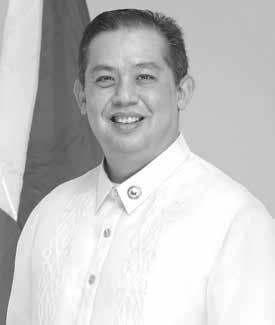
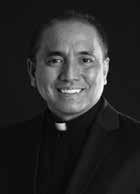
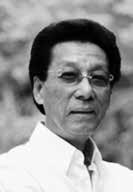
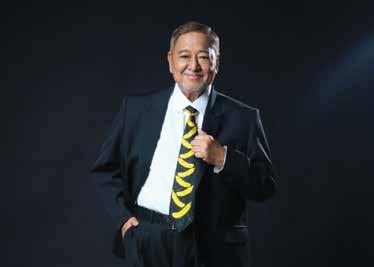
From top left, Rob Bonta, Jessica Caloza, Baltazar Fedalizo, Kenneth Mejia and Mark Pulido are among the Filipino American candidates who figured prominently in California’s June 2 primary. Mejia is on track to win reelection outright as Los Angeles city controller after clearing the majority threshold, while Bonta, Caloza, Fedalizo and Pulido are positioned to advance to the November general election, pending final certification of results.
Sponsored by JPMorganChase
— How to create generational wealth Your home is an investment
F or most Americans, owning a home has long been considered a cornerstone to building and preserving generational wealth. A home purchase often symbolizes more than just securing a place to live – homeownership can help anchor families, support longterm financial stability and fuel local economic growth.
If you currently own a home or if homeownership is one of your financial goals, it’s important to understand how your home can be a foundational pillar in helping you build and maintain generational wealth. A home can be an asset that appreciates over time as you build equity which can serve as a financial resource for you and your family for decades to come.
JPMorganChase shares more about the connection between homeownership and building generational wealth, and how you can make sure your home becomes, or remains, your most important financial asset.
Q: How does a home create generational wealth?
A: There are several perks to homeownership, many of which contribute to building wealth. Owning your home may be cheaper than renting in the long term if you have a mortgage with competitive rates; however, it’s important to keep in mind other home expenses, like insurance and taxes, when considering costs. Plus, since you own the home, that means you can build and tap into your equity for future expenses or profit when your home is sold.
Another way to think of homeownership as it relates to your financial picture is that it can influence your overall net worth. When you make monthly payments, you’re slowly owning more of your home and it can become an asset. On the other hand, if you rent, your monthly housing costs are just an expense for a place to live and you don’t own any of it when you leave. Put simply, owning a home may help you grow your money over time.
Q: Explain home equity and how building equity works.
A: The technical definition of home equity is the difference between the fair market value of your home and how much you still owe on your mortgage. Essentially, think of it as the part of your home’s value that you truly own. It’s made up of the amount you’ve already paid off, plus any increase in your home’s value. So, if you’re home’s value goes up, so does your equity and vice versa. Equity grows as you pay down your mortgage and, as I mentioned earlier, the market value of your home increases.
Q: How can this be beneficial financially?
A: There are a few ways. You can borrow against your home equity by taking out a loan, using your property as collateral to secure the
loan. There are a variety of ways you can do this such as through a home equity loan, home equity line of credit (HELOC) or a cashout refinance. You may use these funds to cover other expenses, like high-interest credit card debt, make home improvements, invest in another home or in an emergency. Home equity loans also tend to have more favorable terms than credit cards or other personal loans, potentially saving you money in the long run.
Q: What if you sell your home?
A: The more equity you have, the more you can profit from selling your home if you do so in the future. For example, if you’ve paid off your entire mortgage before you sell, you may get to keep all potential profits. If you haven’t paid off your mortgage, any profits will pay off what you owe and you’ll keep the remaining funds-the more home equity you have, the greater your profit could be.
Q: What other benefits come from owning your home?
A: Homeownership offers the potential opportunity for tax deductions. The interest you pay on your mortgage, insurance premiums, property taxes and even improvements to your energy efficiency may provide an opportunity for tax deductions. You can consult with your tax advisor if you’re looking to understand how buying a home may impact your taxes.
There’s no place like home
Homeownership has long been a powerful tool for building generational wealth in communities across the U.S. and can help you secure a solid financial future for yourself and your family. Your home is more than just the place where you rest your head— it can be your greatest financial asset.
For informational/educational purposes only: Views and strategies described in this article or provided via links may not be appropriate for everyone and are not intended as specific advice/recommendation for any business. Information has been obtained from sources believed to be reliable, but JPMorgan Chase & Co. or its affiliates and/or subsidiaries do not warrant its completeness or accuracy. The material is not intended to provide legal, tax, or financial advice or to indicate the availability or suitability of any JPMorgan Chase Bank, N.A. product or service. You should carefully consider your needs and objectives before making any decisions and consult the appropriate professional(s). Outlooks and past performance are not guarantees of future results. JPMorgan Chase & Co. and its affiliates are not responsible for, and do not provide or endorse third party products, services, or other content.
Jalen Brunson’s dad once played for Ginebra in the PBA
Before the Knicks captain became one of the NBA’s biggest guards, his father Rick Brunson made a brief Philippine basketball stop with Gordon’s Gin
by AJPress
JALEN Brunson is now one of the defining guards of his NBA generation: a New York Knicks captain, a two-time NCAA champion from Villanova and a second-round pick who became the face of one of basketball’s most demanding franchises.
But Filipino basketball fans have a fun fact to add to the Brunson story.
Long before Jalen became a Knicks star, his father, Rick Brunson, played briefly in the Philippine Basketball Association. The elder Brunson, now an assistant coach with the Knicks, suited up as an import for Gordon’s Gin, the Ginebra franchise, during the 1998 PBA Governors’ Cup.
It was a cameo, not a long PBA career. Rick Brunson appeared in one game, a do-or-die elimination matchup against Formula Shell on Nov. 6, 1998. In that lone outing, he finished with 21 points, five rebounds and seven assists before being replaced as the team’s import. For Filipino fans, the detail lands because of the team involved. Gordon’s Gin was part of the Ginebra line, one of the most followed franchises in Philippine basketball, then guided by legendary playing-coach Robert Jaworski. Even
SOUTHERN CALIFORNIA REGIONAL RAIL AUTHORITY
RFP No. MS349R-27 GENERATOR MAINTENENCE SERVICES
SCRRA is seeking bids for the maintenance of generators. Solicitation documents may be obtained at https://metrolinktrains.com/doing-business. Bids are due at 2:00 P.M. (PT) on 06/25/26 For further information, contact Dorothea Cantero, Sr. Contract Administrator, at (213) 452-0302 or CanteroD@ scrra.net. 6/6/26 CNS-4042968# ASIAN JOURNAL (L.A.)
York Knicks star Jalen Brunson, is seen during his brief 1998 PBA stint with Gordon’s Gin brief imports can remain part of the country’s basketball memory, especially when they passed through Ginebra.
The connection became more charming years later, when Jalen Brunson visited Manila with Team USA for the 2023 FIBA Basketball World Cup. Asked about his father’s brief PBA appearance, the younger Brunson appeared surprised to learn that Rick had played in the Philippines before him.
That moment gave Filipino fans a local thread to one of the NBA’s most prominent current players: Jalen Brunson was not the first Brunson to play on Philippine soil. Rick Brunson’s larger career
was in the NBA. Undrafted out of Temple, he worked his way into a nine-year NBA career and appeared in 337 regular-season games. After his brief Philippine stop, he returned to the United States and became part of the Knicks team that reached the 1999 NBA Finals.
Jalen has since built a far larger basketball profile of his own. He won national titles at Villanova, began his NBA career with Dallas, signed with New York in 2022 and was named the Knicks’ 36th captain in 2024.
The PBA footnote does not define Jalen Brunson’s career. It simply gives Filipino fans a small, delightful claim on the family story.
Pentagon chief cites Philippines...
PAGE 1
Manila and Washington reaffirmed the 1951 Mutual Defense Treaty and said it applies to armed attacks on either country’s armed forces, aircraft and public vessels, including coast guard vessels, anywhere in the South China Sea. The alliance also rests on the Visiting Forces Agreement and the Enhanced Defense Cooperation Agreement, which allow rotational access, joint training and expanded military cooperation. U.S. and Philippine officials have identified those frameworks as central to improving interoperability and supporting a more modern Philippine defense posture.
Hegseth said Marcos had approved a budget that included a 12% increase in defense spending. Philippine budget materials for 2026 list P423.7 billion for na-
tional defense, an allocation the Department of Budget and Management has linked to sovereignty protection amid evolving geopolitical conditions.
Hegseth’s comments on China were direct but calibrated. He cited Beijing’s military buildup as a source of concern, while also saying the United States seeks a stable relationship with China and more regular military-to-military communication to reduce the risk of miscalculation. The significance of Hegseth’s remarks was not that Manila has completed its defense transition, but that Washington sees the Philippines moving in the direction it now expects of key allies: higher defense investment, closer operational coordination and a larger role in sustaining deterrence in the Indo-Pacific. n
From Stepping Away to Returning to the Screen Yifei Sun Begins a New Chapter on the International Stage in the Name of Love
by Chen haiyang
IN China’s film and television industry, Yifei Sun has long been recognized as an actress with both talent and elegance. Born in Nanchang, Jiangxi Province, she demonstrated outstanding artistic talent from an early age. At the age of 10, she was admitted to the affiliated secondary school of the Beijing Dance Academy, where she received systematic and rigorous ballet training. She later joined the Guangzhou Ballet Troupe. Years of stage experience gave her graceful physical presence and steady expressiveness, laying a solid foundation for her later transition into film and television acting. In 1998, Yifei Sun resigned from the Guangzhou Ballet Troupe and was admitted to the Acting Department of the Beijing Film Academy, officially beginning her transformation from a ballet dancer to a screen actress. In 2000, she made her first onscreen appearance in director Hu Guan’s television film Get in the Car and Go, starring alongside Bo Huang, and thus entered the entertainment industry. She later earned a nomination for Best Supporting Actress at the 25th Hundred Flowers Awards for her performance in the film A Fatal Strike, and received the Special Contribution Award at the Montreal World Film Festival in Canada for her role in Sunrise and Sunset, gradually establishing herself as a talented and accomplished actress. Throughout her subsequent acting career, Yifei Sun remained active in both film and television. Whether portraying a sincere and natural female soldier in Scorching Sun, the complex character Xiaoyun Jiang in The Age of Weddings, or a warm and humane role in Angel Heart alongside other veteran actors, she impressed audiences with her delicate and precise performances. Her works not only enjoyed strong reputations but also demonstrated her deep understanding of emotional nuance and character development. However, after her career had steadily risen, Yifei Sun did not blindly pursue greater exposure. Due to family reasons, she chose to step away from the screen for a time and devote more of her life to her family. For her, this was not an abandonment of acting, but rather a period of reflection and renewed understanding of
life. As she once emphasized, acting is an art that requires accumulation; actors must not only complete their roles, but also convey emotion and move audiences through those roles. Her time away from the camera allowed her to observe life anew, understand family more deeply, and gain a richer appreciation of “love” and “responsibility.”
It was precisely because of this that, when she encountered the documentary series Abandoned Children in the United States, her long-settled emotions were reignited. The documentary focuses on the lives and growth of children from special-needs and vulnerable groups, telling real stories of their struggles and hopes. Deeply moved by these children’s experiences, Yifei Sun realized that the camera could do more than portray fictional characters — it could also give a voice to marginalized communities. She therefore chose to return to the screen in the United States, bringing her years of acting experience, humanitarian concern, and maternal warmth into the project.
After relocating to the United States in 2023, Yifei Sun devoted most of her energy to the filming and promotion of Abandoned Children. This return differed from her past work in commercial film and television. It was more like a new beginning driven by love and responsibility. She had once faded from public view due to family reasons; now, because of her care and compassion for children from special communities, she once again stepped in front of the camera. For her, returning to the screen was not merely a professional comeback, but a choice to respond to reality through art and to convey compassion through images. During the filming process, Yifei Sun approached every scene with the professionalism of an experienced actress, while also actively participating in the promotion of the film. She hopes that more people will come to understand the circumstances of special-needs children through the documentary. Her performance is no longer simply about portraying a character; instead, it carries emotion and warmth within real stories, allowing audiences to see lives that are often overlooked. Her dedication has also received recognition from across society. In April 2025, Yifei Sun
Philippine Senate power struggle tests Congress...
PAGE 1
ers said they were prepared to return if the President calls Congress back during the June 6 to July 26 adjournment period. Their position does not amount to a formal House request, but it reflects growing concern that the Senate standoff could affect the broader legislative calendar.
The dispute began after two days in which Sen. Alan Peter Cayetano and his allies did not appear for plenary sessions, preventing the Senate from conducting business and prompting minority senators to call for his resignation. Cayetano had said his bloc’s absence was intended to protect ongoing Senate investigations from interruption or political interference.
The impasse ended on June 3, when Sen. Francis “Chiz” Escudero appeared on the floor, allowing 12 senators opposed to Cayetano to declare a quorum and reorganize the chamber. The senators present elected Sen. Sherwin “Win” Gatchalian Senate president pro tempore and designated him to exercise the powers of Senate president.
Malacañang later recognized Gatchalian as acting Senate president, saying it respected the decision of the new Senate majority. Cayetano rejected the proceedings and maintained that he remains Senate president, arguing that the session and leadership change were invalid.
The result is a Senate able to act, but under procedural uncertainty. Gatchalian’s side is exercising
was invited to attend the ChinaUS Business Summit, where she received the 4th Compassionate Angel Award from the A Perfect Love, a California-based 501(c) (3) organization. The award honors individuals who pay attention to vulnerable groups through artistic creation and convey care through concrete action. Yifei Sun’s recognition is not only an affirmation of her personal artistic journey, but also an acknowledgment of her efforts to use film to bring attention to special-needs children and promote social compassion.
From the ballet stage to the big screen, from Chinese film and television works to American documentaries, Yifei Sun’s artistic path has always been accompanied by breakthrough, reflection, and responsibility. She once stepped away from the screen for her family, and it was also her family experience that gave her a deeper emotional understanding, enabling her to develop even stronger empathy for children from special communities. Today, with Abandoned Children as a new starting point, she returns to the international screen, using the camera to connect Chinese and American cultures while conveying a warm and compassionate respect for life.
Yifei Sun’s story is not merely the journey of an actress moving from China to the international stage. It is also the story of a female artist rediscovering her identity among family, career, and social responsibility. She opened the door to art through dance, built the foundation of her career through film and television, and now responds to real-world concerns through documentary filmmaking. Her return to the screen is, in every sense, a new beginning in the name of love.
recognized leadership functions involving schedules, committee organization and internal operations. Cayetano’s bloc continues to challenge the validity of that authority and asserts that the prior leadership remains in force.
That uncertainty became visible on June 4, when senators aligned with Cayetano proceeded with a Blue Ribbon Committee-style hearing on alleged irregularities in public works and flood-control projects despite objections from the new Senate majority.
Gatchalian and newly designated Blue Ribbon Committee chair Sen. Erwin Tulfo said no official hearing had been scheduled, while the Cayetano bloc maintained that the reorganization was invalid and pushed ahead with its inquiry.
The distinction is central to understanding how the Senate is functioning. The Cayetano bloc has continued to assert authority, but its June 4 activity was a contested committee proceeding, not a regular plenary session of the chamber. The Gatchalianaligned bloc, by contrast, has acted through the Senate leadership structure recognized by Malacañang, while Cayetano’s side says that structure was unlawfully installed.
The legal dispute centers on quorum. The Integrated Bar of the Philippines and several legal experts have cited the Avelino doctrine, the 1949 Supreme Court ruling often invoked in Senate quorum disputes, in support of the June 3 session’s validity. They said the chamber should focus on
its constitutional responsibilities, including impeachment proceedings involving Vice President Sara Duterte, rather than allow the leadership row to delay Senate action.
Former Senate President Franklin Drilon has said Supreme Court intervention may be needed if the leadership row is formally challenged. His view points to the central issue now hanging over the chamber: whether the June 3 reorganization stands unless a court rules otherwise, or whether Cayetano’s challenge can prevent Gatchalian’s leadership from being treated as settled. The stakes extend beyond Senate titles. The chamber is expected to handle proceedings connected to Duterte’s impeachment case. Duterte has denied the allegations against her. Control of the Senate presidency affects who presides, who controls the calendar, how rules are interpreted and how committees are organized.
A special session, if called, would allow Congress to act on delayed legislation and appointments during the break, but it would not by itself settle the Senate leadership dispute. That question remains for the Senate to resolve internally or, if formally challenged, for the Supreme Court to decide.
Until then, the chamber will continue to operate under contested authority: Gatchalian’s side exercising the recognized leadership functions, and Cayetano’s side challenging the validity of that authority. n
ReelShort’s Record-Breaking Hit The Virgin and the Billionaire Surpasses 152.9 Million Plays, Powered by the Invisible Artistry of Audio Master Murphy Yameng
Li
by L exie Y ao
Beijing/Los Angeles – November 28, 2025 – As ReelShort’s flagship series The Virgin and the Billionaire storms past an astonishing 152.9 million global plays, a new kind of hero is emerging from behind the camera: the elite audio professionals who deliver cinematic sound quality at breakneck speed.
At the forefront of this sonic revolution stands acclaimed production sound mixer and re-recording artist Yameng Li, known on set as Murphy Li. In an industry that now produces up to eighty complete episodes in just eight days, with teams delivering five to eight episodes daily, there is no longer any room for audio fixes in postproduction. Every breath, every whisper, every shattering glass must be captured perfectly in the moment, under relentless pressure.
On ReelShort sets, where crews face as many as two hundred shot changes in a single day, Li transforms into what her colleagues call the “Sound Commander.”
The instant she puts on her monitoring headphones, the soft-spoken engineer becomes the calm epicenter of controlled chaos, adjusting equalization in real time, layering subtle foley, and shaping dialogue to compress entire emotional journeys into fractions of a second.
“However short the drama,” Li says, “it must still give the audience a complete breath.”
That guiding principle, blending uncompromising filmgrade standards with the agility demanded by vertical shortform content, has made her one of the most in-demand audio artists in the global short-drama phenomenon.
Her remarkable career spans
award-winning feature films, documentaries, blockbuster sequels, English-language festival shorts, and even triple-A game cinematics. From the Tokyo International Film Festival’s Best Artistic Contribution winner
An Issue Without Question, to the haunting silence of the documentary Home (Best Documentary, 28th Beijing College Student Film Festival), to the thunderous soundscapes of Journey to the West: Conquering the Demons 2 (37th Hong Kong Film Awards), and the breath-driven storytelling of the English-language short
The Blind Zone (official selection at Houston, New York, and Los Angeles international film festivals), to the 2025 Telly Awards Gold-winning game CG for Zenless Zone Zero, Li has repeatedly proven that sound can carry a story as powerfully as any image. Today, she brings that same depth to ninety-second scenes, creating what she calls “aftertremors in the audience’s mind” that linger long after the screen goes dark. With Chinese-produced short dramas now exceeding 148
million overseas downloads and ReelShort leading the charge in the North American market, flawless audio has become a decisive strategic advantage. While artificial intelligence tools accelerate dubbing and accessibility features, the nuanced, human-crafted sound design delivered by artists like Li remains the irreplaceable element that turns casual viewers feel as goosebumps and emotional connection.
“American audiences are embracing these fast-paced, high-emotion stories in record numbers,” said ReelShort executive producer Jane Chen.
“What many don’t realize is how much of that magic comes from invisible artists like Murphy Li, who make every heartbeat, every kiss, and every dramatic slap feel utterly real.” As short-form vertical drama races toward becoming the world’s dominant entertainment format, the work of Li Yameng and her fellow audio architects proves that even in the fastest corner of modern media, true excellence is still found in the details you cannot see, but will always hear.
Former NBA guard Rick Brunson, father of New
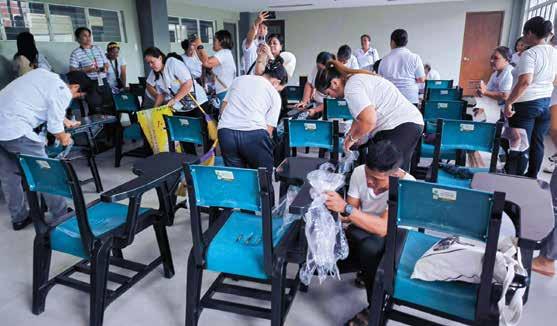
COMMUNITY EFFORT. Parents of Pantawid Pamilyang Pilipino Program beneficiaries join the kick-off of “Brigada Eskwela” (School Brigade) at General Licerio Geronimo Integrated High School in Barangay Bagong Silangan, Quezon City on Monday, June 1, 2026. The program helps prepare schools for the opening of classes on June 8. PNA photo by Joan Bondoc
Bulacan court orders arrest of Curlee Discaya, 10 others in flood-control malversation case
Ombudsman case over P53.9 million Calumpit project deepens legal scrutiny of contractor couple and public works officials
by AJPress
MANILA — A Bulacan court has ordered the arrest of contractor Pacifico “Curlee” Discaya II and 10 others in a malversation case involving a P53.9-million flood-control project in Calumpit, the latest turn in the government’s widening examination of public infrastructure contracts.
The order by Bulacan Regional Trial Court Branch 20 followed the filing of graft and malversation charges by the Office of the Ombudsman against Discaya, his wife, Cezarah Rowena “Sarah” Discaya, a company officer and several Department of Public Works and Highways personnel.
The case centers on DPWH Contract ID No. 22CC0058, which covered the rehabilitation of a river protection structure in Calumpit.
According to the Ombudsman, transactions under the project allegedly gave St. Timothy Construction Corp. unwarranted benefits totaling P53,917,731.92 and caused financial injury to the government.
The accused named in the Ombudsman case are the Discaya couple; Ma. Roma Angeline Discaya Rimando of St. Timothy Construction Corp.; and DPWH Bulacan 1st District Engineering
Office personnel Merg Jaron Caparas Laus, Brice Ericson Diaz Hernandez, Jaypee De Leon Mendoza, Ernesto Cosay Galang, Norberto de Leon Santos, Lorenzo Alcoriza Pagtalunan, Juanito Coronel Mendoza and Floralyn Yutuc Simbulan.
The Ombudsman alleged that payment for the project’s first billing was released despite an unapproved disbursement voucher. It also alleged that full payments for dredging and embankment items were made without sufficient basis for computation or supporting documents to establish project accomplishment.
The charges include graft under Section 3(e) of Republic Act No. 3019, or the Anti-Graft and Corrupt Practices Act, and malversation of public funds through falsification of public documents under the Revised Penal Code. Recommended bail for the graft charge was set at P90,000 for each accused. No bail was recommended for the complex malversation charge, according to the filing.
The Bulacan arrest warrant covers Curlee Discaya, Sarah Discaya, Rimando, former DPWH engineers Hernandez and Mendoza, and six others: Laus, Galang, Santos, Pagtalunan, Juanito Mendoza and Simbulan.
Interior Secretary Jonvic Remul-
la said Curlee Discaya, who has been detained in the Senate after being cited in contempt during a Blue Ribbon Committee inquiry, would be turned over to the Department of the Interior and Local Government on Monday, June 8, and then brought to Bulacan. The Pasay City Regional Trial Court earlier upheld the Senate’s authority to issue the contempt citation and dismissed Discaya’s petition questioning his detention.
The Bulacan case comes amid separate pending matters involving the Discayas. Sarah Discaya has been reported detained at the Lapu-Lapu City Jail Female Dormitory in connection with a Davao Occidental graft and malversation case over an alleged P96.5-million flood-control project, where the defense has disputed the “ghost project” characterization. The couple is also facing BIR tax complaints involving P7.18 billion in alleged liabilities, separate from the Ombudsman cases.
The filing of charges and the issuance of arrest warrants mark procedural steps in a criminal case, not findings of guilt. Prosecutors must still prove the allegations in court, where all accused are entitled to the presumption of innocence unless convicted beyond reasonable doubt.
House expels Cavite Rep. Kiko Barzaga...
the son of the late Cavite Rep. Elpidio “Pidi” Barzaga Jr., had already been suspended twice for 60 days before the House imposed the stronger penalty of expulsion. The ethics committee, chaired by 4Ps party-list Rep. JC Abalos, said previous sanctions had failed to stop conduct it found disruptive to House proceedings.
The Constitution allows each chamber of Congress to determine its rules, punish members for disorderly behavior and, with the concurrence of two-thirds of all members, suspend or expel a member. Suspensions are limited to 60 days, making expulsion the most severe disciplinary sanction available to the House.
The action left Cavite’s 4th District, which covers Dasmariñas, without a sitting representative.
The Commission on Elections has said Barzaga’s expulsion does not automatically disqualify him from seeking public office again.
Comelec Chair George Garcia has described the expulsion as administrative in nature and not, by itself, a permanent bar from running.
Comelec has been studying possible dates for a special election, including August 22 or August 29, 2026, but no final schedule had been formally announced as of June 5. The poll body has also said it would have to address funding because the vacancy was not part of its earlier electoral preparations.
Separately, the National Bureau of Investigation filed another complaint involving Barzaga on the same day as the expulsion vote. NBI Director Melvin Mati-
bag asked the House to sanction Barzaga over social media posts about the Senate shooting incident, saying the posts accused NBI personnel of entering the Senate for an alleged assassination attempt. The bureau also said Barzaga may face criminal complaints. That matter is distinct from the House ethics case that led to his expulsion and remains pending as a separate issue.
The expulsion is not a criminal conviction and does not resolve any separate civil, criminal or administrative case outside Congress. Its immediate consequence is a vacancy in Dasmariñas; its broader consequence is institutional, with the House using its strongest disciplinary power to define the limits of member conduct inside the chamber and in the political space beyond it. n
On May 22, U.S. Citizenship and Immigration Services announced that it would grant adjustment of status only in “extraordinary circumstances.” The announcement said the immigration system is designed for temporary visitors to leave when their authorized stay ends and that a temporary visit should not function as the first step in the green-card process.
That language prompted immediate concern because adjustment of status has long been used by eligible applicants in family-based, employment-based and other categories. Immigration attorneys said the announcement created uncertainty over how broadly the new policy would be applied.
The Department of Homeland Security later clarified that the policy would not prevent applicants who legitimately and properly qualify from obtaining a green card, though some applicants may have to process their cases overseas through the State Department. DHS also said the change would not have a noticeable impact on highly qualified applicants and skilled professionals who have followed the law.
The clarification does not erase the significance of the USCIS policy memo. The May 21 memorandum instructs officers to evaluate adjustment of status as a discretionary benefit and to consider whether consular processing abroad is available to the applicant. In practical terms, immigration lawyers said the guid-
ance could give officers more room to ask why an applicant should be allowed to complete the process inside the United States rather than through a U.S. consulate overseas.
For applicants, the practical effect remains unsettled. The impact may depend on visa category, immigration history, family relationship, employment basis, length of stay, unlawful-presence issues, humanitarian factors and whether the applicant is found to merit a favorable exercise of discretion.
The uncertainty is especially important for immigrant communities with large numbers of family- and employment-based applicants, including Filipinos.
The policy does not appear to impose one uniform rule on all green-card applicants. But it may expose some applicants to additional questions, requests for evidence or pressure to complete the process abroad.
Immigration lawyers said some applicants have already faced questions about why they sought adjustment of status in the United States instead of applying through a U.S. embassy or consulate in their home country.
Some have also reported additional requests tied to financial support, public-charge concerns and other case-specific issues.
The stakes are substantial. In fiscal year 2024, the most recent complete year available in federal annual data, nearly 1.36 million people became lawful permanent residents. More than 780,000 adjusted status from within the United States. Partial 2025 data indicate the pathway remained
Trump alleges cheating...
1
ue processing provisional ballots, same-day registration ballots and ballots requiring signature verification or voter correction.
County election officials must complete final official results by July 2. The Secretary of State is scheduled to certify statewide results on July 10.
California Secretary of State Shirley Weber said after polls closed that ballot counting would continue after Election Day and that counties were responsible for verifying and tabulating eligible ballots.
Mail voting is widely used in California, where every active registered voter receives a ballot by mail. Election results reported
on election night are unofficial and may change as additional eligible ballots are processed.
The allegation renewed Trump’s criticism of mail voting and California’s vote-counting timeline, which he has argued undermines confidence in election results. California election officials have said the timeline reflects legal requirements for counting valid ballots.
The results remain unofficial while counties complete the canvass required under California law. Trump has not presented public evidence to support his allegation, and neither state election officials nor federal law enforcement authorities have confirmed wrongdoing. (AJPress)
heavily used, but full-year figures have not yet been published in the same annual format.
The administration has framed the guidance as a return to the intended distinction between temporary stays and permanent immigration. Immigration advocates and legal-service organizations have warned that the announcement could discourage lawful applicants, separate families or create avoidable delays for people already pursuing permanent residence through existing legal channels.
The new policy signals a stricter and more discretionary review of some green-card applications filed from inside the United States.
Applicants with pending or planned cases are being urged by immigration attorneys not to rely on broad public summaries. The effect of the memo will likely depend on the facts of each case and on how USCIS applies the guidance in interviews, requests for evidence and final decisions. (AJPress)
LACMTA will receive Bids/ Proposals for DR142250PUMP ASM - POWER STEERING, CONTINUUM W/ELECTRIC MOTOR (DANFOSS) electronically via bids@metro. net. A Pre-Bid conference will not be held. All Bids must be submitted electronically to LACMTA as per the IFB solicitation packet on or before 2:00 p.m. Pacific Time on Monday, June 29, 2026, at which time bids will be opened and publicly read. Bids received after the above date and time may be rejected and returned unopened. Each Bid must be sealed and marked Bid No. DR142250. For a copy of the Proposal/ Bid specification visit our Solicitation Page on our Vendor Portal at https://business.metro.net or for further information email Marc Margoni at margonim@metro.net. 6/6/26 CNS-4048839# ASIAN JOURNAL (L.A.) LOS ANGELES COUNTY METROPOLITAN TRANSPORTATION
Kumuha ng edukasyon at suporta para makabuo ng mas magandang kinabukasan para sa iyong sarili at sa iyong komunidad.
Sa isang California community college, maaari kang makatanggap ng serbisyo para sa estudyante, tulong-pinansyal, at mga scholarship para matulungan kang maabot ang iyong mga layunin.
Pumili mula sa 116 na community college, kabilang ang higit sa isang dosenang may on-campus na tirahan at isa na ganap na online. At dahil may higit sa 200 na career education programs at garantisadong transfer sa nakalaan na puwesto sa isang kalahok na four-year university, makakakuha ka ng edukasyon na kailangan mo para magtagumpay.
Alamin pa at
FeAtures OPiniOn
Pride month reminds us no one should be shamed into silence
PRIDE Month is observed every June, but its meaning should not be reduced to a calendar observance, a parade route or the rainbow colors that appear across public spaces each year. At its core, Pride carries a lesson every community must continue to learn: respect is not optional, acceptance is not weakness, and human dignity should never depend on public approval.
Pride commemorates the June 1969 Stonewall uprising in New York City, a defining moment in the modern LGBTQ+ rights movement. What began as resistance to harassment and exclusion became part of a broader demand for recognition, safety and equal treatment. It reminded the world that no community should have to plead for the right to exist openly.
Editorial
That history matters because progress often begins when people pushed to the margins refuse to disappear. Pride Month asks the public to see LGBTQ+ individuals not as issues to be debated, but as sons and daughters, neighbors, co-workers, friends, relatives and citizens whose lives carry the same human worth as anyone else’s.
Respect does not require everyone to share the same beliefs, language or life experience. It requires the discipline to listen before condemning, to speak without demeaning, and to recognize that disagreement must never become permission for cruelty.
Acceptance goes deeper. It means making space for people to live without shame or fear. It means
today are con-
vinced that politics has become too consuming, too personal, too performative, too theatrical – and increasingly disconnected from the real problems ordinary people face.
In any democracy, politics is essential. Debate is healthy, accountability is necessary and oversight is indispensable. But when politics begins to overwhelm governance itself, the nation eventually pays a heavy price.
That is why an article I recently read discussing concerns over the Philippine economy struck a nerve. The piece warned that international observers are noticing signs of slowing momentum, declining investor confidence and increasing uncertainty about the country’s long-term direction.
Whether one agrees fully with its conclusions or not, the article reflects something important: the outside world is watching us closely.
Investors monitor political stability, global institutions scrutinize governance and international businesses observe pre-
No Free Lunch
DISGRACEFUL,” “outrageous,” “shameless,” “hypocrites,” “inutile,” “grandstanding,” “power-tripping,” “arrogant,” “greedy opportunists,” and more are words flying about nowadays to describe the Philippine Senate, or some members thereof. Someone in my family humorously remarked, “Ang sarap nilang tirisin” (I’d love to crush them between my thumbnails, like a flea or bedbug, which is what she in effect likens them to—tiny and repulsive.)
Many of us look back with nostalgia to when members of that once august chamber truly lived up to that adjective, defined by my dictionary as “inspiring awe and reverence, majestic, dignified, worthy of respect.” Those who now lord it over that chamber are—in the eyes of most of us, I believe—the diametric opposite. Instead of inspiring awe and reverence, they invite rebuke and ridicule. Rath-
a young person should not have to choose between honesty and belonging. It means families, schools, workplaces, faith communities and civic institutions should not become places where people are forced to hide parts of themselves in order to be safe. For Filipino and immigrant communities, where family, faith and reputation often carry enormous weight, the lesson is especially meaningful. Love cannot be limited only to the child who conforms, the relative who is easy to explain, or the neighbor whose life mirrors our own. A family’s true strength is tested not when everyone agrees, but when difference asks for compassion.
Pride Month does not ask society to abandon conviction. It asks society to reject humiliation. The ability to hold firm beliefs while still protecting another person’s humanity is not moral confusion. It is maturity. The work of acceptance is often quiet. It happens when a parent chooses to listen, when a friend refuses to mock, when a workplace protects fairness, and when a community stops treating someone’s identity as a scandal. These acts may not make
Intolerable politics may kill us in the end
dictability. Allies watch whether we can sustain long-term economic growth while navigating a dangerous and uncertain geopolitical environment.
Increasingly, the question being asked is simple: can the Philippines remain focused on nation building – or will politics consume everything?
The unfortunate reality is that we live at a time when politics dominates almost every aspect of public life. Senate hearings, social media, press conferences, online warfare – all create a nonstop cycle of political confrontation that often overshadows more urgent issues affecting the daily lives of Filipinos.
Food prices are getting more expensive; traffic and infrastructure deficiencies continue to hurt productivity; flood control remains inadequate in many areas; energy costs are among the highest in Asia; education gaps continue to widen; poverty and inequality persist and health care systems are under severe strain. These issues are not glamorous, and don’t spark viral headlines or dramatic political moments. Yet they are the very issues that determine whether a nation succeeds or stagnates.
Unfortunately, the dangerous
political environment today creates the impression that winning the next political battle is more important than winning the economic future.
History repeatedly shows that countries rarely collapse overnight because of one single event. Decline usually happens slowly – through distraction, division, institutional erosion and the inability to focus national energy on long-term priorities. We should not allow this to happen.
The fact is, we are in a potentially historic position globally. The strategic importance of the Philippines has never been greater. The world now recognizes the vital importance of the Indo-Pacific region. The growing partnership between the Philippines and the United States has opened major opportunities not only in defense but also in trade, technology, infrastructure, energy and investment. Japan has become one of our most reliable partners. Australia, South Korea, Europe and other like-minded nations are deepening cooperation with the Philippines. Even major multinational companies are increasingly looking at Southeast Asia as supply chains diversify away from exu PAGE 8
When politics consumes a nation
er than be admired, they are despised for shaming the nation. To me, listening to them talk can be stomach-turning. The recent events in the Senate have made us all see quite graphically how the country’s political system has degenerated through the years, rather than progressed and matured toward bringing us closer to a prosperous, secure, and nurturing republic. There seems to be no better example than the Philippines of how the politics of power can consume a nation to the point of threatening a slide into a failed state. In the past, I’ve called politics our national malady, because it’s not only those wielding political power who are consumed by it, but also ordinary citizens who are spectators, victims, and enablers all at the same time. And it’s that pervasiveness of politics in our daily lives that makes it so hard for us to get out of the quagmire we have been trapped in as a nation for too long. As an economist, I’ve strug-
gled to explain our stigma of consistently ranking at or near the bottom on so many measures of socioeconomic well-being. I’ve constantly written about them over the past 23 years of this column, and addressed them in countless talks with various audiences. Be it price inflation, unemployment, average income or gross domestic product, poverty, export performance, agricultural output including agri-based exports, foreign direct investments, exchange rate stability, quality of infrastructure and logistics, power cost, ease of doing business, malnutrition and child stunting, education outcomes, and much more, the list of things where we are a miserable loser and bottom-dweller just goes on and on. Are we such a God-forsaken nation that we find ourselves at the tail end of nearly every measure that matters for human welfare and national well-being? How can we say so, when we are in u PAGE 8
headlines, but they can change the life of someone who has long carried fear in silence. Pride Month, then, is not only a celebration of visibility. It is an invitation to examine how we treat people when their lives challenge our assumptions. It calls us to build communities where dignity is not conditional, where respect is practiced even before full understanding, and where acceptance becomes a bridge rather than a battleground. In the end, Pride teaches a simple but demanding truth: people do not need to be identical to belong. They need to be seen, protected and treated as fully human. That is not only an LGBTQ+ lesson. It is a lesson for every family, every faith tradition, every neighborhood and every nation that claims to value justice. (AJPress)
IF nations were judged purely on strategic potential, the Philippines should already be among the superpowers of Asia. Few countries possess the strategic advantages the Philippines has.
For starters, the country has one of the youngest English-speaking workforces while those of major economies are ageing. It has the fifth largest unmined mineral stockpiles. It has a 2.2 million global diaspora which can be leveraged for soft power and cultural influence. And as the world’s ninth largest semiconductor exporter, the country is well integrated in critical supply chains. Moreover, the country sits on the first island chain which gives it enormous geopolitical value in the competition between the U.S. and China. Wherever the Philippines tilts changes the balance of power in Asia and, by extension, the world.
On paper, the Philippines should possess Singapore’s economic vitality, South Korea’s industrial might and Japan’s geopolitical gravitas. Instead, the country remains trapped in underperfor-
mance, institutional weakness and political dysfunction.
The Philippine circus You see, when clowns are elected into office, you get a circus. And that is what the Philippine government has become. The Senate provides the chaos, tragedy and entertainment. Congress is a chamber of stealing jesters. The President is like the pampered elephant who does nothing but parade when the show starts and ends. This is not me being harsh.
This is me expressing disgust over what Philippine governance has become.
Nations rise or decline according to the quality of its leaders. Yet, the Filipino continues to entrust itself to leaders who, in many cases, won’t even qualify for entry level jobs in serious private corporations.
No private company will hand control of their enterprise to individuals chosen for their celebrity status, family name or entertainment value. No competent board of directors will appoint executives with weak academic backgrounds, little managerial experience and no demonstrated record of institutional achievement. No company will hire those with cri-
minal cases and those whose loyalty can be bought. Yet these types find jobs in the highest echelons of government.
The result is exactly what you would expect. The country is governed by politicians who campaign like entertainers, think like influencers and govern like posers – at least the vast majority of them. At precisely the moment when the Philippines should be aggressively industrializing, modernizing infrastructure, strengthening energy and food security and climbing the technology value chain, the country instead drifts from one political spectacle to another without any coherent long-term national vision. The President seems unperturbed and simply allows the country to drift. He evidently stopped hustling hard after he won the elections.
The deeper problem is not incapacity or incompetence. It is the complete absence of seriousness towards nation building and the total preoccupation with political survival. History repeatedly demonstrates that great nations are built by highly capable leaders. Singapore and South Korea did not u PAGE 8
RECENT debates on inflation, interest rates, and fiscal policy reflect growing concern about the Philippine economy amid global uncertainty and rising energy prices.
The continuing tensions in the Middle East have once again exposed the vulnerability of oil-dependent economies. Higher fuel prices affect electricity costs, transportation expenses, and food inflation across the country. At the same time, the Philippines continues to face long-standing structural challenges: slow infrastructure delivery, overlapping regulations, and bureaucratic inefficiency.
These concerns are real and deserve serious attention.
But beyond macroeconomic debate, perhaps the more urgent question is this: How can the Philippines immediately unlock productivity already trapped within its own economy?
In many ways, the Philippine
economy resembles a large water tank with multiple leaks. Policymakers often focus on expanding the tank through new programs and stimulus measures, while many existing inefficiencies continue draining productivity, investment, and growth.
Yet the country already possesses major economic strengths: strong overseas remittances, a globally competitive business process outsourcing sector, growing tourism potential, abundant natural resources, and a large domestic consumer market.
The Philippines does not lack opportunity. What it needs is faster execution and a more efficient environment for investment and entrepreneurship.
Productivity is not created only through large macroeconomic programs. It is also built through reliable electricity, efficient logistics, modern cold chains, and faster business execution.
One clear example is renewable energy and battery storage.
As electricity prices remain high, more households and businesses
are turning to solar and battery systems to reduce costs and improve energy security. Financing support from institutions such as Social Security System and Government Service Insurance System could help accelerate adoption further. Distributed solar and storage systems can lower electricity expenses, reduce inflationary pressure, and improve energy resilience nationwide. Likewise, decentralized coldchain systems can reduce agricultural and fishery losses, particularly in island provinces and rural communities where farmers and fishermen often lose income because products cannot be preserved efficiently.
These are not merely commer
The
Cielito F. Habito
babe’s eye view
Babe Romualdez
The Corner oracle Andrew J. Masigan
MANY Filipinos
When leaders curse: Its impact on the national psyche
Photo by Ryan Baldemor/The Philippine STAR by Dr rafael r. Castillo Philstar.com
Can a Senate hearing run from behind bars?
Zoom can do a lot of things, but it won’t shield you from accountability
by Carl Martin agustin Inquirer.net
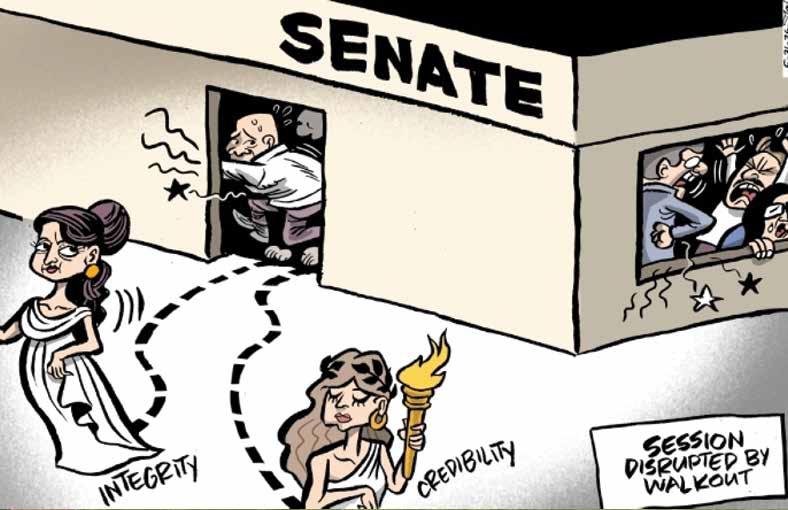
A COUP, a shooting, and a hunt for an on-the-run senator, all within the span of a few days. The Senate is, without a doubt, in flux. But instead of restoring public trust in our leadership, they have done everything but that. Case in point:
On May 12, Senator Robin Padilla took issue with Senator Kiko Pangilinan’s tone and threatened to file an ethics complaint against the minority member.
Meanwhile, on May 25, Senator Imee Marcos, during her privilege speech, showed a video alleging ongoing efforts promoting a constitutional assembly plot—to which several Senators described the presentation as “propaganda,” “fake news,” and “conspiracy.”
Now, with Vice President Sara Duterte’s impeachment in view, the Senate turns to its latest priority: Can Senators attend work through Zoom?
A fragile Senate Last Tuesday, on May 26, the minority bloc walked out of the plenary session in response to the majority’s efforts to expedite a proposal allowing members of the Senate to attend and vote remotely. Former Senate President Pro Tempore Panfilo “Ping” Lacson, who kickstarted the debate, questioned why the committee on rules was bypassed—with the proposal already being discussed in plenary.
According to our legislative process, after a bill goes through its first reading (in this case, when Senator Rodante Marcoleta introduced the proposed bill on May 11, 2026), the committee conducts hearings and consultation meetings before approving it with or without amendment. It is only then that it is scheduled for a second and third reading. And if approved, it is passed down to the House of Representatives.
However, according to Senate President Alan Peter Cayetano, they did not need to go through that process because the proposed bill was simple enough to be discussed in plenary. This prompted Senator Pangilinan to take issue with the apparent expediting, saying, “Why are we railroading this process? I have a number of issues that I’d like to raise regarding this motion.”
After Senate President Cayetano continued in spite of these protests, the minority bloc walked out, leaving behind 12 Senators on the floor, forcing an adjournment due to a lack of quorum—basically, the minimum number of members required to be present at a meeting.
Robinhood’s charity
A fierce supporter of said motion, Senator Padilla invoked force majeure on May 27—claiming that the intensifying El Niño, as
well as the ongoing war in the Middle East, are valid circumstances that should allow Senators to attend work remotely.
“El Niño… but I don’t know how that [will] affect whether a senator doesn’t have to come in. Because it’s hot?” said Senator Erwin Tulfo in a television interview following the plenary session.
According to the Cambridge Dictionary, force majeure refers to unexpected events that prevent someone from carrying out their legal obligations. This is echoed in Article 1174 of the Civil Code of the Philippines, which classifies “force majeure” as “fortuitous events,” further stating that “no person shall be responsible for those events which could not be foreseen, or which, though foreseen, were inevitable.” Simply put, under force majeure, public officials aren’t held accountable for failing to complete their duties in the event of circumstances that prevent them from doing so.
For Senator Risa Hontiveros, force majeure applied to circumstances such as the COVID-19 pandemic, which physically prevented the Senate from operating as usual. She also shared that these global events shouldn’t stop public officials from going to work, but instead encourage them to continue their work. “The war in the Middle East is happening to the people in other regions, precisely in the Middle East, and the impact of that oil crisis on our countrymen, that’s the reason we physically go in and do our jobs.”
It raises the question: Why is a months-long issue now being used as a means to avoid going to the Senate when Filipinos have continued to go to work despite its effects on prices across the board?
A matter of due process
Meanwhile, on a Facebook post, Senator Padilla doubled down on his support for Senator Ronald “Bato” dela Rosa. He explained that, while dela Rosa wants to continue serving his country, he cannot do so without being arrested and brought to the ICC.
“Hindi niya gusto na hindi siya pumapasok. Malayong magkaiba ‘yon [sic]; ayaw pumasok dahil isasakay sa eroplano at dadalhin sa dayuhang bansa at ikulong!”
He also added that because no one can be viewed as a criminal without a conviction, dela Rosa should at least be allowed to continue his work as a Senator—as someone who was voted to do so.
“Iniluluklok siya ng taumbayan na maging senador. Hayaan natin siyang magtrabaho para sa taumbayan sa pamamagitan ng online.”
That said, how can we argue for the due process that should be afforded to Senator dela Rosa, when he himself, by hiding from the law, is preventing that due process from being carried out? If one is truly innocent until proven guilty, then he should at least
open himself to scrutiny and prove his apparent innocence.
Reading between the bars It doesn’t take much to put two and two together. In Senator dela Rosa’s exclusive interview with Jessica Soho, he shared that he was asked by Senate President Cayetano to attend the May 11 session to bolster numbers and assure the success of the Senate coup.
Now, with Vice President Sara Duterte’s impeachment trial scheduled for July 6, dela Rosa’s vote is certainly invaluable to prevent a twothirds majority vote (or 16 out of 24 senators) to convict Duterte. That said, following the shooting incident and his sudden midnight disappearance, it is highly improbable that dela Rosa can again walk the Senate halls and leave without issue—given that the next time he does, he will likely leave in handcuffs.
But dela Rosa isn’t the only one at risk: Senators Jinggoy Estrada, Joel Villanueva, and Chiz Escudero are all currently being investigated for anomalies surrounding the flood control scandal. Meanwhile, the Office of the Ombudsman has targeted Senator Marcoleta for plunder and indirect bribery during the 2025 elections.
And the Philippine National Police-Criminal Investigation and Detection Group (PNP-CIDG) recently filed a complaint for obstruction of justice against Senator Padilla for allegedly helping dela Rosa escape the Senate grounds on May 14, 2026. According to Senator Imee Marcos, the aforementioned cases are highly politicized attempts at weakening the Senate majority through legal pressure. But President Ferdinand Marcos Jr. responded by saying that the case buildup is simply the result of findings by the Senate Blue Ribbon Committee and other investigative bodies. In fact, he goes on to say that these were conducted and reported even when they still comprised the minority bloc.
That said, politically charged or not, 11 of the 13 senators in the majority, according to the Philippine Center for Investigative Journalism, are all facing active or unresolved investigations. Should this bill pass, we could even have senators working from home simply because showing up could land them behind bars. Are those seriously the type of people we want leading our legislative branch? n
LOS ANGELES COUNTY METROPOLITAN TRANSPORTATION AUTHORITY (LACMTA) INVITATION FOR BID
WE often say, “It’s just talk,” especially when public figures—politicians, influencers, even leaders we admire—use strong language, curse in frustration, or casually throw around harsh, sometimes violent words in speeches and interviews.
Many adults shrug it off. “Ganyan talaga ang politika,” we say. That’s just how things are. But if we pause for a moment and look beyond the noise, a more important question emerges: What happens when this kind of language becomes normal—not just for us, but for the next generation?
The invisible audience: Our children
Every public speech today is no longer confined to a podium or a rally. It is clipped, shared, replayed, and amplified across screens—phones, tablets, televisions. And watching, often quietly, are children and young people.
They may not fully understand policy debates or political context, but they understand tone. They absorb emotion. They notice who is being praised—and who is being mocked, insulted, or attacked.
In medicine, we know that early exposures matter. The environments we grow up in—what we hear, see, and feel—shape how our brains develop and how we respond to the world.
The same is true for language.
How behavior is learned
Psychologists have long established that behavior is learned not only through instruction, but through observation. Children imitate what they see, especially when it comes from authority figures. And today, politicians are among the most visible authority figures in society.
When a leader curses or uses aggressive language, it sends a subtle but powerful signal: This is acceptable. This is how power speaks.
For a child, the lesson is not theoretical. It is practical. “If they can say that, maybe I can, too.”
From words to attitudes It would be easy to dismiss this as harmless imitation—just words, after all. But words rarely stay as words. Language shapes thinking. Thinking shapes behavior. If we normalize harsh words at the top, we should not be surprised when they echo at every
level below. When harsh, insulting, or violent language becomes common, it gradually lowers the standard of how we treat one another. We begin to see disagreement not as something to discuss, but something to defeat. We shift from arguing ideas to attacking people. Over time, respect becomes optional. Civility becomes negotiable. In clinical practice, we often see how repeated exposure changes perception. What once felt shocking becomes familiar. What was once unacceptable becomes tolerated.
This is how desensitization works—not suddenly, but slowly, quietly, almost unnoticed. The emotional climate we create Beyond individual behavior, there is a broader effect—the emotional tone of society. When public discourse is filled with anger, sarcasm, and hostility, it creates an environment that feels tense, reactive, and divided. Even those who do not participate directly are affected.
We see it in everyday conversations. Social media exchanges become more combative. Differences escalate more quickly. People become less willing to listen—and more ready to respond, and curse back.
For young people growing up in this environment, this becomes their baseline. They learn that public life is loud, confrontational, and unforgiving. They learn that strength is shown not through calm reasoning, but through forceful expression.
The subtle cost to the national psyche
This is where the issue moves beyond language and into something deeper—the national psyche. A nation’s psyche is shaped not only by its history and institutions, but by its everyday interactions—how its people speak, disagree, and relate to one another. When public language becomes persistently coarse, it affects how we see each other. Trust becomes harder to build. Empathy becomes harder to sustain. Dialogue becomes harder to maintain.
In medicine, we would describe this as a slow, systemic condition—one that does not cause immediate collapse, but gradually weakens the overall health of the system.
The danger is not dramatic. It is gradual. Leadership beyond policy Leadership is often measured by decisions, policies, and results. But there is another dimension that is less visible, yet equally important: example.
Leaders do not only govern through what they do. They influence through how they speak. This does not mean leaders must be perfect or emotionless. Passion has its place. Strong opinions are part of democratic life. But there is a difference between speaking with conviction and speaking without restraint.
One inspires. The other erodes. What can we do?
This is not a problem that can be solved by a single rule or regulation. It requires awareness—and responsibility.
Leaders must recognize that their words carry weight beyond the moment. A line delivered for effect can echo far longer than intended.
Media and digital platforms must exercise discernment—not amplifying the loudest voices simply because they attract attention.
Parents and educators must help young people interpret what they hear—reminding them that visibility does not always equal virtue.
And as citizens, we must be more deliberate in what we reward.
If we applaud noise, we will get more noise. If we value clarity, respect, and substance, we will encourage more of the same.
A standard worth protecting At its core, this is not about restricting speech. It is about protecting standards. The kind of language we normalize today becomes the culture we pass on tomorrow. And culture, once formed, is far harder to change than to guide.
In the end, the question is not whether leaders will continue to speak strongly. They will. The question is: what kind of strength will they choose to show? Because somewhere, a child is listening—not to the policy, not to the politics —but to the tone. And from that tone, they are learning what it means to speak, to disagree, and to lead.
Words matter. Especially when they come from those who shape the voice of a nation. n
LACMTA will receive bids for OP141781 - Herbicide Application Services for Bus and Rail Rights-of-Way and Facilities via email submission at bids@metro.net. This project is a Small Business Enterprise (SBE) SetAside contract. To participate in this IFB, bidders must be SBE certified with LACMTA prior to proposal due date. For information on the Set-Aside program, visit: https://business.metro.net/webcenter/portal/VendorPortal/pages_home/ smallbusinesstools/smallbusinessprimeprogram. All Bids must be submitted on or before 10:00 a.m. Pacific Time on Wednesday, June 24, 2026. Bids received later than the above date and time will
(L.A.)
LOS ANGELES COUNTY METROPOLITAN TRANSPORTATION AUTHORITY (LACMTA) REQUEST FOR PROPOSAL
LACMTA will receive Proposals for OP138358 - A Line South LiDAR Wayside Intrusion Detection Systemat the 9th Floor Receptionist Desk, Vendor/Contract Management Department, One Gateway Plaza, Los Angeles, CA 90012. All Proposals must be submitted to LACMTA, and be filed at the reception desk, 9th floor, V/CM Department, on or before 2:00 p.m. Pacific Time on Thursday, July 16, 2026. Proposals received after the above date and time may be rejected and returned unopened. Each proposal must be sealed and marked Proposal No. OP138358. For a copy of the Proposal/ Bid specification visit our Solicitation Page on our Vendor Portal at https://business.metro.net or for further information email Jered Rakosky at rakoskyj@metro.net. 6/6/26 CNS-4048836# ASIAN JOURNAL (L.A.)
LACMTA will receive bids for DR139553 - Overhead Contact System Replacement Insulators electronically via email to bids@metro.net. A Pre-Bid conference will not be held. This project is a Small Business Enterprise (SBE) SetAside contract. To participate in this IFB, bidders must be SBE certified with LACMTA prior to proposal due date. For information on the Set-Aside program, visit: https://business.metro.net/webcenter/portal/VendorPortal/pages_home/ smallbusinesstools/smallbusinessprimeprogram.
All Bids must be submitted on forms furnished by LACMTA, and must be submitted electronically via email to bids@metro.net, on or before 2:00 p.m. Pacific Time on Friday, June 26, 2026. A virtual public bid opening will be held on Microsoft Teams at 2:30 p.m. on Friday, June 26, 2026. Bids received later than the above date and time will be rejected and returned to the bidder unopened. Each bid must be sealed and marked Bid No. DR139553.
For a copy of the Proposal/ Bid specification visit our Solicitation Page on our Vendor Portal at https://business.metro.net or for further information email Joseph Barrios at barriosjo@metro.net. 6/6/26 CNS-4048845# ASIAN JOURNAL (L.A.)
Vatican grants international status to Padre Pio shrine in Batangas
by Melanie uson Philstar.com
THE National Shrine and Parish of St. Padre Pio has been granted international shrine status by the Holy See.
On June 4, the parish in Santo Tomas announced that the Dicastery for Evangelization had issued the decree on May 25, 2026, coinciding with the 139th birth anniversary of Saint Padre Pio.
Church leaders hailed the recognition as a significant milestone that is expected to boost pilgrimages and further nurture devotion among both local and international faithful.
"This recognition marks a his-
toric milestone not only for the Shrine and the Archdiocese of Lipa but also for the Church in the Philippines, as it becomes a place of pilgrimage and devotion with international significance," Archbishop Gilbert A. Garcera said in a statement.
“May this historic milestone inspire us to deepen our faith and devotion as we journey together in prayer and thanksgiving,” the parish said. The Catholic Bishops’ Conference of the Philippines unanimously approved the bid for international shrine status during its plenary assembly in July 2024. The designation makes the church the second international
shrine in the Philippines, following the International Shrine of Our Lady of Peace and Good Voyage (Antipolo Cathedral).
Founded as a chapel in 2003, the site was later elevated to an archdiocesan shrine in 2008 and eventually received national shrine status in 2015.
The shrine is home to first-class relics of St. Padre Pio, who was known for bearing the stigmata and reputed healing abilities. His life and legacy of reported miracles continue to inspire devotion among Catholics worldwide.
Per the CBCP, the church will formally receive its international shrine designation on Sept. 23, the feast day of St. Padre Pio. n
When politics consumes...
PAGE 6 fact among the most naturally endowed countries on Earth, blessed with abundant minerals, wide biodiversity, year-round favorable agro-climatic conditions not seen in rich countries, and yes, plentiful human resources? We are a classic illustration of the “natural resource curse,” aka “paradox of plenty” described in development literature, where resource-rich countries tend to have less economic growth, less democracy, and worse development outcomes than far less-endowed countries. One only needs to look at Singapore or Japan to see the contrast. Why the paradox? Is it because where there’s abundance, a small minority will always manage to capture it for their own narrow benefit? Or does such wealth always attract foreigners who siphon it away from the locals, who logically have a claim for the ben-
efits, especially in places with a colonial past? Or does abundance naturally breed complacency, mismanagement, and greed? I have long believed that the single biggest reason why the Philippines failed to keep up with its neighbors is politics and bad politicians. How did we get to a point where nearly every institution and facet of governance has been so thoroughly mangled as to no longer serve the common good, which was what they were designed and meant for, but instead feed the lust for wealth and power of a few? It has so permeated the bureaucracy that even the lowliest of bureaucrats see their positions of even minor power as vantage points for extracting whatever cash they can from the general public. We are witnessing a total perversion of public servants’ anointed mission of promoting the greatest good of the greatest num-
ber, twisted into one where they pursue for themselves the greatest gain from (the hard-earned taxes of) the greatest number.
Eight years ago, I wrote that unless and until our politicians find it in their hearts to put the common good above self-gain, politics will remain our biggest block to building our economy and our nation (“Our biggest block,” 8-818). It still is, even more so. How and where do we begin to arrest our downhill slide when those who make the rules are the ones causing it? Sorry, but I don’t have ready answers. I can only rant, hope, and pray. (Inquirer.net)
* * * The opinions, beliefs and viewpoints expressed by the author do not necessarily reflect the opinions, beliefs and viewpoints of the Asian Journal, its management, editorial board and staff.
* * * Email: cielito.habito@gmail.com
Fixing the leaks...
PAGE 6
economy should encourage competition, efficiency, and innovation rather than unintentionally protecting inefficiency through excessive red tape. Several practical reforms could immediately improve competitiveness. The country can further strengthen its investment environment by accelerating approvals for industries that bring manufacturing, technology transfer, skills training, and long-term employment. Company registration and licensing processes should become dramatically simpler and faster. Incorporation, tax registration, and import-export permits should ideally be completed within days rather than months.
Startups and small businesses should also be given more operational flexibility during their early stages. Excessive administrative requirements often increase costs before companies even become profitable. Industrial operations themselves often face avoidable delays.
Utility connections, permit approvals, inspections, and customs procedures frequently move too slowly for modern manufacturing timelines. In contrast, the Philippine Economic Zone Authority industrial parks have shown that faster and more responsive systems are achievable when execution becomes the priority. Efficient immigration, customs, and travel procedures are also increasingly important in today’s globally connected economy. Engineers, technical specialists, investors, and overseas Filipino professionals should be able to move efficiently for training, project implementation, and business development.
At the same time, the country now faces tighter fiscal conditions and the natural realities of approaching political transition cycles. As national and local governments gradually shift attention toward future elections, large new public spending programs may become more difficult to implement quickly. Yet economic development
cannot pause. Infrastructure projects, private investment, job creation, and improvements in daily living standards must continue moving forward regardless of political cycles.
The Philippines does not lack hardworking people, resources, or market potential. What it needs now is not simply more policy discussion, but better execution, faster coordination and greater trust in market-driven productivity. If the Philippines can gradually reduce these long-standing inefficiencies, improve execution, and strengthen investor confidence, the country may discover that much of the growth it seeks is already within its own reach. (Inquirer.net)
* * * The opinions, beliefs and viewpoints expressed by the author do not necessarily reflect the opinions, beliefs and viewpoints of the Asian Journal, its management, editorial board and staff.
*
* * Samuel Yang is CEO of GBF New Power Group Inc.
Treat elections like private sector...
PAGE 6 become among the most successful economies by accident. It did so because of the vision, leadership and policies of Lee Kuan Yew and Park Chung Hee, respectively. Both governed with ruthless discipline, strategic clarity and zero tolerance for mediocrity.
For its part, China transformed itself from mass poverty into an industrial and technological superpower on the back of forward looking leadership and fastidious planning. Its system, however flawed, demands technocratic competence, administrative capability, strategic discipline and unquestionable loyalty. China treats governance like elite institutional management. The Philippines treats governance like reality television. That difference explains why one country builds world-class infrastructure, dominates advanced manufacturing and competes in artificial intelligence while the other still struggles with traffic, flood control and bureaucratic paralysis. Trash in, trash out
Successful countries are managed into power by disciplined, intellectually capable policy makers. Conversely, a circus will always squander opportunities while being the punchline.
Nowhere is the circus more visible than among the Senate’s new majority of 13. What was intended
to be a chamber composed of the country’s sharpest legal minds and most disciplined policymakers now resemble political theater masquerading as statesmen. Hearings often devolve into performative grandstanding designed to go viral. Privilege speeches increasingly sound like hysterical rants rather than thoughtful legislative discourse. They peddle conspiracy theories. They stage dramatic scenarios. It is exactly what you would expect from a group whose members have criminal records and/or are embroiled in cases of plunder, election fraud and even mass murder. As for the President, he appears to lack the ambition and urgency needed to fix the mess of his government, let alone transform the country into the power it could become. At precisely the time the nation requires aggressive economic, political and social reforms to get the house in order, Marcos offers little more than soundbites and staged appearances. The proof is in the statistics. The economy has weakened every year since Marcos took over, weaker than global conditions justify. Why? Because reforms are simply not happening. Electoral reforms If the Philippines is serious about becoming truly competitive, then it must begin selecting leaders the same way high-perfor-
U.S. cancels visas of former House speaker Romualdez, Philippine envoy says
Washington has not publicly given a reason as the Leyte lawmaker faces separate proceedings in the Philippines
by AJPress
MANILA — The United States has canceled the diplomatic and tourist visas of former House Speaker and Leyte Rep. Ferdinand Martin Romualdez, Philippine Ambassador to Washington Jose Manuel Romualdez said Friday, June 5.
The ambassador said he had no further information on why Washington took the action. U.S. officials have not publicly given a reason, and visa records are generally treated as confidential under U.S. immigration law.
The development brings renewed scrutiny to Romualdez, a cousin of President Ferdinand Marcos Jr. and once one of the most powerful figures in Congress. But the visa cancellation is separate from the proceedings he faces in the Philippines, and U.S. officials have not publicly linked the action to any pending case.
Romualdez remains a member of the House representing Leyte’s
1st District. In the Philippines, he is under a precautionary hold departure order tied to proceedings over alleged irregularities in flood-control projects. The Sandiganbayan’s Seventh Division recently denied his motion to lift the order, keeping in place a restriction on his travel while the matter remains pending.
The Office of the Ombudsman has cited complaints involving allegations of plunder, direct bribery, violations of the Anti-Graft and Corrupt Practices Act, indirect bribery and money laundering. Romualdez has denied wrongdoing.
His camp had sought to lift the travel restriction, arguing that he was not a flight risk and had no intention of evading proceedings.
Prosecutors opposed the request, saying the hold order was necessary while the government pursued the case. The court denied the motion for lack of merit.
ming countries and Fortune 500 corporations select executives. Ergo, electoral reform is a must. Countries like Singapore and China heavily filter their candidates for competence, discipline, intelligence and administrative capability. We should do the same. The law should be amended to mandate congressional, senatorial and presidential candidates to possess advanced academic degrees in law, economics, engineering, business or public administration; extensive executive or managerial experiences; psychological and cognitive fitness; clean criminal and corruption records; proven leadership achievements; mandatory policy competency examinations and a body of work that demonstrates integrity, strategic vision, diplomatic competence and unwavering commitment to national interest. The country’s greatest tragedy is not poverty. It is wasted potential on a historic scale. The citizenry should demand electoral reform to finally put an end to the circus. (Philstar.com)
* * * The opinions, beliefs and viewpoints expressed by the author do not necessarily reflect the opinions, beliefs and viewpoints of the Asian Journal, its management, editorial board and staff.
* * * E-mail: andrew_rs6@yahoo.com. Follow him on Twitter @aj_masigan
A canceled U.S. visa means the document can no longer be used to seek entry into the United States. It does not establish criminal liability. Likewise, the Philippine travel restriction is a preventive court measure, not a conviction.
The Philippine cases remain pending, and the allegations against Romualdez have not been adjudicated. He is presumed innocent unless proven guilty in court.
Luistro: House to heed Gatchalian’s orders on Duterte impeachment trial
by Gabriel Pabico lalu Inquirer.net
MANILA — If the two warring camps in the Senate send their directives regarding the impeachment trial of Vice President Sara Duterte, the prosecution team will heed the instructions of acting Senate President Sherwin Gatchalian, Batangas Rep. Gerville Luistro said on Thursday, June 4.
Luistro, lead prosecutor for the impeachment trial, explained in an online interview that the prosecution team would follow only the position of the institution it represents, the House of Representatives.
According to Luistro, the House leadership had already acknowledged the legitimacy of Gatchalian’s position, as Speaker Faustino “Bojie” Dy III congratulated Gatchalian on Wednesday, June 3.
“I think it is logical that we follow the position of the House of Representatives, and on Wednesday, June 3, I understand, the House of Representatives recognized the new leadership of the Senate, and that is through the acting [the] Senate president, Sen. Win Gatchalian,” she explained.
“I understand that yesterday, the Palace, which represents the executive branch, also recognized the new Senate leadership,” she added.
On May 26, the Senate ended its session after the minority bloc walked out of the plenary in response to the majority’s push to discuss a proposed amendment to the Senate rules from Sen. Rodante Marcoleta.
Marcoleta had sought to change the rules to allow online voting. However, minority senators questioned why the matter was being rushed and why the rule change was being raised through a motion instead of a resolution.
In response to the walkout, the majority bloc refused to attend the session last Monday and
PAGE 6
Tuesday, resulting in the chamber failing to conduct any legislative work.
The paralysis ended when a majority member, Sen. Francis Escudero, attended the session on Wednesday, giving the senators a quorum.
During the session, Gatchalian was elected Senate president pro tempore, replacing Sen. Loren Legarda. Sen. Juan Miguel Zubiri, meanwhile, was elected majority leader.
Luistro said this scenario, where the two blocs continue to trade barbs, “causes apprehensions” among lawmakers.
Despite these concerns, Luistro said it is clear that the prosecution will heed the current leadership.
“With all due respect to the previous leadership, we will follow the instruction and order coming from the new leadership. Again, the reason is we are just following the direction of the institution. And since the House of Representatives has already recognized the new leadership, it means the 11 prosecutors should also follow that leadership,” she added.
Duterte was impeached by the House on May 11, with 257 lawmakers voting in favor of adopting House Resolution No. 989, which contains the Articles of Impeachment against Duterte. The trial at
the Senate Impeachment Court is expected to start on July 6.
Gatchalian and Cayetano’s struggle over Senate leadership and the push for a functional chamber is the latest in a weekslong internal rift.
Since May 11, the Senate has been embroiled in controversy — from Cayetano assuming the Senate presidency after Sen. Ronald “Bato” dela Rosa’s return gave his camp a slight edge to dela Rosa evading arrest from National Bureau of Investigation (NBI) personnel serving an arrest order from the International Criminal Court.
On May 13, violence erupted in the Senate after gunshots were heard inside the facility. Cayetano’s camp claimed the Senate was under attack from NBI personnel stationed at the adjacent Government Service Insurance System (GSIS) building. Both the Senate and GSIS buildings are located within the GSIS compound in Pasay City. The NBI said the GSIS had requested its presence to ensure security on the premises.
An initial investigation showed that acting Sergeant-at-Arms Ma.O. Aplasca fired the first warning shot. Police investigators also said Aplasca’s warning shots were excessive.
After the minority walkout and the majority’s snub of sessions, concerns were raised that the Senate was on the verge of violating the Constitution.
Deputy Speaker Albee Benitez said in an earlier interview that a provision of the 1987 Constitution states that the Senate cannot adjourn its session for more than three days without informing the House. Benitez was referring to Article VI, Section 16 of the Constitution, which states that “neither House during the sessions of the Congress shall, without the consent of the other, adjourn for more than three days, nor to any other place than that in which the two Houses shall be sitting.” n
Intolerable politics may kill us...
cessive dependence on China.
In many ways, the Philippines is positioned to benefit from these global shifts. But geopolitics alone will not save us. International partnerships create opportunity – but domestic governance determines whether those opportunities become real economic gains for ordinary citizens. No investor will commit billions of dollars merely because they like a country strategically. Investors look for efficiency, transparency, stability, infrastructure, skilled labor and confidence that policies will remain predictable. Politics that becomes excessively hostile and unstable eventually creates uncertainty – and uncertainty is poison for economic growth. Businesses begin to hesitate. Long-term projects slow down. Foreign investors adopt a wait-and-see attitude. Bureaucracies become cautious. Decision-making slows. Economic momentum weakens.
This is why many successful Asian countries – despite political differences – relentlessly focus on economic execution. They build airports, modernize ports, improve rail systems, invest heavily in education and technology, reduce bureaucratic inefficiency, prioritize energy security and make it easier to do business. They understand that national competitiveness is now
the real battlefield of the 21st century.
The Philippines must think the same way. This does not mean suppressing democracy or silencing dissent. Far from it. Strong democracies require vibrant debate and accountability, but there must also be balance.
Public officials must remember that governance is not performance art. Senate hearings should not become endless spectacles disconnected from national priorities. Political conflict should not dominate national consciousness to the point where economic urgency is forgotten.
The Senate, in particular, is supposedly one of the country’s most respected democratic institutions, playing a crucial role in defending freedom, ensuring accountability and constitutional order. But many feel that greater focus should be made on issues that directly affect national competitiveness and economic survival.
Imagine if the same political intensity now devoted to partisan conflict were directed toward energy security, agricultural modernization, water supply, digital infrastructure, AI preparedness, flood mitigation, tourism expansion, education reform and industrial development. That would send a powerful signal not only to Filipinos but to the entire world.
The truth is, the Philippines has enormous strengths. We have one of the youngest populations in Asia. We have an English-speaking workforce admired globally. Our people remain resilient, hardworking and optimistic despite enormous challenges. Our alliance network is stronger than ever. Our strategic location makes us increasingly important in global trade and security.
But potential alone is never enough. Many countries throughout history showed great potential but failed because they became trapped in internal division, political obsession and short-term thinking. We must never allow intolerable politics to slowly weaken our nation from within. At some point, politics must stop being about endless conflict and begin serving a larger national purpose. Because in the end, nations are not judged by the volume of their political noise –but by whether they improved the lives of their people. If we lose sight of that, then intolerable politics may just kill us in the end. (Philstar.com)
Batangas Rep. Gerville Luistro. Screengrab from the Facebook page of the House of Representatives of the Philippines
USCIS Signals Leaner Times for Green Card Adjustments
Barrister’s Corner
A tty . K enneth U rs UA r eyes
IN a newly released policy memorandum (PM-602-0199), U.S. Citizenship and Immigration Services (USCIS) has sent a clear message to applicants that adjusting status within the United States is an "extraordinary relief" and an act of administrative grace, not an automatic right. The memorandum serves as a stark reminder that the standard mechanism for permanent immigration remains the overseas consular visa process. By reemphasizing the discretionary nature of Section 245(a) of the Immigration and Nationality Act (INA), USCIS signals a more rigorous scrutiny of domestic green card applications particularly for individuals who have failed to maintain their nonimmigrant status or depart as originally expected.
The memorandum grounds its directive in decades of federal jurisprudence and Board of Immigration Appeals (BIA) precedents, such as Matter of Blas, noting that adjustment of status was never intended to supersede regular consular visa issuance. The agency emphasizes that Congress designed a strict statutory framework that favors the orderly process of applying for immigrant visas from abroad. When nonimmigrants or parolees remain in the United States past their authorized periods to seek adjustment, USCIS views this as a subversion of Congressional intent. According to the memo, bypassing the consular process can be considered an adverse factor that applicants may need to overcome by demonstrating "unusual
or even outstanding equities".
The policy directive orders USCIS officers to take a holistic, caseby-case view of the "totality of the circumstances" when deciding whether an applicant merits a favorable exercise of discretion.
Officers are explicitly directed to weigh several negative factors heavily:
•Immigration Violations: Any past or current violations of immigration laws or conditions of status.
•Failure to Depart: An applicant’s failure to leave the U.S. when their initial nonimmigrant admission or parole period expired, especially if they could have pursued a normal immigrant visa from abroad.
•Inconsistent Conduct: Actions taken after entry that contradict the stated purpose of their nonimmigrant visa or representations made to consular officers.
•Fraud or Misrepresentation: Any history of false testimony or fraud in dealings with government agencies.
The memorandum clarifies that maintaining a lawful nonimmigrant status that permits "dual intent" (such as an H-1B or L-1 visa) is not inherently inconsistent with applying for adjustment. However, the agency explicitly notes that maintaining dual intent status is not sufficient on its own to guarantee a favorable exercise of discretion.
To ensure these discretionary reviews are legally sound, USCIS is imposing stricter drafting requirements on its own officers. When an adjustment of status application is denied based on an unfavorable exercise of discretion, the written denial notice must now provide a detailed, case-specific analysis. Adjudicators must explicitly outline both the positive and negative factors considered and clearly explain why the negative elements outweighed the pos-
Message on the Solemnity of The Body and Blood of Jesus
Pastor’s
Notes
reverend
rodel G. BAlAGtAs
AS I always emphasize in my homilies, what we primarily celebrate during Mass is the Memorial Sacrifice of Jesus on the Cross—His dying and rising, which we refer to as the Paschal Mystery. This is the essence of the words from last Sunday’s Gospel, John 3:16: “God so loved the world that He gave His only Son, so that everyone who believes in Him might not perish but might have eternal life.” Unless we fully understand this fundamental meaning of the Mass, we will not deeply appreciate it. Consequently, the Mass is more than a mere celebration or preaching of the Word of God; it is the celebration of the Eucharist. As many of us know, the term originates from the Greek word “eucharistia,” which means "thanksgiving.”
Whose thanksgiving? Ours and Christ’s: the Church’s offering of praise, sacrifice, and gratitude to God for the gifts of creation, redemption, and eternal life. It is a participation in the original thanksgiving of Jesus Christ, who "gave thanks" to God the Father at the Last Supper before offering His life on the Cross.
The homily should lead us to a deeper appreciation of the Mass as the Memorial Sacrifice of Jesus on the Cross. The insights and inspiration we gain from the homily should motivate us to say “Amen” and allow us to joyfully but solemnly enter into the celebration of the Liturgy of the Eucharist.
The celebration of the Liturgy of the Eucharist is not limited to the reception of the Body and Blood of Jesus, known as the Rite of Communion. The USCCB document on liturgy explains: “The Liturgy of the Eucharist begins with the preparation of the gifts and the altar. As the ministers prepare the altar, representatives of the people bring forward the bread and wine that will become the Body and Blood of Christ. The celebrant blesses and praises God for these gifts and places them on the altar, the
itive equities. This memorandum sets the stage for a more demanding adjudication environment. USCIS has indicated that it intends to review various pathways and discrete applicant populations to identify specific categories that may warrant closer inspection.
The takeaway is clear, satisfying the basic statutory and regulatory eligibility requirements for a green card is no longer the finish line. Building a robust record that highlights positive equities such as deep family ties, strong moral character, and contributions to the community will be vital to securing an act of "administrative grace" in an increasingly stringent landscape.
* * * Please note that this article is not legal advice and is not intended as legal advice. The article is intended to provide only general, non-specific legal information. This article is not intended to cover all the issues related to the topic discussed. The specific facts that apply to your matter may make the outcome different than would be anticipated by you. This article does create any attorney client relationship between you and the Law Offices of Kenneth U. Reyes, APC. This article is not a solicitation.
* * * Attorney Kenneth Ursua Reyes was President of the Philippine American Bar Association. He is a member of both the Family law section and Immigration law section of the Los Angeles County Bar Association. He is a graduate of Southwestern University Law School in Los Angeles and California State University,
Genetic engineering
Health @Heart
PhiliP s. ChUA Md, FACs, FPCs
WHY did some people, like my paternal grandmother, who smoked to their mid-90s, not develop cancer? Why can some individuals consume a lot of alcoholic beverages and not develop liver cirrhosis and hepatoma? Why are some people who eat a lot of sweets daily and do not develop T2 diabetes, others eating a lot of salty foods do not develop high blood pressure, or consume tons of red meat and do not develop lipid problems or colorectal cancer?
“Lucky” genes
Only 10-20 percent of smokers develop lung cancer, and some other forms of cancer; about the same percentage of those who imbibe a lot of alcoholic drinks get liver cancer; 12 percent of sweet lovers come down with type 2 diabetes; 25 percent of salt “addicts” acquire high blood pressure, and only 18 percent of daily red meateaters develop colorectal cancer. In the USA, only 21 percent of men and 33 percent of women reach the age of 90. Why those lucky few?
Until medicine is morally and legally allowed to do genetic engineering on us as a society, it behooves the rest of us to stay away from those factors detrimental to health. To be on the safe
side, let us presume that we do not have the “lucky genes” and therefore are not “immune” to those diseases mentioned above, and should be careful with our behavior and lifestyle.
The “exceptions” seem to be because some people have superior genes, commonly labeled as “lucky genes.” These genes made the body cells more resistant to trauma and inflammation; they also have an inherited robust DNA repair mechanism that fixes cellular damage daily before it mutates into metabolic disease or cancer.
Epigenetics
Your genes do not fix your destiny. Your fate depends on what you eat, don’t eat, do, and don't do. Epigenetics refers to how lifestyle factors, such as diet, behavior, stress, and exercise, can modify how your genes are expressed. Centenarians often ”maintain healthier epigenetic clocks, delaying age-related changes that negatively affect cellular function.” To explore your personal genetic profile, you may consider the direct-to-consumer genetic testing and biotechnology company, 23andMe, as advertised on TV. Our health and longevity significantly rest on us.
Gene mapping
Gene mapping is the process of determining the specific location of genes and the distances between them on a chromosome.
It is like a GPS for the genome.
This aids the researchers in understanding inherited traits, locating disease-causing mutations, and developing targeted medical treatment.
Genetic modification Genetic engineering, modification, or manipulation, is the direct artificial manipulation of an organism’s DNA using laboratory technologies. This enables scientists to add, delete, or alter specific genes to introduce or enhance desired traits. This revolutionizes fields like medicine to mass produce insulin, develop advanced cancer therapies, and research gene therapies for inherited diseases, and the field of agriculture to create genetically-modified organisms (GMOs), such as crops that are resistant to pests, tolerate herbicides, or contain higher natural nutrients.
Ethical issues
To the religious, all this might be interference with God’s natural order or plan. The pragmatic and scientific ethical considerations include: “Unintended Consequences - modifying ecosystems with genetically altered plants or animals could have unpredictable environmental effects. Human Ethics – The potential for editing human genes raises major moral concerns regarding safety, longterm health risks, and the societal implications of designer babies” or genetic inequality.”
Legally allowed Today, legally and morally, “genetic engineering is universally permitted when used for somatic cell gene therapy in living patients to treat severe, untreatable, genetic diseases. In contrast, altering reproductive cells or embryos for enhancement (altering physical traits or intelligence) remains PAGE 13
place of the Eucharistic sacrifice. The Eucharistic Prayer is the heart of the Liturgy of the Eucharist. In this prayer, the celebrant acts in the person of Christ as head of His body, the Church. He gathers not only the bread and the wine, but also the substance of our lives, joining them to Christ's perfect sacrifice and offering them to the Father… The Eucharistic Prayers make clear that these prayers are offered not to Christ, but to the Father. It is worship offered to the Father by Christ, as it was at the moment of His passion, death, and resurrection; but now it is offered through the priest acting in the person of Christ, and it is offered as well by all the baptized, who are part of Christ's Body, the Church.
This is the action of Christ's Body, the Church at Mass.”
Another important aspect of the Mass is its connection to the works of evangelization. Cardinal Tagle’s homily during the 2024 National Eucharistic Congress in Indianapolis provides valuable insights in this regard.
Cardinal Tagle emphasized that the word "Mass" stems from the Latin “missa,” meaning "to be sent." He explained that receiving the Eucharist is not just a moment to keep Jesus for oneself but a commission to bring His love into the world. He called on Catholics to become "Eucharistic missionaries," urging the congregation to share Jesus' tenderness with the weary, His compassion with the lost, and His peace with the divided. He noted that the Eucharist is a gift of Jesus's very self and cautioned that a weakening in missionary zeal often stems from failing to appreciate God's gifts, stating: “The gift we have received, we should give as a gift.”
On this Solemnity of the Most Holy Body and Blood of Jesus, traditionally referred to as Corpus Christi, may we gain a deeper understanding of the Mass, so that we continually look forward to celebrating it as the People of God, Sunday after Sunday. With much love, Fr. Rodel Balagtas
* * * The opinions, beliefs and viewpoints expressed by the author do not necessarily reflect the opinions, beliefs and viewpoints of the Asian Journal, its management, editorial board and staff.
* * * Fr. Rodel “Odey” Balagtas is the pastor of Incarnation Church in Glendale, California
LOS ANGELES
Daniel Padilla’s post with Kaila Estrada puts a quiet spotlight on their public closeness
The “Incognito” co-stars drew fresh attention after Padilla shared an Instagram carousel featuring Estrada, though neither actor has publicly defined their relationship.
by AJPress
DANIEL Padilla gave fans another reason to look closely.
The actor drew renewed attention online after posting an Instagram carousel that included actress Kaila Estrada, his “Incognito” co-star and the subject of months of public speculation. The post was understated, but its effect was immediate: followers and entertainment pages treated the image as one of Padilla’s clearest public gestures yet involving Estrada.
Padilla captioned the post: “There are no ifs, woulds, coulds, shoulds. Its just is. And we just are.” The line quickly circulated across entertainment coverage and fan accounts, with many reading it as a quiet acknowledgment of the actors’ closeness.
Neither Padilla nor Estrada has issued a formal statement defining their relationship. That distinction matters. The Instagram post is a public social media moment, not an official confirmation of a relationship status.
The attention follows a series of public posts and appearances that have kept the two actors in the conversation. In April, Estrada was seen in photos from Padilla’s 31st birthday celebration, adding to speculation that had already grown around their pairing. The two also appeared together in “Incognito,” the action-drama series that brought them before audiences as part of a larger ensemble cast.
Padilla, long one of Philippine entertainment’s most closely watched leading men, has remained
Kim
a figure of public interest since the end of his long-term relationship and screen partnership with Kathryn Bernardo in 2023. Estrada, meanwhile, has continued to build her own name in television and streaming, stepping out from the shadow of her well-known parents, actors John Estrada and Janice de Belen. What made the post resonate was not a declaration, but its restraint. In an industry where private lives often become public narratives, Padilla’s carousel offered just enough to invite attention without offering a label. Neither Padilla nor Estrada has publicly defined the relationship. Padilla’s carousel offered just enough to invite attention without offering a label, leaving their connection closely watched, carefully interpreted and still theirs to explain.
Chiu celebrates 20 years in showbiz and the life she once prayed for
The actress and host looks back on the girl from Cebu who dreamed quietly and the two-decade career that followed
by AJPress
KIM Chiu is taking a moment to look back.
The actress and television host marked her 20th year in show business with a message of gratitude, reflecting on the life she once prayed for and the career that began when she entered “Pinoy Big Brother: Teen Edition” in 2006.
In a public anniversary post, Chiu said the milestone “still feels unreal.” She looked back on her younger self in Cebu, recalling how she used to pray for simple but life-changing things: good grades, help with school, a home for her family and the ability to stand on her own.
Two decades later, Chiu wrote that she can see those prayers in the life she has been able to build.
Her message was less about celebrity than perspective. Chiu thanked the people who stayed with her through the years, including her supporters, colleagues, brands and ABS-CBN family. The tone was grateful and reflective, a pause from the pace of a career that has kept her moving across television, film, hosting and streaming.
Chiu first became known to national audiences as the winner of the first teen edition of “Pinoy Big Brother.” What followed was a long-running entertainment career that took her from reality television to drama series, romantic comedies, variety shows and digital projects.
Leon
by AJPress
DOLLY de Leon is once again drawing attention from Filipino viewers, this time for her role in Apple TV’s darkly comic thriller Maximum Pleasure Guaranteed.
The 10-episode series, led by Tatiana Maslany and Jake Johnson, premiered globally in May, with new episodes scheduled weekly through July 15. Created and showrun by David J. Rosen, the half-hour thriller follows Paula, played by Maslany, a newly divorced mother pulled into a dangerous mix of blackmail, murder and youth soccer while navigating a custody battle and a personal crisis.
De Leon appears as Detective Sofia Gonzales, a police investigator who enters the story as Paula begins to report and pursue what she believes may be a crime. Apple’s official cast materials list de Leon alongside Maslany as Paula Sanders; Johnson as Karl Hendricks; Jessy Hodges as Mallory; Jon Michael Hill as Detective Baxter; Charlie Hall as Rudy; Kiarra Hamagami Goldberg as Geri; Nola Wallace as Hazel; and Murray Bartlett as Dennis.
Early public reaction has noted the clarity and authority of de Leon’s performance. In one clip, her Detective Gonzales meets Maslany’s Paula with a steady, unsentimental presence - the kind of performance that draws attention precisely because it does not appear to be asking for it. Part of the response centered on de Leon’s
Image from Instagram/@chinitaprincess
In recent years, she has remained active onscreen, with credits that include “Linlang,” “What’s Wrong With Secretary Kim?,” the Star Cinema film “My Love Will Make You Disappear” and “The Alibi,” her romance-suspense project with Paulo Avelino. But in marking 20 years, Chiu kept the focus on something more personal: the distance between where she began and where she is now. For the girl from Cebu who once prayed for stability, the anniversary was not just a career marker. It was a quiet acknowledgment of answered prayers, hard work and the people who helped carry her through.
from Facebook/@dollyedeleon
unforced delivery and natural accent. For many viewers, the scene resonated because it felt understated and natural rather than deliberately highlighted. The role continues de Leon’s growing international run following Triangle of Sadness, the Ruben Östlund film that brought her wider global recognition and major awards attention. In Maximum Pleasure Guaranteed, de Leon’s presence is measured but memorable. She brings quiet authority to the screen - precise, composed and unmistakably her own - adding another assured turn to a career increasingly watched beyond Philippine cinema.
As
“Home Along Da Riles” returns to the screen, supporters again point to the late comedian’s lasting place in Filipino entertainment
A tribute film tied to one of Dolphy’s best-loved television roles is renewing calls for the late Rodolfo “Dolphy” Quizon Sr. to be formally recognized as a National Artist.
by AJPress
The renewed attention comes ahead of the theatrical release of “Home Along Da Riles: Da Reunion,” which revisits the world of the long-running sitcom that made Dolphy’s Kevin Cosme one of the most familiar father figures in Philippine television. The project brings back several members of the show’s extended cast while introducing the story to younger viewers who may know Dolphy more by reputation than from weekly television.
Dolphy, who died in 2012, remains widely known as the country’s “King of Comedy.” His career spanned stage, radio, film and television, crossing generations and social classes with a comic style built on timing, warmth and an instinctive understanding of ordinary Filipino life.
In interviews tied to the film, Vandolph Quizon, one of Dolphy’s sons and a cast member in the reunion project, said the family remains hopeful that his father will eventually receive the country’s highest recognition for artists. He said Quezon City Mayor Joy Belmonte and Manila Mayor Isko Moreno Domagoso had expressed support for the effort.
The campaign has surfaced before. In 2025, Manila Rep.
Joel Chua filed House Resolution 41 seeking to nominate Dolphy as National Artist for Film and Broadcast Arts. The resolution cited Dolphy’s long record in Philippine entertainment and sought assistance in preparing the requirements for submission once the official nomination process opens. Any formal recognition would still have to go through the established process for the Order of National Artists, which is administered through the National Commission for Culture and the Arts and the Cultural Center of the Philippines, with final conferment by the President upon recommendation. The most recent nomination period closed in 2024, making any renewed bid
subject to the next official cycle. For supporters, the return of “Home Along Da Riles” offers a sharper measure of Dolphy’s cultural reach. The sitcom’s durability rested on a plain but powerful idea: that the pressures of Filipino family life - work, money, pride, sacrifice and affection - could be rendered with humor without diminishing their weight.
The formal process remains separate from the public sentiment around the film. What the tribute has done is return Dolphy to the center of a familiar debate: how a national culture measures an artist whose influence was built not in rarefied spaces, but in the living rooms of ordinary Filipinos.
Kaila Estrada Image from Instagram/@supremo_dp
Image
‘Direk Bobot’ returns to the songs that started his career
For younger audiences who know Bobot Mortiz from television, “Goin’ Standard” offers a glimpse of the singer and teen idol who came before the director’s chair.
by AJPress
For many younger Filipino viewers, Edgar “Bobot” Mortiz is simply “Direk Bobot”, the familiar name behind television comedy, family programming and generations of young performers.
But before the director’s chair, before the production rooms and before his name became attached to ensemble television, Mortiz had another public life. In the 1970s, he was a singer, actor and teen idol, part of a Philippine entertainment era when young stars were expected to do almost everything: record songs, act in films, appear on variety shows and carry a public image across several platforms at once.
That earlier chapter is returning to view through “Goin’ Standard,” his music project built around classic standards and songs associated with Frank Sinatra and the American songbook tradition. The project, which includes an album and a June 13 concert at The Proscenium Theater in Makati, is less about spectacle than memory. It brings Mortiz back to the sound that first placed him before an audience. For those who grew up watch-
ing programs such as “Goin’ Bulilit,” Mortiz may be remembered less as a performer than as the man shaping timing, tone and comic rhythm from behind the scenes. His career became closely associated with television direction and production, particularly in comedy and youth-oriented entertainment.
“Goin’ Standard” gently shifts that frame. It reminds audiences that Mortiz did not begin as a director who later decided to sing. He was a performer first, a young entertainer whose early career unfolded in front of cameras and microphones before he
spent decades helping others find their place there.
The project has been described in entertainment circles as a return to his “first love.”
The phrase fits, but not because it turns the story sentimental. It works because it is chronological. Music was one of Mortiz’s starting points. For older fans, the songs may feel like a return to the Bobot Mortiz they first knew. For younger audiences, they offer a more complete portrait of “Direk Bobot” - not only the director behind the credits, but the singer who came first.
TEMECULA, Calif. — A South
Los Angeles medical student liv-
ing in a 500 square foot converted garage near Vernon is moving on up to a brand new, $2.2 million home in Irvine, Calif. after becoming the grand finale winner of Pechanga Resort Casino’s home giveaway Saturday, May 30.
The three-month casino promotion came down to the finish with Anahy M. and two other finalists selecting keys they hoped would unlock the door to a new luxury home. Anahy picked key number one and stood behind the middle door on the finale stage. Ty Pennington, the event’s host and emcee, exuberantly on called the contestants to “Open That Door! A few seconds later, Anahy’s key turned the lock and she walked through the door on stage with tears in her eyes.
Anahy with her seven year old daughter and extended family in tow toured her jackpot of a home in Orange County the following morning. She told her boyfriend, Erick, during their walk through they would not be washing clothes at the laundromat anymore.
“I moved to LA from Perris, Calif. to go to school in 2024, but rents are so expensive all over Los Angeles. We moved into my parents’ garage, not thinking life was going to lead me here. My dream has always been to give my daughter a better future.”
The couple made significant
Home Sweet Win! host, Ty Pennington with winner Anahy M. and
renovations to the garage to make it livable. They’ve lived there for two years while she attended school to become an ultrasound technician. She graduates in August. She lit up as she told Pechanga staff about a job interview she had lined up the week after her major win. “I had dreams about the contest and about this house for weeks before this, only in some of them, I picked the wrong door,” she laughed. “For years, I’ve been working hard and dreaming about giving my daughter her dream home.”
Anahy told Pechanga Resort Casino staff who toured the home with her after her incredible win that she can’t wait to use the kitchen and start cooking for her daughter and her extended family. She said she and her entire family have been coming to Pechanga Resort Casino for many years for staycations. She recounts luck has been with her nearly every visit, even winning $10,000 earlier in 2026, although nothing will top winning the house, she said.
“There’s nothing quite like watching someone’s life change in a single moment,” said Sean Vasquez, President of the Pechanga Development Corporation. “On Saturday, that moment belonged to Anahy and her family, and the joy in that room is exactly why we created Home Sweet Win. Congratulations to them on their beautiful new home. We couldn’t be happier, and we’re already looking forward to next year.”
The two other finalists in Pechanga’s Home Sweet Win promotion took home $50,000 cash each. Guests can watch out in 2027 for Home Sweet Win to return. Casino officials say they are making it bigger and better
every year.
Alongside the 2026 Home Sweet Win home giveaway, Pechanga gave nearly $100,000.00 to Habitat for Humanity of Greater Los Angeles (Habitat LA) to continue their rebuilding efforts following 2025’s devastating wildfires. Pechanga also provided $50,000 to Habitat LA after the 2025 Home Sweet Win home giveaway. Habitat LA has a long history of assisting vulnerable households after disasters. For more information, visit Pechanga.com.
***
About Pechanga Resort Casino Pechanga Resort Casino offers one of the largest and most expansive resort/casino experiences anywhere in the United States. Voted the best resort/ casino in America by Condé Nast Travelerand rated a Four Diamond property by AAA since 2002, Pechanga Resort Casino provides an unparalleled getaway, whether for the day or for an extended luxury stay. Offering more than 5,500 of the hottest slots, table games, world-class entertainment, 1,100 hotel rooms, dining, spa and championship golf at Journey at Pechanga, Pechanga Resort Casino features an unrivaled destination in California. Pechanga Resort Casino is owned and operated by the Pechanga Band of Indians. For more information, call toll free 1-888-PECHANGA or visit www.Pechanga.com. Follow Pechanga Resort Casino on Facebook, on Instagram and on X @PechangaCasino. Pechanga Resort Casino is open 24 hours. Guests must be 21 and older to enter the casino.
(Advertising Supplement)
Karen Davila comments on Senate reaction after Jinggoy Estrada arrest
The broadcaster’s post followed the senator’s surrender and detention in connection with a plunder case tied to alleged flood-control kickbacks.
by AJPress
Broadcast journalist Karen Davila commented on the public reaction to the arrest of Sen. Jinggoy Estrada, after reports and images showed senators becoming emotional as he was taken into custody.
Estrada surrendered and was taken into custody on Monday, June 1, after the Sandiganbayan issued an arrest warrant in connection with a plunder case tied to alleged kickbacks from flood-control projects.
In a public post, Davila referred to the scene involving lawmakers and their colleague.
“Senators were seen crying yesterday as a colleague was being arrested for plunder,” Davila wrote, adding that her comment was “in no way an indictment of the accused senator.” Davila also wrote: “Iyakan n’yo ang ninanakawang Pilipino” (“Cry for the Filipino people being robbed”); “Iyakan n’yo ang binabaha dahil sa nakawan sa flood control” (“Cry for those flooded because of theft in flood-control projects”); and “Iyakan n’yo ang gutom nating mga kababayan” (“Cry for our fellow Filipinos who are hungry”).
Prosecutors allege Estrada received more than PHP570 million in kickbacks linked to flood-control projects. The plunder case has been described in official reports as carrying no right to bail. Estrada has denied wrongdoing and has described the case as politically motivated. Before being detained, he said he would not seek custody in the Senate and would submit to the judicial process. The case remains pending before the anti-graft court and Estrada retains the presumption of innocence.
Image from Instagram/@direkbobot
promotional model
Karen Davila
Carson honors Filipino media during Philippine Independence Day observance
CARSON, Calif. — The City of Carson recognized Filipino and Filipino American media professionals during its June 3 City Council meeting, honoring their longtime coverage of the city’s Philippine Independence Day celebration and broader civic life.
The recognition was part of the council’s proclamation marking the 128th anniversary of Philippine Independence Day. It took place during the June 3 City Council meeting at Carson City Hall, ahead of the city’s annual Philippine Independence Day celebration at Veterans Park.
The media honorees were Adriano Lecaros, president of the Filipino American Press Club of California; Lydia V. Solis, chief correspondent for Southern California of Philippine News; Cora M. Oriel, publisher of Asian Journal Publications, Inc.; Stephen A. Angeles, correspondent for ABS-CBN Corporation; Val G. Abelgas, publisher of Philippine Post; Joy Marino of U.S. Asian Post; Luchie Allen, publisher of Weekend Balita; Nimfa U. Rueda, editor and bureau chief of Inquirer.net USA; Ruben V. Nepales, correspondent of Inquirer.net USA; and Janet R. Nepales, correspondent and reporter for GMA Network.
The recognition was spearheaded by Filipino American Councilwoman Arleen Rojas, who thanked the honorees for documenting Carson’s Philippine Independence Day events and helping bring the city’s Filipino American stories to audiences across the region.
UST Medical Alumni Association Marks 32nd Anniversary and 16th Biennial Ball
with Grand Celebration
The UST Medical Alumni Association of Southern CA commemorated a landmark evening as it celebrated its 32nd Anniversary and 16th Biennial Ball, a gathering that brought together generations of Thomasian physicians in a night of unity, recognition, and renewed commitment to service. Held last 09May2026, the event highlighted the association’s enduring legacy and its vibrant future.
core values of compassion and competence.
The celebration also honored the association’s growth with the presentation of new Life Members, recognizing alumni whose long-term commitment and support have helped sustain the organization’s programs and outreach initiatives. Their induction was met with warm applause, reflecting the community’s appreciation for their dedication.
Adding to the evening’s significance was the Jubilarian Celebration, a tribute to alumni marking milestone graduation anniversaries. Their presence served as a reminder of the association’s rich history and the lasting bonds formed at the UST Faculty of Medicine and Surgery.
Mark
Pulido
The recognition added a media dimension to Carson’s Philippine Independence Day observance, underscoring how community journalism has helped document the celebration’s place in the city’s civic and cultural life.
City officials cited the honorees’ commitment to community journalism and their role in promoting cultural awareness, community pride and public understanding of one of Carson’s most visible Filipino American traditions. Their work, the city said, has helped preserve and share stories that reflect Carson’s diverse community.
named Grand Marshal
of Carson’s 128th Philippine Independence Day Celebration
CARSON— Mark Pulido, a
longtime Cerritos public servant and one of Southern California’s most visible Filipino American civic leaders, has been named Grand Marshal of the 128th Annual Philippine Independence Day Celebration in Carson.
The celebration, organized by the Philippine Independence Day Foundation in collaboration with the City of Carson, will be held Saturday, June 6, at Veterans Park, 22400 Moneta Avenue. Admission is free, with activities beginning at 7:30 a.m. Pulido’s selection places him in the ceremonial lead of a major Filipino American community gathering that marks the Philippines’ declaration of independence on June 12, 1898, while also recognizing the civic presence of Filipinos in Southern California.
A former two-term mayor of Cerritos and the city’s first Filipino American mayor, Pulido currently serves as mayor pro tem. His public career also includes service on the ABC Unified School District Board of Education, where he served as board president.
The Grand Marshal honor recognizes Pulido’s long record in education, local government and community service. His public life has been rooted in Southeast Los Angeles County, where Filipino American families have helped shape civic, school and neighborhood institutions over
several decades. This year’s celebration will feature Filipino cultural presentations, food vendors, community exhibits and family activities. The entertainment lineup includes Sofronio Vasquez, winner of The Voice, comedian Rex Navarrete and the Filipino dance group Junior New System. The Carson event has long served as more than a cultural festival. For many families, it is an annual public expression of history, identity and belonging, linking Philippine independence with the Filipino American experience in the United States. Pulido’s designation as Grand Marshal reflects that broader story. His career mirrors the path of many Filipino Americans who moved from community participation into school board service, city government and wider public leadership.
...Genetic engineering
9
strictly prohibited.”
For those of us who have T2 diabetes, high blood pressure, COPD, Sleep Apnea, heart disease, osteoarthritis of the spine, hips, and knees, genetic engineering to treat specific genetic defects is allowed only in the form of clinical trials. The technology is available, but it is not yet allowed for routine clinical use.
The future will come when more advanced gene therapy will be a part of standard medical care to cure hereditary diseases among newborns and children and eliminate the common “diseases of old age” listed above.
When that time arrives, we shall also know with our individual genetic profile who among us can eat a lot of carbohydrates and not develop T2 diabetes, consume red meat daily with abandon and not have colorectal and other cancers, and not exercise and remain fit and healthy.
Indeed, the future, especially with the advent of artificial intelligence and more enabling advances in medical and technological sciences, is exciting and surely full of wonders.
Longevity boosters
In the United States, there are 101,000 centenarians and 2.1 million nonagenarians. In the Philippines, there are about 1000 to 1200 centenarians and 60,000 to 70,000 nonagenarians as of 2026. Average life expectancy in the Philippines is 70.2 years; in the USA, 79; in Hong Kong, 85.6; in Japan, 84.8; and in Singapore, 83.9. Recent studies have revealed three ways to boost health and longevity: diet, exercise, and social life. These lifestyle factors (including abstinence from tobacco and alcohol) are linked to living healthier, longer lives. The details of the research are: “One clear factor is diet: Eating less red meat, skipping salt, and
following a Mediterranean-style diet consistently have all been linked to longevity.
Then, there is exercise: As little as taking a daily walk could help prolong lifespan, and several studies are now shedding light on the mechanisms by which physical activity slows aging.
Finally, tending to your social life is also important to longevity: People who feel chronically lonely and those who are socially isolated face a higher risk of early death, mounting evidence suggests. Making healthy choices around these three factors may be key to living the long, fulfilling lives we strive for, and since it is never too late to start making positive changes, now is as good a time as any to make health a top priority.”
The opinions, beliefs and viewpoints expressed by the author do not necessarily reflect the opinions, beliefs and viewpoints of the Asian Journal, its management, editorial board and staff.
* * * The main objective of this column is to educate and inspire people live a healthier lifestyle to prevent illnesses and disabilities and achieve a happier and more productive life. Any diagnosis, recommendation or treatment in our article are general medical information and not intended to be applicable or appropriate for anyone. This column is not a substitute for your physician, who knows your condition well and who is your best ally when it comes to your health.
* * * Philip S. Chua, MD, FACS, FPCS, a
Emeritus based in Northwest
and Las Vegas, Nevada, is an international medical lecturer/author, Health Advocate, medical missionary, newspaper columnist, and Chairman of the Filipino United Network-USA, a 501(c)3 humanitarian foundation in the United States. He is a decorated recipient of the Indiana Sagamore of the Wabash Award
Organizers said the honor acknowledges his decades of public service and his continued role in civic life. As Grand Marshal, Pulido will lead a celebration that honors Philippine history while recognizing the growing contribution of Filipino Americans to Southern California’s public life.
A distinguished presence elevated the celebration: Consul General Adelio Angelito Cruz, who delivered the keynote address. His message underscored the vital role of Filipino physicians in global healthcare, the strength of the Thomasian identity, and the importance of collective leadership in uplifting communities both locally and abroad. His remarks resonated deeply with attendees, setting an inspiring tone for the evening.
One of the night’s central highlights was the installation of the newly elected 2026-2027 Executive Board Members, led by Chairman Dr. Marilou Dichoso, who pledged to continue the association’s mission of supporting medical education, fostering professional excellence, and strengthening alumni engagement. Their induction symbolized a renewed chapter of leadership grounded in service, collaboration, and the Thomasian
Throughout the night, guests enjoyed a program filled with heartfelt messages, and moments of fellowship that highlighted the unity and pride of the Thomasian medical community. The event not only honored past achievements but also reaffirmed the association’s commitment to shaping future generations of physicians.
As the UST Medical Alumni Association enters its next chapter, the success of its 32nd Anniversary and 16th Biennial Ball stands as a testament to its enduring spirit—rooted in tradition, strengthened by service, and inspired by the collective passion of its members.
A Pet as a Stress Reliever and Real Friend Part 2
INTERACTING with animals can significantly lower cortisol, the primary stress hormone, and decrease blood pressure. Just 10 minutes of petting a dog or cat can trigger the release of “happy hormones” like oxytocin, serotonin and dopamine, which promote relaxation and happiness. Pets, in other words, can be natural stress relievers that improve both mental and physical health.
I randomly asked eight respondents the same two questions:
(1) Tell me something about your pet or pets.
(2) In what way has your pet or have your pets helped you?
Their answers:
Sweden-born Andrew Stewart, a risk manager at Shell UK, has a pet named Max: (1) “My pet is very sweet, playful and loyal. He always makes me smile with his funny habits and loving personality. He is an important part of my life and feels like family to me.”
(2) “My pet helps me feel less stressed and happier every day. Spending time with him gives me comfort, especially after a long day, and he always brightens up my mood.”
Dr. Matt Macalaguing, director of the University of Makati’s Center for Technology Incubation and Enterprise Development: (1) “He came when the Vatican released the white smoke and shouted habemus papam in 2013. I named him Francis. Pope Francis died in April 2025; my Francis ran free in April 2026. He had been my joy, the Yakult-drinker pooch and Fido. His eyes spoke volumes of emotions every time we played.” (2) “Francis is my prayer companion. He never missed a hug when I left for work and arrived home. He came at just the right time when I wanted and was ready to take care of another canine, two years after my first dog, Heaven, died. Francis is still my phone photo wallpaper.”
Film/TV/theater actor Jim Pebanco: (1) “I have five dogs, namely Patsy, the matriarch Mitchy, the daughter Datchy, the granddaughter Bentot, the only
thorn among the roses, and Ibyang, the ‘Speedy Gonzales’ of the pack. And I have a cat named Missy. Pets are fun to be with.” (2) “They are stress relievers and real friends.”
Guia Cruz Buenaventura, host of Media House Express’ “Coffee, Tea on MHE”: (1) “Oreo, my loving shih tzu furbaby, is more than just a pet — he is a pillar of strength for our whole family when my husband passed away in March 2021, right in the middle of the pandemic.” (2) “Oreo’s presence brought comfort and solace to me, my son and my daughter, helping us navigate through the darkest days of grief. I love my Oreo dearly and am so glad he always greets me with his wagging tail and follows me wherever I go, as if scolding me not to be out for a long period of time because he misses me.”
PhilStagers actor Fidel Redado still mourns the recent loss of his beloved pet: (1) “He is Pol, a Russian Blue cat. He looks like Tom in the ‘Tom and Jerry’ animated cartoon. He’s the sweetest soul I’ve ever known. And he is different from any other kind, for he is like a human — he embraces, he comforts and he stays. Every life is indeed a blessing. Well, he is quite the biggest blessing I have ever cherished. His memories will stay in my heart.” (2) “Pol is different. He has offered his life to me. I know it
when he chose to save me countless times from drowning in my own emotions. He is like a walking bright light, a charming face with a wet nose. Whenever he appears, he never fails to share his very warm presence. He cuddled as if I was his only life. He has the patience of a friend whenever I am far. He has the discipline of a family whenever we eat. He is one of the best miracles that happened to me.”
Paranormal expert, nurse and actress Maia Alcazar owns three dogs: (1) “Macadamia and Aldie are a combination of shih tzu and Pomeranian. Their mom, Reese, is a Pomeranian. Between the two siblings, Aldie is sweet, while Macadamia is very playful and will always try to get ahead of anyone whenever he sees food being available. Meanwhile, mommy Reese seems nonchalant but will be very reactive whenever there is a sudden sound heard in the surroundings.” (2) “I find my pets as a form of relief from everyday stress and hurdles in life by means of spending time and playing with them.”
Desiree Tibay Dungo, a housewife, has a pet named Bruno: (1) “Bruno is 6 years old, and he is amiable, loyal and caring. We treat him as a member of the family. He has been part and parcel of our lives.” (2) “Bruno absolutely helps reduce our stress in our day-to-day existence. He is a real
friend.” Bee Vitug of the Philippine Development Foundation, or PhilDev: (1) “Currently, our family owns two dogs: Aries, a rescue dog that we adopted years ago, he is an aspin, and Stevey, a corgi gifted to us by a family relative.” (2) “I regard them both as my emotional support when things get heavy at work — beyond, of course, being our typical companions for security at home. Going out for a walk with our dogs really helps in clearing my headspace.”
Johnrey Rivas in Wish 107.5 Emerging artist Johnrey Rivas, a pet lover, recently showcased his original songs, “Sabi Mo Sa Akin” and “Umalis
Andrew Stewart’s dog Max. Maia Alcazar’s dogs Macadamia and Aldie.
Dr. Matt Macalaguing with his dog Francis, who is still in his phone photo wallpaper.
Actor Jim Pebanco with his dogs, from left, Mitchy, Ibyang, Datchy, Patsy and Bentot. Guia Cruz Buenaventura with her shih tzu furbaby Oreo.
Yeng Constantino’s “Biyaheng Bente” in August 2026.
Bee Vitug with his pet Aries.
PhilStagers actor Fidel Redado with his Russian Blue cat Pol.
Emerging artist Johnrey Rivas aboard the Wish Bus.
Desiree Tibay Dungo’s pet Bruno.
Honorees and city officials pose for
recognition ceremony
Carson City Hall ahead of the city’s Philippine Independence Day celebration. The City of Carson recognized Filipino media professionals and community leaders for their contributions to public information, cultural awareness and community engagement. Photo courtesy of Prosy Abarquez - Dela Cruz
Guest of Honor Consul General Adelio Angelito Cruz
New Executive Board
New Life Members Plaque of Appreciation presented to Consul General Adelio Angelito Cruz