US seizes 503 fake investment websites in Southeast Asia scam crackdown
U.S. Department of Justice files charges against two Chinese nationals, disrupts scam infrastructure, and restrains more than $700 million in cryptocurrency allegedly tied to transnational fraud operations targeting American victims
WASHINGTON, D.C. — Federal authorities have launched a coordinated enforcement campaign targeting transnational scam networks operating out of Southeast Asia, announcing criminal charges, digital seizures, and financial disruption measures tied to schemes that U.S. officials say have defrauded American victims of billions of dollars.
The actions, disclosed by the Justice Department, are part of the government’s Scam Center Strike Force, a multi-agency initiative designed to identify, disrupt, and prosecute
U.S. eases visa freeze for foreign doctors, highlighting limits of broader healthcare immigration policy
A narrow federal adjustment allows continued processing for physician-related cases, offering relief for some foreign-trained doctors, including Filipinos, while leaving most healthcare workers under existing constraints.
WASHINGTON, D.C. — Federal immigration authorities have eased a visa-processing freeze affecting foreign-trained physicians, carving out a limited pathway for doctors as healthcare providers warn that staffing shortages remain acute in underserved parts of the United States.
NORTHERN CALIFORNIA
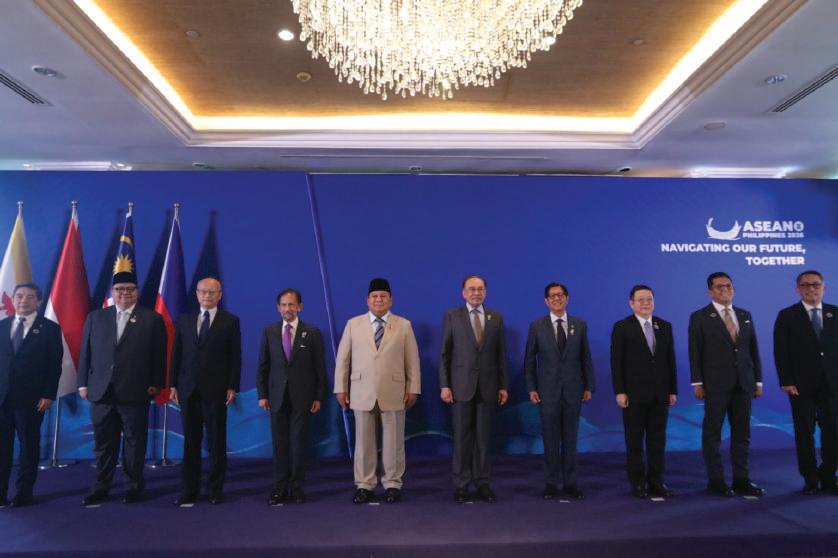
ASEAN leaders meet in Cebu to address energy, security and economic pressures
Regional leaders open the 48th ASEAN Summit with discussions centered on fuel security, maritime stability, economic resilience and ASEAN’s response to escalating global tensions.
by AJPress
PhilHealth receives P60 billion returned from National Treasury following Supreme Court ruling
by AJPress
MANILA — The Philippine Health Insurance Corp. (PhilHealth) has confirmed the return of P60 billion from the National Treasury following a Supreme Court ruling that ordered the restoration of funds earlier transferred from the state health insurer under provisions later declared invalid by the high court.
The adjustment is not a system-wide rollback of immigration restrictions. It applies primarily to physicians and is being implemented through agency-level guidance rather than a Philippine economy slows to 2.8% in Q1, weakest in 5 years
MANILA — The Philippine economy grew by only 2.8% in the first quarter of 2026, putting the country well below the pace needed to meet full-year forecasts by multilateral and private-sector analysts.
The first-quarter gross domestic product growth was slower than the 3% recorded in the fourth quarter of 2025 and 4% in the same period last year, based on Philippine Statistics Authority data released Thursday, May 4.
The quarterly GDP is the lowest recorded since the first quarter of 2021, a year after the global COVID-19 pandemic broke out and shut down markets.
The figure also fell short of the growth implied by earlier forecasts. The Asian Development
In a statement issued Thursday, May 7, 2026, PhilHealth said the return of the funds reflected the government’s support for the
Bank projected Philippine GDP growth of 4.4% for 2026, while private firms’ analysis expected the economy to expand by about 5.2% this year.
BMI, a Fitch Solutions unit, said in February that it expected Philippine growth to accelerate to 5.2% in 2026. But this was before the global oil shock following the United States’ attacks and subsequent actions on Iran.
Services carry growth
The government’s data agency said the main contributors to first-quarter growth were wholesale and retail trade and repair of motor vehicles and motorcycles, which grew 4.6%; financial and insurance activities, 3.4%; and public administration and defense
agency’s mandate to provide healthcare coverage and financial protection to Filipinos.
The agency said the restored amount would help strengthen benefit delivery, improve internal systems and support the implementation of programs under the Universal Health Care Act.
The legal dispute stemmed from provisions in the 2024 General Appropriations Act and a Department of Finance circular that authorized the transfer of what government officials described at the time as “excess”
arrests PGMN founder Franco Mabanta, four others in alleged extortion complaint involving Romualdez
by AJPress
MANILA — The National Bureau of Investigation (NBI) arrested social media personality Roberto Ma. Franco Cruz Mabanta and four associates following an alleged extortion complaint filed by former House Speaker and Leyte Rep. Ferdinand Martin Romualdez.
Mabanta is the founder and chairman of Peanut Gallery Media Network (PGMN), a Philippine-based digital media and political commentary platform known for livestream discussions, opinion programming and investi-
gative-style online content focused on national politics and governance.
NBI Director Melvin Matibag said the arrests stemmed from an entrapment operation conducted Tuesday, May 5, after Romualdez allegedly reported receiving demands for money in exchange for withholding the release of online material purportedly linking him to corruption within the House of Representatives.
According to the NBI, the alleged demand reached P300 mil-
House expected to impeach Sara Duterte as Senate trial looms
Lawmakers project more than 200 votes in favor of impeachment as the vice president’s allies continue challenging the renewed proceedings ahead of a possible Senate trial
by AJPress
votes are necessary for impeachment to proceed to the Senate for trial.
Decentralized syndicates emerge as focus of Senate flood control probe
by AJPress
MANILA — A Senate investigation into alleged irregularities involving billions of pesos in Philippine flood control projects is increasingly centering on what lawmakers describe as localized networks operating within regional and district public works offices rather than a single nationwide command structure.
Senate Blue Ribbon Committee chair Panfilo Lacson said Wednesday, May 6, that evidence presented before the panel so far suggests the alleged anomalies may have been carried out through separate clusters of influence embedded in specific Department of Public Works and Highways (DPWH) district engineering offices.
Speaking during the Kapihan sa Senado forum, Lacson said investigators have not established evidence supporting the existence of one central “mastermind” overseeing all questioned flood mitigation projects nationwide.
“I don’t think there’s an overall mastermind,” Lacson said. “There is a mastermind in Bulacan, there is a mastermind in Mindoro.”
The Senate inquiry has been examining allegations involving flood control appropriations released between 2022 and 2025, including claims of unfinished or nonexistent projects, poor-quality
construction, irregular contractor concentration, and possible coordination between contractors and local officials.
Committee discussions have focused on whether certain district engineering offices became operational hubs for alleged project manipulation and procurement irregularities.
Lacson described the alleged practices as “parasitic,” while emphasizing that the Senate inquiry remains a fact-finding and legislative process rather than a criminal proceeding.
Under Philippine law, allegations and testimony raised during congressional hearings do not constitute proof of criminal liability unless validated through formal investigation and judicial proceedings. Among the matters discussed during recent hearings was a handwritten note attributed by Lacson to the late former DPWH Undersecretary Ma. Catalina Cabral. Lacson said the note appeared to reference P500 million in infrastructure “allocables” associated with Senator Rodante Marcoleta.
Marcoleta denied wrongdoing and rejected Lacson’s interpretation of the document, describing
From the Front Page
ASEAN leaders meet in Cebu...
fuel markets and international shipping routes.
Philippine Foreign Affairs Secretary Ma. Theresa P. Lazaro urged ASEAN member states to strengthen regional coordination and improve collective preparedness during periods of international crisis.
“Our discussions have pointed out that ASEAN needs to strengthen our crisis coordination and institutional readiness in times of crisis,” Lazaro said during ministerial meetings held ahead of the leaders’ summit.
Regional officials and diplomats said energy security has emerged as the bloc’s most immediate concern. Several ASEAN economies remain heavily dependent on imported fuel and uninterrupted maritime commerce, leaving the region vulnerable to instability affecting key global shipping corridors, including the Strait of Hormuz. International wire reports in-
dicated that ASEAN leaders are studying possible contingency measures involving voluntary fuel-sharing arrangements, broader energy diversification efforts and expanded regional coordination on energy infrastructure and supply-chain protection.
Draft summit language reviewed by international media organizations also emphasized maintaining open sea lanes and ensuring the continued flow of
food, fuel and essential goods throughout Southeast Asia.
President Marcos earlier identified energy resilience, food stability and protection for Southeast Asian nationals working overseas among the Philippines’ priorities for this year’s summit.
The Cebu meetings also include discussions on the continuing crisis in Myanmar, where ASEAN’s Five-Point Consensus peace framework has struggled to gain traction since the military takeover in 2021.
ASEAN foreign ministers agreed to continue diplomatic engagement with Myanmar while reiterating calls for de-escalation, humanitarian access and inclusive dialogue. Myanmar is represented at the summit below the head-of-government level.
The Philippines also called on Myanmar authorities to grant ASEAN’s special envoy access to detained civilian leader Aung San Suu Kyi, describing such access as a possible step toward confidence-building and broader reconciliation efforts.
Maritime security remains another major agenda item, particularly ongoing negotiations between ASEAN and China on a proposed South China Sea code of conduct. ASEAN officials said discussions on the framework continue, although no final agreement has been announced.
Leaders and delegations arrived in Cebu throughout Wednesday
and Thursday. Brunei Sultan Hassanal Bolkiah drew attention after Philippine media reported that he personally piloted his aircraft into Mactan-Benito Ebuen Air Base, accompanied by Prince Abdul Mateen.
Other leaders attending the summit include Malaysian Prime Minister Anwar Ibrahim, Indonesian President Prabowo Subianto, Cambodian Prime Minister Hun Manet and Timor-Leste Prime Minister Xanana Gusmao.
The summit marks one of ASEAN’s first major leaders’ gatherings since Timor-Leste formally joined the bloc as a full member, expanding ASEAN to 11 member states.
On the sidelines of the summit, Philippine officials also facilitated discussions involving Thailand and Cambodia following tensions along their shared border last year. Both governments pledged to continue diplomatic dialogue and confidence-building efforts.
The Philippine government shortened portions of the summit schedule and shifted some preparatory meetings online as part of broader cost-management measures tied to current economic pressures and elevated fuel prices.
Leaders are expected to release joint summit statements addressing energy resilience, maritime cooperation, economic stability and ASEAN’s broader institutional response to regional and global disruptions. n
PhilHealth receives P60 billion returned...
Financial records and government disclosures showed that three remittances totaling P60 billion were transferred in 2024 before the Supreme Court issued a temporary restraining order stopping the planned transfer of an additional P29.9 billion.
In a ruling released in December 2025, the Supreme Court ordered the return of the P60 billion through the 2026 General Appropriations Act and permanently prohibited the transfer of the remaining funds.
The court also voided the budget provision and finance circular
used to authorize the transfers, finding grave abuse of discretion in their issuance and implementation. In its ruling, the Supreme Court said PhilHealth funds are legally dedicated to the country’s national health insurance program and should be used in accordance with the Universal Health Care framework.
The court further stated that reserve funds beyond statutory requirements should be directed toward improving member benefits, expanding healthcare coverage or reducing contribution burdens instead of being transferred for unrelated government expenditures.
PhilHealth said the returned
funds are expected to reinforce the agency’s financial position as demand continues to grow for expanded medical coverage, lower out-of-pocket healthcare costs and faster claims processing.
The Department of Finance had previously maintained that the transfer complied with fiscal management policies and existing budget laws before the Supreme Court ruling invalidated the transfer mechanism.
The Supreme Court decision did not make findings of criminal liability against government officials. The ruling addressed the legality and constitutionality of the transfer process and ordered the disposition of the funds. n
NBI arrests PGMN founder Franco...
PAGE 1
lion, payable in four installments of P75 million each. Investigators said earlier discussions allegedly involved a higher amount before negotiations reduced the figure.
Also arrested were Ericson James D. Pacaba, John Alexander Vasquez Gomez, Jardine Christian Requio Serrano and Franco Jose Gallardo.
The NBI said the suspects may face robbery-extortion charges in relation to Republic Act No. 10175, or the Cybercrime Prevention Act of 2012.
Authorities said undercover agents posing as representatives of the complainant initially met Mabanta at The Manila Peninsula Hotel in Makati City before arrangements for the alleged delivery of the first installment were transferred to Valle Verde Country
Club in Pasig City, where the operation concluded.
Investigators said agents recovered marked money, counterfeit bills used during the operation and mobile phones allegedly connected to the transaction.
Matibag said the investigation focused on alleged criminal conduct and not on political commentary or criticism
“What we investigate are crimes,” Matibag said during a media briefing.
Mabanta denied the allegations.
Following his arrest, he told reporters the accusation was “not true” and referred questions to his legal counsel. In a separate statement posted through PGMN’s social media channels, Mabanta described the operation as a “setup” and denied that extortion or threats took place.
Decentralized
PAGE 1
the allegations as politically motivated and lacking sufficient basis to support insinuations of misconduct.
Lacson later clarified that the committee was not recommending an investigation of Marcoleta at this stage unless evidence directly linking projects to alleged ghost or substandard works emerges during the inquiry. He also noted that requests for project “allocables,” by themselves, are not automatically unlawful under existing practices.
The Blue Ribbon Committee
He also claimed the disputed material involved a 90-minute investigative exposé that he said was the result of months of research into alleged government corruption. As of press time, the NBI said investigators had not publicly disclosed or independently evaluated the contents of the video referenced in the complaint.
The case has drawn public attention because it involves allegations connected to one of the country’s highest-profile political figures and a digital media personality active in Philippine political commentary circles. No court has ruled on the allegations raised by either side. Under Philippine law, all accused individuals are presumed innocent unless proven guilty beyond reasonable doubt. n
syndicates emerge...
said it is preparing to transmit hearing transcripts, documentary materials and testimonies to the Department of Justice and the Office of the Ombudsman for possible evaluation and further legal review.
Lawmakers are likewise considering expanding the investigation to additional flood control projects in the Visayas and Mindanao to determine whether similar patterns exist outside Luzon.
The controversy has intensified public scrutiny over infrastructure spending and flood mitigation programs following repeated
flooding incidents in several provinces despite years of substantial government allocations for flood control works.
The hearings have also prompted renewed calls from some sectors for stricter oversight of public works procurement, contractor accreditation, project auditing and infrastructure monitoring systems.
To date, no individual mentioned during the Senate proceedings has been convicted or found criminally liable by a court in connection with the allegations under investigation. n
Buyers pick from fresh produce at the San Andres Public Market in Manila on Thursday (May 7, 2026). The Department of Agriculture has assured that the general food supply, including rice, corn, and vegetables, remains sufficient until July, with current dry-season planting and harvesting ongoing. PNA photo by Yancy Lim
U.S. eases visa freeze for foreign doctors...
sweeping policy directive. Federal updates indicate that applications tied to medical doctors continue to be processed within a broader framework of heightened screening. For hospitals and training institutions, the distinction is consequential. Many foreign-trained physicians enter the United States through the J-1 visa, which supports graduate medical education. Under existing law, some participants in that program are required to return to their home country for two years after training unless they secure a waiver.
A targeted physician pathway
One established route is the Conrad 30 Waiver Program, which allows states to sponsor foreign medical graduates who agree to practice in federally designated shortage areas. The program is specific to physicians and reflects a longstanding federal effort to direct medical talent to communities with limited access to care.
That statutory structure explains why the current easing is narrow in scope. While it may improve continuity for physicians navigating training and post-training employment, it does not extend comparable flexibility to other healthcare professions.
Workforce pressures behind the adjustment
The United States continues to face structural challenges in maintaining an adequate physician workforce. National workforce projections have consistently pointed to gaps driven by population growth, geographic disparities in care and the retirement of older practitioners.
International medical graduates already play a significant role in bridging those gaps. Federal and academic data indicate that roughly one in four practicing physicians in the United States received their medical education abroad, with many serving in rural counties and inner-city systems where recruitment is more difficult.
Healthcare organizations have cautioned that disruptions in visa processing can translate directly into delayed placements, reduced staffing levels and longer patient wait times, particularly in communities already designated as medically underserved.
Filipino community relevance
For Filipino American communities, the policy carries both immediate and broader implications.
The Philippines has long been a major source of healthcare professionals for the United States, with
Filipino workers embedded across hospitals, clinics and long-term care facilities.
Filipino physicians, while smaller in number than nurses, are part of the international medical graduate pipeline affected by J-1 training and waiver pathways. Greater consistency in processing may help some remain in U.S. practice, particularly if they commit to serving shortage-designated areas. At the same time, the limits of the policy are clear. Filipino nurses and other healthcare professionals largely rely on employment-based immigration routes such as the EB-3 visa, which are governed by annual caps, processing backlogs and employer sponsorship requirements. Those pathways are not part of the current adjustment.
Allied health professionals, including therapists and medical technologists, typically navigate a combination of employer-sponsored visas and permanent residency categories, depending on qualifications and licensing. Caregivers and home health aides face even tighter constraints, as many roles do not meet the eligibility criteria for specialty-occupation visas.
Uneven policy design
The divergence reflects how U.S. immigration law is structured. Physician flexibility is anchored in programs tied to public health needs and federally recognized shortage areas. These provisions allow agencies to apply discretion within an existing legal framework.
By contrast, most other healthcare roles do not have dedicated waiver systems linked to workforce shortages. As a result, administrative adjustments can be implemented more readily for physicians than for the broader healthcare workforce without legislative change.
Workforce data show that demand extends well beyond doc-
tors. The healthcare sector continues to expand due to demographic shifts, including an aging population and increased need for longterm and chronic care services.
Yet immigration pathways for many essential roles remain comparatively rigid.
Institutional implications
Hospitals that rely on international medical graduates may benefit from reduced disruption if physician-related applications continue to move through the system. This is particularly relevant in rural and underserved areas where foreign-trained doctors are often a primary source of care.
However, the broader staffing challenge persists. The same institutions depend heavily on nurses, technicians and support staff, many of whom face longer immigration timelines and more limited visa options. Without structural changes to those pathways, shortages in non-physician roles are likely to continue.
A measured policy shift
The available federal guidance supports a cautious characterization. The administration has not introduced a blanket exemption for all foreign healthcare workers or a comprehensive reopening of employment-based immigration channels.
Instead, the adjustment reflects a targeted effort to prevent disruption in physician staffing while maintaining the broader framework of immigration controls. It operates within existing law and does not alter the underlying statutory requirements governing most visa categories.
The development underscores both the importance of immigrant healthcare workers and the uneven nature of current policy. It offers a clearer path for some foreign-trained doctors while leaving the wider healthcare workforce subject to longstanding constraints. (AJPress)
Philippine economy slows to 2.8% in Q1...
PAGE 1
and compulsory social security, 8.6%.
Among major sectors, services grew 4.5% yearon-year.
Agriculture, forestry and fishing declined by 0.2%, while industry contracted by 0.1%.
On the demand side, household final consumption expenditure grew 3%, while government final consumption expenditure rose 4.8%.
Exports of goods and services increased 7.8%, while imports of goods and services grew 6.1%.
Gross capital formation, however, fell 3.3%, pointing to weaker investment activity during the quarter.
(Philstar.com)
US seizes 503 fake investment websites...
PAGE 1
organized fraud operations linked to cyber-enabled cryptocurrency investment scams and, in some cases, human trafficking.
Coordinated enforcement actions
According to the Justice Department, federal prosecutors have charged two Chinese nationals in connection with an alleged cryptocurrency investment fraud operation based in Myanmar, also known as Burma. Prosecutors allege the defendants were involved in managing a scam compound and attempting to expand similar operations into Cambodia. The charges remain allegations, and the defendants are presumed innocent unless proven guilty in court.
Authorities also moved to dismantle communications and recruitment infrastructure linked to the schemes. This included the seizure of a channel on Telegram with more than 6,000 followers that investigators said was used to recruit individuals into scam compounds through fraudulent job offers, including postings that promised high-paying employment abroad.
In a parallel action, federal officials carried out the seizure of 503 fake investment websites used to perpetrate fraud schemes, disrupting a large network of online platforms designed to mislead victims into transferring funds.
Financial disruption and asset restraint
The Justice Department reported that it has identified and restrained more than $700 million in cryptocurrency allegedly tied to laundering proceeds from cryptocurrency investment scams.
Authorities said the funds were restrained through U.S. legal process and voluntary actions by cryptocurrency providers, reflecting a coordinated effort to disrupt the financial flows supporting
scam operations.
Structure of the scam operations
U.S. authorities described the scam centers as part of broader transnational criminal enterprises operating primarily in parts of Southeast Asia, including Myanmar and Cambodia. In these schemes, victims are cultivated over time and deceived into depositing funds into fraudulent investment platforms.
The Justice Department also stated that some individuals working within these compounds were recruited under false pretenses, had their documents taken, and were compelled to participate in fraudulent activity, underscoring links between cyber fraud and human trafficking.
Interagency and international coordination
The enforcement actions involve coordination among multiple U.S. agencies, including the Federal Bureau of Investi-
gation and the U.S. Secret Service, along with international law enforcement partners and private-sector entities.
Officials said financial institutions and technology companies have also taken steps following law enforcement alerts to help detect and prevent the misuse of digital platforms tied to scam activity.
Legal posture and continuing operations
The Justice Department emphasized that the Scam Center Strike Force will continue to identify, seize, and seek forfeiture of funds involved in money laundering tied to these schemes.
All defendants in charged cases are presumed innocent unless and until proven guilty in a court of law.
Officials said the Strike Force’s work is continuing as authorities pursue additional leads and enforcement actions targeting transnational fraud networks. (AJPress)
The STAR / Edd Gumban
Thurmond outlines policy agenda on housing, healthcare, and immigration in media briefing
California schools chief presents proposals on affordability, public systems, and economic relief as race remains wide open with no clear front-runner
by AJPress
LOS ANGELES — California
Superintendent of Public Instruction Tony Thurmond used a policy briefing with American Community Media to lay out a campaign agenda centered on housing expansion, healthcare access, immigration reform, and economic relief, offering detailed responses to questions from ethnic and community media.
The session, part of a broader series connecting candidates with local and ethnic press, provided a direct account of Thurmond’s positions as he competes in a crowded 2026 gubernatorial race that remains unsettled, with polling showing no dominant candidate and a large share of undecided voters.
Personal history and governing lens Thurmond began by situating his policy views in his upbringing, describing early economic hardship and family disruption.
“I’m a California native… my mom was an immigrant from Panama… while my dad was off in Vietnam, my mom was raising four kids by herself,” he said.
He described the impact of his mother’s death when he was six.
“My mom lost her battle to cancer and her four kids got split up.”
He said those experiences
inform his approach to governance.
“I believe that a better California is possible and that we have to build it together.”
Housing supply constraints and structural affordability
Housing costs were a central focus of the discussion. Thurmond identified limited supply as a key factor.
“We are experiencing a crisis of supply and demand. The state has not invested in affordable housing in over a decade.”
He said his platform includes a plan to build two million housing units by 2030.
“One of the signature components of my platform is a plan to build 2 million housing units by the year 2030.”
The proposal includes use of public land and potential bond financing. He also acknowledged limits to direct price control.
“The governor and the state can’t just make prices go down, but we can create conditions that ultimately will support bringing costs down.”
Housing has emerged as a central issue across the field, with multiple candidates advancing competing proposals as affordability pressures continue to dominate voter concerns statewide.
Fiscal policy and redistribu-
tion framework
Thurmond said he supports taxing high-wealth individuals to fund relief for lower- and middle-income households.
“I plan to tax billionaires and to take the proceeds… to provide a tax credit to working and middle-class Californians,” he said.
He said such policies would need broader coordination to avoid capital movement.
“If California does pass a wealth tax, it should also be in conjunction with the national wealth tax.”
Wealth taxation and cost-ofliving relief have become recurring themes in the race, reflecting broader debates among candidates over how to address inequality and rising household expenses.
Immigration posture and federal constraints
On immigration, Thurmond reiterated his call to abolish U.S. Immigration and Customs Enforcement, a proposal that would require federal action.
“I was the first candidate to call for abolishing ICE,” he said.
He questioned the agency’s function.
“ICE was supposed to be a way to keep us safe… But who are they keeping us safe from?”
He said current enforcement affects workers in several sectors.
“Look at who’s being deported. People who work as child care workers and farm workers.”
He said he would pursue state-level measures affecting detention facilities and work with Congress on broader reforms.
The issue remains politically contested, with immigration enforcement and federal-state coordination continuing to divide candidates and policymakers.
Healthcare access and system design
Thurmond linked his healthcare position to a personal experience involving his brother.
“I had a brother who lost his job and lost his insurance right at the time that he developed a very rare liver disorder,” he said.
He said the lack of insurance limited access to care.
“Because he didn’t have insurance, he couldn’t see a doctor and his condition worsened to the point that he lost his life.”
“He was only 35 years old.”
He said the experience informs his support for broader coverage.
“No person should lose their life simply because they don’t have health insurance.”
He reiterated support for a single-payer system, a proposal that would require legislative approval and coordination with federal healthcare programs.
Education pathways and workforce alignment
Thurmond said economic mobility should include both higher education and vocational pathways.
“It’s not just about getting a college education… we have to support those who want to work in an apprenticeship training program.”
He proposed a tuition deferral model.
“When they graduate and they get a job, they start to pay back… This becomes the pool of dollars for the next group of students.”
The proposal reflects broader discussions in the state about workforce development and alternative career pathways.
Small business environment and regulatory approach
Asked about business conditions, Thurmond emphasized support for small enterprises.
“Small business is the backbone of our economy,” he said.
He said he would pursue regulatory changes and expand access to financing and state contracts.
Business climate concerns, including regulatory burdens and capital movement, have been raised by multiple candidates as part of the broader economic debate.
Electoral posture and campaign viability
Thurmond said polling does
not determine election outcomes.
“I just don’t think that polls elect anyone. People do,” he said.
He said he intends to continue his campaign.
“My name is on the ballot. I’m in it to the end. And I’m running to win.”
Recent polling indicates a fragmented field with no clear front-runner and a significant share of undecided voters, creating an environment in which late shifts in support could influence the outcome of the primary.
Policy scope and institutional limits
The briefing provided a direct account of Thurmond’s policy positions as he seeks to gain traction in the gubernatorial race. Several proposals he outlined, including changes to immigration enforcement, healthcare systems, and tax policy, would require action beyond the governor’s office, including legislative approval or federal involvement.
The event is part of a continuing series of candidate briefings, with additional coverage expected as other candidates present their platforms.
* * *
Editor’s note: This report is part of Asian Journal’s continuing coverage of candidates in the 2026 California gubernatorial race. Candidates are presented individually based on availability and public briefings. Coverage does not constitute endorsement.
California labor agency cites home care company $4.4 million over caregiver classification
State investigation involving 144 caregivers remains under appeal
by AJPress
LOS ANGELES — The California Labor Commissioner’s Office has cited Hart Placement Agency Inc., a Canoga Parkbased home care agency, and its principals, Annie Ghaw and Hartmann Ghaw, $4,423,450 following a state investigation involving 144 caregivers who were classified as independent contractors while working in private homes throughout Los Angeles County.
According to the Labor Commissioner’s Office, $4,266,450 of the total amount cited is owed directly to affected workers.
The agency’s Bureau of Field Enforcement found that caregivers allegedly were denied protections required under California labor law, including accurate wage statements and paid sick leave.
“Caregivers perform difficult, essential work in people’s homes - bathing, dressing, cleaning and caring for people who cannot care for themselves,” California Labor Commissioner Lilia García-Brower said in a statement. “Many are already underpaid for this demanding work and misclassifying them compounds the injustice by denying workers the basic protections and rights they deserve.”
The Labor Commissioner’s Office stated that workers in low-wage industries are particularly vulnerable to misclassification because they often earn low wages and have limited bargaining power. The office also said employers may use misclassification to avoid labor law obligations and gain an unfair advantage over employers that comply with the law.
According to state investigators, from October 2022 through December 2024, Hart Placement required caregivers to obtain business licenses and file fictitious business name statements as part of their classification as independent contractors.
Investigators also found that Hart Placement maintained control over caregivers’ schedules, duties and compensation, factors the state said supported employee status under California labor law. The agency further alleged that caregivers were instructed to falsify timesheets or sign documents concealing shifts exceeding 12 or 24 hours and that workers did not receive paystubs or paid sick leave notices required under state law.
The Labor Commissioner’s Office stated that Hart Placement committed multiple alleged labor law violations, including failure to provide accurate wage statements and required paid sick leave notices. An affected caregiver said workers were required to establish business entities before beginning work.
“At the time I was hired, I had to sign documents stating that I was an independent contractor,” the worker said in the state release. “The agency directed me to set up my own business by getting a business permit, registering a fictitious business name, and opening a bank account under that name just to be able to work for them.”
The Labor Commissioner’s Office initiated the investigation following a referral from the Pilipino Workers Center of Southern California, a community-based organization that helped identify witnesses who cooperated with investigators. On Oct. 1, 2025, the Labor Commissioner’s Office issued citations and Notices to Discontinue Labor Law Violations against Hart Placement Agency Inc. and its principals.
Hart Placement Agency Inc. and the named principals have appealed the citations. The allegations and determinations described by the Labor Commissioner’s Office have not been finally adjudicated and remain subject to the administrative appeals process.
The Bureau of Field Enforcement, a unit within the Labor Commissioner’s Office, conducts workplace investigations involving wage theft, child labor violations, workers’ compensation insurance compliance and other labor law matters.
According to the Department of Industrial Relations, the bureau issued more than 2,400 citations between January 2022 and April 2026 and recovered more than $58.3 million in wages, damages and interest on behalf of workers.
Workers with questions regarding labor laws enforced by the Labor Commissioner’s Office may call 1-833-LCO-INFO (833-526-4636). The office said services are available in multiple languages and that it does not ask about immigration status. The Labor Commissioner’s Office is a division
California Superintendent of Public Instruction Tony Thurmond during the AANHPI California Gubernatorial Candidates Forum in Los Angeles.
Photo by Eric Moon
DAteline PhiliPPines
Dela Rosa files new Senate bills as ethics questions persist over prolonged absence
by AJPress
MANILA
— Senator Ronald
“Bato” dela Rosa has filed two new Senate measures while remaining absent from plenary proceedings for several months, underscoring the unusual position of a sitting lawmaker continuing legislative work remotely as questions surrounding his prolonged absence remain pending before the Senate ethics panel.
Senate records show that Dela Rosa authored Senate Bill No. 2080, or the proposed Counter Foreign Interference Act, and Senate Bill No. 2079, a measure concerning the national police clearance system. Both measures were formally received and referred to committees this week despite the senator’s continued nonappearance during Senate sessions.
The proposed Counter Foreign Interference Act seeks to criminalize foreign interference activities in the Philippines and imposes penalties that include life imprisonment for certain offenses. The bill was referred to the Senate Committees on National Defense and Security and Justice and Human Rights.
Senate Bill No. 2079 was referred to the Committee on Public Order and Dangerous Drugs.
Legislative records indicate the measure seeks to strengthen and institutionalize the country’s police clearance framework through expanded record integration and centralized law enforcement databases.
Dela Rosa, a former chief of the Philippine National Police, has not physically attended Senate sessions since November 2025. His absence coincided with reports surrounding a possible International Criminal Court development connected to investigations into the Duterte administration’s anti-illegal drug campaign.
Public discussion surrounding the matter intensified after reports emerged last year regarding a purported ICC arrest warrant. However, the ICC itself has previously stated that official actions and warrants are announced only through formal court channels and authorized public releases. To date, no Philippine court or international tribunal has issued a final judgment establishing criminal liability against Dela Rosa.
The senator’s prolonged absence has since become the subject of an ethics complaint before the Senate Committee on Ethics and Privileges, chaired by Senator JV Ejercito.
Ejercito confirmed that the committee had formally re-
quested Dela Rosa’s response regarding concerns tied to his continued absence from Senate proceedings. The ethics issue has also prompted discussion within the chamber over compensation and attendance rules applicable to lawmakers who remain unable or unwilling to physically report for legislative duties.
Ejercito separately suggested that Dela Rosa consider voluntarily waiving his salary and allowances during the period of absence, saying such a move could help address concerns raised in the complaint. Reports indicated that Dela Rosa’s camp was studying the proposal.
Despite his absence from the Senate floor, the filing of the two measures reflects that Dela Rosa continues to participate in legislative functions through authorship and submission of bills.
The developments also highlight a broader institutional question confronting the Senate: whether legislative work conducted remotely or through staff filings sufficiently satisfies the obligations of elected lawmakers whose physical attendance remains under scrutiny.
The Senate ethics proceedings remained pending, while both newly filed measures continued through the chamber’s standard committee referral process. n
Millions of taxpayers may qualify for COVID-era IRS penalty refunds as court challenge continues
by AJPress
WASHINGTON, D.C. — Millions of Americans who incurred IRS penalties during the COVID-19 pandemic may still have an opportunity to seek refunds or penalty relief following a federal court ruling that reinterpreted how emergency tax deadline extensions applied during the national disaster period.
Tax practitioners and the National Taxpayer Advocate are urging potentially affected taxpayers to act before July 10, 2026, which many advisers view as a critical deadline to preserve claims while the government continues to challenge the ruling in court.
At the center of the issue is Kwong v. United States, a case decided by the U.S. Court of Federal Claims in late 2025. The court concluded that federal disaster relief provisions tied to the COVID-19 emergency effectively postponed certain federal tax deadlines from Jan. 20, 2020 through July 10, 2023.
The ruling has raised the possibility that some penalties and related interest assessed during that period may have been im-
properly imposed under the court’s interpretation of federal law.
The IRS has not adopted the ruling as nationwide policy, and the matter remains under litigation. Tax professionals say taxpayers should not assume relief will occur automatically.
The National Taxpayer Advocate has publicly encouraged affected taxpayers to review their IRS account transcripts and consider filing what are known as “protective refund claims” to preserve their legal rights while appeals continue.
Taxpayers who may potentially qualify include individuals or businesses that filed federal tax returns late during the pandemic period, paid late-filing or late-payment penalties, continue to owe IRS penalties from that timeframe, or incurred penalties tied to certain international information returns.
Tax advisers say eligibility may vary depending on the type of tax involved, the timing of payments and the nature of the assessed penalties.
To pursue a claim, taxpayers are generally being advised to obtain IRS account transcripts through their online IRS ac-
counts and identify penalties assessed between 2020 and 2023.
Affected taxpayers may then file IRS Form 843, formally known as “Claim for Refund and Request for Abatement,” by mail with the appropriate IRS service center.
Some practitioners recommend clearly labeling submissions as protective claims related to Kwong v. United States in order to preserve potential refund rights while the legal process continues.
The July 10, 2026 deadline has emerged as a key date because federal refund statutes impose strict filing limitations. Missing the deadline could prevent taxpayers from later recovering certain penalties or interest if the ruling is ultimately upheld.
The IRS has not announced any automatic refund or mass-abatement program connected to the case.
Tax professionals continue to caution taxpayers that the outcome remains uncertain and that the government could still prevail on appeal. Nonetheless, many advisers say filing a timely protective claim may help taxpayers preserve potential refund rights during the ongoing litigation. n
Prime Minister Lê Minh Hung on Thursday agreed to establish a long-term rice trade mechanism and strengthen food security cooperation during a bilateral meeting on the sidelines of the 48th Association of Southeast Asian Nations (Asean) and Related Meetings here. The leaders also discussed expanding cooperation in addressing transnational crimes and en-
hancing collaboration in tourism.
“On agriculture, both sides agreed to establish a long-term rice trade mechanism aimed at ensuring stable supply and strengthening food security cooperation between the two countries. The two leaders also discussed expanding cooperation in addressing transnational crimes, including scam hubs and human trafficking, as well as enhancing collaboration in tourism,” the Presidential Communications Office said. In line with the 50th anniversary of their bilateral relationship
this year, the leaders expressed confidence that the milestone would lead to stronger cooperation in trade and economic engagement.
Marcos, during their meeting, also congratulated the prime minister on his assumption of office last April and welcomed him to his first Asean Summit.
Exactly a year ago, during the Asean Summit in Malaysia, Marcos and then Vietnamese Prime Minister Pham Minh Chinh renewed their commitment to bolster diplomatic cooperation between their nations. n
Fil-Am journalist wins Pulitzer Prize for investigative podcast series
by Gavin Martinez Inquirer.net
FILIPINO American journalist
Pablo Torre has won a Pulitzer Prize in audio reporting.
The milestone achievement marks a defining moment in Torre’s career, as his podcast, “Pablo Torre Finds Out,” earned one of journalism’s most prestigious honors from The Pulitzer Prizes.
The award-giving body recognized the show “for a pioneering and entertaining form of live podcast journalism that investi-
gated how the Los Angeles Clippers seemingly evaded the NBA’s salary cap rules by funneling money to a star player through an environmental startup.”
In a social media post celebrating the win, Torre expressed gratitude, writing, “We are honored to have been named the winner of the 2026 Pulitzer Prize in Audio Reporting!”
Steadily gaining attention for its fresh, investigative storytelling style, the award-winning series centers on a detailed probe into the financial dealings surround-
ing Kawhi Leonard of the Los Angeles Clippers. Through a set of episodes released in September 2025, Pablo Torre unpacked how Leonard was tied to a reported four-year, $28 million endorsement agreement with Aspiration, a California-based environmental firm.
The podcast explored whether this deal functioned as a workaround to the league’s salary cap regulations, raising broader questions about transparency and compliance in professional sports. n
House expected to impeach Sara...
PAGE 1
The anticipated vote follows the House Committee on Justice’s unanimous 53-0 finding of probable cause on April 29, 2026, after a series of hearings examining allegations involving confidential funds, asset disclosures and conduct in office.
On May 5, the committee formally transmitted its report and proposed articles of impeachment to the plenary, where the matter was referred to the Committee on Rules for scheduling and floor consideration.
Rep. Gerville Luistro, who chaired the committee proceedings, said lawmakers were given time to review the findings before plenary deliberations. House officials indicated procedural preparations were continuing ahead of Monday’s expected action.
The impeachment articles accuse Duterte of betrayal of public trust and culpable violation of the Constitution. The complaint also includes allegations involving the alleged misuse of approximately P500 million in confidential funds under the Office of the Vice President and approximately P112.5 million under the Department of Education during her tenure as education secretary.
Additional allegations cited in the complaint involve alleged unexplained wealth, alleged discrepancies in Statements of Assets, Liabilities and Net Worth and alleged threats against President Ferdinand Marcos Jr., First Lady Liza Araneta-Marcos and former
House Speaker Martin Romualdez.
No criminal court has issued a final ruling establishing criminal liability on any allegation cited in the impeachment complaint. Impeachment proceedings are separate from criminal prosecution and are governed by constitutional procedures conducted by Congress.
Duterte has repeatedly denied wrongdoing and has described the proceedings as politically motivated.
The vice president commented publicly on the impeachment case while visiting The Hague, Netherlands, this week. Speaking during activities with overseas Filipino supporters on May 7, Duterte said the outcome of the proceedings was “written by God” and said she was prepared to answer allegations in the proper constitutional forum if necessary.
Her visit drew heightened attention because it coincided with continuing proceedings before the International Criminal Court involving former President Rodrigo Duterte in connection with his administration’s anti-drug campaign.
Duterte did not personally appear during the House committee hearings. Her legal allies instead challenged the constitutional basis of the proceedings and argued that the renewed impeachment effort improperly revisits issues connected to the voided 2025 complaint.
The current proceedings mark the second impeachment effort
against Duterte in a little over a year. In February 2025, the House approved impeachment articles against the vice president, but the Supreme Court later voided the complaint after ruling that it violated the Constitution’s prohibition on successive impeachment proceedings within a one-year period. Supporters of the renewed complaint argued this week that the present proceedings are constitutionally distinct because they underwent a full committee review after the expiration of the constitutional restriction cited in the earlier ruling.
Lawmakers backing the impeachment proceedings also pointed to the Supreme Court’s January 29, 2026 clarification stating that its earlier ruling did not absolve Duterte and did not permanently prohibit future impeachment complaints once constitutional limitations had elapsed.
Meanwhile, Senate officials continued discussing possible procedures for a trial should the House formally transmit the articles following Monday’s vote. Senate leaders said the chamber would fulfill its constitutional responsibilities if impeachment articles are received, although no impeachment court has formally convened as of May 8, 2026.
Under the Constitution, conviction in an impeachment trial would require a two-thirds vote of senator-judges and could result in removal from office and perpetual disqualification from public office. n
Cabato Inquirer.net
FeAtures oPinion
The heartbeat of global healthcare: The enduring legacy of Filipino nurses
AS National Nurses Week is observed across the United States this May, hospitals, healthcare systems and public officials are once again recognizing the profession that stands closest to the daily realities of illness, recovery and human vulnerability.
Yet in cities such as Los Angeles, Chicago and New York City, the story of American nursing cannot be fully told without acknowledging the extraordinary role of Filipino nurses, a community whose presence has become deeply woven into the fabric of modern healthcare.
Editorial
For generations, nurses from the Philippines have helped staff hospitals, long-term care facilities, rehabilitation centers and public health systems across the United States and around the world. Their influence extends far beyond workforce numbers. In many institutions, Filipino nurses have become associated with clinical reliability, adaptability under pressure and a culture of care that combines technical discipline with emotional endurance.
Their story traces back more than a century.
Following the United States’ acquisition of the Philippines in 1898, American colonial authorities established an English-language educational system that included Western-style nursing instruction modeled after U.S. medical institutions. American-trained nurse educators were sent to the Philippines, while Filipino students were intro-
The Long View
MANUEL L. QUEZON III
A USEFUL approach to the seemingly random, unconnected popping up of news items is to look for patterns that emerge. But you must keep in mind the larger trends to discover how they’re interrelated. Three things over the past week suggest the continuing consolidation of power by the administration while weakening the scope and scale of the influence of the Dutertes and their allies in government.
The first comes in two parts, because it’s composed of two actions by the Supreme Court. There was a decision to declare the removal of former Deputy Ombudsman Melchor Carandang illegal, and thus null and void. And there was another of its actions: its elastic definition of “forthwith” with regard to the Constitution’s provisions on impeachment. The rehabilitation of Carandang required a repudiation of one notable instance of “sampling” by former President Rodrigo Duterte, who wielded his power to eliminate representative individuals or officials to more widely intimidate anyone who might dare oppose him.
BERLIN—The death of two university students, a journalist, and other civilians in a Philippine Army operation in Toboso, Negros Occidental, has once again exposed the pervasive perception of many Filipinos that if you’re an activist, you are a communist who supports armed rebellion.
On April 19, the government reported that as a result of a clash between government forces and suspected communist rebels, 19 people were killed in the town of Toboso. Netizens and journalists, who called for an independent probe of the deaths, reported that their online posts were peppered with comments directly accusing and scoffing at the two students and the journalist as armed communists who deserved the tragic fate that they suffered. Even outside the Toboso trag-
duced to clinical training designed to meet American healthcare standards. That historical foundation would later shape one of the world’s most enduring healthcare migration pipelines. By the mid-20th century, nursing had emerged as one of the Philippines’ most respected professions, particularly for women seeking financial mobility, international opportunity and professional advancement. Families increasingly viewed nursing not only as stable employment but as a pathway capable of supporting entire households through overseas work and remittances.
The passage of the U.S. Immigration and Nationality Act of 1965 further strengthened that connection. As American hospitals faced recurring staffing shortages, Filipino nurses, already trained in English and familiar with American medical frameworks, became highly sought after across the United States.
Today, Filipino nurses remain among the largest groups of internationally educated nurses in the country, particularly in states with large Filipino-American populations including California, Ne-
Stronger and weaker
The political implications of the Supreme Court’s decision are that it allowed Duterte to get away with an abuse of power when it was politically convenient for him, but at the same time, the Supreme Court can be considered to have declared itself free of any informal obligations to him. On the other hand, the elastic definition of “forthwith” can be understood to be a declaration of internal solidarity: institutionally, it remains hostile to the idea of impeachment, and is not about to disown its previous obstructionist attitude to the entire process.
Second, the unanimous decision by the House justice committee to send the articles of impeachment against Vice President Sara Duterte to plenary (and Senate President Vicente Sotto III’s pointed statement that he will continue to define “forthwith” when it comes to the Senate’s actions once it receives articles of impeachment from the House) was an institutional declaration of intent. If the evidence supplied wasn’t damning (which it was), the Vice President’s political alliances proved no hindrance to the proceedings—a demonstration of weakness on her part.
Third, the disgrace of Michael Defensor, his wife, and son, cannot be detached from his failed
attempt to corral alleged Philippine Marines to provide testimony damaging to the administration. The problem was that neither the accusations nor the accusers ended up being credible. But the attempt was made, and someone had to pay. So, the Defensors paid. Impunity ends where insinuations that others practice it begin.
What these events combined to communicate was that in their respective arenas, the House and Senate majorities are strong, the Supreme Court remains strong and without debts to pay to either the executive or the legislature, and past affiliations are no protection to those who would try to cause trouble to the present dispensation—in other words, the executive, too, is strong. But in the face of all three, the Vice President and her shrinking number of friends are weak.
Ever since her book on the Lopezes came out in 2001, I’ve found the analytical lens put forward by historian Mina Roces to be exceedingly useful. She proposed using “malakas at mahina” as the key analytical concept for understanding power dynamics in our society. Those who are “malakas”—considered strong—are those who use their positions of power ruthlessly
PAGE 7
Activism is not communism
edy, there has long been a widespread misconception among Filipinos that if you are keenly interested in the plight of the poor, if you are vocal about uplifting the lives of laborers and farmers, and if you express your support for the impoverished through protest actions or immersions in their communities, you are a communist rebel. This association between having a heart for the poor and communism is a vestige of the Cold War years, when countries were divided in their allegiance between the United States as the leader of the democratic world on one hand, and the Soviet Union as the bastion of communism on the other hand.
If you are pro-business, you are pro-democracy, and if you are pro-labor, you are pro-communism, went the brainwashing propaganda of the pro-American side of the political divide. The Philippines should learn from European countries, which embraced some of the socialist features of communism, even as they thrived as democratic
vada, New York and Hawaii. Their contributions became especially visible during the COVID-19 pandemic. Researchers, labor organizations and healthcare advocates documented the disproportionate impact the pandemic had on Filipino and Filipino-American healthcare workers, many of whom served in frontline hospital roles with sustained exposure
to critically ill patients. Nurses frequently worked extended shifts inside overwhelmed intensive care units while simultaneously supporting relatives in both the United States and the Philippines during a period of global uncertainty.
For many Filipino families, nursing has long represented sacrifice measured quietly rather than PAGE 7
states. This is true, for example, for the Federal Republic of Germany, which used to be divided between democratic West Germany and communist East Germany. Reunified Germany honors the father of communism, the German philosopher Karl Marx, by continuing to name one of its major thoroughfares in the capital city of Berlin after him. In fact, there are 550 streets, alleys, and squares still named after Marx in current-day Germany. In the Philippines, even merely uttering the word Karl Marx would get one branded as a communist; what more if a town or city names one of its roads after Marx.
The socialist features of Germany, which are also true for many other European countries, are some of the attributes that are envied by Third-World countries. Education is free from nursery to university, and lunch is free for all grade schoolers and for kids of low-income families in high school. Health care, pension, and unemployment benefits PAGE 7
tions. Costs are going up like they’re on a fitness program.
I’m a retired businessman. When my store burned down, rather than rebuild it, I took the insurance money and retired here.
John: You know, I’m a retired businessman, too. When a flood washed away my store, I took the insurance money and retired here, too.
Mike is silent for a while, then he asks John, “How do you start a flood?”
There was a time when we could crack jokes about crises and disruptions, but now those jokes don’t elicit much fun or humor. Crises are now happening all over the place.
One businessman on the verge of giving up hope says, “Due to the current energy crisis. The light at the end of the tunnel has been turned off.”
The headlines these days read like a suspense novel nobody asked to subscribe to. Crises after crises grab the headlines. Conflict in the Middle East. Market volatility. Supply chain interrup-
For many business owners, especially those running MSMEs, the question quietly (or loudly) creeps in: “What does this mean for my business?” It’s a fair question. But the better one is this: “How should I respond?”
Because while we cannot control global events, we always have a say in how we respond to them.
History shows that businesses rarely fail solely due to difficult circumstances. More often, they struggle because their responses are harder to manage than the challenges themselves. Panic can make costly decisions seem urgent, while fear can escalate minor issues into significant mistakes. Confusion often leads to poor strategies. This highlights an important but often overlooked truth:
A crisis is a truth-teller. It reveals the discipline that has been quietly built over time.
It also exposes weaknesses that were hidden during more prosperous times. In strong economies, even average systems can persist, but in tough periods, only strong ones endure. As one business owner noted, “When the tide goes out, you don’t just see who’s swimming
naked — you also see who forgot how to swim.” While not comforting, this is accurate. So, what does a wise response look like?
First, protect your cash flow. In good times, profit gets the applause. In difficult times, cash flow pays the bills. You can be “profitable” and still go out of business. That’s not a contradiction — that’s reality. So tighten where you need to tighten. Review expenses like a detective reviewing a case. Accelerate collections. Negotiate terms. Every peso moving in and out of your business now holds more significance than before. Cash is not just king. In times like these, cash is oxygen.
Second, build flexibility into your operations. Worldwide disruptions can quickly impact established relationships and timelines. If your business relies on one single source, route or assumption, it is vulnerable. Now is the time to establish backup suppliers, examine alternative channels and diversify where possible. While this may increase costs, stability often requires investment — and instability can be far more expensive. Third, stay close to your customers. Uncertainty chan PAGE 7
SINCE President Donald
Trump took office in January 2025, the US defense establishment and armed services have displayed a sense of urgency in the face of a possible Chinese armed invasion of Taiwan by 2027.
This heightened sense of urgency was reflected in how the Armed Forces of the Philippines and the US armed services conducted Balikatan 2025. From April 21 to May 21, 2025, the American and Filipino armed forces conducted the annual military exercise to strengthen the two allies’ defense capabilities.
During the 2025 Balikatan military exercise, US military forces and the AFP coordinated operations across the land, sea, air, space and cyber domains. The exercise covered a range of combat and non-combat scenarios, from conventional warfare
to humanitarian assistance and disaster relief.
This ensured the two allies’ armed forces were ready to address various contingencies.
Filipino and American military officials confirmed that the 2025 Balikatan exercise would include a full-scale battle test between the US and Philippine armed forces.
This aimed to show the achievements of the AFP’s force modernization efforts and the two allies’ capabilities to operate as a team to advance their shared security and defense interests.
During a press conference, US Marine Corps Lt. General James Glynm announced: “that the US and Philippine (armed) forces have built up the capability to address any major act of (Chinese) aggression in the Taiwan Straits or the South China Sea after years of joint exercises.”
On April 20, 2026, the Armed Forces of the Philippines (AFP) chairman of the joint chiefs of staff, General Romeo Brawner, announced the start of the annual military drill Balikatan (Shoulder-to-Shoulder) 2026. Originally conceived as a bilateral military exercise between the Philippines and the United States as a reaffirmation of the two allies’ commitment to the 1951 Mutual Defense Treaty (MDT), this year’s Balikatan exercise involves the deployment of 17,000 troops from other American bilateral and multilateral treaty allies from Canada, Australia, New Zealand, France and most significantly, Japan. This year’s Balikatan military exercise is the largest in terms of the number of participating countries. What used to be
A heightened sense of expediency Balikatan 2026 is significant as it reflects not only Philippine-US security concerns but also multilateral efforts and determination to prepare for a possible Chinese armed invasion of Taiwan in 2027.
TWO retired businessmen were sitting on a beach. Mike: Nice to meet you.
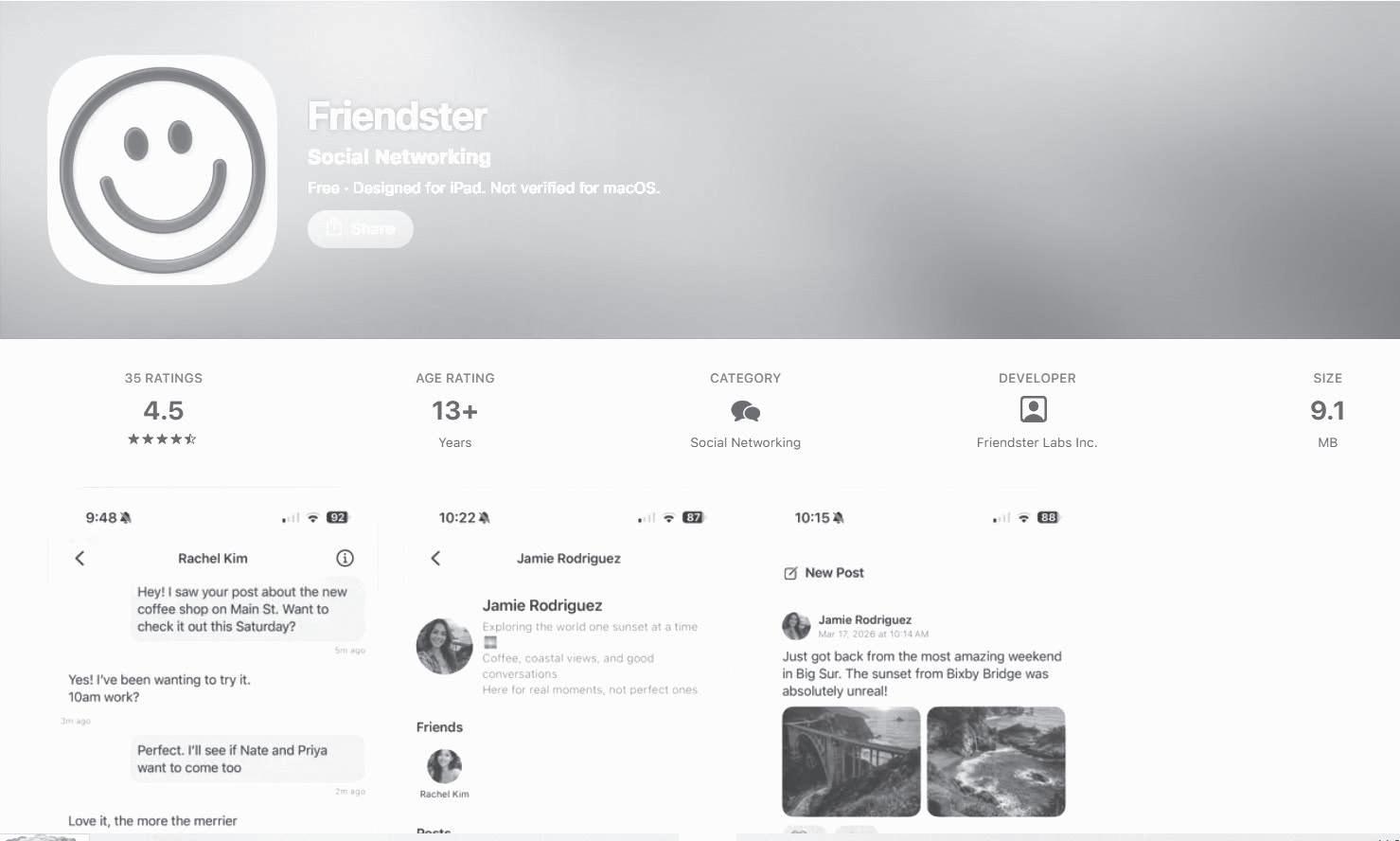
Friendster is back. What does this mean outside nostalgia?
Amid a social media landscape marked by intrusive ads and stolen data, Friendster promises a return-to-roots approach to social connection
by CARL MARTIN AGUSTIN Inquirer.net
SOCIAL media in the past years has greatly changed in terms of what we see on our feeds. Popular platforms such as Facebook, Twitter (pre-Elon), and Instagram, amassed widespread appeal on the promise of connecting both friends and strangers. Today, however, that promise has taken a backseat where we see intrusive ads and unwanted recommendations before getting to our friend’s latest updates—that is, on top of the widely accepted reality that our data is quietly being sold for profit.
Friendster, a social media pioneer that predated the many platforms we use today, had hundreds of millions of users in its heyday before ultimately bowing out to the industry giant that is Facebook.
More than a decade after its shutdown, Friendster has just made a comeback, and it’s promising a return-to-roots approach to social connection.
A new coat of paint
The new-look Friendster promises “social networking, without the nonsense.” With an almost bare-bones looking app (that’s only currently available on IOS as of writing), it doesn’t feature any ads or algorithm-adjusted content—just what your friends post on their feeds.
Adding friends has also taken on a new form. Rather than searching for your friends’ usernames or pressing that “add” or “follow” button on a recommendation, you can only add users in person. By that, you can only add friends you’re personally with at
the moment, as if you were using Apple’s Airdrop function. While the app is relatively new, it promises several additional features in its coming updates. Among these is a function where users can see their friends’ friends and request to message them. Another possible feature is dubbed “fading connections”: if two friends go a full year without tapping phones, the link between them softens.
According to Mike Carson, who bought Friendster and is the architect of its re-release, that will serve as a “gentle nudge that real friendships are kept alive in person, not online.” “All of this is built around the simple idea that real friendships happen when you actually meet in person,” he says.
“The idea that the only way to connect as friends on Friendster is by tapping phones was fun because it would promote people meeting in person. It would also verify that you are connecting to real people, and people that you actually want to connect with,” Carson shares, explaining the different approach to adding friends on the app.
$30k and a dream
According to Carson, in 2023, he discovered that the Friendster domain was active once again after it officially shut down in 2015. He then found the owner and discovered that the site was bought for $8k and was just being used to generate ad revenue. Carson later on finalized a deal, where he paid the current owner $20k in Bitcoin and a domain that was making around $9k/year in ad revenue.
But why? Carson notes that while today’s social networks
come with a lot of negativity, he recalls Friendster as a platform that brought positive and enjoyable experiences. “I wanted to create something positive— something that people would enjoy and find useful.”
He also explains that his personal experience with social media apps contributed to this decision. “My wife and I met on OkCupid. I wouldn’t have my kids without it. Websites like that genuinely change the course of people’s lives—people meet, fall in love, and build families. That’s incredible to me.”
As a zoomer
That sounds good and all, but how does this work in practice? Is there room for a Friendster revival for someone who doesn’t have the nostalgia?
The charm and allure of social media is the possibility for human connection despite the distance. It took the traditional concept of friendship and even relationships, turned it on its head, and proved that those made online can be just as real as those made in-person. And to a certain extent, the new-look Friendster alienates those who may not have the capacity to go out and make new friends.However, as someone who was late to social media and never experienced Friendster in its prime, its 2026 version does offer an escape from the noise that’s taken hold over social media. After all, the app is exactly what it says it is: It’s a way to keep tabs on what your friends are up to and a platform to keep in touch with them—all without the ads, the noise, and the doom-scrolling. It’s intentional social media if there were such a term for it.
Leadership in times of crises...
PAGE 6
ges customer behavior, making purchases more deliberate and altering priorities. If you continue with the same sales approach and assumptions, your message may not resonate. Engage with customers. Ask questions, listen and adjust accordingly. When customers are cautious, clear communication creates trust, which becomes especially valuable in difficult times. Fourth, focus on your core strengths. Tough times do not favor scattered efforts; they reward clarity and focus. Identify what you do best and what your customers value most, then focus on those areas. Let go of activities that are no longer effective. As one leader said, “In
good times, we ask, ‘What else can we do?’ In tough times, we ask, ‘What must we stop doing?’” This question can be critical for business survival. Finally, lead with composure. Your team observes not only your strategy but also your demeanor. If you remain steady, they will draw confidence from your example. Leadership is most visible during difficult times. You do not need to have all the answers, but you must demonstrate clarity, honesty and calm. In uncertainty, people seek steady leadership rather than perfection.
Disruption is a constant, though it takes different forms over time. Based on years of experience witnessing various crises, I have seen that strong
businesses are not built on perfect conditions, but on resilient thinking, disciplined execution and leaders who choose clarity over chaos. When external conditions become turbulent, focus on creating stability within your business. Sometimes, quiet stability becomes your greatest competitive advantage.
Catch Kongversations with Francis on YouTube and all major podcast platforms: Spotify, Apple Podcasts, Google Podcasts and more. Plus, listen to Inspiring Excellence wherever you stream. (Philstar.com)
The opinions, beliefs and viewpoints expressed by the author do not necessarily reflect the opinions, beliefs and viewpoints of the Asian Journal, its management, editorial board and staff.
Activism is not communism...
PAGE 6 receive subsidies from the government. The government also supports childcare from age 0 to the time the child goes to school. Public transport is additionally subsidized by the government, allowing passengers to have unlimited use of all regional and local public transport across the country for the fixed price of 63 euros per month because “(m) obility should not be a luxury—it must be universally accessible so that everyone can participate in society.”
To fund its welfare state features, Germany heavily imposes taxes with as much as a 45 percent tax rate for the rich. The government also collects substantial social security contributions from employers and employees. Even foreigners temporarily staying in Germany can feel and benefit from the extensive governmental services financed by heavy taxation. If we listen intently to the so-called leftist groups that are active in our Congress, in uni-
versities, and among activist organizations, we will recognize the welfare state features of European countries as among those that they have long been fighting for. In particular, the Makabayan bloc of congresspersons has been articulating these welfare state aspirations since they started sending members to Congress. However, they are drowned out and smeared by accusations that they have ties to and are extensions of the Communist Party of the Philippines—New People’s Army, which seeks to overthrow our republican government and replace it with a communist form of government. Whether the accusations are true or not, the merits of the Makabayan bloc’s advocacies (and all activist groups espousing the same aspirations for that matter) for the Philippines to incorporate socialist features in our country’s governance must be assessed on their merits and examined from the experiences of other countries. Besides,
Stronger and weaker...
what better way to render their revolutionary ambitions moot than by integrating their social and economic prescriptions into our current governmental system. The neoliberal model of free-market capitalism, trickle-down economics, privatization, and minimal government intervention that piggybacked on our democratic system of government, has led to the seriously failing society that we have today, where the rich are getting ridiculously richer, while the poor are insanely getting poorer. It’s time we shed the Cold War propaganda that has blinded us to perdition and look to the European model of social democracy. (Philstar.com)
* * * The opinions, beliefs and viewpoints expressed by the author do not necessarily reflect the opinions, beliefs and viewpoints of the Asian Journal, its management, editorial board and staff.
* * * Comments to fleamarketofideas@gmail. com
PAGE 6
to benefit their kinship group, whether actual relatives or allies.
Being able to bend or break the rules to benefit your kinship group is admired in our society, and demonstrating it repeatedly conveys prestige and influence. It has less to do with social class and more with access to power: someone poor connected to the powerful can be “malakas,” Roces says, while a wealthy person who lacks the necessary connections can be perceived as “mahina.” On the other hand, if someone is unwilling (or unable!) to leverage power to benefit their kinship network, they are considered “mahina” by society.
Following the rules, by this measure, does not evoke admiration;
it is viewed with contempt. Roces calls the give-andtake, the push-and-pull of the powerful as “politica de familia,” which she says dates to the precolonial era, with “utang na loob” as the kind of glue that binds everyone together; the manner in which families engage in competition to become strong is known as “palakasan.”
This is incompatible with ideas, ideals, and systems introduced by colonialism, which officially puts a premium on the rule of law, a professional bureaucracy, merit and ethical behavior, and on placing the national interest over familial interests. This tension often led leaders to criticize each other based on Western norms while practicing Filipino kinship politics.
Octa Research, in its March 19 to 25 survey, puts support for the VP’s impeachment at 69 percent nationally, 81 percent in the National Capital Region, and 69 percent in Balance of Luzon, a staggering 83 percent in the Visayas, and an astounding 61 percent in Mindanao. That the two remaining bailiwicks of the Dutertes have registered these numbers sends a message about the Veep: “mahina.” (Inquirer. net)
* * * The opinions, beliefs and viewpoints expressed by the author do not necessarily reflect the opinions, beliefs and viewpoints of the Asian Journal, its management, editorial board and staff.
* * * Email: mlquezon3@gmail.com; Twitter: @mlq3
Balikatan 2026...
PAGE 6
bilateral US-Philippine military drill, Balikatan 2026, is now a multilateral defense endeavor involving five additional states. This is the culmination of Manila’s efforts to increase the number of its security partners, which is motivated by a growing concern over China’s increasing aggression in the South China Sea and against Taiwan. Since 2023, the Philippines has entered into several defense agreements with Japan, New Zealand, Canada, and most recently, France.
The most impactful among these security agreements is the signing and the ratification of the Philippine-Japan Reciprocal Access Agreement (RAA). The agreement provides for simplified procedures and legal guarantees for the deployment of troops and equipment between the two US treaty allies and security partners for the conduct of joint exercises and disaster responses.
Before the RAA, JSDF’s participation in military drills in the Philippines primarily involved observing exercises and providing humanitarian assistance and disaster relief.
In view of the RAA, JSDF forces are participating in combat training scenarios involving defensive operations while bearing lethal weapons, representing a dramatic and significant departure from their previous roles in Balikatan exercises.
The highlight of the JSDF’s participation includes the deployment of 1,400 combat troops and the firing of the Type 88 anti-ship cruise missiles to sink a decommissioned Philippine Navy (PN) minesweeper off the northern coast of Luzon.
For Tokyo, Japanese participation in Balikatan 2026 marks a historic break in Japan’s se-
curity policy, as this involved the deployment of SDF forces in Southeast Asia.
This highlights a major shift from its passive defense posture to expeditionary military operations overseas and the forging of security ties between Japan and the Philippines in the face of possible China’s armed invasion of Taiwan in 2027.
From Manila’s perspective, the deployment of troops from the Japan Self-Defense Force (JSDF) marked the first time since the end of the Second World War that Japanese combat units set foot on Philippine soil.
It should be remembered that the forces from the Japanese Imperial Army from Taiwan invaded the Philippines immediately after the Japanese Imperial Navy attacked American forces at Pearl Harbor on Dec. 7, 1941.
This led to the brutal Japanese occupation of the Philippines, culminating in the 1945 Battle of Manila that led to the death of 100,000 Filipino civilians. However, in April 2026, the AFP warmly welcomed Japanese combat troops as other American treaty allies and security partners.
General Brawner emphasized this point when he stated: “Eighty-one years later, this is the first time we will have Japanese combat troops again on Philippine soil. Before, we were on opposite sides. This time, we find ourselves on the same side.”
A dress rehearsal for a 2027 Taiwan contingency?
Balikatan 2026 also features the cutting-edge multilateral training across air, land, sea, space and cyber domains. Field training exercises are being conducted across the Philippine archipelago, culminating in capstone events that rehearse
complex multilateral warfighting capabilities in maritime security, coastal defense and the integration of combined and joint live-fire drills.
This includes integrated air and missile defense exercises and counter-landing live-fire drills in Zambales and Palawan provinces, both facing the South China Sea.
The most significant of these live-fire drills is the holding, for the first time, of a Philippine-US maritime strike drill on the island of Itbayat, the northernmost point of the Philippine archipelago, which lies about 155 kilometers from Taiwan.
The drill involved transferring and deploying US Marine Corps and Army missile launchers from Luzon to Itbayat. Medium-range ballistic and cruise missiles fired from US Marine and Army launchers on this island can reach targets at ranges of 115 to 310 nautical miles, effectively covering maritime areas of Northern Luzon to the southern tip of Taiwan.
The capability of these launchers enabled American and Filipino forces to effectively deter any Chinese armed aggression in the Luzon Strait and Taiwan. This showed that this year’s Balikatan is a multilateral dress rehearsal in light of China’s irredentist and aggressive agenda against Taiwan in 2027. (Inquirer.net)
* *
*
The opinions, beliefs and viewpoints expressed by the author do not necessarily reflect the opinions, beliefs and viewpoints of the Asian Journal, its management, editorial board and staff.
* * * Dr. Renato De Castro is a trustee, convenor and non-resident fellow of think tank Stratbase ADR Institute. He is also a distinguished full professor at the Department of International Studies at De La Salle University-Manila.
The heartbeat of global healthcare...
PAGE 6
publicly. Behind the profession are stories of parents working overnight shifts to finance college educations, immigrants supporting relatives across oceans, and healthcare workers carrying the emotional burden of caring for strangers while separated from their own loved ones. The profession demands technical precision, but also extraordinary emotional resilience. Healthcare leaders and advocacy organizations have increasingly emphasized that recognition of Filipino nurses should extend beyond ceremonial praise. Calls have grown for stronger protections against exploitative international recruitment practices, improved mental health support for healthcare
workers facing burnout, and greater Filipino representation in hospital leadership and healthcare policy-making. Many Filipino nurses describe their work through the cultural principle of pagkalinga, a deeply rooted ethic of compassion and responsibility toward others. In practice, that philosophy often manifests not through grand gestures, but through consistency: the extra conversation with a frightened patient, the willingness to take difficult shifts, and the instinct to treat care as both profession and personal obligation.
Over time, Filipino nurses have become more than a workforce within American medicine. They have become a constant presence in hospitals, clinics and healthcare systems across the country,
earning the trust of generations of patients, physicians and fellow healthcare workers alike. This National Nurses Week, amid ceremonies, proclamations and tributes, the recognition carries a particular resonance for the Filipino community.
The history of Filipino nurses is ultimately a story about migration, education, endurance and service across borders. It is also a reminder that some of the most essential pillars of American healthcare were built not only through policy or infrastructure, but through generations of immigrants who arrived with training, discipline and an unwavering commitment to care for others. In hospital corridors across America, that legacy continues quietly and steadily every single day. (AJPress)
FOREIGN MINISTERS’ MEETING. Top diplomats of member states of the Association of Southeast Asian Nations (ASEAN), led by Philippine Department of Foreign Affairs Secretary Maria Theresa Lazaro (6th from left), convene for the ASEAN Foreign Ministers’ Meeting (AMM) at Shangri-La Mactan in Cebu on Thursday, May 7, 2026. Joining Lazaro in the meeting were Brunei Darussalam Foreign Minister Dato Erywan Pehin Yusof; Cambodian Deputy Prime Minister and Minister of Foreign Affairs and International Cooperation Frak Sokhonn; Indonesian Foreign Minister Sugion; Lao PDR Foreign Minister Thongsavan Phomvihane; Malaysian Foreign Minister Dato’ Seri Utama Haji Mohamad Bin Haji Hasan; Myanmar Ministry of Foreign Affairs, represented by Permanent Secretary Hau Khan Sum; Singaporean Foreign Minister Vivian Balakrishnan; Thai Foreign Minister Sihasak Phuangketkeow; Timor Leste Minister of Foreign Affairs and Cooperation Bendito Dos Santos Freitas; Vietnamese Foreign Minister Le Hoai Trung, and ASEAN Secretary General Kao Kim Hourn. PNA photo by Avito Dalan
Palace confirms prolonged estrangement between President Marcos and Senator Imee Marcos
by AJPress
MANILA — Malacañang has confirmed that President Ferdinand Marcos Jr. and his sister, Senator Imee Marcos, have not spoken for nearly three years, publicly acknowledging a long-standing family estrangement that has increasingly unfolded alongside political tensions within the administration’s orbit.
Presidential Communications Office Undersecretary Claire Castro said the President confirmed the distance after being asked about the senator’s recent remarks describing their relationship as “non-existent.” Castro added that Senator Marcos has not attended family gatherings or family events during that period.
The Palace maintained that the President does not harbor ill feelings toward his sister, although Castro acknowledged that he appeared disappointed by some of her public comments involv-
ing him, his administration and members of the family. Malacañang declined to elaborate further on the cause of the estrangement and said the senator would be in the best position to explain the matter publicly.
Senator Marcos had earlier said she continues to care about her brother’s well-being, particularly his health, but acknowledged that she avoids family reunions because they are “not comfortable” for her.
The disclosure places into the public record what had long been visible through the siblings’ increasingly separate political positioning and limited public interaction.
In recent months, Senator Marcos has occasionally departed from the administration’s messaging on several national issues and has publicly commented on matters involving the President’s health and leadership. The Palace has repeatedly rejected speculation surrounding Marcos’ medical condition and dismissed related rumors
circulating online and in political discussions.
Separate allegations previously raised publicly by the senator concerning the President’s alleged drug use were denied by the Palace. International wire reports at the time noted that presidential aides cited prior drug testing results in rejecting the claims. To date, no official finding or court determination has established wrongdoing related to those allegations.
The Palace has maintained that the President remains focused on governance and does not intend to publicly escalate personal disagreements within the family.
The Marcos siblings remain among the country’s most prominent political figures, making the prolonged silence between them both a private family matter and a development closely watched within Philippine political circles.
Neither Malacañang nor Senator Marcos has publicly indicated any immediate effort toward reconciliation. n
Court junks VP husband’s plea to stop impeachment
by Bella Cariaso Philstar.com
MANILA — A Quezon City
Regional Trial Court (RTC) has junked the petition filed by Manases Carpio seeking to stop the ongoing impeachment proceedings against his wife Vice President Sara Duterte, saying that the judiciary cannot interfere with the exercise by the House of Representatives of its constitutional impeachment powers.
The Quezon City RTC Branch 81 also denied Carpio’s plea for a writ of preliminary injunction against Speaker Faustino Dy III, House committee on justice chair Batangas Rep. Gerville Luistro and Bureau of Internal Revenue Commissioner Charlito Martin Mendoza.
In a five-page order dated May 6 and penned by Presiding Judge Madonna Echiverri, the RTC dismissed for lack of jurisdiction Carpio’s petition for prohibition with prayer for the issuance of a writ of preliminary injunction.
“The petition for prohibition is DISMISSED for lack of jurisdiction. The prayer for issuance of a writ of preliminary injunction is DENIED,” said the court ruling received by the House of Representatives.
The petition sought to block the House justice panel from enforcing subpoenas and proceeding with actions tied to the impeachment complaints against Duterte, particularly after the committee sought tax records and other documents allegedly linked to the Vice President and her husband.
The RTC ruled that the House justice panel was lawfully exercising powers granted under the Constitution and could not be restrained through prohibition or injunction.
“Respondents do not usurp but are in fact, as members of
I’m
House committee on justice are, by law, constituted to determine the sufficiency of the impeachment complaint against the Vice-President and eventually the determination of probable cause for the filing of the case to the Senate,” the order read.
The RTC court stressed that the House has the “exclusive power to initiate all cases of impeachment,” as it cited Article XI of the 1987 Constitution.
The ruling also upheld the subpoena powers of the committee, saying the issuance of compulsory processes was part of its inherent authority in carrying out impeachment proceedings.
“Thus, the issuance of the subpoena duces tecum ad testificandum is an inherent power of the Committee, which is validly created by law, to carry out this constitutional mandate effectively in the conduct of its hearing,” the RTC said.
The RTC also rejected Carpio’s argument that the House panel had no jurisdiction over him or over documents allegedly connected to him and the Vice President.
“Prohibition issues only against usurpers or those who exercise power which have not been vested by law,” the court said.
The court held that injunctions cannot be used to prevent the House panel from carrying out its constitutional functions.
“To enjoin the public individuals in the performance of their duty in the determination of the sufficiency of the impeachment complaint is to prevent said body to exercise its quasi-judicial or ministerial functions,” the order added.
The court likewise rejected Carpio’s motion asking the RTC to take judicial notice of news reports and YouTube videos related to the House hearings.
“Newspaper articles amount to ‘hearsay evidence, twice removed’ and are therefore not only inadmissible but without any probative value at all whether objected to or not,” the ruling said.
The RTC said the petition should have been filed before the Supreme Court because the respondents were acting as part of a co-equal branch of government.
“In the case at bench, the respondents are acting in the official capacity as part of the HCOJ, a co-equal branch of the government hence, the case at bench should have been filed with the Supreme Court,” the order stated. n
not vindictive: Sara not scared to lose VP post
by Bella Cariaso, Christine Boton Philstar.com
MANILA — Vice President
Sara Duterte dismissed speculation that her political plans could influence lawmakers in voting on the impeachment complaint against her.
“I’ve been in politics for a long time. I was not a vindictive politi-
JP Lopez and the discipline of creative trust
If Maria Cristina Lopez were still alive today, she would likely take immense pride in the accomplishments of her son, JP Lopez, now recognized as a writer and director with work associated with networks such as GMA Network and various independent production companies in the Philippines.
What impressed me most during the PhilStagers Theatre and Film Workshop Batch 2026 was not merely JP’s professional credentials, but the seriousness, discipline, and generosity he brought to teaching.
From the opening day of the workshop, participants were immersed in exercises designed to build trust, spontaneity, and awareness. Activities ranged from memorizing names and personal details of fellow participants to creating group logos under time pressure. I belonged to the “Jolly Peers” group. We also engaged in collaborative exercises that challenged our concentration and collective focus, including one in which participants lifted a groupmate using only two fingers.
Beyond the fun and energy of the activities, the exercises revealed a deeper principle central to acting: the necessity of freeing oneself from inhibition. Natural performance requires emotional honesty and the ability to respond without fear of judgment. An actor must move beyond “performing” and instead inhabit the emotional reality of the character.
Equally memorable were the architectural and monumental exercises conducted with the assistance of PhilStagers actor Joseph Tañada. Blindfolded participants relied solely on listening, trust, and coordination, underscoring the importance of concentration and teamwork.
During that first day of the month-long summer workshop, held on May 4, I was reminded of the enduring value of trust, time, discipline, and collaboration.
The workshop orientation had earlier been conducted on May 2 by the Philippine Stagers Foundation (PSF), known widely as
PhilStagers, a theater organization that has established a strong presence in Philippine performing arts.
The orientation for Theater and Film Workshop Batch 2026 was organized by PSF President Johnrey Rivas, a FAMAS Best Supporting Actor awardee for the internationally recognized film Katips. The event was hosted by JP Lopez and OJ Arci. Designed for participants ages 16 and above, the workshop will culminate in a series of acting recitals.
Sessions are held every Monday, Wednesday, and Friday at the PSF Blackbox Theater (Philippine Stagers Studio), located at 2065-B G. Tuazon Street corner Calabash A, Balic-Balic, Sampaloc, Manila.
Remembering Oscar P. Garcia Real estate broker and developer Oscar P. Garcia, a graduate of Arellano High School and the University of Santo Tomas, was also a former columnist for the Manila Bulletin and an active member of the Philippine Association of Real Estate Boards (PAREB). He was a cousin of former Bulacan Governor Atty. Obet Pagdanganan.
I still recall my appearance years ago on Jeanne Young’s “Spin-A-Win” on RPN Channel 9, where I won a bedroom showcase. At the time, I chose not to inform my uncle Felipe “Jun” Medina Jr., then general manager of IBC 13 and a broadcaster for RPN Channel 9.
Instead, I contacted my uncle Oscar, who arrived in his newly acquired Mercedes-Benz vehicle and personally helped transport the prizes from Broadcast City. The gesture left an impression not only on me, but also on secu-
rity personnel and the late actor Rod Navarro Sr., who assisted during that occasion.
“Tito Oca,” as I fondly called him, consistently encouraged my pursuit of journalism and writing. I knew he shared in my happiness when I later received recognitions such as the 2nd Southeast Asian Premier Business and Achiever Award in Manila and the Amerika Prestige Award in North Hollywood, California, accompanied by my aunts Anita Garcia and retired educator Pilar B. de Mesa.
Lani Montreal to be featured in Chicago events
Artist-educator Lani Montreal is set to participate in several cultural events in Chicago this May.
These include cold readings of scenes from Rho Variant: A Zombie Apocalyps(o) with Naked Angels at Chicago Dramatists, 798 N. Aberdeen, on May 5 and 12; an ekphrastic poetry presentation during Art Speaks at Stan Mansion, 2408 N. Kedzie, on May 8; and the relaunch of Riksha Magazine at the Rizal Center, 1332 W. Irving Park, on May 16.
“Talakayan sa Konsulado” forum in San Francisco
The Philippine Consulate General in San Francisco will host “Talakayan sa Konsulado,” a public forum focused on recent developments in U.S. immigration policy, on May 15, 2026, from 5 p.m. to 7 p.m. at Kalayaan Hall of the Philippine Center in San Francisco.
Organized in partnership with the Integrated Bar of the Philippines California Chapter, the forum will feature immigration professionals who are expected to discuss current immigration concerns, legal rights, common pitfalls, and available pathways to permanent residency.
Participants may attend in person or virtually via Zoom.
Registration is available at: bit. ly/talakayansf2026
“Sa Piling ni Nanay” art exhibit
In Filipino culture, the figure of the mother — Nanay, Ina, Inay — remains deeply intertwined with memory, sacrifice, and family life.
The exhibit “Sa Piling ni Nanay” gathers works from the collection of Museo Orlina that reflect on the emotional and cultural dimensions of motherhood through varied artistic forms and mediums.
The featured works explore maternal presence through gestures of tenderness, sacrifice, labor, and devotion, while also examining motherhood as both a personal and collective experience within Filipino society.
The exhibit runs from May 1 to July 31, 2026.
Mother’s Day gathering
A group of women in Northern California recently gathered in advance observance of Mother’s Day.
Mother’s Day this year falls on Sunday, May 10, and continues to be widely celebrated in countries including the United States, Canada, and the Philippines. Traditions commonly include family gatherings, gift-giving, flowers, and shared meals honoring mothers and maternal figures.
Happy birthday to Chyril Luz
Carino (May 5) and Maris-
(May 7).
cian. The people of Davao know that,” Duterte said in an interview in The Hague, Netherlands.
Duterte has declared that she intends to run for president in 2028.
“If I were a congressman, I wouldn’t think if the person is vindictive or not, I would look at the evidence. Is there any evidence? When the complaint was filed, there was no evidence at all. It’s just allegations, nothing to support the allegations. That’s what they should be looking at. Is there a basis (for the impeachment) or not? It is about removing a person who doesn’t agree with the administration,” Duterte added.
House Deputy Speaker and National Unity Party chair Ronaldo Puno recently said it will be easy to muster the required 106 threshold votes to impeach the Vice President.
Duterte said she is not afraid of losing the vice presidency amid the ongoing impeachment case against her as the House committee on justice said that she should be perpetually banned from occupying public office.
“For me, if I remain vice president, well and good, I can help more people through the Office of the Vice President. If I don’t become vice president, that’s OK too, for me... I can still help people, in a different capacity, in a different way, either way, I won’t lose my capacity to help, I don’t think I’m crazy about that position,” Duterte said.
“I experienced that when I didn’t run for congressman in 2013. After I became mayor, I didn’t run for politics, I became a lawyer and I also helped, not as far and wide as the Office of the Vice President, but I also helped people as a lawyer,” Duterte added.
Duterte will not be in the Philippines when the plenary vote will be held as her overseas trip will be until May 15. After the Netherlands, she will travel to South Korea, Belgium, Germany and the United Kingdom.
Sara denies throwing laptop
Duterte has also denied reports that she threw a laptop at a member of her 16-man defense team.
“Actually, to be honest, it’s too much of a garbage gossip that shouldn’t be given attention. But because you asked, I’ll just answer,” Duterte said.
She was reacting to viral social media posts that she threw a laptop at lawyer Michael Poa, spokesperson for her legal team, in alleged frustration over the handling of her impeachment case.
“Never in the history of my job have I thrown a laptop at a colleague or an employee. Because, first of all, when you throw a laptop or a cellphone, it has no benefit to you. And of course, it has no benefit to the victim (hit by) a laptop or a cellphone,” Duterte said. “Second, I don’t use a laptop
because I don’t know how to use a computer. In all documents, I just rely on my colleague. Sometimes, when I use a laptop, I use it for Zoom meetings, because I want the image to look good in the Zoom meeting,” she added.
According to Duterte, she is using a personal laptop.
“My laptop is my personal laptop. I bought it. It’s expensive. And I won’t just throw it about; it will break. And it’s expensive to buy a new laptop. Because you’re asking why my laptop is private? The government can’t afford the laptop I want. So, I bought a laptop. The people in the government said they can’t afford my laptop. So I bought a laptop,” she noted. Duterte accused her enemies of sowing misinformation against her.
The Commission on Elections (Comelec) yesterday said the 2028 elections will unquestionably proceed under the Constitution and preparations are already underway, with the poll body estimating readiness at 50 to 60 percent.
Comelec Chairperson George Garcia said there is no basis for doubts on the conduct of the next presidential elections, responding to Duterte’s remarks expressing hope that the 2028 polls will be held and conducted in an honest, orderly and peaceful manner.
Duterte, in an interview on Monday, also described herself as a “presumptive candidate” after declaring her intention to seek the presidency.
Garcia said the commission is steadily advancing its preparations even years ahead of the scheduled national vote.
“We are merely implementers of our laws. And on the part of the Comelec, in truth, we are already about 50 percent to 60 percent prepared for the 2028 elections,” Garcia said, adding that the constitutional mandate ensures the conduct of elections will proceed as scheduled.
Garcia also dismissed concerns and speculation about the 2028 polls, saying there is no doubt this will push through. Meanwhile, the poll chief noted that Comelec has recently conducted vendor presentations and early consultations with stakeholders as part of preparations for future electoral exercises, including possible voting technology upgrades.
He said these early steps are intended to ensure transparency and efficiency in the procurement and planning process for election systems.
Garcia added that Comelec continues to refine its election roadmap through consultations with citizens’ arms, stakeholders, and technology providers as part of long-term modernization efforts.
Varsovia
Oscar P. Garcia with his wife Anita Garcia.
Mother’s Day celebration in a restaurant in Northern California.
(2nd
Manases Carpio STAR / Miguel de Guzman
STAPLE GRAIN. Rice varieties sell between PHP48 and PHP70 per kilo at retail store in San Andres, Manila, on Thursday, May 7, 2026. The Department of Agriculture is implementing strict measures to manage rice prices, which include a possible a PHP50 per kilo price cap on imported rice.
Photo by Yancy Lim
ASIAN
Friday, May 8, 2026
Filipino-American queens to carry Philippine sash in 2026 pageant season
by AJPress
LOS ANGELES — Three Filipi-
no-American beauty queens are set to represent the Philippines in international pageants in 2026, reflecting the growing visibility of the Filipino diaspora in Philippine pageantry.
Bea Millan-Windorski, Asia
Rose Simpson and Katrina Anne Johnson will each compete under the Philippine sash, bringing personal backgrounds shaped by Filipino heritage, life abroad and advocacy work.
Millan-Windorski, who represented La Union, was crowned Miss Universe Philippines 2026 and is expected to compete at Miss Universe 2026 in Puerto Rico in November. The Miss Universe Organization has announced Puerto Rico as host of the pageant’s 75th edition.
Before winning the national title, Millan-Windorski had represented the United States in Miss Earth 2024, where she placed as Miss Earth Water. Her public advocacy has included migrant worker protection, environmental causes and support for refugee communities.
Simpson, Miss World Philippines 2026, is expected to represent the country at Miss World 2026, with pageant coverage
identifying Vietnam as host of the Sept. 5 final. Representing Quezon City, she won the national title at 18 and has promoted youth mental wellness through her SED Initiative, which uses sports, exercise and dance as tools for confidence and self-expression. Johnson, who was crowned Binibining Pilipinas International 2025, will represent the Philippines at Miss International 2026. She previously placed first runner-up at Binibining Pilipinas 2023 before returning to win the international title. Pageant coverage lists the 64th Miss International pageant for Nov. 25, 2026, at Tokyo Dome City Hall in Japan. Their participation places
Filipino-American titleholders across three of the country’s closely followed international pageant campaigns. It also points to a broader shift in Philippine pageantry, where contestants from diaspora communities increasingly bring cross-cultural experience, international exposure and advocacy-centered platforms.
For Filipino communities in the United States, the 2026 pageant season offers another measure of visibility: women with roots on both sides of the Pacific representing a country whose pageant tradition remains among the most closely watched in the world.
Ryan Agoncillo, Judy Ann Santos emphasize trust over jealousy in show business marriage
In a recent television appearance, the veteran couple addressed on-screen partnerships with humor, underscoring a relationship built on independence and mutual respect.
by AJPress
MANILA — Ryan Agoncillo and Judy Ann Santos presented a composed and pragmatic view of marriage in the entertainment industry, emphasizing trust and professional autonomy during a recent joint television appearance.
The couple appeared on the pilot episode of Matteo G Primetime, hosted by Matteo Guidicelli, where they were asked about jealousy and the realities of working with on-screen partners. A brief moment drew attention after Agoncillo, in a joking tone, said “Subukan mo” when the discussion turned to Santos selecting potential leading men. He subsequently clarified that the remark was not intended as a restriction. In context, Agoncillo indicated that he defers to Santos’ judgment on career decisions, describing her as capable and experienced in navigating roles and professional relationships. His comments reflected a broader position that disagreements, if any, can be addressed privately rather than preemptively limiting opportunities.
Santos responded with similar ease, saying she would allow Agoncillo to take on projects involving a leading lady. Her answer aligned with the couple’s consistent public stance that acting roles should be treated as part of the profession, not as a source of personal conflict.
Professional boundaries in public view
The exchange offered a glimpse into how estab-
lished actors manage expectations in an industry where audience interest often extends beyond the screen. Rather than framing jealousy as a defining issue, both presented it as manageable through communication and mutual respect.
Agoncillo and Santos, who have been together since 2004 and married in 2009, are widely regarded as one of Philippine entertainment’s enduring partnerships. Their remarks reinforced a pattern seen in previous interviews, where both have emphasized independence within the relationship while maintaining a unified public front.
Vic Sotto says Vico’s political future is his decision
by AJPress
recognizable television and film personalities, and actress and television host Coney Reyes, a longtime figure in Philippine entertainment known for her work in television drama, film, and family-oriented programming. In several reports published this week, Vic acknowledged growing calls for Vico to eventually run for president or pursue another national position. He did not endorse a future candidacy, saying public service is a personal calling and that the
Eraserheads documentary to stream globally on Netflix May 30
by AJPress
MANILA — The documentary film Eraserheads: Combo On The Run will begin streaming worldwide on Netflix on May 30, extending the reach of a project that revisits the history and cultural impact of one of the Philippines’ most influential rock bands.
Directed and produced by Maria Diane Ventura, the film follows Eraserheads members Ely Buendia, Raimund Marasigan, Buddy Zabala and Marcus Adoro as it traces the group’s rise from the Manila alternative music scene to mainstream success during the 1990s. The documentary also revisits the band’s widely watched 2022 reunion concert, which renewed public attention on the group decades after its commercial peak.
Release materials and entertainment reports said the Netflix edition will contain a revised cut that includes additional footage and expanded scenes not included in the original theatrical version.
The documentary first screened in Philippine cinemas in 2025 before moving to selected international screenings. Organizers and entertainment reports previously described its San Diego Comic-Con screening as a milestone appearance for a Filipino-produced music documentary at the convention.
The film later received the Best International Feature Documentary award at the 12th Ierapetra International Documentary and Film Festival in Greece, according to festival and entertainment reports. Formed in 1989, Eraserheads
became one of the defining acts of Philippine alternative rock, producing songs that remain widely recognized across generations of Filipino listeners. Among the band’s best-known tracks are “Ang Huling El Bimbo,” “Pare Ko,” “Ligaya,” and “With A Smile.”
The documentary’s title references “Combo on the Run,” a song from the band’s 1993 debut album Ultraelectromagneticpop!, a record often associated with the rise of modern Filipino alternative music.
Netflix’s acquisition of the film reflects the growing international visibility of Filipino music documentaries and concert-related productions as streaming platforms continue expanding regional content offerings for global audiences.
Eraserheads members (L-R) Buddy Zabala, Raimund Marasigan, Ely Buendia and Marcus Adoro.
Photo from Facebook/@netflixph
MANILA — Veteran television host and actor Vic Sotto said any decision by Pasig Mayor Vico Sotto to seek higher national office should be left to his son, amid continued public speculation surrounding the
Photo from Facebook/@ryanagoncilloph
Photos from asiarosesimpson, themissuniversph and katrinacastanedajohnson/Instagram
Pasig City Mayor Vico Sotto participates in Bloomberg CityLab 2026 in Madrid, Spain, following Pasig’s selection as one of the global winners of the Bloomberg Philanthropies 2025–2026 Mayors Challenge. The city secured a $1 million grant for its proposed floating parks initiative aimed at transforming urban waterways into community-centered public spaces. Photo courtesy of Bloomberg Philanthropies/Pasig City Government.
younger Sotto’s political future. Vico Sotto is the son of Vic Sotto, one of the Philippines’ most
FAKE GLP-1
GLP-1 Drugs are wonder drugs effective for the treatment of diabetes and obesity/overweight. It is in demand. Since there is a shortage of GLP-1 drugs, the FDA has warned the public against the use of compounded versions (not approved by the FDA) of drugs like Wegovy and Ozempic. These unapproved (fake) drugs have been linked to adverse events. Getting sick or dying from using these dangerous versions of GLP-1 to be healthier does not make sense. Stay away from fake drugs and stay with your physician’s prescription. Do not use GLP-1 or any medications, or discontinue them, without physician supervision.
Vital sunlight
The sun is life. Without the sun, we all perish. Exposure to the sun daily is vital for human health primarily because it triggers the skin to produce Vitamin D, which is essential for calcium absorption, bone health, and immune system function. It also boosts serotonin levels to enhance mood, regulates the circadian rhythm for better sleep, and can reduce mortality. It is prudent for all of us to enjoy some sunlight for at least 20 minutes each day, especially those with darker skin, more.
Standing on one foot
Falls and fractures among the elderly in the United States victimize 28 percent of Americans aged 65 and older. This translates to about 14 million a year, 3 million emergency room visits, and 1 million hospitalizations. Most of them are from hip fractures. Almost all of these falls are due to impaired balance and stability in seniors. One of the best exercises to regain balance and stability is by standing on one foot, alternatingly. Here’s more:
“Standing on one foot, or unipedal standing, is a premier senior exercise for enhancing balance, strengthening leg muscles (quads, glutes, hamstrings), and reducing fall risk by up to a third. This exercise improves proprioception (body awareness), stabilizes the hips, and boosts coordination needed for walking and climbing stairs.
Brushing Teeth Balance: Stand on one leg while brushing teeth to build stability. Supported Single-Leg Stand: Hold onto a sturdy chair or countertop, shift weight to one side, and stand on one leg for 20 seconds, aiming for 10-15 repetitions per leg. Support Reduction: Advance from holding a chair with two hands to using only one hand, then just fingertips, and finally no hands. Weighted Standing: Shift all weight onto the standing leg, bending it slightly while
I USED to think delays meant I had missed my chance. That I was behind. That other people were being chosen while I was being overlooked. This past season changed that thinking. A line I read recently stayed with me: God doesn’t reward impatience. He rewards faith that refuses to die in the dark. It reframed how I look at slow seasons. We often assume that if life is not moving, something is wrong. Sometimes nothing is wrong. Sometimes life is being redirected. For me, that redirection came through a foot injury. Six weeks of recovery forced a complete stop. No dance training. No movement the way I am used to. For someone who finds joy, expression, and community through dance, it was not a welcome pause. There were difficult moments. I watched friends continue on the dance floor while I stayed home, my foot elevated, waiting. But while I was sidelined in one area, I
Medical wisdom
keeping the torso upright.” - MP Keto diet danger
Countless famous people have tried the Keto Diet to maintain good health. Many have stopped and modified their diet. The keto diet can cause nutrient deficiencies, kidney stones, constipation, and “keto flu” (headaches, fatigue) due to low fiber and high fat consumption. Future dangers could include increased cardiovascular risk from high saturated fat, potential liver/pancreas damage, impaired bone health, and possible hypoglycemia or dangerous ketoacidosis in diabetic individuals. - UCM
Eat real, natural food in proper amounts, especially plantbased protein and vegetables, cruciferous vegetables, and severely reduced carbohydrate (sweets) intake.
Rice: Glycemic Comparison As Asians, we consume a lot of rice daily, from breakfast to dinner, and in between. Today, studies have shown how unhealthy eating a lot of rice is, especially for those with pre-diabetes and diabetes, or those who are overweight. Minimizing rice is beneficial to health.
Glycemic Index is an indicator of how fast, after consumption, the blood sugar rises or spikes. It is a scale from 0 to 100. Here is a comparison of the Glycemic Index of various types of rice: Basmati 50-50 (Medium), Brown rice 50-55 (Low), Arborio 69 (Medium), White Standard 70+ (High), Jasmine 89 - 109 (High). Basmati rice is very popular. My favorite. TIP: Refrigerate leftover rice within one hour after cooking…not more, because of bacterial (Bacillus cereus) germination and growth if left more than one hour unrefrigerated. This can cause diarrhea and vomiting.
Basmati is better, especially for diabetics – fewer blood sugar spikes. Of course, control of the amount is important. Actually, while it is hard to do, especially for Asians, abstinence from rice would be ideal (great for weight control and diabetes prevention), minimal carbohydrate intake, a lot of plant-based protein, cruciferous veggies (broccoli, cabbage, cauliflower, bok choy, arugula, kale, Brussel sprouts), for heart health and cancer prevention, especially colorectal cancers.
Caution on distilled water
Distilled water is pure water, minus all total dissolved solids, chemicals, etc. This type of water is usually used for devices, like CPAP machines, and in laboratories. This is not intended for drinking because it lacks all the good minerals in it. Unfortunately, around the world, the Philippines included, distilled water is sold to the unsuspecting, ignorant public as drinking water. Some brands include Absolute, Wilkins, and Nature’s Spring. Drinking distilled water daily can lead to electrolyte imbalance and mineral deficien-
cies (calcium, magnesium, potassium, etc.), muscle cramps, fatigue, weakness, and altered metabolism. In the Philippines, boiling faucet (city) water kills bacteria and removes chemical sediments, making it safe for drinking, better and healthier than drinking distilled water. Also, distilled water is bottled, and plastic bottle leaches microplastic into the water. So, by not drinking distilled water, you also reduce the intake of microplastics into your brain and other vital organs.
Moisturizer essential
Skin moisturizer is not only for women. Men’s skin also deserves to be properly moisturized, especially in dry or desert areas. This helps keep our skin healthy and protects our body. Daily facial moisturizer and skin moisturizer for the body is a healthy practice, especially after a shower. News: Men can also use facial moisturizers used by women. For financial gains, cosmetic companies created “dedicated moisturizers, special formulas” for women. They are much more expensive than moisturizers for men. Now, so-called facial moisturizers for men are marketed with exaggerated claims to remove eye bags, wrinkles, etc. But using it daily for 3 months, those facial “problems” remain. Obviously false claims. Using the common old-fashioned moisturizers, modestly priced, is good for the face, neck, arms, body, and legs. The skin is the body’s largest organ. Skin health is vital for our overall well-being. Let’s keep it well-hydrated and healthy.
*
* * The opinions, beliefs and viewpoints expressed by the author do not necessarily reflect the opinions, beliefs and viewpoints of the Asian Journal, its management, editorial board and staff.
* * * The main objective of this column is to educate and inspire people live a healthier lifestyle to prevent illnesses and disabilities and achieve a happier and more productive life. Any diagnosis, recommendation or treatment in our article are general medical information and not intended to be applicable or appropriate for anyone. This column is not a substitute for your physician, who knows your condition well and who is your best ally when it comes to your health.
* *
*
Philip S. Chua, MD, FACS, FPCS, a Cardiac Surgeon Emeritus based in Northwest Indiana and Las Vegas, Nevada, is an international medical lecturer/author, Health Advocate, medical missionary, newspaper columnist, and Chairman of the Filipino United Network-USA, a 501(c)3 humanitarian foundation in the United States. He is a decorated recipient of the Indiana Sagamore of the Wabash Award in 1995, presented by then Indiana Governor, US senator, and later a presidential candidate, Evan Bayh. Other Sagamore past awardees include President Harry S. Truman, President George HW Bush, Astronaut Gus Grissom, pugilist Muhammad Ali, David Letterman, distinguished educators, scientists, etc. (Wikipedia). Websites: FUN8888.com, Today.SPSAtoday.com, and philipSchua.com. On Amazon.com, search for “Where is My America?” Email: scalpelpen@gmail.com.
The dark season didn’t break me
was needed in others. I had time to care more closely for my aging mother. I focused on a rental property remodel that required attention. I redirected energy into my skincare business. None of these carried the same excitement as dance, but all of them carried weight. That is when a shift became clear: not every closed door is rejection. Sometimes it is protection. Sometimes it is prioritization. We ask for blessing, but do not always recognize it when it arrives as interruption. I wanted sequins and cha-cha. Instead, I was given ice packs, patience, and paperwork. Yet there was growth in all of it. Faith strengthened. Gratitude deepened. Patience, still in progress, improved.
This pattern extends beyond personal setbacks. It applies to finances as well. Many pray for increase, but timing determines whether that increase becomes stability or disorder. Resources without discipline can create pressure rather than relief. If progress feels delayed, it may not be denial. It may be preparation.
The more difficult questions are often the more revealing ones.
3AF Impact 50 names top brands driving innovation, growth and connection with Asian American consumers
by AJPress
LOS ANGELES — In obser-
vance of Asian American Native Hawaiian Pacific Islander Heritage Month, the Asian American Advertising Federation announced on May 1 its 3AF 2026 Impact 50, recognizing 50 national brands making sustained and measurable investments in the Asian American consumer segment.
The annual list highlights companies demonstrating authentic engagement through marketing and advertising, experiential programs, strategic innovation, and long-term commitment. The 2026 honorees, selected based on their 2025 activities, include companies from the Fortune 500 and Fortune Global 500.
The federation is set to formally unveil the list during its Asian Marketing Summit on May 13.
Industry leadership and market relevance
3AF President Cheryl Lee said the honorees reflect a broader shift toward multicultural market integration.
“As brands navigate an increas-
ingly multicultural marketplace, the 3AF 2026 Impact 50 stands out as leaders in building authentic, lasting relationships with the Asian American community,” Lee said. “Their work demonstrates that meaningful investment is not only impactful, it is essential to the future of business.”
Selection framework
The 3AF said brands were evaluated based on several criteria, including demonstrated marketing activity targeting Asian American audiences, cultural intelligence and authenticity, strategic execution and visibility, and evidence of commitment beyond one-off campaigns.
The list was compiled by industry experts, many with more than three decades of experience in Asian American advertising and marketing. Additional nominations from veteran practitioners outside the organization were incorporated to ensure broad coverage of 2025 industry activity.
3AF 2026 Impact 50 (alphabetical order)
Acura; Alaska Airlines; Bounty; Brown-Forman; Cadillac; Chase; Citibank; Coca-Cola; Disney; East West Bank; Genesis Motor Amer-
The complete list is available at the organization’s official website https://www.3af.org/3af-2026–impact-advertisers/ Registration details for the May summit are available at: https:// www.3af.org/2026-may-summit/. About 3AF
The Asian American Advertising Federation is a national trade organization composed of Asian American advertising agencies, marketers, media companies, and industry specialists. It aims to advance Asian American marketing and advertising through education, advocacy, promotion, and cross-industry collaboration.
Sharon Cuneta joins playful exchange over Frankie Pangilinan’s rumored boyfriend
by AJPress
MANILA — Sharon Cuneta appeared to publicly show support for daughter Frankie “Kakie” Pangilinan’s rumored relationship with Daniel “Dan” Laurel after joining a lighthearted online exchange that drew attention across entertainment and social media platforms.
On May 5, Frankie posted a birthday greeting on Instagram featuring photographs of herself and Laurel during beach trips, market visits and other personal outings. She captioned the post: “Happy birthday to the rumored boyfriend of Frankie Pangilinan.”
Cuneta later commented on the post, writing: “Happy birthday to the alleged of my [second] baby! Love you!” Laurel replied, “Thank you so much tita! Allegedly love you too,” continuing the playful tone of the exchange. Frankie’s sister, Miel Pangilinan, also joined the comments section, referring to Laurel as “kuya, allegedly.”
The interaction fueled further online discussion surrounding the pair, whose relationship has been the subject of speculation in recent weeks.
Entertainment reports have identified Laurel as the son of former model and 1980s social figure Crispy Santamaria Laurel and businessman Arsenic Laurel. Santamaria Laurel was known during the 1980s as one of Manila’s prominent “it girls” and gained recognition as a former Camay Girl.
Arsenic Laurel belongs to the prominent Laurel family of Batangas and has been publicly associated with business and golf organizations in the Philippines. He is a grandson of former Philippine President Jose P. Laurel and son of the late race car driver Arsenio
“Dodjie” Laurel, a two-time Macau Grand Prix champion during the 1960s.
Neither Frankie nor Laurel has formally confirmed the status of their relationship. However, entertainment observers noted that Frankie appeared to publicly acknowledge the pairing through several social media posts beginning in April, a move commonly referred to online as a “hard launch.”
Frankie, known professionally as Kakie, is the daughter of Cuneta and Senator Francis “Kiko”
Pangilinan. She has built a public profile through music releases, commentary and digital content centered on social and cultural issues. Cuneta, widely known as the “Megastar,” remains one of the Philippines’ most recognizable entertainment personalities, with a career spanning film, television and music over several decades.
Ruffa Gutierrez celebrates daughter Lorin’s graduation from Pepperdine University
MALIBU, California — Actress and television personality Ruffa Gutierrez marked a personal milestone after her daughter, Lorin Gabriella Gutierrez Bektas, graduated from Pepperdine University in California.
Can you remain steady when resources are limited? Can you stay measured when treated unfairly?
Can you continue to give without immediate return?
These are not theoretical questions. They define readiness.
Growth is rarely immediate, and it is never accidental. It is developed quietly, often outside of recognition, long before results become visible.
So when life slows down, it is worth reconsidering the assumption that something has gone wrong. It may be that something is being built instead.
Hold on to this: The dark season didn’t break me. It built me.
You are not behind. You may simply be in preparation for what comes next.
* * * The opinions, beliefs and viewpoints expressed by the author do not necessarily reflect the opinions, beliefs and viewpoints of the Asian Journal, its management, editorial board and staff.
* * * Kathy Current is a financial coach, mortgage advisor, and author of Heal Your Money Wounds God’s Way, where she combines over three decades of financial experience with timeless biblical wisdom. Kathy addresses real-life questions about God and money, helping readers find freedom and purpose in their financial lives.
Vic Sotto says Vico’s political future...
decision ultimately belongs to Vico himself. Vic also noted the constitutional age requirement for the presidency. Under the 1987 Philippine Constitution, presidential candidates must be at least 40 years old on election day. Vico Sotto, born on June 17, 1989, would be 38 during the 2028 presidential elections and therefore would not qualify under the current requirement.
“The age is not right yet,” Vic Sotto said in one of the interviews.
The remarks come as Vico Sotto’s national profile continues to expand beyond Pasig City, where he recently won a third and final consecutive term as mayor. Since first winning office in 2019, he has become one of the country’s most closely watched local government officials because of reforms focused on transparency, procurement oversight, digitization, and anti-corruption initiatives. His 2019 victory ended nearly three decades of political control in Pasig by the Eusebio family and drew national atten-
tion to his reform-oriented platform. Vico’s administration later gained broader recognition during the COVID-19 pandemic for its governance and public information systems. In 2021, the U.S. Department of State named him among recipients of its International Anticorruption Champions Award. Despite recurring speculation about higher office, Vico Sotto has previously stated that he intends to focus on his work in Pasig and has not announced plans to seek a national post.
Lorin completed a Bachelor of Arts in Advertising from Seaver College, Pepperdine’s undergraduate liberal arts division located on the university’s Malibu campus overlooking the Pacific Ocean.
Public posts shared by Gutierrez and Lorin documented the commencement ceremonies and family celebration held during Pepperdine’s Class of 2026 graduation weekend. In messages posted online, Gutierrez expressed pride in her daughter’s achievement and reflected on watching her grow into adulthood while pursuing her education in the United States.
Pepperdine University’s advertising program includes coursework in media strategy, branding, consumer research, campaign planning and communications studies, according to information published by the university.
Family members, including Lorin’s younger sister Venice, were also seen in photographs and videos from the California ceremonies. Several personalities from Philippine entertainment later posted congratulatory messages online following the graduation.
Lorin is the eldest daughter of Gutierrez and Turkish businessman Yilmaz Bektas. Over the years, both
sisters
and
of the Philippines’ longstanding entertainment
Gutierrez, a former beauty titleholder who later built a career in television, film and hosting, is also part of the prominent Gutierrez family in Philippine show business, headed by veteran actor Eddie Gutierrez and talent manager Annabelle Rama. Pepperdine University, founded in 1937, is a private Christian university in Malibu known for programs in business, communications, law and liberal arts. Its coastal campus has long attracted domestic and international students pursuing careers in media, entertainment and related industries.
Johnny Manahan begins new chapter with TV5’s
by AJPress
Veteran television director and talent manager
Johnny Manahan said his departure from GMA Network followed the completion of his contract and eventually led him to a new role with TV5’s talent management arm, Star Worx. Manahan, widely known in Philippine entertainment as “Mr. M,” made the remarks during the formal launch of Star Worx, the rebranded talent agency formerly known as MediaQuest Artists Agency. He joined GMA Artist Center in 2021 as a consultant during a period of major transition in Philippine broadcasting. The division was later renamed Sparkle GMA Artist Center. In reports published this week, Manahan said there was no conflict surrounding his exit and described his stay at the network as a positive experience.
Star Worx is being positioned as TV5’s artist development and talent management platform, with executives saying the agency aims to strengthen training, mentorship and cross-platform opportunities for performers.
During the launch, the company also introduced Star Worx Block 1, a 16-member talent group that underwent months of training in acting, singing and
Worx
by AJPress
Johnny Manahan with STAR WORK PH talents Photo from facebook/@starworxphofficial
Sharon Cuneta and daughter Kakie Pangilinan Photo from Instagram/@reallysharoncuneta
Ruffa Gutierrez with daughter Lorin Photo from Instagram/@iloveruffag performance. Manahan remains one of the Philippines’ most influential talent developers, having spent decades helping shape the careers of actors, television personalities and recording artists. Before joining GMA, he was closely associated with ABS-CBN’s Star Magic, where he became known for mentoring generations of entertainers.
Industry observers view the launch of Star Worx as part of the continuing evolution of Philippine entertainment, where talent management increasingly extends across television, digital and live-event platforms.
have occasionally appeared in public events
social media content alongside their mother, one
figures.
ica; Gilead; Head & Shoulders; Honda; Hulu; Humana; Hyundai; Instagram; Johnnie Walker; Kia America Inc.; Kraft Heinz; Lexus; Lionsgate; LVMH; Martell; MassMutual; Maybelline; McDonald’s; MGM Resorts; Murad; National Football League; Nationwide Mutual Insurance; Netflix; New York Life; Nissan; Northwestern Mutual; Olay; Old Spice; Paramount; Prime Video; Princess Cruises; Secret; Suntory; Tide; TikTok; Toyota; UnitedHealthcare; Walmart; Warner Bros.; YouTube.
California escalates action against State Farm over alleged mishandling of L.A. wildfire claims
Newsom warns insurers to process disaster claims fairly as regulators pursue penalties against California’s largest home insurer
by AJPress
SACRAMENTO — California
regulators have opened a major enforcement action against State Farm General Insurance Company, alleging widespread mishandling of insurance claims filed after the 2025 Los Angeles wildfires, while Gov. Gavin Newsom warned insurers that the state expects disaster claims to be handled “quickly and fairly.”
The California Department of Insurance said its market conduct examination reviewed 220 sampled State Farm claims and identified 398 alleged violations of California insurance law in 114 cases. Regulators said the alleged issues included delayed investigations, underpayment of claims, repeated reassignment of adjusters, poor communication with policyholders and disputes involving smoke damage coverage. State officials said State Farm
policyholders filed approximately 11,300 residential claims tied to the Los Angeles wildfires, accounting for nearly one-third of all wildfire-related residential claims statewide. The department said the sampled findings may indicate broader patterns affecting additional policyholders, though the allegations remain subject to administrative review.
Insurance Commissioner Ricardo Lara said the investigation found that some policyholders were “delayed, underpaid, and buried in red tape” during a critical recovery period. The department said it is seeking corrective action and financial penalties.
Newsom’s office said the case represents California’s largest insurance enforcement action tied to a disaster this century and warned insurers against unlawfully delaying claims for wildfire survivors attempting to rebuild homes and businesses.
Administrative process
The filing does not represent a final finding of wrongdoing.
State Farm may challenge the allegations through administrative proceedings before an administrative law judge. Under California law, penalties may reach up to $5,000 per violation, or up to $10,000 for willful violations if sustained after adjudication.
State Farm denied the allegations and disputed claims of systemic misconduct. The company said it handled more than 13,700 wildfire-related claims and paid over $5.7 billion to affected policyholders. State Farm characterized the issues identified by regulators as largely administrative or file-specific and said it has implemented corrective measures and additional claim reviews.
The enforcement action comes as California’s insurance market continues to face pressure from escalating wildfire risk, rising rebuilding costs and insurer pullbacks in high-risk areas.
San Francisco expands childcare program with hundreds of new infant and toddler openings
Mayor Daniel Lurie says nearly 750 additional early learning spots will open citywide this summer
by AJPress
SAN FRANCISCO — San Francisco is expanding its free and low-cost childcare system with hundreds of new openings for infants and toddlers, part of a broader affordability initiative aimed at helping families remain in the city amid rising living costs.
Mayor Daniel Lurie announced that nearly 750 additional early learning placements are expected to open this summer through the city’s publicly supported childcare network.
City officials said the expansion will increase infant and toddler childcare capacity by more than 8%.
The new openings will be added across childcare homes and early learning centers in neighborhoods including the Sunset, Richmond, Mission, Bayview, Portola, Excelsior, Glen Park, Mission Bay and South of Mar-
ket areas. The expansion is part of San Francisco’s Family Opportunity Agenda, an affordability initiative designed to reduce financial pressure on families through childcare assistance and related support programs. Under the city’s Early Learning For All program, families earning up to 150% of area median income may qualify for free childcare, while some households earning up to 200% of area median income may qualify for reduced-cost tuition assistance beginning July 1, 2026, according to city guidelines.
City officials said infant and toddler care remains among the hardest forms of childcare to secure because of staffing requirements and operating costs. The city said the added openings are intended to improve access to early education while helping working parents remain in the workforce.
Families interested in applying may do so through San Francisco’s Early Learning For All portal at https://www. sf.gov/early-learning-for-all or through the San Francisco Department of Early Childhood website at https://www.sf.gov/ department-san-francisco-department-of-early-childhood.
Additional eligibility information is available at https://www.earlylearningsf.org. Assistance is also available through Children’s Council of San Francisco at (415) 343-3300 and Wu Yee Children’s Services at (844) 644-4300. San Francisco officials said the expansion is supported in part through Proposition C, the voter-approved measure commonly known as “Baby Prop C,” which funds early childhood education and childcare programs. Applications for participating childcare providers remain open through June 30, according to the city.
Seven-figure surprise: San Jose woman wins $1.09 Milllion while husband stands by her
ELK GROVE –– On April 23, a recent visit to Sky River Casino turned unforgettable when a $3 bet on the IGT Wheel of Fortune Cash Link™ Big Money slot machine became a $1,099,735.94 win — the largest slot machine jackpot ever awarded at the casino to date.
The lucky winner, Tammy O., is a Teal level Sky River Rewards member who recently joined in January of this year and visits the casino about three times a month. Born and raised in San Jose, the new millionaire was accompanied by her husband when the jackpot was triggered, allowing him to witness the lifechanging moment firsthand.
“I thought [the machine] was wrong,” Tammy said. “I thought it was a $12,000 win, which would have been great. The machine just started going off with a bunch of zeros, and I was like, ‘Are you serious?’”
The emotional weight of the seven-figure win became clear as she reflected on her family’s journey over the past year. Nearly a year ago, her husband underwent a major medical procedure — an experience that reshaped her perspective. As she shared the story, Tammy cried tears of joy, while her husband stood beside her, visibly tearyeyed as well.
“I thought I was going to lose him,” she said. “And now it’s like, I have got to spoil him.”
The win has brought a longheld dream within reach. “We’ve always talked about moving to Maui,” the lucky winner added. “We went there a couple years ago for a vacation, and we’ve always talked about doing that, and it might just happen now.” When asked what advice she would give to other guests, Mrs. O. offered words of encouragement. “Just keep coming back,” she said. “It might just be your day.”
“Tammy’s story is a powerful reminder that behind every jackpot is a real person and a real journey,” said Michael J. Facenda, President and General Manager of Sky River Casino. “After such a challenging year for her family, seeing them experience this moment together is incredibly touching. We couldn’t be happier for them.”
The historic jackpot was delivered through a game known for highenergy gameplay and thrilling bonus features. The Wheel of Fortune Cash Link™ Big Money video slots from IGT pair the popular Cash Link feature with Wheel of Fortune’s iconic bonus play, allowing players to collect cashonreels values and trigger Big Money, Free Games, and Wheel Bonuses for the chance at massive wins. Presented on the striking Wheel of Fortune Trio cabinet, the game features communitystyle celebrations, a towering mechanical wheel, and immersive visuals that elevate every spin.
“Congrats to Tammy for winning this momentous $1 million-plus jackpot while playing IGT’s Wheel of Fortune Cash Link™ Big Money on the award-winning Wheel of Fortune Trio cabinet,” said Dan Farnon, IGT SVP Sales, USA. “With a legacy of turning slot players into millionaires,
Philippines, United States alliance highlighted at 80-year milestone
SAN FRANCISCO — The Philippine Consulate General in San Francisco highlighted the longstanding alliance between the Philippines and the United States as both countries marked 80 years of diplomatic relations and 75 years of treaty alliance.
In an essay published by the Consulate, analyst Derek Grossman described the Philippines–United States relationship as an evolving partnership shaped by decades of political, economic, and security cooperation. The article cited agreements including the 1951 Mutual Defense Treaty, the Visiting Forces Agreement, and the Enhanced Defense Cooperation Agreement as foundations of the alliance.
The essay emphasized cooperation in regional security, maritime operations, disaster response, military modernization, and economic resilience in the Indo-Pacific region. It also noted collaboration involving semiconductor supply chains, emerging technologies, and humanitarian assistance.
According to the article, the Philippines’ 2026 chairmanship of the Association of Southeast Asian Nations comes at a time of heightened geopolitical competition and shifting regional dynamics. The piece said the alliance continues to play an important
side
IGT’s beloved Wheel of Fortune games reflect our ongoing commitment to delivering excitement and innovation.”
Sky River Casino proudly congratulates Tammy O. on her remarkable sevenfigure jackpot and is thrilled to celebrate alongside her and her family. The casino looks forward to continuing to deliver worldclass entertainment and unforgettable moments for guests throughout Northern California. Sky River Casino Sky River Casino was built by Wilton Rancheria in partnership with Boyd Gaming Corporation, which is managing the property for the Tribe. The casino opened in August 2022 and includes 120,000 ft² of gaming, 2,500 slot machines, 81 table games, and 18 elevated restaurants, bars, and lounge destinations along with a 1,600-space multi-story parking structure. Future additions will include a 300-room state-of-the-art hotel, a second valet service area and new porte cochère, day spa and salon, outdoor pool, and a 30,000 ft² multi-use event and entertainment space. To learn more about the casino and/or future expansion plans currently underway, please visit www.SkyRiver.com.
Wilton Rancheria Wilton Rancheria is Sacramento County’s only federally recognized Tribe, with more than 1,000 citizens, primarily of Miwok and Nisenan descent. Known as California’s Capital Tribe, Wilton Rancheria has established itself as a leader in sustainable development, cultural preservation, and community partnership. The Tribe operates Sky River Casino, holds majority ownership of Sacramento Republic FC, and continues expanding its influence in regional economic development.
role in broader regional stability and ASEAN cooperation. The essay also highlighted longstanding people-to-people ties between Filipinos and Americans, including the contributions of Filipino healthcare workers, educators, and diaspora communities in the United States. Officials said the continuing partnership reflects shared democratic values and evolving strategic priorities in the Indo-Pacific region.
Philippine Consulate General in San Francisco reaffirms federal and local partnerships
SAN FRANCISCO — The Philippine Consulate
General in San Francisco reaffirmed its partnerships with federal agencies, local governments, and Filipino-American organizations as it continued expanding services across the western United States.
Led by Consul General Arnel G. Talisayon, the Consulate said cooperation with public agencies and community groups remains important in delivering services and supporting overseas Filipinos throughout its jurisdiction.
The Philippine Consulate General in San Francisco serves Northern and Central California, Northern Nevada, Washington, Oregon, Alaska, Colorado, Idaho, Montana, Utah, and Wyoming. Its services include passport processing, dual citizenship, visas, civil registry, notarials, and Assistance-to-Nationals programs.
In 2025, the Consulate reported completing more than 32,000 consular transactions, including passports, visas, and dual citizenship applications. It also conducted outreach missions in several states to provide services to Filipino communities outside the Bay Area.
Recent initiatives included participation in Bay Area human trafficking prevention roundtables organized with federal and regional partners ahead of major international events scheduled in the region this year.
The Consulate also continues to work with Filipino-American civic organizations during consular out-
for Filipinos living and working across the western United States.
Philippine National Museum, San Francisco’s Hinabi Project strengthen partnership to promote traditional textiles
SAN FRANCISCO — The National Museum of the Philippines and San Francisco-based The Hinabi Project are expanding efforts to preserve and promote traditional Philippine textiles through cultural collaboration and educational programs.
During an April 2026 visit to San Francisco, National Museum Director-General Jeremy Barns met with representatives of The Hinabi Project to discuss initiatives centered on indigenous weaving traditions, textile preservation, and public education. The Philippine delegation also included Marrianne F. Ubalde and Danette Jennifer R. Megalbio, according to the Philippine Consulate General in San Francisco.
Founded in San Francisco, The Hinabi Project is a Filipino-American cultural organization focused on preserving and teaching Philippine weaving arts through exhibitions, workshops, and partnerships with weaving communities in the Philippines.
The collaboration comes as Philippine textiles continue to gain wider global recognition. In 2023, UNESCO inscribed Aklan piña handloom weaving on its Representative List of the Intangible Cultural Heritage of Humanity, recognizing the centuries-old tradition of weaving cloth from pineapple fibers.
Traditional Philippine weaving practices such as inabel, t’nalak, binakol, and piña weaving are regarded as important expressions of indigenous identity and cultural heritage.
Officials said the partnership reflects continuing efforts to introduce Philippine heritage arts to broader international audiences.
Filipino artist AL Abraham takes center stage in Smuin Contemporary Ballet’s “Future Forward”
SAN FRANCISCO — Filipino
dancer and choreographer AL Abraham was featured in Smuin Contemporary Ballet’s spring production “Future Forward,” which opened April 17 at the Cowell Theater at Fort Mason Center for Arts & Culture in San Francisco.
According to the Philippine Consulate General in San Francisco, consular officials attended the performance in support of Abraham and the Bay Area-based contemporary ballet company.
Abraham performed in “Hearts Suite,” an excerpt from “Hearts (Le Ballet des Coeurs),” originally conceptualized by Raquel Bitton and choreographed by the late Michael Smuin. The production formed part of Smuin Contemporary Ballet’s “Future Forward” program, which also featured
works by Artistic Director Amy Seiwert and choreographer Andi Schermoly.
Born and raised in the Philippines, Abraham trained at the Effie Nañas Dance Center before studying at the Philippine High School for the Arts and the University of the Philippines. He previously performed with Ballet Philippines, Alice Reyes Dance Philippines, Springfield Ballet, and Oakland Ballet before joining Smuin Contemporary Ballet in 2024.
“Future Forward” continues performances in Walnut Creek and Mountain View through May 17.
Philippine consular officials said support for Filipino artists abroad remains part of continuing efforts to promote Philippine culture and artistic excellence internationally.
Office of Foreign Missions-San Francisco Regional Director John Y. Choi (R)
Filipino artist AL Abraham captivates in the Heart’s Suite contemporary ballet program
Photo by Maximillian Tortoriello, Courtesy of Smuin Contemporary Ballet
Director Marrianne F. Ubalde (4th from the left) of the National Museum of Anthropology and Ms. Danette Jennifer R. Megalbio (3rd from the left), Senior Museum Researcher from the Ethnology Division of the National Museum of Anthropology listen intently as Edwin Lozada and Anthony Legarda of The Hinabi Project share insights on the commissioned textile’s origin and cultural significance San Francisco PCG photo
Opening Ceremony of Exercise Balikatan 41-2026 on April 20 at Camp Aguinaldo. Armed Forces of the Philippines
President Ferdinand R. Marcos Jr. leads the formal national launch of the Philippines’ ASEAN Chairship in 2026, marking the country’s preparations to guide regional dialogue, cooperation, and partnership across Southeast Asia. Presidential Communications
reach missions in California, Nevada, Washington, and Colorado. Officials said the partnerships are intended to strengthen public service delivery, community engagement, and assistance programs
Consulate officials with San Francisco Chief of Protocol Penny Coulter (L) and U.S. Department of State,
Derek Grossman
St. Malo, Louisiana, one of the earliest known Filipino settlements in the US, where Filipino sailors known as Manilamen built along the waters near Lake Borgne. Library of Congress, drawn by Charles Graham from sketches by J.O. Davidson.
Why business owners should think about their succession plan Protecting what you’ve built:
Business owners often have a million things to juggle with day-to-day operations. Have you taken the time to slow down and think about what you can be doing now to prepare yourself and your business for later in life? If the answer is no, you aren’t alone. Although 76% of business owners plan to transition over the next 10 years, only 35% of businesses have a formalized succession plan in place.
You’ve worked hard to grow your business, so it’s important to think about what will happen when you want to move on from the company – whether that’s retirement, selling the business or trying something new. Thoughtful planning in advance can help give business owners peace of mind knowing that both you and your business will be cared for in retirement. A plan can also ensure your employees are cared for and, if you choose, allow your business to continue serving the local community.
Here are some tips for business owners to consider:
Having a plan is key
Planning ahead can help give you peace of mind and avoid unnecessary stress in the future. Everyone’s situation is unique, so make sure your plan incorporates your personal needs and desires. A financial advisor can be a helpful partner in putting together your plan. They can also identify how you can work towards your personal and retirement goals, separate from equity you may have in your business.
Also consider working with an estate planning attorney to help incorporate your business into your estate plan. A basic estate plan for most business owners should include: a revocable trust, a will, a financial power of attorney, a health care power of attorney and beneficiary designations. Make sure to review these documents periodically with your attorney to ensure they still reflect your wishes.
Build a trusted team
Assembling a team of trusted professionals can play a big role in making sure your preferences are honored
after you transition away from the business. They can also help evaluate the value of your business, which can be important to know in the succession planning process.
Consider including your financial advisor, certified public accountant, business and estate planning attorney, insurance advisors, business valuation professional, investment bankers and/or business brokers. Spending time, effort and money now to build a team of people you trust can help drive more favorable outcomes in the end.
Don’t forget about your own retirement
When it comes to investing for retirement, the sooner the better – whether you are a business owner or not. Starting with investing now can give your money more time to potentially grow.
If you don’t have a company-funded 401(k), there are other retirement planning options for business owners to consider, like an IRA or solo 401(k). Make sure to consult your tax advisor, as they can help you understand the tax implications of each option and identify which one may be right for you.
Securing your legacy
Taking the time now to thoughtfully plan for your retirement as a business owner may seem daunting, but it can help ensure peace of mind later in life. There’s a lot to consider, so staying informed is key. If you’re looking for more resources in your financial journey as a business owner, visit our library of free educational content at chase.com/theknow.
***
JPMorgan Chase & Co., its affiliates, and employees do not provide tax, legal or accounting advice. You should consult your own tax, legal and accounting advisors before engaging in any financial transaction.
J.P. Morgan Wealth Management is a business of JPMorgan Chase & Co., which offers investment products and services through J.P. Morgan Securities LLC (JPMS), a registered broker-dealer and investment adviser, member FINRA and SIPC. Photo credit: arto_canon/ iStock / Getty Images Plus.