Trump administration weighs citizenship data requirement for banks; no order issued
Proposal under review would expand federal banking compliance rules; officials confirm policy remains in development with no implementation timeline
WASHINGTON, D.C. — The administration of Donald Trump is evaluating a policy that would require U.S. financial institutions to collect and verify the citizenship status of their customers, according to administration officials and regulatory analysts. As of mid-April 2026, no executive order has been signed and no federal rule mandates such a requirement.
The proposal, described by officials as under active review, would represent a significant expansion of existing financial compliance standards and could reshape how banks onboard and monitor customers.
Maximum Social Security benefit in 2026 reaches $5,181, underscoring gap with typical retiree income
WASHINGTON, D.C. — The highest possible monthly Social Security retirement benefit in 2026 will reach $5,181, according to the Social Security Administration, a figure that reflects the program’s upper boundary rather than the experience of most retirees. Federal data shows that amount applies to individuals who claim benefits at age 70, the latest age at which delayed retirement credits are applied. By comparison, the maximum benefit falls to $4,152 at full retirement age and $2,969 at age 62, illustrating the significant impact of claiming decisions on monthly income.
Earnings history drives benefit size Social Security calculates retirement benefits based on a worker’s highest 35 years of
ICC sends Duterte to trial as defense signals bid to appeal ruling
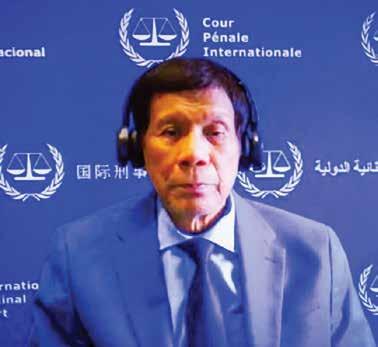
The International Criminal Court confirms crimes against humanity charges against former Philippine president Rodrigo Roa Duterte, while his legal team moves to seek permission to appeal under ICC procedure.
by AJPress
Romualdez rejects being ‘scapegoat’ as Lacson points to missed Senate hearings
by AJPress
MANILA — Former House Speaker Martin Romualdez said he will not be made a “scapegoat” in the ongoing investigation into alleged irregularities in flood control projects, as Senate Blue Ribbon Committee chair Panfilo Lacson pointed to his absence from key hearings as a missed opportunity to respond.
In a video statement released April 21,
AMLC flags P6.7B in transactions linked to Vice President Sara Duterte as House review deepens
by AJPress
MANILA — The Philippines’ Anti-Money Laundering Council (AMLC) told lawmakers that bank transactions totaling approximately P6.7 billion linked to Vice President Sara Duterte and her husband, lawyer Manases Carpio, were flagged by financial institutions as either “covered” or “suspicious,” according to testimony presented before the House Committee on Justice.
plaints against the vice president, with lawmakers shifting toward documentary evidence, including asset declarations and banking data. Financial trail surfaces in congressional review
AMLC Executive Director Ronel Buenaventura said the agency’s database recorded hundreds of reportable transactions from 2006 to 2025 involving accounts associated with Duterte and Carpio.
The disclosure forms part of congressional proceedings reviewing financial records in connection with impeachment com- u
The total flagged amount reached about P6.7 billion, with roughly P3.7 billion linked to Duterte and P2.9 billion to Carpio,
Romualdez said his earlier silence had been “abused and weaponized” to construct what he described as a false narrative. He said he had cooperated with investigators and submitted an affidavit to the Independent Commission on Infrastructure before it concluded its review in March.
Romualdez also asserted that no evidence proves he committed plunder, conspiracy to commit plunder, or any related offense that authorities may be evaluating.
Flight cancellations spread as jet fuel crisis disrupts global aviation
Strait of Hormuz disruption drives fuel shortages, forcing airlines to cut routes and raise fares ahead of peak travel season
by AJPress
AIRLINES worldwide are scaling back operations as a sharp rise in fuel costs—linked to disruptions in global oil supply—continues to strain the aviation sector.
At the center of the disruption is the reduced flow of oil through the Strait of Hormuz, a key route for roughly 20 percent of global supply. The constraint has pushed jet fuel prices to nearly double their pre-conflict levels, prompting airlines across Asia, Europe, and North America to cancel flights, adjust schedules, and increase fares.
Industry data from aviation analytics firm Cirium shows that 19 of the world’s 20 largest airlines have reduced planned capacity for
Philippine authorities move to secure return of Zaldy Co from Czech custody
Justice secretary leads Prague mission as government pursues legal pathways to bring former lawmaker back for trial
by AJPress
charges before the Sandiganbayan. Vida will be accompanied by Chief State Counsel Dennis Chan, with discussions focused on legal pathways available under Czech and international law. Officials did not provide a definitive timetable, citing the
Where California Governor candidates stand: AANHPI forum highlights policy differences in crowded primary
Democratic contenders outline positions on affordability, housing, and governance as polling shows a divided field and 23% of voters still undecided.
by AJPress
LOS ANGELES — A gubernatorial forum held April 18 at World Mission University offered one of the clearest side-by-side comparisons of policy positions in California’s 2026 governor’s race. Five Democratic candidates addressed targeted inquiries from a coalition of Asian American, Native Hawaiian, and Pacific Islander (AANHPI) organizations. This demographic now represents 20% of the California electorate and generates over $200 billion in annual economic activity.
Organized by the Center for Asian Americans United for Self Empowerment (CAUSE) and the Korean American Democratic Committee (KADC), the event utilized a rigorous format. Questions were developed by 40 civic groups with strictly timed 90-second responses. This approach
prioritized policy granularity over campaign rhetoric. While Xavier Becerra, Tom Steyer, Antonio Villaraigosa, Tony Thurmond, and Betty Yee participated, the event was marked by the absence of fellow Democrats Katie Porter and Matt Mahan. Republican frontrunners Steve Hilton and Chad Bianco also did not attend.
The Polling Landscape: Volatility and Late-Stage Movement
The forum took place against a backdrop of significant electoral flux. Recent data from Emerson College Polling places Republican Steve Hilton at 17% and Riverside County Sheriff Chad Bianco at 14% statewide. Among Democrats, support remains fragmented but is beginning to coalesce following the withdrawal of Representative
ICC Sends Duterte to Trial...
PAGE 1
stantial grounds to believe”
Duterte is criminally responsible for crimes against humanity of murder and attempted murder, the evidentiary threshold required for a case to proceed to trial, but not a determination of guilt.
Charges confirmed, trial to proceed
Judges confirmed three counts involving 49 incidents, including the murders of 76 individuals and the attempted murder of two others. The chamber found that the alleged acts form part of a “widespread and systematic attack against a civilian population” in the Philippines between November 1, 2011 and March 16, 2019.
The case will now be transferred to a Trial Chamber, where prosecutors must establish guilt beyond reasonable doubt under the Rome Statute framework.
Defense signals appeal move
Duterte’s legal team has indicated it will seek to challenge the confirmation of charges. Under ICC rules, an appeal is not automatic. The defense must first obtain authorization, known as leave to appeal, from the Pre-Trial Chamber before any appellate review may proceed.
The court has not yet ruled on whether such a request will be granted. Any effect on trial preparations would depend on the chamber’s handling of the request.
Jurisdiction ruling narrows options
The planned appeal effort follows a separate April 22, 2026 decision by the ICC Appeals Chamber rejecting the defense’s challenge to jurisdiction and declining a request for Duterte’s release. The chamber affirmed that the court retains authority over alleged crimes committed while the Philippines remained a State Party to the Rome Statute, before its withdrawal took effect in March 2019.
The ruling left the confirmation decision as the defense’s next procedural target.
Allegations span local and national operations
The confirmed charges cov-
er Duterte’s tenure as mayor of Davao City and his presidency from 2016 to 2022. The ruling references killings attributed to the so-called Davao Death Squad as well as nationwide anti-drug operations carried out during his administration.
At the confirmation stage, the chamber found sufficient material to support allegations of a coordinated structure involving law enforcement personnel and non-police actors. Judges emphasized that these findings are preliminary and will be tested during trial proceedings.
A precedent-setting prosecution
The case marks the first time a former head of government from Asia has been sent to trial before the ICC, positioning the proceedings as a defining test of international criminal accountability in the region. Duterte, 81, remains in ICC custody following his arrest in Manila and transfer to The Hague in March 2025. A Trial Chamber is expected to be constituted to oversee proceedings, where the accused is generally required to be present.
Contrasting reactions in the Philippines
Reactions to the ruling re-
vealed a clear divergence between the Philippine administration and some political figures.
In Manila, the office of President Ferdinand Marcos Jr. said it respected the court’s decision, emphasizing that the legal process should proceed and that justice must be served for both the accused and the victims.
In contrast, Senator Imee Marcos raised concerns about the ruling, questioning the fairness and broader application of international justice and reiterating long-standing objections to the ICC’s jurisdiction. Families of those killed in anti-drug operations welcomed the development. Randy delos Santos, whose nephew Kian Loyd delos Santos was killed in a 2017 police operation, said the ruling brings victims’ relatives closer to justice after years of waiting.
Human rights advocates likewise described the confirmation of charges as a significant step toward accountability through international legal mechanisms.
The case now moves into its next phase, with procedural motions expected alongside preparations for trial, a process that will test both the prosecution’s evidence and the defense’s challenges under international law. n
Romualdez rejects ‘scapegoat’...
PAGE 1
As of the latest publicly available information, no final judicial finding has been issued against him. Senate scrutiny and absence from hearings
Lacson said Romualdez could have addressed the allegations directly during Senate Blue Ribbon Committee hearings but did not appear.
According to Lacson, the hearings were intended to give individuals named in the inquiry an opportunity to respond to allegations and clarify their role in the questioned projects. He described Romualdez’s absence as a missed chance to present his position in a formal setting. Lacson did not indicate that non-attendance constitutes an admission of liability but emphasized the value of public testimony in legislative investigations.
Disputed role in project approvals
Romualdez rejected claims portraying him as a central figure in the alleged scheme, arguing that the national budgeting and infrastructure process involves multiple agencies and stages of approval.
He said Congress does not implement or supervise infrastructure projects, pointing instead to executive agencies responsible for execution and oversight. He also said he was not part of certain bicameral or small committee deliberations that shaped final appropriations. These statements reflect his position and have not been independently adjudicated. Expanding inquiry and legal posture
The Office of the Ombudsman has been reported as evaluating potential charges related to the flood control controversy, al-
based on figures presented during the hearing.
More than 600 transactions were included in the report, reflecting both routine reporting thresholds and transactions flagged by banks for irregular patterns. What flagged transactions mean under Philippine law
Under the Anti-Money Laundering Act, banks are required to report: covered transactions, or single-day movements exceeding P500,000; and suspicious transactions, identified based on indicators such as unusual volume, inconsistent financial behavior, or other risk markers.
AMLC officials emphasized that these classifications are regulatory triggers, not determinations of wrongdoing.
The Anti-Money Laundering Council serves as the country’s financial intelligence unit, consolidating such reports for analysis and potential investigation.
Lawmakers pivot to documentary scrutiny
House Committee on Justice Chair Rep. Gerville Luistro said proceedings are entering a phase focused on financial documentation, including statements of assets, liabilities and net worth (SALNs), tax filings, and AMLC records.
Lawmakers indicated that the inquiry will assess whether financial flows are consistent with declared assets and income, with further hearings expected to examine specific transactions in detail. Duterte camp disputes implications Statements attributed to the Vice President’s camp have questioned the interpretation of AMLC findings, emphasizing that flagged transactions are not evidence of unlawful conduct.
Allies and representatives have argued that large transaction volumes may reflect legitimate financial activity accumulated over many years, and that AMLC reports consist of raw banking data requiring context and verification. They also stressed that any conclusions should be reached only through proper
CDPH urges vaccination as mpox cases rise in California
First Clade I case in San Francisco linked to international travel
by AJPress
SACRAMENTO — The California Department of Public Health is urging Californians at higher risk for mpox to get vaccinated as cases increase statewide, including the first confirmed travel-related Clade I case in San Francisco.
Health officials said the Clade I case involved an unvaccinated individual who had close contact with someone recently traveling to a region where the virus is circulating. The patient was hospitalized and is recovering. It marks the seventh Clade I case identified in California since November 2024 and the first reported in San Francisco.
“CDPH is closely monitoring mpox activity across California,” said Dr. Erica Pan, noting that while Clade I cases remain un-
common, Clade II infections continue to rise. State data show that California is averaging 14.5 weekly Clade II cases in 2026, more than double the averages recorded in 2024 and 2025. Most infections have occurred among individuals who were not vaccinated.
Mpox, caused by the monkeypox virus, exists in two forms — Clade I and Clade II — both of which can cause similar symptoms, including fever, swollen lymph nodes, fatigue, and a rash.
Transmission typically occurs through close physical contact, including intimate contact or direct exposure to lesions or bodily fluids. Casual contact, such as in public settings, is considered low risk.
though no formal case has been publicly confirmed against Romualdez as of publication.
Separate reports have indicated that an immigration lookout bulletin order may have been issued in connection with the broader investigation, a standard administrative measure used during ongoing probes.
Authorities have not publicly framed such measures as findings of liability.
The inquiry continues to examine multiple officials and stages of infrastructure funding and implementation.
“I will not go quietly”
Romualdez said he would contest the allegations and rely on documentary evidence in his defense.
“I will not allow myself to be turned into the scapegoat so that others who are actually accountable can walk away clean,” he said. n
legal and constitutional processes, not preliminary legislative review.
The camp has further cautioned against premature public conclusions, noting that no formal case has established wrongdoing related to the reported figures.
No finding of liability at this stage
As of the latest hearings, no court has established criminal liability in connection with the flagged transactions. AMLC officials reiterated that the figures presented are indicative of reportable activity, not proof of illicit conduct. Under Philippine law, any determination of wrongdoing would require investigation, case build-up, and adjudication before the appropriate courts or constitutional bodies. Next phase centers on forensic review of financial records
Lawmakers said the next phase will involve deeper examination of financial records and possible requests for clarification from relevant parties. The AMLC data is expected to form part of the evidentiary record as the House continues its evaluation of the complaints before it. Officials underscored that the process remains ongoing, with findings subject to verification, response, and due process. n
CDPH recommends that people at risk receive two doses of the JYNNEOS vaccine. Boosters are not currently advised. Individuals exposed to mpox should seek vaccination promptly and monitor for symptoms, while those infected are advised to isolate until fully recovered.
Health care providers are also being urged to assess mpox risk during routine sexual health visits and to consider testing for patients with compatible symptoms, regardless of vaccination status. With increased travel and large gatherings expected in the coming months, officials said vaccination offers a timely safeguard against further spread.
Public health officials emphasized that vaccination remains the most effective protection against both clades and can reduce the risk of severe illness. The risk of complications is highest among individuals with weakened immune systems.
California inflation relief debit cards set to expire April 30, leaving unclaimed
funds at risk
State urges residents to use Middle Class Tax Refund balances before deadline; unused funds will revert to general fund
by AJPress
LOS ANGELES — California
officials are urging residents to act quickly as Middle Class Tax Refund (MCTR) debit cards — issued during the state’s pandemic-era inflation relief program — are set to expire on April 30, 2026.
The one-time payments, administered by the California Franchise Tax Board, were distributed beginning in late 2022 to help offset rising costs of living. Eligible taxpayers received between $200 and $1,050, depending on income, filing status, and household size.
Millions still unclaimed
Despite the scale of the program, a significant portion of funds remains unused. State data indicate that hundreds of millions of dollars are still sitting on debit cards, with roughly 960,000 recipients never activating their cards. Others used only part of their balance. In total, California distributed about $9.2 billion through direct deposits and prepaid debit cards to millions of residents.
Fixed deadline, no extensions
Under program rules, all debit cards expire April 30, regardless of activation status. After that date, any remaining balance will automatically revert to the state’s general fund, with no provision for reissuance.
Officials emphasize that the deadline is statutory, meaning it cannot be extended administratively. The final date to request replacement cards has already passed, further limiting options for those who misplaced them. How to access remaining funds
Cardholders can still retrieve their money before expiration by activating the card online or by phone, making purchases, withdrawing cash at ATMs, or transferring funds to a bank account.
A closing window
The approaching cutoff underscores a recurring challenge in public benefit programs: distribution does not guarantee utilization. As the deadline nears, unclaimed funds risk reverting to the state, effectively ending one of California’s largest direct cash
relief efforts tied to pandemic-era inflation.
Contact information
Customer support is available in English, Spanish, Mandarin, Hindi, Vietnamese, Korean, and Punjabi. Other languages may be supported by request.
Chat Available at MCTRPayment. com(external link)
Weekdays, 8AM to 5PM Automated customer support 800-542-9332
Weekdays, 8AM to 5PM
Debit card questions
Assistance with activation, replacement, lost, or stolen card 800-240-0223
Card activation available 24/7
Customer support available weekdays, 8AM to 5PM Online mctrpayment.com
Where California Governor candidates stand...
PAGE 1
Eric Swalwell. Tom Steyer currently holds 14%. Xavier Becerra has seen a strategic rise to approximately 13% in internal tracking by the California Democratic Party. With 23% of voters still undecided, the state’s toptwo primary system – where the two highest vote-getters advance regardless of party – places added importance on late-stage voter engagement to avoid a Democratic lockout.
Contrasting Governing Models The candidates’ responses revealed distinct philosophies on managing the world’s fifth-largest economy.
Xavier Becerra: The Defensive Shield Becerra has transitioned his pitch from federal collaborator to state protector. During the forum, he spoke about his tenure leading the White House Initiative on Asian Americans, Native Hawaiians, and Pacific Islanders (WHIAANHPI) while serving as the U.S. Secretary of Health and Human Services. This initiative has since been deactivated by the current federal administration.
• The Federal Void: Becerra argued that California must build parallel systems to replace lost federal outreach. He proposed a state-level AANHPI initiative to ensure linguistic and cultural access to government services.
• Utility Emergency: He pledged to declare a state of emergency on utility costs within 120 days, using executive authority to freeze rate hikes.
• Governing Approach: Aggressive state action through enforcement and litigation to preserve civil rights and health equity.
Tom Steyer: The Structural Disruptor
Steyer positioned himself as an independent candidate capable of challenging corporate power structures. He framed his platform around systemic changes to address high costs of living.
• Tax Reform for Renters: St-
eyer proposed a policy to make residential rent tax-deductible, providing parity between renters and homeowners.
• The AI Compute Fee: He called for a tax on processing power used by large-scale AI companies, with revenue funding a “Worker Transition Fund” for those displaced by automation.
• Governing Approach: Structural economic reform aimed at reducing long-term costs by shifting the tax burden toward large tech and utility monopolies. Antonio Villaraigosa: The Executive Builder Villaraigosa is running as a pragmatic coalition builder focused on infrastructure and tangible results. He pushed back against the idea that the state can litigate its way to prosperity.
• Supply-Side Housing: He argued that affordability requires massive production. He pledged to use executive orders to bypass local zoning hurdles for high-density housing near transit hubs.
• Public Safety Focus: Highlighting his record in Los Angeles, he proposed a statewide surge in funding for community policing and anti-retail-theft task forces.
• The One-Term Pledge: He reiterated that he would not seek reelection, claiming this freedom allows him to make hard choices regarding homelessness and state spending.
• Governing Approach: Executive-led production and public safety reform through streamlined permitting and local government accountability. Tony Thurmond: The Social Investor Thurmond’s platform centers on the idea that economic strength depends on the social safety net and education system.
• The 2-Million Home Mandate: Thurmond proposed building two million homes on surplus government-owned land, using state-issued bonds to lower construction costs.
• Small Business Micro-Grants: He advocated for a
$500 million state fund for micro-grants for legacy businesses in cultural enclaves to prevent displacement.
• Cradle-to-Career Access: He focused on expanding vocational training, specifically targeting under-represented groups in computer science, such as Pacific Islander students who currently have an enrollment ratio of 0.69.
• Governing Approach: Direct state investment in housing and human capital to drive long-term economic stability.
The Withdrawal of Betty Yee Betty Yee, the former California State Controller and a longtime leader within the AANHPI community, was a central participant in the April 18 forum. However, on April 20, just two days after the event, Yee officially suspended her campaign for governor.
As State Controller from 2015 to 2023, Yee was the state’s chief fiscal officer, known for her rigorous audits and focus on taxpayer accountability. She entered the race as a prominent AANHPI voice, emphasizing fiscal responsibility and social equity.
Yee cited insurmountable fundraising challenges as the primary reason for her withdrawal. In her announcement, she noted that the high cost of media in a statewide race, combined with a fragmented Democratic field, made it impossible to sustain a viable path to the June primary. While she has ceased all campaign activities, her name will remain on the ballot.
Strategic Implications for the June 2 Primary The forum clarified that while candidates share broad priorities, their execution strategies differ materially. With ballots set to be distributed in early May, the race remains unsettled. In a fragmented field, direct engagement with organized constituencies – particularly those with growing electoral influence like the AANHPI community -may play a decisive role in determining which candidates advance to the general election.
Rodrigo Roa Duterte appearing for the first time before the ICC judges on 14 March 2025
SC upholds one-year prescription period for cyber libel
by Gideon Tinsay Philstar.com
THE Supreme Court affirmed its ruling that cyber libel prescribes one year from the time it is discovered.
The resolution, written by As-
sociate Justice Henri Jean Paul B. Inting, was made as the SC En Banc denied the separate motions for reconsideration filed by Berteni Cataluña Causing and the Office of the Solicitor General.
The judges upheld that under the Revised Penal Code, written libel has a one-year prescription period, and no law excludes cyber libel from this period.
The SC reiterated that cyber libel is not a separate crime, only libel committed through a computer system, and that a higher penalty for cyber libel under the Cybercrime Prevention Act does not imply that its prescriptive period should be extended.
The court added that when laws on the prescription of crimes are unclear, they must be interpreted in favor of the ac-
LOS ANGELES COUNTY METROPOLITAN
TRANSPORTATION
AUTHORITY (LACMTA)
INVITATION FOR BID
LACMTA will receive Bids for DR140525 - Electric Seated Forklifts electronically via email to Bids@metro.net. A Pre-Bid conference will not be held. All Bids must be submitted to LACMTA on or before 2:00 p.m. Pacific Time on Monday, May 18, 2026. There will be a virtual Public Bid Opening at 2:30 p.m. on Monday, May 18, 2026 via Microsoft Teams. Bids received after the above date and time may be rejected and returned unopened. Each Bid must be sealed and marked Bid No. DR140525. For a copy of the Proposal/ Bid specification visit our Solicitation Page on our Vendor Portal at https://business.metro.net or for further information email Carolina Gyodakyan at gyodakyanc@metro.net. 4/25/26 CNS-4034454# ASIAN JOURNAL (L.A.)
cused, making the Revised Penal Code’s one-year prescriptive period for cyber libel prevail over the Cybercrime Prevention Act’s 15-year period.
SC also affirmed that prescription begins upon discovery of the offense, not upon publication, as the law states that prescription runs from the time the offended party or authorities discover the crime.
The court also clarified that its earlier ruling in Tolentino v. People, which stated that cyber libel prescribes in 15 years, is not binding on Causing because the case was decided through an unsigned resolution, binding only the parties involved.
How the SC judges voted
Concurring judges include Senior Associate Justice Marvic Leonen and Associate Justice Alfredo Benjamin Caguioa, including five others.
Dissenting judges include Associate Justice Kho Jr. and six others who argued that cyber libel should be a distinct crime with a 15-year prescriptive period due to heavier penalties.
In December 2020, Cotabato Second District Representative
LOS ANGELES COUNTY METROPOLITAN TRANSPORTATION AUTHORITY (LACMTA) INVITATION FOR BID
LACMTA will receive Bids for OP138891(2) - HVAC Maintenance Services (Union Station West Portal). All Bids must be submitted to LACMTA at bids@metro. net on or before 11:00 a.m. PT on Thursday, May 21, 2026, at which time bids will be opened and publicly read. Bids received after the above date and time may be rejected and returned unopened. Each Bid must be sealed and marked Bid No. OP138891(2). For a copy of the Bid specification visit our Solicitation Page on our Vendor Portal at https://business.metro.net or for further information email John Platt at plattj@metro. net. 4/25/26 CNS-4035483# ASIAN JOURNAL (L.A.)
Ferdinand L. Hernandez filed a cyber libel complaint with the prosecutor against Causing, related to Facebook posts accusing Hernandez of pocketing over PHP 200 million in relief goods for Marawi victims. Hernandez stated he discovered the posts on February 4 and April 29, 2019.
Criminal Informations were filed before the Regional Trial Court (RTC) against Causing in May 2021. Causing filed a motion to quash the Informations, arguing that they were already timebarred under the Revised Penal Code because more than one year had passed since the posts were uploaded.
The RTC denied the motion, ruling that cyber libel prescribes in 12 years under Republic Act No. 10175 or the Cybercrime Prevention Act.
In their motions for reconsideration to the SC, the OSG argued that cyber libel should prescribe in 15 years under the Cybercrime Prevention Act, citing SC’s decision in Tolentino v. People, while Causing argued that the prescription for cyber libel should start from the publication date rather than from discovery. n
Philippines set to join global bond index in 2027, signaling broader investor confidence
MANILA — The Philippines is set to join a major global bond benchmark managed by J.P. Morgan Chase & Co.beginning January 29, 2027, marking a significant step in the country’s integration into global financial markets.
The index, known as the Government Bond Index–Emerging Markets (GBI-EM), is tracked by large international funds. Inclusion means Philippine government bonds will be automatically considered by these investors, increasing global exposure to the country’s debt market.
The transition will be phased in gradually to avoid market disruption. Once complete, the Philippines is expected to account for about 1.7 to 1.8 percent of the index, potentially bringing in $3 billion to $5 billion in new investments over time.
A shift with real-economy implications
While technical, the impact extends beyond financial markets. Increased demand for government bonds can lower borrowing costs, giving the government more flexibility to fund infrastructure and public services.
Officials say the move reflects
years of reforms to make the country’s financial system more accessible to global investors. Market reforms pave the way for inclusion
The effort was led by the Department of Finance and the Bangko Sentral ng Pilipinas, including streamlined tax processes and improvements in how government bonds are issued and traded.
The 2027 timeline allows time to finalize administrative improvements and ensure smoother access for foreign investors. Eli Remolona Jr. said a deeper bond market strengthens the country’s ability to manage inflation and interest rates.
The Bureau of the Treasury is expected to continue issuing larger, more
Finance Secretary Ralph Recto said broader investor participation could help reduce borrowing costs. Runway to 2027 focuses on execution
Embassy urges calm as proposed US bill on dual citizenship sparks concern among Filipino Americans
Philippine Embassy in Washington clarifies no change in policy, warns against irreversible renunciation decisions
by AJPress
WASHINGTON, D.C. — The Philippine Embassy in Washington, D.C. has issued an advisory urging Filipino Americans to remain calm following concerns over a proposed United States Senate bill that would end dual citizenship, emphasizing that the measure has not been enacted into law and does not affect current policy. The embassy said it continues to monitor discussions surrounding the proposal but stressed that it remains a bill without legal effect. Similar measures have been introduced in the past without being enacted, reinforcing that no immediate changes are in force. No change to dual citizenship framework
The embassy stated that there is no change to existing policies on dual citizenship at this time, pointing to established legal frameworks in both the United States and the Philippines. U.S. law has long recognized the permissibility of dual citizenship through constitutional interpretation and court precedent. On the Philippine side, Republic Act No. 9225, or the Citizenship Retention and Re-acquisition Act of 2003, allows former natural-born Filipinos who became naturalized citizens of another country to reacquire Philippine citizenship.
Individuals born in the United States to at least one Filipino parent are recognized as dual citizens at birth under Philippine law, subject to proper reporting with Philippine authorities.
Irreversible consequences of renunciation
The embassy cautioned that voluntary renunciation of Philippine citizenship carries permanent legal consequences. It emphasized that individuals who formally renounce their Philippine citizenship may no longer be eligible to reacquire it under RA 9225, describing such action as irreversible.
The warning follows reports of confusion within segments of the Filipino American community, where unverified claims about imminent policy changes have circulated.
Advisory against misinformation
Officials urged the public to refrain from acting on unverified information and to rely on official communications from
government sources. The embassy said it would issue updates should there be any material developments affecting dual citizenship.
The advisory reflects ongoing efforts by Philippine diplomatic missions to provide legal clarity and prevent unnecessary actions that could carry long-term implications for overseas Filipinos. Guidance for the community Filipino Americans seeking clarification were advised to contact the Philippine Embassy in Washington, D.C. or their nearest Philippine consulate. At present, both U.S. and Philippine laws governing dual citizenship remain unchanged, and no enacted legislation has altered the rights or legal status of dual citizens.
The global headquarters of J.P. Morgan Chase & Co. in Midtown Manhattan in New York
Photo from J.P. Morgan Chase & Co.
Robredo rules out 2028 presidential bid, signals second term as Naga mayor
Former vice president cites unfinished local agenda, says return to national office is no longer on the horizon
by AJPress
NAGA CITY — Former Philip-
pine Vice President Leni Robredo has ruled out a run for any national position in the 2028 elections, delivering her most definitive statement yet that her political future will remain at the local level.
“I am sure for myself that I won’t take part in the national elections,” Robredo said in a Bicolano-language radio interview on April 21. She added she would “most probably” seek reelection as mayor of Naga City, citing the limits of a three-year term.
The remarks formalize a shift that began after her 2022 presidential loss to Ferdinand Marcos Jr., after which she moved away from national politics and refocused on local governance. She won the Naga mayoralty in 2025 by a wide margin and assumed office on June 30, becoming the city’s first female mayor. Robredo said her decision is driven less by political calculation than by governance constraints. She described the three-year mayoral term as in-
sufficient to carry out long-term programs, particularly those requiring coordination with national agencies. Her administration has prioritized flood mitigation, water access, traffic management, and basic services, but she acknowledged that reforms remain incomplete. Her withdrawal reshapes the opposition landscape ahead of 2028. Vice President Sara Duterte has already declared her candidacy, while Robredo had remained a potential contender in early polling discussions despite repeated reluctance. Opposition figures, including Leila de Lima and Antonio Trillanes IV, had previously urged her to clarify her plans, arguing that uncertainty could delay the emergence of alternative candidates. Senator Risa Hontiveros has indicated openness to a national run under a unified slate, though no consensus candidate has been finalized.
Robredo’s trajectory since 2022 reflects a pattern of declining national opportunities in favor of local executive work. She had also turned down a Senate bid in 2025, choosing instead
Sandiganbayan sets testimony of DPWH ex-official in Revilla bail hearing
Court cites medical evaluation; defense contests prosecution evidence in Bulacan flood control case by
AJPress
MANILA — The Third Division of the Sandiganbayan has tentatively scheduled the testimony of a former senior official of the Department of Public Works and Highways (DPWH) in the ongoing bail proceedings of former senator Ramon Bong Revilla Jr., as hearings continue in a graft and malversation case involving a flood control project in Bulacan.
court
During proceedings, Associate Justice Karl Miranda referenced an ocular inspection conducted in Barangay Bunsuran. Statements made in court indicated that DPWH records described the project as more than 95 percent complete.
to a deceased official. Revilla has denied wrongdoing.
Custody and next steps Revilla surrendered to authorities in January 2026 following the filing of non-bailable charges and remains detained at the Quezon City Jail while the court determines whether the evidence of guilt is strong, the legal threshold for bail in such cases. The court is set to hear Bernardo’s testimony next, subject to confirmation, as proceedings continue. n Archival
to build a governance record in Naga, where her late husband, Jesse Robredo, served for multiple terms.
For now, Robredo has positioned herself firmly at the local level, focused on completing her administration’s agenda rather than reentering national politics. Whether that stance holds through the 2028 election cycle remains uncertain, but her latest statement leaves little ambiguity about her immediate plans n
Associate Justice Ronald Moreno set the appearance of former DPWH undersecretary Roberto Bernardo for April 24, 2026, following an evaluation by the court’s physician after Bernardo cited health concerns, including acute bronchitis. The setting was described in court as tentative, pending final confirmation of his condition.
The case involves a P92.8-million flood control project in Pandi, Bulacan. Prosecutors allege that public funds were released for the project, which they claim was not completed as reported. The allegations remain under judicial determination.
Inspection findings raised in
Philippine authorities move to secure return of Zaldy Co...
PAGE 1 need to comply with host-country legal procedures.
No extradition treaty, multiple legal pathways
The Philippines does not have an extradition treaty with the Czech Republic, prompting authorities to consider alternative approaches. These include deportation proceedings under Czech immigration law and cooperation frameworks under the United Nations Convention against Corruption.
Justice officials said coordination may also involve international policing channels through
the Interpol, subject to the legal requirements of the detaining state.
Legal observers note that proceedings in Europe can take time, particularly if the individual contests removal or seeks asylum protections. Charges pending before anti-graft court
The case against Co stems from alleged irregularities involving public infrastructure projects, including flood control works.
Philippine authorities have confirmed that arrest warrants were issued in 2024 by the Sandiganbayan in connection with graft
and malversation charges.
The Office of the Ombudsman has stated that Co’s return is necessary for arraignment and trial proceedings to move forward. As of publication, no court has rendered a final judgment on the allegations. Two-track process: repatriation and prosecution
The government’s handling of the case reflects the distinct mandates of the DOJ and the Office of the Ombudsman. The DOJ, under Secretary Vida, is responsible for securing Co’s return through diplomatic and legal channels abroad, in-
Flight cancellations spread as jet fuel crisis...
PAGE 1
May 2026. Global seat availability has declined by about three percentage points, reversing earlier growth projections.
The International Energy Agency (IEA) warned on April 16 that several European countries could face jet fuel shortages within weeks if supply constraints persist. Some markets are operating with fewer than 20 days of reserves, raising the risk of localized disruptions.
Asia and Europe lead cutbacks Airlines in Asia-Pacific, heavily dependent on Middle Eastern crude, have moved quickly to reduce flights. Vietnam Airlines, AirAsia, and other regional carriers have cut routes and raised fares to offset rising fuel costs.
European airlines have taken similar steps. Lufthansa Group plans to cancel approximately 20,000 short-haul flights through October, while KLM and Scandinavian Airlines have also reduced schedules. Officials say most cancellations are driven by cost pressures rather than immediate shortages.
U.S. carriers warn of higher fares In the United States, major airlines are signaling that higher ticket prices may persist. United Airlines has reduced its schedule and warned that sustained fuel costs could significantly increase expenses. Delta Air Lines has also trimmed summer capacity while reporting higher operating costs. Low-cost carriers face the
greatest pressure due to narrower margins, with some raising fees or cutting services to manage rising expenses.
Uncertain outlook
More than 150,000 international flights have been cut worldwide between March and June, according to industry estimates.
Although Iran stated on April 18 that the Strait of Hormuz remained open to commercial traffic, industry analysts caution that supply chains could take weeks to months to stabilize even under a de-escalation scenario. Airlines, which finalize schedules months in advance, have already locked in capacity reductions for the summer travel season, limiting the potential for near-term recovery. n
Maximum Social Security benefit in 2026...
adjustment at the start of the year. That places the maximum benefit at more than twice the average payment, reflecting differences in lifetime earnings, work duration, and retirement timing. Timing and work status matter For individuals born in 1960 or later, full retirement age is 67. Claiming benefits earlier results in a permanent reduction, while delaying benefits beyond that age increases monthly payments through credits that accrue until age 70.
in 2026, following a 2.8% cost-of-living
Workers who claim before reaching full retirement age and continue earning income may also see temporary reductions under the program’s earnings test, which withholds benefits above specified income thresholds until full retirement age is reached.
Despite
Structural pressures persist
The focus on maximum benefits comes as Social Security faces long-term funding challenges. According to the agency’s trustees, the program’s primary retirement trust fund is projected to be depleted in the early 2030s absent legislative changes, after which incoming payroll taxes would cover a reduced share of scheduled benefits.
A benchmark, not a baseline While the $5,181 figure often draws attention in public discussions, it represents a theoretical maximum under specific conditions. For most Americans, Social Security functions as a foundational source of retirement income rather than a high-end payout, typically supplemented by savings, pensions, or continued employment. (AJPress)
cluding coordination with foreign governments and international legal frameworks.
The Office of the Ombudsman, led by Jesus Crispin Remulla since October 2025, is tasked with prosecuting graft-related cases. The office has the authority to subpoena respondents, file or amend charges, and present evidence before the Sandiganbayan.
Co denies allegations
Co has denied the accusations in earlier public statements made while outside the country. His legal representatives have not issued a new statement following confirmation of his detention abroad.
Process subject to foreign jurisdiction
Philippine officials underscored that any transfer of custody will depend on Czech do-
However, testimony and court reporting on the inspection indicated that no structures were observed at the site aside from steel sheet piles. The court has not issued findings on these observations and continues to assess the evidence presented.
Testimony and defense challenge
The prosecution presented Henry Alcantara, a former district engineer admitted as a state witness, who testified on what he described as a “standard operating procedure” in certain infrastructure projects involving the handling of public funds. His statements remain subject to cross-examination.
Revilla’s legal team challenged portions of the prosecution’s evidence, arguing in court that testimony linking the former senator to the project relied on hearsay, including statements attributed
mestic law and due process.
The government has expressed readiness to comply with all legal requirements to secure Co’s return, but cautioned that timelines remain uncertain. n
remains
opment and has not advanced to
There is
and
implementation
Even if adopted, the measure would likely require
ance and a phased compliance timeline. Legal exposure and compliance burden Legal analysts say a citizenship verification mandate could face scrutiny under existing privacy protections and financial regulations governing personal data. Banks would need to implement significant operational changes, including system upgrades and documentation protocols. Industry estimates suggest compliance costs could reach into the billions. Concerns have also been raised that additional requirements could affect access to banking services for some populations. A proposal with unresolved scope The administration has not issued formal details on enforcement, exemptions or treatment of existing accounts, leaving key questions unresolved.
For now, the measure remains under internal review, with any rollout dependent on formal executive action, regulatory guidance and potential legal challenges. (AJPress)
Fredderick A. Vida serves as Secretary of Justice after taking his oath of office in November 2025 Photo from caap.gov.ph
Civic discipline and Filipinos abroad: what we see and what it means for the homeland
A perspective shaped by experience abroad, and what it reveals about public space, shared responsibility, and the habits that define a nation
A LETTER published in a Philippine newspaper recently asked a question that has long circulated quietly: why do Filipinos litter?
For those who have spent years living abroad, the question is not abstract. It is grounded in daily contrast. In many cities outside the Philippines, public space is treated as shared property. Rules are followed not because enforcement is constant, but because expectation is.
That difference is not accidental. It is the result of systems that are sustained, consistent, and reinforced over time.
In the Philippines, the pattern is familiar. Litter accumulates in streets, waterways, and public areas despite the presence of laws that prohibit it. Enforcement is uneven. Public education campaigns appear, then fade. The behavior persists across income levels and regions.
This is not a failure of awareness. It is a failure of consistency.
What appears on the street is not the problem
NOW more than ever, the Association of Southeast Asian Nations must move with utmost urgency to push for a binding Code of Conduct in the South China Sea – firmly supported by like-minded nations that understand what is at stake not only for our region, but for the global economy. Recent tensions in the Strait of Hormuz have once again reminded the world how fragile critical trade routes can become when geopolitical rivalries intensify. That narrow passage, through which roughly a fifth of the world’s oil supply flows, has long been a flashpoint. Even the slightest disruption – or the mere threat of it – immediately sends shockwaves through global markets, affecting prices, supply chains and economic stability far beyond the region.
The lesson is not distant. It is immediate, relevant and urgent. If anything, the South China Sea is even more consequential. It is not just a regional waterway – it is a global economic lifeline, with an estimated $3 trillion to $5 trillion worth of trade (about one third of all global maritime
A Marcos administration ago, I found myself in London about to have dinner with an alleged crony whose vast holdings were enumerated in an exposé by none other than my mother, Ninez Cacho-Olivares, a feisty journalist known—and lauded—for her opposition to the regime.
Though I was living in Paris then, I would often cross the channel to see my boyfriend at that time, whose family was also much aligned with the Marcoses. It was an uncomfortable situation for me to a certain extent, but his father had been a journalist at one point, and while my mother was wary of his politics, she had a healthy respect for his writing and wit. Moreover, I was in my early twenties, and it was winter. What else can I say except that sometimes, romance has a way
itself. It is the outcome of a deeper condition: the absence of a widely enforced and widely accepted expectation that public space belongs to everyone, and that everyone is accountable for it.
A pattern that already exists
Clean spaces in the Philippines are not rare. They are concentrated.
They are most visible in well-managed districts, certain local government units, and areas where tourism or institutional standards require consistent upkeep. In these settings, cleanliness is sustained not by chance, but by structure. Enforcement is consistent. Responsibility is clearly assigned. Expectations are reinforced over time.
Some cities demonstrate how this can work at the local level, where ordinances are applied with continuity and community participation supports compliance. In tourism-driven areas, the incen-
From Hormuz to the South China Sea: A warning we must heed
trade) passing through it annually – carrying energy supplies, manufactured goods, food and essential commodities that sustain economies all across Asia, the United States, Europe and beyond. It goes without saying that any prolonged instability in these waters would not remain contained; it would ripple across continents, disrupting industries, raising costs and undermining growth. This is precisely why no single country should be allowed to dominate or control this shared maritime space. Freedom of navigation is not a slogan. It is a principle that underpins the modern global economy, ensuring that all nations – large and small – can move goods and resources without fear of coercion or obstruction. But when that principle is challenged, whether through excessive maritime claims, aggressive maneuvers or the militarization of key features, the consequences are immediate and far-reaching. Considering the current situation, ASEAN now finds itself at a defining crossroads.
For years, discussions on a Code of Conduct (COC) have progressed, but at a measured and often cautious pace. While that caution may once have been understandable, it is no longer sufficient today. The geopolitical environment is shifting, and the risks are growing. The experience of the Strait of Hormuz shows just how quickly tensions can escalate and how costly uncertainty could become. Clearly, we cannot afford to wait for a similar crisis to unfold in our own region before taking decisive action. A meaningful COC must go beyond general principles or diplomatic language. It must be clear, credible and most importantly, binding. It should establish rules that prevent miscalculation at sea, reduce the risk of confrontation and provide mechanisms for peaceful dispute resolution. It must be anchored firmly in international law, particularly the principles enshrined in the United Nations Convention on the Law of the Sea, which remains the cornerstone of maritime governance.
u PAGE 7
The principle of the thing
Indeed, the evil that is capitalism, and its equally evil twin, colonialism, often test the limits of principle
of blurring political loyalties? The porosity of society But there are boundaries that even lust should not be oblivious to. I felt very strongly—that one November night in London— that it would be ethically remiss of me to accept the hospitality of someone whom she directly attacked in print after compiling evidence and substantiating claims, as any responsible journalist would do.
The old man, however, was not only a shrewd businessman, but a seasoned charmer and an adept politician. I think he thought me quaint and naïve. Such accusations, he shrugged, were pretty much par for the course, and he bore my mother no ill will.
So, he said, let’s all have dinner at my favorite restaurant, and off we went—my boyfriend and I—along with his family. His
tive is economic, and standards are maintained because livelihoods depend on them. In privately managed districts, systems are monitored and accountability is visible.
The pattern is consistent across these examples. Cleanliness improves when rules are enforced, when standards are clear, and when those standards are applied without interruption.
is becoming more competitive. This seems to be the case if we are to believe the results of recent surveys by some of the country’s leading polling firms.
While it is still early to say that there is indeed a definitive trend, there are signs that we may be witnessing an early shift from a narrative of “dominance and invincibility” as projected by Vice President Sara Duterte to a “competitive electoral race.”
This is reinforced by the recent statements made by Dr. Ranjit Rye, head of the Octa survey firm, on their upcoming report on the public’s voting preference in the 2028 elections. He said that while Sara continues to lead the survey, her numbers, based on their survey cycle, have dropped for the first time. Meanwhile, Naga City Mayor Leni Robredo has surged from nine percent in their previous survey to 22 percent, trimming down Sara’s lead to just nine points.
daughters at that point were already friends of mine, and have remained so to this day, despite our political differences, as well as alliances, depending on the administration in power.
“Politics may appear divisive on the surface but personal and familial relationships—or perhaps more accurately, capitalist class affiliations—tend to override most political frictions.”
Such is the porosity of society in the Philippines, to borrow once more from Walter Benjamin, that politics may appear divisive on the surface but personal and familial relationships—or perhaps more accurately, capitalist class affiliations—tend to override most political frictions.
Marx, if he were alive, would have a field day with the bourgeois lot of us. Throw Frantz Fanon into the mix, and he u PAGE 7
A corruption scandal one day, a global oil crisis the next, some days just get a bit too much in the Philippines. Such is the status quo we’ve all gotten used to throughout the years—to take on one problem after the other, without even taking care of the one prior, all to address neither of them.
As such, when we continue to grapple with several concurrent issues, it becomes imperative to ask: What are we exactly supposed to be mad about now?
All that ails us
Amending RA 8479 and regulating oil: Diesel closing in on P200 (as of writing), the peso value being at its lowest historically, and rising prices across the board. The ongoing global oil shortage has shown how deregulation puts the general public at risk in times of crisis. Band-aid solutions won’t cut it anymore, and regularization
The contrast is instructive. The issue is not whether Filipinos can maintain clean environments. The evidence shows that they can. The issue is whether those same conditions
The rise of political alternatives
Similar to this is WR Numero’s last report. Sara continued to lead the preference race, but her support hasn’t expanded, with her closest competitors, Robredo and Sen. Raffy Tulfo, gaining. This is notable as the two have repeatedly said that they have no plans to contest the 2028 presidential election.
Since her rise to national politics, Sara has enjoyed a “preference lock.” She benefited greatly from the political capital and residual goodwill she inherited from her father, and the absence of a consolidated and viable alternative. As such, many voters, outside of the Vice President’s hardcore base, weren’t actively choosing; they were defaulting. But then again, default support is fragile. It is only good until a credible choice emerges. The surveys could indicate that voters may be beginning to reevaluate their choices. This is important. In our electoral experience, early leads often reflect name recall and machinery, while gradual and even sudden shifts reflect changing public sentiment. A plateauing of numbers can signal that a candidate u PAGE 7
Equally revealing is Pulse Asia’s year-on-year (March 2025-March 2026) report on the public trust rating of the country’s top two government leaders. In March 2026, while Duterte led President Bongbong Marcos Jr. with a 54 percent trust rating compared to the latter’s 35 percent, her numbers fell from 61 percent in March 2025, while the President’s numbers improved from 20 percent in March 2025. Meanwhile, Marcos Jr.’s distrust rating declined from 54 percent to 44 percent; in contrast, people who distrust Sara increased significantly from 16 percent to 26 percent. The issue of corruption is said to be the main driver of growing public distrust. As I have mentioned many times before, the Vice President’s numbers are no longer just “holding steady,” they’re flattening and even beginning to dip. This alone, however, is not unusual, especially since the election is still far away. But what is crucial is what’s happening around Sara. The terrain is becoming dynamic and competitive.
What are we supposed to be mad about now?
It gets tiring, doesn’t it? But that’s precisely what they want
should at least be considered by the national government in preparation for the next crisis.
Flood control, still not under control: Since nepo babies and ghost projects came under our radars, the national government has arrested several noteworthy personalities and recovered billions of pesos in stolen wealth.
Yet, in just a few months, it will be the rainy season, and millions of Filipinos will once again suffer from the corruption and incompetence of a few.
Unaffordable housing for Filipinos: According to a 2025 survey by Gallup, the Philippines has the worst housing affordability among emerging markets, with over 54 percent of respondents claiming difficulties in housing-related finances.
Looking at our housing market, it’s clear that there is a shortage of affordable, middle-ground options. It’s either you break the bank to live comfortably, or you spend little on a place that barely constitutes anything decent. What exactly is causing this? In the 2025 Urban Land Institute Asia-Pacific Home Attainability Index, it is noted that condominium prices in Metro Manila exceed the median annual household income by 19.8 times—33.4 times for
houses. The Philippine Statistics Authority supports this finding, reporting that household income has only grown by 20 percent since 2019, in contrast with residential property prices that have grown by 62 percent. Meanwhile, Quezon City Mayor Joy Belmonte explains that residential developers are less likely to invest in affordable housing, as higher-end condominiums are more likely to generate higher profits. u PAGE 7
babe’s eye view
Babe Romualdez
THE POLITICAL HECKLER
Ronald Llamas
BamBina Olivares
THE electoral terrain ahead of the 2028 election
WHO IS AMERICAN?
Birthright Citizenship and Filipino Americans
By
BIRTHRIGHT citizenship is a key constitutional provision that defines who is American: if you are born in the United States, you are an American. However, proof of this varies widely unless one is challenged in court. When Barack Obama was challenged by Donald Trump, he ultimately produced his birth certificate. When I was in graduate school at UCLA, I traveled to Seattle for an academic conference. Some of us found the sessions boring, so we decided to do a weekend trip to Vancouver, Canada, instead. On the way back, we had to pass through a U.S. border checkpoint. In those days, it was just a kiosk, like the ones you encounter upon entering a national park, with an agent or two on station. The border check was quite lax then. When we stopped at the kiosk, the agent stuck his head out his window to be able to see who was in the car, a Volkswagen Beetle, and asked each of the four of us: where are you from? I do not recall what my fellow passengers said, but I said, “Los Angeles,” which was true, but he was probably asking for country of origin, to determine nationality or citizenship. At any rate, satisfied that we were all from the U.S., he waved us through.
A few weeks ago, the U.S. Supreme Court heard oral arguments on Trump’s effort to deny birthright citizenship to children of undocumented immigrants (Trump v. Barbara). It was gratifying to note that much of the argumentation centered around a case that I used to teach in my classes on Asian Americans. The case is “U.S. v. Wong Kim Ark.” Wong was a Chinese American, of Chinese immigrant parents. He went to visit China, and was denied re-entry into the U.S., under the Chinese Exclusion Act of 1882. The government argued that because Wong Kim Ark was the child of immigrant parents who were ineligible to become U.S. citizens, he was not a U.S. citizen, despite being born in San Francisco. The Court ruled in Wong Kim Ark’s favor, noting that the immigrant status of his parents, and their ineligibility for U.S. citizenship, at that time, did not materially affect Wong’s status as a U.S. citizen by virtue of his birthplace.
U.S. v. Wong Kim Ark (1898) is a landmark case that helped define America’s idea of citizenship. Asian Americans played a big role in it, ironically, because of laws that discriminated against Asians and Asian Americans. First, there were laws that restricted U.S. citizenship to “free white persons,” making Asians ineligible. Then came the exclusion acts intended to limit Asian migration into the U.S., the Chinese Exclusion Act of 1882, and the Asian Exclusion (Johnson-Reed) Act of 1924. The latter explicitly banned immigration from Asia, by prohibiting entry of aliens “ineligible for citizenship.” These laws banned Asian immigration and made immigrants already in the U.S. unable to become citizens.
Another irony in these anti-Asian immigration and citizenship laws was that it fueled Filipino immigration into the United States. The Chinese Ex-
clusion Act of 1882, and the Asian Exclusion Act of 1924, basically shut down labor recruitment from China and Japan, a main source of labor for the sugar plantations of Hawaii, and the farms of the West Coast. These exclusion laws, however, could not apply to Filipinos since the Philippines was a U.S. colony, and by implication, a U.S. territory; they were considered U.S. nationals or of U.S. nationality. In the late 1920s and throughout the 1930s, the Philippines became a major source of farmworker labor for Hawaii, and the West Coast. So, while the anti-Asian immigration laws of the 1920s barred Asians from immigrating, it opened the door for unregulated immigration by Filipinos who happen to be Asian. The spike in Filipino immigration sparked by labor shortages due to anti-Asian immigration laws would ultimately generate a pushback. The Tydings-McDuffie Act of 1934, sometimes called the Philippine Independence Act, ended unregulated Filipino migration. This law outlined a 10-year process for Philippine independence, which was achieved in 1946. But a peek into the details of this legislation shows that it is also the Filipino Exclusion Act of 1934. This law reclassified all Filipinos, including those living in the U.S., as aliens for purposes of immigration, and a quota of no more than 50 immigrants per year was allowed. This reclassification as aliens put an end to the relatively unregulated migration of Filipinos to the U.S. and emphasized their ineligibility for citizenship. This would make it difficult for Filipinos who reside in the U.S. to travel back to the Philippines, visit family, and celebrate holidays, and then return to the U.S. They could be stopped at the border, as an alien ineligible for citizenship, as happened to Wong Kim Ark. For immigrant communities, birthright citizenship provides the path that ultimately leads their community into being considered “American.” Since their children who are born here are American, they become “partial Americans” by being parents of Americans. This applies, too, to members of their extended families, aunts, uncles, and grandparents who are able to immigrate. This is a vesting process that builds American communities. It is the process through which Filipino immigrant communities become Filipino American communities. Asians were once considered ineligible for citizenship, a condition that led to the stereotype of Asians being forever foreigners. And to this day, because we look different from Caucasians, the instinctive reaction from many Americans is that we are foreigners. I have been asked many times, “where are you from?” to which I have answered, “Los Angeles.” This sometimes elicits, “No, no, I mean which country are you from?” I am a naturalized American, a Filipino American; but to many, especially those from east of California, I am a foreigner, and this is the stereotype that many Asians, including Filipinos, suffer from, since they were once ineligible for citizenship. Birthright citizenship has enabled us to gradually dispel this negative stereotype. This has opened pathways to fuller participation in American civic society. We vote, we participate in the justice system through jury
duty, and run for public office.
Most recently, a Filipino American, Ysabel Jurado, was elected to the LA City Council, a first in the history of the city. Jurado is of Filipino immigrant parents, and one can easily imagine how, without birthright citizenship, her path toward political leadership may be very different. Our history as Filipino Americans is very much intertwined with birthright citizenship. It is the means by which early Filipino immigrants and farmworkers were able to establish roots, build communities, and enjoy the entitlements of citizenship. Without it, we might well be an example of that negative and racist stereotype of Asians as “forever foreigners.”
The idea of using place of birth as a fundamental way of defining who is American is as elegant as it is simple. It did take U.S. v. Wong Kim Ark to clarify that, with some very few and narrow exemptions, the nationality of one’s parents, or their eligibility for citizenship, does not matter. If you were born in America, you are an American. It is the inclusivity in this idea that shapes American society. It includes Native Americans who were born here even before the idea of birthright was a legal concept enshrined in the Constitution. It includes the many, many children of immigrants from all over the world who are born here: Europeans, Asians, Middle Easterners, South Americans, and Africans. Even children of former enemies, such as Germans and Japanese, can be American if they were born in America. The idea of birthright ultimately knits together these immigrant communities into the social fabric of American society since if their children were born here, these children are American. The national origins of their ancestors become less salient.
As a retired academic, I am happy to mention that I was a faculty member in a field called American studies which is devoted to the study of the different ethnic groups that comprise American society. Its purpose is to promote a better appreciation of the history and culture of these groups and their contributions to America. Students who have taken a course or two in American studies have a broader consciousness of the diversity of American society and an appreciation of their immigrant families. We now mark and celebrate “history months” to highlight contributions of Filipinos, Blacks, Mexicans, etc. And at the start of civic events, there is an acknowledgement that this event is taking place on land previously owned by Indigenous Americans. This is an acknowledgement that American society is an interwoven fabric of Native Americans, and immigrants from all over the world. Without birthright, America might just be a collection of disparate, or worse, balkanized enclaves of Germans, Slovenians, Italians, Koreans, Japanese, Mexicans, Chinese, Filipinos, etc. This is what Trump seeks to do. Will the Supreme Court let him?
* * * The opinions, beliefs and viewpoints expressed by the author do not necessarily reflect the opinions, beliefs and viewpoints of the Asian Journal, its management, editorial board and staff.
* * *
Enrique de la Cruz is Professor Emeritus of Asian American Studies at California State University, Northridge. He currently serves as a Commissioner for Human Relations with the City of Los Angeles.
From Hormuz to the South China Sea...
PAGE 6
Equally important, it must reflect fairness.
The South China Sea is not the domain of any single nation
– it is a shared space, used by many and vital to all. A Code of Conduct must preserve the rights of coastal states while ensuring that the broader international community continues to enjoy unimpeded access to this critical maritime corridor.
But ASEAN cannot – and should not – carry this burden alone. Support from like-minded countries will be essential. These are nations that have a clear and legitimate interest in maintaining open sea lanes, upholding international law and ensuring stability in one of the world’s most important regions. Their role is not to inflame tensions or create blocs, but to reinforce a rules-based order that benefits everyone.
In Washington, this point is well understood. In my conversations with policymakers, legislators and members of the strategic community, there is a consistent recognition that the South China Sea is not merely a regional concern but a global
one. There is broad bipartisan support for freedom of navigation and for efforts that promote stability and predictability in the Indo-Pacific region. The United States – along with its allies and partners – clearly recognizes that what happens in these waters has direct implications for global trade and economic resilience. I remember a recent discussion with a senior official who put it quite plainly: “The world cannot afford another Strait of Hormuz situation – especially not in the South China Sea.” It was a simple statement, but one that essentially captured the urgency of the moment, and that urgency must now translate into action. ASEAN has always prided itself on consensus-building and diplomacy. These remain its strengths. But leadership today requires more than dialogue – it requires resolve.
The region must move decisively to conclude a binding Code of Conduct that is both respected and enforced. The stakes are simply too high for anything less. If we fail to act, we risk allowing tensions to
Civic discipline and Filipinos abroad...
PAGE 6
The most relevant comparisons for the Philippines are found within Asia, in societies that made deliberate choices about civic behavior and sustained those choices over time.
In Japan, students clean their own classrooms and school facilities as part of daily life. The practice is not symbolic. It is formative. It establishes, early and repeatedly, that maintaining one’s environment is a personal responsibility.
Singapore took a more policy-driven approach. Cleanliness was treated as a national priority, supported by enforcement, education, and long-term public messaging. Penalties were visible and consistent. More important, expectations were made clear and applied broadly. These approaches differ in method, but they converge in outcome. Civic discipline is not assumed. It is built through repetition, reinforcement, and time.
The role of Filipinos abroad
More than twelve million Filipinos live and work outside the Philippines. Their economic contributions are well documented. Less examined is the perspective gained from living
within systems where civic order is embedded in everyday behavior. That perspective carries practical value. It reflects how public spaces function when expectations are clear and consistently applied. The issue is not whether Filipinos abroad recognize the difference. It is whether that recognition translates into influence. Influence, in this context, is behavioral. It is expressed in small, visible acts. Using proper waste disposal. Maintaining shared spaces. Observing rules without the need for constant enforcement. These actions are simple, but they are instructive. When practiced consistently, they establish a standard. When repeated across households and communities, they begin to shape expectation.
Cultural change does not begin with declarations. It begins with what is done, repeatedly, in ordinary settings.
Extending what already exists
The Philippines has long been defined by bayanihan, the capacity for collective action in moments of need. That instinct demonstrates a clear under-
standing of shared responsibility. The gap is not in principle. It is in application. Maintaining public cleanliness does not require urgency or crisis. It requires consistency. It requires the same sense of shared responsibility to be applied in situations where no immediate reward or recognition is present.
This is not about adopting external standards. It is about applying existing values more consistently in everyday life.
A matter of alignment
Lasting change in civic behavior depends on alignment. Enforcement must be credible. Education must be sustained. Social expectations must be clear and reinforced over time.
No single intervention is sufficient on its own. Progress depends on whether these elements operate together, consistently, and across generations. For Filipinos at home and abroad, the question is not whether improvement is possible. The evidence suggests that it is. The question is whether the standard will be practiced. (AJPress)
What are we supposed to be mad...
PAGE 6
Statutory rape in the Philippines: Just last week, an 11-yearold student from Camarines Sur penned a heartfelt letter to President Ferdinand Marcos Jr.: “Mr. President, how will we read if we are being raped?” asks the brave sender, recounting how certain government officials in the area have repeatedly violated several minors without repercussion.
While President Marcos Jr. immediately responded to the plea and vowed to send assistance their way, the letter
PAGE 6
fester and escalate, misunderstandings to multiply and the rules that have long governed our seas to erode. If we succeed, however, we can ensure that the South China Sea remains what it should be: a sea of peace, stability and cooperation. The choice is clear.
As ASEAN chair, the Philippines is in a unique position to help drive this agenda forward. It is an opportunity not just to convene discussions, but to shape outcomes – to ensure that the region moves with purpose and clarity toward a framework that benefits all.
In the end, this is not about confrontation; it is about preservation of peace, of stability and of a system that has allowed nations to prosper together. Because once the rules disappear, it is no longer law that governs the sea – but might and power. (Philstar.com)
Because
opened further dialogue on the widespread prevalence of statutory rape in the Philippines. In fact, data from the Philippine Statistics Authority shows over 3,000 live births by mothers under the age of 15, with the majority connected to men of significantly older age.
Eyes on the ball
These are just a few of the many issues our country currently faces. And while anger directed at our government can often feel tiring and pointless, the answer is still to be mad at all of it.
The principle of the thing...
would probably come to the conclusion that decolonization is doomed in the Philippines. But then it is a truth universally known that revolutions do not begin with those comfortably ensconced in their delusions of democracy.
Everything is political Indeed, the evil that is capitalism, and its equally evil twin, colonialism, often test the limits of principle.
Philippine presidents, vassals as they unfortunately are to empire, presumably often find themselves in the position of having to wrestle between principle and pragmatism. That is, if they have any principles to begin with.
Post-WWII, President Elpidio Quirino found himself in the personally painful position of sacrificing his principles under unrelenting pressure from the United States—a nation with no real principles apart from political expediency, despite its protestations to the contrary— to grant clemency to the very same Japanese war criminals who had tortured, raped, and butchered Filipinos during their brutal occupation of the country. Among them were Quirino’s own wife, three children, and five other members of his family. The Americans dangled Japanese reparations in exchange for pardons; in his book “Counting Filipinos,” Saul Hofileña writes that “according to the political equation of that time, [they] needed Japan to deter the spread of communism in Asia.”
Hofileña believes that Quirino, a decent man known for
his deep love of country, must have been filled with “profound agony and sadness” when he made this very unpopular decision. The wounds of war were still fresh among a traumatized and struggling population. He was left with little choice, however, but “to agree to the grant of clemency. His country and people needed reparations from Japan for sheer survival.”
Quirino seems to not have disclosed to the public the pressure he was under. Instead, his official statement justified his actions by saying, “I do not want my children and my people to inherit from me the hate for people who might yet be our friends for the permanent interest of our country…”
As for my own principles, genocide for me is the ultimate red line. I have walked out of talks that provide the apologists for genocide a platform. There are brands I refuse to patronize because of their support for genocide. It can sometimes be quite the mission, for Zionist tentacles extend far and wide and have got consumers in a chokehold, from everything from coffee chains and clothes to moisturizers and mayonnaise. Streaming services. Booking apps. Art biennales.
Textbooks.
Try explaining to the attractive trans sales associate at SM with better hair than you that you can’t buy the shampoo they’re recommending because the brand’s parent company sends millions to the occupation army that is slaughtering children in Gaza.
Complicating the issue even
further is the fact that many such brands are represented in the Philippines by friends and their families, often perfectly lovely people shaped mainly by an imperialist Western media, who simply do not consider genocide a factor in their commercial calculations.
“Try explaining to the attractive trans sales associate at SM with better hair than you that you can’t buy the shampoo they’re recommending because the brand’s parent company sends millions to the occupation army that is slaughtering children in Gaza.” I understand how Israel’s ongoing violent, unimpeded ethnic cleansing—not just of Gaza and the West Bank, but also Lebanon, with complete impunity, not to mention the full support of the United States—may seem such a distant reality to many people here, yet no doubt the extension of that unprovoked and indiscriminate bombs-away aggression to Iran and the current fuel crisis surely must have brought home the point: that we are all impacted by genocide, if not economically, then morally. Yes, everything is political. Even Lego. Just ask the Iranians. They’ve elevated Lego trolling to an absolute art, and I’m all for it.
I can’t wait for them to drop a Lego video about the Israeli babykillers intent on colonizing Siargao. (Inquirer.net)
* * *
The opinions, beliefs and viewpoints expressed by the author do not necessarily reflect the opinions, beliefs and viewpoints of the Asian Journal, its management, editorial board and staff.
The rise of political alternatives...
PAGE 6
has already captured most of their “easy” support and is now struggling to expand beyond it. This places Duterte in a strategic dilemma. Her political brand is built on the story of inevitability and continuity. But inevitability only persuades when it is uncontested. Her rivals, by contrast, benefit from momentum. They are not defending a lead; they are building one. Every gain reinforces the perception of viability. And in politics, perception can harden into reality faster than the data itself.
If this trajectory becomes definite, the 2028 election ceases to be a referendum on Duterte continuity. It becomes a contest about alternatives, political direction, contrast and choices.
It is therefore not surprising that Duterte’s camp has adopted a two-pronged strategy comprised of a “charm offensive” to soften and humanize her image, alongside a determined effort to evade the impeachment process. So far, neither appears to
be working for Sara. Sara’s appearances at graduation ceremonies and her videos greeting people on almost every public holiday appear inauthentic and lacking in empathy. On the other hand, her camp’s insistence to evade and derail the impeachment process, especially with the serious allegations made by her alleged bagman, Ramil Madriaga, and the anticipated disclosure of her bank accounts and SALNs, only adds to the public distrust. Instead of regaining lost ground, she seems to be losing more.
If Sara’s numbers continue to flatten and her rivals gain ground, the steady rise of political alternatives becomes a real possibility. This could also lead to the formation of a new set of voters that could alter what is considered a forgone conclusion, comprised of people who were previously disengaged, undecided or even resigned to the “inevitable.” This dynamic can be described as a “reverse bandwagon effect.” Instead of gravitating toward the perceived frontrunner, voters begin shifting toward “underdog candidates” who appear to be catching up. Underdog stories have a strong appeal. From David versus Goliath, to the 300 Spartans at Thermopylae, to Ginebra’s “never say die” spirit. Yes, people love winners, but they are also drawn to the idea of unexpected but deserving victors, those who weren’t always the sure bet or the most favored, but managed to prevail over the strong when it counted most. If this becomes a definitive trend, Sara’s narrative risks shifting from “inevitability” to “vulnerability,” from “she will surely win” to the very real possibility that “she can be defeated.” As they say, if it bleeds, it can be brought down. (Philstar.com) * * * The opinions, beliefs and
Commentary
Enrique de la Cruz, Ph.D.
Appeals court freezes 25 bank accounts of sitting lawmaker in flood control probe
by Cristina Chi Philstar.com
MANILA — The Court of Ap-
peals has frozen the assets of an unnamed “prominent incumbent legislator” over their alleged involvement in anomalous flood control projects.
The freeze order, issued on April 23, also covers the assets of an unidentified business associate and a corporate entity linked to the lawmaker.
The Anti-Money Laundering Council, which petitioned for the order, said in its statement Friday, April 25, that the court found probable cause to link
Romualdez wants Remulla off his case, says Ombudsman judging him guilty
by Cristina Chi Philstar.com
MANILA — Former House Speaker Martin Romualdez has accused Ombudsman Jesus Crispin Remulla of prejudging the flood control investigation against him and is asking the anti-graft office to hand the case to an “impartial” body instead.
The Leyte representative’s lawyers from Villaraza & Angangco, in a letter to Remulla dated April 22, cited the Ombudsman’s public statements about the case and said the remarks amount to a “pattern of prejudgment” that makes any probe a foregone conclusion.
“Such statements are unequivocal: the Honorable Office has already determined that our client is guilty of plunder even before any case has been filed and while it is still performing investigatory duties,” the letter read.
Romualdez’s request for the Ombudsman to inhibit from investigating him is the latest salvo in a tense back-and-forth between the lawmaker and the anti-graft office. This has included Remulla blocking his recent attempt to travel abroad for a medical checkup and asking the Anti-Money Laundering Council to freeze his assets, all within the span of a week.
The Ombudsman’s recent
public statements “unmistakably demonstrate prejudgment and, in the minds of reasonable observers, render Rep. Romualdez’s participation in the flood-control anomalies a foregone conclusion,” Romualdez’s lawyers wrote.
The former House speaker’s camp said Remulla had already presumed he was involved in alleged anomalous insertions that ballooned the government budget.
Claims of prejudgment
The letter cited an April 6 press conference where Remulla said his office was “seriously preparing” a plunder case against Romualdez and former Senate President Francis “Chiz” Escudero over alleged irregularities in the budgetary process for flood control projects.
Remulla had said the case could be filed within May, that Romualdez “did not act alone,” and that it would proceed “as conspiracy” with several government officials potentially involved, including from the Department of Budget and Management.
The letter also cited the Ombudsman’s spokesperson describing Romualdez as a “master plunderer” at an April 16 press conference.
Travel issue
More recently, Remulla said
he was “waiting for the Martin Romualdez cases to start rolling” and that the first charge to be filed would be money laundering, the letter said.
“Worse, the Honorable Ombudsman openly admitted to interfering with Rep. Romualdez’s request to travel abroad for medical purposes, stating that he ‘did not act favorably’ on such request,” Romualdez’s lawyers wrote, adding that the request was not addressed to Remulla.
The Ombudsman is “no longer the Secretary of the Department of Justice, and it is beyond the ambit of his authority as Ombudsman to restrain any person’s right to travel,” the letter read.
“The Honorable Ombudsman even said, ‘baka hindi na bumalik,’ insinuating, without basis, that Rep. Romualdez is a flight risk,” it added.
Taken together, the lawyers argued, the statements make it “practically impossible” for anyone within the Ombudsman’s office to reach a conclusion that contradicts what has already been said publicly.
Any investigation, they warned, “would be a sham and violative of due process.”
Romualdez asked that the matter be referred instead to “an independent and impartial body or officer” free from bias. n
their assets to plunder, direct and indirect bribery, and violations of the Anti-Graft and Corrupt Practices Act.
“The filing of this Petition for Freeze Order underscores the AMLC’s continuous commitment to uphold public accountability and protecting the integrity of the Philippine financial system,” AMLC Executive Director Atty. Ronel U. Buenaventura said.
Under the legislator’s name alone, the freeze order covers 25 bank accounts and 10 insurance policies, according to the AMLC.
The business associate’s frozen assets include 27 bank ac-
counts, 10 insurance policies, and one investment account.
Two bank accounts, seven property accounts, and one real estate property registered under the corporate entity were likewise frozen.
The AMLC said it has filed 12 petitions for civil forfeiture before various Regional Trial Courts against properties linked to the flood control anomalies. Those properties are currently locked down through Provisional Asset Preservation Orders, which bar their transfer, disposal, or movement while the forfeiture cases are pending, according to the council. n
Every cent of wealth is legitimate – Sara
by Bella Cariaso Philstar.com
MANILA — Every cent of her wealth came from legitimate sources, Vice President Sara Duterte said on Thursday, April 23, refuting allegations during the House impeachment hearings that she amassed unexplained wealth.
“My answer to all the slander is simple. My service record is clean. I have never been charged with the misuse of public funds. I declared all my assets and money in my statement of assets, liabilities, and net worth (SALN). Every cent is from a legitimate source and has the corresponding documentation,” Duterte added.
Testifying on on Wednesday, April 22 before the House committee on justice’s clarificatory hearing as part of ongoing impeachment proceedings against Duterte, Anti-Money Laundering Council (AMLC) executive director Ronel Buenaventura revealed bank accounts tied to Duterte and her husband Manases Carpio had been repeatedly flagged for suspicious and covered transactions from 2006 to 2025 worth a total of P6.77 billion.
In a summary report, Buenaventura said the AMLC identified 313 covered transactions and 17 suspicious transactions in Duterte’s accounts, and 317 covered transactions and 16 suspicious transactions in her husband’s.
The flagged transactions totaled P6.77 billion, broken down into P3.77 billion linked to Duterte’s accounts and P2.99 billion to Carpio’s.
Buenaventura said the records showed an inflow of P1.83 billion into Duterte’s accounts and P2.59 billion into Carpio’s, or P4.43 billion in total deposits. On the outflow side, he said P1.21 billion was withdrawn from Duterte’s accounts and P343.32 million from Carpio’s.
The AMLC identified P791.1 million in transactions that could not be clearly determined based on available records. It also noted a marked increase in
the historical trend of Duterte’s bank transactions, which surged to P208.15 million in 2007.
“The timing of all this is also undeniable. The series of allegations and cases against me began after I left the Cabinet, when I refused to sign a national budget that I could not defend to the people,” Duterte said in a statement.
“Real thieves don’t put money in the bank—but in a suitcase,” Duterte noted.
Bank accounts disclosed in SALN under ‘others’
The camp of Vice President Duterte clarified the bank accounts were disclosed and listed under the “others” portion of Duterte’s SALN.
At a press conference, lawyer Michael Poa, spokesperson for the 16-man legal team of Duterte, was reacting after House lawmakers said Duterte did not declare even a single peso in cash from 2019 to 2024.
“I guess the simple explanation in consultation with, of course, the client because she disclosed, she disclosed. I can understand the confusion because it’s accurate to say that there is no line item of cash in the bank. But what I’m saying is she disclosed it because it was all lumped under the ‘others,’” Poa said.
“Because the personal items, as you can see in SALN. It’s written there, vehicles, others, etc. So the cash in the bank is included in the others. So, she disclosed. There is no saying that she doesn’t have cash in bank. It’s just lumped under the others,” Poa added.
“I just wanted to clarify because we might say that the House members are lying. It’s not like that. What they’re saying is there is no line item of cash in bank. So now we’re just clarifying upon consultation with our client that she disclosed all of those, actually,” Poa added.
The AMLC furnished the justice committee with two sets of documents: a report on covered transactions involving Duterte and her husband, and another on suspicious transactions from 2006 to 2025, as indicated in
the subpoena. It also submitted financial intelligence and investigation reports.
“The claim that the SALN (of Duterte) and the AMLC report do not match is a conclusion itself, that’s our position. There is nothing that doesn’t match. Obviously, we cannot disclose how we will defend the Vice President. What happened yesterday is something we already expected,” Poa added.
Committee members believe the discrepancy in Duterte’s SALNs may indicate a pattern of under-declaration, raising questions about her reported wealth – an issue central to determining probable cause for impeachment based on allegations of unexplained and ill-gotten wealth.
Malacañang was mum on the alleged billions of pesos in transactions linked to the bank accounts of Vice President Duterte and her husband, saying the information is no longer new. Marcos funding Trillanes?
The Vice President Duterte also alleged that President Marcos is funding former senator Antonio Trillanes IV, who testified that members of the Duterte family – from the former president down to his children – allegedly received drug money worth P181.6 million from a certain Sammy Uy.
“For nearly a decade, Mr. Antonio Trillanes IV has been peddling the same incredible story about alleged billions in bank accounts. From 2016 to 2026, nothing in his narrative has changed. What has changed, however, is the machinery now backing him,” Duterte said.
In his sworn affidavit, Trillanes said the Duterte family encashed P181.6 million in checks allegedly tied to Uy, adding that these acts amount to impeachable offenses, including betrayal of public trust, graft and corruption and other high crimes.
Senate President Vicente Sotto III said the Senate is prepared to convene as an impeachment court as early as May 4 if the House formally transmits the articles of impeachment against Duterte by then. (With report from Alexis Romero)
DISCREPANCIES. Department of Social Welfare and Development Secretary Rex Gatchalian holds a press conference at the DSWD central office in Quezon City on Thursday, April 23, 2026. Gatchalian pointed out discrepancies in the list of drivers and riders for subsidy and asked Transport Network Companies to be accountable for the errors, instead of asking the government to do everything for them. PNA photo by Joan Bondoc
Vice President Sara Duterte’s lawyers Michael Poa, Sheila Sison and Carlo Joaquin Narvasa speak to the media in Makati on Thursday, April 23. Ryan Baldemor
A photo of the Court of Appeals in Ermita, Manila.
The STAR, File
Do I need a Premarital Agreement before getting married?
In the absence of a premarital agreement, the general community property presumption under California family code section 760 controls which provides “ ….all property, real or personal, wherever situated, acquired by a married person during the marriage while domiciled in this state is community property.” Family Code §760. This becomes a problem if you are the spouse that has the substantially higher income or the one who accumulates the majority of the assets during the marriage. You are called in family law lingo “the in spouse.” The other spouse (or in our lingo also called the “out spouse” gets a half interest on everything accumulated during the marriage even if the asset is under your name alone or it was accumulated solely due to your sweat and hard work. The out spouse, who stayed at home most of the marriage, gets a one half interest on all the accumulations during the marriage under California community property law. For example, if you opened a savings account during the marriage under your name alone for which you religiously and diligently stash away 25% of your earnings during the marriage while your spouse blows away his/her salary during the marriage, your spouse still gets a half interest in the money you saved in your savings account. Another example would be if you purchase a piece of real property during the marriage under “your name alone” and have your spouse sign a “quit claim” deed, your spouse may still have a claim for a half interest in your real property. Another example would be if you owned a business prior to marriage, but due to your hard work, long hours of labor, and efforts, the business grew exponentially during the marriage, your spouse may still have a claim for an interest in the business.
Signing a premarital agreement may serve as added protection to the future “in spouse” and a hurdle for the future “out spouse” by avoiding or altering the applicability of California community property law to assets 1) already owned by each and 2) to property and income to be acquired or earned during their marriage. Marriage of Dawley (1976) 17 C3d 342, 349, 131 CR 3, 7; Marriage of Grinius (1985) 166 CA3d 1179, 1186, 212 CR 803, 807 Premarital agreements may validly provide that the earnings and accumulations of each party during marriage will remain that party's separate property, free of any claims, community property or otherwise, of the other party. Marriage of Dawley, supra, 17 C3d at 350, 131 CR at 8; Cheney v. City & County of San Francisco Employees Retirement System (1936) 7 C2d 565, 569, 61 P2d 754, 756. Premarital agreements may also serve to preserve a person’s estate for his or her heirs, free of the other party's inheritance claims. Estate of Wamack (1955) 137 CA2d 112, 115, 289 P2d 871, 872.
Pursuant to Family Code
§1612(c ),“ Parties to a premarital agreement may contract with respect to all of the following:(1) The rights and obligations of each of the parties in any of the property of either or both of them whenever and wherever acquired or located. (2) The right to buy, sell, use, transfer, exchange, abandon, lease, consume, expend, assign, create a security interest in, mortgage, encumber, dispose of, or otherwise manage and control property.(3) The disposition of property upon separation, marital dissolution, death, or the occurrence or nonoccurrence of any other event.(4) The making of a will, trust, or other arrangement to carry out the provisions of the agreement.(5) The ownership rights in and disposition of the death benefit from a life insurance policy.(6) The choice of law governing the construction of the agreement.(7) Any other matter, including their personal rights and obligations, not in violation of public policy or a statute imposing a criminal penalty. However, the right of a child to
support may not be adversely affected. Family Code §1612(b). Premarital agreements that are entered into voluntarily by parties who are each represented by independent counsel and aware of the effect of the agreement, a post 1985 premarital waiver of post dissolution support does not offend contemporary public policy and is not per se unenforceable. Fam.C. § 1612(c); Marriage of Pendleton & Fireman (2000) 24 C4th 39, 53–54, 99 CR2d 278, 288–289; Marriage of Facter (2013) 212 CA4th 967, 981, 152 CR3d 79, 90. Under both the Uniform Premarital Agreement Act and prior law, the spouse claiming the agreement is invalid or not enforceable bears the burden of proof on that allegation. Family Code. § 1615(a); Marriage of Bonds, supra, 24 C4th at 27, 99 CR2d at 269; Marriage of Iverson (1992) 11 CA4th 1495, 1502, 15 CR2d 70, 74–75; However, the UPAA (as amended effective 1/1/02) deems that a premarital agreement was not executed voluntarily unless the court makes five prescribed findings provided for under Family Code. § 1615(c)
(1) The party against whom enforcement is sought was represented by independent legal counsel at the time of signing the agreement or, after being advised to seek independent legal counsel, expressly waived, in a separate writing, representation by independent legal counsel. The advisement to seek independent legal counsel shall be made at least seven calendar days before the final agreement is signed.
(2) One of the following:
(A) For an agreement executed between January 1, 2002, and January 1, 2020, the party against whom enforcement is sought had not less than seven calendar days between the time that party was first presented with the final agreement and advised to seek independent legal counsel and the time the agreement was signed. This requirement does not apply to nonsubstantive amendments that do not change the terms of the agreement.
(B) For an agreement executPAGE 10
Health @Heart
PhiliP S. Chua, MD, FaCS, FPCS
Gut and brain health
THERE are about 35 million cases of Alzheimer’s Disease worldwide, with a new case diagnosed every 2 seconds. It is projected to be 150 million by 2050. In the United States, there are about 7.2 million (around one in every 9 seniors), projected to be 14 million by 2060. In the Philippines, there are about 1 million cases, expected to rise to 2.5 million by 2050.
Gut microbiome In this greater age of consciousness about health in general and in the brain health, in particular, various studies have been conducted, some still ongoing, to find out the various factors that affect brain health. The focus is on the influence of the gut microbiome (the balance of good and bad bacteria in our gut, of the food we eat, or do not eat, or drink, medications we take, nutrients we lack, etc.
The studies also examine the role of probiotics, prebiotics, dietary changes, and fecal microbiota transplant (FMT), which is a procedure that transfers healthy donor stool into a patient’s colon to restore beneficial gut bacterial flora balance. Don’t worry, the transfer is not through the mouth but directly into the colon. It is about 90 percent successful.
The food items that help in maintaining a healthy gut microbiome are fermented foods, like yogurt, kefir, kimchi, sauerkraut, tempeh, kombucha, and miso. In Asia, “buro,” like fermented rice and fish or veggies, fermented rice and shrimp (balao-balao), and others, are beneficial to the gut microbiome. But be careful about the chemical additives in them.
Hidden dangers
The hidden dangers of these gut-friendly fermented items include the high amount of sodium (salt), which is unhealthy to those with high blood pressure, cardiovascular, and kidney problems. The high sugar content of some fermented items, as in smoothies, is bad for those watching their weight, pre-di-
First Lady Louise Araneta-Marcos, six permanent showroom sites now rise along Roxas Boulevard in Pasay City, establishing a year-round marketing and business platform for Micro, Small, and Medium Enterprises (MSMEs) from all 17 regions.
The exhibition complex serves as a sustained global platform for Philippine-made products, supporting trade and investment while preserving the country’s artistic heritage. Each space tells the story of Filipino craftsmanship—the hands that weave, carve, and design—offering an immersive journey from traditional textiles and contemporary Filipiniana to modern home décor and furniture
By linking heritage with modern design and connecting local producers to broader markets, “Likhang Filipino” positions the Philippines as a competitive hub for creative industries.
“Likhang Filipino” Showrooms
Set on a 21,000-square-meter property, the site reinforces Filipino creativity as both cultural expression and economic driver. Its concept recalls the legacy of NACIDA (National Cottage Industries Development Authority), which supported cottage industries in the 1960s.
Inspired by Thailand’s Kalm Village in Chiang Mai, the development showcases regional products through curated, experience-driven displays aimed at international buyers, tourists, and industry professionals.
The complex features six permanent galleries: Gallery 1 for design exhibitions and special installations; Gallery 2 for traditional crafts such as textiles and basketry; Gallery 3 for fashion and accessories; Galleries 4 and 5 for home furnishings, including furniture, lighting, décor, and gifts; and Gallery 6 for food and agricultural products.
Beyond display, the showrooms function as commercial platforms for market testing, product development, and business-to-business transactions with domestic and international partners.
At its core, “Likhang Filipino” represents CITEM’s renewed
strategy under Executive Order No. 75—providing MSMEs with sustained, high-impact access to global markets and strengthening the visibility of Philippine design.
The Incubation Facilities The complex extends beyond exhibition. It also operates as an incubation hub—supporting early-stage entrepreneurs through structured programs, mentorship, and shared resources.
These spaces encourage cultural expression while equipping MSMEs with practical tools: management training, workspace, funding access, and industry networks. The goal is not only to showcase products, but to build enterprises capable of long-term growth.
Live demonstrations further enrich the experience, allowing visitors to engage directly with artisans practicing weaving, embroidery, pottery, and woodcarving.
The venue also accommodates events, from workshops and product launches to film shoots and private functions, with dedicated meeting areas across the halls.
One-Stop Business Support Center
A central feature is the OneStop Business Support Center, designed to simplify access to essential services. Government agencies and private partners provide assistance in export documentation, product certification, business registration, and financing.
Regular business matching sessions, pitch events, and trade briefings ensure that MSMEs remain connected to market opportunities and industry networks. Championing the Filipino Spirit
Through “Likhang Filipino,” CITEM reinforces its role in trade promotion while advancing an inclusive model of growth—linking regional artisans to global markets and nurturing the next generation of creative entrepreneurs.
More than commercial spaces, these showrooms stand as markers of identity. They connect past and present, preserving tradition while enabling innovation.
In supporting “Likhang Filipino,” the country does more than market products. It presents a narrative—one defined by craftsmanship, resilience, and continuity.
Two More TV/Radio Guestings On April 17, I returned to Coffee, Tea on MHE at the Media House Express studio, airing from 10 a.m. to 11 a.m. Host Guia Cruz Buenaventura marked the 33rd wedding anniversary of President Bongbong Marcos and First Lady Louise Araneta-Marcos during the program.
On April 20, I appeared as the sole guest on DWIZ’s Pilipinas Ngayon Na! from 2 p.m. to 3 p.m., hosted by former Press Undersecretary Robert Torres Rivera and Nerlisa Elyza Francisco Torres, both recipients of the 4th Philippines Finest Business Awards.
I Like the Film “Lanaya” “Lanaya” opens with the murder of an alleged drug user in a rural town, setting the tone for a layered narrative. Police detective Jerry, portrayed by Jun Nayra, draws Kaloy—a financially struggling nursing student played by Shaun Salvador—into an investigation. Kaloy is placed as a caregiver in the home of Aurora, an enigmatic widow of a former president, portrayed by Madeleine
abetics, and diabetics. The lack of fiber also leads to high blood sugar spikes.
Personally, I love the Chobani Greek yogurt, with MangoPassion or Strawberry, Banana, which is, of course, with added sugar. Better, especially for diabetics, is plain Greek yogurt, which has less sugar.
Eating junk food, soft drinks, alcohol, tobacco, vaping, chronic use of marijuana, antibiotics, all cause damage to the microbiome, and thus negatively affect brain health. An imbalanced microbiome is also harmful to our immune system, gastrointestinal (digestion-metabolism), and musculoskeletal systemskeletal, cardiovascular, and overall health.
Triple-biotics As far as aids to our gut microbiome, the “triple-biotics,” one capsule with prebiotic, probiotic, and post-biotic, to help modulate the microbiome and slow down cognitive decline and improve brain health. These supplements and good food we eat reduces inflammation in the brain, alters neuro-transmitter signaling and increases levels of microbial metabolites.
There are countless wellness stores, popular in social media, selling trendy “super pills or food or drink,’ claiming amazing results for brain power, are mostly without scientific basis or backing, and could be dangerous.
A balanced, healthy gut microbiome leads to a healthier body, more effective immunity to illnesses, and maximizes potential longevity.
Before embarking on any new diet strategy, it is safer to discuss this with your physicians.
Lithium and memory
Could an old mood stabilizer and a gold-standard long-term treatment for bipolar disorder that increases the risk for suicide, helps in the management of Alzheimer’s Disease?
“Low-dose oral lithium could slow memory decline in older patients with mild cognitive impairment, according to a University of Pittsburgh study published March 2, 2026, in JAMA Neurology, noting that the “The neuroprotective effect was especially apparent in those who tested positive for amyloid-beta, a hallmark of Alzheimer’s.”
Although lithium shows potential to slow down the clock, there is no evidence that it is a cure for restoring memory. Lifestyle changes appear to promote more robust benefits for brain, cardiovascular, and metabolic health.
ity has been linked to colorectal cancer risk.
• A recent study found that consistently drinking large amounts of alcohol and larger averages for lifetime alcohol consumption might also increase the risk for colorectal cancer.
• The results suggest another possible danger related to the heavy use of alcohol throughout one’s life.”
As we have alluded to in a previous column, the most recent studies showed that there is no safe level of alcoholic intake. Previously, the rule was not to exceed one drink for women and two for men. Today, one drink is considered one too many. Let’s face it, alcohol (ethanol/ethyl alcohol) is a chemical.
However, the reality is, while people today are more healthconscious and are staying away from alcoholic beverages, indulgence with one or two drinks at occasional parties or celebrations is understandable and will not pose a high risk because this is not excessive/or daily drinking.
Soft drinks and dementia I have written about the danger of consuming soft drinks, which I termed the “poisonous liquid candy.” It increases the risk for metabolic disease, especially among children. Cola or uncola, diet or regular, they are all unhealthy drinks.
Worse, it is now evident that frequent consumption of diet soda is “tied to an increased risk for dementia, " and certain physical conditions may mediate the association. New findings from the Northern Manhattan Study (NOMAS) showed a fourfold increased dementia risk among dementia-free individuals who consumed more than one diet soda per day. - MedPage News
* * * The opinions, beliefs and viewpoints expressed by the author do not necessarily reflect the opinions, beliefs and viewpoints of the Asian Journal, its management, editorial board and staff.
* * * The main objective of this
Nicolas. Tasked with surveillance, he becomes entangled in a complex psychological dynamic as suspicion deepens.
Directed by Canada-based filmmaker Clyde Capistrano, originally from San Pablo City, Laguna, the film marks his fulllength debut. It explores power, moral ambiguity, and unresolved grief.
“Lanaya” received international recognition, including Best International Feature Film and Best Music Score at the 2025 Saskatchewan International Film Festival. It was also featured in the 8th Sinag Maynila Independent Film Festival in March 2026.
Developed through a mentor-mentee collaboration with filmmaker Napoleon Jamir II, the cast includes Rolando Inocencio, Gigi Hernandez, Marlon Mance, Aljun Fajardo, Rhett Romero, Allan Yu, and Clyde Crosz.
The film’s strength lies in its resolution—measured, clear, and emotionally grounded.
Birthday Greetings Happy birthday to Kristine Nunez; Sunita Suni M. Mukhi; Gilbert F. Bautista; Lyn Tamayo; Luigi Muhlach (April 21); Ning Ning Orlina (April 22); Bembem Espinosa Diaz (April 23); Michael Isip; Dr. Mich A. Ong (April 24); Dr. Esmeralda Medina (April 25); Joey Galicia Venancio; Alexander Escoto (April 26); Paz Calzado Bendicio vda. de Medina (April 27); Margarita “Tingting” Cojuangco (April 29); Cherry Ann Orona (April 30).
New study shows the Flu vaccine, and in some cases, also the COVID-19 vaccine may also lower the risk for Alzheimer’s Disease.
Alcohol and cancer
Here is a report in the journal Cancer about the link between Alcohol Consumption and risk for colorectal cancer:
• “Factors such as a diet high in processed meat and low in fiber, obesity, physical inactiv -
missionary, newspaper columnist, and Chairman of the Filipino United Network-USA, a 501(c)3 humanitarian foundation in the United States. He is a decorated recipient of the Indiana Sagamore of the Wabash Award in 1995, presented by then Indiana Governor, US senator, and later a presidential candidate, Evan Bayh. Other Sagamore past awardees include President Harry S. Truman, President George HW Bush, Astronaut Gus Grissom, pugilist Muhammad Ali, distinguished educators, renowned scientists, etc. (Wikipedia). Websites: FUN8888.com, Today. SPSAtoday.com, and philipSchua.com On Amazon. com, search for “Where is My America?” Email: scalpelpen@gmail.com
THIS year, on June 8th, I will reach the remarkable milestone of thirty-five years of service as a priest. I thank God for this tremendous blessing! I am grateful for the strength, wisdom, passion, endurance, and, most importantly, the love He has given me for my vocation. I am pleased to share that I have many beautiful memories from my time in priestly ministry. I have had the privilege of ministering to diverse communities across various parishes in the Archdiocese of Los Angeles, as well as aiding seminarians in their formation. I can confidently say that every ministerial experience has been a blessing. Of course, I have faced many challenges, trials, and difficulties. However, through these struggles, Jesus has journeyed with me, providing courage and hope. He has consistently walked by my side, demonstrating His love through caring mentors, friends, family members, and parishioners. In my priestly ministry, I remain conscious of my role in representing our Lord Jesus to every person I serve. I strive to be welcoming, kind, inclusive, compassionate, and understanding toward all. Since the beginning of my seminary formation, I have learned that I am called to be an "alter Christus," always acting in the person of Christ. This is why, whenever I examine my conscience, I reflect on how I
have embodied Christ for others.
When I celebrate Mass, I especially remain aware of my role as an alter Christus. Despite my human imperfections, I endeavor to project and reveal the heart, mind, and voice of Jesus, the Good Shepherd.
Being a good shepherd, like Jesus, involves making just decisions and actions while always prioritizing the common good, even at the risk of being misunderstood or disliked. It also requires prudence and courage, enabling one to face persecution and suffering. I take comfort in knowing that even Jesus, who is God, was rejected and persecuted by His own people. So, who am I—a mere human—if not to face rejection and misunderstanding?
One important lesson I have learned in my life as a priest is that, as leaders, we must have the courage to "show up" in the face of every challenge and difficulty. To “show up” means accepting one’s vulnerabilities with bravery and grace. It requires resilience at every trial, the willingness to bounce back after any heartbreak.
As we reflect on this Sunday’s Gospel regarding the Good Shepherd, I ask you to pray for priests like myself, that we may be authentic, humble, courageous servant-leaders, always considering the common good, making wise decisions, and being the true voice of Jesus, the Good Shepherd, in our troubled world.
President Bongbong Marcos and First Lady Louise AranetaMarcos tour the Likhang Filipino showrooms.
(From left) Lady Elyza; Usec. Robert Rivera; Rogelio Constantino Medina on DWIZ’s Pilipinas Ngayon Na!
President Bongbong Marcos observes a weaver inside the Likhang Filipino showroom.
Rogelio Constantino Medina with director Clyde Capistrano.
CITEM Executive Director Leah Pulido Ocampo is interviewed by the media.
Rogelio Constantino Medina and Clyde Crosz.
Guia Cruz Buenaventura and Rogelio Constantino Medina on Coffee, Tea on MHE.
Rogelio Constantino Medina and Gigi Hernandez.
Philcongen LA Delivers More Than 800 Various Services in Las Vegas
Glendale group hosts workshop on AI-related scams and identity theft
by AJPress by AJPress
LOS ANGELES - The Philippine Consulate General in Los Angeles successfully conducted a consular outreach mission in Las Vegas, Nevada from 11 - 12
April 2026. Over the two-day mission, the team rendered a total of 853 services, which included passport, dual citizenship, notarial, civil registry, overseas voter registration, and Social Security System (SSS) transactions, to overseas Filipinos living in Las Vegas and nearby cities in the State of Nevada, as well as those from other states, such as New Mexico.
Led by Consul General Adelia
Angelita S. Cruz, the consular outreach team included Deputy Consul General Maria Alnee A. Gamble (signing officer), Ms. Ligaya G. Sarabia (cashier), Ms. Ma. Valerie L. Fragozo, Mr. Alaniele C. Eduardo, and Mr. Elvis M. Tamayo (passport encoders), Ms. Edelwina C. Valencia and Mr. Rommel A. Briones (dual citizenship processors), Ms. Imelda G. Nieva and Mr. Ramoncito A. Mendoza (civil registry and notarial processors), Ms. Arianne M. Hernandez-Garcia (Overseas Voting registration assistant), and Mr. Genaro T.
Estacio, Jr. and Ms. Paula L. Fregozo of the Social Security System (SSS) office. Ms. Genesis Raenani of the Philippine Department of Tourism (POOT-LA) also joined the outreach, where she attended to trade and media inquiries, including general inquiries about travel to the Philippines, and promoted the VIP Tour 2026.
Atty. Marlon Baldomero of the Pilipino American Bar Association joined the outreach mission on Sunday, 12 April 2026, upon the invitation of the Migrant Workers Office in Los Angeles, and provided general guidance in response to U.S. immigration-related queries.
Philippine Honorary Consul
in Las Vegas Bella Aurora Padua-Belmonte, in partnership with the Cavite Association of Nevada, led by Mr. Ruel Rodriguez, and supported by other leaders and members of the Filipino Community in Las Vegas, assisted Post in the logistical preparations to ensure the success of the consular outreach mission.
The outreach mission in Las Vegas was the Consulate General's second outreach for 2026. Two more consular outreach missions in Las Vegas are scheduled in the latter half of the year. Notices for future consular outreach missions will be posted on losangelespcg. org, Facebook, lnstagram, and X (formerly Twitter).
ed on or after January 1, 2020, the party against whom enforcement is sought had not less than seven calendar days between the time that party was first presented with the final agreement and the time the agreement was signed, regardless of whether the party is represented by legal counsel. This requirement does not apply to nonsubstantive amendments that do not change the terms of the agreement.
(3) The party against whom enforcement is sought, if unrepresented by legal counsel, was fully informed of the terms and basic effect of the agreement as well as the rights and obligations the party was giving up by signing the agreement, and was proficient in the language in which the explanation of the party’s rights was conducted and in which the agreement was written. The explanation of the rights and obligations relinquished shall be memorialized in writing and delivered to the party prior to signing the agreement. The unrepresented party shall, on or before the signing of the premarital agreement, execute a document declaring that the party received the information required by this paragraph and indicating who provided that information.
(4) The agreement and the writings executed pursuant to paragraphs (1) and (3) were not executed under duress, fraud, or undue influence, and the parties did not lack capacity to enter into the agreement.
(5) Any other factors the court deems relevant.
A premarital agreement may be unenforceable if found to be unconscionable when it was
GLENDALE, Calif. — The Fil-
ipino American Business Association of Glendale and Greater Los Angeles County (FABAGGLAC), in partnership with the YMCA of Glendale, held a community workshop on April 16 aimed at raising awareness about identity theft, scams and fraud in the digital age.
The session, titled “Recognizing and Preventing AI–Identity Theft, Scams and Fraud,” was led by Glendale Police Department Sgt. Varooj Karibyan, who outlined current tactics used by scammers and provided guidance on how residents can protect personal and financial information.
Organizers said the workshop was designed to address growing concerns over technology-enabled fraud, particularly schemes involving artificial intelligence and digital impersonation.
Participants were briefed on common scam methods, warning signs and steps to take when encountering suspicious activity. Attendees also received information on where to report incidents and how to respond effectively if targeted.
“This type of outreach is important as scams continue to evolve,” said Edith M. Fuentes, president of FABAG-GLAC.
“Providing the community with practical knowledge helps individuals better safeguard their personal information and finances.”
Community members in attendance emphasized the val-
ue of the session, noting that increased awareness and preparedness are key to preventing financial loss.
Ardy Kassakhian, a Glendale city councilmember, attended the event in support of the initiative, along with representatives from local organizations and the Filipino American community.
executed and the requisite disclosures were lacking and not waived Additionally, a spousal support provision in a premarital agreement executed under the UPAA, whether before or after January 1, 2002, is not enforceable if found to be unconscionable at the time of enforcement. Family Code § 1612(c). If you are the higher earning spouse and have assets to protect, it is important to seek the representation of experienced counsel in drafting a premarital agreement to make sure that all statutory requirement are met which increases the likelihood that your premarital agreement will be deemed enforceable when attacked in court in case of a divorce.
* * *
Please note that this article is not legal advice and is not intended as legal advice. The article is intended to provide only general, non-specific legal information. This article is not intended to cover all the issues related to the topic discussed. The specific facts that apply to your matter may make the outcome different than would be anticipated by you. This article does create any attorney client relationship between you and the Law Offices of Kenneth U. Reyes, APLC This article is not a solicitation.
* * * Attorney Kenneth Ursua Reyes is a Board Certified Family Law Specialist. He was President of the Philippine American Bar Association. He is a member of both the Family law section, Estates and Trusts section, and Immigration law sections of the Los Angeles County Bar Association. He is a graduate of Southwestern University Law School in Los Angeles and California State University, San Bernardino School of Business Administration. He has extensive CPA experience prior to law practice. LAW OFFICES OF KENNETH REYES, APC is located at 3699 Wilshire Blvd., Suite 747, Los Angeles, CA, 90010. Tel. (213) 388-1611 or e-mail kenneth@kenreyeslaw.com or visit our website at Kenreyeslaw.com (Advertising Supplement)
Perla Bermudez Santos, founder of TLC Family Caregiver Group, expressed appreciation for the program, stating that efforts like these contribute to strengthening community resilience through education.
Organizers described the workshop as part of ongoing efforts to promote public safety awareness and encourage proactive measures against fraud.
THE Far Eastern University Nicanor Reyes Medical Foundation in Fairview, Quezon City, won the top spot in the Physician Licensure Examination (PLE), emerging as “the only top performing medical school with 100 or more examinees in the March 2026 Physician Licensure Examination, achieving a 94.83 percent passing rate. Released on April 8, 2026, this highlights FEU-NRMF as a leading institution for medical education in the Philippines.
Philip S. Chua, MD, FACS, FPCS, Cardiac Surgeon in Las Vegas and Chairman Emeritus of the FEU-DNR School of Medicine Alumni Foundation in the United States, extended the following message:
”Congratulations to FEUNRMF for a historic ranking as Number One in the Physician Licensing Examination among all 78 medical schools in the Philippines. This brings back memories from 65 years ago, about a similar category of academic
achievement for FEU. In 1961, my Class of '61 garnered first place and seven other places in the medical board licensing examination, almost a clean sweep for FEU, leaving only the 4th and 8th places to UST. All the newspapers were hailing FEU. It was an amazing historical feat never repeated or equaled to this day! We are all very proud of our Alma Mater.” The FEU medical alumni reunion will be at The Motor City Casino Hotel, Detroit, Michigan, July 19-12, 2026. (scalpelpen@ gmail.com)
LOS ANGELES
Kiko Estrada credits grandfather Paquito Diaz as enduring influence in career
Actor reflects on legacy of iconic screen villain, drawing a distinction between public persona and private mentorship in Philippine cinema
by AJPress
Kiko Estrada has credited his late grandfather, Paquito Diaz, as a defining influence on his personal and professional life, describing him in interviews as the “hero” behind his work ethic and career direction.
The remarks were reported in connection with Estrada’s recent television work, including his lead role in Totoy Bato where he has pointed to discipline and resilience learned from his grandfather.
A legacy shaped by contrast Diaz, who died in 2011, remains widely recognized for portraying antagonists across decades of Philippine cinema, earning a reputation as one of the industry’s most prominent “kontrabida” actors.
Over a career spanning from the late 1950s to the early 2000s, he appeared in numerous films opposite leading stars of his era. That public image,
however, differs from how he is remembered within his family.
Estrada has described Diaz as a mentor figure, emphasizing guidance and personal influence rather than his wellknown screen roles.
Continuity across generations
Estrada is part of a multi-generational acting family, the son of actors Gary Estrada and Cheska Diaz, and the nephew of actor Joko Diaz, linking his career directly to Diaz’s legacy in Philippine film and television. His work in action-driven projects reflects a continuation of themes long associated with earlier generations of Filipino cinema.
Matet intrigues with ‘walang mana’ post after Ian de Leon affirms sole heir role
by Jessica ann evangelista Inquirer.net
Matet de Leon sparked online buzz after posting a cryptic message about inheritance, days after her brother Ian de Leon reiterated his position as the sole legal heir of their late mother, National Artist Nora Aunor.
Matet took to Facebook on Tuesday, April 21, to share a photo with siblings Lotlot, Kiko, and Kenneth de Leon, which was taken during the latter’s recent wedding. The image was accompanied by a pointed caption.
“Post ko lang uli. Eto nga pala ang ngiti ng mga ampon na walang mana. Mukha ba kaming may pake?” Matet wrote. (Posting this again. This is the smile of adopted children who have no inheritance. Do we look like we care?)
The post quickly drew attention, now with almost 9,000 likes and 800 comments, for its apparent reference to ongoing tensions surrounding the estate of Aunor, who died of acute respiratory failure last year.
The siblings’ conflict seemed to have started after Ian, in a recent interview, described himself as Aunor’s sole legal heir while maintaining that his role does not exclude his adoptive siblings.
On April 16, the first death anniversary of their mother, Lotlot, through her legal counsel, clarified her non-involvement in initiatives established by Ian, such as a corporation and a foundation for their late mother.
Lotlot’s camp said she was not consulted regarding the administration of their mother’s estate and has not been in communica-
tion with Ian for some time.
Meanwhile, Lotlot and Matet were notably absent from the recent event marking Aunor’s first death anniversary, which was organized by Ian. The gathering was attended by fans known as “Noranians.”
Lotlot and Matet instead held a separate intimate Mass in honor of the late veteran actress, joined by family members and seasoned actress Maricel Soriano, a longtime friend of Aunor. Matet, however, made a post that she went to Aunor’s grave at the Libingan ng Mga Bayani, but critics appeared to have targeted her and her daughter online, prompting her to say that in the future, they would just visit not on the exact date, but either before or after her mother’s death anniversary.
Padilla is
by John Patrick Magno ranara Philstarlife.com
THE actor-turned-politician gave a tour of the private museum and events venue on his Facebook page, showcasing its intricately designed interiors inspired by Spanish architecture.
The estate is equipped with a four bedroom apartment, two studio type apartments, and a main house with six bedrooms. Its other facilities include a music room, a conference hall, a main kitchen, three ballrooms, and one meeting hall. According to its description, Museo De Padilla provides guests with a "unique taste of pre-colonial Filipino-Spanish palette" and boasts a "maze-like layout that you [can] wander and get lost in awe."
"It was once a home for the Padilla clan. Now, as an ancestral house and events venue, it welcomes individuals, partners, and colleagues to hold their historical event for history itself," it added.
In its Instagram page, it can be seen that the property has hosted weddings, photoshoots, and other intimate events.
Museo De Padilla is located along Maple Street in West Fairview, Quezon City. Those who are interested in purchasing the property can reach out through this email: eavcalendars@ gmail.com.
The
Eight-sided
revolution:
Inside BINI’s desert run and a pivotal moment for
by AJPress
LOS ANGELES — BINI’s April
2026 schedule in the United States unfolded as a tightly sequenced series of high-visibility appearances, spanning the Coachella Valley Music and Arts Festival, a sold-out program at the GRAMMY Museum, and a scheduled recognition at Billboard Women in Music.
Taken together, the run marked a significant expansion of the group’s international visibility across live performance, institutional programming, and industry recognition.
Coachella: Entry into a global festival stage
BINI performed on the Mojave stage during both weekends of the April 2026 Coachella festival in Indio, California. The appearance placed the group within one of the most internationally visible music festivals, where artist bookings are closely watched indicators of global exposure.
The group’s return set in the second weekend drew strong audience response, with elements of Filipino identity incorporated into the performance, including the display of the Philippine flag.
GRAMMY Museum: A soldout industry platform
On April 21, BINI headlined a sold-out Global Spin Live program at the GRAMMY Museum in Los Angeles. Official event materials described the session as a combination of moder-
ated discussion and live performance, with a focus on the group’s music and upcoming EP, Signals. The format placed the group in an industry-facing setting that emphasized both performance and creative process, extending their presence beyond festival audiences into institutional programming.
Billboard Women in Music:
Formal recognition
BINI is scheduled to receive the Global Force Award at Billboard Women in Music on April 29 at the Hollywood Palladium. The recognition places the group among artists acknowledged for expanding their reach across international audiences.
A measured trajectory
BINI’s April run is defined by
the sequence of platforms it engaged: a major global festival, a museum-based music program, and an industry awards stage. Each setting represents a different layer of visibility—public audience, institutional engagement, and formal recognition.
Rather than a single breakout moment, the month reflects a sustained period of exposure across multiple segments of the global music landscape.
A widening frame for P-pop
The group’s placement across these platforms indicates a broader presence for Filipino pop acts within international circuits. While long-term impact remains to be measured, April 2026 stands as a clear point of reference for the scale and scope of that visibility.
Kiko Estrada Photo from Viva Artists Studio Pacquito Diaz Photo from imdb
Museo De Padilla / Instagram
MANILA — Filipino actor
(from left) Lotlot, Kenneth, Matet, Kiko, and Ian de Leon.
Photos: Facebook/Matet, Ian
Sarah Geronimo seen with father Delfin for the first time in years
by cecile Baltasar Philstarlife.com
Sarah Geronimo attended an Earth Day event with her previously estranged father Delfin on Sunday, April 19.
Photos posted by fans showed the father-daughter duo embracing and posing for photos. With the Geronimos at the TECNO Earth Day Run 2026 event was one of the singer's pet dogs Nina.
The Philippine pop royalty also documented the day in an Instagram Story showing herself and Nina crouching low with Delfin standing behind them.
"Tatay Delfin gwapo," she captioned the photo.
The pop star's fans shared their excitement on social media comments.
"Bakit [parang] mas happy ako kesa [kay] [S]arah G? Hahaha," an Internet user wrote.
"Kaya lahat ng blessings [binigay] sa kanya [kasi] mapagmahal [siya] sa pamilya. Idol ko yata 'yan," another fan comment.
Reported rift
Sarah's parents have been known in the entertainment industry to be overprotective. Various reports have asserted that they did not approve of Sarah's relationship with actor-entrepreneur Matteo Guidicelli.
Despite the disapproval from Sarah's side of the family, the couple got engaged in November 2019, with Guidicelli announcing it on Instagram through a series of photos showing the couple, with a diamond ring clearly on Sarah's finger.
In February 2020, the couple married at a lowkey, intimate wedding in Taguig. Soon after the ceremony, Sarah's mother Divine reportedly arrived extremely upset. Discovering that her daughter was married, she allegedly called the couple "traydor."
A rift then reportedly began between the Geronimos and their daughter and new son-in-law.
In 2024, however, Sarah admitted during a press interview that she and her mother were back on speaking terms. Divine had reached out to Sarah to congratulate her daughter on two wins that March: being named Woman of the Year by Billboard Philippines and winning the Global Force Award at the 2024 Billboard Women in Music event in Los Angeles.
Angelica Panganiban warns vs scam using name, photos of her business
Angelica Panganiban has warned the public against an online scam using the name and photos of her business resort.
In an Instagram post on Wednesday, April 22, Panganiban informed her followers about a fake Facebook page posing as her business, Mangrove Resort Subic.
“SCAM ALERT – PLEASE READ & SHARE. We have been informed of a fake Facebook page pretending to be Mangrove Resort Subic and illegally using our name and photos to scam guests,” she wrote.
The actress stressed that her resort does not process transactions through unofficial channels.
“We DO NOT accept payments through unofficial pages. We ONLY have ONE official Facebook page. Any similar pages are FAKE and NOT affiliated with us!” she added.
Panganiban urged the public to remain cautious when dealing with suspicious online transactions.
“DO NOT send payments, personal details, or booking information to any suspicious page. DO NOT click unknown links or entertain offers that seem too good to be true. Always verify by contacting us through our official page or direct contact details,” she said.
The post included an official statement from Uy
Coronel & Villamor Law Offices, which was hired by the actress as they plan to coordinate with authorities to address the issue.
“If you have been contacted or victimized, please report immediately and inform us. We are currently working with authorities regarding this matter. Stay alert and help us protect others by sharing this post,” Panginiban noted.
According to the law firm, the fraudulent page has been actively responding to inquiries and accepting payments without the resort’s knowledge or consent, with reports that several individuals have already been scammed.
Meanwhile, Panginiban has been generating online buzz following her daring role opposite Mylene Dizon, in which they play lesbian lovers in the Prime Video’s new series “The Silent Noise.”
The Reign of Bruno Mars
Las Vegas has crowned many kings and queens. Here is why this one is different.
by AJPress
His real name is Peter Gene Hernandez. He grew up in Honolulu, Hawaii, the son of a Filipino mother and a Puerto Rican father, raised on Elvis, James Brown, and the kind of music that gets into your bones before you know what music even is.
Today, a street in Las Vegas bears his stage name. A city holiday carries his name. And tens of thousands of fans cross oceans just to watch him perform for two hours on a Tuesday night. Bruno Mars did not conquer Las Vegas. He became it.
A showman built from many worlds
Bruno Mars is one of the most complete entertainers alive. He sings, writes, produces, dances, and plays multiple instruments, and on any given night he will do all of it before the first hour is up.
He has won 15 Grammy Awards, including the rare sweep of Record, Song, and Album of the Year in a single night for his album 24K Magic, making him only the second solo artist in history to achieve that feat.
But the awards are almost beside the point. What Mars does on a stage is something audiences feel more than they analyze. He moves like he was born performing. He plays to the back row the same way he plays to the front. Every show feels personal, even in an arena of thousands. That is not a skill anyone can teach. It is simply who he is.
"When I first started here, I was told, 'Don't play Vegas yet. This is where acts go to retire.' But I love this city. It reminds me of home.”
A residency that became a reign
When Mars announced his Las Vegas residency in 2016, the music industry raised an eyebrow. Vegas residencies were for artists at the end of their run, a comfortable way to wind down. Mars was at the absolute peak of his career. It felt like an odd move.
He proved everyone wrong.
Now based at Dolby Live at Park MGM, his residency has become one of the most sought-after tickets in the city. Fans book flights and hotels around his show dates. The Strip feels different on a Bruno Mars night, fuller, louder, more electric. What started as a residency became a fixture. What became a fixture became an institution.
And he has given back every step of the way. During his April 2026 celebration, he donated one million dollars to a Las Vegas children's hospital. MGM Resorts matched it without hesitation. That is the kind of gesture that reveals a man's character, not just his talent.
The kings and queens before him and why he stands apart Las Vegas has always had its legends. Frank Sinatra set the tone in the 1950s and 60s, suave and effortless, the blueprint for cool. Elvis Presley transformed the scale of what one performer could do for an entire city's economy. Celine Dion reinvented the residency as a world-class theatrical event. Lady Gaga proved that modern pop stars at the height of their powers belong in Vegas too.
Mars takes something from all
of them and makes it his own. He carries Sinatra's polish, Elvis's command of a room, Dion's theatrical discipline, and the contemporary energy that keeps younger audiences coming back. No single predecessor fully explains him, and that is exactly the point.
A king for the community, too
For Filipino Americans and the broader Asian Pacific community, Bruno Mars carries a quiet but powerful pride. His mother, Bernadette San Pedro Bayot, was Filipino, and that heritage lives in him through his warmth, his generosity, and his instinct to bring people together through music. He has never hidden where he came from, and for a community that does not always see itself reflected in the spotlight, that matters deeply.
Watching him ride down the Las Vegas Strip in a pink vintage lowrider, honored by an entire city, is the kind of moment worth celebrating. Not because he needed the recognition, but because one of the community's own got there, did it his way, and made everyone around him better for it.
Las Vegas did not make Bruno Mars royalty on April 10th. He already was. The city just finally made it official.
THE REIGN — HIGHLIGHTS •Nearly a decade of Las Vegas residency performances,
Steve Harvey appears on ‘Family Feud Philippines’ in cross-border TV first
Virtual exchange with Dingdong Dantes airs April 24, marking first on-screen link between U.S. and Philippine editions of the franchise
by AJPress
MANILA — Steve Harvey appeared on Family
Feud Philippines on Friday, April 24, joining Dingdong Dantes in a special anniversary episode that linked the American and Philippine versions of the long-running game show, according to official network releases and multiple media reports.
The segment, confirmed by the program’s broadcaster GMA Network, aired as part of the show’s fourth anniversary episode and was later posted in full on the network’s official platforms.
A first on-screen crossover
The appearance was structured as a virtual exchange, with Harvey joining via video rather than traveling to the Philippines, based on consistent descriptions from network materials and verified reports.
The episode marked the first documented onair interaction between hosts of the U.S. and Philippine editions of Family Feud, effectively linking two national versions of the same format within a single broadcast.
During the segment, Dantes engaged Harvey in a brief on-air exchange that reflected the American host’s established style of improvisational humor, a hallmark of his tenure on the U.S. edition since 2010.
Anniversary episode context
GMA identified the broadcast as part of Family Feud Philippines’ fourth anniversary programming. The episode featured competing teams tied to ongoing entertainment programming, including representatives associated with Mister Pilipinas Worldwide.
The network’s post-broadcast release of the full episode further confirmed the segment’s completion and public airing on April 24.
Franchise scale and continuity
Family Feud, which originated in the United States in 1976, has expanded into multiple international adaptations, including the Philippine version, which returned to television in 2022 with Dantes as host.
Harvey has hosted the American edition since 2010, becoming one of the franchise’s most
boys, let’s go!!”
Fans were quick to react after Kaila Estrada‘s half-brother, Luigi Muhlach, casually referred to Daniel Padilla as his “bayaw” (brother-in-law), sparking buzz among supporters of the actress and actor, collectively known as “KaiNiel.”
In an Instagram post on April 21, Muhlach shared photos and videos from his 39th birthday celebration. Padilla left a friendly greeting in the comments, writing, “Happy kaarawan, tol!!! FORE!!!” Luigi then replied, “Maraming salamat, bayaw! April
recognizable figures globally.
The April 24 crossover underscores the format’s sustained international reach and reflects a broader industry pattern in which established television franchises pursue coordinated cross-market appearances to reinforce global brand identity.
A contained but symbolic moment
While limited to a single segment, the broadcast represents a rare point of convergence between two regional adaptations of a long-running global format. The crossover does not alter the structure of either edition but signals a continuing effort by producers to align local programming with the broader identity of an international franchise.
Social media users, particularly the supporters of Padilla and Estrada, flooded the comments with reactions, many saying they were “kilig” (excited) and surprised by the exchange. Luigi is the son of actors Aga Muhlach and Janice de Belen, making him the half-brother of Kaila, who is Janice’s daughter with former partner John Estrada. While Padilla and Kaila have yet to directly confirm their relationship, the pair have been seen together on several occasions. The actor attended and delivered a song performance at the actress’ recent 30th birthday party.
Padilla also attended the recent family event of the Estradas and De Belens. The actor’s youngest sister, Leila Ford, also expressed her support for her brother and Kaila’s growing romance. “Masaya lang po
happy that she makes my brother happy,” Ford said at the time. Kaila’s mother, Janice,
Padilla’s mother, Karla Estrada, likewise showed support for the pair’s relationship. Padilla was
in an
relationship with actress Kathryn Bernardo, who is now rumored to be dating Lucena Mayor Mark Alcala.
minted millionaire strikes
TEMECULA,
This
major
is
on Aristocrat’s popular Dragon Link slot game at Pechanga Resort Casino in less than a year. Eleven days prior In March 2026, a guest walked away with $1,339,477.30. In May 2025, a winner from Temecula took home $1,044,559.11. A guest who played the exact same machine on March 13, 2025 hit the progressive win totaling $1,232,300.19.
Winners are made every day at Pechanga Resort Casino and one of the easiest ways to get great perks when playing favorite slots and table games is to be a member of Pechanga Rewards. Signing up for Pechanga Rewards is free and easy. Simply stop by the Rewards desk to start earning. Guests must be 21 or older.
About Pechanga Resort Casino Pechanga Resort Casino offers one of the largest and most expansive resort/casino experiences anywhere in the United States. Voted the best resort/casino in America by Condé Nast Traveler and rated a Four Diamond property by AAA since 2002, Pechanga Resort Casino provides an unparalleled getaway, whether for the day or for an extended luxury stay. Offering more than 5,500 of the hottest slots, table games, world-class entertainment, 1,100 hotel rooms, dining, spa and championship golf at Journey at Pechanga, Pechanga Resort Casino features an unrivaled destination in California.
Pechanga Resort Casino is owned and operated by the Pechanga Band of Indians. For more information, call toll free 1-888-PECHANGA or visit www. Pechanga.com. Follow Pechanga Resort Casino on Facebook, on Instagram and on X @PechangaCasino. Pechanga Resort Casino is open 24 hours. Guests must be 21 and older to enter the casino. (Advertising Supplement)
Ten Thousand Coffee Opens First West Coast Franchise in Monterey Park
Monterey Park, CA. — BK Franchise, the franchise-specialized subsidiary of H Mart, the largest Asian supermarket chain in the U.S., announced a special $1 promotion on four of its signature drinks, available exclusively at its first West Coast franchise location in Monterey Park, California.
As the brand’s first-ever franchise location in the United States, the new cafe is situated at 2100 S Atlantic Blvd, Monterey Park, CA 91754. This opening marks a strategic move to solidify Ten Thousand’s presence within California’s most vibrant commercial hubs. The store will hold a soft opening on April 29, followed by a grand opening celebration on May 2.
To celebrate the grand opening, Ten Thousand will offer its four signature drinks—the Einspanner, Espresso Cream Latte, Matcha Einspanner, and ONYX Latte—for just $1 each (limited quantities available daily). This special promotion will run from May 2 through May 8, inviting the community to experience the brand’s most beloved craft
beverages.
Originally making its mark in New York, Ten Thousand has rapidly built a reputation as a premier specialty coffee brand known for its sleek, minimalist identity and high-quality brews. The brand is highly regarded for its structured operating systems and efficient store models, providing a robust foundation for franchise success.
Following a successful 2025 in which nearly 20 franchise agreements were signed, Ten Thousand is shifting into high gear for 2026 with a series of scheduled openings. The Monterey Park location serves as the inaugural milestone for this expansion, paving the way for future growth across California and other major regions.
“The Monterey Park location carries a special significance as our very first franchise storefront,” said a representative from BK Franchise. “We look forward to leveraging our brand competitiveness and operational expertise to achieve sustainable growth alongside our franchise partners.”
Ten Thousand is currently preparing for additional openings in key markets, including New Jersey, Texas, and Illinois. Beyond the U.S., the brand continues its global ascent with a presence in Australia, Taiwan, and Vietnam. With this first franchise launch, BK Franchise plans to further cement Ten Thousand’s position as a leading global coffee brand.
For inquiries regarding U.S. franchise opportunities, please contact franchise@10000coffeeus.com.
About Ten Thousand 10,000 hours to create a daily specialty experience. Founded in Sydney, Ten Thousand Coffee is built on the philosophy of “Expanding Daily Specialty Coffee Experience.” With a relentless pursuit of exceptional taste, Ten Thousand uses only specialty-grade coffee beans, roasted with proprietary expertise to deliver a consistently superior cup.
EXPLAINER: What are the functions of the Anti-Money Laundering Council?
by John Patrick Magno ranara Philstarlife.com
THE Anti-Money Laundering Council disclosed that bank accounts linked to Sara Duterte and her husband, Manases Carpio, had been flagged for billions of pesos worth of transactions over nearly two decades.
During a hearing of the House of Representatives on the impeachment complaints filed against Duterte, AMLC Executive Director Ronel Buenaventura confirmed that banks have submitted covered and suspicious transaction reports involving the couple.
Around 313 covered transactions and 17 suspicious transactions were identified in Duterte’s accounts, while 317 covered transactions and 16 suspicious transactions were recorded in those of her husband. These spanned 2006 to 2025 and had a total value of P6.77 billion.
The disclosure has prompted renewed public interest in how the AMLC operates—particularly its role in monitoring financial transactions and flagging potential irregularities. Read on to know more about its functions:
What is the AMLC?
The AMLC is the Philippines’ financial intelligence unit, created under Republic Act 10167 or the "Anti-Money Laundering Act of 2001." The council is composed of the governor of the Bangko Sentral ng Pilipinas as chairman, and the commissioner of the Insurance Commission and the chairman of the Securities and Exchange Commission as members.
It's tasked with safeguarding the country’s financial system against becoming a money laundering site for the proceeds of any unlawful activity.
Among its most important functions is requiring or receiving covered or suspicious transaction reports from covered institutions such as banks, insurance companies, and the like.
What it can and can't freeze
Covered transactions are those that exceed P500,000 and are made in a single banking day. As required by law, banks report these to the AMLC to prevent potential illegal activity.
On the other hand, suspicious transactions are those that raise red flags regardless of the amount
involved. These include circumstances wherein there is no clear legal or economic purpose for the transaction, where the client is not properly identified, or where the amount involved is inconsistent with the client’s known financial capacity or business activity.
Transactions may also be flagged if they appear structured to avoid reporting thresholds, deviate from a client’s usual financial behavior, or show indicators that they may be linked to unlawful activity or other similar suspicious patterns. Should the council find transactions that appear irregular, they will analyze and investigate these reports to determine whether there are reasonable grounds to suspect money laundering or other unlawful activity.
If warranted, the AMLC has the authority to file a freeze order petition before the Court of Appeals against the account. The order will be effective immediately and will last for a period of 20 days unless extended by the court.
The depositor will be notified that their account has been frozen at the same time that the freeze order is implemented, and they can subsequently file a motion to lift the freeze order.
However, the power to freeze is not without limitations. Under the law, any freeze or asset preservation order is restricted only to the portion of funds that the court determines may be linked to unlawful activity.
Penalties for money laundering
Should a person be found guilty of transacting or attempting to transact any monetary instrument unlawfully, they will be penalized with imprisonment for seven to 14 years and a fine of not less than P3 million but not more than twice the value of the monetary instrument.
If the person knowingly helps, facilitates, or participates in money laundering, the penalty is four to seven years of imprisonment and a fine of not less than P1.5 million but not more than P3 million.
Those who failed to disclose and file with the AMLC any questionable transaction as required by law will also be punished, with imprisonment of not less than six months but not more than four years, or a fine of not less than P100,000 but not more than P500,000, or both, depending on the discretion of the court.