We’ve got you covered from Hollywood to Broadway... and Online!
APRIL 17 - APRIL 23, 2026
Volume 20 - No.16 • 16 Pages
611 North Brand Blvd., Suite 1300, Glendale, CA 91203 • Tel: (818) 9379981 • (818) 937-9982 • (213) 250-9797 • info@asianjournalinc.com
DATELINE USA
House rejects war powers measure on Iran, highlighting limits of congressional authority
by AJPress
WASHINGTON — The United States House of Representatives narrowly rejected a Democratic-backed resolution seeking to limit President Donald Trump’s authority to continue military operations against Iran, underscoring ongoing divisions in Congress over war powers.
The measure failed by a 213–214 vote, largely along party lines, one day after a similar proposal was blocked in the United States Senate. The resolution was introduced under the War Powers Resolution of 1973, which outlines Congress’ role in authorizing sustained military engagements.
The proposal, led by Gregory Meeks, sought to require congressional approval for continued involvement in hostilities. Lawmakers supporting the measure argued that u PAGE 4
Zaldy Co arrested in Prague; Philippine authorities move to secure return in flood control probe
by AJPress
MANILA — Former lawmaker Zaldy Co, identified by authorities as a key respondent in an ongoing investigation into alleged irregularities in government flood control projects, has been arrested in Prague, according to official statements.
President Ferdinand Marcos Jr. confirmed
that Co was taken into custody by Czech authorities after reportedly entering the country without proper documentation. Philippine officials said coordination is underway with their Czech counterparts to determine the legal process for his return.
The Philippines does not have a standing extradition treaty with the Czech Republic, which may require alternative legal channels, includ-
How Philippines compares with ASEAN neighbors during oil shocks
by Camille Diola Philstar.com
MANILA, Philippines — The Philippines faces global oil shocks such as due to the recent conflict between US-Israel and Iran with fewer buffers than many of its Southeast Asian peers.
"Medyo dehado po tayo," said Institute for Climate and Sustainable Cities energy transition adviser Alberto Dalusong III in an interview Monday, April 6, on ANC's "Headstart." (We're in a bit of a disadvantage.) The Philippines imports nearly
all of its crude, has limited refining capacity, and depends heavily on fuel flows tied to the Middle East. That combination makes it a clearer "price taker" compared with neighbors that have stronger supply cushions or infrastructure.
"If we look at it, our brothers in ASEAN are better off because of their own indigenous supply," Dalusong said, partly in Filipino. Indonesia: Oil-producing Indonesia has stronger buffers due to its domestic oil and gas resources, but it is not insulated. It still imports 37% of its liquid natu-
Sara Duterte says COA denied her
due process; auditors reject claim
by : Kenneth Christiane Basilio Inquirer.net
MANILA, Philippines — Vice President Sara Duterte claimed she was denied due process in the Commission on Audit’s (COA) disallowance of the Office of the Vice President’s (OVP) P73.28 million confidential fund spending in 2022, a contention state auditors rejected as “bereft of merit.”
Duterte filed the appeal with OVP Chief Accountant Julieta Villadelrey and special disbursing officer Gina Acosta, who were
also held liable under the notice of disallowance, according to a 22-page COA decision dated April 10, 2026, that upheld the ruling.
They argued their right to due process was “violated” when auditors issued a notice of disallowance in 2024 without first releasing an audit observation memorandum (AOM).
But state auditors rejected this claim.
“Their right to due process was never violated,” COA said, explaining that an AOM is not
ing cooperation through international policing mechanisms such as Interpol, officials said. Custody abroad places focus on jurisdiction and return mechanisms
Officials said Co remains under the custody of Czech authorities as Philippine agencies evaluate legal pathways for repatriation. In the absence of a bilateral extradition agreement,
Bataan nuclear plant revival gains renewed attention as oil volatility sharpens energy debate
by AJPress
MANILA — Proposals to revive the long-idled Bataan Nuclear Power Plant have resurfaced in policy discussions, as lawmakers and energy officials cite rising global oil prices and supply uncertainties in pushing for a broader energy mix.
The renewed attention comes as the Philippines continues to rely heavily on imported fossil fuels for electricity generation, leaving it exposed to fluctuations in global energy markets. Officials from the Department of Energy have
States Change Custody Laws To Keep Children of Detained Immigrants Out of Foster Care
by stephanie amour KFF Health Newa
As immigration authorities carry out what President Donald Trump has promised will be the largest mass deportation operation in U.S. history, several states are passing laws to keep children out of foster care when their detained parents have no family or friends available to take temporary custody of them. The federal government doesn’t track how many children have entered foster care be-
Also published in LOS ANGELES, ORANGE COUNTY/INLAND EMPIRE, LAS VEGAS, NORTHERN CALIFORNIA, SAN DIEGO
F rom the F ront P age
Zaldy Co arrested in Prague ...
PAGE 1 preliminary and subject to validation through formal legal proceedings.
options may include deportation proceedings or other forms of judicial cooperation, subject to Czech law.
Authorities emphasized that any transfer will follow due process in both jurisdictions.
Inquiry examines scale and integrity of flood control spending
The case forms part of a broader inquiry into thousands of flood control projects funded beginning in 2022, involving allocations that run into the hundreds of billions of pesos. Government reviews and legislative hearings have examined allegations that certain projects may have been overpriced, improperly implemented, or left incomplete.
Officials have publicly cited potential financial exposure amounting to tens of billions of pesos. These figures remain
Resignation, warrants, and expanding scope of investigation
Co, who previously represented the Ako Bicol party-list group in the House of Representatives, stepped down from his post in 2025 as scrutiny intensified. Arrest warrants have since been issued against multiple individuals, including public officials and private contractors, in connection with specific infrastructure projects under review.
The investigation has expanded to include both administrative and criminal dimensions, with parallel inquiries conducted by legislative bodies and law enforcement agencies.
Denials on record as proceedings move forward Co has publicly denied
wrongdoing. Other individuals linked to the broader investigation have likewise issued denials. No court has issued a final ruling on the allegations, and all parties are presumed innocent pending adjudication.
Testimony presented in congressional and Senate inquiries has described alleged patterns involving inflated project costs and construction deficiencies. These accounts form part of the evidentiary record but have yet to be fully tested in court.
Next phase centers on legal process and accountability Philippine authorities said they are pursuing all available legal avenues to secure Co’s return to face proceedings in the Philippines. Any action will be subject to the legal frameworks of both countries.
As of this writing, Co remains in custody in Prague. n
How Philippines compares with ...
ral gas and petroleum gas from Gulf countries.
While it is better positioned than the Philippines with oil and gas reserves, such import dependence and growing subsidy costs mean Jakarta is still struggling due to significant fiscal pressure during oil price spikes.
Malaysia: Supply edge
Malaysia benefits from indigenous oil and gas and the presence of Petronas, its national energy company. Being an oil producer, the country is less exposed to global shocks. But it still imports 25% of its oil— particularly the cheaper kind and some refined products—to cover consumption. It buys low for imports and sells high for exports.
This is why higher prices have still forced the government to expand subsidies and implement conservation measures, such as work-fromhome arrangements for government workers.
Brunei: Strongest on supply security
Brunei is among the least vulnerable in terms of supply, backed by its own hydrocarbon reserves.
Revenues from hydrocarbon account for about 60% of its GDP. Its challenge lies more in managing revenue swings than ensuring access to fuel.
Singapore: Infrastructure edge
Singapore has almost no crude on its own but remains resilient due to its role as the "refiner of this part of the world," as Dalusong said. Its edge lies in logistics, storage and commercial flexibility, allowing it to manage supply disruptions more effectively despite exposure to global prices.
Thailand: Gas as cushion Thailand's heavy natural gas reliance for power generation helps reduce the spillover of oil shocks into electricity costs, as Dalusong noted. Natural gas powers 55–60% of its electricity, far ahead of coal and renewables.
However, it is stil exposed in transport and has had to adjust pricing mechanisms and support measures to manage rising fuel costs.
Vietnam: Hydro buffers
Vietnam's sizeable hydropower base helps cushion its power sector from oil price spikes, but it still sources 49% of its LNG and LPG needs from the Middle East. Its transport and industry sectors are heavily dependent on petroleum.
Like other countries, it still faces pressure in transport fuel costs and has resorted to tax adjustments, such as by suspending fuel taxes.
How the Philippines compares
The Philippines remains among the more vulnerable economies, relying heavily on imports and with its little do-
Bataan nuclear plant revival gains ...
maintained that diversifying energy sources remains a national priority, with nuclear power identified as a potential long-term component.
mestic oil and gas and limited refining capacity.
Recent moves—including declaring an energy emergency, securing emergency fuel supplies and a safe-passage agreement with Iran, and sourcing alternative imports such as from Russia are efforts to manage supply risks in the short-term rather than absorb them structurally.
While ASEAN countries are not immune to oil shocks, many have stronger buffers—whether through domestic supply, infrastructure, or energy mix.
"What must do is to increase our indigenous share in our energy mix," Dalusong said, pointing to oil as the country's biggest energy source because of transportation, alongside coal.
Gita Wirjawan, a nonresident scholar at Carnegie's Russia Eurasia Center, warns of other effects of Middle East war in the short-term.
The analyst points to other products the Philippines imports from the Middle East that affect agriculture and food security, particularly fertilizer. This will inevitably be more felt domestically, with higher prices of food and other goods and services.
"The degree of inflationary pressure or sensitivity for each economy in the region is highly correlated with the degree to which it imports oil," Wirjawan wrote. — Camille Diola. n
The Bataan facility, completed in the 1980s but never commissioned, has an estimated capacity of about 620 megawatts. Advocates argue that rehabilitating the plant could provide a stable source of baseload power, which operates continuously and supports grid reliability. Some policymakers have pointed to the plant as an existing asset that, if deemed technically and economically viable, could be brought online faster than constructing a new large-scale facility.
The plant was mothballed in 1986 following safety concerns that intensified after the
Chernobyl disaster, along with longstanding issues tied to its construction and governance. Since then, it has remained inactive while incurring maintenance and preservation costs.
Government-backed studies and international assessments have indicated that rehabilitation is technically possible but would require substantial investment and compliance with modern safety standards. Cost estimates have varied widely depending on the scope of upgrades, ranging from under $1 billion to more than $2 billion.
The debate over the plant’s future reflects broader questions about the country’s energy direction. Supporters of nuclear energy emphasize its ability to deliver consistent, low-carbon power that could reduce dependence on imported fuel. Critics, includ-
ing energy analysts and environmental advocates, have argued that renewable energy sources such as solar and wind, combined with battery storage, may offer a more flexible and lower-risk path.
The Philippine government has not announced a final decision on whether to proceed with rehabilitation. The DOE, together with its inter-agency nuclear energy program, continues to evaluate options that include reviving the Bataan plant, developing new nuclear facilities, or adopting emerging technologies such as small modular reactors.
For now, the Bataan facility remains a central, and unresolved, element in the country’s evolving energy strategy—shaped by the competing demands of energy security, cost stability, and long-term sustainability. n
Sara Duterte says COA denied ...
a prerequisite before issuing a notice of disallowance on questionable transactions.
“The petitioner’s right to due process was not violated when the amount of P3.5 million was disallowed in audit despite not previously raised in the AOMs,” it added.
A notice of disallowance is issued when a government transaction is deemed “illegal, irregular, unnecessary, excessive, extravagant, or unconscionable,” based on COA’s charter.
The disallowance notice covers confidential expenses incurred by the OVP from Dec. 21 to 31, 2022, including P69.78 million for “rewards” and P3.5 million for the purchase of tables, chairs, desktop computers, and printers.
“The OVP did not fully sub-
stantiate and support such expenditures; thus, an ND was properly issued for the irregular expenditure,” the state auditor said.
The P73.28 million forms part of the P125 million in confidential funds released to the OVP in 2022, which COA noted were spent within 11 days. The rapid disbursement has drawn corruption allegations and fueled impeachment efforts
against Duterte.
On Tuesday, self-confessed former “bagman” Ramil Madriaga testified at the House of Representatives justice committee hearing on impeachment complaints against Duterte that he “disposed” of the funds in a day, delivering bags of cash containing P30 million to P35 million each to three locations in Laguna and Quezon City. n
PAGE 1
PAGE 1
PNA file photo
Vice President Sara Duterte File photo by Niño Jesus Orbeta | INQUIRER
House Republicans push for unity on budget bill central to Trump agenda
Republicans are intensifying efforts to unify behind a sweeping budget reconciliation package, positioning it as the most viable legislative vehicle to advance the domestic policy priorities of President Donald Trump.
The strategy centers on reconciliation, a congressional process that allows certain tax-and-spending legislation to pass the Senate with a simple majority, bypassing the 60-vote threshold typically required to overcome a filibuster. GOP leaders have indicated that combining key priorities into a single bill improves the chances of passage under narrow margins.
Speaker Mike Johnson has urged lawmakers to coalesce around the framework,
emphasizing that party unity is essential to advancing the measure.
Slim majority intensifies pressure on party cohesion
Republicans hold a narrow House majority, limiting leadership’s ability to absorb defections. That constraint has heightened negotiations among factions within the conference.
Some conservative members have called for deeper spending cuts and structural fiscal reforms, while more moderate Republicans have raised concerns about the scope and potential impact of proposed reductions. No final legislative text has been formally adopted, and discussions remain ongoing.
Procedural limits shape the contours of the bill
Senate rules governing reconciliation require that pro-
visions directly affect federal revenues or expenditures, restricting the inclusion of broader policy measures.
These constraints are shaping the structure of the emerging package, as lawmakers work to align policy goals with procedural requirements.
Outcome will test GOP’s ability to govern
The reconciliation effort is a key test of Republican cohesion as the party seeks to advance major legislation under unified control of the House and the presidency. Democrats are expected to oppose the measure, leaving Republicans reliant on near-unanimous support.
Negotiations are expected to continue as leadership works to finalize the bill and secure the votes needed for passage. n
PAL to launch Manila–Chicago nonstop service in November
Flag carrier expands U.S. network with Midwest gateway; thrice-weekly flights to begin Nov. 9
by AJPress
MANILA — Philippine Airlines (PAL) will launch nonstop flights between Manila and Chicago beginning Nov. 9, 2026, marking its first direct entry into the U.S. Midwest and expanding its long-haul transpacific network.
The airline said the new route will operate three times weekly — Mondays, Wednesdays, and Fridays — using Airbus A350-900 aircraft, connecting Ninoy Aquino International Airport and O’Hare International Airport.
The Chicago service adds a new U.S. destination to PAL’s existing North American network, which has historically centered on West Coast gateways and select East Coast routes. Airline disclosures and published schedules confirm that tickets for the route are being made available ahead of the November launch, consistent with standard commercial rollout timelines.
Network expansion and regulatory clearance
The planned service follows regulatory steps taken earlier this year. U.S. Department of Transportation records reflect PAL’s application for authority to operate Manila–Chicago flights under the Philippines–United States air services framework, providing the legal basis for the route’s launch.
PAL has positioned the Chicago route as part of a broader U.S. expansion strategy. Company announcements tie the launch to increased capacity on existing North American routes, including additional frequencies to Seattle, indicating a coordinated effort to strengthen transpacific coverage rather than a single-route addition.
Midwest access and connectivity
Chicago represents a strategic geographic expansion. As a central U.S. aviation hub, the city offers onward connections across the Midwest and East
Coast, reducing reliance on coastal entry points for passengers traveling between the Philippines and inland U.S. destinations.
The airline has described the route as its first nonstop Chicago–Manila service, aligning with industry observations that no direct commercial link previously connected the two cities. The addition is expected to shorten travel times for passengers who would otherwise transit through multiple airports.
Operational details
PAL said it will deploy the Airbus A350-900, a longrange wide-body aircraft commonly used for ultra-long-haul routes. The aircraft type is consistent with PAL’s existing transpacific operations, supporting both passenger demand and cargo capacity across extended distances. Further schedule refinements and operational details are expected closer to the launch date. n
Filipino prelates named to Vatican communications body as Curia expands global media leadership
by AJPress
VATICAN CITY — Pope Leo XIV has appointed three Filipino prelates to the Dicastery for Communication, the Holy See’s central body for global media operations, marking an increase in Asian representation within the Roman Curia’s communications structure.
House rejects war powers measure on Iran ...
larly in response to security threats.
the Constitution grants Congress the authority to declare war and emphasized the need for legislative oversight. Opposition came primarily from Republicans, who broadly supported the administration’s position that the president retains authority as commander in chief to direct military operations, particu-
Voting reflected limited cross-party movement. Thomas Massie was the only Republican to support the resolution, while Jared Golden was the lone Democrat to oppose it. Warren Davidson voted “present,” formally abstaining.
Even if approved, the resolution faced little chance of
taking effect. Any such measure would likely be subject to a presidential veto, with insufficient support in Congress to override it.
The outcome reflects the current limits of congressional efforts to constrain executive military authority, even as some lawmakers have indicated they may revisit the issue if the duration or scope of the conflict expands. n
The appointments, confirmed by the Holy See Press Office on April 9, 2026, include Luis Antonio Tagle; Marcelino Antonio Maralit Jr.; and Ryan Jimenez. They join a group of newly appointed members tasked with supporting the Church’s global communications strategy amid evolving technological and geopolitical conditions.
The selection reflects the Vatican’s continued engagement with the Philippines— widely regarded as the largest Catholic-majority nation in Asia and the broader Pacific region.
Cardinal Luis Antonio Tagle: Currently Pro-Prefect of the Dicastery for Evangelization, Ta-
gle’s appointment to the communications body underscores his standing within the Curia. His work in the Section for First Evangelization aligns with ongoing efforts to engage both secular and digital audiences.
Bishop Marcelino Antonio Maralit Jr.: Bishop of San Pablo and head of the Federation of Asian Bishops’ Conferences (FABC) Office of Social Communication, Maralit has held longstanding roles in Church media initiatives. He previously led the Episcopal Commission on Social Communications of the Catholic Bishops’ Conference of the Philippines (CBCP).
Archbishop Ryan Jimenez: Archbishop of Agaña in Guam and president of the Episcopal Conference of the Pacific (CEPAC), Jimenez brings regional leadership experience across Oceania. His Filipino background and pastoral work in the Pacific position him within broader Asia-Pacific ecclesial networks.
Dicastery central to Vatican media system
The Dicastery for Communication, led by Prefect Paolo Ruffini, the first layperson to
head a Vatican dicastery, oversees the Holy See’s integrated media system. Its operations include Vatican News, L’Osservatore Romano, and the Holy See Press Office, as well as digital and social media platforms. The appointments come as part of ongoing administrative reforms within the Roman Curia. Officials have indicated a continued emphasis on strengthening institutional communication capacity, particularly in addressing misinformation and expanding digital outreach.
Broader shift in global Catholic leadership Observers note that the inclusion of Asian and Pacific church leaders reflects broader demographic shifts within global Catholicism. Growth in participation across parts of Asia and the Pacific has increasingly informed the Church’s pastoral and communications priorities. Additional appointments to the dicastery include Fridolin Ambongo Besungu and José Tolentino de Mendonça, reinforcing the body’s international composition. n
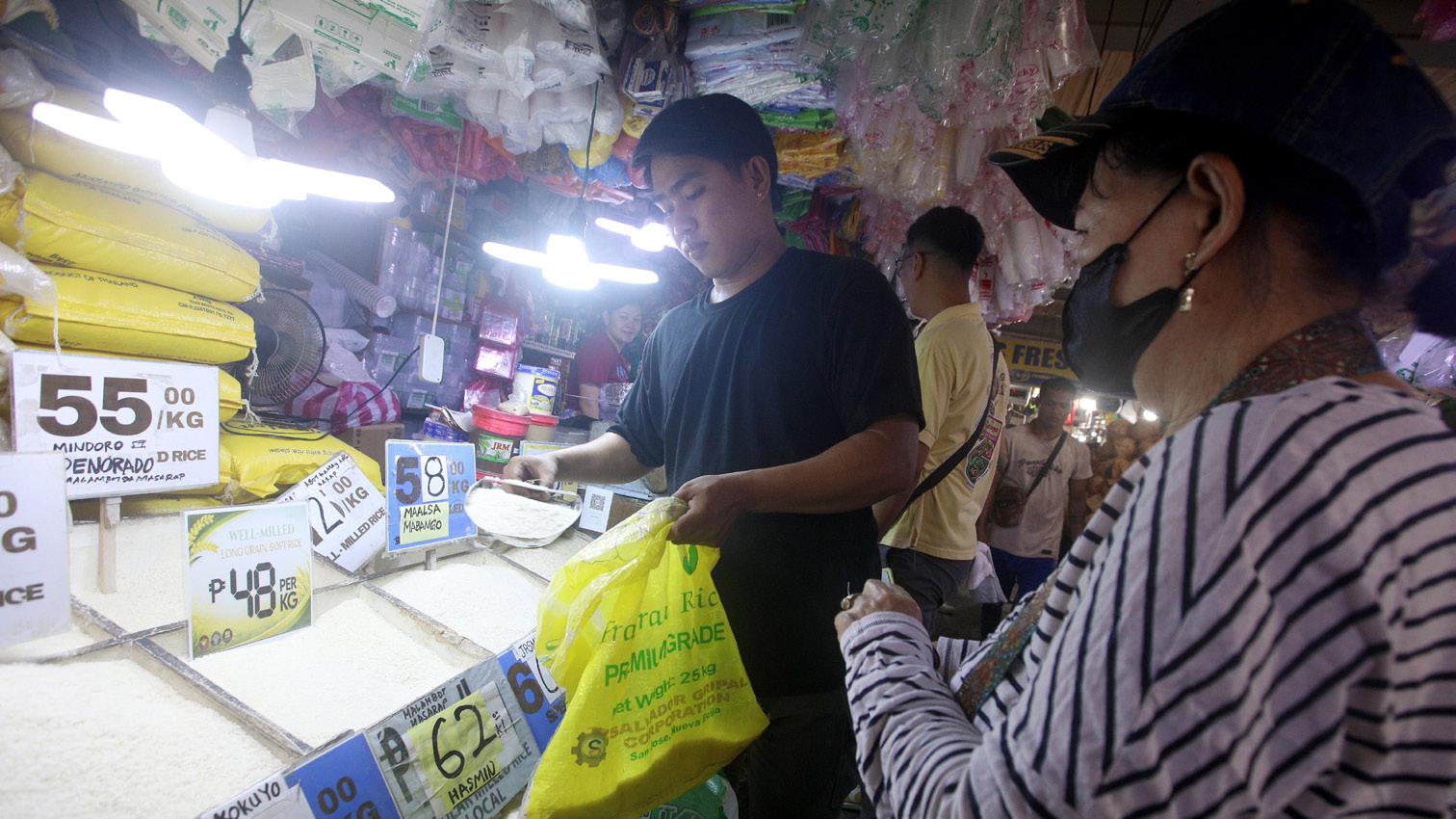
PRICE CAP. Customers purchase rice priced between PHP42 and PHP62 per kg. at a stall in Paco Public Market, Manila on Wednesday (April 15, 2026). The Department of Agriculture said it is considering a PHP50/kg. price cap on imported rice by the end of the month to curb potential profiteering amid fuel price increases driven by the Middle East conflict.
PNA photo by Yancy Lim
Digital banks lead Forbes list of best Philippine banks
Customer survey places MariBank Philippines, GoTyme Bank at the forefront as digital adoption reshapes industry
by AJPress
MANILA — Digital-first lenders have taken the top positions among Philippine institutions in the latest global consumer survey released by Forbes in partnership with Statista, reflecting a shift in how customers assess banking services.
In the 2026 “World’s Best Banks” ranking, MariBank Philippines and GoTyme Bank led the country’s list based on customer evaluations of trust, service quality, digital tools, and financial advice. The results indicate growing preference for mobile-driven platforms that prioritize accessibility and real-time transactions.
Digital platforms gain traction
Both MariBank Philippines and GoTyme Bank operate with limited physical branches, relying on app-based systems designed for streamlined account management. Their performance in the sur-
vey suggests that usability and consistency in digital services are increasingly central to customer satisfaction.
Established banks remain competitive Traditional institutions continue to be represented, pointing to sustained confidence in legacy banks even as competition intensifies.
Among those included are Bank of the Philippine Islands and UnionBank of the Philippines, which have expanded digital capabilities while maintaining broad service networks. Their presence reflects strengths in scale, brand trust, and product range.
Survey-based methodology The ranking is derived from
a large international survey conducted by Statista, drawing responses from thousands of banking customers. Participants rated institutions they use or recognize across customer service, digital experience, financial advice, and transparency. Only banks offering retail services were considered.
Shift in industry dynamics
The findings point to a more competitive banking environment shaped by technology and evolving consumer expectations. Digital banks are gaining ground as primary service providers, while established institutions continue to adapt through onWgoing digital transformation. n
Senate ethics panel clears procedural hurdle, set to begin review of complaints
Committee chaired by Sen. JV Ejercito says internal rules are ready for publication, allowing the panel to proceed with screening of pending cases after months of delay tied to Senate procedure
by AJPress
MANILA — The Senate Committee on Ethics and Privileges is preparing to begin formal review of pending complaints after completing a key procedural requirement: finalizing and signing its internal rules for publication.
Committee chair Sen. Joseph Victor “JV” Ejercito said the panel can start performing its functions once the rules are published, in accordance with Senate procedures governing committee operations. The committee is scheduled to meet on April 28, 2026 to begin evaluating complaints for compliance with required standards.
Senate records confirm that the delay in the committee’s work was procedural. The panel’s membership was completed only on January 26, 2026, after which Ejercito informed the chamber that the committee could not yet proceed. He also clarified that the rules
from the previous Congress do not automatically carry over and must be formally adopted anew.
In a Jan. 27 privilege speech, Ejercito said the committee would first organize and adopt its rules before taking up any cases. Senate leadership similarly noted that the panel could not convene earlier without a complete roster of members. By mid-April, the committee had secured the necessary signatures to move its rules toward publication. Once published, the rules will govern how complaints are received, evaluated, and acted upon.
Under the adopted framework, complaints will undergo an initial review to determine whether they meet requirements in form and substance. Those that pass may be transmitted to respondents and subjected to a preliminary inquiry to assess whether substantial credible evidence exists. Complaints that do not meet the threshold may be dismissed or
Marcos presses for urgent activation of Asean fuel-sharing deal
by Dexter CaBalza Inquirer.net
MANILA, Philippines — President Ferdinand Marcos Jr. on Wednesday called for the immediate activation of the emergency oil-sharing mechanism among members of the Association of Southeast Asian Nations (Asean), warning that prolonged supply disruptions due to the war in the Middle East are straining economies of smaller nations such as the Philippines.
Speaking at the Asia Zero Emission Community (Azec) Plus online summit on energy resiliency hosted by Japanese Prime Minister Takaichi Sanae, Marcos said Asean must urgently operationalize the Asean Petroleum Security Agreement (Apsa) and activate its Coordinated Emergency Response Measures (CERM), which will allow member states to support each other’s oil and gas needs during the global crisis.
“This mechanism, once tested and activated regularly, could serve as a meaningful buffer for smaller economies
during exactly the kind of disruption that we are experiencing today,” Marcos urged fellow Asian leaders.
During his intervention speech, Marcos said the deal should be tested now “while the crisis is live and the lessons are immediate,” and volunteered the Philippines to host or co-chair the first full Apsa emergency simulation exercise.
Under the Apsa’s CERM, all member states shall endeavor to supply petroleum to the distressed country at the aggregate amount equal to 10 percent of its normal domestic requirement for at least 30 days, on a voluntary and commercial basis.
An Asean member country could give a distress notice should its oil supply reach “critical shortage,” which happens if it experiences a shortfall of at least 10 percent of its normal domestic requirement for a continuous period of at least 30 days.
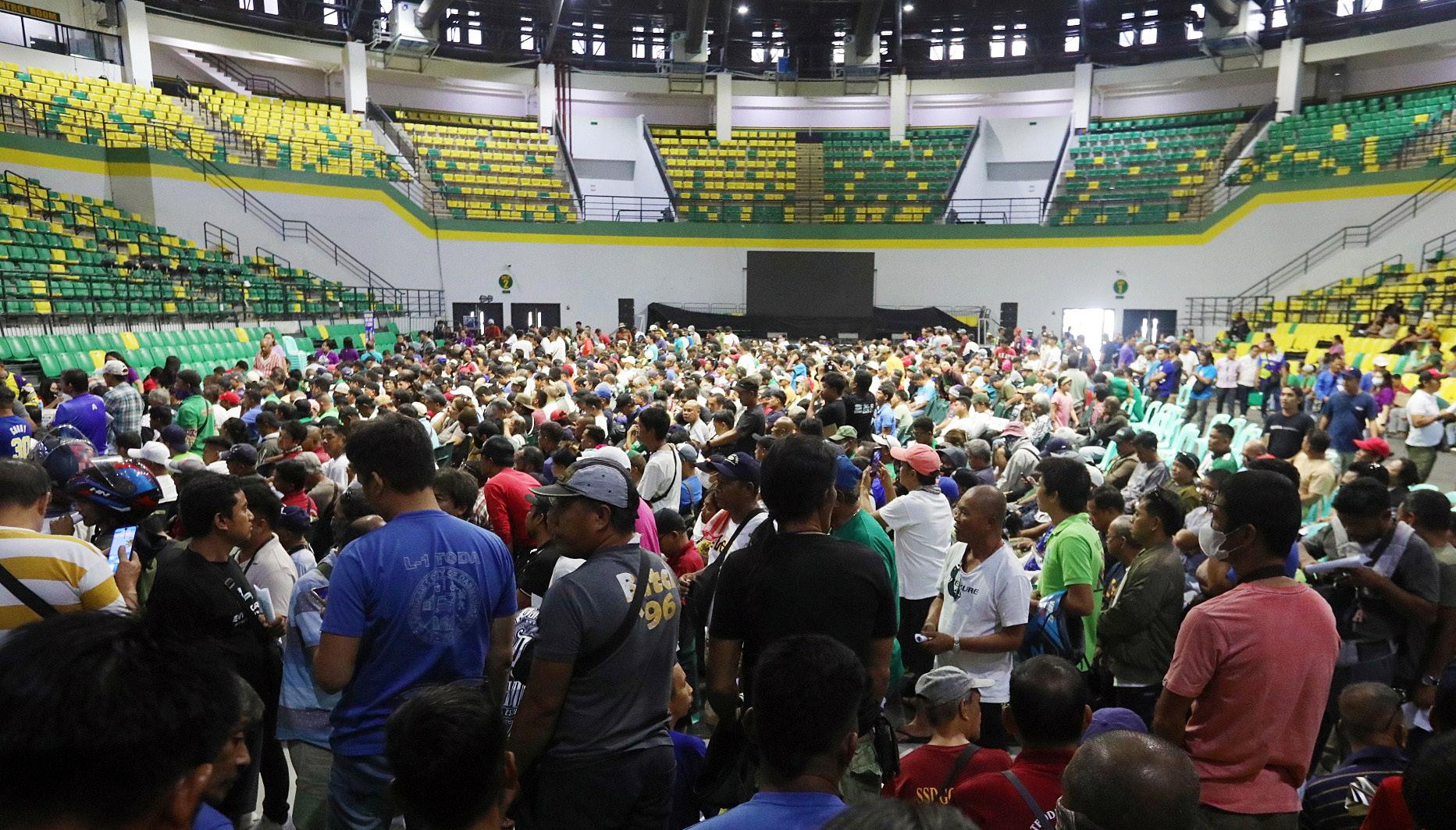
The Department of Energy on Monday reported the country still has an adequate fuel stockpile to last for 50 days,
or until June. The country’s average daily demand for petroleum products stands at 75,000 kiloliters, equivalent to 472,066 barrels a day.
The completion of the latest Apsa framework is among the targets of the Philippines, which currently chairs the Asean.
Marcos framed the proposal as part of a broader push for coordinated regional action to ensure energy supply as access through the Strait of Hormuz, a critical waterway for about one-fifth of the world’s crude trade, remains limited.
Marcos also outlined two additional proposals to strengthen Asia’s collective energy security architecture.
He urged summit participants to endorse a regional study on joint oil stockpiling, building on groundwork by the Economic Research Institute for Asean and East Asia.
The study would examine models such as shared reserves, ticket stockpiling systems, and partnerships with crude-exporting countries, with the goal of moving from
returned for correction.
The committee is currently understood to have several pending complaints involving members of the Senate. At this stage, these remain untested allegations and have not been adjudicated. The panel’s upcoming session is expected to focus on procedural screening rather than determinations on the merits.
Separately, at least one complaint previously filed before the committee involves allegations related to a senator’s attendance in Senate sessions. As with all cases before the panel, the matter remains subject to review under the committee’s rules and does not constitute a finding of liability. For now, the development marks a shift from inactivity to process. The ethics committee is not yet issuing rulings or sanctions; it is moving into the stage where complaints can be formally examined under an established and published set of procedures. n
FeAtures OPiniOn
Two Americans, two vocabularies of power
IN 2026, one of the more consequential dynamics shaping global discourse is a visible divergence between two American figures operating at the highest levels of influence: Donald Trump and Pope Leo XIV.
The immediate backdrop is a widening public clash over war, peace, and the language of moral authority. In recent days, Pope Leo XIV has used major public appearances to call for dialogue, restraint, and the rejection of decisions driven by rearmament. President Trump, in turn, responded with a direct public rebuke, describing the pope as “WEAK on Crime” and “terrible for Foreign Policy.” The exchange has brought into sharper focus a relationship that is often managed quietly through diplomacy, not public confrontation.
One governs through the machinery of
THE CORNER ORACLE
Andrew J. Masigan
AS a man who grew up the 70’s and 80’s, I remember when America was always the adult in the room. Not perfect, but dependable. Back then, we all had a sense that when push came to shove, the United States would lean toward what was ethical, just and fair.
The US of yesteryears carried itself with gravitas, the kind that comes not just from power, but from responsibility. You didn’t always agree with
the state, including military, economic, and diplomatic power. The other leads a global church grounded in moral teaching, with no army and no electorate, but with a voice that reaches across borders. Their roles are not designed to align. Increasingly, they do not. Yet the distinction is not only institutional. It is also formative. Pope Leo XIV (Robert Francis Prevost), born in Chicago, emerges from a distinctly American Catholic tradition shaped by immigration, pluralism, and engagement within a secular democracy. Formed within the Order of Saint Augustine, his intellectual and pastoral framework emphasizes conscience, community, and moral reasoning. At the same time, his ministry has been global in scope, reflecting a Church that operates beyond national identity. His voice, while Amer-
America, who are you?
it, but you trusted that it understood the weight of its role. America was, in many ways, a generous nation. It shared its prosperity, opened its markets and created opportunities not just for its own people, but for others around the world. Immigration was not treated as a threat but as a source of strength. America, at its best, believed that prosperity was something to be shared. Having the world’s largest
economy, the US could have easily dictated one-sided terms. Instead, it built a system where trade flowed freely and where investments and technologies crossed borders. Yes, the rules often leaned to its favor – but there was still an effort to bring others along. There was an understanding that a rising tide, if managed properly, could lift more than just one boat.
Demand and supply
Boo Chanco
IT doesn’t look like the Strait of Hormuz will be opened to regular traffic any time soon. President Donald Trump has ordered the US Navy to stop vessels going in and out of the Strait, specially Iranian tankers. That’s to cut the last source of significant financial support for Iran which Trump believes will make it surrender.
The continuing blockage is bad news for countries
LAGMAY ORIEL Publisher & Chairman of the Board
President
Spend smarter
particularly in our part of the world that are very dependent on crude oil from the Middle East. The resulting scarcity of supply will continually raise oil prices to as much as $200/barrel, according to some estimates.
So, we are really screwed with rising oil prices, a weakening peso and a tight fiscal space further strained by subsidies, tax cuts and corruption. What can we do to keep life bearable other than borrowing heavily like we did during COVID?
A tight fiscal space basically means limited room to spend without worsening debt or deficits. We have large fixed obligations (debt service, salaries, pensions) which means a big portion of the budget is already committed.
With 57 percent of spending already mandatory, the only flexible portion must be aggressively reprioritized. We must spend smartly and improve efficiency to cush-
ican in origin, is not bound to the priorities of any single nation.
The friction between them is not theoretical. It is now explicit, articulated in public
Two Americans, two vocabularies ...
language rather than implied through policy differences. It is a rare moment when disagreement between political authority and religious leadership is not filtered, but stated outright.
Pope Leo XIV has articulated a consistent emphasis on peace, restraint, and human dignity. In recent addresses, he has urged leaders to choose dialogue over escalation and to consider the human cost of decisions shaped by force. His framing does not engage policy line by line. It operates at the level of principle, asking what power is for and how it ought to be exercised.
President Trump’s approach, by contrast, is often expressed in terms of outcomes that can be measured, including security, enforcement, deterrence, and leverage. It is a framework grounded in the obligations of governance, protecting borders, managing threats, and asserting national interest in an increasingly unstable global environment.
This is where the divide becomes most apparent. One operates in terms of moral responsibility that extends beyond borders. The other is driven by obligations to voters and the exercise of state power. They are not arguing from the same place, and they are not trying to achieve the same ends. The friction between them is not incidental. It is built into the roles they occupy.
That difference is not only about method. It points to different end states. One envisions a world held together by sovereign strength, where stability is maintained through control, deterrence, and the clear assertion of national interest. The other points toward a world shaped by restraint, where stability depends on dialogue, shared responsibility, and limits on the use of force.
If fully realized, neither vision fully resolves the risks the other is trying to contain.
A world defined by strength may secure order, but at the cost of rigidity and escalation. A world defined by restraint may elevate human dignity, but struggles with enforcement when confronted by actors who do not share those limits.
Some observers have reached for the language of rupture to describe this moment, suggesting that the distance between these two centers of authority is widening into something more permanent, separating not just positions, but the very terms by which authority is understood. That framing, however, runs ahead of the facts.
There is no institutional break, no severed diplomatic channel, and no formal conflict between the United States and the Holy See. What exists instead is a sharpening contrast, two vocabularies of power unfolding in parallel.
That contrast is not new.
Spend smarter ...
ion the shock that this world crisis brings to our economy.
That’s a tall order. If we could realistically spend smartly, we should have done it a long time ago.
But here’s the thing… We must pay the salaries of teachers, soldiers, police officers and civil servants. There are mandated pay increases and there’s the overblown pension obligation for the uniformed services.
There’s debt service for foreign and domestic borrowings. There is no running away from paying debts that fall due and paying interest for the rest. There are also the LGU transfers.
Contrary to some impressions, foreign debt is not the
Political authority and moral authority have long operated in tension. What distinguishes this moment is the extent to which these differences are now out in the open. Both men speak directly, both command global attention, and both are increasingly explicit in how they define strength.
For President Trump, strength is often expressed through control, including borders, threats, and outcomes. For Pope Leo XIV, strength is expressed through restraint, the discipline to temper power with conscience and to measure decisions not only by their effectiveness, but by their human cost.
The fact that both voices are American does not bring them closer. It sharpens the contrast. One answers to U.S. voters and national priorities. The other speaks from a position that is not bound to any nation, including the United States.
If the goal is a better world, it is not achieved by choosing between power and principle, but by holding both to account. The conflict we are witnessing is what happens when power and principle are forced to answer the same question in different ways. Political authority must be strong enough to protect and restrained enough to listen. Moral authority must be clear enough to challenge and grounded enough to engage reality. (AJPress). n
billion bailout loan from the International Monetary Fund (IMF). Approximately 3.5 million people – roughly one-quarter of the country’s population at the time – donated their jewelry.
According to DEPDev Secretary Arsenio Balisacan, the government needs up to P429 billion to fund support and relief measures if the Middle East conflict drags on until December. That’s probably on the conservative side.
With our total private wealth estimated at P55 trillion, the top one percent owns nearly one-third (32.5 percent) of the country’s total net worth. The top 10 percent of Filipinos hold approximately P40 trillion.
Since most of our people are poor with nothing more to give, will our elite voluntarily contribute as generously as the Koreans to a fund that will help us navigate the next few months of the Trump-driven crisis?
claimed in social media, it would help if members of Congress voluntarily give up salaries and allowances for the duration of the crisis.
National officials must show the nation they are ready to share the pain and that they are in office to render public service even without pay in a time of emergency.
The President, Vice President and other officials should also give up salaries and confidential funds.
biggest problem. It is the government payroll, LGU transfers and pensions.
The only room for maneuvering the tight fiscal space is infrastructure spending, subsidies and agency budgets. No more flood control projects, ghost or real. Targeted assistance will be needed as we did during COVID but may not be enough to make a big difference.
How do we bridge the gap between what is in the Treasury and what we need if push comes to shove?
During the 1997-1998 Asian Financial Crisis, South Koreans offered personal gold jewelry to the government to help repay a $58 billion bailout loan from the International Monetary
Fund (IMF). Approximately 3.5 million people – roughly one-quarter of the country’s population at the time – donated their jewelry.
The only room for maneuvering the tight fiscal space is infrastructure spending, subsidies and agency budgets. No more flood control projects, ghost or real. Targeted assistance will be needed as we did during COVID but may not be enough to make a big difference.
How do we bridge the gap between what is in the Treasury and what we need if push comes to shove?
During the 1997-1998 Asian Financial Crisis, South Koreans offered personal gold jewelry to the government to help repay a $58
If the Hormuz disruption lasts beyond three to four months, the Philippines must begin to aggressively reallocate (cut, delay, redirect) and target support narrowly (not universal subsidies).
Then, we must spend smarter. We must use our limited resources to protect the essentials (fuel, food, transport), compress everything else, and avoid permanent fiscal commitments.
We must also remember that once the shock dies down, the real danger isn’t just continuing high oil prices—it’s being stuck with higher debt (as in COVID), structurally larger deficits, and less room for future crises.
Inevitably, our private sector must weigh in beyond press releases and token CSR programs.
The fund could be managed by the private sector, a consortium of banks perhaps, if there is little trust in the government managing large sums of money. The fund can be used for subsidizing fuel prices used by the poor, from diesel to LPG and other forms of targeted assistance.
The private sector must aggressively contribute to the national effort to help us survive this crisis. For example, feeding programs not just for children but for whole communities in impoverished areas. Help distressed public utility drivers and farmers with alternative jobs or livelihoods.
Government must project a sense of crisis with officials leading by example.
While we may not be able to save a trillion pesos by abolishing Congress as is
No one knows when this crisis will end. The war could last indefinitely like in Ukraine. But the stranglehold on the world economy through Hormuz that this war caused is suffered by all.
We must also pray for divine intervention so that the leaders of the US, Israel and Iran will come to their senses and realize that their war is causing too much suffering and it must simply stop. (Philstar.com)
* * * The opinions, beliefs and viewpoints expressed by the author do not necessarily reflect the opinions, beliefs and viewpoints of the Asian Journal, its management, editorial board and staff.
* * * Boo Chanco’s email address is bchanco@gmail.com. Follow him on X @boochanco. n
NORMAL OPERATIONS. Traditional and modern jeepneys ply their routes along Recto Avenue in Manila on Thursday (April 16, 2026) amid the supposed transport strike. Some transport groups said they opted to continue normal operations because going on strike does not solve their woes.
PNA photo by Yancy Lim
Marcos presses for urgent activation ...
research to implementation.
Marcos also proposed establishing a mutual recognition mechanism for emergency fuel allocation protocols across participating economies.
This would standardize administrative procedures and ensure that fuel assistance can be deployed rapidly during supply shocks, minimizing delays caused by regulatory or logistical bottlenecks.
While the Philippines has enforced domestic measures, such as declaring a national emergency and a whole-of-government response to the crisis, Marcos said these steps were insufficient in isolation given the interconnected nature of Asia’s energy supply chains.
“What this crisis has confirmed is a structural truth: No single country in Asia can insulate itself from supply chain shocks of this scale by acting alone. The times call for a coordinated, unified response,” he added.
Marcos said: “A disruption that begins in the Strait of Hormuz ripples through Singapore, the Strait of Malacca, and onward to Manila, Tokyo, Seoul, and Jakarta within days.”
“Our vulnerabilities are shared, and therefore so must our responses be,” he added. $10-billion support During the summit, Takaichi also announced the launching of “Partnership On Wide Energy and Resources Resilience” (Powerr Asia), a new cooperation framework consisting of both emergency responses and structural ones with midto-long-term perspectives. According to Japan’s foreign ministry, the framework aims to strengthen regional cooperation during energy emergencies by helping finance
America, who are you? ...
PAGE 6
pioned a rules-based order now bends those very rules when they become inconvenient. Agreements are no longer commitments – they are options.
The nation that once stood as a defender of democracy now struggles to uphold it within its own borders. Institutions are questioned. Processes are contested. The truth is shamelessly covered up. The very principles that America once promoted abroad are now under strain in its own land.
The loudest advocate of free trade has turned protectionist. Tariffs, economic nationalism and transactional diplomacy have replaced the broader vision of shared prosperity.
There has also been a shift in character.
Where there was once generosity, there is now a more pronounced self-interest. “America First” has evolved into the country’s worldview –one that prioritizes immediate gain over long-term leadership. And it does so with incredible hubris.
The culture of excellence, once rooted in innovation and hard work, has been overshadowed by the pursuit of quick
profits. Financial wins are celebrated, even when they come at the expense of substance. No surprise, America’s dominance in innovation – while still formidable – is no longer absolute.
Corruption has hollowed out America’s institutions, unraveling the cohesion that once bound the system together. As a result, America’s very foundations have weakened.
But perhaps the most troubling change is not economic or political – it is moral.
America today is increasingly seen as unpredictable and unreliable. Where trust once existed, there is now trepidation and a sense of skepticism. Race, identity and inequality have surged back into the spotlight, making one thing clear: these problems were never resolved. Bigotry simply laid latent all these decades.
On the global stage, America is no longer viewed as a stabilizing force. It is now seen as a source of disruption, chaos and war. And so, its soft power has diminished. The admiration has faded. The influence, while still present, is no longer unquestioned and even challenged.
States Change Custody Laws ...
1
cause of immigration enforcement actions, leaving it unclear how often it happens. In Oregon, as of February two children had been placed in foster care after being separated from their parents in immigration detention cases, according to Jake Sunderland, a spokesperson for the Oregon Department of Human Services.
“Before fall 2025, this simply had never happened before,” Sunderland said.
enforcement as another allowable reason.
Nevada and California passed laws last year to protect families separated by immigration enforcement actions. California’s law, called the Family Preparedness Plan Act, allows parents to nominate guardians and share custodial rights, instead of having them suspended, while they’re detained. They regain their full parental rights if they are released and are able to reunite with their children.
the procurement of crude oil and petroleum products and ensuring stable supply chains across Asia.
It also supports longer-term measures such as building and using storage facilities, expanding oil reserves, securing critical minerals, diversifying energy sources like biofuels, and promoting energy efficiency to boost industrial development.
The support involves financial cooperation of approximately $10 billion (about P602 billion), which is equivalent to roughly one year’s worth of crude oil imports for Asean.. n
As of mid-February, nearly 70,000 people were being held by Immigration and Customs Enforcement. The record 73,000 people in detention in January represented an 84% increase compared with one year before. According to reporting from ProPublica, parents of 11,000 children who are U.S. citizens were detained from the beginning of Trump’s term through August.
The news outlet NOTUS reported in February that at least 32 children of detained or deported parents had been placed in foster care in seven states.
Sandy Santana, executive director of Children’s Rights, a legal advocacy organization, said he thinks the actual number is much higher.
“That, to us, seems really, really low,” he said.
It is difficult to reconcile the America we remember with the America we see today. The big brother we once trusted is now unrecognizable. And so we ask with earnest reflection: America, who are you?
Are you still the nation that believed in fairness, in shared prosperity, in the idea that leadership comes with responsibility? Are you still the defender of democracy, the engine of innovation, the symbol of opportunity?
Or have you become something more insular, more transactional, more self-centered, more lawless?
If it is the latter, your days as the world’s big brother and/ or adult in the room are surely numbered. The world will naturally gravitate to the nation/s that prove more benevolent, cooperative and just. (Philstar. com)
* * *
The opinions, beliefs and viewpoints expressed by the author do not necessarily reflect the opinions, beliefs and viewpoints of the Asian Journal, its management, editorial board and staff.
* * *
E-mail: andrew_rs6@yahoo.com. Follow him on Twitter @aj_masigan n
Separation from a parent is deeply traumatic for children and can lead to various health and psychological issues, including post-traumatic stress disorder. Prolonged, intense stress can lead to more-frequent infections in children and developmental issues. That “toxic stress” is also associated with damage to areas of the brain responsible for learning and memory, according to KFF.
Maryland, New York, Washington, D.C., and Virginia amended existing laws during Trump’s first term to allow guardians to be granted temporary parental rights for immigration enforcement reasons. Now the enforcement surge that began after Trump returned to office last year has prompted a new wave of state responses.
In New Jersey, lawmakers are considering a bill to amend a state law that allows parents to nominate standby, or temporary, guardians in the cases of death, incapacity, or debilitation. The bill would add separation due to federal immigration
There are significant legal barriers to reunification once a child is placed in state custody, said Juan Guzman, director of children’s court and guardianship at the Alliance for Children’s Rights, a legal advocacy organization in Los Angeles.
If a parent’s child is placed in foster care and the parent cannot participate in required court proceedings because they are in detention or have been deported, it’s less likely they will be able to reunite with their child, Guzman said.
An estimated 5.6 million children are U.S. citizens who live with a parent or family member who does not have legal immigration status, according to research from the Brookings Institution, a Washington, D.C.based think tank. Within that group, 2.6 million children have two parents lacking legal status.
Santana said he expects the number of family separation cases to grow as the Trump administration continues its immigration enforcement campaign, putting more children at risk of being placed in foster care.
ICE directives require the agency to make efforts to facilitate detained parents’ participation in family court, child welfare, or guardianship proceedings, but Santana said it’s uncertain whether ICE is complying with those rules.
ICE officials did not respond to requests for comment for this report.
Before the change in California’s law, the only way a parent could share custodial rights with another guardian was if the parent was terminally ill, Guzman said.
If parents create a preparedness plan and identify an individual to assume guardianship of their children, the state child welfare agency can begin the process of placing the children
with that individual without opening a formal foster care case, he added.
While Nevada lawmakers expanded an existing guardianship law last year to include immigration enforcement, the measure requires the parents to take the additional step of filing notarized paperwork with the secretary of state’s office, said Cristian Gonzalez-Perez, an attorney at Make the Road Nevada, a nonprofit that provides resources to immigrant communities.
Gonzalez-Perez said some immigrants are still hesitant to fill out government forms, out of fear that ICE might access their information and target them. He reassures community members that the state forms are secure and can be accessed only by hospitals and courts.
The Trump administration has taken unprecedented steps to access sensitive information through the Centers for Medicare & Medicaid Services, the IRS, the Supplemental Nutrition Assistance Program, the Department of Housing and Urban Development, and other entities.
Gonzalez-Perez and Guzman said that not enough immigrant parents know their rights. Nominating a temporary guardian and creating a plan for their families is one way they can prevent feelings of helplessness, Gonzalez-Perez said.
“Folks don’t want to talk about it, right?” Guzman said. “The parent having to speak to a child about the possibility of separation, it’s scary. It’s not something anybody wants to do.”
KFF Health News is a national newsroom that produces in-depth journalism about health issues and is one of the core operating programs at KFF—an independent source of health policy research, polling, and journalism. Learn more about KFF. n
President Ferdinand Marcos Jr. reaffirms the Philippines’ commitment to strengthening energy security and supply chain resilience through deeper regional cooperation, as he joined the Asia Zero Emission Community (Azec) Plus online summit hosted by Japanese Prime Minister Takaichi Sanae via virtual conference on April 15, 2026. —PHOTOS FROM PCO
Oona Zenda/KFF Health News
DILG chief Remulla dismisses Baste
Duterte’s threats vs Marcos as 'just talk'
by ian laqui Philstar.com
MANILA, Philippines —
The pronouncement of Davao City Mayor Baste Duterte is not a threat, Interior Secretary Jonvic Remulla said.
In a GMA News interview on Thursday, April 16, Remulla said Duterte’s pronouncements are not considered threats by authorities.
“Supot naman talaga eh, puro dakdak eh, dakdak ng dakdak,” Remulla said.
(He’s really just all talk, just yapping nonstop.)
“If you want to lead the country, you have to be more statesman-like,” he added.
When asked if there is a credible threat against the president, he said: “There is always a credible threat against the president. It will never disappear, whether it comes from that camp or any other camp. The President is the most protected person in the Philippines.”
Remulla referred to remarks made by Duterte during his Reform Alliance for
Good Governance and Accountability (RAGE) Coalition event in San Juan City on April 12.
“Okay na ’yan. Siguro ’yung mga anak niyo makakapag-aral sa abroad. You can eat at very nice restaurants. Tama na ’yan. It’s okay. Isang ulo lang naman ang kailangan namin, ang ulo ni Bongbong Marcos!” Duterte said. This is not the first time Duterte has made such threats.
In July 2025, Duterte challenged former Philippine National Police chief Nicholas
Torre III to a boxing match.
He accepted the challenge, turning it into a “charity boxing match.” However, Duterte did not show up.
Sebastian Duterte is the son of detained former president Rodrigo Duterte, who is in custody of the International Criminal Court (ICC) for alleged crimes against humanity of murder.
His path to the mayoralty included serving as vice mayor under his father in 2025, followed by a stint as acting mayor after the elder Duterte was detained. n
Marcos unveils new foreign investment limits under EO 113
by luisa CaBato Inquirer.net
MANILA, Philippines — President Ferdinand Marcos Jr. has issued Executive Order No. 113, which introduces the updated list of industries where foreign entities are limited or not allowed to invest.
The order, which promulgates the 13th Regular Foreign Investment Negative List, identifies the industries where foreign participation is restricted while keeping other sectors open to investment and protecting key areas for Filipinos.
Based on the list, industries such as mass media (including internet-based media), the practice of professions like architecture through corporations, and cooperatives, except for investments by former natural-born Filipino citizens, are reserved for Filipino ownership.
Meanwhile, the private recruitment sector and contracts for the construction of defense-related structures can have up to 25 percent foreign equity.
Advertising sector, meanwhile, is allowed to have up to 30 percent foreign ownership.
Up to 40 percent foreign equity is allowed in the exploration, development, and utilization of natural resources, including the use of water from natural sources, subject to existing laws and regulations.
The EO also states that 100 percent foreign equity is allowed in the operation and management of telecommunications in case the country of the foreign national accords reciprocity to Philippine nationals and up to 50 percent foreign equity in the absence of such reciprocity.
Moreover, EO 113 lists industries that can only have up to 40 percent ownership for reasons of national security, defense, public health and morals, and the protection of small and medium enterprises.
These include:
• Manufacture, repair, storage, and/or distribution of products and/or ingredients requiring Philippine National Police clearance, such as firearms, gunpowder, and others.
• Development, production, manufacturing, assembly, servicing or operation of materiel by an in-country enterprise
• Distribution and manufacture of dangerous drugs as authorized by law
• Sauna and steam bathhouses, massage clinics, and other similar activities regulated by law because of risks posed to public health and morals
• All forms of gambling
• Micro and small domestic market enterprises with paidin equity capital of less than the equivalent of USD 200,000
Davao City Mayor Sebastian Duterte delivers a speech during a ‘solidarity walk’ in the city’s Rizal Park on March 16, 2025, wherein he lambasted President Marcos. Photo courtesy of PPP
President Ferdinand Marcos Jr. PHOTO BY DEXTER CABALZA
Transport strike ends with core issues unresolved as sector tensions persist
Three-day action concludes with calls for fuel relief and renewed debate over modernization policy
by AJPress
MANILA
— A three-day nationwide transport strike concluded on April 17, with participating jeepney drivers and operators pressing unresolved concerns over rising fuel costs and long-standing policy disputes with the government.
The April 15 to 17 action, led by the transport group Manibela, affected selected routes in Metro Manila and nearby provinces. While some areas experienced reduced public transport availability, operations continued across many corridors as several transport groups did
not join the strike.
Government agencies, including the Department of Transportation, implemented contingency measures such as deploying additional buses and coordinating with local governments to assist commuters. Officials said the situation remained manageable throughout the protest period.
Transport groups maintained that sustained fuel price increases have significantly reduced daily earnings, prompting calls for targeted government intervention, including subsidies or other relief mechanisms. The issue has been a recur-
ring pressure point for drivers operating under fixed boundary systems.
The strike also underscored continuing resistance to the Public Utility Vehicle Modernization Program, which seeks to phase out older jeepneys in favor of newer units. Some operators argue the transition imposes heavy financial burdens, while the government maintains it is necessary to improve safety and reduce emissions.
Despite the conclusion of the strike, no immediate resolution has been announced, signaling that underlying tensions in the transport sector remain unresolved. n
Interpol notice cited vs. Atong Ang as manhunt in missing sabungeros case continues
Interior chief says red notice issued; Interpol rules note most notices are not publicly listed
by AJPress
MANILA — Philippine authorities said an Interpol red notice has been issued against businessman Charlie “Atong” Ang, as the manhunt continues in connection with the disappearance of cockfighting enthusiasts known as sabungeros.
Interior Secretary Juanito Victor “Jonvic” Remulla said on April 16 that the notice “was issued this week,” indicating that the case has reached the level of international law enforcement coordination. He added that Ang had been sighted in the Calabarzon region about two weeks earlier, but follow-up operations did not result in an arrest.
The statement marks a development from earlier disclosures by the Philippine National Police-Criminal Investigation and Detection Group, which said in January that it had requested the issuance of a red notice through Interpol channels. Under Interpol guidelines, a red notice is a request to law enforcement agencies
worldwide to locate and provisionally arrest a person pending extradition or similar legal action. It is not an international arrest warrant, and enforcement depends on the laws of individual member states. Interpol also states that most red notices are restricted to law enforcement use and are not published on its public website.
As of April 16, Ang’s name does not appear on Interpol’s publicly accessible database. However, Interpol policy indicates that the absence of a public listing does not necessarily contradict an official statement that a notice has been issued.
Ang is facing multiple non-bailable arrest warrants issued in January by regional trial courts in Laguna and Batangas for charges that include kidnapping with homicide and serious illegal detention. The cases stem from the disappearance of at least 34 sabungeros between April 2021 and January 2022 across several parts of Luzon, including Laguna, Batangas, Bulacan, Rizal and
ABS-CBN rejects shutdown proposal as board affirms continued operations
Company says majority of directors opposed closure, citing obligations to employees, retirees and stakeholders amid internal dispute
by AJPress
MANILA — ABS-CBN Corporation said its board rejected a proposal to shut down operations, affirming instead a decision to continue supporting employees, retirees and other stakeholders, according to an official statement issued April 15.
The company disclosed that a shutdown proposal was raised during internal discussions but did not advance after a majority of directors opposed it. In its statement, ABS-CBN said one director had proposed closure without fully addressing how the company would meet its financial and social obligations.
“The majority of the Board and management chose to continue to support our employees, retirees and other stakeholders,” the company said, framing the decision as a matter of corporate responsibility rather than strategy alone.
The development comes as tensions linked to a dispute within the Lopez family, the company’s controlling shareholders, have surfaced
Metro Manila.
Authorities have identified Ang as a respondent who remains at large. Earlier police statements said other individuals linked to the case had been arrested, while operations to locate remaining suspects continue.
Law enforcement agencies have also coordinated with immigration authorities as part of efforts to monitor possible travel movements. A reward has been offered for information leading to Ang’s arrest.
Through legal counsel, Ang has denied the allegations. His lawyer has previously questioned his inclusion in at least one case, citing what the defense described as insufficient evidence.
As of mid-April, authorities said Ang is believed to still be in the Philippines, moving between locations to evade capture. Officials have not confirmed earlier intelligence suggesting he may have left the country.
The case remains under active investigation. n
publicly. ABS-CBN did not identify individuals involved in the proposal and did not attribute motives, describing the matter broadly as part of an internal disagreement.
In the same statement, the company pushed back against what it characterized as inaccurate claims circulating in connection with the dispute. ABS-CBN said assertions regarding its retirement fund and financial decisions were misleading, noting that a significant portion of pension fund reductions stemmed from separation benefits paid to thousands of employees affected by workforce reductions following the loss of its broadcast franchise in 2020.
The company also denied claims of preferential retirement payouts to select individuals, stating that many retirees cited in those claims had not yet received full benefits and had agreed to defer payments while the company prioritized obligations to displaced employees.
ABS-CBN added that allegations involving the proposed use of a capital infusion for retirement payouts were not supported by the
board majority, based on internal discussions.
The company reiterated that it is not a party to the underlying legal dispute involving members of the Lopez family, and said such matters should be addressed through proper legal channels rather than public exchanges. It emphasized that it would respond when necessary to correct what it described as inaccurate or incomplete information about its finances and governance.
Since the expiration of its congressional franchise in May 2020 and the subsequent shutdown of its freeto-air broadcast operations, ABS-CBN has undergone restructuring and shifted toward content production, digital platforms and partnerships. The company said it has seen gradual financial improvement in the years since, despite ongoing structural challenges.
For now, the board’s decision maintains the company’s operations, signaling continuity as ABS-CBN navigates both internal governance tensions and a transformed media landscape. n
Hev Abi among 7 arrested in Quezon City raid; police allege firearms, drug-law violations
Artist’s camp
denies allegations, calls incident a misunderstanding
by AJPress
was arrested along with six other individuals in Quezon City after authorities served a search warrant in Barangay Laging Handa, Diliman, according to the Philippine National Police.
The operation, carried out by the Criminal Investigation and Detection Group–National Capital Region, took place on April 14 and was based on prior investigation and intelligence, police said. Authorities reported that the arrests were made during the implementation of a court-issued warrant.
Police said operatives
recovered a 9mm pistol, a magazine, and ammunition during the search. Authorities also reported seizing items they described as suspected illegal drugs, including substances believed to be marijuana, cocaine, and shabu, along with related paraphernalia. Officials said initial testing indicated the presence of controlled substances, with further laboratory examination pending.
Law enforcement authorities alleged that the group may face complaints related to violations of the country’s firearms regulations and the Comprehensive Dangerous Drugs Act. As of press time, no court judgment has been issued, and the case remains subject to prosecutor review
and standard legal proceedings.
In a statement, the artist’s label, Urban Department, denied the allegations and described the incident as a “misunderstanding,” adding that legal counsel is coordinating with authorities. Police officials said the operation forms part of broader efforts to address the circulation of unlicensed firearms and illegal drugs in urban areas. No additional details on the status of the other individuals taken into custody were immediately released. Hev Abi has gained visibility in recent years as part of the country’s contemporary hip-hop scene. The matter remains under investigation. n
MANILA — Filipino rapper Hev Abi, whose real name is Gabriel Abilla,
BINI sets Coachella 2026 engagement benchmark with record-breaking performance
Group
draws global attention
as “Pantropiko” clip surpasses 30 million views, leading all female acts in festival engagement
by AJPress
INDIO, Calif. — Filipino pop group BINI delivered one of the strongest digital performances of the Coachella Valley Music and Arts Festival 2026, a global music and arts event held annually in Indio, California that serves as a major platform for international artists.
A performance clip featuring the group’s hit “Pantropiko,” posted on the festival’s official Instagram account, has surpassed 30 million views as of April 16, 2026, based on publicly visible metrics. The figure positions BINI as the most-viewed female act from this year’s festival on that platform, exceeding engagement levels for other global performers including KATSEYE.
BINI’s appearance marked a milestone for Filipino representation at Coachella, placing the eight-member group among the few P-pop acts to reach the festival stage. Aiah; Colet; Maloi; Gwen; Stacey; Mikha; Jhoanna; Sheena delivered a 42-minute set at the Mojave Tent, where crowd turnout remained dense despite a mid-afternoon schedule, supported by both their
fanbase and general festival audiences.
The group’s presentation incorporated Filipino cultural elements, including gold ensembles paired with salakot-inspired headpieces. Coverage from Vogue cited the look among notable festival fashion moments, reflecting growing global interest in culturally grounded stage design. Online traction followed quickly. BINI-related terms trended worldwide on X during and after the performance, indicating reach beyond their established Southeast Asian audience. Comparative social metrics place Justin Bieber as the most-viewed overall act, with clips exceeding 80 million views, while BINI leads female performers with more than 30 million views on a single post. The setlist combined established tracks with newer material, including “Karera,” “Salamin, Salamin,” and “Pantropiko,” alongside “Blush,” tied to their Signals project.
Industry observers, including Billboard and Rolling Stone, have pointed to the performance as evidence of P-pop’s expanding global via-
bility, driven by strong digital engagement and coordinated fan support. The group is expected
to launch its Signals world tour in Manila in June, with planned stops across North America and Europe. n
Eric Quizon eyes Dolphy biopic focused on final days of Philippine comedy icon
by AJPress
MANILA — Actor-director Eric Quizon has confirmed that he is in early discussions to develop a biographical film on his father, Dolphy, with a narrative centered on the final weeks of the late entertai-
ner’s life.
Quizon disclosed in recent interviews that conversations are underway with writer-actress Bibeth Orteza, who authored Dolphy’s autobiography. The project remains in its conceptual stage, with no formal production commitments announced as of April 2026.
A contained narrative rather than a full life story
According to Quizon, the proposed film departs from the traditional cradle-to-career biographical format. Instead, it would focus on the period beginning with Dolphy’s hospitalization and culminating in his death in July 2012.
He indicated that the intent is to document a largely private chapter in the life of a public figure, capturing both the family’s experience and the broader public response during that time. During Dolphy’s illness, calls for prayers circulated widely, reflecting the scale
SexBomb Girls embrace LGBTQ following, describe bond as a two-way source of inspiration
Veteran dance group says connection with LGBTQ fans evolved organically as performances gain renewed cultural meaning
by AJPress
MANILA — The SexBomb Girls say their recognition as figures of inspiration within the LGBTQ community developed over time rather than by intent, reflecting what they describe as a reciprocal relationship with audiences.
In recent remarks reported by Philippine entertainment outlets, members emphasized that the support they receive has also shaped them.
“Inspired din kami sa kanila” (We are also inspired by them), the group said, describing what they framed as a shared exchange of energy with their fans.
Formed in 1999, the SexBomb Girls rose to prominence through regular appearances on Eat Bulaga!, where their
synchronized dance routines and novelty songs became widely recognized. Tracks such as “Spaghetti Song” and “Get Get Aww” contributed to their mainstream success and helped define a period of participatory television entertainment.
Evolving reception While originally positioned as a mass-market act, the group’s theatrical choreography and expressive performances have since been reinterpreted by some audiences within broader cultural contexts, including LGBTQ expression. Observers note that such elements often resonate with communities that value performance as a form of visibility and identity.
Ria Atayde sets boundaries on privacy, family life amid public scrutiny
by AJPress
MANILA — Actress Ria Atayde is drawing a clear line between public visibility and private life, outlining a deliberate approach to protecting her family from scrutiny.
Atayde, 34, the daughter of veteran actress Sylvia Sanchez, spoke on April 15, 2026 during a press event for The Silent Noise, a thriller series starring her husband, Zanjoe Marudo.
The couple, who married in a civil ceremony in March 2024, are raising their 19-month-old son, Sabino, with what Atayde described as “selective transparency.”
“You can be a public figure
and still have a private life,” she said, emphasizing that she finds “peace in privacy” and does not believe every aspect of life needs to be shared.
Her remarks reflect the pressures of celebrity culture, where social media speculation and entertainment reporting often blur personal boundaries. In late 2025, Marudo publicly denied rumors about their relationship, describing them as unfounded.
Atayde, who has stepped back from acting since becoming a mother, said her priority remains hands-on parenting. She described motherhood as her most im-
Image: Instagram/@bini_ph
Acclaimed character actress Sue Prado dies at 44
by AJPress
and television, died Tuesday, April 14. She was 44.
Her death was confirmed in a public statement released by her sister, May Shereen Prado, on Wednesday evening. The family did not disclose the cause of death and asked for privacy.
“Sue brought light in anyone’s path throughout her life,” the statement read. “A life lived for others, for the craft she nourished and for those who she loved most.”
Prado built a reputation for precise, immersive performances, often portraying
emotionally layered supporting roles that anchored ensemble casts. A graduate of the University of the Philippines Los Baños, she emerged in the early 2000s as a reliable collaborator for independent filmmakers associated with the country’s contemporary “New Wave” cinema.
Her film work includes Thelma (2011), where her performance drew critical attention; Barber’s Tales (2013), a period drama that screened internationally; and Oro (2016), noted for its stark depiction of smallscale mining communities.
In GomBurZa (2023), she portrayed Teodora Alonso, mother of national hero Jose Rizal.
Colleagues described her as professionally active up to the week of her passing. On April 11, she attended a story conference in Quezon City for a forthcoming project titled The Flying Red Balloon.
Beyond film, Prado maintained a steady presence on television, appearing in long-running and mainstream productions such as FPJ’s Ang Probinsyano, Abot Kamay na Pangarap, and the digital series Gameboys.
Her body of work, spanning independent cinema and network television, positioned her as one of the industry’s most dependable character actors, valued less for visibility than for the consistency and depth she brought to every role. n
Eric Quizon eyes Dolphy biopic focused ...
PAGE 11
of his influence across the Philippines.
The approach positions the film as a time-bound, character-driven account, rather than a comprehensive retelling of a decades-long career.
Balancing public legacy and private experience
Dolphy, widely regarded as the Philippines’ “King of Comedy,” maintained a career spanning more than six decades across film, television, and stage. His body of work helped define mainstream Filipino humor and established him as one of the country’s most recognizable cultural figures.
His death in 2012 prompted widespread public
mourning, with tributes from government officials, industry peers, and audiences. Quizon, who served as one of the family’s spokespersons during that period, said the proposed film would aim to present both the public dimension of that moment and the private realities experienced within the family.Development remains in early stages
As of this writing, no casting, director attachment beyond Quizon’s involvement, or production timeline has been confirmed. The project remains under development, with its scope and creative direction subject to further refinement. Industry observers note that biographical films in -
Franki Russell clarifies Bohol photos; denies role in alleged breakup
by AJPress
MANILA — Actress and former beauty queen Franki Russell has addressed circulating photos linking her to Enrique Gil, while firmly denying allegations that she was involved in the reported breakup between Alexa Miro and Sandro Marcos.
The images, taken during a trip to Bohol and widely shared online, prompted speculation about a possible relationship between Russell and Gil. In interviews carried by multiple Philippine entertainment outlets, Russell clarified that the trip was a group outing, not a private getaway, and said both she and Gil were accompanied by friends.
She acknowledged that she and Gil had a brief “talking stage” in the past but said the connection did not progress into a relationship. Russell added that they remained on friendly terms and emphasized that she is not currently pursuing a romantic relationship.
Bohol photos spark speculation, clarified as group trip Russell also rejected claims
linking her to the breakup between Miro and Marcos, which stemmed from statements made publicly in 2025.
“That never happened. It is not true,” Russell said, according to published interviews.
She clarified that while she and Marcos may share overlapping social circles, they have not been in contact in recent years and do not have
a personal relationship beyond acquaintanceship. She also disputed the timeline referenced in the allegation, stating that any interaction cited occurred years earlier and does not align with the period described.
As of this writing, neither Gil nor Marcos has released a detailed public statement addressing the recent speculation. n
SexBomb Girls embrace LGBTQ ...
volving widely recognized figures typically require coordination with family stakeholders and careful handling of historical detail, particularly when depicting end-of-life events.
A focused approach to legacy storytelling If realized, the project would align with a narrower form of biographical storytelling that emphasizes specific moments rather than entire lifespans. In this case, the film’s focus on Dolphy’s final weeks reflects an effort to document a defining period that resonated both within the family and across a national audience.
No release window or distribution platform has been announced. n
PAGE 11
Members acknowledged that audiences have long connected with the sense of freedom conveyed in their routines, a dynamic that has persisted as clips of their performances continue to circulate on digital platforms and
reach new viewers.
Sustained relevance
Recent reunion appearances have drawn multi-generational audiences, underscoring both nostalgia and continued relevance. The SexBomb Girls maintain that their core objective remains entertainment, while recognizing that
audience interpretation has evolved.
For many supporters, particularly within LGBTQ communities, the group’s performances have taken on added meaning over time, reflecting themes of confidence, humor, and lasting audience connection. n
tress Sue Prado, a respected presence in Philippine independent cinema
Sue Prado Image: Facebook/May Shereen Prado
Ian de Leon calls role “stewardship” of Nora Aunor estate; Lotlot de Leon, through counsel, says she is not involved
by AJPress
MANILA — Public statements from the children of National Artist for Film and Broadcast Arts Nora Aunor have brought renewed focus to how her estate and legacy are being handled, even as key legal details remain outside the public record reviewed for this story.
In remarks issued this week, Ian de Leon said he considers himself the “sole legal heir” of his mother, but said the role is about responsibility. He described his involvement as stewardship, focused on protecting and organizing Aunor’s body of work, and said his siblings remain part of the family.
Ian also spoke about plans for initiatives carrying Aunor’s name, including references to an enterprise and a foundation that could support projects such as a museum and other tributes to her life and career. At this stage, these plans have been discussed publicly, though their formal structure or authority over estate matters is not established in the same record.
That view was met with a different perspective from Lotlot de Leon through statements from her legal counsel. Her camp said she was not consulted and is not involved in the entities being described.
Counsel also said Lotlot is not seeking any share of the inheritance and is not pursuing financial gain from
her mother’s estate. The statement added that, to her knowledge, there is no will assigning sole authority to any one individual. That reflects her counsel’s position and does not by itself establish a legal finding. Taken together, the public record reflects two viewpoints. Ian has spoken of a legal and personal responsibility tied to his mother’s legacy. Lotlot, through counsel, has said she is not part of the efforts he outlined.
The broader legal structure of the estate, including how
Ria Atayde sets boundaries
portant role and indicated no immediate plans to return to full-time screen work. She credited a support system of family and fellow mothers, alongside personal routines such as Pilates and tennis, for helping maintain balance.
She also expressed support for Marudo’s professional projects, including his on-screen pairing with Angelica Panganiban, noting that both understand the demands of their industry and do not allow such roles to affect their relationship.
Her approach underscores a measured balance: a public career sustained by visibility, and a private life defined by clear limits. n
Angel Aquino reflects on unplanned comingout, cites restraint in media and public response
by AJPress
authority is defined, is not detailed in the materials reviewed.
Aunor, who died on April 16, 2025 at age 71, was named National Artist in 2022, the country’s highest cultural honor. Her passing was marked by state recognition, reflecting a career that shaped Philippine cinema.
For now, the discussion has shifted from remembrance to responsibility, not over Aunor’s legacy itself, but over how it is carried forward. n
on privacy...
MANILA — Angel Aquino said she is grateful for the respectful public response following what she described as an “unplanned” coming-out moment during a recent television interview, emphasizing that her personal life had long been lived openly, if not explicitly discussed.
Aquino, 53, made the clarification after remarks from an earlier appearance on Bilyonaryo TV drew renewed attention. In subsequent interviews, she explained that the exchange was spontaneous and not intended as a formal or staged declaration of identity.
“It wasn’t something like, ‘I’m coming out today,’” Aquino said, noting that she had never deliberately hidden her relationships, even as she chose not to foreground them in public discourse.
Her statement is consistent with prior interviews in which Aquino acknowledged her capacity to form relationships with women, indicating that the recent attention reflects a shift in visibility rather than a new disclosure. The framing, she suggested, has been shaped as much by media interpretation as by the original conversation itself.
Aquino credited members of the press for maintaining a degree of restraint over the years, saying coverage of her personal life had generally avoided intrusive or speculative treatment. She
described the response following the televised remarks as “kind” and “respectful,” a reception that underscores a more measured engagement from both media and audiences.
The actress also addressed her openness to future roles involving same-sex narratives, while emphasizing that her project choices remain anchored in the strength of the material and the creative team behind it. Her body of work has previously included films that explore similar themes, most notably Ang Huling Cha-Cha ni Anita (2013), where she portrayed a character central to a coming-of-age story involving same-sex attraction.
Aquino’s career spans
more than three decades across film, television, and independent productions, with multiple industry recognitions, including honors from the Gawad Urian and Golden Screen Awards. Her recent remarks, while personal in context, ultimately reaffirm a professional posture defined by selectivity, continuity, and a clear boundary between public work and private life. In framing the moment as unplanned, Aquino situates the discussion less as a turning point than as an extension of a long-standing approach, one that privileges privacy, avoids spectacle, and allows personal truths to exist without formal declaration. n
De Leon Siblings Image: Instagram/@ms.lotlotdeleon
Image: Instagram/@imangelaquino
Ambassador Jose Manuel Romualdez welcomes the Young Southeast Asian Leaders Initiative Professional Fellows Program (YSEALI-PFP) Spring 2026 delegation during their courtesy call at the Philippine Embassy in Washington, D.C. The Filipino delegates, who are representing the public and private sectors, attended the month -long program in different parts of the United States where they were adopted in various US federal and local agencies specializing in emerging technologies, AI, blockchain technology, governance frameworks, environment, and innovation.
Health @Heart Toxin around us
PhiliP S. Chua, MD, FaCS, FPCS
We are surrounded by hundreds of products that are deleterious to our health, including foods, beverages, aerosols, and chemicals for our kitchen and bathrooms, which are toxic to our bodies, our land, and the ocean. This had led to the rise in the incidence of various forms of illnesses, from respiratory (emphysema, asthma, COPD, etc.), cardiovascular (high blood pressure, heart attack, stroke, etc), metabolic (diabetes II, thyroid disease, etc), and cancers of various organs.
We have polluted our environment (land, air, and water) and destroyed our forests, which have brought more typhoons, earthquakes, flooding, tsunamis, and other natural disasters around the world. With irreverence and carelessness, we have damaged the only hospitable planet known to man today. How much more insult Mother Earth could take before it disintegrates and kills all living organisms on it, only the future will tell.
However, this phenomenon of self-destruction appears to be inherent in the human species, not generally found among other mammals or animals with smaller brains and “less intelligent” than us. These animals, including our pets at home, if offered, would not touch tobacco or alcohol, let alone become addicted to them. Animals stay away from the so-called air freshener aerosols and any fumes. Their instinct tells them these are harmful. But many of us, intelligent humans, spend our money to expose ourselves to these toxic chemicals in our cars or at home. And many of us are also careless when it comes to the food we eat.
Wheat/gluten/phytic acid
Wheat, rye, spelt, and barley are loaded with gluten, which is hard to digest and which the immune system considers a foreign invader in the digestive tract, causing the body to attack not only gluten but the wall of the intestines itself, damaging it. This is what happens in people with Celiac Disease, which affects about 1 percent of the population. Many more people are sensitive to gluten. Wheat has a high glycemic index, which causes
blood sugar levels to shoot up fast, which is bad for all of us, and more especially so for diabetics. Wheat contains phytic acid, which binds with iron, zinc, calcium, and magnesium and prevents these essential nutrients from being absorbed. Wheat also drastically increases LDL, the bad cholesterol. Some studies link wheat (gluten) ingestion to brain diseases, like cerebellar ataxia and schizophrenia, among those highly sensitive to gluten. Oat meal was my favorite breakfast before.
Low glycemic foods are healthier
White rice, bread, fruits, fruit juices, and most desserts, are the enemy of diabetics, pre- or borderline diabetics, those who are overweight, and those who do not want to gain weight. These items are loaded with carbohydrates with high glycemic. They are digested and absorbed very rapidly, causing blood glucose (sugar) to spike in an unhealthy manner. While moderation in fruits is nutritionally acceptable, rice, bread, and fruit juices are not medically essential food items. Try to eliminate these 3 from your diet for one full week and see how fast your weight (and waistline) goes down. It would be tough to stay away from rice and bread, but scientifically, we could be healthier without them. Among us, Asians, rice is a major culprit (other carbs, secondary) why we have an epidemic of obesity and diabetes, one of the highest in the world. Let’s eat less rice, less sweets.
Processed foods are health hazards
Processed foods, especially processed meats (sausage, bacon, etc.) frozen or in cans, with all the chemical additives and preservatives in them, have been linked to cancer, besides cardiovascular diseases. Eating the burned black (charcoal) portion of barbecue meats or vegetables has been associated with pancreatic cancer. These charred parts, which are carcinogenic (cancer-causing), must be trimmed and not eaten. Eating red meat daily has been Warning on HFC Syrup High fructose corn syrup is now being banned in the United States. It is a common sweetener in fruit-flavored drinks, soft drinks, fruit jams and jellies, and some other
food items. It is suspected that the body might react differently to this sweetener. Its consumption has been linked to the increase in the levels of obesity, diabetes, metabolic syndrome, high triglyceride levels, cardiovascular illnesses, dental diseases, and even Alzheimer’s.
Soft drinks are toxic
Soft drinks, cola or uncola, regular or caffeine-free, diet or not, are unhealthy and toxic to our bodies, especially to children. The deleterious effects are not immediately obvious, but eventually, they lead to metabolic syndrome and increase the risks for the development of high blood pressure, obesity, diabetes, heart disease, stroke, Alzheimer’s, and even cancer.
Margarine and trans fat
Margarine is also on the list of foods we should stay away from because of the trans fat in most of them. Australia came out with margarine that has no transfat. Canola-based margarine with phytosterols, no trans fat, is the healthier margarine. Some quarters believe butter, in moderation, is safer than margarine.
Warning on food supplements
Food supplements, “health juices,” and untested herbals flood the market with baseless claims that they are essential to our health or are effective cures for a multitude of diseases. Almost 99 percent of them are useless and not needed by our body, and could also be dangerous. We can live a healthier life without them, minus the risk and the expense. Some of them damage our kidneys and liver.
Healthy foods
Vegetables, nuts, whole grains, lentils (various color legumes, beans, which are high proteins, as in Mediterranean diet), spices (garlic, onion, pepper, curry, cumin, basil, etc.), egg white, tofu, fresh wild-caught fish (not farmed-raised), virgin olive oil, avocado oil are most of the food items that can bolster our immune system and help us maintain good health. As far as red meat is concerned, trimming the fat away and preferably not barbequed, and consuming it in moderation (as in 2 to 3 times a week) or totally abstaining from it, is the recommended option, since red meat is not an essential food item as a source of protein.
Healthy lifestyle
A healthy diet, like the
The power of ‘bahala na’
“Bahala na” is an everyday concept we use when we are faced with something difficult—but it does not mean giving up
by Carl lorenz Cervantes Inquirer.net
“Bahala na” is an everyday concept we use when we are faced with something difficult. When we say it, it does not mean we are just giving up or surrendering. In fact, we use this phrase more often when we are palaban, when we have something important to do, and some obstacle is in the way.
“Bahala na! I will do what I need to do—damn the consequences!”
This is what prompted psychologists like Alfredo Lagmay to claim that it is not just a resignation to fate, but a way forward. Virgilio Enriquez says that it is a “confrontative value” because it allows us to find the strength to face uncertainty. Meanwhile, Jaime Bulatao calls it an expression of our trust in the divine.
Divine meaning
Some people (including some serious Filipino philosophers) believe that “bahala” comes from “Bathala.” A long time ago, Pedro Paterno himself suggested that BA, HA, and LA meant “babae, hangin, and lalaki.” Maybe it is because the baybayin for BA and LA resembled female and male anatomy, respectively. HA, a wavy line, was “hangin,” which is the wind or breath of life. And so Bathala, or God, encompasses all of humanity, while also transcending our human categories.
Mediterranean diet, daily physical exercises, abstinence from tobacco and alcohol intake, are the main ingredients in the recipe for good health and maximal longevity. Although genetic factors play a role, science has found that the environmental component (like lifestyle) can outweigh the impact of our genes. Thus, our health is really in our hands. The “choice” is ours.
Paterno’s contemporaries, including Jose Rizal, thought Paterno was kind of odd with these ideas. But this notion is taken forward by some modern psychospiritual researchers who share a similar idea.
The real meaning of “bahala na”
Actually, bahala na does not really mean “Bathala na” or “Let God handle it.” Otherwise, it would be weird for us to keep saying “Bahala na si Lord” or “Bahala na si (insert superhero name).” Do we worship superheroes?
In fact, “bahala” comes from a Sanskrit root that means “burden” or “responsibility.” This is why we say “Bahala ka” or “Bahala na si…” or “Ako na ang bahala.” We are shifting or assigning responsibility. Who will take care of it? Sino ang magdadala? Sino ang bahala?
“Bahala” comes from a Sanskrit root that means “burden” or “responsibility.” We are shifting or assigning responsibility
This is also why we call our government “pamahalaan.” That is right—the word may be rooted in “bahala.” A good leader is the one carrying the responsibility to care for us—“namamahala.”
When you are bothered by something, and you feel that you must take care of it, we call that “nababahala.” In other words, you are taking on the burden for it.
Going back to the mystical
The opinions, beliefs and viewpoints expressed by the author do not necessarily reflect the opinions, beliefs and viewpoints of the Asian Journal, its management, editorial board and staff. *
Philip S. Chua, MD, FACS, FPCS, a Cardiac Surgeon Emeritus based in Northwest Indiana and Las Vegas, Nevada, is an international medical lecturer/author, Health Advocate, medical missionary, newspaper columnist, and Chairman of the Filipino United Network-USA, a 501(c)3 humanitarian foundation in the United States. He is
If a person prefers the spiritual interpretation, so be it. It is indeed meaningful and spiritually profound. We can also connect this phrase to another popular saying: “Nasa Diyos ang awa, pero nasa tao ang gawa.”
We are God’s hands on Earth. If we put our trust in God’s plan, then we have to participate in it. We cannot be like Juan Tamad, waiting under the guava tree for the fruit to fall down. A bird passes by and drops something else in his mouth!
“Bahala na” can give us the strength to push forward even though we do not have all the answers. The tired student who has studied enough finally drops their worries as they face an important exam. The unemployed person sends another email to the 100th hiring company, hoping that this time, they could get past the interview. A couple puts their faith in each other’s lifelong commitments as they stand before the altar, ready to get married.
“Bahala na” can give us the strength to push forward even though we do not have all the answers.
We are all carrying burdens: sometimes out of expectation, sometimes out of love. When we take responsibility, we show how much we value these things.
The question for us becomes: What do we care about? Saan tayo nababahala? n
a decorated recipient of the Indiana Sagamore of the Wabash Award in 1995, presented by then Indiana Governor, US senator, and later a presidential candidate, Evan Bayh. Other Sagamore past awardees include President Harry S. Truman, President George HW Bush, Astronaut Gus Grissom, pugilist Muhammad Ali, distinguished educators, renowned scientists, etc. (Wikipedia). Websites: FUN8888.com, Today.SPSAtoday.com, and philipSchua.com. On Amazon.com, search for “Where is My America?” Email: scalpelpen@ gmail.com n
Art by Tine Paz-Yap
My Encounter with Joseph Estrada
(People, Events,Places)
Rogelio ConStantino
MeDina My P.E.P.
The first time I met actor Joseph Estrada—former mayor, senator, vice president, and president of the Philippines— was when I was still in grade school at Aquinas School in San Juan City, Metro Manila. He had a film shoot at the church beside our school.
When he dropped by our classroom, I shook hands with him. We discovered we were both left-handed.
Due to financial difficulties, I was later transferred by my father, also an actor, to San Juan Elementary School. Erap, as he is fondly called, visited our classroom there as well, and we shook hands again. I also visited his office when he was mayor of San Juan.
Born Joseph Marcelo Ejercito in Tondo, Manila, to Engineer Emilio Ejercito and Maria Marcelo, he studied at Ateneo de Manila University and Mapúa Institute of Technology.
A major figure in Philippine cinema, he starred in over 100 films and produced more than 70. He became the first FAMAS Hall of Fame Best Actor awardee in 1981 for Kumander Alibasbas, with earlier wins for Markang Rehas (1962), Geron Busabos (1964), Ang Batang Quiapo (1965), Ito Ang Pilipino (1966), and Patria Adorada (1969). He later entered the Hall of Fame as a producer in 1983.
His roles often portrayed defenders of the downtrodden, resonating strongly with working-class audiences. In Geron Busabos, he played a man who becomes a protector of the weak in Quiapo’s public market, with the film’s realism reflecting the struggles of everyday Filipinos.
Beyond acting, Estrada supported industry workers and underserved communities. In 1974, he founded the Movie Workers Welfare Foundation (Mowelfund), providing medical assistance, livelihood support, and housing programs.
“It extends financial and professional assistance to industry workers,” he said, referring to its mission to uplift film workers at all levels.
Its educational arm, the Mowelfund Film Institute, has
trained generations of filmmakers since 1979. He also co-founded the Metro Manila Film Festival in 1975.
A Ten Outstanding Young Men awardee in public administration, Estrada became mayor of San Juan at age 32 and served for 17 years. When he stepped down, he left P23,885,159.06 in municipal savings—an uncommon benchmark in Metro Manila governance.
He prioritized education and public services, improving schools, constructing community facilities, and providing water access in underserved areas. He also relocated about 1,800 informal settler families to Taytay, Rizal, at no cost, and modernized tax assessment systems in the municipality.
During his 75th birthday, Estrada shared his aspiration to serve again as mayor, this time in Manila. Today, as he turns 89 on April 19, now a private citizen, I wish him good health and happiness.
Guesting at NET25 Radyo Agila’s Diskusyon
I first met Ms. Rowena Madumma during her time with Wej Cudiamat’s Wej a Minute on NET25’s Radyo Agila. She is now one of the hosts, alongside Ms. Mona Dagsaan, of Diskusyon, airing Monday to Friday from 2:00 p.m. to 3:00 p.m. on DZEC 1062.
I had an in-depth discussion with Weng and Mona, two versatile broadcasters. More about them will be shared in a future column.
My thanks to Ms. Lalaine of La Visual Corporation.
International Dance Day
Radyo Balintataw host and Ramon Magsaysay awardee Cecile Guidote-Alvarez shared that the International Dance Day celebration will be held on April 29, 2026, in Manila.
The event will gather dance artists, cultural practitioners, communities, and international participants, highlighting dance as a universal language.
Organized by the Philippine Centre of the International Theatre Institute, with support from the ITI General Secretariat, the celebration forms part of a global initiative promoting cultural exchange and artistic collaboration.
The April 29 program will feature performances and exchanges that emphasize dance’s ability to connect people across cultures.
Birthday Greetings Belated happy birthday to Wilson Ermita (April 5);
Rafy Gellang (April 15); Gilda Fernandez Perez and Jobert Sucaldito (April 16); Maria Cristina Lopez (April 17); Lecille Badion and Margie T. Logarta (April 18); and Toting Bunye and Lance Medina (April 19).
The opinions, beliefs and viewpoints expressed by the author do not necessarily reflect the opinions, beliefs and viewpoints of the Asian Journal, its management, editorial board and staff.
rogeliocmedina@yahoo.com n
Manila Mayor Joseph Estrada with Vice Mayor Isko Moreno.
Actor Joseph Estrada during his younger years.
After the broadcast, Asian Journal columnist Rogelio Constantino Medina (center) has a photo with Rowena Madumma (left) and Mona Dagsaan (right).
(From left) Philippine Presidents Joseph Estrada, Gloria Arroyo, Rodrigo Duterte, Fidel Ramos, and Noynoy Aquino.
(From left) During live broadcast: Weng Madumma, Rogelio Constantino Medina and Mona Dagsaan in NET25 Radyo Agila's Diskusyon.
Celebrator Joseph Estrada.
President Joseph Estrada.
Cecile Guidote-Alvarez (right) with Asian Journal columnist Rogelio Constantino Medina at Camp Aquino Station Hospital in Tarlac City.