House rejects war powers measure on Iran, highlighting limits of congressional authority
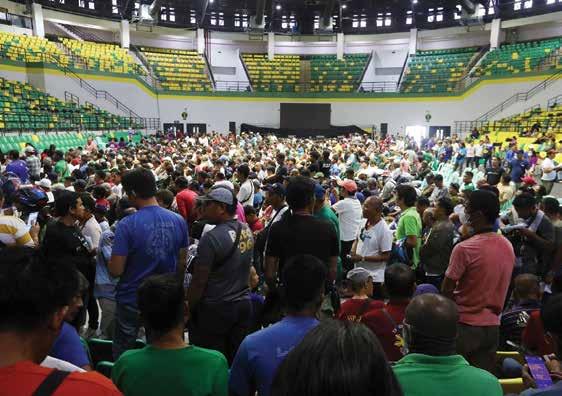
WASHINGTON — The United States House of Representatives narrowly rejected a Democratic-backed resolution seeking to limit President Donald Trump’s authority to continue military operations against Iran, underscoring ongoing divisions in Congress over war powers.
The measure failed by a 213–214 vote, largely along party lines, one day after a similar proposal was blocked in the United States Senate. The resolution was introduced under the War Powers Resolution of 1973, which outlines Congress’ role in authorizing sustained military engagements.
The proposal, led by Gregory Meeks, sought to require congressional approval for continued involvement in hostilities. Lawmakers supporting the measure argued that the Constitution grants Congress the authority to declare war and emphasized the need for legislative oversight.
Opposition came primarily from Repub-
House Republicans push for unity on budget bill central to Trump agenda
WASHINGTON — House Republicans are intensifying efforts to unify behind a sweeping budget reconciliation package, positioning it as the most viable legislative vehicle to advance the domestic policy priorities of President Donald Trump.
The strategy centers on reconciliation, a congressional process that allows certain tax-and-spending legislation to pass the Senate with a simple majority, bypassing the 60-vote threshold typically required to overcome a filibuster. GOP leaders have indicated that combining key priorities into a single bill improves the chances of passage under narrow margins.
Speaker Mike Johnson has urged lawmakers to coalesce around the framework, emphasizing that party unity is essential to advancing the measure.
LAS VEGAS
Zaldy Co arrested in Prague; Philippine authorities move to secure return in flood control probe
by AJPress
In the absence of a bilateral extradition agreement, options may include deportation proceedings or other forms of judicial cooperation, subject to Czech law.
Authorities emphasized that any transfer will follow due process in both jurisdictions.
by AJPress
MANILA — The Senate Committee on Ethics and Privileges is preparing to begin formal review of pending complaints after complet-
ing a key procedural requirement: finalizing and signing its internal rules for publication. Committee chair Sen. Joseph Victor “JV” Ejercito said the panel can start performing its functions once the rules are published, in ac-
How Philippines compares with ASEAN neighbors during oil shocks
MANILA — The Philippines faces global oil shocks such as due to the recent conflict between US-Israel and Iran with fewer buffers than many of its Southeast Asian peers.
“Medyo dehado po tayo,” said Institute for Climate and Sustainable Cities energy transition adviser Alberto Dalusong III in an interview Monday, April 6, on ANC’s “Headstart.” (We’re in a bit of a disadvantage.)
The Philippines imports nearly all of its crude, has limited refining capacity, and depends heavily on fuel flows tied to the Middle East. That combination makes it a clearer “price taker” compared with neighbors that have stronger
supply cushions or infrastructure.
“If we look at it, our brothers in ASEAN are better off because of their own indigenous supply,” Dalusong said, partly in Filipino. Indonesia: Oil-producing Indonesia has stronger buffers due to its domestic oil and gas resources, but it is not insulated. It still imports 37% of its liquid natural gas and petroleum gas from Gulf countries. While it is better positioned than the Philippines with oil and gas reserves, such import dependence and growing subsidy costs mean Jakarta is still struggling due to significant fiscal pressure during oil price spikes.
AS immigration authorities carry out what President Donald Trump has promised will be the largest mass deportation operation in U.S. history, several states are passing laws to keep children out of foster care when their detained parents have no family or friends available to take temporary custody of them.
The federal government doesn’t track how many children have entered foster care because
of immigration enforcement actions, leaving it unclear how often it happens. In Oregon, as of February two children had been placed in foster care after being separated from their parents in immigration detention cases, according to Jake Sunderland, a spokesperson for the Oregon Department of Human Services.
“Before fall 2025, this simply had never happened before,” Sunderland said.
As of mid-February, nearly 70,000 people were being held
by AJPress
— Proposals to revive the long-idled
an Nuclear Power Plant have resurfaced in policy discussions, as lawmakers and energy officials cite rising global oil prices and supply uncertainties in pushing for a broader energy mix.
The renewed attention comes as the Philippines continues to rely heavily on imported fossil fuels for electricity generation, leaving it exposed to fluctuations in global energy markets. Officials from the Department of Energy have maintained that diversifying energy sources remains a national priority, with nuclear power identified as a potential long-term component.
The Bataan facility, completed in the 1980s but never commissioned, has an estimated capacity of about 620 megawatts. Advocates argue that rehabilitating the plant could provide a stable source of baseload power, which operates continuously and supports grid reliability. Some policymakers have pointed to the plant as an existing asset that, if deemed technically
by Kenneth Christiane Basilio Inquirer.net
MANILA — Vice President Sara Duterte claimed she was denied due process in the Commission on Audit’s (COA) disallowance of the Office of the Vice President’s (OVP) P73.28 million confidential fund spending in 2022, a contention state auditors rejected as “bereft of merit.”
Duterte filed the appeal with OVP Chief Accountant Julieta Villadelrey and special disbursing officer Gina Acosta, who were also held liable under the notice of disallowance, according to a 22page COA decision dated April 10, 2026, that upheld the ruling. They argued their right to due process was “violated” when auditors issued a notice of disal-
lowance in 2024 without first releasing an audit observation memorandum (AOM).
But state auditors rejected this claim.
“Their right to due process was never violated,” COA said, explaining that an AOM is not a prerequisite before issuing a notice of disallowance on questionable transactions.
“The petitioner’s right to due process was not violated when the amount of P3.5 million was disallowed in audit despite not previously raised in the AOMs,” it added.
A notice of disallowance is issued when a government transaction is deemed “illegal, irregular, unnecessary, excessive, extravagant, or unconscionable,” based on COA’s charter. n
MANILA
Bata-
Vice President Sara Duterte File photo by Niño Jesus Orbeta | INQUIRER
by Jazmin orozCo rodriguez KFF Health News
Los Angeles, Orange County/Inland Empire, Northern California, San Diego, New York/New Jersey
Zaldy Co arrested in Prague...
PAGE 1
Inquiry examines scale and integrity of flood control spending
The case forms part of a broader inquiry into thousands of flood control projects funded beginning in 2022, involving allocations that run into the hundreds of billions of pesos. Government reviews and legislative hearings have examined allegations that certain projects may have been overpriced, improperly implemented, or left incomplete.
Officials have publicly cited potential financial exposure amounting to tens of billions of pesos. These figures remain preliminary and subject to validation through formal legal proceedings.
Resignation, warrants, and expanding scope of investigation
Co, who previously represented the Ako Bicol party-list group in the House of Representatives, stepped down from his post in 2025 as scrutiny intensified. Arrest warrants have since been issued against multiple individuals, including public officials and private contractors, in connection with specific infrastructure projects under review. The investigation has expanded to include both administrative and criminal dimensions, with parallel inquiries conducted by legislative bodies and law enforcement agencies.
Denials on record as proceedings move forward
Co has publicly denied wrongdoing. Other individuals linked to the broader investigation have likewise issued denials. No court
has issued a final ruling on the allegations, and all parties are presumed innocent pending adjudication.
Testimony presented in congressional and Senate inquiries has described alleged patterns involving inflated project costs and construction deficiencies. These accounts form part of the evidentiary record but have yet to be fully tested in court.
Next phase centers on legal process and accountability Philippine authorities said they are pursuing all available legal avenues to secure Co’s return to face proceedings in the Philippines. Any action will be subject to the legal frameworks of both countries.
As of this writing, Co remains in custody in Prague. n
Bataan nuclear plant revival gains renewed...
PAGE 1 and economically viable, could be brought online faster than constructing a new large-scale facility.
The plant was mothballed in 1986 following safety concerns that intensified after the Chernobyl disaster, along with longstanding issues tied to its construction and governance. Since then, it has remained inactive while incurring maintenance and preservation costs.
Government-backed studies and international assessments have indicated that rehabilitation is technically possible but would require substantial investment
and compliance with modern safety standards. Cost estimates have varied widely depending on the scope of upgrades, ranging from under $1 billion to more than $2 billion. The debate over the plant’s future reflects broader questions about the country’s energy direction. Supporters of nuclear energy emphasize its ability to deliver consistent, low-carbon power that could reduce dependence on imported fuel. Critics, including energy analysts and environmental advocates, have argued that renewable energy sources such as solar and wind, combined with battery storage, may offer a more
flexible and lower-risk path.
The Philippine government has not announced a final decision on whether to proceed with rehabilitation. The DOE, together with its inter-agency nuclear energy program, continues to evaluate options that include reviving the Bataan plant, developing new nuclear facilities, or adopting emerging technologies such as small modular reactors.
For now, the Bataan facility remains a central, and unresolved, element in the country’s evolving energy strategy—shaped by the competing demands of energy security, cost stability, and longterm sustainability. n
Senate ethics panel clears procedural hurdle...
PAGE 1
cordance with Senate procedures governing committee operations. The committee is scheduled to meet on April 28, 2026 to begin evaluating complaints for compliance with required standards.
Senate records confirm that the delay in the committee’s work was procedural. The panel’s membership was completed only on January 26, 2026, after which Ejercito informed the chamber that the committee could not yet proceed. He also clarified that the rules from the previous Congress do not automatically carry over and must be formally adopted anew.
In a Jan. 27 privilege speech, Ejercito said the committee would first organize and adopt its rules before taking up any cases. Senate leadership similarly noted that the panel could not convene earlier
without a complete roster of members. By mid-April, the committee had secured the necessary signatures to move its rules toward publication. Once published, the rules will govern how complaints are received, evaluated, and acted upon.
Under the adopted framework, complaints will undergo an initial review to determine whether they meet requirements in form and substance. Those that pass may be transmitted to respondents and subjected to a preliminary inquiry to assess whether substantial credible evidence exists. Complaints that do not meet the threshold may be dismissed or returned for correction.
The committee is currently understood to have several pending complaints involving members of the Senate. At this stage, these
remain untested allegations and have not been adjudicated. The panel’s upcoming session is expected to focus on procedural screening rather than determinations on the merits.
Separately, at least one complaint previously filed before the committee involves allegations related to a senator’s attendance in Senate sessions. As with all cases before the panel, the matter remains subject to review under the committee’s rules and does not constitute a finding of liability. For now, the development marks a shift from inactivity to process. The ethics committee is not yet issuing rulings or sanctions; it is moving into the stage where complaints can be formally examined under an established and published set of procedures. n
How Philippines compares with ASEAN...
PAGE 1
Malaysia: Supply edge Malaysia benefits from indigenous oil and gas and the presence of Petronas, its national energy company. Being an oil producer, the country is less exposed to global shocks. But it still imports 25% of its oil—particularly the cheaper kind and some refined products—to cover consumption. It buys low for imports and sells high for exports.
This is why higher prices have still forced the government to expand subsidies and implement conservation measures, such as work-from-home arrangements for government workers.
Brunei: Strongest on supply security
Brunei is among the least vulnerable in terms of supply, backed by its own hydrocarbon reserves.
Revenues from hydrocarbon account for about 60% of its GDP. Its challenge lies more in managing revenue swings than ensuring access to fuel.
Singapore: Infrastructure edge Singapore has almost no crude on its own but remains resilient due to its role as the “refiner of this part of the world,” as Dalusong said. Its edge lies in logistics, storage and commercial flexibility,
allowing it to manage supply disruptions more effectively despite exposure to global prices.
Thailand: Gas as cushion
Thailand’s heavy natural gas reliance for power generation helps reduce the spillover of oil shocks into electricity costs, as Dalusong noted. Natural gas powers 55–60% of its electricity, far ahead of coal and renewables.
However, it is stil exposed in transport and has had to adjust pricing mechanisms and support measures to manage rising fuel costs.
Vietnam: Hydro buffers
Vietnam’s sizeable hydropower base helps cushion its power sector from oil price spikes, but it still sources 49% of its LNG and LPG needs from the Middle East. Its transport and industry sectors are heavily dependent on petroleum.
Like other countries, it still faces pressure in transport fuel costs and has resorted to tax adjustments, such as by suspending fuel taxes.
How the Philippines compares
The Philippines remains among the more vulnerable economies, relying heavily on imports and with its little domestic oil and gas and limited refining capacity.
Recent moves—including declaring an energy emergency, securing emergency fuel supplies
and a safe-passage agreement with Iran, and sourcing alternative imports such as from Russia are efforts to manage supply risks in the short-term rather than absorb them structurally.
While ASEAN countries are not immune to oil shocks, many have stronger buffers—whether through domestic supply, infrastructure, or energy mix.
“What must do is to increase our indigenous share in our energy mix,” Dalusong said, pointing to oil as the country’s biggest energy source because of transportation, alongside coal.
Gita Wirjawan, a nonresident scholar at Carnegie’s Russia Eurasia Center, warns of other effects of Middle East war in the shortterm.
The analyst points to other products the Philippines imports from the Middle East that affect agriculture and food security, particularly fertilizer.
This will inevitably be more felt domestically, with higher prices of food and other goods and services.
“The degree of inflationary pressure or sensitivity for each economy in the region is highly correlated with the degree to which it imports oil,” Wirjawan wrote. (With reports from Philstar. com/Camille Diola)
PNA file photo
Digital banks lead Forbes list of best Philippine banks
Customer survey places MariBank Philippines, GoTyme Bank at the forefront as digital adoption reshapes industry
by AJPress
MANILA — Digital-first lend-
ers have taken the top positions among Philippine institutions in the latest global consumer survey released by Forbes in partnership with Statista, reflecting a shift in how customers assess banking services.
In the 2026 “World’s Best Banks” ranking, MariBank Philippines and GoTyme Bank led the country’s list based on customer evaluations of trust, service quality, digital tools, and financial advice. The results indicate growing preference for mobile-driven platforms that prioritize accessibility and real-time transactions. Digital platforms gain traction
Both MariBank Philippines and
GoTyme Bank operate with limited physical branches, relying on app-based systems designed for streamlined account management. Their performance in the survey suggests that usability and consistency in digital services are increasingly central to customer satisfaction.
Established banks remain competitive
Traditional institutions continue to be represented, pointing to sustained confidence in legacy banks even as competition intensifies.
Among those included are Bank of the Philippine Islands and UnionBank of the Philippines, which have expanded digital capabilities while maintaining broad service networks. Their presence reflects strengths
in scale, brand trust, and product range.
Survey-based methodology
The ranking is derived from a large international survey conducted by Statista, drawing responses from thousands of banking customers. Participants rated institutions they use or recognize across customer service, digital experience, financial advice, and transparency. Only banks offering retail services were considered.
Shift in industry dynamics
The findings point to a more competitive banking environment shaped by technology and evolving consumer expectations. Digital banks are gaining ground as primary service providers, while established institutions continue to adapt through ongoing digital transformation.
House Republicans push for unity...
Slim majority intensifies pressure on party cohesion Republicans hold a narrow House majority, limiting leadership’s ability to absorb defections. That constraint has heightened negotiations among factions within the conference. Some conservative members have called for deeper spending cuts and structural fiscal reforms, while more moderate Republicans have raised concerns about the scope and potential impact of proposed reductions.
No final legislative text has been formally adopted, and discussions remain ongoing. Procedural limits shape the contours of the bill Senate rules governing reconciliation require that provisions directly affect federal revenues or expenditures, restricting the inclusion of broader policy measures. These constraints are shaping the structure of the emerging package, as lawmakers work to align policy goals with procedural requirements.
Outcome will test GOP’s ability to govern The reconciliation effort is a key test of Republican cohesion as the party seeks to advance major legislation under unified control of the House and the presidency. Democrats are expected to oppose the measure, leaving Republicans reliant on near-unanimous support.
Negotiations are expected to continue as leadership works to finalize the bill and secure the votes needed for passage. (AJPress)
House rejects war powers measure on Iran...
PAGE 1
licans, who broadly supported the administration’s position that the president retains authority as commander in chief to direct military operations, particularly in response to security threats. Voting reflected limited cross-party movement. Thomas
Massie was the only Republican to support the resolution, while Jared Golden was the lone Democrat to oppose it. Warren Davidson voted “present,” formally abstaining. Even if approved, the resolution faced little chance of taking effect. Any such measure would likely be subject to a presidential veto, with
of
thority, even as some lawmakers have indicated they may revisit the issue if the duration or scope of the conflict expands. (AJPress)
States change custody Laws...
PAGE 1
by Immigration and Customs Enforcement. The record 73,000 people in detention in January represented an 84% increase compared with one year before. According to reporting from ProPublica, parents of 11,000 children who are U.S. citizens were detained from the beginning of Trump’s term through August.
The news outlet NOTUS reported in February that at least 32 children of detained or deported parents had been placed in foster care in seven states.
Sandy Santana, executive director of Children’s Rights, a legal advocacy organization, said he thinks the actual number is much higher.
“That, to us, seems really, really low,” he said.
Separation from a parent is deeply traumatic for children and can lead to various health and psychological issues, including post-traumatic stress disorder. Prolonged, intense stress can lead to more-frequent infections in children and developmental issues. That “toxic stress” is also associated with damage to areas of the brain responsible for learning and memory, according to KFF.
Maryland, New York, Washington, D.C., and Virginia amended existing laws during Trump’s first term to allow guardians to be granted temporary parental rights for immigration enforcement reasons. Now the enforcement surge that began after Trump returned to office last year has prompted a new wave of state responses.
In New Jersey, lawmakers are considering a bill to amend a state law that allows parents to nominate standby, or temporary, guardians in the cases of death, incapacity, or debilitation. The bill would add separation due to federal immigration enforcement as another allowable reason.
Nevada and California passed laws last year to protect families separated by immigration enforcement actions. California’s law, called the Family Preparedness Plan Act, allows parents to nominate guardians and share custodial rights, instead of having them suspended, while they’re detained. They regain their full parental rights if they are released and are able to reunite with their children.
There are significant legal barriers to reunification once a child is placed in state custody, said Juan Guzman, director of children’s court and guardianship at the Alliance for Children’s Rights, a legal advocacy organization in Los Angeles.
If a parent’s child is placed in foster care and the parent cannot participate in required court proceedings because they are in detention or have been deported, it’s less likely they will be able to reunite with their child, Guzman said.
An estimated 5.6 million children are U.S. citizens who live with a parent or family member who does not have legal immigration status, according to research from the Brookings Institution, a Washington, D.C.based think tank. Within that group, 2.6 million children have two parents lacking legal status.
Santana said he expects the number of family separation cases to grow as the Trump administration continues its immigration enforcement campaign, putting more children at risk of being placed in foster care.
ICE directives require the agency to make efforts to facilitate detained parents’ participation in family court, child welfare, or guardianship proceedings, but Santana said it’s uncertain whether ICE is complying with those rules.
ICE officials did not respond to requests for comment for this report. Before the change in Califor-
nia’s law, the only way a parent could share custodial rights with another guardian was if the parent was terminally ill, Guzman said.
If parents create a preparedness plan and identify an individual to assume guardianship of their children, the state child welfare agency can begin the process of placing the children with that individual without opening a formal foster care case, he added. While Nevada lawmakers expanded an existing guardianship law last year to include immigration enforcement, the measure requires the parents to take the additional step of filing notarized paperwork with the secretary of state’s office, said Cristian Gonzalez-Perez, an attorney at Make the Road Nevada, a nonprofit that provides resources to immigrant communities. Gonzalez-Perez said some immigrants are still hesitant to fill out government forms, out of fear that ICE might access their information and target them. He reassures community members that the state forms are secure and can be accessed only by hospitals and courts. The Trump administration has taken unprecedented steps to access sensitive information through the Centers for Medicare & Medicaid Services, the IRS, the Supplemental Nutrition Assistance Program, the Department of Housing and Urban Development, and other entities.
Gonzalez-Perez and Guzman said that not enough immigrant parents know their rights. Nominating a temporary guardian and creating a plan for their families is one way they can prevent feelings of helplessness, Gonzalez-Perez said.
“Folks don’t want to talk about it, right?” Guzman said. “The parent having to speak to a child about the possibility of separation, it’s scary. It’s not something anybody wants to do.” n
APRIL 17 - 23, 2026 • ASIAN JOURNAL
ESTADO NG NEVADA – COUNTY NG CLARK AKO, LORENA S. PORTILLO, ang itinalagang Tagapagtala ng Botante para sa Clark County, Estado ng Nevada, sa pamamagitan nito ay pinatutunayan ko na ang 2026 Pangunahing Halalan ay gagawin sa Martes, Hunyo 9, 2026. Ang mga presinto ng botohan ay magbubukas ng alas 7:00 n.u. hanggang 7:00 n.g. sa nasabing petsa. Ang alpabetikong listahan ng lahat ng mga rehistradong botante ay maaaring makuha ng walang bayad sa Kagawaran ng Halalan na website www.clarkcountynv.gov/vote. (Ayon sa NRS 293.557(a)(b)). Ang listahan ng maagang lugar ng botohan at Araw ng Halalan na sentro ng botohan ay isinama sa paunawang ito. Ang lahat ng lugar ng
ay magsisilbing paghuhulugan ng koreong balota. LISTAHAN NG MGA KANDIDATO NA PAGDEDESISYUNAN SA PAMAMAGITAN NG PAGBOTO SA HUNYO 9, 2026, PANGUNAHING
DISTRITO 19 REPUBLIKANO Groves, Amy Patchett, Jason
DISTRITO 20
DEMOKRATIKO Orentlicher, David Smith, Tony T.
DISTRITO 22
DEMOKRATIKO Booth, Shenea Hernandez, Dionisio C. “Daniel” Taylor, Tamara N.
DISTRITO 29
DEMOKRATIKO Combs, Brad Delobel, Ashley R. Pereszlenyi, Alex J.
DISTRITO 34
DEMOKRATIKO Nadeem, Hanadi Navarro, Shaun R.
DISTRITO 41
Beaudry, Jr., Donald J. “Donald Jr.” Hansen, Irina Hawkins, M. Kameron Lombardo, Joseph Winterhawk, Matthew R. Zelaya, Jose M. Zilberberg, Barak Wala sa mga kandidatong
NG ESTADO 4-TAONG TERMINO REPUBLIKANO
Angle, Sharron Folkins-Roberts, Shirley A. Keenan, Socorro Marchant, Jim Wala sa mga kandidatong ito TESORERO NG ESTADO
Dalia, Joe Maharjan, Jay Mathis-Coleman, Tya Wala sa mga kandidatong ito
Carter, Jeff Johnson, Drew Wala sa mga kandidatong
DEMOKRATIKO Ridenour, Spencer L. Spotleson, Vinny Wyett, Gabriela REPUBLIKANO Alofipo, Tofuola “Tofu” Chapman, Kelly
DISTRITO 42
DEMOKRATIKO Brown-May, Tracy Vasquez, Dayton REPUBLIKANO Brandlin, Christopher Ivanoff, Katrin “Mrs. Fix it”
KOMISYON NG COUNTY 4-TAONG TERMINO DISTRITO E DEMOKRATIKO Hernandez, Marco Segerblom, “Tick” REPUBLIKANO Hamilton, Eduardo “EeeTee” Kess, Manny Rose, Randolph
DISTRITO F DEMOKRATIKO Crawford, Sebastian Hovanessian, Lenna Kumar, Serena Lieberknecht, Justin D. Lloyd, Minddie Wall, Michael Robert Yan, Minja REPUBLIKANO Kasama, Heidi Mack, Albert
DISTRITO G DEMOKRATIKO Gibson, Jim Solomon, Christian REPUBLIKANO Henderson, Leo “The Diesel” Maxham, Jon
TAGATASA NG COUNTY 4-TAONG TERMINO DEMOKRATIKO Martinet, Melissa Washington, Tamicka N. REPUBLIKANO Child, Kevin L. Joe, Judy
KLERK NG COUNTY 4-TAONG TERMINO
DEMOKRATIKO Goya, Lynn Marie Miller, Jeff
TAGAPAGTALA NG COUNTY 4-TAONG TERMINO DEMOKRATIKO Berry Burress, Skye Flanagan, Tanya Perez, Anna L. REPUBLIKANO Saeed, Rana Young, Bill
Jr., James Gledhill, Millan “Mack”
Erbacher, Harold Silvestri, Joseph P. DISTRITO 5
Dowden, Joshua Quinn, Kelly
DISTRITO 6 DEMOKRATIKO Candido, Douglas Jackson, Jovan Alexander
DISTRITO 8 DEMOKRATIKO Cook, Sr., Paul John Nguyen, Duy
REPUBLIKANO Charafi, Joseph “Joey”
ADMINISTRADOR NG PUBLIKO 4-TAONG TERMINO DEMOKRATIKO Itkin-Goodman, Stephanie Ivy, M.J. Velazquez, Edgar REPUBLIKANO Murphy, Michael Salazar, Donald Sprinkle, Mark J. KANDIDATO SA MGA HINDI PARTIDISTANG TANGGAPAN HUKOM NG HUKUMANG DISTRITO 6-TAONG TERMINO DEPARTAMENTO 13 Ganz, Adam Howell, Christopher Kurth, Robert
DEPARTAMENTO 26 Goodey, Jessica Hooge, Daniel Mink Thunell, Pete HUKOM NG HUKUMANG DISTRITO DIBISYONG PAMPAMILYA 6-TAONG TERMINO DEPARTAMENTO P Isso, Jennifer Perry, Mary Smith, Kurt A.
DEPARTAMENTO R Caston, Marilyn A. Henderson, Bill Petsas, Nicholas “Nick”
DEPARTAMENTO S Brewer, Kristine Forman, Randall Harris, Tanner M.
LUPON NG MGA REHENTE 2-TAONG TERMINO DISTRITO 2 Cain, Hunter Chambers, Dylan L. McGrath, Jennifer Villa, Patrick L.
DISTRITO 5 Boylan, Patrick J. Cavalaro, Kathleen DeLorenzo, Tyler Denis, Moises “Mo” Garcia, Ashley K.
Molina, Stephanie LUPON NG MGA REHENTE 2-TAONG DI-NATAPOS NA TERMINO
DISTRITO 8 Goicoechea, Pete Lane, Lori Miller, Karmen La’Shaun Talib-deen, K.
TAGAPANGASIWA PAARALAN NG CLARK COUNTY 4-TAONG TERMINO
DISTRITO F Bustamante Adams, Irene Hutchinson, Robert E. Neely, Laurence M.
MIYEMBRO NG LUPON VIRGIN VALLEY
DISTRITO NG TUBIG 4-TAONG TERMINO
BUNKERVILLE
Pollock, Vernon W.
SERIP 4-TAONG TERMINO McMahill, Kevin
LUNGSOD NG HENDERSON 4-TAONG TERMINO MAYOR Chadwick, Hollie Price, Adam Ramirez, Andrew “Your Boy Rue” Romero, Michelle Scorsetti, Angeles
LUNGSOD NG HENDERSON KONSEHO NG LUNGSOD 4-TAONG TERMINO WARD III Atlas, Jennifer Cox, Carrie Hood, Leroy Owens, Annette Dawson
LUNGSOD NG HENDERSON HUKOM NG HUKUMANG MUNISIPAL 6-TAONG TERMINO DEPARTAMENTO 1 Albritton, Alicia Thompson, Gary Wiersch, Catherine
LUNGSOD NG LAS VEGAS KONSEHAL 4-TAONG TERMINO WARD 2 Booker, Marilyn McCarthy, Luke Nordstrom, Shannon
LUNGSOD NG LAS VEGAS KONSEHAL 4-TAONG TERMINO WARD 6 Brune, Nancy Grammas, Steve Marlon, David
LUNGSOD NG LAS VEGAS HUKOM NG HUKUMANG MUNISIPAL 2-TAONG DI-NATAPOS NA TERMINO
DEPARTAMENTO 1 Canady, Rae Pellizzari, Amanda Walker, Matt
LUNGSOD NG LAS VEGAS HUMOM NG
HUKUMANG MUNISIPAL 4-TAONG DI-NATAPOS NA TERMINO
DEPARTAMENTO 2 Green, Jessica A. Lay, Matt Murphy, Allycia
LUNGSOD NG MESQUITE MIYEMBRO NG KONSEHO 4-TAONG TERMINO PUWESTO 1 Fielding, Karen M. Rosen, John S. Shackelford, Ronald
LUNGSOD NG NORTH LAS VEGAS
4-TAONG TERMINO MAYOR Black, Scott Bouchard, Gary Langdon, Zaire Monroe-Moreno, Daniele Thorns, Henry
KONSTABLE MOAPA TOWNSHIP 4-TAONG TERMINO Jensen, Joshua R.
KONSTABLE MOAPA VALLEY
TOWNSHIP 4-TAONG TERMINO Harding, Mark
HUKOM NG KAPAYAPAAN LAS VEGAS
TOWNSHIP 6-TAONG TERMINO
DEPARTAMENTO 2 Bateman, Sam
DEPARTAMENTO 3 Hendron, Lance Parker, Blair C. Schifalacqua, Barbara
DEPARTAMENTO 4 Allmon, Michael Cory, John Gruber, Harvey Richards, Trent L.
HUKOM NG KAPAYAPAAN LAS VEGAS
TOWNSHIP 6-TAONG TERMINO
DEPARTAMENTO 11 Goodman, Eric A.
DEPARTAMENTO 12 Sullivan, Diana L.
HUKOM NG KAPAYAPAAN NORTH LAS VEGAS TOWNSHIP 6-TAONG TERMINO
DEPARTAMENTO 3 Harris, Belinda T. “BTH”
Pangunahing Halalan Mga Lugar ng Maagang Botohan / Mga Lugar na Paghuhulugan ng Koreong Balota Mayo 23 (Sabado) hanggang Hunyo 5 (Biyernes), 2026
Ang lahat ng mga lugar ng maagang botohan ay maaari din na pag huhulugan ng koreong balota sa kapanahunan ng mga naka listang petsa at oras Ang mga hindi inaasahang kaganapan o pangyayari ay maaaring magdulot ng mga pagbabago sa lugar ng maagang botohan o sa oras ng pamamalakad, tingnan ang mga pagbabago sa aming website sa www.ClarkCountyNV.gov/vote o tumawag sa (702) 455-Vote (8683) O (702) 455-7871 (Filipino)
Ang rehistradong botante ng Clark County ay maaaring bumoto nang personal sa kahit na saang lugar ng Maagang Botohan o sa Araw ng Halala’ng Sentro ng Botohan sa halip na sa pamamagitan ng koreo.
Maaari mo ring ihulog ang iyong ibinotong koreong balota sa kahit na saang Lugar ng Maagang Botohan sa kapanahunan ng mga nakatakdang petsa at oras na nakalagay sa Iskedyul Tingnan ang listahan sa iyong halimbawang balota para sa “Kagawaran ng Halalan at Lungsod ng Klerk para sa mga Lugar ng hulugan” para sa mga ibat ibang opsyon ng paghuhulog. Kinakailangan mong pirmahan ang labas ng iyong Kagawaran ng Halala’ng sobreng ibabalik, na nakikita ang iyong pangalan at address, ilagay at isara ang iyong ibinotong balota sa loob ng sarili mong sobre’ng ibabalik bago mo ito ihulog sa drop box. Huwag mong pagsamahi’ng ilagay ang iyong balota at ang balota ng ibang botante sa i-isang sobreng ibabalik.
Kung napagpasyahan mong bumoto nang personal sa halip na sa pamamagitan ng koreo, kinakailangan mo ang mga sumusunod:
• Kung dala mo ang iyong koreong balota, ibalik ito sa pakete’ng ipinadala sa iyo sa isang opisyal ng halalan sa lugar ng botohan.
• Kung hindi mo dinala ang iyong balota ngunit natanggap mo ito sa koreo, ikaw ay pipirma ng pagpapatunay sa sentro ng botohan na ikaw ay sumusumpa na hindi ka pa bumoboto sa kasalukuyang halalan at naiintindihan mo na walang sinuman ang maaaring magtangkang bumoto o aktwal na bumoto ng mahigit sa isang beses sa magkaparehong halalan.
Mga Pang Matagalang Lugar ng Botohan/Mga Lugar na Paghuhulugan ng Koreong Balota, Mayo 23 hanggang Hunyo 5, 2026
Mga Panandaliang
Mga Panandaliang Lugar ng Maagang Botohan / Mga Lugar na Paghuhulugan ng Koreong Balota Direksiyon / Mga Kalapit
Investing in Journalism: Why civic infrastructure is key to California’s future
na Kalye Mga Petsa / Oras
Mayo 23-25 (Sab.-Lun.)..................... 9nu-6ng
Mga Sentro ng Botohan sa Araw ng Halalan / Mga Lugar na Paghuhulugan ng Koreong Balota para sa Araw ng Pangunahing Halalan, Martes, Hunyo 9, 2026
The collapse of local news in America poses a significant threat to our democracy, underscored by flashing headlines.
1-2 (Lun.-Mar.) ....................... 9nu-7ng
by By senator steven glazer (ret.) and aCom Co-direCtor Julian travis do
4701 W. Russell Rd., Gitna ng S. Decatur Blvd. at Arville St. Mayo 23-24 (Sab.-Lin.) ...................... 9nu-6ng
Clark County Library
Bumoto mula 7nu hanggang 7ng
Ang lahat ng mga Sentro ng Botohan sa Araw ng Halalan ay maaaring paghuhulugan din ng koreong balota sa oras ng pagboto
THE collapse of local news in America poses a significant threat to our democracy, underscored by flashing headlines: a 70% loss of journalism jobs and the closure of one-third of newsrooms in California over the last two decades.
Coleman Senior Center
2100 Bonnie Ln. / E. Lake Mead Blvd.
College ng Southern Nevada, Henderson Campus
Student Union, 700 College Dr. / Heather Dr.
Last year, in response, a historic media coalition representing California’s voices across the racial and ethnic spectrum — including AAPI, Black, Latino, Middle Eastern, Native American, Eastern European, Indigenous and LGBTQ media — joined forces with mainstream outlets to advocate for a lifeline.
College ng Southern Nevada, North Las Vegas Campus Student Union, 3200 E. Cheyenne Ave. / Campus Dr.
College ng Southern Nevada, West Charleston Campus Student Union, 6375 W. Charleston Blvd. / Community College Dr.
Debra March Center ng Excellence
2200 Via Inspirada / Via Nobila
Desert Vista Community Center
10360 Sun City Blvd. / Thomas W. Ryan Blvd.
Doolittle Community Center
1950 J St. / W. Lake Mead Blvd.
Led by a shared conviction that local reporting is a public good, this effort secured a $15 million state investment for the California Local News Fellowship — the nation’s largest publicly funded journalism initiative — and the Propel Initiative.
East Las Vegas Community Center
250 N. Eastern Ave. / Stewart Ave.
Today, we are calling on the state governor and legislature to double down on these programs’ successes with a $35 million budget investment to ensure every Californian has access to the news and information they need. Accountability and return on investment Administered by UC Berkeley Journalism, the California Local News Fellowship has placed more than 110 early-career journalists in newsrooms across 64% of California’s counties to help close news gaps in underserved urban and suburban communities and remote areas including Shasta, Trinity and Imperial counties. These fellows are active chroniclers of news and information, generating over 4,000 stories annually on critical issues like immigration, healthcare, language access, wildfires and housing insecurity.
2851 E. Bonanza Rd., East ng N. Eastern Ave.
en to be a sustainable workforce pipeline: 39% of the first cohort alone were hired into permanent, full-time journalism roles immediately following their fellowship. Parallel to the fellowship program, Propel — a collaboration between the Maynard Institute for Journalism Education, American Community Media (ACoM), California Black Media (CBM) and the Latino Media Collaborative (LMC) — provides the business “engine” support for these statewide newsrooms. By helping leaders develop sustainable revenue strategies and deepen audience engagement, Propel ensures that our trusted messengers remain financially viable to continue serving their local communities. Solving California’s challenges through information The state’s investment in journalism is not a subsidy; it’s a high-yield investment in the civic framework undergirding democracy and an informed citizenry. By ensuring local communities have accurate information on issues crucial to their lives like health care and housing, we reduce the long-term costs of government inefficiency and enhance on-the-ground accessibility.
N. Green Valley Pkwy. / E. Sunset Rd.
Heritage Park Senior Facility
300 S. Racetrack Rd. / Burkholder Blvd.
Hollywood Recreation Center, 1650 S. Hollywood Blvd. Gitna ng E.
Sahara Ave. at E. Charleston Blvd.
Korea Town Plaza
6850 Spring Mountain Rd. / S. Rainbow Blvd.
Lake Las Vegas Hilton 1610 Lake Las Vegas Pkwy. / Galleria Dr.
Laughlin Library
2840 S. Needles Hwy., Laughlin
Mesquite Jimmie Hughes Campus
150 N. Yucca St., Mesquite
This program has also prov-
and health care accessibility.
1401 E. Flamingo Rd. / Escondido St. Mayo 30-31 (Sab.-Lin.) .................... 10nu-5nh
Whether the challenge is systemic or individual, involving the explaining of the impact of federal immigration enforcement or ensuring a non-English speaking family can navigate the healthcare system, community and multicultural newsrooms bridge the gap.
Mayo 30 (Sab.) .................................. 10nu-5nh
Mayo 31 (Lin.) ..................................... SARADO
This role as a civic bridge also has a profound economic dimension, connecting all of California’s communities to the state’s $71 billion export economy, where global trade growth translates directly into local jobs. Local newsrooms help local communities navigate these consequential systems and policy.
Mayo 26-27 (Mar.-Miy.) ................... 10nu-7ng
To expand on the initial success and meet the scale of the current journalism crisis, our $35 million request includes a vital $20 million allocation for the Civic Media Fund that will trigger a 1-to-2 private match: a $10 million match from Google, driving a total of $30 million into local news outlets serving every corner of the state.
Mayo 27-28 (Miy.-Huw.).................. 10nu-5nh
Beyond fiscal efficiency, this investment supports good governance. In our information ecosystem, local media outlets are the first responders for working families and small businesses, ensuring they have a voice in the labor and employment landscape. Our advocacy extends to those historically left out of this conversation, including veterans and Native Americans.
Mayo 25-31 (Sab.-Lin.) ...................... 9nu-6ng
This fund will provide direct resources to newsrooms big and small — digital and broadcast, for-profit and nonprofit, English and multilingual — to reconcile the verification gap caused by social media and AI-generated content. By fueling trusted, factbased reporting, this investment will strengthen our information infrastructure against the growing tide of misinformation.
Mayo 30-31 (Sab.-Lin.) ...................... 9nu-6ng
Mayo 30 (Sab.) .................................. 10nu-6ng
But visibility is only the first step. True empowerment requires a watchdog. These reporters hold officials accountable on the local impact of state housing policies
Mayo 31 (Lin.) ..................................... 1nh-5nh
Mayo 23-25 (Sab.-Lun.)..................... 9nu-6ng
By authorizing this $35 million request, the California legislature and governor would position the state to lead the nation towards a future where a solid information infrastructure is not just a necessity but a fundamental right for all. n
Moapa Valley Comm. Ctr., 320 N. Moapa Valley Blvd., Overton Hunyo 5 (Biy.) ..................................... 9nu-6ng
Mountain Shadows Community Center
9107 Del Webb Blvd. / Crown Ridge Dr. Mayo 27-28 (Miy.-Huw.).................... 9nu-6ng
Nevada State University, Christenson Education Building (CEB) 1300
Nevada State Dr., Henderson Mayo 29 (Biy.) ................................ 9nu-4:30nh
Hunyo 3-4 (Miy.-Huw.) ...................... 9nu-6ng Somerset Academy ng Las Vegas
8151 N Shaumber Rd. / W. Grand Teton Dr.
Stupak Community Center
Summerlin Library
Hev Abi, whose real name is Gabriel Abilla, was arrested along with six other individuals in Quezon City after authorities served a search warrant in Barangay Laging Handa, Diliman, according to the Philippine National Police.
251 W. Boston Ave., West ng S. Industrial Rd.
1771 Inner Circle Dr. / Trails Center Dr.
Sun City Aliante Community Center
7390 Aliante Pkwy. / Elkhorn Rd.
Sun City Anthem Center
2450 Hampton Rd. / Anthem Pkwy.
Sun City Mesquite
1350 Flat Top Mesa Dr., Mesquite
Sunrise Library
The operation, carried out by the Criminal Investigation and Detection Group–National Capital Region, took place on April 14 and was based on prior investigation and intelligence, police said. Authorities reported that the arrests were made during the implementation of a court-issued warrant.
5400 Harris Ave., East ng N. Nellis Blvd.
Police said operatives recov-
The After Market, Building A
ered a 9mm pistol, a magazine, and ammunition during the search. Authorities also reported seizing items they described as suspected illegal drugs, including substances believed to be marijuana, cocaine, and shabu, along with related paraphernalia. Officials said initial testing indicated the presence of controlled substances, with further laboratory examination pending.
Mayo 23-24 (Sab.-Lin.).......................9nu-6ng
Mayo 23 (Sab.).............................10nu-5:30nh
In a statement, the artist’s label, Urban Department, denied the allegations and described the incident as a “misunderstanding,” adding that legal counsel is coordinating with authorities.
Mayo 24 (Lin.) ................................. 10nu-5nh
Mayo 29 (Biy.) ......................................9nu-6ng
Law enforcement authorities alleged that the group may face complaints related to violations of the country’s firearms regulations and the Comprehensive Dangerous Drugs Act. As of press time, no court judgment has been issued, and the case remains subject to prosecutor
4337 Las Vegas Blvd. North / E. Craig Rd.
Transport
2900 N. Torrey Pines Dr. / W. Brooks Ave.
Mayo 29-30 (Biy.-Sab.) ......................9nu-6ng
Police officials said the operation forms part of broader efforts to address the circulation of unlicensed firearms and illegal drugs in urban areas. No additional details on the status of the other individuals taken into custody were immediately released.
Mayo 23-24 (Sab.-Lin.).................... 10nu-5nh
Hev Abi has gained visibility in recent years as part of the country’s contemporary hip-hop scene. The matter remains under investigation. n
Mayo 25-27 (Lun.-Miy.) ......................9nu-5nh
Mayo 29 (Biy.) ................................ 9:30nu-7ng
Mayo 30 (Sab.)...............................9nu-4:30nh
strike ends with core issues unresolved as sector tensions persist
Veterans Memorial Community Center 101 N. Pavilion Center Dr., North ng Alta Dr.
Mayo 31 (Lin.) ......................................SARADO
Hunyo 1-2 (Lun.-Mar.) ........................9nu-7ng Whitney Recreation Center
5712 Missouri Ave., West ng Boulder Hwy.
Winchester Dondero Cultural Center
Three-day action concludes with calls for fuel relief and renewed debate over modernization policy
3130 McLeod Dr., North ng E. Desert Inn Rd.
by AJPress
Windmill Library
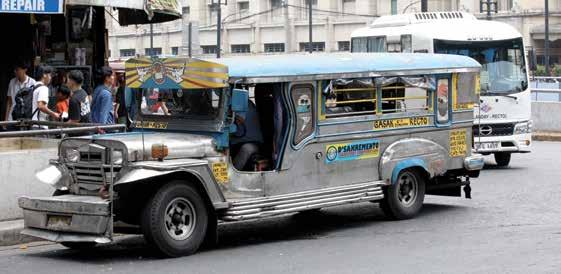
MANILA — A three-day nationwide transport strike concluded on April 17, with participating jeepney drivers and operators pressing unresolved concerns over rising fuel costs and long-standing policy disputes with the government. The April 15 to 17 action, led by the transport group Manibela, affected selected routes in Metro Manila and nearby provinces. While some areas experienced reduced public transport availability, operations continued across many corridors as several
7060 W. Windmill Ln., West ng S. Rainbow Blvd.
Mayo 25-26 (Lun.-Mar.) .....................9nu-6ng
transport groups did not join the strike. Government agencies, including the Department of Transportation, implemented contingency measures such as deploying additional buses and coordinating with local governments to assist commuters. Officials said the situation remained manageable throughout the protest period. Transport groups maintained that sustained fuel price increases have significantly reduced daily earnings, prompting calls for targeted government intervention, including subsidies or other relief mechanisms. The issue has been a recurring pressure point
for drivers operating under fixed boundary systems. The strike also underscored continuing resistance to the Public Utility Vehicle Modernization Program, which seeks to phase out older jeepneys in favor of newer units. Some operators argue the transition imposes heavy financial burdens, while the government maintains it is necessary to improve safety and reduce emissions. Despite the conclusion of the strike, no immediate resolution has been announced, signaling that underlying tensions in the transport sector remain unresolved.
Ang mga hindi inaasahang pangyayari o kalagayan ay maaaring magdulot ng mga pagbabago sa lokasyon ng Botohan. Para sa mga pagbabago, tingnan ang aming website o tumawag sa (702) 455-7871 o (702) 455-8683 (Ingles).
Sa Araw ng Halalan, piliin kung saan mo nina-nais na bumoto sa pamamagitan ng pag gamit ng naka tiklop na mapa sa halimbawang balotang ito. Ang listahan ay mayroong mahigit na 100 na Sentro nang Botohan. Sa araw ng Halalan sa www.ClarkCountyNV. gov/vote, mayroong link para maki-pagugnayan sa interaktibong mobile na pamama-raan upang gamitin para tulungan kang hanapin ang mga kalapit na lugar.
TENT PARA SA BOTOHAN: Hanapin ang mga SENTRO NG BOTOHAN NA TENT sa paradahan ng mga lokasyon na mayroong asterisk (*).
PAGPAPAIKLI:
BC = Boulder City BUN = Bunkerville HEN = Henderson
IND = Indian Springs LOG = Logandale LV = Las Vegas
Marcos unveils new foreign investment limits under EO 113
MES = Mesquite MOA = Moapa LAU = Laughlin
by luisa CaBato Inquirer.net
OVR = Overton NLV = North Las Vegas SAN = Sandy Valley
SEA = Searchlight
MANILA — President Ferdinand Marcos Jr. has issued Executive Order No. 113, which introduces the updated list of industries where foreign entities are limited or not allowed to invest.
The order, which promulgates the 13th Regular Foreign Investment Negative List, identifies the industries where foreign participation is restricted while keeping other sectors open to investment and protecting key areas for Filipinos.
Based on the list, industries such as mass media (including internet-based media), the practice of professions like architecture through corporations, and cooperatives, except for investments by former natural-born Filipino citizens, are reserved for Filipino ownership.
Meanwhile, the private recruitment sector and contracts for the construction of defense-related structures can have up to 25 percent foreign equity. Advertising sector, meanwhile, is allowed to have up to 30 percent foreign ownership.
Up to 40 percent foreign equity is allowed in the exploration, development, and utilization of natural resources, including the use of water from natural sources, subject to existing laws and regulations.
The EO also states that 100 percent foreign equity is allowed in the operation and management of telecommunications in case the country of the foreign national accords reciprocity to Philippine nationals and up to 50 percent foreign equity in the absence of such reciprocity.
Moreover, EO 113 lists industries that can only have up to 40 percent ownership for reasons of national security, defense, public health and mor-
als, and the protection of small and medium en
terprises. These include: Manufacture, repair, storage, and/or distri
bution of products and/or ingredients requiring Philippine National Police clearance, such as fire
arms, gunpowder, and others. Development, production, manufacturing, as
sembly, servicing or operation of materiel by an in-country enterprise
Distribution and manufacture of dangerous drugs as authorized by law
Sauna and steam bathhouses, massage clinics, and other similar activities regulated by law because of risks posed to public health and morals
All forms of gambling
Micro and small domestic market enterprises with paid-in equity capital of less than the equivalent of USD 200,000.
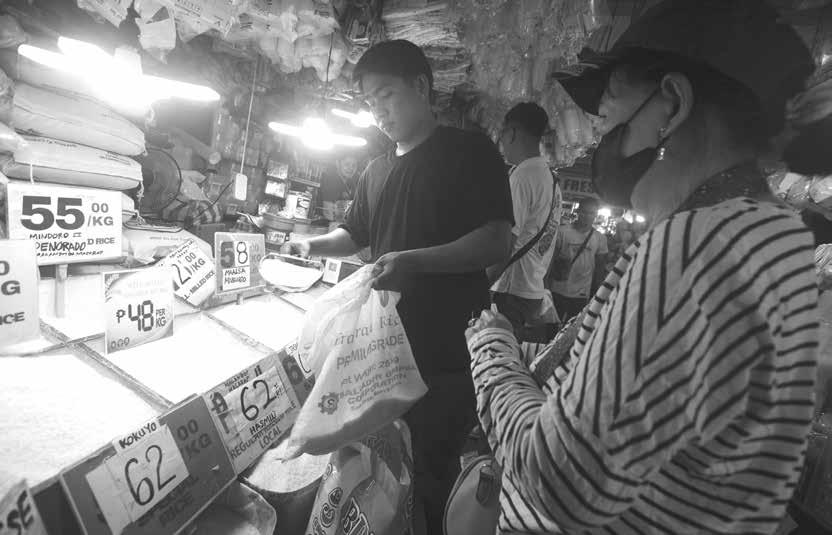
PRICE CAP. Customers purchase rice priced between PHP42 and PHP62 per kg. at a stall in Paco Public Market, Manila on Wednesday, April 15, 2026. The Department of Agriculture said it is considering a PHP50/kg. price cap on imported rice by the end of the month to curb potential profiteering amid fuel price increases driven by the Middle East conflict.
PNA
photo by Yancy Lim
The state capitol in Sacramento, California.
Image via Canva
President Ferdinand Marcos Jr. PHOTO BY DEXTER CABALZA
76
77
Ang mga sumusunod ay ang mga pagbabago sa lokasyon ng mga sentro ng botohan sa 2026 kumpara sa 2024.
HINDI MAAARING GAMITIN SA 2026 PANGUNAHING HALALAN
• Allegiant Stadium (magiging Sentro ng Botohan sa Araw ng Halalan sa 2026 Pangkalahatang Halalan)
• Bailey, William H. Middle School
• Clark County Fairgrounds
• Deer Springs Town Center
• French, Doris Elementary School
• Galloway, Fay Elementary School
• Historic Fifth Street School
• King, Martha P. Elementary School
• Mirabelli Community Center
• Moapa Recreation and Community Center (magkapareho ang address pero ang lugar ng botohan ay sa Moapa Justice Court)
• O’Callaghan, Mike Middle School
• Reed, Doris Elementary School
• Silver Springs Recreation Center (magiging Sentro ng Botohan sa Araw ng Halalan sa 2026 Pangkalahatang Halalan)
• UNLV Lied Library (ang UNLV Araw ng Halalan na lugar ng botohan ay gagawin sa Student Union sa 2026 Pangunahing at Pangkalahatang Halalan) Num.
PAL to launch Manila–Chicago nonstop service in November
Flag carrier expands U.S. network with Midwest gateway; thrice-weekly flights to begin Nov. 9
by AJPress
MANILA — Philippine Airlines (PAL) will launch nonstop flights between Manila and Chicago beginning Nov. 9, 2026, marking its first direct entry into the U.S. Midwest and expanding its longhaul transpacific network.
The airline said the new route will operate three times weekly — Mondays, Wednesdays, and Fridays — using Airbus A350900 aircraft, connecting Ninoy Aquino International Airport and O’Hare International Airport.
The Chicago service adds a new U.S. destination to PAL’s existing North American network, which has historically centered on West Coast gateways and select East Coast routes. Airline disclosures and published schedules confirm that tickets for the route are being made available ahead of the November launch, consistent with standard commercial rollout timelines.
Network expansion and regulatory clearance
The planned service follows regulatory steps taken earlier this year. U.S. Department of Transportation records reflect PAL’s application for authority to operate Manila–Chicago flights under the Philippines–United States air services framework, providing the legal basis for the route’s launch.
PAL has positioned the Chicago route as part of a broader U.S. expansion strategy. Company announcements tie the launch to increased capacity on existing North American routes, including additional frequencies to Seattle, indicating a coordinated effort to strengthen transpacific coverage rather than a single-route addition.
Midwest access and connectivity Chicago represents a strategic geographic expansion. As a central U.S. aviation hub, the city offers onward connections across
the Midwest and East Coast, reducing reliance on coastal entry points for passengers traveling between the Philippines and inland U.S. destinations.
The airline has described the route as its first nonstop Chicago–Manila service, aligning with industry observations that no direct commercial link previously connected the two cities. The addition is expected to shorten travel times for passengers who would otherwise transit through multiple airports.
Operational details
PAL said it will deploy the Airbus A350-900, a long-range wide-body aircraft commonly used for ultra-long-haul routes. The aircraft type is consistent with PAL’s existing transpacific operations, supporting both passenger demand and cargo capacity across extended distances.
Further schedule refinements and operational details are expected closer to the launch date.
Marcos presses for urgent activation of Asean fuel-sharing deal
by Dexter CaBalza Inquirer.net
MANILA — President Ferdinand Marcos Jr. on Wednesday called for the immediate activa
tion of the emergency oil-sharing mechanism among members of the Association of Southeast Asian Nations (Asean), warning that prolonged supply disruptions due to the war in the Middle East are straining economies of smaller nations such as the Philippines.
Speaking at the Asia Zero Emission Community (Azec) Plus online summit on energy resiliency hosted by Japanese Prime Minister Takaichi Sanae, Marcos said Asean must urgently operationalize the Asean Petroleum Security Agreement (Apsa) and activate its Coordinated Emergency Response Measures (CERM), which will allow member states to support each other’s oil and gas needs during the global crisis.
“This mechanism, once tested and activated regularly, could serve as a meaningful buffer for smaller economies during exactly the kind of disruption that we are experiencing today,” Marcos urged fellow Asian leaders.
During his intervention speech, Marcos said the deal should be tested now “while the crisis is live and the lessons are immediate,” and volunteered the Philippines to host or co-chair the first full Apsa emergency simulation exercise.
Under the Apsa’s CERM, all member states shall endeavor to supply petroleum to the distressed country at the aggregate amount equal to 10 percent of its normal domestic requirement for at least 30 days, on a voluntary and commercial basis.
currently chairs the Asean. Marcos framed the proposal as part of a broader push for coordinated regional action to ensure energy supply as access through the Strait of Hormuz, a critical waterway for about onefifth of the world’s crude trade, remains limited.
Marcos also outlined two additional proposals to strengthen Asia’s collective energy security architecture.
He urged summit participants to endorse a regional study on joint oil stockpiling, building on groundwork by the Economic Research Institute for Asean and East Asia.
The study would examine models such as shared reserves, ticket stockpiling systems, and partnerships with crude-exporting countries, with the goal of moving from research to implementation.
“What this crisis has confirmed is a structural truth: No single country in Asia can insulate itself from supply chain shocks of this scale by acting alone. The times call for a coordinated, unified response,” he added.
Marcos said: “A disruption that begins in the Strait of Hormuz ripples through Singapore, the Strait of Malacca, and onward to Manila, Tokyo, Seoul, and Jakarta within days.”
“Our vulnerabilities are shared, and therefore so must our responses be,” he added.
• Silverado Ranch Community Center (para sa 2026 Pangunahing Halalan ang lugar ay sa tent na nasa Silverado Ranch Park at sa 2026 Pangkalahatang Halalan ay sa Silverado Ranch Community Center building)
• Solera at Anthem Community Center
• Sun City Anthem Community Center (magiging sentro ng botohan sa Araw ng Halalan sa 2026 Pangkalahatang Halalan)
An Asean member country could give a distress notice should its oil supply reach “critical shortage,” which happens if it experiences a shortfall of at least 10 percent of its normal domestic requirement for a continuous period of at least 30 days.
The Department of Energy on Monday reported the country still has an adequate fuel stockpile to last for 50 days, or until June. The country’s average daily demand for petroleum products stands at 75,000 kiloliters, equivalent to 472,066 barrels a day.
The completion of the latest Apsa framework is among the targets of the Philippines, which
Marcos also proposed establishing a mutual recognition mechanism for emergency fuel allocation protocols across participating economies.
This would standardize administrative procedures and ensure that fuel assistance can be deployed rapidly during supply shocks, minimizing delays caused by regulatory or logistical bottlenecks.
While the Philippines has enforced domestic measures, such as declaring a national emergency and a whole-of-government response to the crisis, Marcos said these steps were insufficient in isolation given the interconnected nature of Asia’s energy supply chains.
$10-billion support During the summit, Takaichi also announced the launching of “Partnership On Wide Energy and Resources Resilience” (Powerr Asia), a new cooperation framework consisting of both emergency responses and structural ones with mid-to-long-term perspectives. According to Japan’s foreign ministry, the framework aims to strengthen regional cooperation during energy emergencies by helping finance the procurement of crude oil and petroleum products and ensuring stable supply chains across Asia. It also supports longer-term measures such as building and using storage facilities, expanding oil reserves, securing critical minerals, diversifying energy sources like biofuels, and promoting energy efficiency to boost industrial development.
The support involves financial cooperation of approximately $10 billion (about P602 billion), which is equivalent to roughly one year’s worth of crude oil imports for Asean.
ZERO TOLERANCE. Interior and Local Government Secretary Juanito Victor Remulla and Philippine National Police chief Gen. Jose Melencio Nartatez Jr. (3rd from left) provide updates on an alleged hazing incident at the Philippine National Police Academy during a briefing at Camp Crame in Quezon City on Monday, April 13, 2026. Remulla said violence and abuse have no place inside the PNPA, reaffirming the Marcos administration’s zero-tolerance
President Ferdinand Marcos Jr. reaffirms the Philippines’ commitment to strengthening energy security and supply chain resilience through deeper regional cooperation, as he joined the Asia Zero Emission Community (Azec)
FeAtures OPiniOn
Two Americans, two vocabularies of power
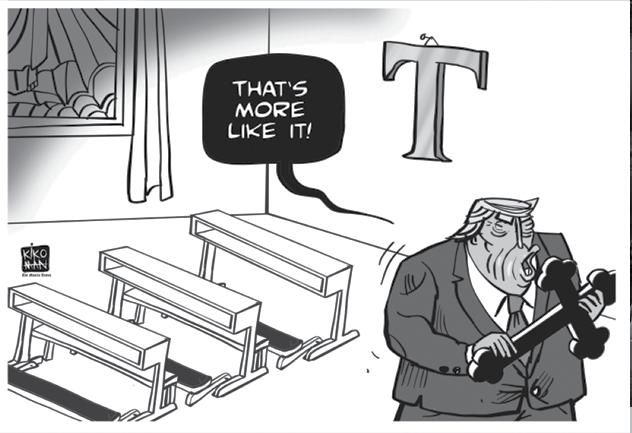
IN 2026, one of the more consequential dynamics shaping global discourse is a visible divergence between two American figures operating at the highest levels of influence: Donald Trump and Pope Leo XIV.
The immediate backdrop is a widening public clash over war, peace, and the language of moral authority. In recent days, Pope Leo XIV has used major public appearances to call for dialogue, restraint, and the rejection of decisions driven by rearmament.
Editorial
President Trump, in turn, responded with a direct public rebuke, describing the pope as “WEAK on Crime” and “terrible for Foreign Policy.” The exchange has brought into sharper focus a relationship that is often managed quietly through diplomacy, not public confrontation.
One governs through the machinery of the state, including military, economic, and diplomatic power. The other leads a global church grounded in moral teaching, with no army and no electorate, but with a voice that reaches across borders. Their roles are not designed to align. Increasingly, they do not.
Yet the distinction is not only institutional. It is also formative. Pope Leo XIV (Robert Francis Prevost), born in Chicago, emerges from a distinctly American Catholic tradition shaped by immigration, pluralism, and engagement within a secular democracy. Formed within the Order of Saint Augustine, his intellectual and pastoral framework
AS a man who grew up the 70’s and 80’s, I remember when America was always the adult in the room. Not perfect, but dependable. Back then, we all had a sense that when push came to shove, the United States would lean toward what was ethical, just and fair. The U.S. of yesteryears carried itself with gravitas, the kind that comes not just from power, but from responsibility. You didn’t always agree with it, but you trusted that it understood the weight of its role.
America was, in many ways, a generous nation. It shared its prosperity, opened its markets and created opportunities not just for its own people, but for others around the world. Immigration was not treated as a threat but as a source of strength. America, at its best, believed that prosperity was something to be shared.
Having the world’s largest economy, the U.S. could have easily dictated one-sided terms. Instead, it built a system where trade flowed freely and where investments and technologies crossed borders. Yes, the rules
emphasizes conscience, community, and moral reasoning. At the same time, his ministry has been global in scope, reflecting a Church that operates beyond national identity. His voice, while American in origin, is not bound to the priorities of any single nation. The friction between them is not theoretical. It is now explicit, articulated in public language rather than implied through policy differences. It is a rare moment when disagreement between political authority and religious leadership is not filtered, but stated outright.
Pope Leo XIV has articulated a consistent emphasis on peace, restraint, and human dignity. In recent addresses, he has urged leaders to choose dialogue over escalation and to consider the human cost of decisions shaped by force. His framing does not engage policy line by line. It operates at the level of principle, asking what power is for and how it ought to be exercised.
President Trump’s approach, by contrast, is often expressed in terms of outcomes that can be measured, including security, enforcement, deterrence, and leverage. It is a framework grounded in the obligations of governance, protecting borders,
often leaned to its favor – but there was still an effort to bring others along. There was an understanding that a rising tide, if managed properly, could lift more than just one boat.
More than anything, America was the architect of the rulesbased international order. It believed in institutions, treaties and agreements that created structure in an otherwise unequal world. For smaller and weaker nations, this mattered. It meant that power alone did not always determine outcomes. There were rules and processes. There was justice, at least in principle.
America too was a fervent defender of democracy. When democratic ideals were under threat, America showed up with all its resources. It stood as a counterweight to authoritarianism and communism, a signal that freedom and representation were worth protecting.
There was also something deeply admirable about the American work ethic. Industrial titans like Andrew Carnegie and Henry Ford championed breakthroughs in industrial processes, science and technology. America was a place that built things well.
And then there was its soft power – the intangible influence that made the rest of the world
watch, listen and follow. From Hollywood to New York, from film to music, America didn’t just export products – it exported dreams. To many of us, it represented possibility.
Perhaps I am biased. I was raised by an American educational system that reinforced these ideals. But bias alone does not explain the broader sentiment. There truly was a time when America felt like a generous big brother – strong, confident and, more often than not, well-intentioned.
America, today Many argue that Donald Trump brought out the worst in America. But that explanation is too easy. It suggests that the problem began with him. The truth is less convenient. Trump did not create today’s version of America. Rather, America created Trump.
As Slovenian philosopher Slavoj Žižek aptly put it, America is not the way it is because of Trump; Trump is the way he is because of America. Trump is a product and culmination of values that have been shifting gradually but unmistakably among the American people.
The country that once championed a rules-based order now bends those very rules when they become inconvenient.
u PAGE 8
Living through a crisis
managing threats, and asserting national interest in an increasingly unstable global environment. This is where the divide becomes most apparent. One operates in terms of moral responsibility that extends beyond borders. The other is driven by obligations to voters and the exercise of state power. They are not arguing from the same place, and they are not trying to achieve the same ends.
rence, and the clear assertion of
IT doesn’t look like the Strait of Hormuz will be opened to regular traffic any time soon.
President Donald Trump has ordered the U.S. Navy to stop vessels going in and out of the Strait, specially Iranian tankers. That’s to cut the last source of significant financial support for Iran which Trump believes will make it surrender.
The continuing blockage is bad news for countries particularly in our part of the world that are very dependent on crude oil from the Middle East. The resulting scarcity of supply will continually raise oil prices to as much as $200/barrel, according to some estimates.
So, we are really screwed with rising oil prices, a weakening peso and a tight fiscal space further strained by subsidies, tax cuts and corruption. What can we do to keep life bearable other than borrowing heavily like we did during COVID?
A tight fiscal space basically means limited room to spend without worsening debt or deficits. We have large fixed obli-
gations (debt service, salaries, pensions) which means a big portion of the budget is already committed.
With 57 percent of spending already mandatory, the only flexible portion must be aggressively reprioritized. We must spend smartly and improve efficiency to cushion the shock that this world crisis brings to our economy. That’s a tall order. If we could realistically spend smartly, we should have done it a long time ago.
But here’s the thing… We must pay the salaries of teachers, soldiers, police officers and civil servants. There are mandated pay increases and there’s the overblown pension obligation for the uniformed services.
There’s debt service for foreign and domestic borrowings. There is no running away from paying debts that fall due and paying interest for the rest.
There are also the LGU transfers.
Contrary to some impressions, foreign debt is not the biggest problem. It is the government payroll, LGU transfers and pensions.
The only room for maneuvering the tight fiscal space is in-
frastructure spending, subsidies and agency budgets. No more flood control projects, ghost or real. Targeted assistance will be needed as we did during COVID but may not be enough to make a big difference. How do we bridge the gap between what is in the Treasury and what we need if push comes to shove?
During the 1997-1998 Asian Financial Crisis, South Koreans offered personal gold jewelry to the government to help repay a $58 billion bailout loan from the International Monetary Fund (IMF). Approximately 3.5 million people – roughly one-quarter of the country’s population at the time – donated their jewelry. Some 227 tons of gold, including wedding rings and heirlooms, valued at over $2 billion, were donated for the good of the motherland. The collected gold was melted into ingots, exported, and converted into US dollars to boost foreign exchange reserves.
Although the total value covered only about 10 percent of the IMF loan, the selfless gesture of the South Koreans showed the world a national resolve to pay down the national debt. It evenu PAGE 8
HOW do we live our lives while the world is in an ongoing crisis?
Sadly, this is not the first time our generation has had to survive chaos. Just six years ago, the COVID-19 pandemic upended our lives as we knew it. We were forced to stay at home and forced to work and study remotely. Our family and social life required a much-longer pivot, as we realized the value of in-person interactions and that, indeed, no man is an island. During this ongoing oil crisis (and the fear of a possible world war), some have pointed out that the sacrifices and changes we have to make were eerily similar to the 2020 pandemic, sans face masks (though the recent concerns about air quality in Metro Manila might bring that back, too).
High gas prices have changed our traveling and commuting habits. My parents, for example,
have put a pause on their plans for international travel not only due to increased cost but also for fear of being stranded, lest the ongoing conflict in the Middle East force closures of airspace. Domestic travel now requires more thought, as a full tank of gas becomes much more painful on the wallet. Frequent transport strikes have forced schools to return to remote learning. Workplaces have adopted work-from-home arrangements. All this disruption is starting to increase basic living costs. People are more hesitant to spend, which in turn causes problems for vendors and farmers, with smaller businesses taking the biggest hit. When in crisis, here are some things we can be mindful of: Do not panic. Do not rush into big life decisions. Resist impulsive urges. As counterintuitive as it sounds, we lose nothing by taking things slow. In panic, our emotions become the overriding force for our actions. Focusing on our calm allows all our cognitive resources to be available, meaning that we can use both emotion
and reasoning to aid us in problem-solving. We can think both in the short-term and the long-term, increasing the likelihood that we will come up with a good plan. While it may be tempting to empty your life savings toward solar panels or an electric vehicle, slow down and think if you can afford to be without any life savings at a time of uncertainty. Focus on what’s important. A crisis can overwhelm us and make us think that every decision and action is important. When everything is changing around us, our instinct is to resist change and keep everything the same. We cannot fight multiple battles at once and expect success in all. We have to prioritize what is worth fighting to preserve. For example, if family is your value, then you can prioritize family time or togetherness, even if it means spending on gas to visit them. We can also fashion quality time at home so that a tighter budget doesn’t have to be at the family’s expense. Things like friendship, rest and recreation, and social u PAGE 8
I HAVE always been grateful to have been given the opportunity, courtesy of Ramon del Rosario, to serve as Makati Business Club’s (MBC’s) executive director from 2011 to 2018—a good seven years of running a secretariat that helped big business pursue its agenda for constructive dialogue toward action for reform and nation building. I hope that those who came after me—Coco Alcuaz, Bobby Batungbacal, and Apa Ongpin— will always look back at their respective stints with gratefulness, knowing that they helped big business pay back and pay forward to the country and the Filipino people who made possible their business success.
Those years were an opportune time for MBC. We found common ground to work closely with former President Benigno “Noynoy” Aquino’s administration on global competitiveness, ease of doing business,
public-private integrity initiatives, and bureaucratic reform. MBC became a go-to partner for government—a sharp contrast to the Arroyo administration, when we were relegated to “outside-the-kulambo” status. We served as the de facto secretariat of the Asia-Pacific Economic Cooperation (Apec) Business Advisory Council, and with guidance from former executive director Bill Luz, we were instrumental in the Philippines’ Apec hosting in 2015. We also led business missions to the United States, France, the United Kingdom, and Singapore, and hosted delegations in return.
Those seven years convinced me of one thing: big business can and must be part of the solution. Ramon and other MBC board members—Dick Romulo, Jaime Zobel de Ayala, Joey Cuisia, Doris Ho, Bobby de Ocampo, Guilly Luchangco, Ed Chua, and Tony Tan Caktiong—often stressed that building a better society cannot be left to government alone. Approaches dif-
fered, but they shared a belief: business must be an active force for nation-building. At the time, Ramon, with Oscar Hilado and Mag Albarracin, was forging a new frontier through education. Tapping Chito Salazar’s experience, they launched Phinma Education. Many warned it would never prosper as a business. It did— and at scale. Today, Phinma Education serves over 180,000 students across 12 schools in the Philippines and Indonesia, proving that affordable, quality education can be both a mission and a market.
Jaime, through Ayala, was making mobile communication affordable via Globe, connecting Filipinos to digital opportunity. Ayala was also pivoting to health. In June 2015, it formed AC Health, starting with affordable medicines through Generika Drugstore. A decade later, AC Health runs 880 drugstores, 236 clinics, and 6 hospitals, posting P8.6 billion in revenue in u PAGE 8
The friction between them is not incidental. It is built into the roles they occupy. That difference is not only about method.
After 10, Manila
by AA PATAWARAN Philstar.com
BY 10, some tables are still deciding on dessert. Coffee is still brewing. A child in school uniform leans on a phone, exhausted from morning classes, late reviews, and a dinner that has yet to end. Conversation drifts from school fees to holidays to someone’s forthcoming birthday in Tokyo, and the child hovers, marginally outside it all. Outside, the streets are hollow. Fuel prices have emptied the usual chaos faster than curfew ever could. Tricycles hum, motorcycles sputter, a videoke carries from upstairs, a generator drones somewhere down an alley. Trips that once felt casual now demand a second thought.
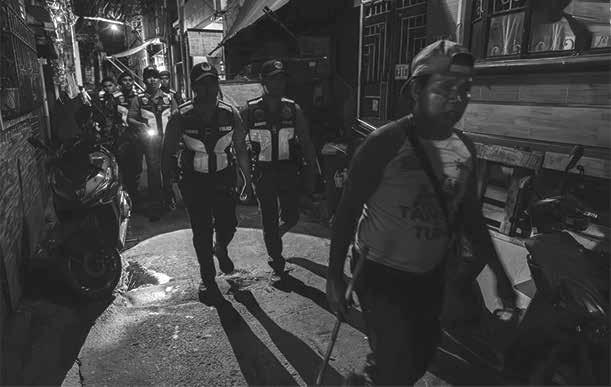
In early April, the Department of the Interior and Local Government says minors must be off public streets from 10 p.m. to 4 a.m., unless accompanied by guardians or engaged in school, work, emergencies, religion, or official obligations. The rule is clear, but Manila has other ideas, even if those ideas are currently costing its citizens millions.
There are over five million minors in Metro Manila alone.
Roughly a third of a population nearing 15 million, according to the Philippine Statistics Authority. The scale makes the curfew read less like enforcement and more like suggestion. In just two days, authorities reported the apprehension of over 24,000 violators.
The National Capital Region Police Office reported P5.64 million in fines within the first 72 hours of the “Safer Metro Manila” plan. The figures show visible enforcement, but against five million minors, the crackdown begins to look performative.
DILG Secretary Jonvic Remulla calls the initiative a return to order. “We want our streets to be safe for everyone, especially for our youth,” he explains. “But that safety requires discipline and a respect for the clock,” he explains. Still, adults glance and decide discretion is easier. Bars pour past sunrise. Birthday dinners
stretch. Manila reads each departure differently, yet in writing, they all fall under the same law. Metrocom once dictated movement with whistles and batuta, turning streets abruptly severe once midnight set in. Those old enough to remember the ’70s recall how gatherings simply acquired a mattress when the clock ran out. If home was too far, a sofa became accommodation, a shirt was borrowed, and conversations acquired a new honesty because what else was there to do until the curfew was lifted? The law emptied the streets and lengthened company indoors. Now the barangay tanod fills the role, lighter on menace but equally effective. The sound of a whistle cutting through a lane is usually enough to send slippers scuttling behind gates and basketballs tucked under arms, with walls scaled when the front door feels a few steps too far. Children learn quickly. They watch a 10 p.m. ordinance dissolve through a side street or a quick jump over a low wall. They learn early that rules bend. They see it on the street, and later in the larger laws that govern the country, even R.A. 7080, the Plunder Law, where definition and enforcement, not to mention justice, rarely move at the same pace. Rules exist, but they are rarely the city’s final word. The night stretches differently depending on geography. In some villages, curfew is almost decorative. Gates, guards, visitor logs, and polite surveillance have always constrained movement. In condominiums, 10 p.m. is a reminder, rarely a shift. Elsewhere, where Monobloc chairs gather outside gates long after the heat has lifted, streets remain occupied. The city keeps rewriting what the law says. Children and teenagers understand this implicitly. They negotiate presence and absence, reading adults, calculating what can be ignored. A minor outside a barangay hall under fluorescent lights will likely be stopped. Someone stepping from a hotel lobby, adults at hand, may pass unnoticed. Same age. Same law.
Two Americans,
Different reading. Ten o’clock in Manila feels peculiar. The hour is legal and enforceable yet it lands on a city where the night is a fragmented transaction. The P5.64 million in fines didn’t come from hotel lobbies or gated villages. It came from the streets where the interruption is physically possible. Most of the 24,000 apprehensions were concentrated in high-density districts like Quezon City, Caloocan, and the fringes of Manila, where the law is visible and intrusive. In the eyes of the NCRPO, a minor is a minor, but the record confirms that the law is mostly stopping those who have nowhere else to go. Youth organizations have already raised this alarm, arguing in petitions to the Supreme Court that such ordinances are unconstitutional and result in arbitrary arrests. They contend that the state is penalizing those whose only space after dark is the street. For them, the curfew is not a safety measure but a restriction on those who have no private space. In fact, in the middle of this intense counting, the most vulnerable remain in plain sight. These are the children begging for alms and the infants held in their mothers’ arms as they drift from car to car, the ones the curfew seems to navigate around rather than protect. In a city of five million minors, 24,000 apprehensions are a headline, not a transformation. The fines have been paid and the night has been logged, but the streets remain what they have always been. Manila does not close. It simply waits for the whistle to pass and then goes back to whatever it was doing before the law interrupted it. Even during the enforced paralysis of 2020, the state was unable to clear the streets of these babies, out there in the heat of the day or the cold of the night without masks or protection. If a global pandemic could not bring them indoors, a curfew must do more than count them. It must finally offer a version of safety that isn’t just a transaction. The question is no longer how many are counted, but who is protected.
two vocabularies...
PAGE 7
America, who are you?...
Agreements are no longer commitments – they are options.
The nation that once stood as a defender of democracy now struggles to uphold it within its own borders. Institutions are questioned. Processes are contested. The truth is shamelessly covered up. The very principles that America once promoted abroad are now under strain in its own land.
The loudest advocate of free trade has turned protectionist. Tariffs, economic nationalism and transactional diplomacy have replaced the broader vision of shared prosperity.
There has also been a shift in character.
Where there was once generosity, there is now a more pronounced self-interest. “America First” has evolved into the country’s worldview – one that prioritizes immediate gain over longterm leadership. And it does so with incredible hubris.
The culture of excellence, once rooted in innovation and hard work, has been overshadowed by the pursuit of quick profits. Financial wins are celebrated, even when they come
PAGE 7
at the expense of substance. No surprise, America’s dominance in innovation – while still formidable – is no longer absolute. Corruption has hollowed out America’s institutions, unraveling the cohesion that once bound the system together. As a result, America’s very foundations have weakened.
But perhaps the most troubling change is not economic or political – it is moral. America today is increasingly seen as unpredictable and unreliable. Where trust once existed, there is now trepidation and a sense of skepticism.
Race, identity and inequality have surged back into the spotlight, making one thing clear: these problems were never resolved. Bigotry simply laid latent all these decades.
On the global stage, America is no longer viewed as a stabilizing force. It is now seen as a source of disruption, chaos and war. And so, its soft power has diminished. The admiration has faded. The influence, while still present, is no longer unquestioned and even challenged. It is difficult to reconcile the America we remember with the
America we see today. The big brother we once trusted is now unrecognizable. And so we ask with earnest reflection: America, who are you?
Are you still the nation that believed in fairness, in shared prosperity, in the idea that leadership comes with responsibility? Are you still the defender of democracy, the engine of innovation, the symbol of opportunity?
Or have you become something more insular, more transactional, more self-centered, more lawless?
If it is the latter, your days as the world’s big brother and/ or adult in the room are surely numbered. The world will naturally gravitate to the nation/s that prove more benevolent, cooperative and just. (Philstar. com)
The opinions, beliefs and viewpoints expressed by the
Spend smarter...
tually helped South Korea mount a rapid economic recovery.
According to DEPDev Secretary Arsenio Balisacan, the government needs up to P429 billion to fund support and relief measures if the Middle East conflict drags on until December. That’s probably on the conservative side.
If the Hormuz disruption lasts beyond three to four months, the Philippines must begin to aggressively reallocate (cut, delay, redirect) and target support narrowly (not universal subsidies).
Then, we must spend smarter. We must use our limited resources to protect the essentials (fuel, food, transport), compress everything else, and avoid permanent fiscal commitments.
We must also remember that once the shock dies down, the real danger isn’t just continuing high oil prices—it’s being stuck with higher debt (as in COVID), structurally larger deficits, and less room for future crises.
Inevitably, our private sector must weigh in beyond press releases and token CSR programs.
With our total private wealth estimated at P55 trillion, the top one percent owns nearly
one-third (32.5 percent) of the country’s total net worth. The top 10 percent of Filipinos hold approximately P40 trillion.
Since most of our people are poor with nothing more to give, will our elite voluntarily contribute as generously as the Koreans to a fund that will help us navigate the next few months of the Trump-driven crisis?
The fund could be managed by the private sector, a consortium of banks perhaps, if there is little trust in the government managing large sums of money.
The fund can be used for subsidizing fuel prices used by the poor, from diesel to LPG and other forms of targeted assistance.
The private sector must aggressively contribute to the national effort to help us survive this crisis. For example, feeding programs not just for children but for whole communities in impoverished areas. Help distressed public utility drivers and farmers with alternative jobs or livelihoods. Government must project a sense of crisis with officials leading by example.
While we may not be able to save a trillion pesos by abolishing Congress as is claimed in
social media, it would help if members of Congress voluntarily give up salaries and allowances for the duration of the crisis.
National officials must show the nation they are ready to share the pain and that they are in office to render public service even without pay in a time of emergency.
The President, Vice President and other officials should also give up salaries and confidential funds.
No one knows when this crisis will end. The war could last indefinitely like in Ukraine. But the stranglehold on the world economy through Hormuz that this war caused is suffered by all.
We must also pray for divine intervention so that the leaders of the US, Israel and Iran will come to their senses and realize that their war is causing too much suffering and it must simply stop. (Philstar.com)
* * *
The opinions, beliefs and viewpoints expressed by the author do not necessarily reflect the opinions, beliefs and viewpoints of the Asian Journal, its management, editorial board and staff.
* *
Business for a better Philippines...
PAGE 7
2023. Doris worked to improve seafarers’ lives—skills development and job security—for a sector that sends home $6.7 billion yearly. Tony Tan opened frontier Jollibee branches, creating jobs and affordable food in communities where few others invested.
est. The other points toward a world shaped by restraint, where stability depends on dialogue, shared responsibility, and limits on the use of force. If fully realized, neither vision fully resolves the risks the other is trying to contain. A world defined by strength may secure order, but at the cost of rigidity and escalation. A world defined by restraint may elevate human dignity, but struggles with enforcement when confronted by actors who do not share those limits. Some observers have reached for the language of rupture to describe this moment, suggesting that the distance between these two centers of authority is widening into something more permanent, separating not just positions, but the very terms by which authority is understood.
That framing, however, runs ahead of the facts. There is no institutional break, no severed diplomatic channel, and no formal conflict between the United States and the Holy See. What exists instead is a sharpening contrast, two vocabularies of power unfolding in parallel. That contrast is not new. Political authority and moral authority have long operated in tension. What distinguishes this moment is the extent to which these differences are now out in the open. Both men speak directly, both command global attention, and both are increasingly explicit in how they define strength.
per power with conscience and to measure decisions not only by their effectiveness, but by their human cost.
What were they doing? Turning decades-long crises—education, health, jobs, and food— into opportunities. Business solutions to poverty’s drivers. Scalable, sustainable, delivering products and services that improve lives while protecting shareholder interests. Whenever I wavered on the role of business because of bottom-line pressure, they reminded me: profit makes it possible to expand a business that delivers social impact. Profit also fuels corporate foundations and disaster response.
together with national and local governments to build the industries, especially agriculture, that can deepen an economy still propped up by overseas Filipino worker remittances. Agriculture employs 22 percent of workers but contributes just 8.6 percent of gross domestic product as of 2023. Big business understands this structural weakness and can help drive solutions. It won’t be easy; the government is often an unreliable partner. But maybe our crisis in governance also offers an immense opportunity.
For President Trump, strength is often expressed through control, including borders, threats, and outcomes. For Pope Leo XIV, strength is expressed through restraint, the discipline to tem-
The fact that both voices are American does not bring them closer. It sharpens the contrast. One answers to U.S. voters and national priorities. The other speaks from a position that is not bound to any nation, including the United States. If the goal is a better world, it is not achieved by choosing between power and principle, but by holding both to account. The conflict we are witnessing is what happens when power and principle are forced to answer the same question in different ways. Political authority must be strong enough to protect and restrained enough to listen. Moral authority must be clear enough to challenge and grounded enough to engage reality. (AJPress)
Living through a crisis...
PAGE 7 impact can also be important for others. When problems are globalized, such as thinking that the world is in peril or that our life is a mess, it feels impossible to think of solutions. But when we narrow our focus and specify our problems, it becomes easier to solve them. Fewer problems, fewer crises. Strip it back to basics. A lighter bag is more portable. The same goes for life. When we have fewer attachments and complications, it is easier to be flexible and ride the waves of change. Simplify your life, however you can. Keep your expectations—of yourself and others—realistic. Give yourself grace and pause the goals that only add to your stress at this phase in your life. For example, perhaps now is not the time to go
on a severe diet that will negatively affect your mood. Manage the pace of your work and career to sustainable levels. Now is not the time to risk fatigue and burnout. Be selective with your social commitments; your social battery is a precious commodity. Always find the joy. I emphasize this because a lot of people think that joy is not important. It is usually the first thing thrown out the window when scheduling our calendar. But the only way to get through a protracted crisis is joy. What helps us endure is to find the joy in each moment. I like to think of joy as an adverb more than as an emotion. We work joyfully. We rest joyfully. We debate joyfully. We wait joyfully. We budget joyfully. This allows joy to be possible, no matter the situation. This should not be mistaken for toxic
positivity, where joy is imposed and forced. Joy is not meant to replace or mask other experiences, especially those of frustration, suffering, or struggle. Seemingly conflicting emotions can coexist. Isn’t that a joy to know? Unfortunately, no global conflict resolves itself within days. The impact will be felt for a long time, years after any peace treaty. Endurance, then, becomes our goal. We need to figure out how to live our lives as best we can, even through a crisis. (Philstar. com)
But is big business already doing enough? It can choose to do more. One gap that De La Salle University’s (DLSU) professor Jesus Felipe has long flagged: big business has not yet come
At the DLSU Ramon V. del Rosario College of Business, a Center for Business and Society is housed. Its key mission: advocate for business as a force for good. Through this center, big business, the academe, and the government could work together to plot a national plan of action to push forward business solutions to what ails us as a nation. This plan could even include challenges to big business similar to Professor Felipe’s. As a footnote to this oversimplified piece: the current glob-
al crisis, stoked largely by US President Donald Trump’s renewed tariff wars and geopolitical shocks, is another opening for big business. Filipino families are reeling, and the pain may worsen. While the government must deliver a quick, effective crisis response, big business can do its part: more flexible work, food and transport assistance, and stronger health benefits for employees and their families for the duration of this crisis. A rebalancing in favor of people may be in order on the triple bottom line. Peter Angelo V. Perfecto is the public affairs vice president of the Phinma group and was former executive director of MBC. (Inquirer.net)
* * * The opinions, beliefs and viewpoints expressed by the author do not necessarily reflect the opinions, beliefs and viewpoints of the Asian Journal, its management, editorial board and staff.
* * * Business Matters is a project of the Makati Business Club (makatibusinessclub@ mbc.com.ph). PAGE 7
Police officers and barangay tanod enforce nighttime curfew along a residential street
Ryan Baldemor/The Philippine STAR
ASIAN
Eric Quizon eyes Dolphy biopic focused on final days of Philippine comedy icon
by AJPress
MANILA — Actor-director Eric Quizon has confirmed that he is in early discussions to develop a biographical film on his father, Dolphy, with a narrative centered on the final weeks of the late entertainer’s life.
Quizon disclosed in recent interviews that conversations are underway with writer-actress Bibeth Orteza, who authored Dolphy’s autobiography. The project remains in its conceptual stage, with no formal production commitments announced as of April 2026.
A contained narrative rather than a full life story
According to Quizon, the proposed film departs from the traditional cradle-to-career biographical format. Instead, it would focus on the period beginning with Dolphy’s hospitalization and culminating in his death in July 2012.
He indicated that the intent is to document a largely private chapter in the life of a public figure, capturing both the family’s experience and the broader public response during that time. During Dolphy’s illness, calls for prayers circulated widely, reflecting the scale of his influence across the Philippines.
The approach positions the film as a time-bound, character-driven account, rather than a comprehensive retelling of a decades-long career.
Balancing public legacy and private experience
Dolphy, widely regarded as the
“King of Comedy,” maintained a career spanning more than six decades across film, television, and stage. His body of work helped define mainstream Filipino humor and established him as one of the country’s most recognizable cultural figures. His death in 2012 prompted widespread public mourning, with tributes from government officials, industry peers, and audiences. Quizon, who served as one of the family’s spokespersons during that period, said the proposed film would aim to present both the public dimension of that moment and the private realities experienced within the family.Development remains in early stages
As of this writing, no casting, director attachment beyond Quizon’s involvement, or production timeline has been confirmed. The project remains under develop-
SexBomb Girls embrace
ment, with its scope and creative direction subject to further refinement.
Industry observers note that biographical films involving widely recognized figures typically require coordination with family stakeholders and careful handling of historical detail, particularly when depicting end-of-life events.
A focused approach to legacy storytelling If realized, the project would align with a narrower form of biographical storytelling that emphasizes specific moments rather than entire lifespans. In this case, the film’s focus on Dolphy’s final weeks reflects an effort to document a defining period that resonated both within the family and across a national audience.
No release window or distribution platform has been announced.
LGBTQ following, describe bond as a two-way source of inspiration
Veteran dance group says connection with LGBTQ fans evolved organically as performances gain renewed cultural meaning
MANILA — The SexBomb Girls say their recognition as figures of inspiration within the LGBTQ community developed over time rather than by intent, reflecting what they describe as a reciprocal relationship with audiences.
In recent remarks reported by Philippine entertainment outlets, members emphasized that the support they receive has also shaped them.
“Inspired din kami sa kanila” (We are also inspired by them), the group said, describing what they framed as a shared exchange of energy with their fans.
Formed in 1999, the SexBomb Girls rose to prominence through regular appearances on Eat Bulaga!, where their synchronized dance routines and novelty songs became widely recognized. Tracks such as “Spaghetti Song” and “Get Get Aww” contributed to their mainstream success and helped define a period of participatory television entertainment.
Evolving reception
While originally positioned as a mass-market act, the group’s theatrical choreography and expressive performances have since been reinterpreted by some audiences
within broader cultural contexts, including LGBTQ expression. Observers note that such elements often resonate with communities that value performance as a form of visibility and identity.
Members acknowledged that audiences have long connected with the sense of freedom conveyed in their routines, a dynamic that has persisted as clips of their performances continue to circulate on digital platforms and reach new viewers. Sustained relevance
BINI sets Coachella 2026 engagement benchmark with record-breaking performance
Group draws global attention as “Pantropiko” clip surpasses 30 million views, leading all female acts in festival engagement
by AJPress
INDIO, Calif. — Filipino pop group BINI delivered one of the strongest digital performances of the Coachella Valley Music and Arts Festival 2026, a global music and arts event held annually in Indio, California that serves as a major platform for international artists.
A performance clip featuring the group’s hit “Pantropiko,” posted on the festival’s official Instagram account, has surpassed 30 million views as of April 16, 2026, based on publicly visible metrics. The figure positions BINI as the most-viewed female act from this year’s festival on that platform, exceeding engagement levels for other global performers including KATSEYE.
BINI’s appearance marked a milestone for Filipino representation at Coachella, placing the eight-member group among the few P-pop acts to reach the festival stage. Aiah; Colet; Maloi; Gwen; Stacey; Mikha; Jhoanna; Sheena delivered a 42-minute set at the Mojave Tent, where crowd turnout remained dense despite a mid-afternoon schedule, supported by both their fanbase and general festival audiences.
The group’s presentation incorporated Filipino cultural elements, including gold ensem-
tracks with newer
rial, including
reflecting growing global interest in culturally grounded stage design. Online traction followed quickly. BINI-related terms trended worldwide on X during and after the performance, indicating reach beyond their established Southeast Asian audience. Comparative social metrics place Justin Bieber as the most-viewed overall act, with clips exceeding 80 million views, while BINI leads female performers with more than 30 million views on a
min, Salamin,” and “Pantropiko,” alongside “Blush,” tied to their Signals project. Industry observers, including Billboard and Rolling Stone, have pointed to the performance as evidence of P-pop’s expanding global viability, driven by strong digital engagement and coordinated fan support.
The group is expected to launch its Signals world tour in Manila in June, with planned stops across North America and Europe.
Recent reunion appearances have drawn multi-generational audiences, underscoring both nostalgia and continued relevance. The SexBomb Girls maintain that their core objective remains entertainment, while recognizing that audience interpretation has evolved. For many supporters, particularly within LGBTQ communities, the group’s performances have taken on added meaning over time, reflecting themes of confidence, humor, and lasting audience connection
Ria Atayde sets boundaries on privacy, family life amid public scrutiny
by AJPress by AJPress
MANILA — Actress Ria Atayde is drawing a clear line between public visibility and private life, outlining a deliberate approach to protecting her family from scrutiny.
Atayde, 34, the daughter of veteran actress Sylvia Sanchez, spoke on April 15, 2026 during a press event for The Silent Noise, a thriller series starring her husband, Zanjoe Marudo.
The couple, who married in a civil ceremony in March 2024, are raising their 19-month-old son, Sabino, with what Atayde described as “selective transparency.”
“You can be a public figure and still have a private life,” she said, emphasizing that she finds “peace in privacy” and does not believe every aspect of life needs to be
shared. Her remarks reflect the pressures of celebrity culture, where social media speculation and entertainment reporting often blur personal boundaries. In late 2025, Marudo publicly denied rumors about their relationship, describing them as unfounded.
Atayde, who has stepped back from acting since becoming a mother, said her priority remains hands-on parenting. She described motherhood as her most important role and indicated no immediate plans to return to fulltime screen work. She credited a support system of family and fellow mothers, alongside personal routines such as Pilates and tennis, for helping maintain balance. She also expressed support for Marudo’s professional projects, including his on-screen pairing with Angelica Panganiban, noting
bles paired with salakot-inspired headpieces. Coverage from Vogue cited the look among notable festival fashion moments,
single post. The setlist combined established
mate-
“Karera,” “Sala-
Philippines’
Photo from Instagram/@bini_ph
Photo from Instagram/@rochellepangilinan
Photo from Facebook/@riaataydeee
Photos from Instagram/@eric_quizon
The power of ‘bahala na’
“Bahala na” is an everyday concept we use when we are faced with something difficult—but it does not mean giving up
by CARl loReNz CeRvANTes Inquirer.net
“BAHALA NA” is an everyday concept we use when we are faced with something difficult. When we say it, it does not mean we are just giving up or surrendering. In fact, we use this phrase more often when we are palaban, when we have something important to do, and some obstacle is in the way.
“Bahala na! I will do what I need to do—damn the consequences!”
This is what prompted psychologists like Alfredo Lagmay to claim that it is not just a resignation to fate, but a way forward.
Virgilio Enriquez says that it is a “confrontative value” because it allows us to find the strength to face uncertainty. Meanwhile, Jaime Bulatao calls it an expression of our trust in the divine.
Divine meaning
Some people (including some serious Filipino philosophers) believe that “bahala” comes from “Bathala.” A long time ago, Pedro Paterno himself suggested that BA, HA, and LA meant “babae, hangin, and lalaki.” Maybe it is because the baybayin for BA and LA resembled female and male anatomy, respectively. HA, a wavy line, was “hangin,” which is the wind or breath of life. And so Bathala, or God, encompasses all of humanity, while also transcending our human categories.
Paterno’s contemporaries, including Jose Rizal, thought Paterno was kind of odd with these ideas. But this notion is taken forward by some modern psychospiritual researchers who share a similar idea.
The real meaning of “bahala na” Actually, bahala na does not really mean “Bathala na” or “Let God handle it.” Otherwise, it would be weird for us to keep saying “Bahala na si Lord” or “Bahala na si (insert superhero name).” Do we worship superheroes?
In fact, “bahala” comes from a Sanskrit root that means “burden” or “responsibility.” This is why we say “Bahala ka” or “Ba-
hala na si…” or “Ako na ang bahala.” We are shifting or assigning responsibility. Who will take care of it? Sino ang magdadala?
Sino ang bahala?
“Bahala” comes from a Sanskrit root that means “burden” or “responsibility.” We are shifting or assigning responsibility
This is also why we call our government “pamahalaan.” That is right—the word may be rooted in “bahala.” A good leader is the one carrying the responsibility to care for us—“namamahala.”
When you are bothered by something, and you feel that you must take care of it, we call that “nababahala.” In other words, you are taking on the burden for it.
Going back to the mystical
If a person prefers the spiritual interpretation, so be it. It is indeed meaningful and spiritually profound. We can also connect this phrase to another popular saying: “Nasa Diyos ang awa, pero nasa tao ang gawa.” We are God’s hands on Earth. If we put our trust in God’s plan, then we have to participate in it. We cannot be like Juan Tamad, waiting under the guava tree for the fruit to fall down. A bird passes by and drops something else in his mouth!
“Bahala na” can give us the strength to push forward even though we do not have all the answers. The tired student who has studied enough finally drops their worries as they face an important exam. The unemployed person sends another email to the 100th hiring company, hoping that this time, they could get past the interview. A couple puts their faith in each other’s lifelong commitments as they stand before the altar, ready to get married.
“Bahala na” can give us the strength to push forward even though we do not have all the answers.
We are all carrying burdens: sometimes out of expectation, sometimes out of love. When we take responsibility, we show how much we value these things. The question for us becomes: What do we care about? Saan tayo nababahala?
HEALTH @HEART
WE are surrounded by hundreds of products that are deleterious to our health, including foods, beverages, aerosols, and chemicals for our kitchen and bathrooms, which are toxic to our bodies, our land, and the ocean. This had led to the rise in the incidence of various forms of illnesses, from respiratory (emphysema, asthma, COPD, etc.), cardiovascular (high blood pressure, heart attack, stroke, etc), metabolic (diabetes II, thyroid disease, etc), and cancers of various organs.
We have polluted our environment (land, air, and water) and destroyed our forests, which have brought more typhoons, earthquakes, flooding, tsunamis, and other natural disasters around the world. With irreverence and carelessness, we have damaged the only hospitable planet known to man today. How much more insult Mother Earth could take before it disintegrates and kills all living organisms on it, only the future will tell.
However, this phenomenon of self-destruction appears to be inherent in the human species, not generally found among other mammals or animals with smaller brains and “less intelligent” than us. These animals, including our pets at home, if offered, would not touch tobacco or alcohol, let alone become addicted to them. Animals stay away from the so-called air freshener aerosols and any fumes. Their instinct tells them these are harmful. But many of us, intelligent humans, spend our money to expose ourselves to these toxic chemicals in our cars or at home. And many of us are also careless when it comes to the food we eat.
Wheat/gluten/phytic acid
Wheat, rye, spelt, and barley are loaded with gluten, which is hard to digest and which the immune system considers a foreign invader in the digestive tract, causing the body to attack not only gluten but the wall of the intestines itself, damaging it. This is what happens in peo-
Toxin around us
ple with Celiac Disease, which affects about 1 percent of the population. Many more people are sensitive to gluten. Wheat has a high glycemic index, which causes blood sugar levels to shoot up fast, which is bad for all of us, and more especially so for diabetics. Wheat contains phytic acid, which binds with iron, zinc, calcium, and magnesium and prevents these essential nutrients from being absorbed. Wheat also drastically increases LDL, the bad cholesterol. Some studies link wheat (gluten) ingestion to brain diseases, like cerebellar ataxia and schizophrenia, among those highly sensitive to gluten. Oat meal was my favorite breakfast before.
Low glycemic foods are healthier
White rice, bread, fruits, fruit juices, and most desserts, are the enemy of diabetics, pre- or borderline diabetics, those who are overweight, and those who do not want to gain weight. These items are loaded with carbohydrates with high glycemic. They are digested and absorbed very rapidly, causing blood glucose (sugar) to spike in an unhealthy manner. While moderation in fruits is nutritionally acceptable, rice, bread, and fruit juices are not medically essential food items. Try to eliminate these 3 from your diet for one full week and see how fast your weight (and waistline) goes down. It would be tough to stay away from rice and bread, but scientifically, we could be healthier without them. Among us, Asians, rice is a major culprit (other carbs, secondary) why we have an epidemic of obesity and diabetes, one of the highest in the world. Let’s eat less rice, less sweets.
Processed foods are health hazards
Processed foods, especially processed meats (sausage, bacon, etc.) frozen or in cans, with all the chemical additives and preservatives in them, have been linked to cancer, besides cardiovascular diseases. Eating the burned black (charcoal) portion of barbecue meats or vegetables has been associated with pancreatic cancer. These charred parts, which are carcinogenic (cancer-causing), must be trimmed and not eaten.
Eating red meat daily has been Warning on HFC Syrup High fructose corn syrup is
My Encounter with Joseph Estrada
THE first time I met actor Joseph Estrada—former mayor, senator, vice president, and president of the Philippines— was when I was still in grade school at Aquinas School in San Juan City, Metro Manila. He had a film shoot at the church beside our school.
When he dropped by our classroom, I shook hands with him. We discovered we were both left-handed.
Due to financial difficulties, I was later transferred by my father, also an actor, to San Juan Elementary School. Erap, as he is fondly called, visited our classroom there as well, and we shook hands again. I also visited his office when he was mayor of San Juan.
Born Joseph Marcelo Ejercito in Tondo, Manila, to Engineer Emilio Ejercito and Maria Marcelo, he studied at Ateneo de Manila University and Mapúa Institute of Technology.
A major figure in Philippine cinema, he starred in over 100 films and produced more than 70. He became the first FAMAS Hall of Fame Best Actor awardee in 1981 for Kumander Alibasbas, with earlier wins for Markang Rehas (1962), Geron Busabos (1964), Ang Batang Quiapo (1965), Ito Ang Pilipino (1966), and Patria Adorada (1969). He later entered the Hall of Fame as a producer in 1983. His roles often portrayed defenders of the downtrodden, resonating strongly with working-class audiences. In Geron Busabos, he played a man who becomes a protector of the weak in Quiapo’s public market, with the film’s realism reflecting the struggles of everyday Filipinos.
Beyond acting, Estrada supported industry workers and underserved communities.
In 1974, he founded the Movie Workers Welfare Foundation (Mowelfund), providing medical assistance, livelihood support, and housing programs.
“It extends financial and professional assistance to industry workers,” he said,
referring to its mission to uplift film workers at all levels. Its educational arm, the Mowelfund Film Institute, has trained generations of filmmakers since 1979. He also co-founded the Metro Manila Film Festival in 1975.
A Ten Outstanding Young Men awardee in public administration, Estrada became mayor of San Juan at age 32 and served for 17 years. When he stepped down, he left PHP 23,885,159.06 in municipal savings—an uncommon benchmark in Metro Manila governance. He prioritized education and public services, improving schools, constructing community facilities, and providing water access in underserved areas. He also relocated about 1,800 informal settler families to Taytay, Rizal, at no cost, and modernized tax assessment systems in the municipality.
During his 75th birthday, Estrada shared his aspiration to serve again as mayor, this time
now being banned in the United States. It is a common sweetener in fruit-flavored drinks, soft drinks, fruit jams and jellies, and some other food items. It is suspected that the body might react differently to this sweetener. Its consumption has been linked to the increase in the levels of obesity, diabetes, metabolic syndrome, high triglyceride levels, cardiovascular illnesses, dental diseases, and even Alzheimer’s.
Soft drinks are toxic Soft drinks, cola or uncola, regular or caffeine-free, diet or not, are unhealthy and toxic to our bodies, especially to children. The deleterious effects are not immediately obvious, but eventually, they lead to metabolic syndrome and increase the risks for the development of high blood pressure, obesity, diabetes, heart disease, stroke, Alzheimer’s, and even cancer.
Margarine and trans fat
Margarine is also on the list of foods we should stay away from because of the trans fat in most of them. Australia came out with margarine that has no transfat. Canola-based margarine with phytosterols, no trans fat, is the healthier margarine. Some quarters believe butter, in moderation, is safer than margarine.
Warning on food supplements
Food supplements, “health juices,” and untested herbals flood the market with baseless claims that they are essential to our health or are effective cures for a multitude of diseases. Almost 99 percent of them are useless and not needed by our body, and could also be dangerous. We can live a healthier life without them, minus the risk and the expense. Some of them damage our kidneys and liver.
Healthy foods
Vegetables, nuts, whole grains, lentils (various color legumes, beans, which are high proteins, as in Mediterranean diet), spices (garlic, onion, pepper, curry, cumin, basil, etc.), egg white, tofu, fresh wildcaught fish (not farmed-raised), virgin olive oil, avocado oil are most of the food items that can bolster our immune system and
in Manila. Today, as he turns 89 on April 19, now a private citizen, I wish him good health and happiness. Guesting at NET25 Radyo Agila’s Diskusyon I first met Ms. Rowena Madumma during her time with Wej Cudiamat’s Wej a Minute on NET25’s Radyo Agila. She is now one of the hosts, alongside Ms. Mona Dagsaan, of Diskusyon, airing Monday to Friday from 2:00 p.m. to 3:00 p.m. on DZEC 1062. I had an in-depth discussion with Weng and Mona, two versatile broadcasters. More about them will be shared in a future column.
My thanks to Ms. Lalaine of La Visual Corporation. International Dance Day
Radyo Balintataw host and Ramon Magsaysay awardee Cecile Guidote-Alvarez shared that the International Dance Day celebration will be held on April 29, 2026, in Manila. The event will gather dance artists, cultural practitioners, communities, and international
participants, highlighting dance as a universal language.
Organized by the Philippine Centre of the International Theatre Institute, with support from the ITI General Secretariat, the celebration forms part of a global initiative promoting cultural exchange and artistic collaboration The April 29 program will feature performances and exchanges that emphasize dance’s ability to connect people across cultures.
Birthday Greetings Belated happy birthday to Wilson Ermita (April 5); Rafy Gellang (April 15); Gilda Fernandez Perez and Jobert Sucaldito (April 16); Maria
and
help us maintain good health. As far as red meat is concerned, trimming the fat away and preferably not barbequed, and consuming it in moderation (as in 2 to 3 times a week) or totally abstaining from it, is the recommended option, since red meat is not an essential food item as a source of protein.
Healthy lifestyle
A healthy diet, like the Mediterranean diet, daily physical exercises, abstinence from tobacco and alcohol intake, are the main ingredients in the recipe for good health and maximal longevity. Although genetic factors play a role, science has found that the environmental component (like lifestyle) can outweigh the impact of our genes. Thus, our health is really in our hands. The “choice” is ours.
* * The opinions, beliefs and viewpoints expressed by the author
When doing right costs more
TAX season has a way of humbling even the most confident entrepreneur. Receipts everywhere. And that quiet thought in the back of our mind: there has to be one more deduction I missed…
Let’s be honest—if you run a business, invest, or work hard for every dollar, you know the feeling. You take risks. You put in long hours. You figure things out as you go. So handing over a good portion of what you earned doesn’t exactly feel rewarding. I get it. I’m a businesswoman too. Every year, I catch myself hoping there’s some perfectly legal, slightly miraculous way to make the numbers hurt a little less. We’re all in that same boat. Which is why this season isn’t just about math—it’s about mindset. It touches fairness, effort, and if we’re honest, a little bit of resistance. And yet, Scripture gently brings us back to something deeper: “Whoever can be trusted with very little can also be trusted with much.” — Luke 16:10
“If you have not been trustworthy in handling worldly wealth, who will trust you with true riches?” — Luke 16:11 Not exactly what you want to read while reviewing your taxes. But it does shift the focus. Stewardship isn’t about how much we have—it’s about how we handle what passes through our hands.
Most of us are praying for more. More income. More clients. More opportunities. More connections. But the pattern we see in Scripture is this: increase tends to follow faithfulness, not the other way around. Which means how we handle the “not quite enough” season actually matters. There are seasons where finances feel tight but steady. Not struggling, but not overflowing either. Just enough to make you think twice before spending. Those seasons can feel frustrating, especially when it seems like everyone else is doing better. But that’s where habits are built. Budgeting when it would be easier not to.
Saving when you’d rather spend. Giving even when it feels like a stretch. And yes—being honest, even when it costs you. As someone who competes in ballroom dance, I’ve learned that what people see on the floor is only a small part of the story. The real work happens in empty studios, repeating the basics, fixing small details no one else would notice. The performance is public. The discipline is private. Integrity works the same way. You don’t suddenly become honest when it matters—you’ve been practicing it all along. Tax season just reveals whether what we’ve built can hold. There’s also a quiet spiritual side to this. I don’t say this lightly—but I’ve come to believe that when we’re not honest in the small things, it’s hard for God to trust us with more. Not because He’s trying to withhold from us, but because He cares about what we’re becoming as much as what we’re building. Integrity isn’t about being perfect. It’s about being aligned. And when we’re aligned, there’s a kind of peace and confidence that you just can’t manufacture.
Now, this doesn’t mean we shouldn’t be wise. Planning well, working with good advisors, and using the tax code properly— that’s part of stewardship too. But there’s a difference between being strategic and trying to bend things just so we’ll feel better. At the end of the day, stewardship comes down to a simple question: Am I being faithful with what I have right now?
Because God doesn’t multiply what we wish we had. He multiplies what we manage well. We may not love writing the check to Uncle Sam, but there’s something steady about knowing we handled things the right way.
And that kind of peace? You really can’t put a price on it.
The opinions, beliefs and viewpoints expressed by the author do not necessarily reflect the opinions, beliefs and viewpoints of the Asian Journal, its management,
Cristina Lopez (April 17); Lecille Badion and Margie T. Logarta (April 18);
Toting Bunye and Lance Medina (April 19).
Actor Joseph Estrada during his younger years. President Joseph Estrada. Manila Mayor Joseph Estrada with Vice Mayor Isko Moreno.
Celebrator Joseph Estrada.
(From left) Philippine Presidents Joseph Estrada, Gloria Arroyo, Rodrigo Duterte, Fidel Ramos, and Noynoy Aquino.
(From left) During live broadcast: Weng Madumma, Rogelio Constantino Medina and Mona Dagsaan in NET25 Radyo Agila’s Diskusyon.
After the broadcast, Asian Journal columnist Rogelio Constantino Medina (center) has a photo with Rowena Madumma (left) and Mona Dagsaan (right).
Cecile Guidote-Alvarez (right) with Asian Journal columnist Rogelio Constantino Medina at Camp Aquino Station Hospital in Tarlac City.
Philip S. Chua, MD, FACS, FPCS
Las Vegas Filipino Town marks first year as official cultural district
by AJPress
LAS VEGAS — Filipino Town
Las Vegas marked its first anniversary this month as an officially designated cultural district, underscoring a year of formal recognition for a community long established in Southern Nevada.
The designation traces to April 15, 2025, when the Clark County Commission unanimously approved the creation of Filipino Town along a 1.2-mile stretch of Maryland Parkway, generally bounded by Flamingo Road and Desert Inn Road. The action placed the corridor within the county’s cultural district program, a framework used to recognize and support historically concentrated cultural and commercial communities.
The area had functioned for years as an informal hub for Filipino-owned businesses—including restaurants, grocery stores, and professional services—before receiving formal status. Community advocates had pushed for the designation as a way to align visibility with the scale of the Filipino American population in the Las Vegas Valley, one of the largest and fastest-growing in the United States.
The anniversary celebration, held in April 2026, drew residents, entrepreneurs, and civic leaders to the district’s central commercial zone near Maryland Parkway. Programming included cultural performances, small business
showcases, and community-led activities intended to highlight both heritage and economic contributions.
Organizers described the milestone as both symbolic and strategic. While the designation affirms cultural identity, stakeholders have emphasized the need to translate that recognition into sustained economic activity—through increased business density, coordinated branding, and regular programming that attracts visitors beyond the immediate community.
Clark County’s cultural district model does not confer zoning changes or direct funding by default, but it can support promo-
tional efforts, wayfinding, and inclusion in broader regional planning initiatives. Local leaders have indicated that long-term priorities for Filipino Town include expanding small business participation, strengthening partnerships with tourism stakeholders, and developing signature events that reinforce the district’s presence in the Las Vegas cultural landscape.
At one year, Filipino Town Las Vegas remains in an early phase of formal development. Its trajectory will likely depend on the degree to which community organizations, business owners, and local government sustain coordination around growth, visibility, and cultural programming.
Las Vegas rental aid winds down as federal funds expire
by AJPress
LAS VEGAS — Emergency rental assistance programs that supported Southern Nevada households during the pandemic are ending, with local officials confirming that funds are largely depleted and new applications have been curtailed.
Clark County authorities said programs funded through the federal Emergency Rental Assistance (ERA) initiative have stopped accepting new applicants in key categories, while existing applications will be processed until remaining funds are exhausted. The assistance, administered through county agencies and partner organizations, had provided payments to landlords and utility providers
on behalf of eligible residents.
End of pandemic-era support
The phaseout reflects the broader conclusion of federally funded housing relief established during COVID-19. The ERA program, authorized by Congress in 2020 and 2021, distributed billions nationwide to prevent eviction and stabilize renters.
Deadlines set by the U.S. Department of the Treasury required jurisdictions to obligate and spend funds within a fixed period. Most, including Clark County, are now reaching the end of those timelines, with reserves nearly exhausted.
Local impact
In Southern Nevada, the program served as a primary safety net for households experiencing income disruption. With intake
now limited or closed, residents face fewer options as rent levels remain elevated.
Officials have not announced a replacement program of similar scale.
Limited alternatives
Nonprofit and community-based groups continue to offer smaller, targeted assistance, though capacity is limited. Residents are being referred to Nevada 211 for available resources.
Ongoing housing pressure
The end of rental aid coincides with persistent affordability concerns. While employment has recovered, many households remain cost-burdened.
For renters in the Las Vegas area, the wind-down marks the end of a critical support system as broader housing challenges continue.
Clark County opens applications for rural advisory committee
Residents in unincorporated areas invited to apply for board shaping land use, preservation priorities
by AJPress
LAS VEGAS — Clark County officials are accepting applications for the Rural Alliance Advisory Committee, a local body tasked with advising on policies affecting rural communities across unincorporated areas of the county.
The committee serves as a conduit between residents and county leadership, providing input on planning, maintenance and long-term preservation efforts tied to rural neighborhoods. It is designed to represent a range of community perspectives while helping guide decisions that affect land use, development and
quality of life.
“We’re looking for community members who are ready to serve as a strong voice for their neighbors and help preserve the rural character of the places they call home,” Commissioner Marilyn Kirkpatrick said in a statement, adding that participation offers a direct role in shaping policy decisions.
The advisory body is composed of up to eight members appointed by the Clark County Board of County Commissioners. The structure includes one representative from the Northwest Area Residents Association and one representative from each com-
mission district. Members serve two-year terms and attend public meetings held at least four times annually.
Eligibility is limited to residents living in designated rural areas, defined under the county’s master planning framework as communities with low-density housing, Rural Neighborhood Preservation Overlay zoning, or other officially recognized rural classifications. Applications are due by May 14, 2026, at 5:30 p.m. PT, with appointments scheduled for June 16, 2026. Application materials are available through the county’s administrative services department.
Stay connected with your city using the SeeClickFix App
by AJPress
SEECLICKFIX is a mobile app that connects residents directly with their local government to report and resolve everyday issues in their community. From potholes and graffiti to broken infrastructure, the app allows users to submit requests that are sent directly to the appropriate city department for review and resolution. It’s a simple way to stay engaged and involved in keeping Las Vegas clean, safe and running smoothly.
The SeeClickFix app is designed to make reporting issues as easy as possible. Here’s what you can do:
• Snap and submit: Take a photo of the issue and upload it directly in the app
• Pinpoint locations: Use GPS to accurately mark where the issue is happening
• Choose categories: Select the type of issue, such as graffiti, potholes or streetlight outages
• Track progress: Follow up-
dates as your request moves through the resolution process
• Stay informed: View and monitor other reported issues in your area
By combining all of these features in one place, SeeClickFix makes it easier than ever to communicate with your city.
Submitting a request through the SeeClickFix app takes just a few steps:
1.Download the app
2.Open the app and tap “New Request”
3.Add a photo of the issue to provide helpful context
4.Enter the location or drop a pin on the map
5.Select a category that best matches the issue
6.Write a short description with any additional details
7.Hit submit Your request is sent to the appropriate department so it can be reviewed and addressed. By reporting issues as they happen, you help city staff respond more efficiently and prioritize what
EMPLOYMENT EMPLOYMENT SERVICES
Jocelyn Borromeo (center, with Ernie Buo of Filipino Town Las Vegas board) portrays Reyna Emperatriz at the ‘Flores de Abril’ Santacruzan during the anniversary celebration.
Mark Magsayo (right), a former WBC featherweight champion, poses with fans. Magsayo was in Las Vegas ahead of his April 13 fight against Irish boxer Feargal McCrory. CONTRIBUTED