U.S. moves to automatic Selective Service registration
Government will automatically register eligible men, replacing self-signup requirement
WASHINGTON — The United States is moving to an automatic registration system for Selective Service, marking the most consequential administrative change to the process since the modern system resumed in 1980.
The change is part of the Fiscal Year 2026 National Defense Authorization Act, signed into law on December 18, 2025. It transfers responsibility for registration from individuals to the Selective Service System (SSS) through the use of existing federal data.
Selective Service registration is not military service. It is a legal requirement for eligible men to provide basic information to the government for use only if a draft is authorized.
Implementation and scope
On March 30, 2026, the SSS submitted its
Avoid tax scams and taxpayer ID theft
Federal agencies warn of impersonation schemes, phishing and payment fraud during peak filing season
LOS ANGELES — Federal regulators are warning taxpayers to remain vigilant as scam activity accelerates during the filing season, with impersonation calls, phishing messages and fraudulent payment demands continuing to target individuals expecting refunds or resolving tax obligations.
The Federal Communications Commission (FCC), along with the Internal Revenue Service (IRS) and the Federal Trade Commission (FTC), has issued updated consumer guidance outlining how these schemes operate and how to avoid them.
Impersonation and spoofed calls
Authorities say scammers frequently pose as IRS officials through phone calls, text messages or emails, sometimes manipulating caller ID systems to make the contact
Philippine debt reaches P18.16 trillion as domestic borrowing drives growth
by AJPress
Hormuz disruptions snarl Philippine-linked cargo as Iran assures passage for PH ships
by AJPress
MANILA, Philippines — Philippine authorities and shipping industry representatives said cargo movement linked to the Philip-
pines remains under strain in the Strait of Hormuz, even after Iran conveyed assurances that Philippine-flagged vessels, energy shipments, and Filipino seafarers would be allowed safe passage.
Hospice fraud cases enter court phase after Southern California arrests
Federal prosecutors outline allegations of improper Medicare billing as enforcement action shifts from arrests to litigation
by AJPress
LOS ANGELES — One week after federal authorities announced arrests in a sweeping Southern California health care fraud enforcement action, prosecutors are moving forward with hospice-related cases in federal court.
The U.S. Department of Justice has charged multiple defendants in connection with hospice-related billing schemes in the Central District of California, alleging
that providers sought reimbursement for end-of-life care for patients who were not terminally ill. Across the broader enforcement action, authorities have cited more than $50 million in intended losses. All defendants are presumed innocent unless and until proven guilty.
Allegations center on hospice eligibility and billing practices At the core of the cases are allegations that hospice providers
by AJPress
SAN JOSE, Occidental Mindoro — Philippine military officials say handwritten materials recovered after an encounter in Occidental Mindoro may indicate the presence of recruits with overseas exposure within communist insurgent ranks, which the military identified as members of the New People’s Army (NPA).
The documents, described by the military as “diary-style entries,” were recovered from a vacated encampment following a recent engagement. Officials say
the entries are dated March 2026 and written in English. The materials have not been independently authenticated, and their authorship remains under investigation. Military assessment, limits of verification
Col. Michael Aquino, spokesperson for the Philippine Army’s 2nd Infantry Division, said the tone and fluency of the writings suggest familiarity with urban or international environments. He described the materials as indic-
by AJPress
Jennifer Hong, Sophia M. Tse and Frank Aurelio Yokoyama. Under Cerritos’ council-manager system, the mayor is selected from among councilmembers and serves in a rotating capacity, presiding over meetings and representing the city in official functions.
Appoints Trade Diplomat Angara-Mathay as Tourism Secretary, Elevating Investment-Focused Approach
by AJPress
MANILA — Ferdinand Marcos Jr. has appointed career trade and investment official
Ma. Bernardita “Dita” Angara-Mathay as Secretary of the Department of Tourism (DOT), the Presidential Communications Office (PCO) said Friday, April 10, 2026.
The appointment places a foreign service trade diplomat with experience in investment promotion at the helm of the country’s tourism agency, as the administration seeks to further align tourism with broader economic and infrastructure development priorities.
Tokyo Trade Post and Investment Promotion Role
Prior to her Cabinet appointment, Angara-Mathay served as commercial counselor at the Philippine Trade and Investment Center (PTIC) in Tokyo, Japan, under the Department of Trade and Industry’s Foreign Trade Service Corps.
In that role, she represented Philippine economic interests in trade missions, investment briefings, and bilateral economic dialogues aimed at strength-
Officials
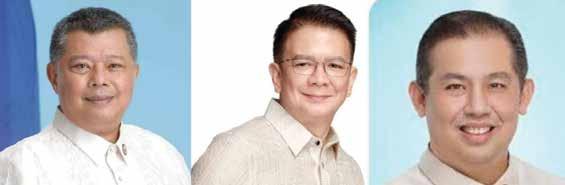
Ombudsman to file plunder cases against Romualdez, Escudero in May
The Ombudsman is ready to file plunder cases against Rep. Martin Romualdez and Sen. Francis “Chiz” Escudero.
LOS ANGELES COUNTY METROPOLITAN
TRANSPORTATION
AUTHORITY (LACMTA) REQUEST FOR PROPOSAL
LACMTA will receive Proposals for PS140835 - Lines A&E Interlock CM/GC at the 9th Floor Receptionist Desk, Vendor/Contract Management Department, One Gateway Plaza, Los Angeles, CA 90012.
A Pre-Proposal Conference will be held on April 23, 2026 at 9:00 a.m. Pacific Time via TEAMS (see solicitation for details). All Proposals must be submitted to LACMTA, and be filed at the reception desk, 9th floor, V/CM Department, on or before 10:00 a.m. Pacific Time on Thursday, June 11, 2026. Proposals received after the above date and time may be rejected and returned unopened. Each proposal must be sealed and marked Proposal No. PS140835.
For a copy of the Request for Proposal specification visit our Solicitation Page on our Vendor Portal at https://business.metro. net or for further information email Victor Zepeda at zepedav@ metro.net 4/11/26 CNS-4031107# ASIAN JOURNAL
by Gideon Tinsay Philstar.com
OMBUDSMAN Jesus Crispin
Remulla disclosed his plan of action in a press conference on Monday, Apr. 6.
“Plunder ang aming inihahandang kasong para sa kanila with the element of conspiracy involved in the preparation of the complaint,” he said.
Remulla added that his office is only tying up evidence before finally making the complaint within the month of May. He also confirmed that the cases are in relation to the ongoing flood control scandal.
He added that the two lawmakers are among several individuals his office will charge with plunder and malversation.
“Maraming miyembro ng dalawang bahay ang maaaring tamaan din ng mga kasong plunder sa aming hinahanda ngayon,” he added. He also confirmed that the plunder cases are based on an alleged conspiracy involved in the national budget, particularly in 2024 and 2025 or as far as the time of former Rep. Lord Allan Velasco, who was the House Speaker from 2020 to 2022.
Romualdez reacts Romualdez’s legal counsel, Atty. Ade Fajardo, stated that they are aware of the recent developments.
“To be clear, this refers only to a reported preparation of a complaint. There is no filed case, no finding of probable cause, and no
determination of liability at this time,” Fajardo said. “We respect the processes of the Office of the Ombudsman and will fully cooperate if and when a formal proceeding is initiated … We want to emphasize that, todate, there is no evidence linking Rep. Romualdez to any ghost and substandard projects pertaining to the flood control issue,” he added.
As of writing, Escudero has yet to give his statement.
In September 2025, the Department of Justice released the list of individuals who will undergo “case build-up” in connection with the alleged corruption in the Department of Public Works and Highways’ flood control projects. Among those included in the list are former Ako Bicol party-list Rep. Zaldy Co, along with Escudero, Sen. Joel Villanueva, and Sen. Jinggoy Estrada, and former Sen. Bong Revilla.
Both Romualdez and Escudero previously maintained their innocence.
Months later, the Independent Commission for Infrastructure and Department of Public Works and Highways submitted a joint report to the Office the Ombudsman recommending several charges against Romualdez and Co for their alleged involvement in the flood control mess.
The ICI in December 2025 recommended plunder and corruption charges against Escudero, Revilla, and other officials reportedly involved in the flood control scandal. n
Domestic debt climbed to P12.48 trillion, up 1.3 percent month on month, accounting for 68.7 percent of total outstanding obligations. Treasury data show the increase was driven by new issuances of government securities used to support public spending and development programs.
The heavier reliance on peso-denominated instruments aligns with the government’s medium-term strategy to stabilize debt servicing costs and reduce sensitivity to external rate movements.
External debt eased by valuation effects
External debt declined to P5.68 trillion, down 2.2 percent, largely due to favorable foreign exchange movements that reduced the peso value of foreign-denominated obligations. Treasury data indicate
these valuation gains offset new external borrowings during the period.
The month-on-month decline reflects currency effects rather than structural reductions in foreign liabilities. Upward trend persists year on year
Despite the marginal monthly increase, the broader trajectory remains upward. Total debt has risen from P16.63 trillion in February 2025, representing roughly a 9 percent year-on-year increase.
The Bureau of the Treasury has maintained that the country’s debt position remains “stable and well-managed,” citing continued access to both domestic and international financing, including recent activity in the global bond market.
Risks and contingent liabilities
Economists have pointed to external pressures that could complicate fiscal consolidation, includ-
ing geopolitical uncertainty and exchange rate volatility, with the peso at times weakening toward the P60-per-dollar level.
Treasury data also showed an increase in guaranteed obligations, including exposures tied to the Power Sector Assets and Liabilities Management Corp. (PSALM), adding to the government’s contingent liabilities. Limited headroom ahead With total debt nearing the P19 trillion threshold, fiscal space for the remainder of 2026 is increasingly constrained. The pace of government spending and the cost of servicing existing obligations are expected to remain central to the country’s credit outlook. While authorities continue to emphasize a prudent debt profile, the current levels underscore the need to balance growth-oriented expenditures with fiscal discipline amid an uncertain global environment. n
Hormuz disruptions snarl Philippine...
At a Senate hearing on April 8, the Association of International Shipping Lines cited operational disruptions affecting roughly 130 Philippine container vessels, reflecting continued congestion and security-related constraints along the route. Industry testimony indicated that some cargo is being diverted to Gulf ports such as Khor Fakkan in the United Arab Emirates for overland delivery, while Europe-bound shipments are rerouted via the Cape of Good Hope, adding an estimated 10 to 14 days to transit times.
Diplomatic assurances
The Department of Foreign Affairs (Philippines) said Foreign Affairs Secretary Theresa Lazaro held a phone call on April 2 with Iranian Foreign Minister Seyed
Abbas Araghchi, during which Tehran committed to the “safe, unhindered, and expeditious passage” of Philippine-flagged vessels and related cargo.
The DFA described the assurance as critical to the Philippines’ energy security, citing the country’s heavy reliance on imported oil and the need to safeguard uninterrupted deliveries of fuel and fertilizer. The commitment also covers Filipino seafarers, who comprise a substantial share of the global maritime workforce. Traffic remains constrained
Despite the diplomatic opening, maritime traffic through Hormuz remains significantly below normal levels, with shipping activity still limited as operators factor in security risks, insurance costs, and uncertain
access conditions. The disruption follows heightened regional tensions since late February, which prompted widespread rerouting and precautionary slowdowns across Gulf shipping lanes.
Domestic safeguards In Manila, economic managers are coordinating mitigation measures. The Department of Trade and Industry (Philippines) said suggested retail prices for 205 basic necessities and prime commodities will remain unchanged through April 30 to temper nearterm inflationary pressure.
President Ferdinand Marcos Jr. said the government will use the current ceasefire window to secure additional fuel supply, but cautioned that global market volatility may delay any immediate relief in domestic pump prices. n
NPA conducting foreign-linked recruitment...
PAGE 1
ative of what the military characterized as an “international dimension” in recruitment, though no independent verification or broader dataset was presented.
An excerpt released by authorities reads: “In the countryside, you aren’t nearly bossed down ideologically… The objective is right there: To triumph over the enemy.” Officials did not disclose the full context of the entry.
Security analysts note that insurgent groups such as the NPA have historically drawn from varied backgrounds. Claims of foreign-linked recruitment remain difficult to substantiate without corroborating evidence.
Individuals cited, attribution unresolved
Military officials have linked
the recovered materials to Cristina Pasion, identified by authorities as a Filipino-American believed to be with NPA units in Mindoro. That identification has not been confirmed through publicly disclosed forensic analysis, and no direct statement from Pasion has been made available.
Officials also cited travel records indicating that an individual with the same name did not board a scheduled return flight to the United States. Authorities further reported that she had previously been seen with Chantal Anicoche, another Filipino-American who was recovered by government forces following a separate encounter and later repatriated.
In a public appeal, Aquino called on NPA leadership to allow
Pasion to leave, citing writings that, according to the military, may reflect distress. The authenticity and attribution of those passages have not been independently verified.
Operational context
The encounter resulted in the death of Philippine Army Capt. Dean Buen Oyando and injuries to two soldiers, according to official reports. A suspected insurgent identified by authorities as Charlize Garzon was taken into custody and is facing criminal charges. The case remains pending, and no court determination has been made. The Armed Forces of the Philippines has said the NPA’s strength has declined in recent years, though localized units remain active in parts of Mindoro. n
Hospice fraud cases enter court phase...
PAGE 1
bypassed Medicare eligibility requirements, which restrict coverage to patients certified as having a life expectancy of six months or less.
Prosecutors allege that defendants enrolled ineligible beneficiaries and submitted claims for services that were not medically necessary. In some instances, court filings allege that beneficiaries were offered financial inducements to enroll—conduct that, if proven, could violate federal laws governing health care fraud and unlawful kickbacks.
Defendants named across separate filings
Federal prosecutors identified several defendants tied to hospice-related allegations, including Lolita Beronilla Minerd; Gladwin Gill and Amelou Gill; Nita Almuete Paddit Palma and Adolfo Cezar Catbagan; Evelyn Tindimobuna; and Ivan Verne Lauritzen.
The charges arise from separate complaints and indictments involving hospice operations in
Glendale, Tarzana, Anaheim, Artesia, and Simi Valley, rather than a single unified scheme.
Some defendants are of Filipino origin based on publicly available information; the allegations concern specific conduct and do not suggest broader community involvement.
Cases shift from arrests to proof
With arrests and charging decisions announced, the government’s burden now shifts to establishing that the defendants knowingly participated in false claims or other fraudulent hospice billing practices. Such cases often turn on documentation - physician certifications, patient records, and billing data - as well as whether prosecutors can demonstrate intent.
Defense attorneys are expected to challenge both the factual basis of the allegations and the interpretation of medical eligibility standards.
Broader hospice oversight under scrutiny
Beyond individual cases, the prosecutions have renewed attention on structural vulnerabilities in the hospice system, particularly in regions with dense concentrations of providers.
Federal authorities have indicated that enforcement efforts will continue to focus on suspicious billing patterns and provider enrollment practices. Separate administrative actions, including billing-privilege reviews reported in related cases, have added to the scrutiny.
Federal cases enter pretrial stage
The cases remain in early stages, with arraignments and pretrial proceedings expected in the coming weeks in the U.S. District Court for the Central District of California. The outcome will depend on whether prosecutors can substantiate allegations of improper billing and eligibility manipulation, issues central to the integrity of a Medicare benefit designed for patients at the end of life. n
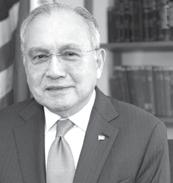
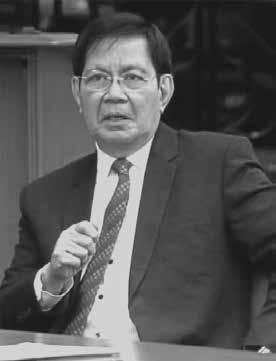
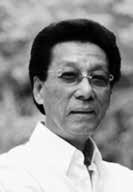
Images from Senate and Congress website
JPMorganChase Partners With Sports Legends to Help Athletes Master Their Money
Athletes’ careers are unpredictable. Less than 2% of NCAA college athletes turn professional and many professional athletes retire before they’re 35. Yet nearly 65% of athletes say they never had financial education in school.
To help address the unique challenges athletes face, JPMorganChase announced a new initiative to help athletes navigate every aspect of their financial lives, from early career stages through retirement.
The JPMorganChase Athlete Council brings together some of the world's most accomplished sports figures who will meet with JPMC leaders on a regular basis to discuss the unique financial needs of athletes and guide the development of programs to address them.
“Sports careers can be short and retirement unexpected,” said Kristin Lemkau, CEO of J.P. Morgan Wealth Management. “We want to develop a program by athletes for athletes to help them from college to professional sports to retirement.”
“Athletes face unique challenges and opportunities. Having the right educational resources and guidance is critical to making smart decisions about money as your career evolves,” said 3-time NBA champion and 2-time NBA Hall of Famer Dwyane Wade.
At its inaugural meeting, JPMorganChase Athlete Council members shared their own personal experiences and discussed a range of topics, including the needs athletes have at different stages of their career and how to support them effectively in making smart financial choices.
"I'm excited to join the JPMorganChase Athlete Council and to serve as chair of this incredible group of athletes. The Council gives us the opportunity to share our experience and insights to help athletes build their financial knowledge and plan beyond their playing careers," said Wade.
JPMorganChase has a long history of serving athletes, teams and owners, including sponsorship tournaments, venues and individual teams and players. Chase is also the designated financial education partner for League One Volleyball (LOVB) and Hudl,
a leading sports tech platform for youth to college athletes.
“Our goal is to truly empower the athletes of today – and tomorrow – with financial literacy throughout their career,” said Stevie Baron, Head of Private Client Banking at JPMorganChase. “We are excited to partner with some of the nation’s top athletes to deliver a fully integrated experience.”
The JPMorganChase Athlete Council includes:
• Ally Love – Peloton Instructor + VP, Instructor Strategy & Development | TODAY On-Air Contributor | Founder & CEO, Love Squad
• Tom Brady – Seven-time Super Bowl champion with 10 Super Bowl appearances and 18 division titles
• Dwyane Wade (chair) – Entrepreneur, twotime NBA Hall of Famer and three-time NBA champion celebrated for his legendary career with the Miami HEAT
• Megan Rapinoe – Former professional soccer winger who co-captained the U.S. Women’s National Soccer Team and won two World Cup titles and an Olympic gold
• Kayvon Thibodeaux – New York Giants edge rusher and 2022 NFL Draft fifth overall pick. Founded JREAM to support underserved youth
• Alex Morgan – Two-time FIFA World Cup champion, Olympic gold medalist and former co-captain of the U.S. women’s national soccer team
• Jalen Brunson – Knicks All-Star Guard and Clutch Player of the Year, empowering youth through his Second Round Foundation
• Sue Bird – Seattle Storm WNBA champion and 5-time Olympic gold medalist turned firstever managing director for USA Women’s Basketball
• A’ja Wilson – Unprecedented four-time WNBA MVP winner who’s led the Las Vegas Aces to three championships
Names listed in photo order from left to right for each row.
“Every athlete on this Council has been deeply committed to paying it forward to help the more than 500,000 college, working and retired athletes avoid some of the same pitfalls they stepped in. At JPMorganChase, we can
help every athlete regardless of income level manage their financial plan for the future,” said Lemkau.
The firm is also supporting athletes with its new “Athlete Center of Excellence” run by financial professionals who deeply understand the athlete experience and through financial education outreach at universities and major sports events to meet athletes where they are with curriculums designed specifically for them. JPMorganChase recently launched a dedicated educational content hub at jpmorgan.com/ace with a range of resources for athletes and tailored guides for each phase of their sports career.
Participation on the Athletes Council or at JPMorganChase events does not constitute an endorsement or testimonial relating to the investment advisory services of J.P. Morgan Securities LLC, its advisors, and wealth management businesses.
Learn more about the JPMorganChase Athlete Council at: jpmorgan.com/athletescouncil
***
For informational/educational purposes only: Views and strategies described in this article or provided via links may not be appropriate for everyone and are not intended as specific advice/recommendation for any business. Information has been obtained from sources believed to be reliable, but JPMorgan Chase & Co. or its affiliates and/or subsidiaries do not warrant its completeness or accuracy. The material is not intended to provide legal, tax, or financial advice or to indicate the availability or suitability of any JPMorgan Chase Bank, N.A. product or service. You should carefully consider your needs and objectives before making any decisions and consult the appropriate professional(s). Outlooks and past performance are not guarantees of future results. JPMorgan Chase & Co. and its affiliates are not responsible for, and do not provide or endorse third party products, services, or other content.
Deposit products provided by JPMorgan Chase Bank, N.A. Member FDIC. Equal Opportunity Lender.
lows a milestone noted by the city in 2025, when Cerritos described its council as the city’s first all-Asian American City Council and its first majority-female governing body.
In remarks released by the city, Johnson said she was “grateful for the opportunity to serve as the first Filipina Mayor” of her hometown.
A mayor shaped by local roots and public service
Johnson’s appointment reflects a long-standing connection to Cerritos and decades of public service within Los Angeles County.
A resident since 1971, she attended Patricia Nixon Elementary School, Haskell Junior High School and Artesia High School.
Johnson is of Filipino American heritage.
Her professional career spans 39 years with Los Angeles County, including 20 years as a paralegal in the District Attorney’s Office. She later served as a field deputy to Los Angeles County Sheriff Alex Villanueva from 2021 to 2022.
She previously served on the ABC Unified School District Board of Education from 2011 to 2017 and was elected to the Cerritos City Council in 2022.
Johnson currently serves as a special assistant to Los Angeles County Supervisor Janice Hahn.
Pulido returns to leadership
role
Mayor Pro Tem Mark E. Pulido brings decades of experience across local, state and federal government.
Pulido, who is Filipino American, was first elected to the Cerritos City Council in 2011 and
served as mayor in 2014 and 2018. He is recognized in prior reporting as the city’s first Filipino American mayor.
He is a former president of the ABC Unified School District Board of Education.
His public service includes roles as an Assembly consultant, a California State Senate district director and chief of staff to former U.S. Representative Alan Lowenthal.
Pulido is also a candidate for California’s 67th Assembly District in the June 2, 2026 primary.
Yokoyama concludes term
Outgoing Mayor Frank Aurelio Yokoyama concluded his term after a period focused on public safety initiatives and civic engagement.
Yokoyama, whose father is Japanese American and whose mother is Filipina American, reflects the multicultural composition of Cerritos.
He graduated from the University of California, Berkeley’s business program and Harvard Law School and is an attorney and businessman.
City communications, including “From the Mayor’s Desk” updates issued during his tenure, referenced the expansion of automated license plate recognition systems and the introduction of a municipal drone program to support law enforcement operations.
He also supported civic initiatives such as the L.E.A.D. Cerritos leadership academy and the City Celebrations Committee, which coordinates events including the Festival of Friendship and UbeFest.
In city-issued communications near the end of his term, Yokoyama emphasized an ap-
proach to governance centered on listening, staying informed and acting in what he described as the best interests of the community.
A city at 70
Incorporated on April 24, 1956 as Dairy Valley and renamed Cerritos in 1967, the city has grown into a suburban community of about 50,000 residents.
As it approaches its 70th anniversary, Cerritos continues to balance long-term fiscal planning with maintaining public services and community amenities.
The city’s fiscal year 2025–2026 General Fund includes projected revenue of approximately $101.5 million, with sales tax as its largest revenue source. Retail activity, including the Cerritos Auto Square, plays an important role in supporting municipal finances.
Civic institutions such as the Cerritos Library and the Cerritos Center for the Performing Arts remain central to community life.
Leadership transition Cerritos’ annual reorganization reflects a governance structure in which leadership rotates among elected officials rather than being directly elected citywide.
The newly configured leadership team will oversee policy direction, budget planning and city programs for the 2026–2027 term.
Johnson’s appointment represents a milestone in the city’s evolving civic leadership, while Pulido’s continued role reflects the longstanding presence of Filipino American leadership in Cerritos governance. n
Marcos appoints trade diplomat...
leadership, although a formal policy roadmap has not yet been released.
Angara-Mathay succeeds Christina Garcia Frasco, who was earlier reassigned within the administration. Tourism Undersecretary Verna Buensuceso previously served as officer-in-charge during the transition, based on government information.
Transition and Policy Briefings Underway The Department of Tourism has not issued a formal policy
statement under Angara-Mathay as of this writing. Government officials said transition briefings and internal consultations are underway as she assumes leadership of the agency.
Professional Background and Family Profile
Ma. Bernardita “Dita” Angara-Mathay is a Philippine career trade and investment official with experience in economic diplomacy under the Department of Trade and Industry’s Foreign Trade Service Corps. She previously served at the Philippine Trade and Investment Center
(PTIC) in Tokyo, Japan, supporting trade and investment promotion initiatives between the Philippines and Japan. Her work has focused on strengthening market access and investment linkages for Philippine industries through overseas commercial postings.
Angara-Mathay is married to Robbie Mathay, who has been associated with leadership roles in economic zone development, including the Aurora Pacific Economic Zone and Freeport Authority (APECO), based on institutional records. n
U.S. moves to automatic Selective Service...
proposed rule for federal review.
The agency expects full implementation by December 2026. Under current law, men ages 18 to 25 are required to register. Under the new system, eligible men will be enrolled automatically using federal data sources, reducing cases of unintentional non-registration. The agency reported an 18-year-old registration rate of about 42% in 2024. No draft, no expansion of scope The policy does not reinstate a military draft. The United States remains an all-volunteer force, and any move toward conscription would require separate ap
proval from Congress and
Avoid tax scams and taxpayer ID theft...
appear legitimate. Consumers are advised not to disclose sensitive information — including Social Security numbers, PINs, passwords or banking details — in response to unsolicited outreach.
The FTC advises recipients of such calls to hang up and independently verify any claim using official contact information listed on IRS.gov. Taxpayers should not rely on phone numbers or links provided by the caller.
How the IRS makes contact
The IRS states that it generally initiates contact with taxpayers by mail, particularly for issues involving unpaid taxes or account verification. While the agency may call in certain cases, it does not demand immediate payment over the phone or initiate contact through social media channels.
Officials emphasize that emails and text messages from the IRS are typically sent only with taxpayer consent, and unexpected
links or attachments should not be opened. Common red flags
Federal agencies highlight several warning signs associated with tax scams: promises of unusually large refunds; pressure to act immediately; threats of arrest, deportation or legal action; and demands for payment using gift cards, wire transfers, prepaid debit cards or cryptocurrency.
The IRS underscores that such payment methods are not used for legitimate tax collection.
The agency’s annual “Dirty Dozen” advisory continues to flag phishing, misleading tax advice circulating online, identity theft involving IRS accounts, and schemes involving fraudulent tax preparers.
What to do if targeted
Consumers who believe they have been targeted or victimized are urged to act quickly. Financial institutions should be contacted immediately if funds
have been transferred. Suspected scams can be reported to the FTC at ReportFraud.ftc.gov, while phishing messages can be forwarded to the IRS. Individuals concerned about identity theft may consult the IRS Identity Theft Central portal and consider enrolling in an Identity Protection PIN program, which helps prevent fraudulent tax filings.
Complaints involving robocalls or scam texts may also be filed with the FCC through its consumer complaint system.
Key reminder Officials stress a consistent principle: government agencies do not demand urgent payment through unconventional means or threaten immediate arrest over the phone. Any communication that pressures immediate action or requests sensitive financial data should be treated with caution and independently verified through official government channels. (AJPress)
DAteline PhiliPPines
PH government, business groups push logistics fixes, oil sourcing as fuel volatility lifts inflation
by AJPress
MANILA — Executive Secre-
tary Ralph Recto met with leaders of the country’s major business chambers on Monday at Malacañang to coordinate a response to supply chain disruptions and fuel price volatility that have pushed inflation to 4.1 percent in March, near a two-year high.
Participants included the Philippine Chamber of Commerce and Industry; Makati Business Club; and Management Association of the Philippines, alongside petroleum industry representatives. Logistics bottlenecks
Recto directed agencies to remove unnecessary checkpoints delaying the transport of perishable goods, a move aimed at sta-
bilizing supply and limiting price pressures. Officials noted that diesel remains a dominant cost driver in domestic cargo movement. A proposal to establish off-site container yards has been referred to the Bureau of Customs to ease congestion at the Port of Manila.
The measure aligns with a policy by the Metropolitan Manila Development Authority exempting vehicles carrying fuel and essential goods from truck bans.
Energy buffer, diversification Energy Secretary Sharon Garin said current oil inventories are sufficient for about 50 days, providing a buffer as global markets remain unstable.
The administration is pursuing supply diversification through “oil diplomacy,” including talks with nontraditional partners such as Russia, to reduce exposure to ex-
ternal shocks.
Recent volatility saw diesel prices rise from prior ranges below P74 per liter to triple-digit levels in some areas, with gasoline also climbing.
Private sector role
Recto emphasized continued coordination with industry, urging energy-saving measures and transparent pricing. Business groups, in turn, pushed for expanded digitization of trade documentation to reduce delays, citing administrative inefficiencies as a contributing factor to supply chain strain.
The consultations form part of the government’s response under a declared energy emergency, alongside targeted subsidies and operational adjustments to manage fuel consumption while maintaining economic activity. n
Malacañang denounces fabricated reports of President’s cancer diagnosis
by AJPress
MANILA — Malacañang on
April 5, 2026 warned against the circulation of fabricated information after a graphic falsely claiming that Ferdinand Marcos Jr. had been diagnosed with Stage 4 colon cancer spread widely on social media.
Palace officials described the material as a “blatant lie,” noting that the graphic improperly used the branding of GMA Integrated News, ABS-CBN News, and TV5. As of posting, none of the organizations had published or broadcast such a report. The Presidential Communications Office said the spread of falsified health information was “irresponsible and deceptive,” adding that it risks misleading the public and undermining confidence in institutions.
Medical disclosure and clarification
The false claim emerged in the wake of a legitimate health disclosure earlier this year. In late January 2026, the Presidential Communications Office confirmed that Marcos had been diagnosed with diverticulitis, a condition involving inflammation in the digestive tract.
On January 28, 2026, the President issued a video message stating he was in stable condition and undergoing treatment, including antibiotics. By February 11, 2026, Palace Press Officer Claire Castro publicly rejected circulating cancer claims and confirmed that the President had resumed official duties.
Malacañang said that, as of early April, the President continued to carry out government functions, including meetings and policy directives.
Legal framework on disinformation Officials reiterated that the publication of false information that may endanger public order is punishable under Article 154 of the Revised Penal Code. They added that offenses committed through digital platforms may be subject to enhanced penalties under the Cybercrime Prevention Act.
The Palace urged the public to rely on verified government channels and established news organizations when assessing claims involving public officials.
Fact check No official record or medical disclosure supports claims that the President has cancer. Government-issued statements confirm only a prior diagnosis of diverticulitis, from which he was reported to have recovered and resumed a full schedule. n
Philippines, Holy See mark 75 years of diplomatic relations
Enduring ties
by AJPress
MANILA — Ferdinand R. Mar-
cos Jr. joined Catholic Church leaders and members of the diplomatic corps in Manila to mark the 75th anniversary of diplomatic relations between the Philippines and the Holy See, reaffirming ties rooted in shared values and cooperation on social and humanitarian priorities. The reception, held at the Ayuntamiento de Manila in Intramuros, commemorated the formal establishment of ties on April 8, 1951, based on official Philippine records.
The Philippines, one of the world’s largest predominantly Catholic nations, has maintained sustained engagement with the Holy See for more than seven decades. Cooperation has extended beyond ecclesiastical relations to include humanitarian assistance, education, migration, and disaster response initiatives. In remarks during the event, Marcos emphasized partnerships oriented toward the “common good,” reflecting shared priorities in human dignity, social welfare, and community development. Continuing engagement
The Holy See, which maintains diplomatic relations with over 180 countries, engages internationally through moral and humanitarian diplomacy. Its relationship with the Philippines has included apostolic visits, high-level exchanges, and coordination on global concerns such as poverty alleviation and migrant welfare.
A ceremonial toast between Marcos and a senior Vatican diplomat—an archbishop-level representative—underscored the milestone.
Officials said the anniversary reaffirmed longstanding ties, with no new bilateral agreements announced. n
Another Filipino citizen died following a missile attack in Israel amid the Middle East conflict, the Department of Foreign Affairs has confirmed.
by CeCile BalTasar Philstar.com
Arroyo denies role in alleged plot to oust House Speaker Dy
by CrisTina Chi Philstar.com
MANILA — Gloria Macapagal
Arroyo has spent a quarter-century in the middle of Philippine speakership fights: engineering them, surviving them, or denying she had anything to do with them — sometimes all at once. This week, she has found herself back in familiar territory.
The Pampanga congresswoman on Friday, April 10, issued a statement categorically denying involvement in a reported move to unseat House Speaker Bojie Dy III, in response to reports linking her to a speakership grab allegedly backed by Vice President Sara Duterte.
“I categorically deny the allegations concerning the supposed ouster of Speaker Bojie Dy that surfaced yesterday,” Arroyo wrote in a social media post. “I reaffirm my confidence in his leadership of the House of Representatives. Our mutual support, which began many years ago with his late father, remains unbroken.”
The reported effort to install Arroyo as speaker has been linked to attempts to halt the impeachment proceedings against Duterte.
According to reports, recruitment efforts among Metro Manila and Mindanao lawmakers had garnered fewer than 30 supporters — far short of the 160 needed to elect a new speaker in the 318-member House.
The ouster talk surfaced around a week before the House justice panel is set to resume hearings on two impeachment complaints against Duterte. The second hearing is scheduled for April 14, after the Supreme Court declined to issue a temporary restraining order sought by Duterte’s camp.
The House speaker said the justice panel would proceed in accordance with the Constitution and that all parties would be heard. Duterte faces allegations of fund misuse, threats against the first family, and unexplained wealth.
Arroyo’s history with power grabs
Arroyo has denied involvement in speakership plots before. In May 2023, she rejected reports of a move against then-Speaker Martin Romualdez. At the time, she acknowledged her own history of reversing public commitments — she ran for president in 2004 after saying in 2002 she would not — but said she no longer had speakership ambitions. Her track record in House leadership fights however is extensive. In February 2008, Speaker Jose de Venecia Jr. was removed through a motion to vacate. De Venecia accused Arroyo, who was president at the
SOUTHERN CALIFORNIA REGIONAL RAIL AUTHORITY
RFP No. EP254-27
Repair & Return of Wheel sets and Gearboxes
SCRRA is seeking proposals for Repair & Return Services. Solicitation documents may be obtained at https://metrolinktrains.com/ doing-business. Proposals are due at 2:00 P.M. (PT) on 6/2/26. For further information, contact Dorothea Cantero, Sr. Contract Administrator, at (213) 452-0302 or CanteroD@scrra.net. 4/11/26 CNS-4025452# ASIAN JOURNAL (L.A.)
time, of engineering his removal. In July 2018, the start of President Rodrigo Duterte’s State of the Nation Address was delayed by nearly half an hour after the House informally convened to elect a new speaker. Arroyo won a majority of votes, ousting Pantaleon Alvarez. She and thenDavao mayor Sara Duterte were said to have driven that effort. Most recently, Romualdez resigned
Ann V. de Vera, was killed in a missile attack in Tel Aviv on Feb. 28, the first day of the war. De Vera was 32, a native of Pangasinan, and had been working as a caregiver in Israel since 2019.
Over the past few days, U.S. President Donald Trump and Israeli Prime Minister Benjamin Netanyahu have been warning Iran that they “will continue to crush them,” amidst Iran’s refusal to completely open the Strait of Hormuz. Before the war, the strait provided passage to about a fifth of the world’s seaborne oil supply. The closure has triggered a global oil crisis. On April 5, Trump gave Iran 48 hours to reopen the Strait. However, Tehran called his threat “unbalanced and foolish,” adding, “The doors of hell will be opened to you,” if America attacked Iran’s infrastructure.
Rep. Gloria Macapagal-Arroyo (2nd Districts) attends the Regular Session of the 20th Congress at the House of Representatives, March 4, 2026. Arroyo office
FeAtures OPiniOn
The heavy toll of distant drums: who pays for the wars of the great
How global conflicts drive up the cost of living in the Philippines and shift the burden to Filipino families at home and abroad.
CONFLICT in the Middle East is often framed in the language of statecraft, deterrence, escalation, alliances, and shifting balances of power. For many Filipinos in the United States, however, its consequences are far more concrete. They appear in household budgets, in remittances recalculated, and in the steady effort to sustain families across borders.
The Philippines remains one of the world’s most remittance-reliant economies. Data from the Bangko Sentral ng Pilipinas show that cash remittances reached $35.63 billion in 2025. According to the World Bank, these flows account for roughly 8 to 9 percent of gross domestic product, underscoring their central role in household consumption. The United States remains the largest recorded source, contributing more than $14 billion annually. In periods of global instability, that role becomes more consequential. The economics of war’s aftermath
Editorial
The headline question is not rhetorical. It is answered in the way costs are distributed. Wars are decided by states, but their economic consequences are dispersed. They move through
THERE is, at this point, no clear end in sight to the war involving Iran.
What began as a regional confrontation has evolved into a broader, more dangerous conflict, with ripple effects now felt across the global economy.
Oil prices have surged unpredictably, shipping routes face heightened risks and supply chains – already strained from previous disruptions – are once again under pressure.
For many countries, this is a geopolitical crisis. For ASEAN, it is something far more immediate: an economic test of resilience.
Southeast Asia remains heavily dependent on energy imports, particularly from the Middle East. As tensions escalate, even the mere threat of supply disruption is enough to drive up costs, weaken currencies and increase inflationary pressures. Across the region, governments are already grappling with rising fuel prices, higher food costs and growing concern among ordinary citizens.
This is the kind of external shock that ASEAN economies
ElfrEn S. Cruz Breakthrough
IN ancient mythology, a hero was a man of great strength and courage. He was favored by the gods and sometimes, like Hercules, was descended from the gods. The root of the word “hero” is the Greek work “heros,” which means “to watch over others.” In modern times, the term “hero” is used to describe a man or woman for their perceived courage, nobility of spirit and extraordinary exploits.
In the Philippines today, we are in dire need of a hero, of a person of extraordinary courage who also looks out for others. Perhaps the most credible example of a modern hero was Ninoy Aquino, who sacrificed his life because he said, “The Filipino is worth dying for.”
The country today is in a terrible state because we have not found the right leaders who will lead us from this morass of corruption and the dominance of selfish and
oil markets, shipping lanes, and commodity pricing before settling far from the battlefield. For the Philippines, the transmission is direct. As a net importer of oil, the country is exposed to global price shocks. The Department of Energy has repeatedly underscored this vulnerability, while the Bangko Sentral ng Pilipinas has identified rising oil prices as a key inflation risk. When supply tightens, fuel costs rise, transport becomes more expensive, and the price of basic goods follows. These effects are immediate and regressive. And because household consumption is partly sustained by remittances, the burden does not remain within the Philippines. It extends outward to the Filipino diaspora. A conflict without a single front
No end in sight: Why Asean must act now
are particularly vulnerable to –not because of weakness, but because of deep integration into global trade and energy systems. Yet in every crisis, there is also opportunity. The ASEAN Leaders’ Summit in May now takes on a heightened level of importance. Originally envisioned as a routine gathering to advance regional cooperation, it has instead become a critical platform for collective action at a time of uncertainty.
The decision to proceed with the summit – albeit in a more focused format – is both practical and symbolic, underscoring a fundamental truth: when external pressures mount, ASEAN must come together, not drift apart.
But unity alone is not enough. The summit must move beyond carefully worded statements and diplomatic language. It must deliver concrete, coordinated measures that directly address economic challenges confronting the region.
Topping the list is energy security. ASEAN member-states must explore mechanisms for greater coordination – whether through shared strategic reserves, synchronized policy responses or even joint procure-
ment initiatives where feasible. While such measures may not eliminate volatility, they can mitigate its impact and send a strong signal of regional cohesion.
Equally important is food security. Rising energy costs inevitably translate into higher agricultural and transportation expenses, placing pressure on food prices. For many countries in the region, this is not merely an economic issue but a social one. ASEAN must therefore ensure that supply chains remain open, efficient and protected from unnecessary disruptions. Financial coordination is another area that requires immediate action. Currency pressures and inflation are already emerging concerns. Greater dialogue among finance ministers and central banks – possibly leading to coordinated responses – can help stabilize markets and reassure investors.
Then there is the human dimension. Millions of Southeast Asians live and work abroad, including in regions affected by conflict. Their welfare must remain a priority. ASEAN cooperation in ensuring their safety and facilitating assistance when u PAGE 7
In need of heroes
cowardly leaders. The need to select heroes to be our leaders in the 2028 elections is so crucial that I feel we desperately need divine intervention.
When there are heroes, there are also villains. During the Second World War, the villains were obvious. These were the Japanese invaders and the Filipinos who collaborated with these invaders. Today, the villains are not so easy to identify and many of them are, in fact, prominent figures of authority.
In order to wage a crusade against corruption and the evils in our society in 2028, we must be able to identify the villains and the heroes in our society today.
The late nationalist writer F. Sionil Jose had a radical view that the Filipino indio is one oppressed by a new colonizer, the Filipino wealthy elite who send their wealth abroad: “… distilled from the blood and sweat of our Filipino poor.”
Andres Bonifacio also said in an English translation by Teodoro Agoncillo: “Reason tells us to be united in sentiment, in thought
What is unfolding in the Middle East is not a single war, but a layered conflict in which direct fighting, regional rivalries, and global interests intersect.
At its core is the war between Israel and Hamas in Gaza, the most visible front, marked by sustained military operations and a deepening humanitarian crisis.
IT has been over three months since Christmas and we have yet to see some big names brought to court for the ghost flood control projects. An estimated P1 trillion of the people’s money has reportedly been lost in various corruption-marred pork barrel projects under DPWH.
The Ombudsman who promised to make some big shots spend Christmas in jail is finding it difficult to even get the Secretary General of Congress to submit SALNs of congressmen under investigation. He has threatened to suspend the Secretary General from office if the subpoena from the Ombudsman’s office is continually ignored. Quite dramatic. But all it would take, if this administration is not doing a moro-moro, is for BBM to call the House Speaker and ask for the SALNs the Ombudsman wants. So much time has been wasted with no tangible results. And that’s just the first step. It is important that they start showing some progress in this ghost projects drama. This
Beyond it lies a broader regional dynamic. Iran is widely understood to support or align with several armed groups, including Hezbollah in Lebanon, the Houthis in Yemen, and militias in Iraq and Syria. Their actions, while locally driven, collectively extend Iran’s regional influence. The result is a proxy-driven environment with u PAGE 7
is particularly important now that the nation is facing a grave energy crisis that will surely morph into a crisis in food and livelihood as well.
BBM needs all the credibility he can muster to lead the nation in this difficult time. So far, he has not delivered on his promise to jail those behind this scam. Zero trust.
Credibility also means telling the people the truth about our current situation. BBM and his officials have been insisting everything is normal when we can all see things are all but normal. They claim they don’t want the people to panic.
But the oil crisis will definitely get worse with the war seemingly becoming one of those prolonged American excursions in the Middle East. When the worst inevitably happens, people will know BBM and his officials didn’t tell the truth.
Good thing that Energy Secretary Sharon Garin realized she must manage expectations and decided to tell the real score. This became especially necessary after government propagandists went to town about the so-called deal our diplomats got from Iran to allow our tankers free passage in the Strait of Hor-
muz. People started thinking that the agreement means oil product prices will soon start going down. It really isn’t as simple as that and Secretary Garin did the right thing in setting things right. So, the strait opens for two weeks as part of what is supposedly an interim agreement between the US and Iran. Some tankers that had been previously loaded will now be able to move their cargo through the strait. But that will still be far from normal.
A report suggested that as of March 6, 2026, over 400 tankers were stranded in the Persian Gulf. Of those, roughly 60 are very large crude carriers (VLCCs) anchored or trapped inside the Gulf. The first order of business is to clear the long queue of empty tankers which typically take up to 48 hours each to take on a cargo of oil. As of April 7, 2026, the International Energy Agency reports that 72 energy assets in the region have been damaged, with roughly one-third classified as “severely” or “very severely” damaged. Refineries and oil production facilities that were shut down u PAGE 7
and in purpose in order that we may have the strength to find the means of combatting the prevailing evil in our country.”
In the Philippines, April 9 is observed as Araw ng Kagitingan or Day of Valor. This national holiday commemorates the bravery, sacrifice and resilience of the Filipino soldiers during World War II, especially those who fought and died in the historic battle of Bataan.
On April 9, 1942, Filipino and American soldiers, after months of fighting in extremely difficult conditions, were forced to surrender to the Japanese forces in Bataan. This surrender led to the Bataan Death March, where tens of thousands of prisoners of war were forced to march under brutal conditions. Many suffered and died along the way. This is one of the darkest chapters in Philippine history. However, April 9 is not for remembering a military defeat. It is about honoring the extraordinary courage, endurance and patriotism of those who fought and suffered for the country’s freeu PAGE 7
THE world stands at an inflection point—one that, if we choose to recognize and embrace it, could determine the course of history in this century. The question is whether it will finally produce the paradigm shift we need: toward less ener
gy-intensive lifestyles and away from an economy that has long placed profit above people and the planet.
Nobody can turn back the hands of time. To insist on returning to the prewar status quo is naïveté at best, willful ignorance at worst. The world will not return to what it was before Feb. 28—we are already deep in uncharted territory.
The war in Iran, even if the conflict ends after a two-week ceasefire, is a watershed moment—not a blip. Few geopolitical events in this century have had a lasting impact on the global economy and upended international relations. The closest
precedents were the end of the Cold War in 1991, which remade the world order, and the Sept. 11 attacks, which launched the United States-led war on terror and forced nations to choose sides. Then came the COVID-19 pandemic, which laid bare the fatal fragility of just-in-time supply chains and exposed how deeply interconnected—and therefore vulnerable—the global trade had become.
I have long written about the urgency of transitioning to a low-carbon economy to put us on a path to “net zero” because, first, economic growth sustained by fossil fuels is inherently unsustainable. At a certain point, growth will plateau because any progress underpinned by finite resources can’t be sustained indefinitely without sacrificing the health of the people and the planet. Common sense. Our resources are finite—this much is common sense. A sustainable future demands that we use what we have
wisely, without compromising the ability of future generations to meet their own needs. The harder question is why the world continues to power an economy built on the unrealistic promise of perpetual progress with the very fuels—coal, oil, and natural gas—that are exhaustible and planet-polluting (and controlled by a few countries). And why, knowing this, have we waited so long to change?
Second, as long as the Philippines—along with Japan— imports over 95 percent of its oil from the Middle East, it will remain hostage to Gulf nations whose monopolies over crude, oil, and natural gas supplies largely dictate global prices. This heavy dependence on the Middle East, which holds half of the world’s proven conventional reserves, leaves our energy security perpetually exposed to flare-ups in the region. That we deregulated our downstream oil industry in 1998—stripping the government u PAGE 7
Ballots to decide future of Los Angeles streetlights as theft and outages strain system
Property owners will weigh a Proposition 218 assessment increase aimed at modernizing Los Angeles’ aging streetlight system, as officials cite widespread outages, copper theft, and decades-old funding levels driving the need for upgrades.
by AJPress
LOS ANGELES — Property
owners across the City of Los Angeles are set to receive assessment ballots beginning April 17 in a consequential vote that will determine whether the city can modernize its street lighting system, reduce repair delays, and respond to a surge in copper wire theft that has left tens of thousands of streetlights in need of repair or replacement.
The ballot process, conducted under California’s Proposition 218, would mark the first broad update to most individual street lighting assessments since 1996, an aging funding structure that city officials say no longer reflects the scale or demands of the system. More than 95% of the bureau’s funding is derived from property assessments that have remained largely unchanged for nearly three decades.
Leadership outlines stakes at ACoM briefing
At an April 8 briefing presented by American Community Media at the Bureau of Street Lighting Field Operations Yard, Executive Director and General Manager Miguel Sangalang appeared with senior leadership including Silvia Torres, Street Lighting Superintendent II of Field Operations; Fabian E. Cheng, Assistant Director and Chief Engineer; and Manuel Reyes Hago, Street Lighting Construction and Maintenance Superintendent.
“We are currently operating with roughly 45% of the resources required for a system of this scale,” Sangalang said.
He added that the bureau is responsible for maintaining more than 220,000 streetlights across Los Angeles.
A system under strain
The Los Angeles Bureau of
PAGE 6
Street Lighting maintains more than 220,000 streetlights across Los Angeles, covering roughly two-thirds of the city and nearly 4,500 miles of streets.
The system is supported by an extensive underground network of approximately 9,000 miles of conduit and 27,000 miles of copper wire, an engineering footprint that underscores both its scale and vulnerability.
Much of the infrastructure dates back decades, with many fixtures more than 50 years old and some approaching a century in service.
Officials say the system is currently managing more than 32,000 service requests, while on a typical night more than 25,000 streetlights may be non-operational.
Copper theft drives shift in strategy
“This is not just wear and tear—it is repeated, targeted damage,” officials said of copper wire theft, which has become a central strain on maintenance operations.
Because the system relies on underground copper wiring, theft incidents often require full circuit restoration rather than simple fixture repair, significantly increasing costs and prolonging outages.
In response, the city is advancing a transition toward solar-powered streetlights, which eliminate underground copper wiring and reduce vulnerability to theft. Installations have begun in areas including Lincoln Heights and Cypress Park as part of an initial rollout.
The broader plan also includes expanding field repair capacity to address the existing backlog and improve response times.
Proposition 218 voting structure Because street lighting is
classified as a “special benefit,” it is funded through property assessments rather than the city’s general fund. Under Proposition 218, any increase must be approved through a property owner ballot process.
Ballots are tabulated based on the assessment assigned to each parcel. The proposal will be rejected only if a majority of returned assessment-weighted ballots are cast in opposition.
Ballots that are not returned are not counted.
For the 2026–27 fiscal year, the proposed maximum rate is $58.83 per benefit point, with final assessments varying based on land use and parcel characteristics.
Oversight and cost considerations
“The proposed increase would include a three-year auditing mechanism,” Sangalang said, emphasizing accountability in how funds would be used.
The proposed increase comes as property owners continue to face broader cost pressures, placing added scrutiny on the city’s ability to deliver measurable improvements in system reliability and public safety.
Officials say maintaining consistent street lighting is directly tied to public safety, with improved visibility associated with reduced crime risk and fewer traffic-related incidents.
Timeline
Ballots must be completed and returned by June 2, 2026, with final tabulation expected following a public hearing.
The outcome will determine whether Los Angeles proceeds with a systemwide modernization effort or continues operating under funding levels established nearly three decades ago, as infrastructure demands and public safety risks continue to intensify. n
In need of heroes...
dom. This is also the time to recognize that heroism is not limited to soldiers. Everyday Filipinos who contribute to the country with integrity, courage and compassion also embody the spirit of Araw ng Kagitingan. As Joseph Campbell once wrote, “A hero is someone who has given his or her life to something bigger than one’s self.” In the days and months to come, as we prepare and work to elect leaders of proven integrity and courage, we should be aware that perhaps Election Day in 2028 will be another Araw ng Kagitingan.
Freedom is never free. We must appreciate the liberty and the restoration of democracy. We must be ready to fight for its preservation. There will be difficult moments over the next two years. Standing up for what is right is not always the most popular thing to do. But each and every one of us can be a hero or someone who acts with courage, even with fear, and inspires others through their actions and their values. Heroes can be soldiers like those especially remembered on Araw ng Kagitingan. But heroes can also be teachers, doctors, parents, workers and ordinary
citizens who choose to do what is right even when it is difficult and does not have popular support at that moment.
In the country today, heroes are those who have a deep love of country. Heroes are persons whose actions are guided by a desire to serve others and protect the dignity and freedom of the Filipino people. (Philstar.com)
* * * The opinions, beliefs and viewpoints expressed by the author do not necessarily reflect the opinions, beliefs and viewpoints of the Asian Journal, its management, editorial board and staff.
* * *
Email: elfrencruz@gmail.com
No end in sight...
PAGE 6
needed is both a moral obligation and a practical necessity. These are not long-term aspirations. They are immediate imperatives. Which brings us to the role of the Philippines – and of President Ferdinand Marcos Jr.
As ASEAN chair this year, the Philippines is uniquely positioned to guide the regional response. Chairmanship in ASEAN has often been described as facilitative rather than directive. But in moments such as this, leadership takes on a deeper meaning. It becomes about setting the tone, shaping the agenda and building consensus where it matters most.
President Marcos Jr. can steer discussions toward actionable outcomes – ensuring that the summit does not end with declarations alone, but with a shared commitment to concrete steps.
Understanding the stakes, the Philippines navigates both domestic and economic pressures in an increasingly complex global environment – allowing it to act both as a voice of pragmatism and a bridge among differing national priorities.
Beyond the immediate crisis, however, ASEAN must also begin to think more strategically. The lesson from the current sit-
PAGE 6 will take some time to get back to speed. The owners, insurers and crews of tankers will also have to feel comfortable with how safe it is to move, regardless of assurances from Trump. Experts say that any semblance of normalcy cannot be expected until at least four months after a permanent end to the war is reached, not just a truce. For all practical purposes, consider the rest of the year as gone.
So, congratulations to Secretary Garin for having the balls to tell it as it is. That keeps everyone on alert, practicing energy conservation and taking steps to survive the crisis. If things get better by some miracle, at least we were prepared to suffer the worst. Secretary Garin scored one for credibility.
But the credibility of BBM will remain low for so long as the Ombudsman is unable to file appropriate charges against some big shots from Congress who, from hearings and other documents we have seen, are apparently deeply involved in plundering our Treasury in the pork
uation is clear: external shocks are no longer rare events. They are becoming part of a new global reality – driven by geopolitical tensions, economic fragmentation and shifting power dynamics. Given this, resilience cannot be an afterthought. It must be built deliberately and collectively by accelerating efforts toward energy diversification, strengthening intra-ASEAN trade and investing in systems that can absorb and adapt to sudden disruptions. It also means deepening cooperation in areas such as digital connectivity, infrastructure and financial integration.
The goal is not to insulate ASEAN from the world – that would be neither possible nor desirable. Rather, it is to ensure that when the world becomes more uncertain, ASEAN remains steady.
History shows that the strength of ASEAN lies in its ability to find common ground amid diversity. That strength will be tested once again.
The Iran conflict may be geographically distant, but its consequences are already felt across our region. The question is not whether ASEAN will be affected, but how ASEAN will respond. The summit in May must there-
Credibility...
barrel project scams.
A report of the Philippine Center for Investigative Journalism (PCIJ), revealed that BBM greenlit P213.8 billion in unprogrammed funds for so-called “priority” projects in 2023–2024. And most of those projects prioritized graft over the public good, PCIJ observed.
BBM was probably just acting in line with the “kalakaran” or mode of behavior expected of our politicians. This does not absolve BBM but it requires him to explain his actions. If he wants to show he did not benefit from those projects, he must be more active in recovering the stolen cash and sending offenders to jail.
Our government has never been credible when it comes to fighting corruption and this administration has done nothing to change that impression. Except for Erap, no high-ranking official has ever been convicted of corruption and have actually served time. Even with Erap, PGMA quickly pardoned him. It doesn’t help that the Independent Commission for Infrastructure closed shop. Given its
fore be more than a meeting of leaders. It must be a moment of collective resolve.
For the Philippines, with our deep Christian faith most especially at this time – it is a moment of leadership – not in grand declarations, but in the ability to bring nations together toward a common purpose.
As President Marcos Jr. himself has often emphasized, leadership is ultimately about responsibility – responsibility not only to one’s own people, but to the broader community of nations. And in a time of uncertainty, that responsibility becomes even more profound. For ASEAN, the path forward will not be easy, but it is clear: we must act together – decisively, and with purpose. Because in the end, as President Marcos Jr. said, “The true strength of our region lies not in what we face alone, but in what we are able to achieve together.” (Philstar.com) * * * The opinions, beliefs and viewpoints expressed by the author do not necessarily reflect the opinions, beliefs and viewpoints of the Asian Journal, its management, editorial board and staff. * * * Email: babeseyeview@gmail.com
short life, it seems that ICI was created to manage the public image of BBM, to show he is doing something about the ghost projects. Now, ICI’s usefulness has expired.
The ICI recommended filing charges against two senators, two members of Congress, a DPWH engineer and a COA commissioner for plunder. Will cases be filed soon?
For BBM’s credibility, the oil crisis should not be used to buy time in the hope that people will forget the corruption cases. Nope, the trillion pesos stolen from us will be hard to forget. BBM can rescue his plunging approval rating by moving faster to hold even his relatives and friends who are involved in the mess fully accountable. (Philstar. com)
* * * The opinions, beliefs and viewpoints expressed by the author do not necessarily reflect the opinions, beliefs and viewpoints of the Asian Journal, its management, editorial board and staff.
* * * Boo Chanco’s email address is bchanco@ gmail.com. Follow him on X @boochanco
The heavy toll of distant drums...
PAGE 6
multiple pressure points. These include exchanges along the Israel–Lebanon border, attacks on Red Sea shipping, Israeli strikes in Syria, and periodic attacks on U.S. personnel in Iraq and Syria.
At the same time, the United States remains a central actor, supporting Israel while seeking to contain escalation.
This creates a pattern of expanding tension that stops short of full-scale regional war, but still carries global consequences.
Because the conflict intersects with key energy and shipping corridors, disruptions affect oil supply, freight costs, and trade flows. These pressures are transmitted globally, shaping inflation well beyond the region.
From oil shocks to food prices
The impact does not stop at fuel.
The Food and Agriculture Organization notes that fertilizer production depends heavily on natural gas. As energy prices rise, so do agricultural costs, placing upward pressure on
food prices over time. In the Philippines, where food accounts for a significant share of household spending, this effect is both immediate and persistent.
The cost carried across borders
For Filipino families, these pressures converge at the household level. A remittance that once covered essential expenses may no longer suffice.
What follows is not institutional. It is personal.
Research cited by the World Bank shows that remittances often rise during periods of economic stress. In practice, this means Filipino Americans adjust, sending more, sending more often, or reallocating their own budgets to meet growing needs.
This occurs alongside rising costs in the United States.
The Federal Reserve continues to track inflation linked in part to global energy markets, affecting fuel, food, and housing.
The result is dual exposure. Expenses rise at home, and obligations increase abroad.
Global institutions, including the International Monetary Fund, have long noted that commodity shocks disproportionately affect import-dependent economies and lower-income households. The Philippines, and the diaspora that supports it, fit squarely within that dynamic.
Where the cost finally lands
The consequences of conflict rarely remain confined to the regions where it is fought. They move through markets and systems before settling into the daily decisions of families far removed from the original crisis. For Filipino Americans, this is not abstract.
Each year, billions of dollars flow from the United States to the Philippines, sustaining households and absorbing external shocks.
When the cost of living rises there, the adjustment is made here.
And in that quiet transfer, measured in dollars sent, savings deferred, and plans postponed, the true cost of distant wars is revealed. (AJPress)
Mad rush to renewables...
PAGE 6 of its power over fuel pricing and supply, and abolishing the Oil Price Stabilization Fund; sold off Petron, which had effectively neutralized the oil cartel’s grip on pump prices; and abandoned any serious commitment to strategic oil reserves, leaving us with a mere 45 to 60 days of stockpile while Japan maintains 250—speaks volumes about the folly of our lawmakers, and the corrosive influence of oil money over the national interest.
Transition delays. Mirroring the inertia of Western nations, successive Philippine administrations have long delayed the transition to a low-carbon energy pathway. The objections by oil players are familiar: solar panels and solar farms remain costly, the window for harvesting sunlight is limited, wind turbines are difficult to site in mountainous terrain, and many renewable sources lie too far from existing power grids to be practical.
Now, with pump prices going through the roof, Filipinos are taking a second look at renewables—energy sources so accessible and familiar that their very ordinariness had blinded us to their usefulness. Those who can afford it are rushing to buy electric or hybrid vehicles. The rest of the middle class are snapping up rechargeable batteries sold online and sourcing affordable solar panels to install at home, connecting them to power meters in a bid to cushion the blow when electricity bills arrive. Are we witnessing a genuine behavioral change driven by a shift in mindset, or merely a temporary, cost-driven response that has little to do with saving the planet? Either way, it is welcome news for green advocates and a boon to the planet’s health. That it took a war a continent away to force us to seriously consider alternatives to oil is a tragedy in itself—but here we are. Change rarely happens
overnight, yet some events compress years of inertia into weeks. The war in Iran is proving to be one of them. The war in Iran is an unmistakable wake-up call. We either change our ways or resign ourselves to being hapless victims of a crisis we saw coming but refused to address. Survival in this new era of
LEADERSHIP BRIEFING: Los Angeles Bureau of Street Lighting (BSL) officials (from left) Fabian Cheng, Assistant Director and Chief Engineer; Miguel Sangalang, Executive Director and General Manager; Manuel Reyes-Hago, Street Lighting Construction and Maintenance Superintendent; and Silvia Torres, Street Lighting Superintendent II, conduct a press event at the BSL Yard on April 8, 2026. The team detailed the upcoming Proposition 218 ballot measure to fund critical repairs and combat
Investing in Journalism: Why civic infrastructure is key to California’s future
The collapse of local news in America poses a significant threat to our democracy, underscored by flashing headlines.
by By senaTor sTeven Glazer (reT.) and aCoM Co-direCTor Julian Travis do
THE collapse of local news in America poses a significant threat to our democracy, underscored by flashing headlines: a 70% loss of journalism jobs and the closure of one-third of newsrooms in California over the last two decades.
Last year, in response, a historic media coalition representing California’s voices across the racial and ethnic spectrum — including AAPI, Black, Latino, Middle Eastern, Native American, Eastern European, Indigenous and LGBTQ media — joined forces with mainstream outlets to advocate for a lifeline.
Led by a shared conviction that local reporting is a public good, this effort secured a $15 million state investment for the California Local News Fellowship — the nation’s largest publicly funded journalism initiative — and the Propel Initiative.
Today, we are calling on the state governor and legislature to double down on these programs’ successes with a $35 million budget investment to ensure every Californian has access to the news and information they need.
Accountability and return on investment
Administered by UC Berkeley Journalism, the California Local News Fellowship has placed more than 110 early-career journalists in newsrooms across 64% of California’s counties to help close news gaps in underserved urban and suburban communities and remote areas including Shasta, Trinity and Imperial counties. These fellows are active chroniclers of news and information, generating over 4,000 stories annually on critical issues like immigration, healthcare, language access, wildfires and housing insecurity.
This program has also proven to be a sustainable workforce pipeline: 39% of the first cohort alone were hired into permanent, full-time journalism roles immediately following their fellowship.
Parallel to the fellowship program, Propel — a collaboration between the Maynard Institute for Journalism Education, American Community Media (ACoM), California Black Media (CBM) and the Latino Media Collaborative (LMC) — provides the business “engine” support for these statewide newsrooms. By helping leaders develop sustainable revenue strategies and deepen audience engagement, Propel ensures that our trusted messengers remain financially viable to continue serving their local communities.
Solving California’s challenges through information
The state’s investment in journalism is not a subsidy; it’s a high-yield investment in the civic framework undergirding democracy and an informed citizenry. By ensuring local communities have accurate information on issues crucial to their lives like health care and housing, we reduce the long-term costs
The state capitol in Sacramento, California. Image via Canva
of government inefficiency and enhance on-theground accessibility.
Beyond fiscal efficiency, this investment supports good governance. In our information ecosystem, local media outlets are the first responders for working families and small businesses, ensuring they have a voice in the labor and employment landscape. Our advocacy extends to those historically left out of this conversation, including veterans and Native Americans.
But visibility is only the first step. True empowerment requires a watchdog. These reporters hold officials accountable on the local impact of state housing policies and health care accessibility.
Whether the challenge is systemic or individual, involving the explaining of the impact of federal immigration enforcement or ensuring a non-English speaking family can navigate the healthcare system, community and multicultural newsrooms bridge the gap.
This role as a civic bridge also has a profound economic dimension, connecting all of California’s communities to the state’s $71 billion export economy, where global trade growth translates directly into local jobs. Local newsrooms help local communities navigate these consequential systems and policy.
The next phase: Funding our civic infrastructure
To expand on the initial success and meet the scale of the current journalism crisis, our $35 million request includes a vital $20 million allocation for the Civic Media Fund that will trigger a 1-to-2 private match: a $10 million match from Google, driving a total of $30 million into local news outlets serving every corner of the state.
This fund will provide direct resources to newsrooms big and small — digital and broadcast, for-profit and nonprofit, English and multilingual — to reconcile the verification gap caused by social media and AI-generated content. By fueling trusted, fact-based reporting, this investment will strengthen our information infrastructure against the growing tide of misinformation.
By authorizing this $35 million request, the California legislature and governor would position the state to lead the nation towards a future where a solid information infrastructure is not just a necessity but a fundamental right for all. n
Sports economy: Women athletes lure smart money
MANILA — When Filipina tennis prodigy Alex Eala steps onto the court, she brings more than the weight of national pride. She also carries the strong backing of the brands that had placed their faith in her long before the spotlight grew brighter. Her achievements—including becoming the first player from the Philippines to win a Grand Slam junior title—have cemented sponsorships from Nike, Babolat, Globe Telecom and Bank of the Philippine Islands—names she wears with quiet confidence on her match-day gear.
For those companies, backing women athletes like Eala is increasingly a business decision as much as a branding one.
Women’s sports are among the fastest-growing segments of the global sports industry, with expanding fan bases, rising sponsorship revenue and greater visibility, according to Bank of America (BofA).
In a note to clients, the bank identifies about 58 companies— with a combined market capitalization of roughly $14 trillion and about $1.1 trillion in US dollar and euro bond face value—that sponsor major women’s sports leagues across the United States, Europe, the United Kingdom and India.
Companies sponsor sports for many reasons, the bank says, but visibility often sits at the center. In women’s sports, sponsorship can deliver exposure in ways that broadcasting has long done for men’s competitions.
“They may want to connect
Lacson defers flood control probe pending Chavit Singson affidavit
MANILA — The Senate blue ribbon committee looking into the anomalous flood control projects has put off its April 14 hearing, pending the submission of a sworn affidavit by former Gov. Luis “Chavit” Singson and the signing of its partial report by at least five more members of the panel.
Until now, only four members have signed the partial report–still five short of the nine signatures needed to constitute a majority and allow it to be reported out on the Senate floor, according to panel head and Senate President Pro Tempore Panfilo Lacson.
The deferment of the scheduled hearing was contained in Lacson’s letter to Singson on April 7.
“The Committee has deemed it necessary to reschedule the public hearing contingent on the mitigation of the current National Energy Emergency and the formal submission of your sworn affidavit, including all pertinent supporting documents,” the senator said in the letter.
“Additionally, the Committee
has deferred the resumption of the hearings pending the review and signing of the Partial Committee Report currently before its members,” he said.
Lacson said an invitation was initially sent to Singson through email last March 25 and when he did not reply, the panel sent another invitation letter to him at his residence on April 6.
The committee had given Singson until April 7 to submit his draft affidavit, but it did not receive any response, the senator added.
Lacson earlier told reporters that the former governor had sent him a letter indicating that he wanted to testify in the flood control probe. Singson even paid the senator a visit at his office last month.
Despite this, Lacson said he may still consider calling a hearing if Singson submits at least a copy of his draft affidavit, and if five more committee members sign the partial report, which recommends a preliminary investigation into individuals implicated in the controversy, including Sens. Francis “Chiz” Escudero, Jinggoy Estrada, and Joel Villanueva. Those who signed the initial with an audience, so they consider how a sport drives their brand. There may be a revenue impact: fans are influenced by sponsors to buy a product,” BofA says.
The bank adds that sponsorship can also deepen community engagement, open doors to new clients and build employee pride and loyalty.
The strategy reflects the scale of the opportunity
The global sports economy is valued at about $2.3 trillion and is forecast to expand at a 10 percent compound annual growth rate to roughly $3.7 trillion by 2030, according to the World Economic Forum.
Women’s sports still account for only about 2 percent of the total, but BofA says a future shaped by artificial intelligence and robotics—one that could leave people with more free time and less employment pressure— may push more spending toward sports and leisure.
Women’s sports revenues are expected to have more than tripled from 2022 to 2025, surpassing $1 billion for the first time in 2024 at about $1.88 billion, BofA says.
In the United States, revenues could climb 250 percent to $2.5 billion by 2030, according to McKinsey & Company, driven by brand sponsorships, followed by rising ticket sales, broadcast rights and merchandise.
Sponsorships in women’s sports are also growing 50 percent faster than in men’s sports, the World Economic Forum says, rising 2.5 times between 2019 and 2024, according to Nielsen Sports.
Wanted: More visibility, in-
vestments
“Women’s sports are growing fast, with Gen Z linking sports organizations to personal and social standards, Millennials proving most receptive to brand sponsors, and people of all ages seeking greater visibility for their favorite sports and the female stars who are playing them,”
BofA says.
“These aren’t simply men’s sports played by women; women’s games have their own atmosphere, and they are pioneering unique and evolving relationships with fans and sponsors,” it adds.
Even so, challenges remain.
Women’s sports still face limited long-term funding, weaker infrastructure, an underdeveloped talent pipeline and constrained media exposure, BofA says.
“These aren’t simply men’s sports played by women; women’s games have their own atmosphere, and they are pioneering unique and evolving relationships with fans and sponsors,” it adds.
Even so, challenges remain.
Women’s sports still face limited long-term funding, weaker infrastructure, an underdeveloped talent pipeline and constrained media exposure, BofA says.
“Investors tend to approach women’s sports with a short-term return-on-investment expectation. Sports are also competing for fans’ attention on an increasingly crowded playing field,” the bank said.
“Women’s sports need visibility, investment and time,” it adds.
“This means purpose-driven brand partnerships, digital-first strategies and broader media coverage, improved facilities and longer-term investment.” n
Supreme Court denies VP Sara plea to stop impeachment proceedings
by ian laqui Philstar.com
MANILA — The Supreme Court has not issued a temporary restraining order (TRO) on the impeachment against Vice President Sara Duterte.
This comes after Duterte filed a petition for certiorari and prohibition, with a request for an urgent temporary restraining order to prevent the House Committee on Justice from further acting on the impeachment complaints filed against her.
In a press briefer by the Supreme Court on Wednesday, April 8, it said that it consolidated all the petitions concerning Duterte’s impeachment and ordered the Justice Committee to respond within an extendible period of 10 days from receipt of notice.
Pangilinan and Bam Aquino.
Should he fail to get the signatures needed to elevate the partial report to the plenary, Lacson said he is considering delivering a Chairman’s Report and then forward it to the Ombudsman with the documents, transcripts and other evidence gathered in at least seven hearings.
“This is to at least help the Ombudsman in its ongoing preliminary investigations,” he said in a press release. n
Government infrastracture spending falls below program in 2025
by auBrey rose inosanTe Philstar.com
MANILA — The government slashed its infrastructure spending to P1.10 trillion last year, below its programmed allocation as the graft-tainted flood control projects choked off disbursements of the Department of Public Works and Highways (DPWH).
Data from the Department of Budget and Management (DBM) showed that infrastructure disbursements plunged by 17.3 percent to P1.10 trillion last year from P1.33 trillion in 2024.
It was also 18.8 percent lower than the P1.35 trillion program set by the Development Budget Coordination Committee.
es of the Philippines of the Department of National Defense, as well as payments made for building construction, tempered the contraction.
Direct payments made by development partners for foreign-assisted projects, such as the Manggahan Floodway Bridges Construction Project, the Laguna Lakeshore Road Network and the North-South Commuter Railway Project of the Department of Transportation, helped temper the decline.
For 2025, overall infrastructure disbursements, which also account for the infrastructure components of transfers to local government units as well as subsidies and equity to state-run corporations, plunged to P1.32 trillion.
sulted from the stricter verification of infrastructure projects and validation of payments by the DPWH because of the corruption issues, while adverse weather conditions in 2025 also affected the implementation and completion of other infrastructure activities,” the DBM said. Infrastructure spending accounted for 18.2 percent of the overall government disbursements in 2025. Under the 2025 total disbursements, personnel services expenditures went up by 6.6 percent to P1.63 trillion due to the implementation of the second tranche of compensation adjustments of qualified civilian government employees and creation and filling of positions in various agencies.
The House Committee on Justice is currently handling two out of four impeachment complaints, following the dismissal of the first over the one-year bar rule and the withdrawal of the second by its sponsors. These complaints reiterate allegations from a previous 2025 attempt, including the alleged misuse of confidential funds, bribery, and culpable violations of the 1987 Constitution. n
“The SC consolidated these cases and, without necessarily giving due course to the petitions, directed respondents to comment within a non-extendible period of 10 days from receipt of notice,” the high court said. However, it did not grant a temporary restraining order sought by the vice president. Rep. Terry Ridon (Bicol Saro Partylist), who is a member of the House Justice Committee, said that without a TRO, the hearing of the impeachment complaints against Duterte will continue on April 14. After the committee found the impeachment complaints against her on March 18 “sufficient in grounds,” it is conducting a hearing that is set to examine evidence, witnesses, and memoranda.
“Infrastructure spending declined significantly during the second half of 2025 following the ongoing probe on the flood control projects of the DPWH,” the DBM said.
For December alone, public works disbursements declined by 27.9 percent to P105.8 billion, marking the sixth consecutive yearly contraction recorded since July.
“Aside from the delays and slowdown in payments caused by tighter controls in the wake of flood control corruption issues, adverse weather conditions, particularly in the earlier part of the fourth quarter, also hampered the implementation of some projects of the DPWH,” the DBM said.
It added that the fund releases to the Revised Armed Forc-
“The total infrastructure spending in 2025 was equivalent to 4.7 percent of GDP (gross domestic product) vis-à-vis the 5.3 percent target and 5.8 percent outturn in 2024,” it said.
For 2026, the government lowered its infrastructure spending target to 4.3 percent of the GDP or P1.3 trillion from 5.1 percent or P1.56 trillion previously.
DBM data showed that total government disbursements reached P6.03 trillion for 2025, down by 1.8 percent from P5.93 trillion in 2024. Against the P6.08 trillion program for 2025, actual disbursements were lower by 0.9 percent, mainly on account of the weaker infrastructure and other capital outlays.
“The underperformance re-
The government also recorded higher maintenance and other operating expenses of P1.13 trillion amid the higher teaching allowance for public school teachers, payments for the Aircraft Maintenance Fund, and the purchase of petroleum, oil and lubricants of the defense agency and the implementation of programs of universal tertiary education.
Allotment to local government rose by 18 percent to P901.3 billion, mainly due to higher National Tax Allotment
File Photo. Sen. Panfilo `Ping’ Lacson. EDWIN BACASMAS
“Infrastructure spending declined significantly during the
DPWH,” the DBM said.
Photo from Businessworld / DPWH
by Maila ager Inquirer.net
by ian nicolas P. cigaral Inquirer.net
report were Lacson and Sens. Risa Hontiveros, Francis “Kiko”
STRENGTHENING 4Ps. Senator Erwin Tulfo, chairperson of the Committee on Social Justice, Welfare and Rural Development, presides over a public hearing on Tuesday, April 7, 2026, to strengthen and expand the Department of Social Welfare and Development’s poverty reduction strategy Pantawid Pamilyang Pilipino Program (4Ps) and other measures amid the Middle East conflict. Among the resource persons are officials of DSWD, Department of Labor and Employment, and Department of Agriculture.
PNA
photo by Avito Dalan
Do I need to file for a Domestic Violence Restraining Order?
HAS your spouse or significant other abused you and or your minor children? If so, then you may seek protection by filing for a domestic violence restraining order in court against the abuser. If you are seeking protection from abuse perpetrated by your spouse or partner towards you and or your children, you may apply for a Domestic Violence Restraining Order. This can be filed on an emergency basis (Ex Parte) if you need immediate protection. This is usually filed using form DV-100, DV-101, DV-109, DV-110, CLETS-001, along with an extensive declaration and supporting evidence. The court will make a decision whether to grant you an emergency restraining order protection. Whether or not the court grants the emergency restraining order protection, the court will set a trial for your DVRO. The papers will have to be personally served on the alleged perpetrator of domestic violence at least 5 court days or more prior to the trial. The respondent will then have an opportunity to file a response, declaration, and evidence in opposition to your allegation. At the DVRO trial, both parties will have the opportunity to testify, present witnesses, and introduce evidence.
Under California law, "domestic violence" is defined broadly to include a pattern of abusive behavior used by one intimate partner against another to gain or maintain power and control. It's not limited to physical violence and encompasses a wide range of abusive behaviors. Here are the main types of abuse recognized under California's domestic violence statutes: Physical Abuse
This is the most visible form of abuse and involves intentional physical harm or injury.
This includes Hitting, slapping, punching, kicking, biting, shoving, or choking, Pushing, grabbing, or restraining, using weapons or objects to inflict harm, depriving someone of necessary medical care, Physical intimidation or threats of physical harm
Emotional or Psychological Abuse
This type of abuse aims to control and manipulate someone's emotions and sense of self-worth. It can be just as damaging as physical abuse and includes:
1. Verbal abuse: Insults, name-calling, yelling, criticizing, and belittling
2. Intimidation: Threats of harm, destroying property, stalking, and displaying weapons
3. Isolation: Controlling who someone sees, where they go, and what they do
4. Humiliation: Publicly embarrassing someone, making them feel ashamed or worthless
5. Mind games and manipulation: Gaslighting, twisting reality, and making someone doubt their own perceptions
Sexual Abuse
This involves any unwanted sexual contact or activity without consent. It includes rape and sexual assault, sexual harassment, pressuring someone into unwanted sexual acts, withholding sex as a form of control, sexual exploitation or degradation
Financial Abuse
This type of abuse involves controlling someone's finances and limiting their access to resources. It includes controlling all the finances and not allowing someone access to money, preventing someone from getting or keeping a job, exploiting someone's financial resources , forcing someone to sign financial documents against their will, running up debt in someone else's name
Stalking
This involves a pattern of unwanted attention, harassment, or contact that causes fear or emotional distress. It includes following or spying on someone, repeatedly contacting
someone against their wishes, sending unwanted gifts or messages, monitoring someone's online activity such as Instagram or Facebook, threatening someone or their loved ones.
Domestic violence is usually a pattern of multiple abusive behaviors used to exert power and control. A single incident can be serious, but it's important to recognize the overall pattern. Many forms of abuse involve coercive control, which is a pattern of acts designed to take away someone's liberty and independence. This can include isolating someone, regulating their daily behavior, and monitoring their activities. All forms of domestic violence can have severe emotional, psychological, and physical consequences for victims.
In addition to a restraining order, you may also ask for child custody, visitation, child support, spousal support, and attorney’s fee order within the domestic violence restraining order application.
The evidentiary burden of proof in court is a preponderance of the evidence. It means that it is more likely than not that a fact is true.
* * *
Please note that this article is not legal advice and is not intended as legal advice. The article is intended to provide only general, non-specific legal information. This article is not intended to cover all the issues related to the topic discussed. The specific facts that apply to your matter may make the outcome different than would be anticipated by you. This article does create any attorney client relationship between you and the Law Offices of Kenneth U. Reyes, APC. This article is not a solicitation.
* * *
Attorney Kenneth Ursua Reyes is a Certified Family Law Specialist. He was President of the Philippine American Bar Association. He is a member of both the Family law section and Immigration law section of the Los Angeles County Bar Association. He is a graduate of Southwestern University Law School in Los Angeles and California State University, San Bernardino School of Business Administration. He has extensive CPA experience prior to law practice.
LAW OFFICES OF KENNETH REYES, APLC is located at 3699 Wilshire Blvd., Suite 747, Los Angeles, CA, 90010. Tel. (213) 388-1611 or e-mail kenneth@kenreyeslaw.com. (Advertising Supplement)
On Divine Mercy Sunday
reverenD roDel G. BalaGtaS Pastor’s Notes
IT’S Divine Mercy Sunday, a feast close to the heart of St. John Paul II, who established this observance on the Second Sunday of Easter. Successive popes, including Pope Leo XIV, have urged us to continue promoting and commemorating this special day.
Pope Leo invited everyone to join him in prayer for peace on the vigil of Divine Mercy Sunday. He encourages world leaders to lay down their weapons and choose dialogue to resolve conflicts. He has called upon us to pray for peace through negotia-
tion rather than through force.
"We are growing accustomed to violence," Pope Leo warned, "resigning ourselves to it and becoming indifferent." He elaborated further: “Indifferent to the deaths of thousands of people. Indifferent to the repercussions of hatred and division that conflicts sow. Indifferent to the economic and social consequences they produce, which we all feel. There is an ever-increasing 'globalization of indifference,' to borrow an expression dear to Pope Francis, who, one year ago from this loggia, addressed his final words to the world, reminding us: ‘What a great thirst for death, for killing, we witness each day in the many conflicts raging in different parts of the world!’” (Urbi et Orbi Message, 20 April 2025).
Pope Leo also encourages us to look to the Blessed Virgin Mary, the Queen of Peace, for inter-
cession, so that swords may be turned into plowshares and hatred may yield to understanding. Let us heed the call of our Holy Father in our parish, our schools, and our families. Let us pray the Rosary, conduct vigil prayer services, and offer Masses for the end of wars and for peace in the world. Prayer is our powerful weapon against fears and anxieties. Praying for the leaders of our nations is essential in this critical time.
On this Divine Mercy Sunday, may each of us grow in faith and trust in the Lord. In our personal prayers, let us continually say, “Jesus, I trust in You!”
* * * The opinions, beliefs and viewpoints expressed by the author do not necessarily reflect the opinions, beliefs and viewpoints of the Asian Journal, its management, editorial board and staff.
* * * Fr. Rodel “Odey” Balagtas is the pastor of Incarnation Church in Glendale, California
Health @Heart
PhiliP S. Chua, MD, FaCS, FPCS
Warning capsules
Stem cell Rx THE building block of every cell, tissue, and organ in the body is the stem cell. Stem cells are undifferentiated, with no “specific assigned task as yet.” This has been likened to a blank computer microchip that could be “programmed to perform any number of special tasks.” Under appropriate conditions, stem cells can differentiate into specialized tissues and organs (heart, liver, kidneys, etc.). Also, stem cells are “self-sustaining and can replicate themselves for long periods of time.”
Scientists, working on mouse models, have discovered that stem cell therapy could SOMEDAY possibly help cure many common diseases that afflict man today. Some of these include stroke, spinal cord injury, heart diseases, Parkinson’s, Alzheimer’s, osteoarthritis, retinal degeneration and blindness, rheumatoid arthritis, liver and kidney diseases, burns, type 1 diabetes, and muscular dystrophies. While the goal of stem cell research is unquestionably laudable, and its potential benefit to mankind tremendous, the controversy centers on its efficacy and safety today, as well as ethical, moral, religious, legal, and social ramifications.
Basically, the grave concerns are (1) the hype and claims are too premature and untrue; (2) where the stem cells will be harvested from (adult, fetus, or embryo), and (3) the possible misuse and abuse of this new technology.
As I have stated in my talk before the Rotary Club some time ago this evolving science merits more randomized, double-blind, and voluminous clinical studies in various medical centers around the world before it becomes a standard in medical care. It also requires a deep soul-searching introspection, and a serious, intense, and thoughtful deliberation to arrive at a morally, ethically, and medically sound stem cell treatment protocol that will also ensure the protection of the unborn, besides healing the sick, and at the same time preserve the dignity of humankind it seeks to serve.
With its unique characteristics, stem cells can provide the cells to replace damaged or diseased tissues with new living cells that will regenerate into healthy, young, normally functioning tissues, in the treatment of conditions like Alzheimer’s, Parkinson’s, etc. as listed above, where specific parts of the organs have been damaged and rendered “non-functioning” leading to the development of the disease.
Organ donation is available today, but the organ supply is very limited, and the procedure is expensive, arduous, and usu-
ally complicated by rejection of the transplanted organ(s). This is where stem cell therapy has a great advantage over. However, the last word is not in yet. Anyone or any clinic that claims otherwise and offers stem cell therapy for many other diseases is bordering on fraud. The evidence-based clinical data show that stem-cell therapy is effective in the management of blood dyscrasias, leukemia, and some lymphomas, with wonderful results. These are the only official indications for the use of stem cells today. Not for cosmesis, rejuvenation, longevity, etc. Anecdotal reports and endorsements are paid commercials, not medical facts. Beware. Sadly, even the medical field is not free of charlatans and thieves. Hippocrates must be turning in his grave.
Melatonin worsens asthma
New studies revealed that the popular sleep hormone, Melatonin, worsens attacks among asthmatic patients. Melatonin is sold over the counter and is an ingredient in many sleep aid formulas. Many of these patients, who take a sleep aid that has melatonin as a component, have more severe episodes because melatonin constricts the airway passage, making it harder for these persons to breathe. However, natural melatonin secreted by our own body does not cause any problems. Other sensitive individuals (non-asthmatic) could develop heart rhythm irregularity with melatonin.
Among children with asthma, eating fatty fish like sardines and salmon at least two times a week has been shown to reduce asthma symptoms. An impressive lung function improvement was noted after six months of these children started eating fish. The high Omega-3 (anti-oxidant) content of the fish is an anti-inflammatory agent. Daily exercise also reduces asthmatic symptoms by more than 2.5 times compared to those who do not.
Plant-based diet
Abundant clinical studies have shown that plant-based diets, like the Mediterranean Diet, South Beach Diet, Vegetarian Diet, etc., are healthier compared to diets mainly on red meat. Pork is not white meat as marketed; it is also red meat. Chicken is white meat. Individuals on plant-based diets, which are loaded with polyphenols and antioxidants that are anti-inflammatory, have a lower risk for metabolic and cardiovascular illnesses and cancers. Exception: Nightshade vegetables (eggplant, potato, pepper, tomato) aggravate arthritis. Oatmeal, nuts, and about 3-5 servings of fruits (diabetics should add these to their calorie count) are healthy. The burnt part of barbequed meats could increase the risk for cancers, like that of the pancreas.
Sedentary death
Inactivity is a major “disease” that kills millions upon millions around the world. It is a mindset, a bad habit, a lack of discipline.
Sedentary lifestyle (lack of exercise) is worse than many individual maladies afflicting people
today, because it is a factor in most serious illnesses, like diabetes mellitus, heart attack, stroke, sexual dysfunction, osteoporosis, etc. As a matter of fact, science has shown that physical activities, regimented daily exercises, lower the incidence, not only of those diseases listed above, but of depression and suicide, Alzheimer’s, and even cancer. An active lifestyle also slows down the aging process, keeps our skin looking young(er), tones our muscles, enables us to have better metabolism and weight control, fortifies our immune system against diseases and infections, and even improves our outlook in life. Indeed, daily physical exercise also protects our mind, our entire body, and our being.
Professor Frank Booth, Ph.D, of the biomedical sciences at the University of Missouri-Columbia, coined the term Sedentary Death Syndrome (SeDS) to dramatize the reality that “exercising is a matter of life and death.” That’s how important, essential, and physical exercise is to the human organism. It is a dreadful fact, but 70% of Americans today do NOT exercise regularly. Other, less health-conscious people around the world are obviously even worse. Just sitting around is a worldwide phenomenon. The World Health Organization last year reported that “about 2 million deaths annually worldwide are attributed to sedentary lifestyles.”
Even simple sitting exercises for the neck, arms, legs, feet, toes, for seniors (or anyone), done properly 3 times a day, and standing on one leg, alternatingly to maintain balance and stability, for as long as one can do it, will prevent accidental falls, which killed 41,000 Americans in 2023.
One of Professor Booth’s subtitles is Dead Man Sitting. “Sitting kills more than 300,000 Americans annually…if SeDS were a real disease entity, that would make it the third leading cause of death in the United States, right after heart disease and cancer,” he stated. These inactivity-related disorders affect nearly 75% of adults and children and are projected to cost the United States $1.5 trillion over the next ten years.
* * * The opinions, beliefs and viewpoints expressed by the author do not necessarily reflect the opinions, beliefs and viewpoints of the Asian Journal, its management, editorial board and staff. * * * Philip S. Chua,
Immigrant Seniors Lose Medicare Coverage Despite Paying for It
by Vanessa G. sánchez KFF Health News
OAKLAND, Calif. — Rosa María Carranza leaned forward to hold a 3-year-old’s back as the girl climbed a rock in the forested hills of northeast Oakland.
Dressed in hiking gear and beaded necklaces, Carranza, 67, maneuvered between trees and children on a sunny morning in December. “Hold on to that branch,” she said in Spanish.
“You can do it, my love!” Carranza, a child development professional who grew up swinging through trees and swimming in rivers in El Salvador, said she feels at home in the forest at the outdoor preschool she cofounded. She has worked with children and teens as a caregiver and educator for more than three decades, long enough to know when to lean in and when to step back to let her students find their own footing.
When she transitioned to working part-time last year, Carranza counted on getting Medicare and Social Security checks — benefits given to American workers and lawfully present immigrants when they retire, if they meet work history and age or disability requirements. She’s contributed tens of thousands of dollars into Medicare and Social Security over 24 years, according to her Social Security Administration earnings record, reviewed by El Tímpano and KFF Health News. But Carranza and an estimated 100,000 other lawfully present immigrants will soon be cut out of Medicare.
The GOP’s One Big Beautiful Bill Act, signed last July by President Donald Trump, barred certain categories of lawfully present immigrants — including temporary protected status holders, refugees, asylum-seekers, survivors of domestic violence, trafficking victims, and people with work visas — from Medicare.
Those already in the program, like Carranza, will be disenrolled by Jan. 4 — a move by Republican lawmakers to rein in Medicare spending, as they and Trump have argued that taxpayer dollars should not be used to pay for the health care of immigrants in the U.S. without authorization.
“The Democrats want Illegal Aliens, many of them VIOLENT CRIMINALS, to receive FREE Healthcare,” Trump posted on Truth Social two months after he
signed the bill into law. “We cannot let this happen!”
However, the categories of immigrants now losing coverage do have legal status. Neither the White House nor the Department of Health and Human Services responded to a question about whether it was fair to disenroll legal residents from Medicare. Immigrants without legal status were already ineligible for Medicare or most other federally funded public benefits.
Carranza is worried that she could also lose legal permission to live in the United States if the Trump administration ends temporary protected status for Salvadorans, as it sought to do during his first term.
If that happened, Carranza would lose legal residency, risking time in an immigration detention center or deportation.
“This is like a horror movie, a complete nightmare,” Carranza said. “This is not how I imagined getting old.”
‘Under Constant Attack’ Carranza left El Salvador in 1991 during a brutal civil war, leaving behind three young children, to earn money to send home to her family. She overstayed her visa until 2001, when she qualified for temporary protected status, after two earthquakes struck El Salvador, killing more than 1,100 people and displacing 1.3 million.
Temporary protected status, or TPS, was passed by Congress and signed into law by Republican President George H.W. Bush in 1990.
It allows people such as Carranza, from select nations undergoing armed conflict, civil war, and climate disasters, to live and work in the United States if being in their home country poses a risk.
Carranza missed her youngest daughter’s graduation from kindergarten and first medal-winning performance in track. She worked overnight shifts babysitting newborns and later substitute-taught in public schools in the San Francisco Bay Area to pay for her children’s schooling in El Salvador, and for her own classes at City College of San Francisco, where she earned a degree in child development.
And she cared for dozens of 3-, 4-, and 5-year-olds who gazed in awe as they uncovered little treasures buried in the redwood forest of the Oakland park where she co-founded Escuelita del Bosque,
a Spanish immersion preschool that teaches children outdoors.
The trade-off was supposed to be a peaceful retirement. But Congress narrowed Medicare eligibility to citizens, lawful permanent residents, Cuban and Haitian nationals, and people covered under the Compacts of Free Association, agreements between the United States and Pacific island nations.
The move followed Trump’s efforts to bar some lawfully present immigrants from Medicaid, marketplace insurance subsidies, and social support services, such as food assistance, housing subsidies, and medical visits in federally funded health centers.
Altogether, 1.4 million lawfully present immigrants were projected to lose health insurance, according to KFF, a health information nonprofit that includes KFF Health News.
A spokesperson for House Speaker Mike Johnson, Taylor Haulsee, did not respond to requests for comment.
Michael Cannon, director of health policy studies at the Cato Institute, a libertarian think tank, said Republicans wanted to enact tax cuts and eliminate health insurance for immigrants because it wouldn’t upset their base.
“They don’t want to turn the United States into a welfare magnet,” he said. “And they resent the government for making them pay for a welfare state.”
While data on lawfully present immigrants is not available, immigrants without legal status paid $6.4 billion into Medicare and $25.7 billion into Social Security in 2022, according to the Institute on Taxation and Economic Policy. The Congressional Budget Office estimated that the Medicare
restrictions alone would reduce federal spending by $5.1 billion by 2034.
Health experts say eliminating coverage for immigrants with legal status is unprecedented.
“This is actually the first time that Congress has taken away Medicare from any group,” said Drishti Pillai, director of immigrant health policy at KFF. “This change is impacting immigrants who have lawful presence in the U.S., and many of whom have already worked and paid into the system for decades.”
As older adults like Carranza lose their Medicare coverage, clinicians anticipate that they will delay their care, leading to an increase in severely ill patients, especially in hospital emergency rooms.
Seniors can become sick suddenly and quickly, and they are more vulnerable to cardiovascular diseases such as heart disease and high blood pressure, especially if they put off routine care, said Theresa Cheng, an emergency physician at Zuckerberg San Francisco General Hospital and assistant clinical professor of emergency medicine at the University of California-San Francisco.
“It’s quite easy for them to fall off the cliff,” Cheng said.
Carranza hikes and considers herself healthy, but she acknowledges that she is aging and starting to struggle to keep up with the kids in the forest.
Late last year she was diagnosed with high blood pressure, and in January she woke up with a tight chest and went to urgent care because it had spiked to dangerous levels. A few weeks later, she tripped on a curb while walking and fell to the ground.
A Series of TV/Radio Guesting Experiences
FROM the warm hospitality of radio booths to the bright lights of TV studios, the past few weeks have been a whirlwind.
It is always a privilege to step into the world of media, where stories are amplified and conversations spark change. Sharing my passion with Filipino and foreign viewers and listeners has been an unforgettable experience. Here is a recap of my recent media guestings across the Philippines.
On February 4, 2026, I guested on Guia Cruz Buenaventura’s Coffee, Tea on MHE, a daily morning talk show at Media House Express in Mandaluyong City. It was my third appearance on the program, and as always, the discussion flowed naturally. Buenaventura creates an environment where guests feel at ease while engaging on relevant issues.
Her show blends “cosmic insights,” community updates, and interviews. I first met her in 2024 when we were both awardees at the Philippines Finest Business Awards and Outstanding Achievers.
On February 20, 2026, I appeared with Salvacion Paparon on Audrey Dones Gorriceta’s Kamay na Bakal on Sword TV. It was my third guesting on the program. My first was in 2024, followed by an online appearance last year shortly after my return from San Francisco. That segment was done from a coffee shop in Manila.
Kamay na Bakal is a public affairs and news program under Sword TV Philippines Broadcasting, with a newsfocused counterpart known as KNB News.
While attending the first PAFTA Awards at the Manila Hotel on February 21, 2026, I was also interviewed online on Magnum Sabado Night Talk of Magnum Radyo 99.9 News and Music, together with entrepreneur Salvacion Paparon. Hosted by Magnum Gilbert De Los Santos and Magnum Mencho Cabactulan
of Cagayan de Oro City, the segment was both engaging and lively.
On February 22, 2026, I appeared on Checkpoint 1062 alongside entrepreneur Steward Fantilaga, a fellow recipient of the 2026 Philippines Finest Business Awards. Both of us were recently featured on a Times Square billboard in New York City. Checkpoint 1062 airs on NET25 Radyo Agila and focuses on current issues, security, and national developments. It is hosted by Earlo Gabriel Bringas and Al Vin Diesel and is broadcast on DZEC Radyo Agila, with livestreams available online.
On February 26, 2026, I was the sole guest on Radyo Balintataw, hosted by Cecile Guidote-Alvarez, a Ramon Magsaysay Awardee and founder of the Philippine Educational Theatre Association (PETA). A long-running, multiawarded program on DZRH, Radyo Balintataw serves as a “theater of the air,” tackling social issues, literature, and history to promote national culture and development.
She woke up the next day with a swollen foot. A doctor at the local hospital told her she had arthritis. These were scary moments, she said, but she was grateful to have to pay only $10 for the urgent care visit and $5 to see her primary care doctor. However, that will change when she loses Medicare by early next year.
The stress of knowing she will lose health insurance coverage, and potentially her legal status, all while masked federal agents are detaining immigrants like her across the country, has taken a toll on her mental health, she said. She is searching for a therapist and acupuncture services to treat her insomnia and anxiety — and the feeling that she is “under constant attack.”
Nowhere To Turn In California, home to the largest number of immigrant seniors, Carranza could have enrolled in state-sponsored insurance, but this year the state froze enrollment for adults 19 and older who are a TPS holder, in the U.S. without authorization, or an asylum-seeker. Other states with Democratic governors such as Illinois and Minnesota have also scaled back their health programs for immigrants amid budget pressures.
In January, California Gov. Gavin Newsom proposed a state budget that would not backfill federal health care cuts to about 200,000 lawfully present immigrants, noting the $1.1 billion annual price tag and state budget shortfalls.
“Given these fiscal pressures, the administration cannot backfill for this change in federal policy,” California Department of Finance spokesperson H.D. Palmer said. But some Democratic lawmakers and consumer advocates say the state should step in. State Assembly member Mia Bonta, who chairs the Assembly’s health committee, said she is working on a legislative budget solution to bring immigrants who will lose health coverage, including older adults, into Medi-Cal, the state’s version of Medicaid.
The East Bay Democrat is especially concerned for people like Carranza, “who have lived here for decades and contributed into this economy, who have given into our cultural fabric and into our communities and who built families and lives and who are now wanting to be able to retire with dignity
On March 13, 2026, Nirro de Leon Marcelo of Sirbisu Channel and I appeared on Jigo Live!, hosted by Jigo Postelero on DWAR Abante Radyo Tabloidista at the Bilyonaryo News TV compound in Quezon City. The program also reaches audiences in North America. Postelero, often referred to as “DJ Jigo Jigolo,” is a broadcaster, actor, and longtime news anchor for Abante. He cohosts P! Kwentong Politiko and previously worked on i-Abante Mo!, reflecting his range across media formats.
Forthcoming Guesting
On April 14, 2026, I will appear on NET25’s Diskusyon hosted by Weng Madumma and Monna Dagsaan. The weekday afternoon program focuses on entrepreneurship, livelihood services, and community-driven stories.
National Press Foundation Holds Webinar on Women
Voters 50+
More than half of U.S. women aged 50 and older report feeling less financially secure than a year ago, according to a new AARP survey. Concerns over rising living costs and the longterm outlook of Social Security
are expected to influence this key voting bloc in the 2026 midterm elections.
To provide context, the National Press Foundation will host a webinar on April 9, 2026, at 1 p.m. ET, guiding journalists on how to report on these economic pressures with depth and accuracy.
Panelists include Kristen Soltis Anderson of Echelon Insights; Nancy LeaMond of AARP; Margie Omero of GBAO; Rutgers University professor Yana van der Meulen Rodgers; and Michelle Singletary of The Washington Post
The discussion will examine survey methodology, voter sentiment, and issues such as retirement and caregiving, offering journalists practical angles for coverage. Birthday Greeting Happy birthday to former President Joseph Estrada
and live with dignity and have the health care that they need.”
A Sign of the Future
Last April, Carranza got a glimpse of what losing her health coverage and retirement benefits could look like, after the Social Security Administration sent her a letter informing her that she no longer qualified for retirement benefits because she was not lawfully present in the U.S. — even though she was. Then Medicare stopped payments to her health plan, which disenrolled her as a result.
As a TPS holder with a work permit, she knew a mistake had been made. Yet, without her check, Carranza didn’t have money to pay her rent for a month. She worked off her rent by babysitting her landlords’ children. Last May, the office of U.S. Rep. Lateefah Simon, an Oakland Democrat, helped Carranza recover her retirement benefits, but it took months for her to get her health insurance back.
The experience left her reeling.
“It’s like getting slapped on the face after more than 30 years working for the system here,” Carranza said. “And in return, this is what we have now.”
She lies awake at night imagining the future: here, where she’s spent half her life, without health insurance and possibly Social Security benefits; or in El Salvador, where two of her three children remain. Her daughter, a green-card holder who lives in Texas, hopes to become a citizen so she can petition for permanent residency for Carranza, but the process can take years. Then there’s the possibility she fears most: indefinite detention or deportation.
On a recent morning in her basement studio in Oakland, Carranza pulled a box from the back of her closet. In it was a thick stack of identification cards that included old driver’s licenses, her Social Security card, and dozens of work IDs issued by the federal government.
“My life is in that box,” she said.
* * * This article was produced in collaboration with El Tímpano, a civic media organization serving and covering the Bay Area’s Latino and Mayan immigrant communities. *** KFF Health News is a national newsroom that produces in-depth journalism about health issues and is one of the core operating programs at KFF — the independent source for health policy research, polling, and journalism.
When Doing Right Costs More
TAX season has a way of humbling even the most confident entrepreneur. Receipts everywhere. And that quiet thought in the back of our mind: there has to be one more deduction I missed…
Let’s be honest—if you run a business, invest, or work hard for every dollar, you know the feeling. You take risks. You put in long hours. You figure things out as you go. So handing over a good portion of what you earned doesn’t exactly feel rewarding. I get it. I’m a businesswoman too. Every year, I catch myself hoping there’s some perfectly legal, slightly miraculous way to make the numbers hurt a little less. We’re all in that same boat. Which is why this season isn’t just about math—it’s about mindset. It touches fairness, effort, and if we’re honest, a little bit of resistance. And yet, Scripture gently brings us back to something deeper: “Whoever can be trusted with very little can also be trusted with much.” — Luke 16:10
“If you have not been trustworthy in handling worldly wealth, who will trust you with true riches?” — Luke 16:11 Not exactly what you want to read while reviewing your taxes. But it does shift the focus. Stewardship isn’t about how much we have—it’s about how we handle what passes through our hands.
Most of us are praying for more. More income. More clients. More opportunities. More connections. But the pattern we see in Scripture is this: increase tends to follow faithfulness, not the other way around. Which means how we handle the “not quite enough” season actually matters. There are seasons where finances feel tight but steady. Not struggling, but not overflowing either. Just enough to make you think twice before spending. Those seasons can feel frustrating, especially when it seems like everyone else is doing better. But that’s where habits are built. Budgeting when it would
be easier not to.
Saving when you’d rather spend. Giving even when it feels like a stretch. And yes—being honest, even when it costs you.
As someone who competes in ballroom dance, I’ve learned that what people see on the floor is only a small part of the story. The real work happens in empty studios, repeating the basics, fixing small details no one else would notice. The performance is public. The discipline is private. Integrity works the same way. You don’t suddenly become honest when it matters—you’ve been practicing it all along. Tax season just reveals whether what we’ve built can hold.
There’s also a quiet spiritual side to this. I don’t say this lightly—but I’ve come to believe that when we’re not honest in the small things, it’s hard for God to trust us with more. Not because He’s trying to withhold from us, but because He cares about what we’re becoming as much as what we’re building. Integrity isn’t about being perfect. It’s about being aligned. And when we’re aligned, there’s a kind of peace and confidence that you just can’t manufacture. Now, this doesn’t mean we shouldn’t be wise. Planning well, working with good advisors, and using the tax code properly— that’s part of stewardship too. But there’s a difference between being strategic and trying to bend things just so we’ll feel better. At the end of the day, stewardship comes down to a simple question: Am I being faithful with what I have right now?
Because God doesn’t multiply what we wish we had. He multiplies what we manage well. We may not love writing the check to Uncle Sam, but there’s something steady about knowing we handled things the right way. And that kind of peace? You really can’t put a price on it.
Kristen Soltis Anderson; Nancy LeaMond; and Margie Omero.
Yana van der Meulen Rodgers. Michelle Singletary.
Guia Cruz Buenaventura at Media House Express in Mandaluyong City.
Rogelio Constantino Medina on Diskusyon.
Broadcast journalist Audrey Dones Gorriceta.
Cecile Guidote-Alvarez (right) with Senator Heherson T. Alvarez.
Magnum Sabado Night Talk with Magnum Gilbert and Magnum Mencho.
(From left) Steward Fantilaga; Rogelio Constantino Medina; Al Vin Diesel; and Earlo Gabriel Bringas. (From left) Camille Postelero; Jigo Postelero; and Rogelio Constantino Medina.
Carranza attends a protest supporting the temporary protected status program outside the Phillip Burton Federal Building and U.S. Courthouse in San Francisco on Nov. 18. Carranza, a resident of neighboring Oakland, worries she could lose her TPS and risk indefinite detention or deportation. (Hiram Alejandro Durán/El Tímpano)
LOS ANGELES
Dolly de Leon lands series regular role in Apple TV+ thriller “Maximum Pleasure Guaranteed”
Filipina actress takes on a detective role in a 10-episode dark comedy thriller set for global release May 20, 2026
by AJPress
MANILA — Filipina actress
Dolly de Leon has been cast as a series regular in the upcoming Apple TV+ dark comedy thriller Maximum Pleasure Guaranteed, extending a run of international roles following her breakout performance in Triangle of Sadness.
The 10-episode series is scheduled to premiere globally on May 20, 2026 on Apple TV+, with the first two episodes set for release on launch day, followed by weekly installments.
Production framework and narrative scope
Created and executive produced by David J. Rosen, the series follows Paula, portrayed by Tatiana Maslany, a fact-checker and recently divorced mother who becomes drawn into a self-initiated investigation of a suspected crime.
Studio materials describe the narrative as unfolding into a “dangerous rabbit hole” involving blackmail, murder, and youth soccer, blending suburban domestic life with an expanding criminal conspiracy.
De Leon plays Detective Gonzalez, a law enforcement figure positioned within the investigative core of the series. She appears alongside Jon Michael
Hill, who portrays Detective Baxter.
A note on attribution: early trade reporting referenced the character as “Detective Sofia Gonzalez,” while current studio materials list “Detective Gonzalez.” This report reflects the most recent available credits.
Cast ensemble
The series is led by Tatiana Maslany as Paula, with Jake Johnson portraying her ex-husband Karl. The supporting cast includes Murray Bartlett, alongside Brandon Flynn, Jessy Hodges, and Charlie Hall. From local acclaim to global roles
De Leon’s casting follows her
internationally recognized performance in Triangle of Sadness, directed by Ruben Östlund, which won the Palme d’Or at the Cannes Film Festival in 2022. Her performance earned nominations from major awards bodies, including the Golden Globe and BAFTA, contributing to her transition into globally distributed productions.
Her subsequent work has included a role in the second season of Nine Perfect Strangers. Industry announcements have also linked her to the upcoming animated feature Forgotten Island, though full production details remain limited in publicly available disclosures.
Filipino voices gain ground in
Hollywood as Isa Briones reflects on representation in ‘The Pitt’
LOS ANGELES — Filipi-
no-American actress Isa Briones is part of a growing cohort of performers and creators advancing Filipino representation in mainstream U.S. entertainment, a shift she says is defined not only by visibility on screen but by authorship behind it.
Briones appears as Dr. Trinity Santos in The Pitt, a medical drama structured around real-time hospital shifts at a fictional Pittsburgh trauma center. The series has drawn attention for its ensemble cast and narrative format, as well as for including multiple Filipino-American actors in healthcare roles.
In recent remarks during a virtual media interview, Briones described her participation in the series as professionally significant and culturally meaningful, noting the relative scarcity of Filipino-specific roles in earlier stages of her career.
Expanding on-screen roles Briones is joined in the series by Amielynn Abellera and Kristin Villanueva, who portray emergency room nurses. Their casting reflects a broader, though still evolving, recognition of Filipino presence in the U.S. healthcare workforce—an area historically underrepresented in scripted television narratives. She also pointed to parallel developments in other productions, including St. Denis Medical, fea-
turing Nico Santos and Yssamei Panganiban.
Briones acknowledged the complexity of identity in casting, noting that her own appearance has afforded her access to roles not always available to others. However, she emphasized that the presence of Filipino actors across a spectrum of roles contributes to a more accurate and expansive portrayal of the community. Shift toward Filipino-led storytelling Industry observers have noted a concurrent rise in Filipino-American creatives working behind the camera. Cinematographer Autumn Durald Arkapaw has been recognized for her work in major film productions, while projects such as Forgotten Island—co-directed by Januel Mercado—highlight increasing Filipino participation in creative leadership roles.
Briones framed this development as a structural shift rather
than a momentary trend, underscoring that meaningful representation depends on who is shaping narratives at the writing, directing, and production levels.
“For decades, Filipino actors often portrayed other Asian identities due to limited opportunities,” she said in substance.
“What is changing now is the ability to tell stories grounded in Filipino experience.”
Continuing trajectory Streaming availability has further expanded audience access, with “The Pitt” distributed on platforms including HBO Max. As the industry continues to diversify its storytelling base, Briones and her peers represent a cohort navigating both increased opportunity and ongoing gaps in representation.
The trajectory, she indicated, will depend on sustained audience engagement and continued investment in Filipino-led projects across film and television.
Filipino-American actresses Isa Briones, Kristin Villanueva, and Amielynn Abellera Photos from Sthanlee B. Mirador/Facebook
Dolly de Leon and Jon Michael Hill in "Maximum Pleasure Guaranteed" Screenshot image from Apple TV
by AJPress
Filipino singer Matty Juniosa advances to ‘Britain’s
Got
Talent’ semifinals, hints at genre shift
by AJPress
MANILA — Filipino singer
Matty Juniosa will compete in the live semifinals of Britain's Got Talent after earning a Golden Buzzer during the audition round.
Juniosa secured the spot with a rendition of Purple Rain, prompting judge Simon Cowell to advance him directly to the next stage. The semifinals are scheduled to begin April 25.
A shift in performance approach
Ahead of the live shows, Juniosa said his upcoming piece will depart from the style audiences have seen so far.
“We’re going quite masculine… this is quite out of range for me,” he said, describing the performance as a deliberate shift meant to expand his artistic range.
The move aligns with a common strategy among contestants seeking to demonstrate versatility before audience voting begins.
Training and career direction
Based in Glasgow, Juniosa balanced part-time work with studies at the Royal Conservatoire of Scotland, where he trained in musical theater.
He said he intends to pursue both theater and mainstream music, describing the balance as central to his long-term direction.
“I can’t let go of what I learned… but I also can’t just be musical theater and let go of my past,” he said.
Growing visibility Juniosa’s profile has also drawn attention online, including engagement from Sophia Laforteza of Katseye and FilipinoAmerican singer Jessica Sanchez. As the semifinals approach, Juniosa said he is focused on preparing for the live stage while managing increased attention, marking a transition from student performer to international contender.
Carlo Aquino affirms commitment to Philippine cinema after period of uncertainty
by AJPress
MANILA — Carlo Aquino,
whose career spans more than three decades in Philippine film and television, said he is staying in the local entertainment industry following a period of financial difficulty that once led him to consider working abroad.
In recent interviews reflecting on his career, Aquino described the uneven nature of projectbased work in the Philippine entertainment sector, particularly during his transition from child actor to adult roles.
Early recognition and industry volatility Aquino rose to prominence for his role in the 1998 film Bata, Bata… Pa'no Ka Ginawa? , directed by Chito Roño. His performance, including a widely quoted line from the film, remains part of Filipino popular culture.
Despite early success, Aquino has said his career did not translate into consistent financial stability. During a slowdown in acting opportunities in the mid2000s, he took on work outside the industry, including assisting in tarpaulin production and transport-related jobs, to support daily expenses.
He also explored the possibility of relocating to the United States through family sponsorship, citing the unpredictability of acting income at the time. He ultimately did not pursue the move.
Personal developments Aquino said changes in his personal life contributed to greater stability. In June 2024, he married actress Charlie Dizon. He has described the marriage as a defining moment that clarified his priorities.
He also remains involved in co-parenting his daughter with model Trina Candaza. Current work and direction Aquino continues to take on
roles in film and television, with recent projects reflecting a shift toward more character-driven material. His work in A Special Memory has been positioned as part of a broader transition to mature roles.
In interviews, Aquino has emphasized a focus on longevity and craft, rather than celebrity. His decision to remain in the Philippines underscores a renewed commitment to sustaining a career within the domestic industry.
His experience reflects a broader reality for many actors in the region, where careers often require adaptation and resilience amid fluctuating opportunities.
Gerald Anderson opens second resort in Zambales
by AJPress
MANILA — Actor Gerald Anderson has opened a second resort property in Zambales, expanding his presence in the Philippines’ domestic tourism sector while maintaining an active screen career.
Anderson announced the launch of “Trivera,” a riverfront resort in Cabangan, Zambales, through a post on his verified social media account on April 8. He described the project as one he helped develop “from the ground up,” emphasizing a focus on design and guest experience.
The property follows his earlier beach resort in Botolan, Zambales, which opened in 2020 and was later expanded to include campsite accommodations. No investment figures or operational details have been publicly disclosed.
Expansion in a growing destination Zambales has seen increased interest from domestic travelers
widely followed on-screen partnership with Kim Chiu, and later transitioned into action-oriented roles requiring physical training. In parallel, he has pursued entrepreneurship, with hospitality ventures in Zambales forming a central part of his business portfolio. He is also known to participate in endurance sports, including triathlons.
LPGA players, celebrities gather for Pechanga Pro-Am in Temecula
Single-day exhibition highlights international field, Filipino representation, and resort-scale hospitality
TEMECULA, Calif. — Pechanga Resort Casino staged its 13th annual Pro-Am Golf Tournament on Tuesday, April 7, assembling a field of 25 professional golfers alongside television, film, and digital media personalities for a one-day exhibition at Journey at Pechanga.
Played in an 18-hole scramble format, the event paired professionals with invited guests in team competition, emphasizing pace of play and spectator engagement while maintaining a competitive structure. The format, widely used in Pro-Am settings, allows for scoring flexibility and highlights both individual shot-making and team coordination.
Savannah Grewal secured first place in the team standings, delivering a composed performance built on consistency across approach shots and putting—areas that often determine outcomes in scramble play. Brianna Do followed in second, with her round punctuated by a hole-in-one on the par-3 17th hole, a shot that drew immediate attention from participants and spectators and stood as one of the day’s defining highlights.
Ancillary competitions added a skills-based dimension to the event. In the celebrity putting contest, actor Ross Butler recorded the top score, directing a $1,000 charitable donation to PGA HOPE, which supports military veterans through golf programs. In the professional division, Ilhee Lee placed second, earning $500 for the Southern California Golf Association Youth Foundation.
Driving contests further underscored the range of skill sets in the field. Gabriella Then and Alice Lee led the women’s longest drive category, while Gigi Stoll and Scott Mallory topped the mixed division—results that highlighted both established professionals and younger players known for power off the tee.
Filipina presence: global stage, emerging ranks, diaspora pipeline
A notable dimension of this year’s field was the presence of Filipino and Filipino-American players competing across different tiers of the sport.
Bianca Pagdanganan anchored that representation as one of the Philippines’ most visible athletes in international golf. A former collegiate standout at the University of Arizona and an Olympic competitor, Pagdanganan is widely recognized for her driving distance, regularly ranking among the longest hitters in women’s golf. Her participation reflects the continued presence of Filipino players at the highest levels of global competition.
Abegail Arevalo represents the next tier of Filipina professionals navigating the transition from collegiate success to sustained international play. Born in the Philippines and developed through San José State University’s program, Arevalo built a decorated amateur résumé that included multiple collegiate victories and Mountain West Golfer of the Year honors before turning professional. Her subsequent appearances on the Epson Tour and other international circuits position her within seeking less developed coastal and nature-based destinations. Riverfront concepts such as Trivera offer an alternative to traditional beachfront resorts, aligning with broader shifts toward experiential and outdoororiented tourism. Career and business trajectory Anderson first gained national recognition through Pinoy Big Brother: Teen Edition in 2006, launching a long-running career with ABS-CBN. He rose to prominence through high-rating television projects, including a
Ongoing television work Anderson currently appears in the drama series Blood vs Duty alongside Richard Gutierrez, Bela Padilla, Barbie Imperial, and Baron Geisler.
Yasmien Kurdi files DepEd complaint vs. Makati school over alleged bullying case
Actor cites enforcement gaps; school disputes characterization of incidents
by AJPress
MANILA — Actress Yasmien Kurdi has filed an administrative complaint with the Department of Education (DepEd) against Colegio San Agustin Makati, alleging inadequate response to reported incidents involving her daughter. The complaint, confirmed April 8, 2026, stems from events in late 2024 and raises questions on enforcement of the Anti-Bullying Act of 2013, which requires schools to implement prevention and intervention
measures. Kurdi alleges her daughter, then 12, was subjected to repeated incidents, including being blocked from leaving a classroom, excluded during recess, and pressured to write negative statements about herself. She also cited a cut-up photograph and an alleged unauthorized video recording, which she said contributed to anxiety requiring therapy.
Colegio San Agustin Makati, in earlier statements through counsel, denied the incidents constituted bullying, describing
them instead as a student “situation” tied to school activities. The school said it handled the matter with “caution and confidentiality” and urged respect for the privacy of minors. Under R.A. 10627, DepEd may review school compliance and impose administrative measures if policies are not properly enforced. The agency has not issued a final ruling. Kurdi said her daughter has since transferred schools and resumed activities. She has also raised the issue with Sonny Angara.
a growing cohort of Filipina players advancing through structured development pathways.
Brianna Navarrosa, a University of Southern California alumna, reflects the Filipino-American presence within Division I golf, where top collegiate programs continue to serve as a primary pipeline into the professional ranks.
The presence of Pagdanganan, Arevalo, and Navarrosa highlighted the continued visibility of Filipino talent across both the LPGA’s international field and the U.S. collegiate development system, illustrating a geographically dispersed but increasingly connected golf community.
Broader international field
Beyond Filipino representation, the field reflected the international breadth of women’s professional golf. Amelia Garvey, who advanced through the Epson Tour, joined Ilhee Lee in contributing both emerging and veteran perspectives within the competition. The mix of experience levels, ranging from junior standouts to long-time professionals, underscored the Pro-Am’s role as a convergence point rather than a formal tour event.
Celebrity participation expands reach
The inclusion of entertainment figures broadened the event’s audience profile. Participants included Manny Jacinto; Daniel Henney; Raymond Lee; Ken Kirby; Justin Chien; and Jason Y. Lee, reflecting the Pro-Am model’s crossover appeal between sport and entertainment.
Organizers, leadership, and resort platform
The tournament was organized by James Ryu in partnership with Wade Lai of SC Global Enterprise, with support from Pechanga executives including Chief Marketing Officer Bill Anderson and Director of Communications Ciara Green. Pechanga Resort
underscoring executive-level
port for the event.
Oversight of the property and its major events falls under the Pechanga Band of Indians, the federally recognized tribe that owns and operates the resort. The continued staging of the Pro-Am, now in its 13th year, reflects a sustained investment in events that combine sport, entertainment, and community-facing programming.
The resort’s operational model reflects a deliberate international orientation, with dedicated host teams serving Chinese, Korean, Vietnamese, Filipino, and Thai markets, aligned with Southern California’s diverse visitor base and the global reach of the LPGA Tour.
Course and resort setting Journey at Pechanga, the tournament venue, is a par-72 championship golf course designed by Arthur Hills and Steve Forrest. The course is part of the broader Pechanga resort complex.
Pechanga Resort Casino includes a hotel with more than 1,000 guest rooms and suites, a large-scale casino floor with approximately 200,000 square feet of gaming space, multiple dining venues, a resort pool complex with cabanas, and spa facilities. The property regularly hosts events that combine sports, entertainment, and hospitality offerings.
A calibrated platform As the LPGA’s regional calendar continues, the Pechanga Pro-Am stands as a hybrid of sport and experiential engagement where professional competition intersects with destination hospitality. In that alignment, the event reinforces Pechanga’s position as a venue capable of hosting large-scale, multi-industry gatherings.
Event photos from Pechanga Resort Casino
Image from Instragram/@ andersongeraldjr
Image from Facebook/@ mattyjuniosa
Image from instragram/@jose_liwanag
Casino General Manager Tjeerd Brink and Pechanga Development Corporation President Sean Vasquez were also in attendance,