

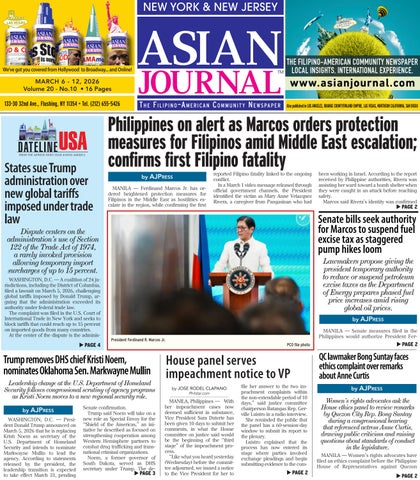
Dispute centers on the administration’s use of Section 122 of the Trade Act of 1974, a rarely invoked provision allowing temporary import surcharges of up to 15 percent.
WASHINGTON, D.C. — A coalition of 24 jurisdictions, including the District of Columbia, filed a lawsuit on March 5, 2026, challenging global tariffs imposed by Donald Trump, arguing that the administration exceeded its authority under federal trade law.
The complaint was filed in the U.S. Court of International Trade in New York and seeks to block tariffs that could reach up to 15 percent on imported goods from many countries. At the center of the dispute is the adminisu PAGE 4

by AJPress
reported Filipino fatality linked to the ongoing conflict.
In a March 1 video message released through official government channels, the President identified the victim as Mary Anne Velazquez Rivera, a caregiver from Pangasinan who had been working in Israel. According to the report received by Philippine authorities, Rivera was assisting her ward toward a bomb shelter when they were caught in an attack before reaching safety.

Leadership change at the U.S. Department of Homeland Security follows congressional scrutiny of agency programs as Kristi Noem moves to a new regional security role.
by AJPress
WASHINGTON, D.C. — President Donald Trump announced on March 5, 2026 that he is replacing Kristi Noem as secretary of the U.S. Department of Homeland Security and intends to nominate Markwayne Mullin to lead the agency. According to statements released by the president, the leadership transition is expected to take effect March 31, pending
Senate confirmation.
Trump said Noem will take on a new role as Special Envoy for the “Shield of the Americas,” an initiative he described as focused on strengthening cooperation among Western Hemisphere partners to combat drug trafficking and transnational criminal organizations.
Noem, a former governor of South Dakota, served as DHS secretary under Trump. The de-
by JOSE RODEL CLAPANO Philstar.com
MANILA, Philippines — With her impeachment cases now deemed sufficient in substance, Vice President Sara Duterte has been given 10 days to submit her comments, in what the House committee on justice said would be the beginning of the “third stage” of the impeachment process.
“Like what you heard yesterday (Wednesday) before the committee adjourned, we issued a notice to the Vice President for her to u PAGE 3
file her answer to the two impeachment complaints within the non-extendable period of 10 days,” said justice committee chairperson Batangas Rep. Gerville Luistro in a radio interview. She reminded the public that the panel has a 60-session-day window to submit its report to the plenary.
Luistro explained that the process has now entered its stage where parties involved exchange pleadings and begin submitting evidence to the com-
Marcos said Rivera’s identity was confirmed
Lawmakers propose giving the president temporary authority to reduce or suspend petroleum excise taxes as the Department of Energy prepares phased fuel price increases amid rising global oil prices.
by AJPress
Women’s rights advocates ask the House ethics panel to review remarks by Quezon City Rep. Bong Suntay during a congressional hearing that referenced actress Anne Curtis, drawing public criticism and raising questions about standards of conduct in the legislature.
PAGE 1
by her husband, who is also an overseas Filipino worker in Israel.
“All the help their family will need will be provided by our government,” the President said, assuring that assistance would be extended to Rivera’s family.
Government response and monitoring
Prior to confirming the fatality, Marcos directed the Department of Foreign Affairs (DFA) and the Department of Migrant Workers (DMW) to ensure the safety of Filipinos amid escalating tensions in parts of the Middle East.
Philippine embassies and labor offices in the region have been placed on heightened alert and instructed to monitor the condition of Filipino nationals. The DFA has advised Filipinos to remain vigilant, limit non-essential movement when necessary, and monitor official advisories issued by Philippine diplomatic missions and host-country authorities.
The DMW is coordinating with employers, licensed recruitment agencies, and Phil-
ippine foreign posts to account for overseas Filipino workers in affected jurisdictions.
Repatriation assistance underway
Government agencies are also reviewing contingency measures should the situation deteriorate further.
Several hundred Filipinos have already returned to the Philippines through government-assisted travel arrangements in recent days, according to reports from migrant worker authorities. Officials said additional overseas Filipino workers have expressed interest in returning home as tensions persist.
The government said social assistance and reintegration support will be provided to returning workers and their families as part of the inter-agency response.
Regional conflict intensifies
The tensions follow a major military operation launched by the United States and Israel against Iran that Washington said was aimed at degrading Tehran’s military capabilities and addressing what it described as a nuclear threat.
mittee.
“Like what I have said before, we call this responsive pleadings. It is responsive because they are answering. This is what we call third stage. All documents are moving,” Luistro said.
She said that while calendar days apply to the filing of responsive pleadings, the rules set the broader deadline for the committee’s work in terms of session days.
“The only prescriptive period that was provided by the rules is the period of 60 session days within which the Justice committee should be able to transmit the committee report to the plenary,” Luistro said.
Luistro made the clarification when asked if the timeline was based on calendar days.“No. This is session days. What I only saw covered by the rules on calendar days is the period of filing of responsive pleadings, the rest are session days,” the Batangas lawmaker said in English and Filipino.
Duterte’s lawyers have acknowledged receipt of notice from the House of Representatives’ committee on justice directing them to respond to
two verified impeachment complaints against her.
“We acknowledge receipt of the notice served today. At this point, we see no need to issue any further comment,”
Michael Poa, spokesman for Duterte’s legal team in her impeachment case, said.
After receiving her comment, the justice committee will proceed to the next phase of hearings to determine whether probable cause exists to approve the Articles of Impeachment.
VP bank records may be opened
Luistro also said her panel may compel the production of bank records and the appearance of key witnesses.
“The exception to the Bank Secrecy Law is impeachment proceeding,” she said.
“As a matter of fact, that is the reason why in yesterday’s (Wednesday) hearing, I volunteered to the members of the Justice committee” the information that “impeachment is the only avenue where you can look into and avail of the documents without violating the Bank Secrecy Law.”
She said the committee is armed with “power of compulsory process,” allowing it
Iran subsequently launched drones and missiles toward Israel and targeted U.S. military facilities in Bahrain, Kuwait, and Qatar, widening tensions across a region that hosts millions of foreign workers, including large Filipino communities.
Calls for vigilance and measured response
Some lawmakers have urged a calibrated response to the crisis, emphasizing the need to rely on assessments from Philippine diplomats and security officials before ordering large-scale evacuations.
Officials said Philippine agencies continue to coordinate closely to monitor developments and provide assistance where necessary.
Continuing government coordination
Authorities said inter-agency coordination remains active among the Office of the President, the DFA, the DMW, and Philippine diplomatic missions across the Middle East.
Officials reiterated that updates will be released through verified government channels as developments unfold. n
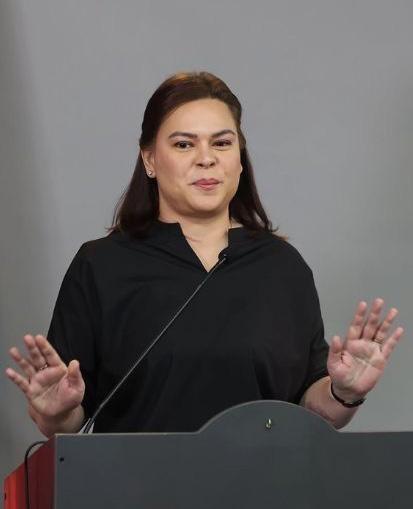
Vice President Sara Duterte holds a press conference on Wednesday, Feb. 18, 2026 to announce her presidential bid in the upcoming 2028 elections. The Philippines STAR / Miguel de Guzman
to require the submission of documents – including bank records – as well as to compel witnesses to appear and testify during hearings. Luistro said such powers cover the “issuance of subpoena duces tecum if it pertains to relevant documents.”
“So the only way to request a copy of bank document is by the compulsory process of the Justice committee to compel the bank to produce these bank documents. That is by way of subpoena duces tecum,” she pointed out. – Bella Cariaso. n
dinand “Bongbong” Marcos Jr. to temporarily suspend or reduce excise taxes on petroleum products as the government prepares for possible fuel price increases driven by rising global oil prices.
The proposals emerged as the Department of Energy (DOE) warned that motorists may face staggered fuel price hikes beginning next week, following a surge in international crude prices linked to escalating tensions in the Middle East.
DOE officials said the government is coordinating with oil companies to implement price adjustments in phases over several days, rather than imposing a single large increase at the pump, in an effort to reduce the immediate impact on consumers.
Energy Secretary Sharon Garin said authorities are monitoring developments in global oil markets while preparing contingency responses should price pressures intensify.
Despite the expected adjustments, the DOE said the Philippines maintains adequate fuel inventories, with supply levels exceeding the country’s minimum stock requirement.
Senate proposals target fuel tax relief
Amid concerns about rising pump prices, several lawmakers have introduced
measures seeking to give the president authority to temporarily suspend or reduce fuel excise taxes imposed under the Tax Reform for Acceleration and Inclusion (TRAIN) law, enacted in 2017.
Senator Joel Villanueva filed a bill that would allow the president, upon recommendation from economic managers and energy authorities, to suspend or reduce fuel excise taxes when global crude prices reach conditions set in the proposed legislation.
Another measure filed by Senator Bam Aquino proposes a similar mechanism intended to provide consumers with temporary relief during periods of sustained increases in global oil prices.
Under the TRAIN law, excise taxes on petroleum products are set by statute. The law also contains provisions tied to global oil-price conditions, and lawmakers backing the new measures say additional authority could allow the government to respond more quickly during periods of sharp price volatility.
Broader economic impact
Rising oil prices have wide-ranging economic effects in the Philippines, which imports most of its petroleum requirements.
Higher pump prices typically raise transportation
City 4th District Rep. Bong Suntay, following remarks he made about actress Anne Curtis during a congressional hearing that triggered public backlash.
The complaint was filed with the House Committee on Ethics and Privileges, which is responsible for reviewing alleged violations of conduct by members of the House of Representatives.
The controversy arose during a March 3 House Committee on Justice hearing on impeachment complaints filed against Vice President Sara Duterte. During the proceedings, Suntay cited a hypothetical example involving Curtis to illustrate a legal argument about thoughts and actions. Critics said the
costs, increase power-generation expenses and add pressure to the prices of basic goods, affecting households and businesses across the country.
Lawmakers backing the proposals say temporary tax relief could help cushion consumers, particularly public transport operators and sectors heavily dependent on fuel.
Government monitoring global markets
Energy officials said the government continues to monitor global oil market developments closely as geopolitical tensions contribute to price volatility.
The DOE said that if global oil prices reach levels that trigger policy responses under existing law, the agency will coordinate with relevant government agencies — including the transport sector — to assess possible interventions such as targeted subsidies.
Authorities have also encouraged energy-saving measures to help moderate fuel consumption while global markets remain uncertain.
The proposed measures remain under consideration in Congress as policymakers weigh the balance between providing consumer relief and maintaining government revenues generated by petroleum taxes. n
analogy, which referenced feeling “desire” upon seeing the actress, was inappropriate for a formal legislative proceeding.
Women’s rights groups and several public officials said the remarks reflected attitudes that trivialize women and undermine the standards expected of elected officials.
Former Gabriela party-list representative Liza Maza, who joined advocates in filing the complaint, said lawmakers should be mindful of their statements in public forums and held to a higher standard of conduct.
The incident drew criticism from several sectors, including local government officials and advocacy groups, who called for stronger gender sensitivity within public institutions.
Suntay later issued a public apology, saying he did not intend to offend Curtis or the public.
“If my statement offended anyone, I sincerely apologize,” the lawmaker said in media interviews, adding that the example he used during the hearing should not have been framed that way.
Under House rules, the Committee on Ethics and Privileges may evaluate the complaint and determine whether further proceedings are warranted. Possible actions range from dismissal of the complaint to disciplinary measures, subject to approval by the full House. The case has renewed discussion about professional conduct and gender sensitivity in official government proceedings. n

partment oversees several federal agencies responsible for border security, immigration enforcement, disaster response and transportation safety, including U.S. Customs and Border Protection, U.S. Immigration and Customs Enforcement, the Federal Emergency Management Agency, the Transportation Security Administration and the United States Coast Guard.
Congressional scrutiny of DHS initiatives
Noem’s tenure drew attention during recent congressional oversight hearings examining DHS spending and immigration enforcement programs.
Lawmakers questioned department officials about a $220 million federal advertising campaign intended to encourage undocumented immigrants to voluntarily leave the United States. During questioning from John Kennedy, Noem said the campaign had been approved at senior levels of the administration.
Trump later told reporters he was not personally aware of the initiative. Separate reporting by major U.S. news organizations said the advertising contract drew attention over procurement procedures. Noem told lawmakers the contract had been awarded through a legal and competi-
tive process.
Mullin nominated to lead the department Trump said he intends to nominate Mullin to serve as the next secretary of homeland security. Under U.S. law, cabinet nominees must undergo Senate confirmation hearings before assuming office.
Mullin has represented Oklahoma in the Senate since 2023 after previously serving a decade in the U.S. House of Representatives. Trump noted that Mullin is a member of the Cherokee Nation.
If confirmed, Mullin would lead DHS at a time when immigration policy and border security remain central issues in national policy debates. n
by AJPress
MANILA — The United States has again included Greenhills Shopping Center in San Juan City on its annual list of markets associated with the sale of counterfeit and pirated goods, according to the latest report released by the U.S. Trade Representative (USTR).
The designation appears in the 2024 Review of Notorious Markets for Counterfeiting and Piracy, an annual assessment that identifies physical marketplaces and online platforms worldwide where intellectual property violations are reported to occur on a significant scale.
Greenhills, a well-known retail complex in Metro Manila that draws local and international shoppers, has appeared repeatedly on the USTR list over the years. The report notes that despite enforcement efforts and monitoring by authorities and mall management, counterfeit merchandise—such as imitation luxury goods, electronics, and
accessories—continues to be reported in certain areas of the market.
The report places Greenhills among dozens of marketplaces globally cited for concerns related to trademark counterfeiting or copyright piracy. The USTR said the list is based on input from industry groups, rights holders, and government agencies, and is intended to encourage stronger enforcement and cooperation rather than impose sanctions.
Philippine authorities have pointed to ongoing enforcement actions to combat counterfeit trade. These efforts involve coordination among agencies including the Intellectual Property Office of the Philippines (IPOPHL), the National Committee on Intellectual Property Rights, the Philippine National Police, the National Bureau of Investigation, and the Bureau of Customs.
Government officials have reported large-scale seizures of counterfeit goods in recent
years through raids and inspections conducted across markets, warehouses, and ports of entry. Enforcement campaigns have also included public awareness programs and collaboration with brand owners to monitor suspected violations.
IPOPHL has previously said that authorities continue to work with Greenhills management and tenant groups to strengthen compliance measures and encourage legitimate trade within the complex.
The USTR report serves as a monitoring tool designed to highlight areas where stronger intellectual-property enforcement may be needed. It does not automatically trigger trade penalties.
Officials say continued cooperation between government agencies, market operators, and industry stakeholders will be critical to reducing the circulation of counterfeit goods and improving intellectual-property protection in the Philippines. n
Lawmakers press the Internal Revenue Service during a congressional hearing after a federal judge ruled the agency improperly disclosed taxpayer address information to immigration authorities. Separate court decisions in February addressed different aspects of the dispute.
by AJPress
WASHINGTON — The head of the Internal Revenue Service declined to answer detailed questions from lawmakers about the agency’s disclosure of taxpayer information to immigration authorities during a congressional hearing this week, citing ongoing litigation and events that occurred before his tenure.
Frank Bisignano, chief executive officer of the IRS, testified before the House Ways and Means Committee as lawmakers reviewed the agency’s operations during the 2026 tax filing season.
The hearing marked one of his first appearances before Congress since assuming the role under a new leadership structure at the tax agency.
Several lawmakers used the hearing to question the agency about a Feb. 26 ruling by U.S. District Judge Colleen Kollar-Kotelly in Washington, D.C., who determined that the IRS violated federal taxpayer privacy law by disclosing confidential taxpayer address information to U.S. Immigration and Customs Enforcement (ICE).
Court filings cited during the hearing indicated the IRS disclosed taxpayer address information approximately 42,695 times under a data-sharing arrangement involving the Department of Homeland Security.
Representative Mike Thompson, a Democrat from California, pressed the IRS leader about whether any officials had been held
accountable following the court’s findings.
“Was anyone fired? Was anyone disciplined? Was anyone held accountable?”
Thompson asked.
Bisignano declined to discuss the details, telling lawmakers the disclosures occurred before his leadership and remain the subject of ongoing litigation.
According to reporting referenced during the hearing, no IRS employees have been fired or formally disciplined in connection with the disclosures.
Two court rulings shape the dispute
The controversy stems from a legal battle over whether and how the IRS may share taxpayer information with immigration authorities.
On Feb. 26, Judge Kollar-Kotelly ruled that the IRS violated Section 6103 of the Internal Revenue Code, which strictly limits when taxpayer “return information,” including address data, may be shared with other government agencies.
Court filings cited a declaration from IRS Chief Risk and Control Officer Dottie Romo, which stated that immigration authorities submitted roughly 1.28 million names to the IRS for verification. The agency identified matches for about 47,000 individuals, and in fewer than 5 percent of those cases provided last-known address information to immigration authorities.
A separate ruling two days earlier, on Feb. 24, addressed a different legal question.
In that decision, a three-
judge panel of the U.S. Court of Appeals for the District of Columbia Circuit declined to grant a preliminary injunction sought by immigrant-rights organizations challenging the data-sharing arrangement.
In practical terms, the appeals court decision means the information-sharing framework may continue temporarily while the lawsuit proceeds, because the court did not find sufficient grounds to halt the policy immediately.
Legal experts note that the two rulings do not contradict each other. The appeals court decision addressed whether the policy should be temporarily blocked, while the district court ruling examined whether specific disclosures of taxpayer information violated federal law.
Policy under legal scrutiny
Under the agreement, U.S. Immigration and Customs Enforcement may submit identifying information of individuals suspected of lacking legal immigration status to the IRS for verification against tax records.
Immigrant-rights organizations have argued that the arrangement undermines longstanding taxpayer privacy protections and could discourage immigrants from filing tax returns.
Federal officials have defended the policy as a lawful form of limited information sharing permitted under federal statutes.
Multiple lawsuits challenging the arrangement remain pending in federal courts, leaving the long-term status of the IRS-ICE data-sharing framework unresolved. n
PAGE 1
tration’s use of Section 122 of the Trade Act of 1974, a rarely invoked provision that allows the president to impose temporary import surcharges during balance-of-payments emergencies. Under the statute, tariffs can reach 15 percent but are generally limited to about 150 days unless Congress authorizes an extension.
In their filing, the states ask the court to declare the tariffs unlawful and issue an injunction preventing their implementation, arguing that the administration’s interpretation of the statute goes beyond its intended scope.
State officials involved in the lawsuit said the tariffs could increase costs for state governments, businesses and
consumers, while potentially disrupting supply chains tied to international trade.
The lawsuit follows a recent ruling by the Supreme Court of the United States that limited the administration’s use of the International Emergency Economic Powers Act as authority for broad tariff measures.
After the ruling, the administration announced a new tariff framework relying on Section 122 authority. A White House spokesman said the administration believes the policy is lawful and that the federal government will defend the tariffs in court.
States identified as participants in the lawsuit include Arizona, California, Colorado, Connecticut, Delaware, Ha-
waii, Illinois, Maine, Maryland, Massachusetts, Michigan, Minnesota, Nevada, New Jersey, New Mexico, New York, North Carolina, Oregon, Pennsylvania, Rhode Island, Vermont, Washington and Wisconsin, together with the District of Columbia, bringing the coalition to 24 jurisdictions.
Legal analysts say the case could help clarify the limits of presidential authority in trade policy following the Supreme Court decision.
The U.S. Court of International Trade, a specialized federal court with nationwide jurisdiction over customs and trade disputes, will determine whether the tariffs may proceed while the litigation continues.. n
Lawmakers press the Internal Revenue Service during a congressional hearing after a federal judge ruled the agency improperly disclosed taxpayer address information to immigration authorities. Separate court decisions in February addressed different aspects of the dispute.
by AJPress
MANILA — As the Philippines prepares to host key meetings under its 2026 chairmanship of the Association of Southeast Asian Nations (ASEAN), business leaders say the moment presents a strategic opportunity for the country to strengthen its global profile and attract new investment.
Speaking during the ASEAN Editors and Economic Opinion Leaders Forum, Jaime Augusto Zobel de Ayala, chairman of Ayala Corp., said the Philippines should use the regional spotlight to present itself as a competitive destination for trade and capital.
Zobel noted that ASEAN summit activities bring together political leaders, diplomats, investors, and media from across the region and beyond, placing the host country at the center of international attention. He described the period as an opportunity to showcase the country’s economic progress and institutional reforms.
“This is our time to show the Philippines,” Zobel said, emphasizing that sustained economic growth and infrastructure development have strengthened the country’s investment narrative.
The Philippines will chair ASEAN in 2026, guiding the regional bloc’s policy discussions and hosting a series of ministerial meetings, economic forums, and the annual leaders’ summit. ASEAN, composed of 10 Southeast Asian member states, represents a market of roughly 700 million people and is considered one of the world’s most dynamic
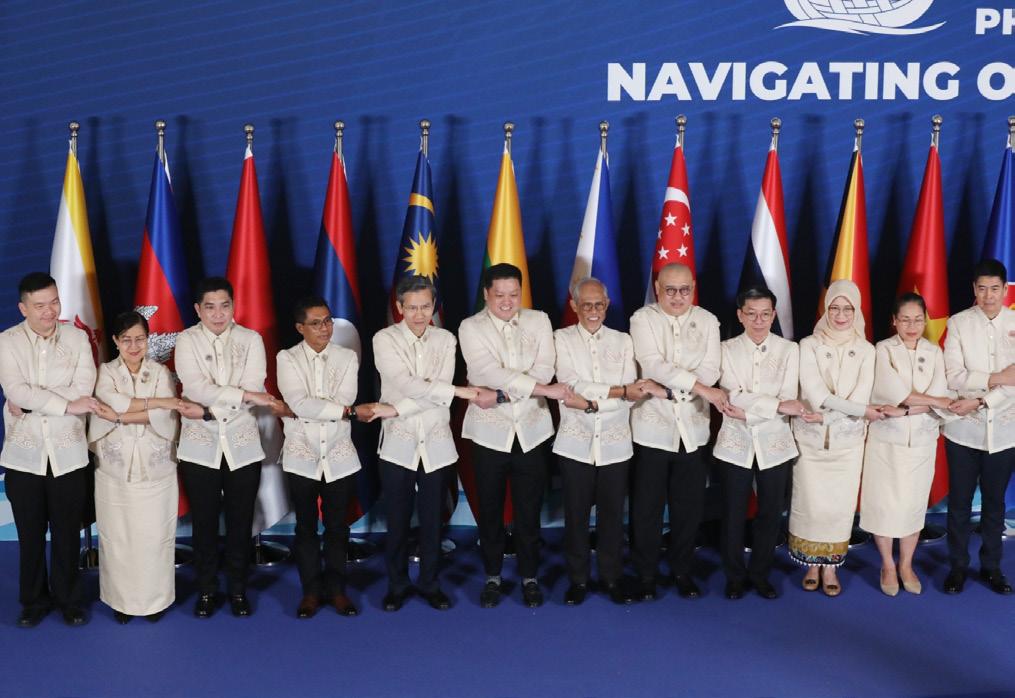
35th
left) Deputy Minister for Tourism, Arts and Culture Chiew Choon Man of Malaysia; Deputy Minister of Religious Affairs and Culture Nu Mra Zan of Myanmar; Secretary to the Minister of Social Development and Human Security Thanakrit Jitareerat of Thailand; Minister Coordinator for Social Affairs, and Minister of Rural Development and Community Housing Mariano Assanami Sabino Lopes of Timor Leste; Deputy Minister of Home Affairs Cao Huy of Vietnam; Department of Social Welfare and Development Secretary Rex Gatchalian; Minister of Social and Family Development Masagos Zulkifli of Singapore; Minister of Culture, Youth and Sports Dato Seri Setia Haji Nazmi Bin Haji Mohamad of Brunei Darussalam; Secretary of State Ministry of Education, Youth and Sport Dr. Oung Borat of Cambodia; Deputy for the Coordination of Family Quality Improvement and Population Affairs Coordinating Woro Srihastuti Sulistyaningrum of Indonesia; Deputy Minister of Information, Culture and Tourism Darany Phommavongsa of Lao PDR; and ASEAN Deputy Secretary General San Lwin of Myanmar. PNA photo by Avito Dalan
regional economic groupings.
Regional cooperation efforts within ASEAN focus on strengthening trade, improving connectivity, expanding digital integration, and maintaining stability in a complex geopolitical environment.
Business leaders participating in ASEAN dialogues have highlighted the importance of regulatory stability, infrastructure investment, and deeper economic integration to sustain the region’s growth trajectory.
Analysts note that hosting
Former senator denies $2-million claim tied to the ICC probe as respondents say allegations should be examined by authorities
by AJPress
MANILA — Former senator Antonio Trillanes IV has filed criminal complaints before the Department of Justice (DOJ) against lawyer Levito Baligod, former congressman Mike Defensor, broadcaster Jay Sonza, and 18 individuals identified in reports as former Marines, accusing them of making or amplifying allegations that he received money connected to the International Criminal Court (ICC) investigation into the Philippines’ anti-drug campaign.
According to documents submitted to the DOJ and statements released by Trillanes’ camp, the complaints include cyberlibel, incriminating an innocent person, and perjury.
The dispute centers on allegations circulated by the respondents claiming that Trillanes received $2 million from former Ako Bicol party-list representative Zaldy Co in connection with activities related to the ICC investiga-
ASEAN meetings allows the Philippines to highlight its development priorities while reinforcing its role as a key participant in shaping the economic and strategic direction of Southeast Asia.
The summit year is expected to bring a series of high-level diplomatic and economic engagements to Manila and other host locations, offering the country a platform to present its economic reforms, investment opportunities, and expanding role in regional cooperation. n
by AJPress
MANILA — Prosecutors are set to present 56 witnesses in the graft and malversation trial of former senator Ramon “Bong” Revilla Jr. and six co-accused before the Sandiganbayan, the Philippines’ anti-graft court, in
connection with an alleged ₱92.8-million flood-control project in Pandi, Bulacan that investigators say may not have been implemented as documented.
The Sandiganbayan Fourth Division has completed the pre-trial stage of the case and scheduled the presentation
of prosecution evidence beginning April 7, according to court proceedings reported by Philippine media. The case stems from charges filed by the Office of the Ombudsman, which accused Revilla and several officials of the Department of u PAGE 9
tion.
Trillanes has denied the allegation, saying no such payment occurred.
In a statement accompanying the complaint, Trillanes said he has been a complainant in ICC proceedings since 2017, providing information and assisting in the documentation of cases related to alleged extrajudicial killings during the anti-drug campaign carried out under the administration of former president Rodrigo Duterte.
He said his communications with individuals connected to the ICC were limited to providing information and facilitating contact with potential witnesses.
Affidavit cited in allegations
The controversy follows the circulation of an affidavit signed by 18 individuals who identified themselves as former soldiers or Marines, referenced in several media reports.
According to those reports, the individuals claimed they
had served as security personnel for Co and alleged that they had knowledge of cash deliveries made to several individuals between 2023 and 2025, which they said were connected to activities related to the ICC investigation.
Trillanes said the statements contained false testimony, which forms the basis of the perjury complaints included in his filing.
Respondents’ position
Former congressman Mike Defensor, who was named among the respondents, has said publicly that the individuals who made the allegations should be heard and that their statements should be examined by authorities.
As of publication, other individuals named in the complaint had not issued detailed public responses to the specific accusations.
Under Philippine procedure, the DOJ will conduct a preliminary investigation to determine whether probable cause exists to file charges in court. n
Government agencies and women’s groups launch nationwide programs and policy discussions highlighting gender equality, the implementation of gender-responsive budgeting, and legislative priorities aimed at strengthening protections and expanding opportunities for Filipino women.
by AJPress
MANILA — Philippine officials marked the start of National Women’s Month in March with renewed calls for stronger gender policies and broader programs aimed at advancing women’s rights and participation in public life.
The observance is led by the Philippine Commission on Women (PCW), the government’s policy-making and coordinating body on gender equality. Officials said the annual campaign highlights the role of government agencies, local governments and civil society in promoting gender-responsive programs
across the country.
PCW representatives said a central priority remains the continued implementation of gender mainstreaming in government institutions. The approach requires agencies to integrate gender considerations into policies, budgets and programs, including the mandated Gender and Development (GAD) budget, which allocates a portion of public funds to initiatives that address the needs and welfare of women.
The month-long observance formally opened with a national kickoff program at the Rizal Memorial Coliseum in Manila, attended by officials from agencies including
the Department of Foreign Affairs (Philippines), the Department of Social Welfare and Development, and the Department of Trade and Industry (Philippines), alongside representatives from women’s organizations and community groups.
Government officials said the commemoration also serves as a platform to discuss policy priorities outlined in the Women’s Priority Legislative Agenda for the 20th and 21st Congress, which proposes measures aimed at strengthening legal protections for women and expanding opportunities in economic participation, leadership u PAGE 8

THE United States has long demonstrated unmatched capability in the opening phase of war. It can project force across oceans, dismantle air defenses within hours, and strike hardened targets with technical precision. From the Persian Gulf campaigns of the early 1990s to the February 28, 2026 strikes associated with Operation Lion’s Roar, American military power has repeatedly shown its ability to disrupt even the most entrenched systems.
But history offers a sobering counterpoint: the ability to dismantle a regime is not the same as the ability to shape what follows.
From Saigon to Baghdad to Kabul, the pattern is familiar. Military dominance achieves the immediate objective. Political stability proves far more difficult to secure. As Iran enters a period of uncertainty following the death of Ayatollah Ali Khamenei, the central question is no longer about battlefield capability. It is about what emerges in the vacuum.
Babe Romualdez
SADLY, in spite of the fact that we have an estimated 12 million Filipinos living overseas, it is unfortunate that only 1.69 million Filipinos and dual citizens living in foreign countries/territories have registered to vote for the 2022 presidential elections. This is a drop from the 1.8 million overseas absentee voters (OAVs) who registered for the 2019 midterm elections, with the voter turnout also at a low 20
The United States has mastered the mechanics of escalation. It has struggled with the governance of aftermath.
The illusion of the decisive strike
A recurring strategic assumption over the past half-century has been that political crises can be resolved primarily through military action.
Removing a leader is often framed as the conclusion of conflict. In reality, it frequently marks the beginning of a far more complicated struggle - the contest for legitimacy.
In Vietnam, battlefield victories did not translate into political durability.
In Iraq, the fall of Saddam Hussein did not produce institutional cohesion; dismantling the state apparatus instead created fragmentation that fueled insurgency.
In Afghanistan, two decades of state-building collapsed rapidly once external support was withdrawn.
These episodes are not simply historical re-
There are only a few overseas voters
percent.
Here in the United States, we have a large number of Filipino-Americans who have decided to become dual citizens (mainly because of the COVID restrictions imposed on foreigners entering the Philippines) – making them eligible to vote, but they opted not to register and vote.
For the 2022 elections, the number of registered OAVs for the United States stands at 212,565. Of that number, 37,657 are under the jurisdic-

tion of the Philippine Embassy in Washington, D.C. while the rest are under the jurisdiction of the consulates across the US and in Guam. In 2019, the number of registered voters in the US was 228,470, and voter turnout was disappointing at 17.29 percent.
One of the reasons why the numbers have been low is due to the tedious process, with registration and voting done by mail or through personal appearance at Philippine em-
PAGE 8

flections. They illustrate a structural limitation: military force can remove a regime, but it cannot by itself produce legitimacy, stability, or functional governance.

DAILY, there’s a quiet ritual at airports across the Philippines. A mother hugs her child tightly before walking towards the departure gate. A father gives a last-minute reminder to his wife about tuition fees and groceries. Smiles are forced. Tears are swallowed. And then another Filipino leaves home –not for adventure, not for luxury – but for survival. We call them modern-day heroes. But have we really
treated them as such?
Over 2.5 million Filipinos live and work overseas in countries like Saudi Arabia, United Arab Emirates, United States, Japan, and Europe. They are nurses caring for aging populations, seafarers keeping global trade afloat, engineers building infrastructures, domestic workers tending homes that are not their own. They are everywhere – and yet their absence at home is deeply felt. Their economic contribution is undeniable. Every year, billions of dollars flow into the Philippines, accounting for nearly a tenth of the coun-
try’s Gross Domestic Product (GDP). For 2025, they sent more than $30 billion. Those dollars stabilize the peso, fuel consumption, and keep businesses running. When global crises hit, remittances often remain steady, cushioning the economy from collapse. In many ways, OFWs are the shock absorbers of our economy.
But reducing them to economic statistics diminishes their true sacrifice. Behind every remittance is a cost that cannot be measured in dollars. Birthdays missed. Anniver-
Commentary
Carlos H. Conde
AFTER listening to human rights lawyer Joel Butuyan’s opening speech at the International Criminal Court (ICC) on Monday, during the confirmation of charges against former President Rodrigo Duterte, I felt something stir inside me— something between grief and fury that I have carried for years. In his powerful speech, the common legal representative for the victims of the “drug war” denounced the virus of impunity that Duterte spread across the Philippines, infecting Filipinos to the point that they could no longer discern right from wrong, evil from good. Butuyan provided the context that this moment desperately needed—not just for the hearing, but for this entire saga of Duterte-era atrocities that scarred our nation. He named the disease. He described the rot. And sitting in that cold, somber gallery, I felt every word land like an accusation against a country that still hasn’t fully reckoned with what it allowed to happen.
After listening to human rights lawyer Joel Butuyan’s opening speech at the International Criminal Court (ICC) on Monday, during the confirmation of charges against former President Rodrigo Duterte, I felt something stir inside me— something between grief and fury that I have carried for years.
In his powerful speech, the common legal representative for the victims of the “drug war” denounced the virus of impunity that Duterte spread across the Philippines, infecting Filipinos to the point that they could no longer discern right from wrong, evil from good. Butuyan provided the context that this moment desperately needed—not just for the hearing, but for this entire saga of Duterte-era atrocities that scarred our nation. He named the disease. He described the rot. And sitting in that cold, somber gallery, I felt every word land like an accusation against a country that still hasn’t fully reckoned with what it allowed to happen.
I was unsettled because I knew exactly how Butuyan felt. I know exactly where that outrage comes from, because I have lived inside it for years.
The toll of Duterte’s “drug war” and his Davao Death Squad has overwhelmed me over the years and decades, as it has so many others like myself—activists, journalists, lawyers—who have spent careers documenting Duterte’s depravity while the rest of the world looked away, and while too many of our own countrymen cheered. We did not document these horrors from a distance. We were there. We saw what was done to people. We know their names.
Beside me in the public gallery sat photojournalist Raffy Lerma, one of the people who bore unflinching witness to the killing fields Duterte created. When Duterte’s lawyer, Nicholas Kaufman, made the cynical move to discredit Lerma’s “Pietà”-like photograph—a devastating image of a wife cradling her husband, shot dead by police in Pasay, which
Iran and the challenge of succession Iran now confronts a moment of profound uncertainty.
The Islamic Republic is structured around the doctrine of Velayat-e Faqih, the Guardianship of the Jurist, which places ultimate authority in the Supreme Leader. The death of such a central figure does not automatically produce institutional clarity.
Instead, succession can become a test of power within the system itself. The Assembly of Experts, the body responsible for selecting a new Supreme Leader, must now determine who will guide a country of more than 85 million people at a moment of intense regional tension.
History suggests that leadership vacuums in ideological states rarely resolve themselves quickly. They tend to produce one of three outcomes: consolidation by the most organized faction, fragmentation among competing power centers, or escalation through external proxies.
Iran’s network of regional partners, from Hezbollah in Lebanon to allied militias in Iraq and groups operating in Yemen, adds another dimension. Instability within Tehran
can ripple outward across the Middle East.
The weight of what follows Exit strategies are often discussed in logistical terms: troop deployments, timelines, and financial costs. Yet the deeper challenge is philosophical. If intervention alters the internal balance of a state, responsibility does not end when the last aircraft leaves the sky.
Military force can weaken adversaries.
It cannot manufacture national reconciliation.
It cannot rebuild institutions overnight.
And it cannot substitute for the slow work of political legitimacy.
The lesson repeated across modern conflicts is clear: destruction is immediate; reconstruction takes generations.
Measuring power differently
In democratic societies, debate during times of conflict is often criticized as hesitation. In truth, open debate can serve as a safeguard against strategic overconfidence.
The hardest part of war is the ending because endings demand humility. They require patience, diplomacy, and long-term engagement long after the first military objective is achieved.
Cito Beltran
Victory cannot be measured solely by the removal of an adversary. It must also be measured by whether stability follows.
As political factions inside Iran struggle to shape a post-Khamenei order, the world is witnessing the most volatile phase of any conflict: the moment after the strike.
An interim council now governs Tehran while the Assembly of Experts searches for a new Supreme Leader, even as the Revolutionary Guards tighten their grip on the machinery of the state. The regime may fracture, consolidate, or harden. No one yet knows which path will prevail.
This is the uncomfortable truth of modern war. Military power can shatter structures of authority, but it cannot determine what grows in the space that follows.
History has shown this repeatedly: the fall of a regime is not the conclusion of a conflict but the beginning of a more uncertain chapter.
War begins with the confidence of force.
It ends with the far more difficult work of shaping the peace.
And that ending, not the opening strike, is where history ultimately renders its judgment. (AJPress) n
For about two years now, my wife and I have been reminding each other to follow Clint Eastwood’s advice every time we feel old, tired, or simply unmotivated to face the day’s routine.
We may be tired or sore or sense a heaviness for the day that’s coming up, but we remind ourselves that Clint Eastwood is a lot older and worn out, and he still gets out of bed and walks toward another day to work.
The advice, it turns out, has been the philosophy of the legendary actor/director Clint Eastwood since the late 50s, every time he is confronted by
fatigue, signs of aging or an inclination to be cranky due to aches and pains from aging.
Eastwood’s advice has even been written into a song by the popular country music artist Toby Keith for a movie (The Mule) that Clint Eastwood starred in and directed. The advice and the song is: “Don’t Let The Old Man In.”
Just the other day, I had the chance to share this advice with a friend 10 years my senior who was being asked or told by his family to stop driving because of his age and their fear that he might cause an accident or get into an accident. Sadly, this is a common
PAGE 6
saries spent alone. Children growing up through video calls. Marriages strained by distance. Some endure exploitation – unpaid wages, confiscated passports, contract substitutions, and even abuse. Many domestic workers live in isolation. Seafarers spend months at sea, separated from family milestones. Nurses work long shifts in foreign hospitals while worrying about aging parents at home.
And yet they persist. They build Filipino communities abroad, celebrate fiestas thousands of miles away, and carry with them a reputation for resilience, competence, and compassion. During global health crises, Filipino nurses and caregivers were praised for their dedication. Filipino seafarers kept supply chains alive when the world shut down. Their labor does not just support Filipino families – it strengthens foreign economies.
So why does recognition at home often feel symbolic rather than structural? Calling OFWs heroes is easy. Ensuring their protection is harder.
True recognition must go beyond ceremonial speeches and airport tarpaulins. It must be reflected in efficient government services, accessible legal assistance, and fast, transparent responses to distress cases. It must mean stronger bilateral labor agreements that genuinely protect workers’ rights. It must mean eliminating bureaucratic inefficiencies that burden migrants before they even leave the country.
More importantly, it must
default of family members once their parent hits 70 or 80 years old. Suddenly, they are deemed to pose a danger to others or to themselves. So, the first thing that is restricted or stopped is driving a vehicle.
Half the time, the decision or request is based purely on age, but not a thorough examination by a physician and on the road assessment of a driving instructor or road safety expert. That is like being detained without committing a crime! So now, my friend has to look for a good, reliable, trustworthy, and prayerful driver, since my friend spends a lot of time
mean transforming remittances into long-term national development. Too often, the money sent home is consumed rather than invested – not out of irresponsibility but out of necessity. Families use it for daily survival: food, rent, tuition, hospital bills. If we truly value OFWs, we must provide financial literacy programs, accessible investment channels, and reintegration pathways that turn hard-earned savings into sustainable livelihoods. We have hope in the Department of Migrant Workers because of the strong leadership of Secretary Hans Leo Cacdac and Undersecretary Bernard Olalla. I’ve witnessed them working hard for OFWs. And recently, we thank the Bureau of Customs (BOC), which was able to finally save more than 50,000 balikbayan boxes that were abandoned by the consolidators and cargo forwarders who, after receiving fees from thousands of OFWs, did not pay the shipping costs, port charges, and taxes. These companies abused the trust of OFWs who painstakingly saved for the gifts and pasalubongs for their loved ones. And then comes the uncomfortable question: Why do millions of Filipinos feel compelled to leave in the first place?
Labor export has become a stabilizing economic strategy. But it was never meant to be permanent. Recognition of OFWs must include a serious commitment to job creation at home – competitive wages, industrial development, agricultural modernization, and digital innovation. Migration
should be a choice born of ambition, not a necessity born of limited opportunity.
We must also acknowledge the silent emotional toll on families left behind. Children of overseas workers grow with both pride and longing. They benefit from better education and material comfort, yet often struggle with absence. Support systems in schools and communities can help bridge the gap, but no remittance can fully replace presence.
To value OFWs is to ask more of ourselves as a nation. It is to ensure that when they finally return home, they return to opportunity, not uncertainty. It is to guarantee that their years abroad translate into dignity, stability, and security. OFWs are more than economic lifelines. They are parents who choose distance so that their children can have dreams. They are sons and daughters who trade comfort for responsibility. They are citizens whose labor has quietly sustained a nation. If we continue to rely on their sacrifice, then we must rise to meet it –not just with applause, but with policy. Not just with praise, but with protection. Not only with gratitude, but with genuine reform.
Only then can we say we truly honor our modern-day heroes. (Philstar.com)
* * *
The opinions, beliefs and viewpoints expressed by the author do not necessarily reflect the opinions, beliefs and viewpoints of the Asian Journal, its management, editorial board and staff.
* * * Email: arielnepo.philstar.com n
the Inquirer ran on its front page in 2016—I instinctively reached over and placed my hand on his back. Both of us had our heads bowed, as if in prayer. We were mourning. Not just the violence visited upon so many Filipinos at Duterte’s direction, but now, in real time, we were mourning the brazen lies being deployed in a court of law to defend that violence. Kaufman’s move was not just cynical—it was obscene. To take a photograph that captured one of the most intimate and devastating moments of a woman’s life, a moment born directly from state-sanctioned murder, and use it as a prop for legal maneuvering—it was an act of violence in itself.
After the hearing, not far from the ICC premises, a group of Duterte supporters stood chanting his name. They were boisterous, loud, proud—as if what they were doing, what they were shouting into the gray Dutch sky, were the most righteous thing in the world. That pride is what stopped me cold as I made my way to the bus stop that freezing afternoon. Not the noise. The pride. The
utter, unshakeable conviction that they were on the right side of history, when history—real, documented, blood-soaked history—screams otherwise.
I went home that night weighed down by a sadness I struggle to articulate. Because this is not just about Duterte. It never was. It is about the millions of Filipinos who looked at the bodies piling up in the streets and felt nothing or, worse, felt satisfied. It is about the close friends and relatives— and I suspect most Filipinos reading this know exactly what I mean—who chose, and still choose, to ignore the brutality. Those who dismiss the dead as collateral, as criminals, as acceptable losses in a war that was never a war but a massacre. For what? For the adoration of a man who built his entire identity on violence and contempt for human life? Because he spoke crudely and people mistook cruelty for authenticity? Because he was “one of us”?
That bargain is obscene. And we need to say so, loudly, without diplomatic hedging.
An hour or so before I began writing this, a new Facebook friend sent me a message with a single, striking suggestion:
going to church daily.
I know people who decided to send their yaya or caregiver to driving school so that they get two for the price of one. Even better if you send them to undergo a serious CPR course, and if you can afford it or need it, get an AED or automated external defibrillator.
So, strike one is no more driving. Strike two is being asked or told not to hit the green or play golf because all that walking may be strenuous and trigger a heart attack, etc. I could see the pain in his face as he told me this.
Most people I know have to find creative ways to achieve 7,000 to 10,000 steps a day. They even drive to parks, campuses, or malls just to meet the daily goal. You can get all that at the golf course, a basketball court, or a swimming pool! Never indoors watching Netflix.
When I heard that my friend was being asked to stop playing golf, I went livid. I had to point out that my friend may be 10 years older than I am, but he was visibly healthy, drives himself, and plays golf, and now, just because he will soon hit 80, people are “babying” him in the worst possible way.
perhaps the Philippines needs “dedutertefication” the way postwar Germany needed denazification—a systematic, painful, national confrontation with what happened, who enabled it, and why, so that it can never happen again.
He is right. The ICC process is necessary but not sufficient. What the Philippines needs is a genuine moral reckoning—in schools, in media, in families, in politics. We need to look honestly at the culture of impunity that made Duterte not just possible but popular. We need to stop treating his supporters’ feelings as more important than his victims’ lives.
Dedutertefication. It won’t be easy. It won’t be comfortable. But it is the only path back to a country worth believing in.
(Inquirer.net)
The opinions, beliefs and viewpoints expressed by the author do not necessarily reflect the opinions, beliefs and viewpoints of the Asian Journal, its management, editorial board and staff.
*
Carlos Conde now edits Rights Report Philippines, a nonprofit journalism project that focuses on human rights.
bassies or consulates abroad. One other reason why OFWs opt not to vote as well is because they find it difficult to personally register at the embassies or consulates due to the distance they have to travel and having to skip work, too.
Sea-based overseas Filipinos – who comprise only 19,584 out of the 1.69 million who registered – have an even tougher time because the areas where their ships are currently docked may be too far from the Philippine embassies or consulates. And even if they manage to register, how can they vote if they happen to be onboard during the onemonth voting period allocated for OFWs?
Under the current system, the Comelec sends to embassies and consulates worldwide the individual voting packets containing instructions, official ballot, envelope and other election paraphernalia. In the US, the voting method is strictly postal, so embassy/consular personnel have to manually put the election materials together and send them out to registered voters – many of whom complain about the inconvenience and the cost of having to go to the post office to send back the filled ballots.
by the Philippine Embassy in Washington, D.C. on April 15.
Even during the Holy Week, our embassy personnel were working overtime to process the election packets for mailing to registered voters. In a span of 24 hours since the arrival of the first shipment, they were able to mail several thousands of ballots. Our posts are concentrating on the overseas absentee voting up to May 9, and this is causing consular work to temporarily take a backseat. In spite of the extra work put in by embassy and consular personnel, some people have the temerity to make malicious insinuations that the delays are intentional, and that there is purportedly a conspiracy to deny Filipinos their right to vote. What a lame theory. The embassy and the consulates are not responsible for the shipment of VCMs and ballots.
The government is spending a lot of money and utilizing so many resources, including personnel, for the conduct of the overseas absentee voting. The 2022 presidential election is undoubtedly very important – but the system has not really improved with the same glitches in the past happening again, along with the pandemic compounding the situation.
es by tapping the name of the candidate on the screen of his gadget. Voatz executives assured me that the technology uses military-grade security that includes data encryption, making it very secure. I understand Voatz has already presented to the Comelec and a test run was conducted last year.
It was Senator Franklin Drilon – principal author of the Overseas Absentee Voting Act of 2003 – who has been urging the Comelec to adopt new technology that would enable OFWs to register and vote online. Overseas absentee votes can be sizable and can help determine the outcome of an election. OFWs are a major contributor to the economy, and they can transform their economic power into a strong political voice.
“Don’t let them infantilize you!” “You are not a child, and they will end up killing you out of love.” Yes, we all love our parents and elderly family members, but treating them like babies, restricting their movements, or activities will cause more harm than help.
When he heard that, his disposition changed from somber to excited and affirmed. Yes, the family means well, but Philippine society is such that we love old folks to death by infantilizing them.
Even when older folks have no impairment or injury, we cradle or help them. We surround them with caregivers who do almost everything that they are perfectly capable of doing, to the point that they can’t even care for themselves.
We keep elders indoors, deprived of vitamin D, no fresh air, and we wonder how they got pneumonia?! The yayas practically do the thinking for them by anticipating their every need. They brush their hair, do their nails, put on slippers, etc., etc.
Other nationalities do the opposite. Older people continue performing tasks, fulfilling duties and roles, and mingle within their community or circle of friends. They walk to the
grocery and back, join socials, and physically clean up around the house.
Yayas are unheard of, and the only time you get a caregiver would be when you end up at an assisted living facility because you have become senile, mentally unstable, or bedridden.
Instead of infantilizing or reverting elderly people to infancy, we need to help them remain independent adults, not dependent, senile old people. Help them toughen up, not go soft and weak. We spent six to seven decades becoming competent and capable adults. Please don’t baby us. It is not loving, it is disrespectful.
For as long as we can, let us think for ourselves, care for ourselves, and respect our independence for as long as possible. (Philstar.com)
“You often feel tired, not because you’ve done too much, but because you’ve done too little of what sparks a light in you.” – Alexander Den Heijer
* * *
The opinions, beliefs and viewpoints expressed by the author do not necessarily reflect the opinions, beliefs and viewpoints of the Asian Journal, its management, editorial board and staff.
* * * E-mail: utalk2ctalk@gmail.com
Just like the 2019 midterm elections, problems are being encountered as the shipment of the vote counting machines (VCMs) and ballots from the Comelec was delayed. While the one-month election period is from April 10 to May 9, the first shipment containing approximately one-tenth of the total expected number of ballots only arrived on April 12, with the last shipment of election paraphernalia received
As far back as three years ago, I have already broached the idea of utilizing smartphones and tablets for overseas voter registration and voting through a secure mobile voting platform from Boston-based technology company Voatz. The app, which uses biometrics and blockchain technology, has a three-step authentication process to confirm the eligibility of a voter who can then input his choic-
The election campaign period has become very intense with a number of vicious people turning hysterical to the point of stress and panicking. They should calm down because there is life after May 9. After all, Easter is a time for reflection and redemption – it’s not the end of the world. Whatever the outcome of the May elections, we should all be ready to accept it and move on to unite as one nation – as this will be the only way for our country to survive and recover from the huge impact of COVID and achieve economic stability. (Philstar.com)
The opinions, beliefs and viewpoints expressed by the author do not necessarily reflect the opinions, beliefs and viewpoints of the Asian Journal, its management, editorial board and staff. *
Email: babeseyeview@gmail.com
and public safety.
Many of the policies underpinning these initiatives trace their foundation to the Magna Carta of Women, a landmark Philippine law enacted in 2009 that recognizes women’s rights as human rights and mandates gender-responsive governance across public institutions. The law requires national and local government agencies to integrate gender programs into their planning processes and provide services addressing issues such as violence against women, health access and economic empowerment.
Officials said the Phil-
ippines continues to rank among the higher-performing countries in Asia in global gender equality assessments, including those conducted by the World Economic Forum. However, government data and policy reviews indicate that gaps remain in areas such as labor force participation, leadership representation and economic security for women.
The Women’s Month observance also highlights the Philippines’ participation in regional initiatives under the Association of Southeast Asian Nations, where member states coordinate programs addressing issues
such as violence against women, women’s economic empowerment and political participation. Throughout March, government agencies and local governments are expected to hold policy forums, training programs and public campaigns aimed at strengthening gender-responsive governance and raising awareness of women’s rights.
Officials say the effort reflects a broader goal: ensuring that gender equality policies move beyond symbolic observances and translate into concrete programs that improve the everyday lives of Filipino women. n
Public Works and Highways (DPWH) of irregularities involving the infrastructure project.
Named in the complaint alongside Revilla are Brice Hernandez, assistant district engineer; engineers Jaypee Mendoza, Arjay (RJ) Domasig, and Emelita Juat; Juanito Mendoza, accountant; and Christina Pineda, cashier of the DPWH Bulacan First District Engineering Office.
Prosecutors allege that government funds were released for the flood-control project despite findings cited in the complaint suggesting that the infrastructure work was either not carried out or was improperly documented.
The accused face charges of violation of the Anti-Graft and Corrupt Practices Act and malversation of public funds through falsification of public documents, based on allegations that official records were used to justify the disbursement of public funds.
Earlier this year, the Sandiganbayan issued arrest warrants and hold departure

learning of the issuance of an arrest warrant for his alleged involvement in an anomalous infrastructure project in Pandi,
orders after determining probable cause to proceed with the case. Revilla later posted bail in the graft case, allowing him to remain free while trial proceedings continue.
Revilla has denied the allegations, saying he will address the accusations in
court. His camp has indicated that the defense will present its own evidence and witnesses after the prosecution completes its presentation. Under Philippine law, all accused persons are presumed innocent unless proven guilty by final judgment of the court. n


From the oil boom of the 1970s to today’s vast migrant workforce, Filipino communities across the Middle East confront new uncertainty as regional tensions disrupt travel and raise concerns for workers far from home.
by AJPress
For decades, the Middle East has been one of the most important destinations for Filipinos seeking opportunities abroad. Today, that community—numbering in the millions—is watching closely as rising regional tensions and military confrontations raise concerns about travel disruptions, employment stability and the welfare of overseas Filipino workers.
Recent hostilities involving Iran, Israel and the United States have heightened security concerns across parts of the Middle East and disrupted aviation routes in several regional hubs. The developments have prompted governments to monitor the situation closely and prepare contingency plans for citizens who may seek to leave affected areas.
For the Philippines, the implications are significant. Philippine diplomatic and migration data estimate that about 2.1
million Filipinos live across the Middle East, making the region one of the largest concentrations of Filipino nationals outside the country.
Within that broader population, statistics from the Department of Migrant Workers (DMW) indicate that approximately 1.11 million are deployed land-based overseas Filipino workers (OFWs) employed in the region under formal labor contracts.
The remainder includes permanent residents, long-term migrants, Filipinos married to foreign nationals and children born in host countries—reflecting decades of migration that have created deeply rooted Filipino communities across the region.
A migration story shaped by opportunity Filipino migration to the Middle East accelerated during the 1970s oil boom, when Gulf states experiencing rapid economic expansion recruited foreign workers for infrastruc-
ture and construction projects.
Over time, Filipino workers became a significant presence across the region’s labor markets. Today they are employed in industries ranging from healthcare and engineering to aviation, hospitality, retail, construction and domestic services.
Many Filipino migrants are drawn by wages that allow them to support families in the Philippines through remittances, which remain one of the country’s most important economic lifelines.
Money sent home by overseas Filipinos contributes billions of dollars each year to household income, education expenses and small business investments across the archipelago.
Timeline: Filipino migration to the Middle East 1970s — Oil boom migration begins Rapid economic expansion in Gulf states leads to large-scaPAGE 13
by AJPress
A Cebuano scholar from the University of the Philippines (UP) Diliman urged global action on agrarian reform and pro-poor food systems at an international conference in Colombia, which over 400 academics and rural advocates attended alongside a major UN-facilitated multilateral forum.
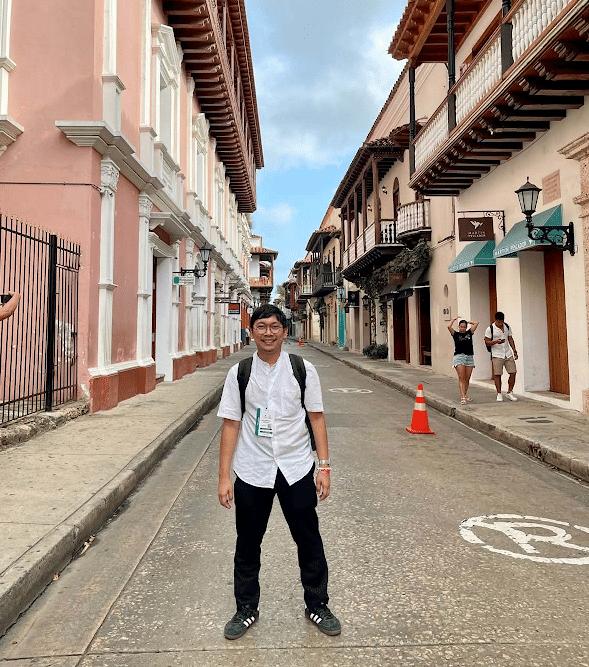
UP Assistant Professor Karlo Mikhail I. Mongaya, born and raised in Cebu City, presented the co-authored paper “Food Regimes and Radical Movements in Agrarian Change: An Invitation for Rethinking the Agrarian Question in the Philippines,” at the International Academic Conference for Land, Life & Society held at the University of Cartagena from February 20–22, 2026.

pants representing 321 universities, research institutions, and academic organizations across all continents.


The academic gathering ran parallel to the Second International Conference on Agrarian Reform and Rural Development (ICARRD+20), an international multilateral forum hosted by the Government of Colombia with support from the Food and Agriculture Organization of the United Nations, the Government of Brazil, and other social movement and academic partners.
The academic conference brought together 410 partici-
The Collective of Agrarian Scholar-Activists of the South (CASAS), a solidarity-based network of Global South agrarian studies scholars, led the event alongside over two dozen Colombian and international universities, ministries, academic networks, and research institutes. Mongaya and co-author Sheila Mae Pagurayan, a junior research analyst at UP Diliman, are members of CASAS.
Mongaya and Pagurayan’s paper contends that academic literature has largely overlooked key issues in Philippine agrarian change since the 1980s. This oversight persists despite four decades of
rural transformation marked by land redistribution efforts, market liberalization, labor migration, and deepening food insecurity.
The co-authors assert that these dynamics are not merely historical concerns. “The combined crises of food, energy, and climate change have made the agrarian question more urgent than ever,” their paper states. The study offers a historical overview of how global food regimes and radical social movements have shaped agrarian transformation in the Philippines.
Both authors also volunteer as researchers for KATARUNGAN (Kilusan para sa Repormang Agraryo at Katarungang Panlipunan), an organization that advocates for small farmers’ land rights and food sovereignty. Their academic inquiry connects directly with ongoing agrarian issues.
Mongaya also served on the drafting committee that produced the Cartagena Declaration, a collective statement summarizing the discussions and debates of the academic conference. The Declaration was read during the plenary session of ICARRD+20.
The Cartagena Declaration reaffirms the commitment of engaged scholars to conduct rigorous, evidence-based, and co-produced research grounded in the lived realities of rural communities. It emphasizes that securing land and territory “for people, for work, for food, and for life” is not a utopia but a necessary and achievable response to today’s global crises.
The academic conference in Cartagena highlighted how scholarship informs international policy debates on agrarian reform and rural development. n

by AJPress
LOS ANGELES — Four actresses with Filipino heritage were associated with award-winning productions at the 32nd Actor Awards, reflecting the continued visibility of Filipino and Filipino-American performers in major Hollywood film and television projects.
The ceremony, presented by SAG-AFTRA, took place on March 1, 2026 at the Shrine Auditorium and Expo Hall in Los Angeles and streamed globally on Netflix. The awards recognize outstanding acting achievements in film and television and are determined through voting by members of the actors’ union.
Three of the actresses — Isa Briones, Amielynn Abellera, and Kristin Villanueva — were members of the ensemble cast of the medical drama The Pitt, which won Outstanding Performance by an Ensemble in a Drama Series, one of the ceremony’s top television honors.
The series centers on the fast-paced environment of a modern hospital emergency department and the personal and professional challenges
faced by medical staff.
Briones portrays Dr. Trinity Santos, while Abellera appears as Nurse Perlah Alawi and Villanueva as Nurse Princess Dela Cruz. As part of the show’s ensemble cast, the three actresses shared in the guild’s recognition of the series’ collective performance.
Briones, the daughter of Filipino stage and television actor Jon Jon Briones, previously appeared in the science-fiction series Star Trek: Picard and has built a career across television, film and stage.
In the film categories, the ensemble cast of Sinners received Outstanding Performance by a Cast in a Motion Picture, the Actor Awards’ top ensemble honor for film.
The film stars Michael B. Jordan and features Hailee Steinfeld, whose maternal grandfather was Filipino. As a member of the film’s cast, Steinfeld shares in the ensemble award recognized by the guild.
The Actor Awards have long been regarded as a significant recognition within the entertainment industry because winners are selected by
actors rather than critics or journalists.
by AJPress
LOS ANGELES — Actor and singer Darren Criss paid tribute to Filipina Broadway icon Lea Salonga during a Women’s History Month segment on The Kelly Clarkson Show, highlighting her influence on musical theater and her impact on generations of performers.
During the discussion, Criss was asked to name a woman in the Broadway community who had inspired him. He immediately cited Salonga, referring to her as “the venerable Lea Salonga.”
ensemble awards recognize the achievements of entire casts rather than individual performers, the presence of four actresses with Filipino heritage among award-winning productions highlights the growing representation of Filipino and Filipino-American talent in international entertainment.
For Filipino audiences and the diaspora, the moment underscores how performers of Filipino descent continue to gain visibility in major studio films and prestige television series reaching global audiences. n

“If you're a Broadway person, her legacy is mighty,” Criss said.
Criss noted that Salonga’s career has been particularly meaningful to members of the Asian American and Pacific Islander community, where she has long been regarded as a pioneering figure in international theater.
“Being part of the [Asian American and Pacific Islander] community, she’s been a large shining beacon for a lot of folks and she’s been such an amazing leader in my own life as a fan,” he said.
The actor also reflected on meeting Salonga personally, saying his admiration for the performer deepened through their interactions.
“She’s an extraordinary woman and still a wonderful performer and just a great Broadway gal,” Criss said. “I think anybody that is familiar with her work personally and professionally would agree with me.”
Criss and Salonga have appeared together at various industry events but have not yet collaborated in the same stage production.
Criss first gained international recognition for his

Beyond theater, Salonga is also known worldwide as the singing voice of Disney princesses Jasmine in Aladdin and Fa Mulan in Mulan.
Criss’s remarks came as Women’s History Month observances across the United States highlight the contributions of women in arts, culture and public life. In the world of musical theater, Salonga’s decades-long career continues to be widely recognized as a milestone in expanding global visibility for Asian performers on the Broadway stage. n
role as Blaine Anderson in the musical television series Glee. He later won both a Primetime Emmy Award and a Golden Globe Award for portraying Andrew Cunanan in The Assassination of Gianni Versace: American Crime Story. Salonga, widely regarded as one of the most accomplished Filipino performers in global musical theater, rose to international prominence after winning the Tony Award for Best Actress in a Musical for her performance in Miss Saigonin 1991. She later performed in major productions of Les Misérables on Broadway and London’s West End.
by AJPress
LOS ANGELES — American singer Alex Band, lead vocalist of the rock group The Calling, has credited Filipino nurses with helping him recover from a serious health emergency years ago, recalling the compassion he received while hospitalized in California.
Band shared the experience while reflecting on his long-standing connection with Filipino audiences, noting that many of the nurses who cared for him during his recovery in Los Angeles in 2010 were Filipinos.
“I had a lot of amazing Filipino nurses taking care of me,” Band said. “The face of a Filipino is like an angel to me.”
Band rose to international prominence in the early 2000s as the frontman of The Calling, whose breakout hit “Wherever You Will Go” became one of the decade’s most recognizable rock ballads and topped several global charts.
The singer said the care he received during the medical episode left a lasting impression and deepened his appre-

ciation for Filipino healthcare professionals, whom he described as attentive and compassionate.
Filipino nurses have long been recognized as a major presence in healthcare systems worldwide. The Philippines remains one of the largest sources of internationally trained nurses, with many working in hospitals and medical facilities across the United States, Europe, and the Middle East.
In the U.S., Filipino nurses
represent one of the largest groups of foreign-born healthcare workers, reflecting decades of migration driven by global demand for skilled medical professionals. Band said the experience during his hospitalization continues to resonate with him, particularly the dedication shown by the Filipino nurses who helped him through recovery.
Their care, he said, remains something he will not forget. n
by AJPress
MANILA — The hospitalization of veteran Filipina actress Odette Khan has drawn attention in the Philippine Senate, where a lawmaker said her situation reflects the financial pressures many Filipino families face when dealing with serious illness and prolonged medical care.
Khan, a longtime presence in Philippine film, television and theater, remains confined in a hospital while undergoing treatment for several respiratory-related conditions, according to updates shared by her family and reported by Philippine media organizations. The actress has been treated for pneumonia, emphysema and edema, conditions that require ongoing monitoring and medical intervention.
Her daughter, Claudette Avelino-Tandoc, earlier issued a public appeal for assistance, saying the family has been coping with mounting medical expenses during Khan’s confinement. Media reports said hospital costs had already reached more than ₱200,000 as of late February, a figure that does not yet include professional fees, medications and other related expenses.
The case gained wider attention after Sen. Erwin Tulfo raised the matter in the Senate, saying the situation highlights the broader difficulties faced by patients who struggle to pay hospital bills. Tulfo said cases like Khan’s demonstrate why government medical assis-
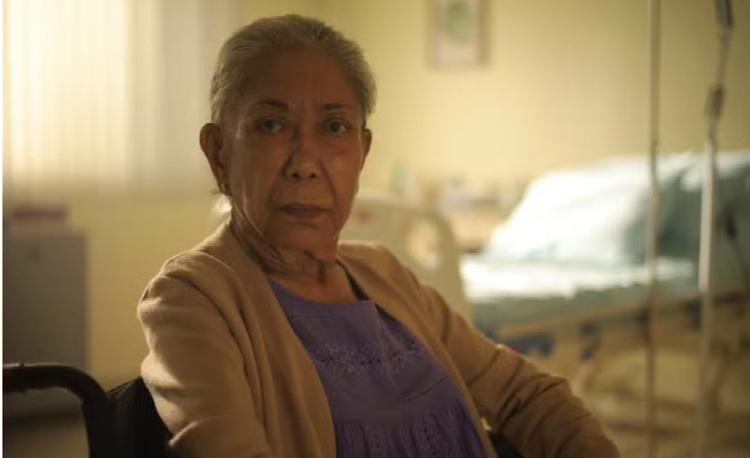
tance programs must remain accessible to those in need.
Observers noted that the situation mirrors a recurring challenge in the Philippine health system, where families confronting major illnesses often turn to public appeals, charitable assistance or government aid programs when medical costs rise.
Khan is widely recognized for her commanding performances in television dramas and films, frequently portraying strong character roles across decades of work in the entertainment industry. She most recently appeared in the film “Bar Boys: After School,” where her performance earned recognition at the Metro Manila Film Festival.
Colleagues and supporters from the entertainment community have since shared messages of support for the veteran actress while encouraging assistance for her ongoing medical treatment. n
by AJPress
MANILA — Brazilian beauty queen and television personality Priscilla Meirelles has filed a petition before a Philippine court seeking recognition of a foreign divorce from Filipino actor John Estrada, according to statements released by her legal team and confirmed by Philippine media reports.
The petition, filed before a Regional Trial Court in Quezon City, asks the court to recognize and enforce a divorce decree issued in Brazil that legally dissolved the couple’s marriage.
According to the statement from her lawyers, the First Family Court of the Judicial District of Boa Vista in the State of Roraima, Brazil, issued a “Sentença” (judgment) on March 31, 2025, formally ending the marriage under Brazilian law.
The filing seeks to have the Brazilian ruling recognized in the Philippines so that its legal effects—including the change in civil status—can be reflected in Philippine records.

Her legal team said the petition aims to ensure that the judgment and its legal consequences are acknowledged in the Philippines, where Meirelles has lived for many years.
In the statement, Meirelles described the move as a personal step forward following the end of the marriage, calling it “a significant step” toward closing a chapter in her life.
Meirelles rose to international prominence after winning Miss Earth 2004 and later built a career in Philippine television.
She married Estrada on February 26, 2011 in La Union. The couple has one daughter, Samantha Anechka, born in 2012.
In a February 2026 interview on the television program “Fast Talk with Boy Abunda,” Meirelles said she initiated divorce proceedings in Brazil in 2024.
Under Philippine law, foreign divorce judgments may be recognized by local courts through a judicial process so their legal effects can be reflected in Philippine civil records. n
by AJPress
Actress and digital personality Alex Gonzaga is encouraging aspiring content creators to prioritize authenticity as they build audiences in the fast-growing world of social media.
Gonzaga, who has established a strong following through vlogs, comedy sketches and lifestyle content, recently advised new creators not to imitate others or chase online trends simply to gain views. Instead, she said audiences are more likely to connect with content that reflects a creator’s genuine personality and experiences
“Be yourself and your audience will find you,” Gonzaga said.
Her remarks reflect a broader shift in the digital entertainment landscape, where social media platforms have become important venues for independent creators to reach viewers without relying solely on traditional television or film distribution channels.
Born Catherine Cruz Gonzaga, the

entertainer first gained recognition through television hosting and acting roles before expanding into digital content. She later built a substantial online presence through YouTube and other platforms, where her videos frequently feature humor, personal reflections and everyday life moments.
Gonzaga is also the younger sister of Toni Gonzaga, another prominent figure in Philippine entertainment. Both have remained influential personalities within the country’s media and entertainment industry.
Observers note that the rapid growth of social-media platforms has transformed the Philippine entertainment ecosystem, enabling creators to cultivate audiences directly and build communities around their personal brands. In that environment, Gonzaga said authenticity and consistency remain essential for sustaining long-term engagement with viewers.
Her message to aspiring creators, she added, is simple: content rooted in one’s true personality is more likely to resonate with audiences over time. n
le recruitment of foreign workers, including thousands of Filipinos for infrastructure and construction projects.
1980s–1990s — Overseas labor programs expand
The Philippines strengthens labor migration policies, deploying Filipino workers across the Middle East in construction, healthcare and domestic services.
2000s — Growth of skilled migration
Increasing numbers of Filipino professionals work abroad as nurses, engineers, aviation staff and hospitality workers.
2010s — Diversification of the Filipino workforce
Filipinos become more visible in industries such as tourism, finance, retail and management in major Middle Eastern cities.
2020s — A community numbering in the millions Government estimates place the Filipino population in the Middle East at about 2.1 million, reflecting decades of migration and family settlement.
Where Filipinos live in the Middle East
Filipino communities are spread across much of the Middle East, with the largest concentrations in the Gulf Cooperation Council states, where foreign workers make up a substantial portion of the labor force. Over the decades, Filipino migrants have become an integral part of the region’s workforce, employed in industries ranging from healthcare and engineering to hospitality, retail and domestic services.
The largest Filipino populations are found in Saudi Arabia and the United Arab Emirates, long considered the primary destinations for overseas Filipino workers in the region. Significant Filipino communities are also present in Kuwait, Qatar, Bahrain and Oman, where Filipinos work across a wide range of service and professional sectors.
Beyond the Gulf, smaller but established Filipino communities live in Israel and Jordan, particularly among caregivers and healthcare workers who support elderly patients and medical institutions.
Across the region, Filipino migrants are supported by a network of Philippine embassies, consulates and labor offices, which provide consular services, assist workers facing legal or employment concerns and coordinate emergency assistance when needed. For many Filipinos living far from home, these institutions serve as an important link to the Philippine government and a
source of support during times of uncertainty.
Cities with the largest Filipino communities
Beyond national totals, Filipino migrants are concentrated in several major cities that serve as economic centers for international workers.
Dubai, United Arab Emirates
Dubai is widely considered one of the largest hubs of Filipino life in the Middle East, with Filipinos working in aviation, retail, hospitality, healthcare and tourism.
Abu Dhabi, United Arab Emirates
The UAE capital hosts many Filipino professionals in healthcare, aviation and government services.
Riyadh and Jeddah, Saudi Arabia
These major Saudi cities employ large numbers of Filipino workers in healthcare, engineering, construction and hospitality.
Doha, Qatar
Filipinos in Doha are employed in aviation, hospitality, healthcare and infrastructure industries.
Kuwait City, Kuwait
The Kuwaiti capital remains a major center for Filipino domestic workers and service-sector employees.
Across these cities, Filipino migrants maintain vibrant social networks through churches, civic groups and cultural organizations.
Repatriation requests increase
As tensions rose and airline routes were disrupted, Philippine authorities reported an increase in requests from overseas Filipinos seeking assistance.
Government briefings indicated that 1,189 OFWs had expressed intent to be repatriated as of early March 2026.
In one of the first major movements linked to the crisis, 299 Filipinos arrived in Manila from Dubai on March 5, according to Philippine officials.
Embassies and labor offices across the region continue to assist Filipinos who require travel support or wish to return home.
Aviation disruptions complicate travel
The evolving conflict has had ripple effects across international aviation networks.
Airlines have adjusted operations and rerouted flights in response to security concerns and airspace conditions in parts of the Middle East, affecting travel plans for migrant workers and international travelers.
Several governments around the world have reported receiving requests from citizens
seeking assistance to leave affected areas as transportation options become more limited.
Why the Middle East still attracts Filipino workers today
Despite periodic political tensions and economic uncertainty, the Middle East remains one of the most important destinations for Filipino workers.
For many migrants, salaries in Gulf countries remain significantly higher than comparable wages in the Philippines. Jobs in sectors such as healthcare, engineering, aviation and hospitality often provide income that allows workers to support extended families at home.
Many Middle Eastern economies also rely heavily on expatriate labor to sustain industries ranging from construction and infrastructure to healthcare and domestic services. Filipino workers have long been part of that workforce.
Filipinos are often sought after because of their English proficiency and professional training, particularly in sectors such as nursing, aviation services, hospitality and education.
Decades of migration have also created extensive Filipino communities across the region. These networks often help new arrivals find housing, employment and community support.
The Philippine government also maintains labor agreements and diplomatic channels with several Middle Eastern countries aimed at protecting workers’ rights and regulating recruitment.
These factors have sustained Filipino migration to the region even as global labor markets evolve.
Economic stakes for the Philippines
Overseas Filipino workers are often described in the Philippines as “modern-day heroes” because of the economic support they provide to families at home.
Remittances from Filipinos working abroad contribute tens of billions of dollars annually to the Philippine economy, supporting household spending, education and small businesses.
Any prolonged disruption in the Middle East—whether through conflict, travel restrictions or employment losses— could therefore have ripple effects for families across the Philippines who depend on overseas income.
For now, Philippine authorities say their priority remains ensuring the safety and welfare of Filipino nationals abroad while maintaining readiness to assist those who may choose to return home should tensions escalate further. n
A northern Philippine street food finds new life in the U.S. as homebased cooks build a coast-to-coast cottage-food enterprise around the regional specialty.
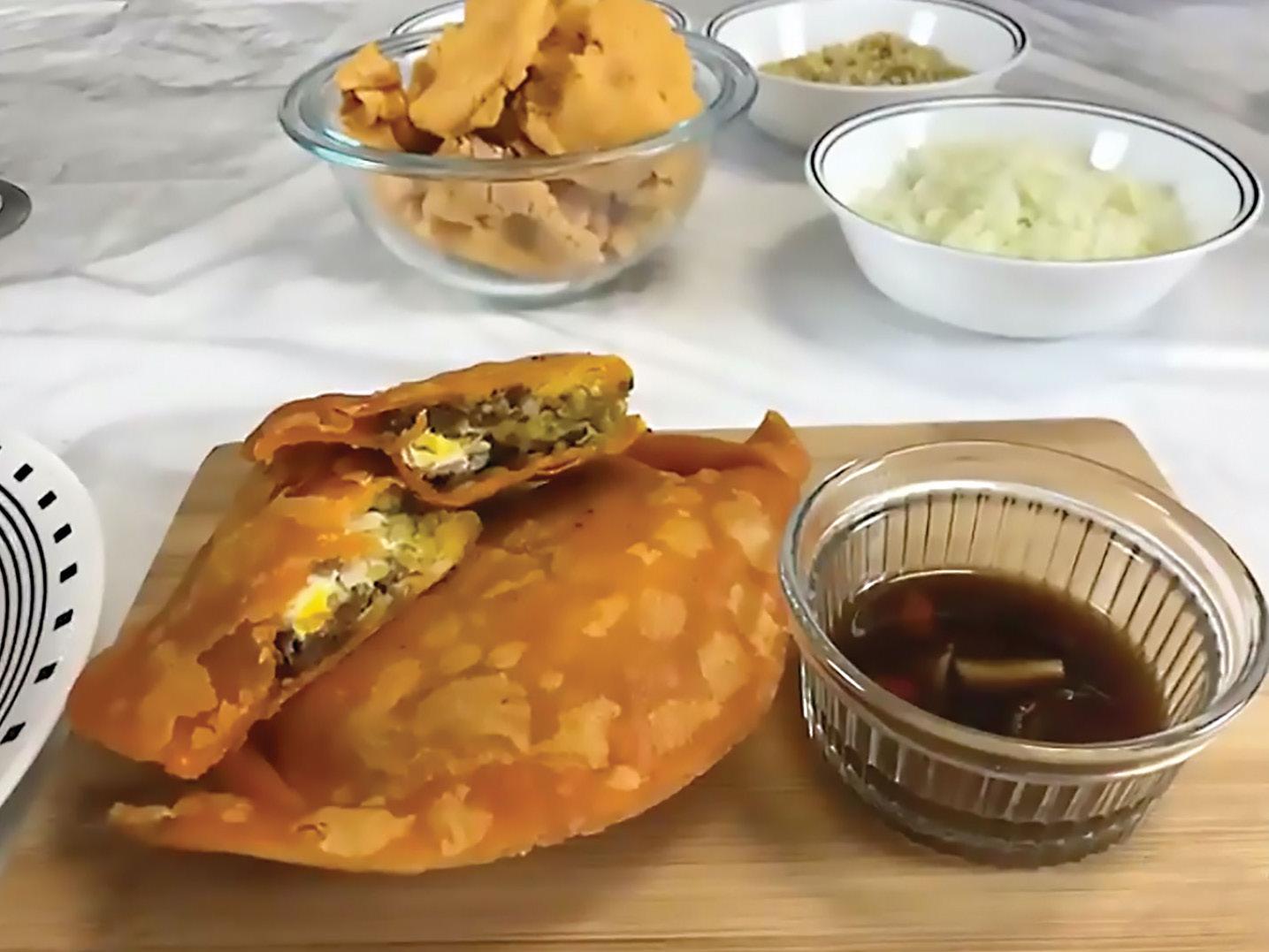
by AJPress
A brightly colored street snack from northern Philippines is gaining commercial momentum across the United States, driven largely not by restaurant chains but by home-based food entrepreneurs.
Ilocos empanada, long associated with Batac City and Vigan, is now being produced by dozens of small-scale sellers from California to New York. Many operate under cottage food laws, selling through pre-orders, community markets and social media announcements.
While some Filipino restaurants, and at least one food truck, have begun offering the dish, much of its recent visibility comes from independent home kitchens responding to rising demand.
A regional identity rooted in Ilocos
Empanadas were introduced to the Philippines during the Spanish colonial period, but in Ilocos the dish evolved in a distinct direction.
In Ilocos Norte and Ilocos Sur, rice flour replaced wheat as the base of the wrapper. The shell is tinted orange with annatto and deep-fried until crisp.
Traditional fillings include shredded unripe green papaya, mung bean sprouts, Ilocano longganisa and a whole egg cracked directly into the center before sealing. The
empanada is typically served with sukang Iloko, a cane vinegar seasoned with garlic and chilies.
In Batac, the Batac Riverside Empanadaan functions as a centralized hub of empanada vendors, reinforcing the city’s longstanding branding as a culinary origin point. Festivals and tourism campaigns have further elevated the dish as a civic identifier.
Subtle distinctions between Batac and Vigan styles remain part of regional culinary discussion.
Why it is trending now
Market observers point to several converging factors behind the empanada’s expanding presence in the United States.
Visual impact. The vivid orange shell stands out in digital formats and short-form video.
Texture appeal. The ricebased crust produces a crisp bite that translates effectively on camera.
Low barrier to entry. Compared with opening a full restaurant, producing empanadas from a licensed home kitchen requires relatively modest startup capital.
Growing interest in regional cuisine. Filipino-American consumers increasingly seek dishes tied to specific provinces rather than generalized Filipino offerings.
The home-based model has been particularly influential. Sellers often announce limited “drops” online, with orders frequently selling out within
hours. Fulfillment typically occurs through scheduled pick-ups, weekend markets, or community and church events.
Food analysts note that similar grassroots growth patterns have helped other culturally specific dishes gain broader recognition.
A growing micro-enterprise network
In Ilocos, empanada vending supports tourism and local small businesses. In the United States, the growth pattern has taken shape primarily through:
• Licensed cottage-food operations
• Social media-based pre-order systems
• Frozen empanadas sold for home frying
• Cultural festival and community event booths
• Select restaurant and food truck menu placements
Because the wrapper is rice-based and each empanada is assembled individually, scaling production requires careful moisture control and consistent oil temperature. Vendors say ensuring the egg cooks properly without compromising shell integrity remains a technical challenge.
The labor-intensive preparation has limited large-scale industrial production, preserving the dish’s handcrafted character even as demand grows.
Culinary structure and appeal
Ilocos empanada’s appeal
PhiliP S. Chua, MD, FaCS, FPCS
IN this issue, we shall devote our column to exalting the “medicinal values or therapeutic effects” of regular, ordinary food that people all over the world eat as a part of their diet. The reported health benefits of some of the foods we have listed hereunder are anecdotal, passed down from generation to generation, used by herbolarios (town herbalists), and have not been thoroughly and scientifically proven. But since they are regular food items we consume daily, and past experiences show many of them helped, trying them for some of the ailments or situations they are allegedly effective for is simply natural and safe. As long as one is not allergic to them, ingesting these food items does not result in adverse “side-effects” as could be encountered in, say, Noni Juice or some other unvetted, cure-all herbals and “food supplements” in the market today.
Besides their essential nutritional value, many of the foods we ingest regularly have “medicinal effects” that we are not conscious of but which help alleviate or correct some diseases or conditions. It is common knowledge that scurvy (vitamin C deficiency), for instance, is cured by eating a lot of citrus fruits, or that hypoglycemia (low blood sugar) among diabetics will be alleviated by eating candies, sugar, or other sweets. Or, that bananas and apples are good for diarrhea, while papaya, prunes, and other fruits and vegetables are good for constipation. The food we eat is metabolized (transformed) into chemicals in our bodies, which is actually an internal "auto-pharmacy" that works wonders for our health and longevity.
But did you know that onions, hot pepper, and tomatoes are good for the common cold? Or that cherries are good for cramps? Or that apple, grapefruit, and kalamansi are good for halitosis (bad breath)?
Here is a list of medical conditions and the corresponding food items claimed to either prevent or alleviate them:
1. Arthritis: Apple, pineapple, cantaloupe, grape, grapefruit, orange, mustard green, strawberry, tangerine, cucumber, lettuce, cherries, celery, cauliflower.
2. Insomnia: Onion, cabbage, celery, avocado, apple
3. Hemorrhoids: Prunes, dates, beans, eggplant, plums, sweet potato
4. Nausea: Pineapple, papaya
5. High Cholesterol: Soybean (tofu), red wine, grapefruit, tomato, apple, eggplant, corn, cabbage, peas, beans, green leafy vegetables, high fiber cereals, avoid red meat, saturated fats
6. Indigestion: Plums, papaya, pineapple, banana, apple, grapefruit, cucumber, peach
7. Sinusitis: Onion, hot pepper, tomato
8. Gastric Ulcer: Pumpkin, rice, avocado, banana, date, okra, peach
9. Hypertension: Bamboo shoots, guava, pear, tangerine, squash, cherries, jackfruit, peach, celery, orange
10. Impotence: Pumpkin seeds, avocado, seaweeds, date, oyster, hot pepper
11. To lose weight: All varieties of fruits and juices, like grapefruit, orange, apple, pineapple, radish, tomato, lettuce, especially when eaten as a substitute for red meat and carbohydrates, with calorie-counting
12. Cancer: For prevention, a high fiber, low cholesterol diet (fish), plus frequent intake of processed tomato (ketchup, tomato paste), asparagus, broccoli, apricot, strawberry, cherries, mustard greens, okra, apple, carrots, papaya, prunes, spinach, peach, pumpkin, watermelon, green leafy vegetables
13. Heart Attack: Just like for cancer prevention, a high fiber and low cholesterol diet, plus a lot of vegetables and some fruits
14. Stroke: The same antioxidants as above.
15. Cuts & Burns: Olive oil, sesame seed oil, coconut oil
16. Dry scalp, skin: Coconut oil, papaya, avocado, sesame seed oil
17. Constipation: Papaya, prunes, green leafy vegetables, peanuts, pineapple
18. Dizziness: Onion
19. Gall Stones: Soybean, radish, tomato, apricot
20. Headache: Beets, cabbage, apple, asparagus
21. Diarrhea: Bananas, toast, ginger, turmeric, carrots, mushrooms, kimchi, yogurt (fermented foods are good for our gut microbiome)
These are only a few sample conditions where foods have been taken not only for their fundamental nutritive and caloric value but for their alleged medicinal effects. We want to emphasize that these food items are not substitutes for
prescription medications. As a general rule, one should never stop taking prescription drugs without consulting a physician. Diet, tobacco, and alcohol are the three most important, if not the most notorious, killers of man, and the reason why in today’s world we have catastrophic numbers of obesity, hypercholesterolemia, heart attacks, strokes, cancer, depression, infertility, male erectile dysfunction, and degenerative diseases like arthritis, gout, osteoporosis, etc. Of course, there are other factors that contribute to the epidemic of these ailments, but food and lifestyle, even more than heredity, play a very significant role in health and disease. What we eat, how much we eat, what we do not eat, how we take care of ourselves, or how we abuse our bodies, determine, to a great extent, how healthy or unhealthy we are, our quality of life, and our longevity. Foremost, we are what we eat!
I am looking forward to the United States Congress and the Food and Drug Administration putting the screws on the so-called “food supplements, alternative medications, herbal and homeopathic therapies,” all of which make up for a flourishing 30 billion US dollar business annually. The medical and lay community in the United States is now (finally!) realizing that the majority (more than 90 percent in my view) of the so-called “food supplements” with purported therapeutic values are nothing more than a money-making scheme that victimizes hundreds of millions of unsuspecting people around the world. No unvetted “food supplements” (for safety, efficacy, side-effects, etc.) should be allowed for over-the-counter sale.
I sincerely hope the Philippines and other nations will follow suit to safeguard our people and our country from the unscrupulous domestic or foreign manufacturers, money-hungry distributors, and dealers of falsehood, who have been victimizing the ignorant and trusting public long enough. Our government and lawmakers should promulgate laws without delay to protect the people by putting an end to these malignant merchants of deception and fraud.
* * *
The opinions, beliefs and viewpoints expressed by the author do not necessarily reflect the opinions, beliefs and viewpoints of the Asian Journal, its management, editorial board and staff. n

LATELY, I’ve been thinking about pressure.
Not just financial pressure— though many are feeling it—but the quiet pressure to keep up. To succeed faster. To feel like we’re earning enough, saving enough, becoming enough.
It’s easy to look around and wonder whether everyone else figured life out sooner.
As a mortgage advisor and financial coach, I hear it often. Clients ask about rates and loan programs, but underneath those questions is something deeper: Am I behind? Am I going to be okay?
If I’m honest, I’ve asked that too.
Recently, I was reflecting on a dance I had performed, and it struck me how much dance mirrors our financial and spiritual lives. When a dancer forces movement, the body tightens. The rhythm disappears. The dance becomes strain instead of expression.
But when you trust the lead and move with the music, everything flows differently.
Faith works the same way. Proverbs 23 cautions us not to wear ourselves out chasing riches. Scripture does not condemn success; it warns against striving without peace. In a culture that glorifies hustle, that reminder feels almost radical.
I’ve met hardworking people doing all the right things financially—budgeting, planning, building—yet still living with anxiety. What I’ve learned is this: financial health is not built on numbers alone. It is built on peace.
Isaiah 26:3 promises perfect peace to those whose minds are fixed on Him. Markets change. Careers shift. Timelines stretch. But God’s timing does not waver.
There was a season when I believed progress meant pushing harder and proving more. Now I understand something deeper.
Peace is not the absence of ambition. It is the presence of trust.
We still plan. We still work. We still steward wisely. But we release the illusion that everything depends solely on us. Proverbs 16:3 reminds us to commit our plans to the Lord and trust Him to establish them.
Maybe true financial freedom isn’t about having more. Maybe it’s about fearing less. You don’t have to outrun
1 teaspoon salt
1 tablespoon neutral oil
lies in contrast.
The crisp rice shell fractures on first bite. The green papaya adds mild sweetness, while garlic-forward longganisa provides savory depth. The egg binds the filling into a cohesive center, and cane vinegar resets the palate with acidity.
The combination of crunch, richness and tang distinguishes the empanada from other fried pastries and contributes to repeat demand across generations.
A recipe grounded in tradition
For households seeking a Batac-style version:
Dough
2 cups rice flour
1–2 tablespoons annatto powder or annatto-infused oil
* * *
Philip S. Chua, MD, FACS, FPCS, a Cardiac Surgeon Emeritus based in Northwest Indiana and Las Vegas, Nevada, is an international medical lecturer/author, Health Advocate, medical missionary, newspaper columnist, and Chairman of the Filipino United Network-USA, a 501(c)3 hu-
someone else’s timeline. You are allowed to move at the pace of grace.
As we enter this Lenten season—when many of us consider what to give up—perhaps the invitation is deeper than surrendering chocolate or social media.
Maybe this year, we give up fear.
Fear of being behind.
Fear of missing our moment.
Fear that everything rests on our shoulders.
What if we surrendered the pressure instead?
Because when fear loosens its grip, peace steps in, and we finally learn to live, build, and even prosper without striving.
And that may be the most powerful breakthrough of all.
* * *
The opinions, beliefs and viewpoints expressed by the author do not necessarily reflect the opinions, beliefs and viewpoints of the Asian Journal, its management, editorial board and staff.
* * *
Kathy Current is a financial coach, mortgage advisor, and author of Heal Your Money Wounds God’s Way, where she combines over three decades of financial experience with timeless biblical wisdom. Kathy addresses real-life questions about God and money, helping readers find freedom and purpose in their financial lives. n
based enterprise
1¼ cups hot water
Combine dry ingredients.
Gradually add hot water and knead until the dough becomes smooth and pliable.
Filling
2 cups shredded green papaya
1 cup mung bean sprouts
Cooked Ilocano longganisa, crumbled
1 egg per empanada
Garlic and onion
Lightly sauté the aromatics and keep the filling relatively dry before assembling.
Flatten the dough thinly, add the filling, crack the egg inside, fold and seal tightly. Deep-fry at about 350°F until crisp. Serve with cane vinegar seasoned with garlic and chili.
From street stall to home-
manitarian foundation in the United States. He is a decorated recipient of the Indiana Sagamore of the Wabash Award in 1995, presented by then Indiana Governor, US senator, and later a presidential candidate, Evan Bayh. Other Sagamore past awardees include President Harry S. Truman, President George HW Bush,
The renewed popularity of Ilocos empanada reflects a broader evolution in Filipino-American food markets. Regional specificity is gaining prominence, and province-based dishes are expanding through decentralized production rather than corporate rollout.
From Batac’s roadside stalls to licensed home kitchens in Los Angeles, New Jersey and New York, the empanada’s expansion illustrates how traditional foods can adapt to modern small-business ecosystems.
Its coast-to-coast growth suggests commercial staying power, anchored not by mass production, but by individual cooks turning a regional specialty into a viable enterprise.n
Astronaut Gus Grissom, pugilist Muhammad Ali, distinguished educators, renowned scientists, etc. (Wikipedia). Websites: FUN8888. com, Today.SPSAtoday.com, and philipSchua.com On Amazon.com, search for “Where is My America?” Email: scalpelpen@gmail.com n
rogelio ConStantino MeDina My P.E.P. (People, Events,Places)

To mark the 40th anniversary of the EDSA revolt, I posed a simple question to five respondents: “Is the EDSA People Power Revolution a fluke?” Their answers reflect how history continues to be debated—not only for what happened, but for what it ultimately meant.
International journalist Chino Hansel Philyang:
“The EDSA People Power Revolution was not a fluke. It was the product of decades of social frustration, moral outrage, and strategic action by ordinary Filipinos and key leaders. While its success may seem miraculous in hindsight, it was the courage, discipline, and unity of millions that forced change—proof that collective resolve, not luck, reshapes history.”
PETA founder and Radyo Balintataw host Cecile Guidote-Alvarez:
“No. It was born from a realization of the need for self-reliance, grounded in justice and commitment to truth and democracy. Our history shows that we fight for freedom not only by arms but by conscience. When oppression becomes undeniable and awareness deepens, collective action is forged. Before, it was foreign invasion; today, it is corruption. If unresolved, a breaking point may again be reached.”
Writer Renato Redentor
Constantino:
“It depends on perspective. It may appear a fluke. The dynamic of forces could have been partially or wholly engineered by external actors. Or it could be real and repeatable— but that raises the question: if repeatable, what exactly are we repeating?”
Chicago-based educator-writer-performer Lani
Montreal:
“EDSA has its merits. Still, I sometimes wonder. I’m writing a play that revisits the EDSA experience.”
Singer-entrepreneur Ramil Cabrera:
“Yes, it was a fluke because the outcome led to over-freedom.”
Four decades on, the conversation remains open.
Coco Martin Takes a Selfie of Us
At the Manila Hotel’s Centennial Hall during the 1st PAFTA Awards, I was standing quietly when actor Coco Martin—past Philippines Finest Business Awards and Outstanding Achievers awardee— entered without fanfare. I was beside Angelo C. Banaga of Kwento Co.
As he approached, Coco smiled and gently waved before taking a seat at the table just behind mine. Moments later, he was called to receive the Best Drama Actor award for his leading role in FPJ’s Batang Quiapo. His speech was heartfelt. Most striking was his mention of his grandmother—a reminder of humility and gratitude for one’s beginnings.
When he returned to his seat and later prepared to leave, he unexpectedly initiated a handshake. I was caught off guard, still seated, but appreciative of the gesture.
Outside the hall, I asked for a selfie. When my attempt failed, he took the photo himself. As he bade goodbye, I smiled while a few onlookers glanced our way.
That same evening, together with fellow 4th Philippines Finest Business Awards and Outstanding Achievers awardee Salvie Paparon, I was interviewed by Magnum Radio 99.9 News and Music’s Magnum Gilbert and Magnum Mencho on Magnum Sabado Night Talk. Thanks to La Visual Corp. for the assistance.
Their Brief Memory of Popsy Aquino
I also asked several individuals via Messenger: “What is your brief memory of Popsy Mendez Aquino, Sen. Butz Aquino’s wife and mother of Roxanne, Jackie, and Bobby?”
Three shared their reflections.
Former PCSO Chairperson Margie Penson Juico:
“Popsy was a volunteer in the Yellow Ribbon Movement. My association with her was through the Aquino family. Her nieces spoke fondly of her. Popsy, her mother, and mine bowled together at Club Filipino. I later came to know her sister Liza. Both were unassuming and never boastful. Popsy’s quiet and gentle spirit was remarkable—even the way she swayed while dancing reflected it. May you rest in God’s loving embrace.”
Popsy’s niece Annette del Rosario:
“Tita Popsy was present at every family gathering— steady, supportive, and encouraging. Her sentimental heart made everyone feel remembered and valued. She brought
laughter wherever she went. I will miss her.”
Pres. Noynoy Aquino supporter Well Martirez:
“She was thoughtful and always checked on me. She never forgot my birthday. I will miss her.”
With gratitude, Roxanne, the eldest daughter, paid tribute to “Nina Popsy Mendez Aquino (29 October 1940 – 24 Feb-
ruary 2026): Mom, thank you for your love and devotion to our family, for your kindness, grace, and good humor. We are comforted by the belief that you will look after us always.” She concluded with John 19:25–27: “Behold thy mother.” Birthday Greetings Happy birthday to Jeremiah Magcalas, Paolo Saburit, Gloria Medina (Mar. 6); Jaclyn Tum-



mings, Marco Sibayan, Jose Ramon Lorenzo (Mar. 6); Nel Balmores, Carleen Velez of the Regional English Language Office, Victor Oida Solomo (Mar. 7); Marissa Belisario (Mar. 8); Doc Jun Marcellana (Mar. 9); Pereg Medina, Marissa Z. Burgos, Kat Pingol (Mar. 10); Bryan Isip Kato, Monica Mendoza Albert, Marco Narag, Junior Medina, Manolito Esguerra (Mar. 11); writer Raymond Diamzon, Dyosy Perona (Mar. 12); Julio Antonio Bico Salvador (Mar. 13). *




The opinions, beliefs and viewpoints expressed by the author do not necessarily reflect the opinions, beliefs and viewpoints of the Asian Journal, its management, editorial board and staff.
rogeliocmedina@yahoo.com n