

Major U.S. cities issue directives limiting ICE use of municipal
SEVERAL major U.S. cities have issued executive directives in recent weeks aimed at limiting how and where agents of U.S. Immigration and Customs Enforcement (ICE) may operate within municipal boundaries, particularly with respect to city-owned property. The actions — announced in Los Angeles, New York City, Chicago, Boston, Oakland and Seattle — focus on restricting the use of municipal facilities and directing local law enforcement to document certain federal immigration enforcement activities occurring within city limits.
Municipal directives
In Los Angeles, Mayor Karen Bass signed an executive directive prohibiting the use of city-owned or city-controlled property for federal immigration staging, processing or u PAGE 4

Announcement comes as new impeachment complaint is filed in the House.
by AJPress
tional figure to publicly signal a bid for the country’s highest office in the next electoral cycle. Duterte made the announcement during a public address, saying she was offering her “life, strength and future” in service of the Filipino people. She acknowledged political developments since the 2022 elections and spoke about the direction of national governance, framing her decision as a response to current conditions. Duterte was elected vice president in 2022 as part of a joint ticket with President Ferdinand Marcos Jr. Under the 1987 Constitution, the
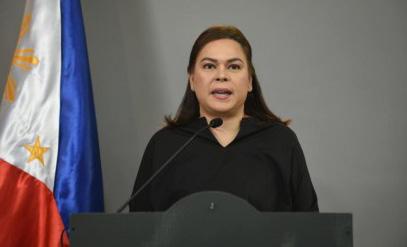
With the International Criminal Court set to open a confirmation of charges hearing on February 23, Malacañang has urged Philippine officials identified in the prosecution’s case against former President Rodrigo Duterte to face the legal process. The Department of Justice says it will await Supreme Court action before responding to any future warrants. Those named have denied wrongdoing.
by AJPress
The
Metro Manila subway: Marcos cites 29-minute
by AJPress
TAGUIG CITY, Philippines — President Ferdinand Marcos Jr. on Feb. 13, 2026 led the groundbreaking for two stations of the Metro Manila Subway Project (MMSP) in the Bonifacio Global City (BGC) corridor, highlighting government projections that a full end-to-end trip from Valenzuela City to BGC could take about 29 minutes once the line becomes operational. The travel-time estimate, pre- u PAGE 5
sented during the ceremony attended by Department of Transportation (DOTr) officials and Japanese representatives, reflects a projected service outcome for Phase 1 of the country’s first underground rapid transit system.
The BGC works fall under Contract Package 105 (CP105), part of the subway’s 33.10-kilometer alignment designed to connect Valenzuela in the north to Ninoy Aquino International
On EDSA’s 40th year, coalition plans ‘3rd Trillion Peso March’
by AJPress
MANILA — A coalition of civil society organizations, church-linked groups and political reform advocates plans to gather along Epifanio de los Santos Avenue (EDSA) on Feb. 25, marking the 40th anniversary of the 1986 People Power Revolution with what organizers have labeled the “3rd Trillion Peso March.” Activities are expected to center near the People Power Monument and the EDSA Shrine, sites closely associated with the civilian-led uprising that led to a transfer of national leadership and the restoration of constitutional democratic governance.
A coalition platform
The Trillion Peso March operates as a coa-
Philippine cash remittances hit record $35.634 billion in 2025
by AJPress
MANILA — Philippine cash remittances climbed to a record $35.634 billion in 2025, up 3.3 percent from $34.493 billion in 2024, according to preliminary data released by the Bangko Sentral ng Pilipinas (BSP).
December inflows helped lift the annual total. Cash remittances coursed through banks reached $3.522 billion in December 2025, a 4.2 percent increase from $3.380 billion in December 2024 and higher than the $2.910 billionrecorded in November 2025.
Cash remittances refer to transfers sent through formal banking channels and rep -
PAGE 1
president is limited to a single six-year term and is not eligible to seek reelection in 2028.
Fourth impeachment complaint filed
Hours after Duterte’s announcement, lawyer Nathaniel Cabrera filed what House records and multiple Philippine news organizations described as the fourth impeachment complaint against the vice president in the current cycle.
The complaint was endorsed by Manila 6th District Rep. Bienvenido “Benny” Abante Jr. and La Union 1st District Rep. Francisco Paolo Ortega V, who serves as deputy speaker.
Under Article XI of the Constitution, any citizen may file an impeachment complaint with the endorsement of a House member. The House of Representatives has the exclusive power to initiate impeachment proceedings, while the Senate has the sole authority to try and decide impeachment cases. Conviction requires a two-thirds vote of all senators.
An impeachment complaint
constitutes an allegation and does not, by itself, establish wrongdoing.
Public reporting on previous impeachment efforts referenced allegations involving the use of confidential funds and claims of betrayal of public trust. Duterte has previously denied allegations of impropriety and characterized impeachment moves as politically motivated.
Constitutional context
The renewed filing follows prior rulings by the Supreme Court of the Philippines involving earlier impeachment efforts.
In July 2025, the Supreme Court ruled that a previous impeachment process violated constitutional safeguards, citing the one-year bar that prohibits initiating impeachment proceedings against the same official more than once within a year. On January 29, 2026, the Court announced that it had denied with finality the House’s motion for reconsideration of that ruling.
The latest complaint was
Airport, Makati and BGC in the south. According to the Embassy of Japan in Manila, CP105 includes roughly 1.3 kilometers of tunneling and the construction of two underground stations between Kalayaan Avenue Station and the planned BGC Station.
Earlier in the day, Marcos and DOTr Acting Secretary Giovanni Z. Lopez inspected progress at Shaw Boulevard Station in Mandaluyong, another segment of the expanding subway network.
Ridership and capacity Government briefings carried by the Philippine Information Agency project that the two BGC-area stations could serve more than 200,000 passengers daily during their initial year of operation.
Planning assumptions presented by transportation officials indicate a fleet of approximately 30 train sets, each composed of eight cars with a theoretical maximum capacity of up to 2,228 passengers per train. The fully underground system is designed to provide high-capacity, high-frequency service aimed at easing road congestion and improving north-south connectivity across Metro Manila.
Progress and timeline Officials have targeted a
filed following the lapse of the period referenced in the Court’s earlier decision.
Political implications Duterte’s early declaration places her at the forefront of what is expected to be a closely watched 2028 presidential race. Political analysts interviewed by international and local media described the move as significant, noting that it situates ongoing legislative proceedings within a broader electoral context.
As of this writing, House leadership has not announced a timetable for referring the complaint to the appropriate committee. Any impeachment process would proceed under constitutional and House rules, with potential transmission to the Senate if approved by the House.
For now, Duterte’s presidential bid and the renewed impeachment effort move forward on parallel tracks – one political, the other constitutional – each likely to shape the national discourse in the years leading to 2028. n

demonstration run of initial segments by 2028, with full completion of Phase 1 projected by 2032. These dates are described by government agencies as milestone targets tied to engineering and operational benchmarks.
A separate report citing a DOTr audiovisual presentation placed overall project completion at about 54 percent, with several kilometers of tunnel excavation and multiple station structures already under construction.
The subway, first initiated under the Duterte administration, continues under the current administration as part of the national infrastructure modernization program.
Financing and partnership Japan remains the principal funding partner through the Japan International Coopera-
lition platform composed of civic groups, church-linked networks, political reform advocates and individual convenors coordinating under a shared banner rather than a formally registered organization.
Organizers have said the Feb. 25 rally will not call for the resignation of President Ferdinand Marcos Jr. or Vice President Sara Duterte.
Among publicly identified convenors is Francis Joseph “Kiko” Aquino-Dee, a Filipino political analyst and civic advocate, and a grandson of former Senator Benigno “Ninoy” Aquino Jr. and former President Corazon Aquino. He has been publicly identified as a co-convenor of reform coalitions associated with the march.
Political advocacy groups such as Akbayan have also been publicly linked to previous gatherings under the same banner. Participating organizations retain their independent legal identities while collaborating on messaging and program coordination.
Organizers have publicly framed the Feb. 25 gathering as reform-driven, emphasizing proposals such as legislation against political dynasties, revisions to the party-list system and broader governance accountability measures. These positions reflect the views of the organizing coalition and are not judicial findings unless validated by competent investigative or judicial authorities.
Security preparations
The National Capital Region Police Office (NCRPO) has
announced that Metro Manila will be placed on full alert beginning Feb. 21 in anticipation of anniversary-related gatherings.
The Philippine National Police (PNP) has said more than 11,000 personnel will be deployed nationwide during the anniversary period to secure events and manage crowd safety.
Police officials have publicly stated that, as of their latest assessments, no specific threats directly tied to the march have been identified, while coordination continues with intelligence units and local government partners.
The Quezon City Government confirmed issuance of a rally permit for Feb. 25 authorizing activities within designated public areas along EDSA, subject to standard public assembly and safety regulations.
Motorists and commuters have been advised to expect increased police visibility and possible traffic slowdowns near rally sites.
Record of previous marches
Two prior gatherings under the Trillion Peso March banner were held in 2025. Par-
ticipation estimates reached the tens of thousands based on organizer projections and police crowd management assessments. Law enforcement agencies described those events as largely peaceful. As of this writing, no law has been enacted directly in response to the marches, and no court ruling has attributed specific legal findings to the demonstrations themselves. Legislative proposals cited by organizers remain subject to the regular congressional process.
Anniversary context Feb. 25 marks four decades since civilians assembled along EDSA in 1986, an event widely regarded as a turning point in the country’s political history. Commemorative events, including religious observances, are expected nationwide in addition to the planned rally in Metro Manila. By returning to EDSA on that date, organizers are situating contemporary reform demands within the historical memory of the People Power movement, operating within the constitutional framework governing peaceful public assembly in the Philippines. n
tion Agency (JICA). In 2024, JICA signed a loan agreement worth 150,000 million yen to support Phase 1 construction, rolling stock procurement and systems installation.
Japanese officials have described the subway as a longterm infrastructure investment intended to reduce travel time losses, improve urban mobility and support environmental sustainability goals in Metro Manila.
Once operational, the Metro Manila Subway is expected to integrate with existing and planned rail lines, forming part of a broader metropolitan transit network. For now, the 29-minute Valenzuela-to-BGC journey remains a forward-looking projection contingent on the project’s completion and commissioning. n
cember inflows, while seabased workers sent $0.69 billion, based on BSP data.
resent a major component of the country’s external receipts.
The BSP also reported that personal remittances, which include cash transfers as well as compensation of employees and other current transfers, reached a record $36.619 billion in 2025. In December alone, personal remittances totaled $3.892 billion.
By type of worker, remittances from land-based overseas Filipinos accounted for $2.83 billion of De -
The United States remained the largest source of cash remittances, accounting for 39.7 percent of the total. Other major contributors included Singapore (7.3 percent), Saudi Arabia (6.6 percent), Japan (5.0 percent), and the United Kingdom and the United Arab Emirates (4.6 percent each). Additional source economies cited were Canada (3.5 percent), Qatar (2.9 percent), Taiwan (2.8 percent), and Hong Kong (2.5 percent).
The BSP has noted that
remittance data are attributed to the country where the remitting institution is located. Transfers coursed through global financial centers may therefore be recorded under those jurisdictions even if the overseas Filipino worker is based elsewhere. Remittances remain one of the Philippines’ most stable sources of foreign exchange and continue to support household consumption and external sector stability. The BSP releases remittance data monthly as part of its monitoring of balance of payments developments. n

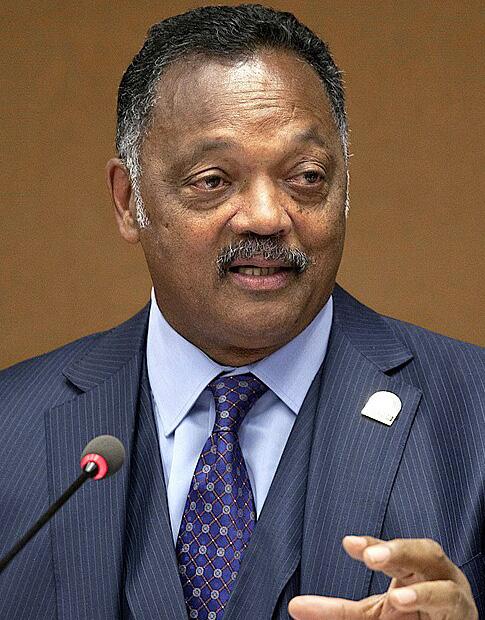
The longtime Baptist minister and founder of Operation PUSH and the Rainbow PUSH Coalition spent more than five decades pressing corporations and political institutions to expand economic opportunity alongside racial equality.
by AJPress
CHICAGO — The Rev. Jesse Jackson, a Baptist minister who spent more than five decades linking civil rights advocacy to economic empowerment, died Tuesday at age 84, according to his family.
Jackson died at his home in Chicago, his family said, describing his passing as peaceful and surrounded by loved ones.
While he first rose to prominence during the 1960s civil rights era working alongside the Rev. Martin Luther King Jr., Jackson’s enduring legacy was rooted in his insistence that political equality must be matched by economic access. Over decades, he argued that voting rights, employment, corporate participation and capital access were inseparable pillars of justice.
Linking civil rights to economic power
In 1971, Jackson founded Operation PUSH — People United to Save Humanity — in Chicago. The organization focused not only on protest but on economic leverage: negotiating with corporations to expand minority hiring, increase supplier diversity and open executive pathways to historically excluded communities.
That effort later evolved into the Rainbow PUSH Coalition, which combined grassroots mobilization with corporate accountability campaigns and voter registration drives. Jackson frequently framed economic inclusion as the next frontier of civil rights, pressing major companies to diversify workforces and procurement contracts.
His advocacy extended beyond symbolic gestures. Jackson and his organization regularly met with Fortune 500 executives, organized shareholder activism and used public pressure campaigns to push for measurable commitments in hiring and contracting practices.
National politics and expanded participation
Jackson carried that economic justice message into national politics. His presidential campaigns in 1984 and 1988 were historic not only for expanding Black voter participation but also for advancing a platform that centered jobs, trade fairness, urban investment and anti-poverty initiatives.
In 1988, he won multiple Democratic primaries and caucuses, demonstrating that a coalition built around racial equity and economic reform could compete nationally. His campaigns helped reshape the Democratic Party’s approach to minority outreach and broadened conversations about income inequality.
A decades-long public presence Even in later years, despite serious health challenges, Jackson remained publicly

PAGE 1
engaged in discussions on corporate diversity, criminal justice reform and voting access. He appeared at national conventions and civil rights commemorations, continuing to advocate for economic opportunity as a core civil rights principle.
Public officials across party lines issued statements recognizing Jackson’s influence on American civic life, particularly his role in pressing institutions, from corporations to political parties, to address economic disparities alongside racial injustice.
Jackson’s career spanned eras, from the height of the 1960s civil rights struggle to contemporary debates about wealth gaps and systemic inequality. His central argument remained consistent: that civil rights without economic access is incomplete.
He is survived by his wife, Jacqueline Jackson, and their children. n
operational purposes. The directive also instructs local law enforcement to document enforcement activity occurring on municipal property.
In New York City, Mayor Zohran Mamdani announced policies barring non-city law enforcement agencies from using city property — including certain parks and municipal buildings — as bases of operation for immigration enforcement.
In Chicago, Mayor Brandon Johnson signed an executive order directing the Chicago Police Department to document alleged unlawful conduct by any law enforcement personnel operating within the city, including federal agents.
Boston Mayor Michelle Wu has reiterated enforcement of existing local ordinances limiting cooperation with federal immigration authorities. Officials in Oakland and Seattle have issued comparable guidance regarding access to
municipal property and documentation practices.
Comparable policies in other jurisdictions
Several other large cities maintain similar frameworks.
In Philadelphia, compliance with ICE detainer requests is generally limited absent a judicial warrant. District Attorney Larry Krasner has publicly stated that federal officers operating within Pennsylvania remain subject to state criminal statutes if evidence supports violations.
In San Francisco, municipal law restricts the use of city funds or personnel to assist civil immigration enforcement, subject to legal exceptions.
In Denver, local authorities limit voluntary cooperation with civil immigration enforcement and have clarified that municipal facilities are not available for federal staging without authorization.
In Portland, policy aligns with Oregon state law restricting the use of state and local resources for federal immi-
gration enforcement activities not mandated by statute.
In Washington, D.C., the District limits compliance with ICE detainers absent judicial warrants and regulates use of municipal facilities.
In Minneapolis, police policy generally prohibits officers from inquiring about immigration status except where required by law.
Constitutional framework
Immigration enforcement is a federal responsibility under authority delegated by Congress and the executive branch. Under the U.S. Constitution’s Supremacy Clause, federal law generally prevails over conflicting state or local measures, while municipalities retain authority over their property and local personnel.
As of this writing, no court has invalidated the newly announced municipal directives, and no specific prosecution of a federal immigration agent under the coalition framework has been publicly reported. n
23–27 in The Hague, will determine whether ICC judges find “substantial grounds to believe” the crimes alleged by prosecutors should proceed to trial. The hearing is procedural and does not determine guilt or innocence.
Who is named in the ICC case
In a less-redacted Document
Containing the Charges dated February 13, 2026, the ICC’s Office of the Prosecutor identified several Philippine officials as alleged co-perpetrators in connection with killings linked to the government’s anti-drug campaign during Duterte’s tenure as mayor of Davao City and later as president from 2016 to 2022.
Those identified in the prosecution filing include:
• Ronald “Bato” dela Rosa, a sitting senator and former chief of the Philippine National Police
• Christopher Lawrence “Bong” Go, a sitting senator and former special assistant to the president
• Vitaliano Aguirre II, who served as justice secretary from 2016 to 2018
• Former senior police of-
ficials Vicente Danao, Oscar Albayalde, Isidro Lapeña and Camilo Cascolan
• Former National Bureau of Investigation director Dante Gierran
As of publication, no ICC arrest warrants have been publicly announced for the individuals named in the prosecution filing.
Palace: Respect the process
Malacañang said it would respect the ICC process and would not shield individuals named in the prosecution filing. Press Secretary Claire Castro urged the officials identified in the document not to “hide” and to face the legal proceedings, referring to senators named as alleged co-perpetrators.
The Palace added that it would not interfere in any legal proceedings arising from the ICC case and would defer to judicial mechanisms.
DOJ: Await Supreme Court ruling
The Department of Justice said it would await a ruling by the Philippine Supreme Court on consolidated petitions concerning Duterte’s arrest and transfer before taking action on any potential future ICC
warrants involving other individuals.
Justice officials indicated that domestic judicial review would factor into any enforcement decision within Philippine territory.
Denials from those named Go has publicly denied involvement in unlawful acts and rejected the prosecution’s characterization of his role.
Aguirre has denied participating in criminal conduct related to the anti-drug campaign and said he would pursue legal remedies should a warrant be issued.
Dela Rosa has previously questioned the ICC’s jurisdiction over the Philippines and maintained that actions taken during his tenure as police chief were lawful. Earlier reporting indicated he had described himself as remaining in hiding, though no official confirmation of his whereabouts has been issued.
The stakes at the February 23 hearing Duterte remains in ICC custody in The Hague. Judges have ruled that he is fit to participate in the proceedings.
At the confirmation of charges hearing, prosecutors
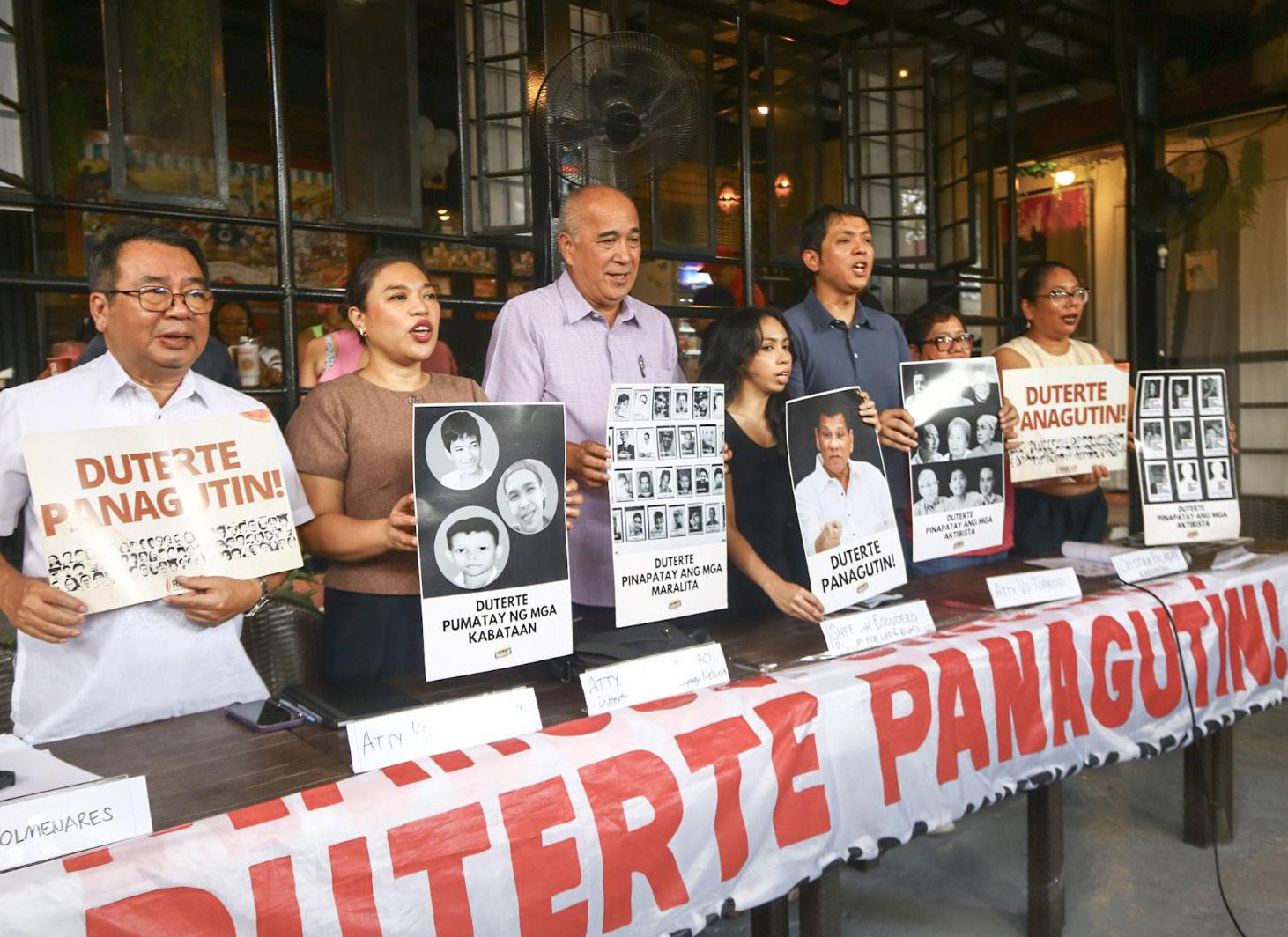
will present the evidentiary basis for the case, while defense lawyers are expected to challenge both the substance of the allegations and jurisdictional questions. Judges will then decide whether there are “substantial grounds to
believe” the crimes alleged should proceed to trial.
If the charges are confirmed, the case advances to a full trial phase. If not, the charges may be declined or amended.
With the hearing days away, attention now centers on
whether prosecutors’ allegations will meet the evidentiary threshold required under ICC rules, a decision that could shape both the international legal process and the domestic political response in the Philippines. n


PUBLIC policy often fails not because of ill intent, but because of flawed incentives. Economists have long described this phenomenon through what is known as the cobra effect, a term rooted in a colonial-era anecdote from British-ruled India.
According to the widely cited story, colonial authorities in Delhi sought to reduce the population of venomous cobras by offering a bounty for every dead snake turned in. At first, the program appeared successful. But soon enterprising residents began breeding cobras to collect the reward. When the government discovered the scheme and canceled the bounty, breeders released the now-worthless snakes into the wild. The cobra population reportedly increased.
While historians debate whether the episode occurred exactly as described, the story has endured in economic and public policy literature because it captures a recurring dynamic: when authorities reward a narrow metric, people op-
timize for that metric, sometimes in ways that undermine the policy’s purpose.
Modern governance provides more sophisticated versions of the same risk.
Recent developments in U.S. immigration enforcement illustrate how incentive design can shape outcomes. Reuters has reported that senior officials in President Donald Trump’s administration pressed U.S. Immigration and Customs Enforcement (ICE), an agency within the U.S. Department of Homeland Security, to meet specific daily arrest benchmarks, initially reported at around 1,000 arrests per day and later rising to 3,000 per day. Administration officials have disputed the characterization of these figures as formal quotas, but Reuters reporting indicates that numerical arrest targets were communicated internally.
When performance is assessed against daily totals, those totals inevitably influence operational behavior.

At the same time, Reuters reported on February 13, 2026, that ICE is planning a significant expansion of detention capacity across the United States, with billions of dollars projected
THE sad picture painted by recent data is impossible to ignore: billionaires are now 4,000 times more likely to hold political office than ordinary citizens. In the Philippines, this isn’t an abstract statistic. It is our reality, evident in the billion-peso net worths of our highest officials and the grinding poverty of millions who face involuntary hunger. As Oxfam and scholars like professor Maria Ela Atienza warn, this
fusion of extreme wealth and political power is not merely unfair; it is a machine that perpetuates inequality and erodes democracy itself.
The fundamental question we must confront is this: can a system dominated by an economic elite truly govern for the benefit of all? The evidence suggests it cannot. When the wealthy make the laws, the rules inevitably tilt to protect and enhance their own interests, be it through tax policies, business regulations, or

budget allocations. The result is a country ranked among the world’s most unequal, where billionaire wealth soars while families struggle with stagnant wages, overcrowded hospitals, and the daily ordeal of a broken transportation system.
Tinkering at the edges is futile. We need deep, structural reforms that dismantle the machinery of elite dominance and build a foundation for equitable development. This requires a conscious, sustained movement by the
DPWH Secretary Vince Dizon is done raging about the barefaced corruption that overrun the agency he now leads. He has now refocused on finding solutions to cure the vulnerabilities of the agency –specifically technological solutions.
Dizon met with the Blockchain Council of the Philippines to seek help. He has since come up with his idea of an “integrity chain portal” to
ensure transparency in the vital work the DPWH does.
We heard about proposals to use blockchain technology to allow full public monitoring of the national budget. The technology is not perfect. All information technology is heir to GIGO (garbage in, garbage out). But the use of blockchain technology will be a major leap in tracking how our taxpayer money moves.
Much earlier, reformists at the DPWH conceived of what they thought was a failsafe solution to the prevalence of
ghost projects. They required public works projects to be geolocated using GPS coordinates.
This seemed to be a brilliant solution at first. Projects could be easily monitored, even tracked from the air using drones. The pace of completion could be measured – daily, if necessary.
But the deeply-rooted syndicates in the agency proved smarter. They put in the wrong coordinates. The former public works secretary is accused of misleading the President,
Los
AMID dismal Philippine economic numbers, exports emerged as a rare bright spot in 2025, delivering a surprise growth that the Department of Trade Industry (DTI) said signaled “a stronger domestic industry capable of generating more local jobs and boosting family spending power.”
Led by electronics, receipts rallied by more than 20 percent for three straight months in the last quarter of 2025, bringing total exports to a record high $84.41 billion, 15.2 percent more than the previous year’s $73.27 billion.
This was despite the 19-percent “reciprocal” tariffs imposed by the Trump administration last year, though later modified to spare about half of the total exports to the United States, the Philippines’ largest export market.
“Building on this strong finish, the DTI will intensify efforts to help exporters reach more markets. Our goal is to make exporting simpler and more rewarding, ensuring that the wealth generated from global trade translates into more jobs and better opportunities for every Filipino family,” said Trade Secretary Cristina Roque.
Indeed, given the heady export numbers, the Marcos administration—which is desperately searching for economic growth drivers—rightly wants to build on the momentum by forging more free trade deals with larger economies such as the European Union and Canada.
Global supply chain
This will open up more and bigger avenues for local goods—including agricultural products and mineral products such as nickel used in producing stainless steel and electric vehicles—to become part of the global supply chain.
The government’s eagerness to forge comprehensive
trade agreement has not gone unnoticed. A high-level delegation from the European Parliament’s International Trade committee, for example, arrived in the country on Feb. 16 to build on the “very good progress” in trade negotiations that kicked back into gear under the Marcos administration in 2024 after being stalled in 2017 over issues such as human rights during the Duterte administration.
Talks are entering a “critical” stage in March, according to Trade Undersecretary Allan Gepty, but if all goes well, then the talks that began back in 2015 will lead to the conclusion of a trade agreement by the end of the year, thus unlocking another $12 billion in export potential.
After the visit of the European Parliament mission, the Philippines will have no rest as it then begins the first round of talks for a bilateral trade pact with Canada with formal negotiations set from Feb. 18-20.
A two-way street Canada and the Philippines announced in 2024 exploratory discussions for a potential free trade agreement, followed up by the face-to-face meeting between President Marcos and Canadian Prime Minister Mark Carney during their meeting in Kuala Lumpur, Malaysia in October 2025.
According to Gepty, Mr. Marcos has laid out a clear policy direction: to conclude as many trade negotiations as possible to diversify export markets and thus cushion the impact of sudden and unexpected trade shifts such as the sweeping Trump reciprocal tariffs that turned the global trade system on its head.
Just this year, the Philippines entered into a Comprehensive Economic Partnership Agreement with the United Arab Emirates, the first such trade part with a Middle Eastern country, thus widening market access for goods and services in the growing region.
It also aims to conclude talks for a similar pact this
year with Chile, the first with a Latin American country that could lead to more deals with other countries in the region that is also attracted by the Philippine market that is open to buying goods from abroad.
This is where the government should also exercise caution. Trade, after all, is a twoway street where opening of foreign markets to local goods also means the opening of the large domestic market of the Philippines to products from abroad.
Thus if domestic producers are not strengthened and prepared for the entry of competing goods from other countries, then the trade deals might end up doing more good than harm as local producers are pushed out of the local market. Conversely, if locally produced goods are barred from entry for failing to meet the standards of other countries, such as phytosanitary and quality requirements, then the Philippines will be unable to take full advantage of the opened markets.
Government agencies should also judiciously use their budget allocations this year to sharpen the competitive edge of local industries, especially those in the farm sector that may be impacted negatively by the entry of agricultural products that other countries are also eager to send out to help their own constituents.
The government should make sure that it will go to the negotiating table with these countries with a singular intent of crafting the best possible deal that can result in wins for both sides, and not exploitative agreements where one party will get more at the expense of the Philippines. (Inquirer.net)
The opinions, beliefs and viewpoints expressed by the author do not necessarily reflect the opinions, beliefs and viewpoints of the Asian Journal, its management, editorial board and staff. n
PAGE 6
for additional facilities. The expansion anticipates sustained increases in arrests and removals. Infrastructure and enforcement targets reinforce one another. Greater capacity supports higher arrest numbers, and higher arrest numbers justify expanded capacity.
In early 2026, federal authorities launched Operation
Metro Surge, described by officials as the largest immigration enforcement effort in U.S. history, centered in the Minneapolis–Saint Paul region. According to reporting by the Associated Press and The Washington Post, thousands of agents were deployed, resulting in large-scale arrests before a mid-February drawdown.
PAGE 6
no less, by feeding him wrong coordinates about project sites. The wrong coordinates completely blinded the auditors and officials charged with oversight over public works spending.
Numerous entries containing intentionally erroneous coordinates caused a mountain of confusion. Projects could not be located. Even projects that were dutifully completed were reported as “ghost projects” because they could not be located according to the coordinates written in the official records.
Something more impermeable to this sort of casual manipulation needed to be devised. The solution might lie in applying blockchain technology to produce a digital ledger of public works projects. Blockchain is better protected against malicious tinkering.
Dizon’s idea of an “integrity chain portal” – complementing the transparency portal – might accomplish the transparency we need to combat corruption. Dizon described this portal as some sort of “blockchain-powered digital ledger.”
So far, the idea seems to be a rough draft. We will have to see the full product to make a judgment of its efficacy in fighting corruption in the agency. But it is a step in the right direction.
Corruption is so insidiously rooted in many government agencies. We need to reinforce transparency efforts with the use of new information technology – including artificial intelligence (AI) if necessary.
Our tollways companies, for instance, are studying the feasibility of using AI to capture and record vehicles that use the facilities. Eventually, this
intended to establish clearer guardrails for DHS enforcement practices.
should remove the need for vehicles to stop at booths as they ingress and egress tollways. This will greatly ease efficiency of movement.
If we can use AI to record tollway usage, we can surely do much using this technology to keep track of the tens of thousands of public works projects government spends for every year. Combining blockchain with AI will surely keep contractors on their toes.
With effective use of modern communications technologies, complementing administrative reforms, should bring down the volume of corruption. The latest global corruption index saw the Philippines dropping dramatically in its standing. This could not be good for the economy.
The longer we remain in the list of countries vulnerable to corruption, the less investments we will be able to attract. This will condemn us to stagnation. The flood control project scandal dramatically slowed down our economic expansion the past two quarters. If we fail to impress the global investment community that we are responding to the corruption crisis in a comprehensive manner, our economy will be condemned to the doldrums.
It is particularly important for the DPWH to demonstrate gains against the syndicates of corruption. Public investments in infra determines how quickly our domestic economy grows. As it is, the corruption scandal has stymied our infra investments. This preserves the inadequacy of our logistics backbone which is essential for drawing investments.
The more quickly we put infra investments back on track,
This is the modern cobra effect.
the better off our economy will be. The investments, on their own, will help pump prime growth. Better infra will improve our economic efficiency. We can only get our infra spending back on track by convincing the public that transparency and accountability are better ensured. This is the context for every innovation in the way we do our public works. There is great urgency in doing the reforms and introducing new technologies in our governance. The sooner we are able to return to our pre-scandal level of public spending on infra projects, the better our economic prospects will be.
Conversely, the longer it takes to restore public trust in the integrity of our infra spending, the greater the peril of economic stagnation. We have to do what it takes to restore public trust in government spending.
We hope Dizon moves fast in the administrative reforms needed at the DPWH. Modern information technologies must be embedded in the program of reforms. They are needed both to improve bureaucratic efficiency and build public confidence.
But the criminal nexus between powerbrokers and corrupt bureaucrats must be broken. This is how corruption happens on such a bewildering scale in this country. There is no technological cure to that criminal enterprise.(Philstar. com) * * *
The opinions, beliefs and viewpoints expressed by the author do not necessarily reflect the opinions, beliefs and viewpoints of the Asian Journal, its management, editorial board and staff. n
The operation drew intensified scrutiny after two U.S. citizens were fatally shot during enforcement actions connected to the crackdown. Federal investigations into those incidents are ongoing. The events prompted nationwide protests and renewed congressional attention. Rep. Josh Gottheimer subsequently announced the proposed ICE Standards Act,
Separately, Reuters reported on February 14, 2026, that federal courts have ruled thousands of times that ICE unlawfully detained individuals, and that compliance challenges persist despite those rulings. Taken together, these developments raise a structural question. Immigration enforcement serves legitimate objectives: upholding federal law, securing borders, and prioritizing individuals who pose genuine public safety risks. But when success is measured primarily through arrest volume, the system may rationally expand toward cases that are easiest to execute rather than those that most directly advance safety goals.
If arrest numbers become the dominant performance signal, enforcement activity may intensify even when marginal safety gains diminish. Detention facilities expand. Litigation rises. Community trust erodes. Political polarization deepens. The policy continues to produce impressive metrics, but the broader objective becomes harder to sustain.
The lesson of the cobra effect is not that enforcement is inherently wrong. It is that incentive design matters. Arrest counts are easy to measure. Reductions in violent crime attributable to targeted enforcement are harder to isolate but more meaningful. Due process compliance rates,
conviction quality, and community cooperation are complex indicators, yet they align more closely with public safety outcomes.
The colonial cobra bounty reminds policymakers of a simple truth: systems reward what they measure. When measurement becomes detached from mission, rational actors will adapt accordingly. Whether in immigration enforcement, homeland security, public health, or infrastructure, governments must ensure that metrics reflect purpose. Otherwise, the appearance of control may conceal the slow accumulation of unintended consequences, and the problem policymakers sought to solve may return in a different, more complicated form. (AJPress) n
Joe Zaldarriaga
There’s no slowing down Vietnam’s vibrant tourism industry. This is something I realized after spending a week in Hanoi, fully immersed in the sights, sounds and rich culture of our Southeast Asian neighbor.
Despite the many challenges the country continues to face, such as language barrier and infrastructure gaps, Vietnam has managed to rise above them and captivate the world, as reflected in the steady influx of tourists drawn to its unique charm.
Why is this so? Vietnam has successfully positioned itself as an accessible, affordable and welcoming destination. Yes, there are the occasional taxi scams (which I believe authorities should look into and
address), but beyond that, the country provides a generally reassuring and pleasant environment for travelers. Most visitors find that traveling in Vietnam offers great value for money — an appealing proposition for those seeking rich cultural experiences without the hefty price tag.
And this is visible in the numbers. Vietnam pulled in more than 21 million international visitors in 2025. This is more than triple the Philippines’ 6.4 million.
Despite our numerous high-value tourist assets, which I dare say are among the finest in the world, the Philippines continues to lag in both tourist arrivals and receipts. Our country is home to the pristine beaches of Palawan, Siargao and Boracay; cultural treasures like Vigan and Intramuros; a rich tapestry of gastronomic delights and of course, the warmth of our unique Filipino hospitality. All the ingredients for tourism success are already here.
In fact, tourism contributed an estimated P694 billion in receipts last year, based on initial figures from the Department of Tourism (DOT).
Yet, challenges remain. One growing concern that is recently amplified across social media and news reports, centers on the cost of domestic travel.
Many have lamented that airfares to local destinations such as Siargao can rival, or even exceed, the price of international flights to countries like Singapore and Hong Kong. In response, Malacañang has noted that the DOT is actively working to address the issue, with local airlines committing to take steps to help bring down domestic fares.
While this is a welcome development, improving our tourism industry needs to go beyond making airfares affordable and should only be part of a broader strategy to make the Philippines a truly competitive destination in the region.
In a previous piece I wrote, I emphasized several key ar-
electorate to demand transformative changes from our government, particularly from a Congress currently populated by the very beneficiaries of the status quo.
First, we must break the stranglehold of political dynasties. The concentration of power within a small number of interconnected families stands as a central driver of inequality in the Philippines. When political authority is monopolized by familial networks, it suppresses healthy competition and entrenches systems of patronage. This dynamic ensures that both political influence and the economic advantages tied to it remain confined to a select group, preventing broader participation in governance.
To dismantle this closed system, the public must actively pressure Congress to enact a robust antipolitical dynasty law. Such legislation would not serve to target or punish families but instead open the democratic process to genuine competition.
ing their capacity to perform thorough investigations and enforce accountability.
To ensure these commissions can function effectively and independently, it is imperative that Congress allocates substantially increased budgets. With adequate funding, these agencies will possess the necessary tools, personnel, and authority to investigate those in positions of power and protect the integrity of public service.
Third, we must build the infrastructure of equity: universal public goods and transformative connectivity. Inequality is cemented by a lack of access.
Advancing equity requires a deliberate effort to establish comprehensive systems and projects that guarantee every Filipino’s dignity and opportunity.
infrastructure projects. They serve as instruments of national unity and economic justice. The deliberate development of Mindanao’s logistical backbone will not only decongest Metro Manila but also empower regional economies, disperse opportunities across the country, and address the historical neglect of the South.
Therefore, the crucial actor is the Filipino electorate. Our collective demand must be for a government that builds for the many, not profits for the few. We must vote for platforms, not pedigrees, and sustain pressure for a comprehensive agenda of structural change.
The choice is between a stagnant plutocracy and a dynamic, just republic. Passing an antidynasty law, empowering antigraft bodies, guaranteeing social services, and building transformative national infrastructure are the pillars of the latter. Our shared future depends on the relentless pressure we exert today. Let us demand nothing less.
(Inquirer.net)


Second, we must weaponize transparency and accountability by fully funding our Constitutional commissions. The Office of the Ombudsman, the Sandiganbayan, the Commission on Audit, and the Civil Service Commission serve as vital institutional checks, safeguarding against corruption and abuse of power in government. However, these bodies have long been hampered by insufficient resources, limit-
eas we must focus on: making travel easier, promoting emerging destinations, showcasing local cuisine and wellness experiences and upgrading airports, seaports and roads. Affordable airfares are just one piece of the puzzle. A strong tourism industry demands reliable infrastructure that ensures seamless connectivity between islands, clean and well?maintained accommodations, consistent safety and service standards, accessible health and emergency services when needed. All these, complemented by strong branding will help elevate the Philippines on the global tourism stage.
The Philippines should not be positioned simply as a tropical paradise but a safe, accessible and a truly premium destination.
There are still some persistent challenges that continue to dampen the visitor experience. Tourists have reported issues ranging from
A universal health-care system and free education for all are essential foundations for an equitable society. These public goods provide a safety net that helps break the cycle of poverty and ensures that every citizen has the means to lead a dignified life.
A modern, efficient public transportation system in our urban centers is vital to improving the daily lives of millions. By ending the hardships endured during commutes, such a system will boost national productivity and deliver a tangible enhancement in overall quality of life.
Strategic railways and seaports in Luzon and, crucially, in Mindanao, are more than mere
costly domestic flights that hinder inter?island travel to safety concerns such as taxi overpricing and inadequate health facilities in key destinations. Leaving them unaddressed can have significant long?term implications, particularly when it comes to reputation and overall perception of the country.
Vietnam’s tourism boom illustrates an important lesson: even with modest facilities, the perception of safety, order and accessibility can attract millions. The Philippines, endowed with undeniably premium destinations, should be aiming higher, with world?class systems and visitor experiences that match the beauty of our landscapes. Our cultural depth, ranging from centuries?old churches to indigenous traditions, offers something rare — an authenticity and richness no other country can replicate.
Tourism is more than leisure; it is livelihood. It is an
* * *
The opinions, beliefs and viewpoints expressed by the author do not necessarily reflect the opinions, beliefs and viewpoints of the Asian Journal, its management, editorial board and staff.
* * *
Manny Ilao is a former chief financial officer, draws on his experience in finance and familiarity with Philippine banking laws to share informed opinions on good governance. n
ecosystem that sustains communities and uplifts local economies. Every visitor who sets foot in the Philippines supports workers, artisans, farmers and families. Done right, tourism can stand shoulder?to?shoulder with remittances as a major pillar of inclusive, regional growth.
Our country has been blessed with natural assets that make it capable of becoming a truly world?class, premium destination. What we need now is strategic investment, unwavering consistency and a relentless commitment to elevating the visitor experience. If we can deliver on these fronts, tourism will not remain a supporting sector. It will become, as it should, a powerful driver of national progress.
* * *
The opinions, beliefs and viewpoints expressed by the author do not necessarily reflect the opinions, beliefs and viewpoints of the Asian Journal, its management, editorial board and staff. n
by Christine Boton Philstar.com
MANILA, Philippines —
Pasig Mayor Vico Sotto has filed an election complaint against former mayoral candidate Sarah Discaya for allegedly violating the campaign spending rules in the 2025 elections.
Accompanied by his counsel Romulo Macalintal, Sotto filed the case with the Commission on Elections-Political Finance and Affairs Department.
Sotto alleged that Discaya made untruthful declarations in her Statement of Contributions and Expenditures (SOCE).
Sotto said he filed the complaint to uphold compliance with election laws, particularly the requirement for candidates to properly declare campaign expenses.
He said the move was not politically motivated.
The complaint alleged that Discaya’s SOCE failed to disclose her campaign expenses, such as billboards, online advertisements and other promotional materials.

Mayor Vico Sotto
According to Sotto, Discaya declared only P895,000 in campaign spending, an amount he said appeared inconsistent with the scale of campaign activities launched by the contractor in 2025.
Sotto said a separate complaint for perjury was filed against Discaya before the
Philstar.com / Martin Ramos
Pasig prosecutor’s office over her citizenship.
Discaya, who lost to Sotto by a landslide in the mayoralty race, is being held at the Lapu-Lapu City Jail in Cebu on graft and malversation charges related to anomalous flood control projects in Davao Occidental.
by AJPress
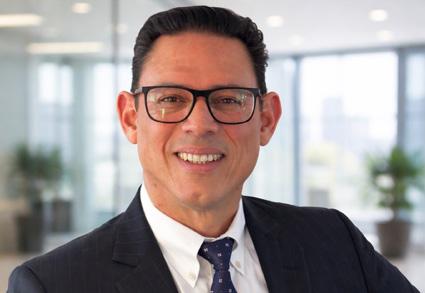
PHILIPPINE Airlines (PAL) has appointed José María “Chema” Alvarado as Regional Head for North America, reinforcing the carrier’s push to expand revenue performance and deepen partnerships across the United States and Canada.
Alvarado brings more than two decades of senior leadership experience spanning international airlines, global alliances and travel-technology organizations. In his new role, he will oversee sales and distribution across North America, strengthen corporate and travel trade relationships, and guide commercial strategy in one of PAL’s most significant long-haul markets. He will also work with cross-functional teams to improve distribution effectiveness and support sustained growth.
Justin Warby, PAL’s Vice President for Sales and Distribution, described North America as a cornerstone market, pointing to planned frequency increases and the deployment
of the airline’s new flagship aircraft, the Airbus A3501000, on key long-haul routes. PAL currently operates the largest network of nonstop flights between the Philippines and North America. The airline serves Los Angeles, San Francisco, New York (JFK), Seattle, Honolulu, Vancouver, Toronto and Guam. Service to Los Angeles is scheduled to increase from 14 to 18 weekly flights beginning June 1, 2026, while daily flights operate to San Francisco and Vancouver. Additional services also opera-
te from Cebu to Guam. The appointment comes as PAL continues fleet modernization and network expansion to meet rising demand for transpacific passenger and cargo services. The airline operates from hubs in Manila, Cebu, Clark and Davao, serving 31 domestic and 39 international destinations. PAL has been recognized as an APEX Four Star airline and was named by Cirium in 2025 as the Asia-Pacific carrier with the highest on-time performance. n

by Keisha ta-asan Philstar.com
MANILA, Philippines —
The Philippines has poured hundreds of billions of pesos into flood control projects over the years, funding river walls, pumping stations and drainage systems meant to shield communities from increasingly severe storms.
Yet alongside the surge in infrastructure spending, financial intelligence authorities warn that public works projects, by their very structure, present inherent vulnerabilities to misuse and money laundering.
In an interview with The STAR, the Anti-Money Laundering Council (AMLC) said the lifecycle of public infrastructure spending contains inherent pressure points where funds may be misused or laundered.
“Various stages in the lifecycle of public infrastructure spending may present vulnerabilities to misuse or money laundering, depending on the surrounding circumstances and controls in place,” the AMLC said.
From procurement to post-disbursement, the flow of funds can mirror classic money laundering stages – placement, layering and integration.
Procurement: The first pressure point
According to the AMLC, the initial phase of infrastructure spending, which includes procurement and contractor selection, is considered “a highrisk stage.”
“Potential vulnerabilities at this stage may arise from practices such as rigged bidding, the participation of pre?arranged contractors or the use of newly established corporations having limited operating history or minimal capitalization,” the watchdog said.
This stage is critical. Budget releases from the Department of Budget and Management are translated into project allocations implemented by the Department of Public Works and Highways, often through DPWH district engineering offices. The selection of contractors determines where public money first lands.
The risk escalates when winning contractors engage in subcontracting arrangements.
“This practice presents an opportunity for layering through transfers of public funds to multiple related or less transparent entities,” the AMLC noted.

In money laundering parlance, layering refers to the movement of funds across multiple accounts or entities to obscure their origin. In infrastructure projects, subcontracting chains can create multiple transfer points, complicating audit trails.
Based on suspicious transaction reports (STRs) filed by covered institutions, the AMLC said it has identified recurring indicators that may be associated with public works projects.
Among the commonly observed red flags are payments followed by rapid fund movements, which may indicate attempts to obscure audit trails, as well as the use of pass-through accounts where funds are held only briefly before being transferred to other accounts.
The AMLC also flagged transactions involving individuals or entities with volumes inconsistent with their declared business size, capacity or operating history.
Other indicators include repeated remittances to the same individuals or entities that may suggest coordinated activity, multiple large cash withdrawals and transactions coursed through the personal accounts of corporate officers instead of legitimate corporate accounts.
The council emphasized that these indicators are assessed collectively and in context, and do not by themselves establish wrongdoing, but may warrant closer scrutiny.
Still, taken together, the patterns sketch how public funds can move rapidly from government agencies to primary contractors, then to shell or related companies and eventually to private accounts or asset purchases.
Conversion and conceal-

The post-disbursement phase carries its own risks. “At this stage, illicit proceeds, if present, may be converted into other assets, such as real property, motor vehicles or casino winnings to obscure their origin and prevent traceability,” the AMLC said.
Based on intelligence gathered so far, the AMLC said a typical corruption-linked scheme begins with government payments going to a primary contractor, which then funnels the funds to shell or related companies sharing common incorporators or beneficial owners.
“These transfers are then followed by rapid withdrawals or further transfers to dissipate the audit trail,” it said.
“In other instances, funds are converted into real estate, motor vehicles, winnings from casinos or other high-value assets and financial instruments, often placed under the names of relatives or associates.”
The AMLC also cited the use of professional intermediaries such as accounting offices or consultancy entities “to legitimize fund movements,” as well as cross-border transfers to foreign or offshore accounts under the guise of equipment procurement or consultancy fees.
“These methods reflect classic layering and integration stages of money laundering,” it added.
To trace suspicious financial flows, the AMLC applies what it described as a “transaction-centric and network-based analytical framework.”
This involves reviewing suspicious and covered transaction reports, bank records and beneficial ownership information to identify linkages such as common signatories, incorporators or authorized repre-
by AJPress
DUBAI, United Arab Emirates — Alexandra Eala exited the Dubai Duty Free Tennis Championships on Thursday, February 19, after a 6-0, 6-2 quarterfinal defeat to world No. 4 Coco Gauff. Gauff, the tournament’s third seed, established control from the opening game, applying sustained return pressure and dictating baseline rallies with depth and
sentatives across accounts.
“Where appropriate, the AMLC conducts timeline assessments that compare financial movements with annual procurement schedules, as well as geographic clustering to detect repeated patterns or recurring transactional behaviors within particular districts or political jurisdictions,” it said.
The council said the resulting financial nexus reveals potential relationships among agencies, contractors and individuals that may indicate possible irregularities or coordinated misuse of public funds.
Broader financial crime context
The vulnerabilities identified in infrastructure spending sit within a broader landscape of illicit financial flows flagged by the AMLC in an assessment dated December 2025.
The study analyzed 1.3 million suspicious transaction reports valued at P35.49 billion, covering current account and remittance transactions. It included a comprehensive analysis of STRs from January 2021 to June 2024.
While cyber-enabled crimes and swindling accounted for the bulk of suspicious transaction volume, graft and corrupt practices – the category most
pace. The American secured multiple service breaks in a swift first set and maintained that intensity into the second.
Eala found improved rhythm midway through the match, extending exchanges and creating brief openings on return. But Gauff’s firstserve consistency and disciplined shot selection limited momentum shifts, allowing her to close in straight sets.
The quarterfinal appearance marked Eala’s deepest
closely aligned with infrastructure misuse – represented only 0.14 percent of total STR volume but 11.68 percent of aggregate peso value, underscoring the high-value nature of corruption-related cases.
The AMLC noted that STRs “do not constitute direct evidence of wrongdoing; they only highlight transactions with suspicious characteristics.” It also stressed that the data “does not represent a comprehensive assessment of the total volume of criminal proceeds that may have entered, circulated within or exited the Philippines.”
Nonetheless, the patterns reveal how large-value public expenditures can intersect with financial crime risks, particularly when procurement controls are weak, subcontracting chains are opaque and beneficial ownership information is obscured.
When potential indicators of money laundering or misuse of infrastructure funds are detected, the AMLC said it closely coordinates with the appropriate oversight and enforcement agencies.
This may involve coordination with the DPWH for project records and contractor information, the Office of the Ombudsman in matters of
run in Dubai and one of her strongest showings at the WTA 1000 level. The 20-yearold advanced with wins over Hailey Baptiste and Sorana Cîrstea, along with a straightsets upset of Top 10 player Jasmine Paolini earlier in the tournament.
Though her campaign ended short of the semifinals, Eala’s performance underscored continued progress on the WTA Tour against elite competition. n
administrative or criminal accountability and other law enforcement bodies.
“This inter-agency coordination is undertaken within the bounds of existing laws and established protocols, through financial intelligence sharing, parallel financial investigations and evidence-based referrals,” the council said.
Flood control projects are designed to manage the physical flow of water. But as public funds surge through procurement pipelines and contractor networks, financial intelligence authorities are increasingly focused on managing another kind of flow – the movement of money.
The AMLC’s assessment does not conclude that flood control funds are being systematically laundered. Instead, it underscores that the architecture of large-scale infrastructure spending contains structural pressure points.
Where money moves quickly, through layered entities and opaque ownership structures, the risk of concealment rises. In the end, following the flood money is less about presuming corruption and more about understanding how vulnerabilities emerge – and how institutions can close the gaps before public funds are washed away. n

by HannaH Mallorca Inquirer.net
Not everyone knows that many celebrities who made an impact on Philippine pop culture were born in the Year of the Horse. Since horses are noted for being energetic and charismatic, it’s no surprise that the public loves them.
It’s a Chinese New Year tradition to seek the help of feng shui as a way to test one’s luck. As we ring in the Year of the Horse, many experts claim that those who were born at this time will experience high energy, passion, and major changes. From this, it’s clear that those born in 1954, 1966, 1978, 1990, 2002, 2014, and 2026—including these celebrities—will prosper.
Here are 10 stars born in the Year of the Horse who are undeniably pop culture icons in their own right.
Sharon Cuneta – Jan. 6, 1966
As the Megastar, Sharon Cuneta’s contributions to the Philippine entertainment industry are nothing short of remarkable. She was part of one of the biggest loveteams, became a recording artist with hit songs (“Mr. DJ” and “Bituing Walang Ningning,” anyone?),
and an actress with a knack for different roles.
Some of her notable roles on film and TV include a professional mourner (“Crying Ladies”), a caregiver (“Caregiver”), a college student hoping to be loved by her best friend (“Kung Ako Na Lang Sana”), and an aspiring singer (“Bituing Walang Ningning”). She is also the recipient of three Gawad Urian Best Actress awards and a Box Office Hall of Famer, to name a few.
Not to mention that she is used as a popular reference on social media, notably her “The Voice” stint and her “mabuhay ang manggagawa” line on “Crying Ladies.”
Judy Ann Santos – May 11, 1978
One of the biggest actresses of her generation, Judy Ann Santos was born to be a star. She can cry even before her cue; her face shows a wide range of emotions without much effort, and she can disappear completely into her character. She appeared in several films and TV shows throughout her career, with “Mara Clara,” “Esperanza,” and “Kasal, Kasali, Kasalo” among the public’s favorites.
Santos is also a successful celebrity chef who has introduced herself to a new generation of fans through her digital cooking show.
Rufa Mae Quinto – May 28, 1978
Whenever Rufa Mae Quinto makes an appearance, holding in a laugh is impossible. Her dumb blonde-esque humor, witty punchlines (especially her “go, go, go”), and signature tone make it no surprise that she solidified her spot as one of the country’s most beloved comediennes. Her impact on pop culture extended to films such as “Booba,” “Super B,” and “Status: Single,” the latter of which people often lip-sync to on TikTok.
Jolina Magdangal – Nov. 6, 1978
Ask a 90s or 2000s kid who they grew up with, and many would mention Jolina Magdangal. Not only will her work in music (“Chuva Choo Choo” is always a crowd favorite) and film be loved by the public, but her colorful makeup, shiny barrettes, and Y2K outfits have also become fashion staples in their own right, with many people recreating her look on social media.

celebrity, but her Binibining Pilipinas stint will always be a fixture in pop culture. Any Filipino knows her viral question-and-answer blunder, almost to the point that it’s impossible for anyone not to know “my pamily” word by word.
Maloi Ricalde of BINI – May 27, 2002
Megan Young – Feb. 27, 1990
Megan Young is often touted as the standard of what a Miss World titleholder should be. She is elegant without putting in too much effort, articulate without being too pretentious, and effortlessly queenly. Her stint in the global tilt is often an inspiration for beauty queens, but it has also become a double-edged sword for Filipina beauties who compete in the Miss World pageant.
Kim Chiu – April 19, 1990
Kim Chiu is dubbed as one of the “Pinoy Big Brother” greats, having made a name for herself in the industry beyond her Big Winner title. Many knew her as a “Chinita Princess,” but she went through the different stages of stardom without relying on internal connections or a famous last name.
At the same time, Chiu’s career underwent seamless shifts. She began as a teen star and later blossomed into an actress who can take on different roles, as seen in “My Binondo Girl,” “Linlang,” and “The Alibi.”
Janina San Miguel – Nov. 14, 1990
Janina San Miguel is not a
Bubble skirts, midi bottoms paired with colorful tights, and hyperfeminine elements in fashion — it’s hard not to imagine them as a trademark of BINI’s main vocalist Maloi. Being in a large girl group, it might be difficult for some to establish their own unique personalities. But the P-pop powerhouse made it possible.
In Maloi’s case, she was able to combine coquette and Cubao-expo-inspired fashion sense to make her signature look. At the same time, her love for art and the creative process added to her unique personality, making fans fall in love and be inspired by her.
Belle Mariano – June 10, 2002
These days, it’s hard for Gen-Z stars to separate themselves from the pack. Belle Mariano made her own mark. She didn’t just become onehalf of a popular onscreen tandem. She built her own brand as a multi-hyphenate, and it’s clear she still has a brighter path ahead of her. Yet what made people fall in love with Mariano was her hardworking nature. She started from the bottom and worked her way to the top.
Sophia Laforteza of KATSEYE – Dec. 31, 2002
It is difficult for a Southeast Asian to make it big in the international scene. But Sophia Laforteza made it possible for many young girls to see people who look like them onstage. Of course, Laforteza is not the only Filipino who went global. Yet what made her story captivating was that she joined “Dream Academy” hoping to represent her country, and she didn’t rely solely on her heritage or her famous mother; she worked hard and is great entirely on her own. /cb n

Nearly three decades after an earlier courtship that did not progress, the actress-councilor and the former teen star publicly confirm they are together.
by AJPress
MANILA — Actress and Quezon City councilor Aiko Melendez and actor Onemig Bondoc have confirmed they are in a relationship, making it “Instagram official” in mid-February through social media posts and a vlog that publicly acknowledged their status.
Melendez shared a Valentine’s Day message on Instagram referring to Bondoc as her “soulmate” and marking what she called their “first Valentine’s Day together.” Bondoc likewise posted photos and messages expressing affection and gratitude. Philippine entertainment outlets characterized the posts as confirmation that the two are officially together.
The pair also addressed their relationship in a February vlog filmed in Zambales, where Melendez responded “yes, kami na po” when asked about their status. The video circulated widely online and was reported by national entertainment desks.
Earlier in January, Bondoc referenced having courted Me-

lendez approximately 29 years ago, writing “Happy together… after 29 yrs” in a social media caption. Entertainment reports indicated that his earlier courtship in the late 1990s did not progress into a relationship at the time, and that the two later reconnected decades after first knowing each other.
Melendez is a veteran actress who currently serves as a councilor in Quezon City. Bondoc rose to prominence in the 1990s through youth-oriented television, including the series T.G.I.S., and later appeared in
films and drama projects. In recent interviews, he has indicated he is not actively pursuing a full-time return to mainstream acting and has focused on private business ventures.
Melendez was previously married to Jomari Yllana and later to Martin Jickain; both marriages were annulled. Bondoc was previously married to Valerie Bariou in 2009; the marriage later ended in separation.
Neither has announced further details beyond confirming they are together. n
Actor and recording artist Sam Milby said he was “surprised” by remarks made by former fiancée Catriona Grayregarding the end of their engagement, but declined to elaborate publicly.
Gray, who was crowned Miss Universe 2018, spoke about the breakup in an interview on journalist Karen Davila’s vlog. In the interview, she said that months after proposing to her, Milby realized he was not ready for marriage.
“There was a point in our relationship where I think he just realized that he wasn’t ready to take it to the stage of commitment that we thought we were on,” Gray said. She added that she felt blindsided when the engagement was eventually called off.
Gray said she attempted to understand the situation and work through the uncertainty, but ultimately concluded that continued hesitation about long-term commitment was decisive for her. She described ending the engagement as one of the most difficult decisions she has made.
Milby, in separate remarks reported by entertainment outlets, said he was surprised by Gray’s statements but did not expand further. He previously confirmed their breakup in early 2025 and stated at the time that there was no
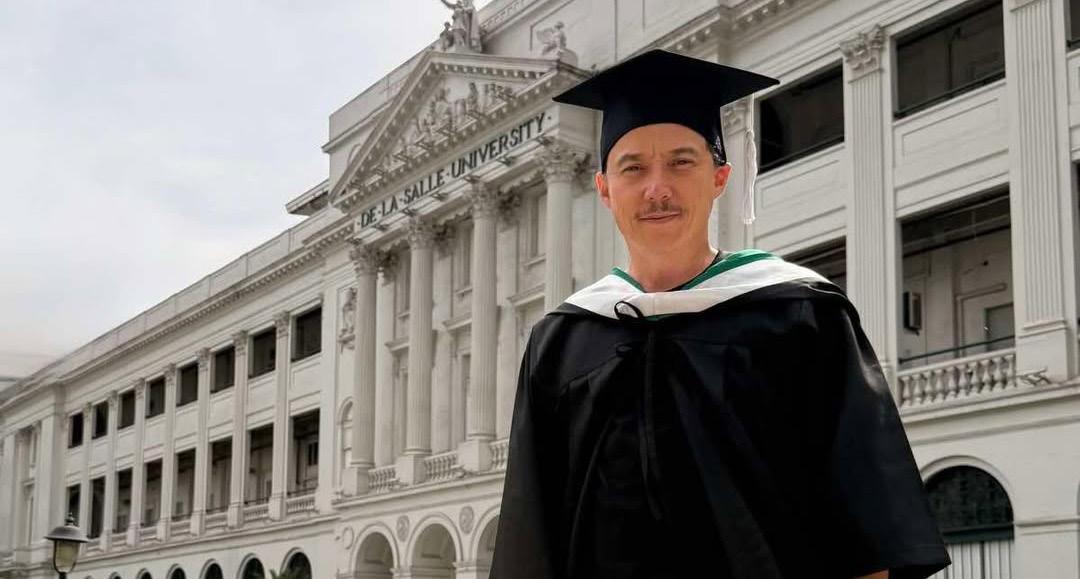
MANILA — Actor Epy Quizon has completed his college degree nearly 30 years after first enrolling, fulfilling a personal commitment he said he carried quietly through decades of work in film, television, and theater. Quizon began his studies at De La Salle University in 1996. In a recent social media post, he shared that he had been just a thesis away from graduating before stepping away from school due to professional and personal responsibilities. This year, he

third party involved.
Milby and Gray went public with their relationship in 2020 and announced their engagement in February 2023. In early 2025, they confirmed that they had ended their engagement.
In her interview, Gray also shared that she sought therapy following the breakup and focused on personal growth and support from family and close friends. She said she continues to believe in love and is currently dating someone outside the entertainment industry. Public statements from both have centered on differences in readiness and personal timing. Neither has publicly accused the other of misconduct.n
completed the remaining requirements and joined fellow graduates from the university’s College of Liberal Arts.
In photos posted online, Quizon appeared in academic regalia and described the diploma as a promise kept.
Quizon is the son of the late comedy icon Dolphy, born Rodolfo Vera Quizon Sr., and actress Pamela Ponti, whose real name is Alice Smith.
Public biographical records confirm that Dolphy and Pamela Ponti had four children together: Ronaldo “Ronnie” Quizon, Enrico “Eric” Quizon, Madonna Quizon, and Jeffrey “Epy” Quizon.
In his message, Quizon noted that his father did not live to see the milestone, but his mother would. He described the achievement as both personal and generational, emphasizing perseverance and the value of completing unfinished goals.
Over the years, Quizon has appeared in projects such as Markova: Comfort Gay, Goyo: Ang Batang Heneral, Dirty Linen, Firefly, and Greed. His graduation closes a chapter that began in 1996 and underscores a belief he shared publicly: that a promise, even if delayed, can still be fulfilled. n
by AJPress
MANILA — A regional trial court in Pasig City has acquitted entertainment columnist and online host Cristy Fermin in the cyberlibel case filed against her by actor Dominic Roque in 2024.
Fermin confirmed the ruling on Wednesday and described it as a vindication.
“Anak, nakuha natin ang hustisya, panalo tayo sa kasong libelo na isinampa ni Dominic Roque. Salamat sa Diyos sa paggabay,” she said.
( “My child, we have obtained justice — we won the libel case filed by Dominic Roque. Thank God for the guidance.”)
The Complaint Roque filed the cyberlibel complaint on May 31, 2024 before the Office of the City Prosecutor in Pasig City. The complaint stemmed from commentary aired on Fermin’s online entertainment program.

He alleged that certain statements and insinuations made during the broadcast were defamatory and damaging to his reputation. The case was later brought before a regional trial court under the Cybercrime Prevention Act of 2012, which penalizes libel committed through digital platforms.
The Court’s Finding
According to information released following promulgation, the court found that the prosecution failed to establish the element of actual malice.
Under Philippine jurisprudence, actual malice requires proof that a statement was made with knowledge of its falsity or with reckless disregard for whether it was false. In cases involving public figures, this heightened standard must be met to secure a conviction.
The court’s finding that this burden was not satisfied formed the basis for Fermin’s acquittal.
As of publication, there has been no public indication that the ruling has been appealed. n

by Jan Milo severo Philstar.com
MANILA, Philippines —
Comedian Ai Ai delas Alas revealed that she and Kris Aquino are now talking again, noting that time heals all wounds.
Ai Ai was asked by Boy Abunda in an episode of the latter's afternoon show aired last February 12 if she was
able to contact Kris again.
She revealed in her past interview with the media that she sent a message to Kris but did not get a reply.
“Okay kami. Nag-usap na kami. Sabi nga, time heals all wounds. Of course, I wish her well because she is my friendship all the way,” she said. Ai Ai said during the ambush interview that Kris will
be her friend despite past issues.
“She'll always be my friendship,” Ai Ai told reporters at last week's press conference for her new movie "Batang Paco."
“Si Kris ay naging part ng buhay ko. She’s my friendship. She’ll [always] be my friendship kahit anong mangyari,” she added. n
by AJPress
VETERAN actor Albert Martinez returns to the big screen in Lotto Winner, a drama about an estranged father and daughter forced to confront unresolved wounds after a terminal diagnosis. Beyond the film’s emotional core, however, it was Martinez’s personal reflections that resonated.
In an interview with entertainment columnist Dolly Anne Carvajal, Martinez addressed why he remains single 11 years after the death of his wife, actress Liezl Martinez, who passed away in 2015 following a battle with cancer.
His response was direct: “There’s only one Liezl. She’s irreplaceable.”
The film required Martinez to portray a husband facing his wife’s death from cancer — a storyline that mirrors his own life. He acknowledged that filming hospital scenes was emotionally difficult.

“The hospital scene was difficult,” he said. “It triggered the pain I’ve experienced since Liezl passed away. I haven’t healed completely and am still recovering from my sorrow.”
Martinez did not present his single status as a declaration against love. Instead, his remarks reflected acceptance and continuity, an understanding that grief evolves but does not disappear.
Asked what advice he would offer widowers struggling to move forward, he responded: “When you lose
by AJPress
MANILA — Actors Kim Chiu and Paulo Avelino emphasized mutual respect and professional growth as they promoted the expanded television release of their series
The Alibi: Ang Buong Katotohanan, even as questions about their off-screen relationship resurfaced.
At a recent press conference, both actors declined to define the status of their personal relationship, choosing instead to focus on the evolution of their working partnership. Chiu said she feels “secure” collaborating with Avelino, noting that their dynamic has become more grounded and mature compared to their earlier projects together.
The discussion briefly turned to a Valentine’s Day bouquet that Chiu shared on social media. When asked directly whether Avelino sent the flowers, Chiu confirmed in Filipino that they were from him, and Avelino acknowledged the gesture. Chiu added that what mattered to her was the thoughtfulness behind the act rather than the size or extravagance of the arrangement. Avelino responded that he was simply glad she appreciated it.
The pair are headlining the free-TV edition of The

Alibi: Ang Buong Katotohanan, an expanded version of their previously released streaming project. According to information released by ABS-CBN, the television cut includes additional scenes and an alternate ending intended to further develop the storyline and character arcs.
The mystery-romance drama centers on a complicated relationship intertwined with a murder investigation. The supporting cast includes Sam
Milby, John Arcilla, and Zsa Zsa Padilla, among others. While speculation about Chiu and Avelino’s off-camera connection continues to circulate online, neither actor made any declarations beyond acknowledging their close collaboration. Both maintained that their focus remains on delivering a stronger, more nuanced performance for audiences as the series reaches a wider primetime viewership. n
by AJPress
BRAZILIAN-born actress and former beauty queen
someone you love, it’s hard to move on, but the best thing you can do is keep living and find inner peace.”
For Martinez, remaining single is a personal decision grounded in gratitude for the life he shared with Liezl and in acceptance that the love he shared with her leaves a lasting imprint that does not simply fade with time. n
Priscilla Meirelles said this week that her marriage to Filipino actor John Estrada has been legally dissolved, confirming publicly for the first time that the process was completed outside the Philippines.
In an interview on the television program Fast Talk with Boy Abunda, Meirelles said she filed for divorce in Brazil in 2024, citing her citizenship and the availability of legal divorce under Brazilian law. She indicated that the proceedings have since concluded. Divorce is not broadly avail-
able under Philippine civil law, with limited exceptions. By pursuing legal action in Brazil, Meirelles exercised a remedy recognized in her country of origin. She said she chose not to comment publicly while the case was pending.
Meirelles and Estrada married in 2011 and share one daughter. Over the years, the couple had acknowledged marital challenges in interviews but had also spoken about attempts to address them privately. In her recent remarks, Meirelles did not detail specific disputes, instead describing the decision as one reached after reflection.
She characterized the end of the marriage as painful
but necessary, framing it as a step toward personal stability. Now focused on raising her daughter and continuing her professional work, she said she remains open to finding love again.
Estrada has not issued a new public statement in response to her latest comments. As of publication, no additional legal proceedings involving the former couple have been publicly disclosed in Philippine courts. For a relationship long followed by entertainment media, the confirmation provides formal clarity. Meirelles’ remarks suggest a desire to move forward deliberately, closing a chapter that began more than a decade ago. n
PhiliP S. Chua, MD, FaCS, FPCS
Myths about eating, food items, fake news, and other mis- and disinformation abound in social media. What a waste of a wonderful and valuable technological advance in communication! In this column today, we shall debunk some of those common myths.
1. Eating out is healthier
Unless you are a lousy cook or have a poor choice of food items, home-cooked food with fresh ingredients, even meat, will certainly be a lot healthier than restaurant food. The quality and quantity of them are under your total control. Eat real food, occasional canned foods, and minimal processed foods (deli meats), if at all. This strategy will minimize the risk for developing heart disease and cancer, among other ailments.
2. Fasting is good
Occasional fasting, within reason, is fine, but eating small portioned quantities more than the usual 3 times a day, even up to 8 times a day, can be healthier as far as having a more even keel in blood glucose level (less fluctuation), so long as you eat within your normal total calories a day. Dividing the total calorie intake into several times a day is healthier than fasting or missing a meal or two a day. The less blood glucose fluctuation, the better.
3. Eating healthy is costly
This is false. If one eats less red meat, which is healthier (it even lowers your risk of getting cardiovascular disease and cancer), the grocery bills would be leaner. Some frozen food items are cheaper than fresh ones. Eating fish and vegetables, combined with regular physical exercise, could even make one look and feel younger and improve longevity.
4. Fat-free and low-fat foods are healthy
Low-fat and fat-free diets were popular in the 80s and 90s, but polyunsaturated fat protects our organs, absorbs essential vitamins, supports our cell membranes, and promotes growth and development. Not all fats are the same. Saturated and trans fats in fatty red meats and high-fat dairy products are unhealthy. Unsaturated fats from olive oil, avocados, and
their oil, and nuts provide healthy fats.
5. All big fish are safe to consume Big fish, like albacore tuna, shark, orange roughy, southern bluefin tuna, ray, swordfish, barramundi, marlin, king mackerel, and gemfish, have high mercury contents. Regular mackerel, salmon, canned yellowfin, and regular small tuna are safe. Unlike eating red meats that increase the risk for cardiovascular diseases and cancer, consuming fish 5 or more times a week helps boost the immune system, improves brain health, prevents blood clots, and reduces the risk for heart attack, stroke, and cancer.
6. Unrefined sugars are healthier
A popular myth is that unrefined sugar, like raw sugar, maple syrup, coconut sugar, and honey, provides fewer calories. All sugars, except artificial sweeteners, are carbohydrates with high calories and are fattening. The calories from consuming unrefined sugars should be counted accordingly, especially among diabetics or those trying to lose weight. Using regular table sugar for coffee once or twice a day is safer than consuming artificial sweeteners.
7. Processed foods are safe
Definitely not! While it is commonplace to see people all around us eat processed foods like hot dogs, bacon, ham, salami, sausages, processed veggies, etc., they increase the risk for the development of cancers, especially of the gastrointestinal tract, including the pancreas and the colon. The risk is greater with meats grilled at high temperatures, with burnt edges or surfaces.
8. Detox pills are necessary
False! These pills or bowel cleaners (irrigation, enemas) could be dangerous to health. The best detox items are foods like vegetables, fish, nuts, and fruits, which are all antioxidants and detoxifying agents via our liver, gastrointestinal tract, and kidneys, our natural detoxifying organs, day in and day out, 24/7, cleansing our body of toxins and poisons. Eat a healthy diet, avoid processed and ultra-processed foods, minimize fast food, drink a lot of water
(not poisonous soft drinks), and exercise daily to rejuvenate yourself. Supplements and herbals are useless and could be dangerous to health. If you live a healthy lifestyle, which includes a wholesome diet, you will not need to detoxify your body.
9. Soft drinks are better than water
Although soft drinks may contain some minerals, they are all (cola or uncola, diet or regular, caffeine-free or not) toxic to our body, and more so to children. The phosphoric acid in them is only one scary chemical, which many use to clean car carburetors or flush a blocked toilet or kitchen drain. All soft drinks increase the risk of metabolic syndrome, which shortens our longevity. Soft drinks are indeed poisonous and increase the risk of cancer.
* * *
The opinions, beliefs and viewpoints expressed by the author do not necessarily reflect the opinions, beliefs and viewpoints of the Asian Journal, its management, editorial board and staff.
*
The main objective of this column is to educate and inspire people live a healthier lifestyle to prevent illnesses and disabilities and achieve a happier and more productive life. Any diagnosis, recommendation or treatment in our article are general medical information and not intended to be applicable or appropriate for anyone. This column is not a substitute for your physician, who knows your condition well and who is your best ally when it comes to your health.
* * *
Philip S. Chua, MD, FACS, FPCS, a Cardiac Surgeon Emeritus based in Northwest Indiana and Las Vegas, Nevada, is an international medical lecturer/author, Health Advocate, medical missionary, newspaper columnist, and Chairman of the Filipino United Network-USA, a 501(c)3 humanitarian foundation in the United States. He is a decorated recipient of the Indiana Sagamore of the Wabash Award in 1995, presented by then Indiana Governor, US senator, and later a presidential candidate, Evan Bayh. Other Sagamore past awardees include President Harry S. Truman, President George HW Bush, Astronaut Gus Grissom, pugilist Muhammad Ali, David Letterman, distinguished educators, scientists, etc. (Wikipedia). Websites: FUN8888.com, Today.SPSAtoday. com, and philipSchua.com. On Amazon.com, search for “Where is My America?” Email: scalpelpen@ gmail.com. n
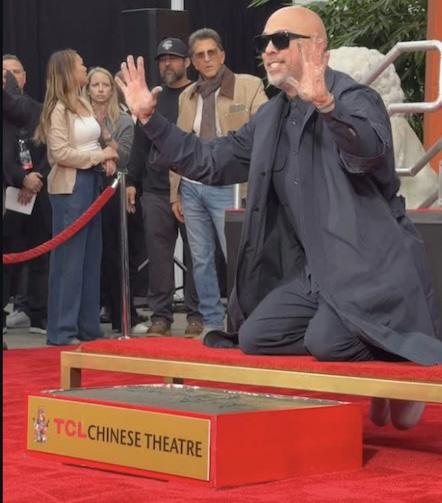
by AJPress
HOLLYWOOD, Los Angeles — It was a full-circle Hollywood moment for Jo Koy on Wednesday, Feb. 11, 2026, as the Filipino American comedian pressed his hands and feet into cement at the historic TCL Chinese Theatre, joining the ranks of entertainers immortalized in the theater’s famed forecourt.
The imprint ceremony, a long-standing Hollywood tradition dating back to 1927, recognizes artists whose careers have made a cultural impact. With family, friends and fellow performers looking on, Koy smiled broadly as he leaned into the wet cement, pausing for photos before signing his name beneath the impressions.
The ceremony was hosted by fellow comedian and ac-
tor Tiffany Haddish, who shared remarks celebrating Koy’s journey from standup clubs to sold-out arenas.
Among those present were comedian Gabriel Iglesias, actor and comedian Martin Lawrence, musician Babyface, and Taboo of the Black Eyed Peas, reflecting the cross-industry support for the milestone.
Born Joseph Glenn Herbert Sr., Koy built his career through years of stand-up touring before breaking into mainstream success with comedy specials and the 2022 studio film Easter Sunday, a project centered on a Filipino American family gathering. The film marked one of the few major studio releases anchored by a Filipino American lead and ensemble.
The TCL Chinese Theatre imprint ceremony is distinct from the Hollywood Walk
of Fame star program; it is administered by the theater itself and reserved for select honorees invited to participate in the forecourt tradition. Past participants have included actors, directors and performers whose careers have spanned generations of film and television history. For many Filipino Americans, Koy’s imprint carried symbolic weight. His comedy has long drawn from his upbringing, particularly stories about his Filipino mother, and his routines have helped introduce Filipino family culture to broader American audiences.
Wednesday’s ceremony underscored a career milestone measured not only in box office receipts and ticket sales, but in permanence: his name and handprints now sit in concrete along Hollywood Boulevard, part of a tradition nearly a century old. n
Rogelio ConStantino MeDina My P.E.P. (People, Events,Places)

THROUGH the late actor-politician Butz Aquino and Reli German, I was baptized in street protests and rallies. Through them, I came to know ATOM, or the August Twenty One Movement.
Today, Volt Bohol is the president of ATOM, a civic organization in the Philippines advocating for good governance, anti-corruption, and the preservation of democracy. As a vocal activist, he leads protests against corruption, specifically issues like flood control project anomalies, and encourages public accountability.
Moreover, he defends the 1987 Constitution, participates in the "ROAR: A Walk Against Corruption," and commemorates the EDSA People Power Revolution. On February 22, there will be a "ROAR! Walk for People Power" at Araneta Center Cubao in Quezon City at 7 a.m.
Certainly, as I met Volt Bohol during a press conference with Jesuit priest Father Tito Caluag, Running Priest Father Robert Reyes, and Kiko Aquino Dee—regarding the "Trillion Peso March Part 3: Tayo ang People Power laban sa Korapsyon at Dinastiya" for the February 25 EDSA People Power Revolution's 40th Anniversary—he emphasized that "the Filipino is worth fighting for" and has been advocating for citizen vigilance.
Who's Francis Kong?
Francis Kong is a renowned Filipino motivational speaker and leadership expert. I vividly remember that Francis has engaged with the Career Executive Service Board (CESB), where I was connected as a writer, and similar public sector initiatives by sharing his expertise on ethical leadership and organizational growth.
I saw him recently during a press conference at Ayala Malls Manila Bay. He was a featured speaker at SpeakersCon 2026, held last February 11, 2026, at Space at One Ayala in Makati City.
As a renowned leadership expert, he joined a lineup of speakers and focused on "Redefining Authenticity," leadership, and impactful communication. The event, which carried the theme "Moving people through clarity, credibility, and character," promised insights on influence, leadership, and personal growth.
Other speakers I saw were Mark Schaefer, Inka Magnaye, Ida Tiongson, Eri Neeman, Kia Abrera, Alan Reyes, and Dr. Donald Patrick Lim, who is a prominent Filipino business leader widely regarded as the "Father of Digital Marketing" in the Philippines and the 78th president of the Management Association of the Philippines.
Filipinos Shine in NYC Billboard
It caught me by surprise.
Right at the heart of Broadway, at 1627 Broadway, New York, NY 10019, a massive 2880 x 960 px LED billboard is shining bright anew, powered by Alegre de Pilipinas.
The billboard features the prestigious 4th Philippine Finest Business Awards and Outstanding Achievers 2026, organized by La Visual Corporation and Sirbisu Channel.
I am fortunate to be included on the billboard with four other Filipinos: Lae Manego, the pop-rock singer-artist; Charrie Rose Apilado, Vice President/ CEO of BCLS Logistics Services; Dr. Allen M. Quirit, MD, Internal Medicine/ Adult Disease Specialist; and Steward Fantilaga, SCPA Development owner; along with myself, Rogelio Medina, freelance journalist.
From the Philippines to the world stage, this is more than exposure—this is GLOBAL RECOGNITION. This is excellence without borders.
Ready to be a part of the next wave of honorees? For further information, you may contact:
Web: www.philippinefinestbusinessaward.com / www.lavisualcorporation. com
Email: Info@philippinefinestbusinessaward. com / contact@lavisualcorporation.com
Phone: (+632) 721-91823 | +63917-137-2316
The spotlight is waiting. Will your name be next on
Broadway?
U.S. AI and Technology Policy
I recently attended an Artificial Intelligence (AI) briefing via Zoom, thanks to the New York Foreign Press Center and the Manhattan Institute.
The Manhattan Institute in New York City hosted an in-depth virtual and onsite briefing led by two of its distinguished scholars, Danny Crichton and James Meigs. This session focused on the critical role of AI as a “U.S. national security imperative,” as articulated in the National Security Strategy (NSS).
The speakers explored the strategic implications of AI and how U.S. technology policy, including global standards and economic/
military benefits, positions the United States as a global leader and sets an example for the world.
Among those who attended the virtual portion of the briefing were Kerry Soropoulos (host), Africa-Related Nigeria, Andres Fidanza, Jukka Lehtinen Kauppalehti, Lorie Baker, Marie-Astrid Langer (NZZ), Melissa de Teffe, Tomomi Shimizu of Jiji Press, and myself, Rogelio Constantino Medina of Asian Journal Publications.
PAFTA Awards on Feb. 21
The Philippine Arts, Film and Television, Inc. (PAFTA) is a professional arts and entertainment organization dedicated to recognizing excellence and outstanding achievements in Philippine arts, film, television, and related creative indus -

tries. It serves as a credible platform that honors artists, performers, filmmakers, media practitioners, and creative professionals whose work contributes to the cultural enrichment and global recognition of Filipino talent.
The PAFTA Awards will be held on February 21 at the Manila Hotel. PAFTA is headed by Filipino women: Teresita Tolentino Pambuan, a retired teacher from the U.S. and wife of a former ABS-CBN executive vice president, and Rotarian Christina Aliada.
Biblical Inspiration
Jeremiah 17:14: "Heal me, Lord, and I will be healed; save me and I will be saved, for you are the one I praise."
Birthday Greetings
Happy birthday to Gina

de Venecia (Feb. 15); Senator Jinggoy Estrada, Nini Veloso, Rochie Hernandez Pedersen (Feb. 17); Mylene Padilla, Christopher Clark Coria Quito, Regina Benitez (Feb. 19); director Nuel Naval, Lorenzo Leviste (Feb. 20); Richard Hinola, Teresita Tolentino Pambuan, Yul Servo Nieto (Feb. 21); writer Gina Marissa Tagasa, Jeff Dy (Feb. 22); Tin-Tin Solomo, Ana Marie Tabora-Echevarria, and Adrian Elisan (Feb. 23).
The opinions, beliefs and viewpoints expressed by the author do not necessarily reflect the opinions, beliefs and viewpoints of the Asian Journal, its management, editorial board and staff.
rogeliocmedina@yahoo.com n