question Waymo about remote support staff based in the Philippines
WASHINGTON, D.C. — The role of human support in fully autonomous vehicles drew scrutiny on Capitol Hill this month, as senators questioned Waymo about its use of personnel working from the Philippines to assist its driverless fleet.
During a Senate Commerce Committee hearing focused on the future of self-driving technology, Waymo executives outlined how the company’s robotaxi service functions without a human driver inside the vehicle. At the same time, they confirmed that vehicles may request assistance from trained “fleet response” staff when encoun-
U.S. hiring rises in January, exceeding forecasts as labor market shows mixed signals
WASHINGTON — U.S. employers added more jobs than expected in January, according to data released Wednesday, February 11, 2026, by the U.S. Bureau of Labor Statistics, offering an early sign of resilience in the labor market at the start of 2026 even as broader trends remain subdued.
Nonfarm payroll employment increased by 130,000 jobs in January, surpassing economists’ forecasts, which had generally projected significantly smaller gains. The unemployment rate edged down to 4.3 percent, from 4.4 percent in December, remaining within a range considered historically low.
The gains were concentrated in health care, social assistance and construction, according to the establishment survey that forms the basis of the headline payroll figure. Health care employment accounted for a substantial portion of the increase, continuing a multi-year trend of steady hiring
Marcos places political dynasty reform at center of sweeping 21-bill reform agenda
by AJPress
“Storycon” on Saturday, February 7, Romualdez said Marcos extended the invitation during his visit to the White House in July 2025.
“When President Marcos went to the White House last July, that’s one of the things we mentioned to President Trump,” Romualdez said. Romualdez added that Trump’s attendance would depend on his schedule, citing the U.S. midterm elections later this year.
“Hopefully the schedule will allow President Trump to come to Asia,” he said.
Marcos–Trump meeting. Marcos visited the White House last year following Trump’s announcement that the United States would impose a 20% tariff on several
by AJPress
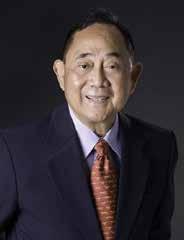
Former House Speaker Jose de Venecia Jr., defining figure of post1986 Philippine Congress, dies at 89
by AJPress
In a statement released by his family, De Venecia was described as a husband, father, grandfather, and patriarch who devoted more than six decades to public service as a journalist, entrepreneur, legislator, diplomat, and global advocate for peace.
De Venecia served seven terms in the House of Representatives,
about 29 minutes once the line becomes operational.
The travel-time estimate, presented during the ceremony attended by Department of Transportation (DOTr) officials and Japanese representatives, reflects a projected service outcome for Phase 1 of the country’s first underground rapid transit system.
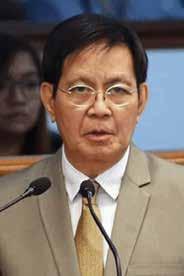
MANILA — Panfilo Lacson said Tuesday, February 11, that the Senate Blue Ribbon Committee has adjusted the wording of its report on alleged irregularities in flood-control projects, clarifying that it will recommend a preliminary investigation rather than directly recommend the filing of charges.
by AJPress
SANTA CLARA, California — Jason Myers delivered a historic scoring performance in Super Bowl LX, setting a championship record as the Seattle Seahawks defeated the New England Patriots, 29–13, at Levi’s Stadium. Myers converted five field goals on five attempts, the most ever made in a Super Bowl. He added two extra points, accounting for 17 of Seattle’s 29 points, the highest scoring total by a kicker in Super Bowl history. The record-setting night also secured Myers a broader place in league history. Including the playoffs, he finished the season with 206 total points, becoming the first player in NFL history to surpass 200 points in a single season when combining regular season and postseason scoring. Seattle relied heavily on Myers early in the championship game. His field goals produced the Seahawks’ first 12 points, providing steady
— Former House Speaker Jose de Venecia Jr., a defining figure in the post-1986 Philippine Congress and one of its longest-serving leaders, has died at 89, his family announced in a formal statement. His interment is scheduled for February 18, 2026, according to u PAGE 4 u PAGE 2 the family.
Lacson, who chairs the committee, said the change was intended to ensure the language accurately reflects procedure. Instead of stating that certain individuals should be “charged,” the report will recommend preliminary investigation, fact-finding, and case build-up - steps that fall within the mandate of prosecutorial authorities. According to public statements, the report recommends a preliminary investigation of Senators Francis Escudero, Jinggoy Estrada, and Joel Villanueva in connection with matters examined during the inquiry. The Senate investigation is legislative in nature and does not determine criminal liability. The Office of the Ombudsman,
which has constitutional authority to investigate and prosecute public officials, is expected to evaluate any records formally referred to it.
Jesus Crispin Remulla described revisions to the committee report as part of the political
TAGUIG CITY, Philippines — President Ferdinand Marcos Jr. on Feb. 13, 2026 led the groundbreaking for two stations of the Metro Manila Subway Project (MMSP) in the Bonifacio Global City (BGC) corridor, highlighting government projections that a full end-to-end trip from Valenzuela City to BGC could take
MANILA
Marcos places political dynasty...
PAGE 1
body aligning the executive and legislative branches on a Common Legislative Agenda.
Inclusion on the list signals priority status but does not ensure enactment; each proposal must still undergo committee review, plenary deliberation and bicameral reconciliation.
A constitutional mandate revisited
The anti-dynasty measure carries particular institutional weight. The 1987 Philippine Constitution provides that the State shall prohibit political dynasties “as may be defined by law.” Nearly four decades later, Congress has not enacted an implementing statute defining the scope, degree of relation or coverage of such a prohibition.
By elevating the bill to LEDAC priority status, the administration has placed the issue squarely within the current legislative timetable. Whether the proposal advances will depend on how lawmakers define its parameters, including which public offices would be covered and how enforcement mechanisms would operate.
The renewed focus reopens a structural debate about political competition, access to elective office and the balance between constitutional intent and legislative action.
Governance and transparency measures
Beyond dynasty reform, the priority package includes mea-
sures aimed at strengthening transparency and public accountability. Among them are a proposed Right to Information Act and the Citizen Access and Disclosure of Expenditures for National Accountability (CADENA) Act, both intended to institutionalize public access to government-held records and spending data.
Other governance-related proposals include a Party-List System Reform Act, amendments to the Bank Secrecy Law under a proposed BRIGHT Act, and the creation of an Independent People’s Commission. A measure addressing anti-fake news and digital disinformation is likewise included in the list and is expected to undergo scrutiny concerning constitutional protections on free expression.
Social services and institutional capacity
Several of the 21 measures focus on social protection and public service delivery. Proposed amendments to the Pantawid Pamilyang Pilipino Program (4Ps) Act, the Masustansyang Pagkain Para sa Batang Pilipino Act, and the Government Assistance to Students and Teachers in Private Education (GASTPE) Act aim to recalibrate existing support systems.
A proposed Classroom-Building Acceleration Program Act seeks to address infrastructure gaps in public schools, while the establishment of a National Center for Geriatric Health responds
to demographic trends indicating a growing elderly population.
On economic and infrastructure policy, the list includes amendments to the Electric Power Industry Reform Act (EPIRA) and measures strengthening the Energy Regulatory Commission, as well as the creation of a proposed Department of Water Resources. A Waste-to-Energy measure, amendments to the Rice Tariffication Law, estate tax amnesty provisions, and travel tax abolition are also among the cited priorities. Legislation related to the conduct of elections in the Bangsamoro Autonomous Region in Muslim Mindanao is likewise included.
Legislative test ahead Historically, LEDAC priority lists have served as agenda-setting tools rather than guarantees of passage. Still, the breadth of the current 21-measure slate reflects an attempt to align political reform, economic governance and social development within a single legislative window.
The inclusion of the anti-dynasty bill, in particular, places Congress at a crossroads: whether to define and implement a constitutional directive that has remained unlegislated since 1987, or to allow the issue to remain unresolved.
As deliberations begin, the weight of the agenda will ultimately be measured not by its scope, but by the laws that emerge from it. n
NBI serves warrants in Cavite as DOJ says records show no formal exit for Atong Ang
by AJPress
MANILA — Philippine authorities continue efforts to locate businessman Charlie ‘Atong’ Ang, the subject of multiple arrest warrants issued by regional trial courts in Laguna in connection with cases involving the disappearance of several cockfighting enthusiasts. In the latest development, agents of the National Bureau of Investigation attempted to serve a warrant at two properties in Dasmariñas City, Cavite, according to published reports. Ang was not found during the operation. Justice officials, meanwhile, said available government records do not show that Ang has departed the Philippines through formal channels. Justice Secretary Fredderick Vida told reporters this week that, based on Bureau of Immigration records and intelligence information available to authorities, there is no indication that Ang has left the country.
He noted, however, that official records reflect only departures through recognized entry and exit points.
Court-issued warrants Court documents cited in multiple reports show that Regional Trial Court (RTC) Branch 26 in Sta. Cruz, Laguna issued a warrant of arrest against Ang and several co-accused for kidnapping with homicide, a charge classified as non-bailable under Philippine law. The same branch has also issued a separate warrant related to allegations of kidnapping and serious illegal detention.
Separately, RTC Branch 29 in San Pablo City, Laguna, issued another warrant for Ang and five others for kidnapping with serious illegal detention, likewise described in court processes as non-bailable.
The charges stem from investigations into the disappearance of cockfighting bettors in 2021 and 2022. Several respondents have
been arrested in prior operations, while others, including Ang, have not yet been taken into custody.
Ongoing search Authorities said enforcement teams are acting on location leads and continuing coordination among investigative agencies. Officials have not disclosed operational details or timelines, citing security considerations. In public statements issued previously through counsel, Ang has denied allegations of wrongdoing. As of publication, no new statement from his legal representatives had been released regarding the recent Cavite operations.
Under Philippine law, the issuance of an arrest warrant signifies a court’s finding of probable cause based on evidence presented by prosecutors; it does not constitute a determination of guilt. The cases will proceed through arraignment and trial once the accused are brought before the court. n
Jason Myers sets Super Bowl scoring record...
separation in a contest shaped more by execution and field position than by explosive plays. By halftime, his precision had already altered the rhythm of the game.
While running back Kenneth Walker III was named Super Bowl MVP after a strong rushing performance, it was Myers’ accuracy that repeatedly converted drives into points and built the margin that defined the final score.
An undrafted free agent who built his career through consistency, Myers’ five field goals surpassed the previous Super Bowl mark of four and capped a season that redefined scoring benchmarks in the modern NFL.
Myers, a Chula Vista, California native, has spoken about his family’s background. Biographical accounts and Myers’ own statements note that his great-grandfather emigrated from the Philippines and later served in the U.S. Navy, a part of his family history that has drawn interest among Filipino American fans following his championship performance.
In the NFL’s ultimate showcase, Jason Myers’ accuracy proved decisive. n
NG PAGPAPAUNLAD NG KOMUNIDAD O COMMUNITY DEVELOPMENT BLOCK GRANT (CDBG), PAKIKIPAGSOSYO SA PAMUMUHUNAN SA PABAHAY O HOME INVESTMENT PARTNERSHIPS
AIDS O HOUSING
FOR PERSONS WITH AIDS (HOPWA) Ipinapaalam na ang Lupon ng mga Supervisor (Lupon) ng San Diego County ay magsasagawa ng isang pampublikong pagdinig sa Marso 24, 2026, sa ganap na 9:00 ng umaga sa Silid 310 sa County Administration Center, 1600 Pacific Highway, San Diego, CA, upang isaalang-alang ang Taunang Plano para sa Taon ng Pananalapi (FY) 2026-27. Isasaalang-alang ng Lupon ang iminungkahing paggamit ng tinatayang: $4,232,730 sa pondo ng Community Development Block Grant (CDBG); $2,834,075 sa pondo ng HOME Investment Partnership (HOME); $376,429 sa pondo ng Emergency Solutions Grant (ESG); at $6,434,968 sa pondo ng Housing Opportunities for Persons with HIV/AIDS (HOPWA) na matatanggap ng County mula sa US Department of Housing and Urban Development (HUD). Isasaalang-alang din ng Lupon ang iminungkahing paggamit ng tinatayang $2,000,000 sa mga kita ng CDBG, HOME, at HOPWA Program para sa FY 2026-27 at ang muling paglalaan ng tinatayang $7,000,000 sa mga karapatan sa HOME, CDBG at HOPWA noong mga nakaraang taon. Ang mga bilang na ito ay batay sa mga antas ng pagpopondo noong nakaraang taon. Inilalarawan ng Taunang Plano ang mga iminungkahing aktibidad na popondohan mula sa FY 2026-27 at mga karapatan sa nakaraang taon, na dapat matugunan ang mga layuning itinatag sa Pinagsama-samang Plano o Consolidated Plan ng 2025-29. Ang mga programang CDBG at ESG ay nagbibigay ng pondo sa unincorporated na area ng County at sa mga lungsod ng Coronado, Del Mar, Imperial Beach, Lemon Grove, Poway, at Solana Beach, na kilala rin bilang Urban County. Ang mga pondo ng CDBG ay dapat: (1) makinabang ang mga taong may mababang kita; (2) maiwasan/maalis ang mga slum at pagkasira ng tirahan; o (3) matugunan ang mga agarang pangangailangan sa pagpapaunlad ng komunidad. Pinopondohan ng programang ESG ang tulong para sa mga walang tirahan sa Urban County. Pinopondohan ng programang HOME ang mga aktibidad sa abot-kayang pabahay sa loob ng County HOME Consortium. Kabilang sa HOME Consortium ang Urban County, kasama ang mga lungsod ng Carlsbad, Encinitas, La Mesa, San Marcos, Santee, at Vista. Pinopondohan ng programang HOPWA ang pabahay/mga serbisyo para sa mga taong may HIV/AIDS at kanilang mga pamilya sa buong San Diego County. Ang mga kopya ng draft na Taunang Plano ay makukuha para sa pampublikong pagsusuri at komento, sa panahon ng 30-araw ng pagkomento mula Pebrero 20, 2026, hanggang sa Marso 24, 2026, sa website ng County sa sdhcd.org. Ang mga nakasulat na komento ay dapat ipadala sa Housing and Community Development Services, Community Development Division, 3989 Ruffin Road, San Diego, CA 92123 o sa pamamagitan ng email sa Community.Development@sdcounty.ca.gov. Ang mga bingi o may kapansanan sa pandinig ay maaaring makipag-ugnayan sa departamento sa (866) 945-2207. Ang mga nangangailangan ng tulong upang makalahok sa pagpupulong (hindi nagsasalita ng Ingles, may kapansanan sa pandinig, atbp.) ay dapat makipag-ugnayan sa mga kawani nang hindi bababa sa limang araw bago ang pagpupulong upang humiling ng mga espesyal na pagsasaayos. 2/14/26 CNS-4012303# ASIAN
(L.A.)
Sponsored by JPMorganChase
Rising optimism among small and middle market business leaders suggests growth for California
Business optimism is returning for small and midsize business leaders at the start of 2026, fueling confidence and growth plans.
The 2026 Business Leaders Outlook survey, released in January by JPMorganChase reveals a turnaround from last June, when economic headwinds and uncertainty about shifting policies and tariffs caused some leaders to put their business plans on hold.
Midsize companies, who often find themselves more exposed to geopolitical shifts and policy changes, experienced a significant dip in business and economic confidence in June of 2025. As they have become more comfortable with the complexities of today’s environment, we are seeing optimism rebounding in the middle market nationwide – an encouraging sign for growth, hiring, and innovation. Small businesses, meanwhile, maintained steady optimism throughout 2025, but they aren’t shielded from domestic concerns. Many cited inflation and wage pressures as the top challenges for 2026 and are taking steps to ensure their businesses are prepared for what’s ahead.
“Business leaders across the Pacific region continue to demonstrate a unique blend of resilience and forward-thinking, even in the face of ongoing economic uncertainty,” said Brennon Crist, Managing Director and Head of the Pacific Segment, Commercial Banking, J.P. Morgan. “Their commitment to innovation and growth is evident in the way they adapt to challenges and seize new opportunities. It’s this spirit that keeps our region at the forefront of business leadership and progress. We look forward to helping our clients navigate all that’s ahead in 2026.”
Overall, both small and midsize business leaders are feeling more confident to pursue growth opportunities, embrace emerging technologies and, in some cases, forge new strategic partnerships. That bodes well for entrepreneurs in California. Here are a few other key findings from the Business Leaders Outlook about trends expected to drive activity this year:
1. Inflation remains the top concern for small business owners. Following the 2024 U.S. presidential election, many anticipated a favorable business environment. By June 2025, however, that feeling shifted amid concerns about political dynamics, tariffs, evolving regulations and global economic headwinds.
Going into 2026, 37% of respondents cited inflation as their top concern. Rising taxes came in second at 27% and the impact of tariffs was third at 22%. Other concerns included managing cash flow, hiring and labor costs.
2. For middle market leaders, uncertainty remains an issue.
Almost half (49%) of all midsize business leaders surveyed cited “economic uncertainty” as their top concern – even with an
improved outlook from a few months ago. Revenue and sales growth was second at 33%, while tariffs and labor both were third at 31%
3. And tariffs are impacting businesses costs.
Sixty-one percent of midsize business leaders said tariffs have had a negative impact on the cost of doing business.
4. Despite challenges, leaders are bullish on their own enterprises. Though the overall outlook is mixed, 74% of small business owners and 71% of middle market companies are optimistic about their company’s prospects for 2026.
5. Adaption is the theme.
For small business owners surveyed across the U.S., responding to continuing pressures is important in 2026. Building cash reserves (47%), renegotiating supplier terms (36%) and ramping up investments in marketing and technology are among the top priorities.
6. Big plans are on the horizon
A majority midsized company leaders expect revenue growth this year, and nearly three out of five of (58%) plan to introduce new products or services in the coming year, while 53% look to expand into new domestic and/or international markets. Forty-nine percent say they’re pursuing strategic partnerships or investments.
The bottom line
Rebounding optimism among U.S. business leaders at the start of the year is setting the stage for an active 2026. With business leaders looking to implement ambitious growth plans that position themselves for the future, momentum in California could be beneficial for leaders looking to launch, grow or scale their business this year. * * *
For informational/educational purposes only: Views and strategies described in this article or provided via links may not be appropriate for everyone and are not intended as specific advice/recommendation for any business. Information has been obtained from sources believed to be reliable, but JPMorgan Chase & Co. or its affiliates and/or subsidiaries do not warrant its completeness or accuracy. The material is not intended to provide legal, tax, or financial advice or to indicate the availability or suitability of any JPMorgan Chase Bank, N.A. product or service. You should carefully consider your needs and objectives before making any decisions and consult the appropriate professional(s). Outlooks and past performance are not guarantees of future results. JPMorgan Chase & Co. and its affiliates are not responsible for, and do not provide or endorse third party products, services, or other content.
The Reform Era: Laws that defined the De Venecia speakership
by AJPress
THE speakership of Jose de Venecia Jr. coincided with one of the most consequential reform periods in the post-1986 Philippine Congress. While legislation is enacted by Congress as a body and signed by the President, several structural economic measures were passed during his tenure presiding over the House of Representatives that reshaped the country’s policy landscape.
At the start of the Ramos administration, Congress enacted the Bases Conversion and Development Act of 1992 (Republic Act No. 7227), which provided the legal framework to convert former U.S. military reservations, including Clark and Subic, into economic and freeport zones. The measure marked a strategic shift following the withdrawal of U.S. forces, laying the groundwork for long-term industrial and commercial redevelopment.
The following year, Congress passed the New Central Bank Act of 1993 (Republic Act No. 7653), establishing the Bangko Sentral ng Pilipinas as an independent monetary au-
thority. The law strengthened safeguards for monetary stability and financial supervision, creating the institutional framework that continues to underpin Philippine central banking. Infrastructure policy also evolved during this period. Although the original Build-Operate-Transfer (BOT) Law was enacted in 1990, Congress expanded and strengthened it in 1994 through Republic Act No. 7718, broadening mechanisms for public-private partnerships in major infrastructure projects. The amendment formalized private-sector participation in financing, constructing, and operating public works — a model that remains central to national infrastructure development. In 1995, lawmakers enacted the Philippine Economic Zone Act (Republic Act No. 7916), creating the Philippine Economic Zone Authority (PEZA) and institutionalizing fiscal incentives for export-oriented industries. The law became a cornerstone of the ecozone model that supported export-oriented investment and later growth in services locators operating within economic zones.
Beyond structural reforms, Congress approved major reha-
bilitation appropriations following the devastating 1990 Luzon earthquake, including funding for affected areas in Northern Luzon. Speakers do not pass laws individually; legislation is the product of collective authorship, bicameral approval, and presidential signature. However, the Speaker exercises significant influence over legislative scheduling, coalition management, and the advancement of priority measures. During De Venecia’s tenure, the House operated in a political environment characterized by fluid party alignments and shifting alliances, making coalition maintenance central to advancing reform measures.
Taken together, the laws enacted during this period reflected a broader reform agenda focused on asset conversion, institutional strengthening, infrastructure modernization, and export-oriented growth. Decades later, these measures continue to shape Philippine economic governance, a legacy closely associated with the congressional era over which De Venecia presided. n
Former House Speaker Jose...
PAGE 1
five of them as Speaker — with his speakership spanning the administrations of Presidents Fidel V. Ramos, Joseph Estrada, and Gloria Macapagal Arroyo. His cumulative tenure as Speaker remains among the longest in the postwar Congress.
and
Guinea. He was named Man of the Century by the International Conference of Asian Political Parties (ICAPP) and received Distinguished Service Awards from ICAPP and the ASEAN Inter-Parliamentary Assembly (AIPA). At home, both the Philippine Senate and the House of Representatives adopted resolutions honoring his distinguished service. In a rare and singular tribute, the House named a major facility within its complex the Jose de Venecia Building, which houses the Jose de Venecia Museum, a public space that chronicles his decades of legislative and diplomatic service. Beyond titles, honors, and institutions, Jose C. de Venecia Jr. will be remembered for his unwavering belief in dialogue, his generosity of spirit, and his deep love for country. He lived a life anchored on service, guided by conscience, and offered without reservation to the Filipino people. As we mourn his passing, we give thanks for a life that helped shape the Philippine Republic — and for a legacy that endures in our laws, our institutions, and our continuing pursuit of peace.
-Congresswoman Gina de Venecia, former Congressman Christopher de Venecia, +KC; Sandra and Mark Haner, and children Matthew and Allison; Leslie Norton, and son Alexander; Vivian and Dr Dennis Garcia, and children Dr David and Nikki, Katharine, and Noah;
Cruz 111; Tito and Malou de Venecia, children Isabelle and Martin Valenzuela, grandchildren Connor and Riley;
and
and Marco de Venecia
Early life and entry into politics
Born in Dagupan, De Venecia grew up in a province that would remain central to his political identity. He studied journalism at the Ateneo de Manila University and later worked in business and public affairs before entering electoral politics.
He was first elected to the House of Representatives in 1987, representing Pangasinan’s 4th District, as Congress reasserted its role following years of executive dominance.
Speakership and legislative influence
De Venecia was first elected Speaker of the House in 1992, beginning a series of speakerships that shaped the modern House. He was widely regarded as a disciplined vote-counter and coalition builder who maintained governing majorities in a chamber marked by fluid party loyalties.
During his tenure, the House advanced legislative agendas that included economic policy, privatization initiatives, and institutional reforms. Supporters credited him with keeping the legislature functional during periods of political volatility; critics pointed to the transactional realities of coalition politics. De Venecia consistently framed his approach as pragmatic governance in a pluralistic democracy.
His final term ended in February 2008, when the House voted to declare the speakership vacant after an overnight session, closing a long chapter in congressional leadership.
National profile Beyond Congress, De Venecia sought the presidency in 1998, running on a platform emphasizing legislative experience and economic management. Though unsuccessful, he remained a nationally recognized political figure and a reference point in discussions on House leadership and parliamentary strategy for years afterward.
Role as elder statesman
After leaving the speakership, De Venecia largely withdrew from day-to-day partisan politics but continued to play a role in public life as an elder statesman. He participated in policy forums, academic discussions, and institutional gatherings focused on governance, diplomacy, and parliamentary practice, often reflecting on coalition-building, legislative stability, and institutional
continuity.
He held no formal advisory position in government during this period. His appearances in later years were largely commemorative and institutional rather than partisan, signaling a deliberate shift from political power to historical reflection. That role was underscored in January 2025, when the House inaugurated the Jose de Venecia Jr. Building and Museum, recognizing his long influence on the institution he once led.
Family and public service
De Venecia’s public life was closely intertwined with that of his family. His wife, Gina de Venecia (born Maria Georgina Vera Perez), is a member of the prominent Vera-Perez family, long associated with the Philippine film industry through the historic Sampaguita Pictures. She later entered politics in her own right, serving as representative of Pangasinan’s 4th District from 2010 to 2016, and returning to the House after winning the seat again in 2025, where she currently serves. Their son, Christopher de Venecia, represented the same district from 2016 to 2025, marking a generational continuation of the family’s involvement in public service.
Legacy
Measured over time, Jose de Venecia Jr.’s legacy rests not on a single law or political confrontation but on the architecture of legislative power he helped normalize - how alliances are built, how majorities are sustained, and how a diverse House is kept functioning. For allies and critics alike, he remains a defining figure of the post-1986 Congress, whose influence continues to shape Philippine legislative politics. n
Former House Speaker Jose de Venecia Jr.,
Jose “Joe” de Venecia Jr. and Gina de Venecia with their children, Christopher and KC during the 1994 State of the Nation Address, marking the year De Venecia first assumed the position of Speaker of the House of Representatives. Photo from Gina de Venecia’s archive
A quiet, intimate
BUSINESS IN BLOOM. Vendors at the Farmers Garden in Cubao, Quezon City, assemble flower bouquets on Tuesday, Feb. 10, 2026, four days ahead of Valentine’s Day. They said they are working round-the-clock to meet customers’ orders. PNA photo by Joan Bondoc
Supreme Court of the Philippines recognizes co-ownership claims of samesex live-in partners under
by AJPress
— The Supreme Court
MANILA
ruled that same-sex partners who live together may be recognized as co-owners of property acquired during their relationship, provided there is proof of actual financial contribution, applying Article 148 of the Family Code.
In a decision promulgated on February 5, 2025, the Court’s Second Division held that Article 148, which governs property relations of couples who cohabit but cannot legally marry, applies to same-sex relationships because Philippine law recognizes marriage only between a man and a woman.
The case, G.R. No. 267469, involved a dispute between former same-sex partners over a residential property acquired during their cohabitation. The property was registered in the name of one partner. After their separation, the other partner filed a complaint for partition, asserting that she contributed to the purchase and renovation of the house and lot.
Lower courts dismissed the complaint for lack of sufficient proof of contribution. On review, the Supreme Court reversed those rulings.
Writing for the Court, Associate Justice Jhosep Y. Lopez stated that under Article 148, only properties acquired through the actual joint contribution of money,
Family Code
property, or industry are owned in common, and each partner’s share is proportionate to proven contribution.
The Court found that a signed acknowledgment executed by the registered owner, stating that the former partner paid approximately half of the acquisition and renovation costs, constituted an admission against interest and was sufficient to establish coownership.
The decision clarifies that while same-sex marriage remains unrecognized under existing Philippine statutes, property disputes arising from same-sex cohabitation may be resolved using
established civil law provisions.
Public reaction followed the ruling, including statements from singer-actor Ice Seguerra and filmmaker and former Film Development Council of the Philippines chair Liza Diño, who have previously spoken publicly about the legal and civil dimensions of same-sex relationships in the Philippines.
The ruling does not amend the statutory definition of marriage. Instead, it provides guidance to lower courts on adjudicating ownership disputes based strictly on evidence of contribution, consistent with Article 148 of the Family Code. n
Metro Manila subway: Marcos cites...
The BGC works fall under Contract Package 105 (CP105), part of the subway’s 33.10-kilometer alignment designed to connect Valenzuela in the north to Ninoy Aquino International Airport, Makati and BGC in the south. According to the Embassy of Japan in Manila, CP105 includes roughly 1.3 kilometers of tunneling and the construction of two underground stations between Kalayaan Avenue Station and the planned BGC Station.
Earlier in the day, Marcos and DOTr Acting Secretary Giovanni Z. Lopez inspected progress at Shaw Boulevard Station in Mandaluyong, another segment of the expanding subway network.
Ridership and capacity Government briefings carried by the Philippine Information Agency project that the two BGC-area stations could serve more than 200,000 passengers daily during their initial year of operation.
Planning assumptions presented by transportation officials indicate a fleet of approximately 30 train sets, each composed of eight cars with a theoretical maximum capacity of up to 2,228 passengers per train. The fully underground system is designed to provide high-capacity, high-frequency service aimed at easing road congestion and improving north-south connectivity across Metro Manila. Progress and timeline
Senate pushes back on Chinese embassy remarks amid sovereignty dispute
Lawmakers defend institutional independence and national sovereignty as Senate President Vicente Sotto III stands firm against what senators describe as foreign interference.
by AJPress
MANILA — The Philippine Senate defended its institutional independence after the Chinese Embassy in Manilacriticized lawmakers over statements related to maritime disputes and sovereignty issues, prompting Senate President Vicente Sotto III to affirm that the chamber would not be silenced.
criticize internal legislative deliberations.
Several senators described the embassy’s remarks as overstepping diplomatic norms. The chamber’s action reflected a broader view among lawmakers that safeguarding sovereignty includes protecting domestic institutions from external pressure.
Maritime tensions as backdrop
Coast Guard and Chinese vessels. Beijing has objected to some of those disclosures, calling them provocative.
Executive branch response
The administration of Ferdinand
Officials have targeted a demonstration run of initial segments by 2028, with full completion of Phase 1 projected by 2032. These dates are described by government agencies as milestone targets tied to engineering and operational benchmarks.
A separate report citing a DOTr audiovisual presentation placed overall project completion at about 54 percent, with several kilometers of tunnel excavation and multiple station structures already under construction.
The subway, first initiated under the Duterte administration, continues under the current administration as part of the national infrastructure modernization program. Financing and partnership Japan remains the principal funding partner through the Japan
International Cooperation Agency (JICA). In 2024, JICA signed a loan agreement worth 150,000 million yen to support Phase 1 construction, rolling stock procurement and systems installation.
Japanese officials have described the subway as a long-term infrastructure investment intended to reduce travel time losses, improve urban mobility and support environmental sustainability goals in Metro Manila.
Once operational, the Metro Manila Subway is expected to integrate with existing and planned rail lines, forming part of a broader metropolitan transit network. For now, the 29-minute Valenzuela-to-BGC journey remains a forward-looking projection contingent on the project’s completion and commissioning. n
Marcos invited Trump to ASEAN Summit...
PAGE 1 countries, including the Philippines. The meeting resulted in a revised arrangement that lowered the tariff to 19% on Philippine exports, which Marcos later described as a “significant achievement.”
U.S. hiring rises in January, exceeding...
PAGE 1
in the sector. Construction also recorded net additions. In contrast, federal government employment declined, and employment in financial activities showed modest reductions during the month. Average hourly earnings for private nonfarm employees rose modestly in January, while the average workweek ticked higher. Economists typically view wage growth and hours worked as indicators of labor demand and income stability. However, the January report also included annual benchmark revisions that significantly reduced previously reported job gains for 2025. Revised figures indicate that total employment
ASEAN host The Philippines is hosting the 48th and 49th ASEAN Summits this year as part of its fourth stint as ASEAN chair. The country began its ASEAN 2026 chairship by hosting several events, including the ASEAN Foreign Ministers’ Retreat in Cebu from January 25 to 29 and the ASEAN Tourism Forum from January 26 to 30. The 48th ASEAN Leaders’ Summit is scheduled for May 8 to 9 in Cebu, followed by the 49th ASEAN Summit and Related Summits from November 10 to 12. n
growth last year was approximately 181,000 jobs, down from earlier estimates of roughly 584,000. Such revisions are routine and reflect updated administrative records that provide a more complete accounting of employment levels. The revised data suggest that hiring momentum in 2025 was weaker than initially believed, underscoring a labor market that had cooled substantially compared with post-pandemic expansion years.
Separate government data released earlier this month showed job openings declined toward multi-year lows at the end of 2025, pointing to softer labor demand even as layoffs remained relatively contained. Economists
have characterized the environment as one of slower hiring rather than widespread job losses.
While January’s stronger-than-anticipated payroll gain provides a positive headline to begin the year, analysts caution that one month of data does not establish a durable trend. Labor market conditions will continue to be closely monitored in the coming months, particularly as policymakers assess inflation trends, wage pressures and overall economic growth.
The employment figures cited in this report are drawn from the official January 2026 Employment Situation Summary released by the U.S. Bureau of Labor Statistics. (AJPress) PAGE
Senate panel revises flood-control...
PAGE 1 process, saying that negotiations and compromises are common in legislative settings. He indicated that testimonies and documentary evidence gathered during the hearings may still be reviewed independently by his office, regardless of adjustments in wording.
The Blue Ribbon Committee’s inquiry examined aspects of funding, procurement, and implementation of certain flood-control projects. Committee reports typically summarize evidence gathered during hearings and may recommend further investigation, but prosecutorial decisions remain with constitu-
tionally mandated agencies. No findings of criminal liability have been made against the senators named in the committee’s recommendation. Any determination of responsibility will depend on the outcome of formal investigative proceedings, should these be initiated by the appropriate authorities. n
Sotto responded to remarks from embassy spokesperson Ji Lingpeng, who objected to statements made by senators and described certain actions as inappropriate. While Sotto said he would not engage in prolonged rhetorical exchanges, he made clear that the Senate would not retreat from its position.
The Senate had earlier adopted a resolution expressing concern over the embassy’s public commentary. Lawmakers framed the measure as a defense of constitutional prerogatives and national dignity, asserting that foreign diplomatic missions should not attempt to influence or
U.S. lawmakers
PAGE 1
tering specific road situations. According to company testimony, those support personnel operate from both the United States and the Philippines. Waymo emphasized that these workers do not remotely drive the vehicles. Instead, the company described their role as providing guidance when the system seeks additional input, while the vehicle’s autonomous software retains control of steering, braking, and navigation decisions.
Lawmakers pressed the company on what that arrangement means for oversight and accountability. Several senators cited cybersecurity considerations and operational transparency as areas requiring closer review, particularly when support functions are performed outside the United States. Senator Ed Markey of Massachusetts said the structure warranted examination as autonomous vehicles become more common on public streets.
The hearing unfolded against a broader debate over federal regulation of self-driving cars. Industry representatives, including those from Waymo and Tesla, urged Congress to establish clearer national standards. They argued that the current patchwork of state rules complicates deployment and slows technological advancement.
Safety oversight also featured prominently in the discussion. Federal regulators have opened investigations into Waymo vehicles following reports involving interactions with stopped school buses. In addition, the company disclosed that one of its vehicles made contact with a young pedestrian in Santa Monica, California, on January 23. Waymo said it notified the National Highway Traffic Safety Administration on the same day and has continued cooperating with regulators.
Beyond safety, senators raised questions about supply chains and national security, including the sourcing of vehicle components used in autonomous systems. Waymo executives responded that its autonomous driving system is installed domestically and that the company works closely with U.S. authorities to meet safety and security requirements.
The exchange underscored the evolving definition of autonomy in transportation. While companies promote driverless systems as a technological leap forward, lawmakers are examining how human involvement — including personnel based outside the United States — fits into vehicles described as fully autonomous. (AJPress)
The dispute unfolds amid continuing friction in the West Philippine Sea, the area within the Philippines’ exclusive economic zone in the South China Sea. Tensions have persisted since a 2016 arbitral ruling issued by a tribunal constituted under the Permanent Court of Arbitration, which invalidated the legal basis of China’s expansive maritime claims under the United Nations Convention on the Law of the Sea. China has rejected the decision.
Philippine officials have increasingly adopted a policy of transparency in reporting maritime encounters involving the Philippine
Marcos Jr. has reiterated its commitment to defending sovereign rights under international law while maintaining diplomatic engagement with Beijing. The Department of Foreign Affairs has emphasized that disputes are best addressed through established diplomatic channels.
Despite the heated exchange, no formal diplomatic sanctions have been announced. However, the Senate’s resolution signals a clear institutional stance: lawmakers intend to assert their authority and speak on matters of national interest without external restraint.
The episode highlights the increasingly public dimension of geopolitical tensions, where disputes at sea are mirrored in diplomatic messaging and legislative debate. n
LACMTA will receive Bids/ Proposals for DR137629 - Air Compressors for Bus Divisionsat the 9th Floor Receptionist Desk, Vendor/Contract Management Department, One Gateway Plaza, Los Angeles, CA 90012.
time bids will be opened and publicly read. Bids received after the above date and time may be rejected and returned unopened. Each Bid must be sealed and marked Bid No. DR137629. For a copy of the Bid specification visit our Solicitation Page on our Vendor Portal at
LACMTA will receive Bids/ Proposals for OP128803(2)Seismic Joint Filler Materials - Sierra Madre Villa Parking Structure. A Virtual Pre-Bid conference will be held on Wednesday, February 11, 2026, 10:00 a.m. Instructions on attending the meeting are provided in the IFB document. All Bids must be submitted to bids@metro.net on or before 12:00 p.m. Pacific Time on Tuesday, March 10, 2026, at which time bids will be opened and publicly read. Bids received after the above date and time may be rejected and returned unopened. Each Bid
A Waymo vehicle serving riders in San Francisco
Source: Waymo
passenger
Photo from @pcogovph
BEADS POWER. Children show their handmade bead bracelets during a bead-making activity at the Barangay Camp Aguinaldo Social Hall in Quezon City on Wednesday, Feb. 11, 2026. The activity highlights community-based learning initiatives promoting creativity and developmental skills among young participants. PNA photo by Robert Oswald P. Alfiler
FeAtures OPiniOn
Honoring the Lunar New Year: What
Chinese-Filipino traditions reveal about nation-building, continuity, and civic responsibility
THE Lunar New Year is often framed as a cultural celebration marked by fireworks, red envelopes, and family gatherings. In the Philippines, however, it also serves as a quiet reminder of how Chinese-Filipino traditions have shaped the country’s economic habits, social institutions, and civic character across centuries. This is not a story of novelty. It is a story of sustained contribution.
Long before the Philippines became a nation-state, Chinese traders were already part of its social and economic life. As early as the Song and Ming dynasties, merchants from southern China crossed the seas to trade with pre-colonial communities. These exchanges integrated the archipelago into regional trade networks and laid the groundwork for Manila’s emergence as a commercial center.
Editorial
During the Spanish colonial period, Chinese settlers became indispensable to urban life. They supplied goods, craftsmanship, labor, and financial services that the colonial administration could not provide on its own. The establishment of Binondo in 1594, widely recognized as the oldest Chinatown in the world, was not merely an act of segregation. It acknowledged the Chinese community’s economic
Commentary
By Enrique de la Cruz, Ph.D.
LAST week, during an interview on a podcast with Dan Bongino, Trump called for Republican officials to “take over voting procedures in 15 states.”
He added, “We should take over the voting… The Republicans ought to nationalize the voting.”
One might be tempted to dismiss these as idle musings of a politician who continues to fixate on his loss in the 2020 presidential election and who continues to allege, despite overwhelming evidence to the contrary, that the election was “stolen from him.”
These musings should be raising alarm bells. We should be very worried that he is even thinking about nationalizing elections. In the context of the United States, where elections are governed primarily by state laws, “nationalizing” is code for a federal takeover of elections. It is a move straight out of the elections playbook of authoritarians who take over electoral processes whenever they feel compelled to conduct “demonstration elections” to show the world that they are the duly elected leader of their coun-
FOR years now, China has been violating international law by continuing to encroach on the West Philippine Sea (WPS). This despite a 2016 arbitral ruling that clearly established its so-called nine-dash line had no basis, and that the area was part of the Philippine’s exclusive economic zone and sea territory. China’s moves take on many forms. It has resorted to the use of water cannons, sideswiped vessels, harassed fisherfolk, and frontline military personnel, among others.
centrality to Manila. Over time, Binondo became a proving ground for entrepreneurship, adaptation, and integration.
Economic builders and institutional founders
Chinese-Filipinos played a decisive role in shaping the country’s commercial foundations. Many of today’s major trading firms, manufacturing companies, retail chains, and banks began as small family enterprises rooted in thrift, discipline, and reinvestment. Growth was incremental and deliberate. Profit was not detached from responsibility.
Equally significant was their role in institution-building. Chinese-Filipino families helped establish schools, hospitals, trade associations, and civic organizations that continue to serve the broader public. Philanthropy was not treated as branding. It
American Democracy: Death by a Thousand Cuts
try. These demonstration elections give the appearance that elections are free, but the canvassing of ballots is controlled to ensure that the announced tallies are in their favor. Former Philippine president Ferdinand Marcos was known to practice this craft to show his American sponsors that he enjoyed popular support.
When Filipinos were outraged by the blatant assassination of Benigno Aquino and began to closely watch vote tallies and reporting processes, Marcos’ efforts to manipulate vote counts sparked outrage that led to his overthrow via the EDSA People Power Revolution of 1986. Marcos and his family were airlifted out of Manila by U.S. forces and given safe haven in Hawaii.
Another practitioner of this craft, Venezuela’s Nicolas Maduro, halted the canvassing of votes and declared himself the winner when it became apparent that election outcomes would not be in his favor. Maduro did not face a popular revolt. Instead, he and his wife were reportedly seized in a Trump-ordered special military operation, and they now languish in a New York jail awaiting trial.
Trump is clearly aware of this dictator’s playbook. This call for Republicans to “nationalize” elections is a boldfaced call for Trump loyalists to ensure that he remains in power after the upcoming presidential election in 2028. He is laying the groundwork for his loyalists to control and subvert these elections since he can no longer be on the ballot. He could possibly declare these elections null and void so he can continue to remain in power by default.
American elections are governed primarily by state laws, but the Trump administration has already undertaken a series of actions to try to exert more control over American elections at the federal level. These include the seizure of ballots and other voting records from the 2020 election in Georgia, supervised, no less, by Trump’s director of national intelligence, whose office has no responsibility for elections, and the recent demand by the Justice Department that numerous states turn over their full voter rolls. Trump has also issued an executive order making changes u PAGE 7
Defending Beijing is betraying our nation
All these have not escaped Filipinos’ attention, thanks to our government’s transparency strategy when it comes to incidents in the WPS. As a result, nearly nine out of 10 Filipinos distrust China or view it as the greatest external threat to our country, according to recently conducted surveys by Pulse Asia and Octa Research. Unfortunately, the struggle does not only take place in the sea. More and more now, there have been discourses that promote the Chinese narrative, asserting China’s sovereignty, casting the Philippines as the aggressor and the one initiating provocative action. These discourses also allege that the responses of the Philippines are the doing of the United States. The disinformation has become so prevalent, designed to make even Filipinos believe the spin. Worse, some become part of an army of trolls who push coordinated inauthentic behavior—for financial consideration. Over at the august halls of Congress, it is indeed a tragic thing when instead of being united in defending our country against China’s bullying, our politicians themselves disagree about the issue. We have seen many so-called public servants actually parrot China’s narrative. Some Philippine officials sound more like puppets mouthing talking points of the Chinese embassy, instead of champi-
was understood as obligation. Scholarships, disaster relief efforts, and community health initiatives were sustained over decades, often without fanfare. This long-term approach helped stabilize communities and expand access to education and opportunity,
the extensive coverage by Korean media of a fatal shooting of a Korean tourist in April last year by a motorcycle-riding assailant in Angeles City, Pampanga.
THE current uproar over the inadequate airports across the Philippines that, in turn, resulted in high transport fares, is just one of the many challenges bugging the tourism industry. While mobility is very important in boosting the sector, tourism does not start at the airports. It all begins in convincing travelers to decide to choose the Philippines. Why should they visit Manila instead of Bangkok or Ho Chi Minh City?
For the majority of travelers, safety is a major consideration. Take the case of the Koreans, the country’s biggest tourism market since 2010 (except in 2021 and 2022 due to the pandemic). It accounted for 20.76 percent of foreign arrivals in the Philippines last year, but the number of Korean visitors dropped sharply by 18.49 percent to 1.35 million in 2025 from 1.65 million in 2024.
Erwin Balane, tourism attaché at the Department of Tourism office in South Korea, said this was primarily due to safety and security concerns, fueled by an uptick in reported crimes that victimized Koreans in recent years, citing
“Such incidents have eroded traveler confidence and reinforced the belief that the Philippines is less safe than competing destinations in the region,” Balane had noted in an email to the Inquirer.
Perceptions of risk He added that Korean travelers now have a “heightened level of caution” toward Southeast Asian countries in general, redirecting their interest to places such as Japan and Taiwan, which are perceived as “safer” destinations.
Tourism is regarded by many countries as a low-hanging fruit. It offers great opportunities for emerging economies such as the Philippines as it creates the jobs outside the main urban centers needed to reduce poverty and inequality. However, it is an industry that is vulnerable to perceptions of risk, and many travelers’ decisions on where to go depend greatly on their personal view of the overall security situation in a particular country. Travel warnings issued by foreign governments play a key role in their decision.
The government must exert extra effort in keeping the country safe for both its residents and
tourists. It also needs to counter the misleading assessments lumping the Philippines with dangerous countries that should be avoided by travelers. This should be handled by the DOT and Department of Foreign Affairs through their offices and representatives abroad.
Better value for money
Another issue that needs to be addressed immediately is what Balane said about Korean tourists preferring Vietnam and Thailand over the Philippines because these countries offer “a combination of affordability, convenience, and well-established tourism infrastructure.” He noted that the two countries have highly developed tourism industries with efficient transportation systems, a wide range of accommodations, and clearly organized tour services, making travel easy even for first-time visitors. Vietnam and Thailand are also seen to offer better value for money given their reasonably priced food, shopping, and diverse selection of destinations and tourism products. In contrast, tour prices in the Philippines have risen significantly since the pandemic due to higher operational costs, increased hotel rates, and elevated service fees, while infrastructure u PAGE 7
oning the interest of their constituents. Many others attack advocates who defend the 2016 decision of the Permanent Court of Arbitration.
What a gross disservice to the nation. What a betrayal of the responsibility they swore to uphold.
A recent statement by the Chinese embassy, posted on its website, openly attacks Philippine officials and institutions defending our rights. Even the Armed Forces of the Philippines, which bears the brunt of maritime encounters, has been unfairly maligned. Such attacks are out of step with public sentiment: another nationwide survey shows the AFP enjoys 76 percent public trust, reflecting Filipinos’ recognition of its role in defending lives, livelihoods, and sovereignty.
Of course, China could be expected to say these things. Aggressors always find a way to defend their actions and somehow portray themselves as victims.
u PAGE 7
INDUSTRIAL revival breaks down when small and medium enterprises are treated as secondary players. Governments announce industrial parks, court investors, and count large factories—but without SMEs embedded from the start, manufacturing does not compound. It stalls. This is the failure behind repeated industrial disappointments, and it will recur unless SMEs are treated as indispensable rather than auxiliary.
SMEs account for more than 99 percent of Philippine enterprises, generate 62 percent of employment, and contribute about 36 percent of gross value added. Yet in manufacturing, their role remains limited. Studies have shown that SMEs contribute only about 20 percent of manufacturing value added, with large firms capturing nearly 80 percent. That imbalance has persisted across decades.
Other Asian economies are markedly different. Across South-
east Asia, SMEs account for 40 to 57 percent of gross domestic product. In Singapore, SMEs generate 44 percent of value added. In Indonesia, they make up more than half of GDP. The difference is not enterprise density—the Philippines has that—but whether SMEs are systematically connected to industrial production.
Large firms dominate policy considerations, but SMEs determine whether industrialization actually works. They supply components, fabricate tooling, maintain equipment, and solve production problems that don’t appear in feasibility studies. When SMEs are peripheral, manufacturing becomes import-dependent, slow to adapt, and highly vulnerable to shocks. Taiwan’s success rested on thousands of SMEs absorbing technology and responding quickly to demand from lead firms.
Philippine strategies, by contrast, often assumed that once large plants were established, suppliers would emerge on their own. They rarely did.
Appliance manufacturing ex-
poses this weakness with particular clarity. No appliance sector survives on assembly alone. Tooland-die shops, metal stampers, plastics molders, component suppliers, maintenance services, and testing facilities are essential—and most of them are SMEs. However, Philippine companies continue to import even basic stamped parts and plastic components that could be produced locally. When ancillary firms are absent or underdeveloped, costs rise, lead times stretch, and design adaptation becomes difficult. Factories may operate, but they never mature. To be fair, government has continually tried. The Department of Trade and Industry has expanded Negosyo Centers, MSME financing, and export training. The Department of Science and Technology’s Small Enterprise Technology Upgrading Program has helped firms acquire equipment and improve quality. Department of Energy programs have supported energy efficiency and technolu PAGE 7
Pete Maniego Commentary
Commentary
DOJ disclosures cite Philippines-based digital services engagement linked to Epstein; lawmakers seek review
by AJPress
MANILA — Recently disclosed documents from the U.S. Department of Justice indicate that convicted American sex offender
Jeffrey Epstein retained a Philippines-based digital services team in the years following his 2008 conviction in Florida.
The materials, referenced in U.S. filings and summarized in Philippine media reports in early February 2026, describe efforts to influence online search visibility and digital references related to Epstein. The engagement followed his conviction, which required him to register as a sex offender in the United States.
The DOJ materials outline a paid digital services engagement intended to affect search visibility following Epstein’s 2008 conviction. Reporting on the disclosures places the monthly cost at approximately $10,000 to $20,000.
The activities described fall within the scope of online reputation and search management practices. The documents do not allege that any Philippine-based entity participated in, or had knowledge of, Epstein’s criminal offenses.
The disclosures also reference Al Seckel, identified in media coverage as having worked with Epstein on aspects of reputation management. Seckel has previously been publicly associated with the family of Ghislaine Maxwell, Epstein’s longtime associate who was convicted in 2021 in the United States on federal sex trafficking-related charges.
Separate portions of the DOJ materials state that Epstein employed Filipino nationals as household staff in the United States. The documents do not allege wrongdoing on the part of those employees. The disclosures have prompted calls for legislative scrutiny in the Philippines.
In the Senate, Loren Legarda filed a resolution seeking an inquiry into what she described as a possible “Epstein footprint” in the country. The proposed review aims to determine whether any local digital contractors or service providers were engaged in work connected to the online reputation efforts described in the U.S. documents.
In the House of Representatives, members of the Makabayan
Bloc filed House Resolution No. 762, urging committees on public information and on women and gender equality to examine the Philippine-based operations referenced in the disclosures. Lawmakers supporting the resolution said the inquiry would focus on ensuring that the country is not used as a platform to obscure the criminal records of foreign nationals.
As of mid-February 2026, no Philippine-based company or individual has been formally charged in connection with the digital services engagement described in the DOJ materials. Philippine authorities have not publicly alleged local involvement in Epstein’s trafficking offenses. Epstein was arrested in 2019 on federal sex trafficking charges and died later that year in a New York detention facility. His death was ruled a suicide by New York authorities. Any congressional inquiry in the Philippines would fall under the legislature’s oversight functions and could lead to recommendations concerning regulatory standards for cross-border digital services and online reputation management practices. n
Why industrial revival fails...
ogy adoption. Nongovernment organizations and foundations have also provided mentoring and management support to thousands of entrepreneurs. But these initiatives remain fragmented.
Training without contracts, supplier fairs without sourcing commitments, and financing without long-term demand do not change industrial structure. SMEs cannot develop on goodwill alone.
Industrial revival requires rulesbased inclusion, not discretionary assistance. SMEs invest when demand is predictable. Anchor firms—especially those receiving public incentives—must be required to source locally where capability exists, and to support supplier upgrading where it does not.
Protection without performance bred complacency; exposure without support bred collapse. Shared industrial infrastructure
PAGE 6
is equally critical. Advanced tooling, testing, and certification are beyond the reach of most SMEs. These are public goods and must be run professionally, tied to real production needs. Financing must also match production reality. Short-term loans do not build capability. Financing linked to equipment upgrades, supplier relationships, and export participation does. SMEs must be exposed to export-linked discipline. Supplying exporters forces compliance with global standards, documentation, reliability, and cost control. Domestic markets rarely impose these pressures. Countries that succeeded did not pit large firms against SMEs; they compelled them to grow together. South Korea embedded SMEs into supply chains and enforced performance, rather than treating them as protected dependents. If SMEs remain peripheral,
appliance —and any future anchor industry—will remain fragile. If SMEs are deliberately integrated, industrial revival gains depth, resilience, and staying power. Industrialization could not be sustained by a few flagship plants. It is sustained by thousands of smaller firms climbing the value chain—one contract, one capability, one export link at a time (Inquirer.net)
* * * The opinions, beliefs and viewpoints expressed by the author do not necessarily reflect the opinions, beliefs and viewpoints of the Asian Journal, its management, editorial board and staff.
* * * Pete Maniego is an engineer, lawyer, economist, and past chair of the National Renewable Energy Board, Institute of Corporate Directors, University of the Philippines Engineering Research & Development Foundation, and Energy Lawyers Association of the Philippines.
American Democracy...
to the electoral process, including requiring documentary proof of citizenship to vote. So far, he has been rebuffed by the courts. These assaults on a foundational pillar of American democracy, the exercise of suffrage in free and open elections, can no longer be regarded as the bum-
bling acts of a political buffoon whose actions provide fodder for late-night talk shows. They are deliberate and premeditated assaults on American democracy via, as Maria Ressa, the Filipino Nobel Peace Prize laureate, puts it: “death by a thousand cuts.”
Philtranco to cease operations after more than a century in Philippine transport
by AJPress
ONE of the country’s oldest land transport companies, Philtranco Service Enterprises Inc., has announced it will cease operations effective March 30, 2026, citing sustained financial losses and operational challenges. In a memorandum dated February 2, 2026 and circulated to employees, company president and chief executive officer Michael M. Sabban informed staff of what he described as an “official business stop operation,” stating that continued operations were no longer financially viable. The memorandum cited serious and continuing business losses as the primary reason for the shutdown.
Founded in 1914, Philtranco is widely recognized as the Philippines’ oldest bus company.
For decades, it operated longhaul routes linking Metro Manila to destinations in Southern Luzon, the Bicol region, Eastern Visayas, and parts of Mindanao.
Its Pasay terminal served as a major departure point for provincial travelers.
In recent years, however, the company’s footprint had visibly contracted. Industry records and passenger advisories reflected intermittent route suspensions and scaled-down operations.
Like many provincial carriers, Philtranco faced pandemic-related ridership declines beginning in 2020, followed by rising fuel prices, maintenance costs, and stricter compliance requirements under public transport modernization policies.
As of publication, there has been no public announcement from the Land Transportation Franchising and Regulatory
Defending Beijing is betraying...
What is unconscionable is that some Filipinos, for whatever reason, are propagating the false narratives online despite evidence to the contrary. Not content with this, they attack those who do defend our interests.
At the Senate, nine senators refused to join their colleagues who issued a condemnation not only of China’s acts but its words against our people. They chose not to stand with our people, but against them. These nine senators continue to hold their ground even in the face of overwhelming public distrust of China. Some members of the House of Representatives are using the same rhetoric.
They renege on their vow to uphold national interest. At a time when the country faces coordinated external pressure, failing to defend the Philippines only enables foreign interference and undermines the very institutions they swore to protect.
Beyond political colors and personal loyalties, Filipinos must stand together in defense of what is ours as provided by international law. Sovereignty is not a partisan issue. Standing with the Filipino people, Filipino
fisherfolk, and international law is the only credible position for a nation that claims to value its future.
Such behavior represents a conscious abandonment of its vested responsibility. They must remember that history has never been kind to those who choose a foreign aggressor over their own people.
The 2016 arbitral award, an integral piece of international law, is final and binding, and it decisively rejected China’s socalled “historic rights” claims.
No amount of rhetorical deflection or online intimidation can overturn that legal reality.
Indeed, defending China is a betrayal; staying silent is complicity. We now want to ask our leaders: why do they stand where they stand? Where is the public’s interest in their position? And how dare they receive their salaries from the hardearned taxes of the people they have betrayed? (Inquirer.net) *
The opinions, beliefs and viewpoints expressed by the author do not necessarily reflect the opinions, beliefs and viewpoints of the Asian Journal, its management, editorial board and staff.
Dindo Manhit is the CEO and managing director of Stratbase Group.
Board indicating a blanket revocation of all franchises. The company remains registered as a corporate entity. The March 30 cessation reflects a business decision by management to discontinue operations rather than a regulatory dissolution. Transport officials have not yet issued a separate formal advisory regarding passenger transitions, though industry practice allows other accredited operators to apply for or assume service on affected routes subject to regulatory approval. For generations of Filipino commuters, Philtranco was synonymous with overnight provincial travel. Its closure marks a significant moment in the country’s transportation history, underscoring the financial pressures confronting legacy operators in a rapidly evolving public transport landscape. n
SOUTHERN CALIFORNIA REGIONAL RAIL
SCRRA is seeking bids for the Bundled Marengo & Rancho Siding Extension Projects. Documents may be downloaded at SCRRA’s website at https//metrolinktrains. com/contracts/ (Select Vendor Portal). Bids are due at 2:00 P.M. (PST) on April 10, 2026. Register in advance for the virtual ZOOM Pre-Bid conference held on 2/18/2026 at 10:30 a.m. See Summary Sheet in the Instructions to Bidders.
For further information, contact Sharon Williams, Sr. Contract & Compliance Administrator at williamsS@ scrra.net
2/14, 2/21/26 CNS-4010207# ASIAN JOURNAL (L.A.)
* The opinions, beliefs and viewpoints expressed by the author do not necessarily reflect the opinions, beliefs and viewpoints of the Asian Journal, its management, editorial board and staff.
* * Enrique de la Cruz is Professor Emeritus of Asian American Studies at Cal State University, Northridge. He currently serves as a Commissioner for Human Relations with the City of Los Angeles.
Honoring the Lunar New Year...
Lunar New Year customs are frequently misunderstood as symbolic or nostalgic. In practice, they function as systems of moral accounting. Debts are settled before the year turns. Homes are cleaned not for aesthetics, but to restore order. Elders are honored because experience is considered a form of authority.
These habits reinforce accountability. They encourage preparation before celebration. They insist that renewal must be earned rather than assumed. This worldview has influenced how many Chinese-Filipino families approach business, leadership, and civic engagement.
Reputation is treated as a form of capital that compounds slowly and can be lost quickly. Agreements are honored because trust, once broken, affects not only the individual but the family and community tied to that name. In this sense, private discipline becomes public stability.
Integration without cultural erasure
One of the most enduring contributions of the Chinese-Filipino experience is the demonstration that integration does not require
cultural erasure. Over generations, Chinese customs blended with Filipino values. Catholicism coexisted with ancestral rites. Languages moved fluidly between Hokkien, Filipino, and English.
This synthesis produced citizens fully Filipino in civic commitment yet guided by ethical frameworks shaped by Confucian principles such as filial responsibility, duty to family, and respect for learning. These values reinforced social cohesion and encouraged investment in future generations. Role in modern Philippine society
In contemporary Philippine life, Chinese-Filipinos are present across nearly every sector. They are business leaders, educators, physicians, technologists, artists, and public servants. Their influence is often expressed through systems rather than public display. Institutions are designed to endure. Successors are trained. Continuity is prioritized over personal acclaim. In moments of economic crisis, natural disaster, or public health emergency, Chinese-Filipino organizations have mobilized resources swiftly, complementing public response with private initiative and logistical discipline.
These efforts reflect long-standing communal networks grounded in responsibility and preparedness.
Lessons for a changing nation
As the Philippines navigates political uncertainty, economic pressures, and social fragmentation, the lessons embedded in Chinese-Filipino tradition remain instructive.
Progress is built patiently, not theatrically.
Family functions as both moral anchor and economic unit.
Wealth carries obligation, not entitlement.
Reputation must be protected through conduct, not declarations.
Renewal requires accountability before optimism.
The Lunar New Year, as observed by Chinese-Filipino families, is not centered on fortune or zodiac symbolism. It is about alignment between effort and reward, between past and future, between individual success and collective stability.
That alignment has quietly shaped Philippine society for centuries. It continues to offer guidance at a time when endurance, discipline, and long-term thinking are once again essential to the work of nation-building. (AJPress)
Push tourism roadmap forward...
development has not progressed as quickly as planned.
The poor implementation of the National Tourism Development Plan 2023-2028 (NTDP), approved by President Marcos in May 2023, may have a lot to do with these concerns. The move of Sen. JV Ejercito to file a resolution last week seeking an inquiry into the implementation of the NTDP is a very timely opportunity to once and for all look into the problems plaguing the tourism sector. Lawmakers should broaden the probe to have a comprehensive, instead of a piecemeal, approach to developing Philippine tourism. Heritage and culture
The NTDP in itself is a well-crafted roadmap with farreaching benefits if implemented properly and in a timely manner. The overall target is the transformation of the tourism industry and identified seven measures to achieve this goal, including the upgrading of tourism infrastructure and accessibility. Local government units will be tapped in developing more tourist sites and linking emerging ones to key destinations. The DOT will focus on digitalization, enhancement of the overall tourist experience by incentivizing sustainable travel and improving safety and security in destinations. The national
government will increase investments in creating “high-value” tourism experiences, highlighting heritage and culture unique to every region in the country, identifying Davao, Ilocos, Bicol, and Calabarzon as pilot areas. Described by the DOT as the guidebook of the industry to put in place mechanisms for sustainability for many years to come, it sadly has failed to progress beyond a grand plan. (Inquirer. net)
DAteline PhiliPPines
Philippine firms place 36 on TIME–Statista Asia-Pacific best companies list; BPI ranks 10th
Independent regional ranking cites employee satisfaction, financial performance and sustainability transparency; Bank of the Philippine Islands leads Philippine entrants.
by AJPress
MANILA
— Thirty-six Philippine companies were included in the 2026 edition of Asia-Pacific’s Best Companies, a regional ranking published by TIME in collaboration with data analytics firm Statista. The highest-ranked Philippine entrant, Bank of the Philippine Islands (BPI), placed 10th overall, according to TIME’s published results.
The list covers 500 companies across the Asia-Pacific region and is based on a statistical methodology evaluating firms on three pillars: employee satisfaction, financial performance and sustainability transparency. TIME said the ranking was developed with Statista using publicly available financial data, environmental, social and governance disclosures, and large-scale employee surveys conducted across multiple markets in the region.
Methodology and scope
In its published methodology, TIME said companies were assessed through a composite scoring model. The employee satisfaction component draws from survey responses gathered through international online panels. Financial performance considers revenue growth and other publicly reported financial metrics over a multi-year period. Sustainability transparency evaluates the extent and quality of ESG reporting using standardized indicators.
The ranking is not a regulatory determination, government certification or audit opinion. It is a comparative statistical assessment prepared by TIME and Statista and reflects the criteria and data sources described in their methodology.
Financial institutions dominate Top 10
The prominence of banks and financial services firms in the Top 10 signals the continued structural strength of capital markets across the Asia-Pacific region. Five of the ten highest-ranked companies operate primarily in banking or financial services, underscoring the sector’s central role in credit formation, liquidity management and corporate financing across both developed and emerging economies.
In a period marked by shifting trade flows, inflation adjustments and recalibrated supply chains, institutions with strong capital buffers, diversified revenue streams and established governance frameworks appear to have performed well under the ranking’s composite model. The weighting of employee satisfaction and sustainability transparency may also favor organizations with mature compliance systems and structured workforce engagement programs.
For the Philippines, BPI’s placement reflects not only individual corporate metrics under the ranking criteria but also the broader resilience of the domestic banking sector operating under prudential regulation from the Bangko Sentral ng Pilipinas. Philippine companies on the list
Aside from BPI, Philippine firms represented a cross-section of banking, conglomerates, utilities, property developers, telecommunications providers and consumer brands.
Among those listed were Ayala Corporation (35), BDO Unibank (47), Ayala Land (73), Security Bank (88) and SM Investments Corporation (101). Also included were Converge
ICT Solutions (115), Rizal Commercial Banking Corporation (137), Union Bank of the Philippines (140) and Ginebra San Miguel (150).
Consumer and industrial firms on the list included Jollibee Foods Corporation (152), Universal Robina Corporation (246), San Miguel Corporation (476) and International Container Terminal Services Inc. (340). Utilities and infrastructure-related companies included Manila Electric Company or Meralco (250) and Manila Water Company (264).
Telecommunications and energy firms cited were PLDT (371), Globe Telecom (448) and ACEN (410). Other Philippine companies in the ranking were Philippine National Bank (185), China Banking Corporation (273), Land Bank of the Philippines (375), Alliance Global Group (227), SM Prime Holdings (229), JG Summit Holdings (302), Filinvest Development Corporation (306), Megaworld Corporation (309), Bloomberry Resorts Corporation (320), Robinsons Retail Holdings (341), Cebu Pacific Air (350), Concepcion Industrial Corporation (404), Vista Land & Lifescapes (408), Puregold Price Club (452), Apex Mining Co. (479), Max’s Group (494) and Wilcon Depot (499).
In total, 36 Philippine companies were represented in the 2026 edition.
Inclusion reflects performance relative to the ranking’s defined criteria and does not constitute an endorsement, guarantee of financial performance or assessment of legal compliance. No Philippine government agency has issued certification tied to the ranking. The results are attributable solely to the published assessment by TIME and Statista. n
DFA, AFP caution Filipinos vs recruitment tied to foreign armed conflicts
Government
agencies warn of safety risks, deceptive job offers and possible legal consequences under Philippine law.
by AJPress
MANILA — The Department of Foreign Affairs (DFA) and the Armed Forces of the Philippines (AFP) have issued renewed warnings to Filipinos about overseas job offers that may involve recruitment into foreign armed forces or participation in armed conflicts abroad.
In an advisory released this week, the DFA urged Filipinos to exercise heightened caution when considering employment opportunities overseas, particularly those that may present as civilian work but could later involve military or combat-related roles. The department advised job seekers to verify recruitment agencies and employment offers with the Department of Migrant Workers (DMW) before signing contracts or traveling abroad.
The DFA emphasized that involvement in foreign armed conflicts carries serious safety risks and may have legal implications under Philippine law.
Separately, AFP officials said the issue of Filipinos being recruited to take part in foreign conflicts is not new, and warned against deceptive or unauthorized recruitment schemes.
Speaking at a press briefing, AFP representatives said the military remains concerned about reports of Filipinos being drawn into overseas hostilities under unclear circumstances.
AFP officials clarified that investigations into alleged illegal recruitment fall primarily under civilian authorities, including labor and law enforcement agencies. They nonetheless encouraged Filipinos to transact only with licensed recruiters and to remain vigilant against offers that appear unusually favorable or lack proper documentation.
Public attention intensified following the circulation of online posts and videos involving a Filipino who claimed he had accepted overseas employment that later placed him in a combat environment. Government agencies did not cite a specific
case in their advisories but reiterated the broader risks associated with foreign military recruitment.
Under Commonwealth Act No. 63, accepting a commission in the military, naval, or air service of a foreign country may be grounds for loss of Philippine citizenship, subject to applicable laws and due process. Republic Act No. 9225, the Citizenship Retention and Re-acquisition Act of 2003, provides mechanisms for certain natural-born Filipinos who have acquired foreign citizenship to retain or reacquire Philippine citizenship, depending on individual circumstances.
Authorities urged Filipinos considering overseas employment to seek guidance from official government channels, confirm the legitimacy of recruiters, and ensure that contracts clearly define the nature of the work.
The DFA and AFP said vigilance and verification remain critical safeguards for Filipinos pursuing opportunities abroad. n
Survey shows higher public satisfaction for Vice President Duterte, Sotto
MANILA — A national survey conducted by Social Weather Stations (SWS) from November 24 to 30, 2025 found Vice President Sara Duterte posting a net satisfaction rating of +28. The survey results, released by AJPress this month, showed 54 percent of respondents satisfied, 26 percent dissatisfied and 19 percent undecided.
Senate President Vicente “Tito” Sotto III recorded a +16 net satisfaction rating.
President Ferdinand Marcos Jr. registered a net satisfaction rating of -3, based on 40 percent satisfied and 43 percent dissatisfied respondents. SWS calculates net satisfaction by subtracting the percentage of dissatisfied respondents from those satisfied. Surveys measure public perception during the polling period and do not determine legal or legislative outcomes. n
Philippines and Vatican City are the only sovereign states without general civil divorce laws
The Philippines has no general civil law permitting absolute divorce for most marriages, though divorce is available under Muslim personal law and Philippine courts may recognize certain valid foreign divorces.
by AJPress
MANILA — The Philippines and Vatican City are widely recognized as the only sovereign states that do not provide a generally available civil law permitting absolute divorce for most married couples.
Under the Family Code of the Philippines, marriage is defined as “a special contract of permanent union” and an “inviolable social institution.” The Code does not establish an absolute-divorce mechanism for civil marriages.
Instead, Philippine law provides alternative remedies: annulment, declaration of nullity of marriage and legal separation. Annulment and nullity proceedings determine whether a marriage is void or voidable under
statutory grounds. Legal separation allows spouses to live apart and divide property but does not dissolve the marital bond, and neither party may remarry.
The Philippines’ legal framework, however, contains defined exceptions.
Divorce is permitted for marriages governed by the Code of Muslim Personal Laws of the Philippines, which applies to Muslim Filipinos under specified conditions. In addition, Philippine courts may grant judicial recognition of certain valid foreign divorces involving a Filipino spouse married to a foreign national under Article 26 of the Family Code. In Republic v. Manalo, the Supreme Court clarified that recognition may extend to foreign divorces obtained by either spouse,
provided the divorce is valid under the foreign spouse’s national law.
Vatican City, the seat of the Roman Catholic Church, does not provide civil divorce. Marriage matters are governed by canon law, which permits declarations of nullity rather than the dissolution of a valid marriage.
All other sovereign states maintain some form of statutory divorce framework, though the grounds, procedures and waiting periods vary widely. Legislative proposals to introduce absolute divorce continue to be filed in the Philippine Congress.
The Philippines’ position is frequently discussed in the context of its predominantly Catholic population and the continuing public debate over marriage policy.
From left: The Manila
How to obtain Custody and Visitation Rights for Unmarried Dads
ESTABLISHING parentage
rights for Moms is a lot easier than establishing one for unmarried Dads. Moms can establish this by simply showing proof of her having given birth to the child. Family Code §7610.
Establishing parentage rights, including custody and visitation rights, becomes more problematic with unmarried Dads because proving yourself as the biological father does not automatically make you the natural father of the child. Under the family code, there are competing presumptions of paternity which allows the non biological father to be deemed the natural father of the child.
A typical situation is when boyfriend gets girlfriend pregnant. Girlfriend for some reason decides to exclude boyfriend from baby's life so she breaks up with boyfriend, does not give the boyfriend any information about her delivery, and does not state the boyfriend as the father in the birth certificate or decides to name someone else as the father. Girlfriend does this because her parents disapprove of the ex boyfriend.
One way a presumption of Paternity is created is by executing a voluntary declaration of paternity. A Voluntary declarations executed before 1997 give rise to a conclusive presumption of paternity and can be overcome only by blood or genetic tests ordered on noticed motion by the mother or presumed father must be made within three years of the date of execution of the voluntary declaration Family.Code. § 7576; Kevin Q. v. Lauren W. (2009) 175 CA4th 1119, 1133, 95 CR3d 477, 485 If the voluntary declaration of paternity is executed after 1996, it is not characterized as a con-
clusive presumption. Instead, it “shall establish the paternity of a child and shall have the same force and effect as a judgment for paternity issued by a court of competent jurisdiction” and trumps §7611 presumptions discussed below. A post 1996 voluntary declaration of paternity “shall be recognized as a basis for the establishment of an order for child custody, visitation, or child support.” Family .Code §§ 7573, 7644; Kevin Q. v. Lauren W., supra, 175 CA4th at 1132, 95 CR3d at 485; In re J.L. (2008) 159 CA4th 1010, 1019, 72 CR3d 27, 33.
Another way of establishing presumed father status is if you fall under any of the categories listed (a) to (f) under family code §7611:
(a) He and the child's natural mother are or have been married to each other and the child is born during the marriage, or within 300 days after the marriage is terminated by death, annulment, declaration of invalidity, or divorce, or after a judgment of separation is entered by a court.
(b) Before the child's birth, he and the child's natural mother have attempted to marry each other by a marriage solemnized in apparent compliance with law, although the attempted marriage is or could be declared invalid, and either of the following is true:
(1) If the attempted marriage could be declared invalid only by a court, the child is born during the attempted marriage, or within 300 days after its termination by death, annulment, declaration of invalidity, or divorce.
(2) If the attempted marriage is invalid without a court order, the child is born within 300 days after the termination of cohabitation.
(c) After the child's birth, he and the child's natural mother have married, or attempted to marry, each other by a marriage solemnized in apparent compliance with law,
although the attempted marriage is or could be declared invalid, and either of the following is true:
(1) With his consent, he is named as the child's father on the child's birth certificate.
(2) He is obligated to support the child under a written voluntary promise or by court order.
(d) He receives the child into his home and openly holds out the child as his natural child.
(e) If the child was born and resides in a nation with which the United States engages in an Orderly Departure Program or successor program, he acknowledges that he is the child's father in a declaration under penalty of perjury, as specified in Section 2015.5 of the Code of Civil Procedure. This subdivision shall remain in effect only until January 1, 1997, and on that date shall become inoperative.
(f) The child is in utero after the death of the decedent and the conditions set forth in Section 249.5 of the Probate Code are satisfied.
An alleged biological father who does not meet any of the § 7611 conditions for presumed father status has no constitutionally-protected “liberty interest” in establishing a parentage relationship with a child as against the rights of a presumptive father who has an extant parentage relationship with the child. Dawn D. v. Super.Ct. (Jerry K.) (1998) 17 C4th 932, 940–942, 72 CR2d 871, 876–877
The facts get even more complicated if the girlfriend, whom boyfriend gets pregnant is married to another man because the law provides a conclusive presumption of paternity to the husband of the girlfriend. Under Family Code §7540, the child of a wife cohabiting at time of conception with her husband who is not impotent or sterile, is “conclusively” presumed to be a child of the marriage. This conclusive presumption may be
Health @Heart
PhiliP S. Chua, MD, FaCS, FPCS
Salmonella in Moringa
“The FDA said that 14 people in the U.S. have now been hospitalized in the Salmonella outbreak tied to recalled moringa leaf powder; in total, 65 “illnesses across 28 states have been reported.” Moringa is known as “malunggay” in the Philippines, a staple ingredient in local cuisine, a quintessential backyard plant considered a ‘miracle tree,” used as food and medicine. Since Filipinos use fresh malunggay leaves, there has been no report of bacterial contamination in the Philippines.
The United Kingdom's Medicines and Healthcare Products Regulatory Agency strengthened its warnings on GLP-1 receptor agonists and dual GLP-1/GIP agonists to include the potential risk for acute pancreatitis, including necrotizing and fatal cases.”
Before using this wonder drug, consult your physician first.
California's health department said a fourth person -- a 39-year-old man -- has died from consuming toxic "death cap" mushrooms, with 39 cases of illness reported in the outbreak. This variety is different from those sold in grocery stores.
Mushrooms are nutrient-dense and healthy to eat.
Genes play about a 50% role in a person's longevity, more than originally thought, researchers reported in Science.” It is evident how a healthy lifestyle could easily tilt the scale to the advantage of the wise.
The FDA warned that thousands of recalled products -- including Pringles chips, Cheerios, and drugs -- distributed by Gold Star Distribution may have been exposed to rodent waste and bird droppings. (People).” – MedPage Today.
Alcohol - colon cancer
A recent study revealed that drinking large amounts of alcohol and larger averages of lifetime consumption of alcohol increase the risk for colorectal cancer. Other factors are a diet high in processed meat (delis), ultraprocessed foods, low-fiber foods, inactivity, and obesity. The previ-
Women Power at the Launch of the Reopening of the Likhang Filipino Exhibition Halls
I was happy to see Deputy Social Secretary Dina Arroyo-Tantoco, daughter of my late former boss Congressman Iggy Arroyo, during the launch of the reopening of the Likhang Filipino Exhibition Halls last January 2026. The event was attended by President Bongbong Marcos and First Lady Louise Araneta-Marcos. The Office of the Social Secretary took charge of inviting members of the press and media.
Despite her busy schedule, Deputy Social Secretary Dina Arroyo-Tantoco never failed to attend to my queries. I recall seeing her during Manila FAME in October 2024 at the World Trade Center, where she was with First Lady Louise Araneta-Marcos. A few years earlier, we also met at Bahay Pangulo, the President’s Residence, when she toured selected members of the press around the premises. During the Likhang Filipino press conference, I interviewed Myrna Bituin, a well-known Filipino furniture exporter and entrepreneur based in Betis, Pampanga. Together with her husband Jose, she founded JB Woodcraft in 1972. The company specializes in traditional, custom hand-carved furniture and has supplied pieces to international royalty.
Myrna later introduced me to her daughter, Leslie Bituin-Mendoza, who represents the second generation carrying on the family’s artisan legacy in Guagua, Pampanga. I was also fortunate to see my former boss, Millet Martinez-Mananquil, Philippine Star Lifestyle editor, at the venue. I had a brief chat with my former CITEM officemates, Executive Director Leah Pulido Ocampo and Deputy Executive Director Malou Mediran. I also took the opportunity to have a photo with my former CITEM boss, Mina T. Gabor, former president and CEO of CITEM, and Josie Bri-
ones-Gonzalez.
As I exited Hall One, I was fortunate to see former First Lady Imelda Romualdez Marcos, a relative by affinity on my paternal side. She was beaming with a smile when she saw me and has maintained her beauty and composure despite the passing of the years.
I vividly recall that my late Cebuano aunt, Francisca Lopez Broce—whom I used to visit in Malate, Manila, though she resided in San Carlos City, Negros Occidental, with her husband Jovencio—told me that our family is related to the former First Lady. I also remember that when I was working with CITEM, First Lady Imelda Marcos often visited the Philtrade halls.
Many good memories remain ingrained in my mind. I am also grateful for the help extended to my late uncle, broadcaster Felipe “Jun” Medina Jr., executive producer of Newswatch on RPN-9 and later general manager of IBC-13, as well as to my late father, actor Antonio “Tony” Medina, who worked with the Ministry of Human Settlements. I was likewise fortunate to have a photo with current First Lady Louise Araneta-Marcos. Thanks to Deputy Social Secretary Dina Arroyo-Tantoco for taking the photo. First Lady Louise Marcos is humble, amiable, humane, and intelligent. She remains the same simple Louise I met in Vigan, Ilocos Sur, whenever I ac-
ously accepted two-drinks-formen, one-for-women standard no longer applies today. Studies have shown that there is no level of alcohol (no amount, however minimal) that is safe.
Carb and depression Recent studies show that the relationship between carbohydrate intake and the degree of depression is inversely proportional. The magnitude of restriction of carbohydrate (rice, bread, other sugars, and sweets) correlates with the degree of improvement in depressive symptoms.
For Asians, a reduction in rice (staple food) consumption will not only improve depression but also lower the risk for diabetes T2 and prevent overweight and obesity.
The Blue Zones Dan Buettner, a National Geographic Fellow, and his team, in 2016, published a study on what they termed “secrets to longevity,” and labelled five specific areas of the world they dubbed as the Blue Zones, where “people consistently live over 100 years of age,” and postulated what the probable reasons were. The Blue Zones include: Okinawa, Japan – Plant based diet and strong social network; Sardinia, Italy –whole foods and family; Ikaria, Greece – wild greens, local wine, simple living; Nicoya, Costa Rica – beans, corn, string sense of purpose; Loma Linda, California – 7th Day Adventist, vegetarian, strong faith; Brazil – genetic and immunological reason. The Philippines has a relatively low score: two per 100,000 of its 117,3 million population. Lifestyle (where diet is a major factor, and exercise, second) and environment, besides genes, obviously play a great role in longevity.
Loneliness is “a top risk factor for a shorter life,” 8 years fewer than those who enjoy their family and friends, and have a healthier social life. Those people who are optimistic in life live 11-15 percent longer.
Reading, dancing, singing, video-gaming, puzzle-solving, creativity, and social-networking - all delay brain aging. They stimulate the brain activity much like exercising muscles to be robust.
Caution with Melatonin
Our pineal gland, a small endocrine gland at the center of the brain produce the hormone Melatonin, which modulates our circadian (sleep) cycle. Synthetic Melatonin is sold over the counter and in many grocery and drug stores. Most people, ignorant of the sophisticated medical details about Melatonin, take it as a sleep aid, without consulting a healthcare provider. Perhaps safe for short-term use in the recommended dose, except for those “allergic” to it,
companied my late boss, former PCSO chairperson Honeygirl Singson de Leon. Before growing tired from walking around the Likhang Filipino premises, I managed to take a selfie with Katrina Castañer Ponce-Enrile, daughter of the late Senator Johnny Ponce Enrile, and with the amiable Social Secretary Bianca Zobel. It was indeed a women power day during the launch of the reopening of the Likhang Filipino Exhibition
regular (chronic) consumption is deemed dangerous. Those using it for a year or longer increased the risk for cardiac failure by 90 percent compared to non-users. Melatonin of various forms and combinations and some have been found to have amounts “ranging from 74 percent to 347 percent of the stated dose. A few even had 400 times more than printed on the label.
Even if the strength and the dose on the label were correct, the danger is still omnipresent. Heart failure as a deleterious die-effect, which is disabling and a threat to life, is not worth gambling with Melatonin.
The usual dose is 1-3 mg, not higher, and not to be taken for more than a week (for jetlag, etc.) and, definitely, not more than 2 months.
Argan or Neem Oil
The two popular cosmetic oils are Argan Oil and Neem Oil. The best Argan Oil is 100 percent organic and cold-pressed. The best Neem Oil is 100 percent coldpressed, raw, and unrefined. Argan Oil has been used as a skin moisturizer and hair conditioner, and as a traditional Moroccan remedy to treat various skin infections, pain, and wounds for centuries, dating back to 600 BCE. Neem Oil has been used for about 4,500 years in Traditional and Ayurvedic medicine to treat conditions ranging from acne, eczema, ulcers, to fungal infections.
Skin moisturizers are a must for both women and men, for a healthier and younger-looking complexion, face, and body, especially in a dry environment. Argan Oil is superior and light as a daily skin moisturizer and hair conditioner compared to Neem oil, which is a heavy oil best suited for treating chronic skin conditions. Consult your healthcare provider for details.
* * * The opinions, beliefs and viewpoints expressed by the author do not necessarily reflect the opinions, beliefs and viewpoints of the Asian Journal, its management, editorial
WASHINGTON, D.C. – Secretary of Environment and Natural Resources Raphael P.M. Lotilla signed a Memorandum of Understanding between the Philippines and the United States to cooperate on diversifying global critical mineral supply chains and promote investments during the inaugural Critical Minerals Ministerial meeting hosted by U.S. Secretary of State Marco Rubio on 04 February 2026 at Washington D.C.
The MOU provides a framework to support stable and resilient supply and value chains in critical minerals and rare earths in both countries. It affirms sustainable and responsible resource management, promotes fair markets, and supports local capacity building and domestic value addition and processing, among other objectives.
According to Secretary Lotilla, “The MOU underlines the need for financing and technical knowhow to ensure environmental sustainability and the responsible mining of the Philippines’ critical minerals and rare earths—including their mapping and survey, and research and innovation in mining, processing, refining and recycling of the same.”
The Philippines was among 11 countries that signed a MOU on critical minerals with the U.S. which included Argentina, Cook Islands, Ecuador, Guinea, Morocco, Paraguay, Peru, United Arab Emirates, United Kingdom, and Uzbekistan. The U.S. State Department said that the U.S. “has signed ten other critical mineral frameworks or MOUs in the past five months and reached completion of negotiations on such agreements with seventeen other countries.”
Secretary Lotilla along with foreign ministers and other highlevel delegates from more than 50 nations attended the historic
meeting to advance collective efforts to strengthen and diversify critical minerals supply chains. The meeting intends “to create momentum for collaboration to secure these critical components vital to technological innovation, economic strength, and national security.”
Secretary Lotilla was joined by DTI Undersecretary on Industry Development and Trade Policy Group (IDTPG) Vice-Chairman and Managing Head of the Board of Investments in the Critical Minerals Ministerial meeting.
DTI Secretary Christina A. Roque stated, ”the MOU is part of our close collaboration with DENR to develop processing and value-adding capacity for our minerals. We are employing a whole of government approach to attract investments in strategic priority areas.”
Ambassador Jose Manuel G. Romualdez said that, “the Philippines welcomes the signing of the MOU as a significant step towards deepening bilateral cooperation on critical minerals that will benefit the local economy, enhance our competitiveness, upscale our industry, and align our economy to global standards as the country assumes a greater role in the global supply and value chain.” Even as the US continues to recalibrate its economic priorities and identify strategic partners in line with economic, trade and investment policies that align with its security priorities and its allies, the Philippines continues to be recognized as a long-standing ally and partner in the region, and is continually engaging the US government and different economic sectors to seek collaborative partnerships and identify strategic positions and growth areas for the the benefit of both countries.
(Ph Embassy WDC Release)
Halls.
Asian Journal columnist Rogelio Constantino Medina with Deputy Social Secretary Dina Arroyo-Tantoco (right).
(From left) Miguel Carlos Aguas, Leslie BituinMendoza, Myrna Bituin, and Tony Gonzales.
Former Philippine Star lifestyle contributing journalist Rogelio Constantino Medina with Philippine Star Lifestyle Editor Millet Martinez-Mananquil.
CITEM Deputy Executive Director Malou Mediran (left) with Asian Journal columnist Rogelio Constantino Medina.
CITEM Executive Director Leah Pulido Ocampo being interviewed by the media.
(From left) Dr. Rogelio Constantino Medina, Josie Briones-Gonzalez, Dr. Mina T. Gabor, Alice Reyes, and Pier Anne Arguelles.
Katrina C. Ponce-Enrile with journalist Rogelio Constantino Medina.
First Lady Louise Araneta-Marcos with Asian Journal columnist Rogelio Constantino Medina.
Former First Lady Imelda Romualdez Marcos with columnist Rogelio Constantino Medina.
Asian Journal columnist Rogelio Constantino Medina with Social Secretary Bianca Zobel.
H Mart’s BK Franchise to Accelerate U.S. Expansion with Premium F&B Brands
LYNDHURST, NJ — BK Franchise, the franchise-specialized subsidiary of H Mart, the largest Asian supermarket chain in the U.S., is officially launching a nationwide expansion of its premier F&B brands: global specialty coffee brand ‘Ten Thousand’ and premium bakery-cafe ‘L’AMI Bakery & Café.’
As the demand for Asianinspired F&B continues to surge across the U.S., BK Franchise plans to aggressively increase its market share by leveraging its proven operational systems and powerful brand portfolio.
Ten Thousand: A Rising Star in the Global Specialty Coffee Scene
Born in New York and rooted in Sydney, Ten Thousand has captivated both Gen Z and coffee connoisseurs with its sleek brand identity and high-quality specialty coffee. The brand is highly regarded in the industry for its "high-quality, high-efficiency" model, which maintains premium standards while optimizing store operations for franchisees.
In 2025 alone, Ten Thousand achieved a significant milestone by securing 20 new franchise agreements. These locations are scheduled to open sequentially throughout 2026 in major states, including New Jersey, California, Texas, and Illinois. With a proven track record in global markets such as Australia, Taiwan, and Vietnam, BK Franchise has designated 2026 as the "Year of Expansion" for Ten Thousand.
L’AMI Bakery & Café: Modernizing the K-Bakery Experience
L’AMI Bakery & Café is a premium cafe-style brand that reinterprets the delicate sensibilities of Korean baking for a modern audience. Following the successful launch of its StandAlone (Roadshop) location at the
Great Neck H Mart Mall in New York, the brand is set to open a new In-Shop location at the Fort Lee H Mart in New Jersey in the first half of 2026.
L’AMI is currently focusing on strengthening brand awareness through flagship and strategic locations. Moving forward, the brand will offer a flexible franchise model that accommodates both In-Shop and Stand-Alone formats, providing versatile options for prospective business partners.
"2026 will be a pivotal year for Ten Thousand and L’AMI Bakery & Café as they establish themselves as core brands in major U.S. commercial districts," said an official from BK Franchise. "Beyond simply expanding our footprint, we are committed to building a stable and profitable partnership model where our franchisees can grow alongside us."
BK Franchise is currently recruiting new partners with customized strategies tailored to each brand’s unique characteristics. Detailed inquiries can be made through the official websites or via email.
About Ten Thousand 10,000 hours to create a daily specialty experience. Founded in Sydney, Ten Thousand Coffee is built on the philosophy of “Expanding Daily Specialty Coffee Experience.” With a relentless pursuit of exceptional taste, Ten Thousand uses only specialtygrade coffee beans, roasted with proprietary expertise to deliver a consistently superior cup.
About L’AMI Bakery & Café
At L’AMI Bakery & Café, quality is at the core of everything they do. All bread is freshly baked in-house daily, ensuring exceptional texture and flavor. L’AMI is also known for its signature Korean breads and cakes, baked from scratch each day using only the finest ingredients resulting in unmatched freshness, flavor, and craftsmanship.
(H MART Press Release)
PHILCONGEN LA opens National Arts Month Exhibit
THE Philippine Consulate General in Los Angeles officially opened its National Arts Month Exhibit on February 13, 2026. The exhibit is part of the nationwide celebration of National Arts Month, which was established through Presidential Proclamation No. 683 by former President Corazon Aquino in 1991.
This year’s theme is “Ani ng Sining: Katotohanan at Giting” (“Harvest of the Arts: Truth and Courage”), highlighting how art fosters livable communities, responsible governance, and a sustainable society. The Consulate’s exhibit contributes to this vision by showcasing works that reflect Filipino creativity, heritage, and resilience, while also strengthening cultural ties with the Filipino-American community in Southern California.
How to obtain Custody...
challenged by showing that the husband was sterile. It may also be challenged by filing a motion for blood or genetic testing under Family Code §7541 but this has to be done within 2 years of the childs birth. In addition, only persons with standing can bring this motion which is limited to the husband, child, mother and a presumed father as listed in Family Code §7611 and 7612. Even absent a recognized rebuttal, the court has discretion as a matter of due process not to apply § 7540 conclusive presumption of paternity when it would not further the statute's underlying policies of preserving the integrity and stability of an extant marital family, protecting children from the stigma of “illegitimacy,” and promoting individual rather than State re-
sponsibility for child support ... as where the ostensible § 7540 presumptive father never developed a parental relationship with the child and the only established parent-child relationship is with a third person. Brian C. v. Ginger K. (2000) 77 CA4th 1198, 1200–1201, 92 CR2d 294, 296; In re Kiana A. (2001) 93 CA4th 1109, 1115, 113 CR2d 669, 675.
Procedurally, the ex boyfriend should file a Petition for Parentage as soon as the child is born. While the case is pending, the ex boyfriend may seek temporary visitation order although this may be on a limited or even monitored basis. If successful in proving parentage, the ex boyfriend may be granted custody and visitation rights. However, the ex boyfriend would also have the obligation of pay-
Our Lady of the Angels Pastoral Region of the Archdiocese of Los Angeles is now accepting applications for those interested in joining the Santacruzan May Crowning of Manaoag as "Sagalas" - annual Filipino tradition of honoring our Blessed Virgin Mary.
The "Sagala" - a Catholic fe-
male, age 13-35 years old, will represent the prominent titles of Mary, especially The Reyna Elena, Reyna Emperatriz and the Reyna de los Flores.
The Santacruzan will be held at the Cathedral of Our Lady of the Angels on May 16, 2026, Saturday, at 9:00 a.m. with Bishop Oscar A. Solis as main celebrant.
For further information, please contact any of the following: Arsenia Santos: 323- 428-8222 or email - santossenia7@gmail. com
Vilma Santos - 213-595-5189 or email - vilmasantos2000@ gmail.com
Celina Duffy (second from right) and Mr. Valentino Bernardo (second from left), alongside Ms. Malou Villacisneros, PWC Cultural Director (leftmost), and Ms. Yey Coronel, FASGI Executive Director (rightmost)
ANGELES
Sharon Cuneta quips about Marcos’ 2022 VP choice at Manila gala; Palace calls remark personal view
by AJPress
MANILA — Singer and ac-
tor Sharon Cuneta drew a mix of laughter and online commentary after making a lighthearted remark about President Ferdinand Marcos Jr.’s 2022 vice-presidential running mate during a gala event in Intramuros.
The exchange occurred at “An Evening with the Stars: A Gala Celebrating the Stars Who Continue to Light Our Way,” held at the Foro de Intramuros. Cuneta, addressing Marcos from the stage, said in Filipino that she had “only one vice president” that evening, referring to her husband as her date, before adding, “Mali your choice, ’no?” She then immediately moved on with the program.
Video clips of the moment circulated on social media.
Cuneta later expressed support for the President during the same appearance and proceeded with her musical performance, which included “Bituing Walang Ningning.” There were no indications of disruption during the event, and Marcos was seen smiling during the exchange.
Palace response
In a subsequent media briefing, Palace Press Officer Claire Castro said the President did not
issue any direct response to the remark during the gala. Castro characterized Cuneta’s statement as her personal opinion and said others may share similar sentiments, but emphasized that it remained an individual view.
Malacañang did not announce any further comment from the President on the matter.
Political context Marcos won the presidency in the May 2022 national elections alongside Vice President
Sara Duterte. In the years since, political observers have noted shifts and strains within the UniTeam alliance that carried both candidates to victory.
Cuneta’s husband, former senator Francis “Kiko” Pangilinan, ran for vice president in 2022 as the running mate of then–Vice President Leni Robredo.
As of this writing, there have been no formal statements from the Office of the Vice President regarding Cuneta’s remark.
Black Eyed Peas resurface ‘Bebot’ as 2005 track trends again
The Tagalog-language album cut from Monkey Business is finding new life on TikTok, introducing the song to a younger generation of listeners.
by AJPress
THE Black Eyed Peas have resurfaced archival clips of their 2005 track “Bebot” as the song trends anew on TikTok, driven by a wave of user-generated transformation and beauty videos.
“Bebot” appears on the group’s fourth studio album, Monkey Business, released in 2005. The track is rapped entirely in Tagalog by founding member apl. de.ap. The term “bebot” is widely understood as Filipino slang for a “pretty woman.”
In recently shared social media posts, members of the group revisited the song’s origins and its ties to the Filipino community in Los Angeles, underscoring apl. de.ap’s role in bringing Tagalog lyrics into mainstream American pop during the mid-2000s.
Although “Bebot” was not released as a major commercial single at the time, it later received a music video treatment in 2006,
Photo courtesy of the Black Eyed Peas / Official social media image
directed by Patricio Ginelsa. The video emphasized Filipino cultural imagery and dance, reinforcing the song’s diasporic identity. apl.de.ap, born in Angeles City, Pampanga, has long been one of the most visible Filipino figures in global pop music. “Bebot” remains one of the group’s most direct Tagalog-language releases and a distinct marker of Filipino representation within their catalog. The song’s current resurgence reflects a broader pattern in which catalog tracks from the 2000s gain renewed momentum through short-form video platforms. In this case, user adoption has propelled “Bebot” back into circulation, introducing its Tagalog verses and cultural references to a new digital audience.
Kathryn Bernardo, James Reid show highlights Netflix PH's 2026 slate
by Kristofer Purnell Philstar.com
MANILA, Philippines — Streaming platform Netflix unveiled its slate of Filipino content for 2026, highlighted by the firsttime pairing of Kathryn Bernardo and James Reid.
Netflix unveiled its 2026 lineup at a launch event last February 9 attended by several stars as the platform marked a decade in the Philippines. Kathryn and James will star in the show "Someone, Someday" alongside Maja Salvador. All three were present at the event with series directors Dolly Dulu and Chad Vidanes. Also highly anticipated is the "BuyBust: The Undesirables," a sequel series to the 2018 film "BuyBust" by Erik Matti, who again helms the project. Anne Curtis will reprise her role as Nina Manigan with series newcomer Gerald Anderson. Agot Isidro will appear in two
and James
projects, the movie "Ganito, Ganyan, Ganoon" opposite Jodi Sta. Maria and the series "Balaraw" with Janine Gutierrez and Charlie Dizon. "Paskong Pinoy" features an ensemble cast of Barbie Forteza, Enchong Dee, Angelu de Leon, Bobby Andrews, and Rica Peralejo. Dingdong Dantes topbills "The Master Cutter" series with Max Collins and Shuvee Etrata. It hits the streaming platform first before its TV telecast.
Former child star Xyriel Manabat will headline her first movie, "18th Rose," opposite Kyle Echarri. All projects will be available for streaming in all global locations where Netflix has already launched. International Netflix content still to come this year include the second seasons of "One Piece" and "Avatar: The Last Airbender," and Korean dramas "Boyfriend on Demand," "The East Palace," and "The Wonderfools."
Jo Koy honored with TCL Chinese Theatre handprint ceremony in Hollywood
by AJPress
HOLLYWOOD, Los Angeles
— It was a full-circle Hollywood moment for Jo Koy on Wednesday, Feb. 11, 2026, as the Filipino American comedian pressed his hands and feet into cement at the historic TCL Chinese Theatre, joining the ranks of entertainers immortalized in the theater’s famed forecourt.
The imprint ceremony, a long-standing Hollywood tradition dating back to 1927, recognizes artists whose careers have made a cultural impact. With family, friends and fellow performers looking on, Koy smiled broadly as he leaned into the wet cement, pausing for photos before signing his name beneath the impressions.
The ceremony was hosted by fellow comedian and actor Tiffany Haddish, who shared remarks celebrating Koy’s journey from stand-up clubs to sold-out arenas. Among those present were comedian Gabriel Iglesias, actor and comedian Martin Lawrence, musician Babyface, and Taboo of the Black Eyed Peas, reflecting the cross-industry support for the milestone.
Born Joseph Glenn Herbert Sr., Koy built his career through years of stand-up touring before breaking into mainstream success with comedy specials and the 2022 studio film Easter Sunday, a project centered on a Filipino American family gathering. The film marked one of the few major studio releases anchored
TCL Chinese Theatre imprint ceremony is distinct from the Hollywood Walk of Fame star program; it is administered by the theater itself and reserved for select honorees invited to participate in the forecourt tradition. Past participants have included actors, directors and performers whose careers have spanned generations of film and television history.
Wednesday’s ceremony underscored a career milestone measured not only in box office receipts and ticket sales, but in permanence: his name and handprints now sit in concrete along Hollywood Boulevard, part of a tradition nearly a century old.
For many Filipino Americans, Koy’s imprint carried symbolic weight. His comedy has long drawn from his upbringing, particularly stories about his Filipino mother, and his routines have helped introduce Filipino family culture to broader American audiences.
Megastar Sharon Cuneta with President Ferdinand Marcos Jr. Photo courtesy of Sharon Cuneta via Instagram
Jo Koy cements his legacy in Hollywood with a handprint and footprint ceremony at the TCL Chinese Theatre, marking a milestone for Filipino American talent.
The 2005 track “Bebot” by the Black Eyed Peas - apl.de.ap (left), will.i.am (center), and Taboo (right) - is experiencing a renewed surge in popularity on TikTok, introducing the Tagalog-language song to a new generation of listeners.
Kathryn Bernardo
Reid in "Someone, Someday." Netflix Philippines
Luck, renewal, and intention:
Traditions shaping Chinese New Year 2026
As the Lunar New Year begins on February 17, communities across Asia and the diaspora observe long-standing customs believed to invite prosperity, harmony, and a purposeful start to 2026.
CHINESE New Year marks a major cultural transition across East and Southeast Asia and among Chinese communities worldwide. Governed by the lunar calendar, the holiday is shaped by traditions that emphasize renewal, moral order, and intentional living. While customs vary by region and family, many practices observed today are rooted in centuries-old beliefs documented in Chinese history, philosophy, and communal life. In the Philippines, where Chinese-Filipino communities have played a central role in commerce, civic life, and culture for generations, these traditions remain firmly embedded in both private households and public celebrations.
One of the most widely observed practices takes place before the holiday begins. Homes are thoroughly cleaned in the days leading up to the Lunar New Year, symbolizing the removal of misfortune associated with the past year. Once New Year’s Day arrives, sweeping and taking out the trash are traditionally avoided, reflecting the belief that newly arrived luck should not be discarded.
Red dominates the visual landscape of the season. Lanterns, banners, paper cutouts, and door couplets appear in homes and businesses, while many people choose to wear red clothing. In Chinese tradition, red represents luck, joy, and protection, while
gold accents often accompany it as a symbol of wealth and prosperity.
Financial and personal obligations are also addressed ahead of the holiday. Paying debts, settling accounts, and resolving disputes before the new year reflect the belief that a clean slate allows good fortune to flow more freely. The practice underscores the moral dimension of the celebration, where harmony is viewed as a prerequisite for prosperity.
Wearing new clothes during the New Year period is another common custom. New garments signify renewal and forward movement, while somber colors are generally avoided in favor of brighter hues associated with optimism and vitality.
Food holds particular symbolic importance during Chinese New Year. Families prepare and share dishes chosen for their meanings rather than taste alone. Fish represents abundance, long noodles signify longevity, dumplings resemble ancient gold ingots and are associated with wealth, and sticky rice cakes symbolize unity and upward progress. Meals are typically shared with extended family, reinforcing bonds across generations.
The exchange of red envelopes is among the most recognizable traditions. Elders often give red envelopes containing money to younger family members, a gesture understood as passing on blessings, protection, and goodwill rather than emphasiz-
ing monetary value.
Honoring ancestors remains central to many New Year observances. Families may light incense, offer food, or say prayers in remembrance of those who came before them. Rooted in Confucian values of filial piety, the practice reflects the belief that continuity and respect for lineage help anchor the present and guide the future.
At the moment the new year begins, some households open doors or windows to symbolically welcome good fortune and new opportunities. Firecrackers, where permitted, have historically marked this transition, believed to ward off negative forces and announce the arrival of the new year.
During the first days of the Lunar New Year, care is taken to avoid negative words and actions. References to death, illness, or loss are traditionally avoided, as are arguments or breaking objects. The belief is that the opening days set the tone for what follows.
Underlying these customs is a shared idea that intention matters. Calm behavior, generosity, and restraint at the start of the year are seen not merely as ritual, but as a way of shaping outcomes in the months ahead.
As Chinese New Year 2026 begins, these traditions continue to endure not as superstition alone, but as a structured way for families and communities to pause, reflect, and move forward with purpose.
Valentine’s Day for Filipinos: faith, family and the language of affection
by AJPress by AJPress
VALENTINE’S Day, observed each year on Feb. 14, is widely associated with St . Valentine, a third-century Christian martyr. Historical sources confirm that at least one cleric named Valentine was executed in Rome during the reign of Emperor Claudius II. The fuller narrative, particularly the story that he secretly officiated weddings in defiance of imperial policy, emerged through later tradition. Church historians note that documentation is limited and that more than one early martyr bore the name Valentinus.
Over time, the commemoration of a martyr evolved into a broader cultural observance of romantic love. By the Middle Ages in Europe, Feb. 14 had become linked to courtship poetry and symbolic gestures. The modern exchange of cards, flowers and sweets developed centuries later and spread globally through migration, media and commerce.
A Filipino expression of love
For Filipinos, Valentine’s Day, often called “Araw ng mga Puso”, is not confined to romance alone. While couples exchange roses and chocolates, the day also extends to family members, close friends and even colleagues. In schools, children prepare handmade cards for parents. In workplaces, small tokens circulate among teams. In churches, couples attend special Masses or renewal-of-vows ceremonies.
The Filipino understanding of love is relational and communal. Public displays of affection may be modest compared to Western portrayals, but gestures are deliberate and symbolic. A single rose, a handwritten note, or a home-cooked dinner often carries
greater weight than extravagance. Global Filipinos, shared traditions Among overseas Filipino communities, Valentine’s Day takes on additional meaning. Migrant workers and families separated by distance rely on digital platforms, remittance centers and international delivery services to bridge the gap. Florists in global cities with significant Filipino populations regularly experience a seasonal rise in cross-border Valentine’s Day orders, reflecting the diaspora’s practice of sending flowers and gifts home despite geographic distance.
This transnational exchange reflects a broader Filipino pattern: love expressed through provision and sacrifice. For many, Feb. 14 is less about public display and more about reassurance, an affirmation of connection despite geography.
Commerce and community
Like elsewhere in the world, Valentine’s Day in Filipino communities stimulates seasonal commerce. Flower markets, from Manila’s Dangwa district to neighborhood shops abroad, prepare for heightened demand. Retailers expand chocolate inventories and restaurants offer fixed-price menus.
Yet Valentine’s Day in the Philippines also carries a civic dimension. Local governments frequently organize “kasalang bayan” or mass wedding ceremonies around Feb. 14, enabling couples to formalize their unions with minimal cost. The tradition underscores the cultural importance placed on marriage and family stability.
Faith and folklore
In predominantly Catholic regions of the Philippines, parishes
may mark the feast with special prayers for couples. Although Feb. 14 is primarily dedicated in the Church’s universal calendar to Saints Cyril and Methodius following liturgical reforms in 1969, St. Valentine remains listed in the Roman Martyrology and continues to be popularly associated with the date.
The blending of religious memory, European courtly tradition and contemporary marketing has shaped the modern holiday. For Filipinos, however, the core theme remains relational rather than commercial.
Beyond romance
In recent years, Filipino youth have expanded the day’s meaning further. Social media campaigns promote self-care, friendship and gratitude for mentors or elders. Some families dedicate the day to honoring parents or grandparents whose marriages span decades. Community organizations stage outreach events for seniors or children in care facilities.
Valentine’s Day for Filipinos, whether at home or abroad, ultimately reflects a broader cultural orientation: love is not an isolated emotion but a network of obligations, sacrifices and celebrations. The historical details of St. Valentine may be layered with legend. The roses may cost more in mid-February. Restaurants may fill quickly. Yet for many Filipinos, Feb. 14 remains less about price tags and more about presence, whether physical or remembered.
In that sense, Valentine’s Day is not only a romantic observance. It is an annual reminder of how Filipinos articulate affection: through faith, family and acts that make relationships tangible.
'Bound to happen': Kylie Padilla dines out with ex Aljur Abrenica, AJ Raval
by Jan Milo severo Philstar.com
MANILA, Philippines — Actress Kylie Padilla revealed that she recently crossed paths with her ex Aljur Abrenica and his current partner, actress AJ Raval.
During her interview with Boy Abunda, Kylie said that she bumped into Aljur and AJ with their children in a public place.
“Actually, alam mo after that Tito Boy, nagkita kami by accident, all of us. Hinihintay ko ngang lumabas ‘yung picture ang daming nagpi-picture nu’n, eh,” Kylie said.
“Ang saya lang kasi I was waiting for that to happen, kasi it’s bound to happen. And when it did, our kids played together and then we had dinner together. Ang saya lang,” she added.
She, however, said that she dined in another table.
“I let them… nandito ako sa isang table, nandu’n sila," she said.
“Pero pinili ko naman kasi ‘yun. I let them have their time,” she added.
Kylie said that it was Aljur who invited her for the dinner.
“Si Aljur ‘yung nagtanong, ‘Can we have dinner together? Kasi
gusto ko makasama ‘yung mga bata.’ I’m like, ‘I’m like, sure, sure,’” she said.
“May table sila, nandu’n sila. Nandito ako, binubuo ko ‘yung Lego ni Alas.
“Pero I respect their time kasi. And I don’t wanna step on anything, you know. I’m just trying to be, ‘Have your time.’ I love to see them happy. And then, okay build.
“Pero masaya, masaya. Maybe it was for the better talaga. Like I said in my statement. Mahirap ‘yung nagsisikreto ka. Lalo na para sa mga bata. May tinatago, ayoko, ayoko."
Edu Manzano calls for integrity after golf tournament controversy
by AJPress
MANILA — Actor and televi-
sion host Edu Manzano publicly emphasized the importance of integrity in golf following reports that a private club in southern Metro Manila withdrew awards from a recent member-guest tournament after an internal review.
In a social media post that circulated over the weekend, Manzano said the issue was “never just a game,” describing golf as a sport built on the honor system, where players are expected to call penalties on themselves and submit accurate scores. He did not name individuals but underscored the principle that adherence to rules sustains trust in competition.
Separate Philippine media reports stated that the board of a prominent private golf club voted to rescind awards granted during its annual member-guest tournament. The decision reportedly followed a review by the tournament and golf committees, which cited unusual scoring patterns under the club’s handicap system.
Published accounts indicated that trophies awarded during the February 7 ceremony were requested to be returned. No criminal complaint has been reported, and coverage has characterized the matter as one confined to internal tournament governance and enforcement of club rules. As of the latest published reports, the club has not publicly
released a full investigative report detailing its findings. Manzano’s remarks focused broadly on character and accountability, arguing in substance that integrity in small settings reflects personal standards in larger arenas.
Golf organizations worldwide rely on handicap systems designed to balance competition among players of varying skill levels. Tournament committees retain discretion to review scorecards and impose remedies, including disqualification or withdrawal of prizes, when irregularities are found.
The episode has sparked discussion within the local golfing community about transparency and adherence to long-standing norms of sportsmanship.
Kris Aquino discharged after six-week hospital stay, thanks medical team
by AJPress by AJPress
vision host Kris Aquino said she has been discharged following a six-week hospital confinement and is continuing her recovery at home, according to a public statement she posted on social media over the weekend.
In her post, Aquino described the period as “six rollercoaster weeks” and confirmed that she went directly from the hospital to a new residence upon discharge. She thanked her attending physicians, nurses and hospital staff for overseeing her care during the confinement.
Aquino also expressed gratitude to her former partner, Michael Padlan, whom she identified as a physician involved in helping coordinate aspects of her treatment. She wrote that although their personal relationship has ended, they continue to maintain a professional doctor–patient dynamic.
The television personality did not disclose additional clinical
and former partner
MANILA — Actress and tele-
Edu Manzano
Photo from Facebook/@ EduManzanoOfficial
Kris Aquino Image: Instagram/@krisaquino
Composite image of Kylie Padilla (right) and celebrity couple Aljur Abrenica and AJ Raval (left). Kylie Padilla, AJ Raval via Instagram
Binondo: The world’s oldest Chinatown and Manila’s enduring corridor of commerce and cuisine
Founded in 1594 as a Chinese settlement under Spanish rule, Binondo has evolved into a four-century district where migration, trade, faith and food remain tightly intertwined.
by AJPress
MANILA
— Established in 1594 by Spanish colonial authorities as a settlement for Chinese migrants who had converted to Catholicism, Binondo stands as what is widely described as the world’s oldest Chinatown.
Located across the Pasig River from Intramuros, the district developed into a commercial enclave that would shape Manila’s economic and cultural life for more than four centuries.
Spanish records document the area’s creation as a designated community for Chinese residents, historically referred to as sangleys, whose trade networks were vital to colonial Manila.
Over time, Binondo evolved from a regulated settlement into a dense commercial corridor marked by family enterprises, wholesale markets, banking institutions and specialty retail.
Faith at the district’s core
At the heart of the district stands Binondo Church, formally the Minor Basilica and National Shrine of Saint Lorenzo Ruiz. Founded in 1596 by Dominican missionaries, the church was established to serve Chinese converts to Catholicism. The present structure reflects multiple reconstructions, including rebuilding after destruction during World War II.
The adjacent Plaza San Lorenzo Ruiz functions as both civic square and devotional space, anchoring the district’s religious and commercial activity.
A corridor defined by commerce Ongpin Street remains Binondo’s most recognizable artery. Lined with jewelry shops, herbal stores, bakeries, noodle houses and delicatessens, the street illustrates the district’s enduring mercantile character. Escolta Street, within the broader Binondo area, further reflects Manila’s
early 20th-century commercial prominence, when downtown corridors near the Pasig River housed banks, trading houses and department stores.
Heritage institutions, including the National Historical Commission of the Philippines and the National Museum, have documented significant structures within the Binondo-Escolta corridor as part of preservation and public-history initiatives.
Cuisine shaped by migration
Binondo’s gastronomic reputation rests not on novelty but continuity. Southern Chinese culinary traditions adapted over generations into distinctly Chinese-Filipino forms. Noodle dishes, dumplings, roast meats, hopia pastries and herbal teas reflect layered influences that mirror the district’s migration history.
Among its most historically significant establishments is To Ho Panciteria Antigua, located on Tomas Pinpin Street. The restaurant traces its establishment to 1888, a date reflected in longstanding historical references. Some secondary accounts suggest origins as early as circa 1866 under a proprietor identified in food-history literature as Manuel “Po Kong” Bautista. Given the limits of 19th-century archival preservation, the most defensible characterization is that To Ho, established in 1888 according to historical references, is widely regarded as the oldest continuously operating restaurant in Binondo.
The restaurant has operated through Spanish and American colonial periods, wartime destruction and postwar rebuilding, underscoring its place within the district’s commercial history.
Popular accounts also state that Philippine national hero José Rizal dined there during the late 19th century. While
Building prosperity: lessons from Filipino-Chinese enterprises
by AJPress
Rizal is documented to have frequented Binondo, such claims rely largely on traditional and secondary sources rather than definitive archival records.
The “oldest Chinatown” designation Binondo’s distinction as the world’s oldest Chinatown rests on its documented founding in 1594 as a formal Chinese settlement under Spanish governance. Definitions of “oldest” can vary depending on criteria, including continuous operation or formal designation. Historical records, however, confirm Binondo’s early establishment, which anchors its global historical claim.
Today, the district remains active beyond heritage tours.
Lunar New Year celebrations draw dense crowds, but daily commerce continues in wholesale markets, gold shops and long-standing family businesses. Binondo endures not simply as a tourist destination but as a living district where history is embedded in storefronts, church walls and recipes passed through generations.
In the Philippines, some of the country’s most enduring enterprises trace their roots to Filipino-Chinese founders who began with modest trading operations and scaled into diversified conglomerates. The pattern is not accidental. It reflects a business philosophy grounded in liquidity discipline, reputational capital, and generational transfer of operational knowledge.
Unlike growth models driven by valuation milestones or rapid exits, many Filipino-Chinese enterprises prioritize durability. Expansion tends to follow proven demand. Capital expenditures are paced against cash flow. Leverage, when deployed, is typically tied to predictable revenue streams. This approach has historically insulated firms from volatility, particularly during regional financial shocks and currency instability.
The early trajectories of Henry Sy, John Gokongwei Jr., and Lucio Tan illustrate the model. Each began with relatively small-scale ventures - retail, manufacturing, trading - and expanded incrementally through reinvested earnings before accessing broader capital markets. The emphasis was not speed, but compounding.
Operational apprenticeship is another structural advantage. In many Filipino-Chinese families, exposure to business mechanics begins early. Younger generations participate in inventory management, supplier negotiations, and customer relations long before assuming executive roles. Authority is typically earned through operational fluency rather than conferred solely by inheritance, preserving institutional memory across transitions.
Frugality reinforces resilience. By preserving capital during expansion phases, firms retain optionality during downturns and maintain the capacity to invest when asset prices soften.
As Lunar New Year signals renewal and forward planning, the Filipino-Chinese enterprise model offers a disciplined interpretation of prosperity: build cash flow before scale, protect trust as capital, institutionalize knowledge transfer, and pursue growth measured in decades rather than quarters. The result is not visibility alone, but enterprises engineered to endure.
Reputation functions as an economic asset. Within tightly networked commercial communities, credibility influences supplier terms, credit access, and partnership opportunities. Commitments are therefore treated as strategic obligations, not informal gestures. The payoff is preferential access and longstanding commercial alliances that reduce transaction friction.
MOA and PSE for JG SUMMIT
The façade of To Ho Panciteria Antigua on Tomas Pinpin Street in Binondo, Manila. Established in 1888 according to historical references, the restaurant is widely regarded as the oldest continuously operating eatery in the world’s oldest Chinatown and the entire Philippines.