















As we move further into 2026, the private security industry continues to play an increasing role in supporting the safety, resilience, and economic stability of our communities. From safeguarding critical infrastructure to protecting public spaces and supporting law enforcement, our industry remains at the frontline of Australia’s broader security ecosystem.
Over the past few months, I have had the opportunity to engage with members across the country, and a consistent theme has emerged: the role of private security is not only expanding, but also fundamentally evolving.
We are seeing this shift play out both locally and globally. In the United States, for example, a regional airport recently transitioned from traditional policing models to privately contracted security personnel, reflecting growing cost pressures and changing operational priorities. At the same time, major international events such as the 2026 Academy Awards have deployed highly sophisticated, layered security environments, combining physical guarding, advanced surveillance technologies, and coordinated response capabilities involving hundreds of personnel.
These examples reinforce a clear reality: private security is no longer a supplementary service; it is becoming central to how modern societies manage safety and risk.
This presents both opportunity and responsibility.
As our role expands, so too does the expectation placed on our industry. Clients, governments, and the community increasingly rely on private security providers to deliver not just presence, but professionalism, capability, and accountability. This is where standards, training, and operational excellence become critical differentiators.

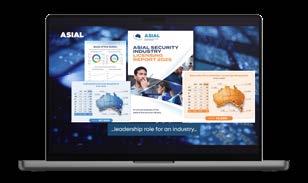
At ASIAL, we are focused on ensuring our members are wellpositioned to meet these expectations. Our work on the Security 2030 report is progressing well and will provide a forward-looking view of the trends, challenges, and opportunities that will shape our industry over the next five years. This report is not just about predicting the future, it is about helping our members prepare for it, influence it, and lead within it.
Advocacy also remains a central pillar of our efforts. We continue to engage with governments across all jurisdictions to advance the recognition of security officers as frontline workers While we have achieved important progress at the federal level and in several states and territories, there is more work to be done to ensure consistent recognition nationwide. This is not only about acknowledgement, but also about ensuring appropriate protections, respect, and support for the individuals who perform these critical roles every day.
Finally, I would like to acknowledge the ongoing contribution of our members. Your commitment to innovation, professionalism, and service delivery is what drives this industry forward. ASIAL exists to support you, to advocate on your behalf, to provide guidance and resources, and to create opportunities for collaboration and growth.
I encourage all members to stay engaged, participate in our initiatives, and contribute to the conversations shaping our industry’s future.
Together, we have a strong foundation, and an even stronger future.
Dr John Gellel President, ASIAL
Editorial and Advertising
Security Insider is published by The Australian Security Industry Association Limited
PO Box 1338 Crows Nest, NSW 1585
Tel: 02 8425 4300 | Fax: 02 8425 4343
Email: communications@asial.com.au Web: www.asial.com.au
Publisher Editor Bryan de Caires
Editorial Enquiries communications@asial.com.au
Advertising Marketing Communications advertising@asial.com.au
Graphic Design + Digital Mitch Morgan Design 0402 749 312 mitch@mitchmorgandesign.com www.mitchmorgandesign.com
Editorial Contributors
Bryan de Caires and Chris Delaney. Print + Distribution
CMYKHub Pty Ltd
Published quarterly Estimated readership of 10,000 Views expressed in Security Insider do not necessarily reflect the opinion of ASIAL. Advertising does not imply endorsement by ASIAL, unless otherwise stated with permission. All contributions are welcomed, though the publisher reserves the right to decline to publish or to edit for style, grammar, length and legal reasons. Press Releases can be emailed to: communications@asial.com.au. Internet references in articles, stories and advertising were correct at the time of printing. ASIAL does not accept responsibility for leading views.
Copyright©2024 (ASIAL) All rights reserved. Reproduction of Security Insider magazine without permission is strictly prohibited.
Security Insider is a subscription-based publication, rates and further details can be found at www.asial.com.au.
NEXT ISSUE: JULY - SEPTEMBER 2026
Printed ISSN 1442-1720
Digital ISSN 2207-8282
SA has enacted the Labour Hire Licensing (Scope of Act) Amendment Act 2025, expanding the scheme to cover all industries, including security which was previously excluded. All labour hire providers have until 29 July 2026 to ensure they are compliant with the changes.
Under the Act, security businesses will require a labour hire licence if they:
• Supply guards, security officers, or crowd controllers to another business for a fee; and
• Provide workers who are directed or supervised by a host organisation.

In a threat environment that is increasingly volatile and unpredictable, security teams are under unprecedented levels of pressure. Verbal aggression, physical incidents and the constant requirement to remain vigilant are now part of the daily operating landscape. Yet psychological strain rarely presents itself clearly; it often emerges as declining performance, escalating conflict or quiet burnout.
In this exploration of mental health in security, Simon Brown-Greaves focuses on how organisations can safeguard their people’s well-being without compromising operational capability.


ASIAL is delighted to welcome Maria Rigas who has joined the ASIAL Secretariat as Senior Workplace Relations Advisor, replacing Chris Delaney who has performed the role for 30 years.
Maria is a highly accomplished workplace relations advisor with deep expertise across labour law, human resources strategy, industrial bargaining and complex workplace investigations. She holds a Master of Labour Law from the University of Sydney Law School (USYD) and postgraduate qualifications in Strategic Human Resource Management from the University of NSW Business School (UNSW). Maria’s hands on experience spans complex negotiations, industrial bargaining, stakeholder alignment, drafting, workforce consultation and ensuring compliance with legislative and procedural requirements.


The Australian Government is committed to enhancing the cyber security of the digital products that Australians use every day. The Cyber Security (Security Standards for Smart Device) Rules 2025 commenced on 4 March 2026, following a 12-month transition period.
These Rules introduce mandatory cyber security standards for most smart devices acquired in Australia by a consumer.

AusAlert is a new national emergency warning system that sends urgent messages to compatible mobile phones and other mobile devices in a specified area. The system is designed for natural disasters such as bushfires and floods but could also be used for police operations and terrorist attacks.
On July 27 2026, the first national AusAlert test will be undertaken. The test will feature an alarm that will ring out on most phones across the country as a non-dismissible alert flashes up on the screen test. The message will read: “This is a TEST alert of AusAlert, Australia’s new emergency warning system. NO ACTION IS REQUIRED.”
The Portable Long Service Authority in Victoria ran a campaign during February to raise awareness of the Portable Long Service Benefits Scheme among workers in the three covered industries, including security.

Celebrating 40 years, the Security Exhibition & Conference stands as a cornerstone of Australia’s security industry, bringing together professionals, innovators and leaders to showcase emerging technologies, share expertise and strengthen industry collaboration.
The 2026 ASIAL Security Conference 2-day program will feature industry experts who will share their insights on the threats and challenges organisations are facing in an increasingly complex threat landscape.
The Security 2026 Exhibition and Conference will be held at the ICC Sydney from 2-4 September 2026. As the lead industry partner for the event, ASIAL is proud to be associated with staging the premier showcase for the security industry in the region. Over the three days, last year’s event collocated with Integrate attracted close to 13,000 visitors.


In the event of an attack, what you do matters. Although Australia is a safe country, we are still at risk from terrorist attacks. In the unlikely event you are facing an attacker armed with a gun, knife or similar weapon, it is important to be prepared to react quickly.
You need to remember three words: ESCAPE. HIDE. TELL.
• ESCAPE — move quickly and quietly away from danger, but only if it is safe to do so.
• HIDE — stay out of sight and silence your mobile phone.
• TELL — call the police by dialling Triple Zero (000) when it is safe.
All situations are different. You will need to make quick decisions during an attack and be prepared to change your plan. Remembering the ESCAPE. HIDE. TELL principles will help in deciding what to do.
In some situations you may still need to hide once you have escaped the immediate area.
A range of helpful resources have been developed to help organisations, community groups and businesses share the Escape. Hide. Tell. message. These resources can be shared within crowded places to support safety awareness and preparedness.
MORE INFO
Visit www.nationalsecurity.gov.au/what-can-i-do/what-to-doin-an-attack
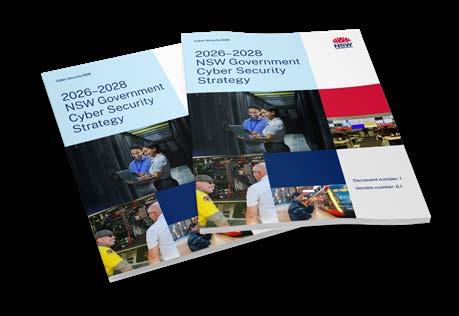
The NSW Government recently released the 2026-2028 NSW Government Cyber Security Strategy, with the aim of underpinning a resilient public sector cyber security posture.
The strategy includes 5 objectives to protect the NSW Government and NSW communities, support the growth of public digital services, and effectively navigate and mitigate threats in an increasingly complex cyber security landscape. The objectives are:
1. Strengthen risk management, governance and compliance
2. Improve incident response and cyber intelligence capability
3. Uplift cyber resilience
4. Drive continuous development of cyber security tools, processes and methodology
5. Support NSW communities to be cyber safe

Scan to read more.
In the wake of the decision on 15 December 2025 by National Cabinet to strengthen firearm laws, the Victorian Government has established a Rapid Review of Victorian firearms controls led by former Victoria Police Chief Commissioner Ken Lay AO APM. ASIAL was invited to provide input and has met with the Rapid Review.

The Victorian Government has announced world first legislation that will give employees a legal right to work from home for up to two days per week, where their duties can reasonably be performed remotely. This entitlement will be embedded in the Equal Opportunity Act, meaning that an employer’s unreasonable refusal of a work from home (WFH) request may be treated as a discrimination or fairness issue.
The legislation will be introduced in July 2026 and will take effect from 1 September 2026. Small businesses with fewer than 15 employees will have until 1 July 2027 to comply.
By placing WFH rights within the Equal Opportunity Act, the Government is creating a clear dispute resolution pathway. The Victorian Equal Opportunity and Human Rights Commission (VEOHRC) will handle conciliation, with matters escalated to VCAT if unresolved. This approach also helps the Government avoid potential constitutional conflicts with federal workplace laws, as anti discrimination legislation falls within state powers.

Scan to read more.
The NSW Police Terrorism Protection Unit has developed a Personal Security Guidance resource to provide practical advice to strengthen your personal, home, workplace, cyber, and travel security through the implementation of basic security measures.
As a reminder the National Terrorism Threat Level is PROBABLE. It has not changed following the recent Bondi Beach terrorism attack.


The NSW State Coroner has released the findings of the Inquest into the deaths at Westfield Bondi Junction on 13 April 2024.
The Coroners 23 recommendations focused on the attacker’s mental health history, emergency services interoperability, media reporting and the need to promote the “Escape, Hide, Tell” messaging.

Scan to read recommendations.
ASIAL is pleased to announce that the Security & Intelligence Research Group at Edith Cowan University (ECU) has been awarded the ASIAL 2030 Research Grant to deliver a landmark national study:

Security 2030: A Five-Year Future Report on the Australian Private Security Industry
This research will establish a robust evidence base on the current state and future trajectory of Australia’s private
to 2030, including technology convergence, workforce capability and professionalisation, regulatory harmonisation, ESG expectations, and evolving risk and threat environments. The report will generate practical insights and recommendations to inform policy development, standards, and industry investment.
Regulatory amendments to the Private Security and County Court Amendment Act 2024 and associated regulations introduced the requirement for refresher training for security officers, crowd controllers and bodyguards.
ASIAL has been contracted by Victoria Police to provide a Learning Management System (LMS) for the delivery of the renewal training.
The Refresher training approved by the Chief Commissioner will commence in May 2026 and will be delivered through an online platform. Refresher training will focus on 4 modules.
Module 1 - Industry update
Module 2 - Risk management and situational awareness
Module 3 - Effective Communications
Scan to read Personal Security Guidance Report.
Scan to view threat level
Module 4 - Safe compliance tactics
The Learning Management System (LMS) is based in Australia provisioning an independent Amazon Web Server hosting environment. managing compliance and training in a best-in-class training management software. The platform is secure and accredited to ISO 27001:2022 and ISO 9001:2015
The service data is physically separated from all other clients and includes dedicated monitoring and event logging of our infrastructure, this increases visibility on potential issues and decreases the time taken to address live service issues (should they occur).

AUSTRALIAN SECURITY INDUSTRY
AWARDS 2026
Nominations for the Australian Security Industry Awards 2026 opened on March 20th and close July 31st 2026. The security industry will come together on Wednesday 28th October 2026 at the Park Hyatt Melbourne to celebrate excellence and innovation. Award winners and finalists will be recognised at the prestigious 2026 #SecurityAwards Ceremony and Dinner. Nominate today at asial.com.au/awards2026
Australian Security Industry Awards for Excellence
• Electronic Security Installation > $500,000
• Electronic Security Installation < $500,000
• Diversity and Inclusion
• Individual Achievement - Electronic Security
• Individual Achievement - Protective Security Services
• Integrated Security Solution > $500,000
• Integrated Security Solution < $500,000
• Product of the Year - Access Control Systems
• Product of the Year - Alarm Systems
• Product of the Year - Video Surveillance Systems (CCTV IP System)
• Product of the Year - Physical Security
• Product of the Year - Cybersecurity Product
• Security Equipment Manufacturer /Distributor/Supplier
• Unsung Hero - Electronics Security Sector
• Unsung Hero - Protective Services Sector
• Cybersecurity Leader of the Year
Outstanding Security Performance Awards (OSPAs)
• Outstanding In-House Security Manager/Director
• Outstanding Contract Security Manager/Director
• Outstanding Security Team
• Outstanding Contract Security Company (Guarding)
• Outstanding Security Consultant
• Outstanding Security Training Initiative
• Outstanding Security Partnership
• Outstanding Security Officer
• Outstanding Female Security Professional
• Outstanding Young Security Professional
• Outstanding Security Sustainability
Australian Security Medals Foundation (ASMF)
• Australian Security Medal
• Australian Security Valour Medal
• St John Save a Life Award

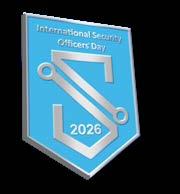
A global security industry initiative originating in Australia, International Security Officers’ Day (ISOD) is a day to acknowledge the contribution of the 25 million private security personnel across the globe. At its core, the day is about acknowledging the often unsung and unrecognised security professionals.
Their professionalism and measured actions in often challenging environments help create a safer environment for everyone.
Order your International Security Officers’ Day lapel pins. Available for purchase at a cost of $35.00 for a pack of 10 pins (includes GST & Delivery).

Scan the QR code to place order.
In its ruling the Admistrative Review Tribunal of Australia found Bunnings were entitled to use facial recognition “for the limited purpose of combatting very significant retail crime and protecting their staff and customers from violence, abuse and intimidation within its stores”.
In responding to the decision, a spokesperson for the Office of the Australian Information Commissioner said “Today’s decision confirms the Privacy Act contains strong protections for individual privacy that are applicable in the context of emerging technologies. It underscored the importance of APP entities maintaining good privacy governance and complying with the Australian Privacy Principles in adopting new tech, and that limited exemptions are subject to robust criteria that must be assessed on a case-by-case basis.”
ASIAL has developed Guiding Principles for Artificial Intelligence and the Ethical Use of Automated Facial Recognition.


Scan to view ART ruling.

Scan to read guiding principles.
The evolution of Artificial Intelligence (AI) in drones, robotics and Unmanned Systems (UxS) is transforming the security landscape at an unprecedented pace. Once viewed as niche or future technologies, UxS are now operational across military, law enforcement and commercial security environments; and their capabilities are expanding faster than many organisations are prepared for.
In a recent episode of ASIAL’s Security Insider podcast, hosted by John Bigelow, Deborah Evans from Edith Cowan University explored the current state of UxS including Unmanned Aerial Vehicles (UAVs) and other platforms, separating real-world capability from hype and outlining what security leaders should be taking into account to prepare for the future security environment.
UxS today extend far beyond consumer drones. They include unmanned aerial, ground, surface and underwater vehicles, ranging in size from micro and nano systems to large platforms comparable to manned aircraft. A major recent driver of innovation has been the conflict between Russia and Ukraine, where UxS have moved to the forefront of combat operations. This has accelerated development globally, drawing in commercial manufacturers, startups and technology suppliers at scale.
Despite public concern, most systems in operation today are remotely operated or semi-autonomous as opposed to fully autonomous. They rely on machine autonomy; rule-based systems which are preprogrammed to perform specific tasks such as waypoint navigation, obstacle avoidance and automated return-tobase functions. When confronted with unknown scenarios or events which have not been pre-programmed or anticipated, these systems require human intervention. According to
Evans, true intelligent autonomy, where systems can independently modify decision pathways and understand higher-level intent, does not yet exist and is unlikely to emerge until Artificial General Intelligence (AGI) and quantum computing become established more broadly.
While fully autonomous weapons may not yet be a reality, Evans warns that security concerns may be justified. As machine learning systems develop in complexity, their decision-making processes become less transparent, raising challenges around predictability, accountability and control. These risks are amplified by global AI competition, with China and the United States leading development. China’s strategic approach, combining early deployment, real-world refinement and strong military-civil fusion, positions it as a significant force in the future of autonomous systems.
For the security sector, the implications are significant. Many protective security environments, including stadiums, ports and critical infrastructure, were designed for two-dimensional, ground-based threats. Today’s risks are increasingly three-dimensional, multi-domain and mobile. While counter-UAS technologies exist, and may include or combine different types of technologies such as radar, radio frequency (RF), optical and acoustic sensors, each has limitations, particularly against small, low-
cost or swarming systems. Kinetic countermeasures are often unsuitable in urban settings, and even nonkinetic responses carry safety and regulatory challenges.
Evans argues that technology alone will not mitigate threats from emerging technologies. Security organisations must adopt a holistic approach that integrates preparedness, deterrence, detection, delay and response methodologies, in addition to building design and regulation. Even simple considerations, such as spatial planning and exposure to elevated vantage points, can significantly reduce risk when viewed through a modern threat lens.
The key message for security leaders is clear: autonomous and semi-autonomous systems are no longer a future concern, and we are likely to see threat actors increasingly adopt a range of UxS and platforms to perpetrate criminal and terrorist activities. Planning must begin now to ensure security strategies evolve in alignment with emerging technologies, rather than responding with ad-hoc measures to three-dimensional threats as they emerge.
Deborah Evans is the Director of a private research consultancy company and a PhD Candidate at Edith Cowan University, Western Australia.
To listen to the recent ASIAL Security Insider podcast in full, go to: asial.com.au/asial-podcasts
Protection for your company and you as a business owner and director
When thinking about insurance for your business it is normal to consider the liabilit y of the company But what about as an individual under taking a vital role such as a business owner or director who makes operational decisions day in, day out? T here are a raf t of risks frequently involving large financial impact s on both your business and you as an individual, that you need to consider
A s your insurance broker we can help you identif y where your risk exposures lie for both your business and you
you and not the one ’ s that don’t, which is why we take the time to understand you and your business first to ensure manner
700
Commonwealth, State & Territor y L aws imposing personal liabilit y
You may be fined up to $600,00 under Workplace Health & Safet y laws
14,024
Unfair dismissal lodgements, Oct 2016 to Oct 2017
Your Company could be fined up to $3 million under workplace Health & Safet y laws
270
Unfair dismissal lodgements ever y week in Australia
Bet ween 2014-2016 52% of Australian organisations experienced
$150,000
Recent cost to defend an employment issue.

ATO warns small business they will be a target in 2018 According to CPA Australia, costs incurred for accountants in preparing for a tax audit can be $1 5,900
Security and the safety of other people’s property is your business. Protecting your business is equally important.

AON has over thirty five (35) years’ experience working with the Security Industry and has designed specific insurance cover that aims to meet the needs of security businesses. We have an in-depth knowledge of the risks associated and the insurance programs required to help reduce your exposure.
Designed specifically for security organisations and Approved by the Australian Security Industry Association
APRA (Australian Prudential Regulation Authority) authorised insurer – Liberty International Underwriters.
Tailored Business Activity to capture your risk associated to your unique security activities
Financial Loss Liability (Errors & Omissions) is Automatically included up to $2,000,000
Loss of Keys Cover Automatically included up to $500,000
Loss of Money Cover Automatically included up to $100,000
The difference is clear, speak to Michael Pham your AON Relationship Manager for ASIAL Members for an obligation free quote and get the peace of mind you deserve.
Michael Pham
Corporate Authorised Representative
02 9253 7326 | michael.pham@aon.com
Cover for the use of guns and dogs automatically included
$1,000 excess for crowd control/assault claims, our competitors impose a $5,000 excess for claims of this nature
No injury to contractors/sub-contractors excess, otherwise known as worker to worker excess, our competitors impose a $25,000 excess for claims of this nature
Civil Liability Professional Indemnity included as an optional extension
Statutory Fines & Penalties included as an optional extension
Cover for Cash in Transit / Cash in Safe optional extension



Now in its
provides an update on individual and corporate security licence numbers across Australia. The report uses licensing data provided by state and territory security industry regulators.
The Australian security industry workforce has grown by almost 23,000 licence holders since 2020.
Individual licences increased from 147,729 in 2020 to 170,698 in 2026, an increase of 22,969 professionals. This represents 15.5 percent workforce growth over six years, highlighting sustained demand for security services across Australia.
Based on current growth projections, individual security licence numbers will surpass 200,000 in the next 5 years.
What this clearly demonstrates is the increasing reliance by business, government and the wider community on the broad range of services provided by the security industry. It also highlights the urgent need to implement nationally consistent professional standards for the industry.
Private security personnel account for 54% of Australia’s national security mix*, more than defence and law enforcement forces combined. Achieving nationally consistent regulatory standards for the security industry is an urgent priority. The 2032 Brisbane Olympic and Paralympic Games are shaping up as a key catalyst for change. With an estimated private security workforce of 10-15,000 required for the Games, nationally consistent regulatory standards will be a priority.
*Source: pfa.com.au and www.defence.gov.au
As the latest security licensing data illustrates, the longer we put off doing something about implementing national professional standards, the challenge faced will only become bigger.
ASIAL will continue to advocate for nationally consistent professional standards that are in the best interests of the nation.
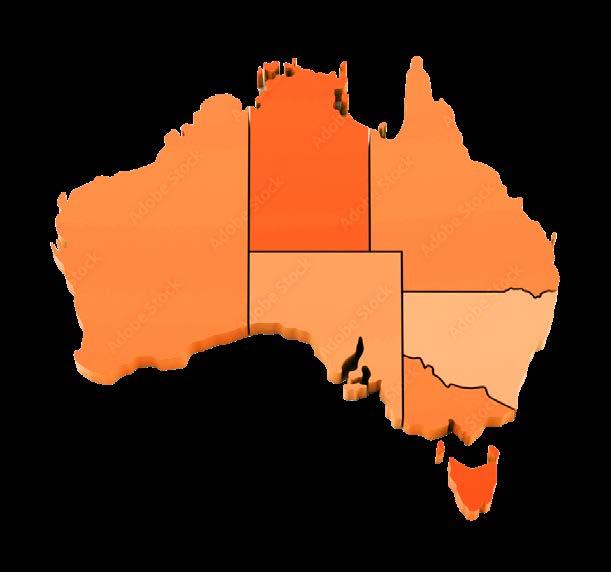
The Australian private security workforce has grown modestly at around 1.8 to 1.9 percent nationally. Growth is consistent across both individual and master licence categories, suggesting stable industry expansion rather than rapid growth. All jurisdictions recorded growth in individual security licence numbers - NSW (+1,117), WA (+453), VIC (+863), ACT (+20), SA (+164), TAS (+324), QLD (+79) and the NT (+148).
Indeed, NSW and Victoria remain the engines of industry growth. NSW added 1,117 licence holders and VIC added 863. Together they account for 63 percent of total national growth.
Western Australia also continues it’s expansion with the addition of 453 new licence holders, reflecting ongoing demand linked to mining, infrastructure and major projects.
NSW accounts for 36% of all individual security licences issued in Australia, followed by VIC at 24% and QLD at 15%.
It should be noted that Tasmania has changed how data for licensed security guards and total licensed individual agents are calculated. This makes it difficult to make year on year comparisons with previous years.
Overall, security firm/master licence numbers increased by 237 to 13,423. Last year’s reported total of 13,220 has been amended following revised numbers from ACT, resulting in an amended annual total of 13,186 in 2024. As such, this serves as the basis for all year-on-year calculations in this report.
WA shows the strongest business growth, adding 137 master licences, the largest increase nationally. This suggests more companies entering or expanding in the market.
NSW continues its steady growth, adding 68 master licences, reinforcing its position as the largest issuer of security firm/master licences (49%) in Australia, followed by VIC at 14% and QLD at 12%.
ACT and VIC saw a slight contraction, likely reflecting licence consolidation or market rationalisation, rather than significant industry decline.
ASIAL would like to acknowledge the support of each state and territory security industry regulator in providing the licensing data used to prepare this report. The only national Licensing report in Australia.
• ACT – Access Canberra
• NSW – Security Licensing & Enforcement Directorate, NSW Police Force
• NT – Department of Trade, Business and Asian Relations
• QLD – Office of Fair Trading
• SA – Consumer and Business Services
• TAS – Consumer Building and Occupational Services, Department of Justice
• VIC – Licensing & Regulation Division, VIC Police
• WA – Licensing Enforcement Division, WA Police

170,698
13,423
Total Number of Licence Holders by State/Territory - End 2025
Year on Year Movement by State/Territory
• The individual licence figure has increased by 20 over the period to 5,148. This represents a 0.39%
• The Master licences figure decreased by -17 in the period to 386, representing a fall of -4.22%
• Individual
1A
1B
1C
1D
1E
1FC
1FP
2A
2B
2D
2E
• Individual licences rose by 164, to 9,918 up 1.68%
• Security Firm Licences grew by 48 to 634, up 8.19%, the highest percentage increase by any state/territory.
• Individual licences (total licensed security guards and total licensed individual agents deduped to identify individuals) grew by 324 to 3,389, up 10.57%, indicating a rising demand for security services.
• Total licensed body corporate agents remained stable with an increase of 2, 0.98%
• Individual licence numbers grew by 863 to 41,805, up 2.11%, second to NSW, highlighting strong growth. This also reflects changes that came into effect in Victoria on 19 June 2025 under the Private Security and County Court Amendment Act 2024.
• Security Firm Licences, however, contracted by -5, down 0.27%
• Security Agent Licences increased by 137, up 7.19%, second in percentage terms to growth in SA.
Security Exhibition & Conference returns to ICC Sydney, 2–4 September 2026. Celebrating its 40th year as the industry’s leading must-attend event, this is where Australia’s security ecosystem comes together — showcasing the full spectrum of solutions and bringing suppliers, industry professionals and end users closer to create profitable opportunities.
“It’s the premier event for the Security Industry in Australia.”
SECURITY 2025 VISITOR
AUSTRALIA’S TRUSTED REFERENCE POINT SINCE 1986
Forty years. That’s how long Security Exhibition & Conference has been the heartbeat of Australia’s security industryconnecting suppliers, professionals and end users, driving the conversations that matter. Four decades of change, development, technological disruption and evolving threats, and this event has been there through it all: a constant forum for the networking and knowledge-sharing that keeps our communities safe. But the legacy isn’t the story - the future is.
“Attending the Security event was an incredibly rewarding experience. The event showcased cuttingedge innovations, insightful keynotes, and hands-on demos that truly highlighted the future of technology. The organisation was seamless, and the networking opportunities were top-notch. I left feeling inspired, informed, and excited about the direction the industry is heading. Highly recommend this event to anyone passionate about tech, whether you’re a developer, entrepreneur, or just a curious mind looking to stay ahead of the curve.”
SECURITY 2025 VISITOR
One of the most common challenges security professionals face isn’t a lack of information - it’s too much of it, without enough context. The 2026 Security ASIAL Conference cuts through the complexity, bringing together frontline practitioners and board-level leaders to explore what operational resilience actually looks like in practice. Expect actionable strategies on risk intelligence, responsible AI adoption, workforce capability, and leading with confidence when uncertainty is the norm. Backed by ASIAL - the industry’s peak body and recognised mark of credibility - the program is developed with a single purpose: to help you understand what’s changing and what it means for your organisation.
“Upon leaving the conference, I did so with a refreshed mind on what our business can offer and an overwhelming sense of excitement at what this can mean for our current and future clients.”
SECURITY 2025 VISITOR


Security Exhibition & Conference brings together security professionals, system integrators, consultants, installers, facilities managers, engineers, and decision-makers from across the corporate, government, and critical infrastructure sectors - people who are actively evaluating solutions, shaping procurement decisions, and looking to understand how the market is moving. The exhibition already boasts some of the key leading names in the industry including Assa Abloy, Permacon, Dormakaba, Honeywell, Hikvision, Vivotek, Hanwha Vision, Salto, Convergint, Axon, Davcor, Bosch, Gallagher, Aervision, Milestone, Traka, Wesco, Motorola and many more.
In 2026, Security is joined by Fire Security Expo - in partnership with the Fire Industry Alliance - creating Australia’s largest cross-industry security and technology gathering. A single registration gives you access to professionals across security, fire safety, AV and integration. For those navigating the convergence of physical and electronic systems, the broader context matters.
“Communication is key in the industry and there is no other event that matches the networking capacity as the Security Exhibition & Conference.”
“It saves so much time being able to meet with many suppliers in one place and get questions answered.”
SECURITY 2025 VISITOR
Three days at Security Exhibition & Conference gives you:
• A complete view of the security landscape - physical, electronic and emerging - in one place
• Direct access to suppliers and the people behind the technology, enabling informed comparison before you decide
• Practitioner-led conference sessions that provide context, not just content
• Meaningful connection with peers who understand the complexity of your role
• Confidence to act on decisions that carry real-world responsibility
Leave with a clearer picture of where the industry is heading and what it means for your organisation, as well as celebrate and be reminded of why Security Exhibition & Conference has been the leading event for the last 40 years –and will be for the next 40.
Registration opens 15th April. Expo entry is free. As an ASIAL member, save 10% on Conference passes - use code SEC26ASIAL10 at checkout.
Join your peers at the industry’s annual meeting point and prepare for what’s next. Conference themes to be announced very soon. www.securityexpo.com.au

For 40 years, Security Exhibition & Conference has been Australia’s trusted reference point for the security industry. Each year, the full ecosystem comes together in one place to discover new solutions, make sense of what’s changing, and prepare for what’s next.
Whether you’re evaluating technology, keeping pace with a fast-changing threat environment, or looking to connect with the
people and products shaping the industry, this is where those decisions begin.
New for 2026, Security is co-located with Fire Security Expo, in partnership with the Fire Industry Alliance and Integrate. One registration, three events, connecting you with professionals across security, fire safety, AV and integration.
Registration opens on 15th April. Subscribe to be the first to hear when registration is open.


Expo entry is free for all attendees. If you're looking to get more from your visit, the Security ASIAL Conference Program brings together practitioners and industry leaders covering the issues that matter most to your organisation and the future of the industry.
ASIAL members save 10% on Conference tickets. Use code SEC26ASIAL10 at checkout.
securityexpo@divcom.net.au 1300 DIVCOM (1300 348 266)
By Chris Delaney Industrial Relations Advisor, ASIAL

Dear reader, after 30 odd years of providing Industrial Relations advocacy, advice and assistance to ASIAL members it is finally time to move on. The late ASIAL Life Member John Elliott introduced me to ASIAL. He was a gentle man in all respects, and it would be remiss of me not to thank him publicly for giving me such a rewarding opportunity.

Most of my working life has been trying to solve workplace problems. At BHP and Nestle it was negotiating strikes and disputes. At ASIAL it has been individual members and their problems. The stress is still the same but the outcomes more rewarding.
have I enjoyed most about working with ASIAL
I’ve had the privilege of working under several ASIAL Boards, three CEOs, and alongside numerous colleagues throughout the years. It’s always been a small, dedicated team, all working to provide the best possible service to our members.
I want to express my thanks to all those I’ve had the pleasure of working with, past and present, for their constant support. In particular, I must acknowledge the current team. They truly stand out as the most dedicated, capable, and positive team I’ve worked with.
And, what has been most rewarding? You, the ASIAL member. Overwhelmingly you have accepted my advice and allowed me to assist you with the many and varied challenges facing you as you attempt to build a business, make a modest profit and provide work for others. All in a difficult regulatory environment often working in the business as well as on the business. The day-to-day requests, and there have been thousands, have helped me to learn how best to help you. It has been a privilege.
The requests, some comic and some tragic, are so many and varied that it is neither possible nor appropriate to share them here. Suffice to say, even after 30 years, just when you think you have seen and heard it all, the next phone call can still deliver a surprise.
And of course, there are the many and varied issues affecting the industry.
There has been a great deal of change, legislation, political parties, industry structure and technology. And I have, to some extent, been successful in presenting the industry’s case before the tribunals and regulators to help members navigate the changes that affect them. It is impossible to cover them all in this article. Following are a few of the major changes and cases that have directly affected members:
1994 Industrial Relations Reform Act 1993 came into operation and fundamentally shifted Australia’s workplace relations system from a centralised award-based model toward enterprise bargaining, introducing minimum employment standards and protections against unfair dismissals.
1996/7 - First Ministerial Enquiry into the Transport and Delivery of Cash and other Valuables before Justice Petersen (over the years there have been at least 3).
The enquiry was established arising out of industrial action by the Transport Workers Union after a series of violent armed robberies that resulted in the death and injury of armoured vehicle crew members. The enquiry sat for 11 months, and the findings accepted many of ASIAL’s recommendations including:
• that the “transport of cash and other valuables industry” should be limited to persons engaged in these activities on a fee-for-service basis.
• explicitly excluded “in-house” transport—such as retailers banking their own takings or TAB operators carrying cash—from being covered under specific industry-wide industrial regulations.
• Legislative Reforms which influenced the introduction of the Security Industry Act 1997, replacing the 1985 Act to provide better licensing and regulation for the security sector.
1998 - Senior Deputy President Harisson varied the Security Employees (NSW) Award after a lengthy period of negotiation between the Liquor Hospitality and Miscellaneous Union and Industry parties, creating the platform for the Modern Award 10 years later. The changes included:
• consolidating many allowances into the base rate of pay,
• introducing shifts of up to 12 ordinary hours, and
• changing penalty rates
2002 Cash in Transit Soft Skin Award (NSW) - Justice Marks introduced “across the pavement limits” and minimum safety standards for vehicles and workers.
2008 Consolidation of State and Federal Awards – Modern Awards under the Fair Work Act 2009. It took almost two years of meetings with industry representatives, the LHMU and Commission members to transform 6 State Awards and 8 Federal Security Awards into 1 industry Award and required a 4-year period to transition each of these awards into the final Security Services Industry Award 2010 (now 2020).
2010 - ASIAL was successful in receiving funding under the Gillard Government’s Shared Industry Assistance Projects (SIAP) program to assist businesses transition to modern awards. Under the SIAP program ASIAL prepared a Guide to the Security Services Industry Award 2010 and delivered industry wide briefings on the changes.
2010 ASIAL becomes the only Registered Organisation of Employers representing the Security Industry following the ASIAL Board finally being convinced to apply for registration. ASIAL’s application was initially opposed by the Australian Industry Group, however following several difficult negotiation sessions I was able to persuade AIG to drop their opposition.
Continues over page >
ASIAL’s successful registration moved the association beyond being a general industry body to becoming an active participant in the national workplace relations system, allowing its employees/officers the right to appear before the Fair Work Commission (FWC) without needing to seek special permission (“leave”).
2012 - Having completed the Modern Award transition period we immediately began the formal 4 yearly review of modern awards which went for a further 6 years reviewing each clause of the award. The outcome while not completely satisfactory became the Security Services Industry Award 2020 which we have today.
2013 Low Income Case FWC DP Gostencnik.
This was a strategic application by United Voice (formally LHMU) to use legal mechanisms to correct systemic, industry-wide pay issues, which could then shift the starting point for further negotiations in enterprise bargaining.
ASIAL was successful in convincing the Fair Work Commission that the Unions case was without merit. A different outcome could have triggered a series of claims for higher wages and strengthening employees bargaining power in enterprise bargaining.
2015 Inquiry into the sectors in the Cash in Transit Industry Road Safety Remuneration Tribunal (RSRT) - Case went for 2 years before being dropped when the new Federal Government disbanded the RSRT. Throughout the Inquiry ASIAL represented the industry through advocacy and submissions.
2017 12-hour Shift Case - Overtime Case before Justice Tracey. This was a landmark decision confirming that the Security Services Award 2010 provided employers the discretion:
• “to choose the day on which a roster is to begin;
• to decide whether overtime hours can be included in the roster at a point before which all ordinary hours have been worked;
• to decide on the number of days on which ordinary hours can be worked; and
• to fix the number of days of the week on which ordinary hours are to be worked (subject to the limitations prescribed by clause 21.3 and 21.4).”
This decision was later appealed before a Full Bench of the Federal Court which upheld the decision of Justice Tracey and confirmed the long held industry practice of allocating overtime on Sundays in a 12 hour shift roster cycle.
2018 Local Government Procurement Initiative and MoU with The Fair Work Ombudsman (FWO). ASIAL approached the FWO subsequent to a series of complaints from members that Local Government Procurement Managers were awarding Tenders to contractor at rates that could not be sustained short of noncompliance with award rates. The FWO agreed to have an education campaign followed by compliance audits.
The FWO found:
• every state had at least one instance of noncompliance with Commonwealth workplace laws
• 49 security businesses were engaged across 57 different contracting arrangements
• security services for Councils are predominantly provided by employees of principal contractors and subcontractors, rather than by direct employees of the Councils
• the ‘further away’ a business was from the Council in the supply chain, the greater the non-compliance; subcontractors had 21% higher levels of non-compliance than the principal contractors who had a direct relationship with the Council:
- 63% of subcontractors (12 of 19) failed to comply with Commonwealth workplace laws, compared to 42% of principal contractors (16 of 38).
• 14 of the 23 (61%) Councils had noncompliance within their labour supply chain
I have, to some extent, been successful in presenting the industry’s case before the tribunals and regulators to help members navigate the changes that affect them.
• Of those 14 labour supply chains:
- four Council labour supply chains had noncompliant subcontractors
- five Council labour supply chains had non-compliant principal contractors and subcontractors
- five Councils had non-compliant principal contractors
2018 - Labour Hire Licensing QLD Submission and consultation with the QLD Attorney General
2018 - submissions on the inquiry into violence and security arrangements in Victorian hospitals and, in particular, emergency departments
2018 ASIAL drafted and negotiated the MultiEmployer Enterprise Bargaining Agreement (MEEBA) for Commonwealth Games in Queensland. This agreement was necessary to provide pay and conditions for 4,500 security guards over the 17 days of the Commonwealth Games. Negotiations commenced in 2015 and the MEEBA finalised and registered 2 years later.
2019 FWCFB 6953 Casual Overtime Decision confirmed that the casual loading in the Security Services Industry Award 2010 does not apply on overtime. The FWC said at [63] “It is not in dispute that casual employees are not currently entitled to receive the casual loading when being paid overtime penalty rates, and the above variation is not intended to disturb that position”.
2019/2020 UWU Application to Vary Ordinary Hours of Work – The UWU application was aimed at overturning the award provision that allowed employers:
• “to choose the day on which a roster is to begin;
• to decide whether overtime hours can be included in the roster at a point before which all ordinary hours have been worked;
• to decide on the number of days on which ordinary hours can be worked; and
• to fix the number of days of the week on which ordinary hours are to be worked (subject to the limitations prescribed by clause 21.3 and 21.4).”
The UWU was unsuccessful, as ASIAL was able to show the flaws in the union’s case and have the application dismissed.
2024/25 SafeWork NSW Cash in Transit Code of Practice
Review – Throughout 2025 ASIAL participated in a working party to review and update the NSW CiT CoP. We are awaiting publication of the finalised CiT CoP.
Over the past three decades, Australia’s industrial relations (IR) system has undergone repeated reform, reshaping how employers engage workers, manage costs, and compete for contracts. For security industry employers operating in a highly regulated, labour-intensive and price-competitive environment these changes have had particularly significant consequences.
In the early 1990s, Australia shifted away from a centralised wage-fixing system toward enterprise bargaining under the Industrial Relations Reform Act 1993. For security companies, this brought greater flexibility to negotiate wages and conditions at the workplace level, aligning labour costs more closely with client contracts and operational needs.
However, enterprise bargaining also exposed structural weaknesses in the industry. Security work is often fragmented across multiple sites and short-term contracts, making it difficult to sustain bargaining outcomes that delivered productivity gains. While larger firms benefited from negotiated agreements, many smaller operators continued to rely on award minimums, intensifying competition on labour costs rather than service quality.
The Coalition’s Workplace Relations Act 1996, followed by the WorkChoices reforms in 2005, further decentralised employment relationships. The introduction and expansion of Australian Workplace Agreements (AWAs) allowed employers to offer individual contracts and reduce reliance on awards.
For security employers, this period delivered short-term flexibility. Labour costs could be controlled more tightly, penalty rates were more easily modified, and workforce arrangements could be tailored to irregular demand. However, the downside was reputational and operational risk. The industry became vulnerable to undercutting by non-compliant operators, sham contracting increased, and a “race to the bottom” in tender pricing became more pronounced.
The Fair Work Act 2009 marked a significant rebalancing of the IR system. Individual contracts were abolished, the National Employment Standards (NES) were introduced, and modern awards were simplified. For security employers, this brought greater clarity but also higher compliance obligations.
Labour costs increased as award provisions became more explicit around penalties, overtime and allowances — critical issues in an industry dominated by night work, weekends and public holidays. At the same time, enterprise bargaining proved difficult to maintain across a workforce characterised by high turnover and casual employment. While the Fair Work Act improved consistency and helped to reduce extreme undercutting, margins remained tight and wage growth remained constrained by client resistance to price increases and
a willingness to “turn a blind eye” to underpayment of wages, which to some extent continues today.
Since 2022, Labor’s Secure Jobs, Better Pay reforms and subsequent Closing Loopholes legislation have introduced the most significant changes in over a decade. Expanded multi-employer bargaining, changed definitions of casual employment, “same job, same pay” provisions for labour hire, and stronger enforcement against wage theft have reshaped the operating environment.
For security employers, these reforms present both risks and opportunities. On one hand, they reduce the ability of competitors to undercut wages through labour hire or noncompliant arrangements, potentially stabilising the market. On the other, they increase wage pressure in a sector where labour accounts for up to 80 per cent of operating costs, while clients — particularly in government and commercial tenders — remain price-sensitive.
Across all reform periods, several issues have remained constant for security employers: high workforce turnover, skills shortages, extensive licensing and compliance requirements, and significant work health and safety risks. Technological change has reduced demand for some traditional guarding roles but has also required new skills and investment.
The industry’s most persistent challenge, particularly in the protective services sector, is convincing clients to pay a fair price for services. Contracts are routinely awarded on the lowest bid, in blatant disregard of the legal and ethical obligations that both parties are bound to respect.
The cumulative effect of 30 years of IR reform is an industry that has gained flexibility at times, lost it at others, but consistently operated under cost pressure. Employers who have invested in compliance, training and ethical employment practices have often faced competitive disadvantage, while recent reforms aim to restore a more level playing field.
As Australia’s IR system continues to evolve, the security industry illustrates the challenge of balancing fairness, flexibility and commercial reality. In my view the Industry should be prepared for claims from Unions for MultiEmployer Enterprise Bargaining. For employers, future success will depend not only on navigating regulation, but on adapting business models to a labour market where job security, compliance and workforce capability are increasingly central.
As I reflect on the past 30 years, it is with a sense of great pride and achievement that I have been able to assist hundreds of ASIAL members and contribute significantly to improvements and developments in industry workplace practices.
Finally, I would like to welcome Maria Rigas who has taken on the role of providing workplace relations advice and support to members. She will be a great addition to the ASIAL team.
Disclaimer: The views expressed are personal reflections based on professional experience and do not purport to represent formal ASIAL policy positions.

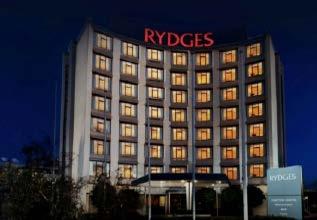
2nd June 2026 | 2.00-3.00pm
Rydges Geelong
Gheringhap Street & Myers Street, Geelong, VIC 3220
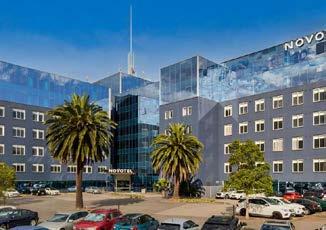
3rd June 2026 | 2.00-3.00pm
Novotel Preston
215 Bell Street, Preston VIC 3072
In June 2025, significant regulatory changes came into effect under the Private Security and County Court Amendment Act 2024
To provide an update on what these regulatory changes and compliance obligations mean, ASIAL is hosting a series of industry briefings in Geelong (2nd June), Preston (3rd June) and Glen Waverley (4th June).
Individual security licence holders who perform any of the below security activities must also have completed the approved refresher training course before renewing their licence.
• Bodyguard
• Crowd Controller
• Security Guard*
* Note: licence holders who only hold the sub-activity ‘monitoring centre operator’ do not need to undertake the refresher training.
From July 2026 onwards, licence renewal notices sent out to bodyguards, crowd controllers and security guards will include notification of the need to successfully complete the Victoria Police approved refresher training course. The course fee is available online at a fee of $63.00 + GST and is hosted by ASIAL.
The refresher training course completion certificate must be submitted with the licence renewal application.
Attendees will be briefed on how the refresher training requirement will operate, what is covered in the four course modules and what licence holders need to do once they successfully complete the course.
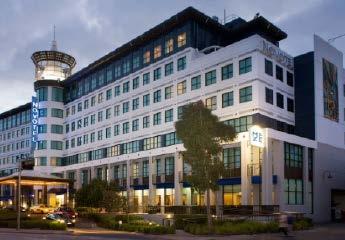
4th June 2026 | 9.30-10.30am
Novotel Glen Waverley
285 Springvale Road, VIC 3150
The briefings will include presentations from:
• Senior Sergeant Andrew Glassenbury, Licensing & Regulatory Division, Victoria Police
• Senior Sergeant David Pinner, Licensing & Regulatory Division, Victoria Police
• Peter Johnson, ASIAL Compliance & Regulatory Affairs Advisor
• Bryan de Caires, CEO, ASIAL
Among the amendments introduced in 2025 include a number relating to security business licence holders. While many security providers have taken steps to comply with the new requirements, there is concern that there are some providers who are unaware of the changes. Attendees will be briefed on the new licensing required to be compliant.
• Changes to Independent Contractors –independent contractors are required to hold a private security business licence and private security individual operator licence – this removes the ability of a person on an individual licence from operating as an independent contractor under a sole trader ABN.
• Cessation of Business and individual Registrations –Victoria now has a single licensing system. As a result, all business and individual registrations transferring to a licence must be completed by 19 June 2026.
• Sub-contracting – significant changes apply to sub-contracting arrangement with significant ramifications for non-compliance.
Attendees will be provided with an update of what the regulatory changes mean and what is required to ensure compliance.

Suzanne has been in the security industry for 26 Years. She commenced working in Woolworths as a Loss Prevention Investigator in January 2000. She was the first Female Loss Prevention Investigator and the First Female Loss Prevention Manager that Woolworths employed.
Suzanne has a Diploma in Security Management, Lean Six Sigma Green Belt, Project Management Professional, Certified Scrum Master, Wicklander-Zulawski Certified and facilitator, Behavioral Interviewing, and Crime and Investigation Course Victoria Police
She is the Global President of Amazon Women in Security – an Employee Led Group in Amazon with 1700 members globally and International facilitator of Amazon’s Women in Leadership and Together Becoming Allies courses. Her leadership philosophy centers on building strong, engaged teams through genuine connection and development. She prioritises bringing team members along on the organisational journey, ensuring they understand their shared vision and their vital role in it. As a people-focused leader, she actively creates mentoring opportunities and takes promising talent under her wing to foster their growth. She believes in developing future leaders through hands-on guidance and support. Celebrating both individual and team successes is fundamental to her approach, as it reinforces positive achievements and builds a culture of recognition and continuous improvement.
A significant challenge she encountered was leading the transition of the National Australia Bank’s 24/7 Security Operations Center to a remote working model due to the escalation of Covid, during her tenure there. In the preCOVID environment, there was substantial organisational resistance to remote work, with many stakeholders expressing concerns about maintaining security standards and operational effectiveness. The project faced multiple obstacles, including widespread skepticism from business leaders who doubted the feasibility of remote security operations. She leveraged her strategic influencing abilities to engage with key stakeholders, demonstrating how this transition could maintain operational integrity while enhancing their business continuity capabilities. Through intensive negotiations and careful planning, she coordinated with HR teams to establish appropriate remote work policies and procedures. She also secured the necessary technical equipment and implemented robust security protocols to ensure seamless operations from home environments. Despite initial resistance, her methodical approach to risk mitigation and stakeholder management proved successful. Within one week, they achieved a fully operational remote Security Operations Center. This transformation not only maintained the bank’s security posture but also established a valuable precedent for flexible working arrangements, proving that critical security functions could be performed effectively in a remote environment.
Outstanding Female Security Professional for 2025- this award has been the highlight of her career, it was the award that recognised her for the 25 years she has spent in the security industry in Australia and her contribution to the industry we have built.
Australian Fraud Awards 2023 Amazon Women in Security was awarded the Highly Commended Retail Risk Diversity & Inclusion Award through their work in 2023. This was great recognition for the Amazon Australian team and their work to build diversity in the Loss Prevention Workforce in Australia
What do you enjoy about working in the security industry?
I find immense satisfaction in several key aspects of working in the security industry. The dynamic nature of security, with its ever-evolving threat landscape, provides constant intellectual stimulation and opportunities for continuous learning and growth.
I particularly value the collaborative relationships formed with security professionals across Australia and globally, who share my passionate commitment to protecting organisations and individuals. These connections enable valuable knowledge sharing and create a strong community of practice in addressing emerging security challenges.
The investigative aspects of security work are especially engaging, as each case presents unique challenges that require analytical thinking and creative problem-solving. I thrive on conducting complex investigations that help identify and mitigate potential risks to our organisation and its stakeholders.
What would you say to someone considering a role in the security industry?
I would strongly encourage anyone considering a career in the security industry to pursue this rewarding path. The field offers exceptional opportunities for both personal and professional growth, along with several compelling advantages.
The industry offers invaluable networking opportunities, connecting you with accomplished professionals across global organisations.
Most importantly, you’ll find the work both challenging and fulfilling. The security field pushes you to think critically, adapt quickly, and develop innovative solutions to complex problems. Whether you’re handling investigations, managing incidents, or developing security strategies, each day brings new opportunities to make a meaningful impact.
For those willing to embrace the challenges and maintain a growth mindset, the security industry offers a dynamic and rewarding career path with significant potential for advancement and professional development.



that are helping to define the desired proactive security systems
Australian retail businesses are increasingly adopting advanced access control systems to help reduce the number of unauthorised intrusions on their premises. The devices use biometric and mobile technology to more accurately identify and authorise those allowed into sensitive areas of the business.
Avigilon’s award-winning Alta cloud access
perfectly encapsulates what facilities need to help prevent theft, vandalism and other malicious activity, keeping inventory and high-value assets more secure. They also offer security teams a cloud-based solution for managing access and incident response, enabling them to grant or revoke credentials quickly.
Artificial intelligence (AI) has had a pivotal impact on security technologies over the past few years, particularly by enhancing visual oversight across the business. As crimes against Australian companies have become more complex and sophisticated, security practitioners can leverage AIassisted cameras to help detect anomalous activity and respond more quickly.
Advanced video security cameras have become an integral part of a comprehensive security strategy, helping businesses transition to a more proactive approach. Hanwha’s AI-assisted IR dome camera supports multiple use cases for detecting and identifying unusual behaviour, enabling security teams to respond more swiftly and appropriately to on-site incidents.
Smart sensors aren’t only helping businesses detect and alert to perimeter breaches faster; they can also help protect assets and people within their facilities. Senstar’s MultiSensor Cascade Plus uses advanced technologies, including vibration, accelerometers and short-range radar, to enhance intrusion detection and bolster preventive security measures for businesses.

Leveraging Technology to Address growing threats
These technologies are quickly becoming must-haves for 2026 because they allow businesses to develop proactive security strategies to address the rising incidence of physical crime against Australian companies. The solutions can build a multilayered approach that scales and adapts to needs, aligning response protocols with evolving risks and threats.
Many businesses are implementing smart sensors as an additional layer of security to enhance visual oversight, even in situations with limited visibility. The product’s easy setup and affordability enable many businesses to adopt these sensors as an efficient, effective security layer.
Adapting to the current Australian security landscape requires solutions that continuously evolve to rising rates and the increasingly sophisticated criminal activity targeting businesses. Data analytics platforms can be a valuable tool that provides deep insights into activity, enabling more informed decision-making on security issues.
Vivotek’s Smart Tracking Advanced software can analyse data from a business’s security system’s visual feeds, using AI-assisted algorithms to generate more comprehensive reports that help planners continuously adapt and improve infrastructure. The technology supports the desired proactive, deep-learning-based physical security solution that covers movements such as path tracing and perimeter breaches.
Security guards on various premises have increased in number in response to the significant rise in retail crime in Australia. While the debate continues over whether to grant them greater authority to act during incidents, safety personnel increasingly use body-worn cameras to observe and document misconduct.
Australian retail centres such as Westfield have implemented body-worn cameras for security guards across all locations, prompting many busy shopping locations to adopt the same approach. Transcend’s DrivePro Body 40 body-worn camera is a practical solution that enhances situational awareness and helps deter potential offenders across a wide range of work environments, with long battery life, high-quality optics and night vision to improve field effectiveness.


While state governments have begun supporting communities with stricter legislation to help minimise theft, vandalism and other malicious activity, businesses will need to take the lead in protecting their people, property and assets. These technologies can help build a comprehensive, unified system that enables security teams to detect and respond effectively to a range of scenarios.
ASIAL welcomes the following members who have recently joined the Association.
Anrik Pty Ltd VIC
Anthony McDermott t/a Secure4U QLD
ASAP Security and Protection Pty Ltd SA
Castle Security & Electrical Pty Ltd WA
CED Services Group Pty Ltd VIC
Comtex Security Pty Ltd VIC
Concise Electrical Contracting Services Pty Ltd VIC
David Kevin Jansz t/a David Jansz Security VIC
Downer EDI Engineering Electrical Pty Ltd VIC
Ericom Pty Limited NSW
Inland Security Services WA
John Scarlett Security Pty Ltd VIC
Jovan Justin Gapriside t/a Stadtic Electrical Services VIC
Keilor Court Pty Ltd t/a Parts Supply Solutions VIC
Ladtec Electrics Pty Ltd VIC
MJE Australia Pty Ltd t/a MJE Systems VIC
Modern Security Services Pty Ltd SA
Moorabbin Television Services Pty. Ltd. VIC
North VIC Security Pty Ltd QLD
Prevcorp Pty Ltd t/a Prevailing Solutions VIC
Prosparx Electrical Solutions Pty Ltd VIC
R & M Security Service Pty Ltd VIC
Response One Security & Surveillance Pty Ltd VIC
Securefox Security Services Pty Ltd VIC
Securix Pty Ltd NSW
Sekap Group Pty Ltd t/a Sekap Protective Services NSW
Shanli International Pty Ltd t/a Shanli VIC
Southpole Services Pty Ltd NSW
TCS Group Australia Pty Ltd VIC
Viscomm Pty Ltd VIC
Adaptive Services Maintenance Pty Ltd VIC
Advanced Contracting Security Pty Ltd VIC
Anastasios Gkarnetas t/a Neon Energy VIC
Andrea Cazzola t/a High Tech Security Systems QLD
Aocomm Pty Ltd QLD
Apex Guarding Services Pty Ltd VIC
Aption Technologies Proprietary Limited NSW
Aptitude Risk and Protective Services Pty Ltd VIC
Australian Handrails Pty Ltd t/a Australian Bollards VIC
Brisbane Alarm & Security Cameras Pty Ltd QLD
C1 Australia Pty Ltd QLD
Chubb Security Services Pty Ltd VIC
Crowne Services Australia Pty Ltd NSW
Daborra Services Pty Ltd VIC
Deluxe Data Solutions Pty Ltd QLD
Electrex Pty Ltd VIC
Executive Protection Australia Pty Ltd QLD
Fortitude Protective Services Pty Ltd NSW
Genesis Technology Australia Pty Ltd VIC
Glennes Tomokino t/a TOMOKINO QLD
GSS Protection Group Pty Ltd NSW
GX Elite Pty Ltd
HRK Projects (SA) Pty Ltd t/a Vectras Services SA
Humane Group Pty Ltd NSW
Jeremy Paul Vance t/a ZTI Advanced QLD
Jordan Mackenzie t/a BaySafe VIC
KB Security Pty Ltd t/a KB Security Group
Kommunications Pty Ltd
Netgenie Pty Ltd
OG Security Pty Ltd
OmniTitan Pty Ltd t/a Townsville Internet
Premair Trading Pty Ltd
Prime Safety Vaults Pty Ltd
Protect You Pty Ltd
RR Security Solutions Pty Ltd
Site Wide Security Pty Ltd
Techlink Electrical
Transguard Group Pty Ltd
Anodyne Services Australia Pty Ltd
Ausec SA Pty Ltd
BJSB Pty Ltd t/a The Imperial College of Australia VIC
Blade Security Services Pty Ltd
Codec Security Ventures Pty Ltd
Diplomatic Protection Group Pty Ltd
HS Goraya Pty Ltd
I Security Solutions Pty Ltd
Inland Security Services
Integrated Technologies Queensland Pty Ltd
ISG NETWORK PTY LTD
John Scarlett Security Pty Ltd
Kantar & Co Pty Ltd t/a Data Supply Co VIC
Praesidium Security Services International Pty Ltd
PRO8 Pty Ltd
Proactive Protection and Security Services Pty Ltd VIC
Sapphire Management Services Pty Ltd
Securix Pty Ltd
Surex Security Pty Ltd
Tabroit Pty Ltd t/a MNP Security
Veesion Australia/NZ Pty Ltd
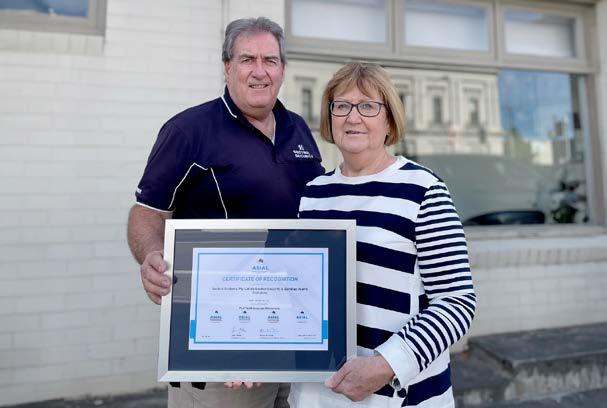
The ASIAL member recognition program acknowledges longstanding members of the Association. We would like to congratulate the members who have recently achieved the following recognition levels:
4SP
Alex
K.G.C.
Scott
Assetlink

The ASIAL Graded monitoring centres above have been inspected and graded for compliance with the applicable Australian Standard: AS 2201.2 – 2004 or AS 2201.2 – 2022.
PLEASE NOTE: ASIAL takes no responsibility for companies which may change the nature of their operations subsequent to Grading. Scan the QR code to see the full range of services ASIAL provides.
List current as at 5 March 2026



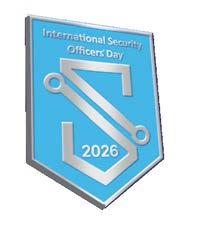
Every day, security officers put themselves in harm’s way to protect the public from danger. Yet few people ever recognise the sacrifices they make. International Security Officers’ Day, which takes place on the 24th of July every year, is an opportunity to recognise and thank those people who work behind the scenes to keep us safe. Show your personnel you appreciate them by purchasing the 2026 pins for them to wear with pride. This small investment can go a long way to making them feel valued.












of 10 pins - $35.00 including GST, postage and handling within Australia only. Excludes Christmas Island, Lord Howe Island and Norfolk Island.
Upon placement and payment of your order, the pins will be sent to you in sufficient time for distribution out to your team.