

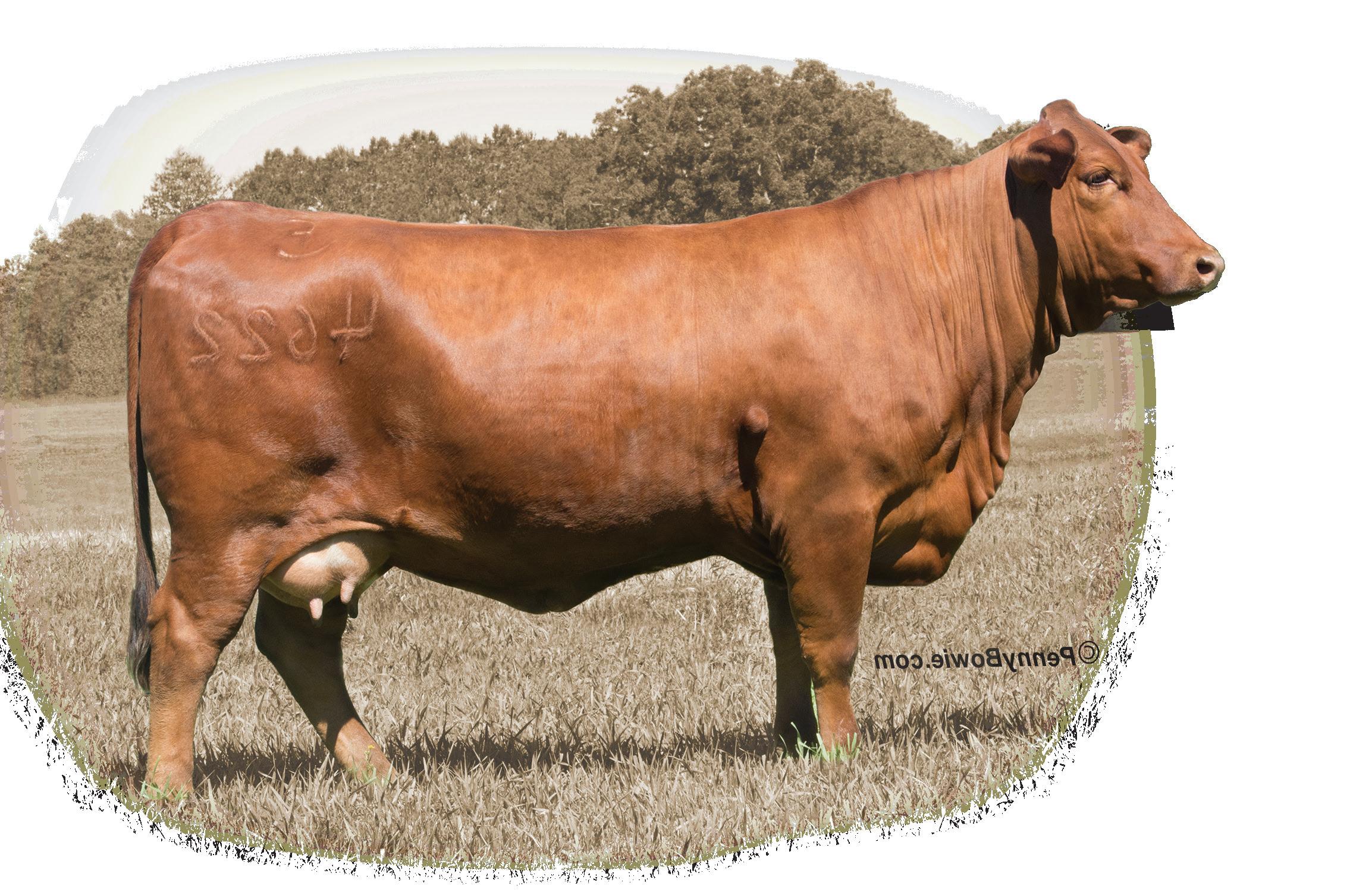
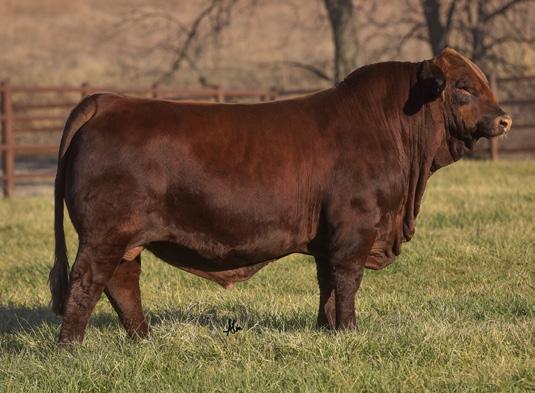
ABOVE: DESTINY 4622 RIGHT: NG FIRESTONE
At NextGen, we have multiple breeds for multiple purposes. We know the value of crossbreeding at every level of the system, so we design our purebred seedstock with that in mind. Breed identity and the inherent attributes of each breed that have been concentrated in that genetic pool are important. Maintaining breed complementarity is essential to making the best product available for you the commercial cattlemen.
Angus and Beefmasters that are designed to produce high quality daughters that last. Focusing on rib shape, angularity, udder quality and fertility to maximize the replacements kept out of those herds. Charolais and AngusX that maximize growth from the pasture through the feedlot to the rail. Length of spine and muscularity along with carcass characteristics factor heavily into our selection process for those breeds.
These are bulls made to work for you and made to work in a cross-breeding program to maximize their value in the industry. That’s why we are so aggressive trying to buy our genetics back to fill the feedlot because we know the value.
Here’s a look at that mission in the form of the bulls that will highlight the spring offering...
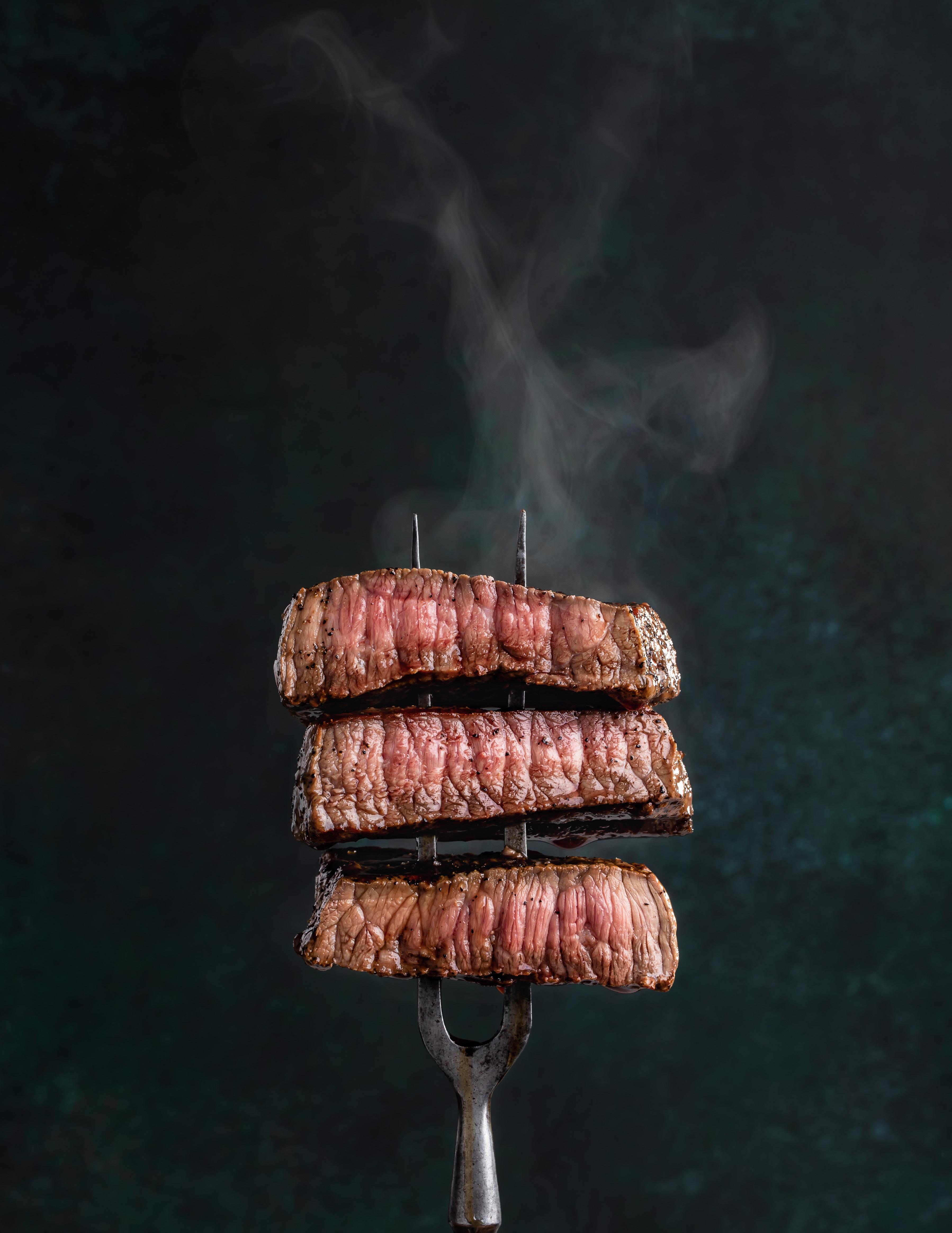
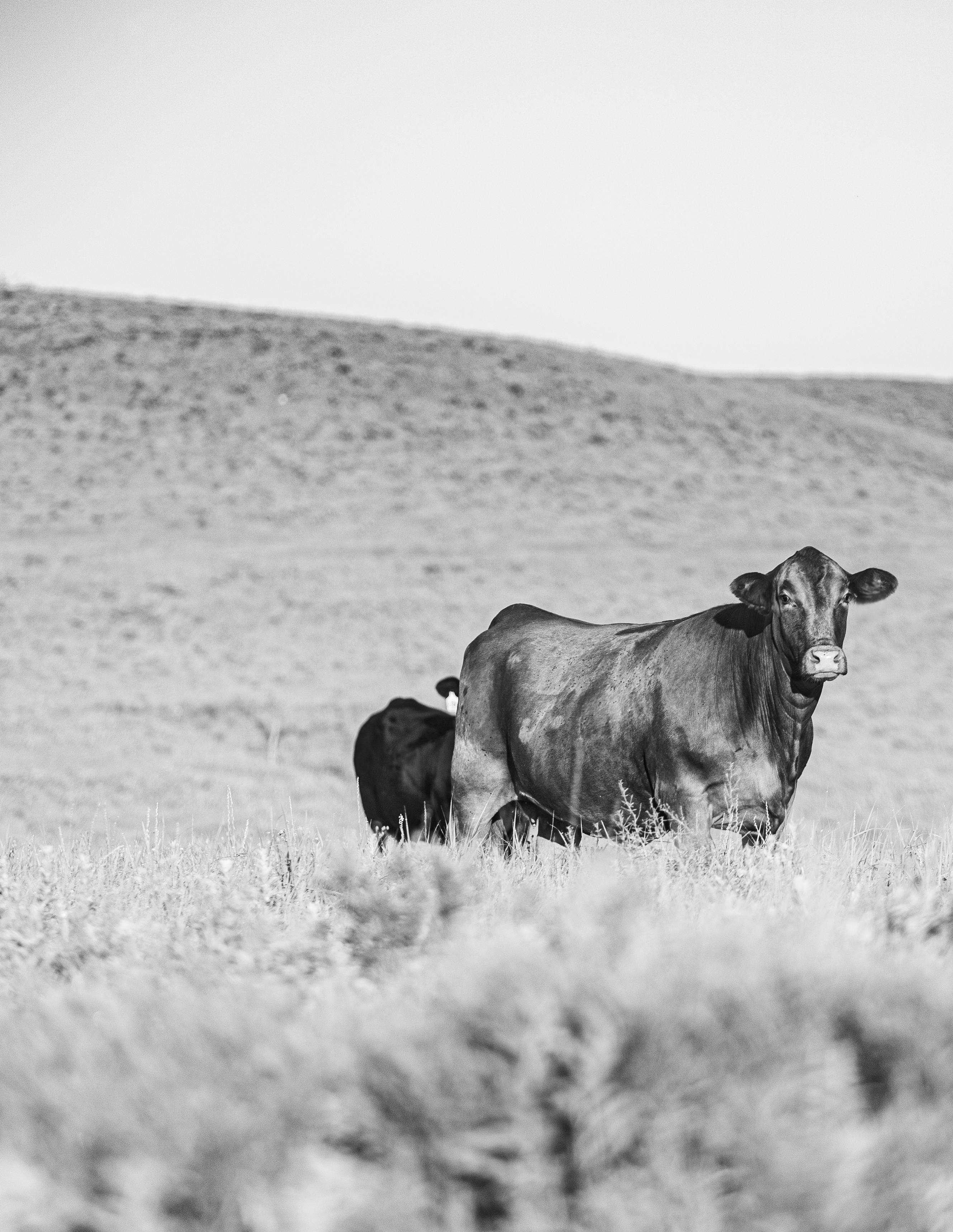
In the Beefmaster division, the $1,000,000 producing Destiny 4622 continues to dominate the top of the group. This sale will feature two direct sons of Destiny by the $87,500 NG Firestone who rival their maternal brothers NG Pride Rock and NG Bedrock for quality. Another Destiny son by CF Polled Playboy has been a standout in the pen and continues the in-house debate about whether we can afford to part with him. But the absolute studs of the offering are two homozygous polled NG Brett 1849J5 sons out of the newest Destiny daughters to hit our donor pen. These two bulls have the stoutness and masculinity of last year’s top seller NG Hall of Fame L968, who was out of Destiny daughter, with the added benefit of being homozygous polled.
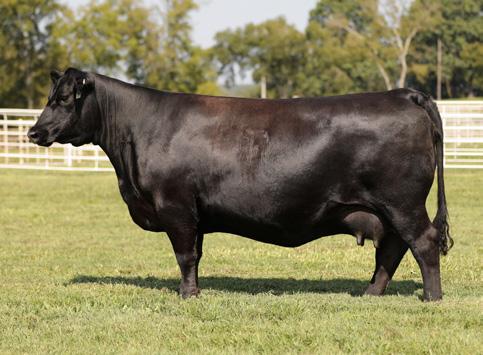
PRIMROSE 9784
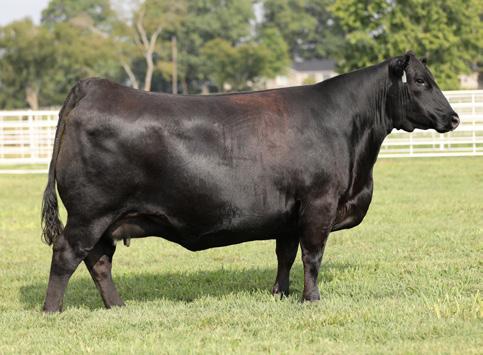
HENRIETTA PRIDE 8137
2026 will see our largest offering of Angus bulls which are without a doubt the deepest set with the highest quality top end. The lead off bulls will be natural calves off our foundation Angus females – Primrose 9784 and Henrietta Pride 8137. 9784 brings us a Virginia Tech Statesman son that possesses calving ease in a power bull phenotype. 8137 has a Connealy Craftsman son that is balanced and as long as freight train. The spring yearlings are highlighted by some of the first sons to sell by the $400,000 Spring Cove Grant and the #2 bull for registrations in the breed, Connealy Commerce.
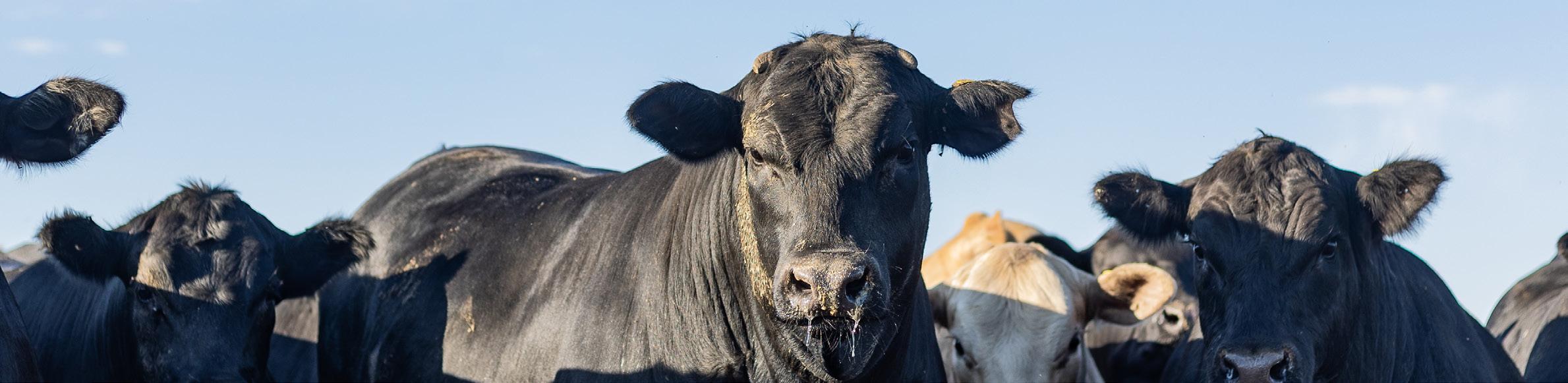
The Charolais offering will include multiple sons of the past top seller NG Maverick, the $20,000 LT Badge son and SVY Profound, the sire of our lead off bull at the National Western Stock Show. Look for those sire groups to carry extra muscle and stretch in sound made clean jointed packages. A select group of yearlings with our front-end genetics will also be highlights including the National Western Stock Show Reserve Champion Pen of 5 Bulls and the first progeny by the $300,000 LT Global.
Our AngusX division continues to get better year after year with increasing performance and index values. Our average US Index on the bulls for 2026 is $15 higher than in 2024 and the phenotypic quality of the bulls on feed is fabulous. In the first 60 days in Paxico, they were gaining over 5 lbs./ day while converting at nearly 5 lbs. Feed to Gain. These bulls are high octane and produce calves that are in high demand that light up a feedlot.
WE ARE EXCITED ABOUT THIS OFFERING AND CANNOT WAIT FOR YOU TO SEE AND APPRAISE THEM APRIL 16-17TH. LOOK FOR THE CATALOG ONLINE AND VIDEOS OF THE OFFERING TO BE AVAILABLE MID-MARCH WITH THE FEATURES OF SALE BULLS STARTING ON SOCIAL MEDIA IN FEBRUARY. PLEASE MAKE PLANS TO JOIN US FOR



Trigghollow Farm is right outside of Cornersville, TN. That’s about 20 miles north of the Alabama border, between Nashville, TN and Huntsville, AL. Imagine rolling hills covered in timber and valleys covered in grass. That country was settled in the early 1800’s. The town is called Cornersville because it is encompassed by four counties, Giles, Marshall, Bedford and Lincoln. When the first European settlers arrived, they followed the McCutcheon Trail that followed the ridges to avoid the heavy cane brakes that blocked the valleys below. A tremendous amount of hard work and almost 2 centuries later have transformed it into an absolutely beautiful agricultural area.
ANIMAL HUSBANDRY IS IN MY BLOOD.”
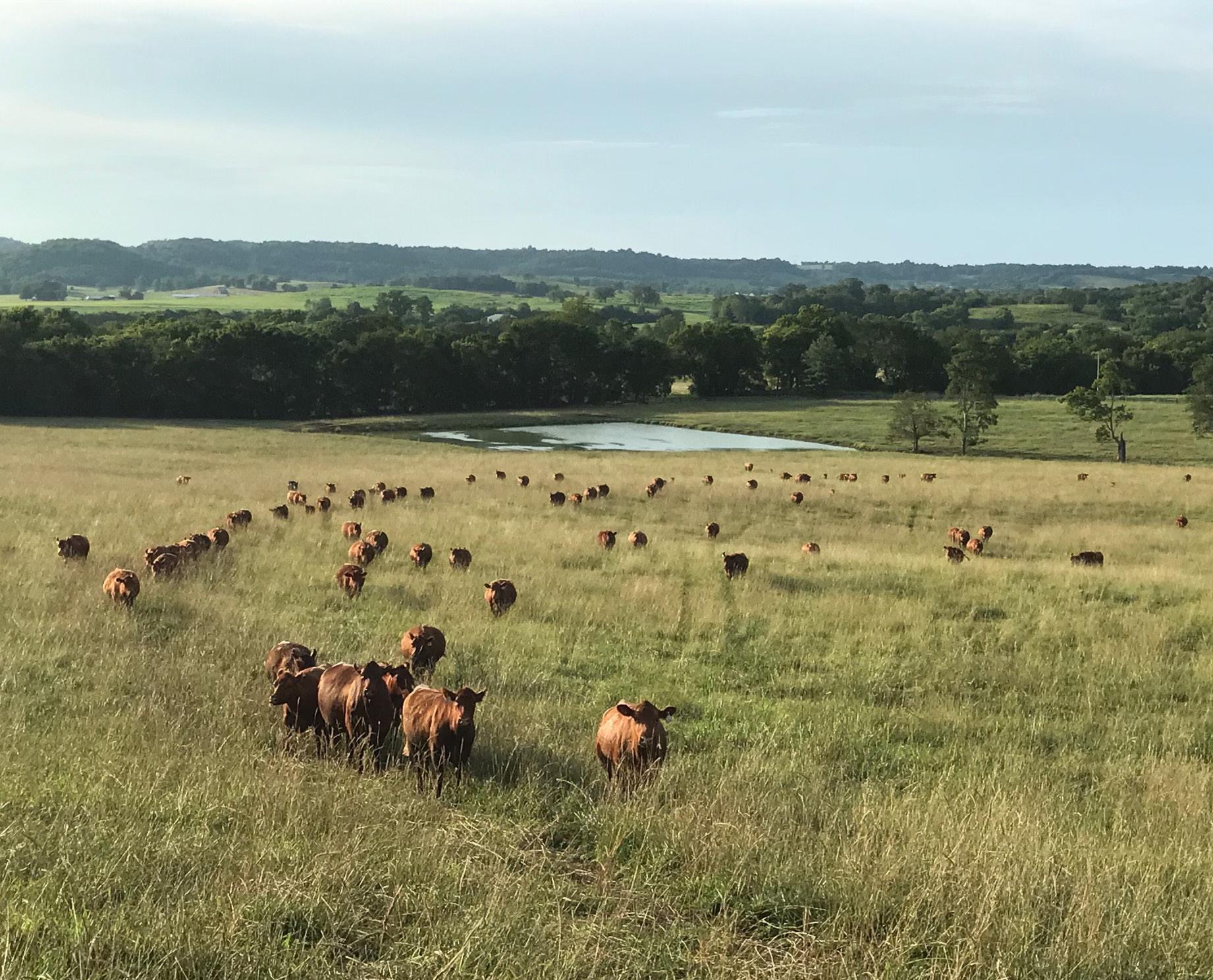
Bill Topper bought 1,200 hundred contiguous acres, later in life, because he fell in love with that country. This is a great story. Bill grew up on a dairy farm in Michigan and was a Hereford breeder as a young man. He realized if he wanted to achieve his goals of building a bigger beef cattle operation he needed to pursue a slightly different path. Bill decided to pursue a degree in business and went to work for appliance/HVAC manufacturing companies. His decision took him all over the world, refining design and making production more efficient. Bill left corporate business at the age of 55 to pursue his true passion, raising the best beef cattle in the country.
MAKING
BETTER, MORE EFFICIENT AND BETTER DESIGNED IS IN MY DNA.”
There are 300 acres of wooded ground with the rest in pasture. Richland Creek runs through the ranch. Spring, Summer and Fall grasses include crabgrass, bermuda, dallas, fescue, sudan, sorghum and johnsongrass. Winter grazing includes wheat and ryegrass. All of the hay that is put up is in the form of haylage. Any dry hay that is used, is purchased from outside of the ranch. There are only 2 people running a 320 head operation, Bill Topper and his son, Adam Topper, who is the General Manager.
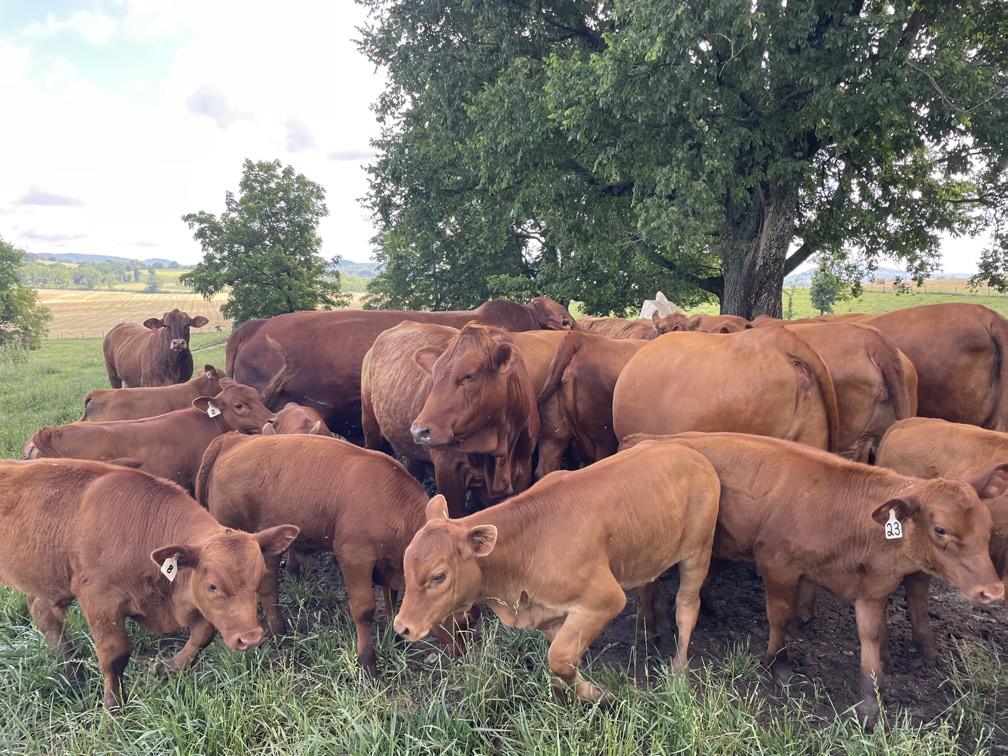
The original herd of cows was composed of Red Angus. Bill had a meeting with a neighbor of his, Clark Jones, in Savannah, TN, and decided to add heterosis back into the breeding program. The results were rock solid. The Beefmaster X Red Angus heifers that Bill produced have customers standing in line.
“WE HAVE A WAITING LIST OF CATTLEMEN THAT WANT OUR HEIFERS. IT TAKES 2 YEARS TO HAVE A SHOT AT THEM. EVERYONE THAT BUY’S OUR HEIFERS SIGN UP FOR THE NEXT YEAR THE DAY THEY LOAD ‘EM UP, AND
FOR
ANOTHER SET THE NEXT YEAR. THEY ARE JUST THE BEST COWS FOR THE COUNTRY WE RANCH IN. HANDS DOWN.”
At NextGen, we know how good the feeder cattle are. We buy them and feed them. Bill and Adam have a wonderful backgrounding yard on the ranch. The calves are rock solid and perform better than our expectations. Top genetics, NextGen genetics, pay dividends, day in and day out.

“YOU HAVE TO GUARD AGAINST FALLING INTO THE SAME TRAP AS MOST PEOPLE IN THE CATTLE BUSINESS. WHAT I LIKE ABOUT NEXTGEN CATTLE COMPANY IS THAT THEY DON’T LOOK AT THINGS AS STATUS QUO. THEY THINK OUTSIDE OF THE BOX. THEIR OPERATION AND SALE RAISES THE STANDARD OF PEOPLES EXPECTATIONS. YOU ARE FORCED TO FOCUS MORE INTENTLY ON YOUR OWN CATTLE OPERATION AND WHERE YOU WANT TO BE IN THE FUTURE.”
Great bulls make great cows and great feeder calves. Bill Topper makes both. NextGen is proud to call Trigghollow Farm a partner in the beef business. It’s all about Design & Efficiency.
Late 2025 ushered in one of the best markets for all classes of cattle in recent history. Demand for beef has remained steady despite misinformed mass media blasting out displeasure of high retail beef prices. This acrossthe-board market-boosting trend, whereby all industry sectors are experiencing strong markets and pulling margins into the black, has given a much-needed respite for the cow calf sector. All primarily driven by our historically small cowherd. For the purposes of strategizing a long term economically regenerative beef industry, perhaps we should review historically significant industry statistics, lest we be doomed to repeat them.
The Beef Industry has one foundation: a functional and economically viable productive cowherd. The feeding and packing sectors rely on our cowherds to provide supplies of healthy, high-quality feeder and harvest cattle, to produce the world’s safest and highest quality beef supply. There is no doubt that industry wide improvements in terminal quality traits, have led to innovative marketing grids and formulas. These in turn transmit cascading economic signals whereby terminal traits (growth and carcass) completely drown out the warning cries from the cow calf sector; who are seeing the negative effects of strait-terminal trait selection. Our lowly heritable maternal traits have been pushed aside for the economic benefits of the terminal traits. For perspective, a USDA generated chart showing the national percentage weaned calf crop from 1965-2019, demonstrates a very alarming cow calf trend which perfectly tracks our industry’s wholehearted coordinated effort to significantly improve carcass merit and its associated terminal traits.
In 1974, the percentage weaned calf crop produced by the US cowherd totally dominated by crossbred cows was a whopping 94 percent. After four decades of hand-in-glove cooperation with all segments of the industry we have drastically improved carcass merit as evidenced by weekly quality grade summaries showing the percentage of USDA prime carcasses have sharply improved from 1 percent prime in the 1970’s to 16 percent prime in the 2010’s. The harsh ugly truth is that we have proven what industry educators have told us for years - straight breeding for terminal traits is counterproductive to building strong dynamic cowherds. Proof of this is demonstrated in the USDA percentage weaned calf crop report from the high of 94 percent in 1974 to the alarming slide of 87 percent posted by 2019, during an unprecedented era of significant terminal trait improvements backed by hard earned economic premiums. Wholesale erosion of maternal traits, combined with drought and severe financial considerations have played a major role in creating this era with very tight cattle supplies. While calf prices hover at all-time highs, we are severely inhibited by the price point of replacement heifers. This may lead to longer periods of higher calf prices for ranchers but at some point, we must give serious pause to reflect on what the future of the US cowherd will be.
Drilling through the USDA weaned percentage calf crop clearly shows that the crossbred commoditybased cowherd of that era displayed much stronger maternal abilities than today’s much “improved” cowherd (improvement is up to individual interpretation). So how can we satisfy the demands of feeders, packers and ultimately consumers without devastating the US cowherd? Can we satisfy the demand for cattle that excel in the yard AND on the rail?
Yes, we absolutely can; by simply endorsing the highly proven strategy that demands terminal quality and efficiency while creating maternally superior females in mass quantities, regardless of production environment.
The time-tested common-sense solution can be quickly and economically implemented by Planned Terminal Crossbreeding. Simply put, match the cow to the environment. Here she will reproduce under the individual ranch production system, stressing fertility, efficiency and environmental adaptability. Then match the bull to the market. Research clearly shows that crossbred cows are more economically viable, producing more and healthier calves over her productive lifetime vs her straightbred counterparts. The cumulative effect of fertility, longevity, and increased weaning weights amount to the value of one extra calf over her lifetime. Some may say that’s good for the rancher but my calf buyer says the best grids for his yard demand strict terminally anchored specs. In response, planned terminal crossbreeding does in fact offer great advantages for the upstream buyers. Feeders benefit from healthier calves with fewer recessive genetic defects, enhanced live performance AND dry matter conversion. Especially with outlier, unrelated genetics such as low percentage indicus genetics. Applying the concept of genetic difference combined with breed complementarity extends well beyond the rancher and feeder. Low percentage indicus cattle consistently excel plant average hot yields because of body composition differences.
No doubt about it Planned Terminal Crossbreeding with Beefmaster based cows are the epitome of creating a value added, profitable and regenerative supply for the beef industry.


DAVID HOLLOWAY CHIEF RISK OFFICER
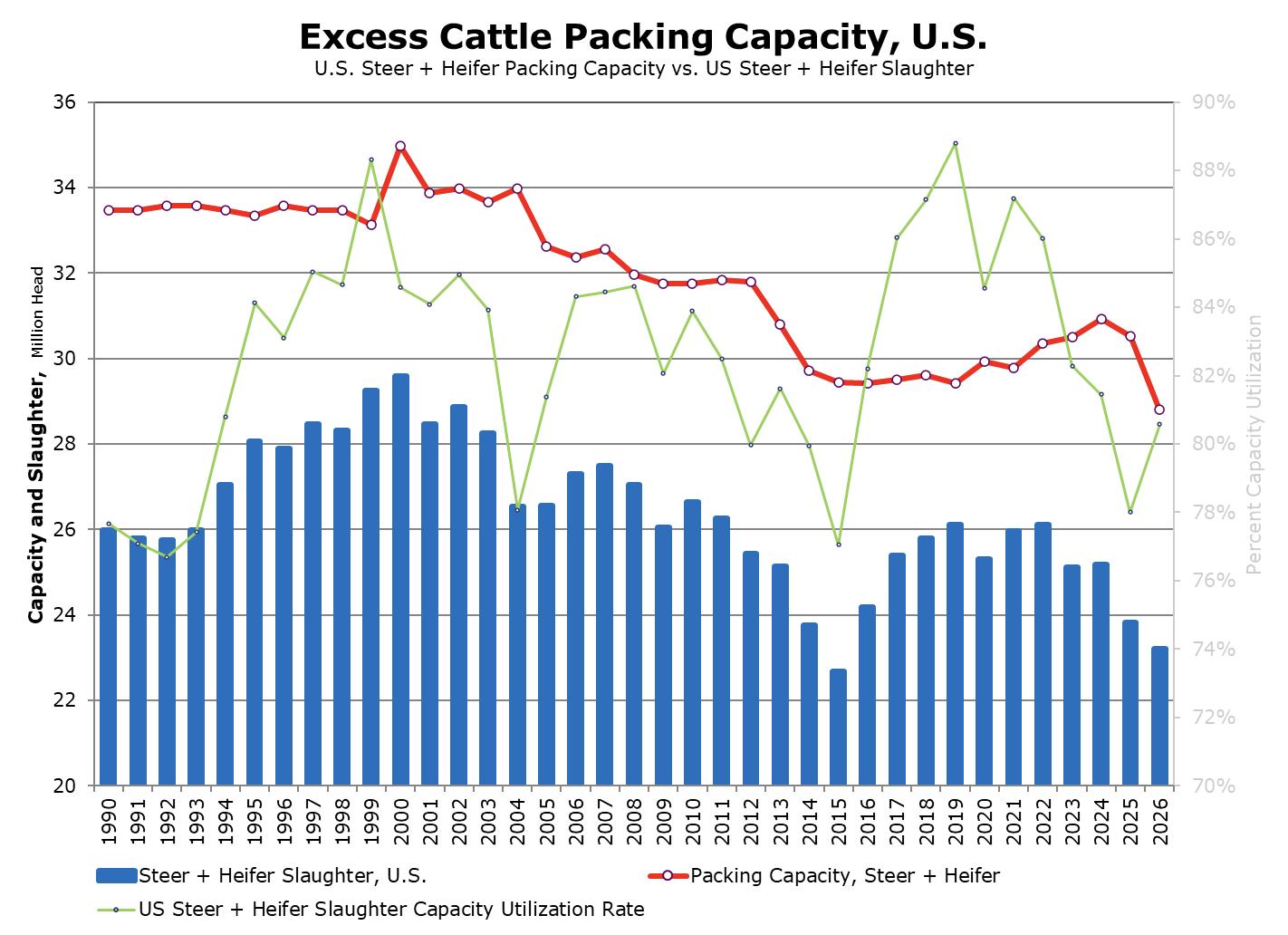
Packing plant closures and associated market impact have recently been major discussion topics. My analysis shows the change is worth about $10/cwt to fed cattle prices. There is still a material shortage of cattle going into next year, a testament to just how much excess capacity there was to begin with. Said another way, cattle supply is falling faster than plant closures and that leaves the packers still short cattle. Capacity utilization next year is expected to be on the lower end of normal (around 80%, up a couple of points from this year). The 80% level is still low enough to keep packers scrambling to fill inventory needs to operate high fixed cost plants at an efficient level. That is supportive fed cattle prices going into next year, and by extension, calf and feeder prices too.
Going further, the feedlot sector is also dealing with an excess capacity situation. That’s friendly feeder prices. Feeding margins have been the best ever when you look at the last couple of years, and that has translated directly into a strong bid for calves and feeders. The combination of empty pens, positive closeout margins, and low feed costs should be a tailwind for replacement cattle heading into 2026.
Excess feedlot and packing capacity are friendly cattle prices next year; said another way there simply aren’t enough cattle to go around. That favors cattle producers across the industry going in coming months.