Change by Design Johannesburg
Repair and Maintenance
A Policy Brief on Inner-City Housing



Credits
Lead Authors
Beatrice De Carli, Tamara Kahn
Contributors
Jhono Bennett, Jacqui Cuyler, Rowan Mackay, Edward Molopi, Valentina Riverso, Lauren Royston
Design
Ottavia Pasta
Produced by
This report was produced by Architecture Sans Frontières UK, 1:1 Agency of Engagement, and the Socio-Economic Rights Institute of South Africa, with support from the University of Sheffield Knowledge Exchange Fund.
Published by Architecture Sans Frontières UK
How to Cite
Architecture Sans Frontières UK, 1:1 Agency of Engagement and SERI, Repair and Maintenance: A Policy Brief on Inner-City Housing. Change by Design Johannesburg (London: Architecture Sans Frontières UK, 2026).




Executive Summary
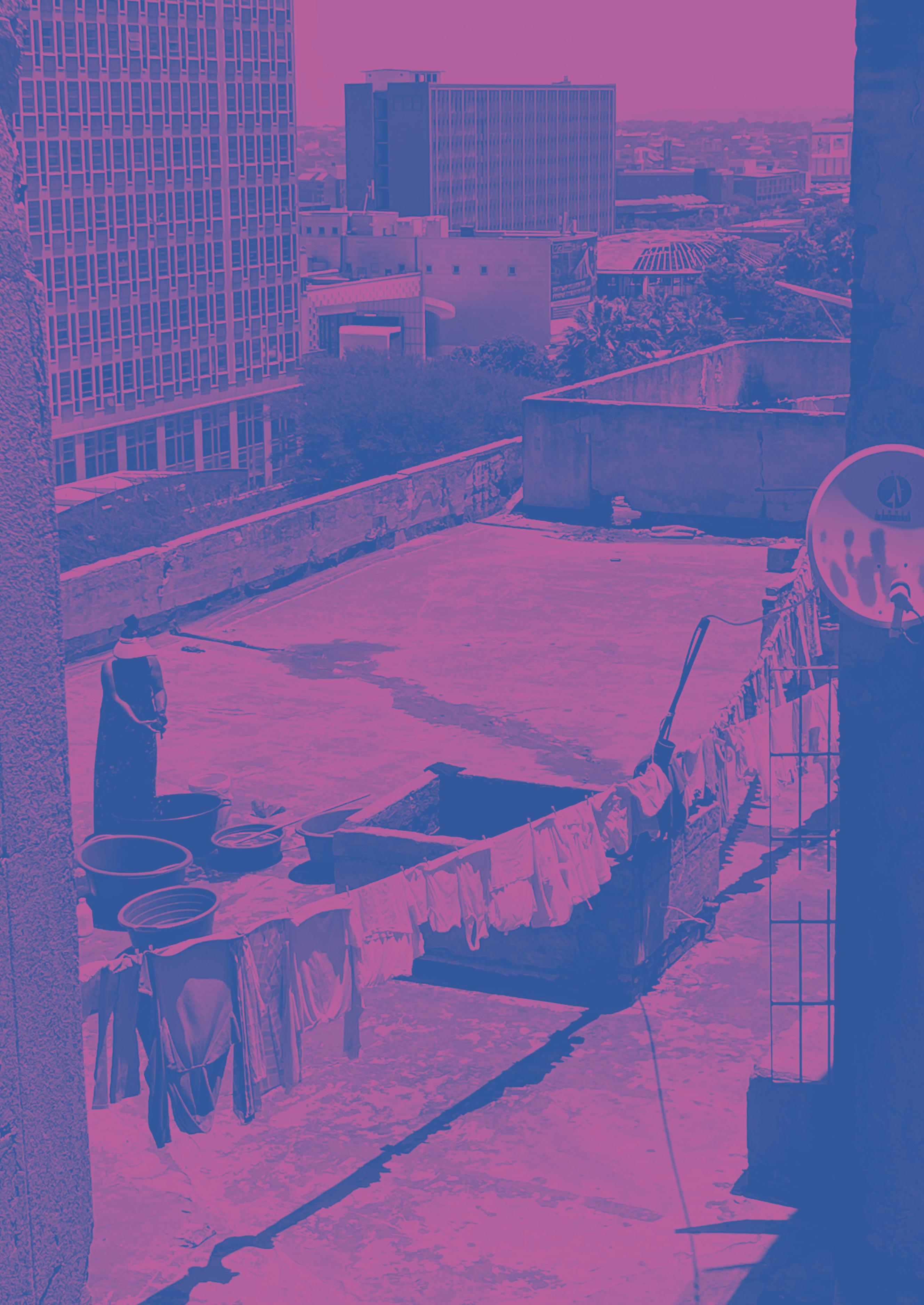
Thousands of low-income residents in inner-city Johannesburg live in informally occupied buildings, including abandoned flats, offices, and warehouses. While often framed as a crisis of lawlessness, many of these buildings are actively maintained by residents who work daily to keep their homes safe and functional.
This brief draws on research and workshops conducted between 2023–2025 with over 150 residents across more than ten buildings. It shows that many residents are not passive occupants, but active stewards—maintaining services, organising safety, and caring for shared spaces.
Improving conditions in the inner city does not require starting from scratch. It requires recognising, supporting, and strengthening the maintenance and repair already underway.
This brief proposes three practical opportunities:
• Property management: Pilot co-management of maintenance and repair in one state-owned building
• Employability: Train residents in basic repairs and maintenance
• Occupant safety: Prioritise building safety issues and implement targeted risk-reduction measures
The brief includes suggested actions on how each recommendation could be implemented in practice within a short timeframe, offering quick, achievable gains.
Context
Informally occupied buildings in Johannesburg’s Central Business District have become the primary place of living for many families. These include abandoned residential blocks, former offices, factories and warehouses. Different sources estimate the total number of informally occupied buildings at between 200 and 400. A total of 110 of these occupied buildings have been inspected as part of the recent Khampepe Commission of Inquiry into the fire at Usindiso Building, which provides a better understanding of the make-up of these homes.
Findings from the Khampepe Commission of Inquiry challenge dominant narratives: only five of the inspected buildings show evidence of being “hijacked”. Over 50 buildings are identified as privately owned and abandoned, and a minimum of 20 of these are owned by the City of Johannesburg.
Living conditions vary widely. In some buildings, residents have formed committees and established systems for managing cleaning, maintenance, security and rent collection. In others, conditions remain highly precarious.
The role of government varies depending on ownership and levels of resident organisation. In all cases, however, there are opportunities for practical, immediate measures to improve safety and living conditions.
Key Insight
Many residents are already undertaking the essential work of maintaining and repairing their homes.
Across many inner-city buildings, this includes fixing toilets and water leaks, patching roofs, managing electrical connections, and organising shared responsibilities. Yet much of this labour takes place without official recognition and is sometimes deemed technically unlawful. This creates a clear policy contradiction, as activities essential to habitability can expose residents to sanction or eviction. This results in a contradiction with city-aligned policy requirements, as activities essential to basic habitability can expose residents to sanctions or eviction.
Recognising resident-led co-maintenance and co-repair as legitimate, skilled, and necessary practices offers a practical entry point for policy reform. Supporting residentled upkeep—rather than penalising it—can improve conditions, reduce risk, and align regulation with lived realities.
“We have a crisis of homelessness, not of criminality. Many residents in informally occupied homes are ready to collaborate to improve the safety and quality of the homes they live in.”
Lauren Royston, SERI
A resident told us he is a plumber, but repairing a broken tap is not allowed in their temporary home provided by the city. Because he is scared of being evicted, he does not want to fix it.



Our Recommendations
Property Management
Pilot co-management of maintenance and repair in one state-owned building
The City of Johannesburg could pilot a co-managed maintenance model in a publicly owned building, with residents and the City sharing clearly defined responsibilities for maintenance and repairs.



Why?
Reduce costs
• Reduce long-term maintenance and repair costs through preventative upkeep
• Improve early problem identification
• Enable more efficient use of municipal resources
Improve housing conditions
• Improve homes and access to basic services
• Create safer and cleaner communal spaces by involving residents directly in day-to-day care
Innovate
• Explore a new maintenance operational model
• Clarify how roles and responsibilities can be shared in practice
• Test a practical approach to shared maintenance responsibility for wider application
Build trust
• Build trust between residents and the City through collaboration
• Formalise a Steering Committee to run the pilot and act as an intermediary between City and residents
• Simplify access to subsidies when residents are entitled to support (e.g. Free Basic Services programme)
• Identify the support residents need to undertake maintenance safely, including potential training (see Recommendation 2 below)
The proposed co-managed maintenance pilot would align with several City of Johannesburg priorities by supporting improved property management, safer living conditions, participatory governance, and more sustainable management of temporary accommodation.
How?
This approach recognises residents as active stakeholders rather than passive beneficiaries by combining municipal oversight with structured resident participation and action.

• Confirm a lead department within the City of Johannesburg to coordinate the pilot.
• Identify and select a suitable publicly owned building for the pilot (contact brief authors for suggestions).
• Review any existing community-led or City-led baseline assessments of the building’s physical condition, maintenance needs, service issues, and management arrangements (see example of published research under ‘Key Resouces’).
• Establish a Building Steering Committee and clear communication methods between City officials, resident representatives, and relevant partner organisations.
• Select an operating model that is fit for purpose and identify any additional departments or teams for collaboration (see resources section for examples of co-management structures).
• Define maintenance responsibilities for both the City and residents, including escalation procedures for major repairs and emergencies.
• Identify a dedicated pilot budget for repairs, maintenance materials, training, and coordination activities.
• Provide training and safety guidance for residents undertaking approved maintenance activities, alongside a system for reporting and monitoring repairs and faults.
• Monitor and evaluate implementation and lessons learned for wider application.
Employability
Train residents in basic repairs and maintenance
Resident representatives and the City of Johannesburg Region could establish a training programme enabling residents to undertake basic repair and maintenance.
This recommendation can complement Recommendation 1 or be run independently.

Why?
Create
new jobs
• Create pathways for policy-supported employment linked to housing
• Explore an inner-city social employment programme with wider application
Establish cost-effective maintenance
• Reduce reliance on external contractors for small works
• Provide a basis for maintenance and repair across multiple buildings
Develop training opportunities
• Build local skills for maintenance and repair
• Build practical skills for safe and effective repair work
• Develop a way to integrate housing maintenance and repair into public training programmes
This type of training approach has been successfully implemented in informal settlements, for example through the Asivikelane platform. Please contact us for more information.


How?
This approach supports resident-led capacity building by linking housing maintenance needs with skills development and employment pathways.
1. Establish coordination and partnerships
• Confirm a lead department within the City of Johannesburg to coordinate the programme
• Engage with stakeholders and identify key partners (national, local, community-based)
• Engage with residents and partners on ABCD (Asset Based Community Development)
• Identify social barriers to implementation and plan for a mindset shift
2. Identify sites and define scope
• Identify and select suitable publicly owned buildings
• Engage with residents of selected buildings
• Audit selected buildings to assess repair needs and ongoing maintenance requirements
• Define the scope of works, workforce requirements, and associated budget
3. Deliver training (core component)
• Identify existing building trades training programmes (plumbing, electrical, masonry, carpentry, painting and decorating) that could incorporate inner-city building maintenance, aligned with identified repair and maintenance needs
• Recognise existing resident skills and select individuals to participate in relevant training programmes
4. Deliver works and support livelihoods
• Develop terms of reference for working in selected inner-city buildings
• Establish a delivery task team, including trained residents
• Define mechanisms for livelihood support for participants (for example through Public Employment Programmes: EPWP, CSP, SEF…)
Occupant Safety
Prioritise building safety issues and implement targeted risk-reduction measures
The City of Johannesburg and partners could introduce impactful, low-cost fire safety measures in informally occupied buildings, prioritising publicly owned and high-risk sites.

Why?
Reduce risk and limit impact
• Reduce the likelihood of safety hazards through preventative risk reduction measures
• Limit the scale and severity of incidents when they occur
• Minimise damage to homes, personal belongings, and shared building infrastructure
Protect lives and strengthen emergency response
• Improve residents’ ability to respond quickly and safely to a range of emergencies
• Strengthen evacuation, early warning, and preparedness at building level
• Reduce injury, loss of life, and long-term trauma associated with unsafe building conditions
Reduce social and financial costs
• Reduce the financial and social costs of displacement and disruption for residents and the state
• Avoid repeated emergency interventions by addressing underlying safety risks
How?
This approach combines immediate risk reduction measures with longer-term improvements to safety,
1. Establish governance and technical capacity
• Define a clear governance structure for building safety across the inner city, with named roles and responsibilities
• Appoint technical partners to lead building assessments and develop mitigation strategies
2. Assess hazards and implement mitigation plans
• Undertake rapid, site-specific safety assessments of informally occupied buildings to identify and prioritise key hazards
• Produce a building-level mitigation plan for each site, setting out phased Interventions
• Work with residents to validate findings and agree on practical, prioritised safety improvements
3. Deliver preparedness and building improvements
• Deliver targeted training and resources to enable residentled emergency preparedness and response
• Implement priority safety upgrades, including minor works and essential infrastructure improvements
• Coordinate with emergency services to establish building-specific response protocols
The Arup report is publicly available and open source— how can the City of Johannesburg make best use of this resource?


Key Stakeholders for Implementation
The following actors could play a role in enabling and supporting the recommendations:
City of Johannesburg (lead coordination and implementation)
Relevant departments and units within the City of Johannesburg, including:
• Integrated Human Settlements Policy, Planning and Research
• Human Settlements Programmes
• Public Housing Stock Management
• Property Management
• Facilities Management
City-owned entities and utilities (delivery and infrastructure)
• Johannesburg Property Company (JPC)
• Johannesburg Development Agency (JDA)
• Johannesburg Social Housing Company (JOSHCO)
• Johannesburg Water
• City Power
Who else could support the implementation of this pilot?


Emergency and safety services (fire prevention, response, and preparedness)
• City of Johannesburg Emergency Management Services (EMS), including Fire and Rescue Services
Community and technical support organisations (facilitation, advocacy, and implementation support)
• Inner City Federation
• 1to1 – Agency of Engagement
• Socio-Economic Rights Institute of South Africa (SERI)
National government and institutional partners (policy support, funding, and training frameworks)
• South African Local Government Association (SALGA)
• National Treasury – City Support Programme
• Operation Vulindlela (Presidency)
• Department of Cooperative Governance and Traditional Affairs (COGTA)
• Department of Employment and Labour
• Department of Higher Education and Training (DHET)
• Construction Education and Training Authority (CETA)
Case Studies and Precedents
Examples of co-management of maintenance and repair:
Participatory management
Cameroon
Demonstrates how residents can take part in maintenance decision-making, including participatory budgeting mechanisms.
Read more here: world-habitat.org/awards/winners/ cooperative-programme-for-thedevelopment-of-urban-neighbourhoods/
Public–commons partnerships
Spain
Shows how responsibility for building management can be shared between residents and the municipality through collaborative governance models.
Read more here: inlogov.com/2024/04/18/democratisingpublic-administration-through-publiccommon-partnerships-the-case-of-thecitizen-assets-programme-in-barcelona/
Selective tenant management UK
Provides a legal framework for resident-led management through modular agreements covering repairs, maintenance, cleaning, and planned works.
Read more here: www.gov.uk/government/collections/tenantmanagement-organisations-guidance
Collaborative housing management
UK
Demonstrates how landlords can retain ownership while enabling tenant participation in governance and decision-making.
Read more here: sticerd.lse.ac.uk/CASE/_NEW/ PUBLICATIONS/abstract/?index=11403
Key resources
ASF-UK and 1-to-1 (2025) Making home: Stories of maintenance and repair in inner-city Johannesburg, Available at: www.asf-uk.org/resources/making-home
ASF-UK, 1-to-1 and IIED (2025) The Right to Home: Securing adequate housing in inner-city Johannesburg, Available at: www.asf-uk.org/resources/the-right-to-home-2025
PARI (2021) A Pari Short Report Local Government Programme, Available at: www.pari.org.za/wp-content/uploads/2021/09/PARI-Short-Report-Access-to-Basic-Services-V3.pdf
SERI (2020) Policy Brief 2: Adequate Temporary Alternative Accommodation, Available at: www.seri-sa. org/images/Policy_brief_2_AA_Final.pdf
Usindiso Commission of Inquiry (2024) Report on Part (a)(i): Inquiry into the Usindiso building fire. Gauteng Provincial Government, Available at: www.seri-sa.org/images/Usindiso_Commission_ Report_-_Part_ai_-_30_April_2024_.pdf
Usindiso Commission of Inquiry (2025) Report on Part (a)(ii): Findings and recommendations of the Usindiso building inquiry. Gauteng Provincial Government, Available at: https://seri-sa.org/images/ Khampepe_Commission_Report_28_June_2025_.pdf
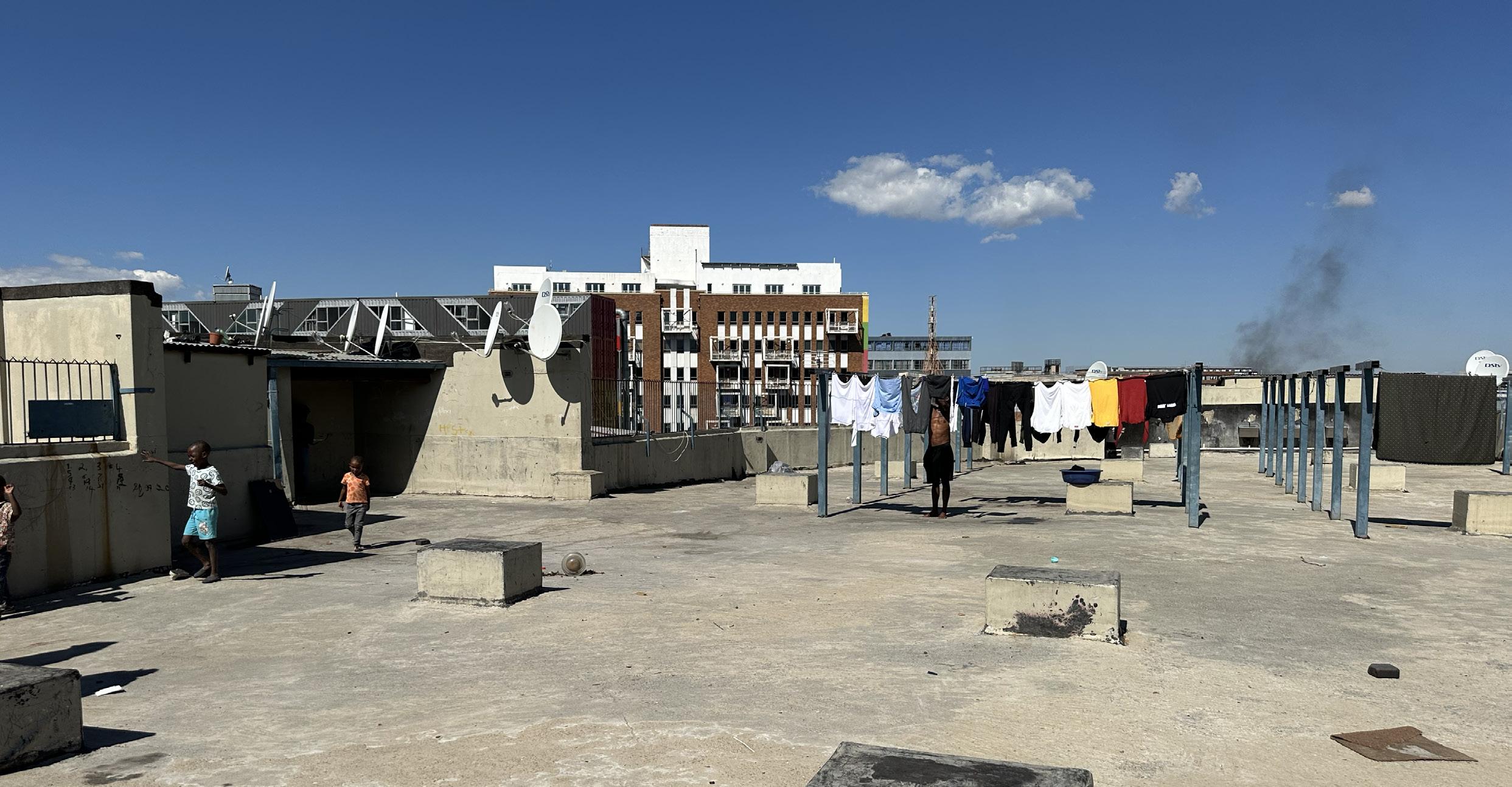
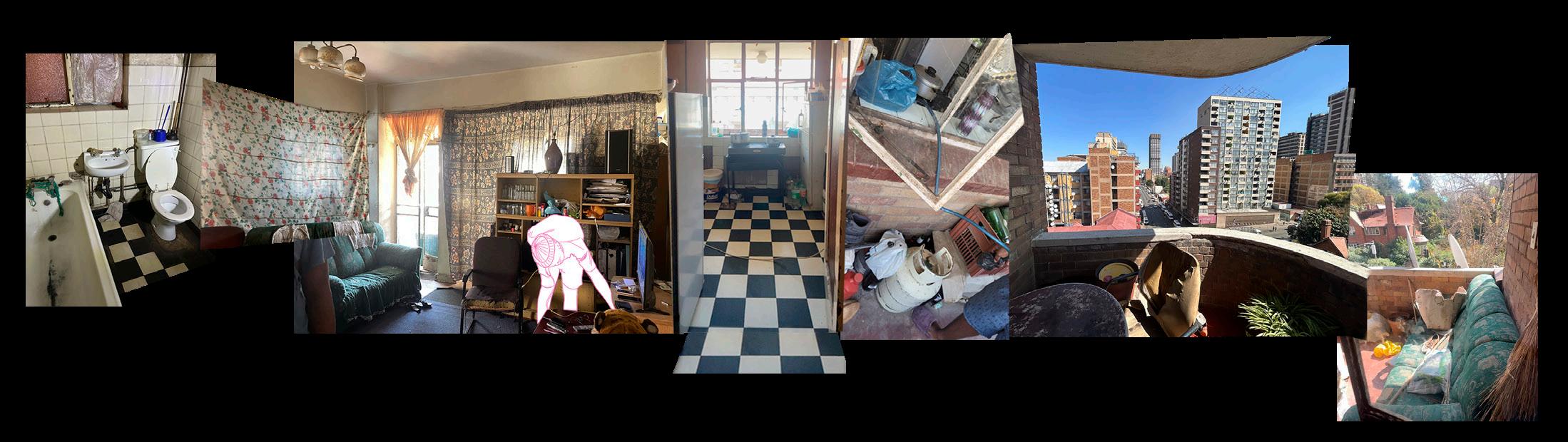
Here some of the images from the research conducted by ASF-UK, SERI and 1-to-1 Agency of Engagement which can be found in the ‘Making Home’ report. Look out for further publications which will be made available soon
SHARED SPACES AND INFRASTRUCTURE BUILDING OPERATION DIAGRAM


Rooftop
Change by Design Johannesburg
Change by Design Johannesburg is a collaborative initiative led by ASF-UK and 1to1 Agency of Engagement. Since 2023, we have been working alongside residents and community organisations in inner-city Johannesburg to advocate for community-led solutions for adequate housing.
Architecture Sans Frontières UK (ASF-UK) is a non-profit organisation working to transform cities through community-led design and planning. We amplify the voices of those most affected by urban change, building collective power for more just and sustainable cities.
www.asf-uk.org
Architecture