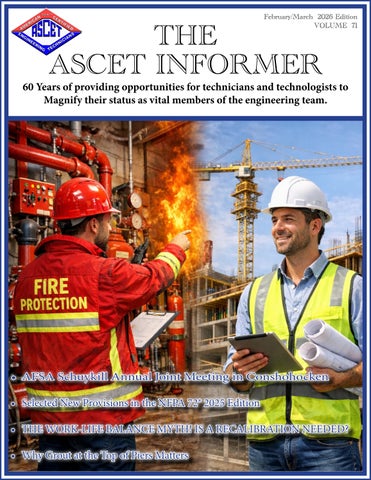

THE ASCET INFORMER
60 Years of providing opportunities for technicians and technologists to Magnify their status as vital members of the engineering team.

• AFSA Schuykill Annual Joint Meeting in Conshohocken
• Selected New Provisions in the NFPA 72® 2025 Edition
• THE WORK-LIFE BALANCE MYTH! IS A RECALIBRATION NEEDED?
• Why Grout at the Top of Piers Matters






Middletown, DE Marketing@ascet.org Chairman of the Board Steven Redden, SET Middleton, DE Cob@ascet.org
Hurst, Galena, MD office@ascet.org


Message From the Chairman of the Board
American Society of Certified Engineering Technicians
Dear ASCT Members,
It is my privilege to address you on behalf of the Board of Directors as we continue our mission of elevating the standards, recognition, and professional advancement of certified engineering technicians across the nation. The strength of our Society has always come from the dedication of its members and the commitment of those who step forward to lead. Today, I am honored to share several important leadership announcements that will support our continued growth and representation.
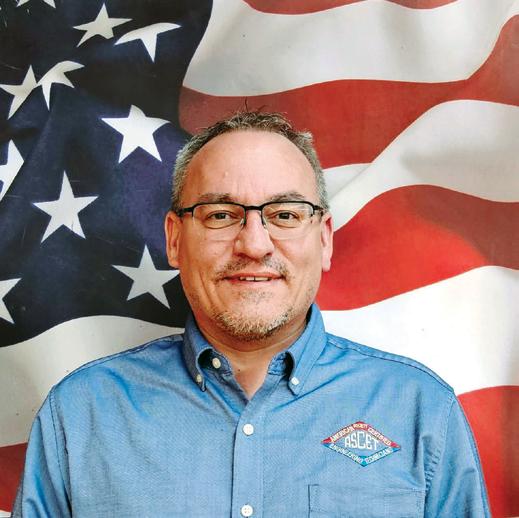
We are pleased to announce Shawn Mullen as the Central Regional Vice President. Shawn brings exceptional experience, a proven record of engagement, and a strong commitment to serving our membership throughout the Central Region. His leadership will be instrumental in strengthening outreach and communication within this vital area of our organization. We are equally pleased to announce Tyler Phillips as our new Southeast Regional Vice President. Tyler has demonstrated exemplary service within the Society and a deep understanding of the needs and challenges faced by members in the Southeast. We look forward to the energy, insight, and regional representation he will bring to the Board. Additionally, it is my honor to announce the election of Kyle Watterworth as the Society’s President Elect. Kyle has consistently shown exceptional leadership, professionalism, and dedication to our mission. His vision for the future of ASCT and his commitment to the advancement of the engineering technician profession will serve our Society well as he prepares to assume the presidency. Please join me in congratulating Shawn, Tyler, and Kyle as they step into these important leadership roles. Their service reflects the best of what our Society stands for: integrity, professionalism, and a shared commitment to supporting and advancing the engineering technician community nationwide. Thank you for your continued support, engagement, and dedication to the American Society of Certified Engineering Technicians. Together, we continue to build a stronger, more connected, and more influential organization.
Sincerely,
Steven Redden, SET Chairman of the Board

American
Society of Certified Engineering Technicians


A SCET 2026 61st ANNUAL CONFERENCE & EXPO
ASCET is now accepting presentation summaries for the 2026 Conference & Exposition (ACE), which will be held in Delaware on November 5, 2026. This year’s theme, “Engineering Technology Education and Training,” focuses on critical skills and practices in fire protection and civil engineering within design and construction.
We invite you to share your expertise on these fundamental skills and industry advances. Presentations should be 45 to 60 minutes long, including time for Q&A. Please note that presentations must be non-commercial, and PowerPoint is the preferred format.

Please submit a summary for related topic by the deadline of May 1, 2026. You are also welcome to forward this invitation to any peers who may be interested in presenting.
Submissions should be sent to Steven Redden, ASCET National Chairman of the Board, at cob@ascet.org, or to Jamie Redden at marketing@ascet.org.
Delaware
Thursday November 5, 2026
Dear ASCET Colleagues and Friends,
I’m honored and grateful to serve as the Central Regional Vice President for the American Society of Certified Engineering Technicians. ASCET has long played an important role in advancing professionalism, education, and connection within our industry, and I’m excited to support that mission in this new capacity.
I have spent more than four decades in the fire protection and life-safety industry and currently serve as President and Chief Energy Officer of Protex Central, Inc., a multi-location systems integrator serving the Midwest. I hold a NICET Level IV Senior Engineering Technician certification in Fire Alarm Systems and a Level III Engineering Technician certification in Special Hazards Fire Protection.

Industry involvement has always been important to me. I am a past president of the Fire Suppression Systems Association (FSSA) and had the privilege of chairing FSSA’s task force that developed its online special hazards training program—an effort focused on improving access to education and strengthening technical competency across our field. I also serve as a principal member of the NFPA 770 Technical Committee on Hybrid (Water Mist and Inert Gas) Fire Extinguishing Systems and remain active in several professional associations and standards-development efforts.
As Central Regional VP, my goal is simple: to listen, to connect, and to help create meaningful opportunities for engagement, education, and professional growth within ASCET. Whether you’re a longtime member or new to the organization, I want you to feel welcome, supported, and encouraged to get involved.
I look forward to getting to know many of you in the months ahead and working together to strengthen our profession.
Warm regards,
Shawn Mullen, SET
Central Regional Vice President
American Society of Certified Engineering Technicians


AFSA Schuykill Chapter Kicks Off 2026 with Annual Joint Meeting in Conshohocken



On January 12, 2026, members and guests gathered at Hotel West & Main in Conshohocken, Pennsylvania, for an evening of networking, updates, and celebration during the AFSA SC Annual Meeting. The event, held from 5:00 p.m. to 9:00 p.m., brought together representatives from several fire protection organizations to share industry news, upcoming events, and initiatives for the year ahead.
The evening began with introductions led by Dan Hinkle, setting the stage for a collaborative and informative program. One of the most memorable moments of the night was the presentation of a $40,000 check from AFSASC’s Casino Night fundraiser to the Burn Foundation, accepted by John McCann. McCann shared that this was the largest fundraiser donation ever received by the Burn Foundation, a milestone that reflects the generosity and commitment of the association and its supporters. He also announced that he will be retiring in the coming months and expressed his gratitude to AFSA for its support and donations over the past 15 to 20 years.

Representatives from several organizations then provided updates on current activities and future plans.
Bob Caputo shared updates on behalf of AFSA, announcing that the new sprinkler lab is now fully operational at headquarters, with additional details and scheduling available on the organization’s website. He also noted that AFSA will be hosting classes in Pennsylvania at General Air in Exton, encouraging attendees to check the website and flyers for dates and registration information. Looking ahead, he reminded members that the AFSA 45th National Convention will take place September 27–30, 2026, in San Antonio, Texas.

Representing NFSA, Dave Curasz and Frank Ellis highlighted several important developments. Among them was the signing of a New Jersey bill prohibiting water companies from charging standby fees in areas where residents already pay a fire tax. They also reported that NFSA is working with NIFERS and the Philadelphia Fire Department to improve the accuracy of reporting related to fire sprinkler activations during fires. Side-by-side burn demonstrations continue to be in demand, including a recent event conducted with the Philadelphia Fire Department and Local 692. In addition, West Whiteland Township has requested support with residential sprinkler issues, and a side-byside burn and education session is scheduled for March 4 at 5:30 p.m. NFSA’s National Convention will be held April 29–May 1, 2026, in Seattle, Washington.
For AFAA, Dan Morin announced that the organization’s National Convention is scheduled for April 14–16, 2026, in Indianapolis, Indiana. He also encouraged groups in need of training to reach out for support and educational opportunities.

Tim Murray, representing SFPE, provided a brief update on the organization’s scholarship program and announced the Philadelphia Trade Show, which will be held on April 16, 2026, in King of Prussia, Pennsylvania. He also shared that the SFPE National Convention is set for October 6–8, 2026, in Atlanta, Georgia.

On behalf of ASCET, Steve Redden reported that the Annual Conference will be held on November 5, 2026, in Newark, Delaware, with additional details to be posted on the website. He also reviewed chapter meeting schedules, noting that the Delaware Chapter meets on the second Wednesday of each month at General Air in Exton, beginning at 4:30 p.m. The Philadelphia Chapter will meet on the third Thursday of each month in Bensalem, Pennsylvania, with the location still to be determined, while the South Jersey Chapter will meet on the first Wednesday of each month in Southern New Jersey, also at a location to be announced.
Dan Hinkle then provided several updates on behalf of AFSA SC. He announced the launch of the organization’s new website, www.afsasc.org, and encouraged members to submit Fire Sprinkler Savers through the site. He also promoted the upcoming 1-Day Seminar in Conshohocken on February 19, 2026. Hinkle emphasized the need for member involvement, particularly in the Legislation Committee, which is supporting the association’s statewide license bill, and in the Training Committee, which is focused on tech school programs. He also introduced Alyssa Capco as the new Executive Director and offered sincere thanks to Meaghen Wills for her five years of leadership and guidance in the role. He closed by reminding attendees to mark their calendars for Casino Night on Friday, November 6, 2026, at the Crowne Plaza in King of Prussia, Pennsylvania.
Finally, Bob Sullivan shared a brief update for NFPA, noting that there is a new Regional Director in the area and encouraging members to reach out with any issues or training needs.
The meeting also included around-the-room updates, giving attendees the opportunity to share news from their own organizations and regions. The evening officially adjourned at 8:30 p.m., with appreciation extended to everyone who attended and supported the event.

The 2026 annual meeting served as a strong start to the year, highlighting not only the achievements of the fire sprinkler industry, but also the continued collaboration among organizations dedicated to fire protection, education, and advocacy.
Please contact the marketing director if you have articles or advertisements you would like to see published in an upcoming issue of The ASCET Informer magazine. The publication is scheduled to be released every other month. If you have any content to submit or would like to update Information, in The ASCET Informer magazine, please send it to marketing@ascet.org I am eager to hear from all of you and am excited about the possibility of featuring your contributions in our magazine.
Thank You
Jamie Redden marketing@ascet.org
You can also Find us on: www.ASCET.org

Why Tamper with Your Time?
Ames Integrated Tamper Switch Eliminates Install Delays
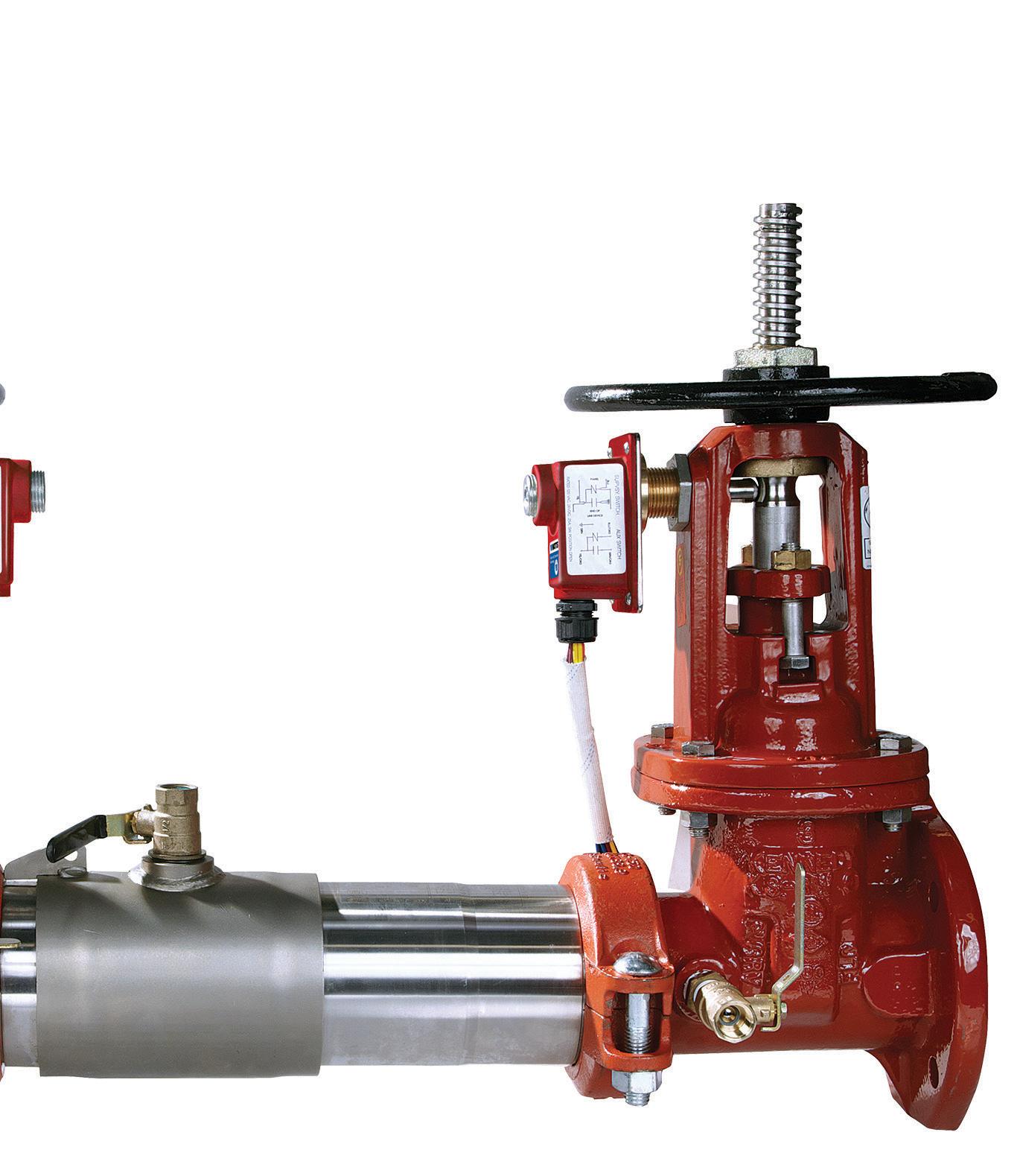
Now Available Pre-Installed on Backflow Assemblies

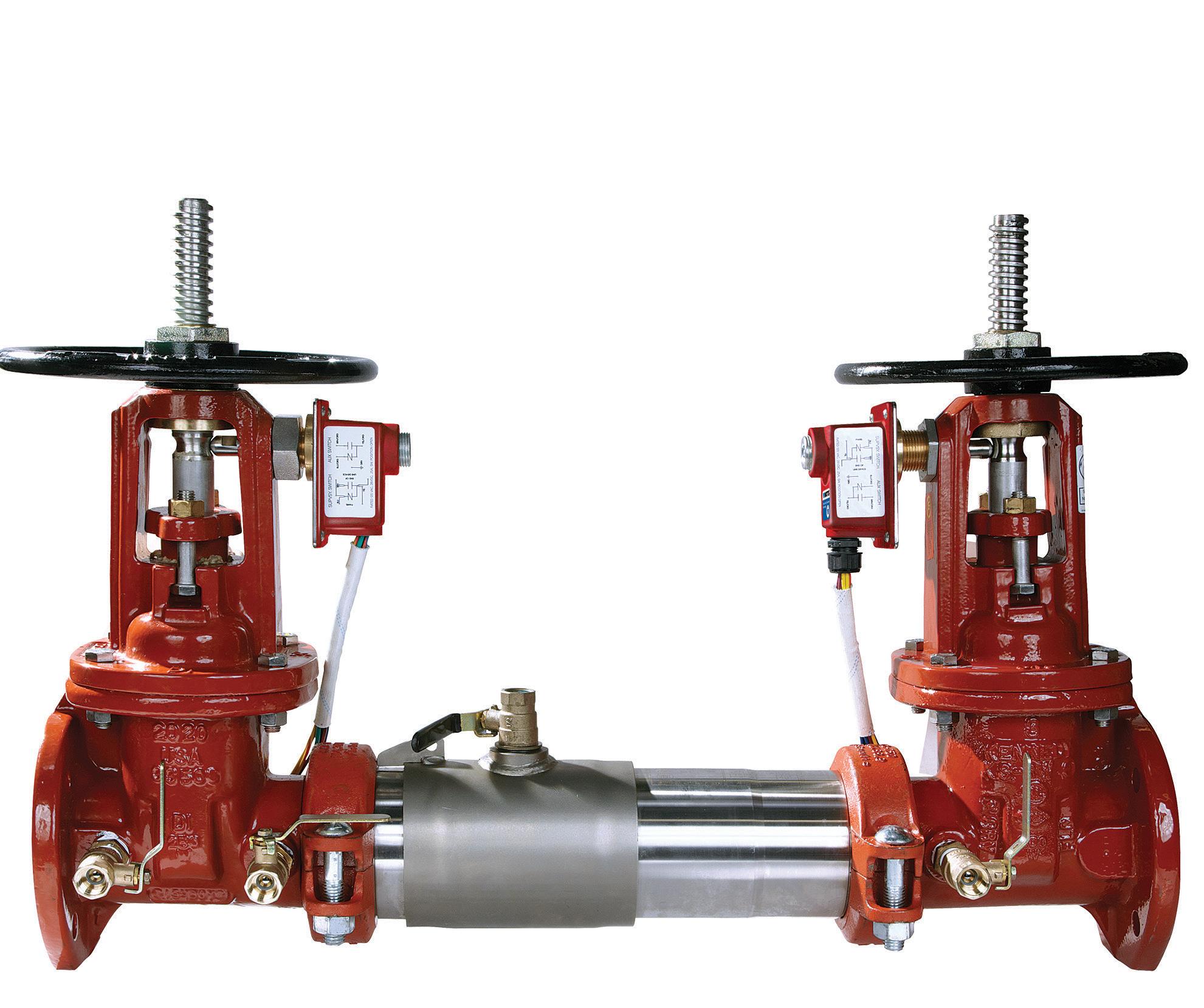
Select Ames backflow preventers now come with factory integrated, UL/FM certified, fire tamper detection. This will eliminate the hand-assembly, manual field installations, and opportunity for error associated with installing aftermarket tamper (supervisory) switches on existing backflow preventers.
How to Buy

SignaLinkTM Bridge
Wireless Supervisory System
Application
The SignaLink Bridge can monitor any dry-contact switch such as tamper or flow switches and transmit their status wirelessly to any fire alarm panel. The SignaLink Bridge uses a wireless transmitter, installed with the switch being monitored, and a wireless receiver, installed with the fire alarm panel, to fully monitor the switch’s state.
Common Questions
Q: Can a receiver be paired to multiple transmitters?
A: No. Each transmitter must be paired to a single receiver. If repeaters are needed to extend coverage, repeaters must be also paired to that receiver.
Q: How many repeaters can be used to extend the range of the SignaLink Bridge?
A: A maximum of 3 repeaters may be used with a transmitter/receiver pair.
Q: What is the range of the SignaLink Bridge?
A: Maximum clear line-of-sight communication is approximately 800 feet between devices. Nearby metal objects can greatly reduce signal strength.
Q: Can the receiver connect to any fire panel or releasing panel?
Ordering Information
A: Yes. The receiver output is a dry contact, there is no panel compatibility listing requirement. Model
WSS SignaLink Wireless Kit (WRX-R + WTX-M) 3008040
WRX-R SignaLink Wireless Receiver 3008020
WTX-M SignaLink Wireless Transmitter 3008001
WR SignaLink Wireless Repeater 3008030
SignaLink Wireless Setup Tool 3998000

Compatible with any dry-contact switch
Compatible with any fire alarm panel
Eliminates trenching parking lots
Ideal for temporary systems during construction
Supervises wiring to connected devices
2.4 GHz band and repeaters for long range operation
Setup Tool for assisting installation and troubleshooting
Selected New Provisions in the NFPA 72® 2025 Edition
Author: Larry D. Rietz, SET, CFPS Jensen Hughes
In the February 2025 Edition of the ASCET Informer, we featured an article on the two big changes included in 2025 edition of NFPA 72® National Fire Alarm and Signaling Code®, specifically Cybersecurity and Restricted Audible Mode Operation. In the December 2025 Edition of the ASCET Informer, we followed up with the changes to the Initiating Device and Notification Appliance chapters of this new edition. This article will feature some of the remaining changes not previously covered.
This article addresses changes believed to be significant. It doesn’t address every change between the 2022 and 2025 editions of NFPA 72®. All changes, both minor and major, are fully documented in the text of the code available from NFPA®.
Fire Alarm Definitions (Chapter 3)
Featured below are some of the new definitions included in Chapter 3 but not covered in the previous two articles noted above.
Auxiliary Service Provider – This definition has been added to support a new §26.2.11. An Auxiliary Service Provider (ASP) is an entity or service that acts as an intermediary in the processing of supervising station signals. The entity or service receives signals from a protected premises fire alarm system, modifies or manipulates the signals, and directs those signals to the supervising station.
Fuel Gas Detector – In order to support changes made in Chapter 17 and 29, a device connected to an alarm control unit having a sensor that responds to fuel gas is now defined as a fuel gas detector. Related definitions have been added for fuel-burning equipment and fuel-burning warning equipment to further support these changes.
Authorized and Emergency Personnel – In order to support changes made in Chapter 23, new definitions were added for authorized personnel to note individuals who have been duly appointed or selected by the property owner to perform certain duties. This is distinguished from emergency personnel who is anyone who has been trained in emergency response. Emergency personnel are authorized to act in an emergency situation, but an authorized person is not necessarily an emergency responder.
Unconditioned Area – This definition has been added in support of carbon monoxide detectors that may be installed in unconditioned areas per §A.17.14.2 or §29.10.3.3. These areas include any non-exterior areas without climate controls or provisions for heating, ventilating, or air conditioning.
Waterflow Alarm Device – This definition has been extracted from NFPA 13 to provide consistency between the two documents. These mechanical devices are used to detect a predetermined water flow and initiate an alarm condition on a fire alarm system.
Chapter 10 – Fundamentals
In support of Chapter 26, qualifications for gateway reporting system personnel have been added to the fundamentals chapter. These are individuals that are trained and certified for the specific type of subsidiary station or ASP system and can comply with one of several available options for being considered qualified.
A subtle, but important, change was made in §10.21.1 as it relates to system impairments. Previously, the owner had to be notified of an impairment to a life safety system. Now the code requires that the owner be notified within 8 hours of the identification of that impairment. This underscores the importance of owner notification for a system impairment including for systems that are found to be out-of-service.
Chapter 12 – Circuits and Pathways
Three paragraphs were deleted from the 2025 edition of Chapter 12. Paragraphs §12.6.4 regarding non-interfering shunt circuits and §12.6.11 regarding pneumatic rate-of-rise systems of the continuous line-type were deleted because they are old technology that are no longer in common use. Paragraph §12.6.6 was deleted as it was determined that all notification appliance circuits shall be monitored for integrity (i.e., supervised) to be consistent with the rest of the code.
Chapter 14 – Inspection, Testing, and Maintenance
A new paragraph was added to clarify the role of inspection, testing, and maintenance personnel. It is not the responsibility of these individuals to “verify the adequacy of the design of existing previously approved systems” during periodic inspections. While inspecting, testing, or maintaining a system, those individuals may make observations about perceived design issues or problems that are not considered impairments or deficiencies. If such observations are made, it is not incumbent on the observer to undertake a complete review of the existing system. The code allows the owner to choose whether to address the observation or not.
A few changes were made to Table 14.4.3.2 (i.e., the testing table):
• In Item 9 (Valve Regulated Lead Acid Battery and Charger), subsection (4) now allows a battery load test, as prescribed in Item 9(5), to be used as an acceptable alternative to the ohmic test noted in Item 9(4).
• A control unit’s charger or power supply can be used to verify the secondary power demand if it is listed for that purpose.
• The table has clarified the functional testing of a non-restorable heat detector, including verifying electrical continuity or supervision.
• The test method for a special hazard abort switch has been updated to provide more clarity regarding the testing procedure to be used.
• Added clarification to test high- or low-air pressure switches for dry pipe and preaction valves in accordance with the manufacturer’s published instructions.
• The test method for Item 17(7)(a) has been updated to clearly note that “magnets are not acceptable for smoke entry tests”. While this long-standing requirement has been in the code since 2013, the language has always been located in the footnote of the Table. It has now been moved into the test method description for clarity.

In support of the new §17.12, testing requirements have been added for thermal image fire detectors to be in accordance with their manufacturer's published instructions.
NFPA 72® has updated the terminology of in-building emergency radio communication systems to the more accurate term used by NFPA 1225 of emergency responder communications enhancement systems (ERCES). ERCES shall be inspected and operationally tested in accordance with NFPA 1225. However, in support of new requirements in Chapter 24, ERCES supervisory signals monitored by a fire alarm system must be tested at the same interval as NFPA 1225 requires for ERCES systems to be tested.
For several code cycles, Chapter 24 contained a requirement that ancillary functions of emergency communications systems (ECSs) shall be inspected and tested annually to verify that they will not impair operation of the fire alarm or mass notification system. As this requirement is an inspection and testing requirement, this paragraph has been moved out of Chapter 24 and into Chapter 14 where it properly belongs.
Chapter 21 – Emergency Control Function Interfaces
There is now an allowance for emergency control function interface devices to be installed up to 20 feet from the component controlling the emergency control function, provided the conductors are installed in metal raceway or metal armored cables. If the conductors are not installed in metal raceway or metal armored cables, the emergency control function interface device must be installed within 3 feet of the component controlling the emergency control function.
Occupant evacuation elevators require a very specific, detailed, and complex sequence of operations. It is now required
Figure 1: Performing a Smoke Entry Test on a Smoke Detector (Courtesy: Jensen Hughes, Inc.)
that this occupant evacuation operation (OEO) be documented with a narrative description or an input/output matrix and that the sequence is approved by the AHJ.
It was clarified that a firefighter’s smoke control station (FSCS) is provided to perform annunciation, manual control, and manual override of the automatic operation of the system’s smoke control strategy. Previously, the stated purpose of the FSCS was only to perform manual control of the smoke control system.
Chapter 23 – Protected Premises
Several changes were made in Chapter 23 to differentiate between those who are qualified to perform a task and those who are authorized to perform a task, especially as it relates to the investigation of a positive alarm sequence event and for remote access testing and maintenance activities. It was further clarified that emergency personnel are authorized to investigate a positive alarm sequence event.
For non-voice, tone-based fire alarm systems (e.g., occupant notification using horns, chimes, etc.) that use partial evacuation or relocation strategies, §23.10.2 has been updated to require the pathway survivability requirements of voice-based systems be provided. This change was made to align non-voice and voice-based systems that use partial evacuation or relocation strategies. In the 2022 edition and prior, the only requirement for tone-based systems was that they be designed so that attack by fire within one notification zone shall not impair control and operation of notification appliances outside of that zone.
Chapter 24 – Emergency Communications Systems
Some NFPA® manual of style changes were made throughout Chapter 24. One of these changes in §24.4.8.3.2 further clarified that a pre-recorded voice message shall be repeated, or restarted, after a maximum pause of up to 180 seconds or a pause length dictated by the AHJ or the emergency response plan. The repeated message sequence shall be continued until silenced or reset by first responders or trained and authorized personnel.
Clarification was provided regarding loudspeakers in enclosed stairways, exit passageways, occupant evacuation elevator lobbies, and each group of elevator cars within a common hoistway or bank. Where these loudspeakers are required by the building code, loudspeakers in these locations should be connected to separate notification zones (i.e., typically separate circuits) for manual paging only and not be connected to any other notification zone or circuit. This allows first responders to communicate with these areas separately from any on-going evacuation signal.
A new section was added to Chapter 24 to address ERCES. Fire alarm systems must now monitor all NFPA 1225 required supervisory signals from ERCES. Typically, a fire alarm system will monitor ERCES malfunctions like loss of normal power, battery failure, and signal source malfunctions and failures.
Chapter 26 – Supervising Station Alarm Systems
Section 26.2.11 is new to this edition of NFPA 72®, providing requirements for auxiliary service providers. These requirements were added to address requirements for monitoring services that are located between the protected premises and the supervising station. These requirements include the supervision of communication pathways, pathway failures, retransmission delays, and record retention.
As auxiliary service providers become more prevalent, and changes in supervising station communications happen more frequently, a new section addresses changes in communications pathway management. The added language requires AHJ notification, reacceptance testing, secondary power considerations, documentation, and pathway identification anytime there are changes to the communications pathway, technology, or hardware.
Related to this, when using performance-based communication technologies, the communications integrity section has been expanded. Communications equipment located on the protected premises must be listed. A delineation between the premises’ equipment and

Figure 2: Typical Emergency Responder Communication Enhancement System Annunciator
(Courtesy: TowerIQ, Inc. / Potter Global Technologies)
service provider equipment was added. And the expanded requirements clarify that only the supervising station can acknowledge signals sent from the protected premises.
Chapter 29 – Household Signaling Systems
In line with the changes made in Chapter 17, Chapter 29 has added new information regarding fuel gas detection and warning equipment when such equipment is connected to a household signaling system. Throughout the chapter, much cleanup was done in compliance with the manual of style as well as clarifying references to the terms “alarm” and “detector” as used in various requirements.
After thousands of hours of effort, the 2025 edition of NFPA 72® is now available for adoption by jurisdictions. NFPA® staff have added expanded content and explanations of many of these changes through the NFPA LiNK® platform. Users of this code are encouraged to purchase a printed copy or take advantage of the digital platform to access this expanded content. Now work begins on assembling the 2028 edition!

Larry D. Rietz, SET, CFPS is the fire alarm service line leader for Jensen Hughes and works as a designer, instructor, author, and industry advocate. He currently serves as the Chair of the NFPA 72® SIG-ECS (Chapter 24) Technical Committee and as a member of the SIG-PRO (Chapter 12, 21, 23) Technical Committee.


Systems Software Integrator (SSI) Pilot Period
Concludes; Applications Remain Open Ahead of Program Launch
NICET, in collaboration with industry volunteers, has completed the pilot phase of the Systems Software Integrator (SSI) certification program. The pilot marked a key milestone in the development of a credential focused on the safe, secure, and reliable integration of software into physical and cyberphysical systems.
Subject matter experts from multiple industries contributed to defining job tasks, reviewing reference materials, developing and evaluating exam questions, and participating in pilot testing. This work ensures the SSI certification reflects current industry practice and addresses the growing risks associated with systems software integration.
With the pilot phase now concluded, the SSI program has moved into its next stage of development. During this period, NICET and industry experts are analyzing pilot data to finalize exam content and establish performance benchmarks that will support a fair, defensible, and industry-aligned examination.
Applications for the SSI certification remain open during this interim period. While candidates may continue to apply, the SSI exam will not be available until the official program launch, currently planned for early April 2026.
To support continued interest and early engagement, the SSI application fee will remain at the reduced pilot rate of $75 until the full program launch. Candidates approved during this period will be eligible to schedule and take the exam once testing becomes available.
The SSI certification is intended for professionals responsible for integrating software into operational systems where safety, reliability, cybersecurity, and performance are critical. Applicable industries include transportation, aerospace, energy, manufacturing, national defense, pharmaceuticals, and other sectors that rely on complex cyberphysical systems.
Additional information about the SSI certification, eligibility requirements, and ongoing updates can be found at www.nicet.org/ssi.
ITWBS Level III Exams are now Live
NICET is pleased to announce the formal launch of the Inspection and Testing of Water Based Systems (ITWBS) Level III exam. This exam features two new exam domains: 3.6 Interpret Flow Test Results (questions related to these tasks make up 12-22% of the exam), and 3.7 Automated Inspection and Testing (questions related to these tasks make up 1-9% of the exam). The updated ITWBS III exam is based on the 2023 edition of NFPA 25 and other sources.
With the pilot testing period now concluded, the exam fee is $370 and candidates will receive their unofficial score reports immediately after completing the exam. All standard NICET testing practices and procedures apply; failed tests may be rescheduled for examination after a 30-day period has elapsed. Retesting will be limited to a maximum of three attempts in any 12-month span. After the 3rd attempt, candidates must wait 6 months before retesting again. More information about the exam can be found on the ITWBS program page.
Please contact Pallavi Raviprakash, Manager of Certification Program Development at praviprakash@nicet.org or 1-888-476-4238 x119 with any questions, comments, or concerns.

AGF Manufacturing Launches PURGENVENT™
Model 7940BLE: A BABAA-Compliant Automatic Air Vent Assembly for Wet Fire Sprinkler Systems
Malvern, PA – [Date] — AGF Manufacturing proudly announces the release of the PURGENVENT™ Model 7940BLE, a Build America, Buy America Act (BABAA) compliant automatic air venting valve assembly designed to increase the longevity and reliability of wet pipe fire sprinkler systems. With integrated features for streamlined installation, system protection, and NFPA 13 compliance, the 7940BLE sets a new standard for air management in fire protection.
“The 7940BLE is a comprehensive solution to help contractors meet NFPA 13 code requirements while simplifying installation and improving long-term system performance,” said Jim McHugh, President of AGF Manufacturing. “It’s everything you need for compliant venting in one factory-assembled, American-made package.”

NFPA 13 now mandates air venting on all wet pipe fire sprinkler systems using metallic pipe. The 7940BLE is engineered to meet this requirement with a UL Listed and FM Approved 7900V automatic air vent that efficiently expels trapped air during normal operation, helping reduce internal corrosion and the risk of system damage.
The 7940BLE features the FM Approved and UL Listed 7900V automatic air vent, which utilizes a conical, recessed design and a single-float mechanism for precise, protected venting. An integrated isolation valve and strainer allow for safe maintenance while preventing debris from entering the system. The assembly also includes a purge valve with union and hose connection that speeds up air removal during system filling, simplifies strainer cleaning, and acts as a vacuum breaker to assist with complete system drainage. To support federally funded projects, the 7940BLE is constructed with Build America, Buy America Act (BABAA)-compliant materials, including domestic pipe, couplings, and end caps. Its durable branch line extension (BLE) is fabricated from Schedule 10 or 40 domestic pipe, finished with a tough red powder coating and clearly marked with “AIR VENT” signage for easy identification during inspections and servicing.
AGF recommends installing the 7940BLE near the high end of system branch lines—where air naturally accumulates—for optimal performance. The unit’s high-visibility signage and built-in service features ensure quick location and easier maintenance access, especially in overhead or hard-to-reach locations.
About AGF Manufacturing
AGF Manufacturing has been developing innovative, American-made fire protection products for over 35 years. From the original TESTANDRAIN® valve to industry-leading air vents, auxiliary drains, and risers, AGF continues to deliver solutions that improve fire sprinkler system longevity and simplify code compliance.
For more information about the 7940BLE or to find a distributor in your area, visit www.agfmfg.com or contact AGF at (610) 240-4900.
Armstrong Expands Its Range of Vertical-In-Line Fire Pumps Up to 1000gpm
For Immediate Release
Toronto, January 2, 2026 – Armstrong Fluid Technology has expanded its family of Vertical-In-Line Fire Pumps with the addition of the new 1000gpm.
This new size is available with Design Envelope technology, featuring connected intelligence, performance tracking and automated alerts to support more cost-effective maintenance and better occupant safety. Due to the managed “ramp-up” of output, there are no pressure spikes on startup, pipes are better protected, water delivery is ensured and the risk of water hammer is reduced.
Othe features include:
• Reduced on-site work for power cabling
• Reduction of PRVs and drain lines
• Elimination of safety issues related to supply pressure
• Reduced costs for design engineers, contractors and building owners
This new size of Verical In-Line fire pump offers excellent performance in a key range of flow and pressure output. And with the addition of Design Envelope technology, customers can enjoy the security of performance tracking throughout the lifecycle of the pump.” said Michael DeMille, Global Offering Manger Fire Pumps.
About Armstrong Fluid Technology
With manufacturing facilities on four continents, and employees around the world, Armstrong Fluid Technology is known as an innovator in the design, engineering and manufacturing of intelligent fluid flow equipment, control solutions and optimization technologies.
In the shift toward digitalization and integration of fluid-flow systems, Armstrong leads the industry. With advanced solutions that leverage edge computing, IoT, machine learning, digital twin technology and demand-based control, Armstrong provides and protects efficiency in building mechanical systems, approaching energy optimization as a whole-building challenge and advancing the practice of full lifecycle management. Focusing on HVAC, Plumbing, Gas Transmission and Fire Safety applications, we provide energy-efficient, cost-effective solutions and performance management services to building and facility professionals around the world.
Armstrong Fluid Technology is committed to sustainability. In 2019, Armstrong signed the Net Zero Carbon Buildings Commitment, a program launched by the World Green Building Council. As a signatory to the program, Armstrong has pledged to ensure that all its offices and manufacturing facilities operate at net-zero carbon by the year 2030.
In May 2021, in recognition of our leadership in energy efficiency, carbon footprint reduction and environmental stewardship, Armstrong Fluid Technology received a Queens Enterprise Award for Sustainability. Armstrong has also been named one of 2023’s 50 Best Managed Companies. As a recipient of a 50 Best Managed award for 21 years, Armstrong continues to hold Platinum status in the program


THE WORK-LIFE BALANCE MYTH!
IS A RECALIBRATION NEEDED?
Dr. Paul D. Flannigan
The concept of the work-life balance isn’t something that is new. Actually, it dates back to the late 1800’s when an effort was made to accommodate working women and their home responsibilities. They had children to raise and cooking to do. I know that sounds archaic in our modern society, hopefully, but as women entered the workforce they needed to be accommodated. In our wonderful modern 20th century, the work-life balance began to be a universal concept for women, men, families, executives, management, and the working class. The work-life balance is supposed to emphasize personal priorities while still understanding and respecting the requirements of work, promote both personal and mental wellness, enhance employee productivity, and hopefully prevent overworking employees and employee abuse. This is all good, and there is a lot of lip service for the work-life balance, but there is a sense that work will always take priority.
Let us start with a research fact. The Global Work-Life Balance Index 2025 included the top 20 countries for work-life balance. New Zealand ranked number 1, with Europe and Scandinavia close behind. The U.S. continued a decline, ranking 59th out of 60. Factors leading to New Zealand’s ranking include progressive public policies, a cultural attitude that truly values personal time, 32 paid vacation days per year, 26 weeks of fully paid maternity leave, and the benefit of having a universal healthcare system. Here comes the rub. As a leader, you tend to look at the work-life balance and ways to negotiate the concept with your employees. What do you do? Offer 2-weeks of vacation, permission to go home early on Fridays and holidays, have a nice summer work party and Christmas party, and show your employees you really care in disingenuous ways. That has been sold to several generations. But no longer. The work-life balance is a myth because work has always taken priority. And it can be convincingly justified as if you want the nice things you want, you must sacrifice life and work so you can enjoy your life. Yes, the oxymoron that other cultures do not buy into.
What some of the older crowd are learning from the younger crowd is that instead of a work-life balance, it is more important to fulfill one’s life with minimum distractions from work. How dare they! That means you are willing to work, but work should not interfere with personal life pursuits. The concept is that there will be a fair commitment to work. It will be measured, within reason, not excessive, and it should, and in fact, not distract from, or interfere with one’s personal life. Seems like a hard pill to swallow. To be fair, employees are not owners. They are employees. They sign on to perform certain tasks throughout the week, and hopefully strive to get that done successfully, efficiently, and in a way that meets business expectations. I have been told at times if you want more you have to put a little blood in the game. Meaning, an impossible commitment. I will let you mull over that.
In terms of life, maybe an employee has a beach house, enjoys fishing or camping, or enjoys frequent trips around the world. Or the employee enjoys sports with their children, or volunteering, or just working around their own home. That is the business of their life just as an owner’s business is their life. It means leadership and management, and supervisors need to change their focus. A new
recruit for a job may flat out tell you what their requirements are for their job as well as what the job itself requires. Actually, there is nothing wrong with that. It puts it out in the open. Younger employees want to work, make money, and they want their time. The old theories on the motivation to work are taking some hits with new studies. The theories of motivation by Herzberg and Maslow where things like advancement, recognition, and self-actualization, factors that motivated employees to work hard are now beginning to be replaced by new theories. A study in London on younger employees indicated that they worked not for fulfilment in the job, but simply for money so they could enjoy the riches of life and social activities. Like the song, everybody’s working for the weekend.
As a leader, a manager, a supervisor, and as an owner, you should begin to take more seriously not the work-life balance, but that people are beginning to have priorities that they will refuse to compromise on, especially younger employees. Your challenge is to embrace that. See how you can bring out the best talents in your employees while giving them the latitude and freedom to enjoy their own priorities as well. The argument that, well, you have to work so you can get want you want, is becoming a failed argument. You will miss out on talent and miss out on valuable potential. A study conducted by Georgetown University found that younger generations want more time off, more flexibility with their work schedule, want benefits that can transfer with them, and want employers to take greater responsibility for their overall wellness. The study recommends a new focus on creating a culture of wellness and care for others and recognizing and responding to the new needs of employees.
Another similar study found that not only did younger employees want a good work-life balance, but they wanted that expanded with learning and development opportunities, high salaries and other financial benefits, a positive workplace culture, flexible hours, and a reduced work week. This all leads to a very important concept. Get used to employees saying no to staying late, working weekends, and giving up vacations. Fighting it isn’t worth the headaches. For me, I grew up in a generation where the pinnacle of one’s success was how successful they were at work. Your journey was one of excellence in the workplace and what followed you figured was your just rewards. However, we need to recognize that the pinnacle of success can be measured in many different ways, and work just might not be in the metrics. Is a recalibration is needed in the perception of the work-life balance? YES! As a leader, look to create a new, fair, and responsive work environment. Look for cues. Don’t rely solely on your own perceptions. Be creative and structure operations so they respect individual priorities outside of work. I know for many this might be a difficult adjustment and task, but it can be done. In fact, you may find it needs to be done.
About the author: Dr. Paul D. Flannigan has been involved in fire protection for over 50 years, has served in leadership roles with many fire protection companies, with the American Society of Certified Technicians, and is currently the Chair-Elect of the NICET Board of Governors. Dr. Flannigan continues to work as a private fire protection consultant, Owner/President and Principal of Fire Sprinkler Services LLC since 1997, enjoys providing training, teaches at seminars and conferences when he can, and also works with several fire protection companies around the US, remaining active in the industry on a daily basis. Dr. Flannigan also does research on leadership and earned his Doctoral degree in Leadership from the American College of Education.

R A N S F O R M Y O U R I N S P E C T I O N P R O C E S S

DT Connect has rolled out a suite of powerful new features designed specifically for test and inspection professionals. These enhancements are built to improve accuracy, speed up workflows, and offer greater control over asset and site data Here’s a closer look at what’s new and how it can elevate your inspection processes
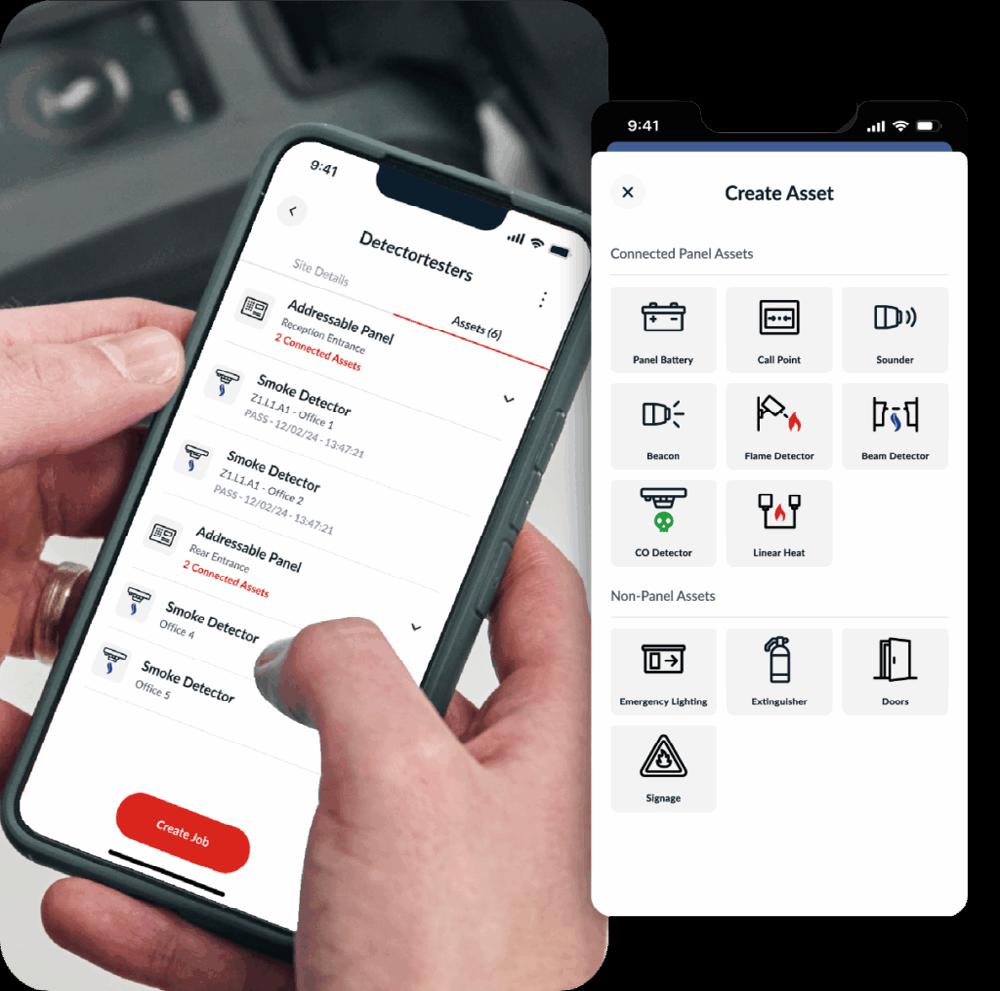
Complete Asset Management
Managing assets is now more streamlined and complete You can now add additional asset types including Pull Stations, Horns, Bells, Chimes, AVs, Stobes, and Speakers ensuring your reports represent a full picture of all fire and safety components.
Key capabilities include:
Create, Edit, and Delete Assets: Enter asset details individually with full flexibility Bulk Import Asset Lists: Save time by importing asset data from spreadsheets or other software Transfer Assets from Reports to Site Lists: If an inspection was completed before the site was set up in the system, you can now transfer recorded assets from the report directly into the Site Asset List for future use
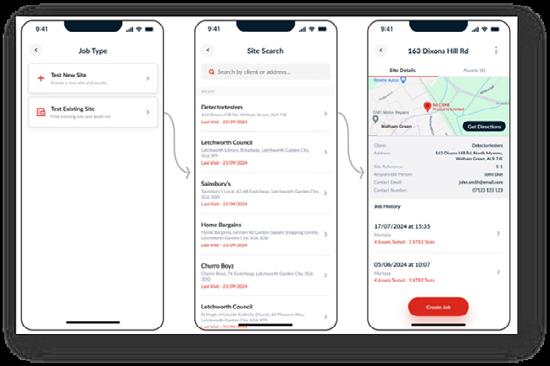
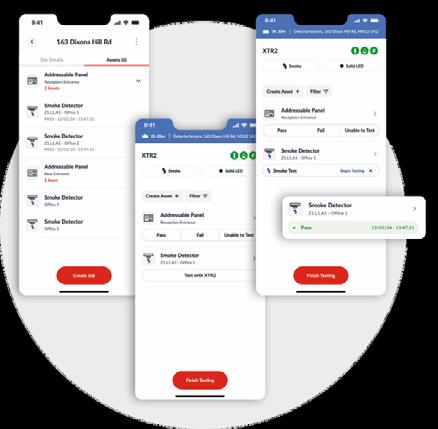
Faster Testing with Existing Site Data
When revisiting a site, there’s no need to start from scratch DT Connect provides access to the complete site history, including previous reports and saved asset lists, significantly reducing setup time and improving the accuracy of follow-up inspections From the Site Page, users can view historical data and completed jobs, reuse existing site and asset information to quickly begin new tests, and maintain consistency across visits to support compliance and detailed reporting.
Optimized Testing Workflow
DT Connect’s streamlined workflow improves how you test assets using the XTR2. When selecting a saved asset, the app automatically recognizes the required test type and communicates with the XTR2 to configure itself accordingly. Once the test begins, any results captured are linked directly to the selected asset eliminating manual input and minimizing errors
Improved Site Overview and Job Summary
Navigating between jobs and sites has never been easier. The updated interface offers a centralized view of your operations, helping you plan and act faster
Highlights include: New Sites Tab Filtering Options Detailed Site Page Job Reports Summary
Why it Matters for Inspection Professionals
Updated, Professional Reports
DT Connect now auto-generates polished, PDF-format reports that include:
Digital signatures for authentication
Full test result breakdowns
Easy sharing and archiving options
These reports not only support compliance but also improve transparency with clients
These updates are designed to save you time, reduce duplication of effort, and improve the reliability of your records. Whether you’re managing hundreds of assets or conducting routine follow-ups, DT Connect now gives you a smarter, faster way to get the job done with confidence and precision If you haven’t explored these new features yet, now’s the time Visit sdifire com/dtconnect

XTR2 streamlines detector testing by combining automated result capture with instant reporting. It confirms tests by sensing detector LED signals and works seamlessly with the DT Connect app and cloud portal to simplify site management. Designed for efficiency, XTR2 offers all-in-one smoke and heat testing, fast heat activation, rapid smoke generation in 6–30 seconds, and Clearing Mode to prevent re-alarms. Its lightweight design and intuitive touchscreen interface make it easy to use.

ONE DEVICE. EVERY TEST.
Comprehensive


Why Grout at the Top of Piers Matters
Jerry Perez Mason Construction LLC. Site Manager at Motiva Refinery Port Arther Tx
Grout at the top of piers is often treated like punch list work, something done at the end just to close out the job and make it look complete.
Because it usually happens weeks or months after the concrete work, it doesn’t always get the attention or care it deserves.
That assumption causes problems.
When we’re talking about cementitious grout, this work is not cosmetic. Once cured, the grout becomes part of the load path between the structure and the foundation.
I’ve personally seen what bad grout looks like months later:
• Random cracking
• Delamination from the concrete
• Brittle, broken edges
• Areas that were too thin to perform
• Sections that were too thick and cracked under stress
You can usually tell when grout wasn’t planned, mixed, or placed correctly, it simply doesn’t hold up.
Here’s what cementitious grout actually does:
• Provides uniform load transfer
Steel base plates and equipment are never perfectly flat. Grout fills the gaps so loads are transferred evenly into the concrete below.
• Eliminates voids under base plates
Voids create stress points. Grout ensures full bearing contact.
• Locks in elevation and alignment
Grout allows final adjustment so steel and equipment sit where they were designed, not where the concrete happened to finish.
• Supports anchor bolts and embeds
Proper grout placement reduces movement, vibration, and long-term fatigue.
• Improves durability
Grout seals the steel-to-concrete interface, helping reduce moisture intrusion and corrosion.
This is why cementitious grout has:
• Minimum and maximum thickness limits
• Surface preparation and roughening requirements
• Mixing, placement, protection, and testing requirements
These requirements are defined by project specifications and industr y standards such as American Concrete Institute and ASTM International.
It’s not punch list work. It’s structural work that needs planning, inspection, and care.


Jerry Perez is a QC professional with 15+ years of experience in heavy civil and structural construction across refinery, petrochemical, and LNG projects. Skilled in deep foundations, earthwork, concrete, rebar, site preparation, RFIs, inspections, NCR resolution, and turnover documentation, he has experience developing Quality Plans, ITPs, SOPs, and inspection workflows that improve execution, strengthen communication, and ensure work meets specification. He is currently advancing his process-improvement expertise through Lean Six Sigma Black Belt (SSGI) training.
Please contact the marketing director if you have articles or advertisements you would like to see published in an upcoming issue of The ASCET Informer magazine. The publication is scheduled to be released every other month. If you have any content to submit or would like to update Information, in The ASCET Informer magazine, please send it to marketing@ascet.org
I am eager to hear from all of you and am excited about the possibility of featuring your contributions in our magazine.
Thank You
Jamie Redden marketing@ascet.org
You can also Find us on: www.ASCET.org
The fire and life safety industry is becoming more complex than ever, and contractors are feeling it from every direction. Demand is rising, standards are tightening, and customers expect faster service, clearer documentation, and consistent quality across more systems than ever before. To help industry professionals understand where things stand and where they’re headed, Inspect Point is proud to release the 2026 Fire & Life Safety Report
The third iteration of this report brings together survey data and real-world operational insights from across the industry Built specifically for fire protection contractors, this report offers a grounded and data-driven look at the field’s challenges and what separates high-performing organizations from the rest of the pack.
What’s Inside the Report
This year ’s findings are based on an industry-wide online survey of fire and life safety professionals, a dedicated survey of Inspect Point users, and aggregate, anonymized data from actions and events recorded within the Inspect Point platform Together, they provide a high-level market perspective and real operational insight on:
● Revenue and pricing dynamics, including what’s pushing rates upward
● How factors like multi-trade coverage, standardized workflows, and platform solutions reduce rework and streamline field-to-office handoffs.
● AI trends and how company size influences adoption and outcomes
● What truly separates high-performing contractors from their peers
● Practical outlooks and recommendations for 2026-2028.
Demand for fire and safety services continues to grow, driven by aging buildings, evolving codes, and critical inspection requirements As the report shows, the future belongs to contractors who can respond quickly, document thoroughly, and communicate clearly without sacrificing craftsmanship. Firms that modernize their operations today will be best positioned to compete, grow, and lead in the years to come
Download the full 2026 Fire & Life Safety Report to explore the data and recommendations shaping the industry and learn what it will take to stay ahead

900XL3 Series
Zurn
Wilkins Backflow Preventers
The Contractor Favorite Just Got More Compact

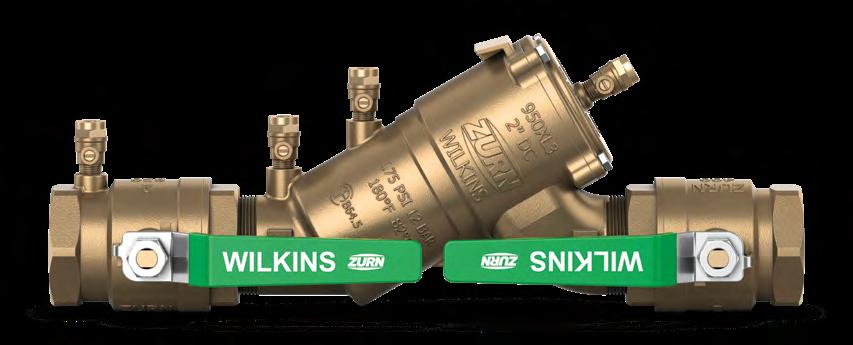
Smaller Valve. Better Value. The Zurn Wilkins 900XL3 Series Small Backflow Preventer delivers convenient size and substance to cut down on labor. We engineered the new and improved model to be even shorter and more compact than before, while integrating the time-tested features from our contractor favorites. Our repair kits allow for faster, cost-effective repairs, saving owners up to 20% over the life of the product. Upgrade to the greatest value with the most compact backflow preventer in its class for your next project.
Easy Install
• Shortest bronze small backflow preventer in its class to fit any application
• Vertical installation approved for the double check model to save more space
• Short lay length makes installation faster and easier
Quick Repairs
• Test ports located on valve’s centerline make install and testing easy
• Easy to remove check cover and relief valve cover makes valve servicing easier
• EZSwap® modular check with top access speeds up repairs and replacements
• Interlocking connected checks provide ¼ turn to access and disassemble
Super-durable
• All bronze body ensures durability against the elements
• Noryl™ check body and stainless steel fasteners resist corrosion over time
• Low-cost repair kits extend the lifespan at a significantly lower cost
• Check design minimizes moving parts to reduce wear and extend lifespan

UL 162 Listed FM 5130 Approved
More sprinkler listings than any other fluorine-free foam!


SOLBERG® RE-HEALING™ foams are the gold standard in fluorine-free firefighting solutions.
SOLBERG® RE-HEALING™ RF3 3% Foam Concentrate rapidly extinguishes Class B hydrocarbon fuel fires. Versatile SOLBERG® RE-HEALING™ 3x3 SP-100 Foam is the first UL-listed fluorine-free foam for both hydrocarbon and polar solvent fuel fires.
Custom Equipment Solutions
From bladder tanks and other proportioning systems to discharge devices and mobile products, we design hardware tailored to your needs.
Explore our full range of solutions at www.perimeter-solutions.com.
Trusted. Solutions That Save.
Board of Governors
NICET's Board of Governors (BoG) meets twice each year to set strategic goals and establish operating policies for NICET. Board members serve in a volunteer capacity. Seven are knowledgeable in the fields of engineering and engineering technology, while the eighth represents the general public.
Board members are selected by a nominating committee and confirmed by the Board. It is a multi-faceted process that includes vacancy announcements issued by NICET, the Interest Groups of the National Society of Professional Engineers (NSPE) and other engineering societies including the American Society of Certified Engineering Technicians. Self-nominations by NICET certificants and NSPE members are also accepted. A term on the Board lasts three years, and Board members may serve up to two consecutive terms.
The 2025–26 NICET Board of Governors are:
Christie Anderson Mt. Pleasant, IA
Russ Leavitt, SET, CFPS Phoenix, AZ
Chris Butts, PE, FSFPE, AET, SET, CFPS, ARM Chair Hendersonville, NC
Dr. Paul Flannigan, EdD, SET, CFPS, CWBSP Chair Elect New Castle, DE
Randall Over, PE Middleburg Heights, OH
Glenn Waite St. George, UT
Bradley J. Wilcox, SET, CFPS Flowery Branch, GA
Dan J. Wittliff, PE, BCEE Austin, TX
Chip Hollis, CAE NICET Vice President
Every Drop Counts


Celebrating a 150 Year Legacy of Water Safety Innovation Join
Water. It’s in our name and close to our hearts. Since 1874, has delivered innovative technologies that make the world’s most precious resource safe and accessible. Every effort, like every drop, has a ripple effect. Together, we can create a more sustainable world today and tomorrow.


Announcement below for our upcoming training classes.
Fire Alarm Systems Training classes at Cape Fear Community College will start May 8th 2026 and registration link is below. Our courses are self-paced and offered online to anyone with an Internet connection. The registration fee for the four-month course is $185 (USD) and awards 14.4 CEU’s. NICET awards 1 CPD point for 0.1 CEU (10 points per CEU). Those who are using the course to obtain NICET Continuing Personal Development (CPD) points will max out the category “Additional Education” and earn 72 points. Click Here https://cfcc-register.fundfive.com/filtered/course/FAST to sign up for the class and select "Alarms 101" or "Alarms 102."
Alarms 101
This course is designed for those individuals who are in the fire alarm industry and will focus on fundamentals. Students will learn basic electrical theory and understand resistance, voltage and current. Individuals currently in the fire alarm industry would benefit from the concepts and theories, which will be built upon in the Alarms 102 course. Students will also acquire a basic understanding of the physics involved in the chemical reaction and the by-products of fire. Students will learn basic electrical workmanship and installation methods of fire alarm equipment and devices. The student will gain an understanding of the requirements of codes and standards that govern fire alarm systems and installations. (14.4 CEU/45 CPD awarded) Students will become familiar with NFPA 72, National Fire Alarm and Signaling Code, and NFPA 70, the National Electric Code (NEC). These references are consistent with NICET’s allowable references for Level I and II Fire Alarm Systems exam(s).
Alarms 102
This course is designed for individuals who are fire alarm technicians or have intermediate experience in the fire alarm industry and will focus on application and design. The subject matter will build upon concepts addressing the behavior and generation of smoke, the combustion process and the requirements of codes and standards that govern fire alarm systems and installations. (14.4 CEU/45 CPD awarded)
Students will become familiar with NFPA 72, National Fire Alarm and Signaling Code, NFPA 70, the National Electric Code (NEC), NFPA 101, the Life Safety Code, and the International Building (IBC). These references are consistent with NICET’s allowable references for Level III and IV Fire Alarm Systems exam(s).
Please contact me for more information or Click Here https://cfcc.edu/job-training/construction-careers/fire-alarm-systems-training/ to We have scholarships available. Visit our web page for complete course information and scholarships.
Cape Fear Community College is located at 411 N. Front Street, Wilmington, NC.
Pressure-Tru® Field Adjustable ZW5000/5004 Series Pressure Reducing Valve
Less Force, More Flow
ZW5000
Pressure-Tru
Field Adjustable
Pressure Reducing Hose Valve
Our Pressure-Tru ZW5000/5004 Series Pressure Reducing Valve fits in tight spaces, takes only 9 ft lb of torque to field adjust, and delivers optimal flow performance – making it ideal for any application, retrofit or new.
For the Contractor: The Size of It
• Compact design fits in tighter spaces
• Angle or inline globe body comes with grooved or threaded connections
• Tamper-proof shield (standard) drops out for easy start-up adjustments in the field for new construction
• Lightweight aluminum adjusting rod aids field adjustments
ZW5000 vs. Competitor Angle Body, 250 GPM
The ZW5000 provides up to 30 psi in higher residual outlet pressure than competitor models.

For the Fire Ground Force: The Ease of It
• Low torque takes only 9 ft lb of force to field adjust under flow or no-flow conditions
• Tamper proof shield (standard) breaks away for on-the-fly adjustments in cases of emergency
• Larger handwheel ensures easy operation.
PATENT PENDING

ZW5004
Pressure-Tru
Field Adjustable
Pressure Reducing
Floor Control Valve
For Everyone: More Flow Performance
• Widest range of flow performance satisfies virtually any application or replacement of any competitor’s valve
• Valve regulates pressure under both flow and no-flow conditions
• Tamper resistant integral supervisory switch comes standard on all floor control valves
• UL® and C-UL® Listed meets standards



THE ASCET STUDENT OF ENGINEERING TECHNICIAN / TECHNOLOGY CASH GRANT
This grant - formerly known as the ASCET Student of Engineering Technician /Technology Cash Grant small cash grant - is designated for current or incoming post-secondary students attending an ABET accredited college, university, junior college or vocational technology school who are, or will be, majoring in a field within engineering technology. The grant was originally suggested by students and faculty advisors who recommended that a grant be awarded to deserving students and that this award carry as few restrictions as possible. The award shall be in the amount of $1,200.00 to be used to offset the cost of educational expenses as desired.
QUALIFICATIONS
• Be either a student, certified, regular or registered member of ASCET OR,
• Be a High School senior in the last five months of the academic year who will be enrolled in an Engineering Technology curriculum no later than six (6) months following selection of the award.
• By achieving passing grades in their present curriculum.
SELECTION AND AWARD
All applications are reviewed by the Financial Aid Committee which also selects the recipients. Recipients will be notified in July and checks will be mailed to the recipients in September. Award checks will be issued directly to the students upon notification and verification that they are enrolled in an Engineering Technology curriculum in an institute of higher learning.
INSTRUCTIONS FOR APPLICATION
• Complete the APPLICATION FORM which applies to you (ASCET Member or High School Student).
• Attach at least one (1) LETTER OF RECOMMENDATION from a personal acquaintance, faculty member or employer outlining motivation, progress, outstanding achievements, and an evaluation of your potential in the field of Engineering Technology.
• Attach a copy of your TRANSCRIPT.
• Be sure all documents are mailed in sufficient time for receipt by the ASCET Office by January 30 of each..
• NOTE: Failure to complete or include any items in the application package may be grounds for rejection unless the committee, at its discretion, is able to notify you of the incomplete or omitted items, and such items are submitted within the evaluation period time schedule.
• This package should contain:
1. (A)Application Form ASCET Member or (B)Application Form High School Senior
2. Recommendation Letter
NOTE: Only Engineering Technology students qualify for this grant, not those seeking an engineering degree. For ENGINEERING scholarship information we suggest you contact the National Society of Professional Engineers for their scholarship requirements. Please contact: NSPE Scholarship Division, Educational Foundation; NSPE; 1420 King Street, Alexandria, VA 22314-2715; (703/684-2858)
THE ASCET STUDENT OF ENGINEERING TECHNICIAN/TECHNOLOGY CASH GRANT
A. ASCET Member APPLICANT
Name___________________________________________________Telephone ( )_________________________
Mailing Address____________________________________________________________________
street ________________________________ city ________________state _________zip_______________
What is your membership category? ______________________________________________________________
If a student member, list student chapter______________________________________
Faculty Advisor____________________________________________________________________________
What institution do you attend?_________________________________________________________
Address_________________________________________________________________________________
street ________________________________ city ________________state _________zip_______________
Are you a full time or part time student?
Are you receiving other financial aid? yes or no If yes,in what amount? $_____________
Why are you applying for this grant?__________________________________________________________________
__________
ATTACH A COPY OF YOUR TRANSCRIPT TO THIS APPLICATION. I here by certify that the answers given in this application are true and accurate.
Date______________Your signature__________________________________
I attest to the applicant's passing grades.
THE ASCET STUDENT OF ENGINEERING TECHNICIAN/TECHNOLOGY CASH GRANT
B. GRANT APPLICANT
Name___________________________________________________Telephone( )_________________________
Mailing Address____________________________________________________________________
street ________________________________ city ________________state _________zip_______________
What is your membership category? ______________________________________________________________
If a student member, list student chapter______________________________________
Faculty Advisor____________________________________________________________________________
What institution do you attend?_________________________________________________________
Address_________________________________________________________________________________
street ________________________________ city ________________state _________zip_______________
Are you a full time or part time student?
Are you receiving other financial aid? yes or no If yes,in what amount? $_____________
Why are you applying for this grant?__________________________________________________________________
__________
ATTACH A COPY OF YOUR TRANSCRIPT TO THIS APPLICATION. I here by certify that the answers given in this application are true and accurate.
Date______________Your signature__________________________________
I attest to the applicant's passing grades.
Date______________Signature______________________________________ FacultyAdvisor/Instructor
THE ASCET STUDENT OF ENGINEERING TECHNICIAN/TECHNOLOGY CASH GRANT
(Recommendation by personal acquaintance, faculty member, or employer to include an outline of motivation, progress, outstanding achievements, and your opinion of applicant's potential in the field of Engineering Technology) I recommend ___________________________ as a recipient of THE ASCET STUDENT OF ENGINEERING Applicant’s name.
TECHNICIAN / TECHNOLOGY CASH GRANT:
Name (please print)__________________________________________________
Address _________________________________________________________________________________________
Date__________________________
Do not write below this line For committee use only. Date received ________________
Application form Recommendation Transcript
We extend a special thank you to our dedicated sponsors and industry partners for their continued support! Your generosity has been instrumental in our success throughout the year. We are excited for the opportunities and growth that lie ahead in the coming year. Thank you for being an essential part of our journey.
















FIRE SPRINKLER SERVICES, LLC

Chapter Listing
if you are interesteD in opening a new Chapter, reaCtivating an inaCtive Chapter in your area or upDate inforMation on Chapter listeD, please reaCh out to MarKeting@asCet.org. thanK you JaMie reDDen asCet MarKeting DireCtor
Northeastern Region
CONNECTICUT
ConneCtiCut Chapter - inaCtive
DELAWARE
Delaware Chapter
Joe Krieger
Meetings 3rD weDnesDay of the Month
5pM - 7pM @ toM foolery's restaurant 714 ash BlvD, MiDDletown, De 19709
MARYLAND
greater BaltiMore Chapter
MiChael toMaselli
Meetings 3rD tuesDay of the Month
5pM - 7pM @ the greene turtle - 7556 teague rD ste 100, hanover, MD 21076
for More inforMation CliCK Below https://BaltiMoreasCet.Blogspot.CoM
MASSACHUSETTS
new englanD (neafpsD) Chapter gary roBiDoux
NEW JERSEY
north Jersey Chapter osMan sarpas
northJerseyasCet@gMail.CoM
Meetings last tuesDay of the Month
5:30pM - 7:30pM @ ellery’s restaurant & puB 701 linColn BlvD. MiDDlesex, nJ 08846 -
for More inforMation CliCK Below https://asCet.org/events/eventDetails.aspx?iD=1525525&group=
south Jersey Chapter
BoB raMBow
1st weDnesDay of the Month
5pM - 7pM @ the Kove - 20 w atlantiC ave, auDuBon, nJ 08106
NEW YORK
new yorK City Chapter
Matthew pernal
pennsylvania
philaDelphia Chapter
Brian segal
last tuesDay of the Month
5pM - 7pM @eDDington house - 2813 hulMeville roaD, BensaleM, pa 19020
south east pennsylvania Chapter roB spitz
3rD thursDay of the Month
5pM to 7pM @ general air training Center - 115 suMMit Dr, exton, pa 19341
Southeastern Region
NORTH CAROLINA
Central Carolina Chapter- inaCtive
raleigh Chapter- inaCtive
VIRGINIA
Central virginia Chapter - inaCtive
Central Region
ILLINOIS
ChiC ago Chapter- inaCtive
OHIO
aKron Chapter-inaCtive
TEXAS
austin Chapter
leonel saenz Jr.
Western Region
HAWAII
hawaii Chapter
JiMMy lynCh hiasCetpresiDent@gMail.CoM
Meetings last thursDay of the Month 5:30pM - 7:30pM @ la Mariana sailing CluB 50 sanD islanD aCCess roaD honolulu, hi 96819
IDAHO
southwest iDaho inaCtive eDwarD nelson
MISSOURI
Kansas City Chapter inaCtive
OKLAHOMA
eastern oKlahoMa (tulsa) Chapter Bryan gieseCKe
if you are interesteD in opening a new Chapter or reaCtivating an inaCtive Chapter in your area or upDate inforMation on Chapter listeD, please reaCh out to MarKeting@asCet.org. thanK you JaMie reDDen asCet MarKeting DireCtor

Upcoming Events
POTTER LIVE TRAINING
Addressable Hardware & Software
2 days of comprehensive instruction on the Potter AFC/IPA series fire alarm systems
Practical applications and programming instruction on live panels, detectors, and modules
Factory certification is provided after successful completion of hands-on panel programming exercises.
IPA authorized attendees will receive IPA specific factory certification. Technical training booklet. Lunch will be provided both days locations listed below
Registration Dates for class es and cost below
MAR 10-11, 2026 ATLANTA, GA $500.00
MAR 17-18, 2026 HICKORY, NC $500.00
MAR 24-25, 2026 LOUISVILLE, KY $500.00
MAR 31= APR 1 MAIN FIRE SAN DIMAS, CA$500.00
APR 7-8, 2026 ST. LOUIS, MO $300.00
APR 28-29, 2026 ALARMAX LAS VAGES,NV $500.00
IPA ADVANCED CLASSES
APR 9, 2026 ST. LOUIS, MO $200.00
APR 10, 2026 ST. LOUIS, MO $200.00
Register at https://www.pottersignal.com/ training/live
NATIONAL TRAINING CENTER
NICET Fire Alarm Level I
Training in Online
March 10th ,2026 9:00 am - 5:00 pm
cost $995.00
Register at https://nationaltrainingcenter. com/ntc-training/ntc-live-training/ntc-virtual-classes/
NATIONAL TRAINING CENTER
NICET Fire Alarm Level II
Training in Online
March 11th ,2026 9:00 am - 5:00 pm
Register at https://nationaltrainingcenter. com/ntc-training/ntc-live-training/ntc-virtual-classes/
NATIONAL TRAINING CENTER
NICET Fire Alarm Level III
Training in Online
March 12th,2026 9:00 am - 5:00 pm cost $995.00
Register at https://nationaltrainingcenter. com/ntc-training/ntc-live-training/ntc-virtual-classes/
NATIONAL TRAINING CENTER
NICET Fire Alarm Level IV
Training in Online
March 13th ,2026 9:00 am - 5:00 pm
cost $995.00
Register at https://nationaltrainingcenter. com/ntc-training/ntc-live-training/ntc-virtual-classes/
CAPE FEAR COMMUNITY COLLEGE
4 month Course on Fire Alarm Systems Training in Online
May 8th ,2026
2 Classes offer Alarms 101 and Alarms 102 Register at https://cfcc-register.fundfive.com/ filtered/course/FAST
AFSA WATER-BASED SYSTEMS
DESIGN TO THE NEXT LEVEL
Virtual Session 1
April 28, 2026 11am-2pm
Virtual Session 2
April 29, 2026 11am-2pm
In-Person Classroom
May 4- May 8 8am-4:30pm Dallas TX
Member $2560-Non Member$3660 https://firesprinkler.org/programs/intermediate-fire-sprinkler-system-planning-school/
NATIONAL TRAINING CENTER
Basic Training: Fire Alarm Systems
Installation Program Training in Online
March 16th ,2026 9:00 am - 5:00 pm
cost $995.00
Register at https://nationaltrainingcenter. com/ntc-training/ntc-live-training/ntc-virtual-classes/
NATIONAL TRAINING CENTER
Fire Alarm Design Training in Online
March 17th ,2026 9:00 am - 5:00 pm
cost $995.00
Register at https://nationaltrainingcenter. com/ntc-training/ntc-live-training/ntc-virtual-classes/
NATIONAL TRAINING CENTER
Inspection & Testing of Fire Alarm Systems Training in Online
JMarch 18th ,2026 9:00 am - 5:00 pm
cost $995.00
Register at https://nationaltrainingcenter. com/ntc-training/ntc-live-training/ntc-virtual-classes/
2026 NFSA ANNUAL SEMINAR AND BUSINESS & LEADERSHIP CONFERENCE
April 29, 2026 – May 1, 2026, 8:00 AM10:00 PM IThe Westin Seattle 1900 5th Avenue Seattle, WA 98101
Register at https://web.cvent.com/event/ c2b3927c-2bdb-48b5-b6bc-d9282b11a850/ summary?fbclid=IwY2xjawNsjyBleHRuA2FlbQIxMABicmlkETE5SnNhNDFIY0pDRGgwdTNQAR7i1zyQ8O6zcxc1mx1NIK-
COVB8O06oyVdMUz2Fm0OjGN60tDhwMLEOsqyEe6g_aem_ehO4p3wRQ25IwjjMkutdtg
2026 NFPA CONFERENCE & EXPO
June 22th- 24th, 2026
At The Mandalay Bay Convention Center 3950 Las Vegas Blvd South, Las Vegas, NV 89119 - Save the dates For More information click below https://www.nfpa.org/events/conference
AFSA45 CONVENTION 2026
Sept 27th-30th, 2026
JW Marriott San Antonio Hill Country For More information click below" https://firesprinkler.org/afsa45/ 61TH ANNUAL ASCET
CONFERENCE & EXPO
November 5 th,2026 at 7AM - Delaware Presenters TBD Location TBD
HELP WANTED


Want to work in Hawaii? Phoenix Pacific is hiring a Fire Alarm Technician to lead project installs, renovations, and upgrades. Must have programming experience, project management skills, NICET 2+ or equivalent, and a strong work ethic. Competitive pay and benefits. Relocation assistance may be available. Join a trusted team in a great location! Submit your resume to nadine@dunhillhawaii.com or online at: https://www.indeed.com/viewjob? jk=c79f1005b7fb11da&from=sharedde sktop.
We are an Equal Opportunity Employer.
